Abraham Lincoln, the 16th President of the United States, was photographed more than almost any other leader of his era. From his earliest known daguerreotype in 1846 to portraits made just weeks before his assassination in 1865, these images trace the arc of a man shaped by personal loss, political struggle, and the weight of a nation at war. Each photograph carries its own story — of the photographer, the moment, and the man himself.
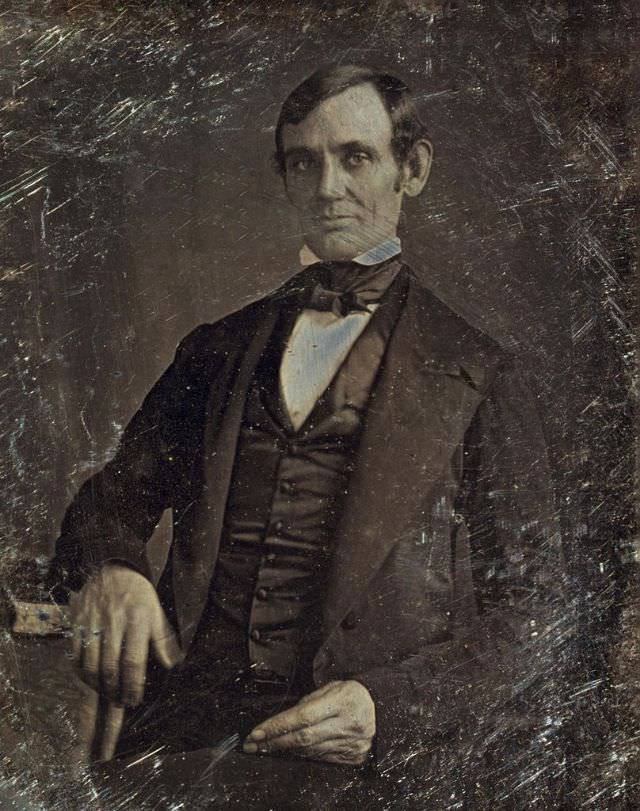
This photograph, a daguerreotype taken by Nicholas H. Shepherd in 1846, represents the earliest verified image of Abraham Lincoln. Captured shortly after Lincoln’s election to the United States House of Representatives, the image is a significant piece of historical memorabilia, marking the beginning of Lincoln’s national political journey. The photograph was taken at Shepherd’s Daguerreotype Miniature Gallery in Springfield, situated above J. Brookie’s drug store. The setting for this image was no coincidence, as Shepherd was not just a photographer but also a law student under Lincoln and his partner, William Herndon. This dual relationship adds a layer of personal significance to the photograph, suggesting that it was likely taken in a familiar and relaxed environment for Lincoln. In the image, Lincoln appears as a younger, less weathered man than in later photographs, reflecting his status as a burgeoning politician rather than the president he would become. This daguerreotype serves not just as a memento of Lincoln’s early political career, but also as a snapshot of his life in Springfield, illustrating the close-knit professional and social circles of the time.
In this photograph from October 27, 1854, taken by Johan Carl Frederic Polycarpus Von Schneidau, we see Abraham Lincoln years before his presidency. The image, a rarity from an itinerant photography gallery in Chicago, was a spontaneous decision made as Lincoln walked with George Schneider, editor of the influential anti-slavery German newspaper the Illinois Staats-Zeitung, and Isaac N. Arnold. Lincoln, already notable as an emerging leader with a growing political base, was in town and had just dined with the two men. Deciding to capture the moment, they stopped at Von Schneidau’s setup, and Lincoln had his portrait taken specifically for Schneider. The photograph, casual yet historic, shows Lincoln in a more informal setting compared to many of his later images. His attire is that of a private citizen, and his expression is relaxed, reflecting the friendly nature of the day’s earlier interactions and discussions. This image stands as a testament to Lincoln’s relationships with key figures in the anti-slavery movement and the German-American community at the time.
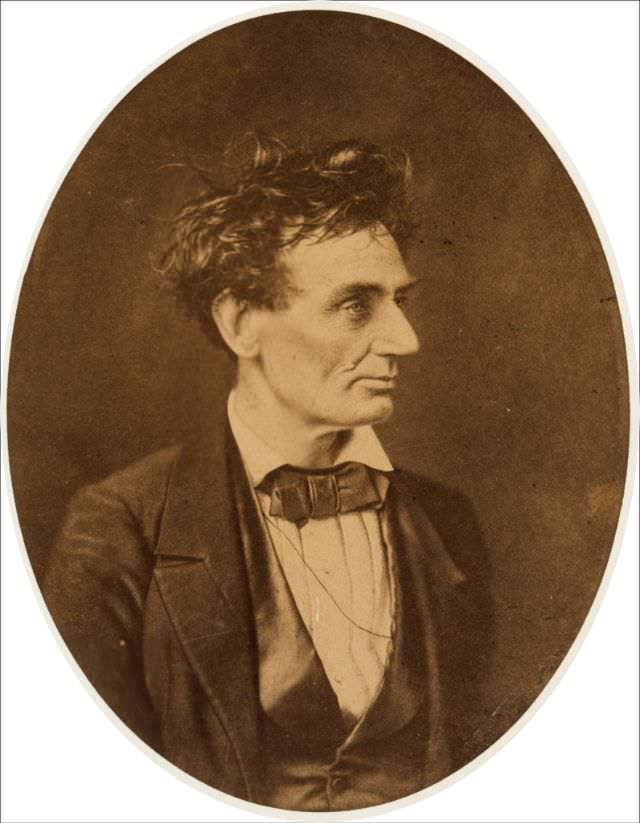
Captured just before his Senate nomination, Lincoln, unsure why “the boys” would want a picture of his “homely” face, agreed to sit for a portrait at the request of his colleagues from the bar. This session was marked by a characteristic moment where Lincoln disheveled his hair just before the photograph was taken, preferring his natural look over the photographer’s attempt at grooming. The image itself presents a Lincoln true to the recollections of those who knew him: unassuming and authentic. His hair, purposefully tousled by his own hand, rejects the era’s formal photographic standards, emphasizing his preference for genuineness over aesthetics. Unfortunately, the original negative of this significant photograph was destroyed in the Great Chicago Fire of 1871, adding a layer of historical loss. The surviving prints, including that owned by H. W. Fay of DeKalb, Illinois, serve as invaluable relics from this time, offering a glimpse of the man Lincoln was before the presidency: a skilled lawyer, a beloved colleague, and an individual firmly grounded in his identity.
This photograph was taken by Roderick M. Cole during the heated Lincoln-Douglas debates of 1858. Captured in Cole’s Peoria gallery, the daguerreotype reveals a candid side of Abraham Lincoln, who, despite his rising political stature, jestingly questioned why artists were interested in capturing the likeness of someone as “homely” as himself. Beyond its historical context, what makes this image remarkable is Lincoln’s own favor toward it. It captured the soon-to-be president in a light true enough to his self-perception that he would often sign copies of it for admirers, a testament to his authenticity during a time of intense public scrutiny. The photograph’s warmth and candidness were so resonant that Lincoln presented a copy to his stepmother in 1861, highlighting its personal significance. Moreover, this particular image of Lincoln went beyond the standard portrait’s role: it became a political tool, with extensive use in campaign materials during the 1860 presidential run. The image, distributed on ribbons and other promotional items, offered the public a relatable, intimate portrayal of Lincoln, contrasting sharply with the often distant, formal imagery of political figures of the era. In this way, Cole’s photograph did not just capture a man; it helped shape the narrative of a campaign and, ultimately, a presidency.
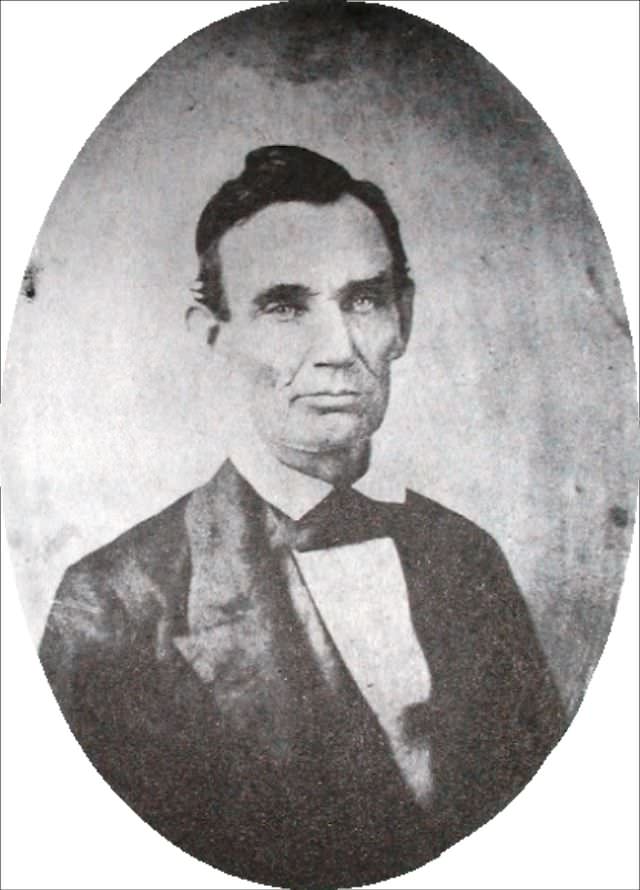
This photograph, initially owned by a Civil War soldier from Parma, Ohio, and later part of the Anthony L. Maresh collection, holds particular historical interest due to its mysterious origins, as detailed in the Cleveland Plain Dealer in 1942. The portrait of Abraham Lincoln from 1858, possibly a photographic reproduction of one of two now-lost daguerreotypes taken in Ohio, represents a common challenge in historical archival work: the effort to piece together the story behind an image when faced with gaps in its provenance. In the photograph, we see Lincoln around the time of his iconic debates with Stephen A. Douglas, a period that significantly elevated his political profile. The image is particularly valuable, capturing Lincoln’s appearance and demeanor during a time when he was largely accessible to the public and not yet shaped by the extraordinary pressures of the presidency and the Civil War. The fact that the photograph was cherished by a Civil War soldier adds to its historical significance. For soldiers fighting in the Civil War, Lincoln was a symbolic figure of the Union’s cause, and owning his portrait likely held significant sentimental value. It would have served as a reminder of the principles they were fighting for and a connection to the leader who embodied those ideals. The photograph’s journey from a soldier’s possession to being highlighted in a 1942 publication further underscores the enduring interest and emotional connection that individuals and society at large have had with Lincoln’s legacy.
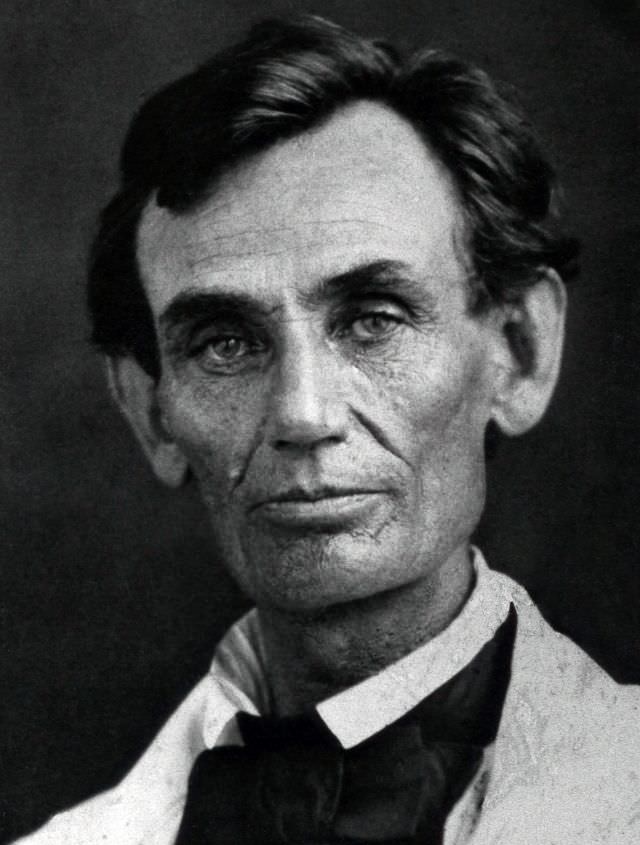
The photograph taken by Abraham M. Byers on May 7, 1858, holds historical significance, capturing Abraham Lincoln during the fervor of the Lincoln-Douglas debates. Notably, Lincoln is dressed in a linen coat, a detail that presents the soon-to-be president as an approachable figure rather than a distant politician. This choice of attire is particularly striking, as it contrasts with the formal wear that political figures often wore for photographs during this period. Regarded as a faithful likeness, the image freezes a moment from the Lincoln-Douglas campaign, a series of debates that deeply impacted U.S. politics and highlighted the escalating tensions over slavery. The debates were a critical point in Lincoln’s career, showcasing his oratory skills and moral stance, which would eventually play a role in his election to the presidency. The photograph’s former placement in the Lincoln Monument collection in Springfield, Illinois, underscores its importance. This collection serves not just as an archive but as a memorial, honoring Lincoln’s life and legacy. By housing the image, the collection emphasized the portrait’s value in remembering and understanding the man Lincoln was before his presidency and the Civil War.
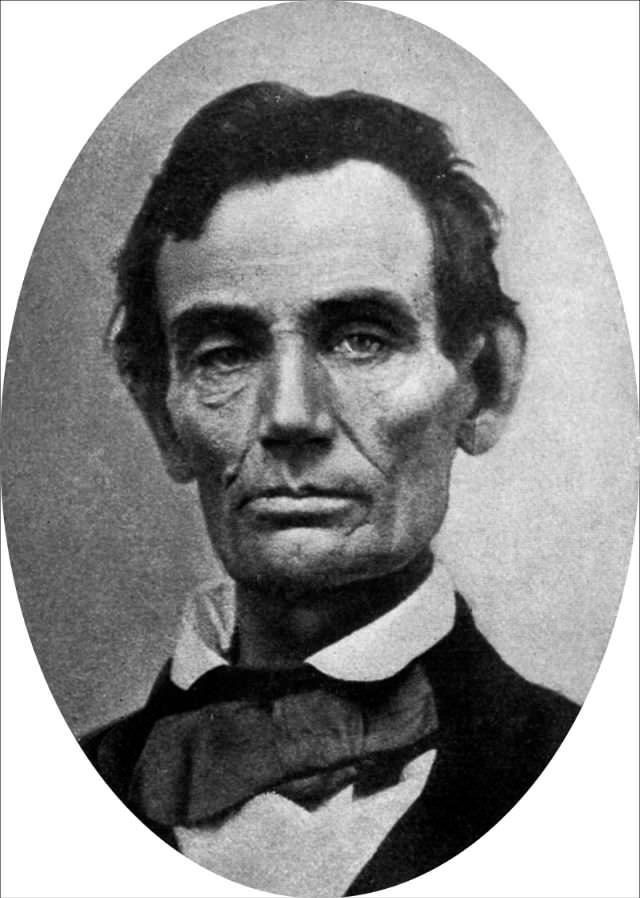
The photograph of Abraham Lincoln taken by T. P. Pearson on August 26, 1858, offers an unvarnished look at the future president, a depiction cherished by those who knew him before his rise to the presidency. The impromptu nature of this ambrotype session, suggested by Mr. Magie during a casual morning walk in Macomb, captures an authenticity often lost in formal sittings. Lincoln’s humorous inquiry, “Well, do you want to take a shot at me with this thing?” upon encountering Pearson’s camera, underscores his characteristic humility and lightheartedness. Significantly, Lincoln refused the opportunity to “fix up” before the photograph, ensuring the image would remain a true representation of the man his neighbors and acquaintances knew. This refusal speaks to Lincoln’s personality, emphasizing his preference for authenticity over appearance. This photograph, featuring the same attire Lincoln wore during his renowned debates with Senator Douglas, freezes in time a moment before his political ascent, immortalizing him as the accessible, unpretentious figure his contemporaries knew. It is this down-to-earth depiction that prompted many who knew Lincoln in Illinois to declare this the best likeness of him they had ever seen.
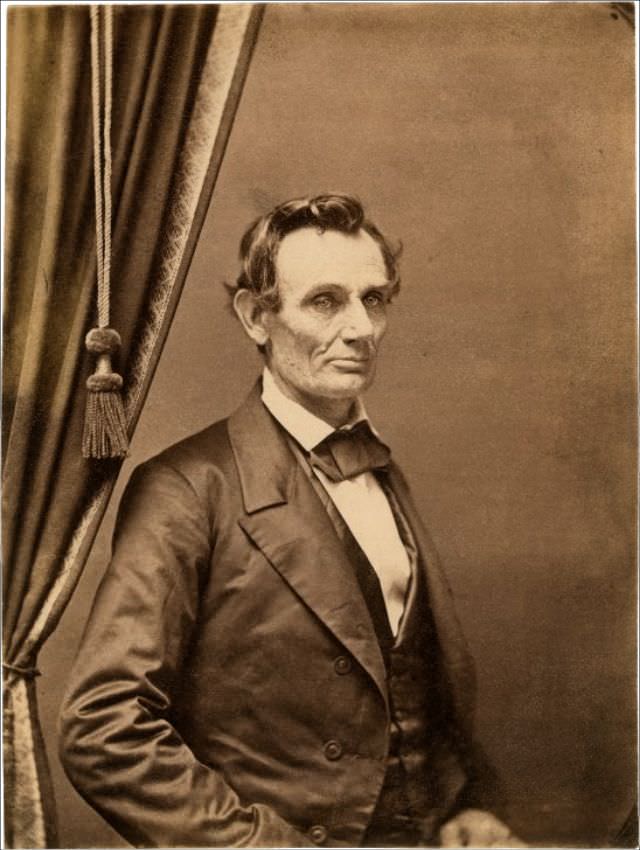
The story behind the photograph taken by Christopher S. German on September 26, 1858, captures a personal side of Abraham Lincoln rarely seen in the political sphere. The image, requested by the mother of Mr. K. N. Chapman, who affectionately referred to Lincoln as “Uncle Abe,” underscores the future president’s close relationships during his pre-presidential days and his candid, self-deprecating sense of humor. Lincoln’s promise to his stepmother’s host — and his prompt fulfillment of it, accompanied by a letter modestly downplaying his appearance — reveals a man of deep familial loyalty and sincerity. He honored his personal commitments with genuine affection, highlighted by his insistence that the photograph was taken solely for “mother.” This image differs from the public persona Lincoln often presented in official portraits and during public addresses. It sets aside the orator, the debater, and the future leader, focusing instead on the man known to his family and friends — personable, humble, and unassuming. Lincoln’s comment, underselling his photogenic qualities yet fulfilling a promise to a loved one, speaks to his character.
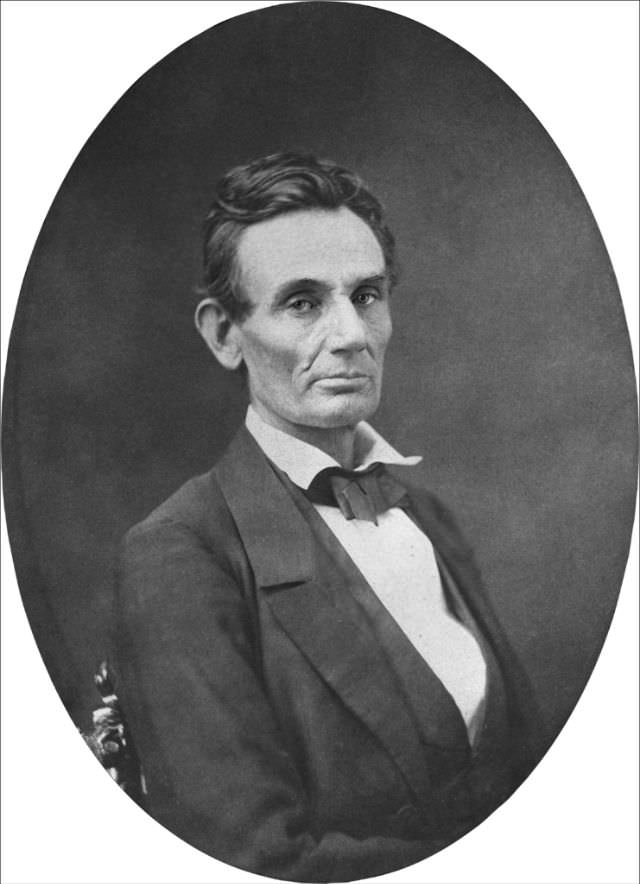
Taken in the Chicago gallery of Cooke and Fassett, this image was later distinguished by a strong endorsement from Mary Todd Lincoln, the president’s wife, who declared it the best likeness of her husband she had ever seen. While many images from his political career project authority and solemnity befitting a national leader, this particular portrait captures something more personal — an unguarded moment or a glimpse of his contemplative side that often remained out of public view.
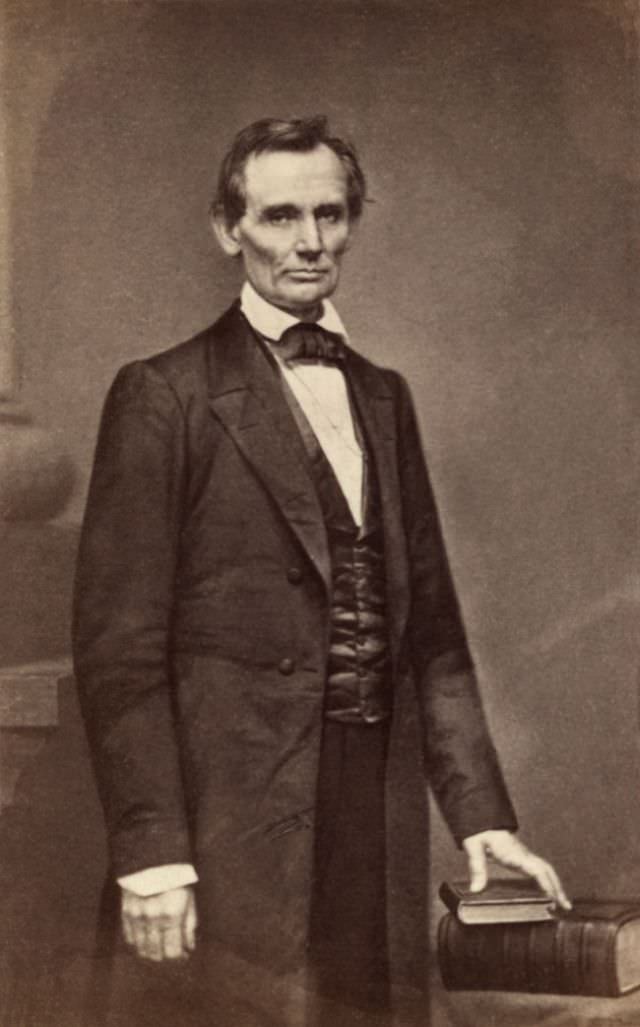
Brady, a master of his craft, adjusted Lincoln’s collar before the sitting, setting the tone for a portrait that would resonate with the public. This photograph, elegant yet honest in its depiction, went on to shape Lincoln’s public image significantly. As Lincoln stood before the camera, the nation stood on the brink of division. His Cooper Union speech was a passionate defense of the Union and a clear stance against the expansion of slavery. It was not just the content of his speech that captivated the audience; it was the gravity and sincerity that came from the man himself, qualities that Brady’s lens captured effectively. The image’s conversion into a woodcut for Harper’s Weekly and its subsequent use in Leslie’s Weekly amplified Lincoln’s visibility. These publications, widespread and influential, presented Lincoln to the nation not as a regional figure, but as a leader with the intellectual depth and moral conviction to lead a divided country.
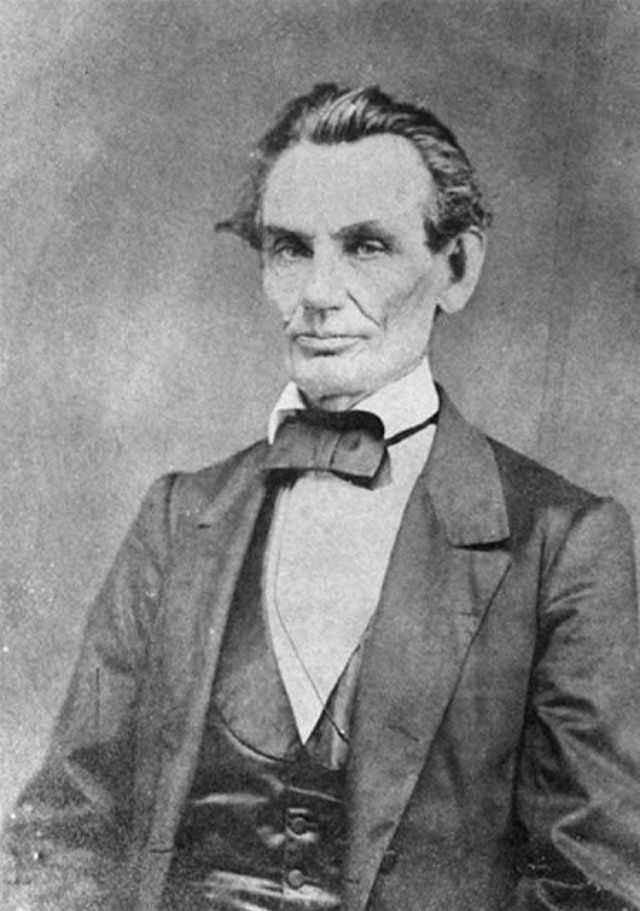
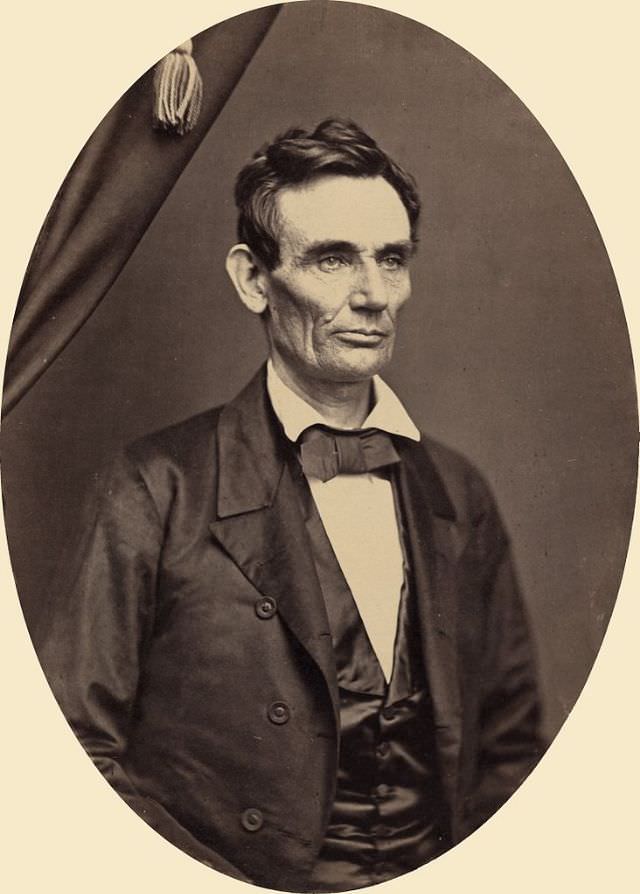
Lincoln, attending the Illinois State Republican Convention in Decatur, was approached by Barnwell, who saw something presidential in this towering figure and sought to capture it in a portrait at his People’s Ambrotype Gallery. What Barnwell sensed in Lincoln was what would soon captivate the nation: a sense of integrity, humility, and quiet confidence, qualities that are visible in this photograph. This was not just any portrait session; it came just before a significant endorsement that would be felt across the country. The very next day, Lincoln, the “Rail Splitter,” received unanimous support from convention delegates, propelling him toward the national stage.
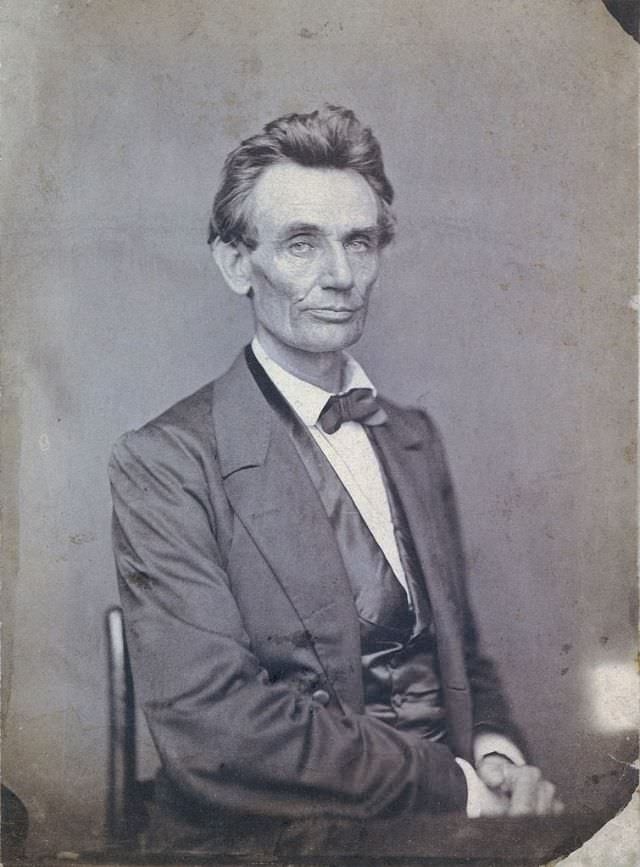
One of five photographs taken by William Marsh for Marcus Lawrence Ward. The series of photographs taken by William Marsh on May 20, 1860, served a purpose more significant than mere portraiture; they were a crucial introduction of Abraham Lincoln to a broader public that had read his words but had little to no visual familiarity with the man himself. Commissioned by Marcus Lawrence Ward, these images helped bridge the gap between the towering figure of national debates and the tangible human being that voters sought to understand.
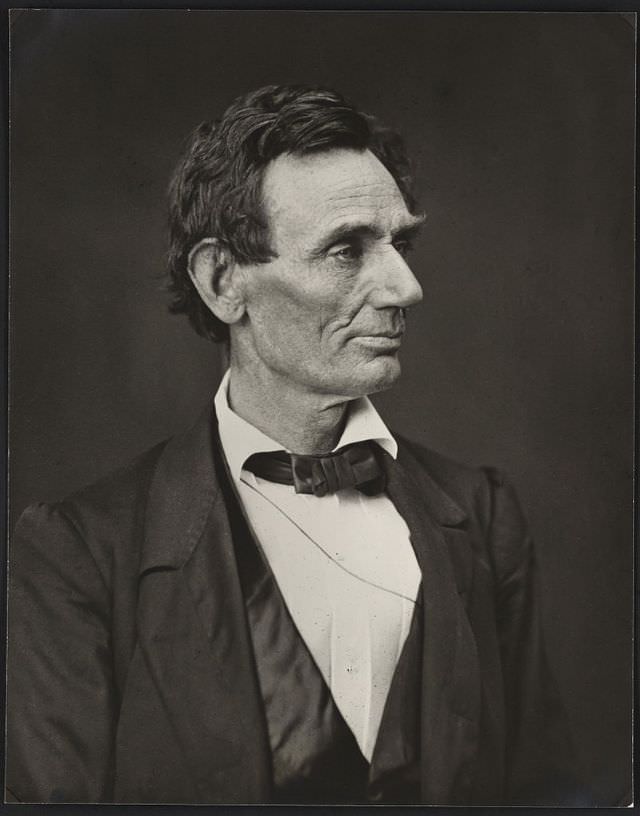
Within this portrait, Hesler achieved more than a simple replication of Lincoln’s features; he captured the intimate human details that a casual observer might miss but a close associate would know well. William Herndon, Lincoln’s law partner and confidant, saw in this image the true Lincoln he knew, with all the unique characteristics that made Lincoln who he was. The subtle curve of the lower lip, the solitary mole on the right cheek, and particularly the pose of the head, which Herndon described as “essentially Lincolnian,” are all captured with an honesty and clarity rarely seen in other portraits.
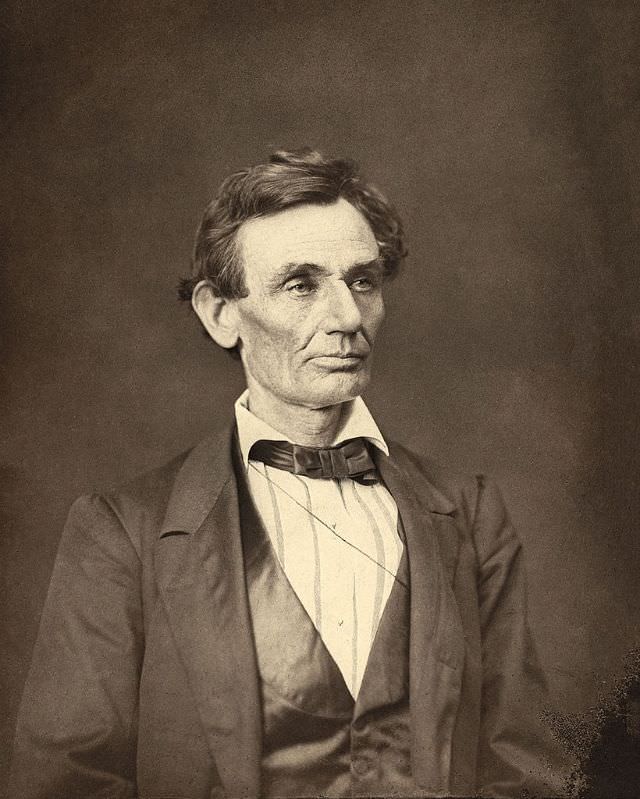
Unlike other portraits, often marked by the formal stiffness that political figures were expected to project, Hesler’s image revealed something more personal — an expression that, in Lincoln’s own words, “looks better and expresses me better than any I have ever seen.” Lincoln saw in it a reflection that captured not just his physical likeness but his essence. It was honest, without the layers of artifice that people in the public eye often accumulate. This was Lincoln as the people who would relate to, understand, and trust him saw him. The photograph went beyond the standard portrayal of status and captured something universally human, presenting Lincoln in a way that people could connect with, regardless of their background or education.
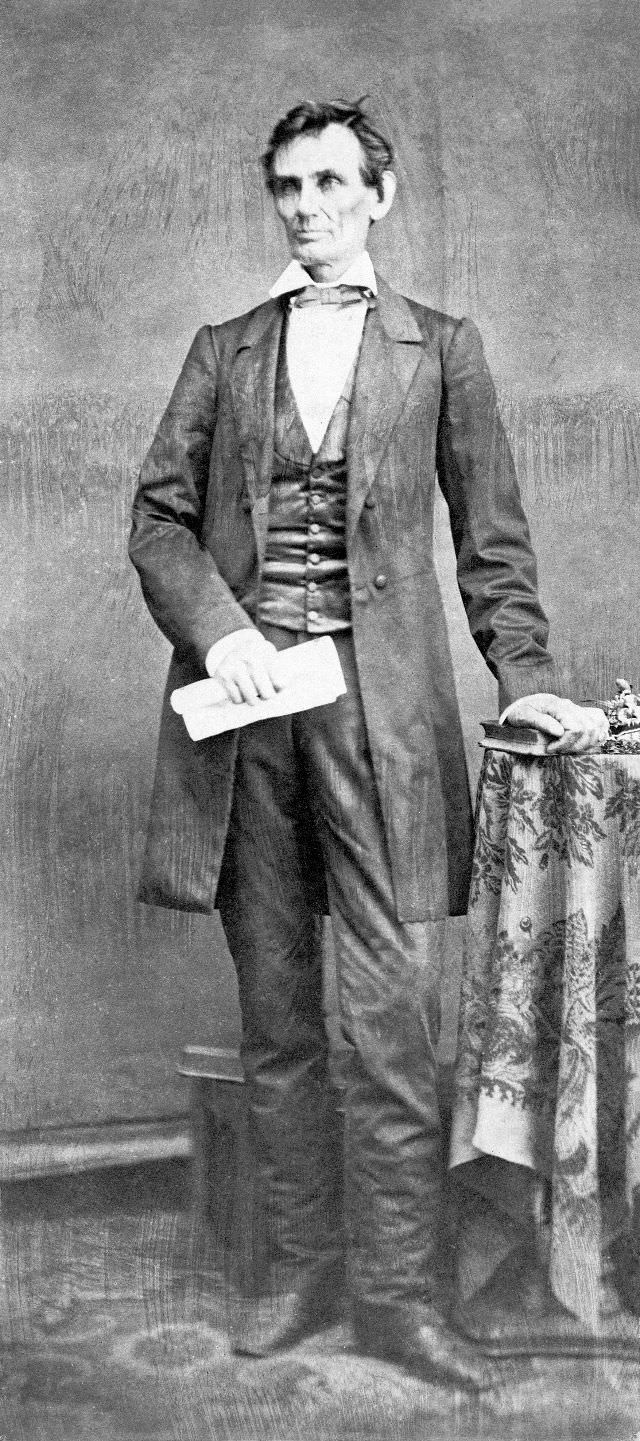
Commissioned for the sculptor Henry Kirke Brown, the image was intended as a reference, capturing the soon-to-be president in his entirety — an essential resource for crafting a lifelike three-dimensional representation. What makes this image compelling is its raw authenticity. It is not just a photograph; it is a document detailing Lincoln’s physical presence. Every aspect of his stature is laid bare, providing insights not just into his height and build, but also into the life he had led. The image reflects Lincoln’s early years of physical labor; his tall, sturdy frame speaks of endurance and strength, characteristics as much a part of the man as his celebrated integrity and wisdom.
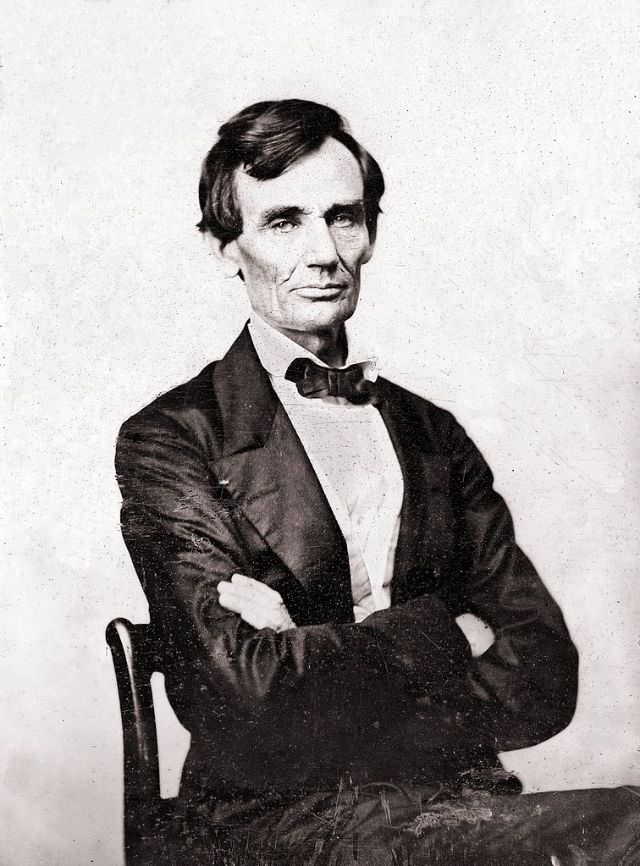
The photograph, captured by Preston Butler on August 13, 1860, is a significant artifact as it is the last known image of Abraham Lincoln before he grew his iconic beard. Taken in Butler’s daguerreotype studio, this image is one of six original ambrotypes, though only two reportedly survive to this day. In the photograph, Lincoln appears without his later-signature facial hair, providing a visual record of his appearance during this period. His expression is serious, matching the solemnity and formality common in portraiture of the era. Lincoln’s attire is typical of his professional status, marked by a suit that reflects the customary fashion of the mid-19th century for men of his position.
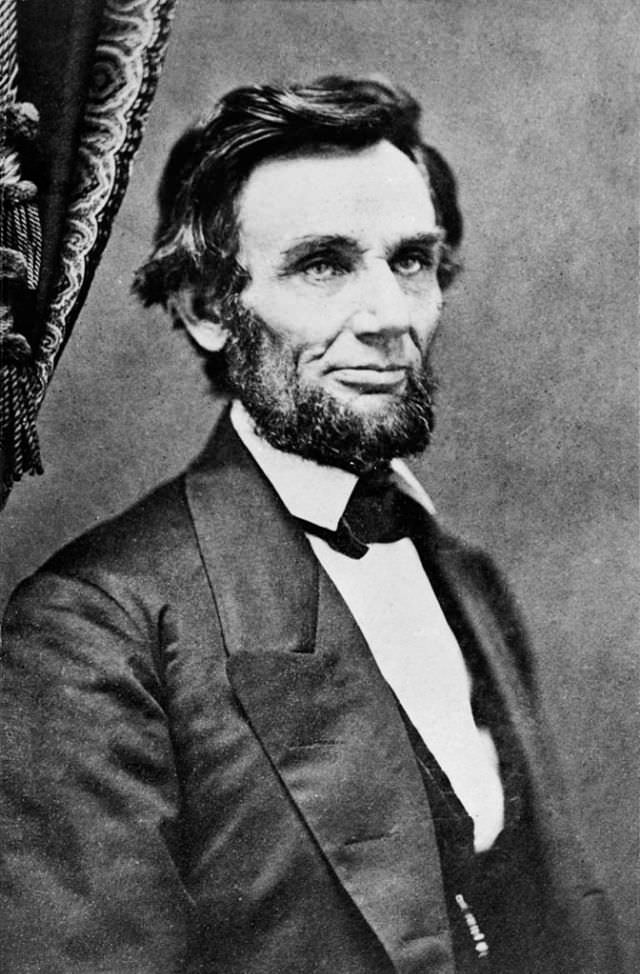
This photograph was taken days before Abraham Lincoln departed his hometown of Springfield, Illinois, for his presidential inauguration in Washington, D.C. The gravity of the journey ahead and the challenges that the country faced amidst the looming Civil War are captured in this image. In the photograph, Lincoln’s expression is one of deep contemplation, reflecting the weight of the responsibilities he was about to undertake. His eyes are focused and carry a certain intensity, showing his resolve and commitment. The image is a close-up portrait, offering a clear view of his facial features, including the now-iconic beard that he had grown — a significant change from earlier photographs where he appeared beardless.
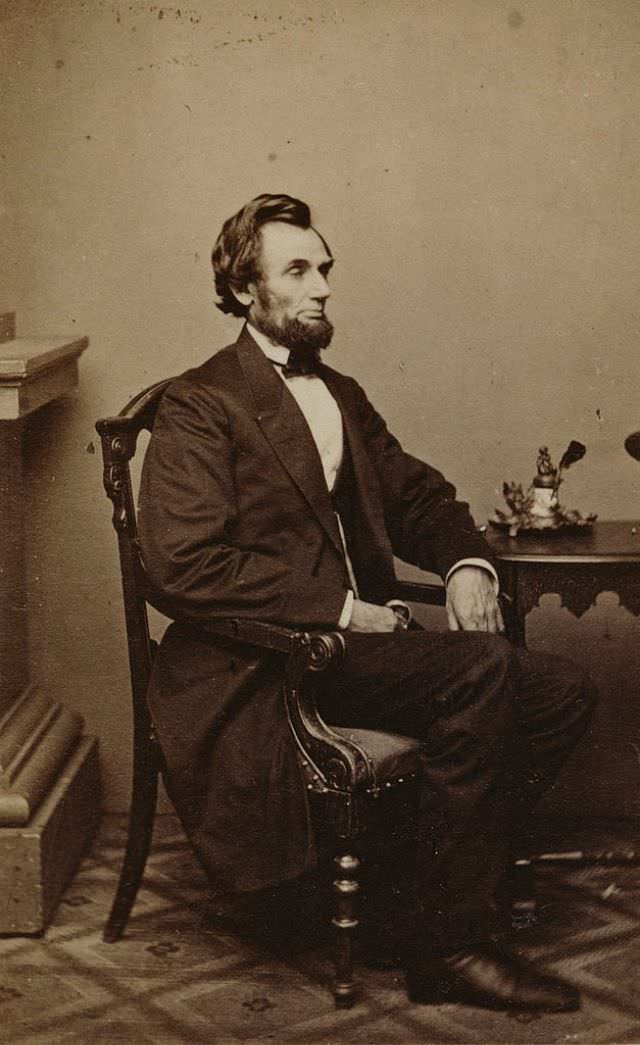
This photograph was taken by renowned photographer Alexander Gardner on February 24, 1861. It features President-elect Abraham Lincoln in Washington, D.C., during his first photographic session in the capital, just a day after his arrival by train for his forthcoming inauguration. In the image, Lincoln’s expression is solemn and introspective, reflecting the turbulent political atmosphere of the time, with the nation on the edge of civil war. This period was one of immense pressure for Lincoln, as secessionist tensions were escalating following his election. Lincoln is dressed in his customary formal attire, fitting the decorum of the presidency and the seriousness of the times. His iconic bearded profile, by then a part of his public persona, is prominent in this portrayal.
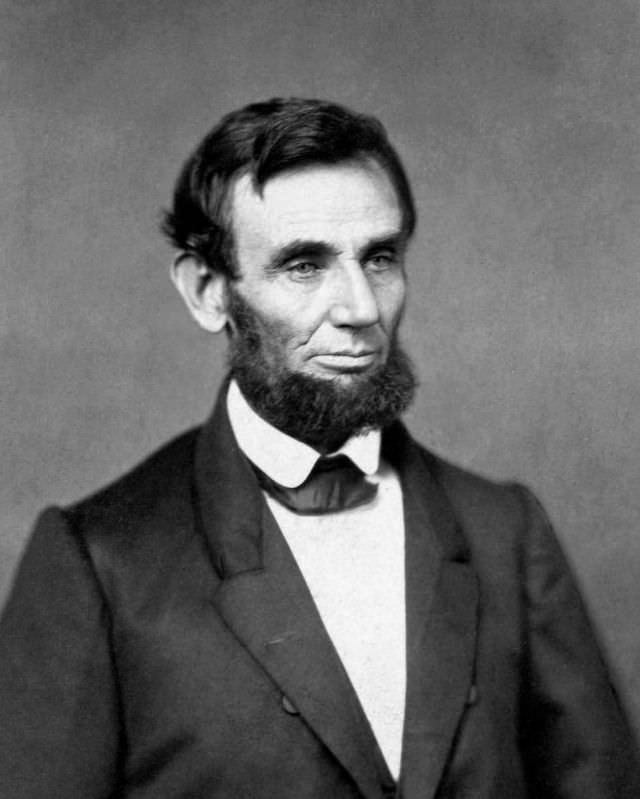
Several prints of this image exist, each carrying the imprints of different photographers, adding to the uncertainty of its origins. These imprints include names such as C.D. Fredericks & Co. from New York and W.L. Germon and James E. McLees, both based in Philadelphia. This lack of clear attribution is unusual for such a historically significant figure and time. Despite the ambiguity of its provenance, the photograph is highly valued for its historical and cultural significance. It portrays President Lincoln at the onset of his term, a period that would soon escalate into the American Civil War. This image, capturing Lincoln at this pivotal moment, sold for $206,500 in a 2009 auction, reflecting its immense historical value and rarity.
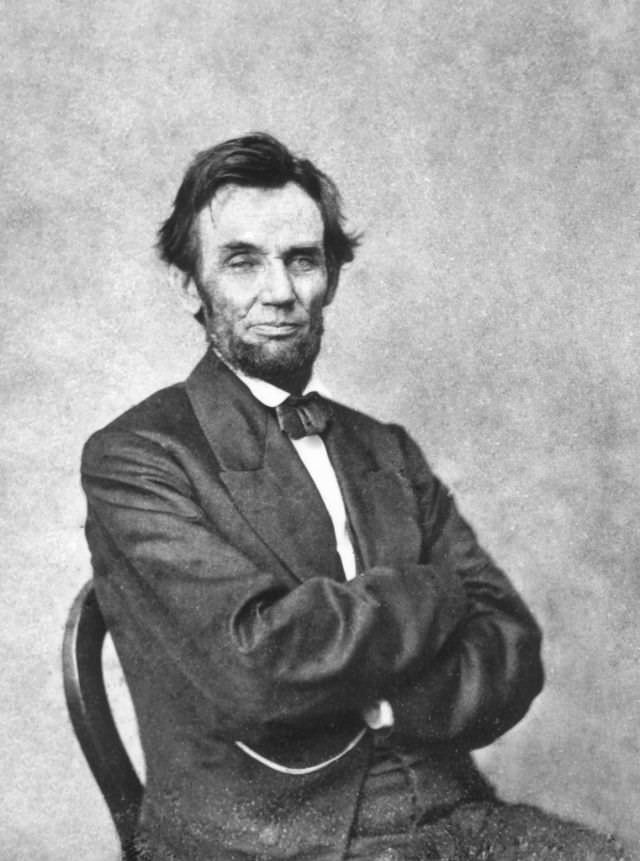
Lincoln is seen seated, projecting a sense of casual authority, with his coat unbuttoned — a departure from the typically formal attire that leaders often wore for official photographs.
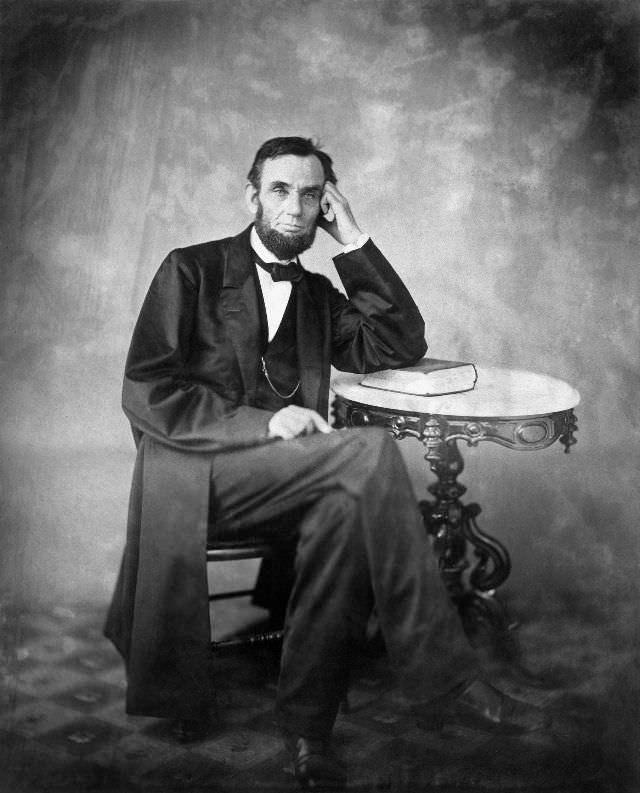
Captured by Alexander Gardner on August 9, 1863, this photograph showcases what was described as Abraham Lincoln’s “Photographer’s Face.” In this image, the weight of the presidency during one of America’s most turbulent periods is clearly registered in Lincoln’s features. His expression is solemn, the lines of stress and concern carving deep contours into his weathered skin. His eyes, without their customary sparkle, reflect the immense pressures and the grim realities of a nation torn by civil war.
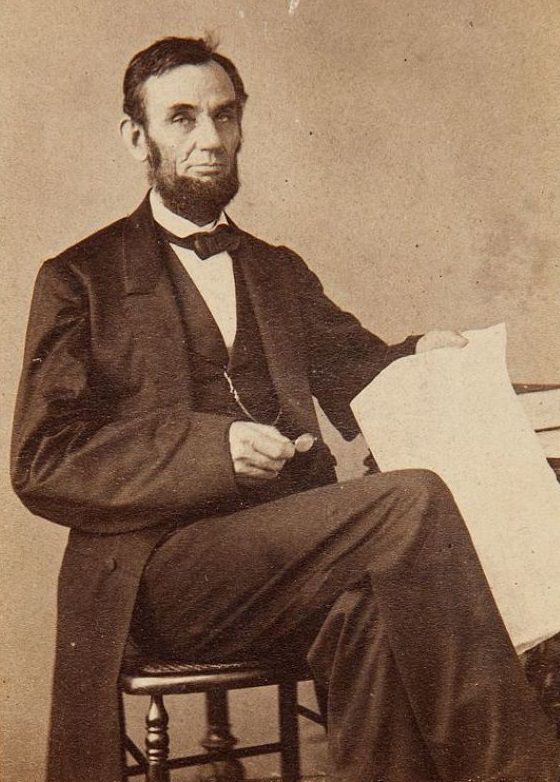
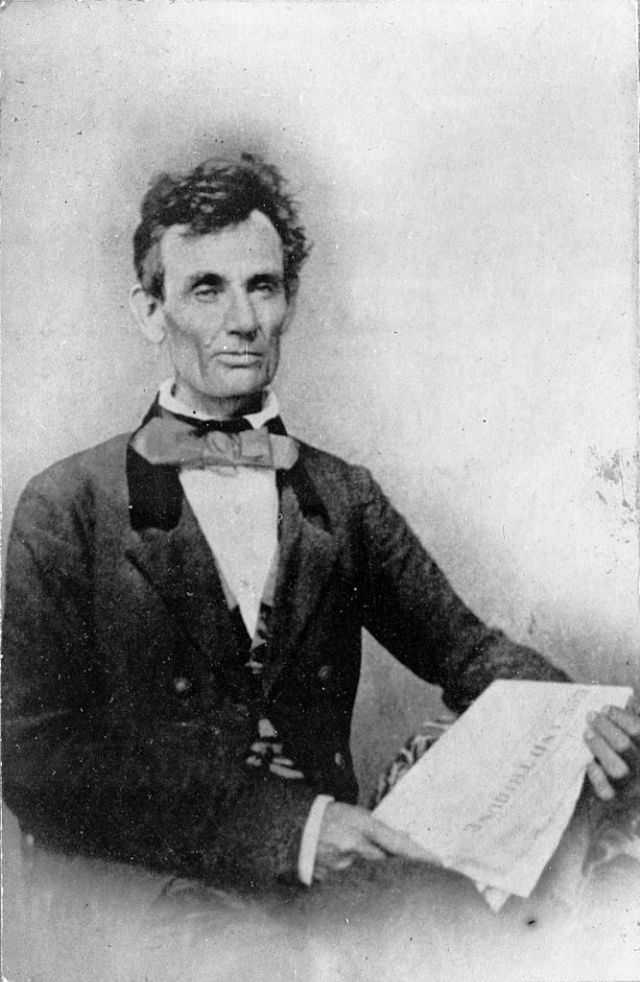
In this photograph taken by Alexander Gardner on August 9, 1863, Abraham Lincoln is portrayed in a more casual and candid state than in many formal portraits of the era. Here, Lincoln appears seated, holding a newspaper in one hand, suggesting a moment of rest in his daily engagement with national affairs. His other hand holds his eyeglasses, a simple but essential accessory for the president, reflecting the countless hours he spent reading reports, letters, and legislative documents. The president’s attire is consistent with his typical modest style, avoiding the showiness he could easily have adopted given his position. His expression is thoughtful and somewhat weary, indicating the immense pressures he constantly faced.
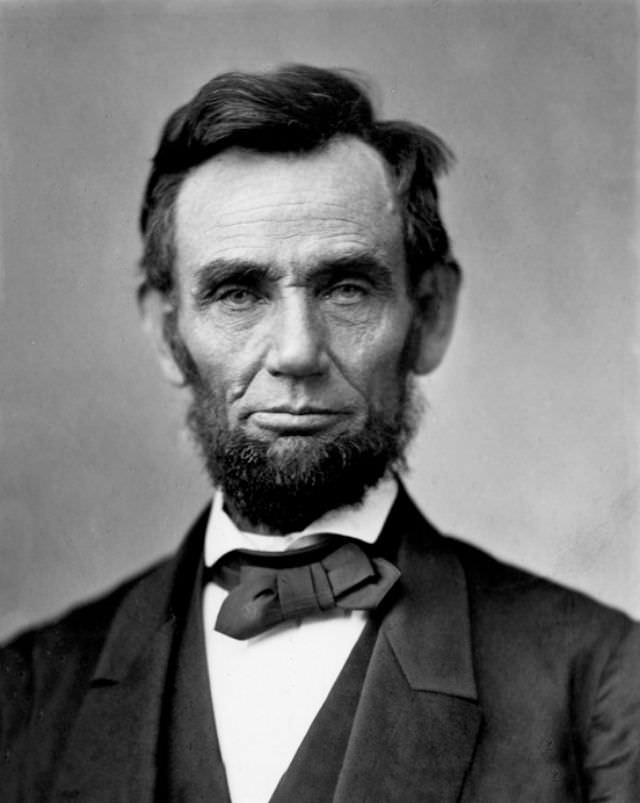
This image, often referred to as the “Gettysburg portrait” even though it was taken in Washington, D.C., captures Lincoln in a state of deep solemnity and reflection — qualities echoed in the famous speech he would soon deliver. In this portrait, Lincoln’s expression is one of stark seriousness, with a hint of the heavy weariness he carried as the Civil War continued to ravage the nation. His eyes, often described as intensely expressive in many of his portraits, appear here to carry a mix of fatigue, concern, and firm determination. The lines and contours of his face, more pronounced in this image, reflect the toll that years of the presidency and personal loss had taken.
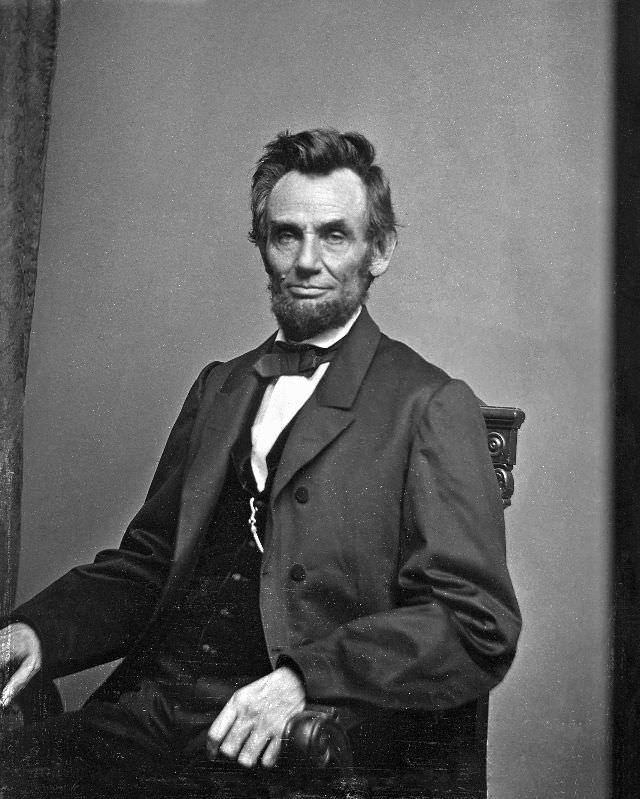
The photograph taken by Mathew Brady on January 8, 1864, is part of a series of important visual documents from a pivotal year in Abraham Lincoln’s presidency and the American Civil War. By this time, the war had deeply marked the president, as is clearly visible in his portraits from this period. In the images captured during this session at Brady’s studio, Lincoln appears both presidential and deeply human. His tall, lean figure is often emphasized by the camera’s perspective, and his attire is consistently formal, reflecting the dignity of his office. It is Lincoln’s face, however, that most powerfully conveys the weight of his position in 1864.
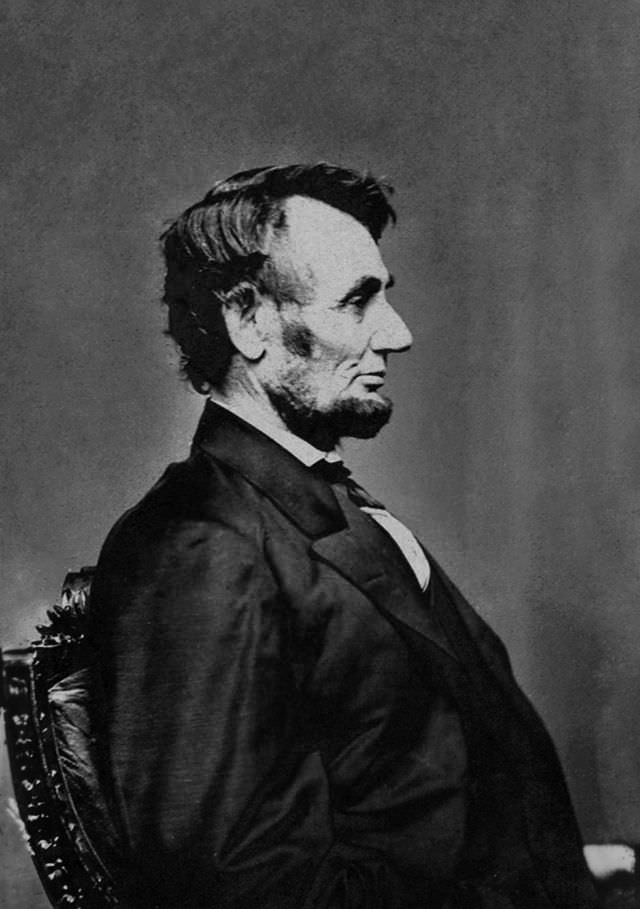
The photograph taken by Anthony Berger on February 9, 1864, commonly referred to as “The Penny Profile,” holds a unique place in American history and culture. It was one of several photographs taken during Lincoln’s sitting at Mathew Brady’s gallery, managed by Berger, and this particular profile image would eventually become the model for the most widely seen representation of Lincoln: the portrait on the one-cent coin. In the photograph, Lincoln is depicted in a stark profile, a composition that removes the subject’s ability to engage directly with the viewer through eye contact. The president appears contemplative and introspective, with the trials of his presidency visibly etched in his features. His hair and beard are somewhat unruly, which brings a human quality to the figure known more often as a monumental leader. The image is honest, without the embellishments or idealization common in many political portraits of the era.
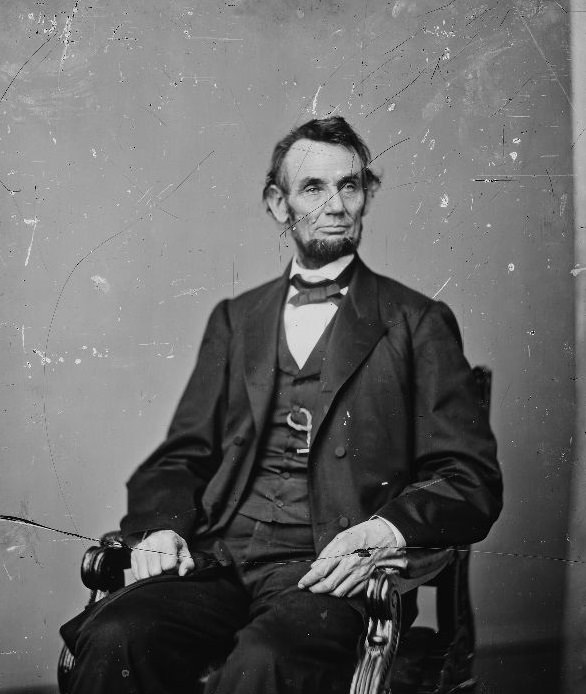
In the photograph, Lincoln is captured from a medium distance, seated, with his head turned slightly to his right, giving a sense of candidness as if he has just turned to address someone. The image is clear and detailed, allowing viewers to observe Lincoln’s expression closely. He appears both presidential and approachable, a leader who is deeply thoughtful and carries the weight of his office. His attire is formal, fitting his position, but the image avoids excessive grandeur. The focus is on Lincoln the man, not just the president, which contributes to the sense of personal connection felt by those who view the portrait. The slight dishevelment of his hair, the visible creases of his suit, and the natural resting position of his hands all add to a sense of authenticity. The technical aspects of the photograph also tell a story. The use of glass plate negatives, while offering clarity and detail, required the subject to remain still for a significant period. The cracked plate specifically adds to the historical texture of the image, representing the fragility of the medium and the era.
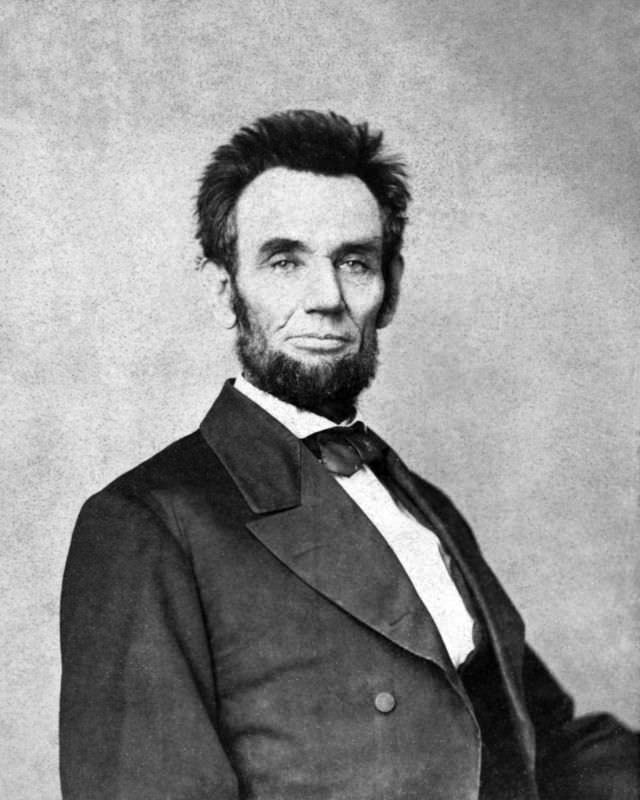
Lincoln’s appearance reflects the cumulative weight of his presidential responsibilities. In the image, Lincoln’s hair is notably shorter, believed to have been cut for a practical reason — specifically, to accommodate the creation of a life mask by sculptor Clark Mills. Life masks were plaster casts made of a person’s face, used to create sculptures or other likenesses. The process involved applying wet plaster directly to the face, and shorter hair would prevent the plaster from adhering to strands, which could cause discomfort when the mask was removed.
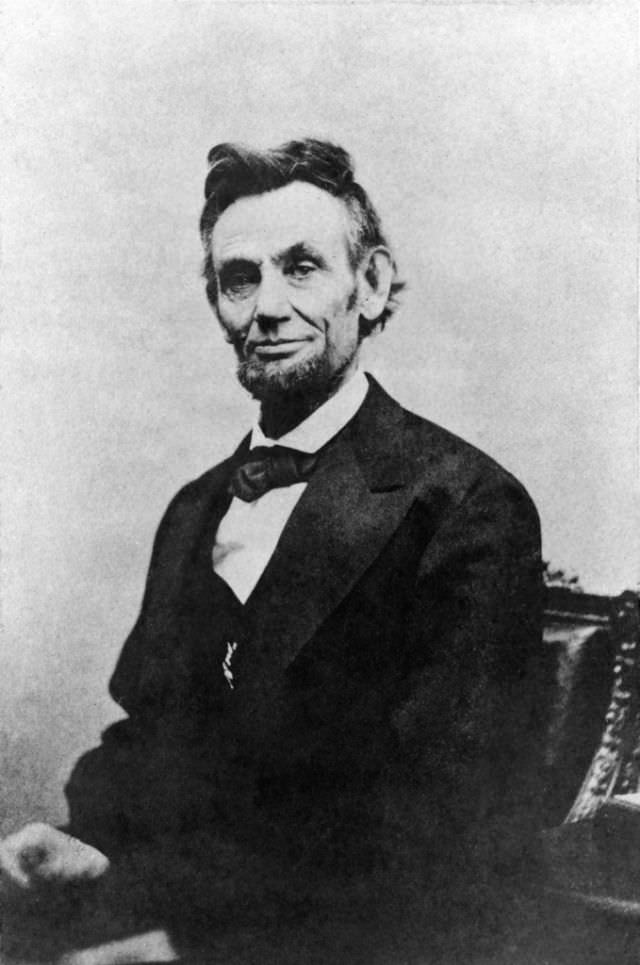
This photograph, taken by Alexander Gardner on February 5, 1865, captures Abraham Lincoln at a time when the immense pressures of his presidency during the Civil War were particularly evident in his face. It is one of the most iconic images of Lincoln, reflecting the weight of a nation’s struggle on his shoulders. In this portrait, Lincoln’s gaunt and weary appearance is clear. The lines on his face and the somber expression indicate the toll that years of war, personal losses, and political battles had taken. Despite the evident fatigue, there is also a sense of the resilience and quiet resolve that defined Lincoln’s leadership. Gardner, a skilled photographer known for his work documenting the Civil War, used the still relatively new technology of photography to capture a more candid and vulnerable side of the president. The photograph lacks the formality of traditional painted portraiture of the time, offering instead a stark, honest view of the man himself, without the trappings of his office.