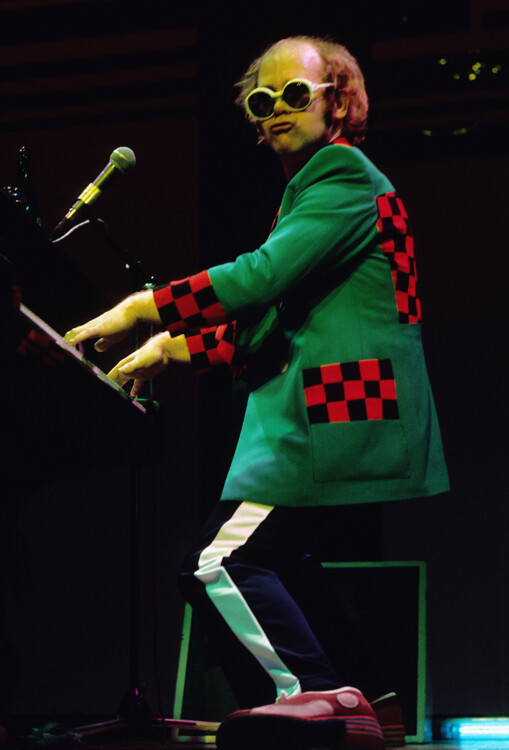
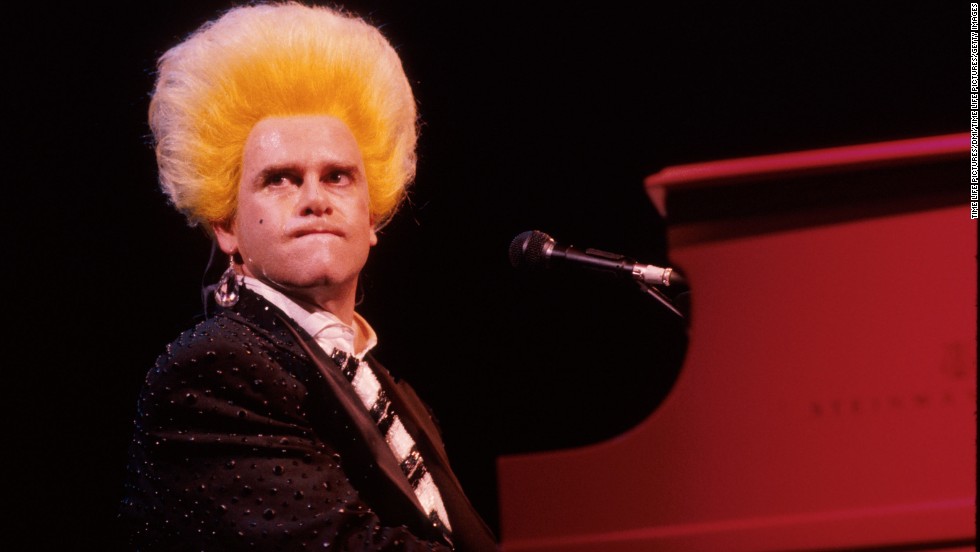
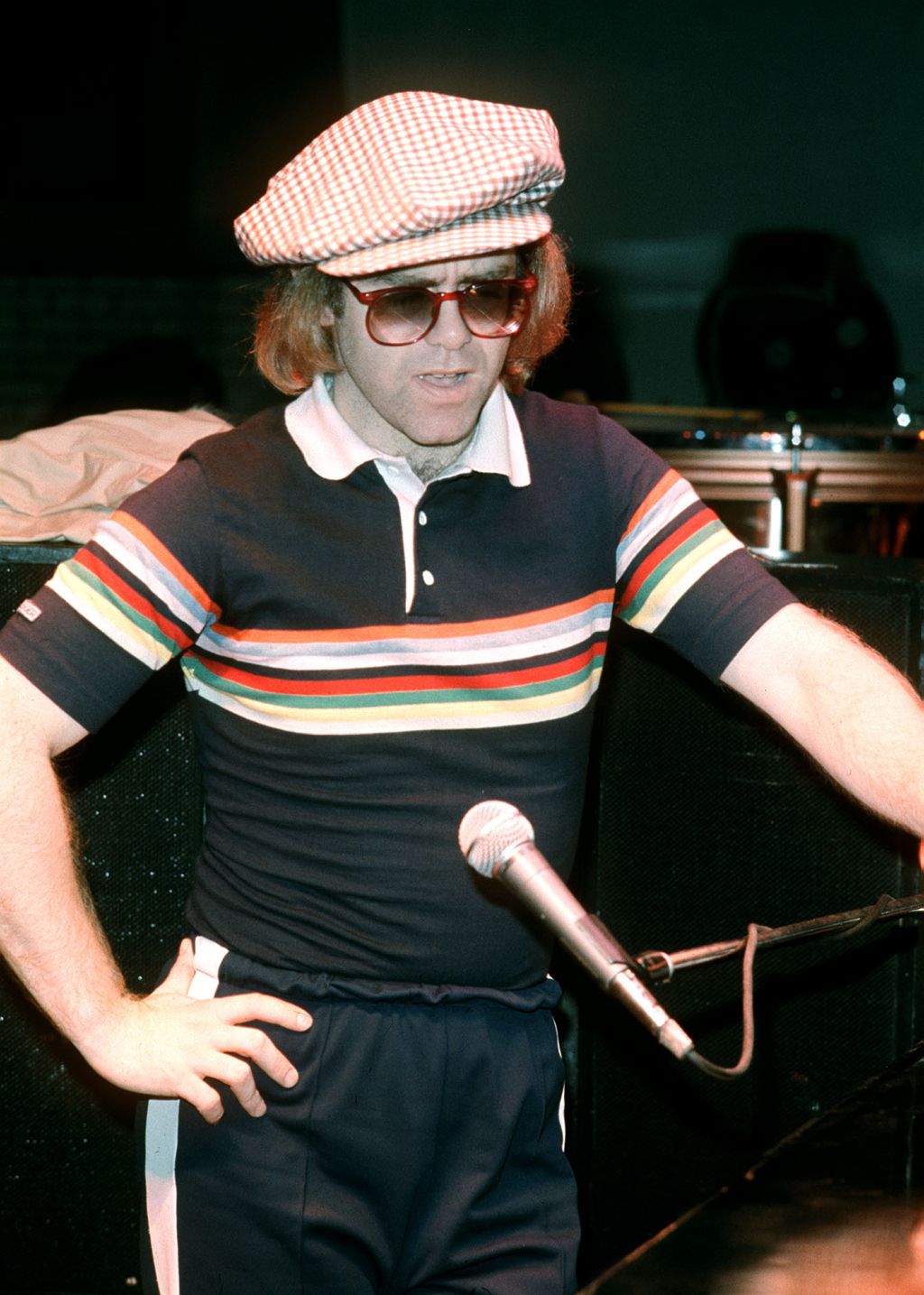
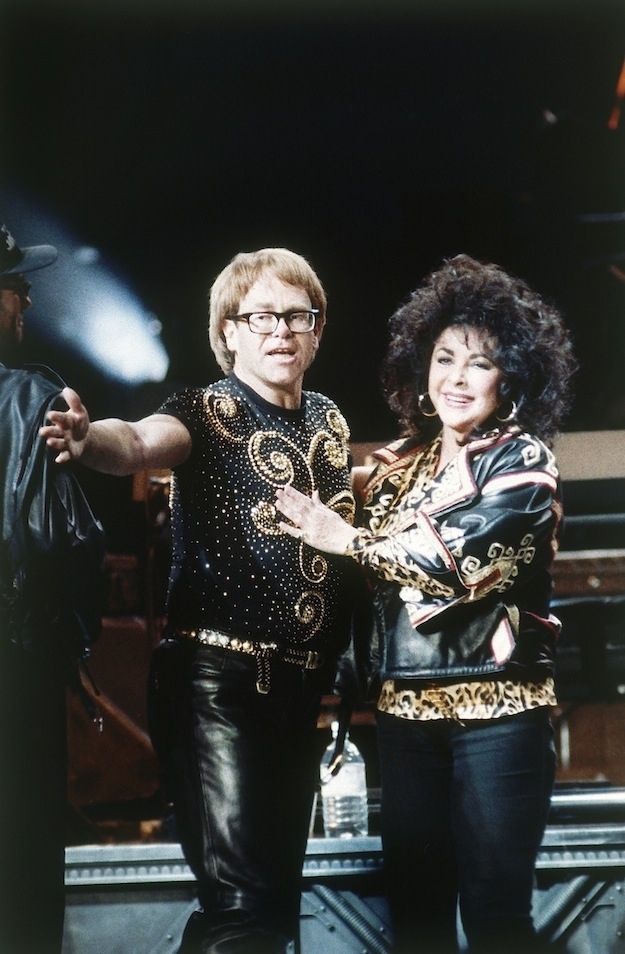
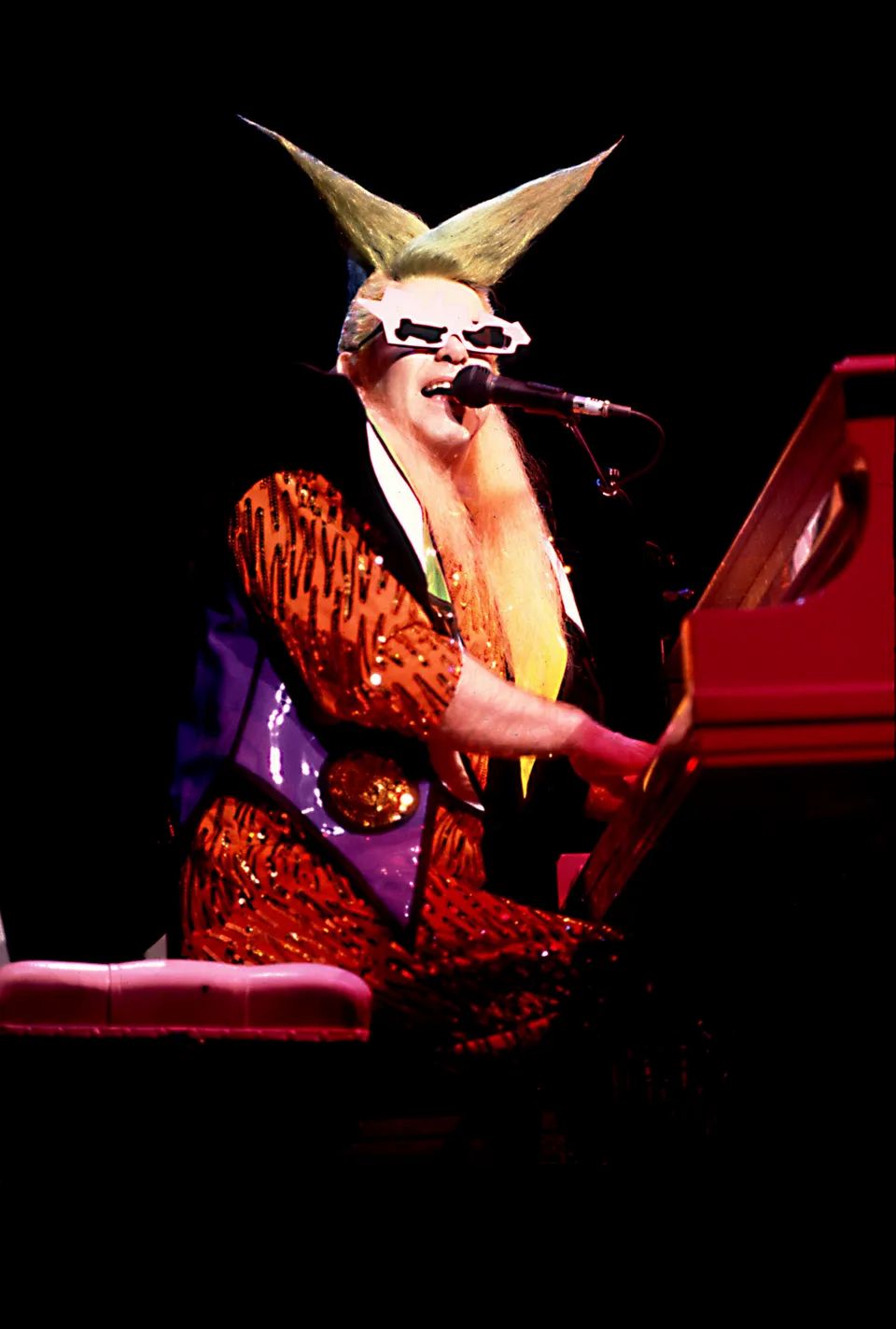
Few artists in the history of pop music have used fashion as boldly as Elton John. From his earliest days as a bar singer and piano player in the 1960s, he was already developing a visual identity as striking as his music. By the time he became a global superstar in the 1970s, his outfits had taken on a life of their own — full of sequins, satin, silk, feathers, and colors loud enough to match any arena. His wardrobe wasn’t just decoration. It was performance.
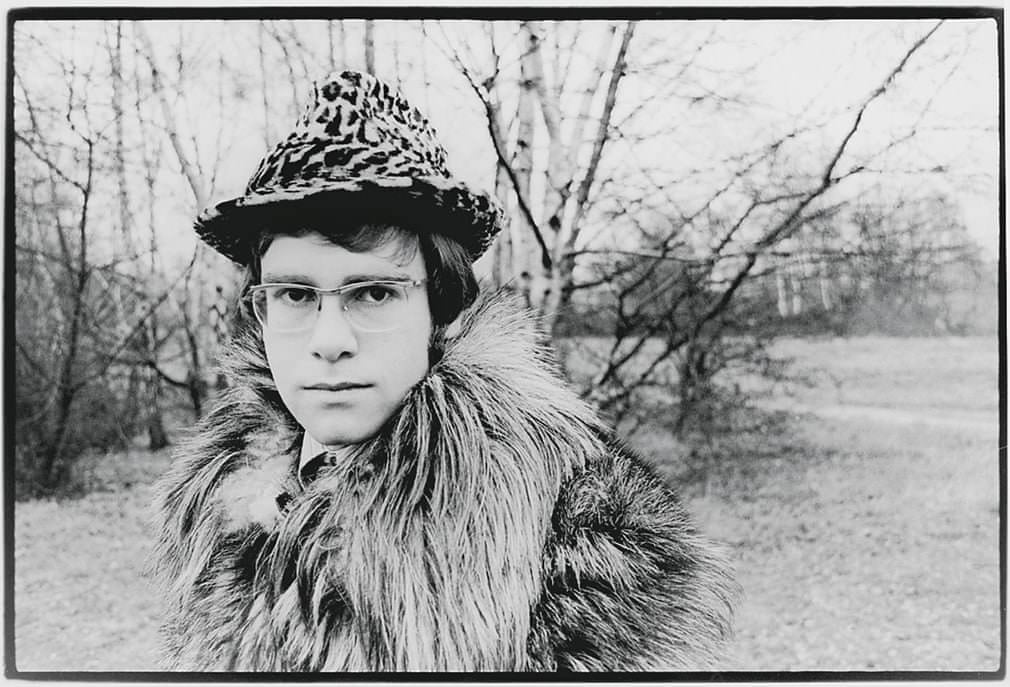
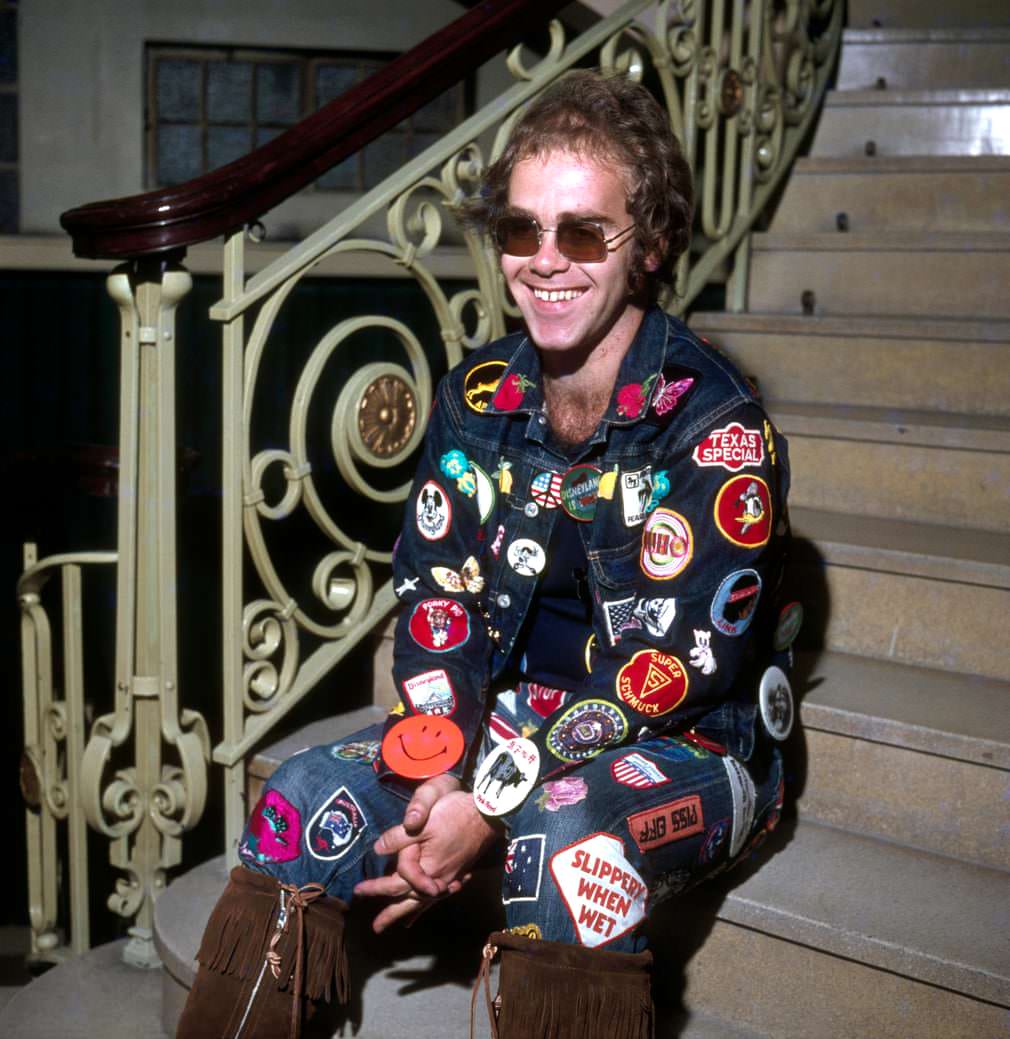
This is the outfit John wore for a photo shoot for the release of his first single in the 60s.
John’s early look was relatively understated compared to what would come. In the late 1960s, he was still crafting his stage persona, performing in smaller venues and building the piano-based showmanship that would later fill stadiums. Even then, his sense of style stood out. His taste for eye-catching clothing developed quickly alongside his career, and within just a few years, the costumes became as much a part of the show as the music itself.
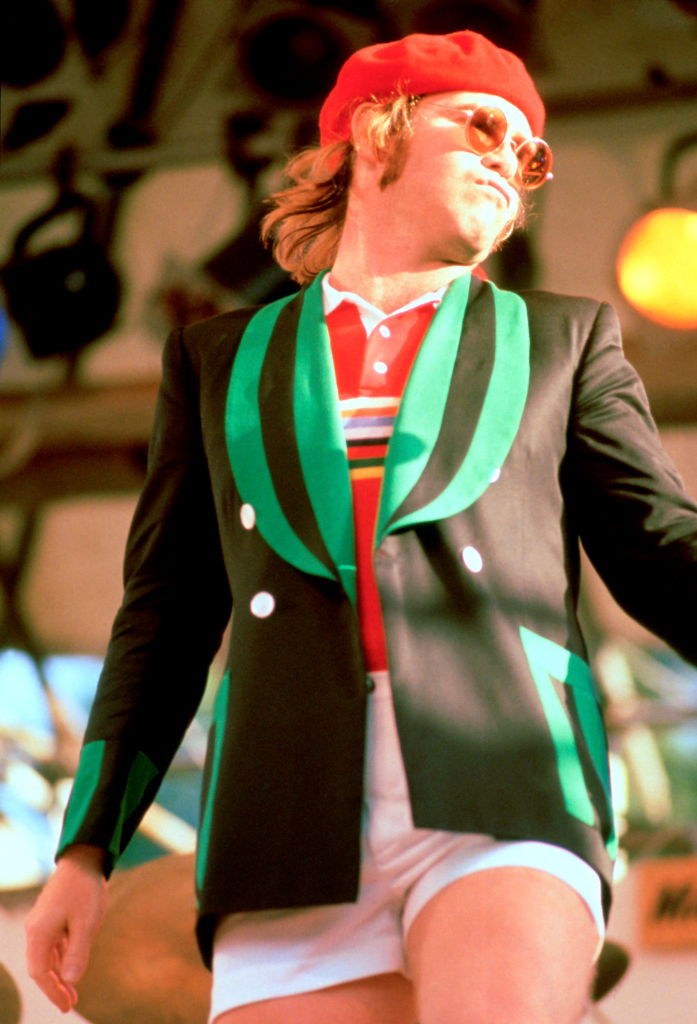
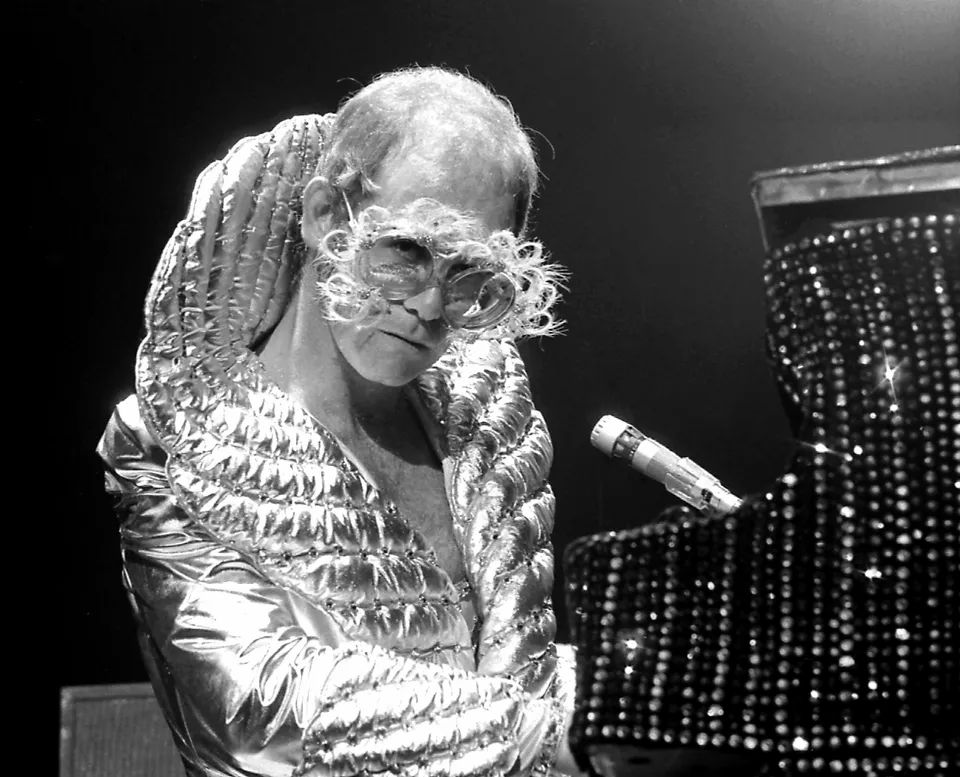
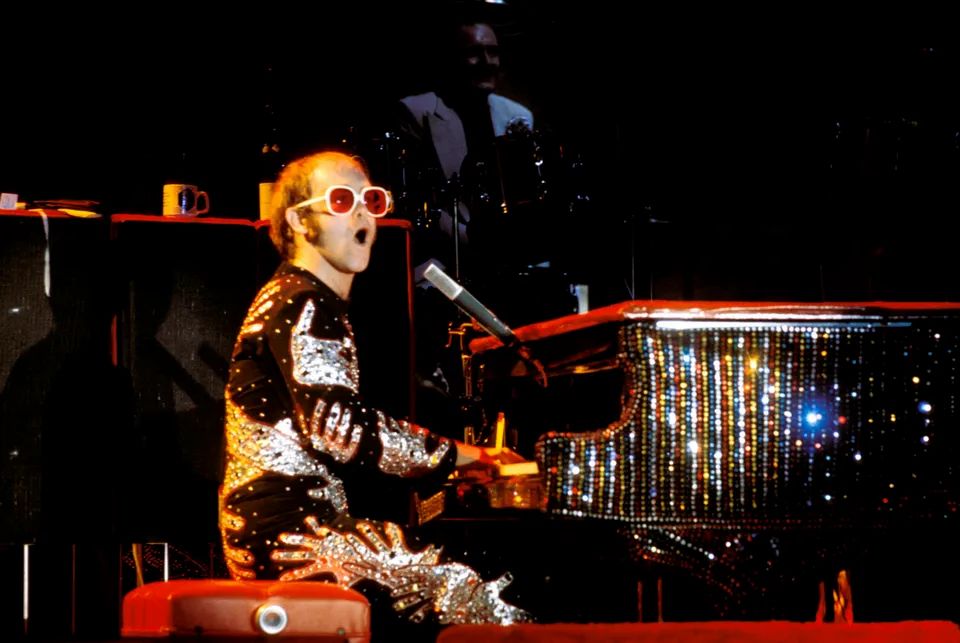
One of his most recognizable accessories was his eyewear. Elton John built one of the most famous collections of glasses in entertainment history. Some pairs leaned toward nerdy-chic. Others were outright wild — palm tree frames, oversized lenses, neon colors. The glasses never felt like an afterthought. They were always chosen to match the rest of the look, completing each outfit as a deliberate statement.
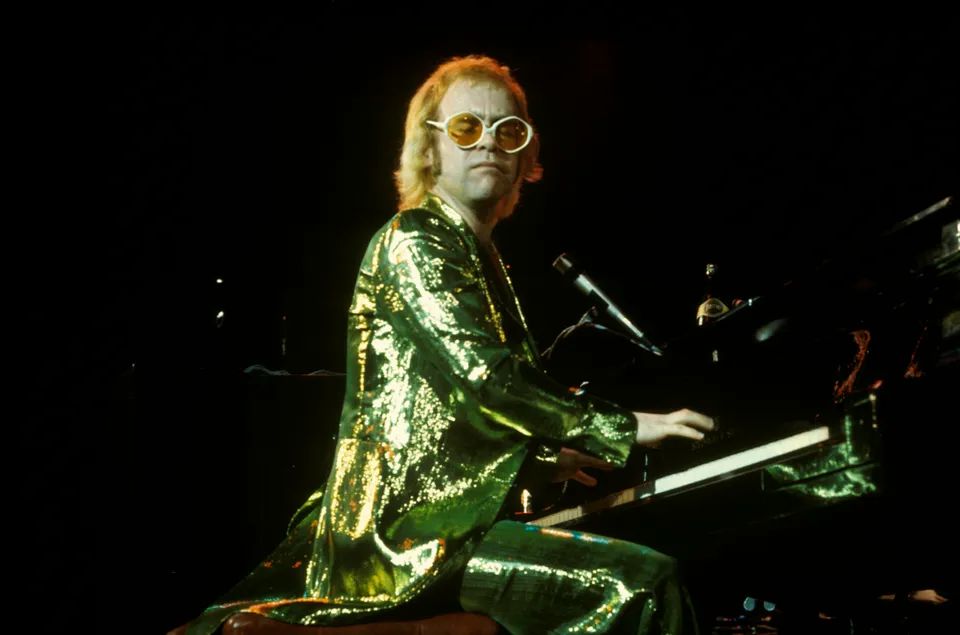
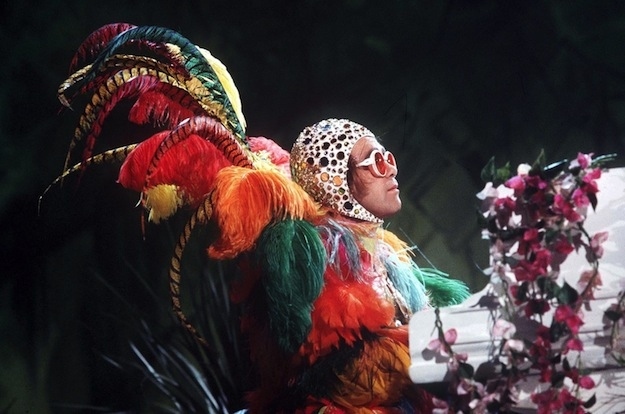
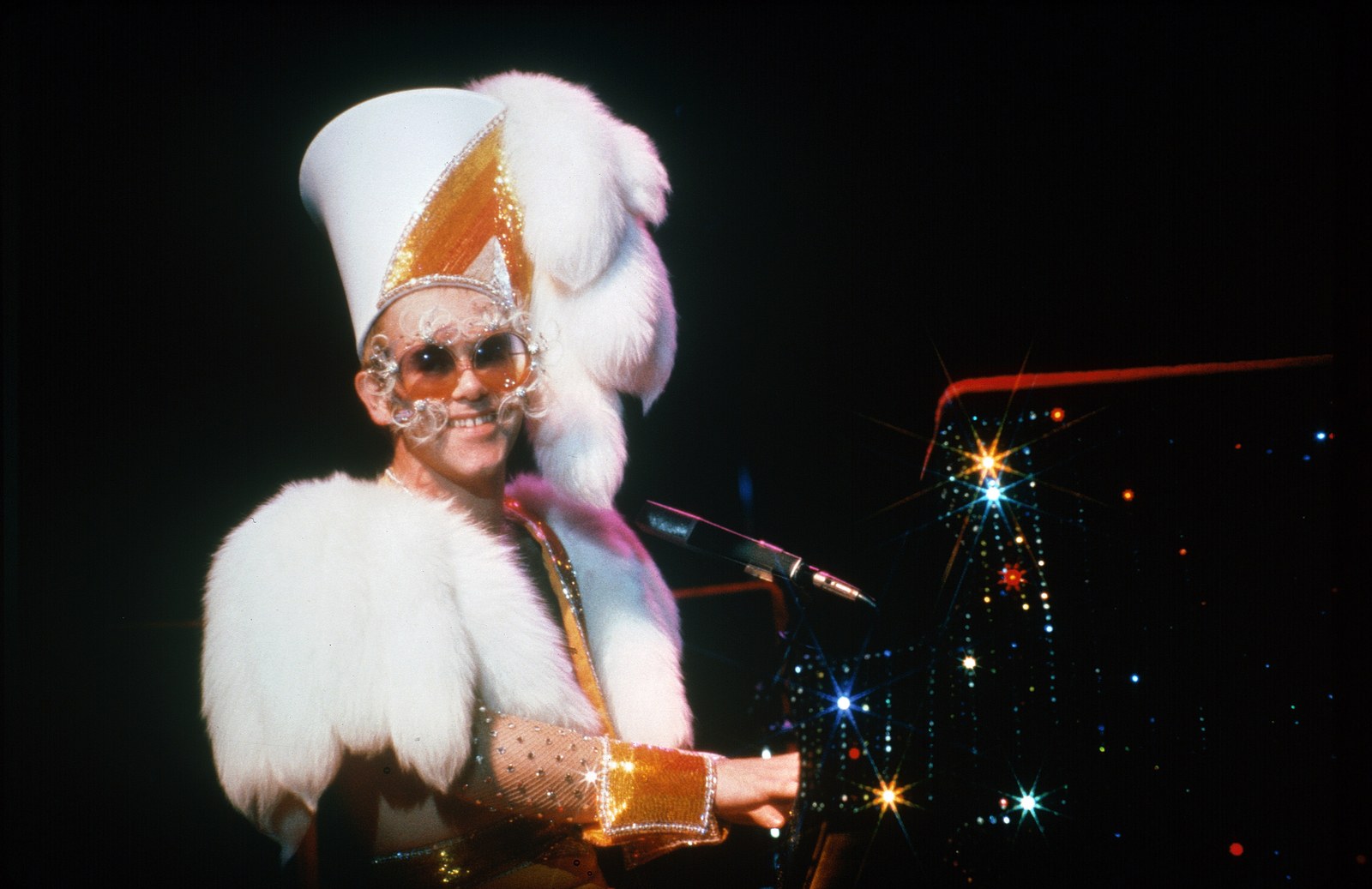
By 1973, the sequined suits were in full force. John performed in outfits that caught every stage light and threw it back at the crowd. The 1974 concert season pushed things even further, with costumes that ranged from metallic bodysuits to enormous fuzzy hats to full feathered ensembles. No two shows looked alike. He treated each performance as its own visual event.
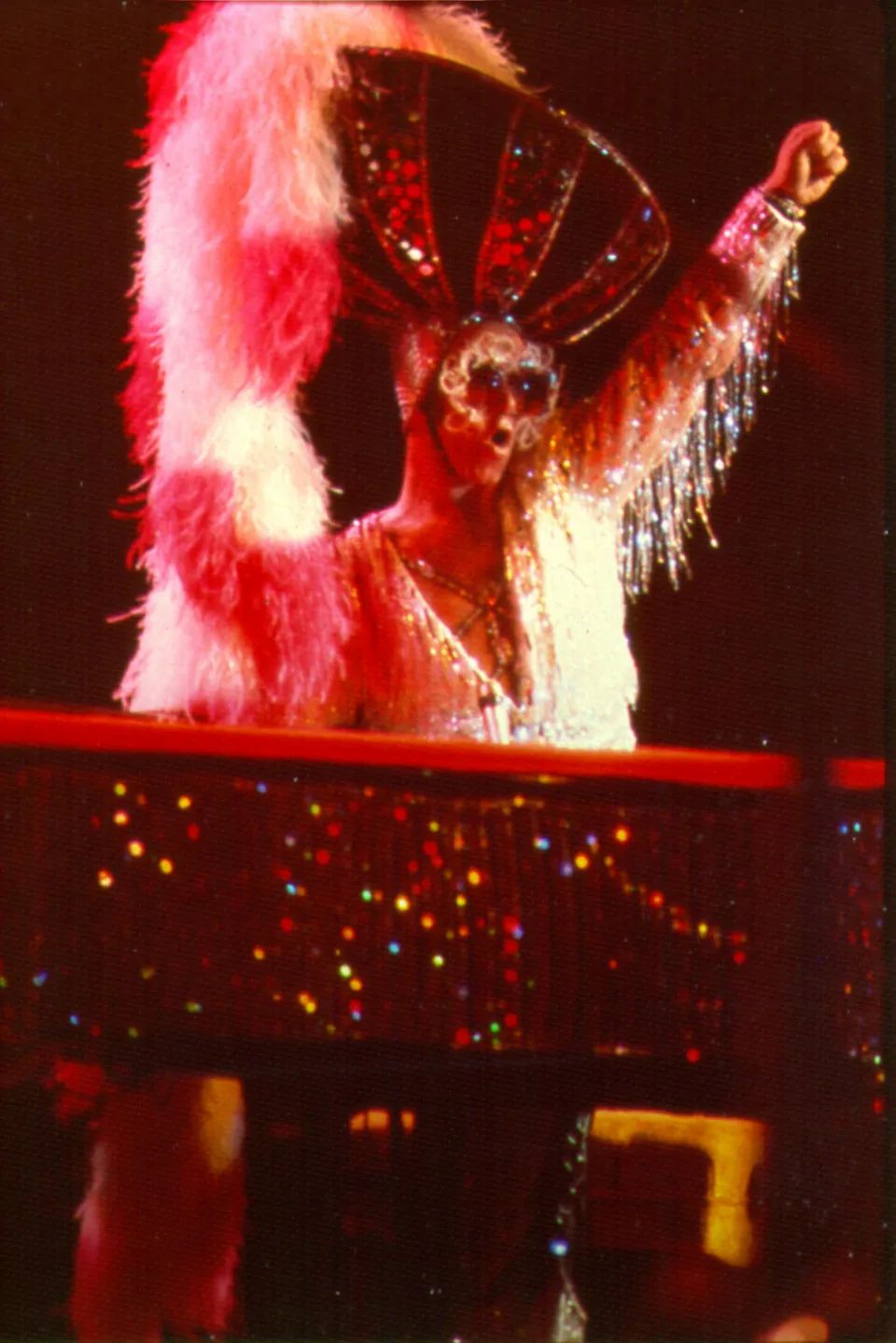
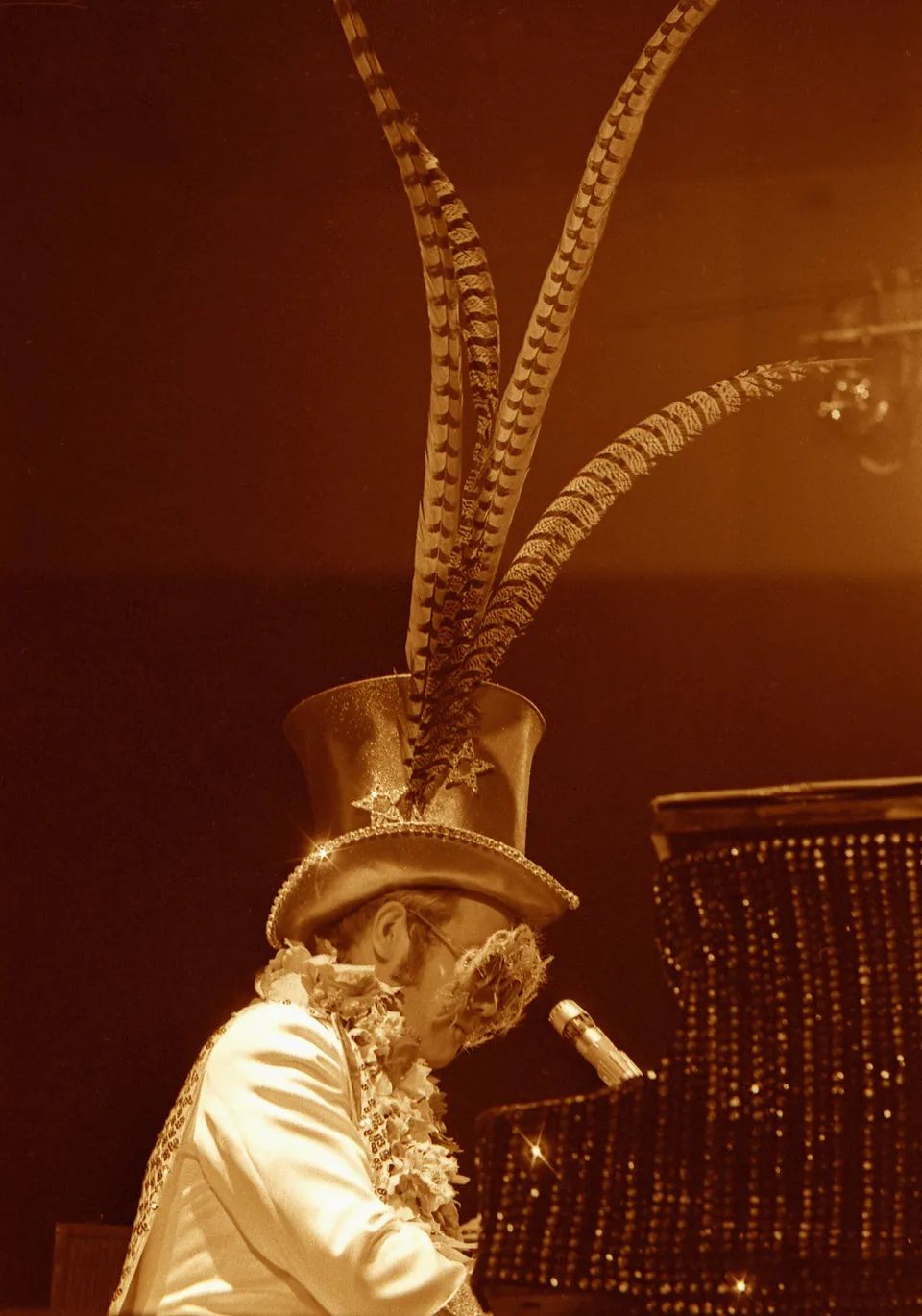
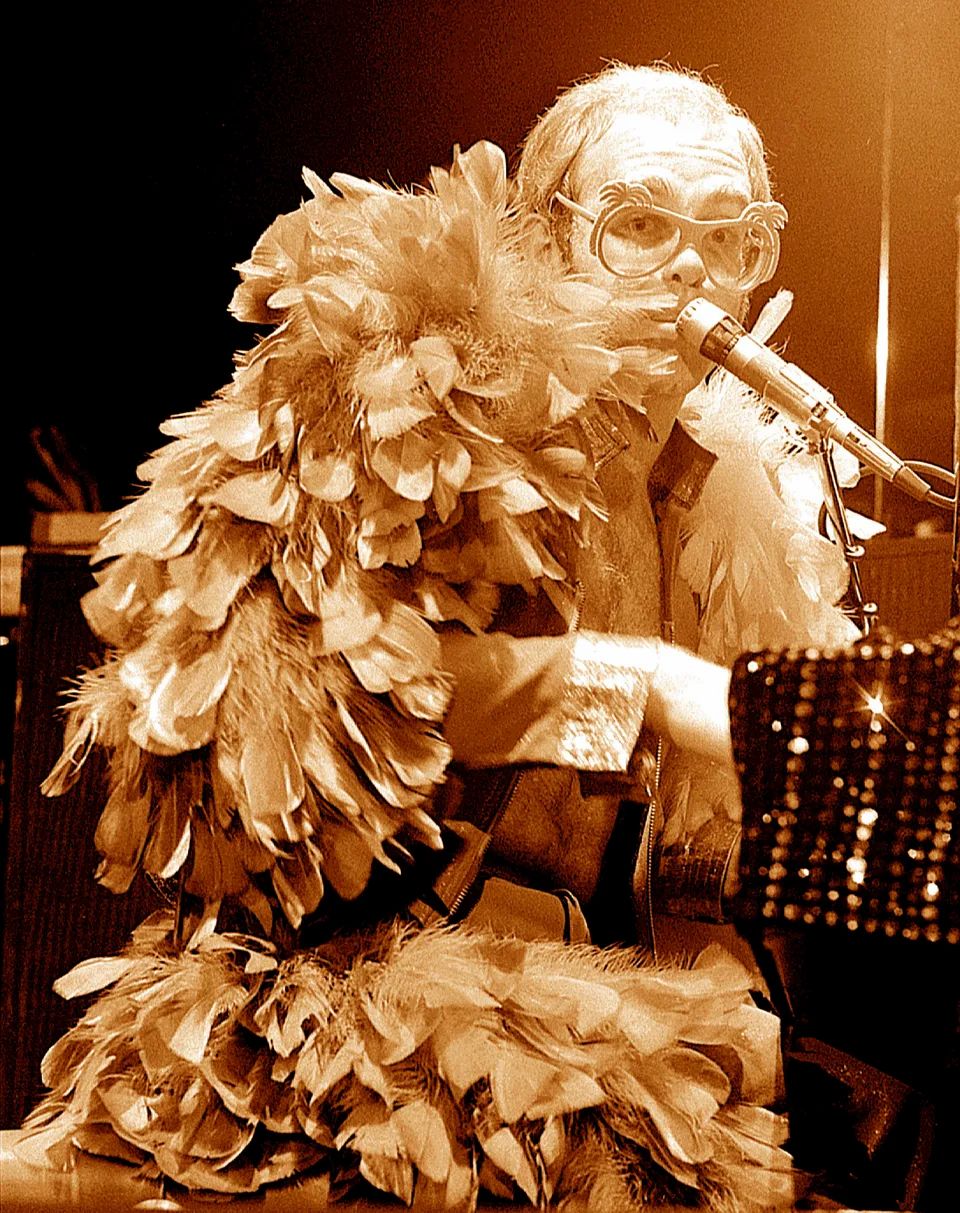
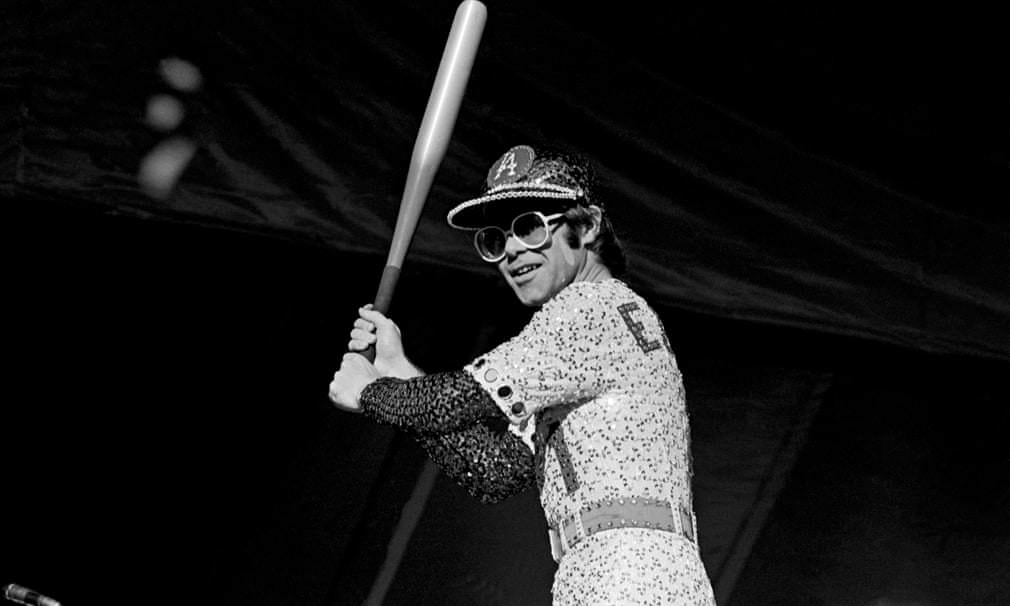
One of the most talked-about moments of 1975 came at Dodger Stadium in Los Angeles. John performed two sold-out concerts wearing a custom Dodgers uniform with ‘Elton’ stitched across the back. He wore rhinestone-covered platform boots and a matching bedazzled cap. It was equal parts sports tribute and pure spectacle, drawing tens of thousands of fans who knew they were watching something they’d never see again.
The Wembley Stadium performances in June 1975 showcased yet more elaborate costuming, with John commanding the massive stage in outfits designed to be seen from the furthest rows. That same year, he wore a suit covered in the names of famous stars — a piece that reflected both his love of celebrity culture and his own place within it. His performance of ‘Pinball Wizard’ in 1975 featured one of his most theatrical looks yet, complete with towering platform boots.
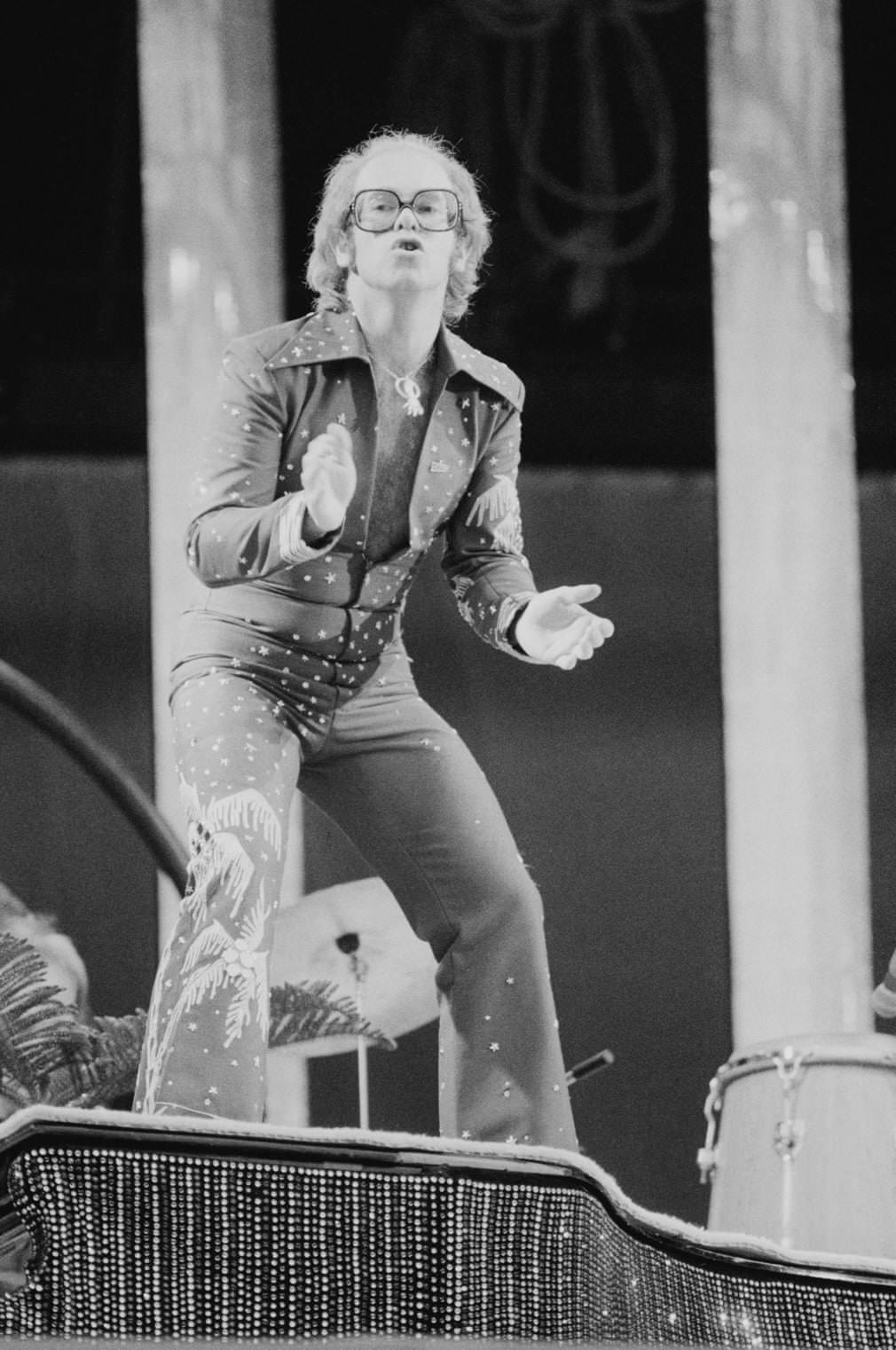
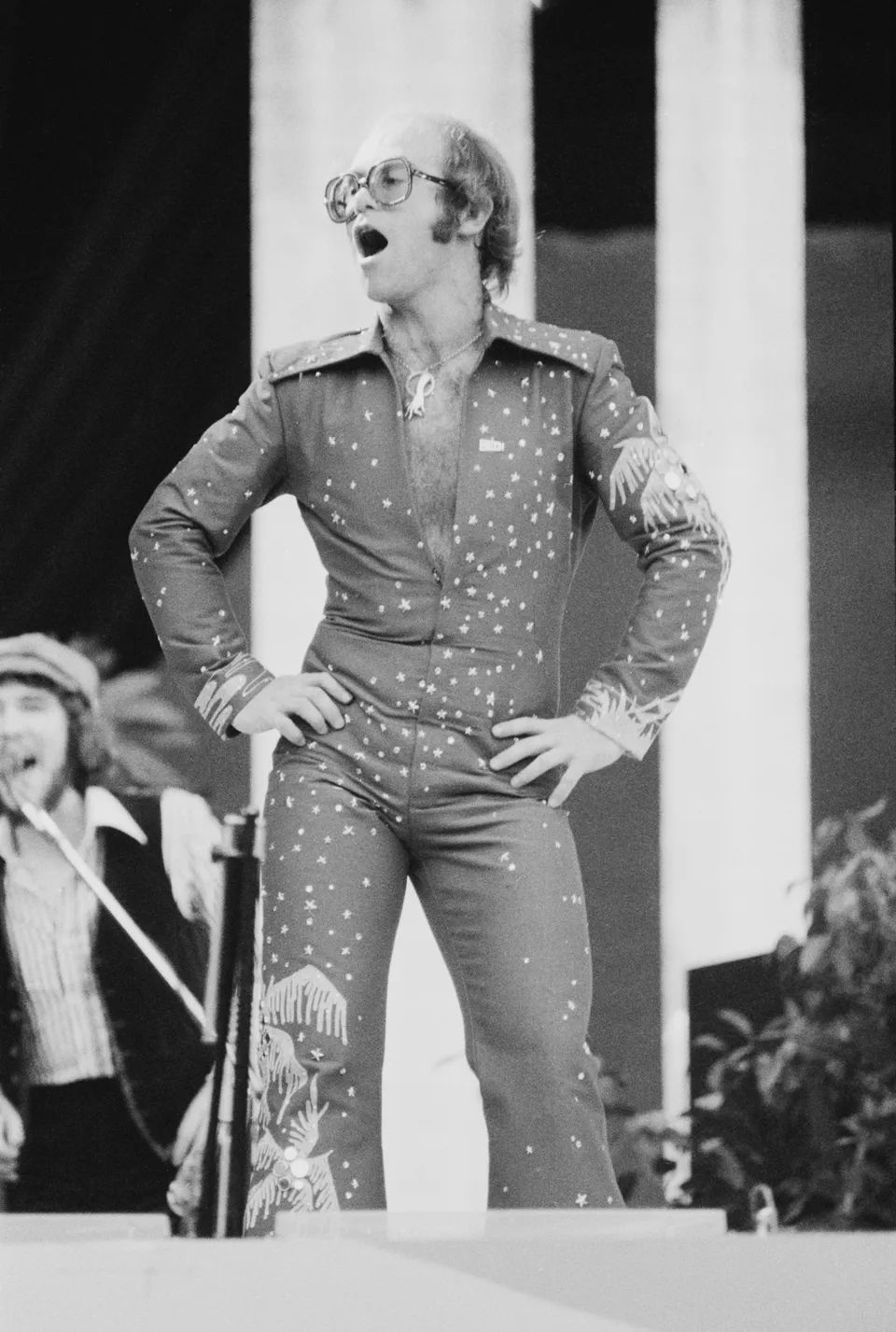
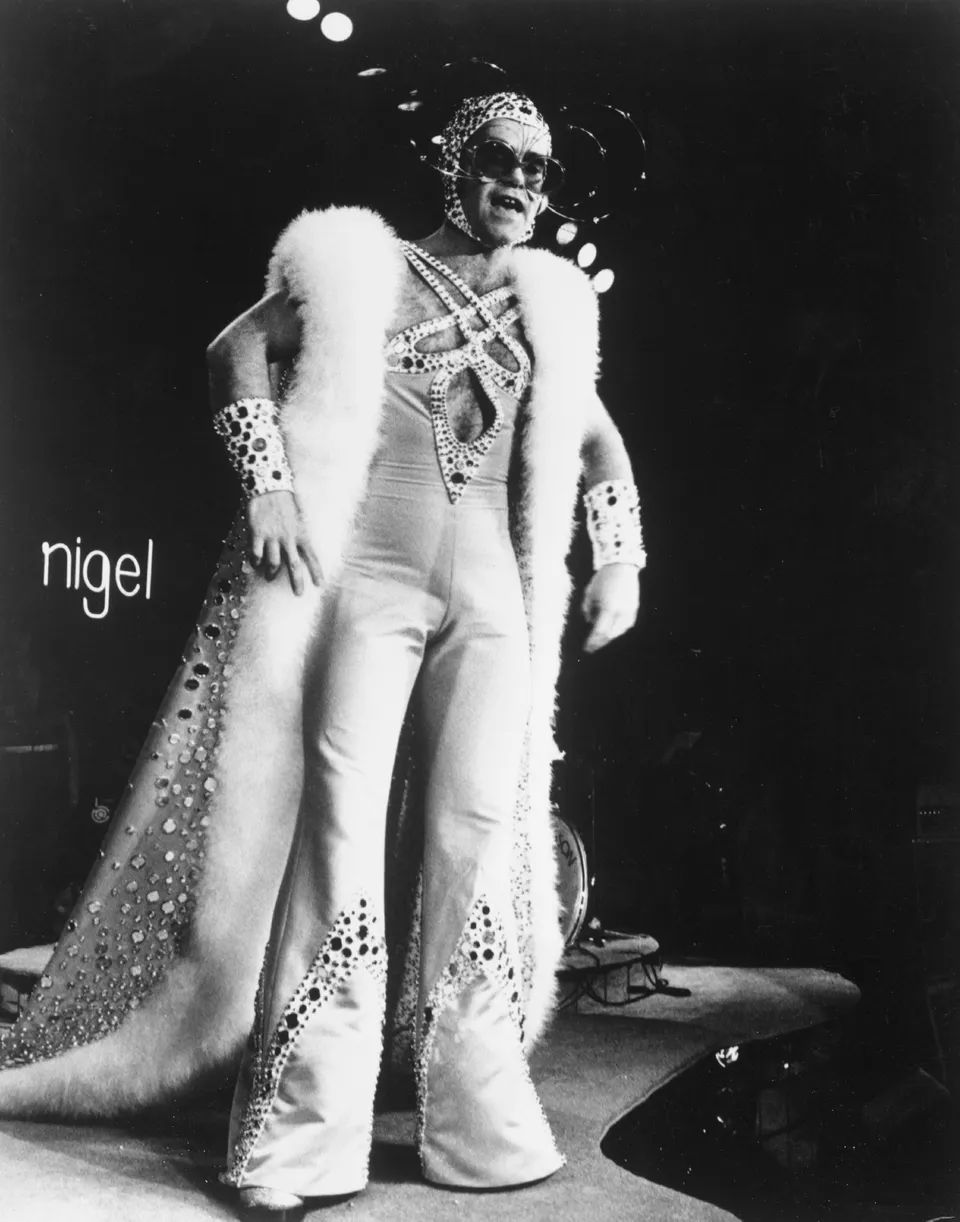
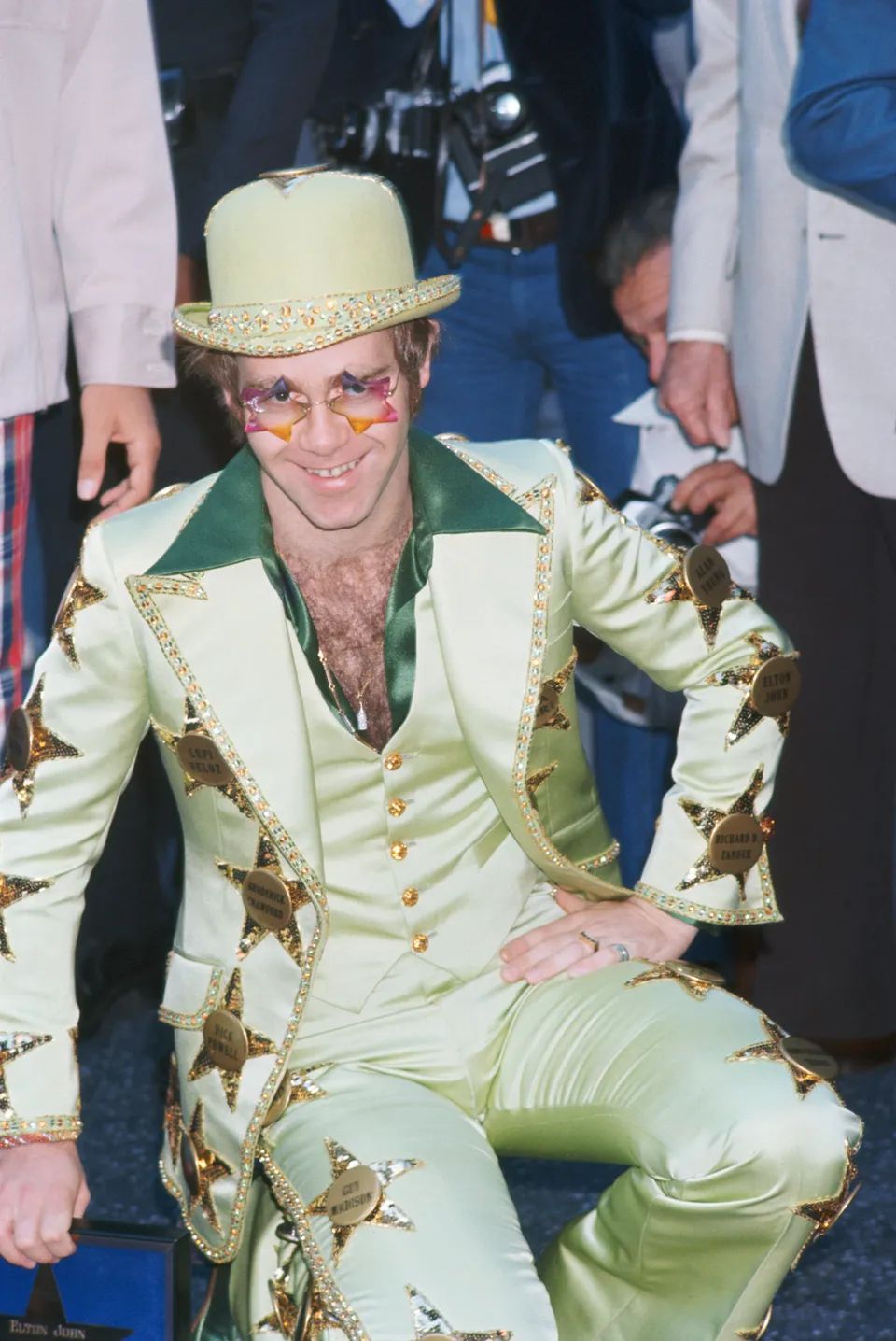
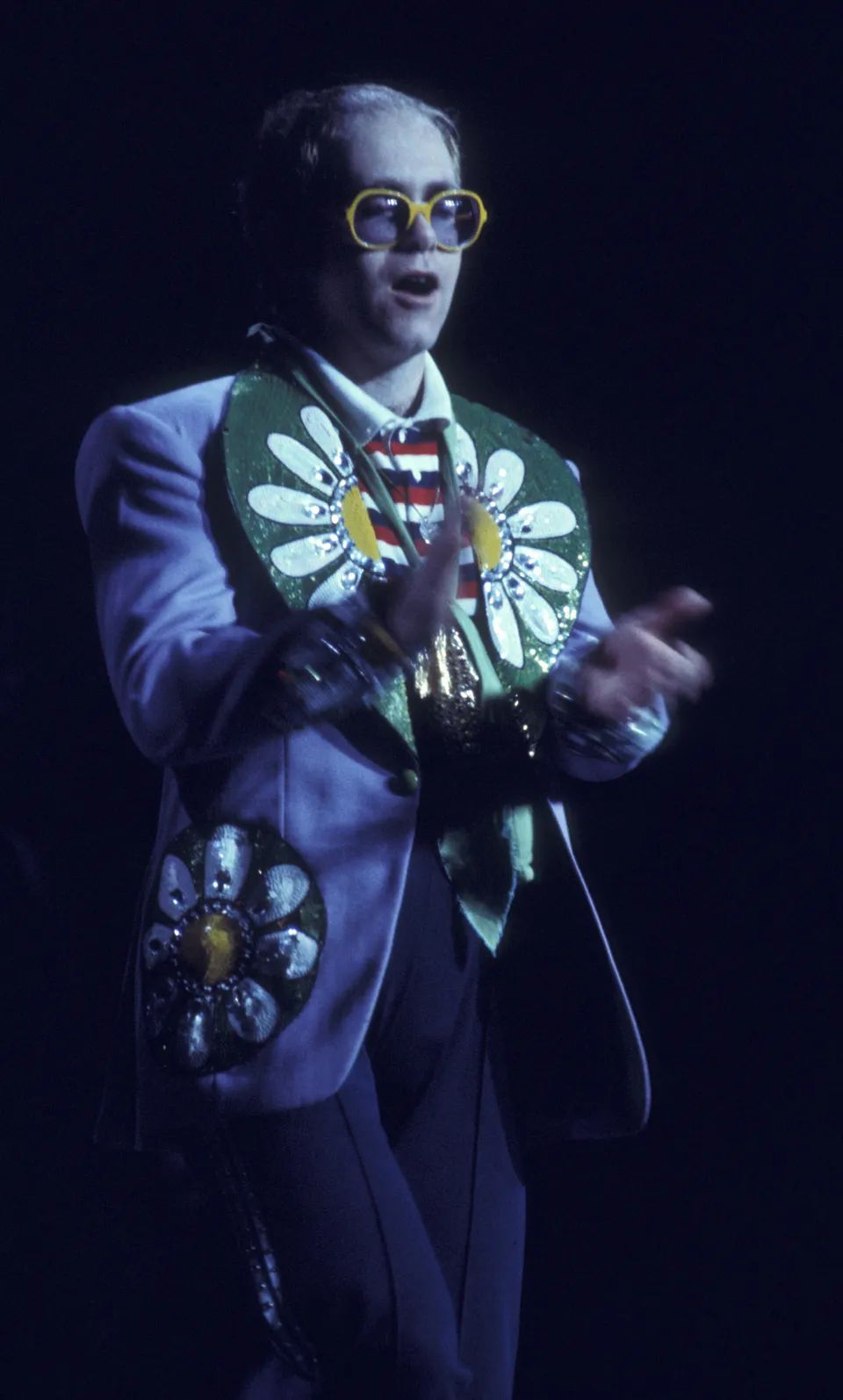
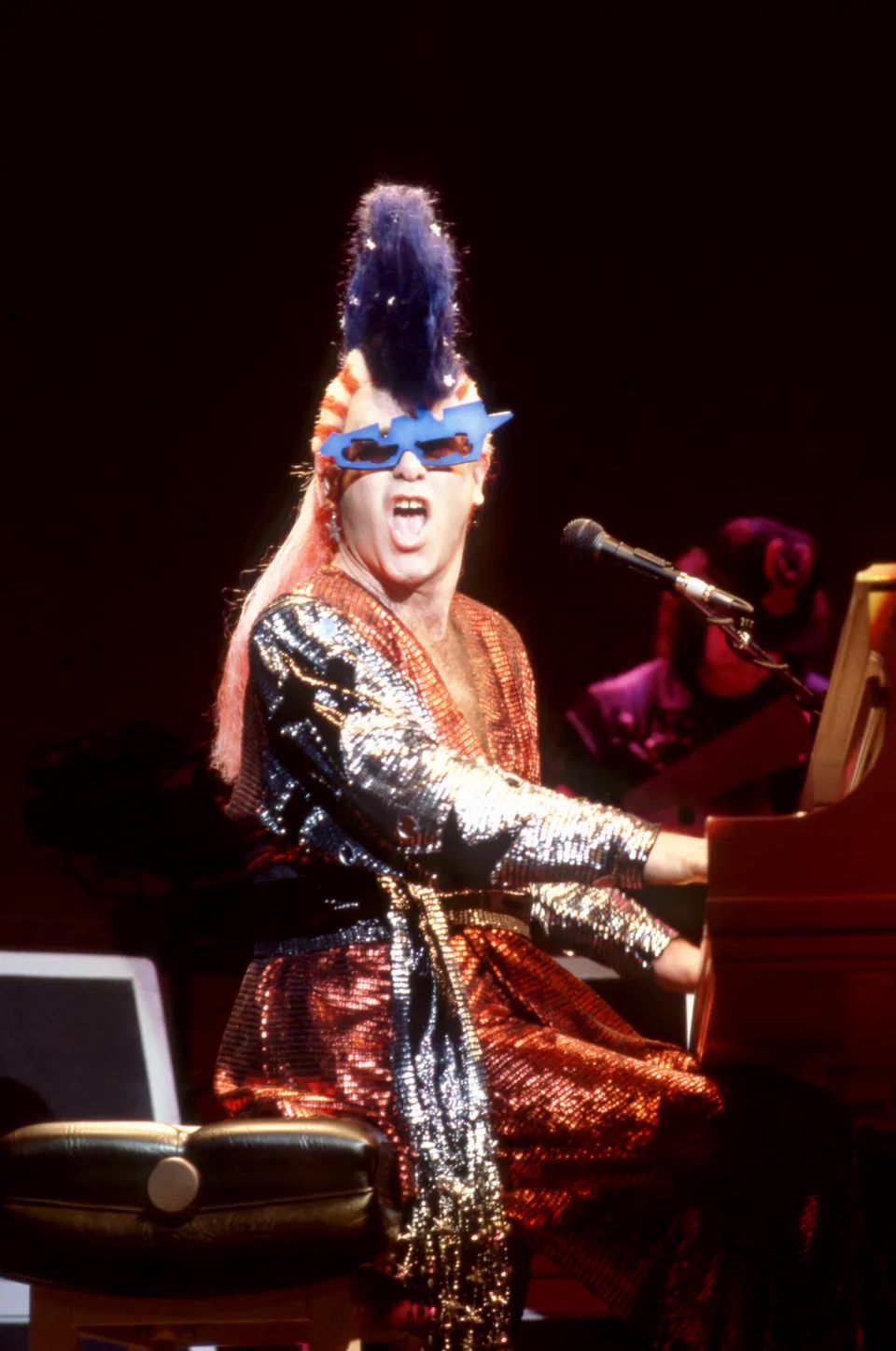
John’s designer relationships played a major role in his most iconic looks. He approached designer Bob Mackie — famous for creating extravagant costumes for Cher — and asked him to create similar outfits. Mackie delivered, producing pieces that included a striking pink mohawk ensemble. The collaboration produced some of the most theatrical stage wear of the era.
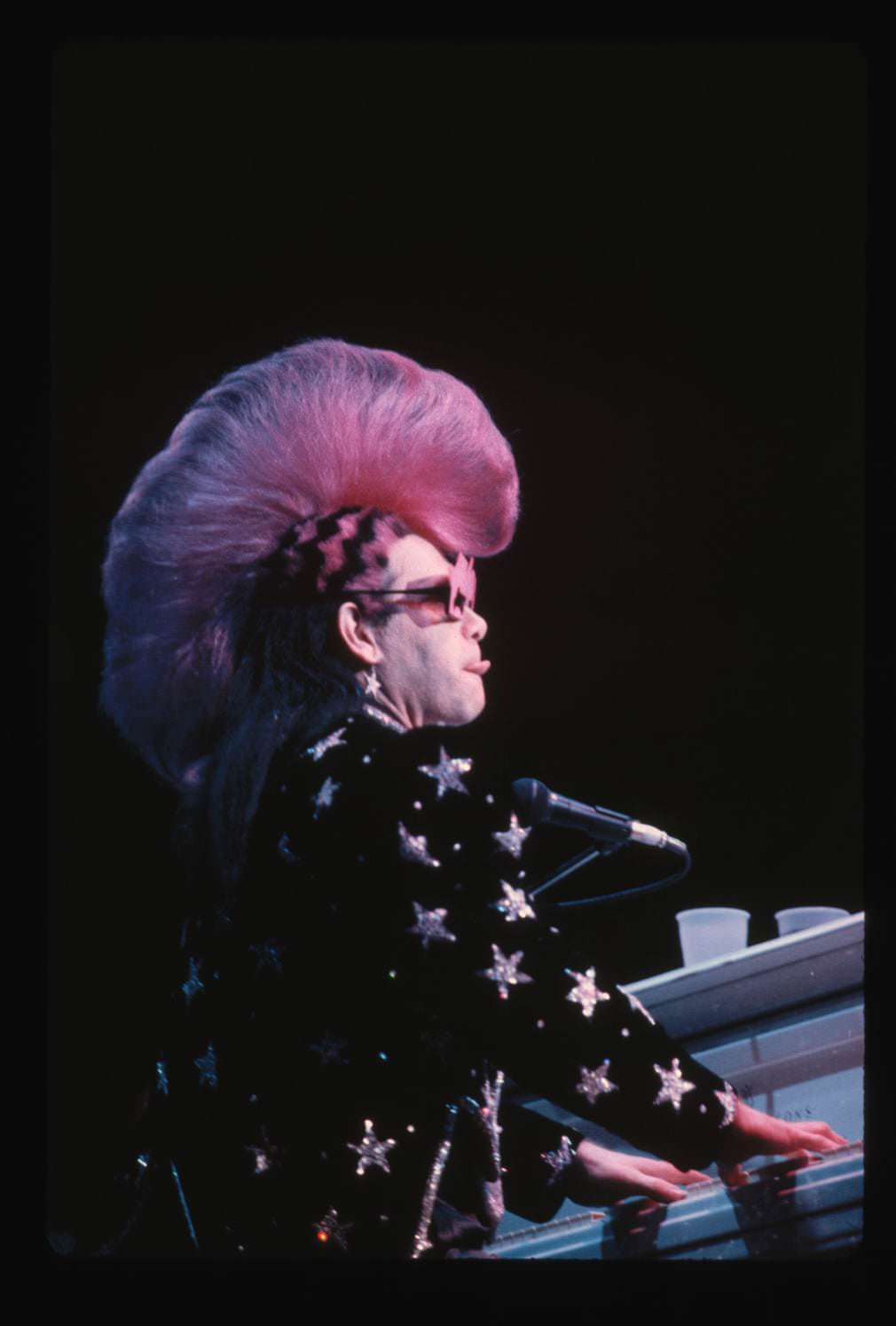
John originally approached the designer by asking him if he could create some outfits similar to those he had been creating for Cher.
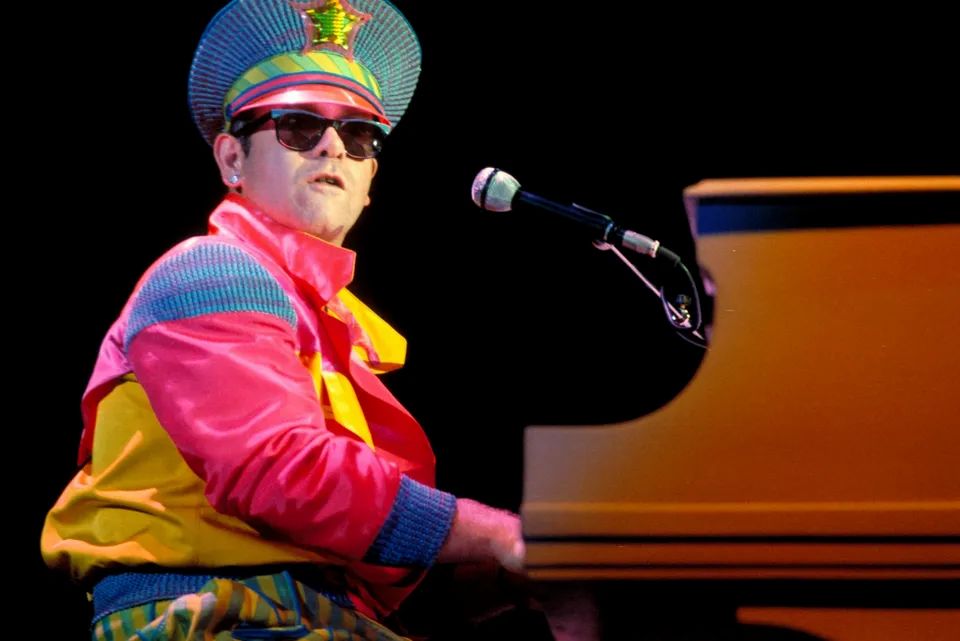
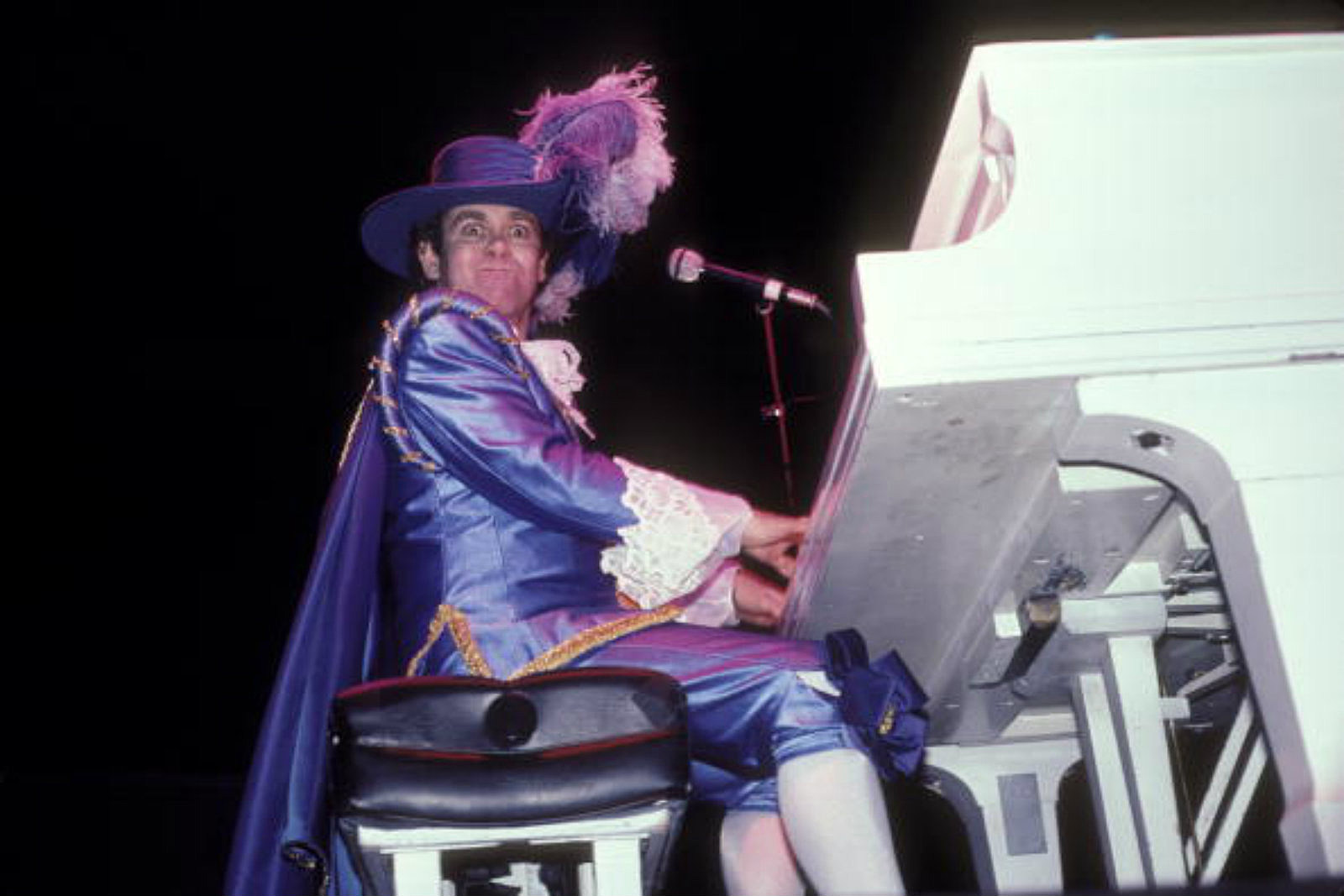
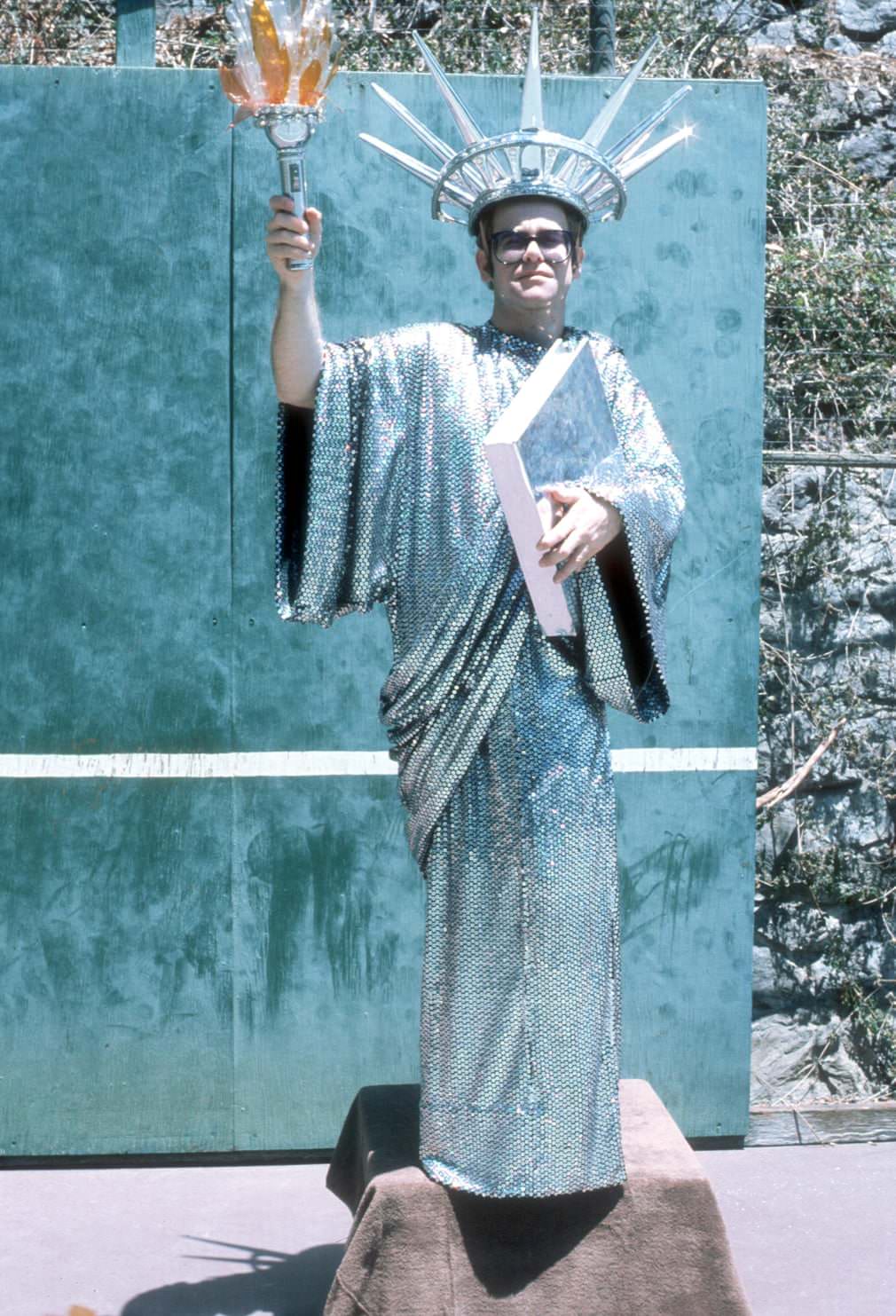
As the 1980s began, John’s costumes grew increasingly theatrical in concept. For a portrait session in New York City in 1980, he dressed as the Statue of Liberty. In 1982, he performed at Hammersmith Odeon in a military-themed costume, then took the stage at Madison Square Garden in a rainbow array of color that lit up the entire arena. His swashbuckling looks from 1982 added a pirate-like edge to his already adventurous wardrobe.
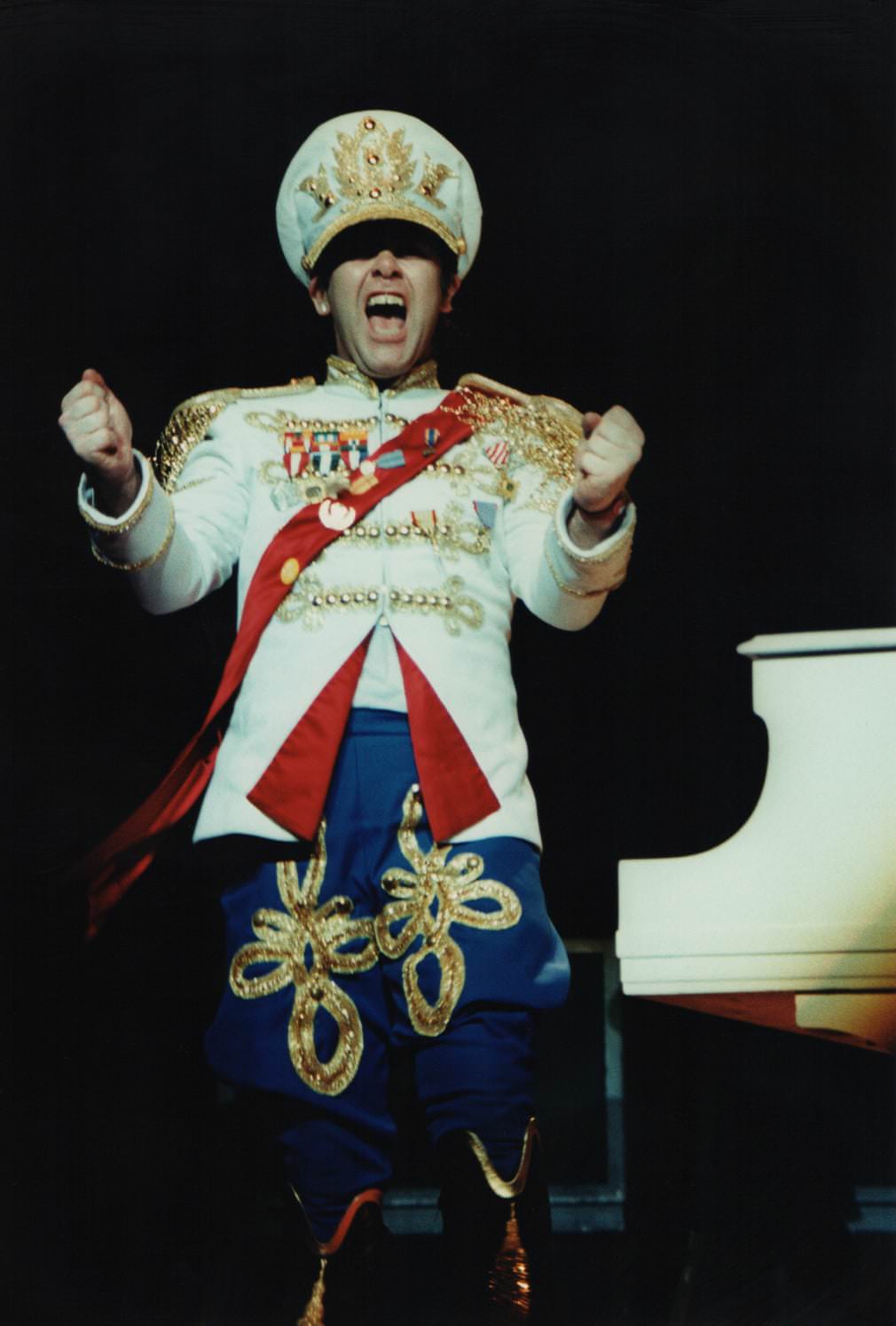
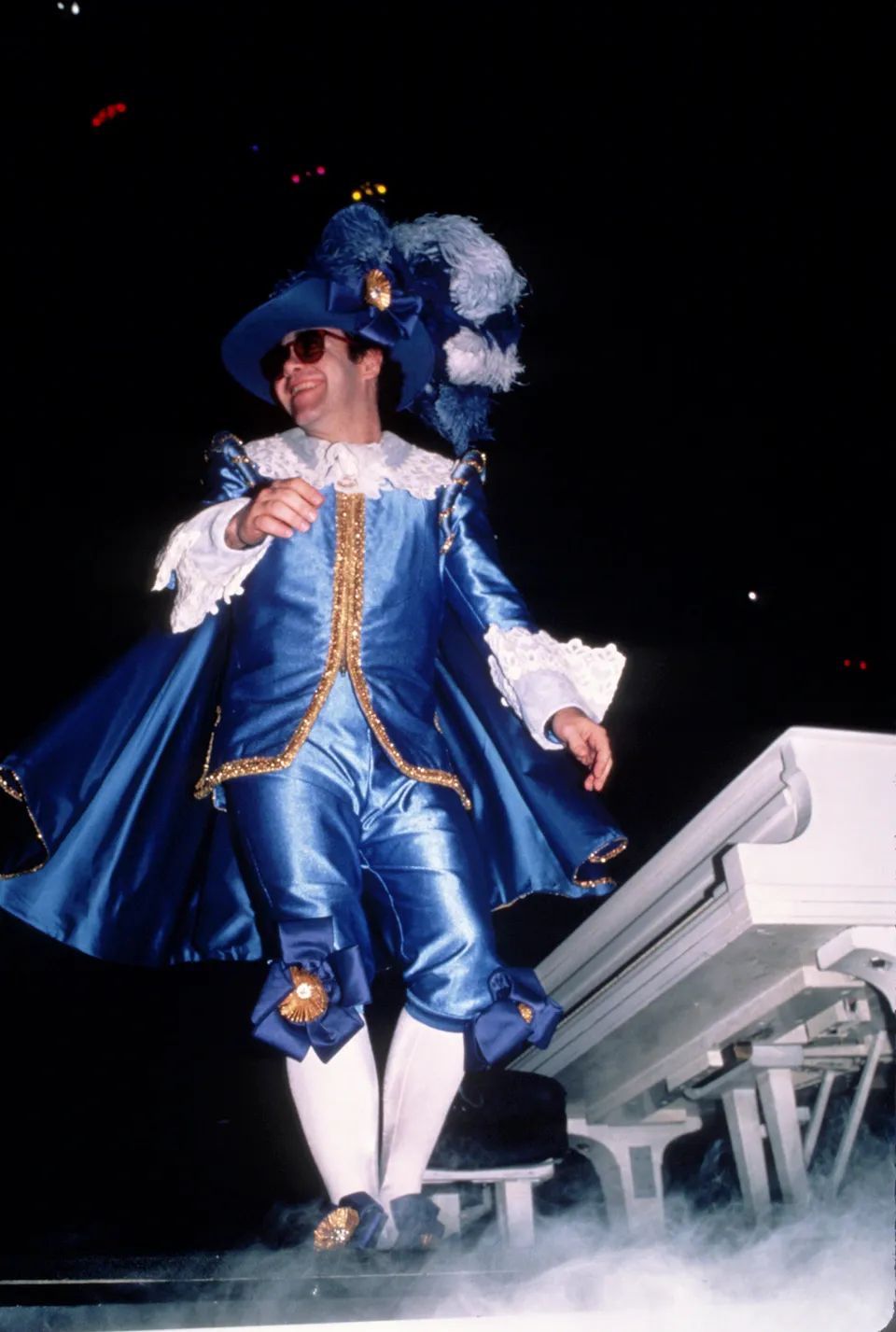
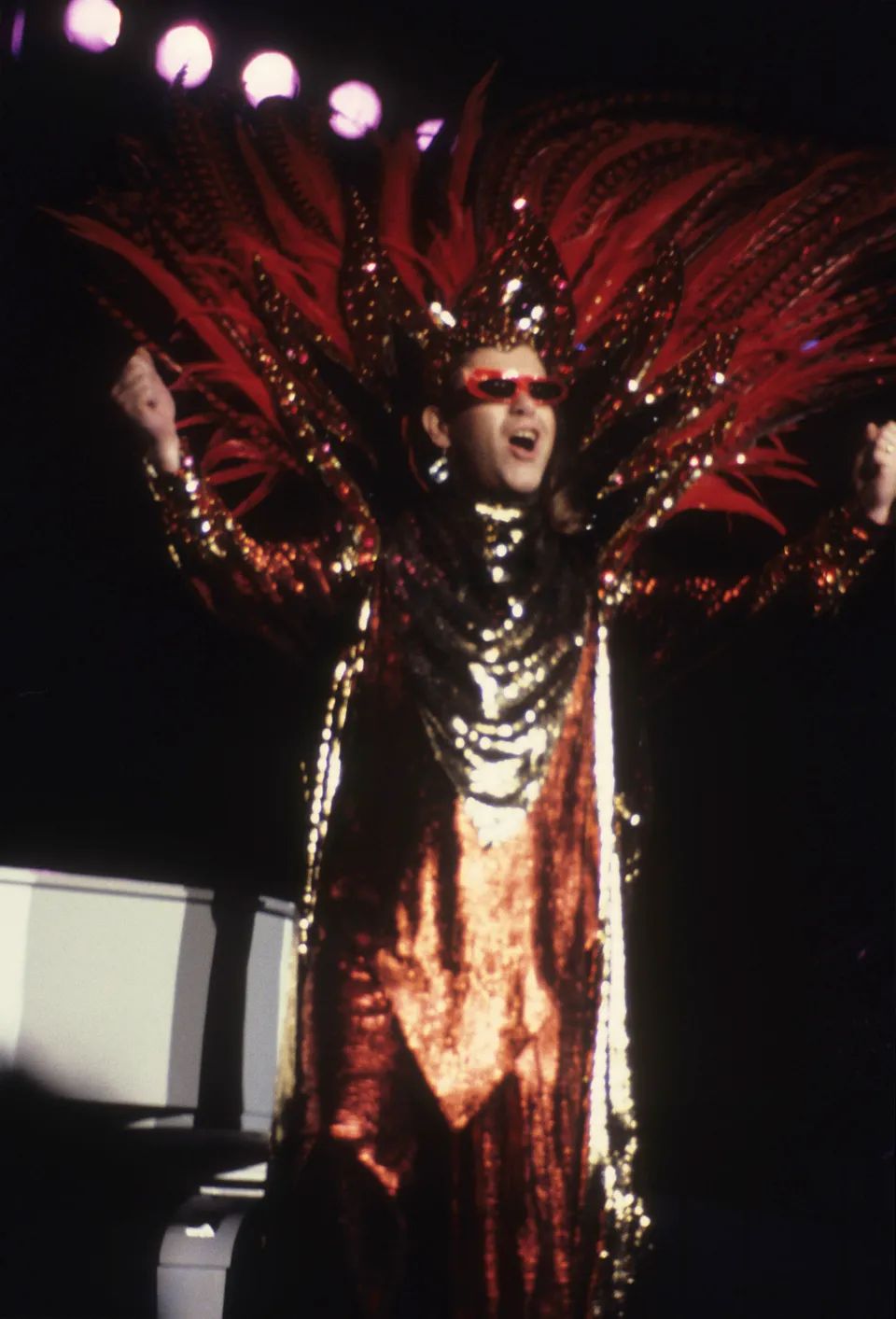
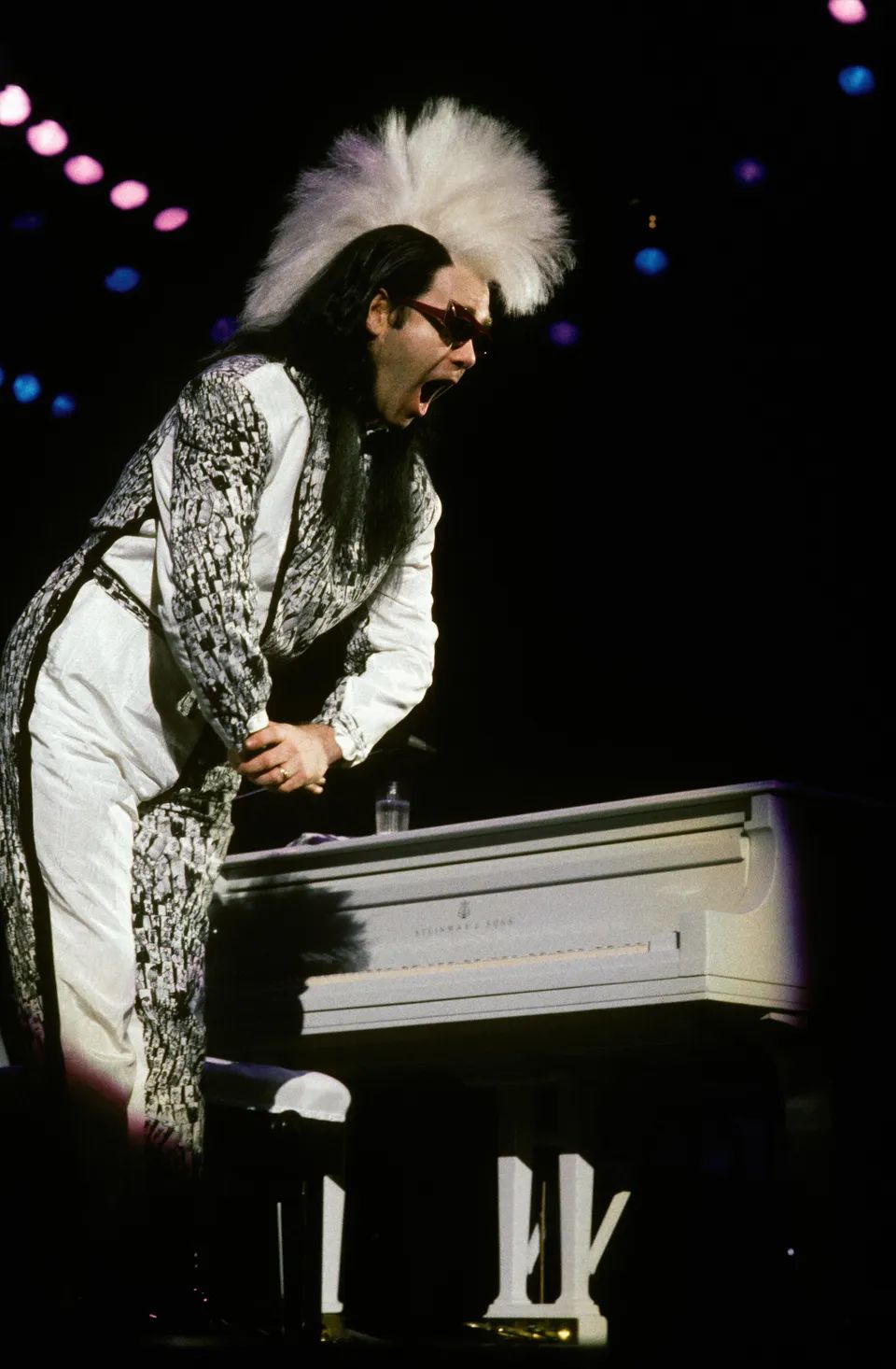
Mid-decade brought no slowdown. John performed in 1984 concerts and his 1986 Ice on Fire Tour in Bloomington, Minnesota, with costumes that matched the scale of his productions. His Paris performances in 1986 at the Bercy Concert Hall featured looks that were bold even by his standards.
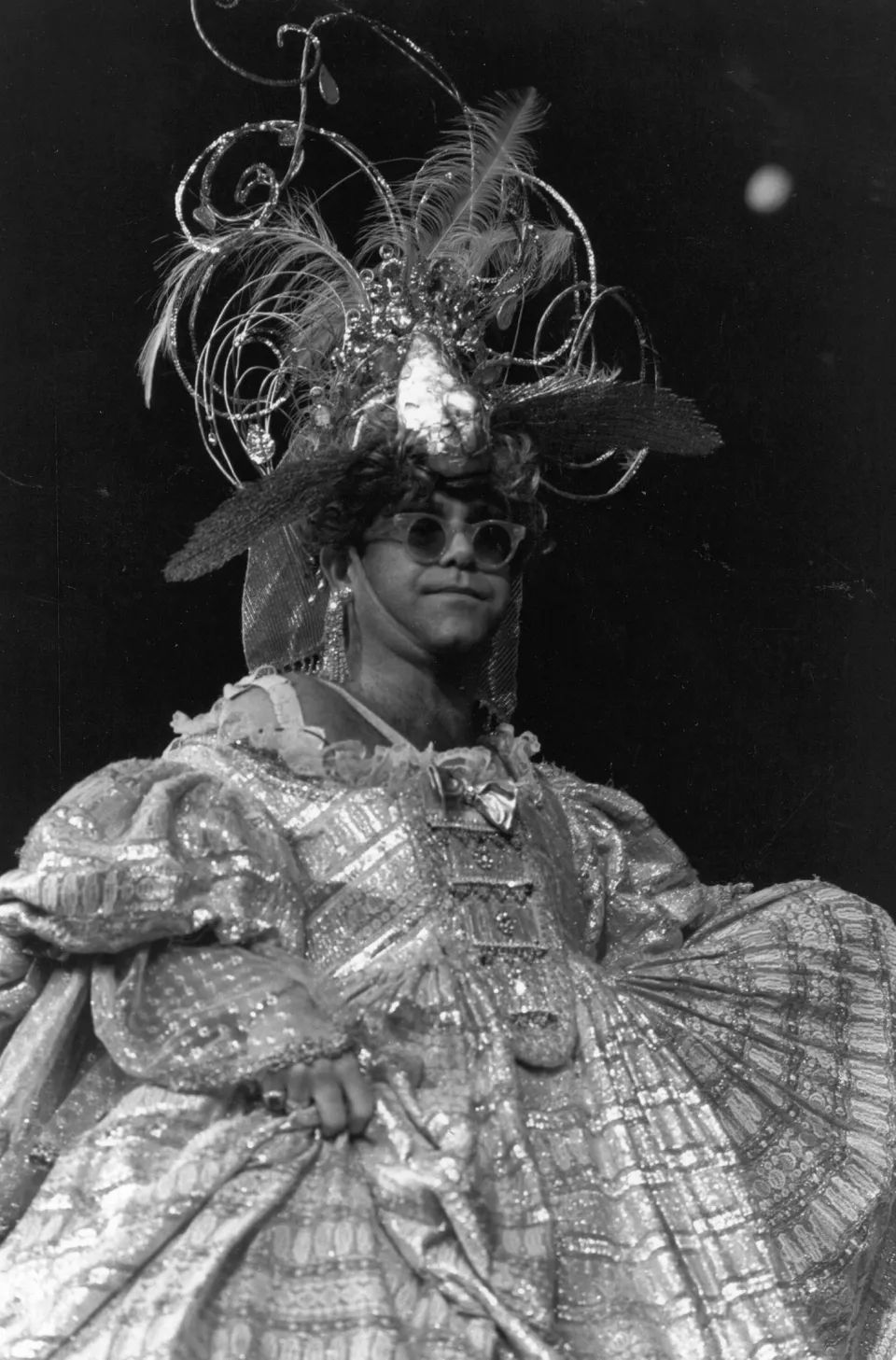
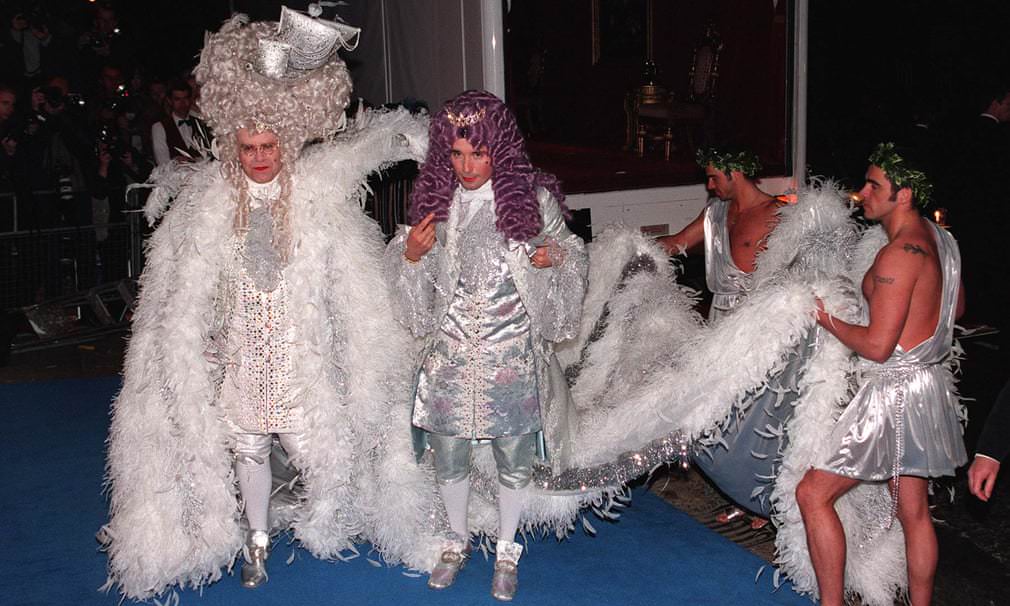
John’s birthday celebrations were events unto themselves. For his 40th birthday, he appeared in an outfit modeled after the elaborate dress of Marie Antoinette — a full costume transformation that signaled just how seriously he took theatrical dressing outside of concert settings. He topped this with his 50th birthday party in 1997 at Hammersmith Palais, where he arrived dressed as King Louis XIV, complete with a full royal court costume.
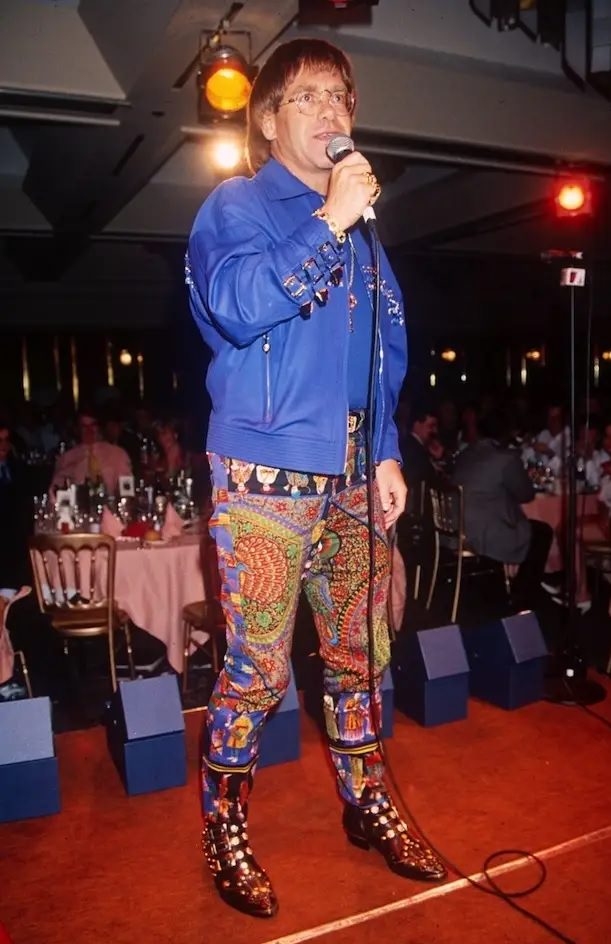
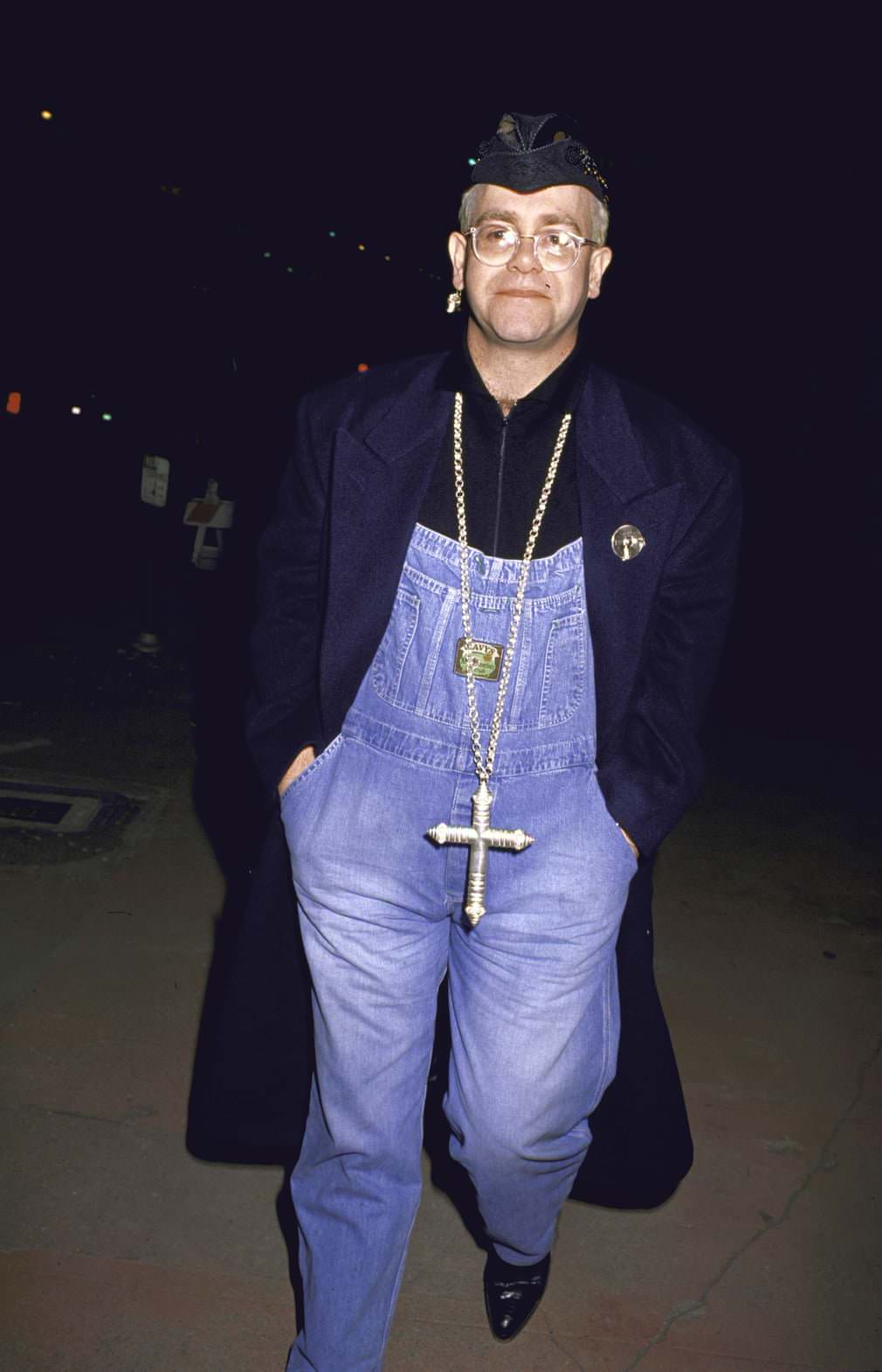
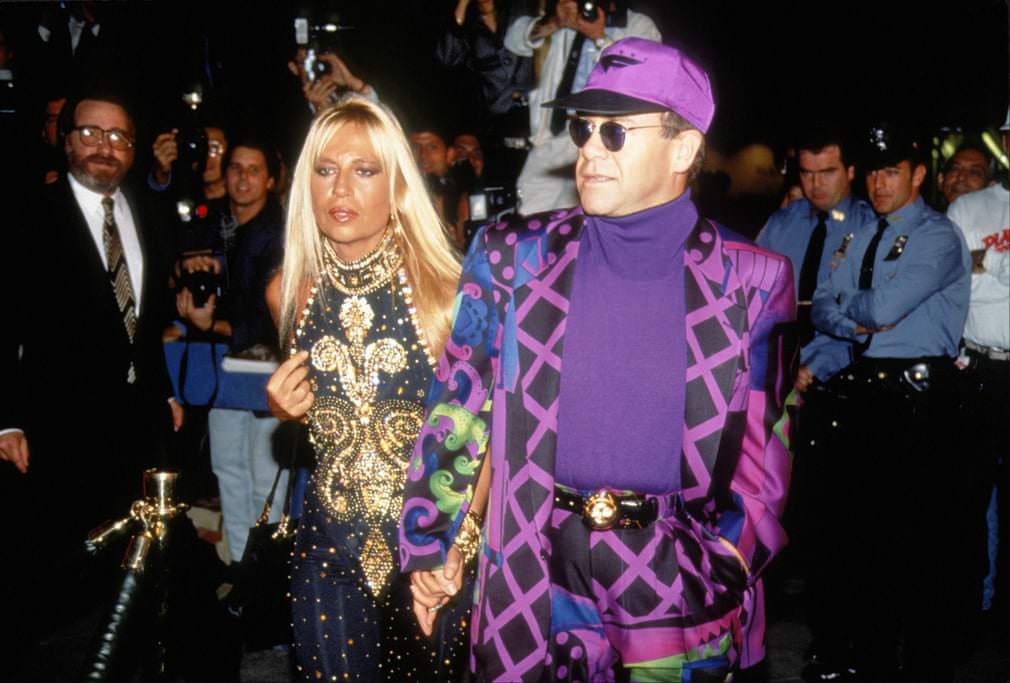
The early 1990s saw John experimenting with different textures and silhouettes. He wore overalls paired with a large cross necklace in 1991, then showed up to the Planet Hollywood launch party that same year in a purple silk Versace suit with a matching Nike cap — a fusion of luxury fashion and streetwear that was ahead of its time. By 1994, he was performing in Paris in a sharp red leather suit.
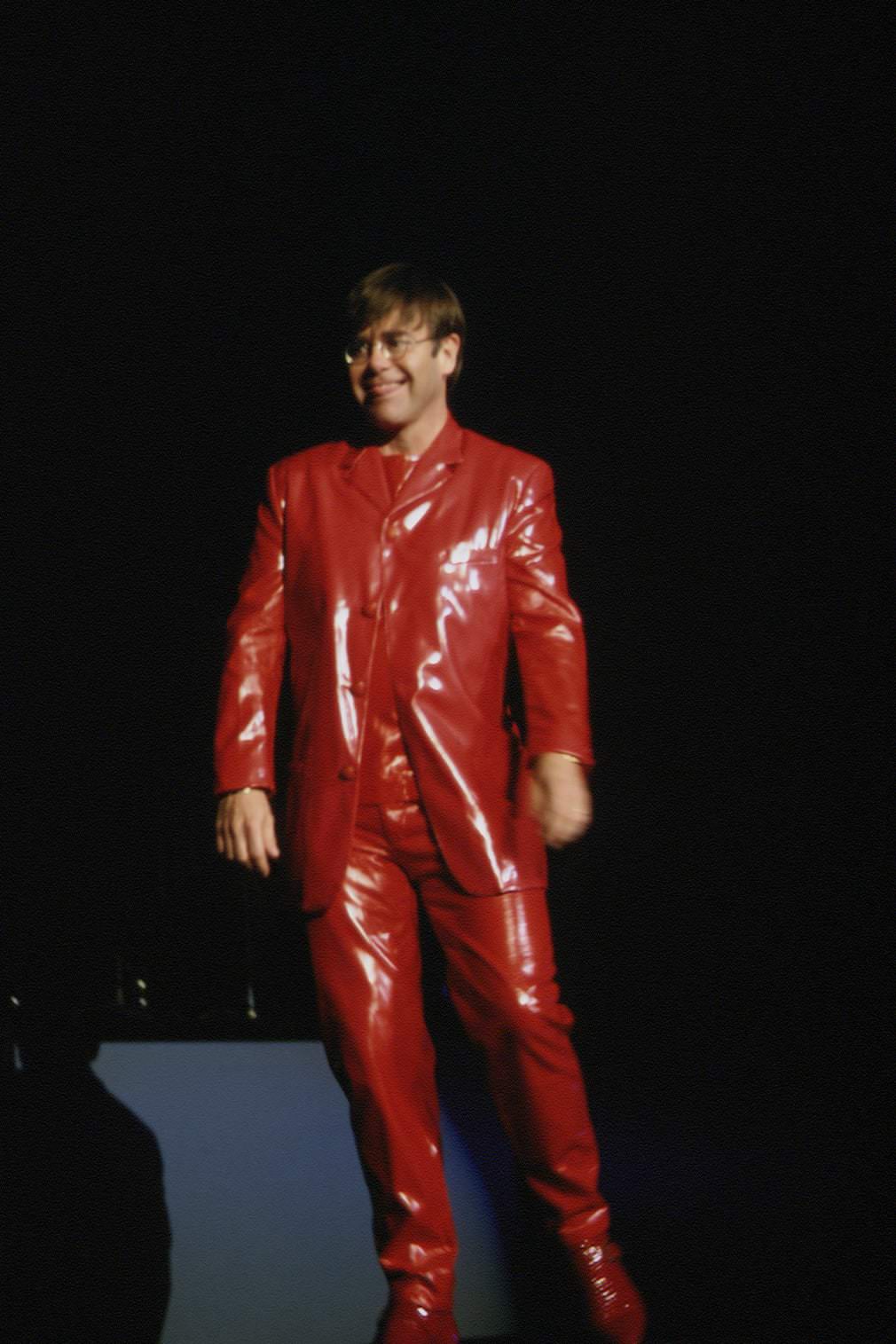
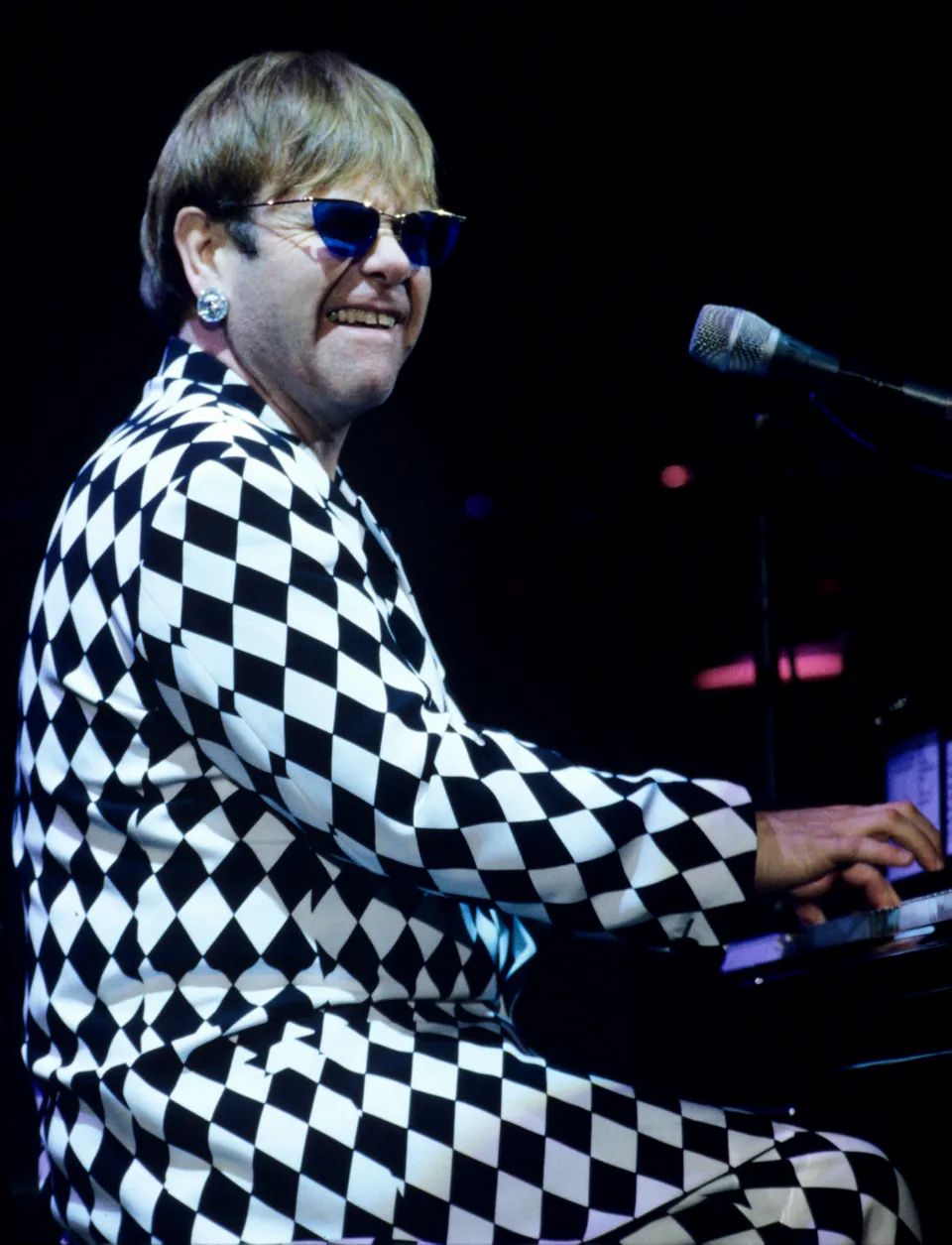
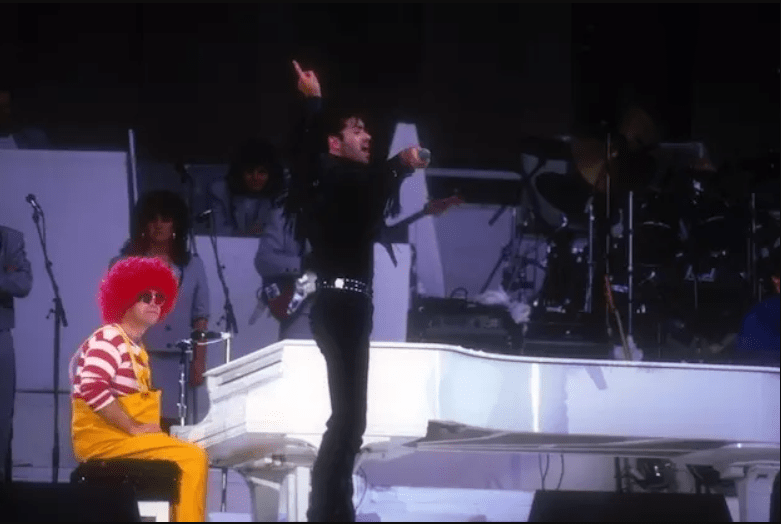
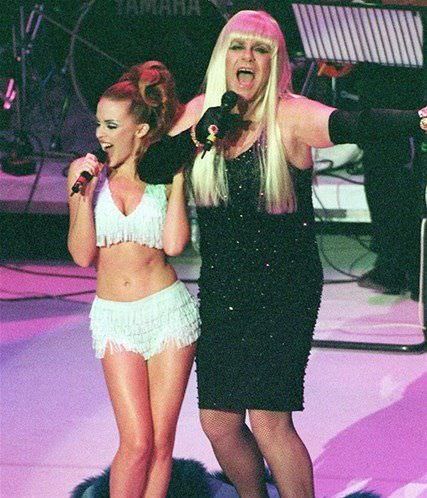
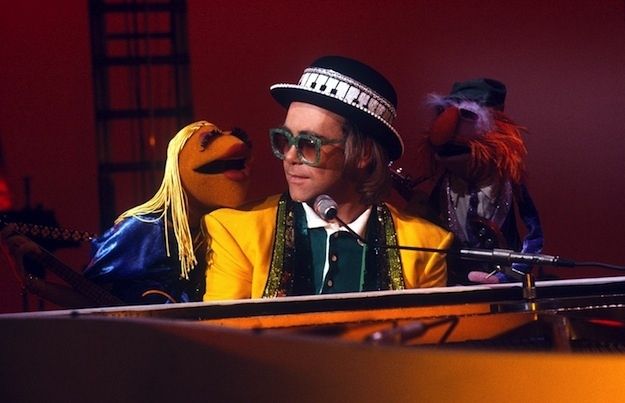
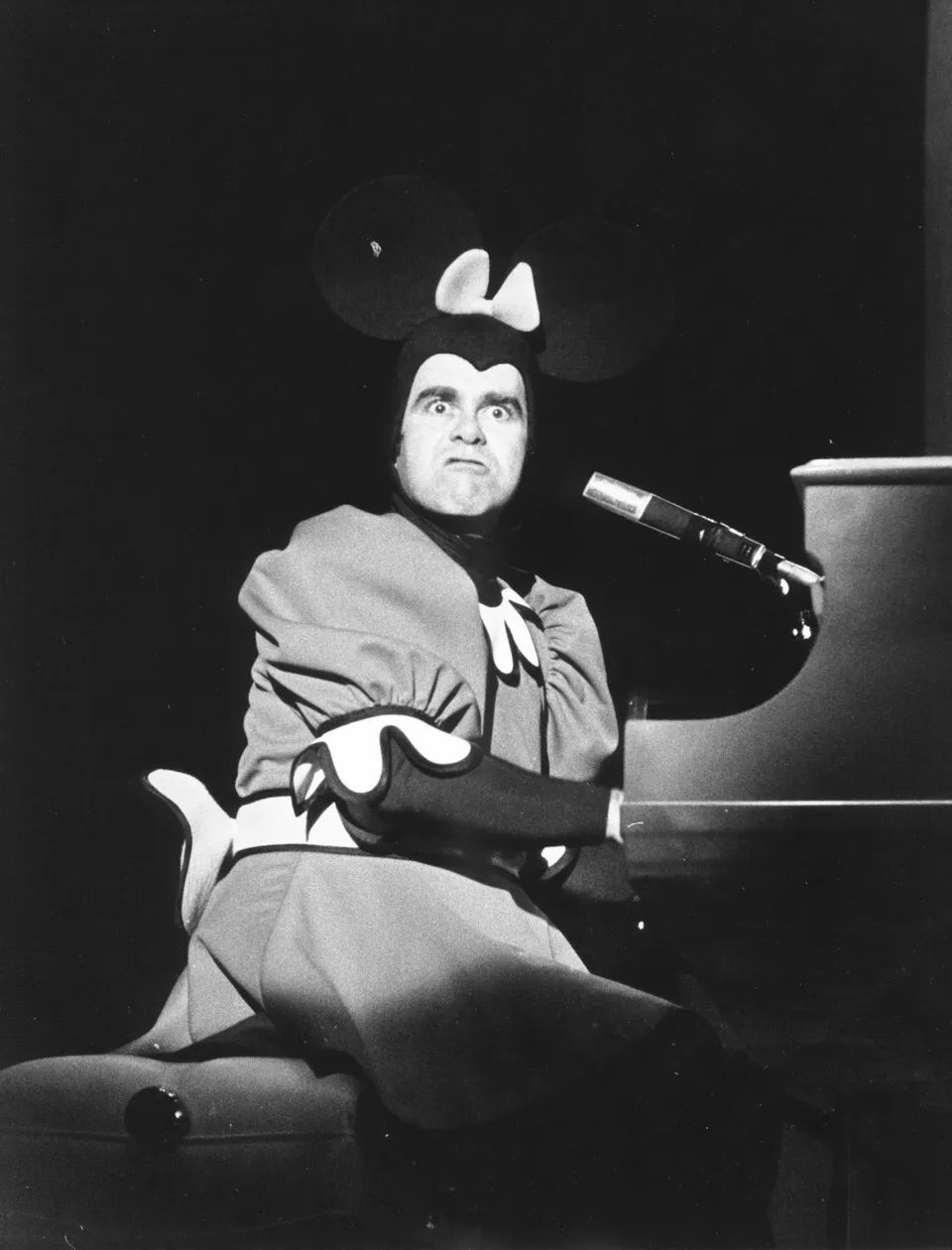
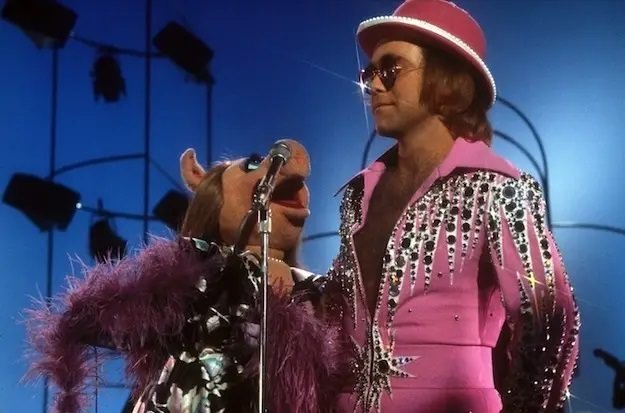
The full range of John’s costuming over the decades is genuinely difficult to categorize. He dressed as Ronald McDonald. He wore Mardi Gras costumes, Muppet-inspired ensembles, cowboy gear dripping with rhinestones, and schoolboy uniforms. He shared the stage with Miss Piggy and drag queens alike, always the most visually arresting person in the frame.