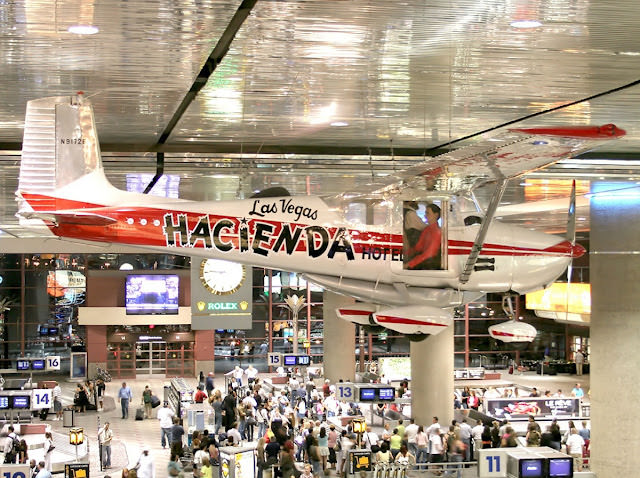
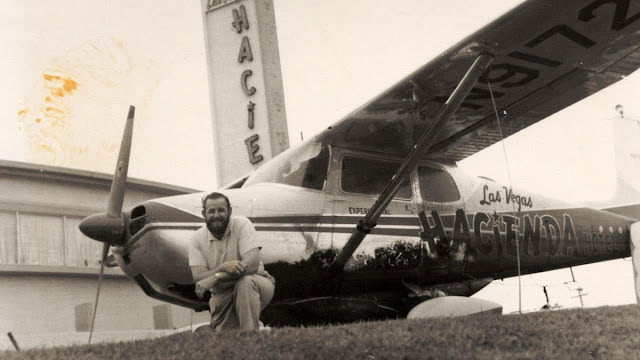
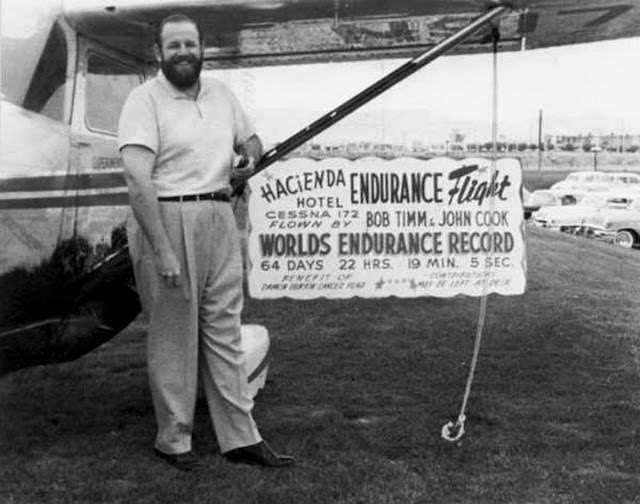
On December 4, 1958, a small Cessna 172 lifted off from McCarran Field in Las Vegas and didn’t touch down again for 64 days, 22 hours, and 19 minutes. The two men inside — Robert Timm and John Wayne Cook — had set the longest manned flight endurance record in history. No refueling stop. No emergency landing. No secret touchdown. Just one small propeller plane circling the desert Southwest for over two months straight.
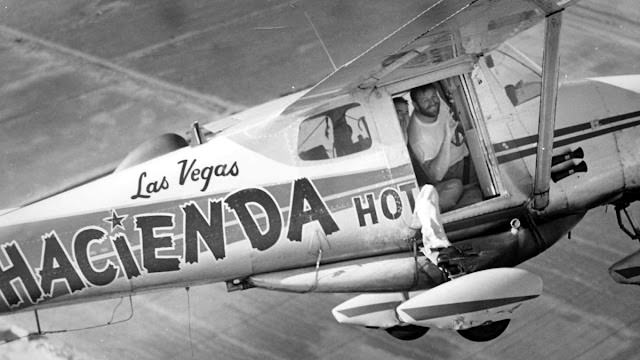
The idea started with Robert Timm, a World War II bomber pilot who had traded the cockpit for a quieter life as a slot machine mechanic. In 1956, Timm pitched a bold plan to the owner of the Hacienda Hotel in Las Vegas: sponsor a record-breaking endurance flight, and the hotel’s name would be painted on the side of the plane for the entire world to see. The hotel owner agreed, and the project was underway. It was equal parts aviation ambition and promotional stunt — and it worked on both counts.
The aircraft chosen was a Cessna 172, registered N9217B. It was a reliable, single-engine plane, but keeping any aircraft in the air for two months demanded serious engineering work. Timm and his team spent a full year modifying it. The most important change was the addition of a 95-gallon belly tank to supplement the 47 gallons already held in the wings. An electric pump moved fuel between tanks. The oil system was also redesigned so that oil and filter changes could be made mid-flight without shutting the engine down — a feature absolutely critical for an endurance run of this length.
The cockpit received its own set of modifications. A harness system allowed one pilot to rest or sleep while the other maintained control. Basic amenities were squeezed into the tight space, and an improvised waste disposal system was built in — because two men living in a Cessna for months needed practical solutions to everyday problems. Nothing about this flight was glamorous. It was functional by necessity.
Before the record flight, there were three failed attempts. Each failure led to refinements in both the plane and the plan. Eventually, Timm found his co-pilot in John Wayne Cook, a mechanic by trade who was both technically skilled and physically up to the challenge. When the two finally took off on December 4, 1958, the tires of the Cessna were painted with white stripes. This wasn’t decoration — it was verification. If the plane ever secretly landed and took off again, the paint on the tires would show wear. It was a simple but airtight way to prove the flight’s integrity from start to finish.
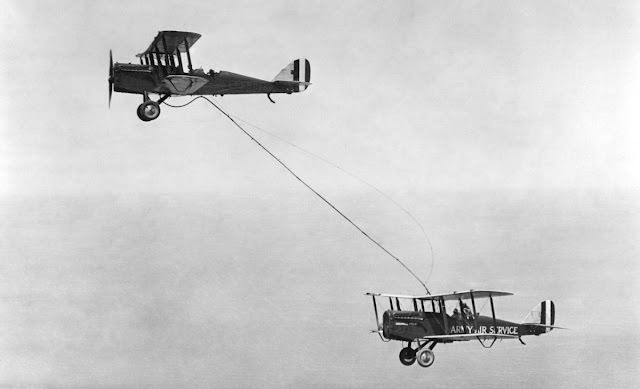
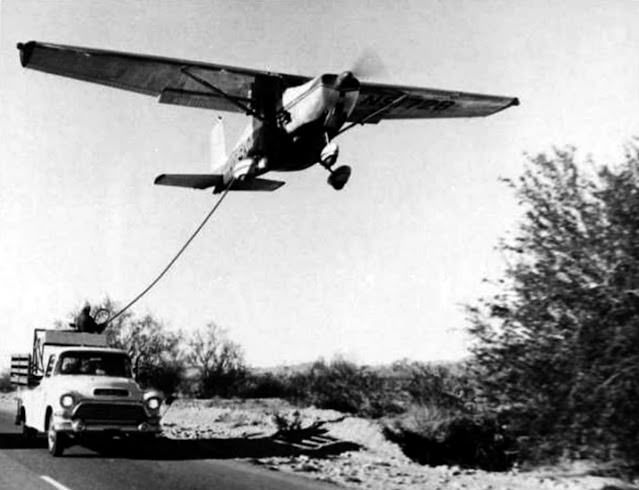
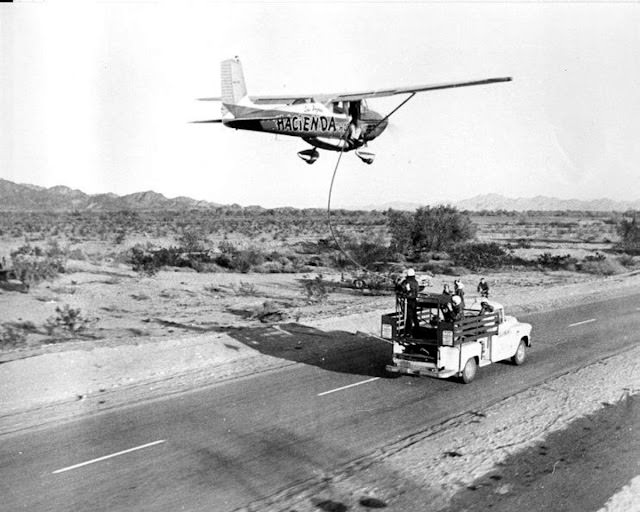
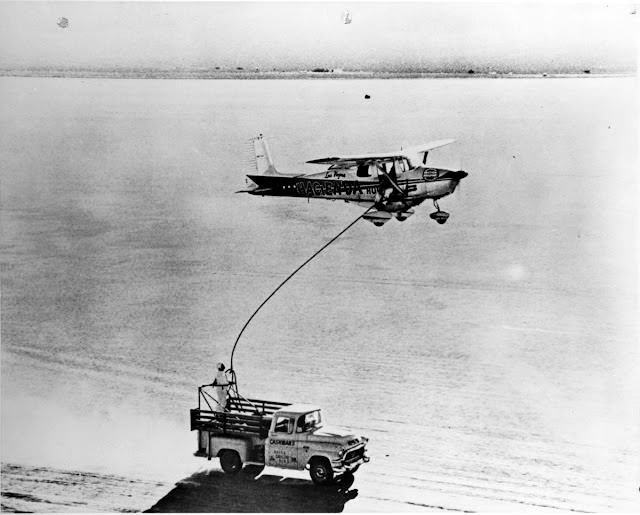
Keeping the plane fueled was the flight’s central logistical challenge. Twice a day, a truck loaded with a fuel tank and pump drove to a designated stretch of highway below the flight path. The Cessna would descend low, and Timm or Cook would lower a hook on an electric winch to snag a refueling hose from the truck below. The hose was connected to the belly tank, and fuel was transferred in about three minutes. This happened 128 times over the course of the flight. It was one of the most unusual refueling operations in aviation history — no aircraft-to-aircraft transfer, just a low-flying Cessna and a truck on a desert highway.
Life inside the plane followed a strict routine. Timm and Cook exercised, rested in shifts, and communicated regularly with their ground support team. Their meals were specially prepared to be easy to eat in the cramped cockpit. The ground crew monitored the aircraft’s systems, relayed weather information, and coordinated every refueling run. They were also the emotional anchor for the two pilots, who were logging week after week in a space barely larger than the front seat of a car.
Thirty-nine days into the flight, the plane’s generator failed. With it went the lights, the heat, and the electric fuel pump. Timm and Cook switched to a hand pump to move fuel between tanks and carried out their twice-daily refueling operations in complete darkness. Temperatures dropped. The workload increased. But they kept going. As the weeks wore on, carbon buildup in the spark plugs and combustion chambers made it harder and harder for the plane to climb after each refueling run. The engine was wearing down, but it never quit. On February 7, 1959, Timm and Cook finally brought the Cessna down. Before the wheels touched the runway, observers checked the painted stripes on the tires one last time. The paint was intact. The record was real.