
Before Taiwan became one of Asia’s economic powerhouses, it was a place of busy street markets, bicycle-riding families, and harbor-side neighborhoods still finding their footing in the modern world. These candid photographs, taken in the early 1970s, capture that era in sharp detail — the people, the cities, and the rhythms of daily life before everything changed.
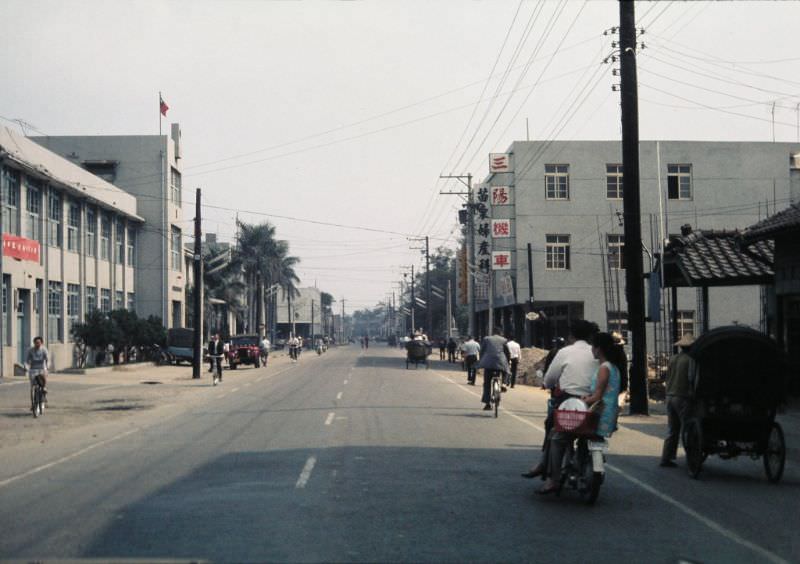
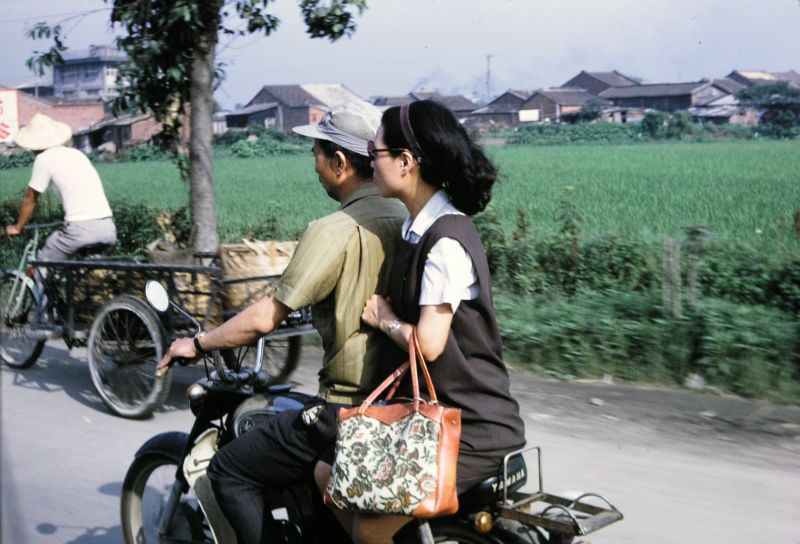
In the 1970s, Taiwan was still a one-party state under the Kuomintang government. The rapid economic growth that would later earn the island a spot among Asia’s Four Tigers had not yet arrived. Life moved at a slower pace, and the streets reflected that. Motorcycles and bicycles were the dominant forms of transport for ordinary people. Markets were open-air and central to community life. Cities like Taipei, Kaohsiung, Taichung, and Tainan each had their own distinct character.
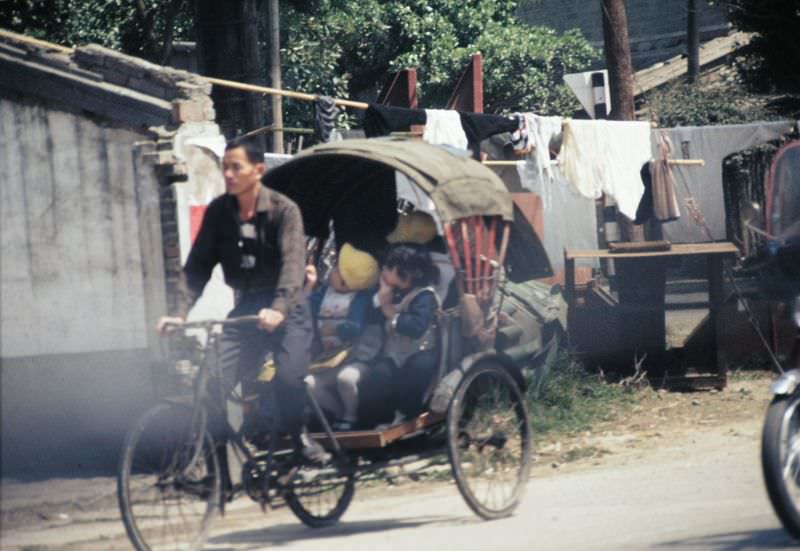
Pedicabs — three-wheeled cycle taxis — were a common sight on Taiwanese streets in this period. They ferried passengers through narrow lanes and busy intersections long before ride-hailing apps or widespread car ownership. Getting around Taiwan’s towns meant relying on these human-powered vehicles, motorcycles, or the national rail network that connected the island’s major cities.
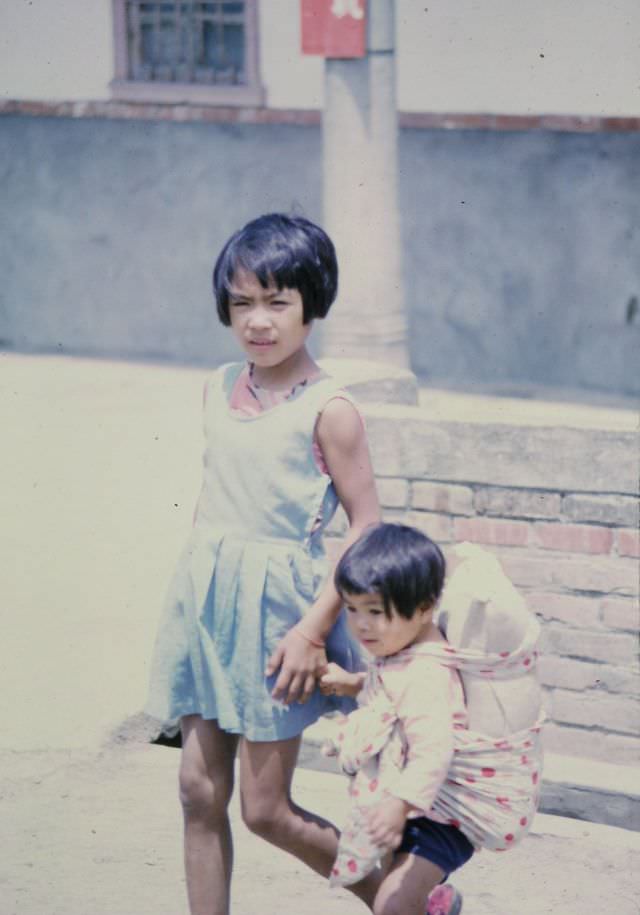
Military checkpoints on roads leading into mountain areas were a standard part of life in 1970s Taiwan. Tensions with mainland China remained high, and the government maintained visible security measures across the island. Children posed at these checkpoints with little concern — they were simply part of the landscape of growing up in Taiwan at the time.
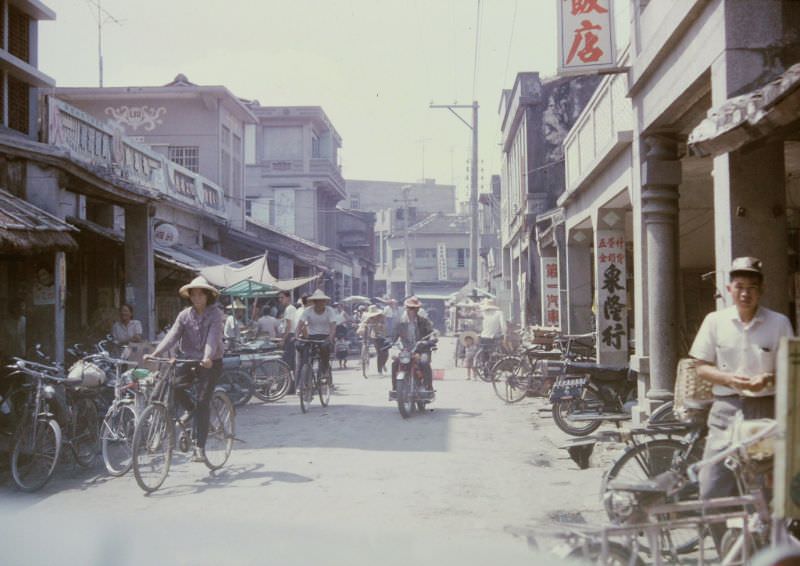
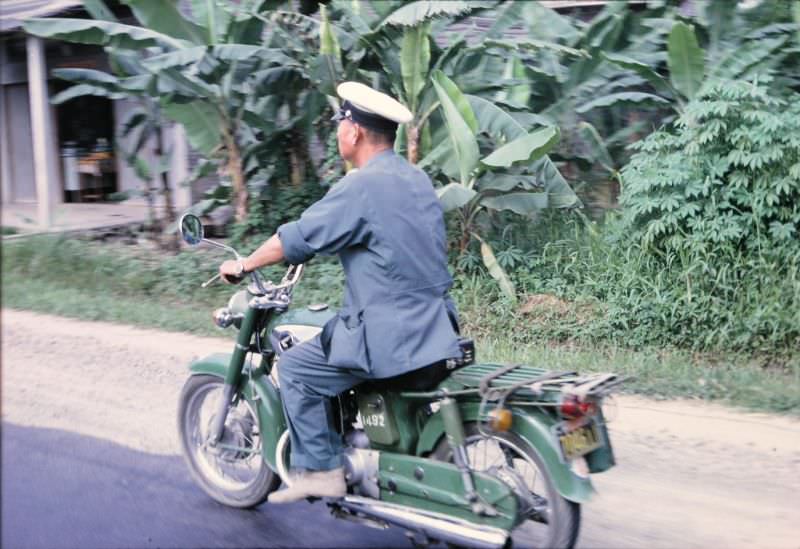
Motorcycles were everywhere in 1970s Taiwan — not just for personal travel, but for commerce and public services. Express postmen used them to cover ground quickly across both urban and rural areas. The postal system was one of the more reliable public institutions on the island, and these riders were a familiar presence on every type of road.
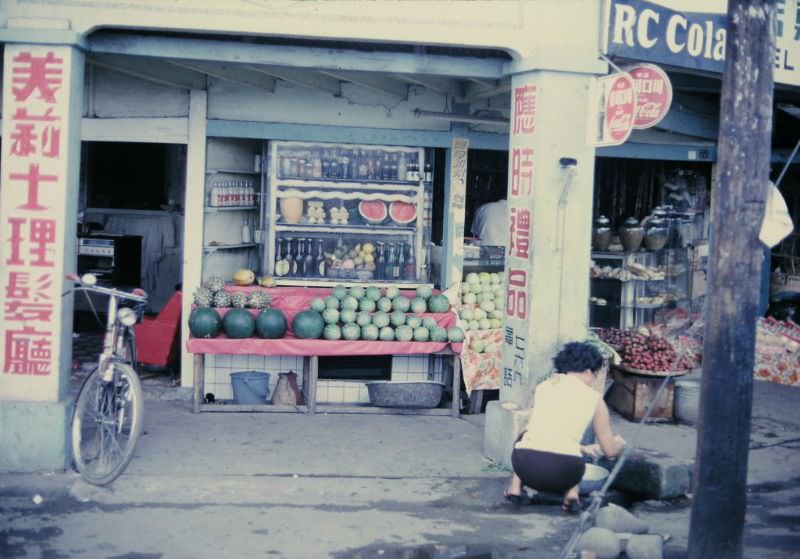
Taiwan’s street food and market culture was thriving well before the island’s economic transformation. Fruit stands lined sidewalks in every city and small town. Vendors sold tropical produce — guava, papaya, pineapple, and sugar cane — that grew abundantly across the island’s agricultural lowlands. These stands were not just convenient stops; they were social gathering points in neighborhood life.
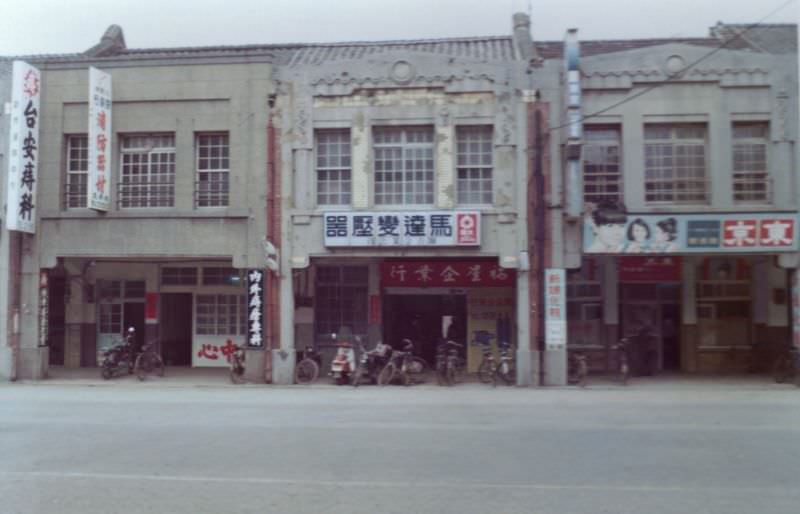
Hsinchu, located on Taiwan’s northwestern coast, was a mid-sized city in the 1970s with a mix of older Chinese-style architecture and newer concrete construction. It would later become famous as the home of the Hsinchu Science Park, established in 1980, which helped drive Taiwan’s technology industry. In the early 1970s, however, the city’s skyline was modest, its streets quiet compared to what they would become.
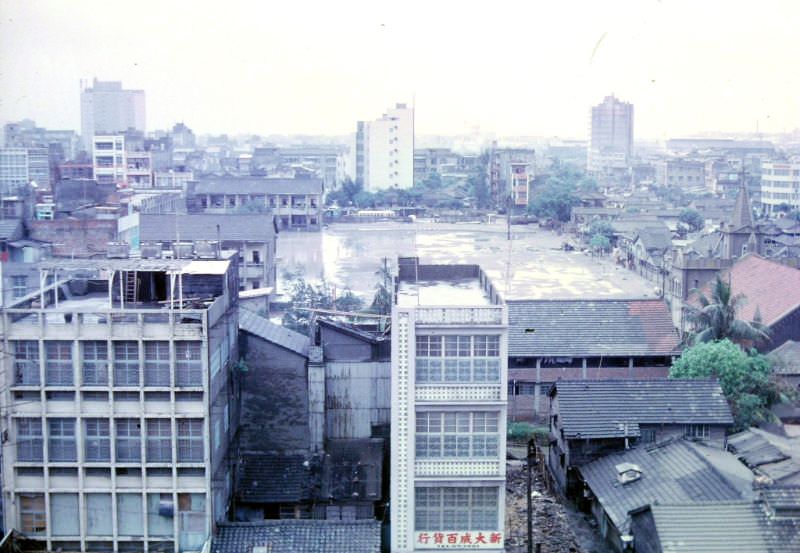
Kaohsiung, Taiwan’s largest port city, sat at the southern tip of the island. Its harbor was one of the busiest in Asia, handling massive volumes of cargo that kept Taiwan’s export-driven economy moving. Life in the neighborhoods surrounding the harbor was gritty and close-knit. Schools sat near train yards and docks, and children played in schoolyards still wet from tropical rains.
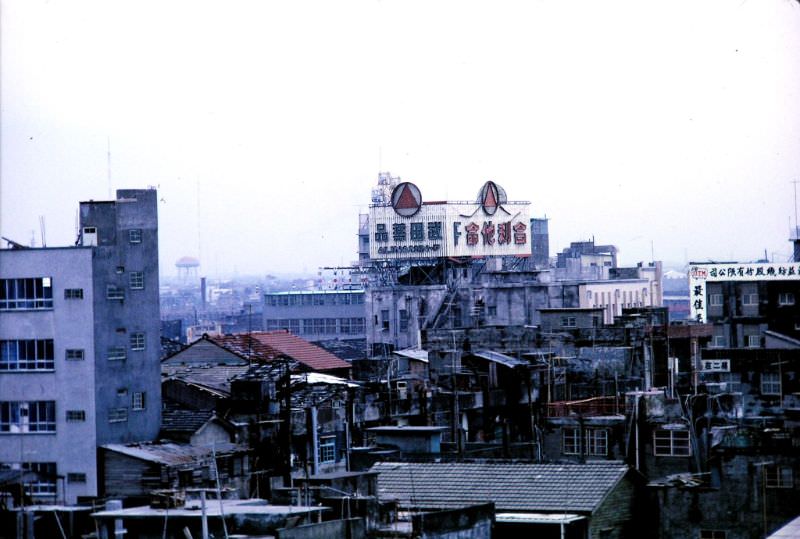
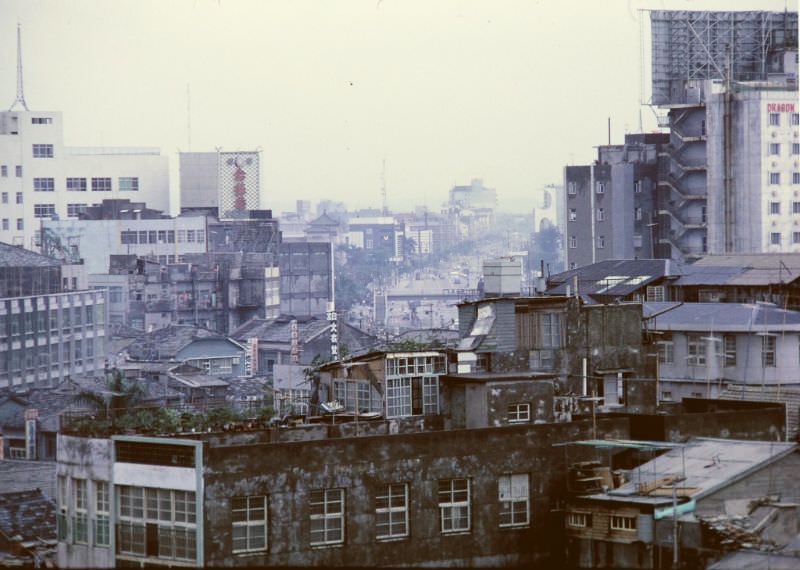
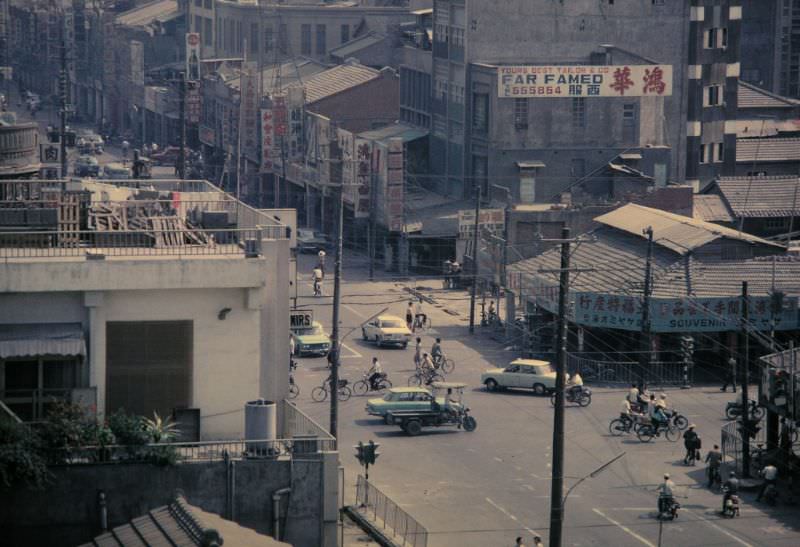
Kaohsiung’s streets in the 1970s were dense with activity. Storefronts opened directly onto sidewalks, vendors competed for foot traffic, and motorcycles wove between pedestrians and the occasional car. Signage in Chinese characters covered every available surface — restaurants, barbers, hardware sellers, and tailor shops all crowded together along the main roads.
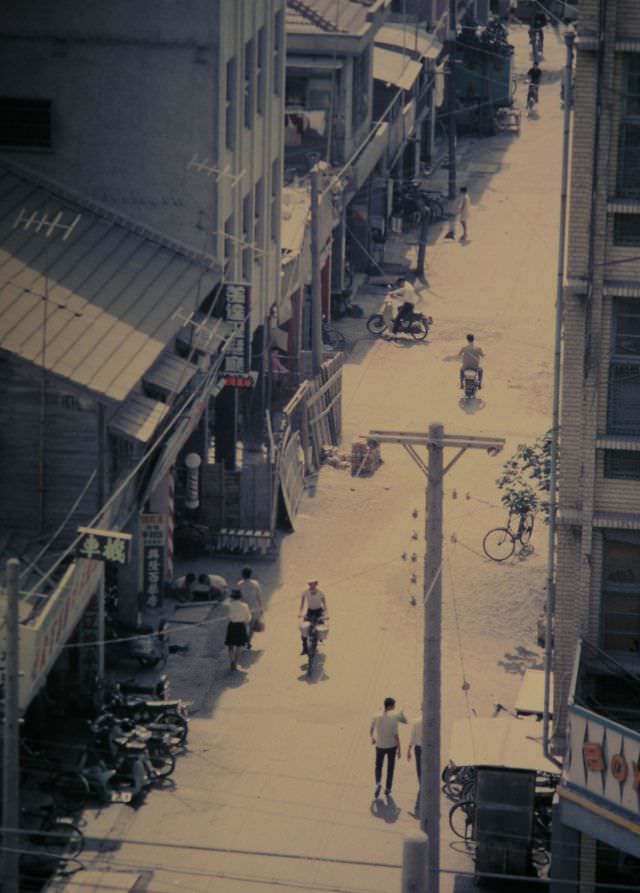
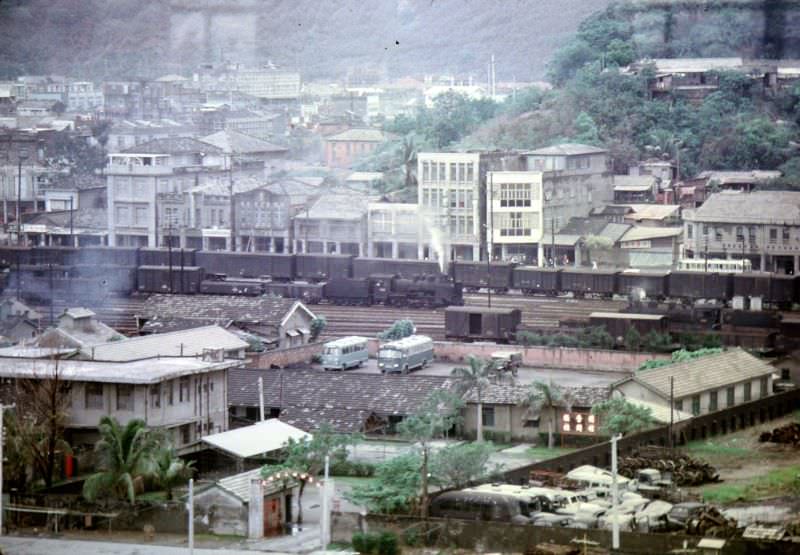
The harbor district of Kaohsiung was a working waterfront, with train yards running cargo directly to and from the docks. Foreign sailors and travelers passing through the port area found a cluster of hotels and businesses catering to their needs. Nancy’s Harbor Hotel was one such landmark — a gathering spot in the heart of the waterfront neighborhood.
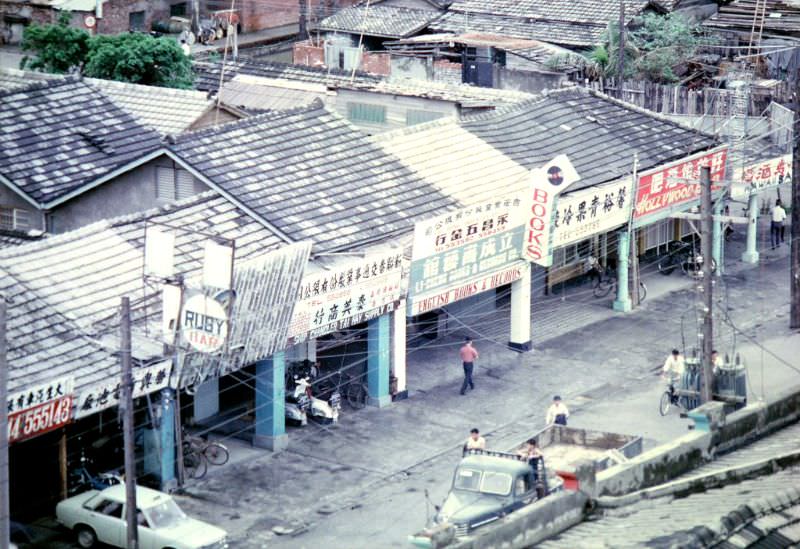
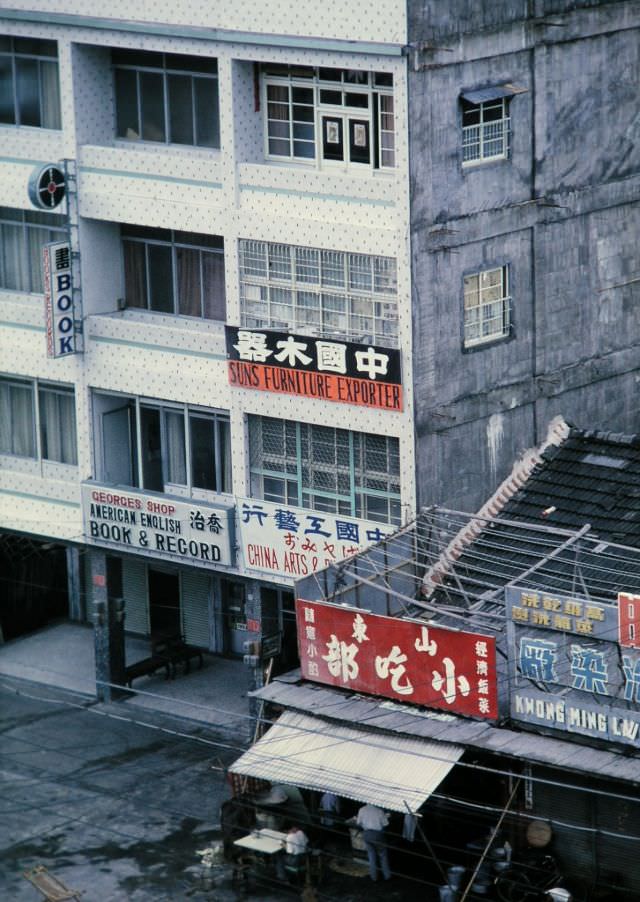
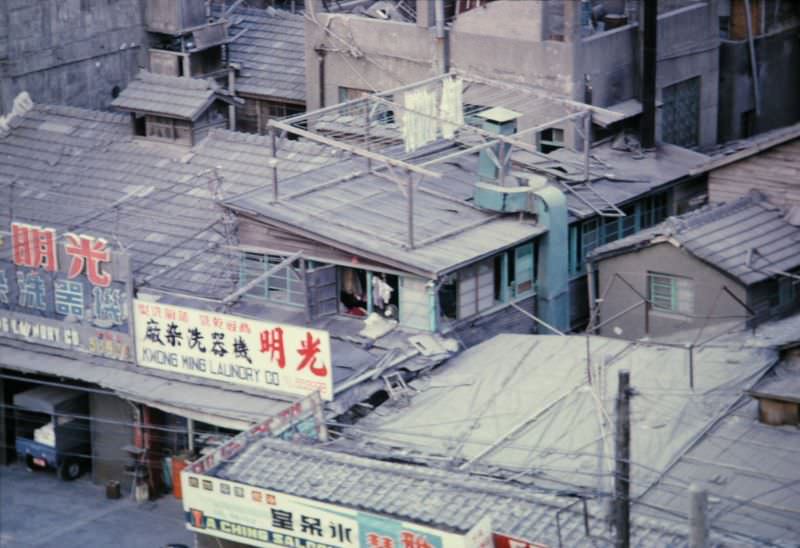
Fleet Street in Kaohsiung’s harbor district was a lively stretch of urban life. Laundry hung from upper-floor balconies above ground-level shops, a common sight in dense Taiwanese neighborhoods where space was tight. George’s bookshop, located directly across from Nancy’s Hotel, served the steady flow of English-speaking visitors moving through the port. Small details like these reveal how international Kaohsiung’s harbor area already was in the early 1970s.
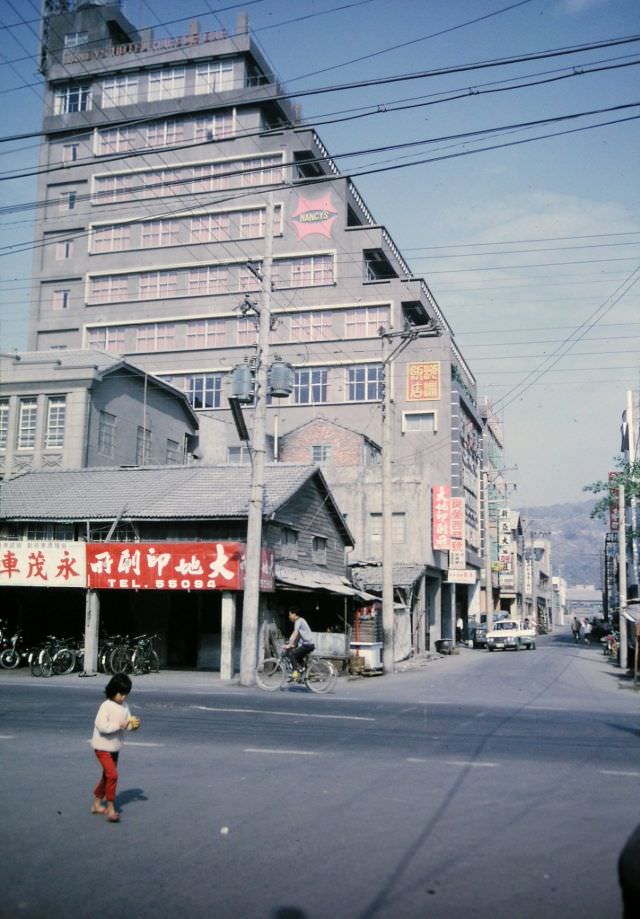
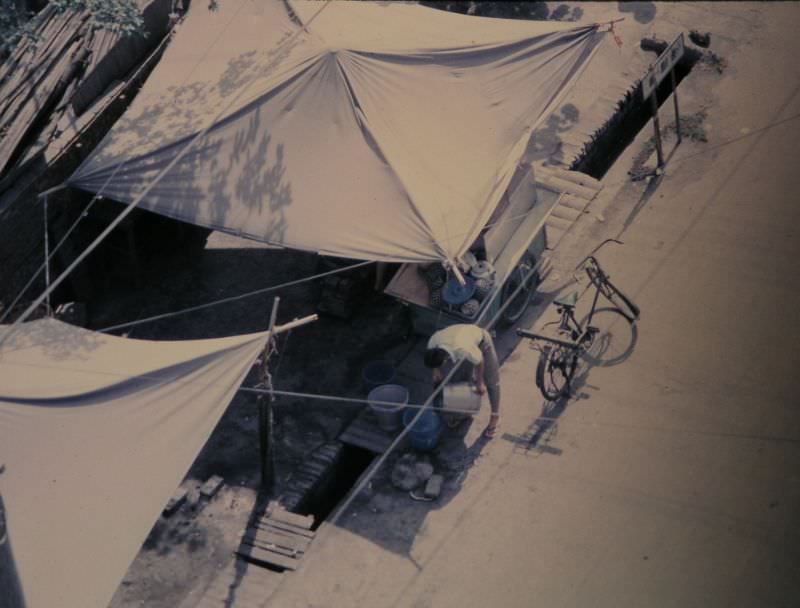
Noodle stands were the fast food of 1970s Taiwan. They operated at street level, day and night, serving simple but filling bowls of beef noodle soup, dan zai noodles, or scallion oil noodles to workers, travelers, and locals alike. The stand across from Nancy’s Hotel would have been a first taste of Taiwanese street food for many foreign visitors stepping off ships at Kaohsiung harbor.
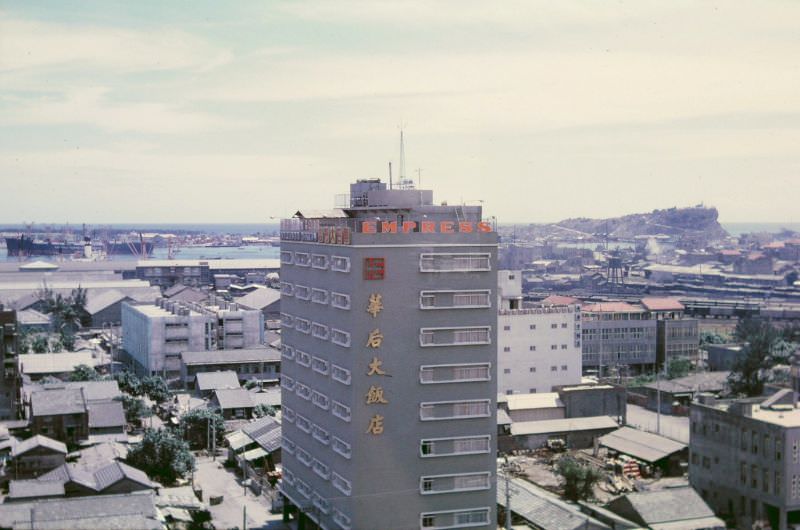
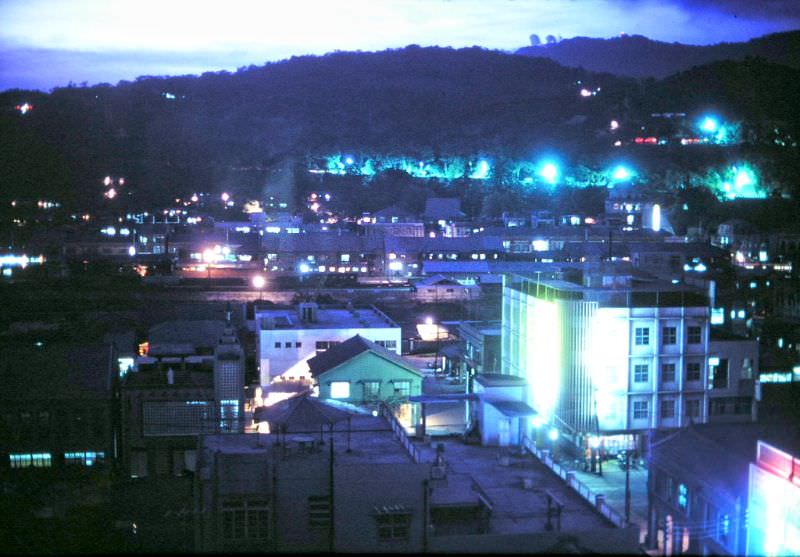
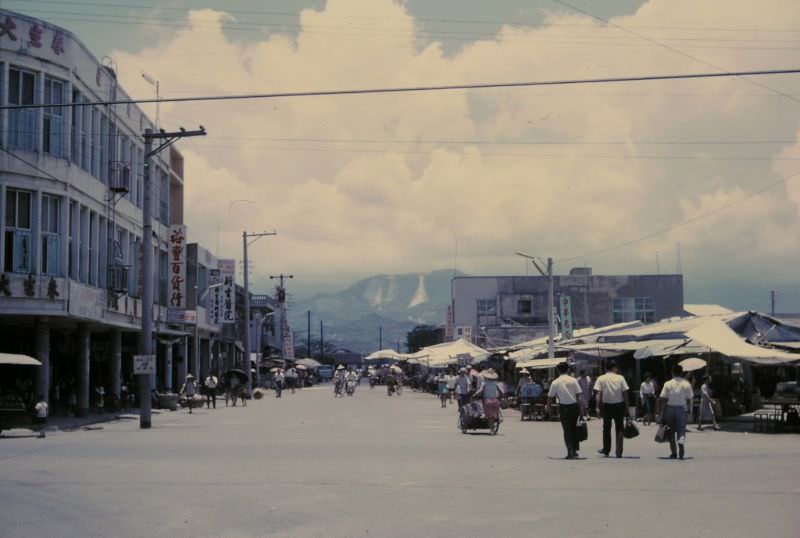
Taiwan’s spiritual landscape was deeply embedded in its physical one. Temples and religious sites dotted the island from the largest cities to the smallest rural villages. Kuan Sou Ling, a mountain area known for its Daoist temples and natural hot springs, attracted pilgrims and visitors from across Taiwan. Religion was woven into daily life in a way that was visible on nearly every street corner.
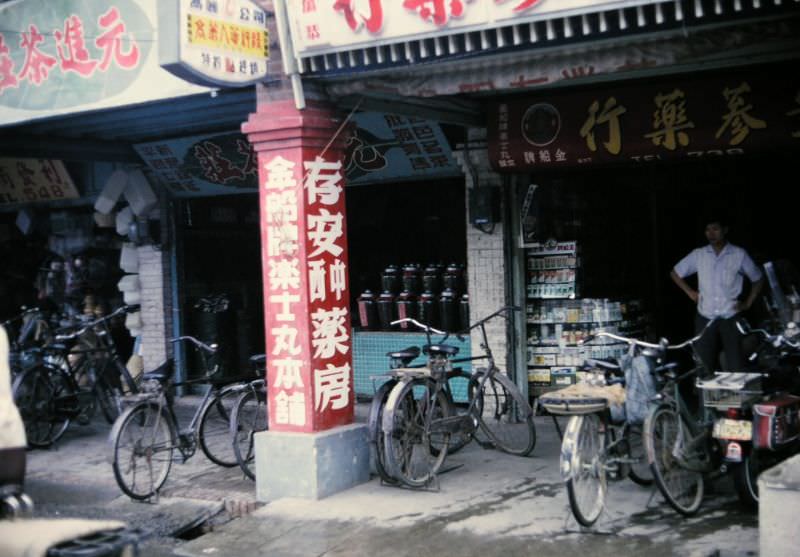
Small, family-run shops were the backbone of Taiwan’s local economy in the 1970s. A single storefront might sell dry goods, hardware, or household items — and the owner often lived in the floors directly above the shop. This kind of shophouse culture, inherited from southern Chinese architectural tradition, gave Taiwanese towns their distinctive look and feel.
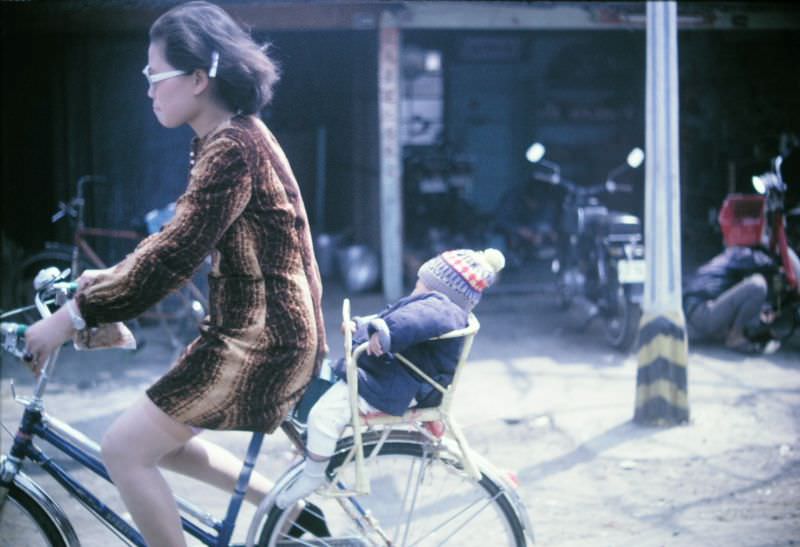
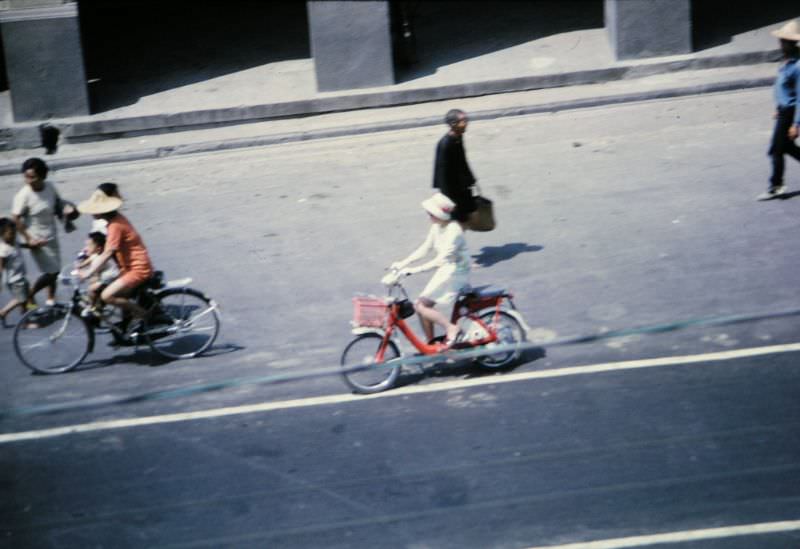
Bicycles were the vehicle of choice for families who could not yet afford a motorcycle. Mothers carrying children on the back rack of a bicycle was an everyday scene across Taiwan’s towns and countryside. Car ownership remained rare for most Taiwanese households well into the 1970s, and the bicycle served as the primary means of getting children to school, running errands, and traveling short distances.
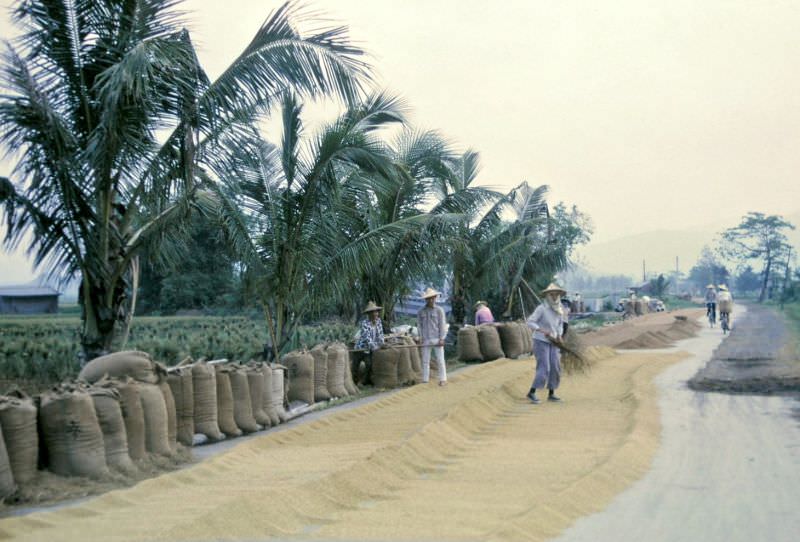
Agriculture remained central to life in Taiwan’s rural areas in the early 1970s. After threshing, farmers spread freshly harvested rice directly on paved roads to dry in the sun — a practical use of the flat, hard surface. The island’s western plains were fertile rice-growing land, and the harvest season brought this kind of scene to roads throughout the countryside. It was not unusual for cars and trucks to slow down and navigate carefully around the grain laid out to dry.
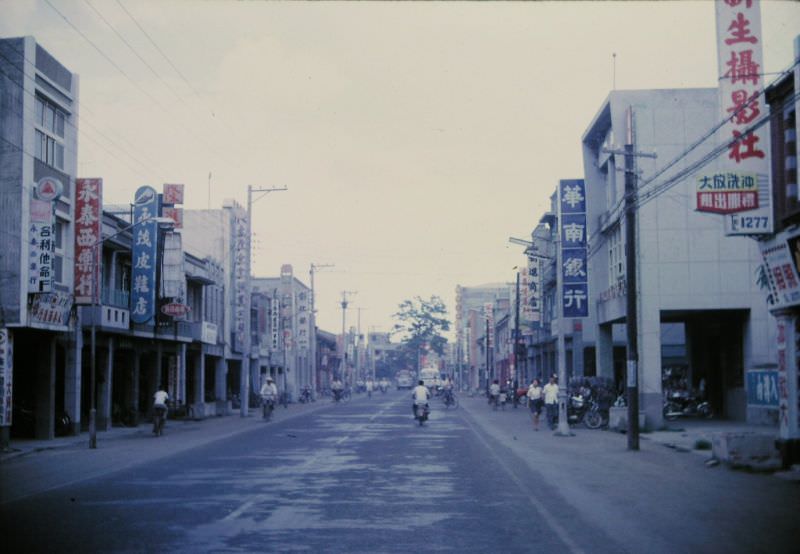
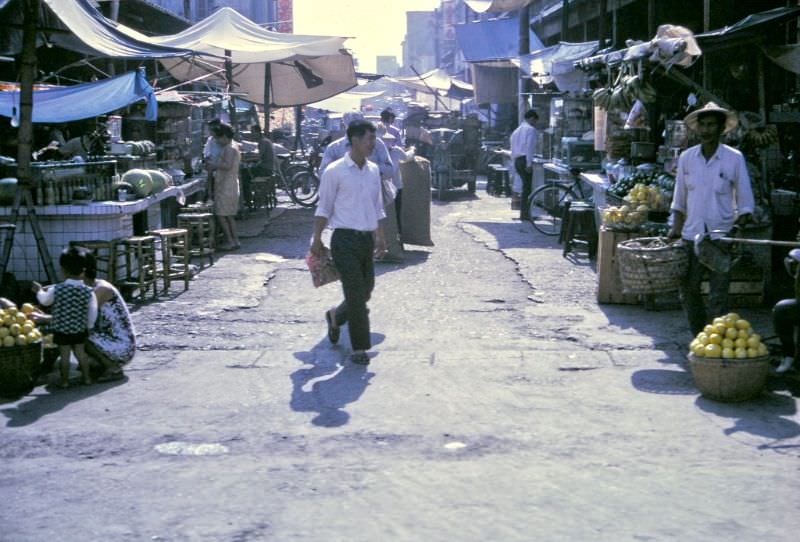
Street markets were the commercial heart of every Taiwanese community in this era. Vendors set up stalls selling vegetables, fish, meat, clothing, and household goods. These markets operated on tight margins, with sellers and buyers haggling openly. The noise, the smells, and the sheer density of goods on display made them an overwhelming but essential part of daily life.
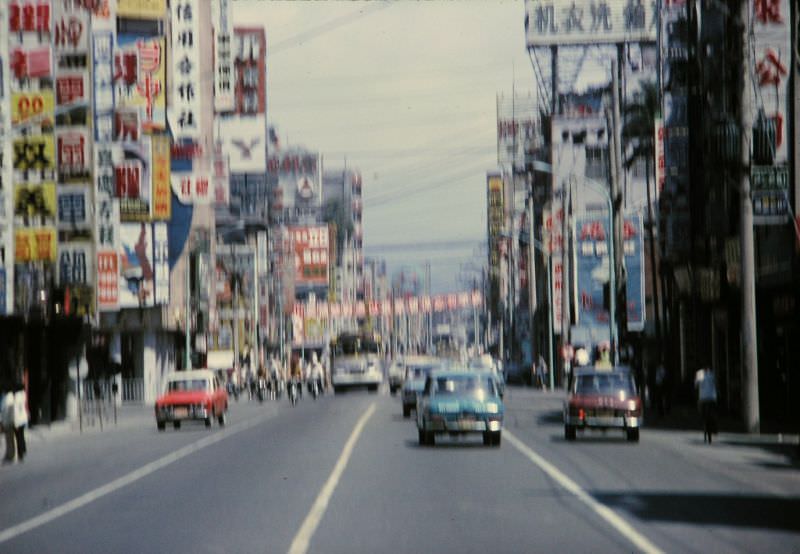
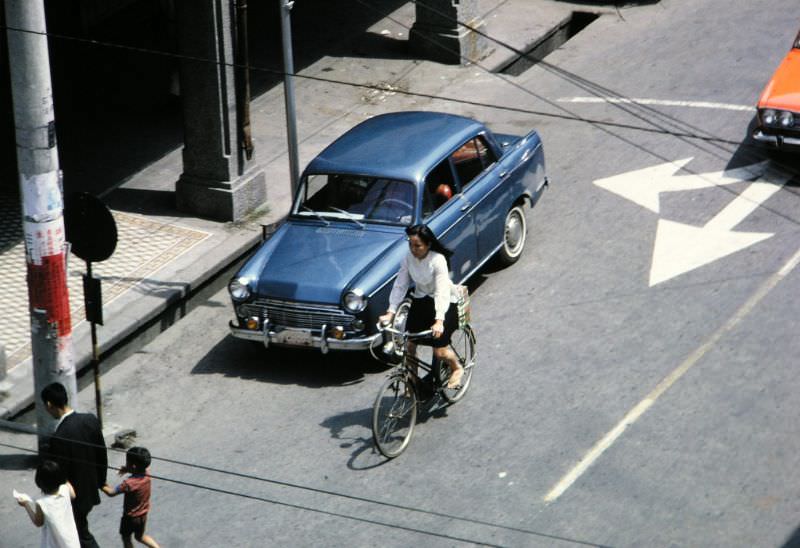
Taichung, located in central Taiwan, was the island’s third-largest city. Its wide streets and grid-like layout made it feel more spacious than Taipei or Kaohsiung. In the 1970s, Taichung was a commercial hub for the surrounding agricultural region, and its downtown streets were lined with banks, shops, and restaurants serving a steady flow of business from the central plains.
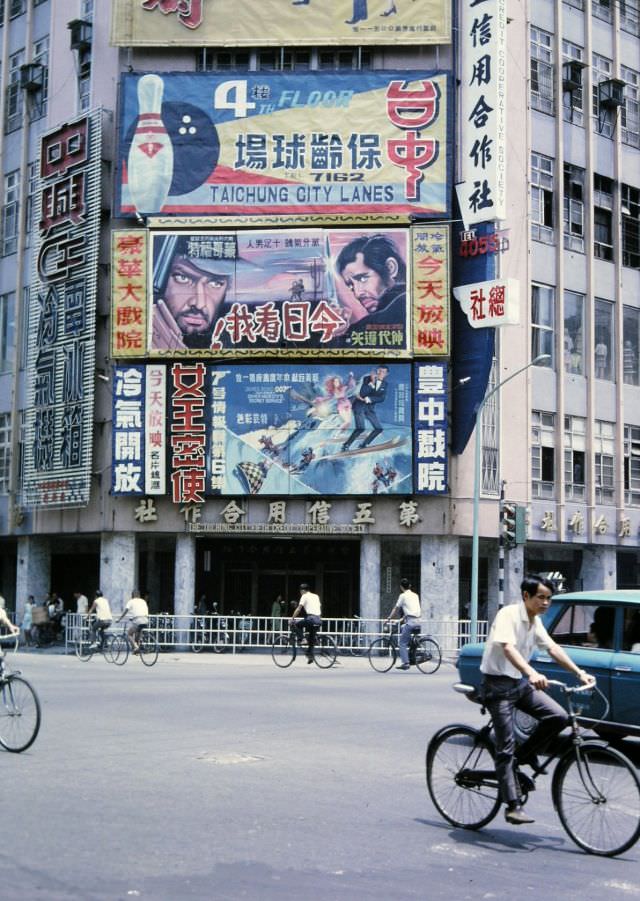
Western films had a strong audience in Taiwan. James Bond’s On Her Majesty’s Secret Service, released in 1969, was still drawing crowds in Taichung’s cinemas in the early 1970s. Movie theaters were a popular form of entertainment for Taiwan’s growing urban population, and marquees advertising both Hollywood and Hong Kong productions were a fixture of city streets.
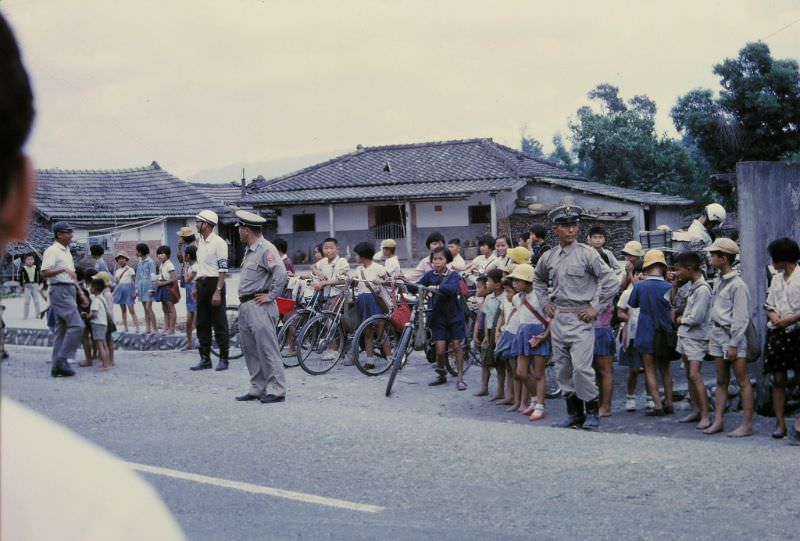
Air raid alerts were a real and routine part of life in 1970s Taiwan. The government regularly conducted civil defense drills as a reminder that the military threat from the People’s Republic of China across the Taiwan Strait was never far away. During an alert, traffic stopped and people waited, sometimes in the middle of a road or in a small village, until the all-clear was sounded.
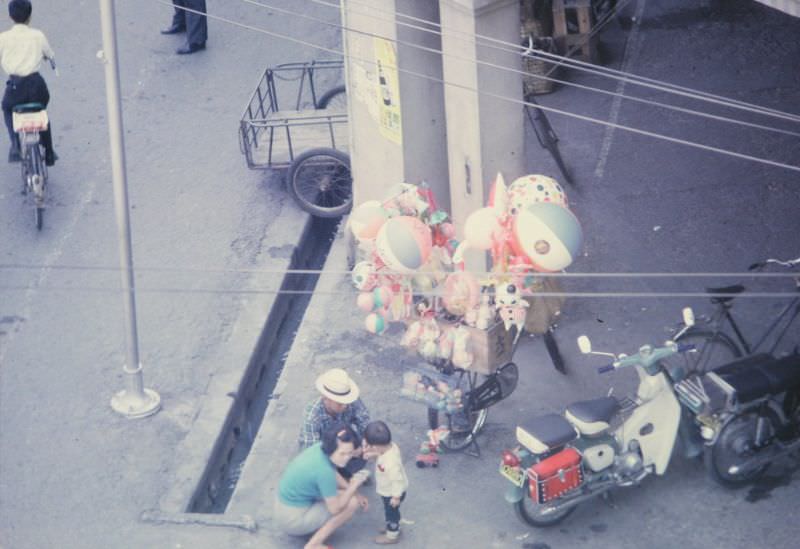
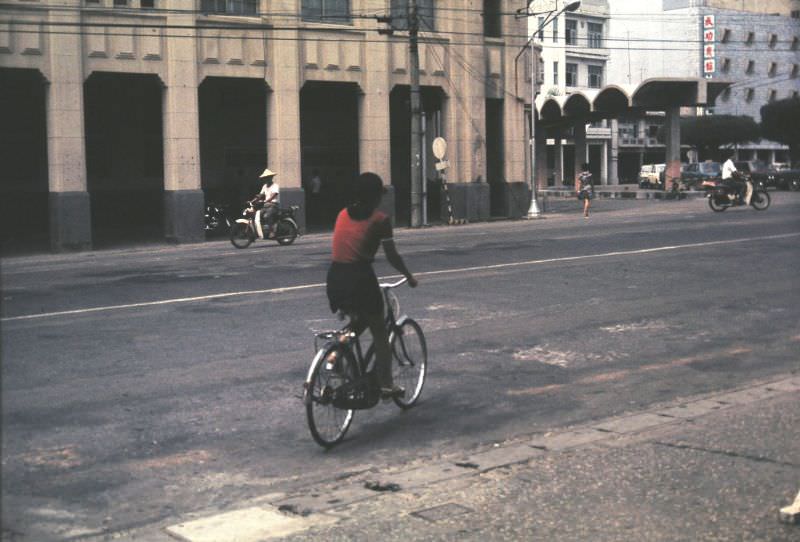
Tainan, on Taiwan’s southwestern coast, was the island’s oldest city. Founded as a Dutch colonial settlement in the 17th century and later the capital of the Qing Dynasty’s Taiwan Prefecture, Tainan carried centuries of history in its temples, old walls, and narrow streets. By the 1970s, it was a busy commercial city, but its historical character was still visible in its architecture and street layout.
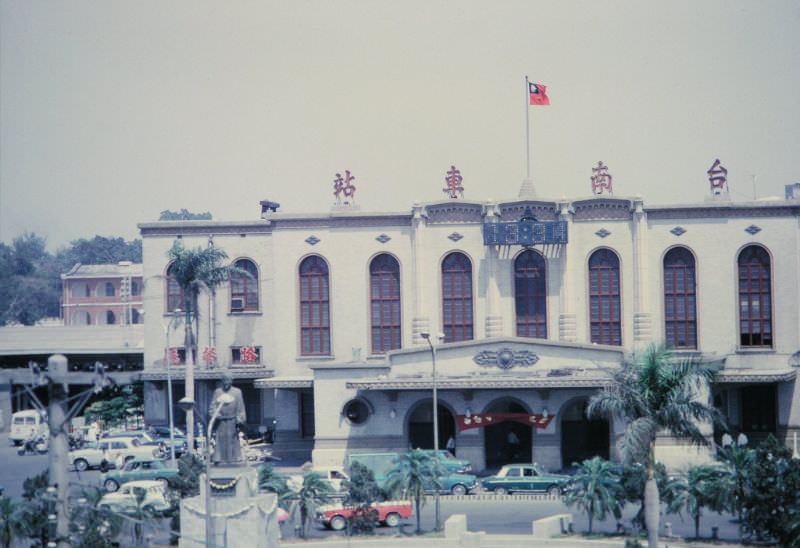
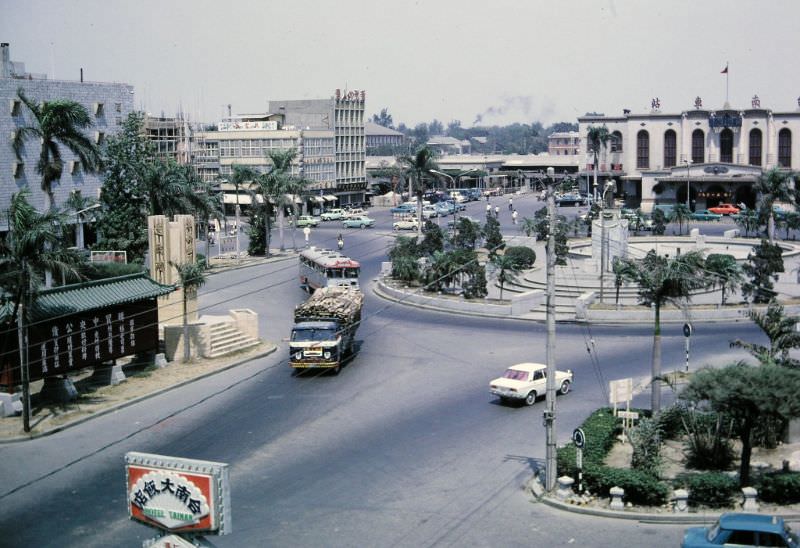
Tainan’s train station was the city’s central transportation hub, connecting it to Kaohsiung in the south and Taichung and Taipei in the north. The station sat at the center of a traffic circle — a classic design used in several Taiwanese cities to manage the mix of bicycles, motorcycles, and pedestrians. Viewed from the nearby Tainan Hotel, the circle and its surrounding activity captured the organized chaos of mid-century Taiwanese city planning.
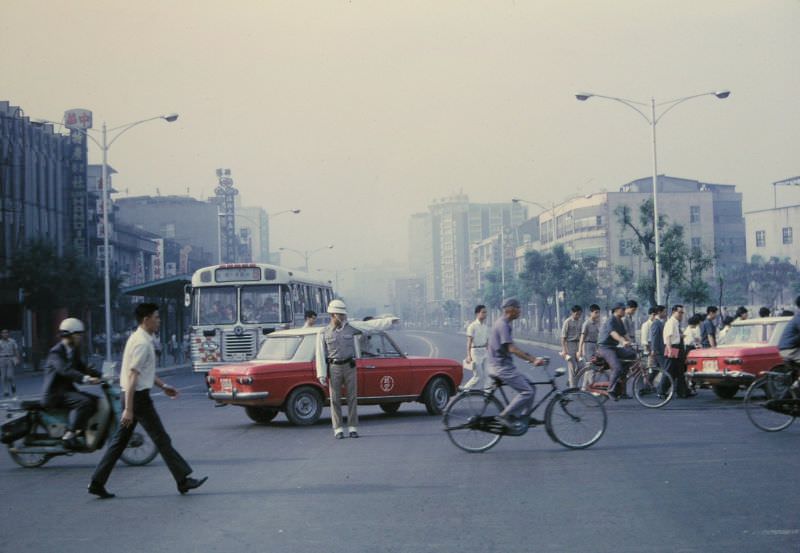
Taipei, the capital, was the most developed and fastest-moving city in Taiwan. Chung Shan North Road was one of its most important thoroughfares — a wide boulevard lined with embassies, hotels, and shops. Military police directing traffic at busy intersections was a routine sight in 1970s Taipei, where civilian traffic control systems were still catching up with the growing volume of vehicles on the road.
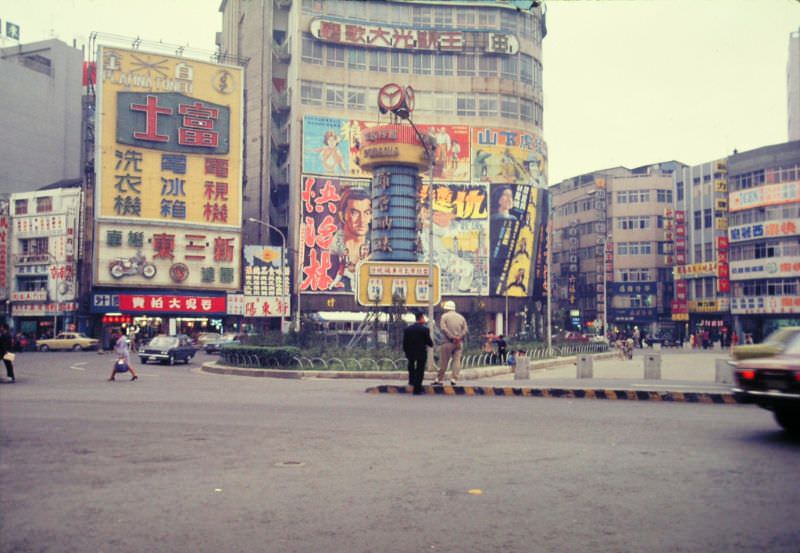
Ximending — romanized in older transliterations as Shin Mun Tien — was Taipei’s main entertainment and shopping district. It was modeled on Tokyo’s Shinjuku district, a reflection of Japan’s deep cultural influence on Taiwan following five decades of Japanese colonial rule that ended in 1945. By the 1970s, Ximending’s covered pedestrian lanes were packed with cinemas, restaurants, and clothing stores serving the city’s young population.
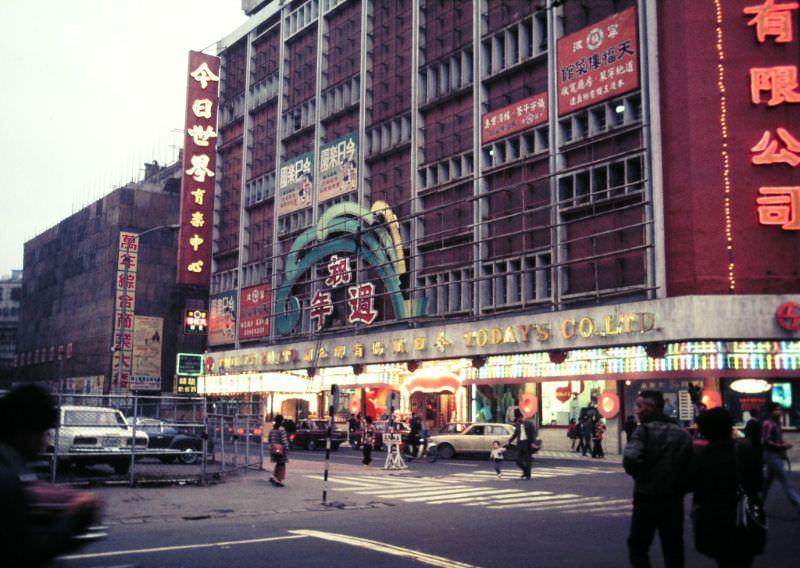
Department stores like Today in Taipei represented a shift toward modern retail in 1970s Taiwan. They offered a curated indoor shopping experience that contrasted sharply with the street markets and shophouses that still dominated most of the island. These stores catered to Taiwan’s emerging middle class — families who were beginning to earn enough to spend on goods beyond basic necessities.
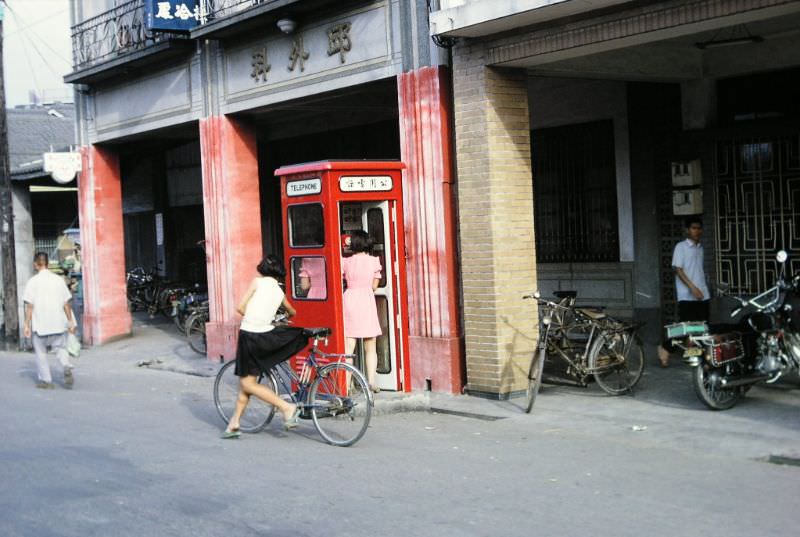
Public telephone booths were a key part of urban communication in 1970s Taiwan. Private home phones existed but were far from universal, and public booths served as the main way for people to make calls when away from home or work. The image of two twins sharing a single phone booth captures the communal, improvised quality of everyday life in Taiwan at a time when the modern infrastructure people take for granted today was still being built.





I’ve known a relative of 金合利(the dude holding the knife) when i was in Kinmen.
They used to tell me that he and his parents would go around the island and use a makeshift forge on the go to fix peoples wok.
Kind of a fun interesting history of him
Not much has changed.