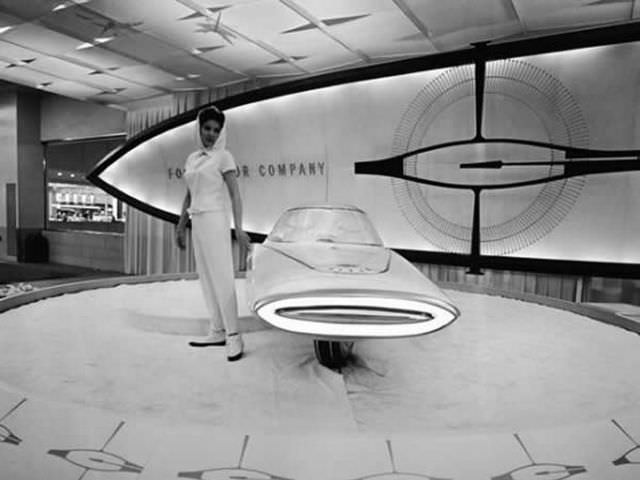
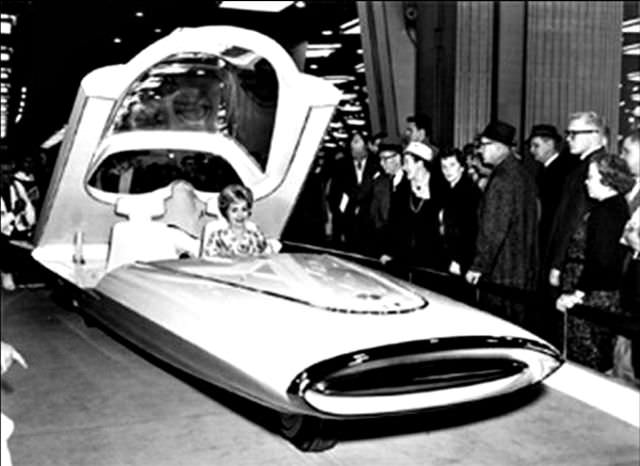
In 1961, Ford pulled back the curtain on one of the most unusual concept vehicles ever built — the Ford Gyron. Unveiled at the Detroit Motor Show, this futuristic two-wheeled gyrocar turned heads not just for how it looked, but for how it worked. It was never intended to roll off an assembly line. Instead, Ford built it for research and marketing purposes, using it to explore what personal transportation could look like in a distant future.
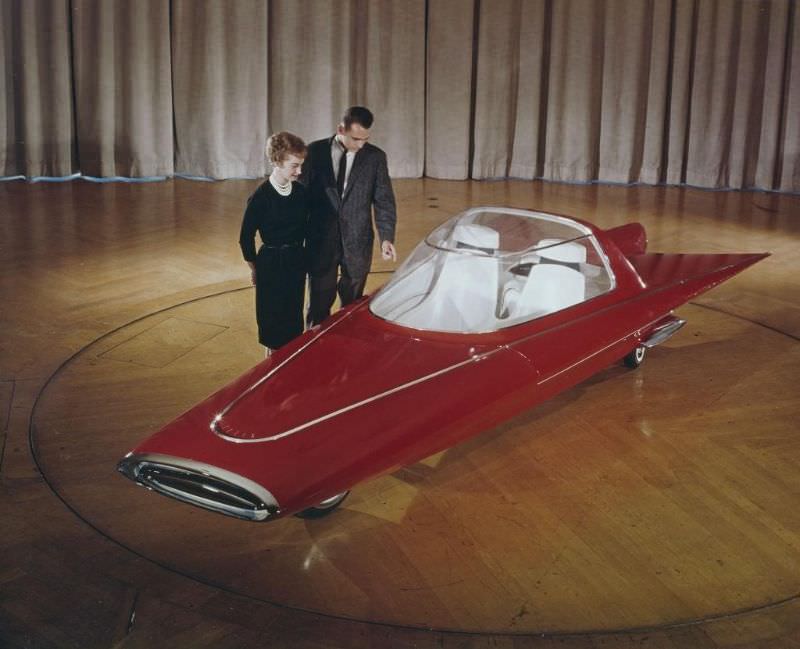
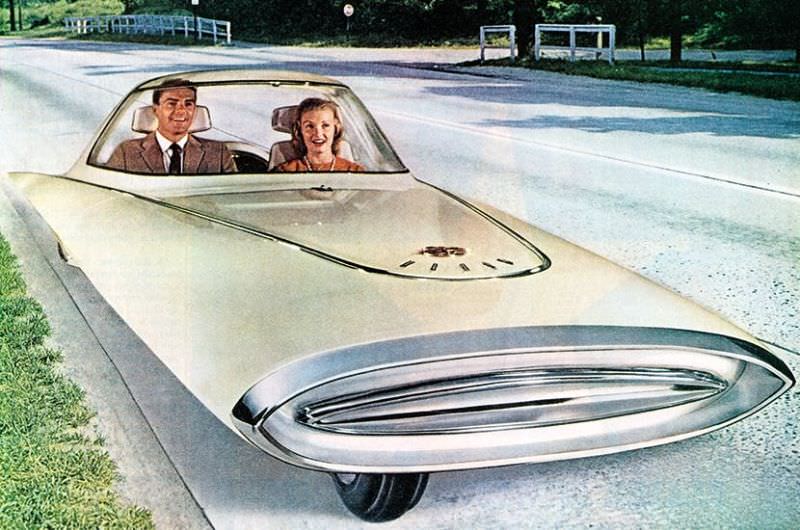
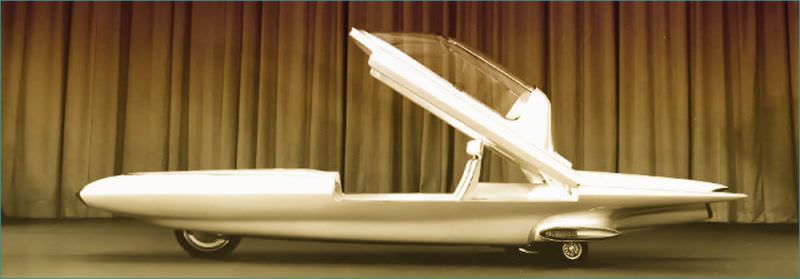
The man behind the Gyron’s striking visual design was Syd Mead, an industrial designer who would later become famous for his work on science fiction films. Mead gave the Gyron a sleek, missile-like body that looked more at home in outer space than on city streets. The two-seat cabin placed passengers side by side, which was unusual given the car’s narrow, two-wheeled layout.
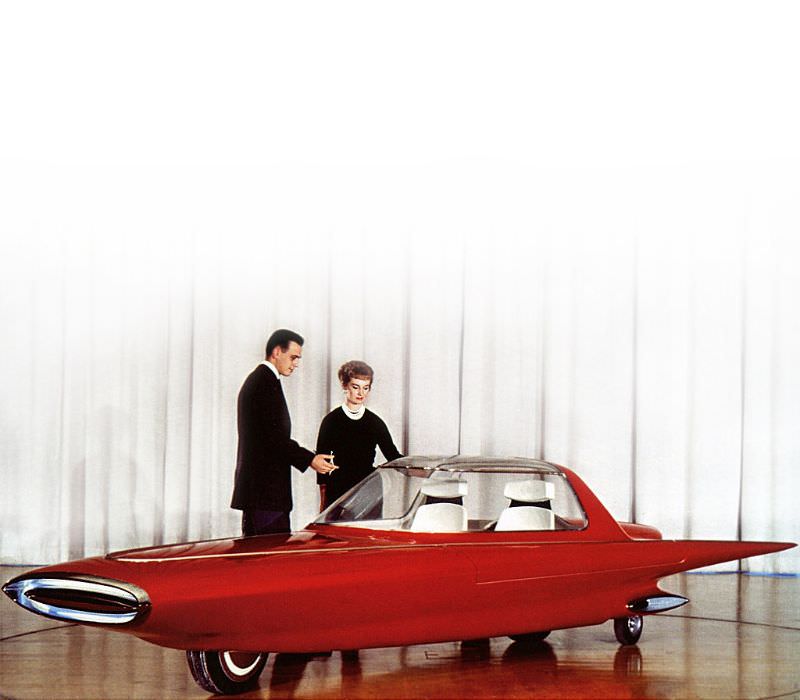
Like a motorcycle, the Gyron had one wheel at the front and one at the back. This setup made balance a real engineering challenge. To keep the vehicle upright while stationary or moving at low speeds, two small retractable legs extended from the sides of the car. Once the gyroscopes reached operating speed, these legs lifted off the ground, and the vehicle balanced on its two wheels alone.
The gyroscopic stabilization system behind the Gyron was designed by Alex Tremulis and drew heavily from the theories of Louis Brennan, a nineteenth-century Irish inventor known for his work on gyroscopic monorail vehicles. Ford Motor Company of Detroit formally credited Brennan with influencing the Gyron’s fundamental design concept.
Alex Tremulis was no ordinary engineer. Before arriving at Ford, he had already led one of the most ambitious automotive projects in American history — serving as chief designer for the Tucker automobile. The Tucker was a revolutionary car that ultimately failed due to financial and legal troubles, making it one of the great “what-ifs” of postwar American motoring. Tremulis brought that same bold thinking to Ford.
Tremulis began his professional career with the United States Air Force, working at Wright-Patterson Air Force Base in 1948 on concepts for military flying saucers. That background in experimental, boundary-pushing design translated directly into his later work at Ford. His interest in gyroscopic technology extended beyond the Gyron — he was also involved with the Tuscan gyroscopic motorcycles and the Gyronaught XU1, a gyroscopic car project that explored similar stabilization ideas.
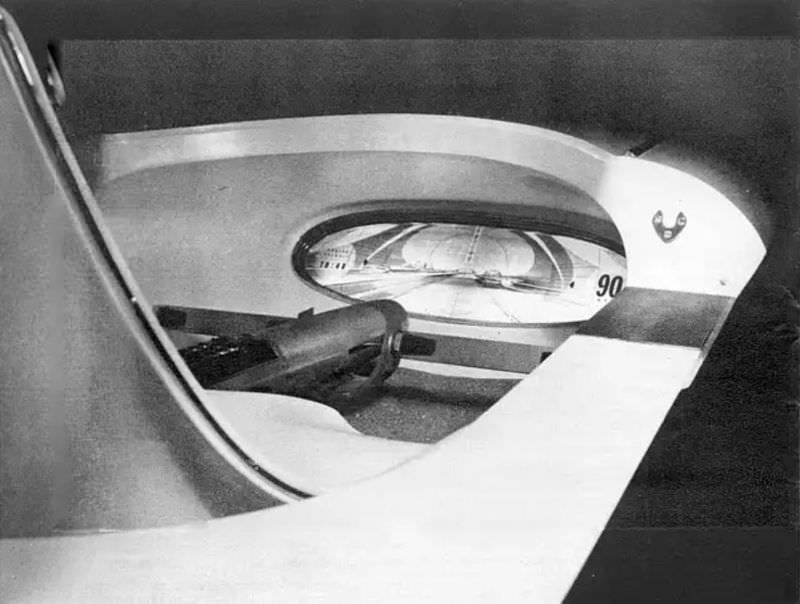
The Gyron’s body was constructed from fibreglass, which was a common material for concept and show cars of the era. It gave designers the freedom to create smooth, flowing shapes that steel manufacturing of the time could not easily produce. The finished vehicle had a polished, futuristic quality that made it a showstopper on the Detroit Motor Show floor.
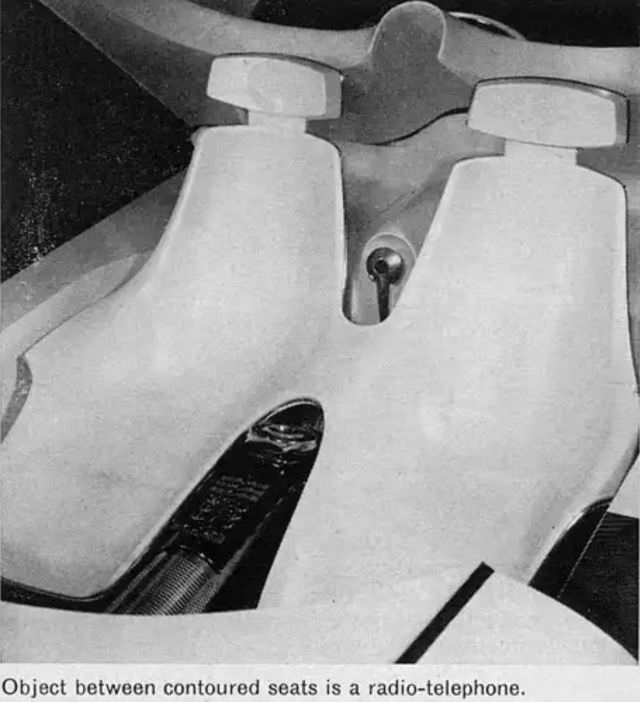
The Gyron featured a wraparound windshield that stretched dramatically across the front of the cabin, giving passengers a wide, unobstructed view. The interior was designed with the same forward-thinking aesthetic as the exterior — clean lines, minimal clutter, and a layout that prioritized the futuristic experience Ford wanted to project.
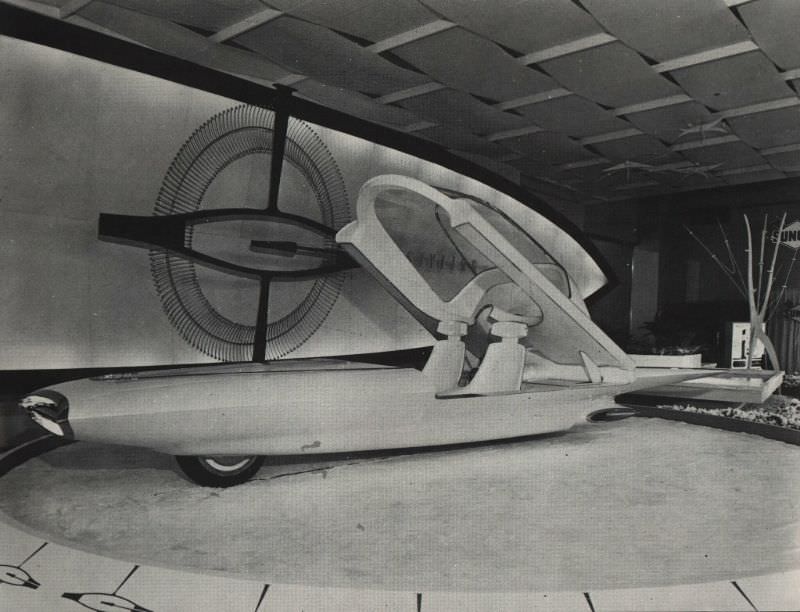
Tragically, the original full-scale fibreglass Gyron was destroyed in 1962 when a fire broke out at the Ford Rotunda, a large exhibition building in Dearborn, Michigan that Ford used to display its vehicles and host public events. The fire consumed the Gyron along with numerous other Ford showpieces. It was an irreplaceable loss for automotive history.
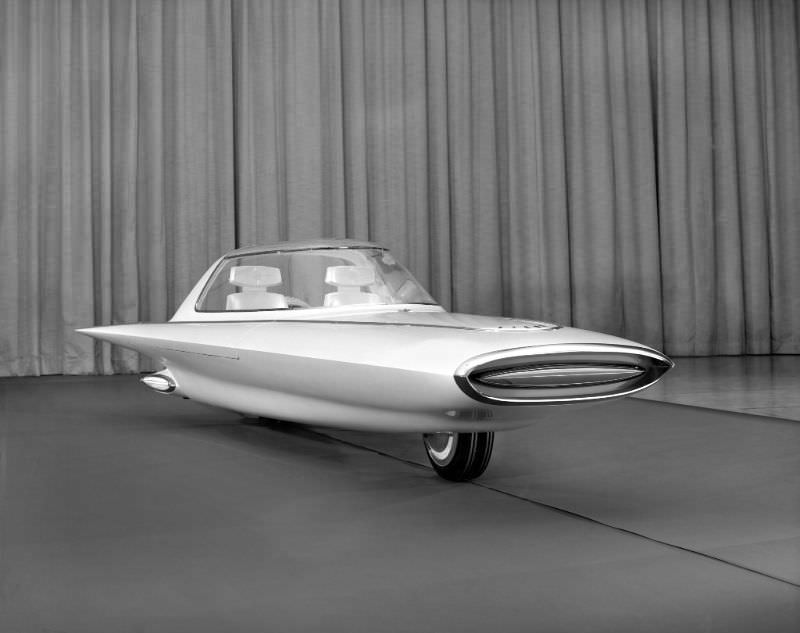
What survived the fire was not the car itself but a smaller studio model — a scaled-down version used during the design and development process. Studio models were standard tools in automotive design studios of the era, allowing designers to study proportions and surfaces before committing to a full-scale build.
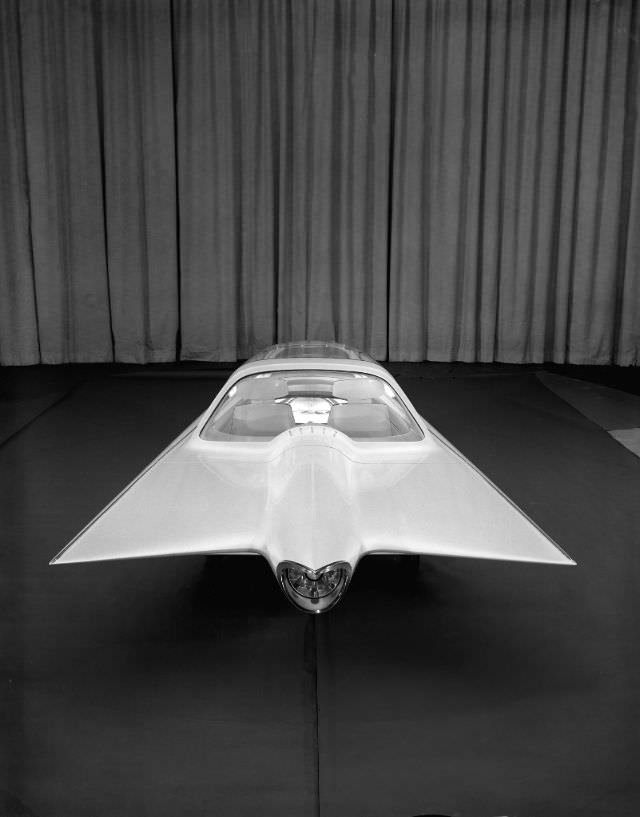
That surviving studio model became the only physical remnant of the Ford Gyron. In December 2012, it went up for auction and sold for $40,000. For collectors of automotive history and concept car memorabilia, the Gyron model represented a direct connection to one of Ford’s most imaginative — and most unconventional — design experiments.
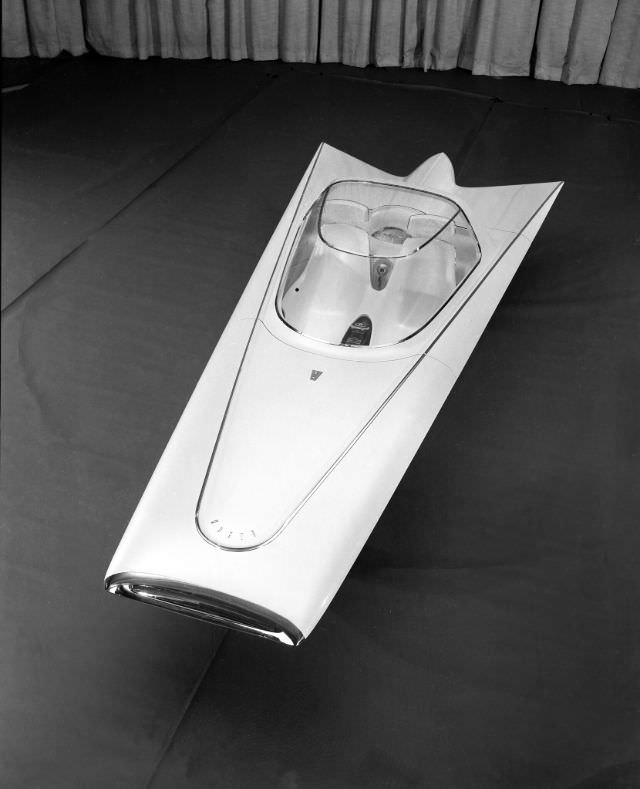
The Ford Gyron stood as proof that the early 1960s were a period of genuine ambition in automotive design. Ford was not just building cars — it was asking what cars could become. The Gyron, with its two wheels, gyroscopic balance, and space-age styling, was Ford’s most extreme answer to that question. It was a vehicle built not for the road as it existed, but for a road that designers believed was coming.