Brazil in the 1950s was a country moving fast. Under Presidents Getúlio Vargas and then Juscelino Kubitschek, the country pushed hard toward modernization. Factories expanded, cities grew, and a new national capital was being carved out of the central plateau from scratch. Yet beyond the political headlines, everyday Brazilian life had a texture and pace that these photographs capture better than any written record.
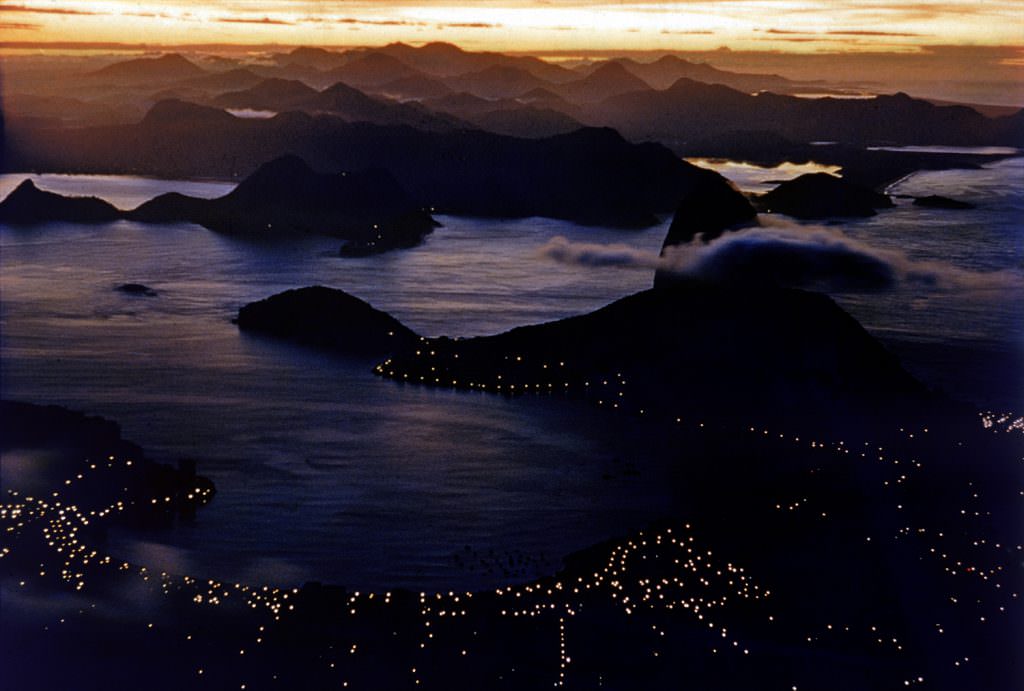
Rio de Janeiro was still the nation’s capital for most of the decade, and its geography shaped everything. The city’s dramatic granite peaks were stunning to look at, but they also created real headaches for drivers and urban planners trying to move people through the city.
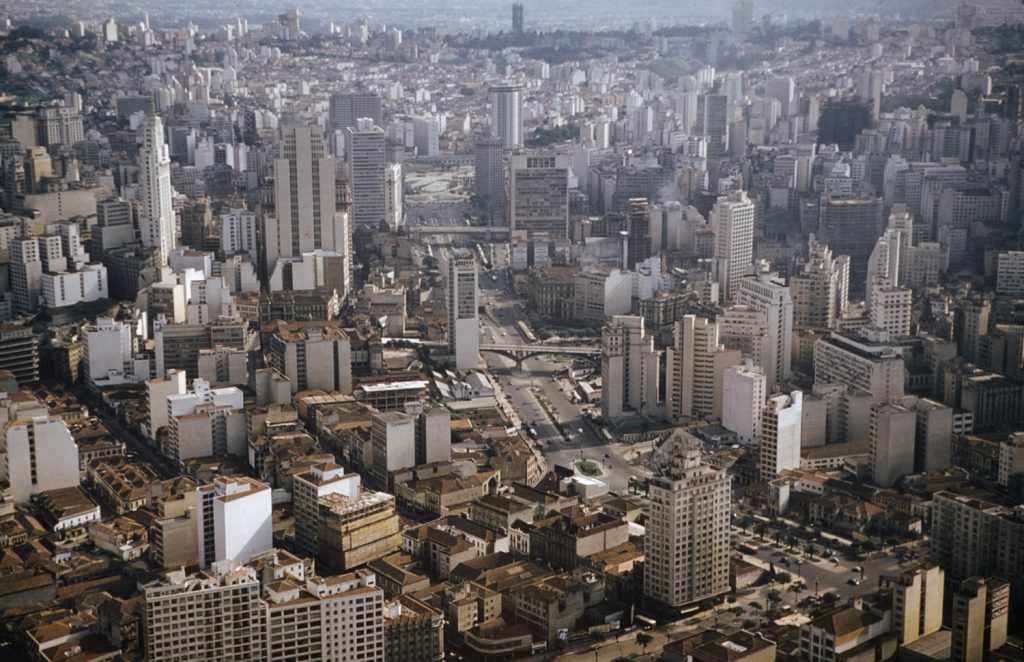
São Paulo, meanwhile, was already surging ahead as Brazil’s industrial engine. By the mid-1950s it was growing faster than almost any other city in the world. Factories producing steel, cars, and textiles drew workers from across Brazil and from abroad.
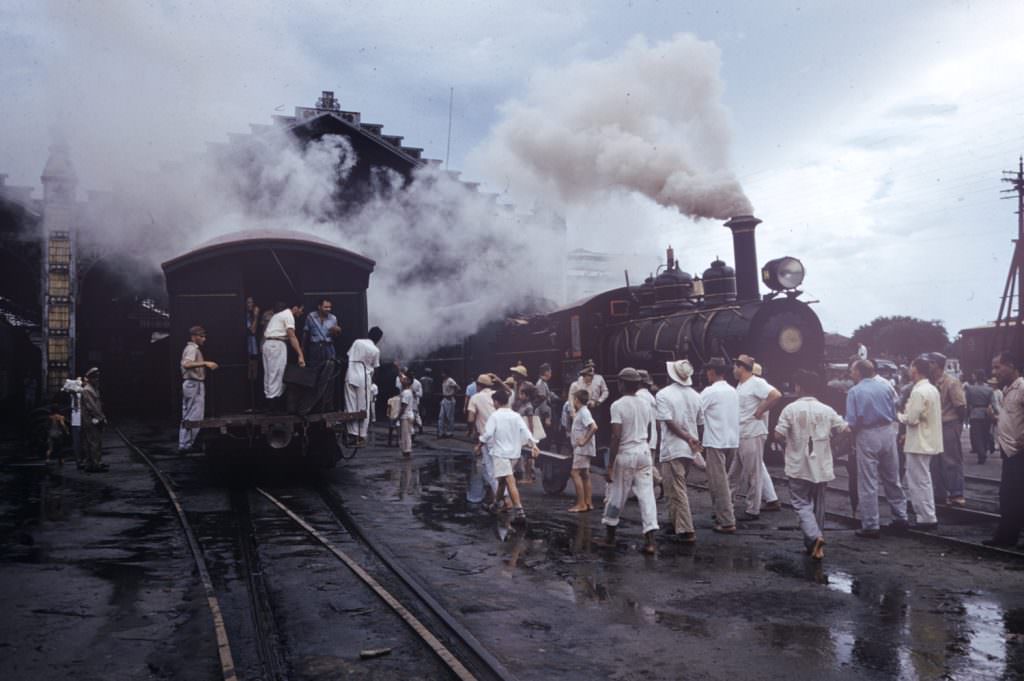
Transportation across Brazil’s vast interior remained a major challenge. Railroads existed, but many ran on equipment that was decades old. Engines from the early 1900s were still in regular service on some regional lines, struggling over terrain and burning wood rather than coal or diesel.
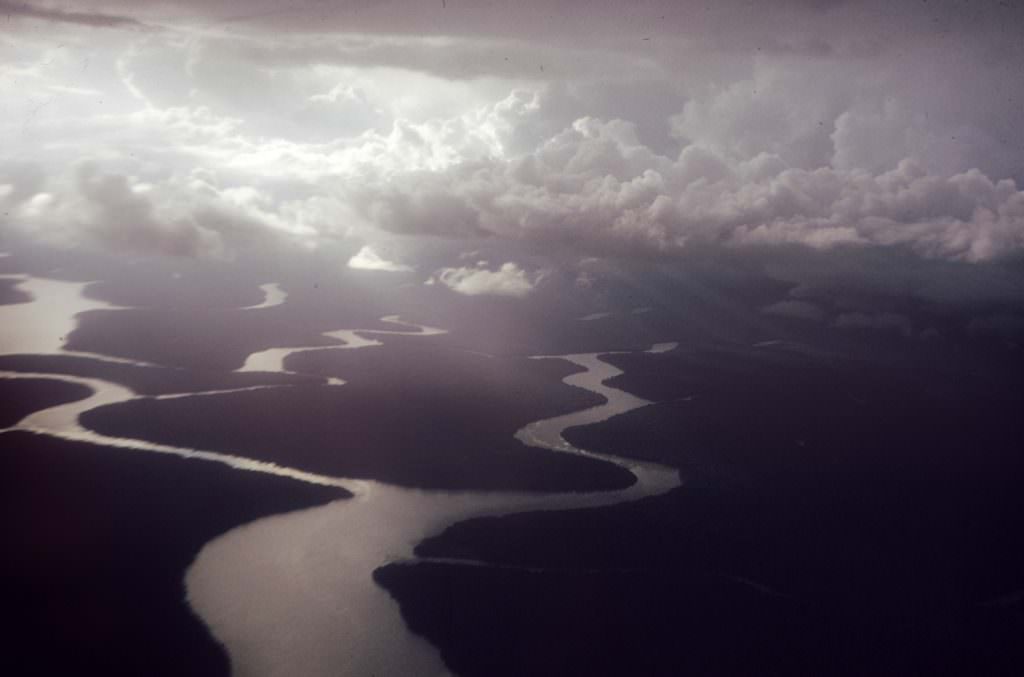
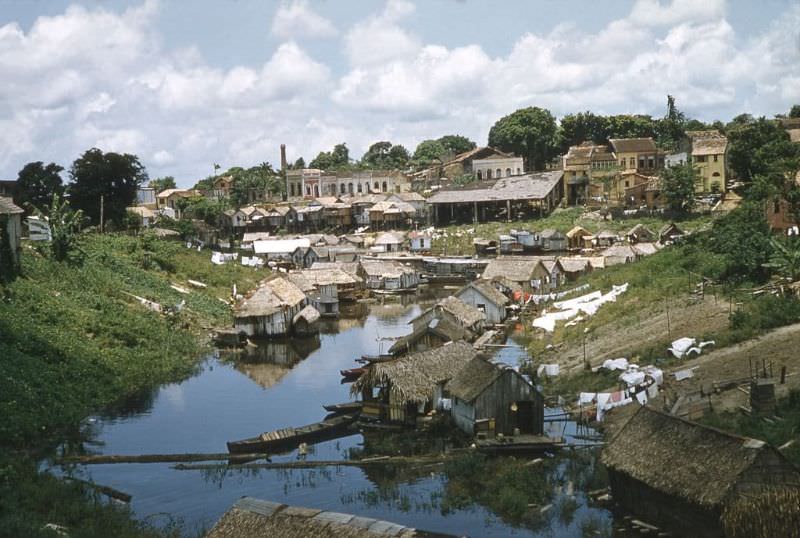
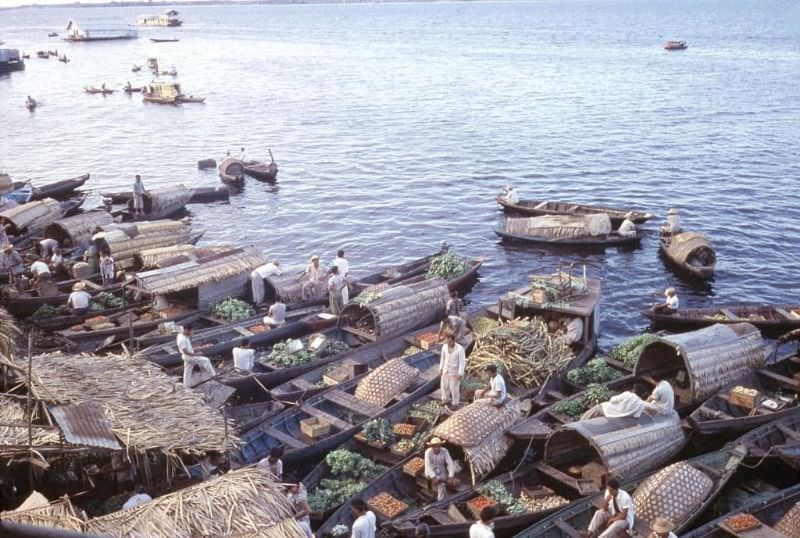
Away from the industrial south, the Amazon basin operated on an entirely different scale and rhythm. The river system covered millions of square kilometers, and for the communities along its banks, the water was the road, the market, and the food supply all at once.
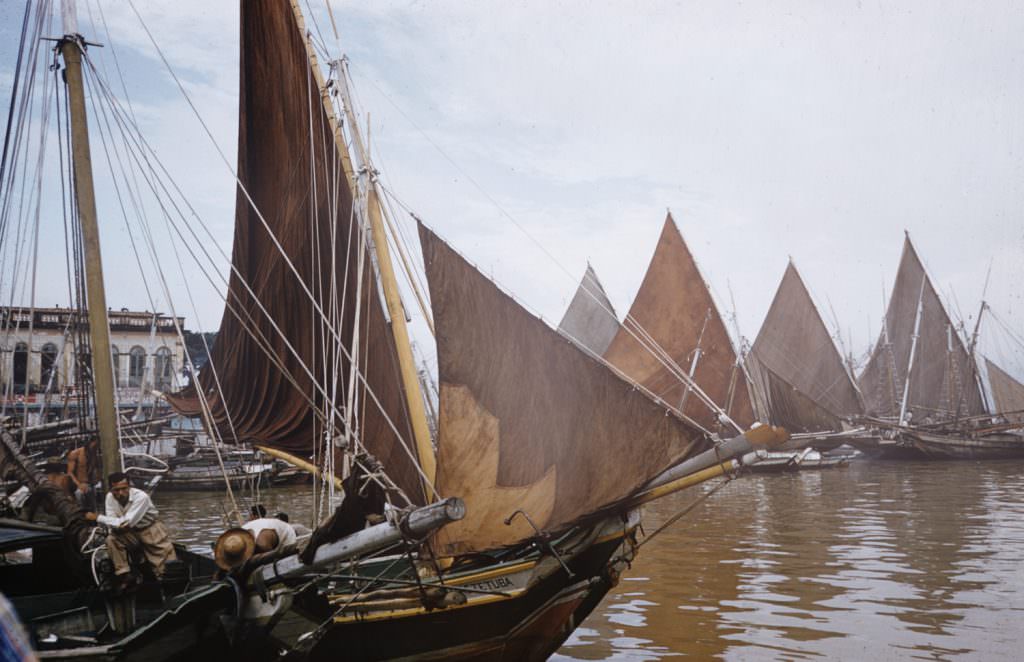
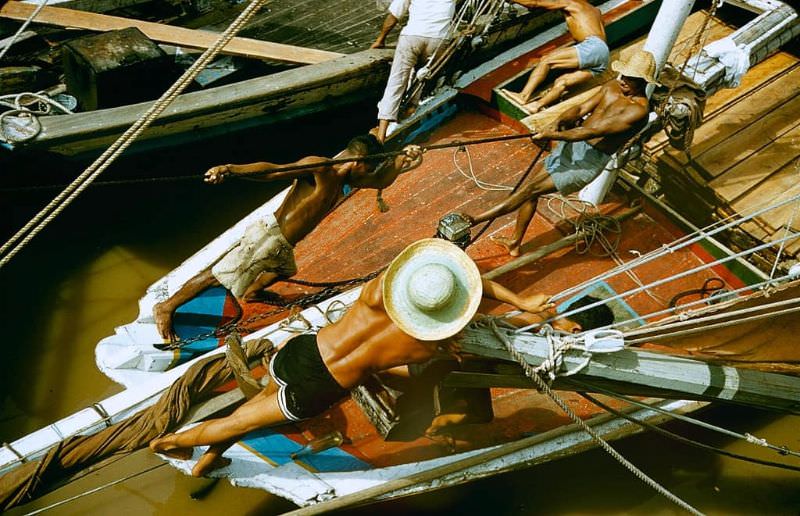
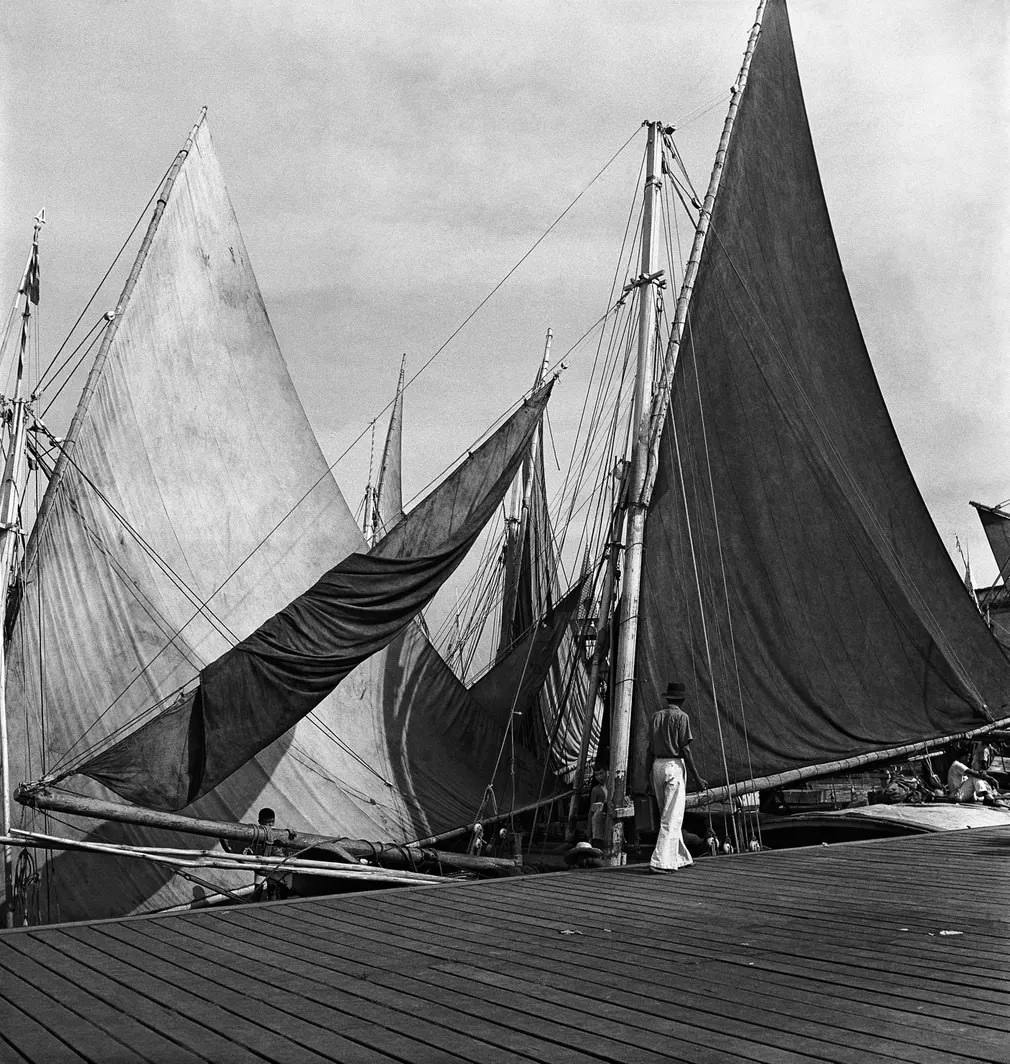
Along the coast and on inland waterways, sailboats and wooden vessels remained the standard way to move people and goods. Motorized transport was expensive and fuel was not always easy to find outside major ports.
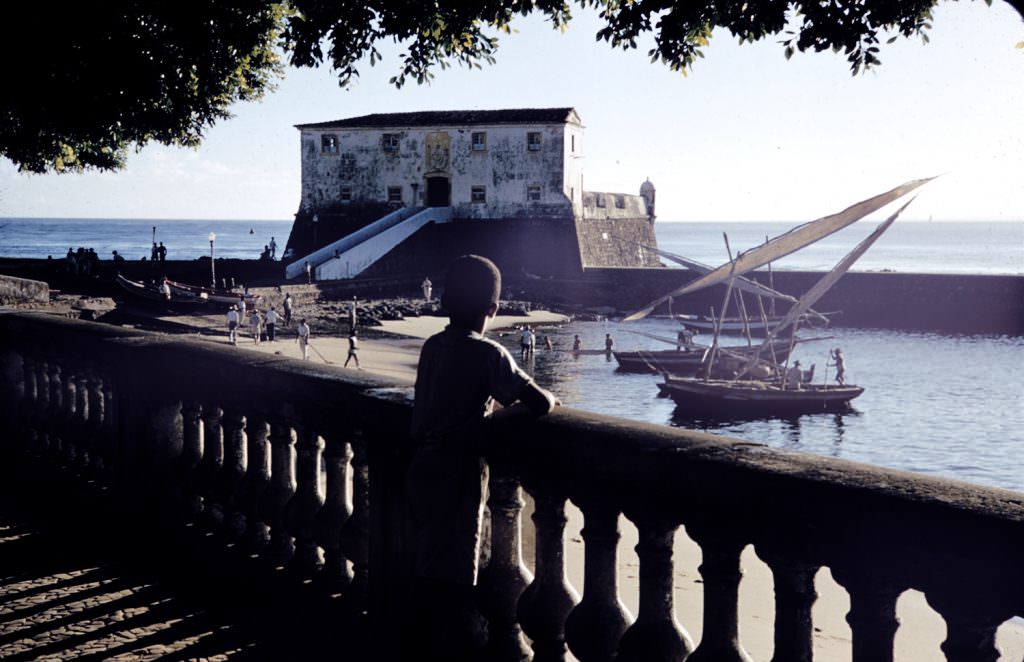
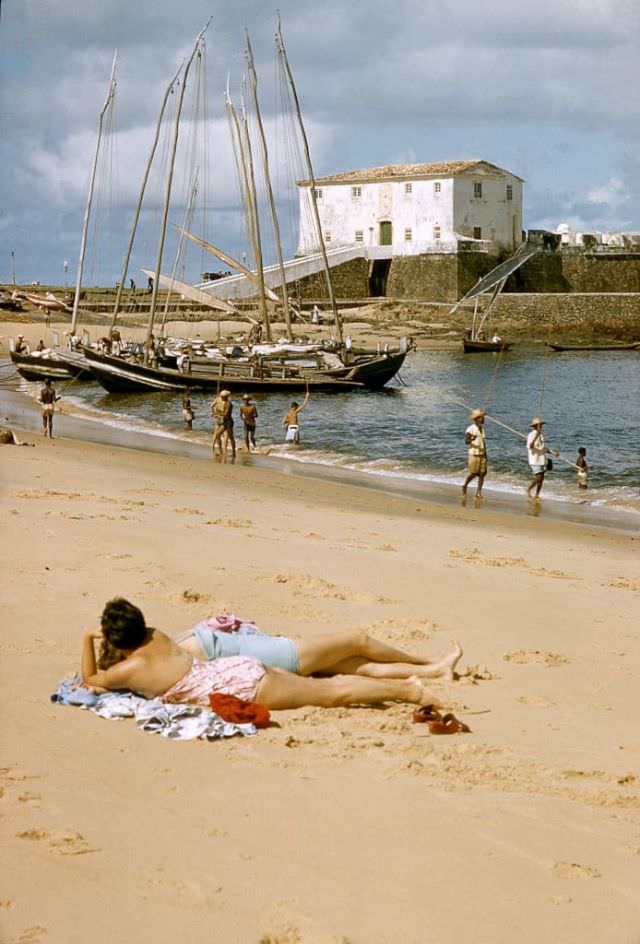
Brazil’s coastline was lined with forts and fortifications dating back to the colonial era, many of them still standing in the 1950s. These structures were woven into daily life, sitting at the edges of beaches and harbor towns that locals used every single day.
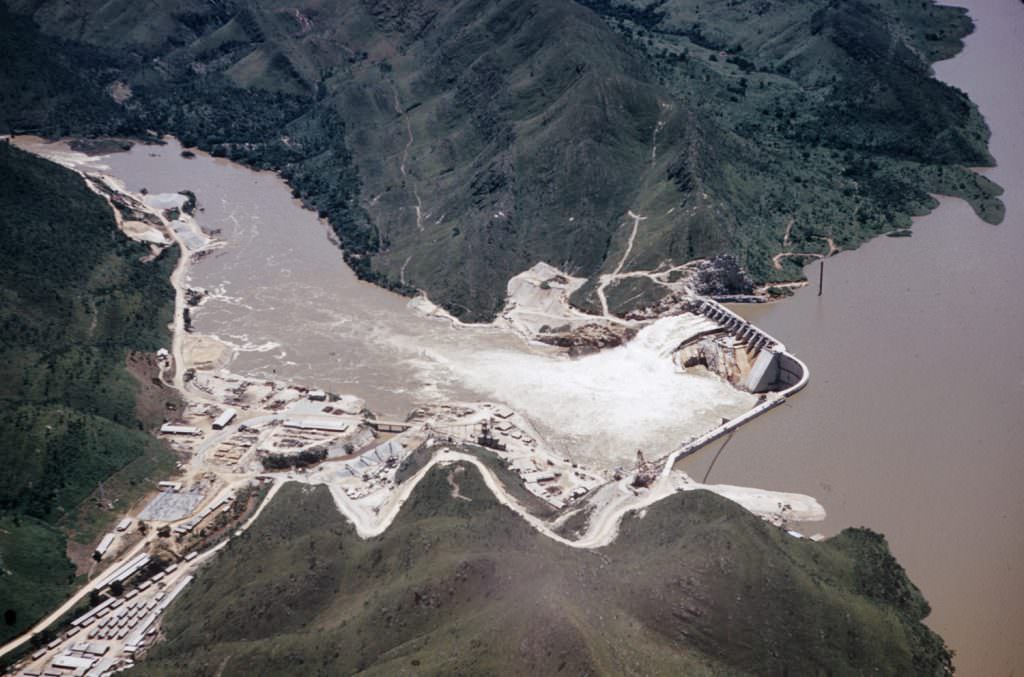
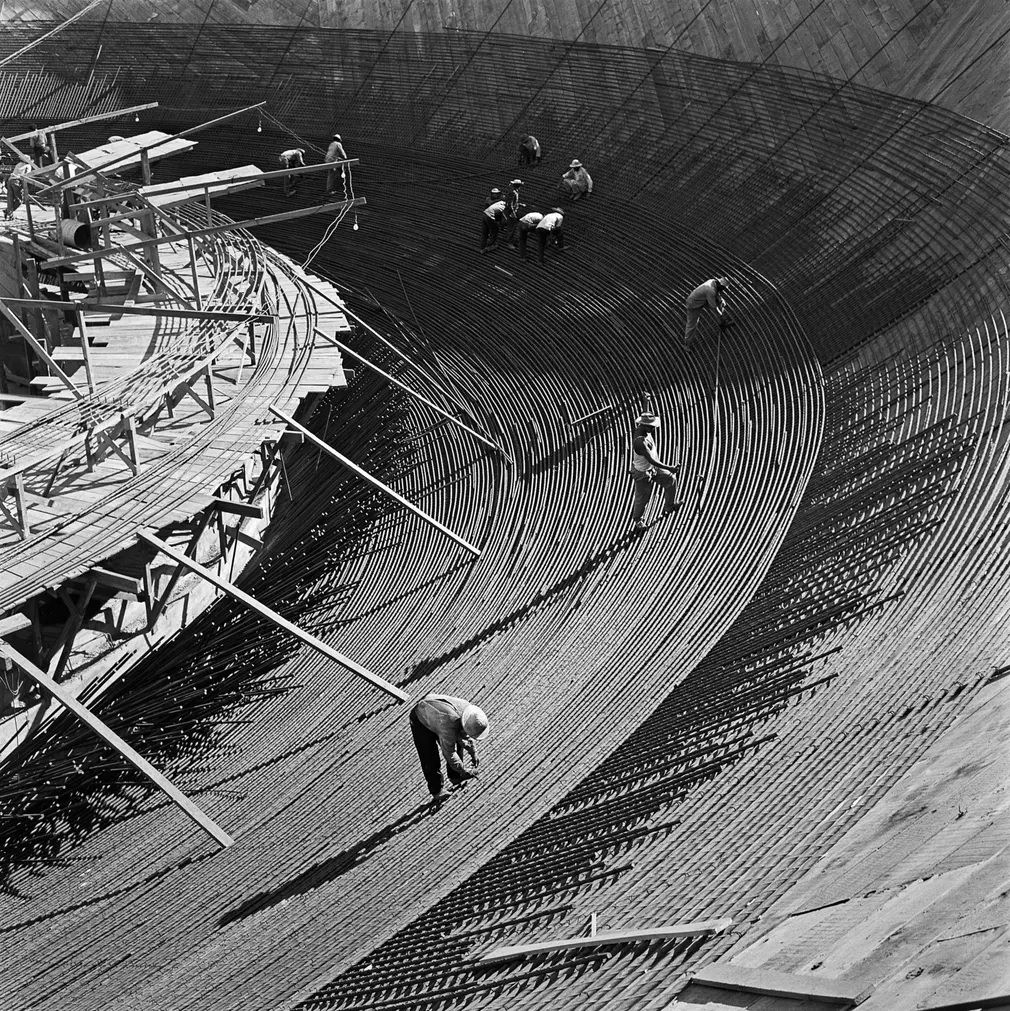
Kubitschek’s government placed a heavy emphasis on infrastructure. Large dam projects were part of his broader push to electrify Brazil and power its growing industries. The Peixoto Dam was one of several major hydroelectric projects undertaken during this period.
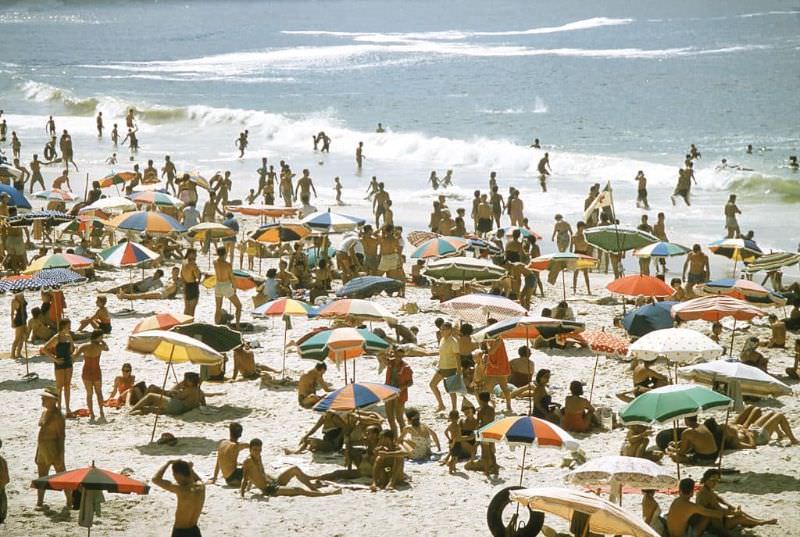
Rio’s beaches in the 1950s were clean, relatively uncrowded, and a central part of city life. The stretch of sand at Copacabana and other beaches were where people from different backgrounds mixed freely. The beach was not a luxury — it was a public space everyone used.
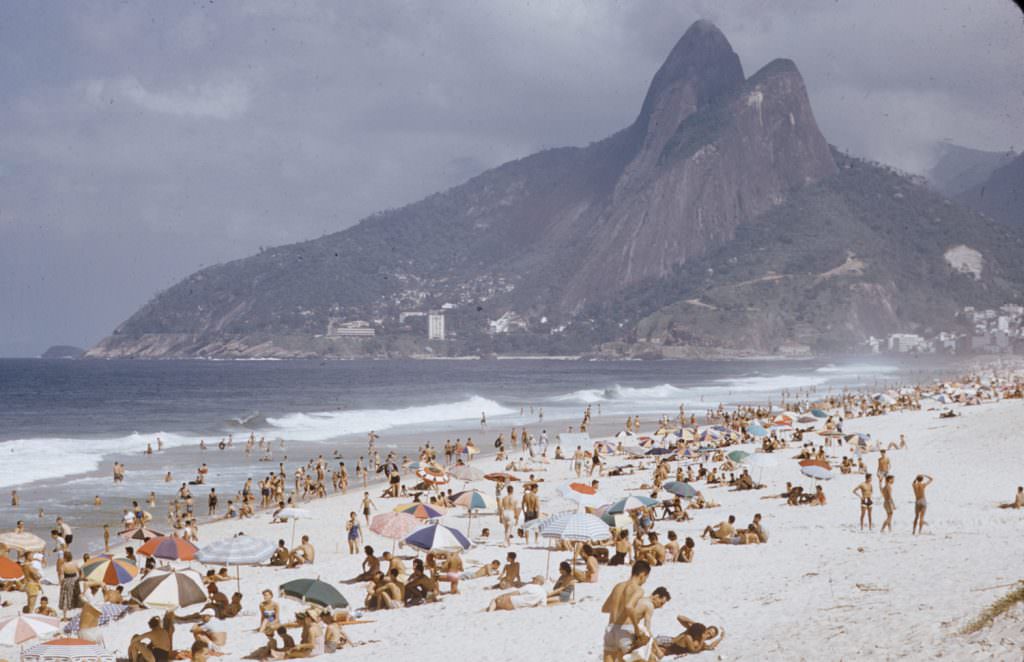
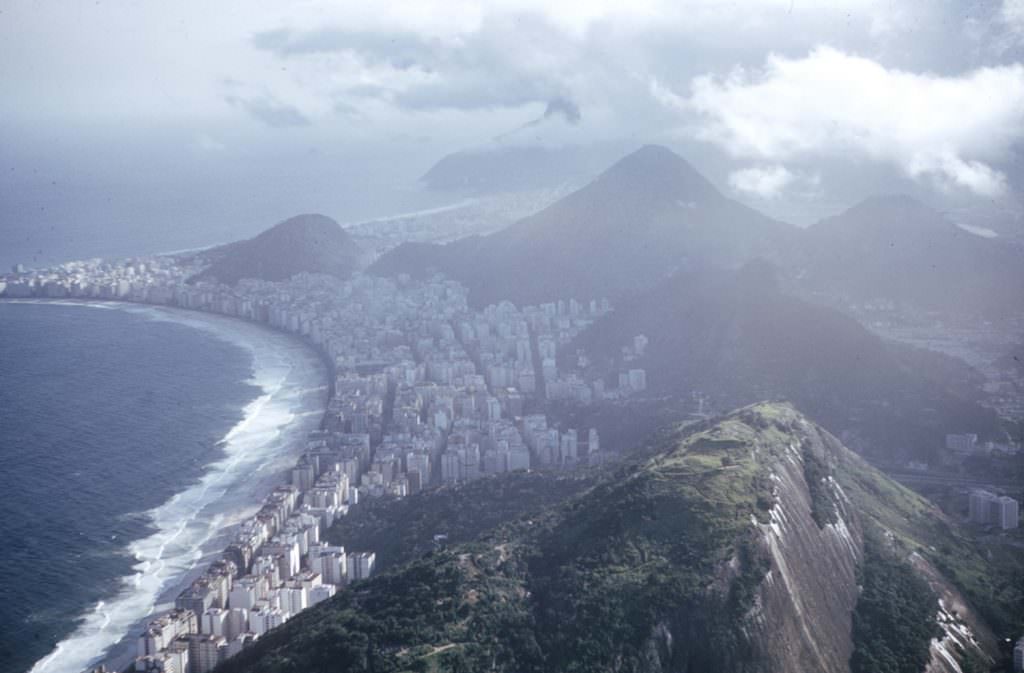
The city of Rio itself presented a striking mix of dense urban neighborhoods, wide boulevards, and green mountains pressing in from every direction. Middle-class families could afford spacious apartments with high ceilings in well-located neighborhoods — a standard of living that the city’s rapid growth would later put out of reach for many.
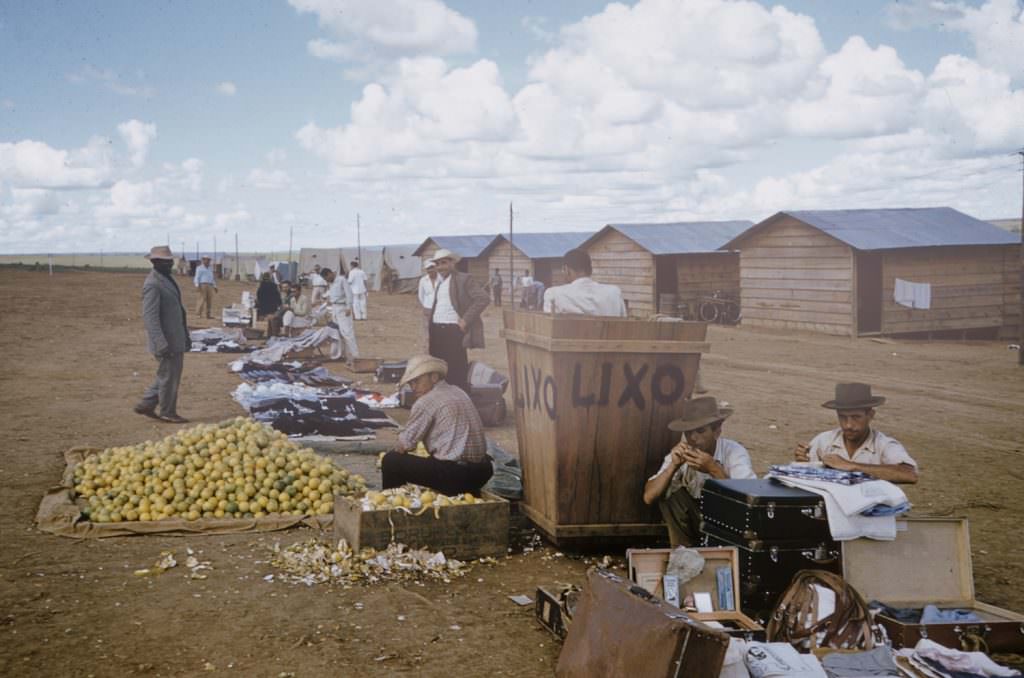
The construction boom of the 1950s required enormous numbers of workers. In places like the future capital Brasília, tens of thousands of laborers — called candangos — arrived from poorer regions, mainly the northeast, and lived in large temporary settlements while they built the city around them.
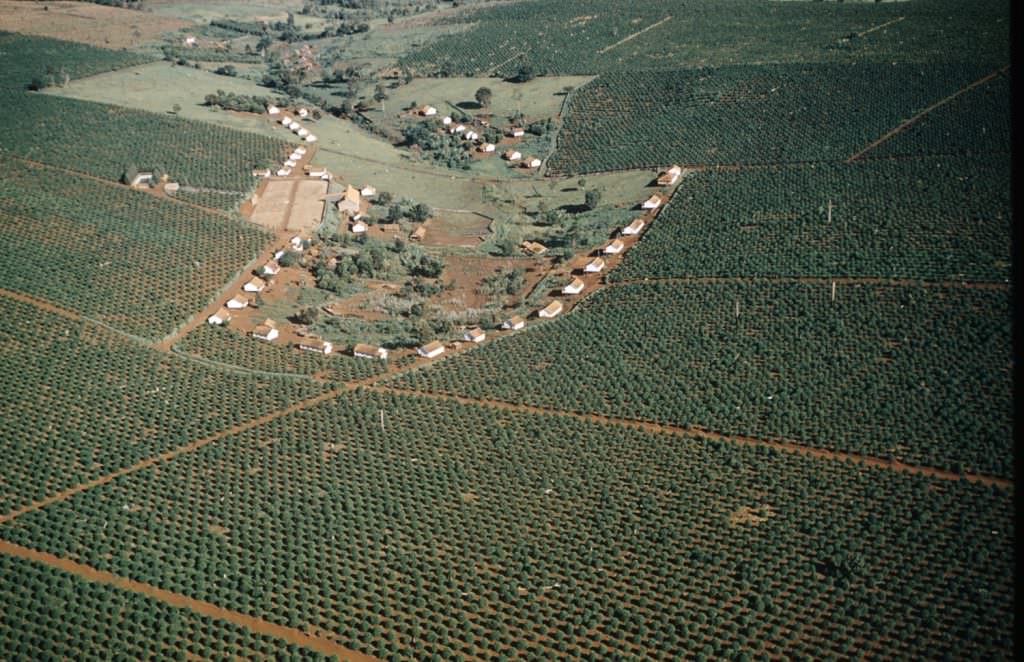
Agriculture remained the backbone of the Brazilian economy throughout the decade. Coffee was the country’s most important export crop, and the state of Paraná had become a major coffee-growing zone. The distinctive reddish-purple soil there, known as terra roxa, was exceptionally fertile and suited to coffee cultivation.
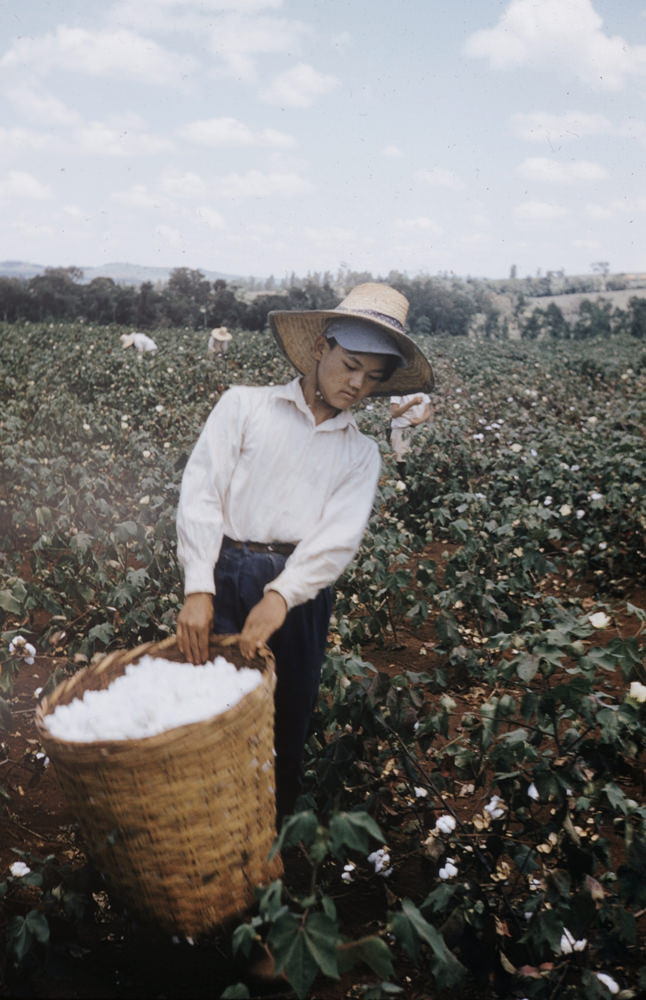
Cotton was another major crop, particularly in Brazil’s northeast. The work of picking cotton was done largely by hand, and women made up a significant part of the agricultural labor force on these farms.
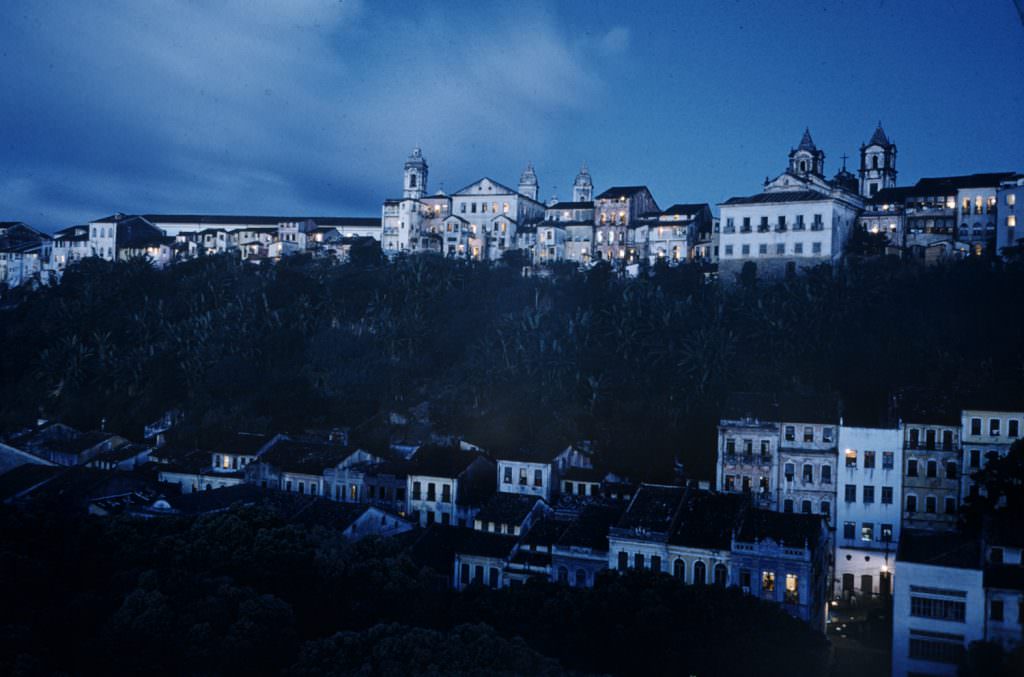
Salvador, the capital of Bahia state and the heart of Afro-Brazilian culture, was one of Brazil’s oldest and most distinctive cities. Founded in 1549, it had a skyline shaped by colonial churches, hilltop neighborhoods, and its position overlooking the Bay of All Saints.
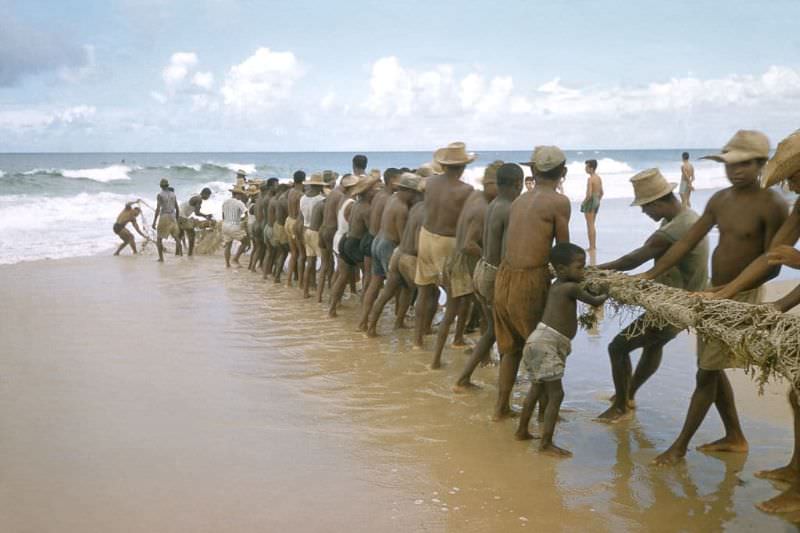
Fishing communities dotted Brazil’s enormous coastline and river systems. For many of these families, fishing was not a part-time activity — it was the entire economy. Nets, boats, and tides set the schedule of daily life.
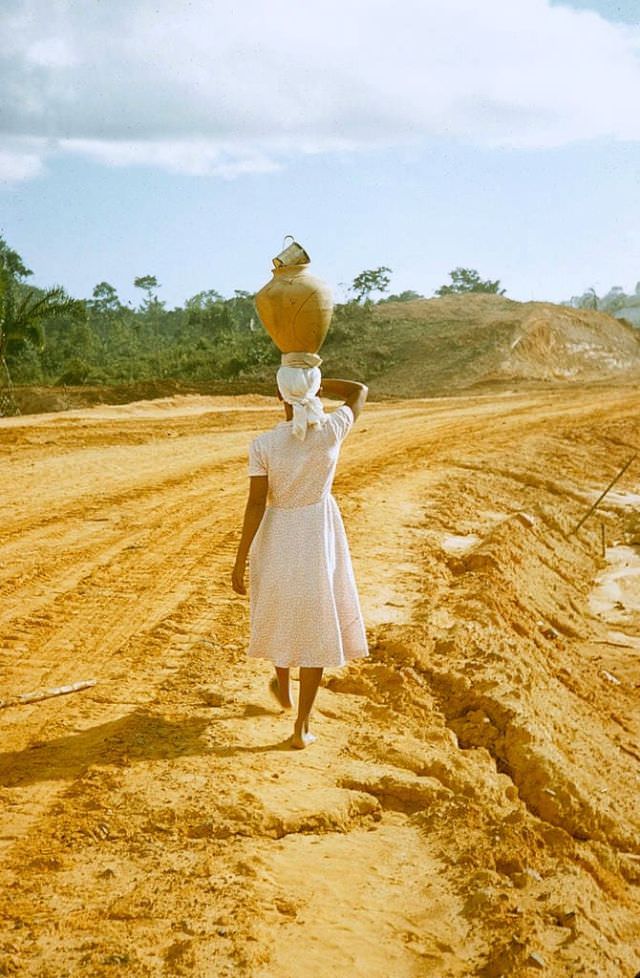
In rural and smaller urban areas, carrying water by hand remained common. Women balanced large ceramic jars on their heads — a skill requiring practice and strength — as they moved between water sources and their homes.
Fishing nets were a constant presence in coastal communities. Children grew up around them, learning the trade from an early age. These nets were often hand-repaired and represented a significant investment for families who depended on them.
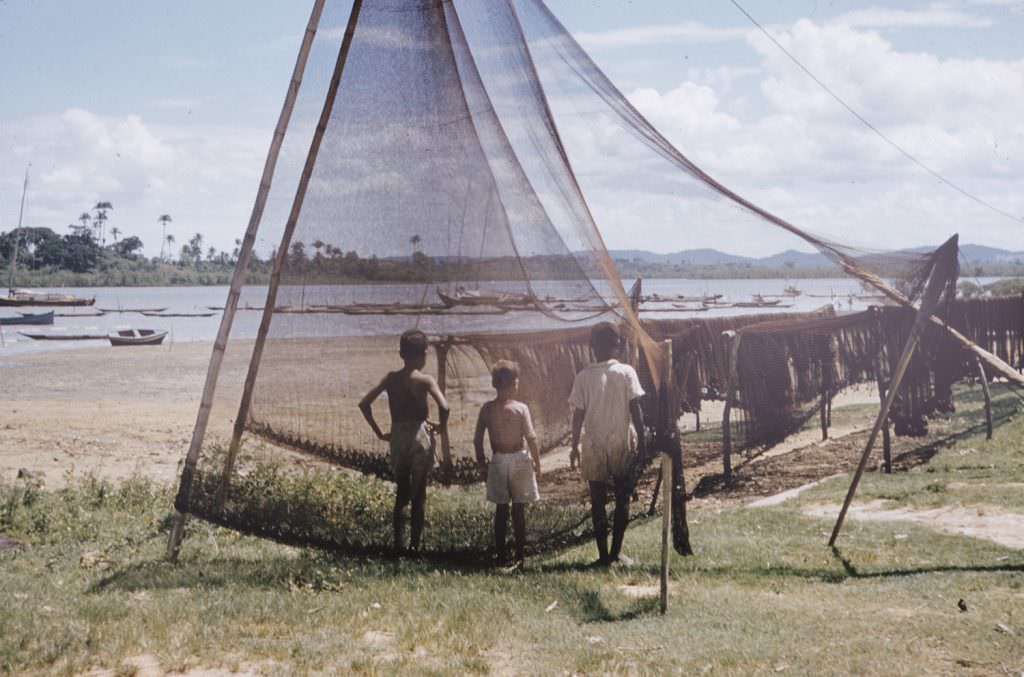
The Bahian fishing communities along the coast had their own distinct traditions, equipment, and rhythms. Small-scale fishermen worked close to shore, using techniques passed down through generations.
In Manaus, deep in the Amazon, entire neighborhoods were built on the water. Houseboats and floating structures allowed communities to live and trade directly on the Rio Negro, adjusting to the river’s dramatic seasonal rise and fall.
Floating markets were a practical solution to life on the river. Vendors sold fish, produce, and goods directly from boats, and buyers arrived by canoe. The market came to the people rather than the other way around.
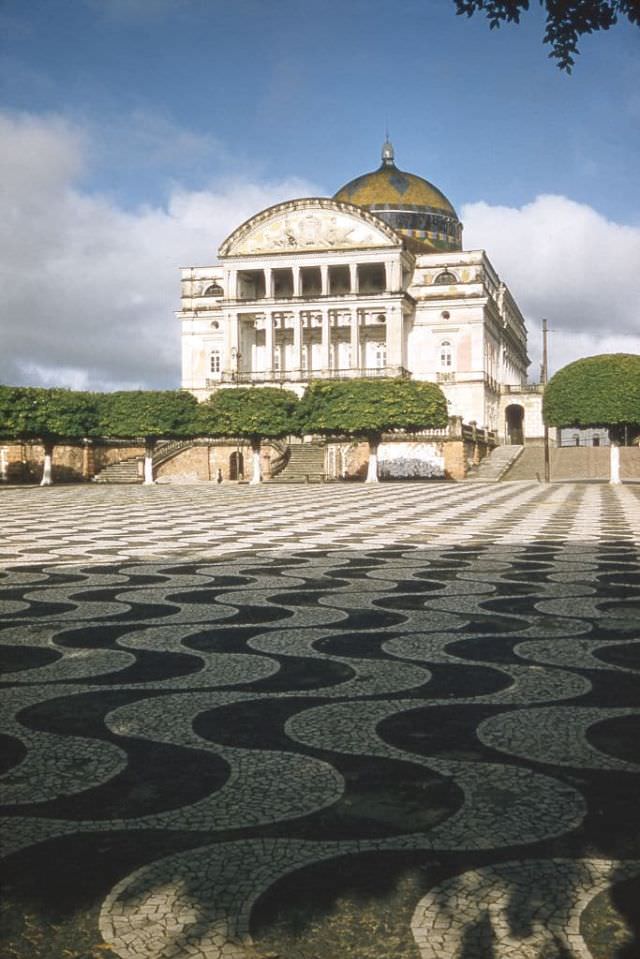
Manaus had seen enormous wealth during the rubber boom of the late 19th century. The Teatro Amazonas opera house, built in 1896 at great expense during that era, still stood as one of the most extraordinary buildings in the entire Amazon region — a grand European-style theater in the middle of the jungle.
Back in Salvador, the 17th-century Santa Maria fort anchored one end of the waterfront. The beaches nearby were used daily by locals, with centuries of history sitting quietly in the background.
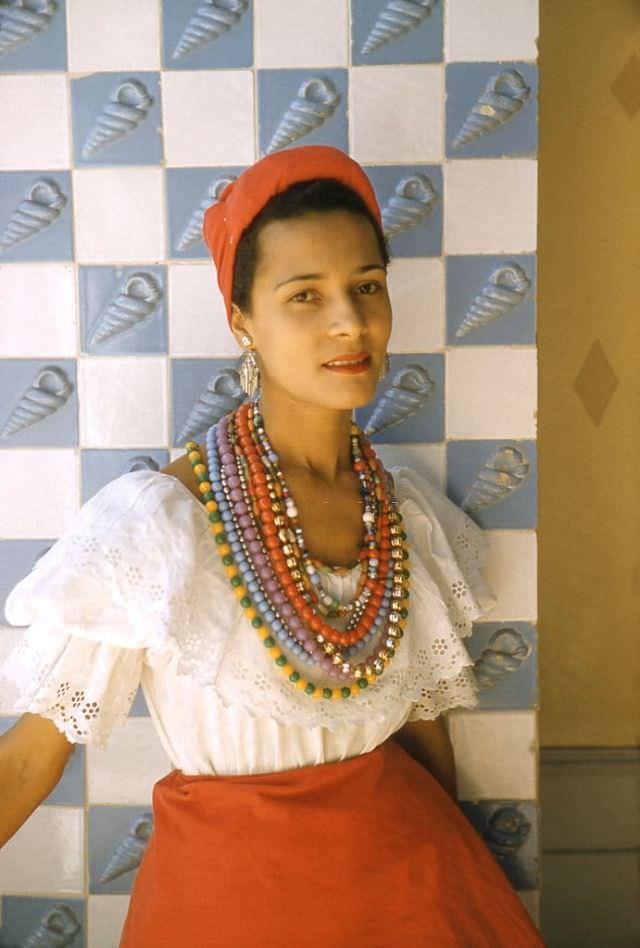
Tourism in Salvador was modest by later standards, but the city’s hotels were already reflecting a Brazil that was beginning to open up to visitors. Service workers in the hospitality industry occupied a visible and specific place in the city’s social fabric.
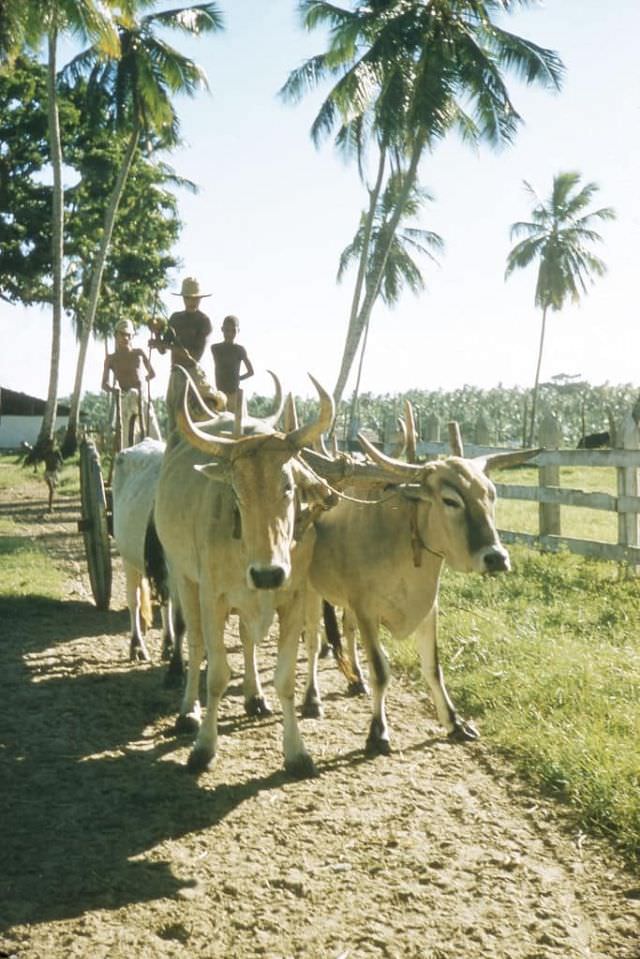
Ranching was deeply embedded in Brazilian rural life. Outside Salvador, large family-owned ranches raised mixed herds, including cattle bred from both Brazilian and indigenous Indian stock — animals adapted to the local climate and terrain.
Copacabana Beach in Rio was already one of the most famous stretches of sand in the world by the 1950s. The promenade, the hotels, and the wide white beach drew both locals and the first wave of international tourists who were beginning to discover Brazil.
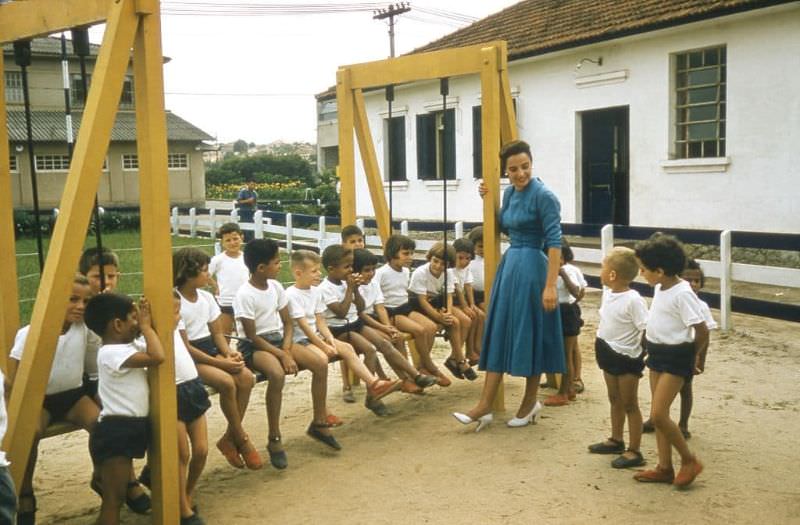
São Paulo’s industrial expansion created a new class of factory owners and managers. Francisco Pignatari’s Rolling Mill was one of many large industrial operations in the city. Company schools attached to factories were part of how some employers managed and retained their workforce.
The port city of Belém, at the mouth of the Amazon, was a commercial hub connecting the river’s interior to the outside world. Its Ver-o-Peso market — one of the largest open-air markets in Latin America — had operated continuously since the colonial period, and its harbor stayed busy with fishing boats and trading vessels.
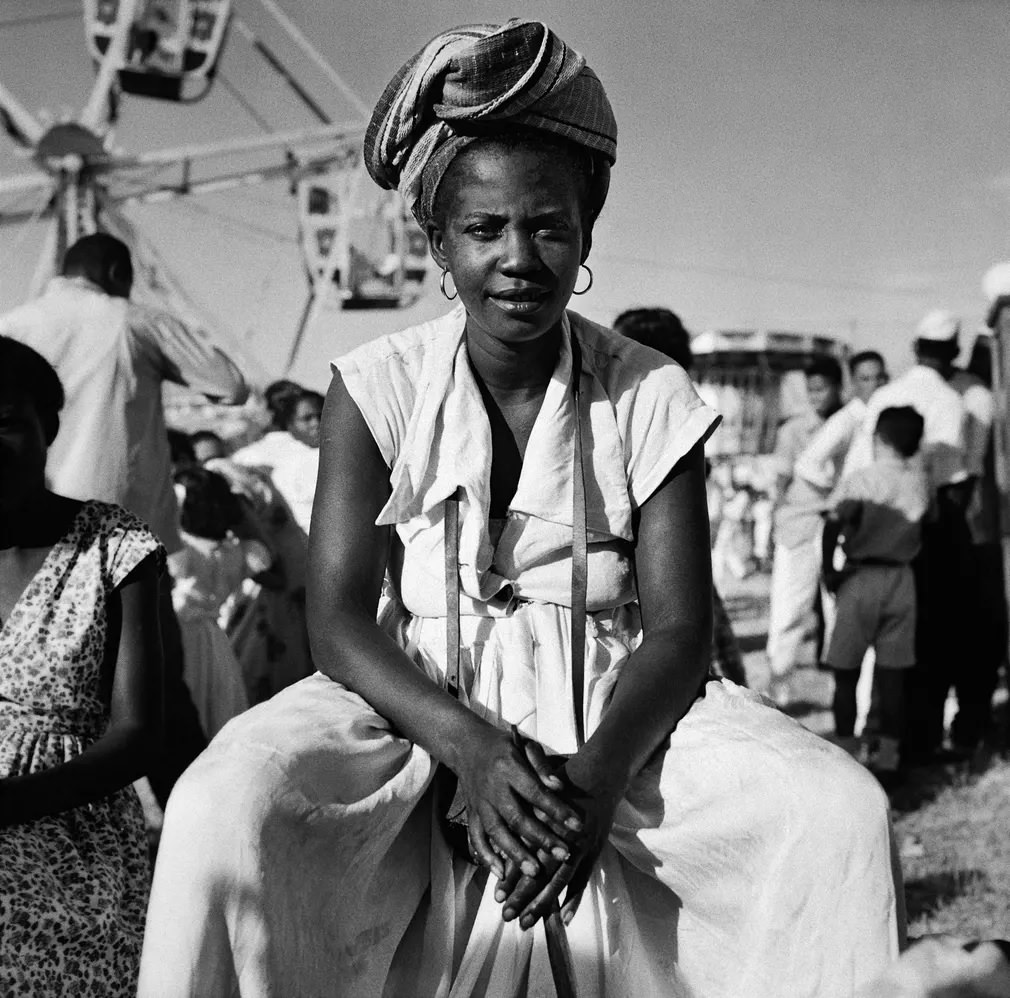
Religious life in Brazil was public and celebratory. Processions moved through city streets on feast days, drawing street vendors, musicians, and large crowds. In Salvador especially, Catholic tradition and Afro-Brazilian spiritual practices ran side by side in the city’s calendar.
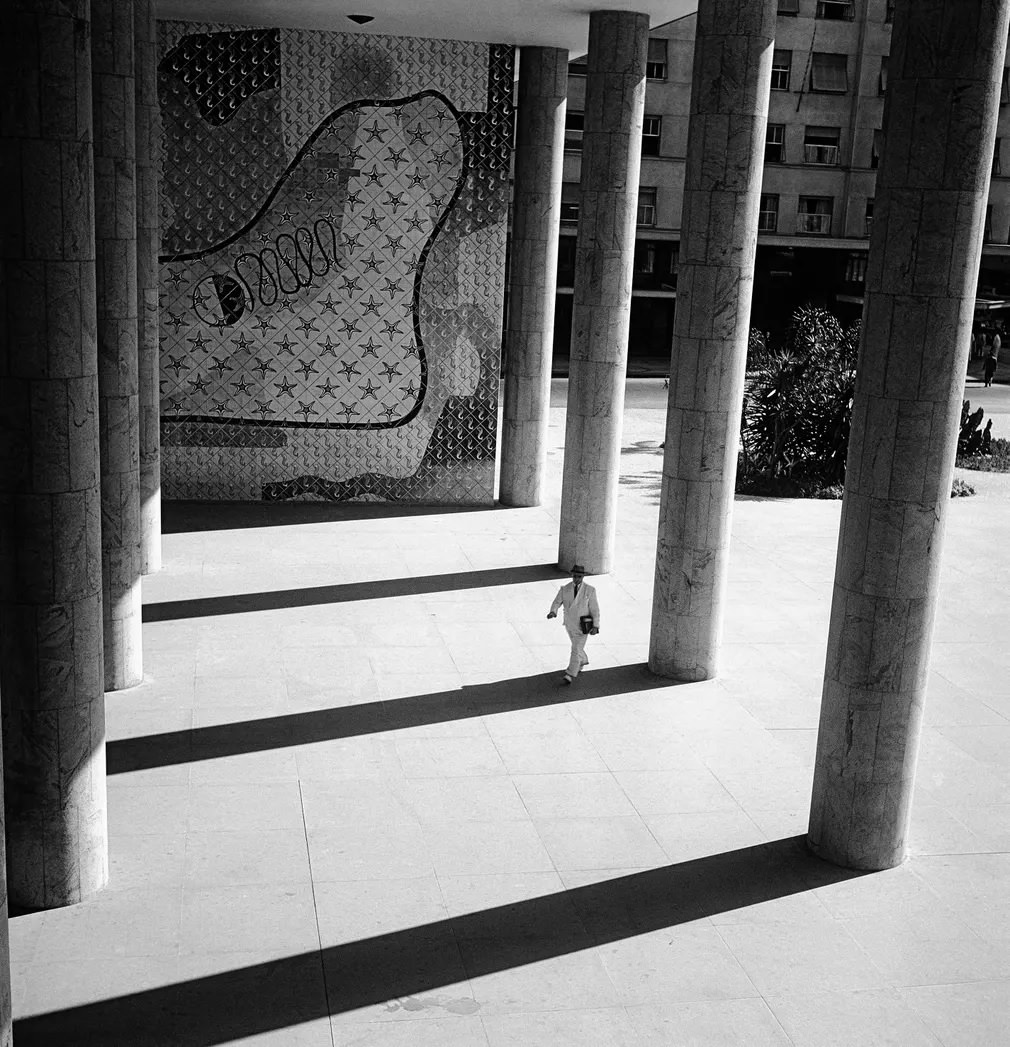
Modern architecture was already making its mark on Rio. The Gustavo Capanema Palace, completed in 1945 and designed with input from Le Corbusier, stood as one of the boldest government buildings in the Americas. By the mid-1950s it had become a landmark of Brazilian modernism.
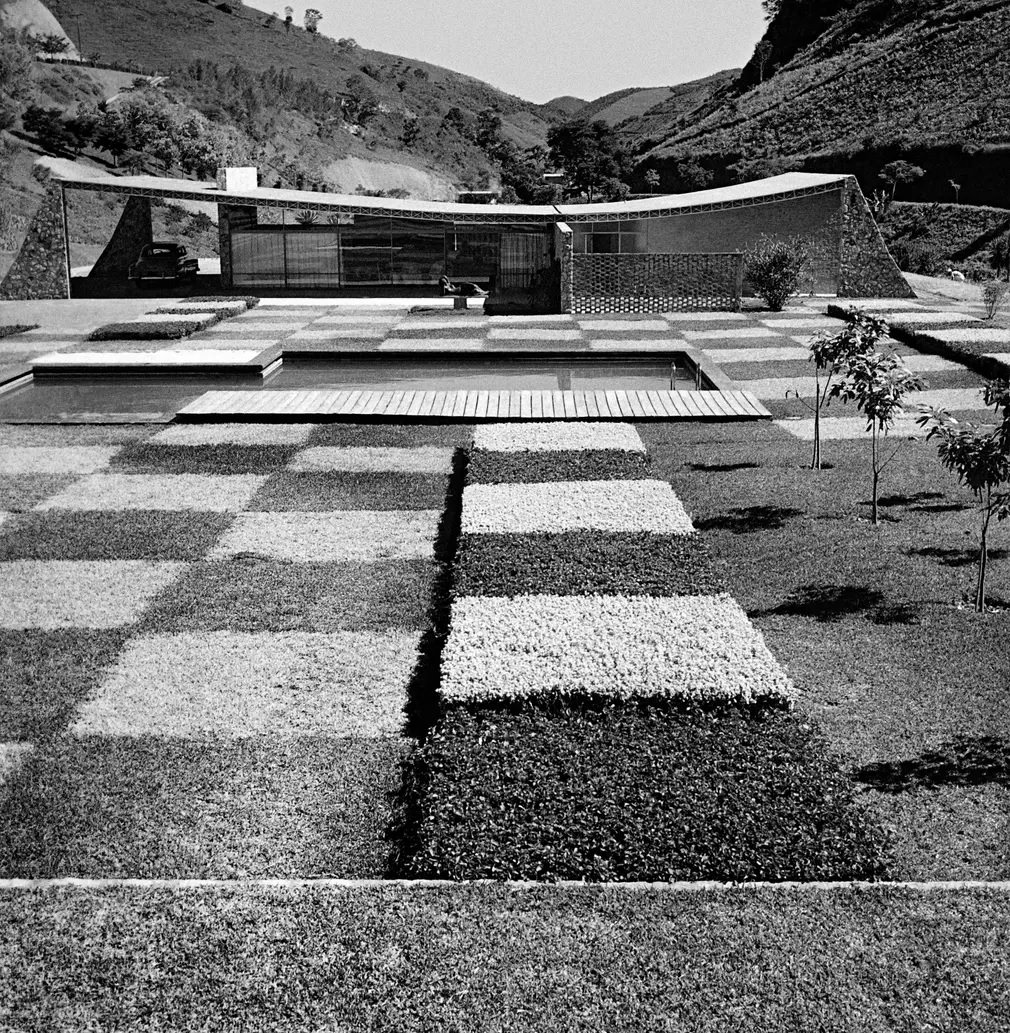
Private modernist architecture was also flourishing. In Petrópolis, the mountain city outside Rio, architect Oscar Niemeyer designed the Edmundo Cavanellas Residence — a striking home that showed what Brazilian residential architecture was capable of during this period.
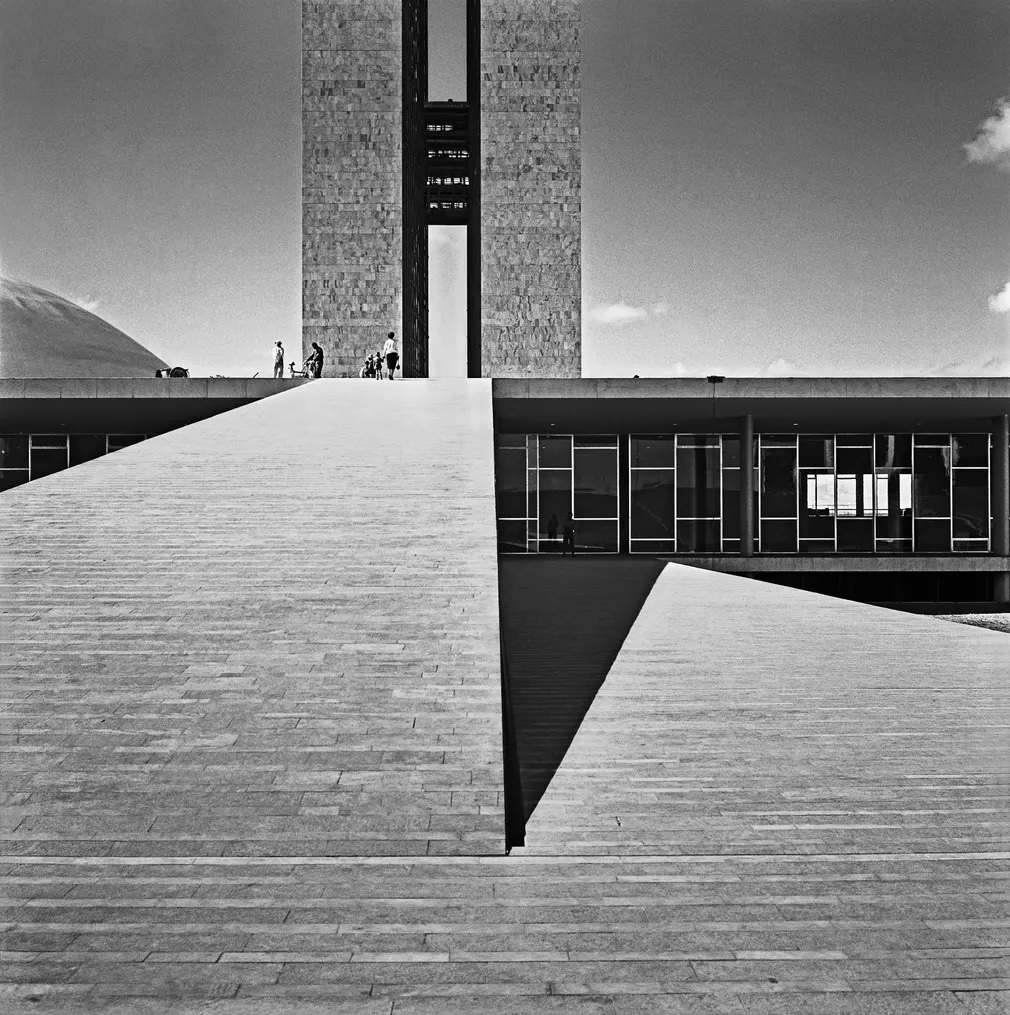
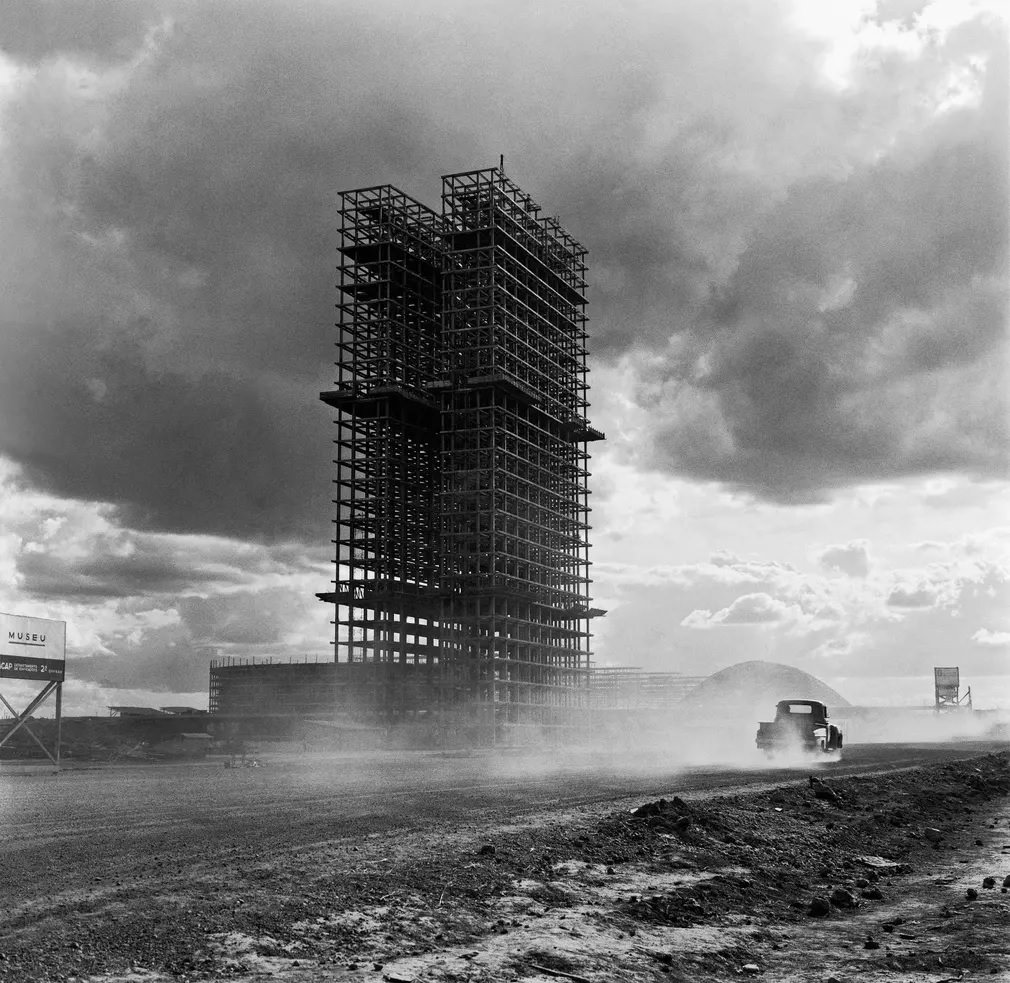
The biggest project of the entire decade was Brasília. Kubitschek declared that Brazil would build a brand-new capital city in the interior, and he gave his architects and engineers an almost impossibly tight deadline. Oscar Niemeyer designed the major public buildings. By 1959, the National Congress Palace was rising from bare ground.
The plan for Brasília was laid out along a monumental axis, with wide esplanades separating the ministry buildings from each other. In 1959 those esplanades were construction sites, filled with machinery, scaffolding, and dust.
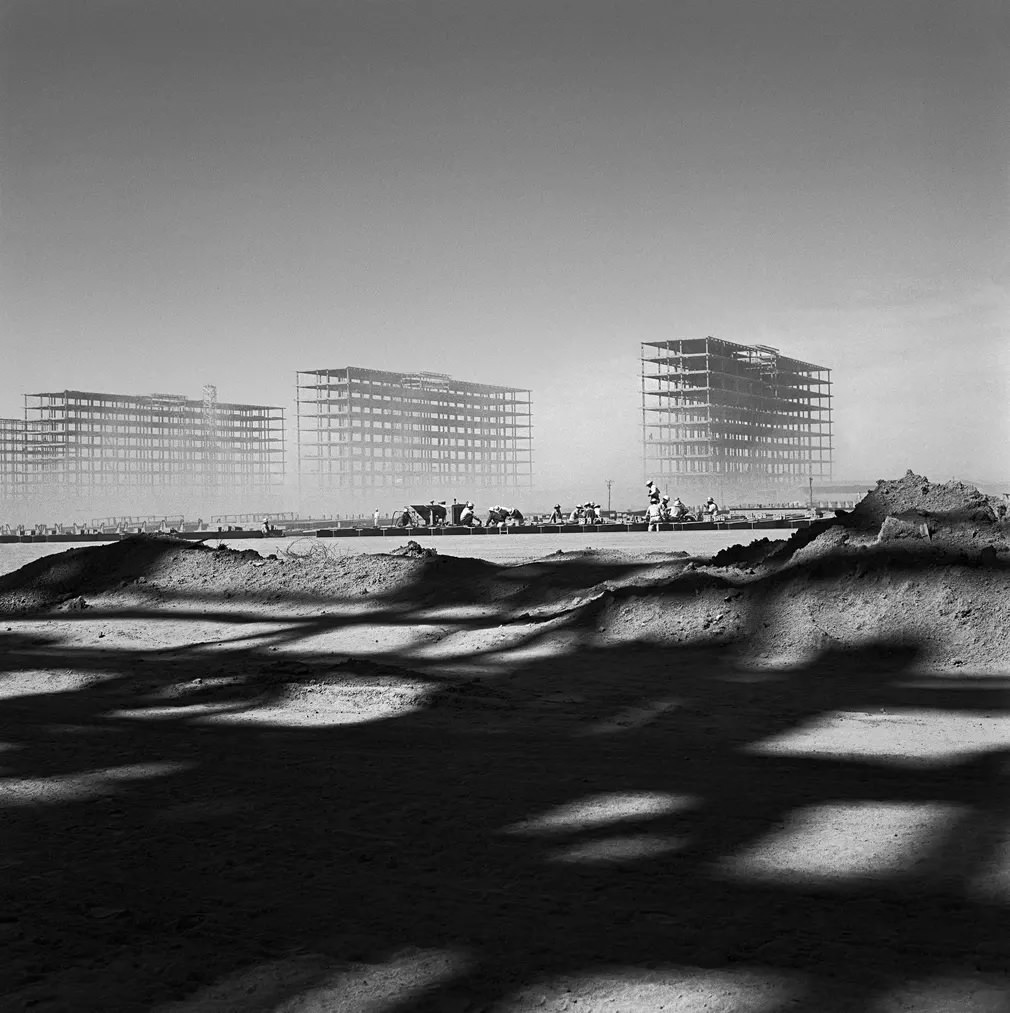
The men who actually built Brasília worked in brutal conditions. The central plateau could be scorching hot in the dry season and flooded in the wet season. Workers lived in wooden camps and worked long hours to meet the political deadline Kubitschek had set.
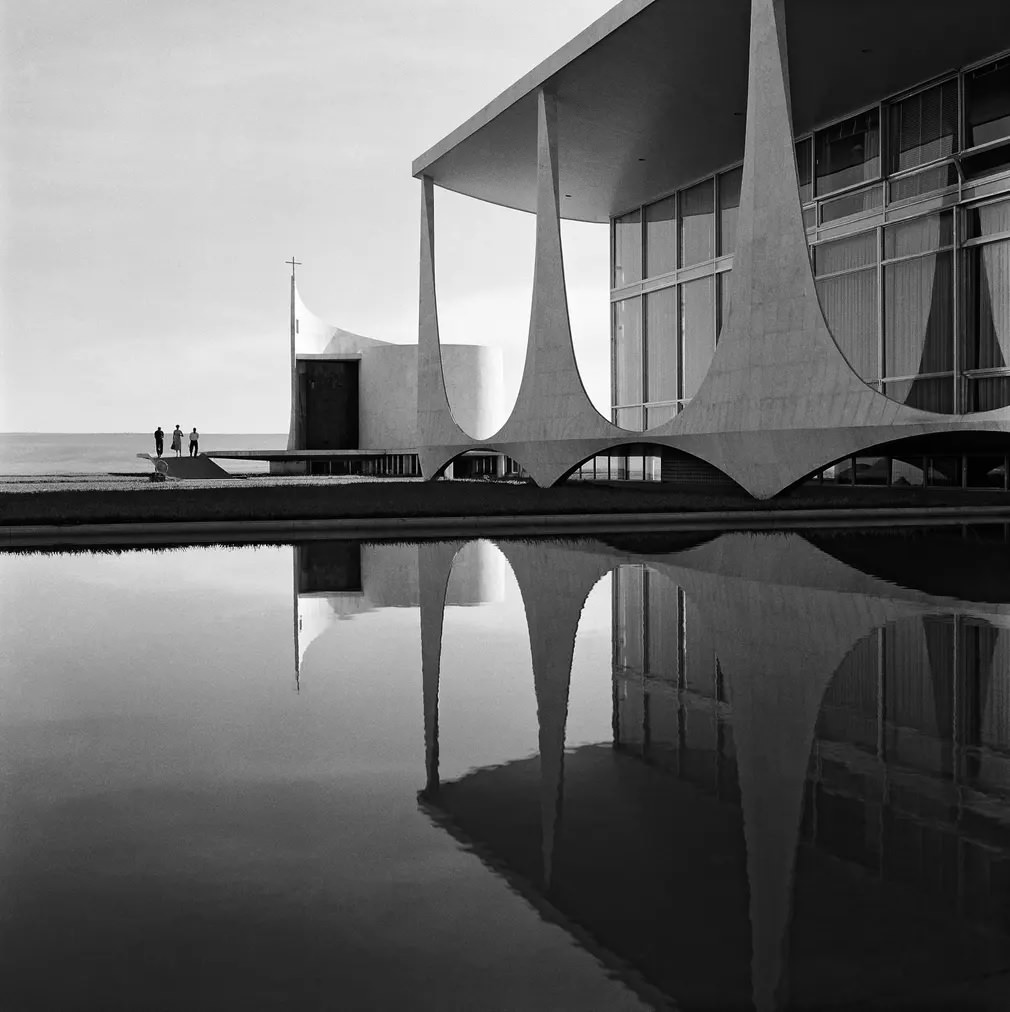
Niemeyer’s Alvorada Palace — the presidential residence — was one of the first buildings completed in Brasília. Its distinctive curved columns became an iconic symbol of Brazilian modernist design.
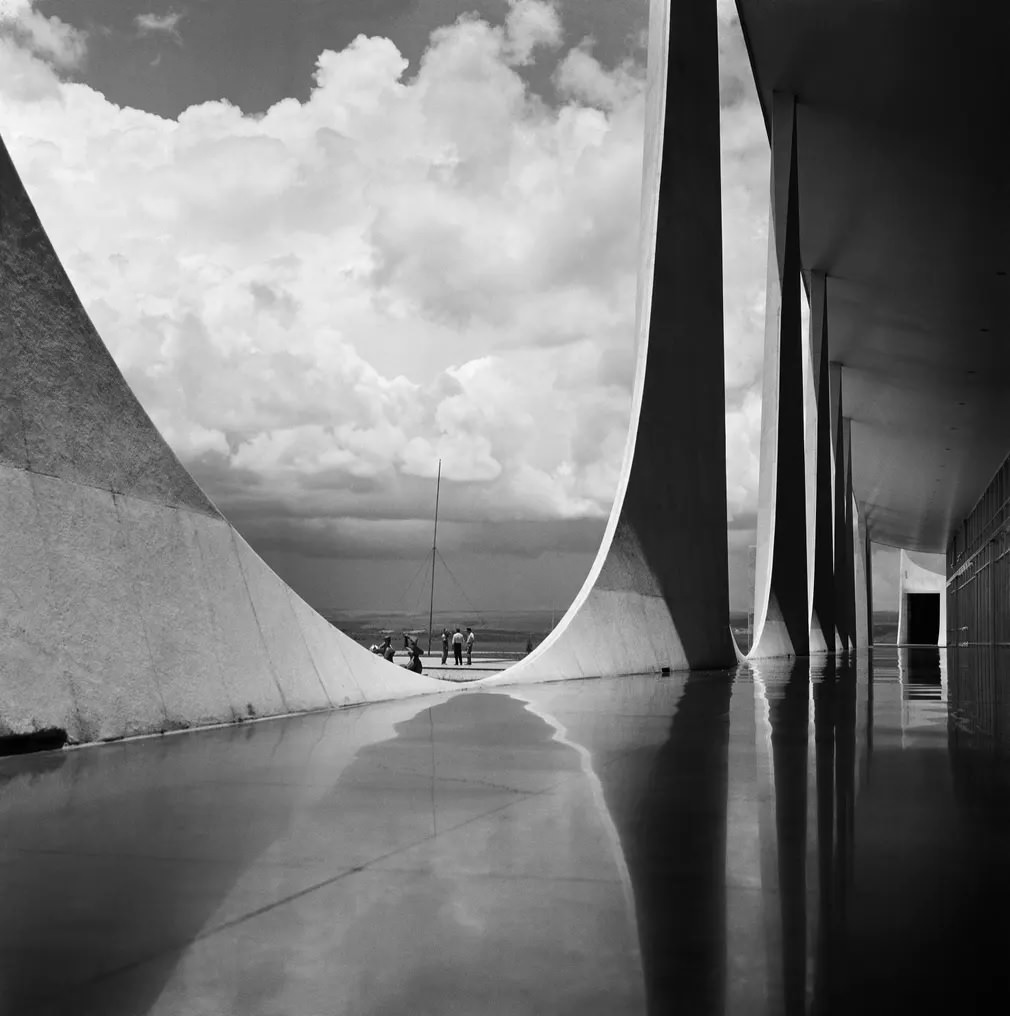
Brasília was officially inaugurated on April 21, 1960. The National Congress Palace — with its twin towers and twin domes — stood complete against the open sky of the cerrado plateau, the physical proof of what Brazil had committed itself to building in under four years.