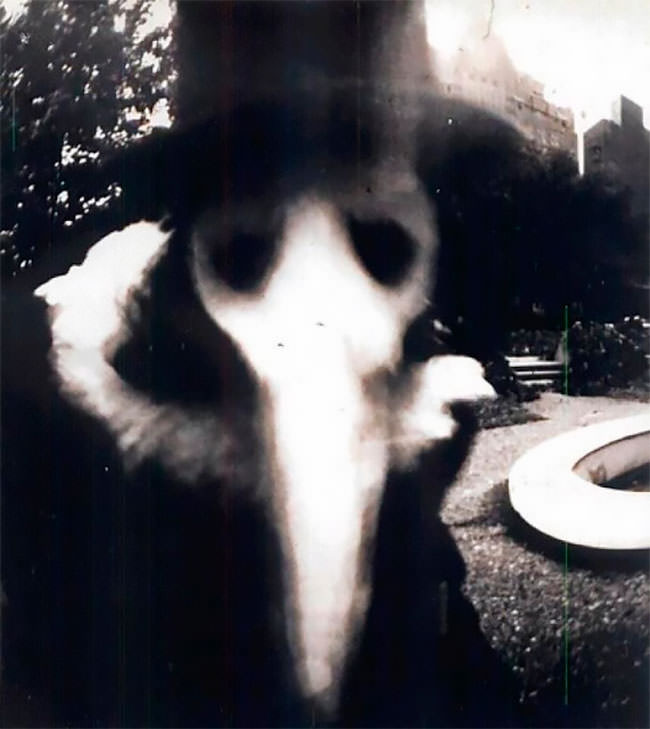
Few images from history are as instantly recognizable — or as unsettling — as the plague doctor in full costume. The long black coat, the wide-brimmed hat, the hollow glass eyes, and above all, the long curved beak jutting forward like a bird of prey. For the people of 17th-century Europe, catching a glimpse of that figure walking toward them meant one thing: death had arrived in the neighborhood. The plague doctor was not a symbol of hope. He was a signal that things had gotten very bad, very fast.
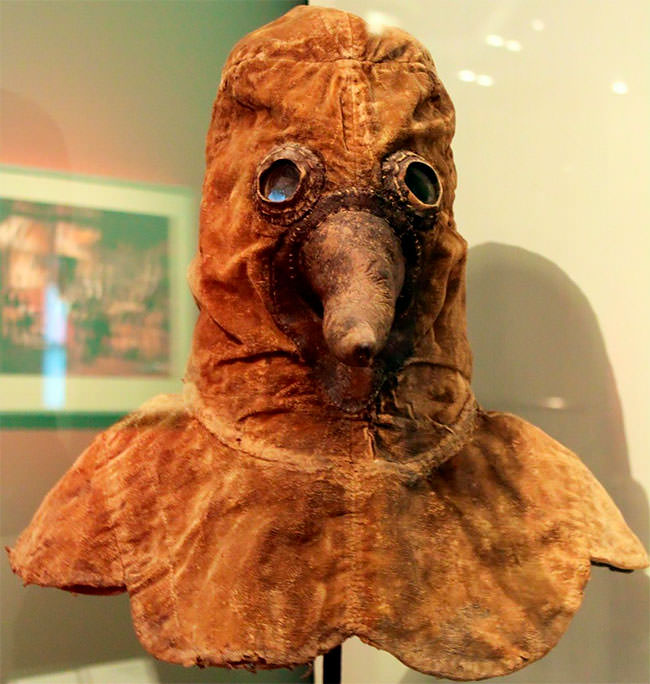
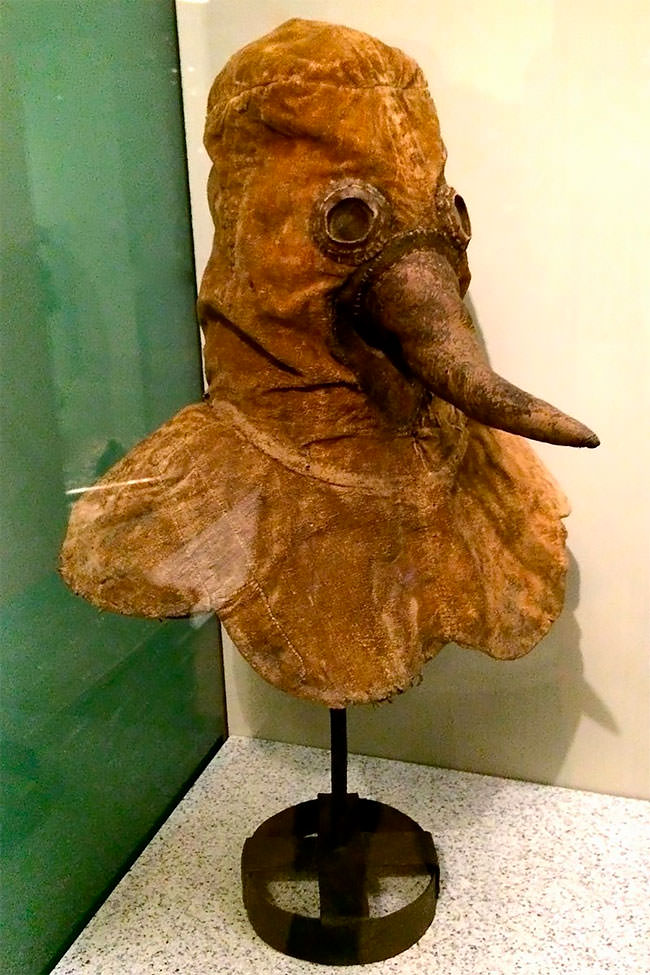
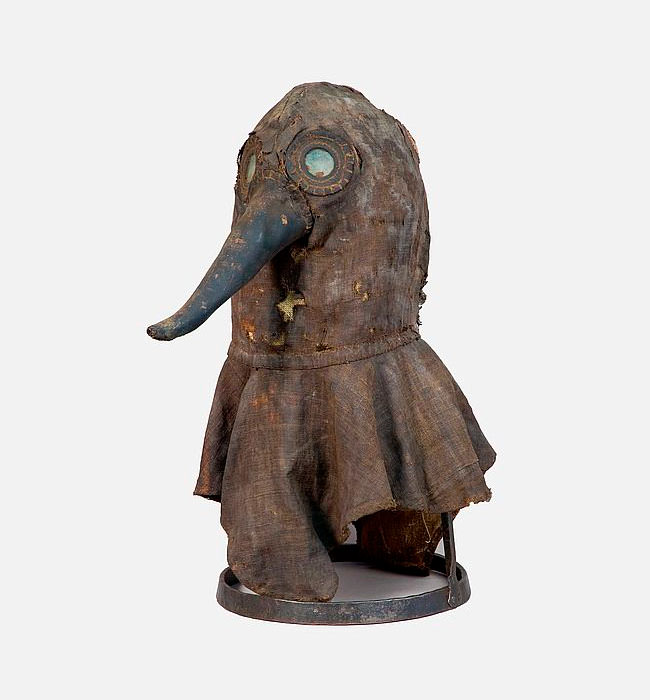
The oldest surviving plague doctor mask dates to the 17th century and is preserved today at the German Museum of Medical History in Ingolstadt. It is a physical record of how European medicine understood — and misunderstood — infectious disease at the time. To make sense of why the mask looks the way it does, you first need to understand the medical theories that shaped it.
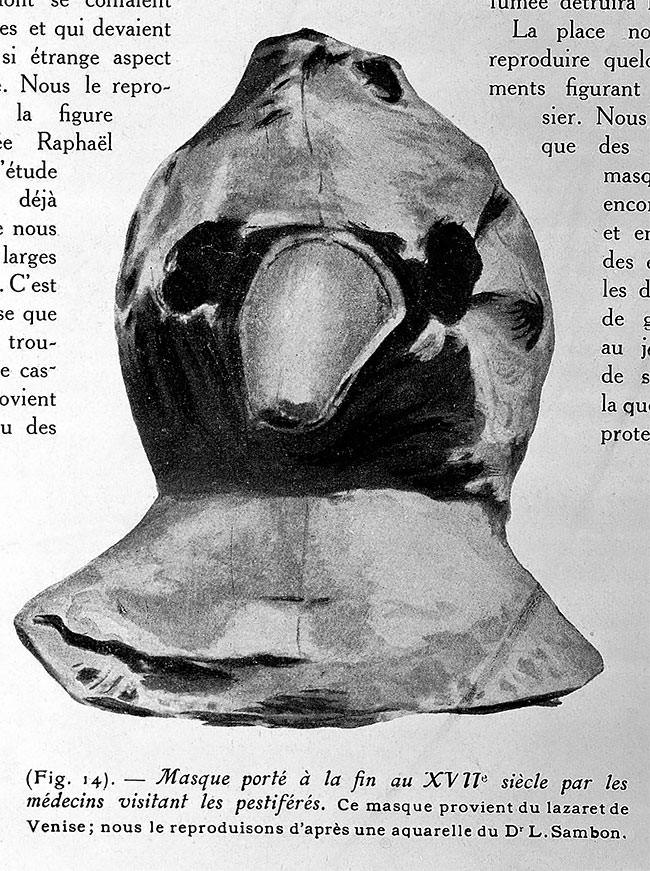
In medieval and early modern Europe, two main theories explained how disease spread. The first was the Theory of the Four Humors, which held that illness came from imbalances in bodily fluids: blood, phlegm, yellow bile, and black bile. The second was the Miasma theory, which claimed that people got sick by breathing in “bad air” — foul-smelling vapors rising from rotting matter, swamps, and corpses. It was the Miasma theory that directly shaped the design of the plague doctor’s mask. Doctors believed that if they could filter or purify the air before breathing it in, they could protect themselves from the plague. The beak was their solution.
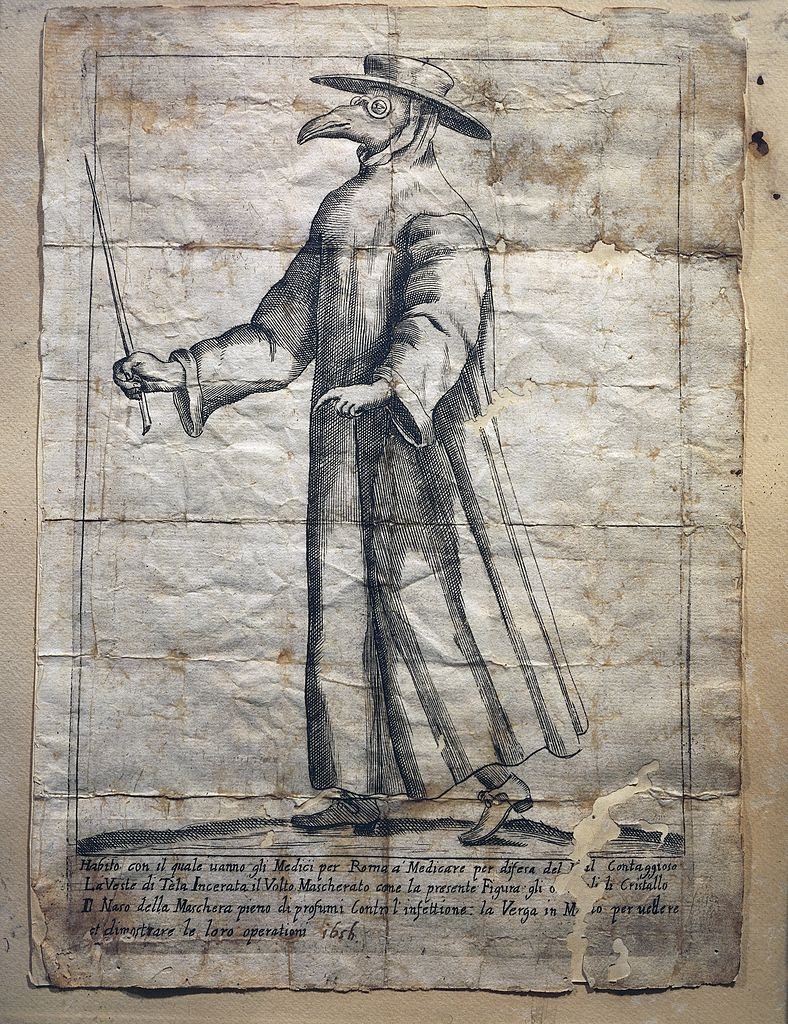
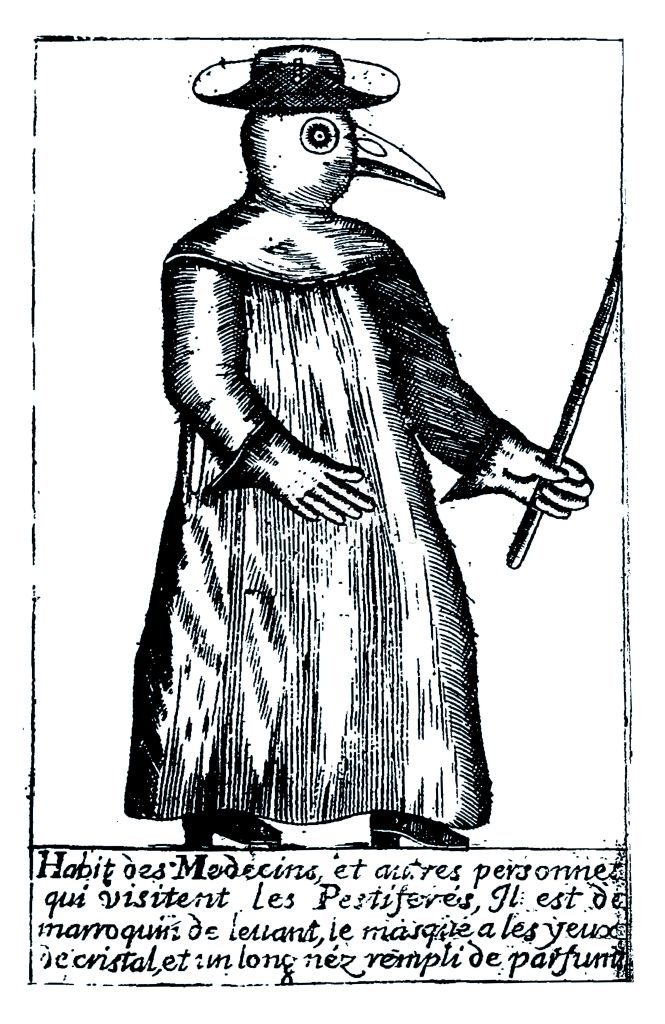
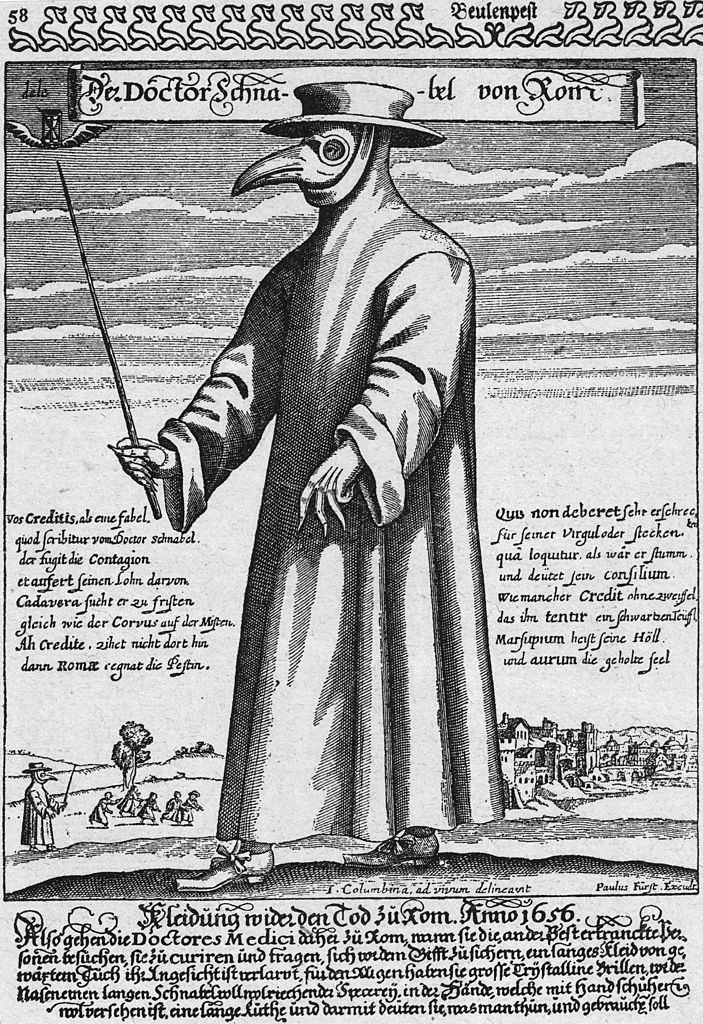
The beak itself was not hollow and empty. It was packed with aromatic substances — dried flowers like carnations and roses, herbs like mint, spices, camphor, and vinegar-soaked sponges. The idea was that these fragrant materials would neutralize the “evil” smells before the air reached the doctor’s lungs. The mask was fitted with glass openings over the eyes and two small holes near the nostrils to allow breathing. Curved straps held the beak firmly in place in front of the doctor’s nose and mouth. Charles de Lorme, a French physician who served several European monarchs, is credited with designing the full plague doctor costume in 1619. He based the overall design on a soldier’s armor, adapting the concept of full-body protection to a medical context.
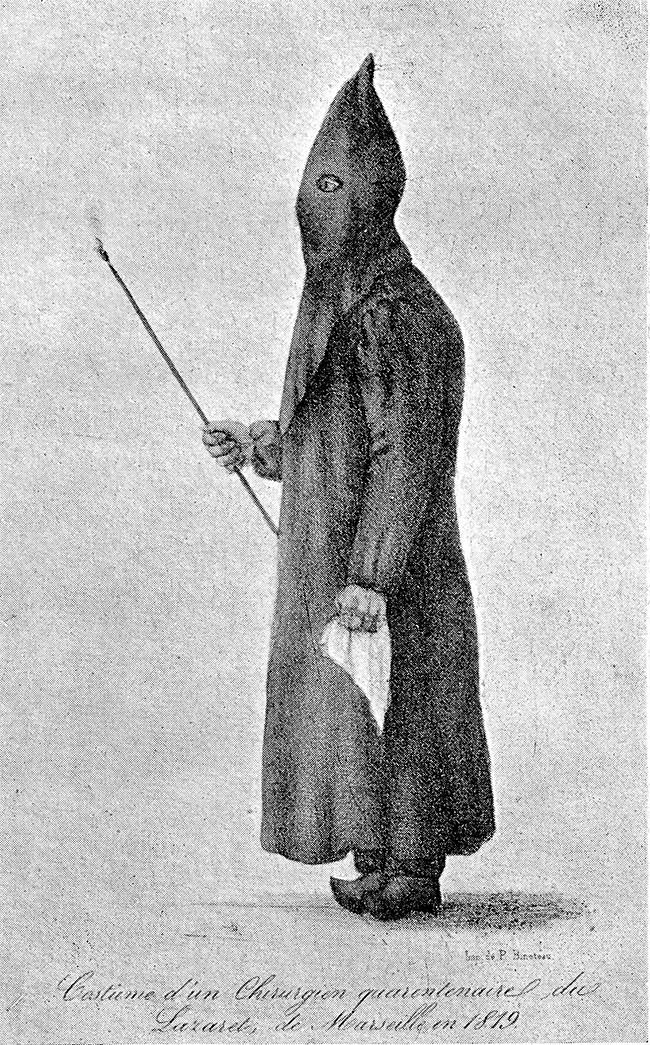
De Lorme’s costume was a complete system, not just a mask. Over the beak mask with its glass spectacles, the doctor wore a long gown made of Moroccan or Levantine leather, or waxed canvas. The leggings, gloves, boots, and wide-brimmed hat were all made of waxed leather as well. Every surface of the outfit was treated with fragrant substances, continuing the logic of the beak into every layer of protection. De Lorme himself noted that the two small holes in the beak were enough to breathe through while still drawing air past the aromatic materials packed inside the removable beak chamber.
The French physician Jean-Jacques Manget provided one of the most detailed written records of this costume in his 1721 work, Treatise on the Plague. Manget described the outfit worn by plague doctors in Nijmegen during the outbreak of 1636 to 1637. His treatise used the costumed figure as its frontispiece — the very first image a reader would encounter. The Nijmegen doctors wore beaked masks and robes of morocco leather, along with matching leather leggings, hats, and gloves. The consistency of the outfit across different regions and decades shows how widely the design had been adopted.
Beyond the mask, plague doctors carried wooden canes as a standard part of their practice. These were not decorative. The cane allowed a doctor to examine a patient without making direct physical contact — pointing to swellings, lifting clothing away from the body, or directing an assistant. Doctors also used canes to keep desperate or panicked people at a distance and to check a patient’s pulse without placing a finger on the wrist. During the Plague of 1656, which killed approximately 145,000 people in Rome and around 300,000 in Naples, these precautions were in constant use.
The plague doctor was a specific municipal role, not simply a traveling physician. During outbreaks, towns, villages, and cities hired plague doctors to manage the crisis. Their duties went well beyond treating the sick. They recorded the number of deaths in logbooks, documented the final wishes of dying patients, and were frequently called upon to witness and testify to wills in a legal capacity. This administrative and legal function ended up consuming a large portion of their time. They also performed autopsies on plague victims as part of efforts to better understand the disease, and they were responsible for organizing the burial of the dead.
The most famous epidemic that plague doctors faced was the Black Death, the wave of bubonic plague that swept through Europe beginning in the mid-14th century and returned repeatedly over the following centuries. European doctors who specialized in treating plague victims became a recognized professional category precisely because outbreaks were so frequent and so deadly that communities needed dedicated personnel. The role carried enormous risk. Many plague doctors died from the very disease they were trying to treat, particularly before the full protective costume became standard.
The Miasma theory that gave birth to the beak mask was eventually disproved by germ theory in the 19th century, which correctly identified microorganisms as the cause of infectious disease. The plague doctor’s outfit did not actually stop the plague — the real culprit was the bacterium Yersinia pestis, spread primarily through flea bites, not bad air. Yet the heavy leather layers and waxed surfaces of the costume accidentally provided some physical barrier against fleas, which offered a degree of real, if unintentional, protection. The aromatic herbs in the beak did nothing to stop infection, but the sealed leather suit came closer to being effective than its designers ever understood. What people on the street knew was simpler: when the beaked figure appeared at your door, it was already nearly too late.