Hey There! Before You Go. 😧
Get the best vintage content straight into your inbox!

Don't worry, we don't spam

What Yugoslavia looked like in the 1960s

Yugoslavia in the 1960s was unlike most socialist states of its era. Under President Josip Broz Tito, the country had broken from Soviet influence back in 1948, and by the 1960s it had carved out a unique path — socialist in structure, but open enough to the West that consumer culture, tourism, and trade fairs were a normal part of life. The economy was growing. Cities were modernizing. And for many Yugoslavs, this decade brought a real, visible rise in living standards.

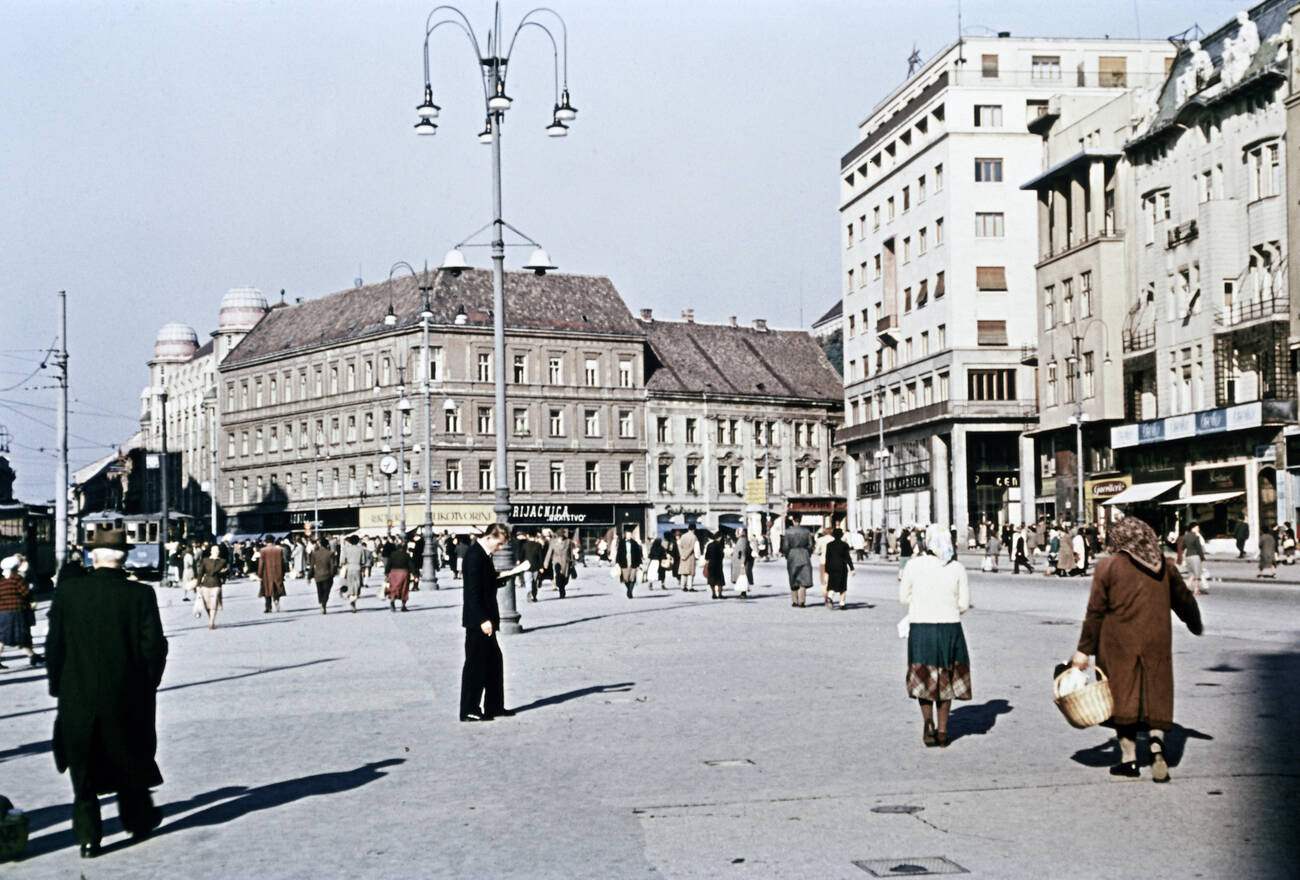
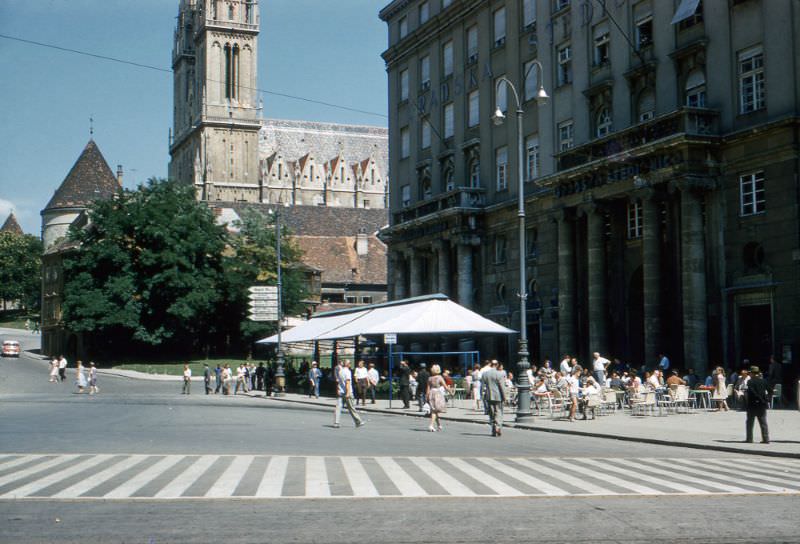
Zagreb, the capital of Croatia, was one of the country’s most active urban centers. Its streets were busy with trams, pedestrians, and the quiet energy of a city pushing forward. Vlašska ulica and Ban Jelačić Square were the kind of places where ordinary city life played out every day — shoppers, workers, and students moving through a city that felt more Central European than Soviet.
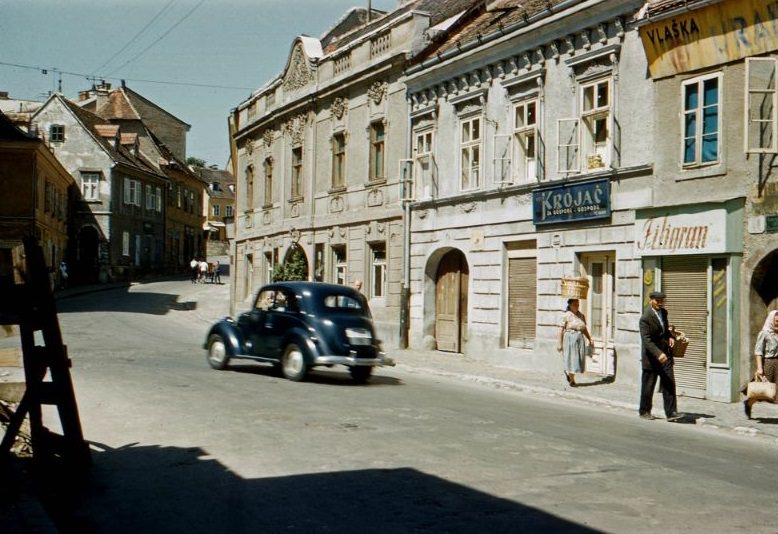
Vlašska ulica, Zagreb, Croatia, Yugoslavia, 1960
Ban Jelačić Square, Zagreb, Croatia, Yugoslavia, 1960

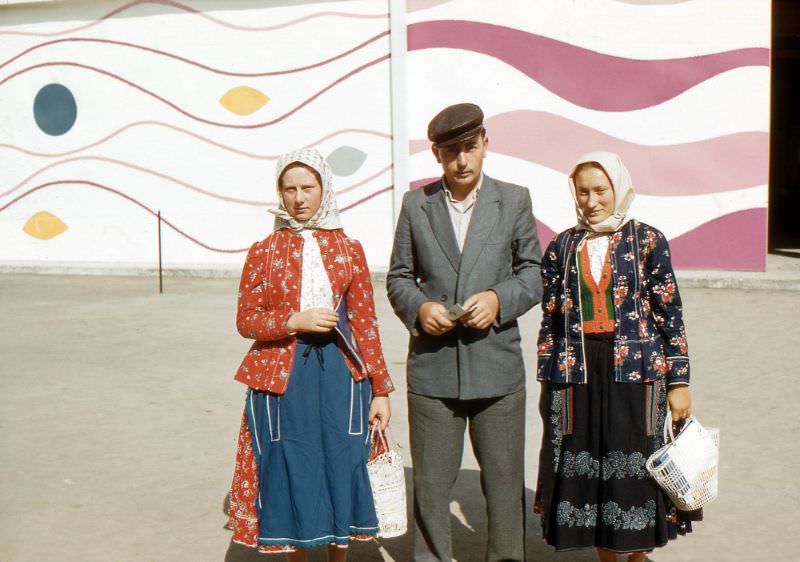
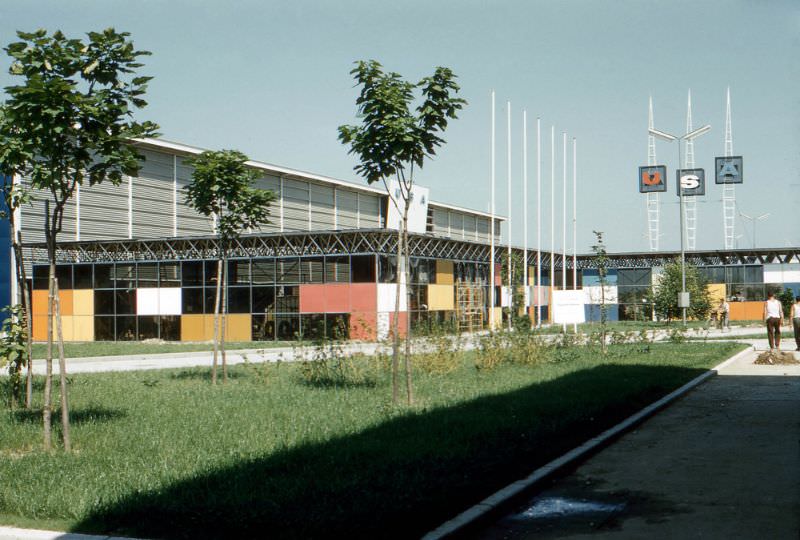
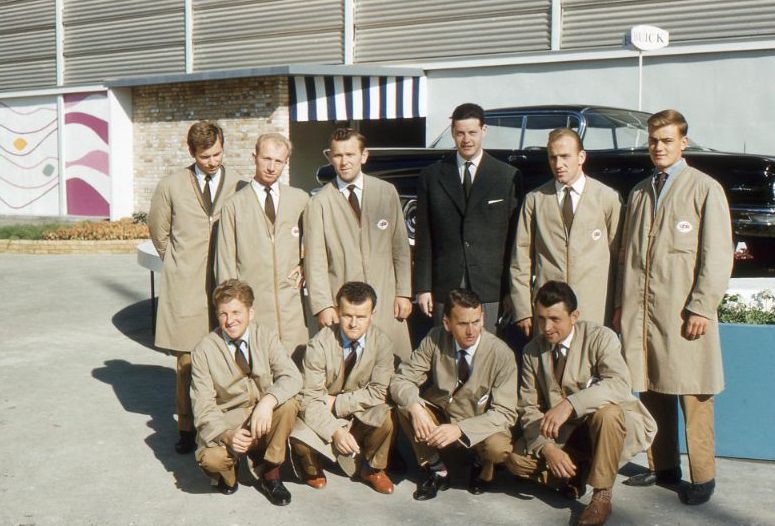
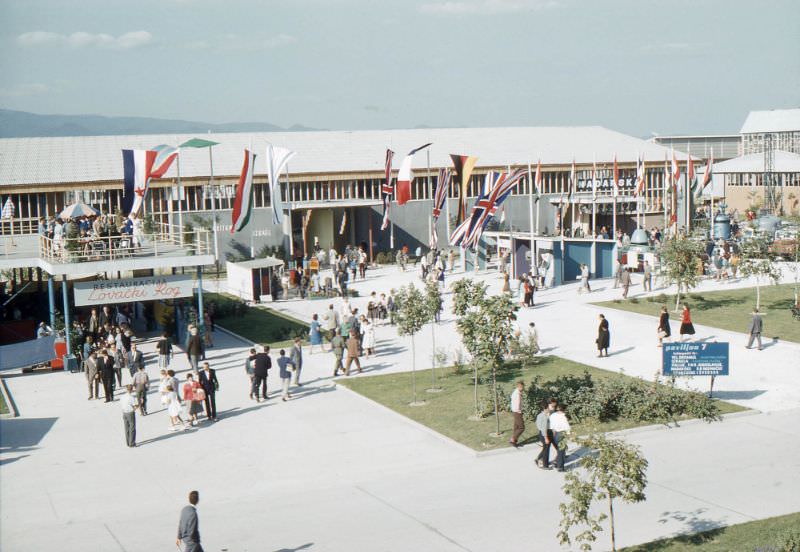
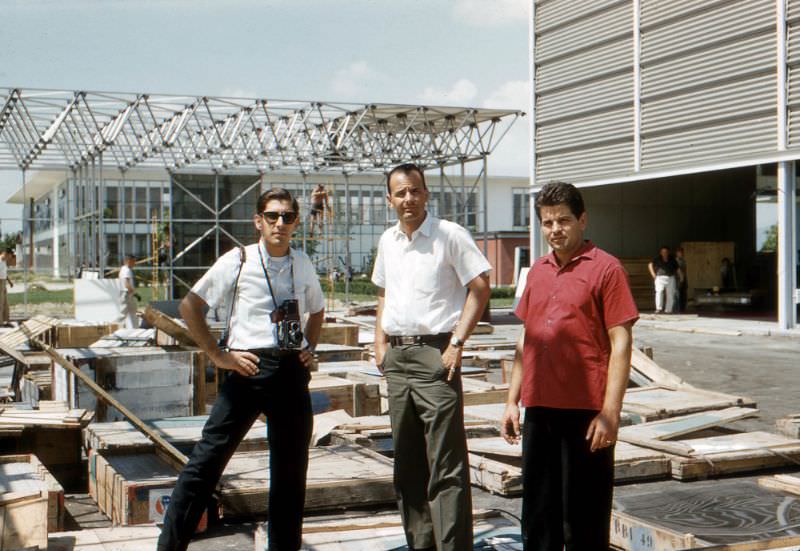
One of the most telling signs of Yugoslavia’s unique position in the Cold War world was the Zagreb Trade Fair. Held annually, the fair attracted international exhibitors — including the United States. The presence of a full American pavilion on Yugoslav soil in 1960 was remarkable. It reflected Tito’s policy of non-alignment, which allowed Yugoslavia to maintain relations with both Eastern and Western blocs. Workers and managers mingled at the USA Pavilion, and crowds gathered to see what American industry had on display.
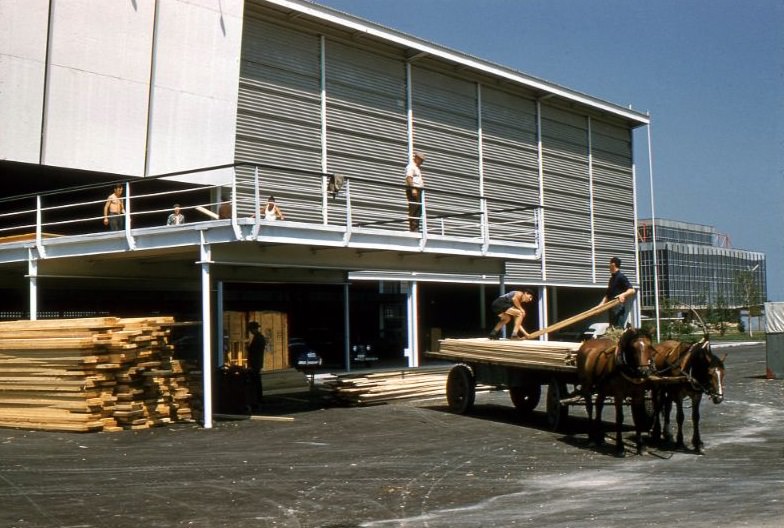
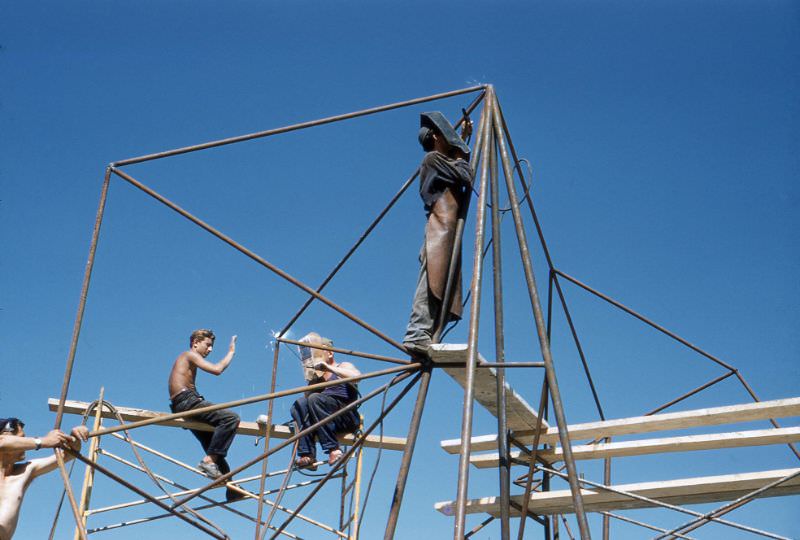
Building work, Zagreb Trade Fair, Croatia, Yugoslavia, 1960
Construction at USA pavilion, Zagreb Trade Fair, Croatia, Yugoslavia, 1960
Outside the USA pavilion at the Zagreb Trade Fair, Croatia, Yugoslavia, 1960
USA Pavilion, Zagreb Trade Fair, Croatia, Yugoslavia, 1960
Yugoslav workers with manager at Zagreb Trade Fair, USA Pavilion, Croatia, Yugoslavia, 1960
Zagreb Trade Fair, USA Pavilion, Croatia, Yugoslavia, 1960

Beyond the trade fair, Zagreb itself was a city in motion. Streets were lined with shops, and the city’s squares buzzed with daily life. The contrast between the old European architecture and the new socialist-era construction gave Zagreb a layered look — history and modernity sitting side by side.
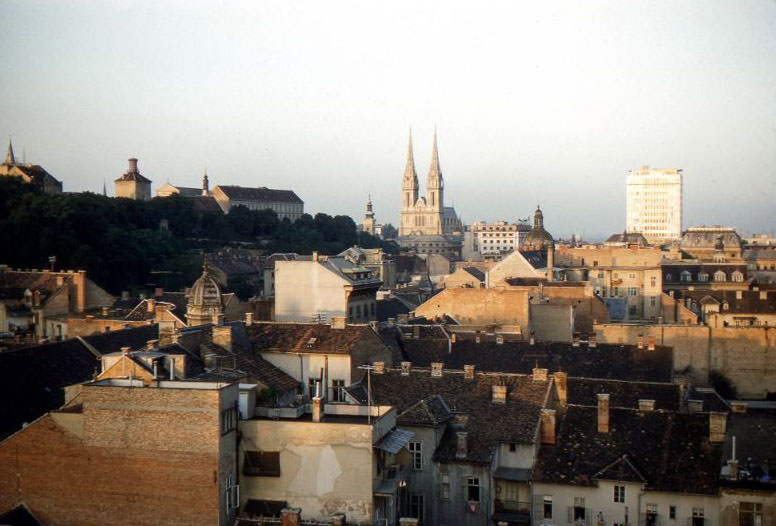
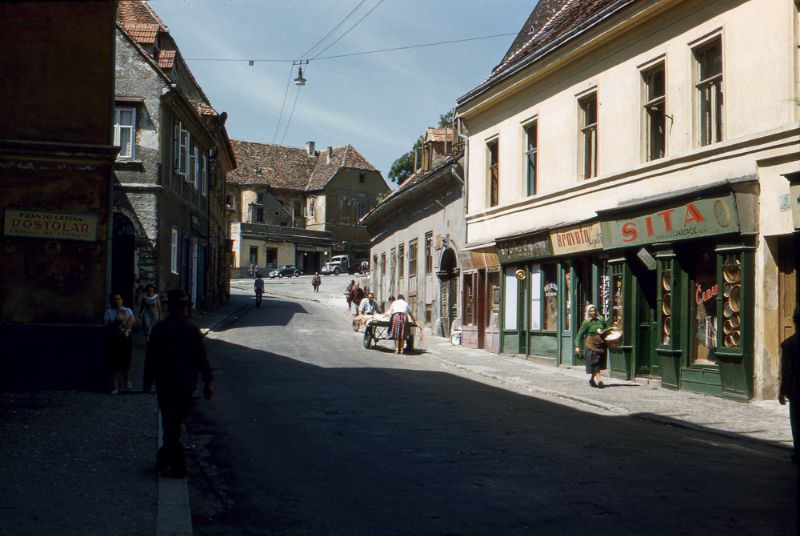
Zagreb, Croatia, Yugoslavia, 1960
Zagreb, squares, 1960

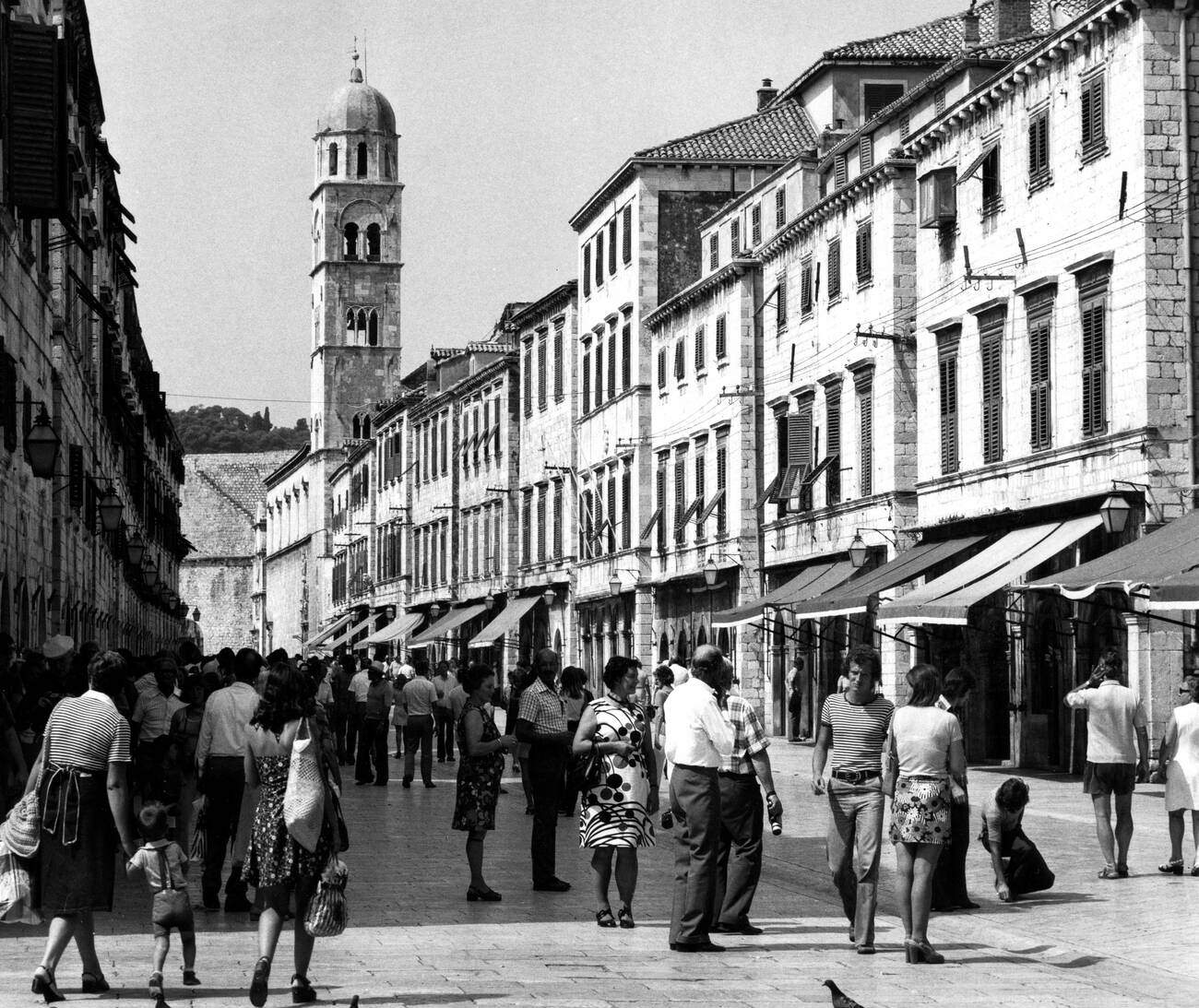
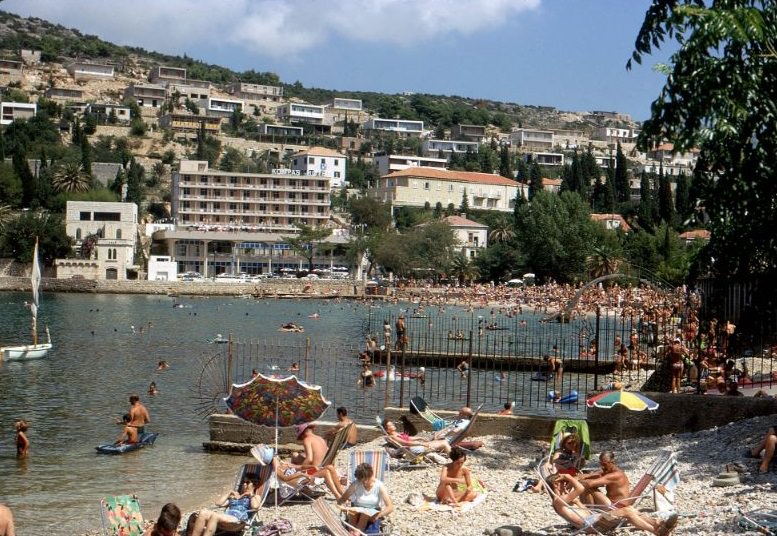
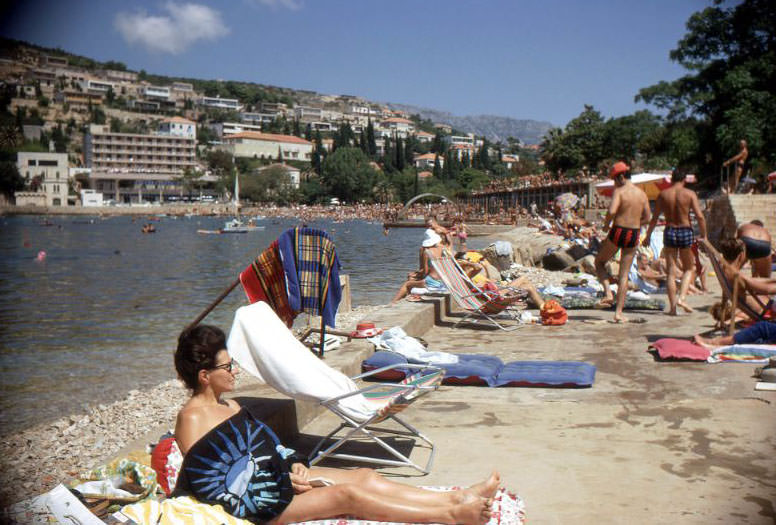
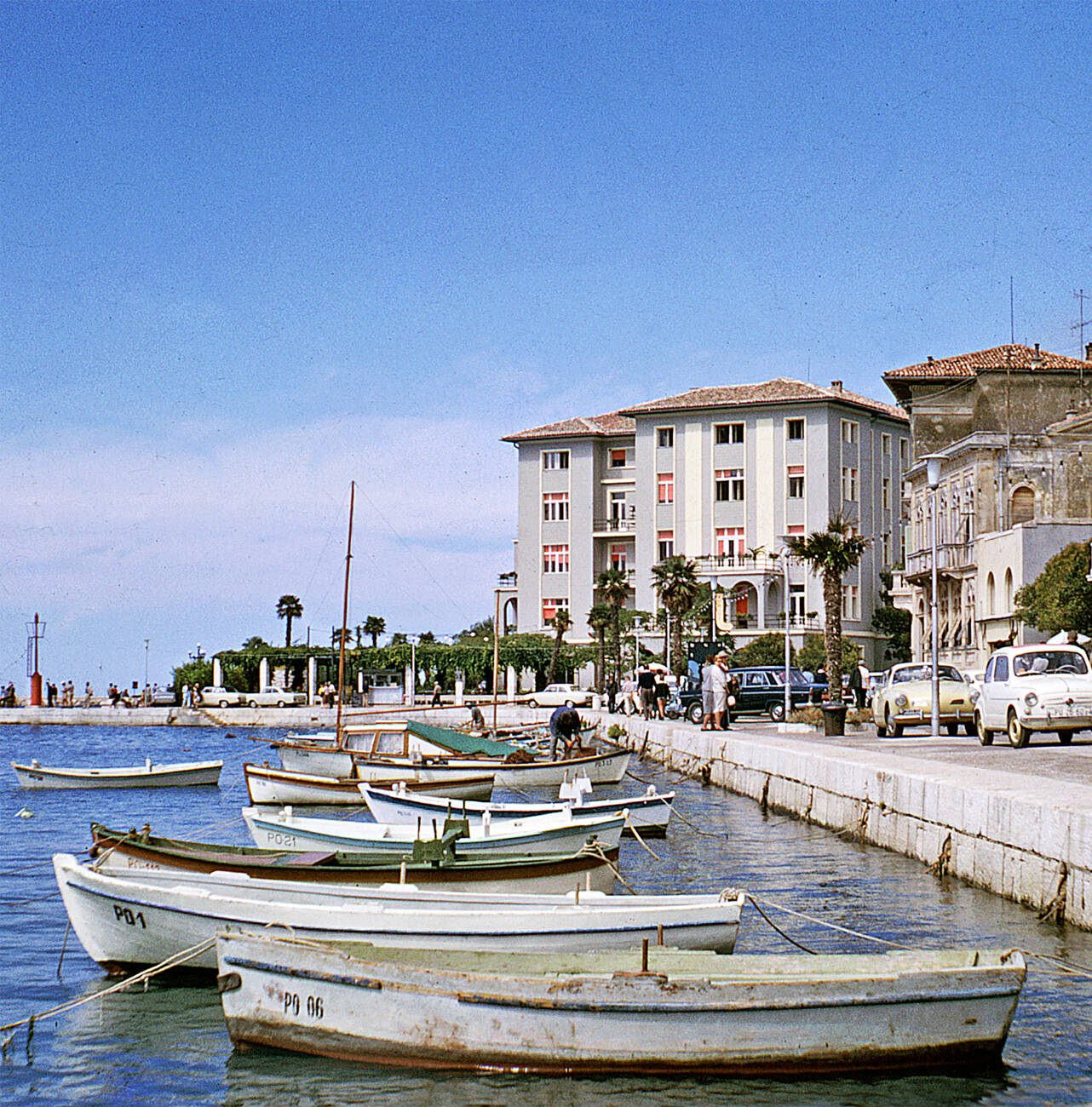
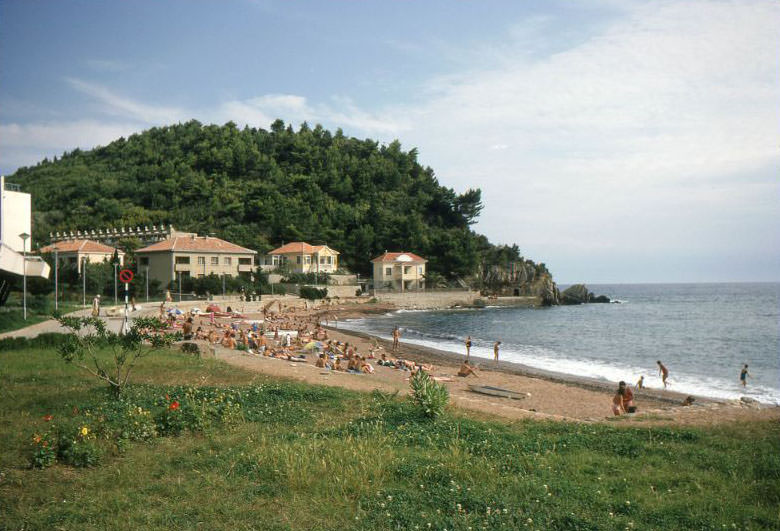
The Adriatic coast was another story entirely. Dubrovnik, with its ancient walled city and gleaming sea views, was already drawing tourists from across Europe. The city’s famous Stradun — its main limestone-paved street — looked much the same in 1963 as it had for centuries. Lapad Beach, just outside the old city walls, was a popular spot by 1968, with visitors soaking up the Mediterranean sun. The coastal town of Poreč in Istria and the beaches at Petrovac in Montenegro were also part of a growing tourist economy that set Yugoslavia apart from its Eastern Bloc neighbors.
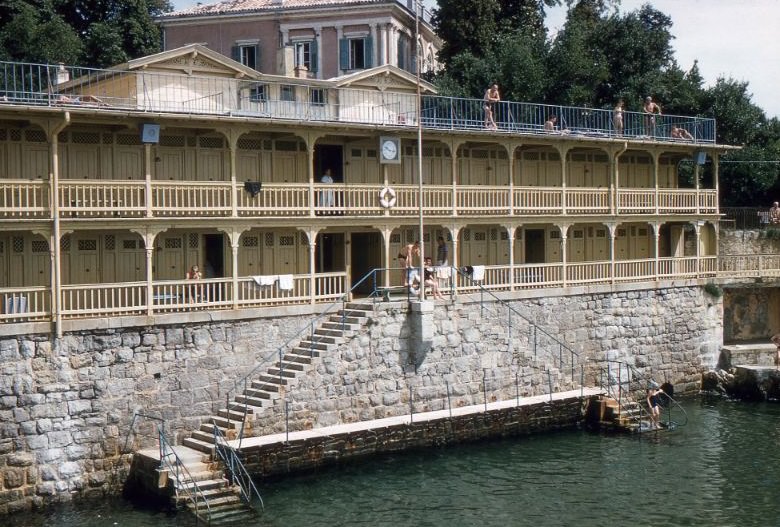
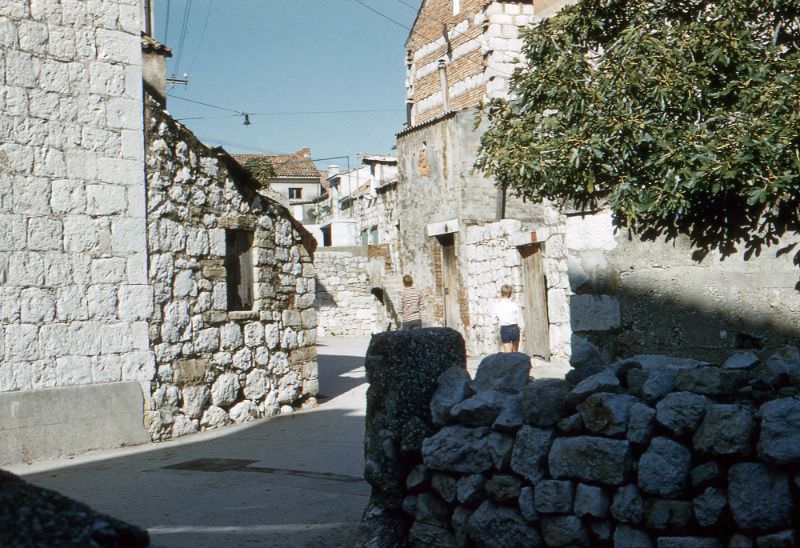
Dubrovnik, Croatia, Yugoslavia, 1960
Stradun (main street), 1963,
Lapad Beach, Dubrovnik, Croatia, Yugoslavia, 1968
Porec, Istrian County, Croatia, 1960s
Petrovac, Montenegro, Yugoslavia, 1968

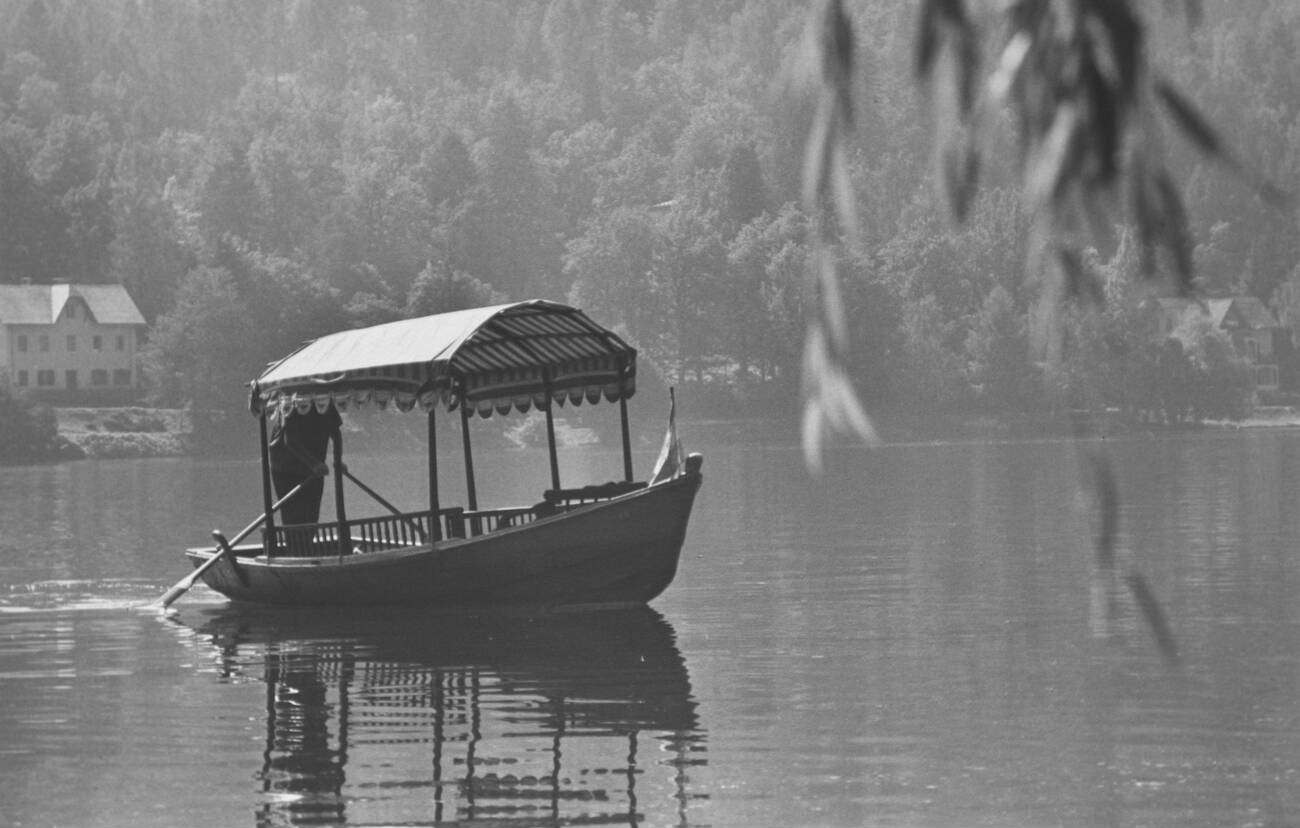
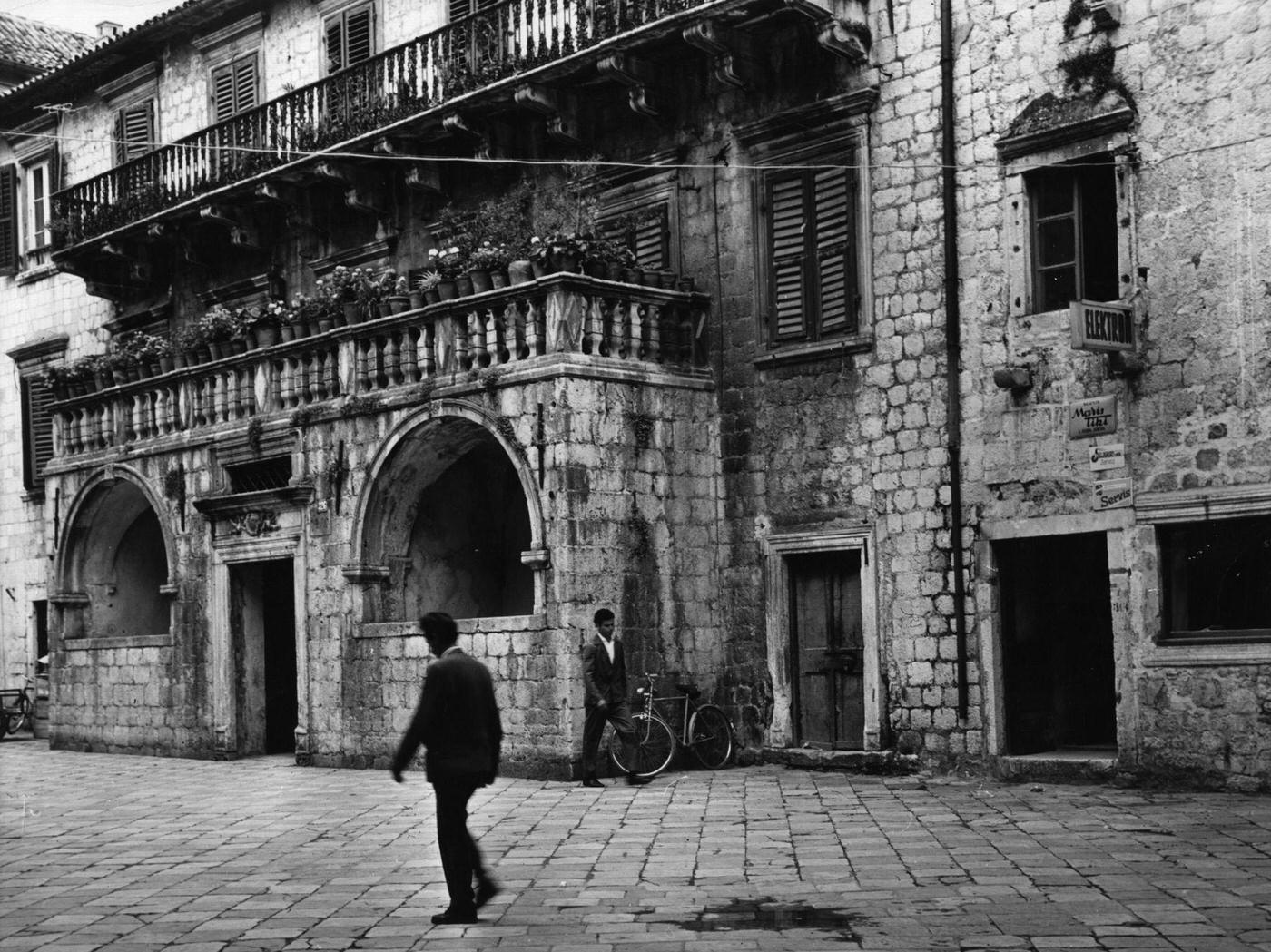
Inland, historic architecture told stories of the region’s layered past. The 16th-century Ottoman bridge in Mostar — the Stari Most — still stood over the Neretva River as it had for four centuries. In the walled city of Kotor, Montenegro, Venetian-influenced patrician houses from the same era lined narrow stone streets. These weren’t museum pieces — people lived and worked around them every day. Slovenia’s Otočec Castle, sitting on a small island in the Krka River, and the glacial beauty of Lake Bled rounded out a country of extraordinary geographic and architectural variety.
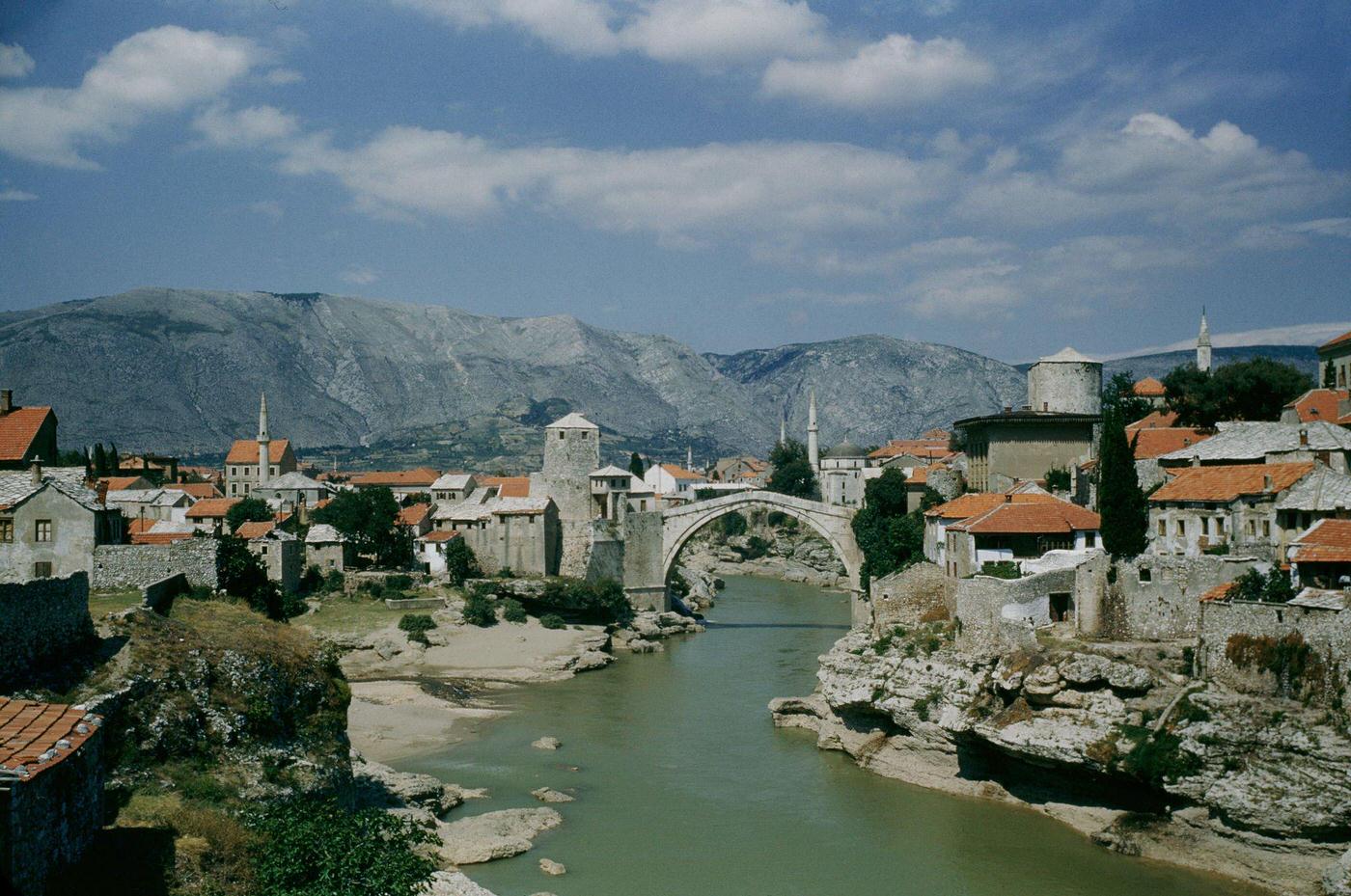
The Stari Most or Old Bridge, a 16th century Ottoman bridge over the River Neretva in Mostar, Bosnia and Herzegovina, 1965
A 'patrician' house inside the city walls of Kotor, Montenegro, inspired by Venetian or Italian houses of the 16th century, 1965
A ‘patrician’ house inside the city walls of Kotor, Montenegro, inspired by Venetian or Italian houses of the 16th century, 1965
Otočec Castle, Slovenia, Yugoslavia, 1960
Lake Bled with boat in 1960s Yugoslavia

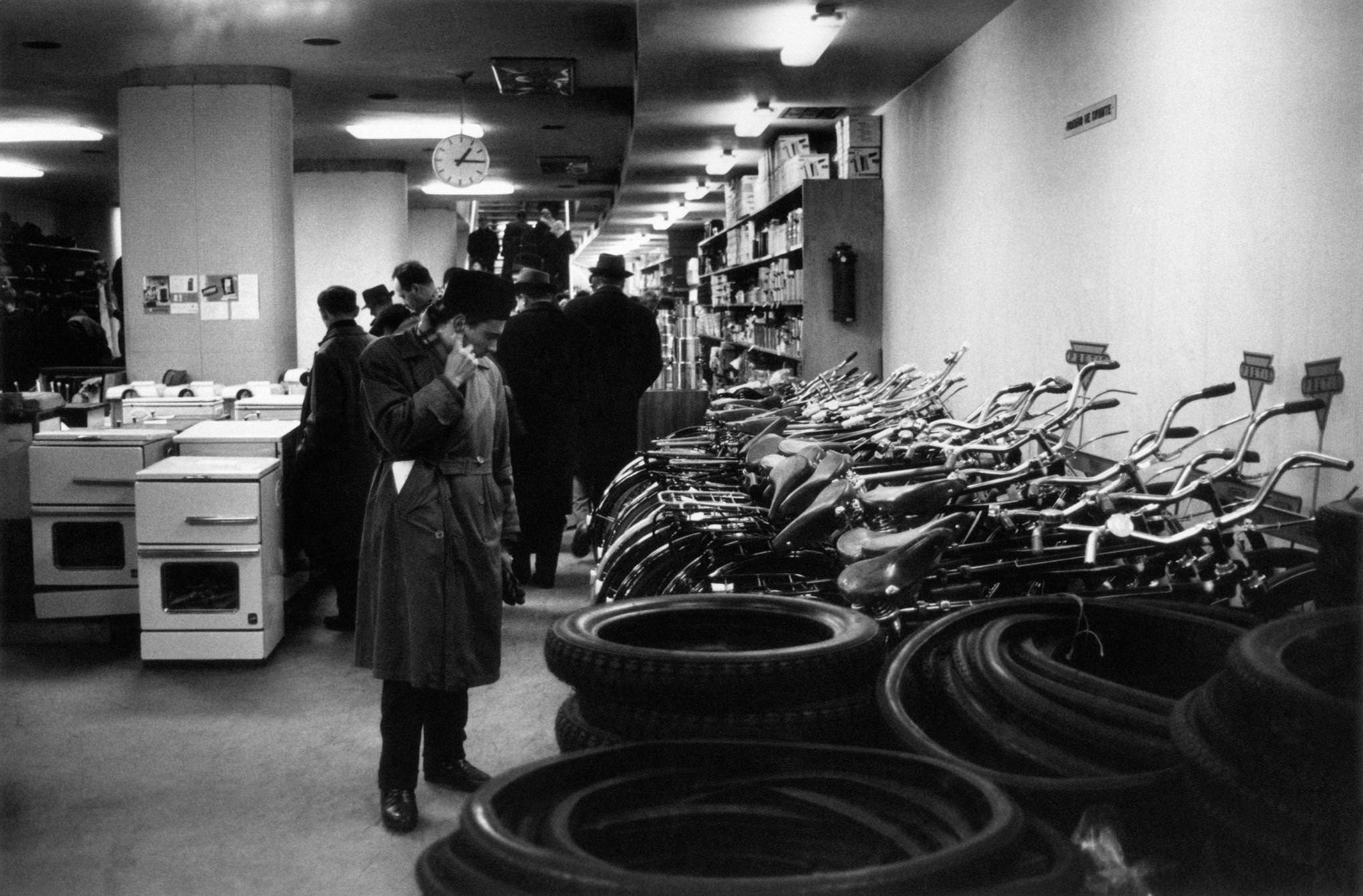
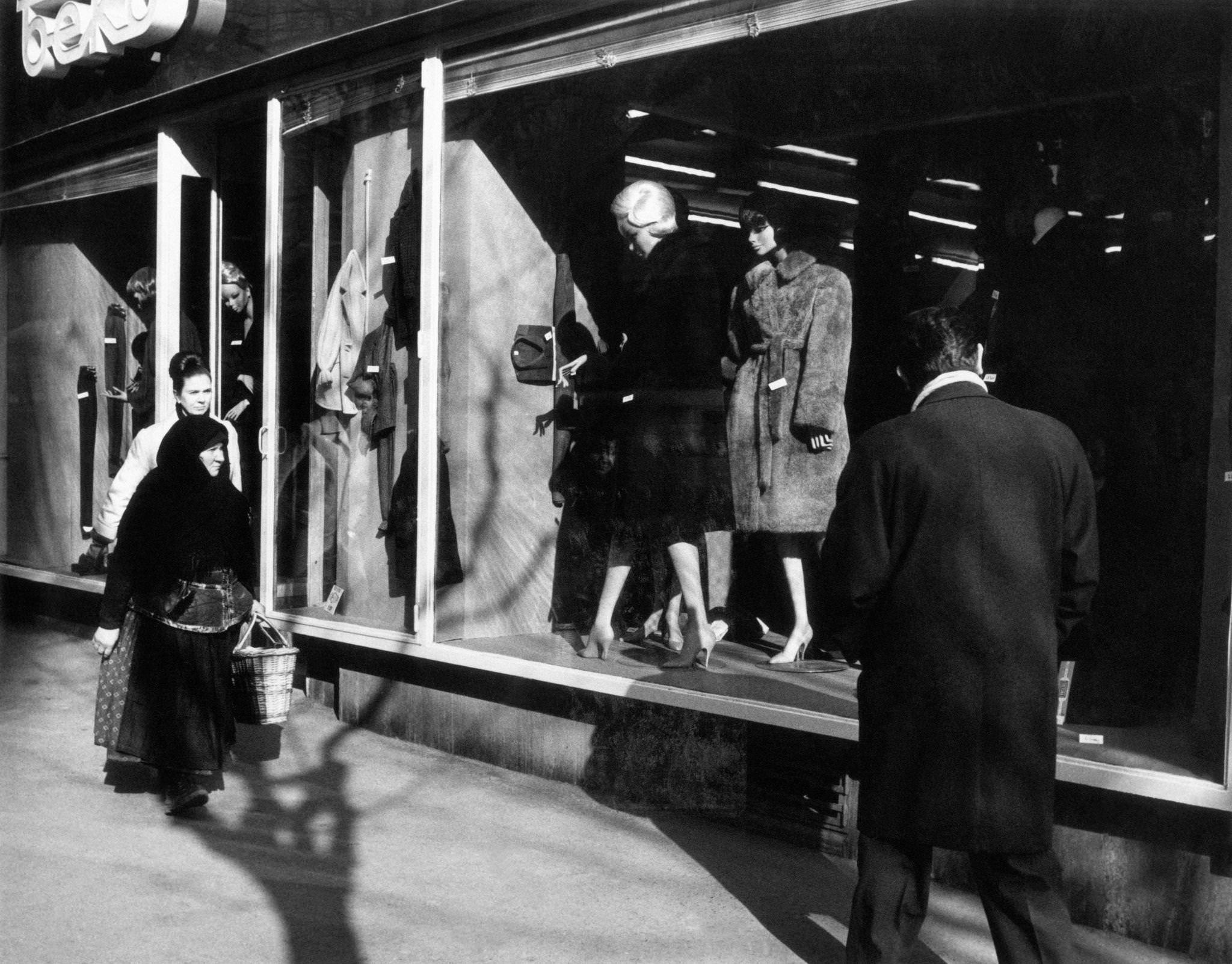
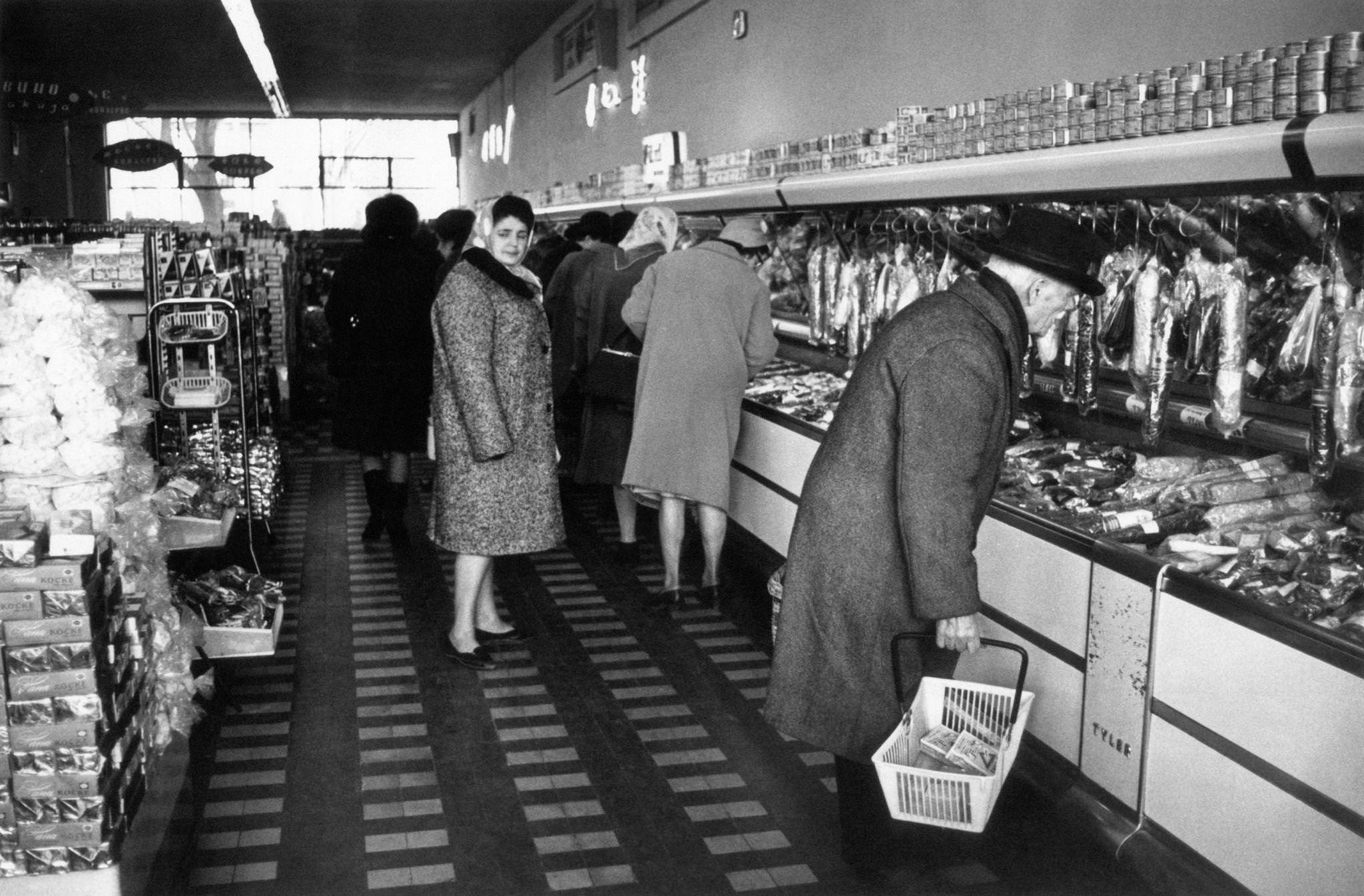
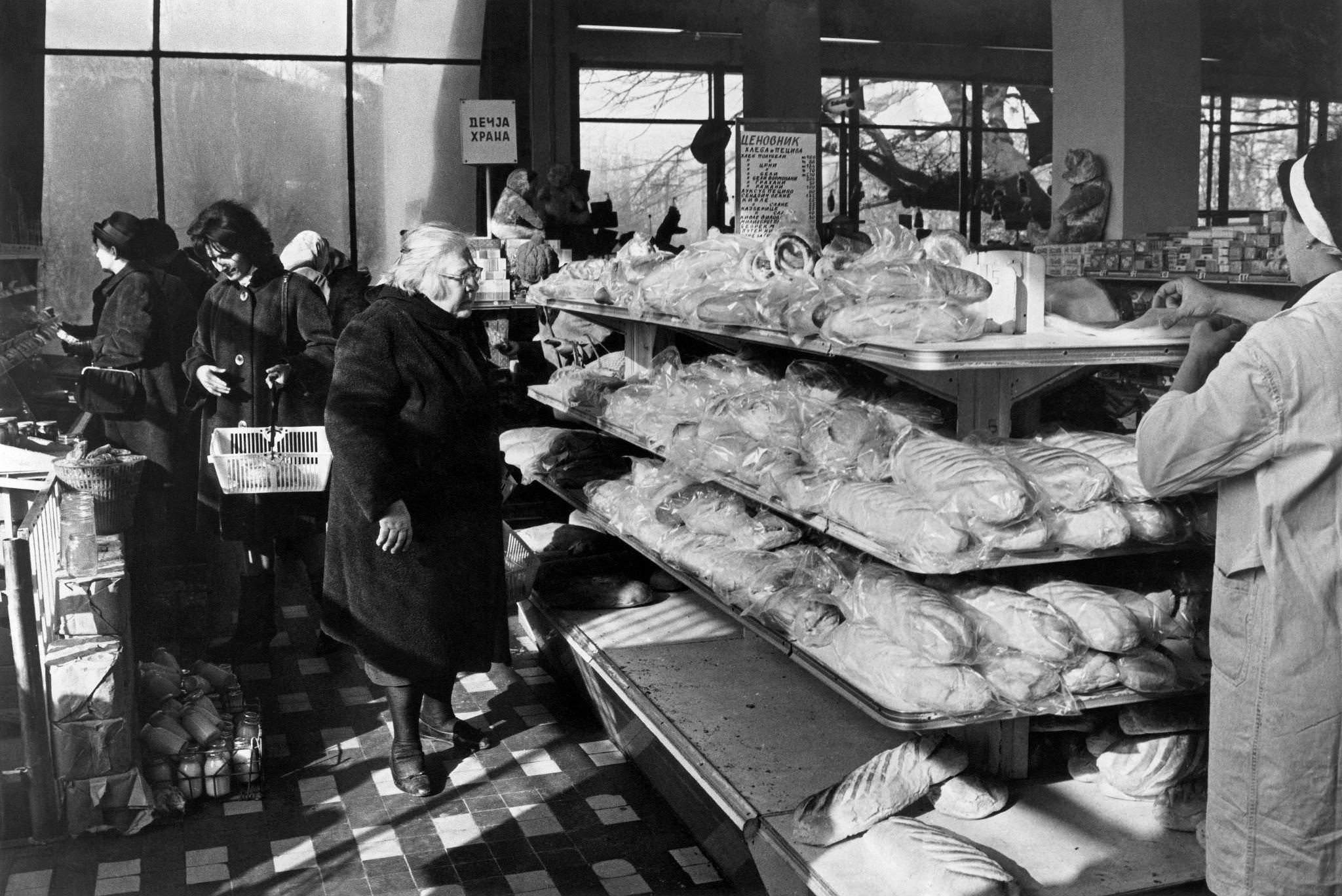
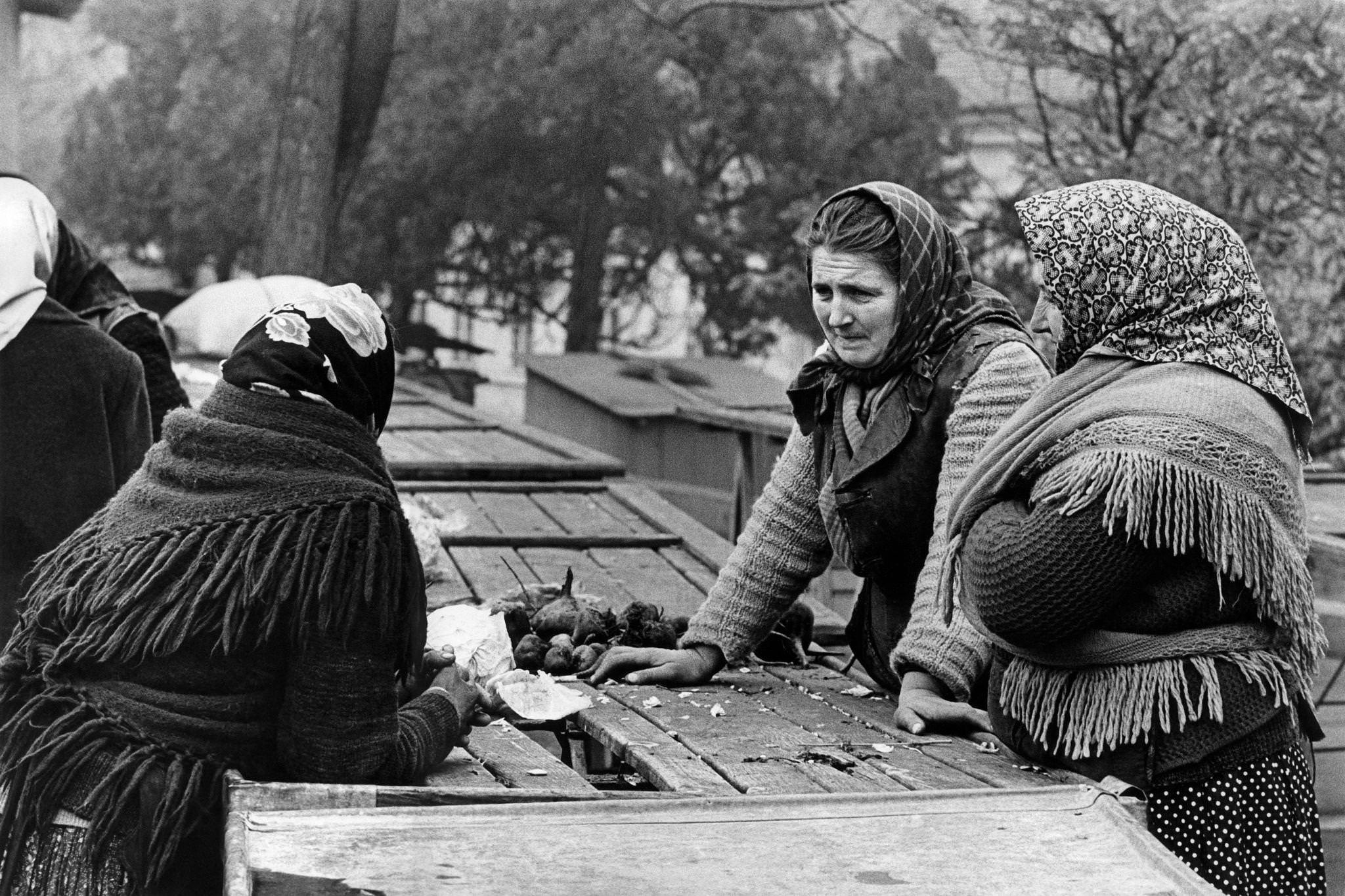
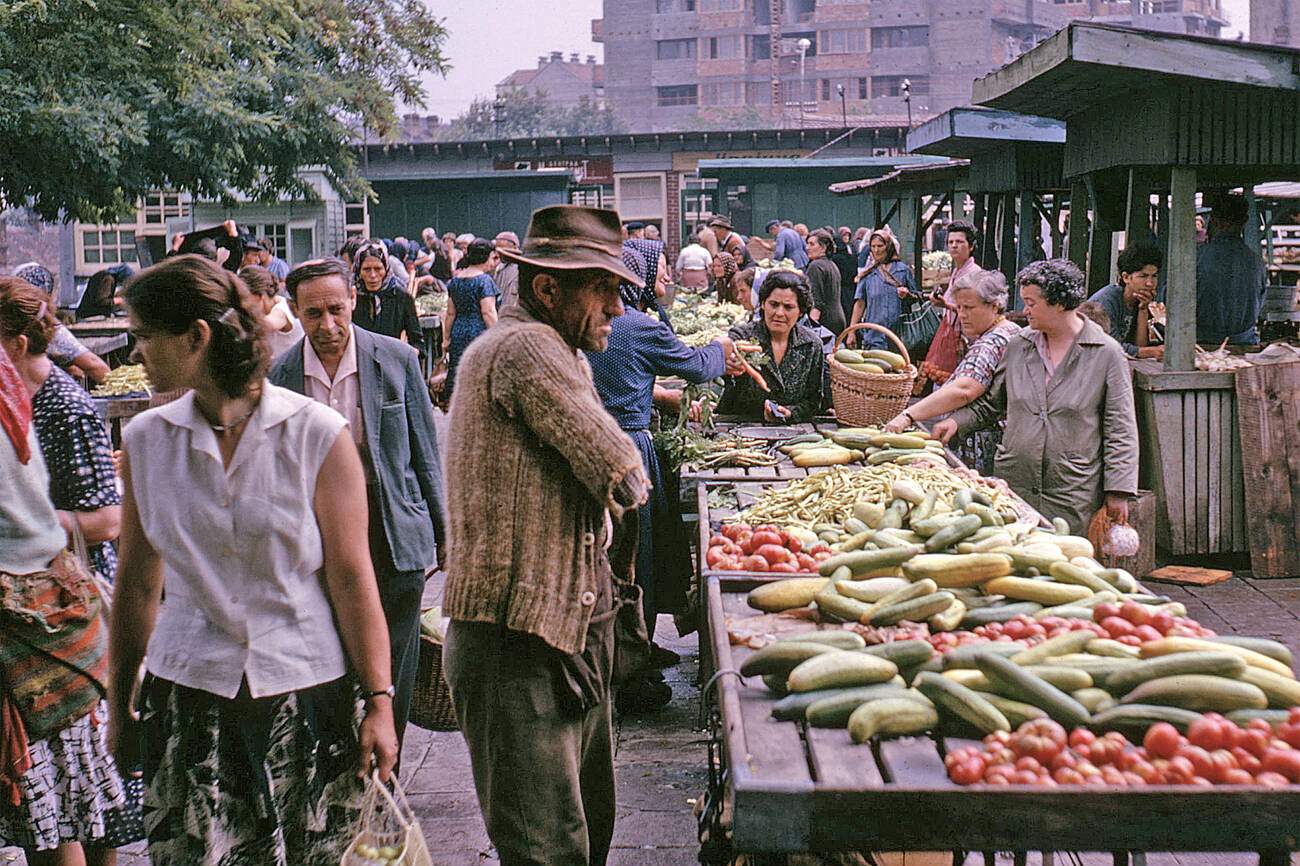
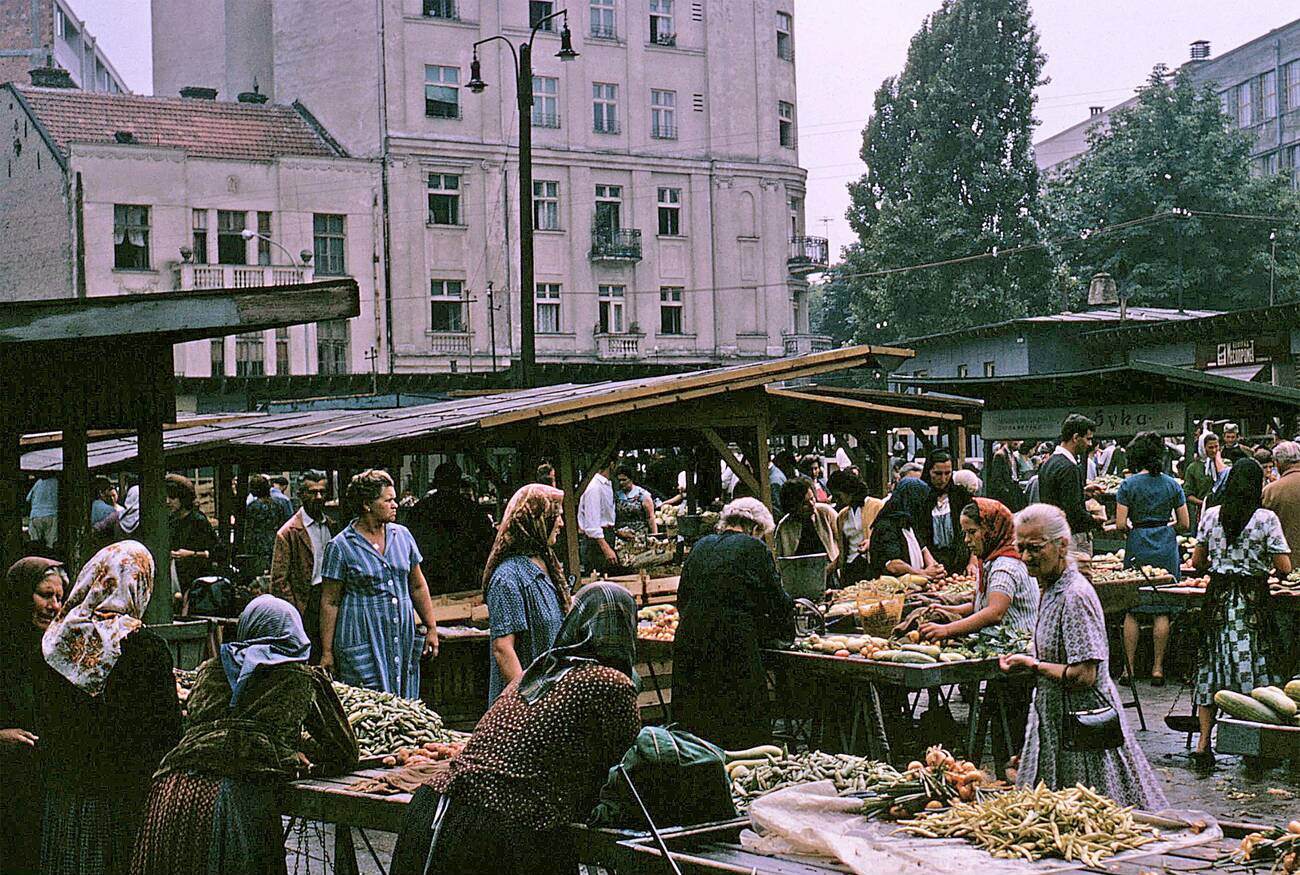
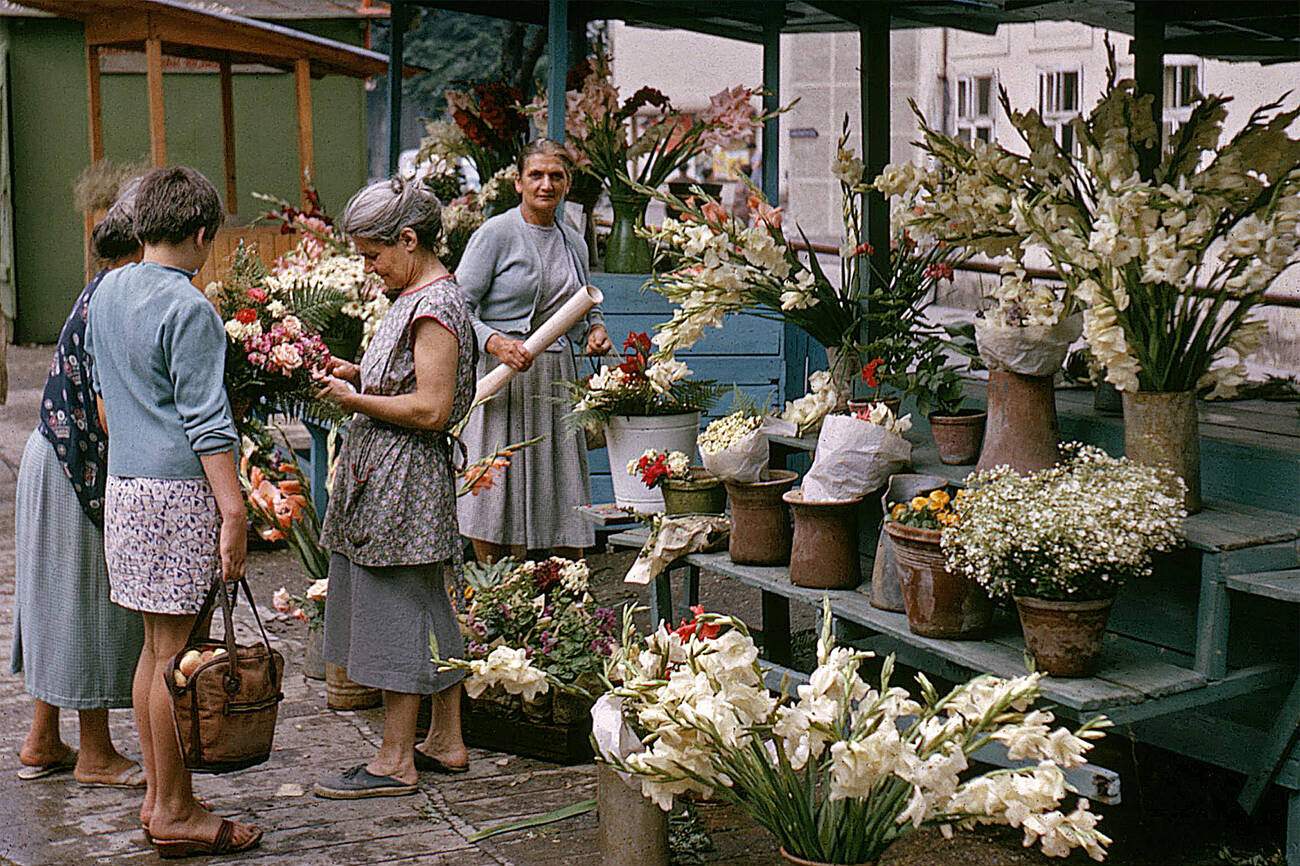
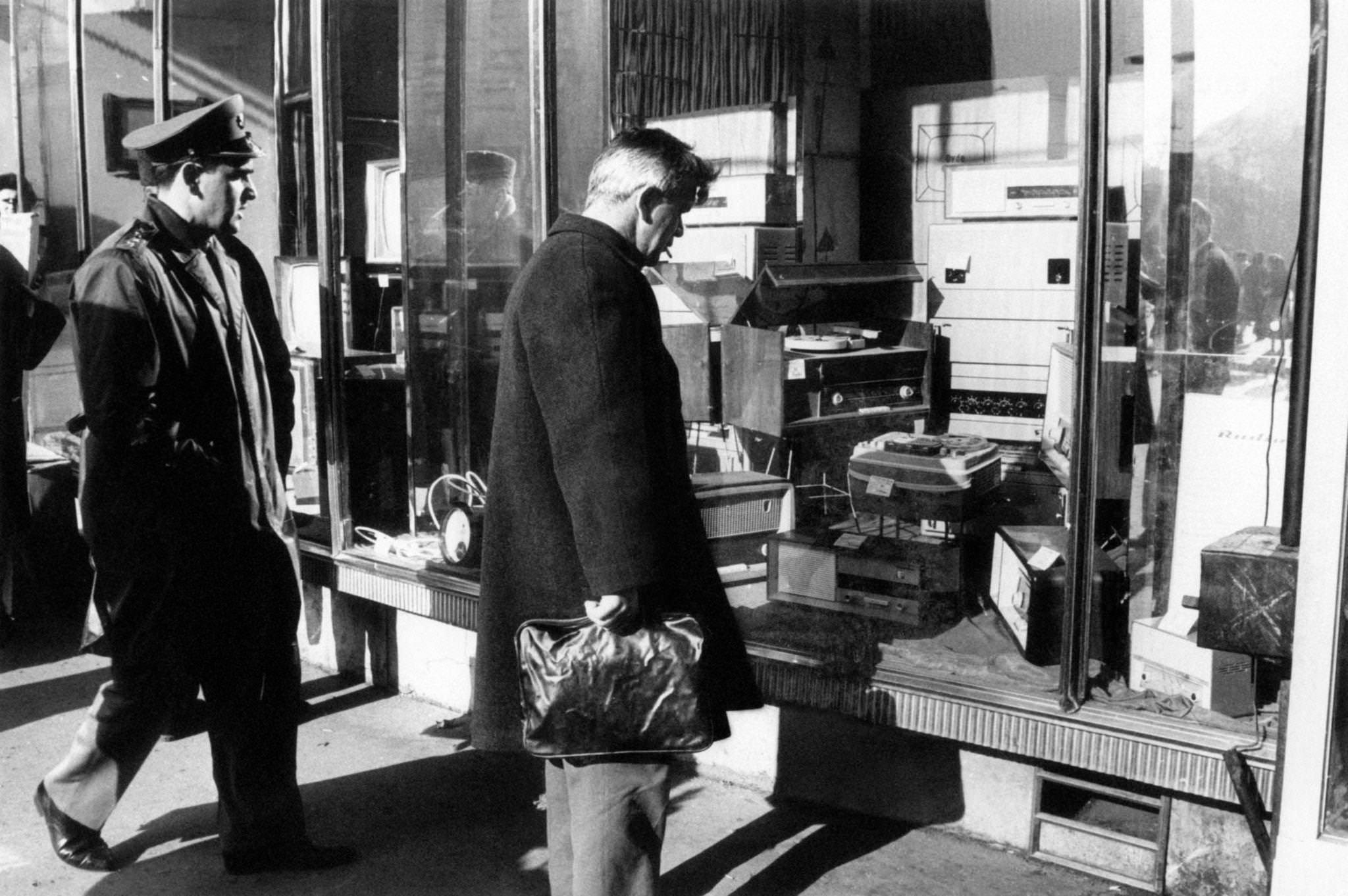
Belgrade, the federal capital, showed the two faces of Yugoslav modernization most sharply. Department stores in Terazije Square drew crowds of shoppers staring at window displays. A supermarket in the city center served women with shopping baskets — a consumer scene that would have been hard to find in most communist countries at the time. Electronics shops on Maršala Tita Street attracted men browsing the latest radios. The city’s open-air markets were equally lively, selling vegetables, flowers, and everyday goods.
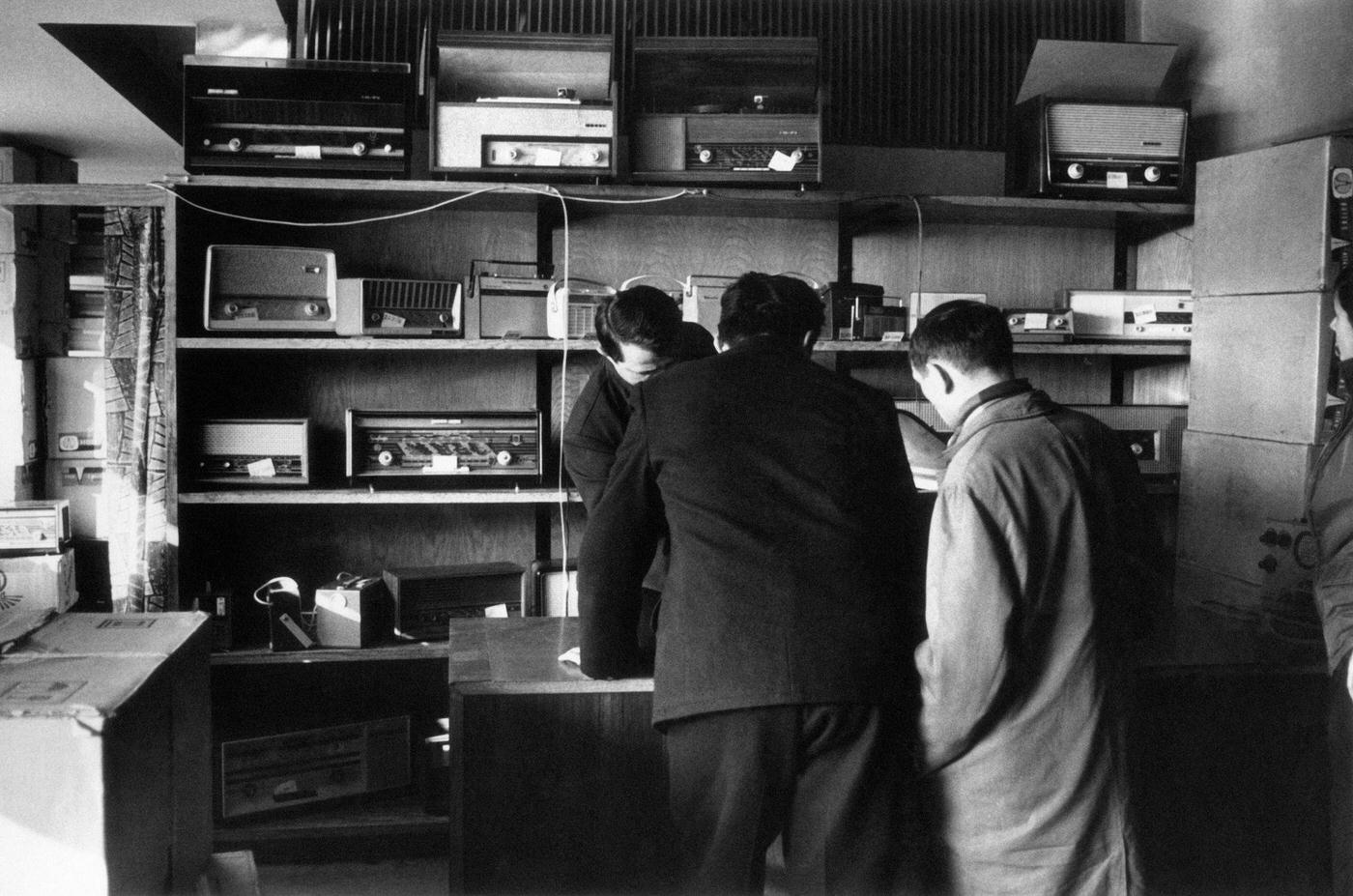
Men buying radios in a shop on Marsala Tita Street, 1965
Men watching the shop window of a radio shop on Marsala Tita Street in Belgrade, Serbia, 1965
People watching goods displayed at the department store in Belgrade, 1965
People watching the shop windows of the department store in Terazije Square in Belgrade, 1965
People shopping at the supermarket in Belgrade, Serbia, 1965
Yugoslav women doing the grocery shopping in a supermarket in Belgrade, Serbia, 1965
Three Yugoslav women talking at the open-air market in Belgrade, Serbia, 1965
Belgrade, market, Yugoslavia ( Serbia) 1960's
Belgrade, market, Yugoslavia ( Serbia) 1960’s
Belgrade vegetable market 1960's Yugoslavia
Belgrade vegetable market 1960’s Yugoslavia
Belgrade ,flowers, market, 1960's
Belgrade ,flowers, market, 1960’s

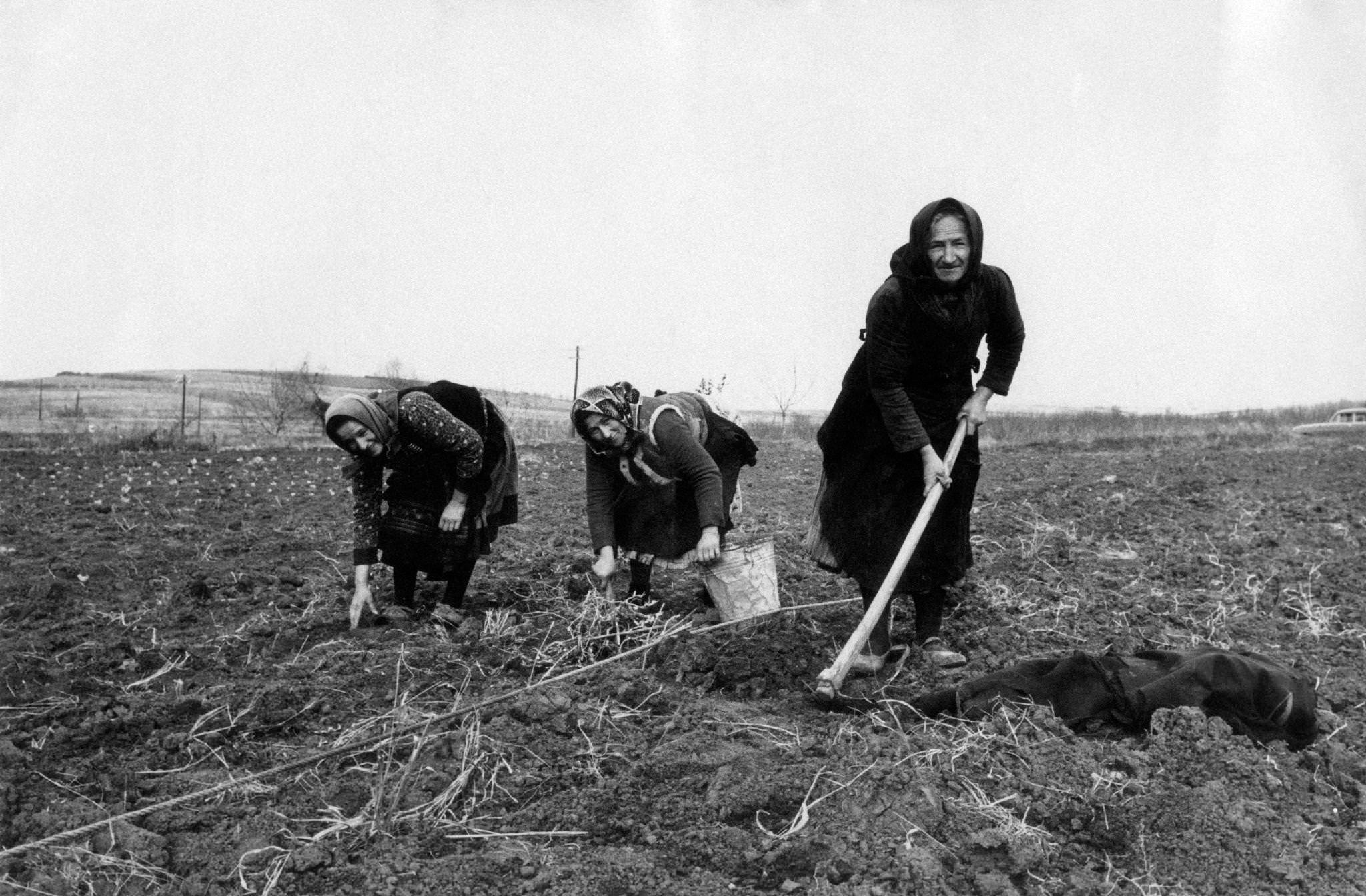
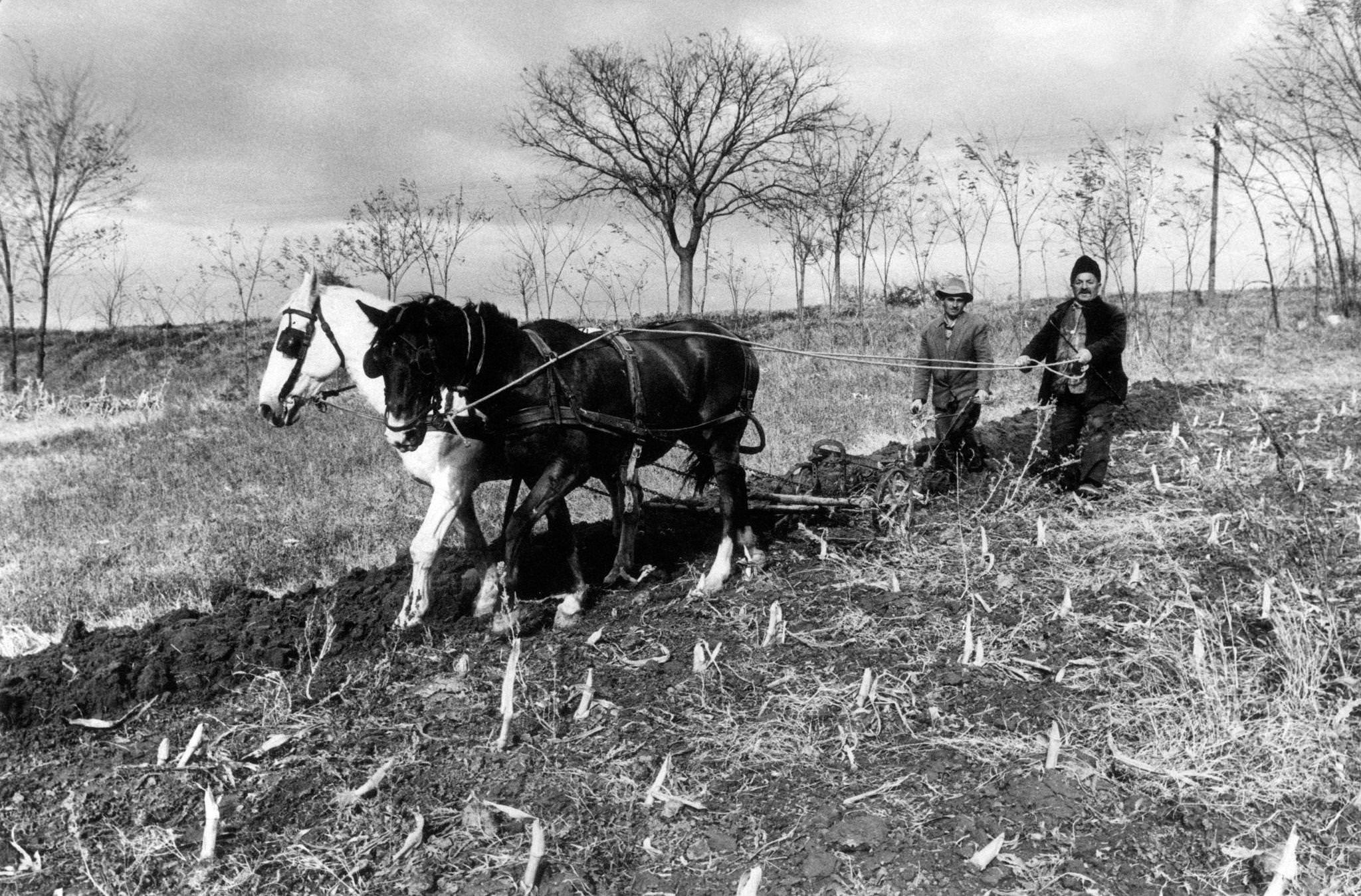
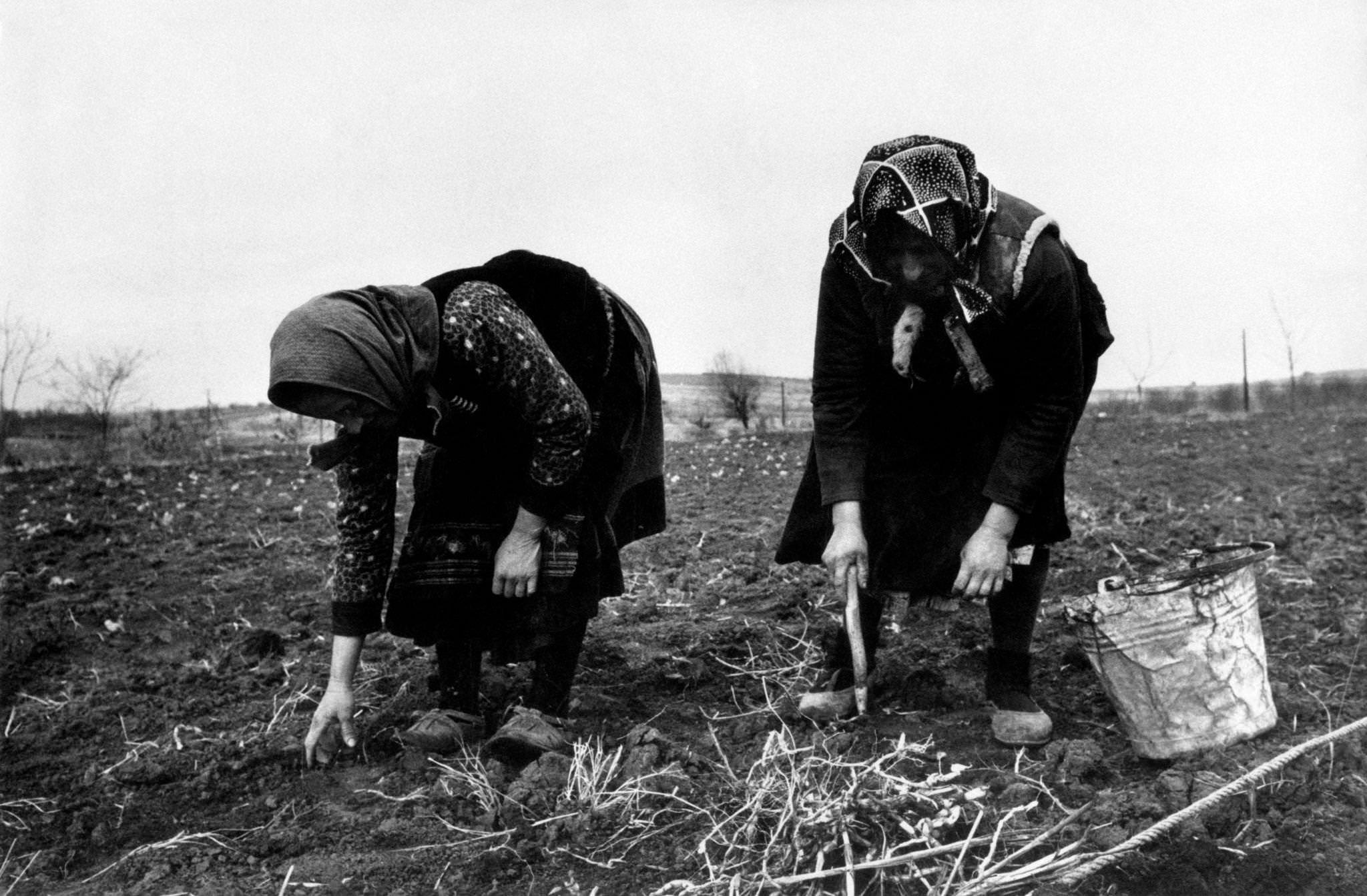
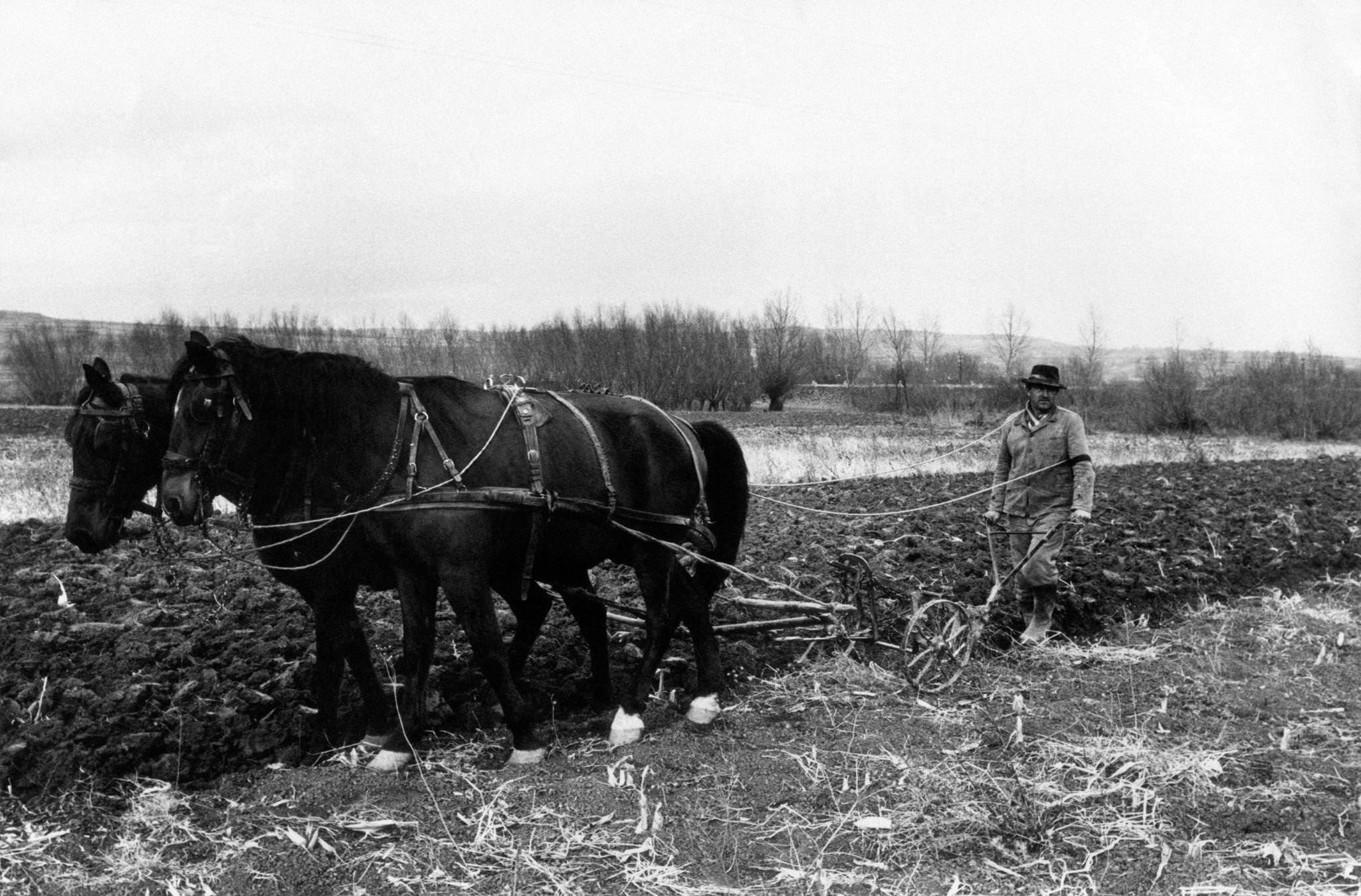
But step just 20 kilometers outside Belgrade and the scene changed completely. Farmers still worked the land with horses and ploughshares. Women turned soil by hand with spades. This rural reality existed at the same time as Belgrade’s supermarkets and department stores — two very different Yugoslavias operating in parallel, separated by little more than a short drive.
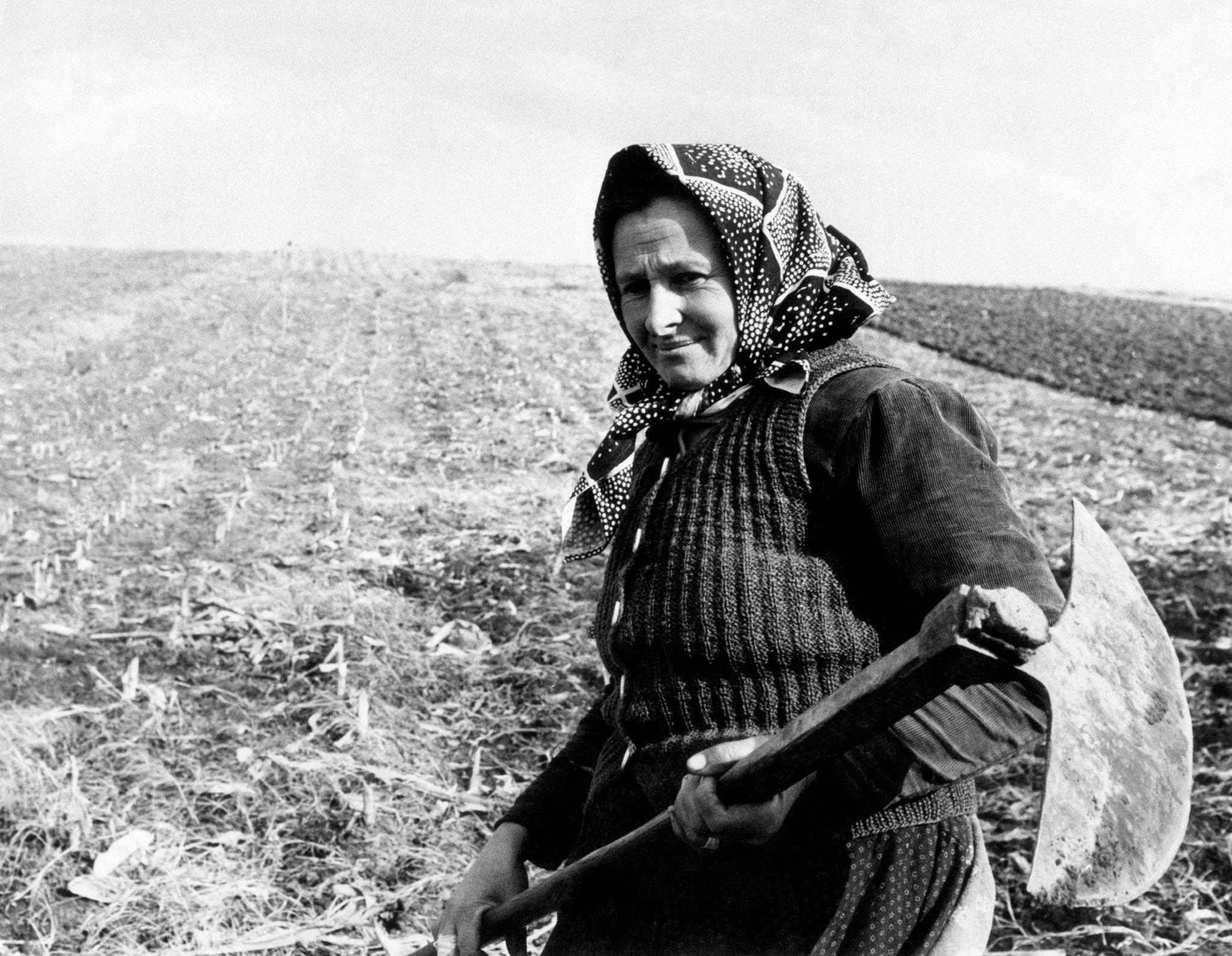
A countrywoman at work in a field with a spade, 20 km far from the capital city of Belgrade, Serbia, 1965
A farmer ploughs a field with a ploughshare dragged by two horses, 20 km far from the capital city of Belgrade, Serbia, 1965
Three countrywomen at work turn over and spade a field, 20 km far from the capital city of Belgrade, Serbia, 1965
Two farmers plough a field with a ploughshare dragged by two horses, 20 km far from the capital city of Belgrade, Serbia, 1965
Two countrywomen at work, crouched on a field they are turning over, 20 km far from the capital city of Belgrade, Serbia, 1965
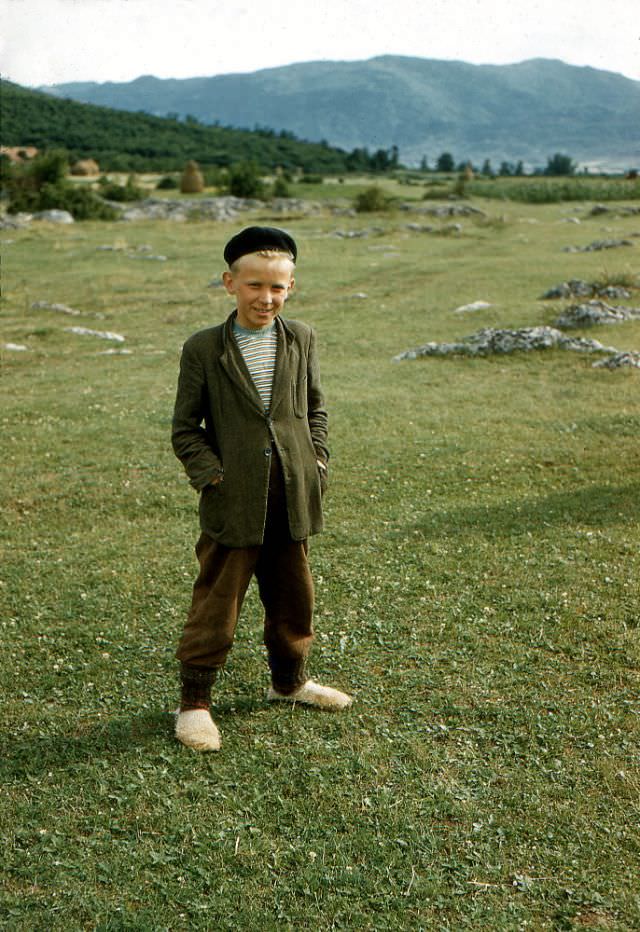
Young shepherd in Croatia, Yugoslavia, 1960

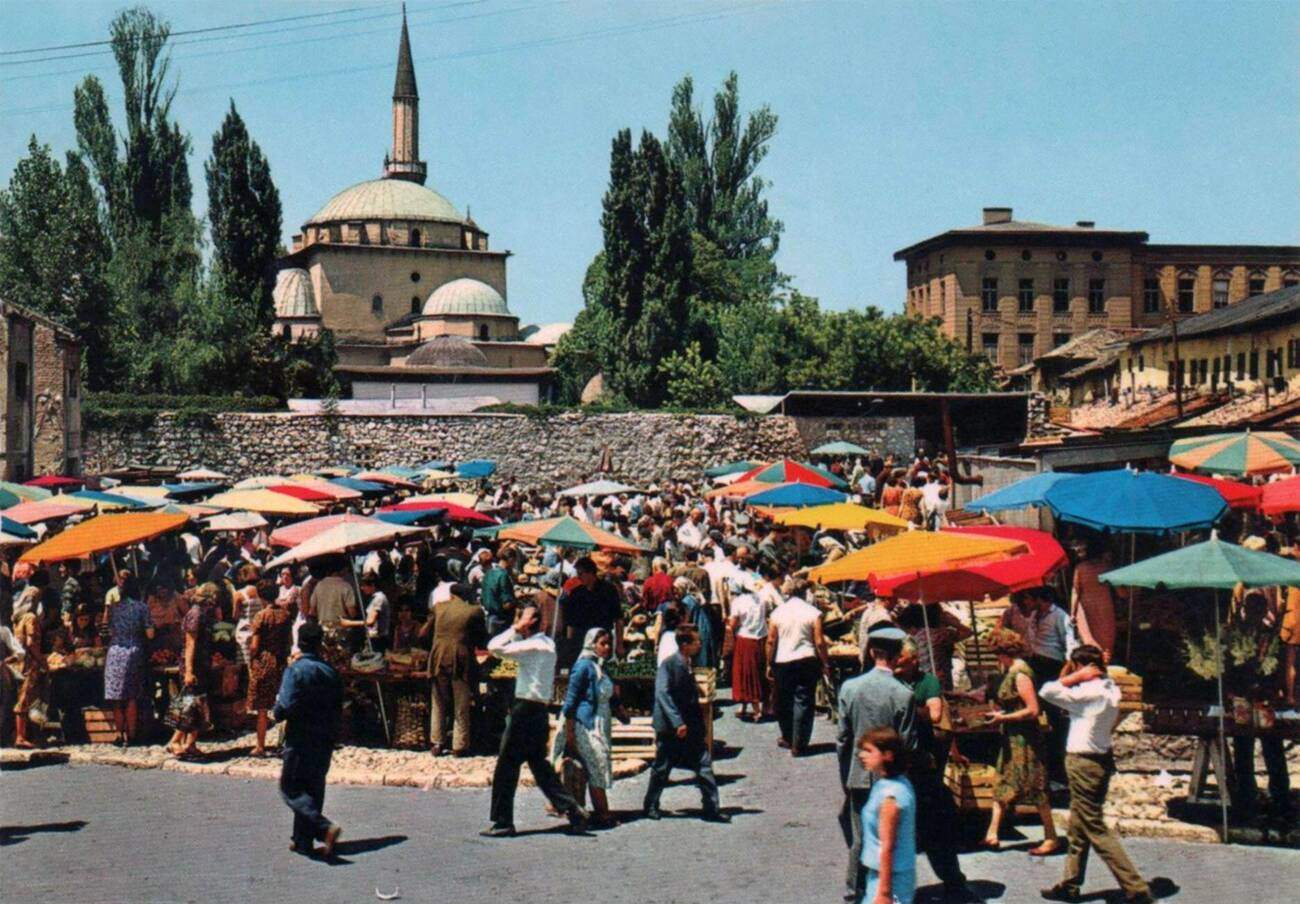
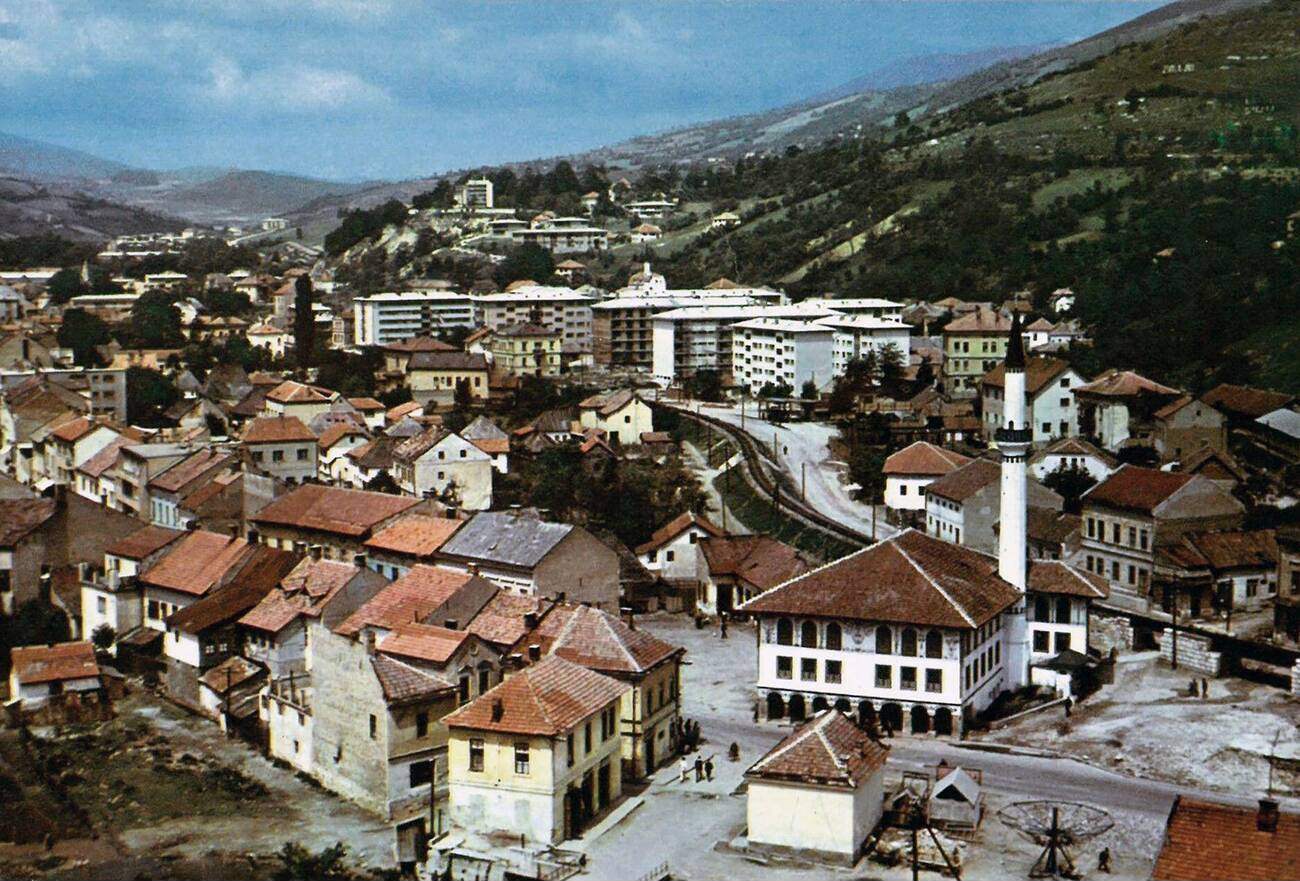
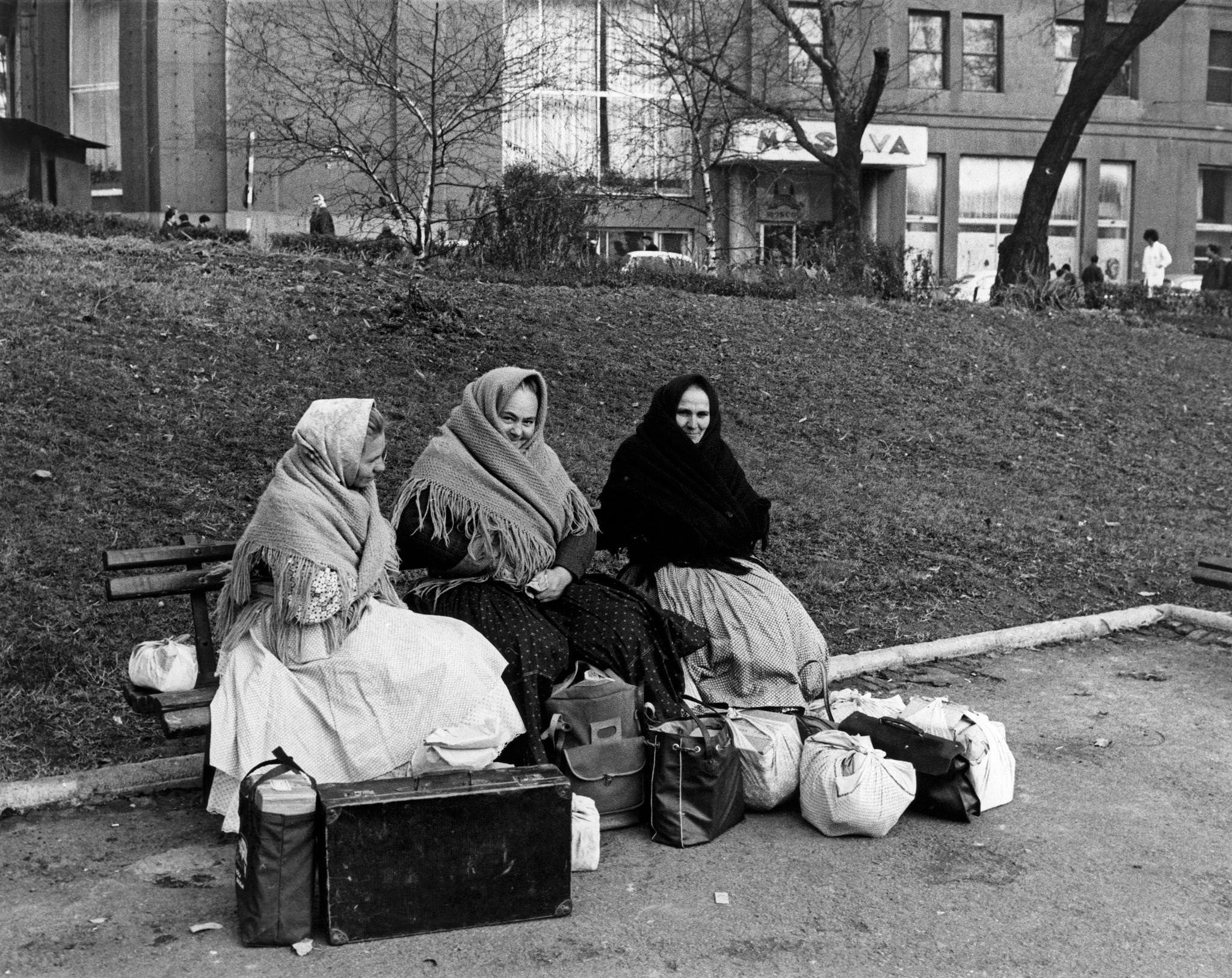
City streets told their own stories too. In Belgrade, people wrapped in winter overcoats crossed busy intersections. Women waited in the railway station waiting room. Elderly women sat on benches in public squares. A Sarajevo tram — a PCC car originally bought from Washington D.C.’s transit system — ran its route through the city. In the Bosnian town of Travnik, a narrow-gauge railway still passed through the center of town in the early 1960s. Sarajevo’s Baščaršija market buzzed beside the Gazi Husrev-beg Mosque, a scene that had played out for centuries.
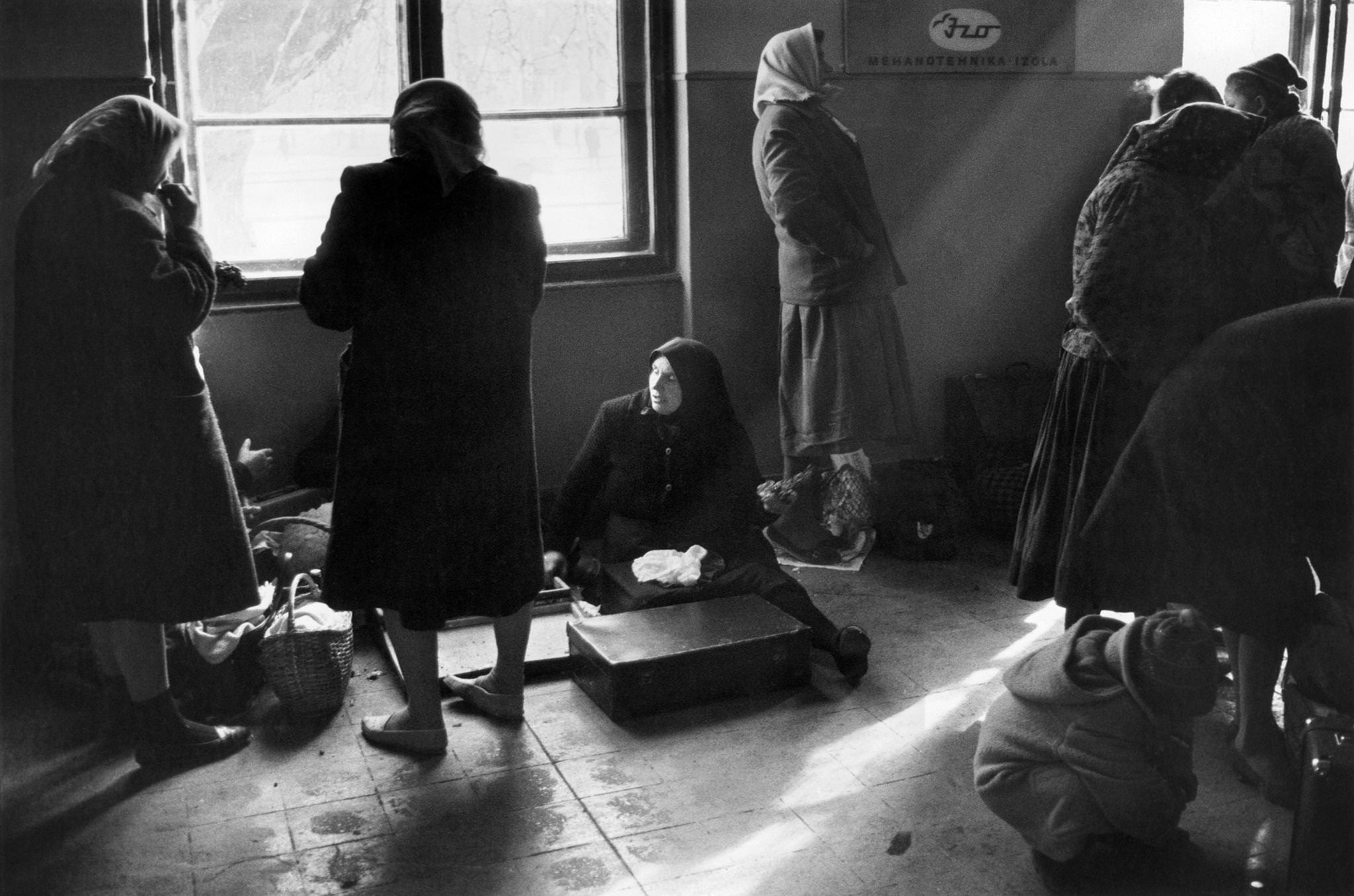
Some Yugoslav women waiting in the waiting room of Belgrade railway station, Serbia, 1965
Three elderly Yugoslav women sitting on a bench. Belgrade, 1965
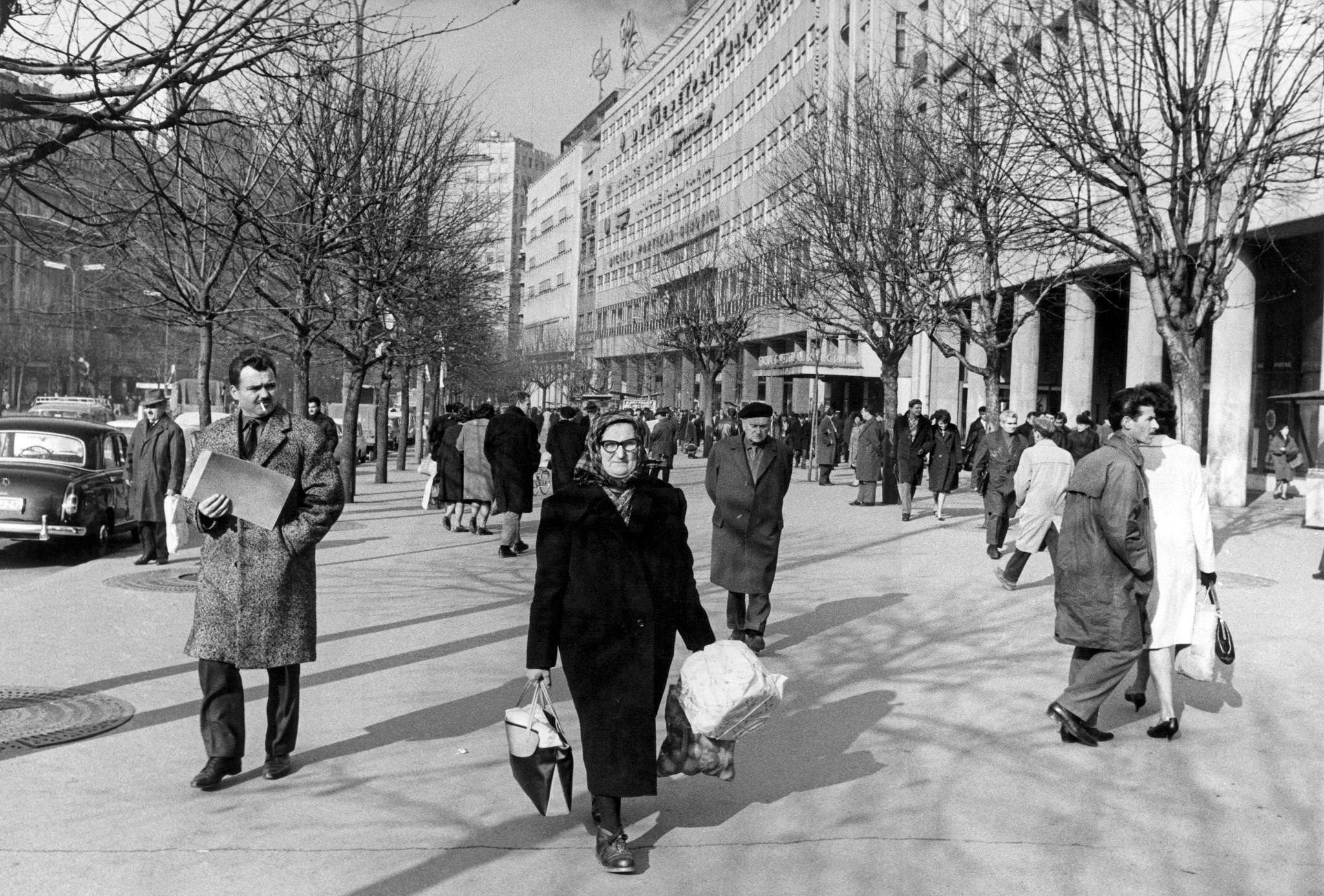
An elderly Yugoslav woman going back home carrying tote bags in Terazije square. Belgrade (Yugoslavia), December 1965
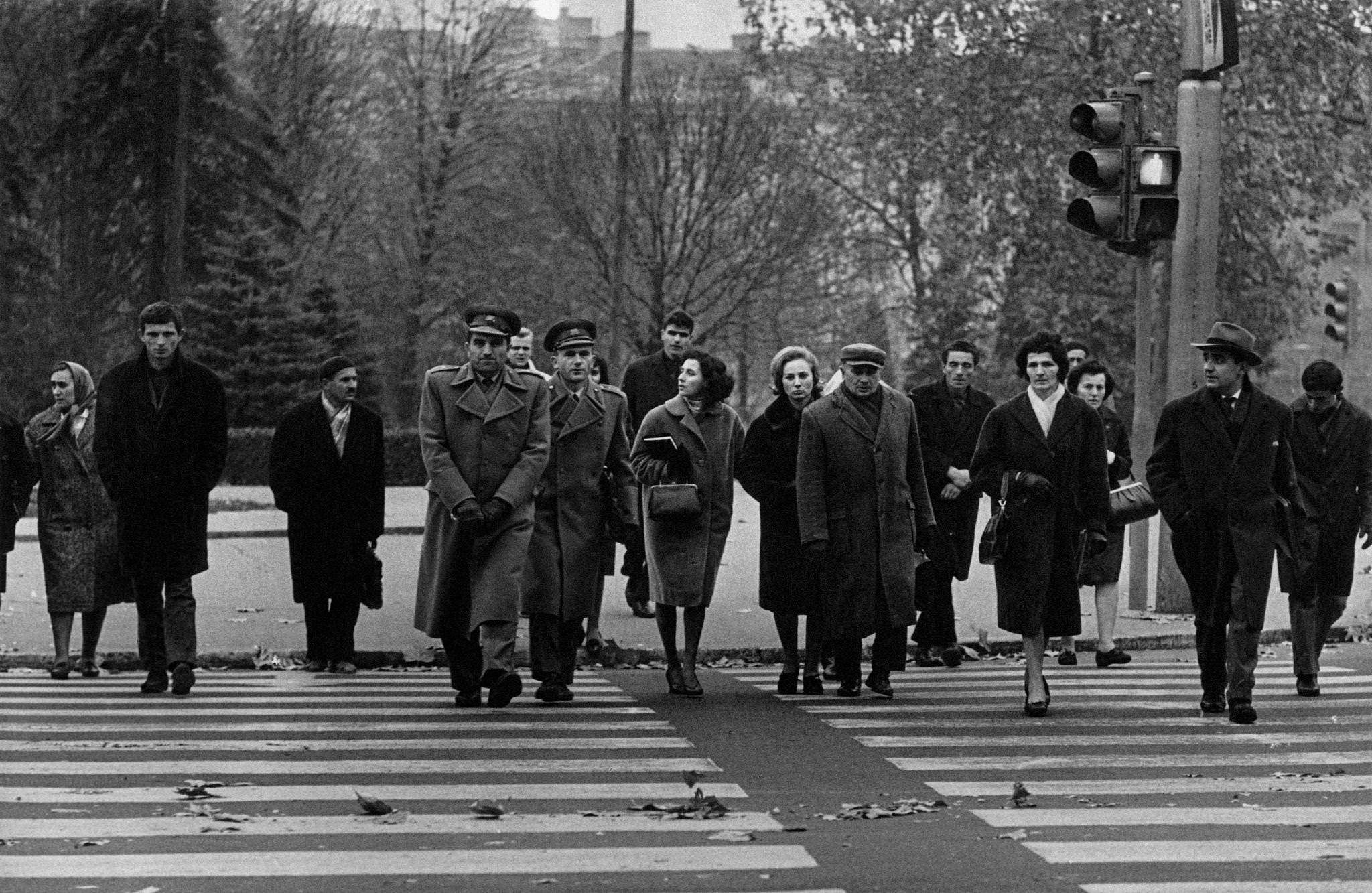
People wearing warm overcoats cross the pedestrian crossing in the city of Belgrade. Belgrade (Yugoslavia), 1965
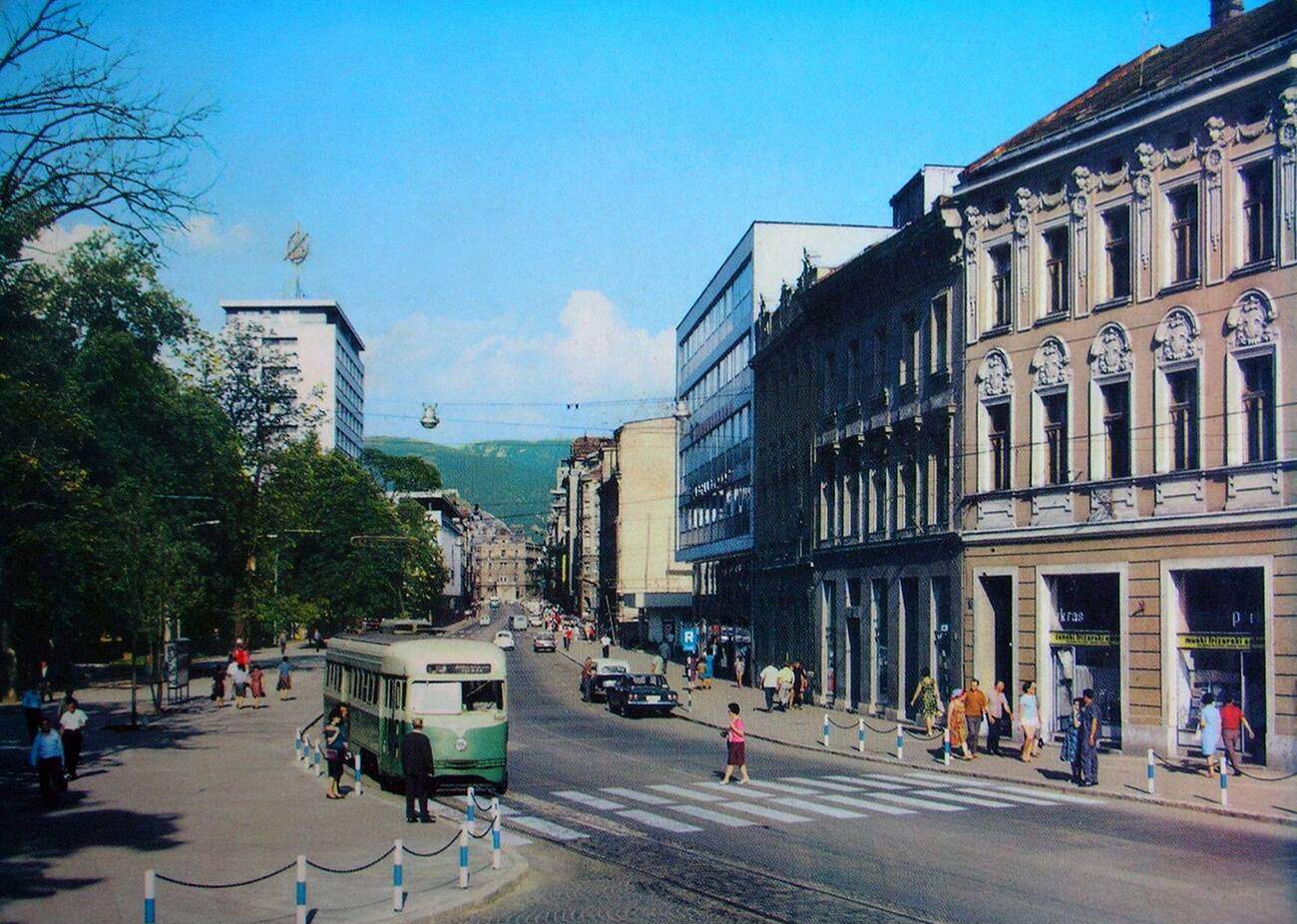
A westbound PCC tram bought from D.C. Transit in Washington, D.C. running on Line 3 in Sarajevo, Yugoslavia, in the 1960s
Sarajevo - Farmers' Market and Gazi Husrev-beg's Mosque at Baščaršija in the early 1960s
Sarajevo – Farmers’ Market and Gazi Husrev-beg’s Mosque at Baščaršija in the early 1960s
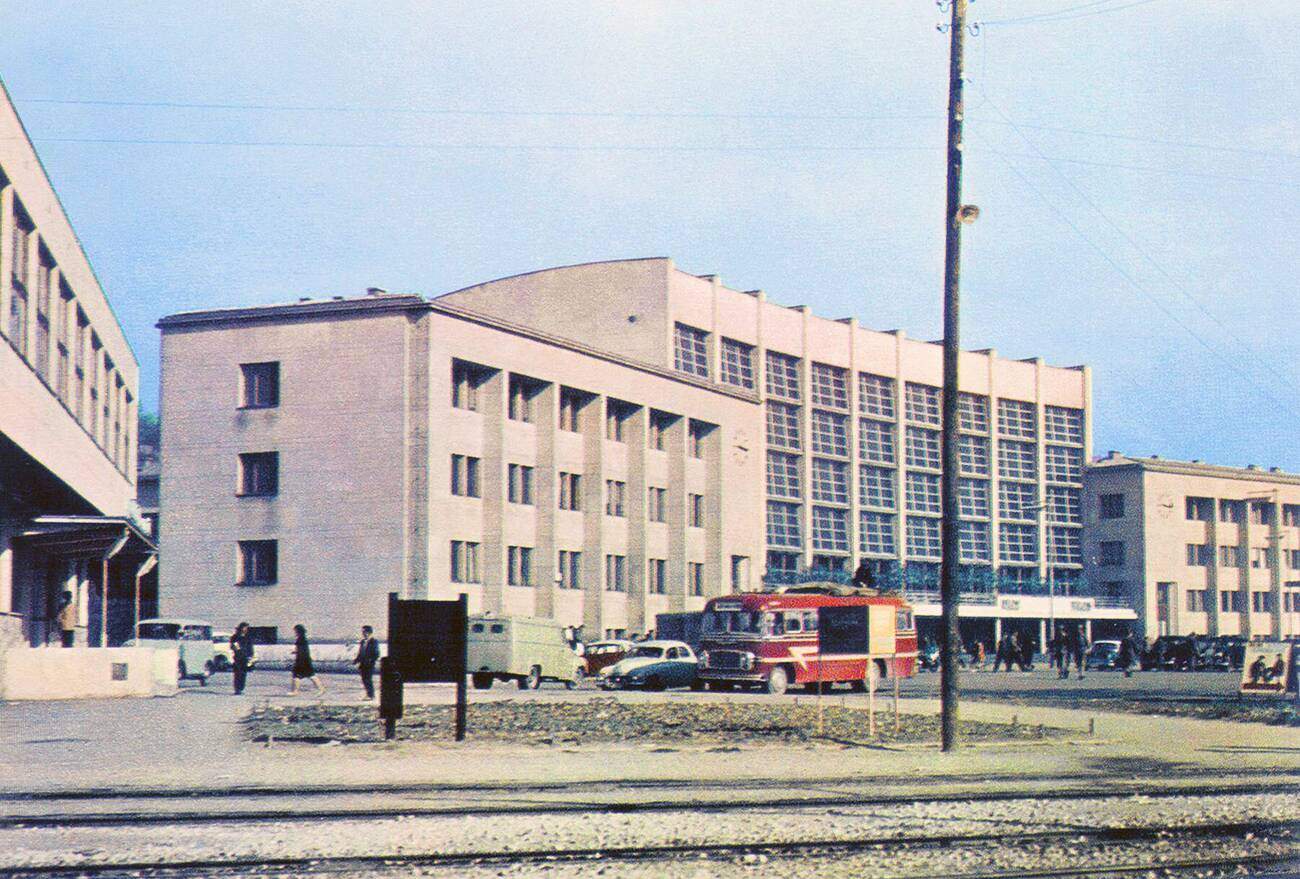
The narrow-gauge and the new standard-gauge railway station Sarajevo Novo in the early 1960s
The early 1960s view of Travnik from the east end with the narrow-gauge railway passing through town.
New standard gauge railway station Sarajevo Novo in around 1960

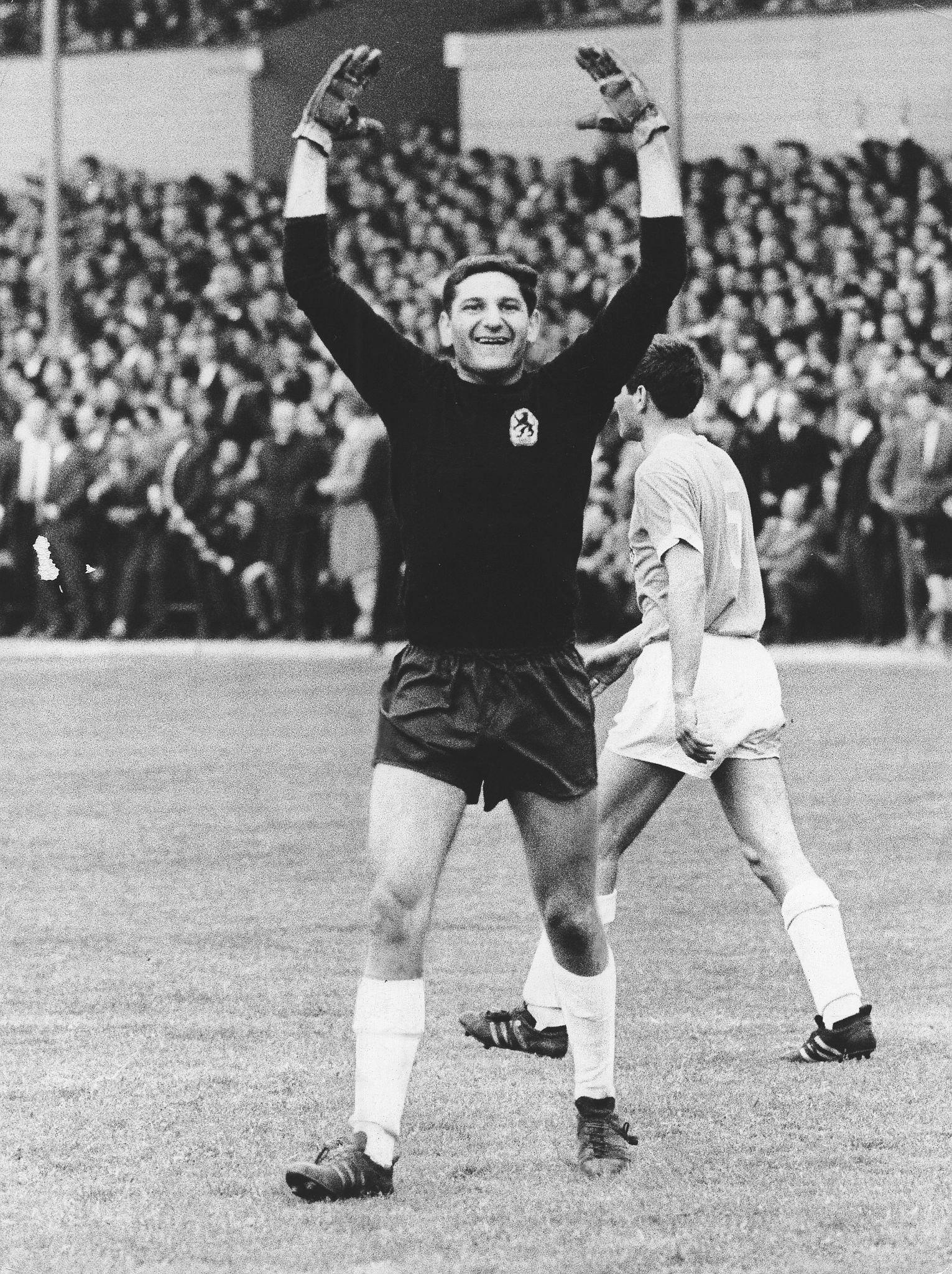
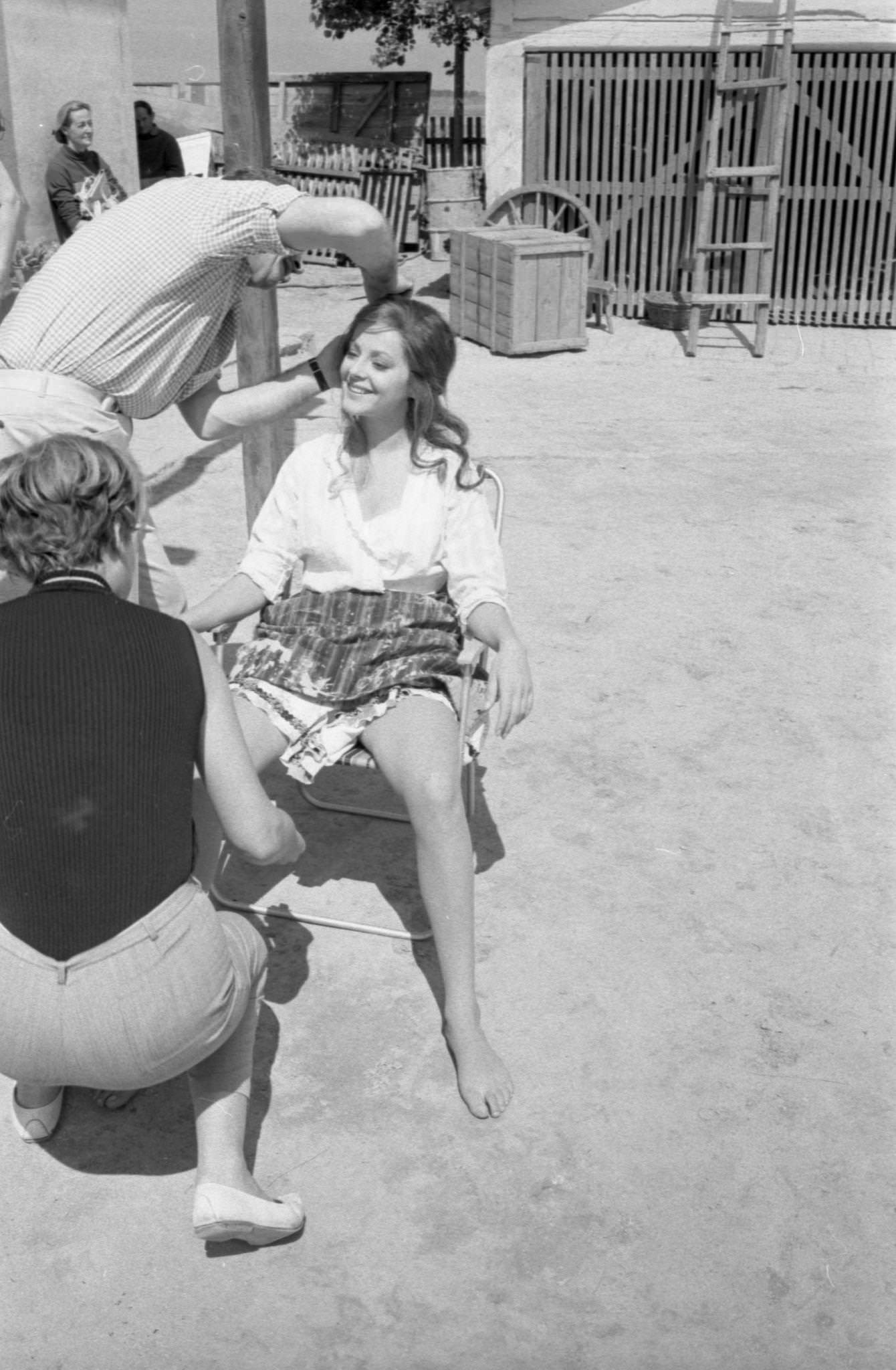
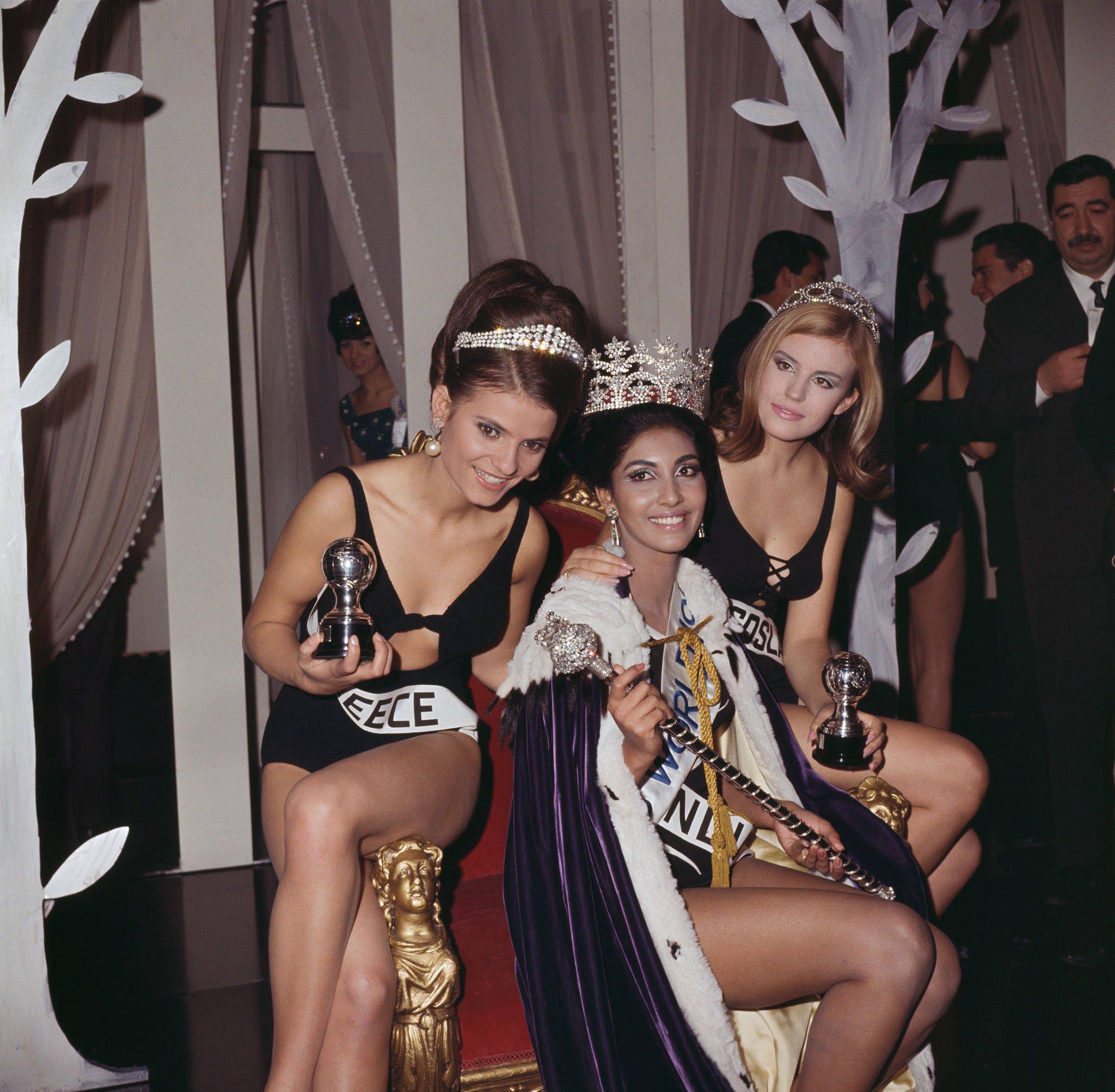
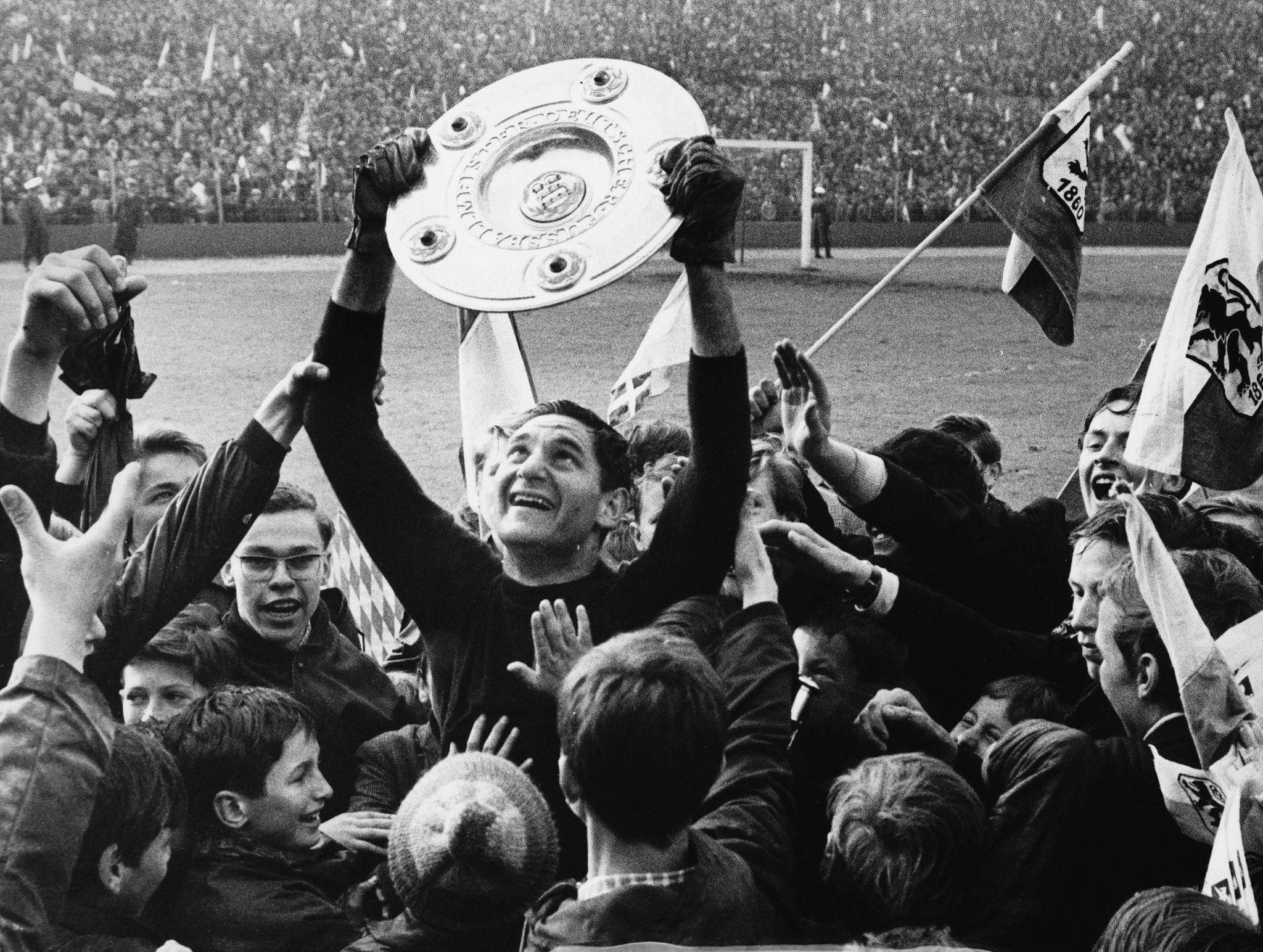
Yugoslavia’s cultural life in the 1960s extended beyond its borders. Ivo Andrić, the Yugoslav writer and diplomat, received the Nobel Prize in Literature in 1961 — bringing global attention to the country’s literary tradition. On the football pitch, goalkeeper Petar Radovanović of TSV 1860 Munich became a celebrated Yugoslav export, helping his German club win the national championship in 1966. Hollywood even came to Yugoslavia to film — Italian actress Virna Lisi was photographed on location for the MGM film ‘The 25th Hour.’ And the 1966 Miss World contest, won by Reita Faria of India, was held in Yugoslavia, connecting the country to global pop culture events of the era.
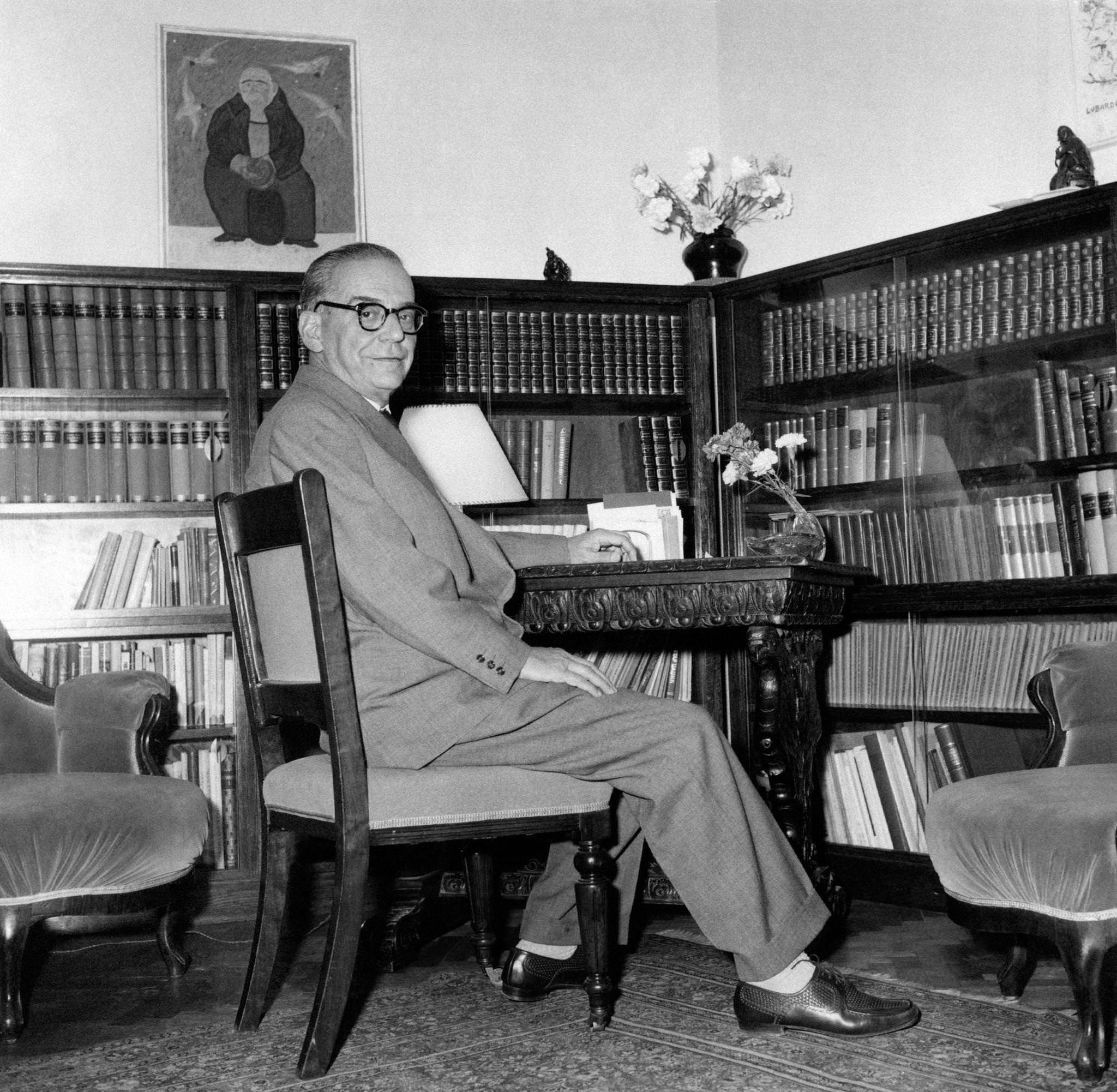
Jugoslavian writer and diplomat Ivo Andric posing sitting at the desk, 1961
Petar Radenkovic, goalkeeper for TSV 1860 Munich, celebrates with fans holding up the winner's cup after a 1-1 draw against HSV to become German football champion, 1966
Petar Radenkovic, goalkeeper for TSV 1860 Munich, celebrates with fans holding up the winner’s cup after a 1-1 draw against HSV to become German football champion, 1966
Petar Radenkovic, goalkeeper for TSV 1860 Munich, raising his arms in a game against Borussia Dortmund on May 21, 1966.
Italian actress Virna Lisi gets a suntan and a makeup job while waiting to go on camera for the MGM film, 'The 25th Hour,' being shot on location in Yugoslavia.
Italian actress Virna Lisi gets a suntan and a makeup job while waiting to go on camera for the MGM film, ‘The 25th Hour,’ being shot on location in Yugoslavia.
Winner of Miss World 1966, Reita Faria of India wears her crown and sits on the winner's throne with runners-up.
Winner of Miss World 1966, Reita Faria of India wears her crown and sits on the winner’s throne with runners-up.

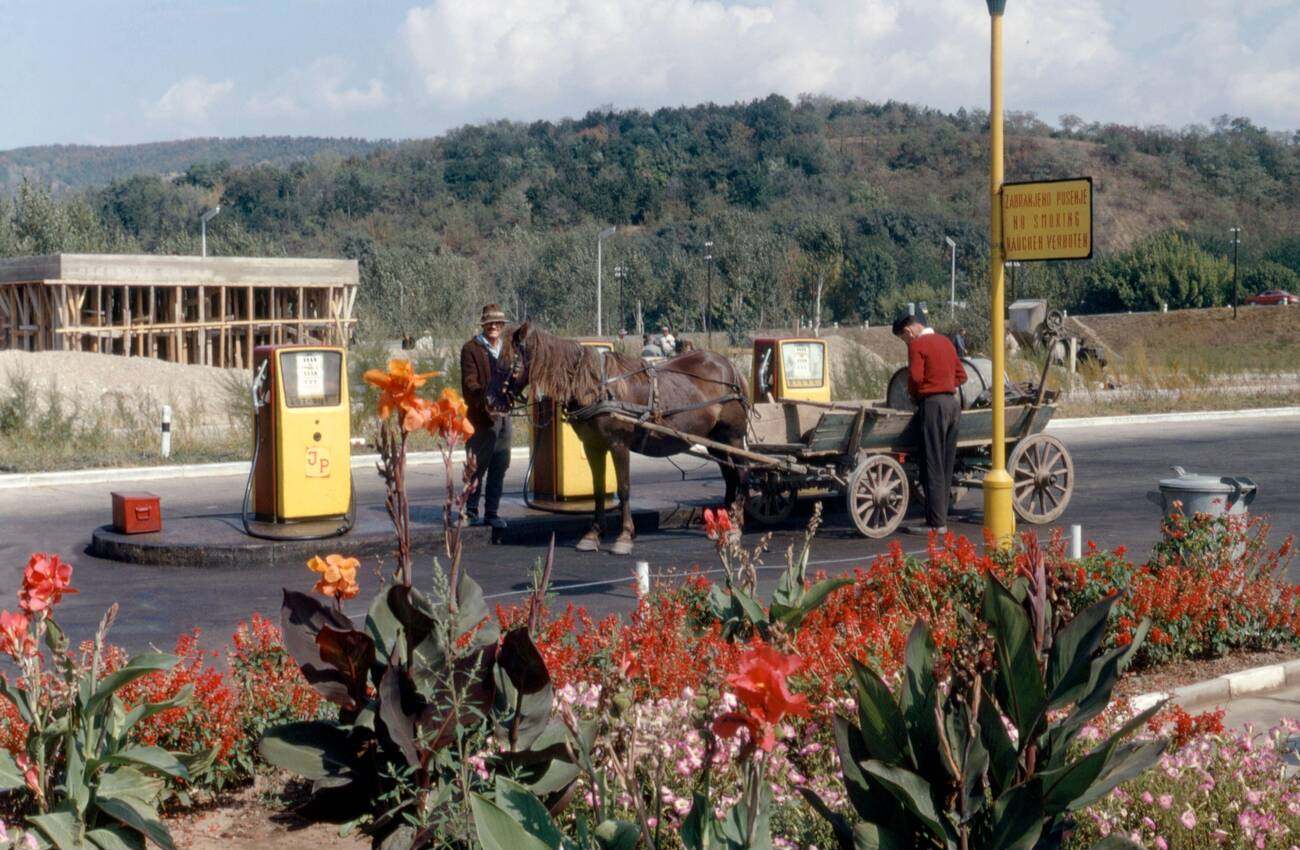
On the diplomatic front, Tito met with East German leader Walter Ulbricht in 1966 to sign an agreement converting their diplomatic representations into full embassies. It was the kind of careful, balancing act that defined Yugoslav foreign policy — maintaining ties with communist states while keeping the door open to the West. A curious 1967 photograph captured that same duality in miniature: a horse and cart stopped at a petrol station to fill up — old rural life and modern infrastructure meeting at a single pump.
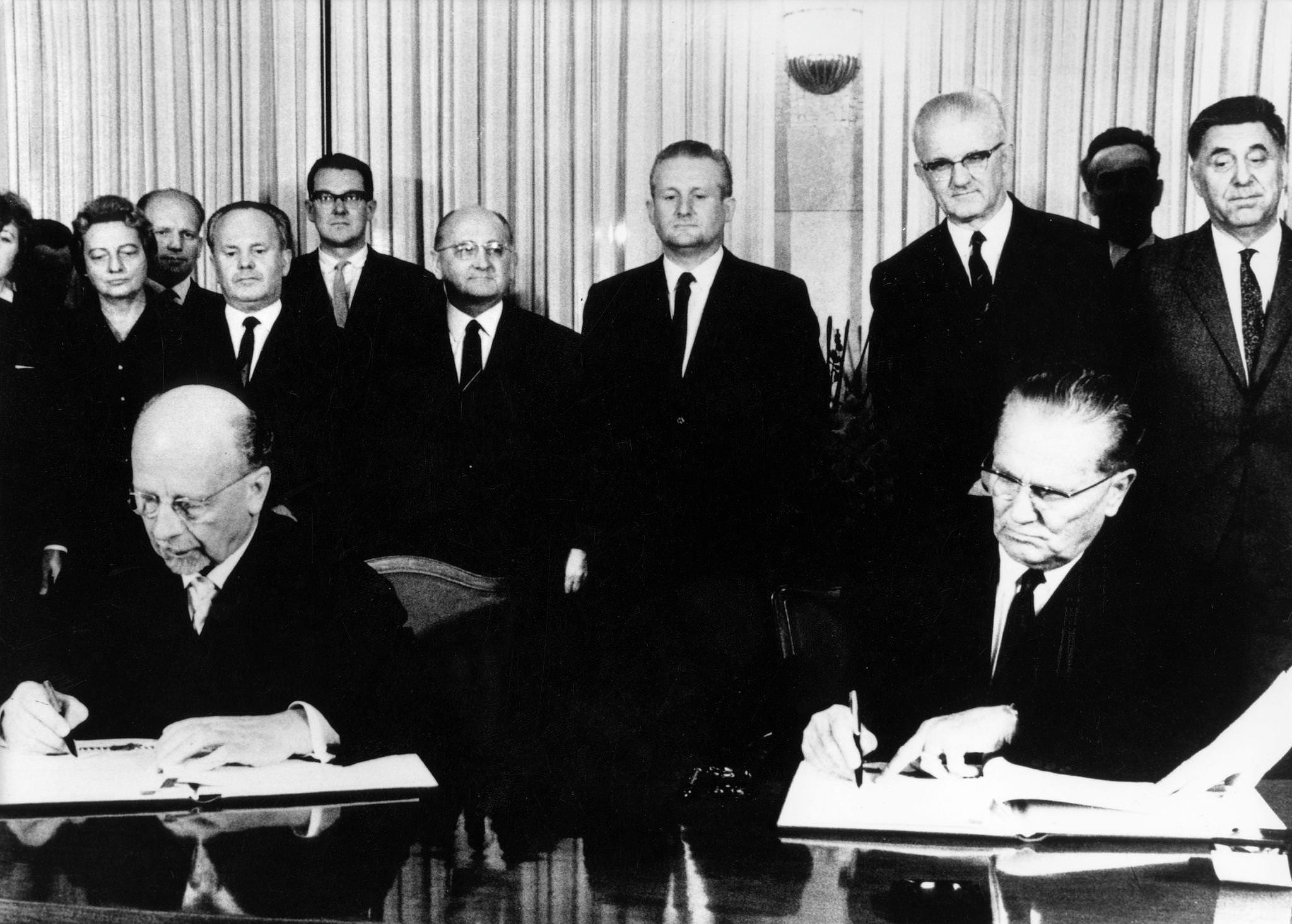
State visit of Walter Ulbricht to Yugoslavia: Signing of the agreement on the conversion of diplomatic representations into embassies by State President Josip Broz Tito, 1966
A horse and cart stopped at a garage to fill up with petrol or gas! This amusing scene is located in the former Yugoslavia in 1967.

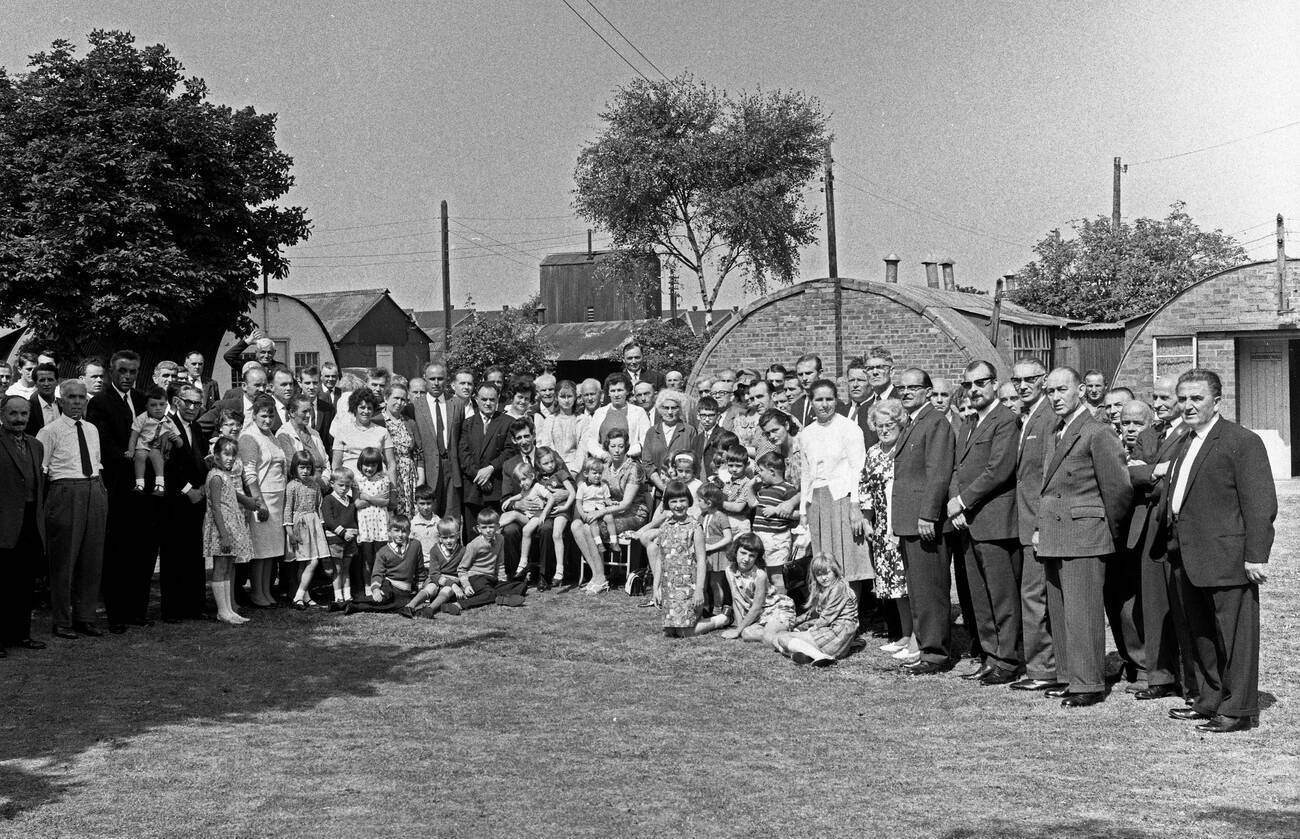
Not all Yugoslavs were living inside the country. In 1968, Prince Andreas of Yugoslavia and his wife Princess Kira of Leiningen visited Serbian Chetniks — wartime royalist fighters — living in a displaced persons camp in England. Camp leader Captain Miodrag Krsmanovic was present at the visit. These communities represented the hundreds of thousands of Yugoslavs who had fled after World War II and the communist takeover, living in exile while Tito’s Yugoslavia moved forward without them.
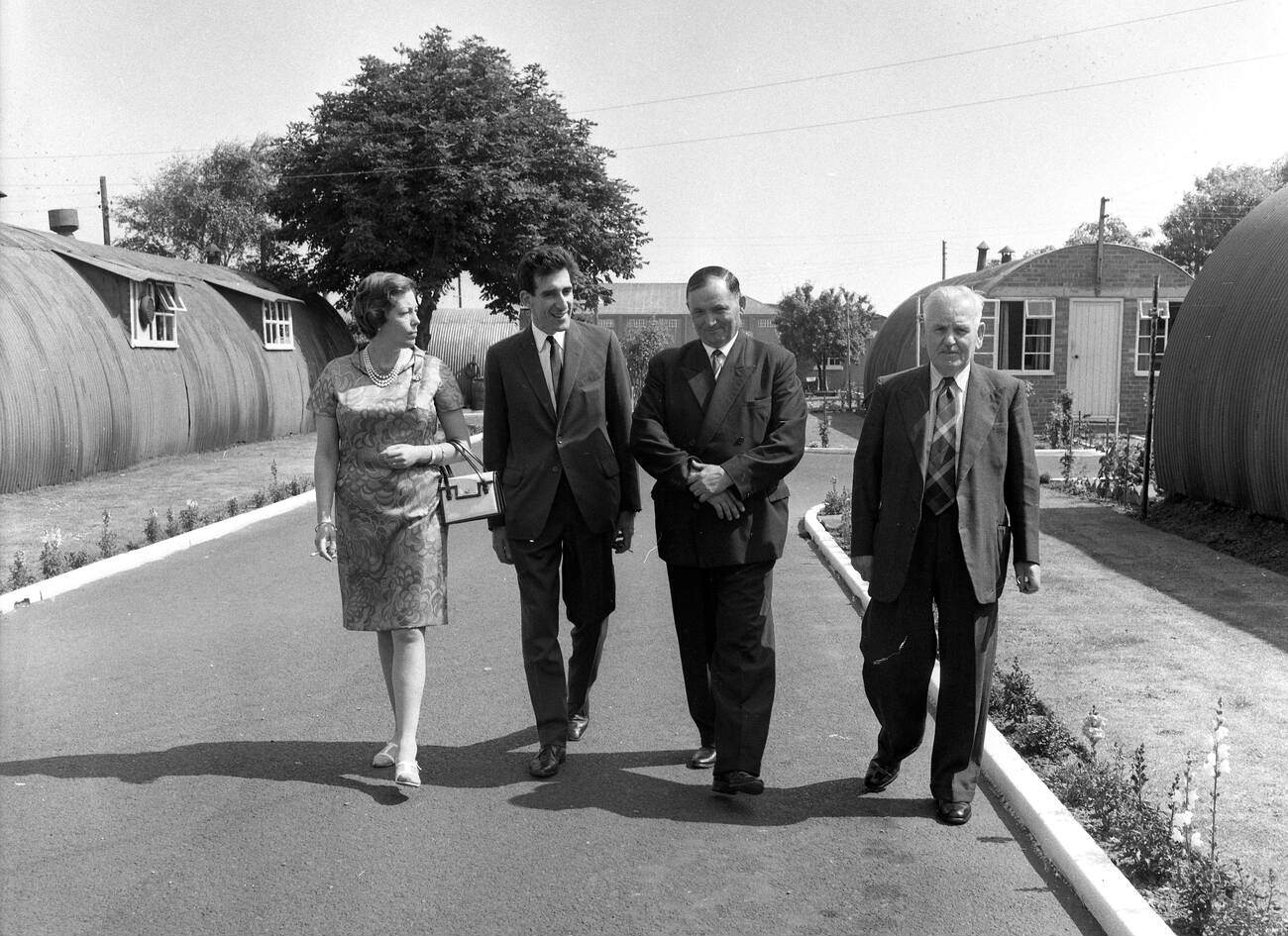
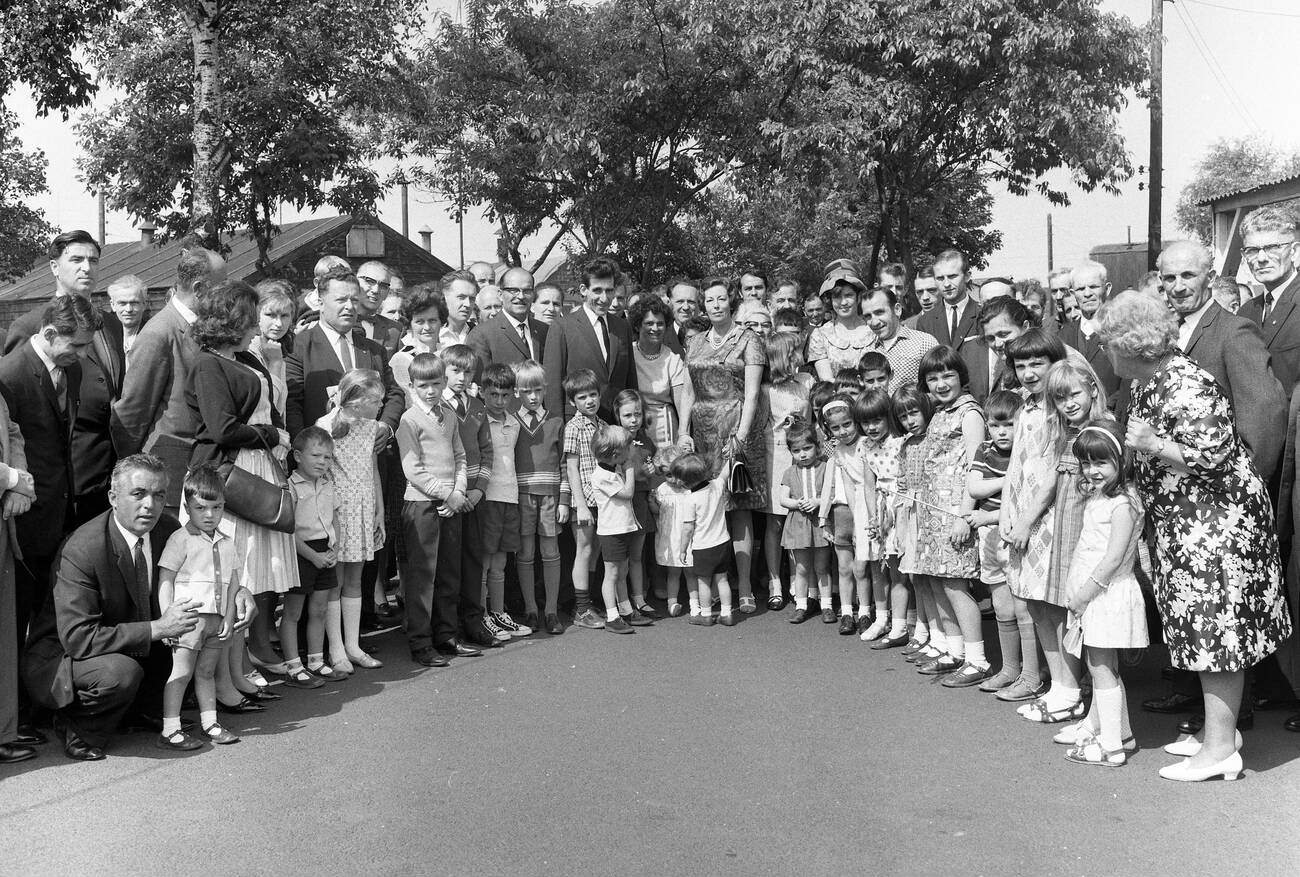
Prince Andreas of Yugoslavia and his wife Princess Kira of Leiningen visiting Serbian Chetniks in displaced persons camp in England Uk 1968.
Prince Andreas of Yugoslavia and his wife Princess Kira of Leiningen visiting Serbian Chetniks in displaced persons camp in England Uk 1968. With them is the camp leader Captain Miodrag Krsmanovic
Prince Andreas of Yugoslavia and his wife Princess Kira of Leiningen visiting Serbian Chetniks in displaced persons camp in England Uk 1968

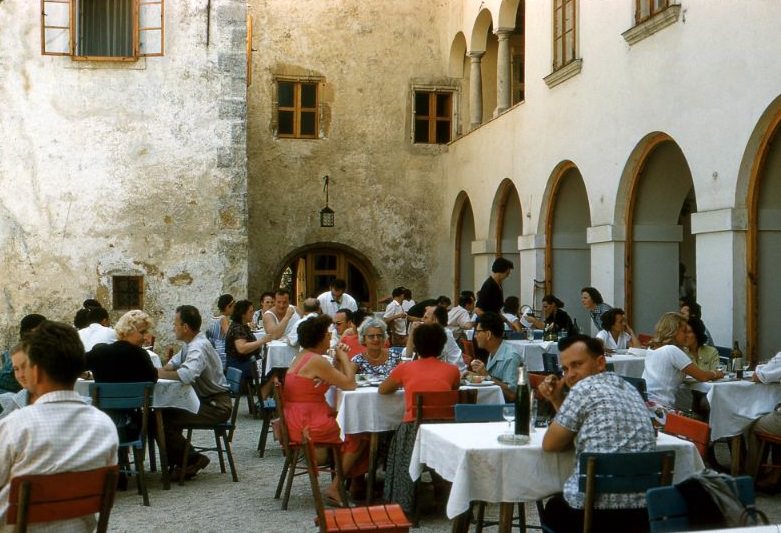
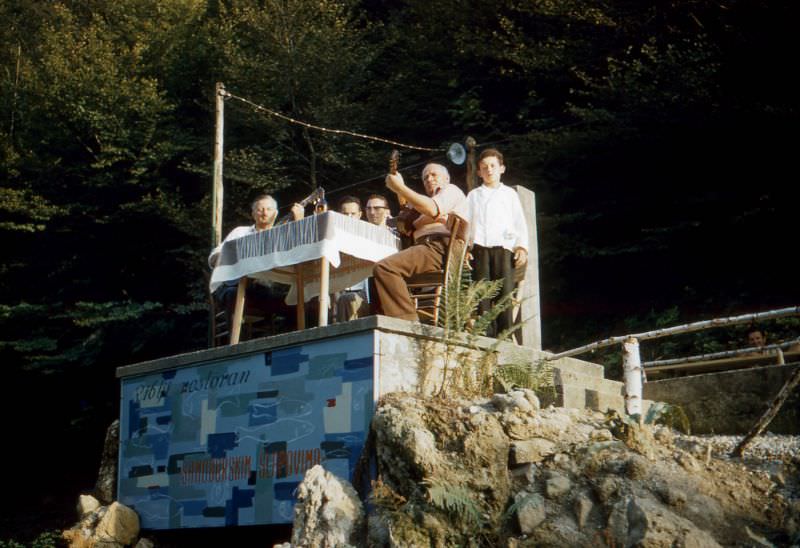
Back home, Yugoslav cinema was producing serious work. The 1965 film ‘Three’ (Tri), directed by Zvonimir Berković and starring Velimir ‘Bata’ Živojinović, was part of a wave of Yugoslav films engaging with the country’s wartime past and present-day identity. And through it all, ordinary life continued — a restaurant in Samobor, a diner’s afternoon meal, a street in Zagreb, a lone general shot of the country catching a quiet decade in full motion.
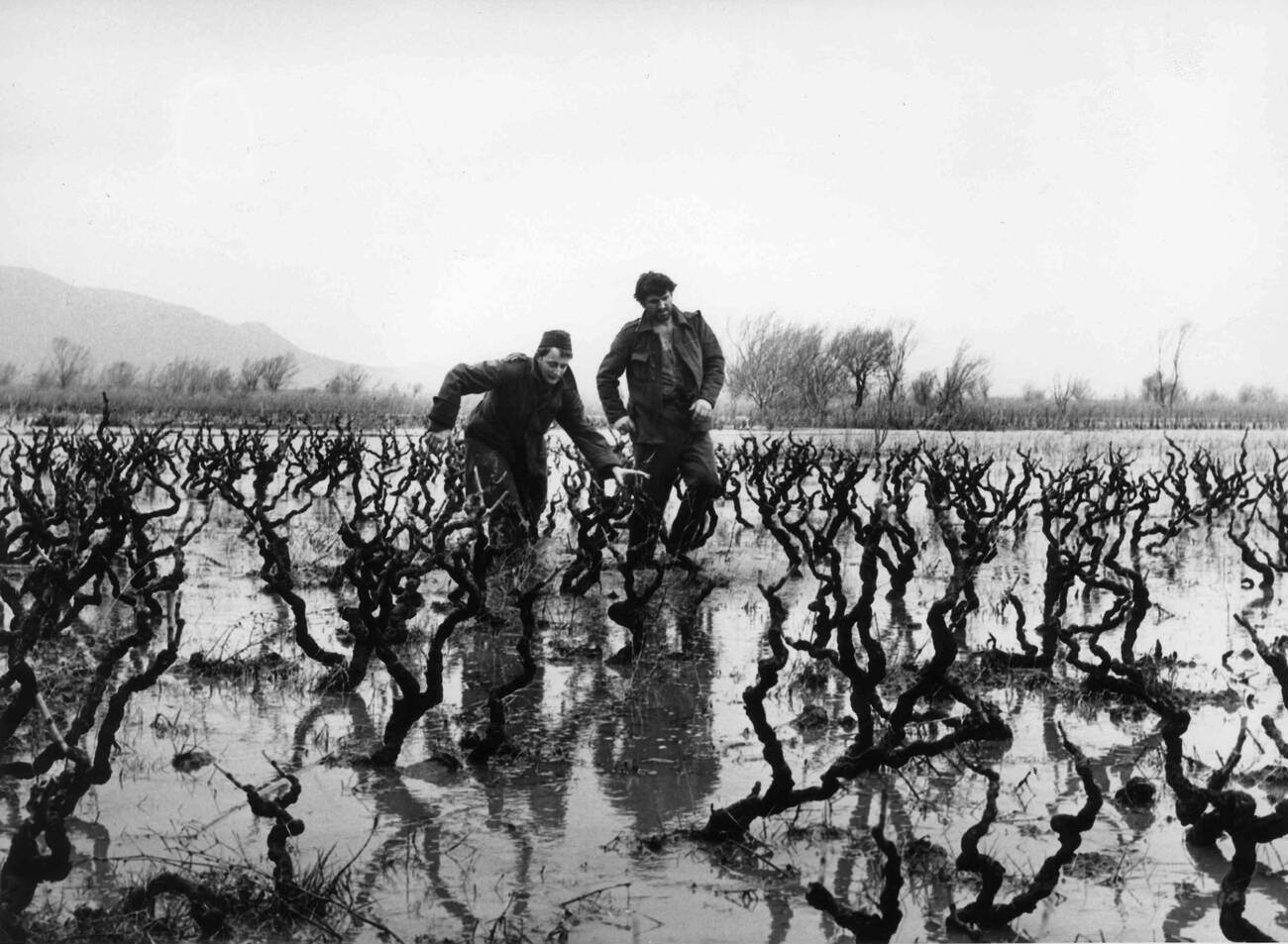
Tri Three Year :1965 Yugoslavia Director : Zvonimir Berkovic Velimir 'Bata' Zivojinovic
Tri Three Year :1965 Yugoslavia Director : Zvonimir Berkovic Velimir ‘Bata’ Zivojinovic
Restaurant at Samobor, Croatia, Yugoslavia, 1960
Yugoslavia, 1960s
Yugoslavia, 1960s
Enjoyed this post? Get new ones in your inbox.

5 thoughts on “What Yugoslavia looked like in the 1960s”

Leave a Comment

Your email address will not be published. Required fields are marked *

Share this Post 🥺

Please take a moment to share this content. Your support is greatly appreciated! 🙌🙏

Share this Post 🥺

Please take a moment to share this content. Your support is greatly appreciated! 🙌🙏
Scroll to Top
 
Hey Friend, Before You Go.. Please like & follow for more interesting content