
By the time the 1950s arrived, summer camps had already been reshaping American childhood for decades. What started as fewer than one hundred camps nationwide in 1900 had grown to over a thousand by 1918. Early camps sold parents on the idea of “roughing it” — stripping away city comforts to build grit and character in young people. As the decades passed, many camps drifted toward softer offerings: movies, radio sets, tennis lessons. The YMCA held a different line. Its camps kept the outdoor focus front and center, and by the 1950s, they had become some of the most beloved institutions in American youth culture.
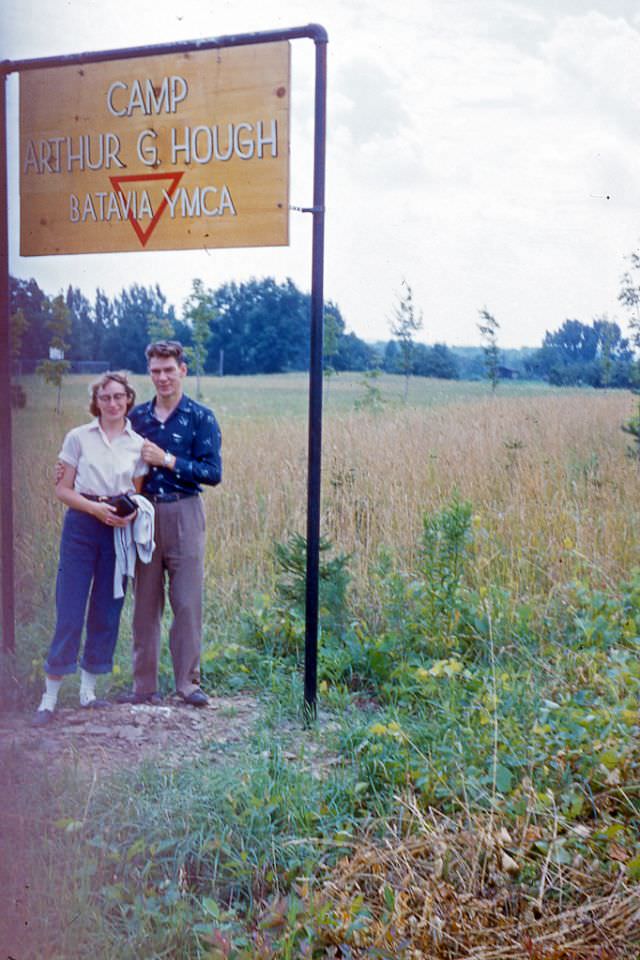
Nestled on the shores of Silver Lake in New York, YMCA Camp Arthur G. Hough was a central hub of that experience. A collection of Kodachrome slides discovered by Steven Martin gives us a vivid, full-color window into camp life during the summers of 1957 and 1958. The images capture everything from counselors and staff to campers enjoying the lake — a rare and personal record of a place that shaped countless young lives. At the heart of those images are the people who made the camp run.
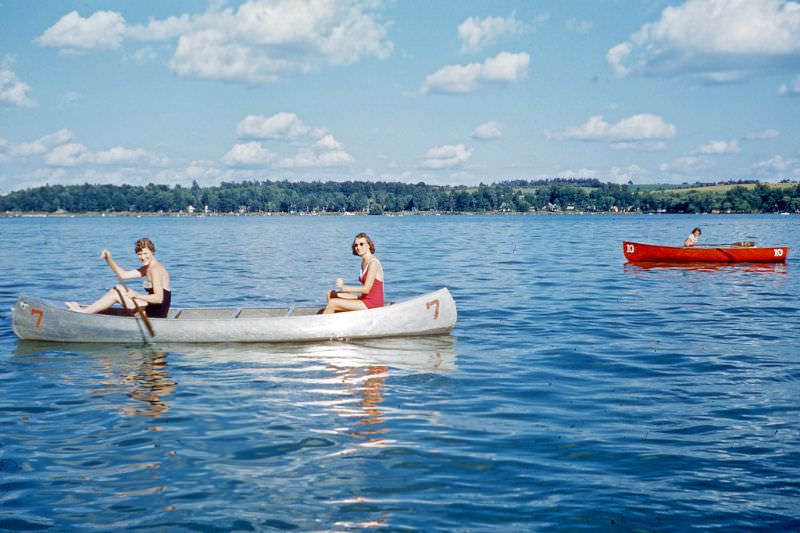
Camp leadership extended beyond the director’s office. The wives of the director and assistant director were visible, active figures in camp life, helping set the tone for the community. The warm, personal atmosphere of a place like Camp Arthur G. Hough depended on that kind of involvement. Every summer, staff returned to Silver Lake ready to guide a new group of campers through weeks of outdoor living, skill-building, and friendship.
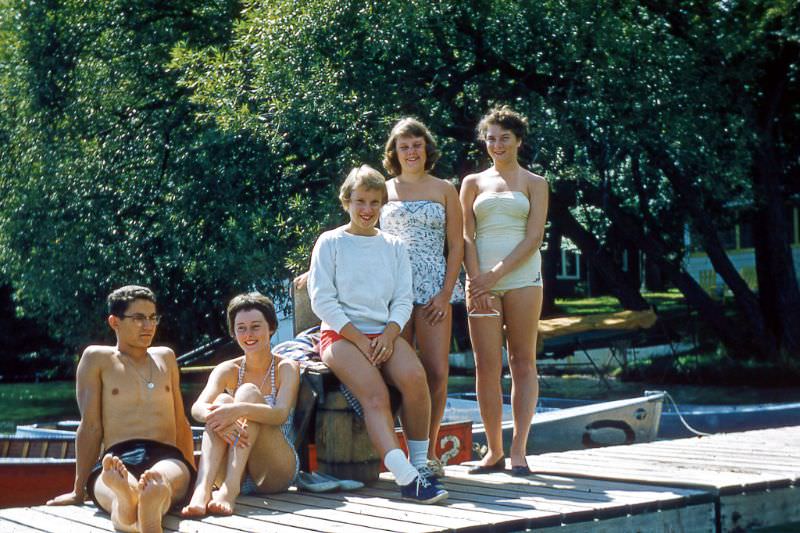
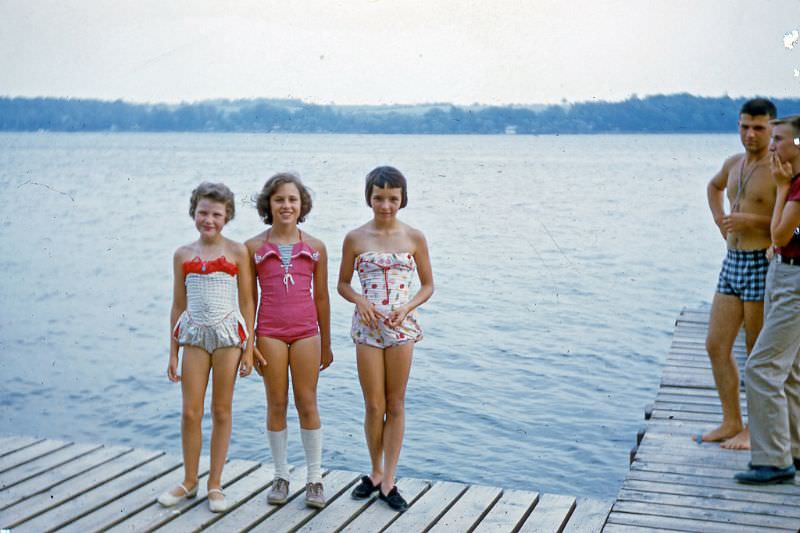
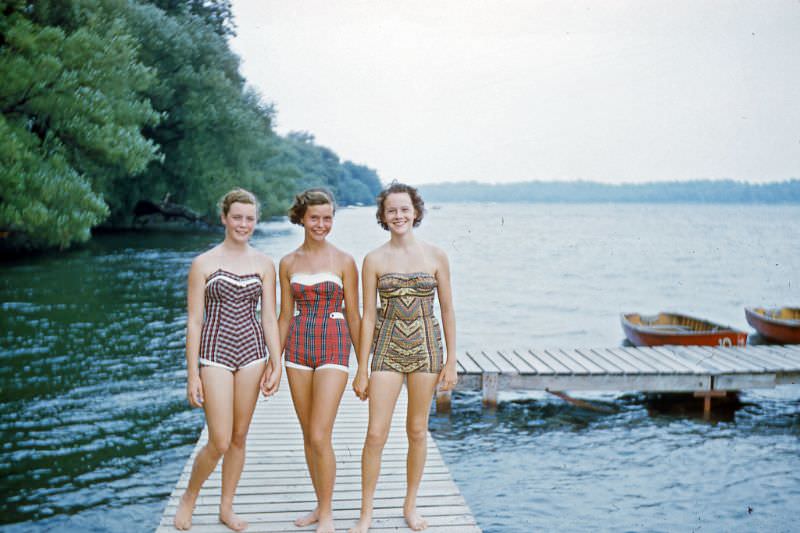
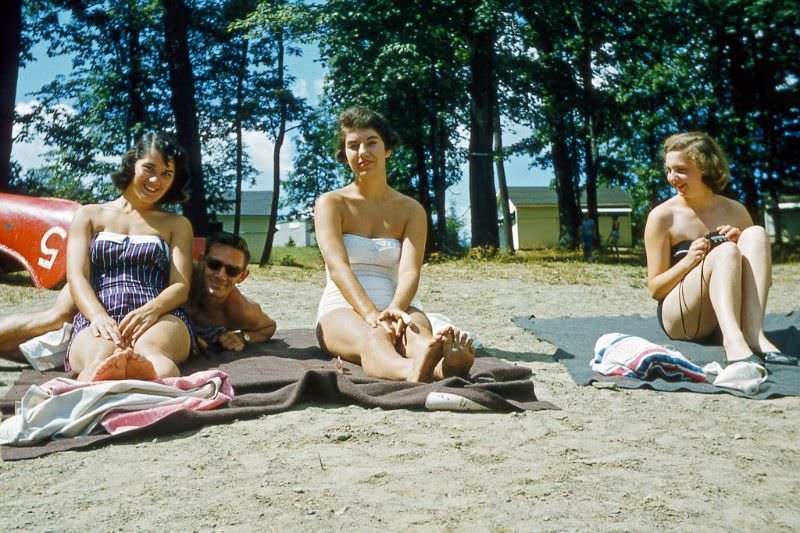
The counselors were the backbone of daily camp life. They ran activities, managed the bunks, and served as role models for campers who were often away from home for the first time. Silver Lake itself was a constant presence — its calm surface ideal for swimming, canoeing, and the kind of lakeside leisure that defined a 1950s summer. One of the most celebrated traditions at Camp Arthur G. Hough was the bathing beauty contest, a lighthearted and popular event that drew participation and laughter from campers and staff alike.
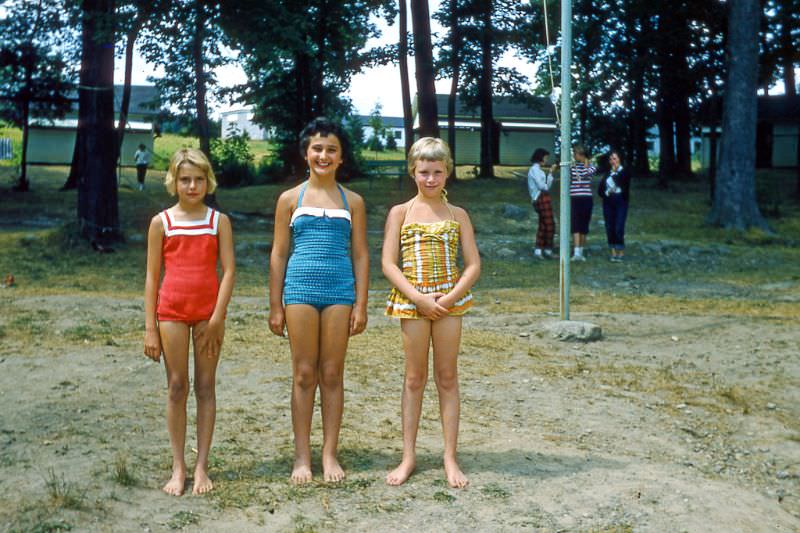
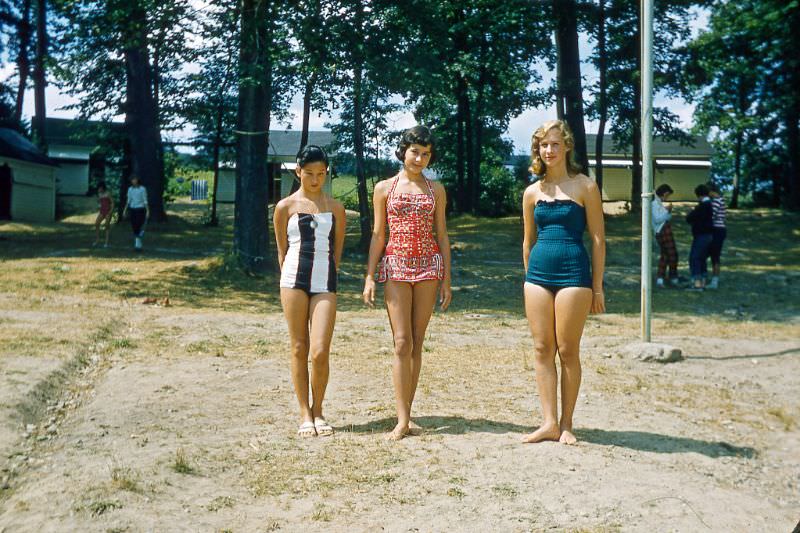
The contest brought out a theatrical streak in participants, with campers and counselors posing with obvious delight for the camera. These weren’t formal competitions — they were joyful, communal moments that became part of the camp’s personality. Winners were celebrated with the same enthusiasm typically reserved for athletic champions.
Beyond the contests, the daily rhythm of camp revolved around outdoor activities and shared responsibility. Campers slept in wigwams, tents, or open dormitories — all designed to push young people toward self-sufficiency. They were expected to care for their own spaces, manage their gear, and contribute to the group. Canoeing and archery were among the most popular activities. Handcrafts, campfire-making, and dramatics rounded out the schedule, building teamwork and creativity alongside the more physical skills.
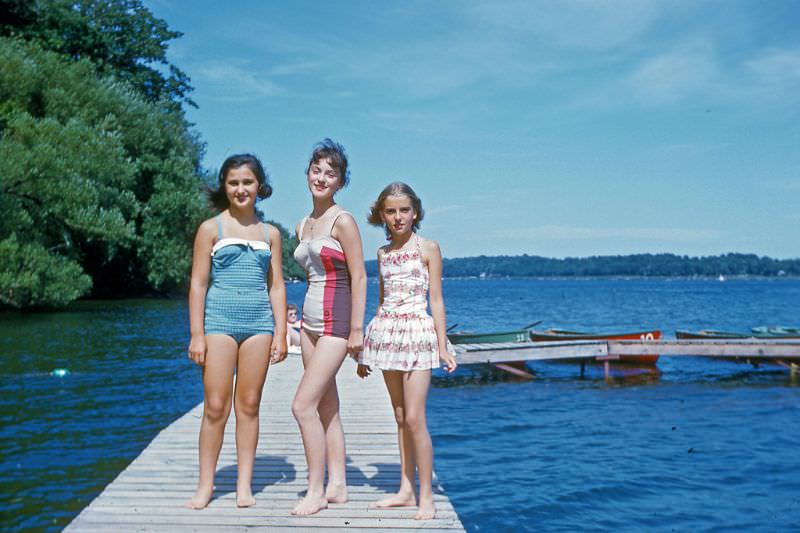
The counselors who ran those activities left impressions that lasted long after the summer ended. In the Kodachrome slides, their faces are full of energy and youth — not much older than the campers they supervised, but clearly invested in the work. Names preserved on the slide labels give them a permanence that casual snapshots rarely achieve.
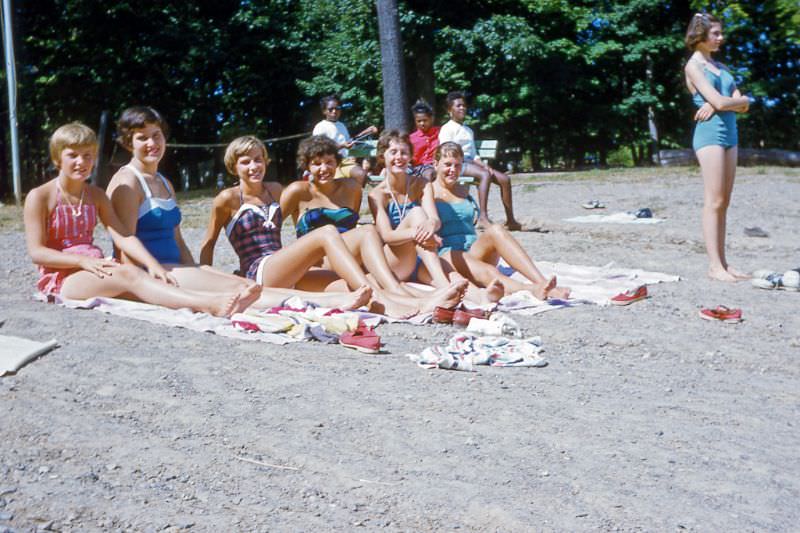
Personal connections were woven into every corner of camp life. Staff formed friendships and bonds that extended beyond the summer season, and the close quarters of a residential camp meant that relationships deepened quickly. The slide below, labeled with first names and a handmade sign, captures that intimacy — a small, personal moment preserved in Kodachrome long after the summer of 1958 ended.
Camp Arthur G. Hough still operates on Silver Lake today, carrying forward the same mission that defined it in the 1950s. But these photographs offer something the present camp cannot — a direct, unfiltered look at what that mission looked like in practice, on a summer afternoon in 1957 or 1958, when the water was calm and the days were long.




