In 1930, a woman named Mary Bagot-Stack founded the Women’s League of Health and Beauty with a simple but bold idea: women of all ages and backgrounds deserved access to regular exercise. This was a radical notion at the time, when physical fitness was largely seen as the domain of men. Mary’s motto for the League — “Movement is life” — said everything about her philosophy. She believed that staying active wasn’t a luxury. It was essential to living well.
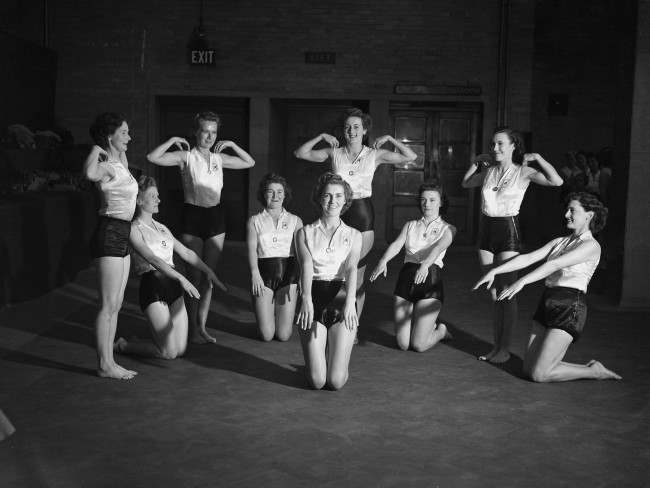
Mary offered classes in exercises that most British women had never tried together in an organized setting: pilates, aerobics, dance, and yoga. The League wasn’t just a fitness club. It built a community. Members felt a shared sense of purpose, and the classes were designed to be engaging and accessible, not intimidating. Within just a few years, tens of thousands of women had joined.
Mary died in 1935, leaving behind a thriving organization. Her daughter, Prunella, was only 15 years old when the League was founded, and just 20 when she stepped into the leadership role. Despite her youth, she threw herself into the work with remarkable energy. By 1938, her efforts had expanded the League beyond Britain to Canada, Australia, and Hong Kong, with a total membership of 170,000 women.
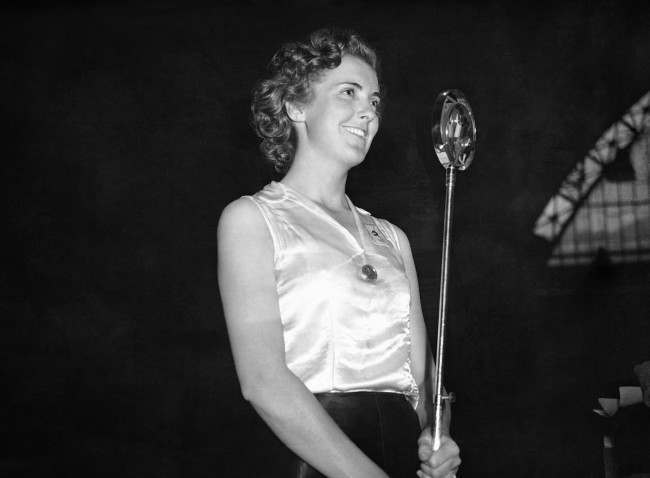
Prunella’s personal life also flourished during these years. In 1937, she was invited by a Scottish Member of Parliament to open a new school swimming pool. At the event, she met Lord David Douglas-Hamilton, the youngest son of the 13th Duke of Hamilton. The two married, and after their honeymoon they went mountaineering together in the Alps — a fitting adventure for a couple who both valued physical challenge.
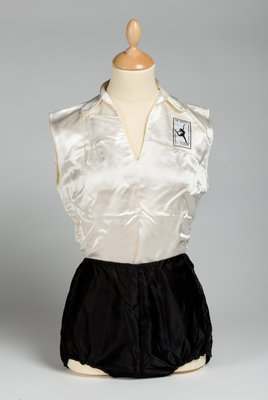
The League’s first stated aim was to cultivate “racial health” — a phrase that reflected the imperialist and elitist thinking common among British institutions of that era, with openly racist undertones. This ideological framing also placed the League uncomfortably close to the physical culture movements rising in Nazi Germany. In 1938, Prunella led a League delegation to an international physical fitness congress in Hamburg. She was deeply uneasy about the Nazi Strength Through Joy program, which used fitness as a tool of state propaganda. Despite her reservations, Prunella hosted a German return visit the following year, maintaining diplomatic courtesy even as the political situation in Europe darkened.
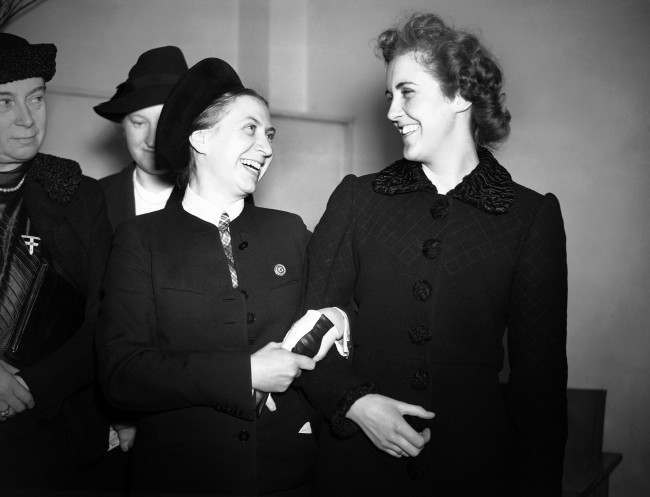
That visiting German dignitary was Gertrud Scholtz-Klink, the leader of Nazi Germany’s women’s organizations, whom Adolf Hitler considered the ideal German woman. Her March 1939 visit to the League’s London headquarters made the connection between the two organizations visible and public. Prunella’s role as host placed her in an awkward position — maintaining civility with a regime whose values were incompatible with her own, in the months before Britain and Germany went to war.
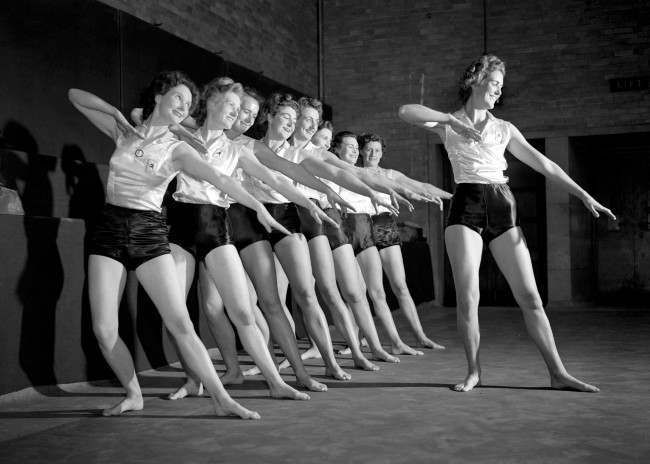
Even as war loomed, the League kept moving. In April 1939, Prunella led a team of League instructors to Stockholm, Sweden, to demonstrate British fitness training methods at the Lingiad — an international gymnastics festival. The trip was a point of national pride, showcasing what British women’s fitness culture looked like on the world stage.
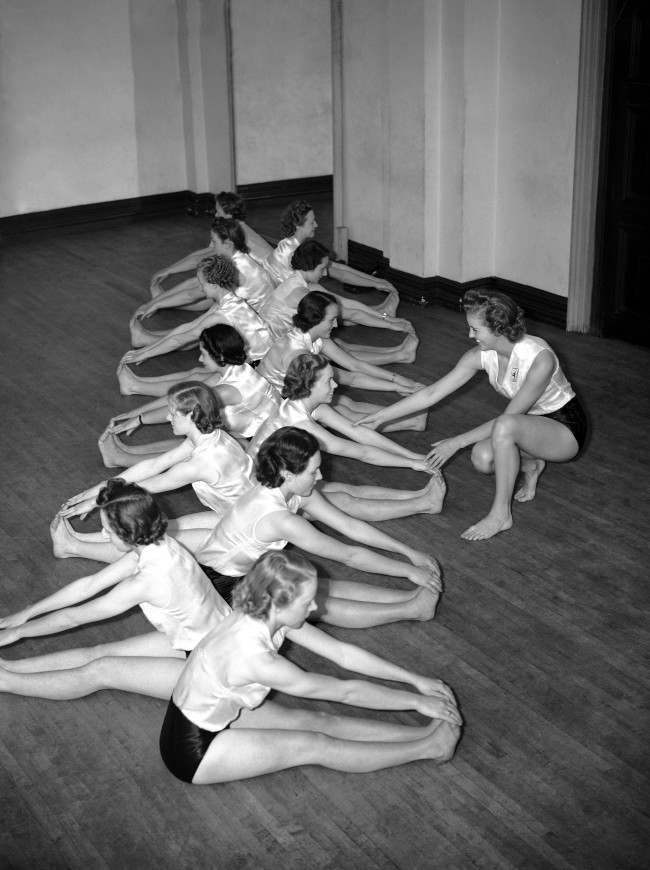
When World War II broke out, the League faced its stiffest test. Many members volunteered for war service, stepping away from classes to support the national effort. Prunella moved to Dorset to care for her two young sons. The grand public displays and mass rallies that had defined the League’s pre-war years became impossible to sustain.
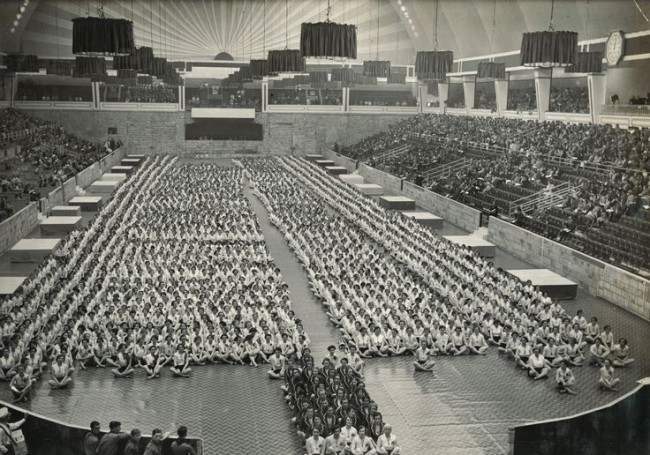
But the League survived. What had drawn women in during the 1930s — the sense of community, the accessible classes, the belief that women’s health mattered — didn’t disappear because of the war. If anything, it made those values more meaningful. The League’s ability to appeal across generations was part of what kept it going. Older members valued the tradition and the sense of shared purpose. Younger women were drawn to the modern, energetic style of the classes. That combination gave the organization resilience.
After the war, the League resumed its public activities. In 1947, Prunella led a mass reunion class at the New Hall of the Royal Horticultural Society in London to open the League’s autumn season. Nine hundred members from across the country gathered to participate in exercises together — proof that even after the disruption of the war years, the movement Mary Bagot-Stack had started in 1930 still had genuine momentum.
The story of the Women’s League of Health and Beauty is not a clean or simple one. It was built on a genuine belief in women’s health and fitness, but its founding ideology carried the racial language of its time. Its leader navigated diplomatic encounters with Nazi officials while privately opposing what they stood for. At its peak, 170,000 women across four countries called themselves members — drawn together by the straightforward conviction that movement, as Mary Bagot-Stack always said, is life.