
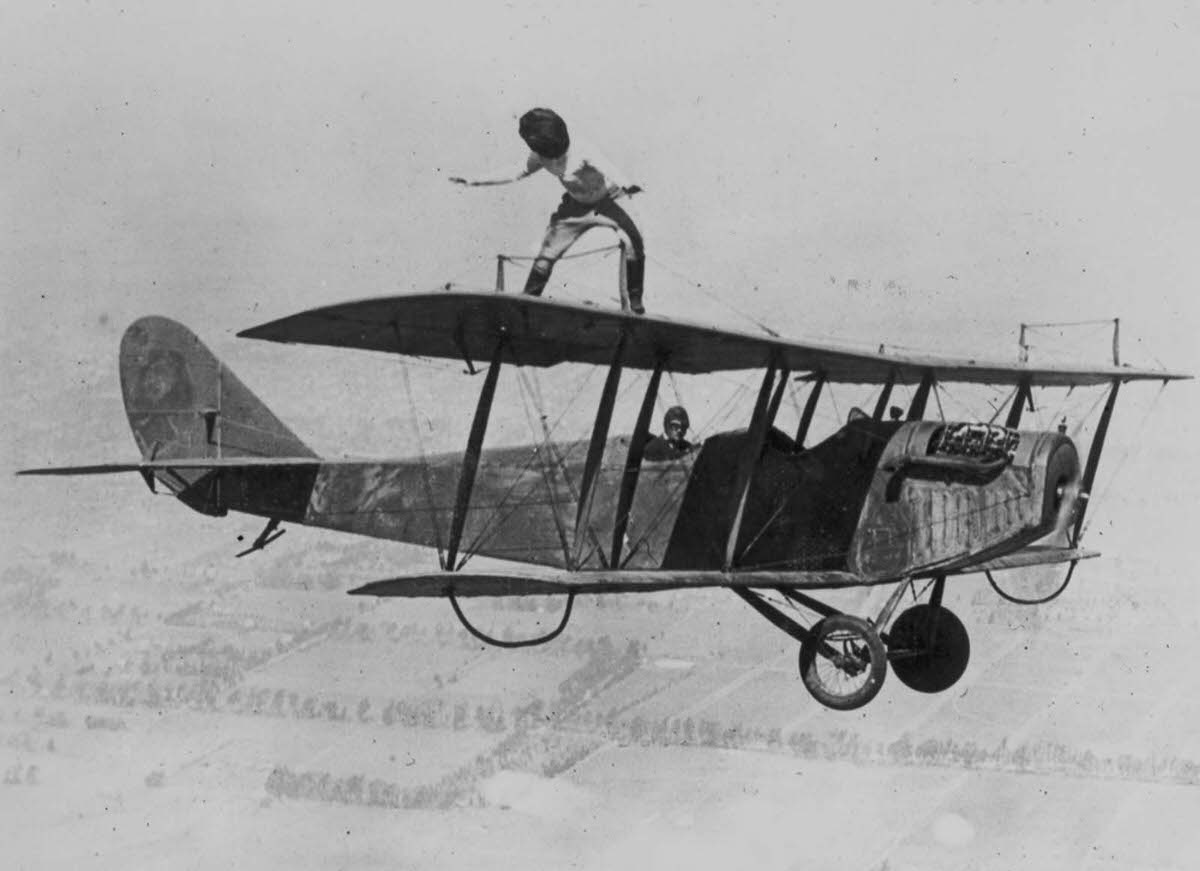
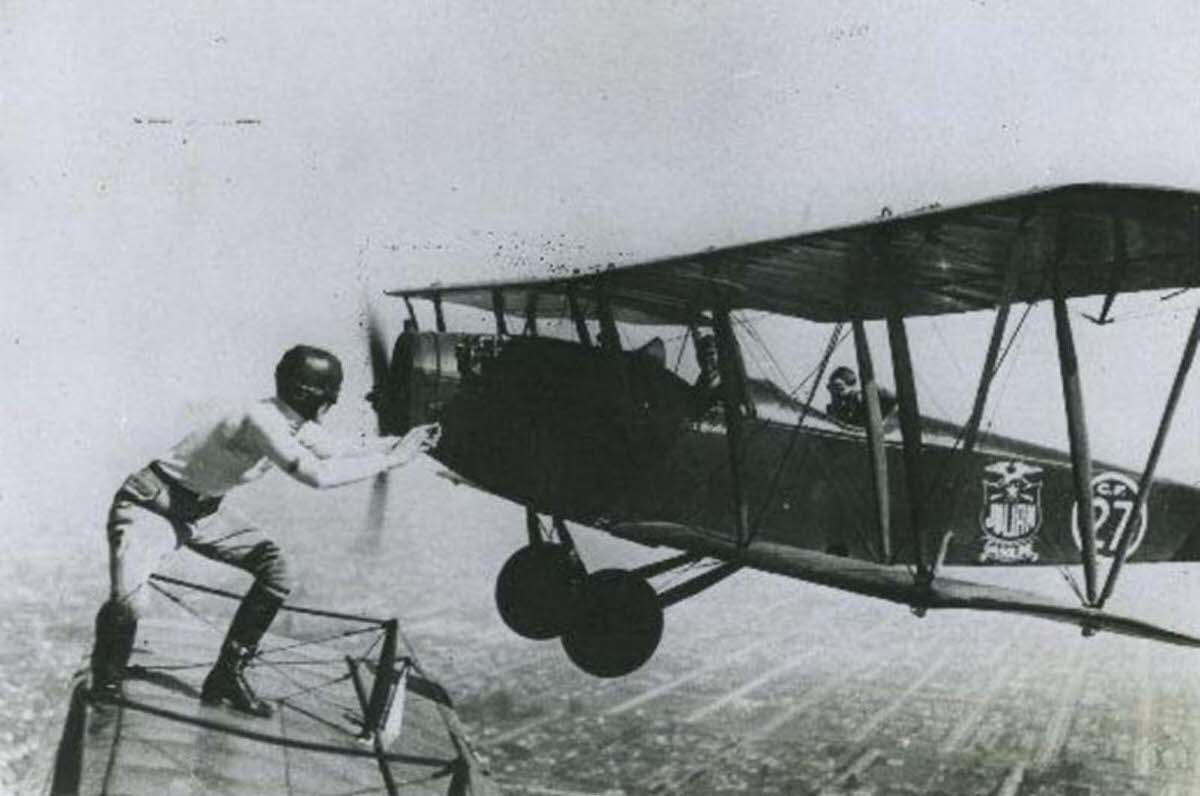
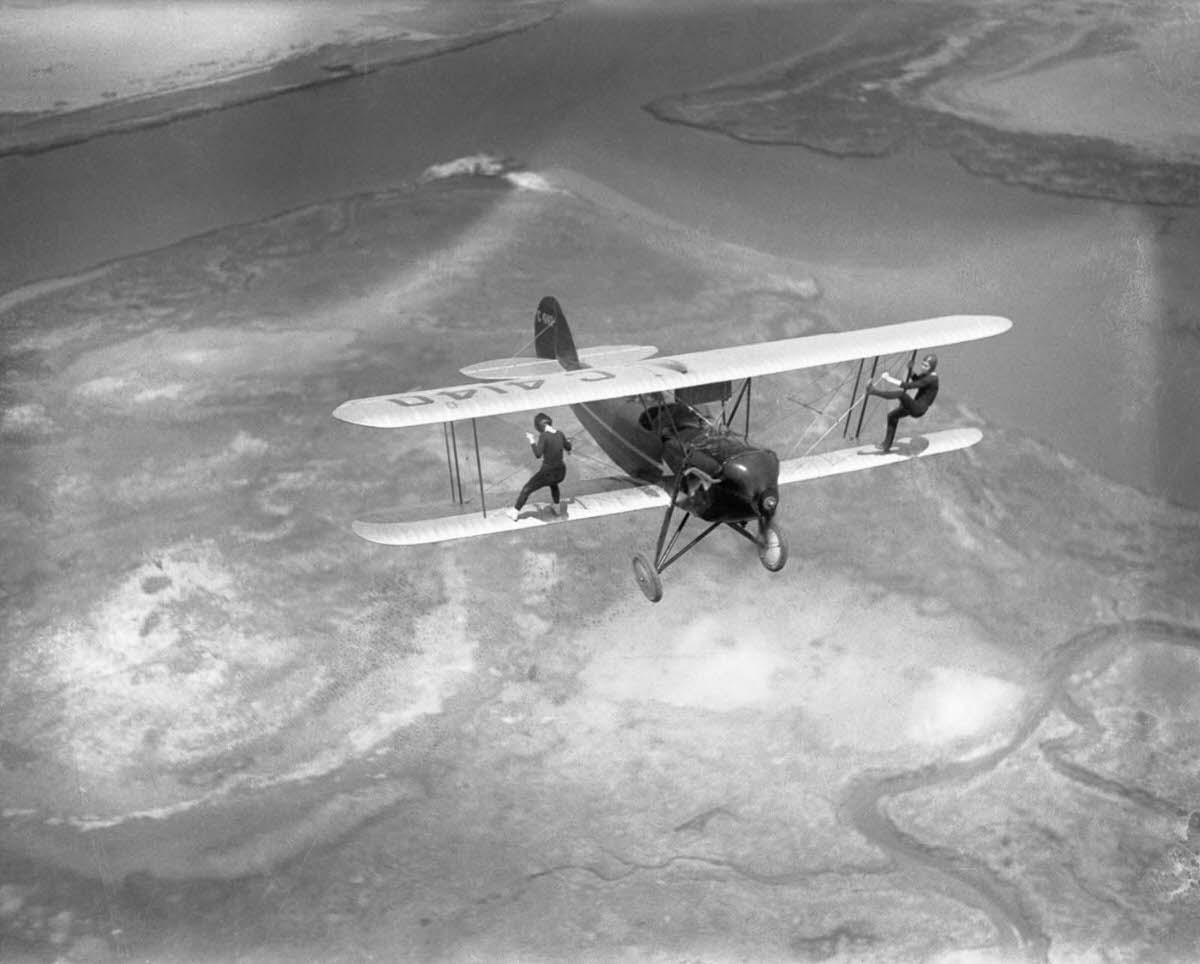
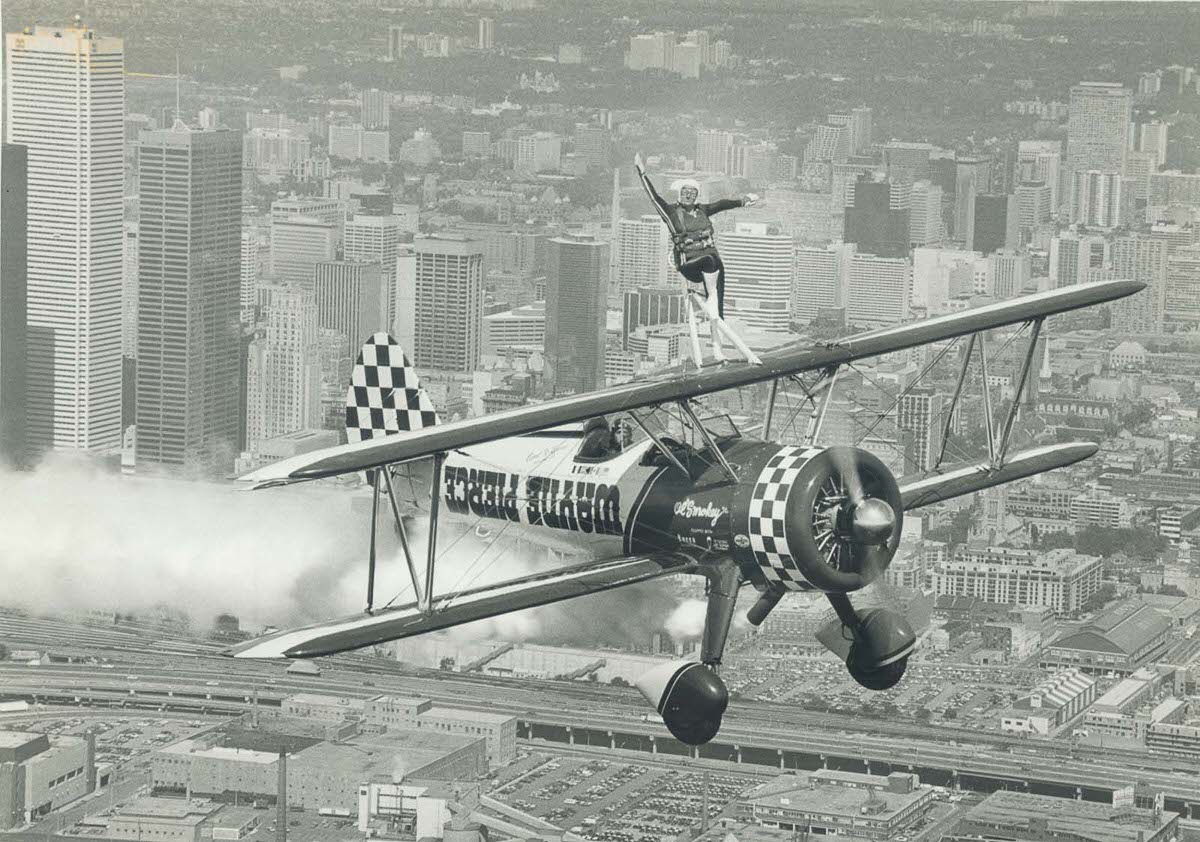
In the early 1920s, a new and terrifying form of entertainment took to the skies. Wing walking — the act of moving along the wings of a biplane while it was in flight — became one of the most dangerous stunts the aviation world had ever seen. What started as a way to demonstrate a plane’s balance and stability quickly evolved into full-blown aerial theater, drawing massive crowds and pushing performers to their physical limits.
As the stunt grew in popularity, performers kept raising the stakes. Walking the wing wasn’t enough. Soon, daredevils were doing handstands on moving aircraft, hanging by their teeth, and even transferring between two planes while both were airborne. The unwritten motto of the trade summed up the mindset perfectly: “Don’t let go of what you’ve got until you get hold of something better.”
One of the earliest and most important figures in wing walking was Ormer Locklear. The 26-year-old aviator didn’t start out as a showman — he first climbed out onto the wings during military training to fix mechanical problems mid-air, rather than land the plane. That practical skill quickly turned into a performance art. Locklear went on to thrill audiences at aerial shows across the country. His story, however, ended in tragedy. He was killed while performing a wing-walking stunt, becoming one of eight wing walkers who died during the early years of the practice.
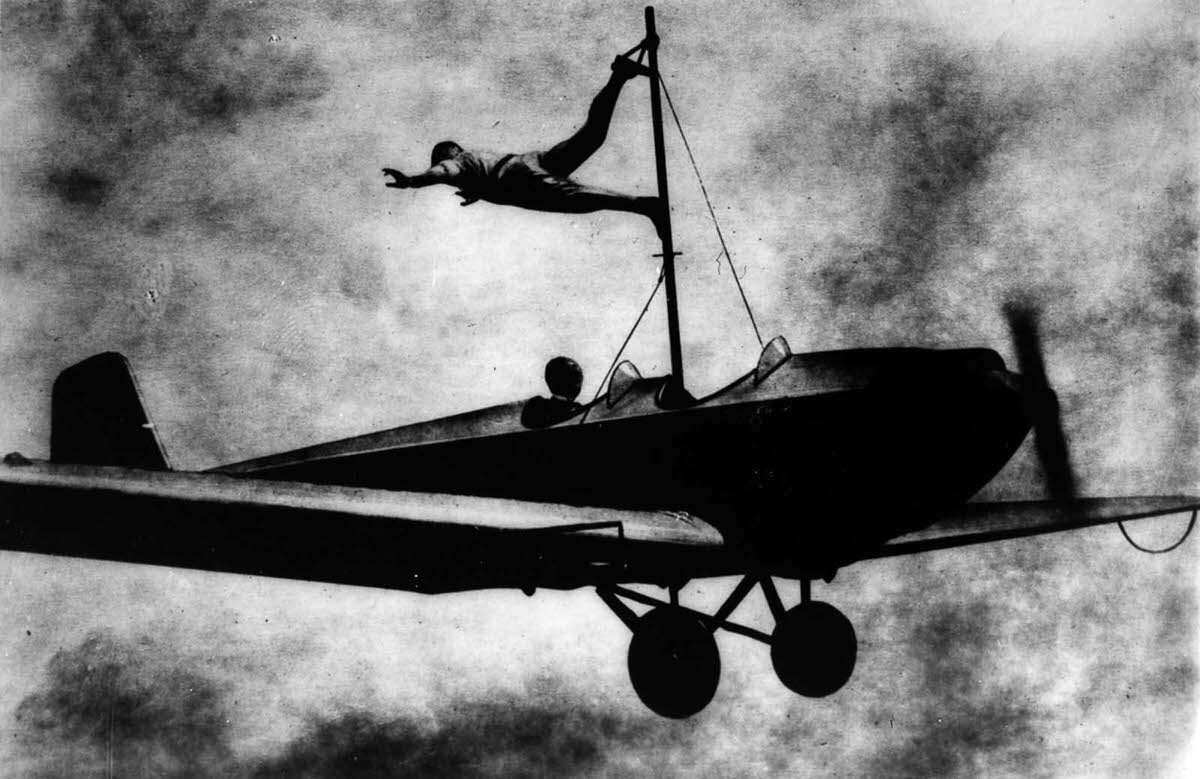
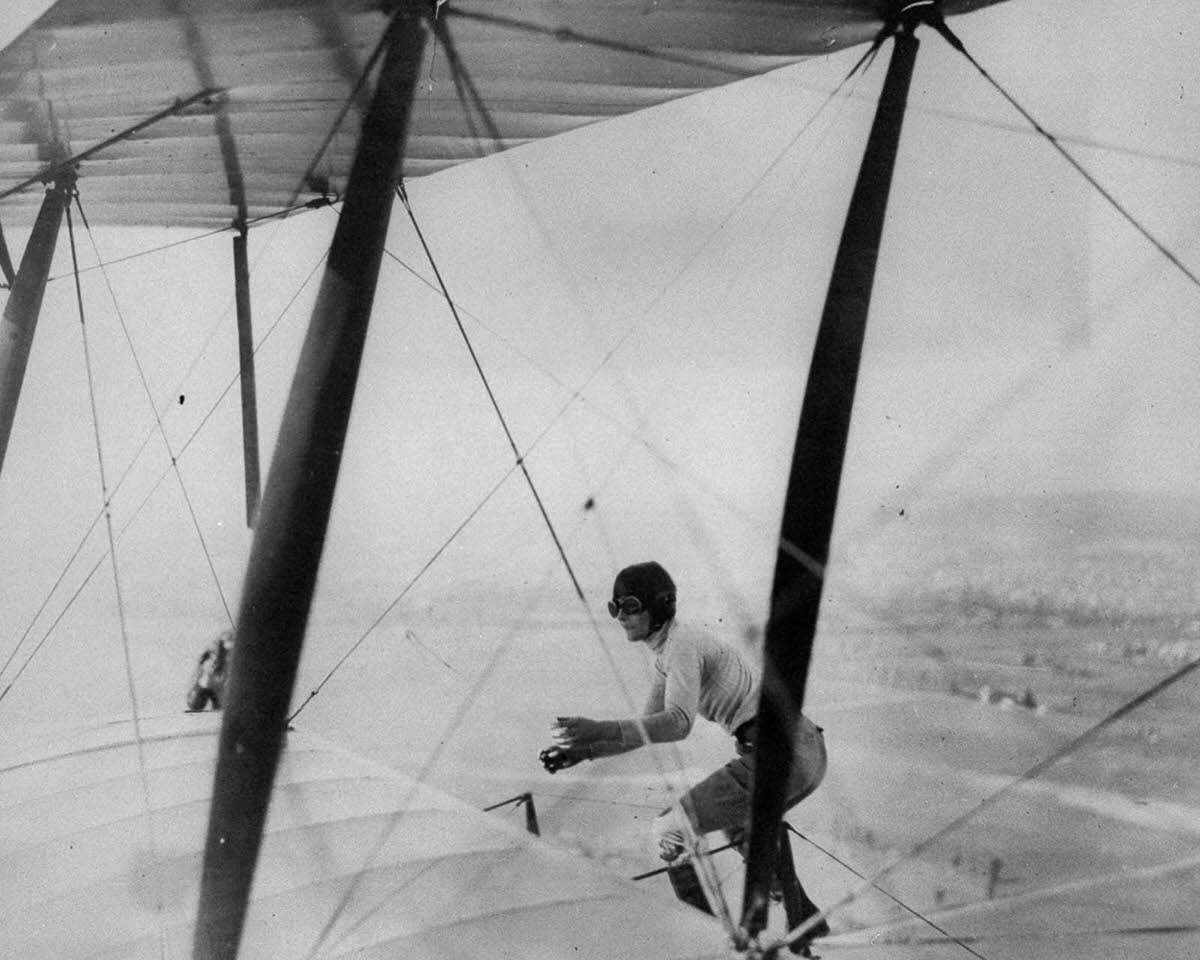
The performers who took on these stunts came from all walks of life. Some were trained pilots, others were thrill-seekers who learned on the job. Across the country, aerial circuses hired men and women willing to climb out of the cockpit and onto the wings at thousands of feet in the air, with nothing but grip strength and nerve keeping them alive.
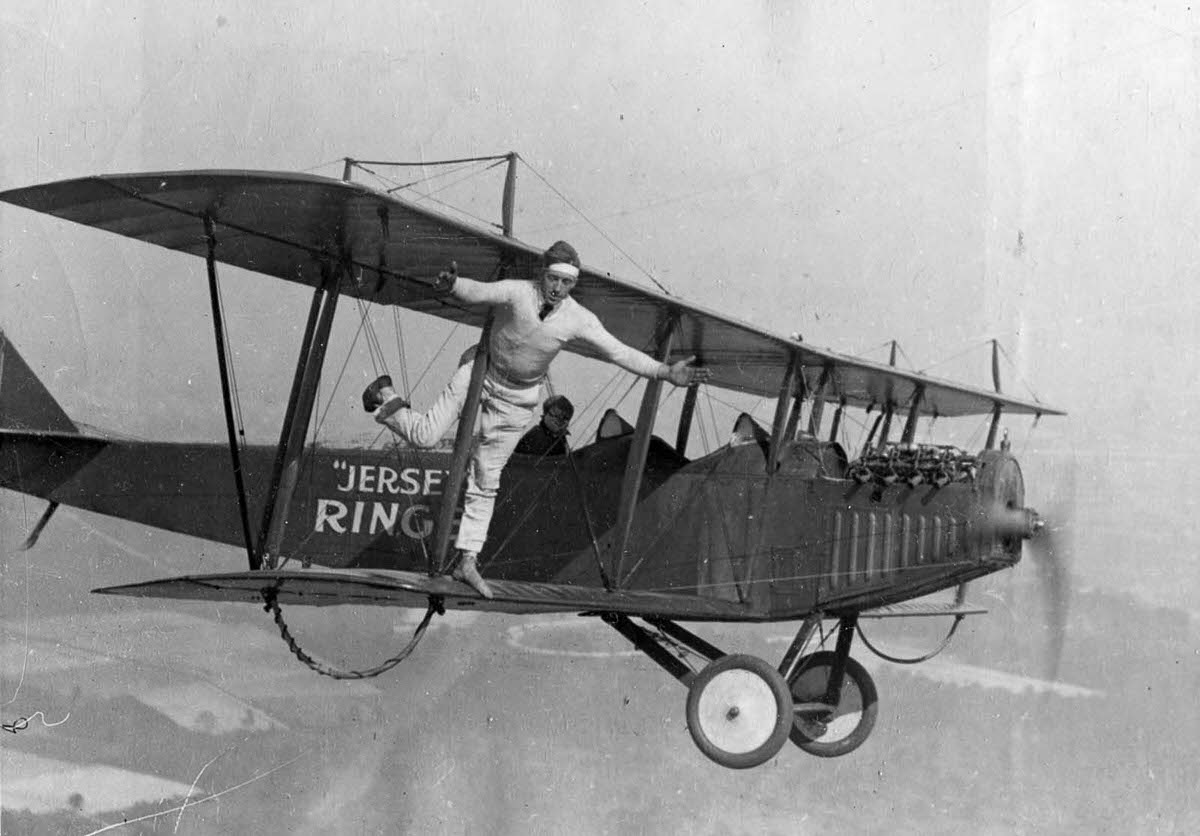
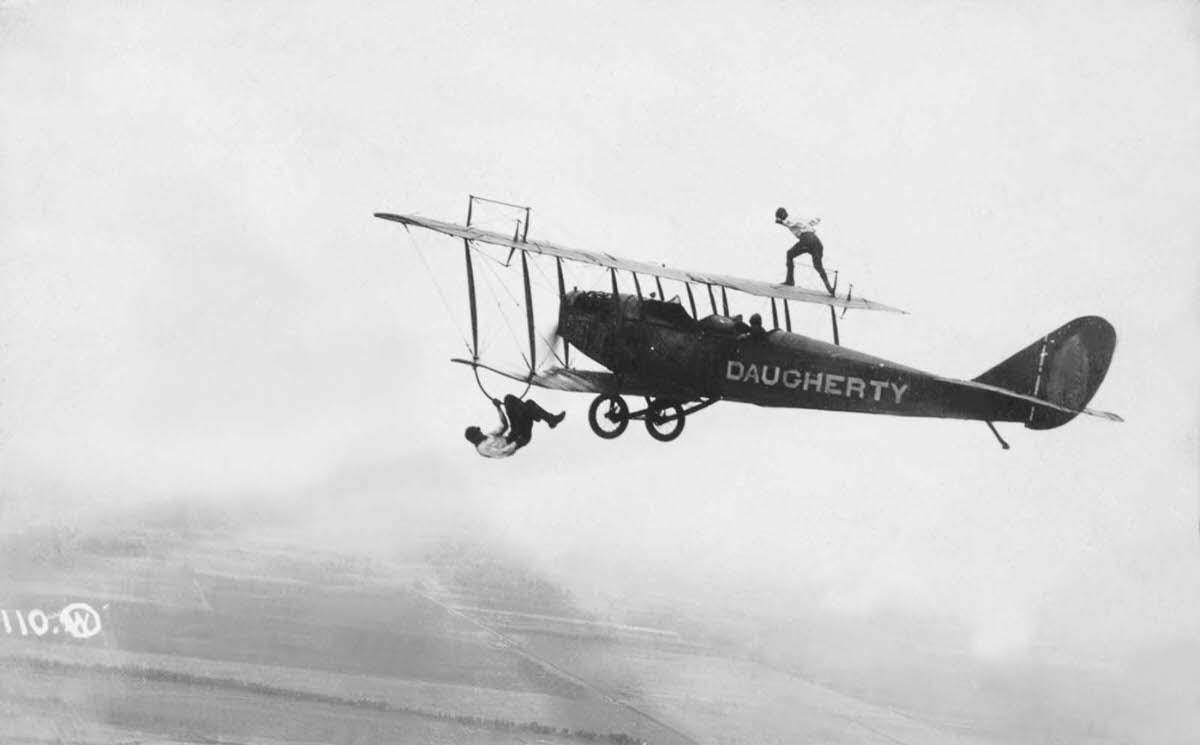
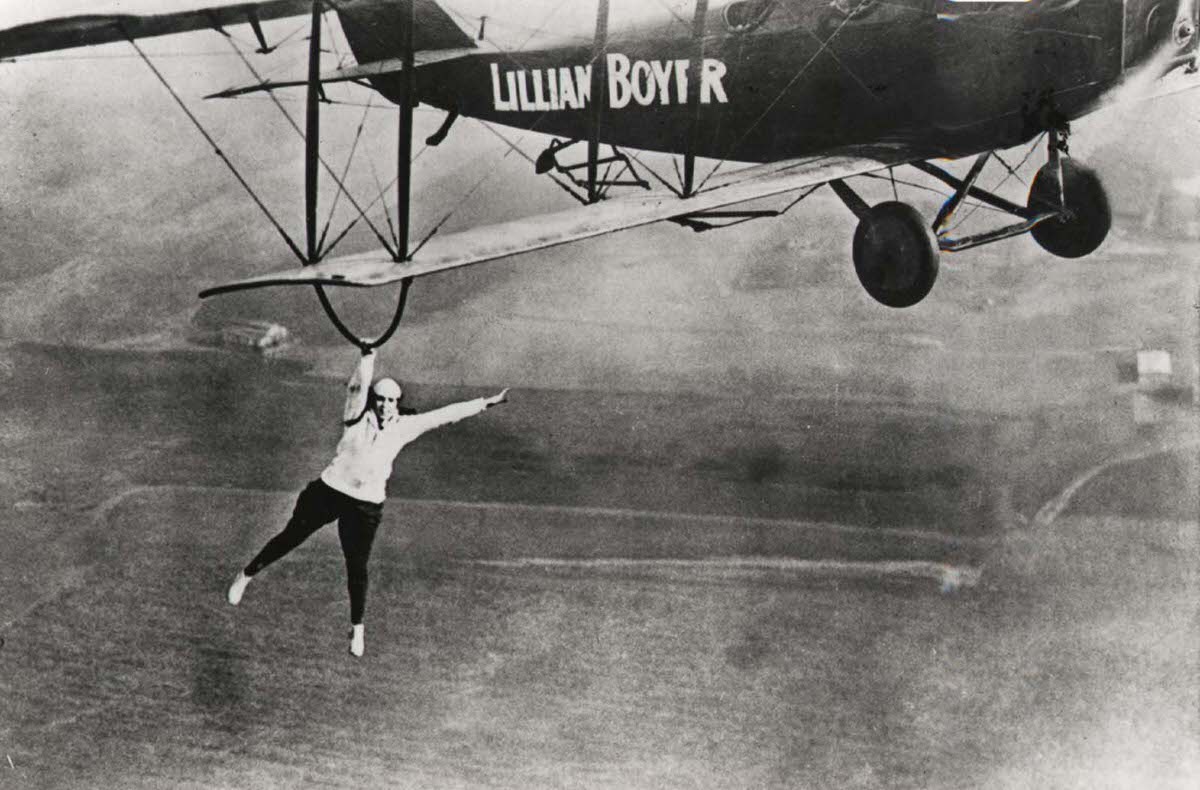
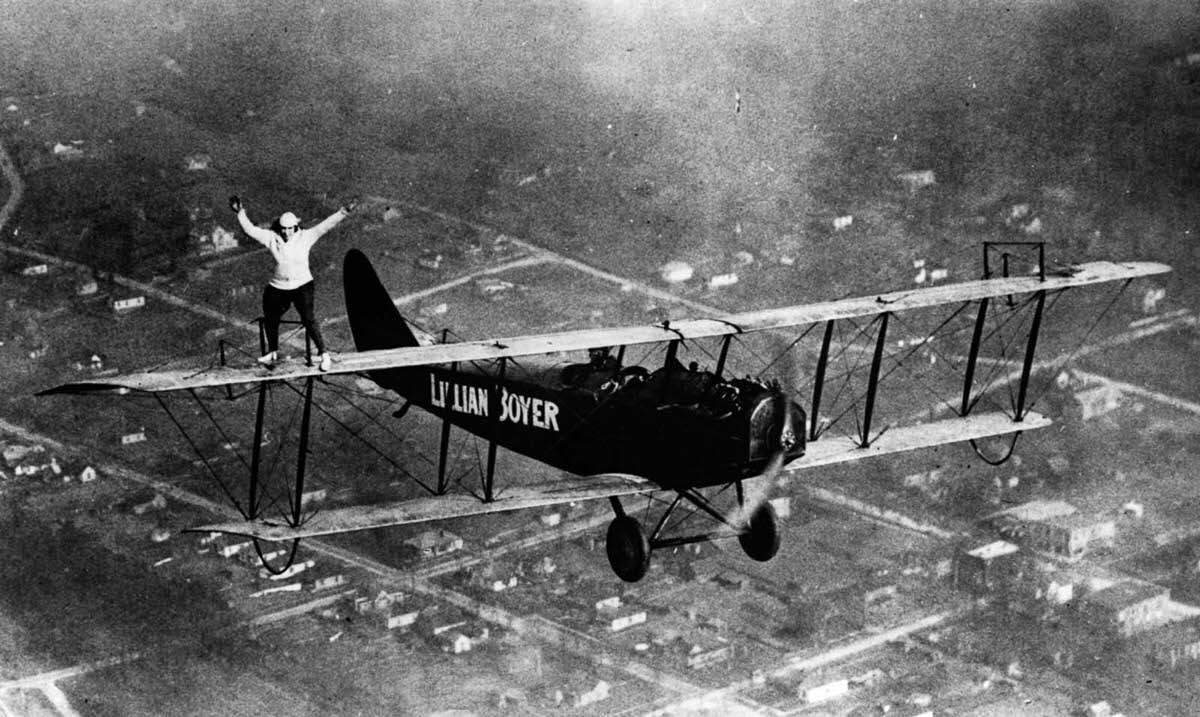
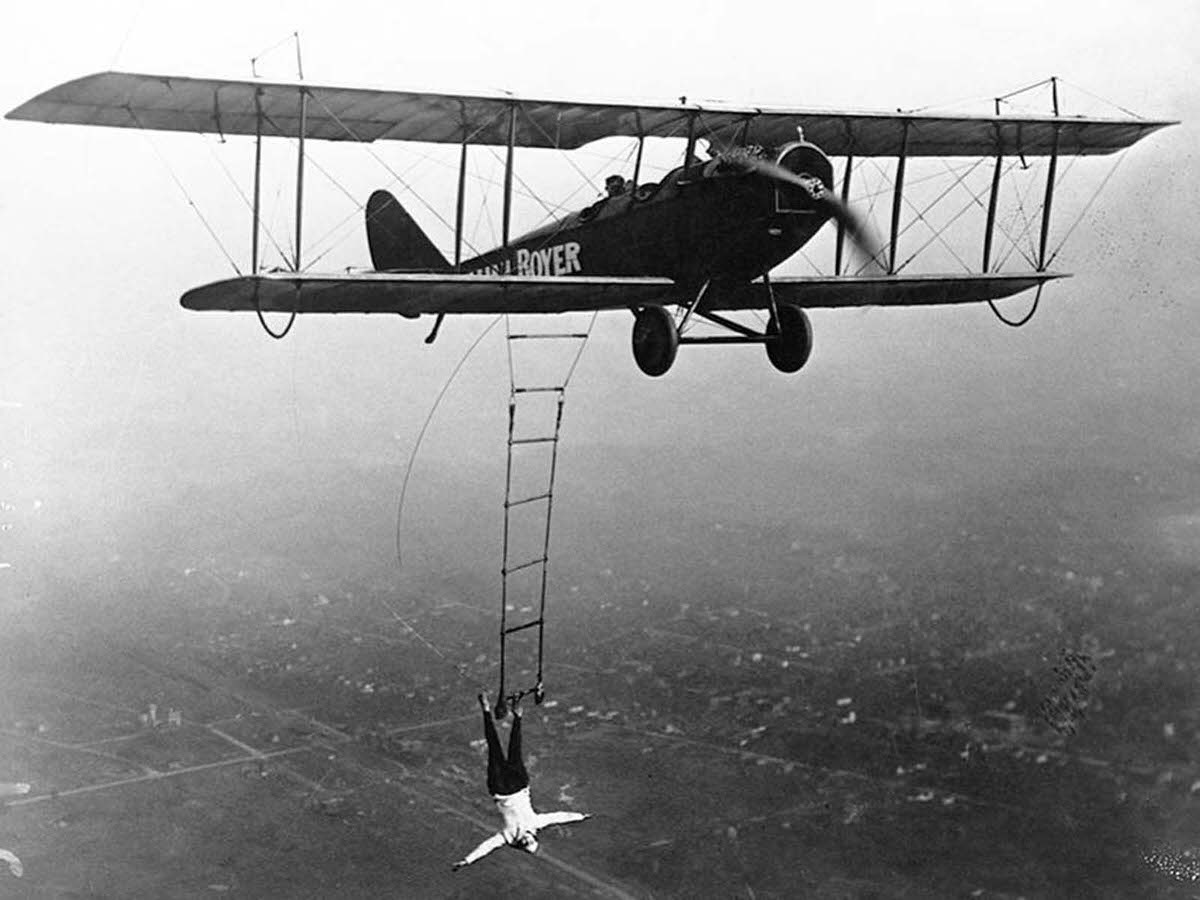
Women were a major part of wing walking’s golden era. Lillian Boyer was one of the most famous female wing walkers of the 1920s. She performed regularly at air shows, dangling from wings and struts with a confidence that stunned audiences below. Boyer completed over 350 airplane-to-car transfers during her career — dropping from a plane onto a moving car — and became one of the most recognized names in American stunt aviation.
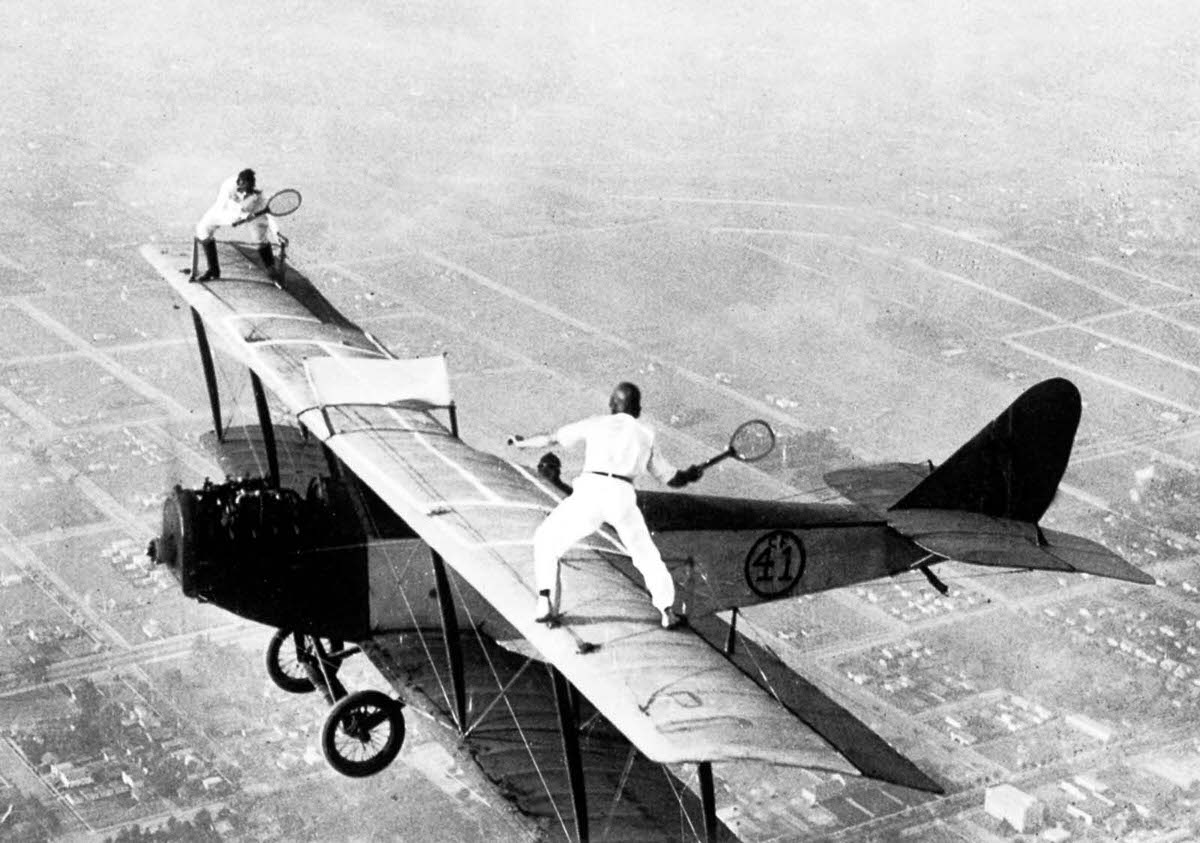
Gladys Roy and Gladys Ingle were two other women who became synonymous with aerial daring. Roy famously walked the wings of a Curtiss JN-4 ‘Jenny’ biplane blindfolded over Los Angeles in 1924. That same year, she and Ivan Unger played a game of tennis on top of a moving biplane — a stunt that seemed to defy all reason. Ingle, meanwhile, earned a reputation as one of the most skilled and fearless performers in the business.
Wing walking also attracted some well-known names from the broader world of aviation. Charles Lindbergh — the American aviator who would later become the first person to complete a solo nonstop transatlantic flight — began his aviation career as a wing walker. Bessie Coleman, the first African American woman to earn an international pilot’s license, was also part of this daring scene, performing aerial stunts that included parachute jumps. Both figures used the barnstorming circuit as a launchpad for greater careers in aviation.
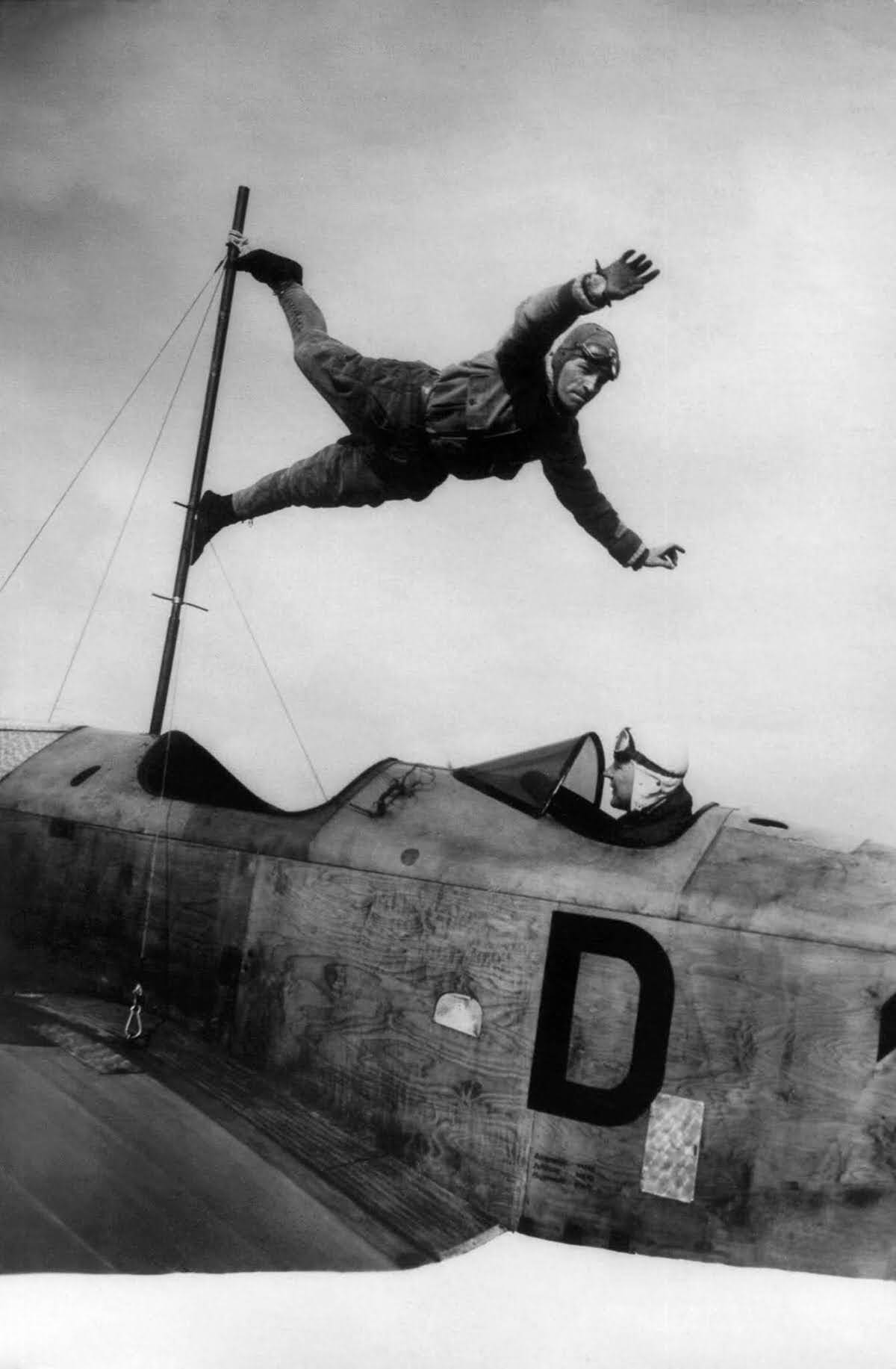
By the 1930s, the aerial circus circuit was still active, but the atmosphere around wing walking was beginning to shift. Authorities were paying closer attention to the risks, and calls for safety regulations grew louder with each new death and injury. The stunt’s golden era came to a firm close in the 1940s, when regulators mandated that all wing walkers wear parachutes. For many performers, that requirement changed the nature of the act entirely — but the stunts themselves didn’t disappear overnight.
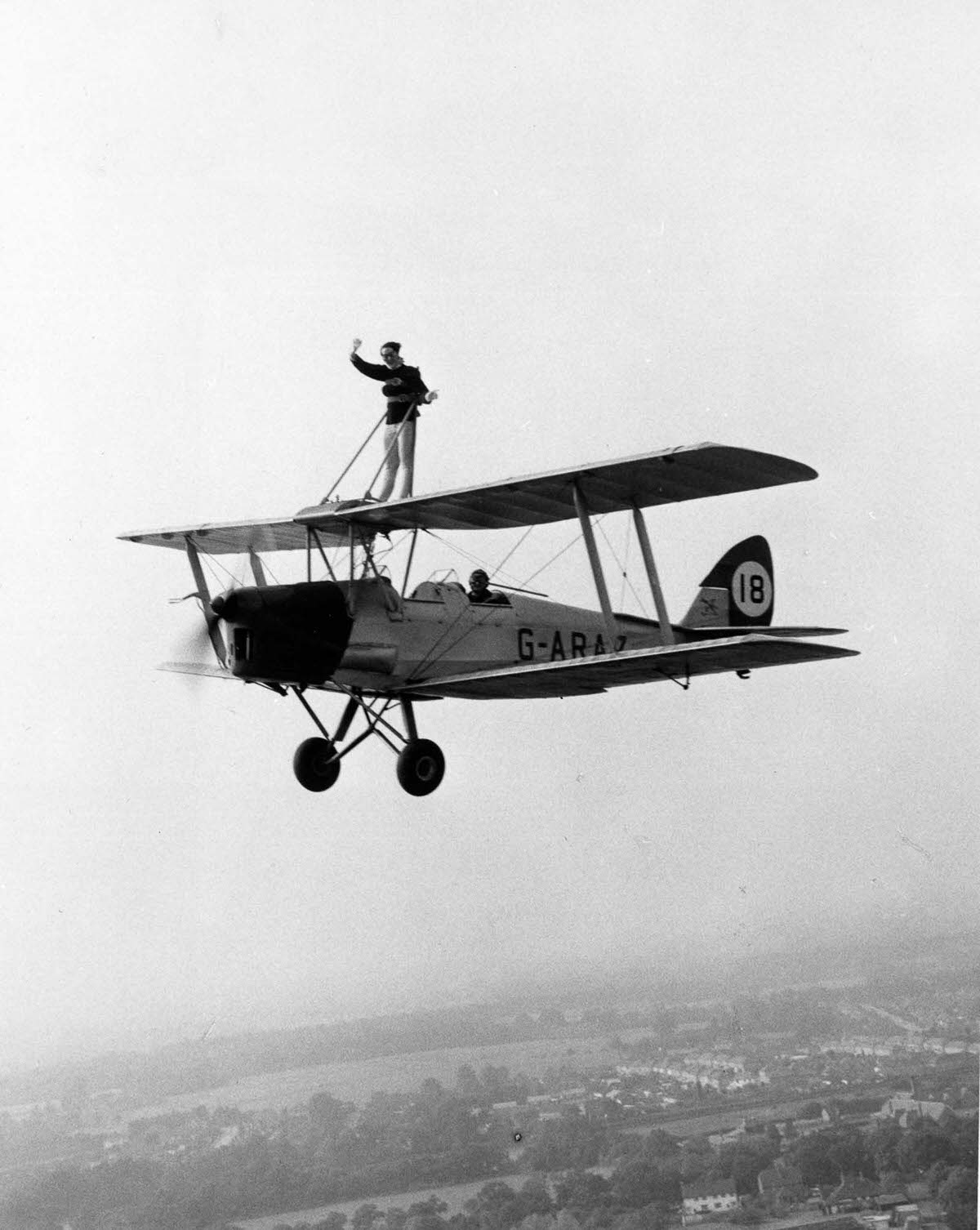
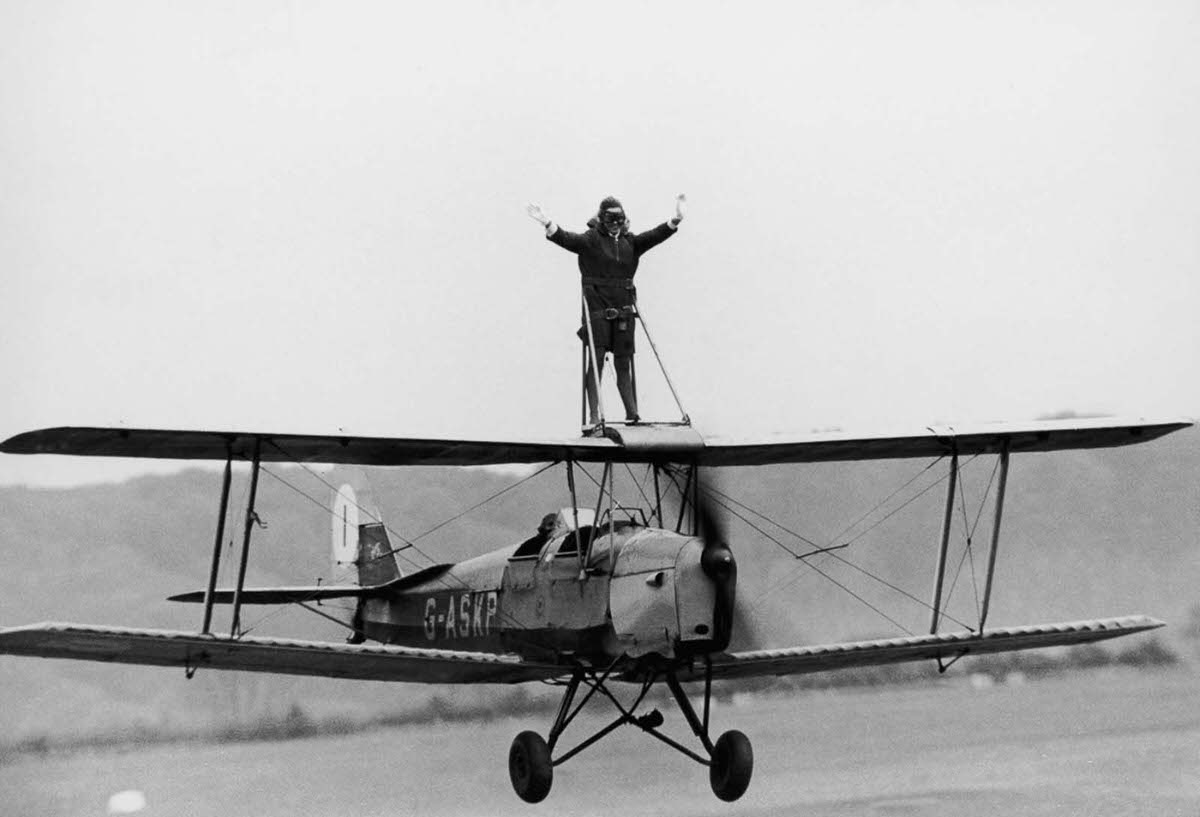
Even into the 1960s and 1970s, wing walking and related aerial stunts continued to attract performers and spectators. The Tiger Moth biplane — a British training aircraft — became a popular choice for post-war stunt work, with performers strapping themselves to the wings for rides at airshows across England and North America.
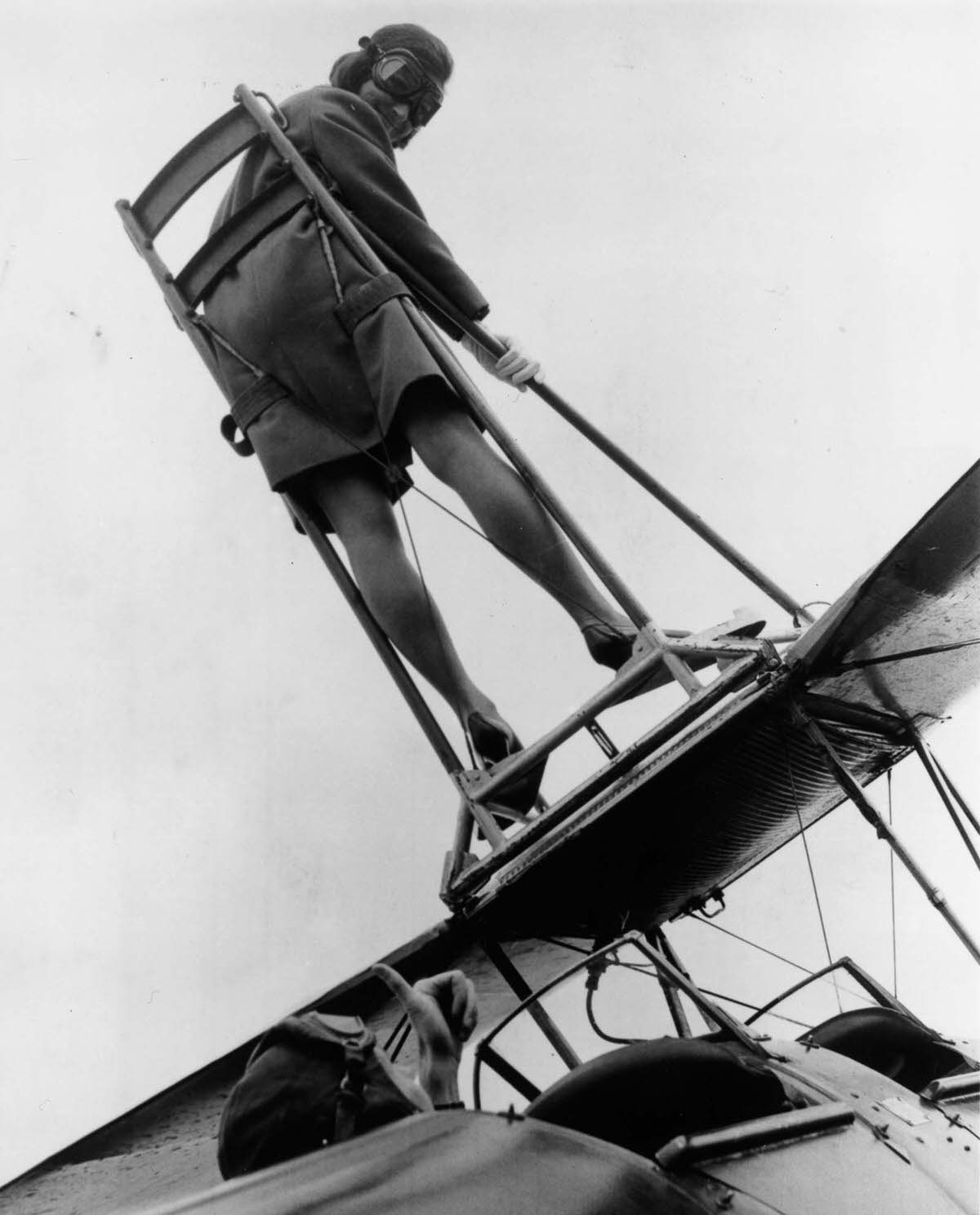
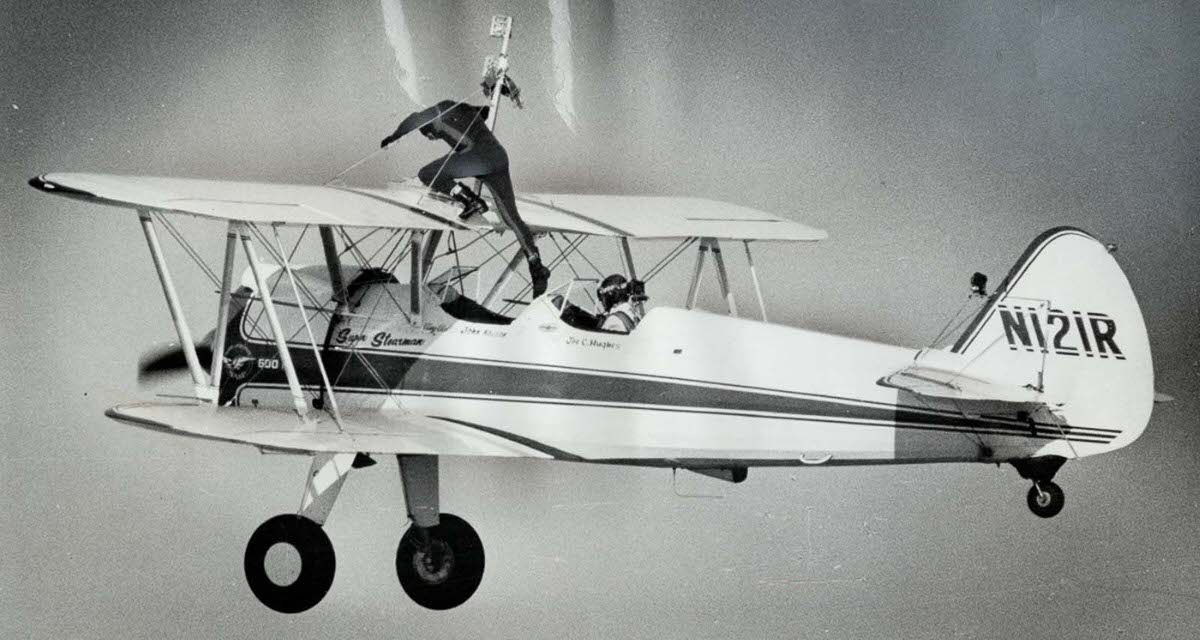
From the earliest barnstormers of the 1920s to the aerial performers who carried the tradition into the 1980s, wing walking represented a uniquely human appetite for spectacle and risk. The people who did it were ordinary men and women who chose to climb out of the cockpit and face the open sky — wind roaring, ground far below — with nothing but skill and courage holding them in place.

Hello Benjamin! Great article! Is there any way that I could use a couple of the wing walking photos in an upcoming youtube video? Credit will of course be given.