
The first decade of the 20th century was one of the most transformative periods in Washington D.C.’s history. The city was growing fast, drawing global attention as the United States rose to greater power and influence. New buildings were going up, grand boulevards were being laid out, and everyday life was changing at a pace that few Americans had ever seen before. These photographs capture that moment — streets busy with early automobiles and streetcars, hotels that defined an era, schools full of students, and landmarks that still stand today.
One of the biggest turning points for the city was the McMillan Plan of 1901. This sweeping proposal reshaped the downtown core, establishing the National Mall as we know it and setting aside land for monuments and museums. At the same time, wealthy families and foreign governments were building grand homes along 16th Street and Massachusetts Avenue, north and northwest of the White House. The stretch of Massachusetts Avenue eventually became known as Embassy Row. Washington was no longer just a government town — it was becoming a world-class capital city.
Just outside the city, George Washington’s estate at Mount Vernon remained one of the most visited sites in America. By 1902, the property had been preserved by the Mount Vernon Ladies’ Association, which had taken ownership in 1858 to prevent the estate from falling into disrepair.
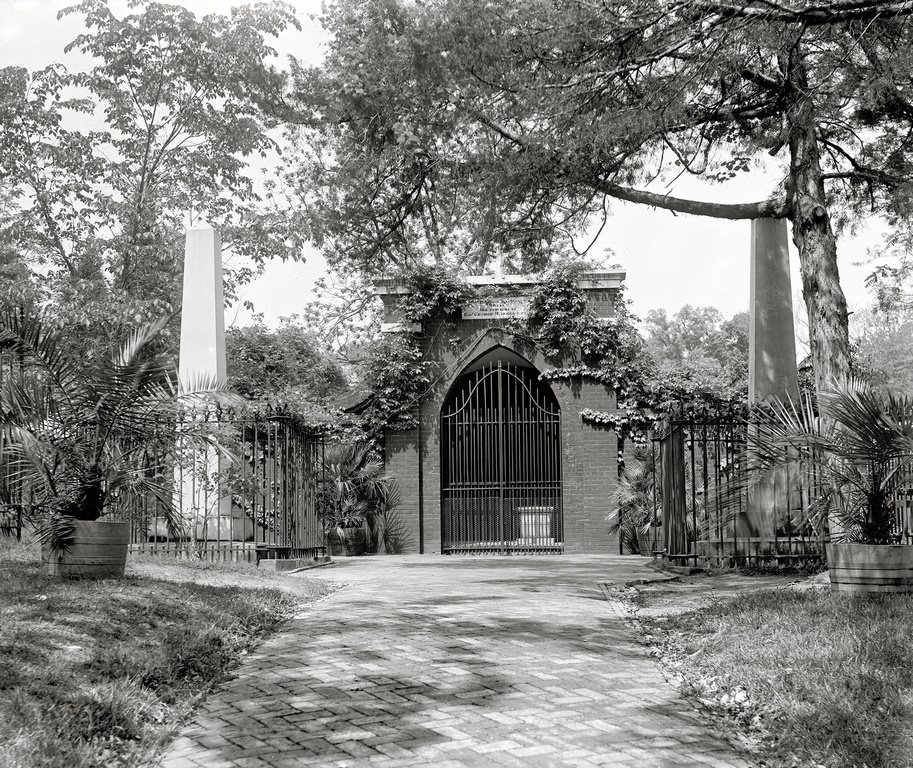
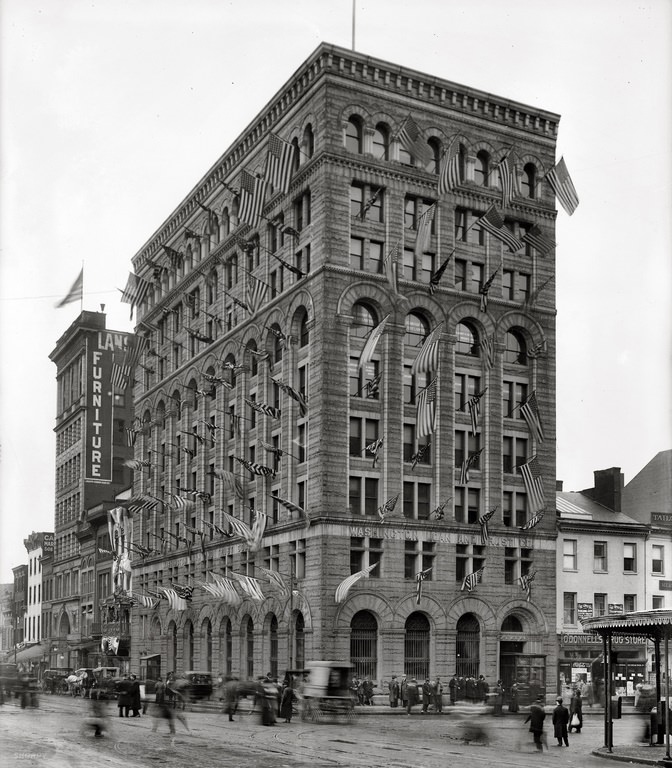
Back in the heart of the city, commercial development was in full swing along 14th Street. The Bond Building was one of the more striking examples of early 20th-century commercial architecture in Washington — a steel-framed structure that signaled the city’s confidence in its own growth.
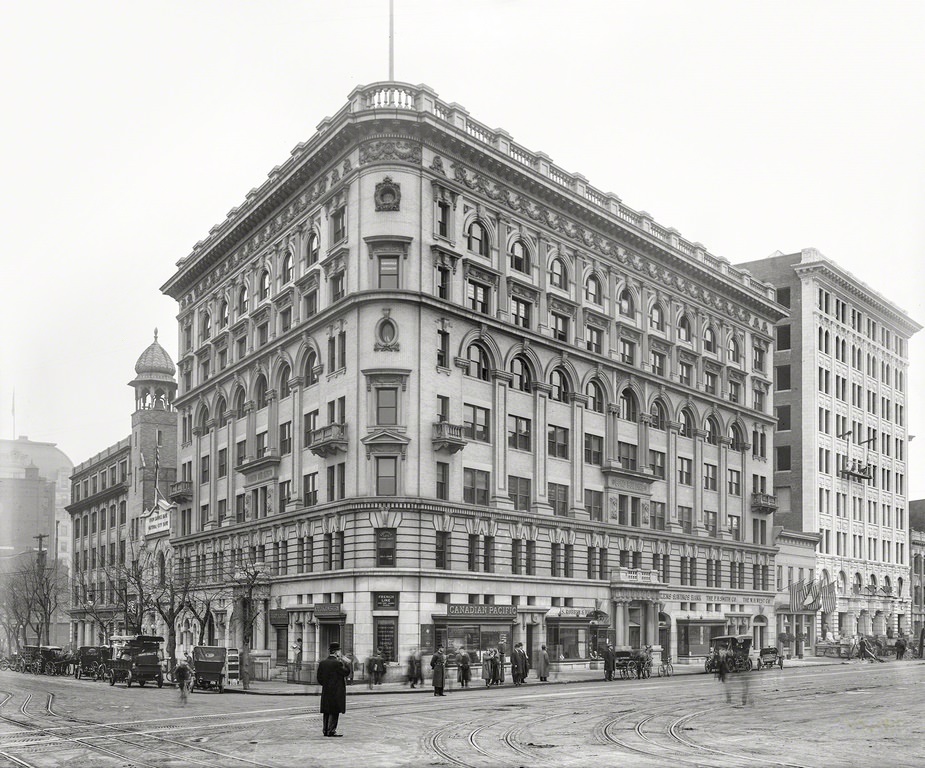
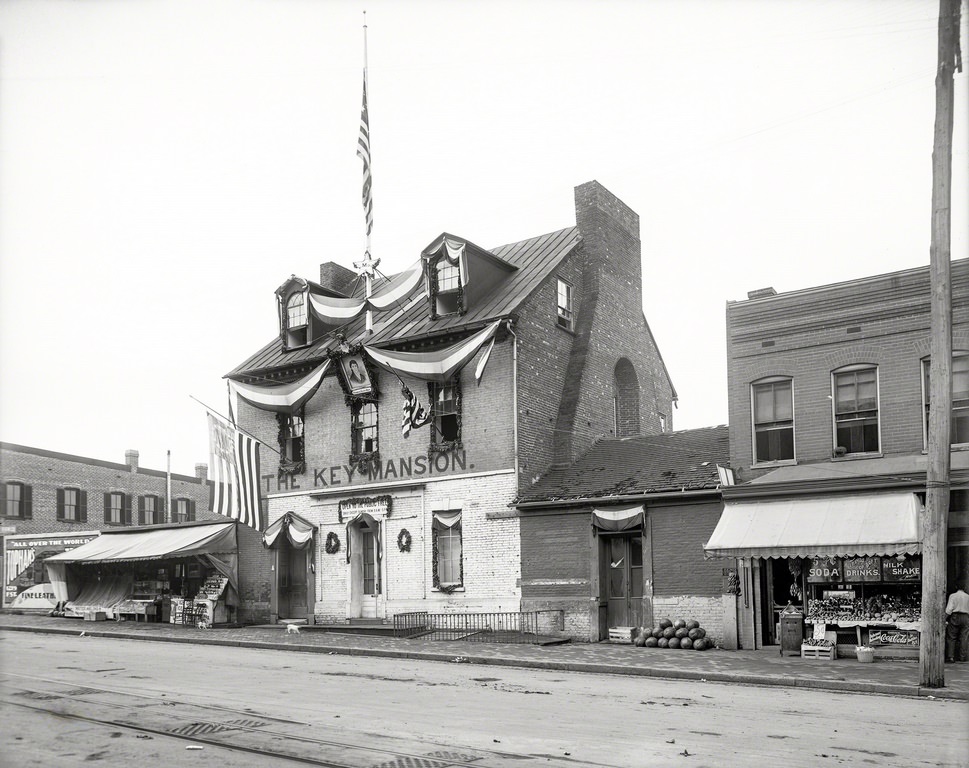
Georgetown, just to the west of central Washington, held its own rich history. The Key Mansion stood as a reminder of one of the most famous moments in American cultural life — it was the Georgetown home of Francis Scott Key, who wrote “The Star-Spangled Banner” during the War of 1812.
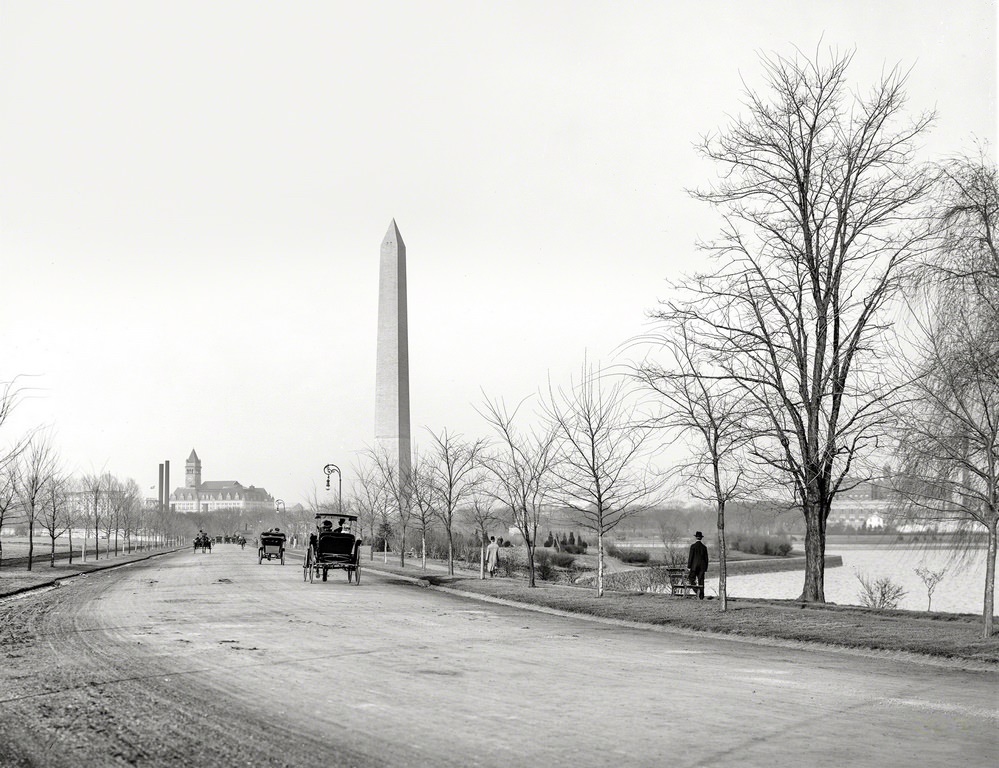
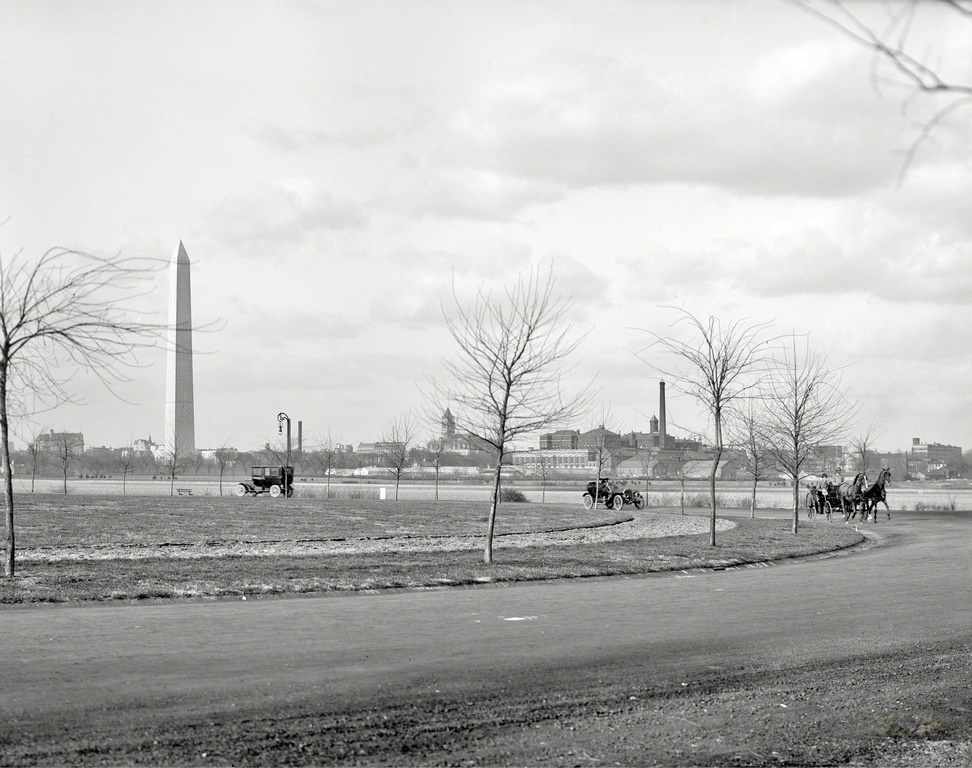
Potomac Park offered some of the most scenic views in the capital. The Tidal Basin and the nearby Old Post Office tower framed the Washington Monument in ways that drew visitors from across the country. The park itself was a relatively new addition, created from land reclaimed from the Potomac River in the late 1800s.
Hotels in early Washington D.C. were more than just places to sleep — they were centers of political life. The Ebbitt House, located at 14th and F Streets NW, was one of the most well-known hotels in the city. It hosted presidents and politicians for decades before being torn down in 1925. Its name lives on in the Old Ebbitt Grill, a restaurant just a block away that still operates today.
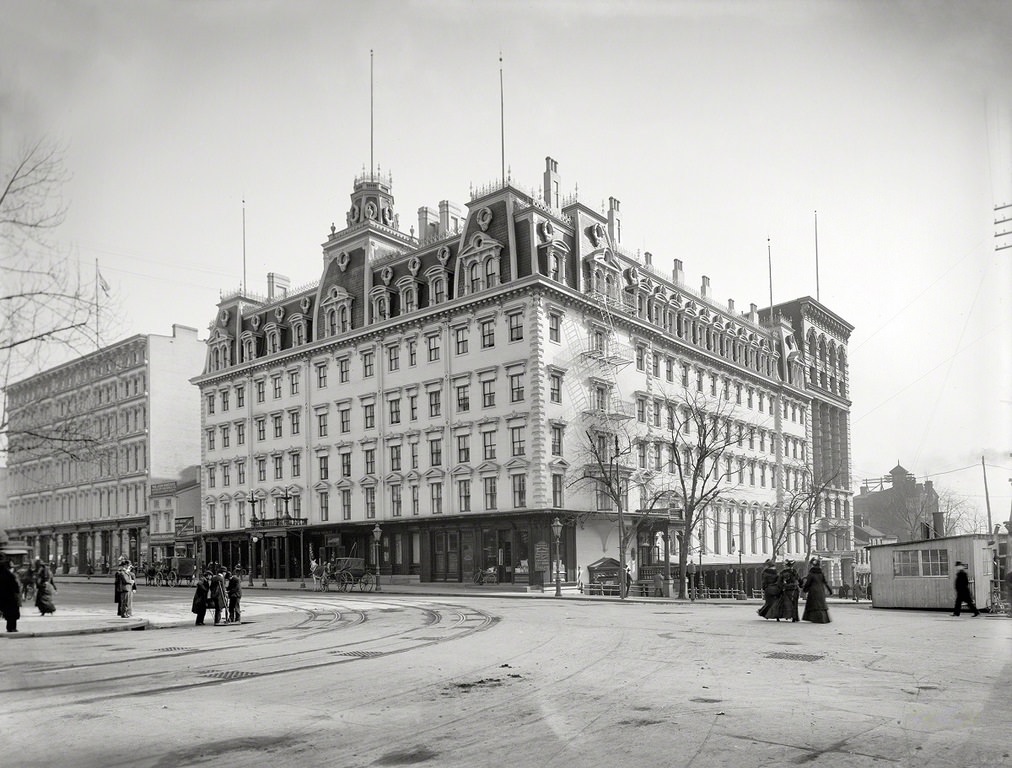
The Potomac River itself was a constant presence in the daily life of Washington residents. Whether for commerce, transportation, or simply evening leisure, the river defined the western edge of the city and offered a quiet contrast to the busy streets downtown.
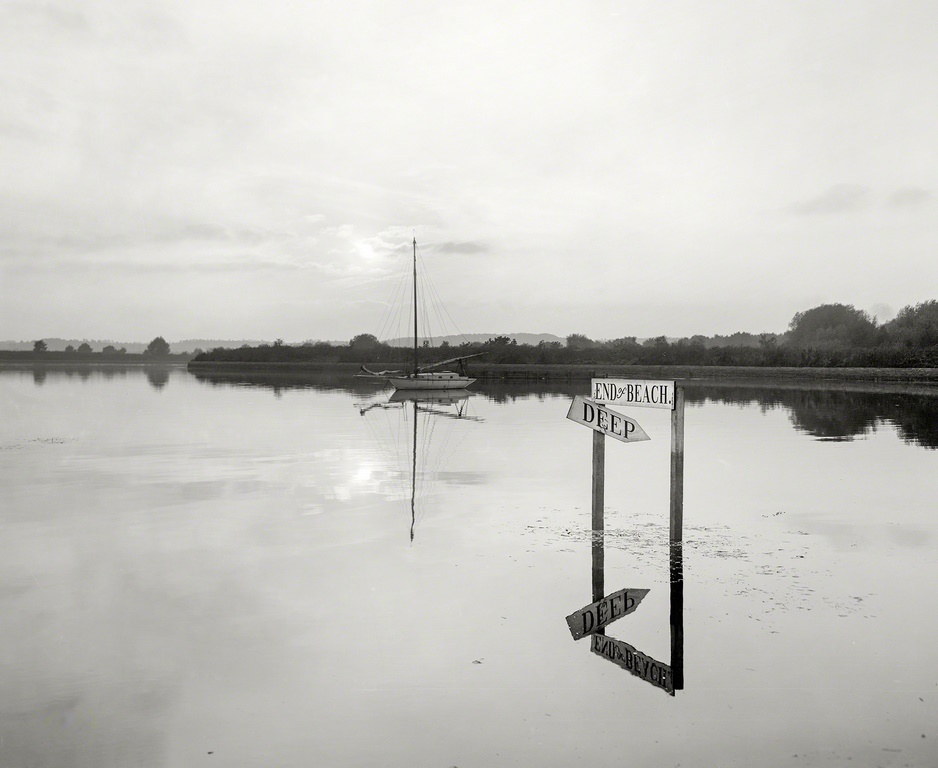
The Raleigh Hotel, originally known as the Shepherd Centennial Building, sat at the corner of 12th Street NW and Pennsylvania Avenue. By the early 1900s, it had been converted into a hotel and expanded with a large annex to the north. It was one of several major hotels that made Pennsylvania Avenue one of the most prominent addresses in the country.
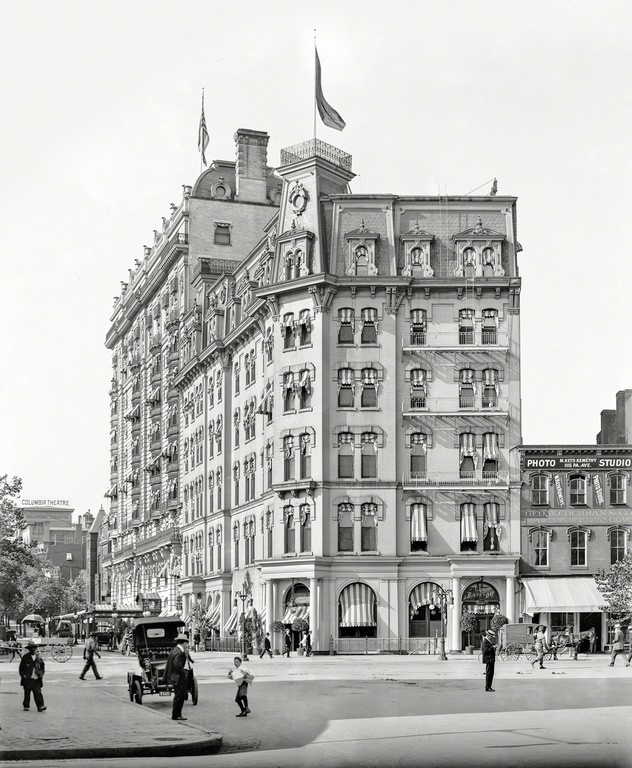
The Willard Hotel held an even more storied reputation. Located just two blocks from the White House, it had been a gathering point for diplomats, politicians, and journalists since the Civil War era. By 1904, it was one of the most recognized hotels in the United States.
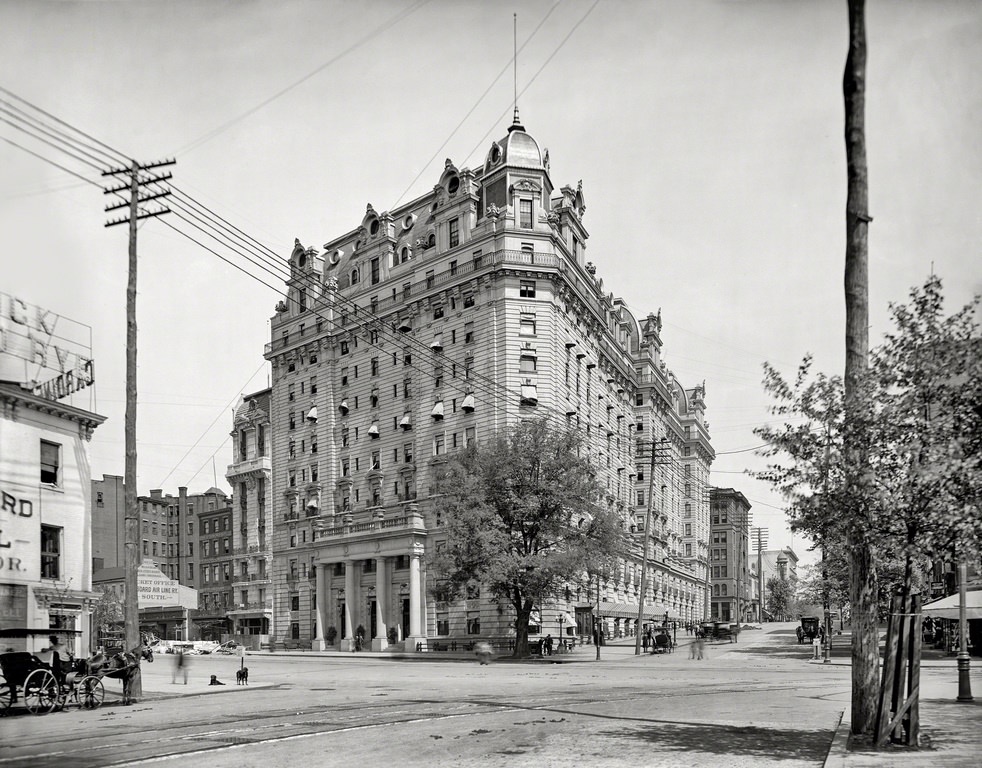
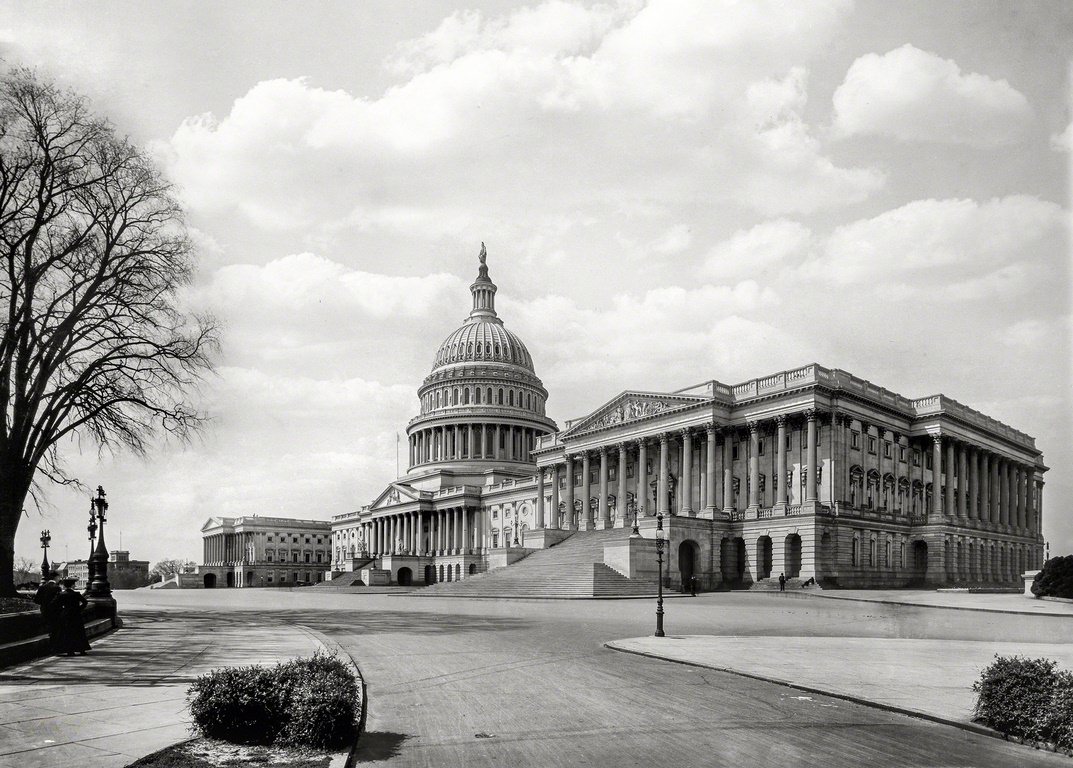
The U.S. Capitol stood as the physical and symbolic center of American democracy. In 1905, its east front presented a neoclassical facade that had taken decades to complete. The building’s dome, completed during the Civil War on Abraham Lincoln’s orders, remained one of the most recognizable structures on earth.
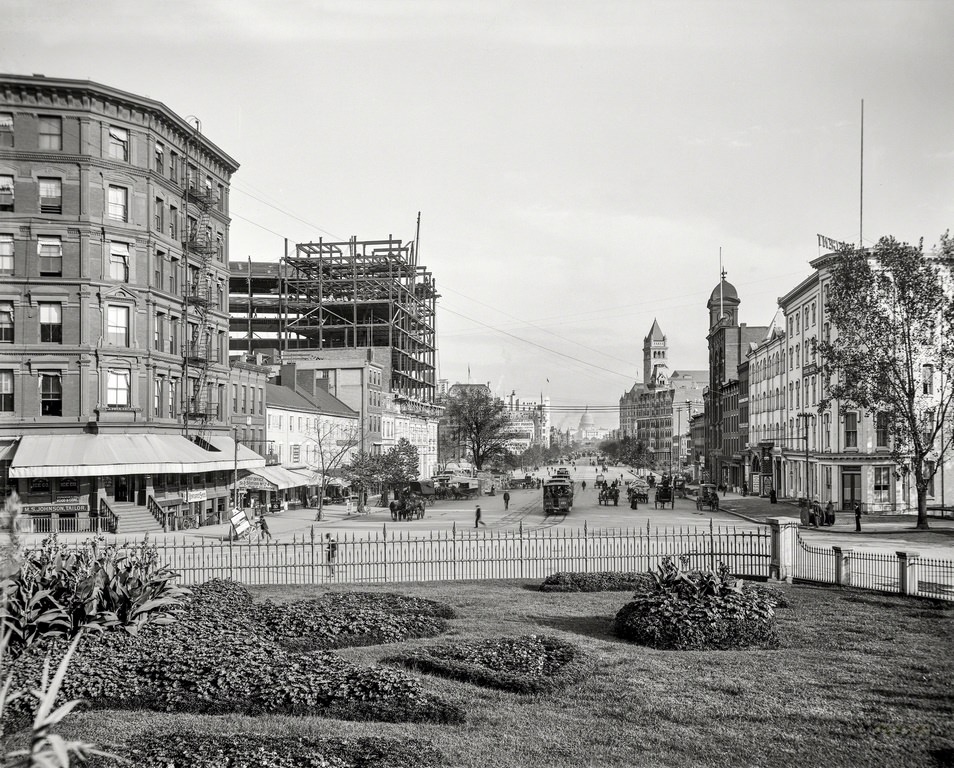
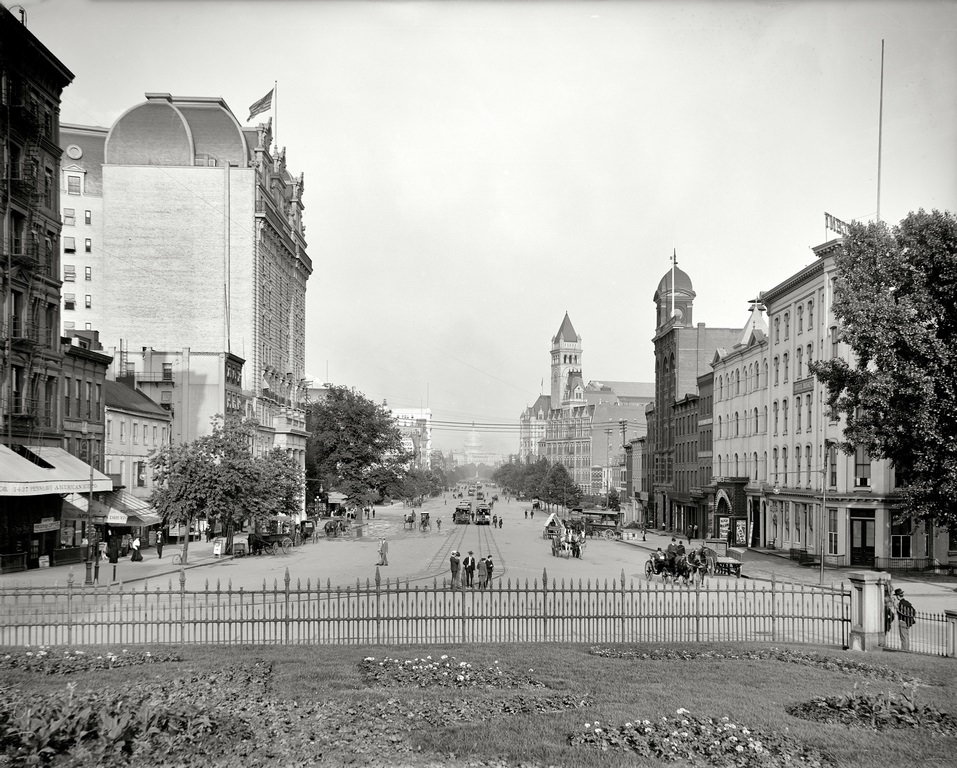
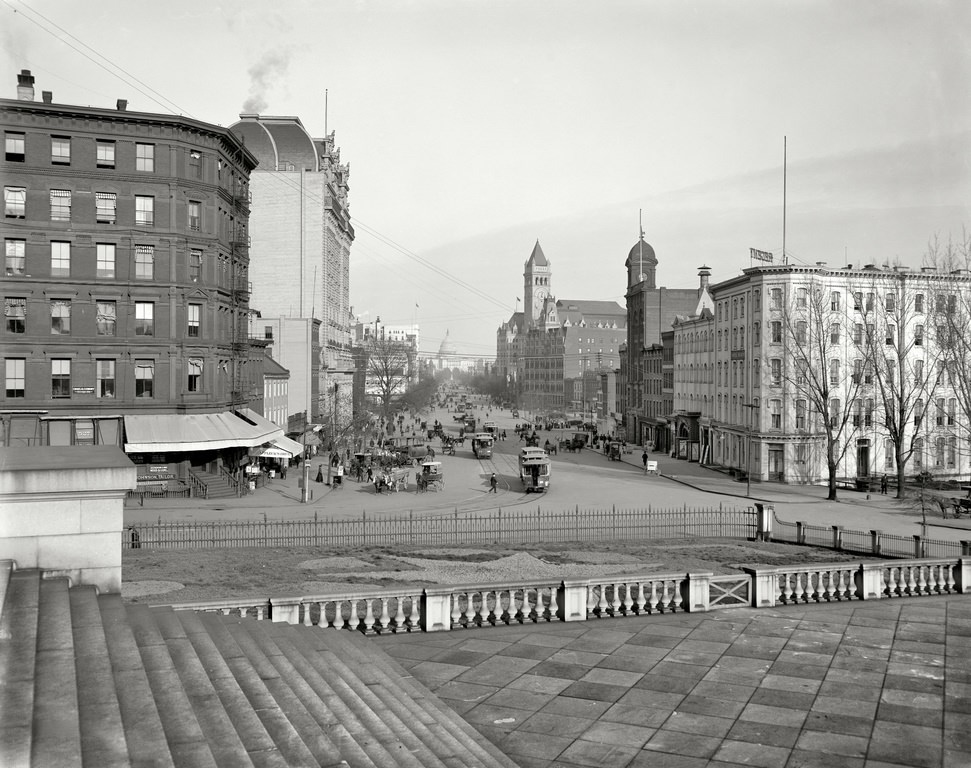
Pennsylvania Avenue in November 1900 was already one of the most photographed streets in America. Looking from the Treasury Building, the view stretched all the way to the Capitol dome. Along the route stood the Old Post Office building — now known as the Trump International Hotel — and Chase’s Polite Vaudeville Theater, operating out of the former Grand Opera House on the right side of the avenue.
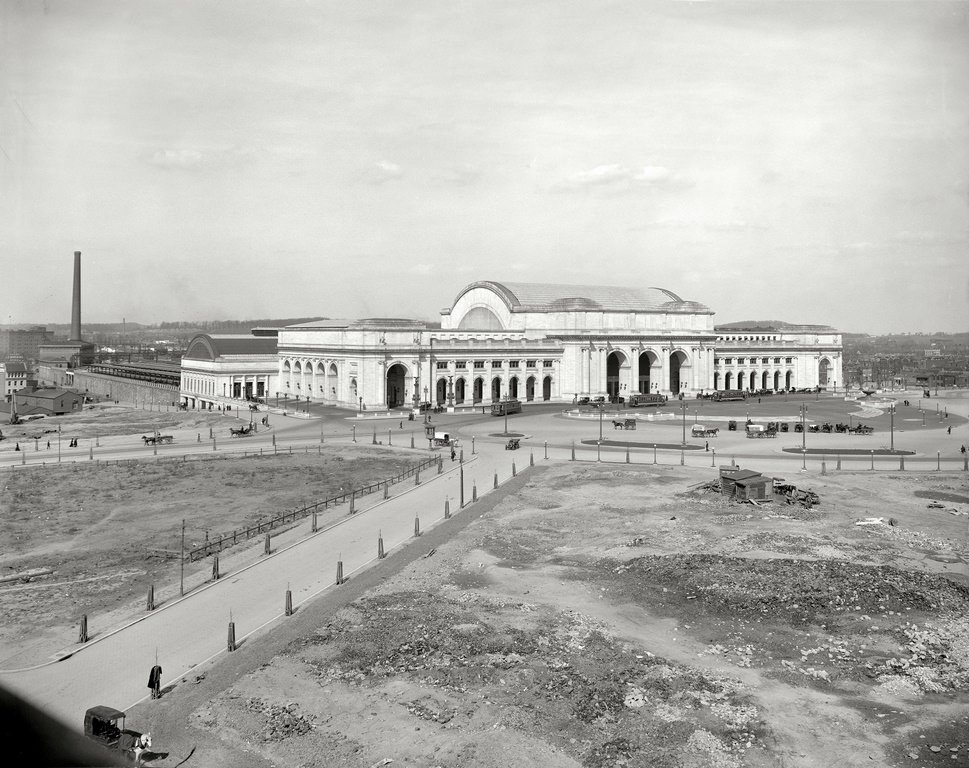
Union Station opened in 1907 and immediately became one of the grandest train stations in the world. Built in the Beaux-Arts style and designed by Daniel Burnham, it replaced a chaotic arrangement of two competing rail stations that had previously cluttered the city’s core. The new station consolidated rail traffic and gave Washington a gateway worthy of the nation’s capital.
![New Pennsylvania [Union] Station, Washington, D.C., 1908.](https://www.bygonely.com/wp-content/uploads/2020/08/Washington_DC_1900s_11.jpg)
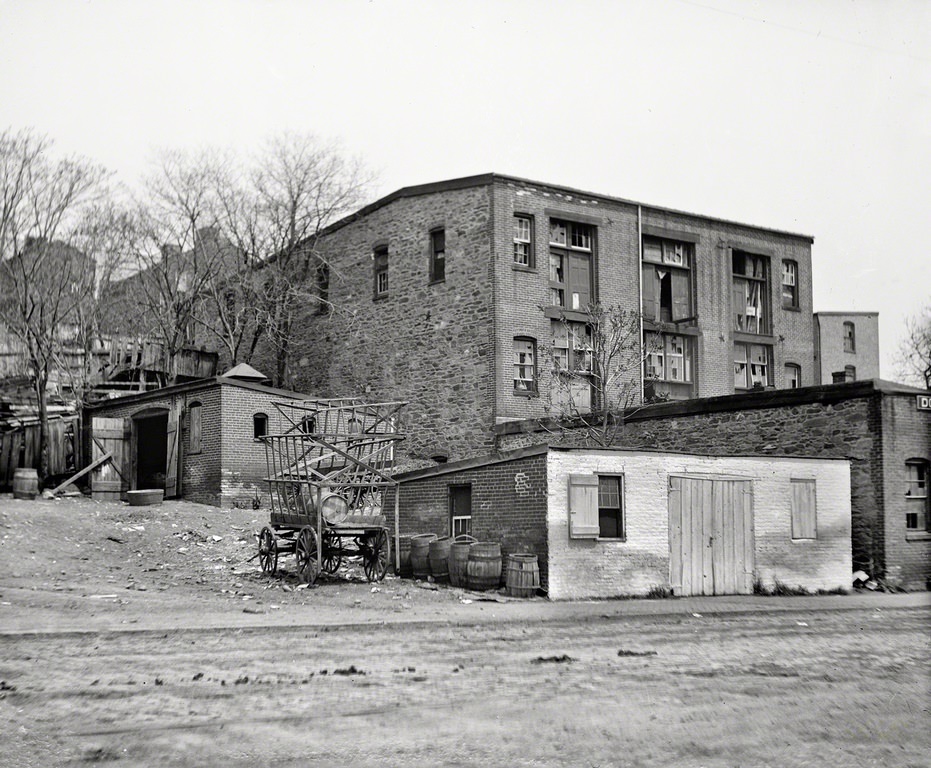
Not every corner of early Washington was defined by grand architecture. Along Water Street SW, old warehouses crowded the waterfront, serving the commercial traffic that moved along the river and the Washington City Canal. These working-class areas of the city were a world apart from the marble buildings a few blocks north.
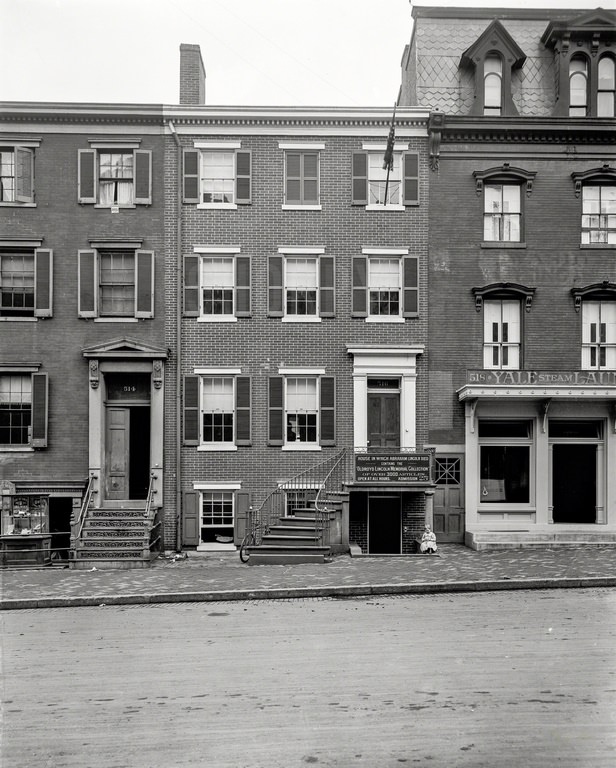
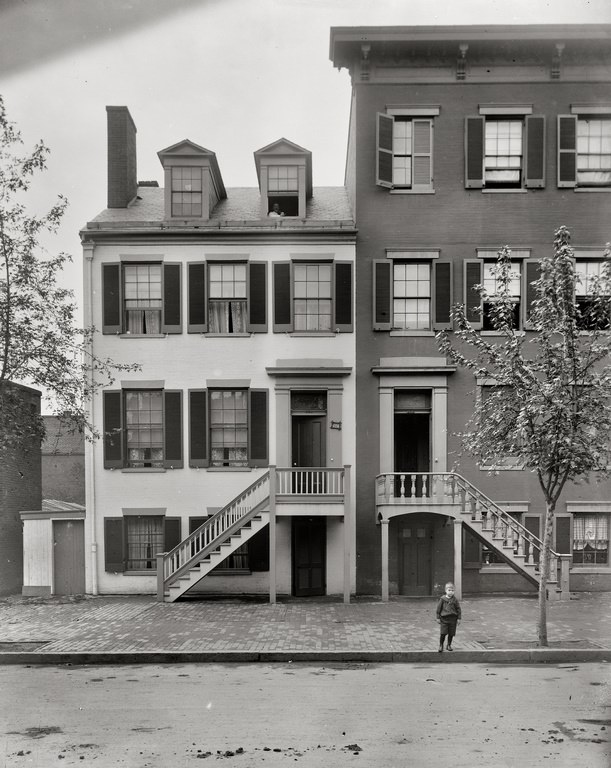
One of the most historically significant sites in Washington was the rowhouse at 516 10th Street NW. This was where President Abraham Lincoln died on the morning of April 15, 1865, after being shot the previous night at Ford’s Theatre across the street. By 1900, the building was already drawing visitors who came to mark the place where the 16th president took his last breath.
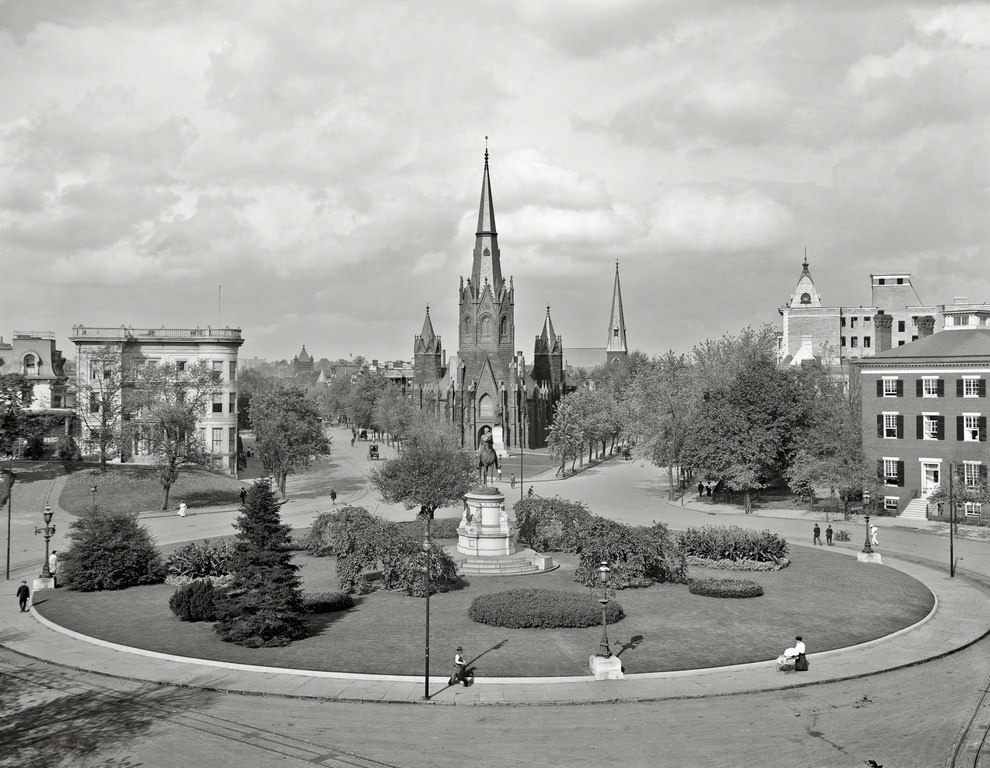
Thomas Circle was one of several traffic circles that defined Washington’s street layout, a design inherited from Pierre Charles L’Enfant’s original city plan. Luther Place Memorial Church stood prominently at the circle, its Gothic Revival tower a fixture of the neighborhood by the time this photograph was taken around 1906.
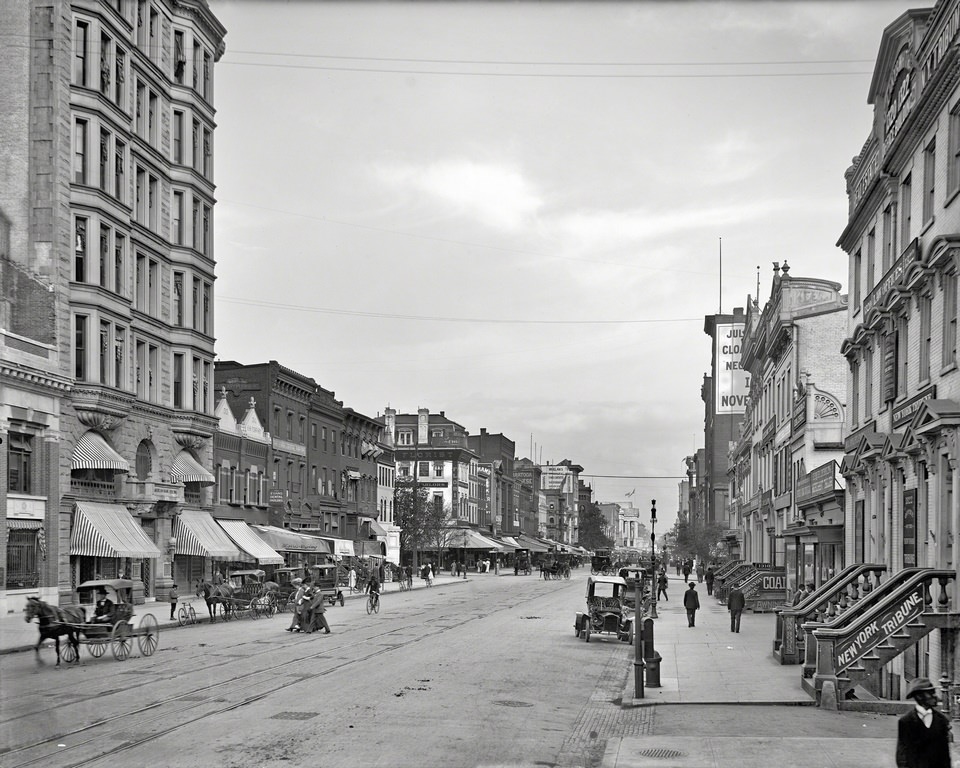
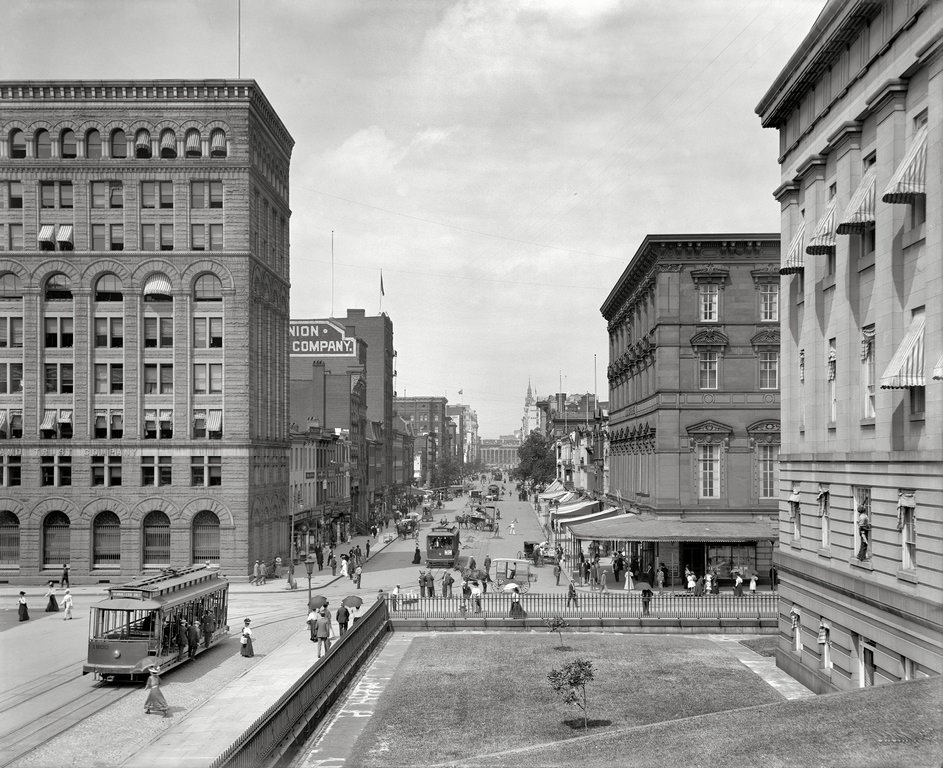
F Street NW was one of the city’s main commercial corridors in the early 1900s. Shoppers, workers, and streetcars shared the wide avenue, which ran through the heart of the downtown retail district. By 1906, the street had developed a density that made it feel like any major American city’s central shopping district.
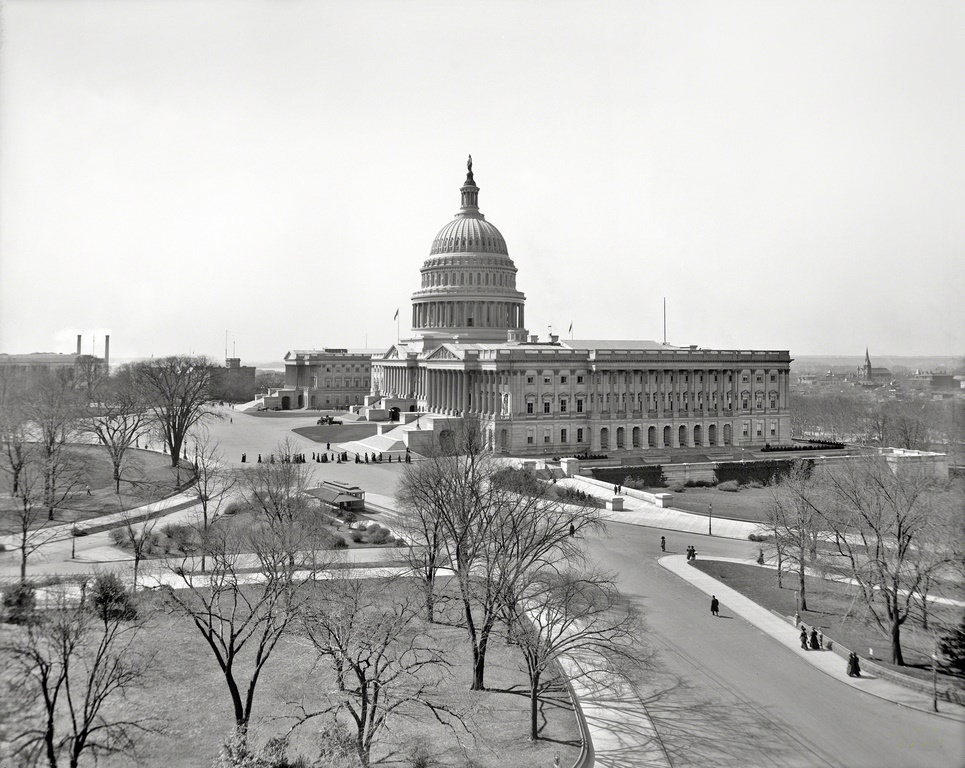
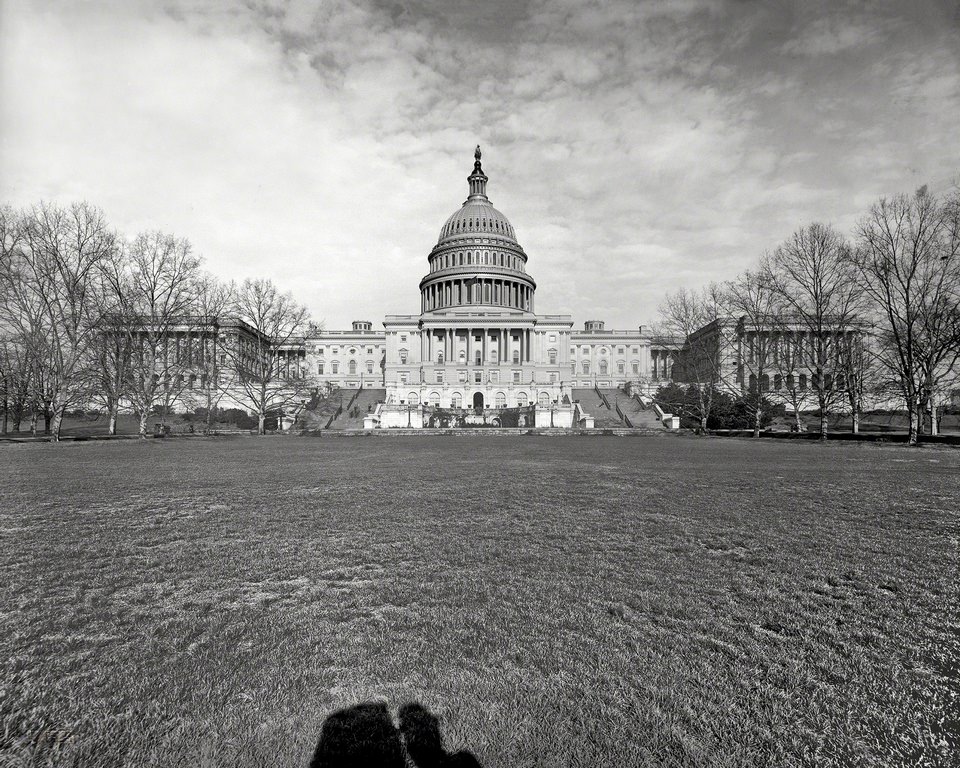
The west front of the Capitol offered a different perspective on the building than the more commonly photographed east front. Facing the National Mall, this view looked out toward the Washington Monument and the rest of the planned monumental core that the McMillan Commission was working to develop.
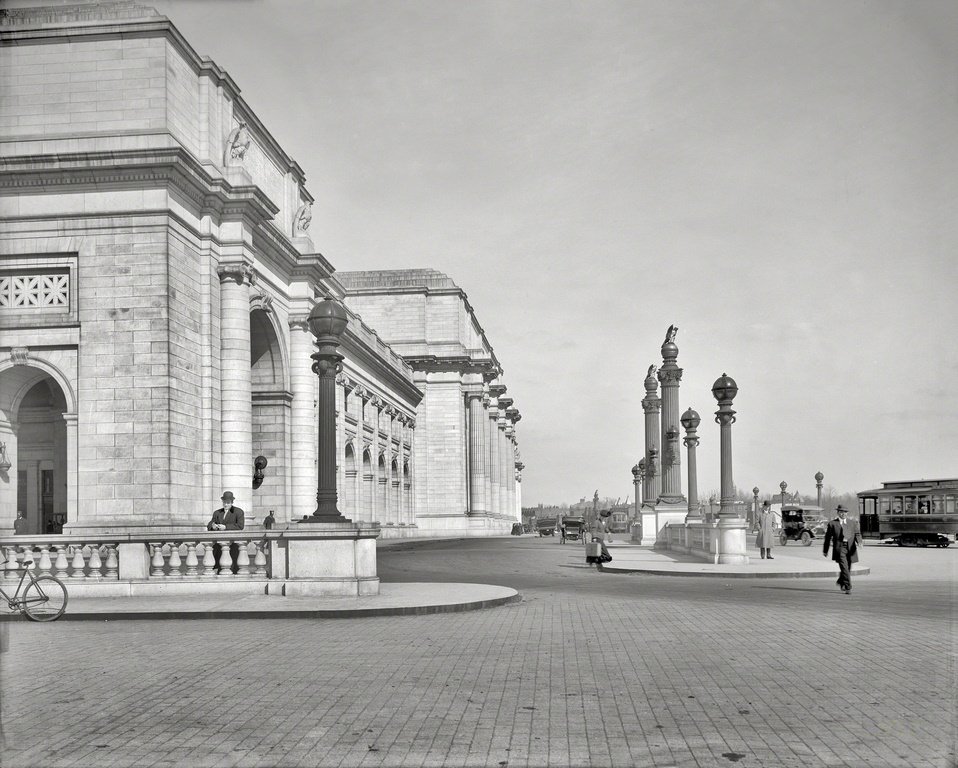
Union Station’s south facade was designed to impress. Its massive arched entryways and open plaza gave arriving passengers a sense of arrival that matched the importance of the city they were entering. For many visitors, this was their first sight of Washington D.C.
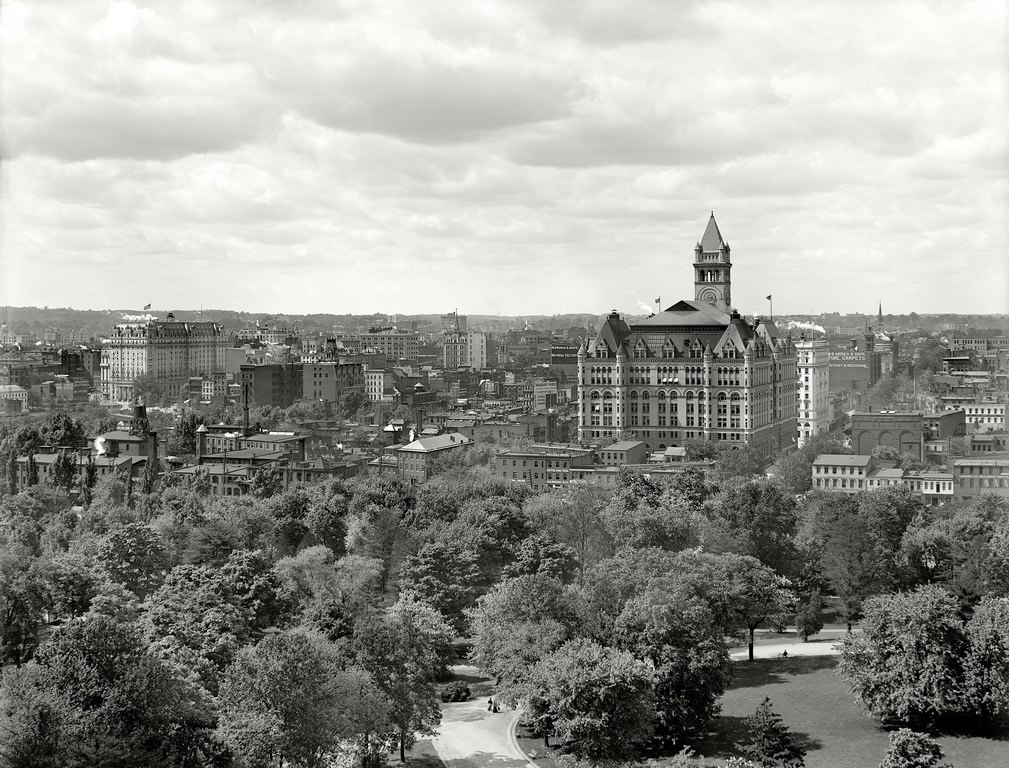
A view looking north from the Smithsonian Institution around 1904 revealed just how much the city had built up. The Willard Hotel was visible to the left, and the tower of the Old Post Office rose against the skyline. The Smithsonian’s red sandstone castle, completed in 1855, anchored the south side of the Mall and served as the institution’s original home.
Pennsylvania Avenue in June 1903 showed the full length of what many called America’s Main Street. The Old Post Office tower stood out above the rooflines, and the Capitol dome anchored the far end of the avenue. Horse-drawn vehicles and early electric streetcars shared the road in a city still mid-transition between two transportation eras.
On F Street, looking toward the Treasury Building, a Lincoln Park streetcar carried a sign advertising the “hydraulic dive” at Glen Echo, an amusement park located along the Potomac several miles upstream. Streetcar advertising gave businesses across the Washington area a way to reach riders throughout the city.
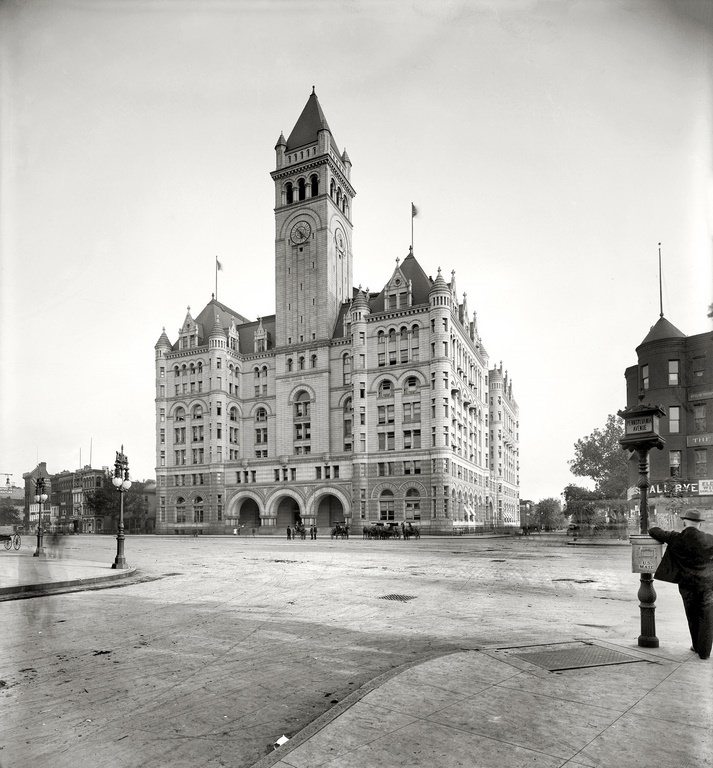
The Old Post Office on Pennsylvania Avenue was one of Washington’s most debated buildings in the early 1900s. Critics called it an eyesore and pushed for its demolition for years, but its Romanesque Revival tower proved too iconic to tear down. It survived multiple demolition attempts and still stands today.
From the Treasury steps at 15th Street in 1902, Pennsylvania Avenue stretched east toward the Capitol. Chase’s Polite Vaudeville theater was visible along the route, offering live entertainment to Washington residents at a time when vaudeville was the dominant form of popular entertainment in urban America.
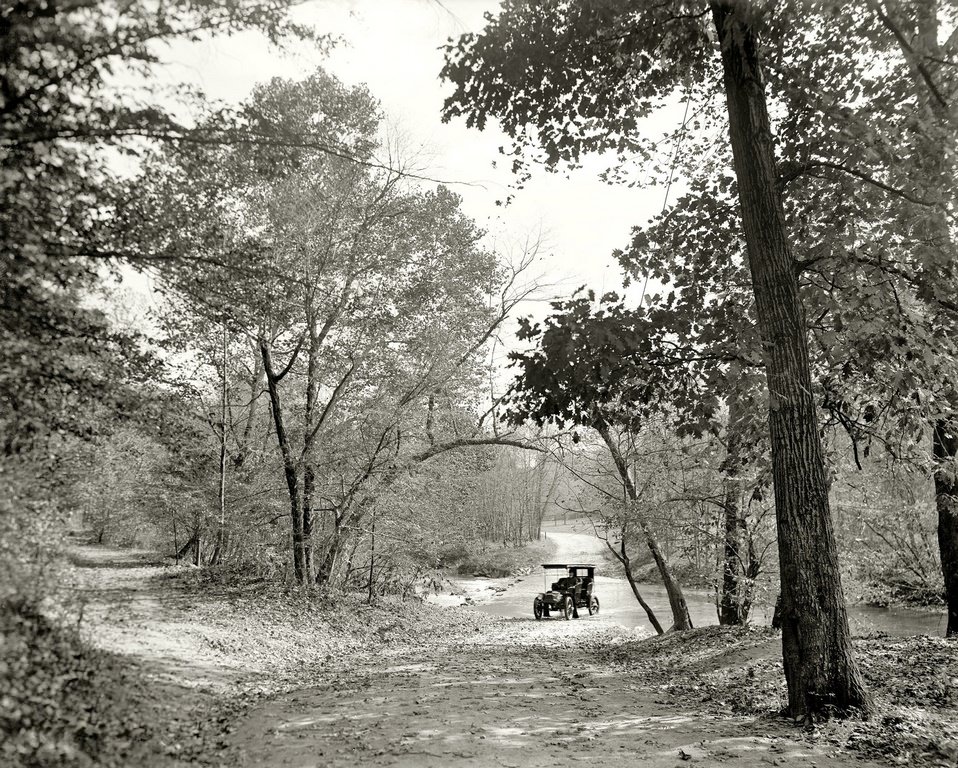
Rock Creek Park, established by Congress in 1890, was one of the largest urban parks in the country. The fords along Rock Creek — shallow crossings where visitors and animals could cross the water — were popular spots within the zoo park section. The National Zoo, part of the Smithsonian Institution, had opened along the creek in 1891.
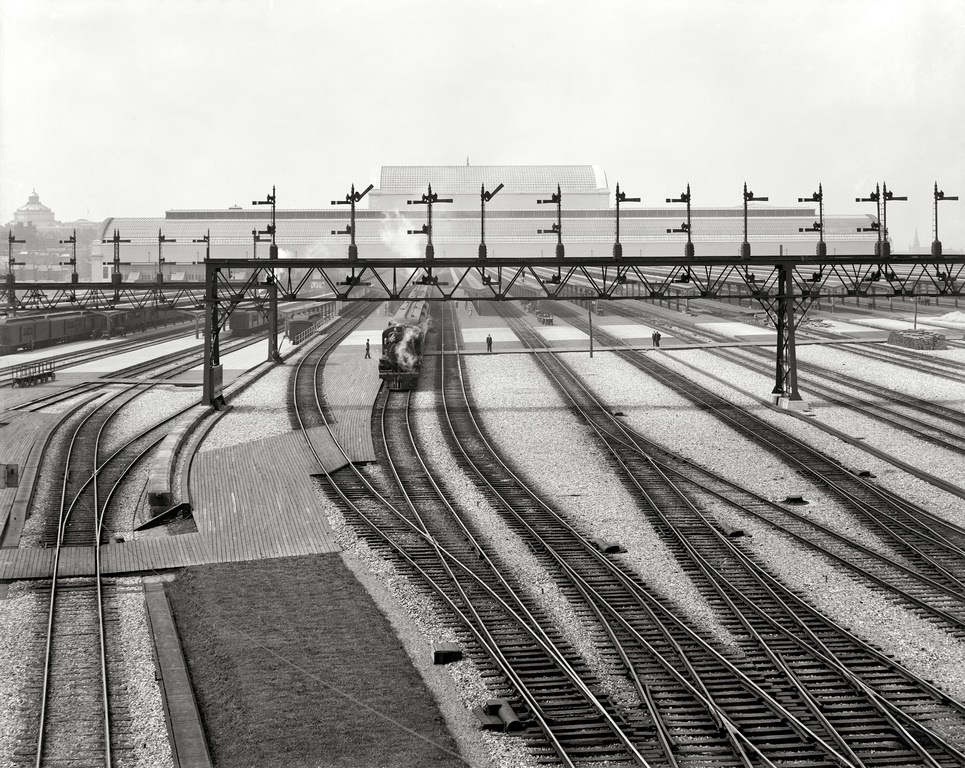
The switch yards at Union Station were a critical piece of the city’s rail infrastructure. Dozens of tracks fanned out from the station, sorting and routing the trains that connected Washington to every major city on the East Coast. The well-organized system reflected the engineering ambitions of the era.
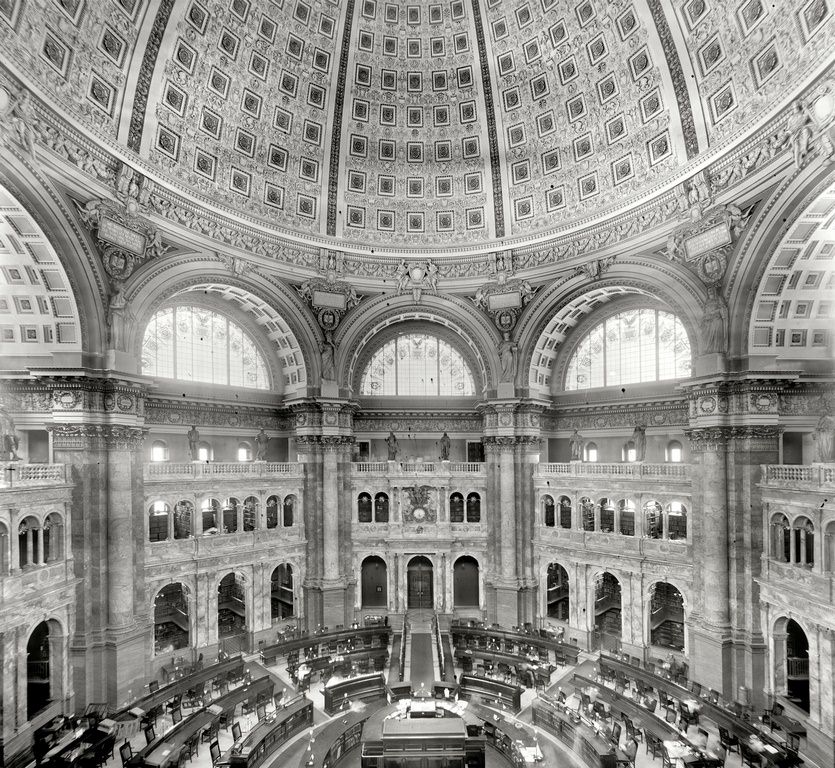
The Library of Congress opened its main building — now called the Thomas Jefferson Building — in 1897, just a few years before these photographs were taken. Its Main Reading Room was considered one of the most beautiful interior spaces in the United States, with a soaring dome and detailed ornamentation that rivaled European libraries.
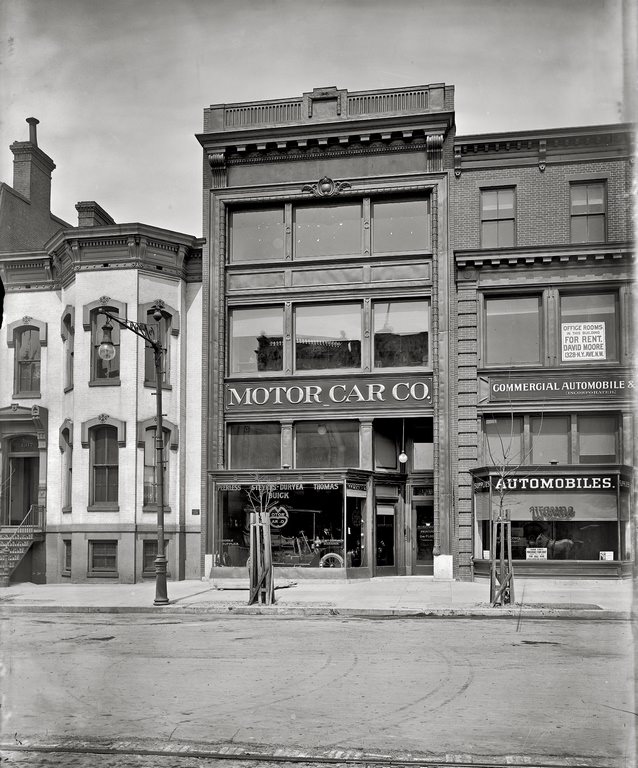
By 1907, the automobile had arrived in Washington D.C. The A.L. McCormick garage on New York Avenue was one of the early businesses catering to car owners in the city. As motorcars became more common, garages like this one became necessary fixtures of urban life, marking a shift away from the horse-drawn transportation that had defined the city for a century.
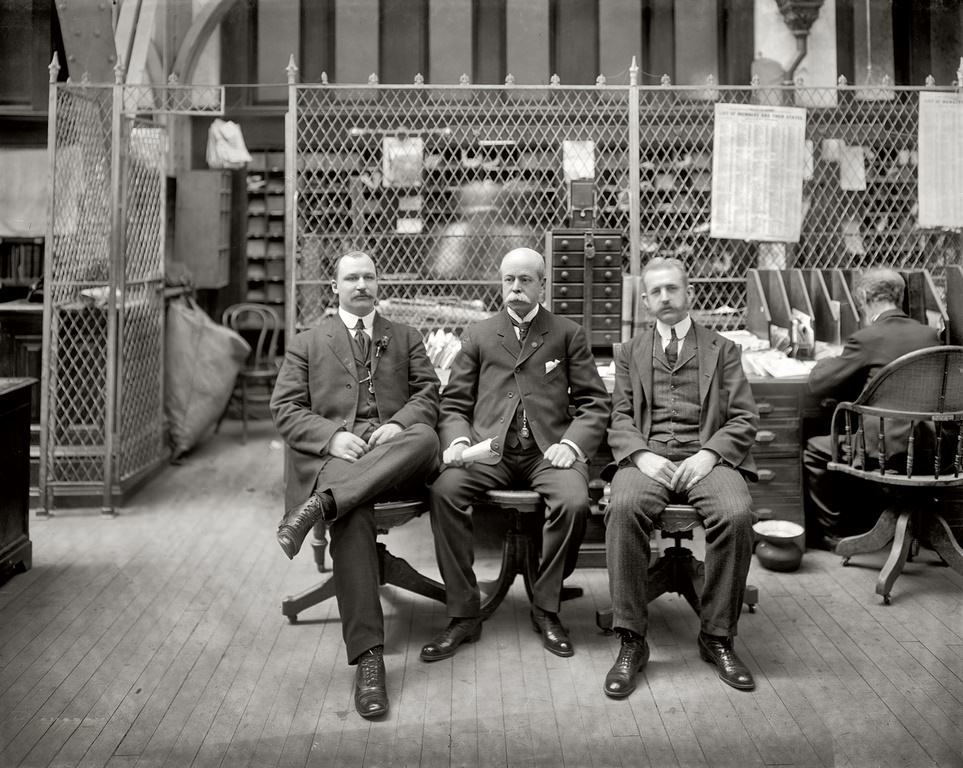
The boardinghouse at 604 H Street NW, owned by Mary Surratt, carried one of the darkest histories in Washington. It was here that members of John Wilkes Booth’s conspiracy are said to have gathered to plan the abduction — and later assassination — of President Lincoln in 1865. Surratt was convicted of conspiracy and hanged on July 7, 1865, becoming the first woman executed by the U.S. federal government.
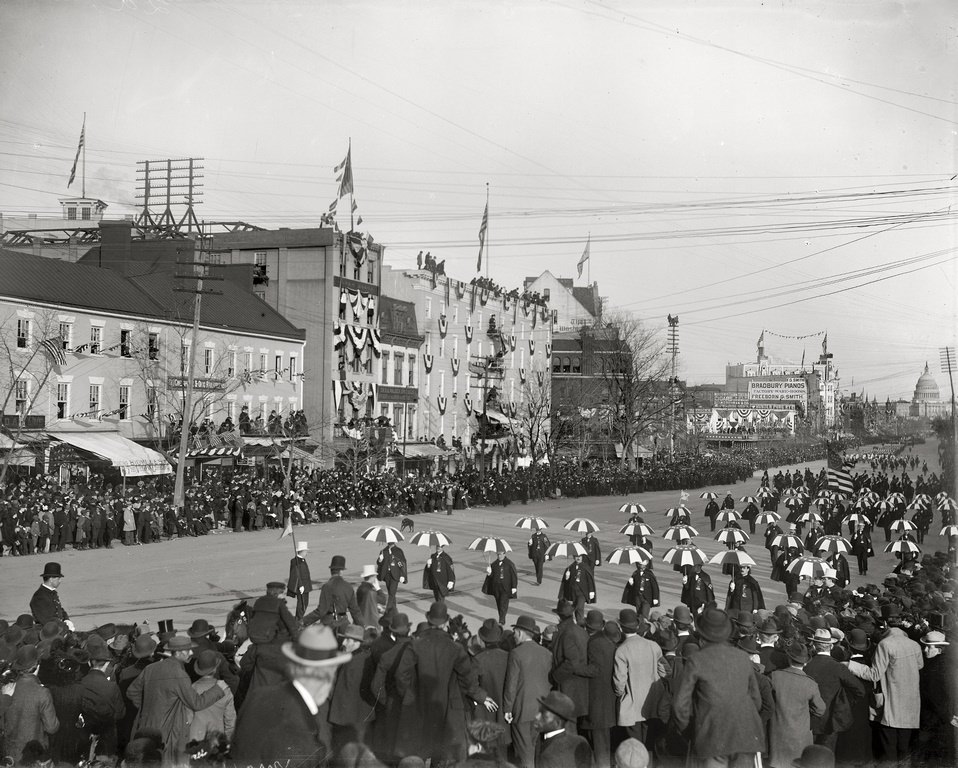
On March 4, 1901, President William McKinley was inaugurated for his second term. The parade down Pennsylvania Avenue drew large crowds, with soldiers and marching bands filling the wide boulevard. McKinley would be assassinated just six months later, in September 1901, making this one of the last major public celebrations of his presidency.
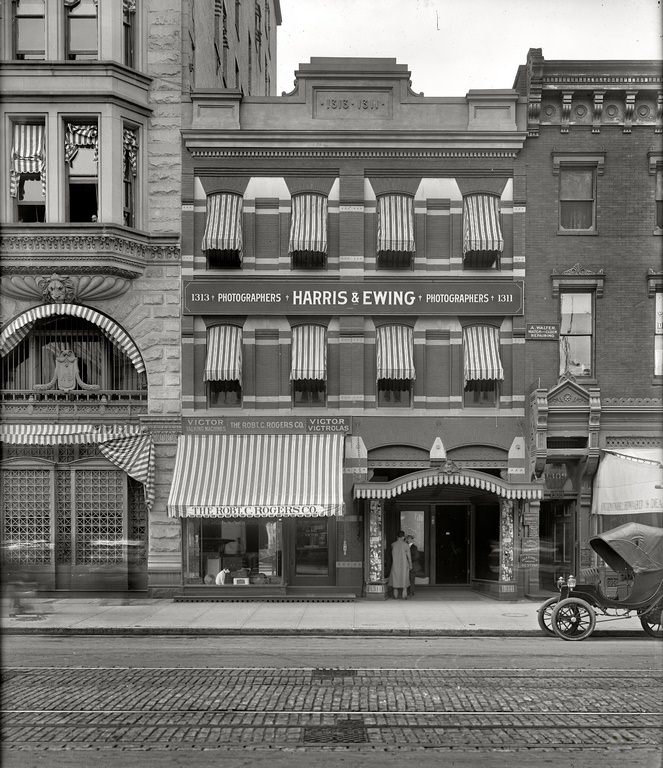
The Harris & Ewing photography studio on F Street was responsible for documenting much of Washington’s political and social life in the early 20th century. The firm became one of the most prolific press photography operations in the country, producing tens of thousands of images of politicians, celebrities, and everyday Washington scenes.
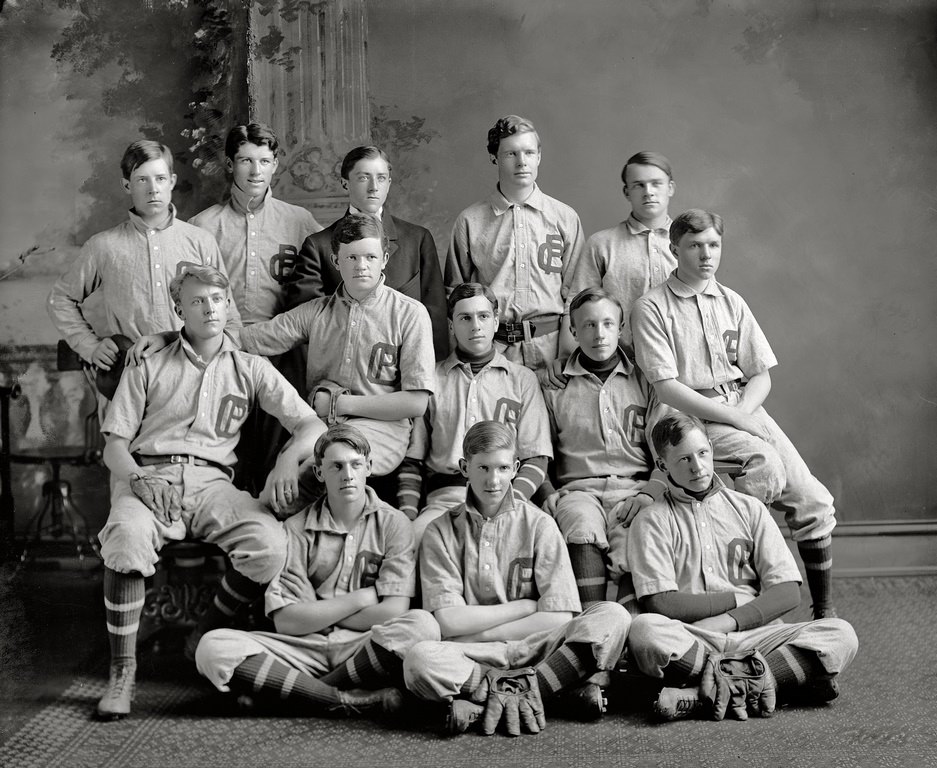
Student life was well-documented in early Washington. The Georgetown Prep baseball team posed for a photograph around 1905, representing a school that had been educating students in the Washington area since 1789. School sports teams were becoming a regular part of American educational life by this period.
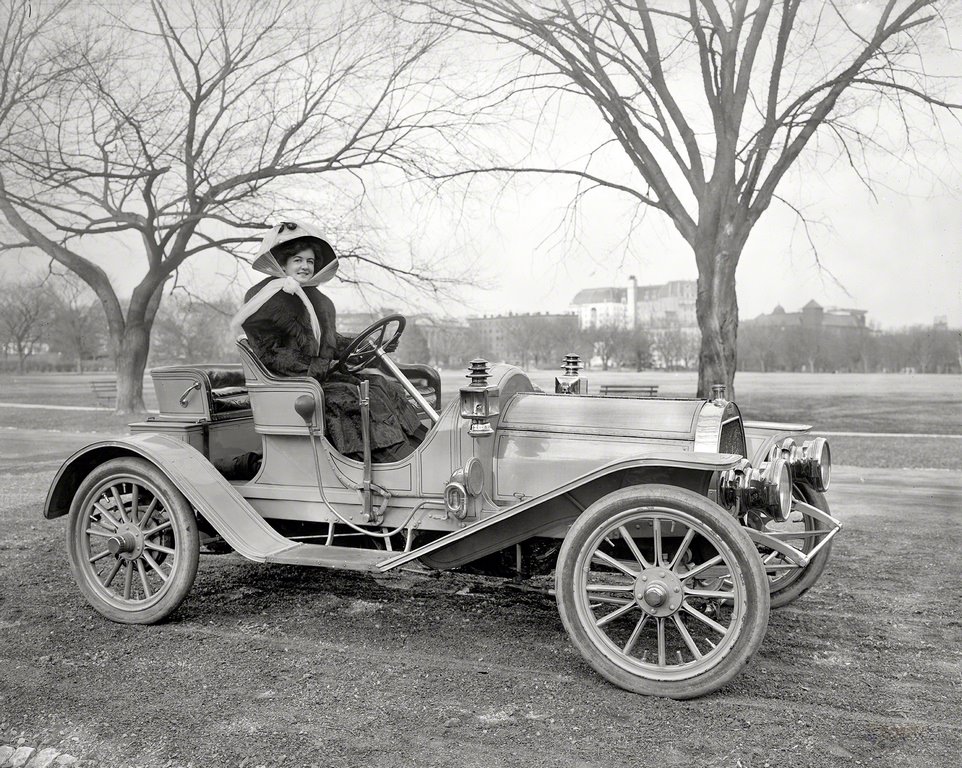
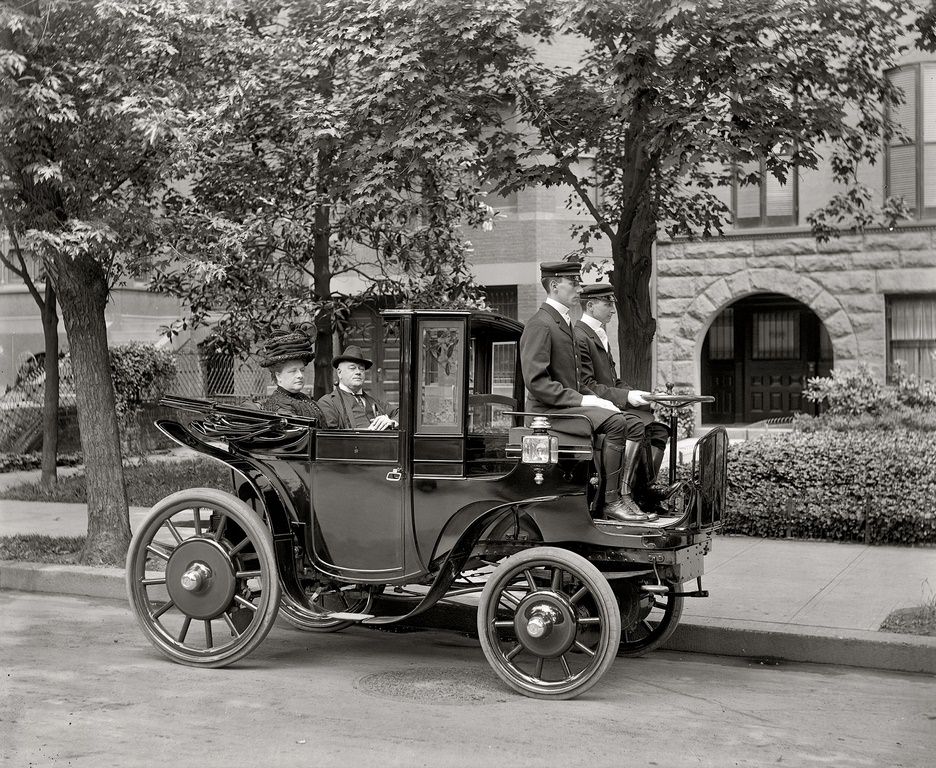
Senator George P. Wetmore of Rhode Island was photographed in an electric car around 1906 — a sign of the times. Electric vehicles were not a new invention at that moment; they had actually been competing with gasoline-powered cars for market share since the 1890s. Many wealthy Americans preferred electric cars for their quietness and ease of operation.
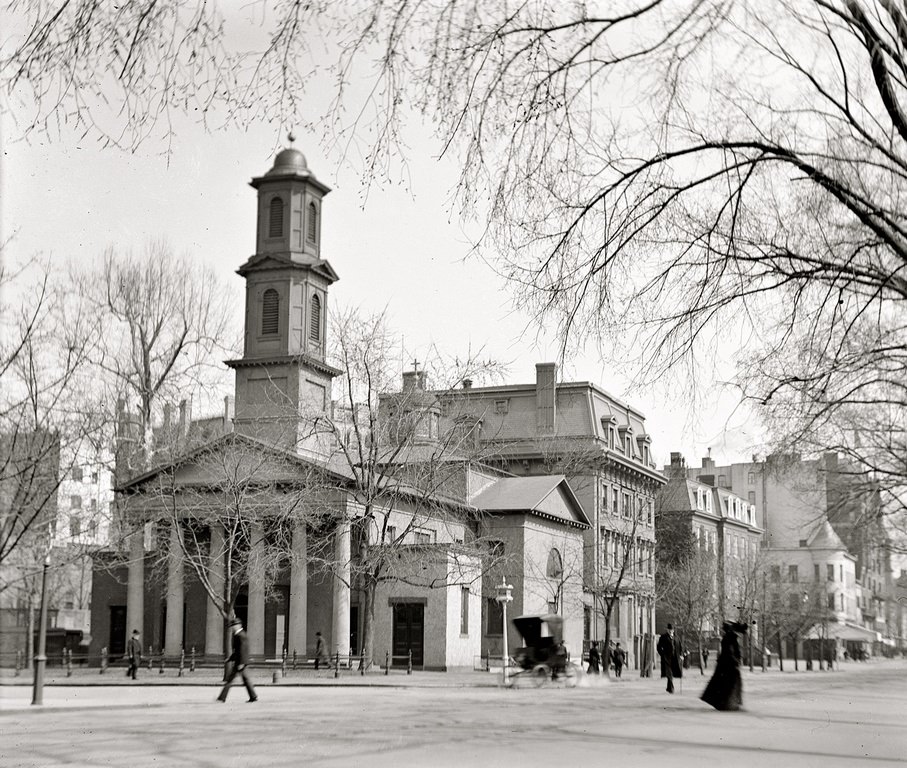
St. John’s Church at 16th and H Streets NW had been known as the “Church of the Presidents” since James Madison attended services there shortly after the church opened in 1816. By 1900, it remained one of the most prominent Episcopal churches in the city, sitting directly across Lafayette Square from the White House.
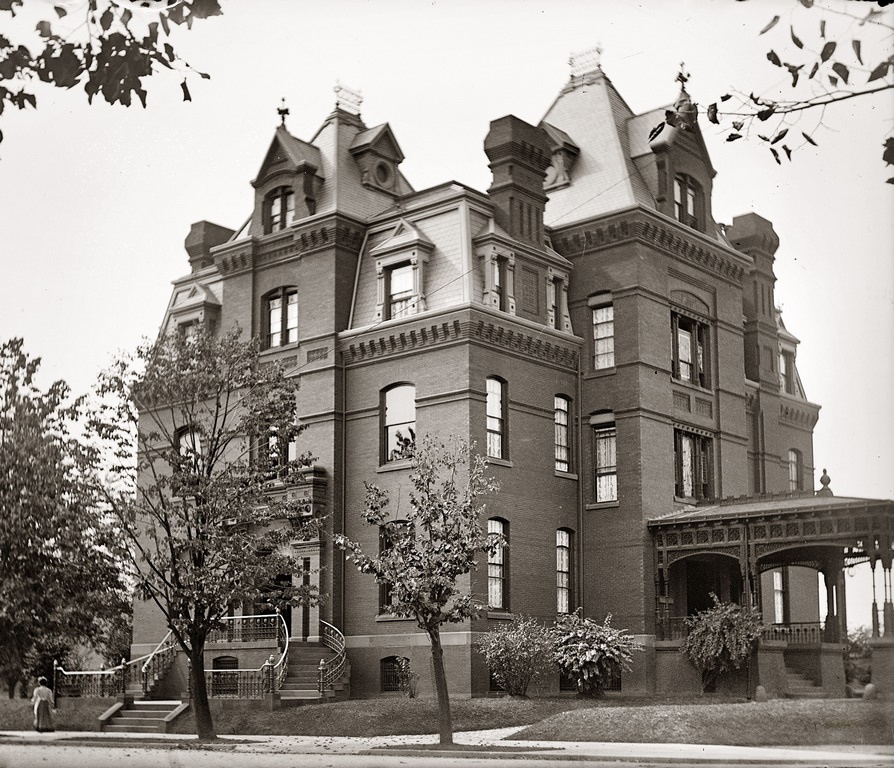
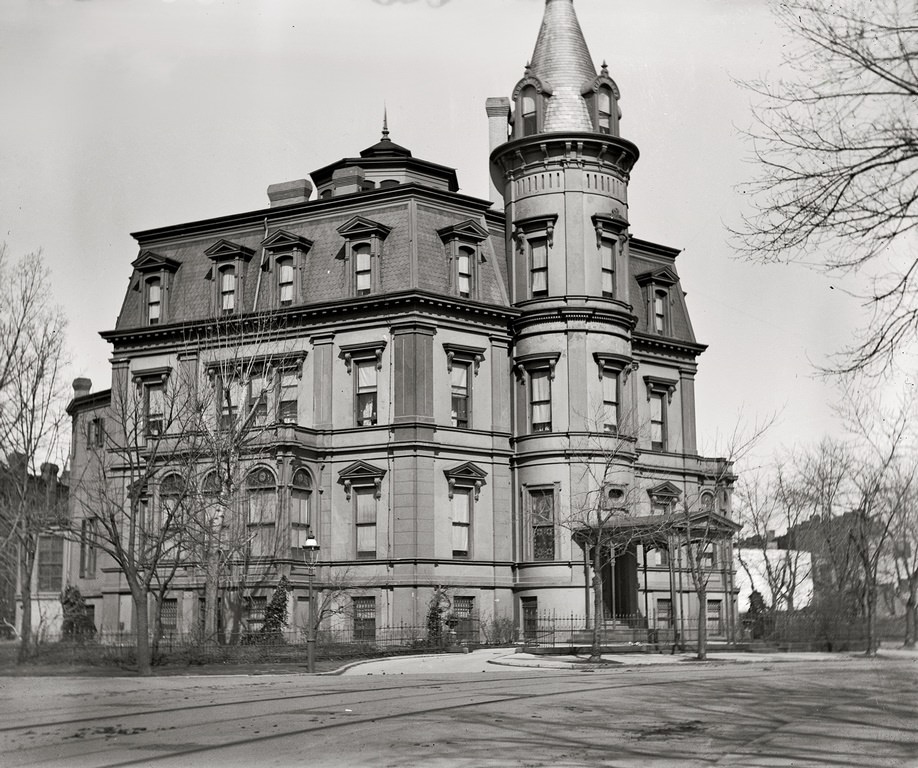
Stewart’s Castle at Dupont Circle was one of Washington’s most distinctive private residences. Designed by architect Adolph Cluss for Nevada Senator William Morris Stewart, the elaborate building sat on Massachusetts Avenue and was already nearing the end of its life when this photograph was taken around 1900. It was demolished shortly after.
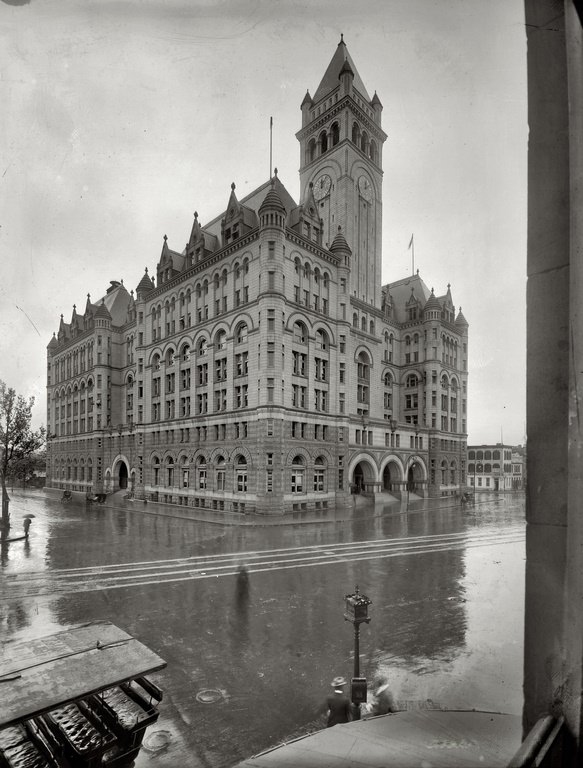
The Old Post Office building, seen from the corner of 11th Street and Pennsylvania Avenue on a rainy day in 1908, showed the kind of weather Washington’s stone buildings had to endure. Rain-slicked streets reflected the gas lamps and early electric lights that were gradually replacing one another across the city.
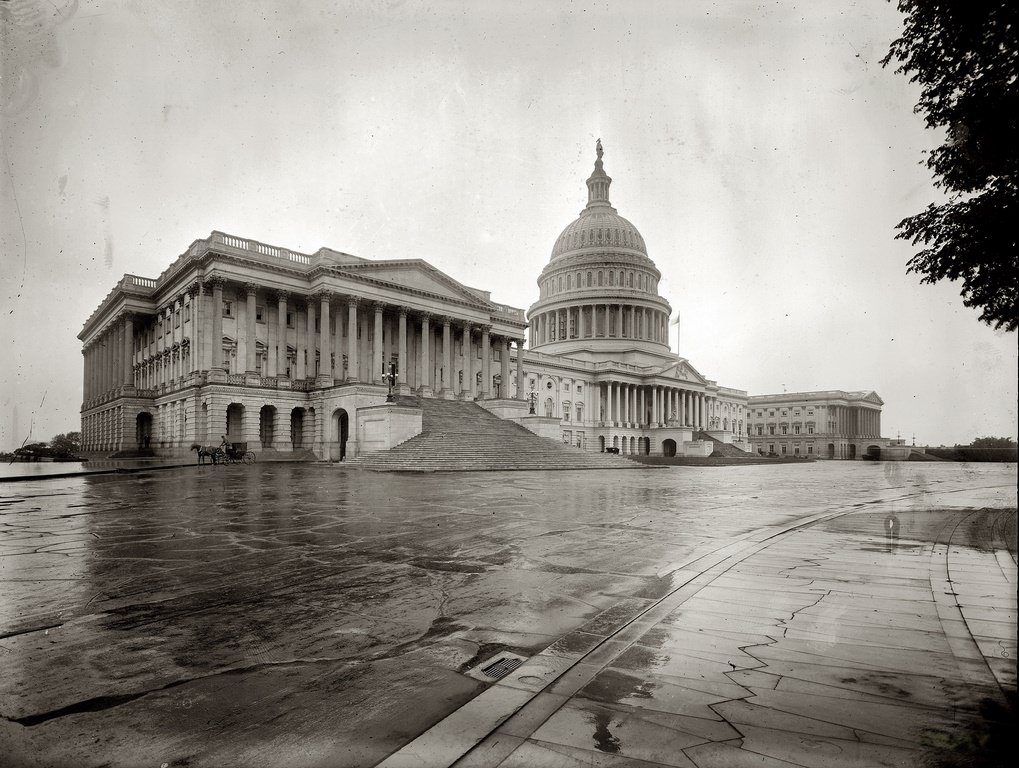
A view of the Capitol’s east front in 1908, with the Washington Monument visible to the left, showed the two great symbols of American government sharing the same skyline. At this point, the Washington Monument had been open to the public for over two decades, having been completed in 1884 after a construction effort that spanned nearly 40 years.
School sports were a growing part of Washington’s social fabric in the early 1900s. High school football teams from Eastern, Western, and other D.C. schools posed for formal photographs that recorded team rosters and captured the spirit of organized youth athletics in the city.
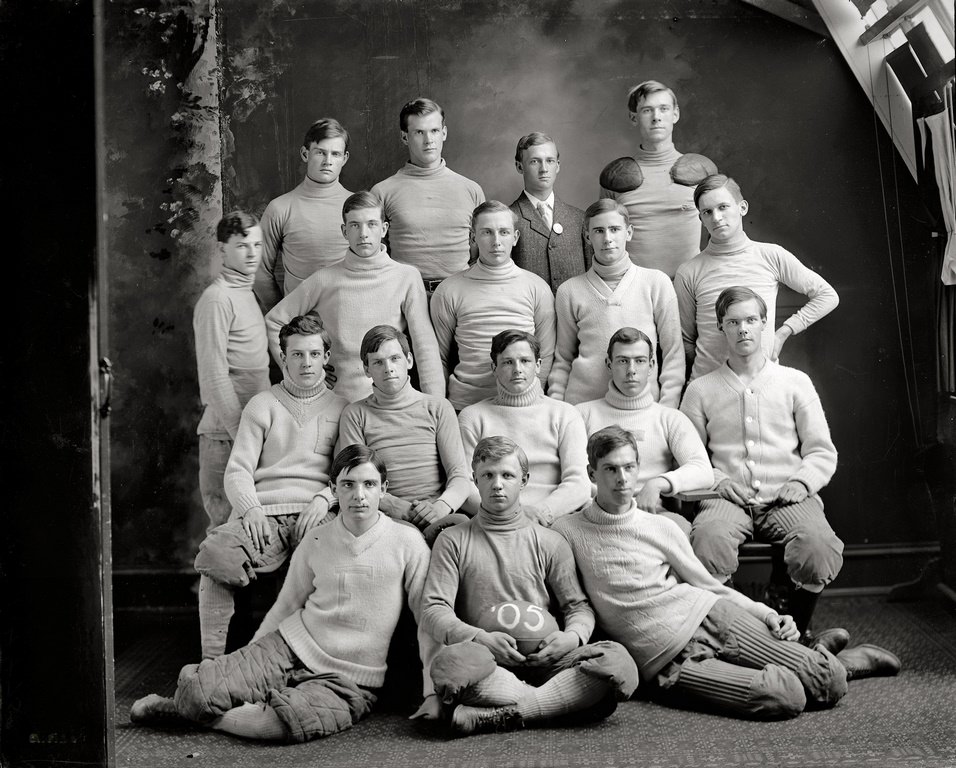
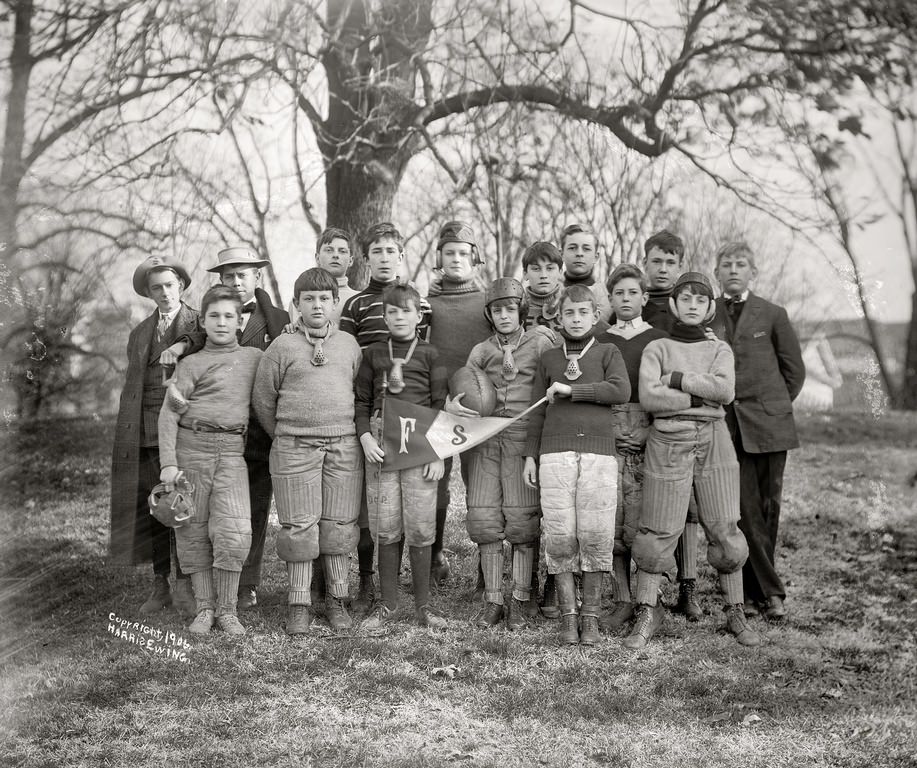
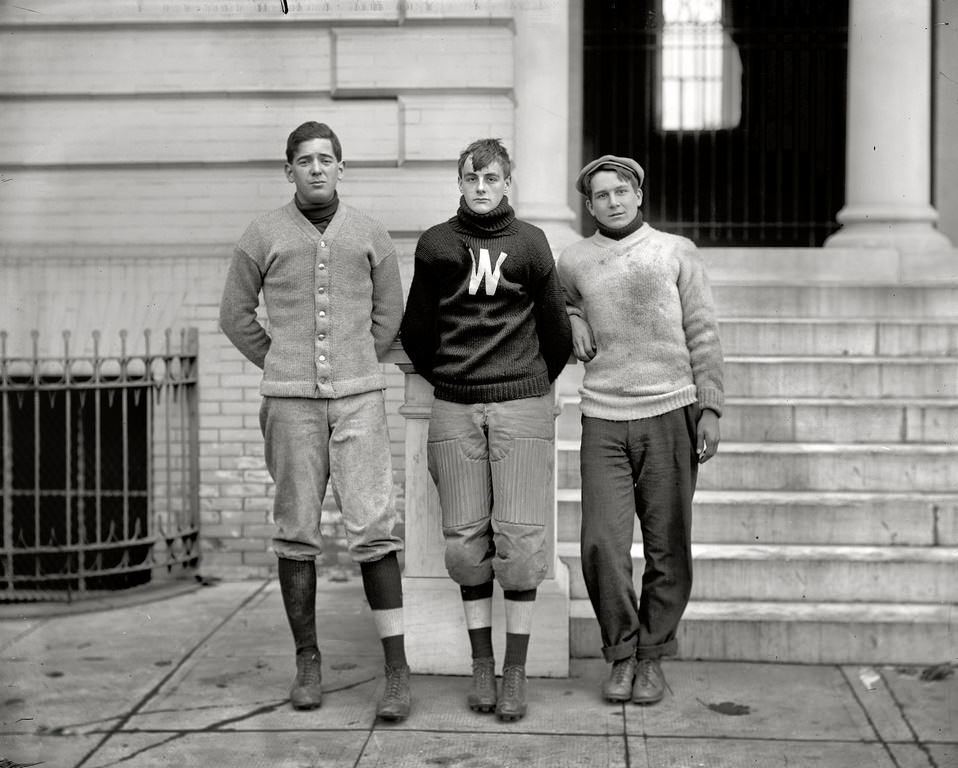
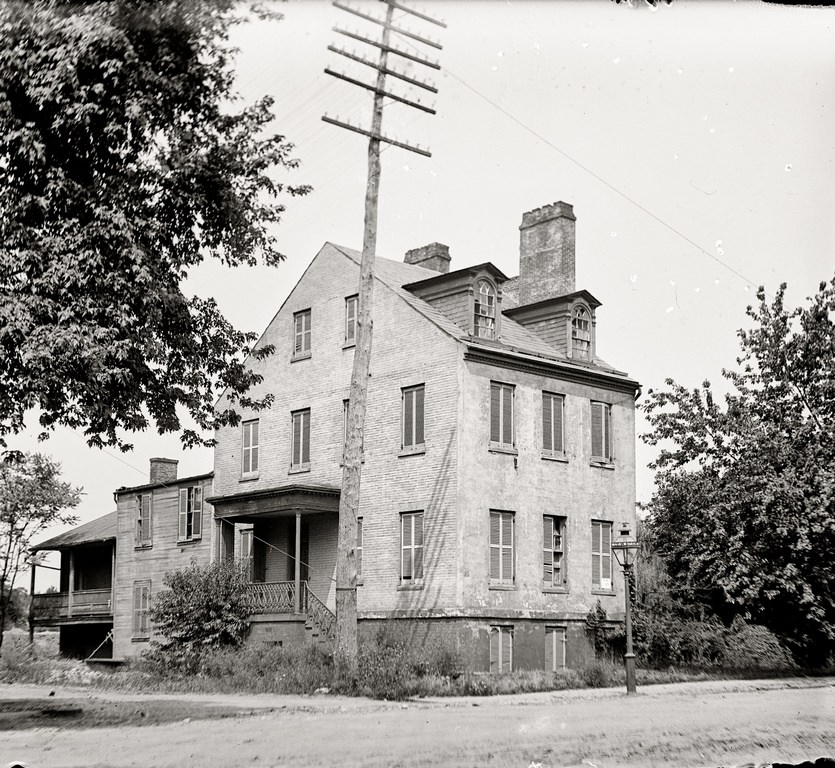
The Carbery Mansion, built in 1818 at 17th and C Streets NW for Thomas Carbery, was one of Washington’s older surviving private homes when this photograph was taken around 1901. Carbery had served as mayor of Washington City in the 1820s. By the early 1900s, the building stood as a reminder of the city’s pre-Civil War residential character.
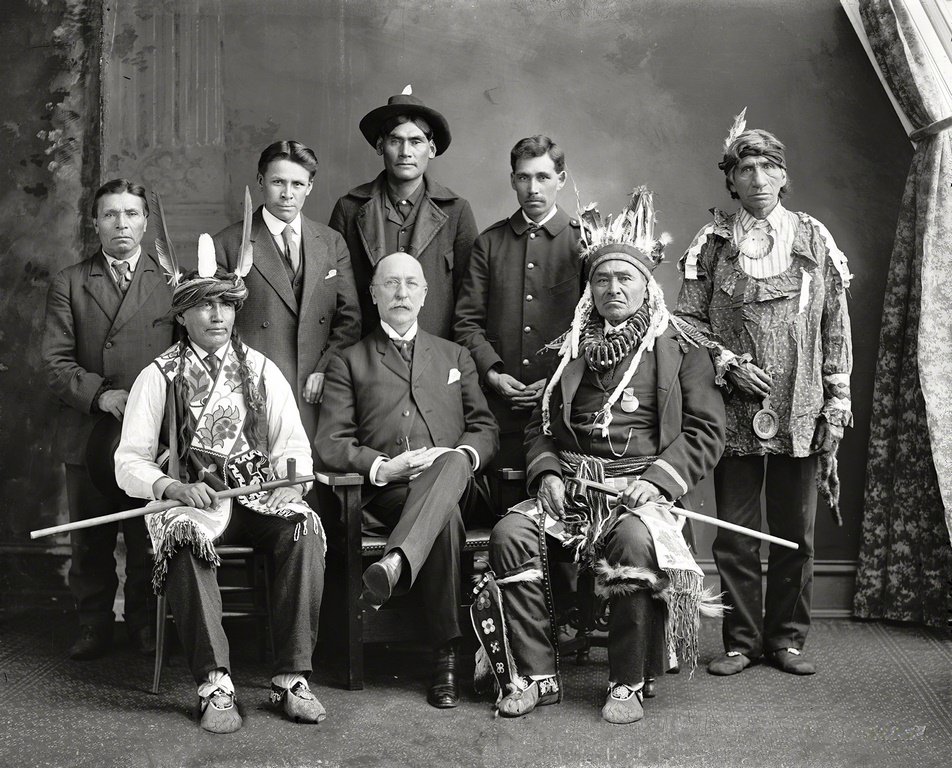
Washington D.C. in the early 1900s was also a destination for Native American leaders and delegations who traveled to the capital to meet with federal officials. This photograph of Flatmouth and his group captures one such visit, reflecting the ongoing and often difficult negotiations between tribal nations and the U.S. government that defined the era.





Interesting.
The buildings are beautiful. Why did we make everything ugly for the past 50 years?
An old photo isn’t interesting because it’s old. Most of these photos are just of buildings. The street was evident when they were taken, so it appears they were deliberately taken. Old photos of DC and other places provide a glimpse into everyday life. You are left with a mundane picture of a building by avoiding all the people, mess, and clutter.
The Key Mansion was it that was disassembled brick by brick and then lost by the postal service?
interesting, thanks for sharing.