
Wales holds a record that no other country in the world can match. With more than 600 castles packed into its borders, it has more ancient fortresses per square mile than anywhere else on Earth. Some of these structures have been continuously occupied for a thousand years. Others stand today as weathered ruins, their broken towers rising from hillsides and clifftops like something out of a painting. Many were built not by English conquerors but by native Welsh royal dynasties, who chose dramatic, beautiful locations for their strongholds. The reign of King Edward I, in the late 13th century, marked one of the most intense periods of castle-building Wales ever saw, and the structures he ordered constructed remain among the most recognized in the country.
The images below are photochroms taken in the late 19th century. The photochrom process was invented in the 1880s by a Swiss printer. To create each image, a lithographic limestone tablet was coated with a light-sensitive emulsion and then exposed to sunlight beneath a photographic negative for several hours. The result was a richly colored print that captured architecture and landscapes with a warmth and detail that standard black-and-white photography could not achieve. Like postcards of the era, photochroms were designed to appeal to travelers and featured popular subjects — castles, coastlines, street scenes, and everyday life. The Welsh castle photographs below offer a rare window into how these ancient structures looked more than a century ago.
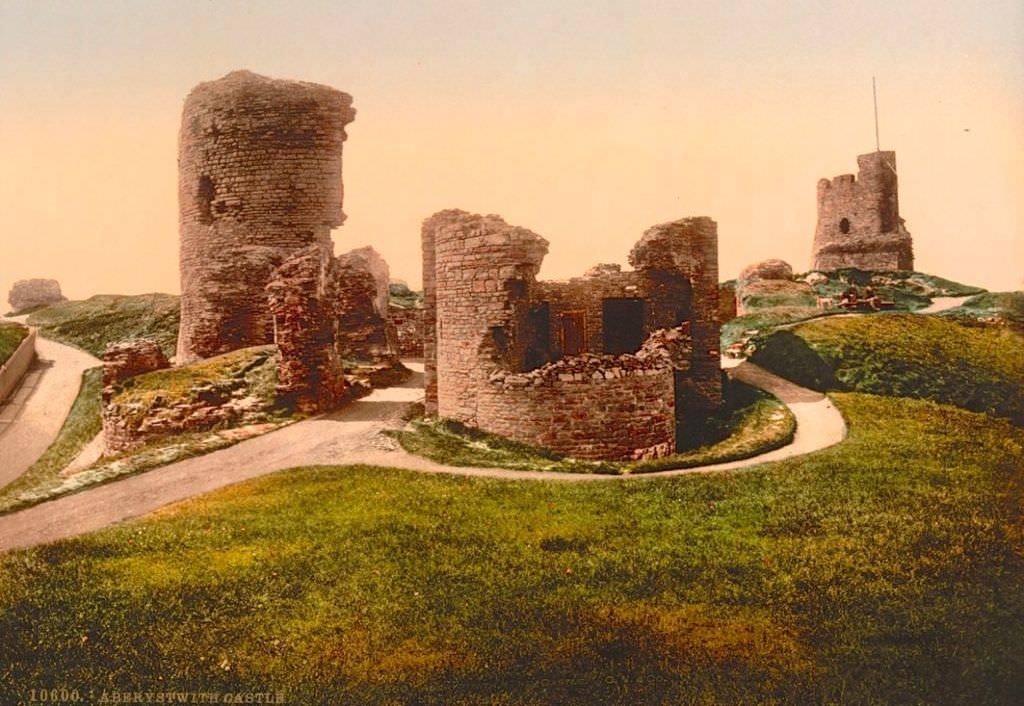
Aberystwyth Castle sits on the coast of Cardigan Bay in west Wales. It was built by King Edward I beginning in 1277 as part of his campaign to control Wales. By the late 19th century, when this photochrom was made, it had already been a ruin for over two centuries, battered by Civil War sieges in the 1640s and left to the elements ever since.
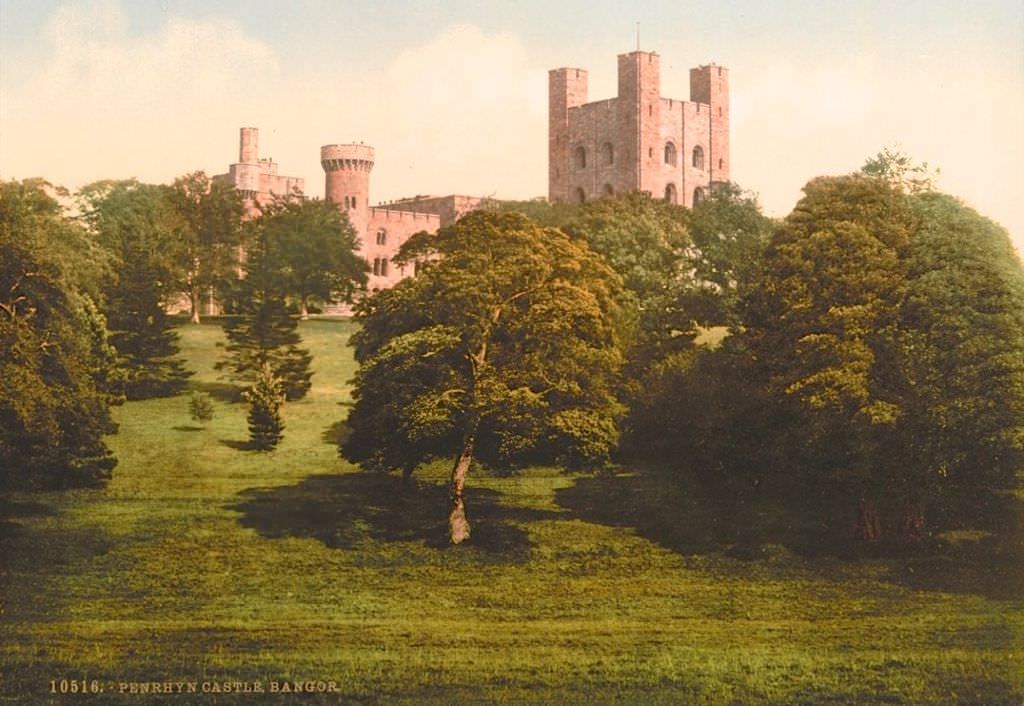
Penrhyn Castle near Bangor is not a medieval fortress but a 19th-century neo-Norman mansion built between 1820 and 1845 by architect Thomas Hopper for George Dawkins-Pennant. It was constructed using wealth generated from Jamaican sugar plantations and Welsh slate quarries. The building’s sheer scale and stone detailing made it one of the most impressive country houses in Wales.
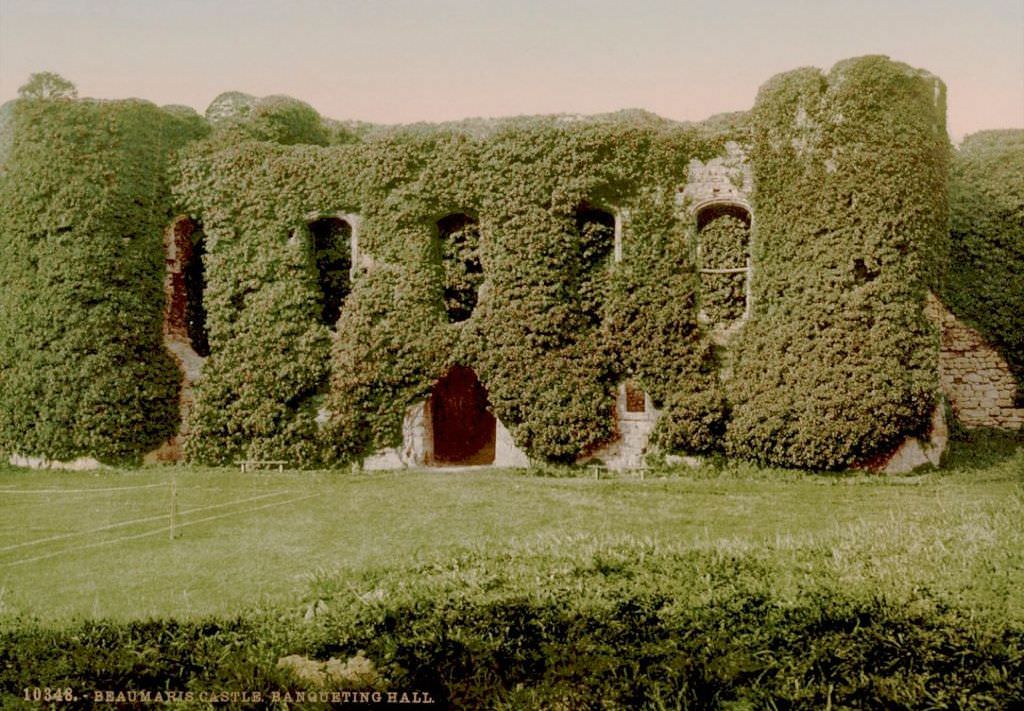
Beaumaris Castle on the Isle of Anglesey is widely regarded by historians and architects as the most technically perfect concentric castle ever built in Britain. Edward I began its construction in 1295, and despite never being fully completed, its symmetrical layout and water-filled moat made it a masterpiece of medieval military design. The area known as Banqueting Hill sits just outside its walls.
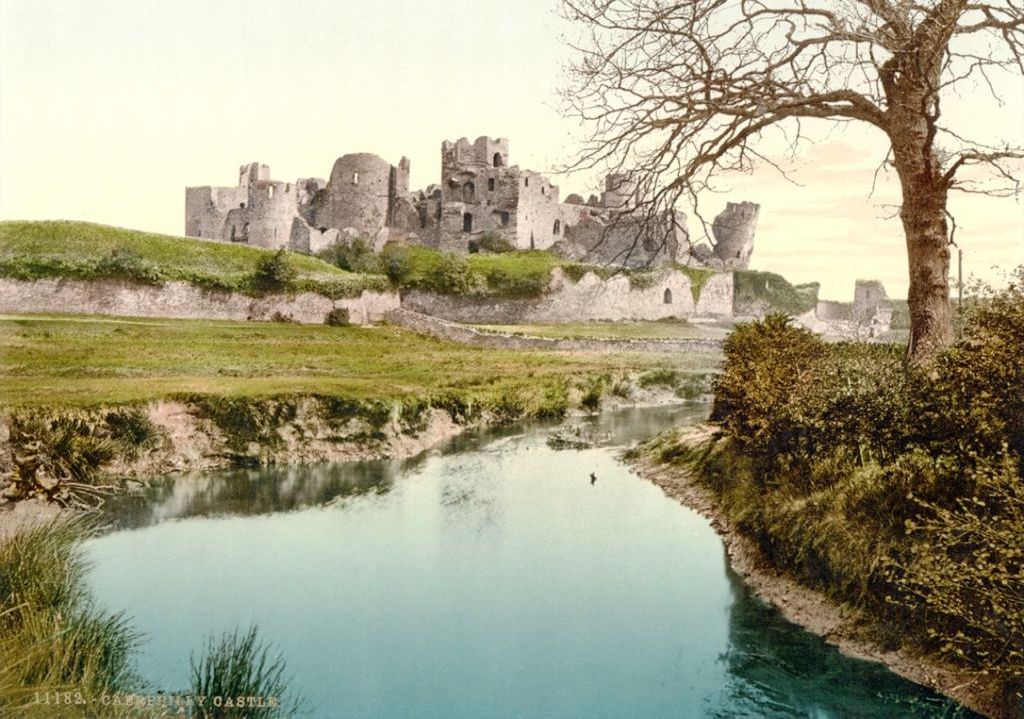
Caerphilly Castle in South Wales is the largest castle in Wales and the second largest in the whole of Britain after Windsor. It was built by the English nobleman Gilbert de Clare beginning in 1268. One of its most famous features is a leaning tower — damaged during the English Civil War — that tilts at a more dramatic angle than the Leaning Tower of Pisa.
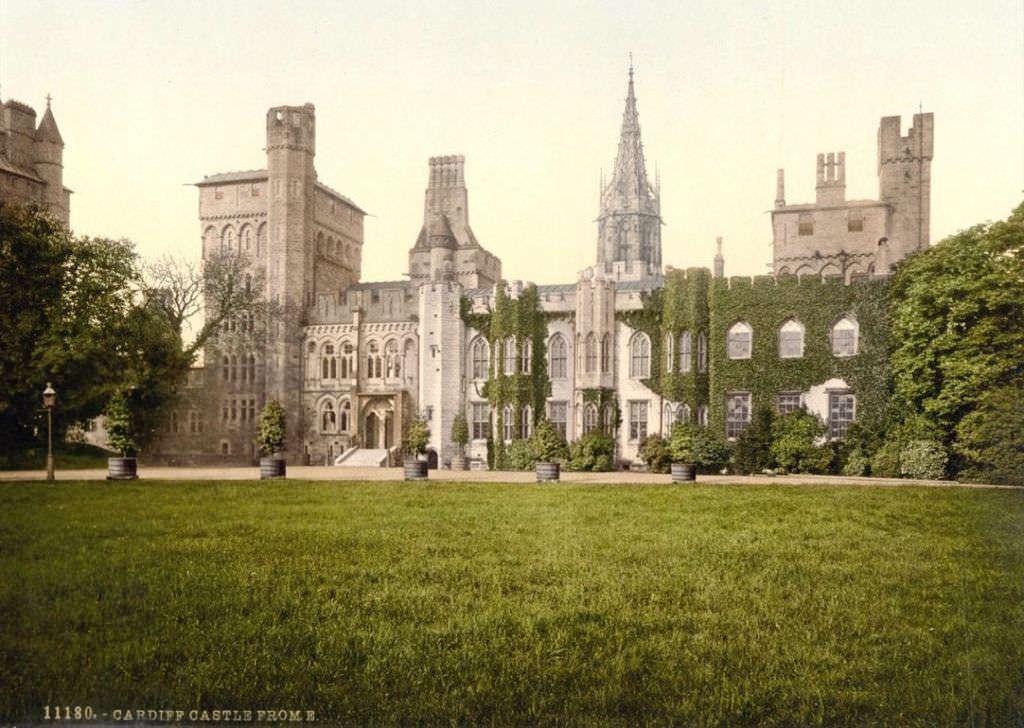
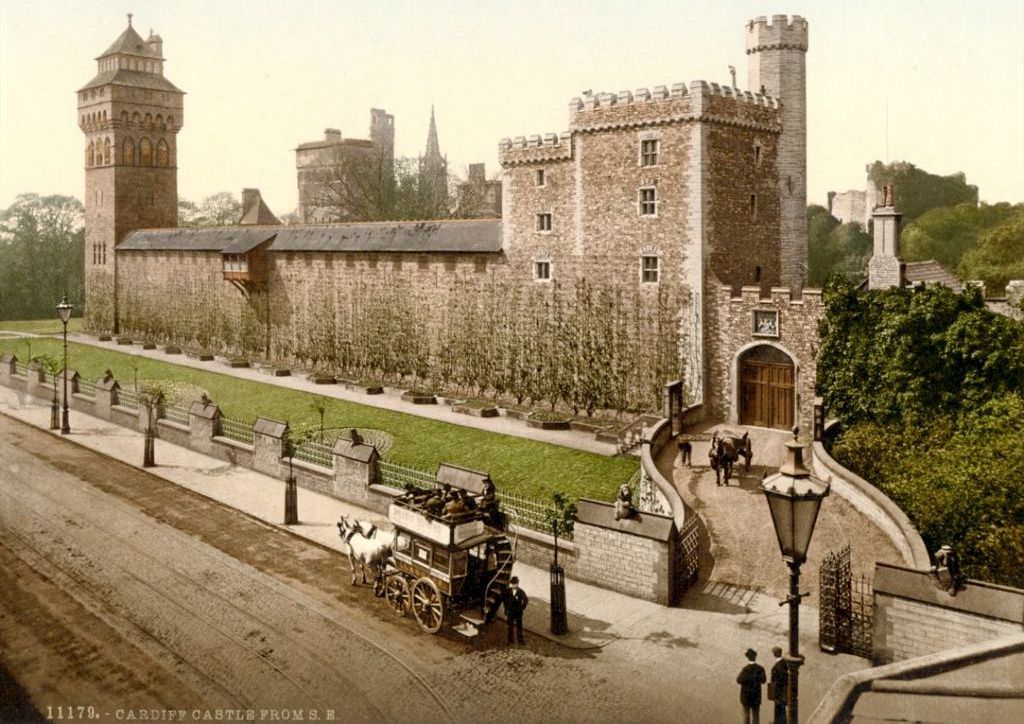
Cardiff Castle stands at the heart of the Welsh capital and has been a site of occupation for nearly 2,000 years — first as a Roman fort, then a Norman stronghold, and later a lavish Victorian mansion rebuilt by the third Marquess of Bute. These two photochroms capture the castle from the east and southeast, showing its exterior walls and the clock tower that has become one of Cardiff’s most recognizable landmarks.
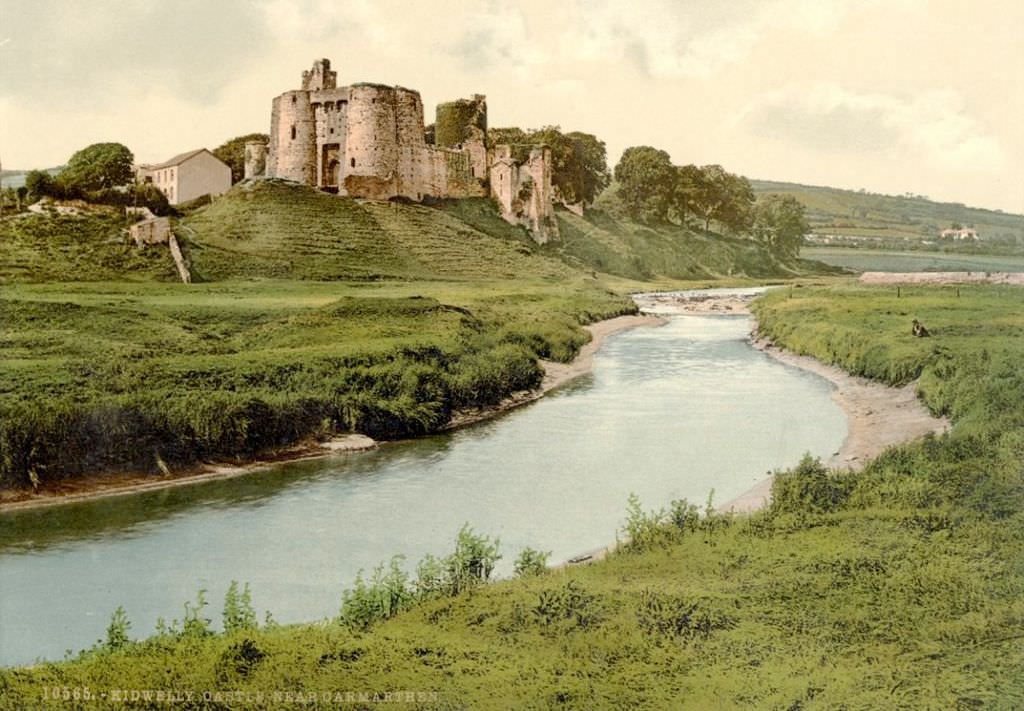
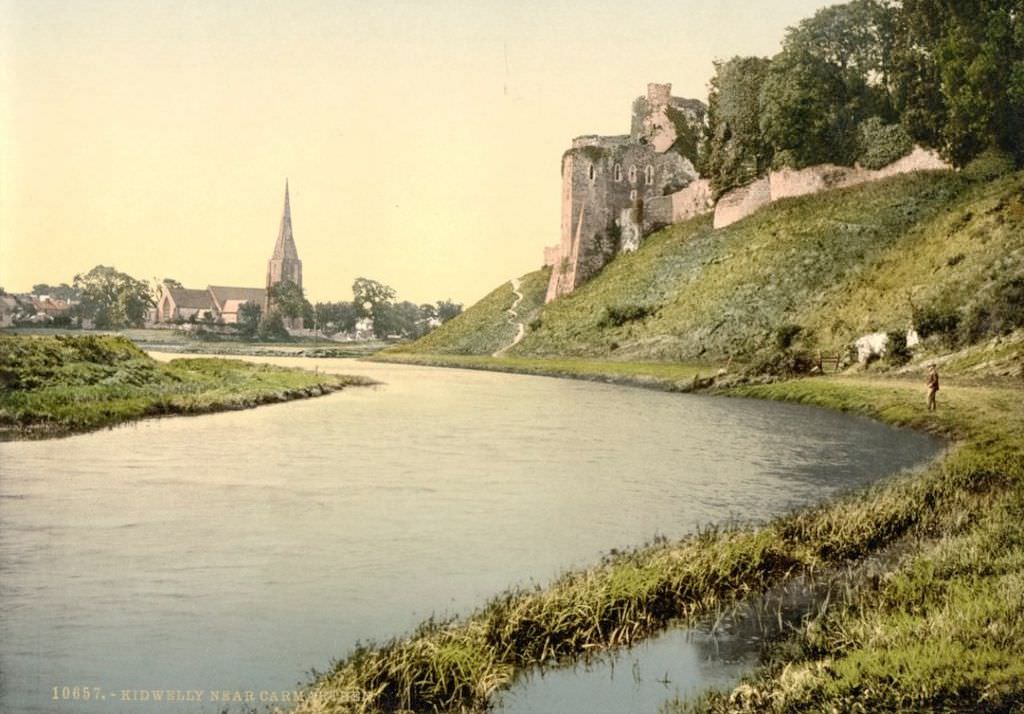
Kidwelly Castle in Carmarthenshire is one of the best-preserved Norman castles in Wales. It was founded around 1106 by Roger, Bishop of Salisbury, and later rebuilt in stone during the 13th and 14th centuries. Its semicircular outer ward and tall gatehouse still stand in impressive condition. These two photochroms capture the castle from different angles, showing both its riverside setting and its stone fortifications in detail.
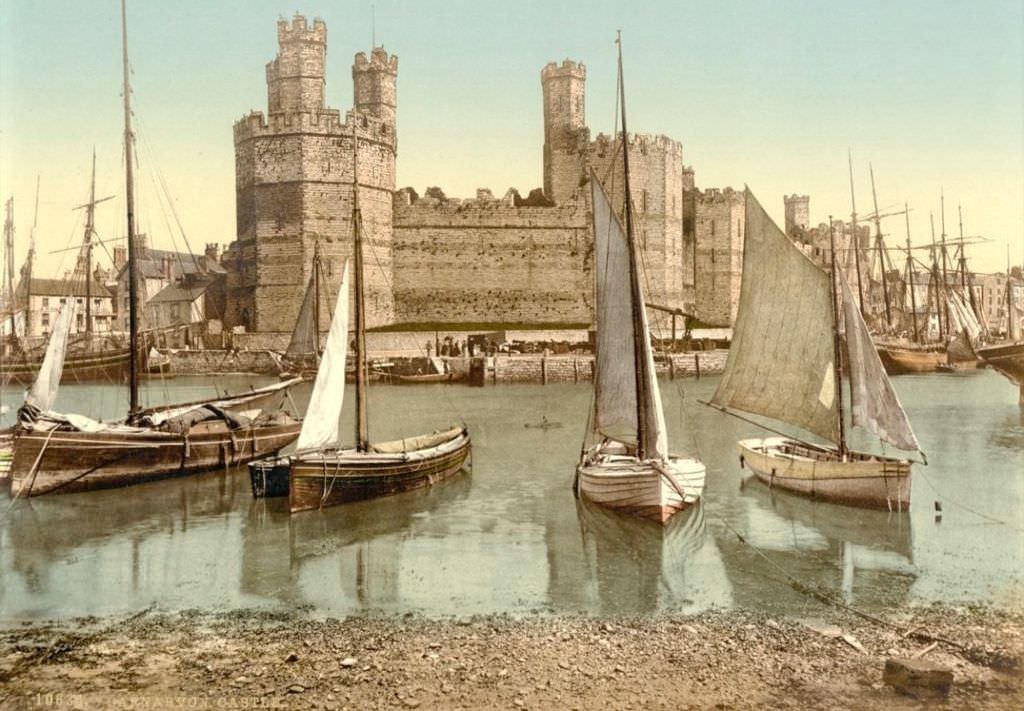
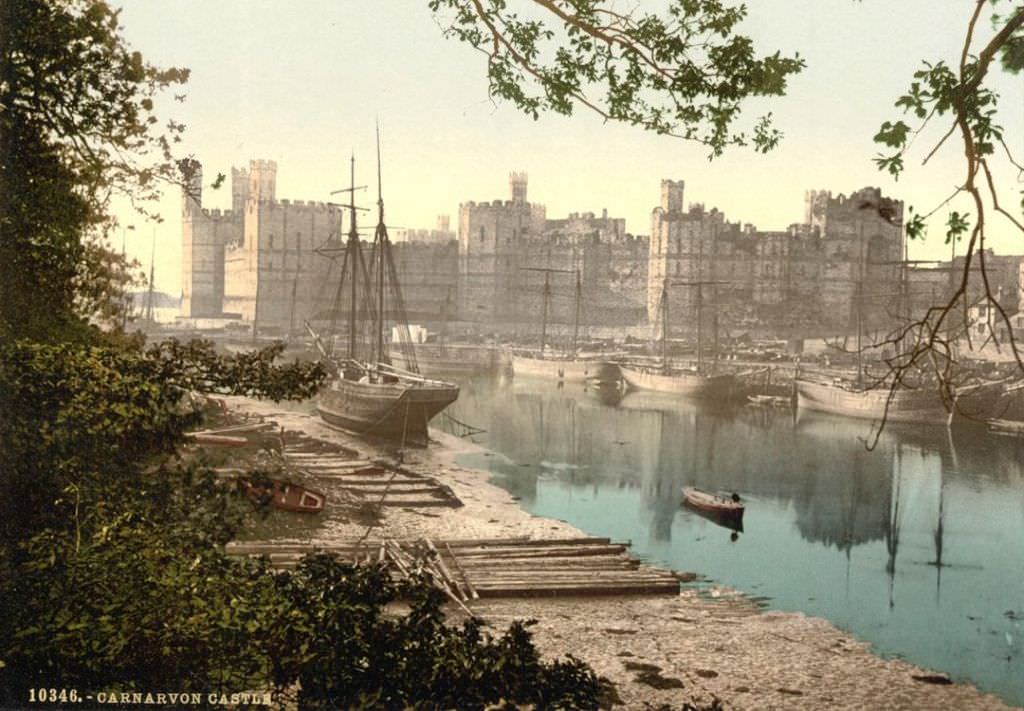
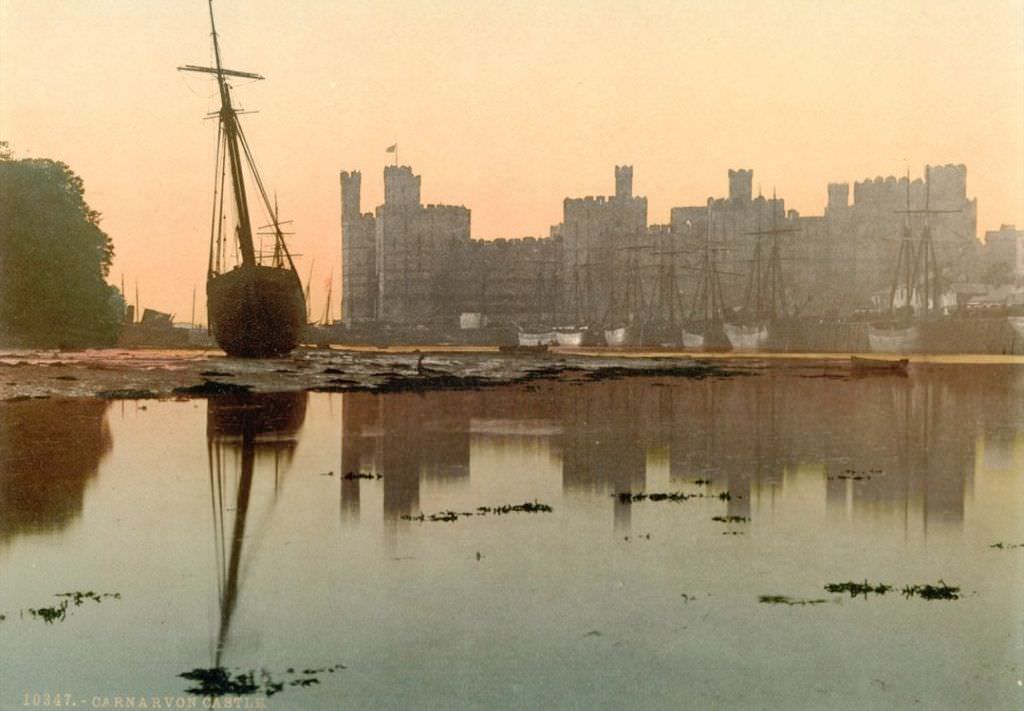
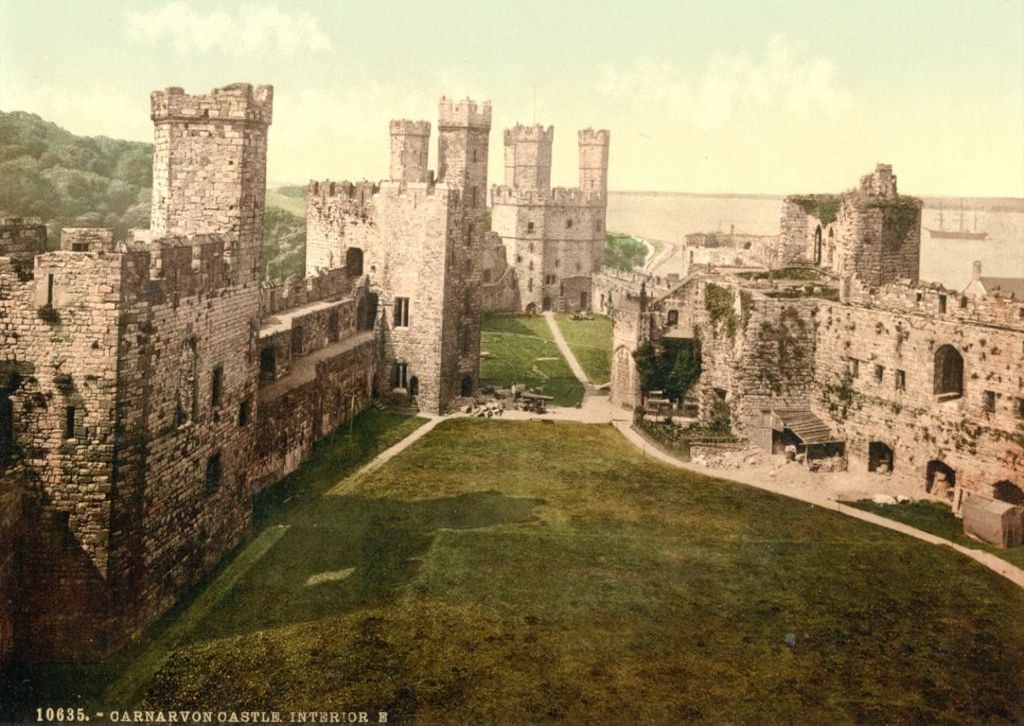
Caernarfon Castle is perhaps the most famous of all Welsh castles. Built by Edward I beginning in 1283 on the site of an earlier Norman motte-and-bailey fortress, it was designed as both a military stronghold and a seat of royal government. Its distinctive polygonal towers and banded stonework set it apart from typical castle design of the period. Three separate photochroms were made of Caernarfon, capturing it from different angles — including a breathtaking view at sunset — and a fourth image shows the castle’s interior looking eastward.
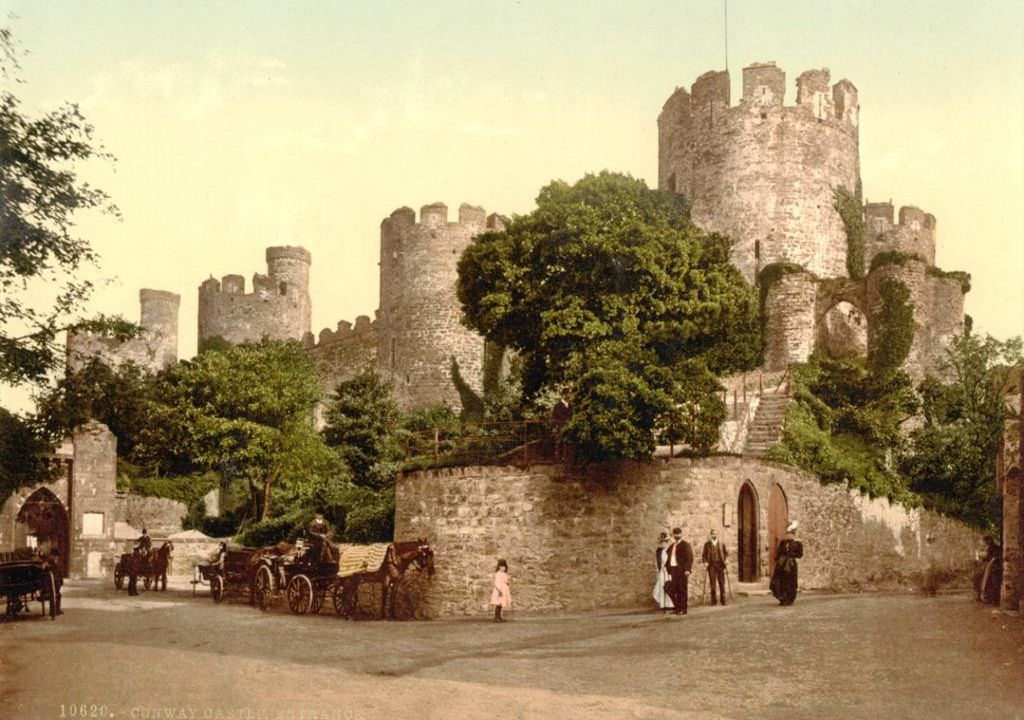
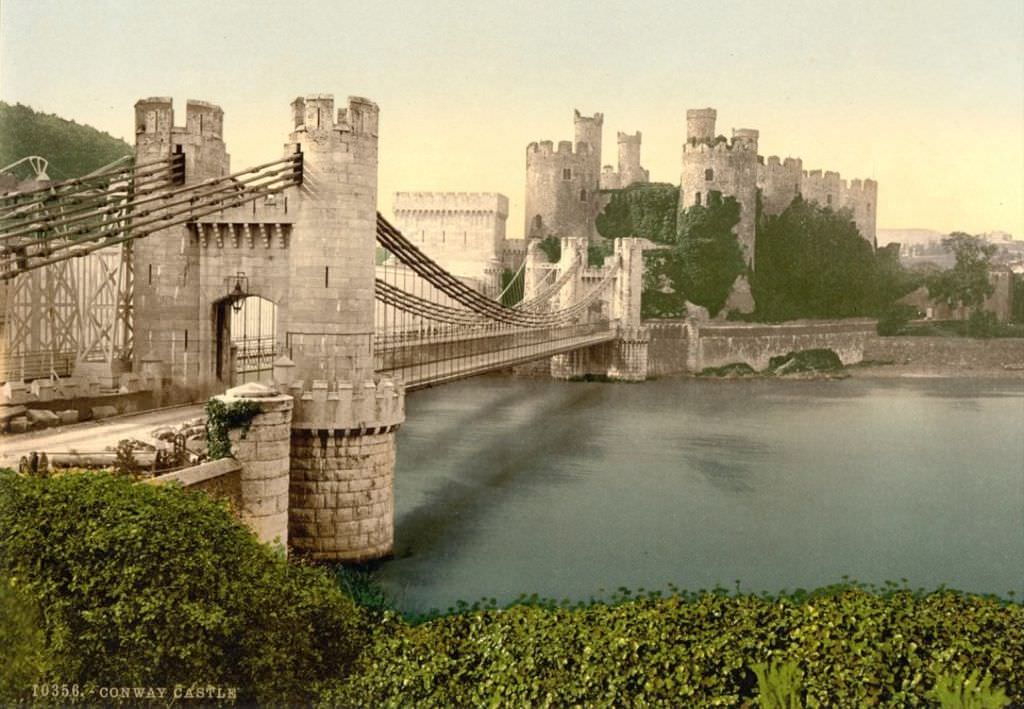
Conwy Castle was also built under Edward I, completed between 1283 and 1289 in just four years at enormous cost. It guards the mouth of the River Conwy in North Wales and is encircled by a remarkably intact town wall stretching over a kilometer. By the late 19th century, a suspension bridge designed by Thomas Telford in 1826 stood directly beside the castle’s entrance — itself built to echo the castle’s towers — creating one of the most iconic views in all of Wales.
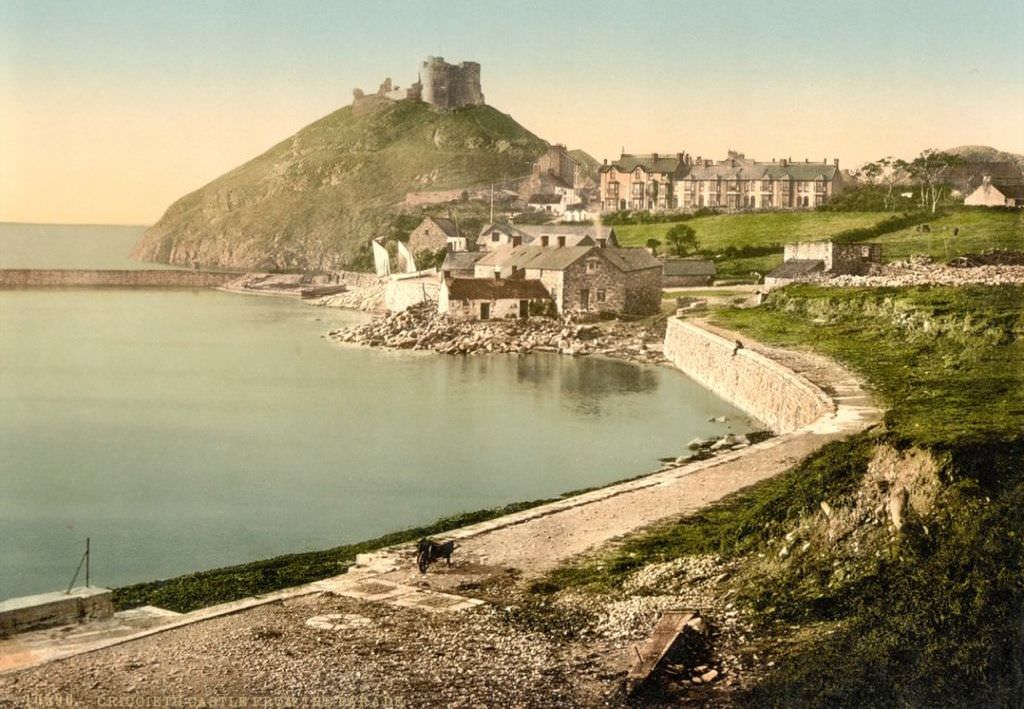
Cricieth Castle sits on a headland overlooking Cardigan Bay on the Llŷn Peninsula. Unlike many of the other castles shown here, Cricieth was originally built by the native Welsh prince Llywelyn the Great around 1230, making it a distinctly Welsh fortification rather than an English one. Edward I later captured and expanded it. The photochrom shows the castle viewed from The Parade, a seafront promenade, with Cardigan Bay stretching out in the background.
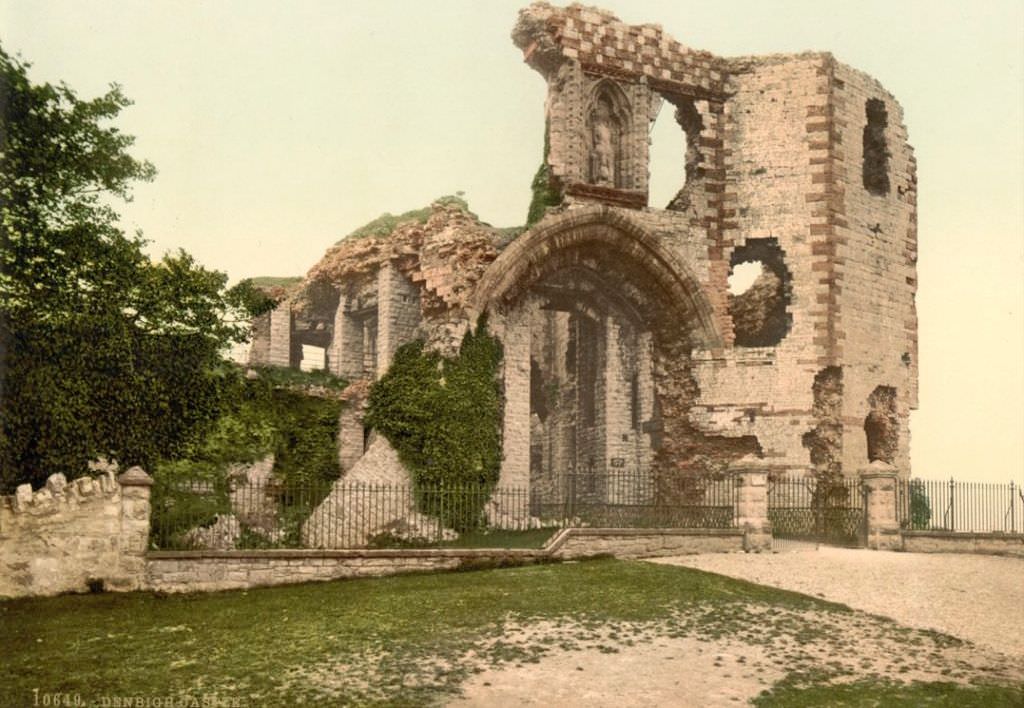
Denbigh Castle in north Wales was begun in 1282 by Henry de Lacy, one of Edward I’s most powerful barons, following the English conquest of the region. Its most striking feature is the elaborate triple-towered gatehouse, one of the most complex fortified entrances built during the Edwardian castle-building program in Wales.
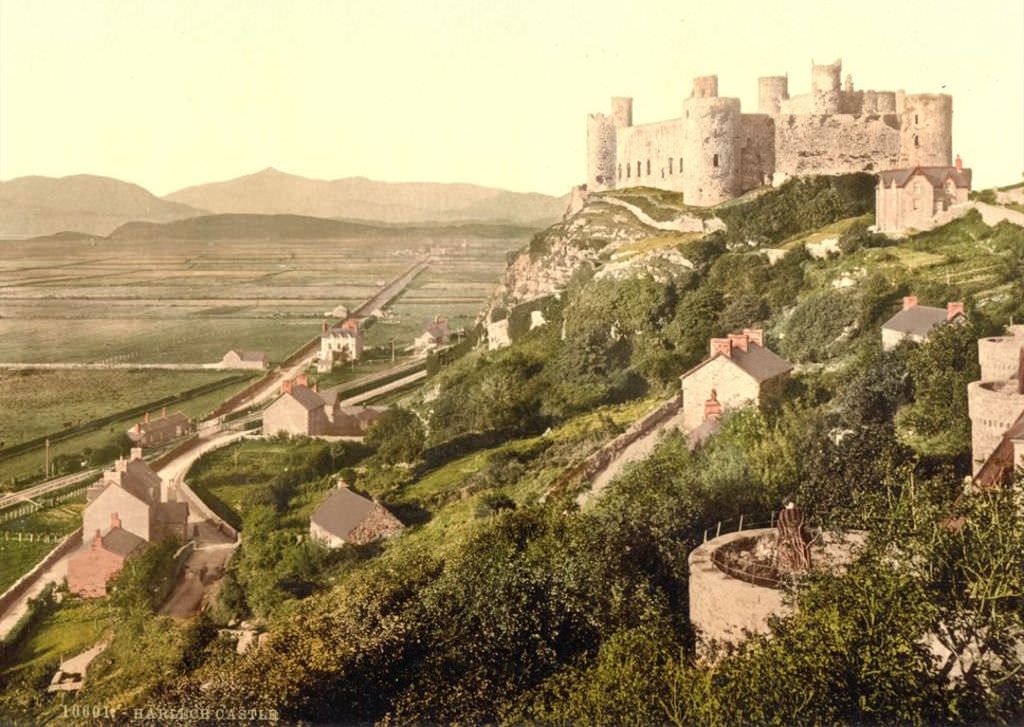
Harlech Castle clings to a rocky crag above the town of Harlech in Gwynedd, looking out over the sea and the Snowdonia mountains. Built by Edward I between 1282 and 1289, it is one of four Edwardian castles in Wales — along with Beaumaris, Caernarfon, and Conwy — designated as a UNESCO World Heritage Site. Its massive gatehouse and concentric walls made it one of the most powerfully defended positions in medieval Wales.
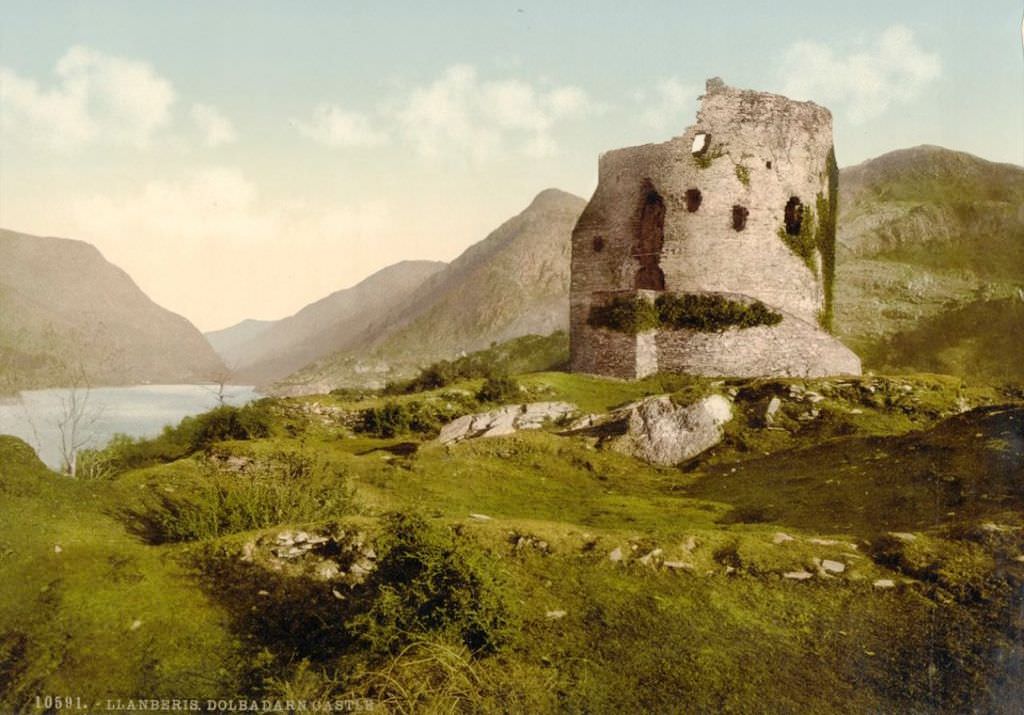
Dolbadarn Castle near Llanberis is a native Welsh castle built by Llywelyn the Great in the early 13th century. It guards the pass through the Llanberis Valley between two lakes, Llyn Peris and Llyn Padarn, at the foot of Snowdon. Its surviving round tower is one of the finest examples of Welsh-built medieval architecture still standing. By the late 19th century, Dolbadarn had become a favorite subject for Romantic painters and photographers drawn to its rugged mountain setting.
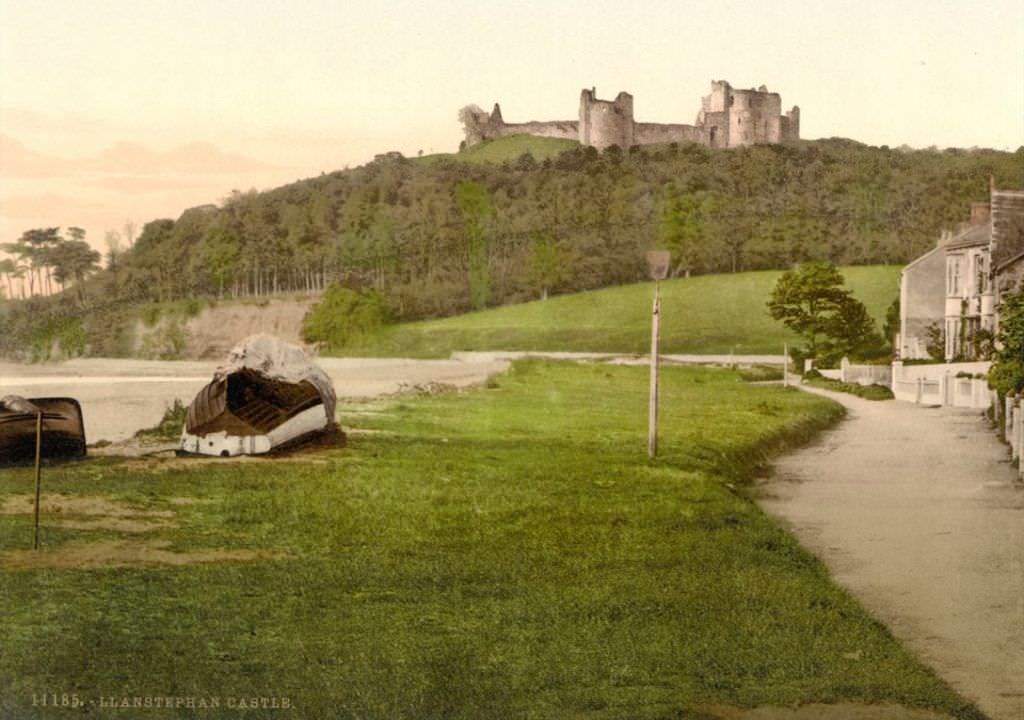
Llanstefan Castle overlooks the Tywi Estuary in Carmarthenshire from a hilltop that was fortified long before the Normans arrived. The current stone structure was built during the 12th and 13th centuries and changed hands several times between Welsh and Norman forces. Its gatehouse, converted into residential quarters in the late medieval period, still stands above the estuary today.
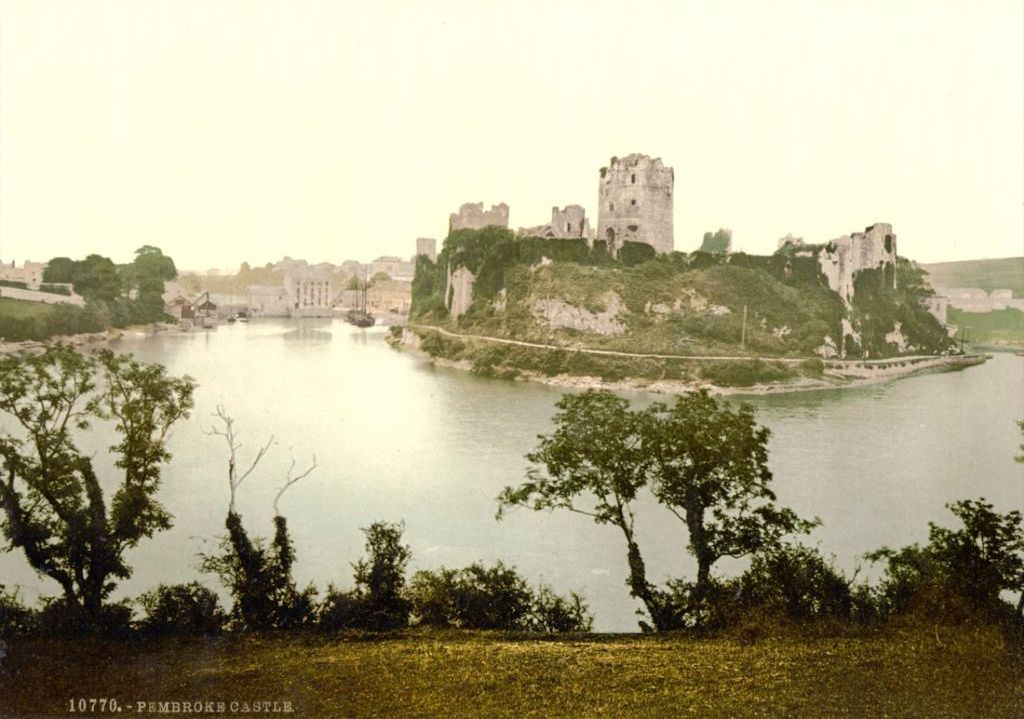
Pembroke Castle in southwest Wales holds a unique place in history as the birthplace of Henry Tudor in 1457, who went on to become King Henry VII of England and founder of the Tudor dynasty. The castle is dominated by its massive cylindrical keep, which rises 24 meters and has walls up to 5 meters thick — one of the most formidable Norman towers in Britain.
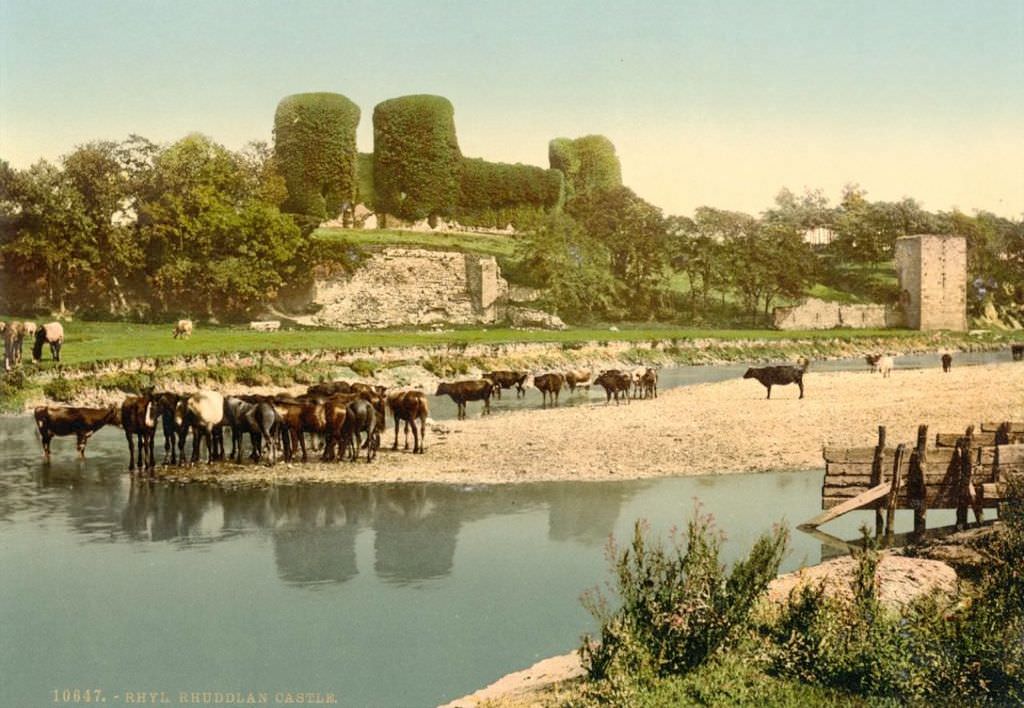
Rhuddlan Castle near Rhyl in north Wales was one of the first castles Edward I built after his initial conquest of Wales in 1277. It was constructed alongside a newly diverted section of the River Clwyd, allowing supply ships to reach the castle directly from the sea. Its concentric diamond-shaped plan was an early experiment in the design that Edward would refine at later castles like Beaumaris.
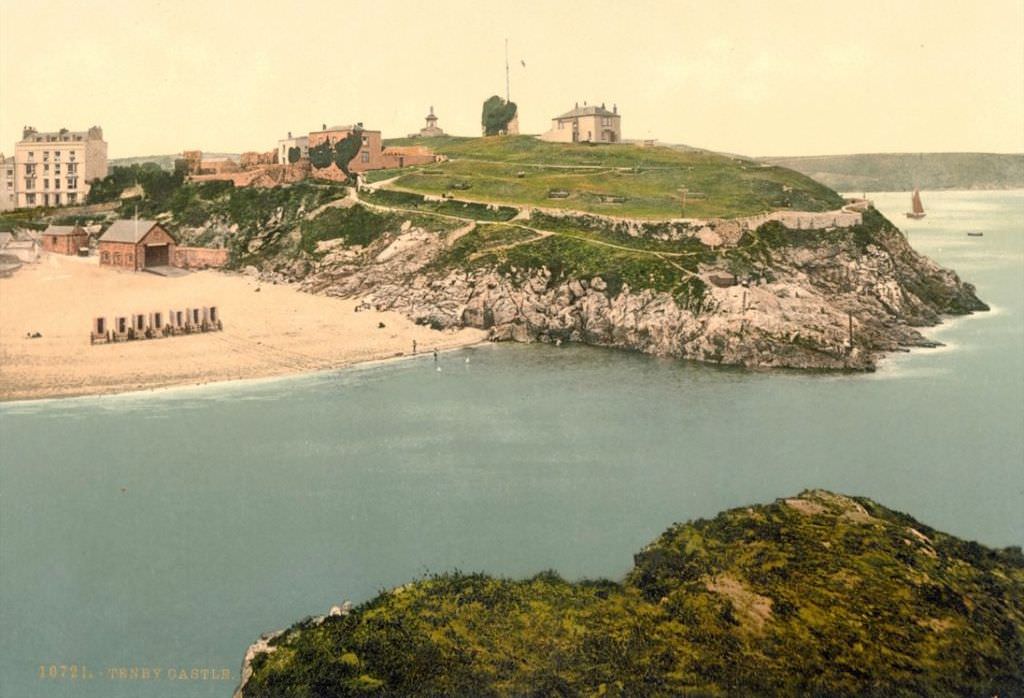
Tenby Castle stands on a headland above the harbor town of Tenby in Pembrokeshire. The castle itself was largely ruined by the time these photochroms were made, but the headland and the remains of its walls still formed a dramatic backdrop over the town’s famous beaches and colorful Georgian townhouses. Tenby was already a popular seaside resort in the Victorian era, and the castle ruins added to its picturesque appeal.
This final photochrom brings the viewer inside Caernarfon Castle itself, looking eastward through its interior. The image reveals the vast scale of the inner ward — the open courtyard enclosed by towers and walls — giving a clear sense of just how much space was contained within the castle’s outer defenses. The towers along the walls still show their original window openings and wall-walk passages, details that are easy to miss from exterior views.





These are stunning
I apologize for being picky, but Wales has way older architecture. Consider Tre’s Ceiri, or numerous churches. Most of those castles were built by the English.
I’m impressed by how much work some of these have undergone to remove all that ivy, since these pictures were taken.
Caerphilly, in particular, is in much better shape today, thanks to investment by the 4th Marquess of Bute to make the ruins safe.