Hey There! Before You Go. 😧
Get the best vintage content straight into your inbox!

Don't worry, we don't spam

What Waikiki, Honolulu looked like in the 1970s

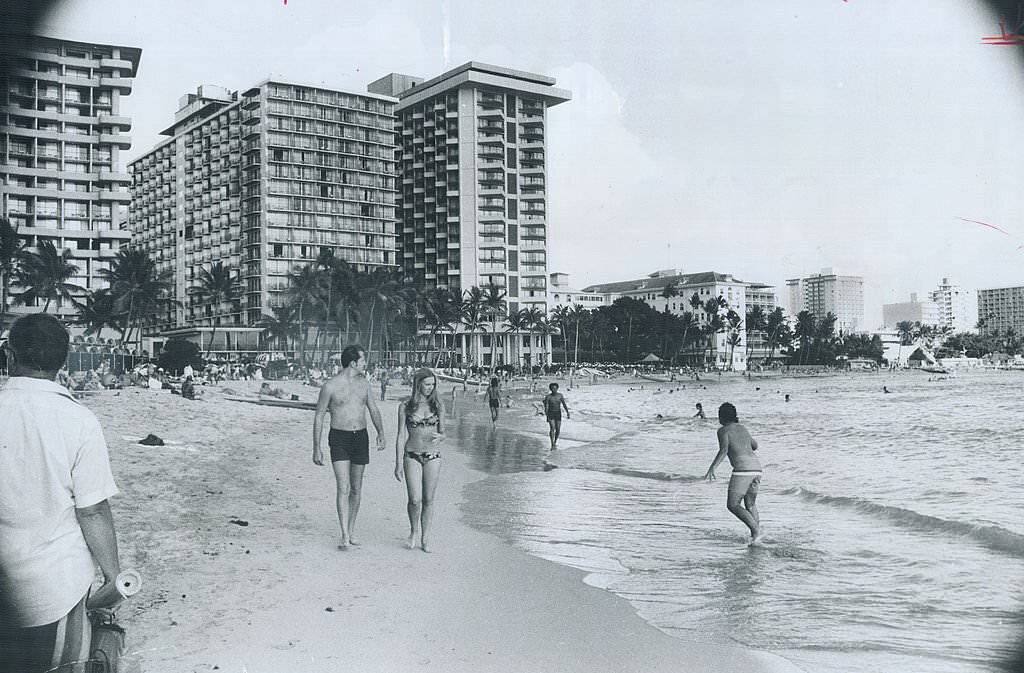
By the 1970s, Waikiki had already become one of the most visited beach destinations in the world. Squeezed into a roughly one-square-mile strip on the south shore of Honolulu, it packed an extraordinary amount of activity into a small space — white sand beaches, high-rise hotels, busy commercial streets, and a cultural life that ran from traditional Hawaiian dance to rock concerts in the park. These photographs capture a neighborhood in full swing, changing fast but still holding onto a distinct character that set it apart from any other resort area on earth.
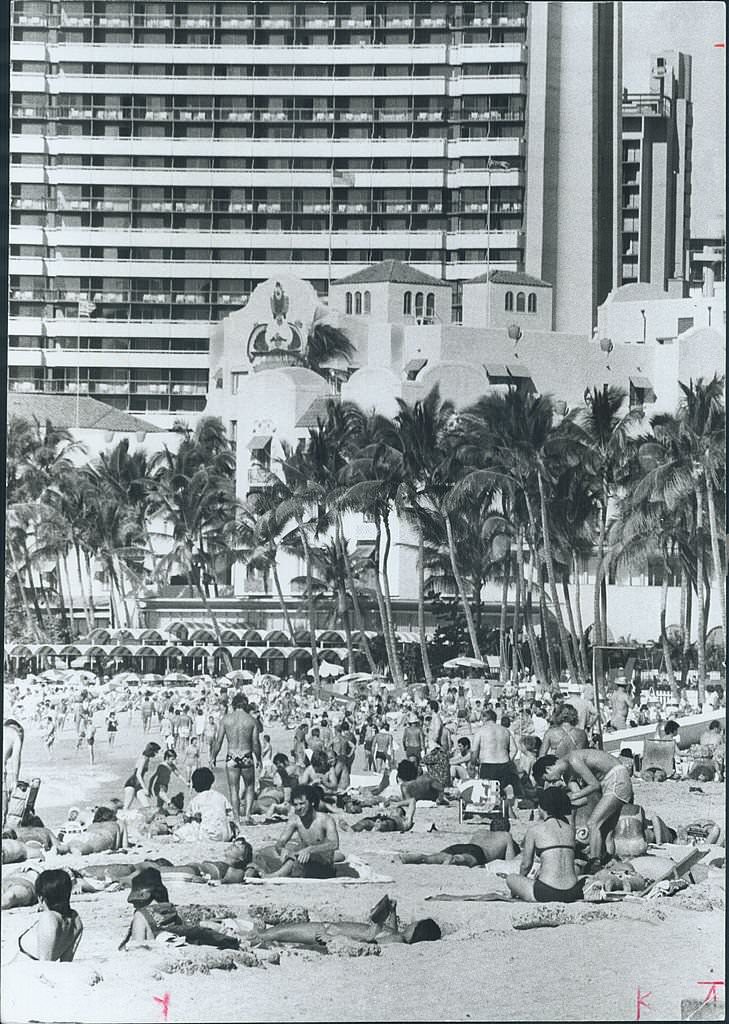
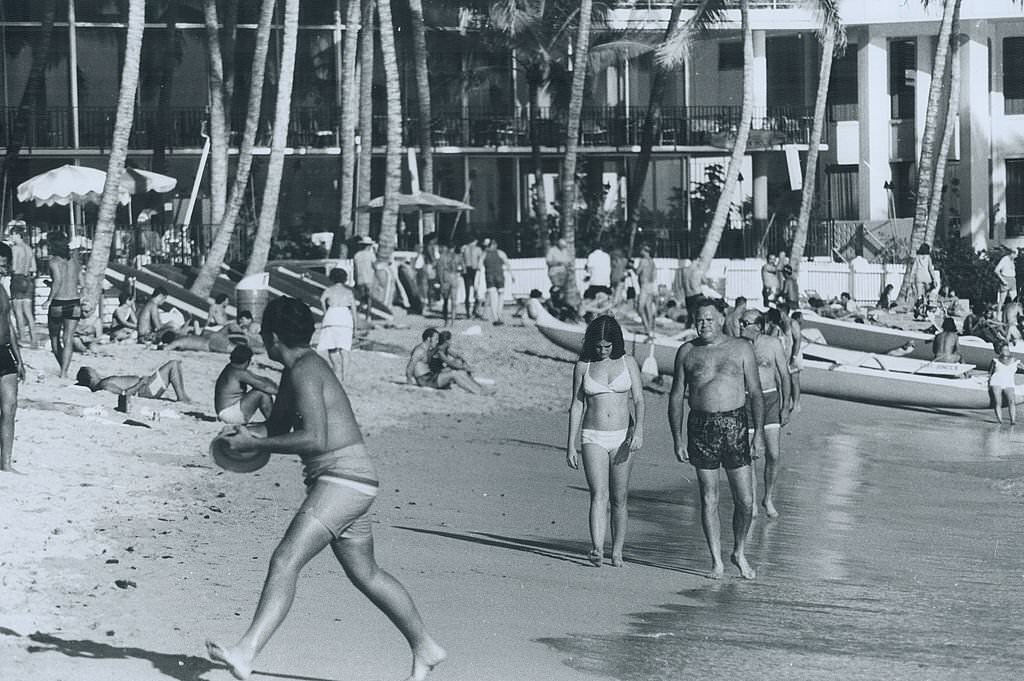
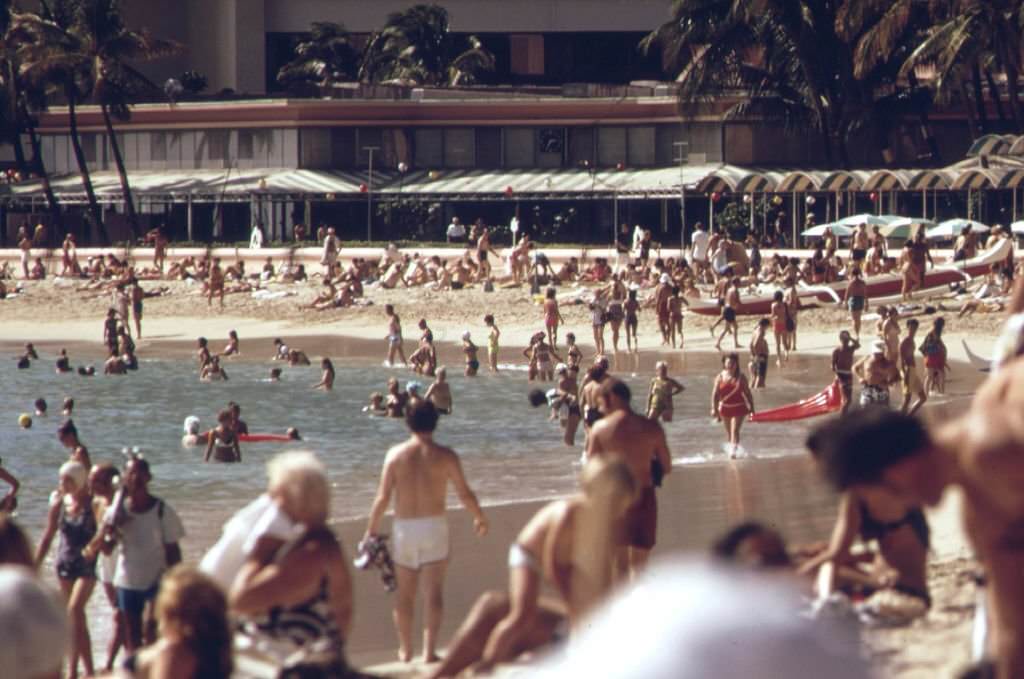
Wall-to-wall people pack the beach at Waikiki every day sun shines, 1970s

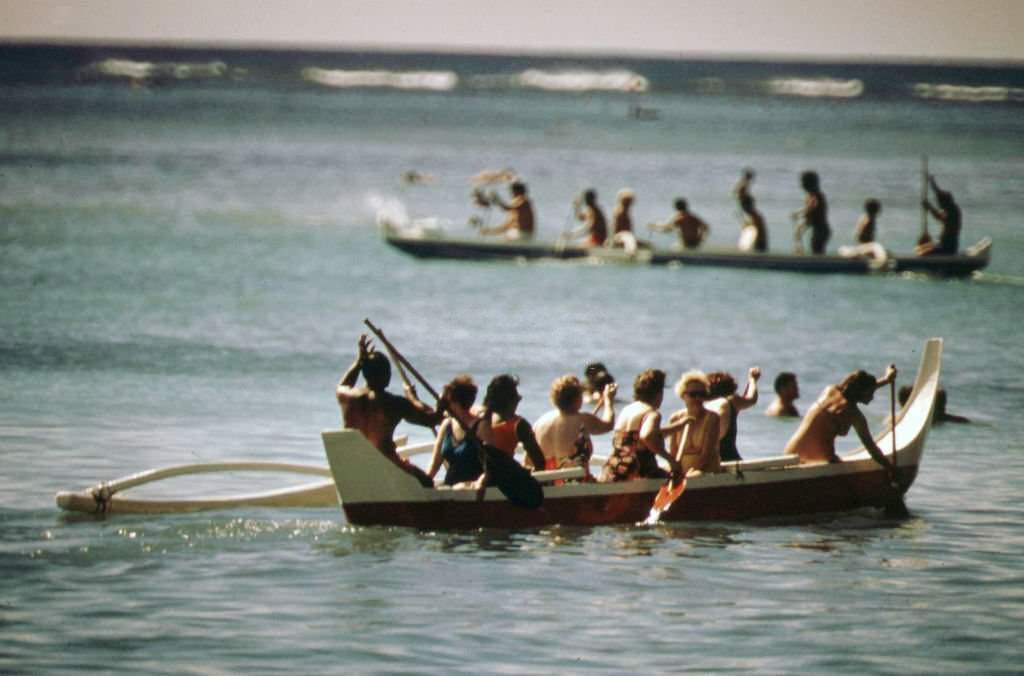
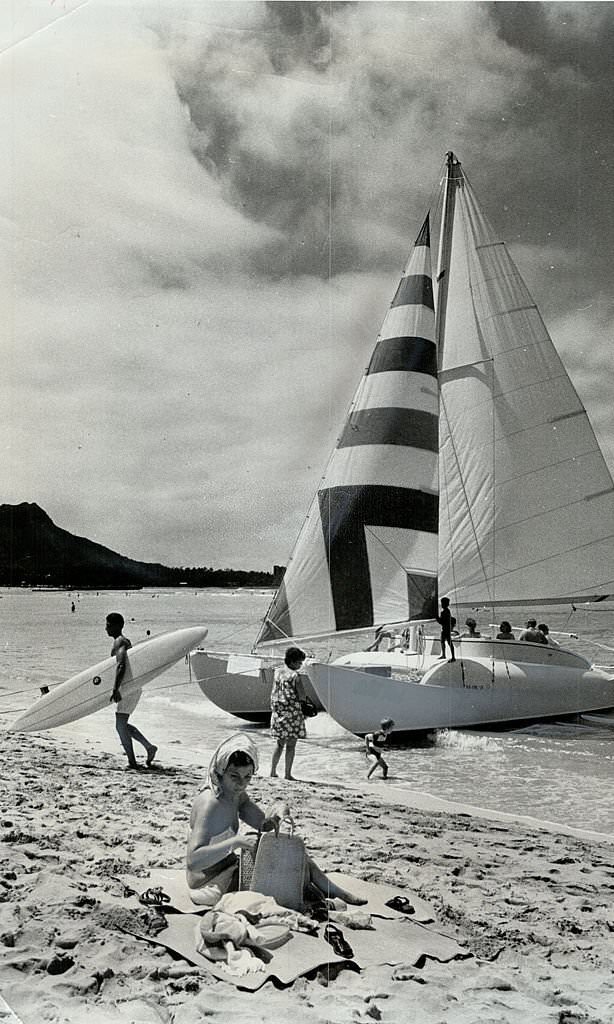
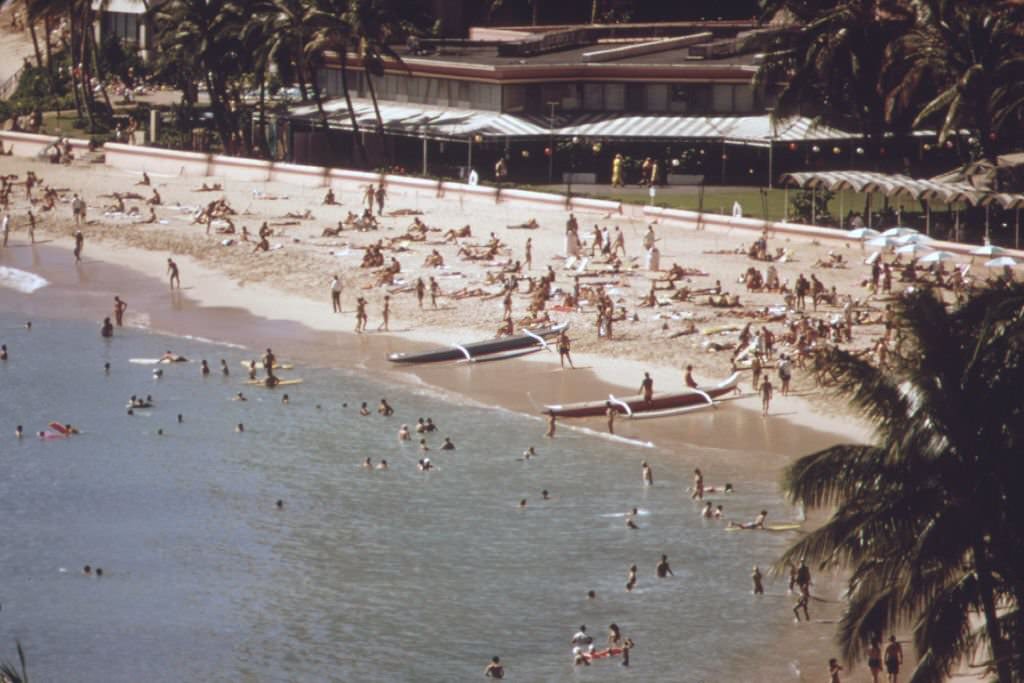
The beach itself was the center of everything. On any sunny day, Waikiki Beach drew crowds that packed the sand from the water’s edge back to the seawall. Swimmers waded into the calm, turquoise shallows while surfers paddled out toward the breaks further offshore. Outrigger canoes — a fixture of Hawaiian beach culture long before the hotels arrived — still launched regularly from the sand, carrying both locals and tourists through the gentle reef waves.
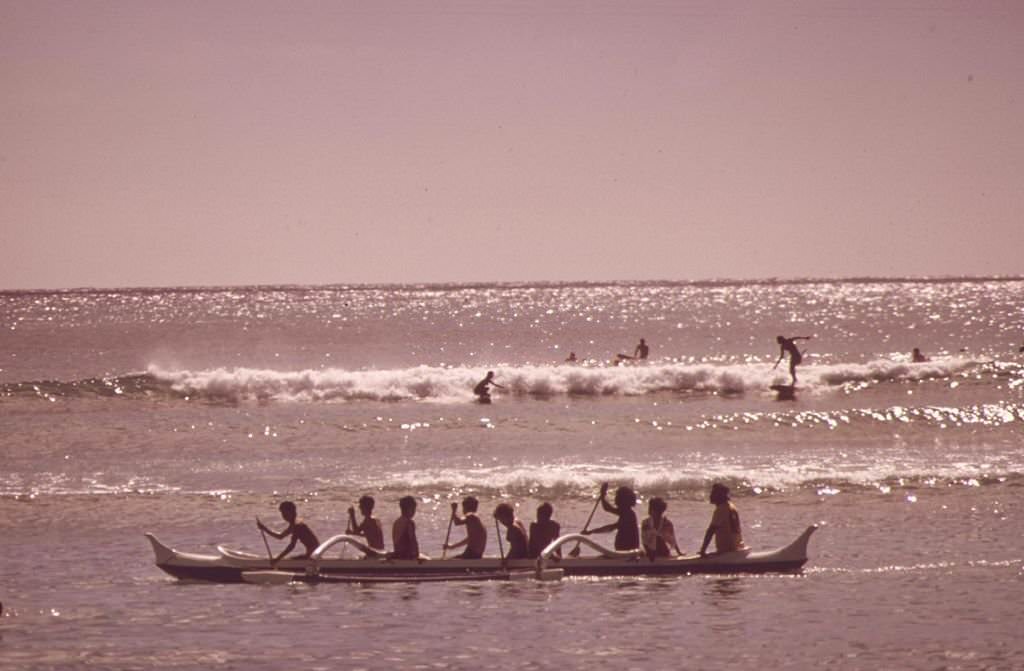
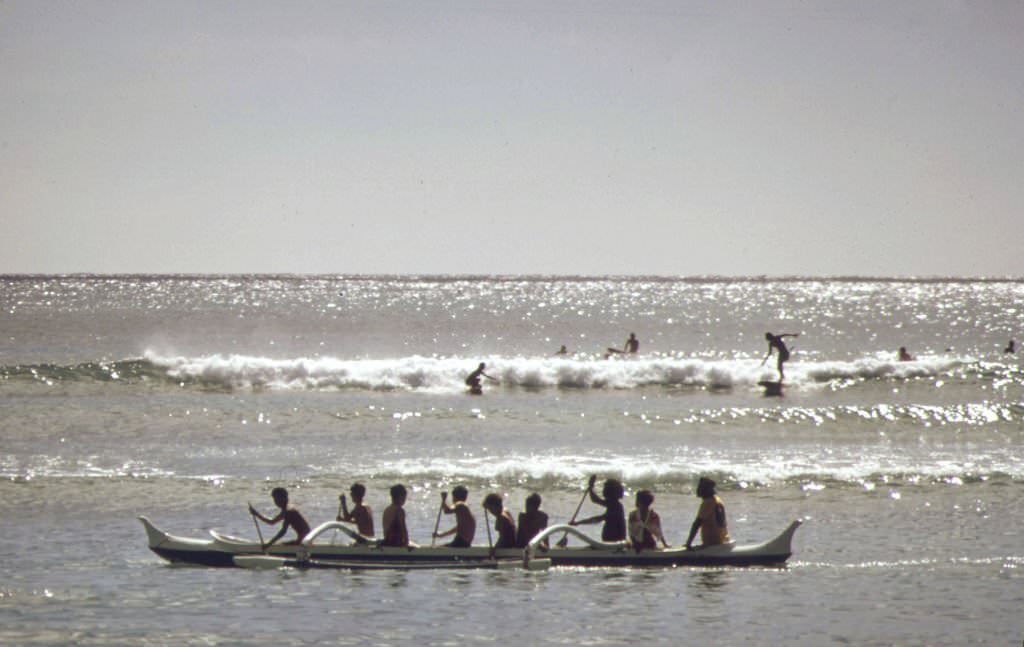
Outrigger canoes and surfers at Waikiki Beach, Honolulu, 1973
Outrigger canoes and surfers at Waikiki Beach, October 1973
Waikiki Beach visitors enjoy the outrigger canoe, October 1973

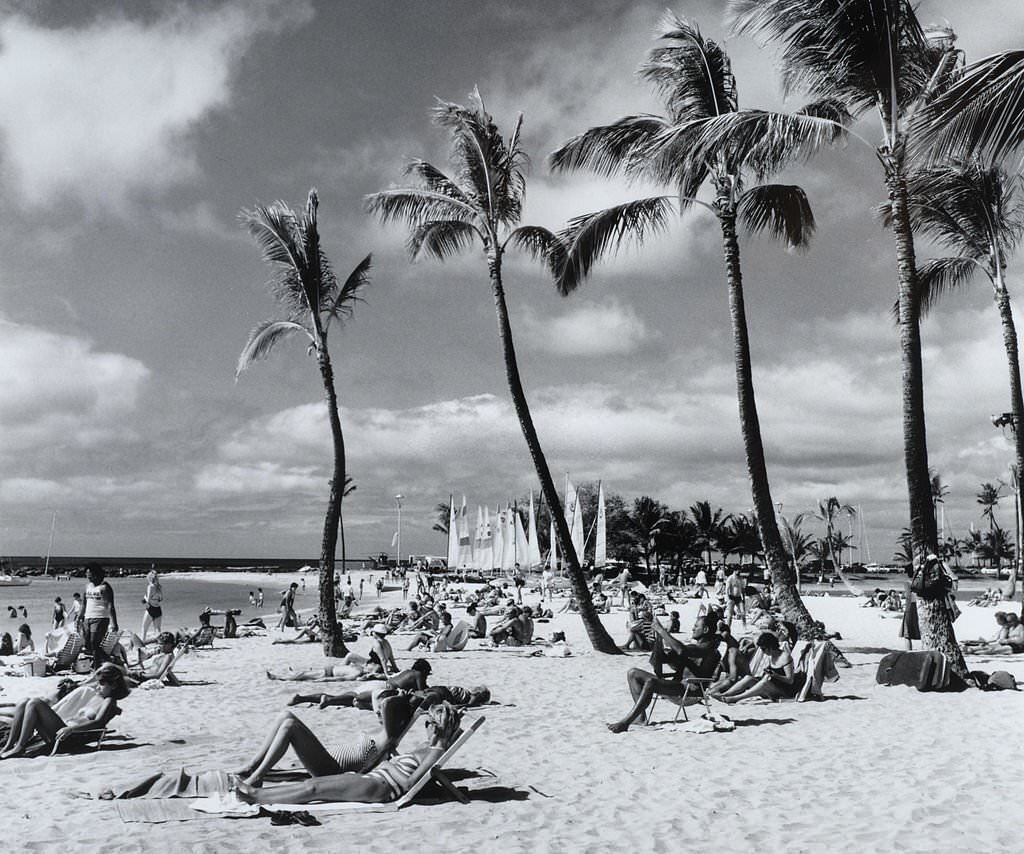
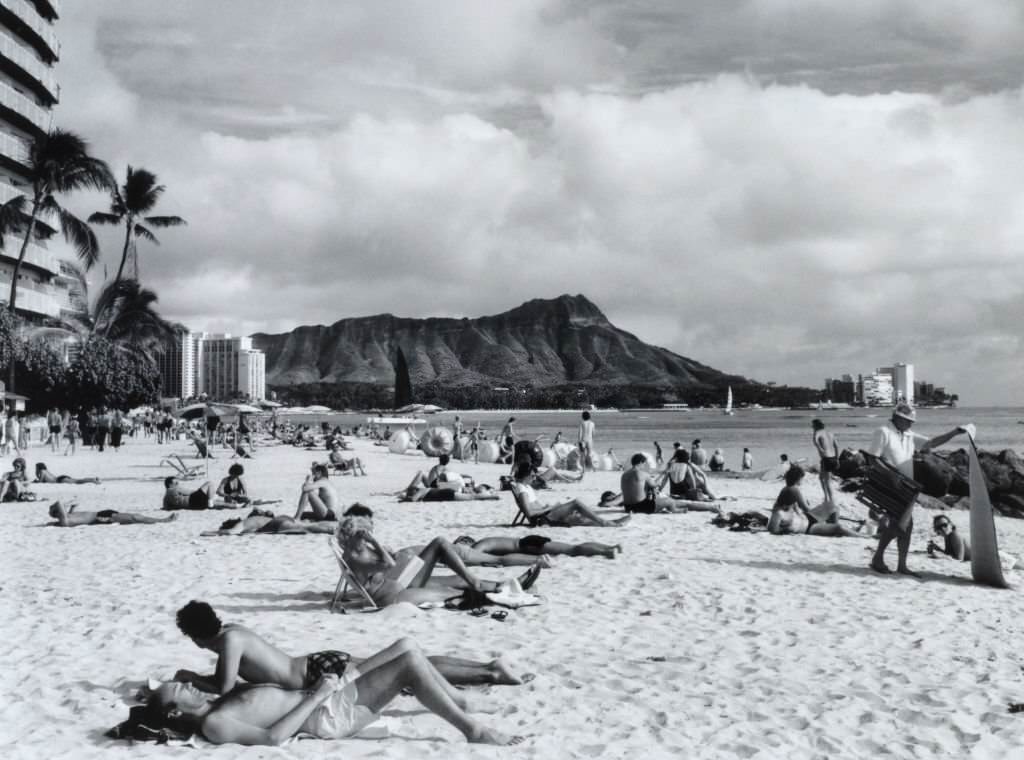
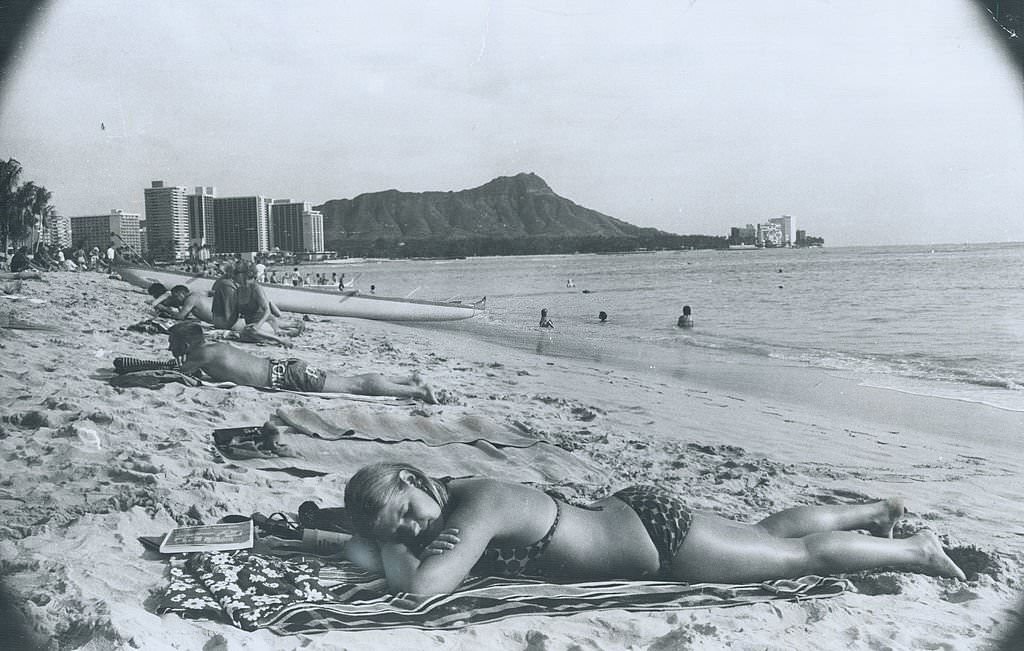
Sunbathing was just as popular as water sports. Beach towels and lounge chairs spread across the sand from morning to late afternoon, with visitors from across the United States, Japan, and beyond soaking up the consistent Hawaiian sun. The beach was, and remains, open to the public — no hotel or resort could claim exclusive access to the shoreline.
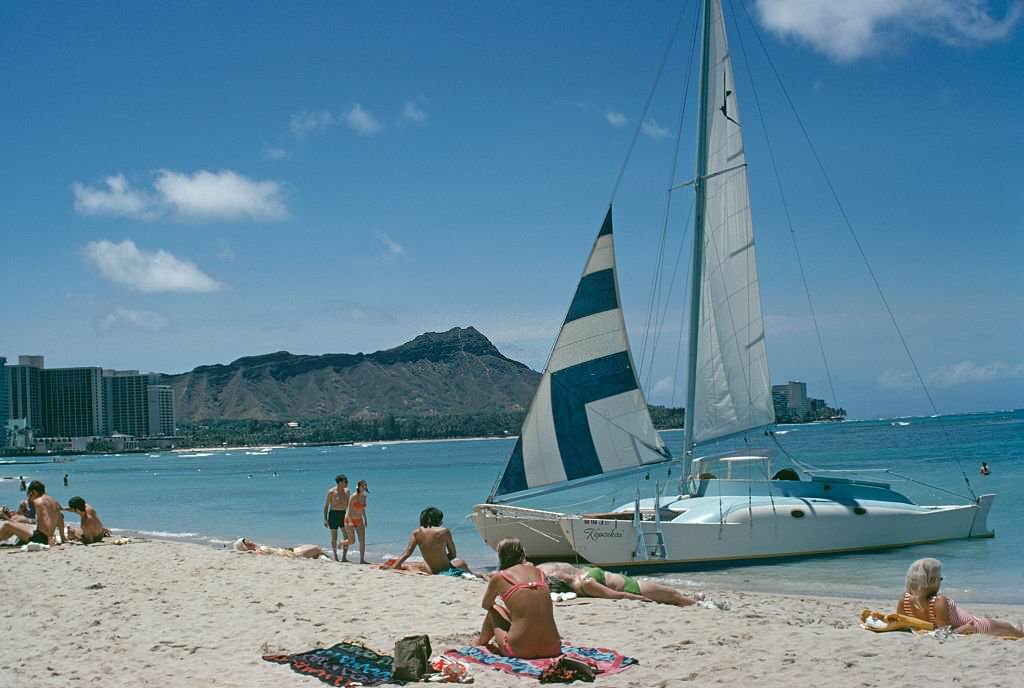
Sunbathers on Waikiki Beach, 1971
Waikiki Beach, with sunbathers, 1970
A packed beach with people sunbathing and enjoying the sea, 1970
Waikiki Beach at Honolulu is open to all of the public, 1970s

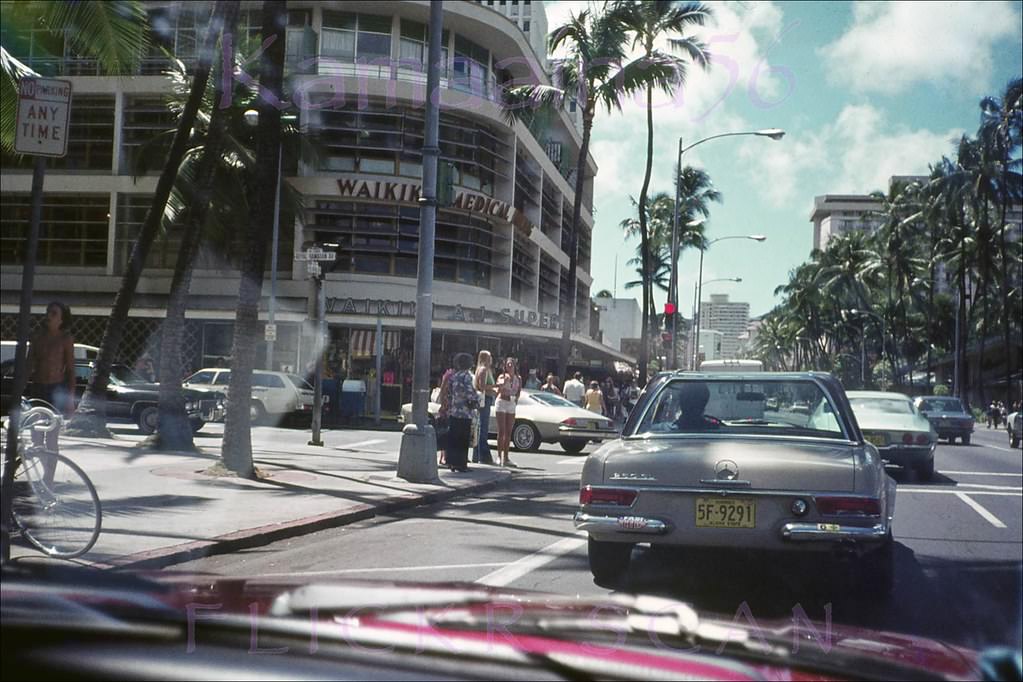
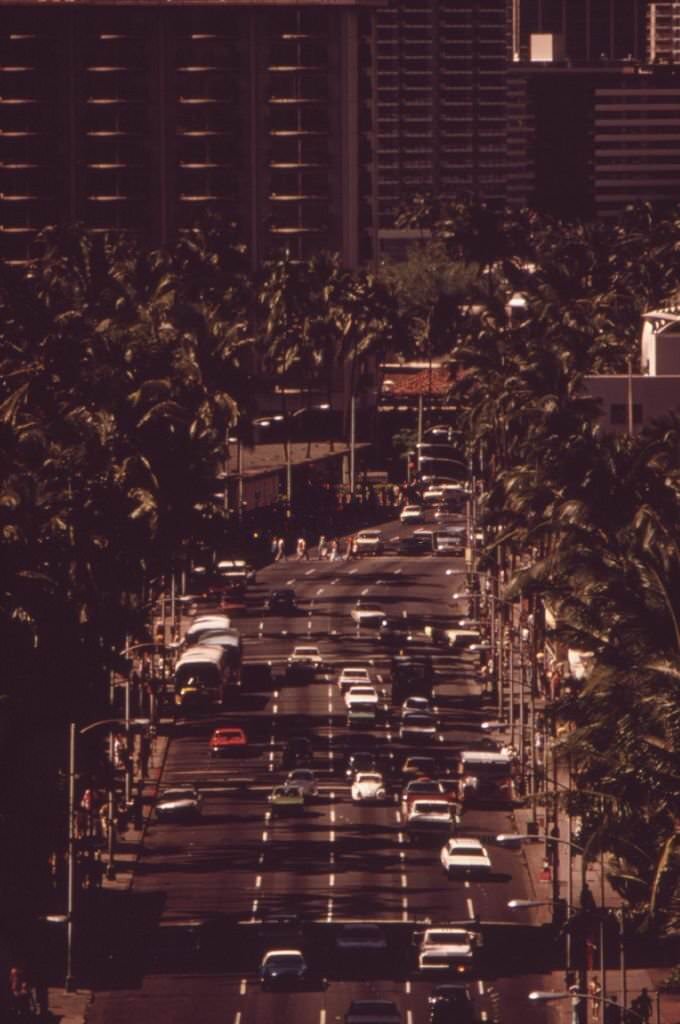
Behind the beach, Kalakaua Avenue served as the main artery of Waikiki. In 1971, the street was converted to one-way traffic in the Diamond Head direction, and on-street parking was eliminated. The change reshaped how drivers and pedestrians moved through the area. The avenue ran from the Hilton Hawaiian Village on the western end all the way toward Kapi’olani Park to the east, and its sidewalks stayed busy at all hours with shoppers, diners, and hotel guests.
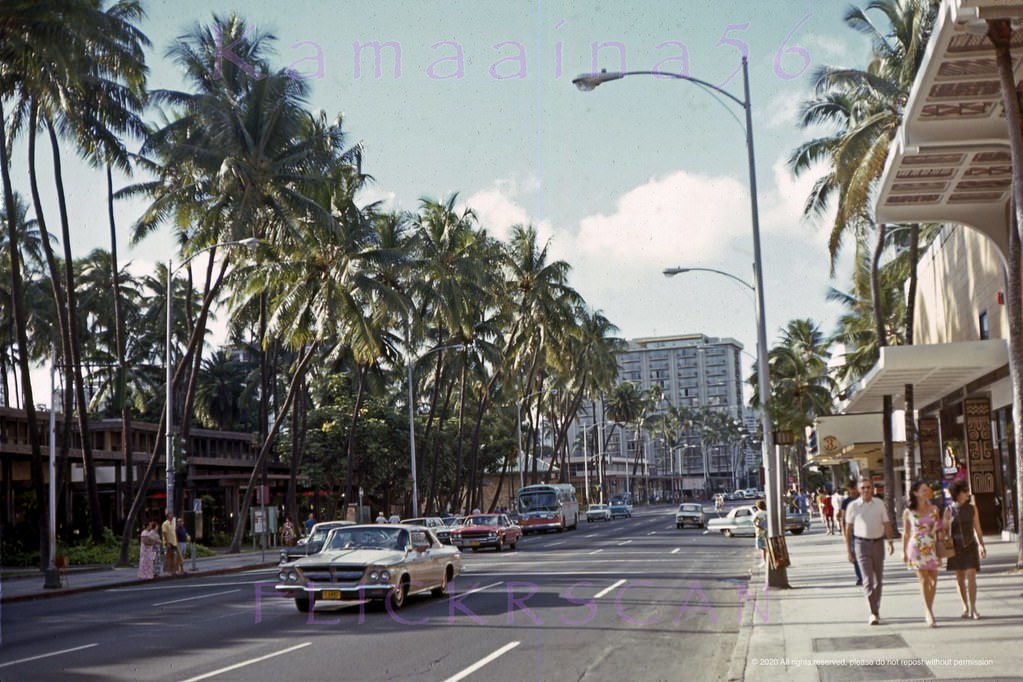
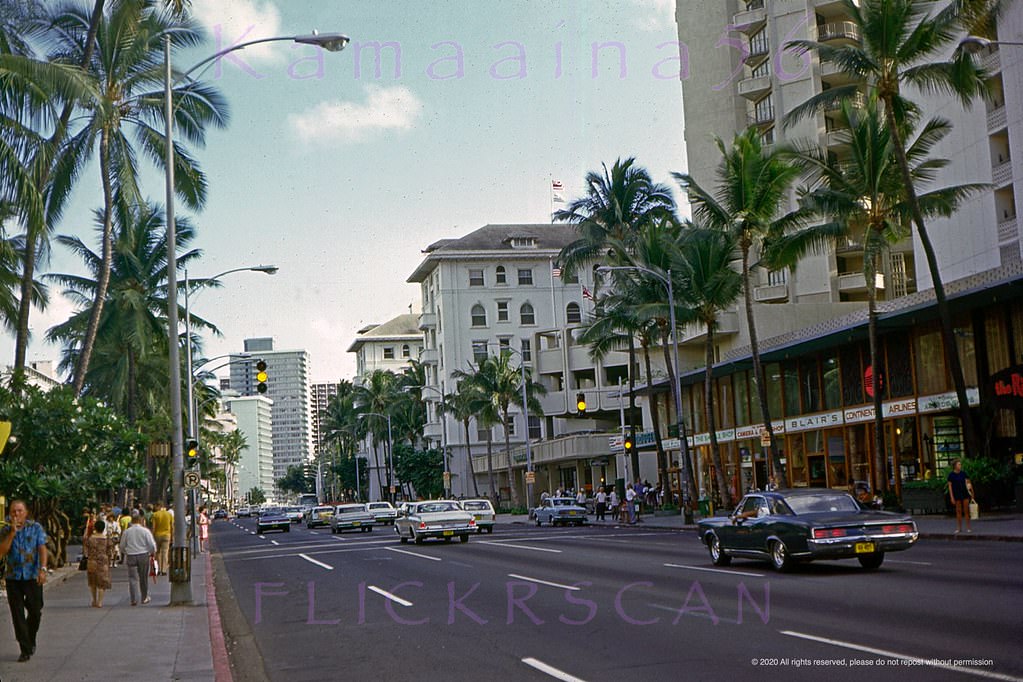
Late afternoon looking more or less west along Waikiki's Kalakaua Avenue shortly after its 1971 conversion to one-way Diamond Head with no more on-street parking.
Late afternoon looking more or less west along Waikiki’s Kalakaua Avenue shortly after its 1971 conversion to one-way Diamond Head with no more on-street parking.
East along Waikiki's Kalakaua Avenue shortly after its conversion to one way Diamond Head with no more on-street parking, 1971
East along Waikiki’s Kalakaua Avenue shortly after its conversion to one way Diamond Head with no more on-street parking, 1971
Driver's eye view looking Diamond Head from Royal Hawaiian Avenue along Waikiki's main drag Kalakua Avenue, 1974
Driver’s eye view looking Diamond Head from Royal Hawaiian Avenue along Waikiki’s main drag Kalakua Avenue, 1974
View of traffic down Kalakaua Avenue, the main street of the Waikiki Beach area, 1973

Side streets feeding into Kalakaua told their own stories. Seaside Avenue, running mauka — the Hawaiian term for inland, toward the mountains — connected the main boulevard to Kuhio Avenue and beyond. At the corner of Kalakaua and Seaside, a site that once held the Tropics restaurant (later called the Royal Lanai) was being eyed for new development. Developer William K. H. Mau opened a new building there in 1977, which would later be expanded in 2009 to occupy the entire block between Royal Hawaiian, Lauula, and Seaside Avenues.
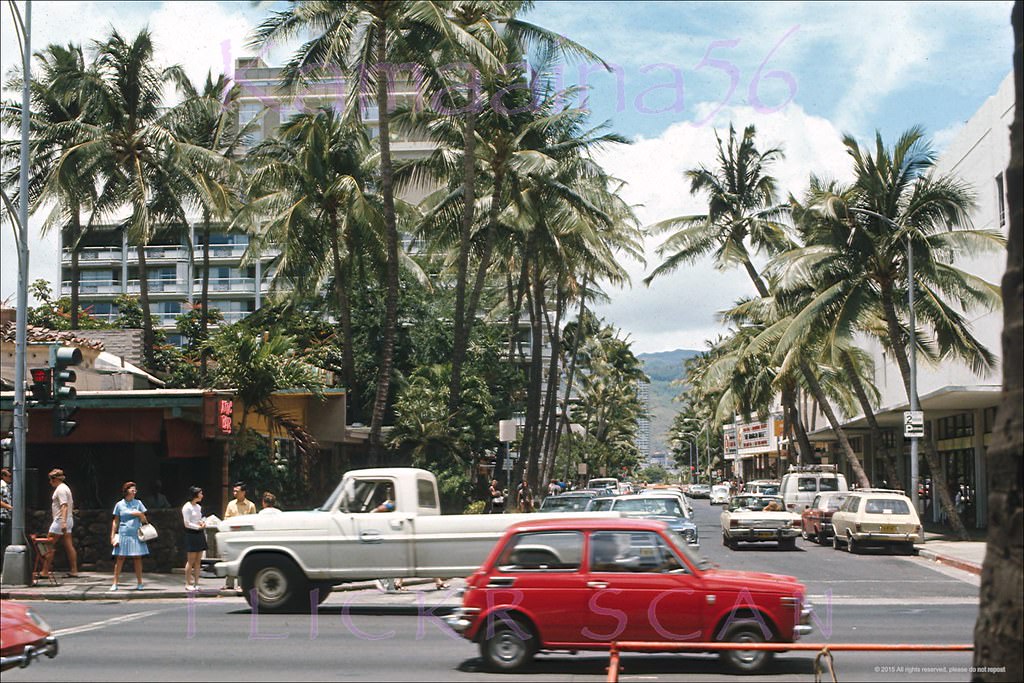
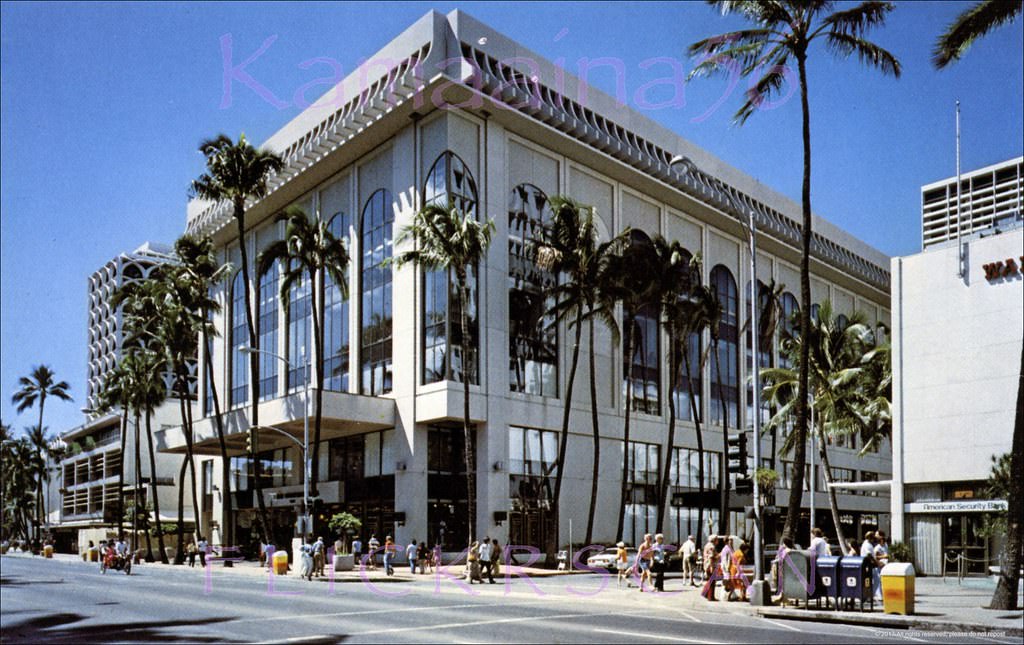
Random snap looking mauka along Seaside Avenue from the Kalakaua Avenue intersection, 1971
Opened 1977 by developer William K. H. Mau (c1913-2011) on the site of the old Tropics (later Royal Lanai) restaurant at the mauka-ewa corner of Kalakaua Avenue at Seaside, 1971.

Kuhio Avenue, running parallel to Kalakaua one block mauka, was another busy corridor. It carried its own mix of shops, smaller hotels, and foot traffic. The stretch between Kaiulani Avenue and Duke’s Lane in 1973 showed a neighborhood that was dense and commercial without the same level of gloss as the beachfront strip — a working part of Waikiki that locals and budget travelers knew well.
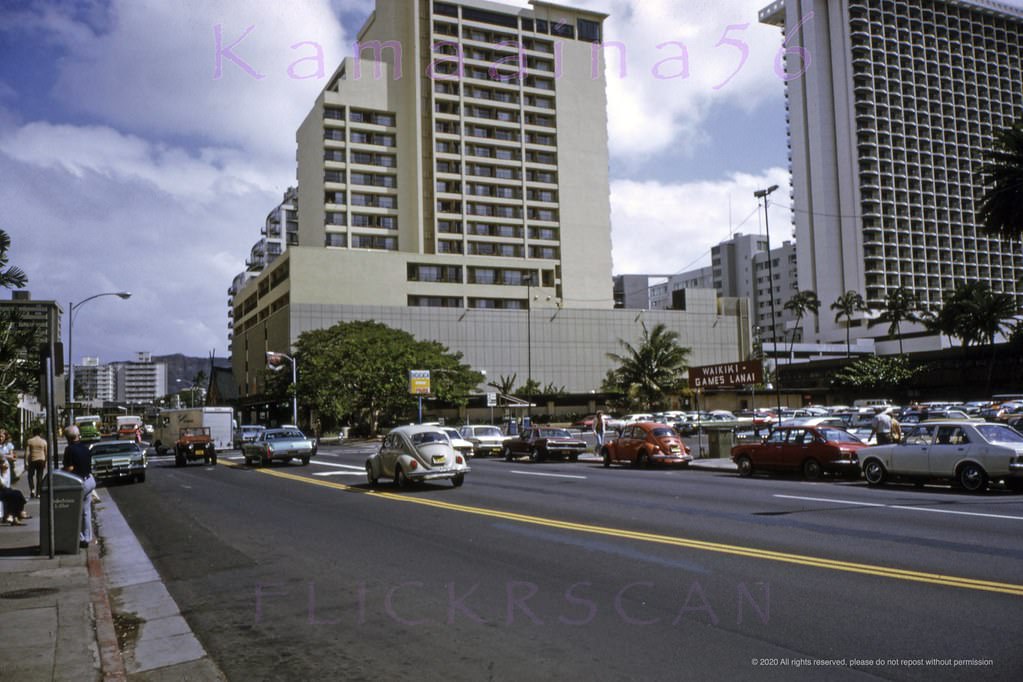
Looking Diamond Head (east) along Waikiki's Kuhio Avenue between Kaiulani Avenue (left) and Duke's Lane (out of frame at right), 1973
Looking Diamond Head (east) along Waikiki’s Kuhio Avenue between Kaiulani Avenue (left) and Duke’s Lane (out of frame at right), 1973

The intersection of Kalakaua and Kapahulu Avenues marked the eastern gateway to Waikiki proper, where traffic from greater Honolulu funneled into the resort district. It was one of the busiest crossings in the area, a constant flow of cars, buses, and pedestrians throughout the day.
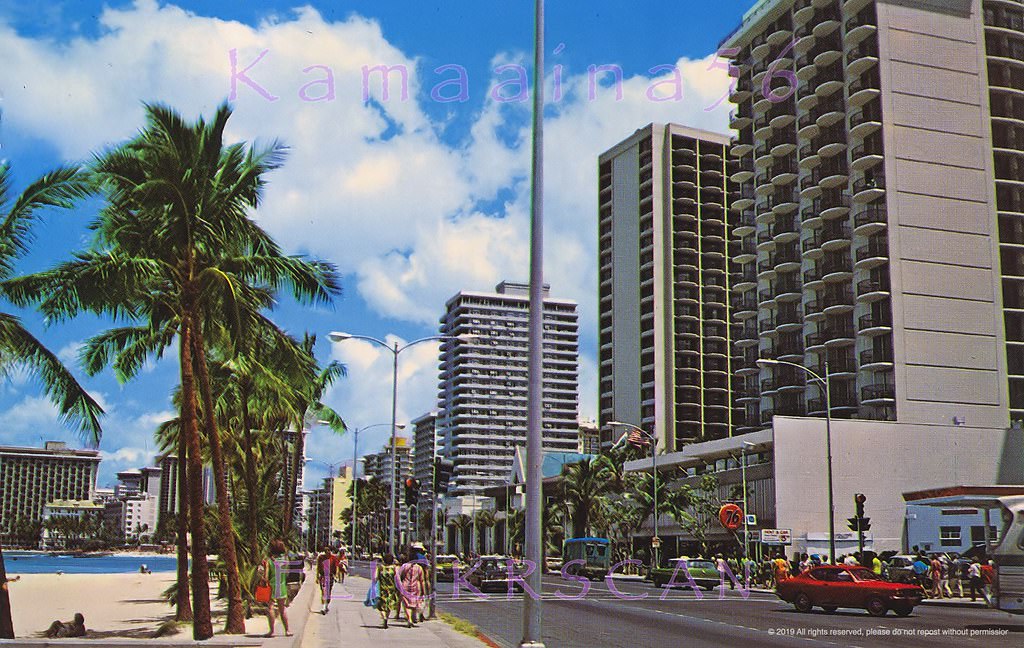
Street view of the busy intersection at Kalakaua and Kapahulu Avenues, 1971
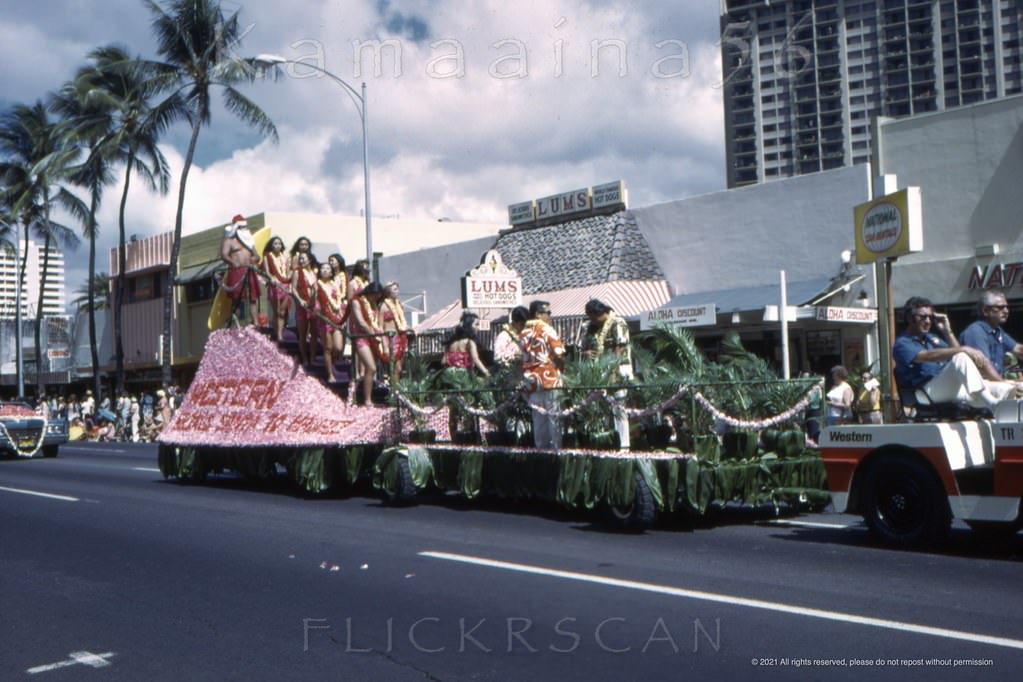
Aloha Week parade photo showing where the old Lum's Hot Dogs was located on Kalakaua Avenue - mauka (inland) side just Ewa (west) of Lewers Street, 1974.
Aloha Week parade photo showing where the old Lum’s Hot Dogs was located on Kalakaua Avenue – mauka (inland) side just Ewa (west) of Lewers Street, 1974.

The western edge of Waikiki was defined by the Hilton Hawaiian Village. By the early 1970s, the property had already grown into a full resort complex, requiring high-rise towers and a dedicated parking structure to handle the volume of guests. It was the largest hotel property in Waikiki, and its scale was visible from the street — a clear marker of how seriously the hotel industry had committed to the area.
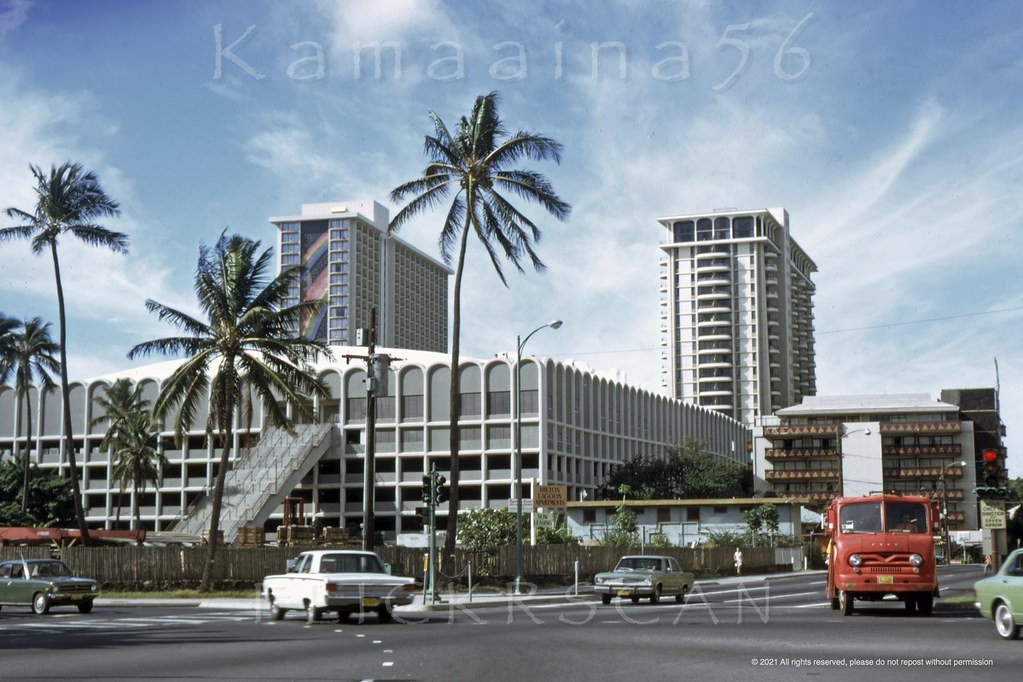
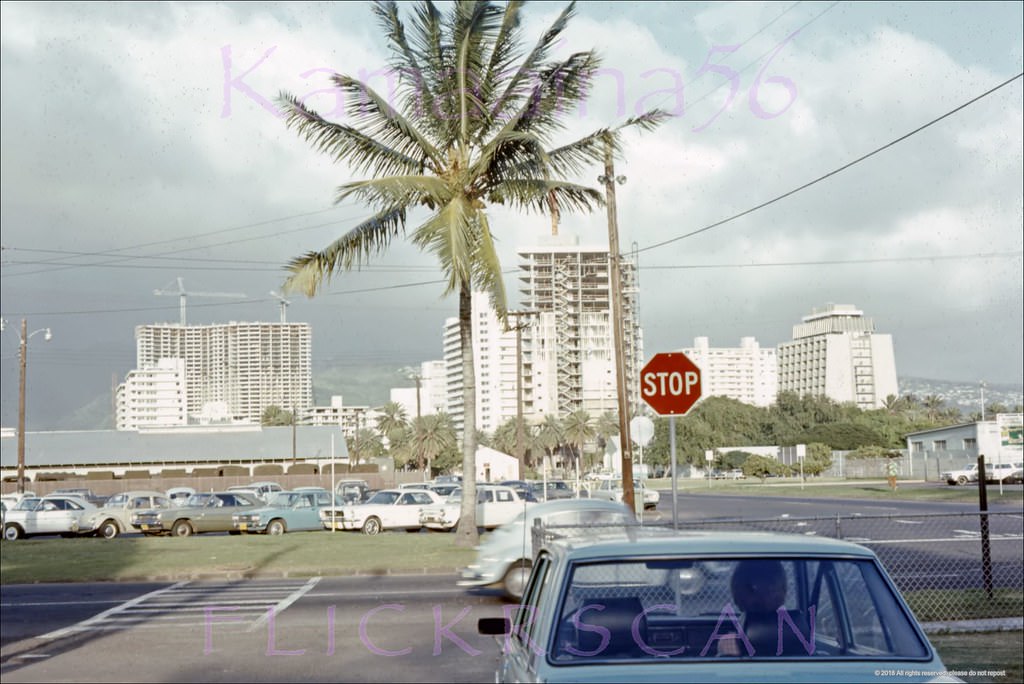
Street level view of the high-rise towers and the parking structure required to handle the increasing number of guests at Waikiki's Hilton Hawaiian Village Hotel, 1971
Street level view of the high-rise towers and the parking structure required to handle the increasing number of guests at Waikiki’s Hilton Hawaiian Village Hotel, 1971
Looking mauka (inland) from Fort DeRussy at the new construction rapidly changing the Honolulu skyline, 1970s

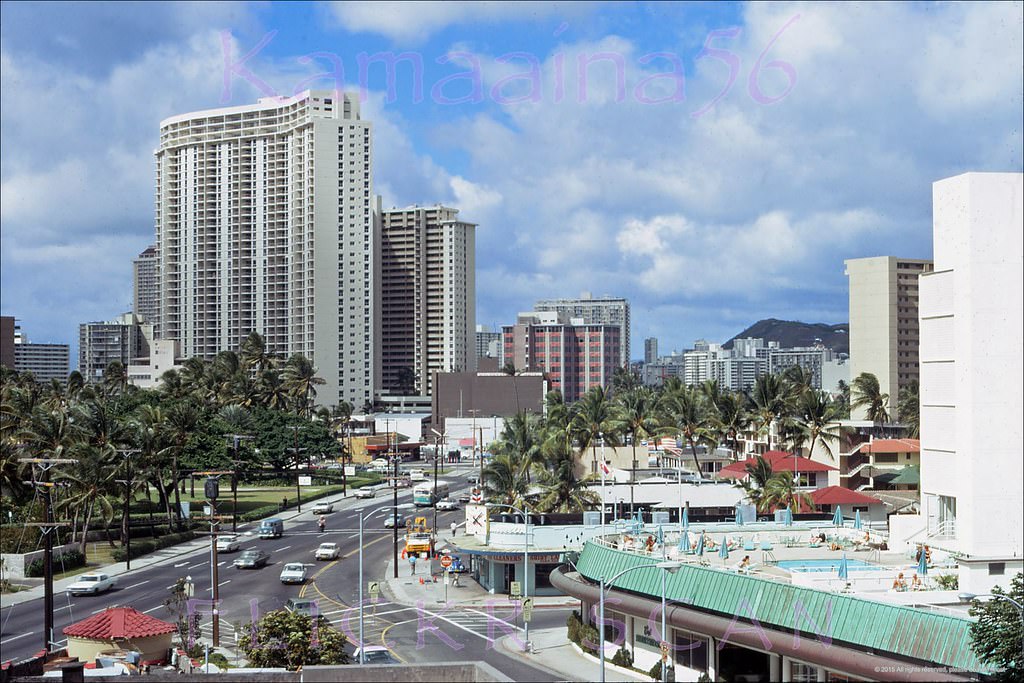
The aerial and elevated views of Waikiki in this period tell a story of rapid vertical growth. From a sixth-floor balcony at the Ilikai Hotel, the stretch of Ala Moana Boulevard leading into Waikiki showed cranes and new towers rising alongside older, lower structures. Construction was reshaping the skyline year by year. The view from the Waikiki Terrace Hotel looking toward the Kalakaua and Kuhio intersection captured how tightly the neighborhood was already built out by 1971.
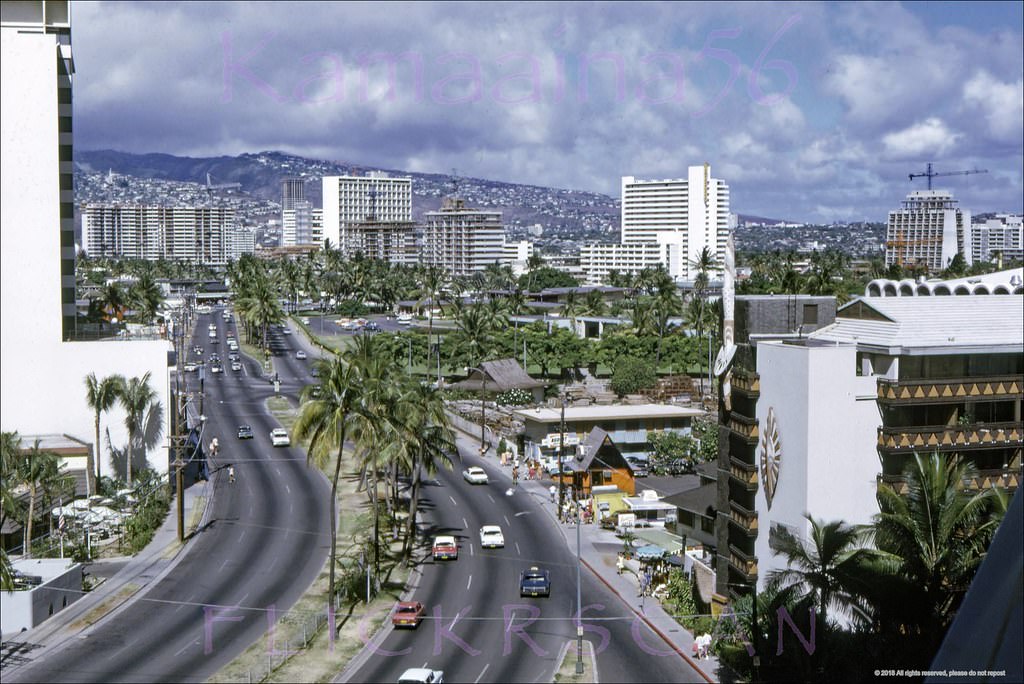
Sharp aerial view from a blacony on the sixth floor at the Ilikai Hotel looking mauka (inland) along Waikiki's stretch of Ala Moana Blvd., 1970
Sharp aerial view from a blacony on the sixth floor at the Ilikai Hotel looking mauka (inland) along Waikiki’s stretch of Ala Moana Blvd., 1970
Detailed birdseye view, probably taken from the Waikiki Terrace Hotel, looking west towards the intersection of Kalakaua and Kuhio Avenues, 1971
Waikiki area, October 1973

On the quieter, canal-side edge of the neighborhood, Ala Wai Boulevard traced the northern boundary of Waikiki along the Ala Wai Canal. The stretch between Kanekapolei and Wailuna in 1974 showed a calmer, more residential face of the district — low-rise buildings, trees, and considerably less foot traffic than the beachfront streets just a few blocks away.
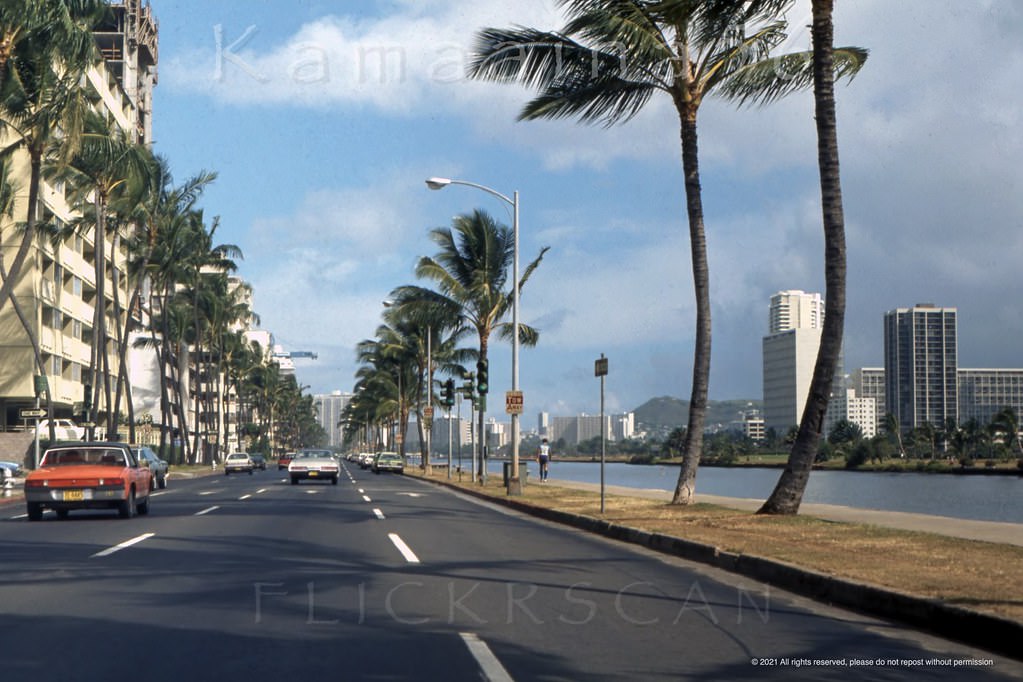
Waikiki's Ala Wai Blvd between Kanekapolei and Wailana looking more or less west, 1974.
Waikiki’s Ala Wai Blvd between Kanekapolei and Wailana looking more or less west, 1974.

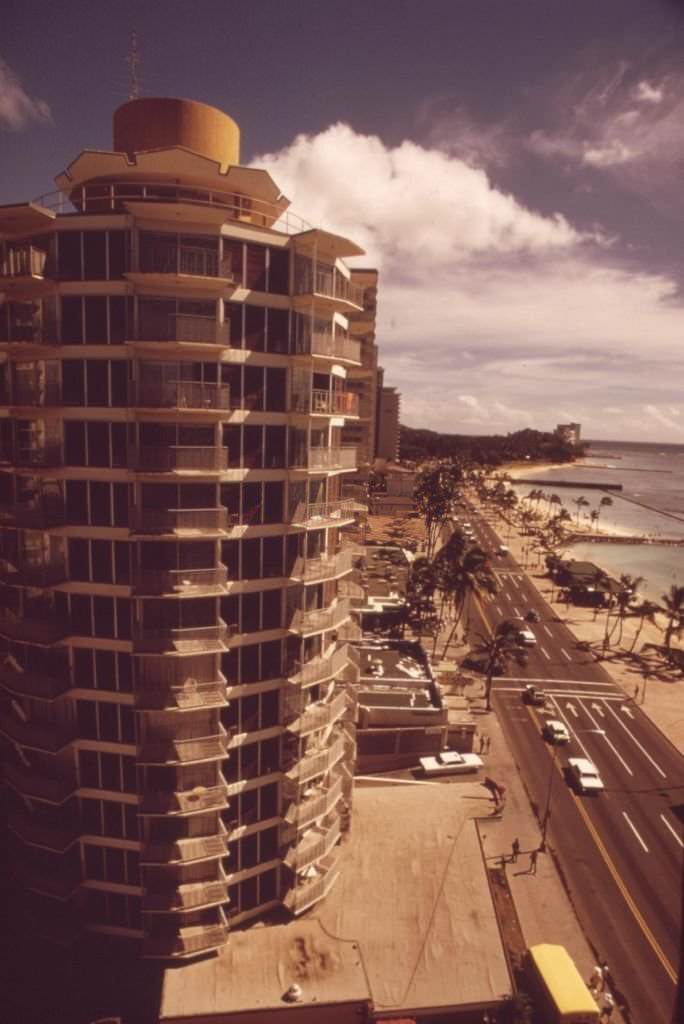
The major hotels along the beachfront were landmarks in their own right. The Sheraton Moana Hotel — one of Waikiki’s oldest — stood as a reminder of the neighborhood’s earlier era, its white colonial architecture contrasting with the glass towers rising around it. The Royal Hawaiian Hotel, known as the Pink Palace, hosted traditional Hawaiian dance performances on its terrace, maintaining a cultural thread through the increasingly commercial atmosphere.
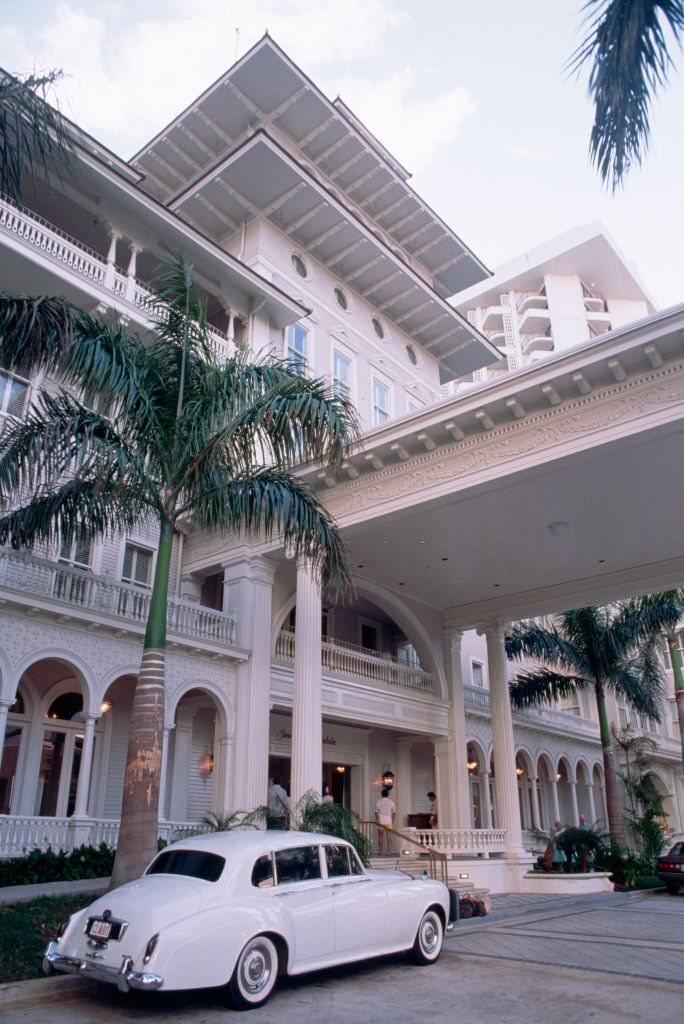
The Sheraton Moana Hotel in Waikiki Beach, 1970
Hotel along the water in the popular Waikiki Beach area, 1973
Traditional Hawaiian dancers on the terrace of the 'Royal Hawaiian Hotel' in Waikiki, 1970
Traditional Hawaiian dancers on the terrace of the ‘Royal Hawaiian Hotel’ in Waikiki, 1970

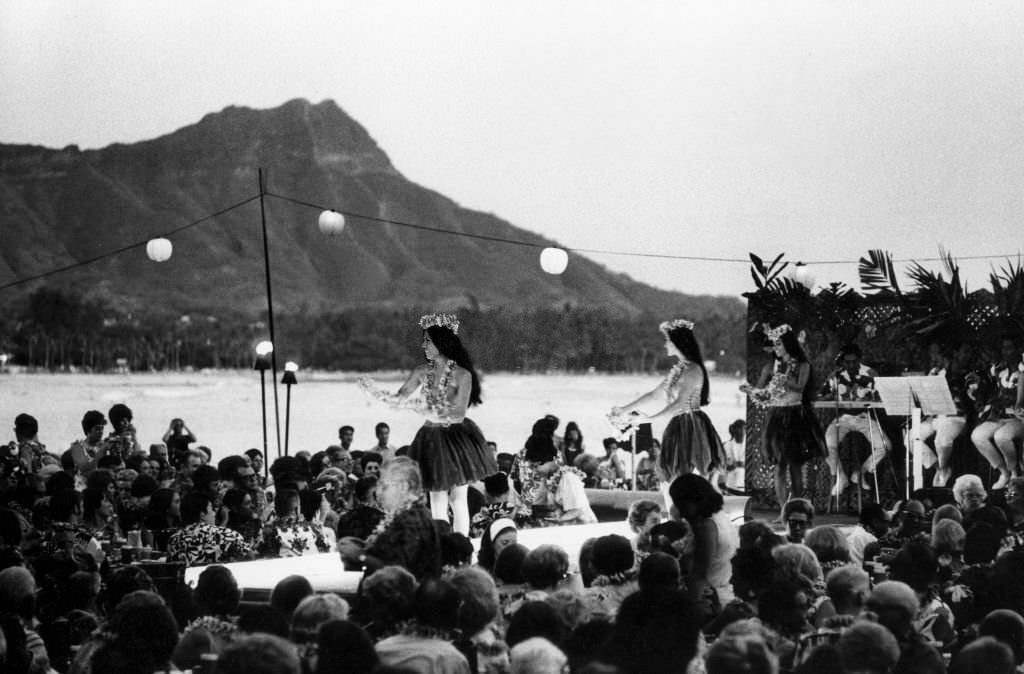
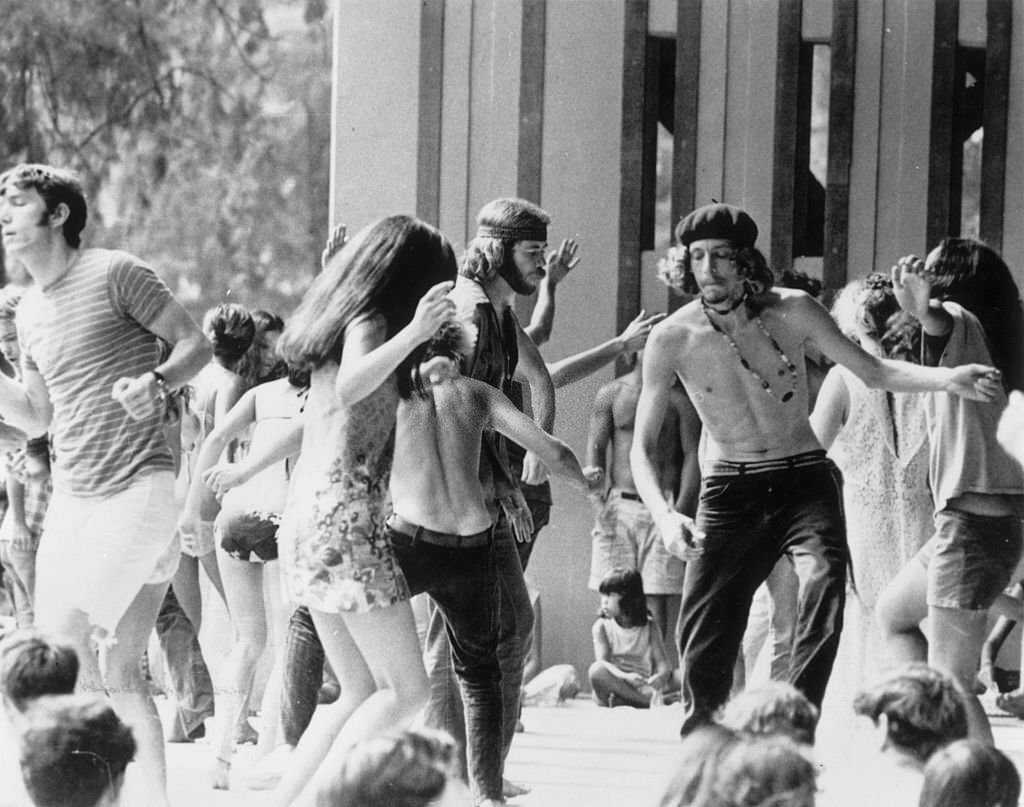
Hawaiian culture remained present throughout the decade in visible and public ways. In 1976, dancers Carmella Barut and Marlene Kalahiki performed an impromptu hula outside the Hyatt Kingsgate Hotel. At Kapi’olani Park on the eastern edge of Waikiki, Hawaiian teenagers danced at a free outdoor rock concert in 1970, mixing local tradition with the sounds of the era. The park, bordered by Diamond Head Crater, served as a community gathering space well outside the resort bubble.
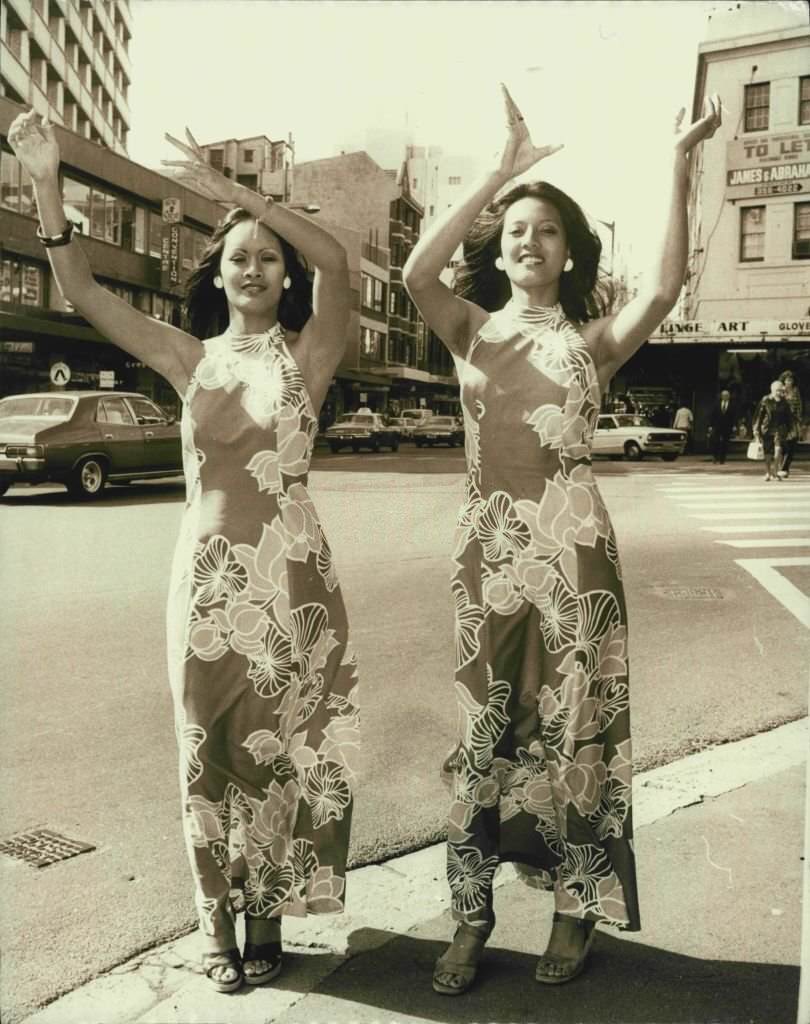
Hawaiian dancers Carmella Barut and Marlene Kalahiki give an impromtu hula dance outside the Hyatt Kingsgate Hotel Kings, 1976
Hawaiian teenagers dancing at a free rock concert in Honolulu's Kapiolani Park, 1970
Hawaiian teenagers dancing at a free rock concert in Honolulu’s Kapiolani Park, 1970

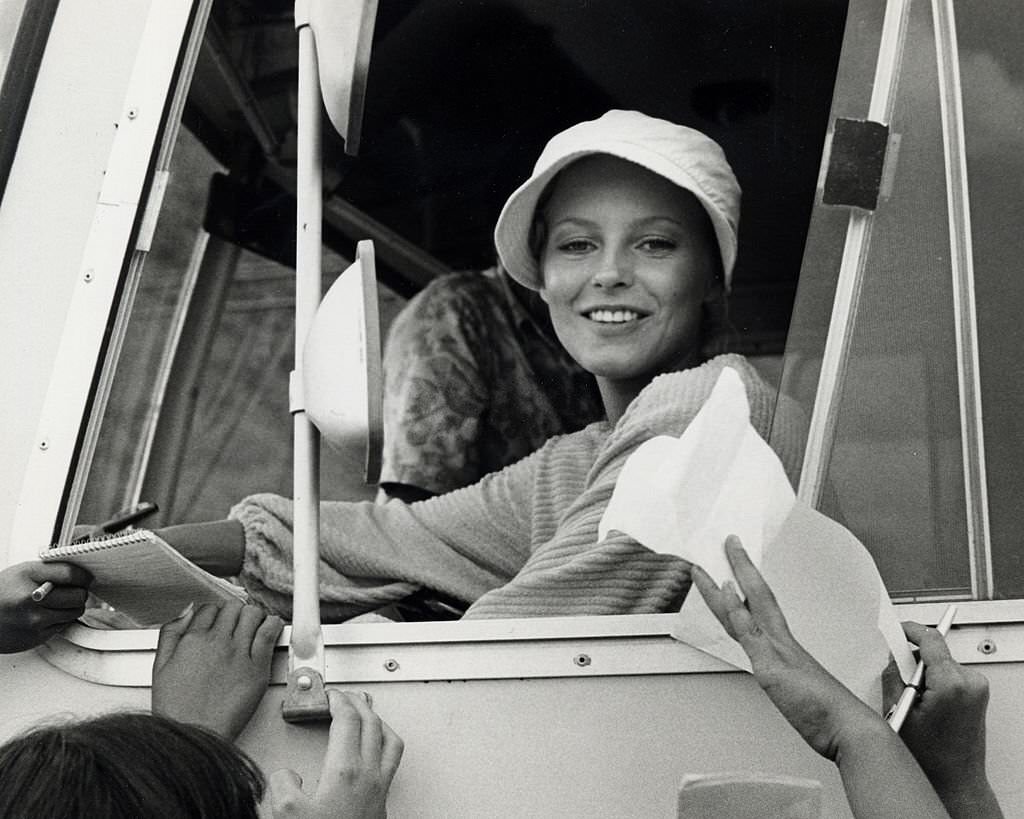
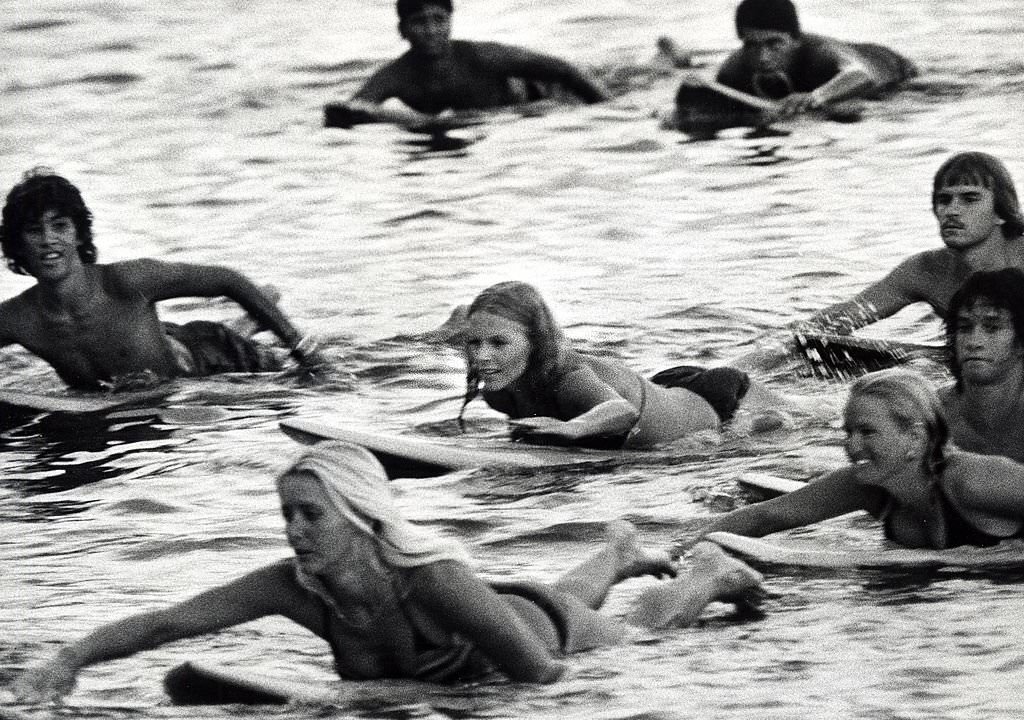
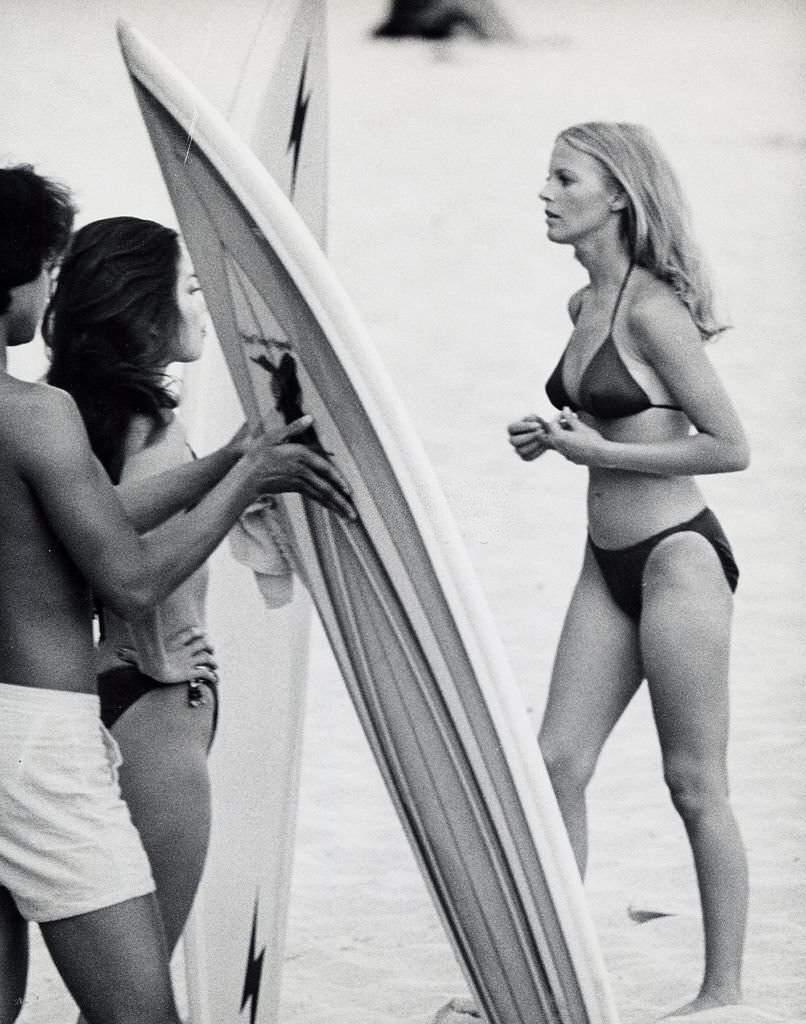
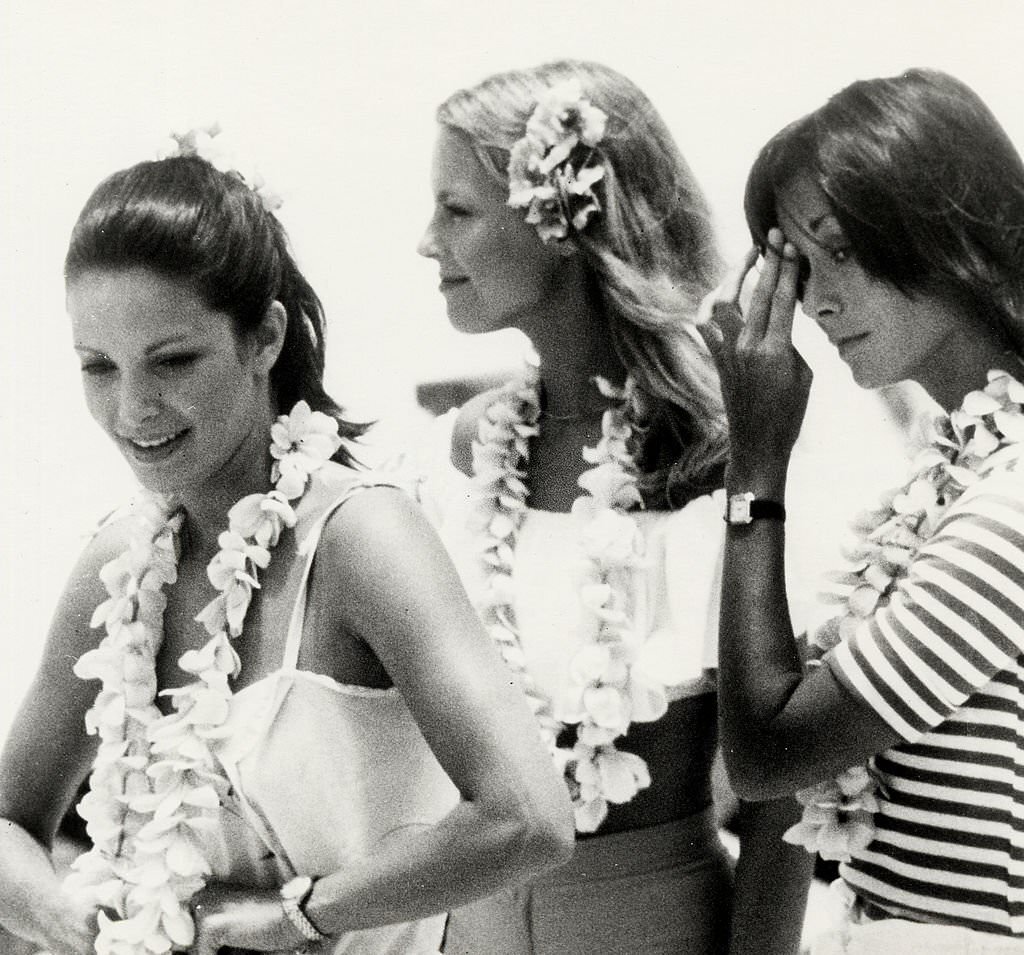
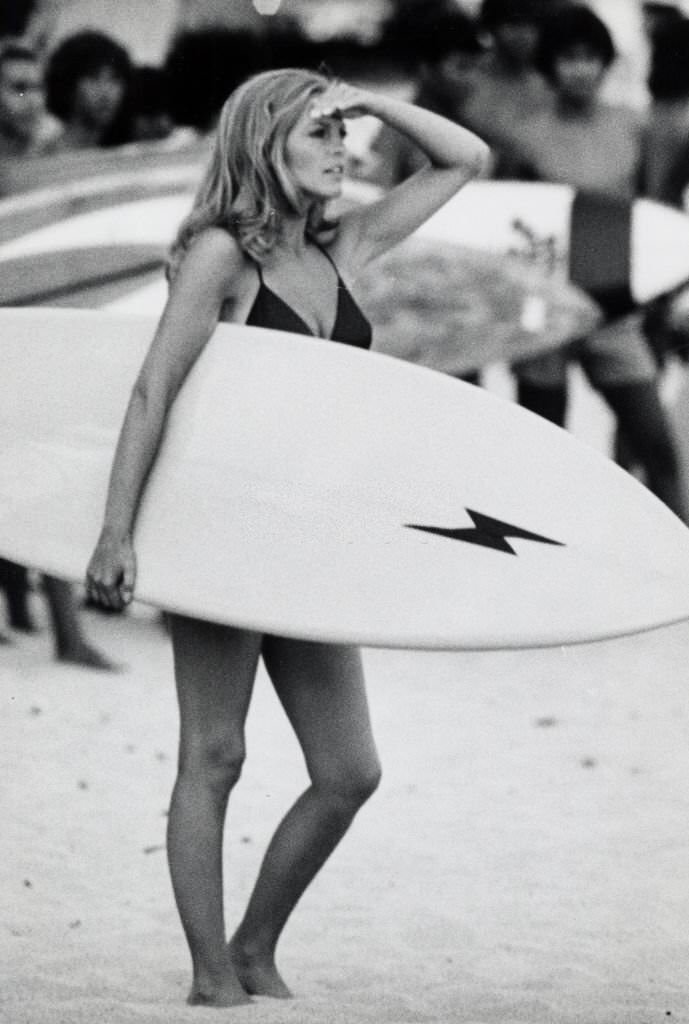
Waikiki also attracted its share of celebrities and film productions during the 1970s. The television series Charlie’s Angels filmed its episode “Angels in Paradise” on location in Waikiki, bringing Kate Jackson, Jaclyn Smith, and Cheryl Ladd to the beach. The production shot scenes around the area’s recognizable streets and shoreline, and photographs from the shoot documented the cast in the actual Waikiki setting rather than a studio recreation.
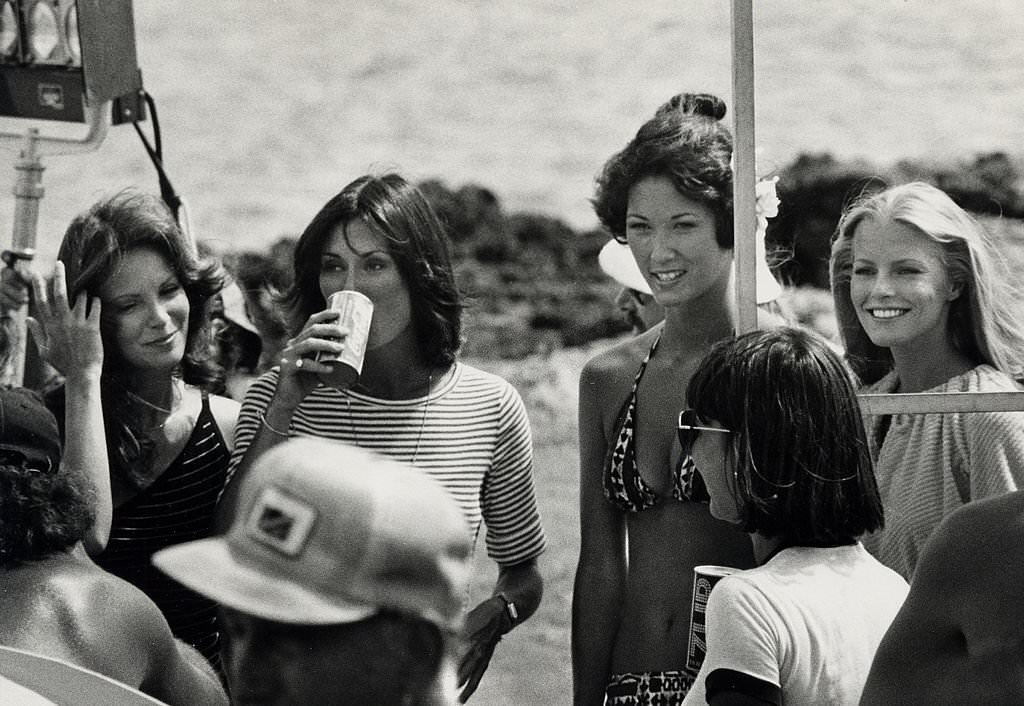
Kate Jackson, guest and Cheryl Ladd in Waikiki, 1970s
Filming "Charlie's Angels" Episode "Angels in Paradise" in Waikiki, 1970s
Filming “Charlie’s Angels” Episode “Angels in Paradise” in Waikiki, 1970s
Filming "Charlie's Angels" Episode "Angels in Paradise" in Waikiki, 1970s
Filming “Charlie’s Angels” Episode “Angels in Paradise” in Waikiki, 1970s
Filming "Charlie's Angels" Episode "Angels in Paradise" in Waikiki, 1970s
Filming “Charlie’s Angels” Episode “Angels in Paradise” in Waikiki, 1970s
Filming "Charlie's Angels" Episode "Angels in Paradise" in Waikiki, 1970s
Filming “Charlie’s Angels” Episode “Angels in Paradise” in Waikiki, 1970s
Jaclyn Smith, Cheryl Ladd and Kate Jackson in Waikiki, 1970s

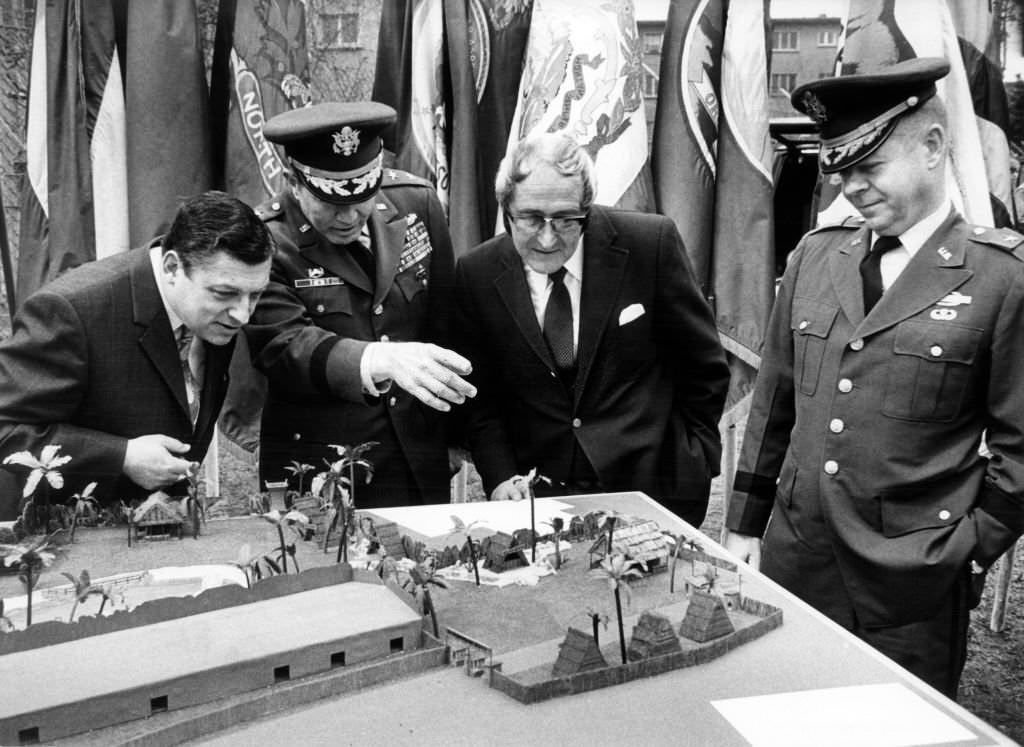
Other notable visitors included Leonard Nimoy, who brought his 13-year-old son Adam to the surf at Waikiki in 1970. The beach drew people from all walks of life — prize-winning tourists, foreign dignitaries, and everyday families on vacation. In 1972, U.S. generals and politicians from Berlin examined a scale model of the Waikiki beachfront, underscoring the area’s international profile.
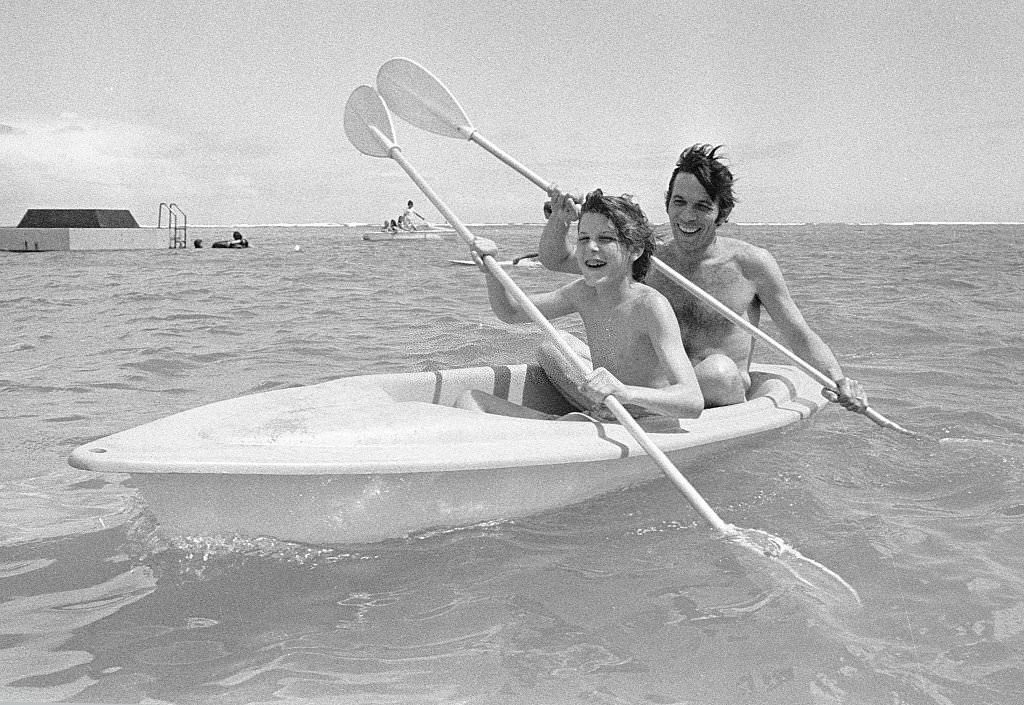
13 year-old Adam Nimoy and Leonard Nimoy, enjoying the surf at Waikiki, 1970
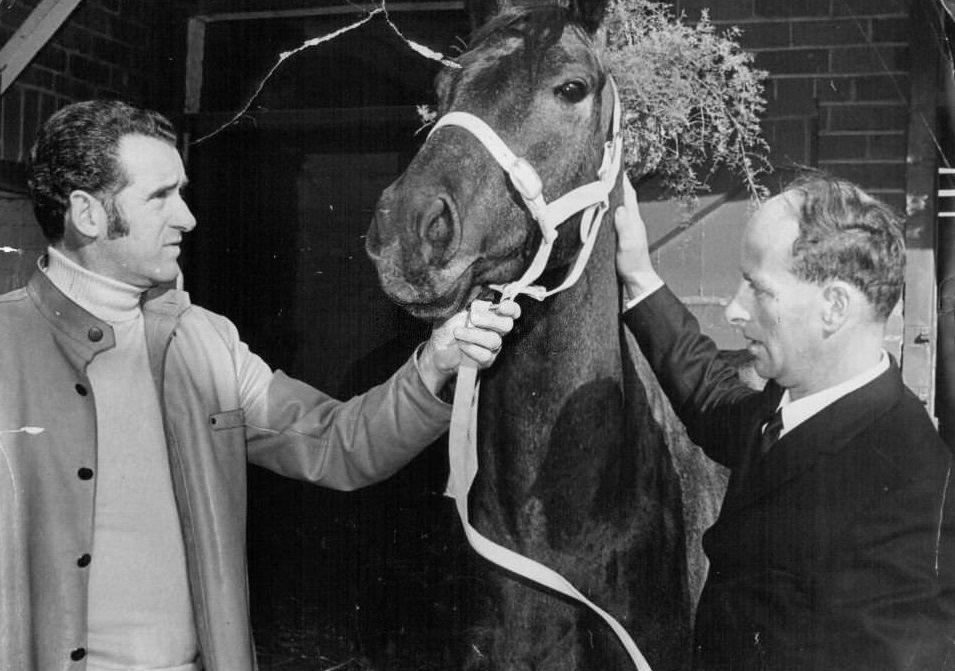
N.Z. Turf Jackpot Winner Visits Stables.Mr. Peter Moran, N.Z. Turf Jackpot winner, in Waikiki, 1970s
U.S. generals and politicians of Berlin stand in front of a model of the Waikiki beach on the American holiday island Hawaii, 1972

The skies above Waikiki occasionally held spectacles of their own. The U.S. Air Force Thunderbirds aerobatic team performed in formation over Waikiki at some point during the decade, their precision flying visible from the beach and the crowded streets below. It was the kind of event that drew every eye skyward in a neighborhood that rarely lacked for something to look at.
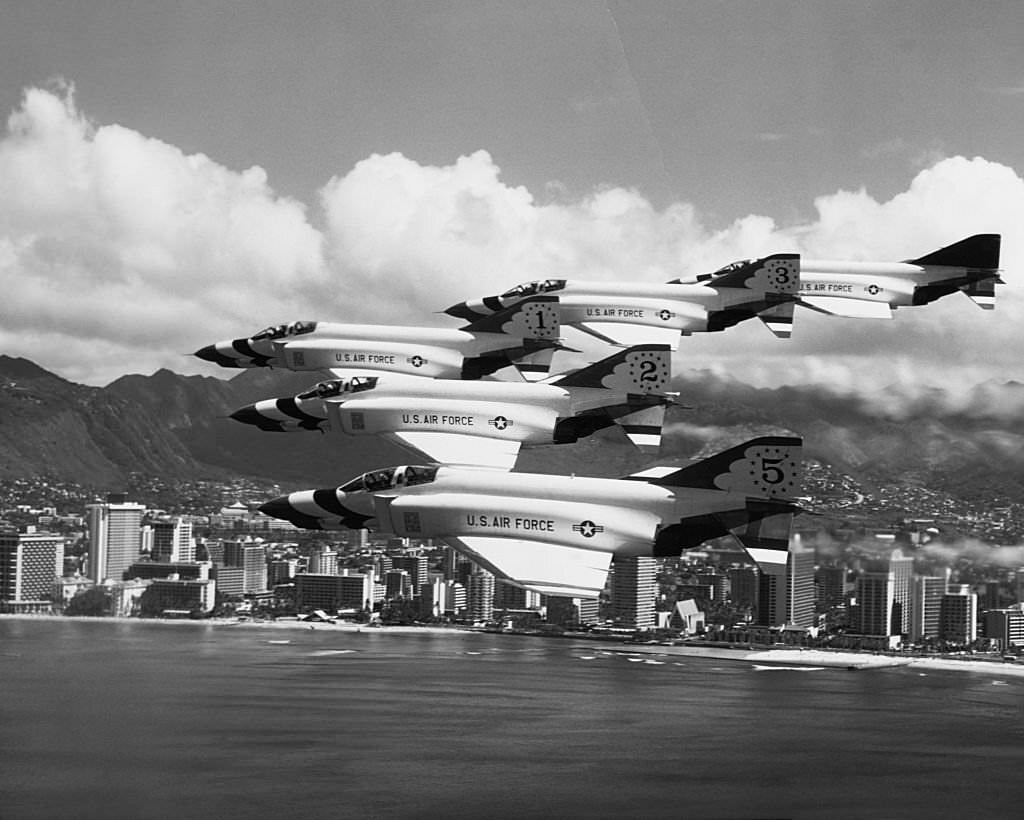
"Thunderbirds" Aerobatic Team in Formation, Waikiki, 1970s
“Thunderbirds” Aerobatic Team in Formation, Waikiki, 1970s
Sun on Waikiki, 1970s
Waikiki beach, 1970s
Waikiki, 1970s
Waikiki, 1970s
Waikiki, 1974
Waikiki, 1974
Enjoyed this post? Get new ones in your inbox.

1 thought on “What Waikiki, Honolulu looked like in the 1970s”

Leave a Comment

Your email address will not be published. Required fields are marked *

Share this Post 🥺

Please take a moment to share this content. Your support is greatly appreciated! 🙌🙏

Share this Post 🥺

Please take a moment to share this content. Your support is greatly appreciated! 🙌🙏
Scroll to Top
 
Hey Friend, Before You Go.. Please like & follow for more interesting content