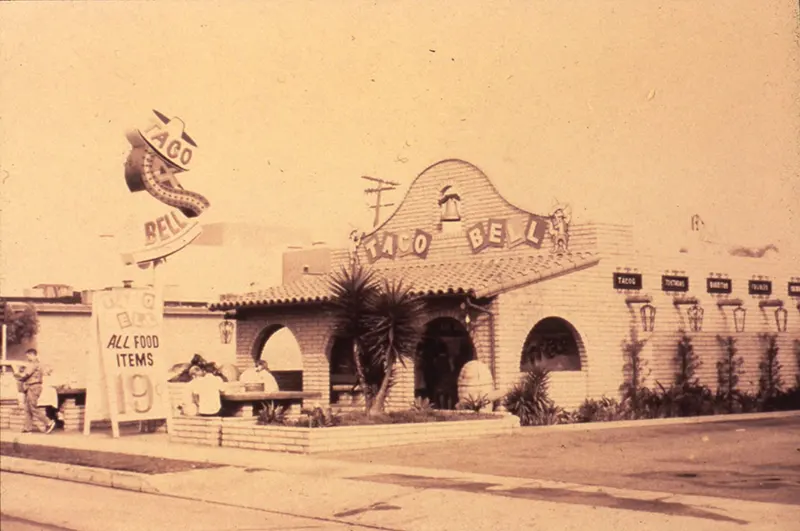
In 1962, Glen Bell opened the first Taco Bell in Downey, California. It wasn’t a sit-down restaurant or even a drive-through — it was a small walk-up stand. The menu was stripped down: crispy-shelled tacos, burritos, and frijoles (refried beans). A taco cost just 19 cents. For most Americans at the time, Mexican-inspired food like this was genuinely novel, and Bell’s simple, affordable formula drew crowds quickly.
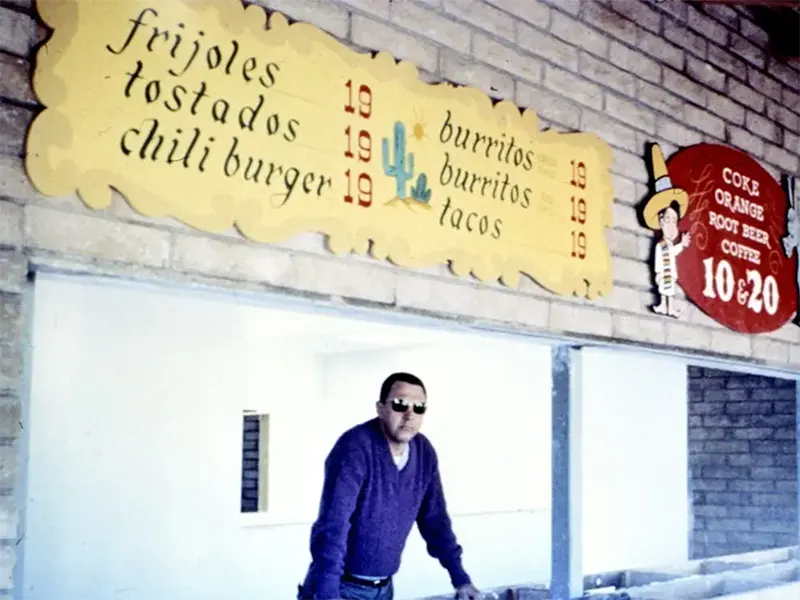
The first physical location set the tone for what Taco Bell would become. Small, efficient, and focused on speed, it was built around the idea that good food didn’t need to be complicated or expensive.
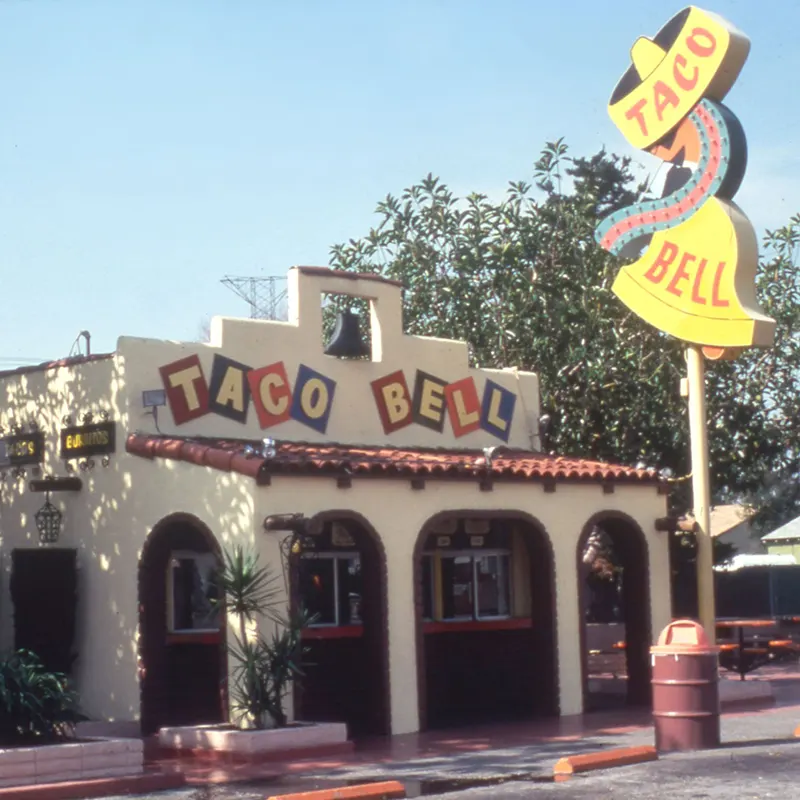
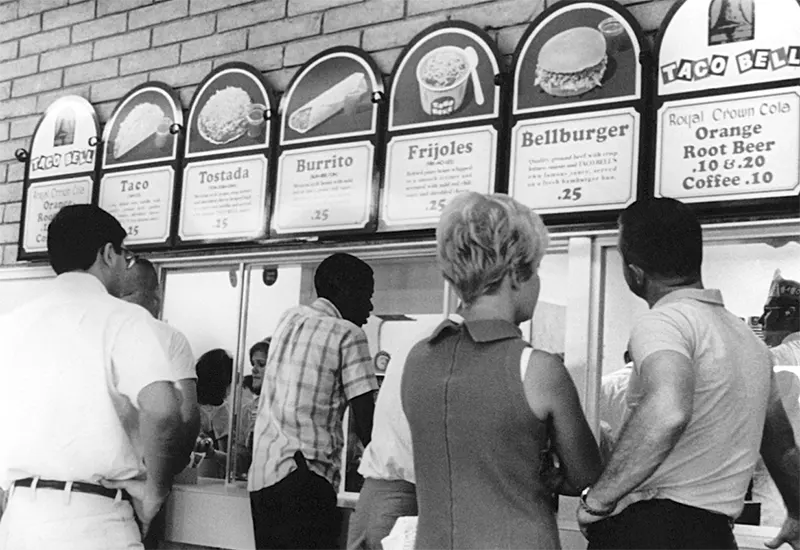
As the 1960s progressed, the menu began to grow. Bell and his team tested new items and pushed the concept further, expanding what a Mexican-inspired fast food menu could look like in America. By the late 1960s, the chain was adding more variety, laying the groundwork for decades of menu experimentation.
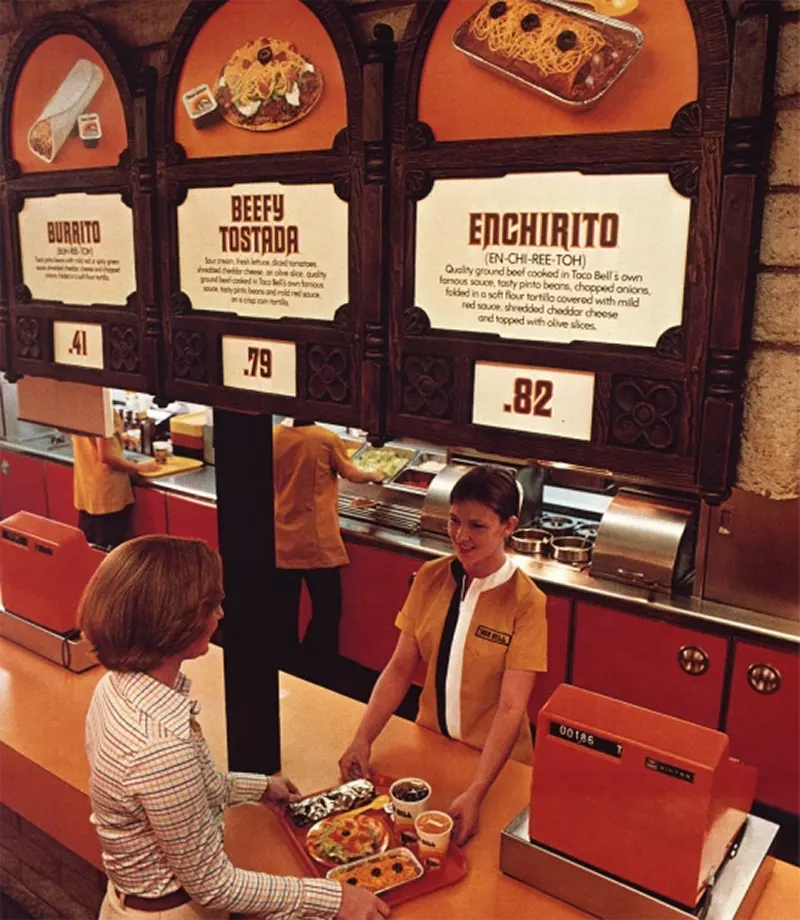
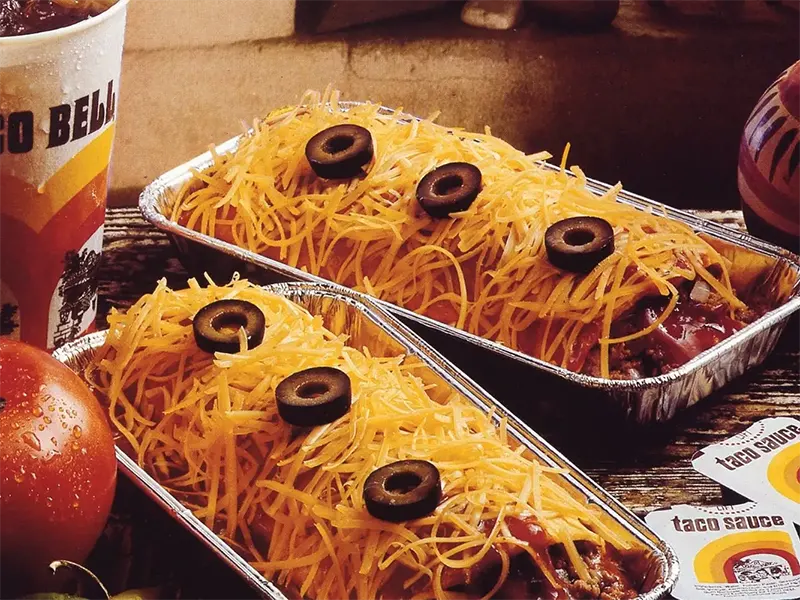
One of the more distinctive additions of the late 1960s was the enchirito — a combination of an enchilada and a burrito, smothered in sauce and cheese. It was the kind of item that showed Taco Bell wasn’t afraid to invent its own take on traditional dishes.
The late 1960s also saw Taco Bell begin franchising aggressively. The “Taco Bell Five” represented a key group tied to the early franchise push, helping the brand spread beyond California. By 1970, Taco Bell had 325 restaurants and went public on the stock market — a remarkable leap for a chain that had started as a single walk-up stand less than a decade earlier.
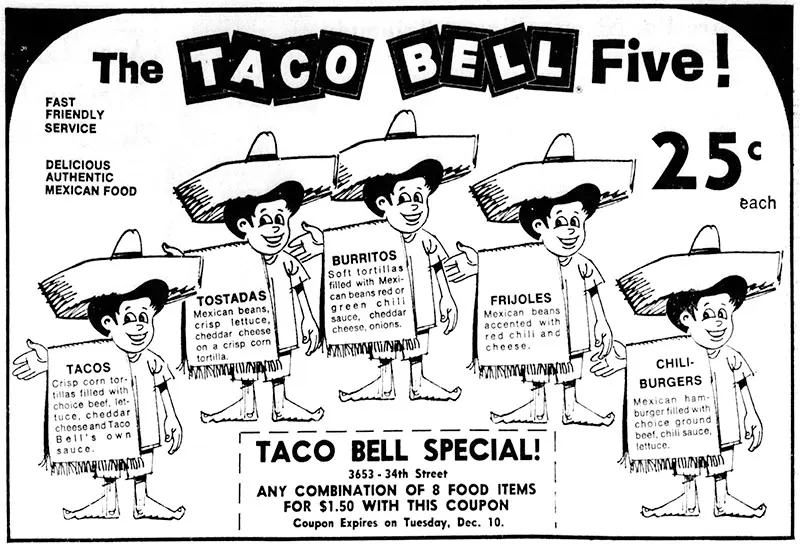
Regional expansion was a major part of the 1960s growth story. When Taco Bell entered Florida in 1967, it marked one of the brand’s significant pushes into the American Southeast — a market that would prove highly receptive to the chain’s affordable menu.
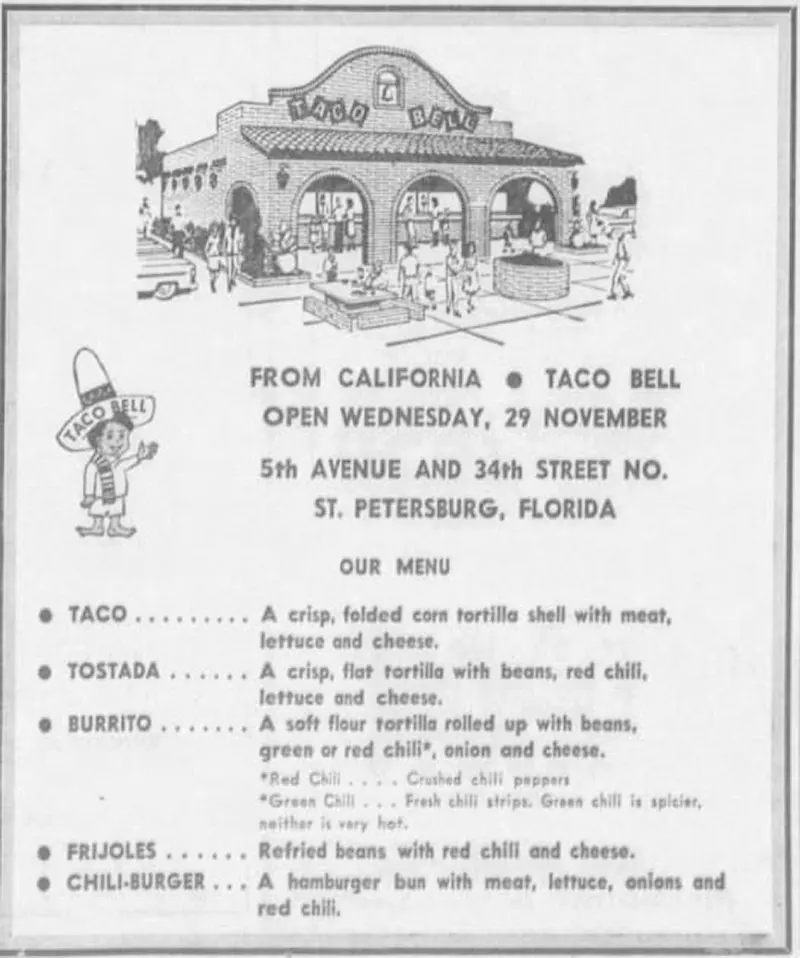
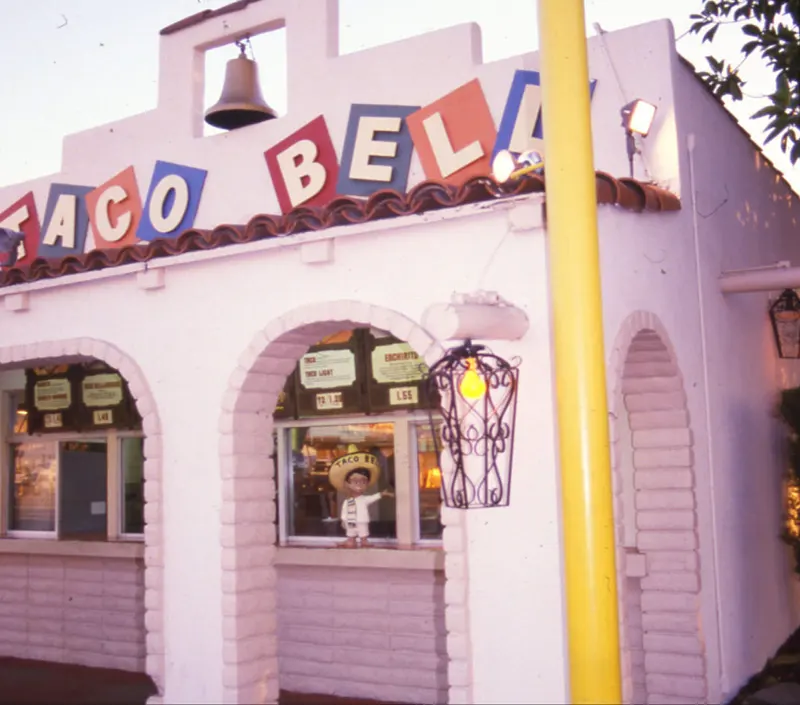
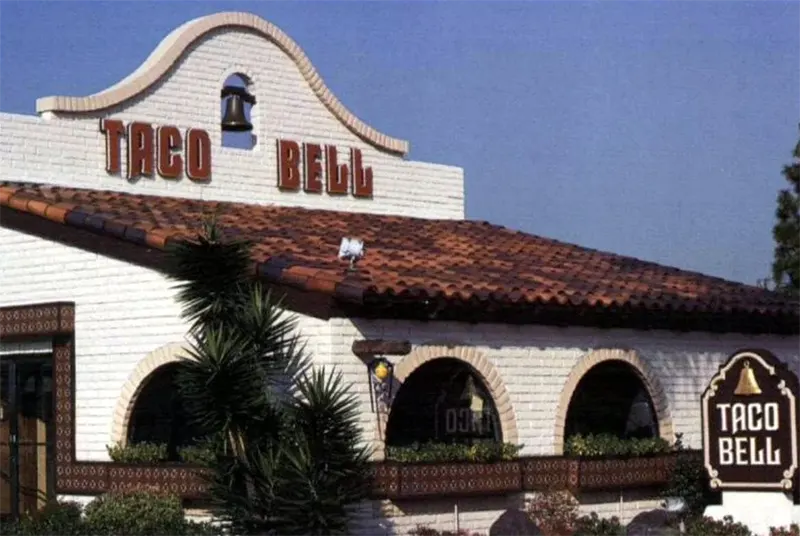
The restaurant buildings themselves became a recognizable part of Taco Bell’s identity throughout the 1970s. The chain adopted a Mission-style architecture, featuring curved arches and a bell logo directly inspired by the Mission San Juan Capistrano in California. The look was unmistakable, and for many customers, pulling into a Taco Bell parking lot meant spotting that iconic silhouette from the road.
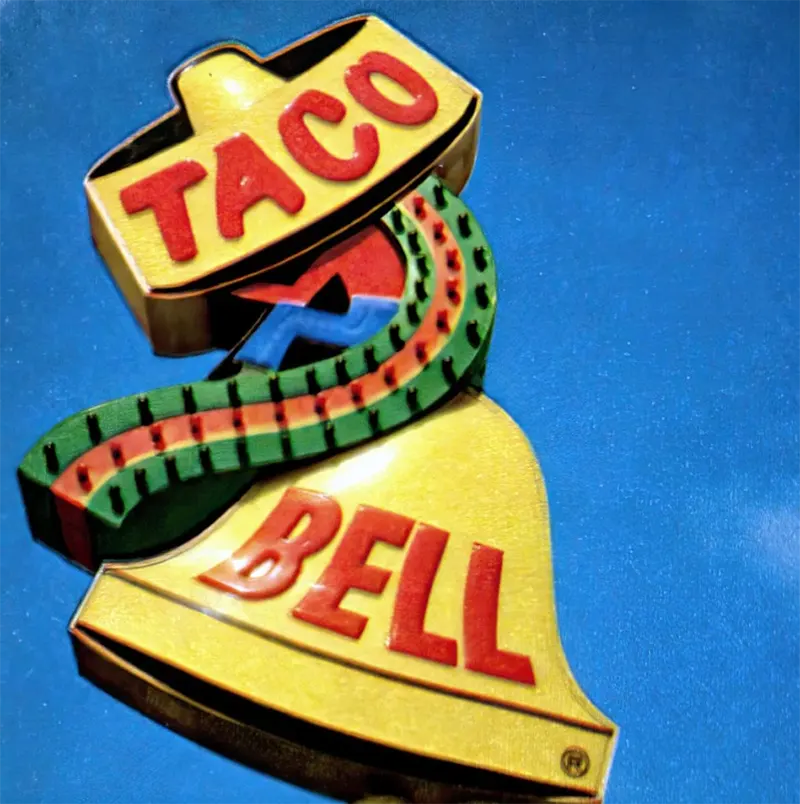
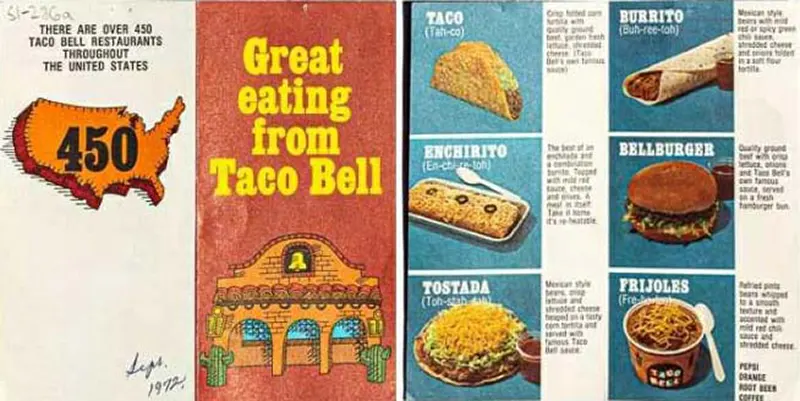
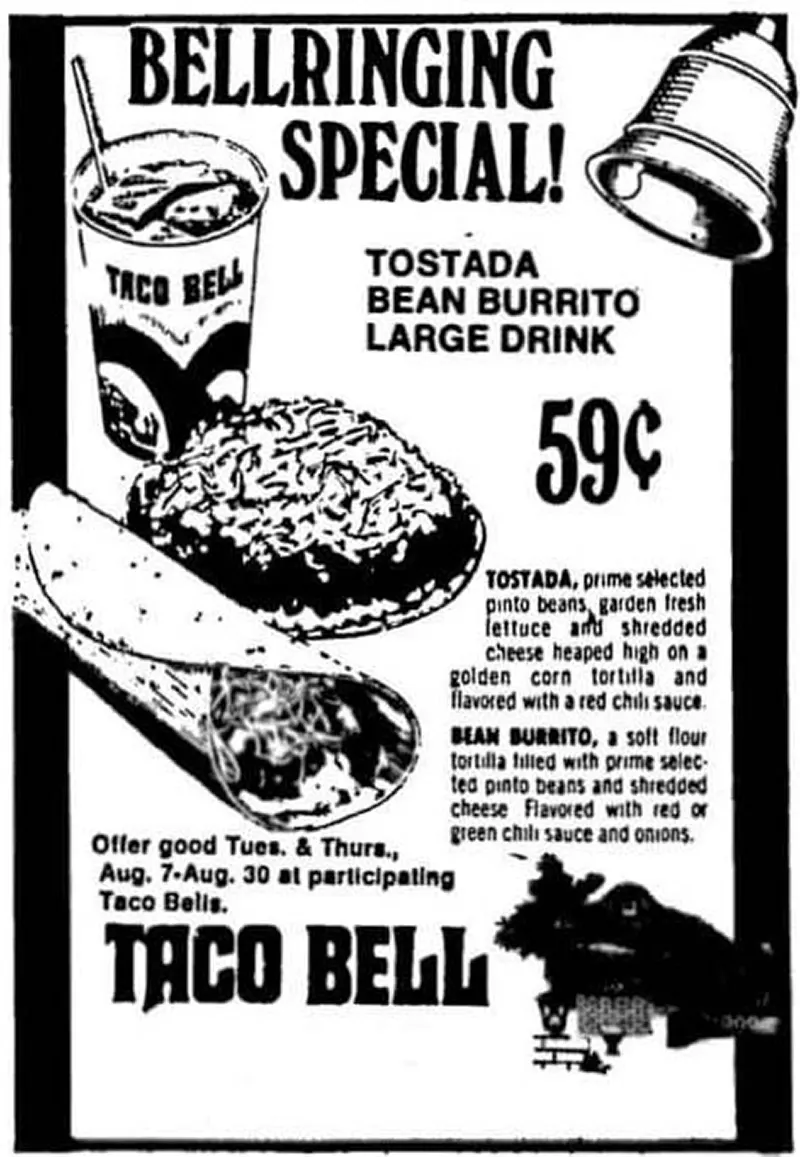
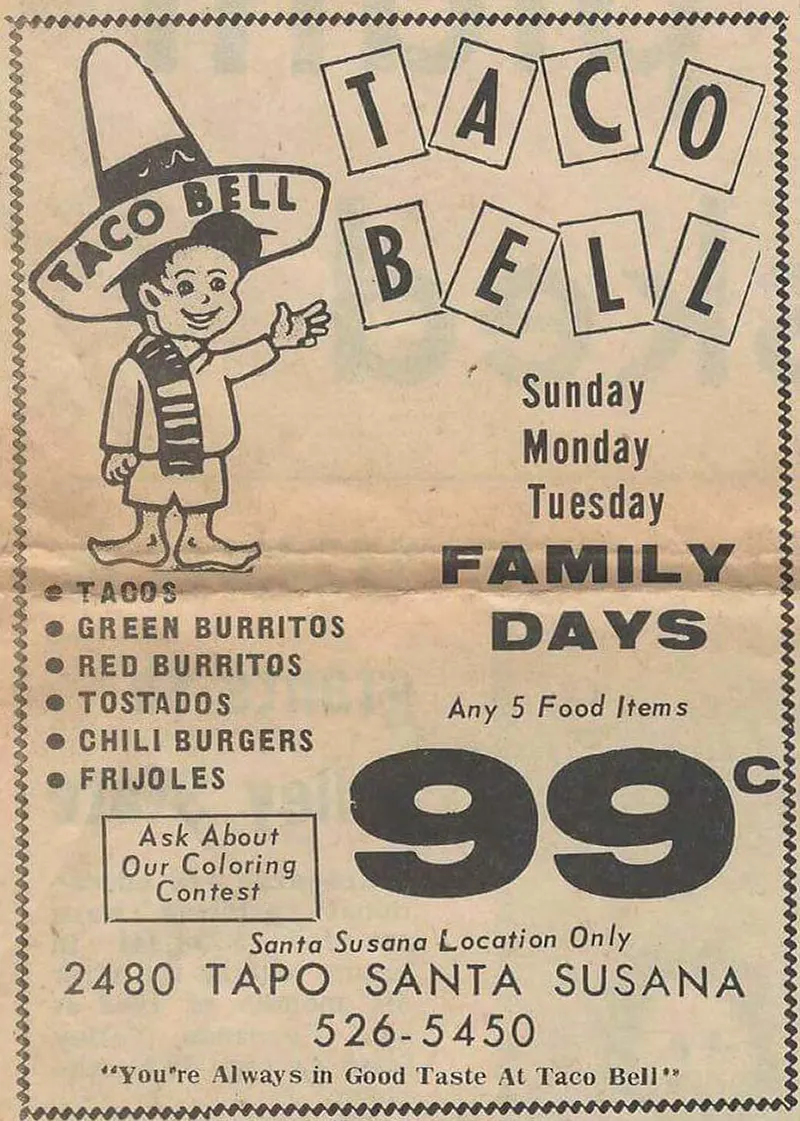
Advertising in the 1970s leaned into the brand’s identity with bold, colorful campaigns that pushed the novelty of Mexican-inspired food for a mainstream American audience.
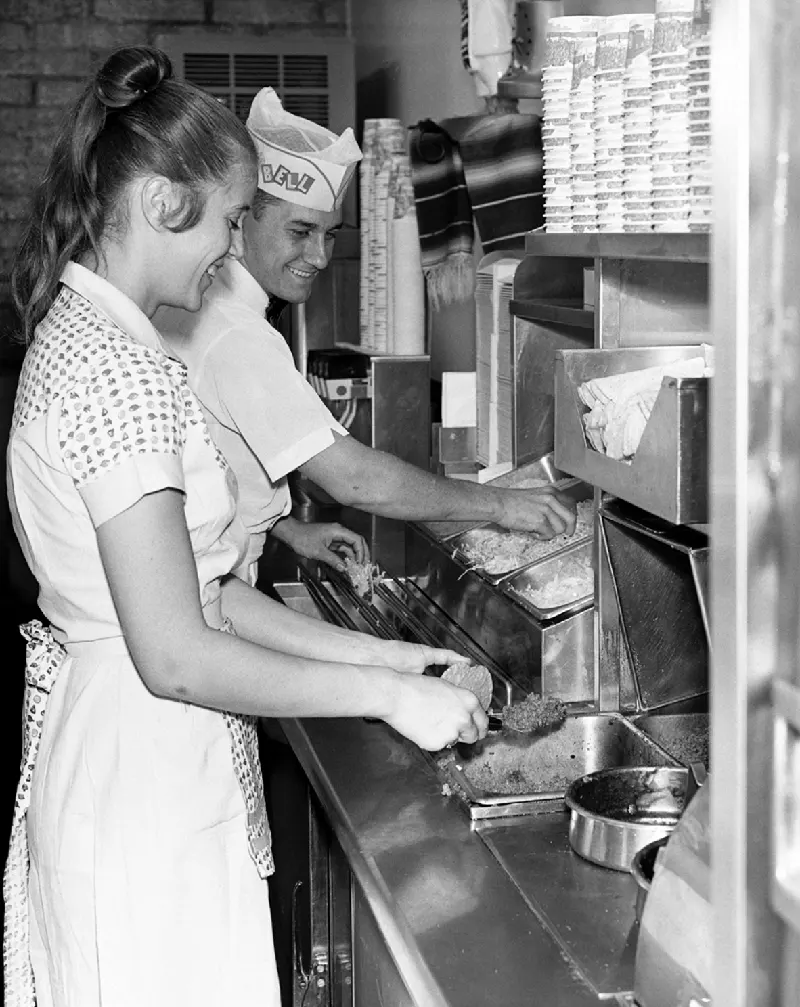
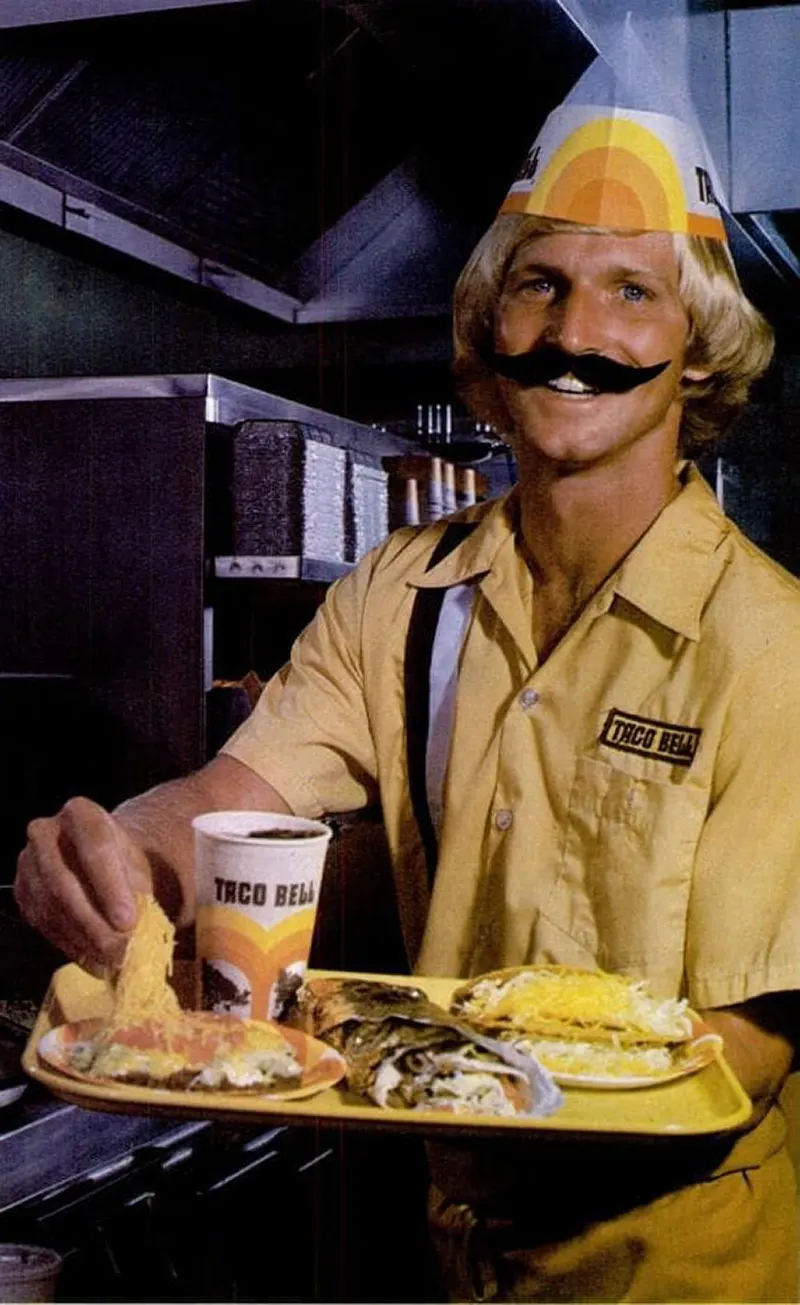
Inside the restaurants, the culture was its own thing. Employees in the 1960s worked in a tight, fast-paced environment — and apparently with a sense of humor, as photos from the era show staff posing with fake mustaches on the job.
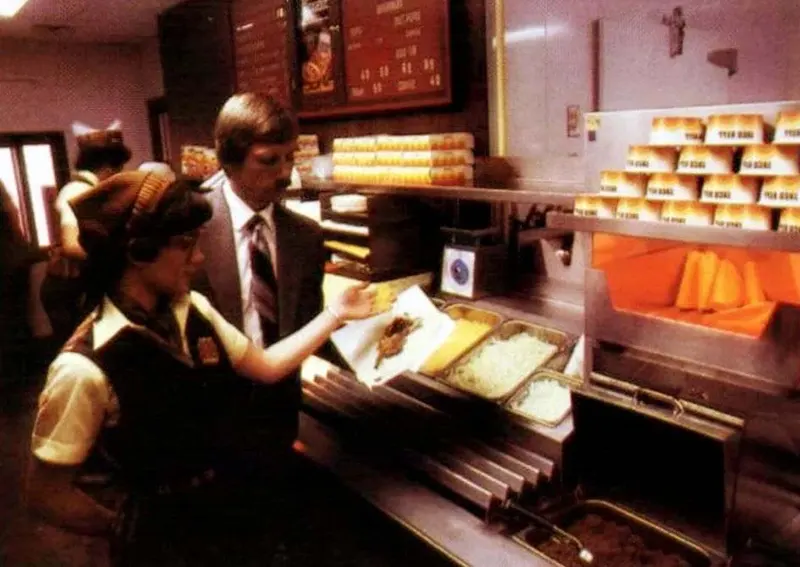
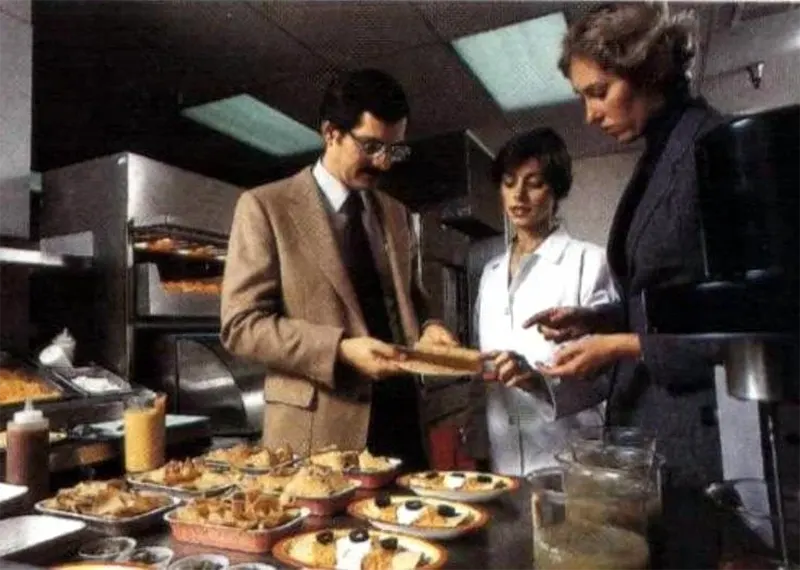
By the early 1980s, Taco Bell was investing heavily in food development. Dedicated testing kitchens and preparation teams worked to refine recipes and develop new items before they ever reached customers. This behind-the-scenes work shaped the menu expansions that defined the decade.
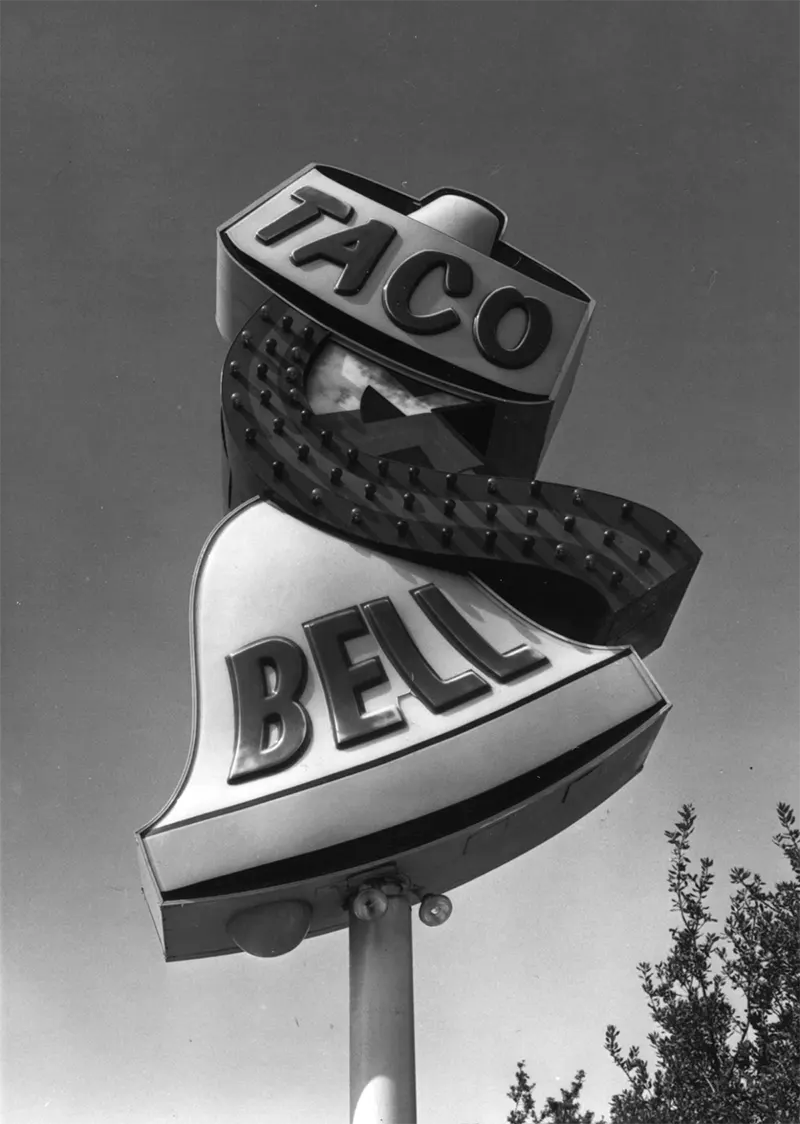
The 1980s also brought changes to the brand’s visual identity. The older Mission-style logo began giving way to updated signage and a more contemporary look, as the company modernized its image to compete in an increasingly crowded fast food market. The slogan “Taco Bell Makes a Run for the Border” defined the decade’s advertising tone — energetic, casual, and aimed squarely at a young audience.
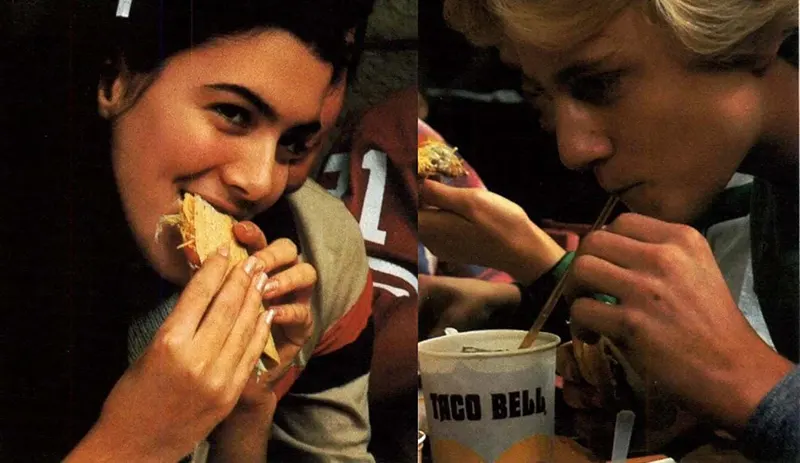
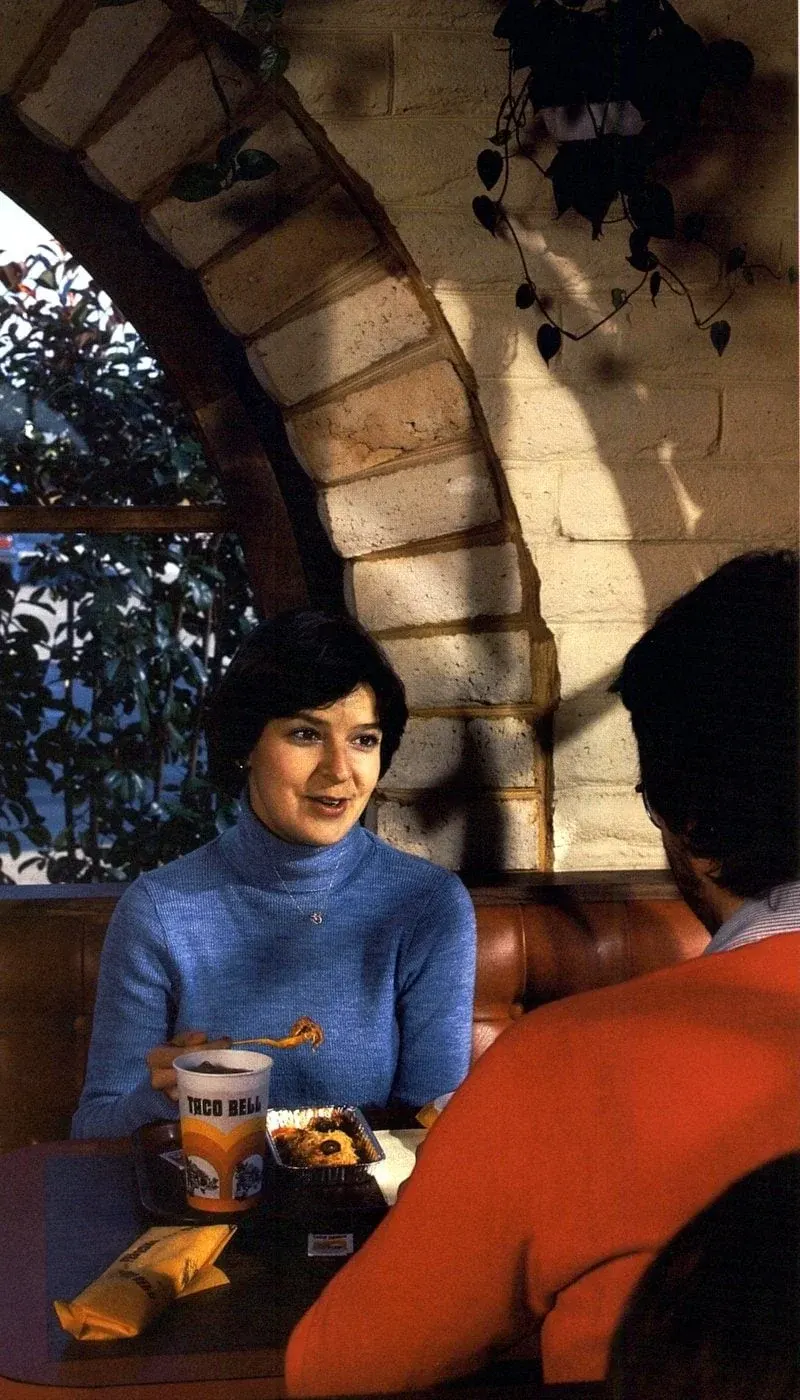
Through the 1980s, the menu expanded significantly. The Taco Salad and Nachos BellGrande gave customers heartier options, and the chain began promoting itself as a dine-in destination — not just a grab-and-go spot. Ads from the era made a point of showing families and groups eating inside.
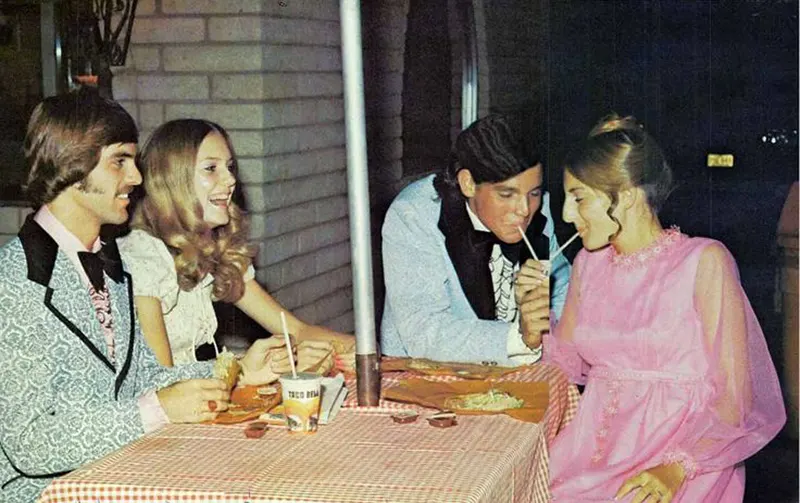
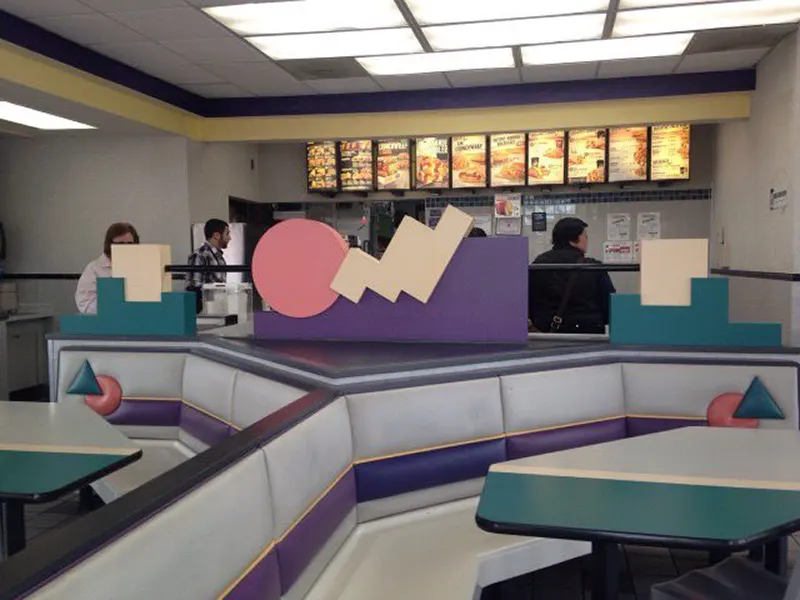
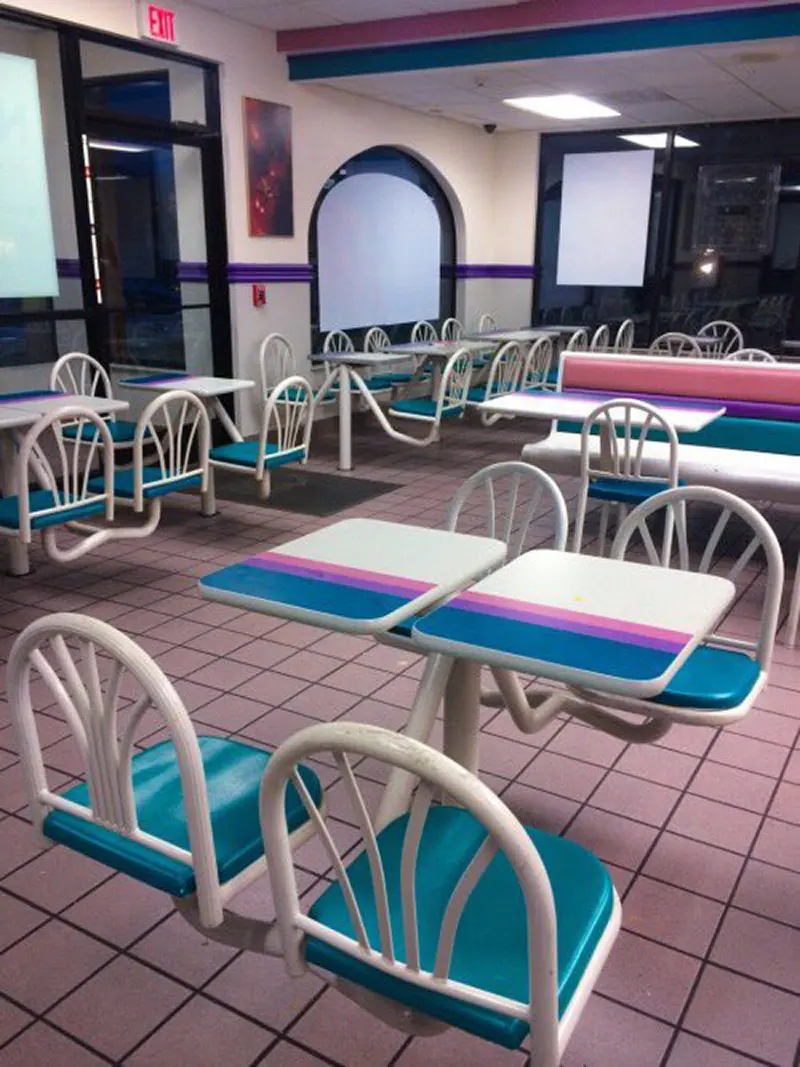
The dine-in experience carried into the 1990s, when Taco Bell restaurants took on the look many older customers remember most vividly — bold colors, angular booth seating, and a lively atmosphere that made it a hangout spot as much as a restaurant.
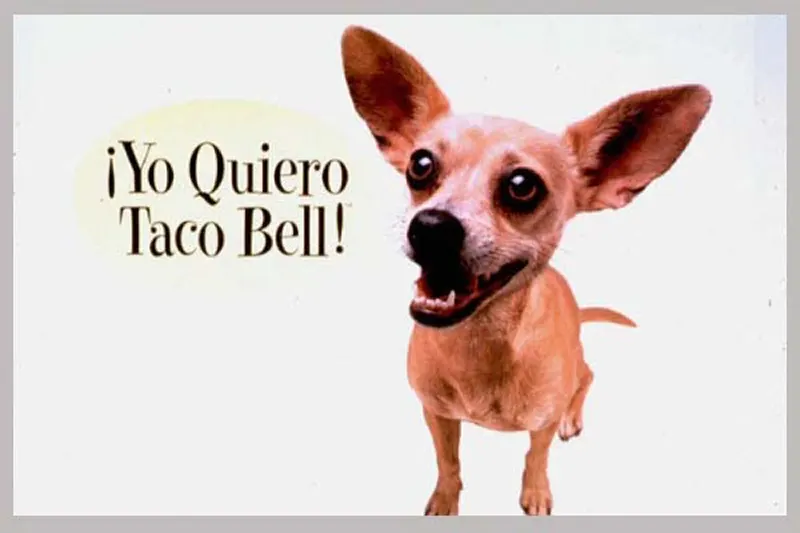
The defining advertising moment of the 1990s came from a small Chihuahua named Gidget. The “Yo Quiero Taco Bell” campaign launched in 1997 and made Gidget a genuine pop culture figure. The ads were everywhere — on television, in merchandise, and in the cultural conversation. Gidget’s deadpan delivery of the line turned a fast food commercial into something people actually quoted.