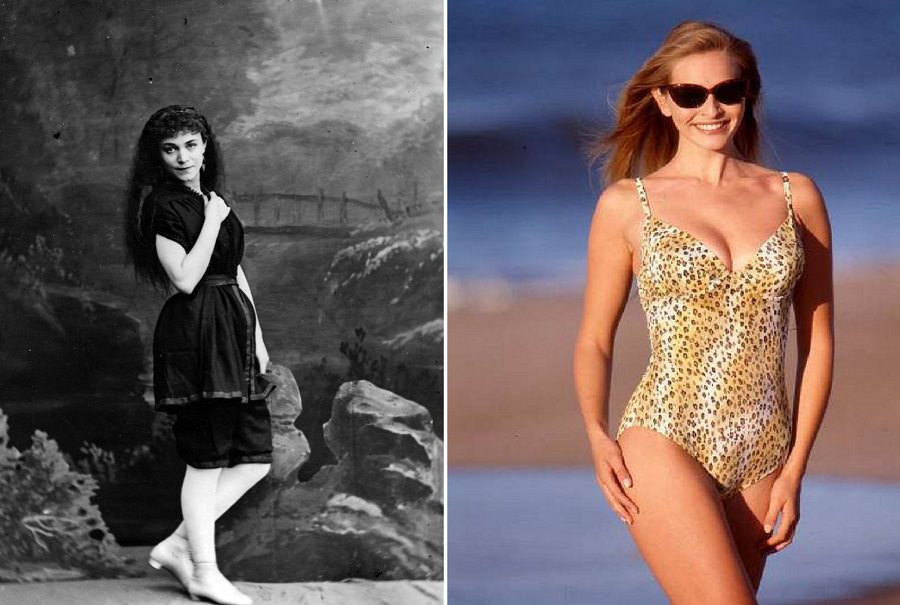
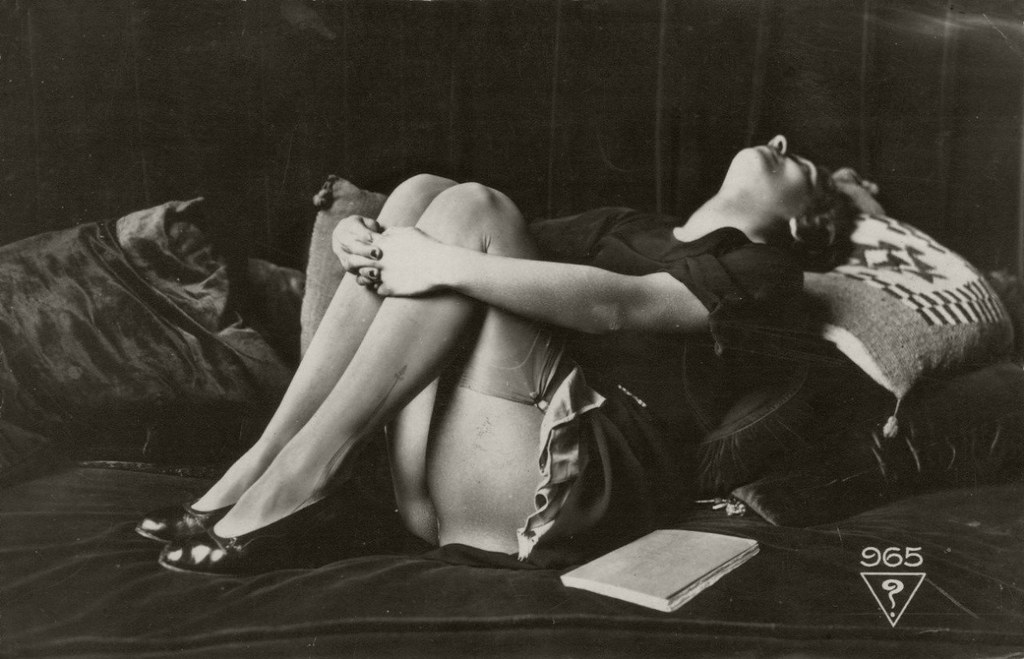
Before modern underwear existed, men and boys wore long underwear or one-piece garments called union suits. These were bulky, hot, and uncomfortable — especially during warmer months. The fabric sat tight against the skin with no way for air to pass through. That changed when a man named Martin J. Shaughnessy came up with a better idea.
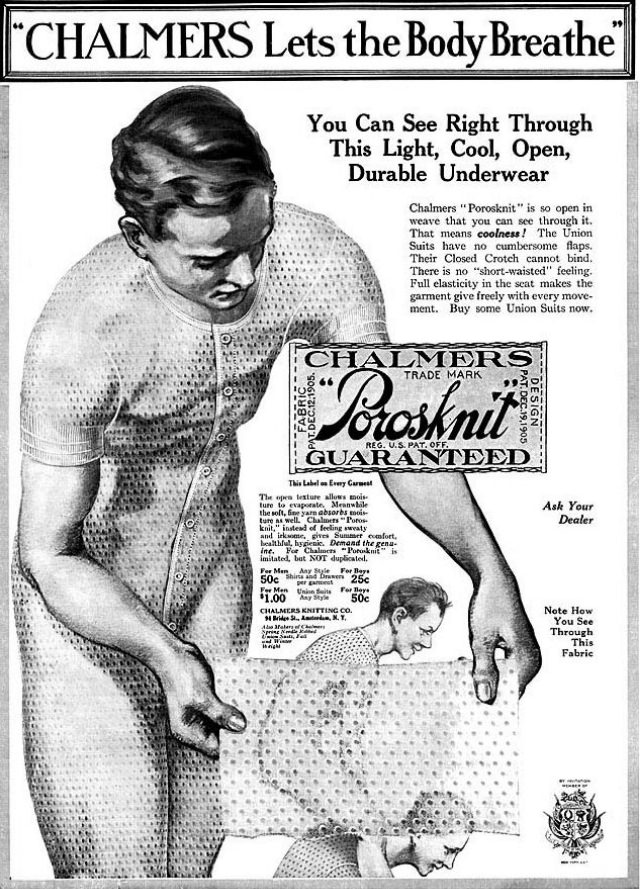
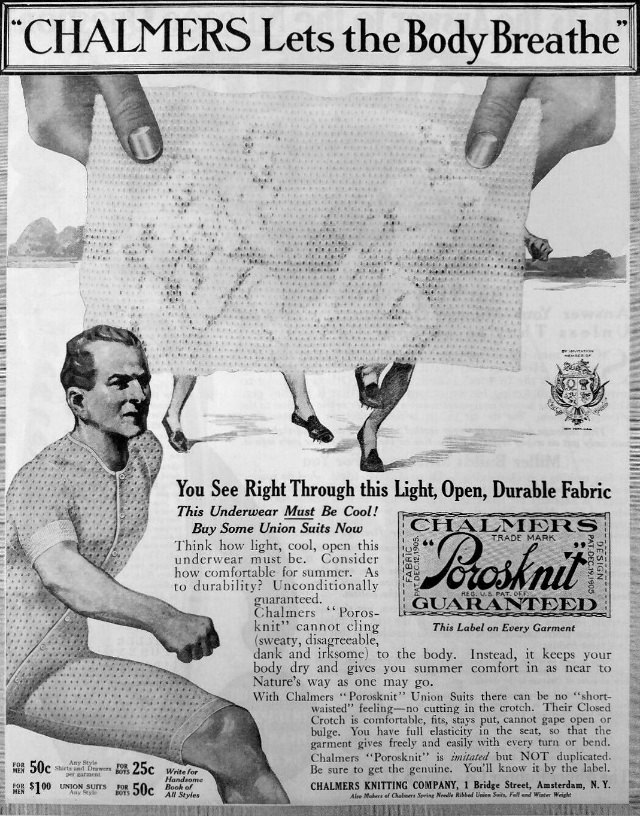
Shaughnessy lived and worked in Amsterdam, New York, where he invented a knitting process that left small holes throughout the fabric. Those tiny holes allowed air to reach the skin, making the underwear far more comfortable to wear. He patented his method and gave it a name: Porosknit.
The Chalmers Knitting Mill in Amsterdam licensed Shaughnessy’s patented process and began using it to manufacture underwear. The mill was founded by David W. Chalmers, John R. Blood, John Barnes, and J. Howard Hanson. It was first formed in 1901 and officially incorporated in 1904.
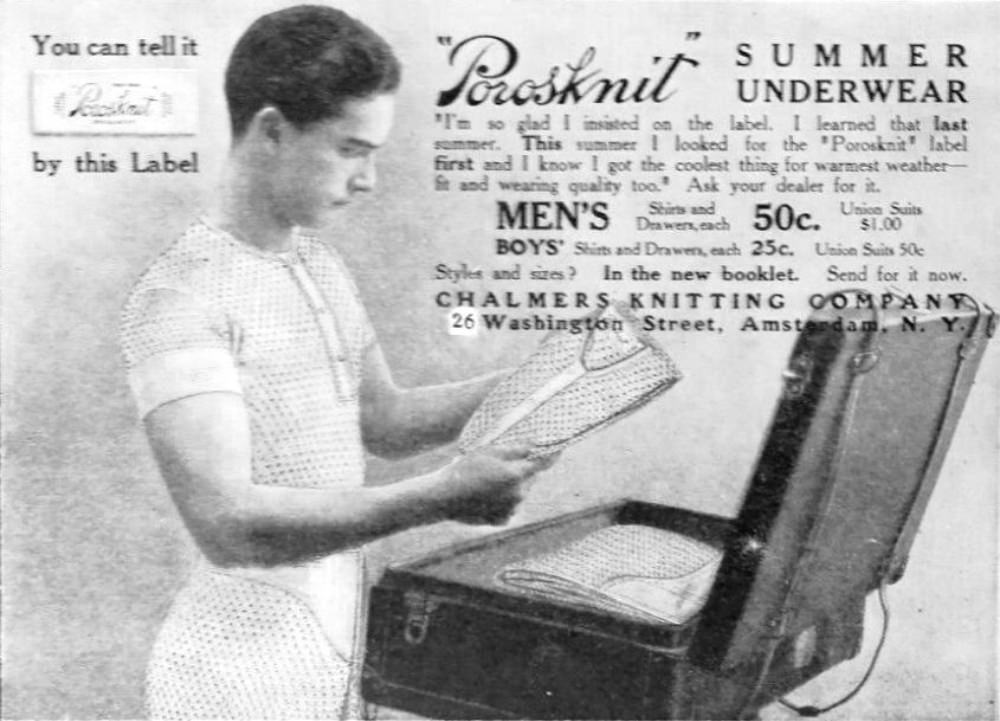
The mill’s first plant opened on Washington Street in Amsterdam, where it leased the third floor of the Blood Broom factory and began production. That location turned out to be more than just a starting point — it was also where the mill made another major change to the way men dressed.
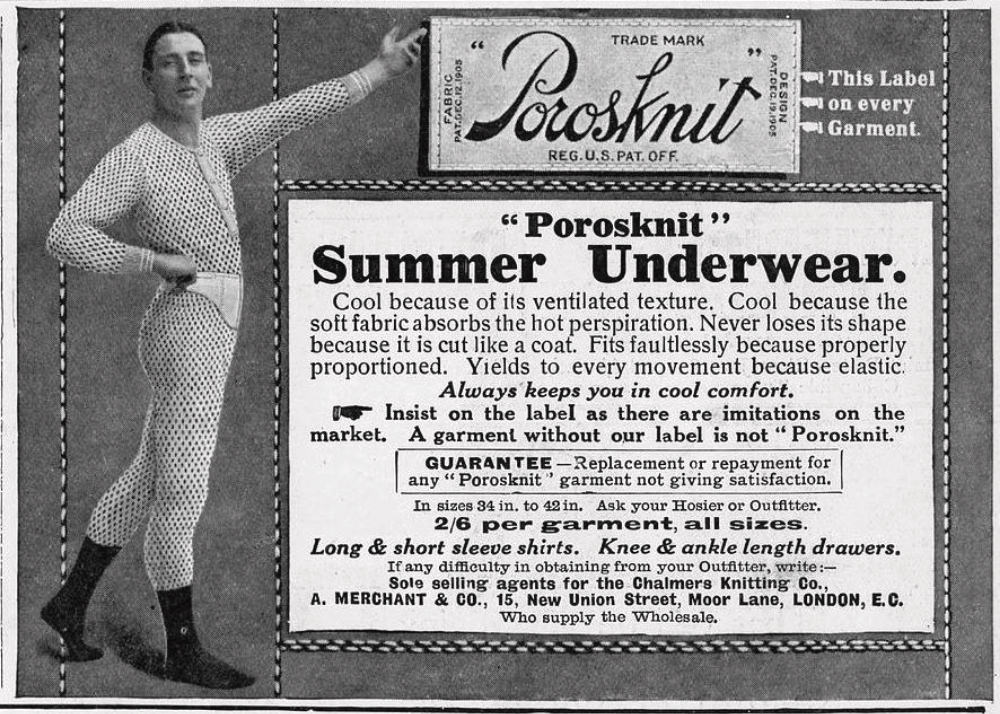
While operating on Washington Street, Chalmers Knitting Mill divided the union suit into two separate pieces — a top and a bottom. This was a significant shift in how underwear was designed and worn. Men no longer had to deal with a single, awkward garment covering them head to toe.
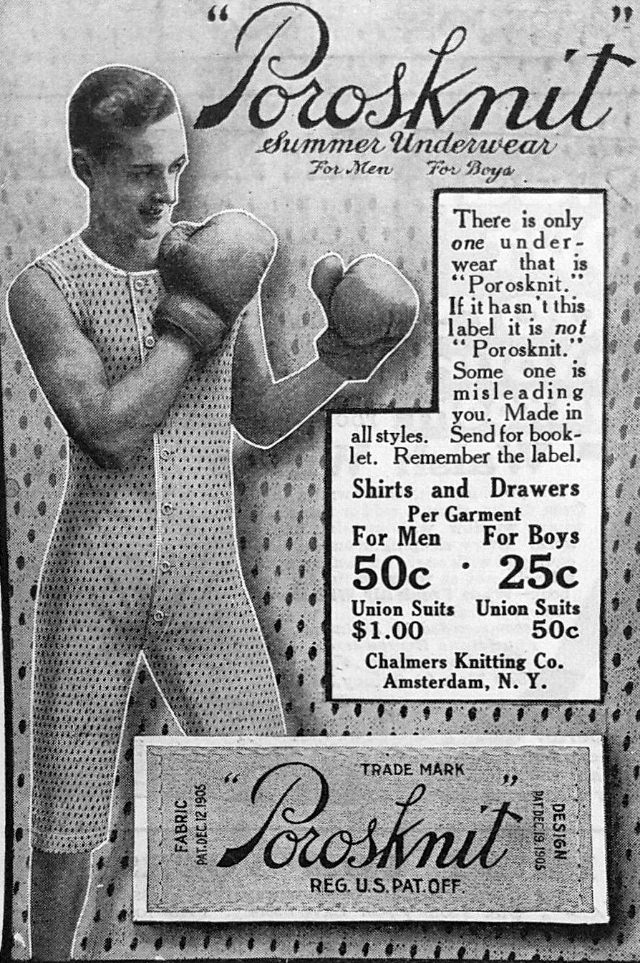
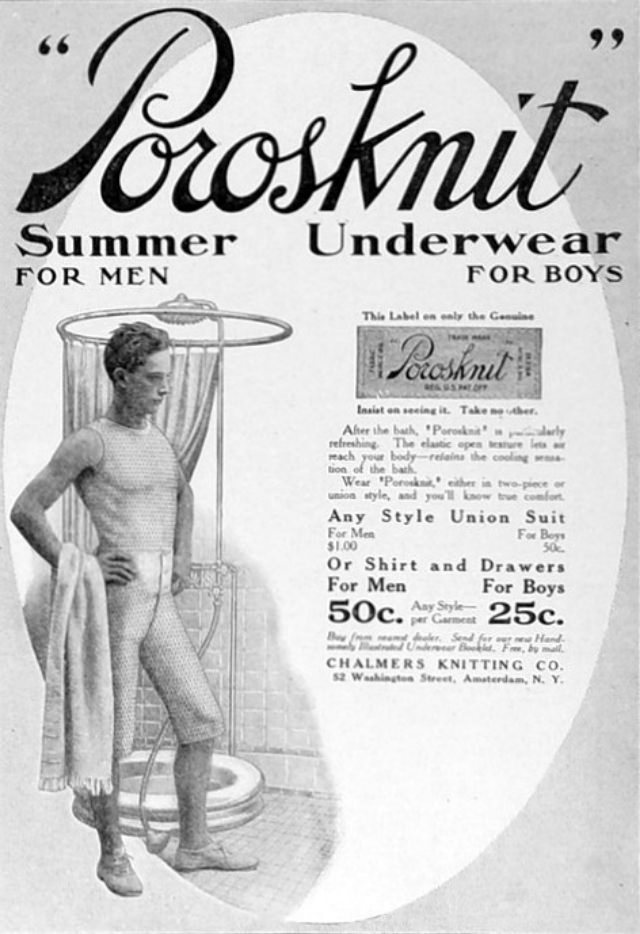
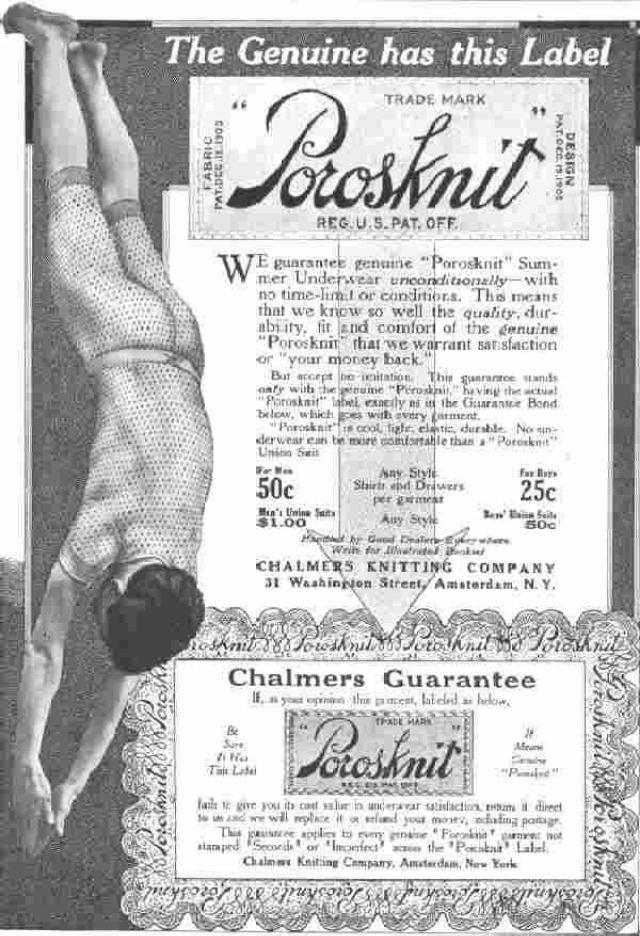
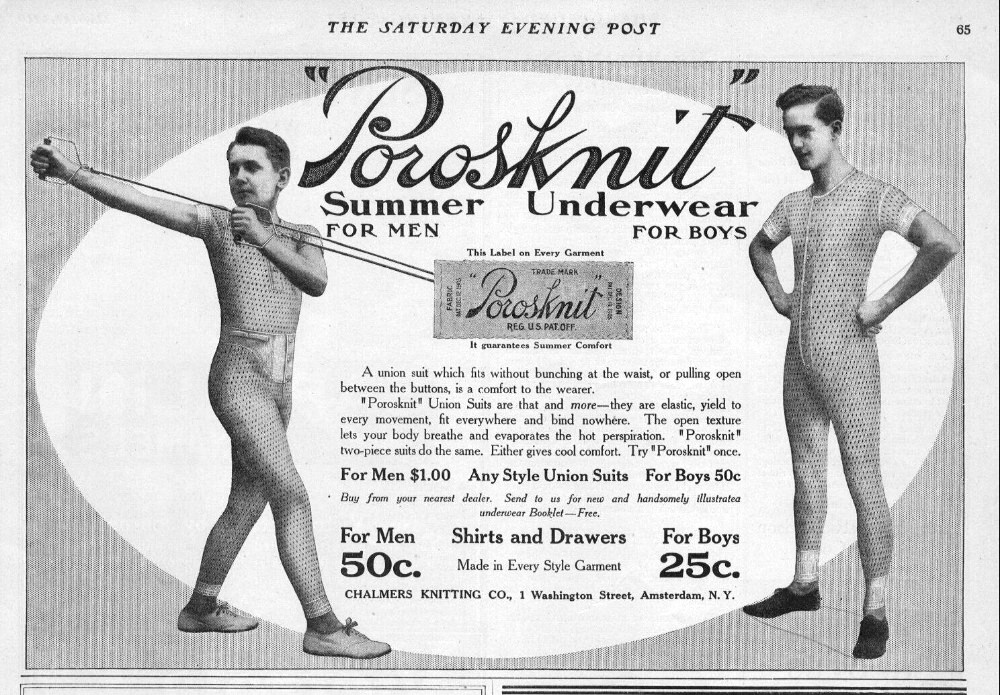
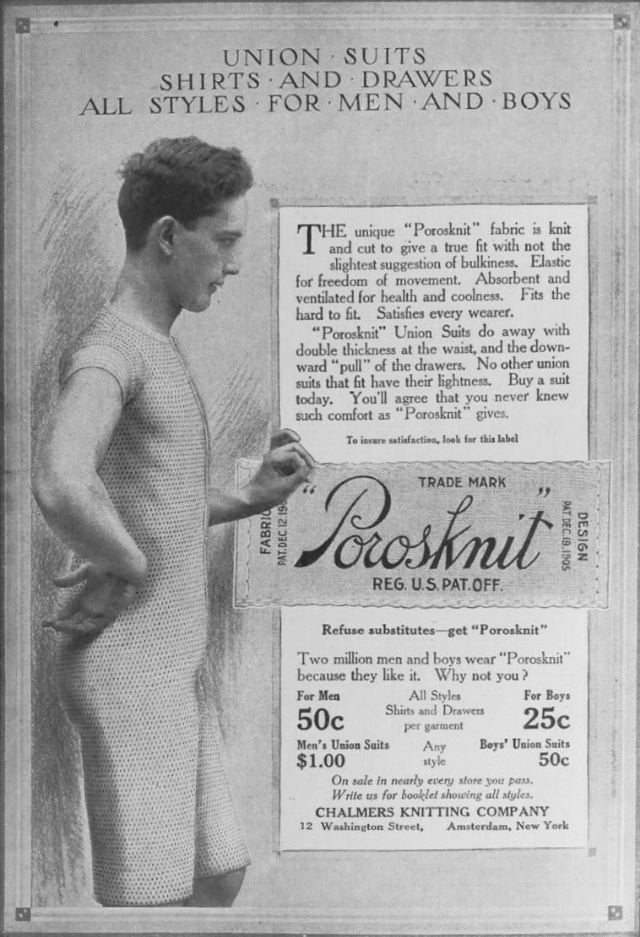
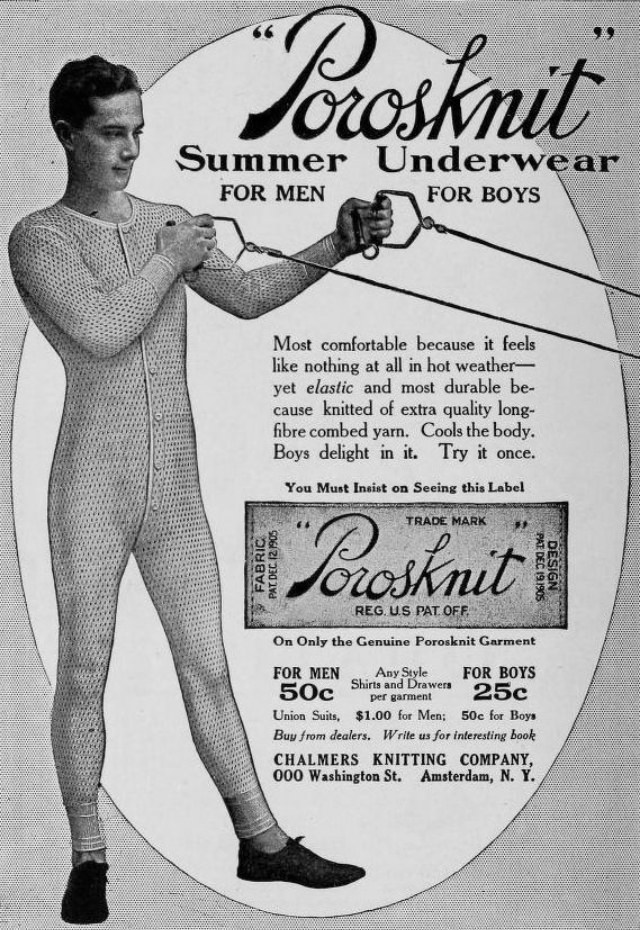
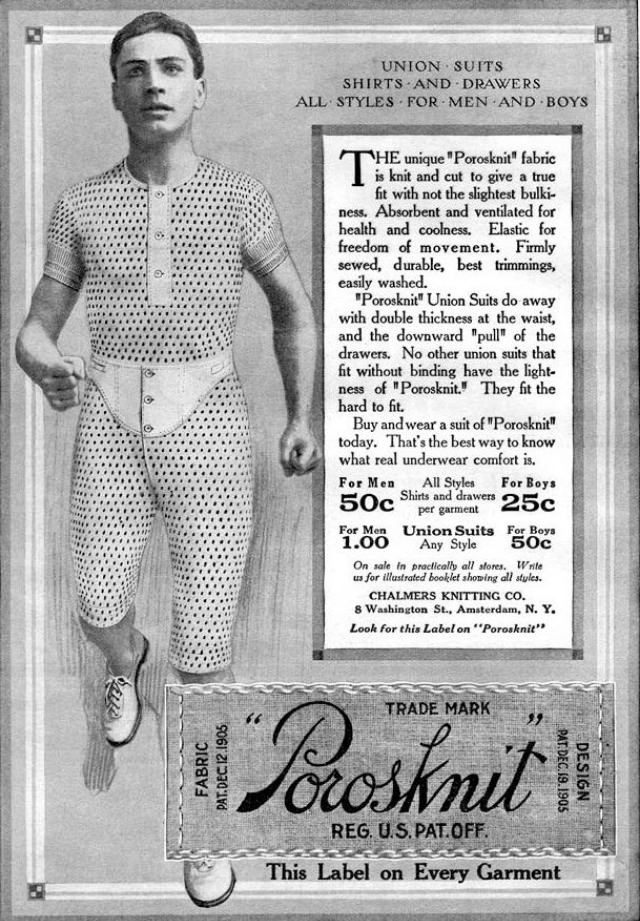
Porosknit underwear became extremely popular. By the turn of the 20th century, very few women were wearing union suits, so the product focused entirely on men and boys. The brand leaned into that market with confidence, and its advertising reflected it clearly.
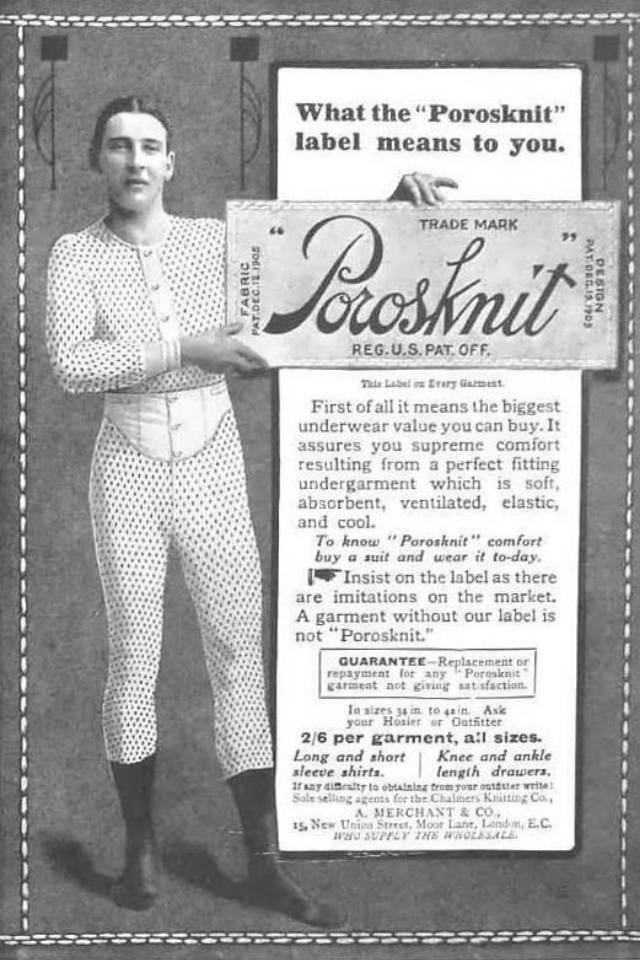
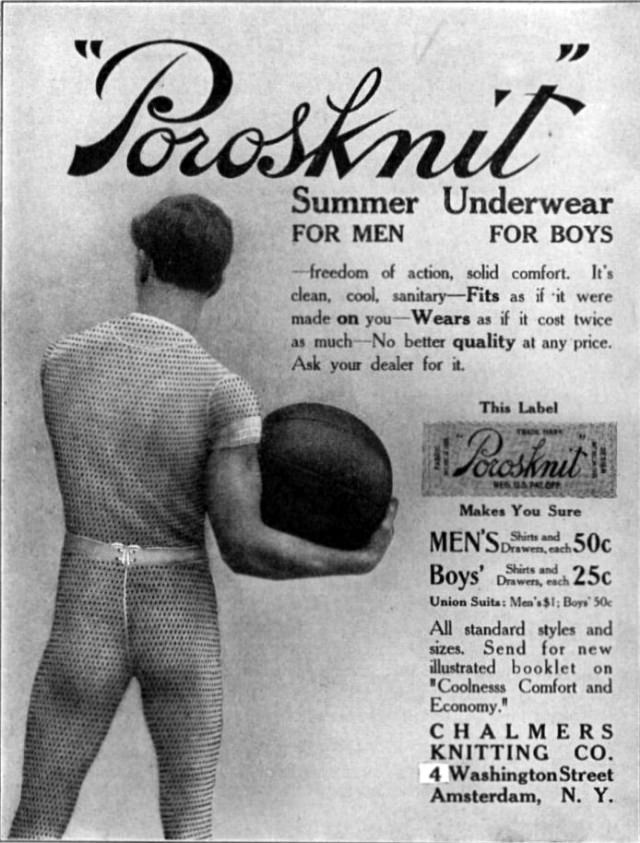
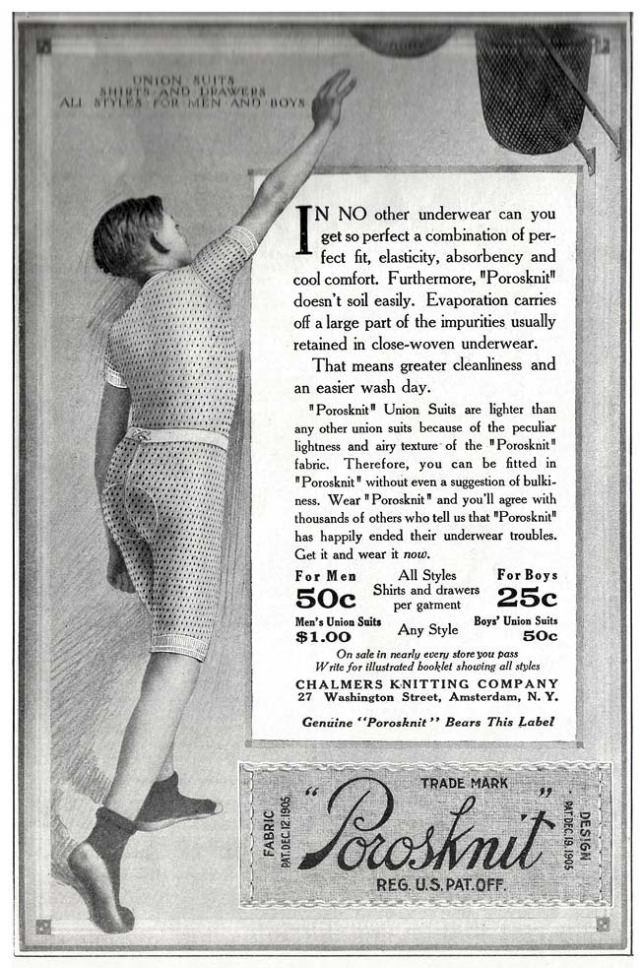
Magazine ads for Porosknit showed men and boys in active, athletic situations — throwing a football, boxing, playing basketball. The message was straightforward: this underwear could keep up with an active lifestyle. The ads were eye-catching and direct, aimed squarely at a male audience.
As demand for Porosknit grew, so did the mill itself. In 1913, Chalmers Knitting Mill erected a four-story brick building on Amsterdam’s south side. The facility gave the company the space it needed to scale up production and meet the rising demand from customers across the country.
Just three years later, in 1916, a seven-story reinforced concrete spinning mill was added to the complex. The new addition was built at a near-right angle to the original section, giving the entire building an L-shaped footprint. It was a major construction project that reflected the company’s growth.
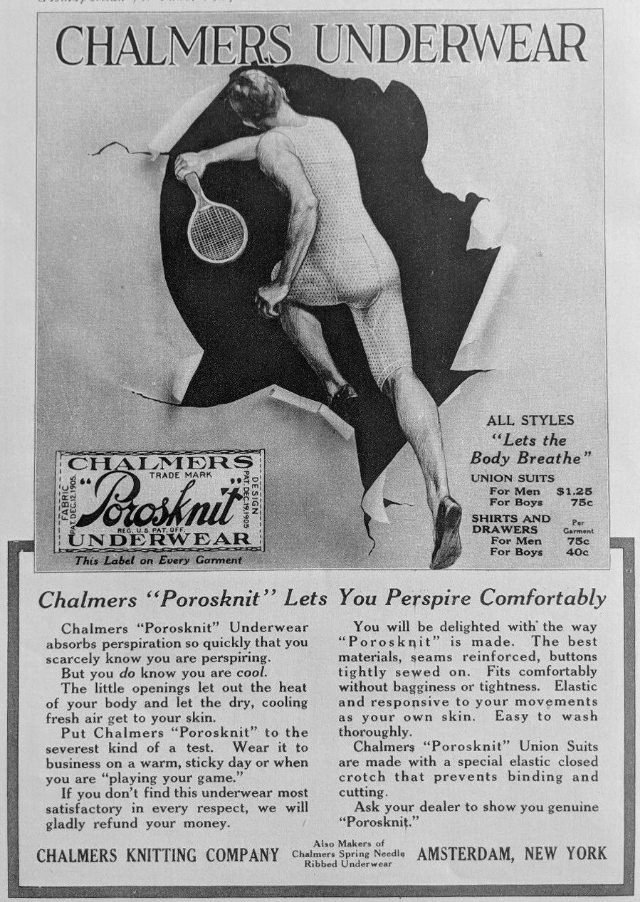
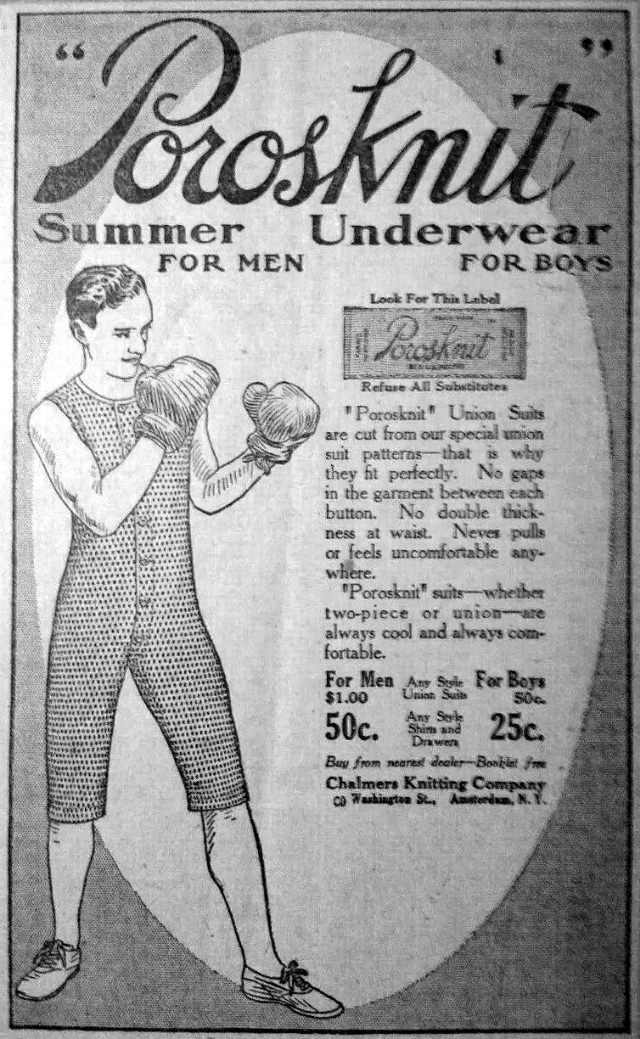
The vintage ads themselves are a fascinating window into early 20th-century marketing. They were printed in national magazines and used bold illustrations to grab readers’ attention. The men and boys in the ads were always shown as strong, active, and capable — qualities the brand wanted customers to associate with the product.
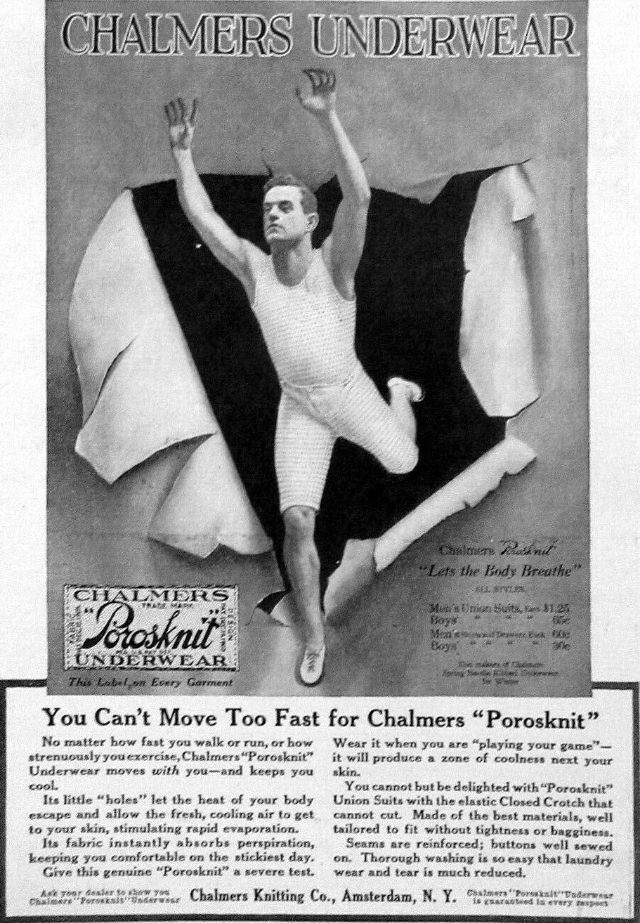
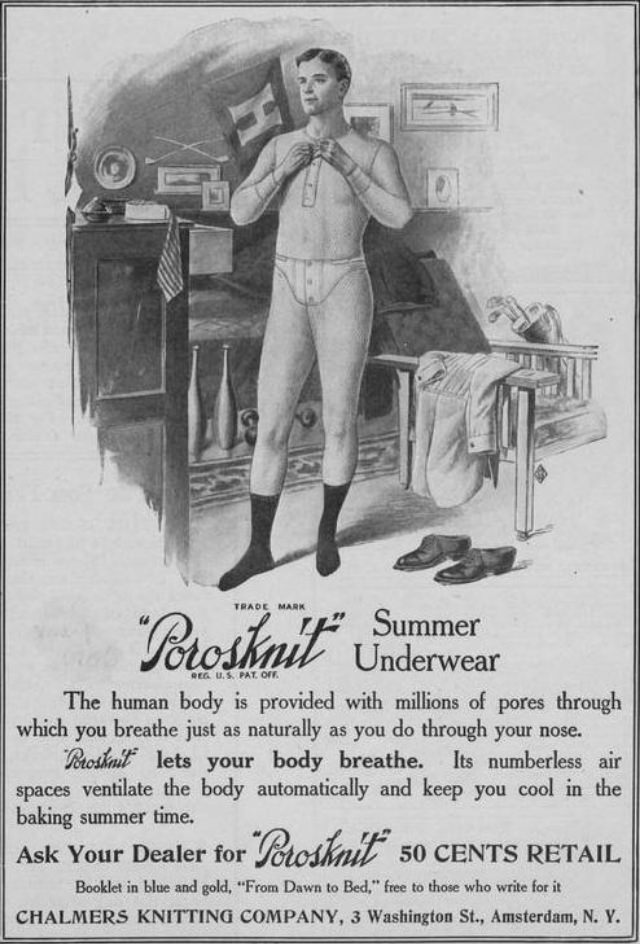
The Porosknit name appeared prominently in every ad, often alongside claims about comfort and breathability. These weren’t subtle advertisements. They were confident, direct, and built around a clear selling point — the holes in the knit fabric that set Porosknit apart from every other underwear on the market.
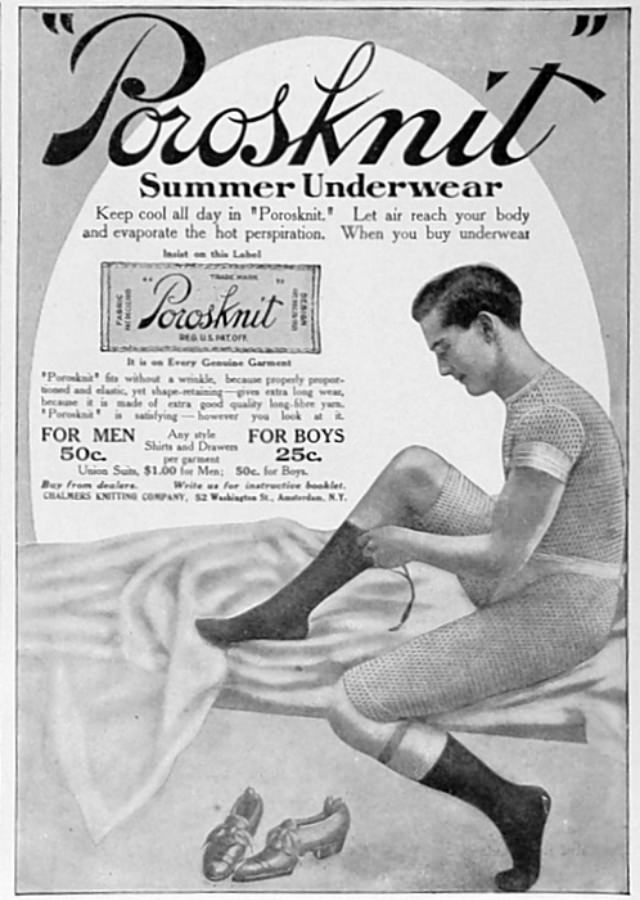
For decades, the Chalmers name was tied directly to Porosknit. The mill continued to produce undergarments under that name well into the mid-20th century. Production ran until 1959, when the original founders passed away, bringing an end to the company’s long run in Amsterdam’s textile industry.