Hey There! Before You Go. 😧
Get the best vintage content straight into your inbox!

Don't worry, we don't spam

Vintage America: A Journey Through Time with Theodor Horydczak's Photos

Theodor Horydczak was born in Poland in 1890 and immigrated to the United States in 1913. He built his photography career in Washington, D.C., and became one of the most detail-driven commercial photographers of his era. His work spans roughly three decades, from the 1920s through the late 1940s, covering a period of sweeping change across the country.

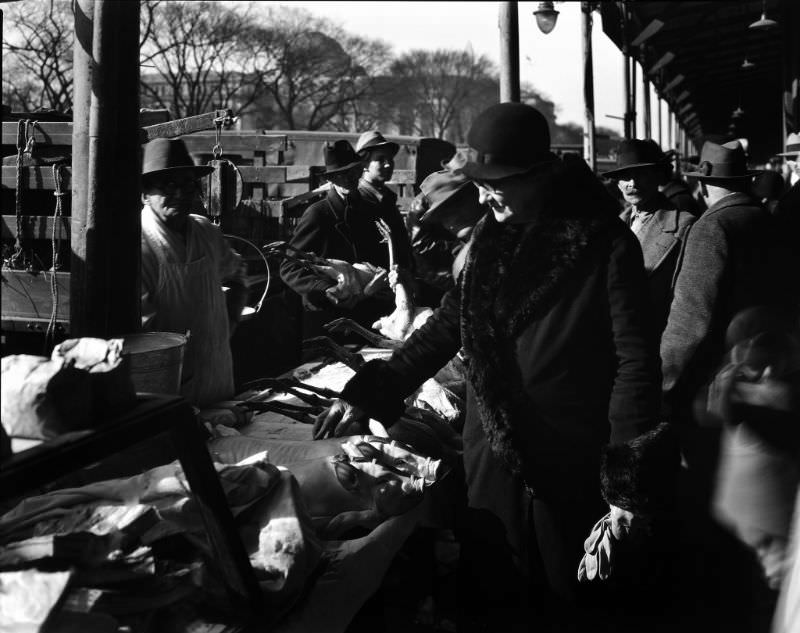
Horydczak worked with a sharp eye for composition. He photographed grand civic buildings, busy city streets, industrial facilities, and ordinary people going about their daily lives. Among his earliest surviving work are scenes from Center Market in Washington, D.C., where vendors and shoppers filled the stalls in the 1920s.
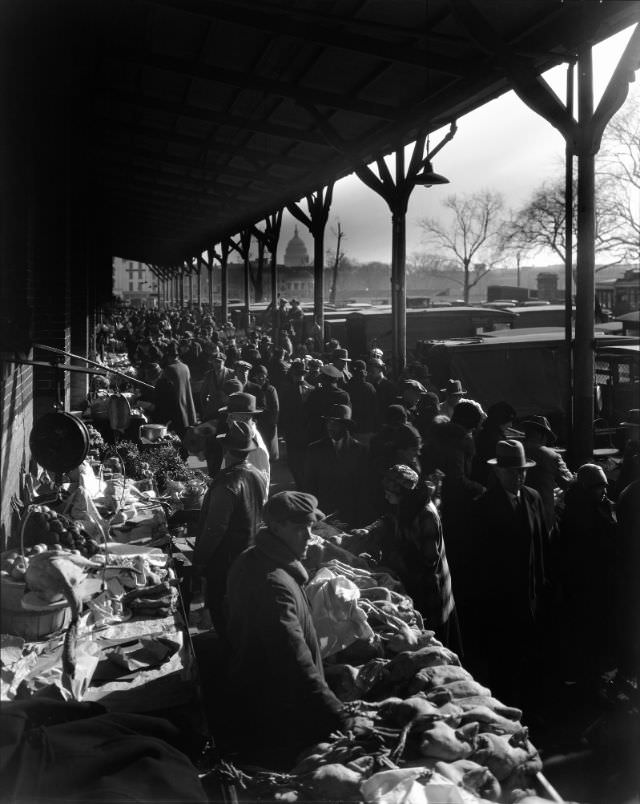
Marketing at Center Market, Washington, D.C., 1920s
Shopping at Center Market, Washington, D.C., 1920s

Washington, D.C. was a frequent subject throughout his career. He photographed its most iconic landmarks with a steady, documentary approach. His 1925 image of the Lincoln Memorial captures the statue framed through the building’s massive columns — a perspective that conveys both scale and quiet reverence.
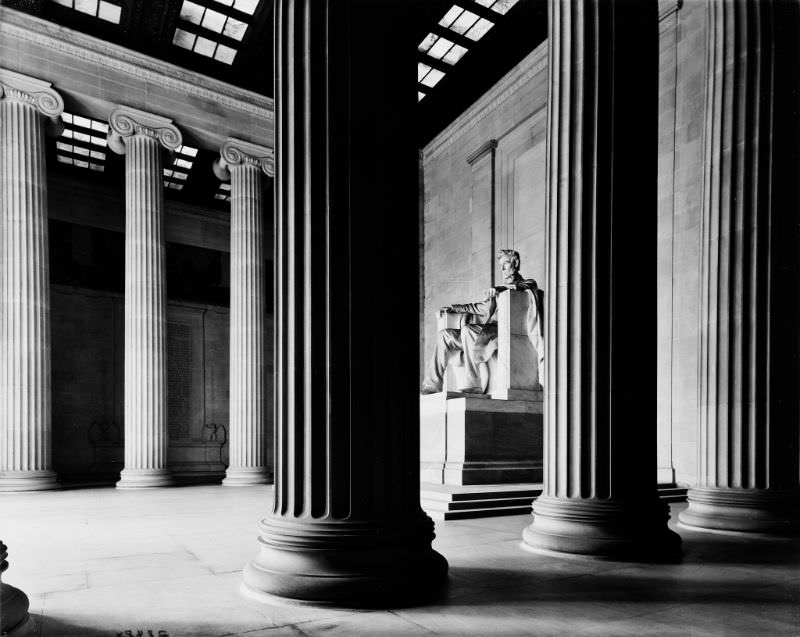
View of the Lincoln Memorial statue through columns, 1925

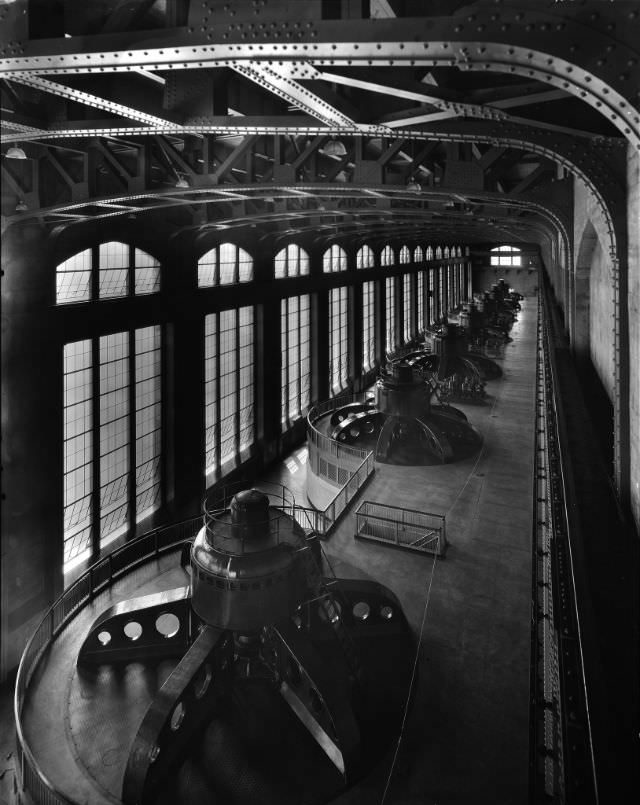
By 1930, Horydczak was documenting major infrastructure projects. The construction of Memorial Bridge over the Potomac River was one such assignment, showing the city’s ambition to connect and expand. That same year, he turned his lens on the turbine hall of the Conowingo Hydroelectric Plant — a powerful symbol of industrial America.
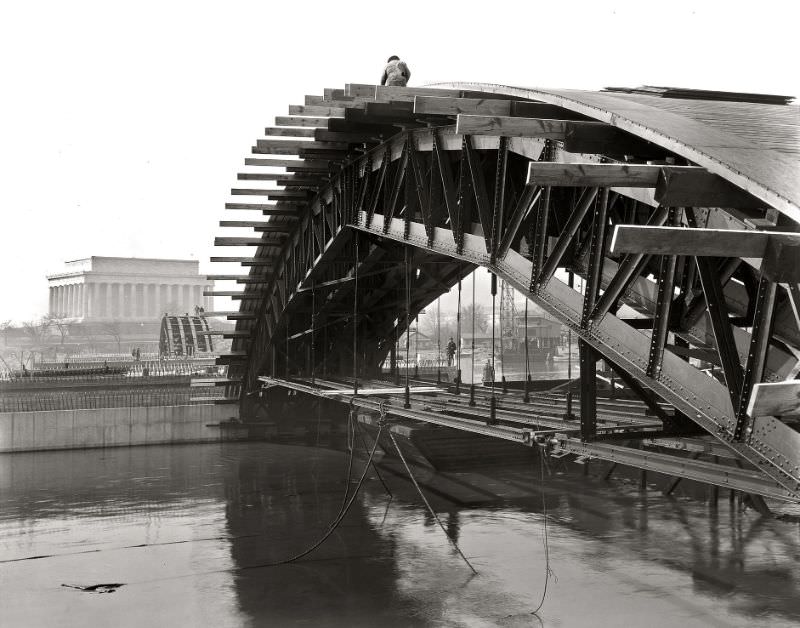
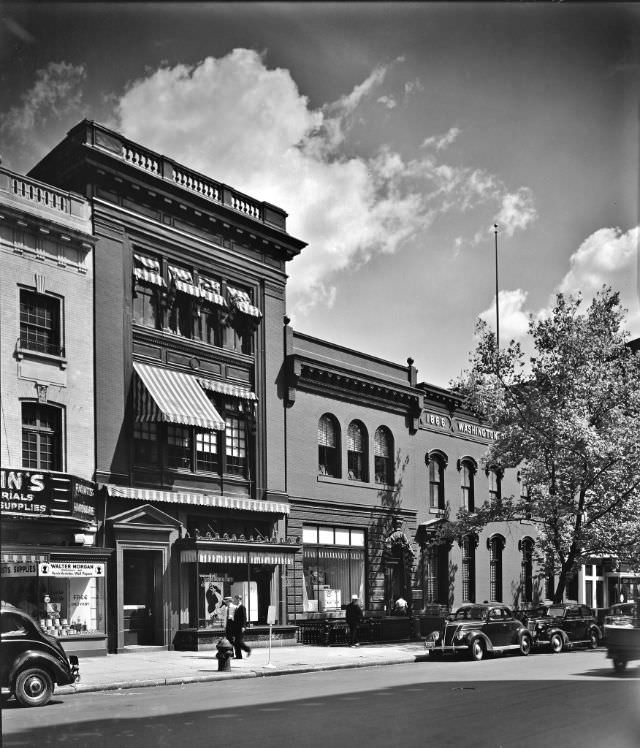
Construction of Memorial Bridge over Potomac River, Washington, D.C., 1930
Exterior of the Washington Gas Light Co., 1930s
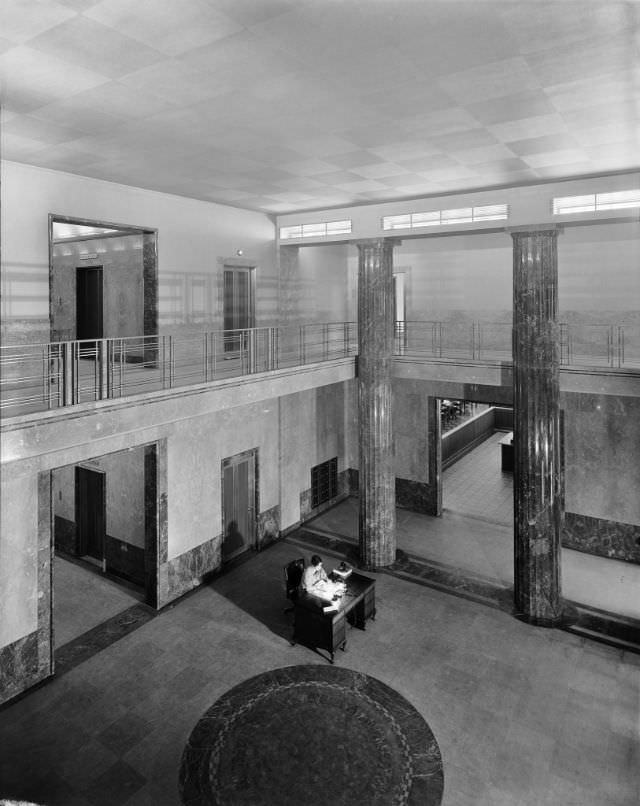
Lobby, Acacia Mutual Life Insurance Co. building, Washington, D.C., 1930s
Turbine hall of the Conowingo Hydroelectric Plant, 1930

His commercial clients were varied. He photographed hotel exteriors, corporate lobbies, and retail storefronts. A 1930s shot of a whiskey window display at Leon’s Delicatessen captures the post-Prohibition retail landscape with striking directness.
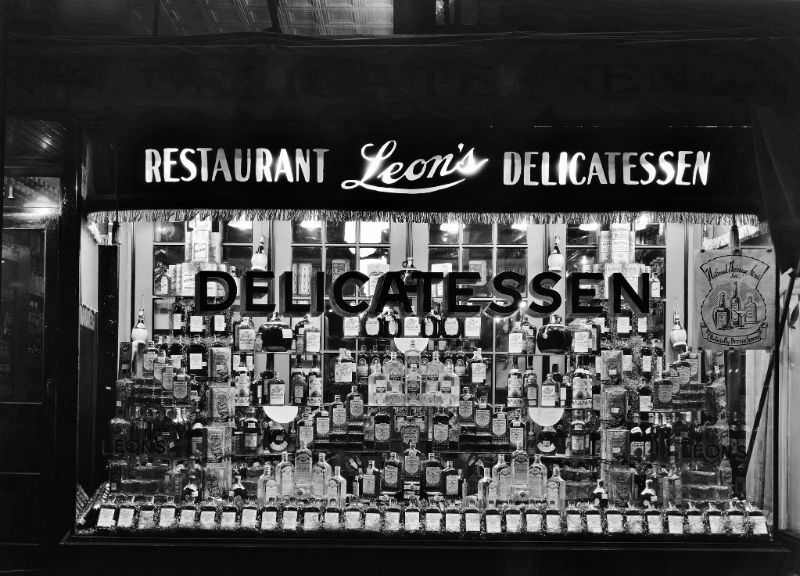
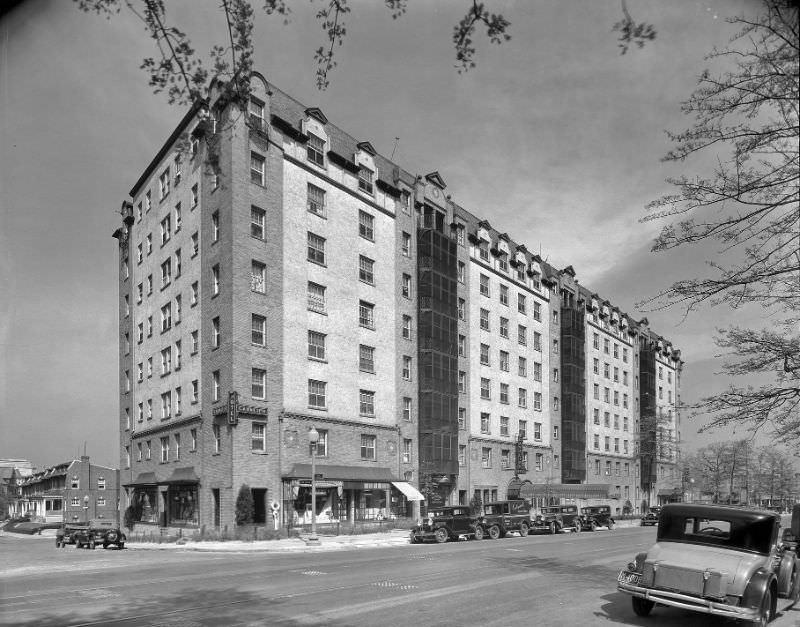
Window display of whiskey at Leon's Delicatessen, 1930s
Window display of whiskey at Leon’s Delicatessen, 1930s
Exterior of Cavalier Hotel, Washington, D.C., 1931

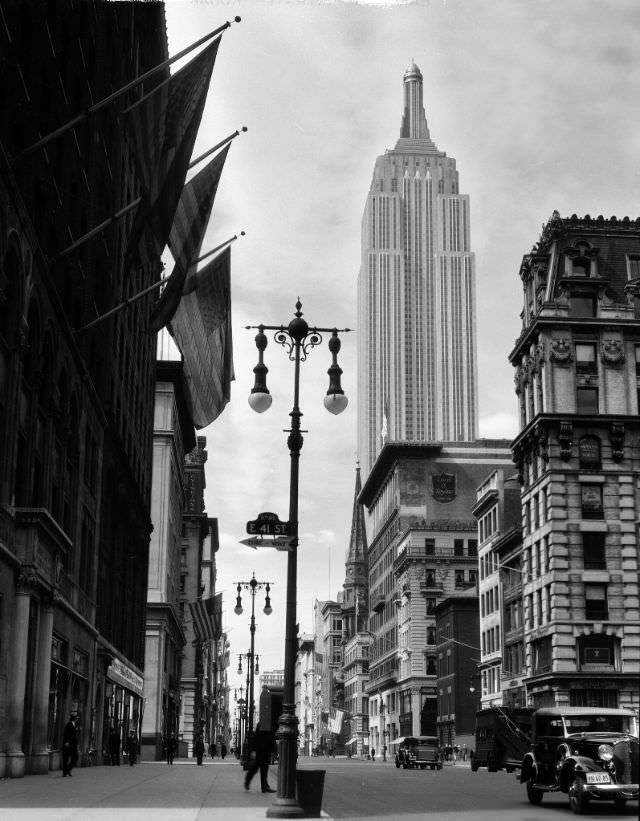
Horydczak also ventured beyond the capital. In 1931, he photographed Cleveland’s Terminal Tower lit up at night. On July 4, 1933, he stood at 41st Street and 5th Avenue in New York City to photograph the Empire State Building, completed just two years earlier.
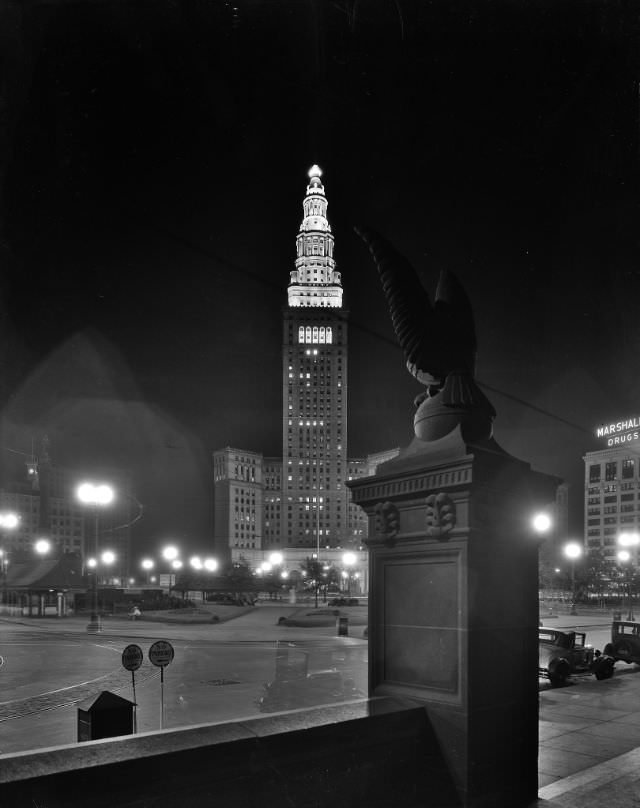
View of Terminal Tower at night, with eagle on right, Cleveland, Ohio, 1931
Shoreham Hotel from across Calvert Street, Washington, D.C., 1932
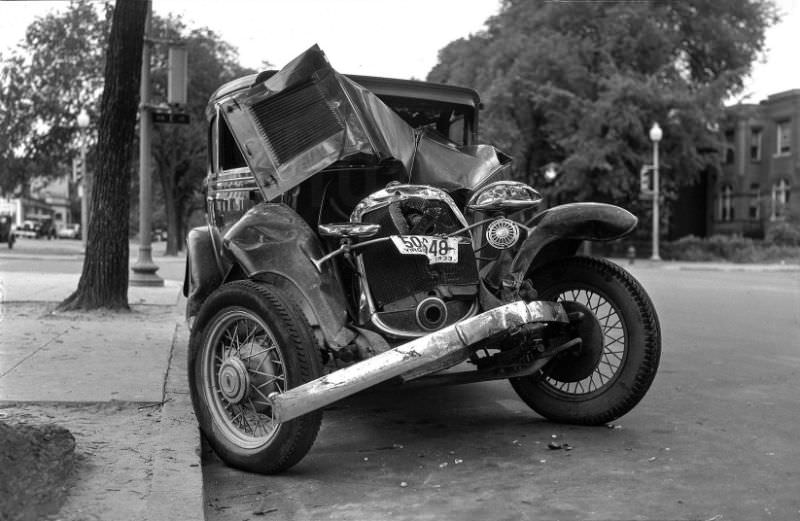
Front of wrecked automobile, Washington, D.C., 1933
The Empire State Building from 41st St. and 5th Ave., New York City, July 4, 1933

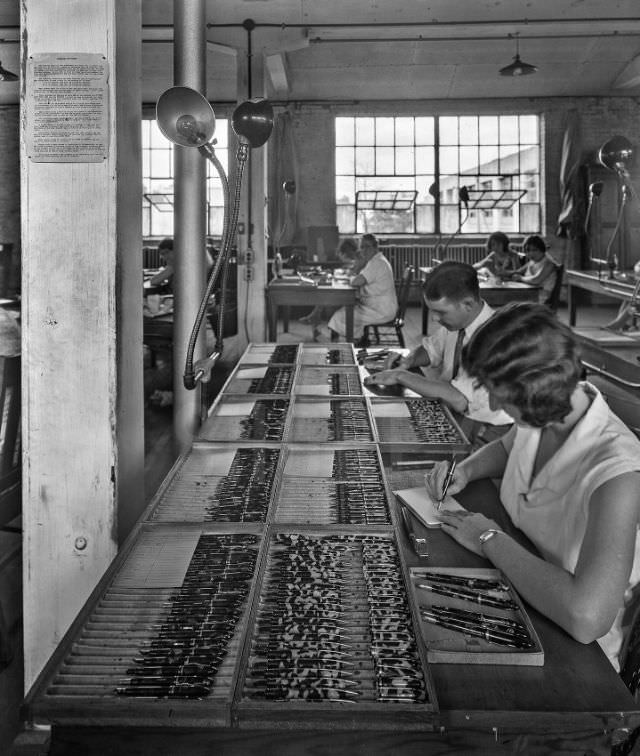
His portraiture work showed equal range. In 1935, he photographed Miss Lucy Alexander, a food tester at the Department of Agriculture — a candid, professional portrait that treated a working federal employee with the same care given to political figures. That same year, he traveled to Fort Madison, Iowa, to document the Sheaffer fountain pen factory.
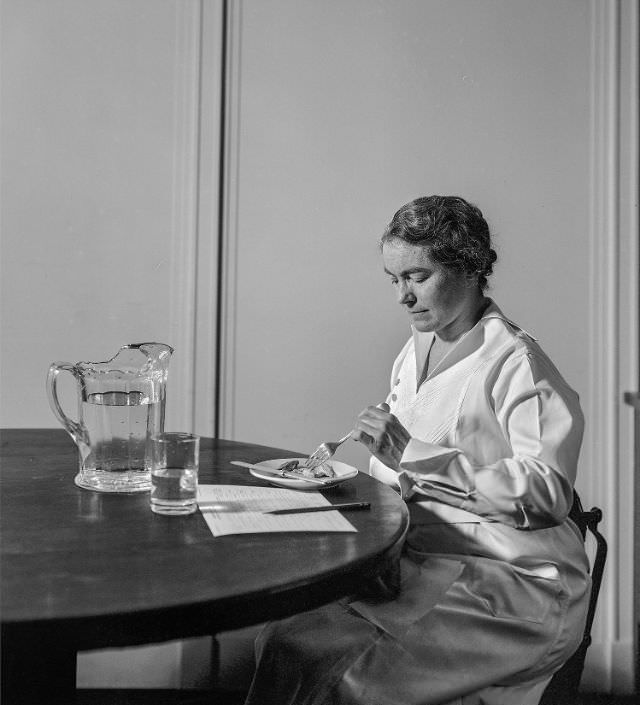
Miss Lucy Alexander, food tester, Department of Agriculture, Washington, D.C., 1935
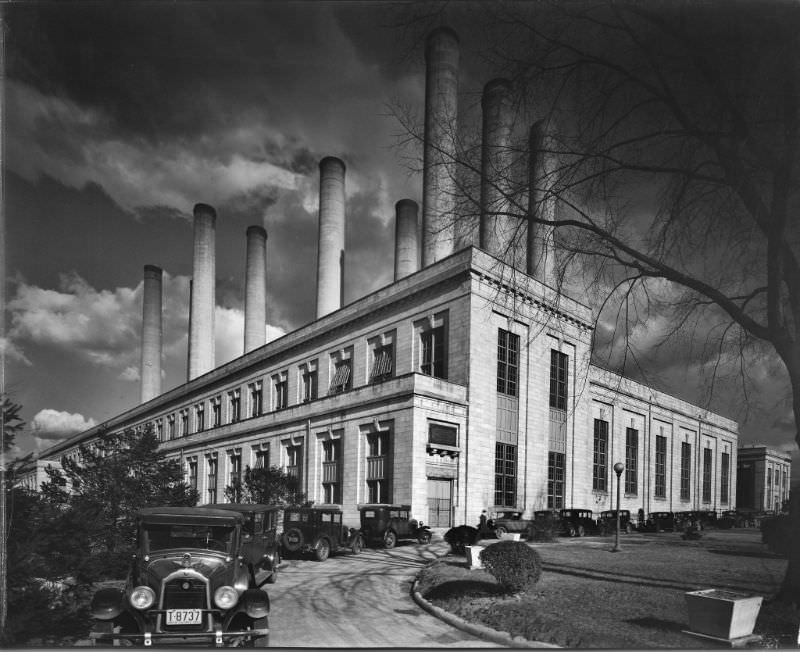
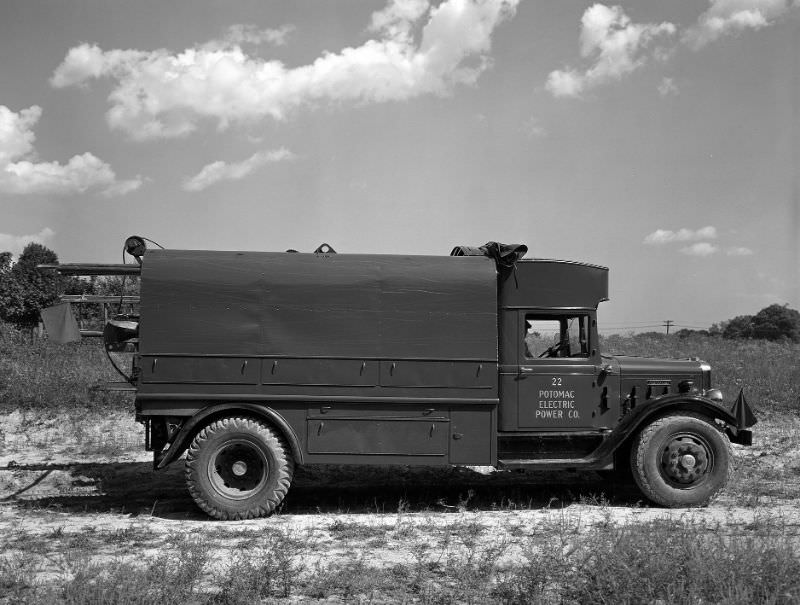
Potomac Electric Power Co. service station building, 10th Street and Florida Avenue. Linemen's truck, Washington, D.C., 1935
Potomac Electric Power Co. service station building, 10th Street and Florida Avenue. Linemen’s truck, Washington, D.C., 1935
Sheaffer fountain pen factory, Fort Madison, Iowa, 1935

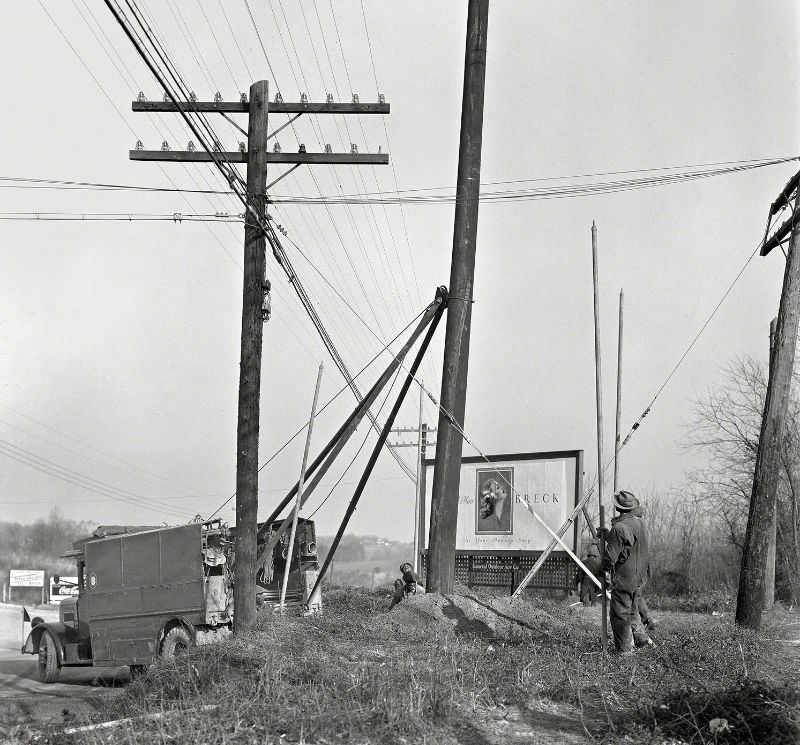
The late 1930s brought more institutional commissions. Horydczak photographed the exterior of the Acacia Mutual Life Insurance building on Louisiana Avenue, interior government passageways, and Potomac Electric Power Company crews setting utility poles across Washington.
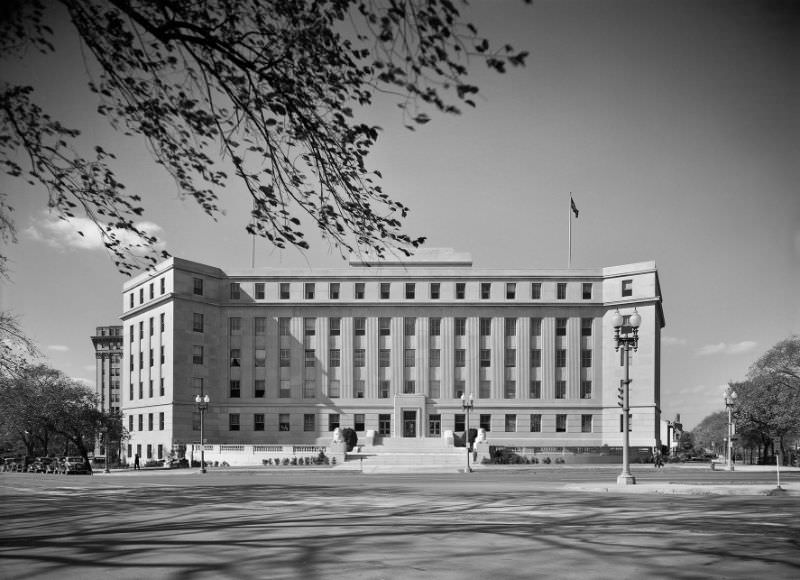
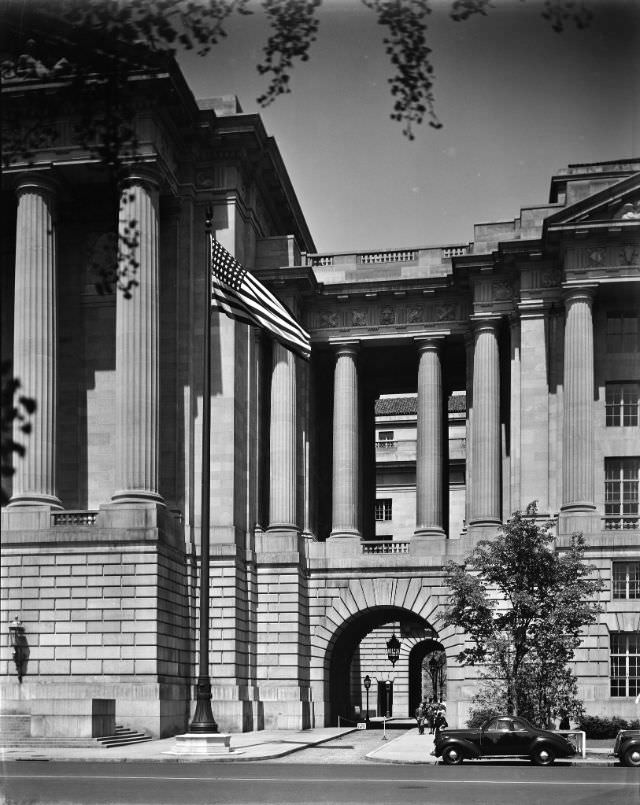
Exterior of Acacia Mutual Life Insurance Co. building, Louisiana Avenue, Washington, D.C., 1937
Passageway between ICC and Departmental Auditorium sections at U.S. Labor Department and Interstate Commerce Commission Building, 1937
Potomac Electric Power Co. pole setting, Washington, D.C., or vicinity 1937

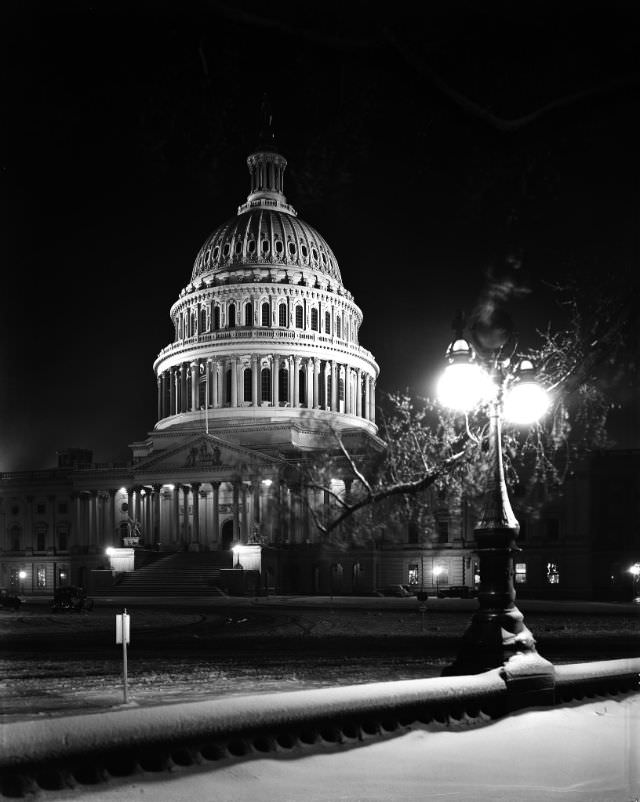
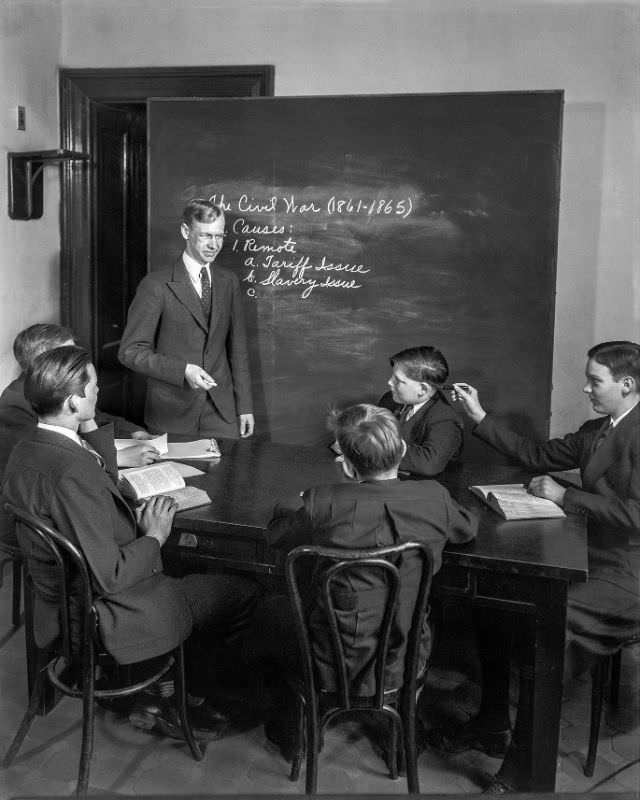
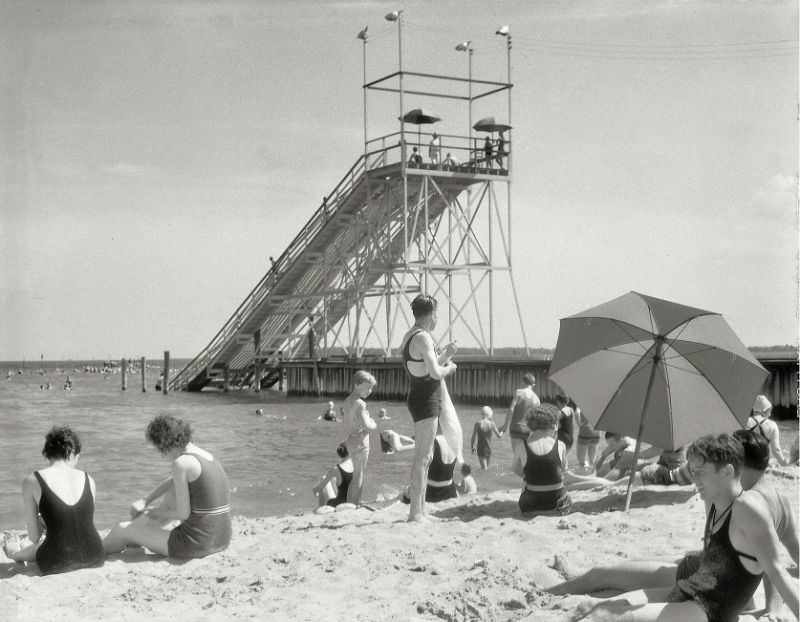
By 1939, he was photographing the newly completed Library of Congress annex — the John Adams Building — alongside the Folger Library. His 1940 photographs show a city preparing for the future: the U.S. Capitol lit against a winter night sky, sunbathers at Chapel Point on the Potomac, and Ernest Kendall teaching Capitol pages.
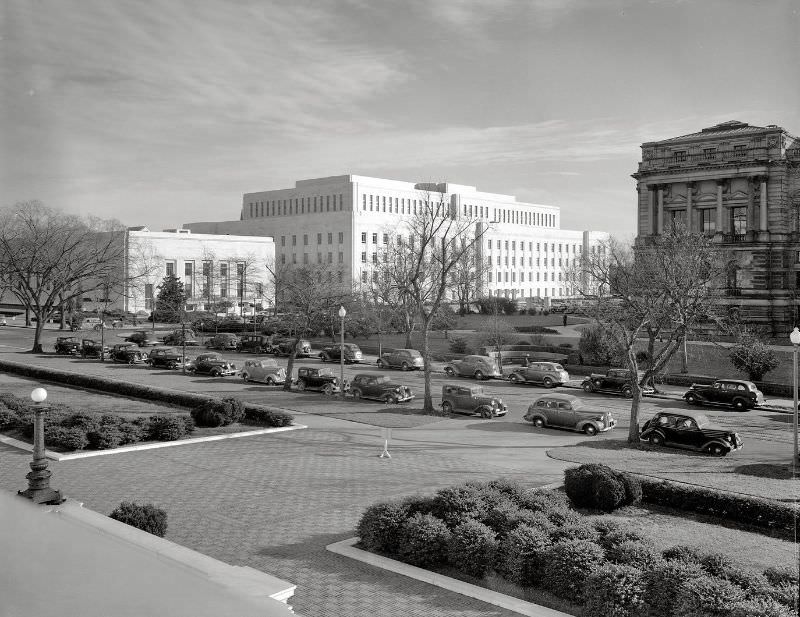
Library of Congress annex (John Adams building) and Folger Library from northwest, Washington, D.C., 1939
"Beach with sunbathers." Chapel Point, Washington's "playground on the Potomac" near La Plata, Maryland, 1940
“Beach with sunbathers.” Chapel Point, Washington’s “playground on the Potomac” near La Plata, Maryland, 1940
East front of U.S. Capitol at night in winter, 1940
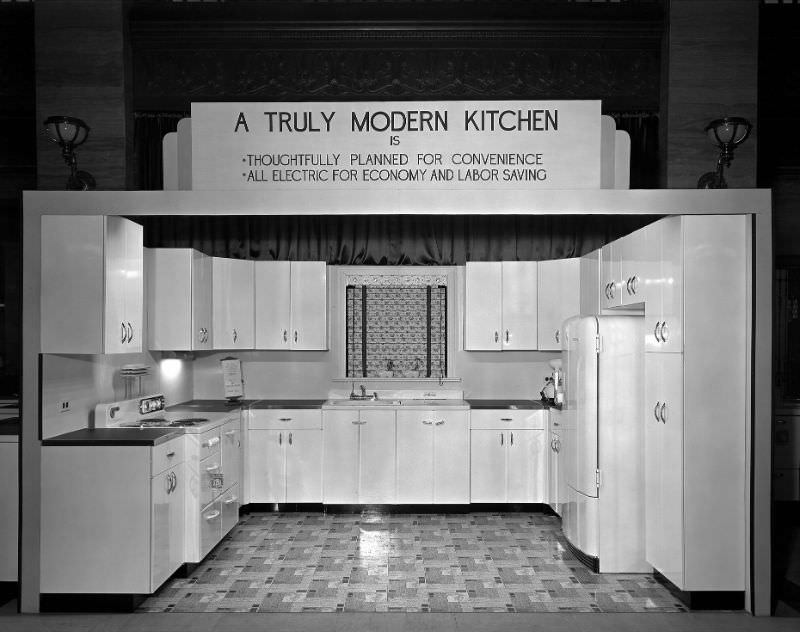
Electric Institute of Washington. Display of ranges in lobby at Potomac Electric Power Co. building, April 17, 1940
Ernest Kendall, teacher of U.S. Capitol pages, Washington, D.C., 1940

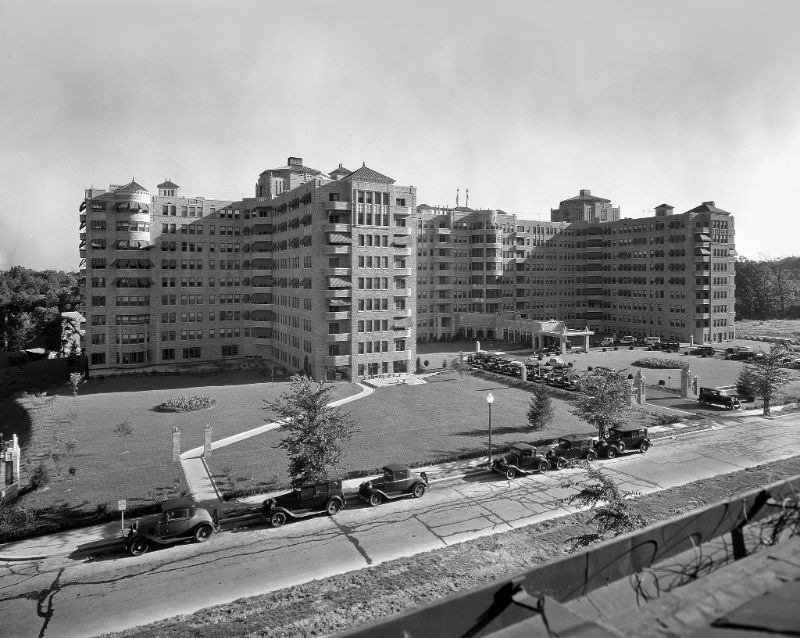
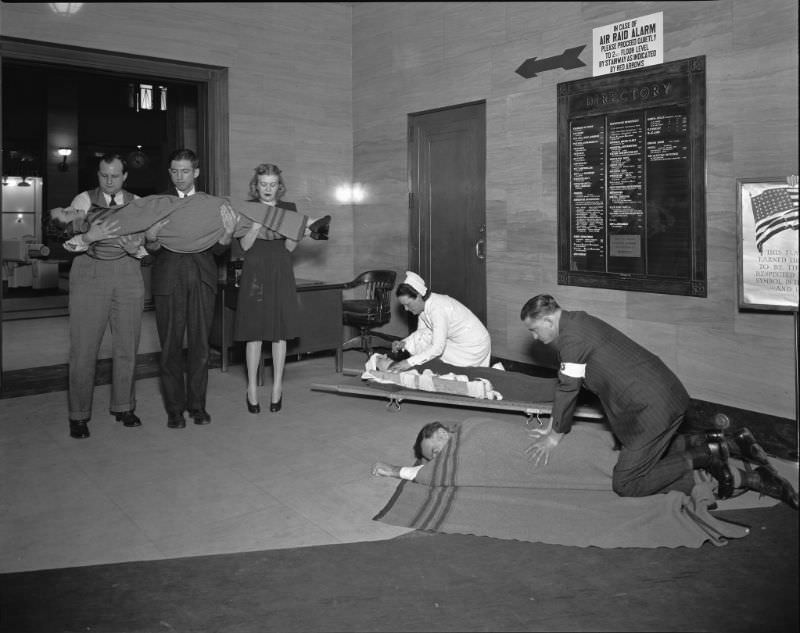
The National Naval Medical Center in Bethesda, Maryland — now Walter Reed National Military Medical Center — was another 1940 subject. As the United States entered World War II, Horydczak documented air raid equipment and personnel stationed at the Potomac Electric Power Co. building between 1941 and 1945.
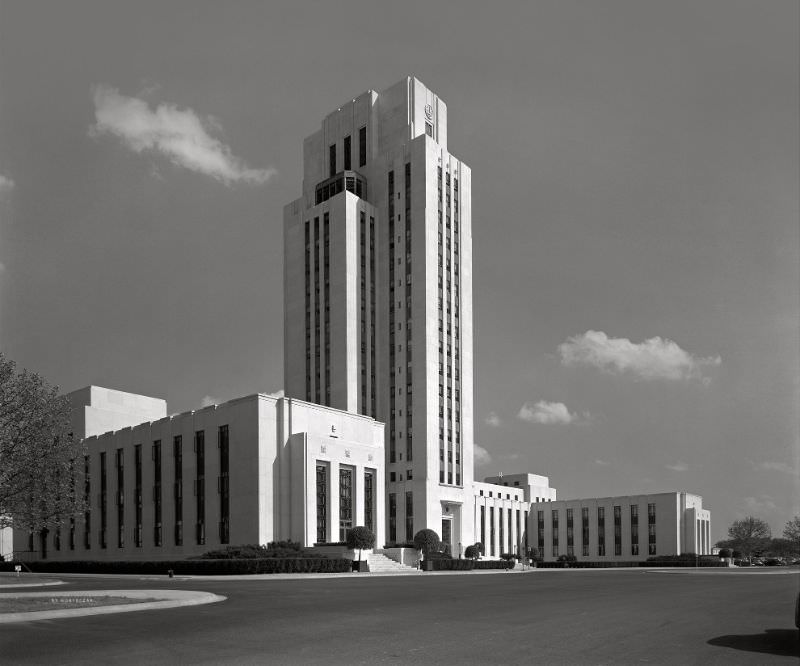
National Naval Medical Center, front from left. Part of the hospital complex known today as Walter Reed National Military Medical Center, Bethesda, Maryland, 1940
Air raid equipments and personnel at Potomac Electric Power Co. Building, 1941-45

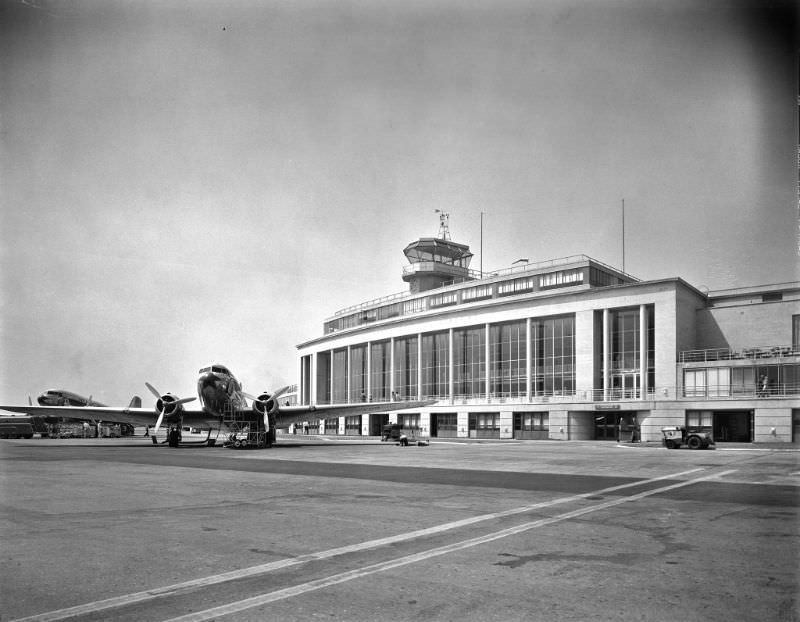
In 1941, he photographed the newly opened National Airport in Arlington County, Virginia — both the interior ticket counter and a passenger plane parked at the terminal. These images document American aviation at a turning point, just before the war reshaped air travel entirely.
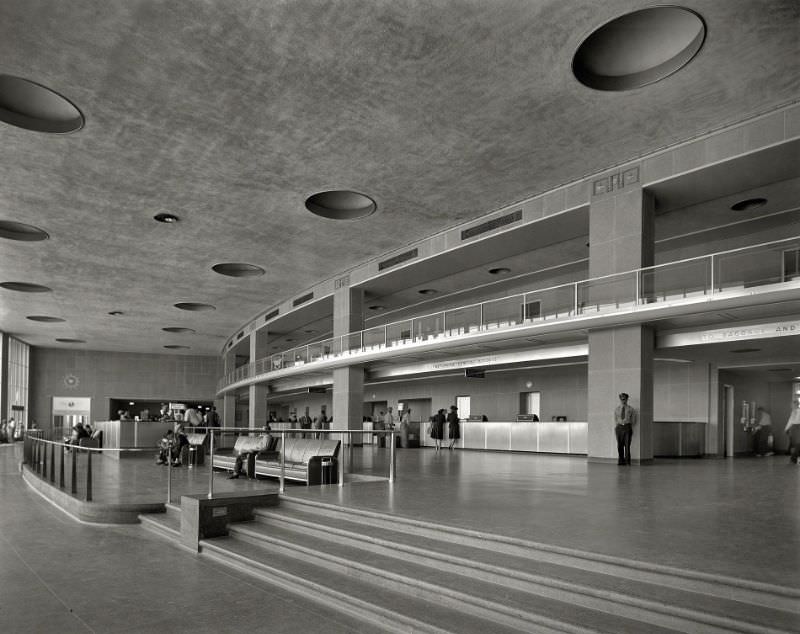
Interior of waiting room showing ticket counter of National Airport, Arlington County, Virginia, 1941
Plane in front of the passenger terminal at the National Airport, 1941
Closeup of Benning plant with good clouds, Potomac Electric Power Co., May 31, 1943

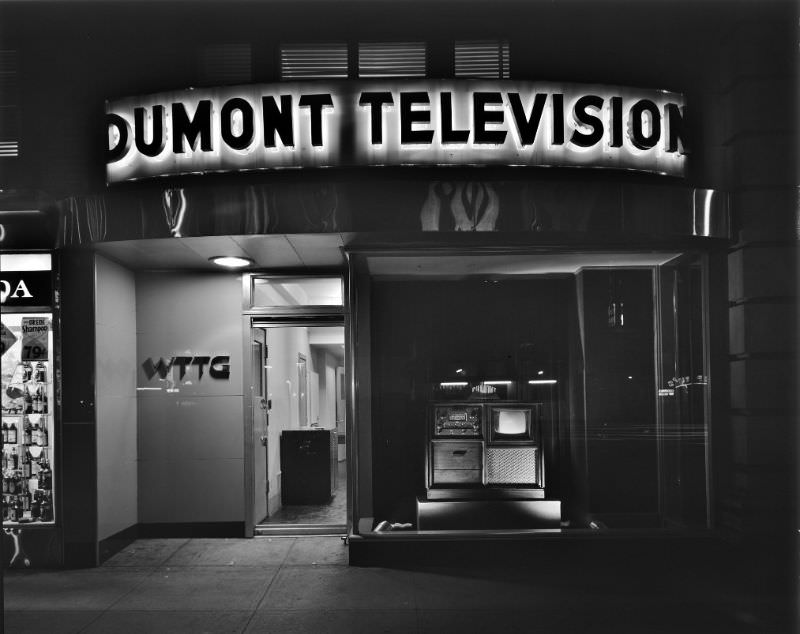
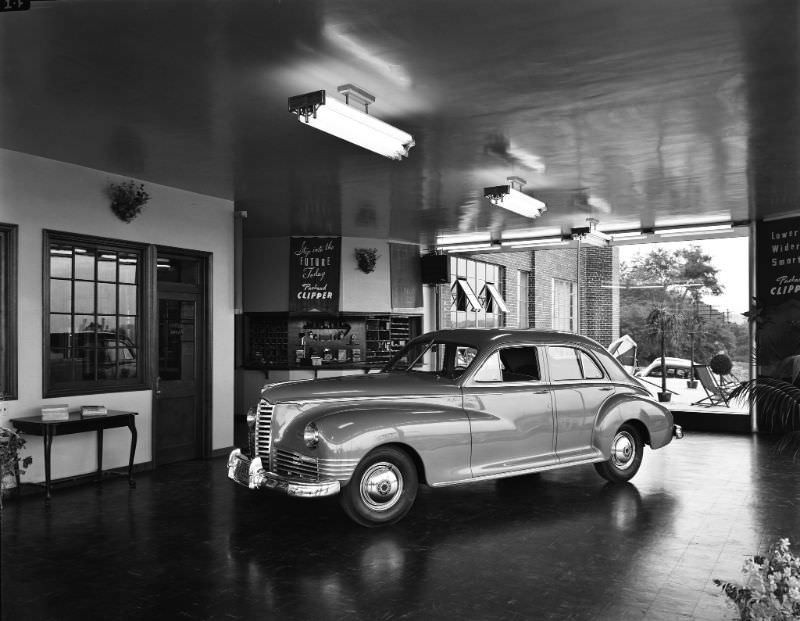
His postwar work continued with the same consistency. In late 1946, he photographed Sholl’s Georgian Cafeteria on 14th Street and a car showroom at Superior Motors. By 1948, he was outside a DuMont Television store on 12th Street — a sign that American consumer culture was shifting fast.
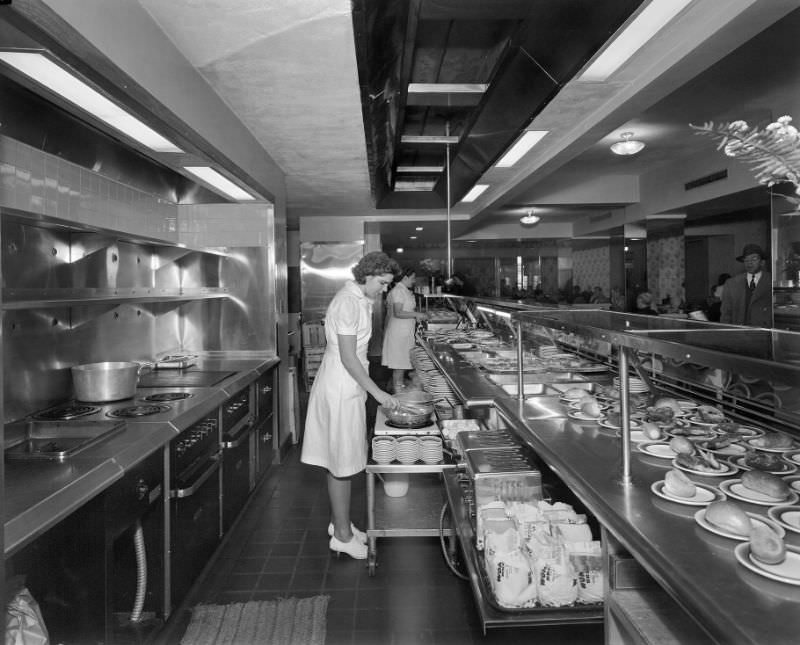
Commercial kitchens, restaurants and lighting of Potomac Electric Power Co. Sholl's Georgian Cafeteria, 3027 14th Street N.W., Washington, D.C, December 3, 1946
Commercial kitchens, restaurants and lighting of Potomac Electric Power Co. Sholl’s Georgian Cafeteria, 3027 14th Street N.W., Washington, D.C, December 3, 1946
Showroom at Superior Motors, Griffith Consumers Co., September 1946
Exterior of Dumont Television, 12th Street, March 10, 1948

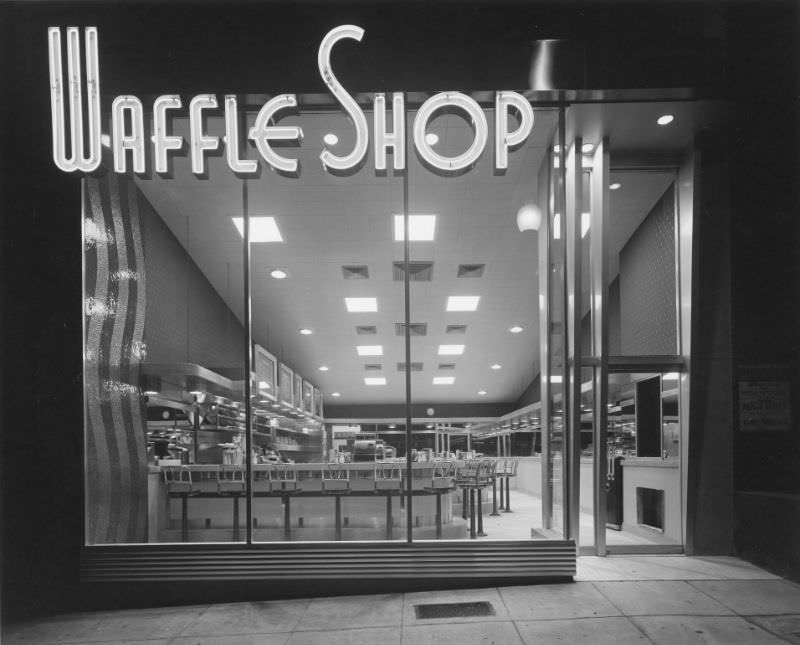
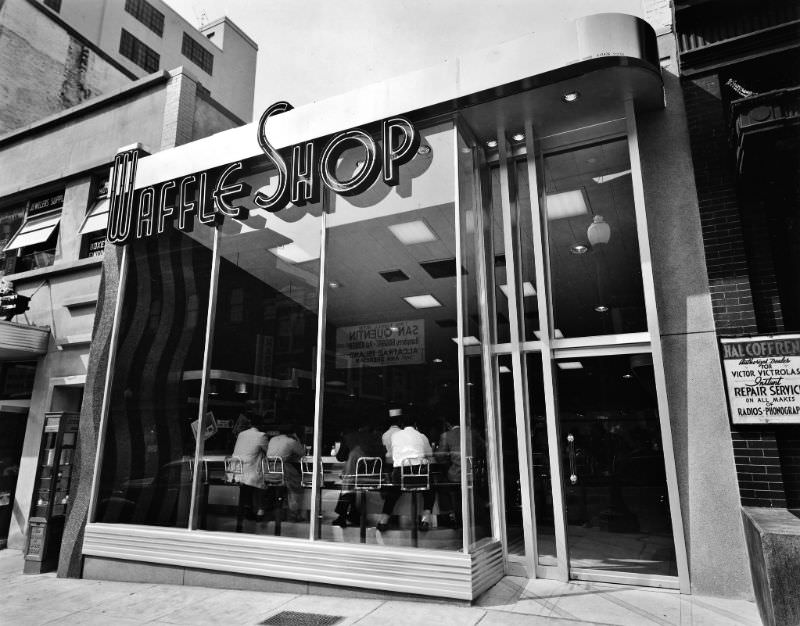
Horydczak’s final years of documented work include storefronts along Washington’s 10th Street — a shoe shop, a waffle house with a glowing neon sign. These street-level images round out a body of work that covers nearly every layer of American life across three transformative decades.
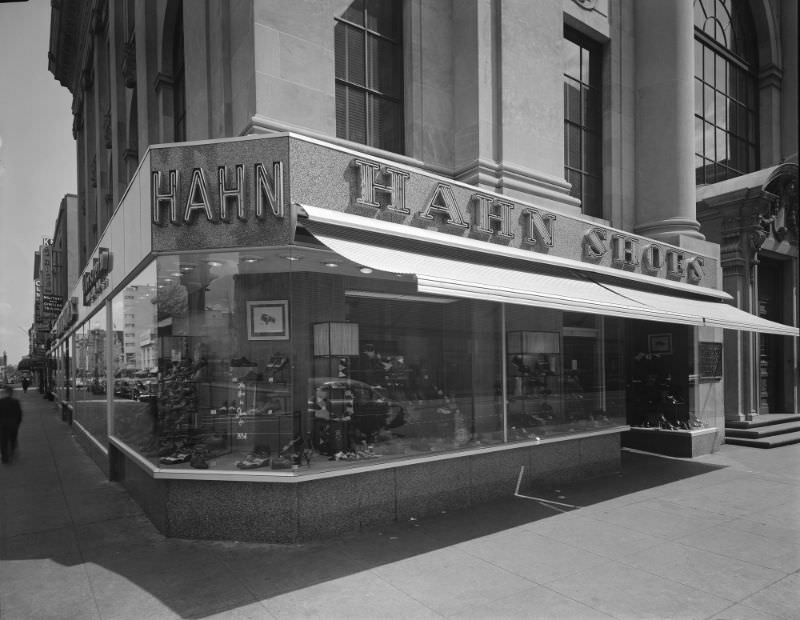
Exterior of Hahn Shoes, 1940s
Exterior of Waffle Shop from side angle, on 10th Street in Washington, D.C., 1940s
Shop on 10th Street. Exterior of Waffle Shop with neon sign, 1940s
Enjoyed this post? Get new ones in your inbox.

Leave a Comment

Your email address will not be published. Required fields are marked *

Share this Post 🥺

Please take a moment to share this content. Your support is greatly appreciated! 🙌🙏

Share this Post 🥺

Please take a moment to share this content. Your support is greatly appreciated! 🙌🙏
Scroll to Top
 
Hey Friend, Before You Go.. Please like & follow for more interesting content