
Women’s boxing did not begin in the modern era. It started in England as far back as the 1720s, when women entered the prize-fighting ring with no formal rules, no safety equipment, and no governing body to protect them. These early bouts were raw and brutal — bare-knuckle brawls where the fighters bled and fought until someone went down. The sport drew paying crowds, but it also drew criticism and shame from polite society.
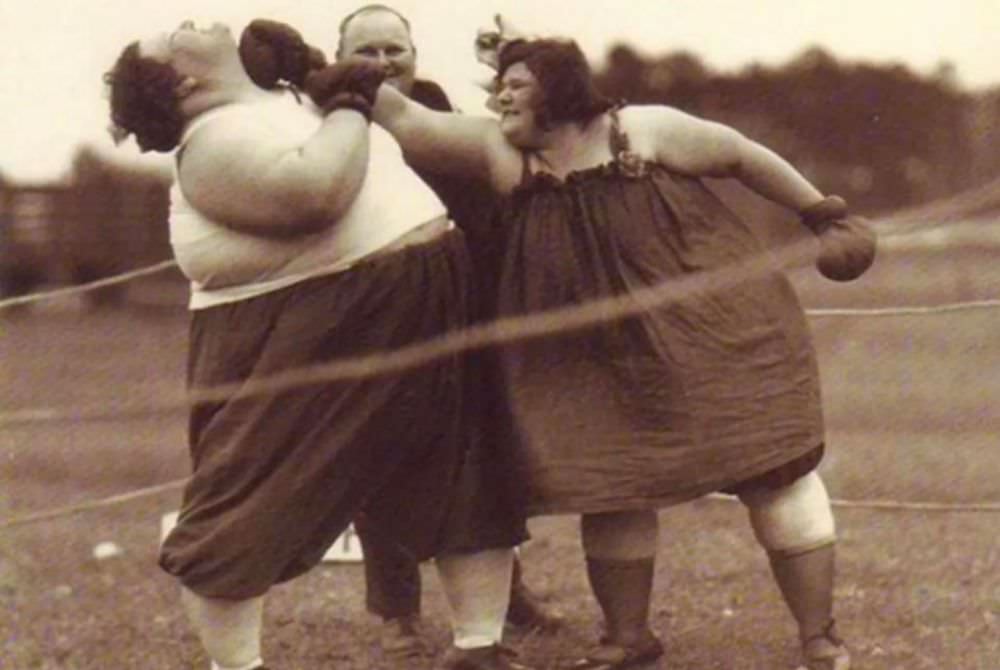
As boxing began to organize itself in Britain during the 1880s, women were deliberately left out. The newly formed governing body that regulated the sport refused to acknowledge female fighters at all. Women who continued to box did so outside the official system, competing in traveling shows, vaudeville theaters, and sideshow circuits rather than formal rings. It took until 1998 for the British Boxing Board of Control to finally issue licenses to women — a gap of over a century.
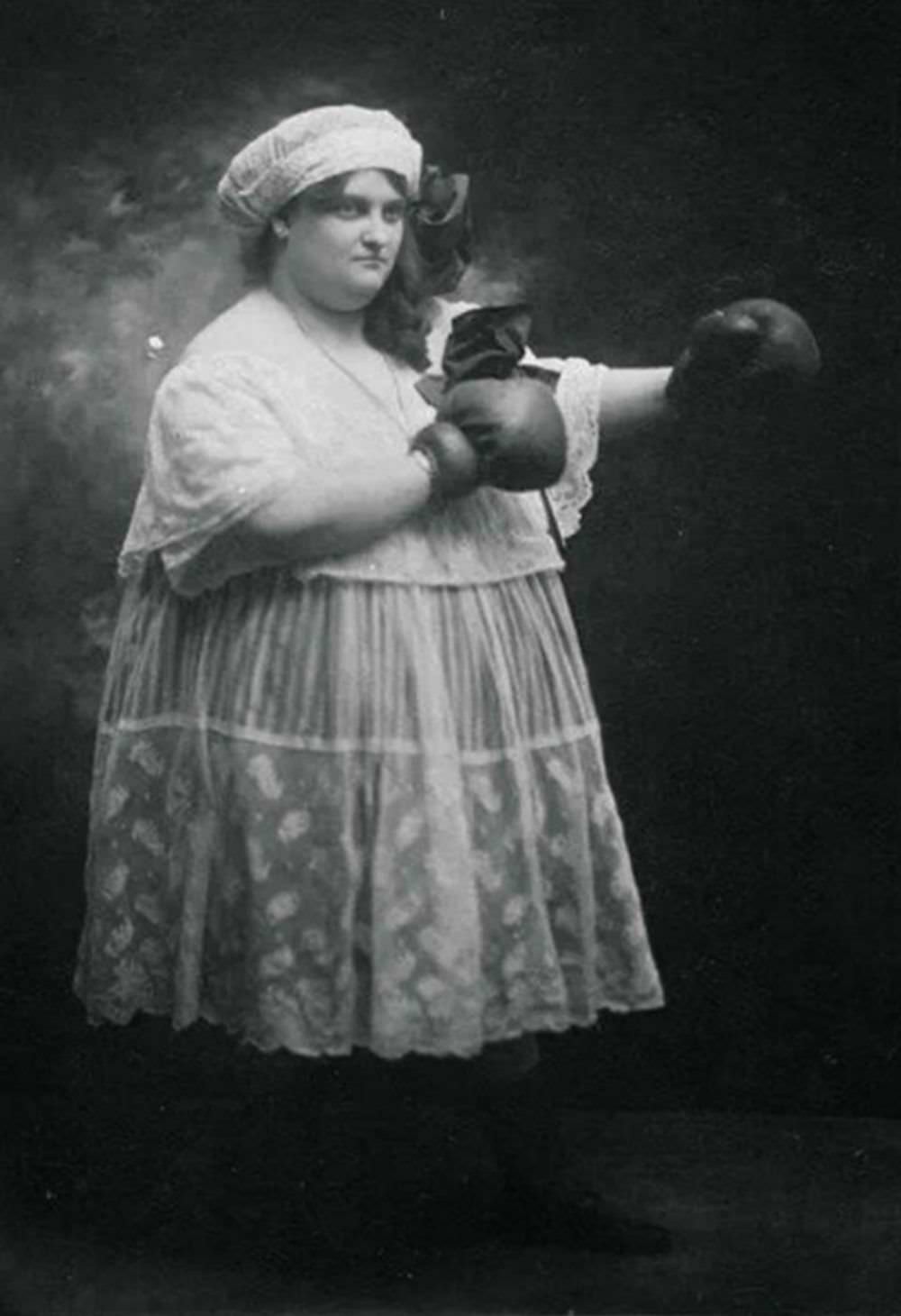
One of the most remarkable figures from this era was Hattie Madders. In 1883, she held the title of Most Scary Woman in the UK — a designation that doubled as a professional badge of honor in the rough world of prize fighting. She went by the nickname “The Mad Hatter” and is the only woman recorded as holding a boxing heavyweight championship of the world title. She won the belt in 1883 by stopping Scottish pugilist Wee Willy Harris in the first round.
Across the Atlantic, American women were also stepping into the ring — though often under the banner of entertainment. The Gordon Sisters, Bessie and Minnie, toured theaters across the United States demonstrating their sparring and punching skills to live audiences. They were not sideshow oddities in their own eyes; they were athletes performing at a professional level, even if the culture around them refused to frame it that way.
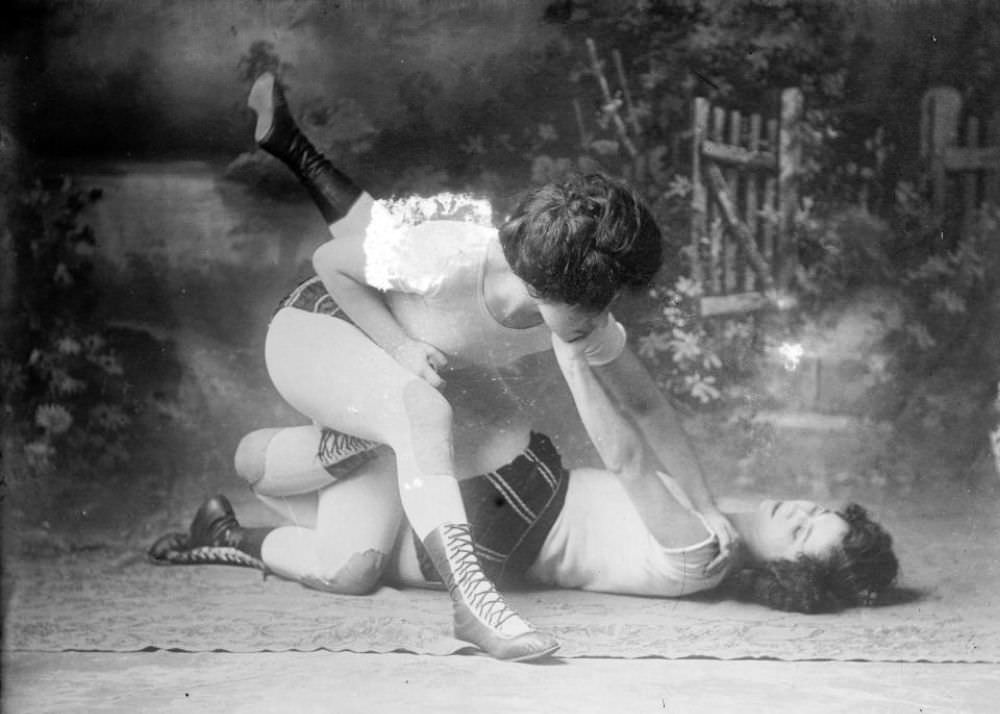
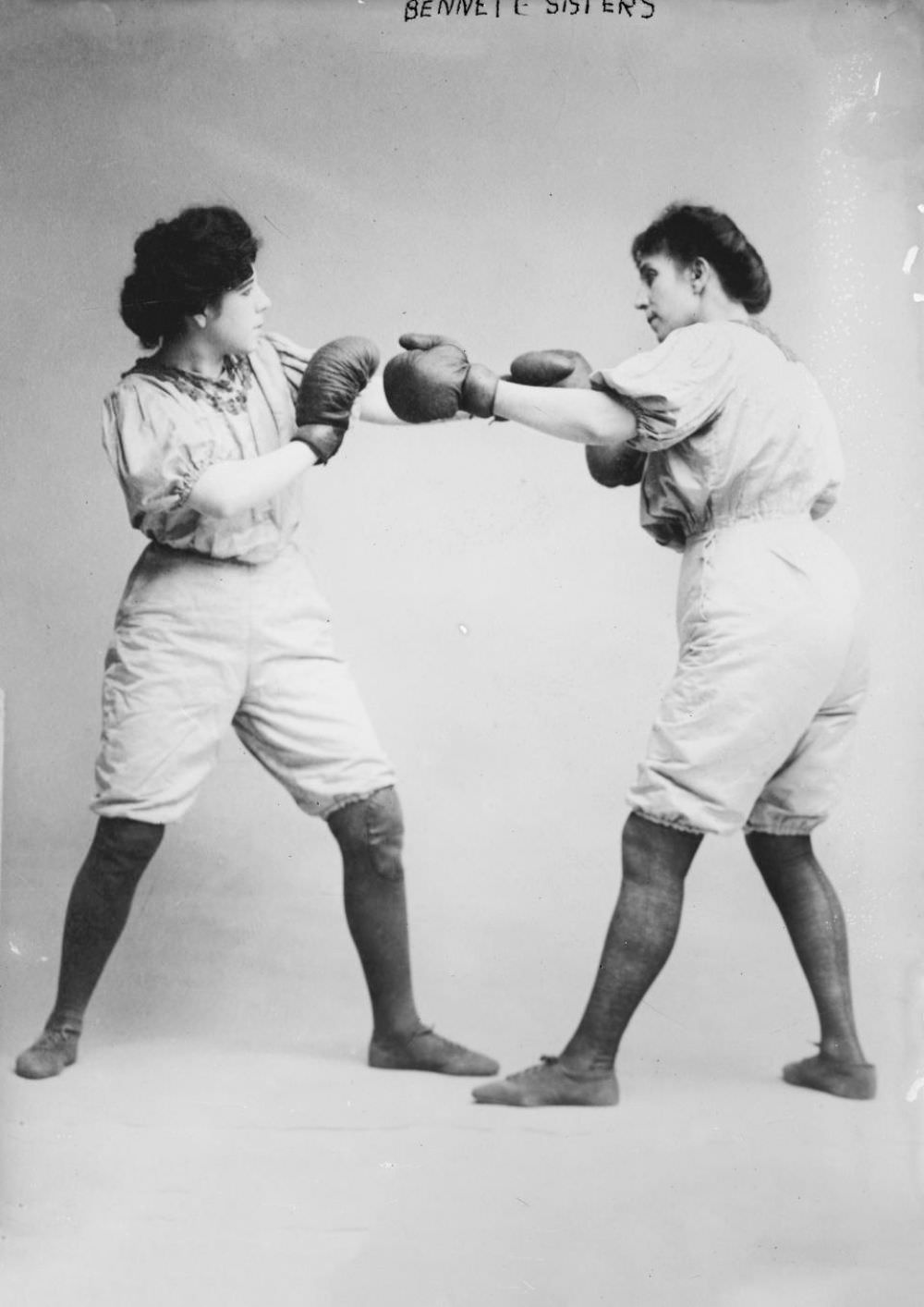
The Bennett Sisters followed a similar path, boxing and wrestling for crowds as part of a vaudeville act between 1910 and 1915. Vaudeville was one of the few stages where female fighters could perform publicly without being shut down entirely. The crowds came to be entertained, but what they watched was genuine athleticism — two women who trained, sparred, and competed with real skill.
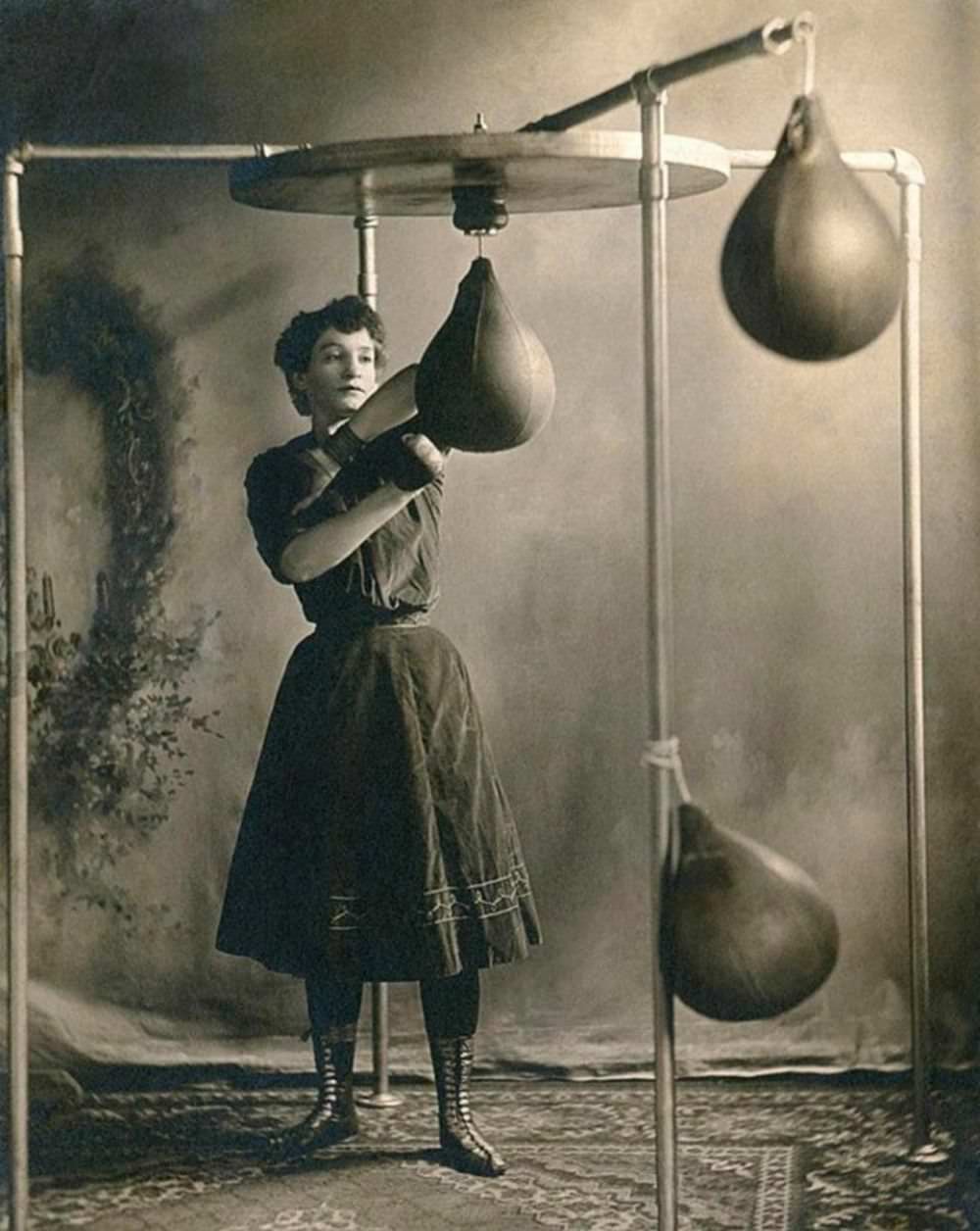
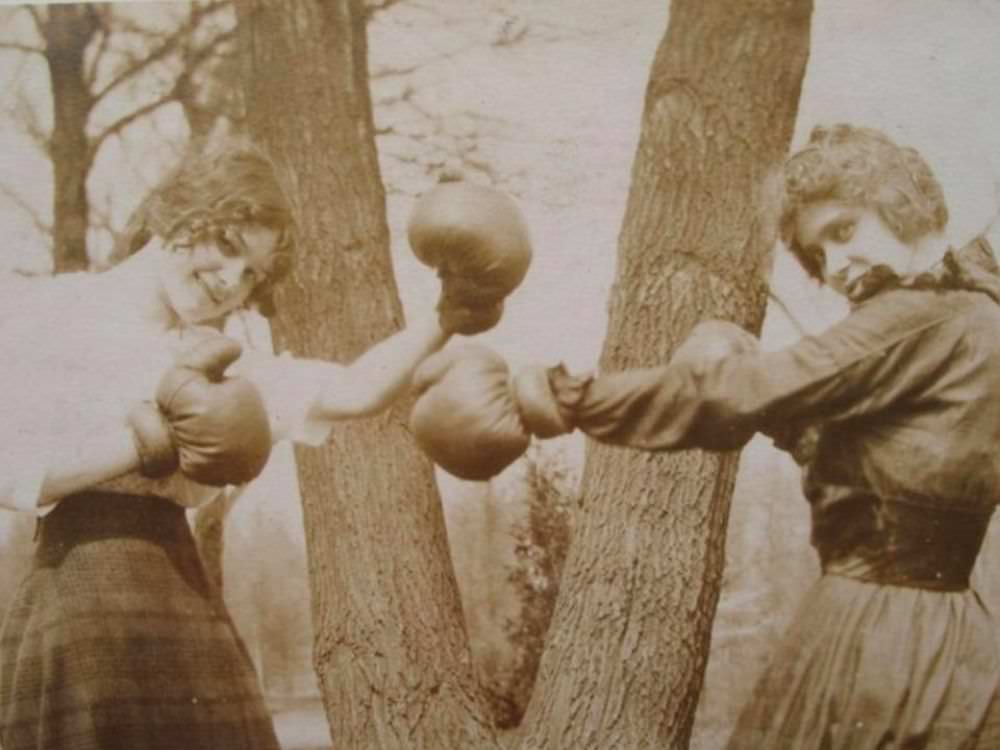
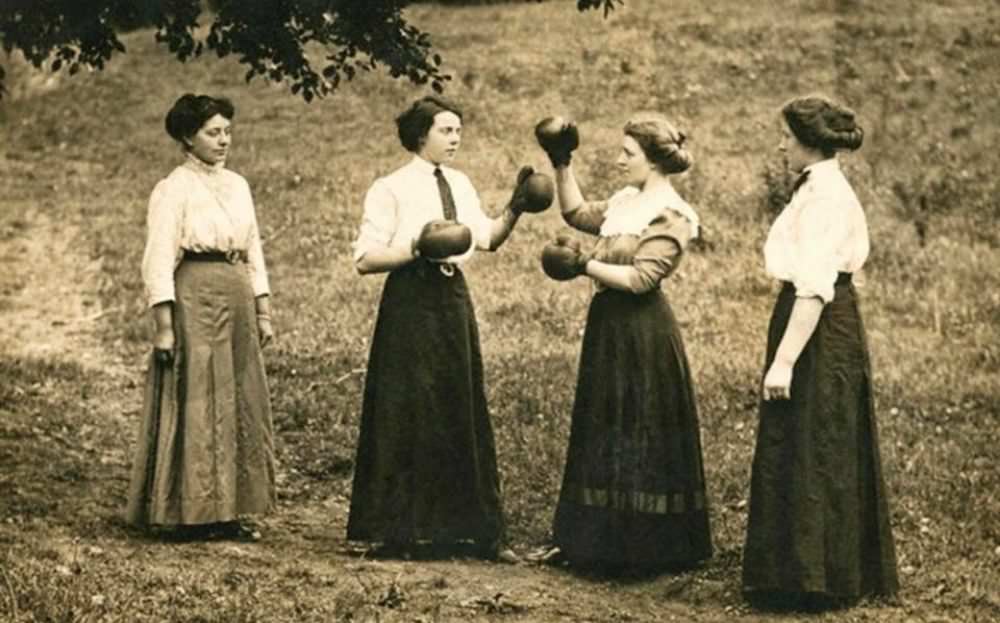
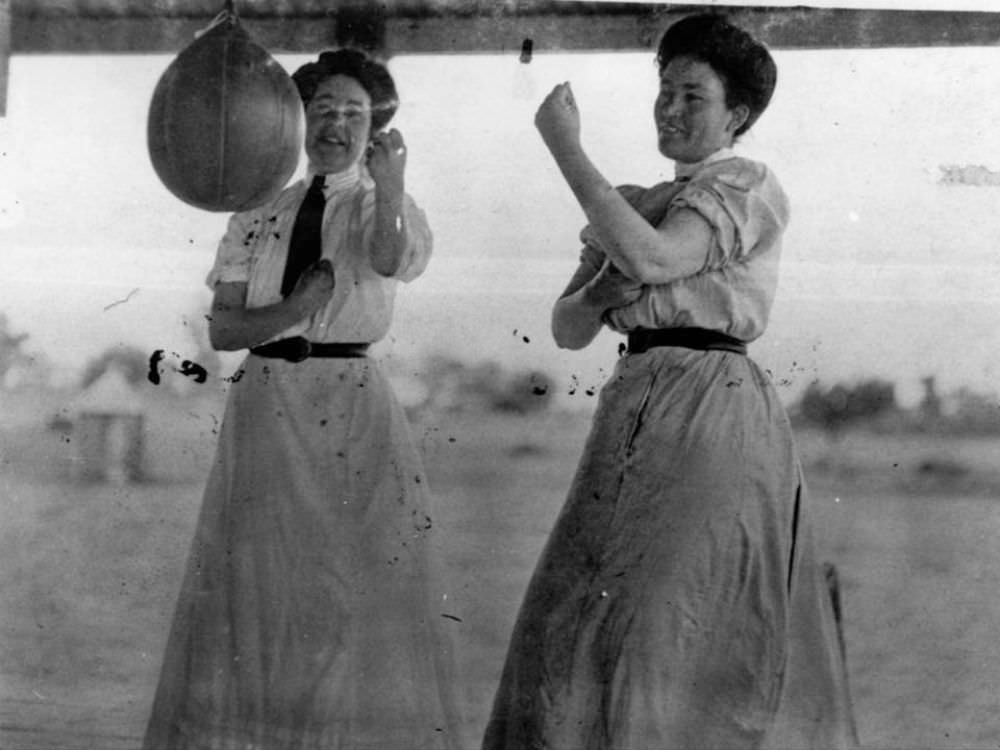
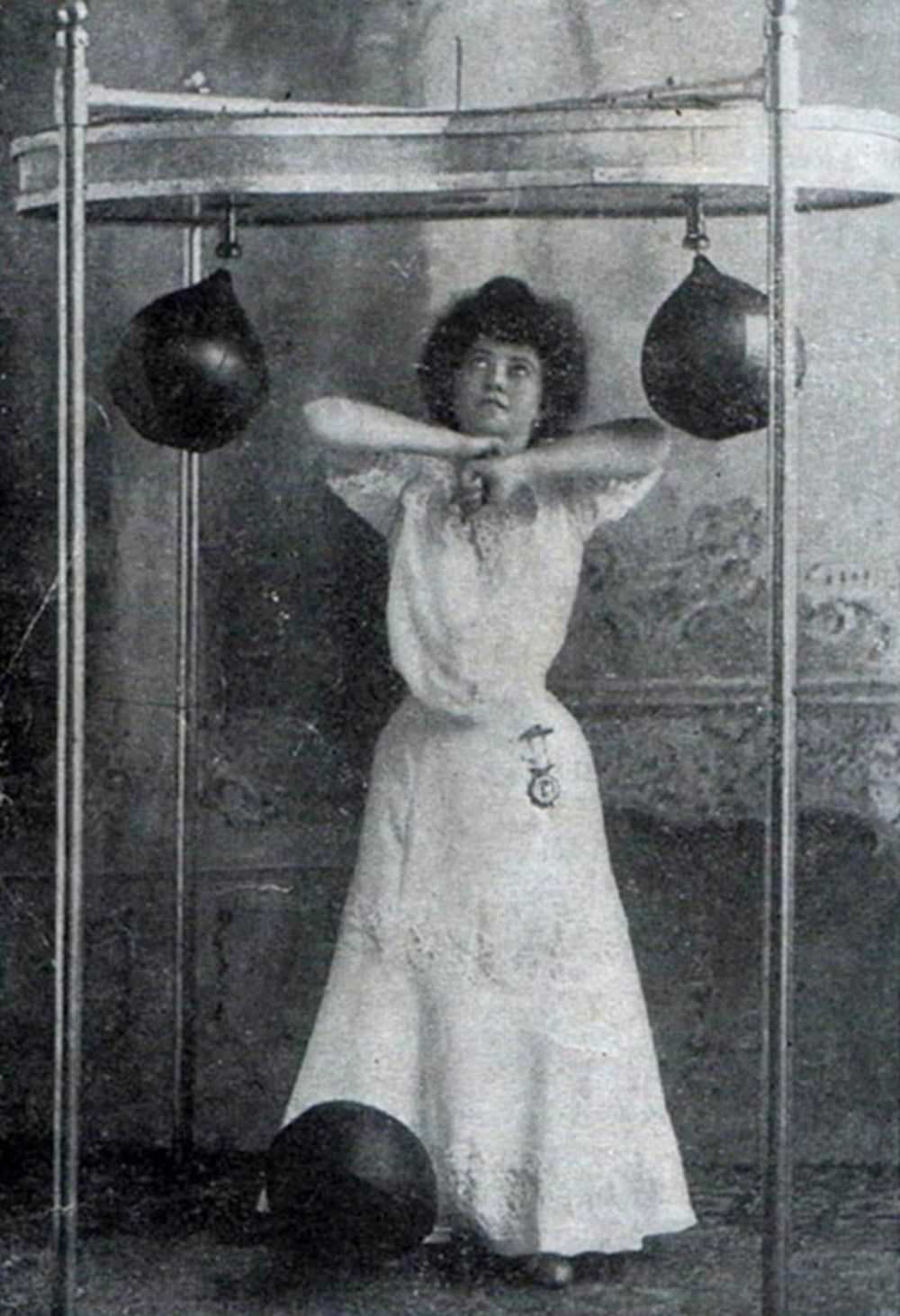
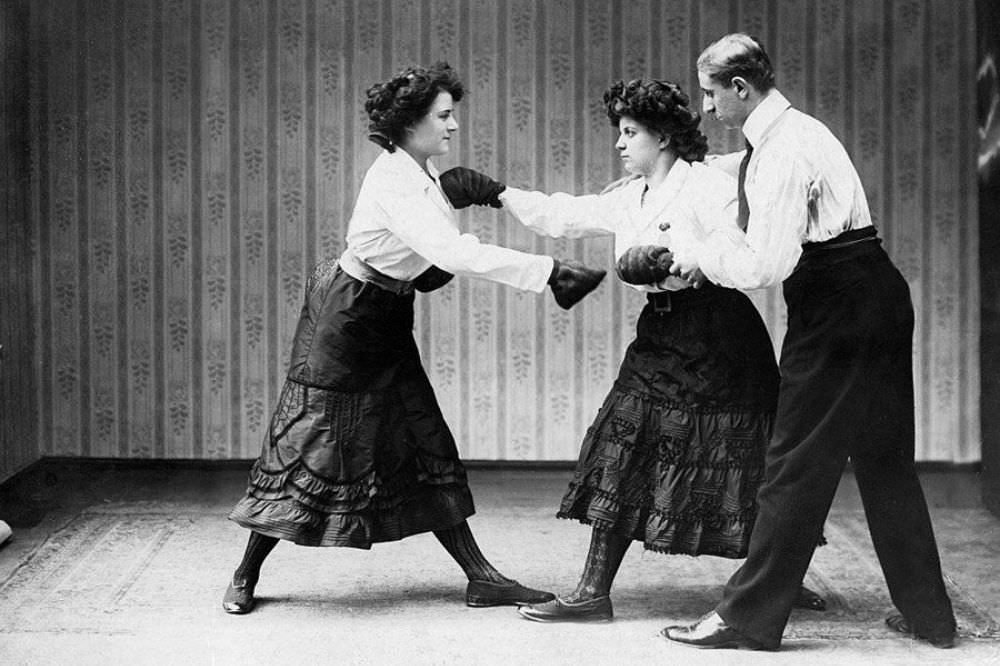
Training in this era looked nothing like it does today. Women worked with punching bags and speed bags, often in modest clothing that reflected the strict dress standards of the time rather than any practical need. A young woman sparring in a full skirt and corset was not unusual — social expectations about femininity didn’t disappear simply because a woman put on boxing gloves.
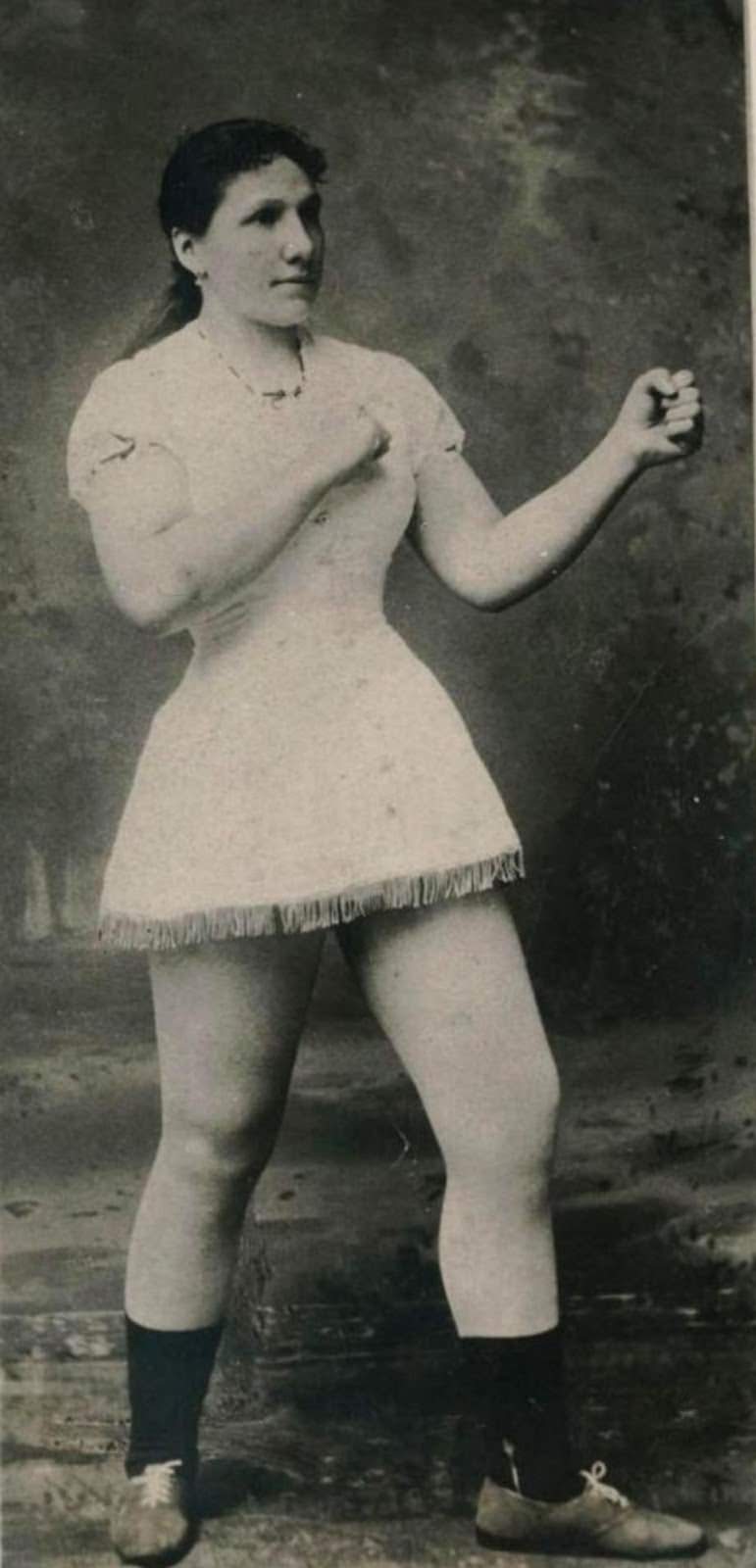
Hattie Stewart was another fighter who refused to be contained by the boundaries of acceptable women’s sport. In 1883, she was already known as a feared boxer — and she earned that reputation by traveling across the United States and taking on both men and women. She did not restrict herself to staged exhibitions. Stewart competed for real, against whoever would face her.
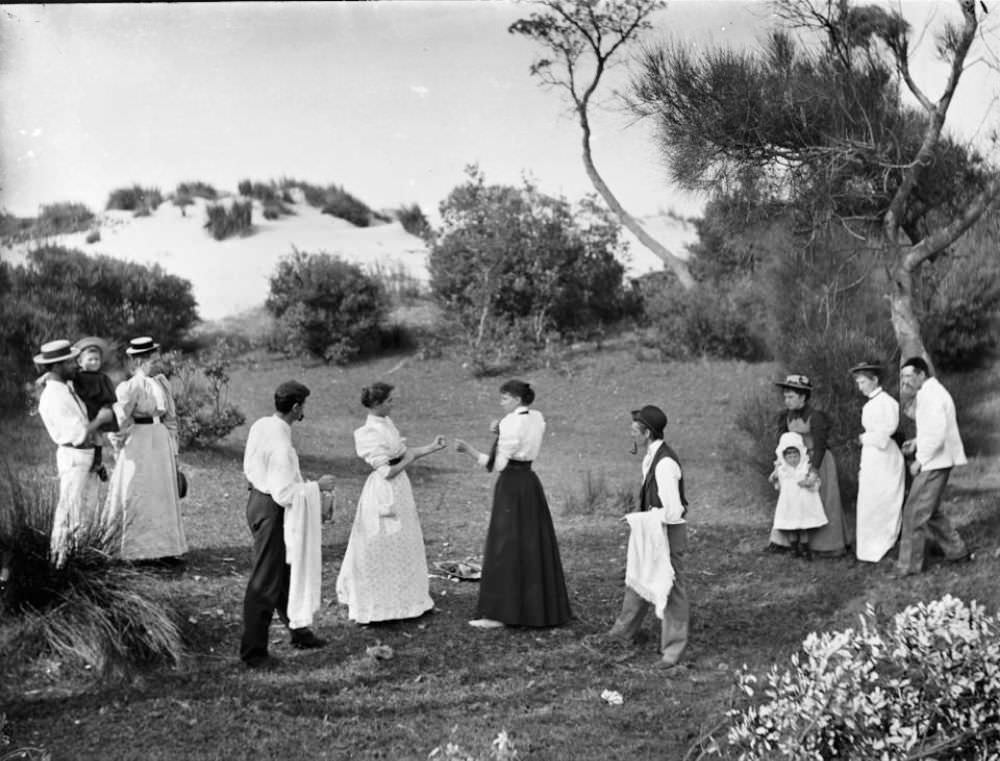
Women’s boxing was not confined to Britain and America. In Australia, female fighters were also training and competing by the late 1800s and early 1900s. Sisters Booka and Chris Durack were photographed sparring with a speed bag in 1916, evidence that the sport had reached well beyond its English origins. Scenes from Freshwater, north of Sydney, show women squaring up and raising their fists as early as 1895.
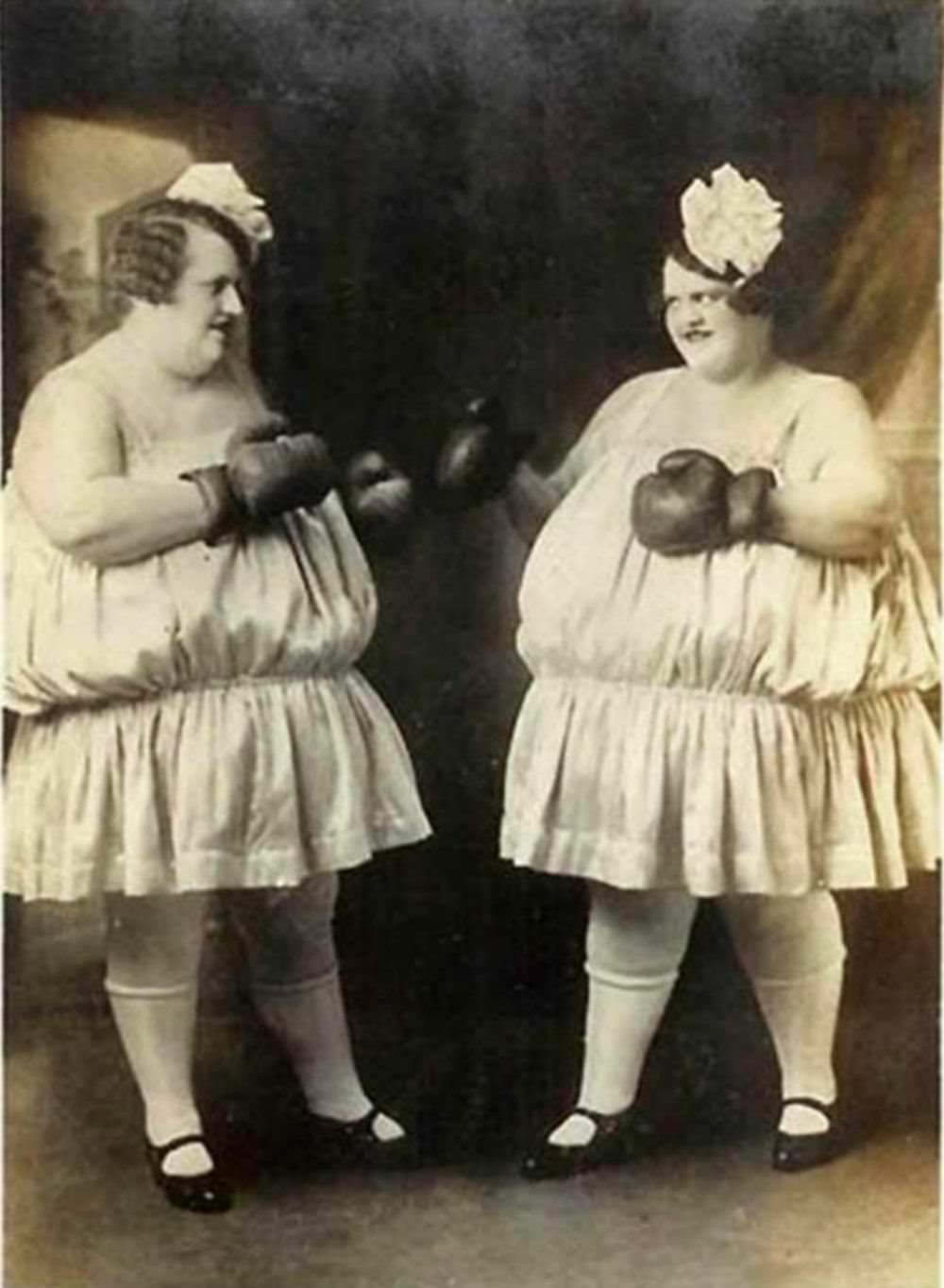
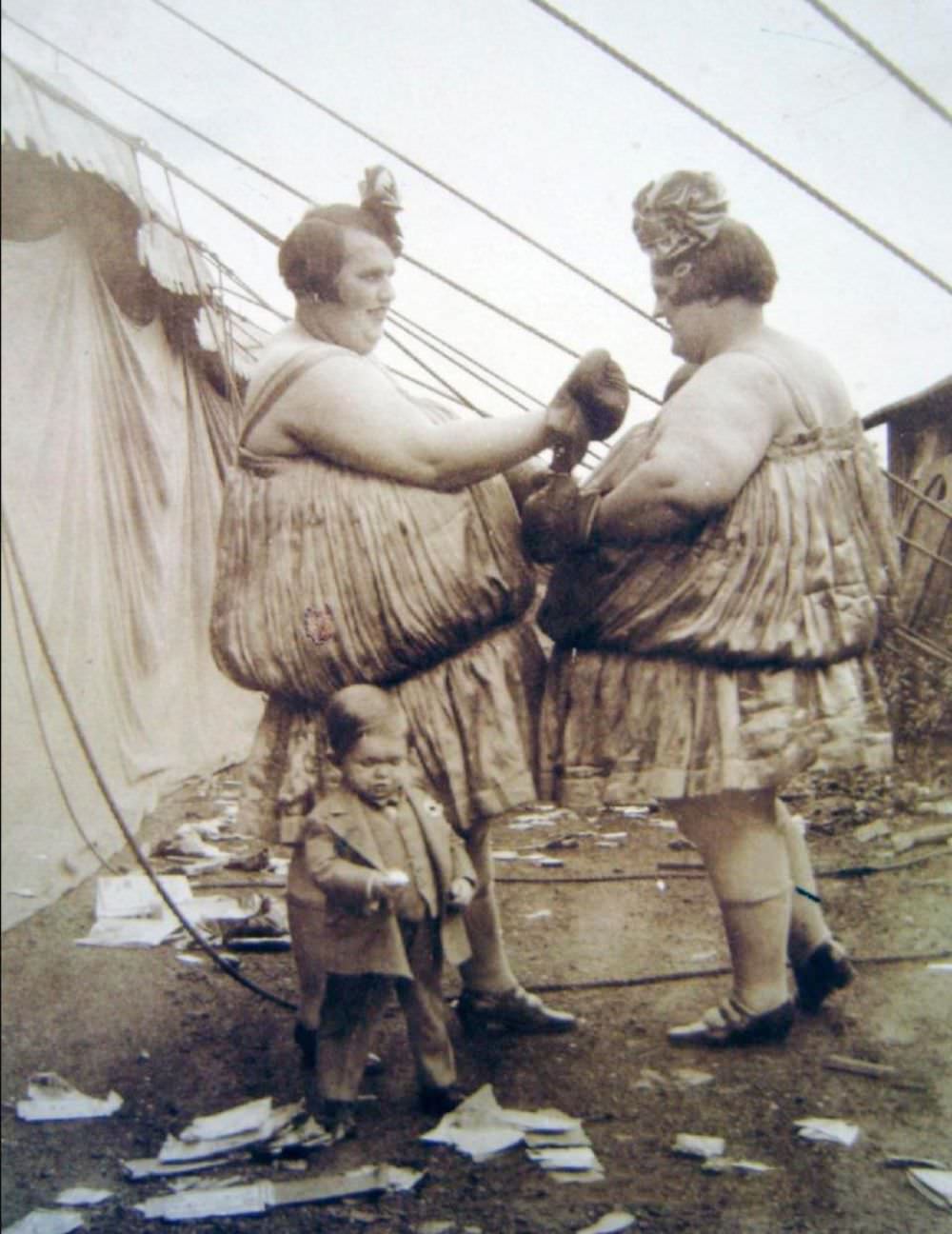
The Carlson Sisters took their boxing on the road as part of a traveling sideshow circus act around 1925. Billed as the “fat twins,” they performed their boxing matches for paying customers — a routine that mixed spectacle with genuine physical performance. The framing was commercial and often humiliating by today’s standards, but the women themselves were active competitors who showed up and performed night after night.
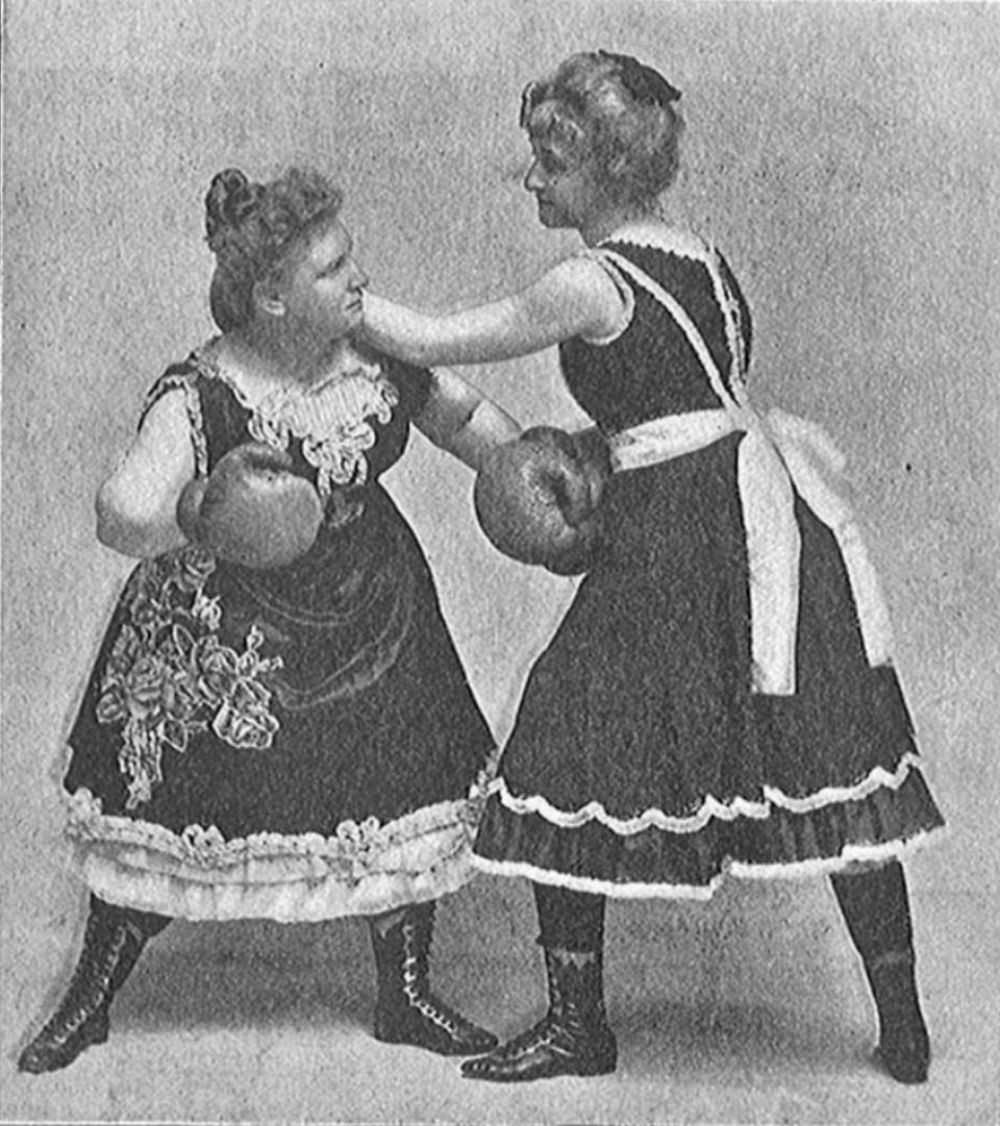
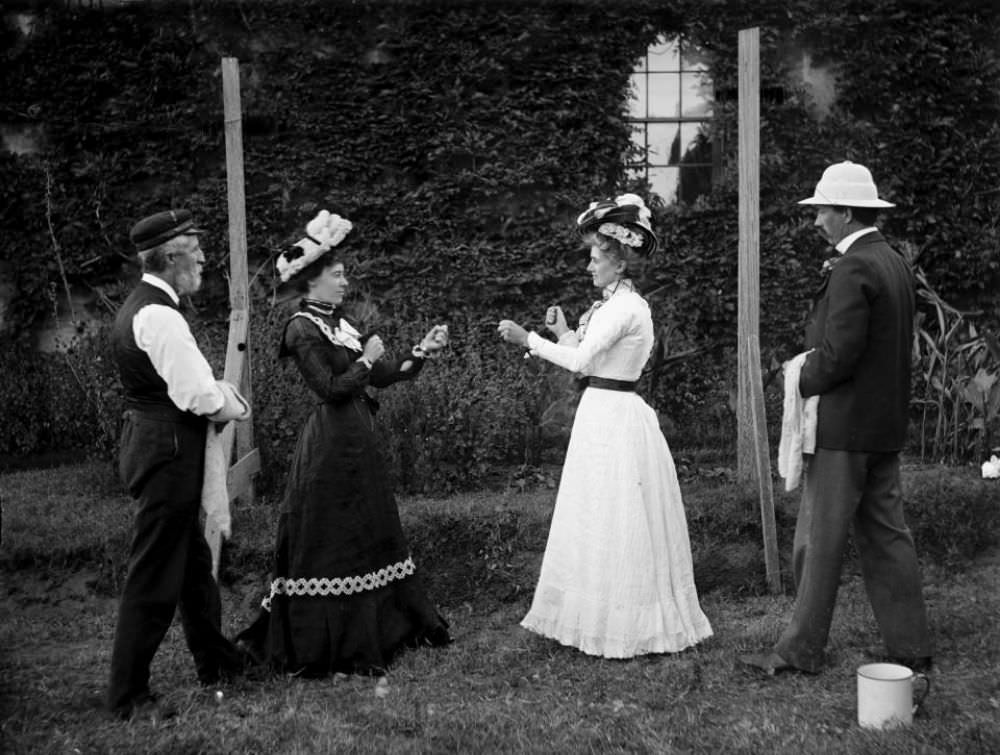
One of the most striking aspects of Victorian-era female boxing is what the fighters wore. Long dresses, full skirts, and collared shirts were standard — not because the women chose them for comfort, but because society demanded it. These photographs show women throwing punches and holding fighting stances while dressed in full Victorian attire. The clothing was a constraint, not a costume.
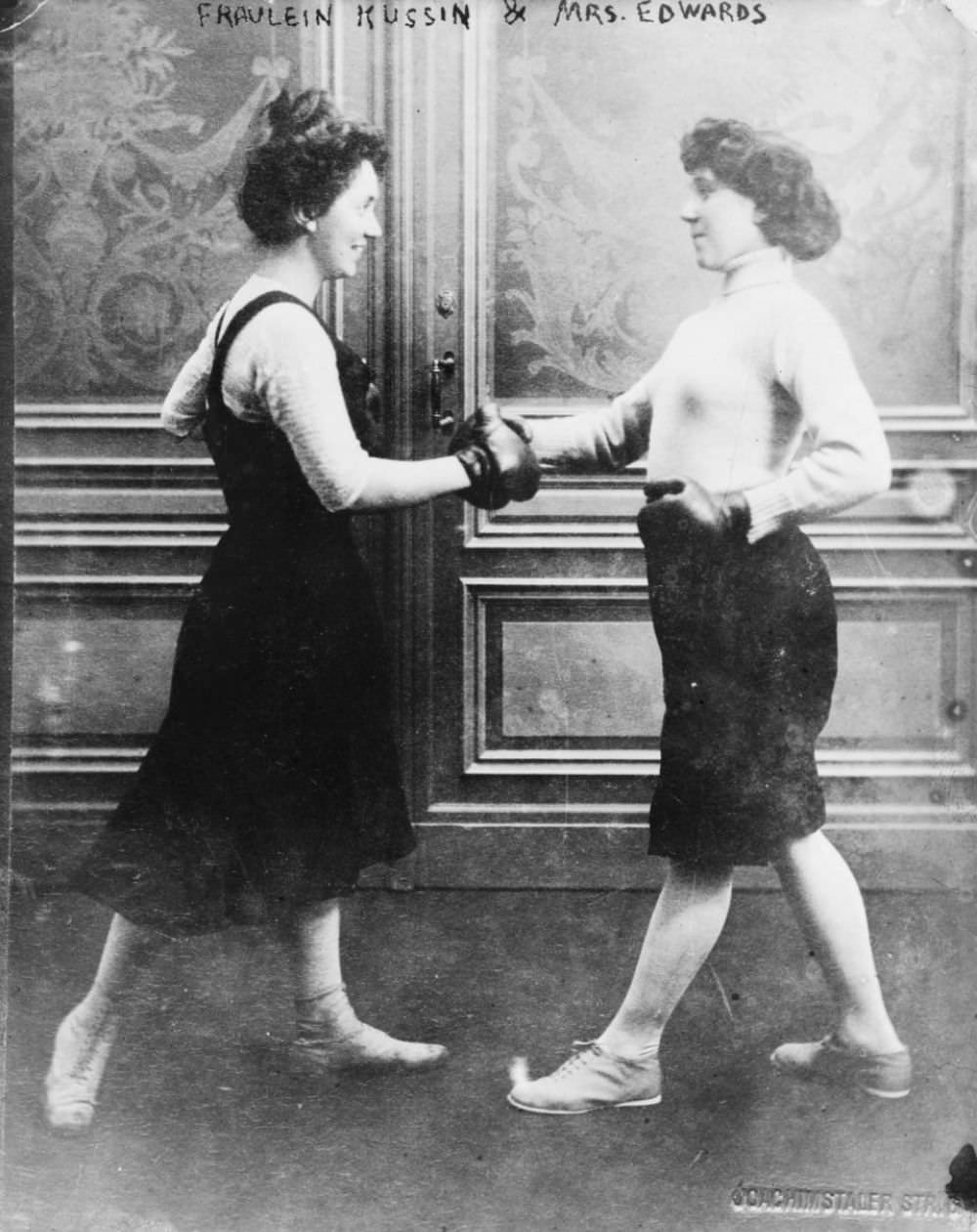
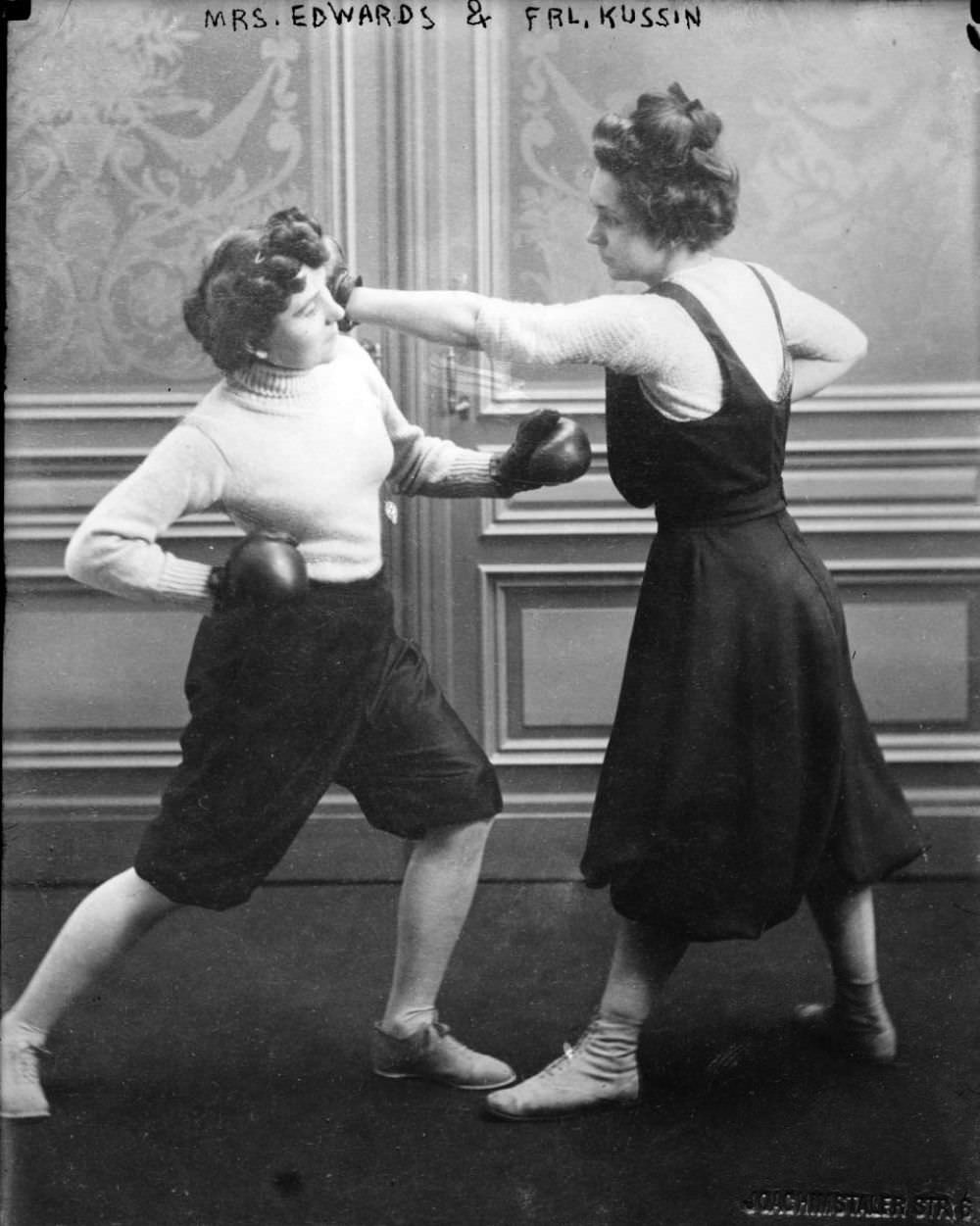
Formal matchups did exist, even outside the official governing structures. In March 1912, Fraulein Kussin and Mrs. Edwards met in a documented bout in the United States. Their fight was not a vaudeville act — it was a scheduled match between two named competitors, which places it firmly in the territory of organized sport rather than pure entertainment.
Germany also had its own female boxing scene taking shape in the early twentieth century. Vicki Baum, photographed training at a boxing gym in Berlin around 1920, was part of a broader wave of women entering gyms across Europe. Two years earlier, in 1909, women were already training together at a boxing school in Berlin — decades before any official body would recognize them as legitimate competitors.

This is horrible, half the titles are to the incorrect picture. The grammar is bad also