Burlesque as a performance form traces its roots to the 1840s, when working-class audiences pushed back against the rigid social codes enforced by the Victorian aristocracy. It grew out of friction — between propriety and pleasure, between high art and the rowdy energy of the streets. By the 1870s, burlesque shows had become a fixture of American entertainment, running strong through the 1920s and drawing packed houses with a mix of comedy, music, satire, and spectacle. The form had clear rules by the 1880s, even if those rules were designed to break other rules. Shows featured sexually suggestive dialogue and staging, pun-heavy humor, short sketches with little connecting plot, and — most visibly — minimal costumes for female performers. The genre mocked opera, Shakespeare, ballet, and musicals. It flipped social norms on their head deliberately and unapologetically.
Much of American burlesque’s early shape came from Lydia Thompson and her troupe, the British Blondes, who arrived in the United States in the 1860s. Early “leg shows” like The Black Crook (1866) also helped establish the visual language of the form — women on stage in costumes that showed far more of the body than mainstream theater would allow. There was also a direct link between American burlesque’s humor and staging traditions and those of the minstrel show. One of the most prominent early troupes, the Rentz-Santley Novelty and Burlesque Company, was founded in 1870 by M.B. Leavitt, who had previously worked on feminizing the minstrel show format with productions like Madame Rentz’s Female Minstrels.
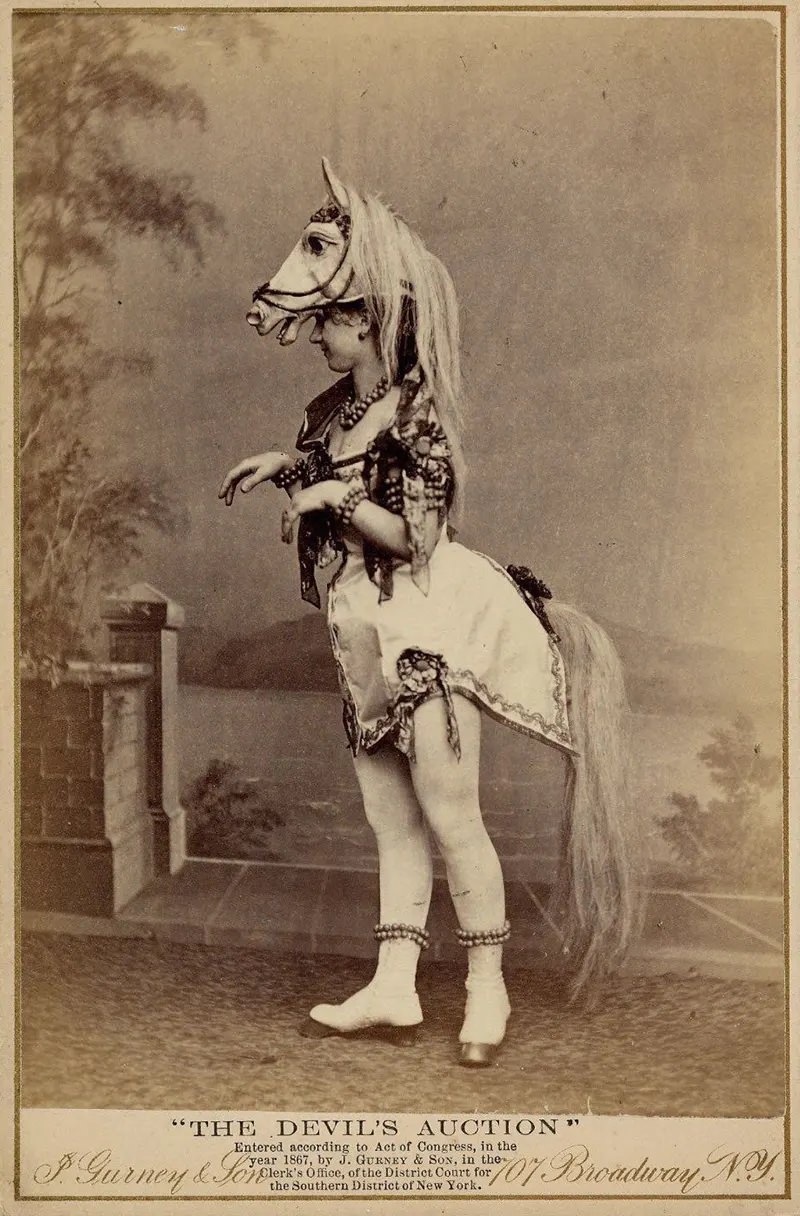
The costumes worn by burlesque performers were central to the art form’s identity. They were designed to provoke, amuse, and dazzle — often all at once. Novelty and theatricality drove costume design. Headdresses, animal motifs, metallic fabrics, and heavy ornamentation were common tools. Eliza Blasina’s horse-head headdress and attached horsetail, paired with rows of beads or bells at her ankles, wrists, neck, and upper arm, shows just how far performers pushed the concept of a stage costume.
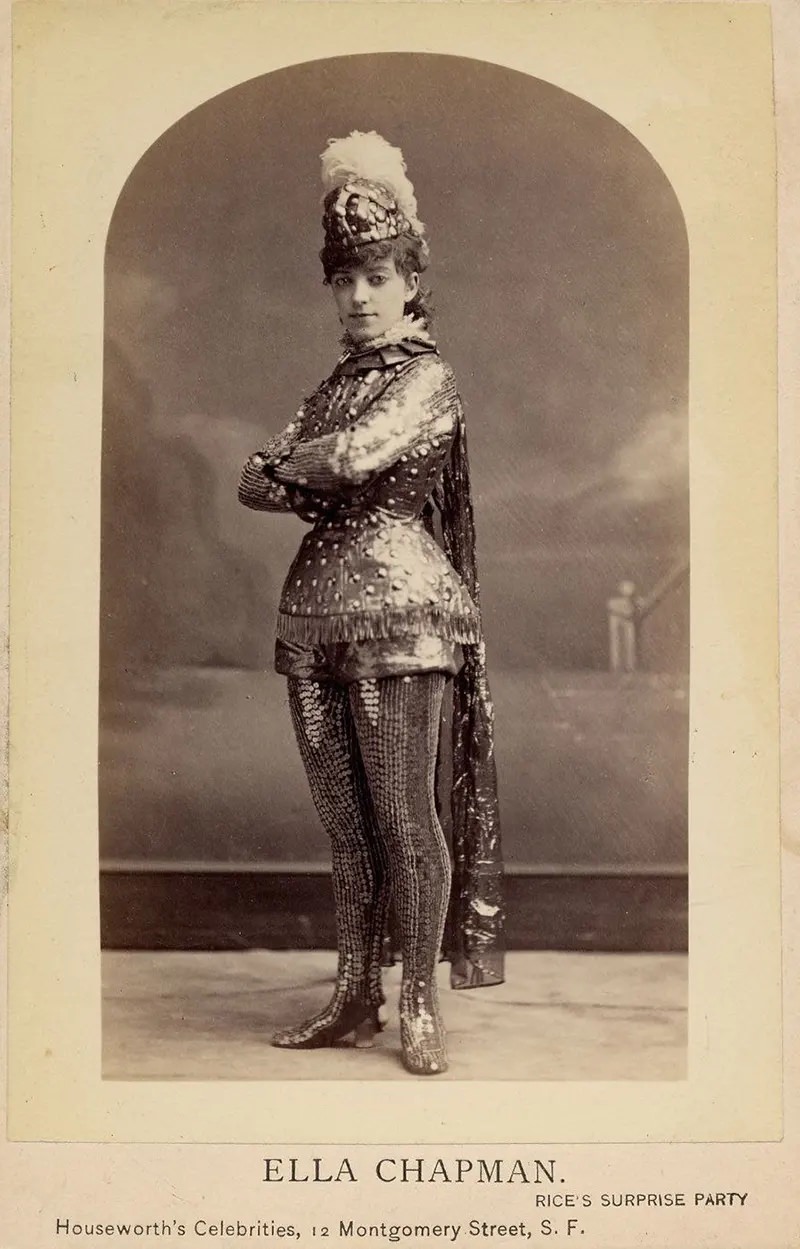
Burlesque regularly borrowed from history, mythology, and military imagery — then twisted those references into something theatrical and provocative. Ella Chapman’s metallic armor costume, complete with leggings and a feathered helmet, is a prime example. The armor look was serious in form but unmistakably burlesque in its short cut and stagecraft context.
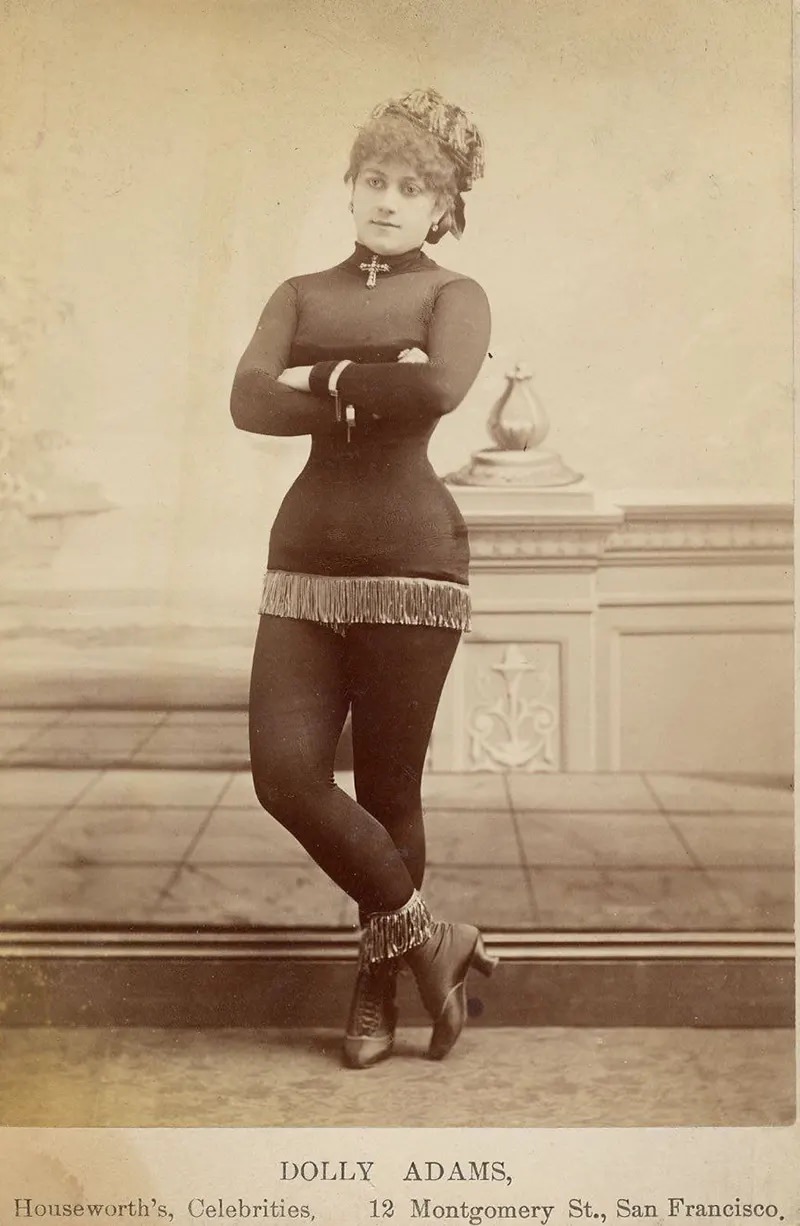
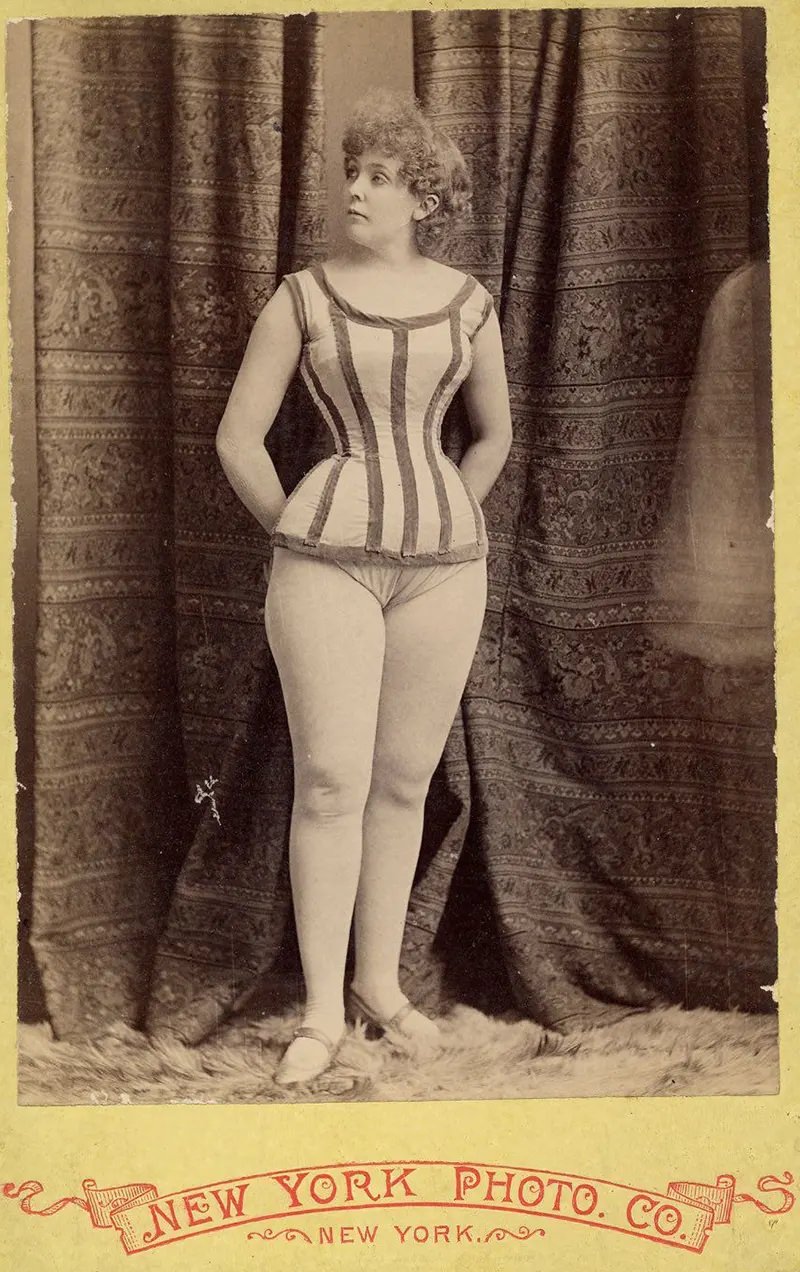
Fringe was a recurring design element across burlesque costuming. It added movement on stage under gas and limelight, drawing the eye and emphasizing the performer’s body as she danced. Dolly Adams wore fringe at the hem of her short costume and topping her heeled boots, while a cross at her neck and a cap completed the look. Rose Hamilton kept things simpler — a short costume and strap shoes — but the silhouette itself was the statement.
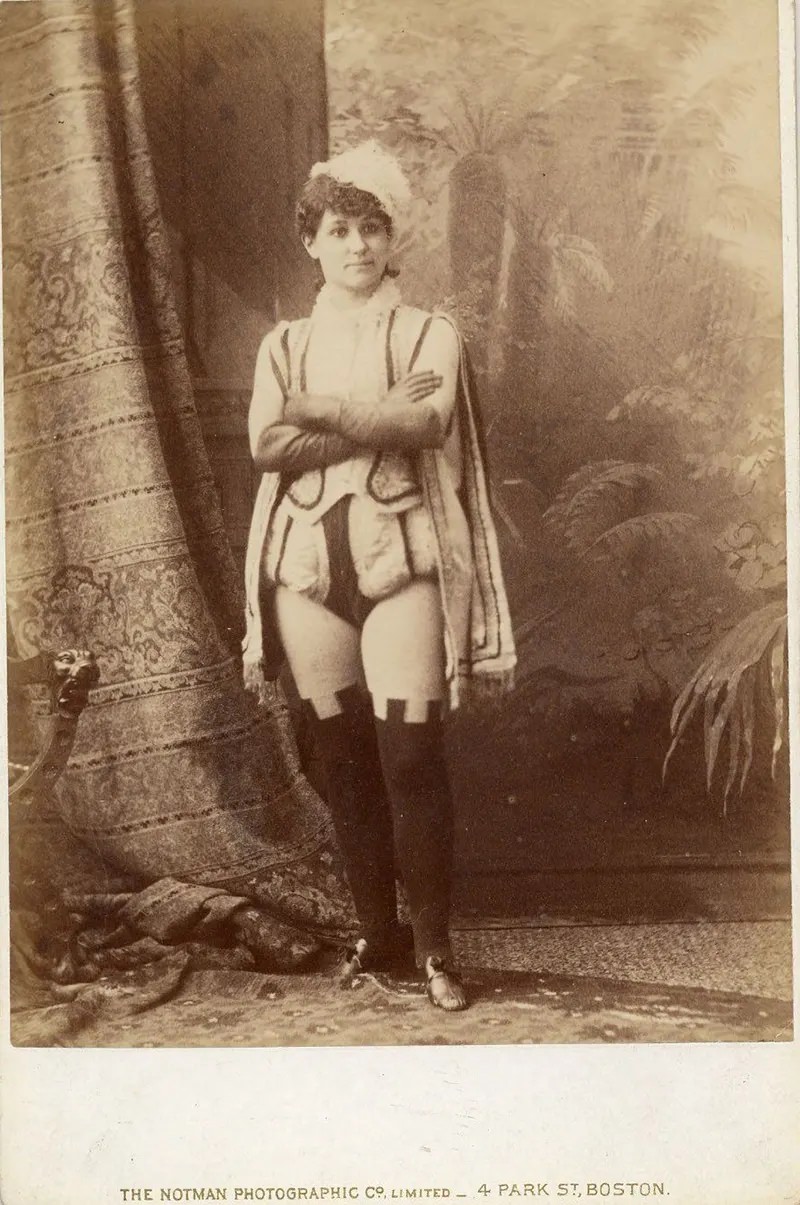
Cross-dressing and gender play were standard tools in burlesque. Performers regularly appeared in male costumes, which served both a comedic and subversive function in an era when gender presentation was tightly policed. Miss Darcey’s short male Renaissance costume with over-the-knee leggings is a clear example of this tradition — the male silhouette rendered in a deliberately short, stage-ready cut.
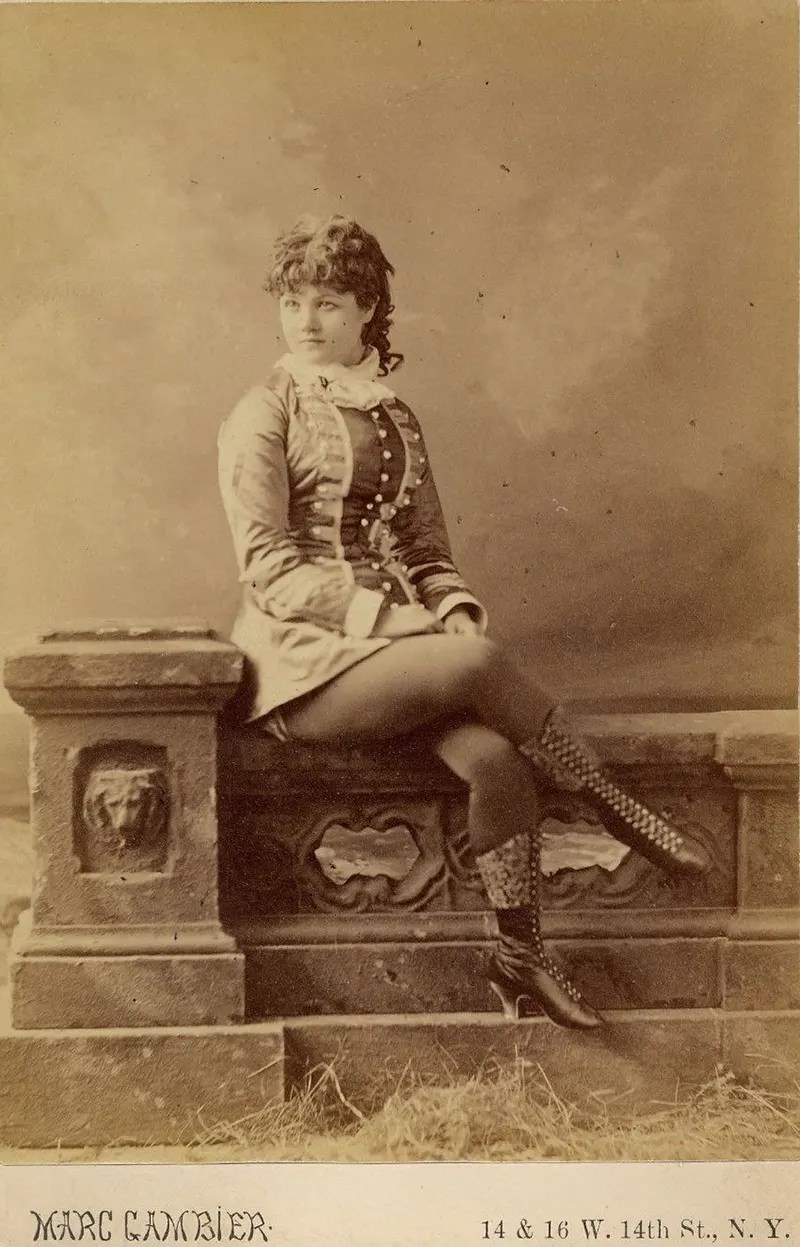
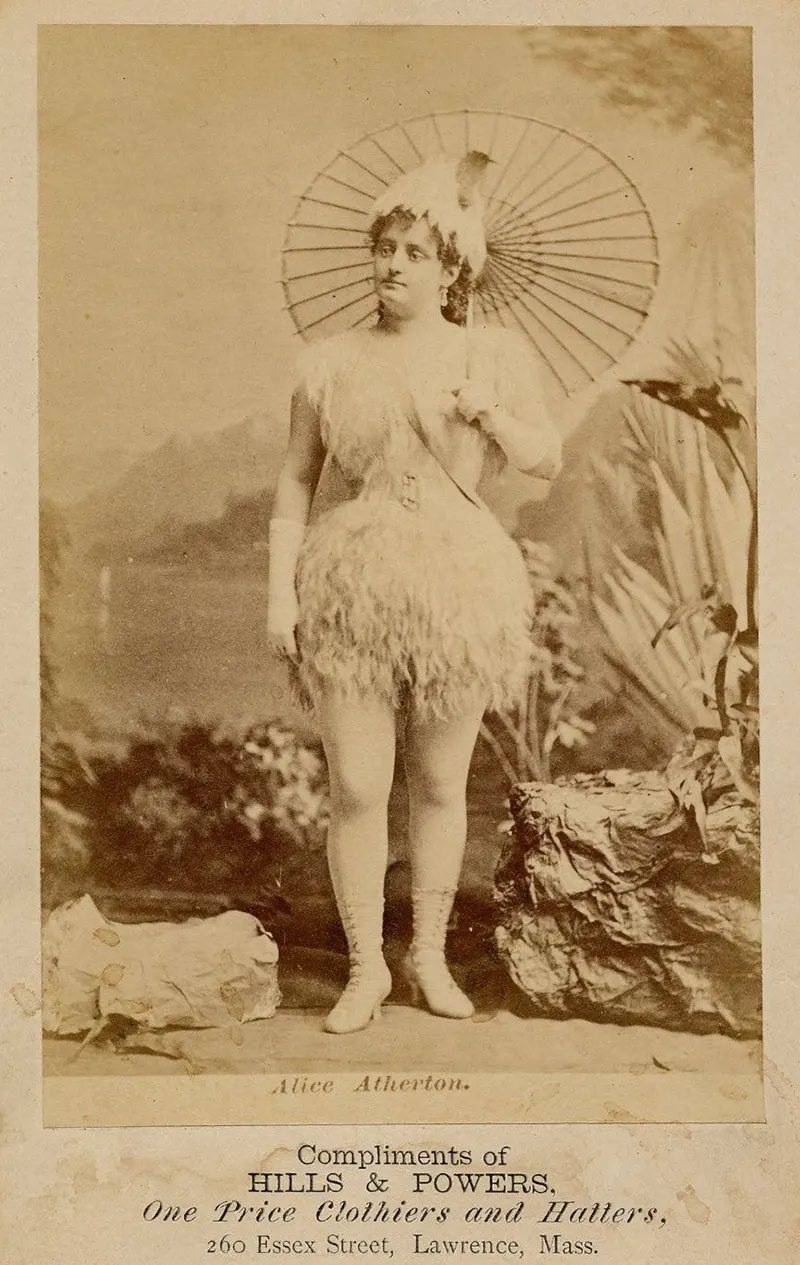
Feathers were another staple of burlesque costuming. They signaled luxury and spectacle, and they photographed well in the studio portrait sessions that helped performers build their public profiles. Alice Atherton’s fully assembled look — feathery costume, feathery hat, white gloves to the mid-forearm, laced heeled boots to the mid-calf, and a parasol — represents the complete burlesque aesthetic package. Every element was chosen to create visual impact.
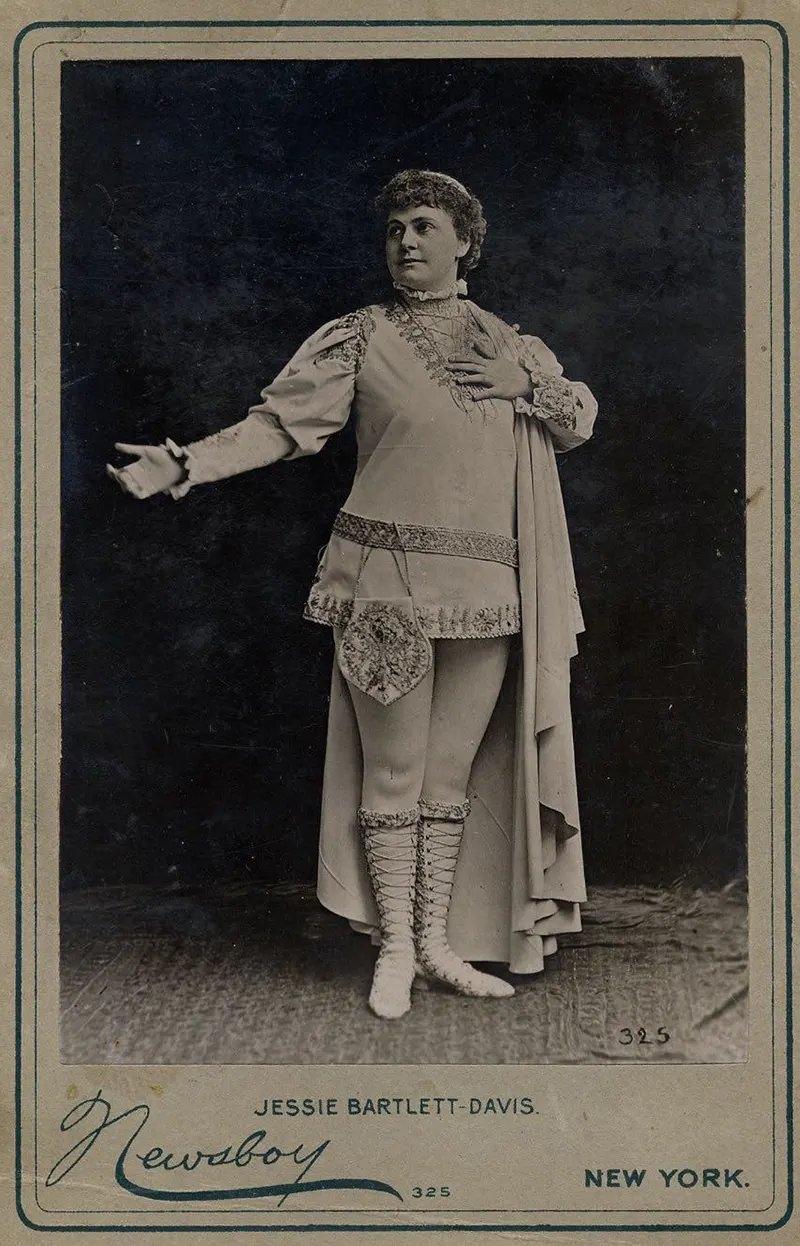
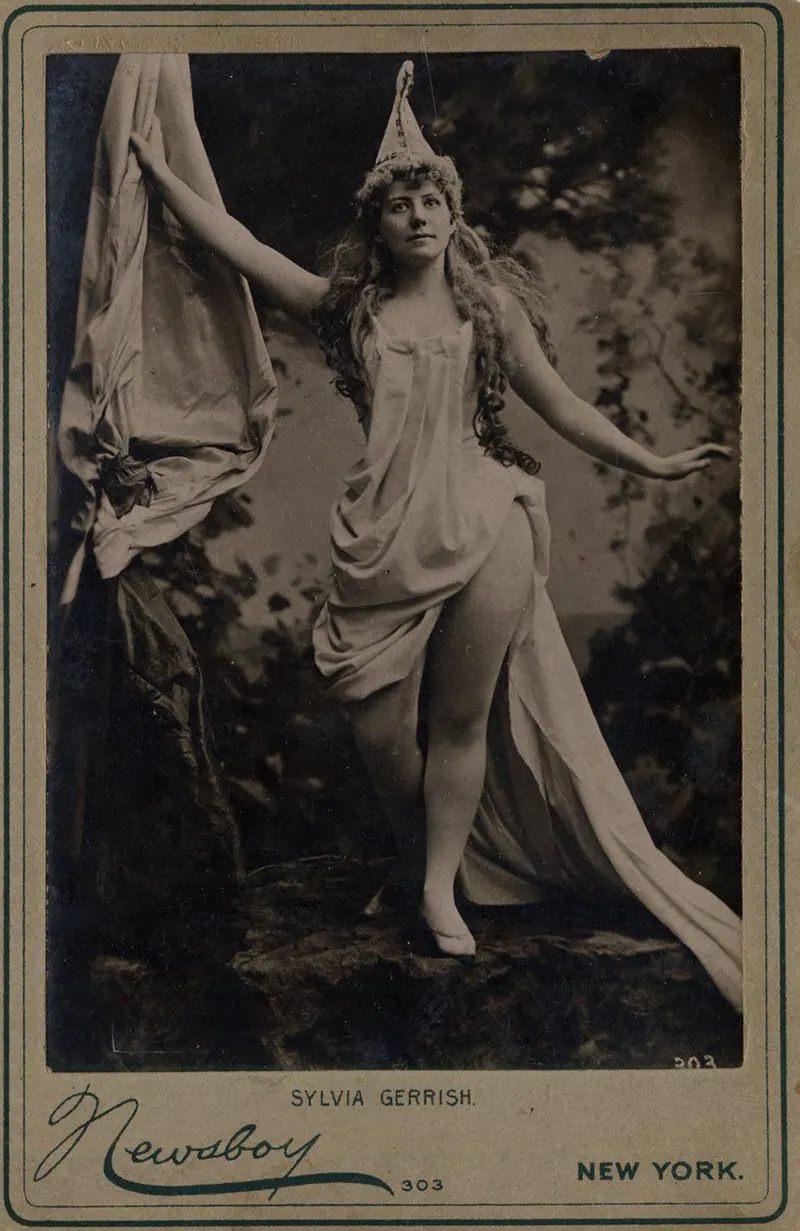
Historical and fantastical costume themes were popular throughout the 1870s–1890s period. Performers drew on the Middle Ages, ancient Greece, mythology, and fairy tales as source material for their looks. Jessie Barlett-Davis wore a costume evoking the 15th century, while Sylvia Gerrish took a more mystical route with a draped dress and pointed hat photographed outdoors in a wooded setting — a deliberately romantic and theatrical staging choice.
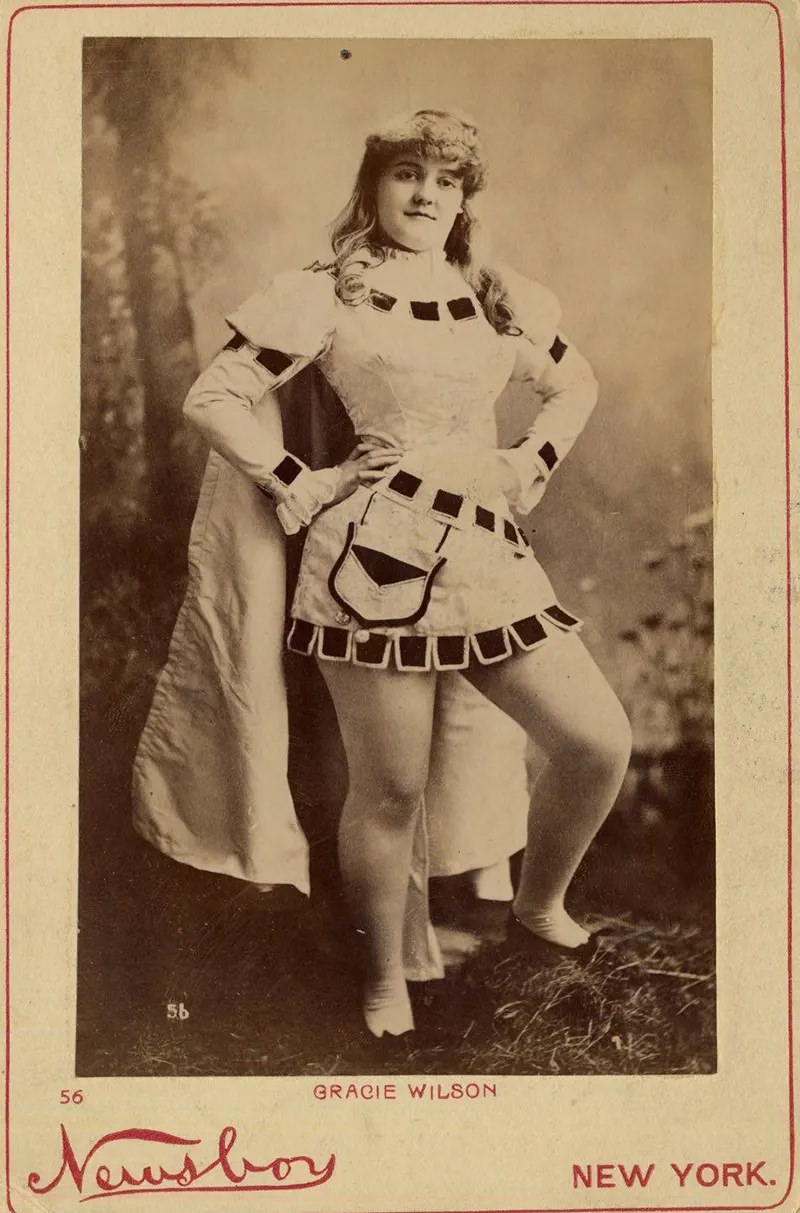
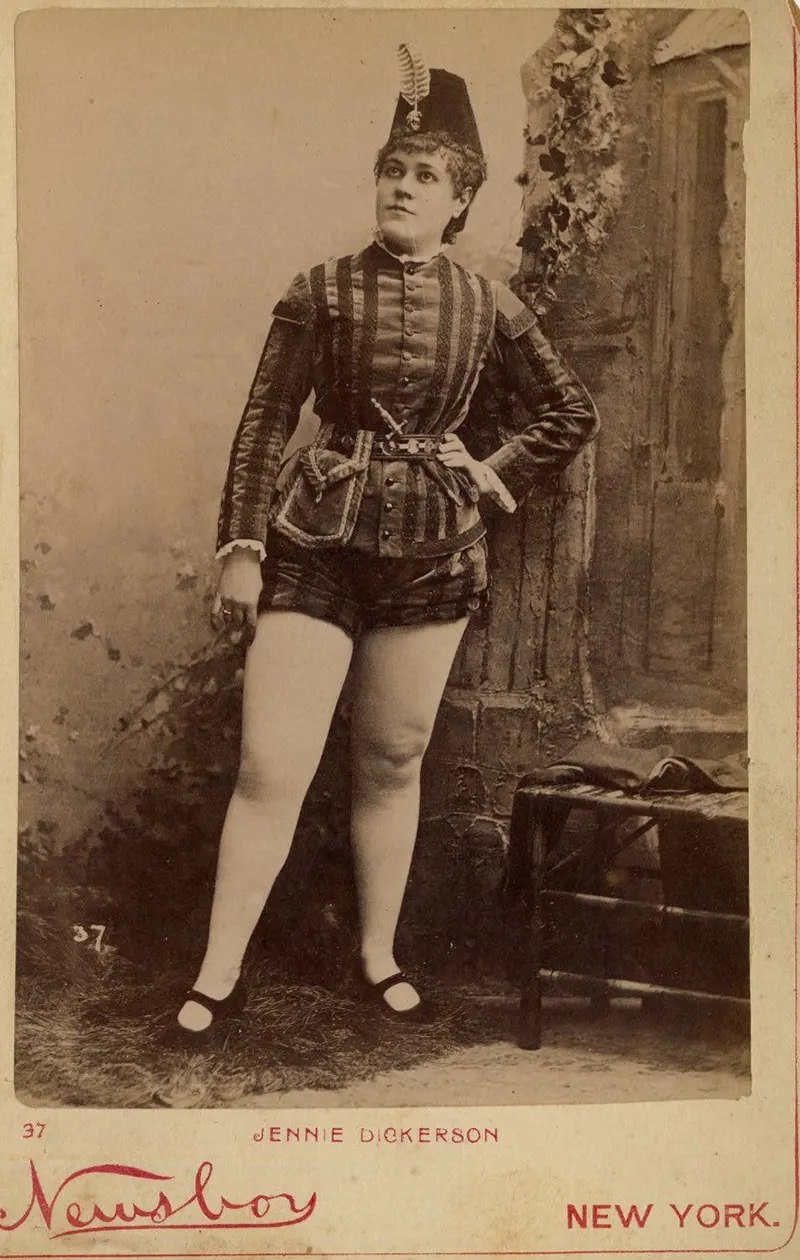
Capes and military-inspired looks appear repeatedly across these photographs, reflecting burlesque’s habit of borrowing prestige symbols — military rank, noble dress, heroic iconography — and recasting them in a performance context that undercut their original seriousness. Jennie Dickerson’s pseudo-military outfit belongs to a long tradition of burlesque using uniform-adjacent costuming as both costume and commentary.
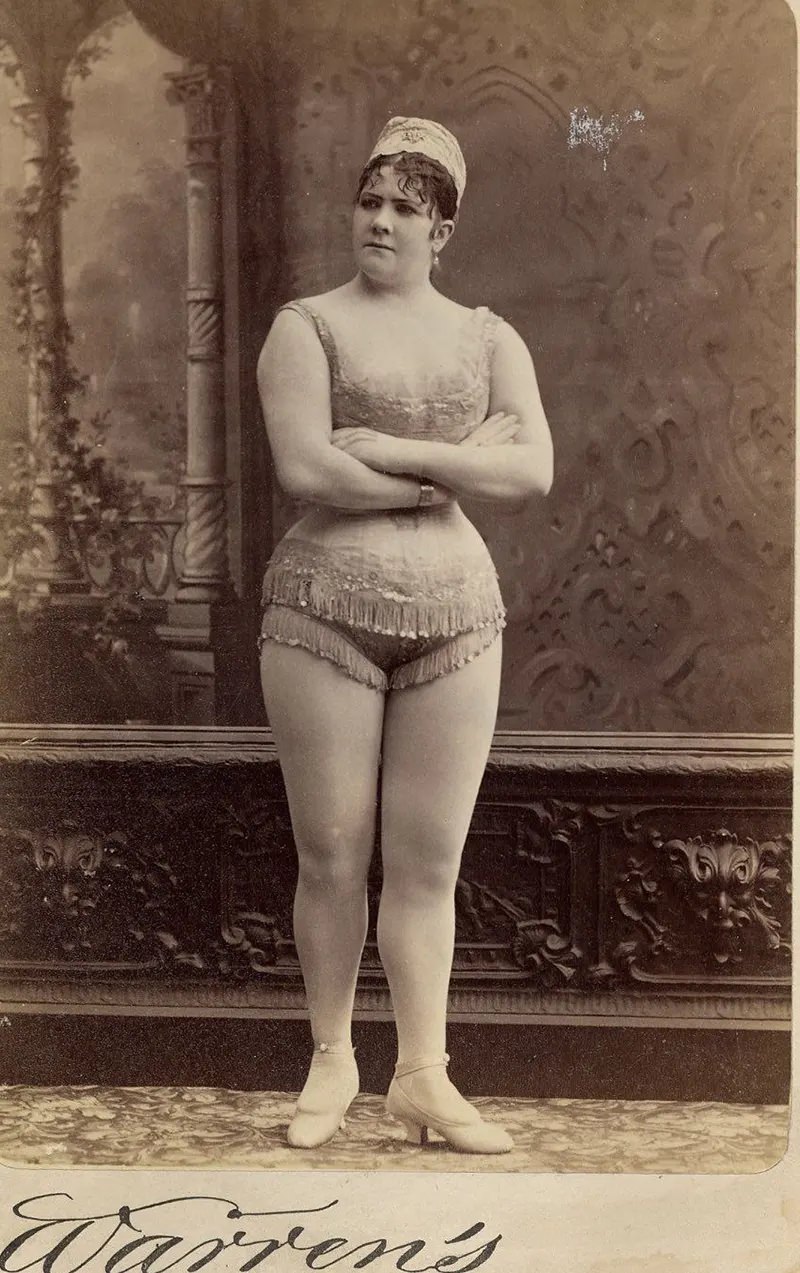
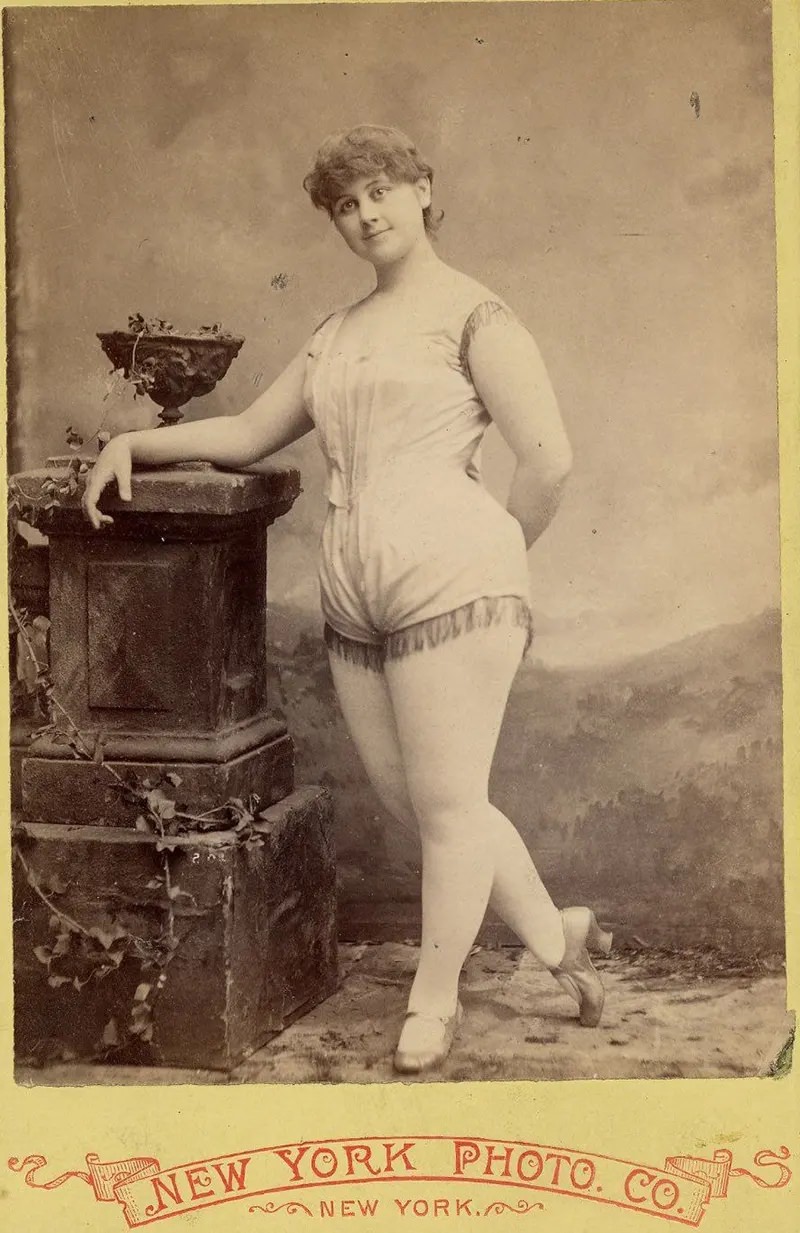
By the 1880s, the informal rules of burlesque costuming were well established: short hemlines, minimal fabric, and maximum stage presence. Viola Clifton’s sleeveless, fringed top paired with short, fringed trunks represents the more stripped-down end of the spectrum. This style of costuming was precisely what drew censure from reformers and local legislators, particularly as striptease began to overshadow comedy in burlesque shows by the late 1920s.
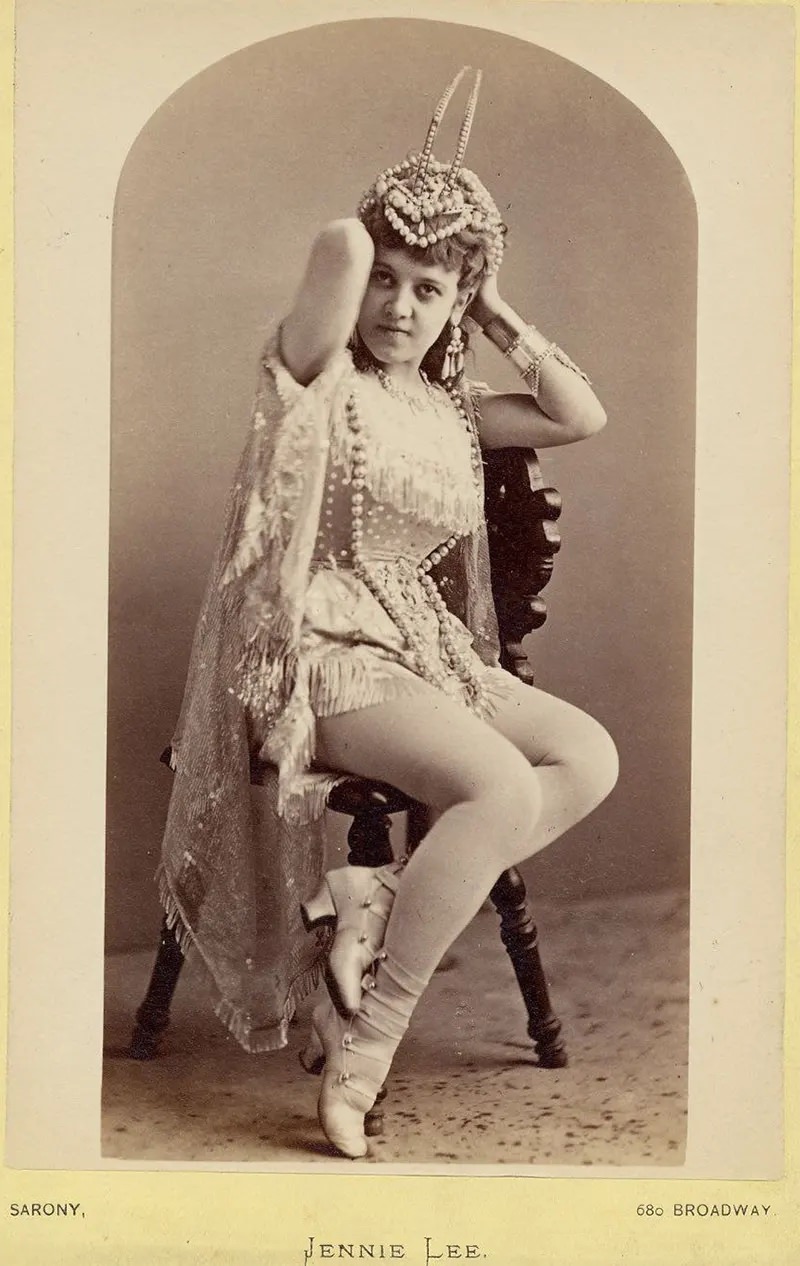
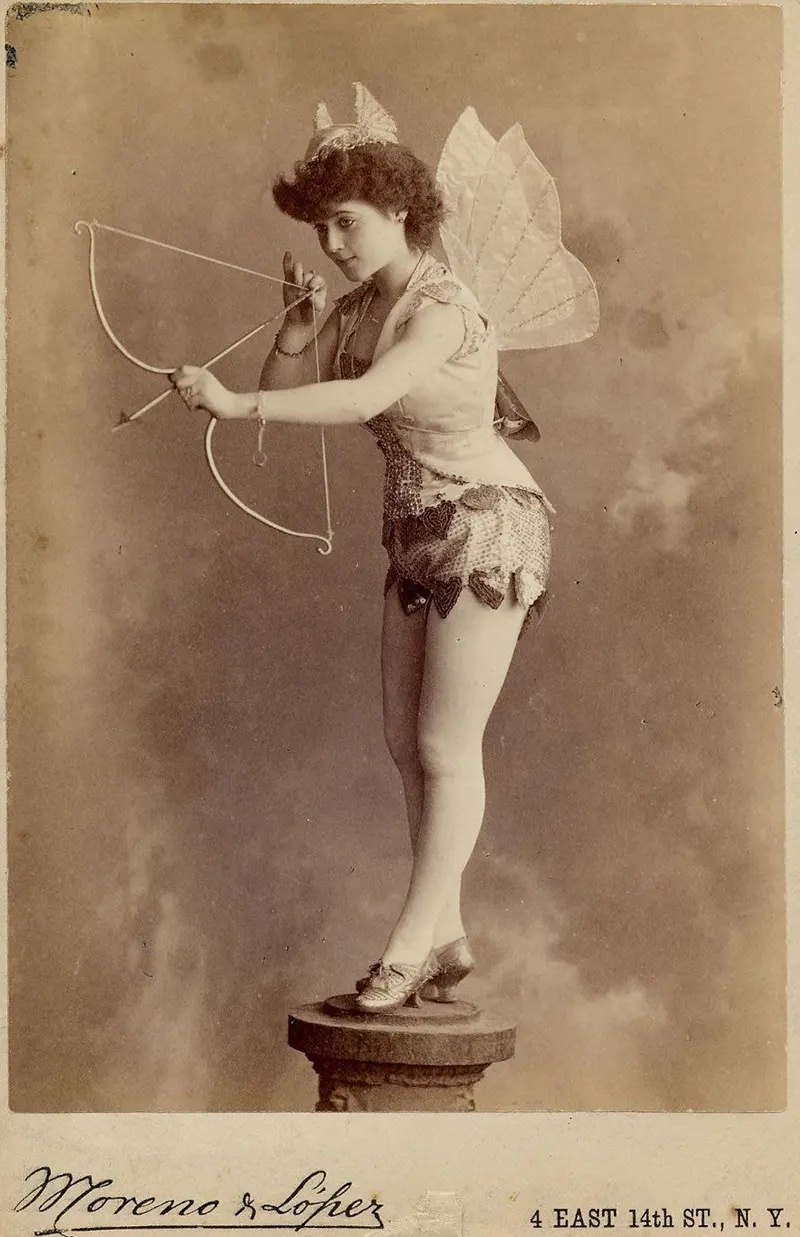
Headdresses were elaborate constructions — expensive to make and central to a performer’s stage identity. Jennie Lee poses holding her headdress rather than wearing it, which gives a sense of just how large and complex these pieces were as standalone objects. Studio portrait photography was an important marketing tool for burlesque performers, allowing them to distribute cabinet cards that built public recognition and bolstered their bookings.
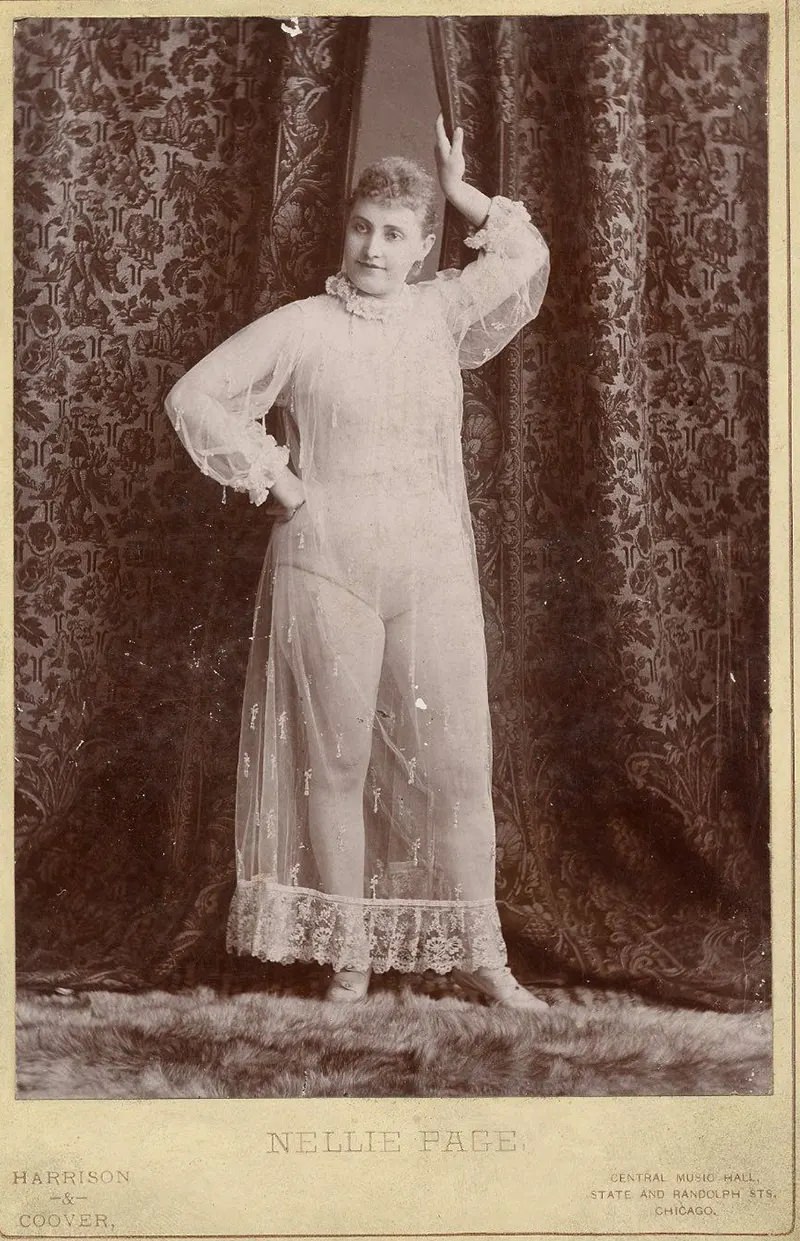
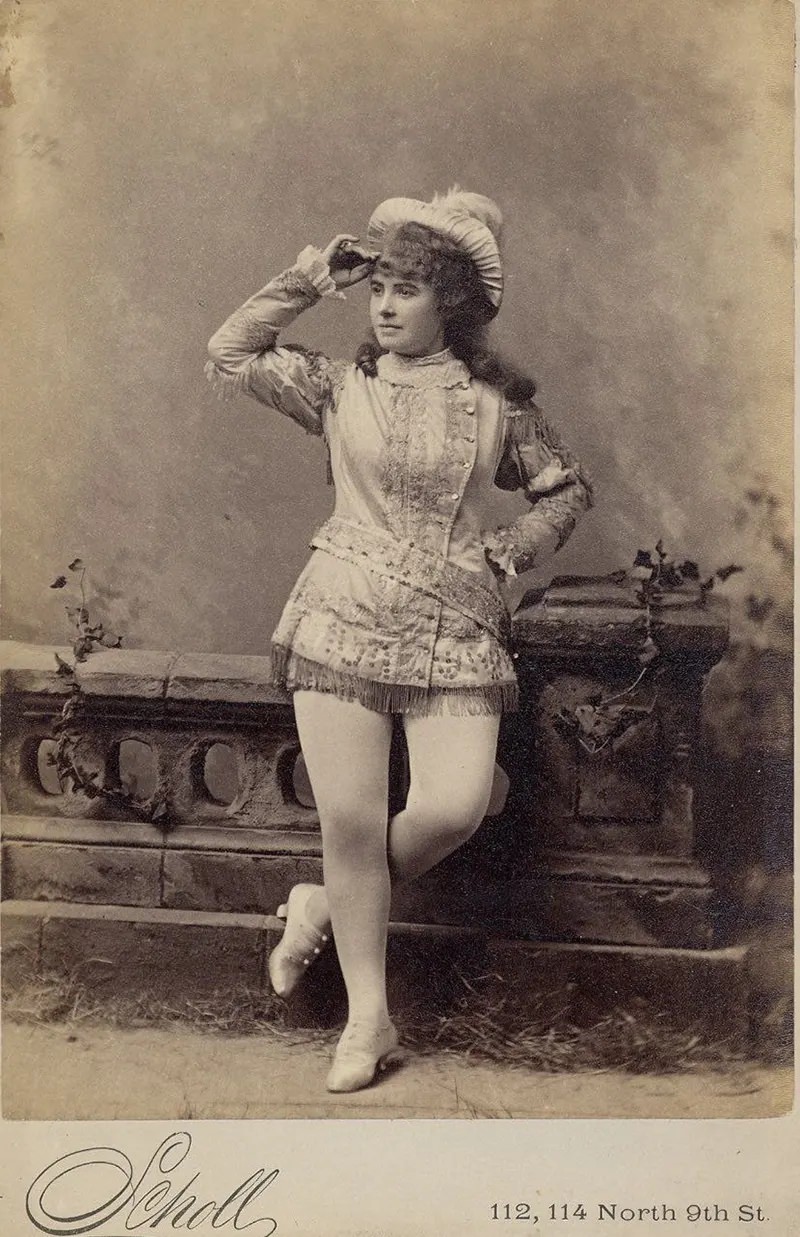
Not all burlesque costuming was elaborate or heavily accessorized. Some performers used deliberately domestic or understated garments to create their own kind of provocative statement. Nellie Page posing in a nightgown was a direct challenge to Victorian notions of private versus public dress. The nightgown on a public stage — or in a widely distributed photograph — was itself a transgression. Adah Richmond’s relaxed pose leaning on a stone fence similarly projects ease and informality, deliberately at odds with the rigid posture expected of respectable women in the period.
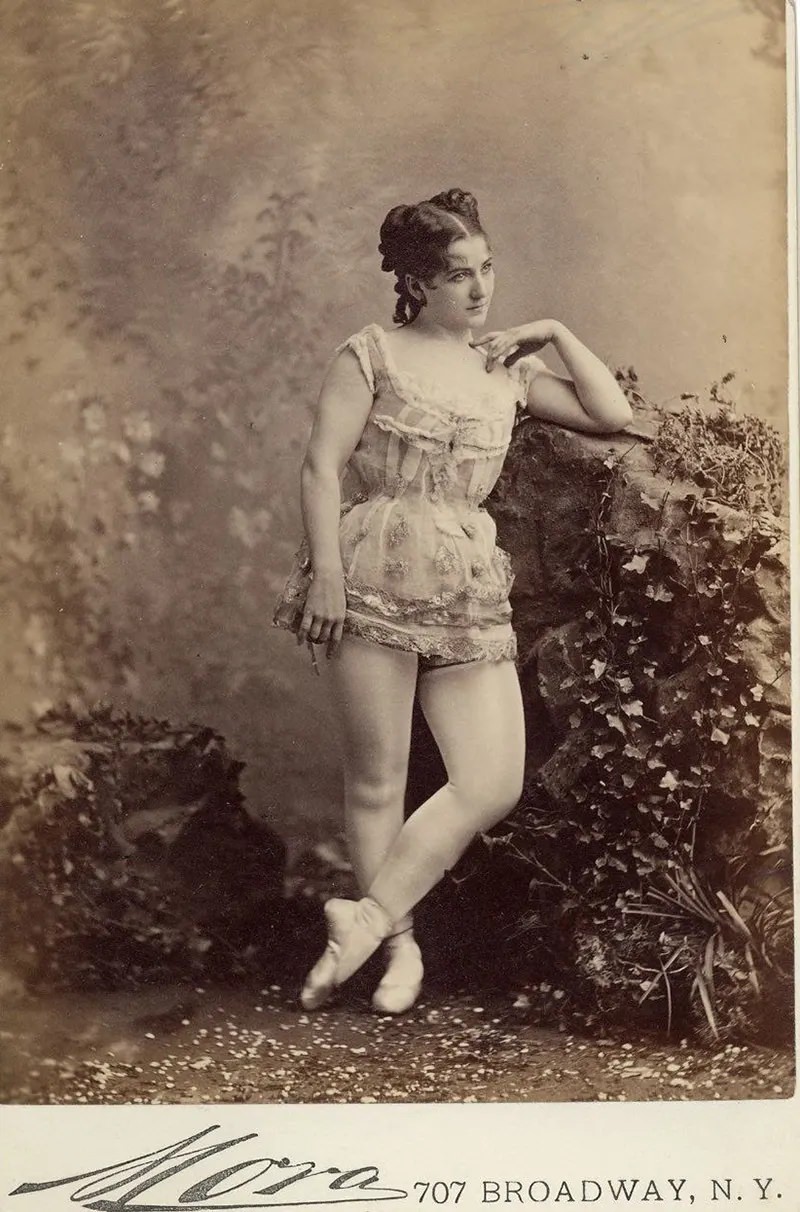
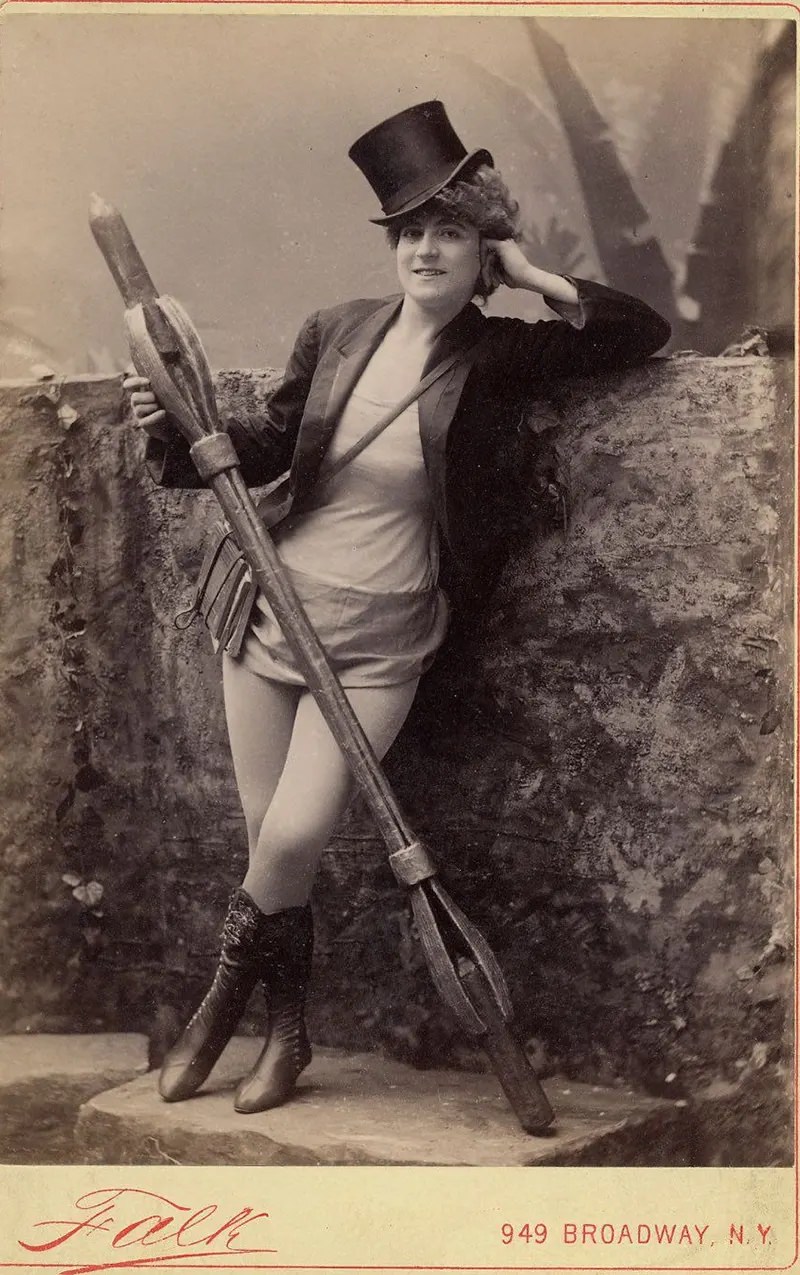
Burlesque shows mocked ballet specifically, so it is notable that ballet shoes appear in the photographic record of performers like Leontine. The overlap between burlesque and legitimate dance was real — many performers trained in classical or theatrical dance and brought those skills into the burlesque context. Vernona Jabeau presents a sharply different look: high boots, a hat, and a long candle holder, all suggesting a theatrical character role rather than a dance number.
![Unidentified female performer [Camille?] in a short sailor-style costume, shoes with knee-high stockings.](https://www.bygonely.com/wp-content/uploads/2022/08/Victorian-Burlesque-Dancers-19.jpg)
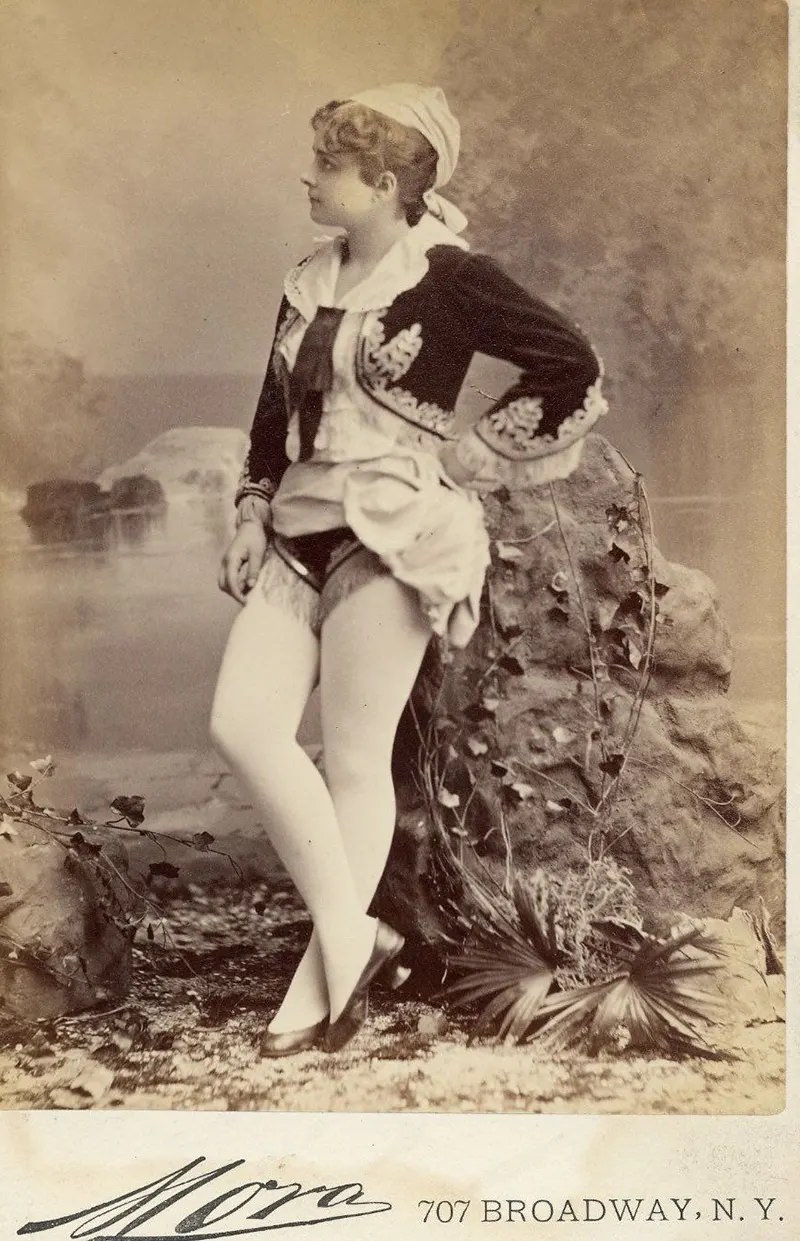
The sailor costume and the Greek-style costume represent two more of burlesque’s recurring visual vocabularies. The sailor look — worn here by an unidentified performer — carried associations of the working class and the sea, both well outside the drawing-room propriety that burlesque delighted in flouting. Pauline Hall’s short Greek-style costume with flat shoes is a nod to the classical world, used throughout the 19th century as a framing device that lent a veneer of artistic respectability to stage display of the female body.
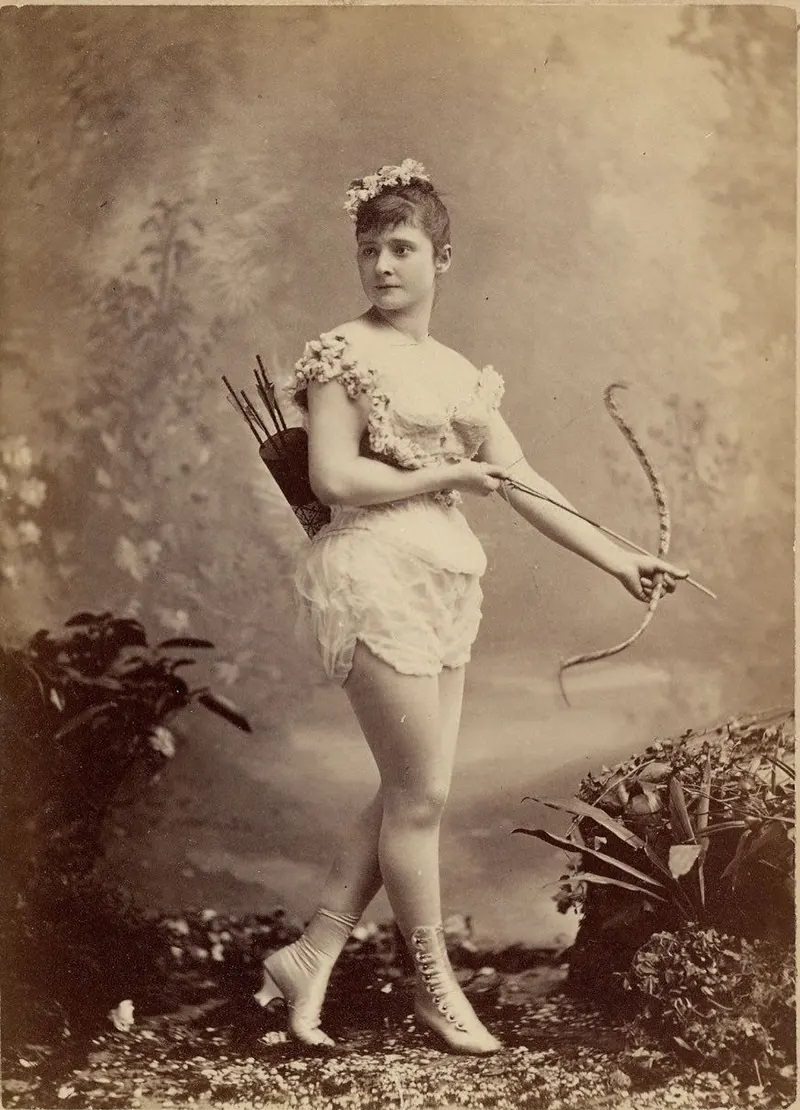
Mythological warrior women — particularly the archetype of the huntress or Amazon — were popular burlesque costume themes. Miss Farrington’s bow-and-arrow ensemble, complete with a quiver on her back and buttoned heeled boots, puts her firmly in that tradition. It combined physical confidence, the suggestion of danger, and a costume that met burlesque’s requirements for minimal coverage.
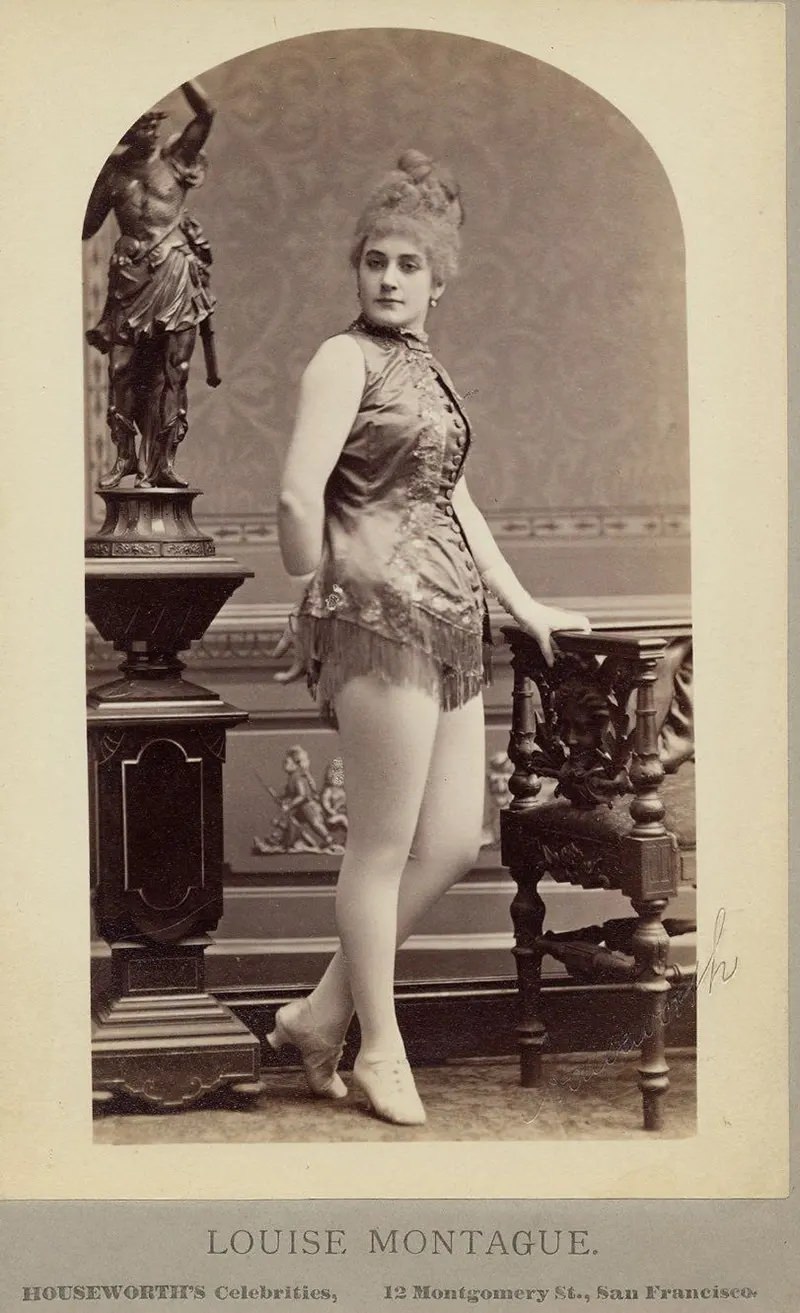
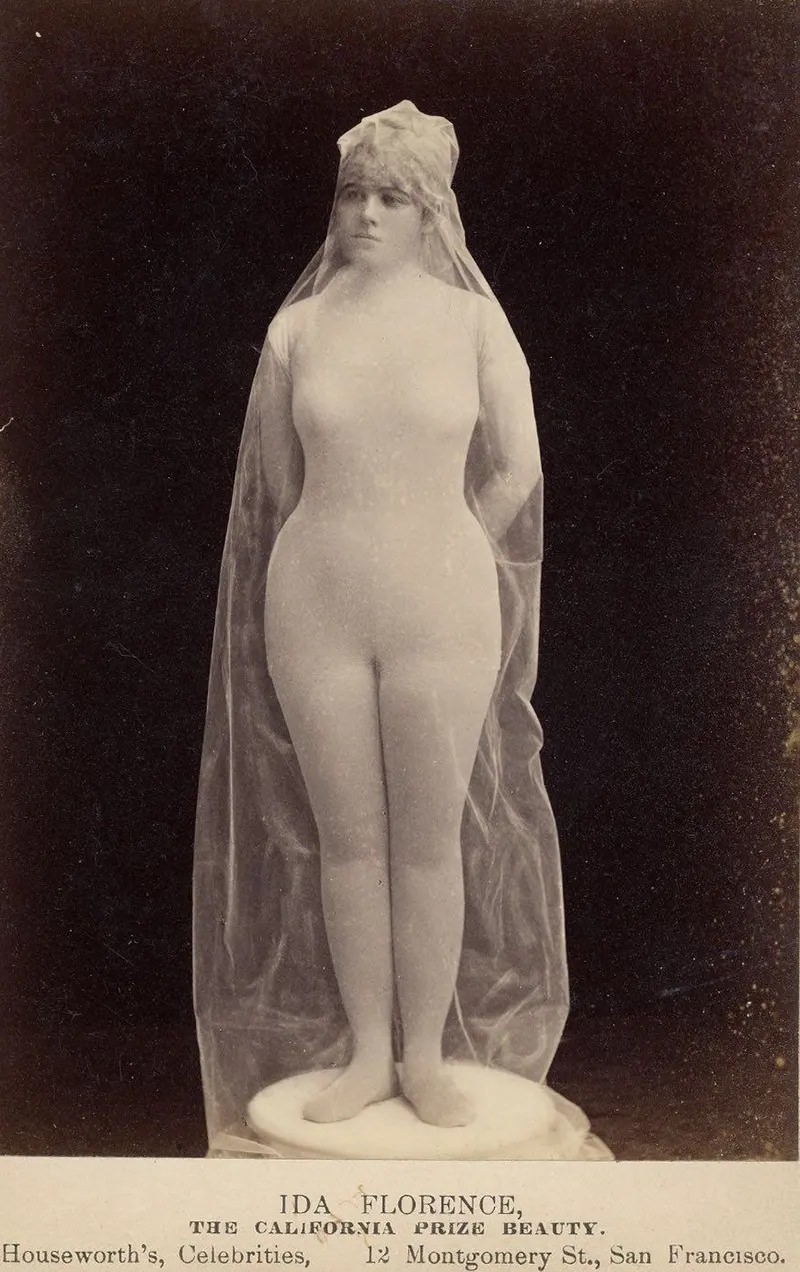
Ida Florence, billed as “The California Prize Beauty,” took the display of the female form to its most direct burlesque expression: a body stocking covered in transparent fabric, posed as a living statue. This was a recognized act type in 19th-century entertainment — the “living statue” or “tableaux vivant” — which used the framing of classical sculpture to present near-nudity as art. Louise Montague’s fringed mini dress, by contrast, stays in purely theatrical costume territory.
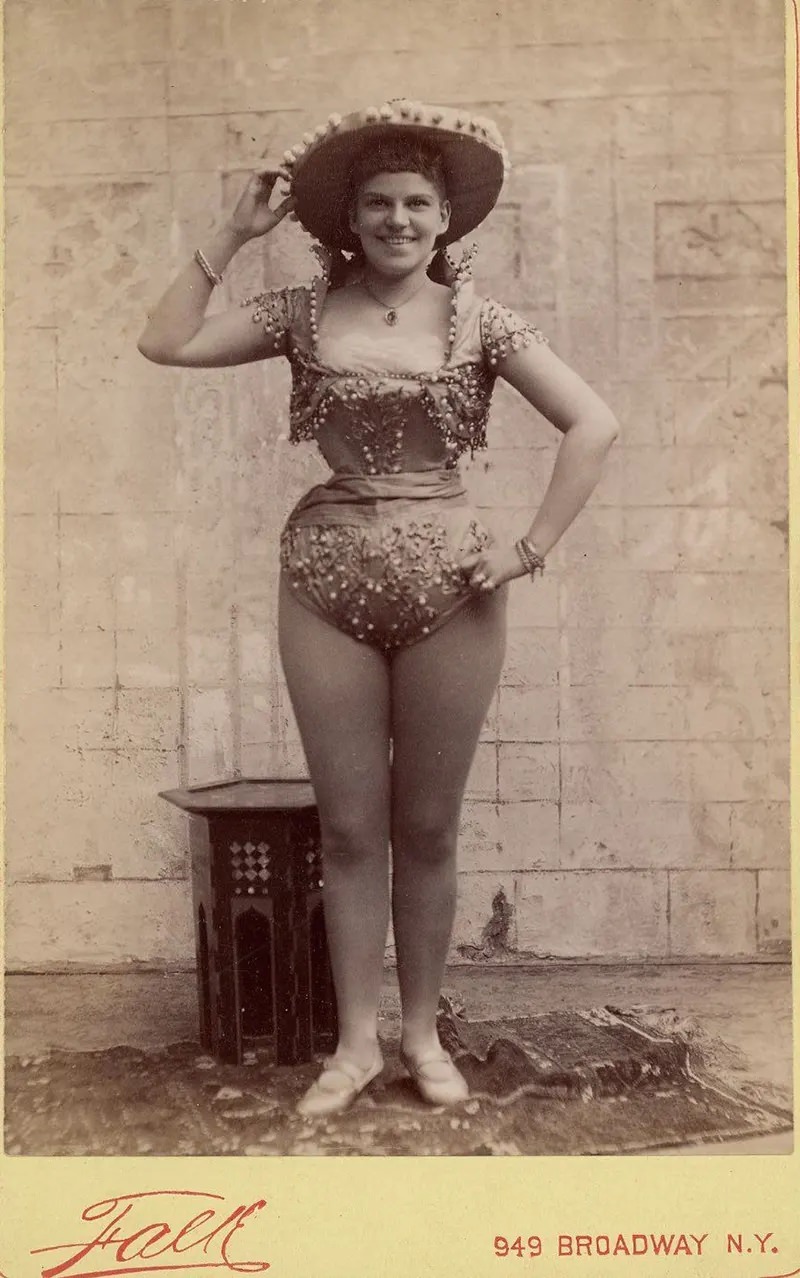
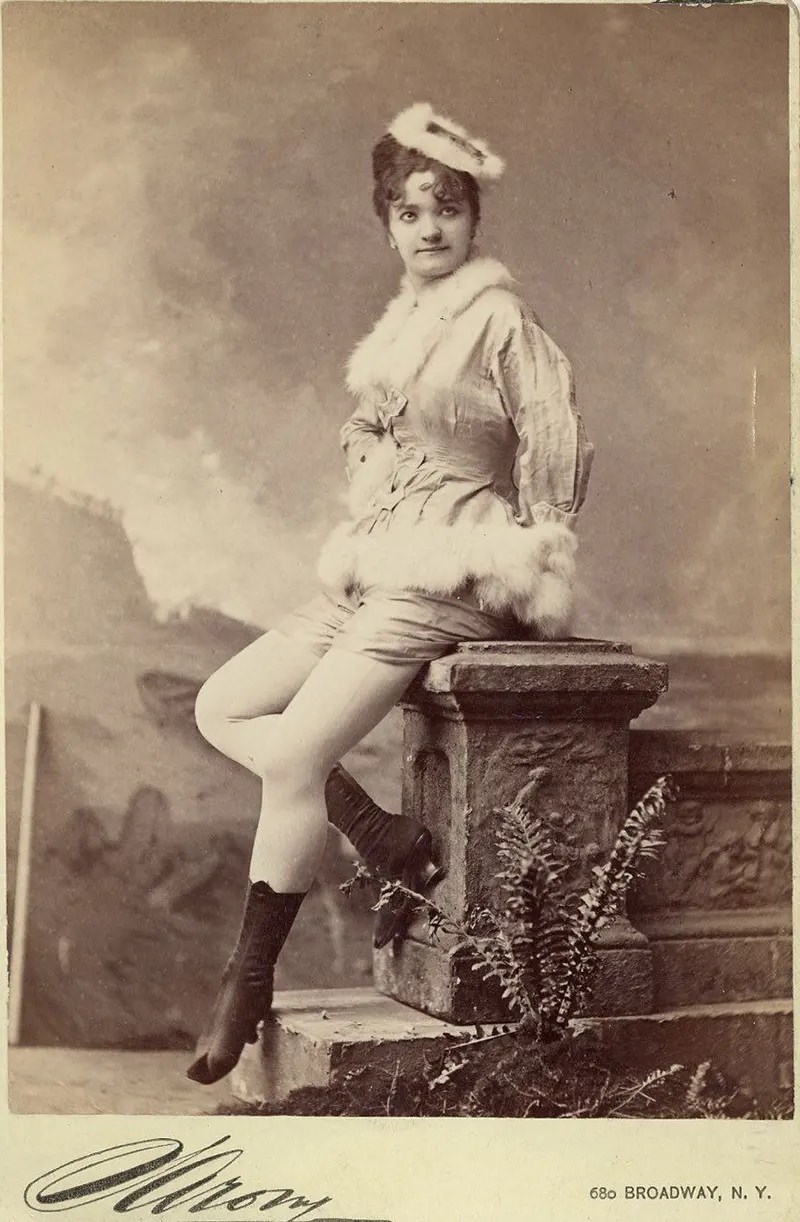
Burlesque costuming borrowed freely from other cultures, using a wide range of ethnic and national styles as raw material for theatrical looks. Josie Gregory’s Mexican-style costume and Elvira Viola’s fur fringe both reflect this pattern. These were not attempts at accurate cultural representation — they were theatrical costumes designed for stage impact, drawing on exotic associations to create visual interest and novelty.
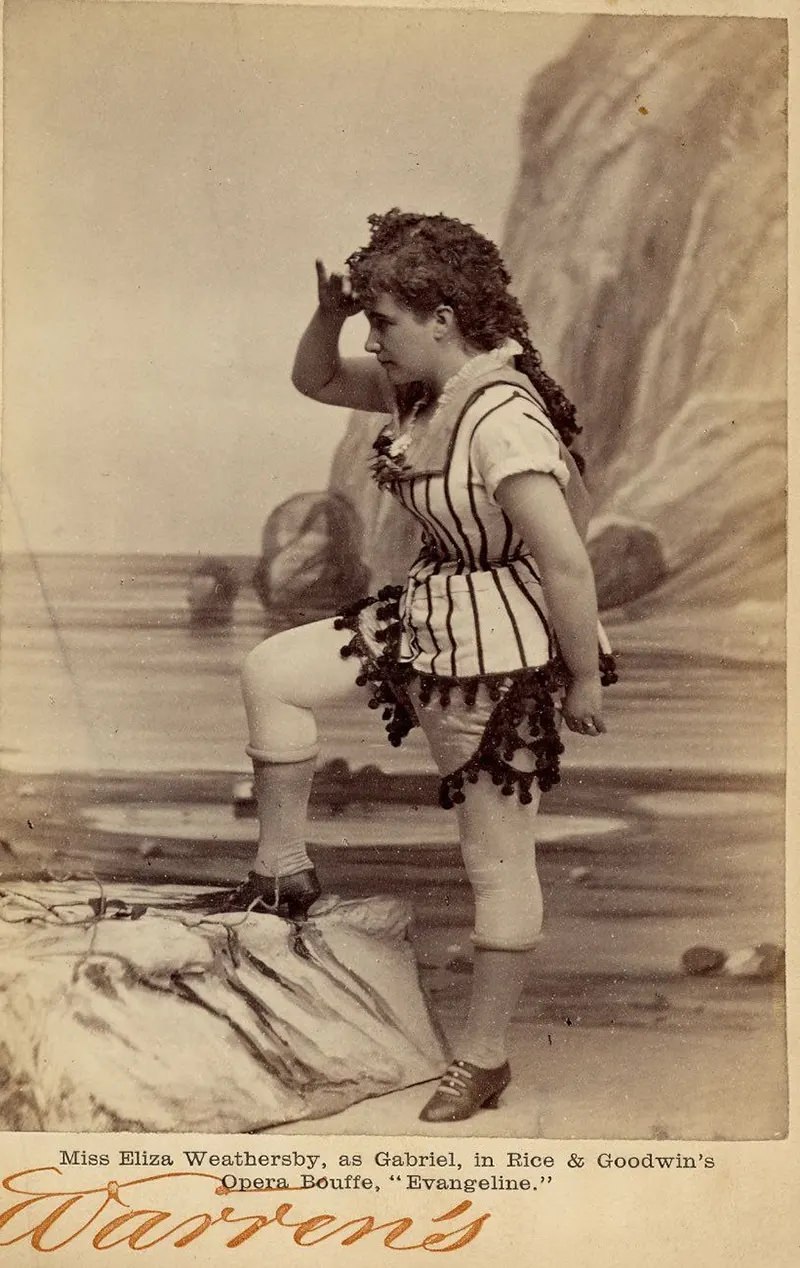
Some burlesque performers appeared in specific named productions that sit at the crossroads of burlesque and opera bouffe — comic opera that itself parodied grander operatic forms. Eliza Weathersby’s performance as Gabriel in Rice & Goodwin’s Evangeline at the Boston Museum in 1877 is one of the more precisely documented examples in this collection. Opera bouffe was a French genre that traveled well to American stages, and its comic exaggeration made it a natural partner for burlesque sensibilities.
![Carrie McHenry as Jako in Bohemian Gy-url [sic], Colville Opera Company.](https://www.bygonely.com/wp-content/uploads/2022/08/Victorian-Burlesque-Dancers-28.jpg)
Clara Davenport’s short sleeveless costume with fringe at the legs and armholes is a textbook example of the late 19th-century burlesque silhouette — a design that maximized the visual effect of movement while meeting the genre’s expectation of minimal coverage. Carrie McHenry, photographed in character as Jako in a Colville Opera Company production, represents the named-character end of burlesque costuming, where specific roles called for specific costumes tied to a production’s setting.
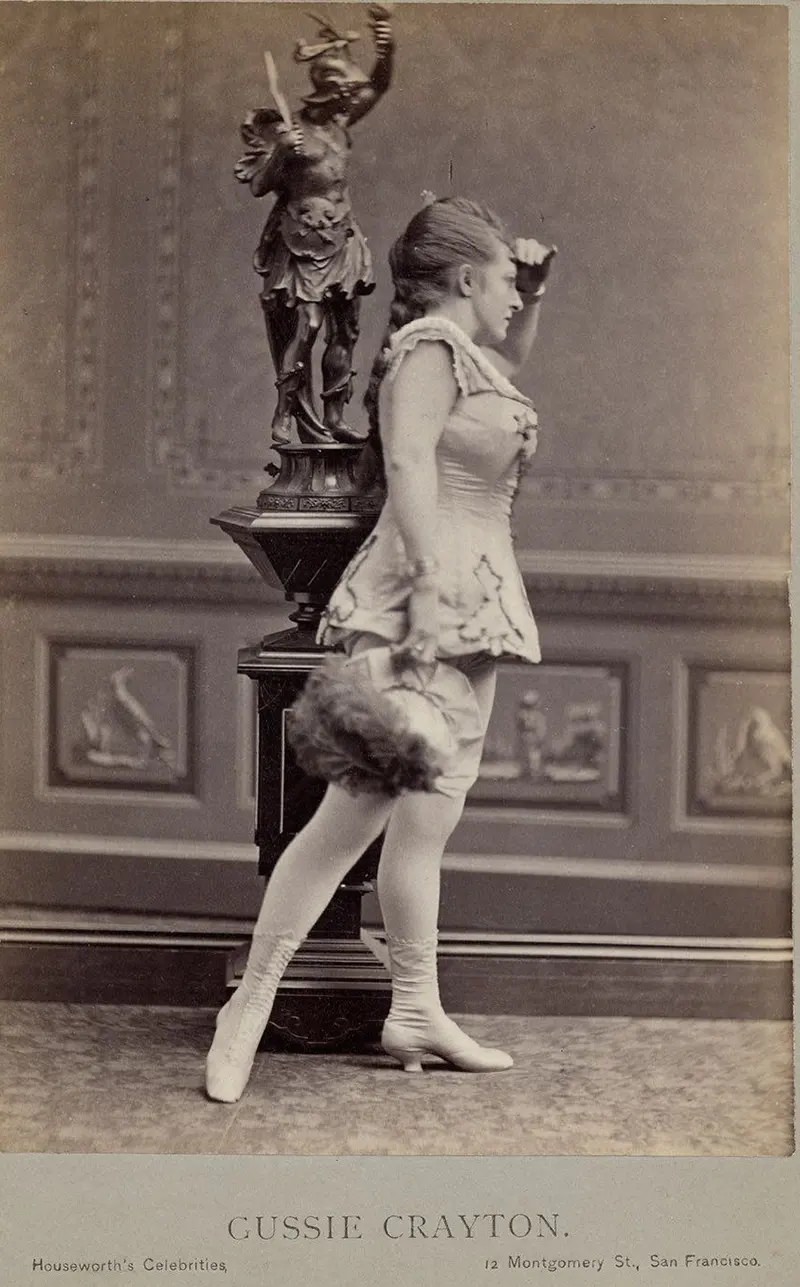
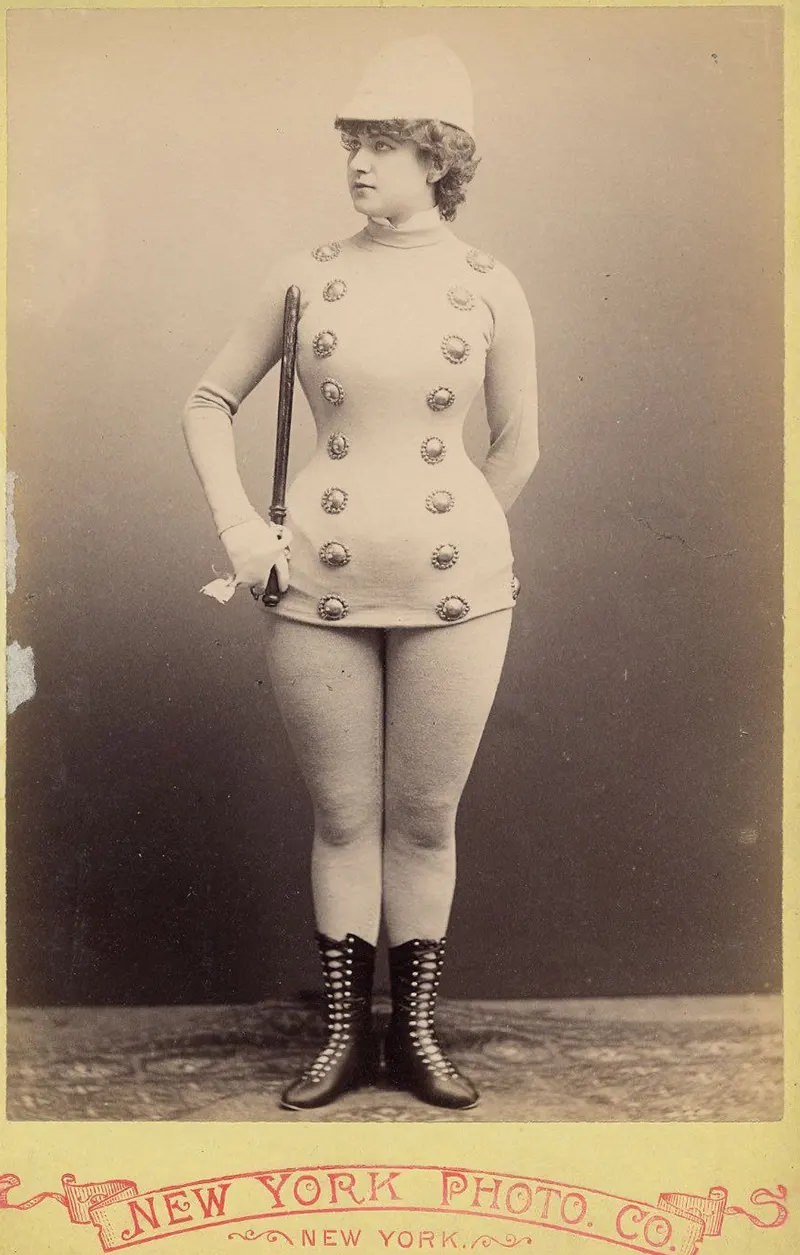
These photographs come from the Charles H. McCaghy Collection of Exotic Dance from Burlesque to Clubs, drawn from the personal archive of Dr. Charles H. McCaghy, professor emeritus in the Department of Sociology at Bowling Green State University. The collection documents a performance world that was deliberately transgressive — built on the tension between what Victorian society permitted and what these performers chose to do on stage anyway. The costumes are the most visible record of that tension: constructed with care and theatrical intention, worn by women who made a professional life in a form that audiences flocked to see and authorities worked to suppress.