When the Spanish Civil War erupted in 1936, thousands of children were torn from their homes and sent to refugee camps and colonies across Spain and France. Too young to fight and too frightened to explain what they witnessed, many of them picked up pencils, crayons, and watercolors instead. What they produced was one of the most honest records of wartime ever made. Over 600 of these drawings are now preserved at the University of California San Diego.
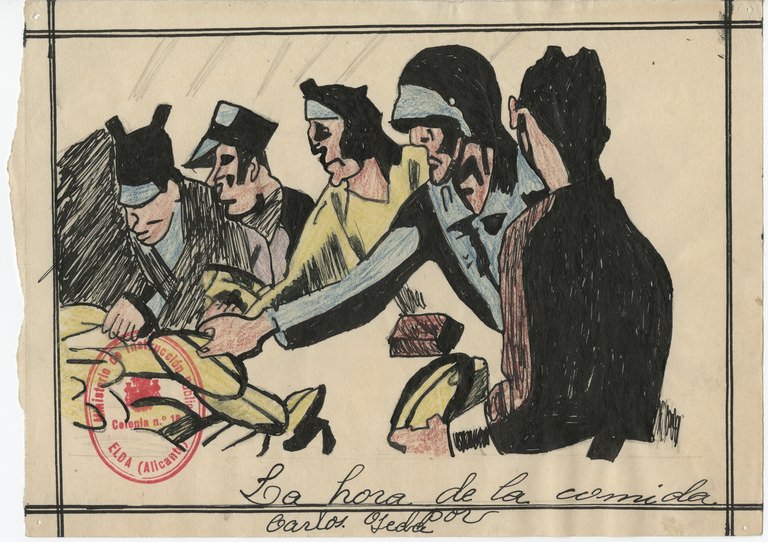
The children came from cities like Madrid, Valencia, and Alicante. Many were housed in state-run colonies organized by Spain’s Ministry of Public Instruction. These facilities gave displaced children shelter, schooling, and — crucially — art supplies. The drawings that survived carry handwritten captions on the back, often written by the children themselves, naming their age, location, and the date.
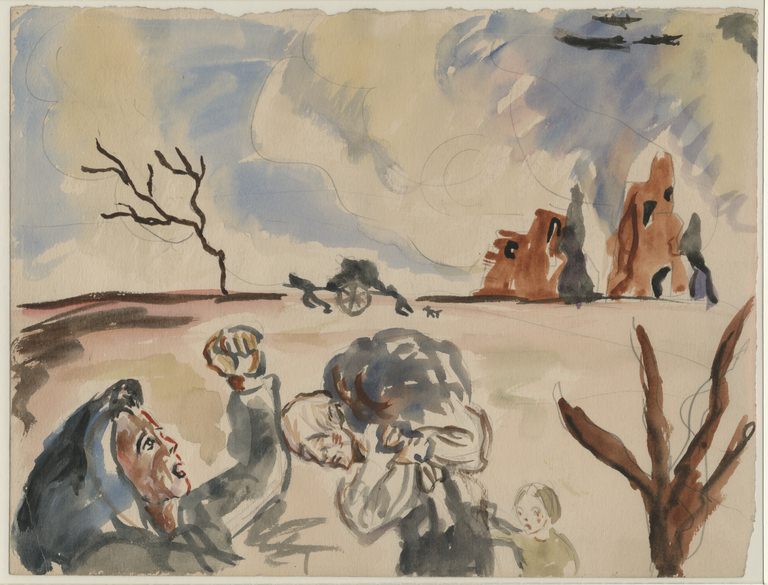
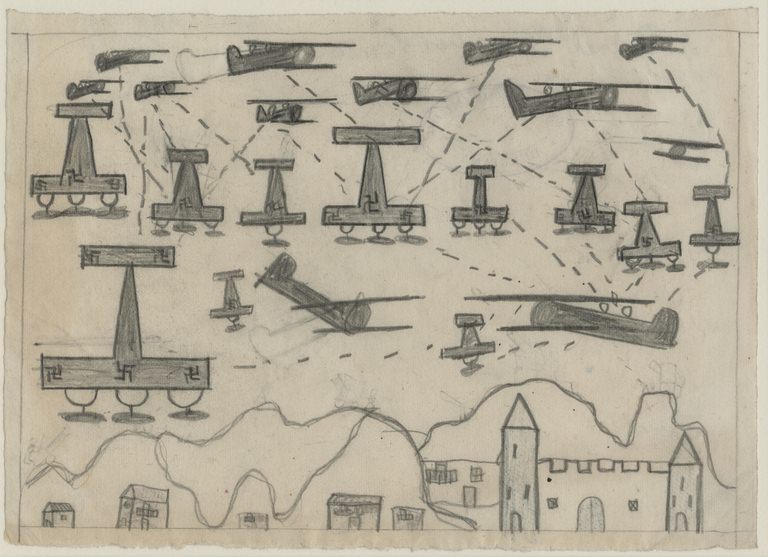
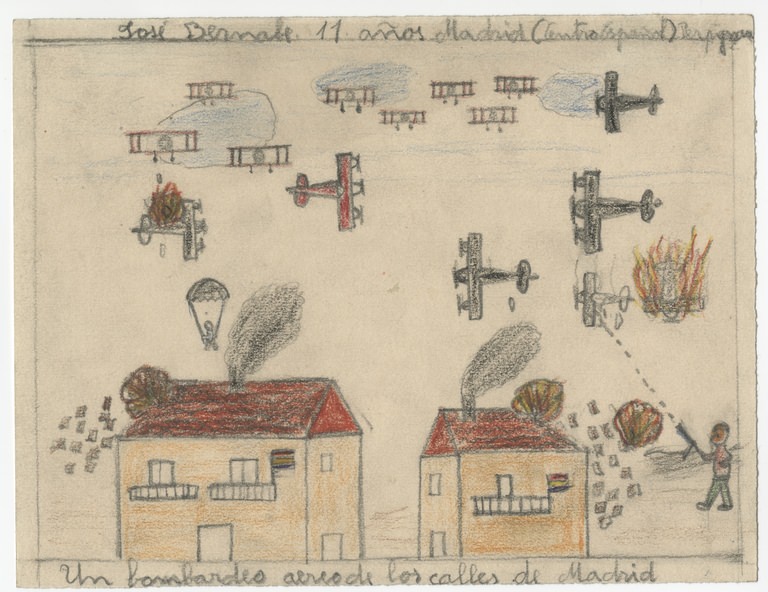
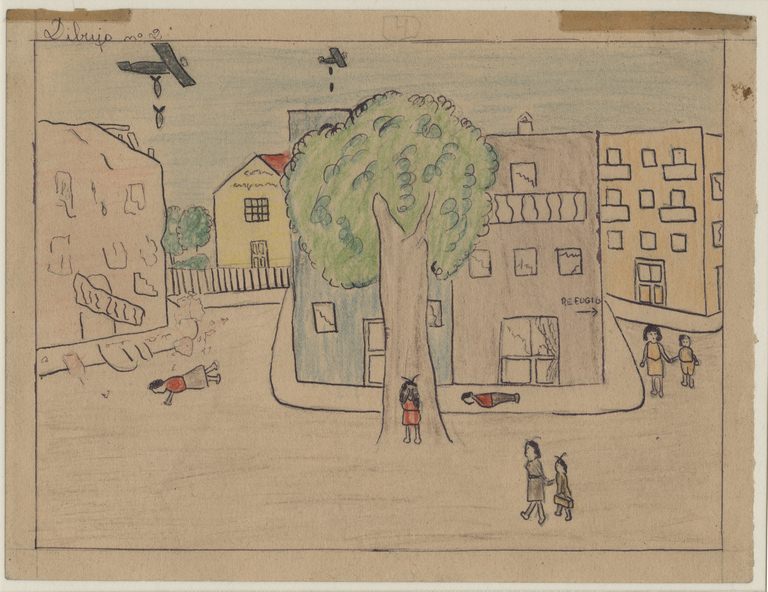
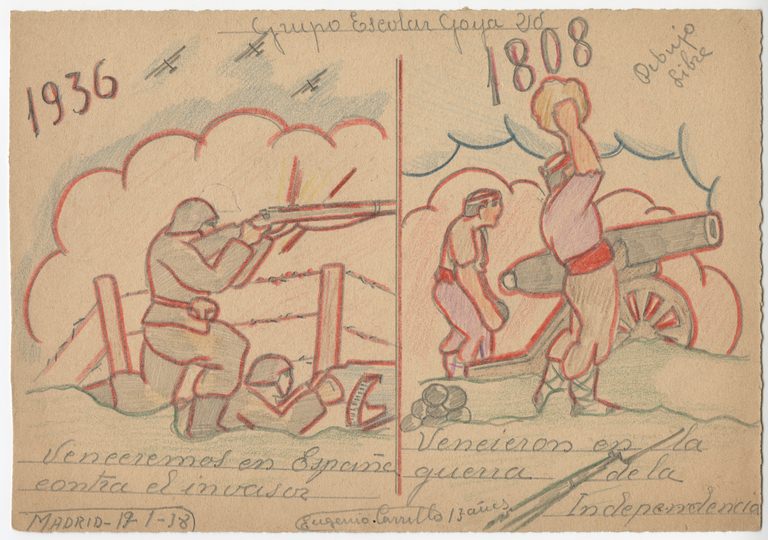
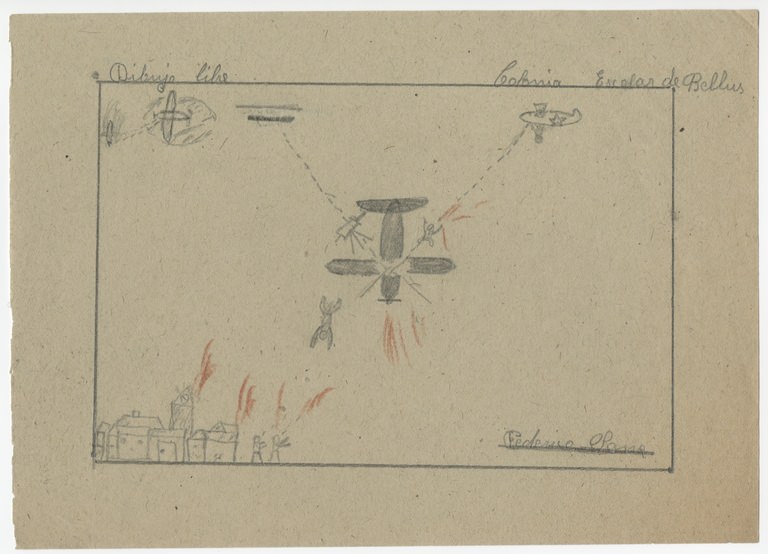
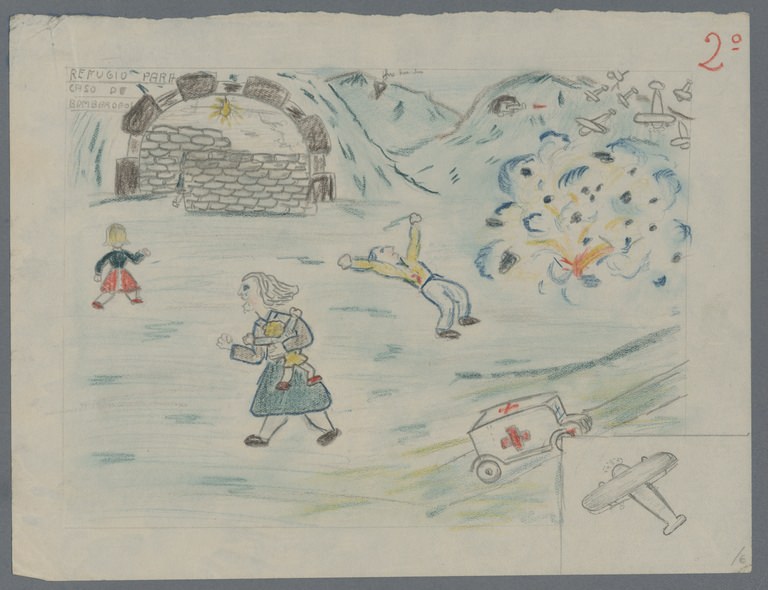
Aerial bombardment was one of the most repeated subjects. Children drew planes swarming over rooftops, bombs falling in straight lines, and buildings collapsing into fire and rubble. People scatter across the pages, arms raised, fleeing in every direction. These were not imagined scenes — the children had lived through them.
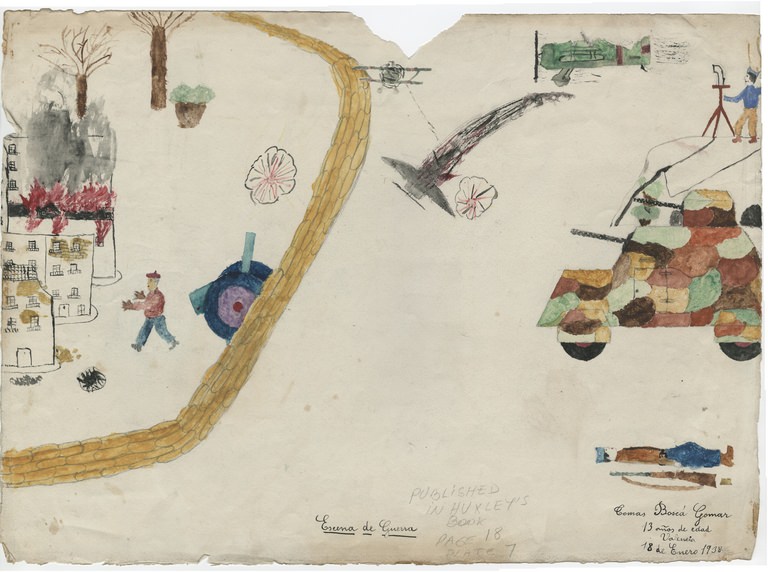
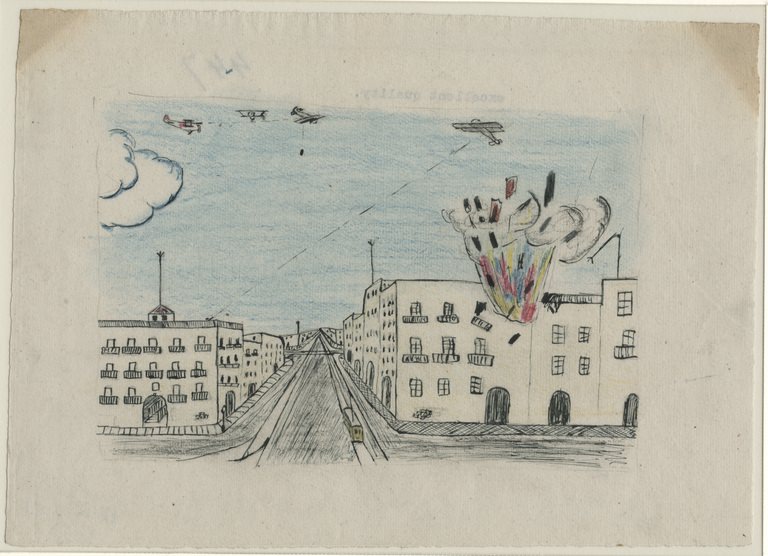
Girls and boys as young as eight drew battle scenes, burning villages, and soldiers marching under Republican flags. Twelve-year-old Margarita Arnao Crespo, drawing from the Collective Student Camp in Benejama, Alicante, was among dozens of named children whose works have survived with their identities intact.
![Margarita Arnao Crespo, Colonia Escolar Colectiva La Torre Benejama (Alicante), años 12 [Margarita Arnao Crespo, Collective Student Camp The Tower Benejama (Alicante), age 12].](https://www.bygonely.com/wp-content/uploads/2024/04/Spanish_Civil_War_drawings_1936_5.jpg)
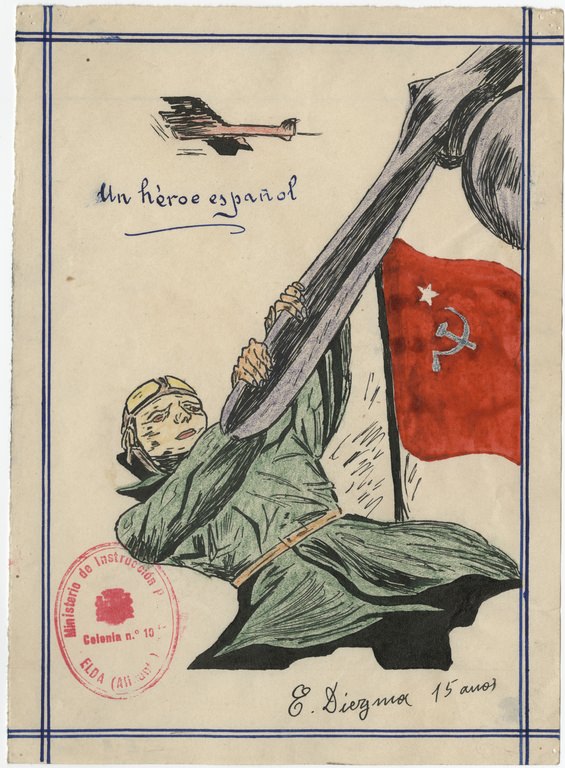
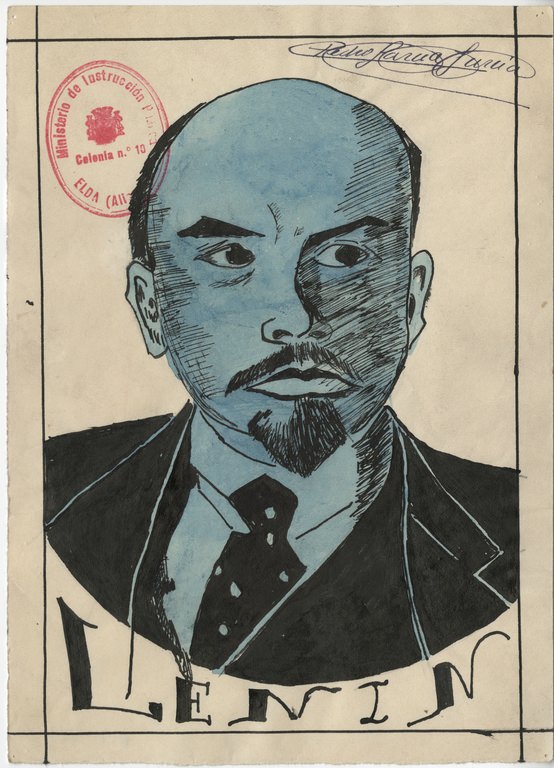
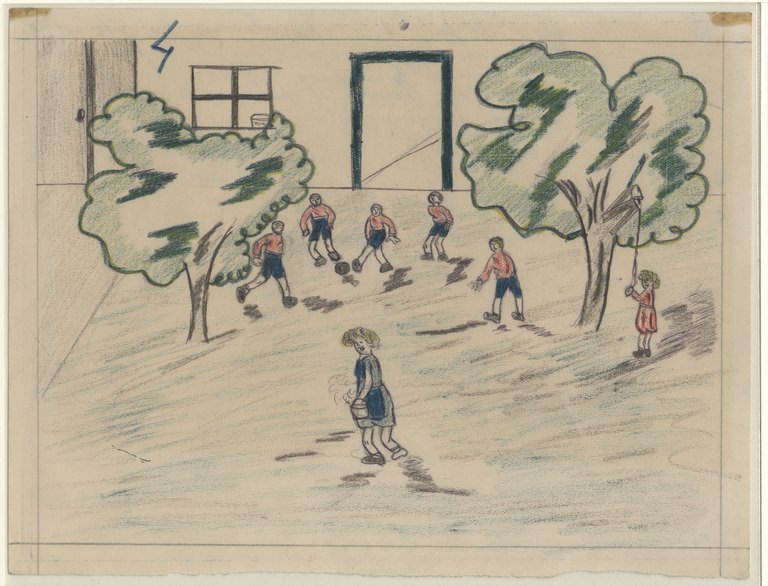
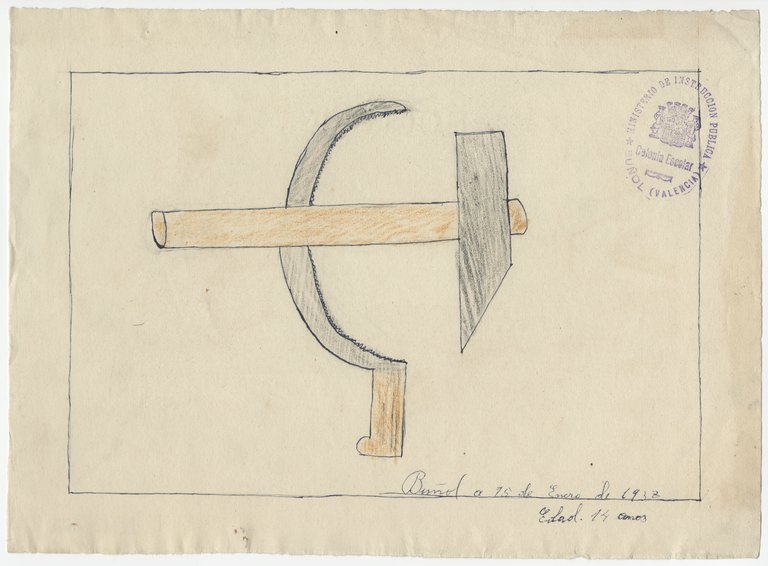
Not every drawing depicted destruction. Some children drew the lives they had lost — quiet streets, family meals, friends playing outside. Others drew political heroes and Republican soldiers with pride, reflecting the ideological world their parents and teachers inhabited.
![Francisco Aguado Sanchez]. Physical Description 1 digital image Geographic Bellús–Valencia–Spain](https://www.bygonely.com/wp-content/uploads/2024/04/Spanish_Civil_War_drawings_1936_7.jpg)
![Residencia Infantil No 1, Onteniente. Juan José Martinez 15 años [Juan José Martinez age 15].](https://www.bygonely.com/wp-content/uploads/2024/04/Spanish_Civil_War_drawings_1936_9.jpg)
![Ministerio de Instrucción Pública, Colonia no 10, Elda (Alicante). [Two good friends, Health, Long live the Republic, Paco Lariego].](https://www.bygonely.com/wp-content/uploads/2024/04/Spanish_Civil_War_drawings_1936_10.jpg)
Some drawings were published by organizations like the American Friends Service Committee to raise funds for war-affected children. Seeing bombed streets and refugee camps rendered in a child’s hand moved donors across the United States and Europe to contribute aid. The drawings served both as propaganda and as genuine cries for help.
![Ministerio de Instrucción Pública, Colonia no 10, Elda (Alicante). [Miaja A symbol of Spanish liberties. Enrique Dieryma].](https://www.bygonely.com/wp-content/uploads/2024/04/Spanish_Civil_War_drawings_1936_11.jpg)
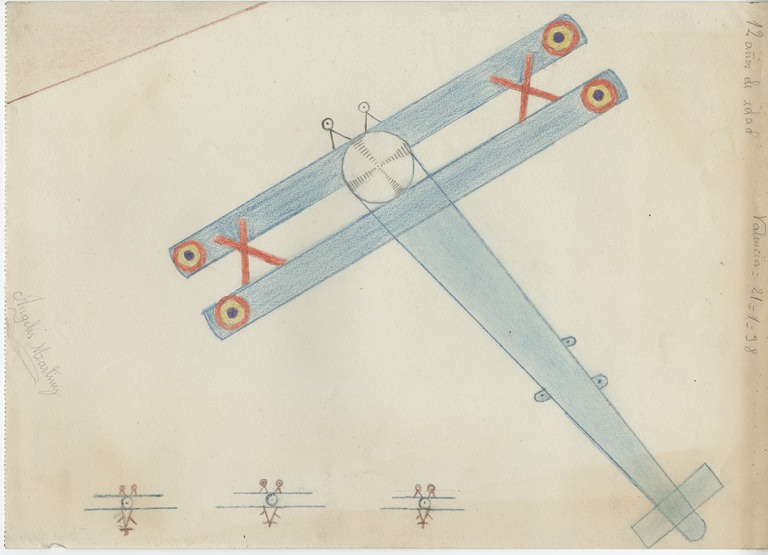
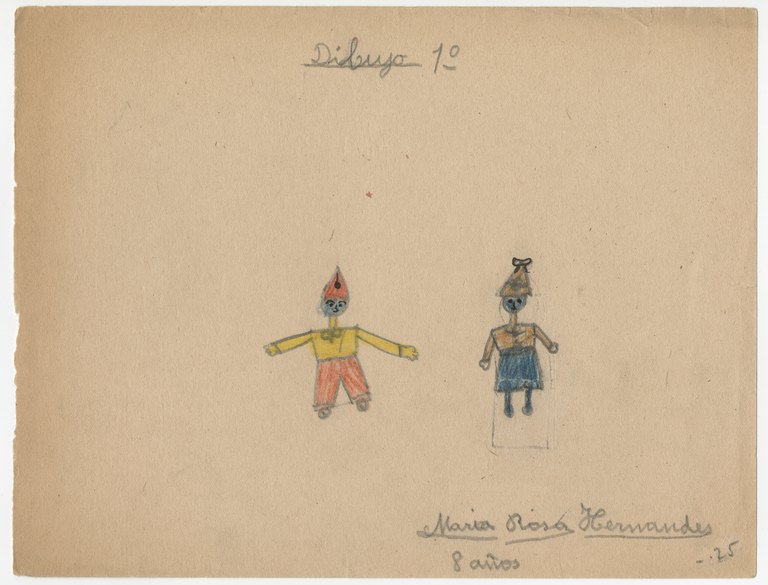
Nine-year-old Damian Casas Mares was among the youngest contributors. His drawings, like those of his older peers, carry the weight of direct experience. Children from Madrid documented street-level bombings. José Bernabé, age 11, drew an aerial attack on the streets of Madrid while living at a Spanish Center in Perpignan, France — already a refugee when he put pencil to paper.
![Damian Casas Mares of 9 years]](https://www.bygonely.com/wp-content/uploads/2024/04/Spanish_Civil_War_drawings_1936_14.jpg)
![Residencia Infantil no 6 San Juan Alicante, Olegario López 11 años [Children's Residence No. 6 San Juan Alicante, Olegario López age 11].](https://www.bygonely.com/wp-content/uploads/2024/04/Spanish_Civil_War_drawings_1936_15.jpg)
![Escuela Nacional de Niñas No 45-B, Madrid. [conejera, José Asenjo]](https://www.bygonely.com/wp-content/uploads/2024/04/Spanish_Civil_War_drawings_1936_17.jpg)
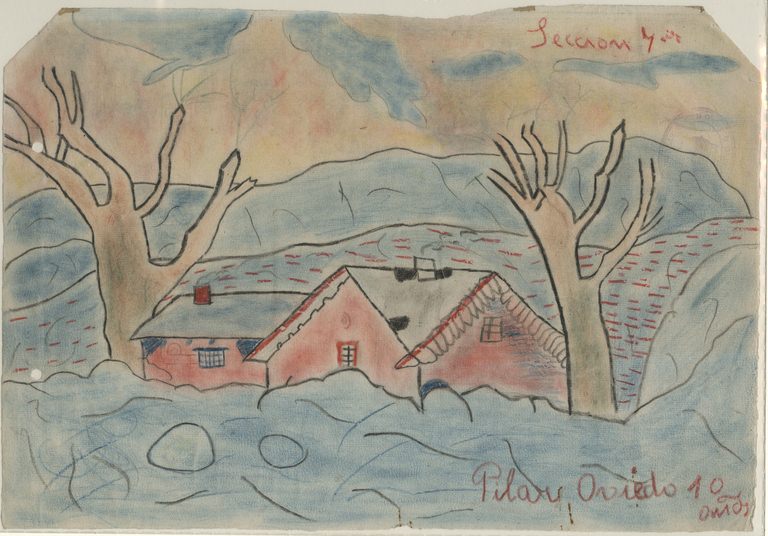
Some works were exhibited publicly. One drawing by a child from Oviedo was shown at the Worcester Art Museum and reproduced in the Worcester Telegram, bringing the war’s human cost directly into American living rooms.
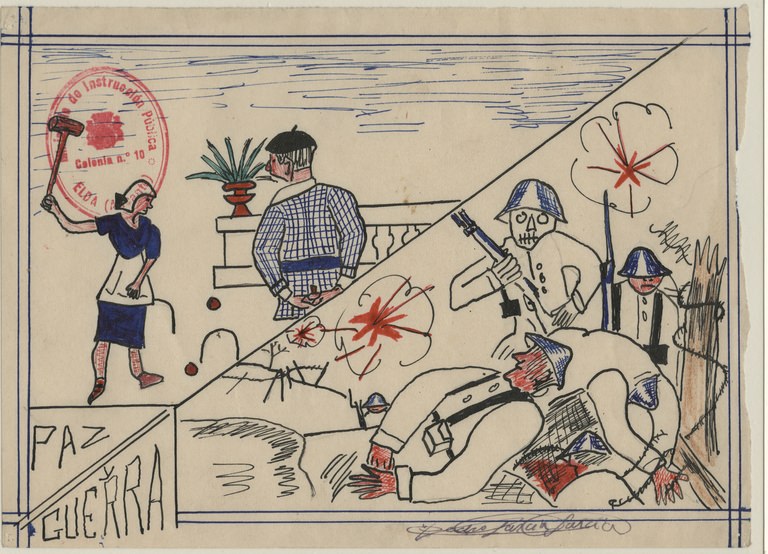
The range of subjects across the collection reflects the full emotional spectrum of children at war. Pedro García from Alicante drew a split image titled “Peace:War,” placing calm and destruction side by side. María Dolores Sanz, age 13, captioned her drawing in Spanish: “This scene represents a bombing in my town, Port-Bou.”
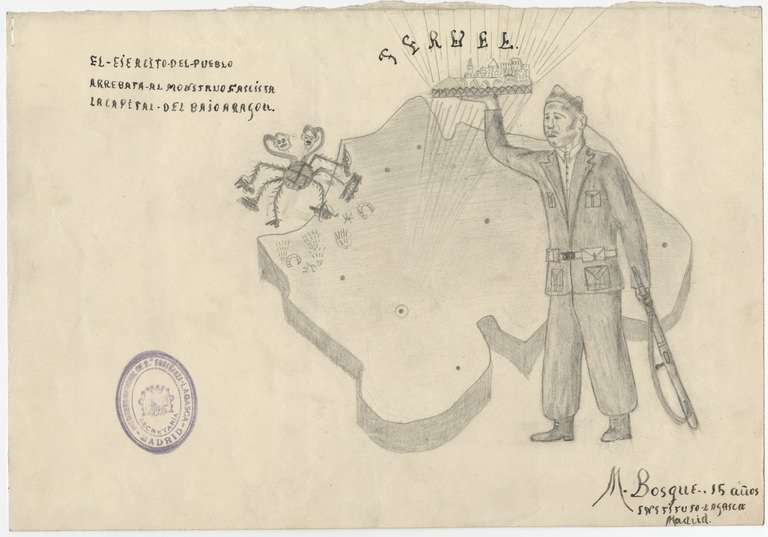
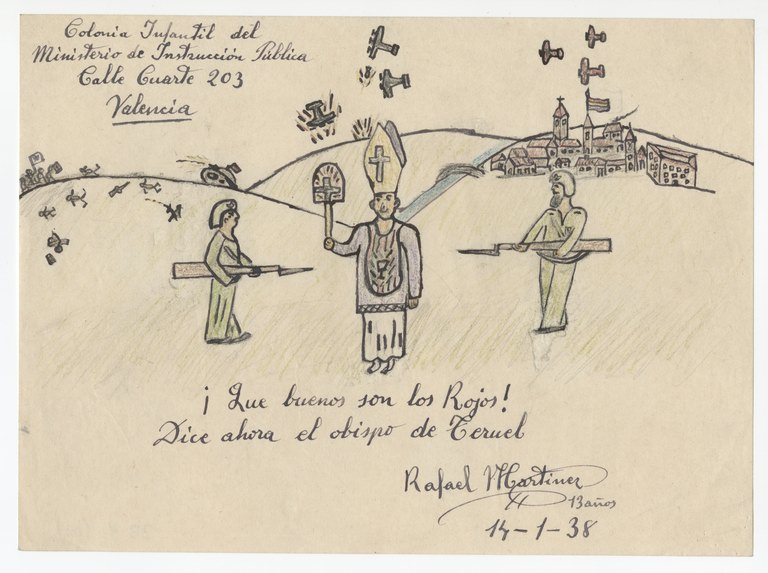
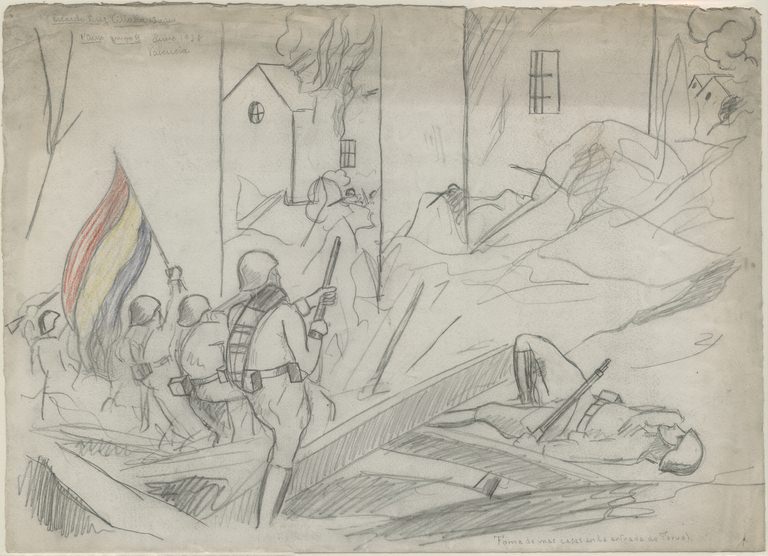
Other children drew scenes from the front lines — soldiers advancing on Teruel, Republican heroes, and battle formations. Ricardo Pérez Villalba, age 13, depicted the taking of houses at the entrance of Teruel in January 1938, the same month the battle was raging.
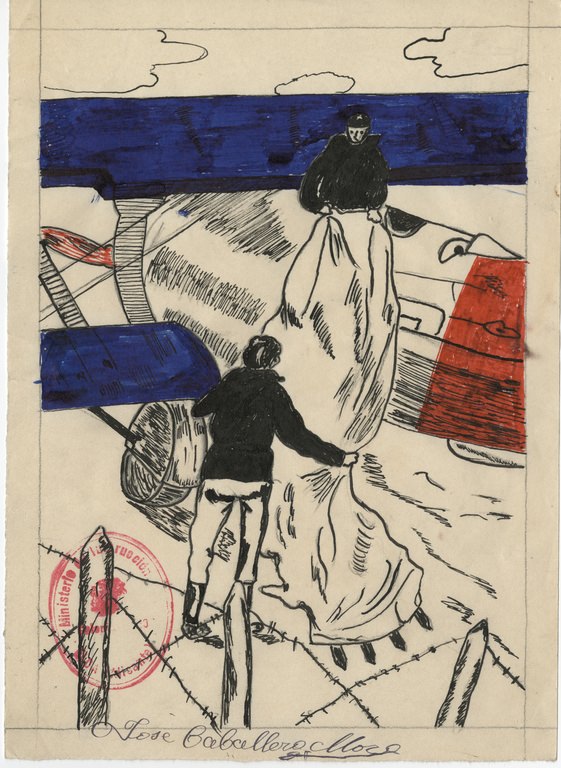
![Francisco Aguado Sanchez]. Physical Description 1 digital image Geographic Bellús–Valencia–Spain](https://www.bygonely.com/wp-content/uploads/2024/04/Spanish_Civil_War_drawings_1936_27.jpg)
Across camps and residences — from Onteniente to San Juan Alicante to the hills of Bellús — children drew what their world had become. Some drew bomb shelters. Others drew winter. Felix Fernández, age 12, from a Madrid school, titled his drawing simply “Winter.”
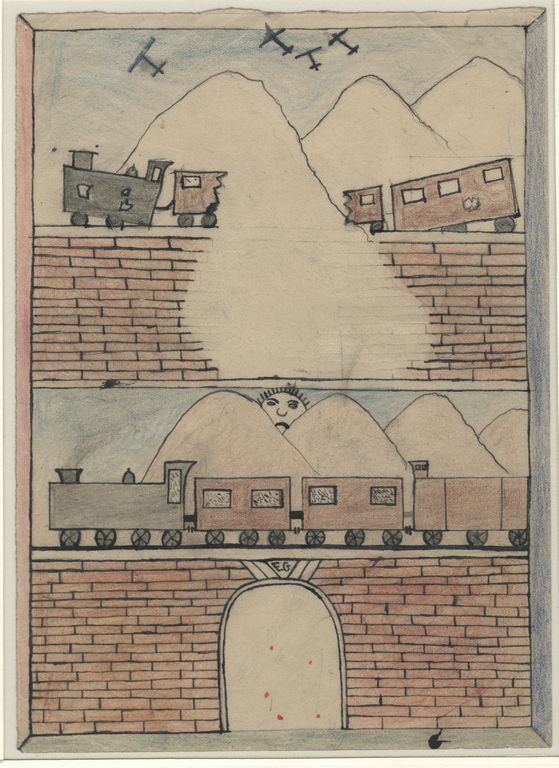
![Escuela Nacional Graduada de Niños de la Florida, Madrid. [Winter Felix Fernández (12 años)].](https://www.bygonely.com/wp-content/uploads/2024/04/Spanish_Civil_War_drawings_1936_30.jpg)
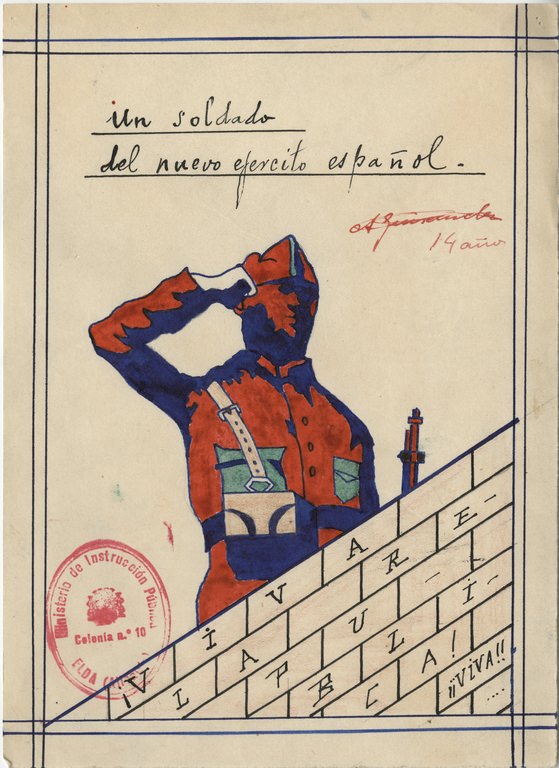
Political imagery appeared throughout the collection. Children drew portraits of Lenin, Republican soldiers declaring “Long live the Republic!”, and soldiers of what the captions called “the new Spanish army.” These drawings reflected not just fear, but the political environment children were raised in during the war.