Hey There! Before You Go. 😧
Get the best vintage content straight into your inbox!

Don't worry, we don't spam

The Siege of Sarajevo: Tragic Story and Haunting Photos from The Bosnian War, 1992-1995

The Siege of Sarajevo lasted from April 5, 1992, to February 29, 1996 — 44 months in total. That makes it the longest siege in the history of modern warfare. It lasted three times longer than the Battle of Stalingrad and more than a year longer than the Siege of Leningrad in World War II. By the time it ended, 13,952 people had been killed, including 5,434 civilians. Bosnian Serb forces surrounded the city, cut off its supplies, and shelled it relentlessly while snipers picked off anyone who dared to cross open streets.
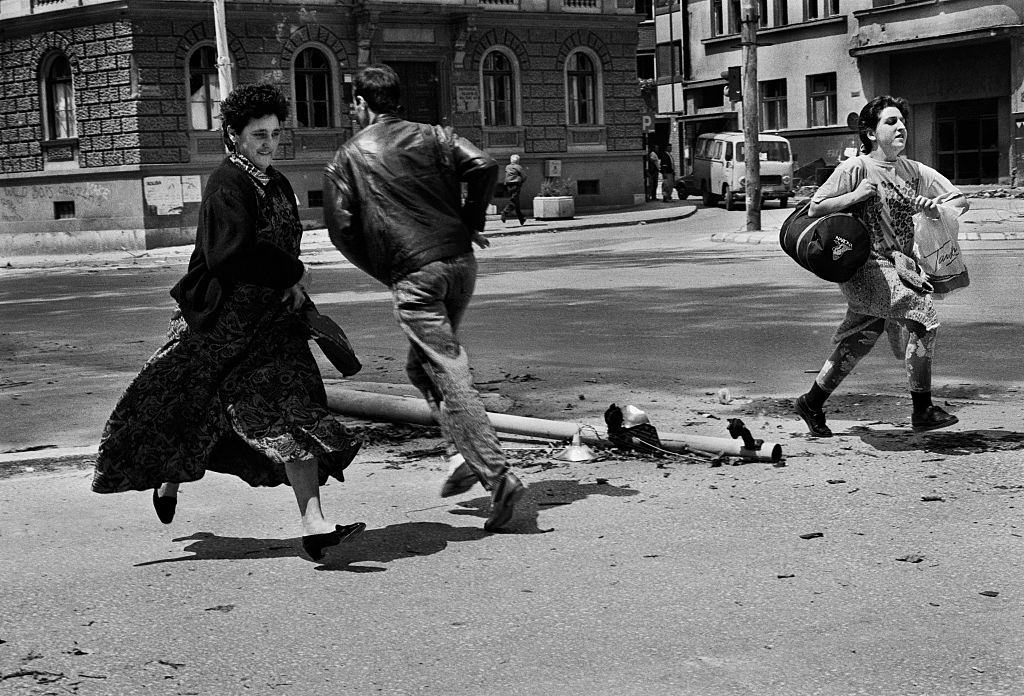
People run for their lives across 'Sniper Alley' under the sights of Serb gunmen during the siege of Sarajevo, 1992.
People run for their lives across ‘Sniper Alley’ under the sights of Serb gunmen during the siege of Sarajevo, 1992.

To understand how the siege came to be, it helps to look at how Bosnia itself was shaped in the decades before the war. After World War II, Bosnia and Herzegovina became part of the Socialist Federal Republic of Yugoslavia. The communist government abolished many traditional Muslim institutions, including wealthy foundations, dervish orders, and religious primary schools. But the population’s identity was never fully suppressed. In the 1961 census, the phrase “Muslim in the ethnic sense” appeared for the first time. By 1968, the Bosnian Central Committee formally declared that “the Muslims are a distinct nation.” Three years later, Muslims made up the largest share of Bosnia’s population.

By 1991, Muslims — who would later adopt the term Bosniak in the mid-1990s — made up more than two-fifths of Bosnia’s population. Serbs accounted for just under one-third, and Croats made up roughly one-sixth. The Serb and Croat populations had both declined over the previous two decades, largely due to emigration. These demographic shifts sat at the center of deep political tensions that would eventually explode into war.
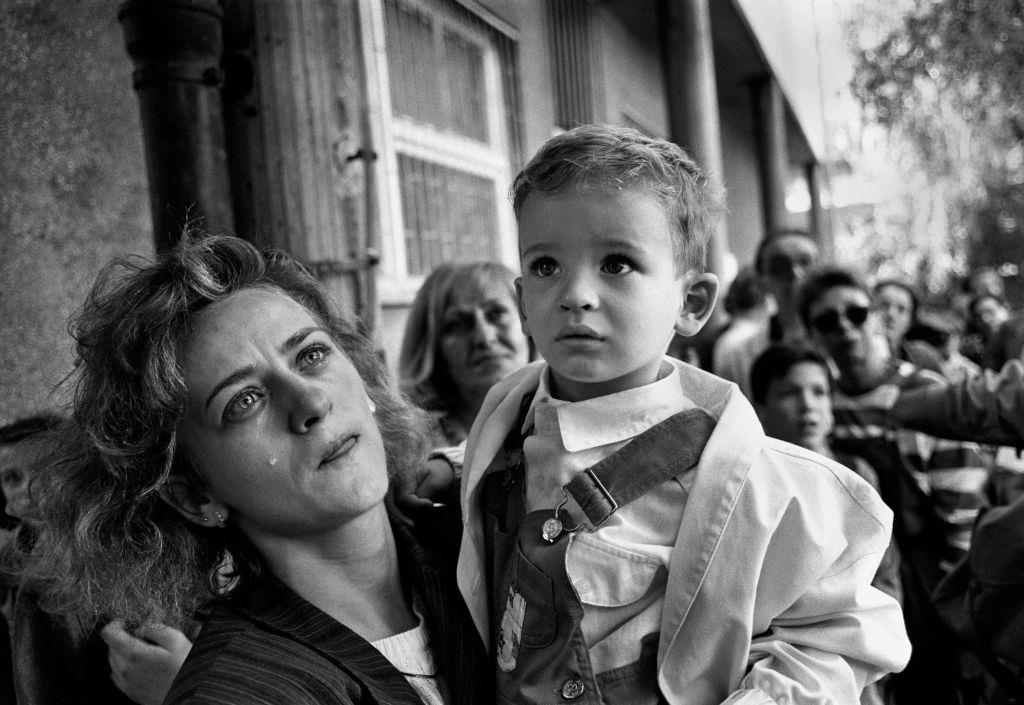
Tears of anguish for a mother as she prepares to send her confused child out of Sarajevo on a bus promised safe passage by the Serb forces during the siege in 1992.

In early 1990, multiparty elections were held in Slovenia and Croatia, signaling a major political shift across Yugoslavia. Bosnia and Herzegovina followed with its own elections in December 1990, where parties representing all three national groups won seats roughly in proportion to their share of the population. The fragile balance didn’t hold for long. A referendum on independence was held on February 29 and March 1, 1992. Turnout reached 63.4%, with 99.7% of participants voting for independence. The vast majority of Bosnian Serbs boycotted the vote entirely.
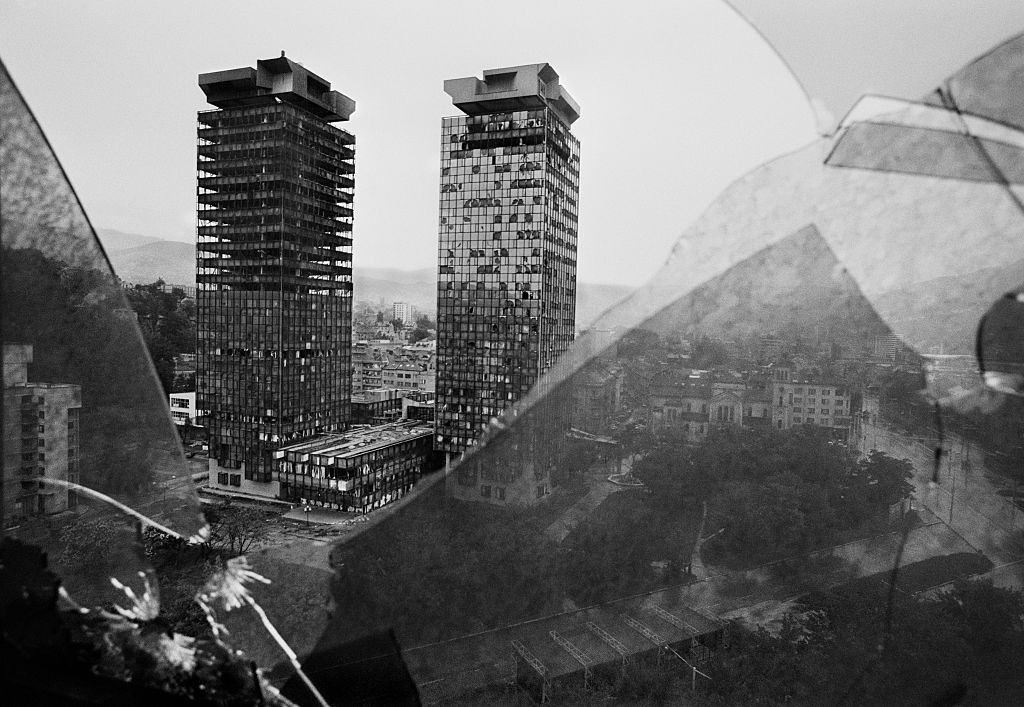
The burnt out tower blocks of Sarajevo's financial district seen through the shattered windows of the Holiday Inn Hotel.
The burnt out tower blocks of Sarajevo’s financial district seen through the shattered windows of the Holiday Inn Hotel.

Violence broke out during and immediately after the referendum. On March 1, a gunman opened fire on a Bosnian Serb wedding procession in Baščaršija, the Muslim quarter of Sarajevo. Tensions turned into open conflict within weeks. On April 7, the United States and the European Commission officially recognized Bosnia and Herzegovina as an independent state. That same day, Bosnian Serb paramilitary forces began firing on Sarajevo. Bosnian Serb units of the Yugoslav People’s Army (JNA) then brought in heavy artillery and started bombarding the city.
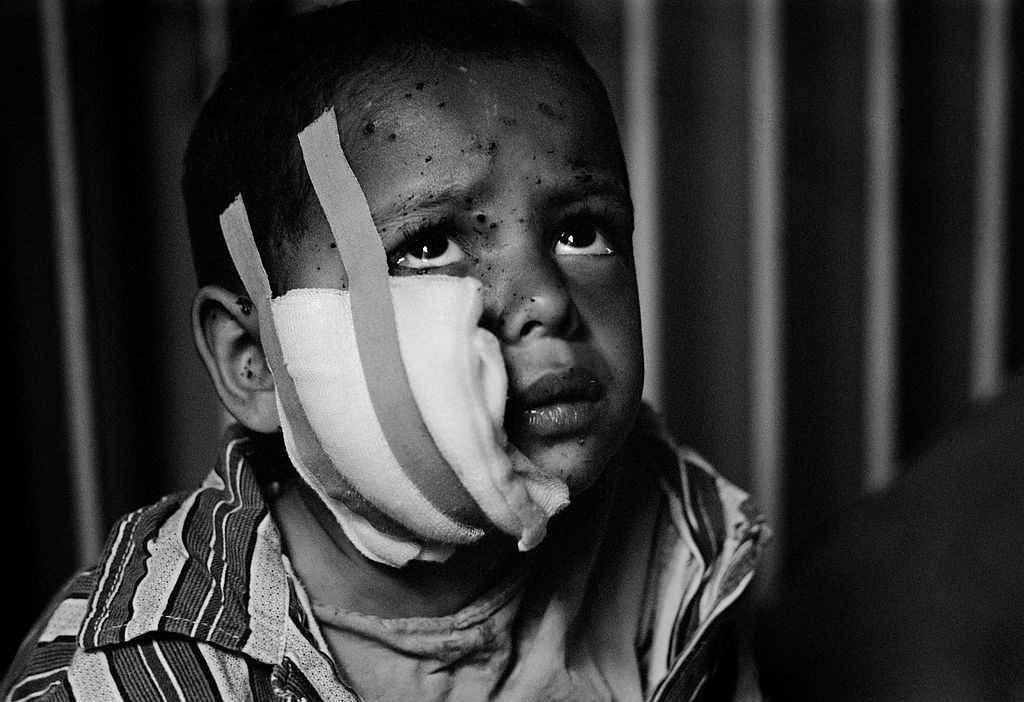
Shrapnel wounds on the face of a frightened boy in a ward at Sarajevo hospital during the siege in 1992.

In April 1992, attacks spread beyond Sarajevo. Yugoslav army units, paramilitary groups, and local Bosnian Serb forces launched a coordinated offensive across eastern Bosnia. Towns with large Bosniak populations — including Zvornik, Foča, and Višegrad — were attacked, and Bosniaks were expelled. These expulsions were the opening acts of ethnic cleansing in the country. While Bosniaks were the primary victims and Serbs the direct perpetrators, Croats also played roles as both victims and perpetrators in different parts of the conflict. Within months, roughly two-thirds of Bosnia’s territory came under Serb control.
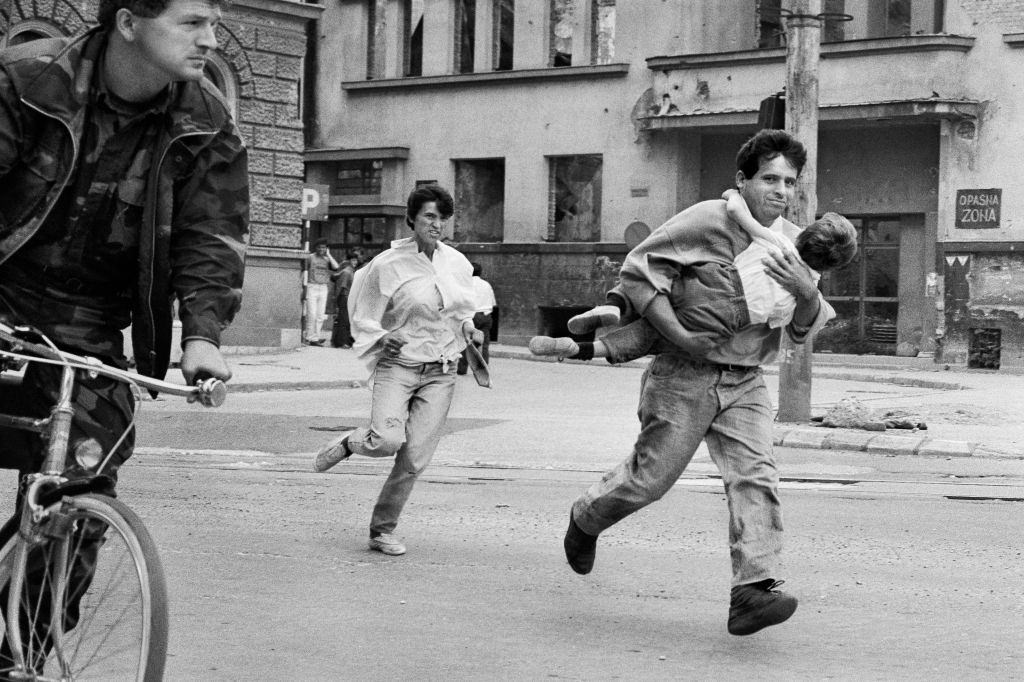
A family dash across 'Sniper Alley' to avoid gunfire during the siege of Sarajevo in 1994.
A family dash across ‘Sniper Alley’ to avoid gunfire during the siege of Sarajevo in 1994.

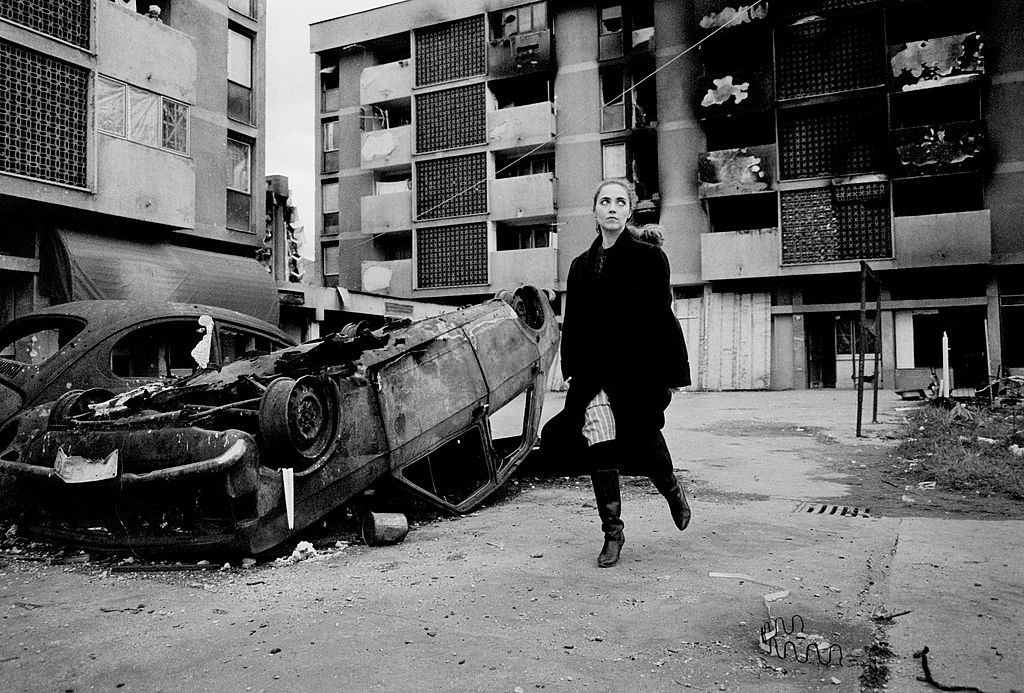
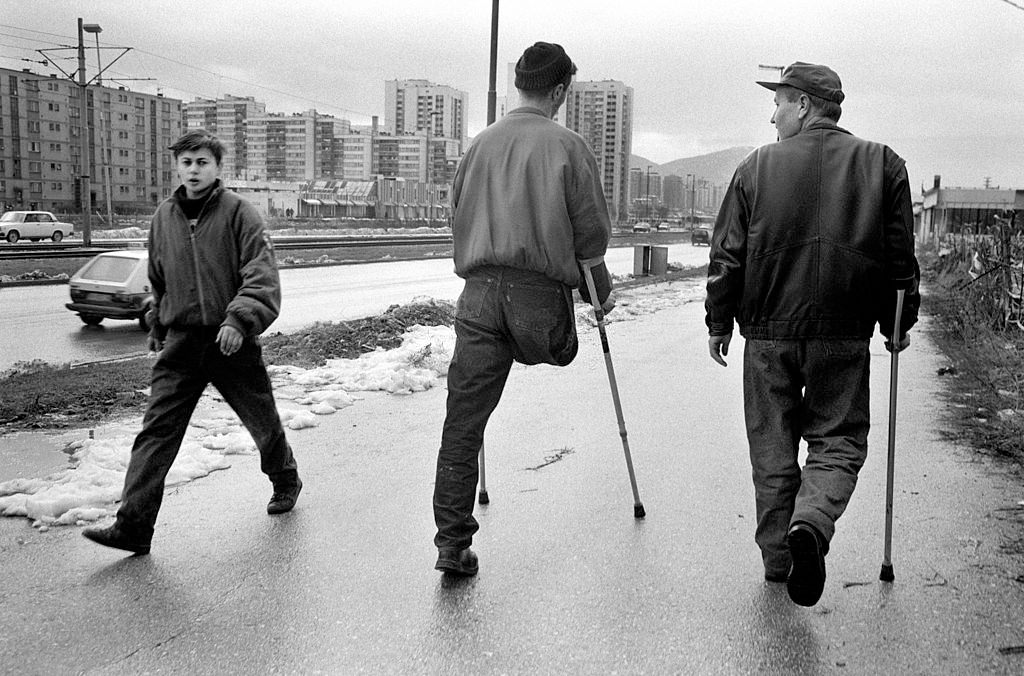
Back in Sarajevo, Bosnian Serb forces enacted a total blockade of the city on May 2, 1992. They cut off food, medicine, water, and electricity. Serb forces stationed in the hills surrounding the city shelled the government defenders below on a near-constant basis. During the siege, there were approximately 329 shell impacts per day on average. The single worst day came on July 22, 1993, when 3,777 shells struck the city. Sniper fire added another layer of terror. The main boulevard running through the city — Ulica Zmaja od Bosne — became known internationally as Sniper Alley, a stretch of road where residents were shot at while simply trying to move through their own city.
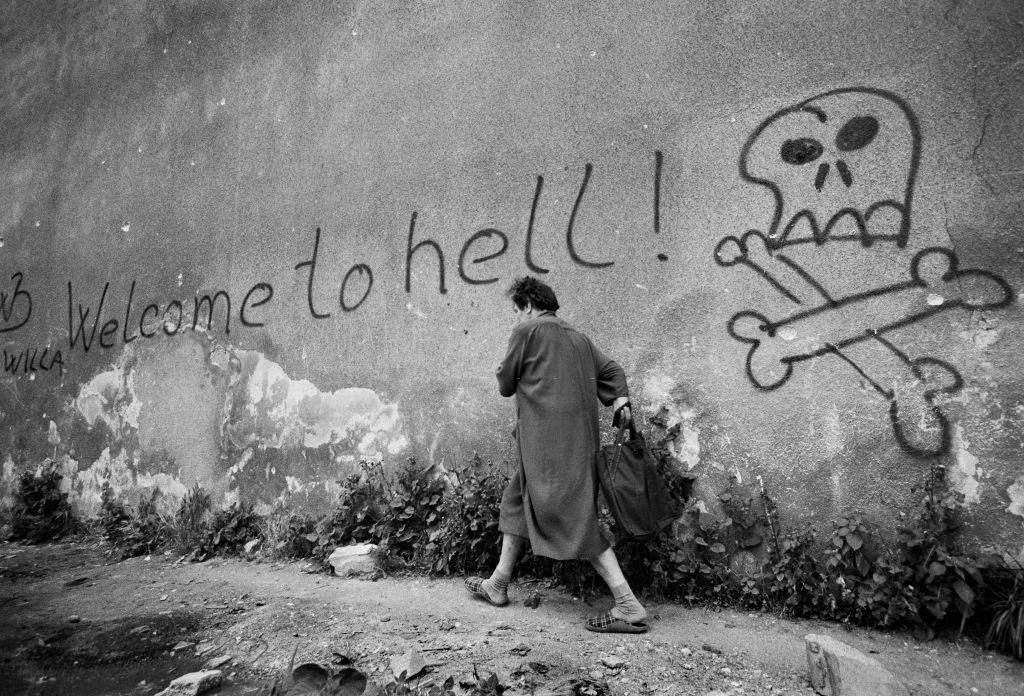
Welcome to hell - a woman hurried past graffiti in the area known as 'Sniper Alley' in Sarajevo's main thorough fare during the siege in 1992.
Welcome to hell – a woman hurried past graffiti in the area known as ‘Sniper Alley’ in Sarajevo’s main thorough fare during the siege in 1992.

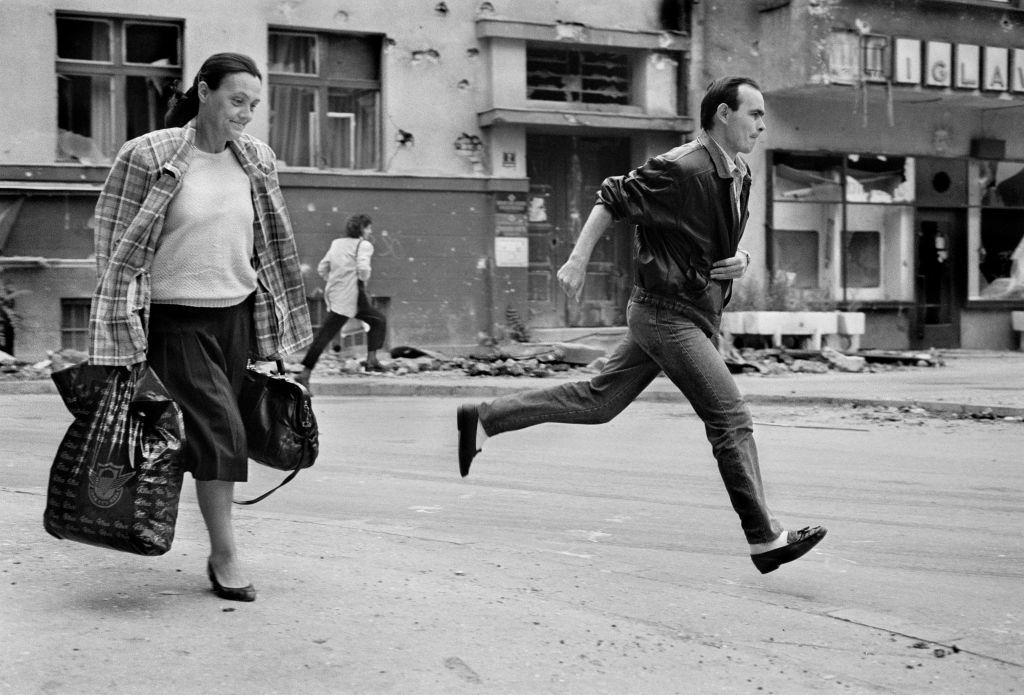
People didn’t stop moving through Sniper Alley — they had no choice. Water needed to be collected. Food needed to be found. Families needed to move. Every crossing was a sprint. Residents used broken shop windows, abandoned vehicles, and the bodies of armored UN vehicles as cover. Some made it across. Others didn’t.
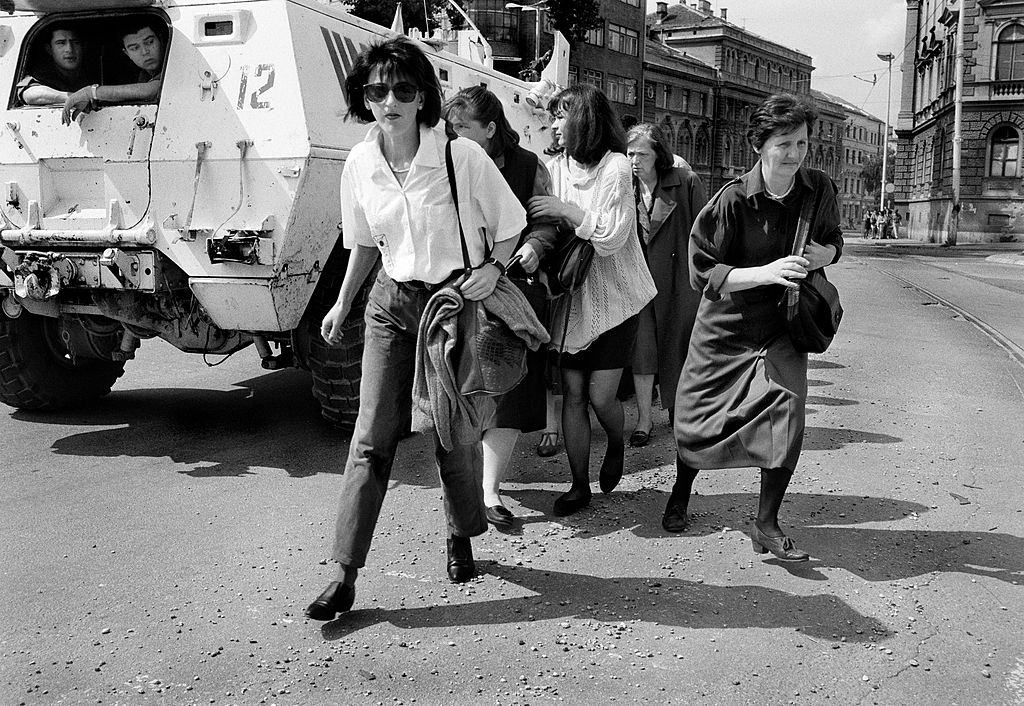
Women shelter behind a UN armoured personnel carrier as they cross 'Sniper Alley' during the siege of Sarajevo in 1995.
Women shelter behind a UN armoured personnel carrier as they cross ‘Sniper Alley’ during the siege of Sarajevo in 1995.

The United Nations deployed its Protection Force — known as UNPROFOR — to help facilitate the delivery of humanitarian aid. But the force was not authorized to fight. It could escort convoys and sometimes provide physical cover, but it could not stop the shelling or the snipers. The limits of UNPROFOR’s mandate became most devastating in July 1995, when Bosnian Serb forces overran the UN-declared safe area of Srebrenica and massacred more than 7,000 Bosnian men and boys. The UN did nothing to stop it.
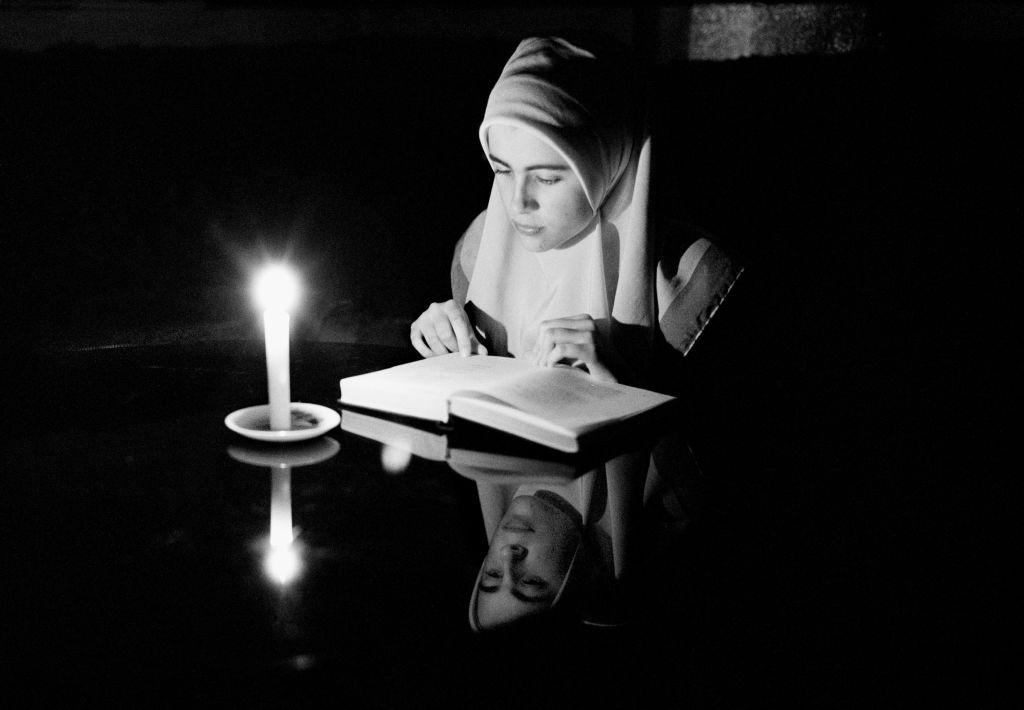
A Bosnian muslim girl studies the Koran by candlelight during the 47 month long siege of Sarajevo.

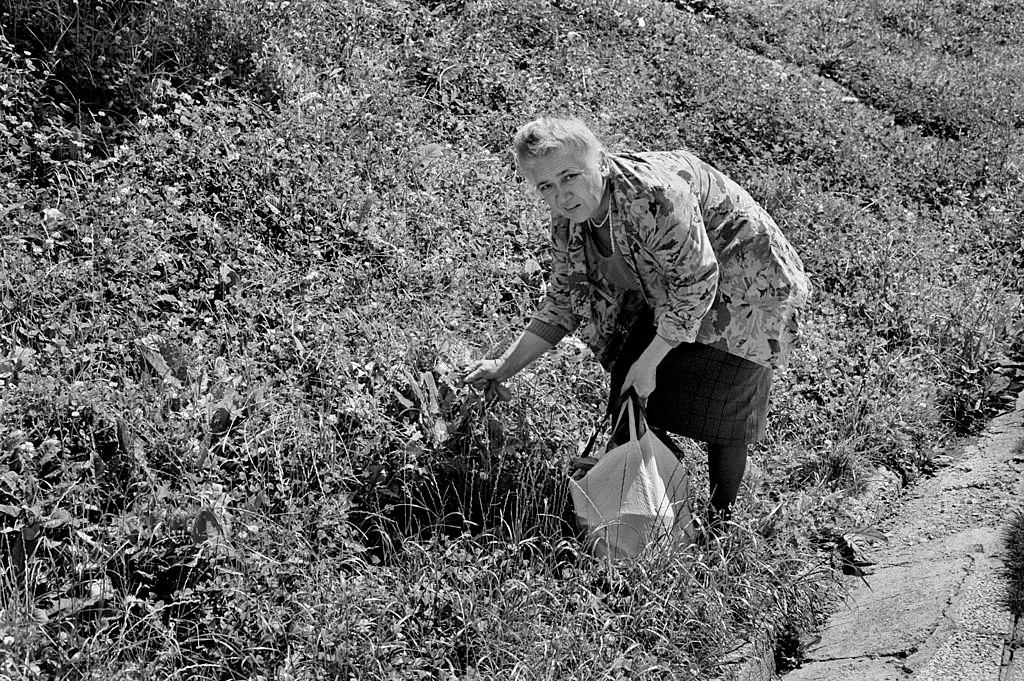
Inside Sarajevo, daily life became an exercise in survival under conditions most people in peacetime would find unimaginable. Electricity was cut. Running water stopped. Heating fuel ran out. People burned furniture to stay warm. A well-dressed woman in pearls could be found gathering wild plants and leaves from parks to cook, because there was nothing else. A loaf of bread became something to hold onto like a precious object. Even small acts — filling a bucket of water from a street standpipe, stepping outside during a break in shelling — carried real risk.
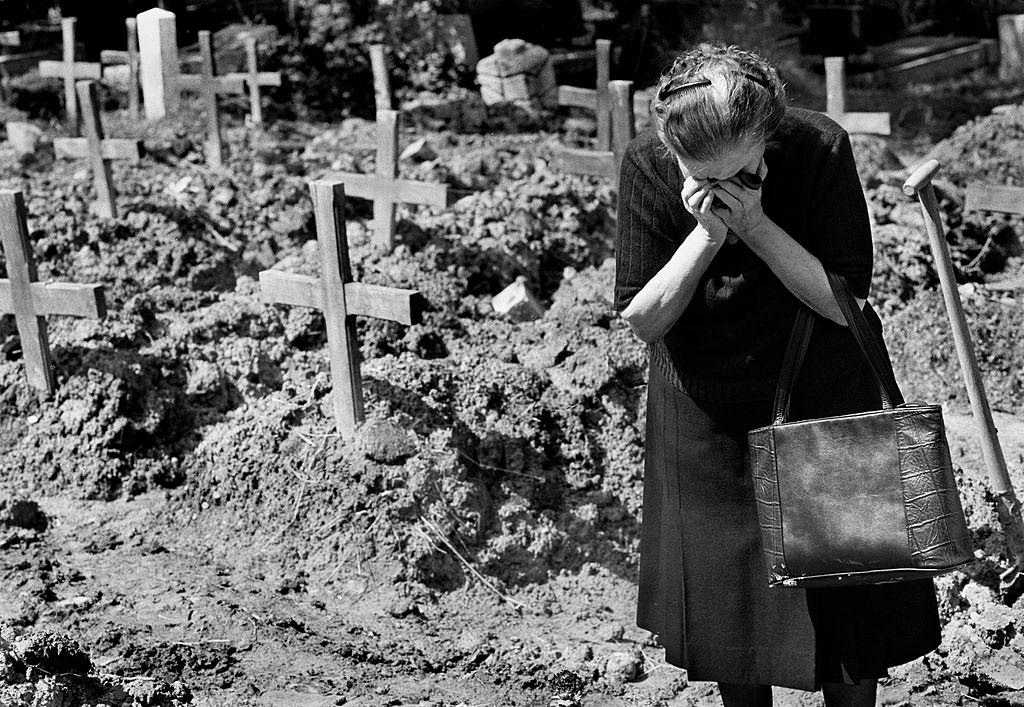
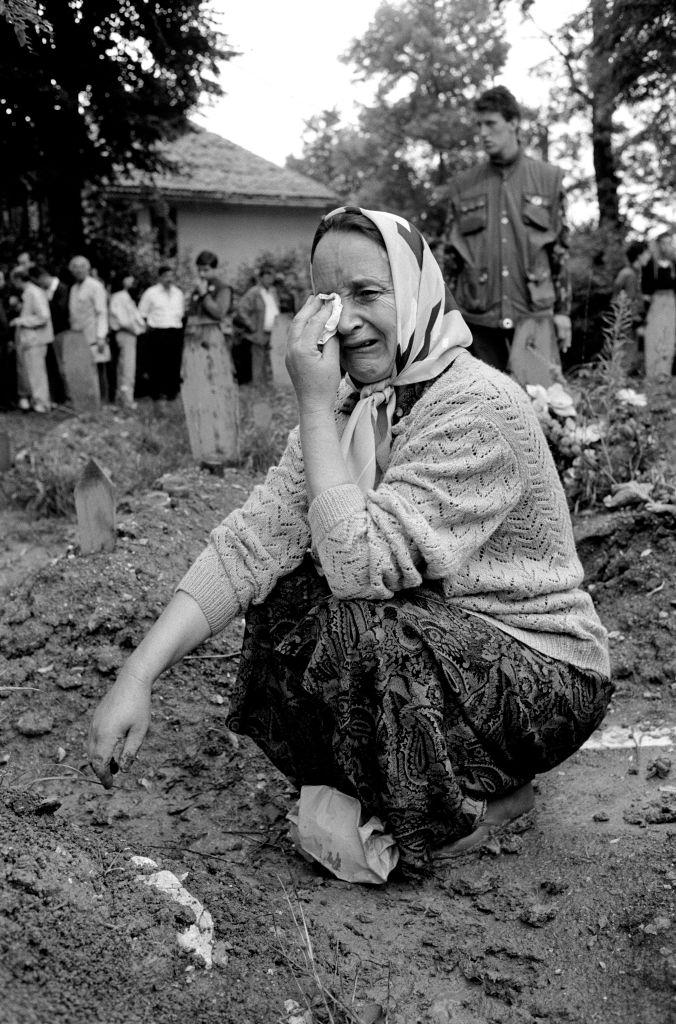
A woman weeps in the Lion Cemetery where Sarajevo citizens were buried.

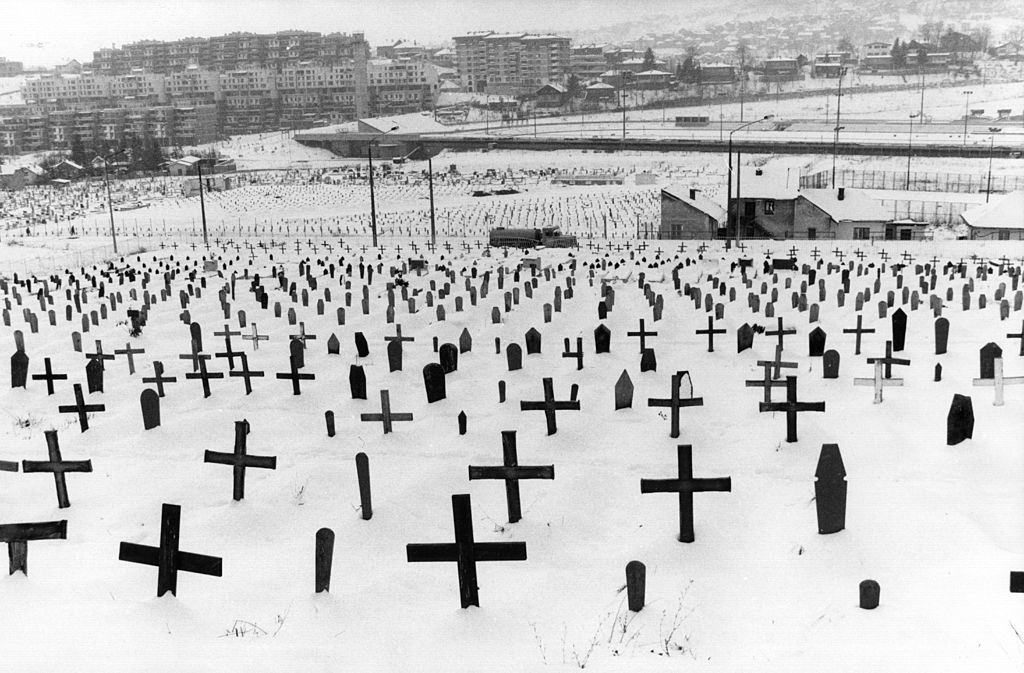
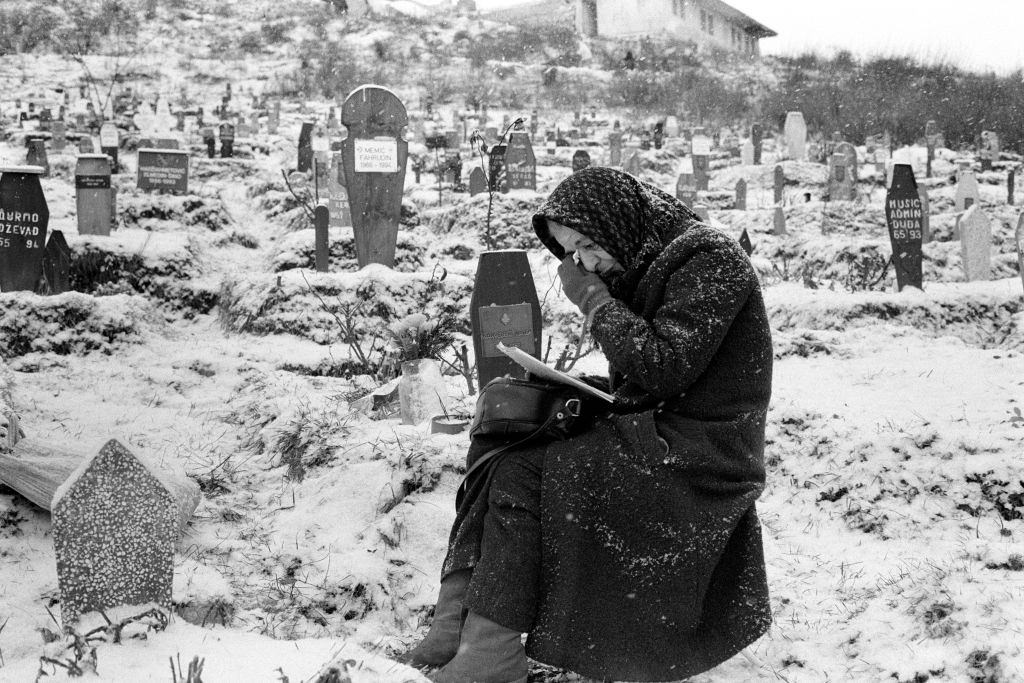
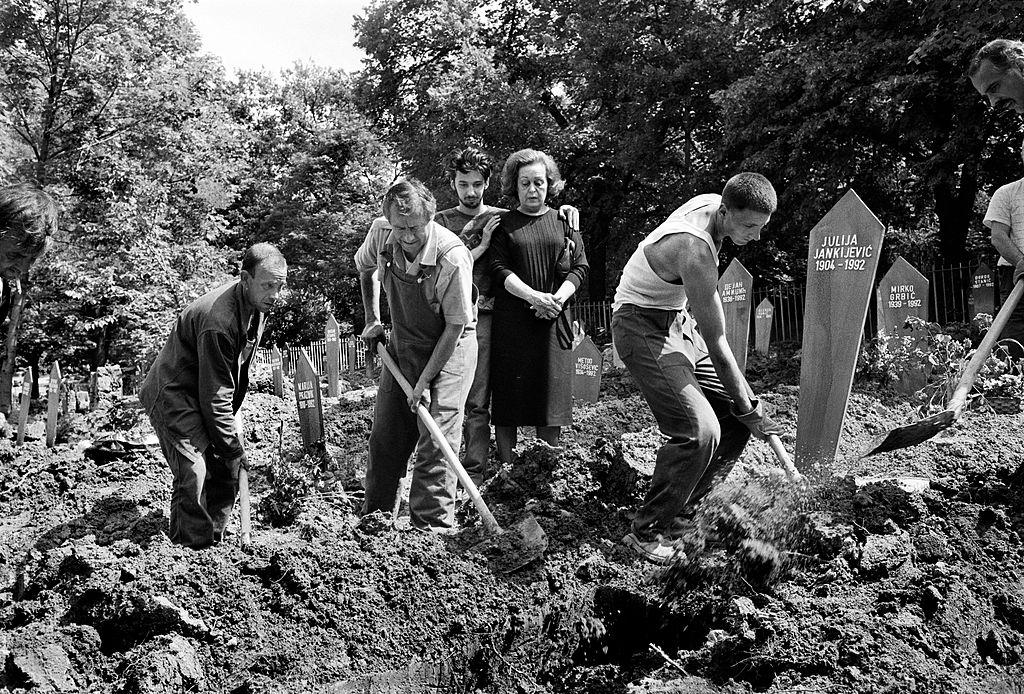
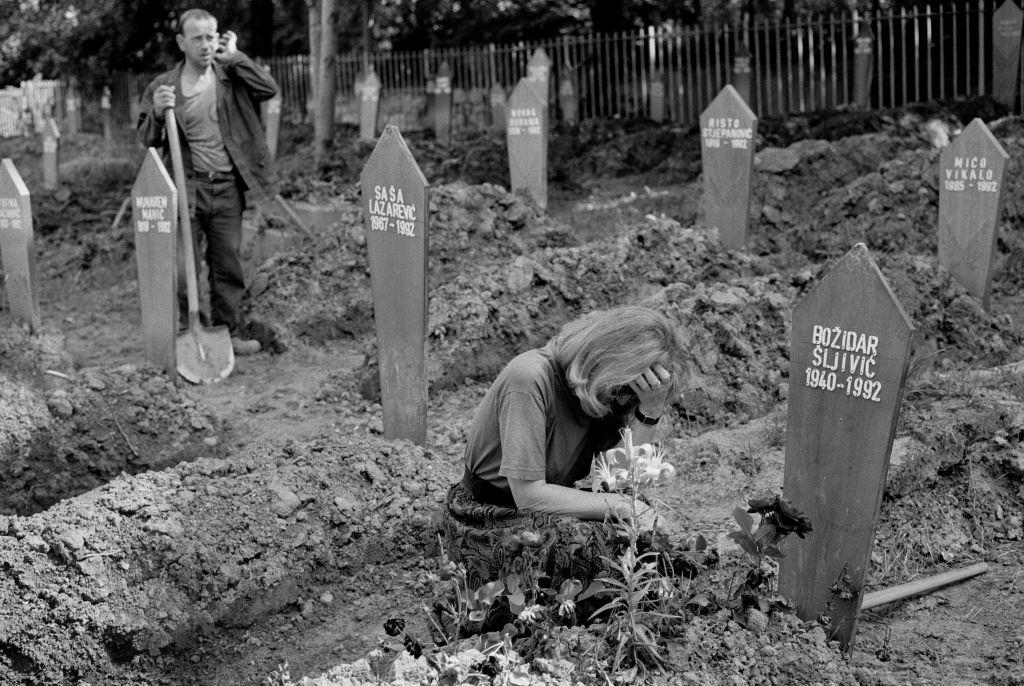
The dead accumulated faster than cemeteries could absorb them. The Lion Cemetery, one of Sarajevo’s oldest, filled with fresh graves at a pace that shocked even those living through it. When the formal cemeteries ran out of space, makeshift burial grounds appeared across the city — in parks, on football pitches, wherever ground could be dug. The Zetra Olympic Stadium, built for the 1984 Winter Games, became a burial site. The graves of Muslims, Croats, and Serbs sat side by side in the same ground.
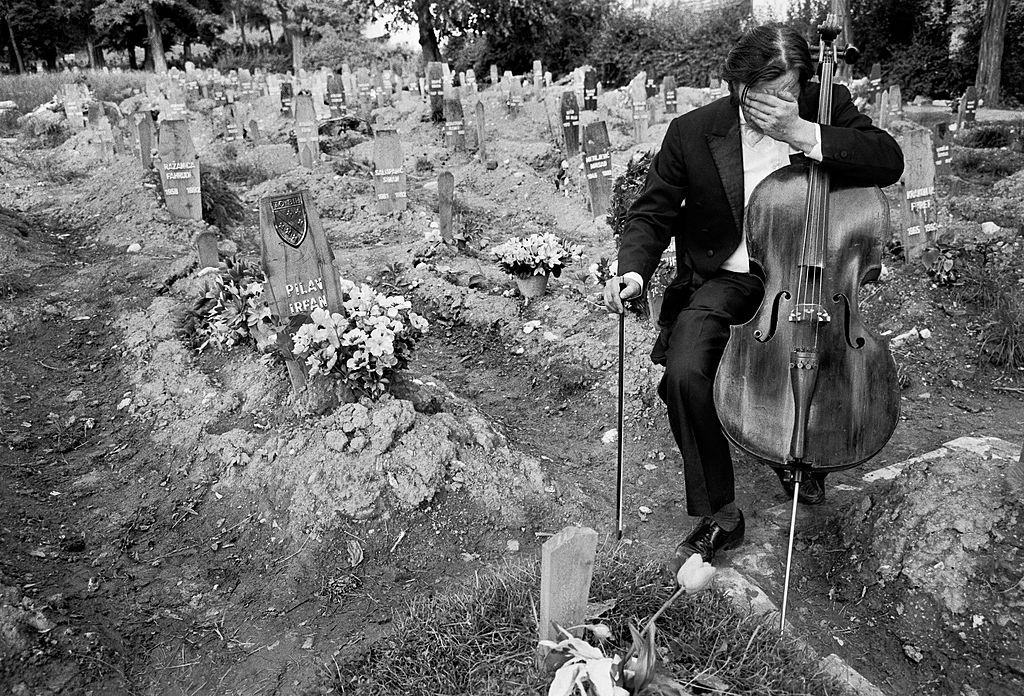
Celloist Vedran Smalovic breaks down in tears after playing a requiem to a dead friend in Hero's Cemetery, where Bosnian fighters were buried during the siege of Sarajevo, 1992.
Celloist Vedran Smalovic breaks down in tears after playing a requiem to a dead friend in Hero’s Cemetery, where Bosnian fighters were buried during the siege of Sarajevo, 1992.
Gravediggers at work in the Lion Cemetery, Sarajevo, 1992.

The Bosnian government’s defenders were fighting at a serious disadvantage from the start. An international arms embargo weakened Bosnian forces militarily, limiting what weapons and ammunition they could obtain. A conflict with Croat forces in 1993–94 further stretched their resources. In 1994, however, Bosniaks and Croatians agreed to form a joint federation, ending that particular front and allowing them to coordinate against Bosnian Serb forces together.
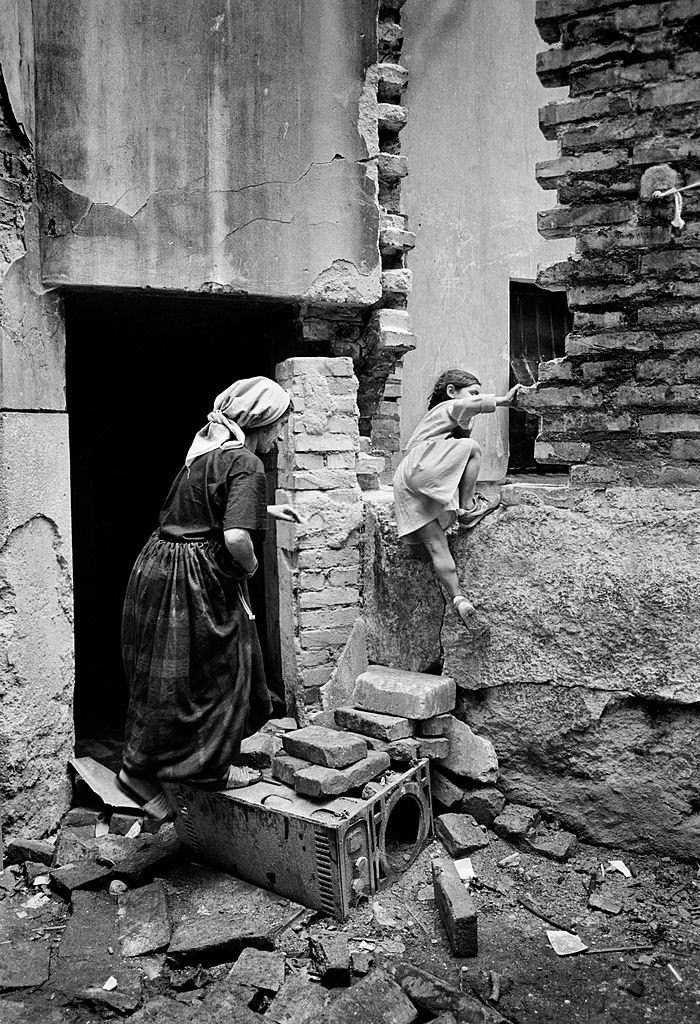
Muslim mother and her child enter their bomb damaged Sarajevo house on the frontline during the siege of Sarajevo in 1992.

Despite the blockade and the constant shelling, many residents refused to leave. Some could not. Others simply would not abandon the city they had lived in their whole lives. Families sheltered in basements and underground spaces for months at a time. On quiet days — when the shelling paused — people emerged into their neighborhoods with an almost surreal sense of normalcy. Mothers chatted outside apartment blocks. Children played. Then the shelling would resume, and everyone scattered again.
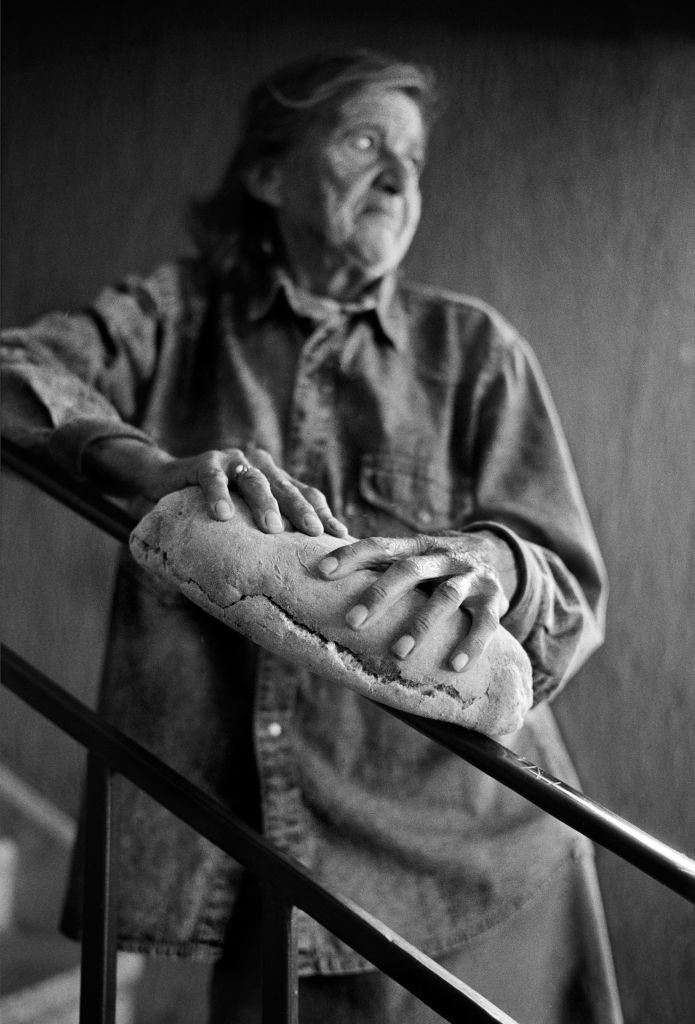
A woman holds a precious loaf of bread during the siege of Sarajevo, 1995.

Food scarcity was constant. The UN and humanitarian organizations worked to get aid into the city, but supply was never enough to cover the needs of a besieged population. People grew vegetables in small patches of earth outside apartment buildings. They cooked whatever they could find. Gardens, parks, and even roadside strips of soil became informal plots for growing food. The basic act of eating became a daily negotiation.
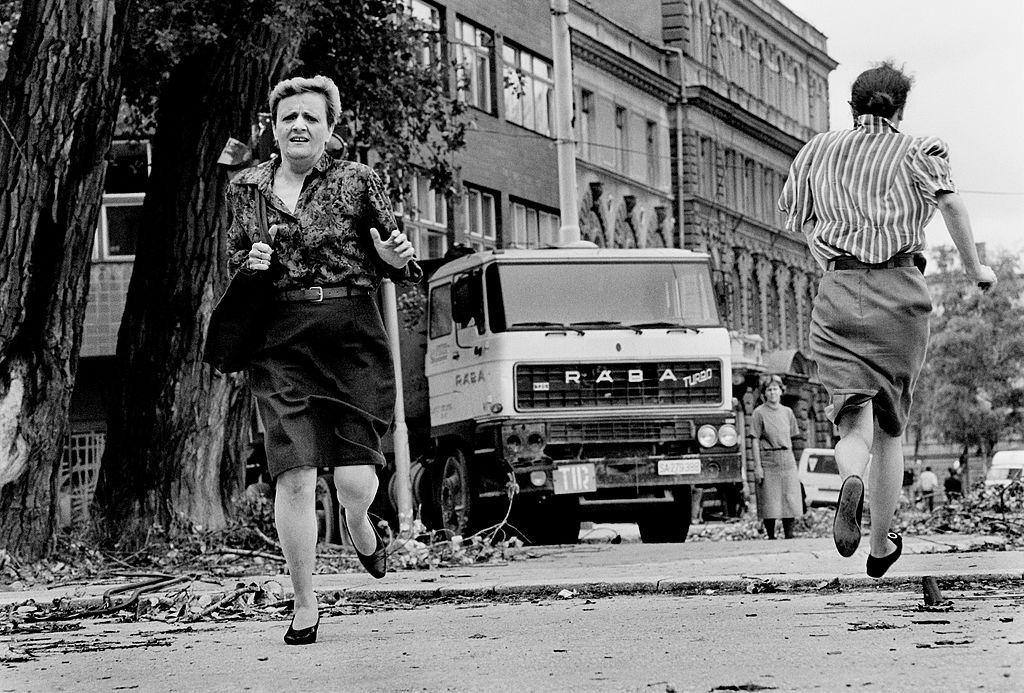
Women run for their lives across 'Sniper Alley' under the sights of Serb gunmen during the siege of Sarajevo.
Women run for their lives across ‘Sniper Alley’ under the sights of Serb gunmen during the siege of Sarajevo.
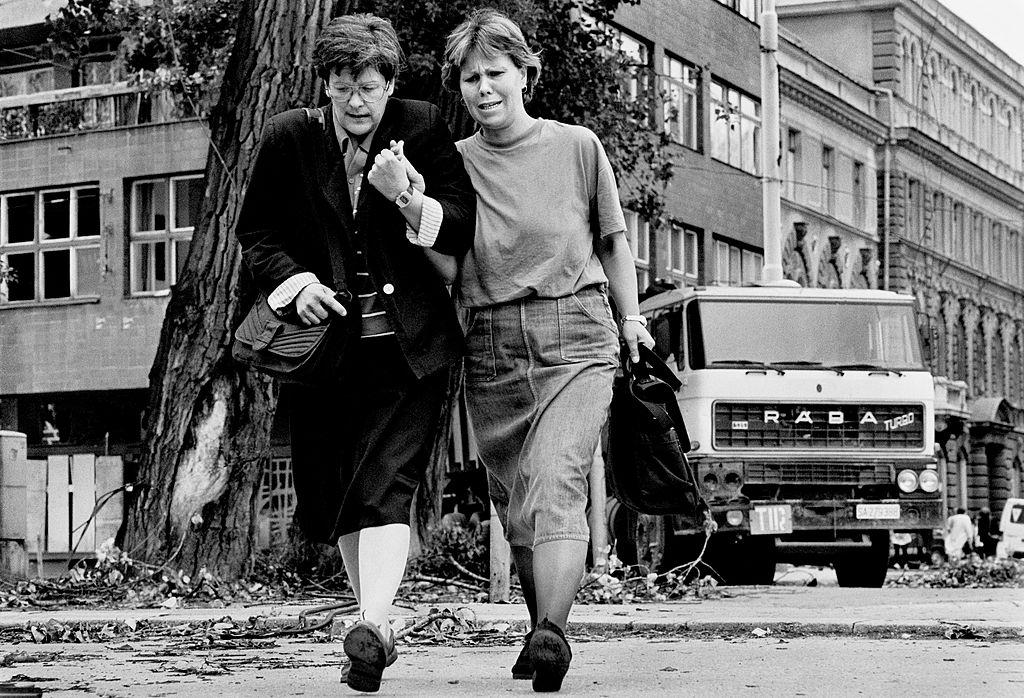
Women support each other as they cross a dangerous intersection of 'Sniper Alley' in Sarajevo during the siege.
Women support each other as they cross a dangerous intersection of ‘Sniper Alley’ in Sarajevo during the siege.

Bosnian fighters defending the city were ordinary men — many of them civilians who had never served in a military before. They prayed at mosques before going to the front lines, kissed friends goodbye, and took up positions in suburbs and buildings across the city. The front line in some neighborhoods ran directly through residential streets, meaning the difference between a contested position and a family’s apartment could be a single stairwell.
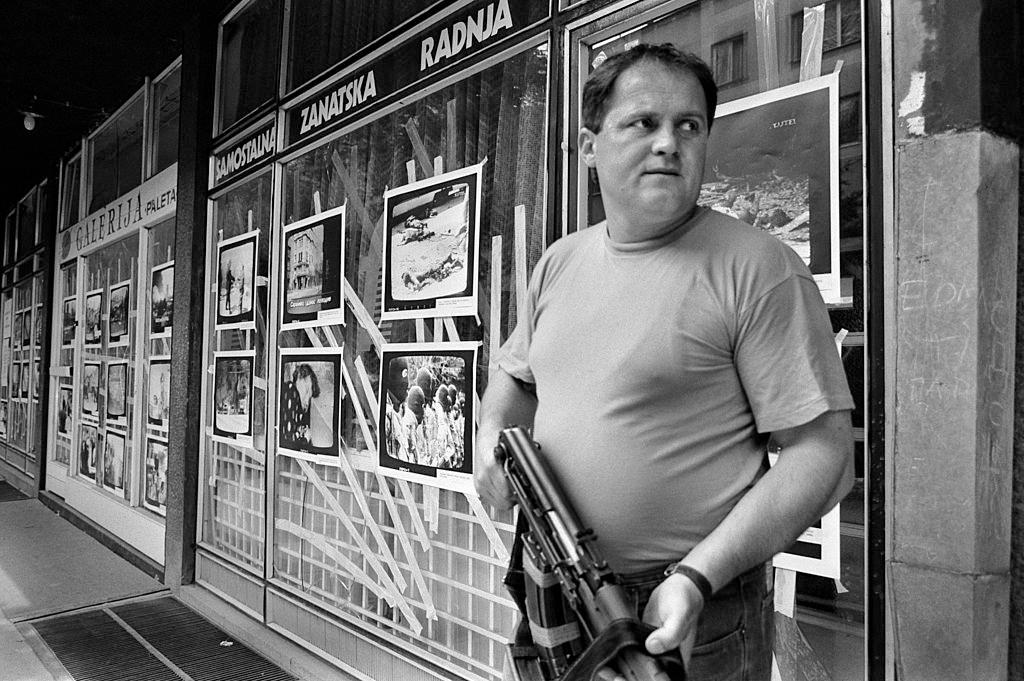
A Bosnian fighter armed with an AK-47 stands in front of images of massacres, alledgedly by Serbian forces.
A well dressed woman wearing pearls gathers wild plants and leaves to cook as food becomes scarce in Sarajevo.

Children experienced the siege in ways that left permanent marks. UNICEF documented the scale of what they went through. Of the estimated 65,000 to 80,000 children in the city, at least 40% had been directly shot at by snipers. Fifty-one percent had witnessed someone being killed. Thirty-nine percent had seen one or more family members die. Nineteen percent had witnessed a massacre. Seventy-three percent had their home attacked or shelled, and 89% had spent time living in underground shelters.
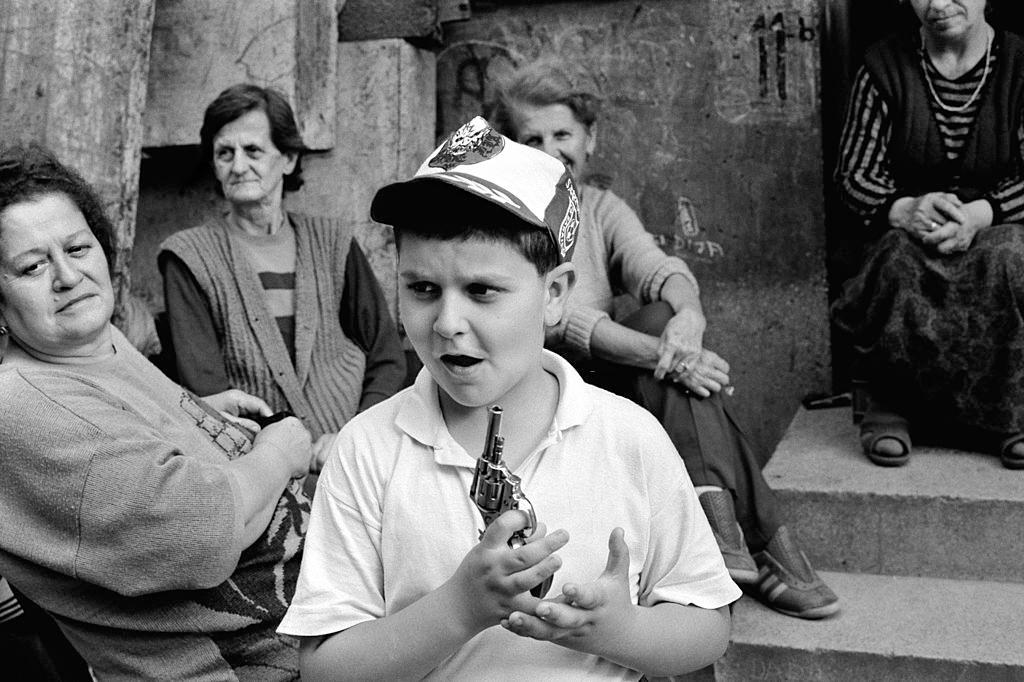
Mothers sit talking outside an apartment block during a break in shelling as a child holds a toy gun nearby.
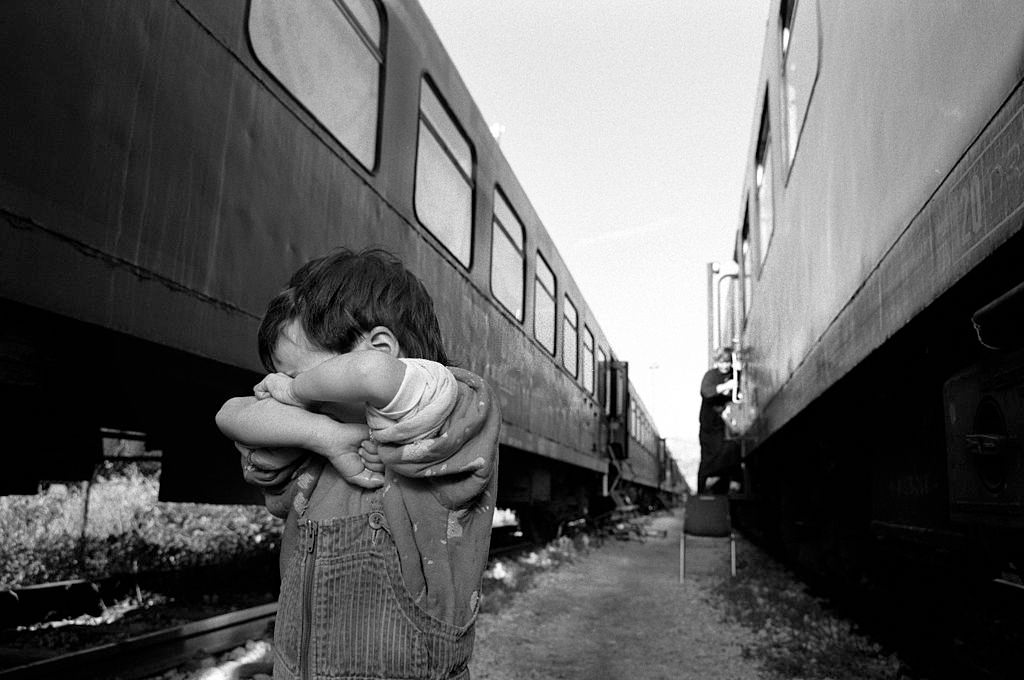
A small boy hides shyly away from the camera at a refugee camp made up of railway carraiges.

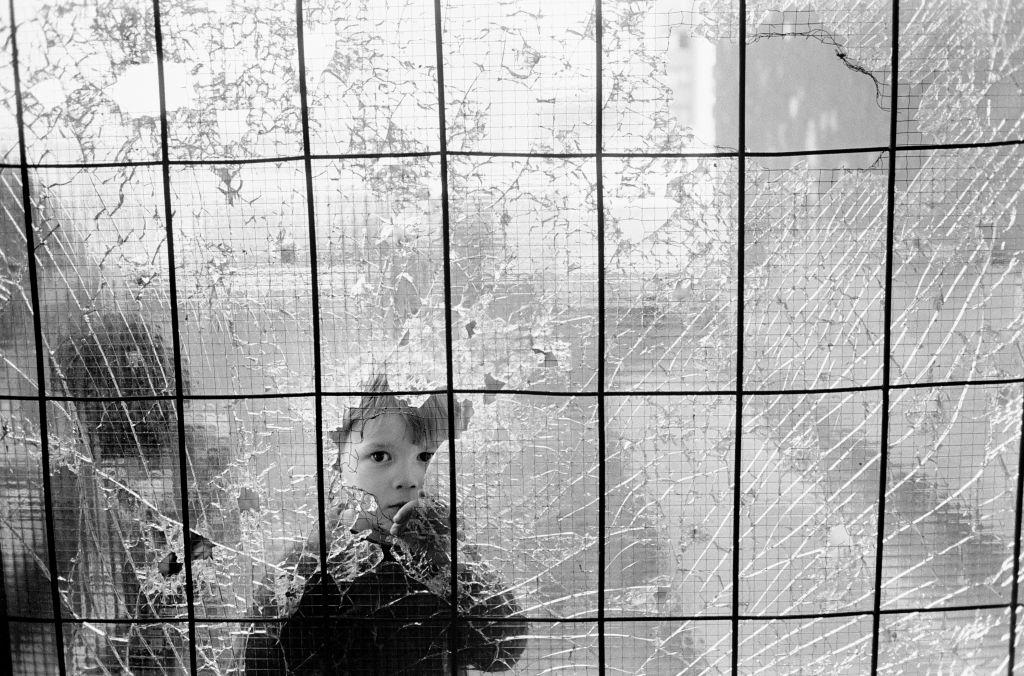
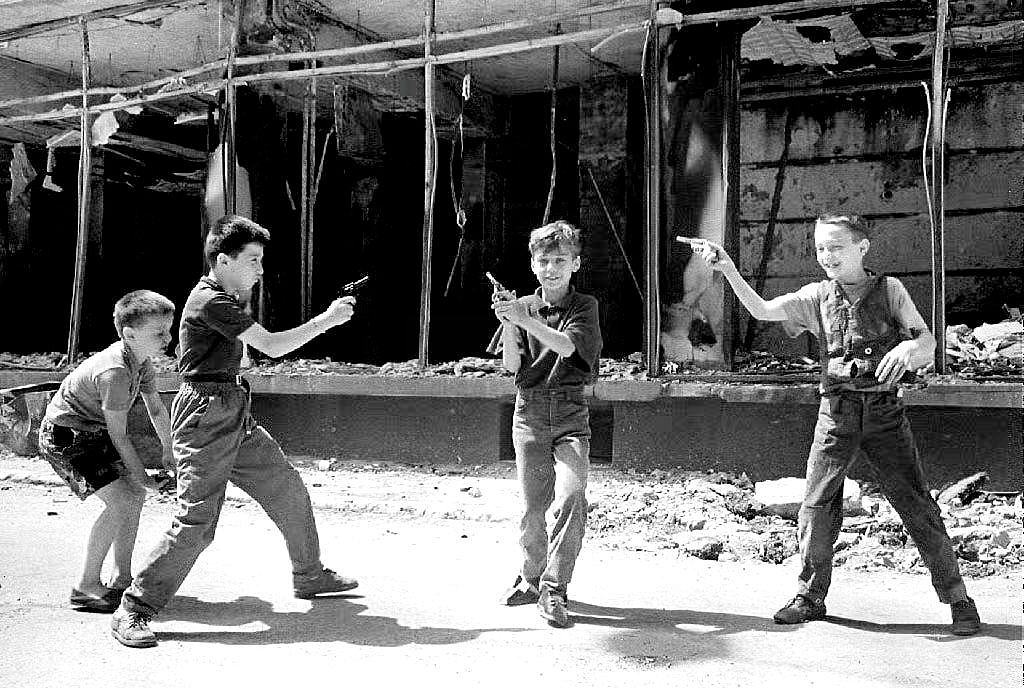
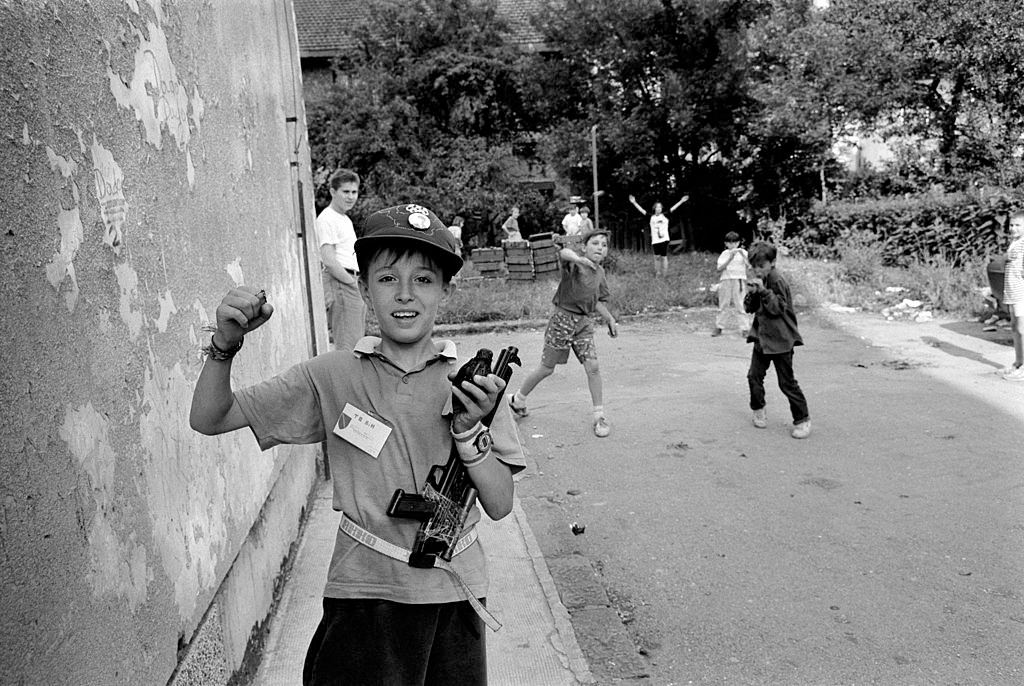
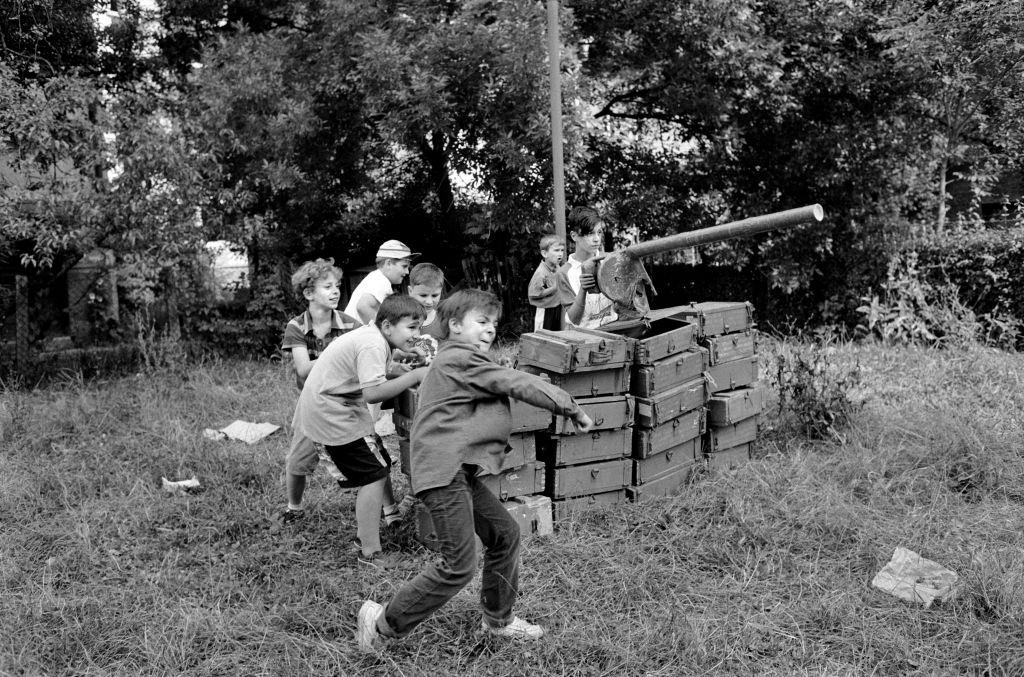
Children adapted to the world around them in ways that were both heartbreaking and telling. Boys dressed in camouflage and carried their fathers’ pistols. Kids used empty ammunition boxes as props when they played, staging games where some acted as Serbs and others as Bosnians — mimicking the real war happening just outside. A small boy stared through a bullet-riddled window. Another ate an ice cream cone while wearing military gear. These were not performances. This was simply life as they knew it.
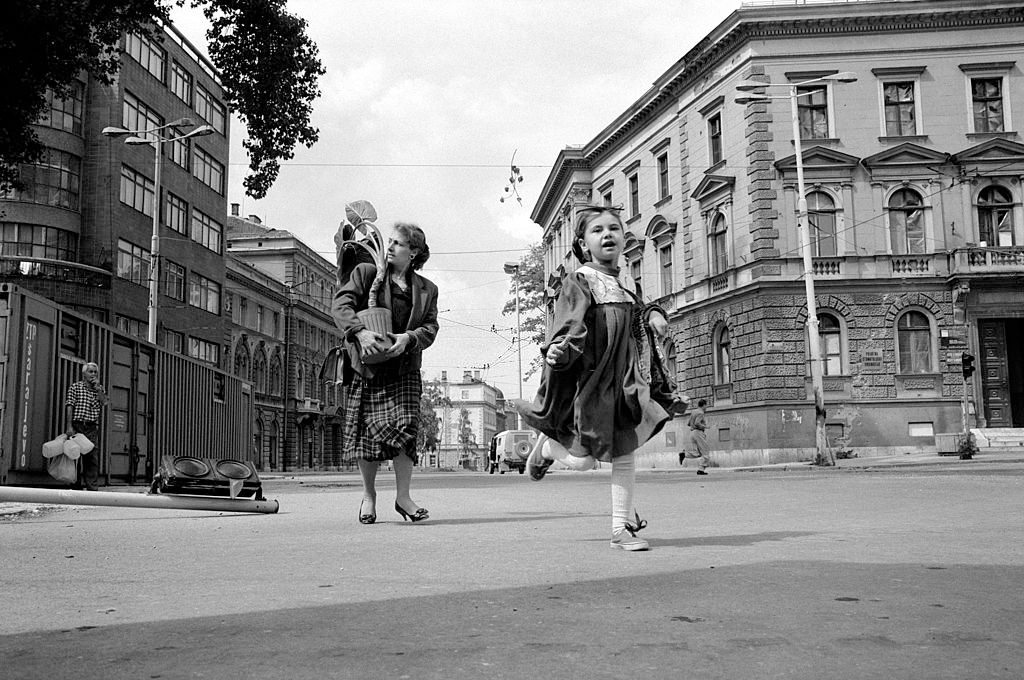
A mother carrying a potted plant runs across Sniper Alley with her young daughter.
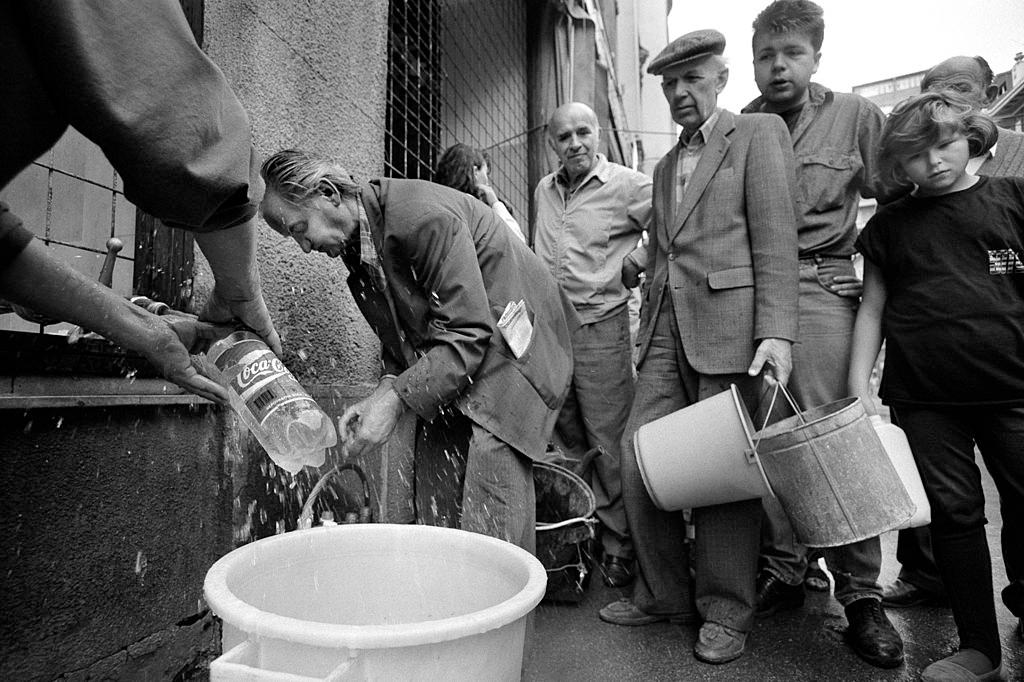
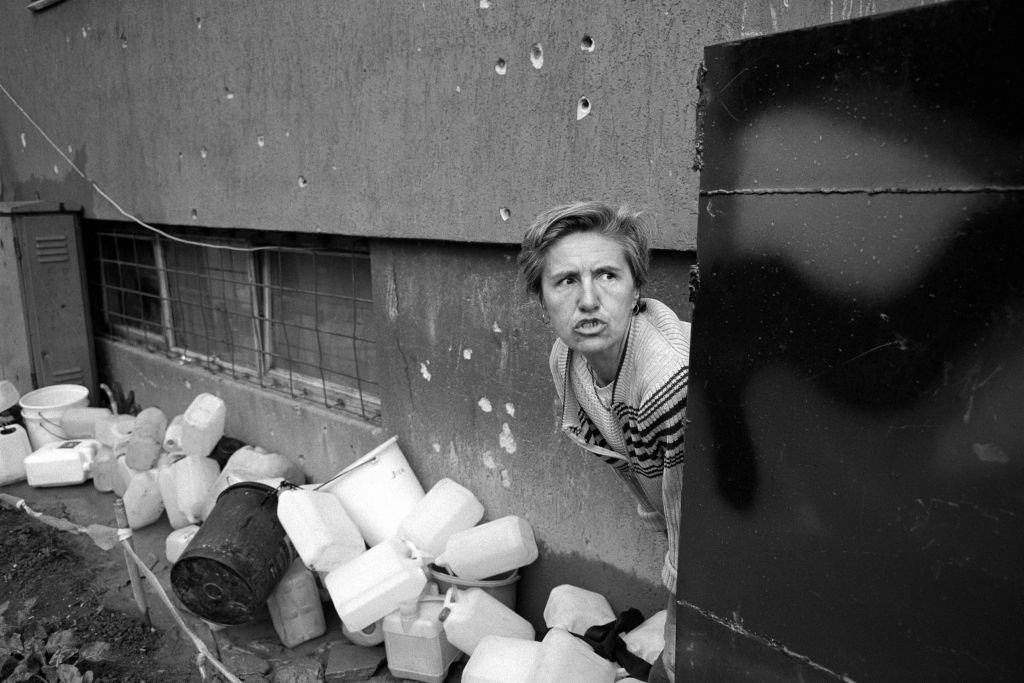
Residents collect water in buckets and coca-cola bottles from a stand-pipe on a Sarajevo street, July 1992.

Water collection was one of the most dangerous daily tasks in the city. With the city’s utilities cut, residents were forced to collect water from standpipes in the open street. Getting to those standpipes meant crossing exposed ground. People ran, crouched behind parked cars, or waited for a lull in gunfire before stepping out. A woman photographed in July 1992 collected water from a standpipe during an exchange of gunfire between Bosnian and Serbian fighters — not because she was brave in some abstract sense, but because she had no alternative.
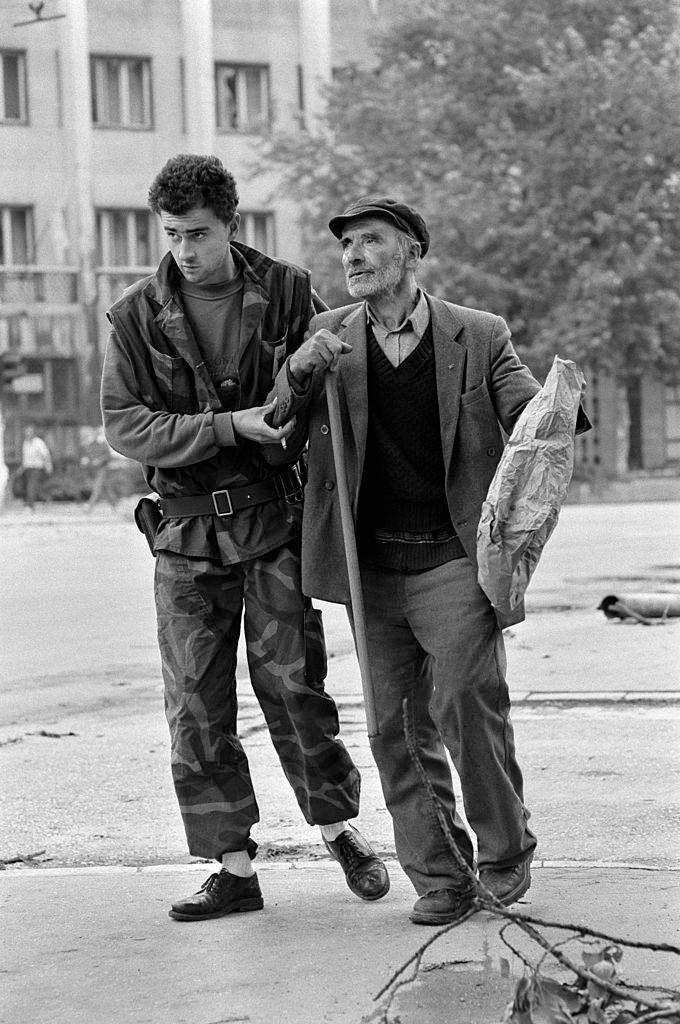
A Bosnian fighter ignores the risk from snipers to bravely help an elderly man cross a dangerous intersection on Sniper Alley, July 1992.
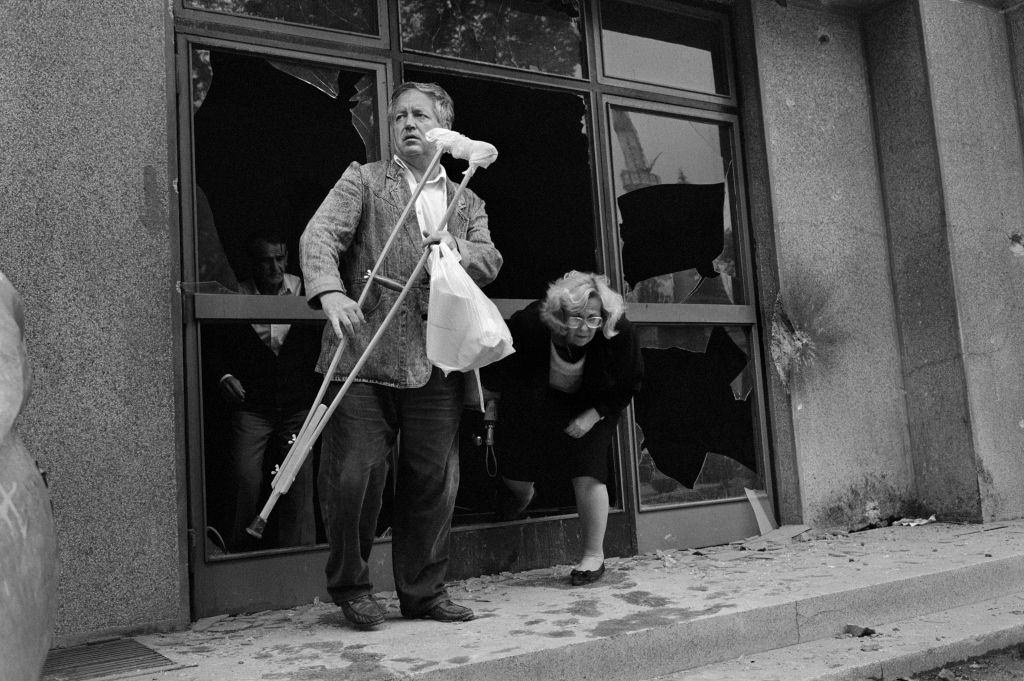
A man holds a crutch as he waits for his wife to climb through a broken shop window on Sniper Alley, July 1992.

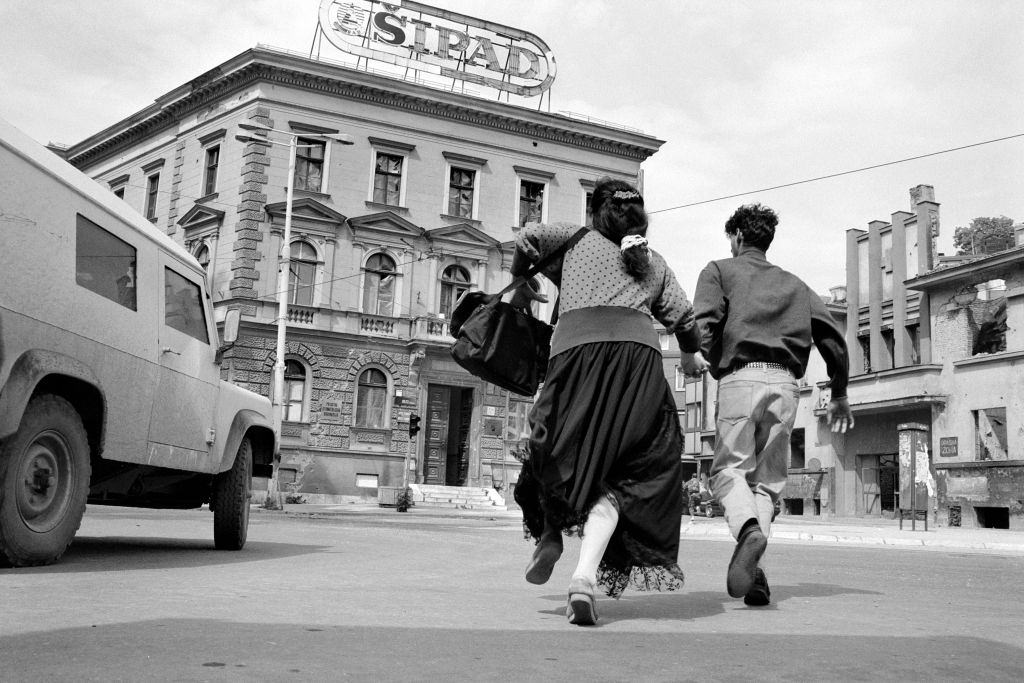
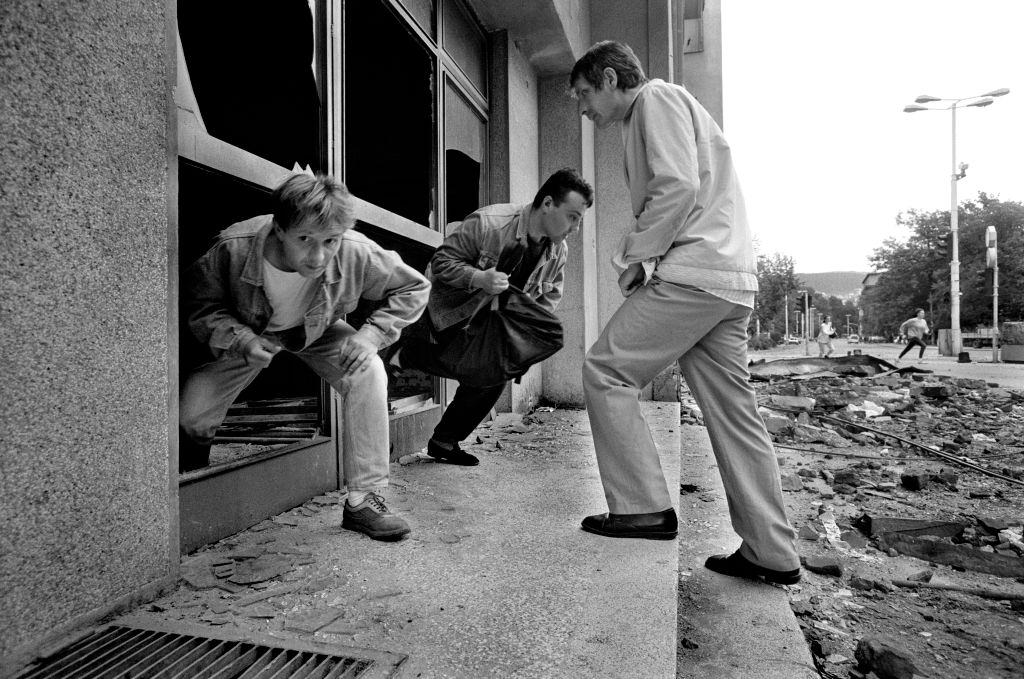
Workarounds developed organically across the city. Residents learned which streets could be crossed quickly and which required cover. Shop windows that had been blown out became shortcuts — passageways that allowed people to move through buildings instead of along exposed sidewalks. A man on crutches waited beside one such window as his wife climbed through. A couple ran hand-in-hand behind an armored press vehicle. These were the small, improvised strategies people used just to get from one block to the next.
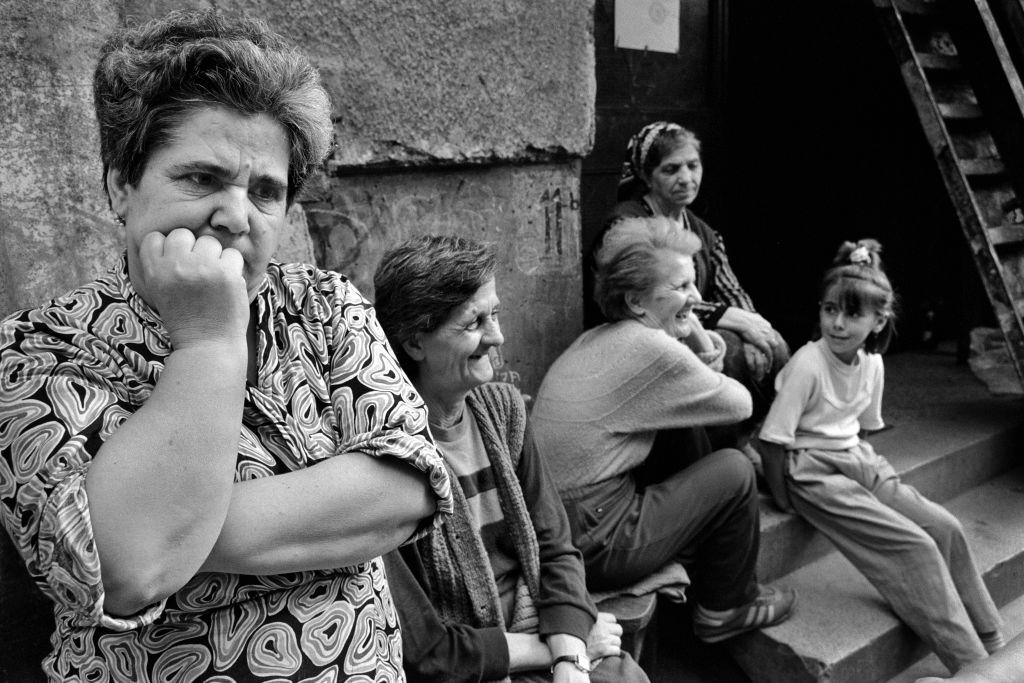
Mothers and children sit talking outside an apartment block during a break in shelling, July 1992.
Men climb through broken shop windows out of the line of fire to avoid being shot by snipers, July 1992.

Journalists covering the siege stayed at the Holiday Inn on Sniper Alley — one of the few functioning hotels in the city. The building itself was not spared. Its windows overlooking the financial district were shattered, and through them, burned-out tower blocks were visible across the street. War correspondents and photographers ran for cover beside it, ducked in its lobby, and documented the siege from inside its damaged walls. The hotel became one of the defining symbols of the media’s presence in the conflict.
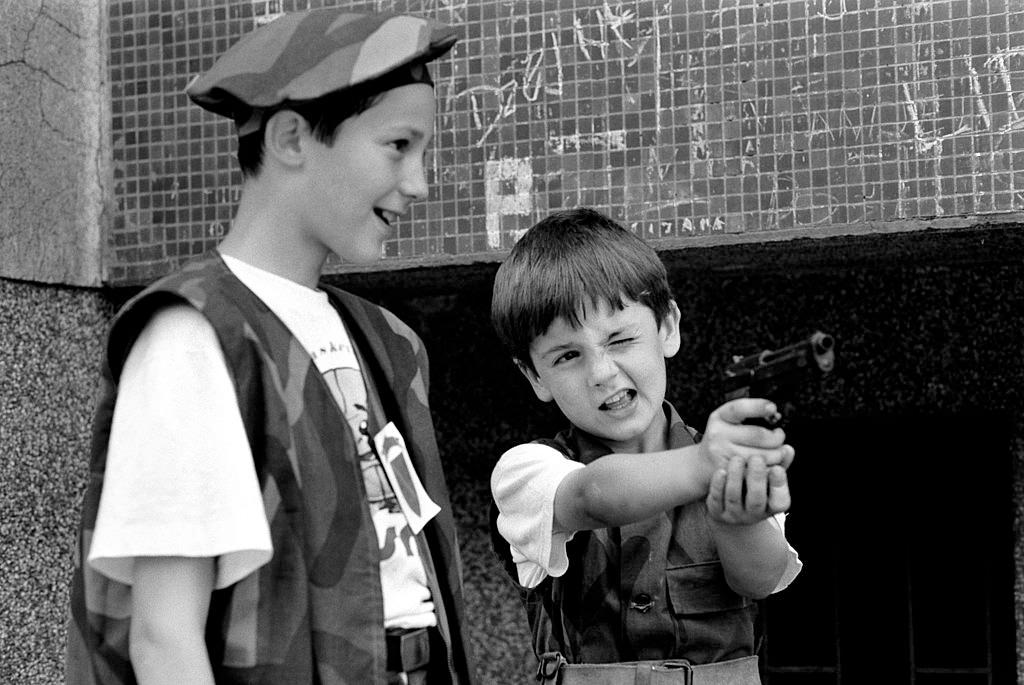
Boys dressed in the uniform of Bosnian army fighters play with a real pistol, July 1992.
A frightened woman collects water at a stand pipe during an exchange of gunfire between Bosnian and Serbian fighters, July 1992.

NATO’s involvement in the conflict was slow to materialize and initially limited. Its first use of force came in February 1994, when NATO fighter jets shot down four Bosnian Serb aircraft that were violating the no-fly zone established over Bosnia. Later that year, at the UN’s request, NATO launched airstrikes against Bosnian Serb military targets — but they were isolated and had little effect on the overall siege. The real turning point came in late 1995. After the Srebrenica massacre and a Bosnian Serb attack on a Sarajevo marketplace that killed dozens of civilians, NATO significantly intensified its air campaign.
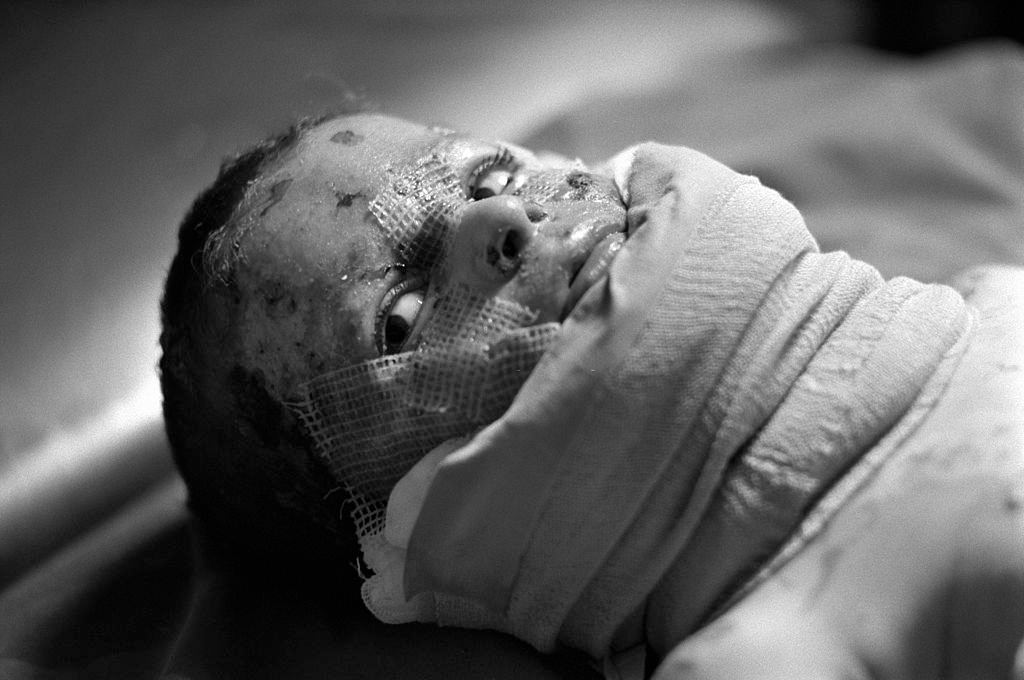
The face of a badly burned child injured during heavy shelling, July 1992.
Children use empty amunition boxes as they play Serb against Bosnians during a break in the real life shelling of Sarajevo of 1992.

In November 1995, a large-scale Bosniak-Croat land offensive pushed Bosnian Serb forces back significantly. Combined with the intensified NATO airstrikes, this forced Bosnian Serb leadership to the negotiating table. U.S.-sponsored peace talks were held in Dayton, Ohio, and Bosnian Serb forces agreed to terms that ended the war. The siege of Sarajevo officially ended on February 29, 1996.
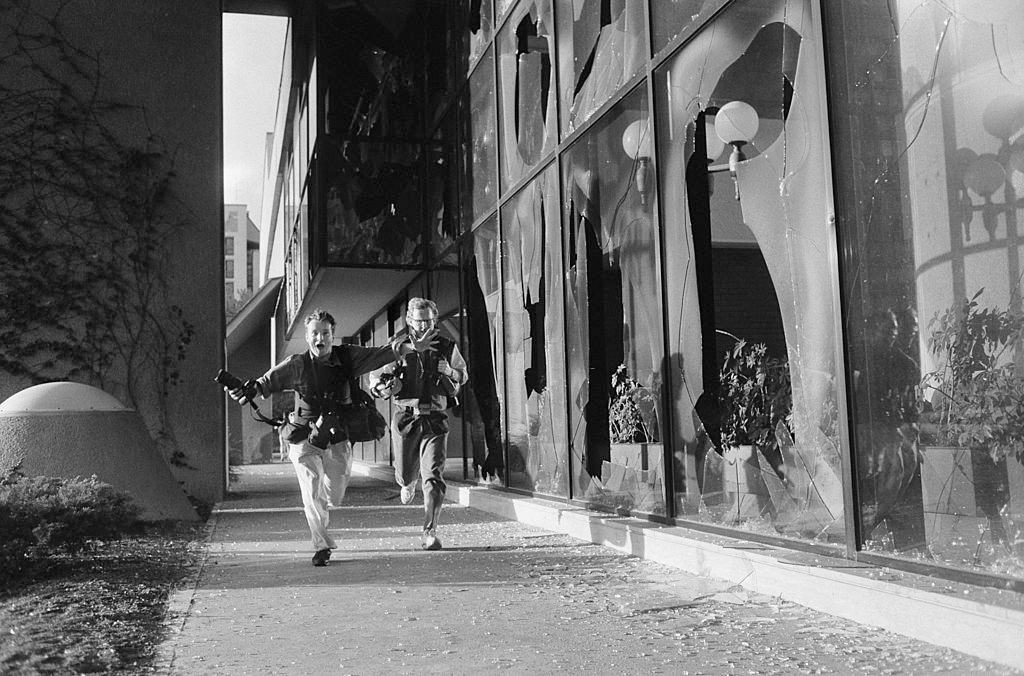
Photographers Paul Lowe and David Turnley run for cover beside the Holiday Inn hotel which was home to the media during the war, July 1992.
Children use empty ammunition boxes as they play Serb against Bosnians during a break in the real life shelling of Sarajevo of 1992.

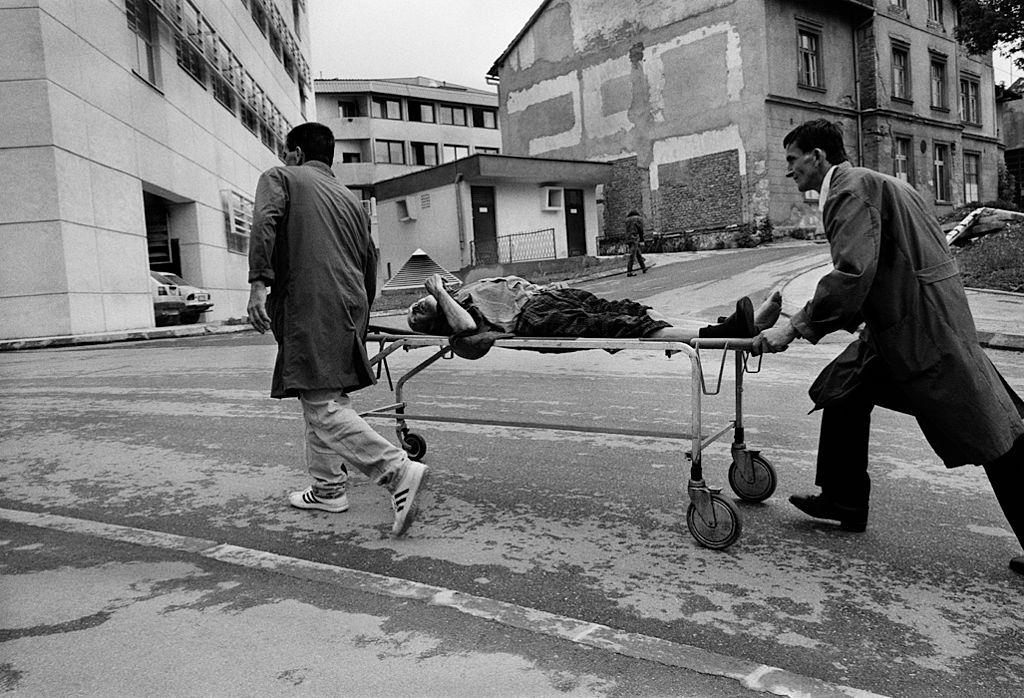
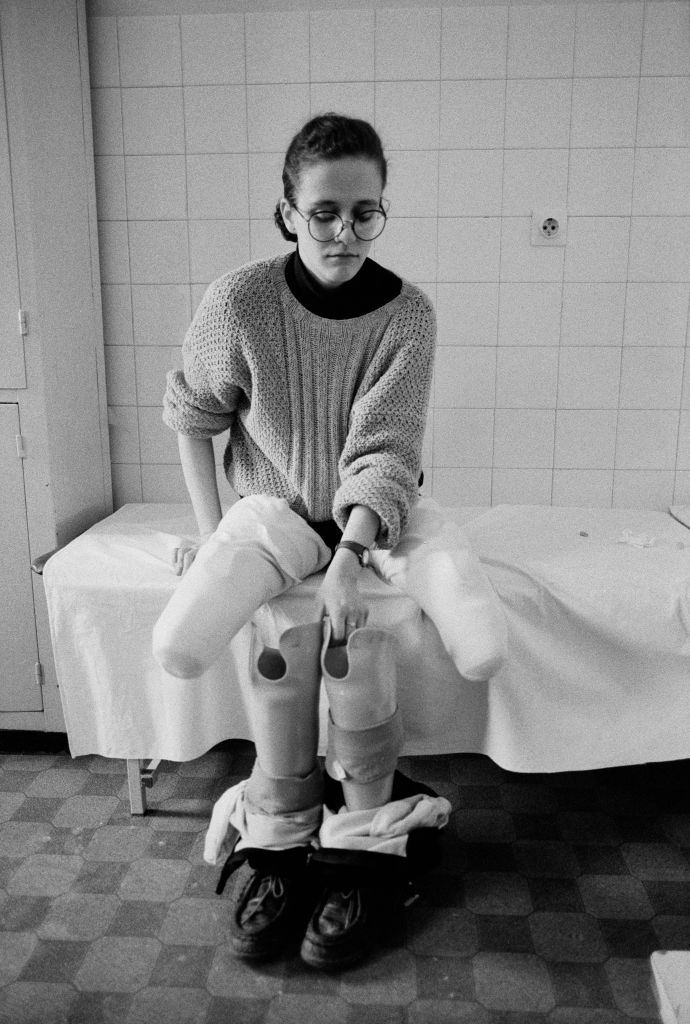
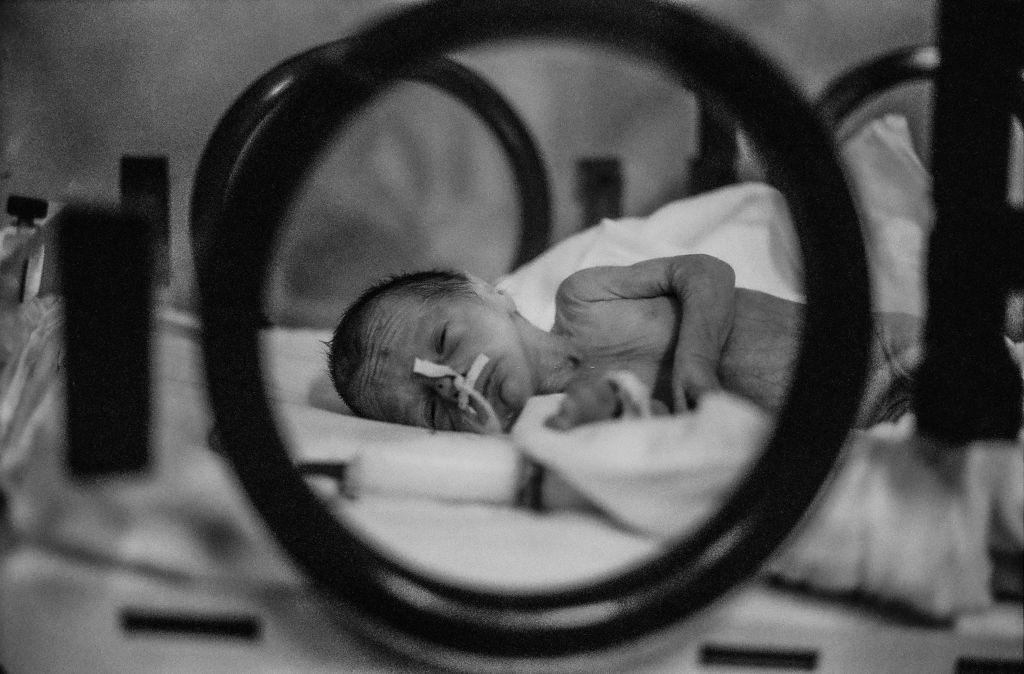
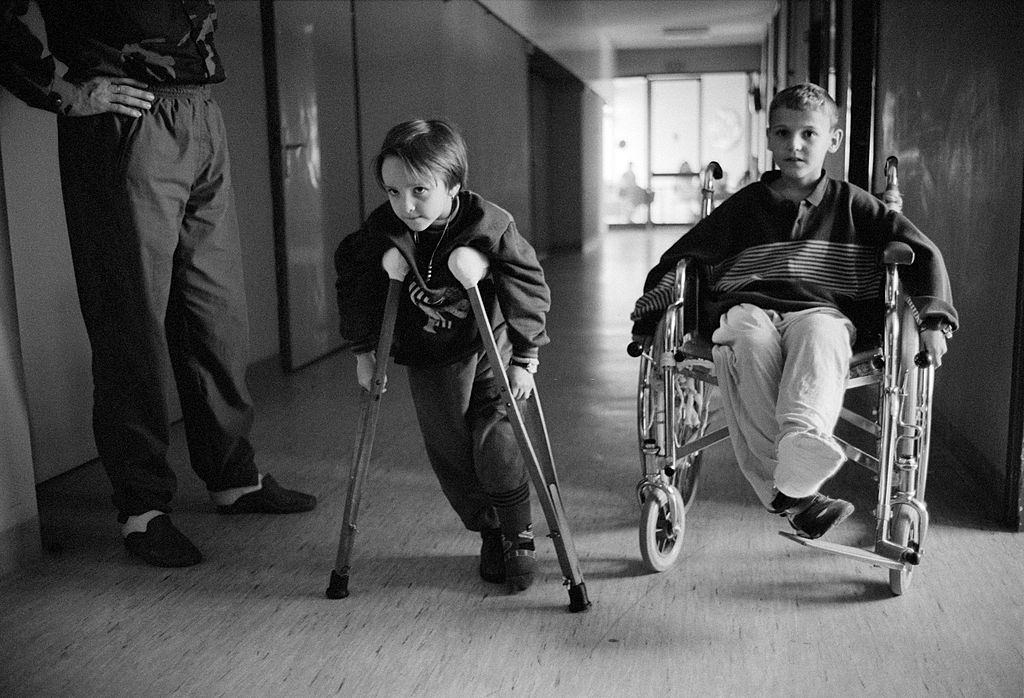
The hospital system in Sarajevo was overwhelmed from the earliest days of the siege. The Kosovo Hospital and Koševo Hospital received a constant stream of wounded — shell victims, sniper victims, and civilians caught in firefights. Porters rushed bleeding patients through corridors on stretchers. Children with shrapnel wounds, burns, and amputations filled the wards. A one-year-old lay in a hospital bed. A girl who had lost both legs lay in another. These were not the casualties of the front line. They were residents of a city that had become a target.
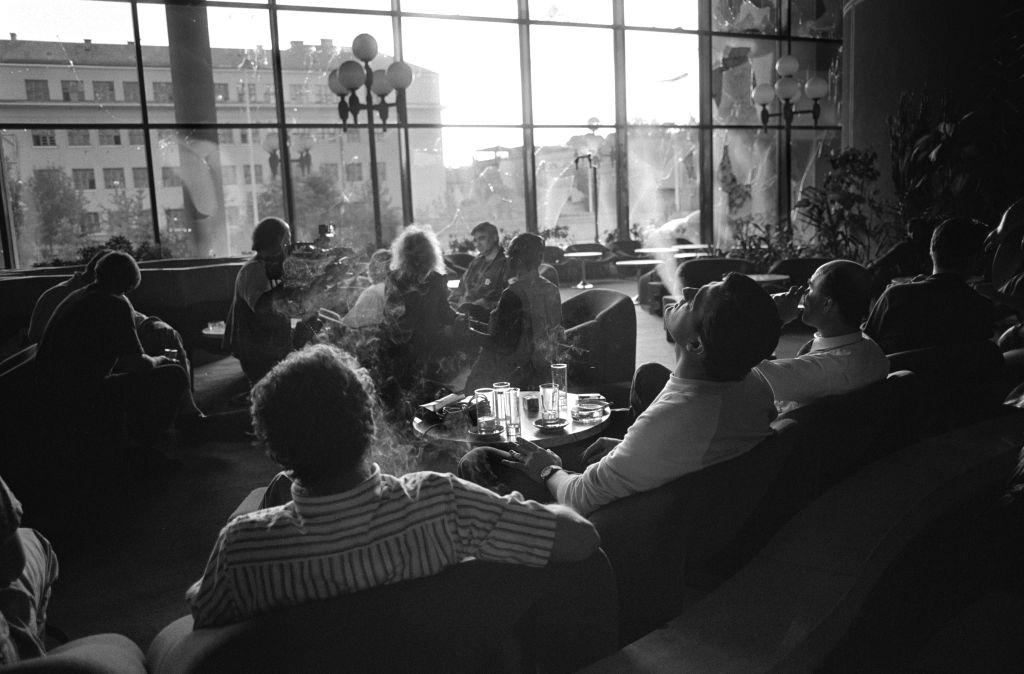
A scene in the lobby of the Holiday Inn hotel used by the media during the war, July 1992.
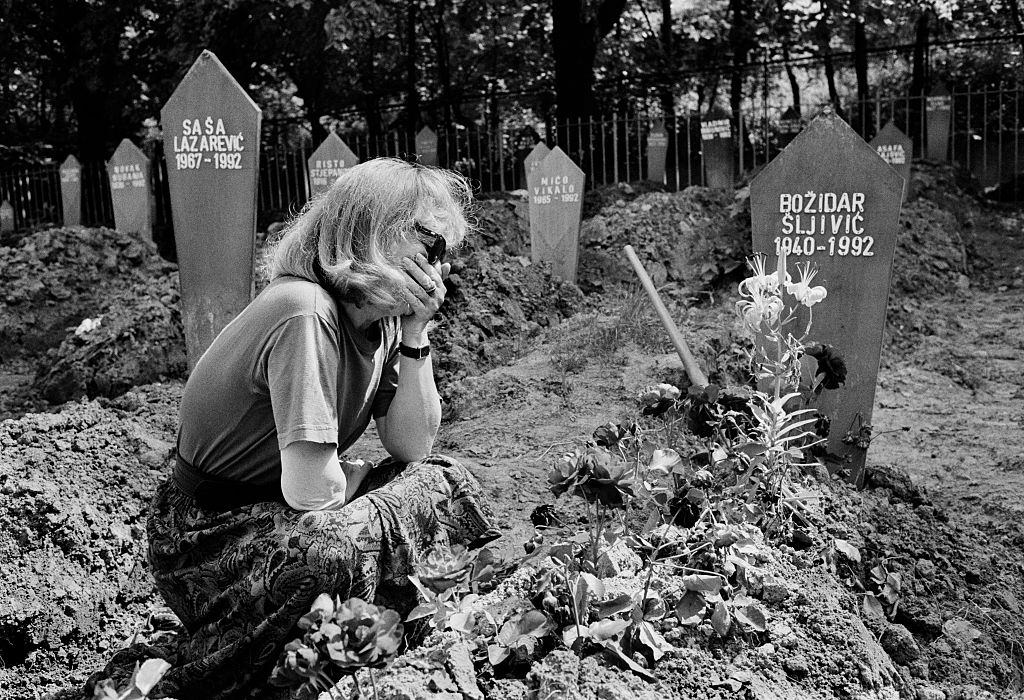
A woman grieves by a grave in the Lion Cemetery, July 1992.

The human cost of the Bosnian War as a whole was staggering. More than 2,000,000 people were displaced across the country. Early estimates put the total death toll at around 200,000, though a subsequent study revised that figure to approximately 100,000. Many of Sarajevo’s cultural institutions, historical monuments, and sports venues were damaged or destroyed during the siege. Numerous buildings across the city’s financial district were burned out or shelled beyond repair. The infrastructure of a modern European capital had been deliberately and systematically torn apart.
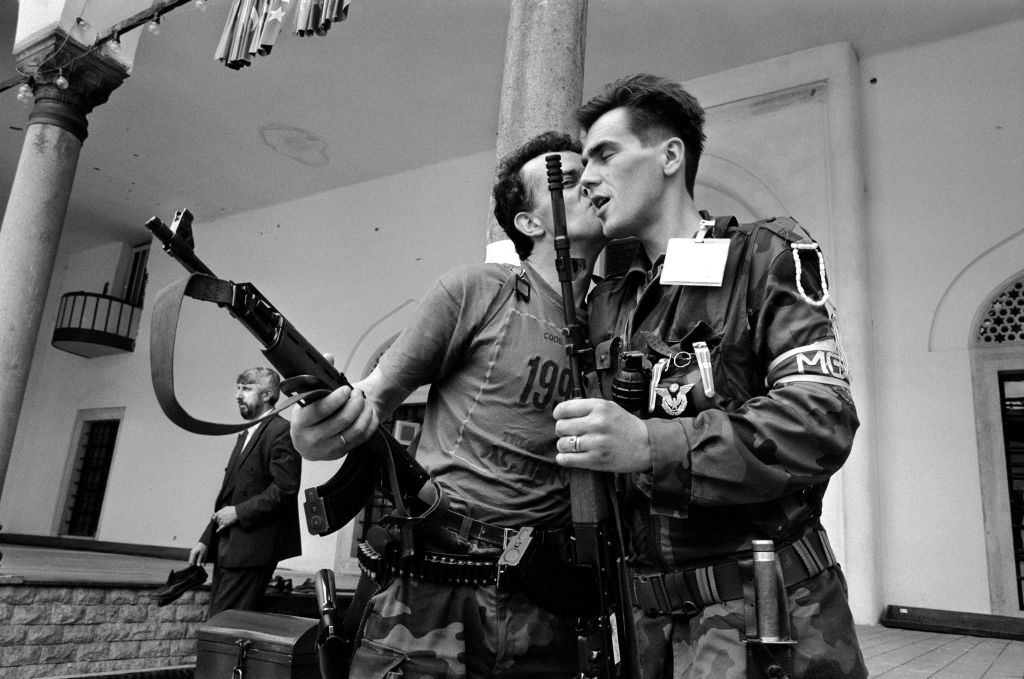
Bosnian fighters wish each other good luck and kiss goodbye after praying at a mosque before leaving to fight on the front line, 1992.
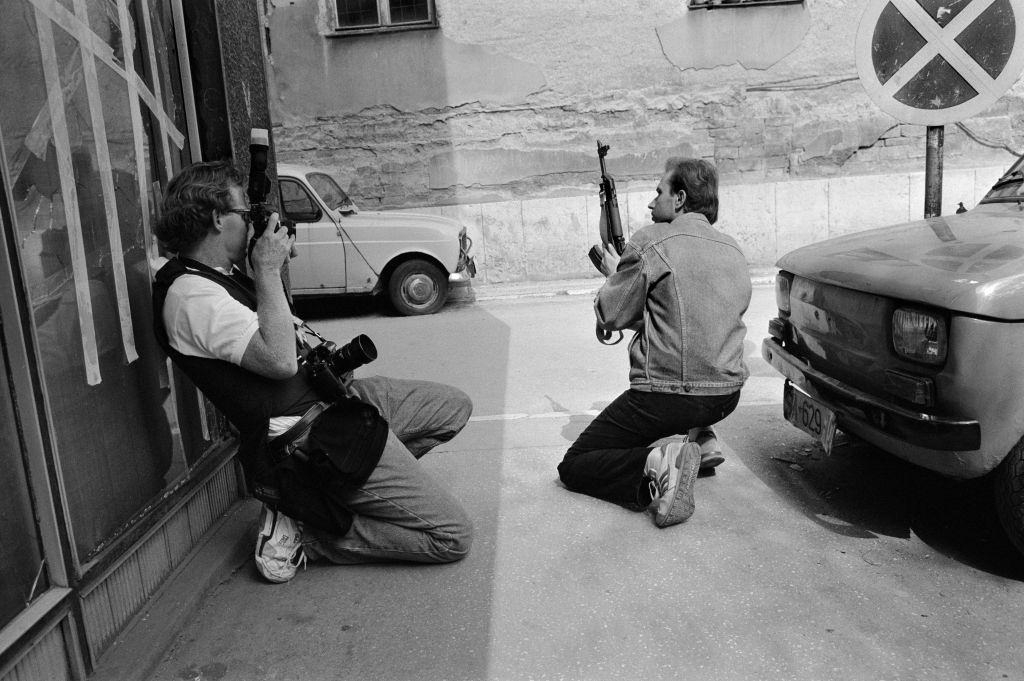
American photographer David Turnley documents street fighting during the siege of Sarajevo, 1992.

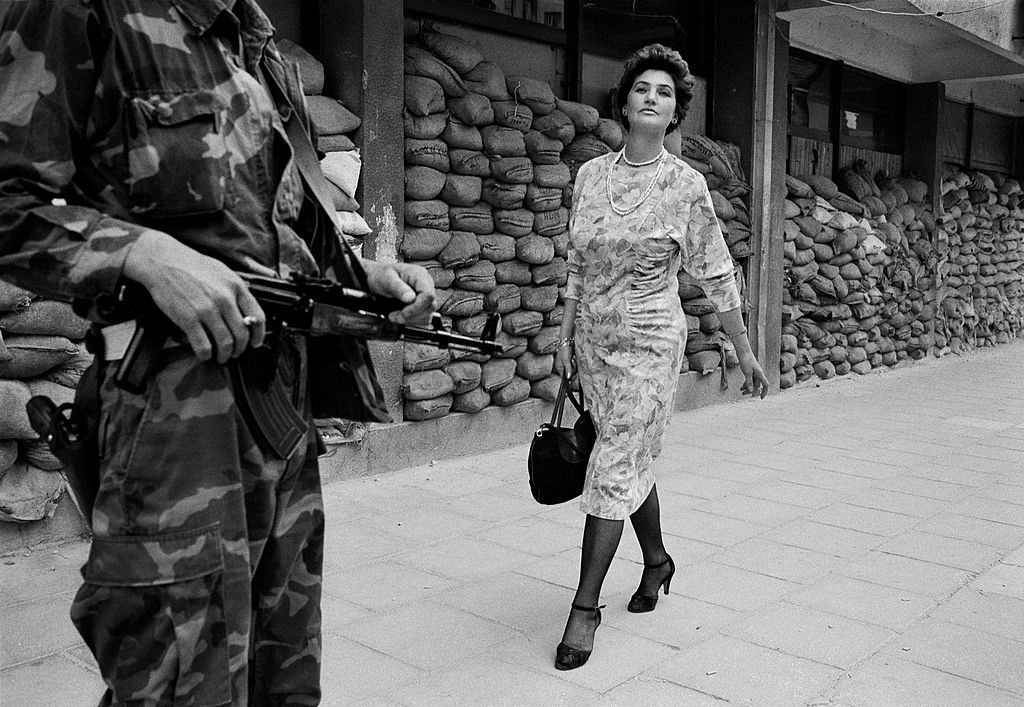
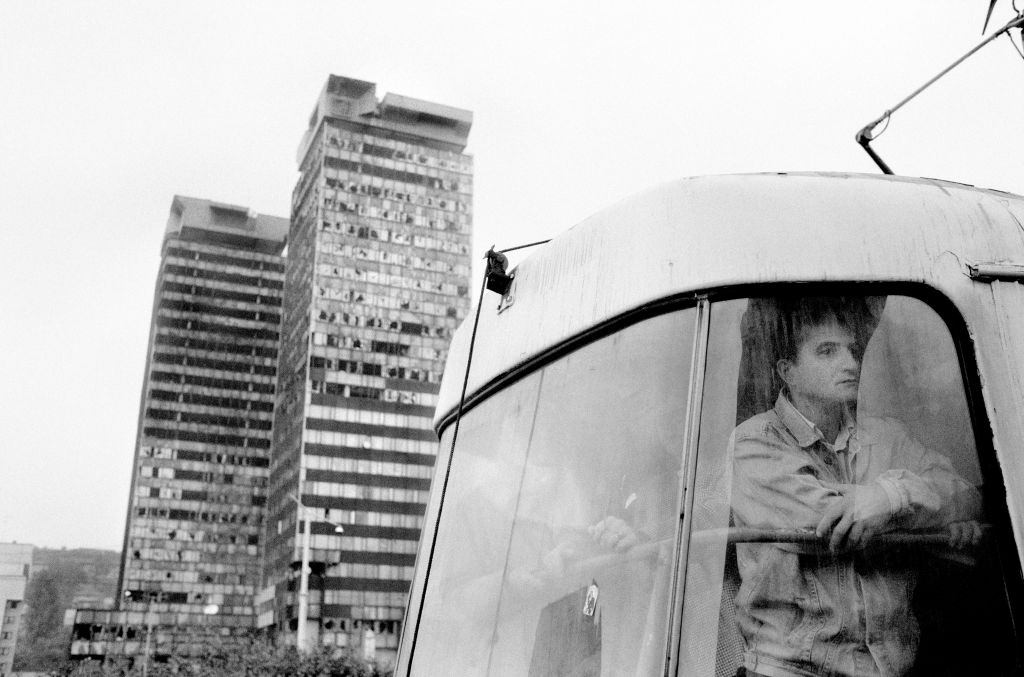
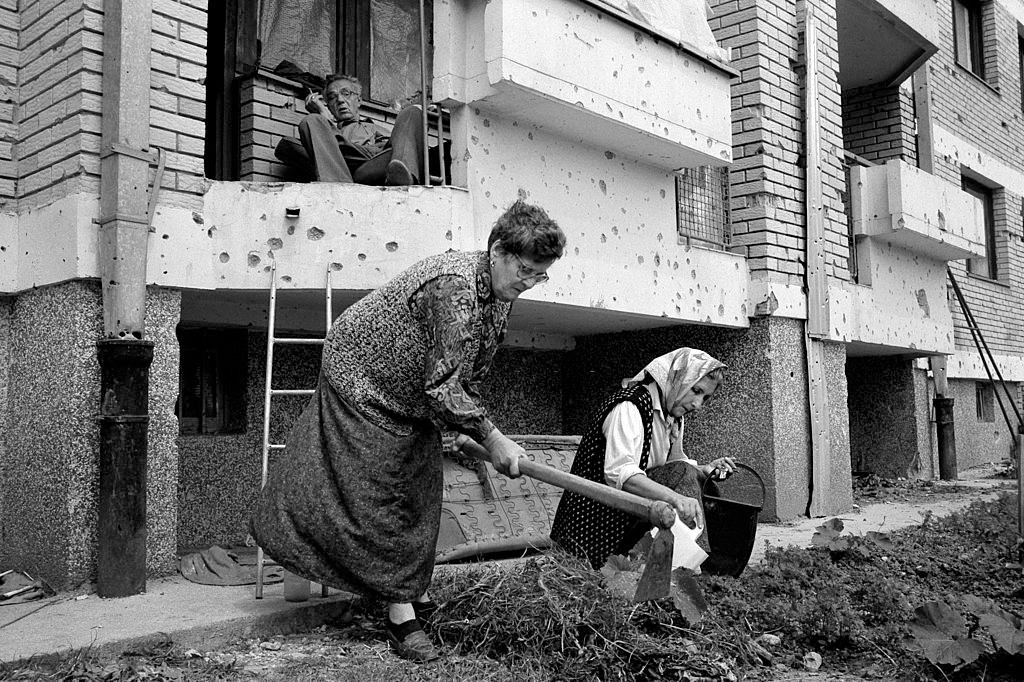
Some of the siege’s most striking photographs show ordinary residents continuing to live with defiant stubbornness. Meliha Varešanović, dressed professionally and wearing heels, walked to work through the suburb of Dobrinja — one of the most dangerous neighborhoods in the city — refusing to let the war change who she was. Muslim women planted vegetables in patches of dirt outside their apartment blocks. Residents rode trams through the destroyed financial district. Life continued, not because the danger had passed, but because stopping meant giving in.
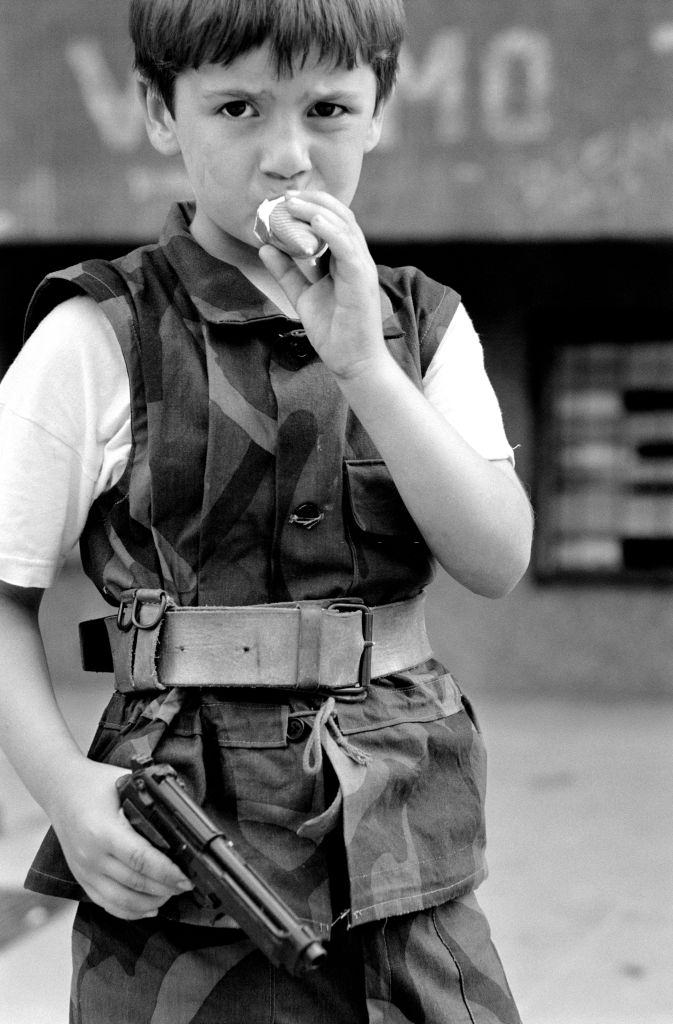
A small boy dressed in camouflage uniform holds his fathers pistol while eating an ice cream, 1992.
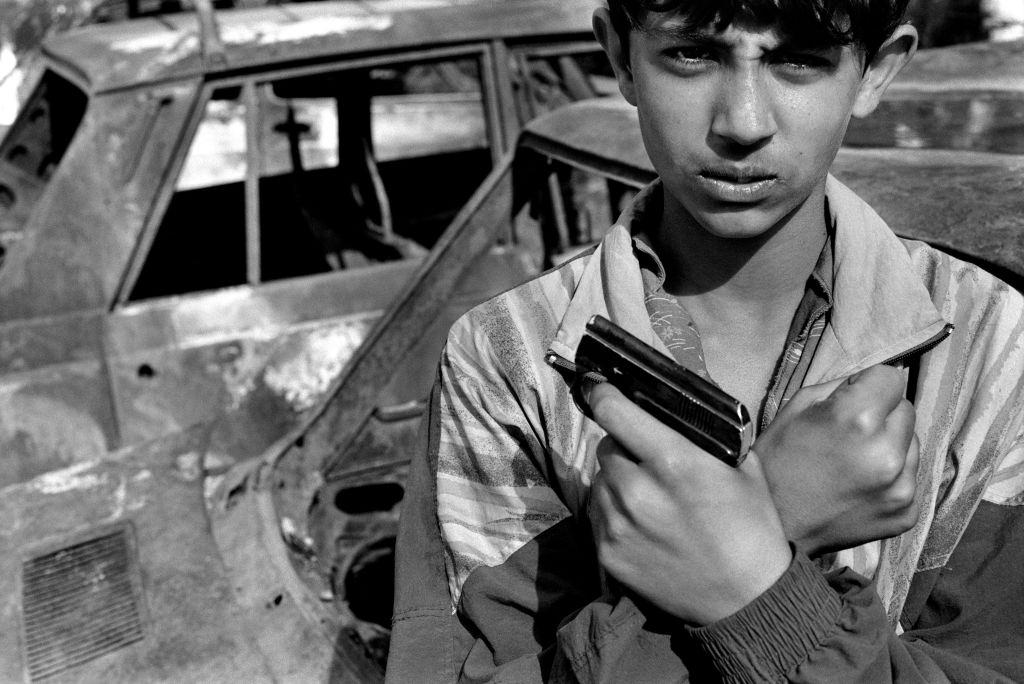
A portrait of a boy holding a small automatic pistol beside destroyed cars in a frontline suburb of the city, 1992.
A couple hold hands and shelter behind an armoured press vehicle as they run across an intersection in Sarajevo, 1992.
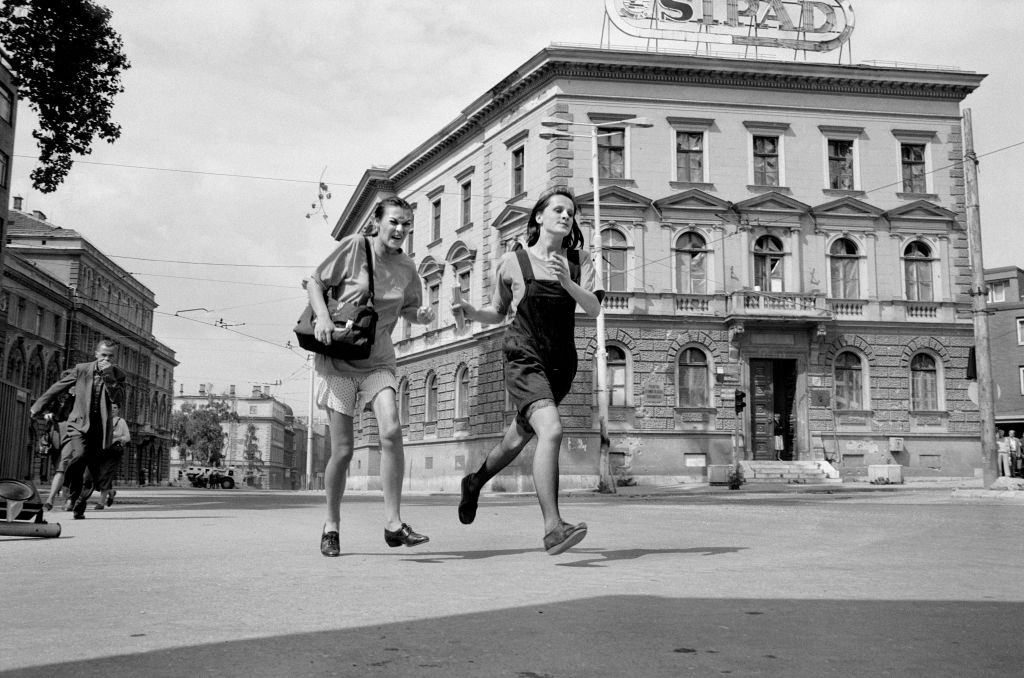
Two teenage girls grimace with fear as they sprint across an intersection on Sniper Alley, July 1992.
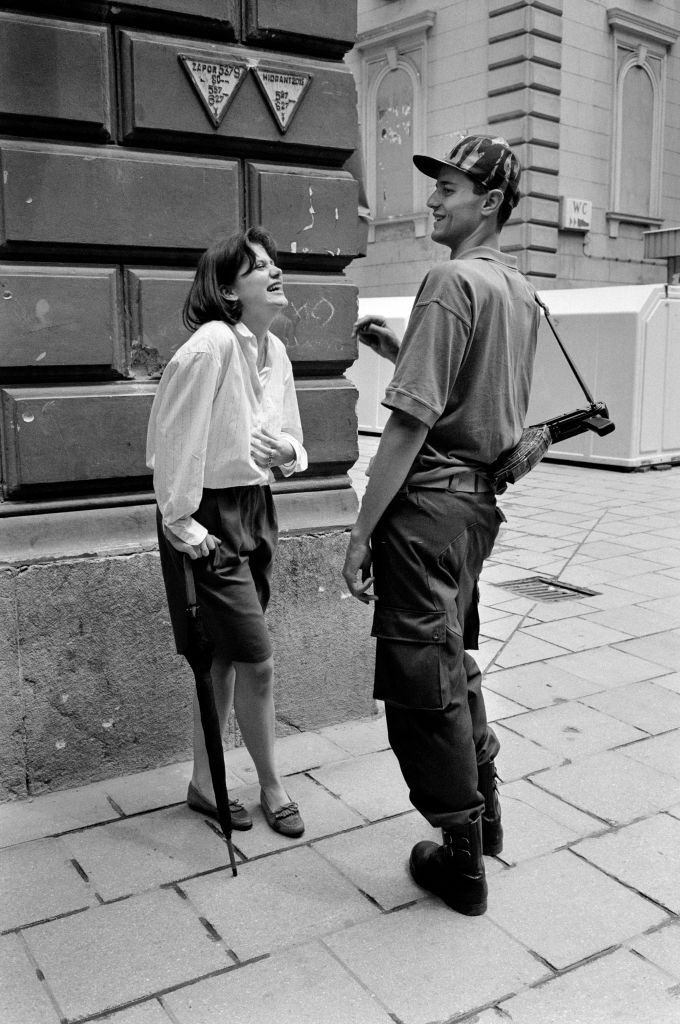
A teenage girl and a young Bosnian fighter with an AK-47 flirt on a street corner during a break in shelling, 1992.
A small boy stares through a bullet riddled window in the Dobrinja suburb of Sarajevo.
Porters from Kosovo Hospital rush a man wounded by a shell to the emergency room, during the Siege of Sarajevo, Bosnia, July 1992.
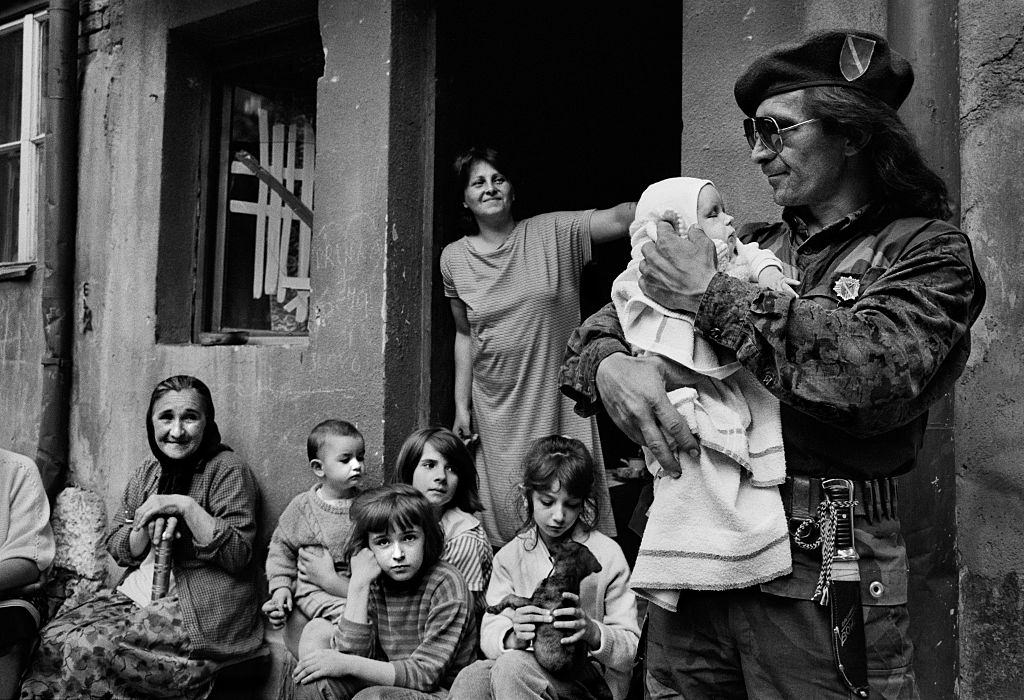
Bosnian soldier Sead Hamzic holds his 53 day old goddaughter Amila outside the family home in Sarajevo.
A woman grieves by a grave in the Lion Cemetery, Sarajevo, 1992.
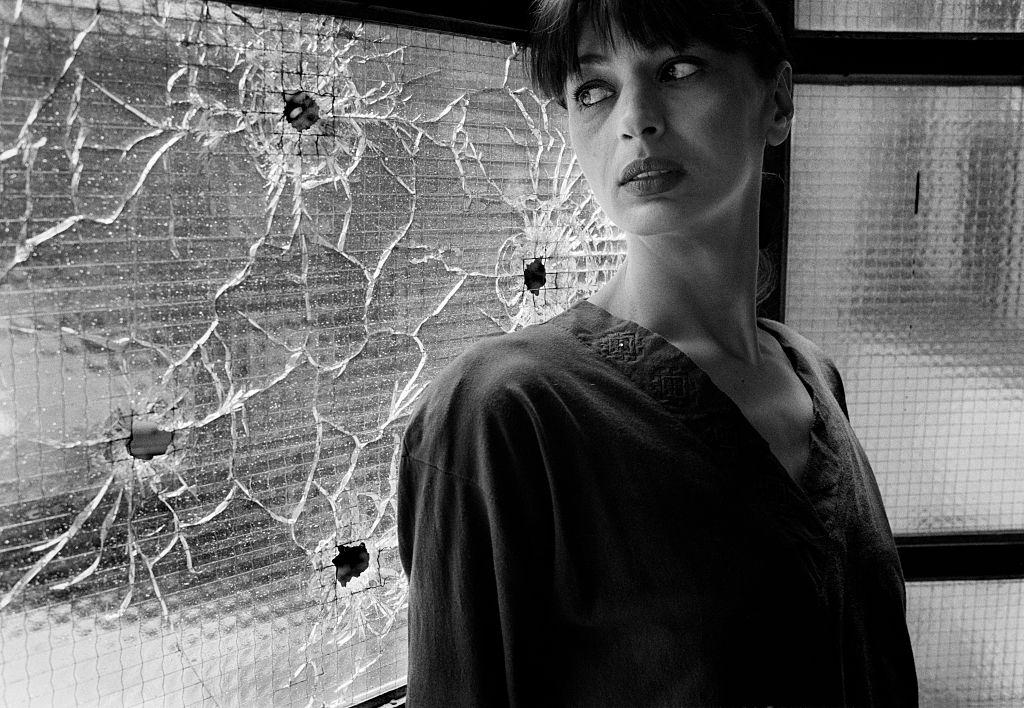
Former model Mirjana Deak photographed at home near windows shattered by sniper bullets during the siege of the city.
A group of young boys play with toy pistols in front of a burned building in Sarajevo 19 August 1992.
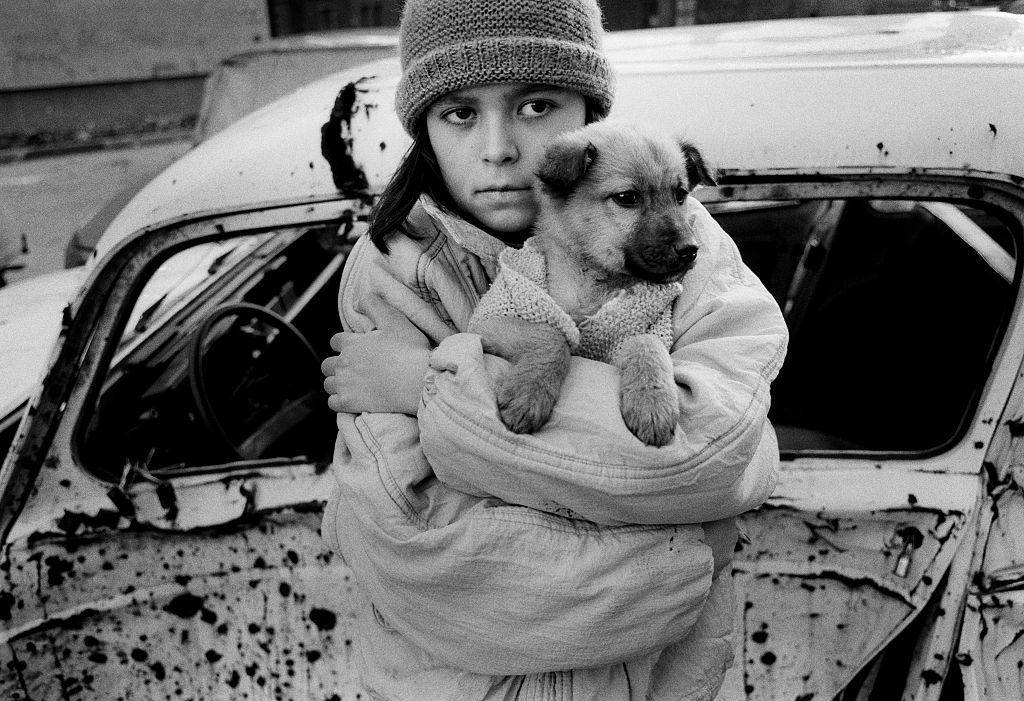
A Bosnian girl with her puppy, 1992.
In the dangerous suburb of Dobrinja Meliha Vareshanovic walks proudly and defiantly to work during the siege of Sarajevo, 1993.
Citizens sprint across 'Sniper Alley' during the siege of Sarajevo in 1994.
Citizens sprint across ‘Sniper Alley’ during the siege of Sarajevo in 1994.
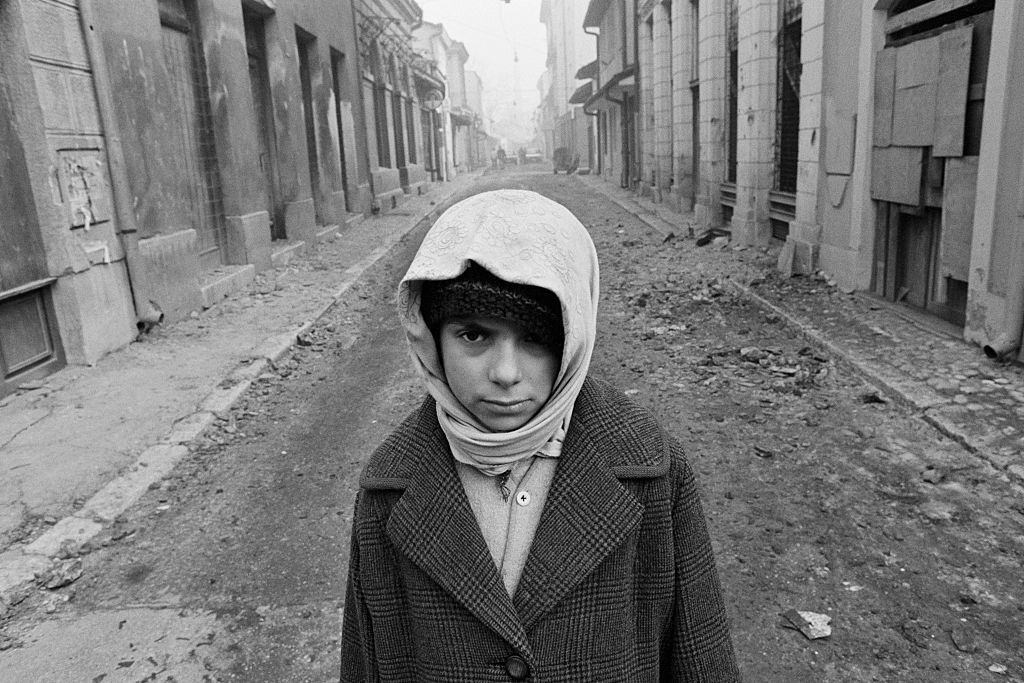
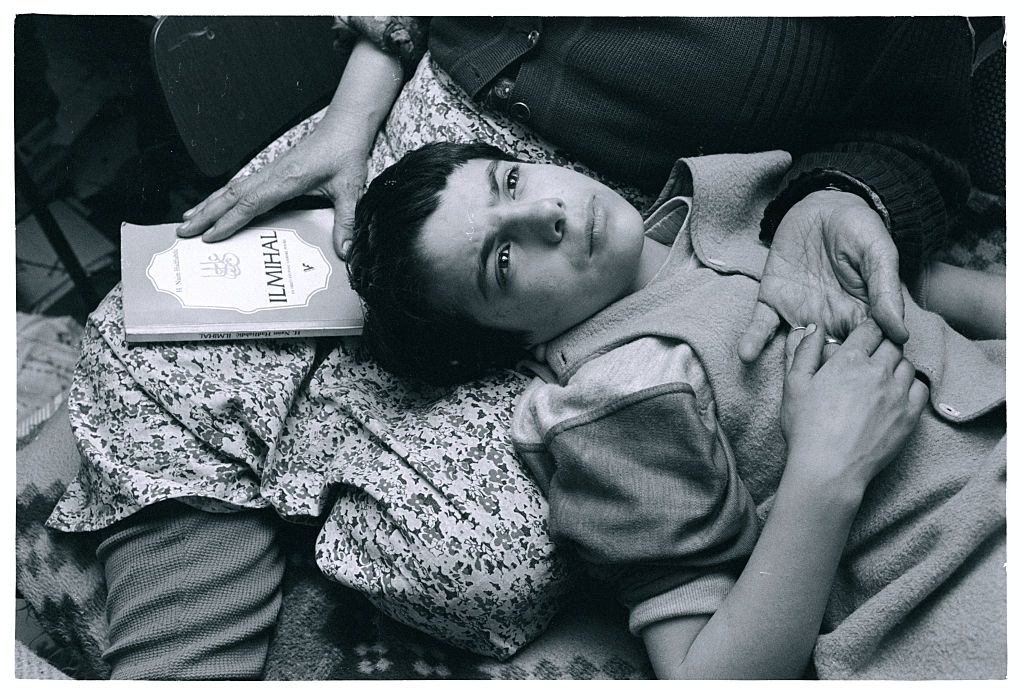
Mirza Mangajic, a 10-year-old Muslim boy, survives in Sarajevo's Old Town quarter with his grandmother, 1993.
Mirza Mangajic, a 10-year-old Muslim boy, survives in Sarajevo’s Old Town quarter with his grandmother, 1993.
Mirza Mangajic, a 10-year-old Muslim boy, lays his head in his grandmother's lap as he prays with her.
Mirza Mangajic, a 10-year-old Muslim boy, lays his head in his grandmother’s lap as he prays with her.
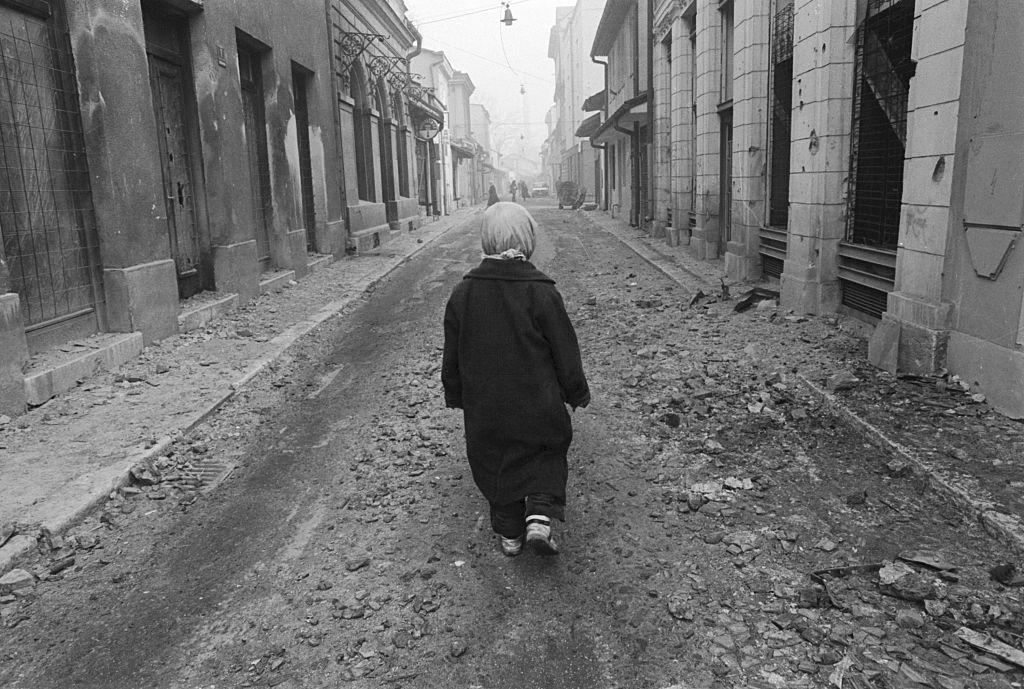
A 10-year-old Muslim boy, walks in the street. He survives in Sarajevo's Old Town.
A 10-year-old Muslim boy, walks in the street. He survives in Sarajevo’s Old Town.
Graves of Muslims, Croats and Serbs at Zetra Stadium at Sarajevo during the siege of Sarajevo in the civil war.
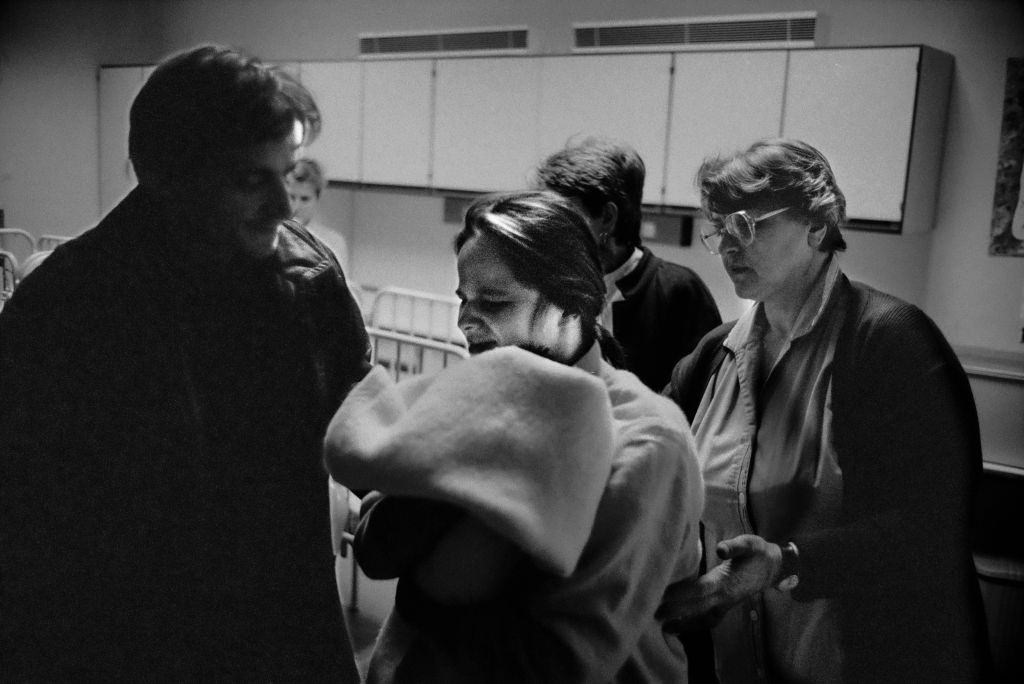
A mother hugging her injured child during the Siege of Sarajevo, 1994.
A girl who lost her both legs in the hospital during the Bosnian War, 1994.
A one year old child in the hospital during the Siege of Sarajevo, 1994.
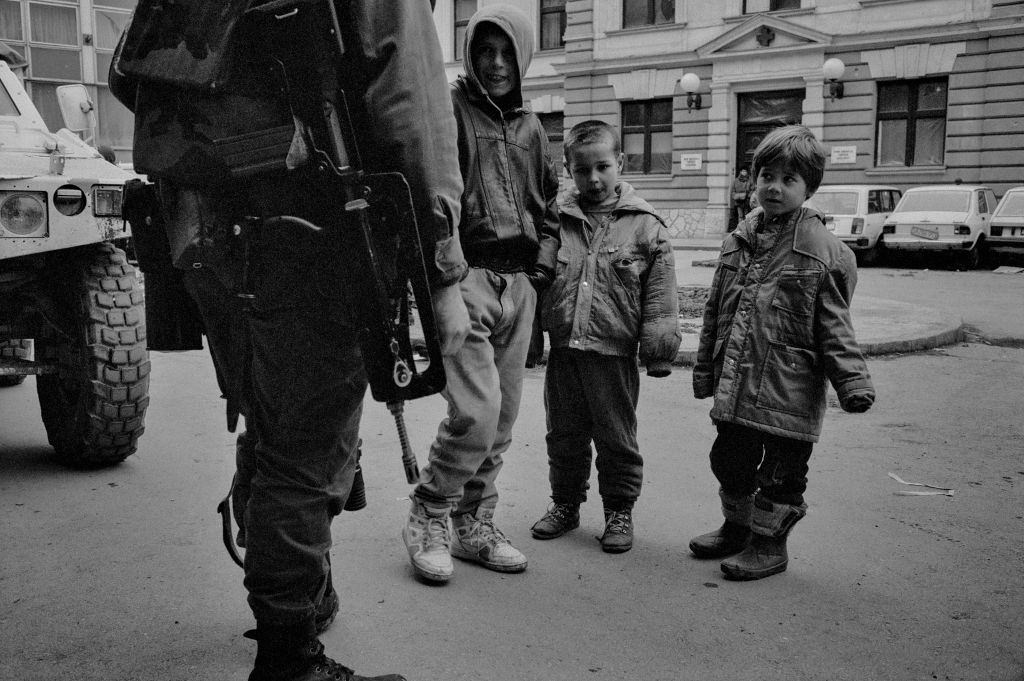
Three children standing with the soldier, 1994.
A girl runs through Hero's Square on the Sarajevo frontline where residents constantly suffered heavy shelling and sniping during the siege, 1994.
A girl runs through Hero’s Square on the Sarajevo frontline where residents constantly suffered heavy shelling and sniping during the siege, 1994.
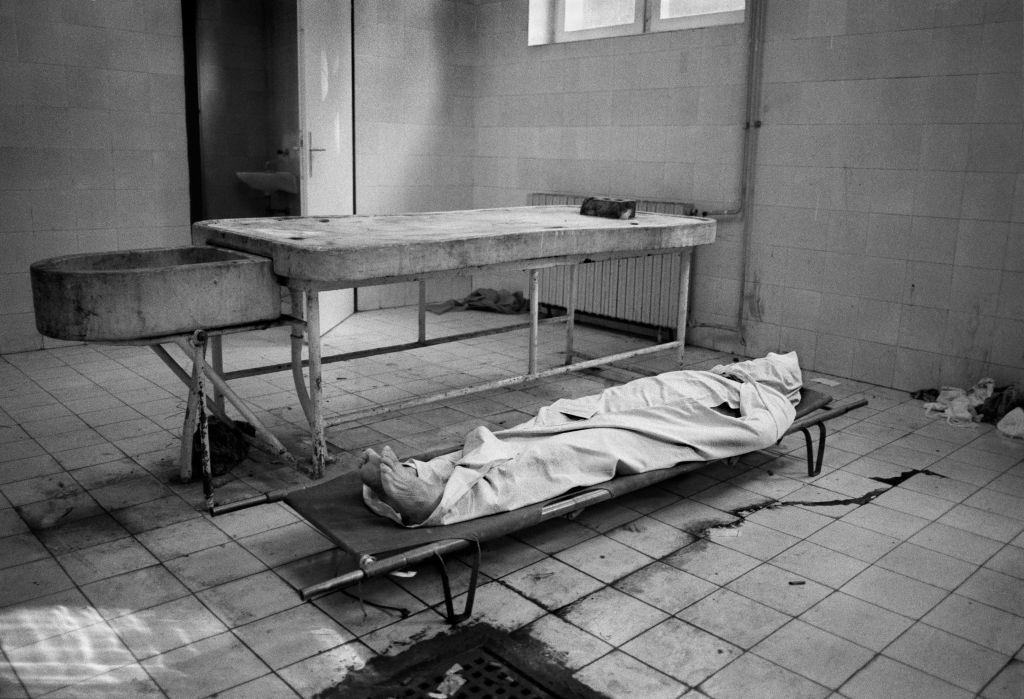
A body lies in a morgue during the four year siege of Sarajevo, 1994.
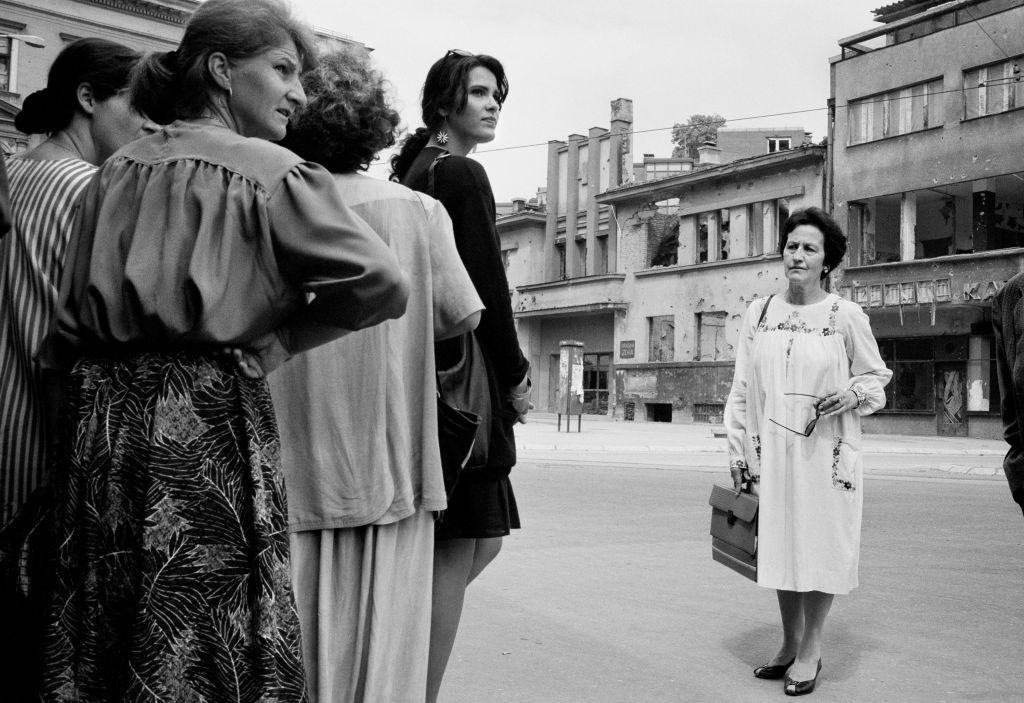
Women wait for the shooting to stop before running across 'Sniper Alley' during the siege of Sarajevo in 1995.
Women wait for the shooting to stop before running across ‘Sniper Alley’ during the siege of Sarajevo in 1995.
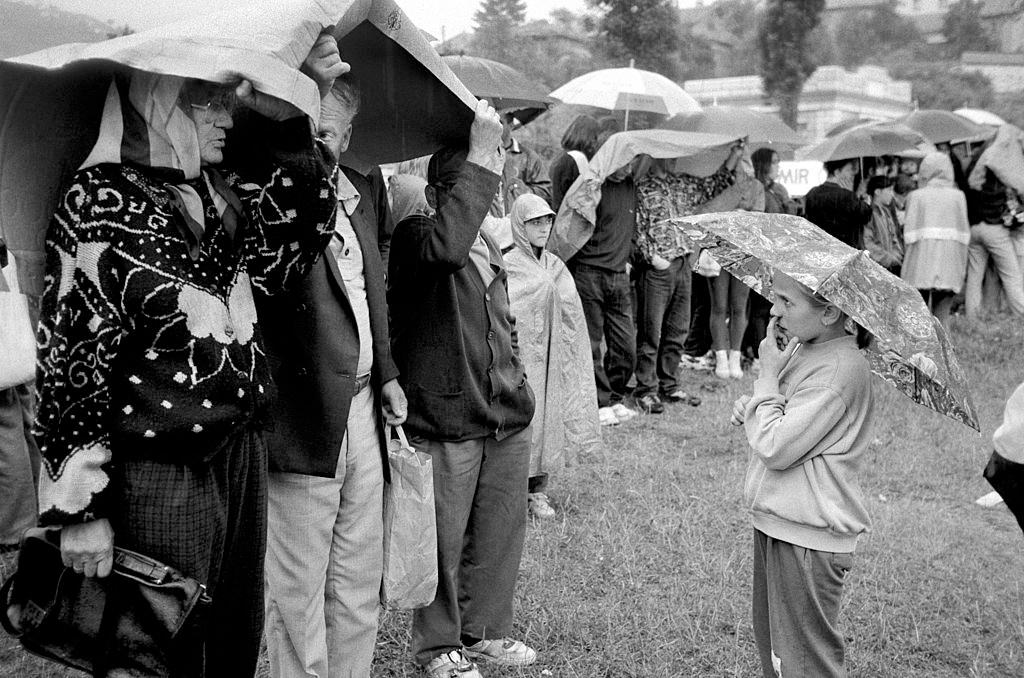
People shelter from the rain under their umbrellas during filming of 'Welcome to Sarajevo' starring Woody Harrelson, 1994.
People shelter from the rain under their umbrellas during filming of ‘Welcome to Sarajevo’ starring Woody Harrelson, 1994.
Passengers on a Sarajevo tram in the destroyed financial district of Sarajevo, 1994.
Muslim women plant vegetables in a small patch of earth outside their apartment as a man watches, and smokes a cigarette, 1994.
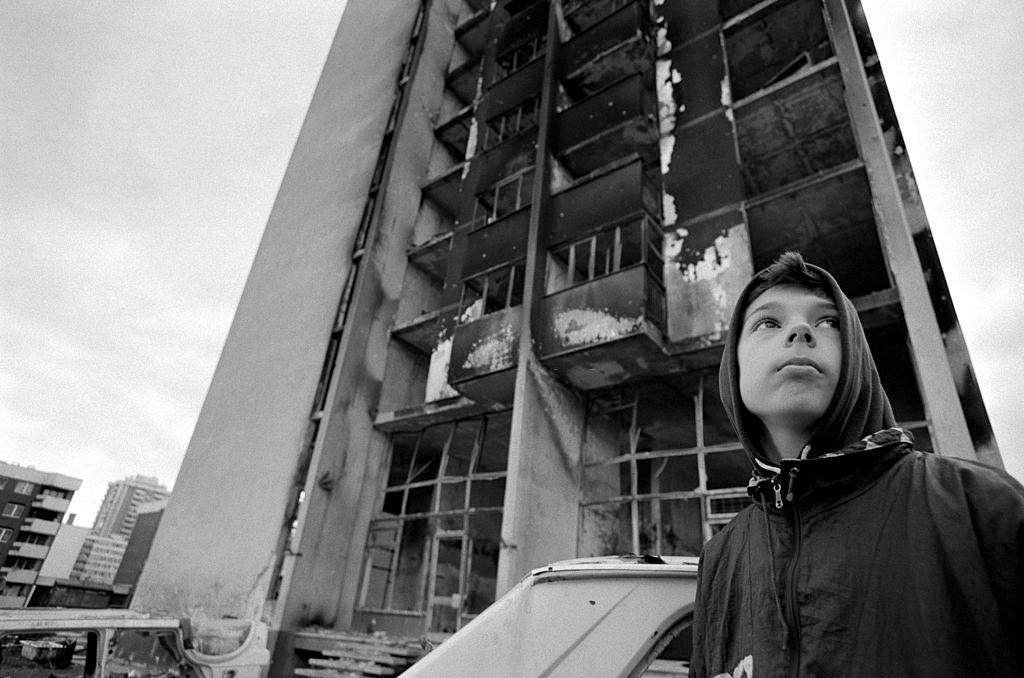
A boy in the area known as Heroes Square, so called because of the extreme dangers of living there during the war, 1994.
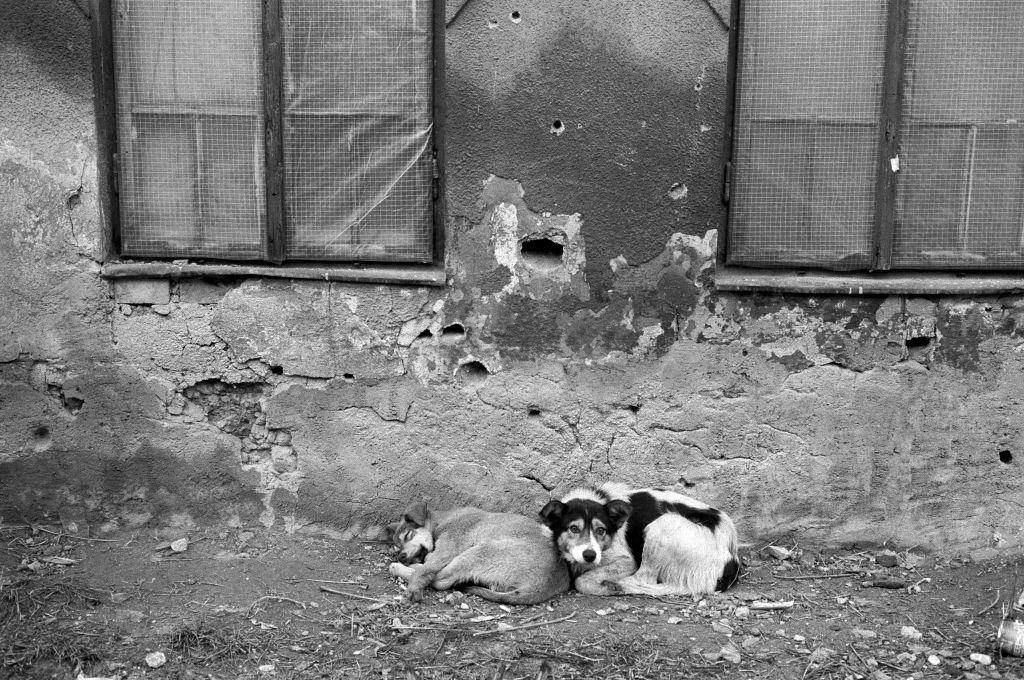
Two dogs lie sleeping in a Sarajevo street, 1994.
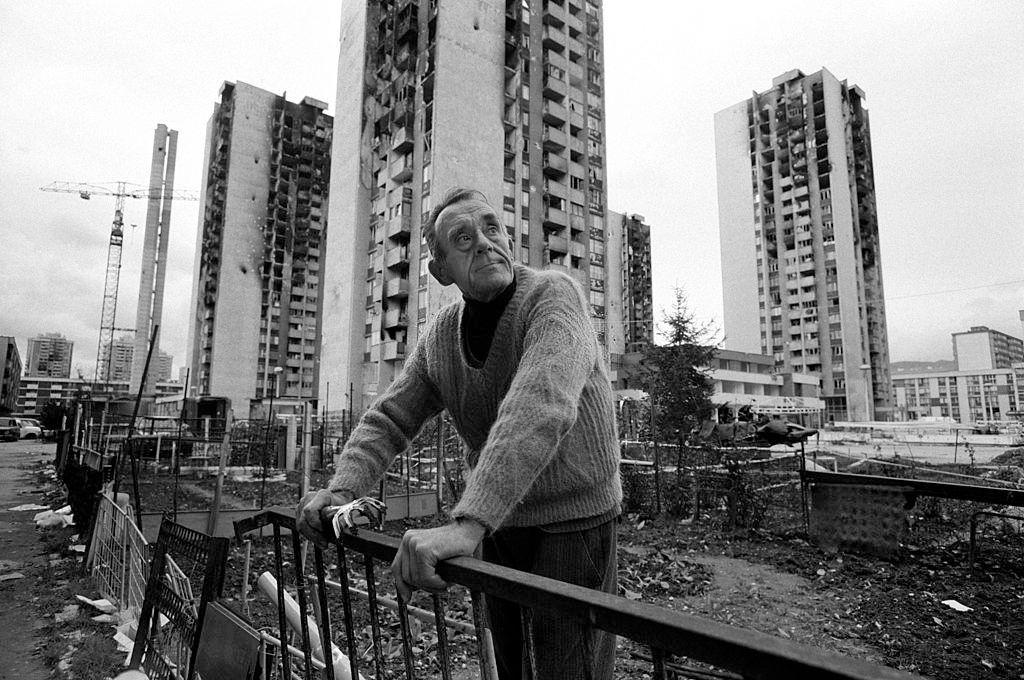
A man in the area known as Heroes Square, so called because of the extreme dangers of living there during the war.
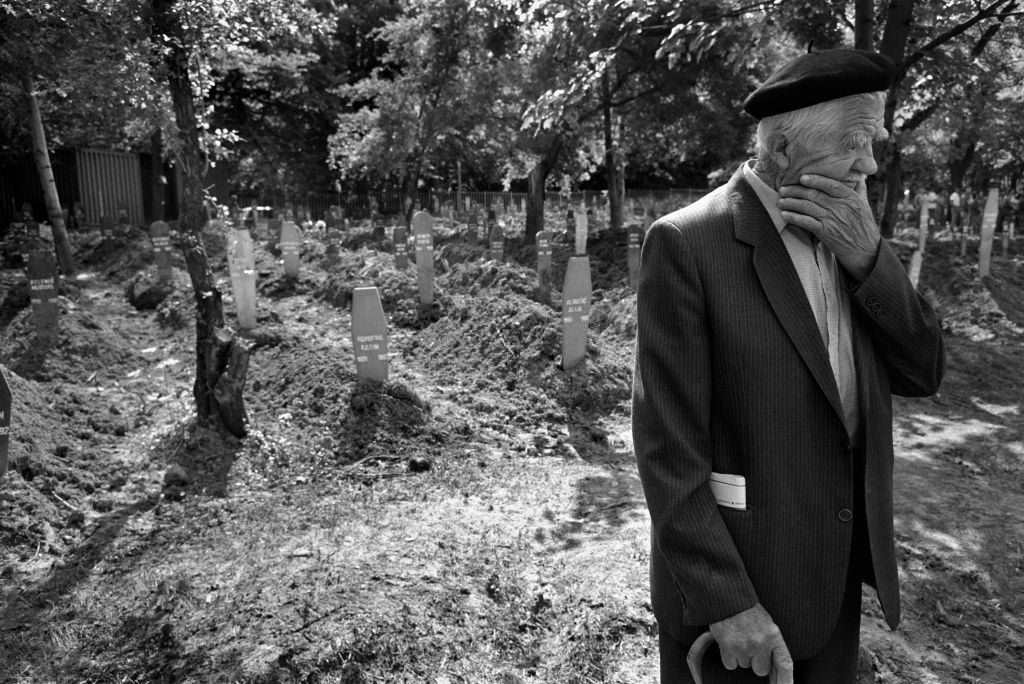
A man deep in thought in a Sarajevo cemetery, April 1994.
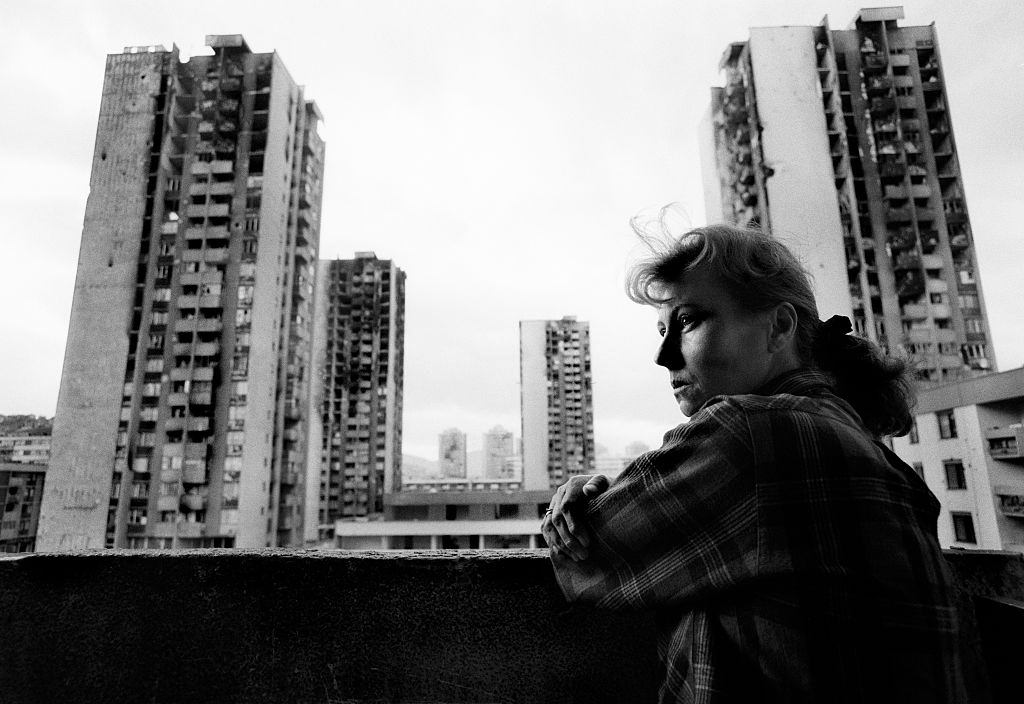
Minka Salihagic, photographed on the balcony of her apartment in the area known as Heroes Square, so called because of the extreme dangers of living there during the war, in Sarajevo.
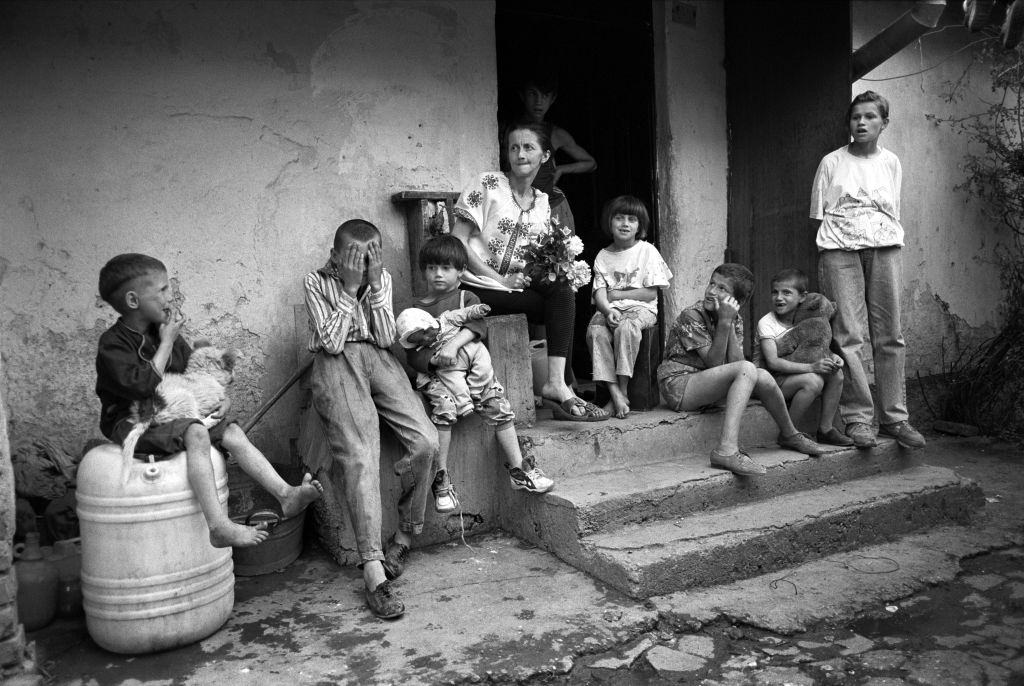
A mother from a poor family sits outside her home with eight of her ten children, May 1994.
A woman grieves at her relative's grave after his burial in a Sarajevo cemetery, 1994.
A woman grieves at her relative’s grave after his burial in a Sarajevo cemetery, 1994.
An amputee on crutches walks along the main road known as Sniper Alley, 1995.
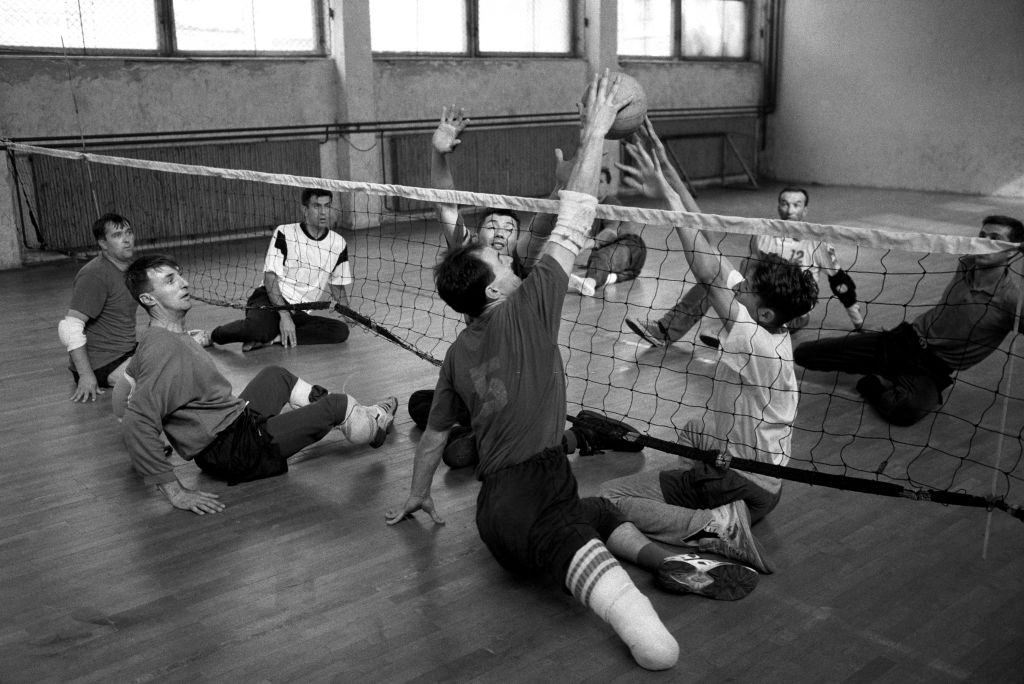
Men who lost limbs through shells and landmines play floor volley ball at a sports club for amputees set up in Sarajevo during the war, 1995.
Children injured in the siege moving along the corridors of Kosevo Hospital in Sarajevo, 1995.
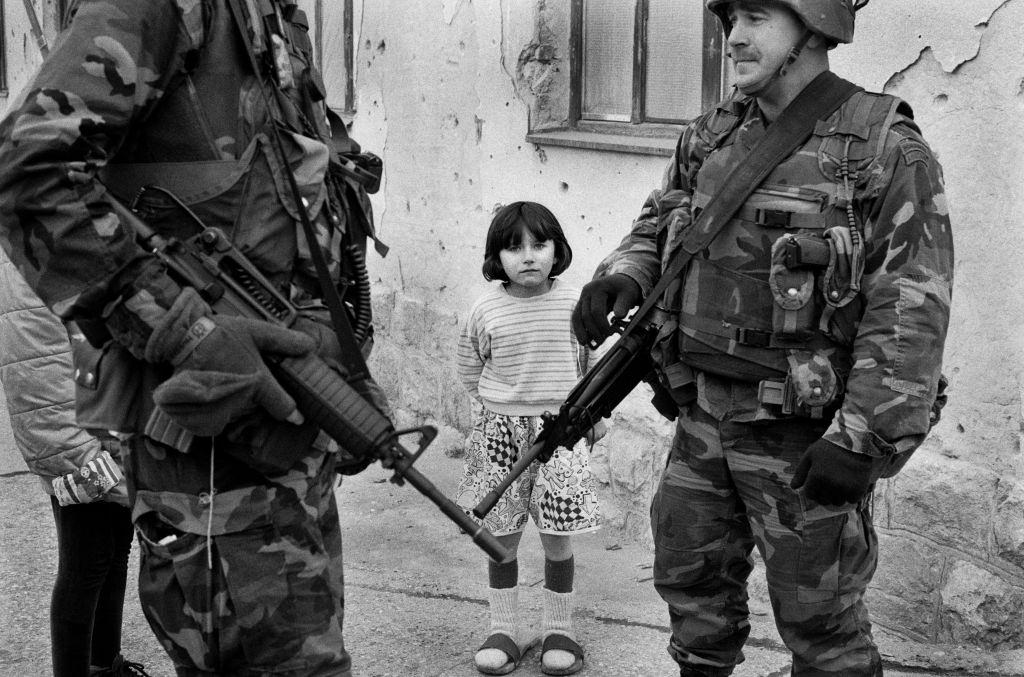
A little girl watches heavily armed US Special Forces on patrol in Sarajevo after the ceasefire, 1996.
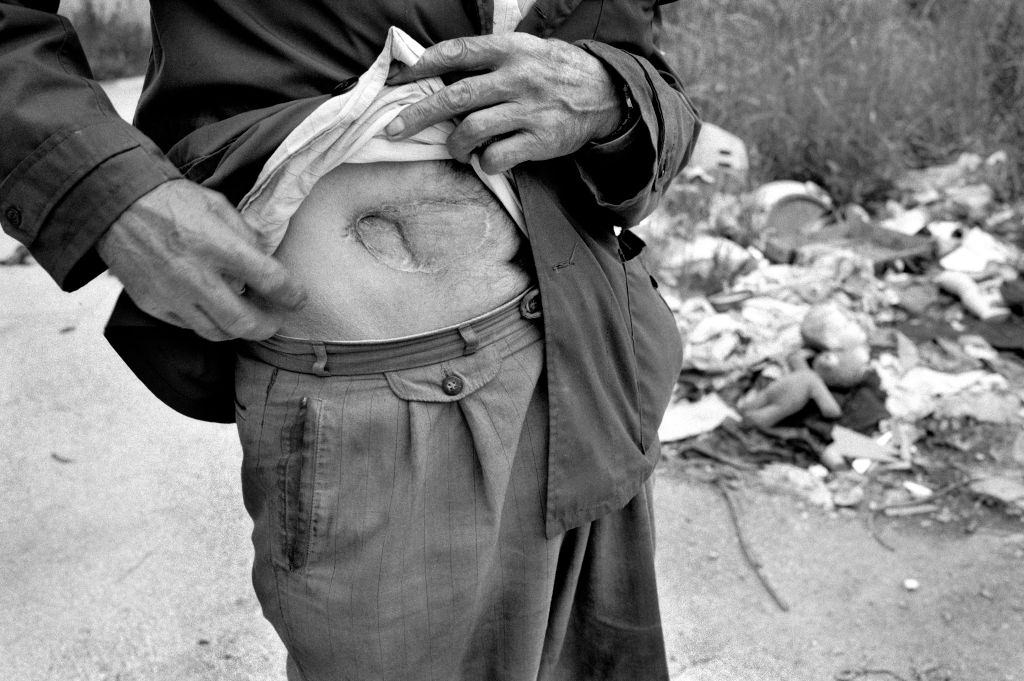
An elderly man displays a scar from a stomach wound caused by shrapnel from a mortar shell, 1966.
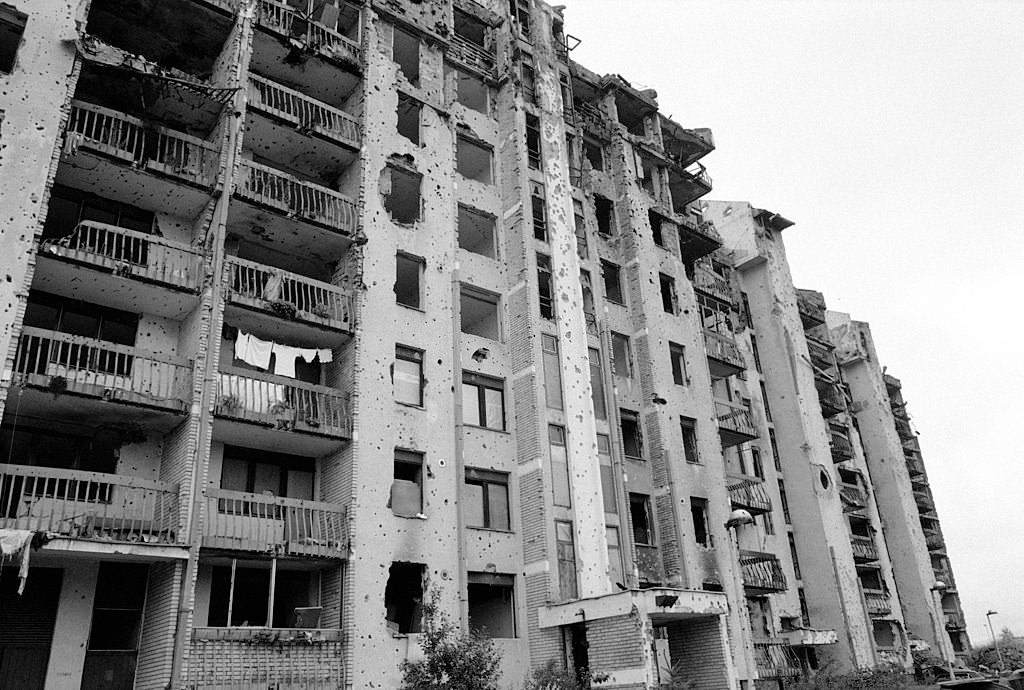
The first signs of rebirth and rebuilding as washing hangs on the balcony of a shell damaged apartment block on Sarajevo's frontline.
The first signs of rebirth and rebuilding as washing hangs on the balcony of a shell damaged apartment block on Sarajevo’s frontline.
A woman grieves at the grave of her son in a snow covered Sarajevo cemetery, 1995.
Enjoyed this post? Get new ones in your inbox.

Leave a Comment

Your email address will not be published. Required fields are marked *

Share this Post 🥺

Please take a moment to share this content. Your support is greatly appreciated! 🙌🙏

Share this Post 🥺

Please take a moment to share this content. Your support is greatly appreciated! 🙌🙏
Scroll to Top
 
Hey Friend, Before You Go.. Please like & follow for more interesting content