
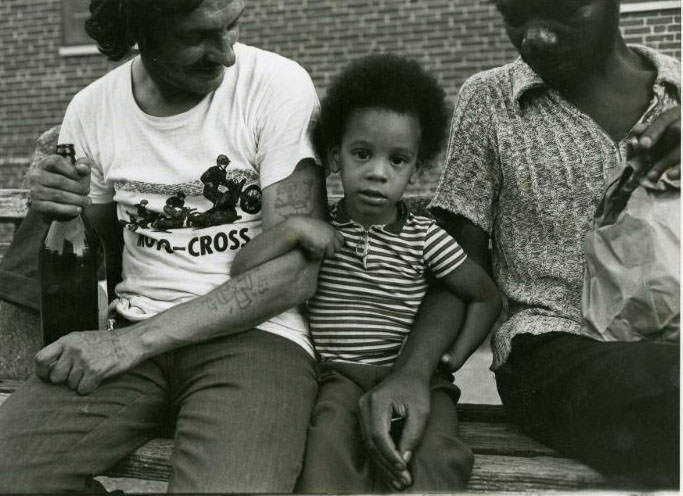
North Cambridge sits in the northern part of Cambridge, Massachusetts, bordered by Somerville, Arlington, and Belmont. The neighborhood stretches along Massachusetts Avenue from Porter Square — a major transit hub served by the Red Line, commuter rail, and bus routes — all the way to the Arlington border. On its western edge, the MBTA Alewife Red Line station anchors a corridor of office and industrial buildings along Cambridge Park Drive. Within this dense urban neighborhood, the Jefferson Park Housing Project stood as home to hundreds of working-class families. Between 1973 and 1975, photographer Olive Pierce documented the lives of those residents for The Cambridge Room, producing a remarkable record of everyday life in the project.
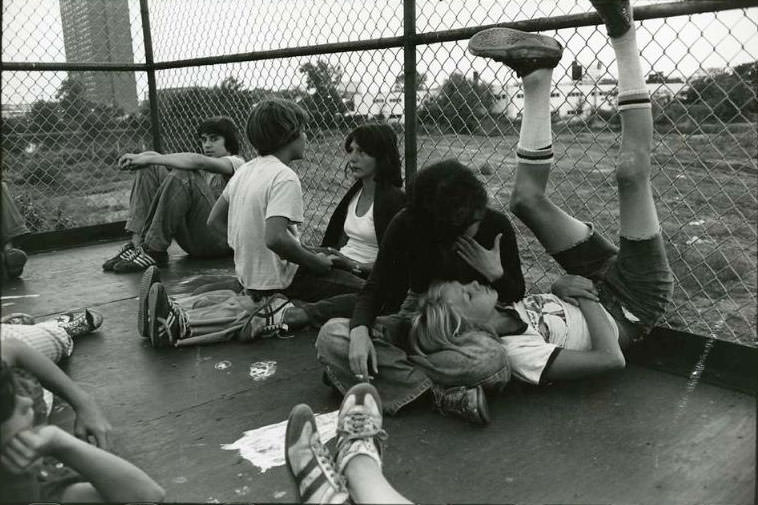
Pierce’s photographs focus most heavily on the children and teenagers of Jefferson Park. In the summer of 1973, she captured a group of five teens gathered in a fence-enclosed area, with the tall concrete towers of the Rindge Towers Housing Project rising in the background.
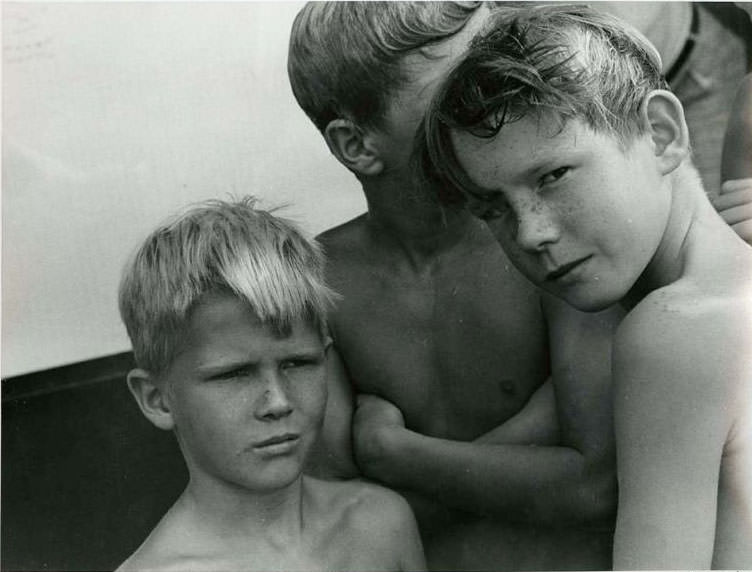
That same summer, Pierce turned her lens toward the Francis J. McCrehan Memorial Swimming and Wading Pool, a local gathering spot for Jefferson Park kids during the hot months. There she photographed the Sawyer brothers in a close, candid portrait.
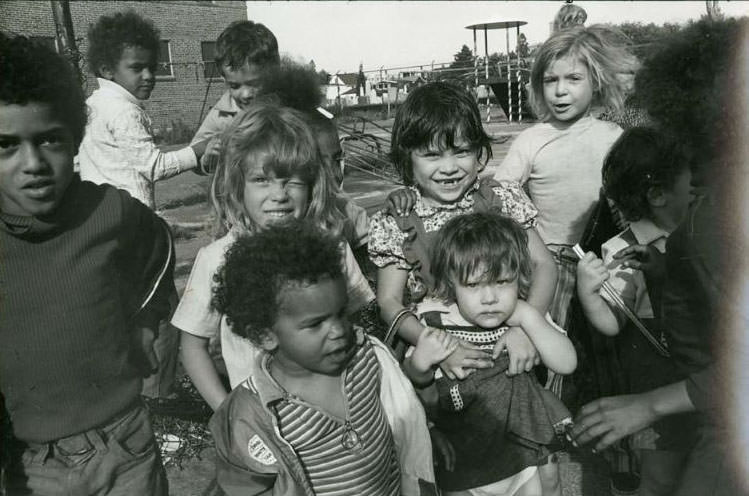
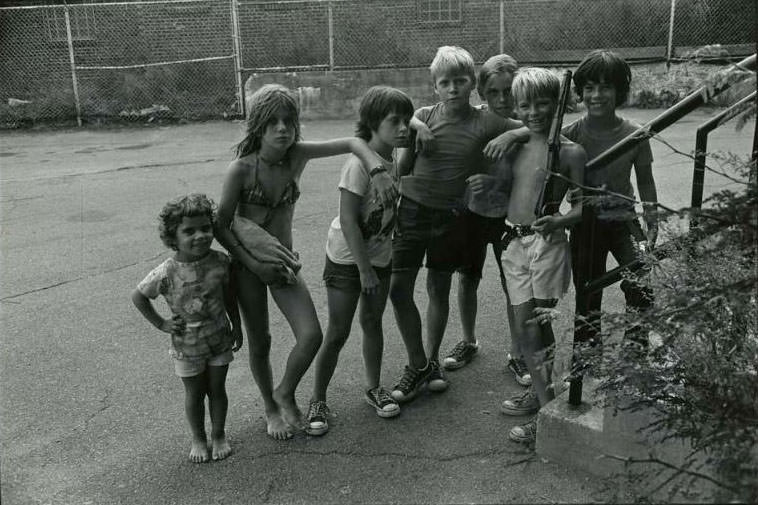
The courtyards of Jefferson Park served as the main outdoor space for the project’s youngest residents. Pierce photographed groups of children using these shared spaces, showing the tight-knit social world that formed within the housing complex’s concrete boundaries.
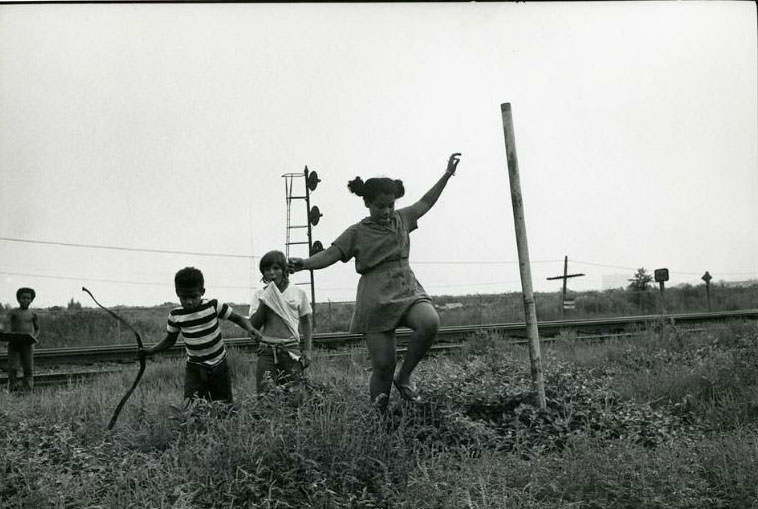
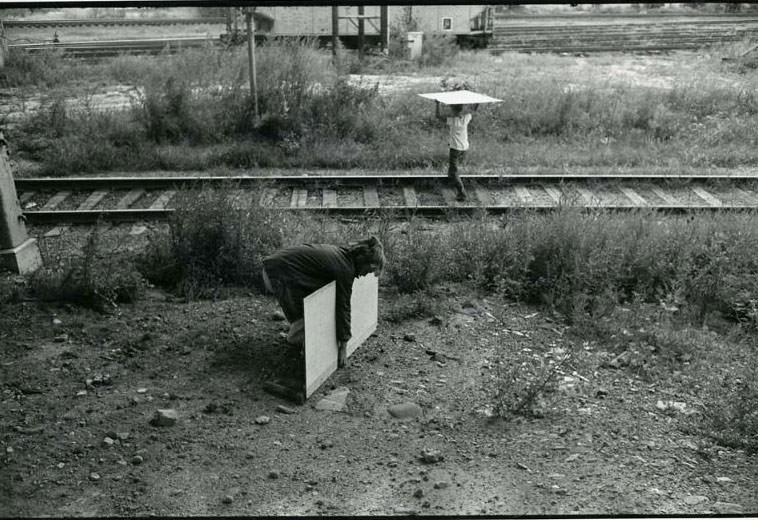
Beyond the courtyard, the railroad tracks running alongside Jefferson Park became another playground. Children made full use of this industrial stretch, treating the rails and surrounding ground as an extension of their neighborhood.
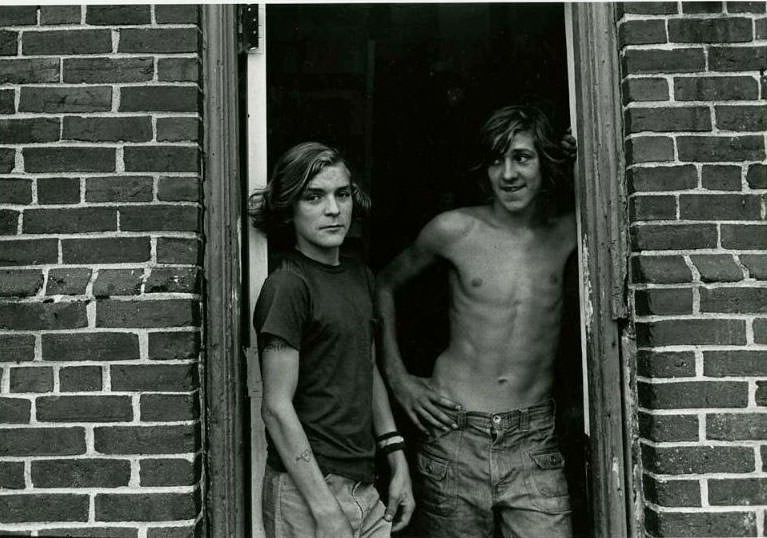
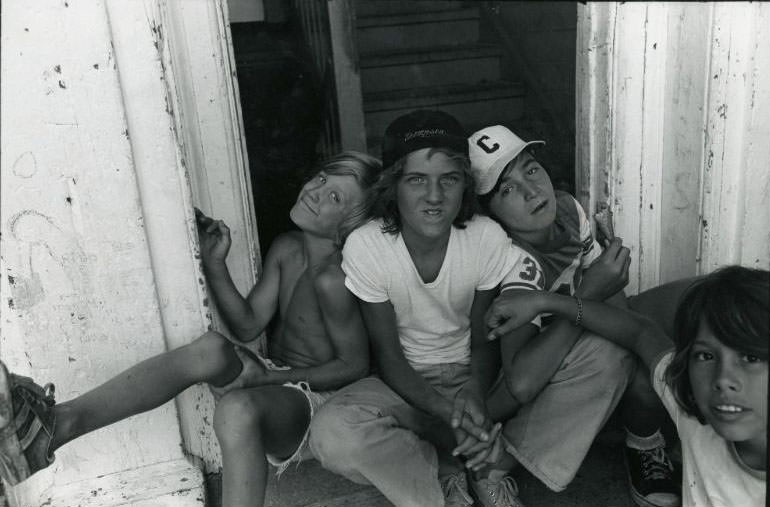
Pierce also documented the quieter, more static moments of project life — kids pausing in doorways, watching the street, occupying the in-between spaces of the buildings where they lived.
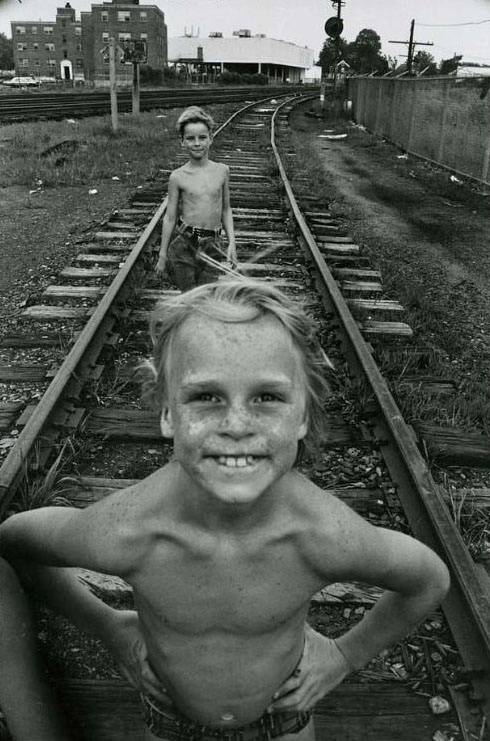
Some of her strongest images from 1973 come from the railroad tracks themselves. Two shirtless boys stand directly on the rails, the housing project’s brick and concrete towers clearly visible behind them — a stark contrast between industrial infrastructure and childhood.
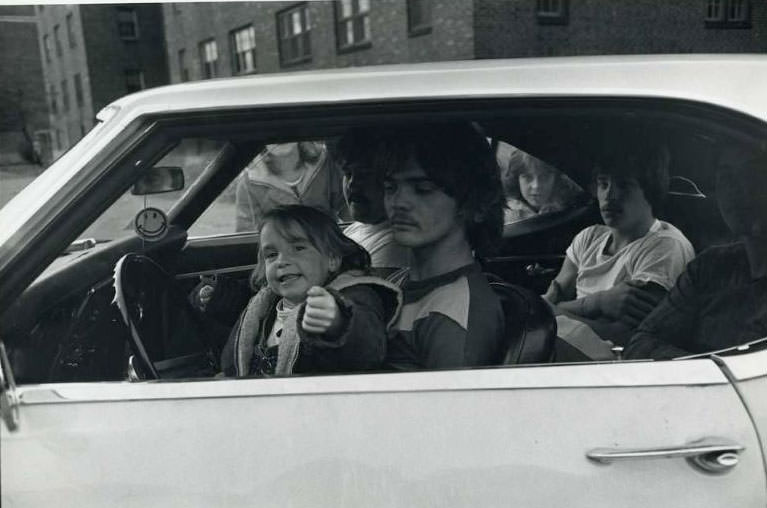
By 1974, Pierce continued building her archive of the community. One image from that year simply titled “Carfull” captures a packed car — a small slice of the neighborhood’s social life frozen in a single frame.
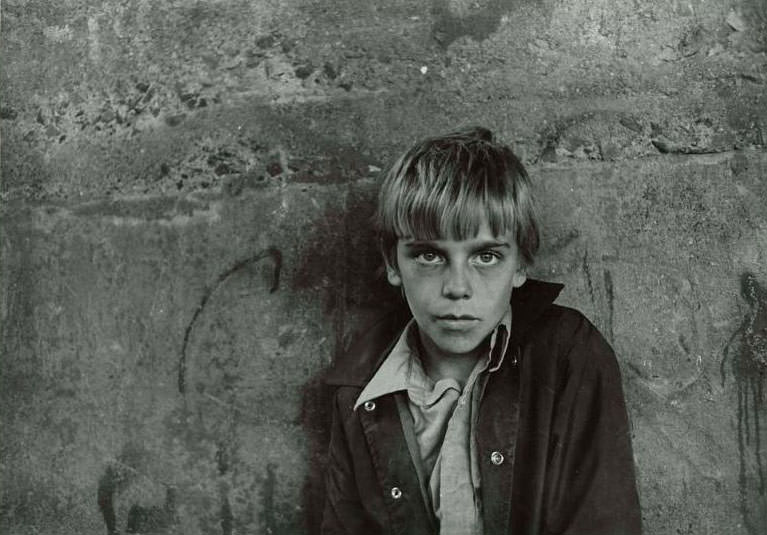
Pierce gave individual attention to specific residents as well. A close-up portrait of a boy named Rico, shot against a plain concrete background, reflects her eye for character within the community — a personal face amid the larger social documentation.
The courtyards remained a recurring subject throughout 1974. In one photograph, seven children stand together in the Jefferson Park courtyard, a larger group than her earlier shots and a sign of just how many young people called the project home.
The railroad tracks appear again in her 1974 work, this time with two children hauling boards across them — a detail that speaks to the resourcefulness of kids finding materials and purpose in the spaces around them.
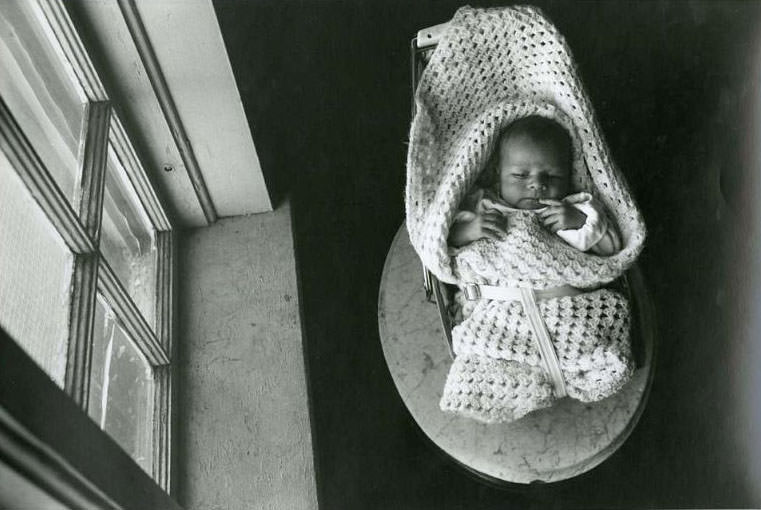
Pierce’s documentation of Jefferson Park extended inside the homes of residents as well. In 1975, she photographed a newborn wrapped in a white blanket, resting in a baby chair placed on a small oval marble table beside a window — one of the most intimate images in the entire collection.
Outside, the doorways of Jefferson Park’s buildings continued to serve as casual gathering points. A 1975 photograph of boys clustered in a doorway echoes her earlier 1973 image, showing that these threshold spaces remained a constant feature of daily life in the project across the years she worked there.
Pierce also stepped back to capture the larger physical presence of the housing complex itself. A 1975 exterior shot of the Cambridge Housing Project shows the scale of the built environment that shaped the lives of everyone she photographed.
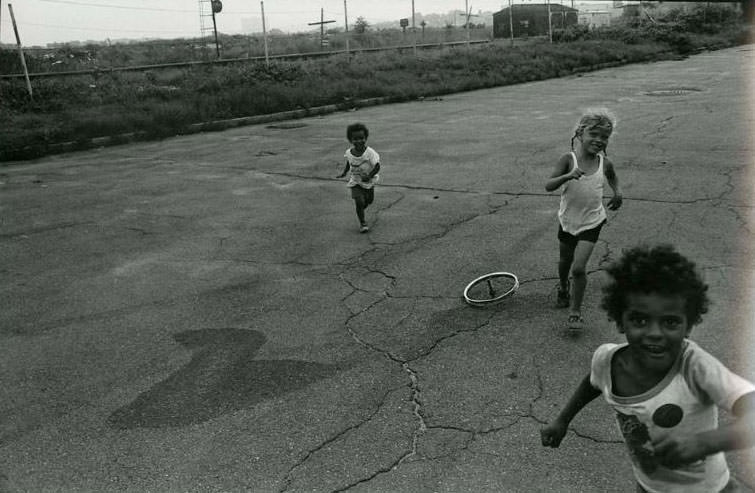
The railroad tracks show up one final time in her 1975 work. Three children sprint along a road past a bicycle wheel lying on the ground, with the tracks visible behind them — movement, speed, and the worn-down details of the neighborhood all captured in a single shot.
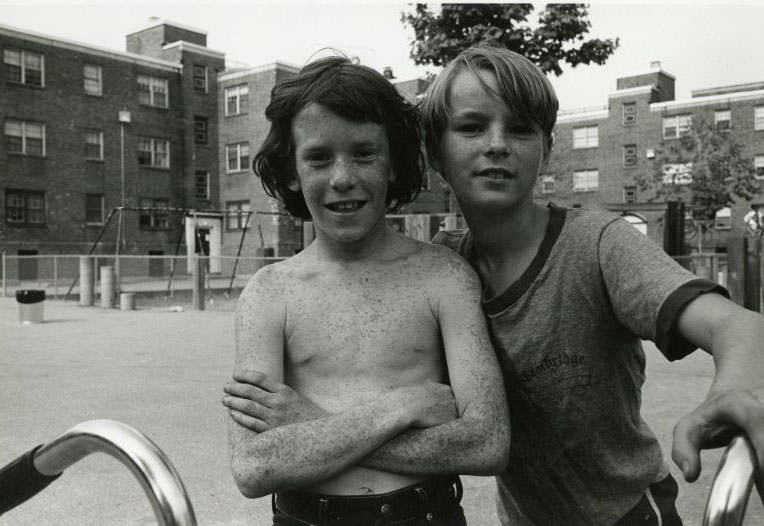
Pierce closed out her Jefferson Park series with a portrait of two eleven-year-old boys and their bike. Like much of her work from this period, it is straightforward and unposed — two kids, a bicycle, and the world of the housing project behind them. Taken together, Pierce’s photographs from 1973 to 1975 form a detailed visual record of a specific community at a specific moment in North Cambridge’s history.



The good old days