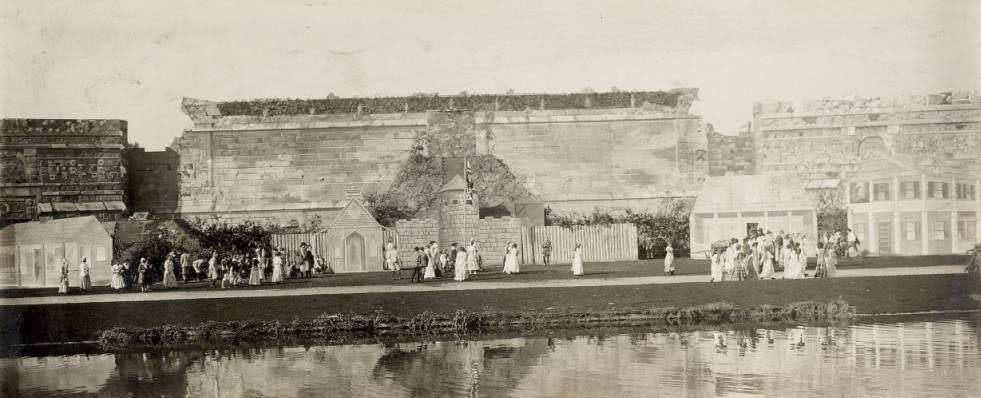
Over four nights in late May 1914, Forest Park in St. Louis, Missouri became the setting for one of the most ambitious civic performances in American history. The Pageant and Masque of St. Louis ran from May 28th through May 31st, drawing enormous crowds to Art Hill, where a massive stage had been built along the Grand Basin. The event was organized by the St. Louis Historical Society with a clear goal: to tell the full story of St. Louis — from its Indigenous roots to its modern identity — through live drama, dance, and spectacle.
Construction of the stage for the Pageant and Masque of St. Louis, 1914
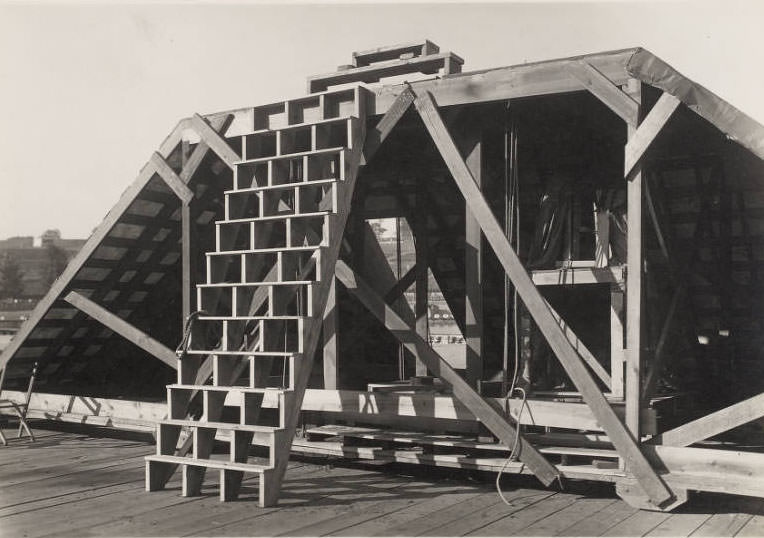
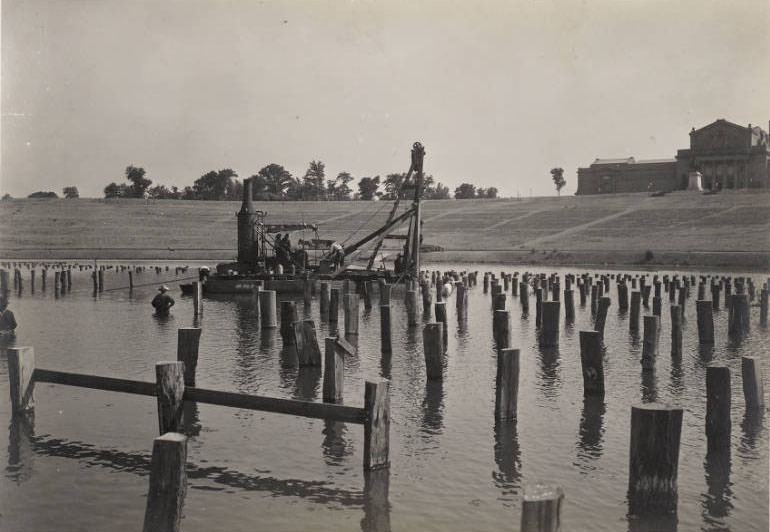
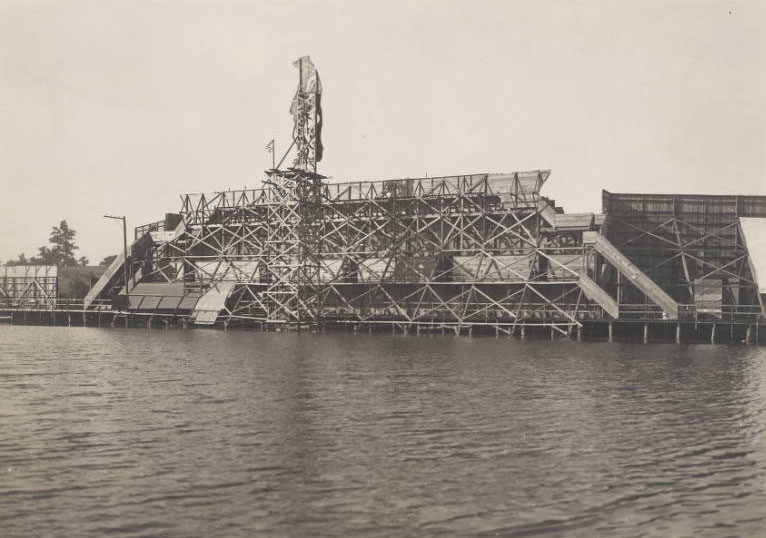
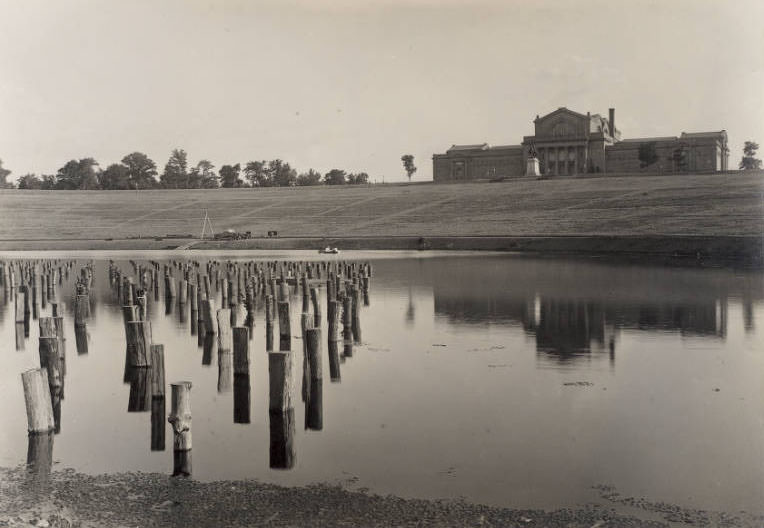
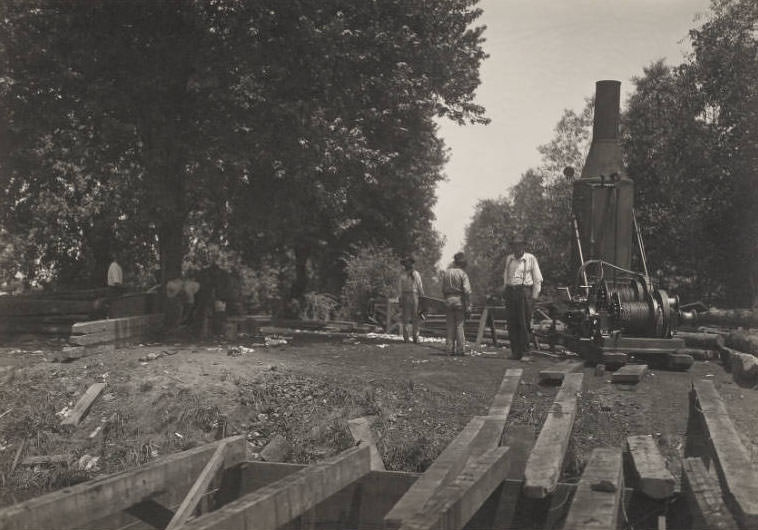
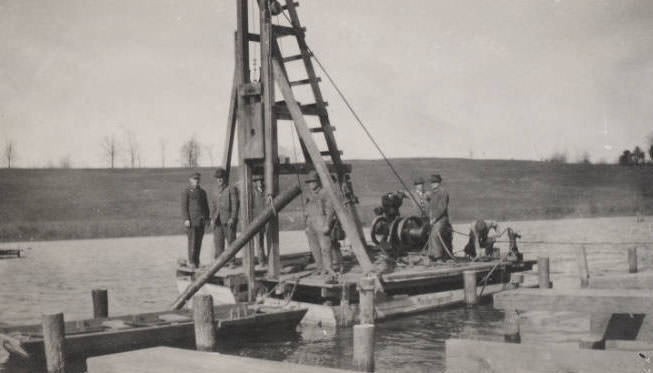
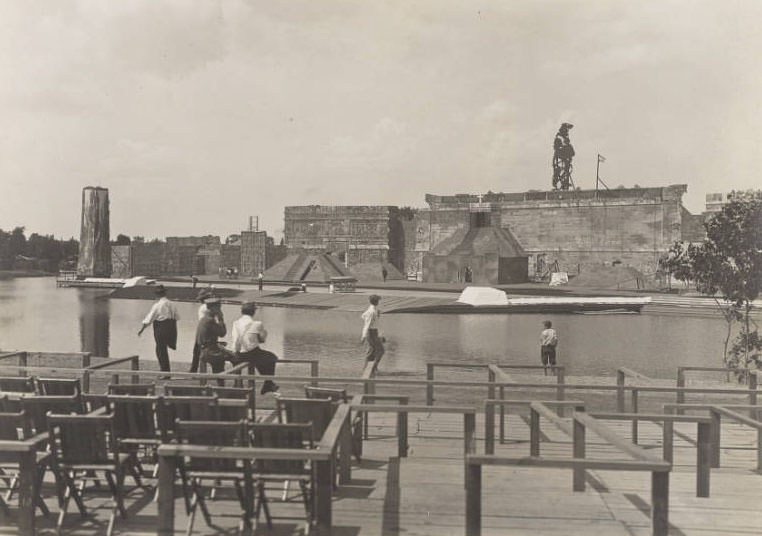
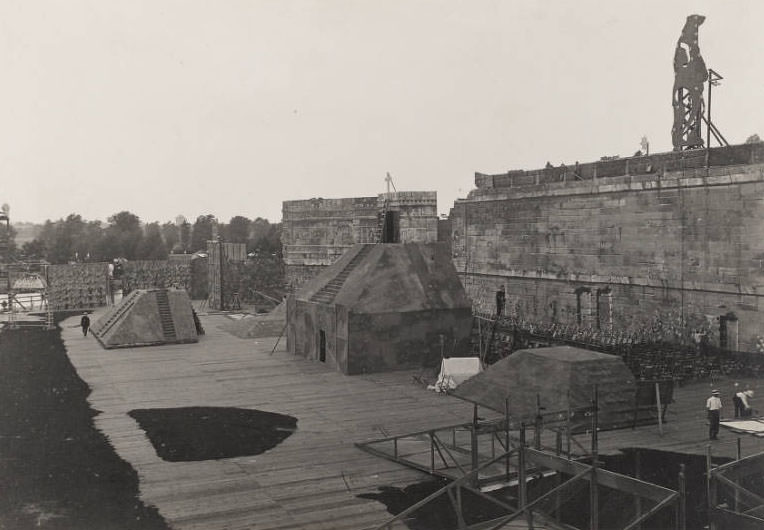
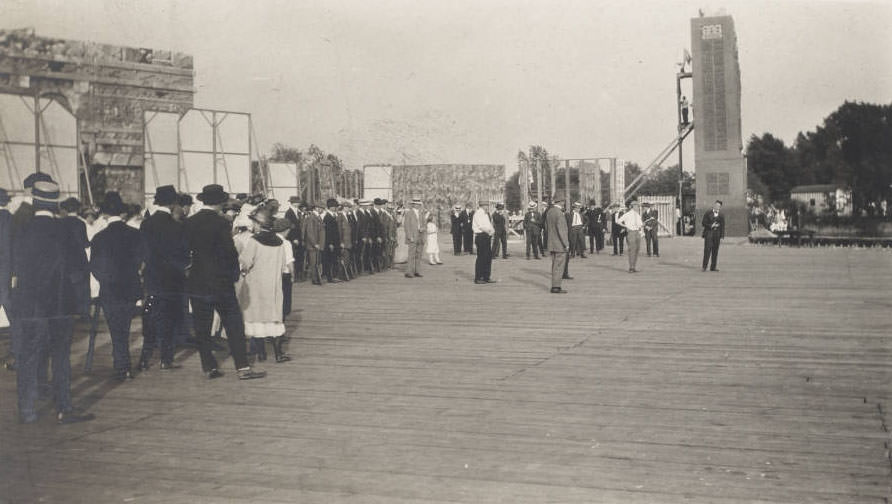
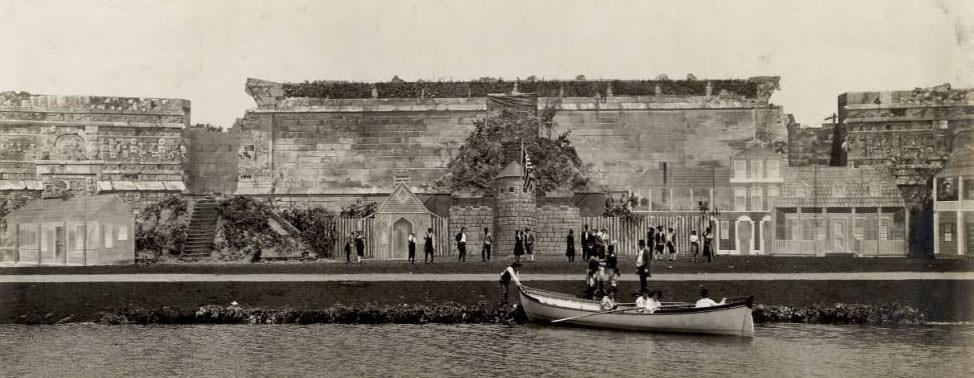
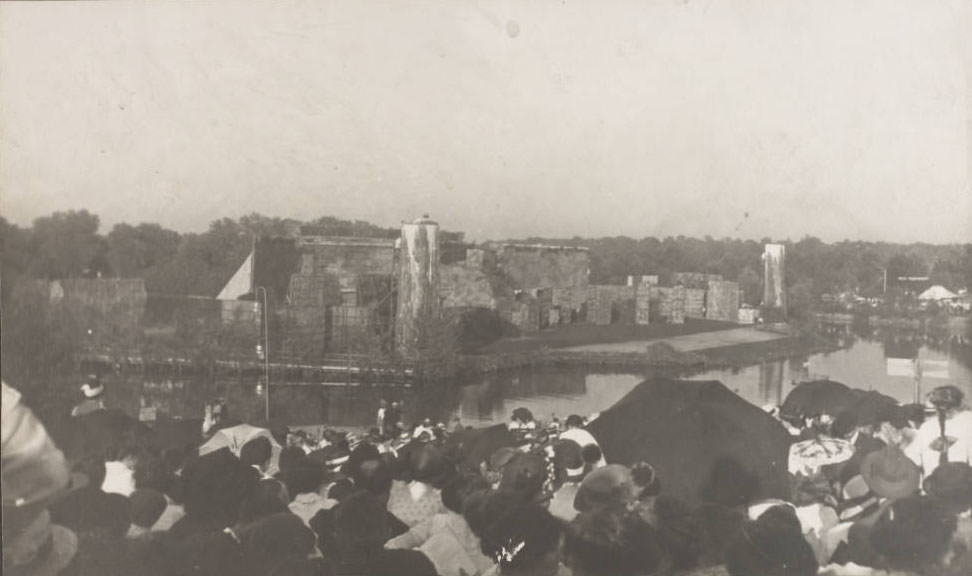
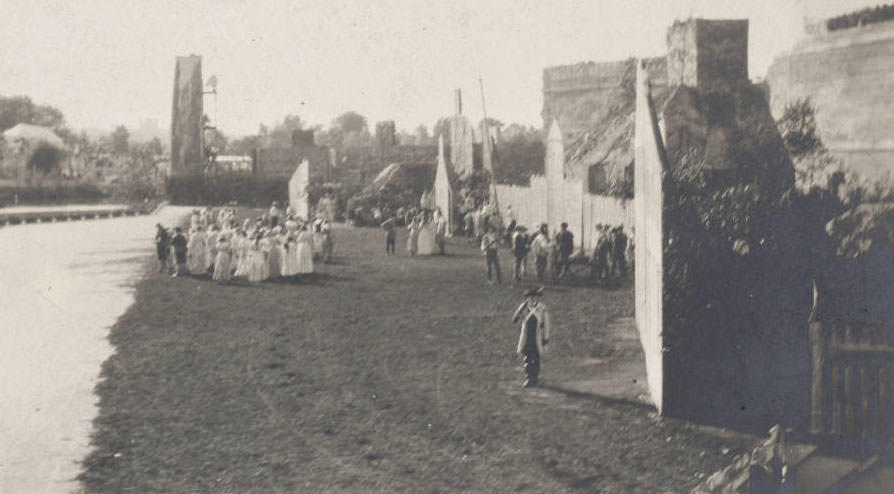
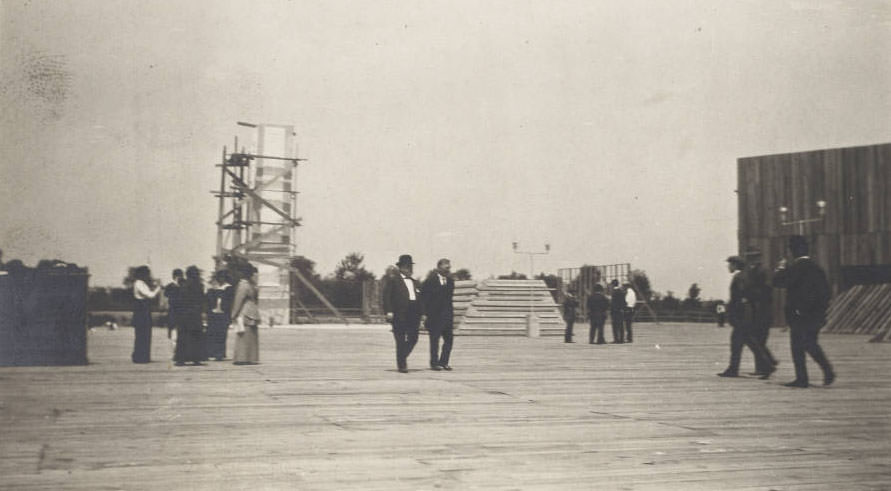
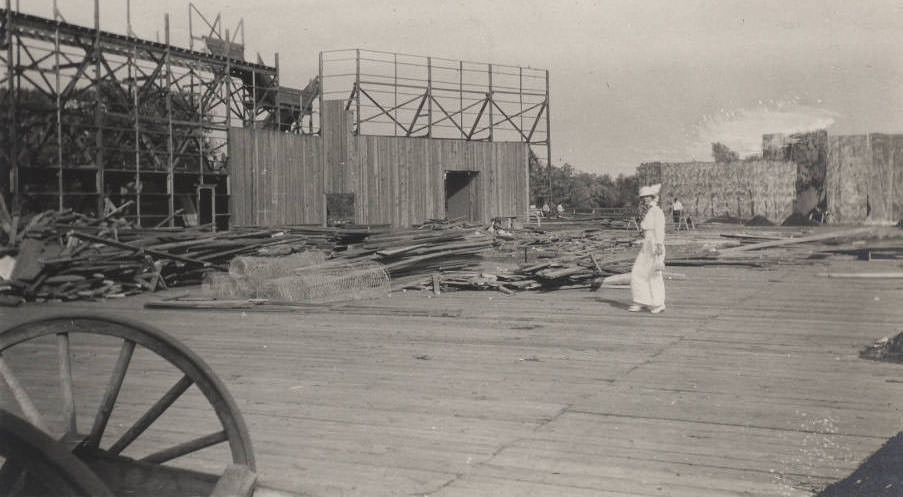
Building the stage was a major undertaking on its own. Workers drove wooden piers into the water of the Grand Basin, constructed an enormous performance platform, and assembled the set pieces needed for dozens of scenes. The structure known as the Great Bear, Wasapedan, rose over the park during construction — a towering landmark that signaled the scale of what was coming. Passers-by stopped to watch the crews work, and photographers documented the progress from the earliest days of the build.
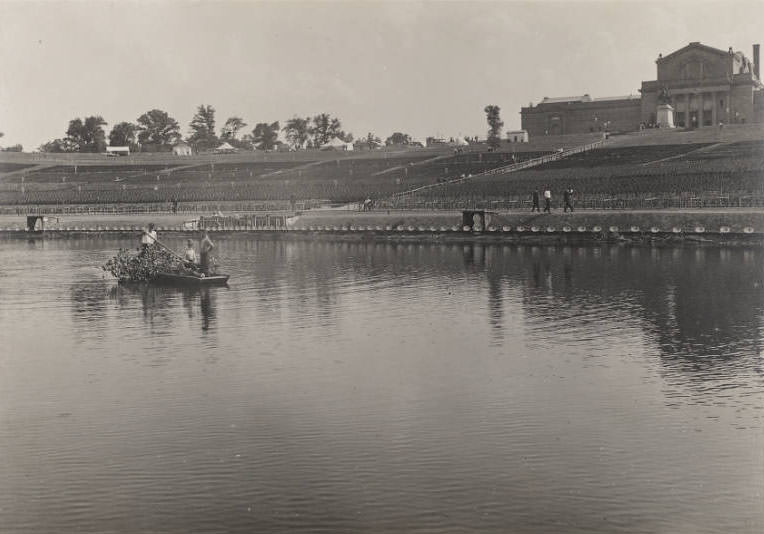
Men using machinery to drive piers into the water of the Grand Basin, Forest Park, for construction of the stage for the Pageant and Masque of St. Louis, 1914The structure of the Great Bear, Wasapedan, loomed over the stage of the Pageant and Masque of St. Louis in Forest Park during construction, 1914Wooden piers placed in the Grand Basin, Forest Park, for construction of the stage for the Pageant and Masque of St. Louis, 1914Men working in Forest Park on construction of the stage, 1914Pageant and Masque construction, 1914Passers-by look over workers building the set for the Pageant and Masque of St. Louis, 1914Three men in a row boat clear debris from the Grand Basin, Forest Park, in preparation for performances of the Pageant and Masque of St. Louis, 1914Workmen put finishing touches on the stage of the Pageant and Masque of St. Louis, 1914
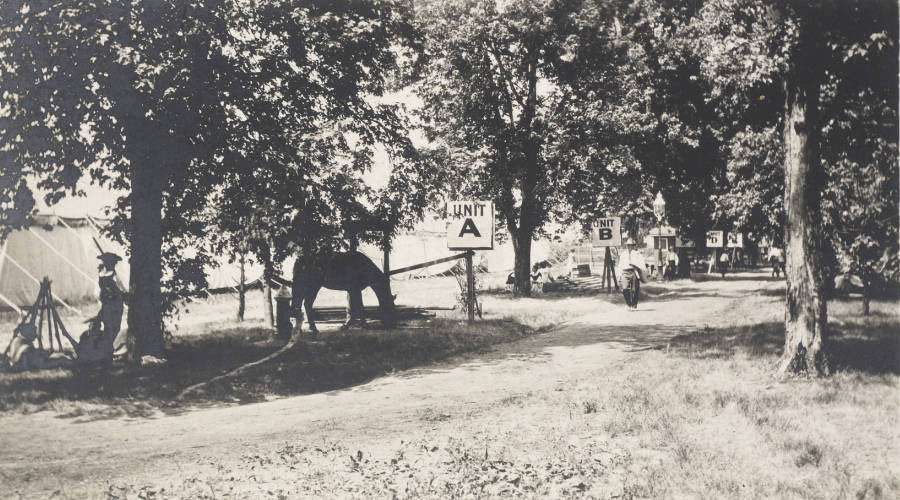
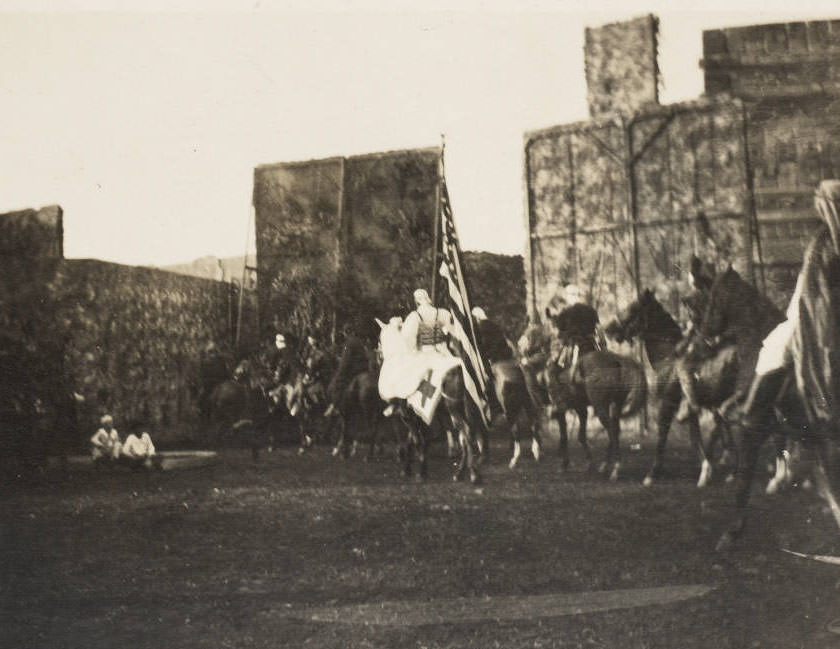
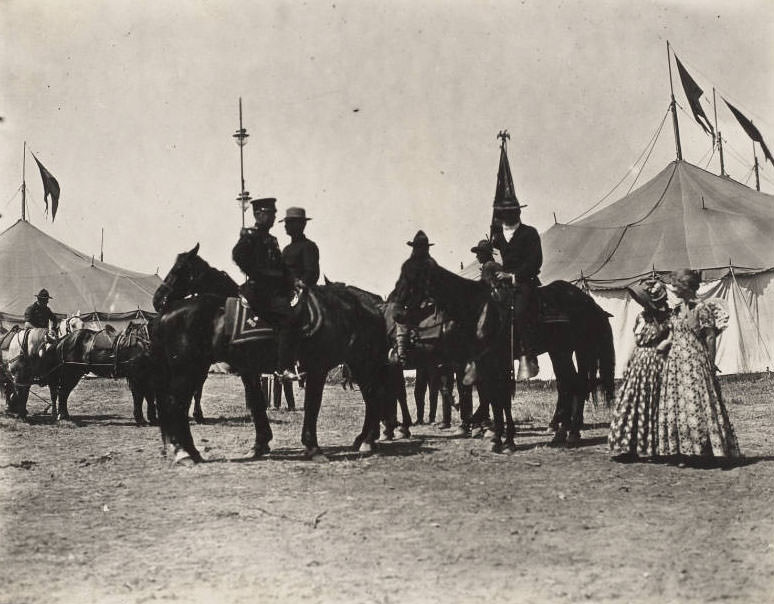
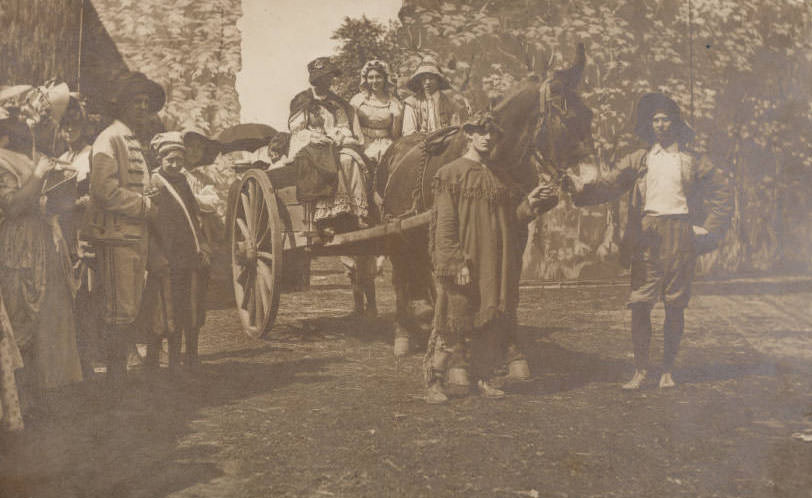
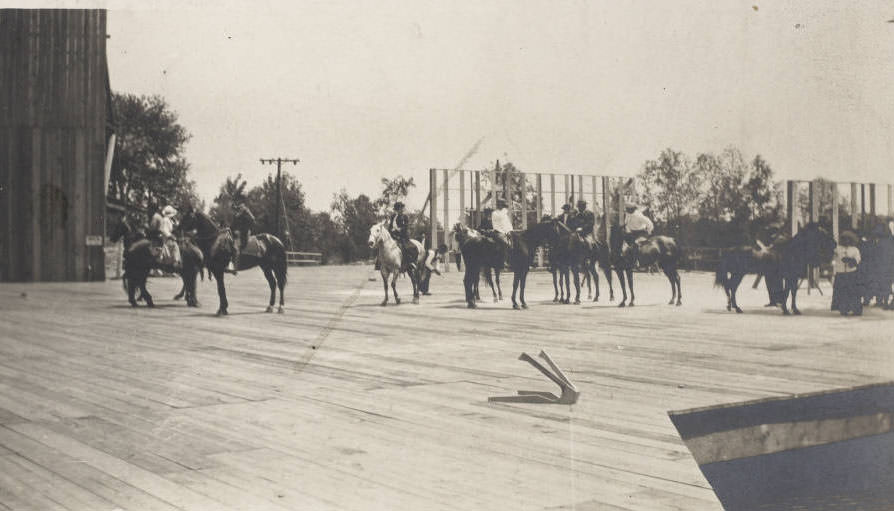
More than 7,500 St. Louis citizens volunteered to perform. They filled roles ranging from Native American warriors and French colonists to Maya priests and Civil War soldiers. The sheer number of participants meant that Forest Park’s readying areas buzzed with activity before each performance — crowds of people in costume waiting their turn to take the stage, horses being led into position, and directors coordinating the movement of hundreds of actors at once.
Men, women and children in what may be a rehearsal are on the stage of the Pageant and Masque of St. Louis. Joseph Lindon Smith, director of the Masque, appears in shirt sleeves to the right of the photograph. More than 7500 St. Louis citizens volunteered for the event in Forest ParkThe readying area for volunteers in Forest Park for the Pageant and Masque of St. Louis, 1914Rehearsal with horses, 1914Offstage, actors and horses await their turn performing in the Pageant, 1914
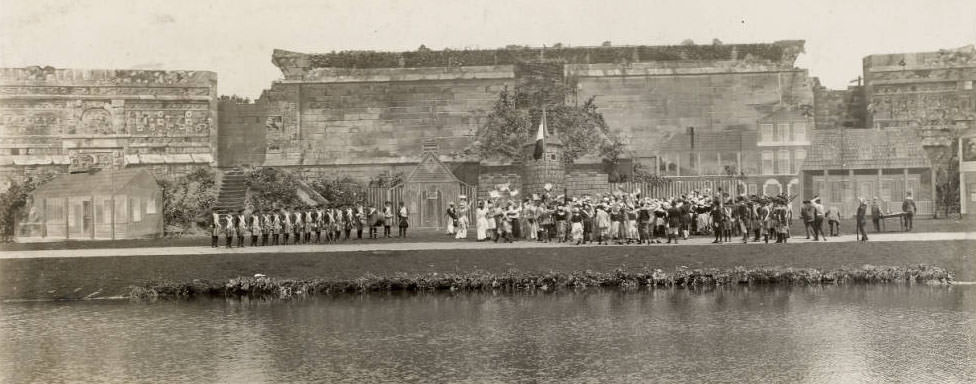
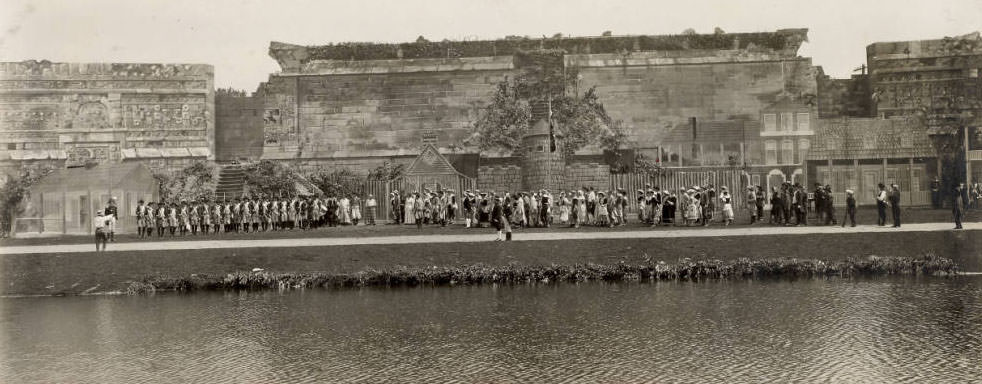
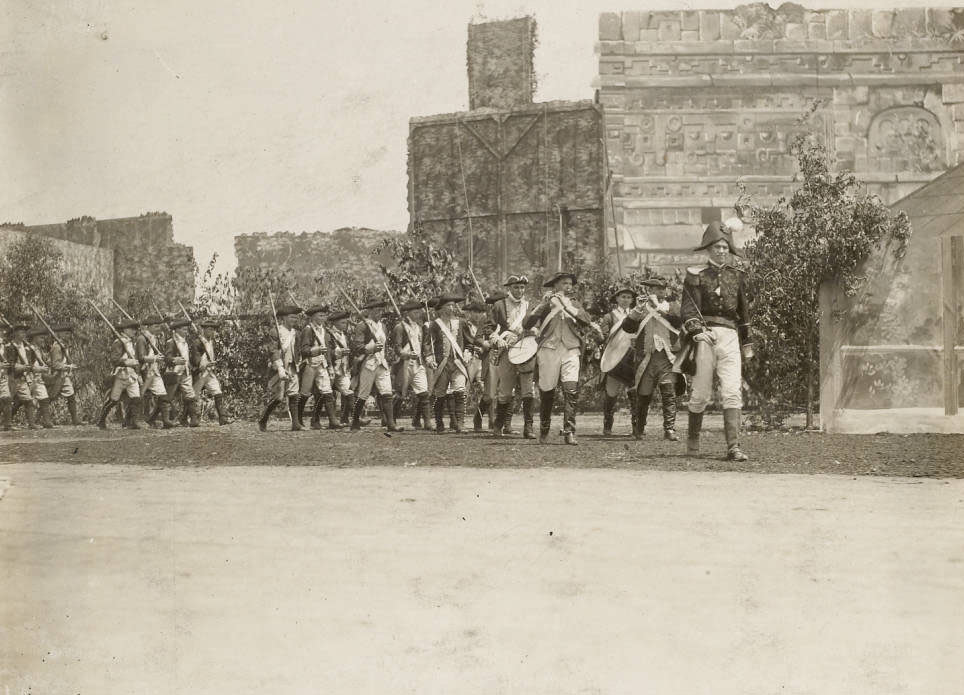
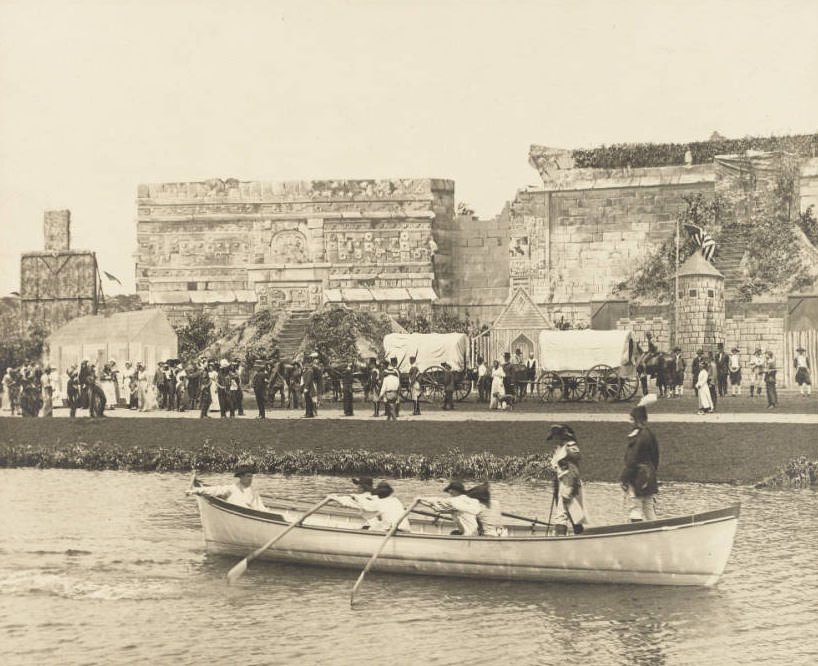
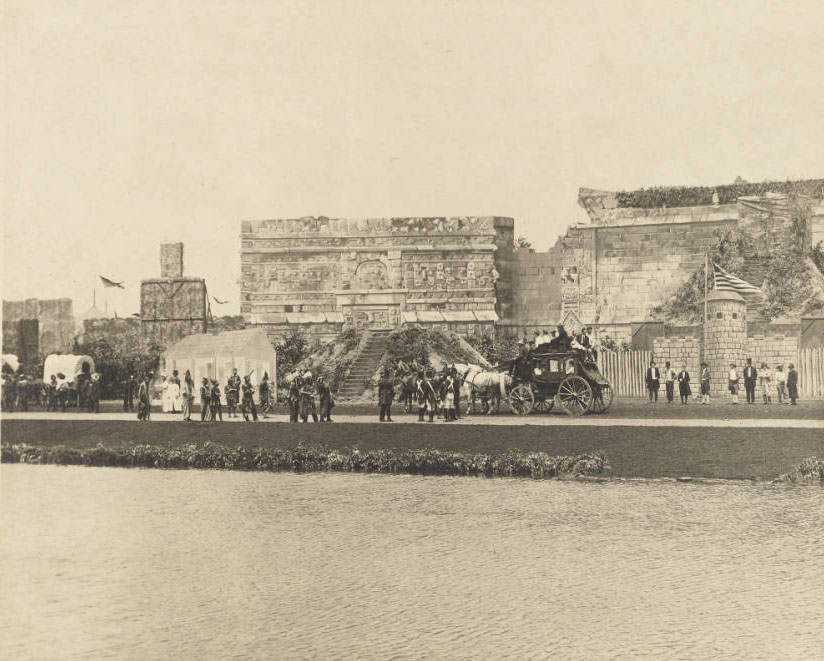
The event was divided into two parts: the Pageant and the Masque. The Pageant was a historical drama that walked audiences through centuries of St. Louis history in chronological order. It opened with scenes of Indigenous life and early European exploration, then moved through French colonization, the Louisiana Purchase, westward expansion, and finally the Civil War. Each episode was performed by volunteer actors in period costume, many of them riding horses or arriving on stage in wagons and stagecoaches.
Captain de Volsay raising the first Franch flag, Pageant, 1914In a scene in the Pageant, Pageant and Masque of St. Louis, Robert de La Salle, and his men salute King Louis XIV of France and pledge to go on to claim the Mississippi Valley for France.Luke E. Hart as the explorer Hernando De Soto and actors portraying Spanish soldiers and priests perform in the Pageant, Pageant and Masque of St. Louis.Voyageur demanding of La Salle that he proceed no farther, Pageant, 1914Laclede and the Missouri Indians, Pageant of St. Louis, 1914Laclede in council with Missouri Indians, Pageant, 1914Taillon and others. Laclede: ‘Well done, Taillon.’ Pageant, 1914Arrival of Madame Chouteau and her children, Pageant of St. Louis, 1914The Christening of St. Louis, 1914
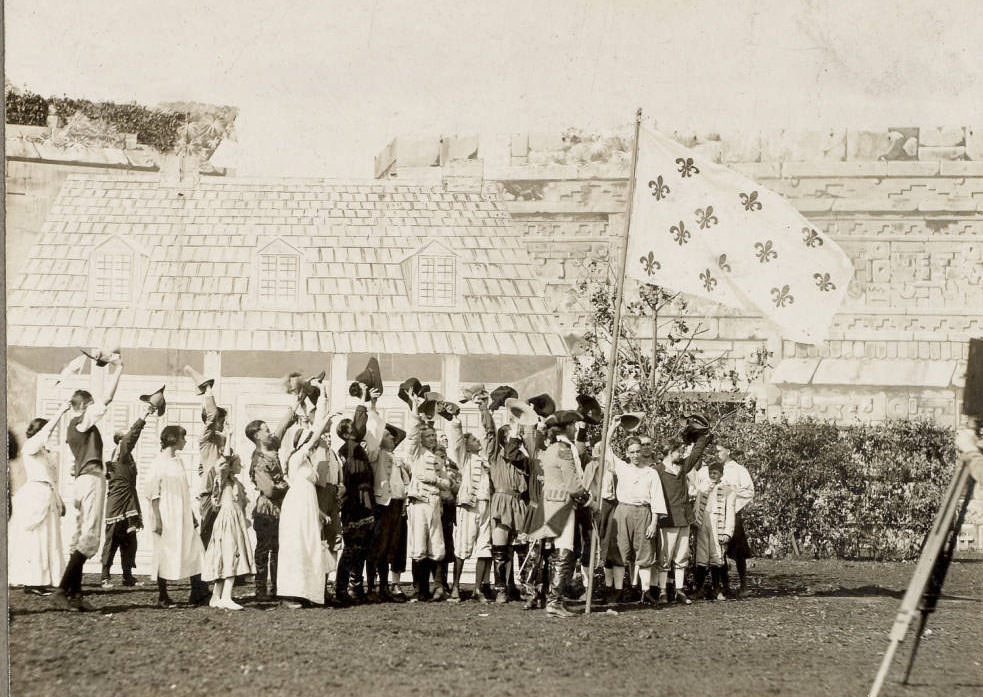
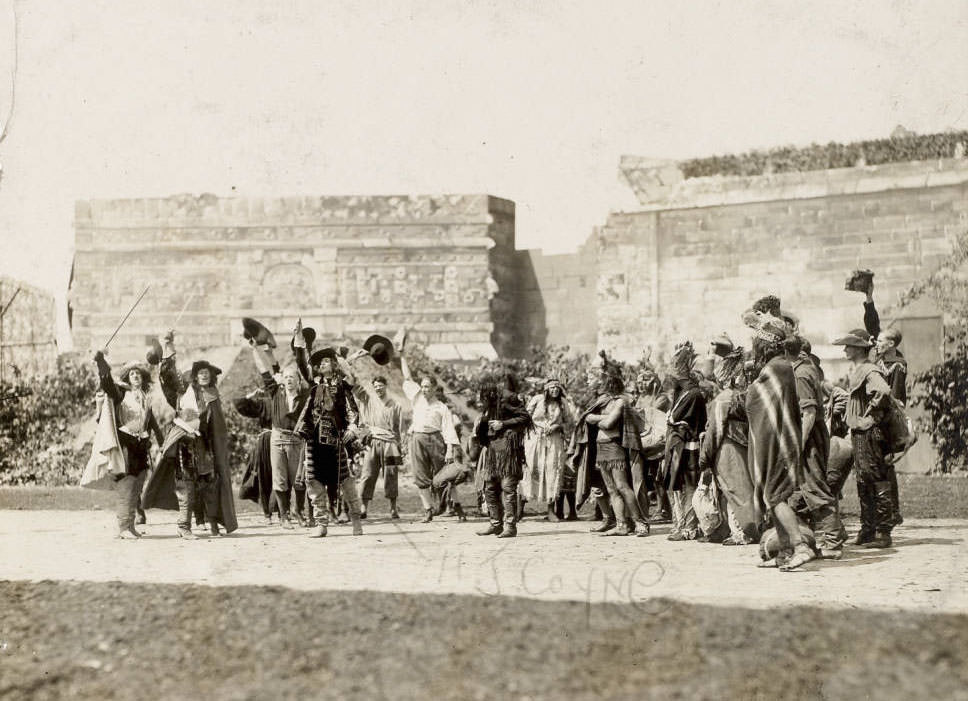
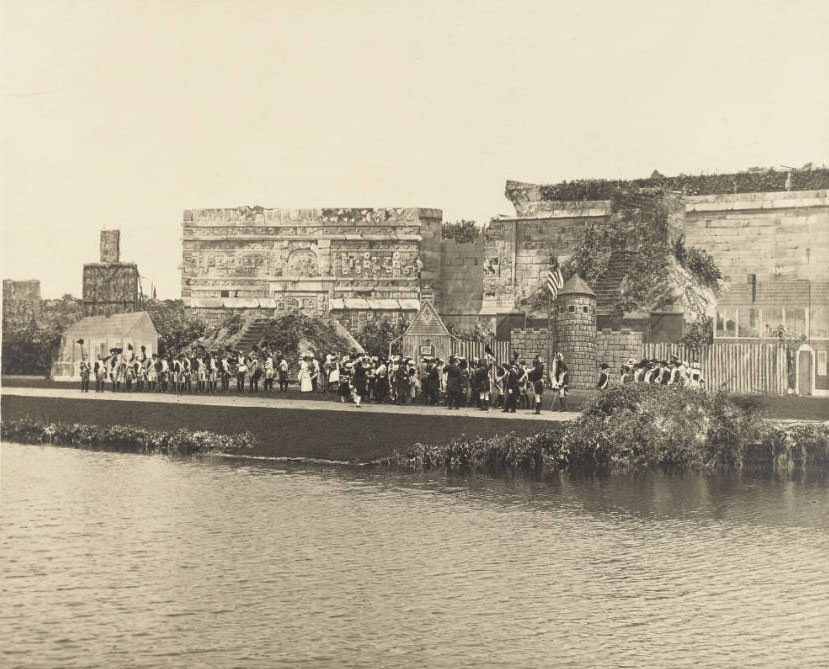
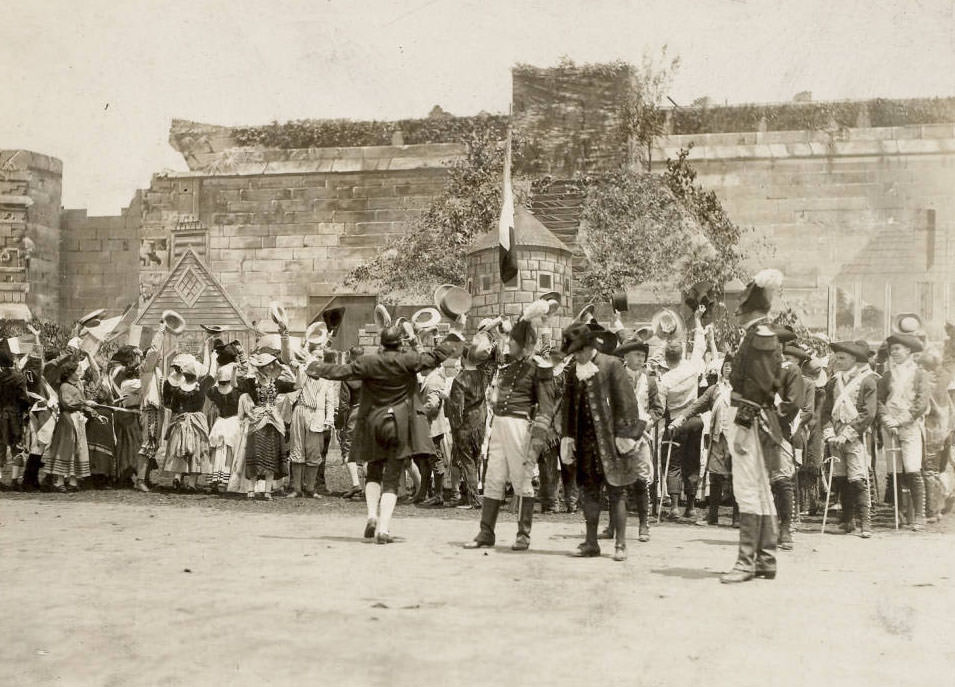
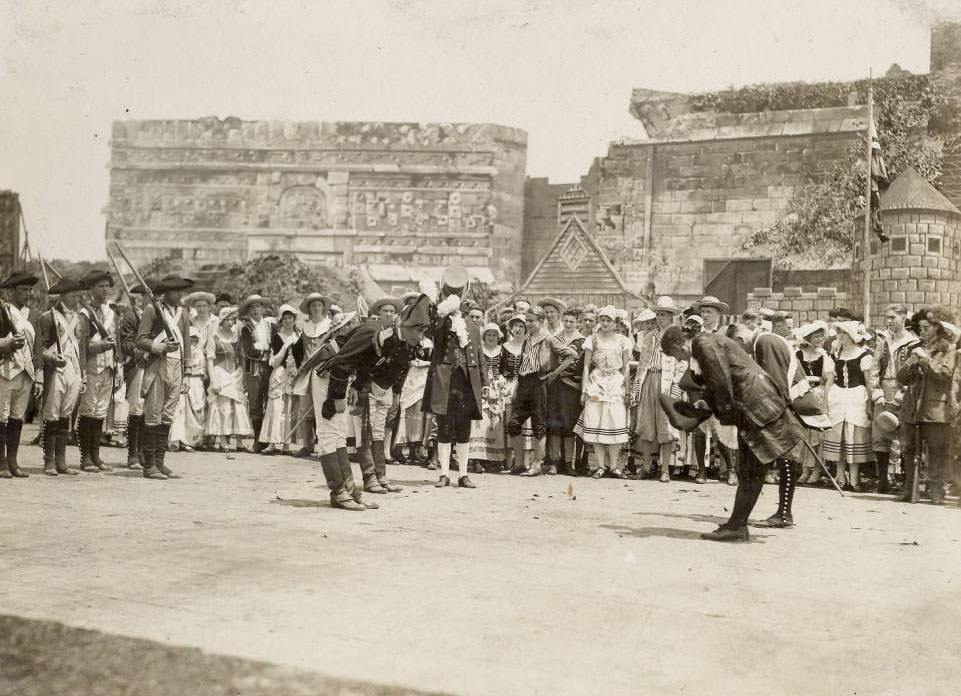
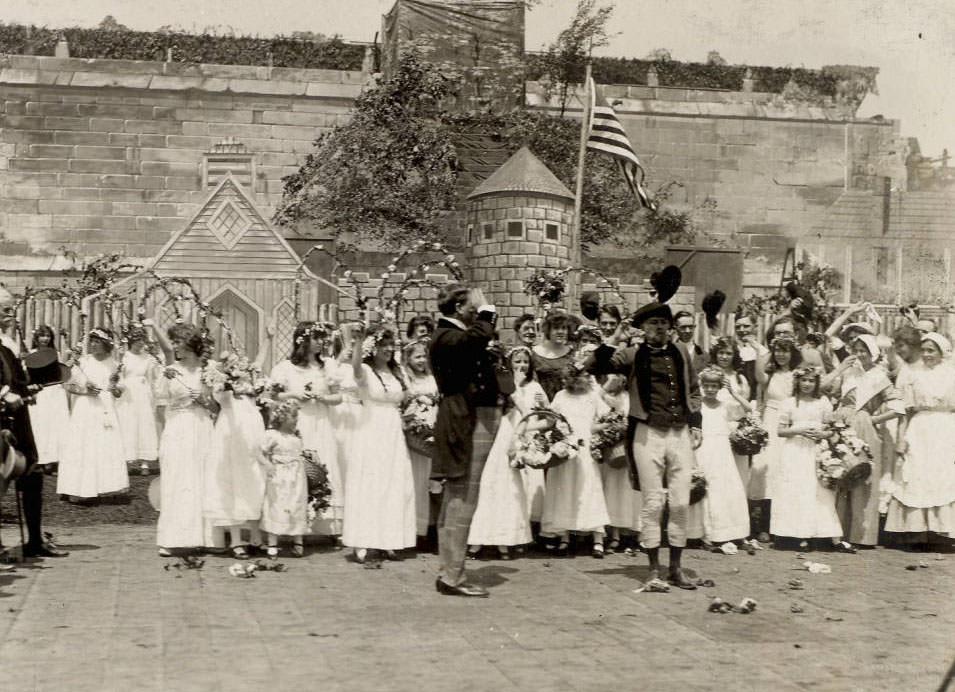
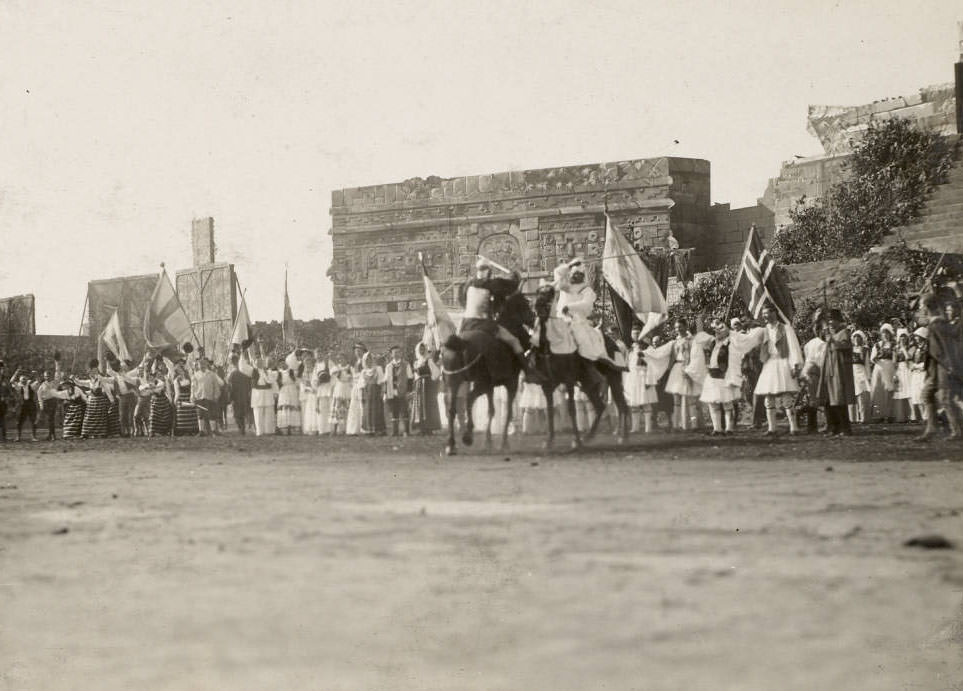
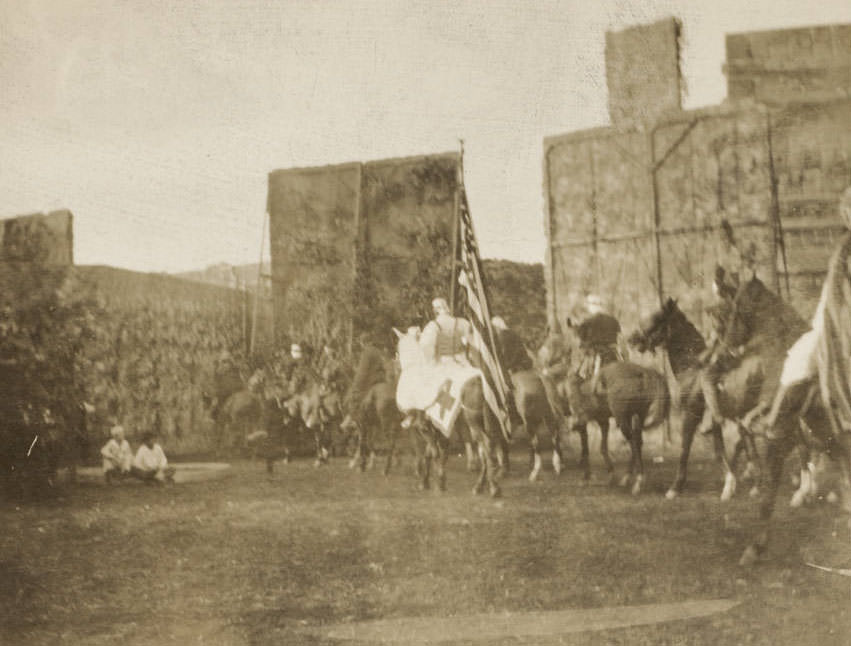
One of the most dramatic scenes in the Pageant re-enacted the Day of the Three Flags — the moment in 1804 when the Louisiana Territory passed from Spain to France, and then almost immediately to the United States. The French flag was raised in St. Louis as the French townspeople celebrated its return, before the American flag replaced it. The sequence captured a pivotal turning point in the city’s identity, and the photographs from this scene show crowds of performers packed onto the stage for the flag-raising ceremony.
In the drama of the Pageant, Pageant and Masque of St. Louis, as the Louisiana Territory was transferred from Spain to France, the French flag was raised in St. Louis.Day of the Three Flags, Pageant, 1914Day of the Three Flags, Pageant of St. Louis, 1914Looking towards the stage in Forest Park, St. Louis, Missouri, the audience watch volunteer actors portraying Spanish turning the Louisiana Territory to the French in St. Louis in a reenactment of Three Flags DayPopulace cheering the raising of the French flag, Day of the Three Flags, Pageant, 1914Captain Amos Stoddard and Governor Charles Dehault Delassus greet each other before the transfer of Louisiana to the United States, Pageant, 1914Arrival of Captain Stoddard and his troops, Pageant, 1914Gratiot to Pierre Chouteau, ‘The Americans are taking possession’, 1914
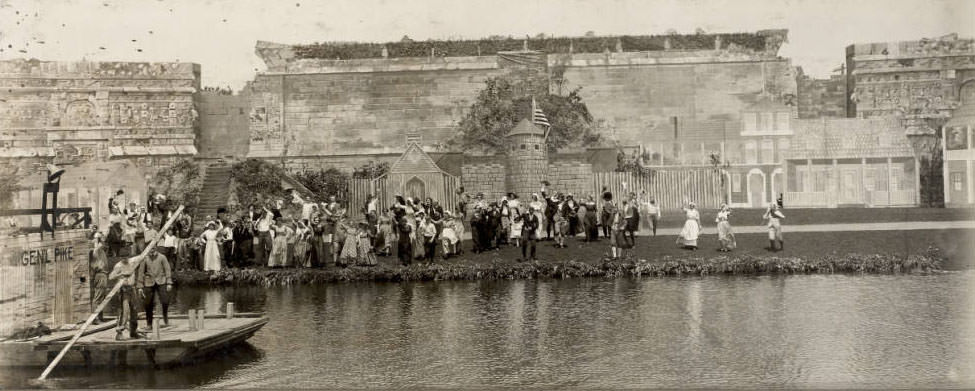
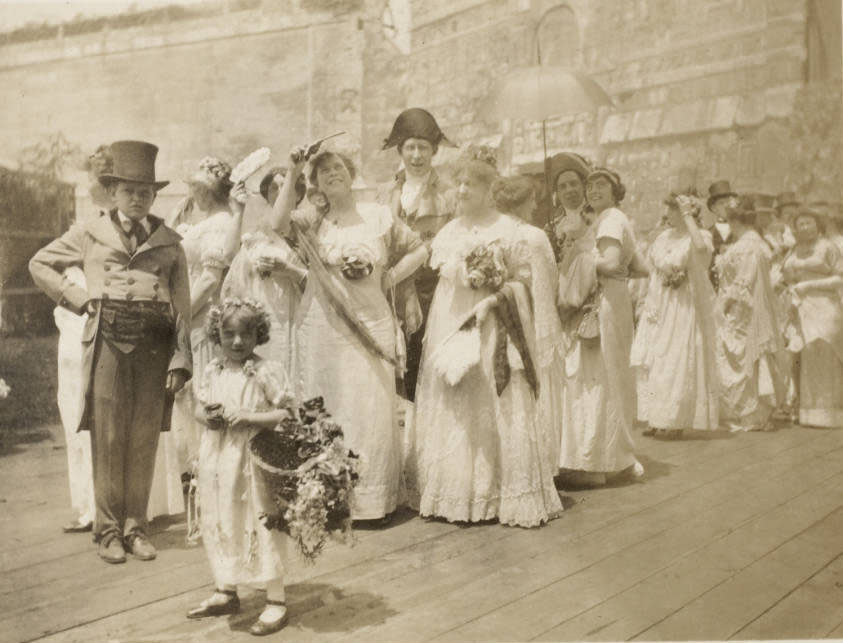
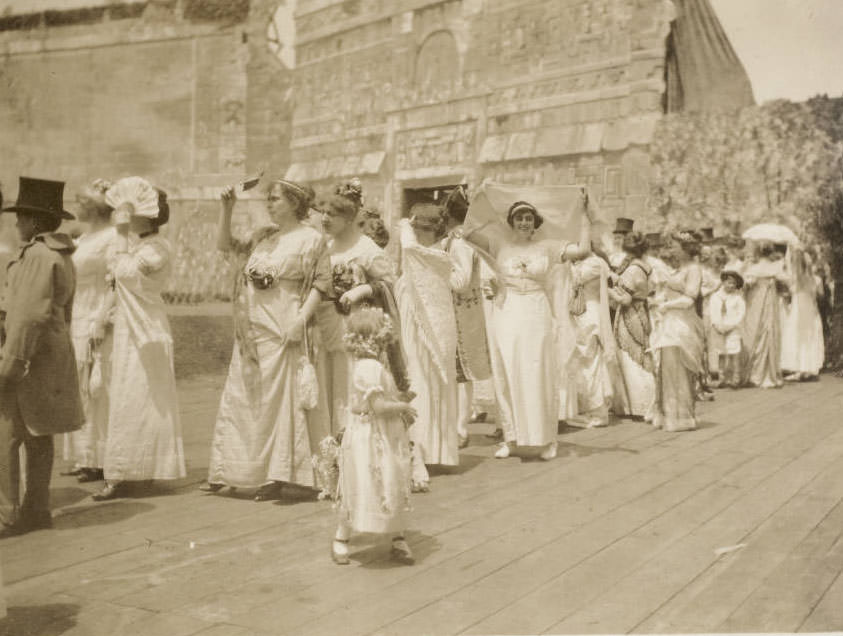
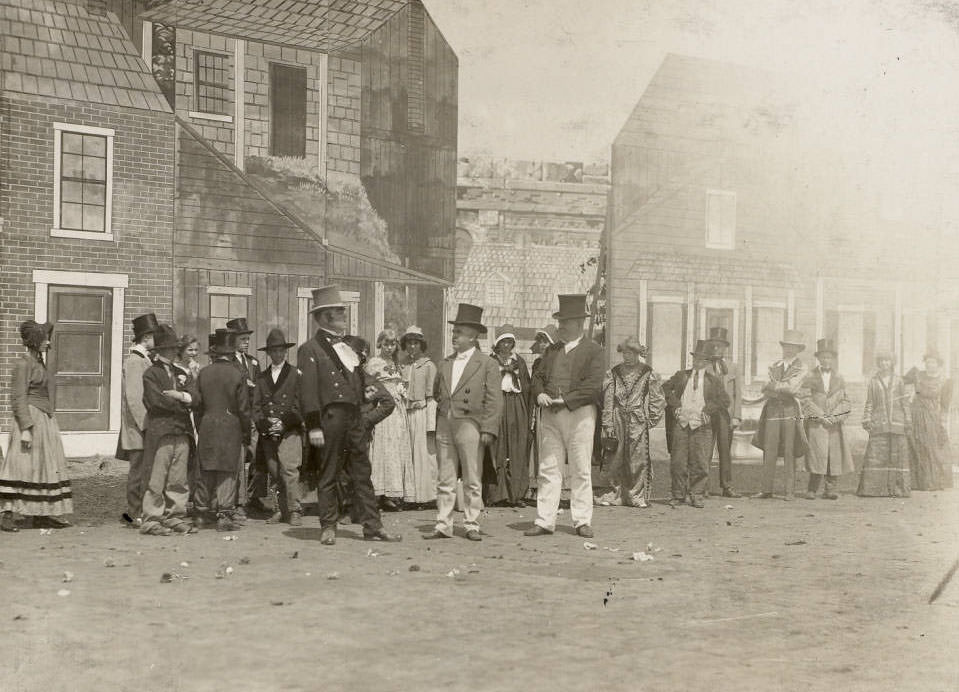
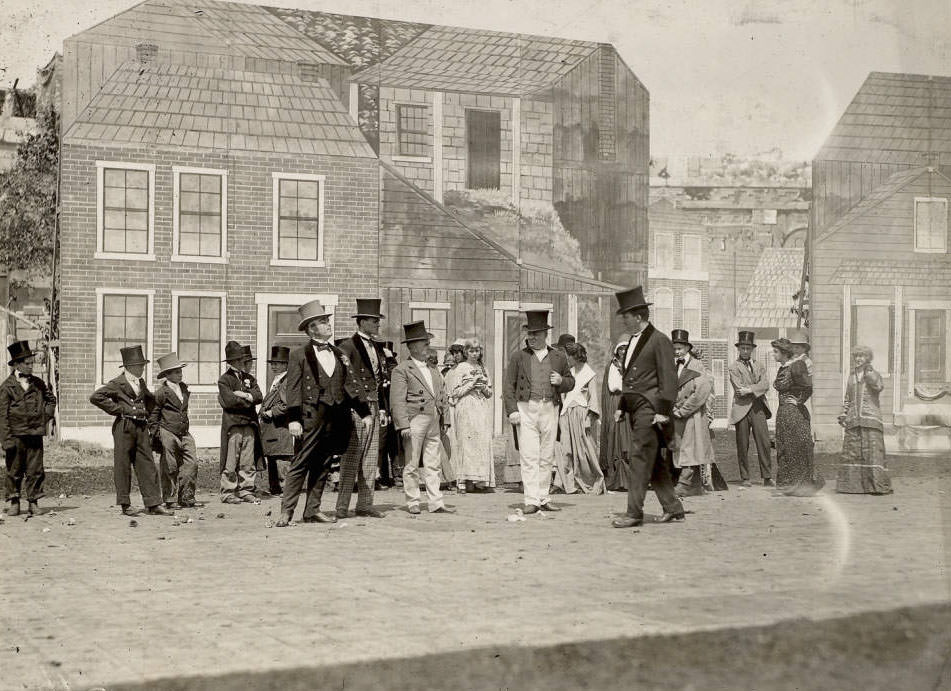
Scenes of westward expansion followed, including the departure of Meriwether Lewis and William Clark from St. Louis and their eventual return. The Pageant also staged the arrival of the steamboat Gen. Pike, the growing wagon trains of American settlers flooding into the city, and the 1825 visit of the Marquis de Lafayette. For the Lafayette scene, actors costumed in formal 19th-century dress performed at a ball in his honor, with St. Louis Mayor William Carr Lane — played by William R. Glasgow — greeting Lafayette, portrayed by Charles Burlingame.
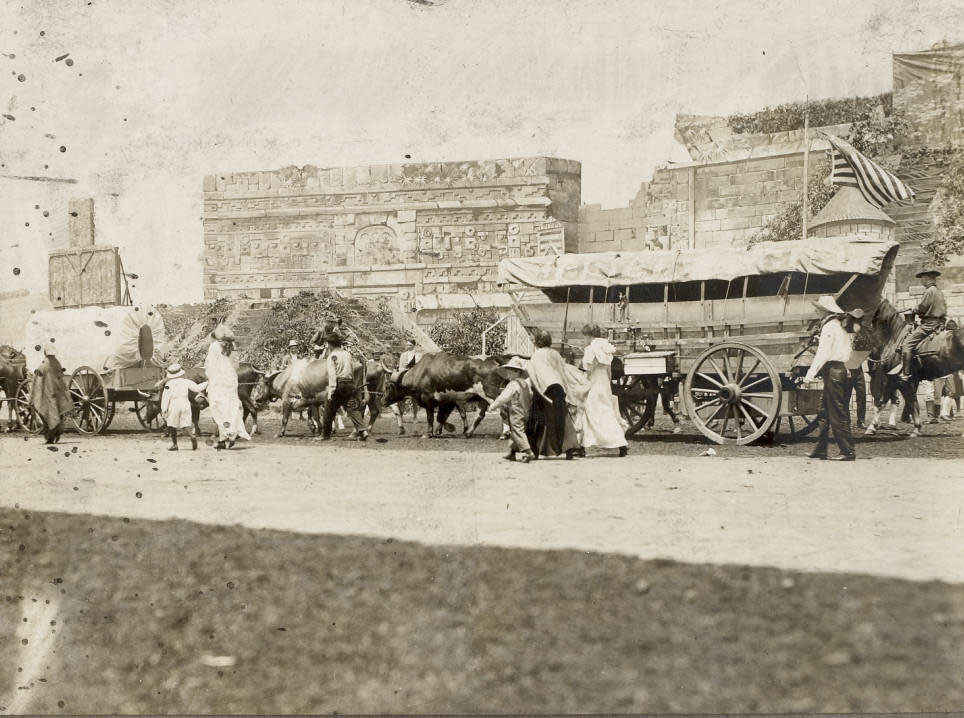
The scene in the Pageant, Pageant and Masque of St. Louis, depicts Meriwether Lewis, William Clark and expedition members leaving St. Louis.Lewis and Clark arrive at St. Louis, Pageant of St. Louis, 1914Arrival of ‘Gen. Pike’, the first steamboat, Pageant, 1914In a scene in the Pageant, Pageant and Masque of St. Louis, an ox-drawn wagon train with American settlers arrives in St. Louis in the early 19th century.
As the stage directions read, ‘The old French type of dress is rapidly disappearing, the various American types taking its place; some of these are hunters, some farmers, and some gentlemen in black or plum colored coats. Many wagons pass, each with its troop of settlers, many of them walking beside or behind the vehicle’
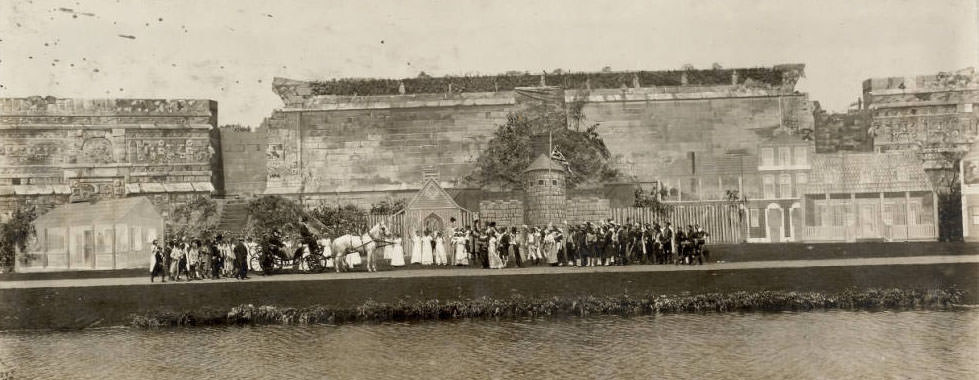
Arrival of General Lafayette, Pageant, 1914Mayor of St. Louis, William Carr Lane, greets the Marquis de Lafayette during his 1825 visit to the city in a scene in the Pageant, Pageant and Masque of St. Louis.Actors are costumed for the ball celebrating the Marquis de Lafayette’s 1825 visit to St. Louis in the Pageant, 1914A young flower girl girl turns to look at the women in 19th century costume for the Marquis de Lafayette’s ball in 1825 St. Louis, a scene in the Pageant, Pageant and Masque of St. Louis.Lafayette and old Alexander Bellesime, Pageant, 1914
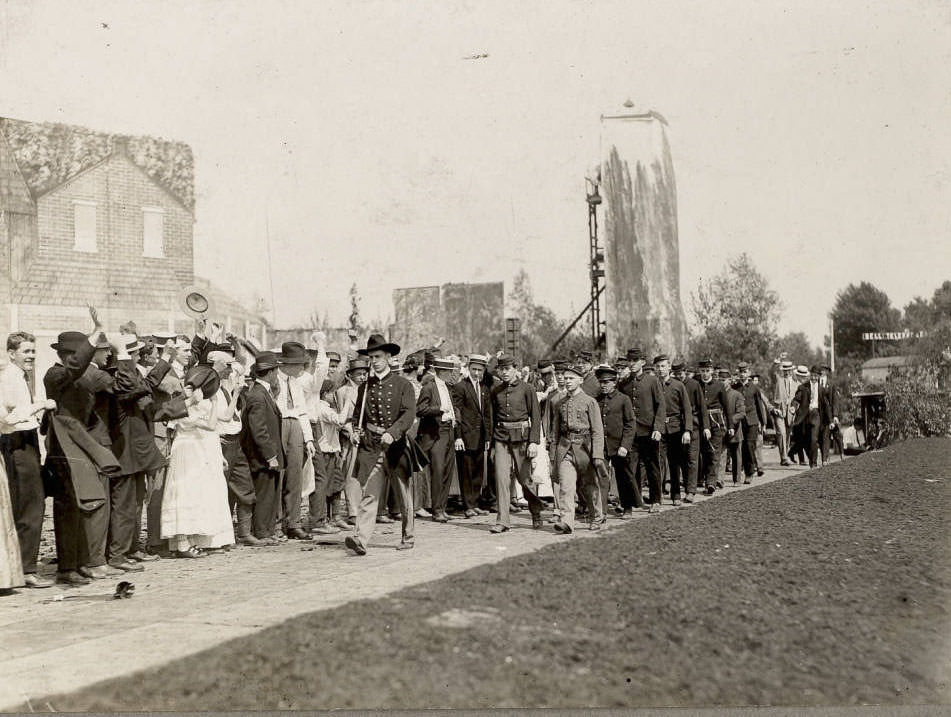
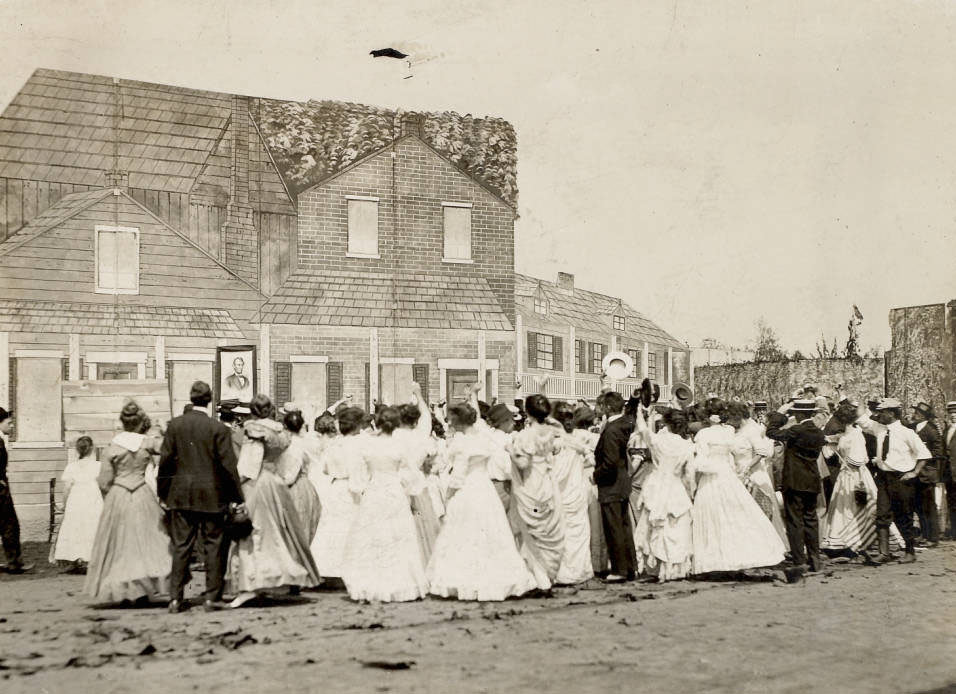
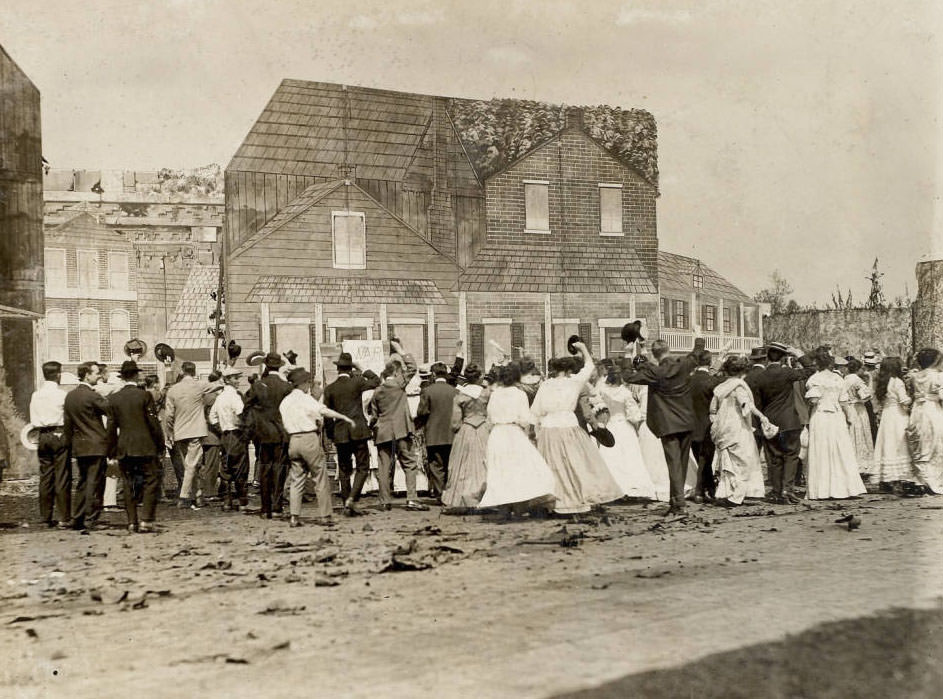
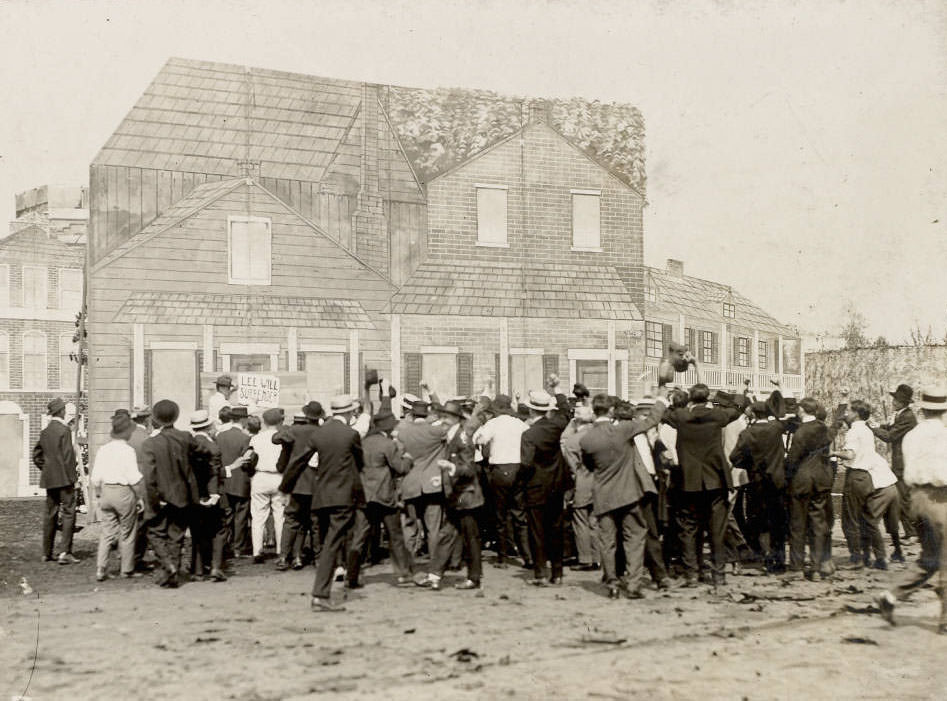
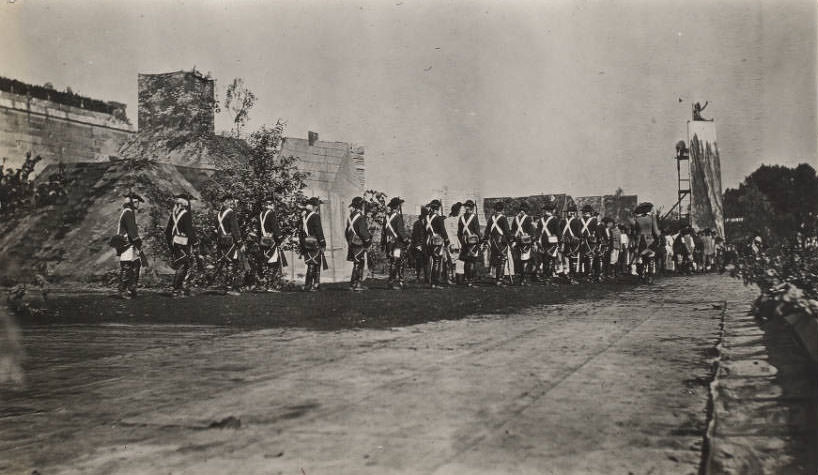
The Pageant’s closing episodes covered the Civil War. A troop of Union soldiers marched off the stage as the band played the “Battle Hymn of the Republic,” while in the same scene, another group of young men departed for the Confederate side. The Pageant ended at a St. Louis newspaper office, where a group of men gathered to receive word of General Robert E. Lee’s surrender.
A troop of Union soldiers leaves St. Louis for Civil War duty, a scene in the Pageant, Pageant and Masque of St. Louis.Crowd parading with picture of Abraham Lincoln, Pageant, 1914Crowd reading newspaper bulletin announcing war, Pageant, 1914In an ending scene of the Pageant, Pageant and Masque of St. Louis, a group of men gather at a St. Louis newspaper office to get word of General Robert E. Lee’s surrender, ending the Civil War.
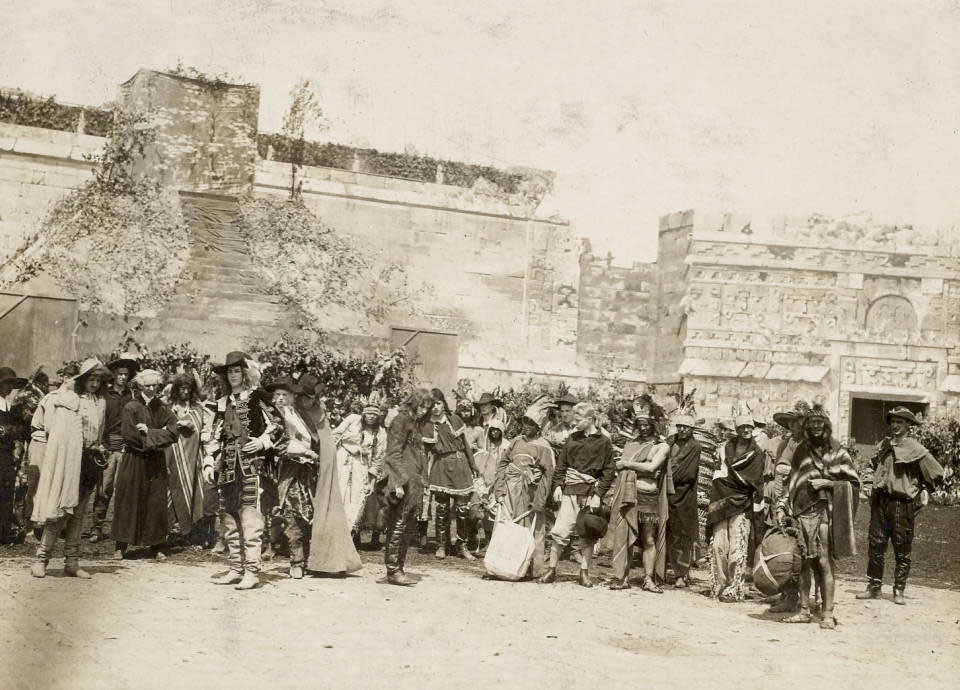
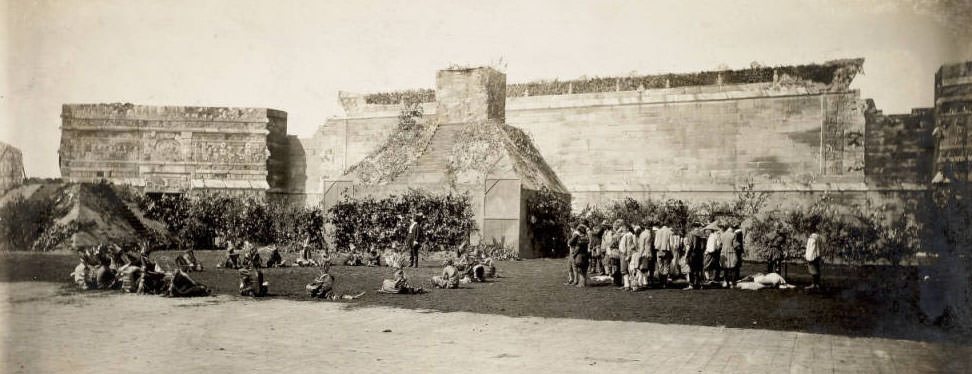
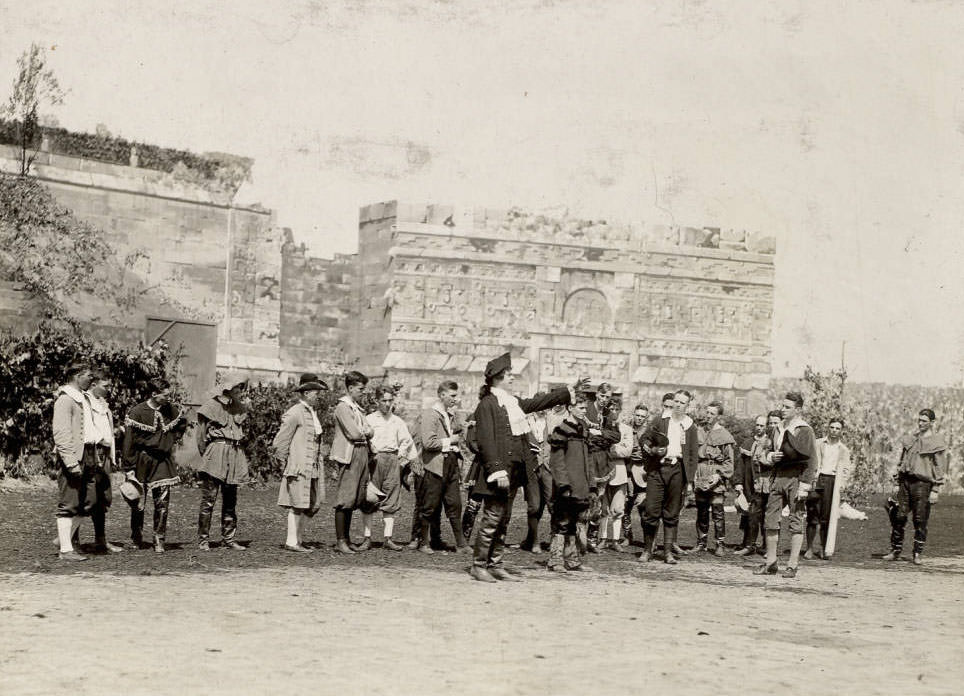
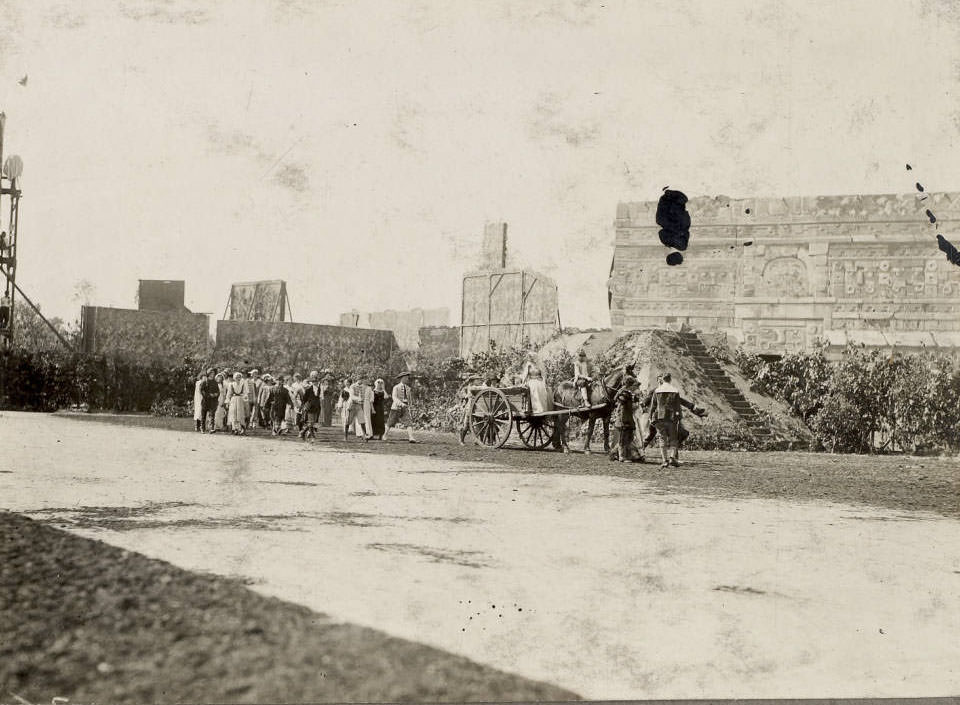
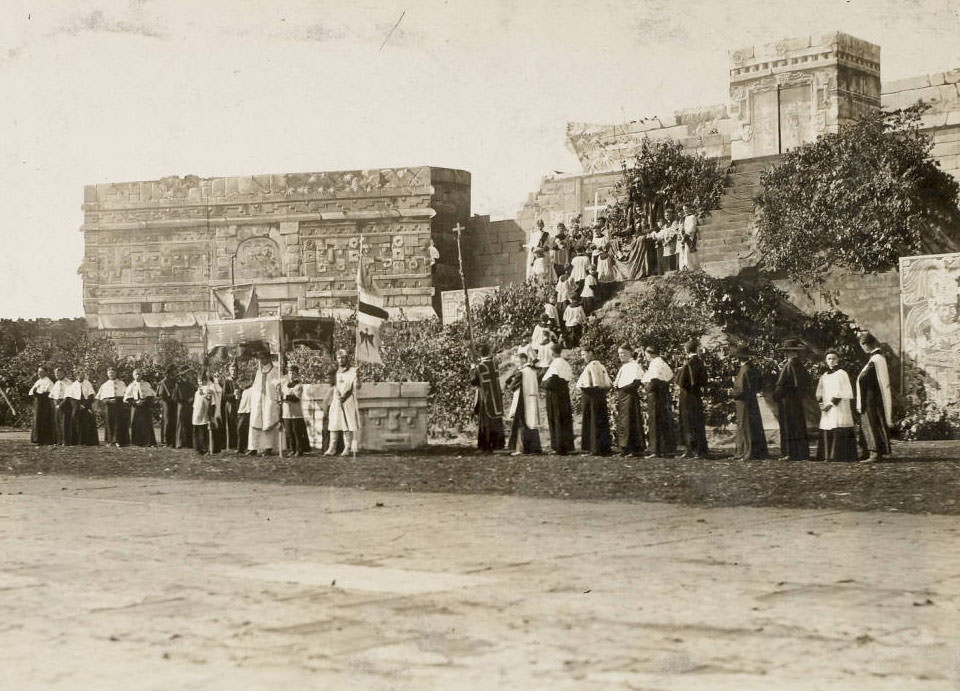
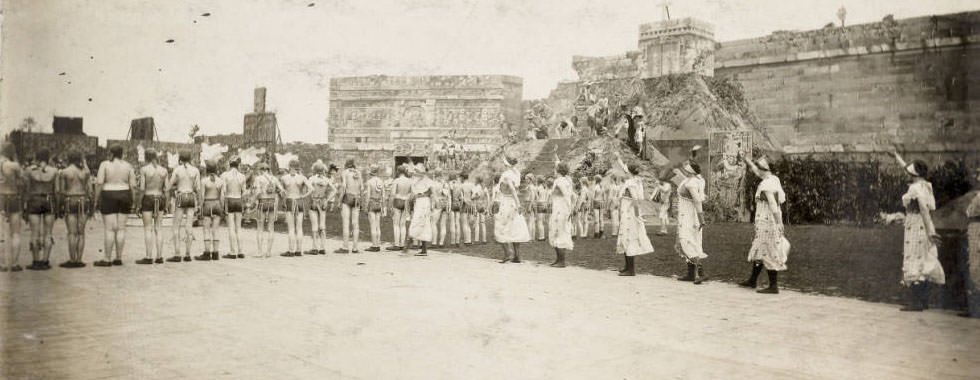
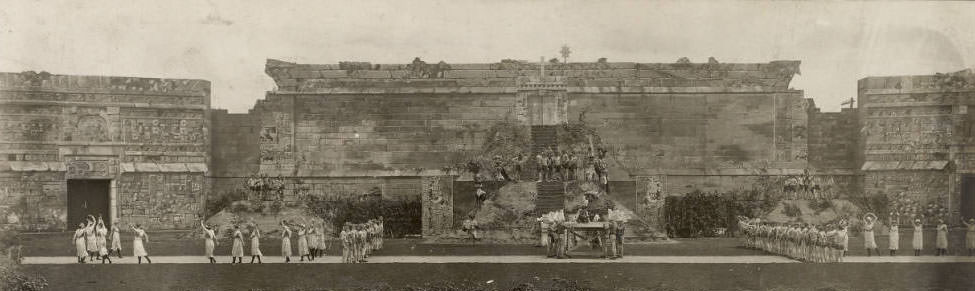
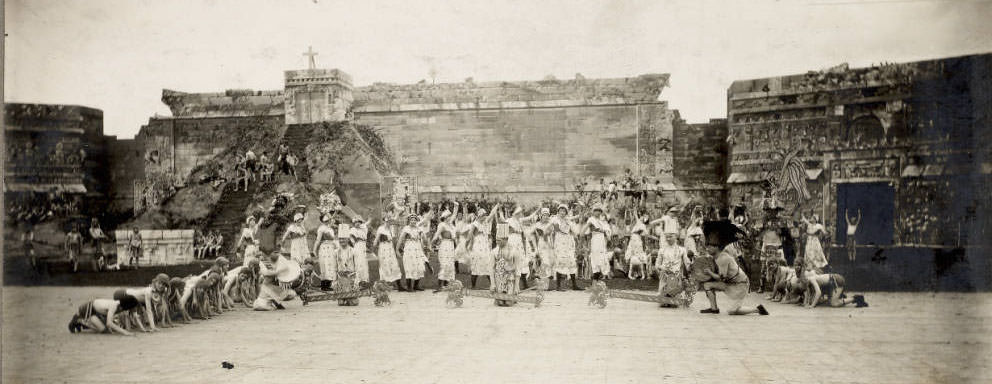
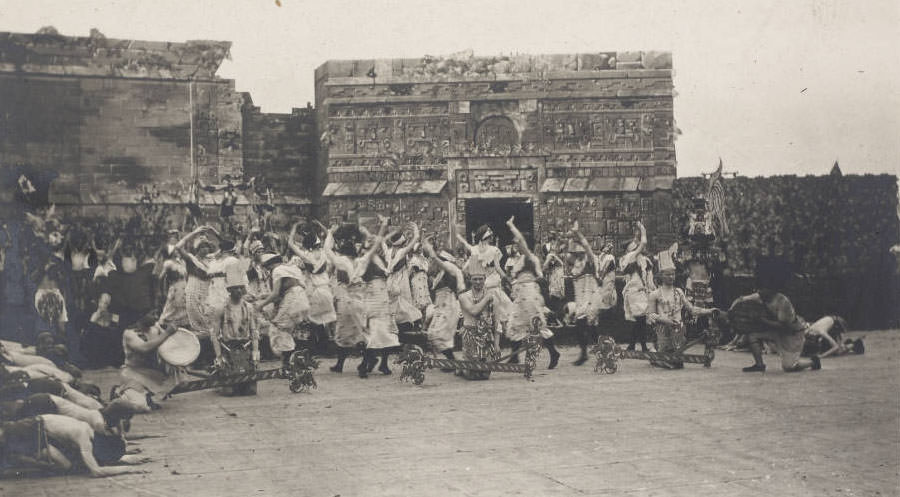
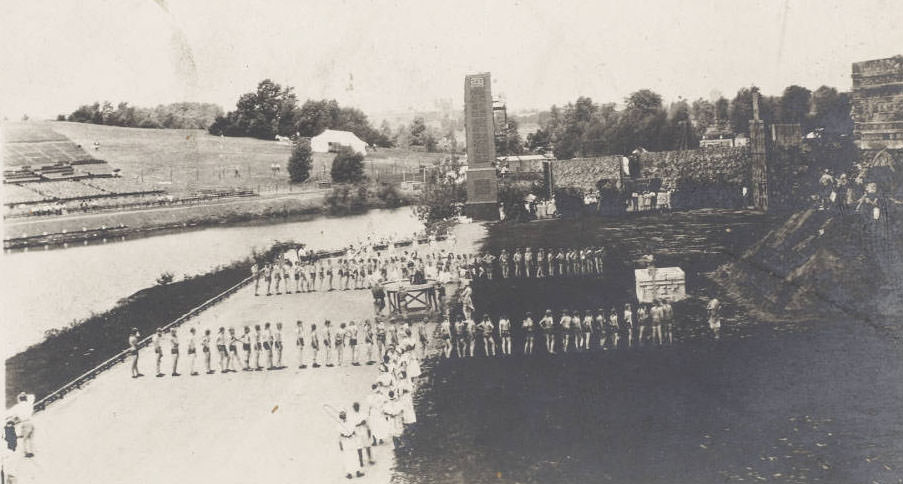
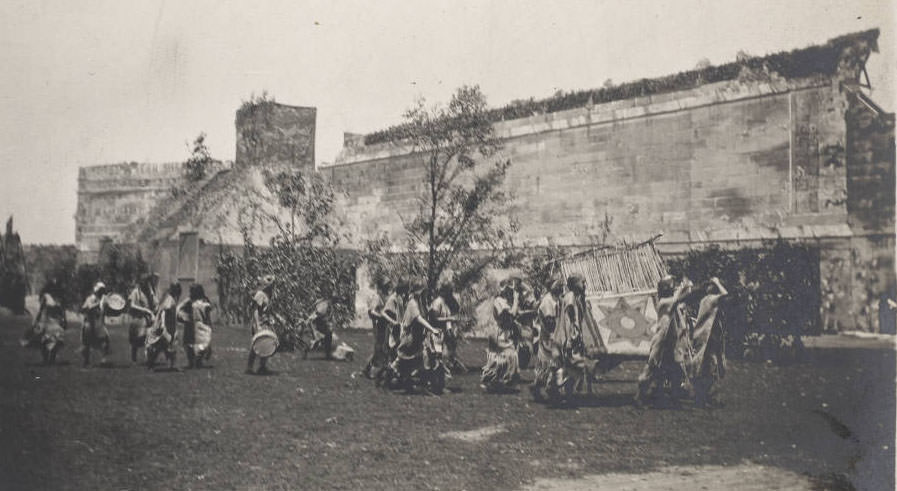
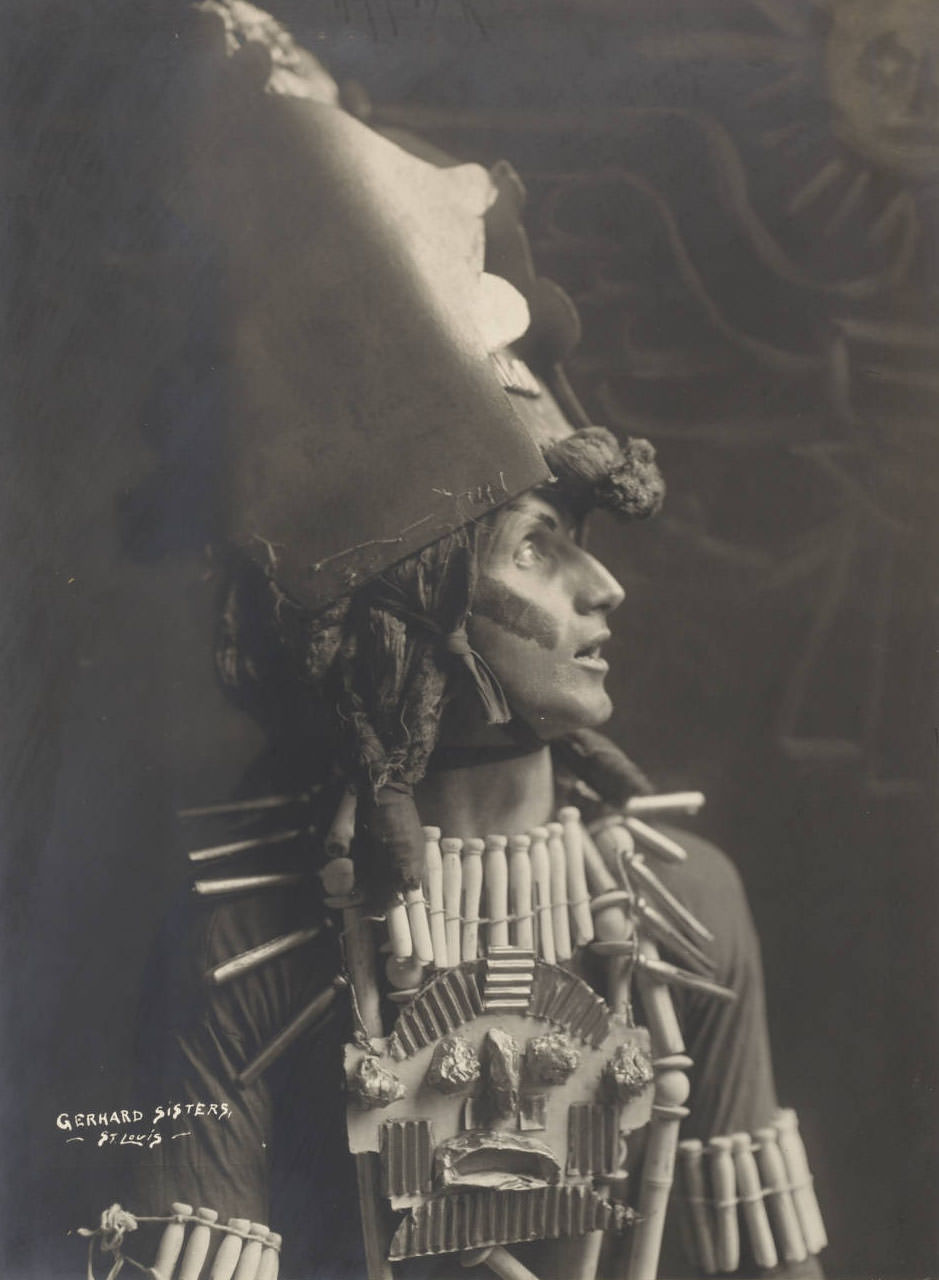
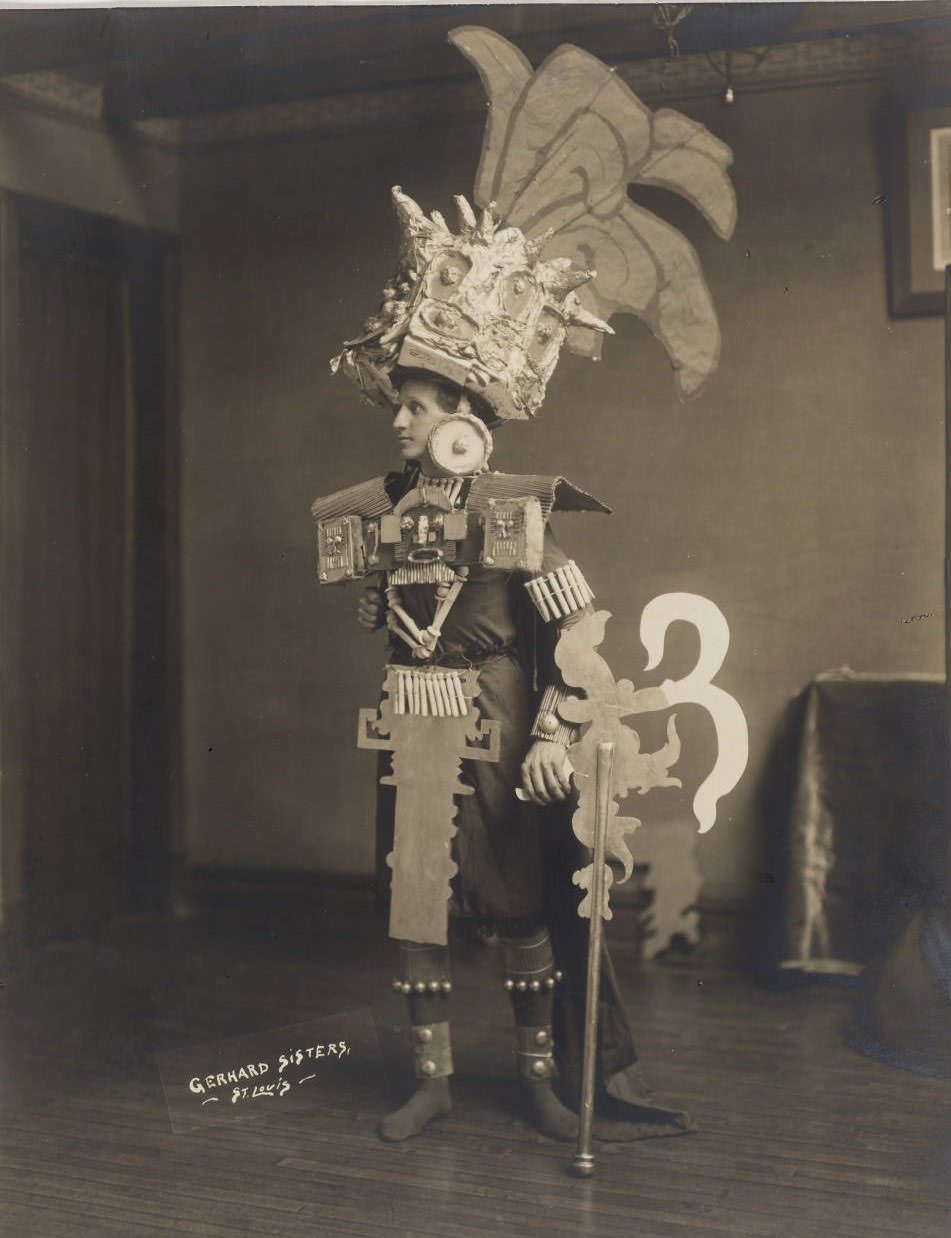
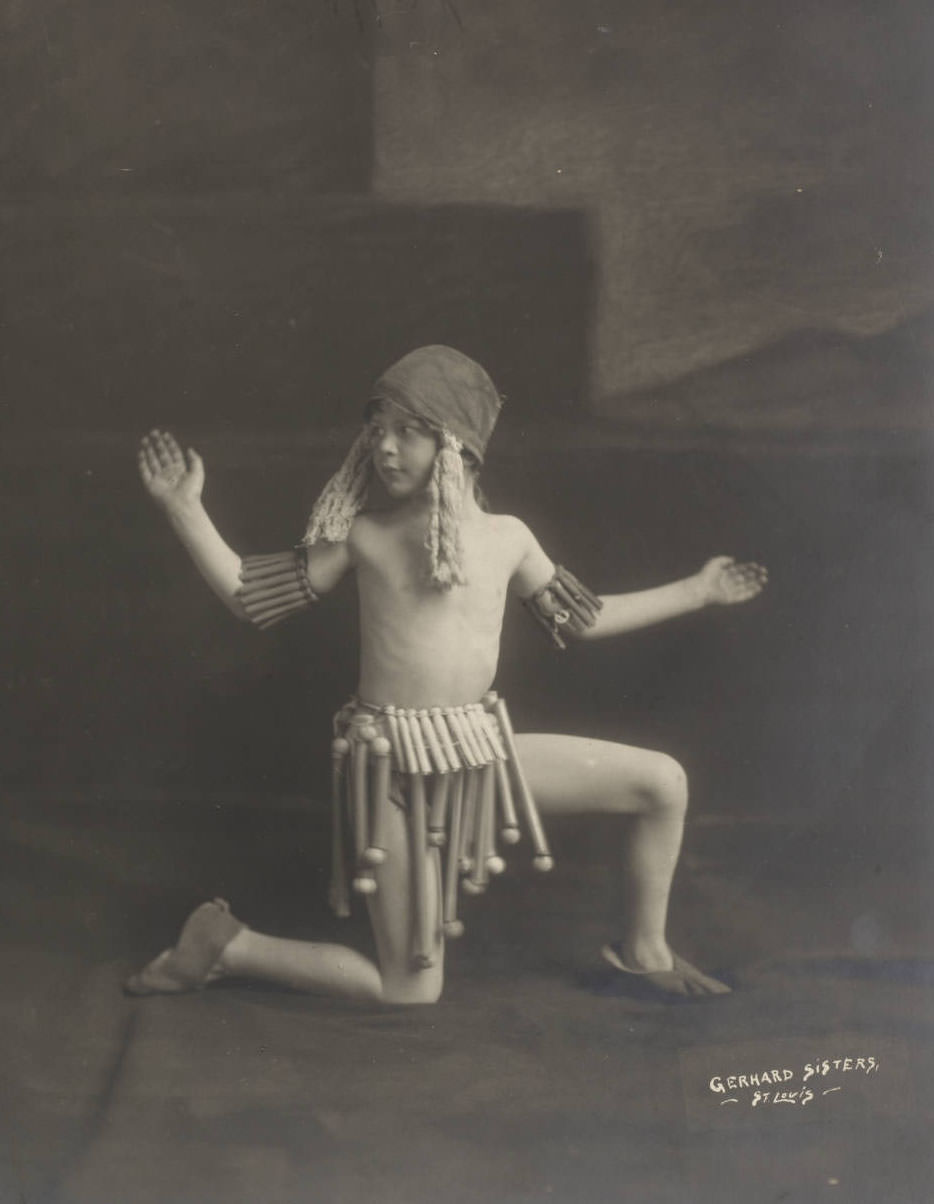
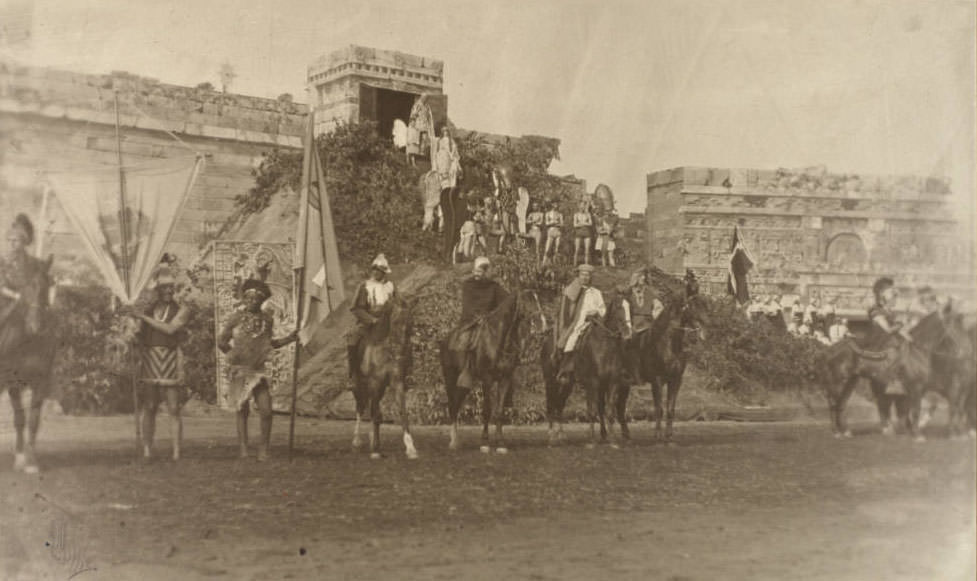
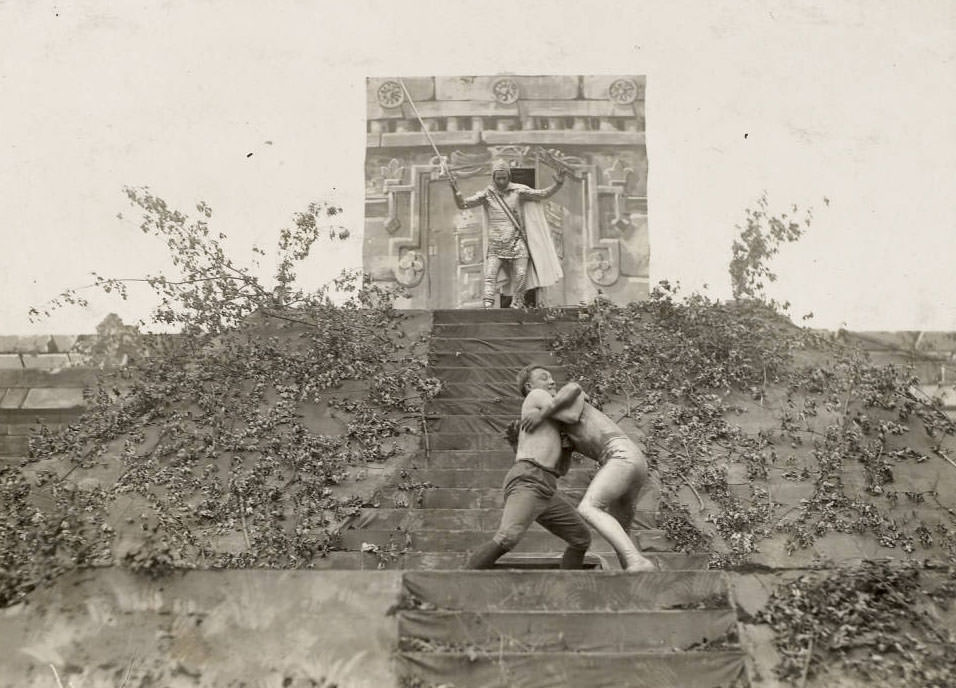
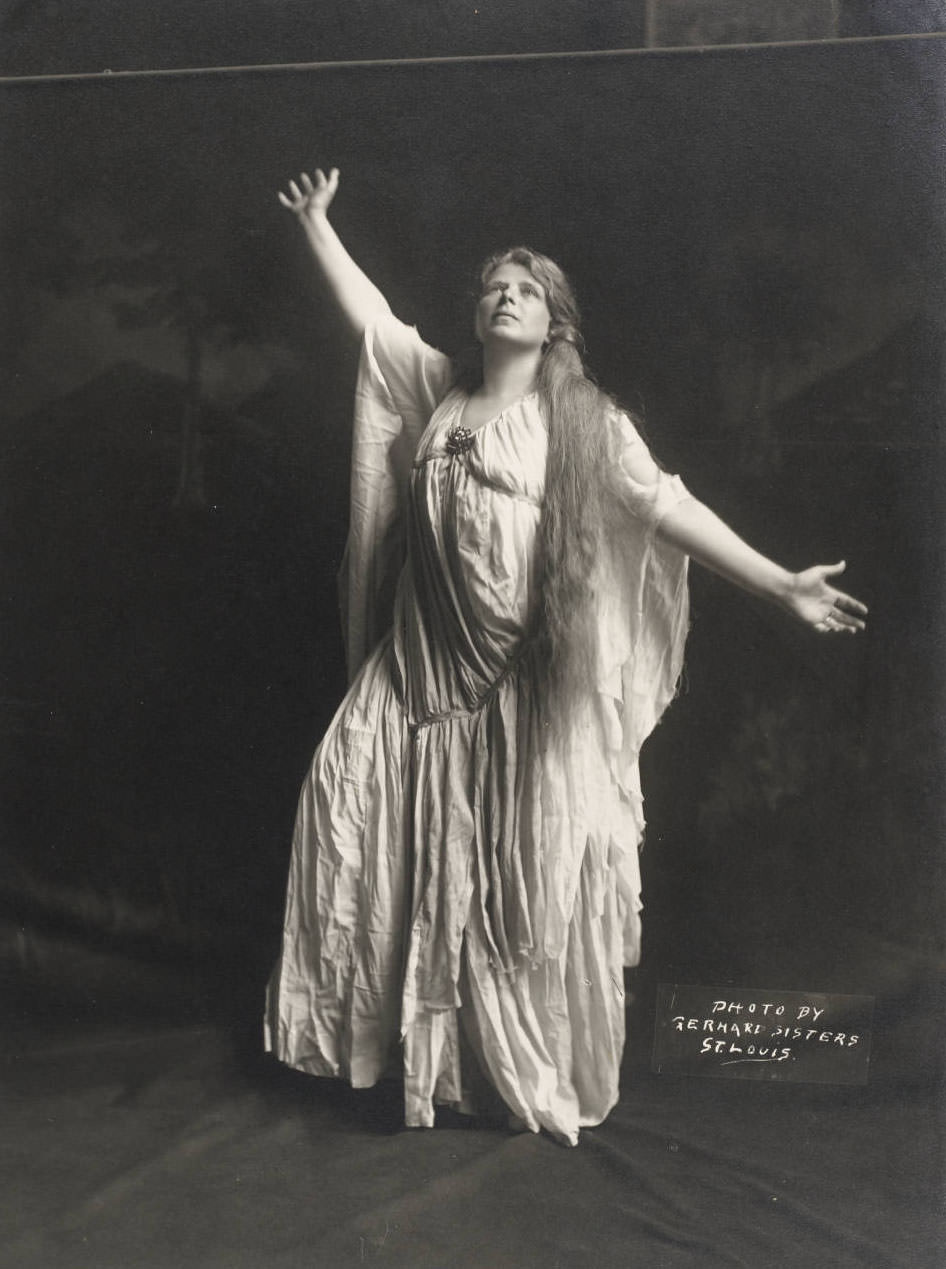
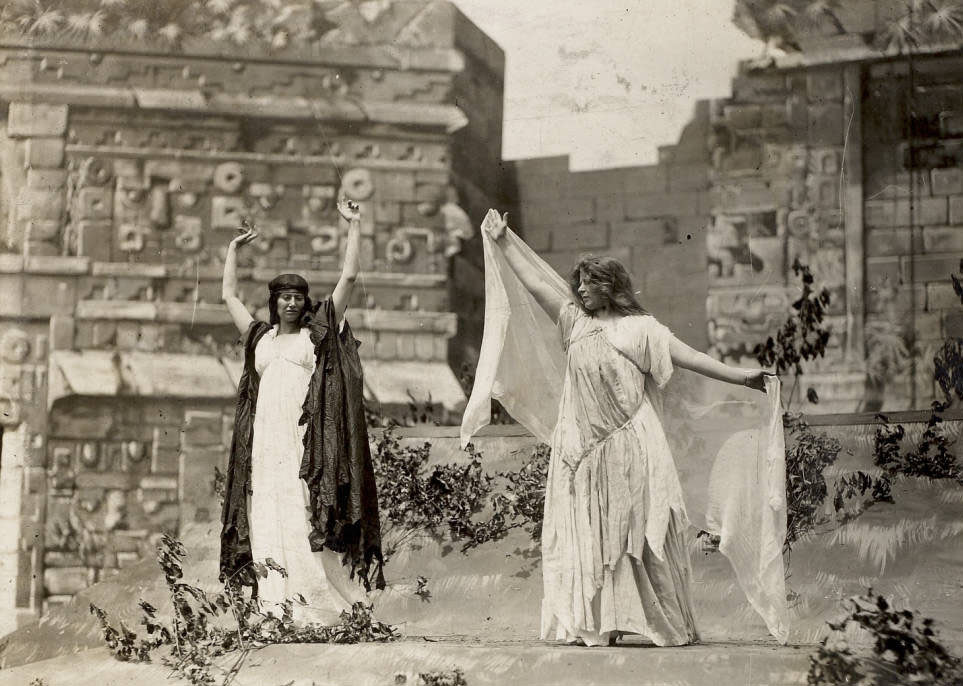
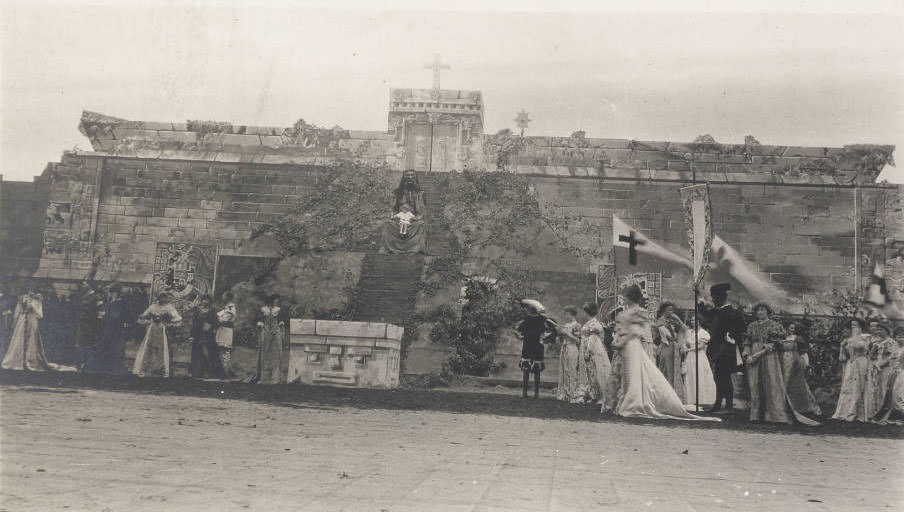
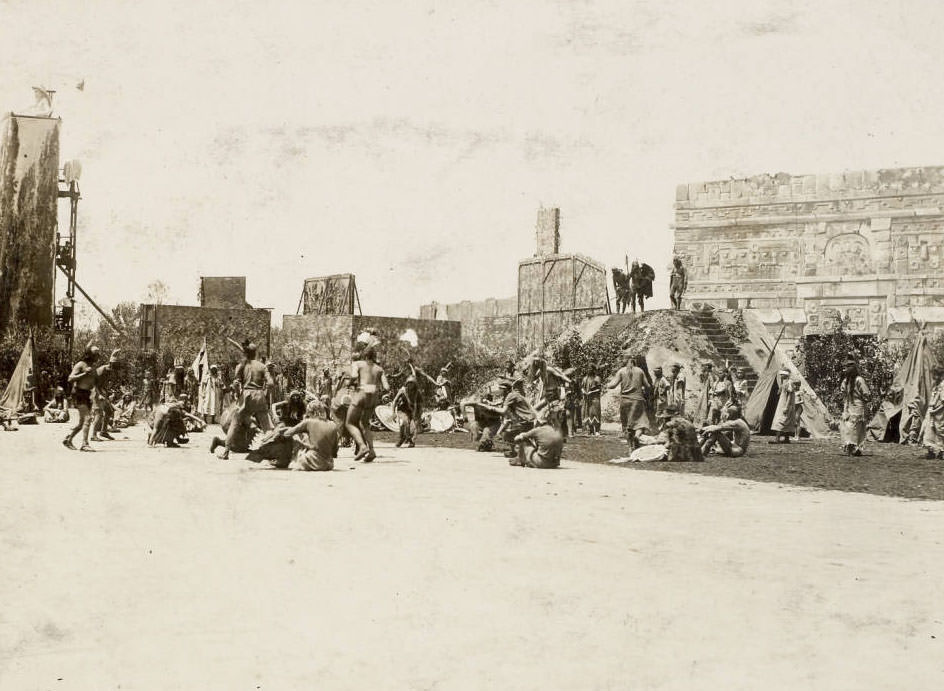
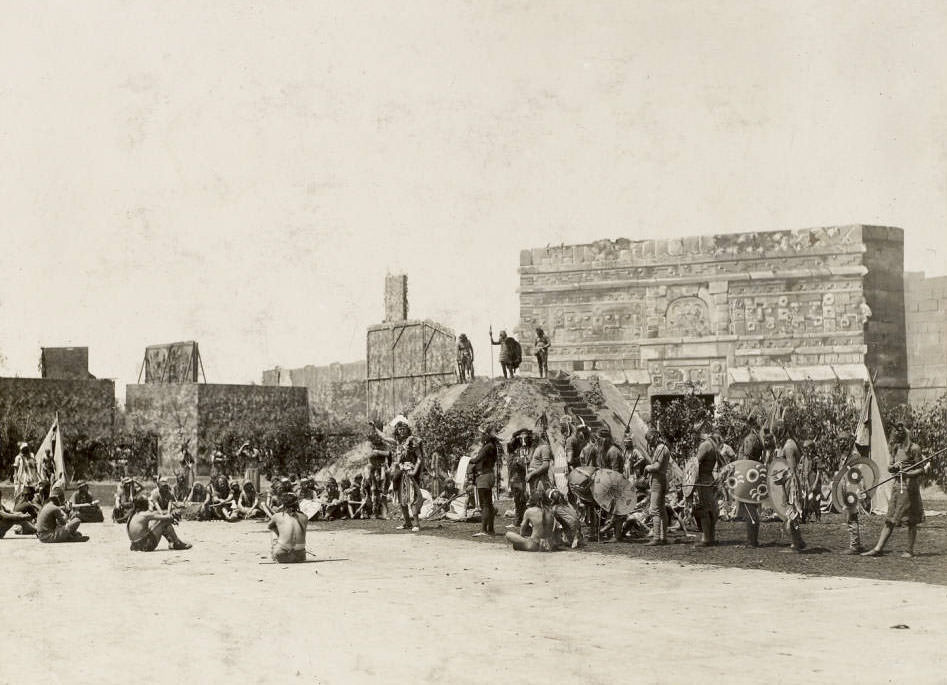
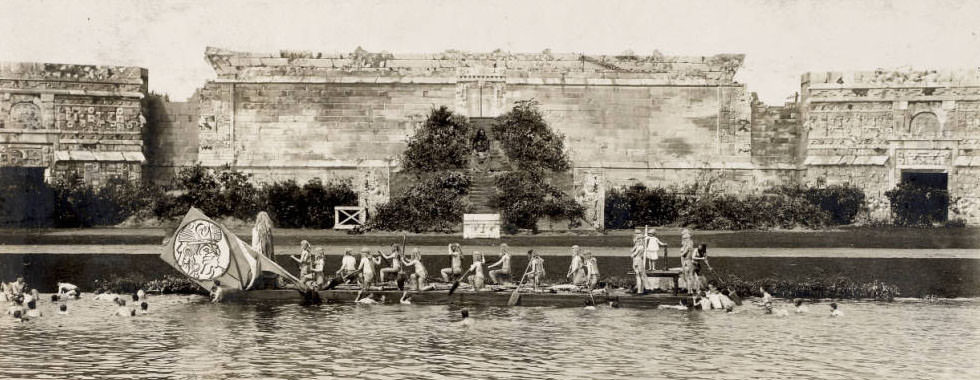
The Masque was an entirely separate, allegorical production. Written and directed by Percy MacKaye, it opened on a stage set as an ancient Maya temple, complete with a great plaza and an altar in front of a large mound. Maya dancers and musicians entered the plaza while priests performed a ceremony, and groups of men, boys, and girls danced around them. The scene then shifted into an allegory about St. Louis itself — with actors playing figures like “Gold,” “Imagination,” “Poverty,” and the “Flower of Love” battling over the soul of the city.
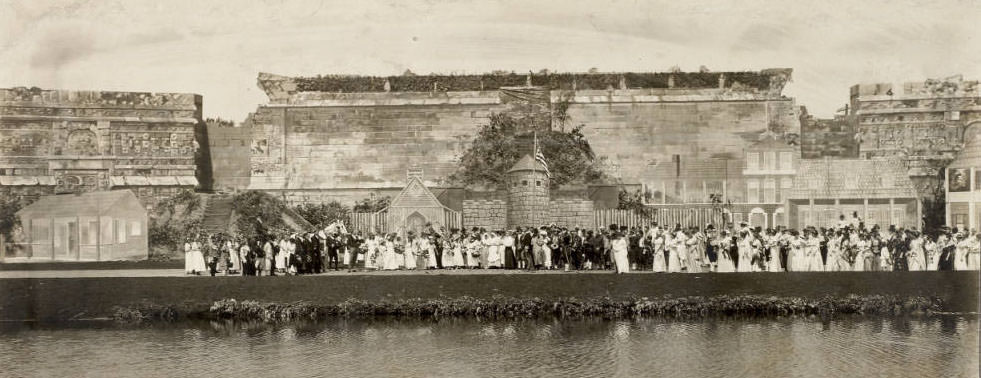
As the Masque of the Pageant and Masque of St. Louis began, the stage was set as an ancient temple of the Maya civilization.As the Masque of the Pageant and Masque of St. Louis began, the stage was set as an ancient temple of the Maya civilization.Volunteer dancers performed as Mayas in the Masque of the Pageant and Masque of St. Louis, 1914Performance of the Maya dancers on the stage of the Masque, 1914Men, women, boys and girls costumed as Maya Indians line up on the set, a plaza before the ancient temple of Maya civilization, in a scene from the Masque, Pageant and Masque of St. Louis, 1914Maya characters onstage, 1914
A Maya rower in the Masque of St. Louis.1914
Actor portraying Maya chief in the Masque of St. Louis, 1914
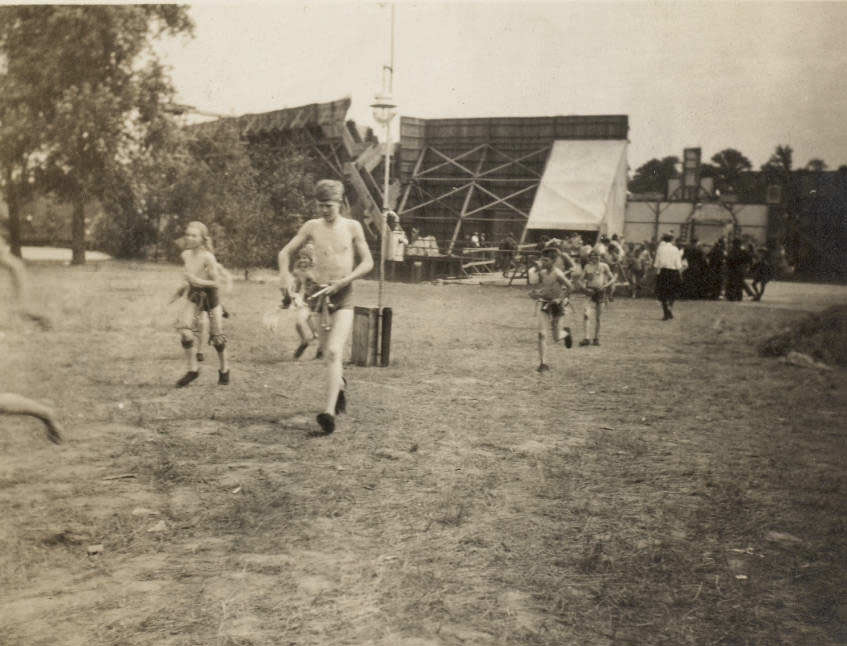
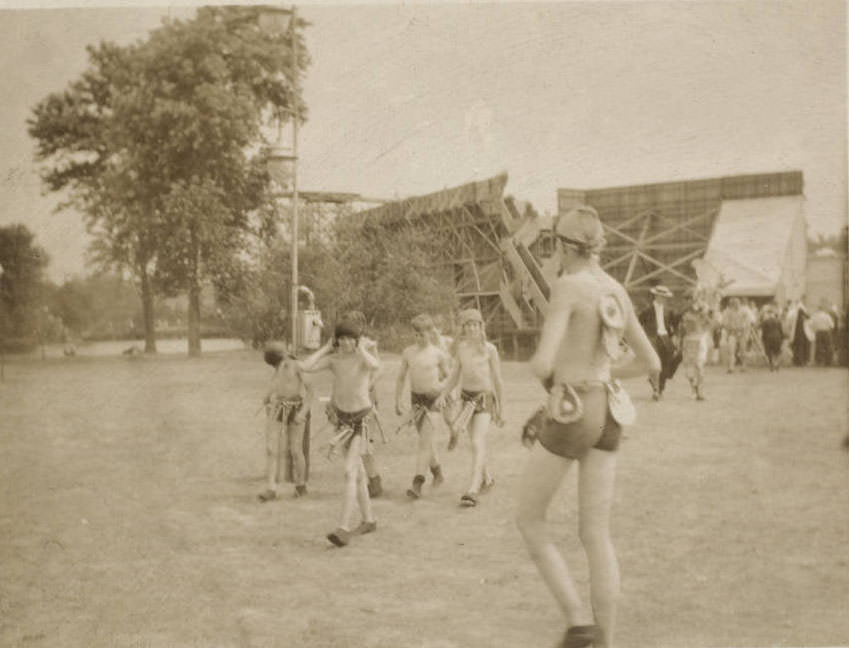
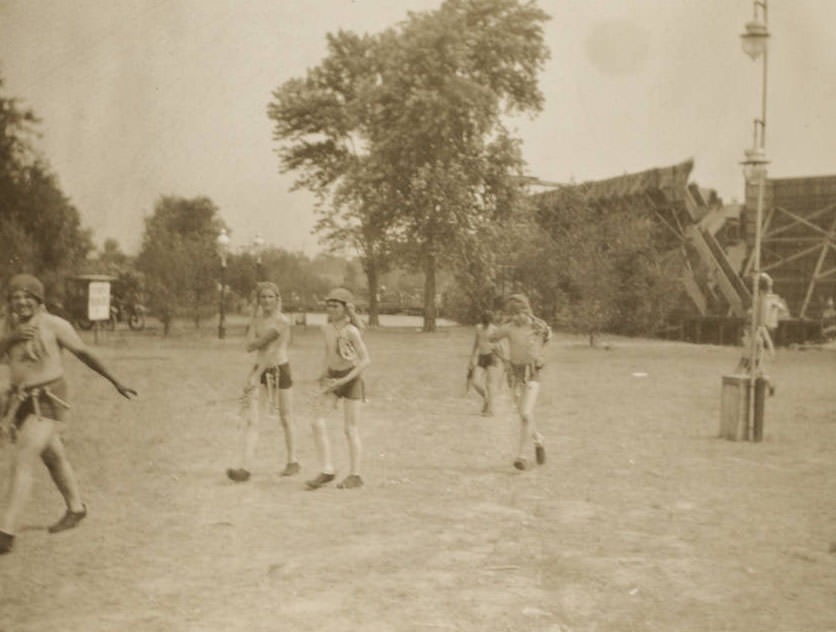
Maya dancing boy in the Masque of St. Louis, 1914Boys portraying Maya dancers in the Masque, exercise outside of the stage in Forest Park, 1914Boys who perform as Maya youths coming off the stage of the Masque, 1914‘Flower of Love’ over ‘Gold’ and his minions, 1914‘Gold’ and the ‘Pioneer’ in combat; St. Louis above, 1914Mrs. George Gellhorn, portrays ‘Imagination’, an allegorical figure in the Masque, Pageant and Masque of St. Louis.Actresses portraying the allegorical figures of ‘Poverty’ and ‘Imagination’ perform in the Masque, Pageant and Masque of St. Louis, Forest Park, St. Louis, Missouri, May 28-31, 1914.The second scene of the allegorical Masque, Pageant and Masque of St. Louis, opens with the coming of the Pioneers, who call on an adult St. Louis, to lead them against the earth forces, led by Gold.
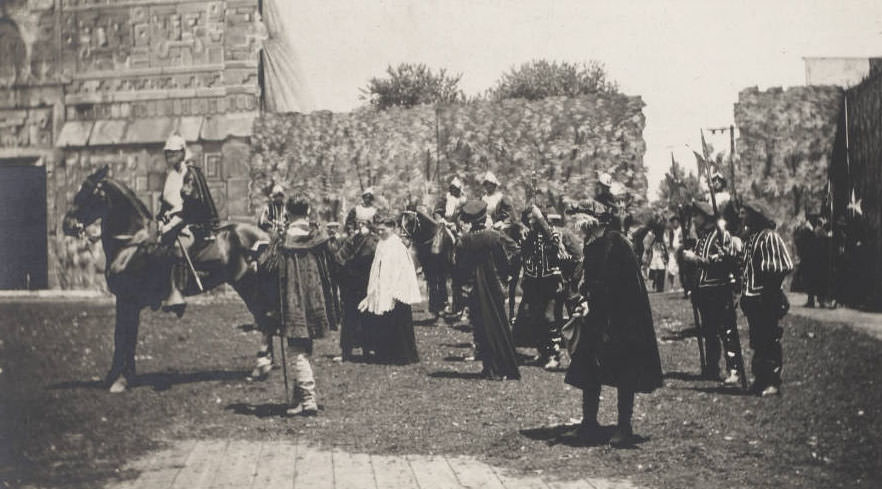
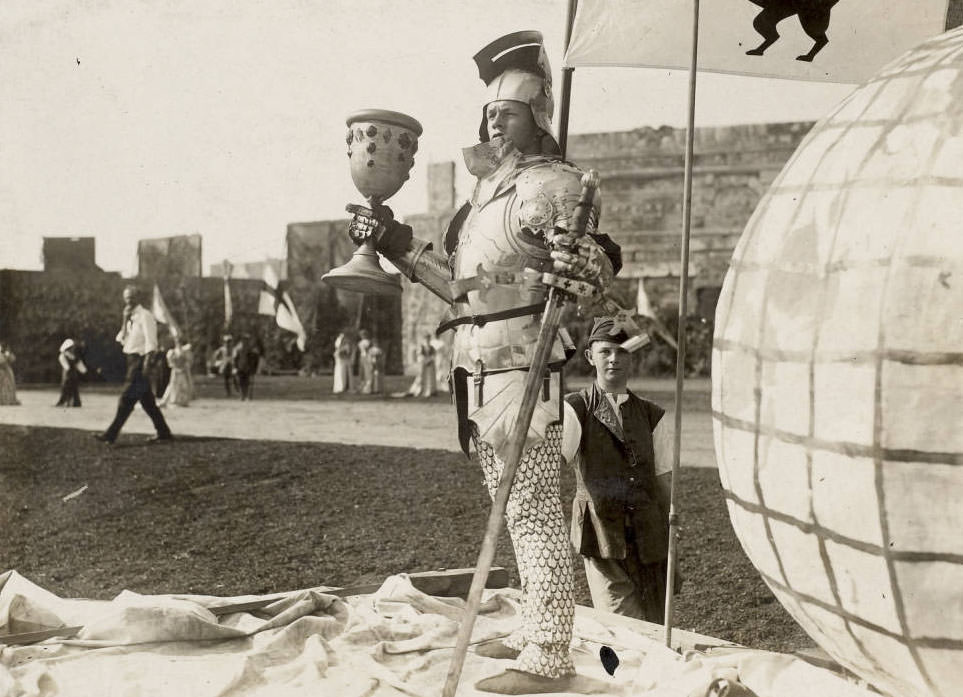
In the Masque, actor John L. Tierney played “St. Louis” — the character of Louis IX of France, patron saint of the city — who descended onto the stage to meet the World Adventurers. Other performers represented distant lands and peoples, including William E. Mack as “Africa,” Clarence E. Fleming as the “Oceanic Islands,” and Frank Ferguson as “Australia.” A French knight in full armor appeared in a medieval scene, attended by a young man in costume. The Masque used these wide-ranging characters to build a symbolic portrait of St. Louis as a meeting point for the world.
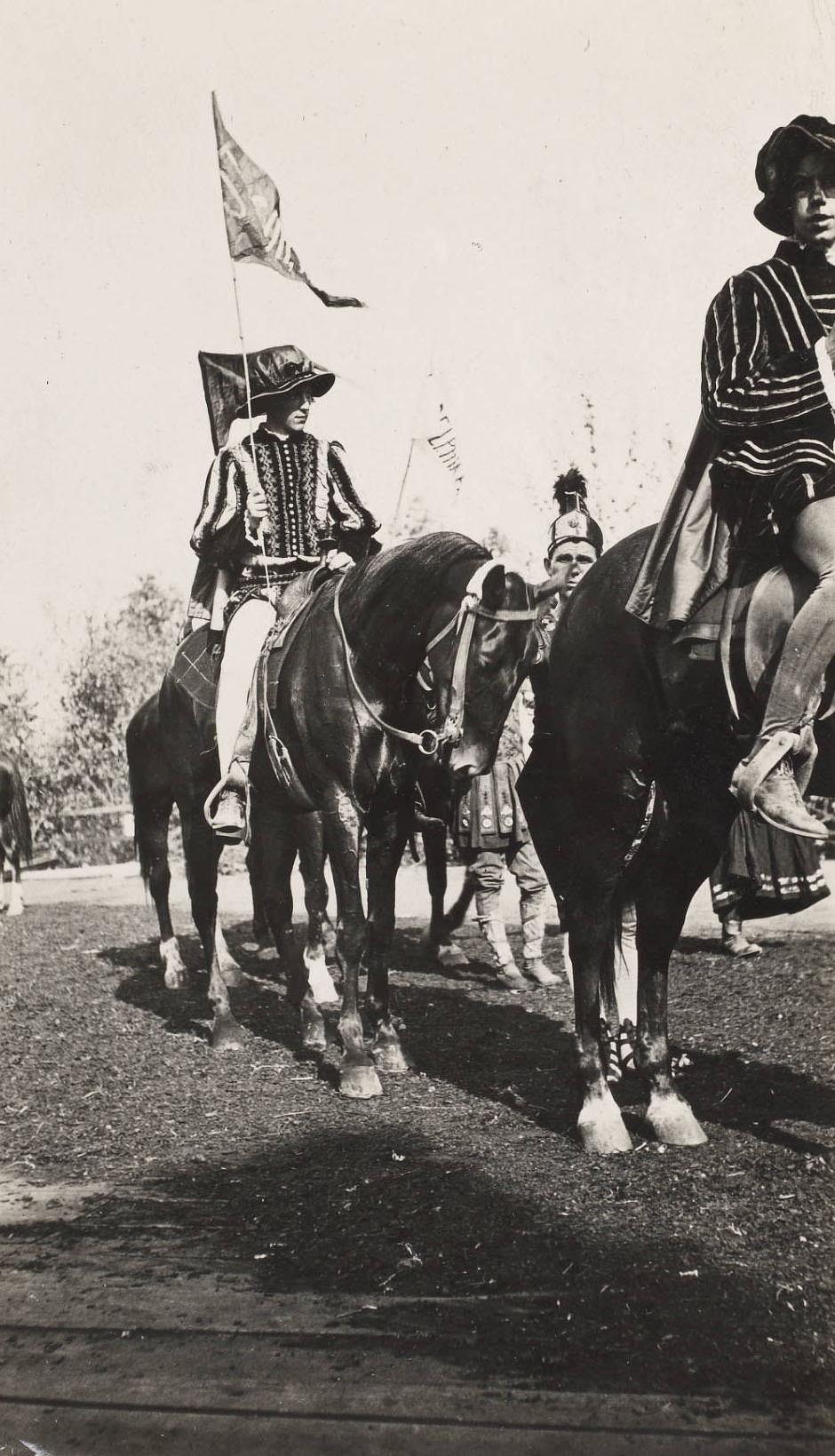
In the Masque, an actor, John L. Tierney, depicting ‘St. Louis’ — Louis IX of France, the patron saint of the city, descends on the stage of Pageant and Masque of St. Louis to meet the World AdventurersWilliam E. Mack depicting ‘Africa’, Clarence E. Fleming as the ‘Oceanic Islands’ and Frank Ferguson as ‘Australia’ in the Masque, Pageant and Masque of St. LouisActor holding a huge goblet portrays a French knight in armor in the Masque, Pageant and Masque of St. Louis. A young man in costume attends him.The young Louis IX sits in the arms of Cahokia in a scene from the Masque, 1914A volunteer actor rides to the stage for performance in the medieval scene in the Masque, Pageant and Masque of St. Louis, 1914
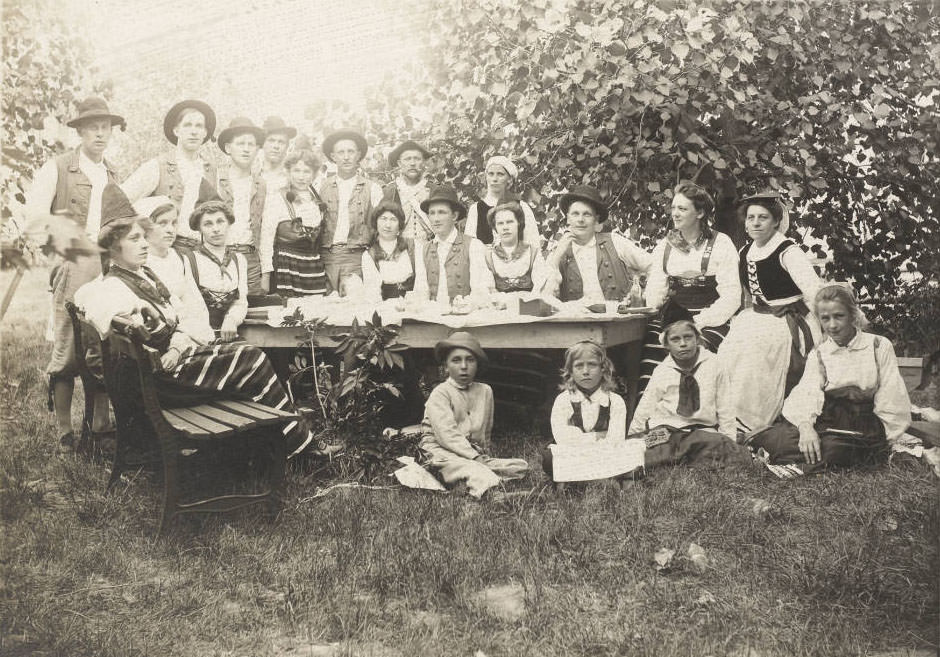
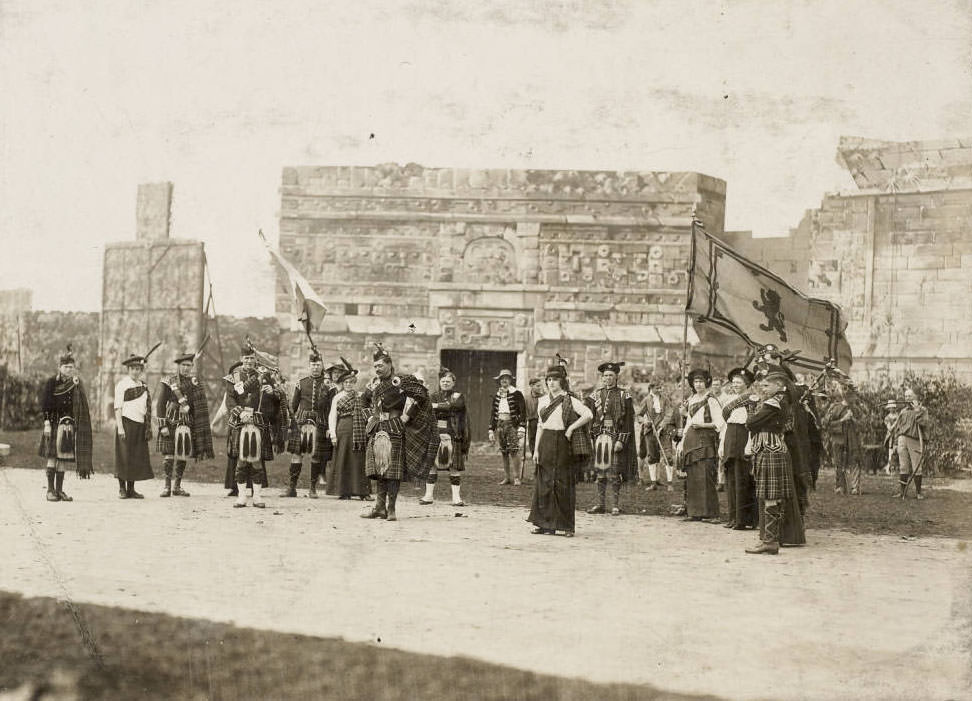
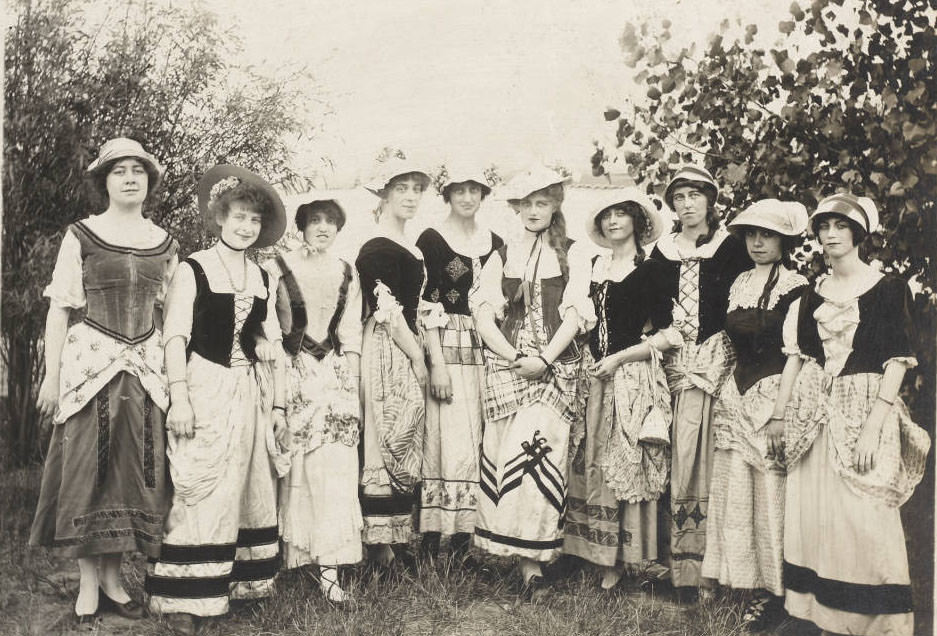
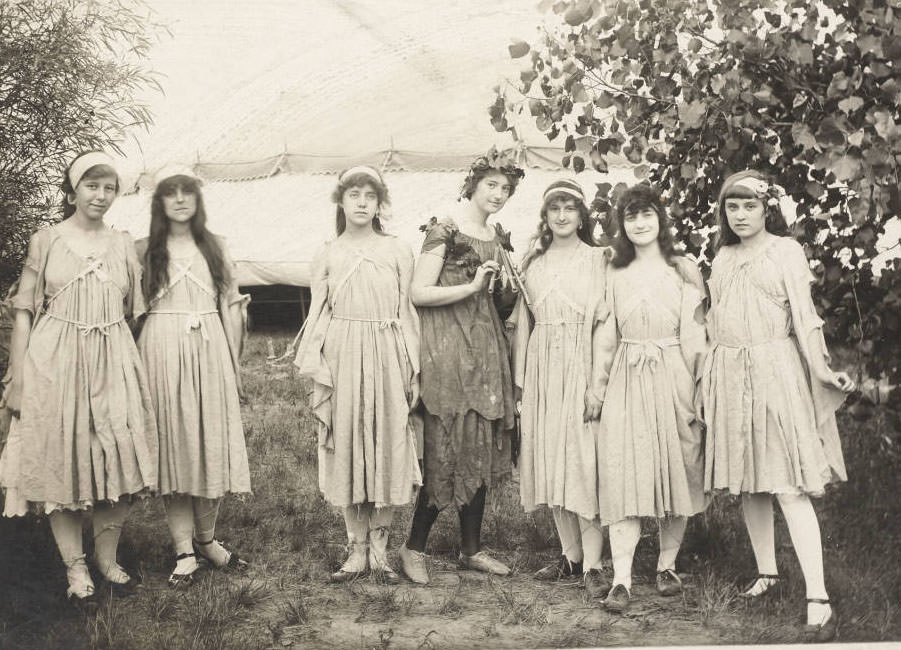
The Masque also featured cultural groups from across the immigrant communities of St. Louis. Swedish and Scottish performers brought their own traditional costumes and dances to the production. A group of young women performed the gavotte, a French folk dance, as part of the program. These performances reflected the diverse ethnic makeup of St. Louis in 1914, with each group contributing something of their own heritage to the collective drama.
Members of the Swedish group who performed in the Masque, 1914Scotch group, Masque of St. Louis, 1914A group photograph of young women who performed the gavotte, a French folk dance, in the Pageant, Pageant and Masque of St. Louis.
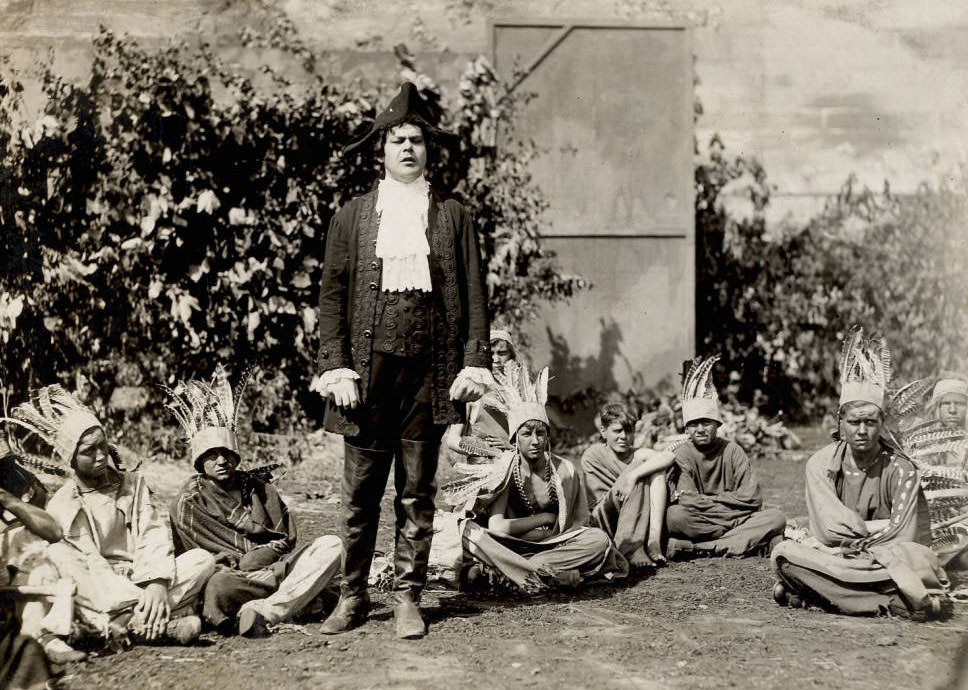
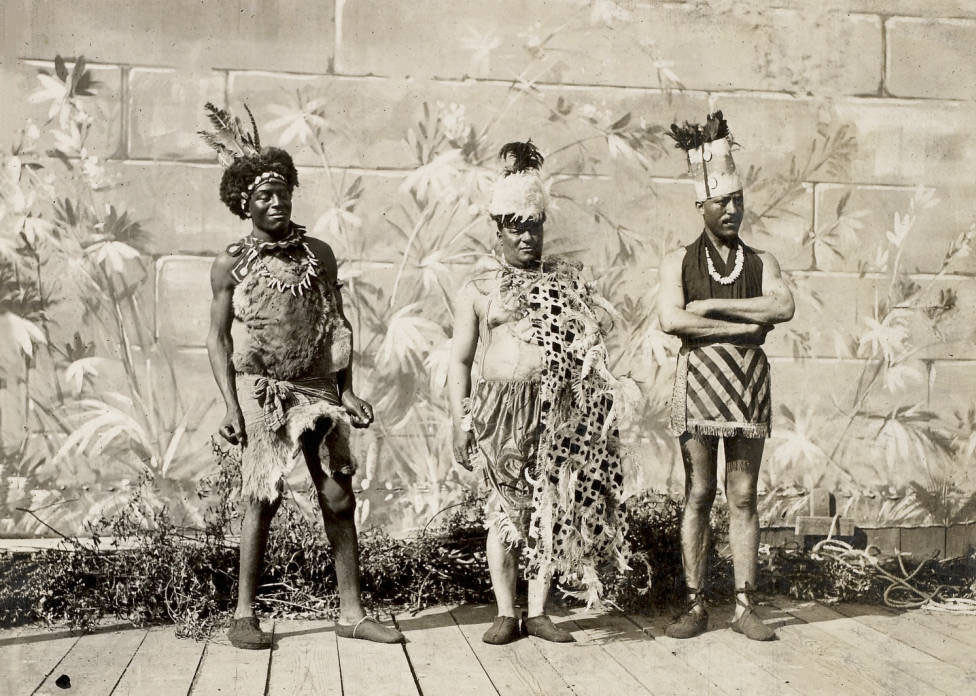
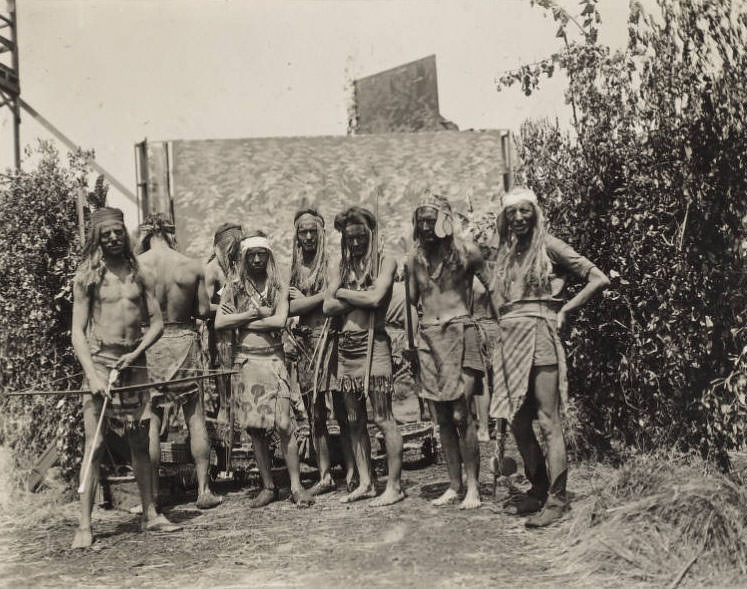
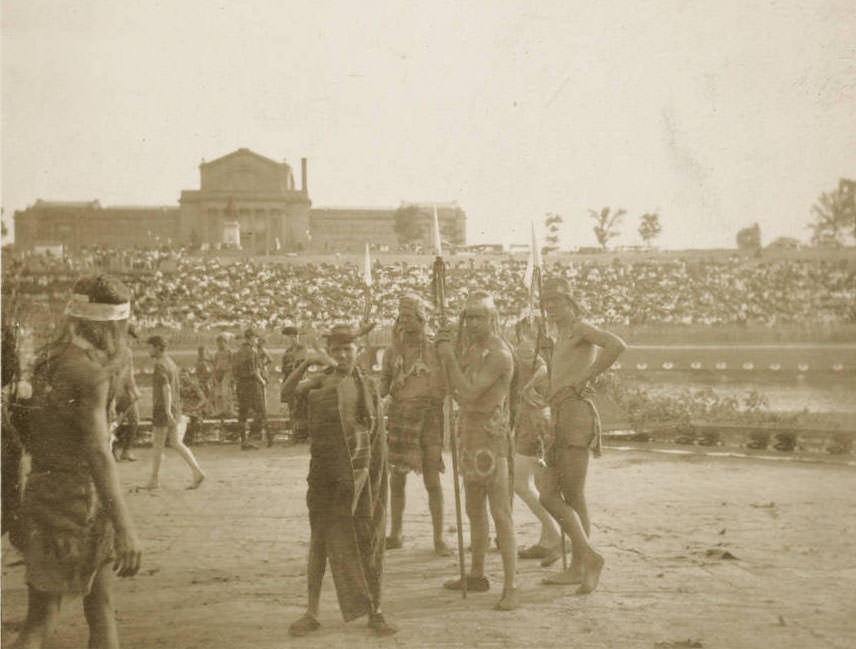
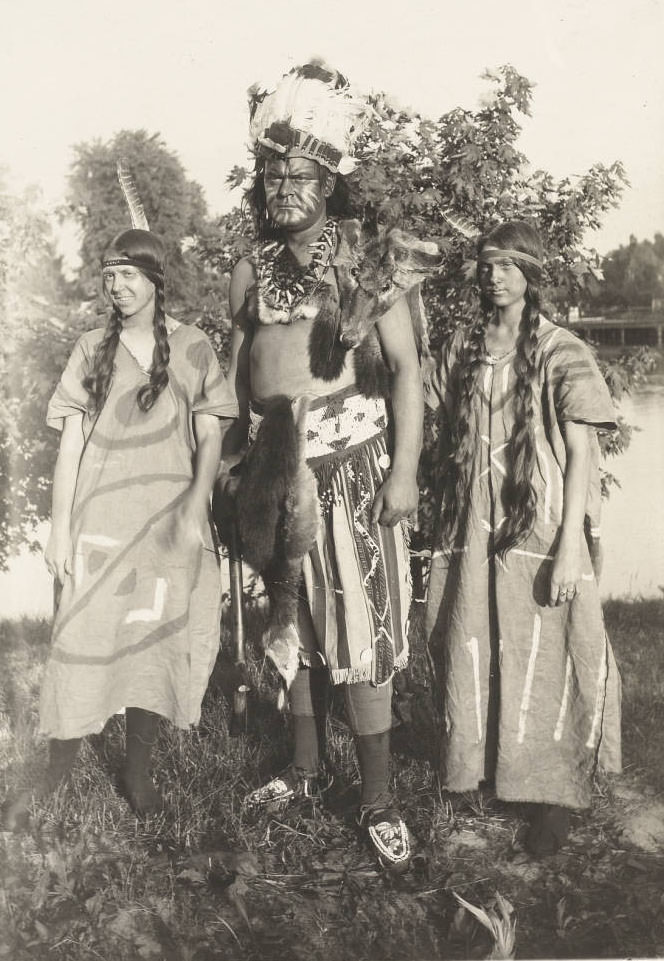
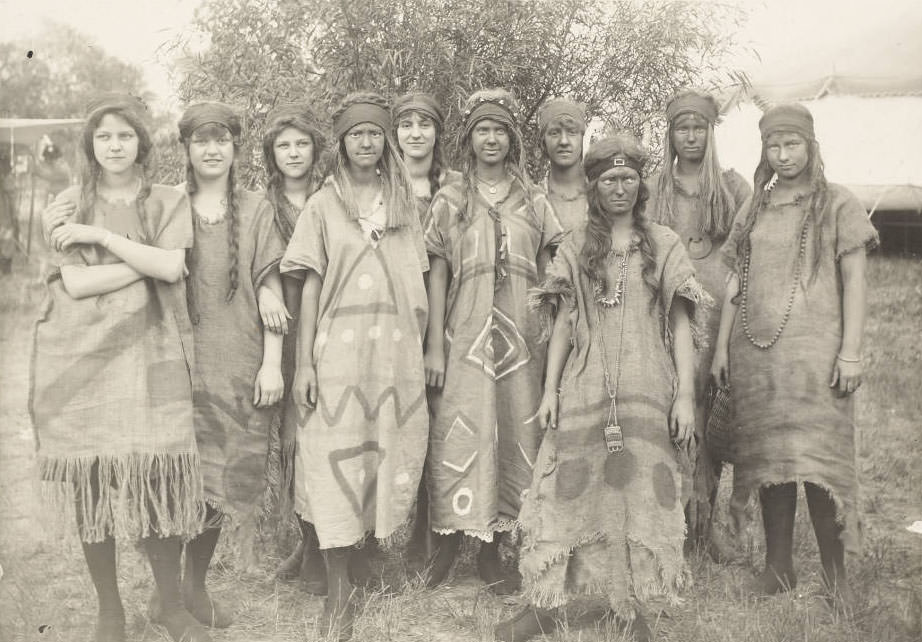
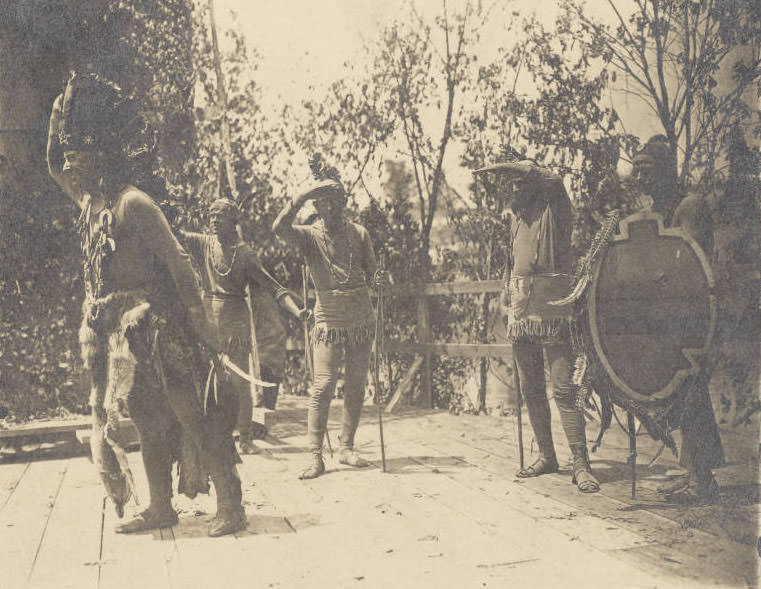
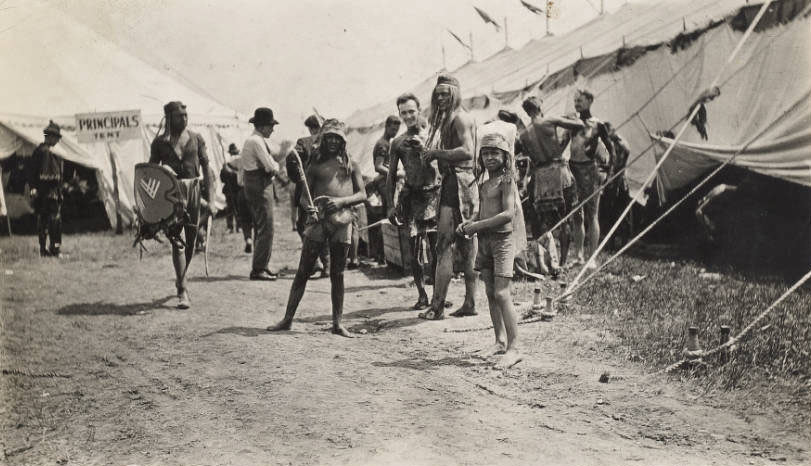
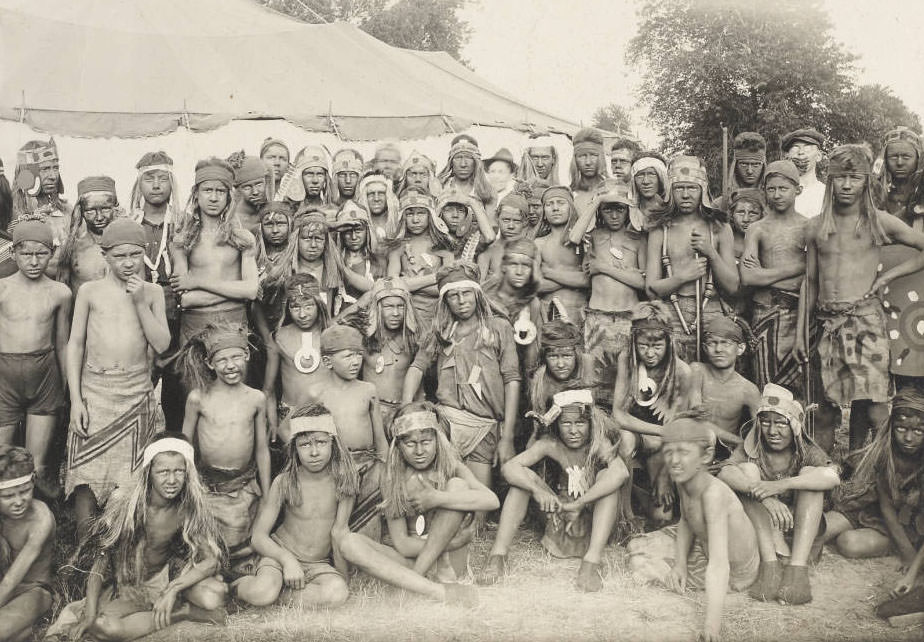
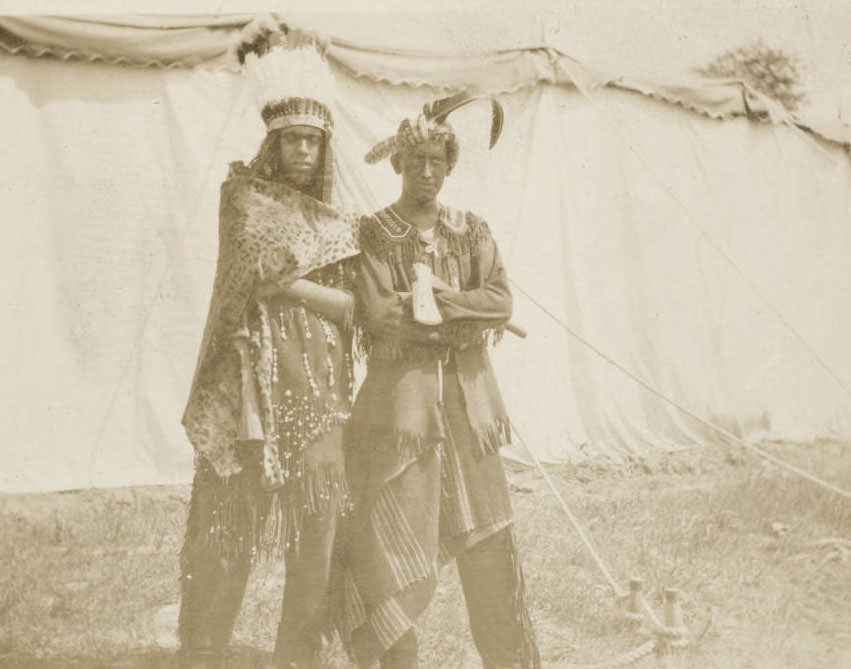
Native American scenes appeared throughout the Pageant. Actors in Indigenous dress performed the Osage Calumet dance, re-enacted councils between tribal leaders and French settlers, and portrayed the Sauk and Fox Indians negotiating with General William Henry Harrison. In one scene, American pioneers including General Harrison, Captain Stoddard, and Pierre Chouteau met with Sauk and Fox representatives on stage. These scenes drew on the actual historical record of Indigenous and European interaction in the Mississippi Valley.
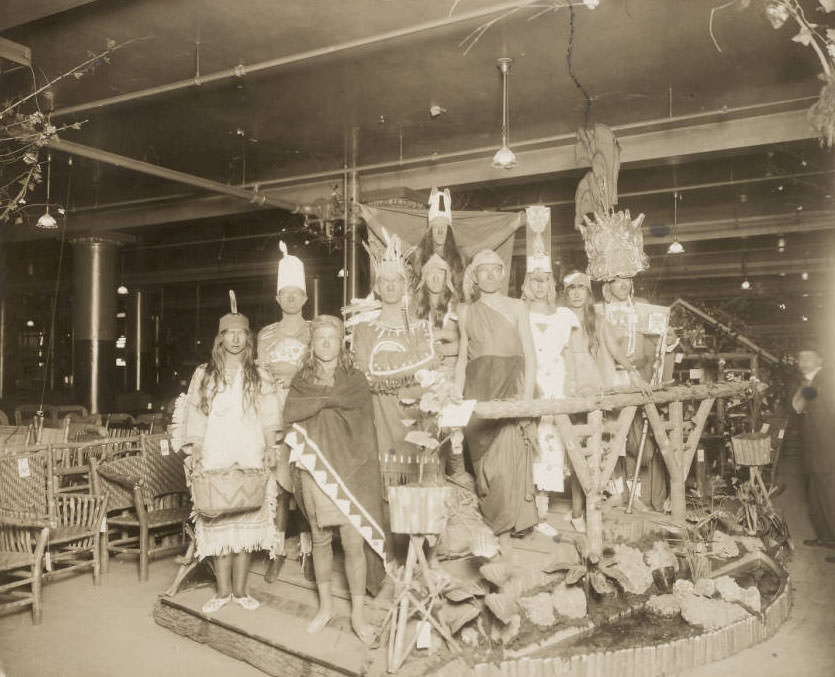
Calumet dance of the Osage Indians, Pageant of St. Louis, 1914Osage Indians and their chief in conference with their enemies, a scene from the Pageant, 1914American pioneers, General Harris, Captain Stoddard, Pierre Chouteau and leading citizens in conference with Sauk and Fox Indians, Pageant, 1914On stage in the Pageant, Pageant and Masque of St. Louis, General William Henry Harrison leaves St. Louis after his negotiations with the Sauk and Fox Indians, who stand and watch the scene.A group of volunteers portray Indians in the Pageant of St. Louis,1914Actor portraying Indian, 1914A group of volunteer actors in dress of American Indians stand on the stage of the Pageant, Pageant and Masque of St. Louis, 1914Actors in the Pageant, pose in Native American costume, 1914Actors playing American Indian women, 1914Actors portraying Indian, 1914Actors portraying Indians offstage, 1914Boys costumed as American Indians to perform in the Pageant and Masque of St. Louis, 1914Group photograph of actors portraying American Indians in the Pageant, 1914Two men in American Indian dress in the Pageant, 1914
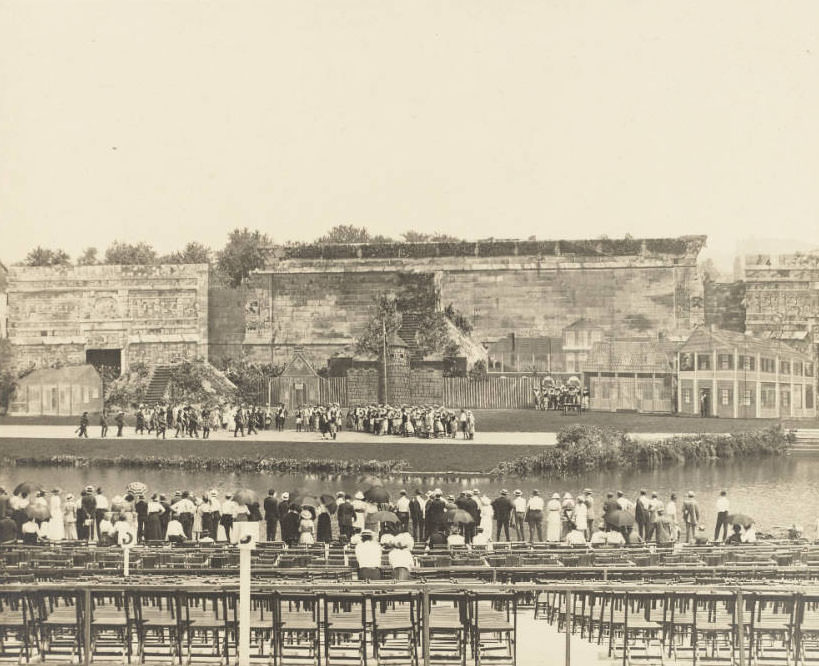
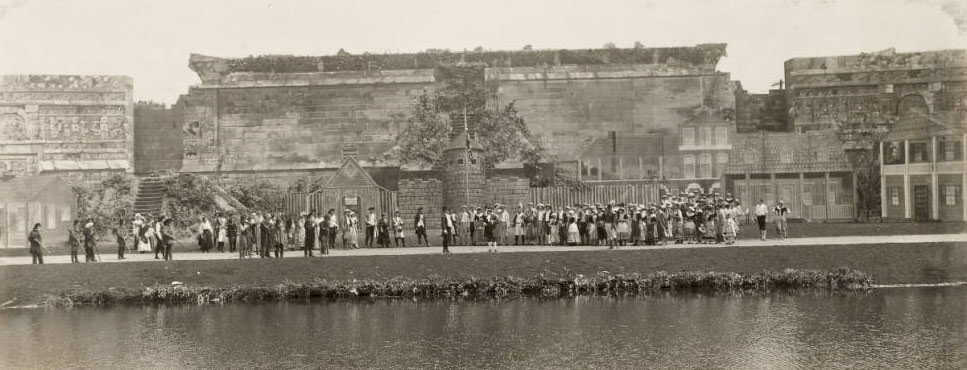
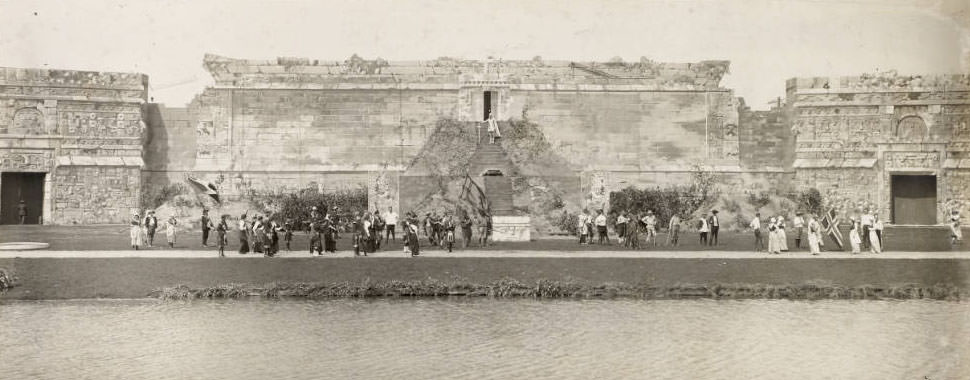
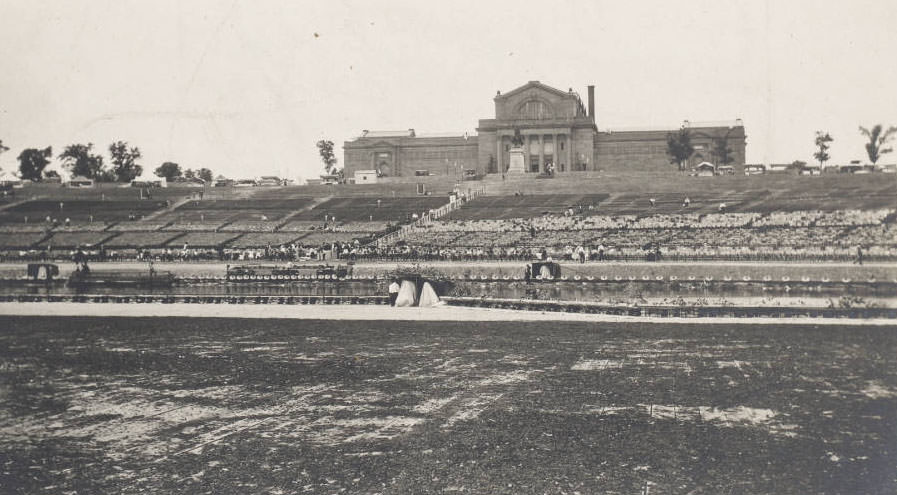
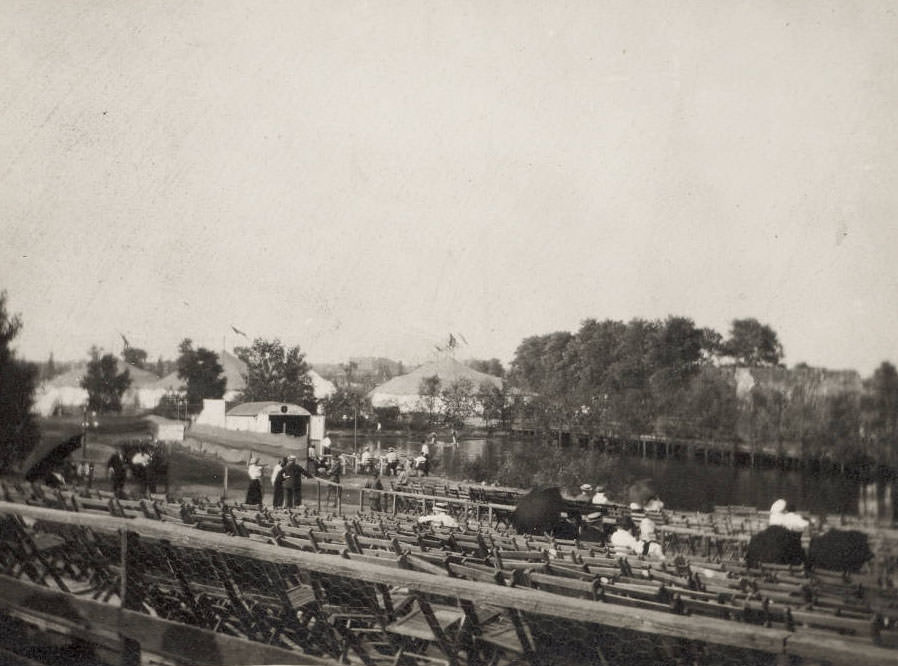
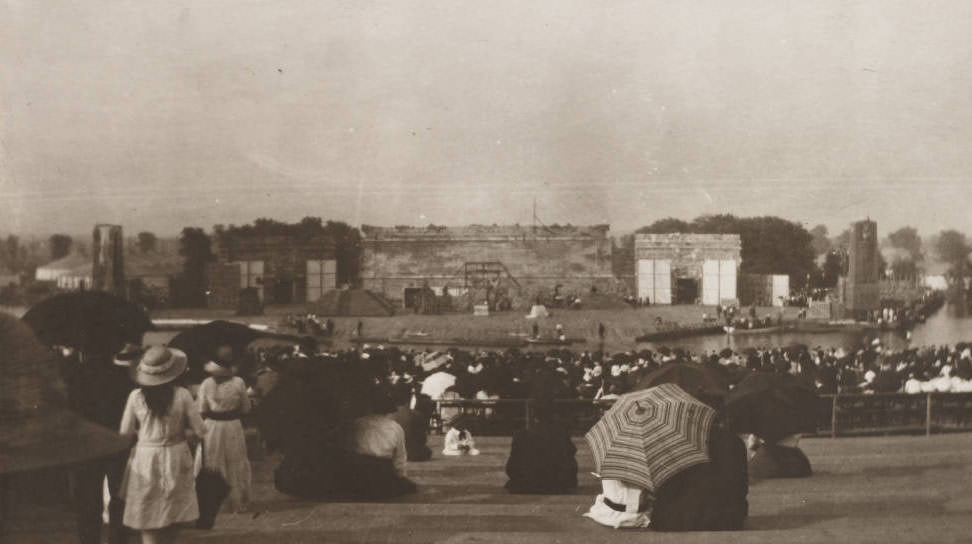
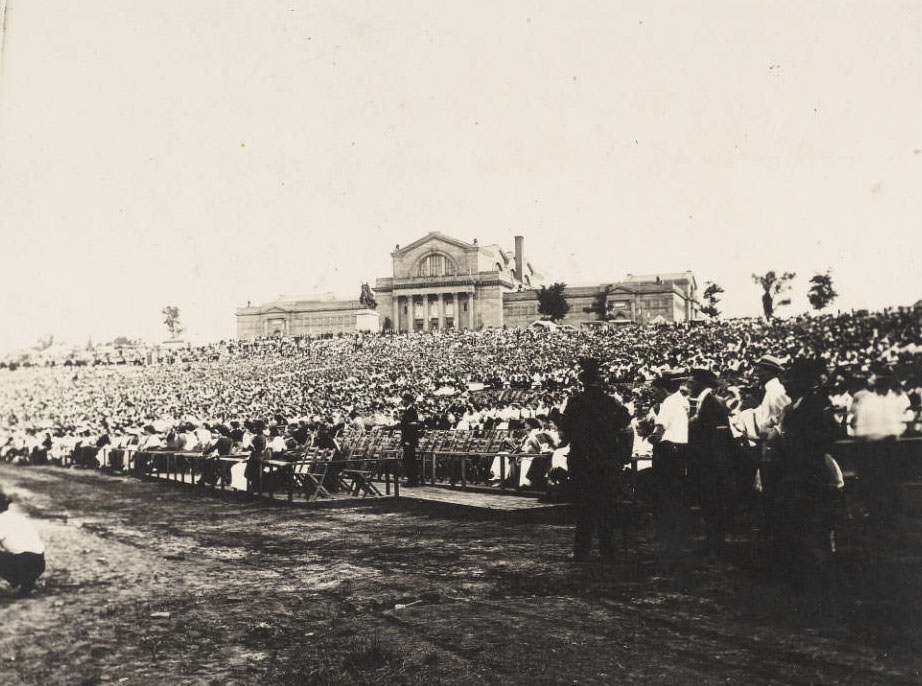
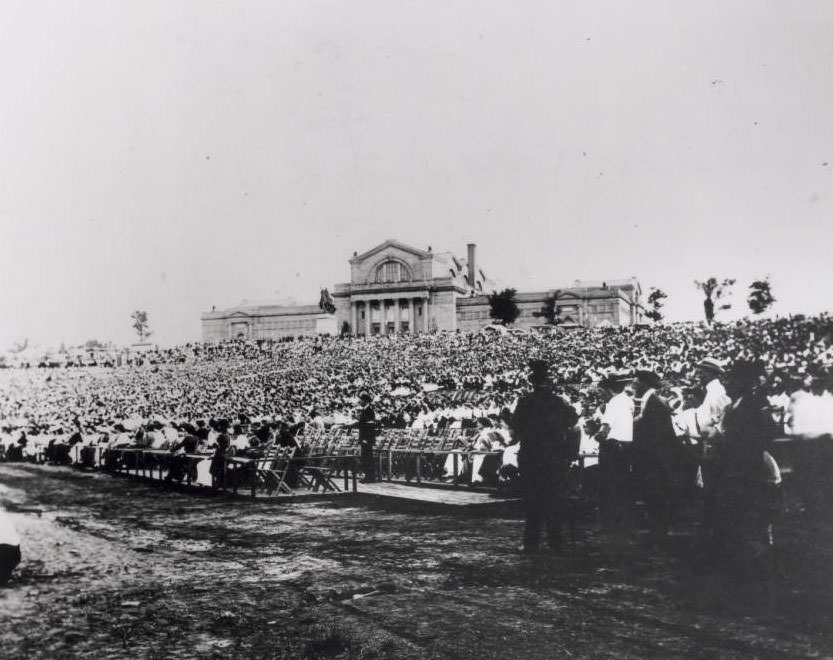
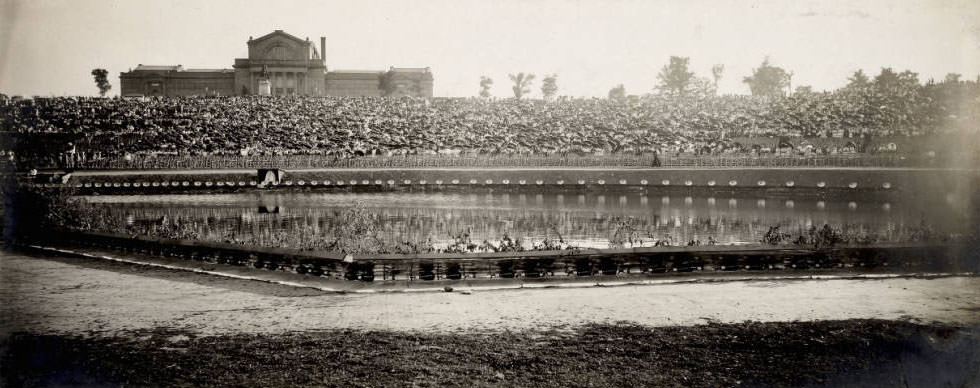
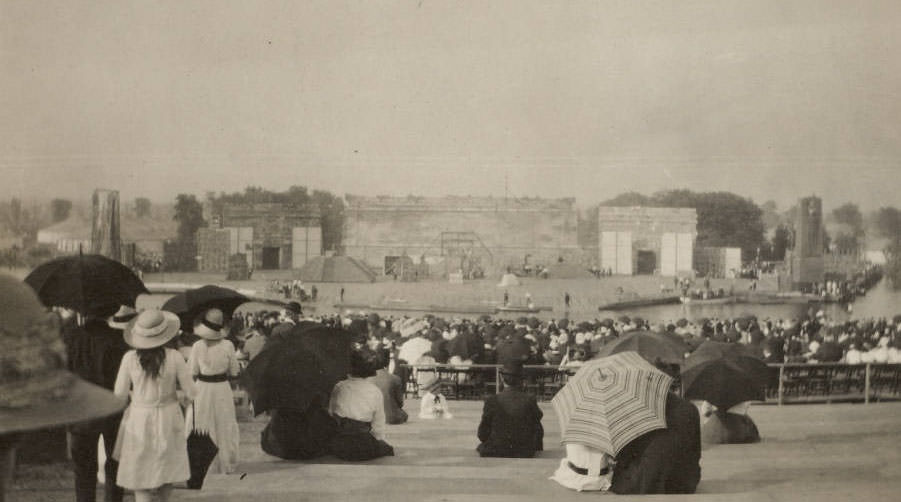
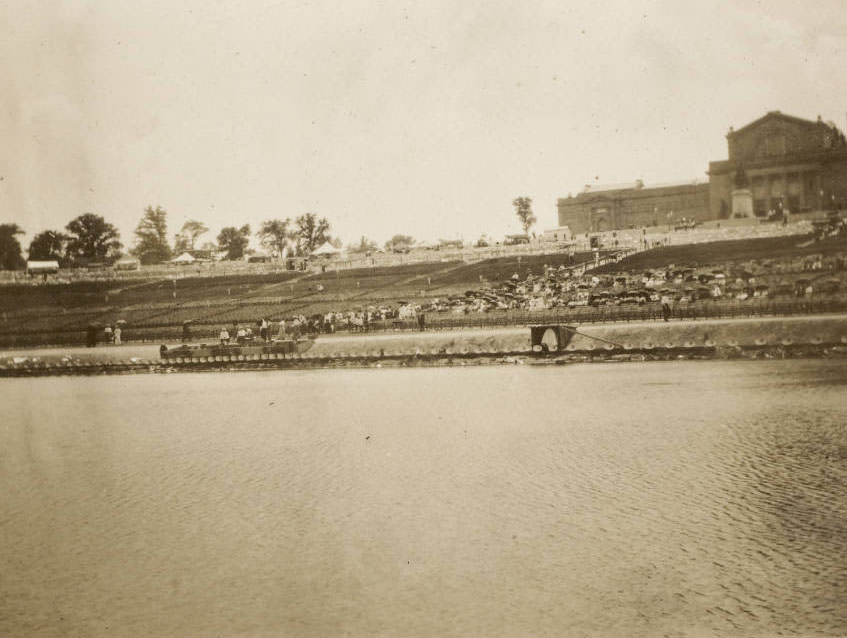
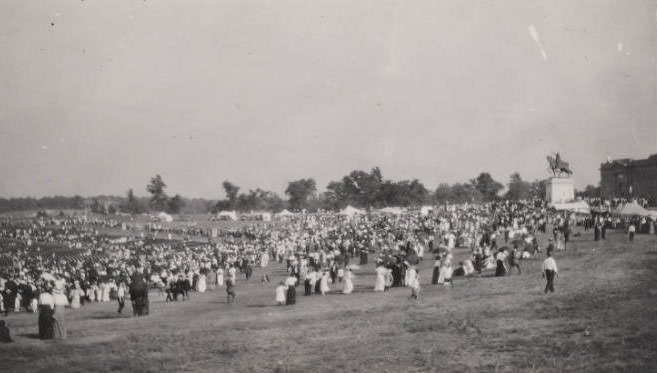
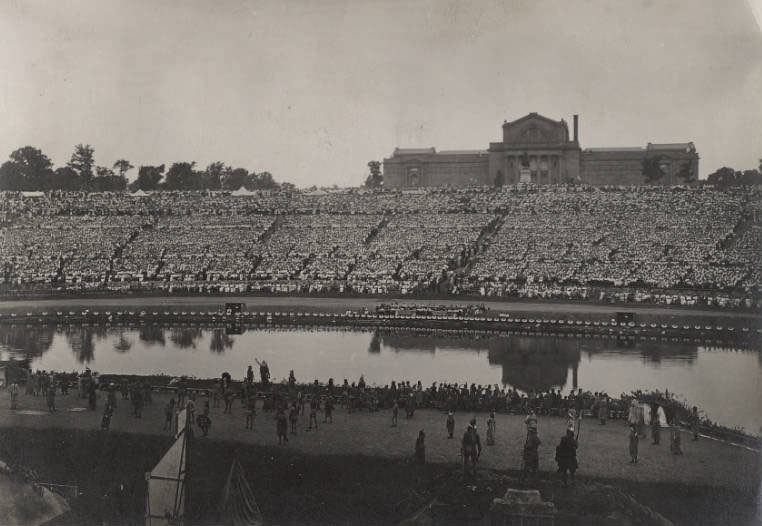
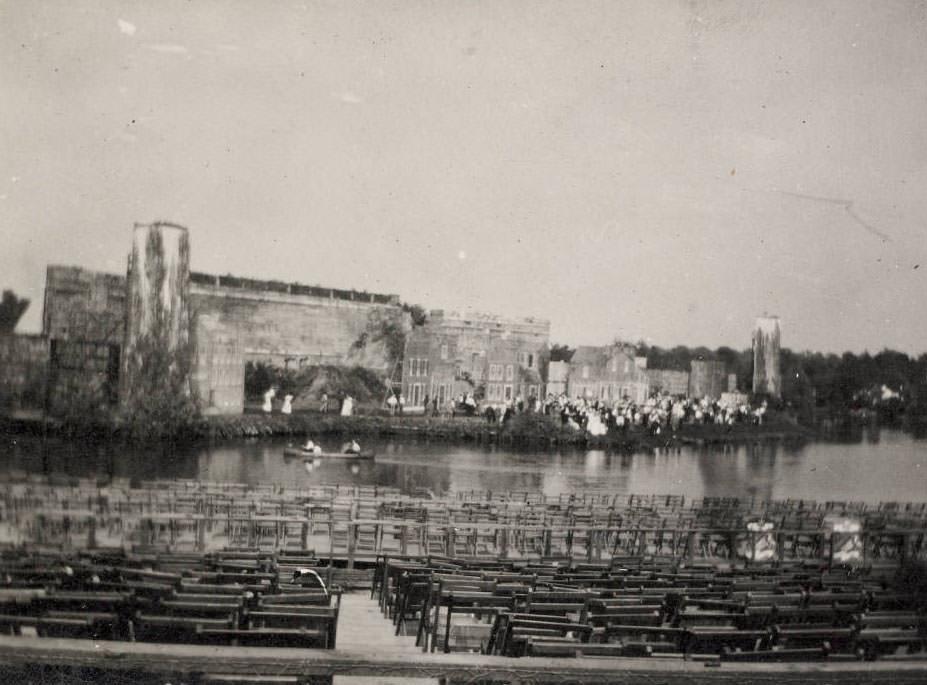
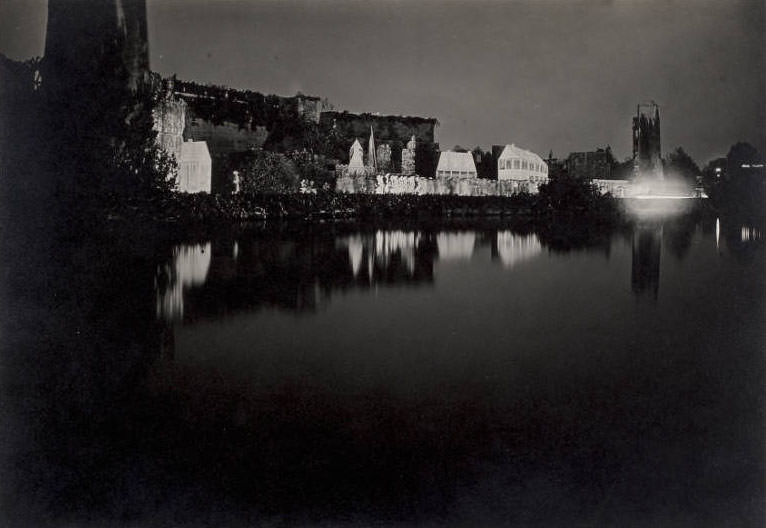
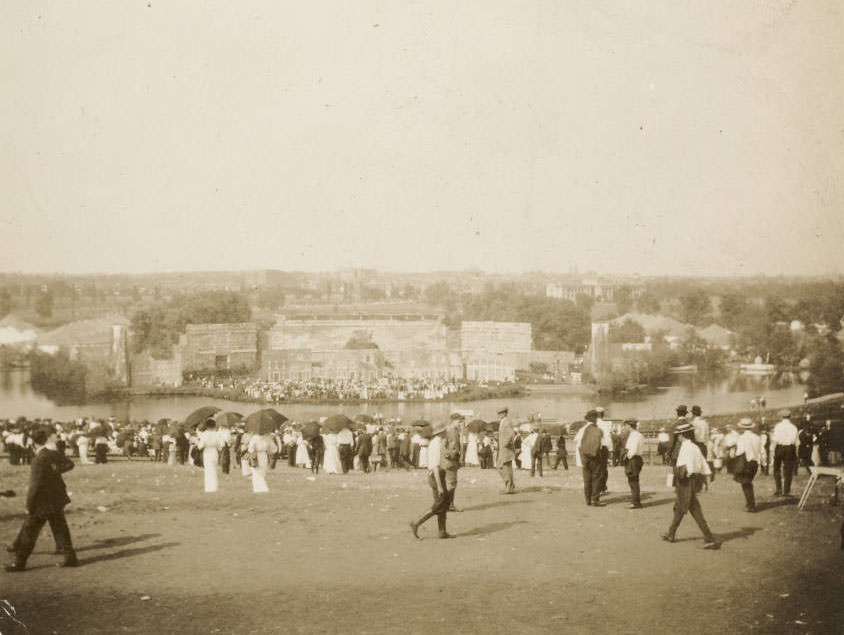
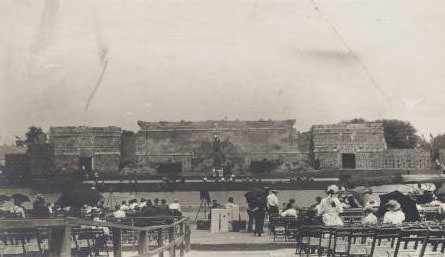
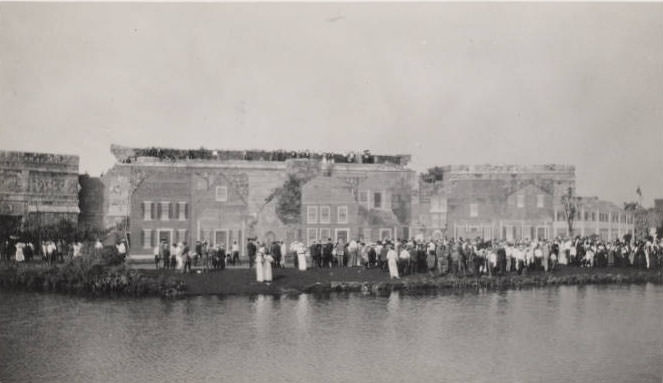
Audiences filled Art Hill in extraordinary numbers each night. The sloping hillside provided a natural amphitheater, with rows of seats arranged to face the stage below. The Grand Basin separated the audience from the performers, so the stage — lit for evening shows — was viewed across open water. Camera operators and press photographers recorded the performances from the front of the stage, capturing the spectacle for newspapers and archives.
Art Hill seating arranged for performances of the Pageant and Masque of St. Louis, 1914Seats set up for performances of the Pageant and Masque of St. Louis, 1914Audience at the Pageant and Masque of St. Louis in place in front of the stage, 1914full-house audience at a performance of the Pageant and Masque of St. Louis, 1914The audience for the Pageant and Masque of St. Louis seated on Art Hill, 1914A view of the audience for the Pageant and Masque of St. Louis seen from the stage in Forest Park, St. Louis, Missouri.The audience seated for performance of the Pageant and Masque of St. Louis, 1914View of Art Hill from Basin, 1914View of audience walking on Art Hill, 1914View of the audience seated on Art Hill, Forest Park, for performances of the Pageant and Masque of St. Louis, 1914A view of the audience and stage, 1914A view of the stage of the Pageant and Masque of St. Louis seen from the seats, 1914View of the stage of the Pageant and Masque of St. Louis looking across the lagoon lit for evening performance of the Pageant of St. Louis.The audience’s view of the stage set for the Pageant, Pageant and Masque of St. Louis, 1914Camera men and photographers record the stage of the Pageant and Masque of St. Louis, the 1914 drama in Forest Park.
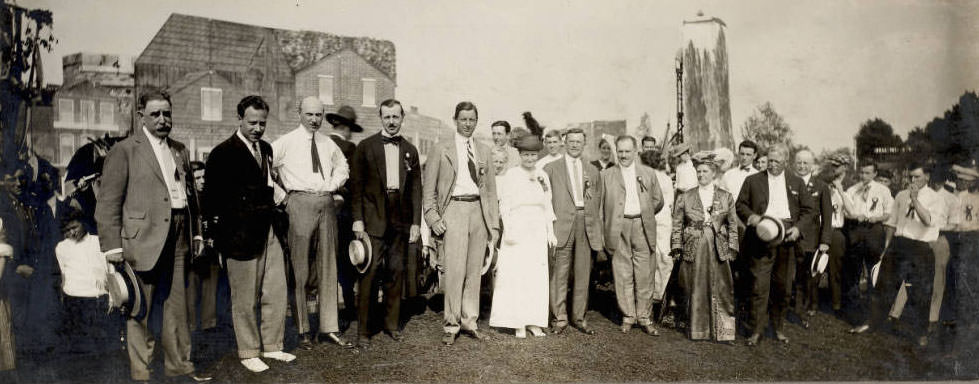
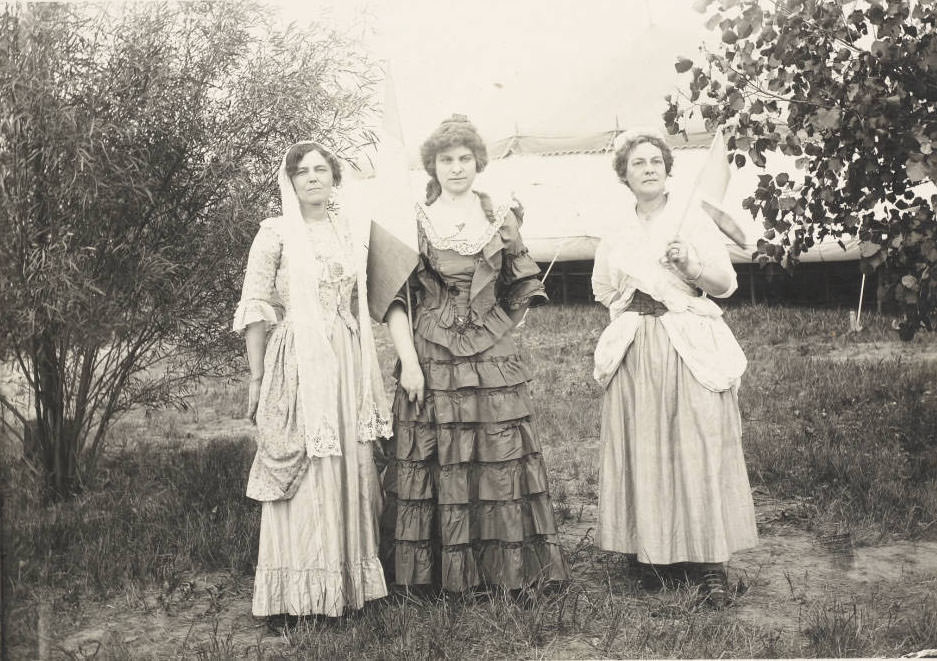
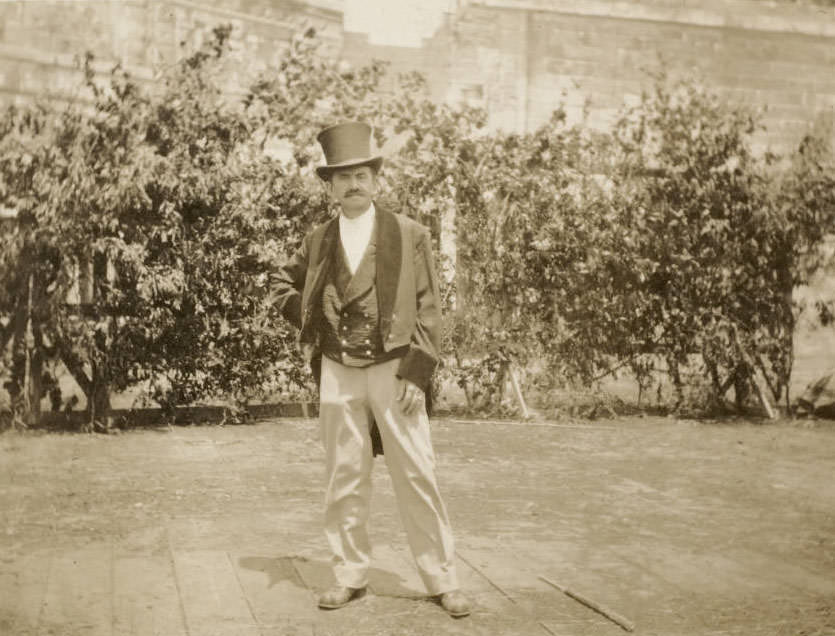
Behind the scenes, an executive committee of prominent St. Louis citizens oversaw the production. The committee posed for photographs on the drama’s own set, a sign of how closely the city’s civic leadership was tied to the event. Costume groups gathered for group portraits before and after performances, and the photographs taken across those four days form one of the most complete visual records of any civic pageant from the era.
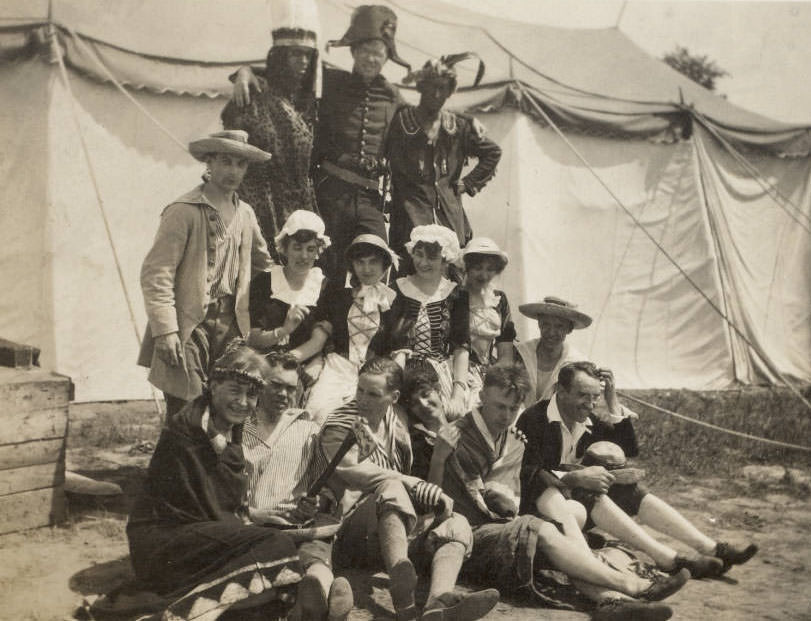
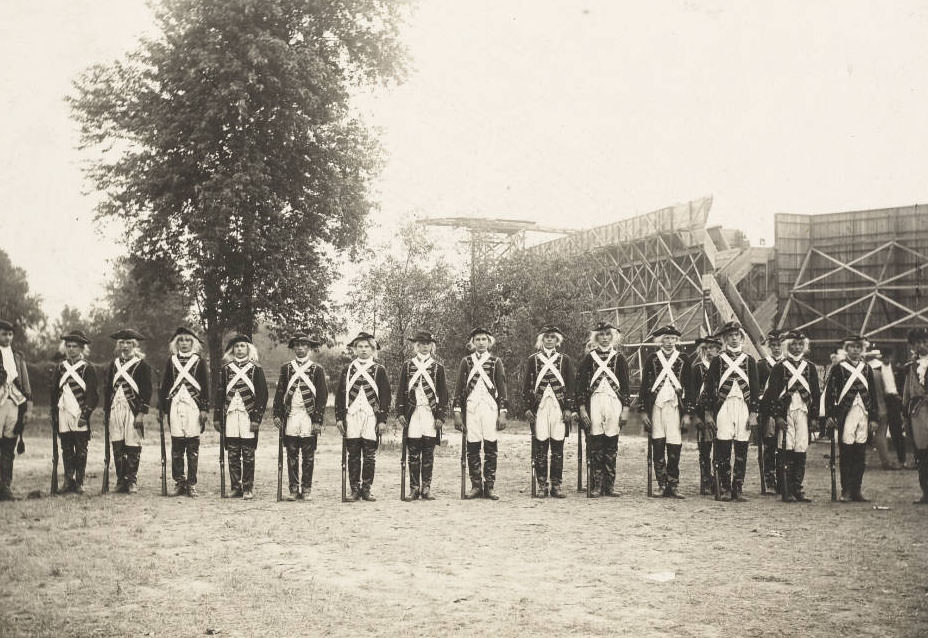
Members of the executive committee of the Pageant and Masque stand on the dramas’ set. Several prominent citizens served on the committee for the civic drama held in Forest Park, May 1914.Large group of volunteer actors in costume pose for photograph, 1914Actors in costume as French troops in the Pageant, Pageant and Masque of St. Louis, pose off stage, 1914Actors portray French soldiers, 1914Actors portray citizens of early St. Louis in the Pageant of St. Louis, 1914Six women actresses standing, 1914Three women portray 19th century St. Louisans in the Pageant, 1914An actor in 19th century costume performed in the Pageant, Pageant and Masque of St. Louis, the drama depicting the history of St. Louis.Actor portraying a pioneer in the Pageant, 1914
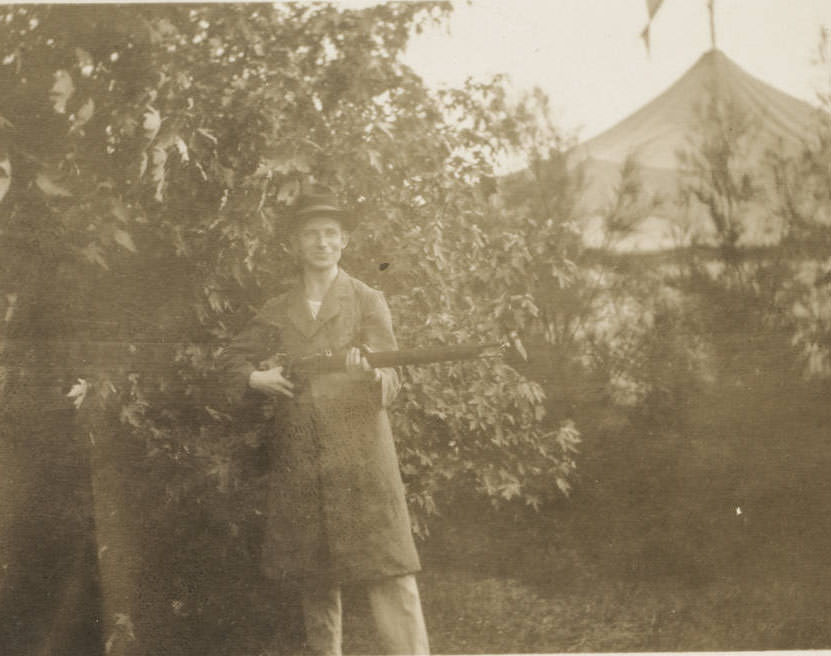
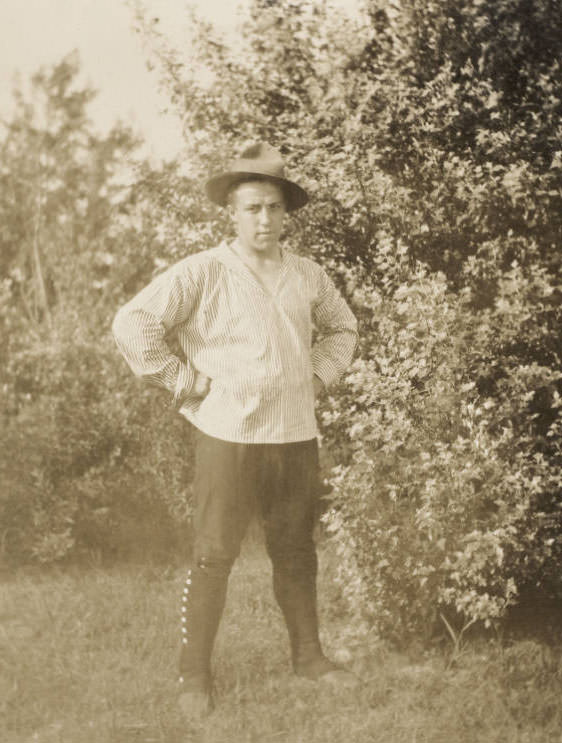
An actor in the Pageant and Masque of St. Louis, 1914
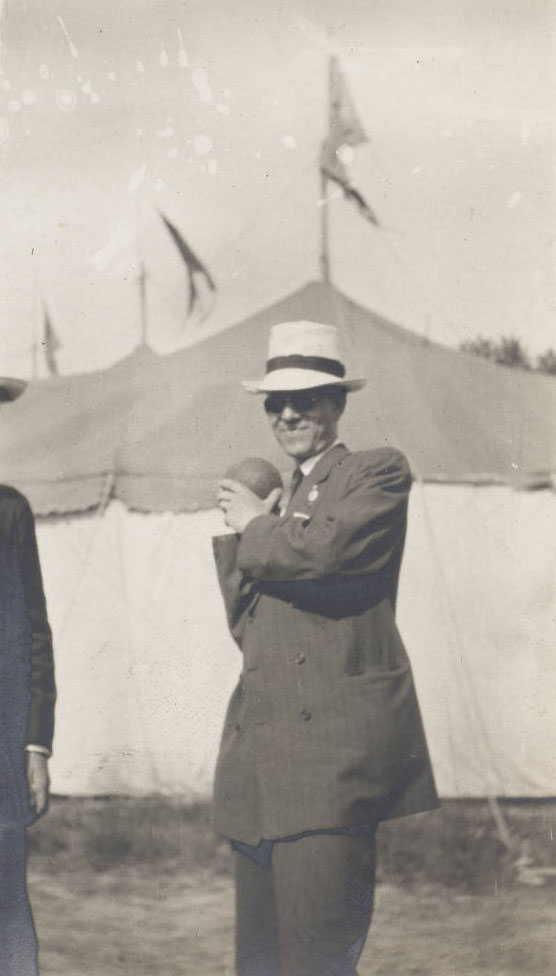
Man with white hat holding ball, 1914
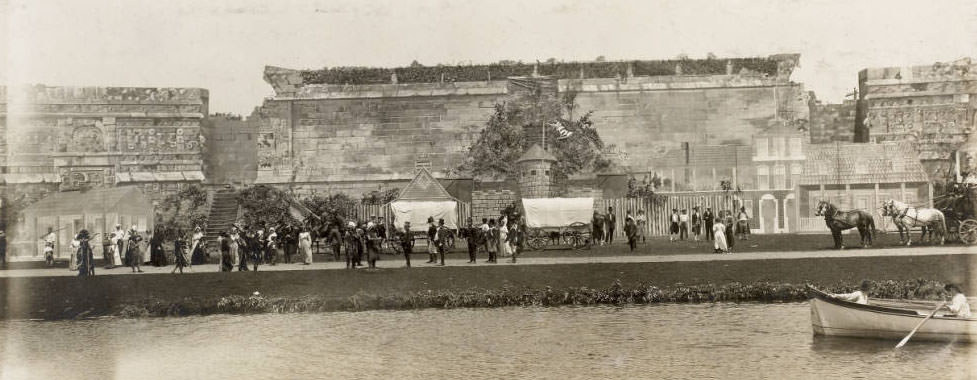
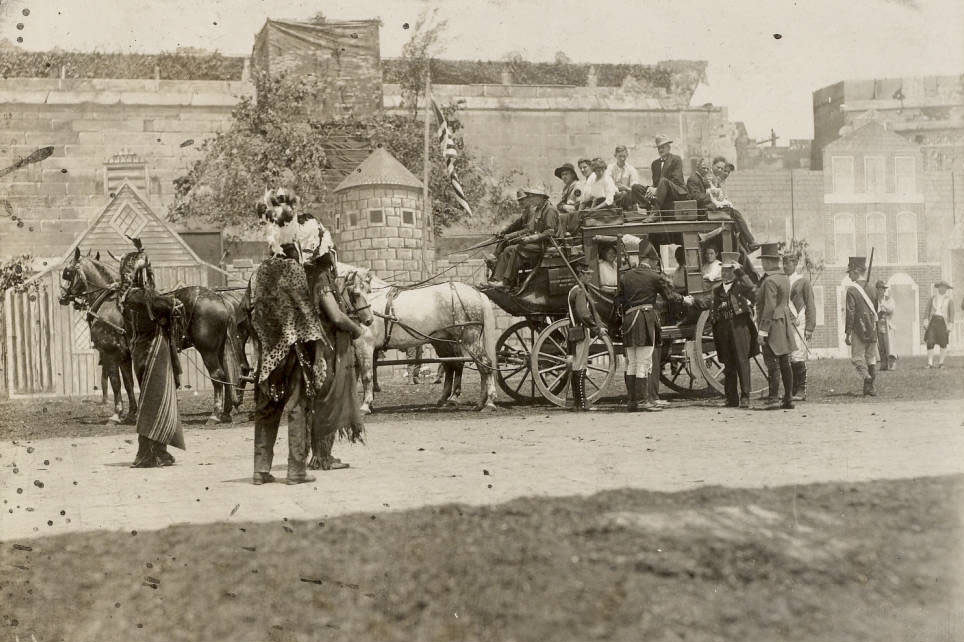
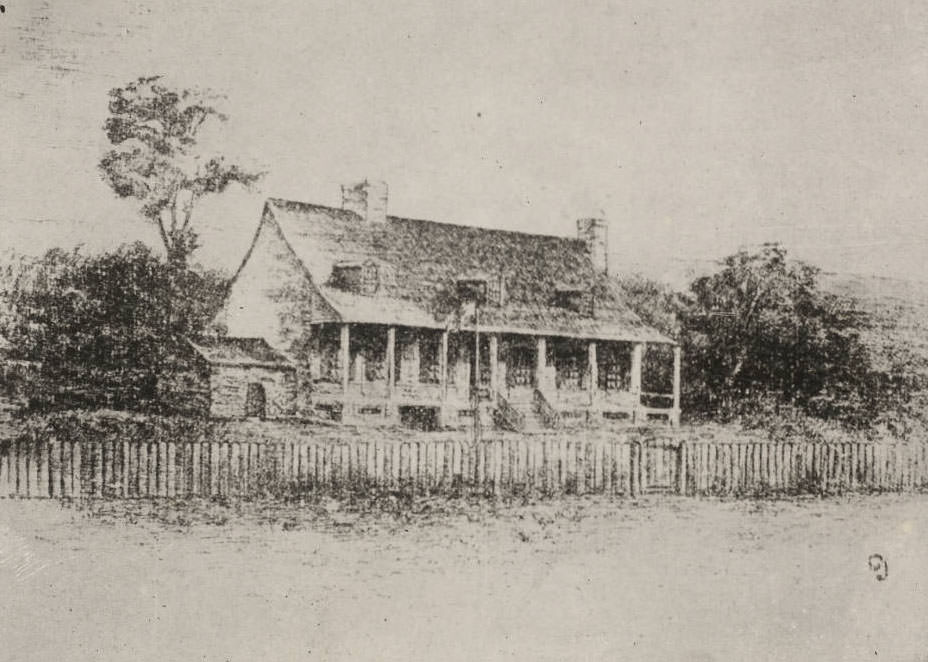
Arrival of Mississippi and young ‘St. Louis’, 1914Quenelle, fisherman, bringing warning of the coming of the English and Indians, Pageant, 1914Mayor Bryan Mullanphy meets with committee members in a scene in the Pageant, Pageant and Masque of St. Louis.Committee discussing welcome to be given to returning Mexican veterans, Pageant, 1914Stage coach scene, Pageant of St. Louis, 1914Riders bring horses on stage for the Pageant and Masque of St. Louis, 1914Scene with horses, 1914Pageant and Masque set, 1914Sketch of a French colonial style house, 1914In a side view of the stage of the Pageant and Masque of St. Louis, actors perform a scene in the Pageant of St. Louis, 1914Walking on the stage of the Pageant and Masque of St. Louis, 1914Dismantling the stage after production of the Pageant and Masque of St. Louis, 1914