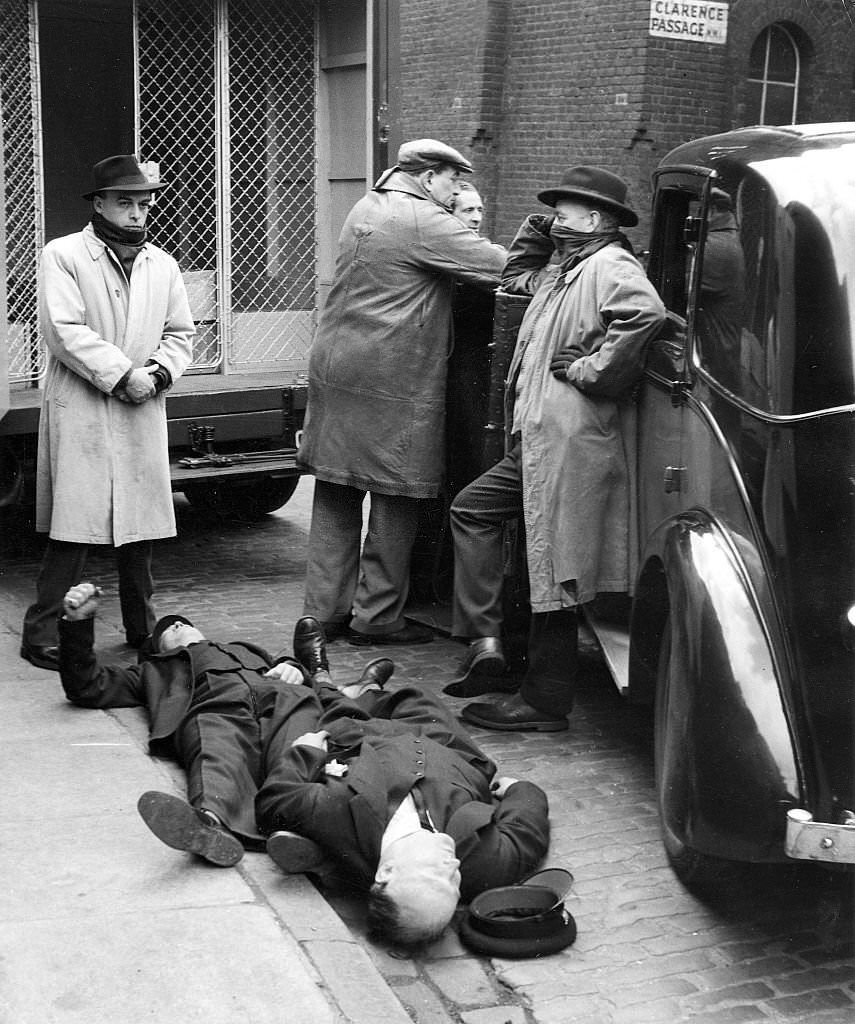
In 1955, Ealing Studios released one of the darkest and most cleverly crafted comedies in British film history. Written by William Rose and directed by Alexander Mackendrick — both Americans, notably — The Ladykillers told the story of a gang of criminals who rent rooms in the boarding house of an elderly woman named Mrs. Wilberforce, using it as a base to rob a bank. The plan works. But when their unwitting landlady stumbles onto the truth and threatens to go to the police, the gang decides she has to die. No one can bring himself to do it. That failure sets the men against each other, and the results are darkly, brilliantly funny.
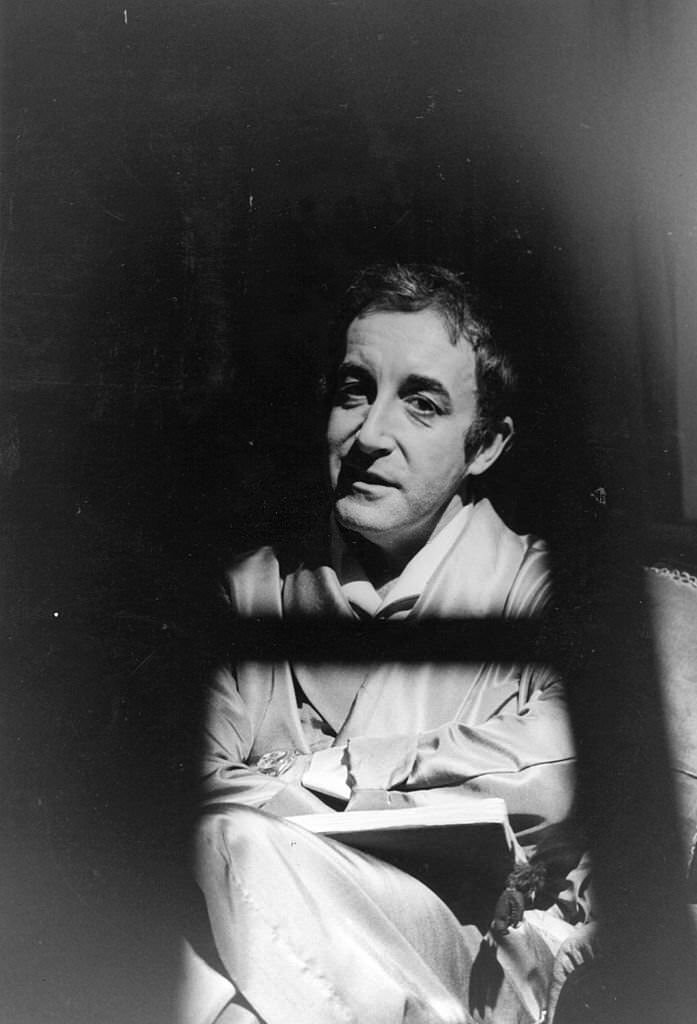
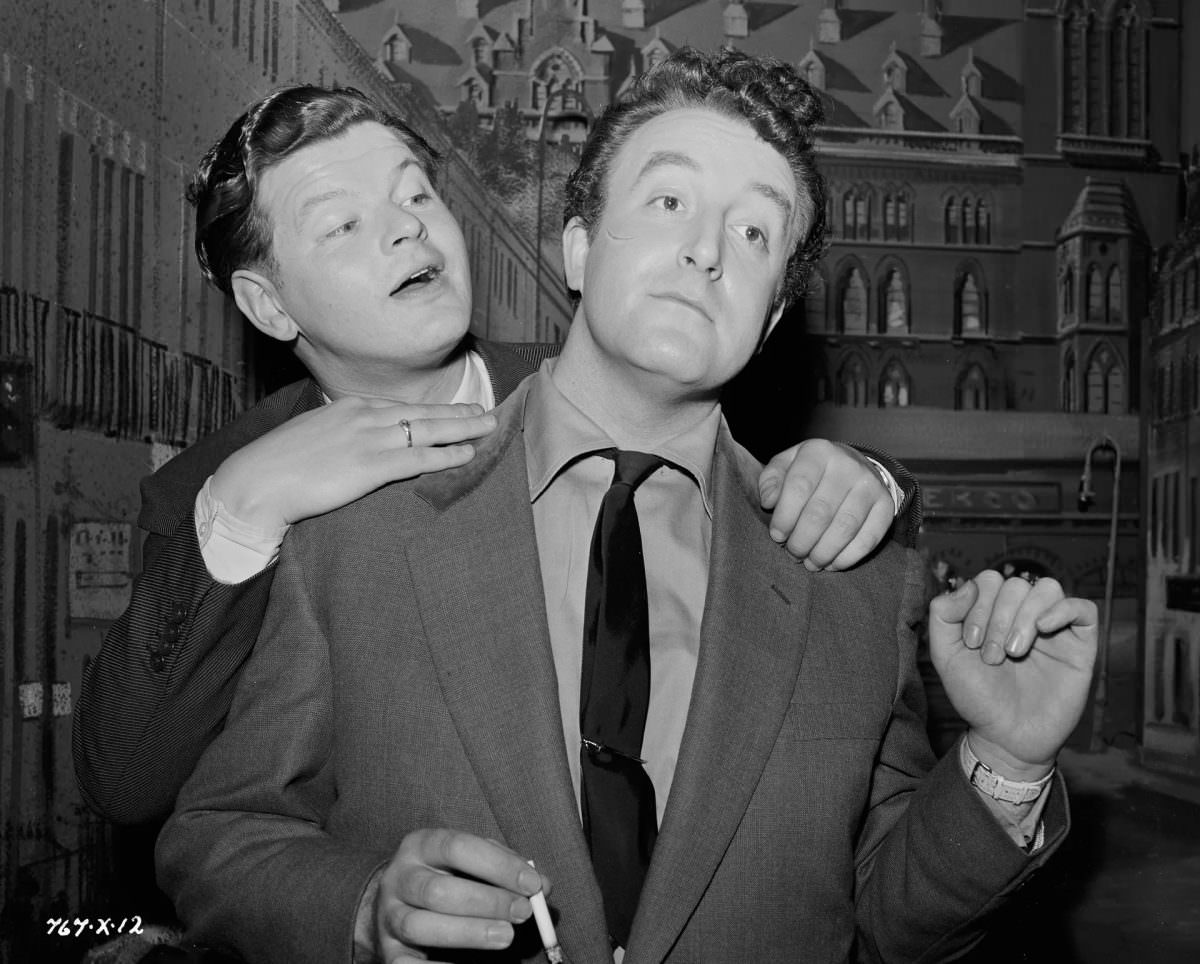
Peter Sellers played Roughs Harry, one of the gang members, early in his film career. His performance helped establish him as one of Britain’s most versatile comic actors. Here he appears in character — already showing the controlled, deadpan energy that would define his later work.
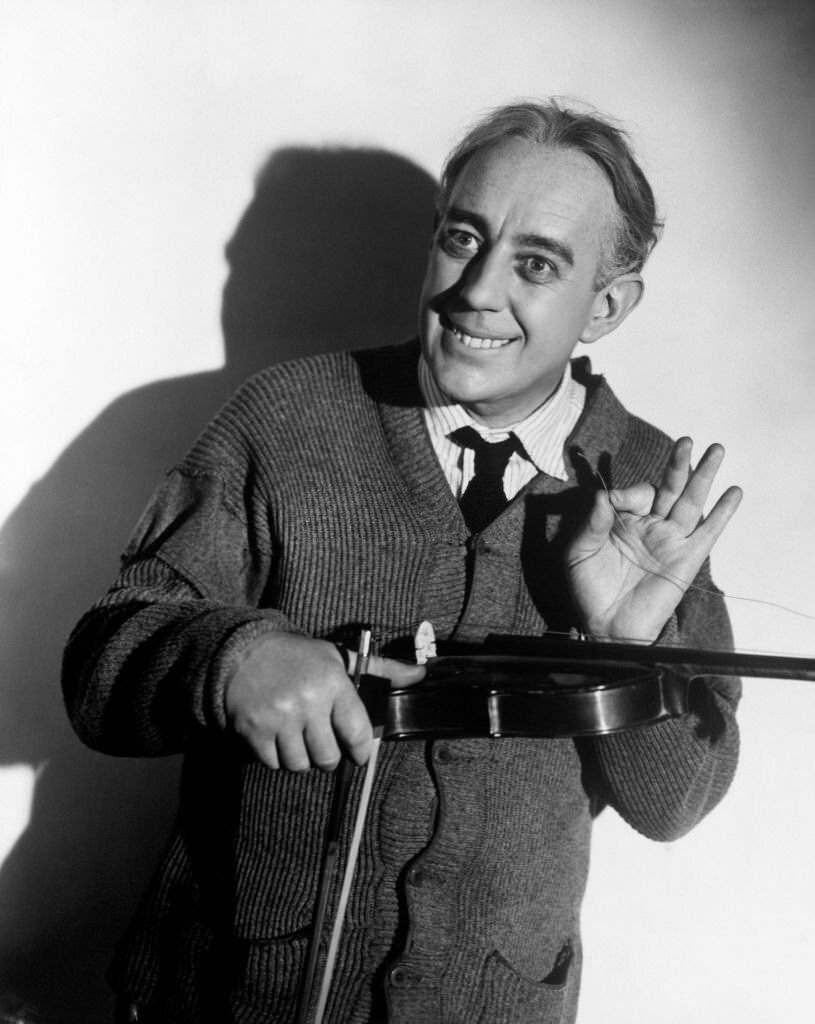
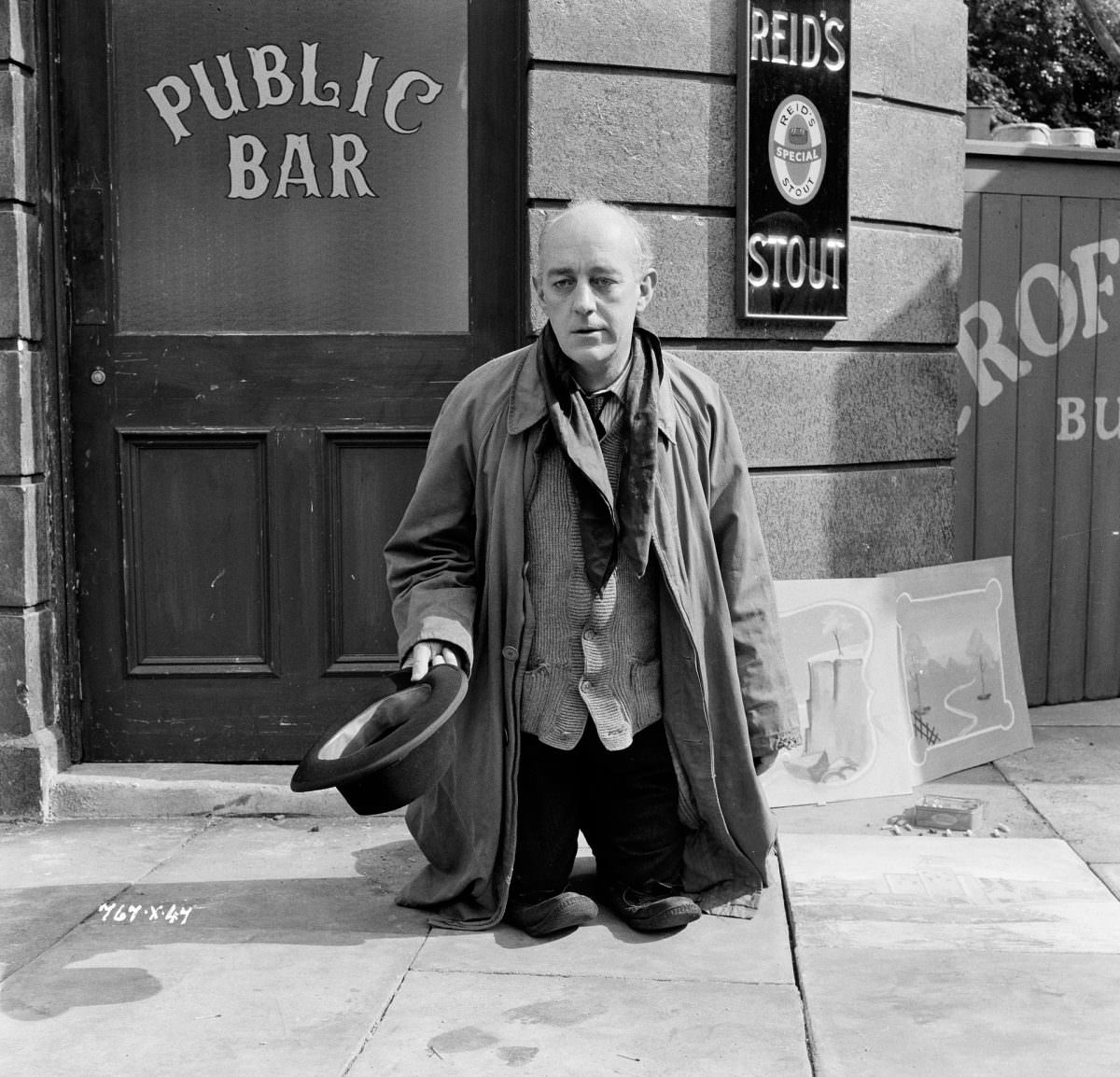
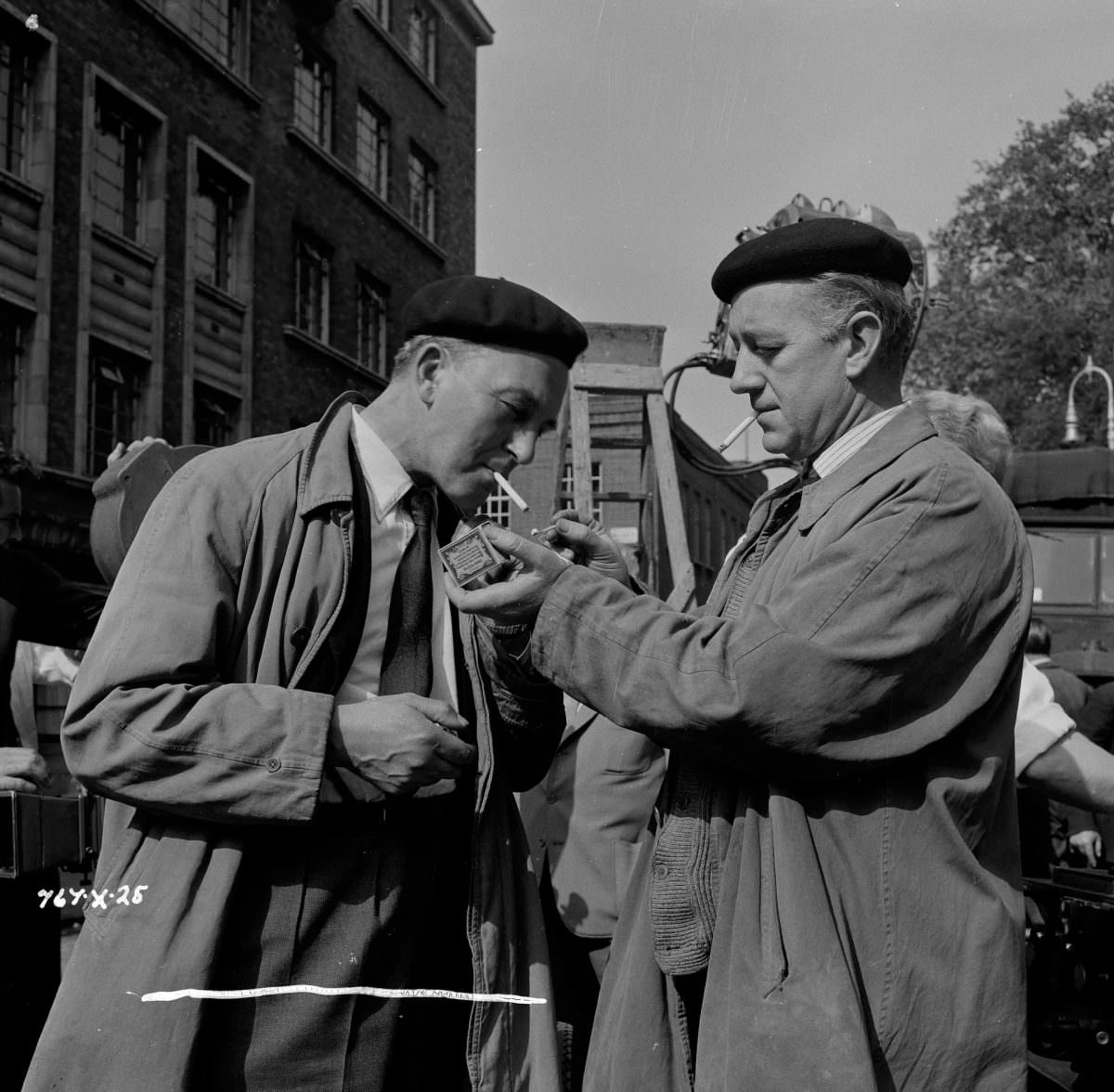
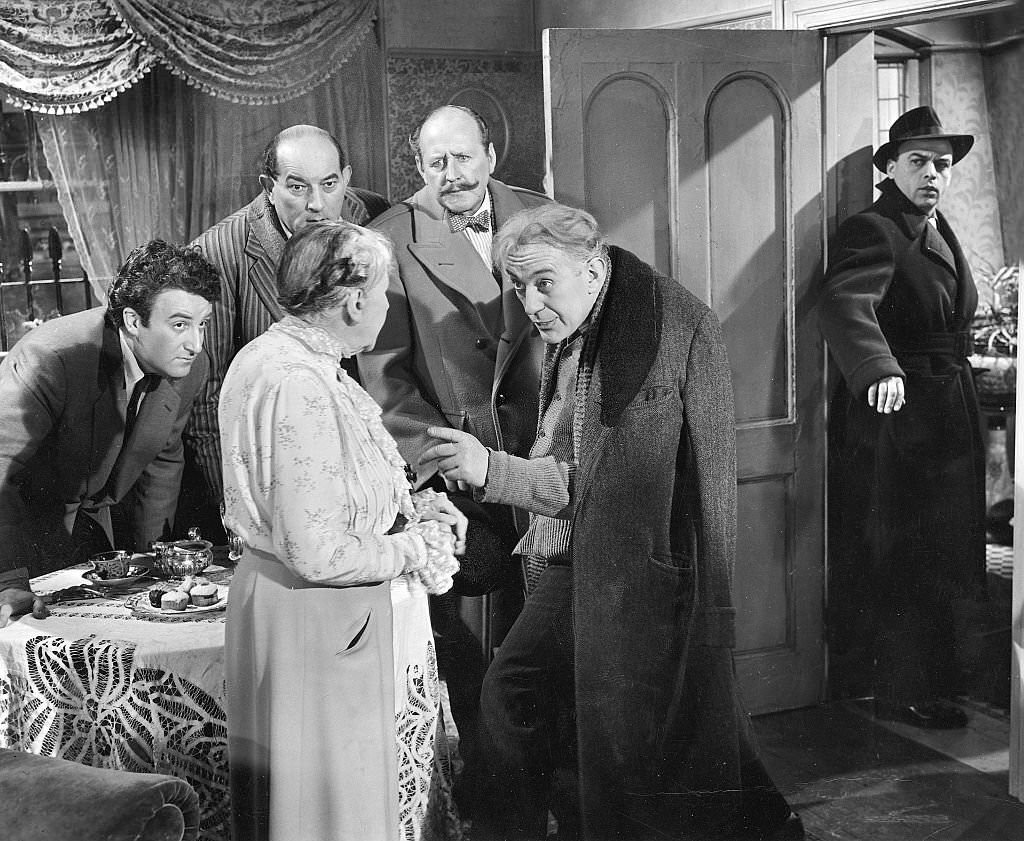
At the center of it all was Alec Guinness as Professor Marcus, the gang’s ringleader. With protruding teeth, a hunched posture, and an oddly formal manner, Marcus is one of the most visually strange characters Guinness ever played. The professor poses as the leader of a string quartet to explain why he and his associates keep coming and going from Mrs. Wilberforce’s house — a ruse that works mainly because she is too trusting to question it.
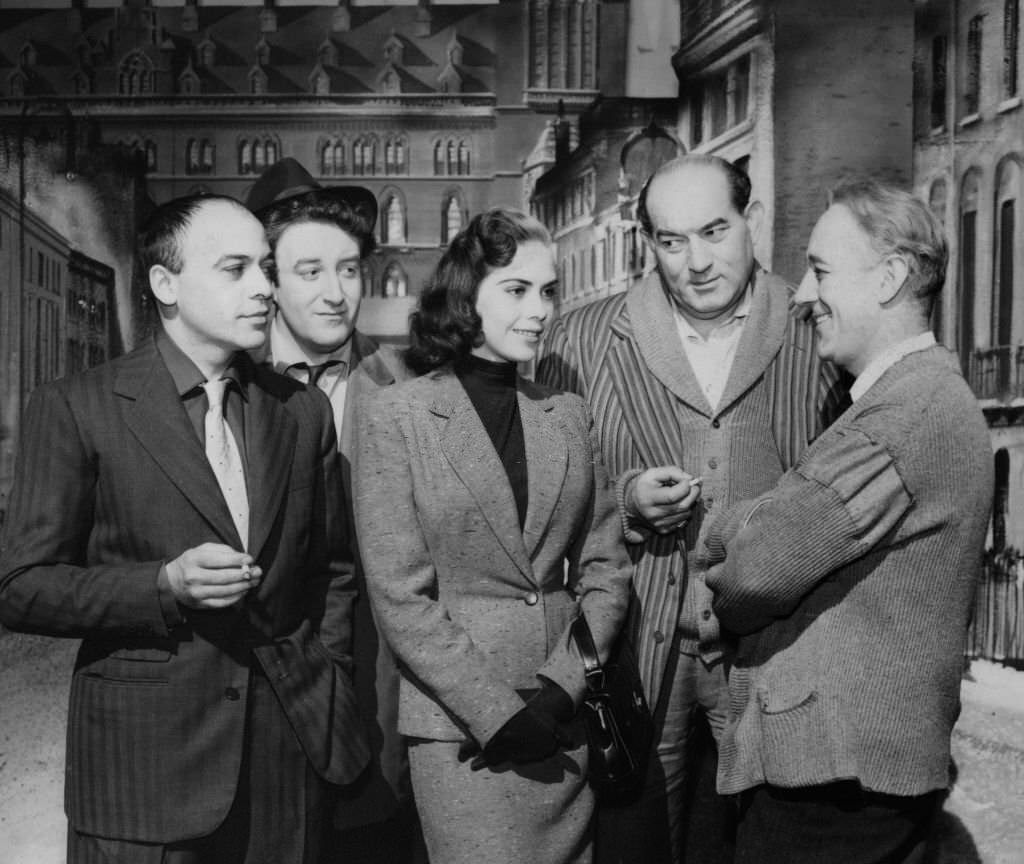
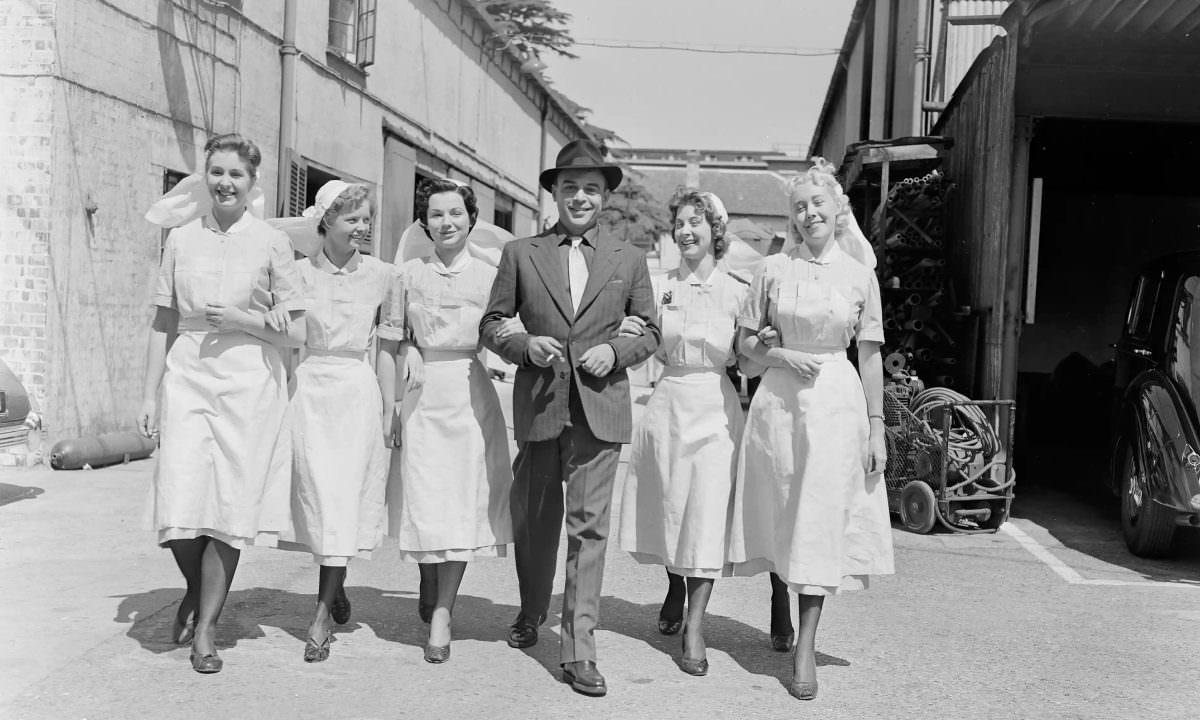
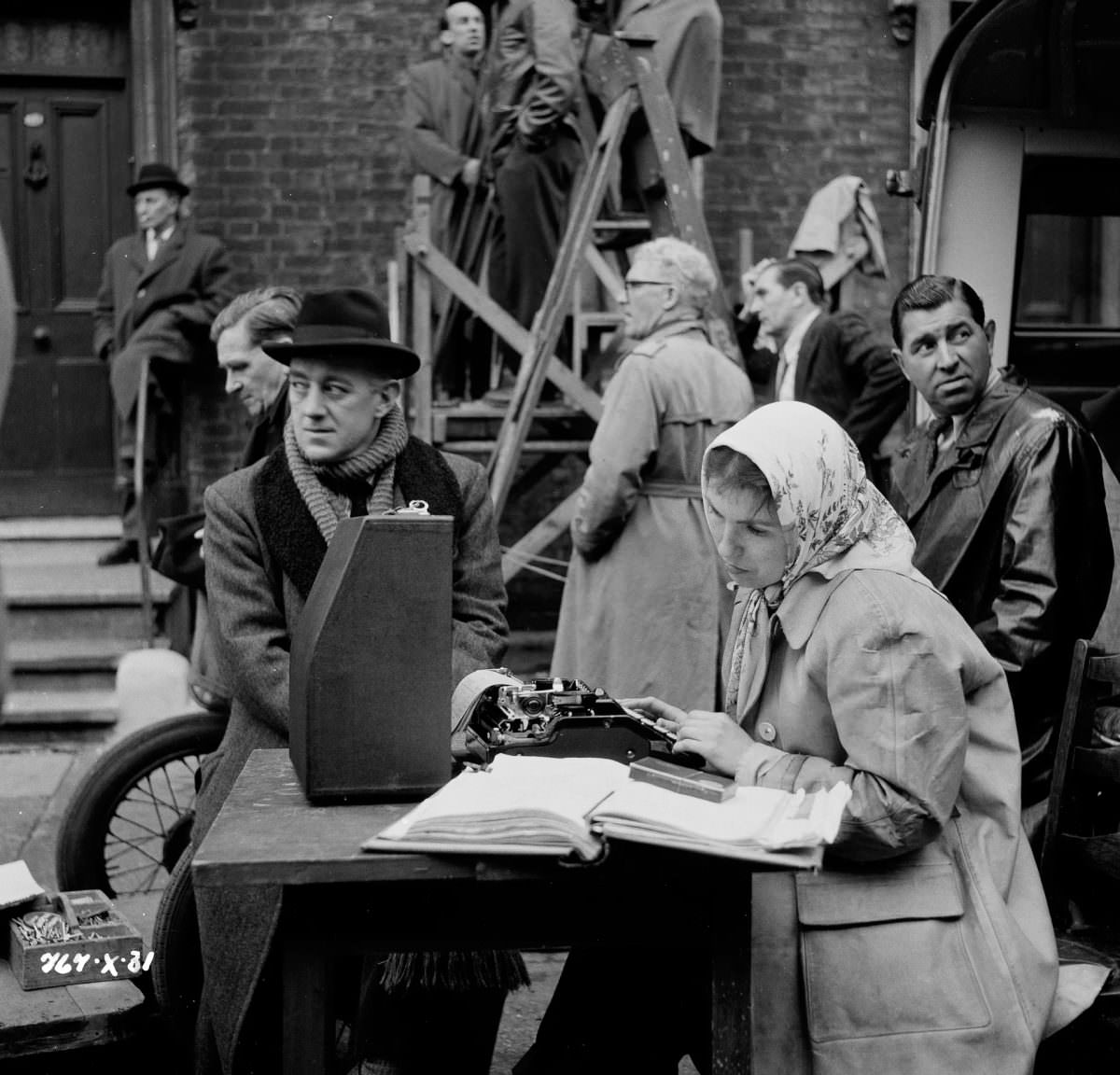
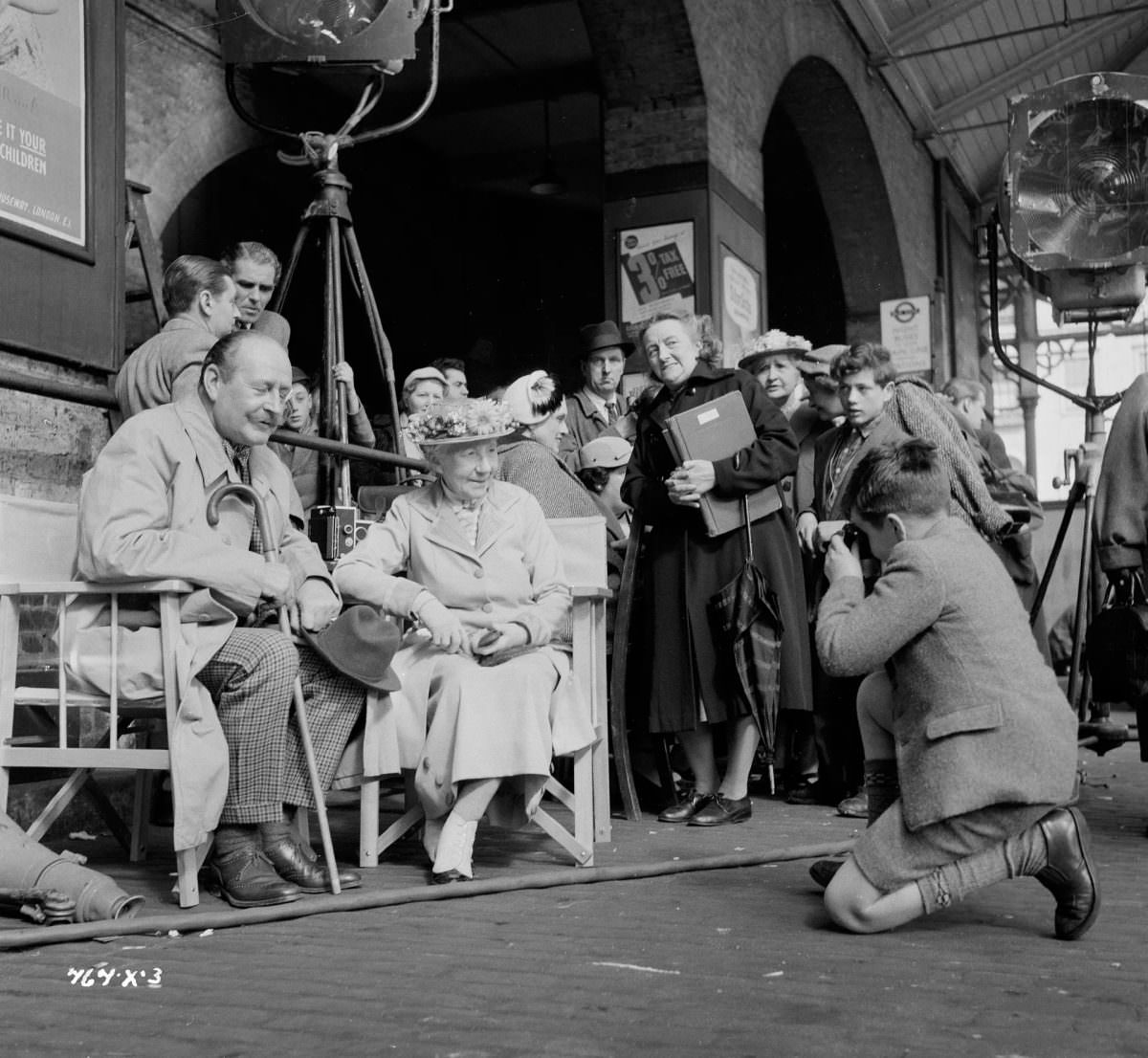
Off set, the atmosphere during production was relaxed and friendly. Visitors to Ealing Studios were welcomed warmly, including seventeen-year-old Judy Verity, Miss Jamaica, who got to meet the gang in full costume. Despite their menacing on-screen roles, the cast clearly made the encounter an enjoyable one.
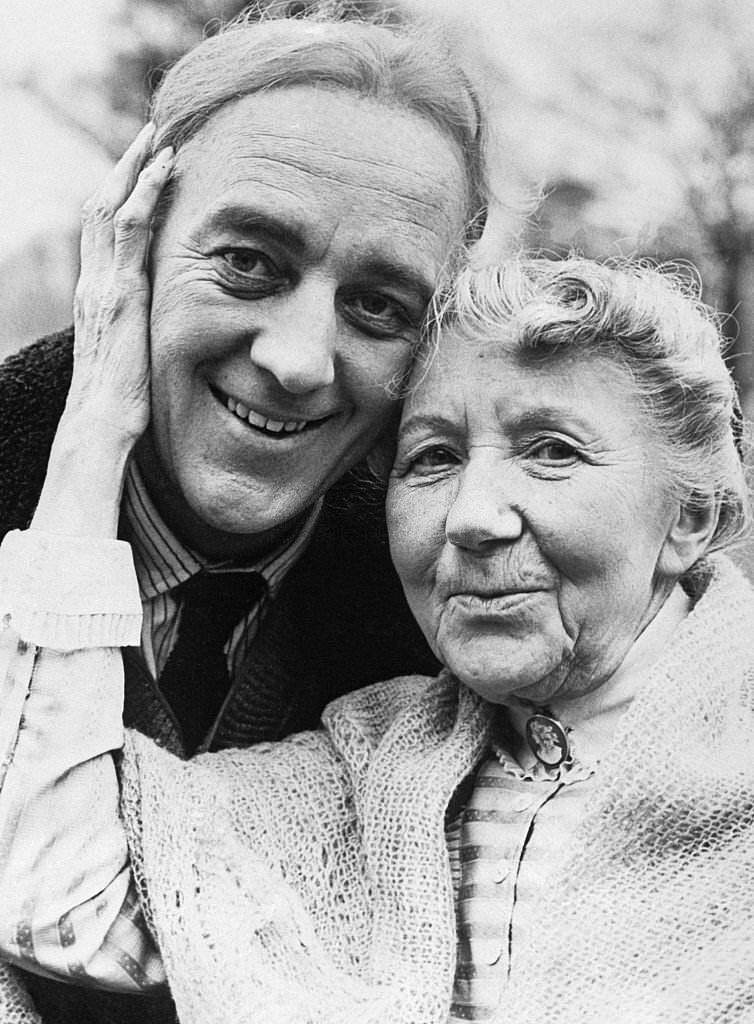
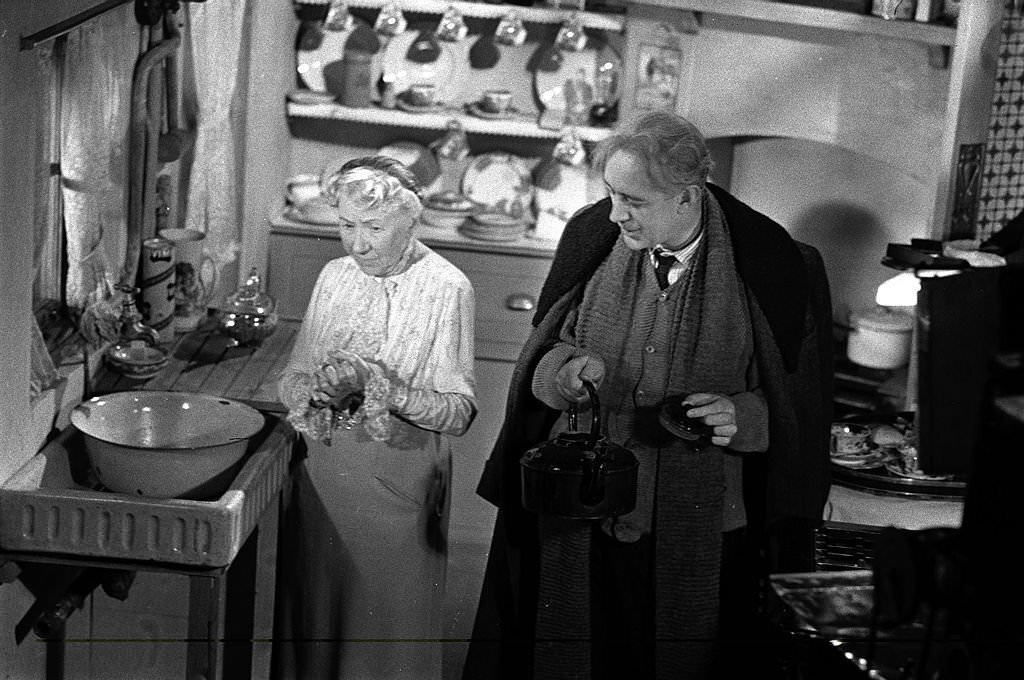
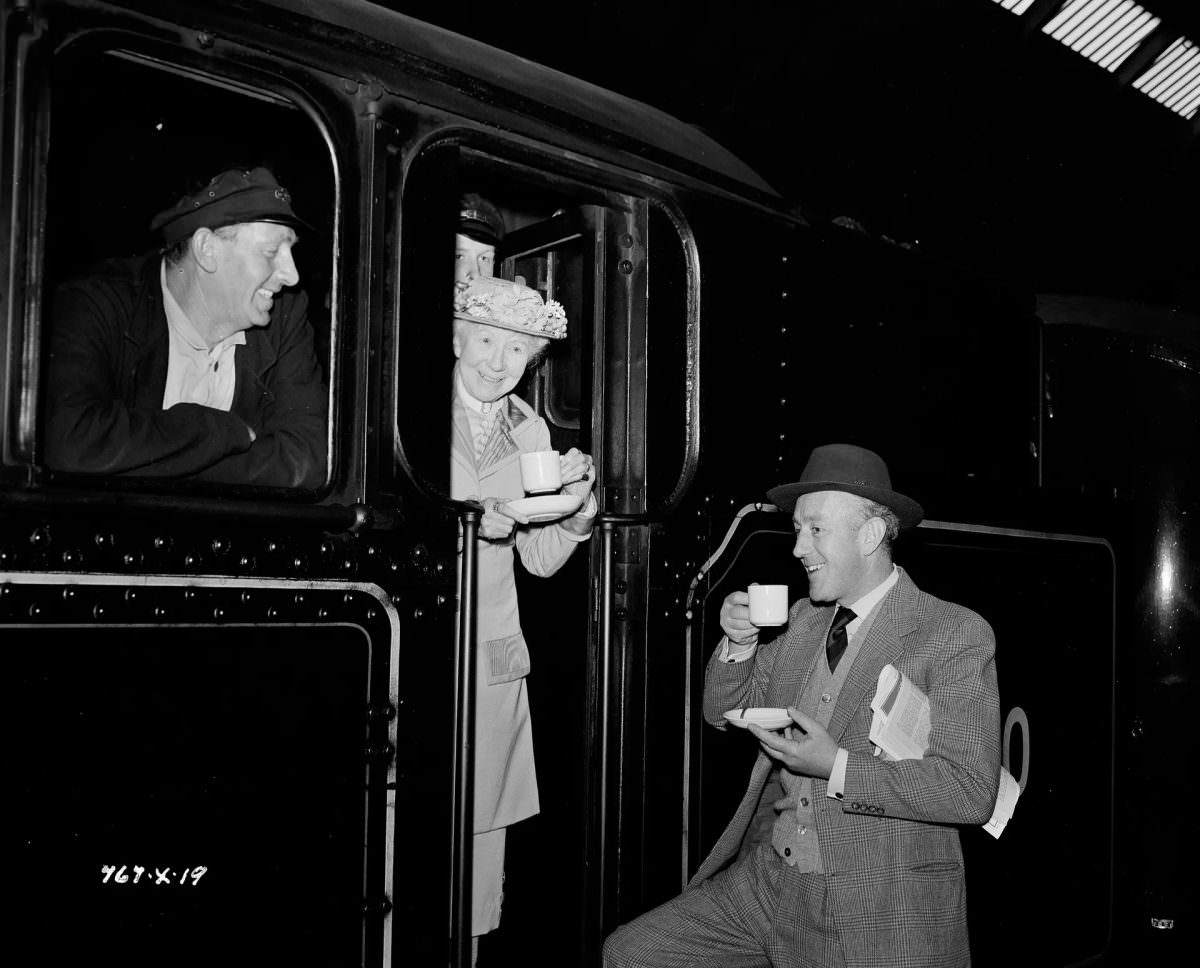
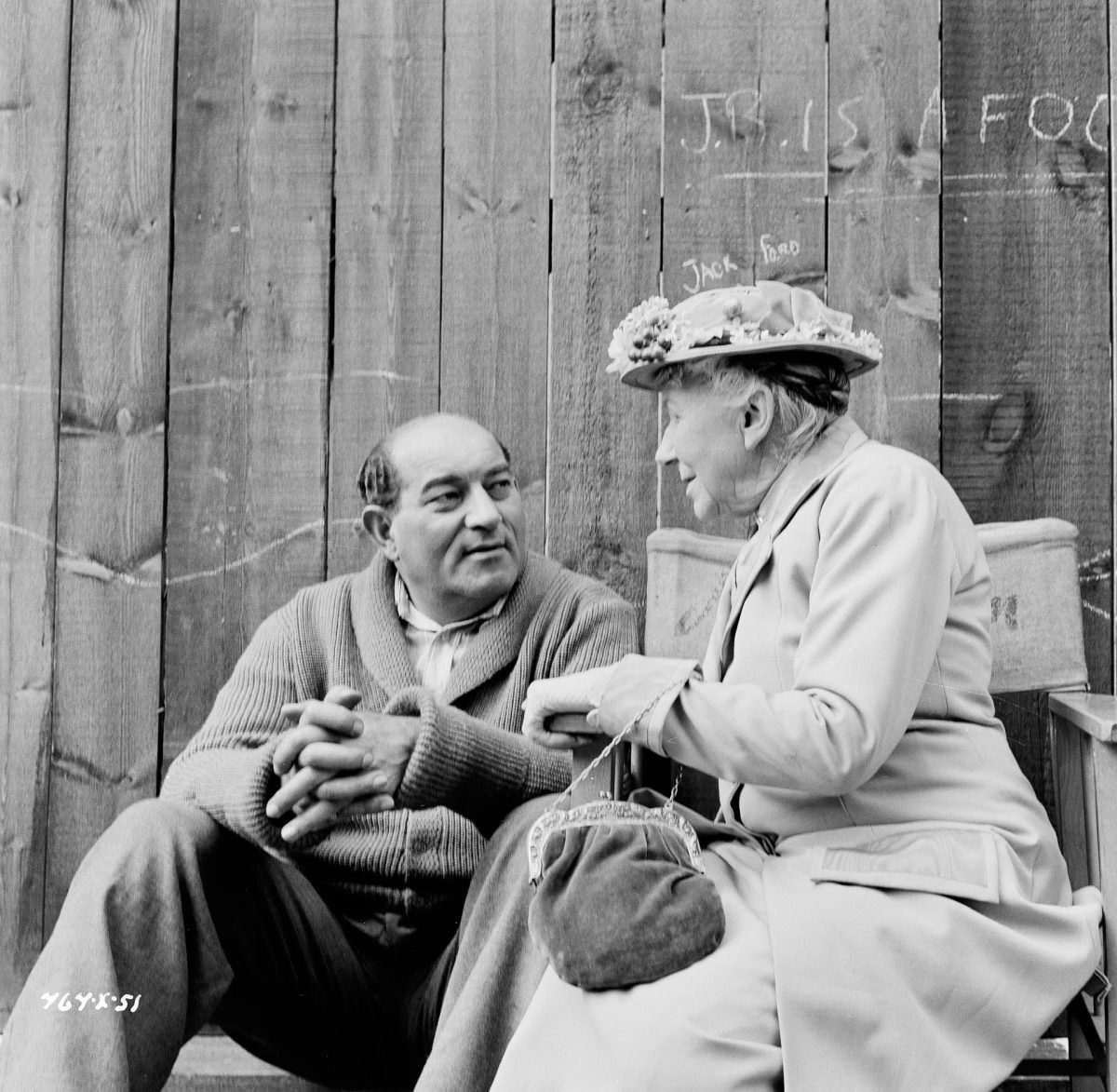
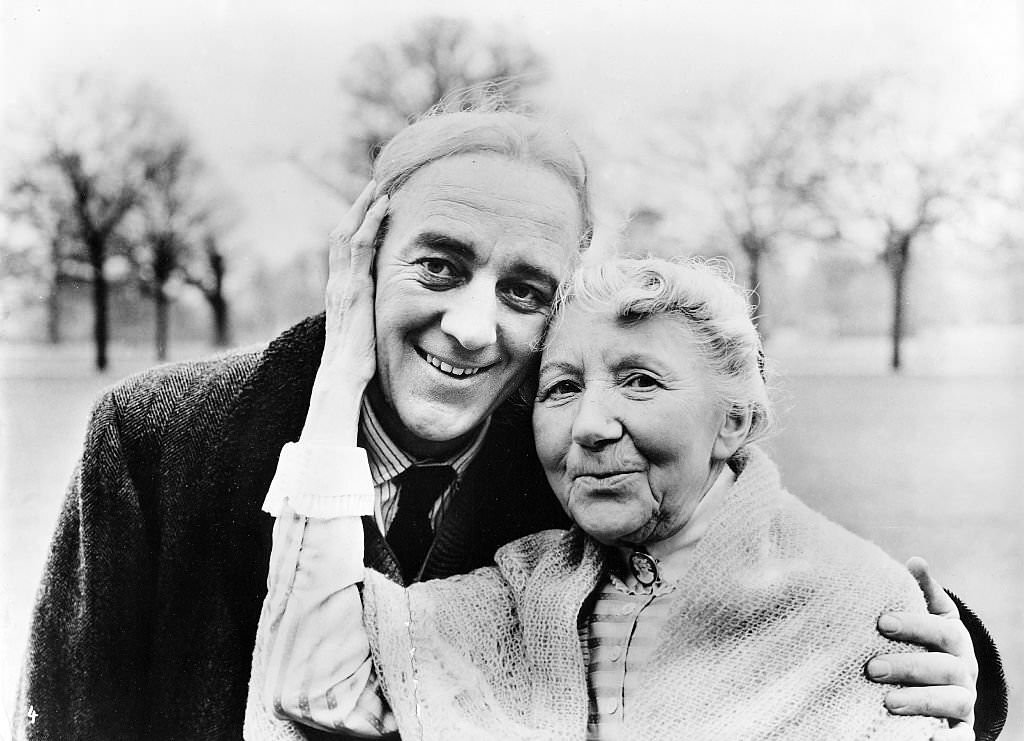
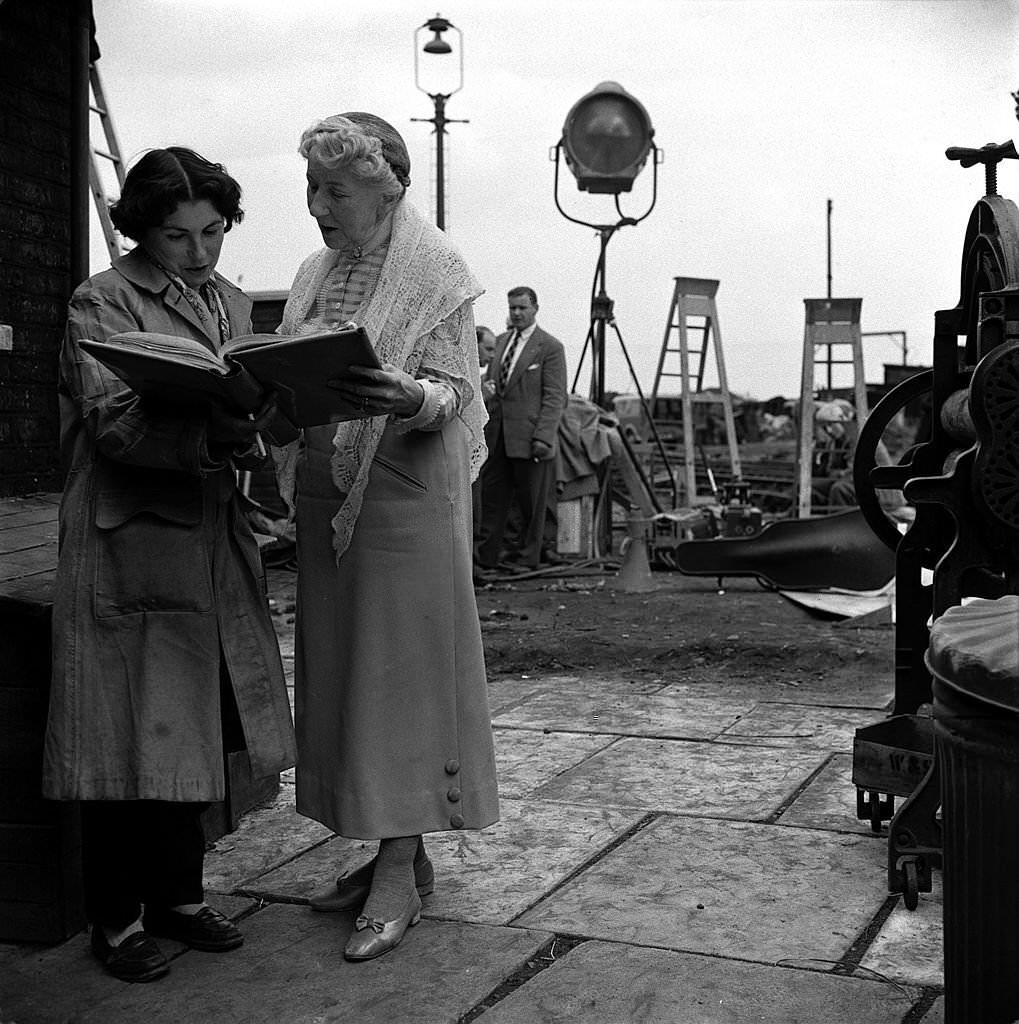
The film’s real heart was Katie Johnson, who played Mrs. Wilberforce. Johnson had spent decades in minor supporting roles before this film. She came out of retirement at 76 years old to take the lead — her first true starring role. Her performance earned her the BAFTA Award for Best British Actress. The chemistry between Johnson and Guinness, warm off camera as this photo shows, translated directly into the film’s most tension-filled and funny scenes.
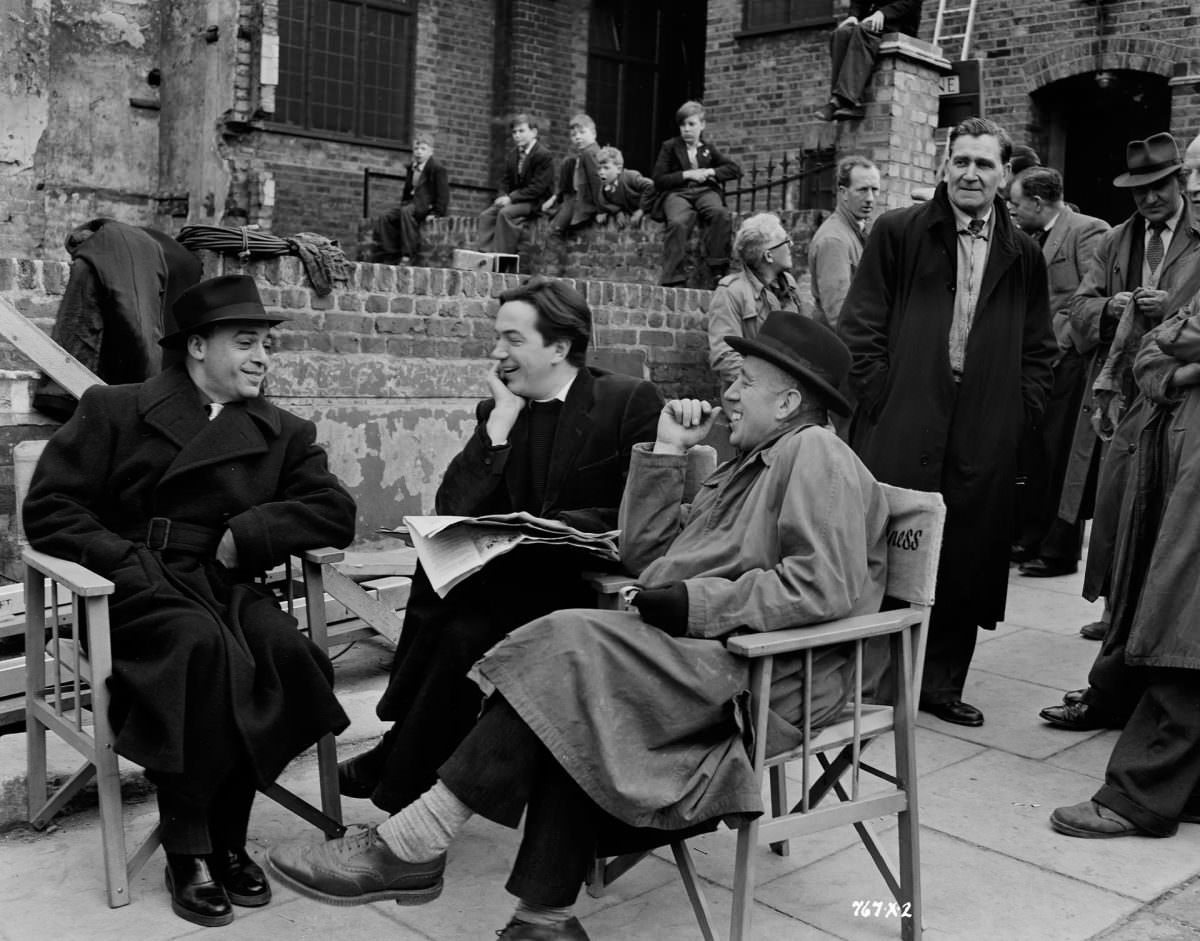
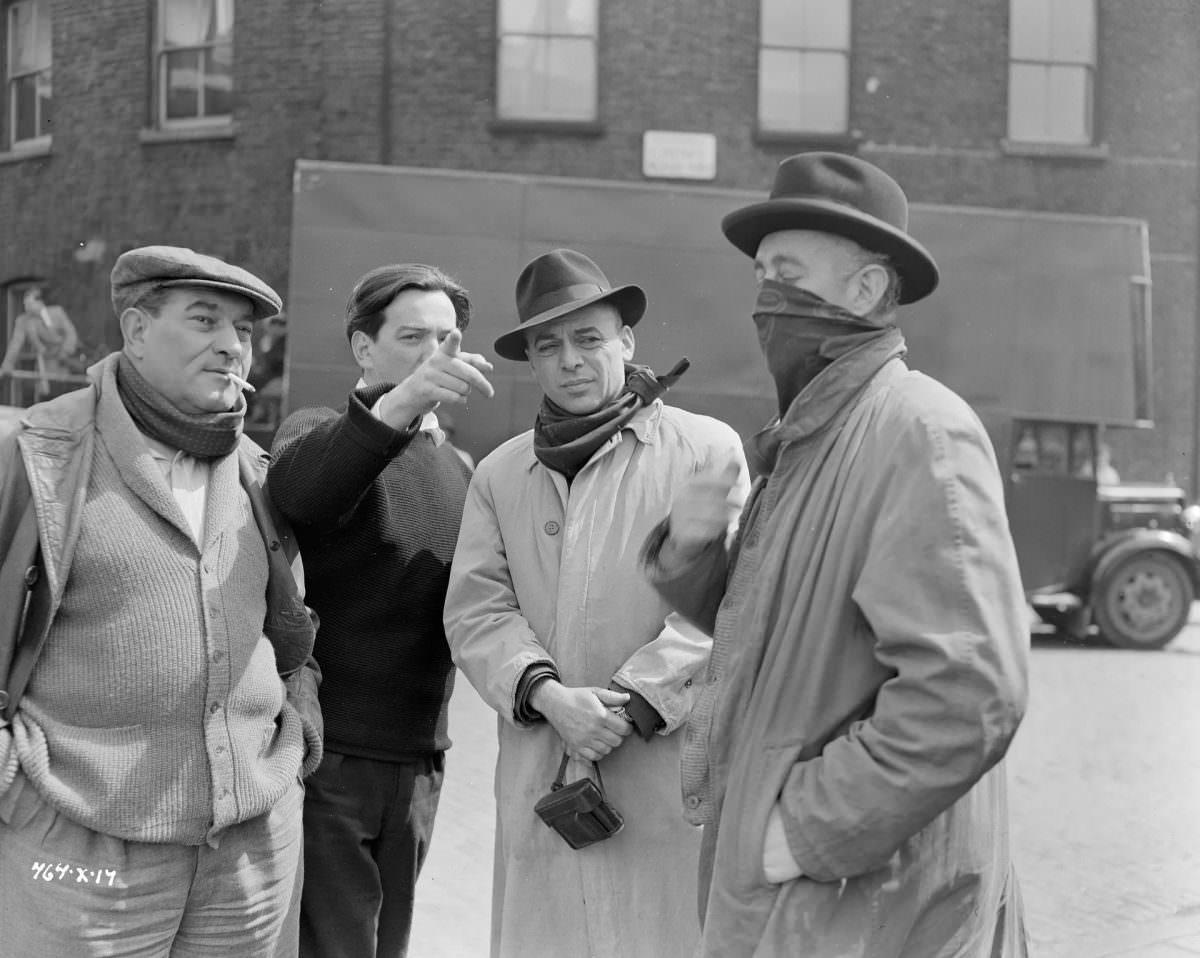
Director Alexander Mackendrick — known on set as Sandy — oversaw every detail of the production with precision. Though American-born, Mackendrick had already directed several Ealing comedies, including Whisky Galore! and The Man in the White Suit. With The Ladykillers, he pushed the studio’s trademark style into darker, more satirical territory than any Ealing film had gone before.
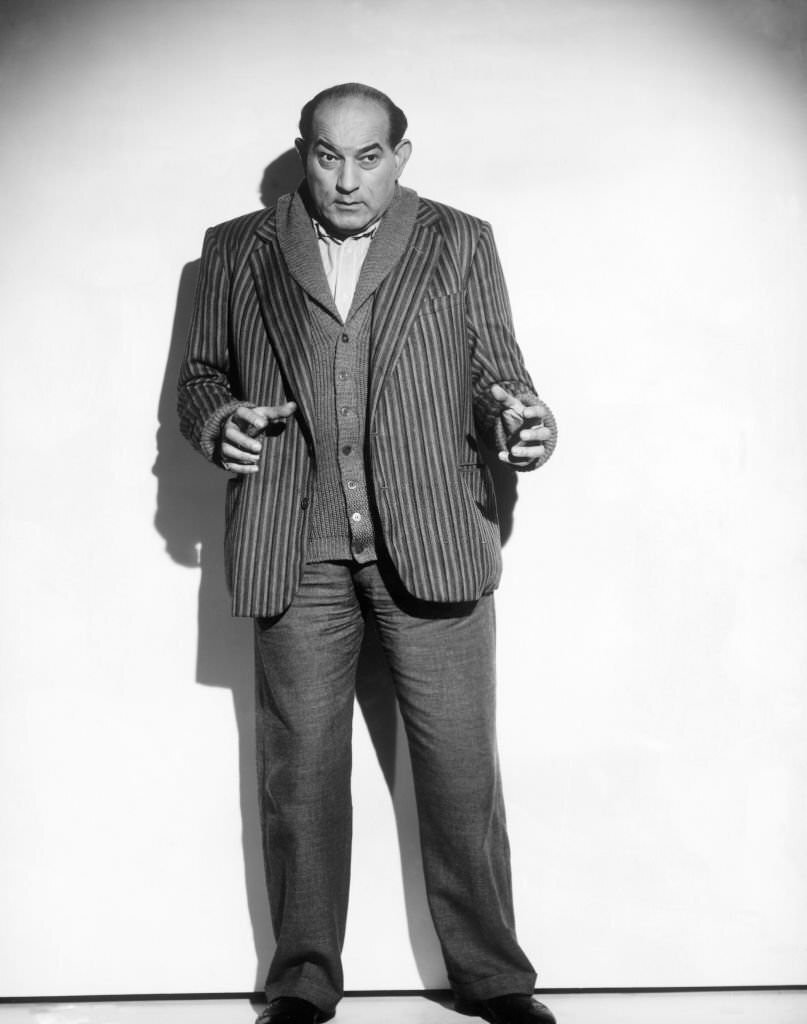
Unlike most Ealing comedies, The Ladykillers was shot in color — a deliberate choice that gave the film a richer, more theatrical look. The humor itself was not the rapid-fire slapstick kind. The laughs came from character quirks, slow-building tension, and the sheer absurdity of five professional criminals being repeatedly outwitted by a polite old woman who keeps visiting the police station for unrelated reasons.
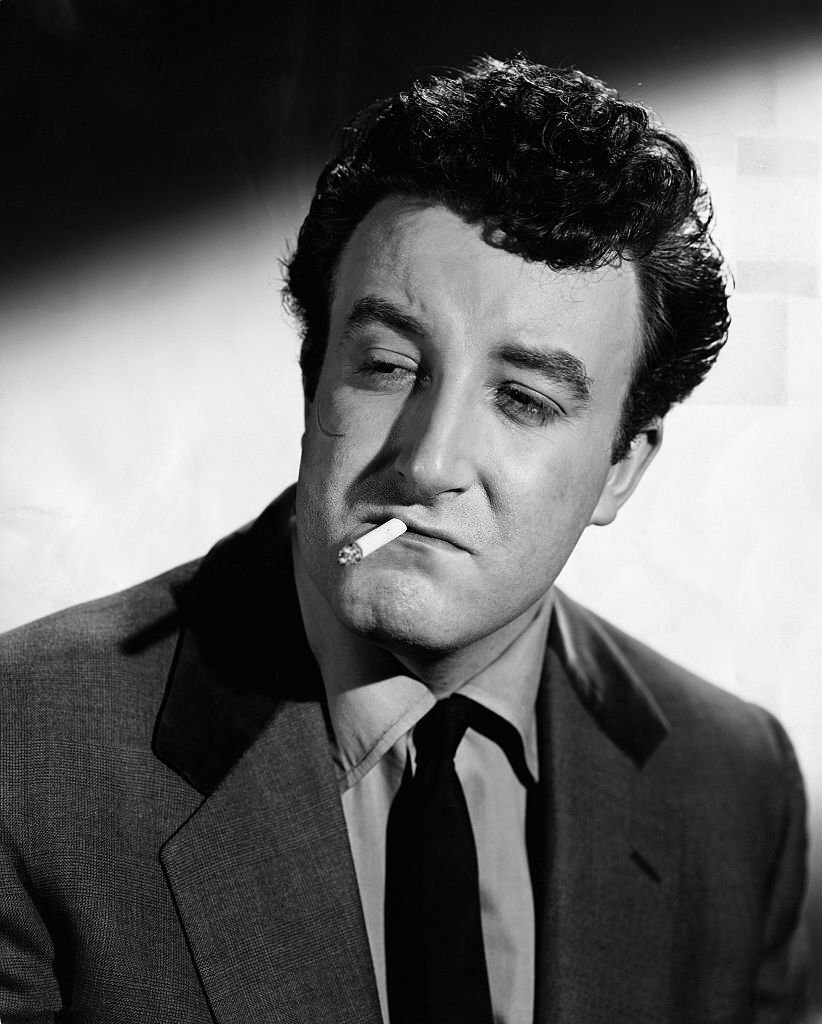
Sellers’s character, known as Mr. Robinson or Harry, is one of the more volatile members of the gang. This production still captures the look Sellers built for the role — tough and streetwise on the surface, but prone to the same comic helplessness that eventually undoes every member of the crew.
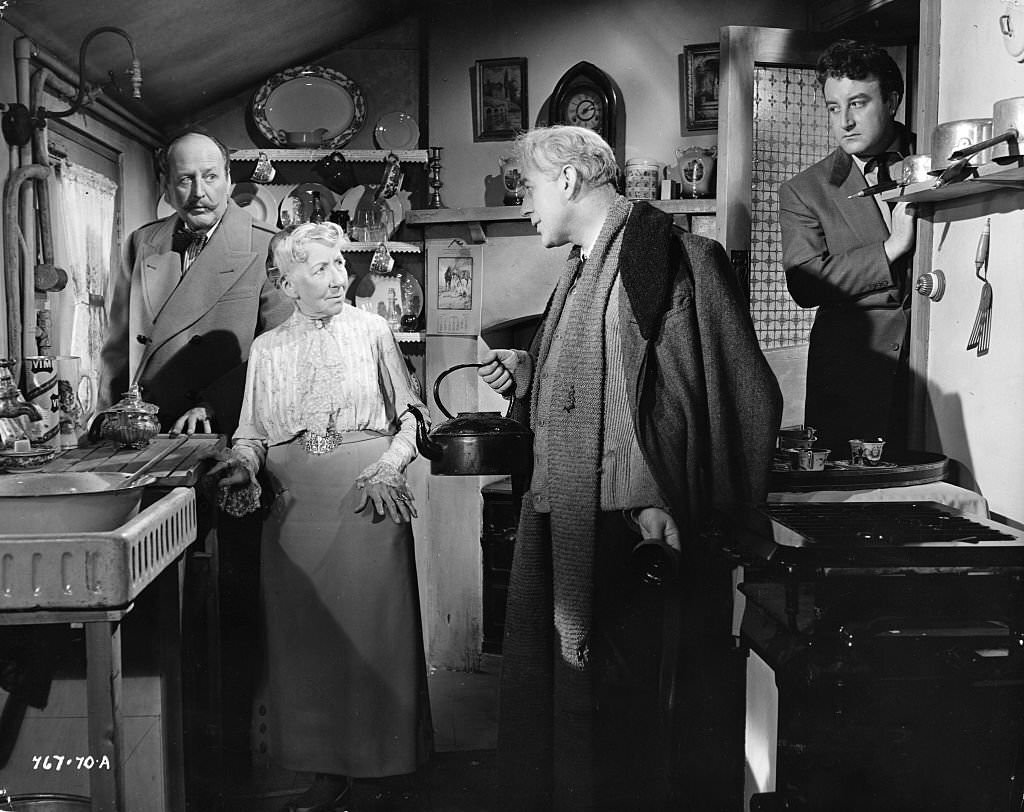
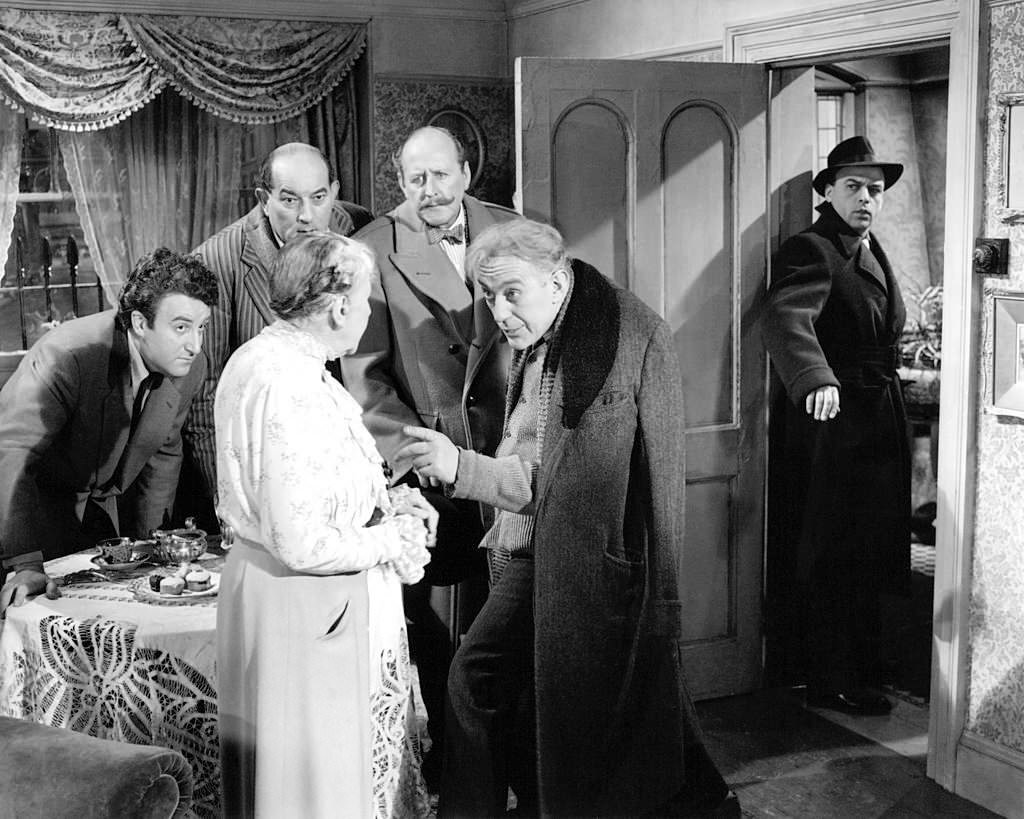
Much of the film’s tension plays out in conversations between Professor Marcus and Mrs. Wilberforce. Here, Guinness leans into one of those scenes — the professor attempting to talk his way out of the corner the gang has backed themselves into. Johnson’s Mrs. Wilberforce never panics, never shouts. She simply refuses to be fooled, and that quiet stubbornness is what makes the character so formidable.
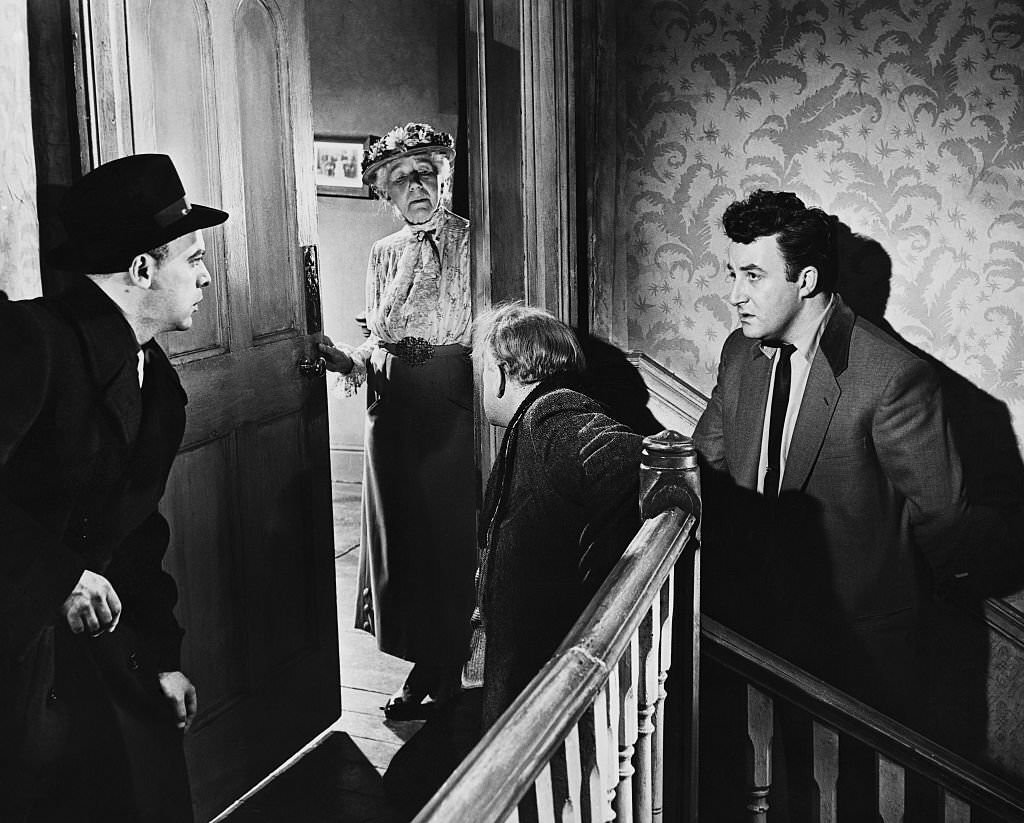
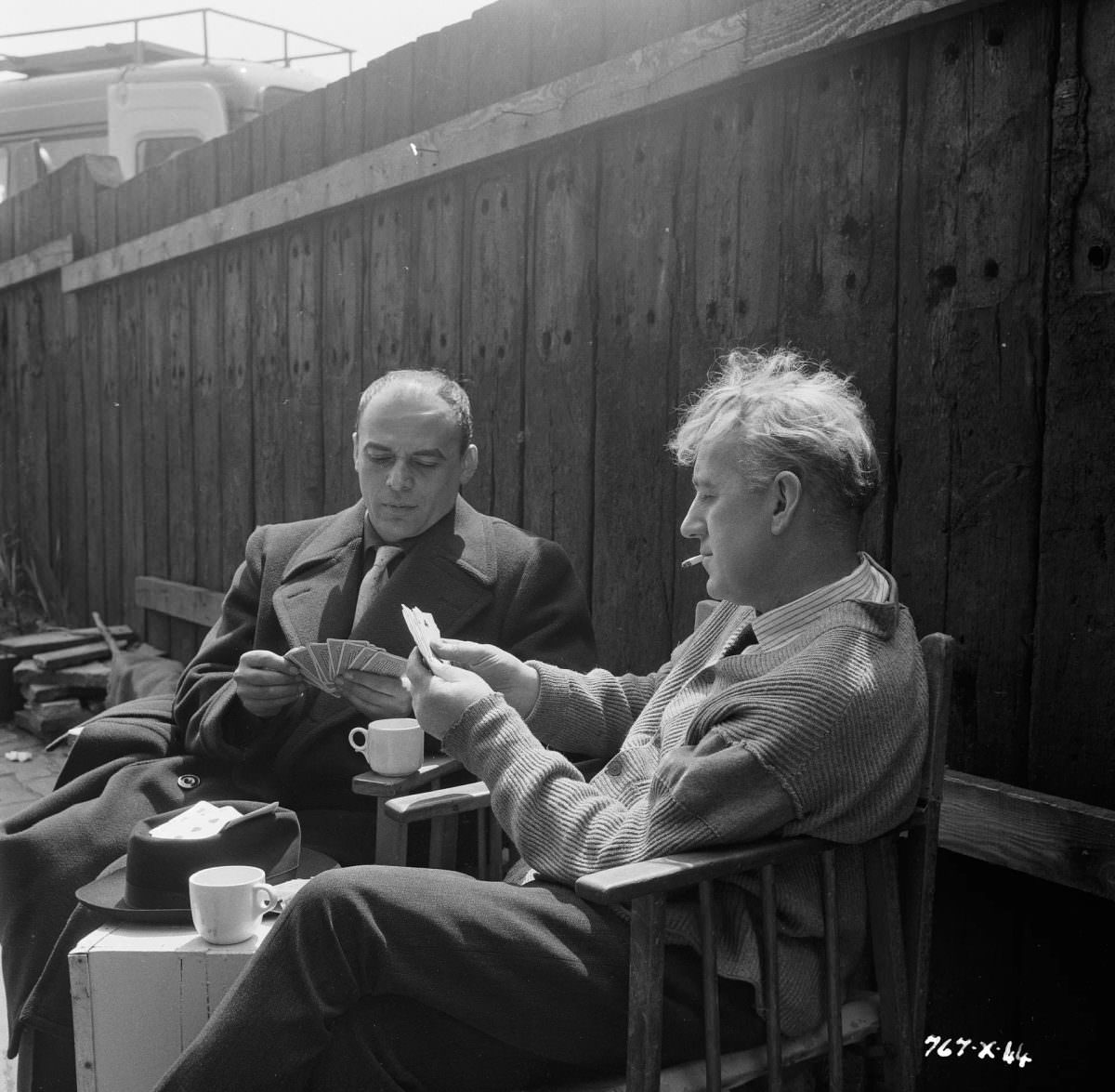
Herbert Lom played Louis, one of the more sinister members of the gang, alongside Sellers’s Harry. The full ensemble — Guinness, Sellers, Lom, Cecil Parker, and Danny Green — formed a group with wildly different comic rhythms, which Mackendrick used to great effect. Each man’s failure to act decisively feeds into the group’s collective downfall.
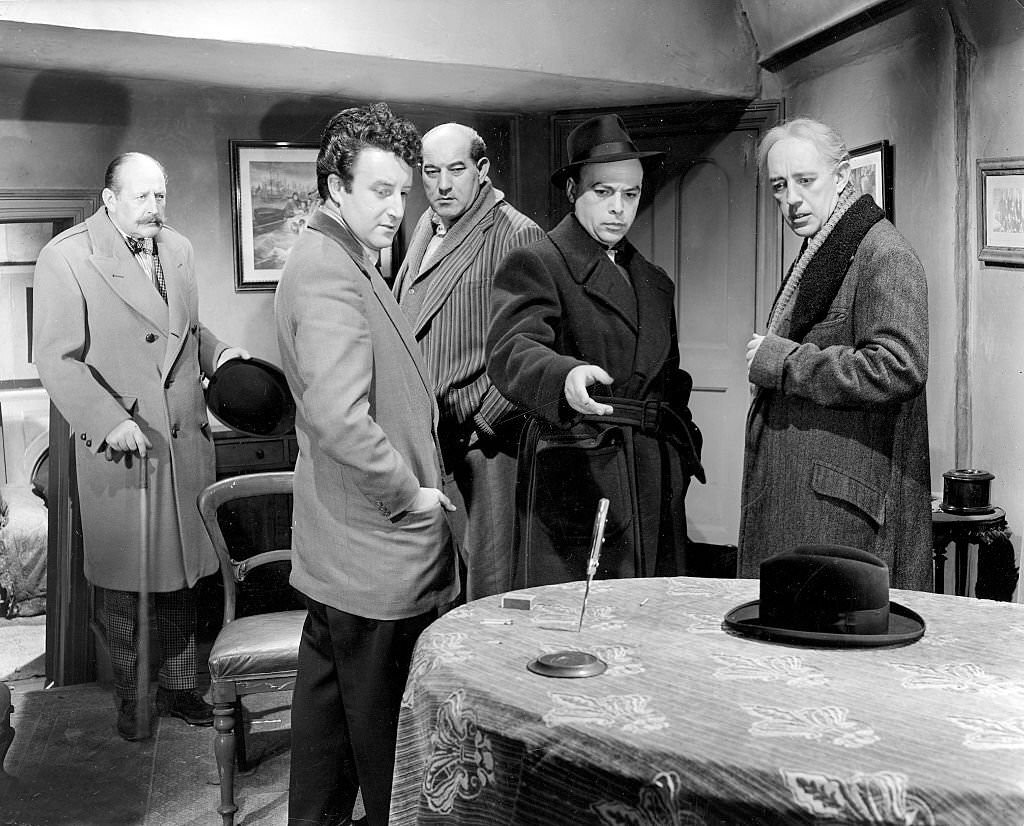
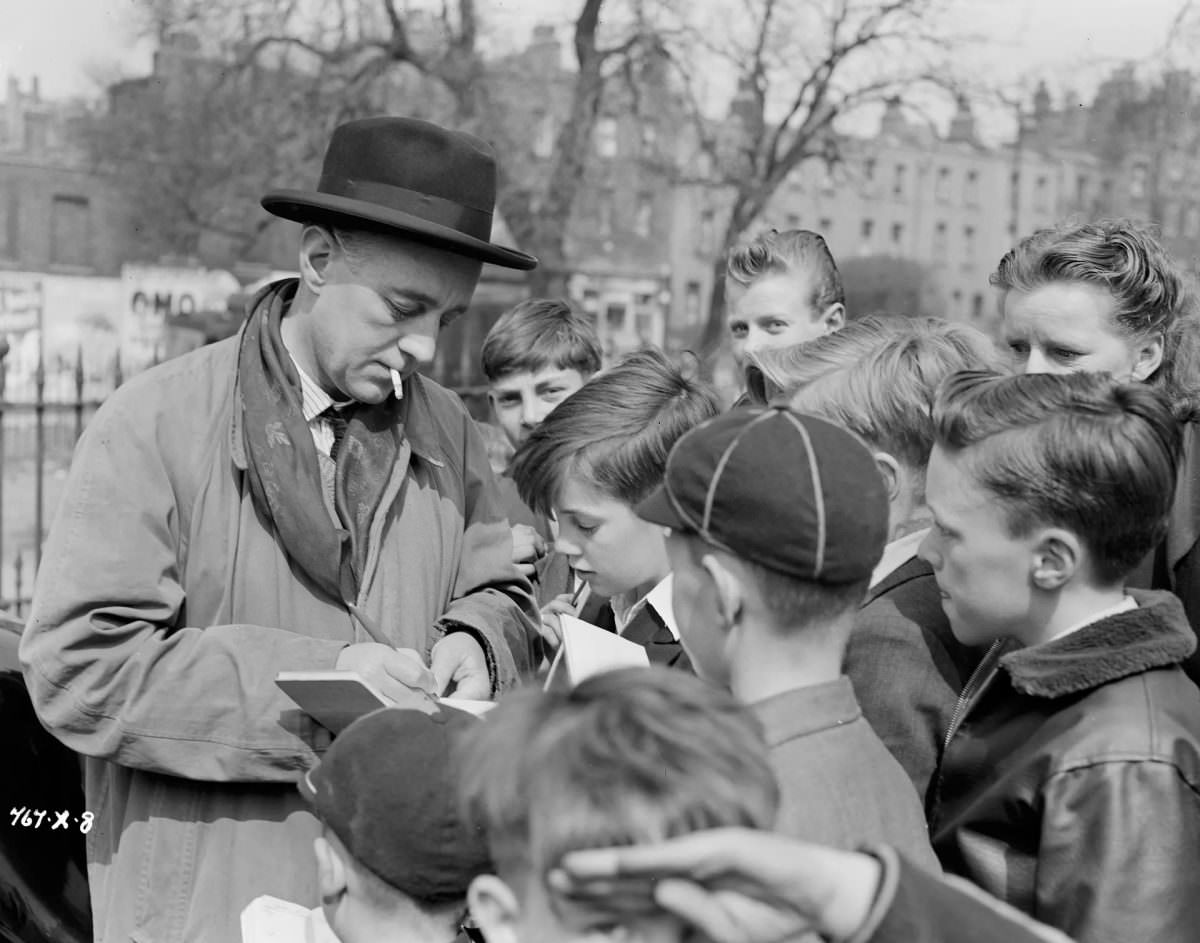
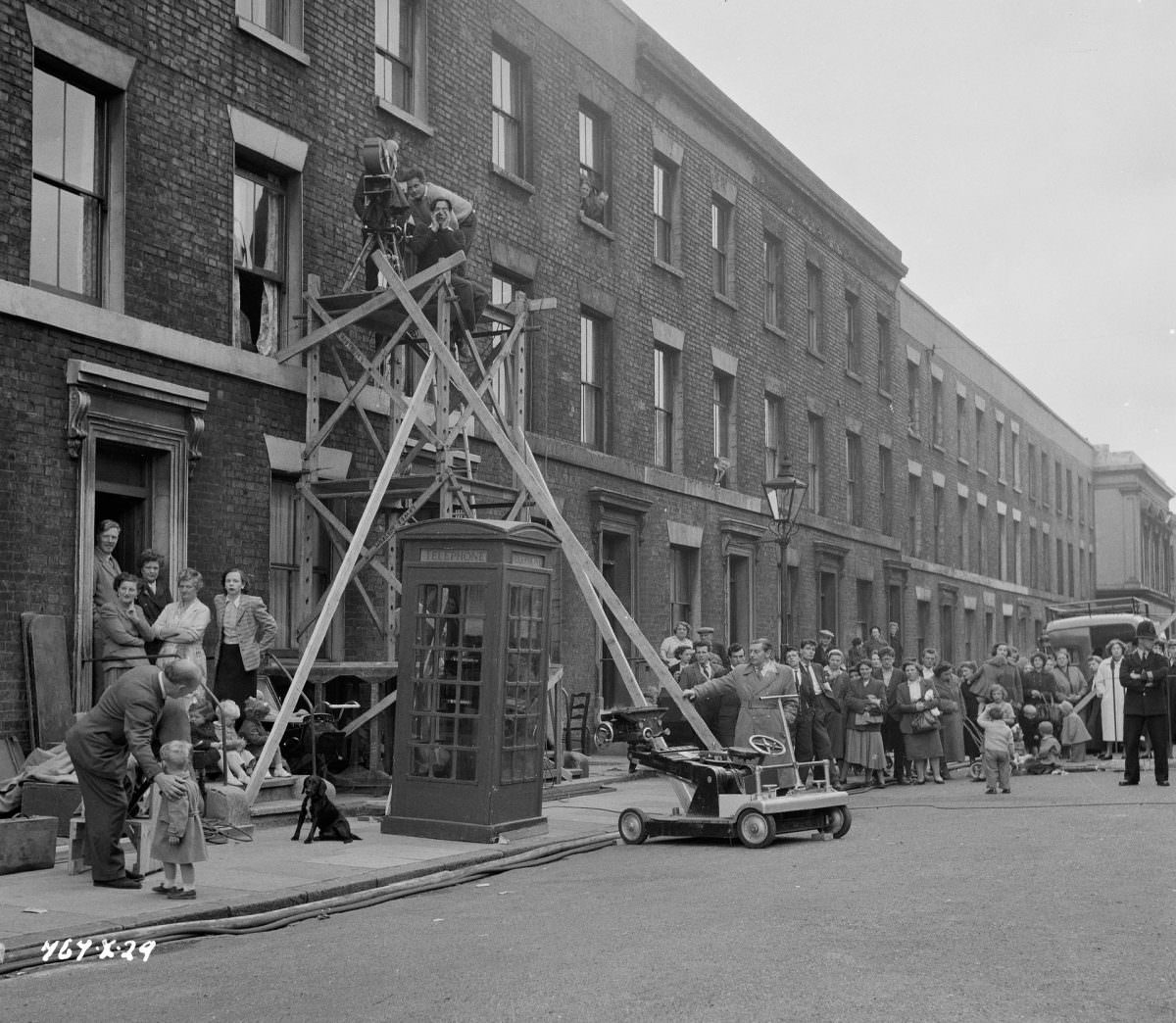
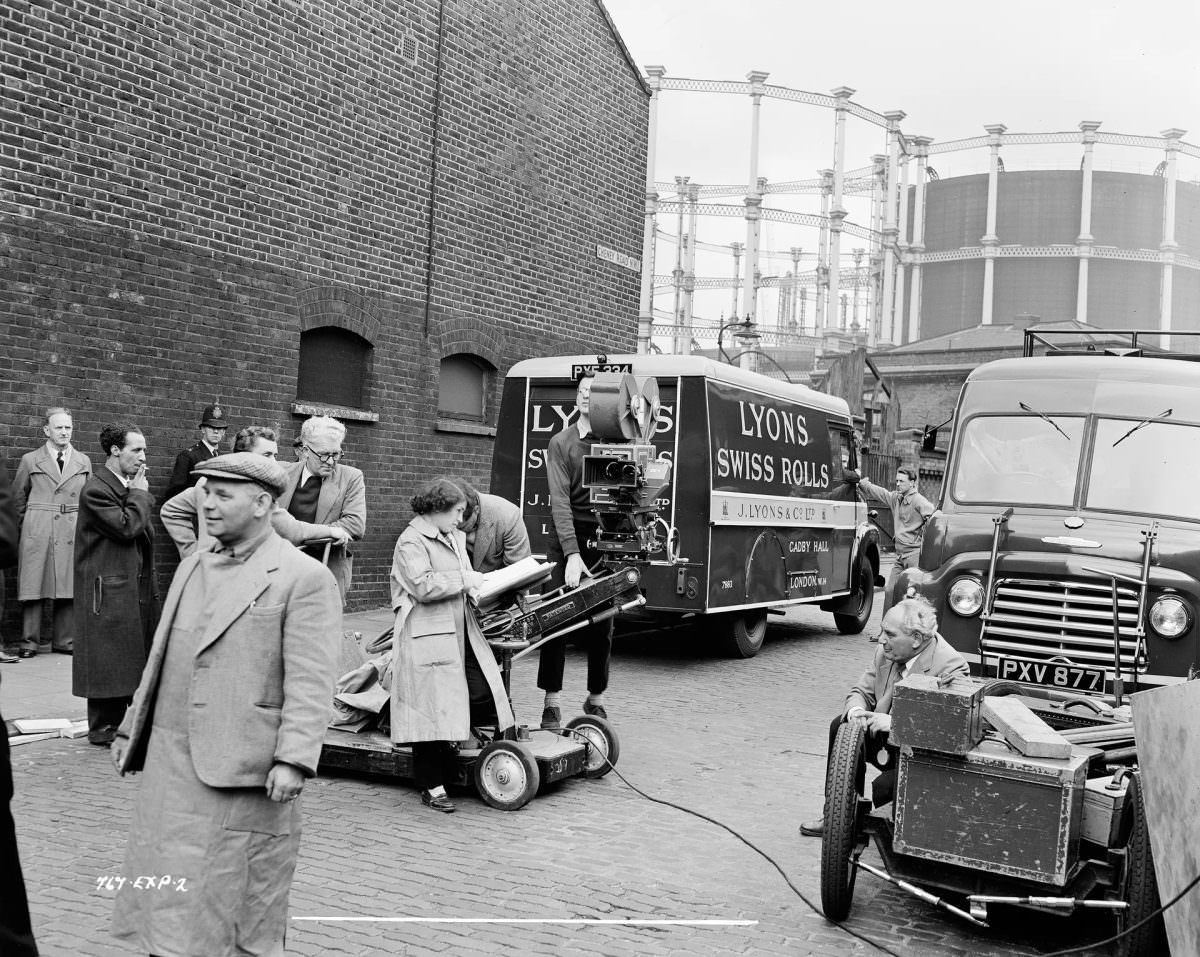
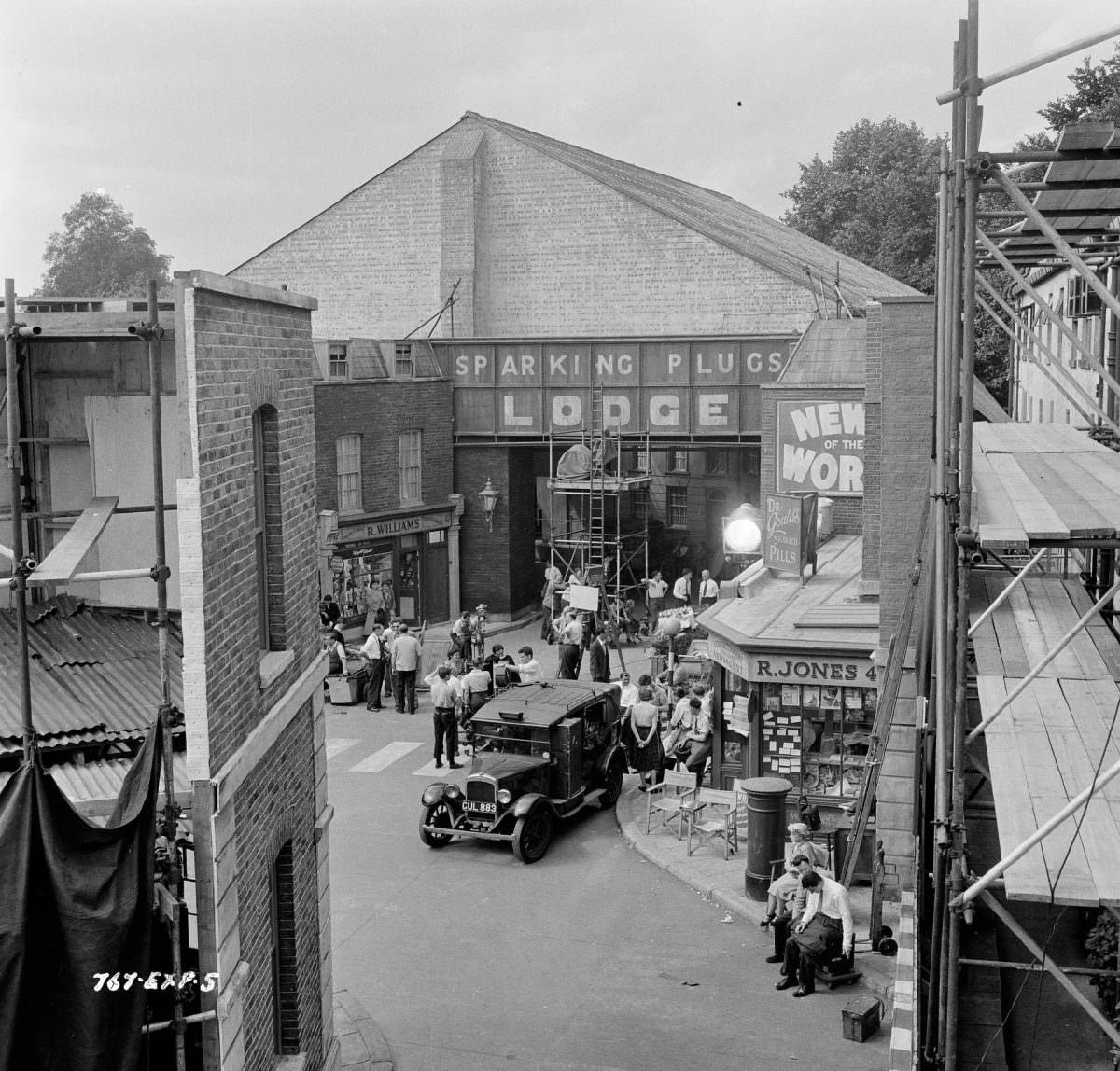
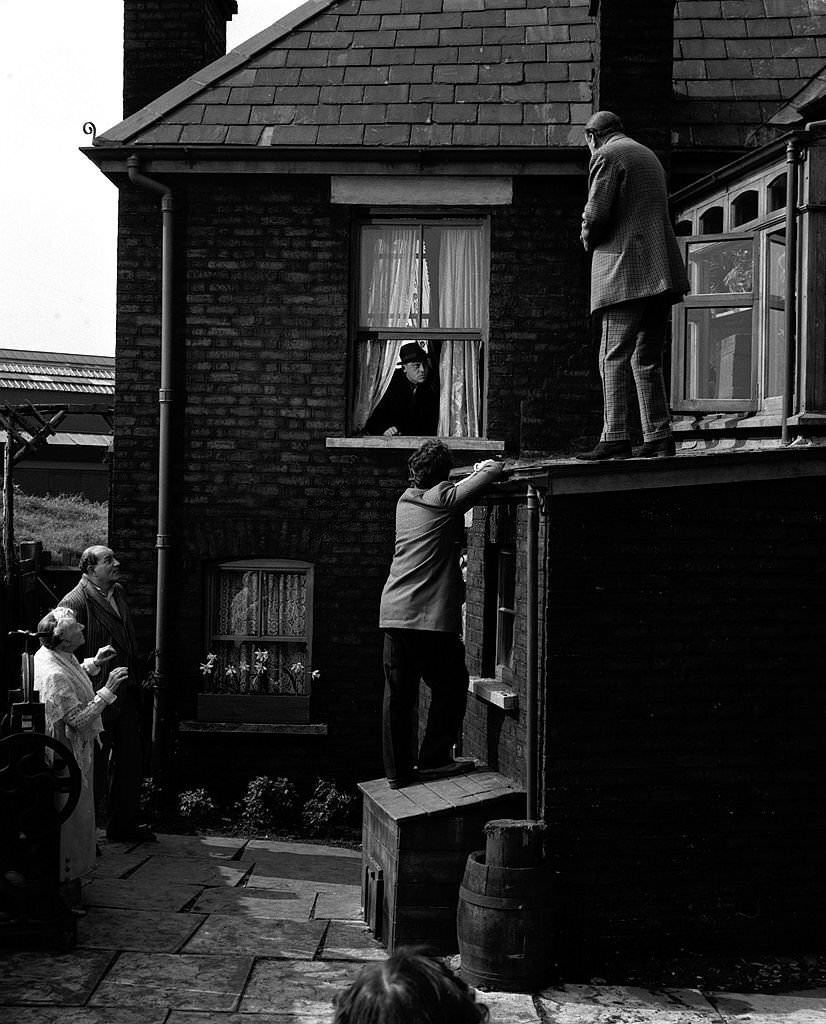
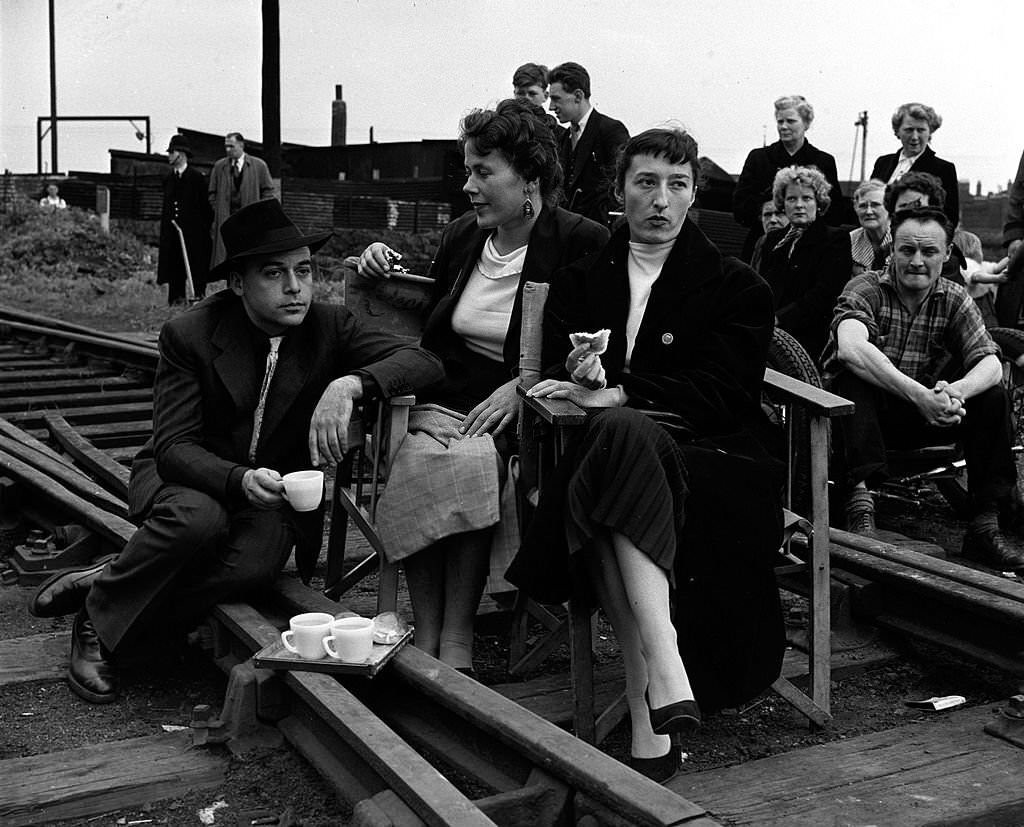
Much of the film was shot on location in the King’s Cross area of North London, particularly around Frederica Street, where the production team constructed the set for Mrs. Wilberforce’s distinctly lopsided house. Local residents turned out to watch filming, and when the cast arrived in the neighborhood, the reaction was one of genuine starstruck excitement.
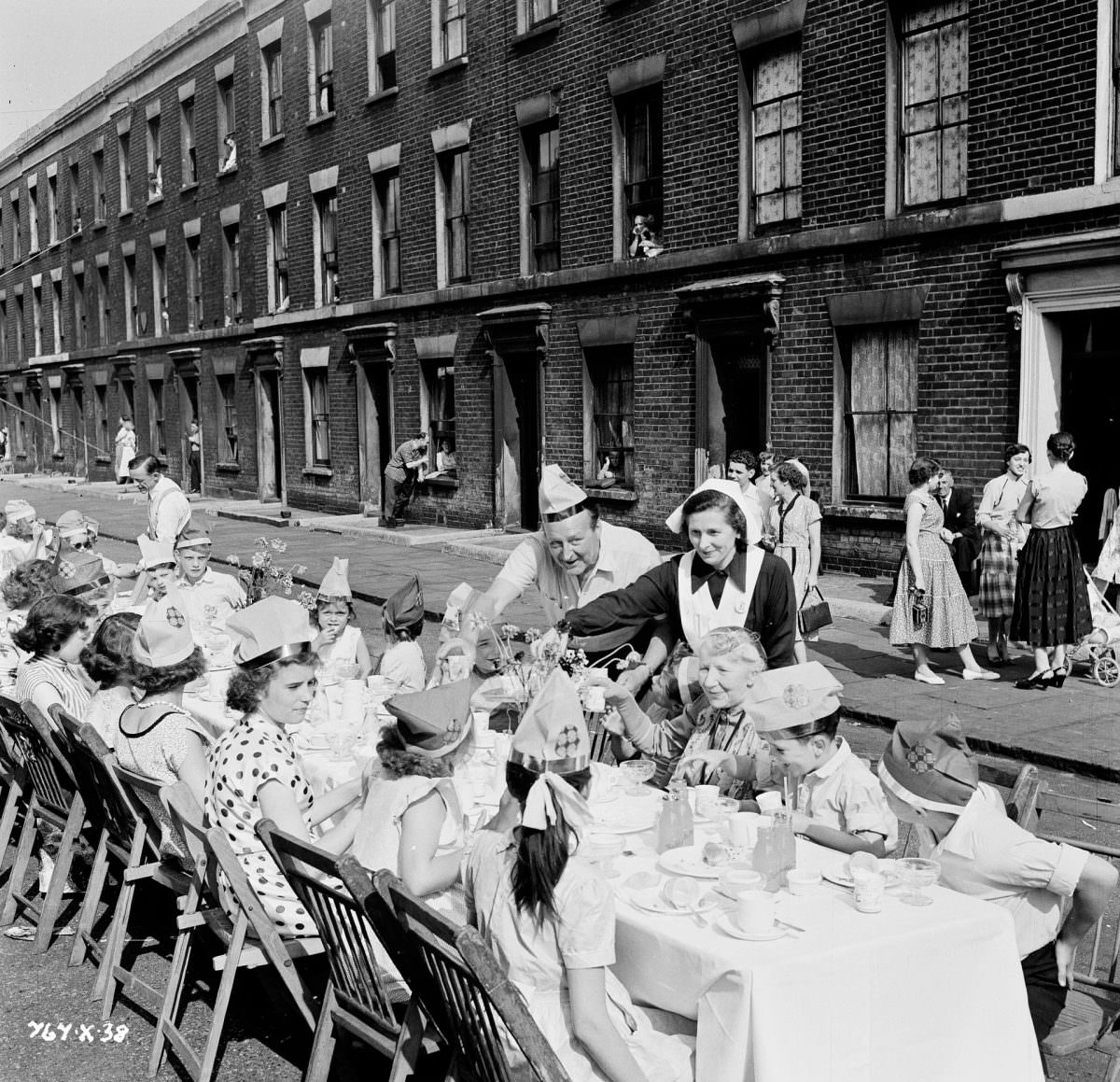
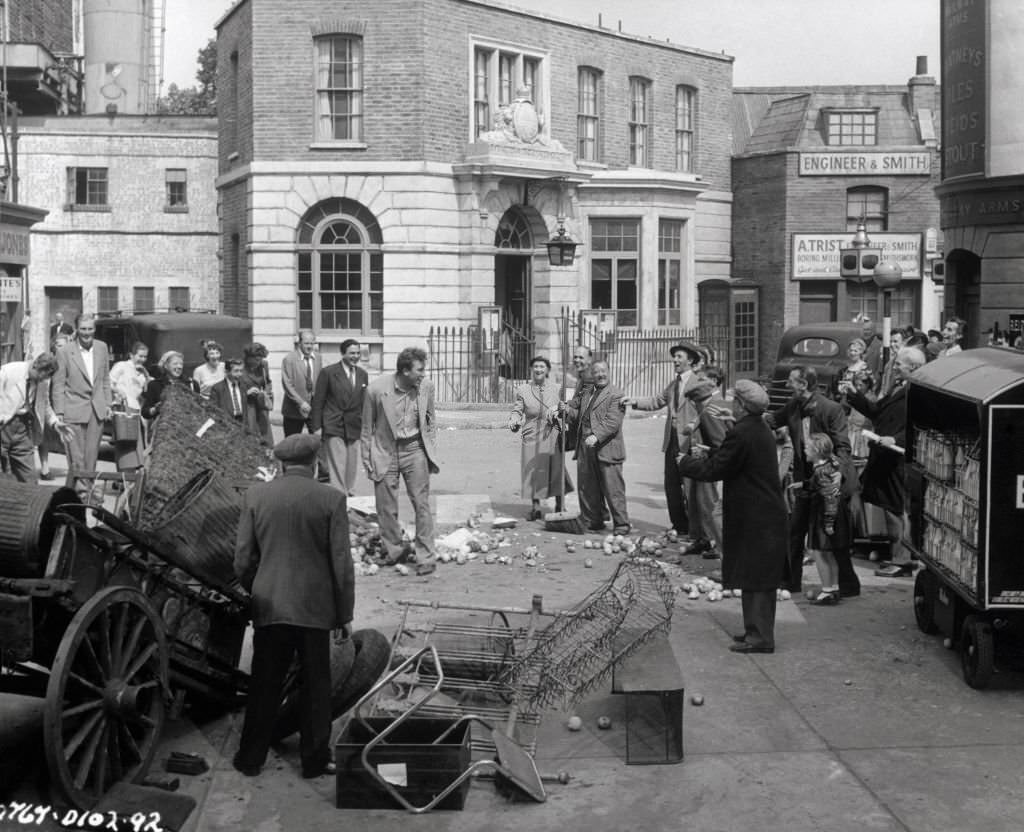
Once filming wrapped, Ealing Studios organized a street party in Frederica Street for the cast, crew, and local residents. The party was a thank-you to the community that had welcomed the production — and it reflected the easy camaraderie that had built up between the stars and the people of North London over the course of the shoot.
Herbert Lom brings a coiled, watchful energy to the set in this behind-the-scenes photo. His character Louis is one of the gang members most aware of the danger Mrs. Wilberforce poses — and one of the most reluctant to do anything about it. Lom, a Czech-born actor with a long career in British film, fit seamlessly into the ensemble’s dark comic rhythm.
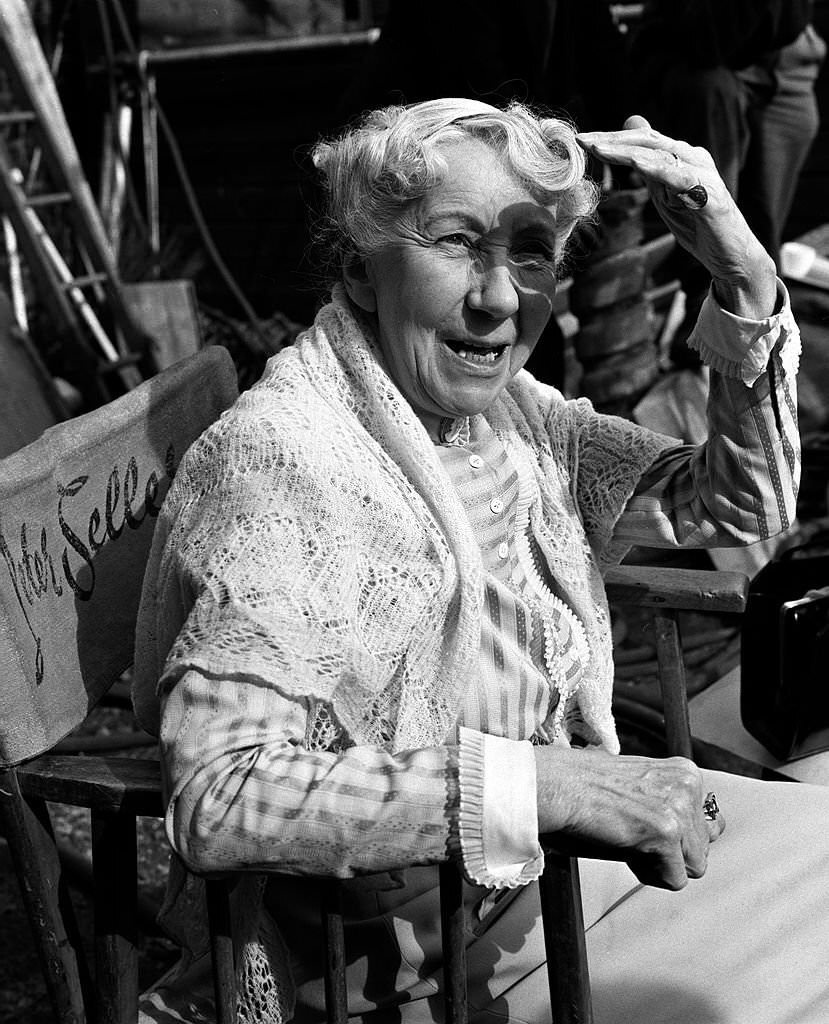
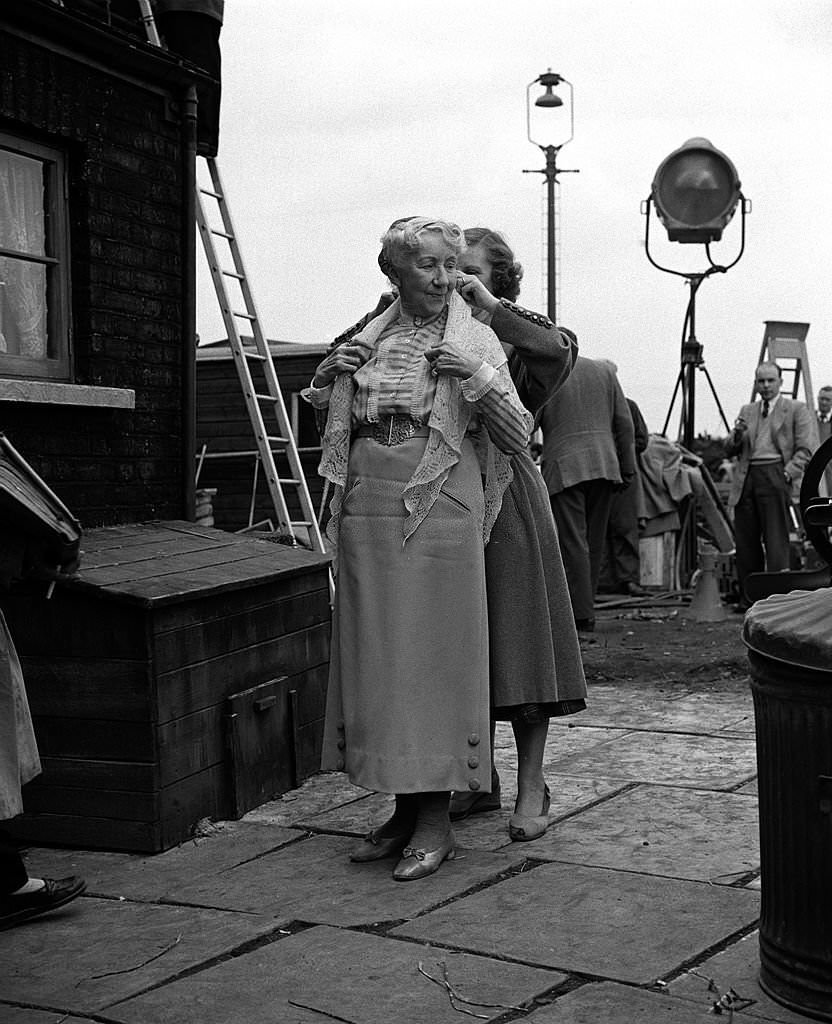
Katie Johnson appears in several behind-the-scenes photos, composed and unhurried between takes. At 76, she was older than anyone else on the principal cast by a significant margin, yet she clearly held her own — and then some. These images show a woman entirely at ease on a professional film set, ready to return to a starring role after years away from the spotlight.
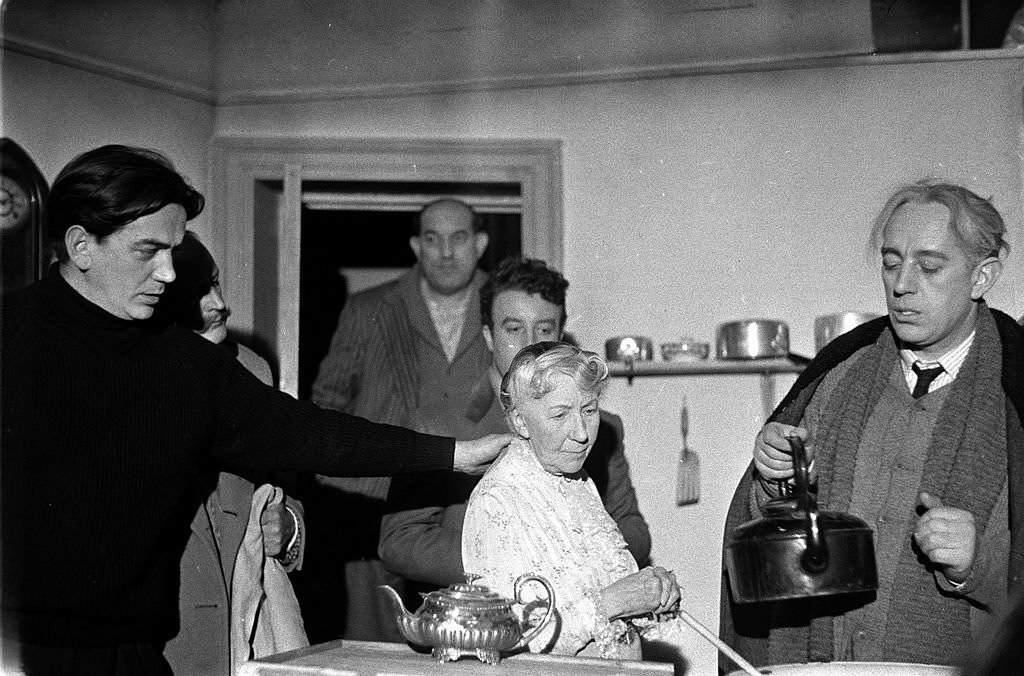
This photo captures director Mackendrick walking his cast through a scene’s requirements. With Sellers, Johnson, Guinness, and Danny Parker all in frame, it’s a rare glimpse of the director at work — translating the script’s precise comic timing into concrete instructions. Mackendrick was known for his exacting approach, and this image reflects that focused, collaborative process.