The 1920s were a decade of bold new ideas. Jazz filled the air, cities hummed with energy, and inventors were pushing the limits of what technology could do. Against that backdrop, two Hungarian brothers quietly changed the way people listened to music. Their creation — a phonograph small enough to slip into a coat pocket — was unlike anything the world had seen before.
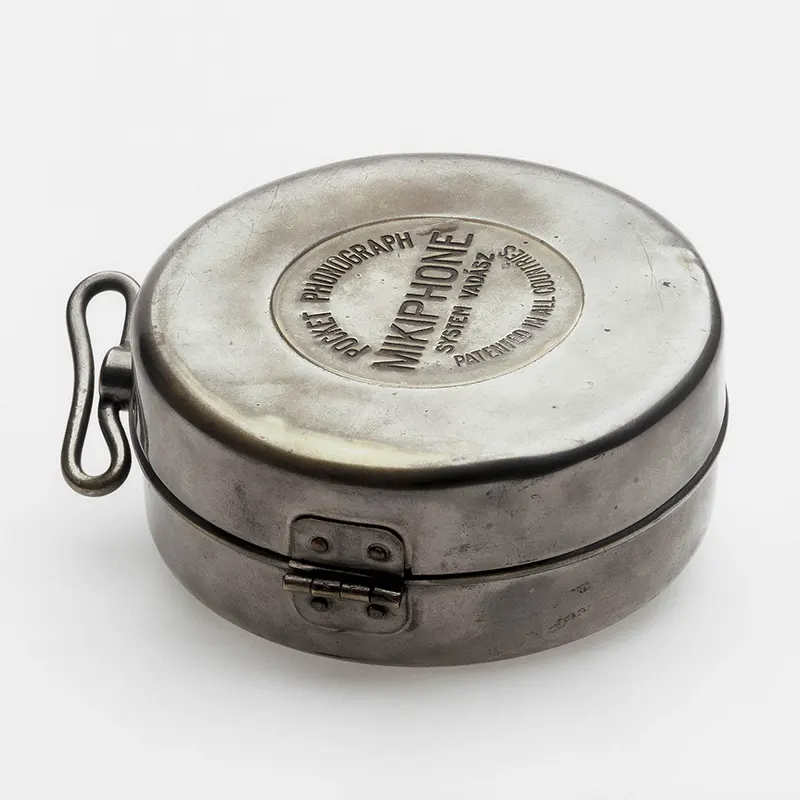
The device was called the Mikiphone, and it was the brainchild of siblings Miklós and Étienne Vadász. The name itself was a nod to Miklós, the elder of the two brothers. Their goal was straightforward: build a fully functional record player that a person could carry in their pocket. In the mid-1920s, when most phonographs were large, furniture-sized machines, this was an extraordinary ambition.
To bring the Mikiphone to market, the Vadász brothers partnered with Maison Paillard, a Swiss manufacturer based in Saint-Croix. Paillard was a natural fit for the project. The company traced its roots back to 1814, when a group of local watchmakers formed a collective focused on precision craftsmanship. By the 1860s, Paillard had become one of the most respected makers of music boxes in Europe. That deep experience with miniaturized mechanical systems made the challenge of a pocket phonograph far more achievable.
Paillard had already shown a willingness to evolve. By 1905, the company had fully transitioned from music boxes to disc gramophones. In 1913, it introduced an electric AC gramophone motor — a major technical step forward. When the Vadász brothers arrived with their concept, Paillard had both the mechanical knowledge and the manufacturing infrastructure to produce it at scale.
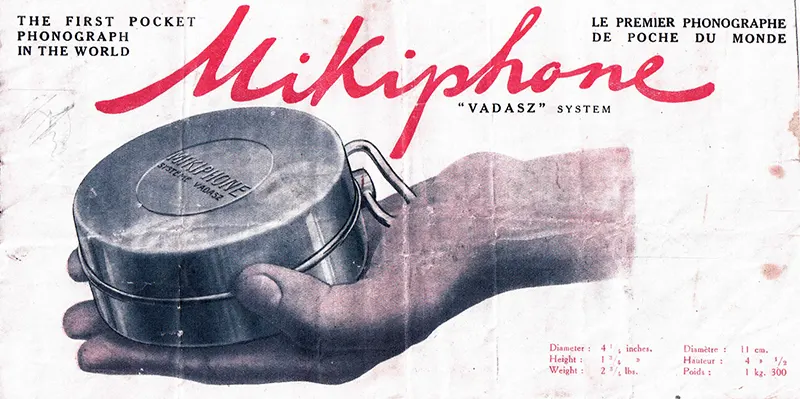
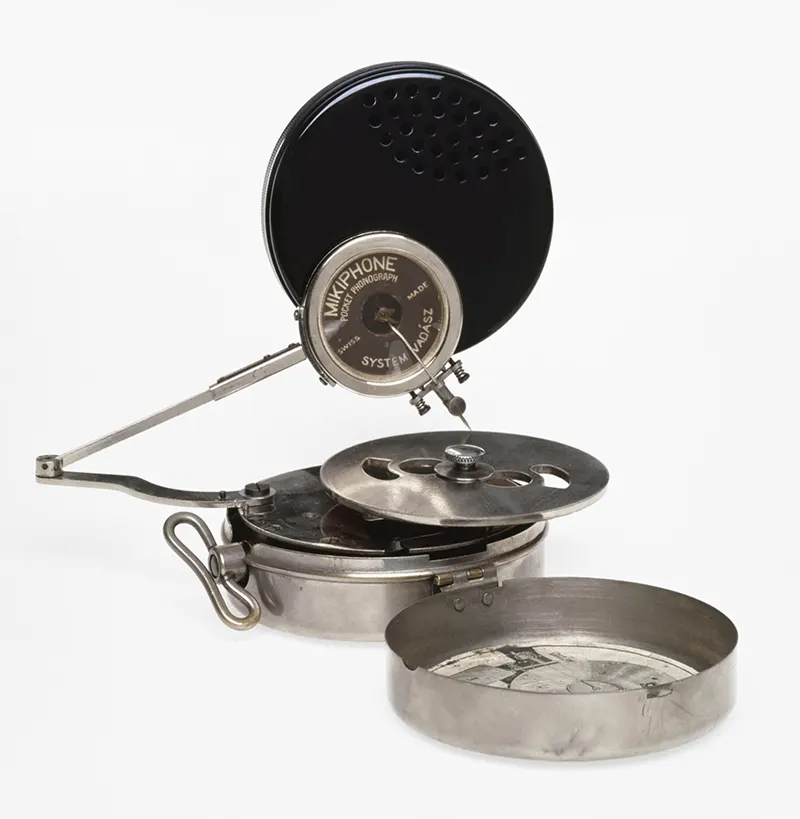
Closed up and sitting in your hand, the Mikiphone looked more like a compact tin than a musical instrument. It measured just 11.5 centimeters in diameter and 4.7 centimeters thick when shut. That flat, disc-shaped casing held everything needed to play a record — all packed tightly inside.
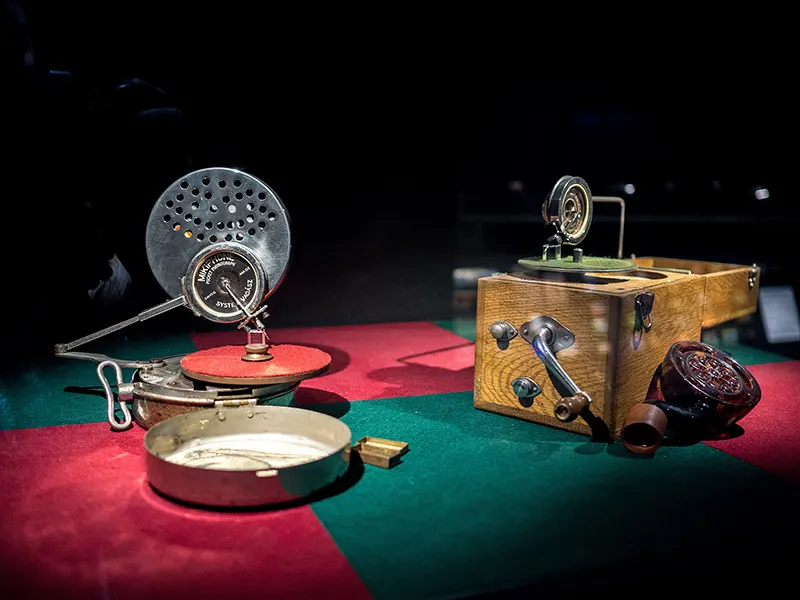
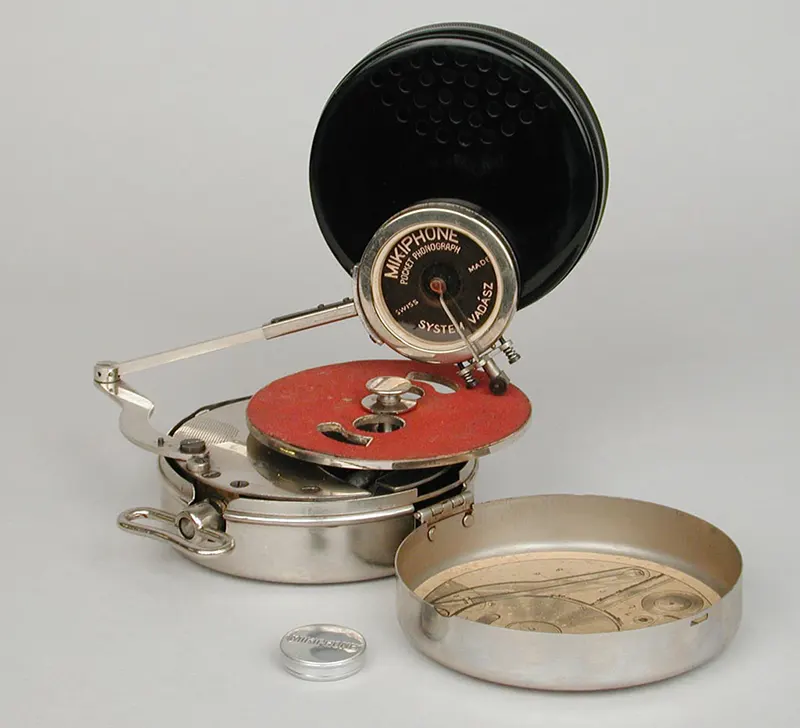
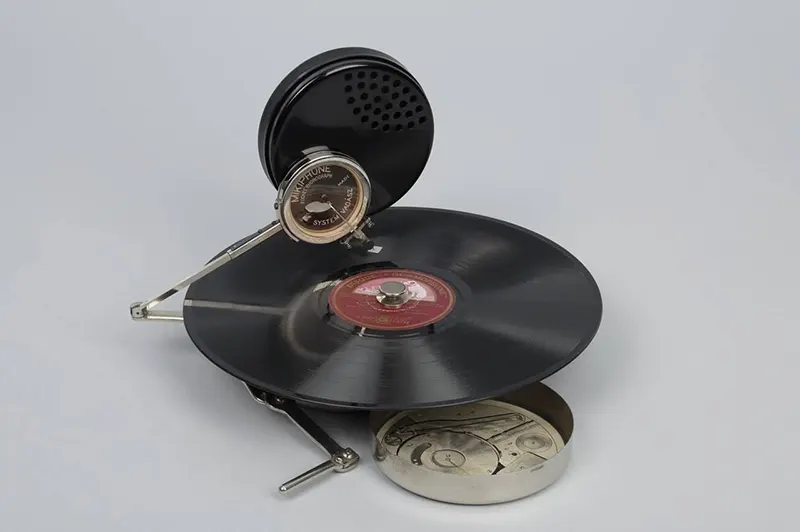
Using the Mikiphone required a short assembly process before each listening session. The owner would open the case and retrieve its components: a recording head, a two-piece Bakelite resonator, and a foldout tone arm. These pieces connected together and were fitted onto the turntable. A shellac disc — the standard record format of the era — was placed onto the turntable’s central pin. Once assembled, the device was ready to play.
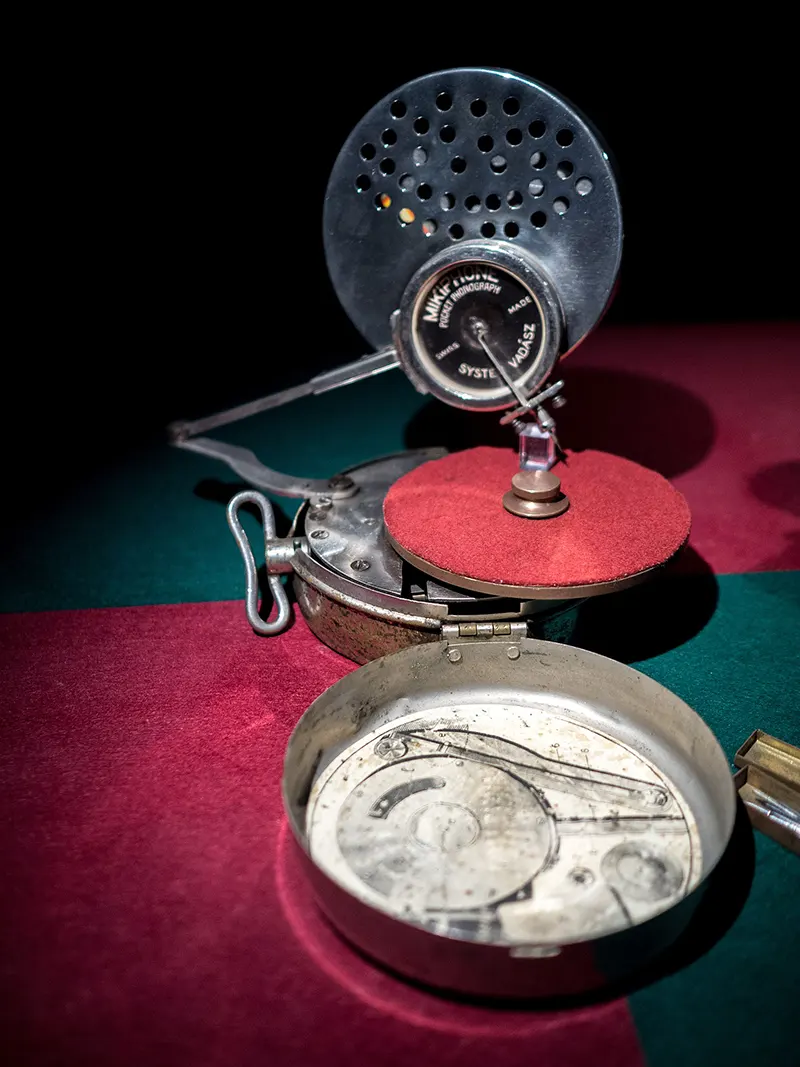
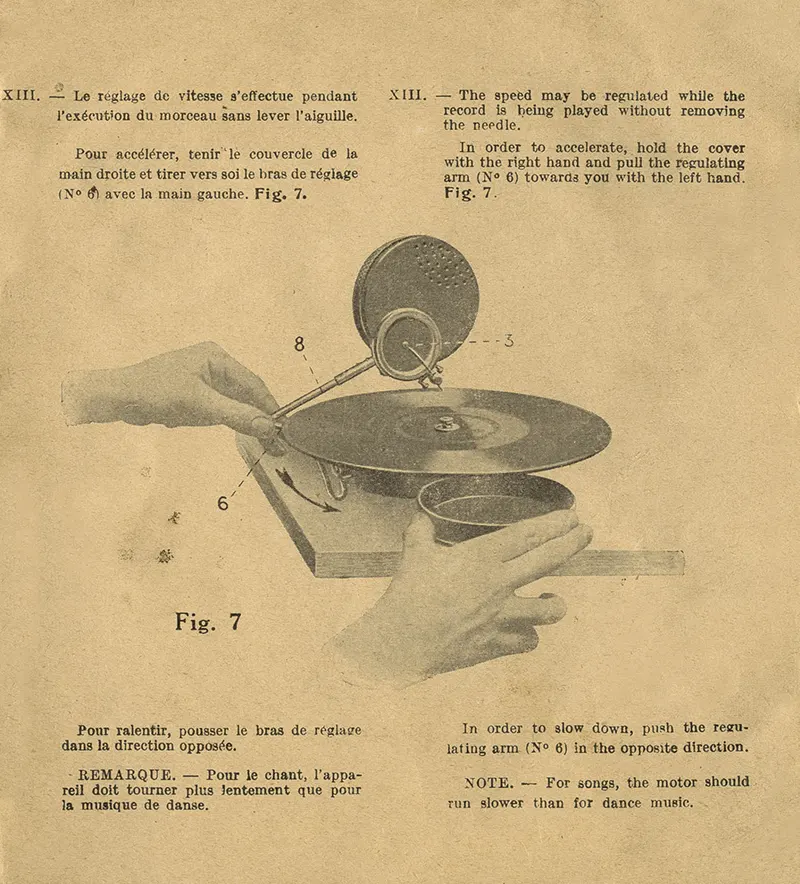
There were no batteries involved. The Mikiphone ran entirely on a hand-crank mechanism, which wound a spring motor inside the unit. That stored energy turned the turntable at a consistent speed while the resonator amplified the sound. The audio quality was not comparable to a full-sized parlor gramophone, but it was clear enough to be recognizable and enjoyable — a remarkable achievement given the device’s size.
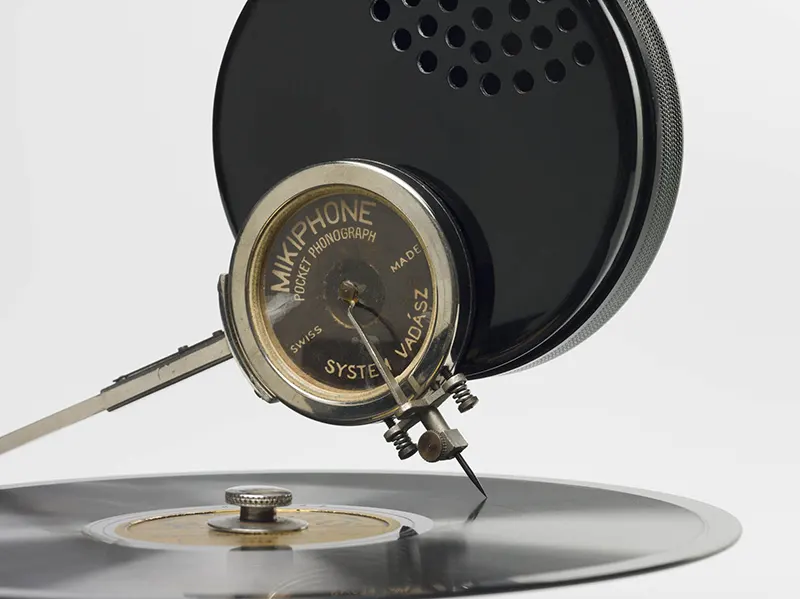
Maison Paillard manufactured approximately 180,000 units of the Mikiphone during its production run in the mid-1920s. That number reflects genuine public demand. Music lovers, travelers, and novelty seekers across Europe and beyond were drawn to the idea of carrying their favorite recordings in a pocket. The Mikiphone sold well enough to remain one of the most recognizable objects of its era.
Paillard continued to grow its product line throughout the late 1920s. Beginning in 1927, the company moved into electric amplifiers for gramophones and later expanded into radio equipment. The Mikiphone project had been a proving ground of sorts — it demonstrated that Paillard could tackle complex, miniaturized audio technology and deliver it to a mass market.
The Mikiphone’s design sat at a precise intersection of engineering and practicality. Every component had to be small enough to fit inside that flat tin case, durable enough to survive being carried around, and functional enough to actually play music. The Bakelite resonator was a key part of that equation — Bakelite was one of the first synthetic plastics, introduced in 1907, and its use here reflected how newer materials were enabling new kinds of design. The Vadász brothers and the craftsmen at Paillard made choices at every step that prioritized portability without completely sacrificing performance.