Jamaica’s rise as a sugar powerhouse was driven by two key factors: its tropical climate and the trans-Atlantic slave trade. By the seventeenth century, the island had become the world’s largest sugar producer. Through the eighteenth and into the early nineteenth century, American and European markets depended heavily on Jamaican sugar exports, which flowed through Britain’s colonial trade network. The Napoleonic Wars created even more demand, expanding Jamaica’s trade as European supply chains were disrupted.
By March 1815, Jamaica’s sugar industry was at its peak. Large estates spread across parishes like St. Ann and St. James, each with its own fields, mills, and processing facilities. The landscape was defined by vast cane fields worked by enslaved people, then later by indentured laborers after emancipation. British dominance of the global sugar market held firm through the 1830s, when the abolition of slavery reshaped labor conditions across the Caribbean. After that, Cuba overtook Jamaica as the region’s leading producer. These photographs, taken between the late 1880s and 1906, document what remained of that industry during its long decline and gradual modernization.
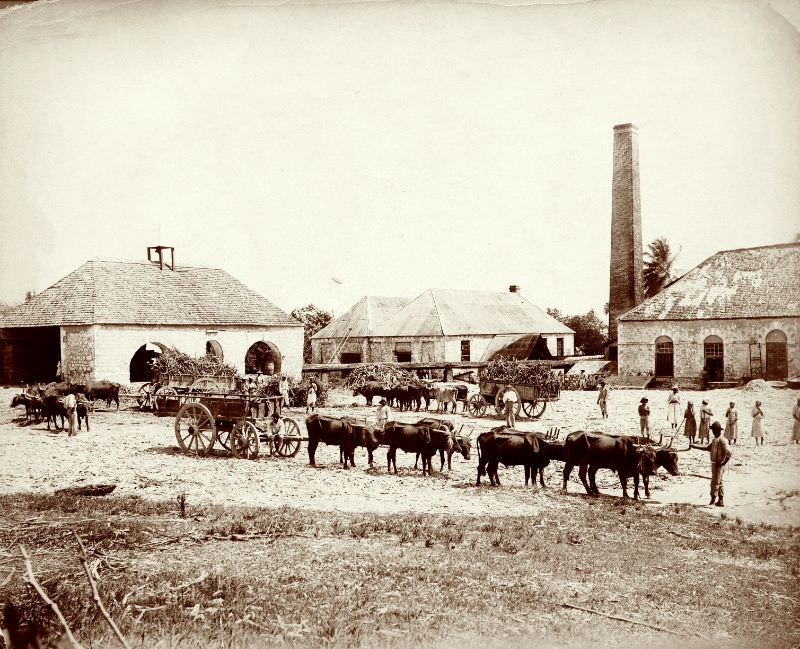
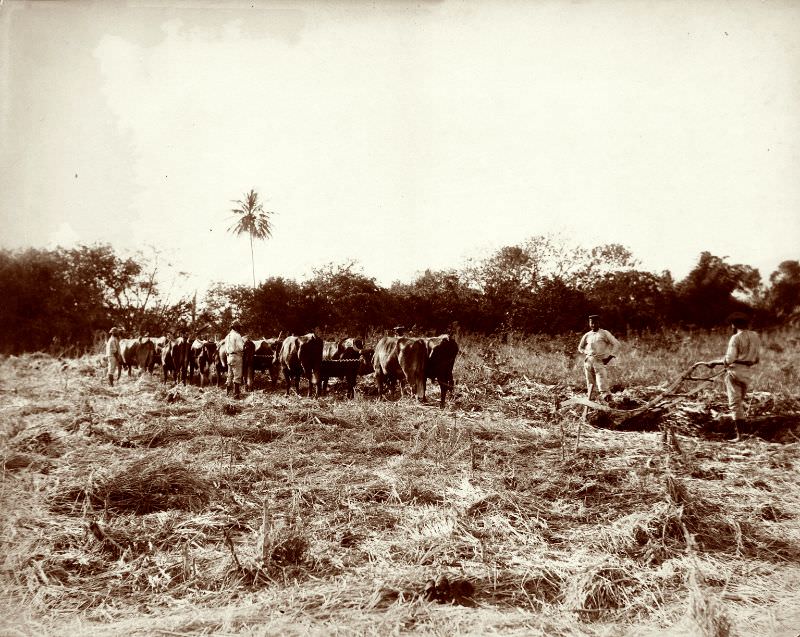
St. Ann was one of Jamaica’s most productive sugar parishes. Estates like Llandovery and Orange Valley operated as self-contained agricultural operations. Preparing the land for planting was hard, physical work. Fields had to be ploughed before cane could be set, and on larger estates, animal power was used to turn the soil.
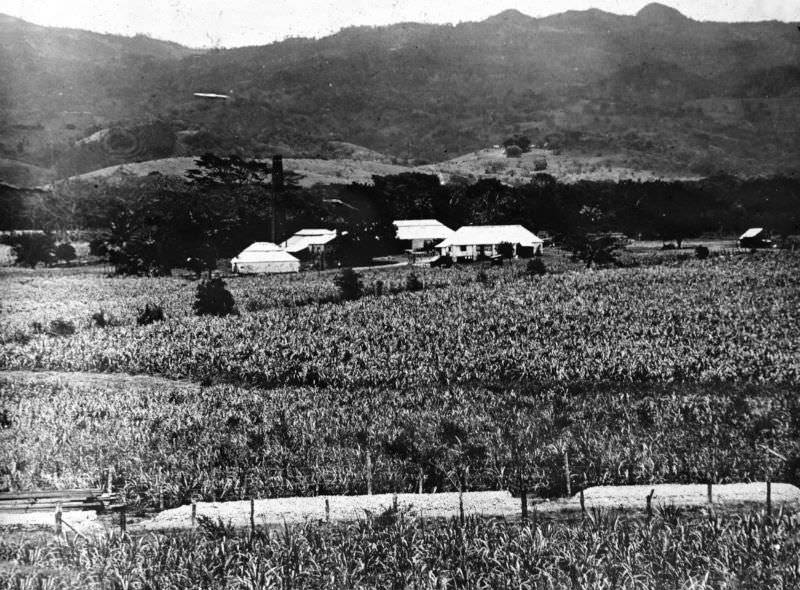
Across Jamaica’s parishes, sugar estates ranged from sprawling operations to smaller, more modest properties. St. James, on the island’s northwest coast, was home to several working estates in the late nineteenth century.
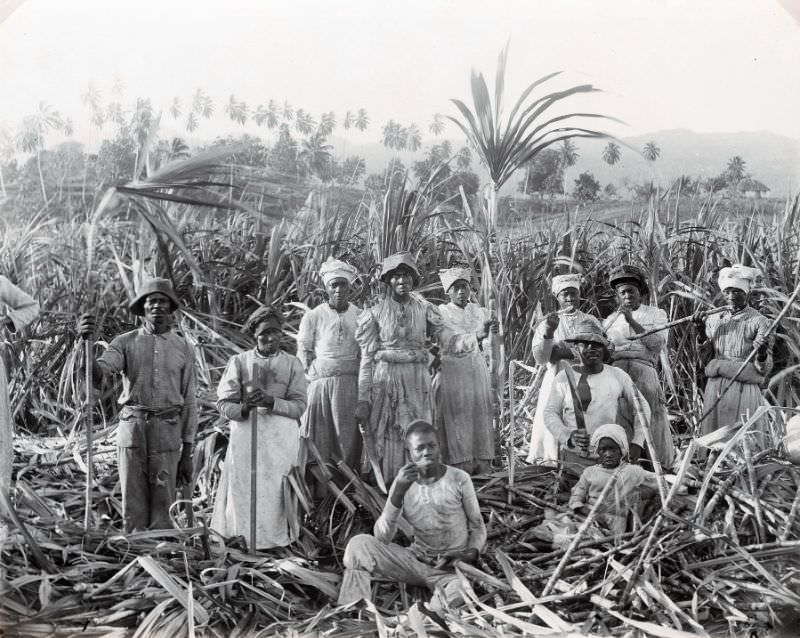
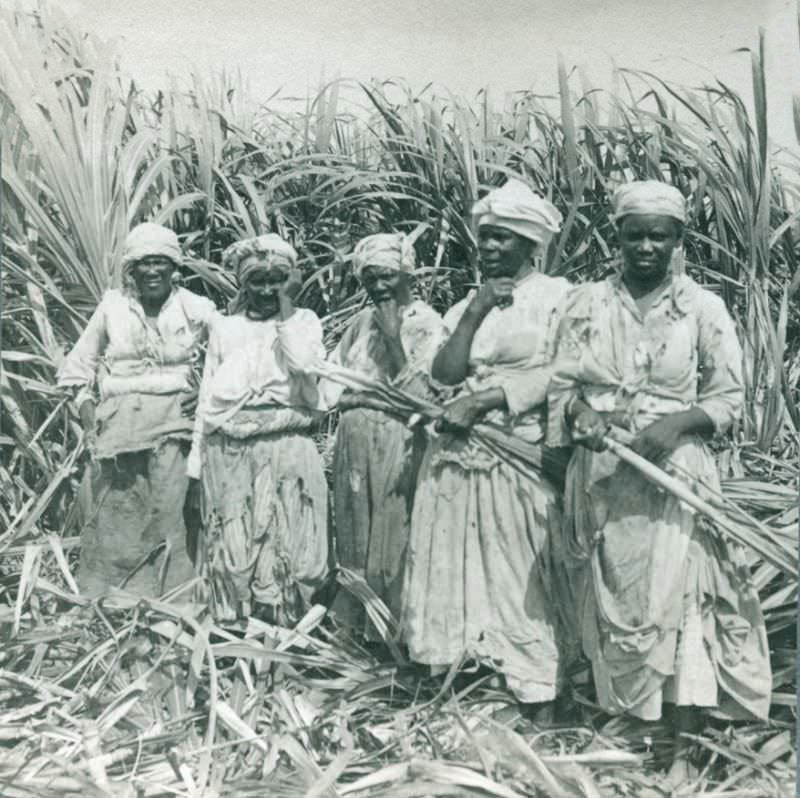
Cutting sugar cane was among the most physically demanding tasks on any estate. Workers used machetes to cut the thick stalks close to the ground, moving through the rows in long, exhausting shifts. The cane had to be harvested quickly and transported to the mill before it began to ferment and lose its sugar content.
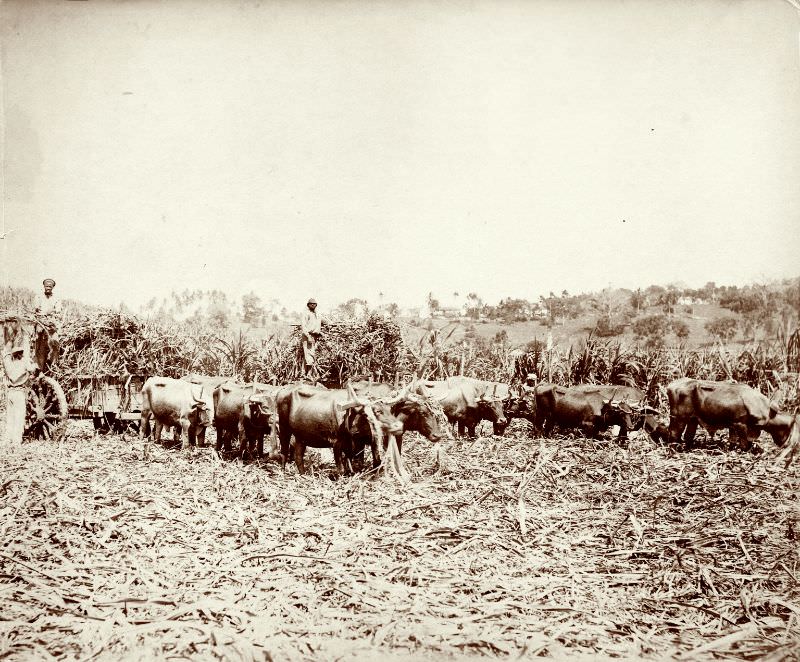
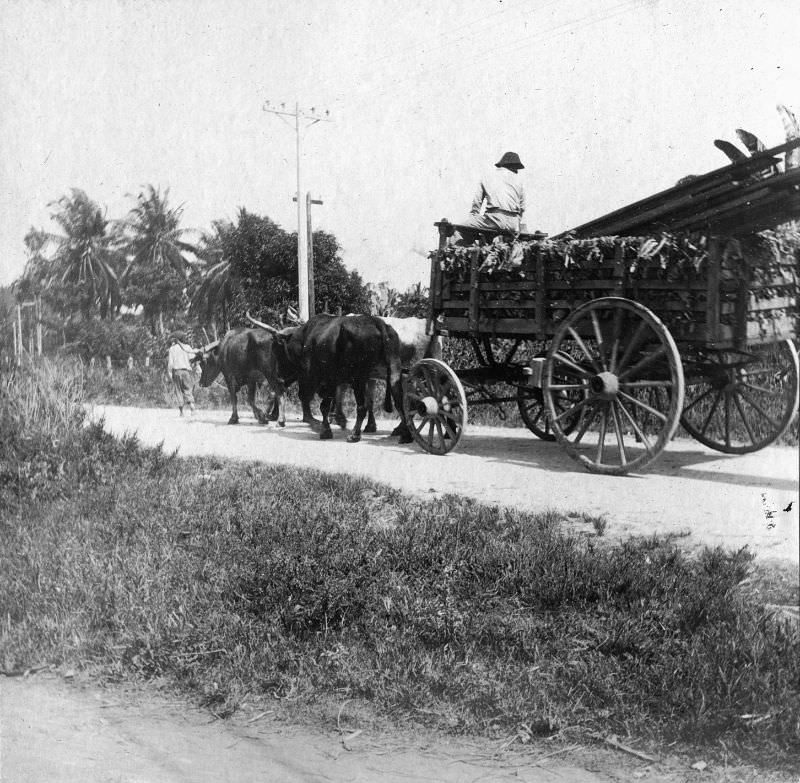
Once cut, the cane was loaded onto wagons and hauled to the mill. Oxen and bulls were the primary draft animals used for this work. They pulled heavy loads across the estate’s dirt tracks in all weather, forming a constant chain between the fields and the processing facilities.
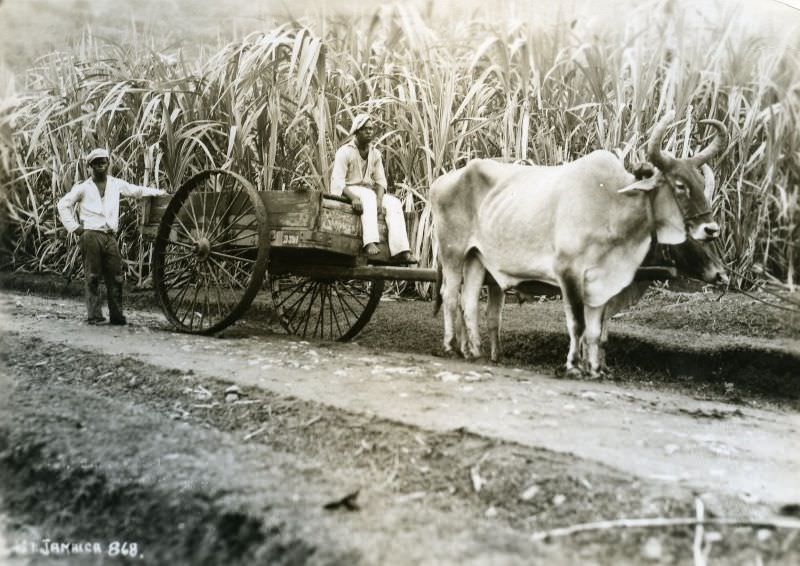
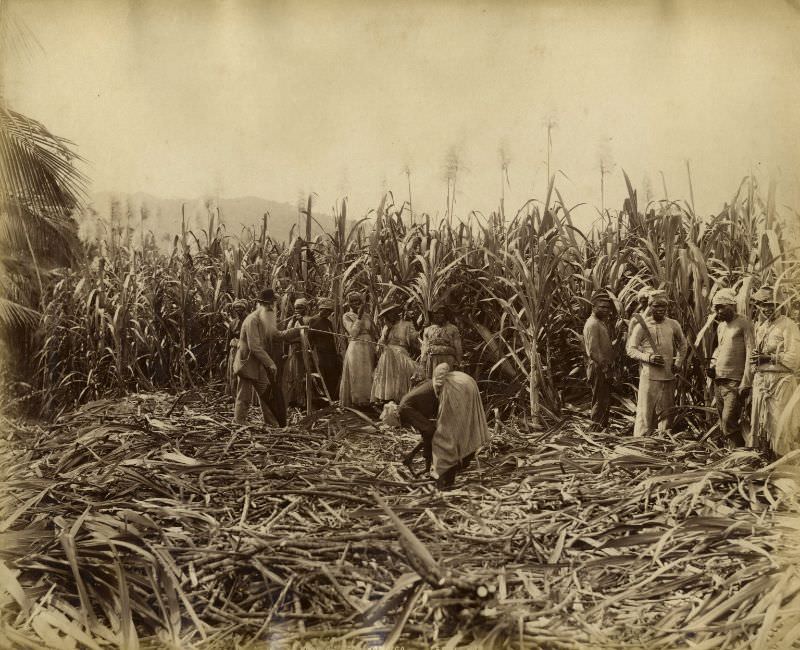
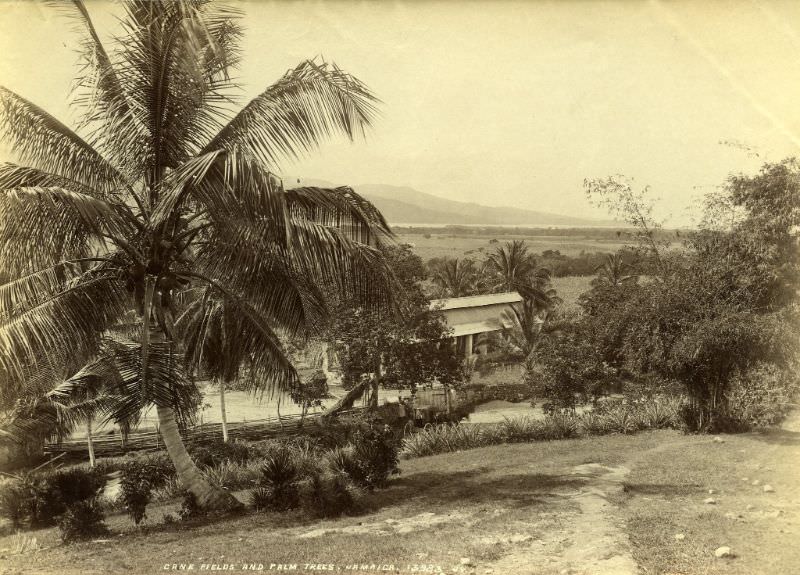
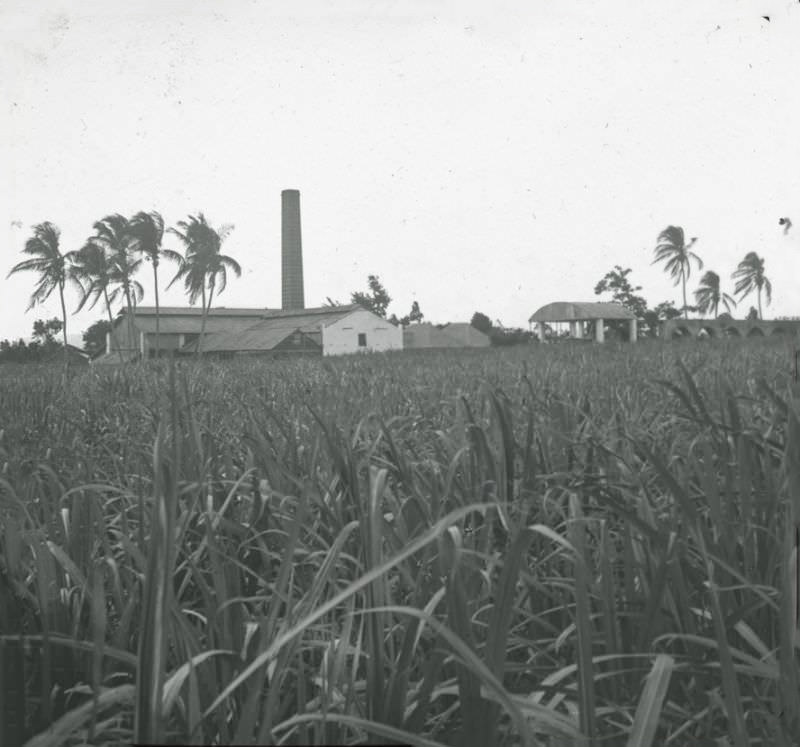
The cane fields themselves were a striking sight. Tall green stalks stretched across flat and gently sloping land, often framed by Jamaica’s native palm trees. The fields required constant tending — weeding, irrigation, and replanting — through the long growing season before harvest.
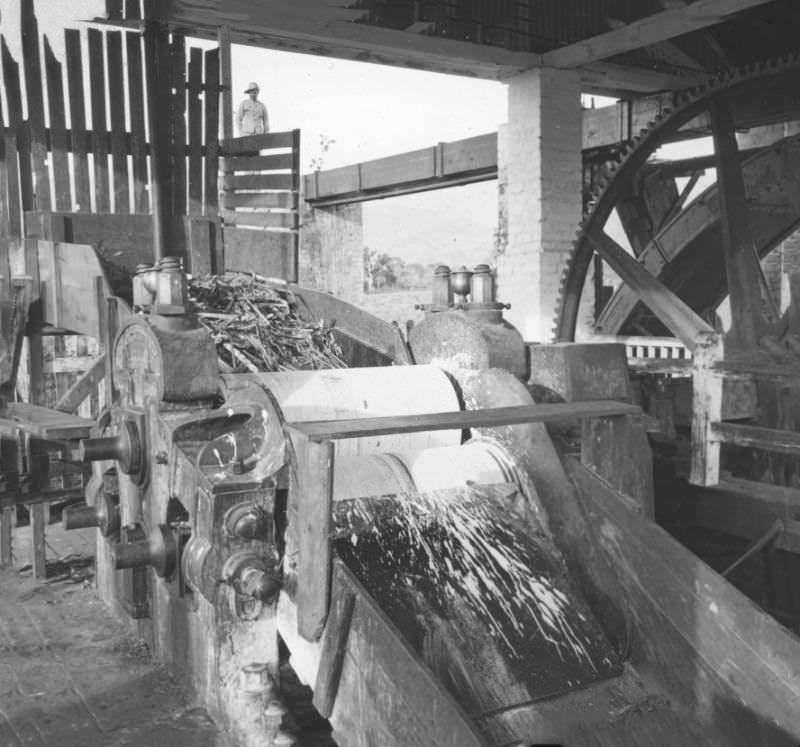
The sugar mill sat at the center of every estate’s operation. This was where the raw cane was crushed to extract its juice, which was then boiled down and processed into crystallized sugar. Mills ranged from animal-powered grinders to steam-driven machinery as the industry modernized through the latter half of the nineteenth century.
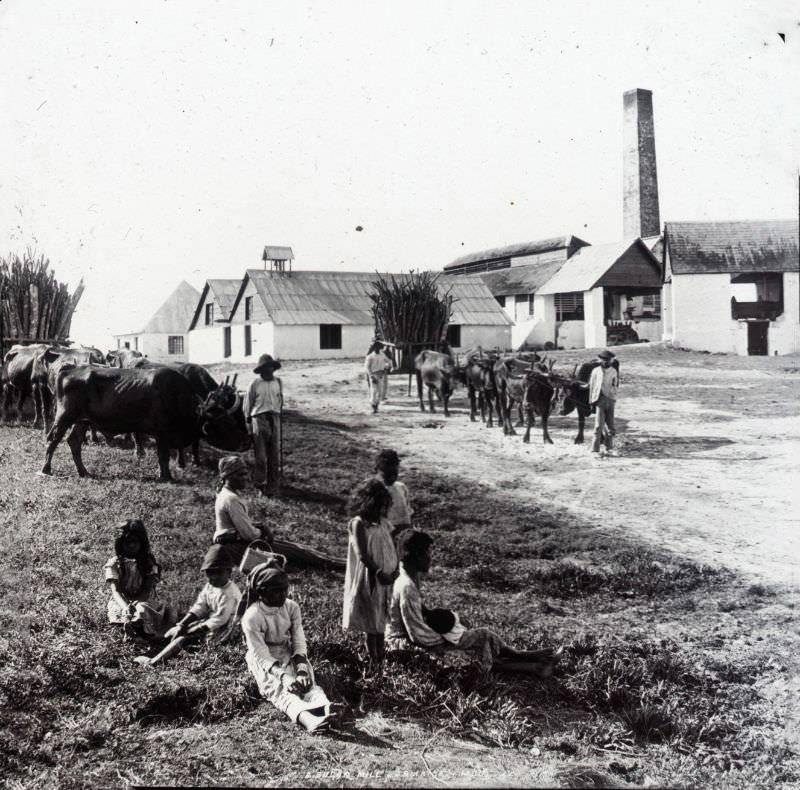
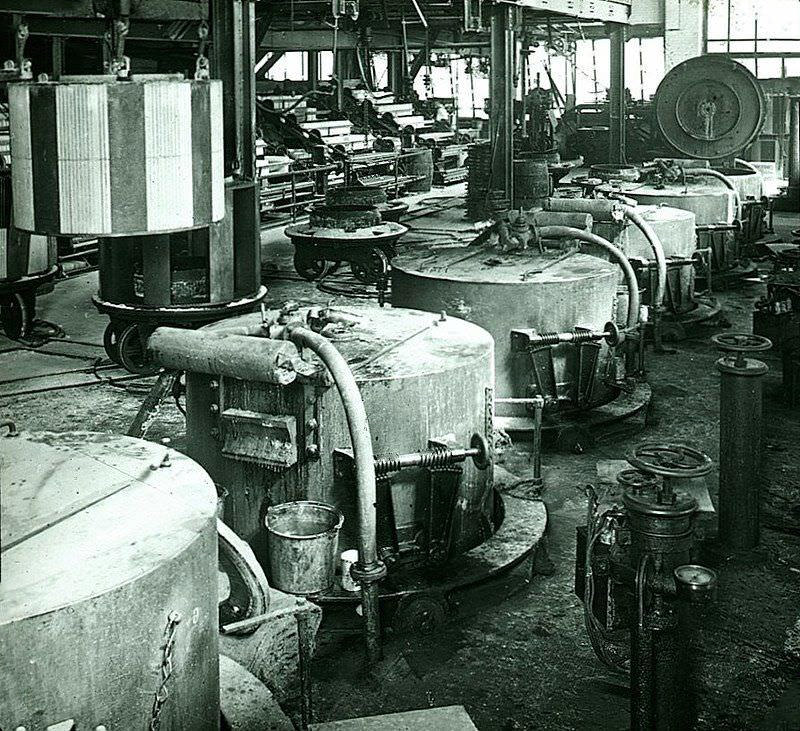
By 1900, the Mona Sugar Plantation near Kingston was one of the better-documented estates on the island. Photographs from that year show the full scope of its industrial equipment. Large boilers generated the steam needed to power the mill’s machinery and heat the juice during processing — a far cry from the older wood-fire methods still used on smaller estates.
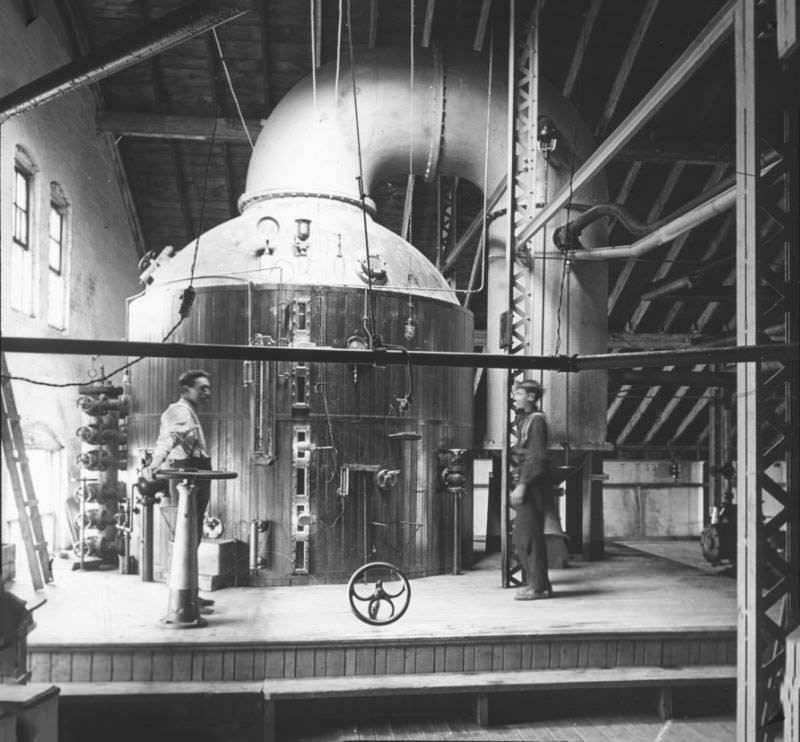
Centrifugal machines were a major technological advance in sugar refining. They spun the boiled sugar mixture at high speed to separate the crystals from the molasses, producing a cleaner, drier product much faster than older drainage methods allowed.
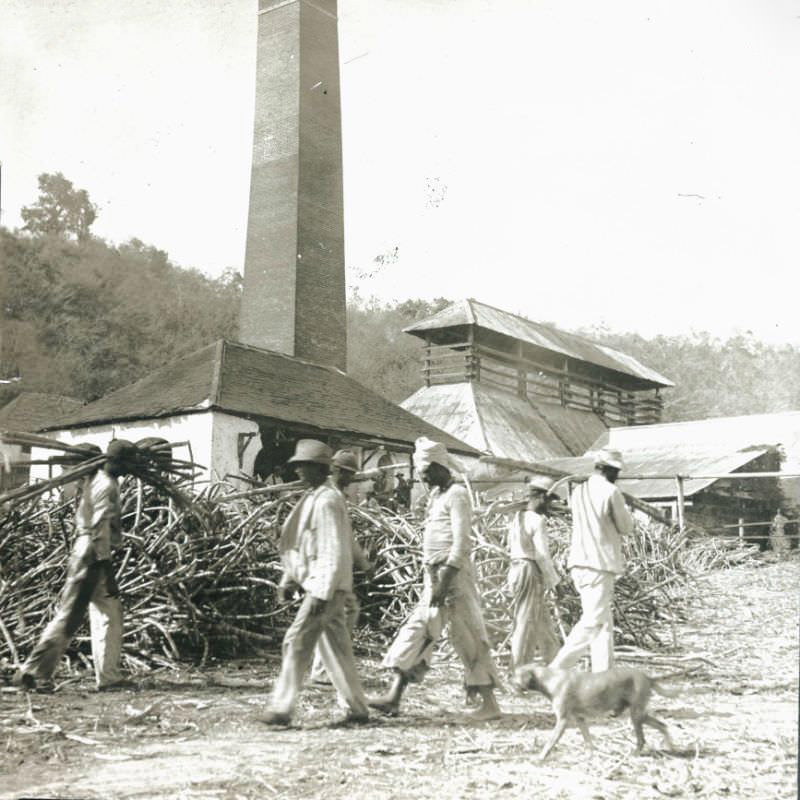
Field labor remained the backbone of the industry well into the twentieth century. At estates near Montego Bay, large groups of field hands worked the cane rows by hand. After emancipation in 1838, many formerly enslaved workers continued laboring on the same estates for wages, while plantation owners also brought in indentured workers from India and China to meet labor demands.
Older processing methods persisted alongside newer technology at many estates. At the Mona Plantation in 1904, open boiling coppers — large metal vats used to boil cane juice — were still in use, along with a weltz pan and crane system that had been standard equipment in earlier sugar mills across the British Caribbean.
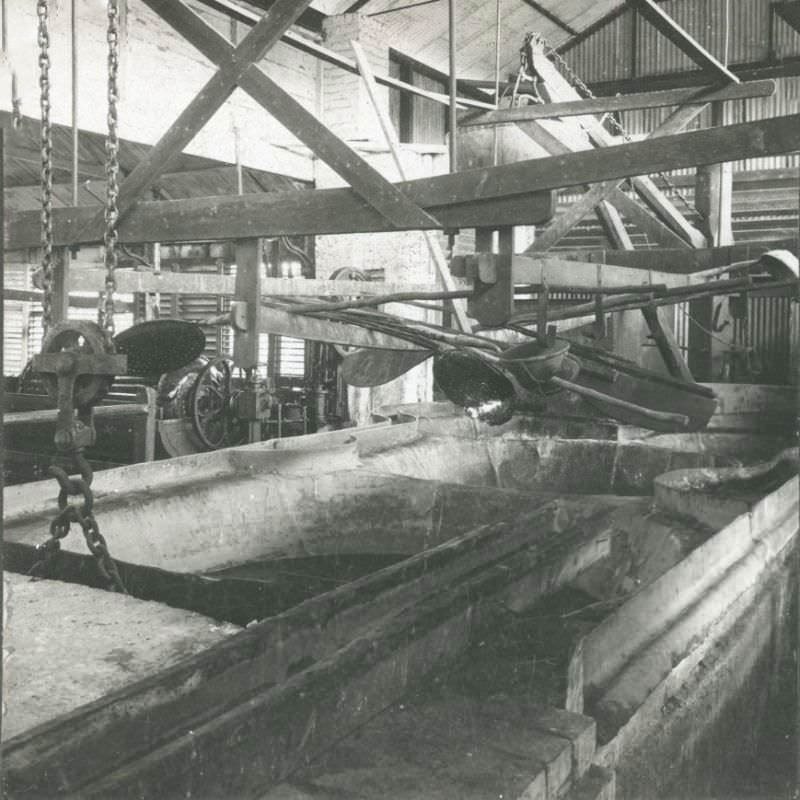
In May Pen, a town in Clarendon Parish, indentured workers from South Asia — referred to in period records as ‘Coolies,’ a term now considered offensive — were employed at local mills. Between 1845 and 1917, over 36,000 Indian indentured laborers were brought to Jamaica to work in agriculture, largely to replace the workforce lost after emancipation.
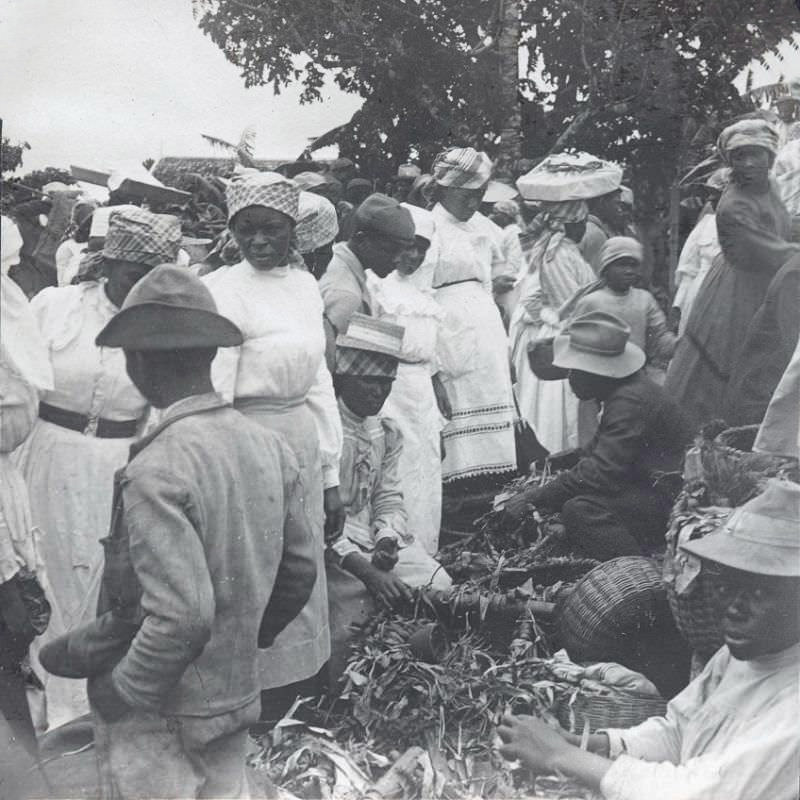
Sugar was also a local commodity, traded in markets across the island. In Mandeville, in the central highlands of Jamaica, locals bartered for sugar in open-air markets. This street-level trade existed alongside the large-scale export operations that sent refined sugar to Britain and North America.
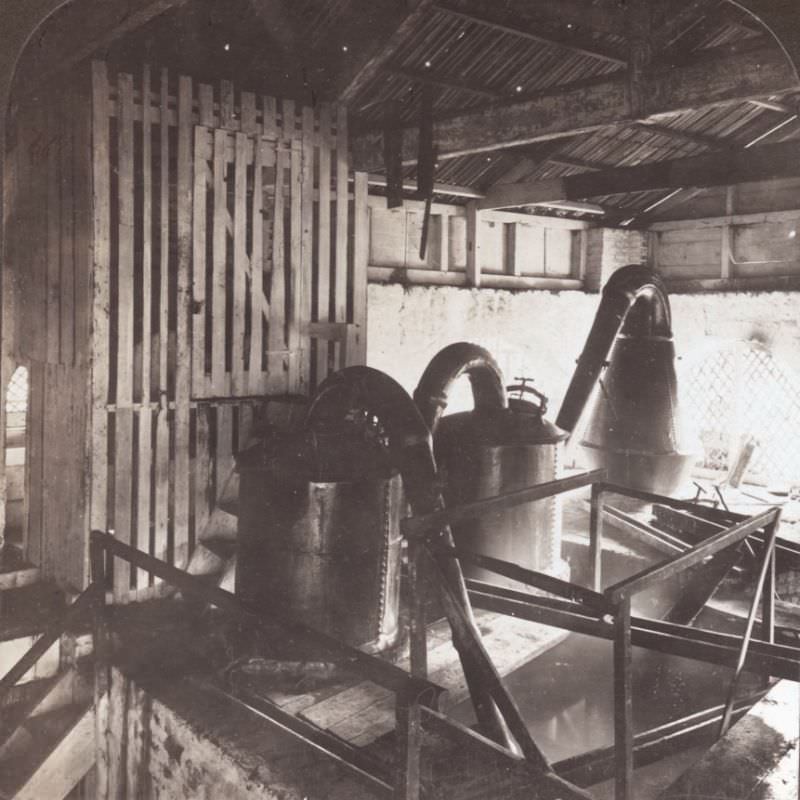
Sugar estates also produced rum as a byproduct of the refining process. Molasses left over from crystallization was fermented and distilled into rum using stills and retort vessels. Jamaica became famous for its bold, full-bodied rum, and by the early twentieth century, rum production was a significant revenue stream for many estates operating alongside their sugar output.
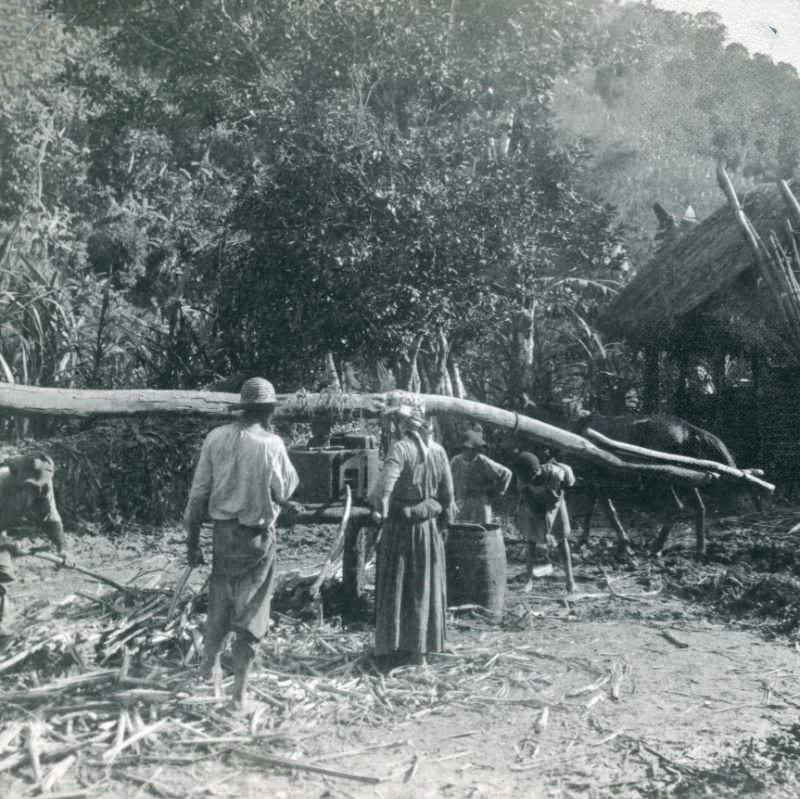
Not every operation near Kingston had adopted modern machinery by 1906. Some small-scale producers still relied on basic, manual grinding methods to extract juice from the cane. These rudimentary setups, photographed near Kingston, contrast sharply with the industrial equipment documented at the Mona Plantation just a few years earlier — showing the wide gap between large estates and smaller rural operations still working with older tools.