
In the early 1930s, Studebaker did something no other automaker had ever attempted. They built the largest car in the world — not to drive, but to stun the public and sell the Studebaker name. The result was a colossal replica of their 1931 President Roadster, a promotional marvel that turned heads across the entire country.
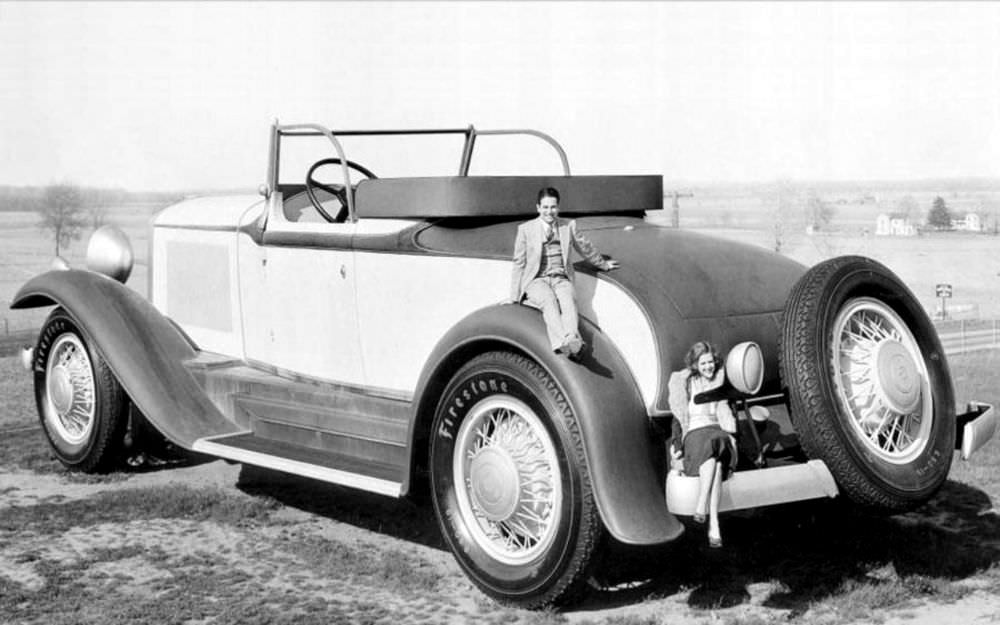
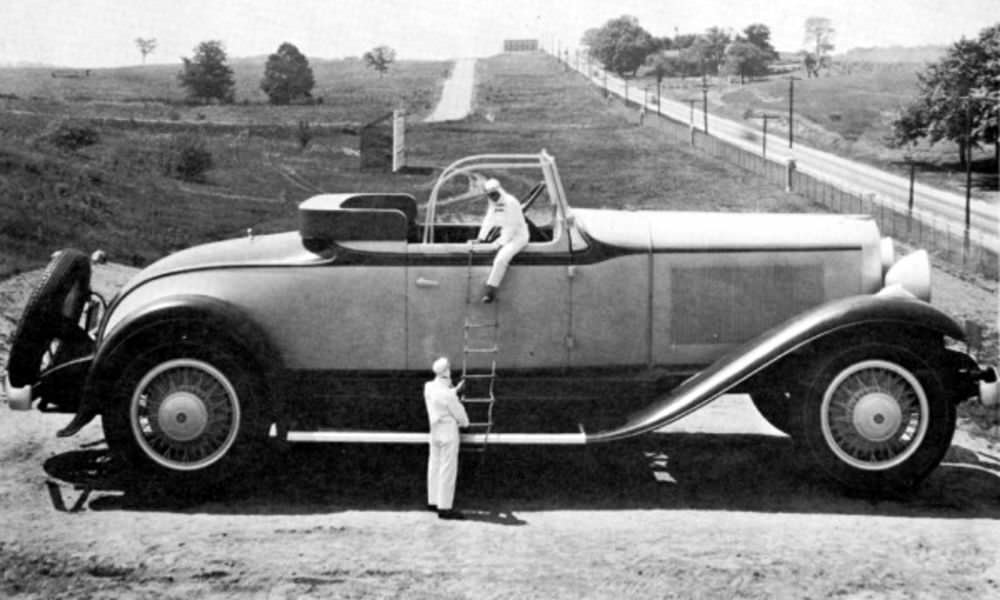
The giant model was built at Studebaker’s Experimental Body Department in South Bend, Indiana. Sixty workers spent more than three months constructing it. The project was led by Paul Auman and his team of craftsmen, who engineered every oversized detail from the ground up. When finished, the car stretched 41 feet long and stood 13½ feet tall. Its width measured 15 feet, and its wheelbase was an astonishing 325 inches. The whole thing weighed 5½ tons.
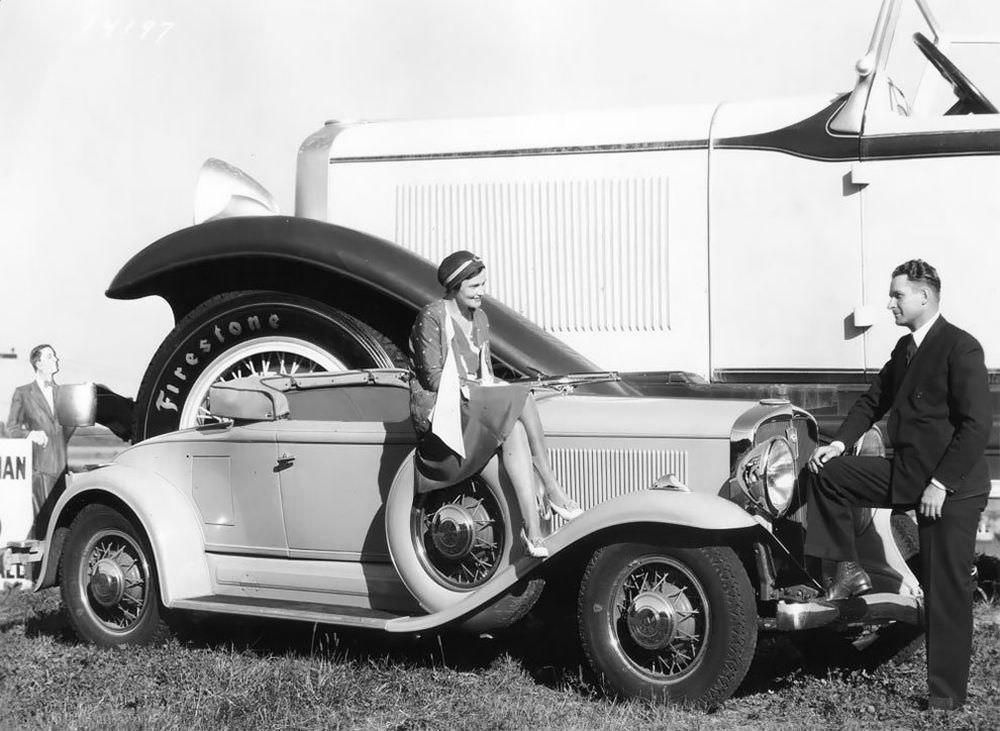
The wire wheels alone were engineering feats in their own right. Each one measured 6 feet and 8 inches in diameter and weighed 600 pounds. Firestone Tire Company supplied the massive tires, crafting them to replicate the original Studebaker tire design at a dramatically larger scale. The wooden model was then shaped and assembled on the test track at the Indiana Proving Ground.
Studebaker painted the model in two shades of green, a fashionable color choice for the era. The finish gave the giant replica a polished, showroom-ready look despite its outrageous size. Every visible detail was designed to mirror the real President Roadster as closely as possible, making the scale all the more jaw-dropping when people stood beside it.
Studebaker wasted no time putting the giant to work as a marketing tool. A nine-minute promotional film was produced to showcase the model, and director Alf Goulding included footage of it in his film Wild Flowers as a filler segment. That footage was then screened extensively in RKO theaters from coast to coast, generating enormous publicity among moviegoing audiences nationwide.
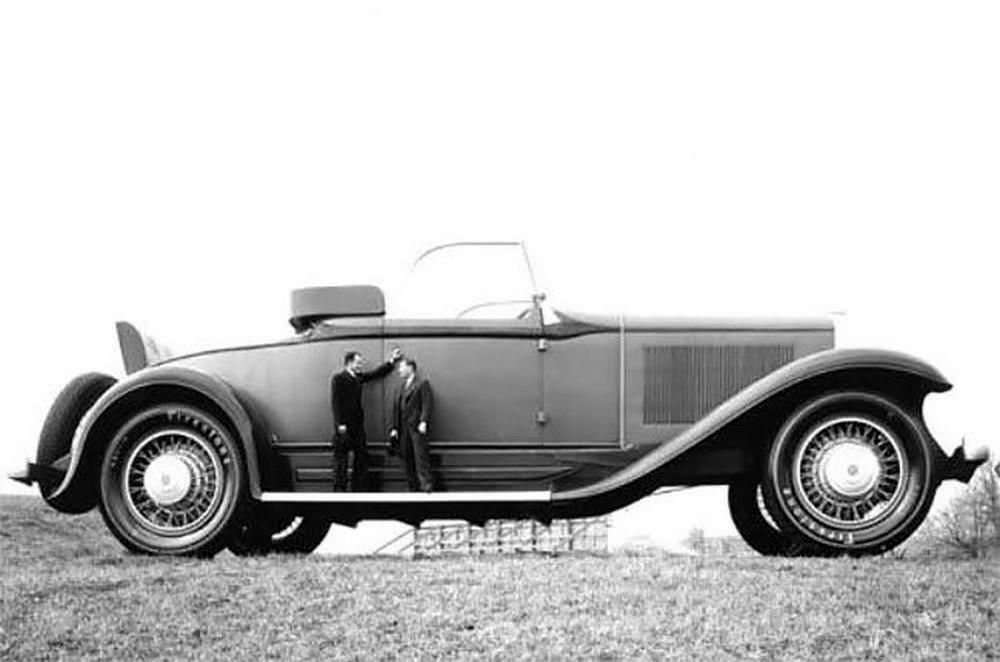
Beyond the film, Studebaker used the model as a live attraction. Dealers and salespeople posed for photographs in front of it, creating a steady stream of publicity shots. The sheer scale of the car made those images immediately attention-grabbing. People driving past it on a lot or at an event couldn’t help but stop and stare.
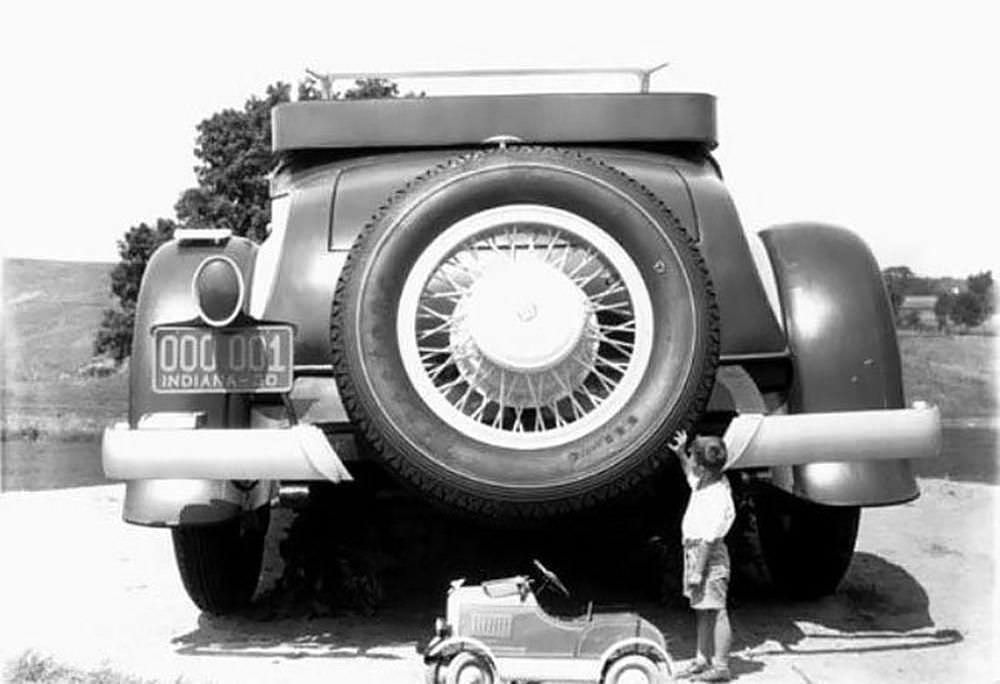
For several years, the giant Studebaker served as one of the most recognizable promotional symbols in American automotive advertising. Hundreds of people and public events were photographed alongside it. The model drew crowds wherever it appeared and kept the Studebaker name in public conversation throughout the early 1930s.
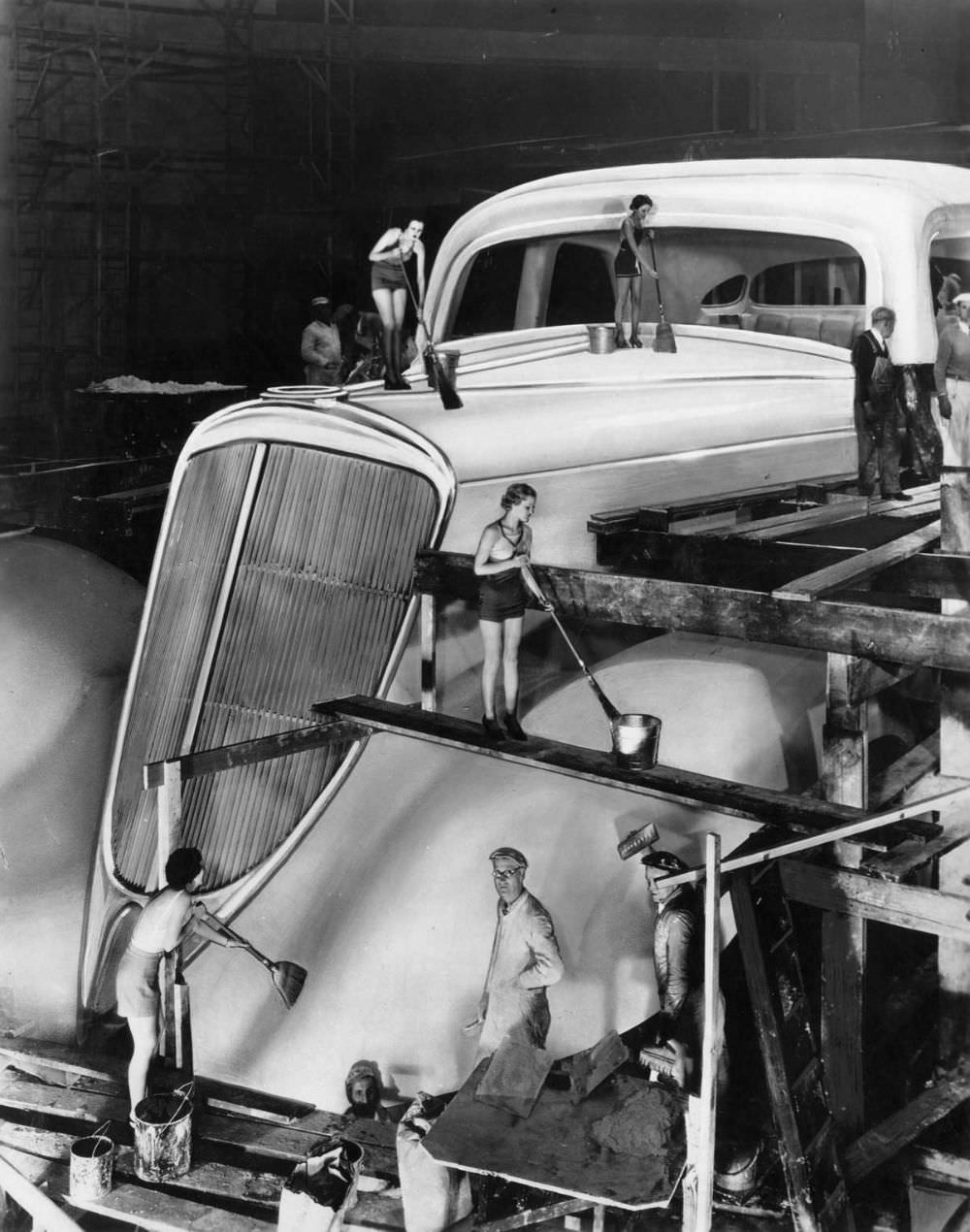
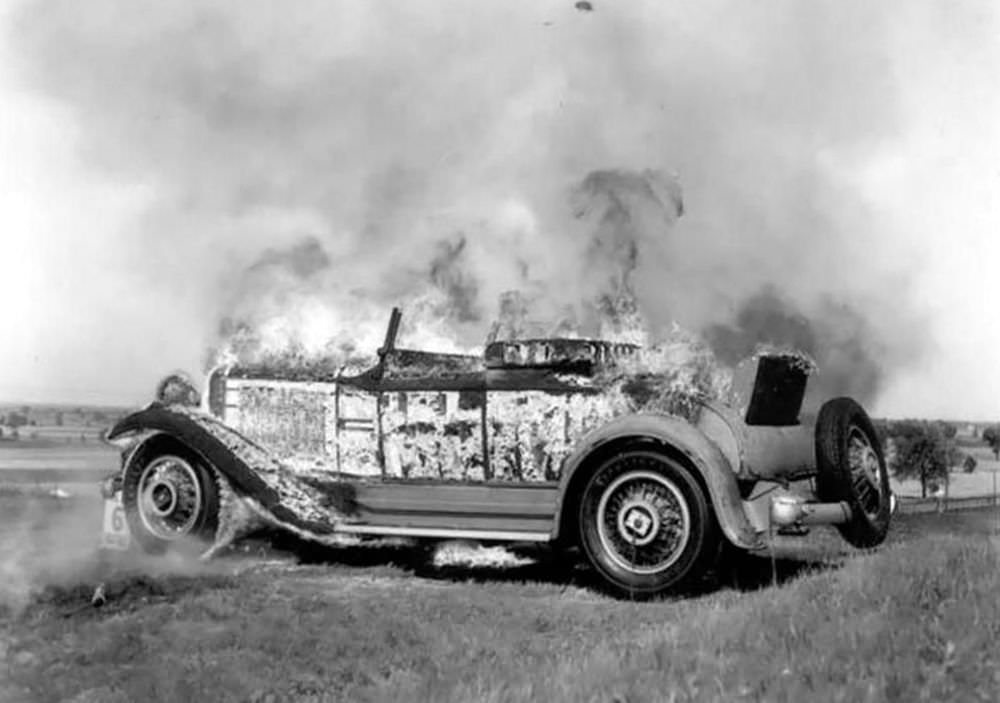
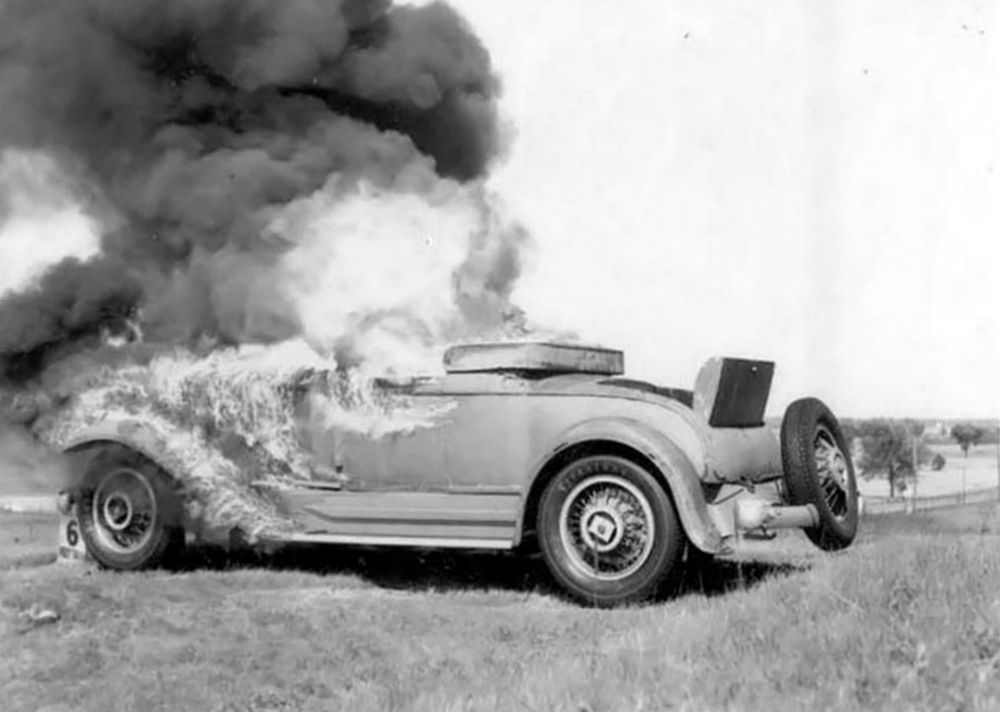
By 1934, exposure to harsh weather had taken a serious toll on the wooden structure. The model deteriorated significantly, but no one at Studebaker was eager to let it go. It remained standing for two more years before company officials made the final call. In 1936, they determined that the giant model had served its purpose as an advertising symbol and the time had come to destroy it.
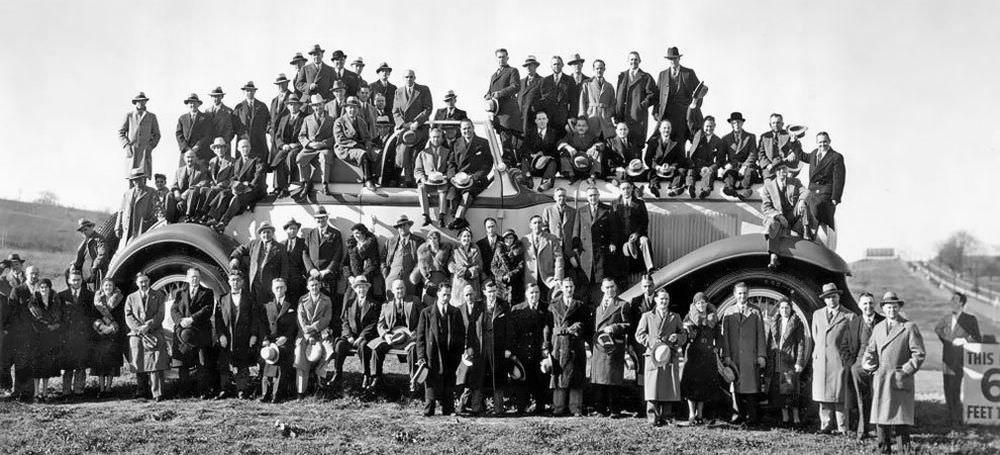
On May 17, 1936, former Studebaker President Paul G. Hoffman and company Secretary Jesse Meyer soaked the structure in oil and set it alight. The entire model burned to nothing within 30 minutes. Only the wheel covers survived. They had been part of the original Studebaker and were saved by Lawrence White, whose father served as superintendent of the proving ground. White later lent them to the Studebaker Museum, where they remain a physical link to the giant’s short but remarkable life.
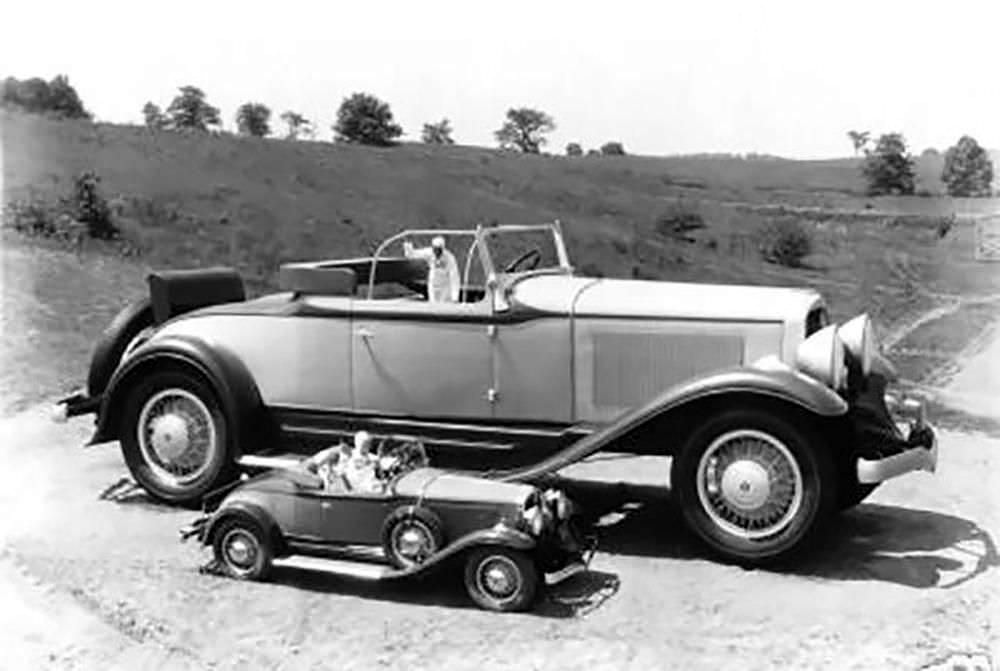
The photos below offer a rare look at the giant 1931 President Roadster throughout its five-year run. From its construction in South Bend to its final days before the fire, these images capture one of the most unusual promotional stunts in American automotive history.

#10… nooooo!