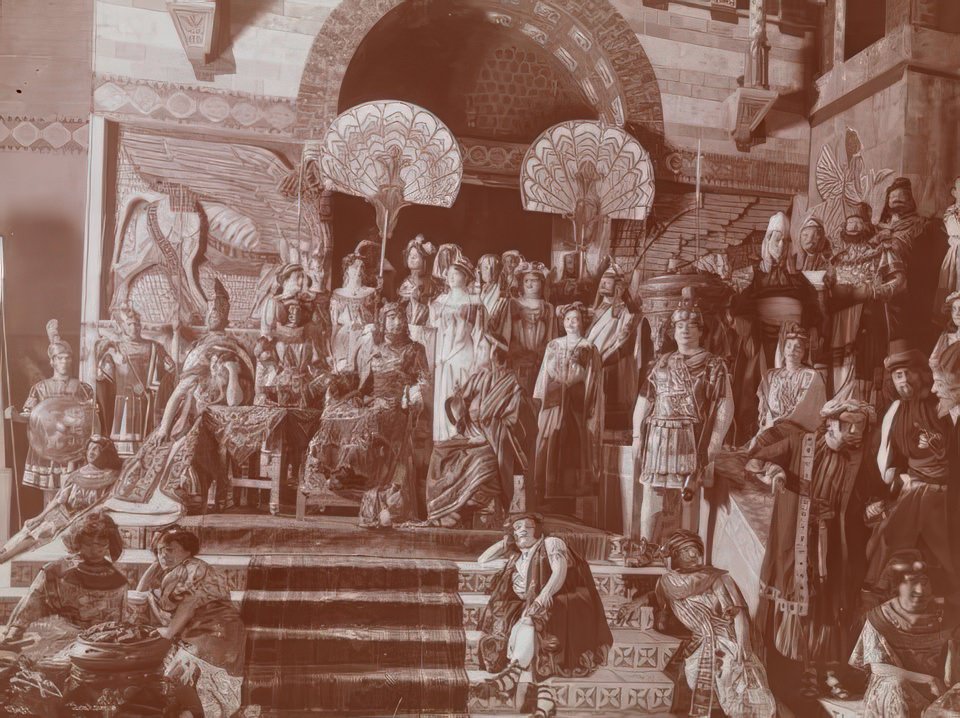
By the late 1800s, Coney Island in Brooklyn, New York, had become one of the most visited amusement destinations in the world. Surf Avenue buzzed with crowds hunting for thrills, novelty, and escape from everyday life. Rides, games, and sideshows competed loudly for every passerby’s attention. Among the most talked-about attractions on that strip was a themed environment called “The Streets of Cairo.”
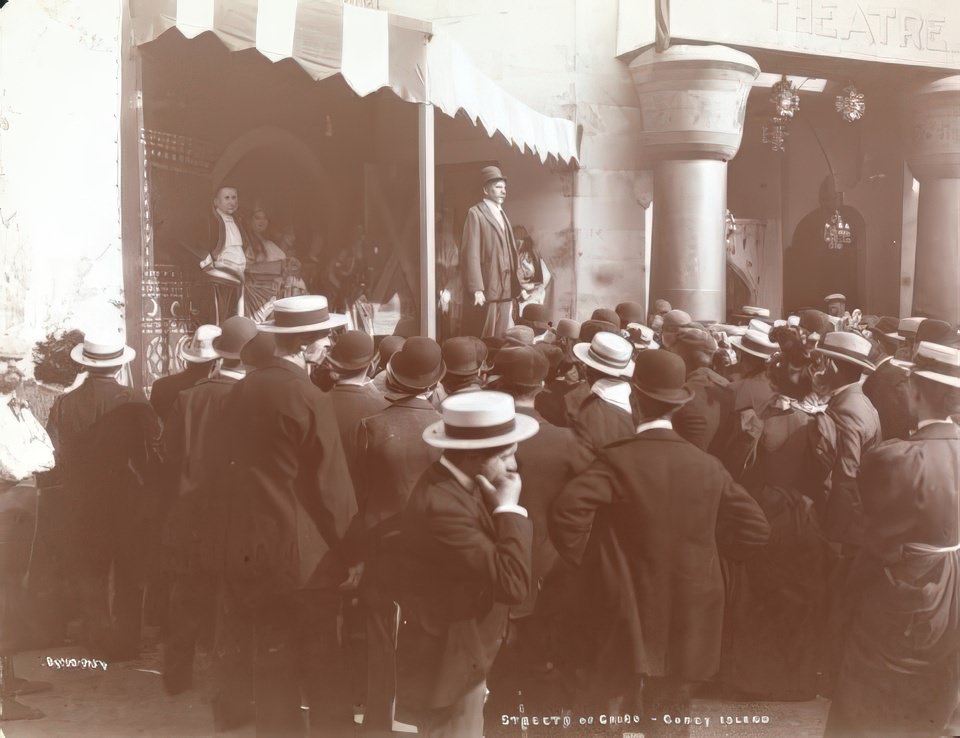
The concept didn’t spring up out of nowhere. It was borrowed directly from the 1893 World’s Columbian Exposition in Chicago, where an Algerian Village drew massive crowds curious about foreign cultures. That fair proved there was a strong public appetite for these staged “exotic” environments. Coney Island operators took notice and built their own version along Surf Avenue, complete with architectural facades meant to suggest the Middle East or North Africa—pointed arches, decorative patterns, and mock minarets framing the entrance.
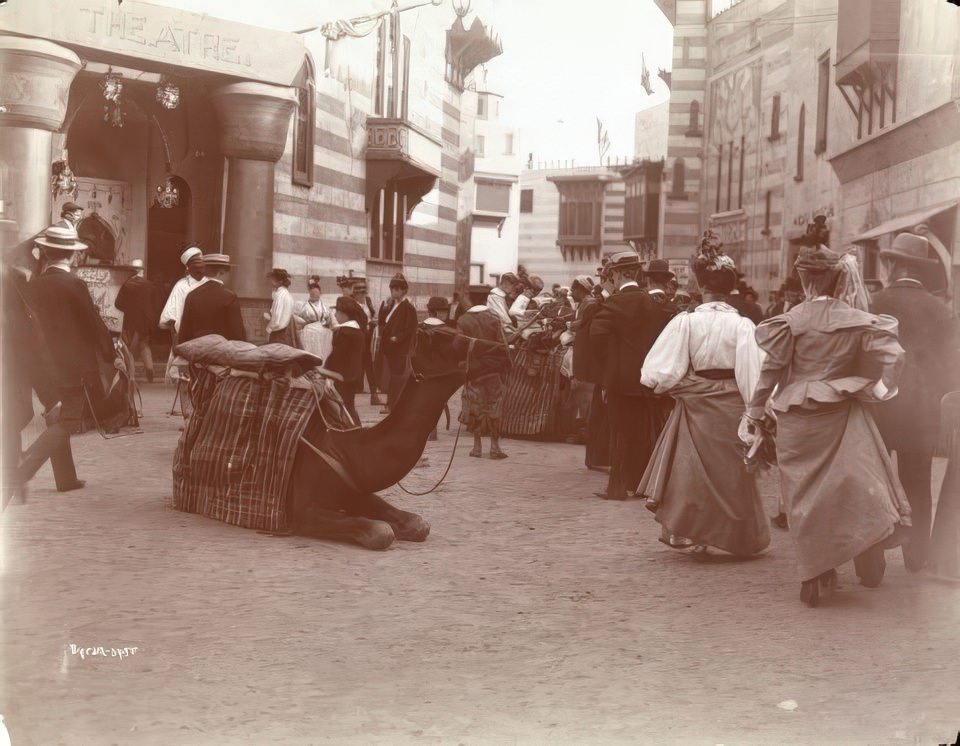
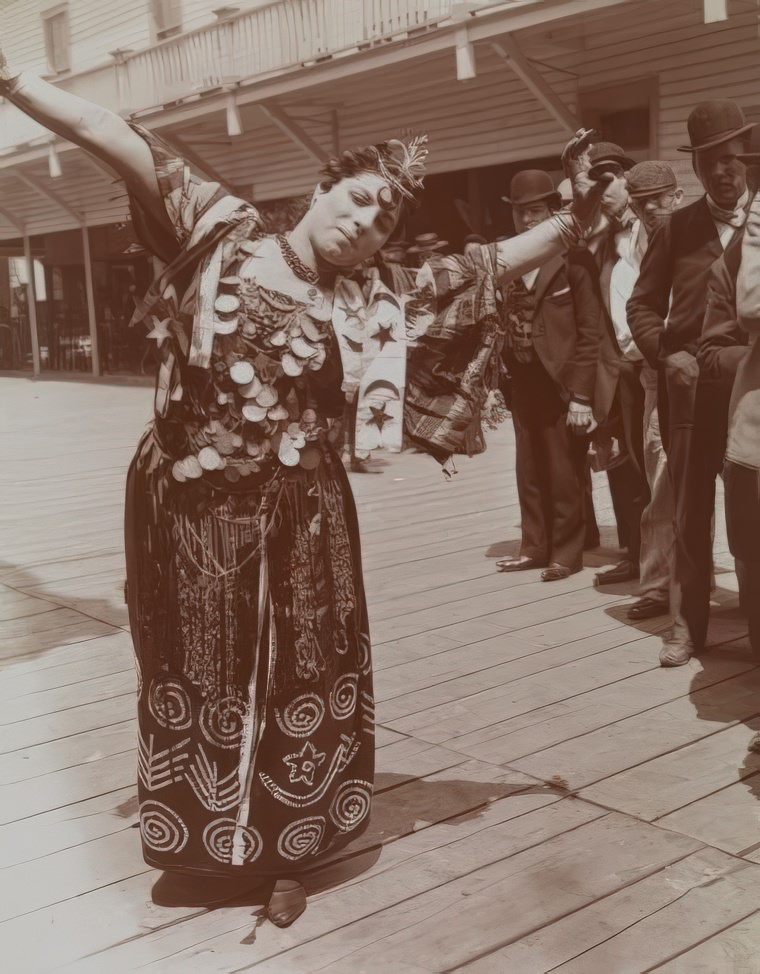
Once inside, visitors encountered a carefully assembled spectacle. The undulating melody now universally known as the “snake charmer” tune played throughout, cementing the musical phrase’s association with staged Middle Eastern exoticism. Belly dancers were the headline act, their performances considered daring and scandalous by audiences of the era.
Snake charmers were another fixture, sitting cross-legged while playing flutes over live cobras. The combination of music, movement, and perceived danger made for a powerful draw.
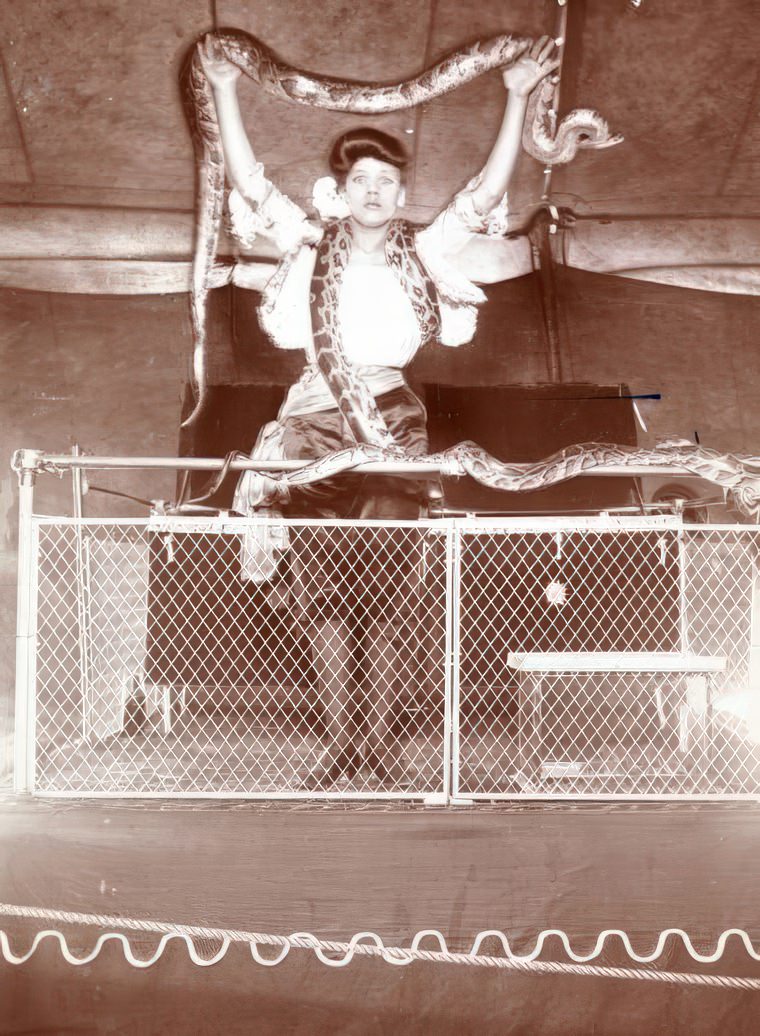
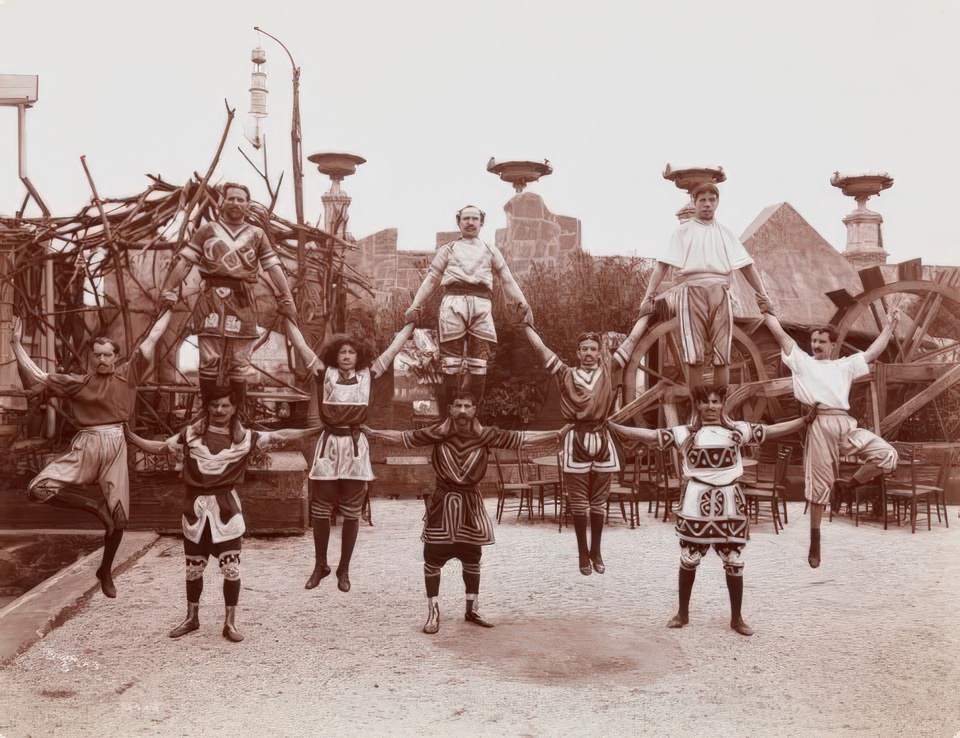
The show packed in additional performers to fill out the scene. Acrobats, costumed vendors, and musicians playing instruments intended to sound foreign all contributed to the illusion of a bustling foreign street. Stage magic acts, including levitation illusions, added another layer of spectacle.
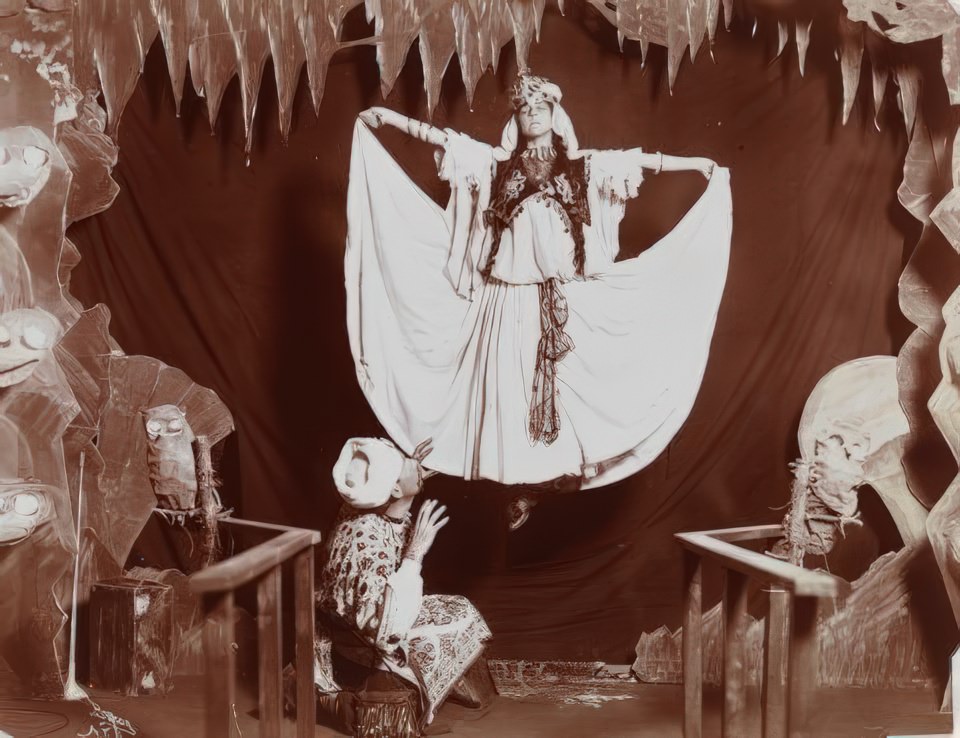
Dancers posed and performed both inside the theater and in the open areas between shows, pulling in foot traffic from Surf Avenue. The sideshow theaters themselves were small but lively, with seated audiences watching acts up close.
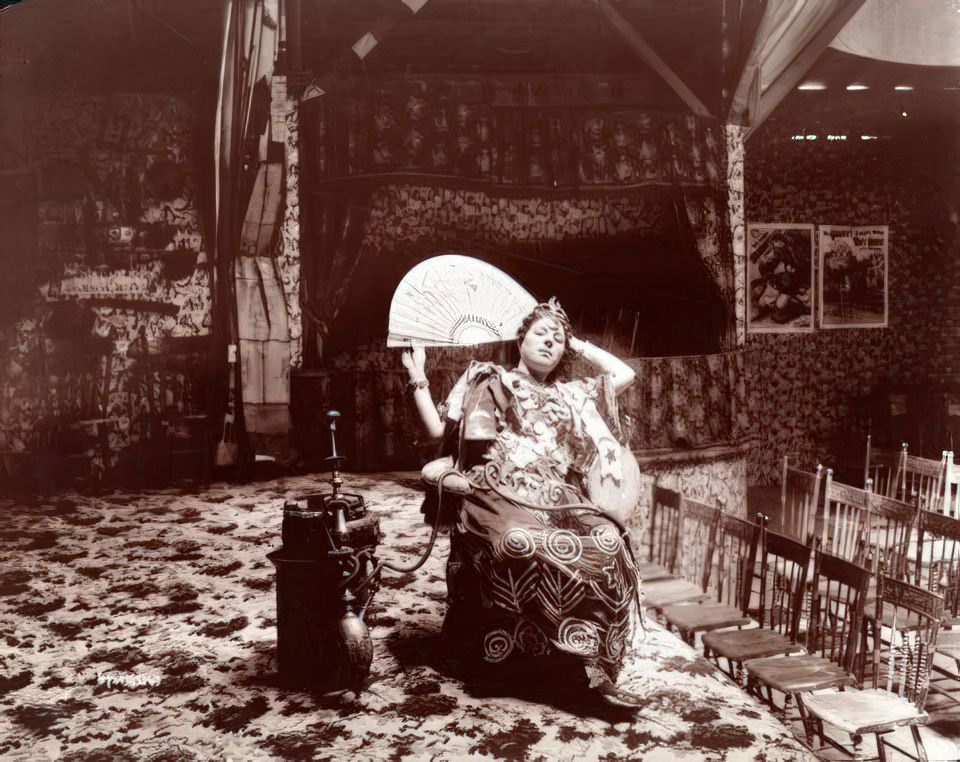
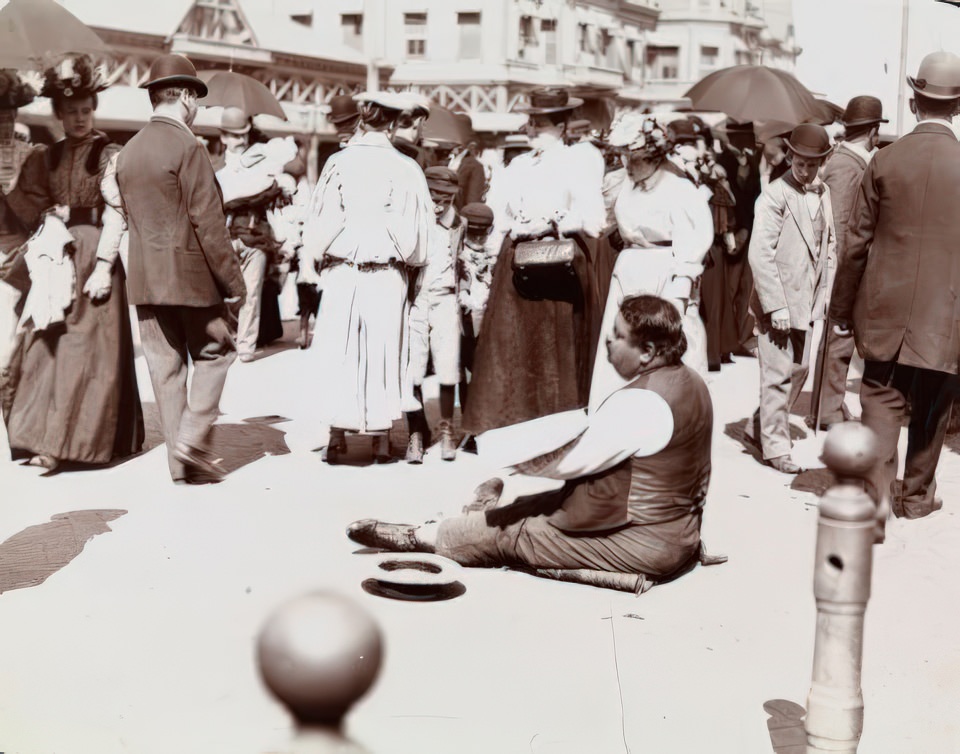
Outside the shows, the themed street scene included beggars and costumed characters mixing with the paying crowd, deepening the sense of immersion. The atmosphere was designed at every level to make visitors feel transported far from Brooklyn.
The appetite for this kind of “Eastern” performance extended well beyond Coney Island. Acrobatic troupes billed as Arabian performers appeared on rooftops and stages across New York City during the same period, reflecting just how broadly the craze had spread.
High culture caught the wave too. The 1907 Metropolitan Opera production of Oscar Wilde’s “Salome,” featuring a famously provocative dance sequence, tapped the same public fascination with the exotic Middle East that Coney Island’s sideshow operators had been profiting from for over a decade.