Most people picture the Statue of Liberty as a permanent fixture of New York Harbor, but she was born thousands of miles away in Paris, France. Long before she greeted ships crossing the Atlantic, she was hammered, shaped, and assembled in a busy Parisian workshop over the course of nearly a decade. Her journey from a French sculptor’s vision to one of the most recognized structures on earth is a story of engineering ambition, political friendship, and extraordinary craftsmanship.
The idea came from Édouard de Laboulaye, a French historian and political thinker, shortly after the end of the American Civil War. He wanted to create a monument that would honor the bond between France and the United States and celebrate the shared values of liberty and democracy. The concept found a willing champion in sculptor Frédéric Auguste Bartholdi, who threw himself into designing the statue that would officially be called “Liberty Enlightening the World.” Standing over 300 feet tall when mounted on her pedestal, she would be one of the largest statues ever built at that time.
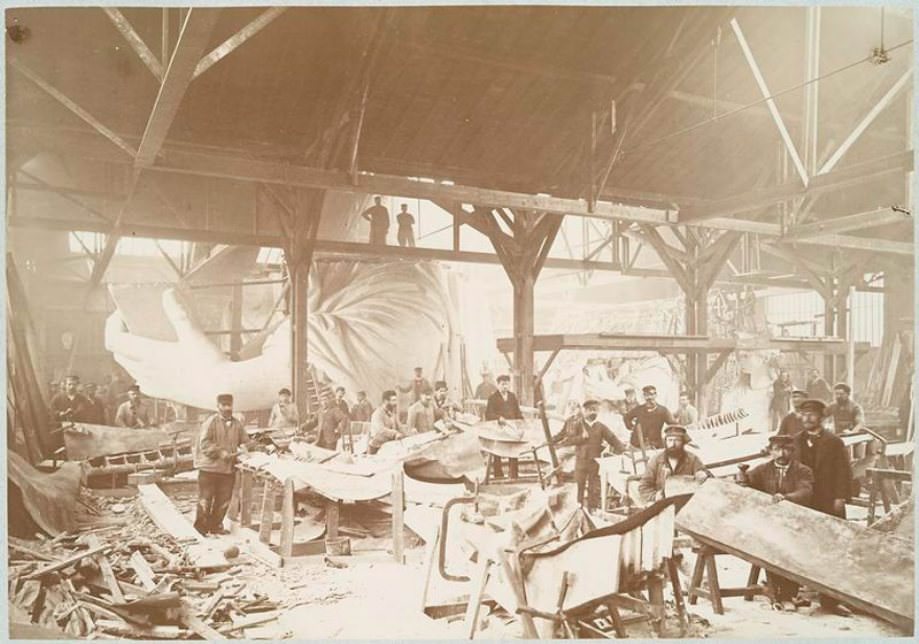
Bartholdi’s team began the physical work in a workshop in Paris, shaping the copper sheets that would form the statue’s outer skin. The technique they used was called repoussé — workers hammered the copper from the inside out, pushing the metal into the precise curves and textures Bartholdi required. Every fold in Liberty’s robe, every feature on her face, and every ray of her crown was formed by hand through this slow, demanding process.
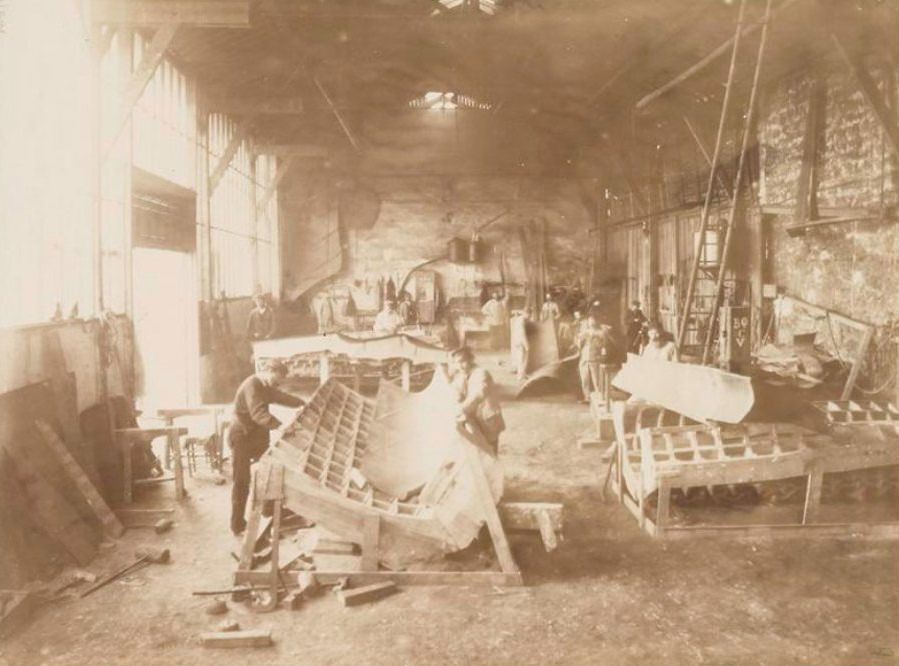
The workshop itself was a remarkable sight. Scale models of the statue lined the space, giving craftsmen a constant reference for the proportions they needed to achieve. Workers moved between raw copper sheets and finished sections, the noise of hammers filling the air as the statue slowly took form around them.
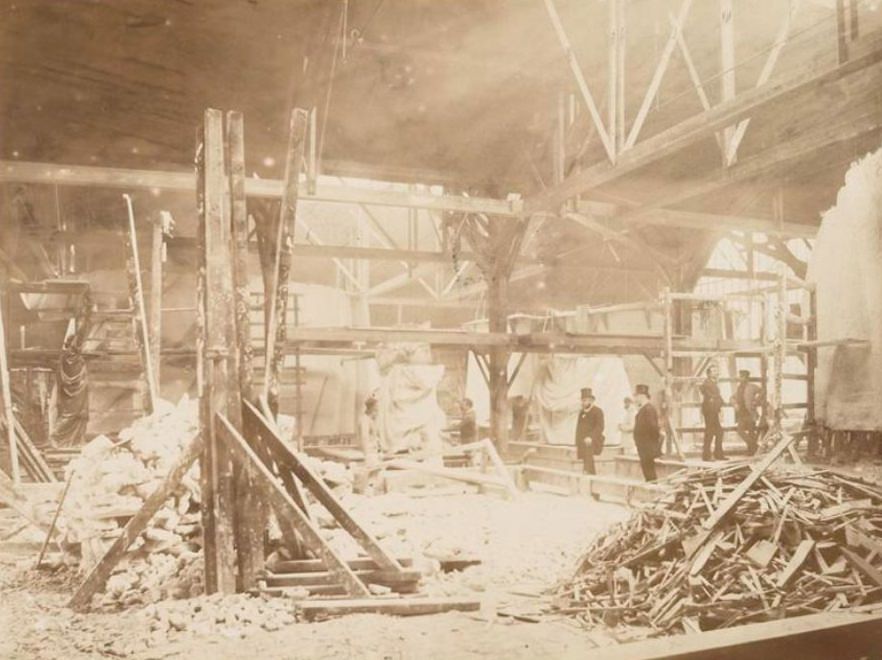
The labor was intense and ongoing. Teams of craftsmen worked at every stage of the construction simultaneously — some shaping new sections while others refined pieces already formed. The scale of the operation required careful organization, as each copper segment had to align precisely with the next.
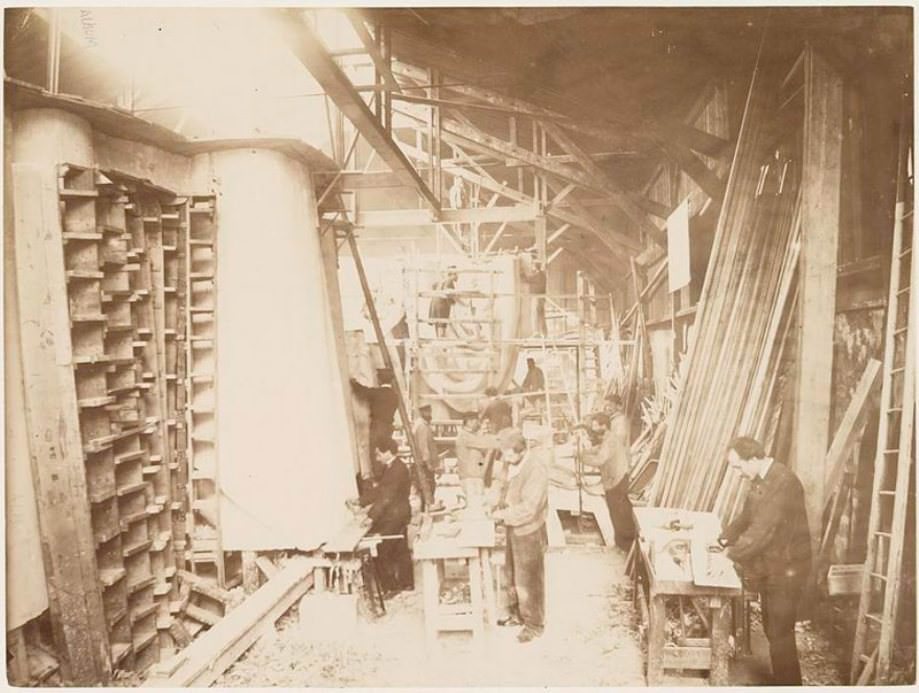
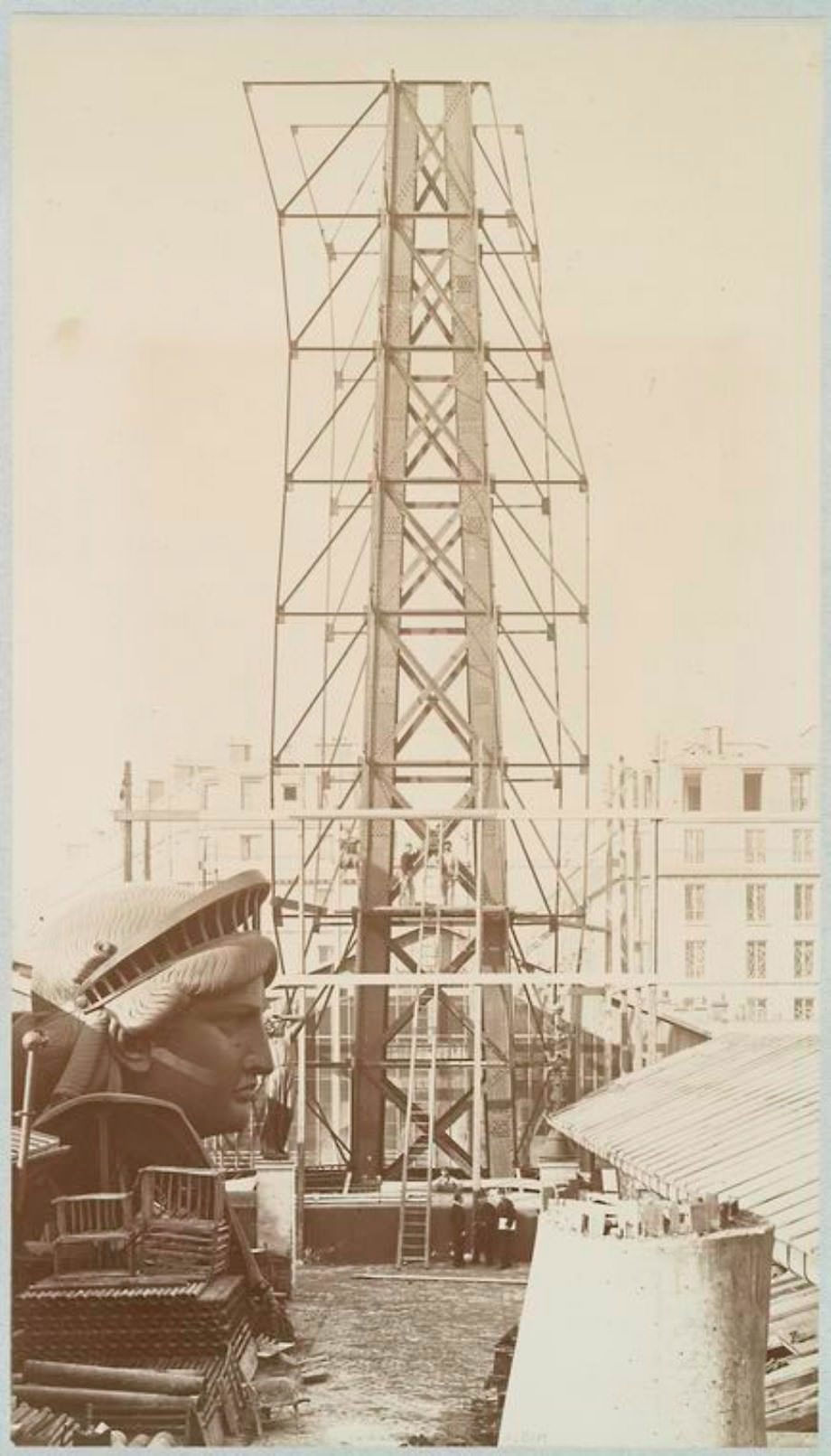
While Bartholdi handled the exterior, the internal structure required a different kind of genius. Gustave Eiffel — the same engineer who would later design the Eiffel Tower — was brought in to build the iron framework that would hold the copper shell in place. Eiffel designed a flexible pylon system that allowed the outer copper skin to move slightly in strong winds without cracking or tearing away from the frame. It was a forward-thinking solution that gave the statue the structural resilience it needed to survive decades of harsh weather on an exposed island. Constructing this skeleton was its own complex task, and the work on the arm and hand alone illustrated just how detailed the internal engineering had to be.
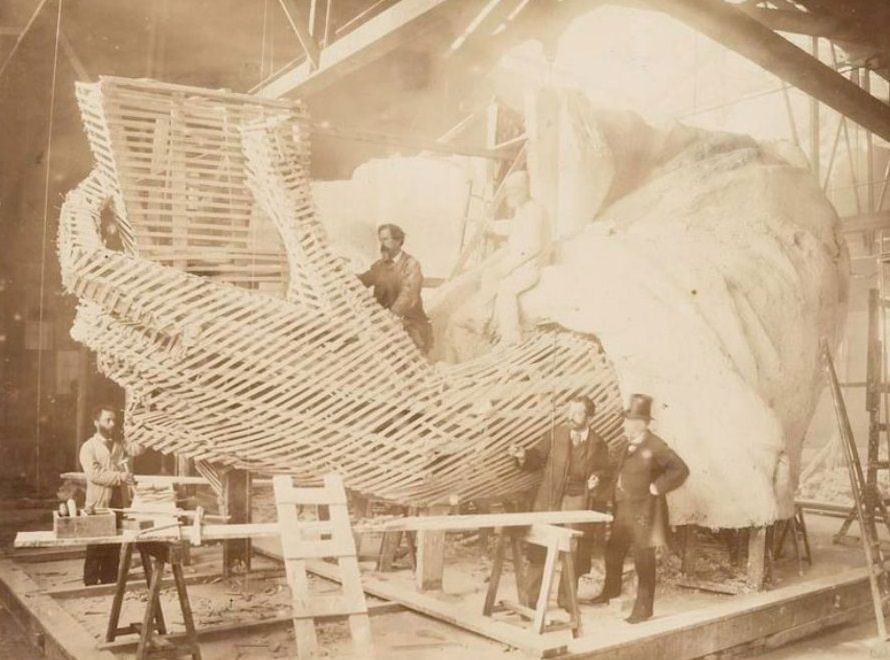
Back on the workshop floor, the copper work continued in parallel with the structural engineering. The sheer number of individual sheets that had to be shaped, fitted, and finished meant that the hammering never really stopped. Sections of the statue that appear smooth and seamless from a distance were the product of countless hours of careful hand work up close.
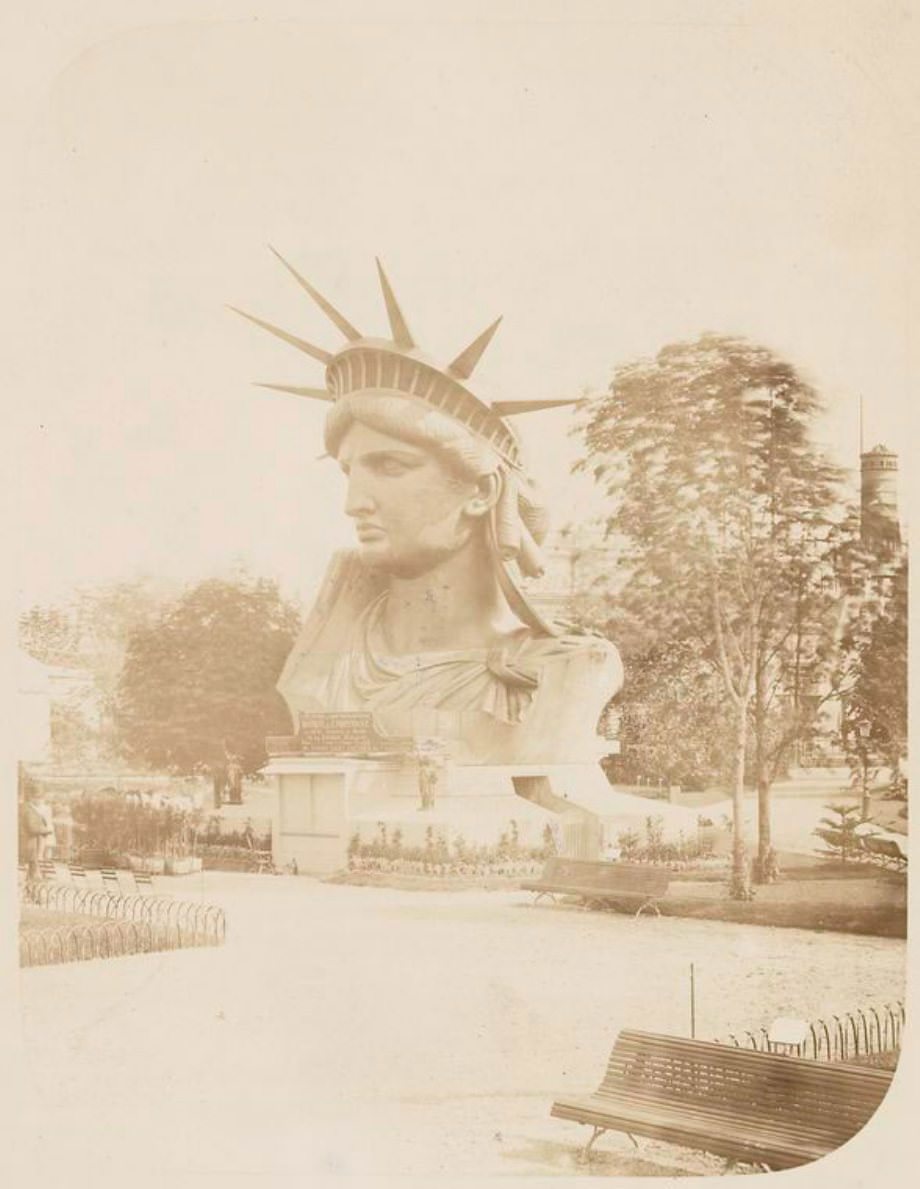
As sections of the statue were completed, public interest in Paris grew steadily. The statue’s head was finished early enough to be put on display at the 1878 Paris World’s Fair, where crowds gathered around it in a public park. For many Parisians, this was their first real sense of the enormous scale Bartholdi was working at — the head alone dwarfed the people standing beside it.
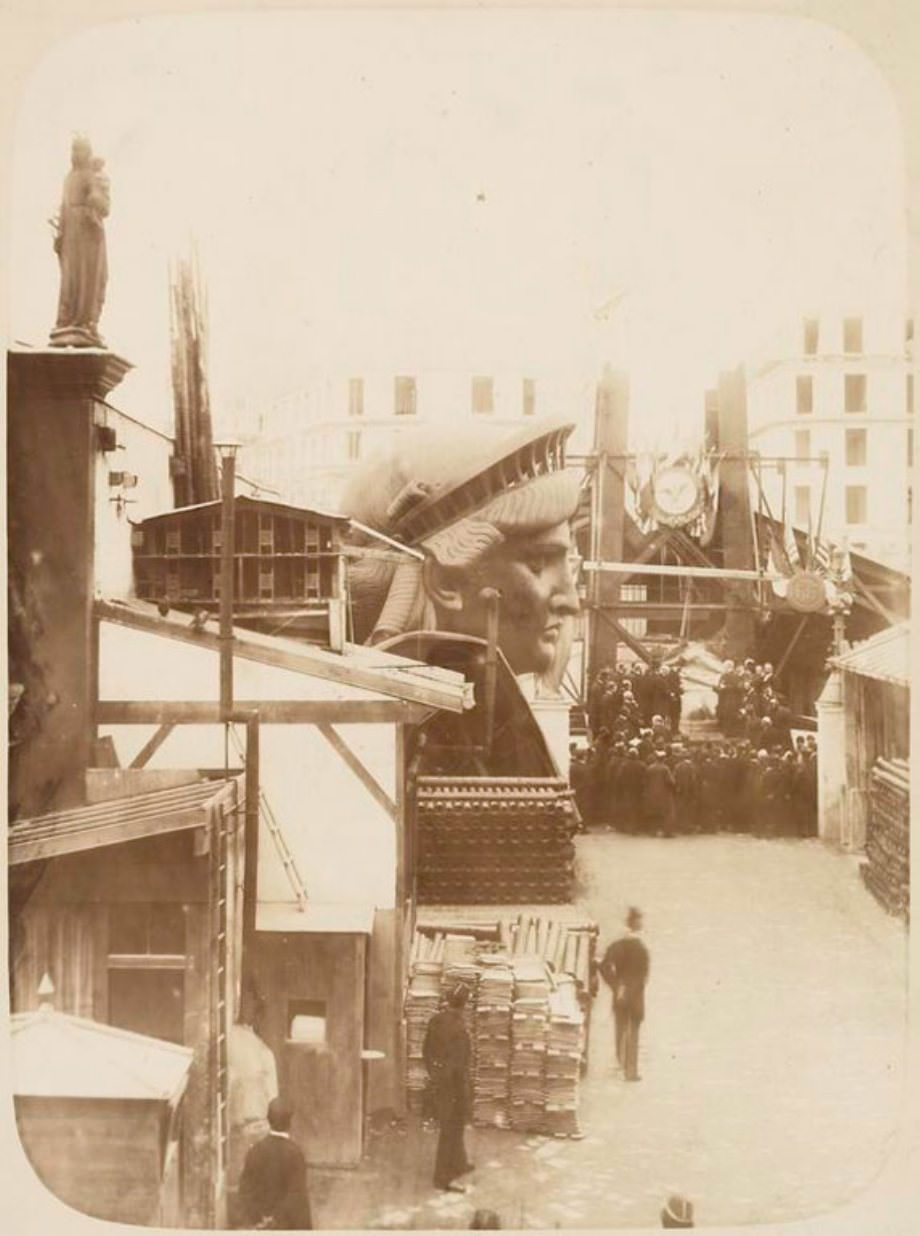
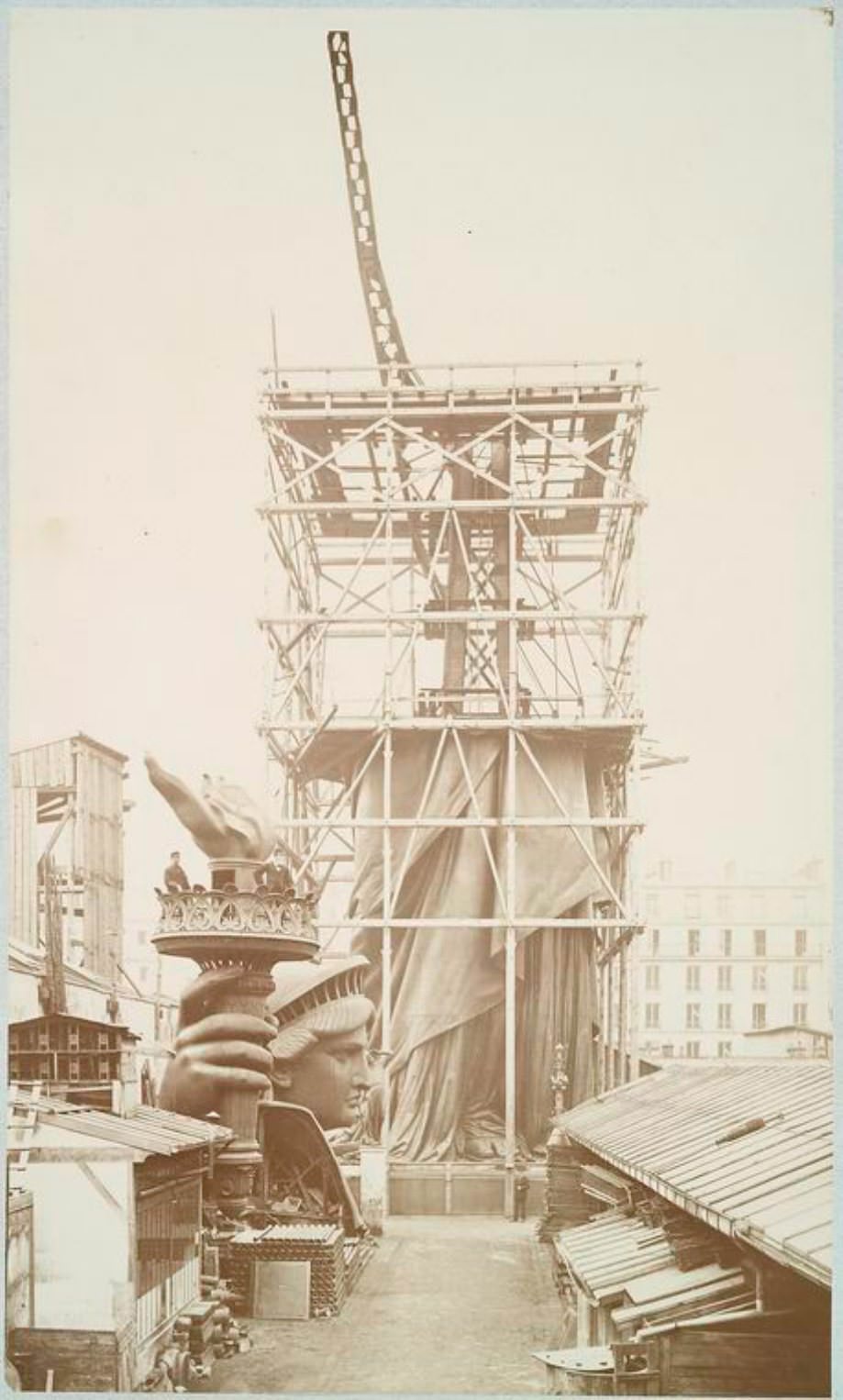
The area outside the workshop told its own story. Construction materials, scaffolding, and partially completed sections filled the exterior grounds. The statue’s head sat prominently among the clutter, a finished piece waiting while the rest of the body caught up around it.
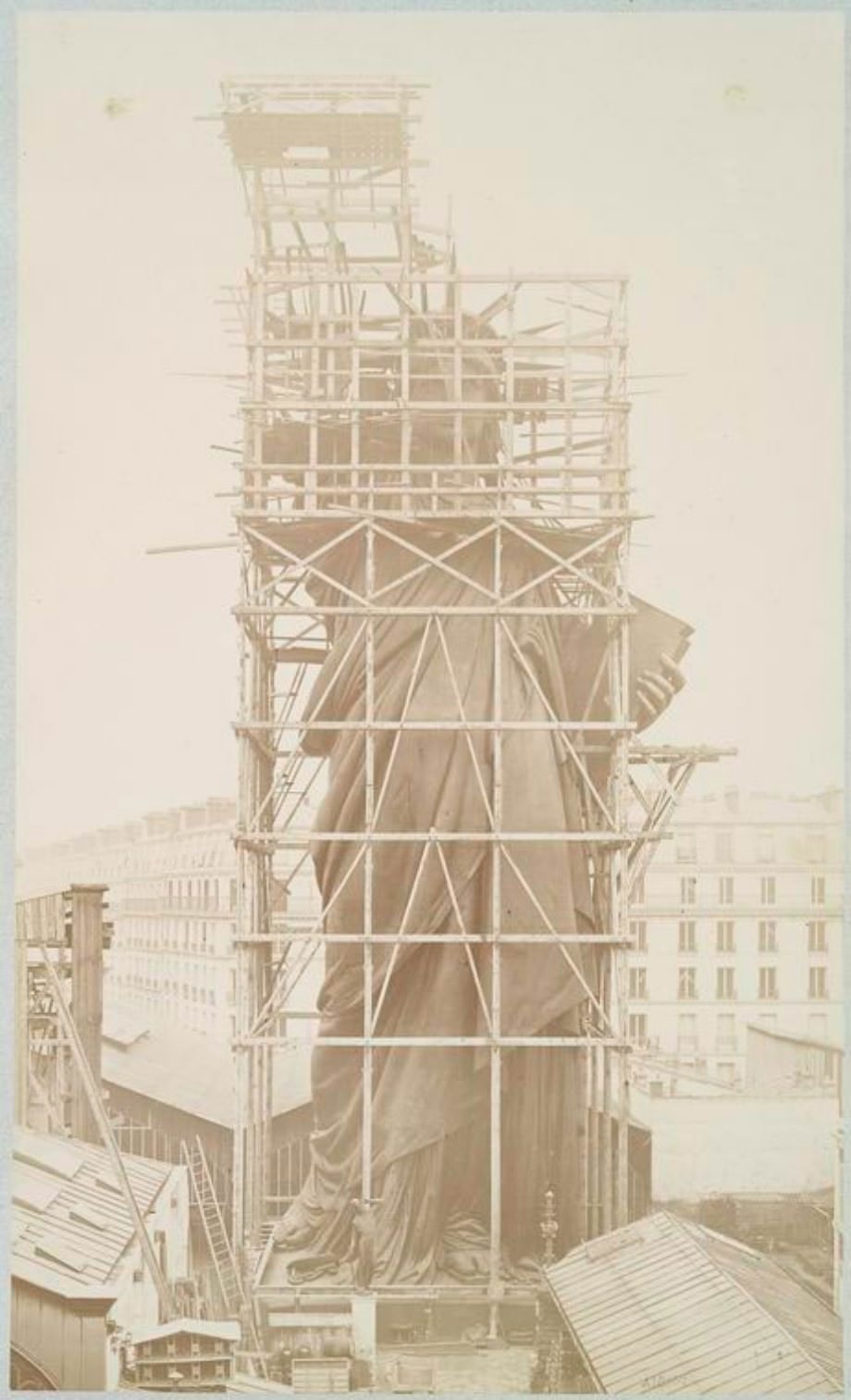
Once enough sections were ready, the team began the full assembly of the statue in Paris. Scaffolding rose high into the air to support workers as they climbed to connect the upper sections of the frame and attach the copper panels. The scaffolding itself was a significant construction project — it had to be strong enough to hold workers safely at great heights while remaining adjustable as the statue grew taller.
With the lower half of the statue standing fully assembled, the true scale of what Bartholdi had designed became undeniable. Parisians and visitors could walk up to the base and look up at what was already a towering figure, even before the upper sections were added. The completed lower body, wrapped in scaffolding, stood as proof that the decade of workshop labor had been building toward something real.
The statue was fully assembled in Paris before being taken apart again for shipping. The entire structure was broken down into 350 individual pieces, packed into 214 wooden crates, and loaded onto the French frigate Isère in 1885. The ship crossed the Atlantic over several weeks and arrived in New York Harbor to a celebration. On Bedloe’s Island — now called Liberty Island — a granite and concrete pedestal had been built to receive her. Workers reassembled the statue piece by piece, and on October 28, 1886, President Grover Cleveland dedicated her in a ceremony attended by dignitaries from both nations. The statue that had spent years rising above the rooftops of Paris now stood permanently at the entrance to New York Harbor.