Stanley Park has stood at the edge of Vancouver for well over a century, and its story stretches far beyond its trails and trees. Named after Lord Stanley — the same man the Stanley Cup honors — the park was set aside as public land in 1888. By the early 1900s, it was already drawing Vancouverites eager to explore its dense forest and rugged coastline. The paths were largely dirt, the undergrowth was thick, and the whole place had a raw, unpolished character that no manicured garden could replicate.
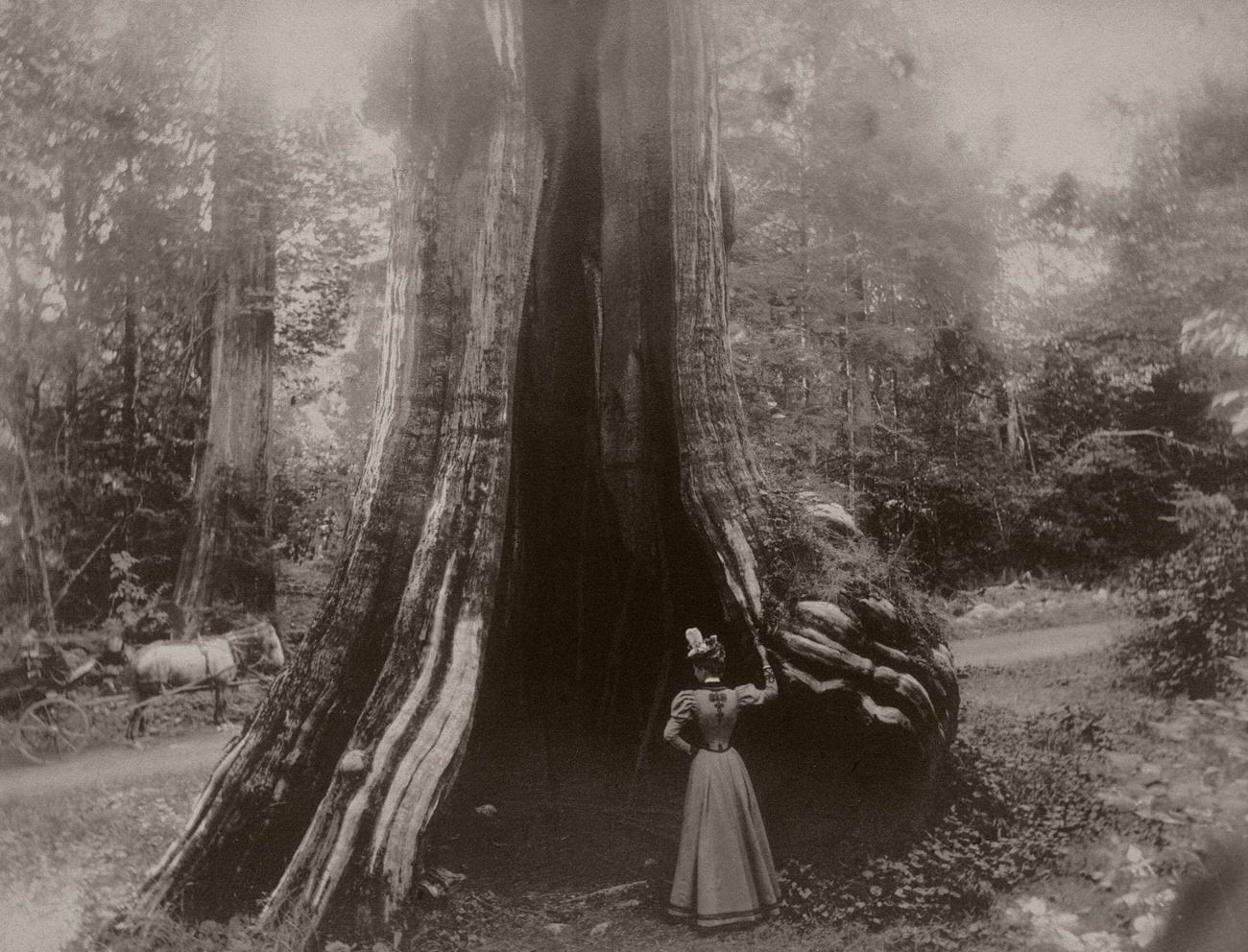
In 1902, the park’s road network was still taking shape. Visitors arrived by horse-drawn carriage and early automobiles, winding through the trees on roads that were only beginning to be established. These early drives through the park were an event in themselves — a chance to experience a wild forest just minutes from the city center.
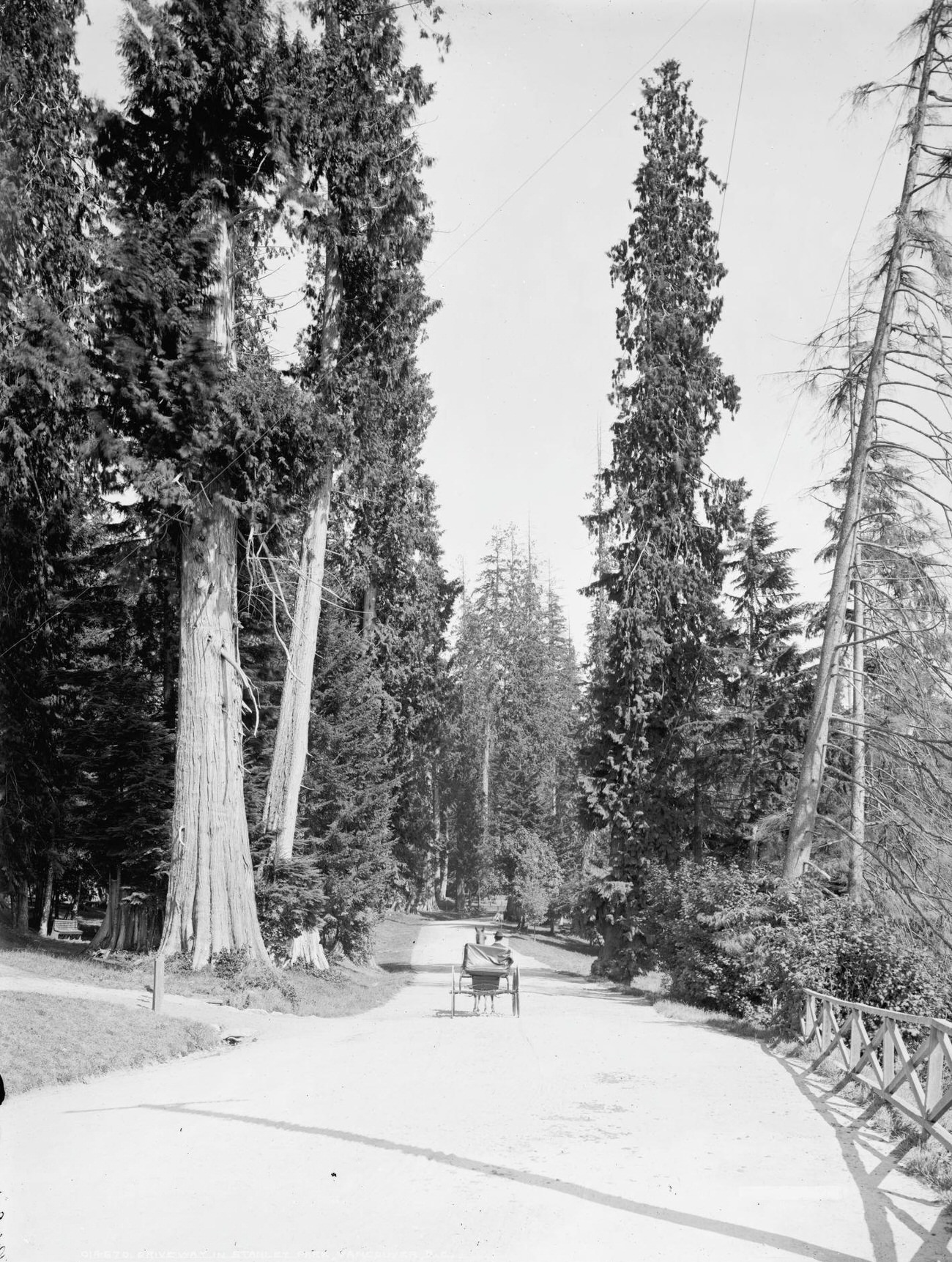
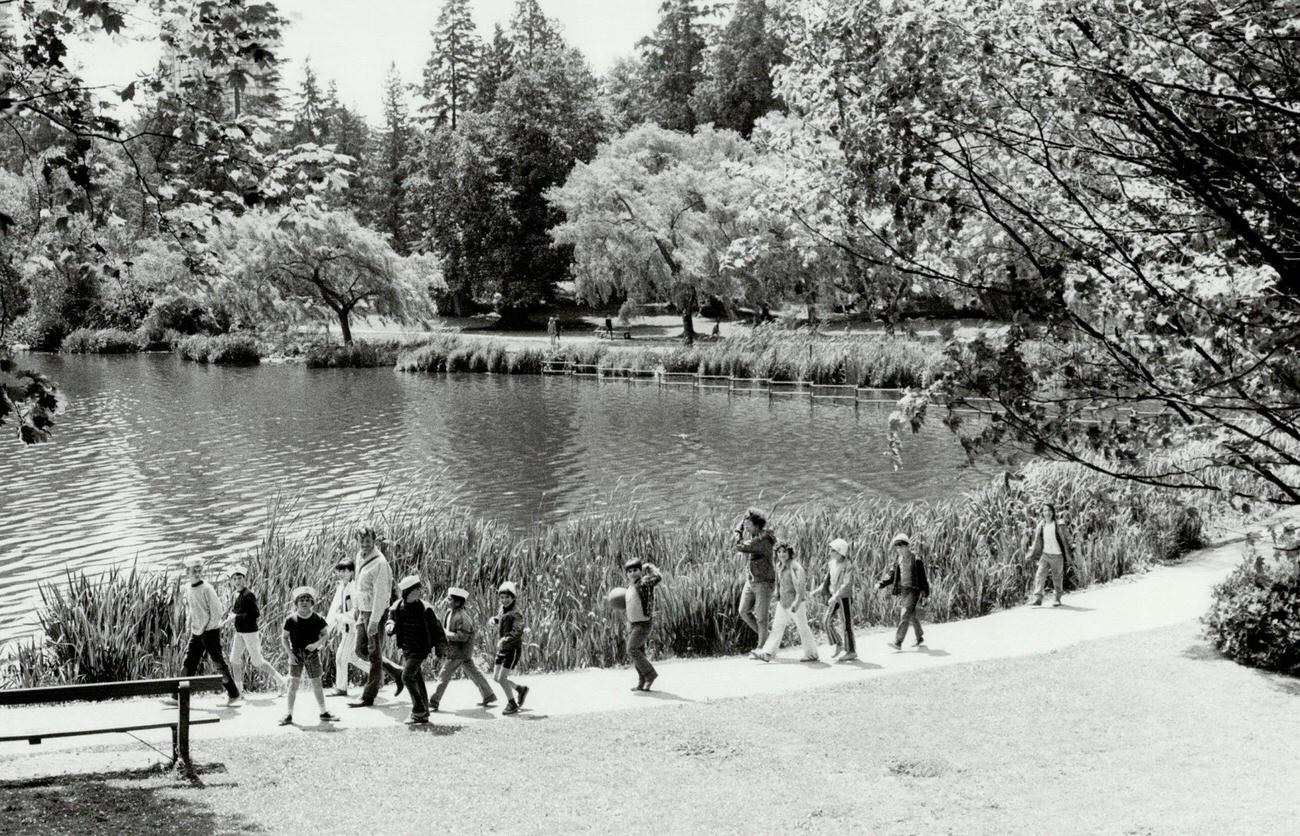
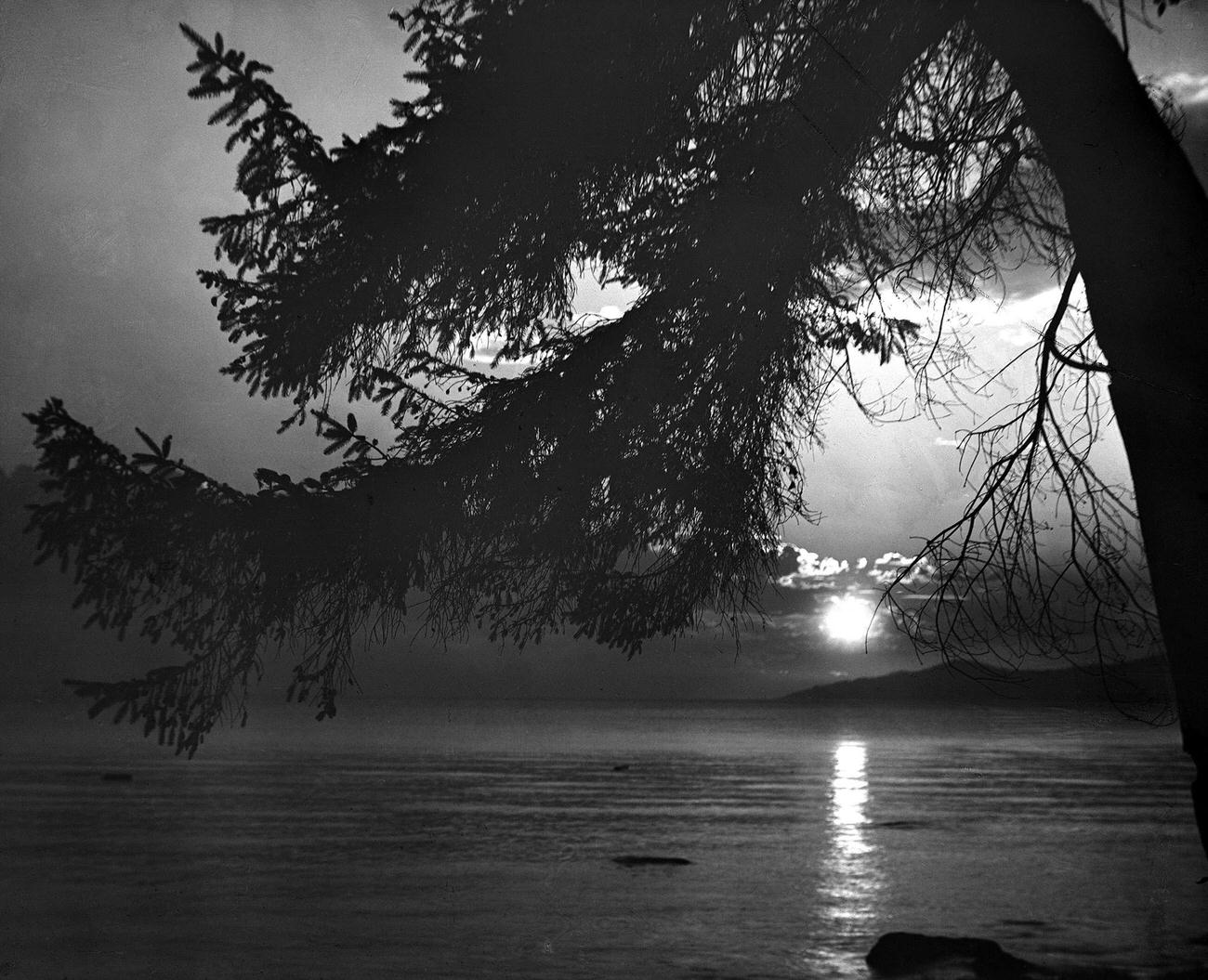
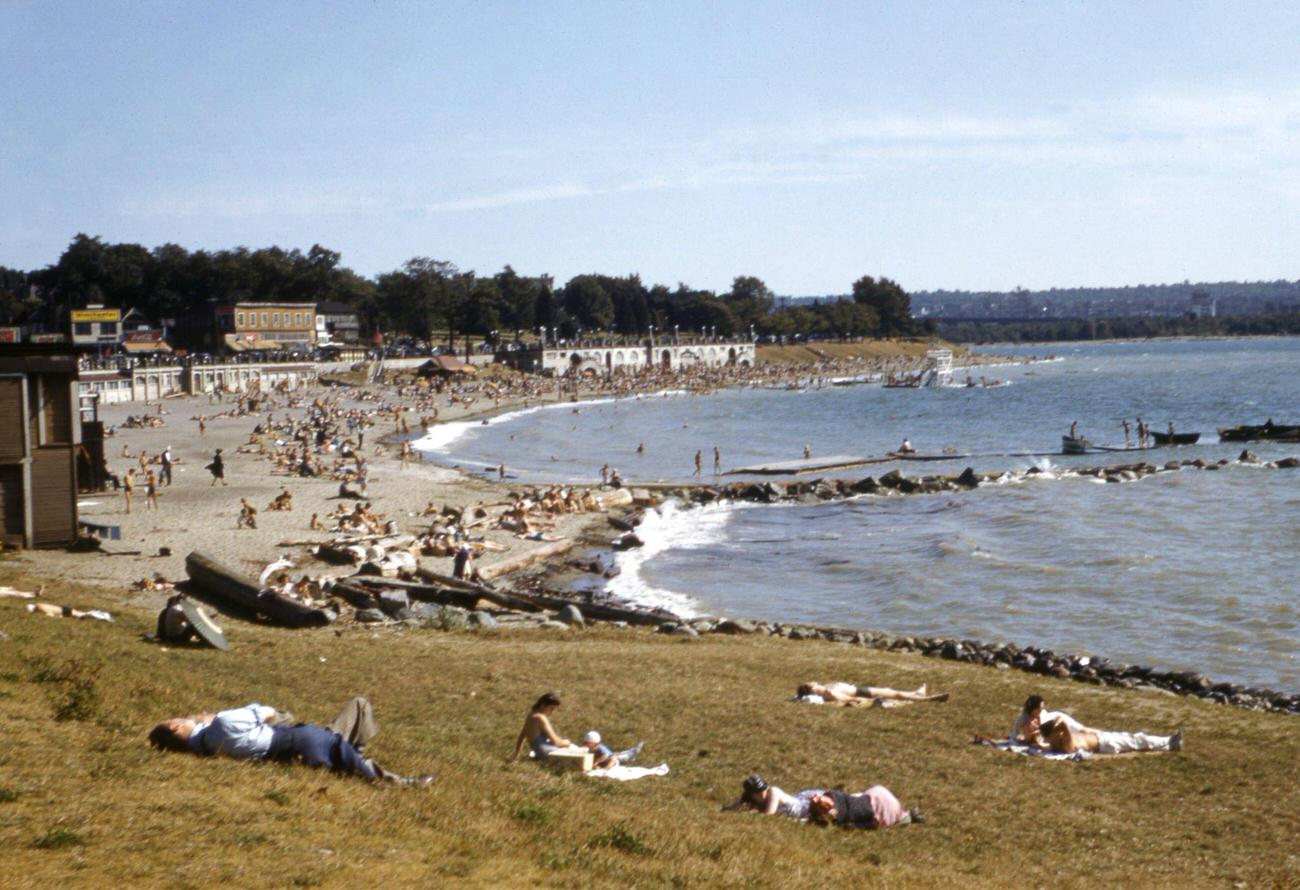
By 1912, the park was firmly established as Vancouver’s most beloved outdoor space. Photographs from that year capture Second Beach with visitors enjoying the shoreline, forest lanes dappled with light, and sweeping views across English Bay toward Point Atkinson. The seawall construction was underway, slowly stitching together the park’s perimeter along the water.
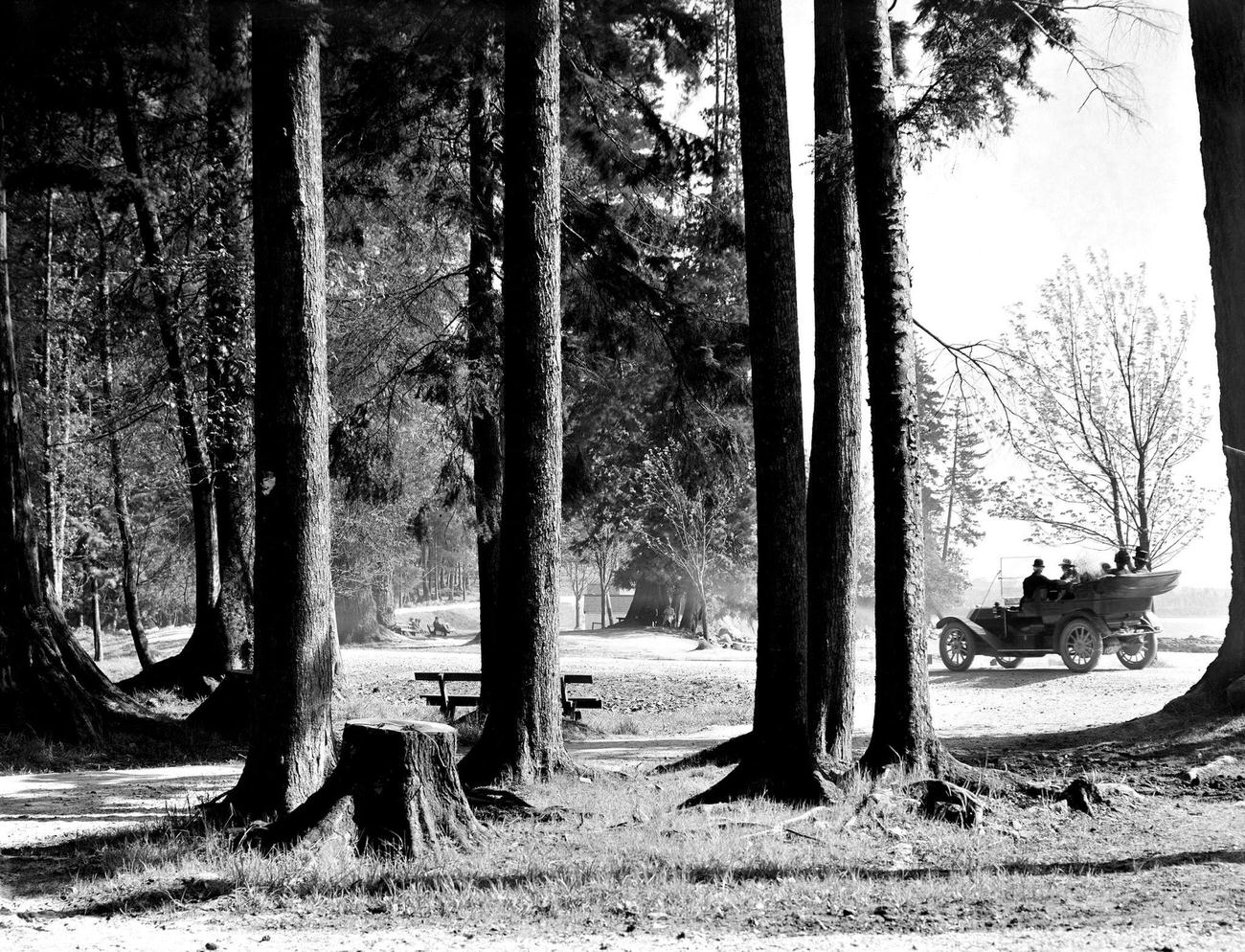
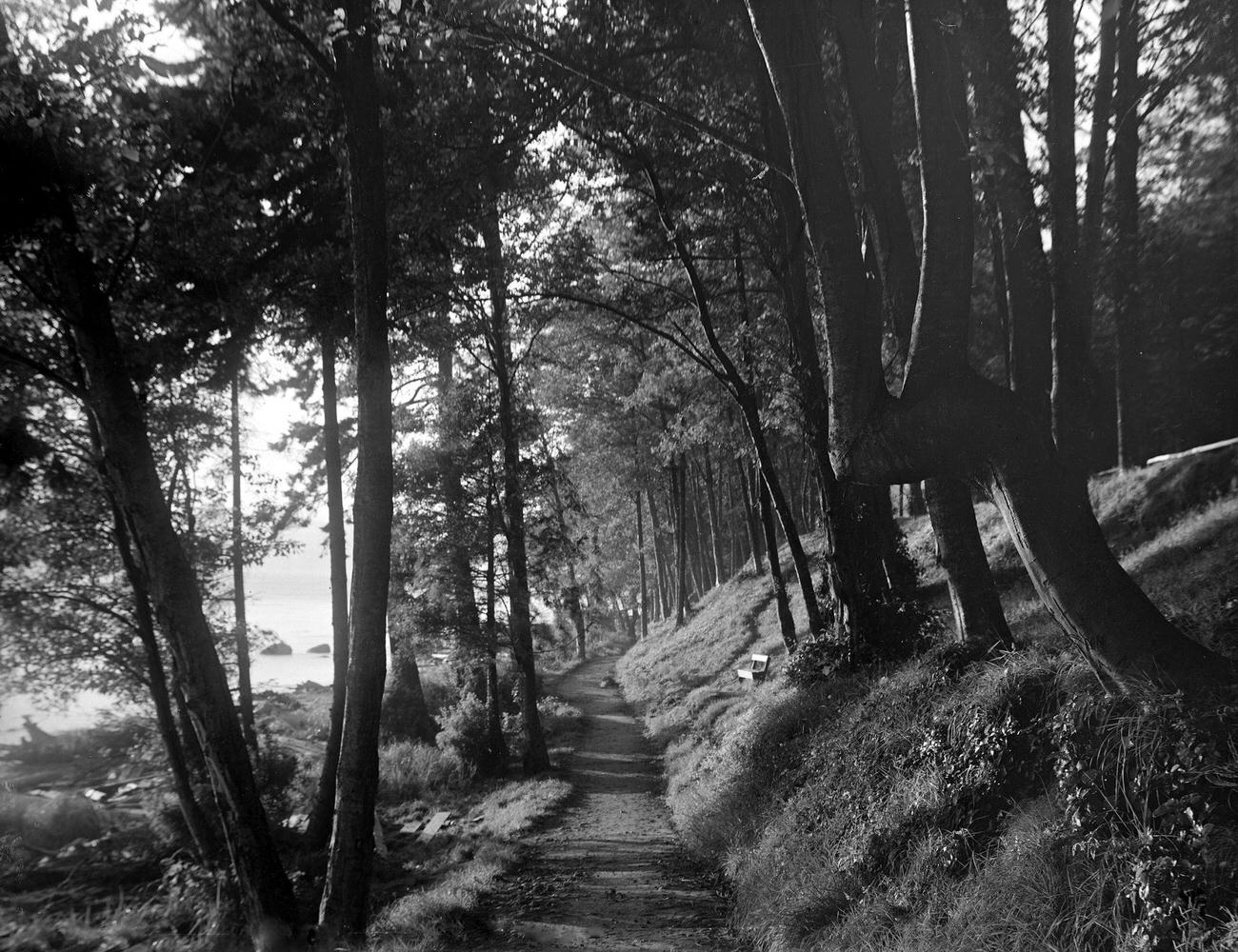
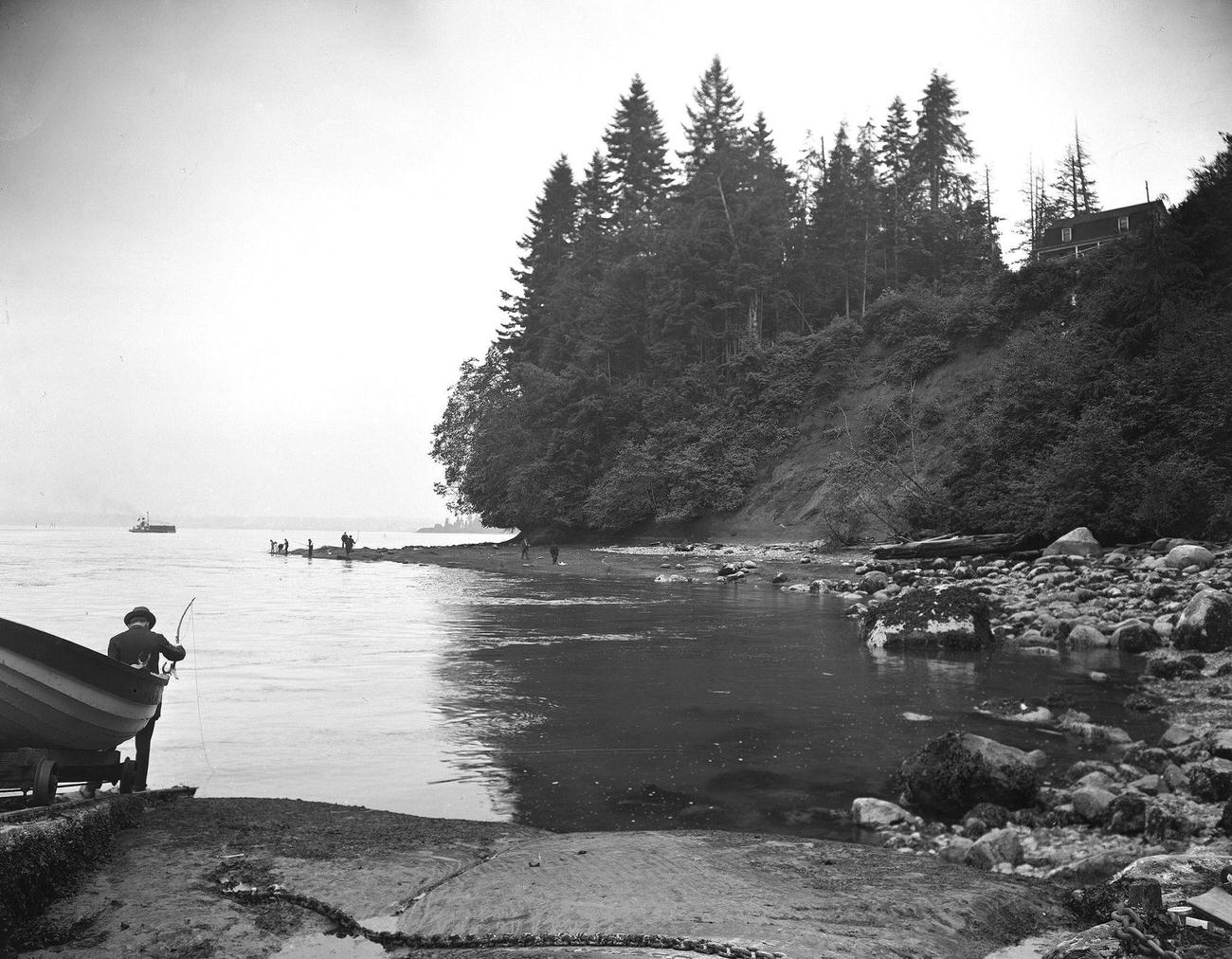
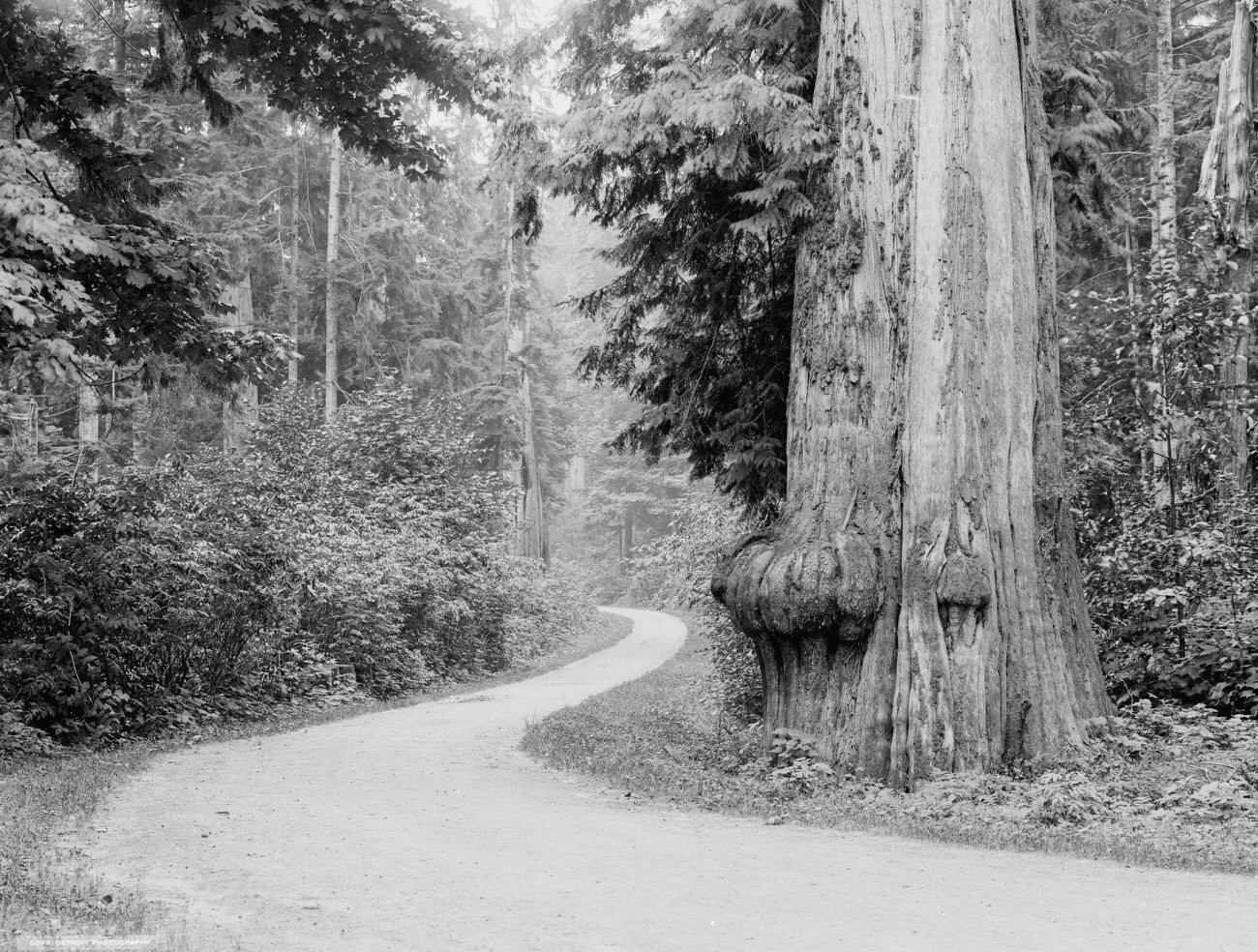
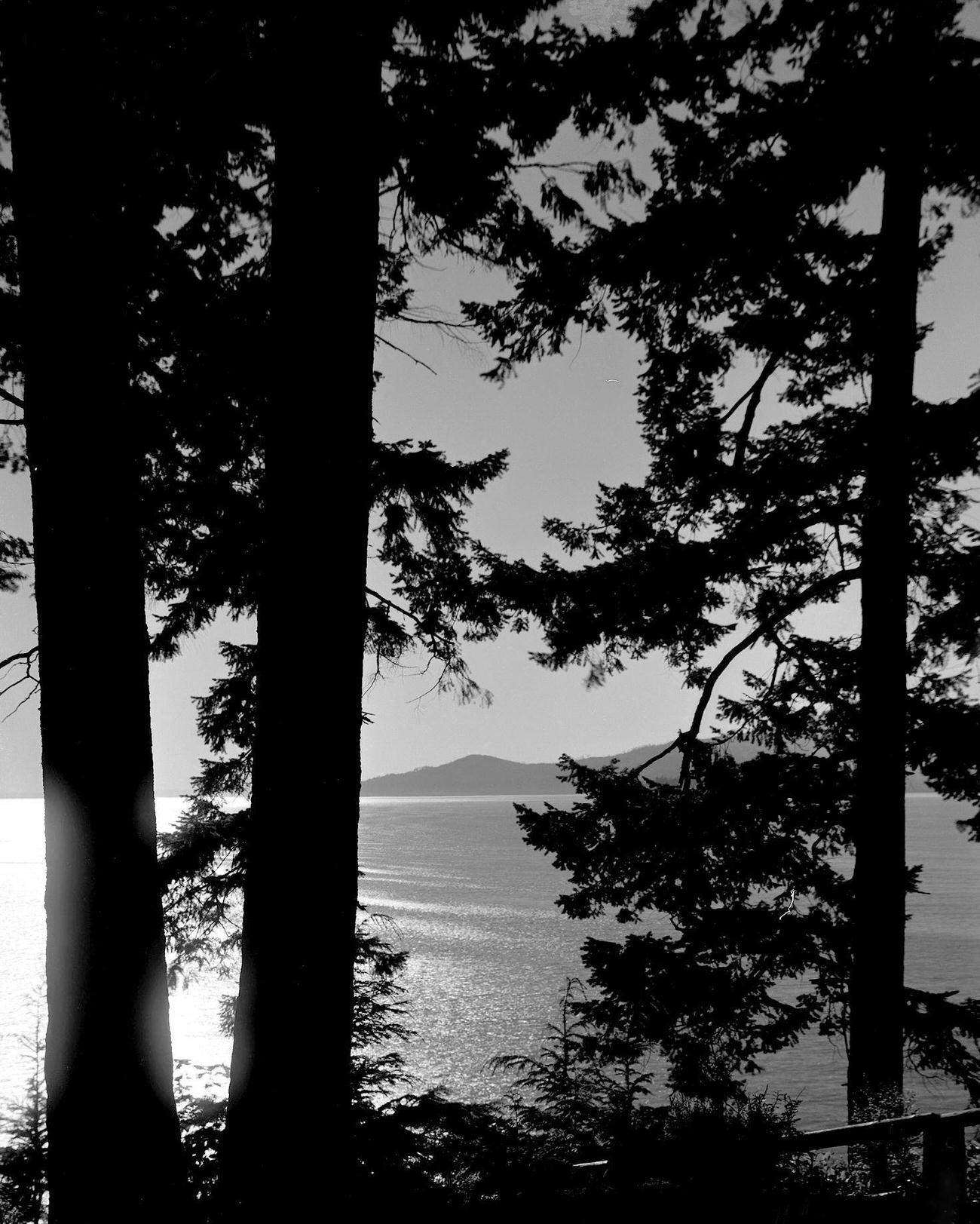
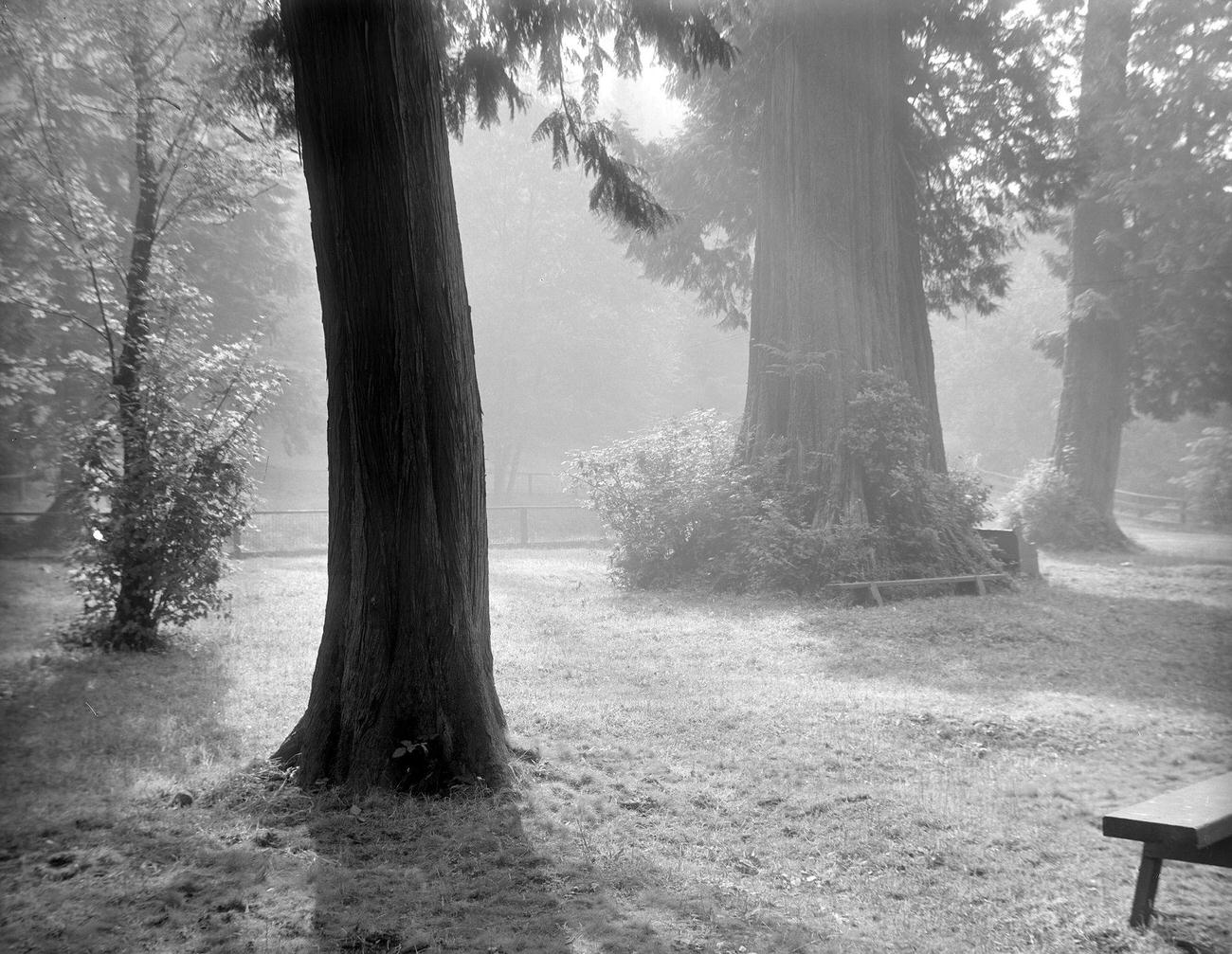
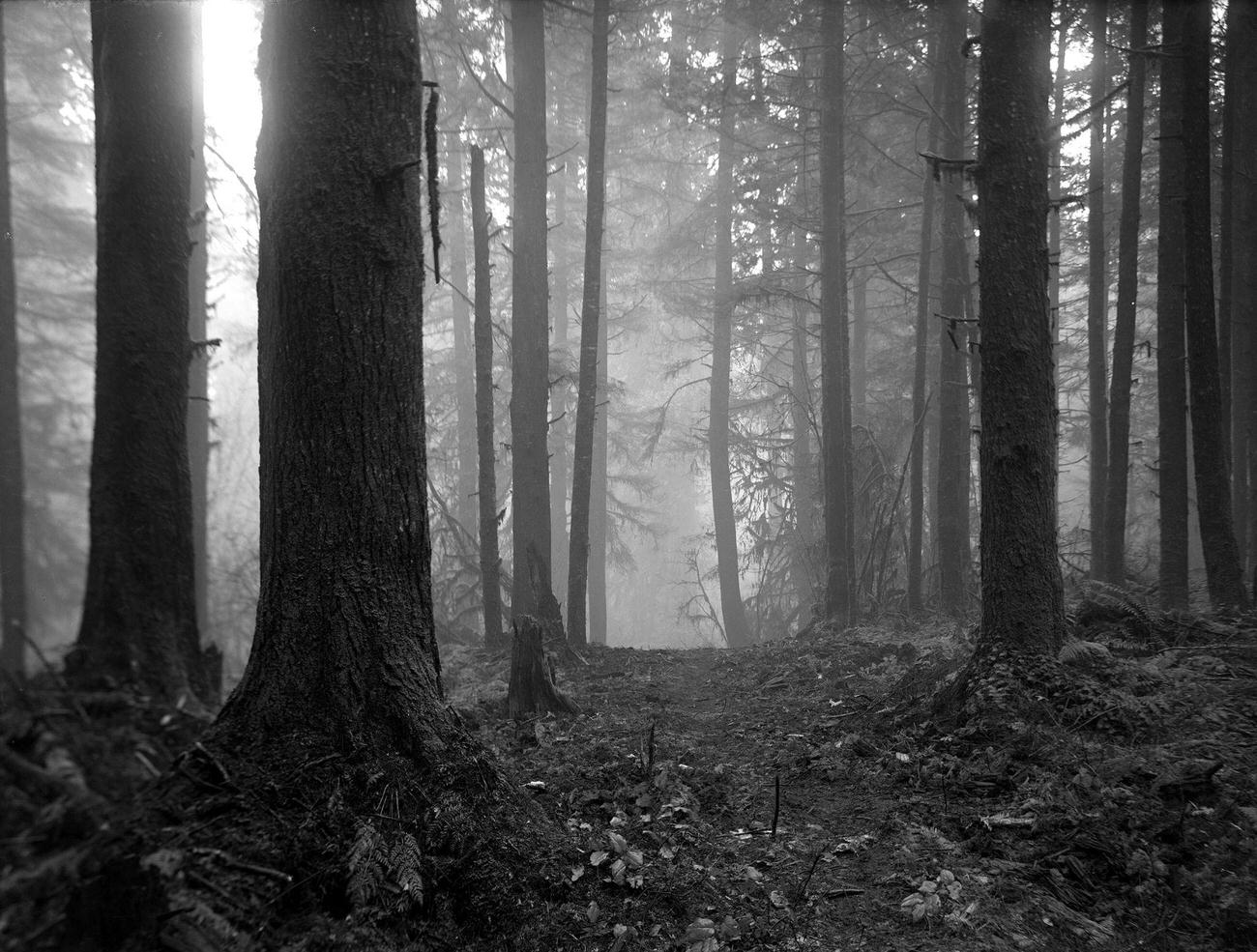
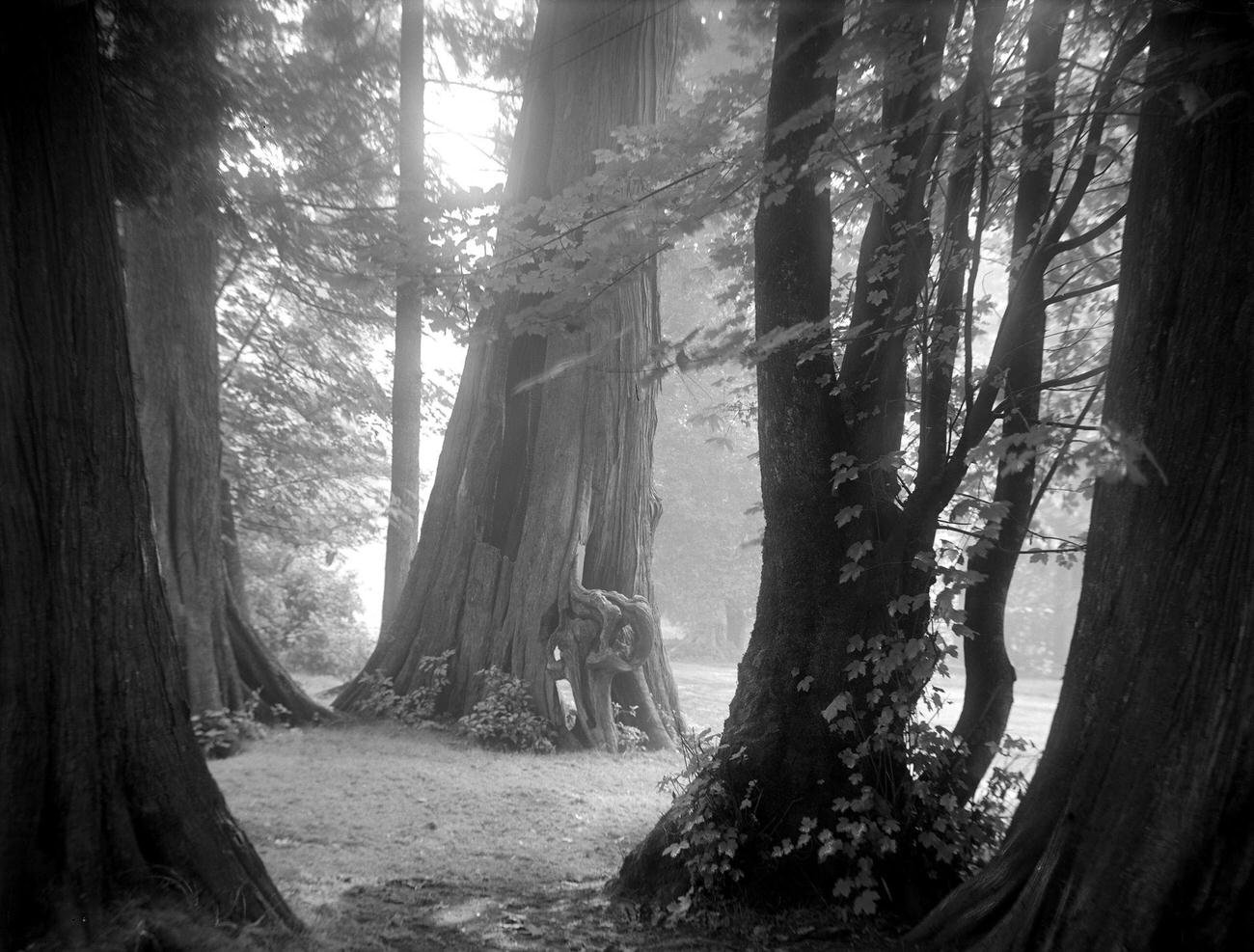
The forest itself was the park’s greatest feature. Morning mist settled between the towering old-growth trees, and photographers of the era made it their subject repeatedly. The term “virgin forest” was used without hesitation in 1912 captions — these were stands of timber that had never been logged, home to cedars and Douglas firs of enormous size.
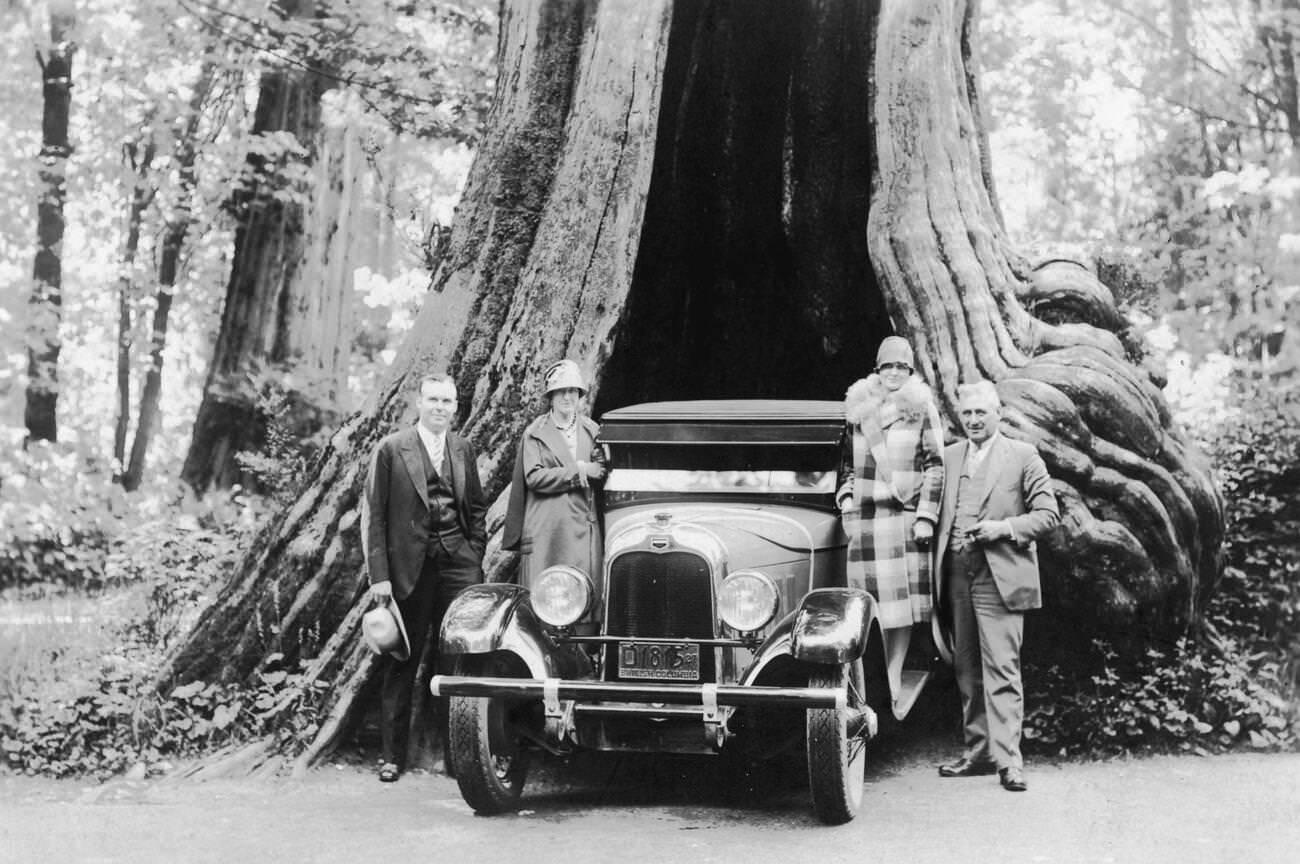
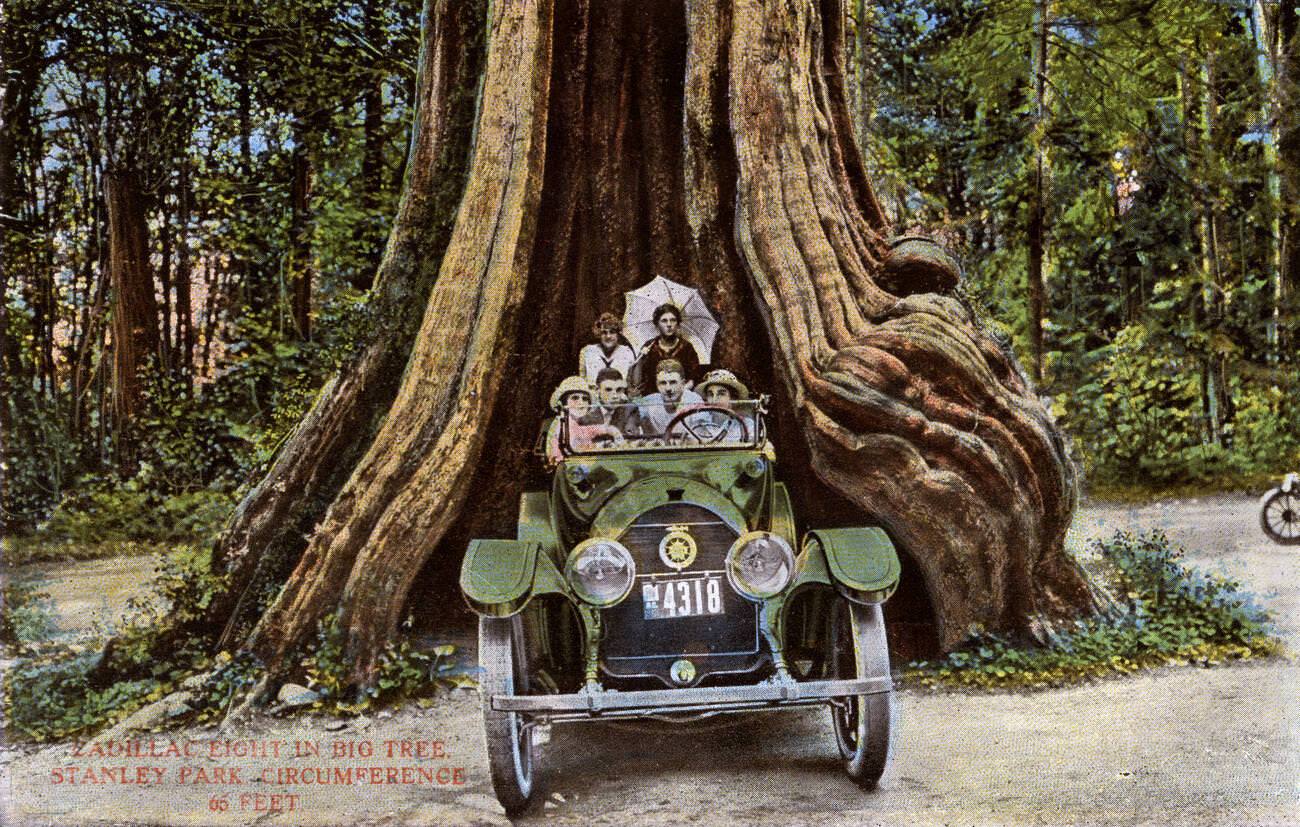
The 1920s brought one of the park’s most iconic additions: the totem poles at Brockton Point. Brought from Indigenous communities across British Columbia, these poles introduced a visible cultural presence to the park. Also during this decade, a peculiar local tradition took hold — visitors posed their cars inside the hollow base of a massive old-growth tree near the park’s interior, turning the Hollow Tree into one of Vancouver’s most photographed curiosities.
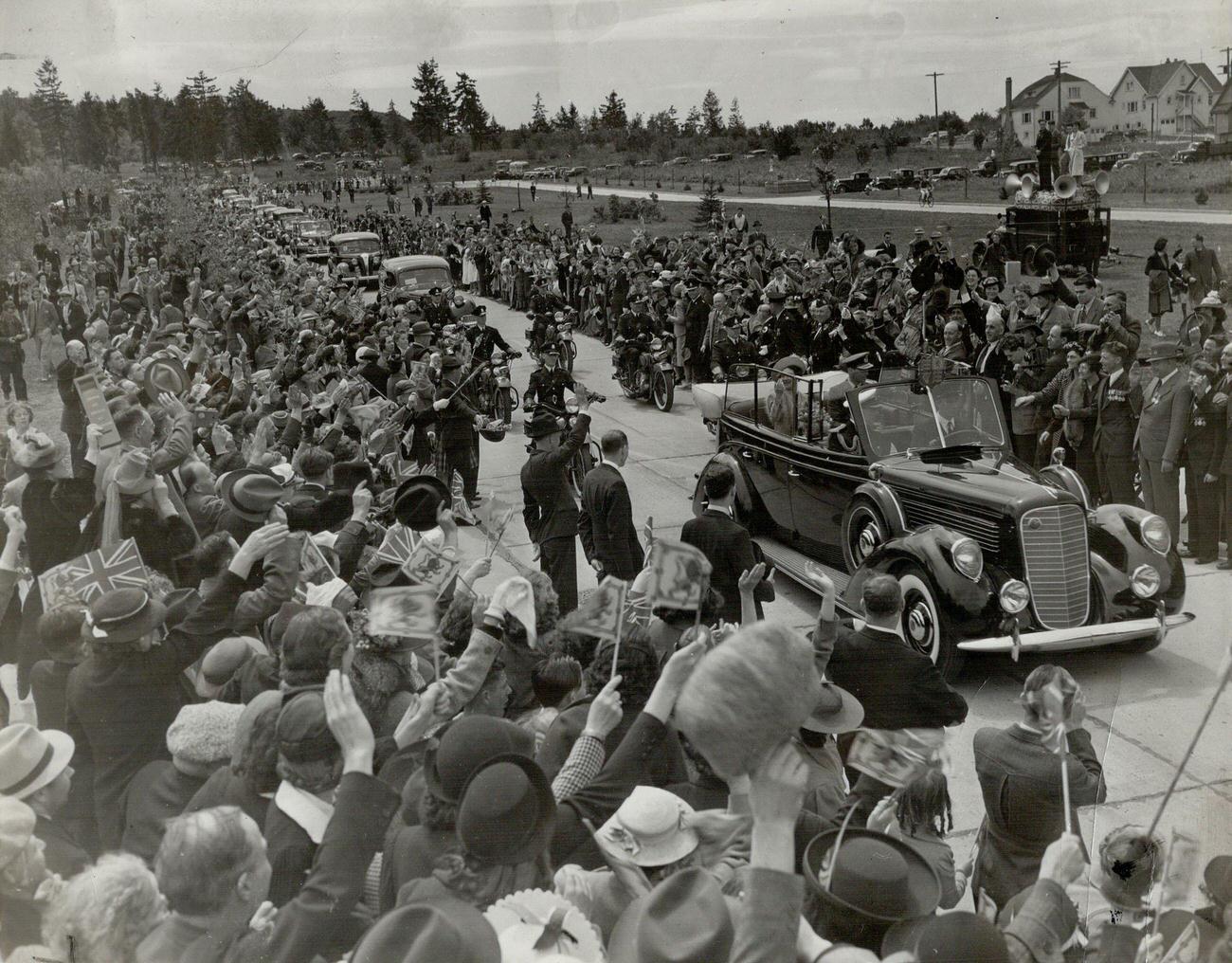
Through the Great Depression of the 1930s, Stanley Park served as a low-cost escape for struggling families. Relief workers were put to work improving the park’s roads and facilities during this period, turning economic hardship into lasting infrastructure. By 1941, the park was hosting scenes that reflected both wartime gravity and everyday civilian life side by side.
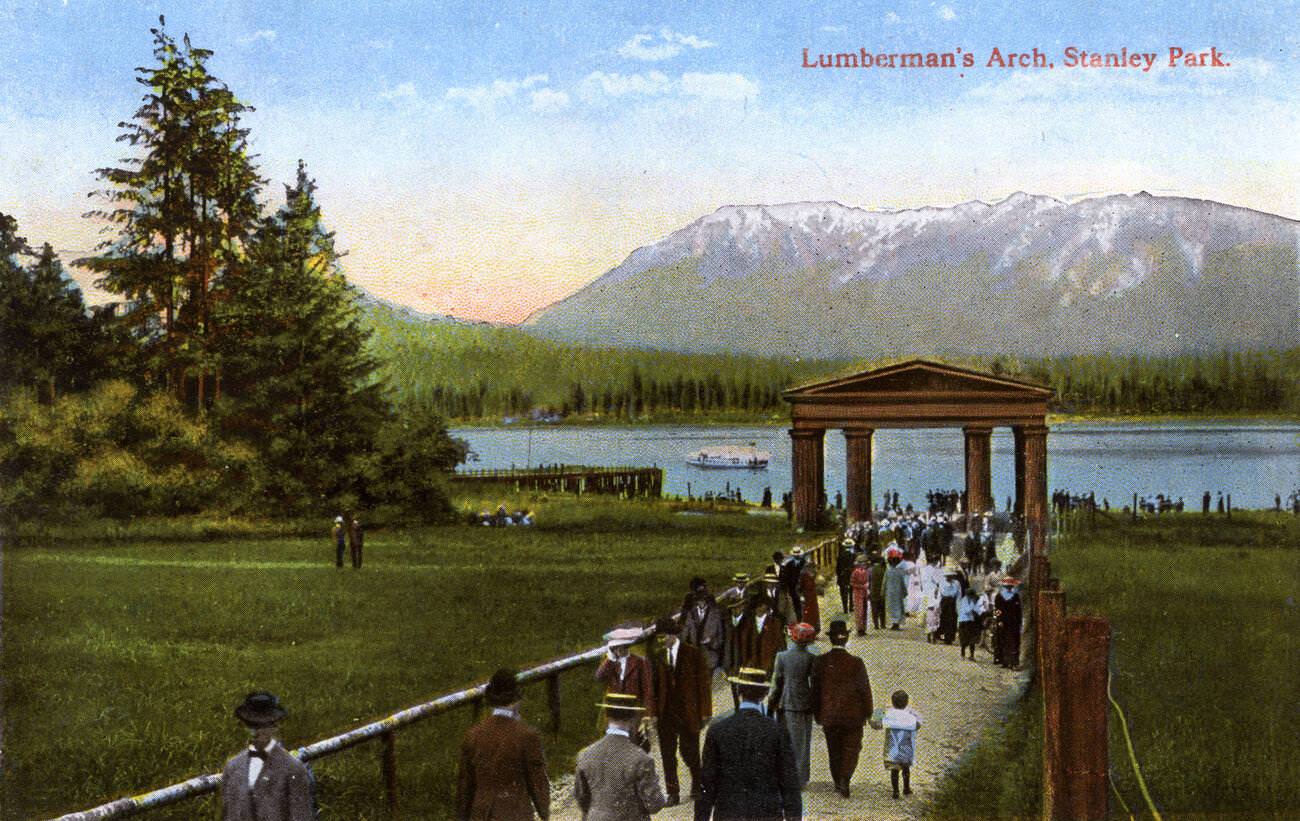
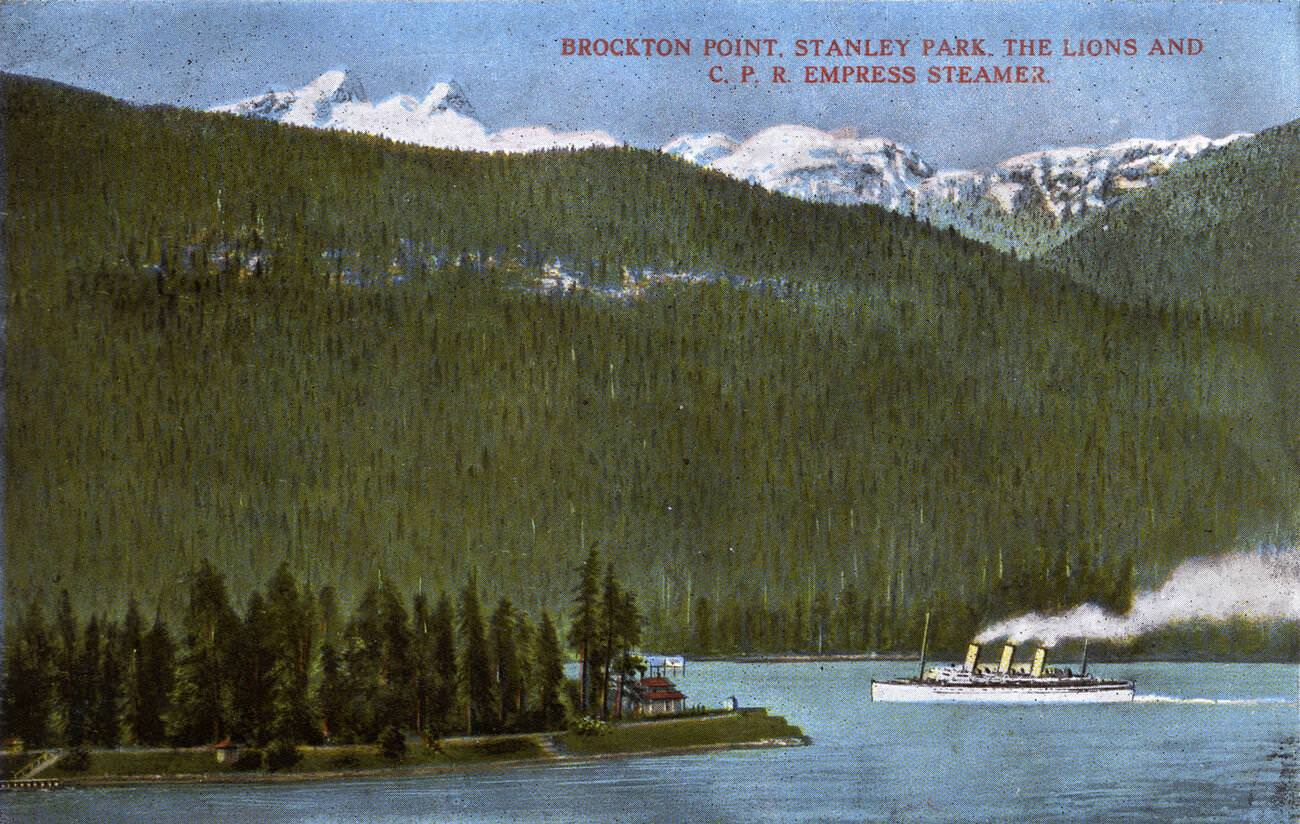
Lumberman’s Arch and Brockton Point remained central gathering spots throughout the mid-century decades. The arch, reconstructed using timber from a traditional Indigenous village site, marked one of the park’s most historically layered locations. Brockton Point, with its totem poles and lighthouse, continued to be a landmark that drew visitors to the eastern edge of the park.
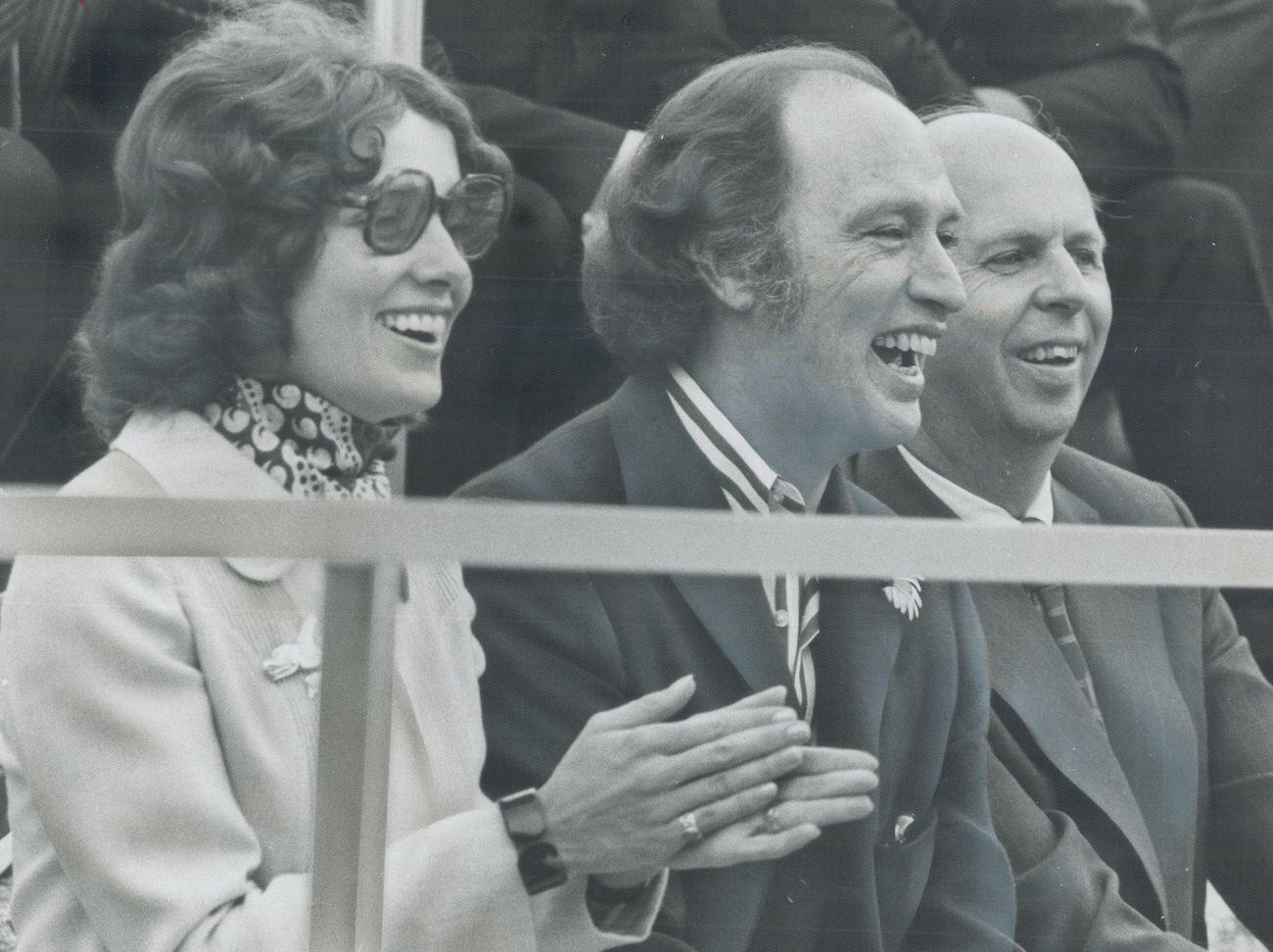
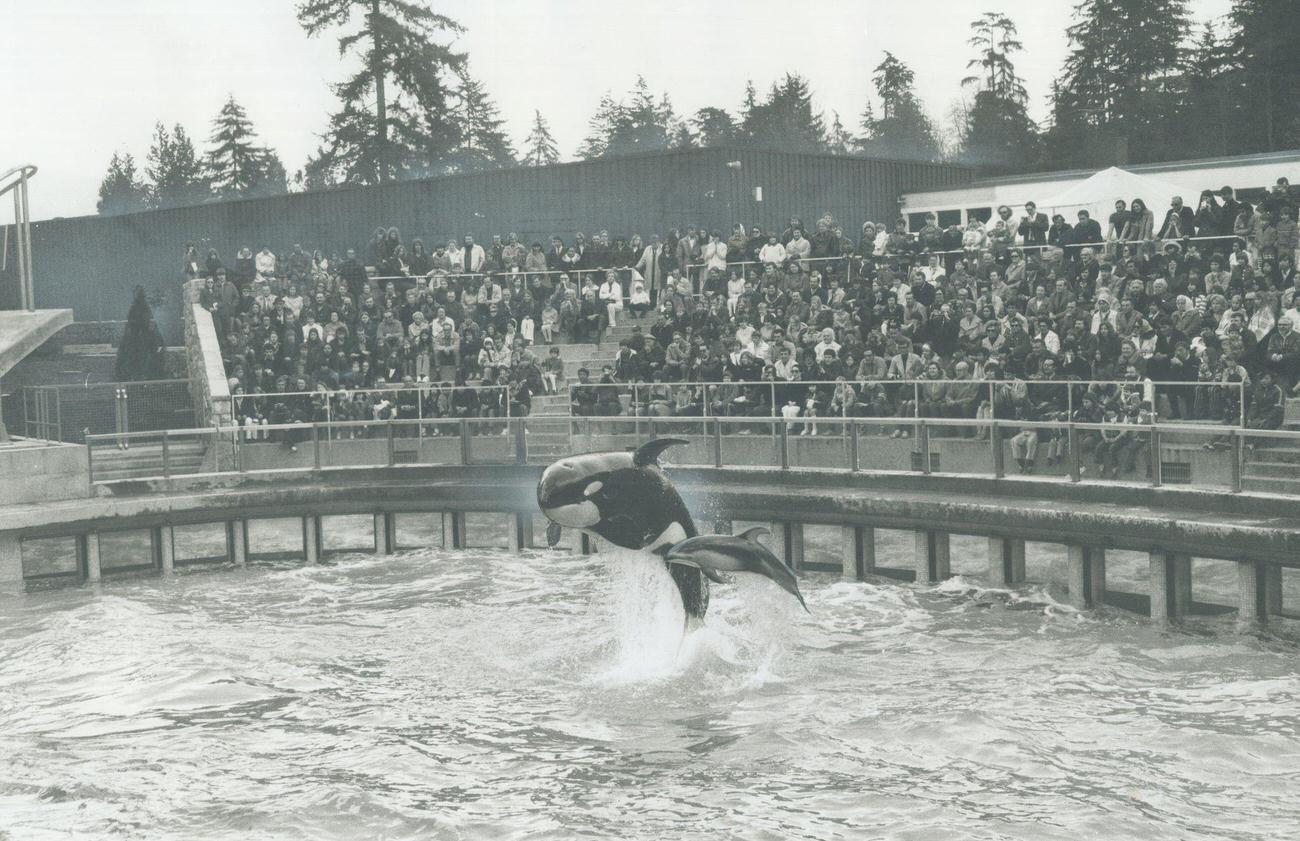
The Vancouver Aquarium opened in 1956, the first public aquarium in Canada. By 1970, it had become a major draw, and Prime Minister Pierre Trudeau attended the opening of a new whale pool that year. The aquarium’s killer whale and porpoise shows marked a new era for the park — one where curated wildlife experiences drew crowds alongside the natural forest.
The early 1970s also marked the completion of the Stanley Park Seawall — a project that had been decades in the making. At 9 kilometers, it circled the entire park along the waterfront and quickly became one of the most-used recreational paths in Canada. The park’s wildlife, from the bird life at the lagoon to the marine creatures at the aquarium, drew steady visitors throughout the decade.
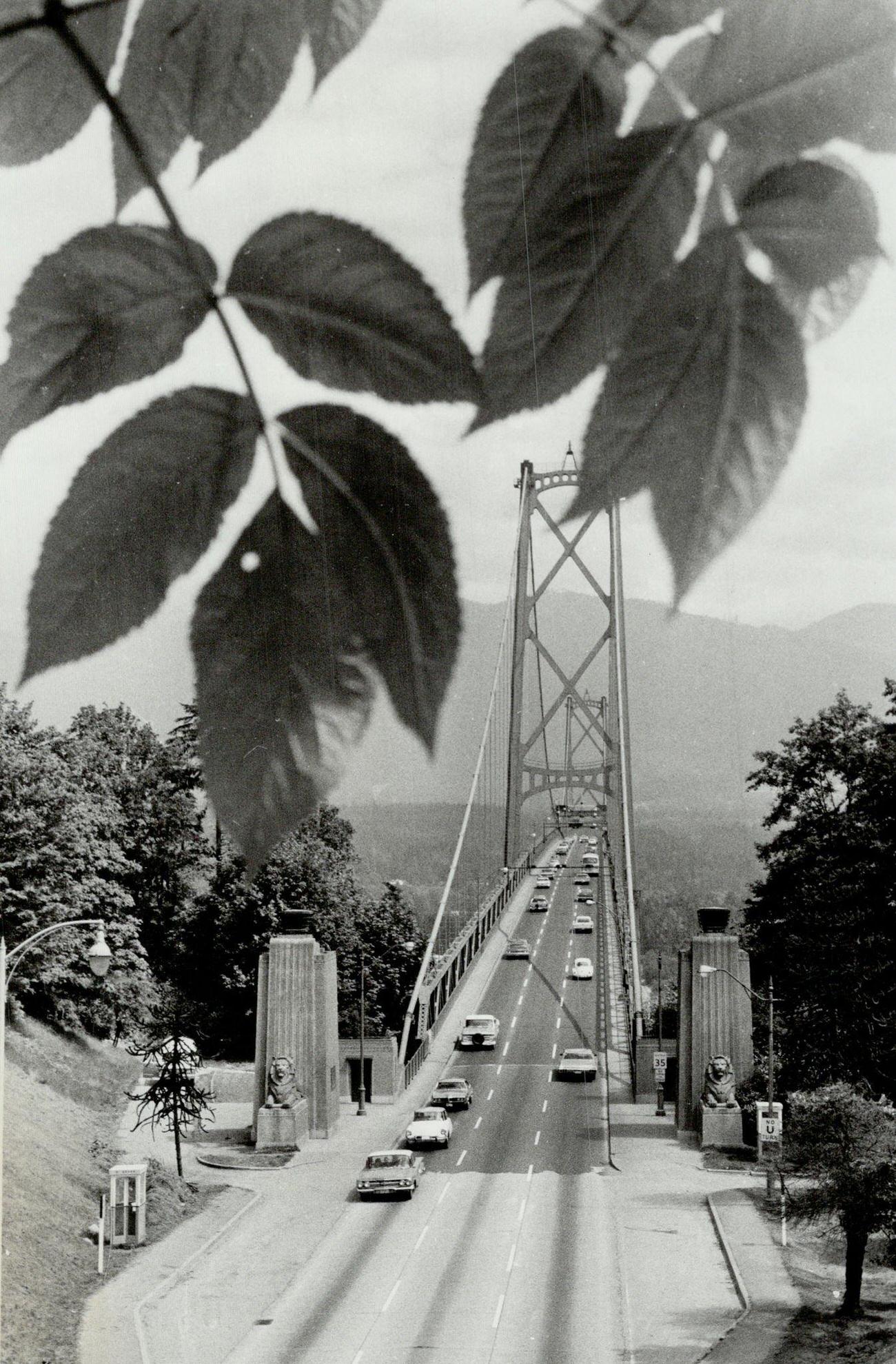
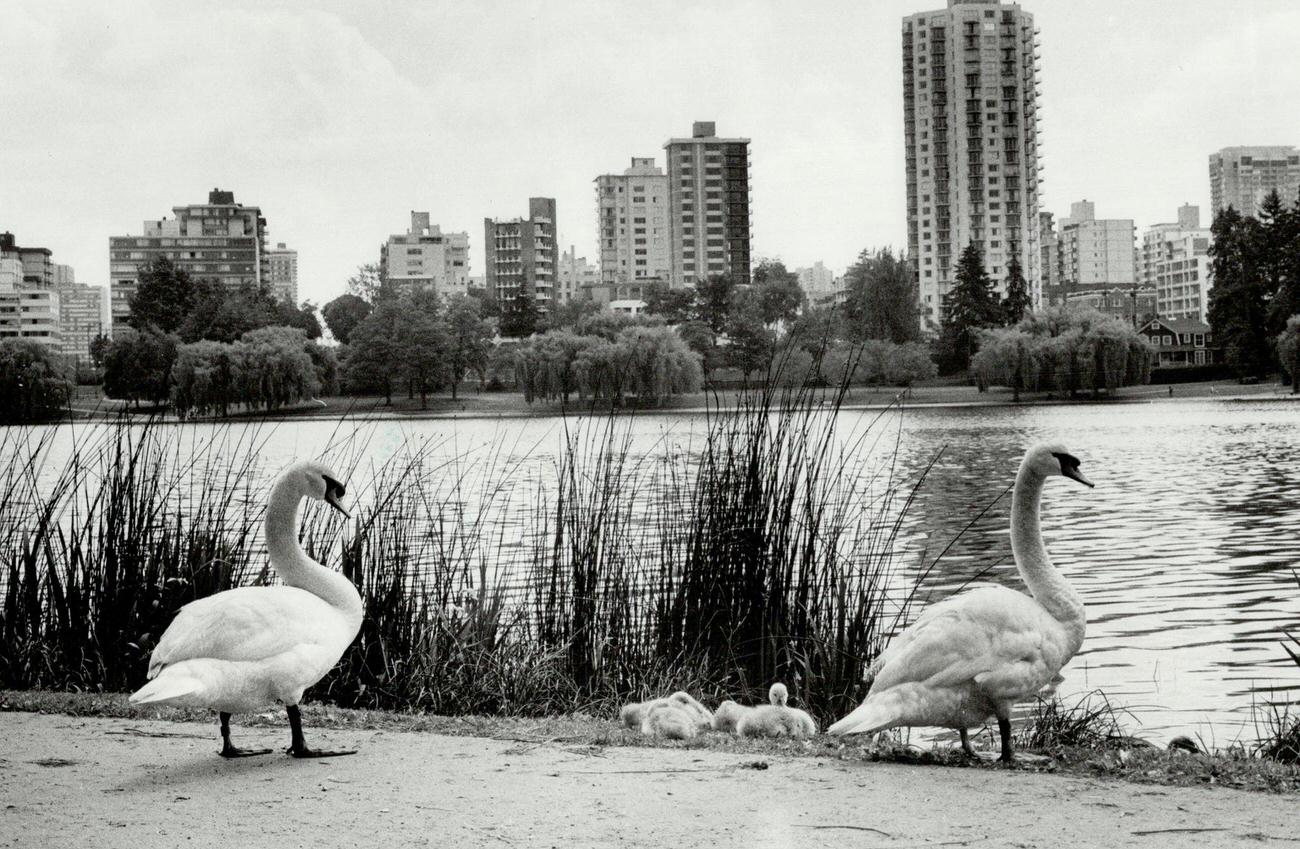
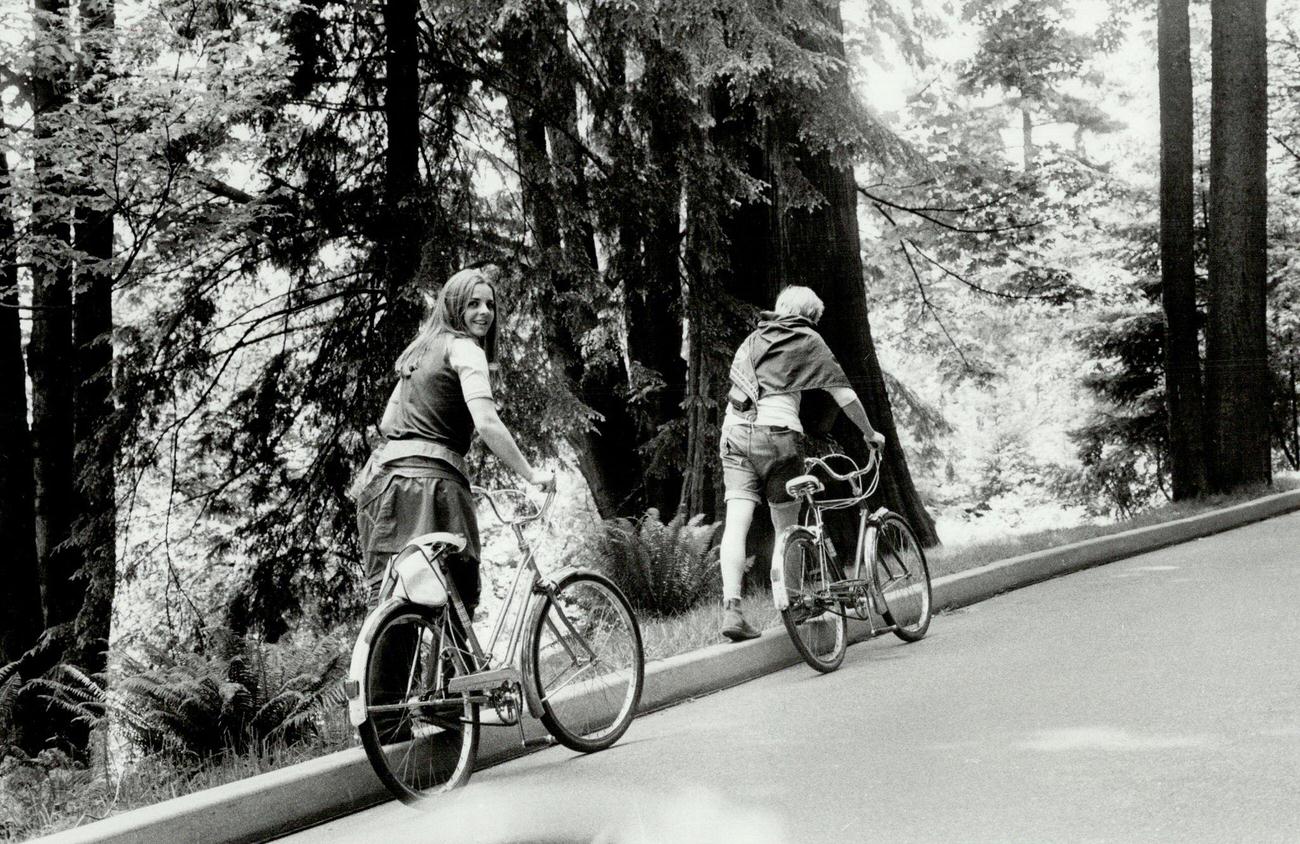
Through the 1980s and into the 1990s, the Vancouver Aquarium expanded with new exhibits, and the park’s management placed greater focus on conservation. Trail access improved, facilities were modernized, and Stanley Park grew as a destination for international tourists. The old-growth trees that had amazed visitors in 1900 were still standing — ancient, enormous, and now protected as part of one of the most visited urban parks in North America.