Hey There! Before You Go. 😧
Get the best vintage content straight into your inbox!

Don't worry, we don't spam

St. Louis in the 1890s: A Photographic Exploration of the City's Cultural and Industrial Development

By the 1890s, St. Louis was one of the largest cities in the United States, home to roughly 500,000 people. It sat along the western bank of the Mississippi River, making it a natural crossroads for commerce, travel, and trade. Settlers heading west on the Oregon and Santa Fe trails often passed through the city, and the goods moving along the river kept its economy humming. Streets filled daily with workers, merchants, horse-drawn carriages, and the growing presence of electric streetcars — a technology that was rapidly changing how city residents got around.
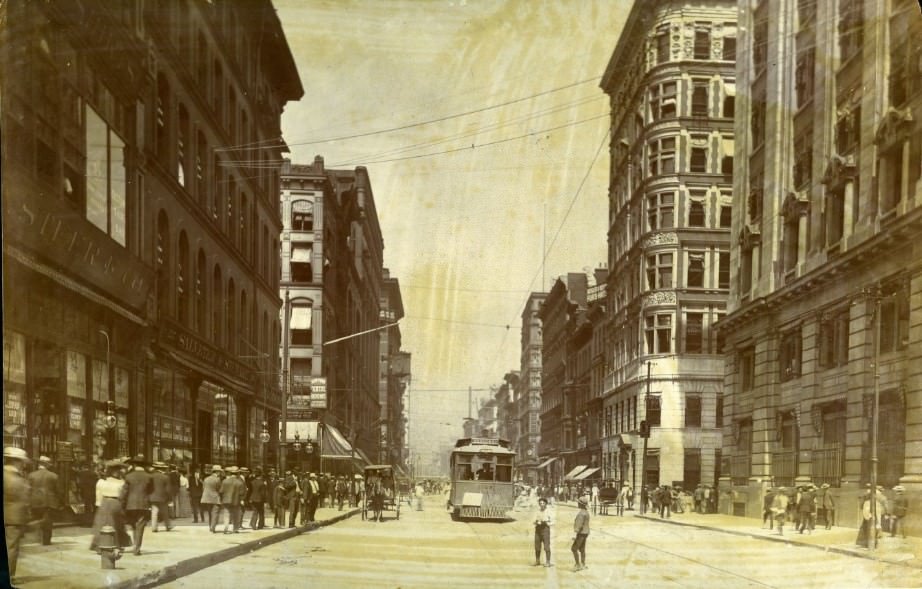
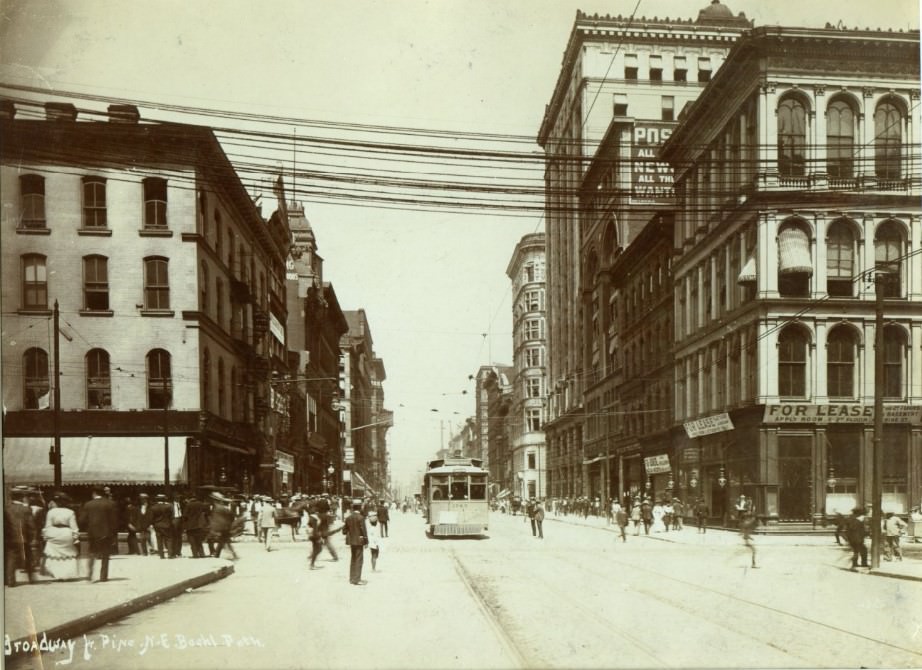
Broadway in St. Louis in 1897.

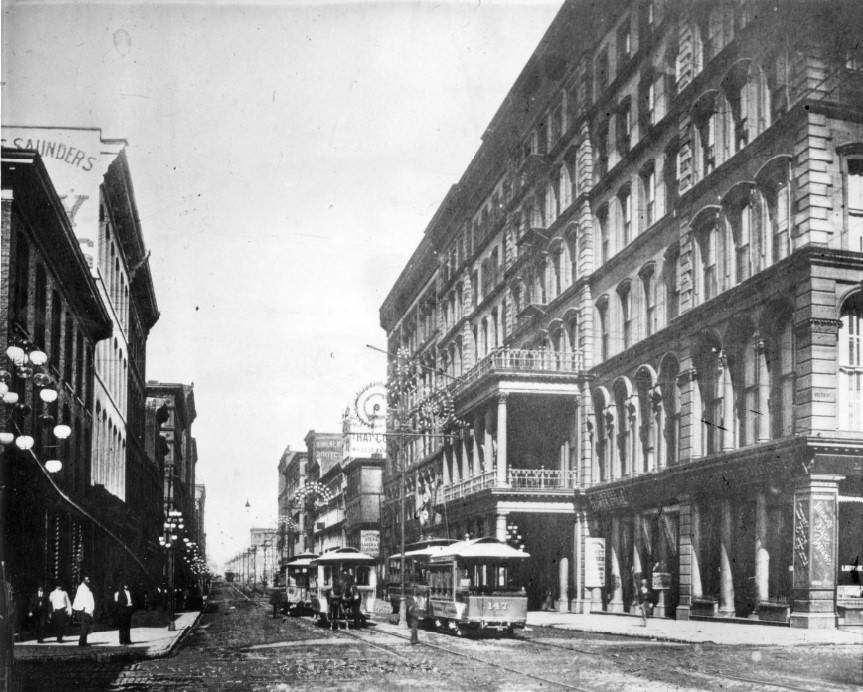
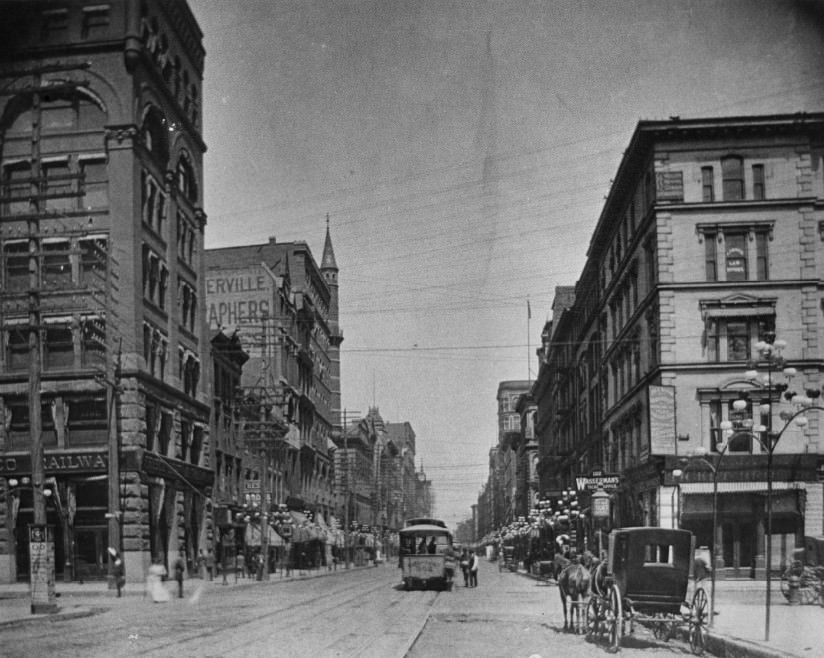
Broadway was one of the city’s most active corridors. Looking north from Pine toward Olive, the street was lined with storefronts and large commercial buildings, their sidewalks busy with foot traffic at nearly all hours. Electric streetcars shared the road with horse-drawn vehicles, a mix that captured exactly where American cities stood in the 1890s — one foot in the industrial past, one firmly stepping into a modern future.
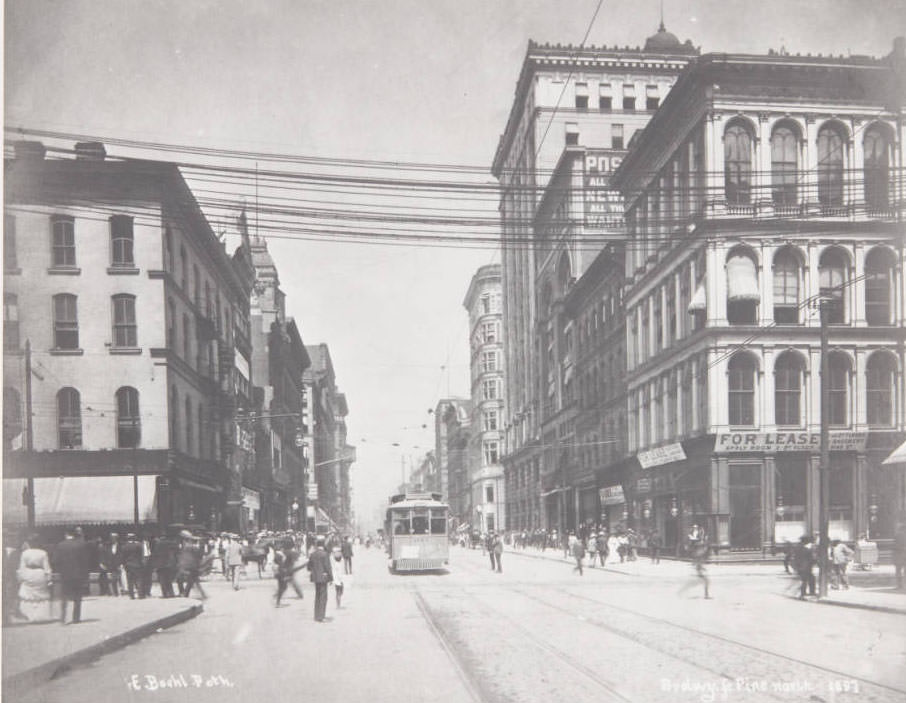
A streetcar and numerous pedestrians on Broadway looking north from its intersection with Pine Street, 1897

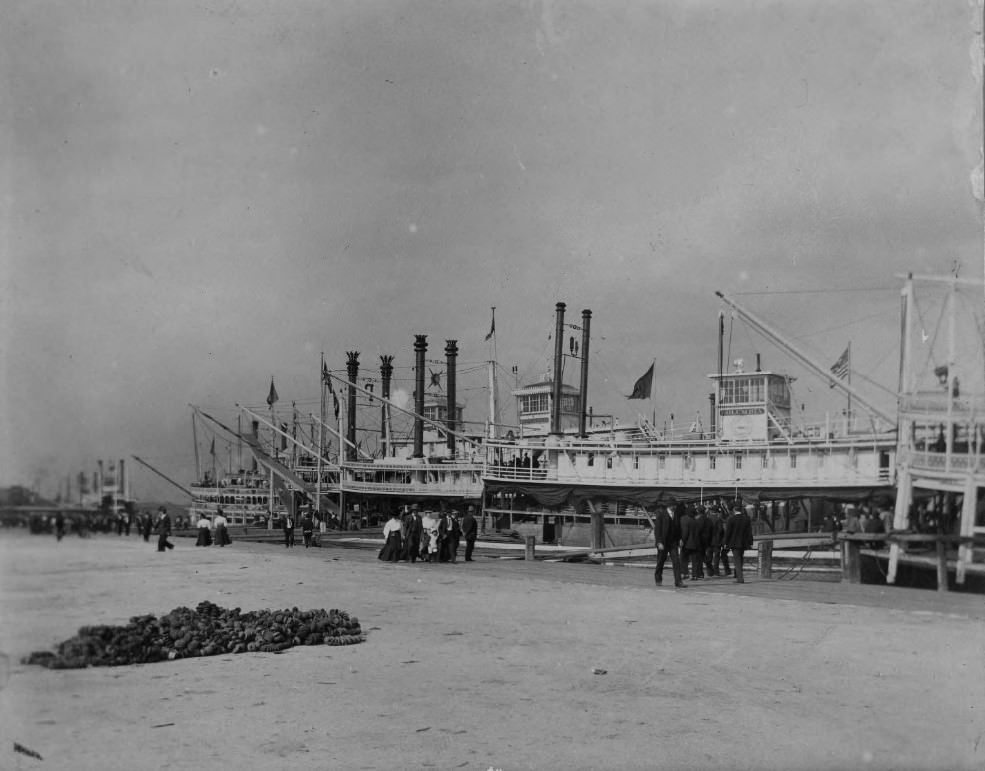
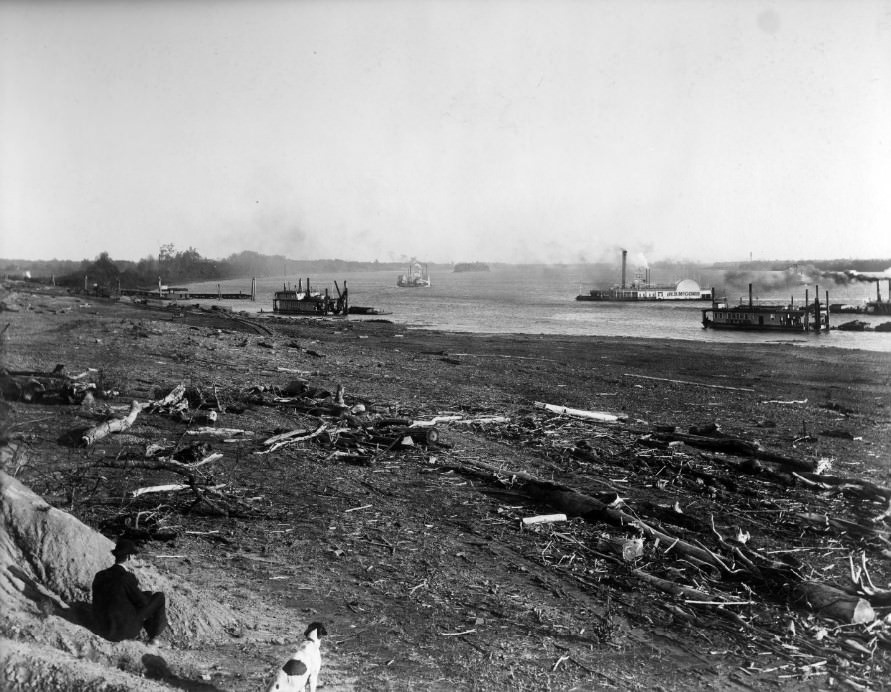
The riverfront was the economic engine behind much of the city’s wealth. The St. Louis levee served as a constant scene of activity, with steamboats loading and unloading cargo that moved between the city and ports stretching from the Great Lakes to the Gulf of Mexico. Wheat, dry goods, cotton, and manufactured products all passed through here in enormous volumes.
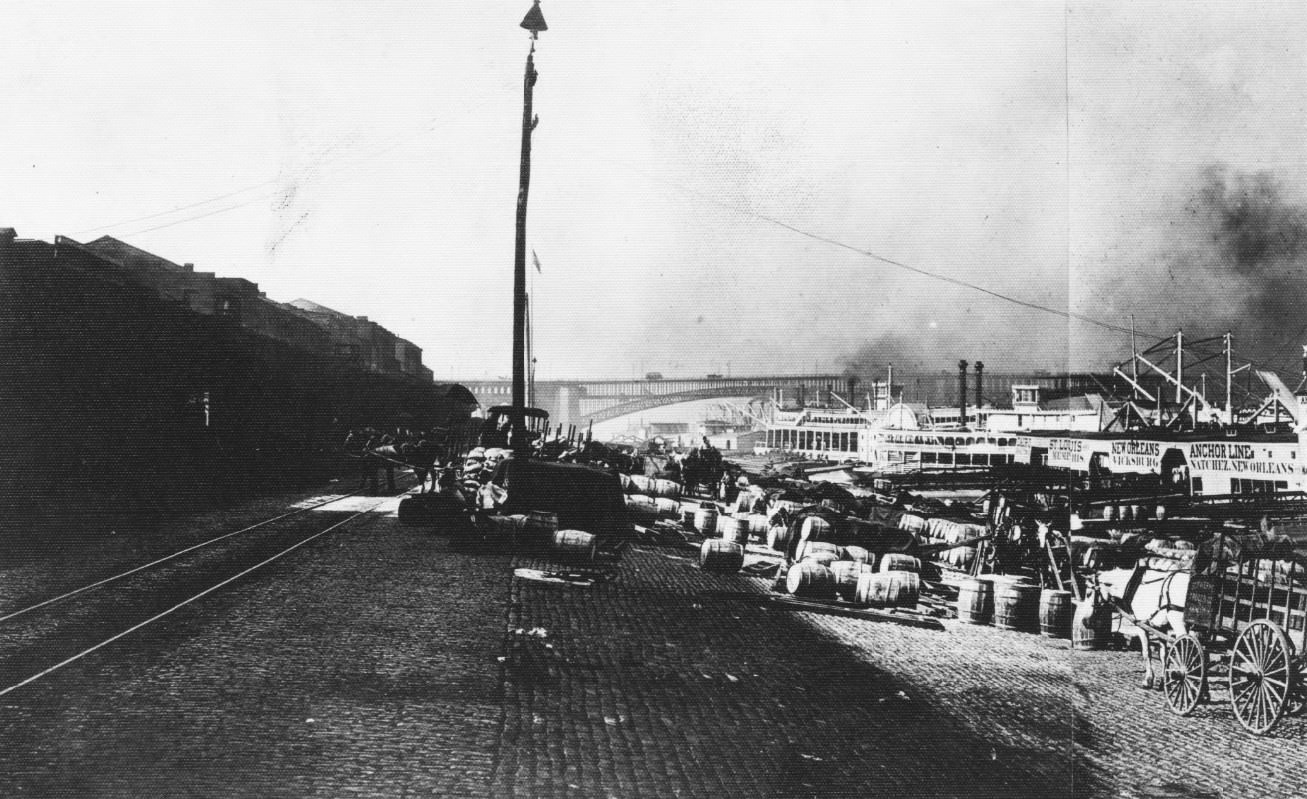
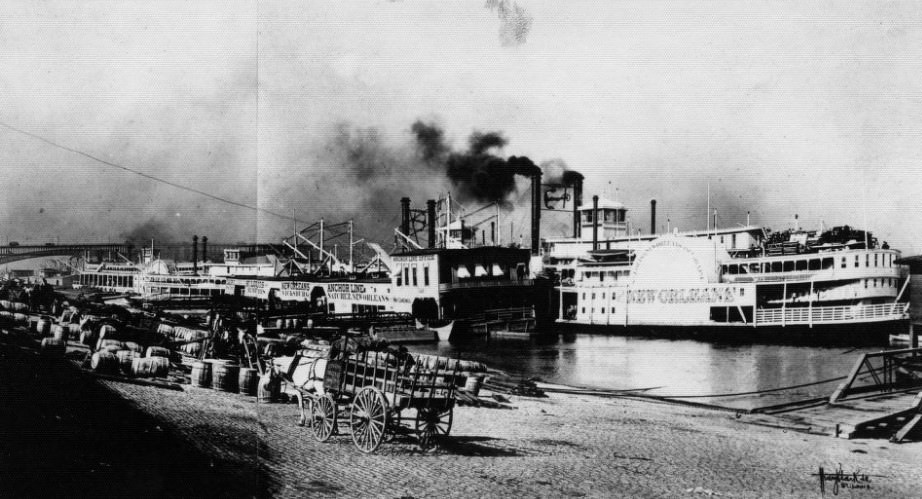
Cargo and steamboats lining the Saint Louis levee in the 1890s.
St. Louis levee, 1890's.
St. Louis levee, 1890’s.

The steamboats working the Mississippi and its tributaries were the workhorses of this trade network. Vessels like the Annie Dell carried loads of wheat down the Gasconade River, while larger ships like the City of Monroe ran regular routes between St. Louis and New Orleans as part of the Anchor Line fleet, operating that service from 1887 to 1905.
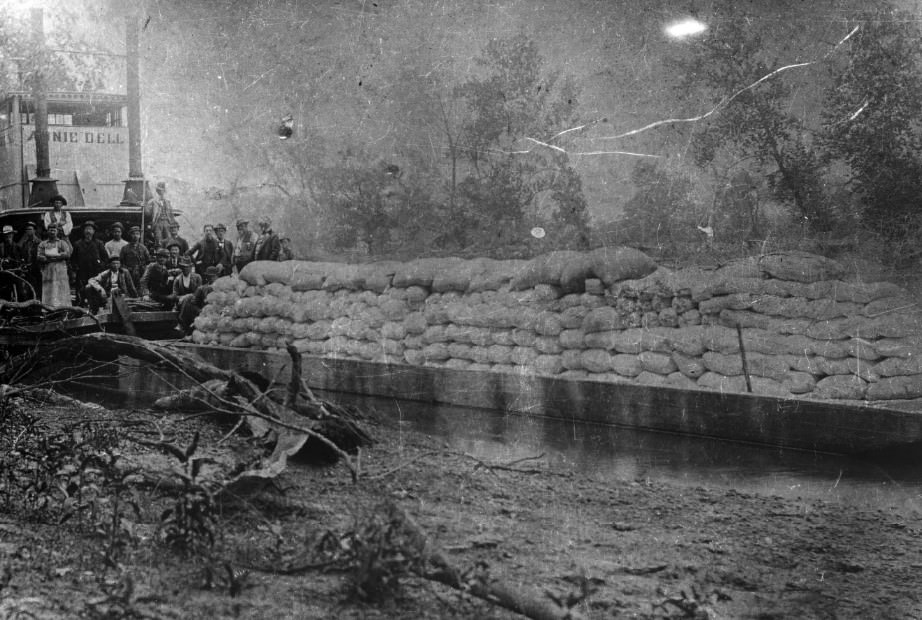
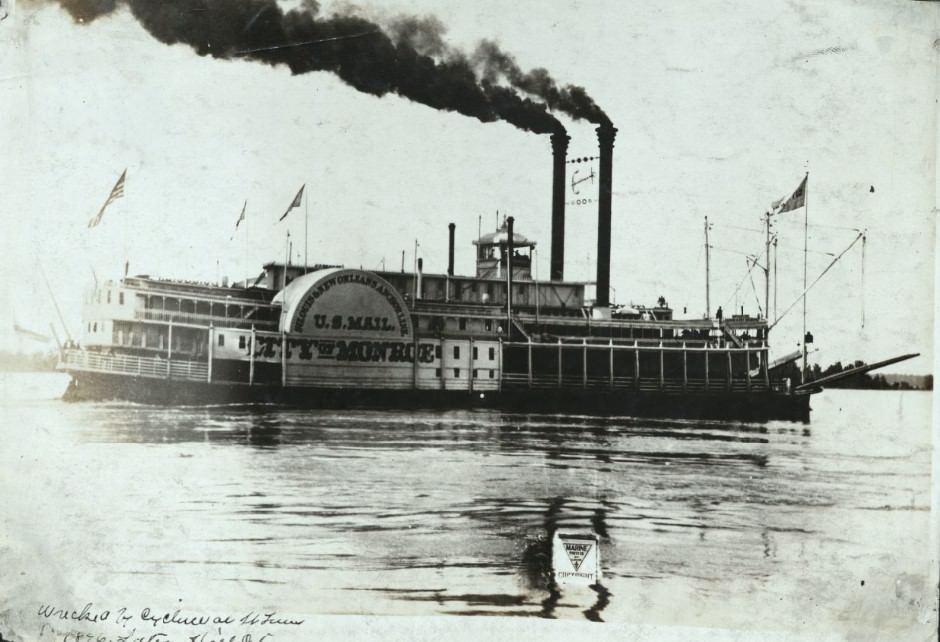
Annie Dell with tow and cargo. Crew posing on the bow. Gasconade River, carrying wheat, 1890.
Steamer City of Monroe, 1880

Other boats, like the Evansville on the Green River and the State of Kansas — a large carrier built at Madison, Indiana in 1890 — showed the wide reach of the waterway system that St. Louis depended on. The city’s riverfront was not just a local hub; it connected the American interior to markets across the country.
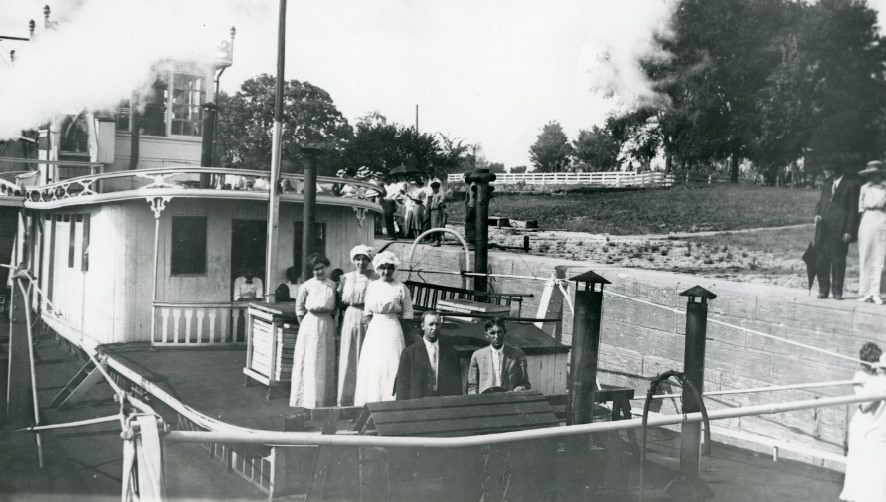
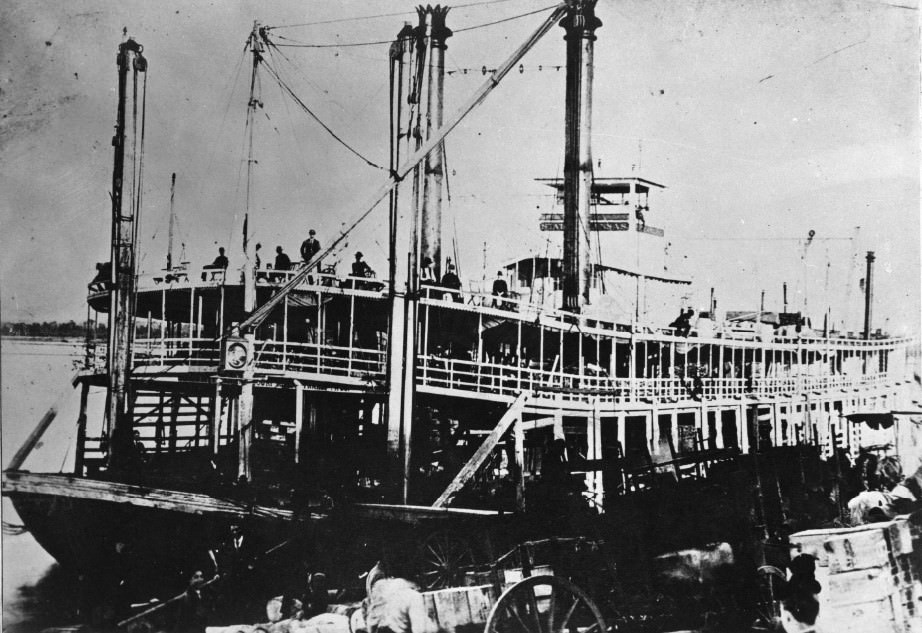
Aboard the Evansville on the Green River, 1890
The State of Kansas was a big carrier built at Madison, Indiana in 1890.

Eads Bridge, completed in 1874, was a marvel of engineering that connected St. Louis directly to Illinois. By the 1890s it had become an iconic symbol of the city’s ambition and technical capability. Its steel arches spanned the Mississippi at a scale that few structures of the era could match.
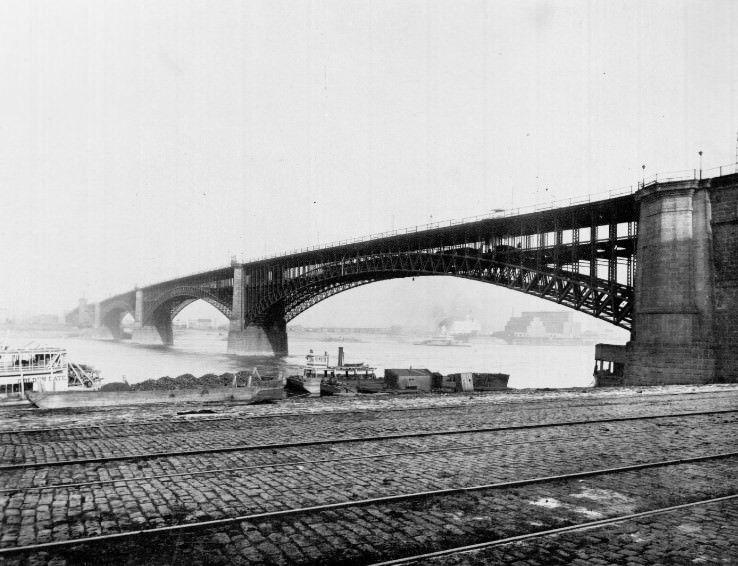
Ead's Bridge, Art Work of St. Louis, 1895
Ead’s Bridge, Art Work of St. Louis, 1895

Industry extended well beyond the waterfront. Simmons Hardware operated a major warehouse facility in the city, and near it stood the buildings of the Western Electric Company and several other industrial sites. A steam locomotive from the Terminal Railroad Association — Engine 81 — appeared in front of the complex in 1890, flanked by horse-drawn carriages and piles of cobblestones. Tall smokestacks rose in the background, a familiar feature of St. Louis’s industrial zones.
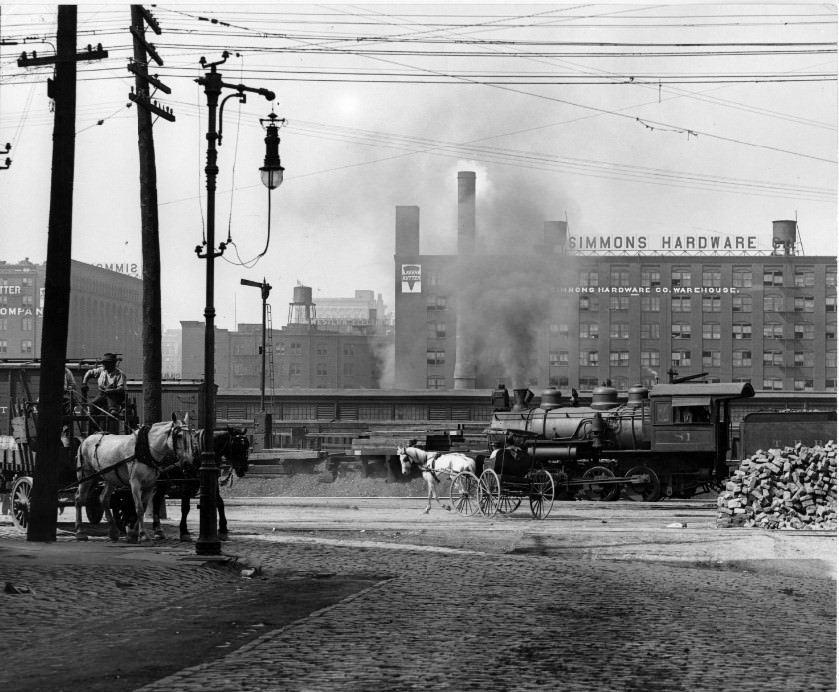
Locomotive in front of Simmons Hardware, 1890

Brewing was another major industry in St. Louis, and Anheuser-Busch was its most prominent name. In June 1899, the Benevolent and Protective Order of Elks held their national convention in the city, and the brewery erected a decorative arch in their honor. The gesture reflected how deeply the city’s business community worked to attract large gatherings — events that brought money, attention, and prestige.
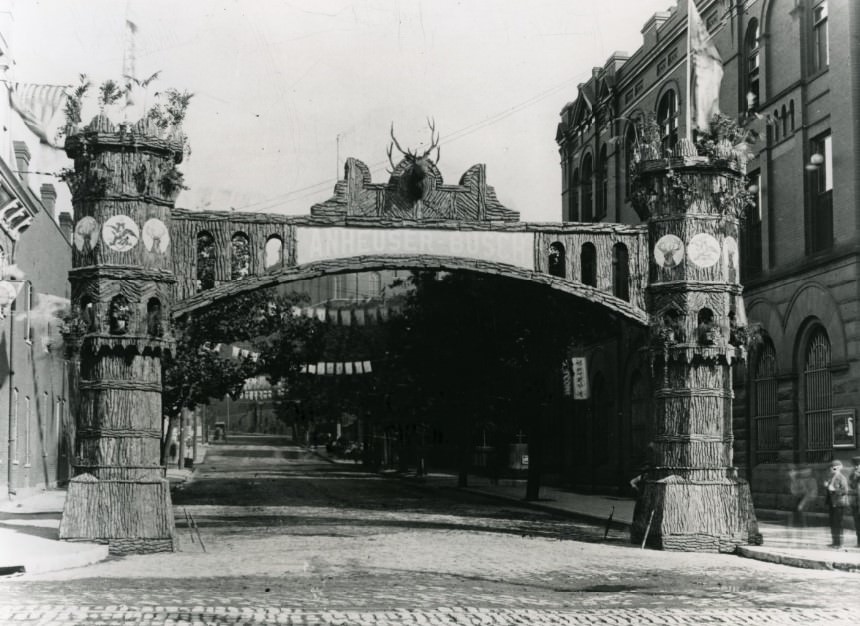
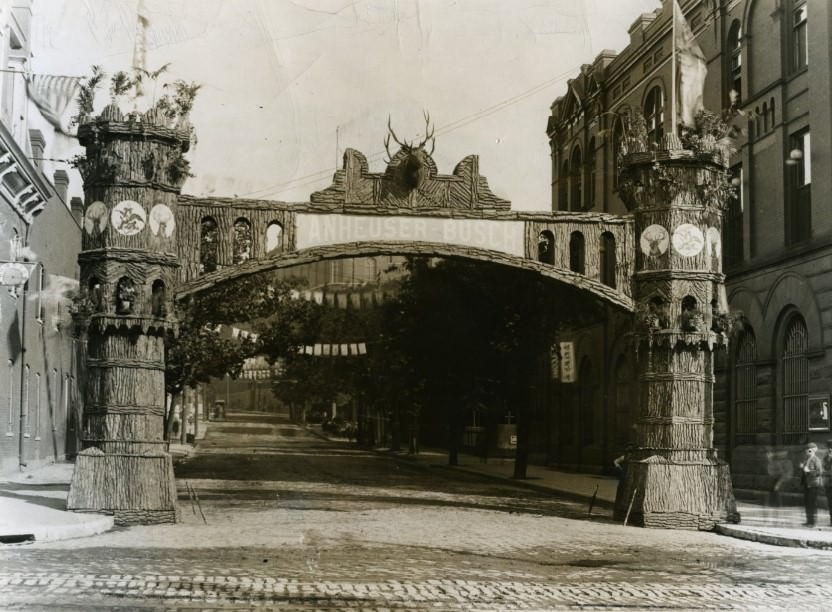
A decorative arch, put in place for the visiting Elks, as pictured at Anheuser-Busch Brewery in 1899.
This is the Anheuser-Busch brewery, 1899, with a decorative arch in place in honor of visiting Elks, who held their national convention in St. Louis in June of that year.

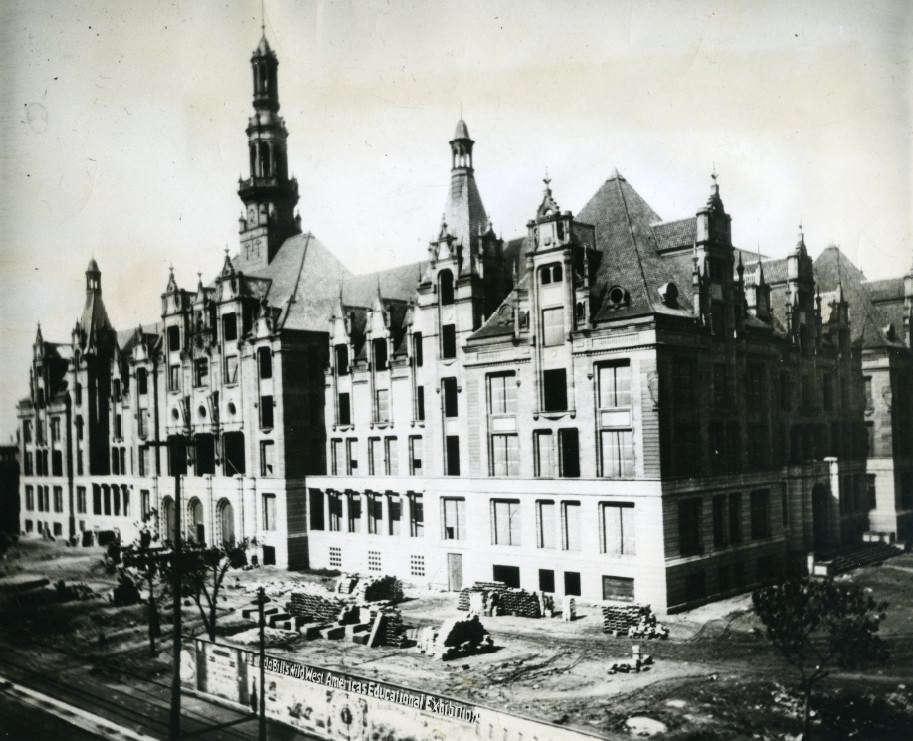
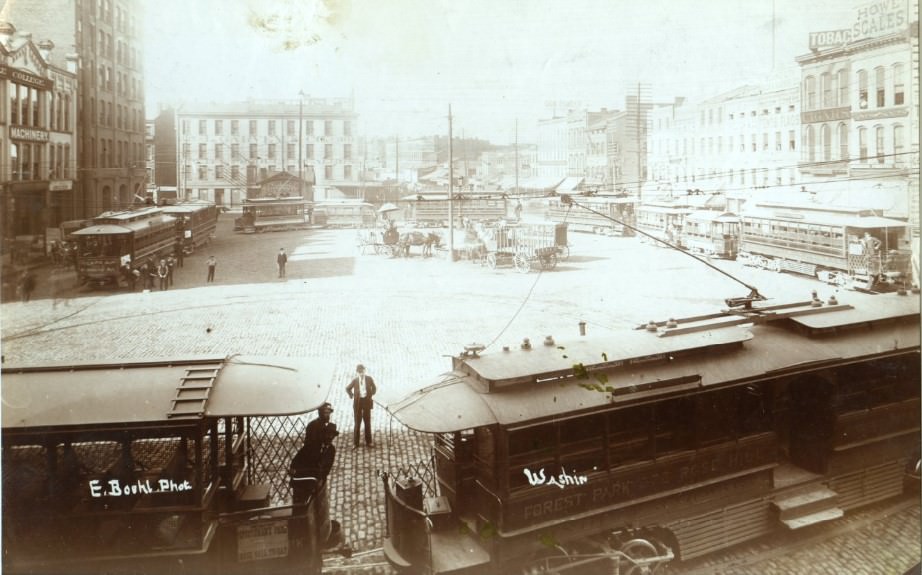
The city’s infrastructure was growing rapidly to match its population. Union Station opened on September 1, 1894, with a grand opening gala held in its main hall. It became one of the busiest rail terminals in the country. Around the same time, construction was underway on a new City Hall, and the Washington Avenue streetcar loop was already moving thousands of residents daily by 1890.
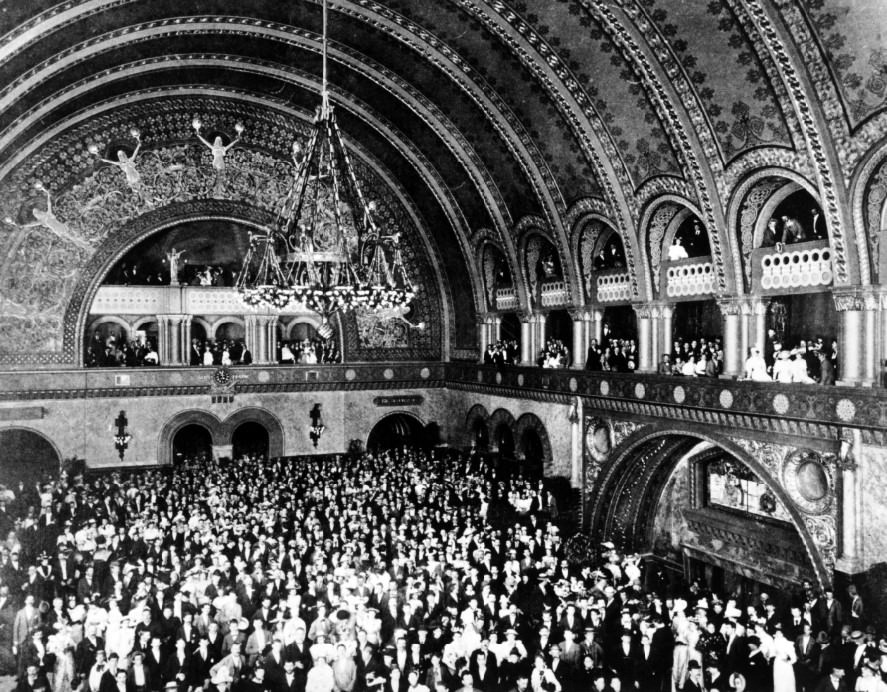
Union Station's Grand Hall during the original opening gala, September 1, 1894.
Union Station’s Grand Hall during the original opening gala, September 1, 1894.
The Washington Avenue streetcar loop in St. Louis in 1890.
Saint Louis City Hall Construction, 1895

Hotels, commercial buildings, and cultural institutions filled the downtown blocks. The St. Nicholas Hotel on Locust Street, originally designed by renowned architect Louis Sullivan and built in 1893, stood as one of the city’s finer addresses. The Lindell Hotel on Washington Avenue at 6th Street had been rebuilt in 1874 after a fire, partly funded by $100,000 from Washington Avenue businessmen who believed a major hotel would drive commerce along the street. Their bet paid off.
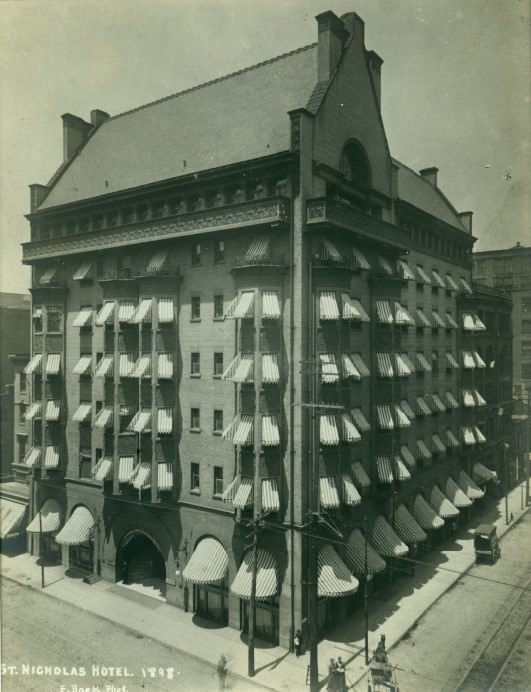
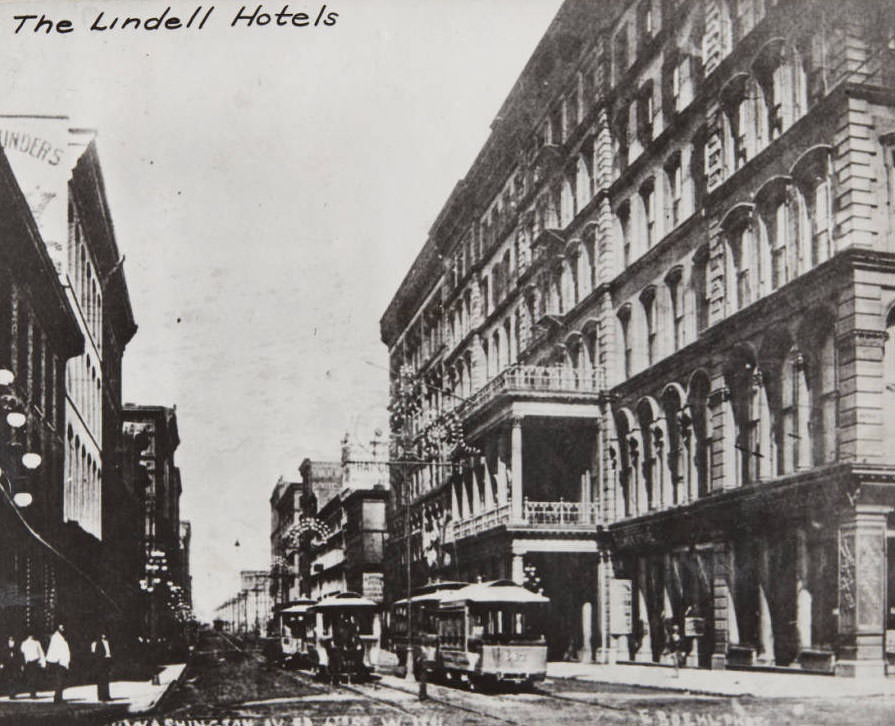
St. Nicholas Hotel on Locust Street between Eighth and Ninth Streets, 1894
The Lindell Hotel which was located on Washington Avenue at 6th Street, 1891

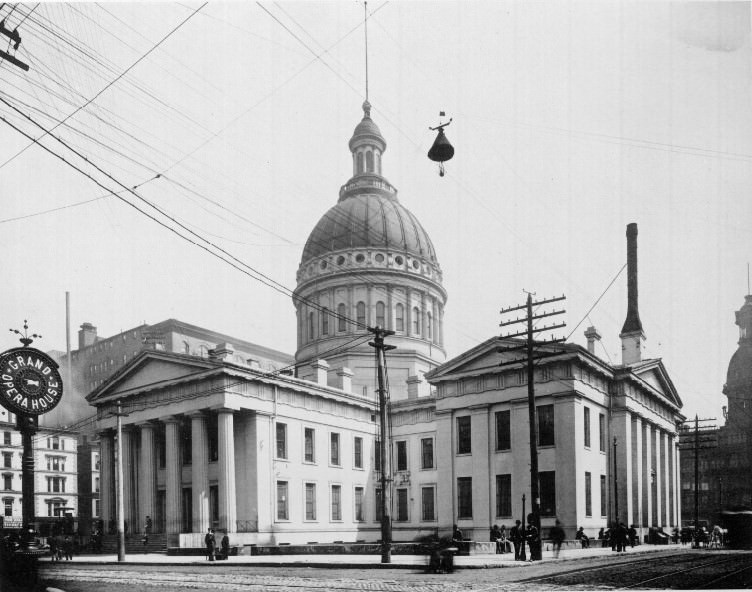
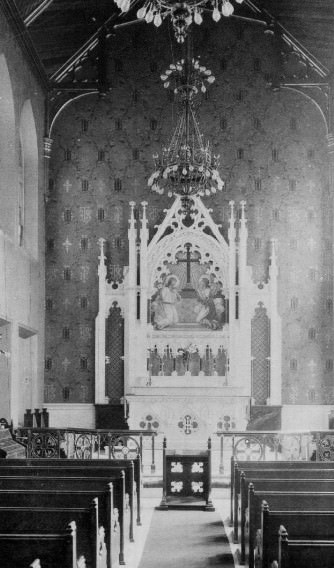
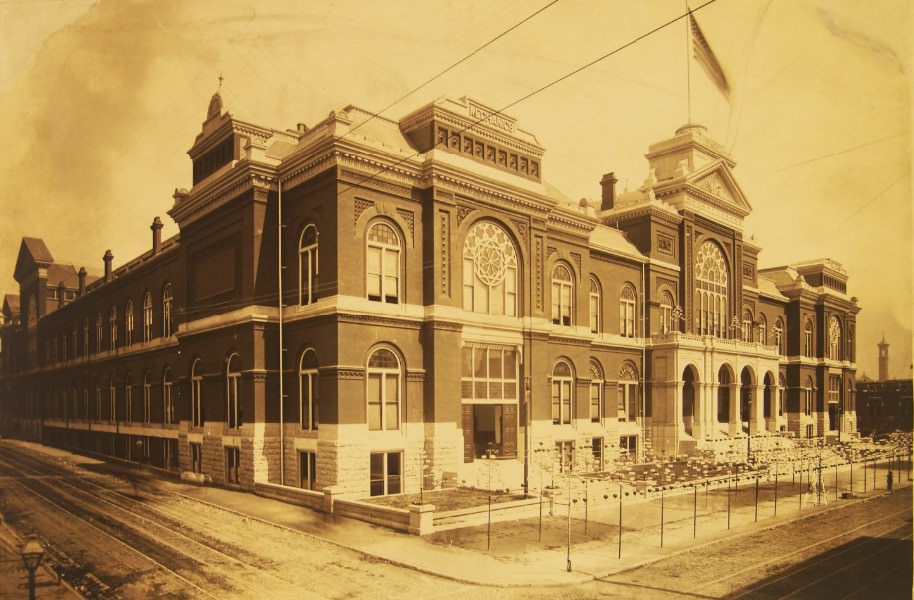
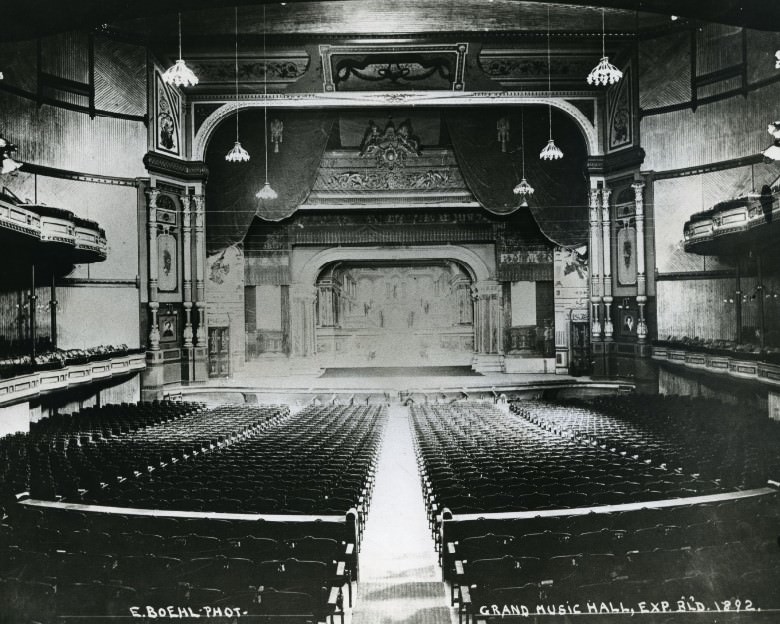
Cultural life in the city was anchored by several key institutions. The Old Exposition and Music Hall hosted concerts, lectures, and the annual St. Louis Exposition each fall. The Old Court House, a landmark since the antebellum era, continued to serve as a center of civic life. Christ Church Cathedral and other houses of worship dotted the neighborhoods, offering community gathering points across the city.
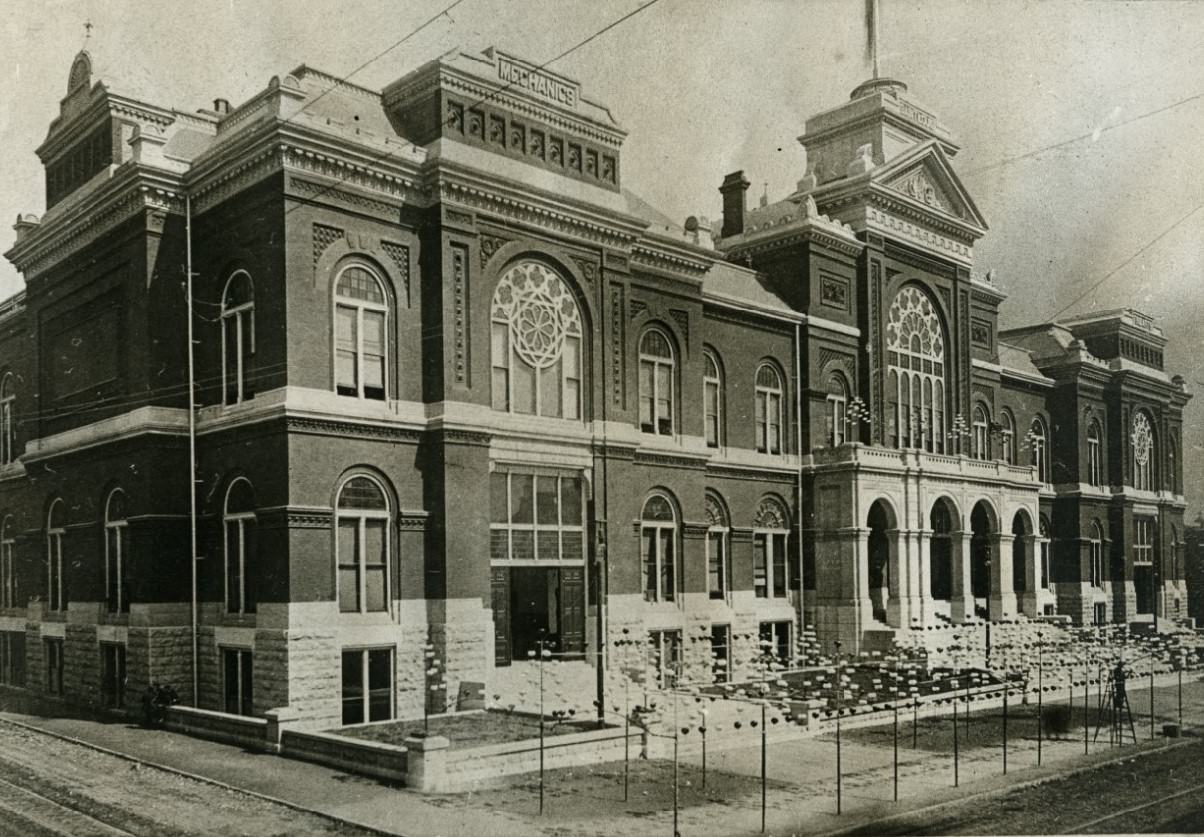
Exposition Hall, 1890
Music Hall of the Exposition Building, 1892
Old Court House, St. Louis, Missouri, 1895
Christ Church Cathedral, 1895

Wealthier residents built impressive homes away from the industrial core. Samuel Cupples, who founded what became the largest woodenware company in the United States in 1851, built his home at 3673 Pine Street around 1890. Tower Grove Dairy on Oregon Avenue supplied the city’s growing demand for fresh dairy products, a sign of how both private enterprise and everyday necessities were scaling up together.
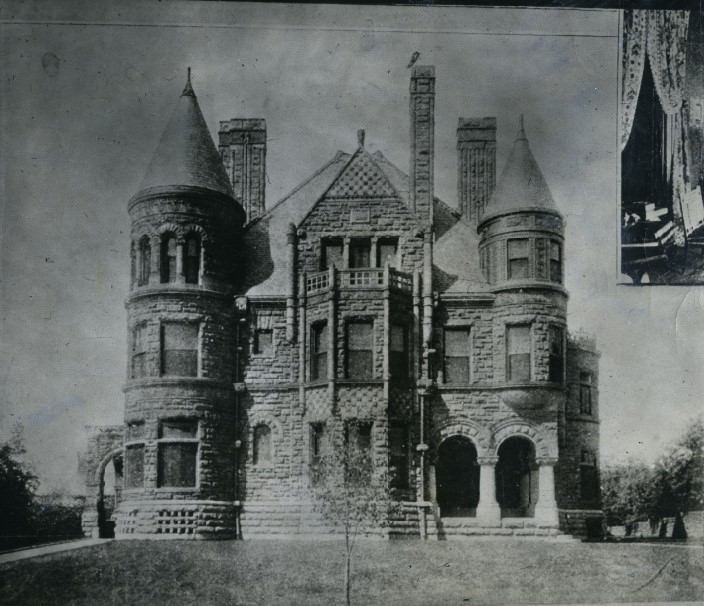
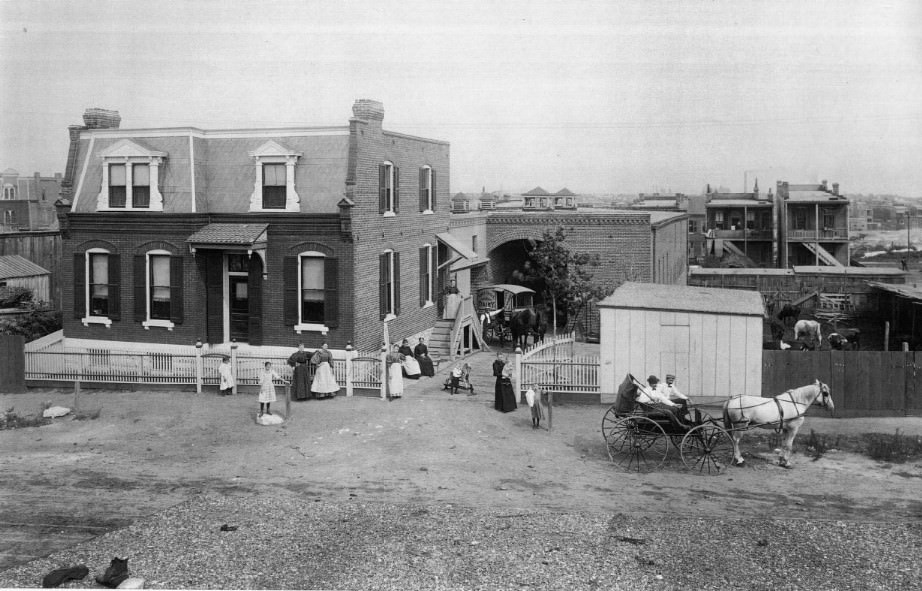
Samuel Cupples, who in 1851 established the firm which became the largest woodenware company in the United States, built this home at 3673 Pine in 1890, about which time was taken.
The Tower Grove Dairy, located at 2922 Oregon Avenue, St. Louis, 1894

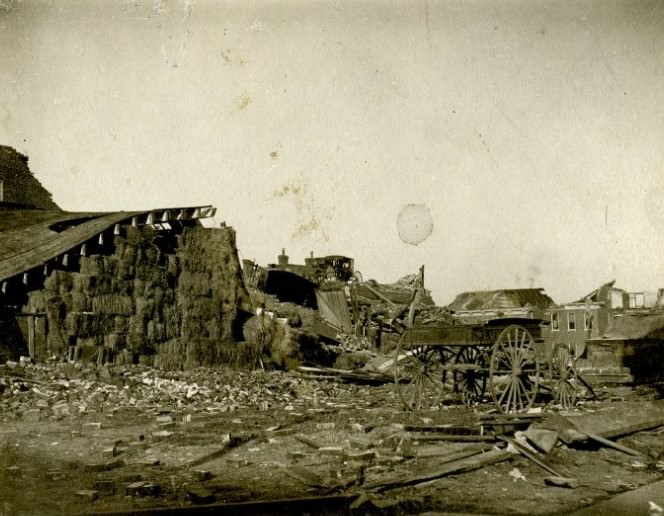
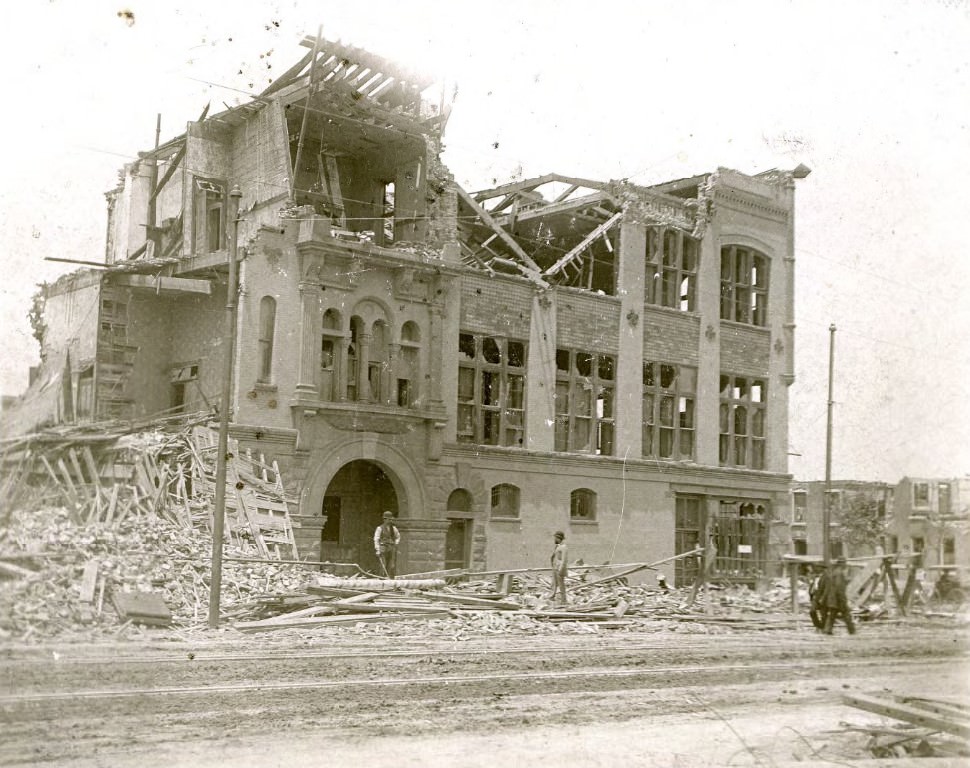
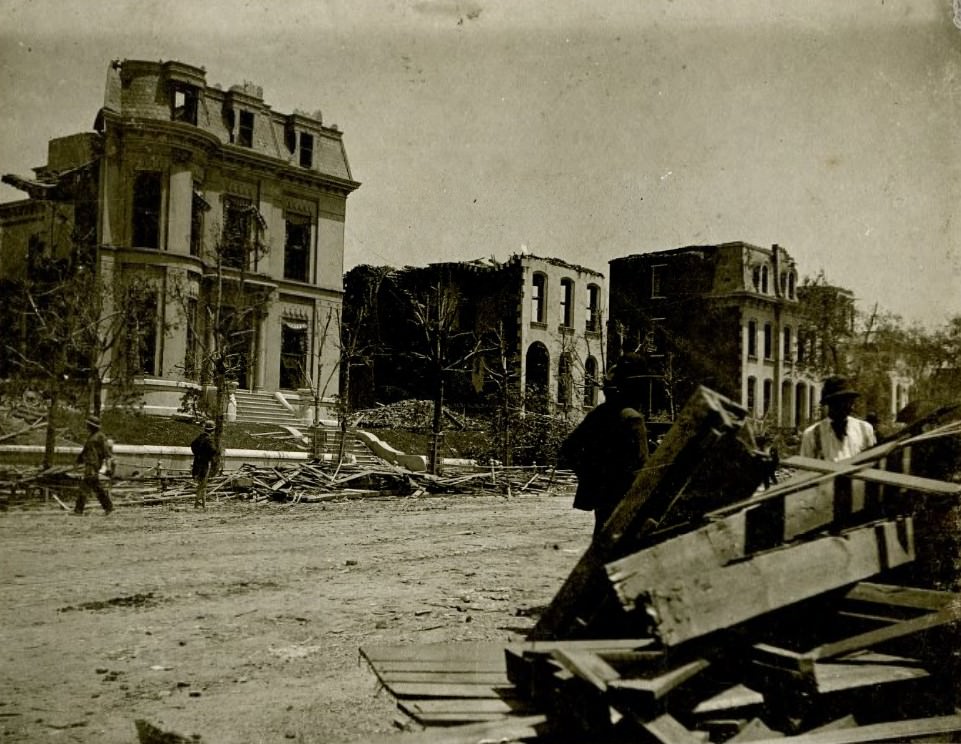
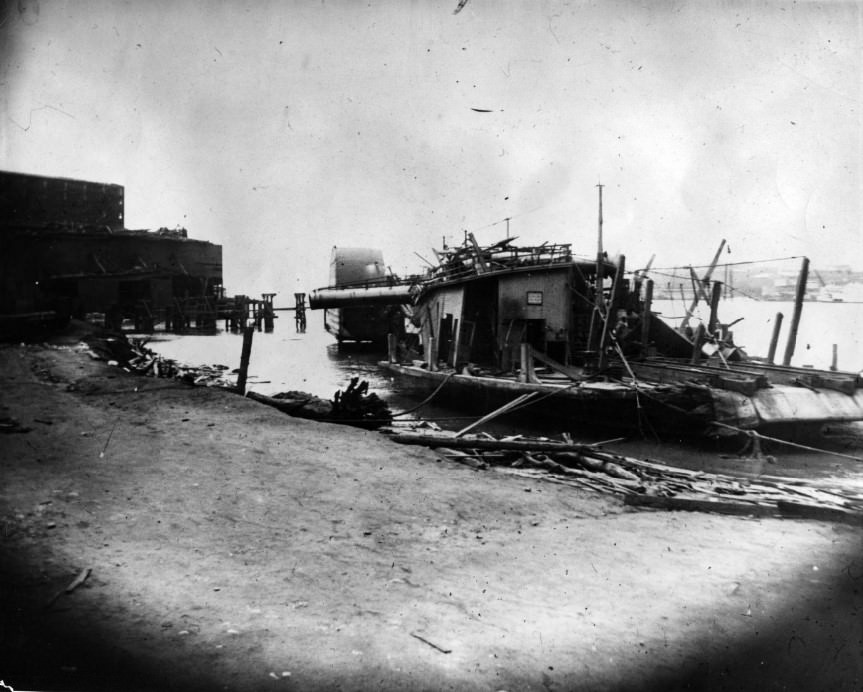
On May 27, 1896, a powerful tornado tore through St. Louis and East St. Louis, killing hundreds of people and causing catastrophic destruction. The storm cut through residential neighborhoods, collapsed multi-story buildings, and wrecked structures along the riverfront — including the transfer boat Ma Dell. The Lafayette Square neighborhood was among the hardest hit, with entire blocks of homes and commercial buildings reduced to rubble. Bystanders gathered in the streets amid the wreckage as rescue efforts began.
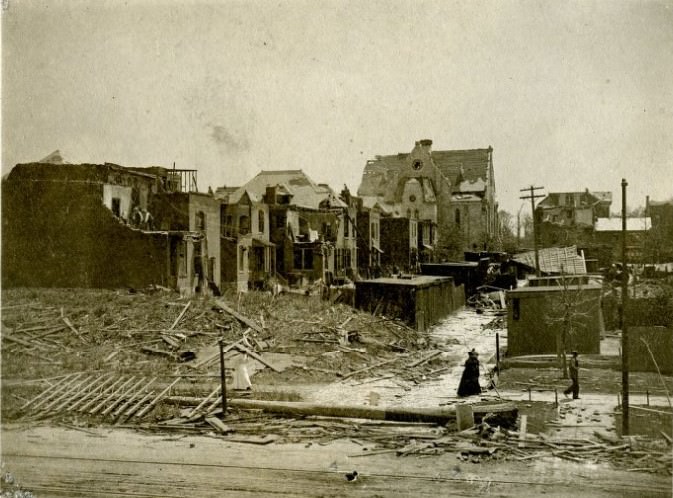
An elevated view of an alley, as well as several destroyed buildings, residential properties, and a church in a St. Louis neighborhood after a tornado hit on May 27, 1896.
This levee scene taken just after the cyclone of 1896, shows the damage to the transfer boat Ma dell.
The debris and structural damage of a barn, building, and wagon caused by a tornado on May 27,1896 in St. Louis, Missouri,
Large, multi-story building destroyed in the May 27, 1896 tornado which hit St. Louis, Missouri.
Street view of destroyed buildings, debris and bystanders in the aftermath of a tornado which hit St. Louis' Lafayette Square neighborhood, 1896
Street view of destroyed buildings, debris and bystanders in the aftermath of a tornado which hit St. Louis’ Lafayette Square neighborhood, 1896

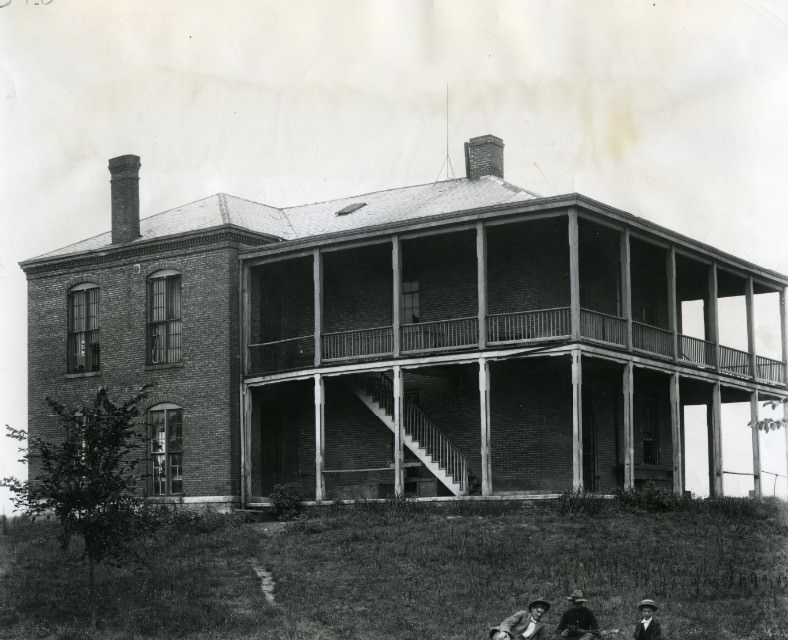
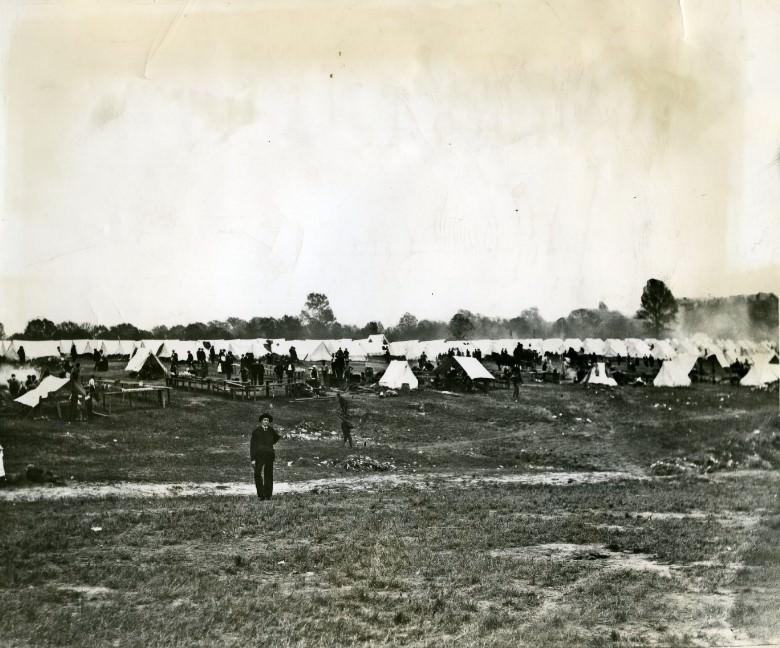
By 1898, the Spanish-American War had brought a new kind of activity to the city. Jefferson Barracks, the historic military post on the southern edge of St. Louis, became a staging ground for artillery units heading to war. Camp Stephens rose up on the reservation, its rows of tents housing soldiers throughout the year. The barracks headquarters remained active, and the old Guard House — a structure with a long history of both routine military discipline and more dramatic incidents — stood as one of the oldest reminders of the post’s origins.
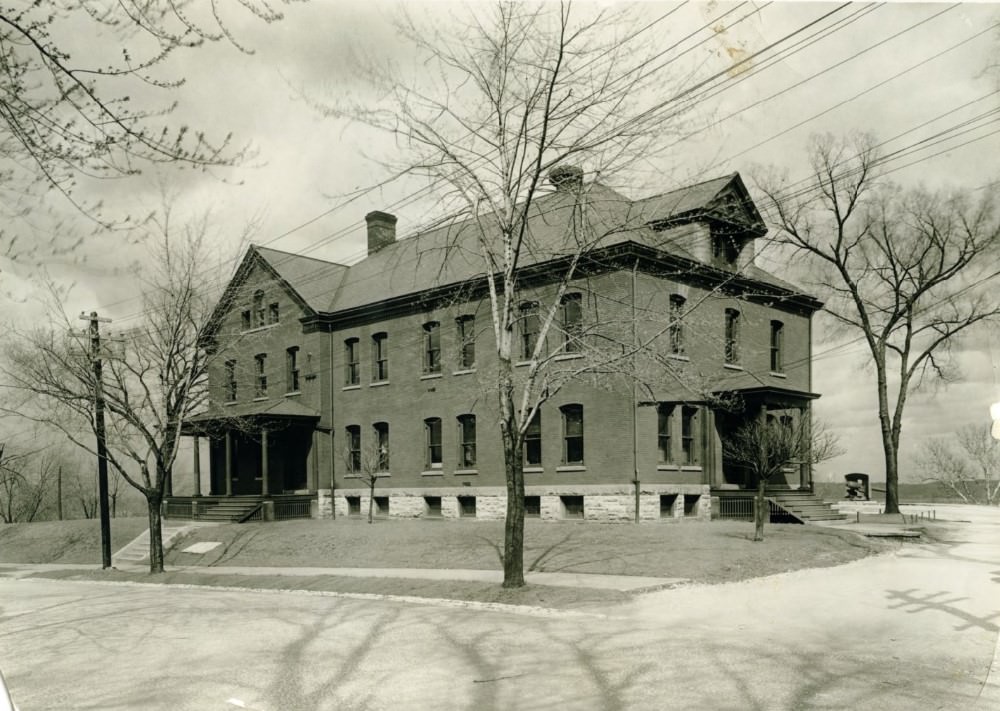
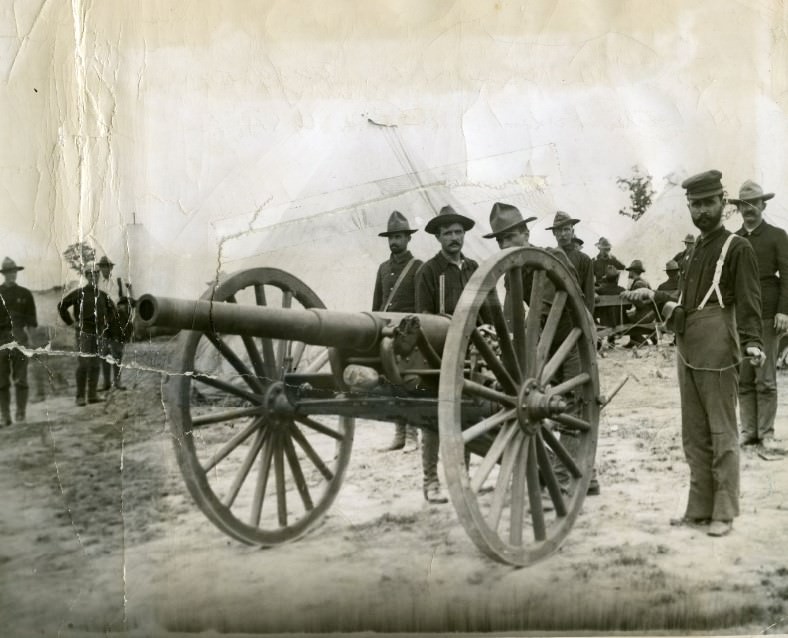
Jefferson Barracks - 1898 Headquarters, 1898
Jefferson Barracks – 1898 Headquarters, 1898
Jefferson Barracks - Camp Stephens Artillery Battery, Spanish-American War, 1898
Jefferson Barracks – Camp Stephens Artillery Battery, Spanish-American War, 1898
Jefferson Barracks, showing the old Guard House. Besides many other incidents, amusing and tragic, the old Guard House was the genesis of the new Jefferson Barracks.
Camp Stephens, Jefferson Barracks, showing the tent city which stood on the reservation throughout 1898.

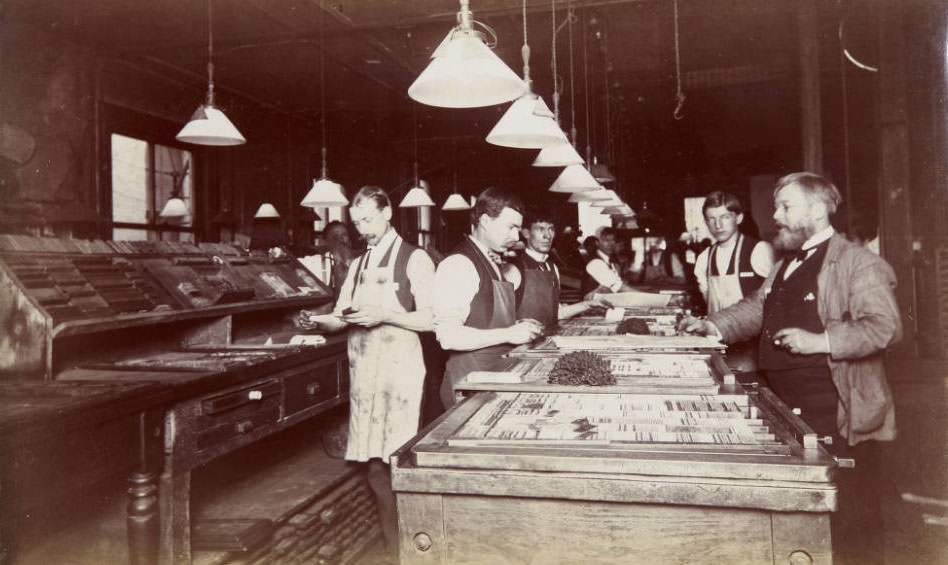
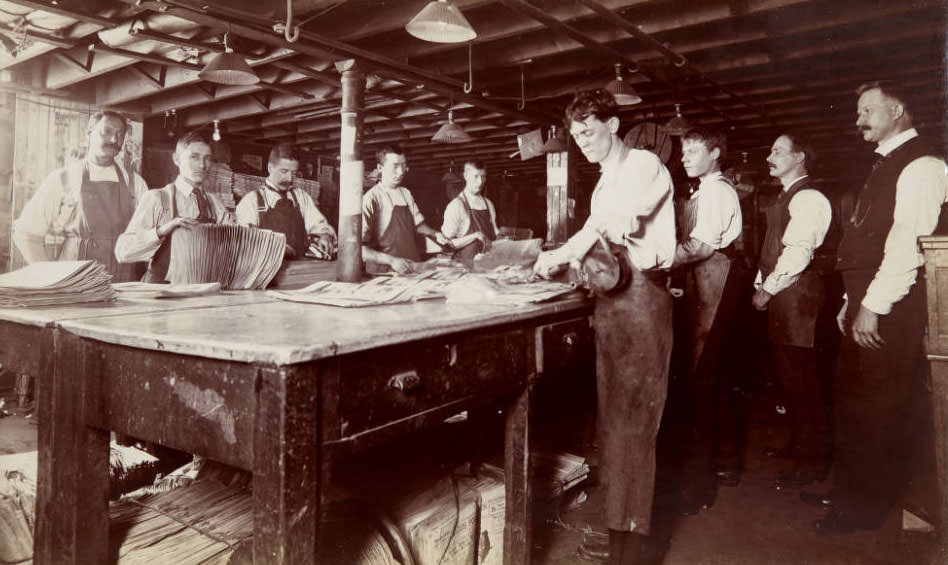
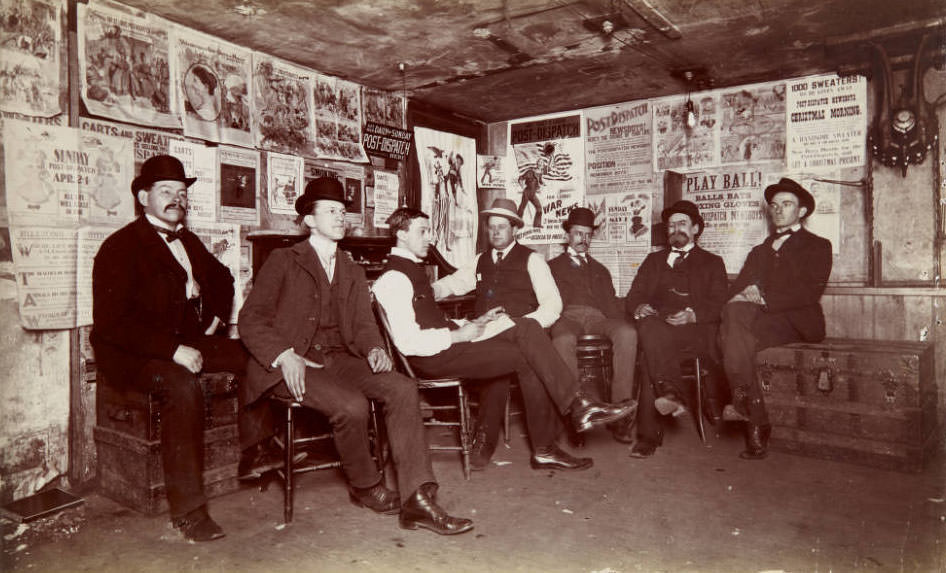
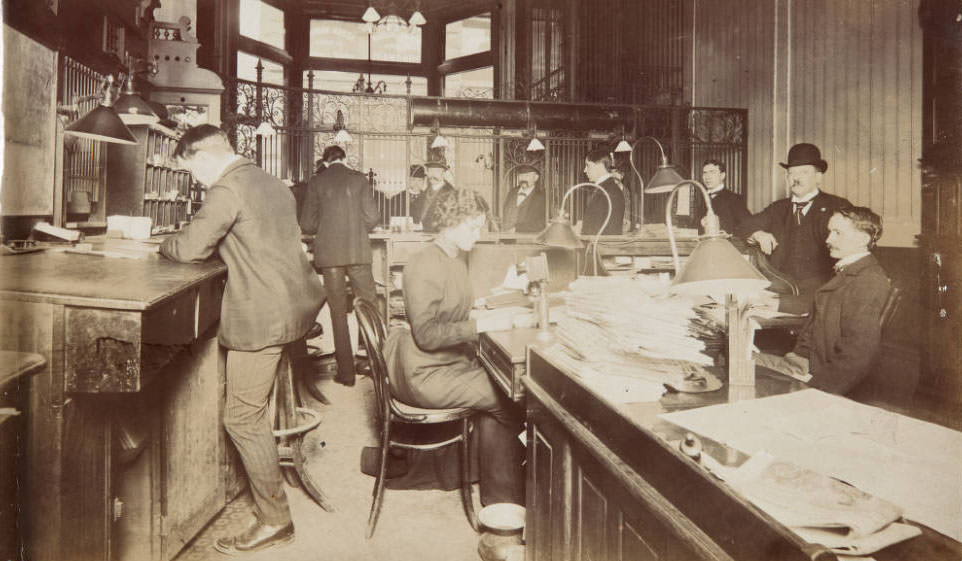
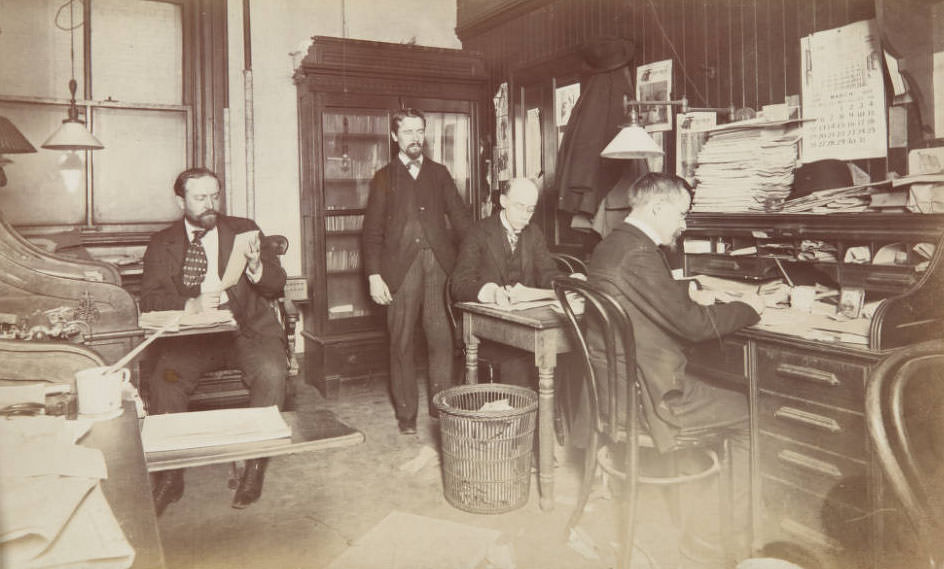
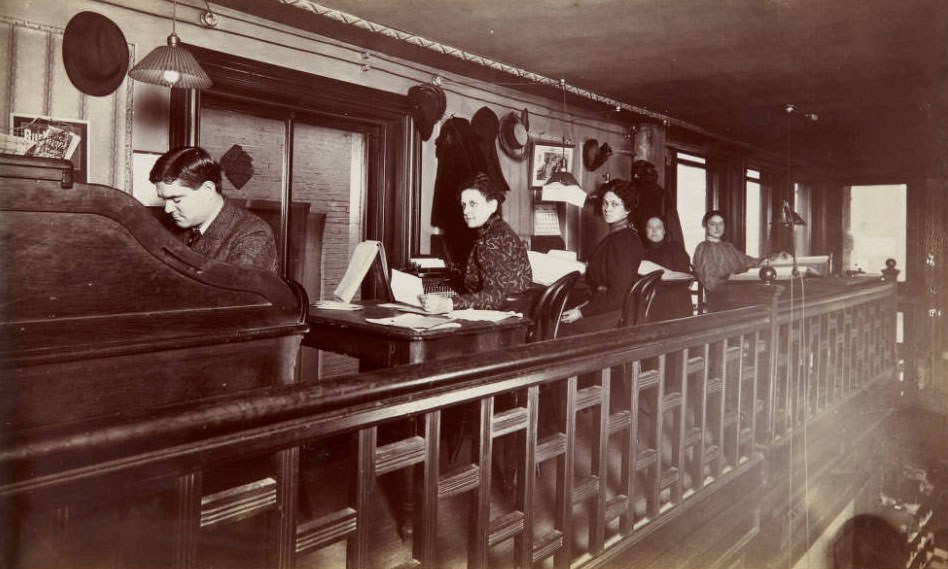
The St. Louis Post-Dispatch was one of the city’s most important institutions by the end of the decade. A series of photographs taken in 1899 documented the full operation of the newspaper — from the art department and mechanical press rooms to the secretarial pool, the counting room, the circulation department, and the workers who set type by hand. Bundles of newspapers were stacked and readied for delivery each day, feeding the city’s appetite for news in an era before radio or television.
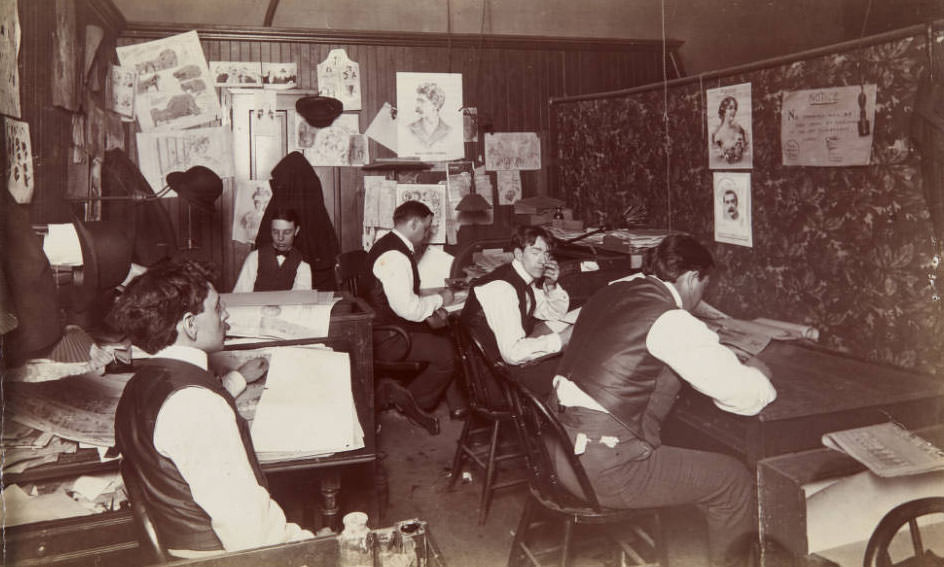
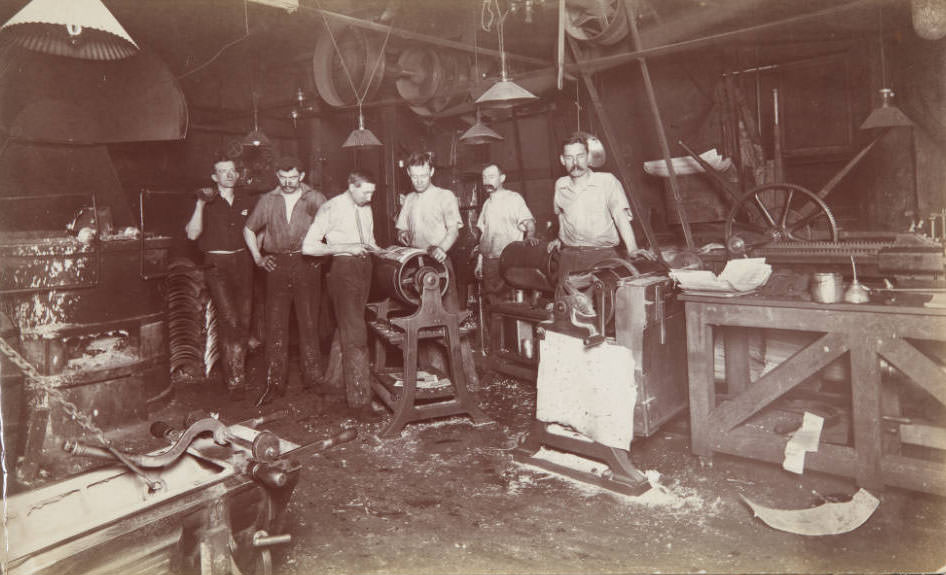
Art Department employees at work, 1899
Post-Dispatch workers with machinery, 1899
Several men setting type by hand in a large workroom, 1899
Bundling newspapers, 1899
Seven seated men who comprised the circulation department at the Post-Dispatch, 1899
Counting Room employees, 1899
Four Post-Dispatch men working in office, 1899
Secretarial pool, 1899

St. Louis in the 1890s was not a city of one character. It was a place where grand architecture and grinding poverty existed blocks apart. Where steamboats loaded wheat while workers in crowded neighborhoods struggled to get by. Where new public buildings were rising even as tornado wreckage was still being cleared. The photographs that survive from this decade capture that tension honestly — a city in motion, unfinished, and very much alive.
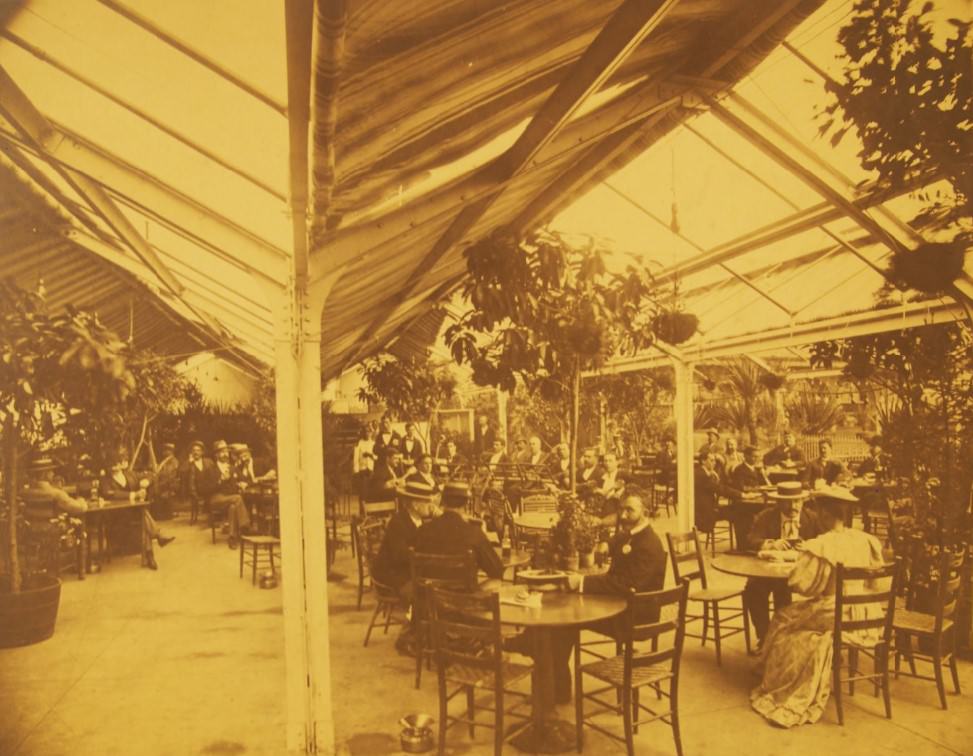
Roof Garden U.T. Blg, 1894
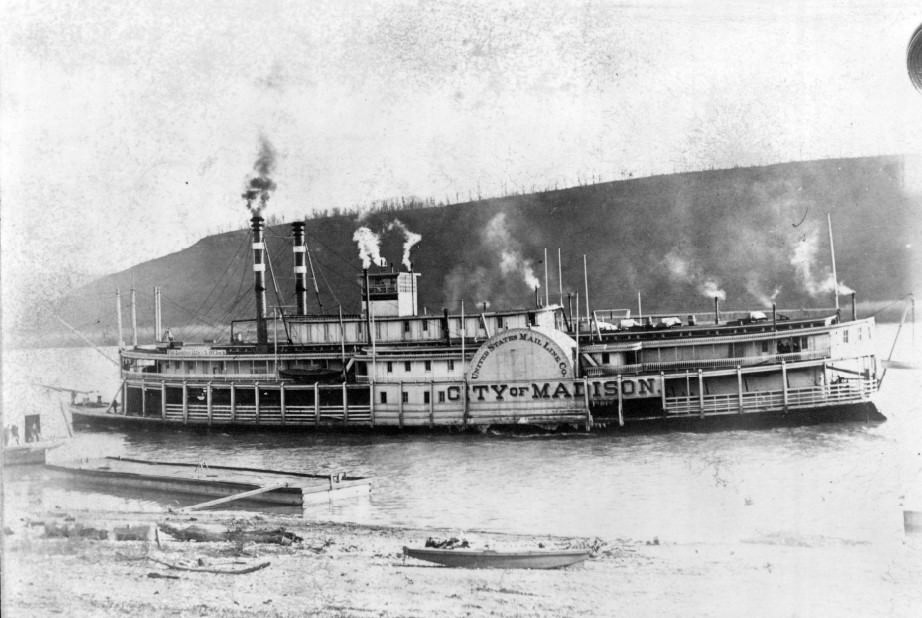
City of Madison, 1894.
The Old Exposition and Music Hall, 1890
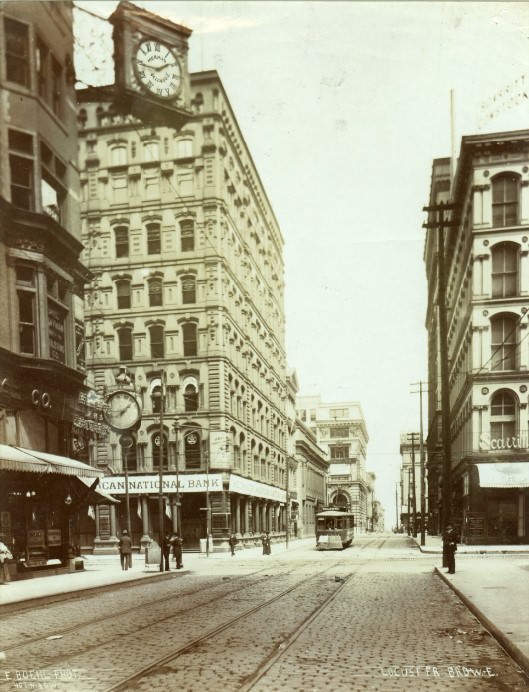
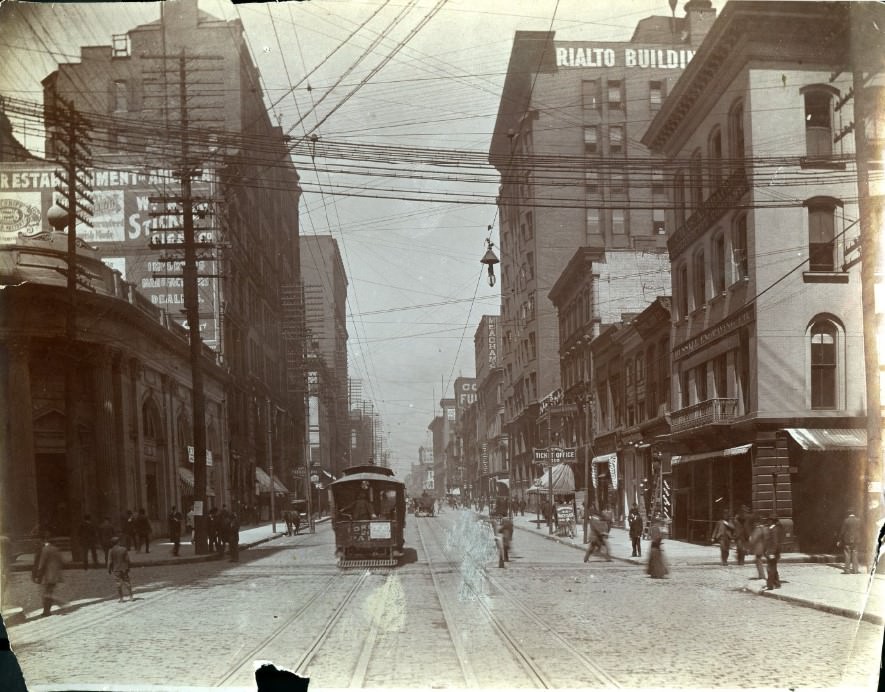
Locust Street in St. Louis looking east across the intersection at Broadway, 1896
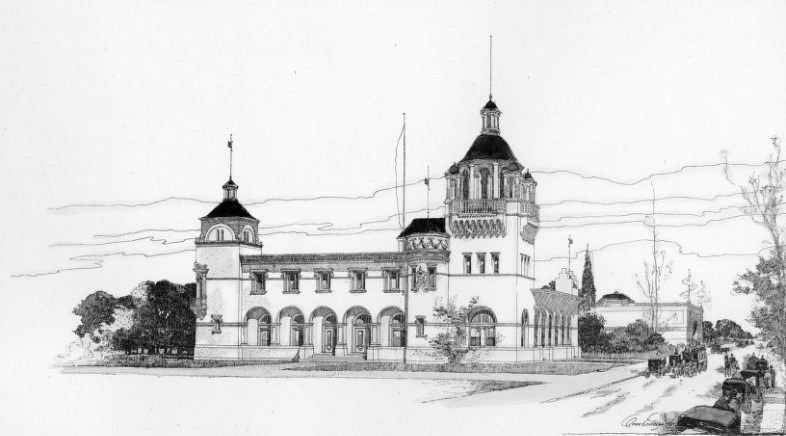
Competitive Design for the Missouri Building, 1904 World's Fair, 1890
Competitive Design for the Missouri Building, 1904 World’s Fair, 1890
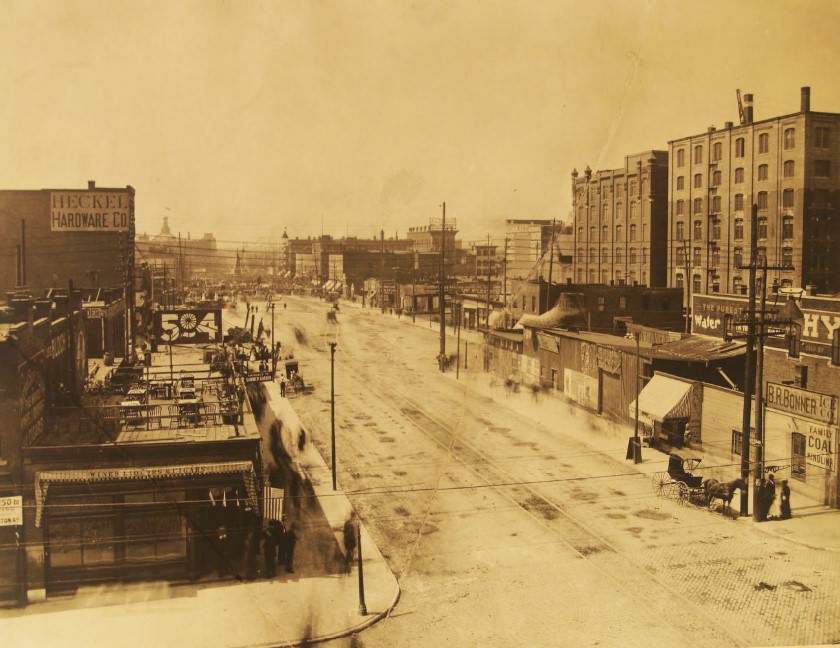
12th St. From Washington Ave. South, 92', 1892
12th St. From Washington Ave. South, 92′, 1892
The intersection of Pine and Broadway in St. Louis in the late 1890s. The view is looking north on Broadway across Pine.
Fourth Street in St. Louis looking north across the intersection with Pine Street.
This Boehl street scene photo was taken looking west on Washington Avenue at Sixth Street in 1891.
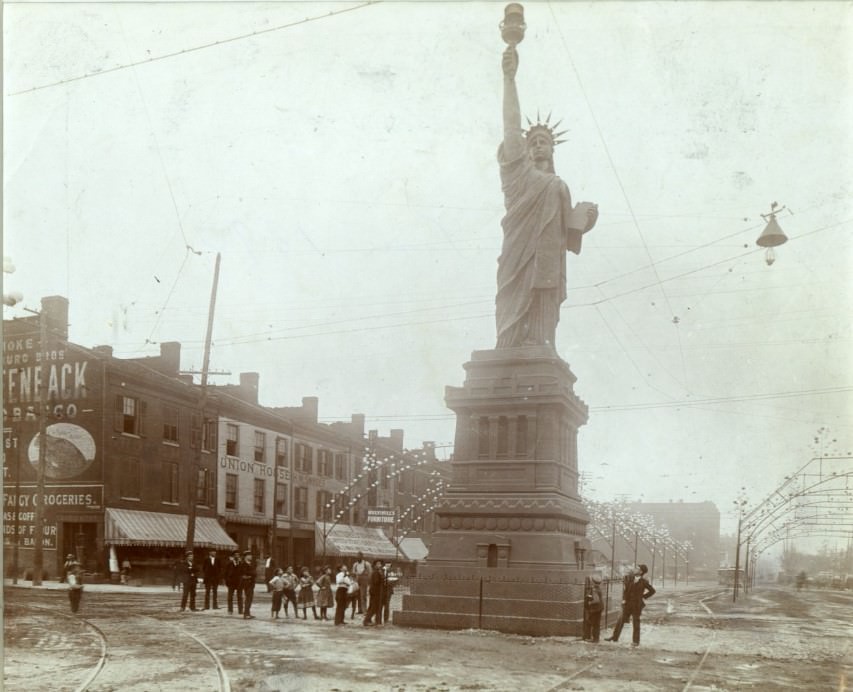
A replica of the Statue of Liberty at Twelfth and Pine in St. Louis in 1890.
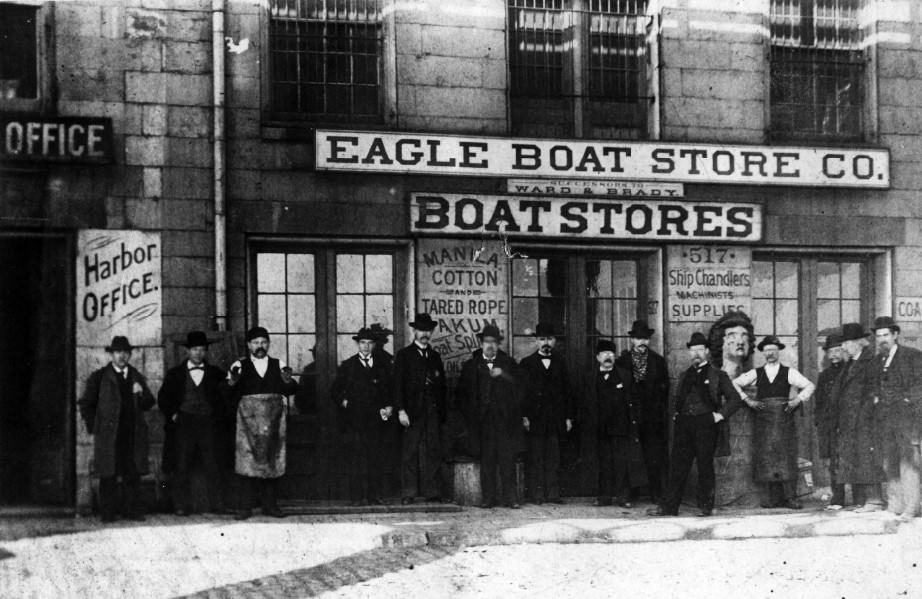
The Eagle Boat Store in 1895.
Riverfront Old Pix 1897
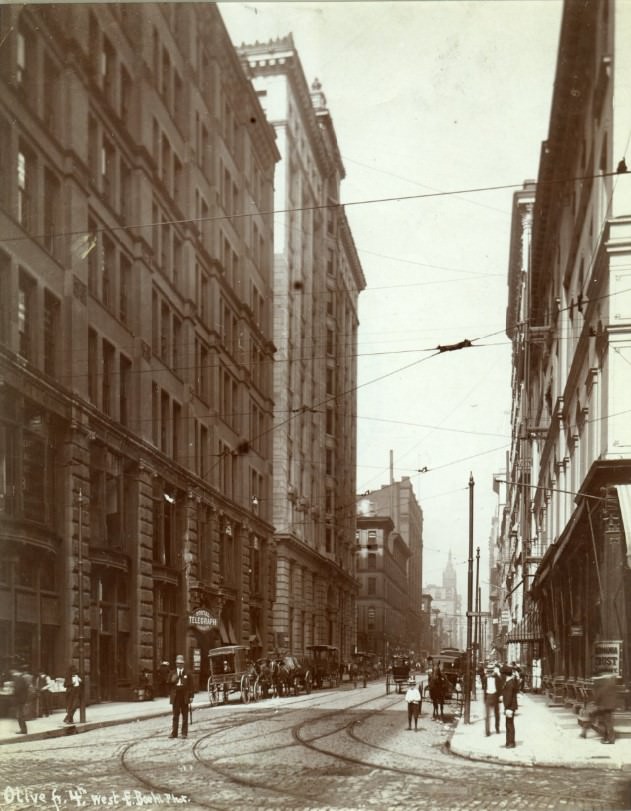
Olive Street in St. Louis looking west from Fourth Street, 1894
Ohio River, Dredging at Brooklyn Harbor, Ill, 1892
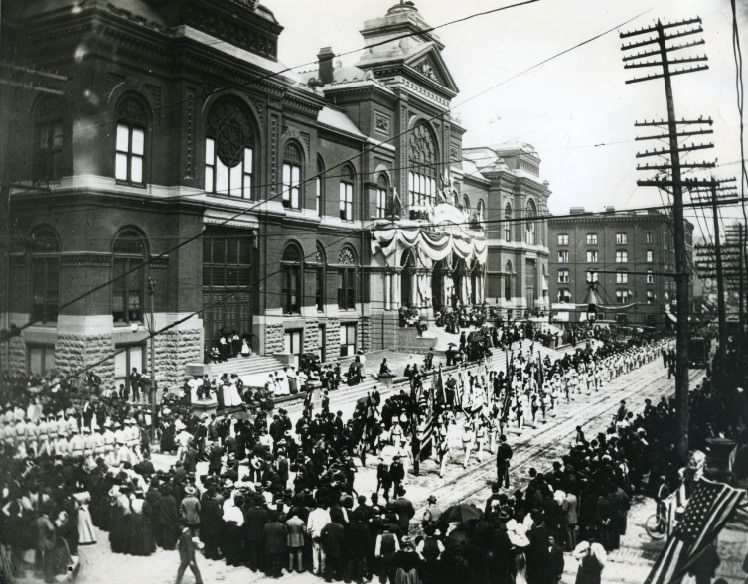
Parade by Exposition Hall, 1898
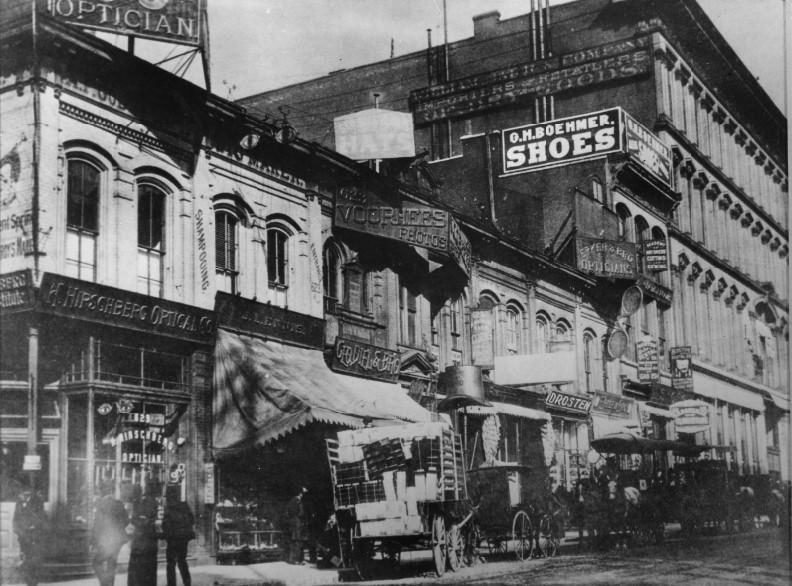
Broadway Street, 1890s
Old Street, St. Louis,1890
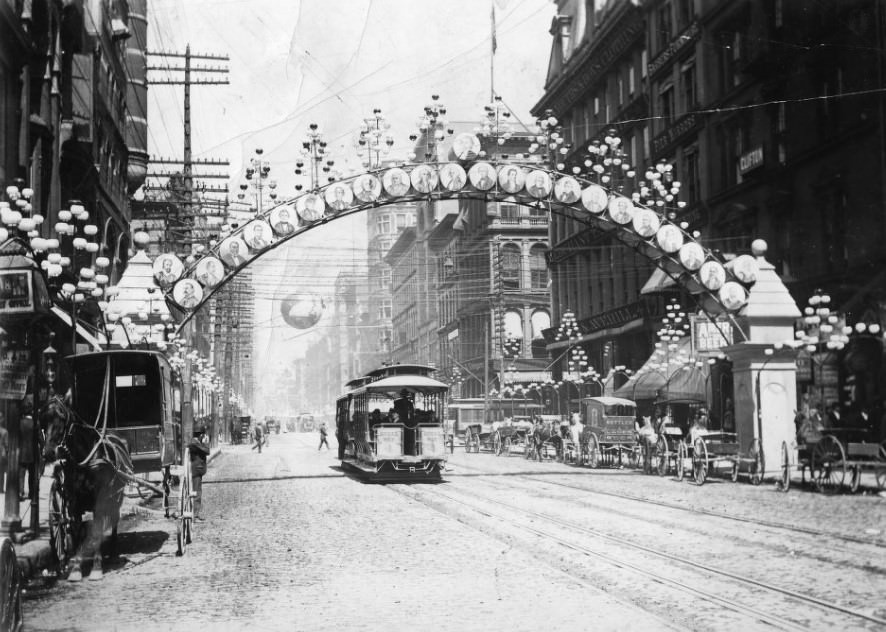
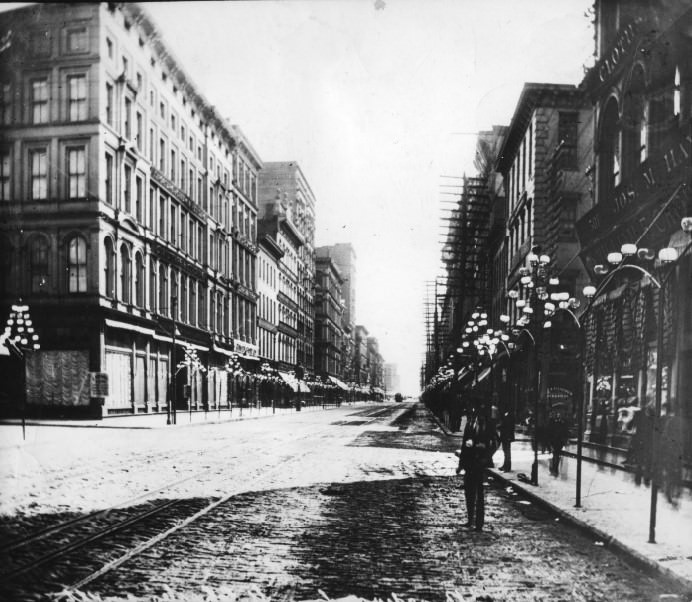
Broadway looking south from Washington. The illumination bug bit St. Louis in 1882 when 140 plumbers scurried to set up gas pipes for lamplit arches along 44 blocks of the business section.
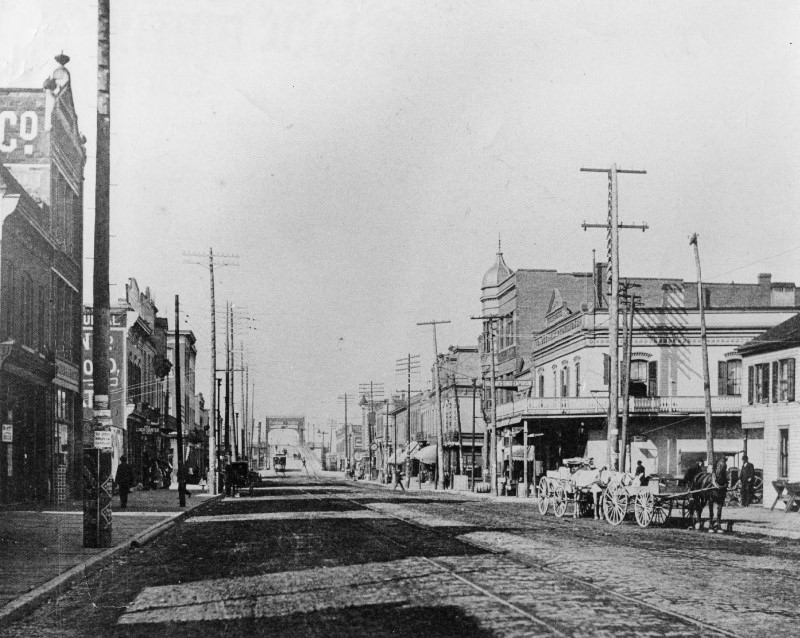
View on Broadway- East St. Louis, 1890
Broadway and Chestnut Streets, 1890
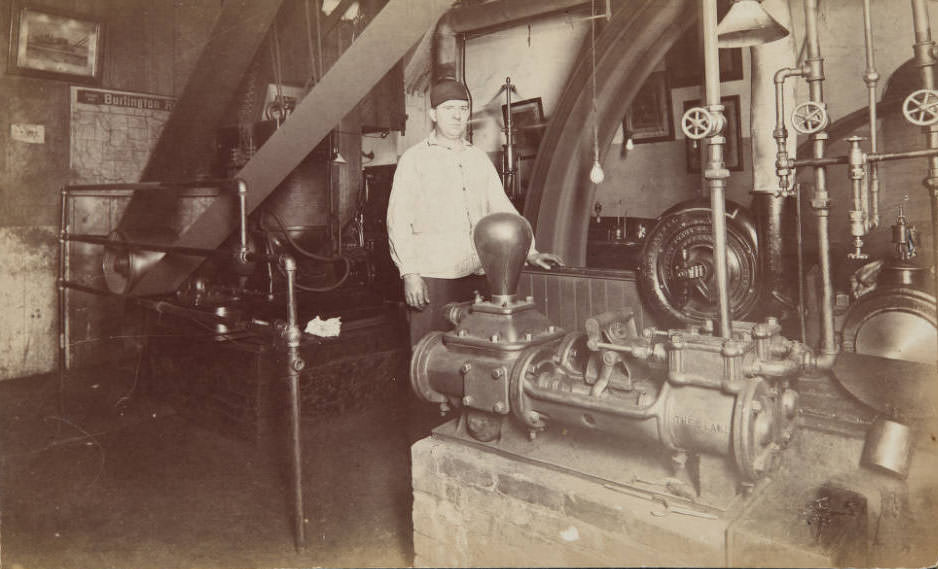
A man operating mechanical building equipment from The Deane Steam Pump company, 1899
Enjoyed this post? Get new ones in your inbox.

Leave a Comment

Your email address will not be published. Required fields are marked *

Share this Post 🥺

Please take a moment to share this content. Your support is greatly appreciated! 🙌🙏

Share this Post 🥺

Please take a moment to share this content. Your support is greatly appreciated! 🙌🙏
Scroll to Top
 
Hey Friend, Before You Go.. Please like & follow for more interesting content