in

Soviet Moscow: Incredible Vintage Photos Show What Moscow Looked Like in the 1950s

In the 1950s, Moscow was the beating heart of the Soviet Union. The country was still recovering from the devastating losses of World War II, yet its capital was being rebuilt and expanded at a rapid pace. The city was not just a political center — it was a symbol of Soviet ambition. The KGB operated from its headquarters there, and behind the walls of research institutes, scientists were pushing forward the nuclear and aerospace programs that would define the Cold War era.
Railway Street, April 1975

The skyline of Moscow changed dramatically during this decade. Stalin had ordered the construction of eight massive towers across the city — a group of buildings now known as the “Seven Sisters.” These wedding-cake-style skyscrapers were designed to project Soviet power and confidence. One of them, on Kudrinskaya Ploshchad, was still receiving its finishing touches as the decade began.
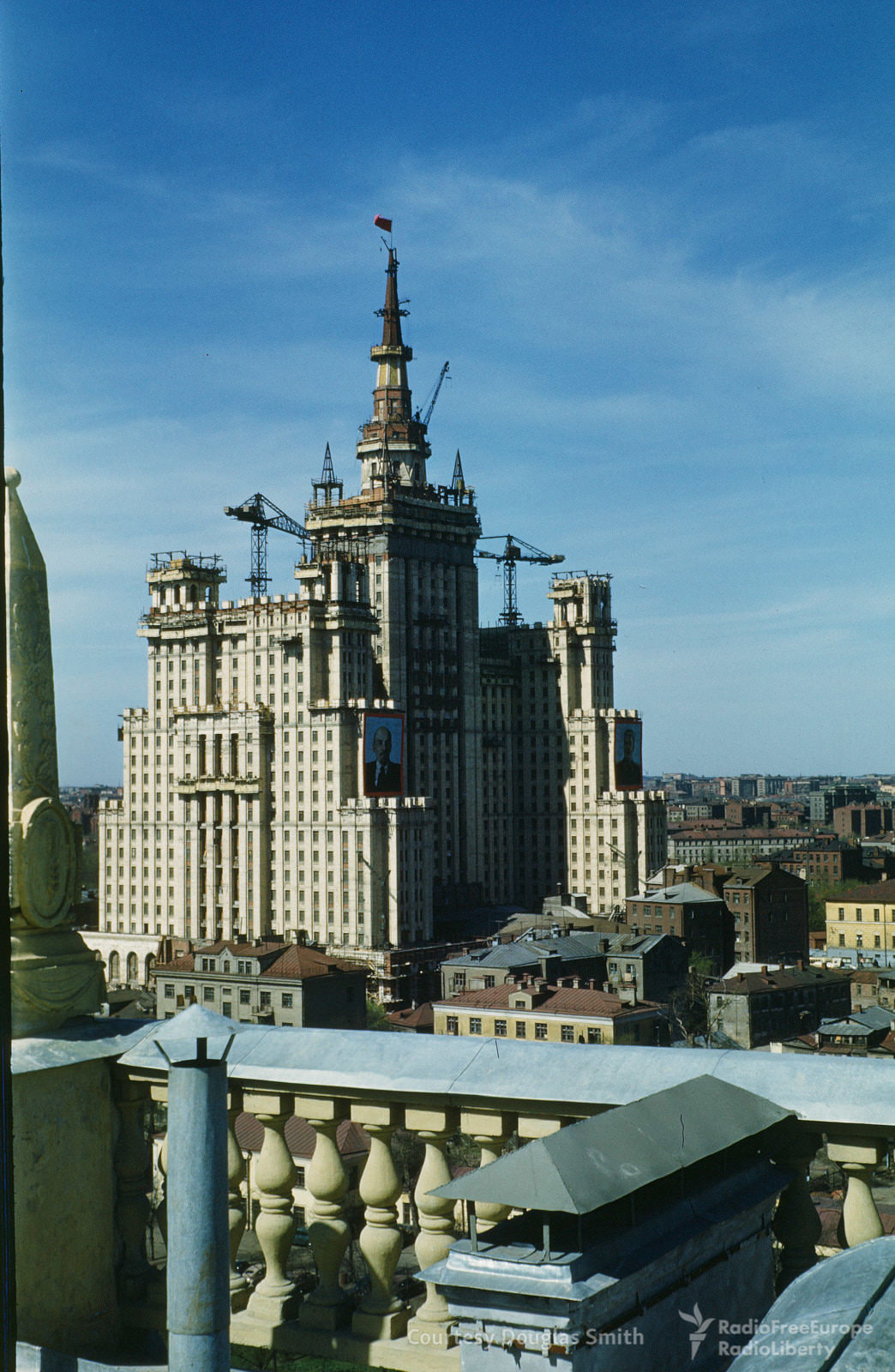
The finishing touches are put on the Stalinist skyscraper on Kudrinskaya ploshchad.
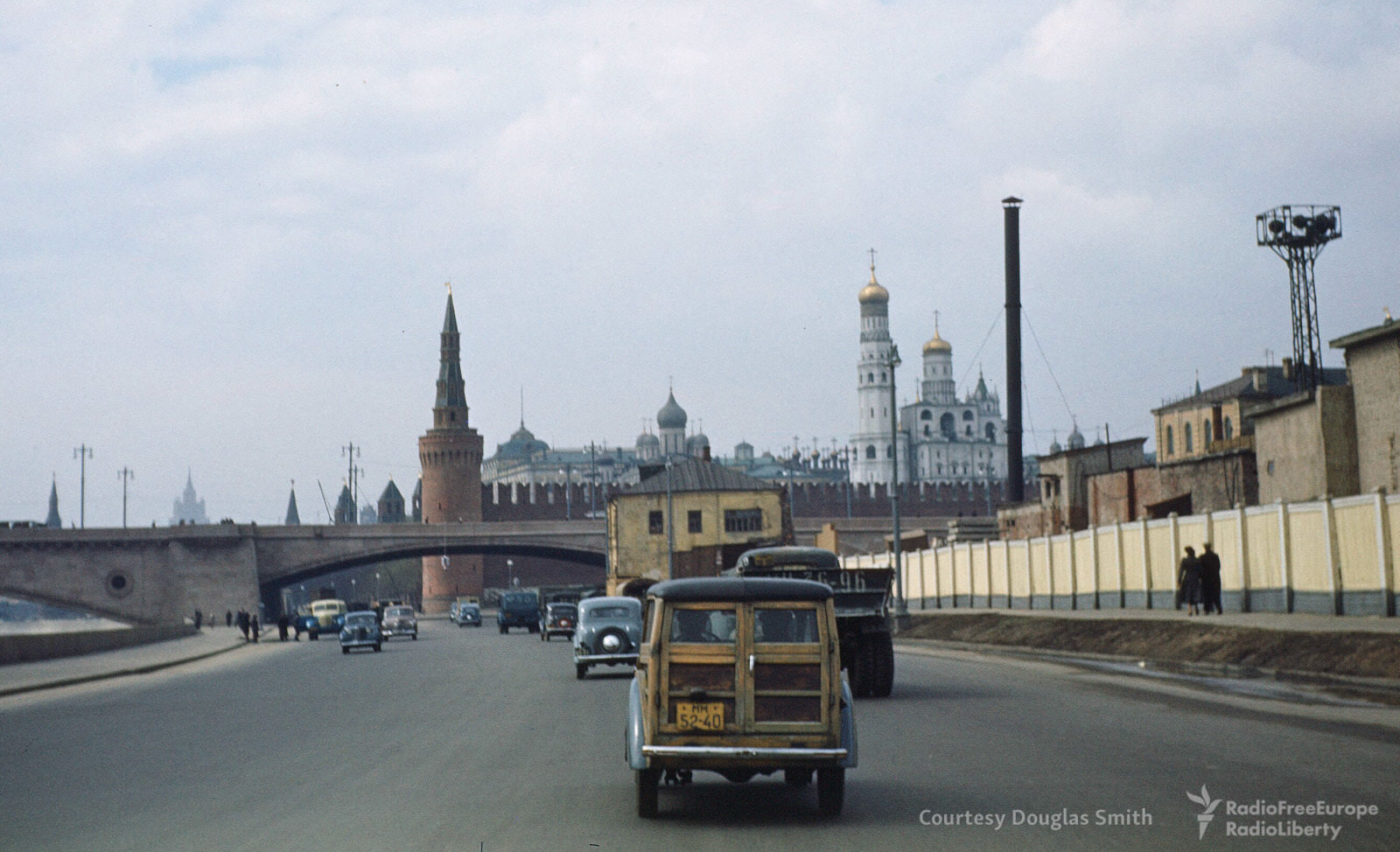
Approaching the Kremlin on Moskvoretskaya naberezhnaya, Moscow.

From many streets across the city, the towers loomed large on the horizon. Driving up Bolshaya Nikitskaya Street, the skyscraper on Kudrinskaya Ploshchad rose behind the rooftops — a constant reminder of the state’s reach. The Hilton Moscow Leningradskaya, one of the Seven Sisters, was completed in 1954 and became one of the city’s most recognizable landmarks.
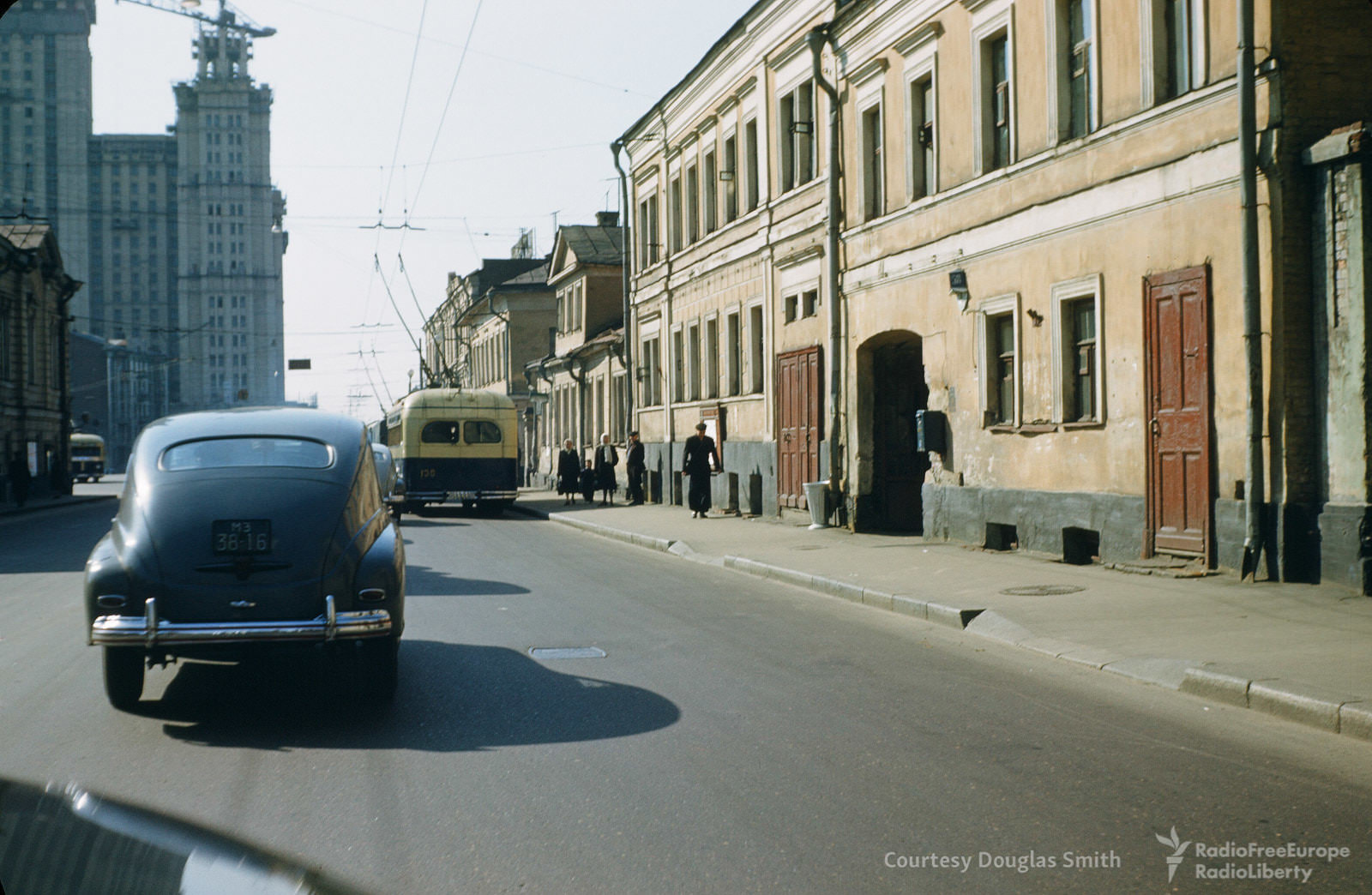
Driving up Moscow's Bolshaya Nikitskaya ulitsa, with the Stalinist skyscraper on Kudrinskaya ploshchad rising in background.
Driving up Moscow’s Bolshaya Nikitskaya ulitsa, with the Stalinist skyscraper on Kudrinskaya ploshchad rising in background.
Driving down Novinsky bulvar, Moscow.

Not every corner of Moscow looked grand. In the Tagansky district, log-topped housing and rusted corrugated steel sheds sat side by side — a stark contrast to the monumental architecture being built elsewhere. The gap between Soviet propaganda and lived reality was visible in the city’s own streets.
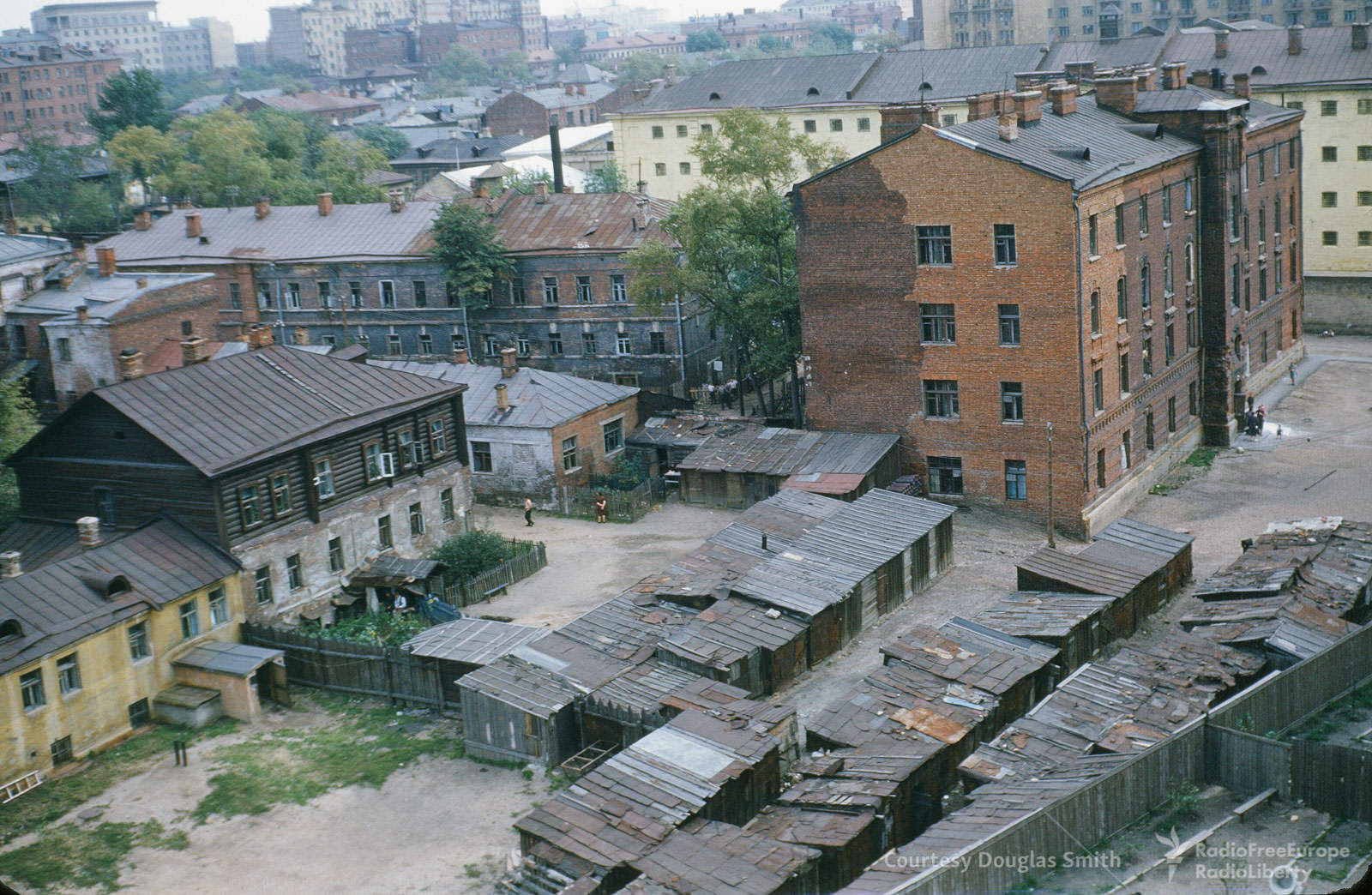
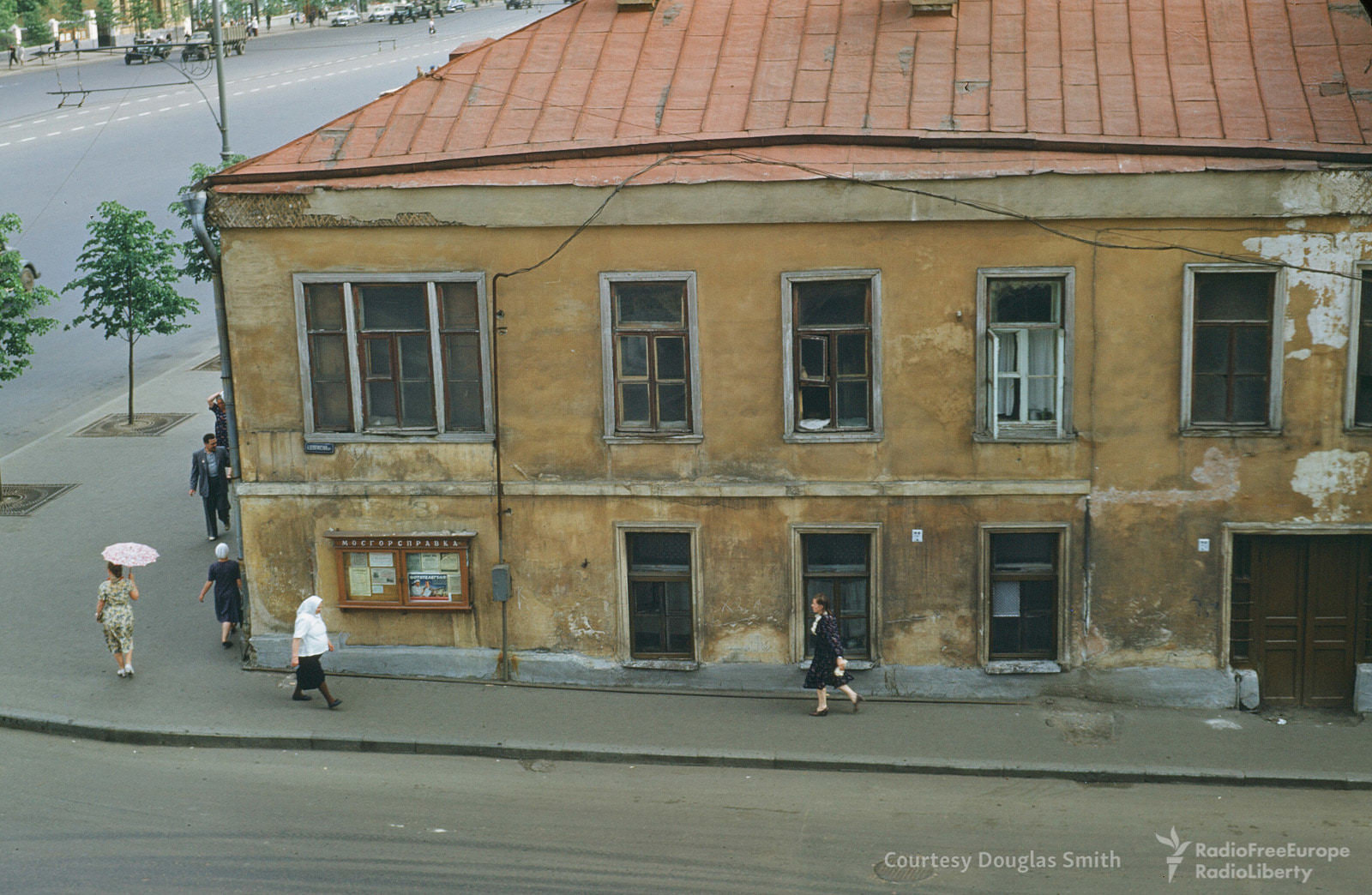
Log-topped housing and ramshackle sheds topped with corrugated steel in Moscow's Tagansky raion.
Log-topped housing and ramshackle sheds topped with corrugated steel in Moscow’s Tagansky raion.
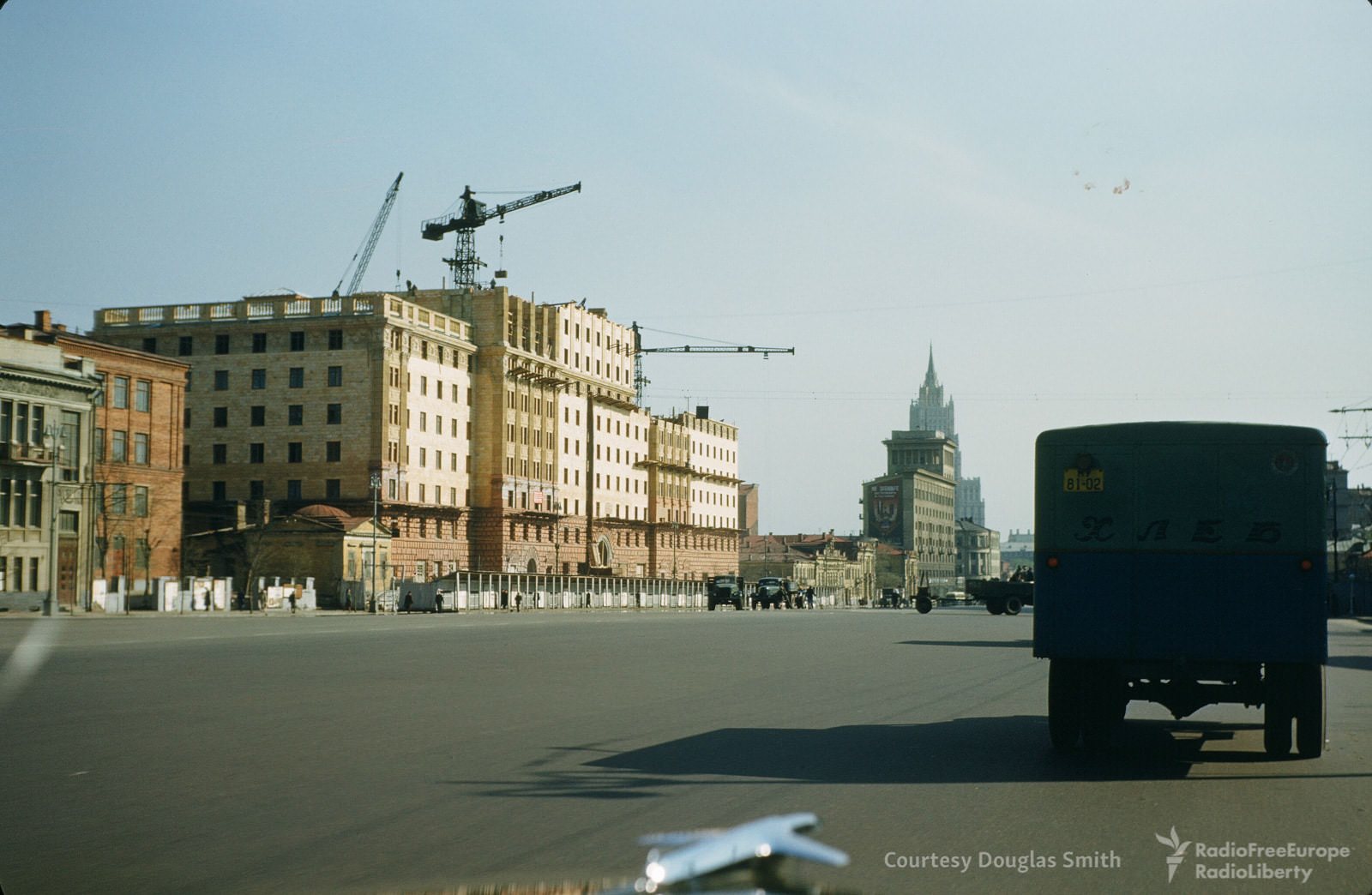
The corner of Moscow's Bolshoi Devyatinsky pereulok and Novinsky bulvar, near the new U.S. Embassy opened shortly after May Day in 1953.
The corner of Moscow’s Bolshoi Devyatinsky pereulok and Novinsky bulvar, near the new U.S. Embassy opened shortly after May Day in 1953.

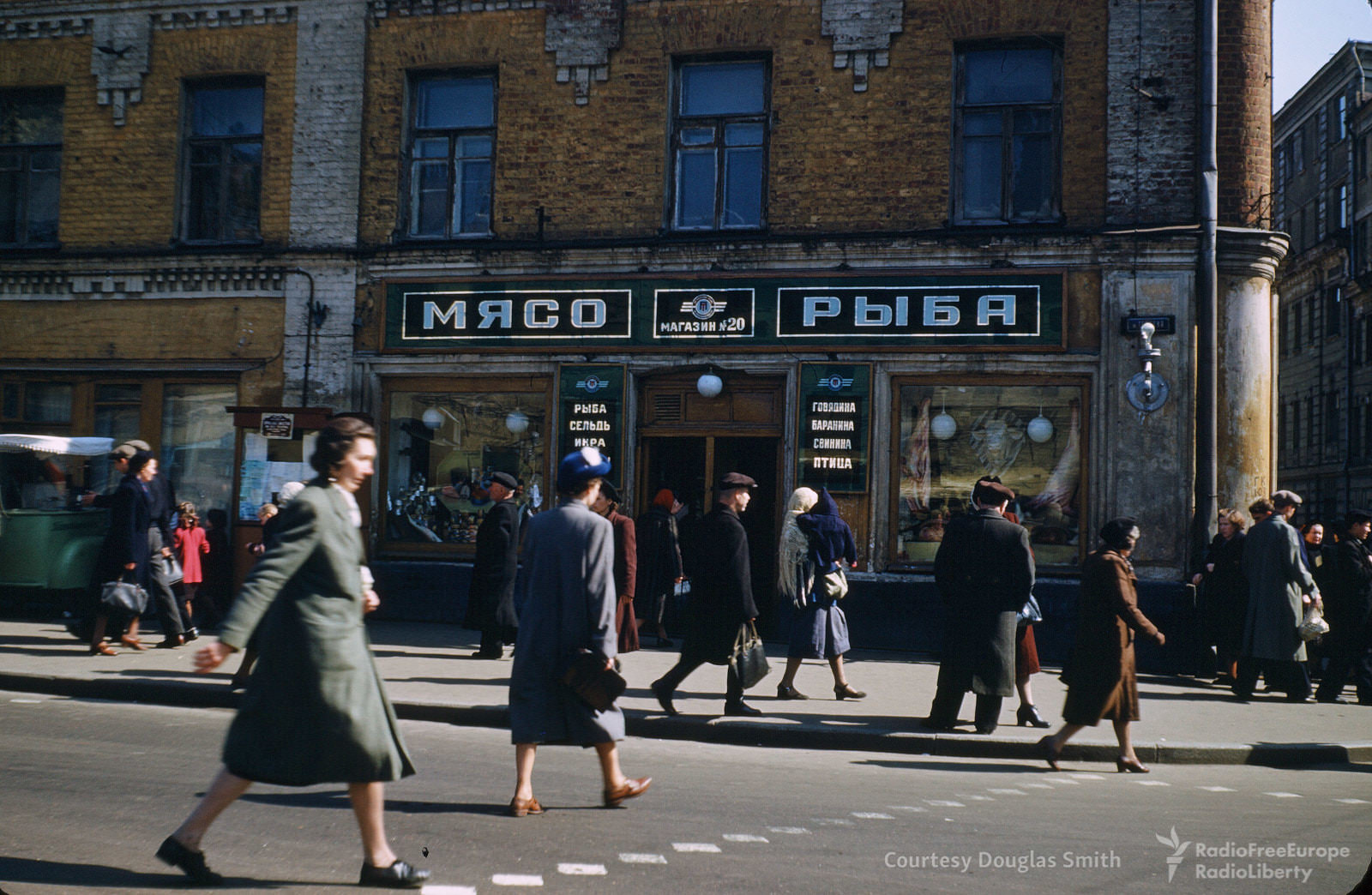
Cold War tensions were felt even in the city’s geography. The new U.S. Embassy opened near the corner of Bolshoi Devyatinsky Pereulok and Novinsky Bulvar shortly after May Day in 1953 — just weeks after Stalin’s death. Meanwhile, ordinary Muscovites went about their daily lives: reading in public rooms, lining up outside grocery stores, and navigating a city in constant flux.
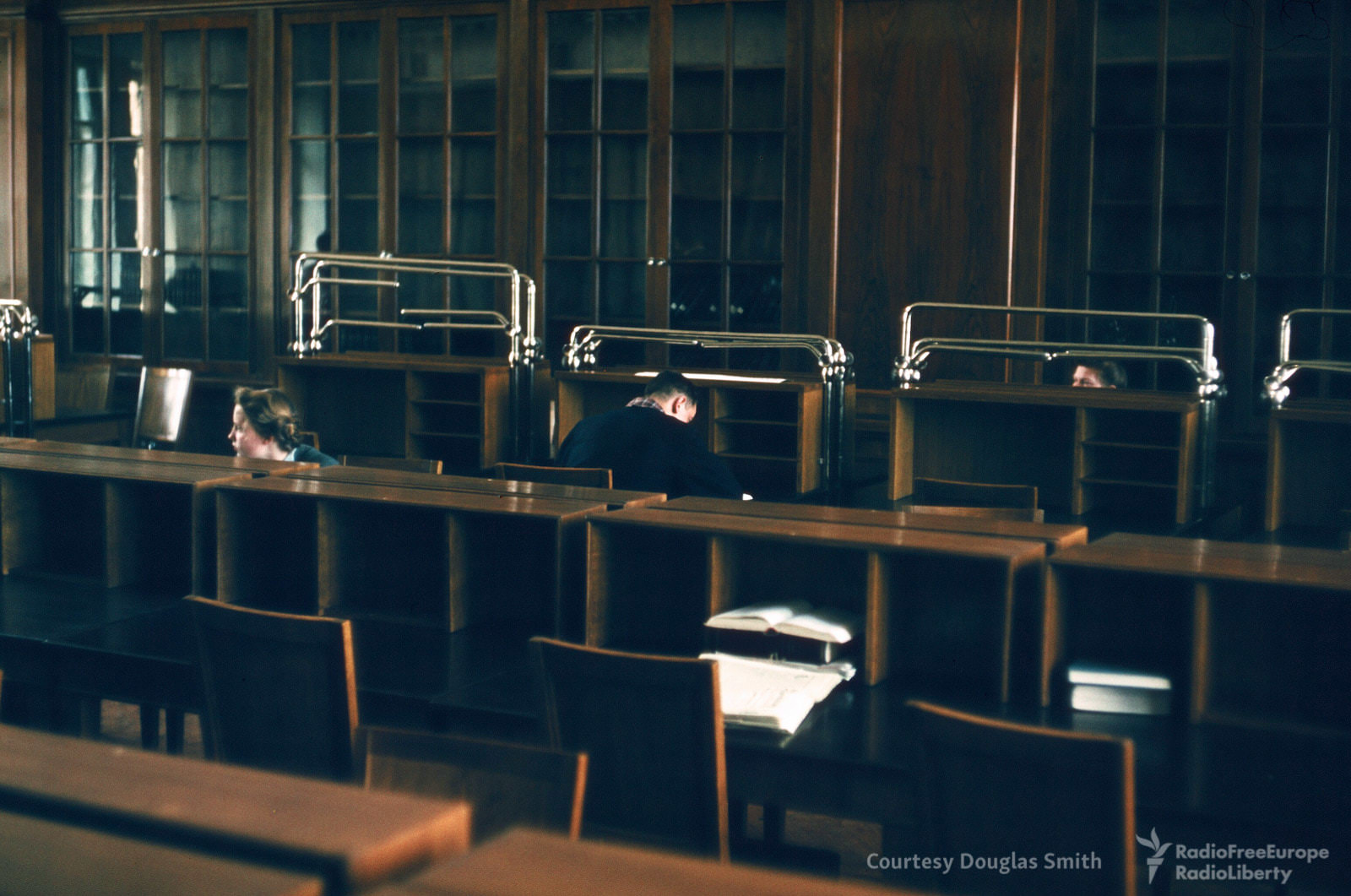
Reading room at an unknown location.
A street corner in central Moscow. The building has since been demolished.
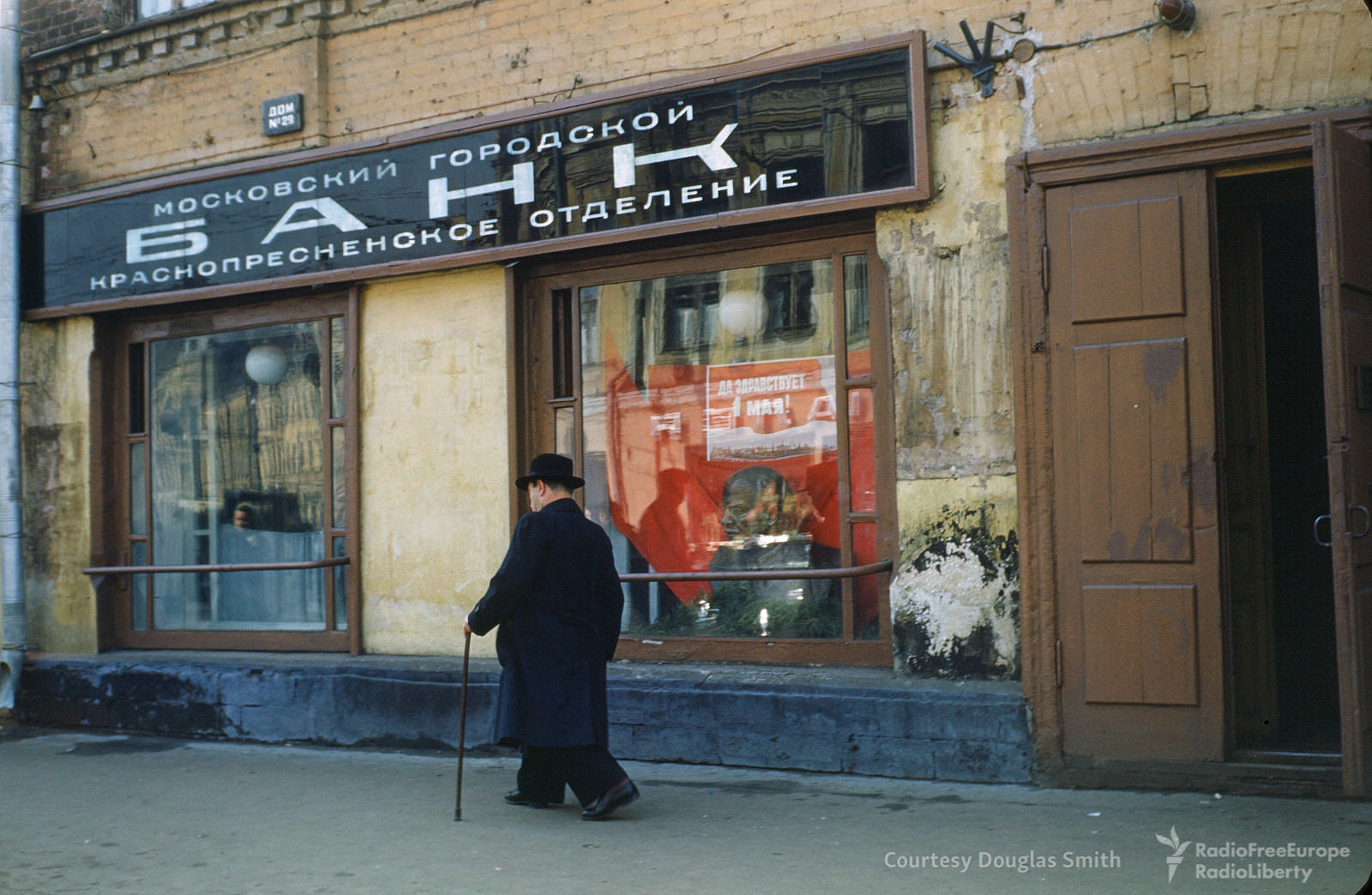
A bust of Lenin decorates a window of a Moscow City Bank branch.

Lenin’s image was everywhere. His bust appeared on bank windows, in public squares, and in government buildings across the city. Soviet ideology was woven into the fabric of everyday life. A walk down any central street would pass monuments, slogans, and state-run shops — all reinforcing the same message.
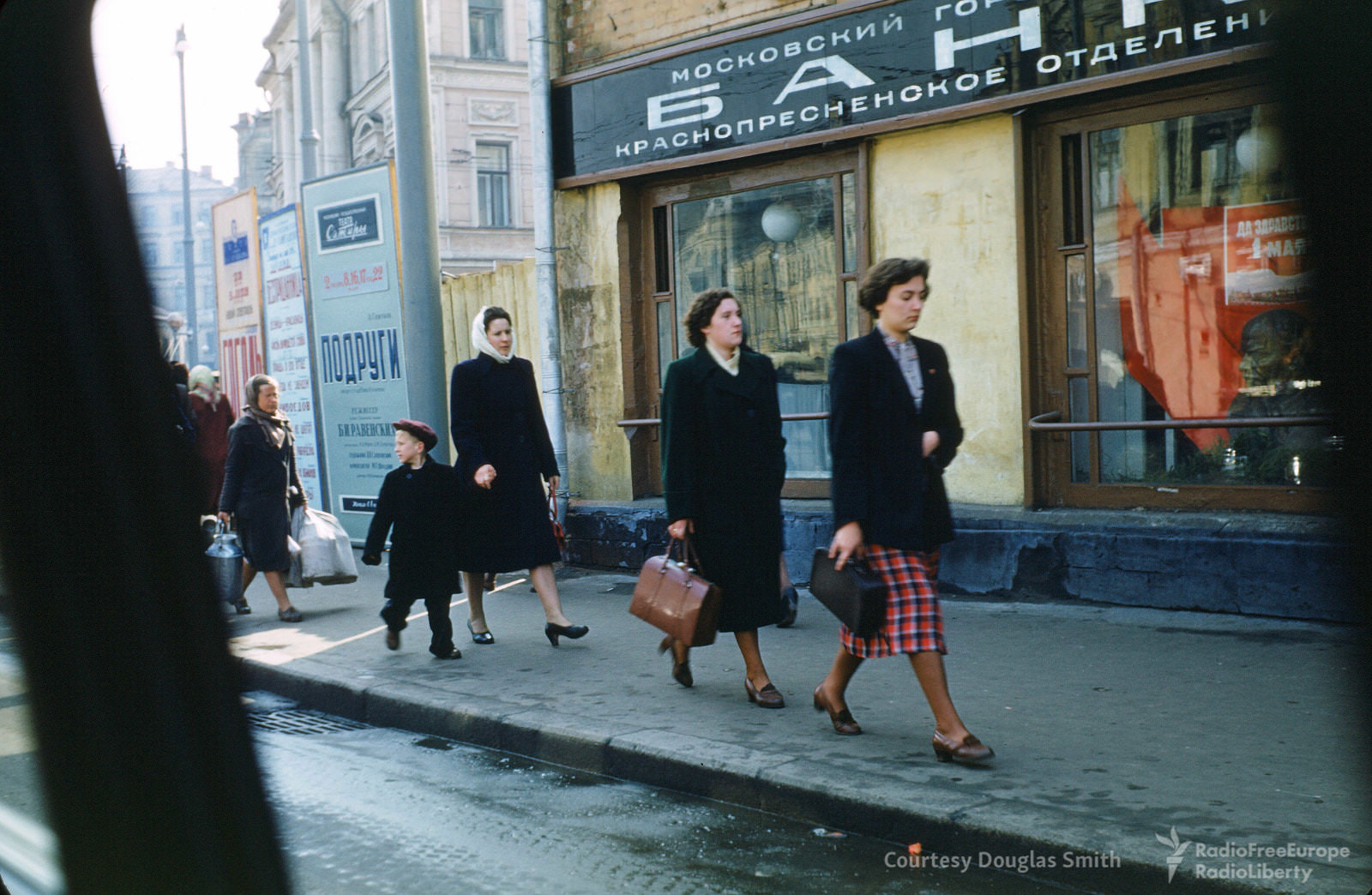
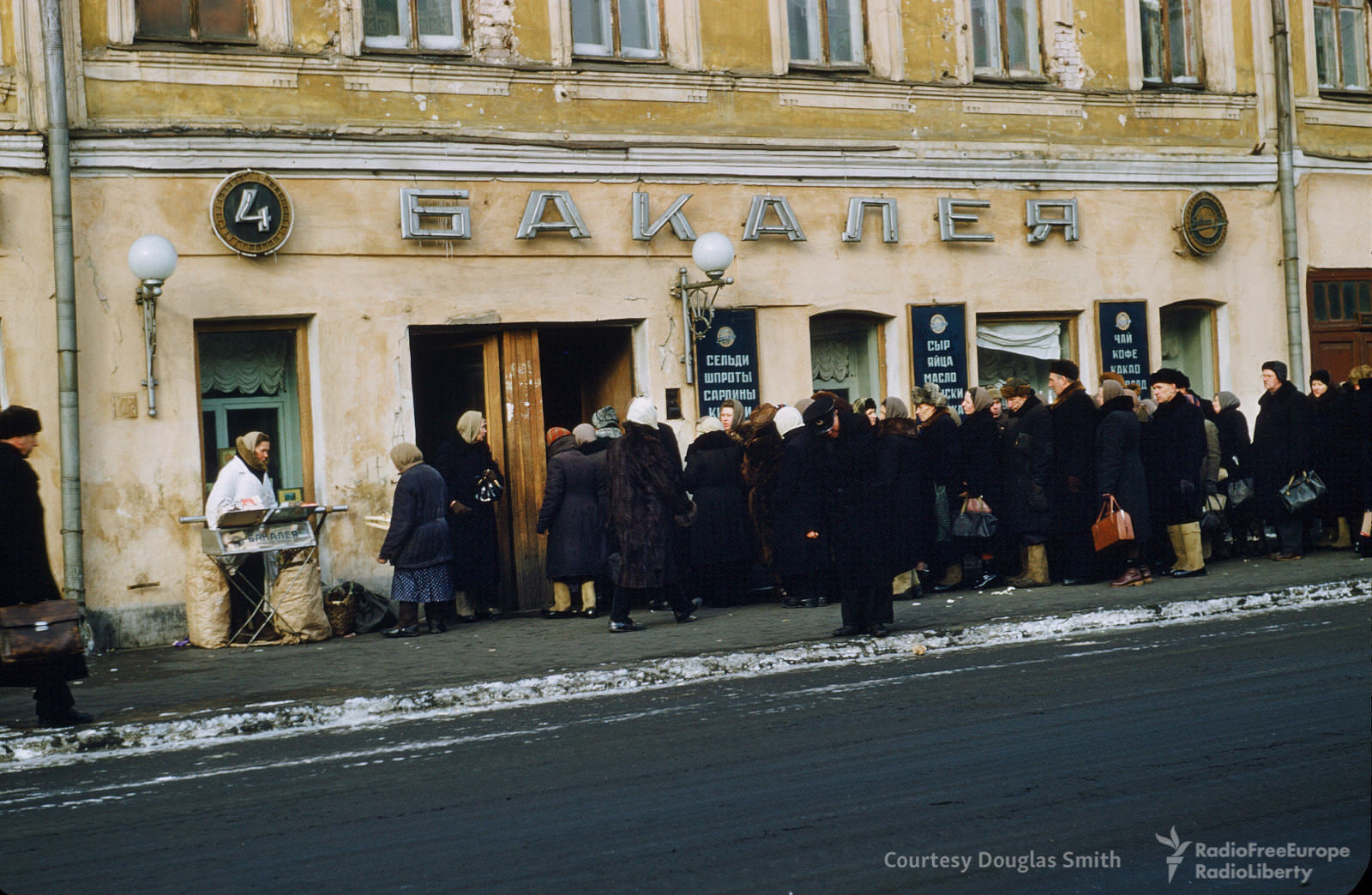
A street scene in central Moscow.
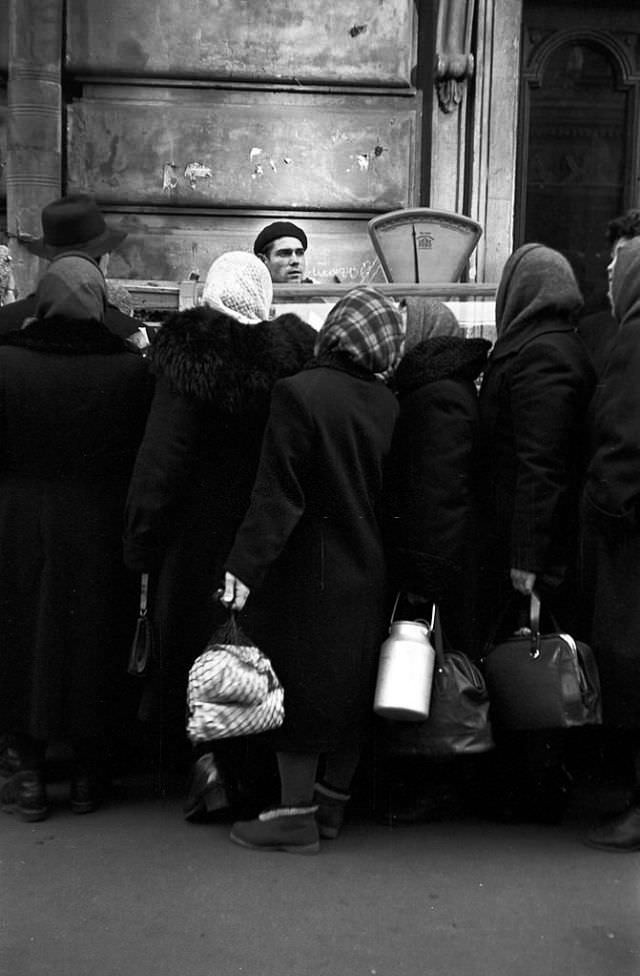
People line up outside a grocery store at an unknown location.

Queuing was a normal part of life in Soviet Moscow. Grocery stores often had limited stock, and lines formed early. Construction was equally constant — roads on Novinsky Bulvar were dug up and repaired as the city expanded its infrastructure to support a growing population.
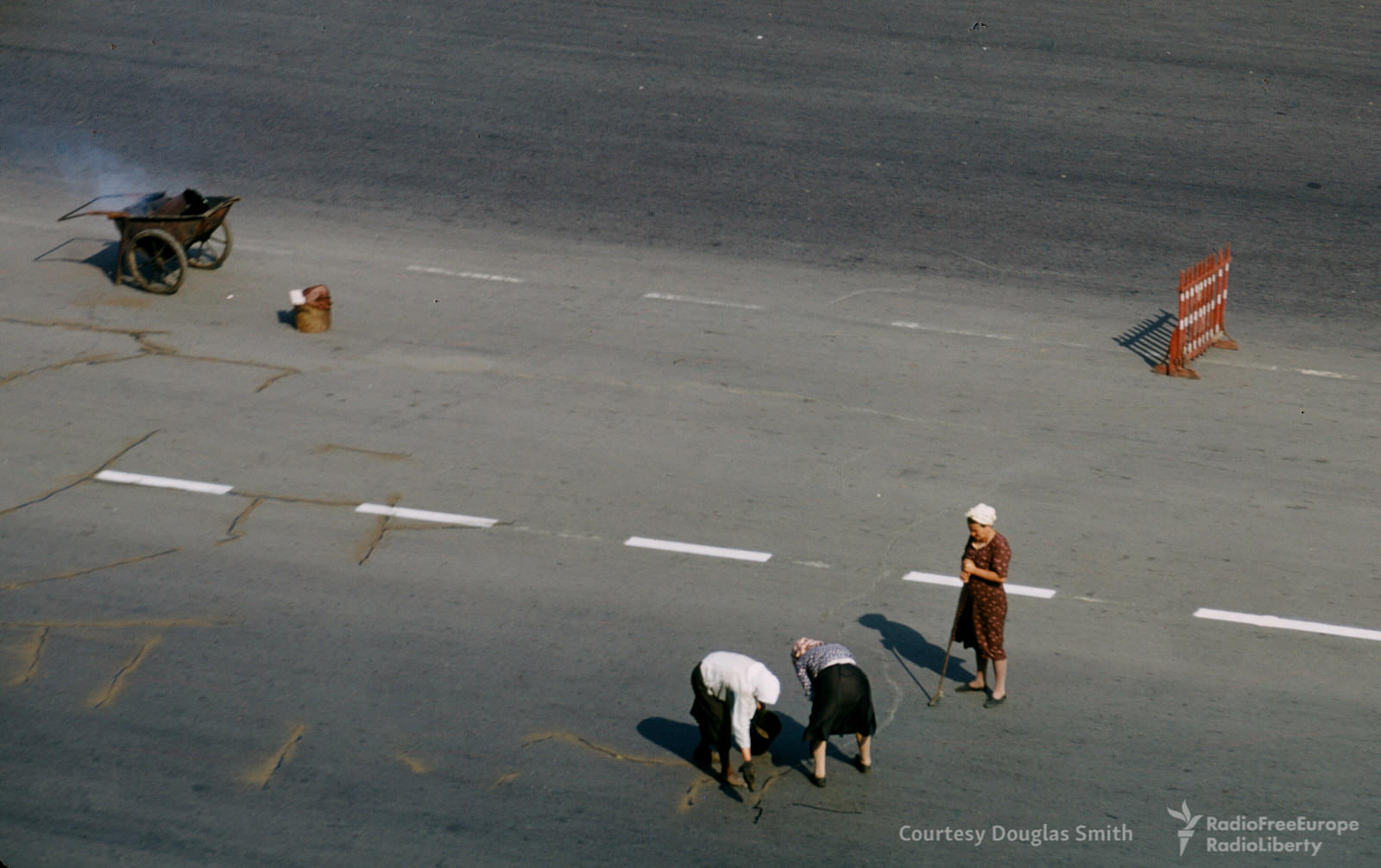
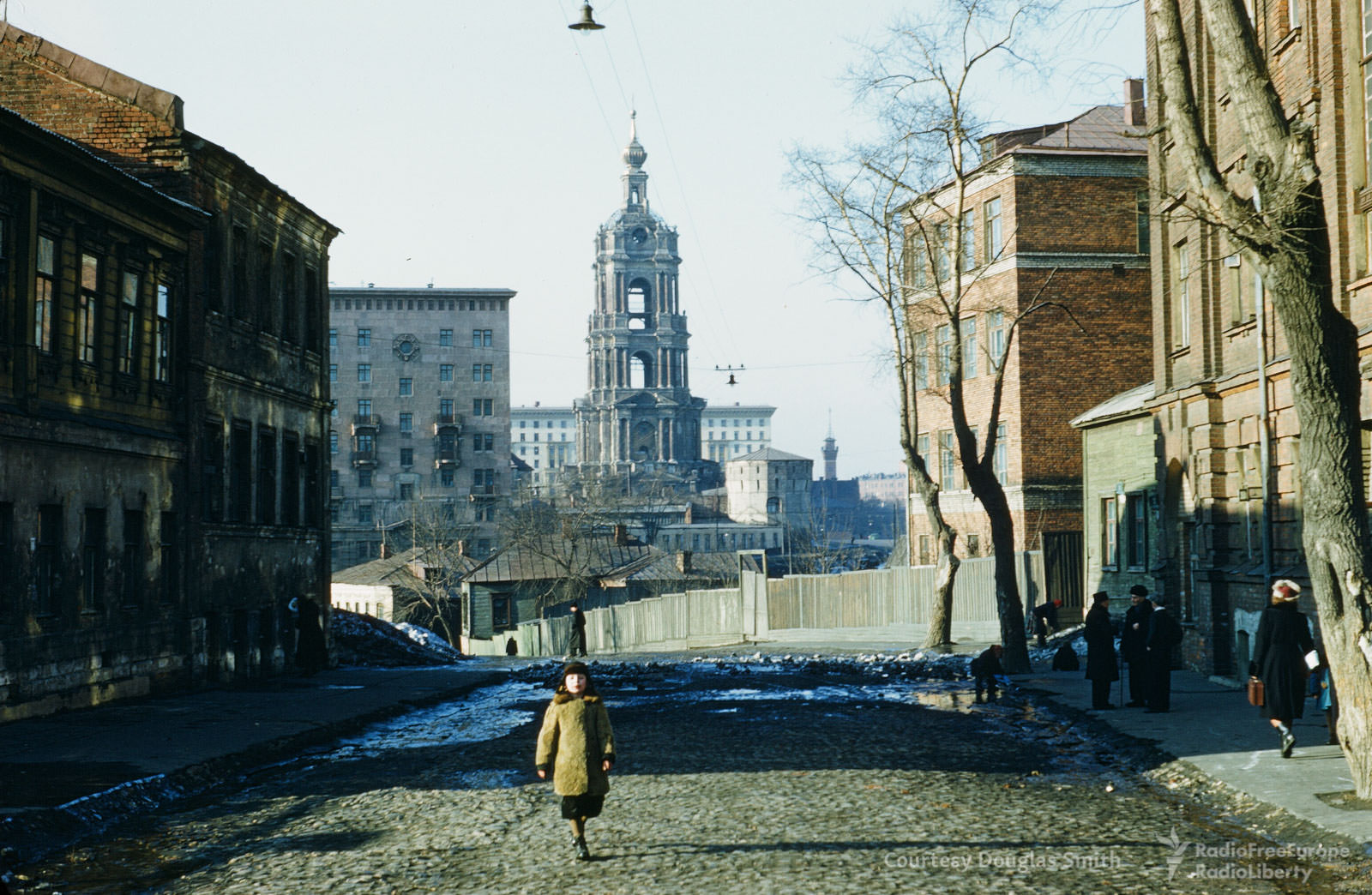
Road repairs on Novinsky bulvar, Moscow.
The steeple of Moscow's Novospassky Monastery, seen from a nearby street.
The steeple of Moscow’s Novospassky Monastery, seen from a nearby street.
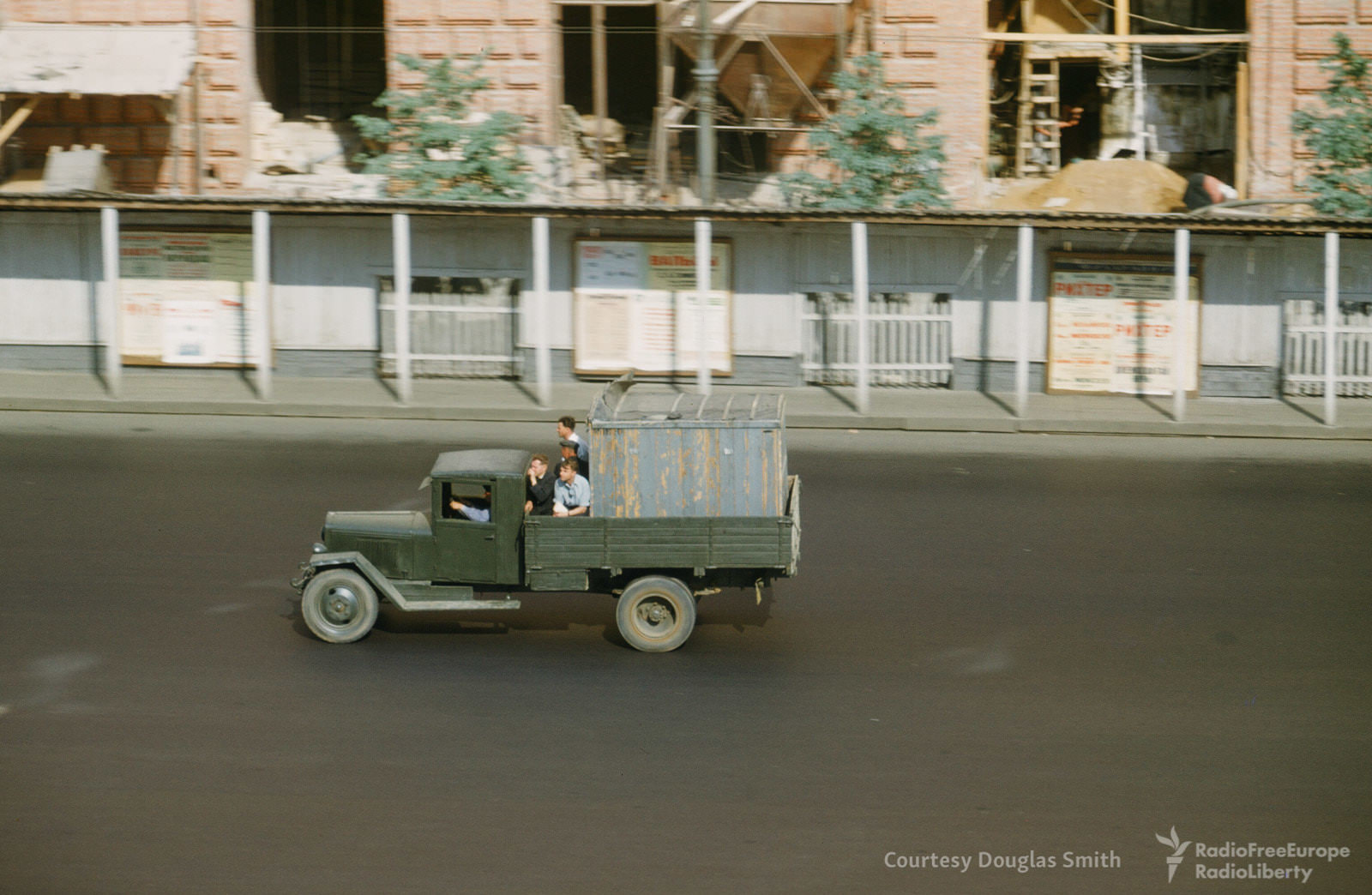
A truck rolling down Novinsky bulvar, Moscow.

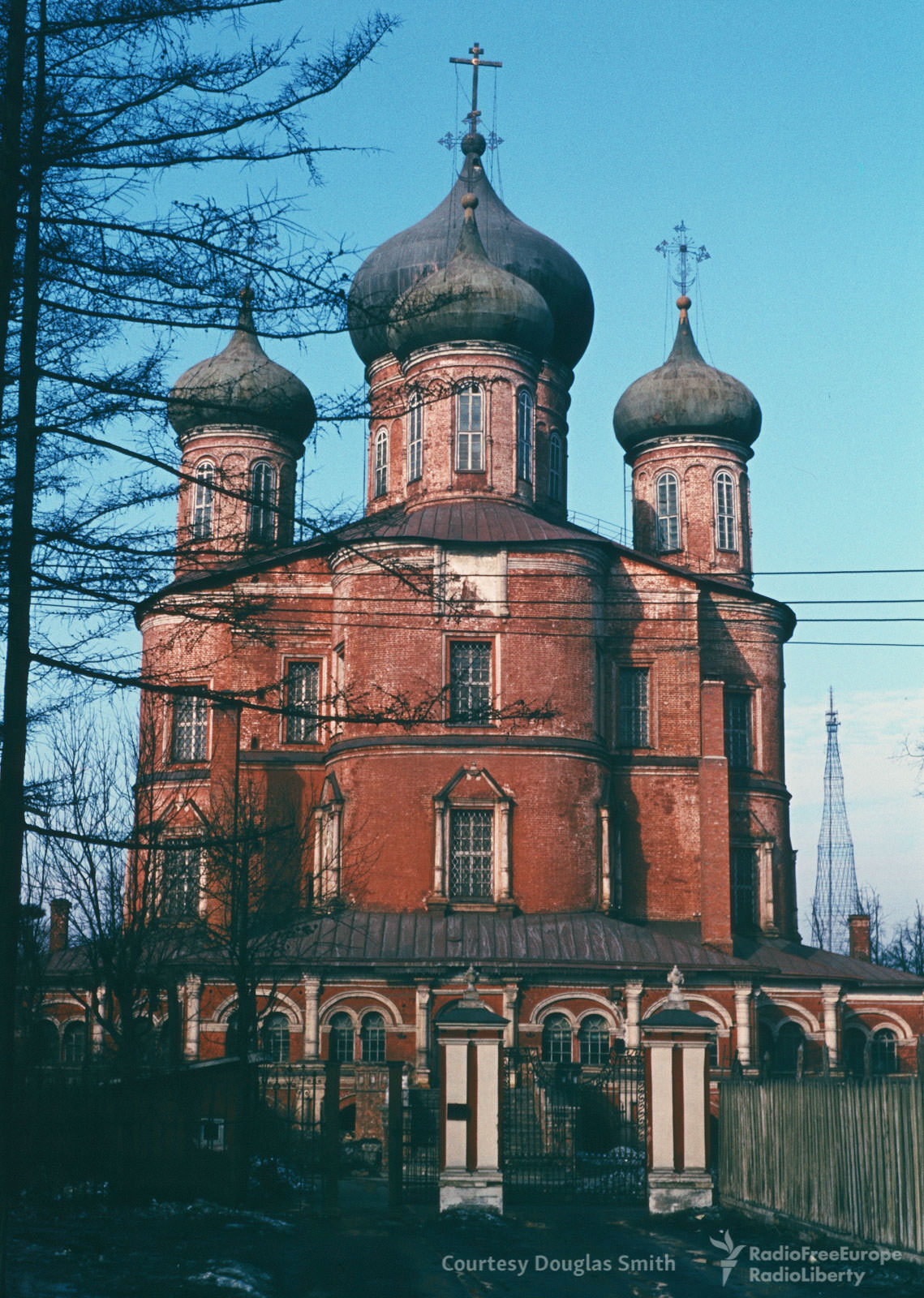
Religious buildings had a complicated place in Soviet Moscow. The state officially discouraged religion, and many churches and cathedrals were destroyed or repurposed during Soviet rule. Those that survived, like the Novospassky Monastery and the Donskoy Monastery, stood as remnants of a pre-revolutionary past the government worked hard to erase.
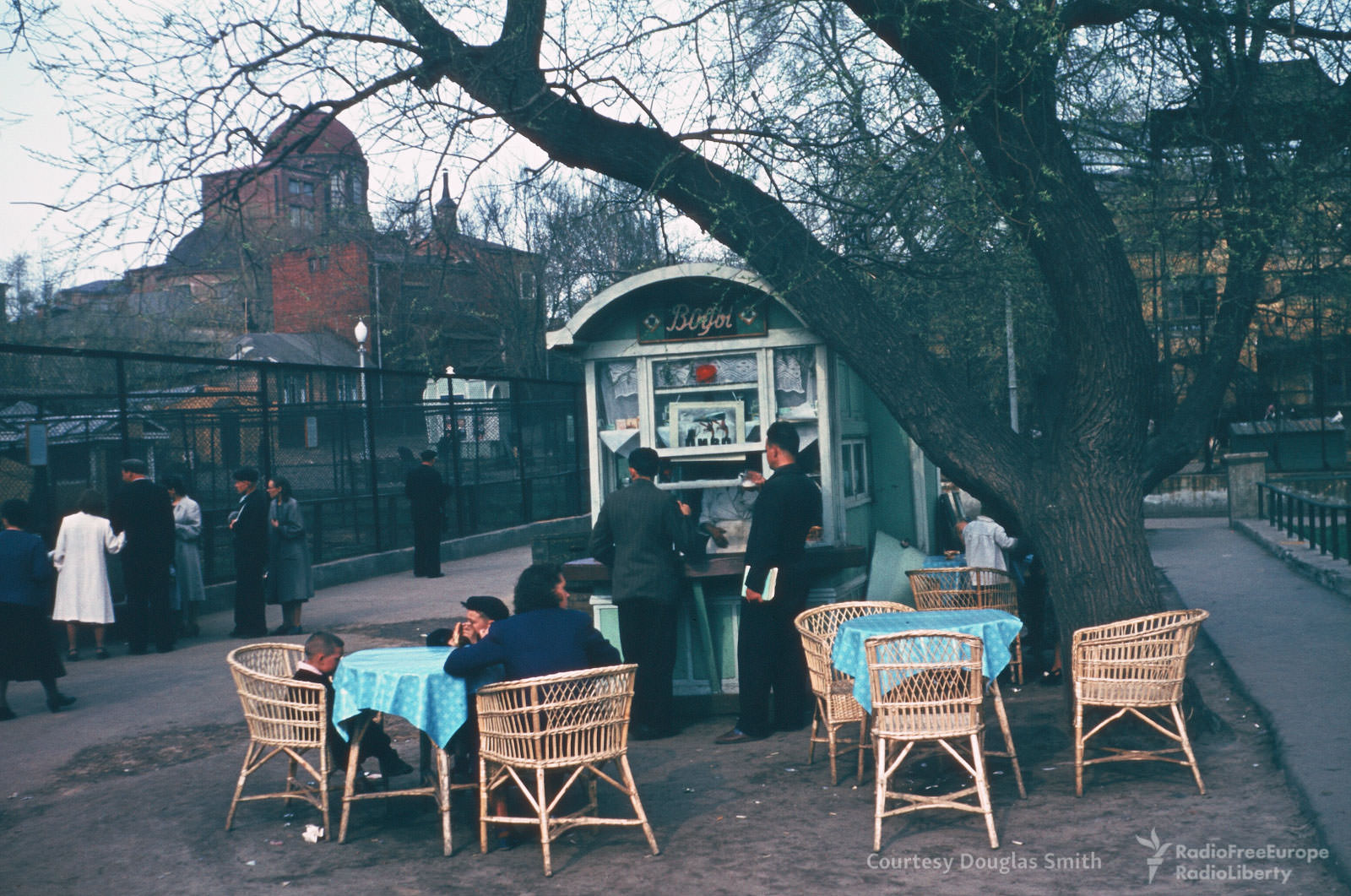
View of the Moscow Zoo with the Temple of St. George in the background.
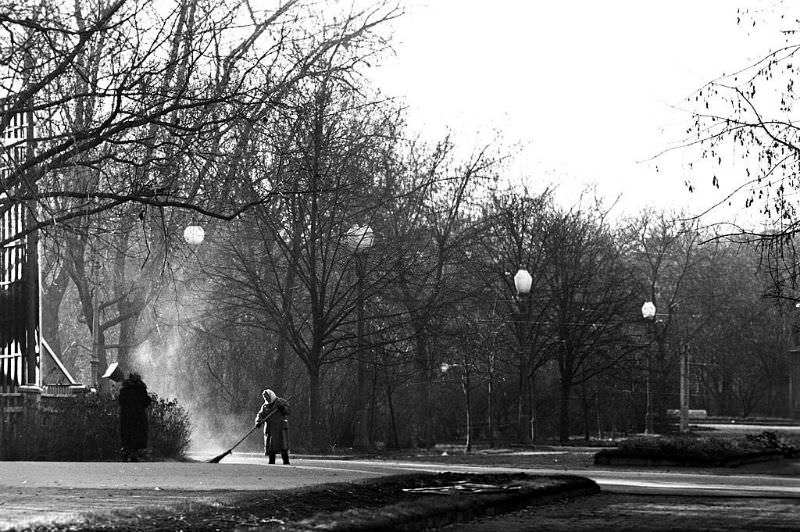
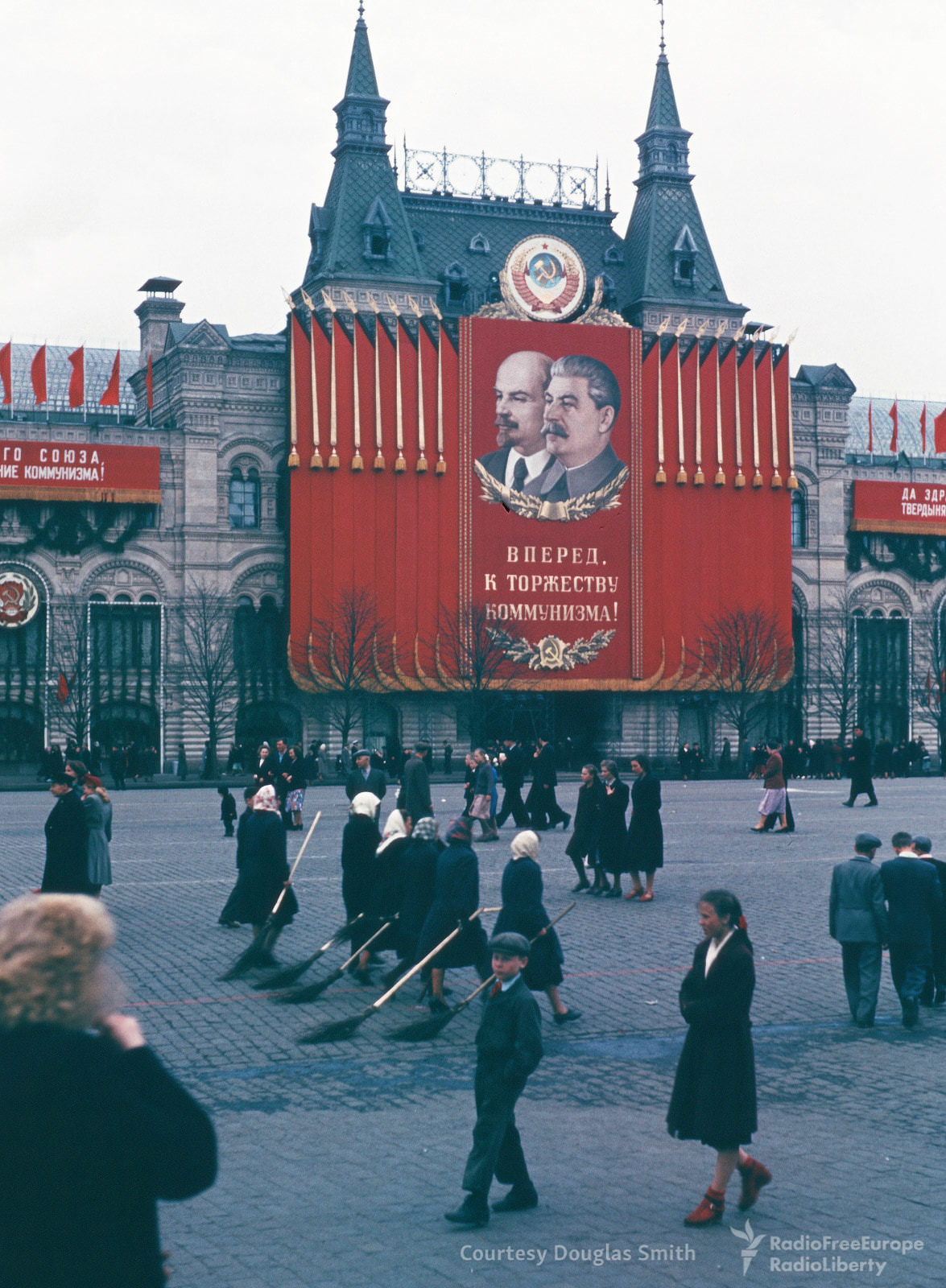
Streetcleaners wielding tree-branch brooms on Red Square.

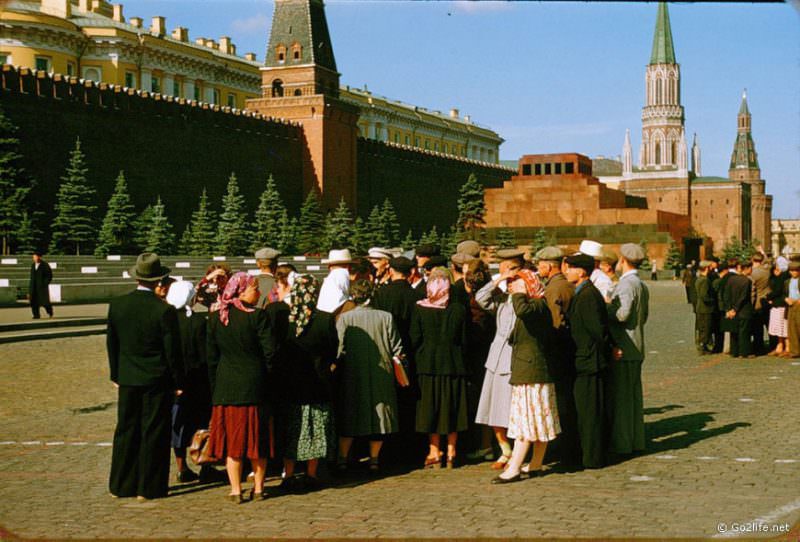
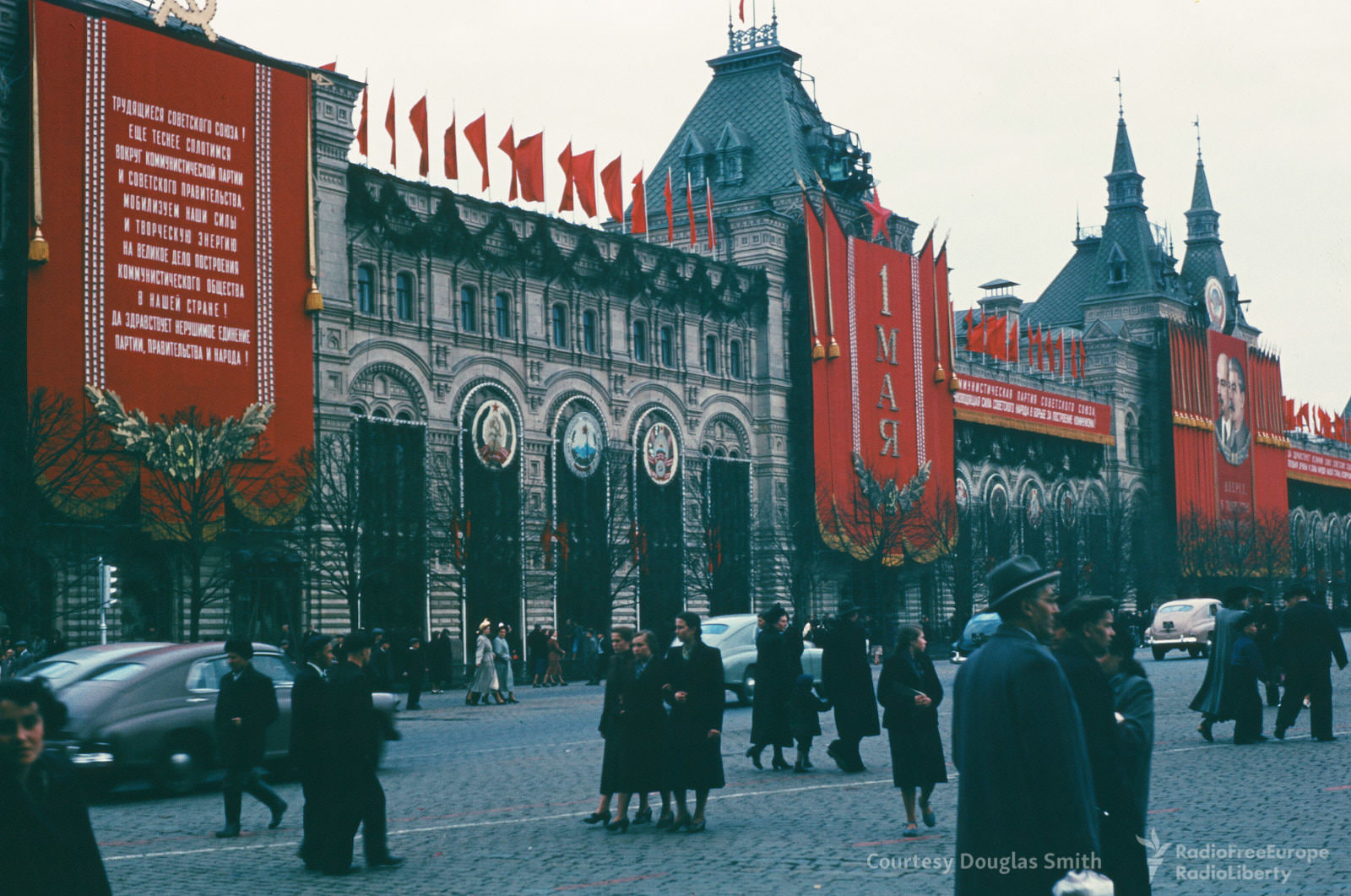
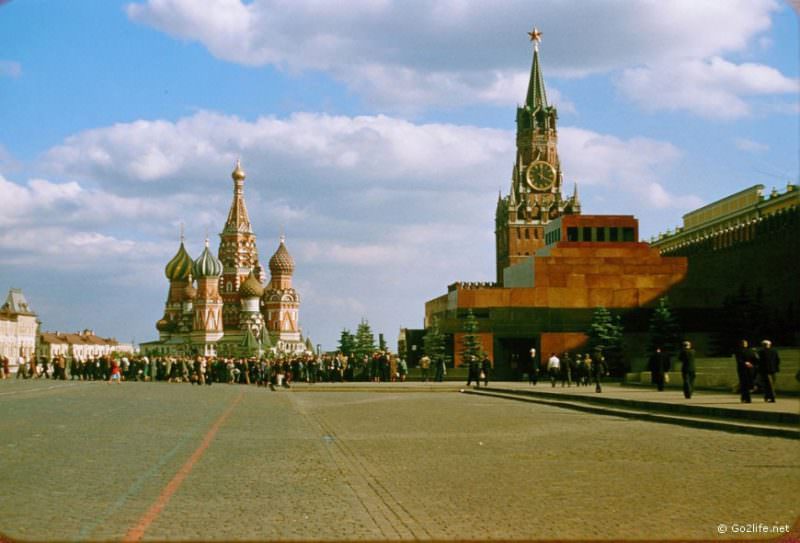
Red Square was the symbolic center of Soviet power. Street cleaners swept it with tree-branch brooms each morning. Tourists — Soviet citizens from other parts of the country — gathered there to take in the view of Lenin’s Mausoleum, Saint Basil’s Cathedral, and the GUM department store. The square hosted military parades, political ceremonies, and the quiet rituals of everyday visitors.
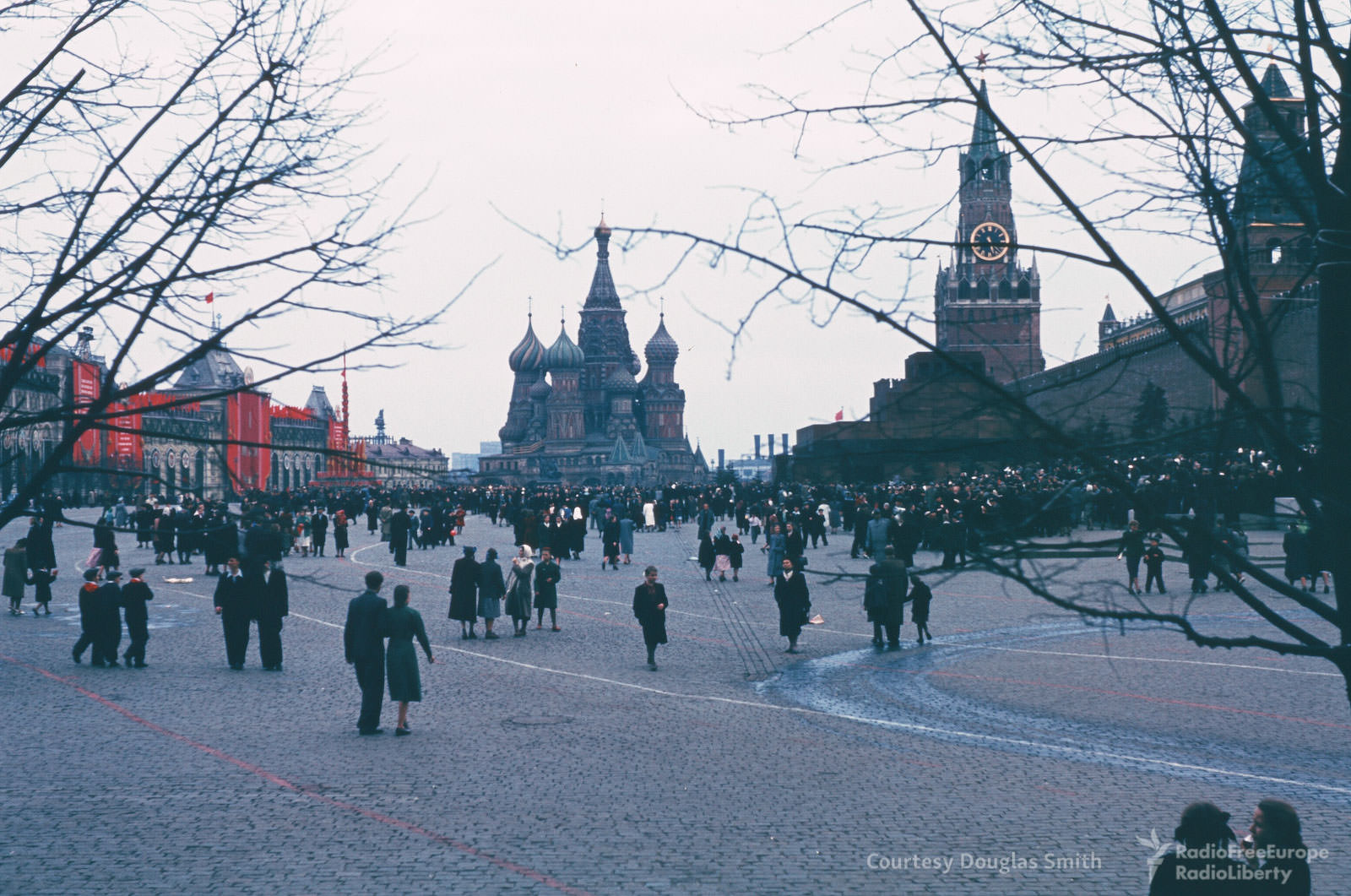
Red Square.
Red Square.
The GUM department store on Red Square.
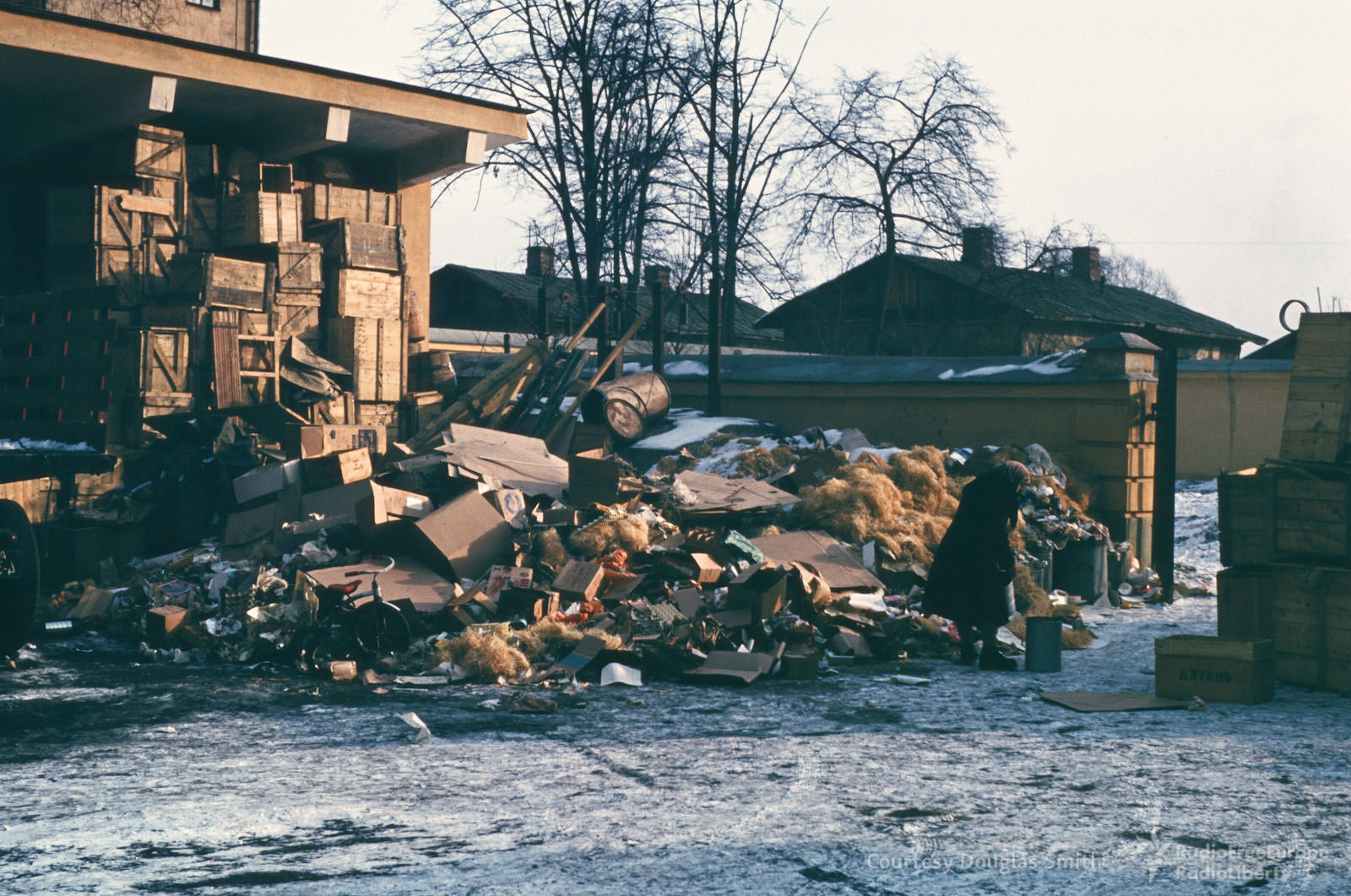
Trash piles up at an unknown location.
Donskoy Monastery, Moscow.
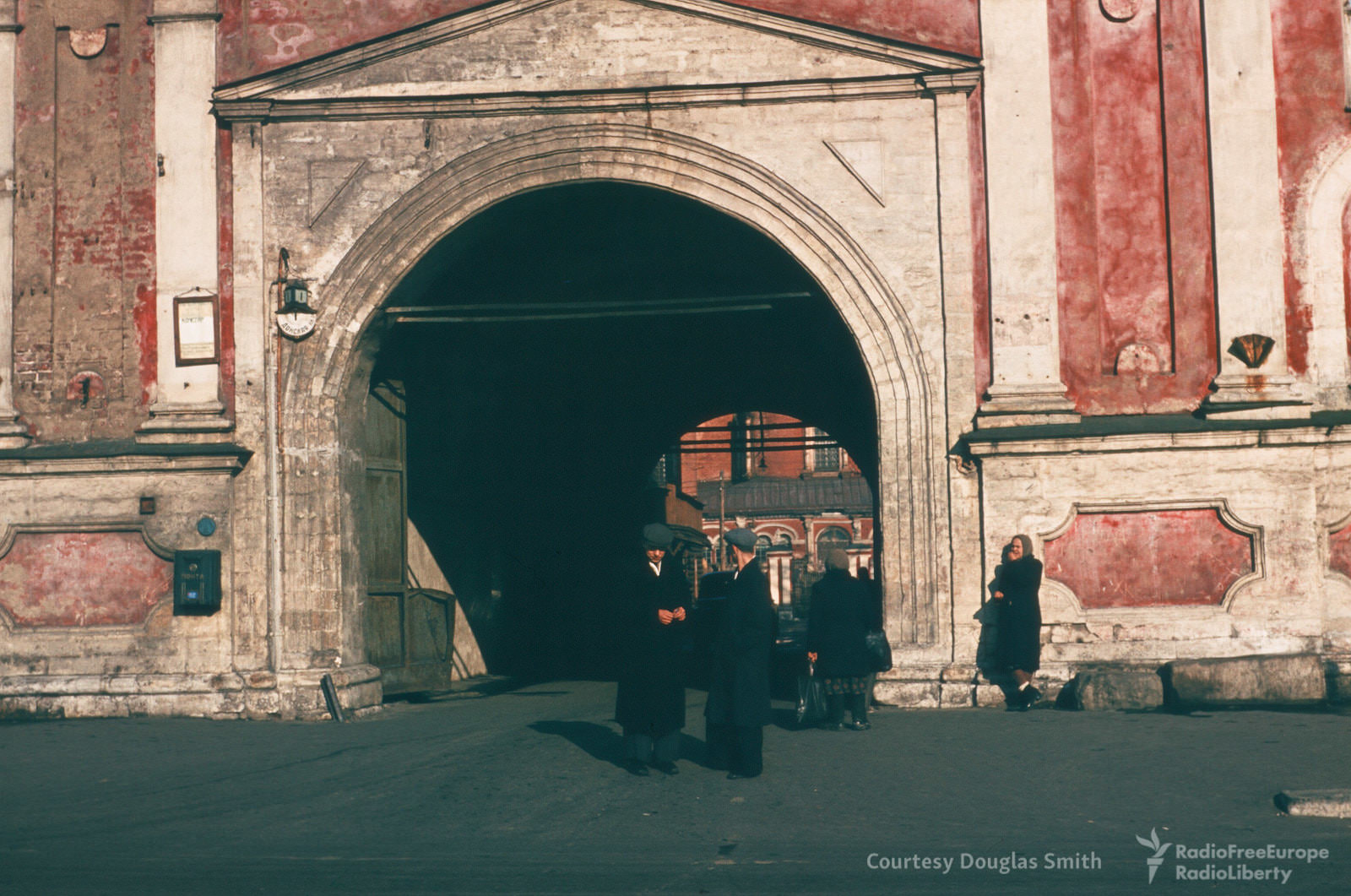
The entrance to Donskoy Monastery, Moscow.

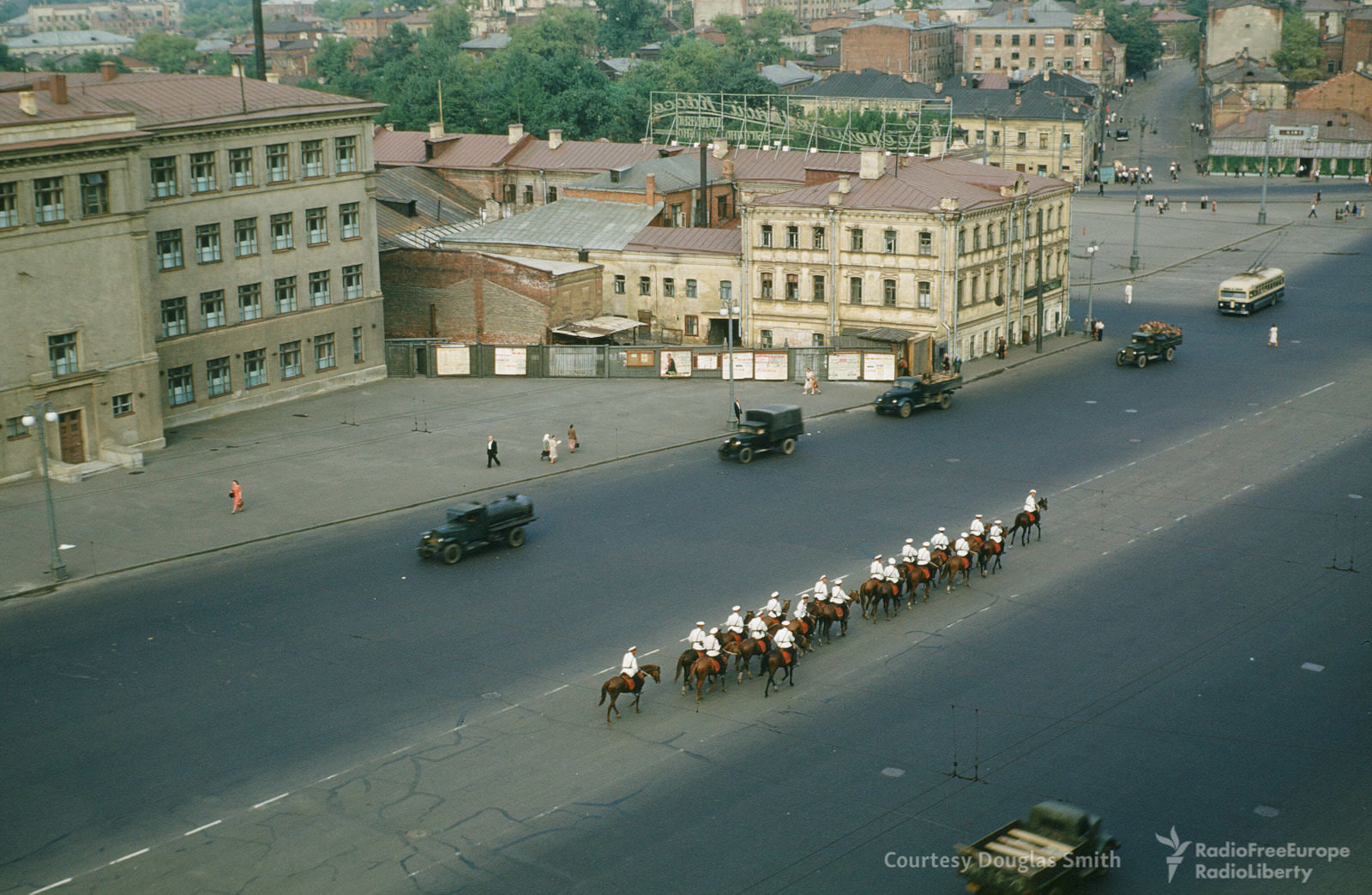
Life in the residential neighborhoods had its own rhythm. In the Tagansky district, residents played volleyball in the streets. Horses still moved through the city center, sharing lanes with trucks and trams. Construction on Novinsky Bulvar pushed forward as new apartment buildings replaced older structures.
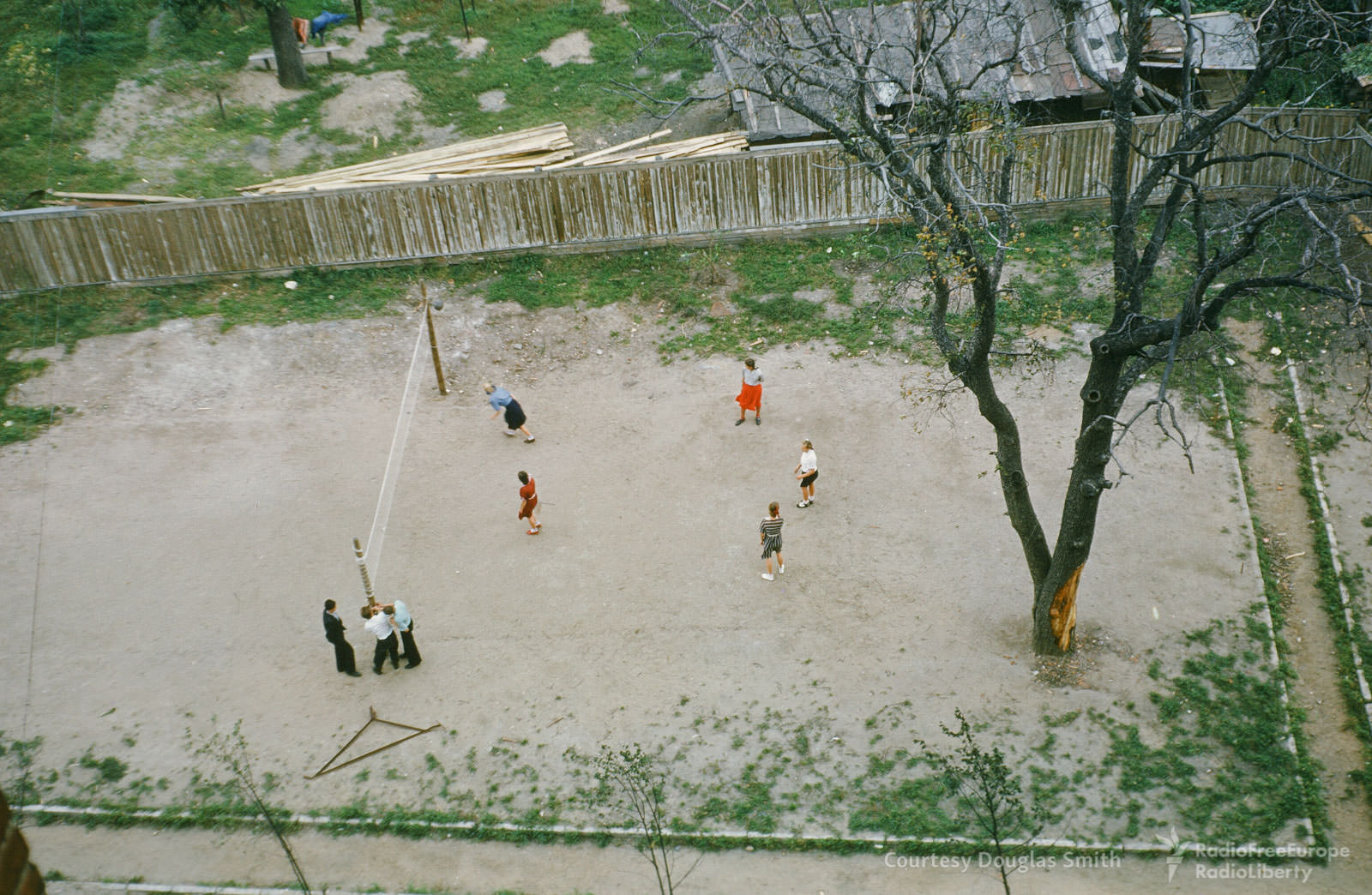
A one-sided volleyball match in Moscow's Tagansky raion.
A one-sided volleyball match in Moscow’s Tagansky raion.
A line of horses take over the center lane, unknown location.
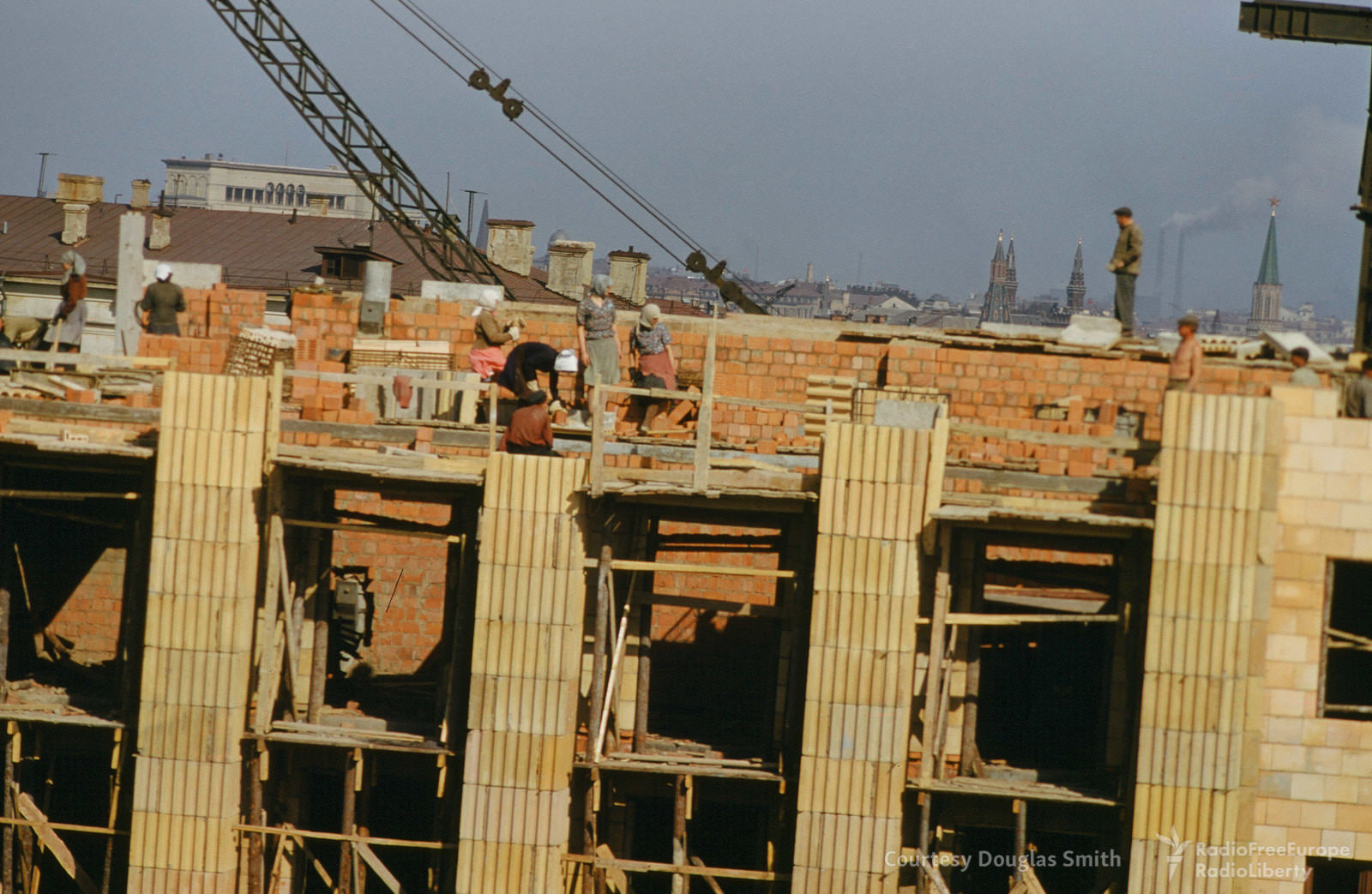
18 Novinsky bulvar under construction in Moscow.
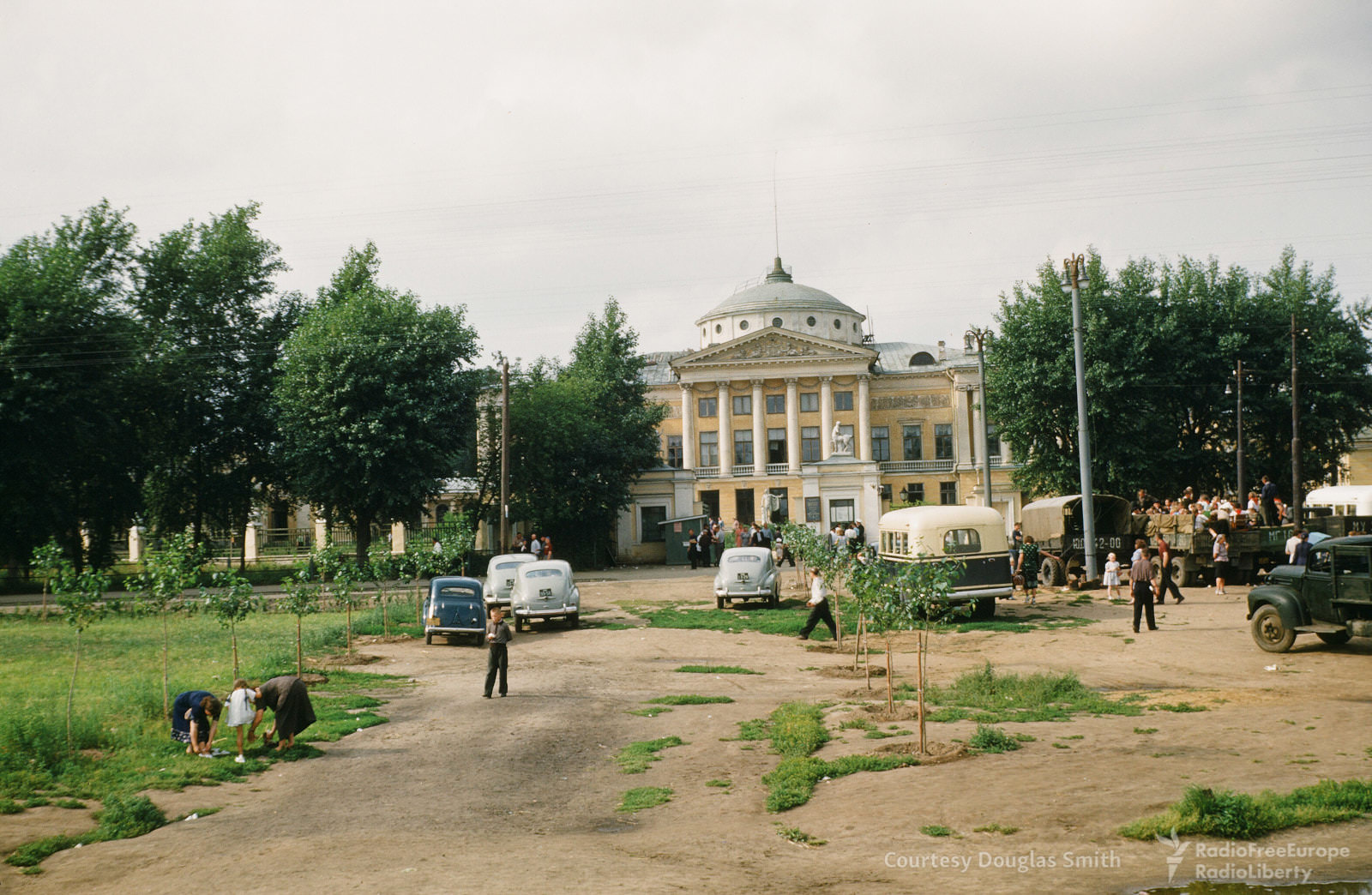
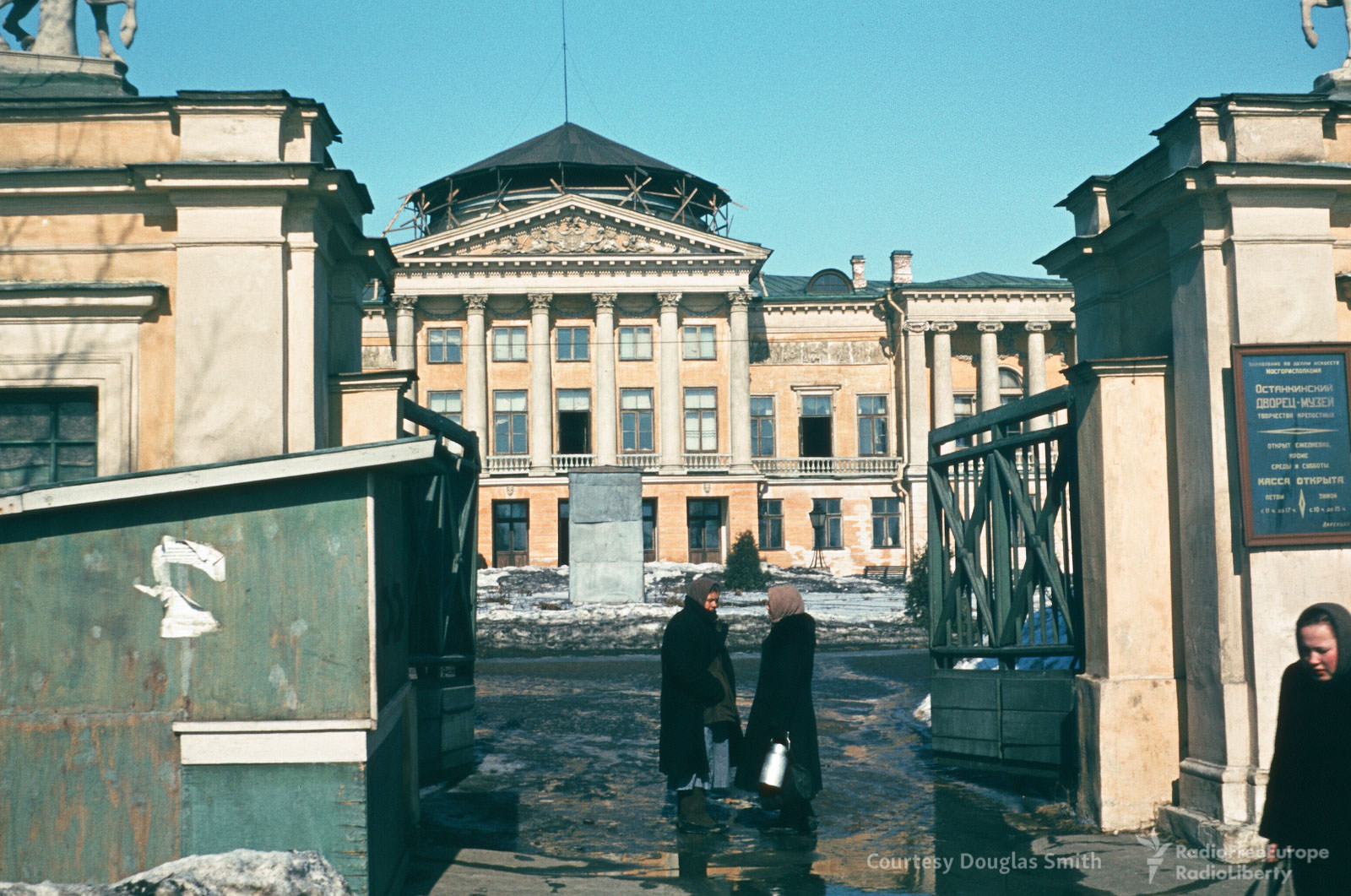
Ostankino Palace, Moscow.

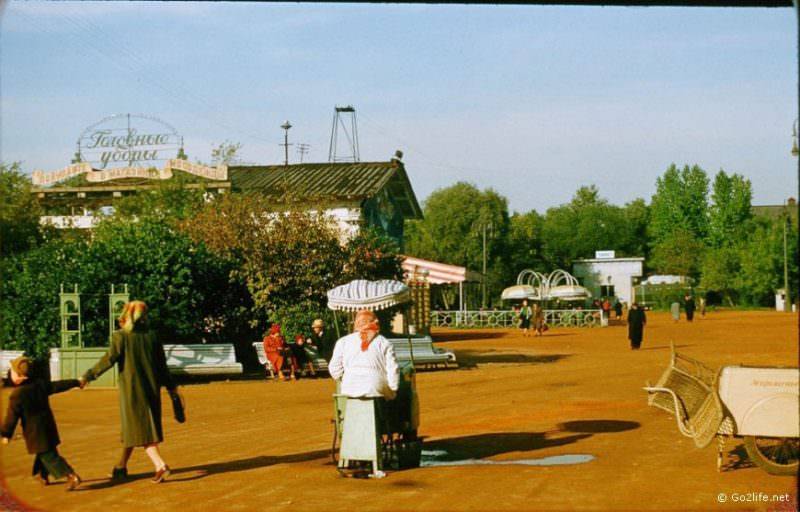
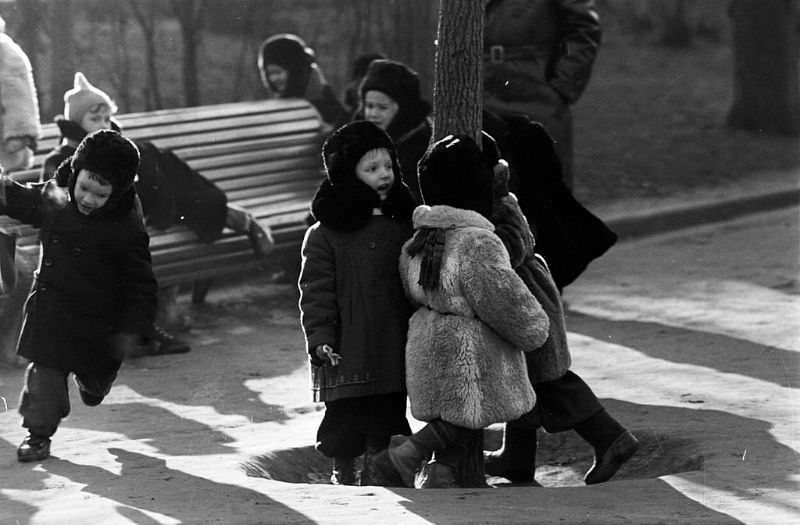
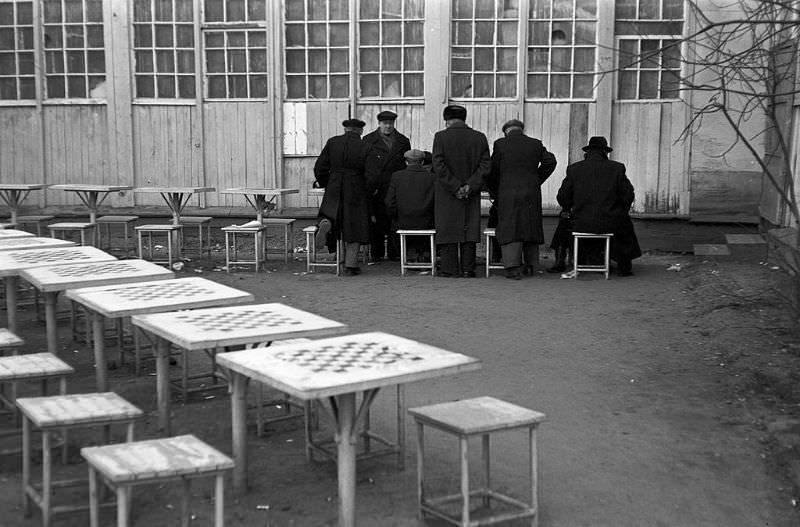
Parks and public spaces offered Muscovites a place to breathe. Fountains drew crowds. Families walked along the Moscow River embankment. Men played chess in courtyards, and children bundled in heavy winter clothes played in public gardens. These quiet scenes existed alongside the grand political events of the era — Moscow hosted the 1957 Ice Hockey World Championships and the 6th World Festival of Youth and Students that same year.
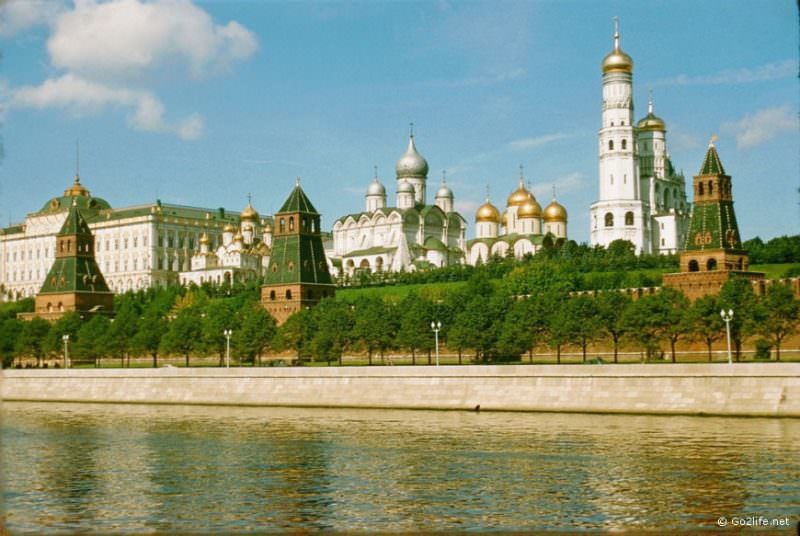
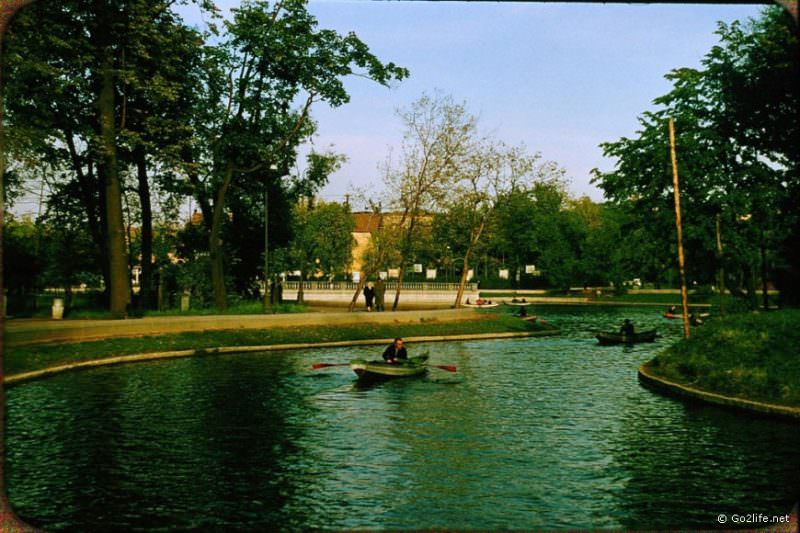
A lovely Moscow view.
A man floating in the park of Moscow, 1950s
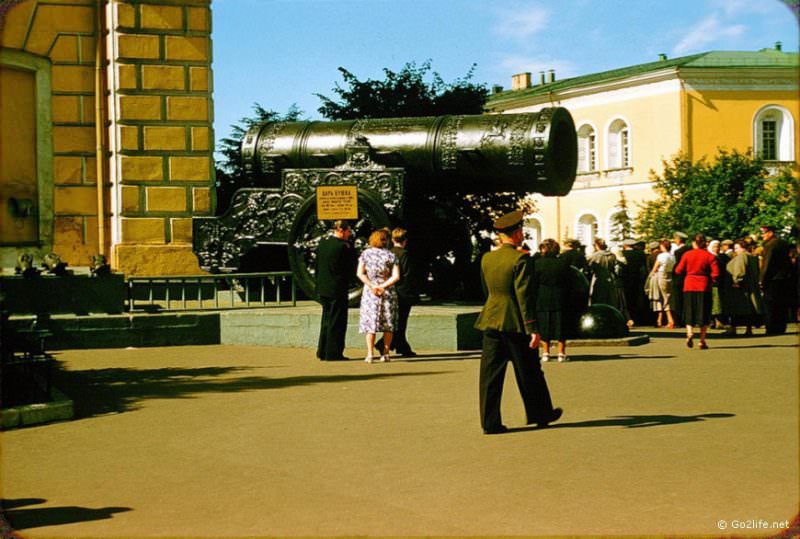
A massive cannon on the Red Square
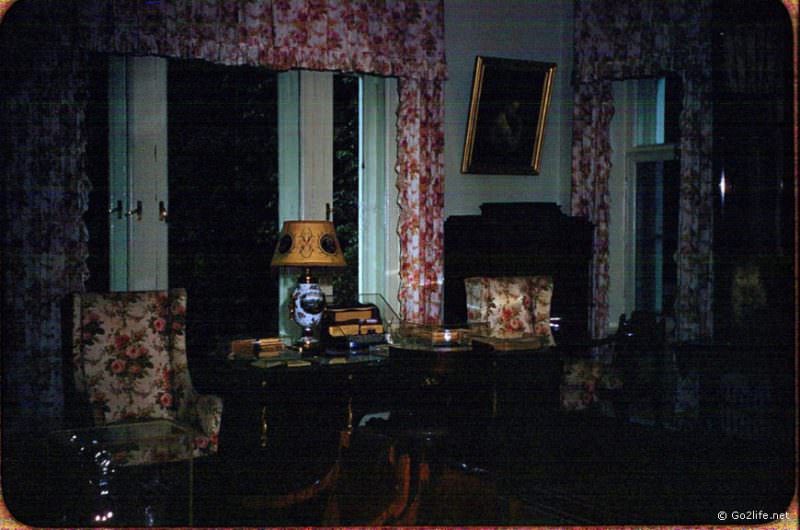
A typical interior of the soviet apartment. Nowadays, we can't believe that many of the Soviet homes had the same furniture and design
A typical interior of the soviet apartment. Nowadays, we can’t believe that many of the Soviet homes had the same furniture and design
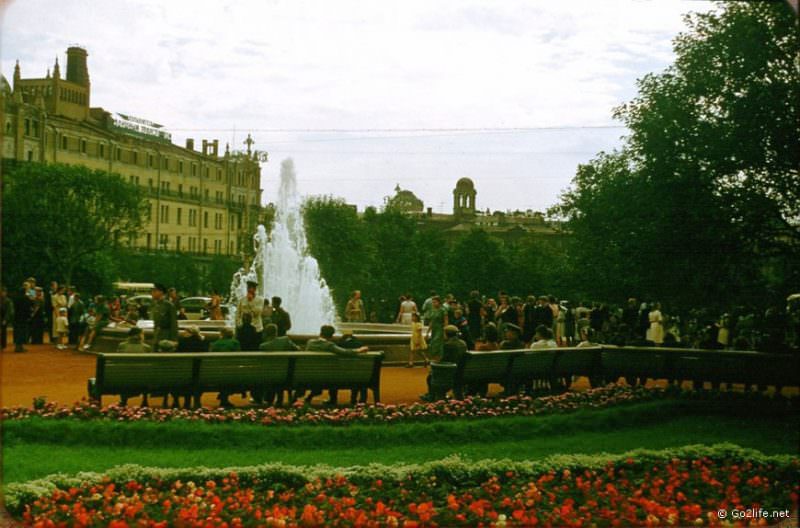
Fontaine attracted soviet people
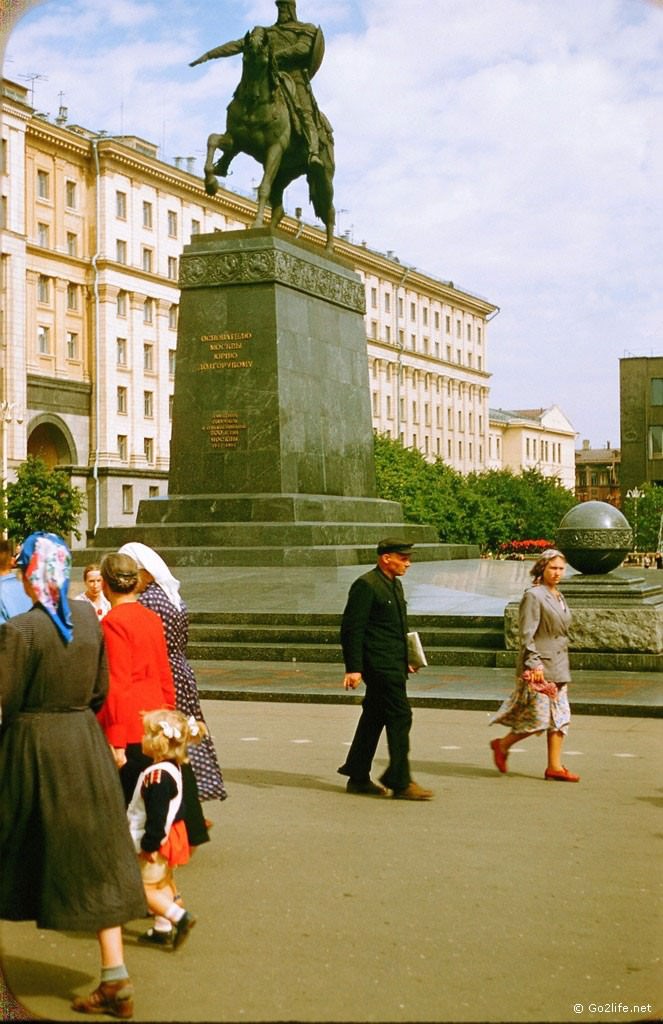
Founder of Moscow monument
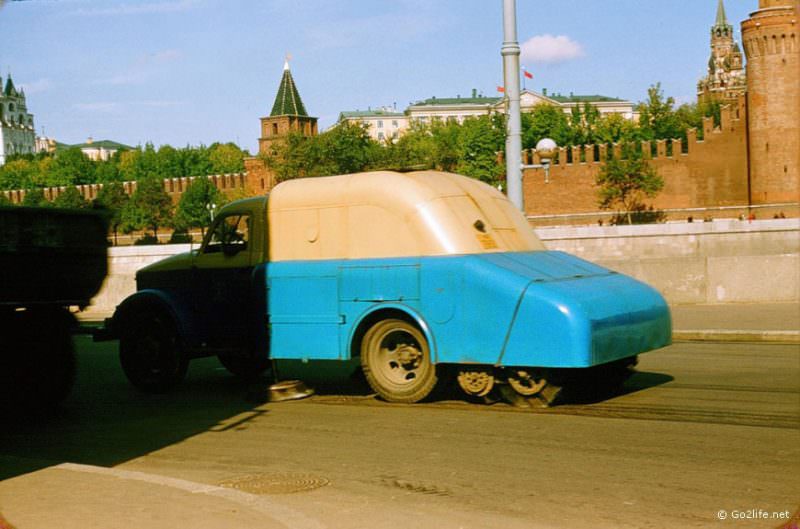
It seems like this is a road construction vehicle

Foreign visitors to Moscow in the 1950s were rare, and their presence caused a stir. In one remarkable instance, passengers on a bus agreed to step off mid-route just so a foreign photographer could capture an unobstructed shot of the vehicle. Soviet apartments, meanwhile, were furnished in near-identical fashion — the state controlled not just what people built, but how they lived inside their homes.
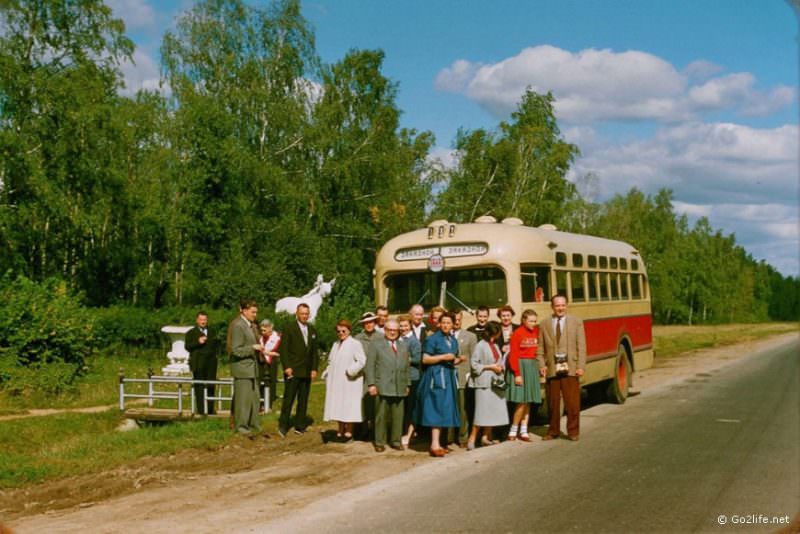
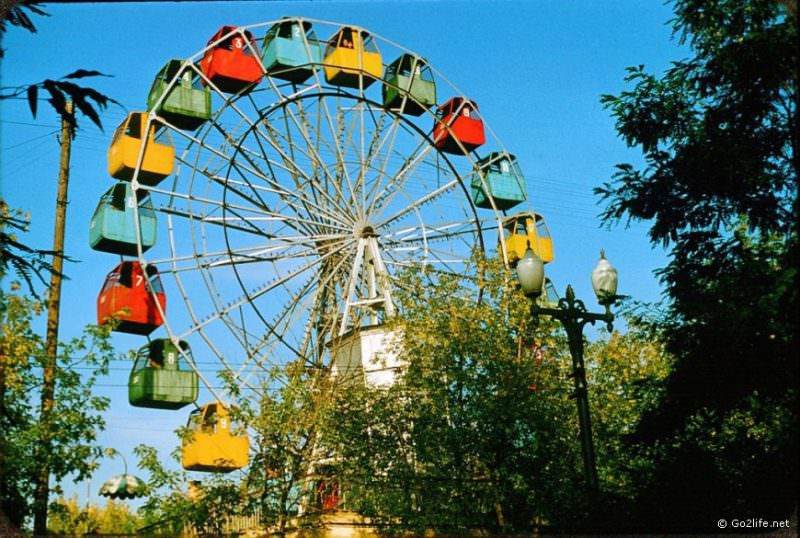
It's hard to believe, but the passengers of this bus agreed to exit it in the middle of nowhere just for the photo of the foreigner
It’s hard to believe, but the passengers of this bus agreed to exit it in the middle of nowhere just for the photo of the foreigner
A lovely attraction for the Soviet kids
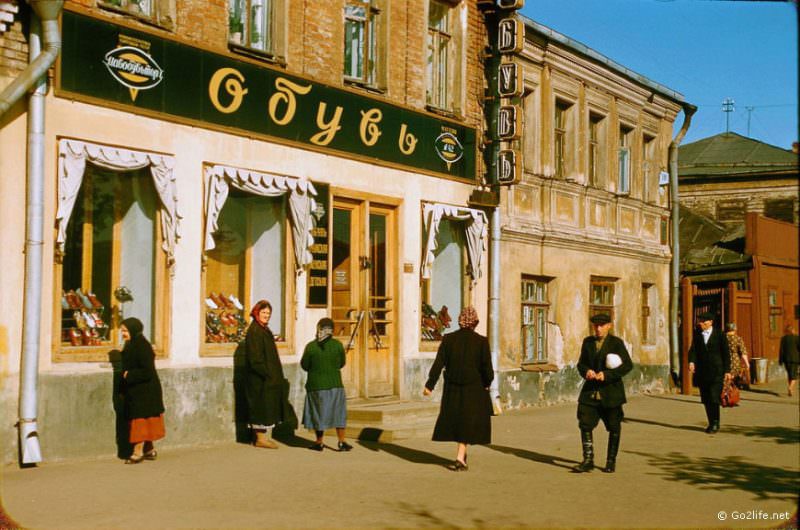
Many buildings in Moscow had a very poor outlook in the 1950s
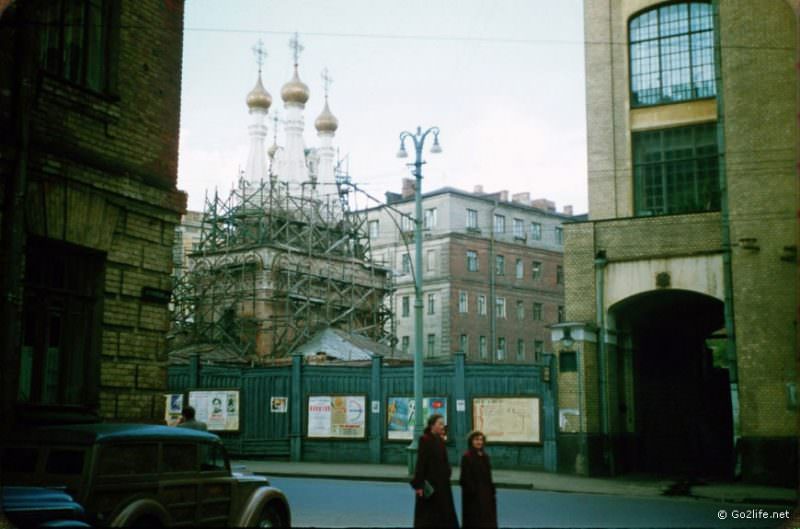
Many churches and cathedrals were destroyed during the Soviet rule
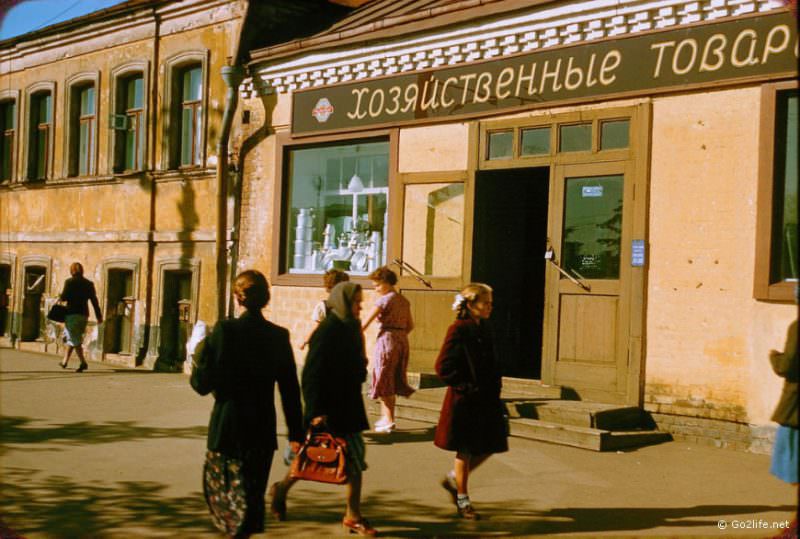
Soviet people passing by a store
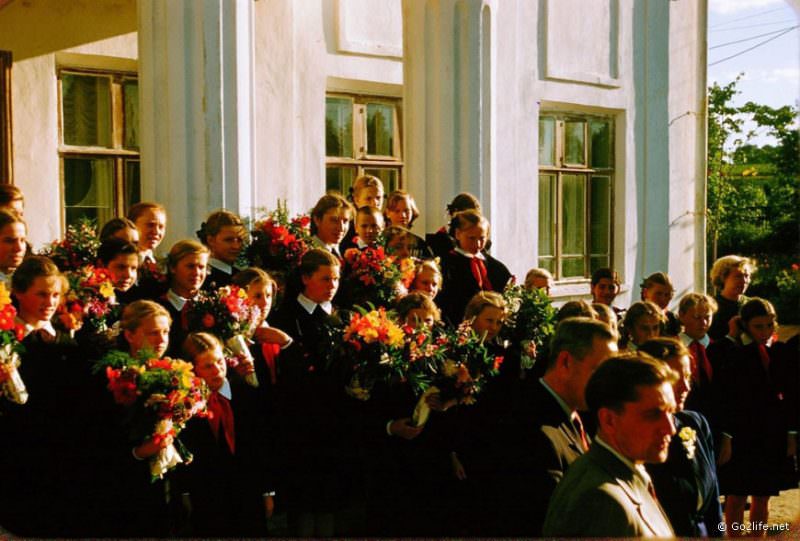
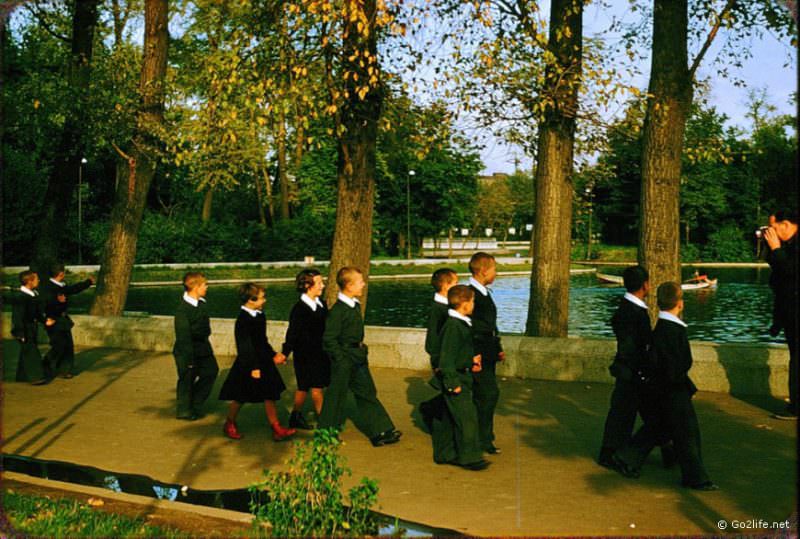
Soviet pupils
Soviet pupils
Soviet tourists on the Red Square in Moscow, 1950s
Street Food in Soviet Moscow, 1950s

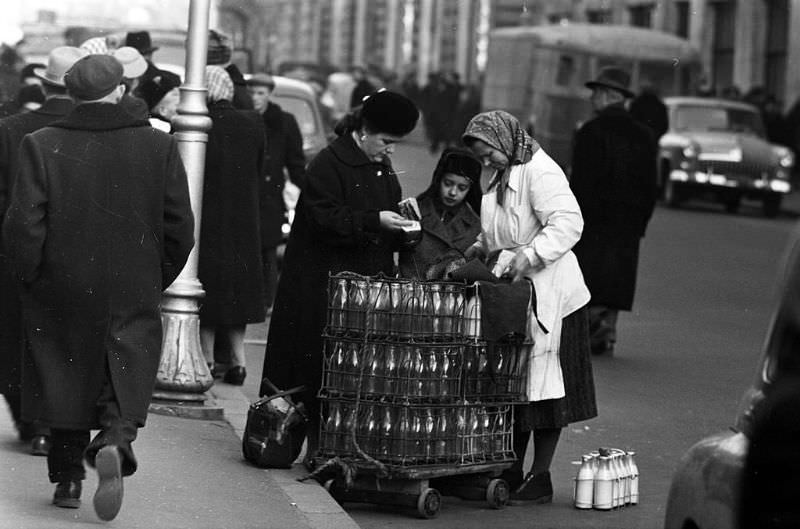
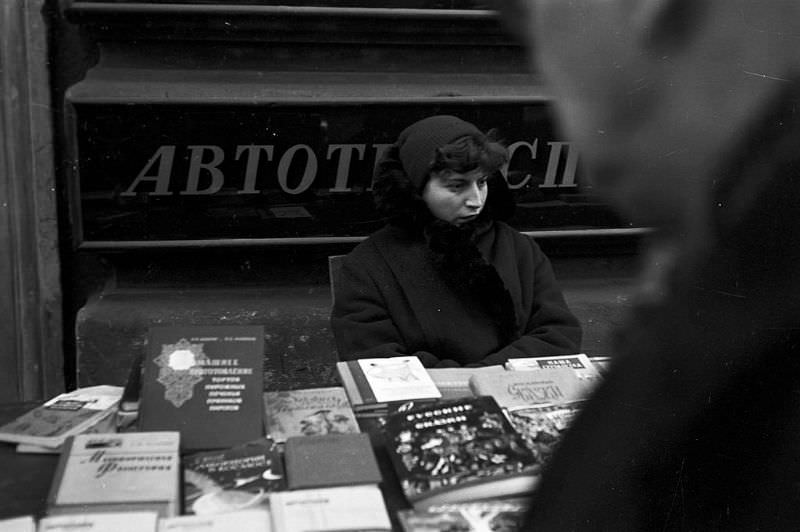
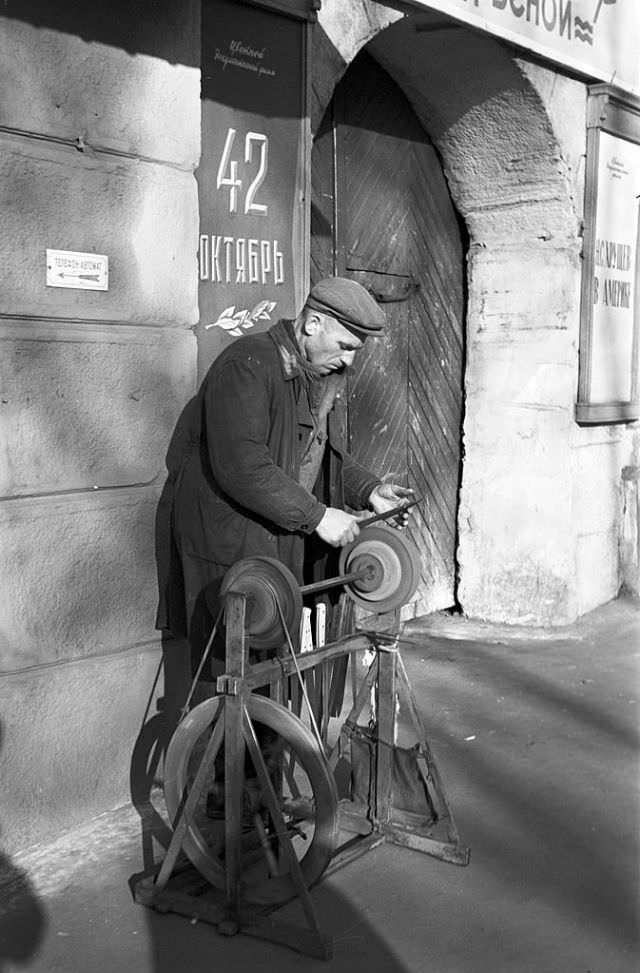
Street food vendors, booksellers, and knife sharpeners were common sights on Moscow’s streets. A young woman ran a book stall. A vendor sold milk directly to a mother and her son. These small transactions made up the texture of daily Soviet life — a city that was simultaneously building rockets and selling bread from carts on the sidewalk.
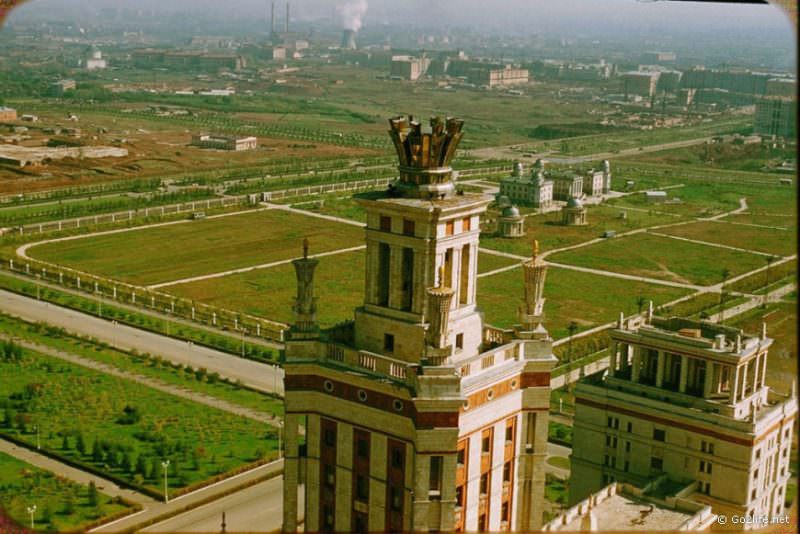
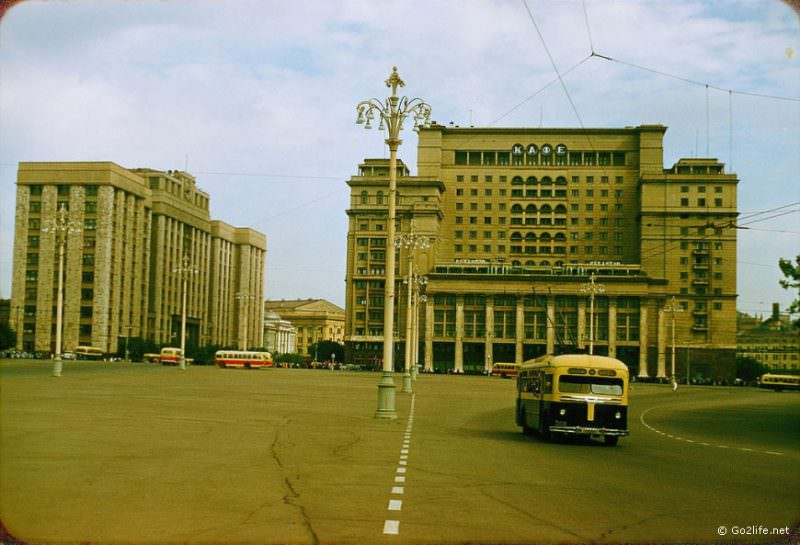
The monumental construction was a signature urbanist approach during Joseph Stalin rule
The Red Square, Moscow, 1950s
The streets of Soviet Moscow were pretty empty in the 1950s.
Moscow, 1950s.
Moscow, 1950s.
These school students are looking relatively good.
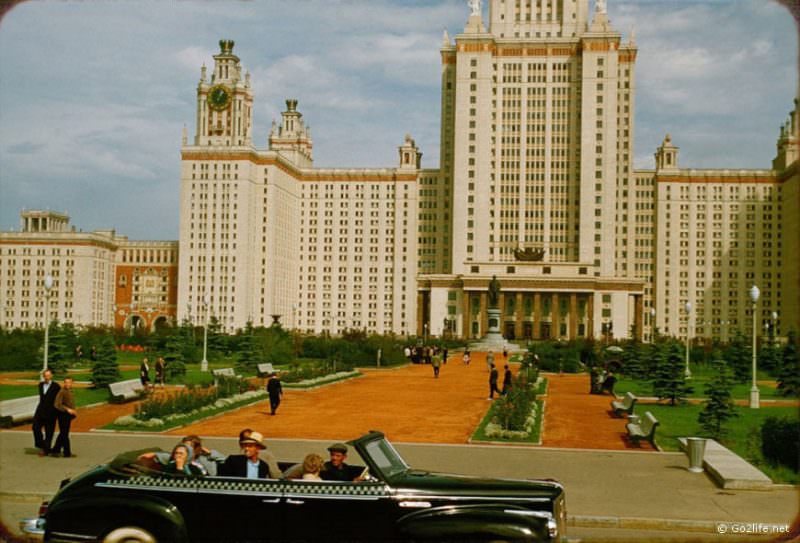
This building had to demonstrate that the Soviet Union recovered from WWII.
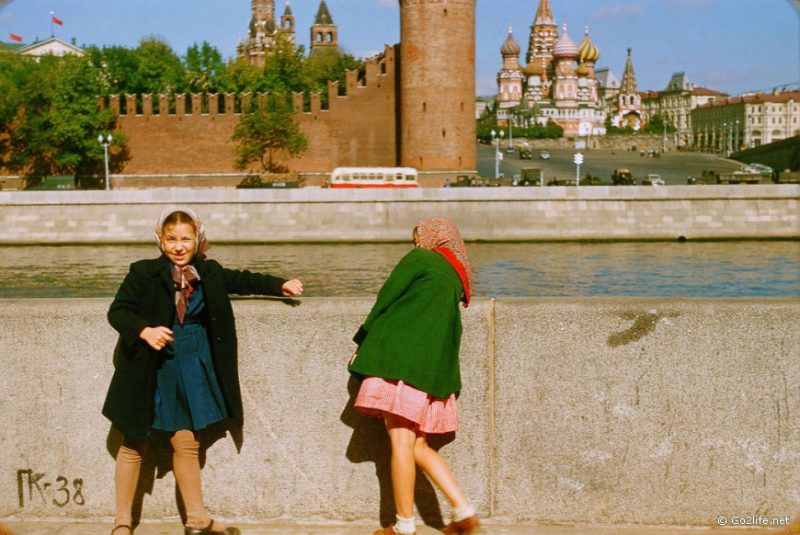
Two soviet girls standing at the Moscow river embankment, the 1950s
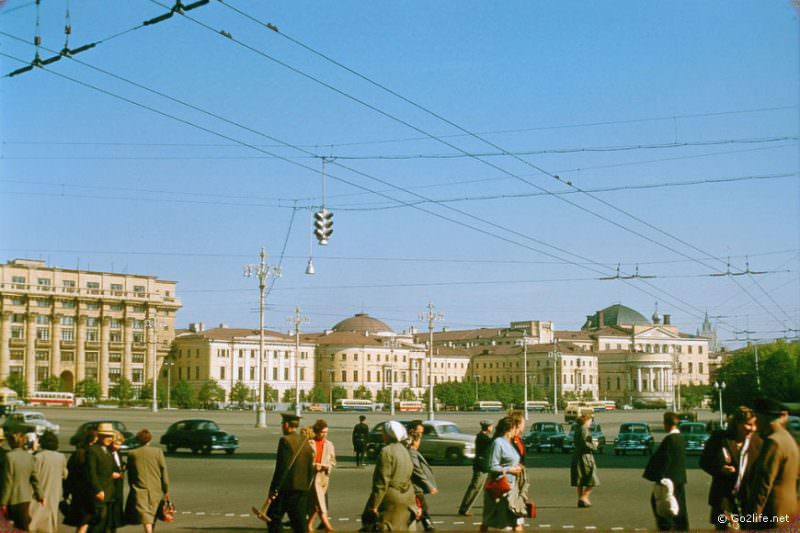
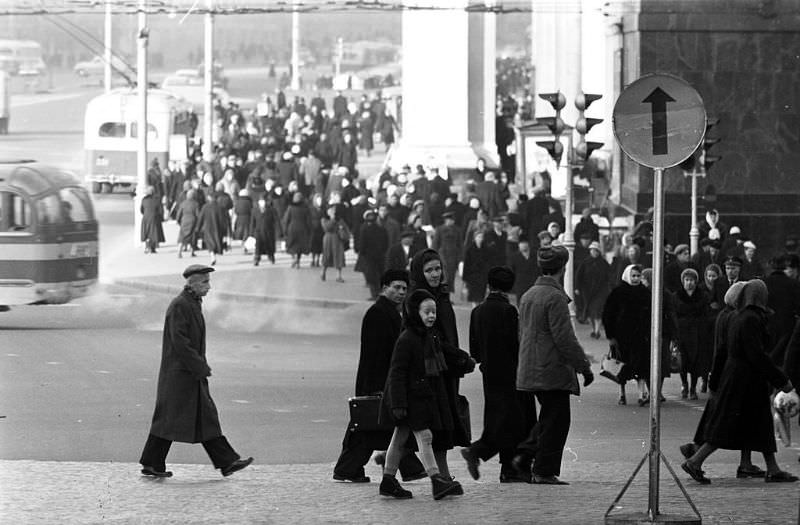
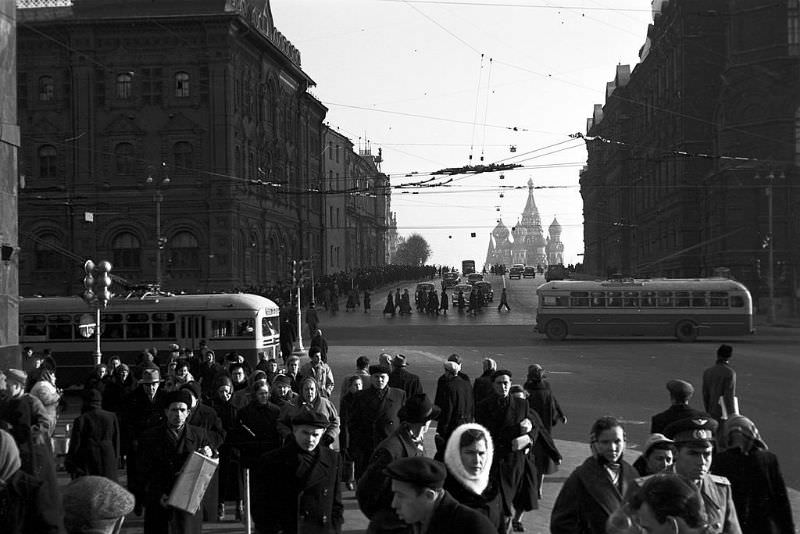
People crossing the street.
Mother and son buying milk from a vendor.
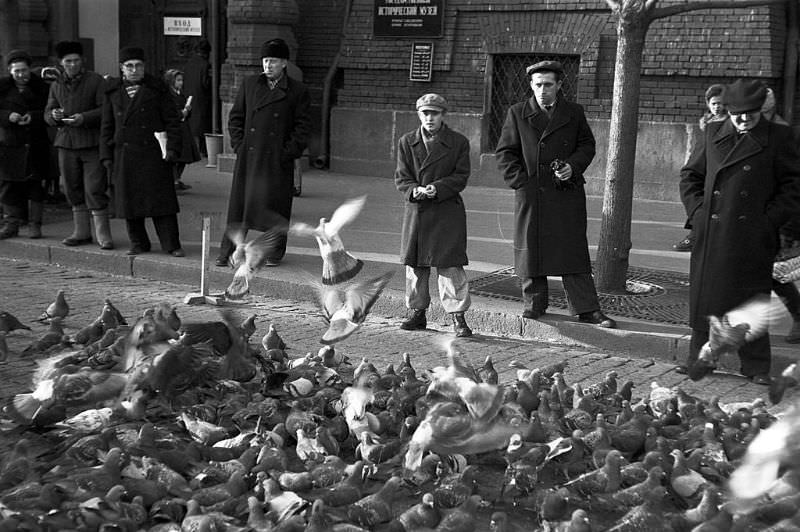
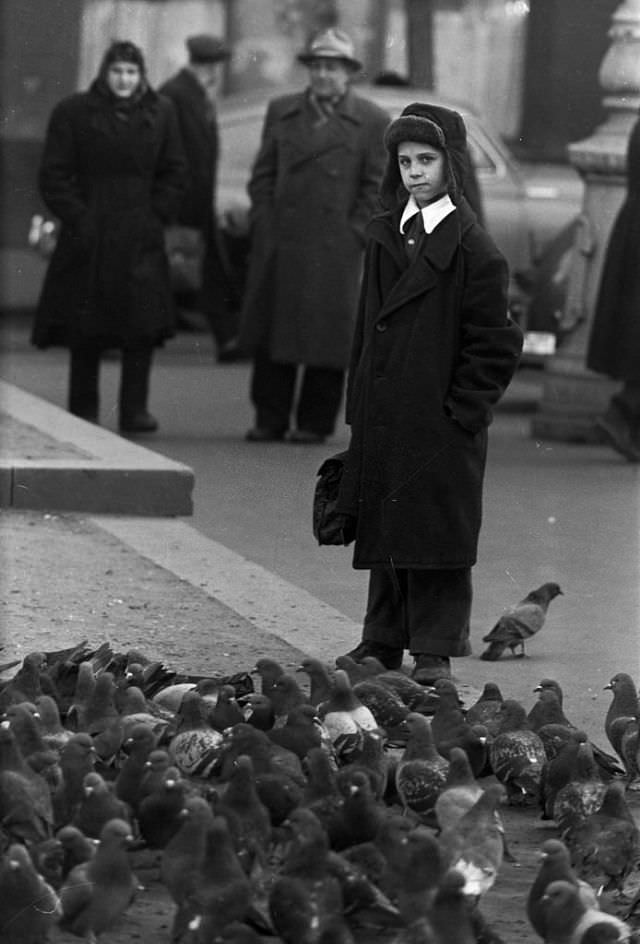
People gathering to watch and feed the pigeons.
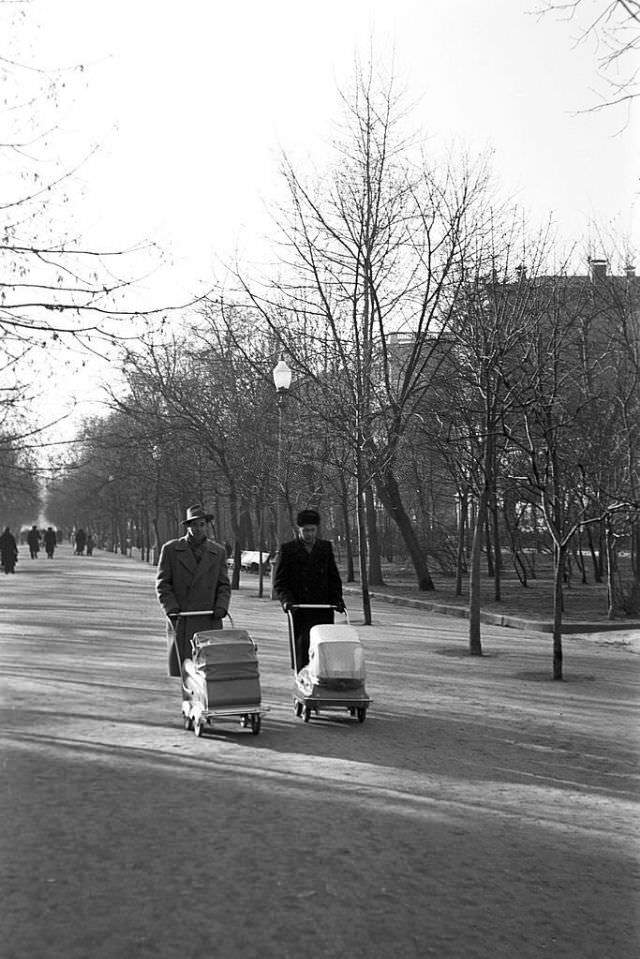
Two people pushing pram side by side at a park.
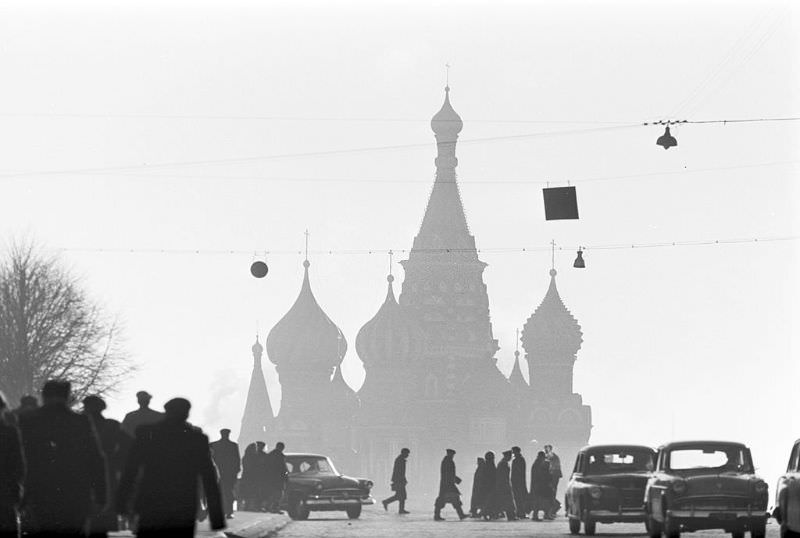
Silhouette of Saint Basil's Cathedral on the Red Square.
Silhouette of Saint Basil’s Cathedral on the Red Square.
A woman sweeping a broom at a park.
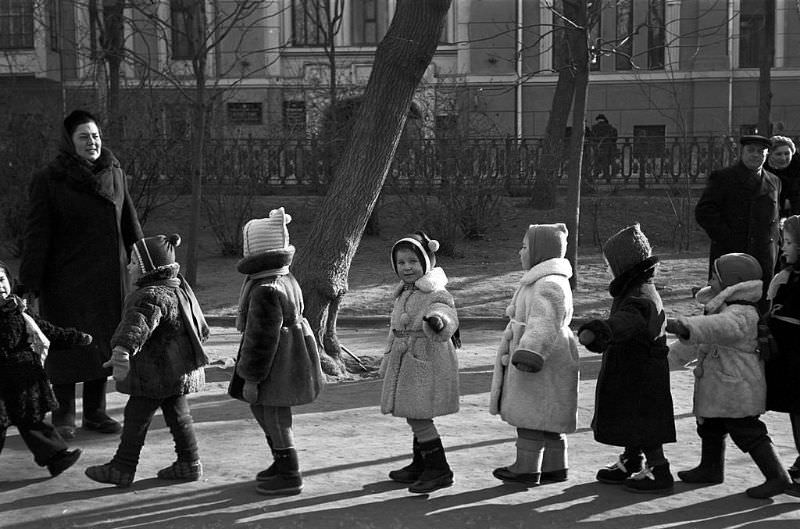
Warmly-dressed children playing in a public garden.

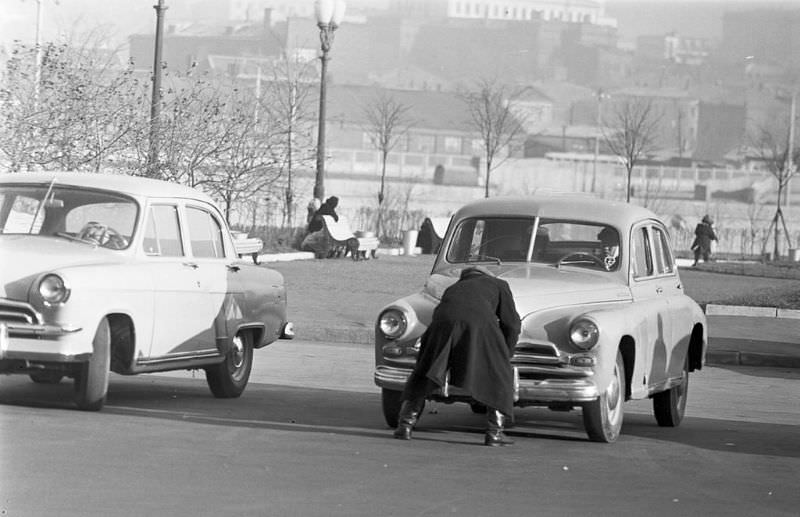
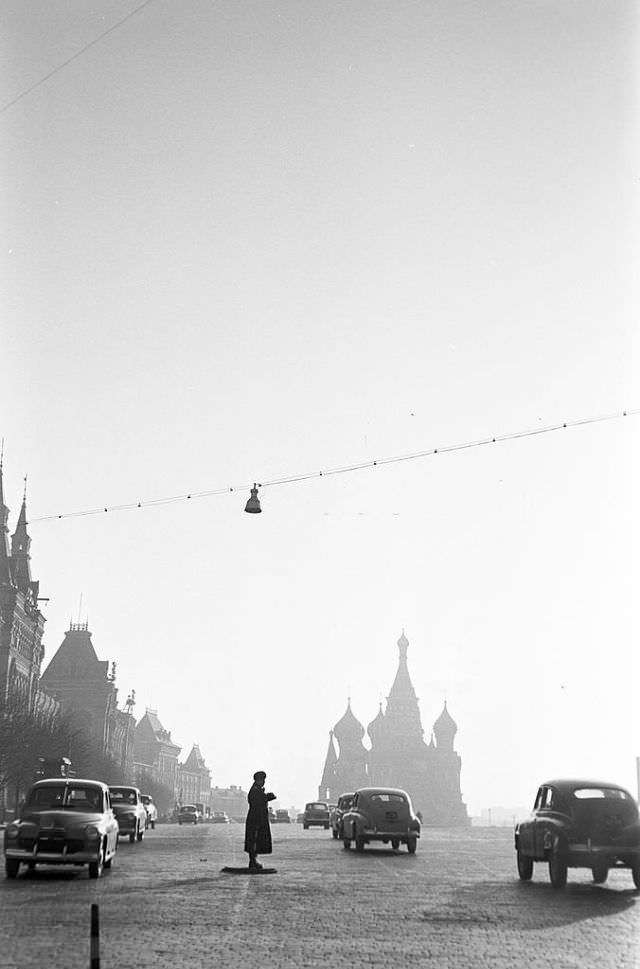
Traffic in central Moscow was managed by uniformed policemen who stood at wide cobbled intersections, directing the relatively sparse flow of vehicles by hand. Trams still ran through parts of the city. The streets were far quieter than those of Western capitals at the time — private car ownership in the Soviet Union was extremely limited.
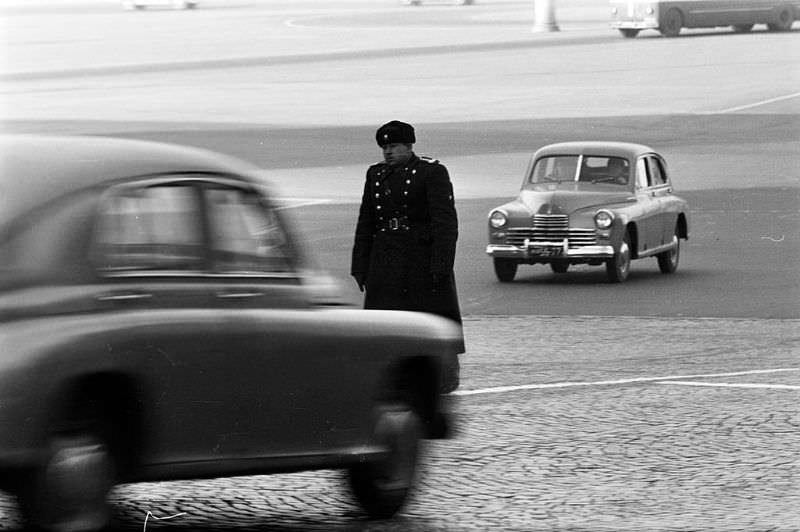
A traffic policeman in the center of a wide cobbled avenue.
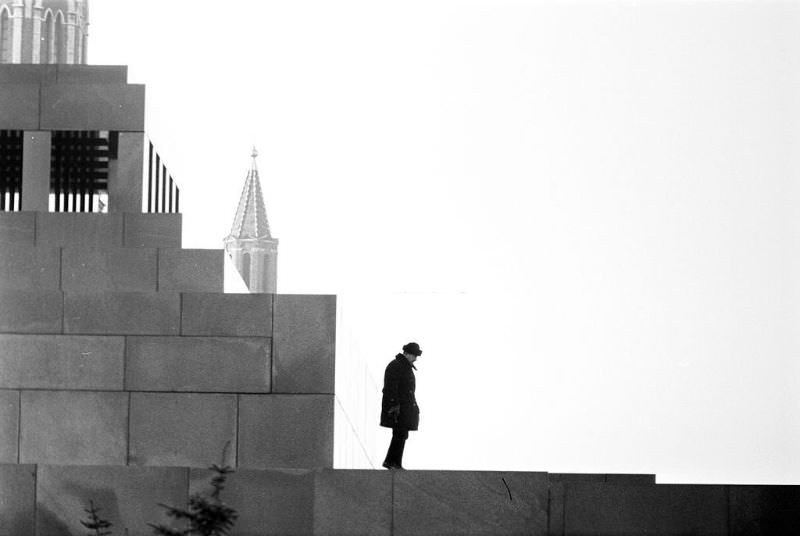
A man walking on the platform of Lenin's mausoleum.
A man walking on the platform of Lenin’s mausoleum.
Men playing chess in a courtyard.

By 1957, the Soviet space program had achieved something that shocked the entire world. Sputnik 1 — the first artificial satellite — was launched into orbit. Back in Moscow, four men were photographed installing a model of Sputnik on a public sculpture in a city garden, a small but telling sign of just how much pride the achievement brought to the Soviet people.
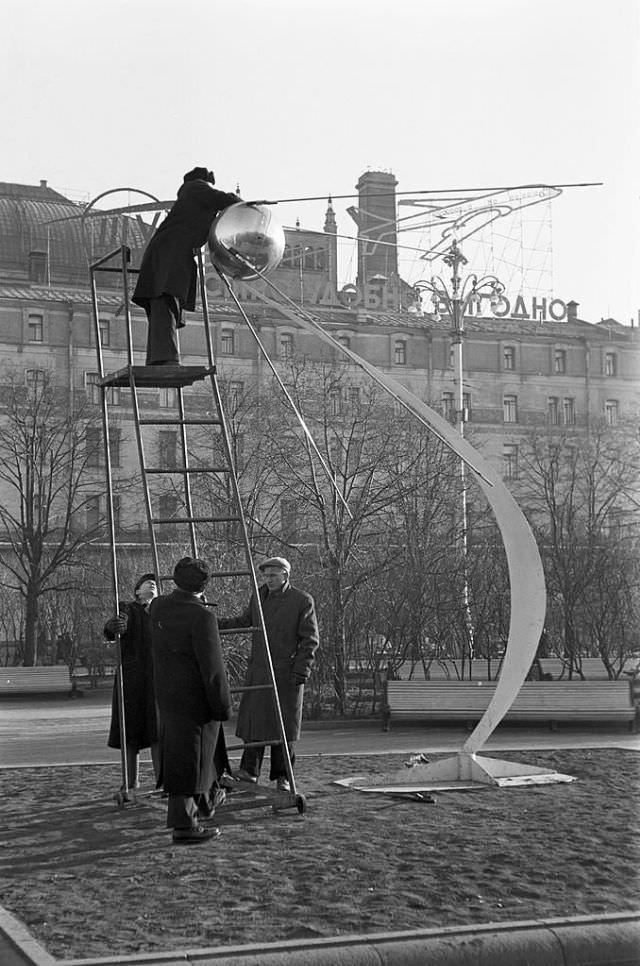
Four men installing a model of Sputnik 1 on an abstract sculpture in a public garden.
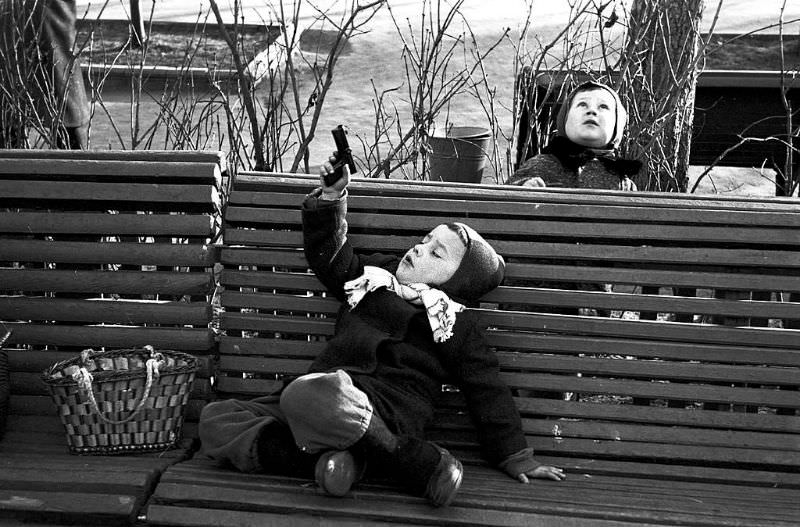
A boy playing with a toy gun.
Line of people at a market.
A young bookseller at her stall.
Warmly-dressed children in a public garden.
Trams.
Trams.
A traffic policeman preparing to open the front trunk of a car.
A man sharpening his knife.
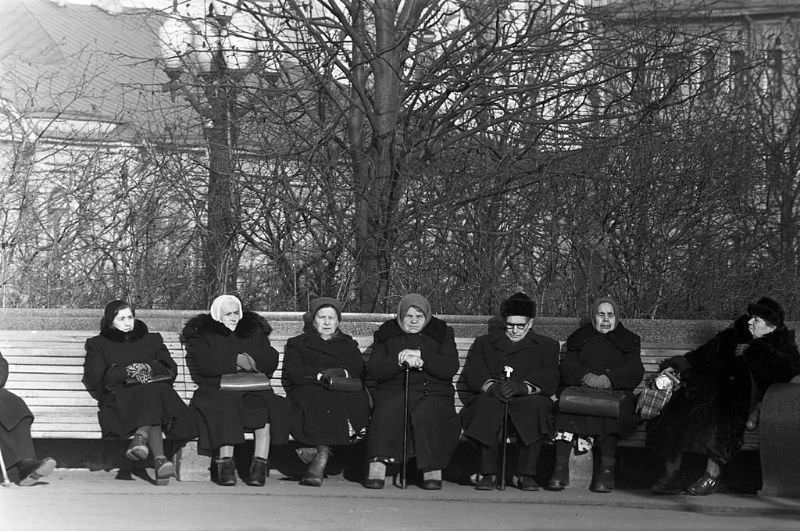
Elderly people in a public garden.
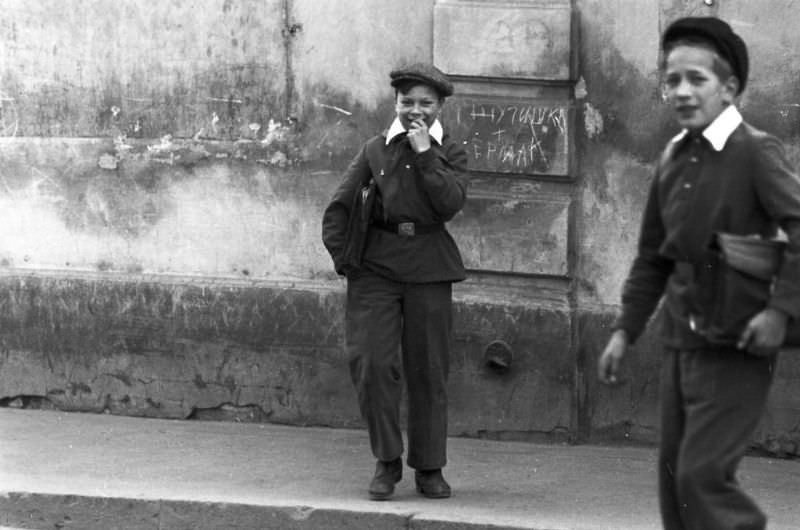
Two boys in uniform smiling on the sidewalk.
A young boy dressed in cold clothes and carrying his satchel.
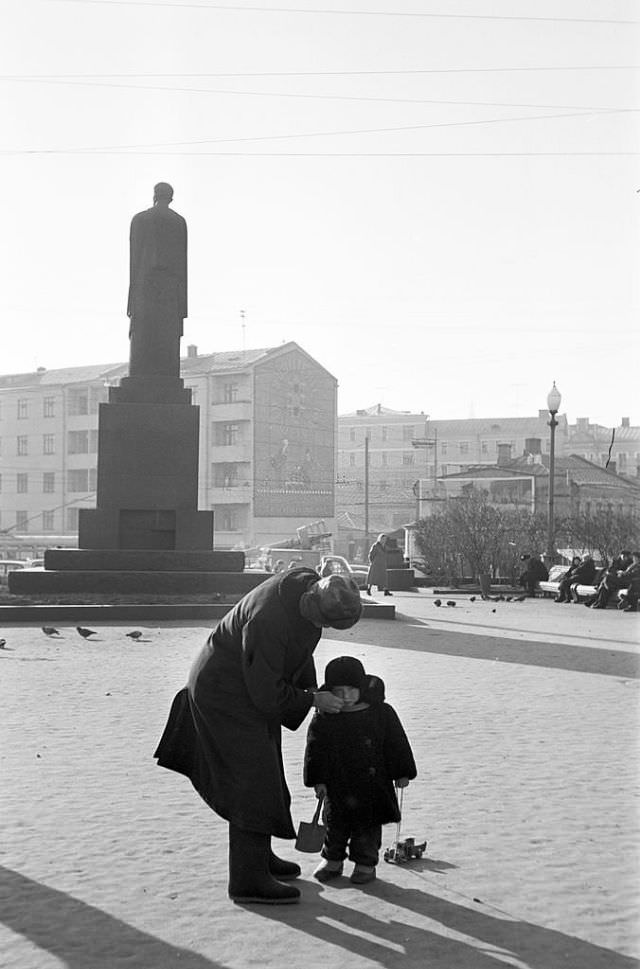
A man wiping a child's face on Pushkin Square.
A man wiping a child’s face on Pushkin Square.
Red Square.
Red Square.
Enjoyed this post? Get new ones in your inbox.
Avatar of Aung Budhh

Written by Aung Budhh

Husband + Father + librarian + Poet + Traveler + Proud Buddhist. I love you with the breath, the smiles and the tears of all my life.

Leave a Reply

Your email address will not be published. Required fields are marked *

2 Comments

    • Amazing! Westerners sure are obsessed with toilet paper! Well, you like the butt stuff anyway, right? However, the country rebuilt and developed rapidly after World War II, especially considering how much of the European part was razed in that event and how nearly a whole generation of men got disabled. In the late 1960s, living standards and human development were far above the global average. All of my relatives have nothing but good things to say about those times and the 1980s. Although, unfortunately, so many resources had to be spent on defence, it was unavoidable given the continuous threats from Western imperialist aggressors. It was either that or got “Untermenschen”.