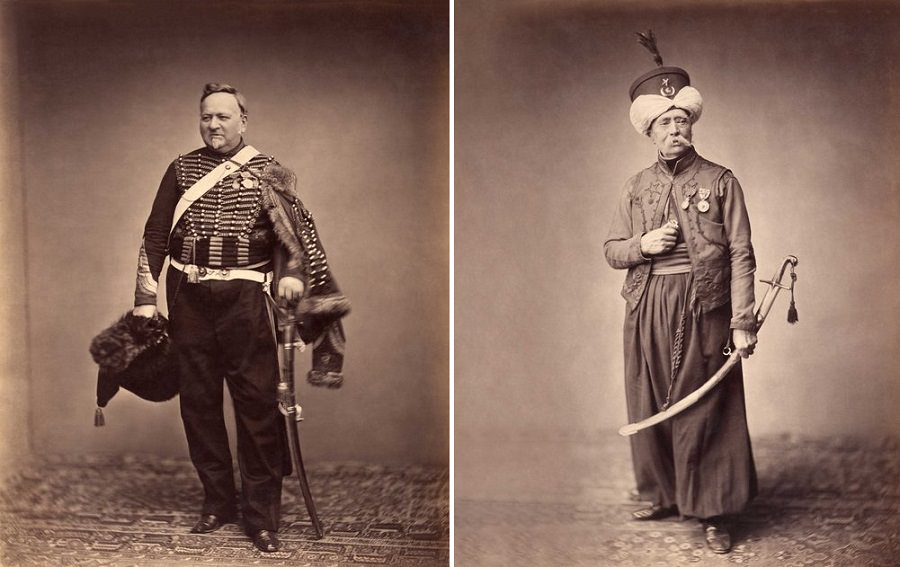
The Franco-Prussian War, also known as the Franco-German War, was one of the most consequential conflicts of the 19th century. It pitted the Second French Empire — and later the newly declared Third French Republic — against the North German Confederation, led by the Kingdom of Prussia. The war reshaped the map of Europe and left Paris in ruins. The rare photographs collected here document what that destruction actually looked like on the ground.
The roots of the conflict reached back to 1866, when Prussia’s decisive defeat of Austria in the Seven Weeks’ War established Prussian dominance over the German states. France watched this shift in power with deep unease. The immediate trigger, however, came from Spain. When Queen Isabella II was deposed in 1868, the Spanish throne sat vacant. Prussian Chancellor Otto von Bismarck and Spanish statesman Juan Prim worked together to convince Prince Leopold of Hohenzollern-Sigmaringen — a relative of the Prussian royal family — to accept the Spanish crown in June 1870.
The prospect of a Prussian-aligned king ruling Spain to France’s south alarmed the French government deeply. France’s ambassador pressured Prussian King Wilhelm I to guarantee that Leopold would never be a candidate for the Spanish throne again. Leopold withdrew his candidacy, but Bismarck was not finished. He took Wilhelm’s telegraphed account of that meeting, edited it to make the exchange sound far more insulting, and published it on July 14, 1870. This document, known as the Ems Telegram, was designed to provoke France — and it worked.
Napoleon III declared war on Prussia on July 19, 1870. His advisers assured him that the French army was ready and that a military victory would revive his faltering political standing at home. French generals pointed to military reforms carried out in 1866 as proof that their forces were superior to Prussia’s. Those calculations proved catastrophically wrong. The Prussian military, with superior organization, faster mobilization, and more effective use of artillery, dismantled French resistance at nearly every major engagement.
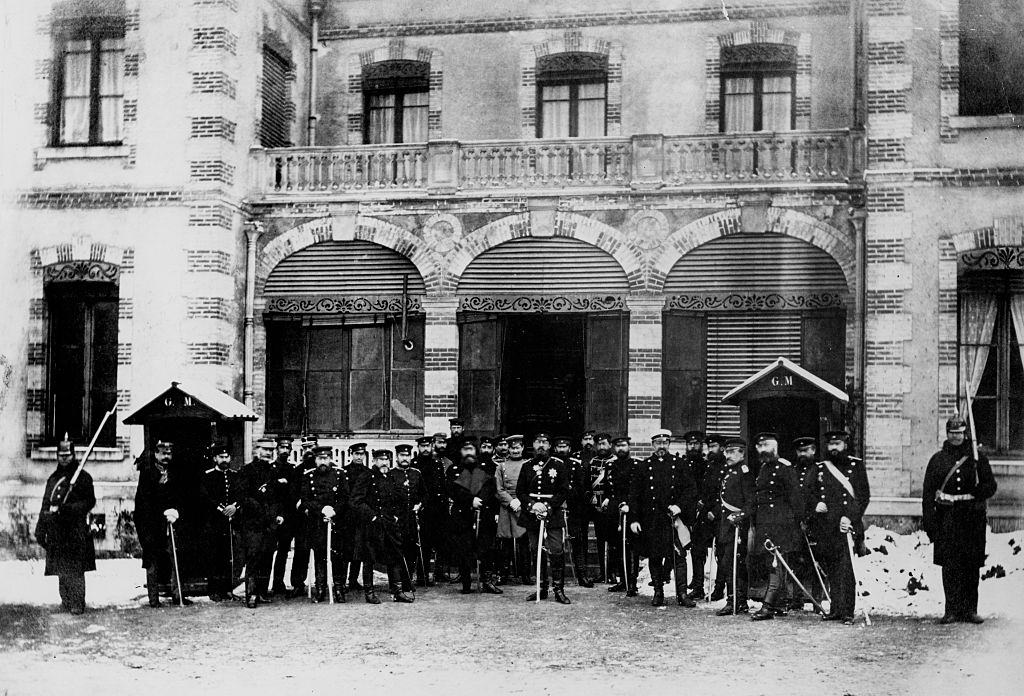
The turning point came at the Battle of Sedan in early September 1870. Napoleon III himself was captured by German forces during the fighting around that northern French town. News of the emperor’s capture detonated a political crisis in Paris. The legislative assembly dissolved. France was proclaimed a republic. But the war was far from over — and for Paris, the worst was still ahead.
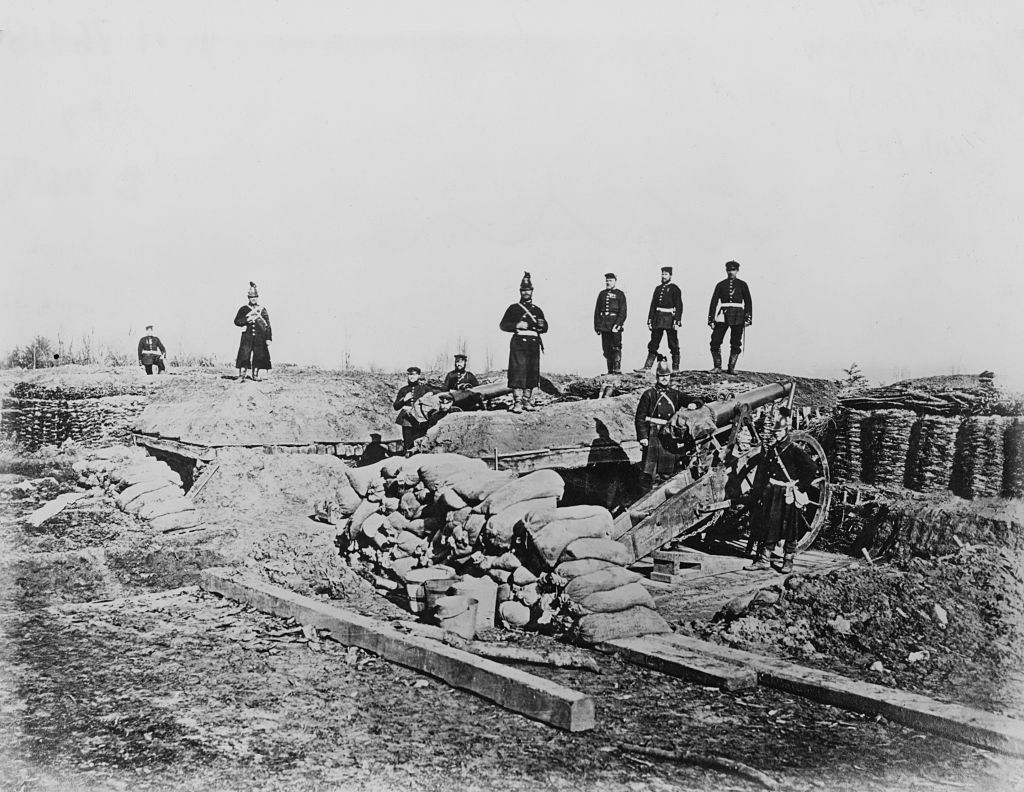
By the end of September 1870, German forces had captured Strasbourg and encircled Paris entirely. The siege that followed lasted months. Prussian artillery bombarded the city relentlessly, targeting fortifications and civilian areas alike. Food supplies dwindled. The population endured starvation conditions. French military sorties failed to break the German lines.
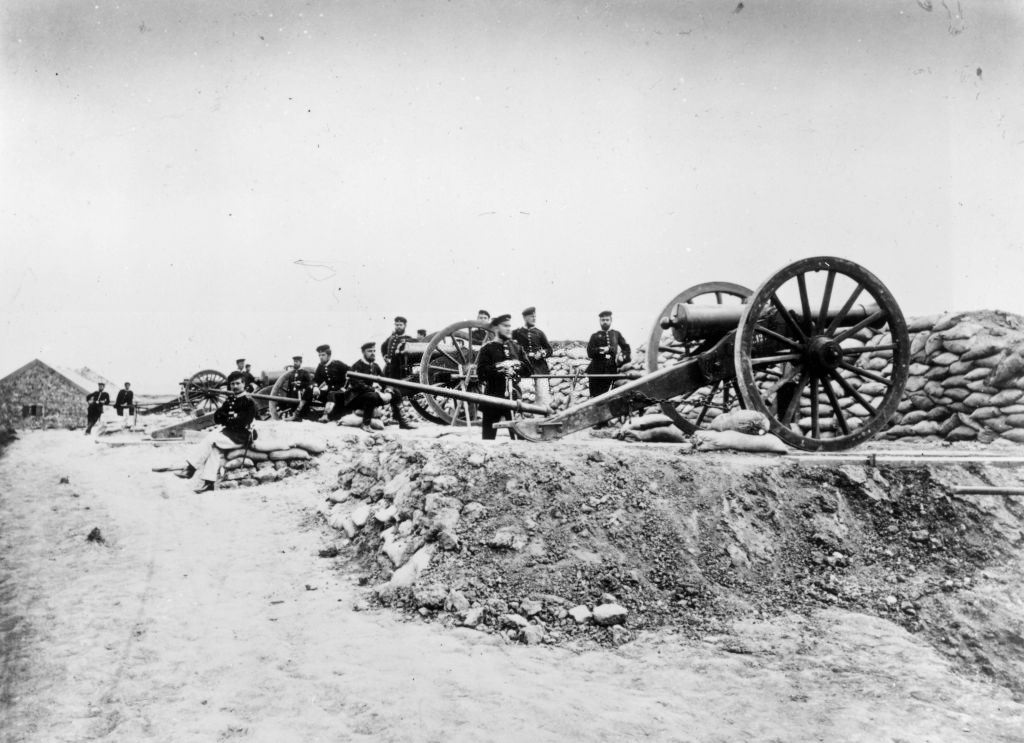
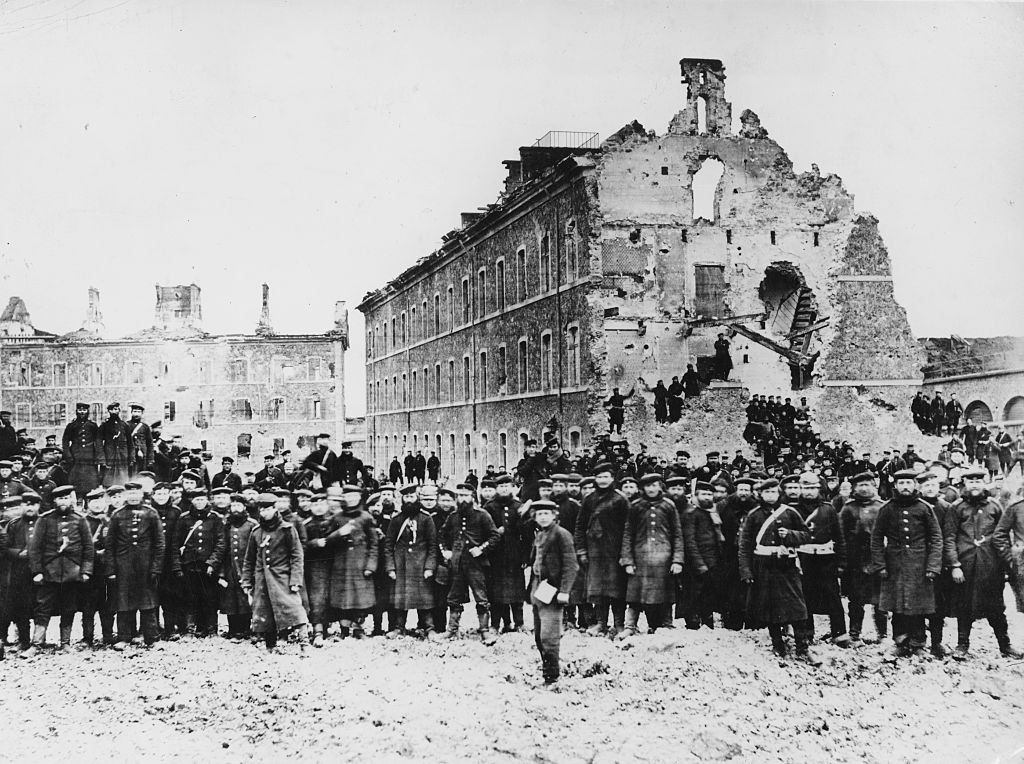
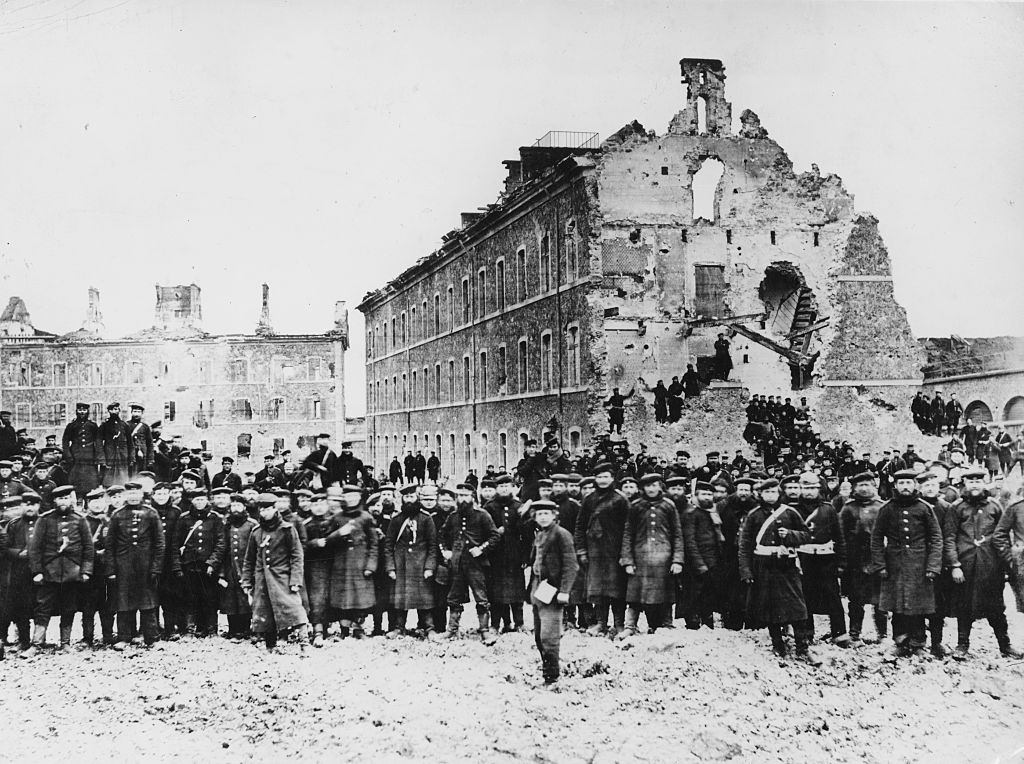
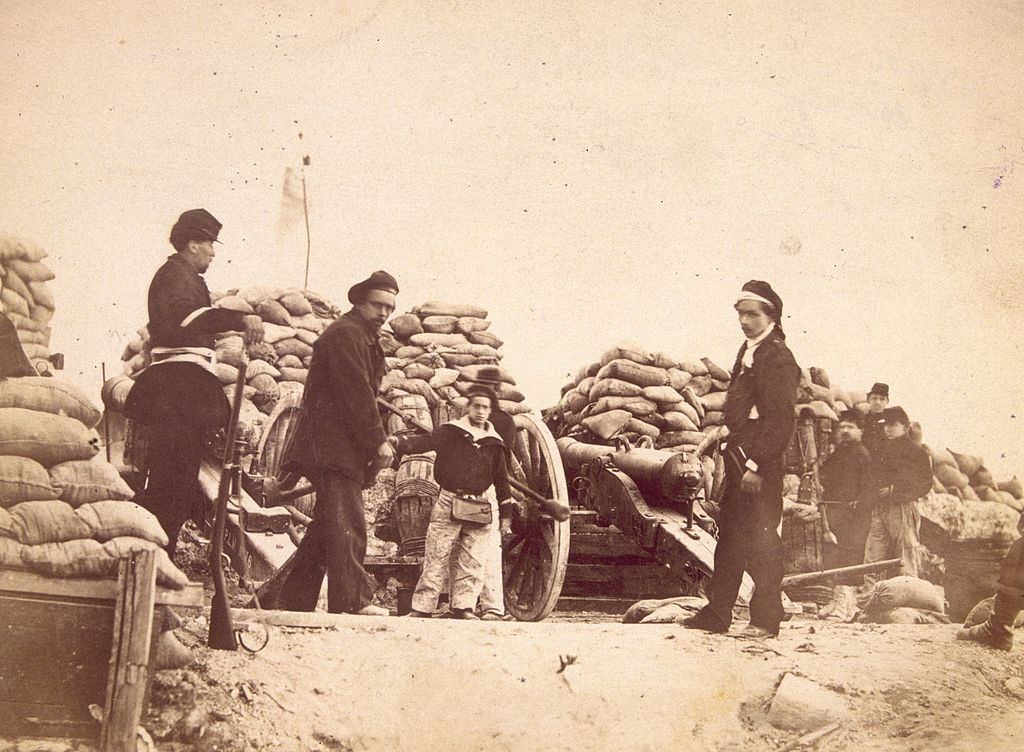
Prussian forces established fortified positions across the hills and forts surrounding Paris, using them to direct sustained fire into the city. Fort Issy, southwest of Paris, became one of the most heavily contested positions of the siege.
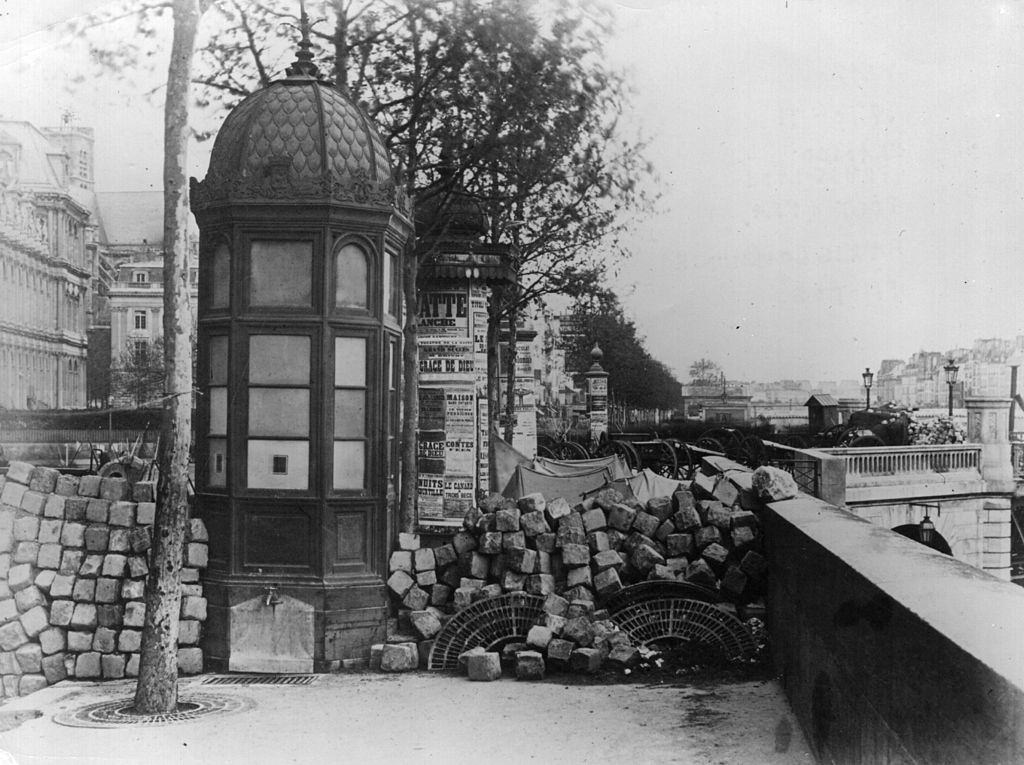
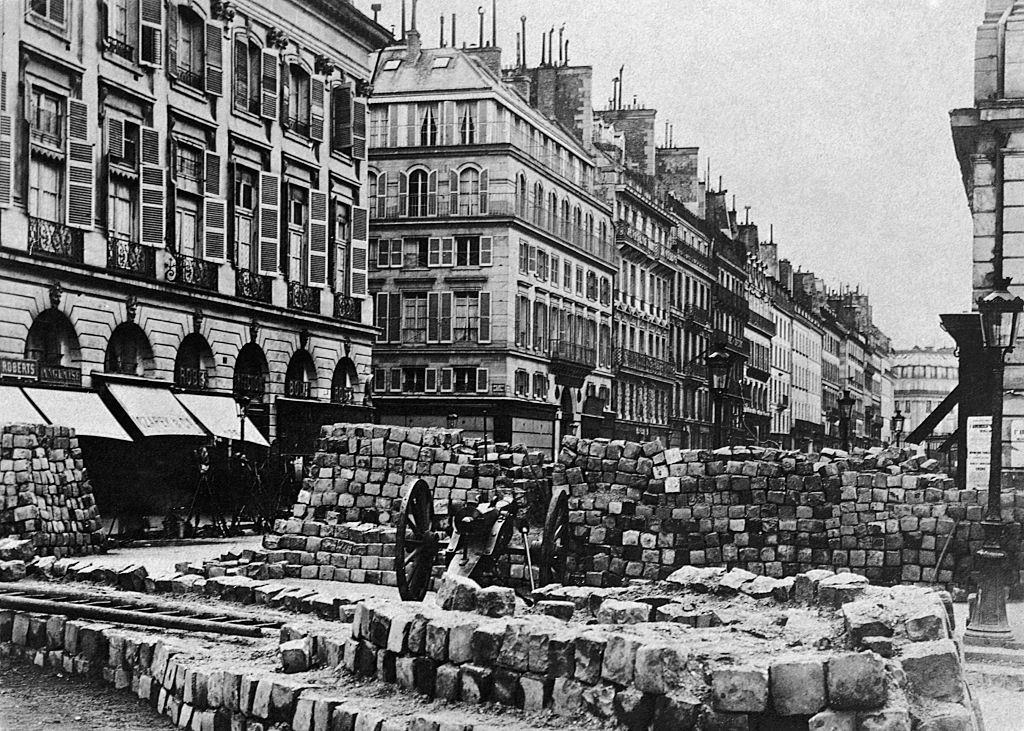
Inside the city, Parisians tore up their own streets to build barricades. Cobblestones were ripped from the roads and stacked into defensive walls. Cannon were wheeled into position at key intersections and bridges. The city transformed itself into a fortress, though no amount of street-level fortification could compensate for the Prussian artillery raining down from the surrounding heights.
On January 18, 1871 — one day before France opened surrender negotiations — Wilhelm I of Prussia was proclaimed Emperor of the new unified German state. The ceremony took place not in Berlin, but in the Hall of Mirrors at the Palace of Versailles, just outside Paris. For the French, the humiliation was deliberate and total. France formally opened surrender negotiations on January 19, 1871.
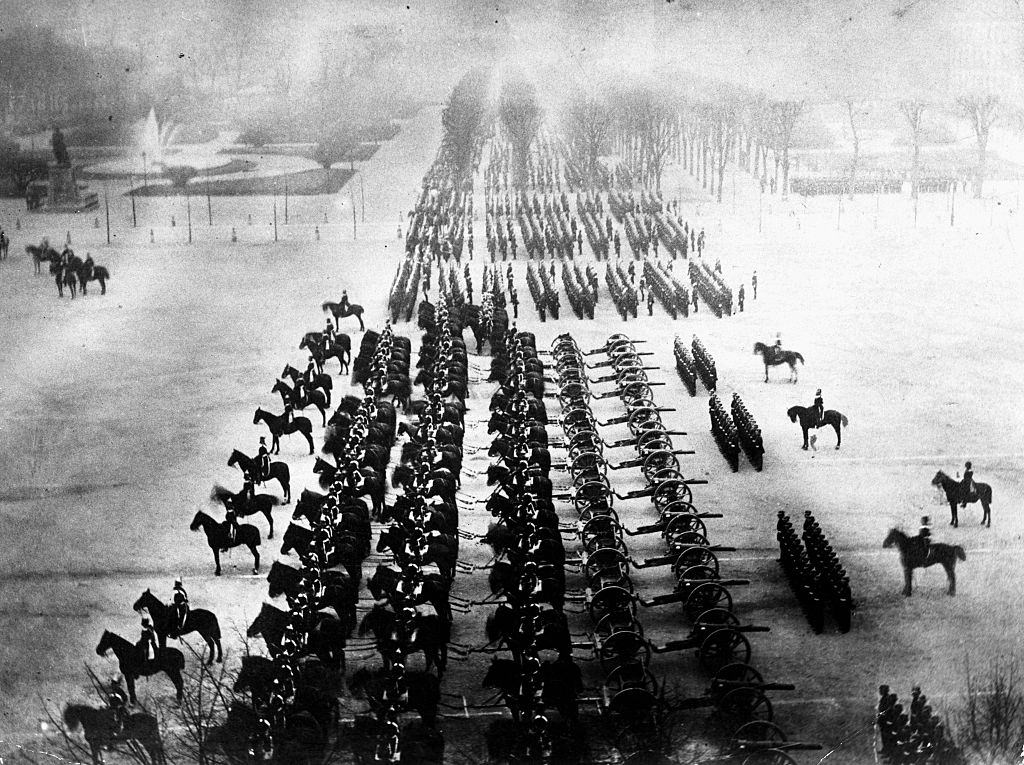
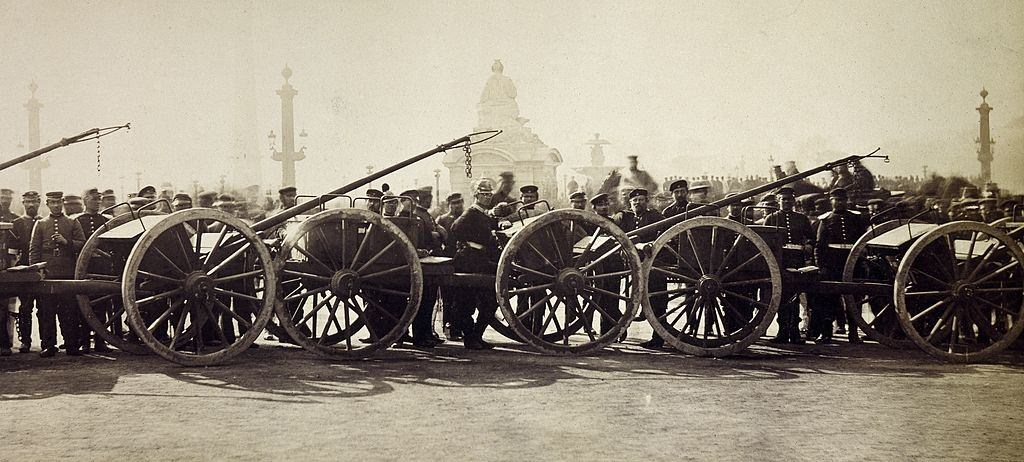
Prussian troops marched through Paris, parading down the Champs-Élysées in a show of conquest. The final peace agreement, the Treaty of Frankfurt, was signed on May 10, 1871. Under its terms, Germany took control of the regions of Alsace — excluding Belfort — and Lorraine. France was also required to pay a war indemnity of five billion francs. German troops remained on French soil until September 1873, when the debt was fully paid.
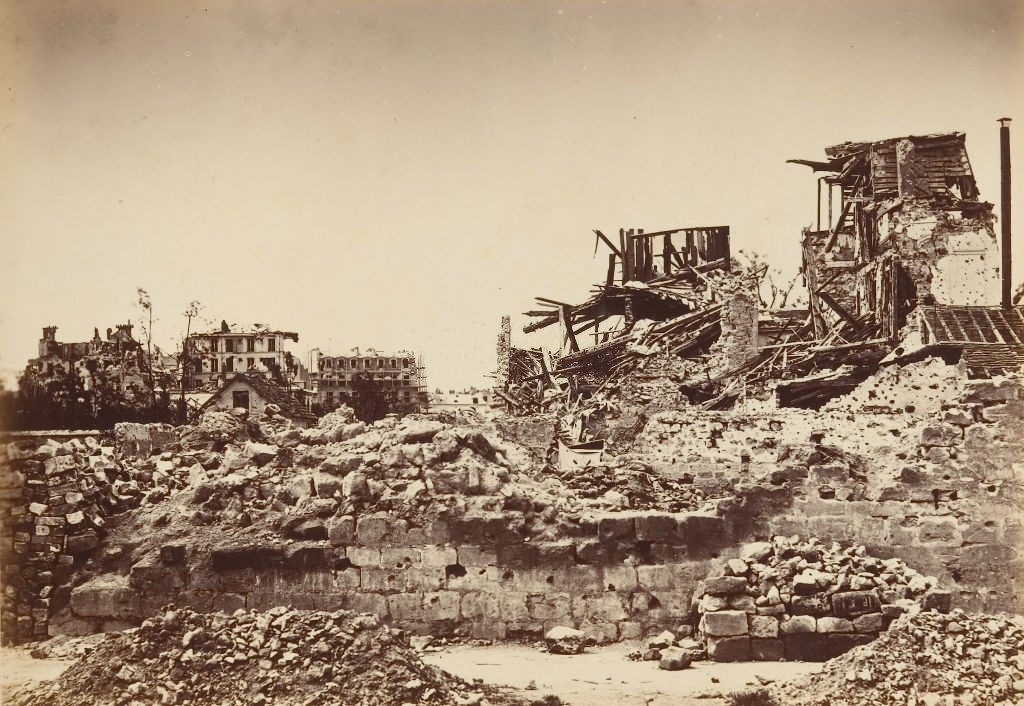
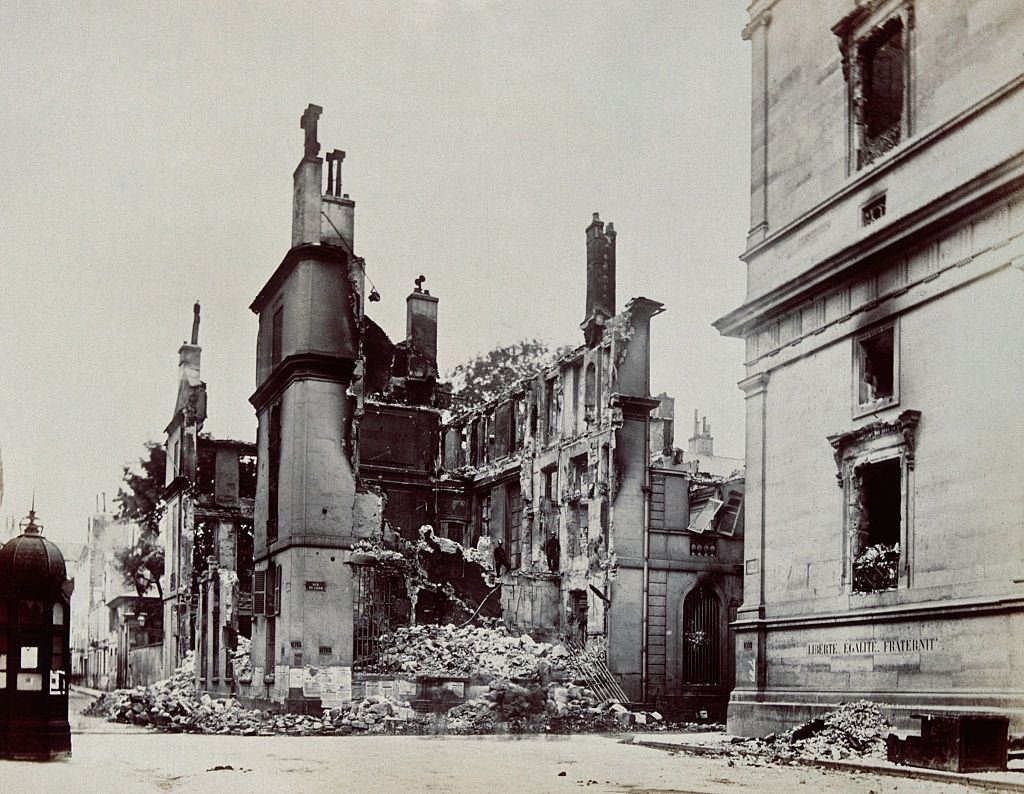
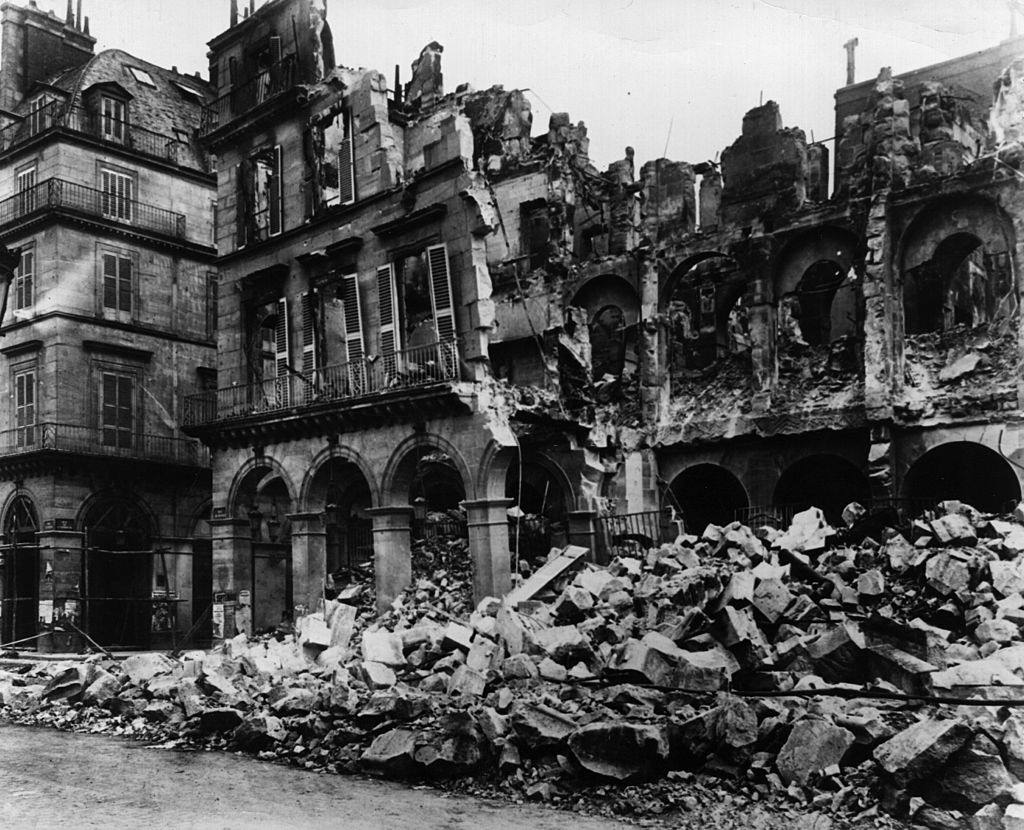
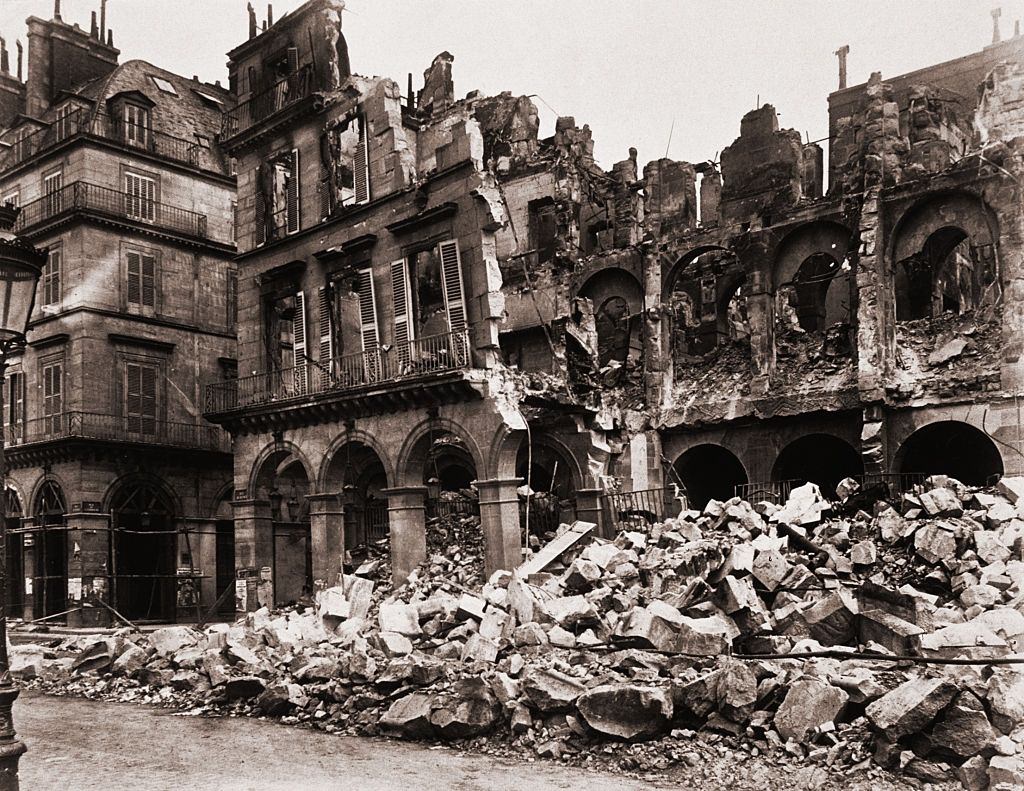
The physical damage to Paris was enormous. Entire neighborhoods were shelled into rubble. Streets that had stood for centuries were left with burned-out shells of buildings on every block. The Prussian bombardment destroyed homes, government offices, and cultural landmarks without distinction.
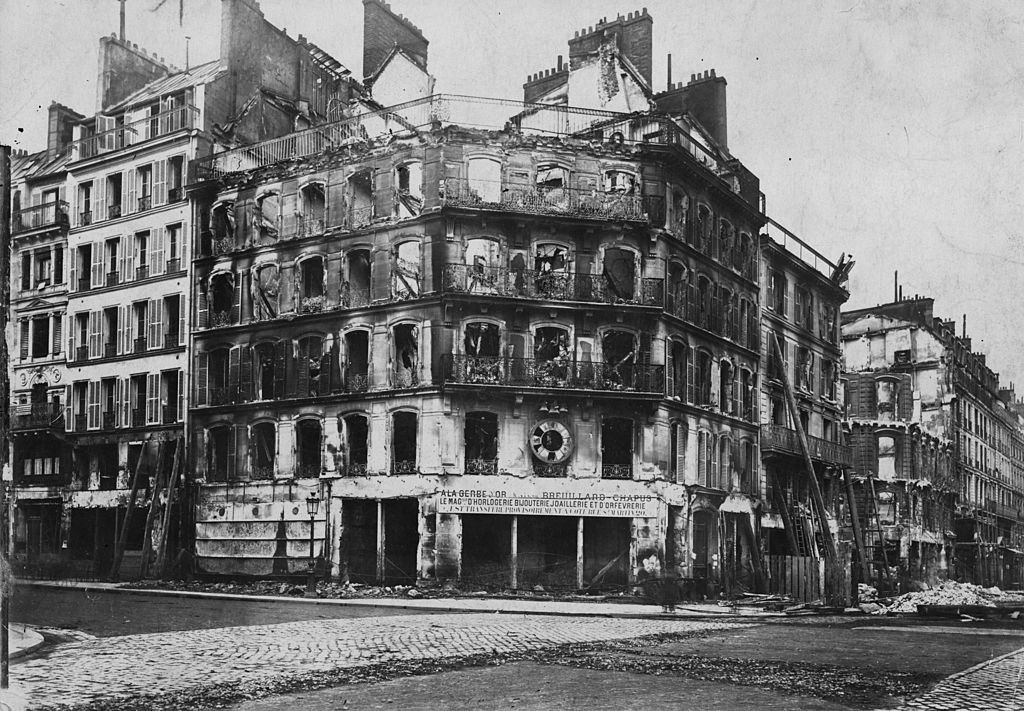
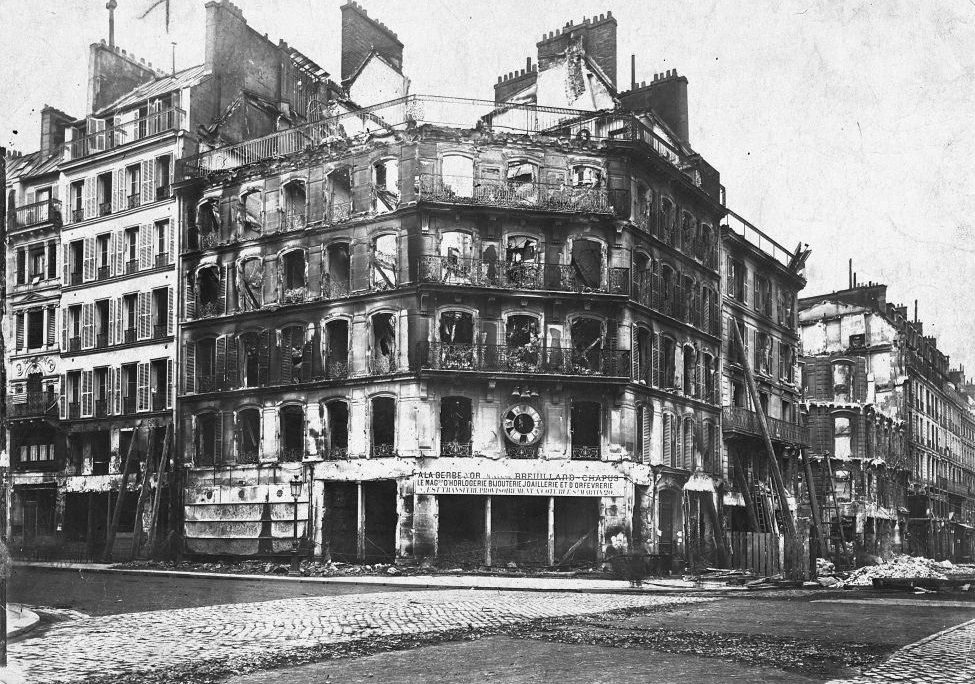
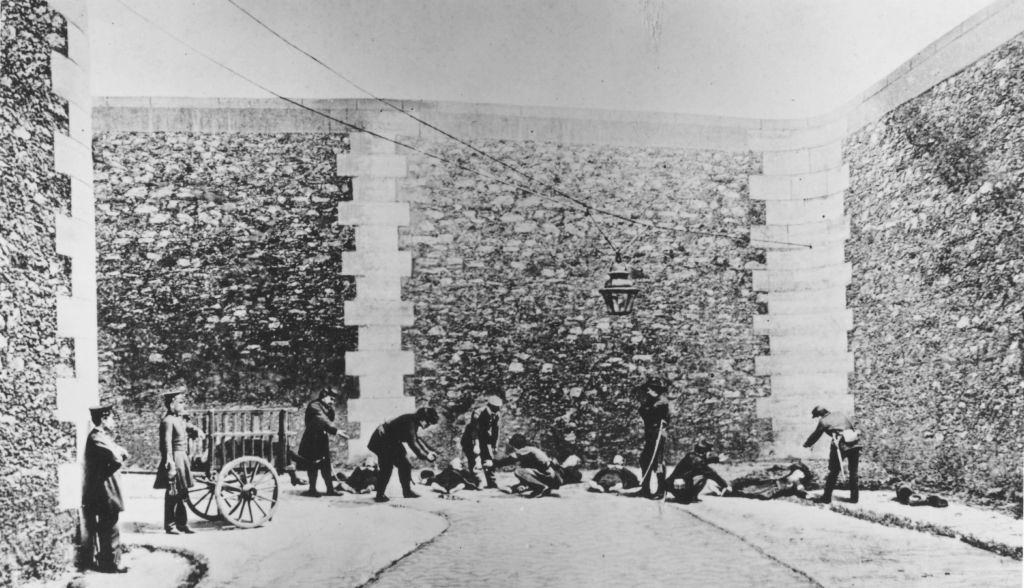
The destruction did not end with the Prussian bombardment. After the armistice, Paris erupted again from within. A radical left-wing government called the Paris Commune seized control of the city in March 1871 and held it for two months before the forces of the newly established Third Republic crushed the uprising. The violence of that suppression — known as “Bloody Week” — killed thousands. During the Commune’s final days, its supporters set fire to many of Paris’s most prominent buildings.
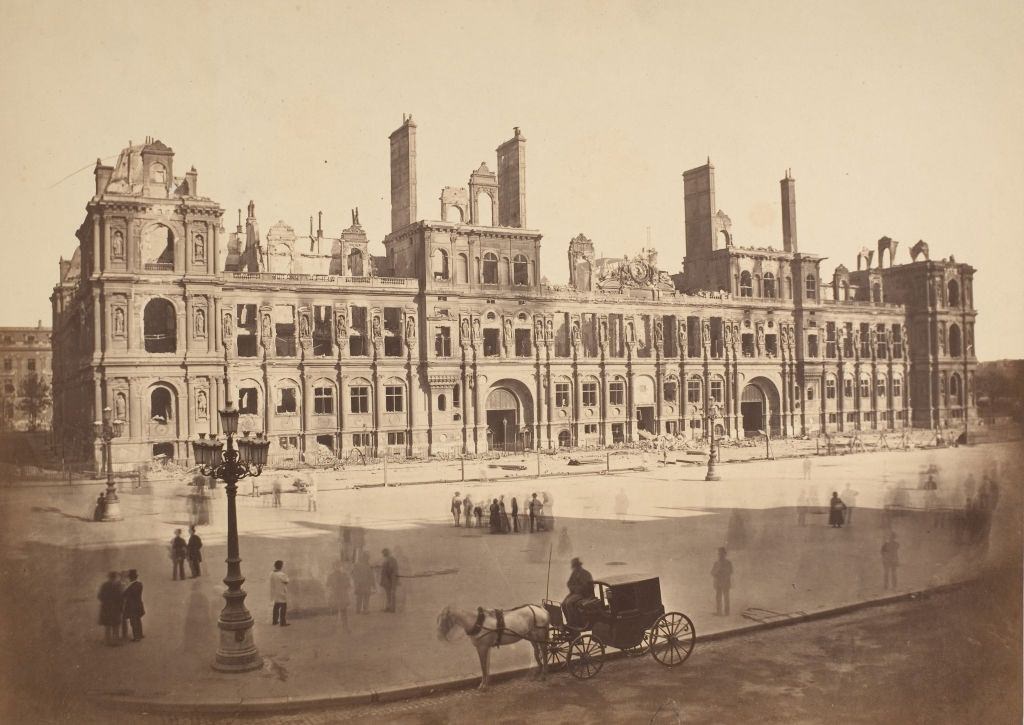
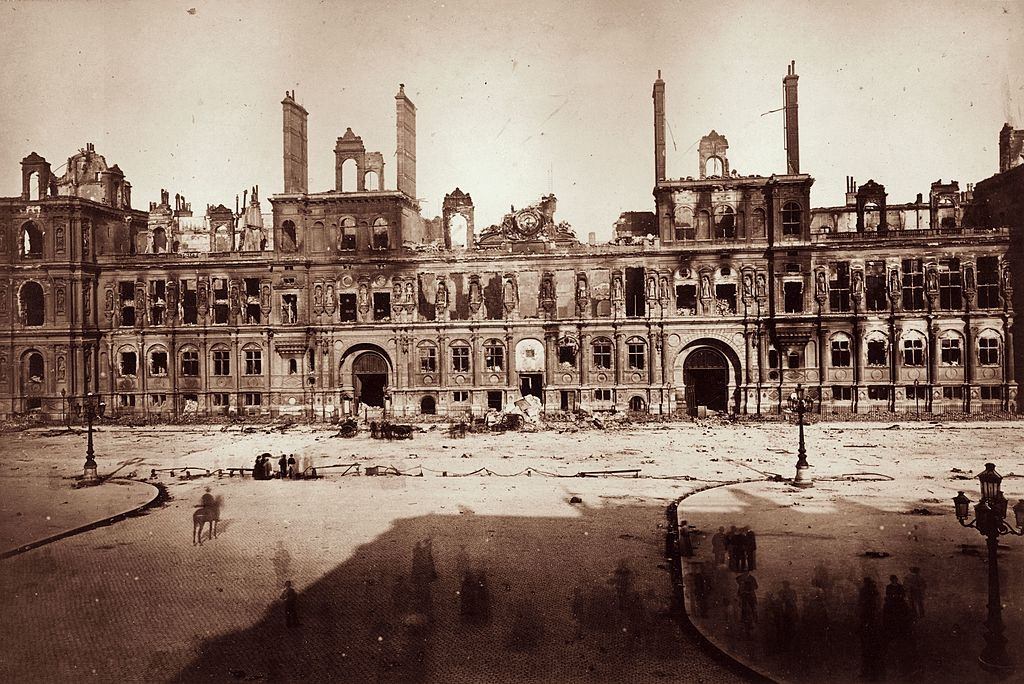
The Hôtel de Ville — Paris’s historic city hall — was gutted by fire. The Palais des Tuileries, the grand royal palace on the Right Bank of the Seine, was also burned to its shell by Commune supporters. The Finance Ministry on the Rue de Rivoli suffered the same fate.
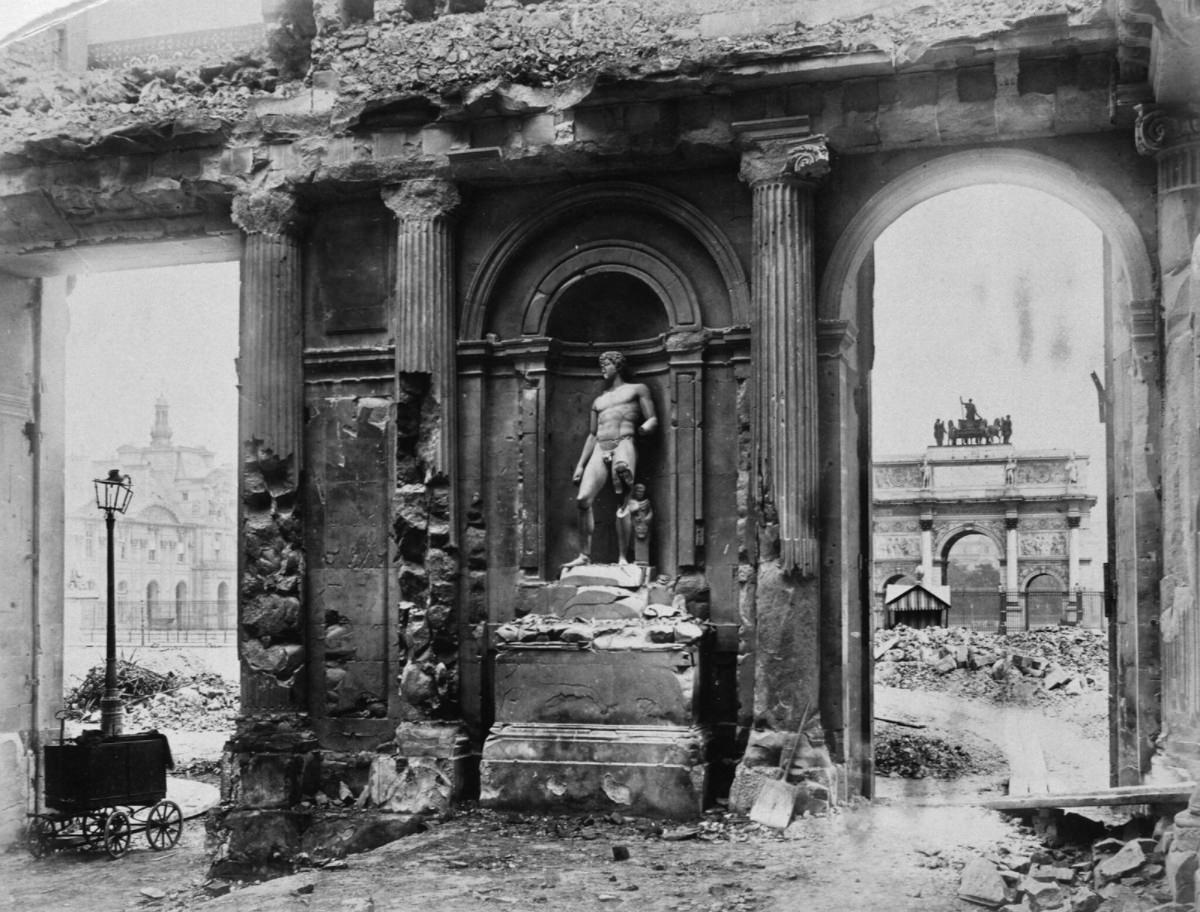
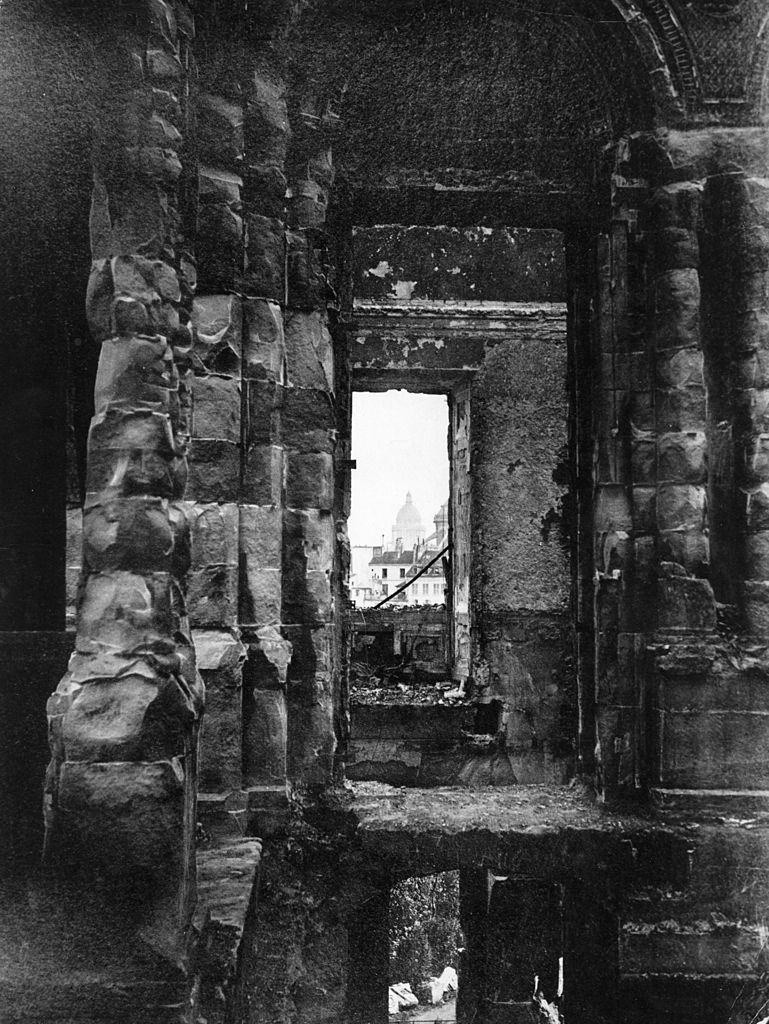
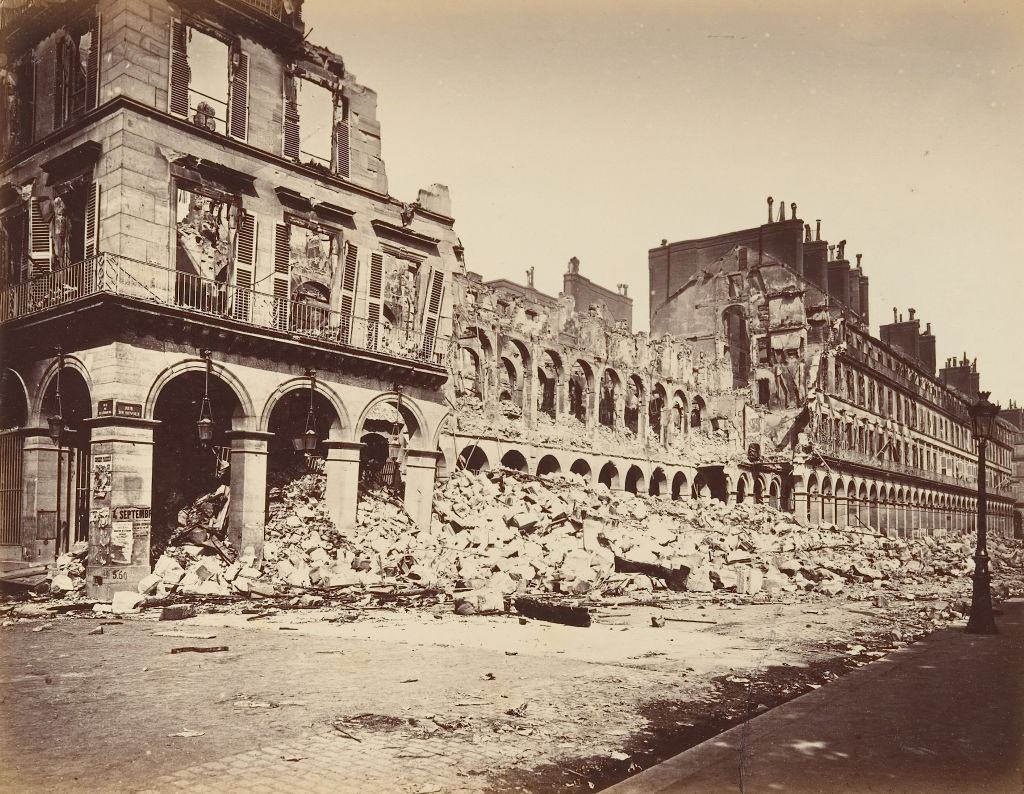
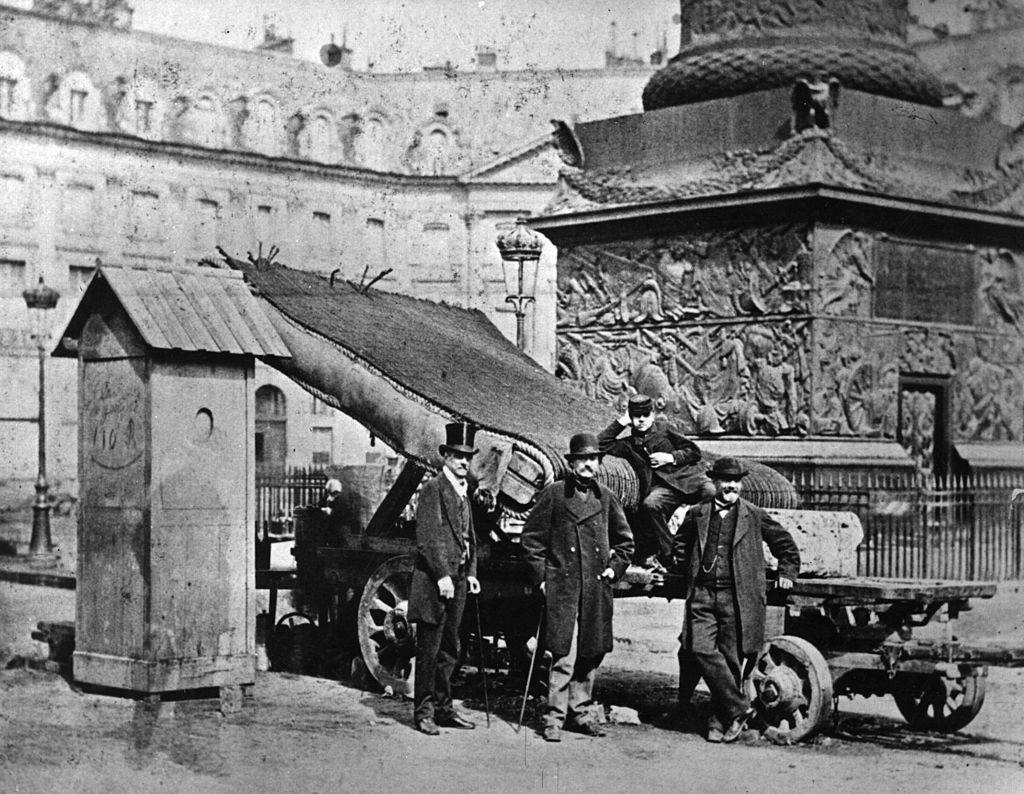
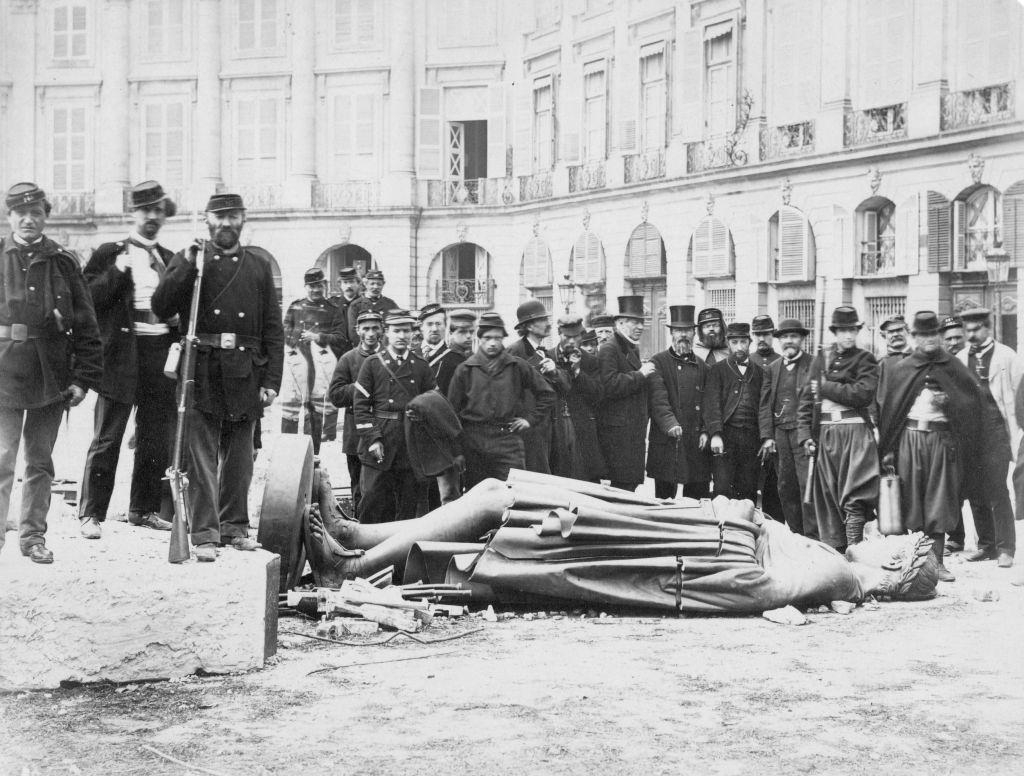
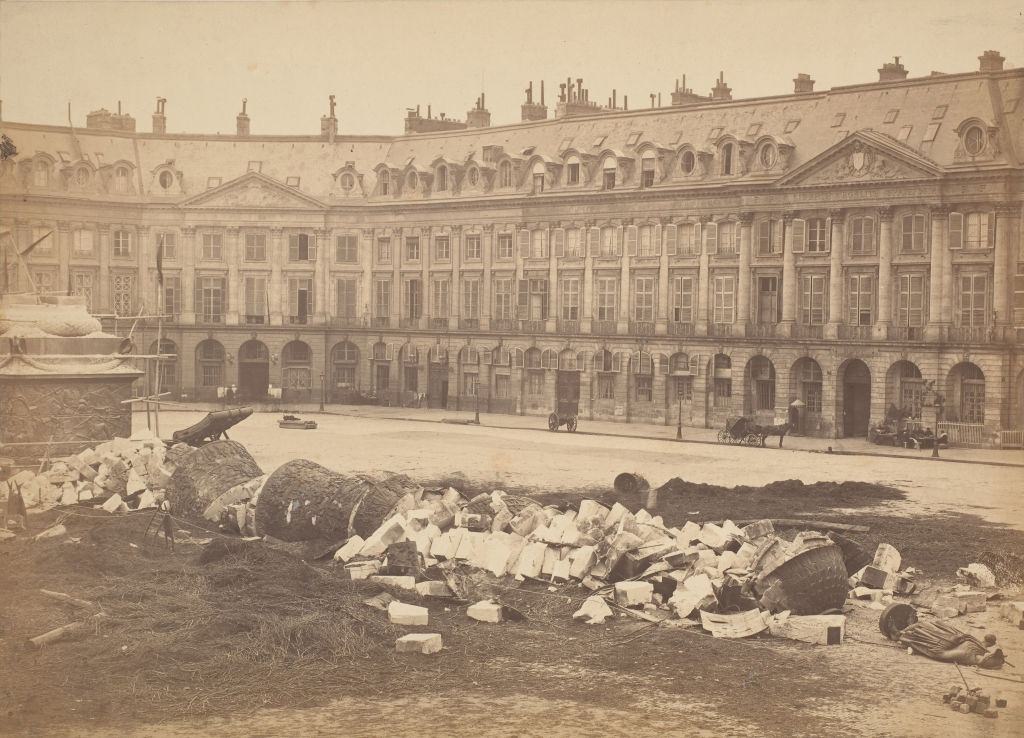
The Place Vendôme became one of the most symbolic sites of the Commune’s uprising. The Vendôme Column, a monument topped with a statue of Napoleon I that had stood since 1810, was torn down by Communards on May 16, 1871. The act was meant as a rejection of imperialism and militarism. The column’s fall was photographed, and those images circulated widely afterward.
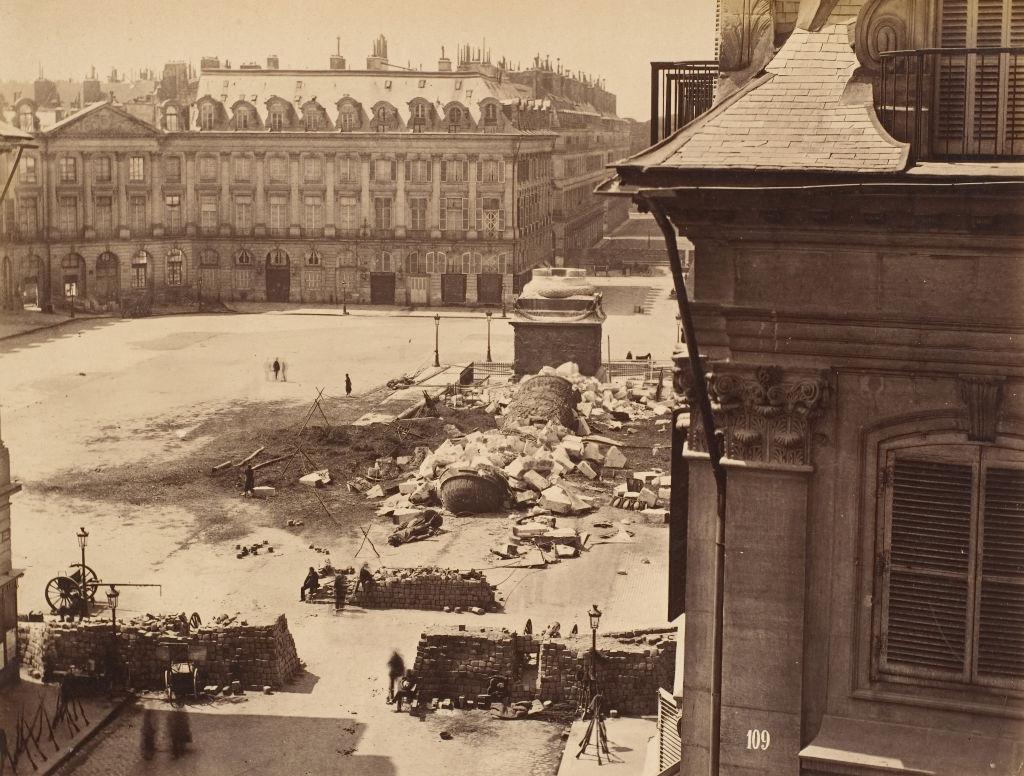
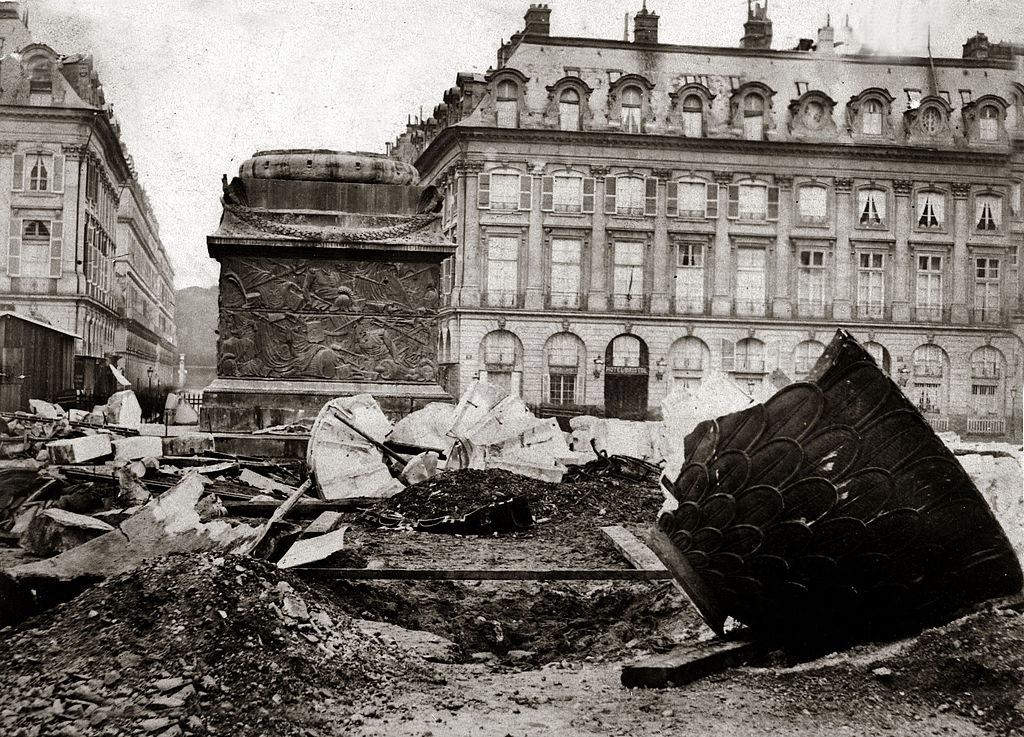
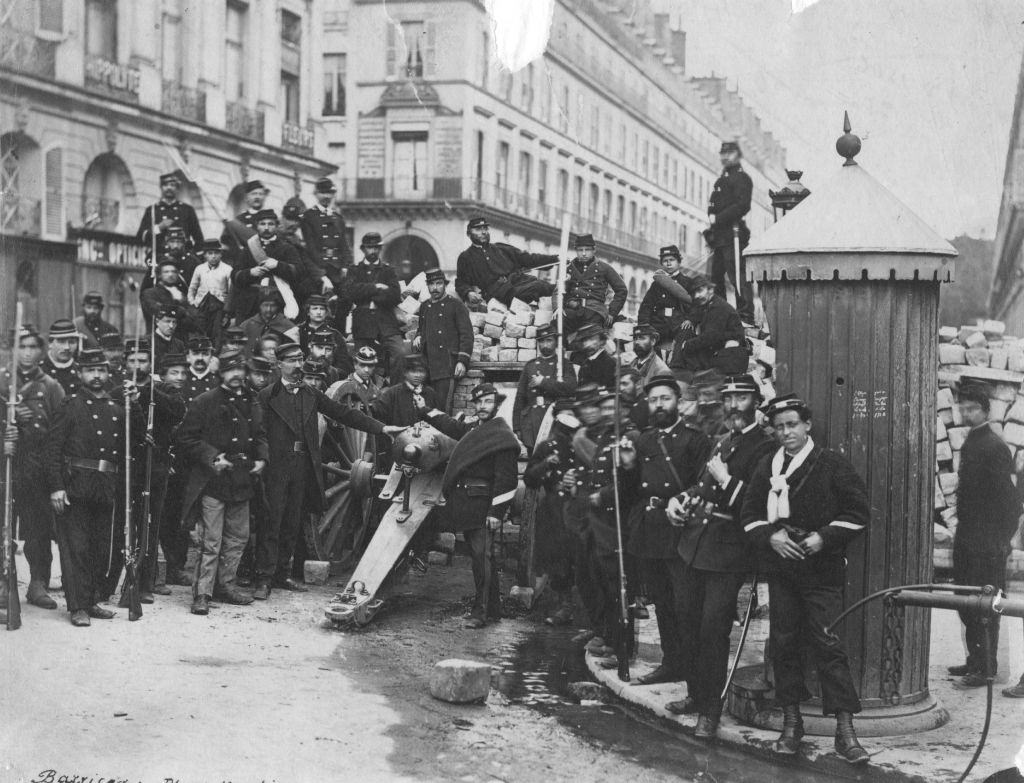
The Place de la Bastille, historically the site of the prison stormed at the start of the French Revolution, was also burned during the Commune. The fires that swept through Paris in those final days of the uprising destroyed structures that had survived wars, revolutions, and decades of political upheaval.
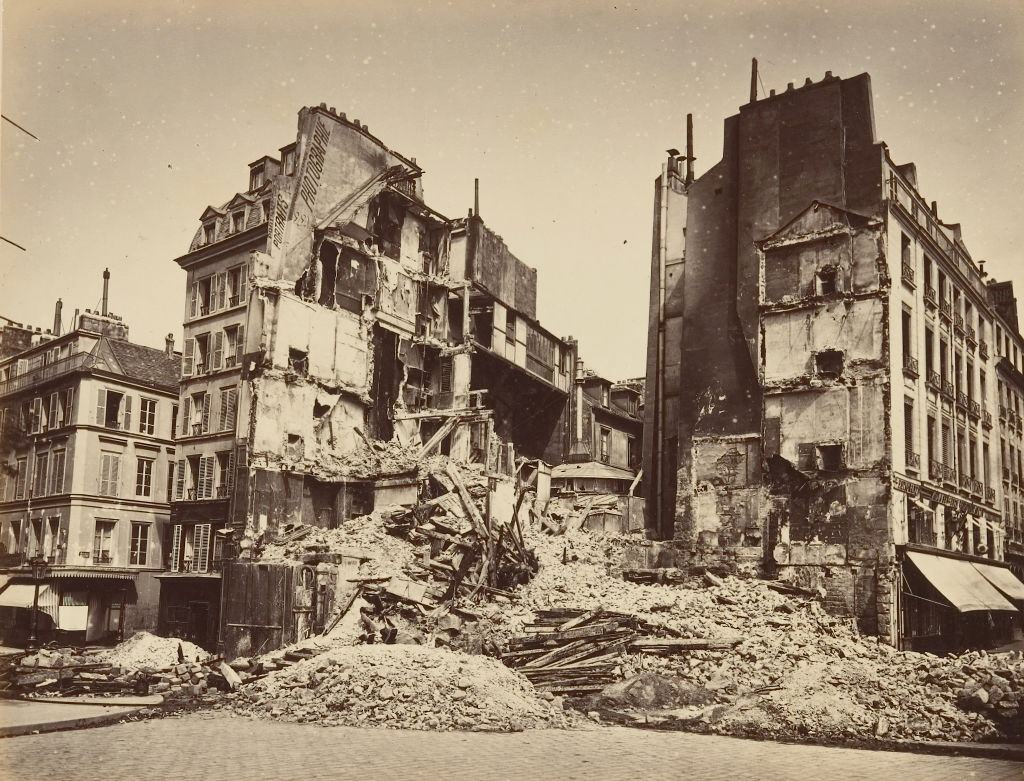
When the fighting finally stopped, soldiers moved through the streets collecting the dead. The human cost of the war and the Commune combined was staggering. Tens of thousands of people had died in the siege, the street battles, and the brutal suppression of the uprising. The photographs taken in the weeks that followed show a city scraped raw — burned facades, collapsed rooftops, and empty shells of buildings that had once defined one of the world’s great capitals.