
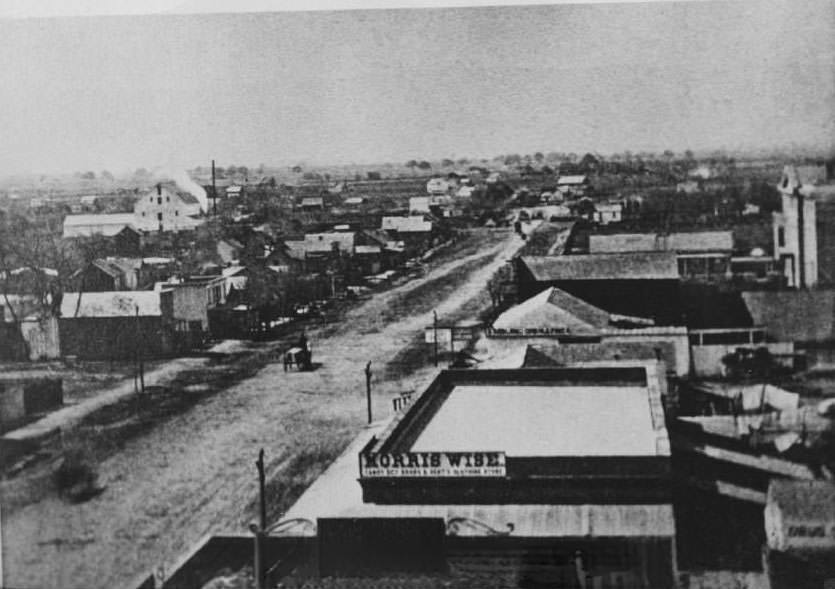
By the early 1880s, San Jose was already one of California’s most active cities, with a population exceeding 12,000 residents. Streets were filling with commerce, schools were being built, and civic ambition was on full display. The city’s growth during this decade touched nearly every corner of life — from its financial district and educational institutions to its immigrant neighborhoods and surrounding farmland. These photographs capture that decade in extraordinary detail.
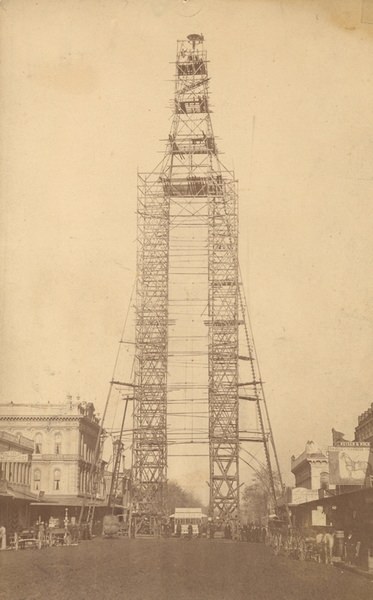
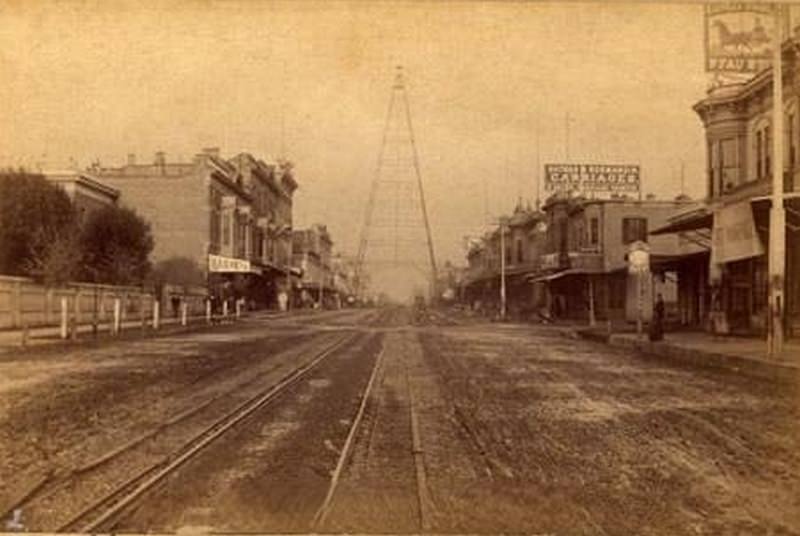
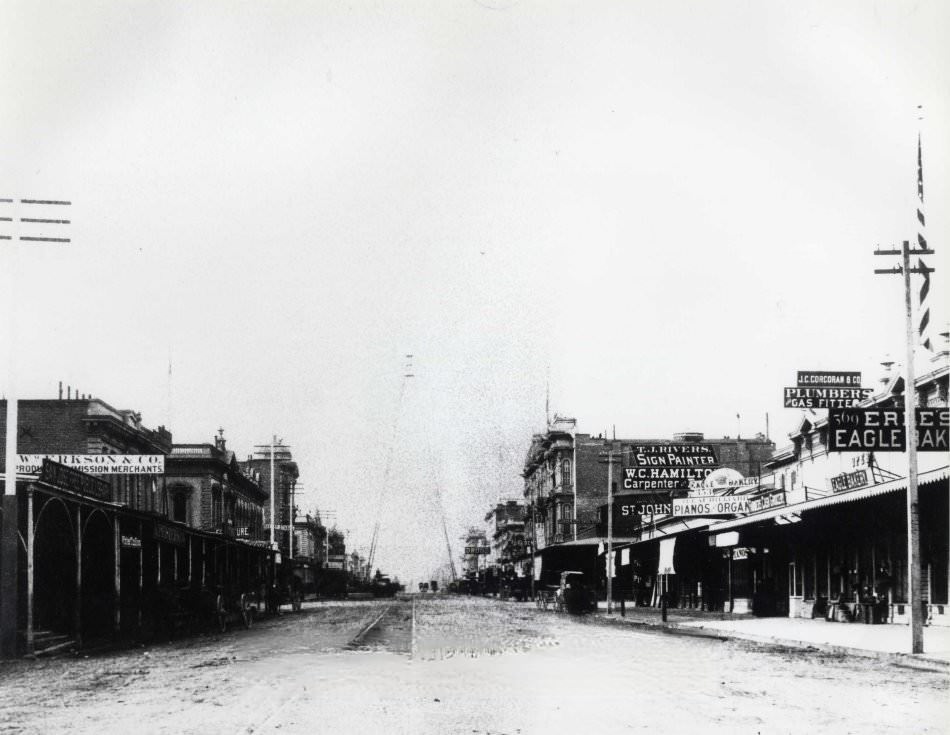
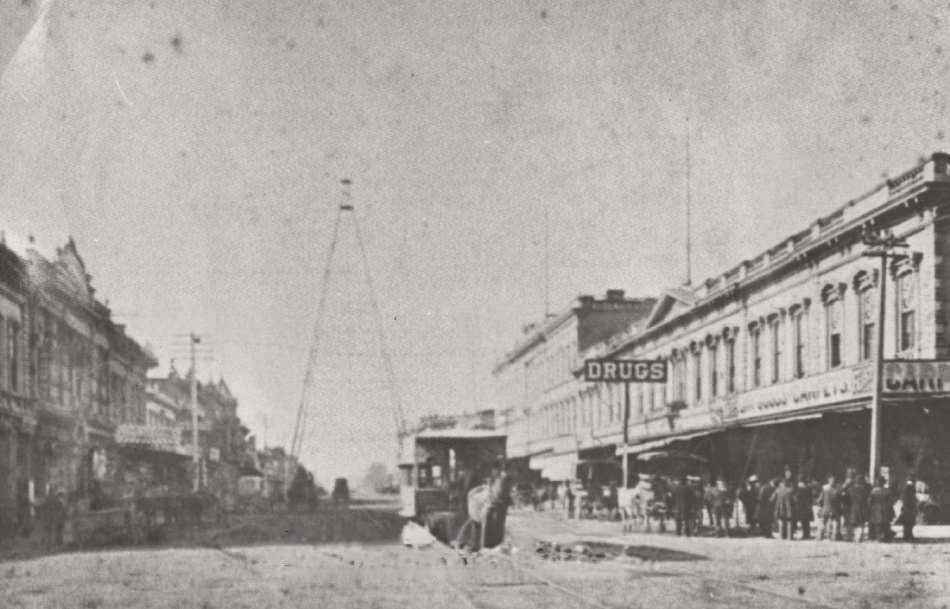
One of the most talked-about projects of the era was the San Jose Electric Light Tower, completed in 1881. James J. Owen, editor of the San Jose Mercury, led the push to build it. His paper had already helped bring gas streetlights to downtown San Jose back in 1861, and Owen saw the 237-foot steel tower as the next step forward. The tower was built at the intersection of Santa Clara and Market Streets and was meant to flood the surrounding city blocks with electric arc light from above.
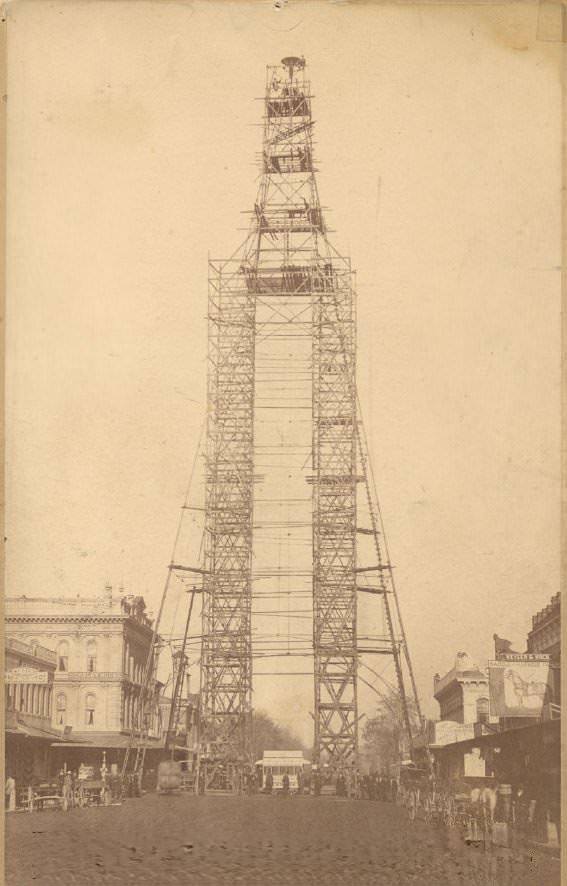
The tower drew crowds and curiosity from the moment workers began raising it. Photographs taken during construction show the steel frame rising above the two-story buildings along Market Street. By 1884, however, the city had largely abandoned it as a practical light source — it simply didn’t cast enough light to illuminate the streets below. From that point on, it served mainly as a ceremonial landmark, lit up for public celebrations and special occasions.
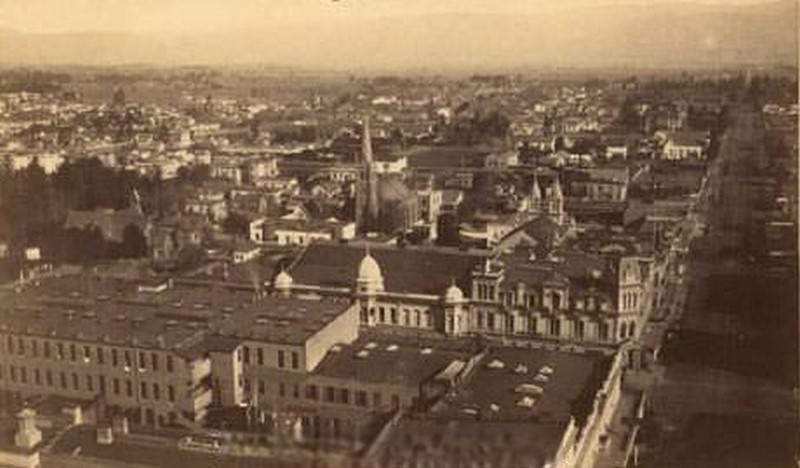
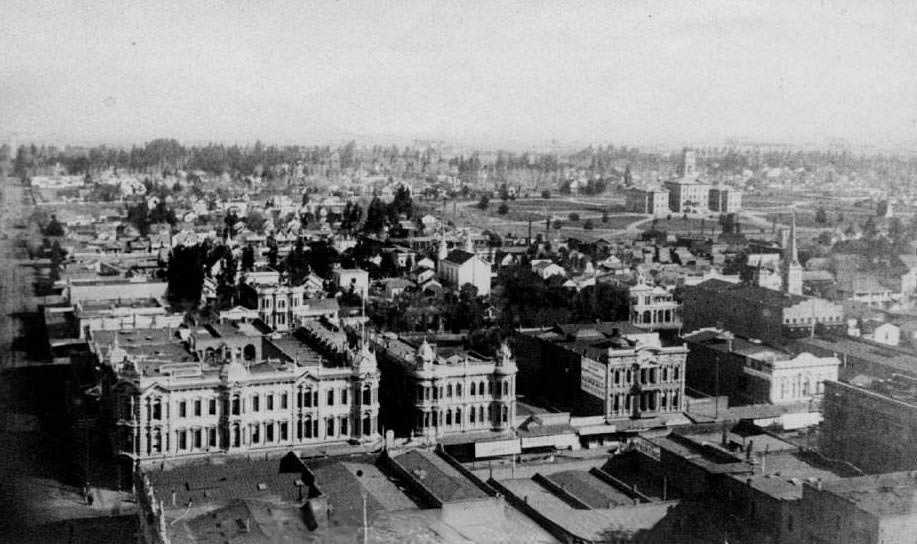
Looking out from the top of the tower in 1881, a photographer captured a sweeping view of San Jose stretching in every direction. The city’s grid of streets, low-rise buildings, and open lots reveals just how much room there still was to grow. Santa Clara Street, one of the city’s main arteries, ran straight through the scene lined with storefronts and the beginnings of a modern commercial district.
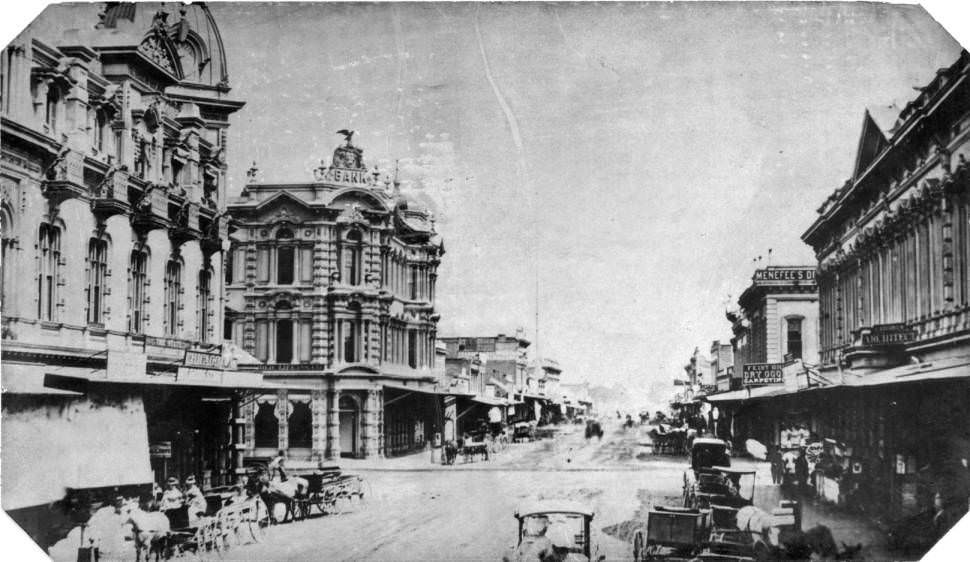
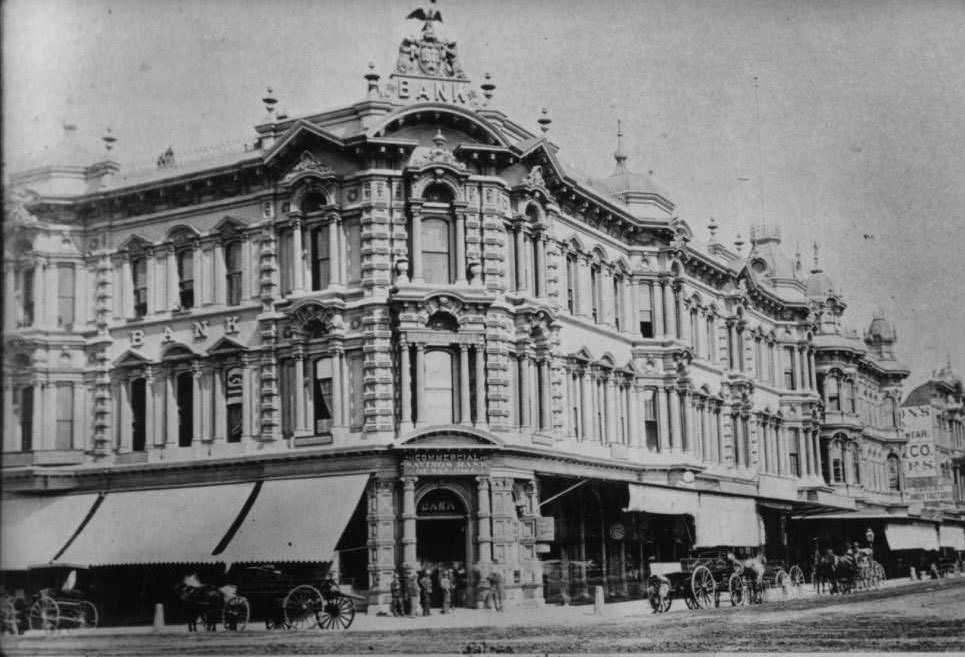
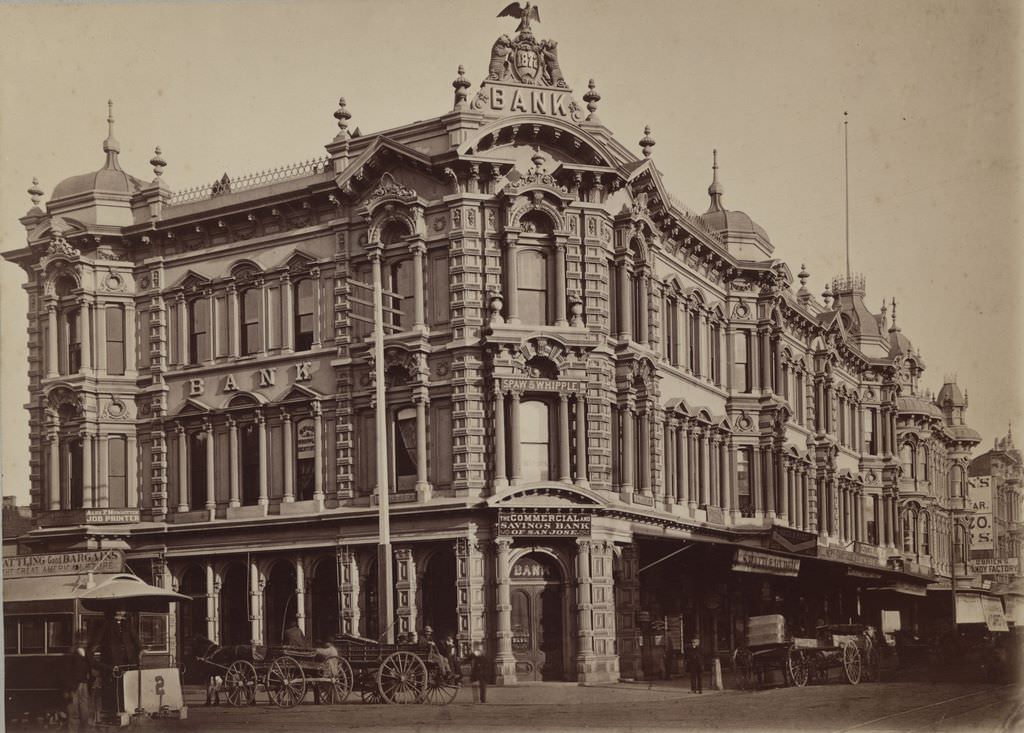
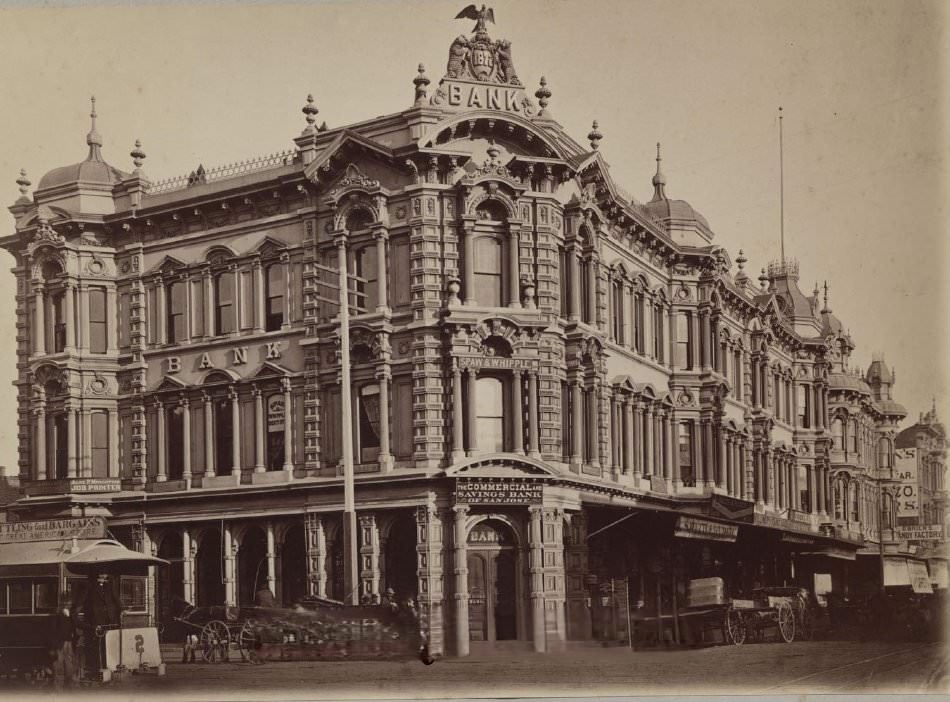
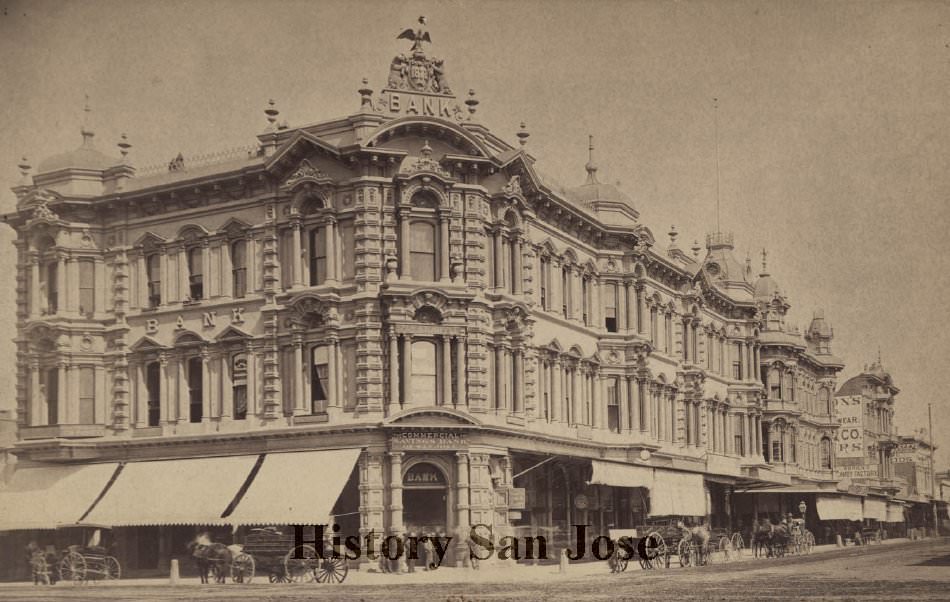
San Jose’s financial district anchored the intersection of First Street and Santa Clara Street. The Bank of San Jose stood on one corner, identifiable by its four-way tower clock. Directly across the street sat the Commercial and Savings Bank, also known as the McLaughlin and Ryland Bank. These institutions handled the wealth flowing through a rapidly expanding agricultural and commercial economy.
San Jose’s Chinatown was a well-established community by 1880, located along the east side of Market Street Plaza. Hundreds of Chinese residents lived and worked there, running businesses and maintaining a neighborhood that had developed over the previous two decades. The community’s presence near the new Post Office on South Market Street made it one of the more visible ethnic enclaves in the city.
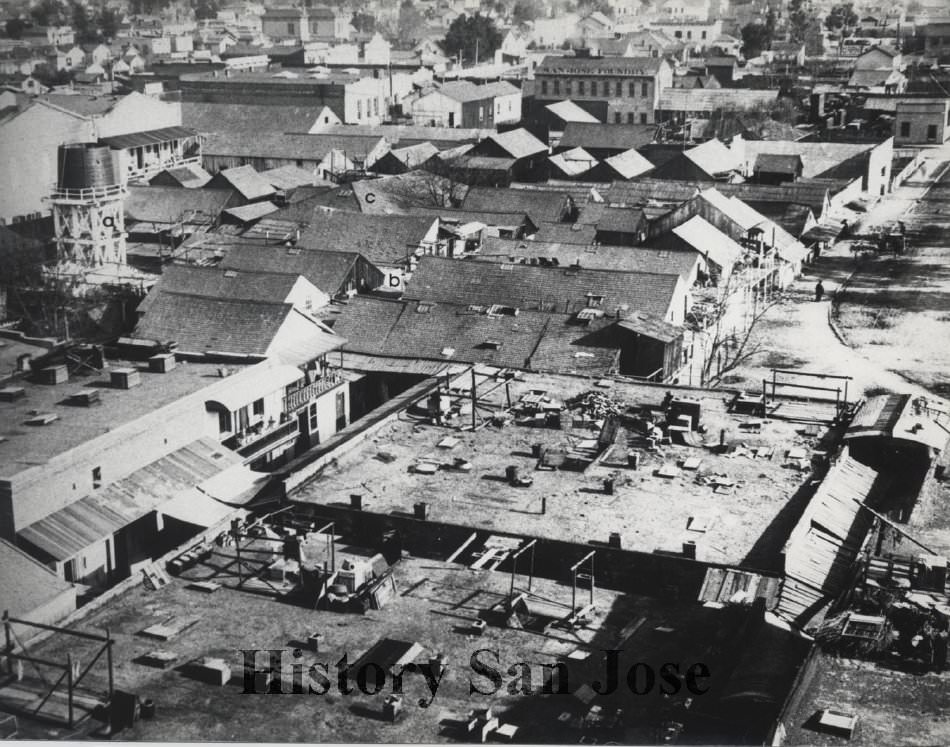
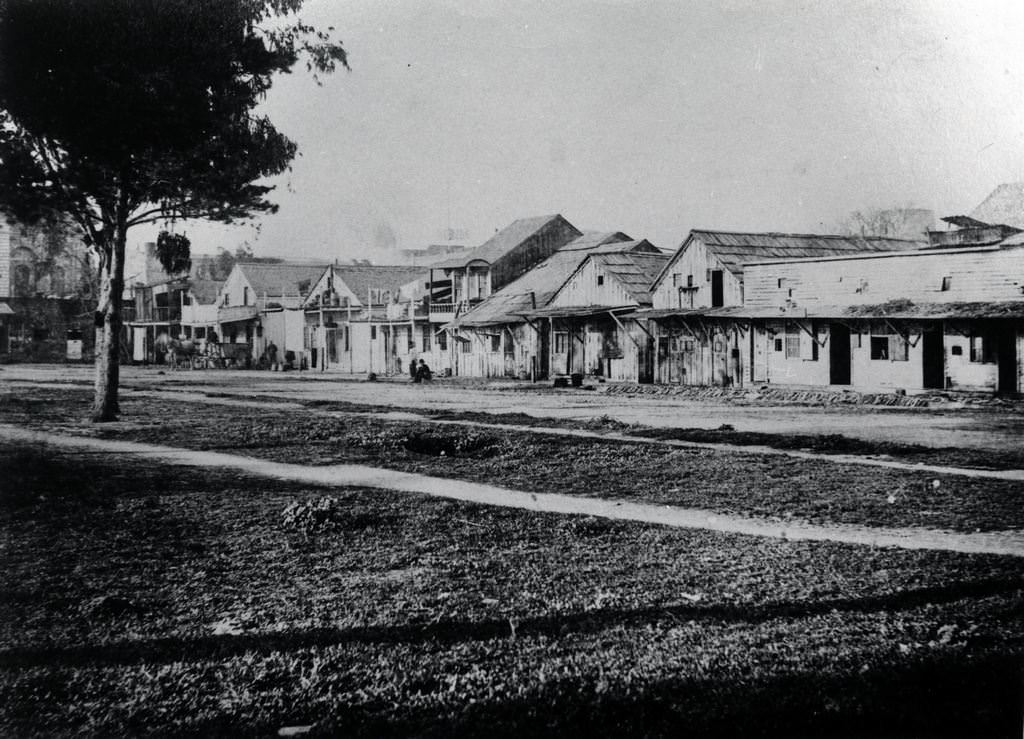
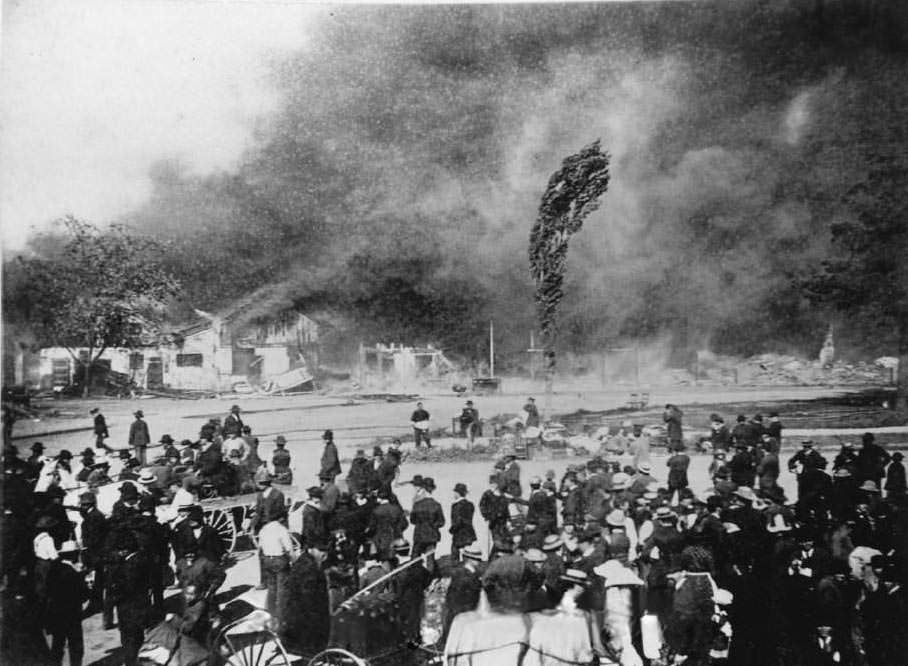
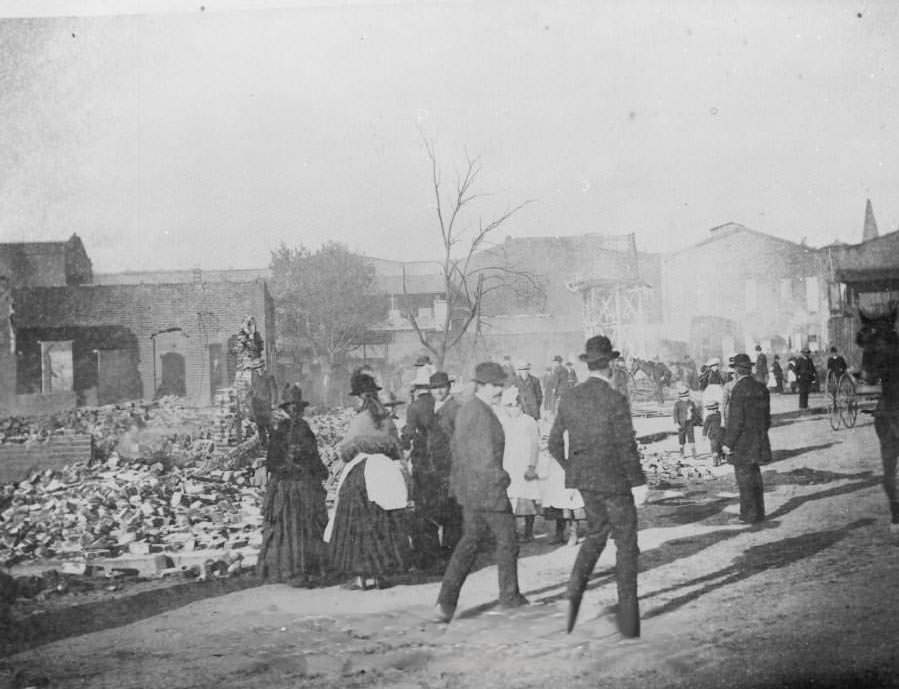
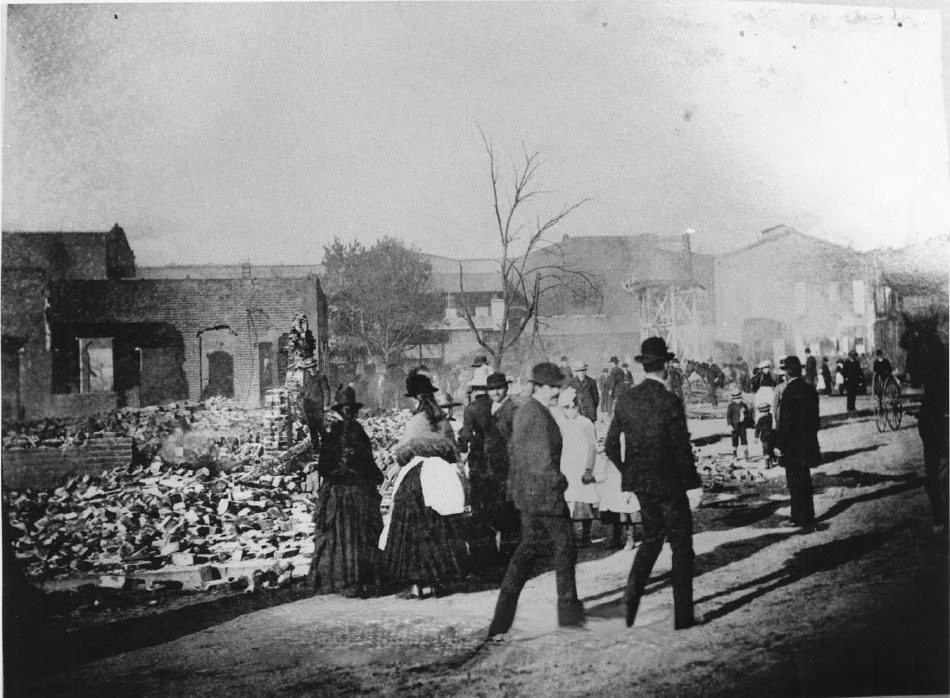
In May 1887, a fire tore through Chinatown and destroyed most of the neighborhood. The blaze left behind scorched ruins and displaced a large portion of the community. Photographs taken in the aftermath show the flattened blocks and the scale of what was lost. The site where Chinatown once stood is today occupied by the Fairmont Hotel.
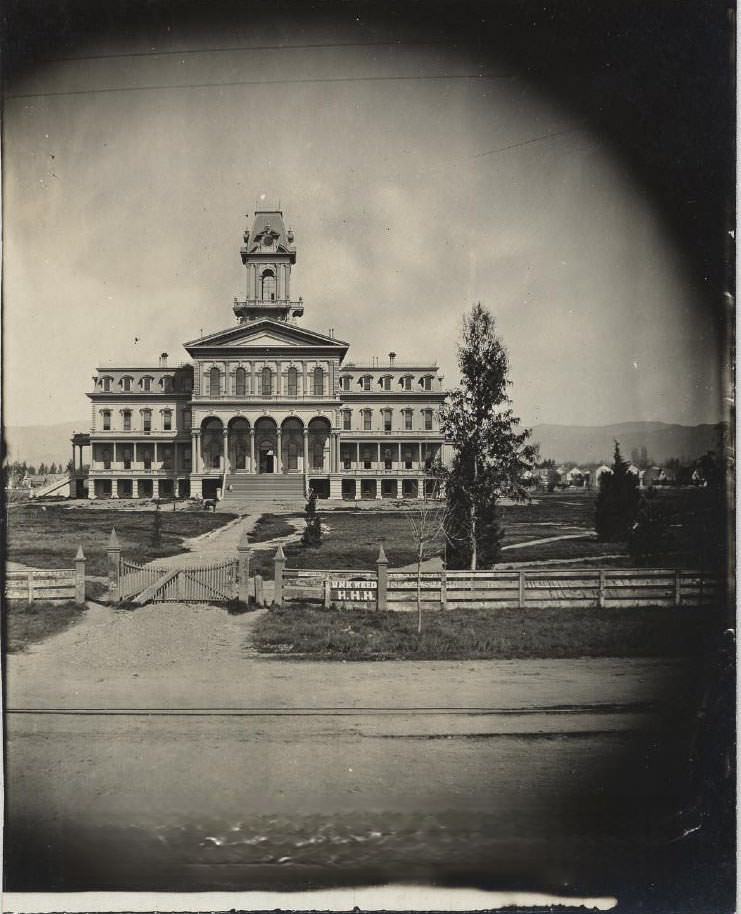
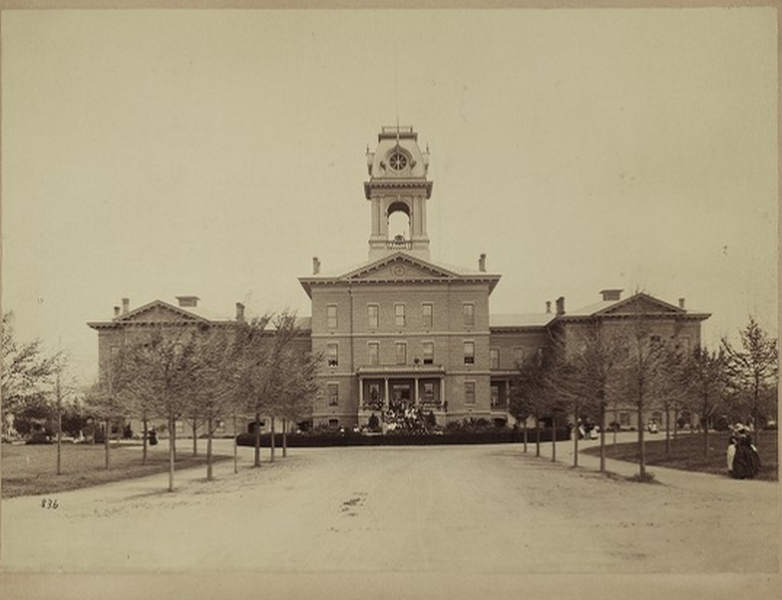
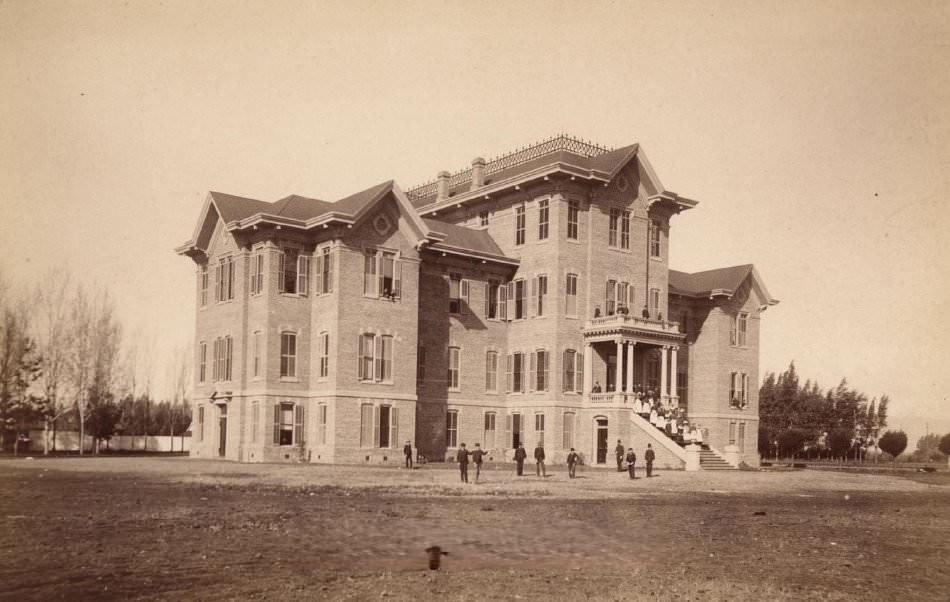
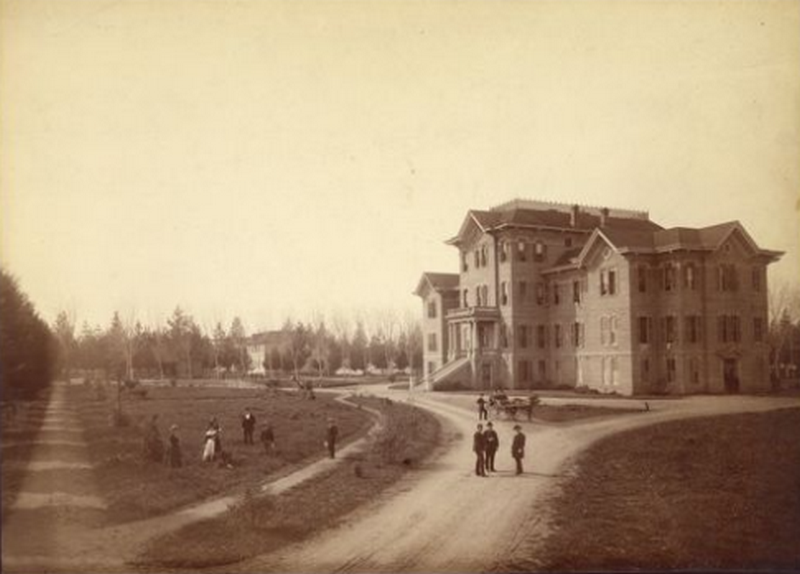
Education was a major priority in 1880s San Jose. The San Jose State Normal School, which would eventually become San Jose State University, was already an established institution by this period. Its campus photographs from 1880 and 1885 show a formal, brick-built school serving the region’s need for trained teachers. San Jose High School also had a full faculty by 1887, reflecting the city’s investment in public education at every level.
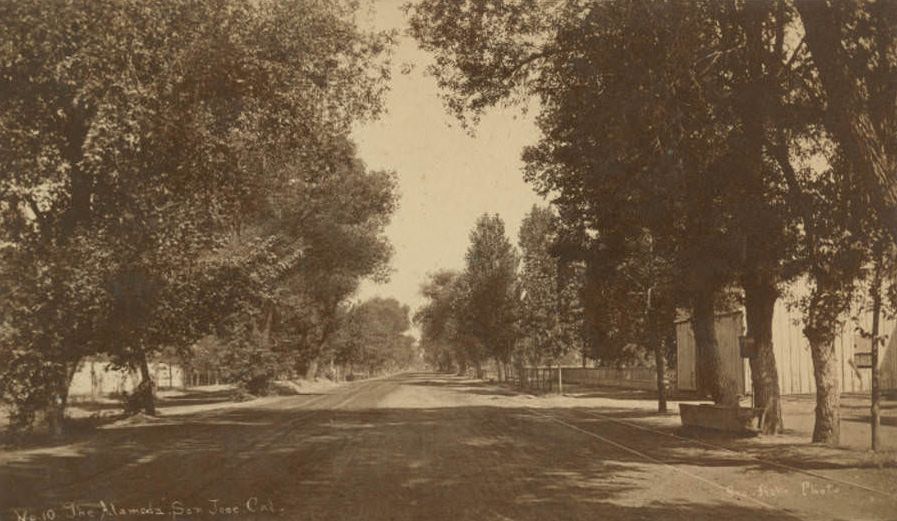
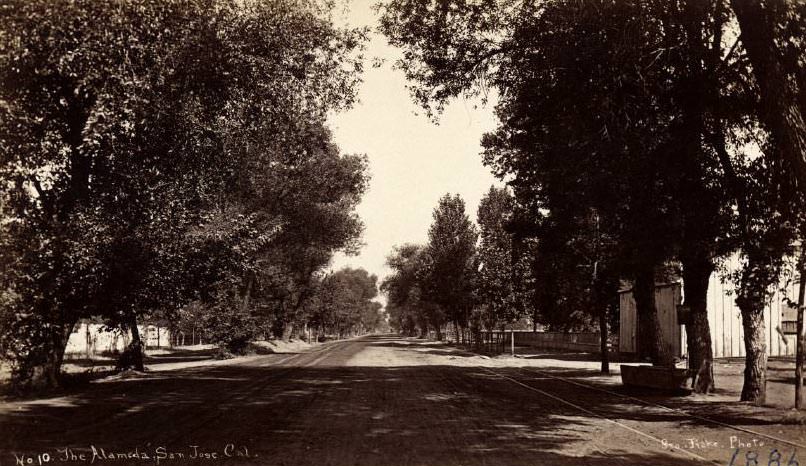
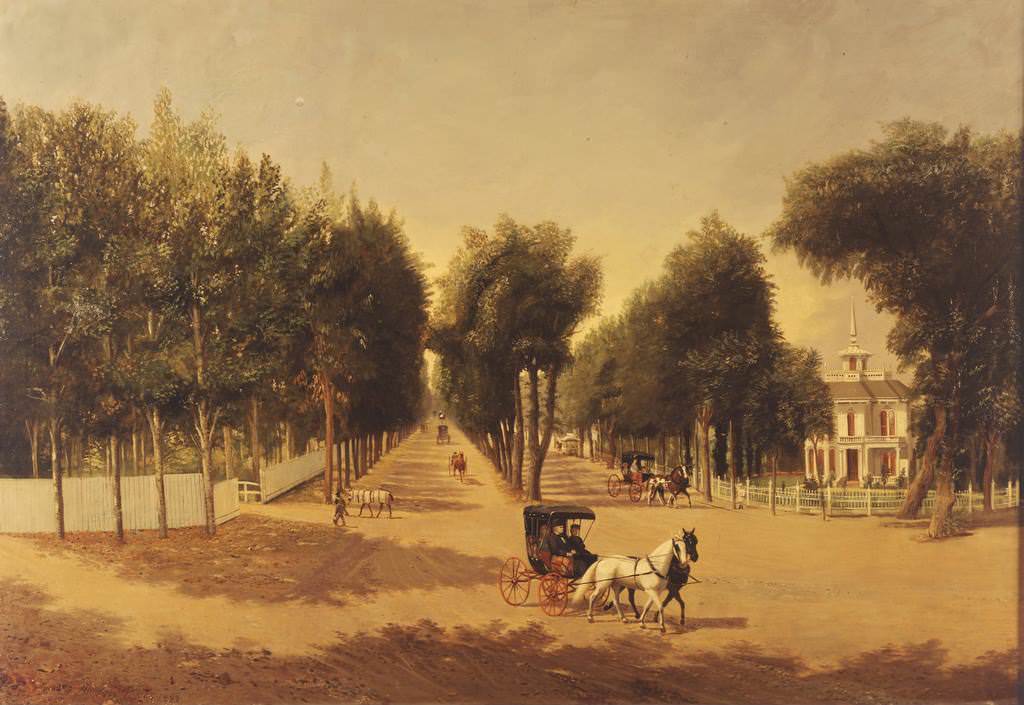
The Alameda was the main road connecting San Jose to the city of Santa Clara. Willow trees lined both the center and the sides of the road, and a horse-car track ran along the right side. The trees themselves had deep roots — Father Magin Catala had them planted in 1799 using the labor of 200 Native Americans, when The Alameda was still just a footpath linking Mission Santa Clara to the pueblo. By the 1880s, Victorian mansions had begun appearing along its length.
In 1884, Sarah L. Winchester — widow of William Winchester and heir to the Winchester rifle fortune — moved to San Jose and began expanding a farmhouse into what would become one of the most unusual buildings in American history. Construction never stopped. Craftsmen and carpenters worked on the property for 38 consecutive years. Before the 1906 San Francisco earthquake, the structure had grown to seven stories. The quake caused upper sections to collapse, and the building was never rebuilt to its former height. Today it stands three stories tall with around 160 rooms.
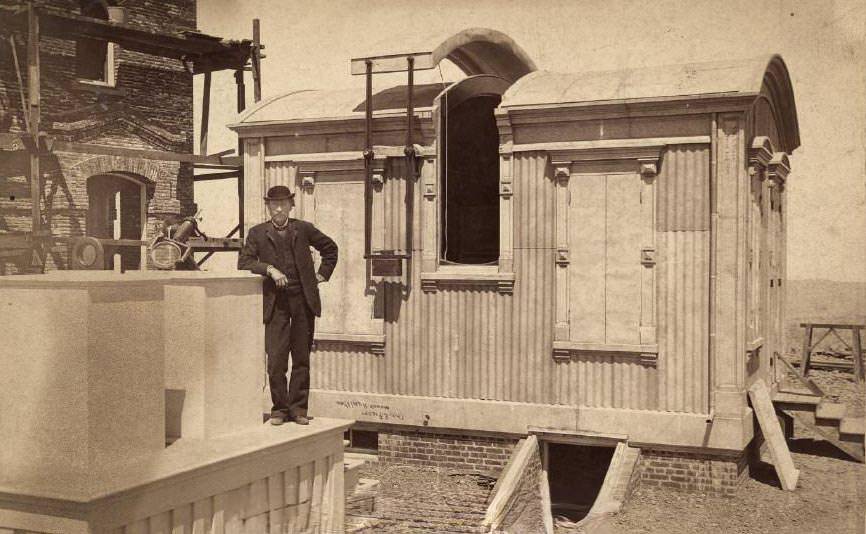
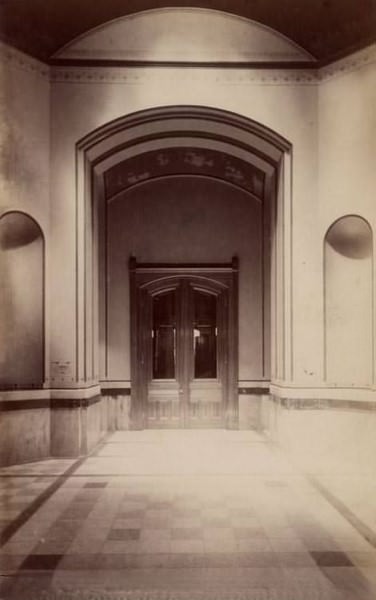
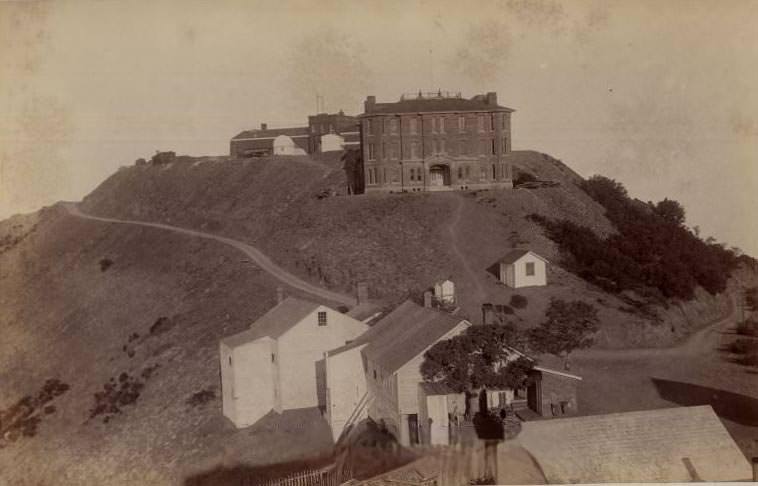
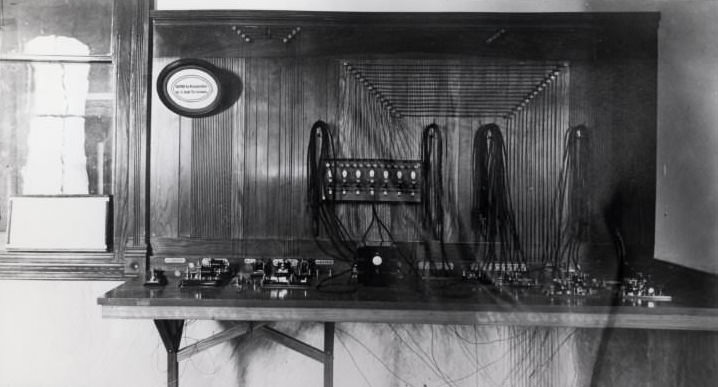
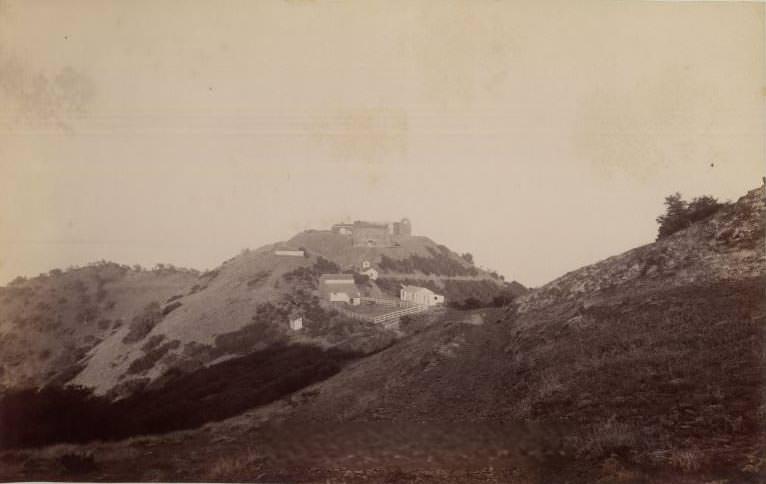
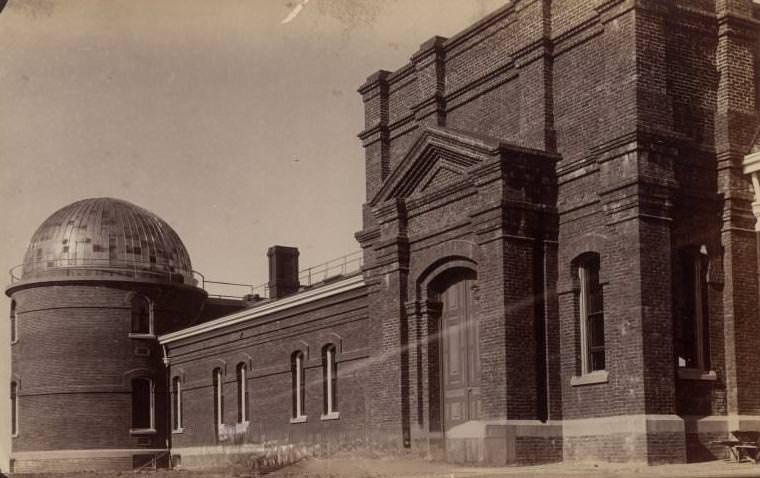
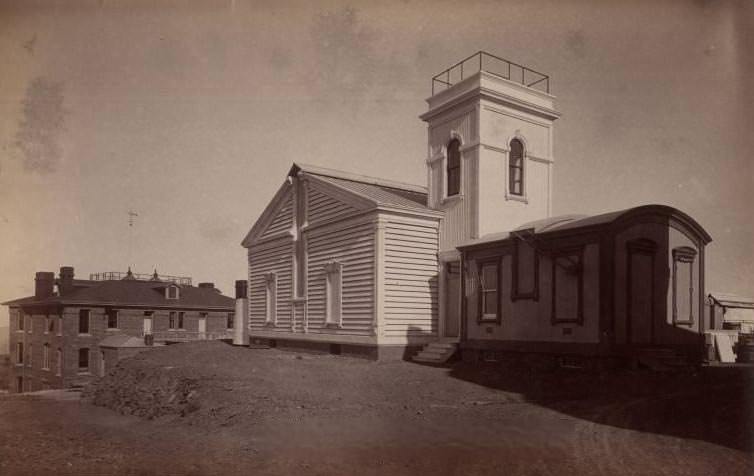
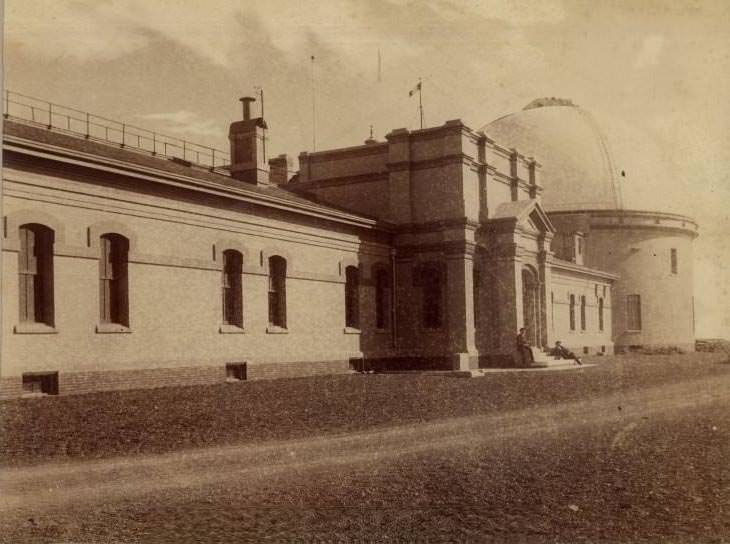
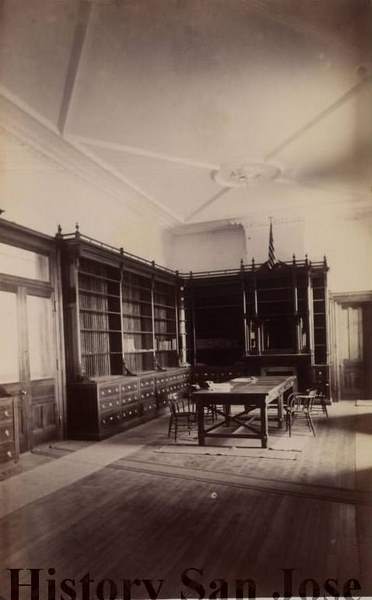
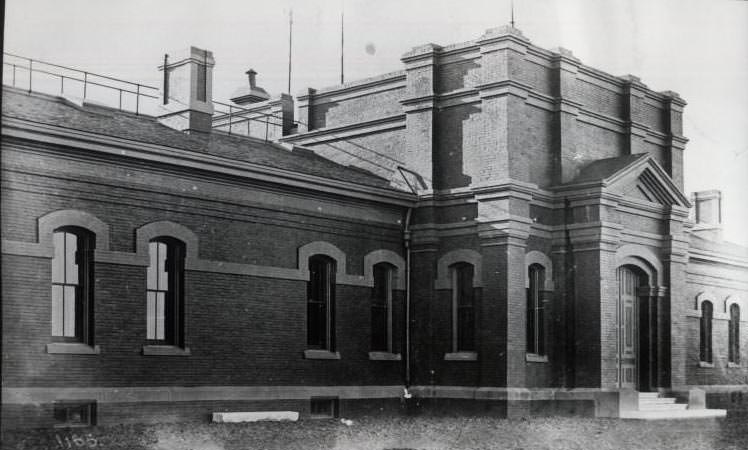
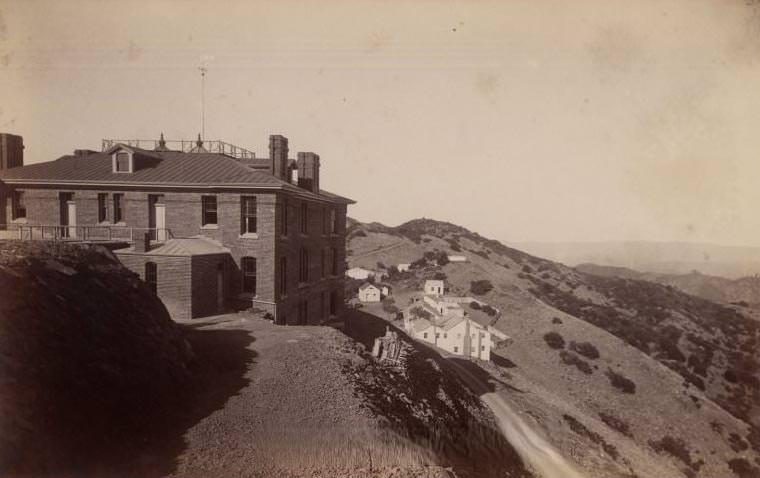
Mount Hamilton, rising above the Santa Clara Valley east of San Jose, became the site of the Lick Observatory during this decade. Construction began in 1880 and the facility was completed by the mid-1880s. Financed by philanthropist James Lick, it was built on the summit to take advantage of clear skies above the valley haze. The observatory housed one of the world’s largest refracting telescopes at the time of its completion.
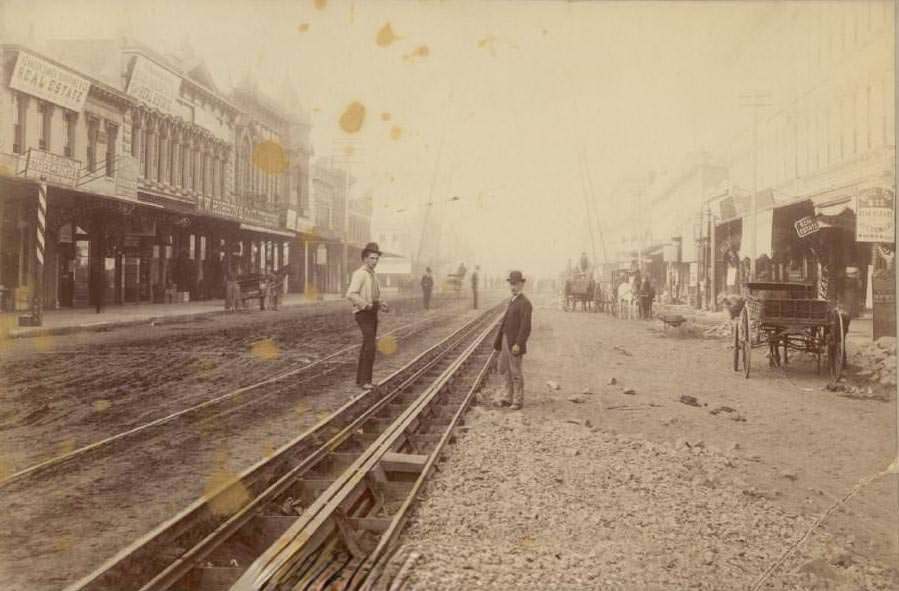
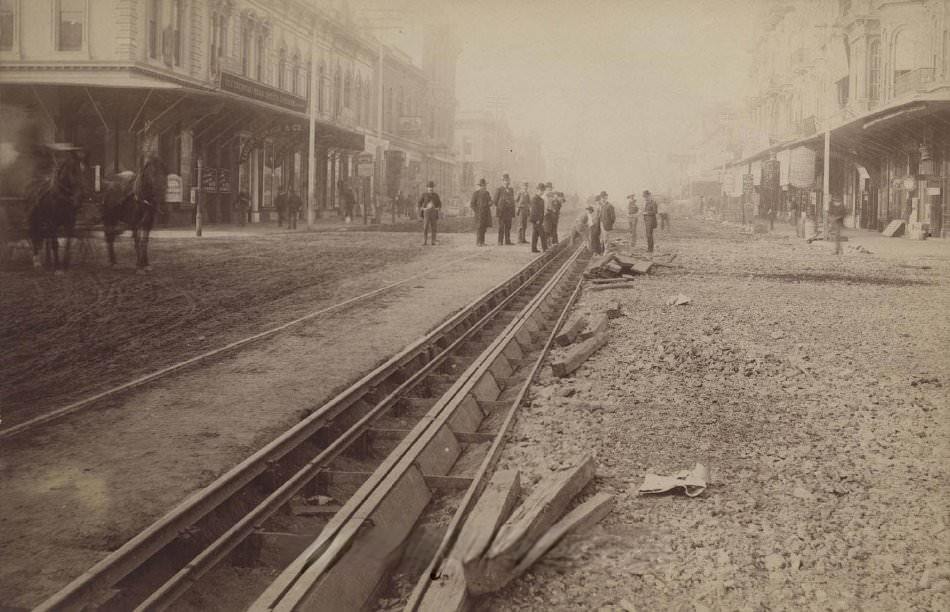
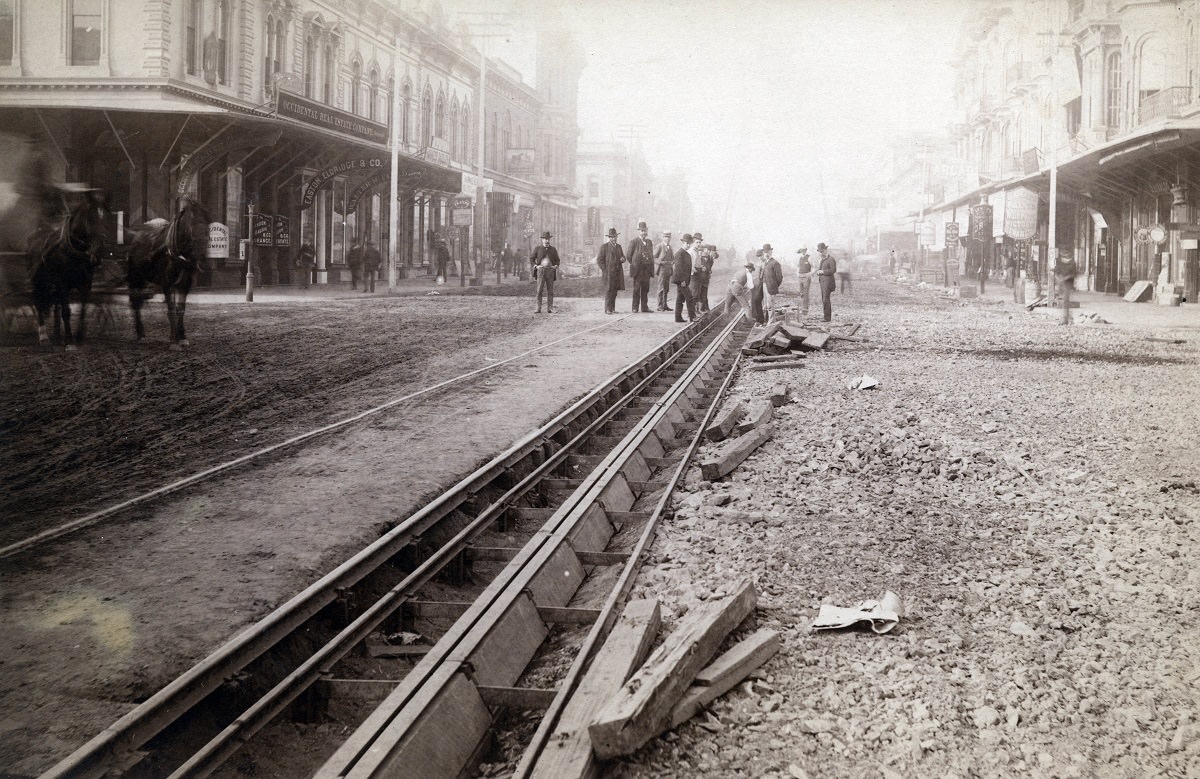
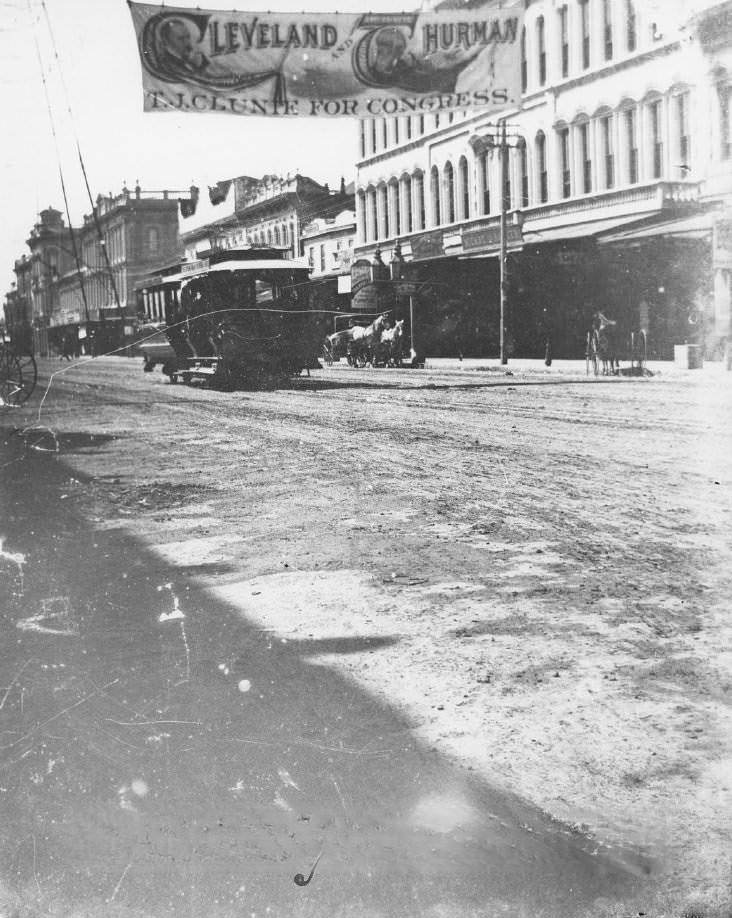
By 1887, workers were laying tracks for a new electric streetcar system throughout San Jose and the broader Santa Clara Valley. Photographs from that year show crews digging up Santa Clara Street to install the rails. The horse-car lines that had existed before were being replaced by a modern transit network. The last of those streetcar lines would not close until 1938, more than fifty years after the tracks were first laid.
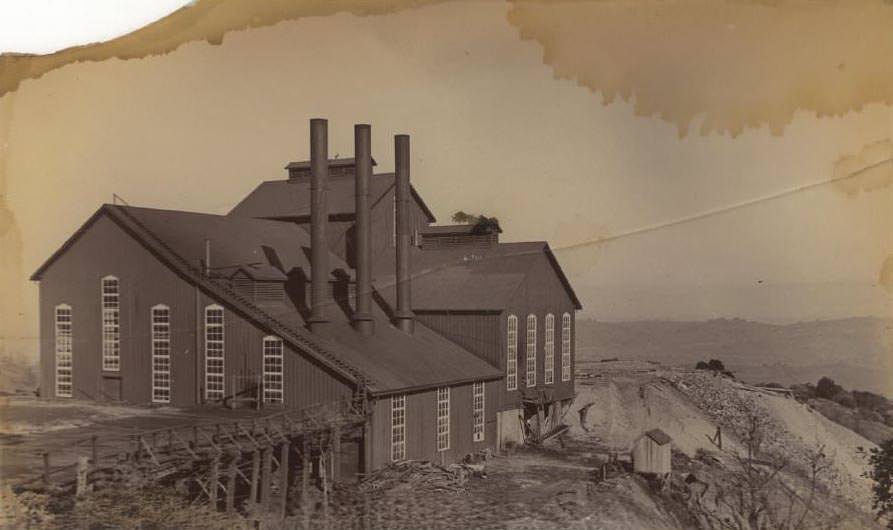
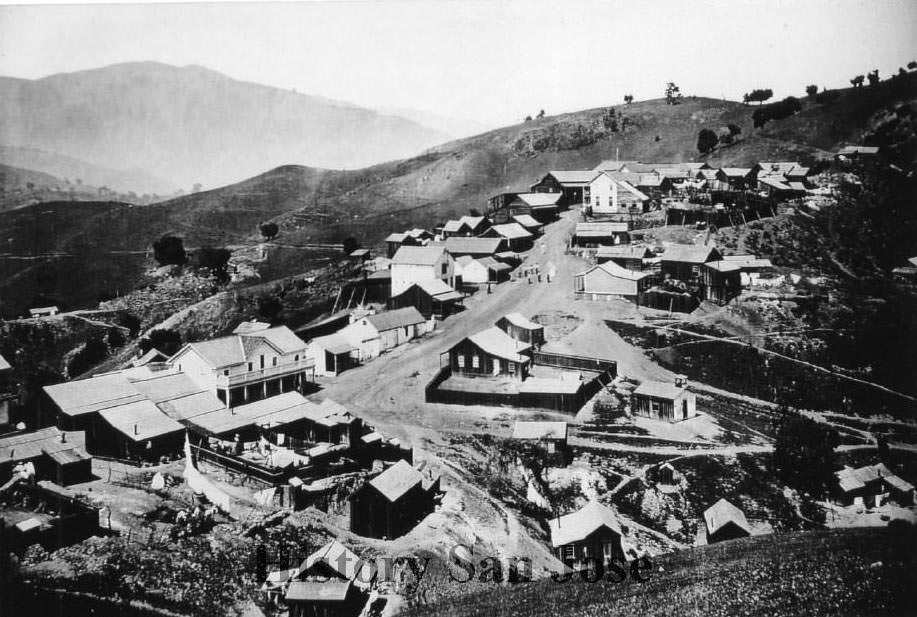
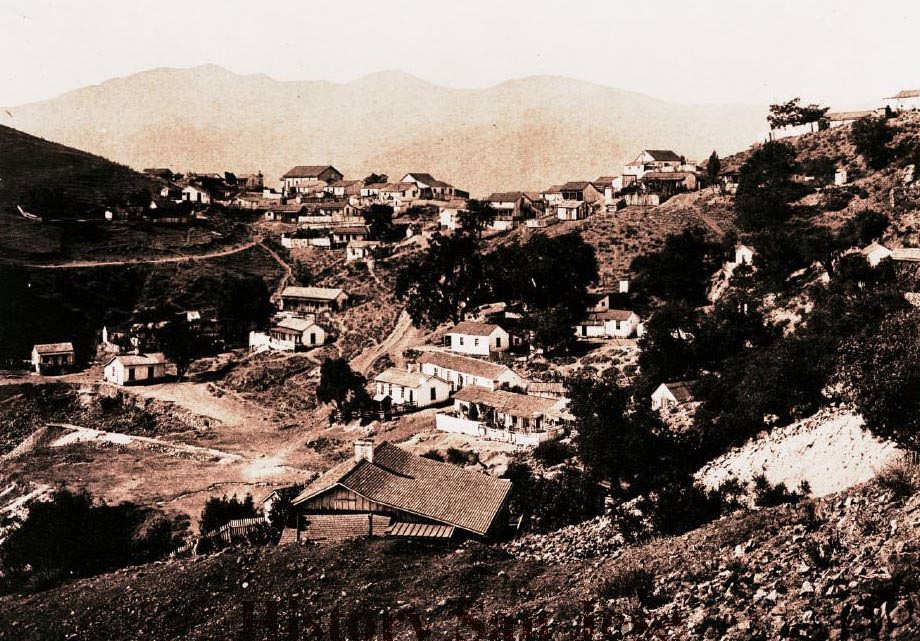
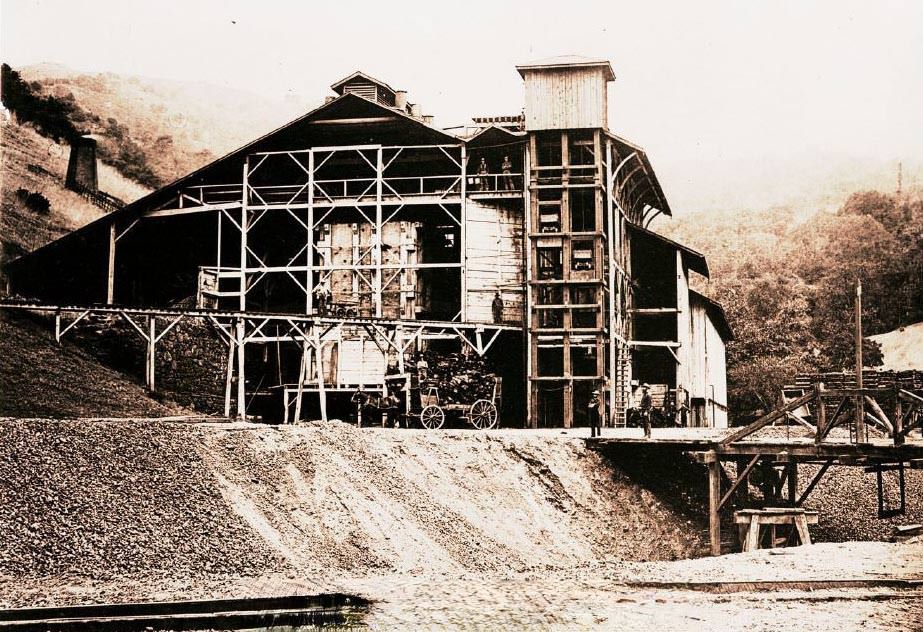
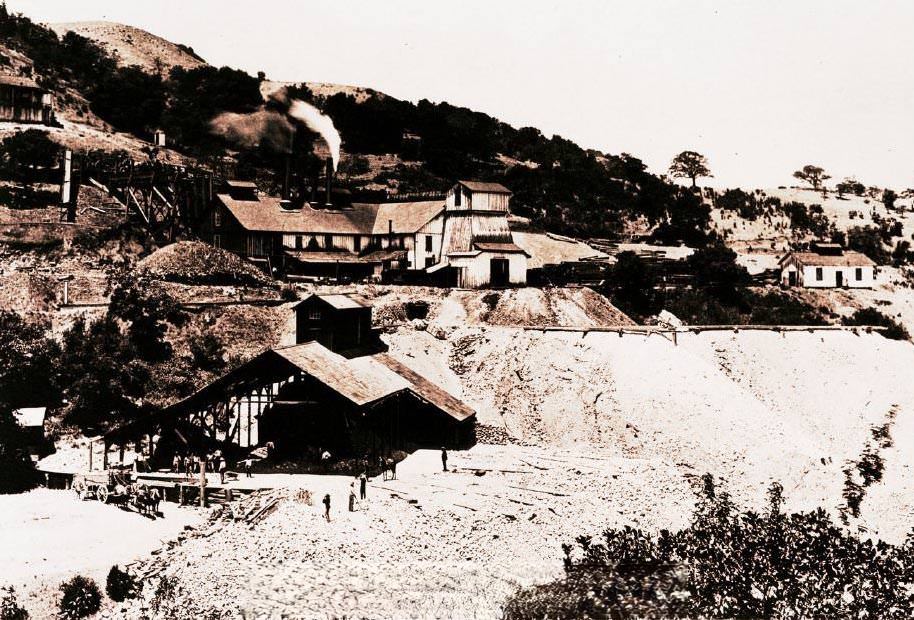
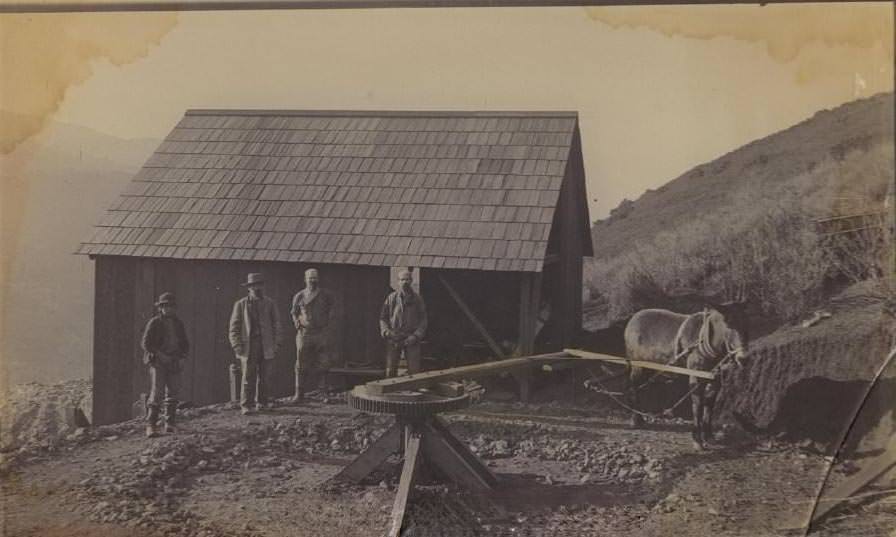
The area around New Almaden, south of San Jose, was home to one of the most productive quicksilver (mercury) mines in North America. The mine employed a large workforce that included Mexican and other immigrant laborers, many of whom lived in designated camps along the hillsides. Photographs from the 1880s show the Spanish town settlement, mining shafts, and industrial furnace operations that defined daily life in that community.
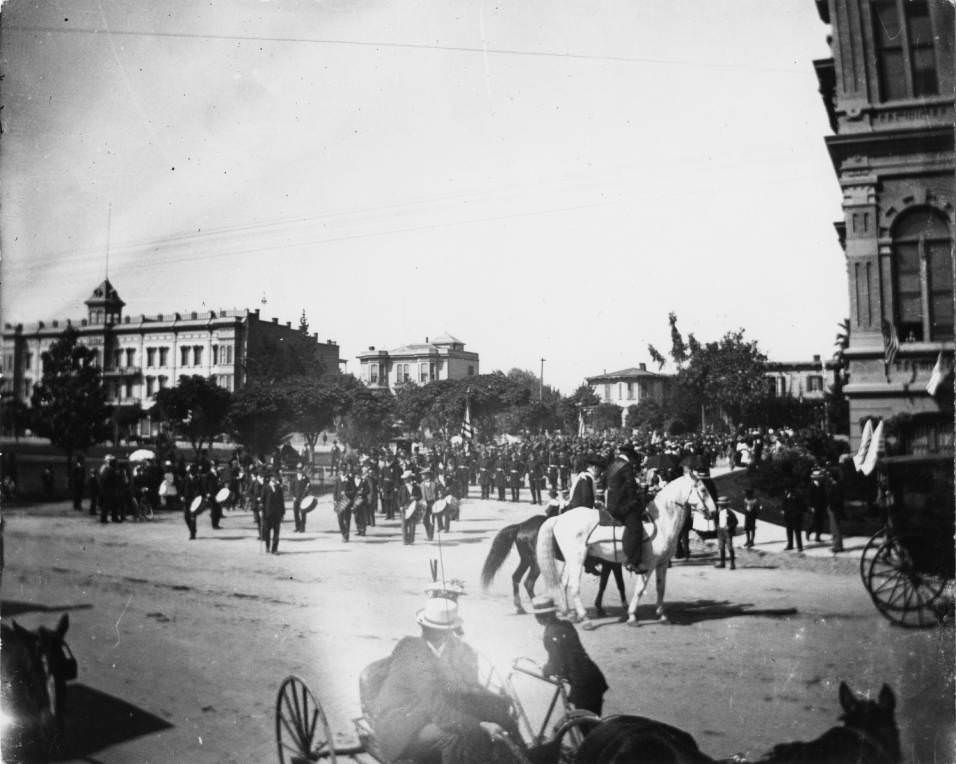
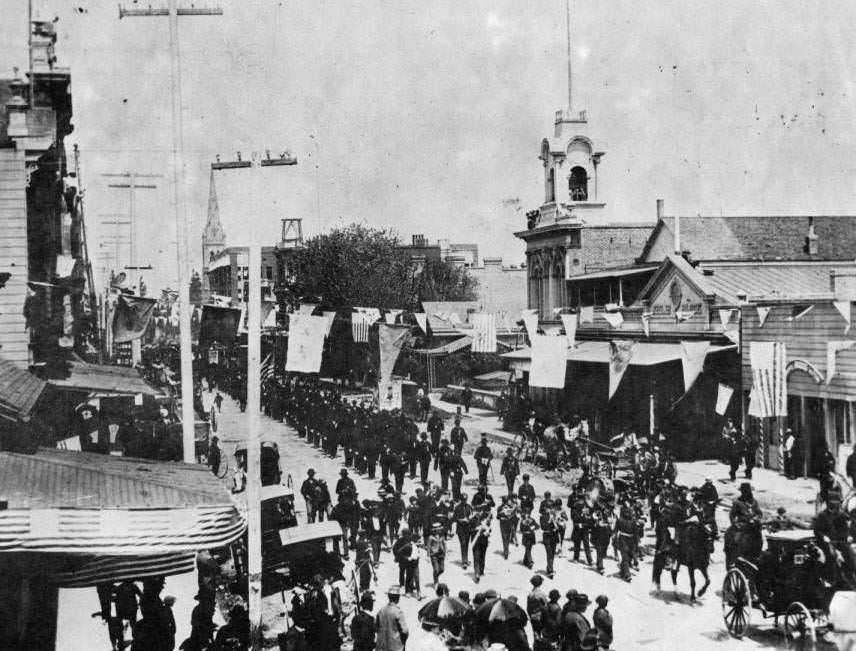
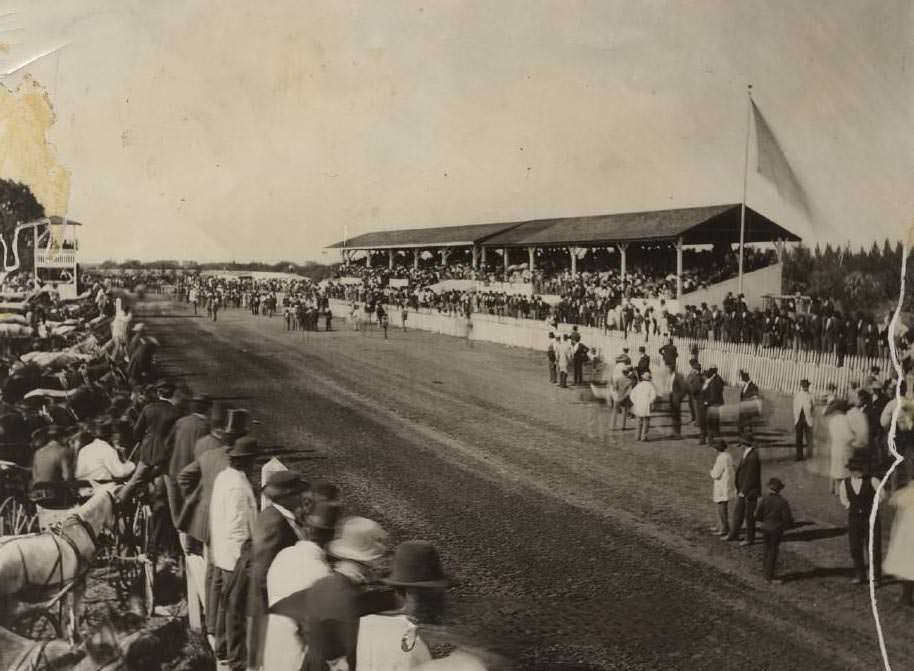
Public celebrations were a regular part of San Jose life in the 1880s. A parade photographed near City Hall in 1887 shows militia units in formation, a military band, men on horseback, and horse-drawn carriages rolling through the streets. Onlookers lined the sidewalks, some with bicycles, watching the procession. Another parade on Second Street in 1885 drew crowds to the rooftop of the Empire Fire House at 76 Second Street for a better view.
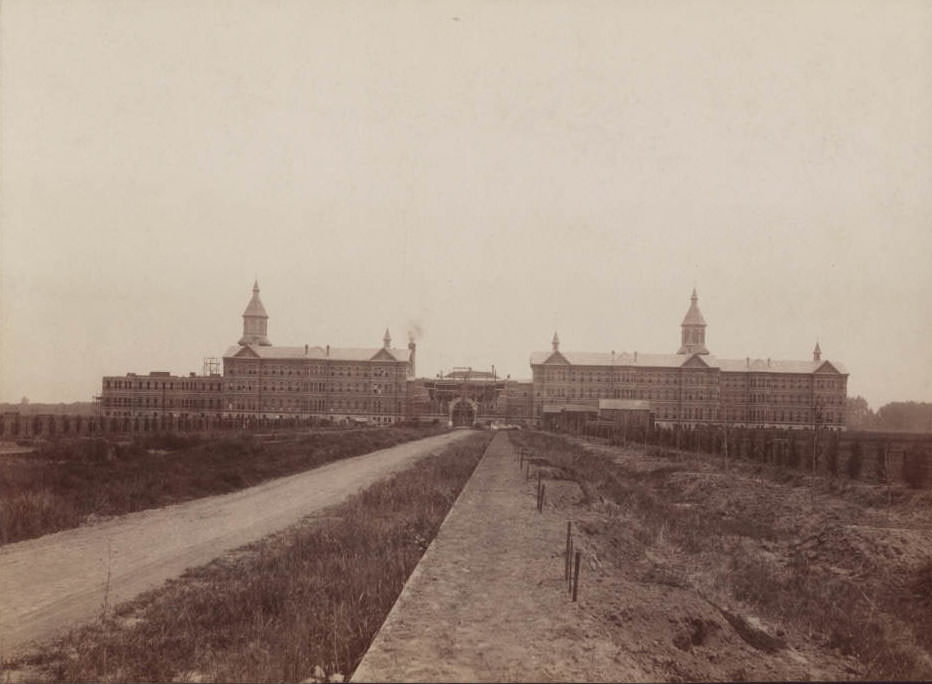
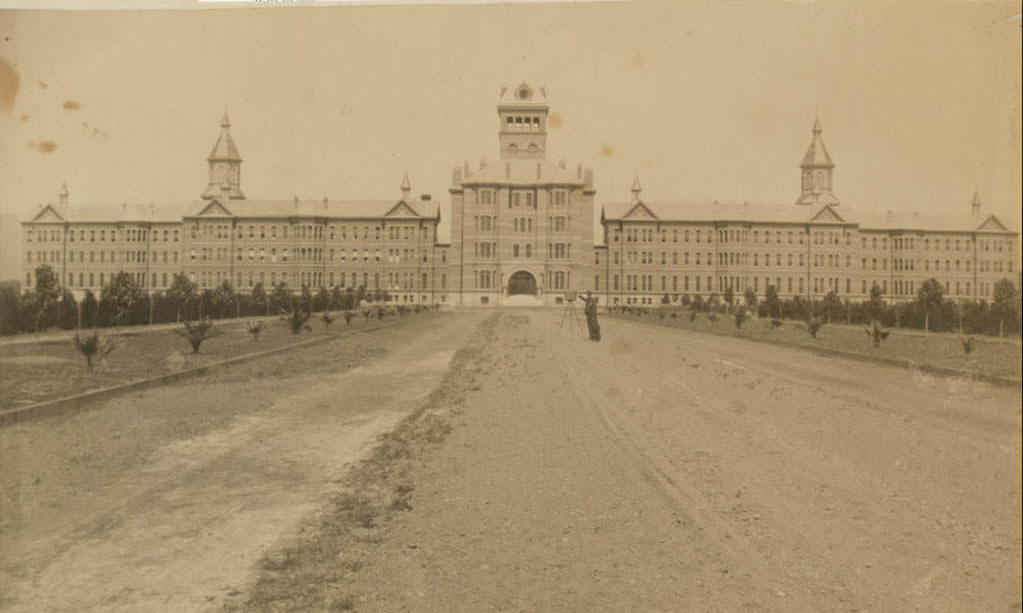
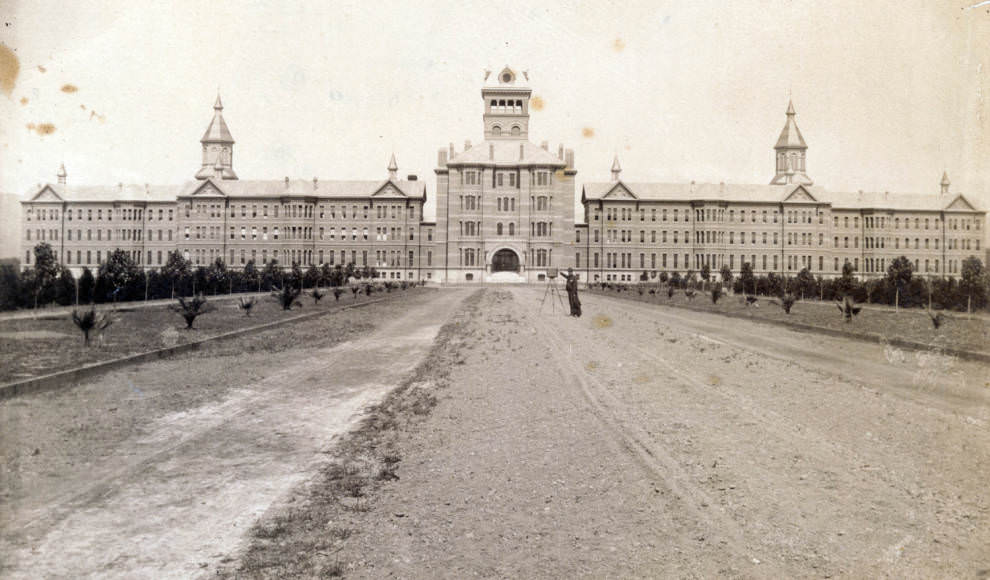
Agnews State Asylum for the Insane was constructed in 1888 just north of San Jose. The main building stretched 750 feet across, with an administration center flanked by wings that housed more than 900 patients. The total construction cost was $750,000. A photograph taken during the same year shows a photographer and his camera standing in the dirt road at the building’s entrance, capturing the facility just as it was being completed.
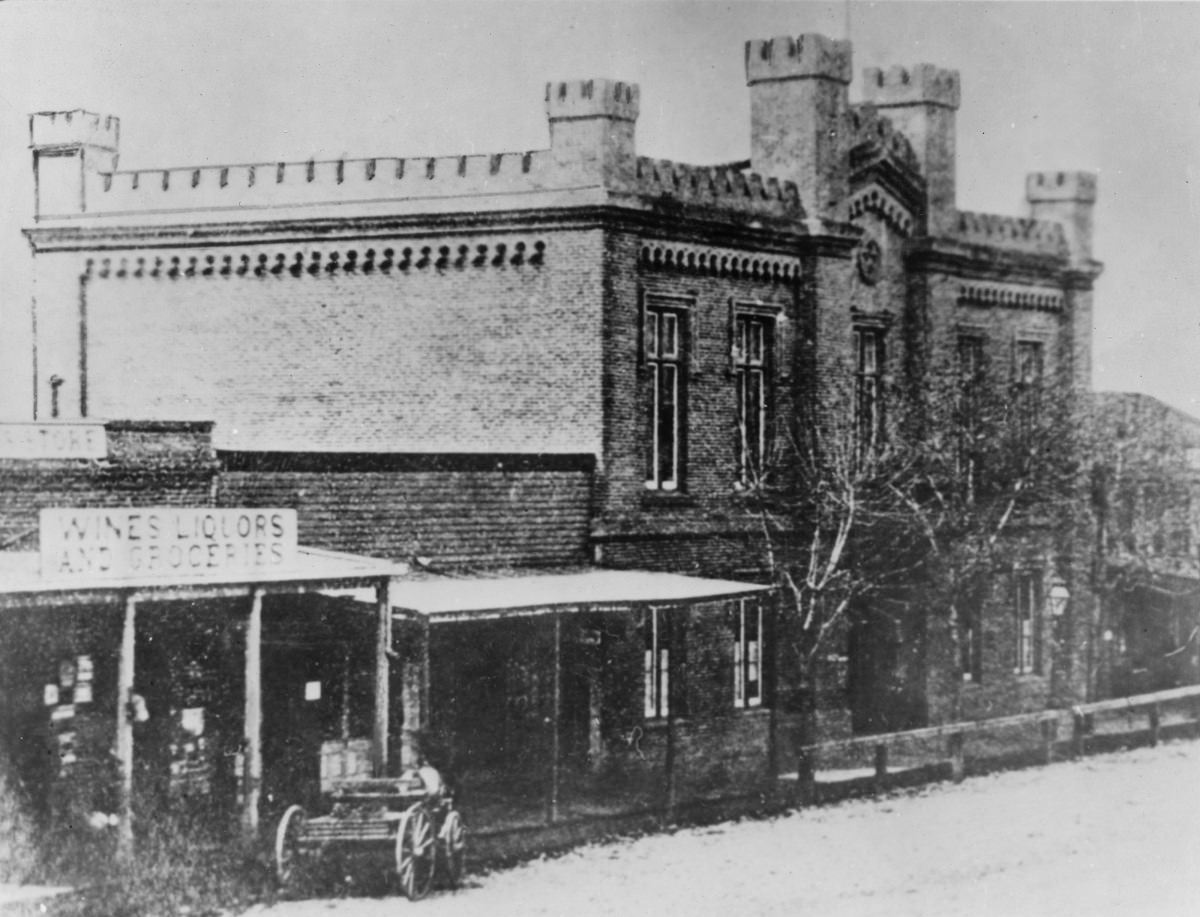
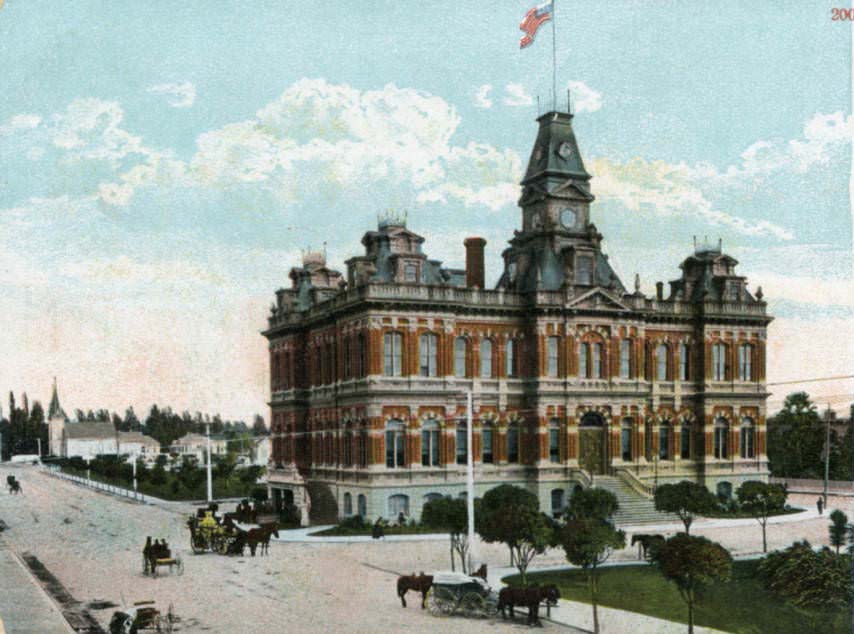
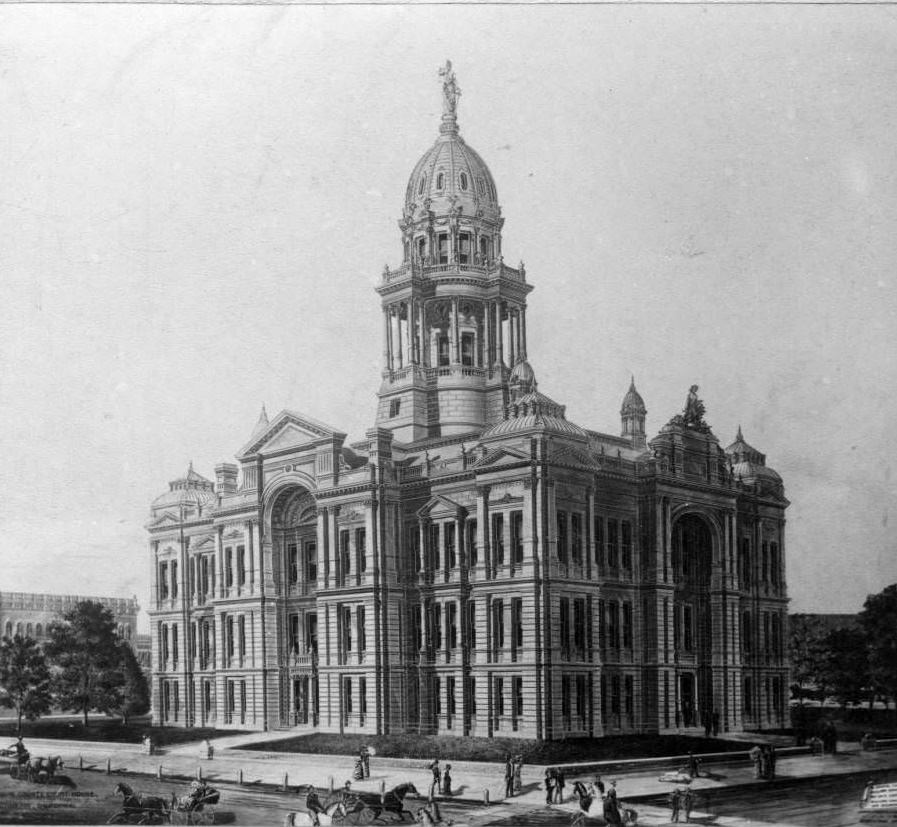
San Jose’s Old City Hall, designed by Levi Goodrich and built in 1855 at 35 North Market Street, was still standing through the 1880s. It was a two-story brick building with council chambers on the ground floor and an assembly hall upstairs. The county once used the upper floor as a courtroom but gave up the lease in 1862. A new City Hall was completed in 1889, marking a clear step in the city’s formal growth.
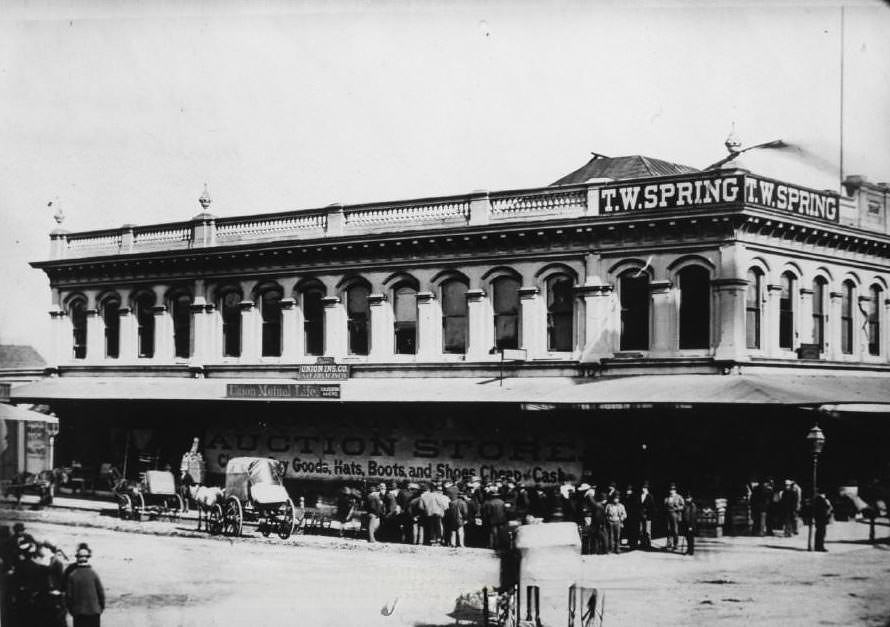
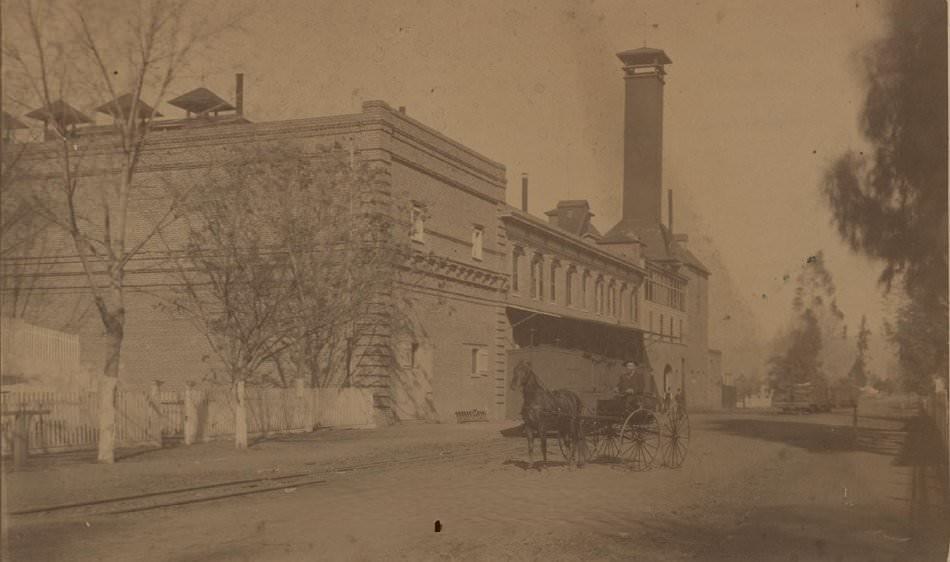
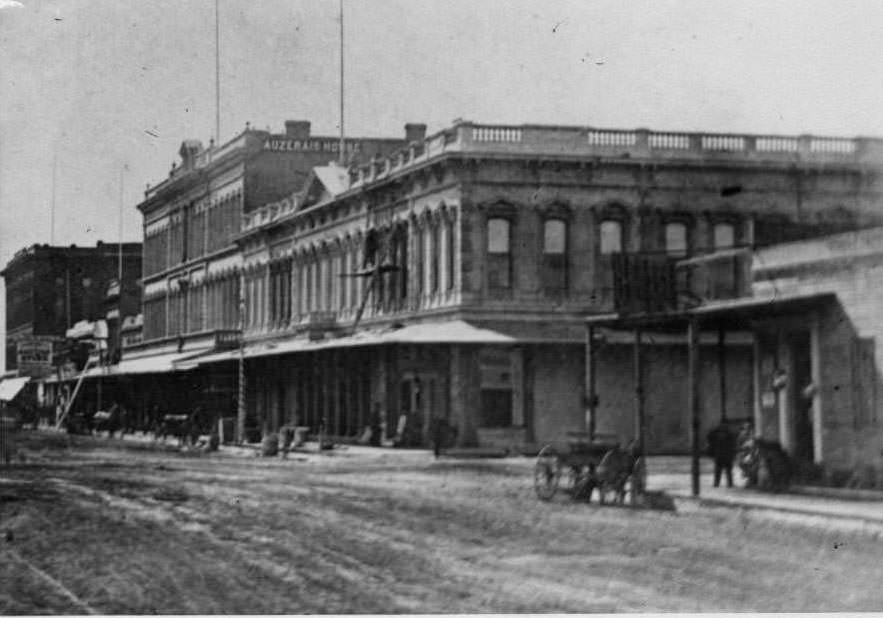
The Newhall Building at the corner of Market and Santa Clara Streets was home to T.W. Spring Company, a retailer who promoted his business aggressively on horse-drawn streetcars and called his store the “great American cheap store.” Nearby, the University of the Pacific maintained its campus and East Hall in San Jose, photographed in both 1880 and 1886. The Fredericksburg Brewery, operating by 1885, represented the city’s thriving industrial side.
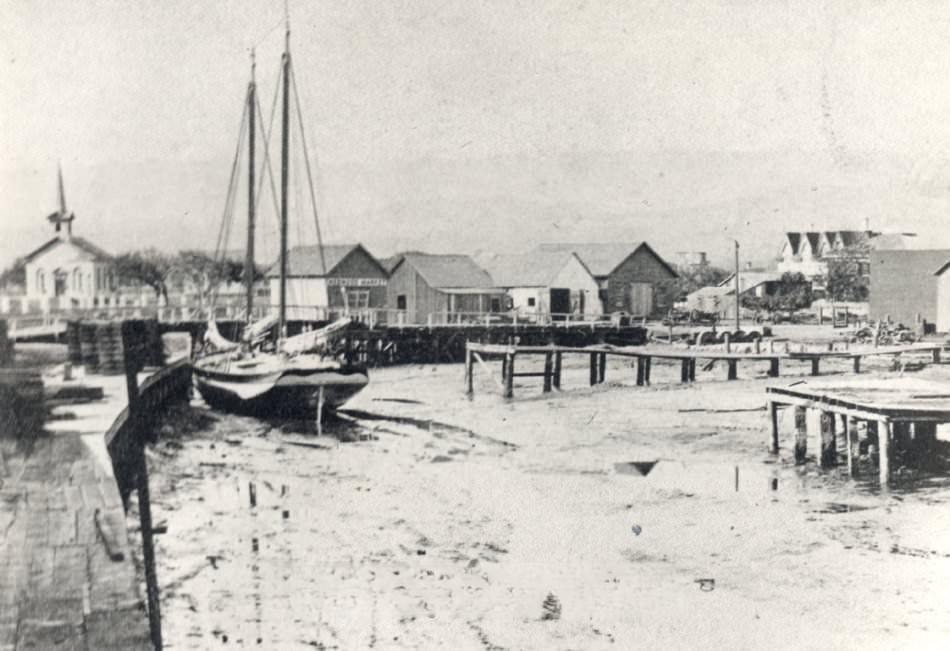
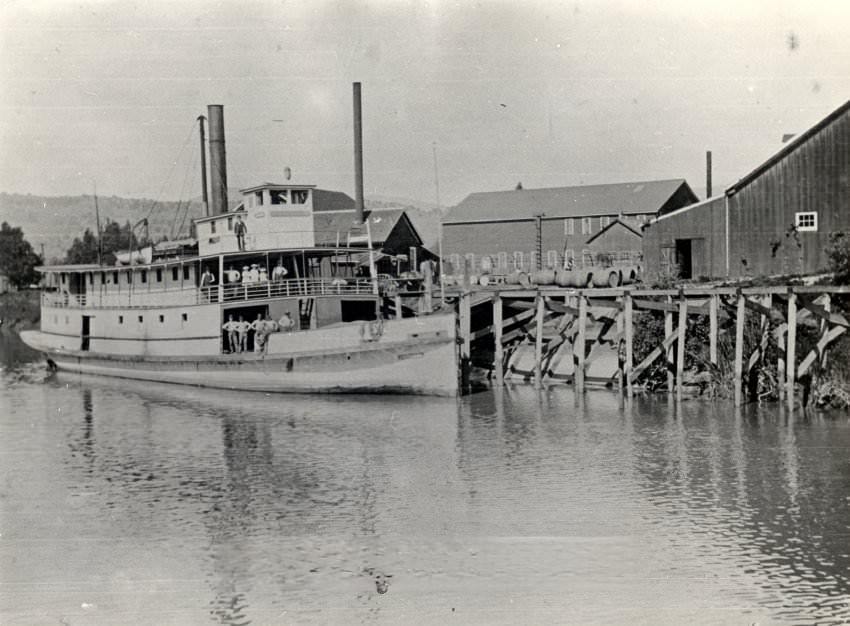
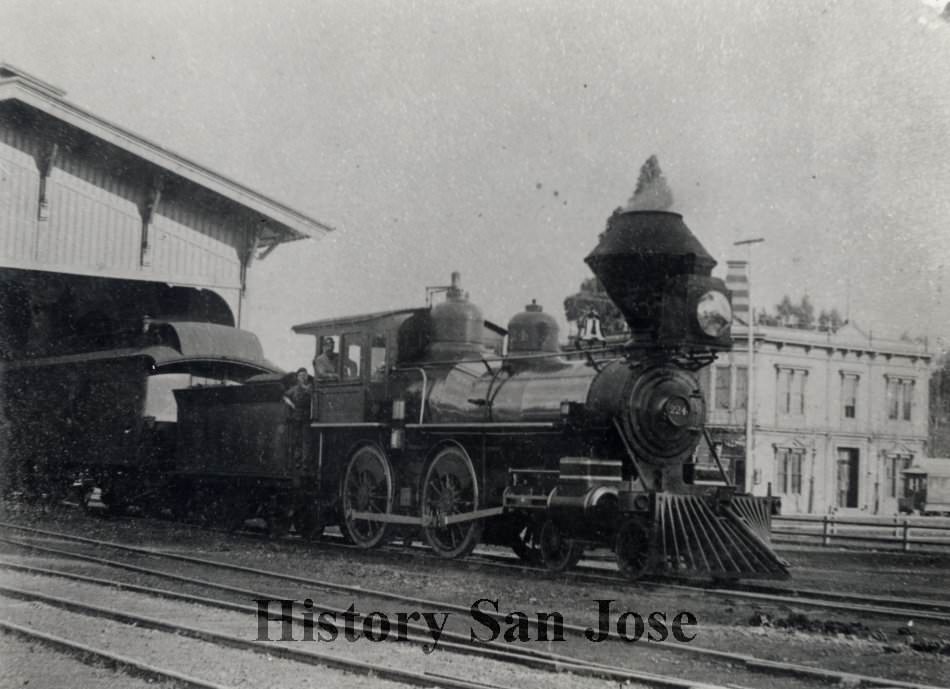
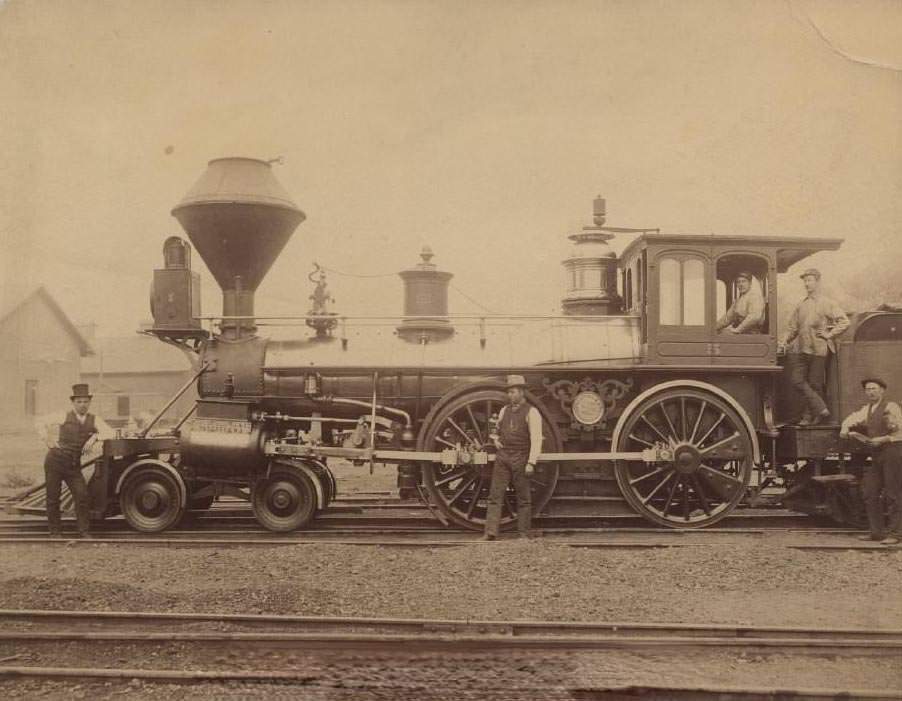
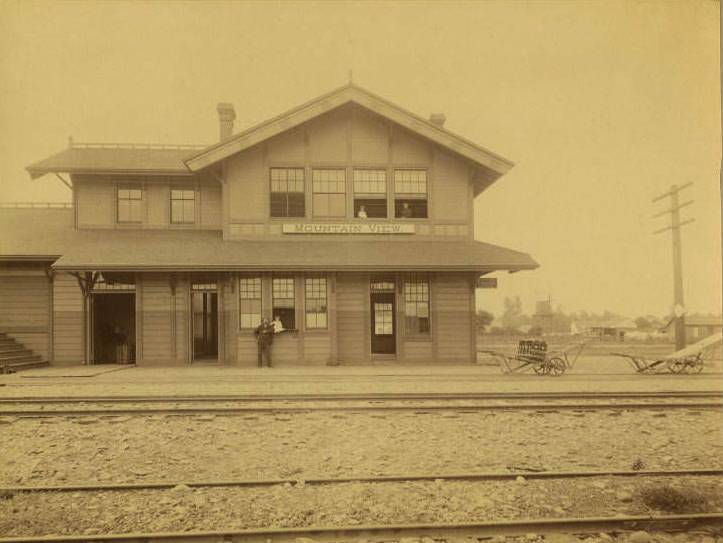
The port of Alviso, located at the southern end of San Francisco Bay, served as a key shipping point for goods moving in and out of the Santa Clara Valley. The steamer Zinfandel, owned by C.C. Carpee Company, operated along these waters. A Southern Pacific steam locomotive at the Market Street Depot gave the region a rail connection that ran alongside its water-based trade routes.
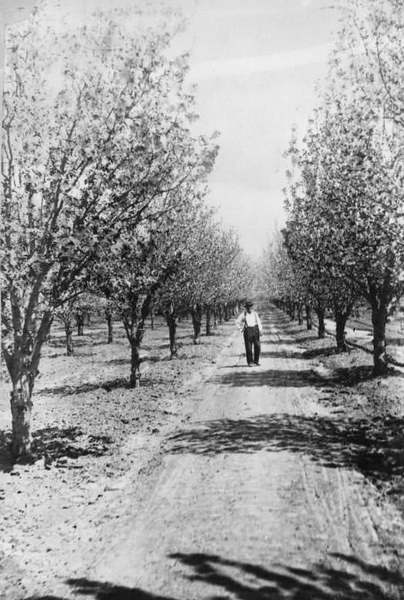
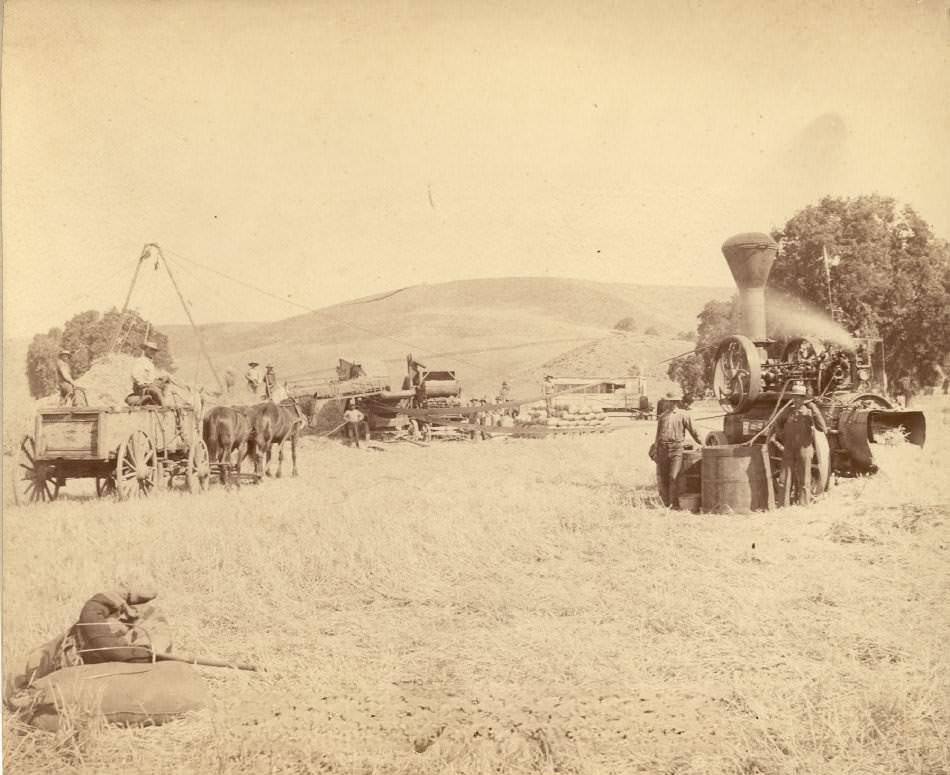
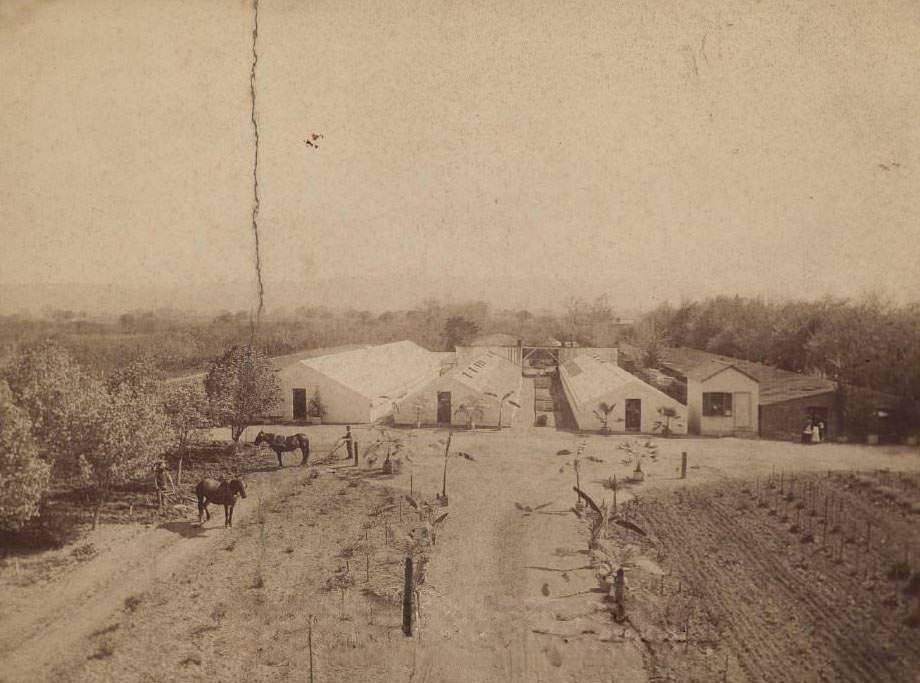
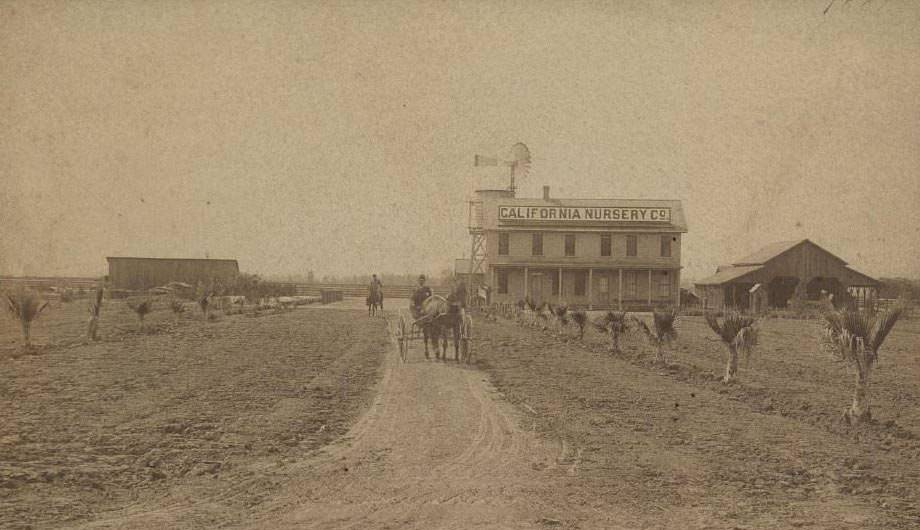
Agriculture remained central to the Santa Clara Valley’s economy throughout the 1880s. William Geiger’s orchard at Willow Street and Cherry Avenue, photographed in 1880, was representative of the fruit-growing operations that covered the valley floor. The Overfelt thresher at Doemsky Ranch in Hillsdale and the California Nursery at Niles showed the scale and variety of farming taking place just outside the city limits.
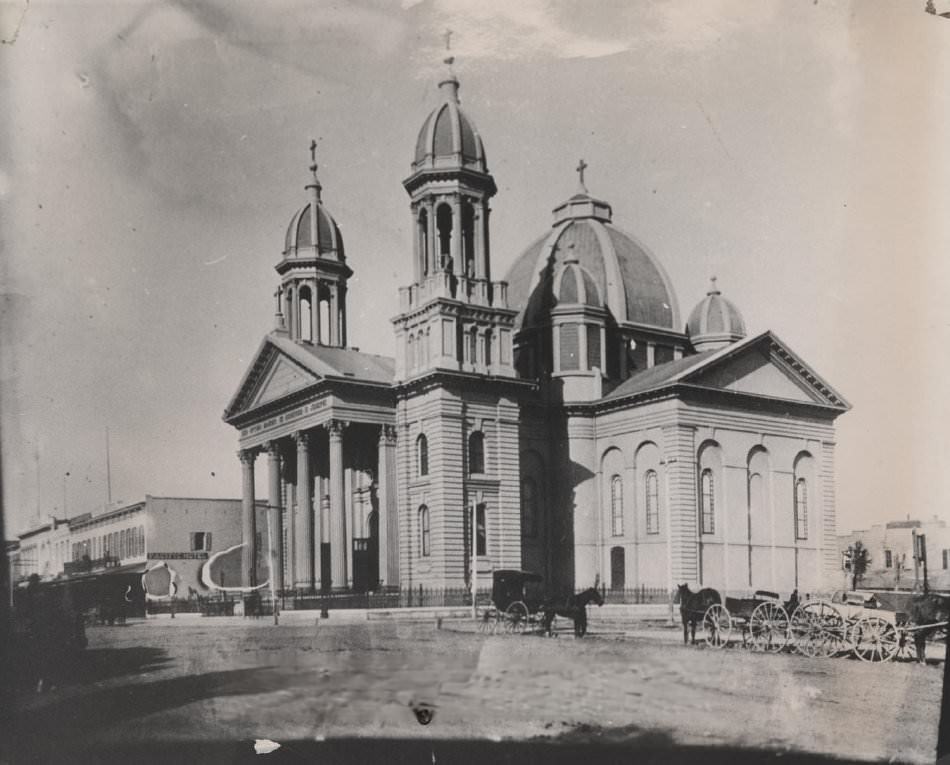
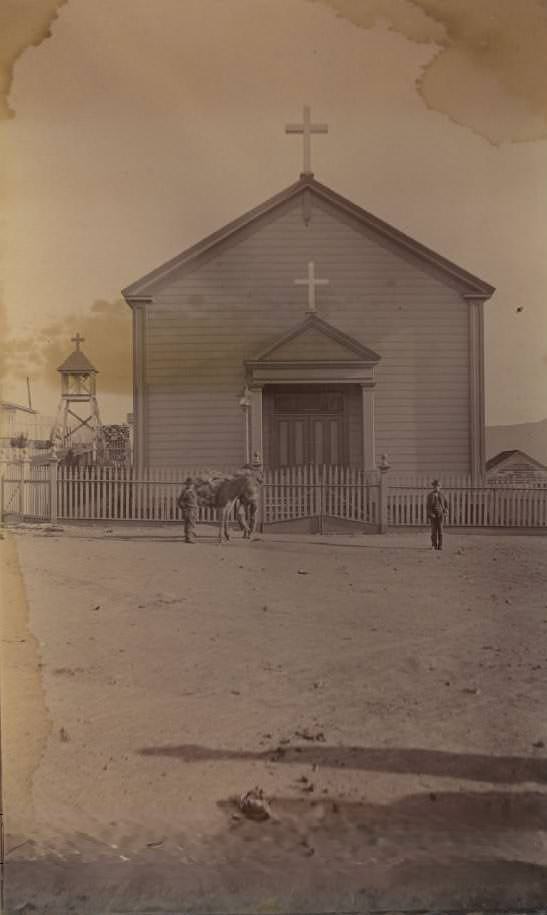
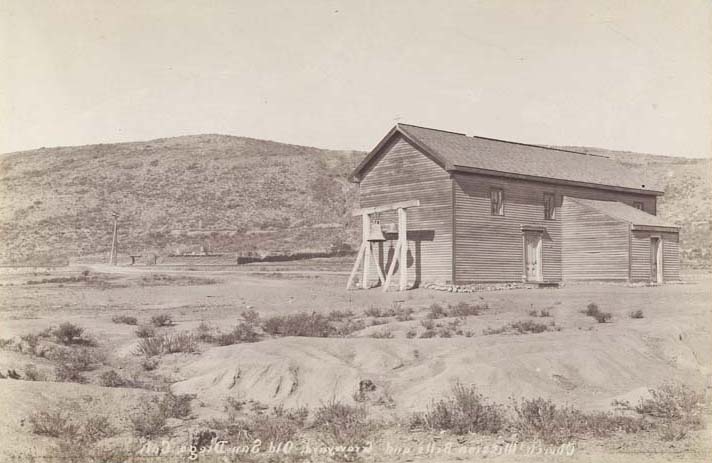
Religious life was well established across the region. St. Joseph’s Roman Catholic Church, photographed in 1885 with its ornate interior on full display, served San Jose’s Catholic population. The Catholic Church at Spanish town in New Almaden catered to the mining community’s residents. A Quaker Meeting House photographed in 1885 and the church, mission bells, and graveyard captured the same year reflect the broad range of denominations present in the area.
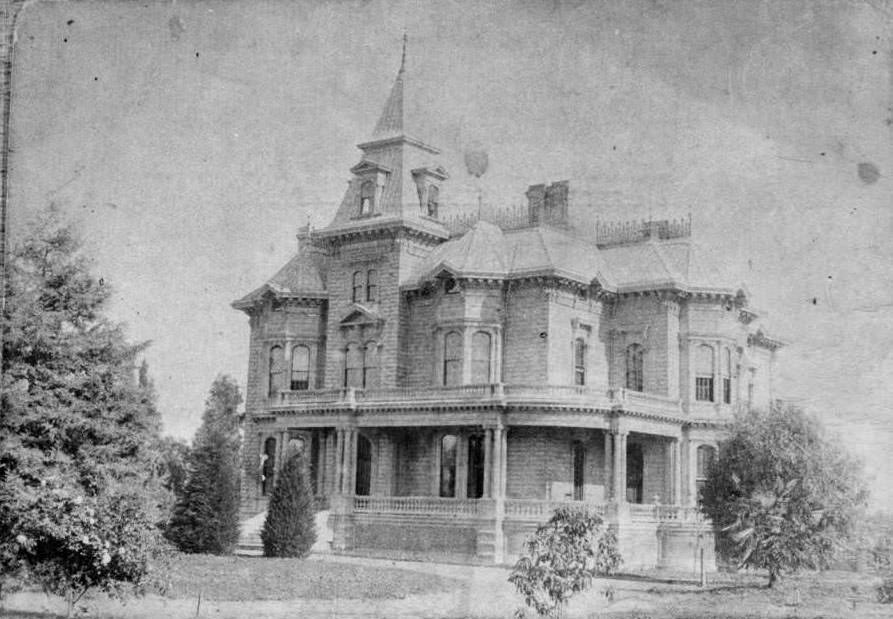
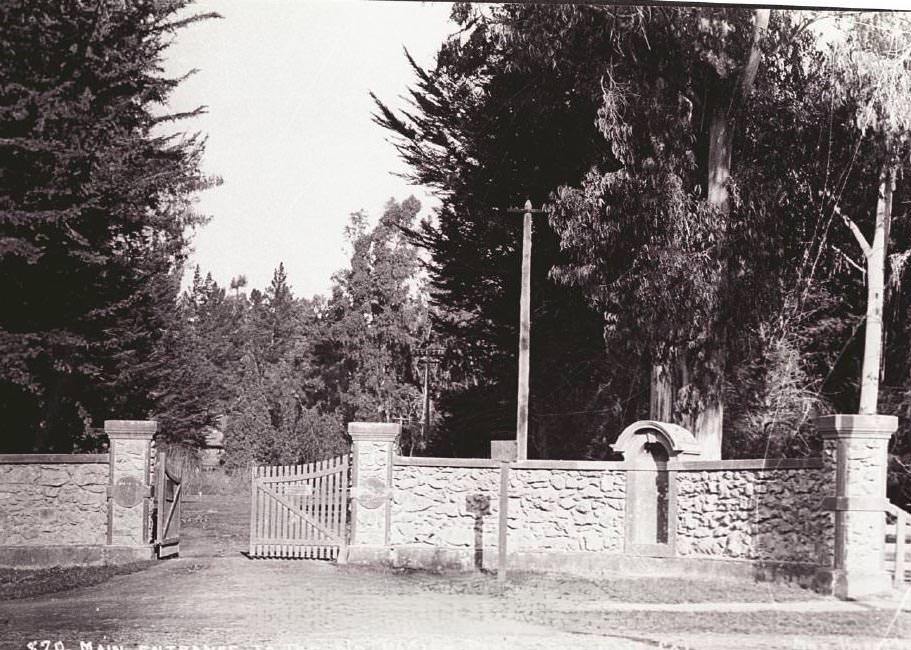
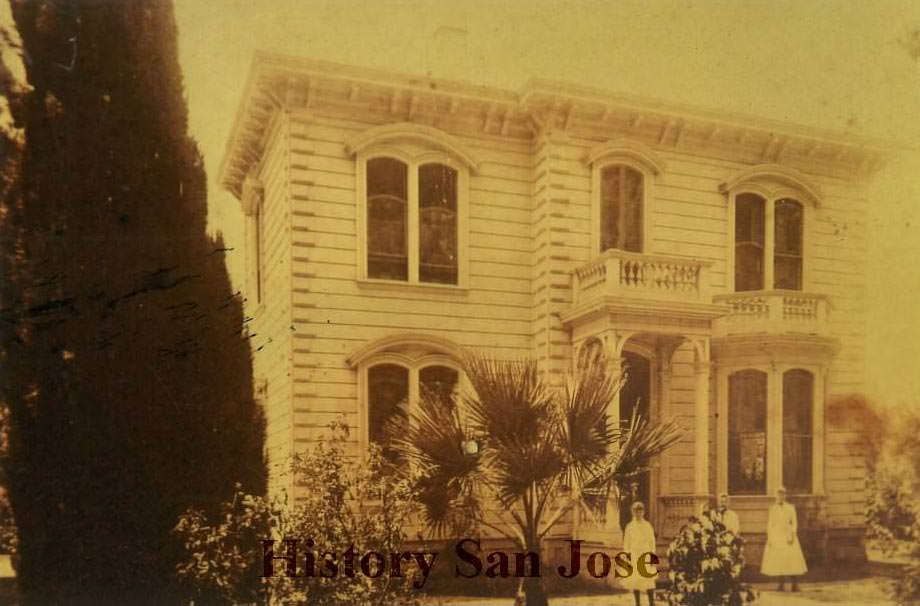
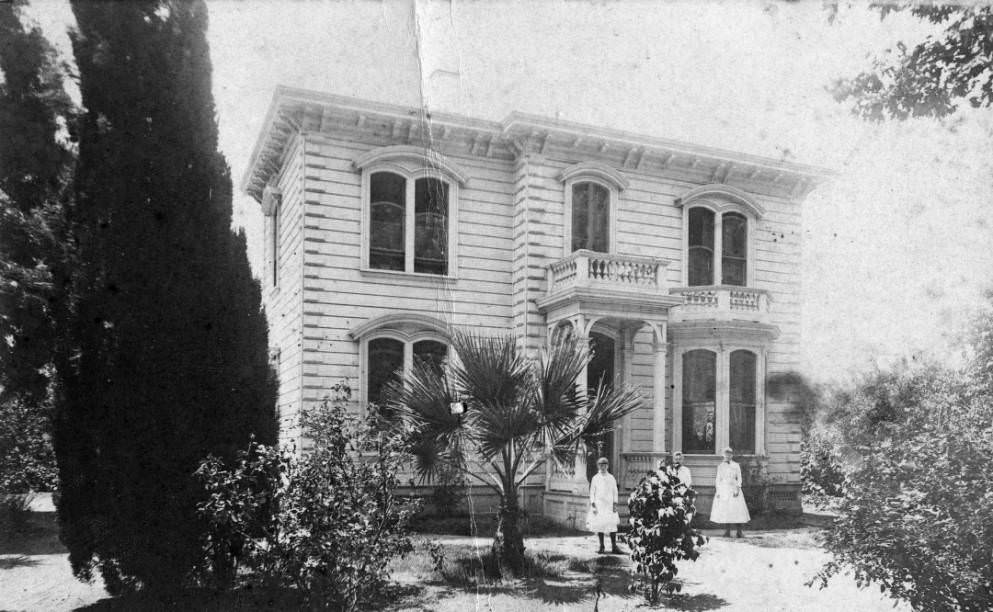
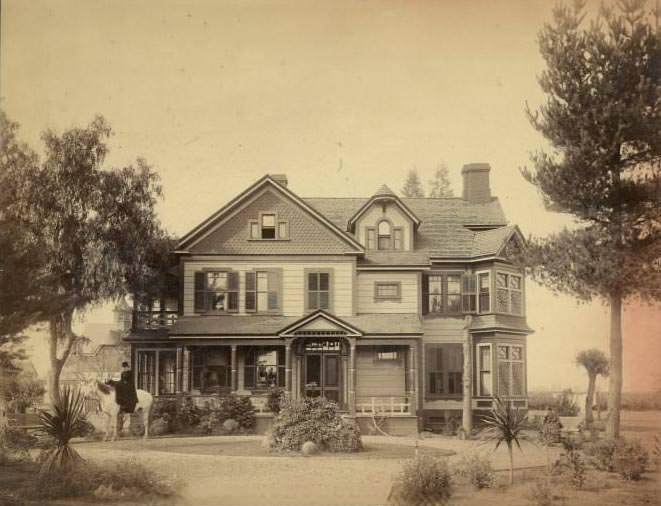
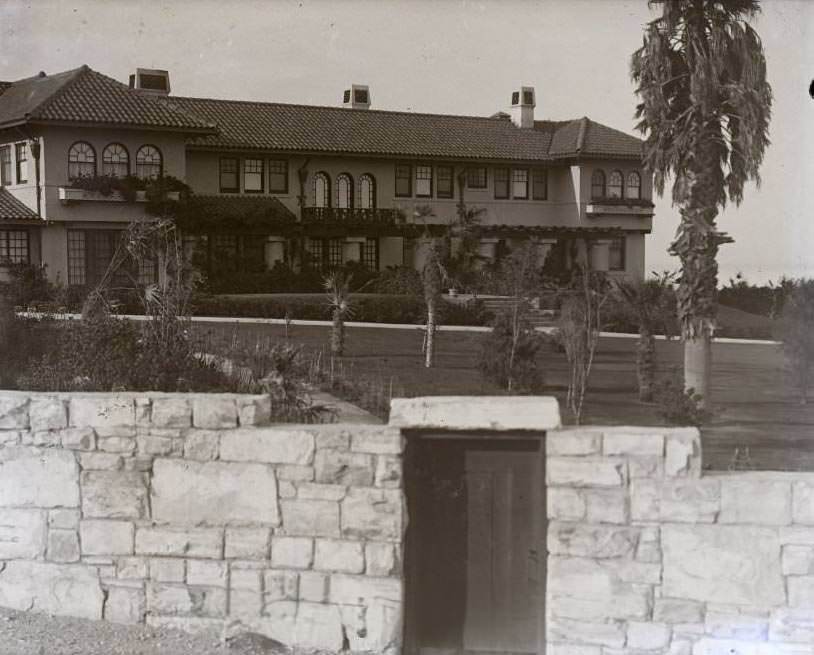
Residential life in 1880s San Jose ranged from modest homes to grand estates. The Clark Mansion, photographed in 1880, and the General Naglee estate with its formal main entrance represented the wealthier end of the city’s housing stock. The Battee Residence on Sunol Street and the John M. Battee House photographed in 1887 showed the Victorian architecture typical of middle-class San Jose neighborhoods. Victorian gothic farmhouses with women on horseback appeared even in the rural outskirts.
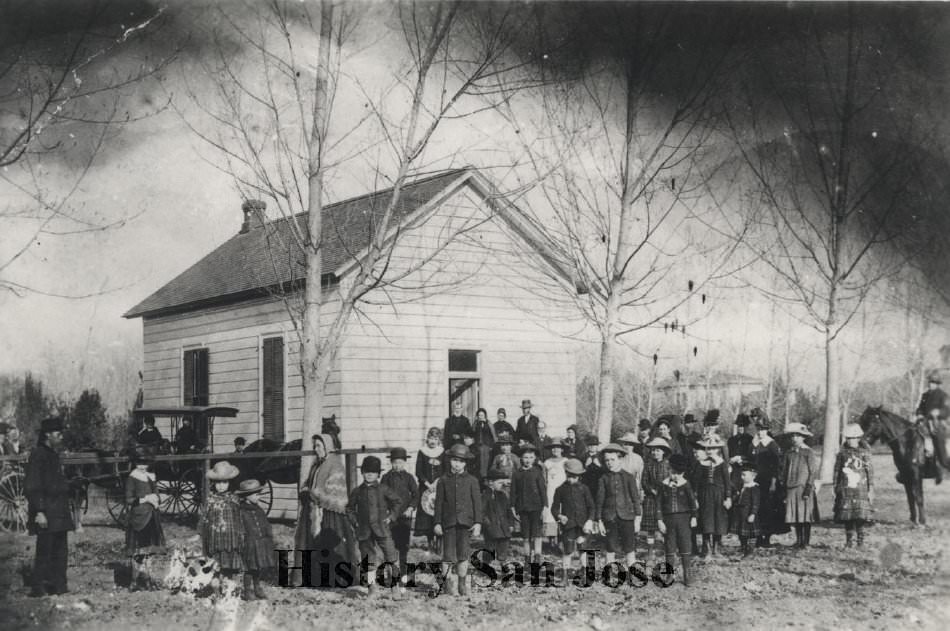
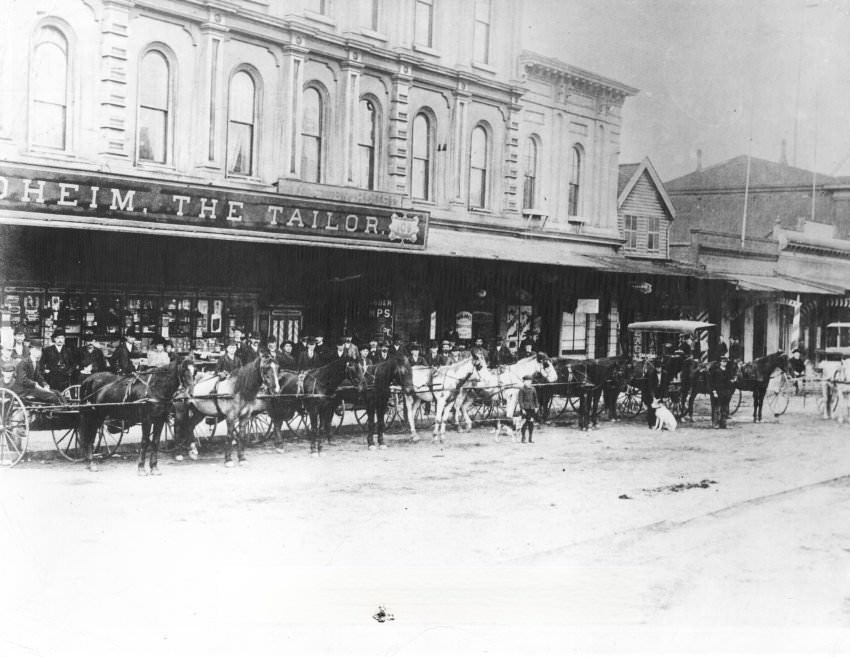
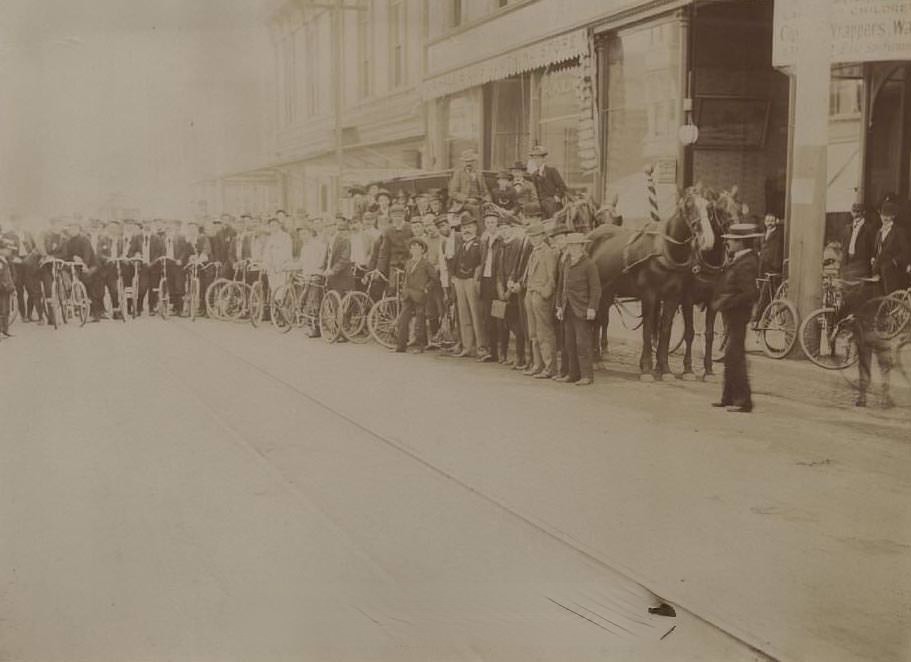
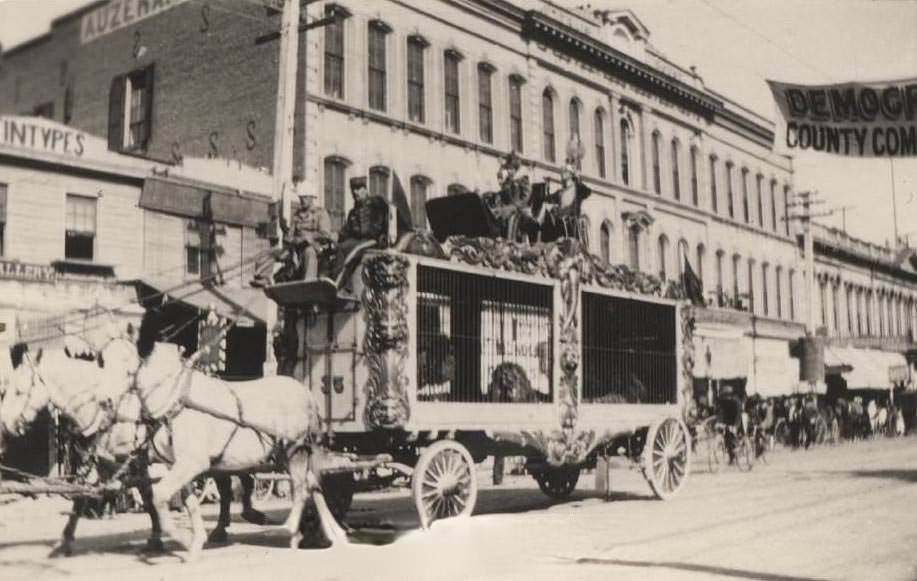
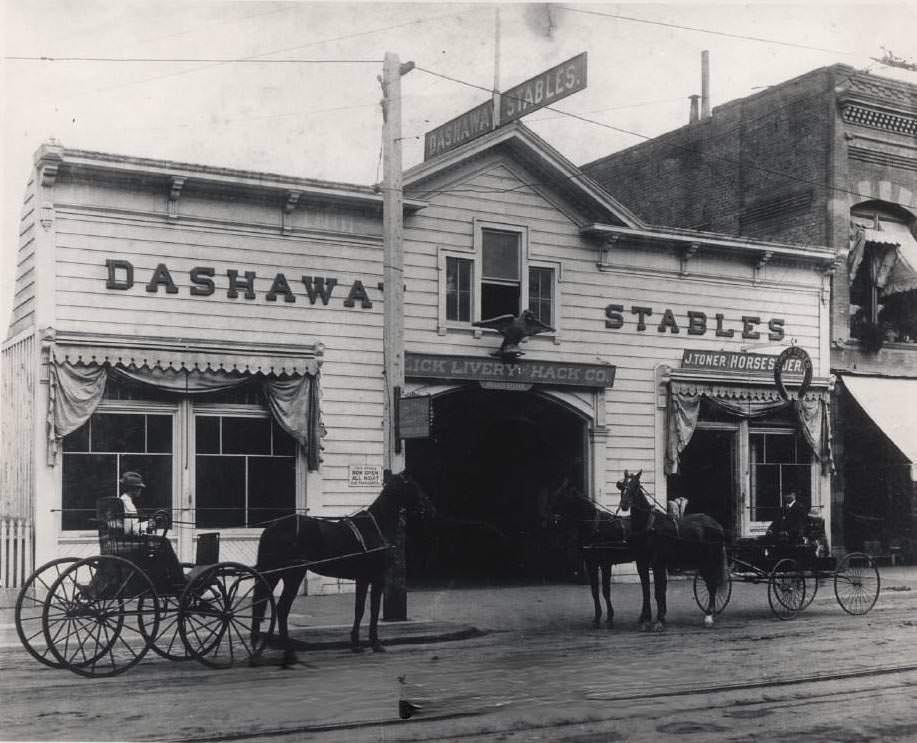
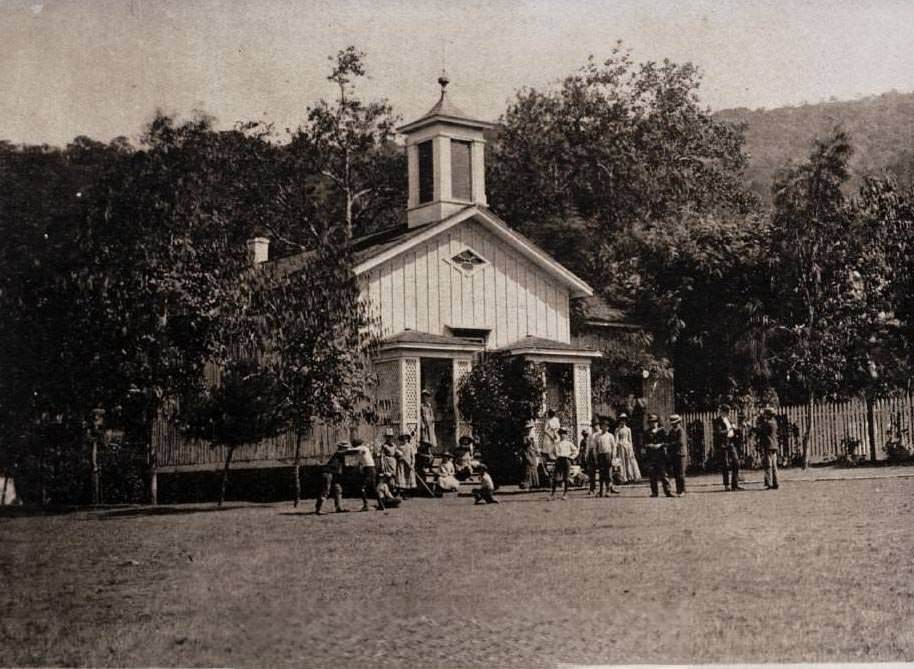
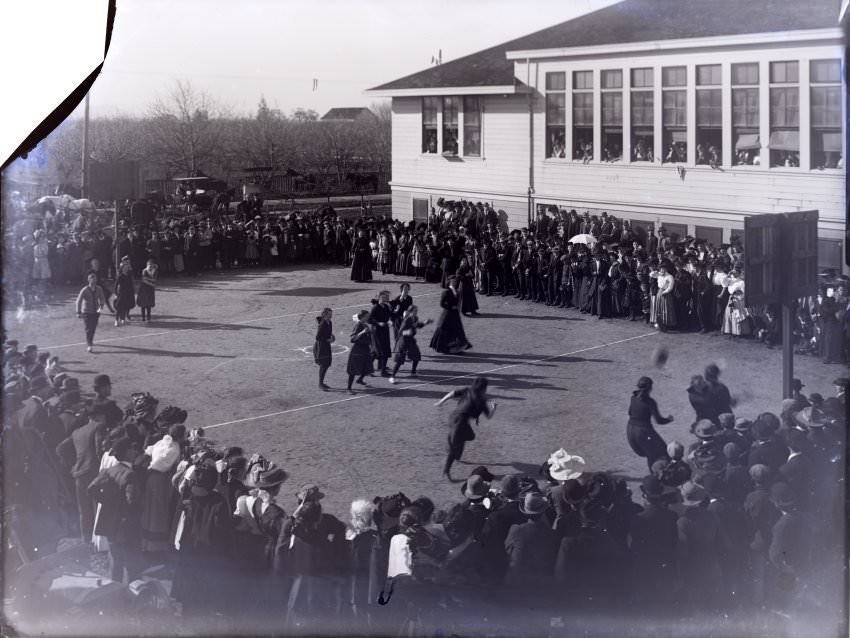
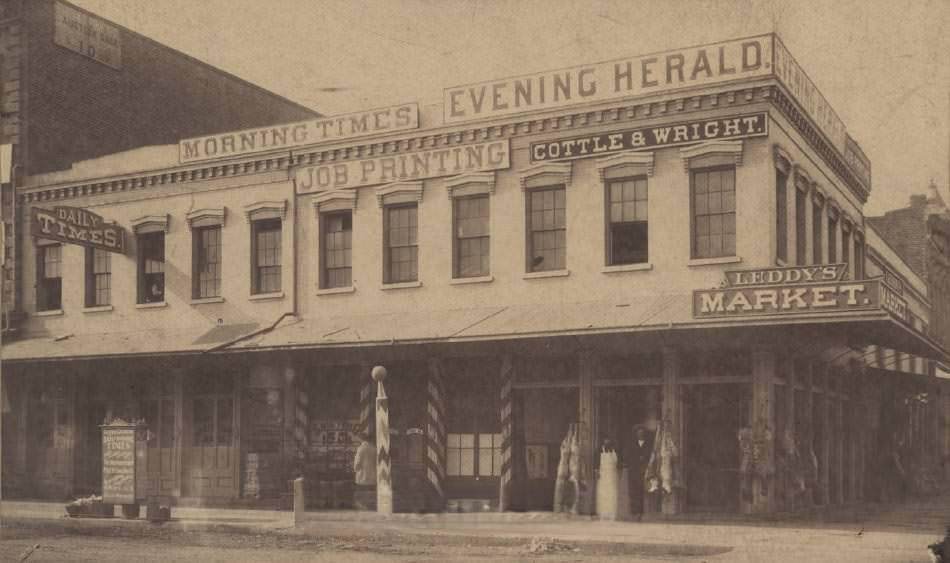
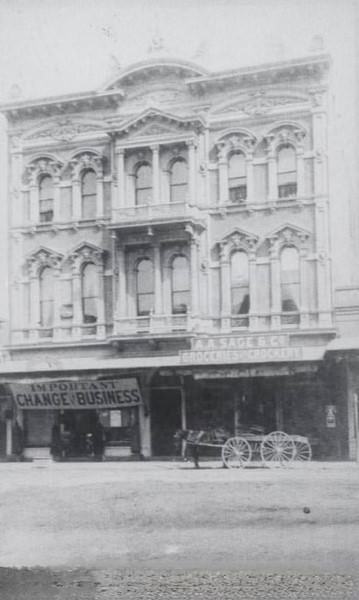
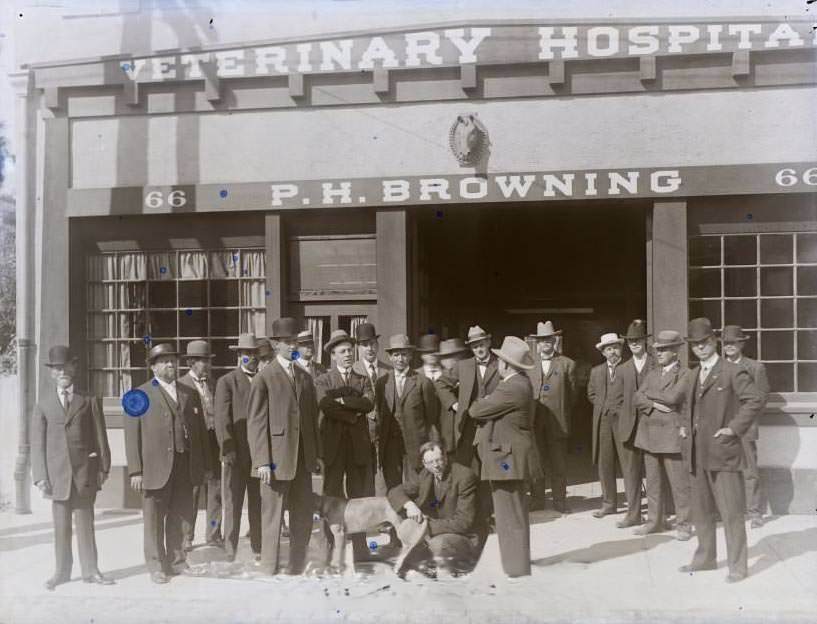
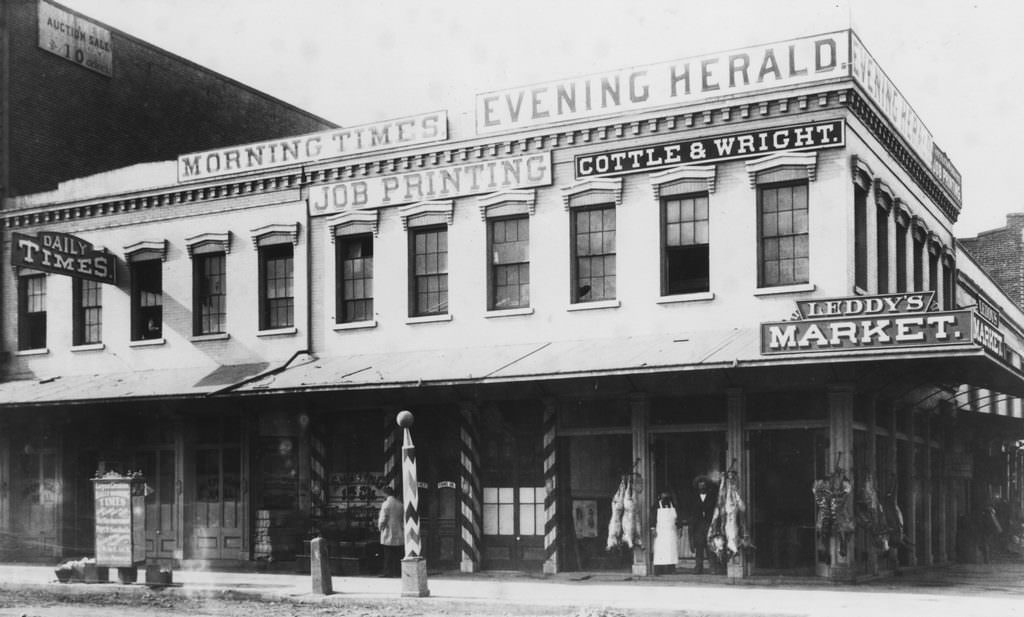
Everyday street scenes from the 1880s show a city that mixed commerce, transportation, and community in close proximity. Men posed along storefronts while boys with dogs stood in front of hitching horses. Cyclists lined up on paved streets. A circus wagon rolled down Santa Clara Street in 1888. Dashaway Stables served the city’s horse-keeping needs. The Hacienda School in New Almaden and the school at Campbell Union High show that education reached beyond the city center into surrounding communities.





Wow that’s a lot of photos
Back in the day the Santa Clara Valley was home to the world’s best farms and orchards thanks to its mild climate and finest arable soil.
San Jose’s architect Lenzen gave the city that grandiose style that is largely forgotten today.