
Before a parking garage occupied the corner of 629 Vine Street in Downtown Cincinnati, one of the most visually stunning public libraries in the entire country stood in its place. Built in 1874, the Cincinnati Public Library was a grand, cast-iron and marble structure that could hold up to 300,000 books in its collection. It cost $383,594.53 to construct — roughly $7 million in today’s money — and every dollar of that showed in the building’s extraordinary interior.
The library rose on a site originally reserved for an opera house. That project went bankrupt before it ever got off the ground, and architect J.W. McLaughlin stepped in to design something entirely different in its place. The exterior of the finished building was modest — even plain by some accounts. But the inside was another world entirely.
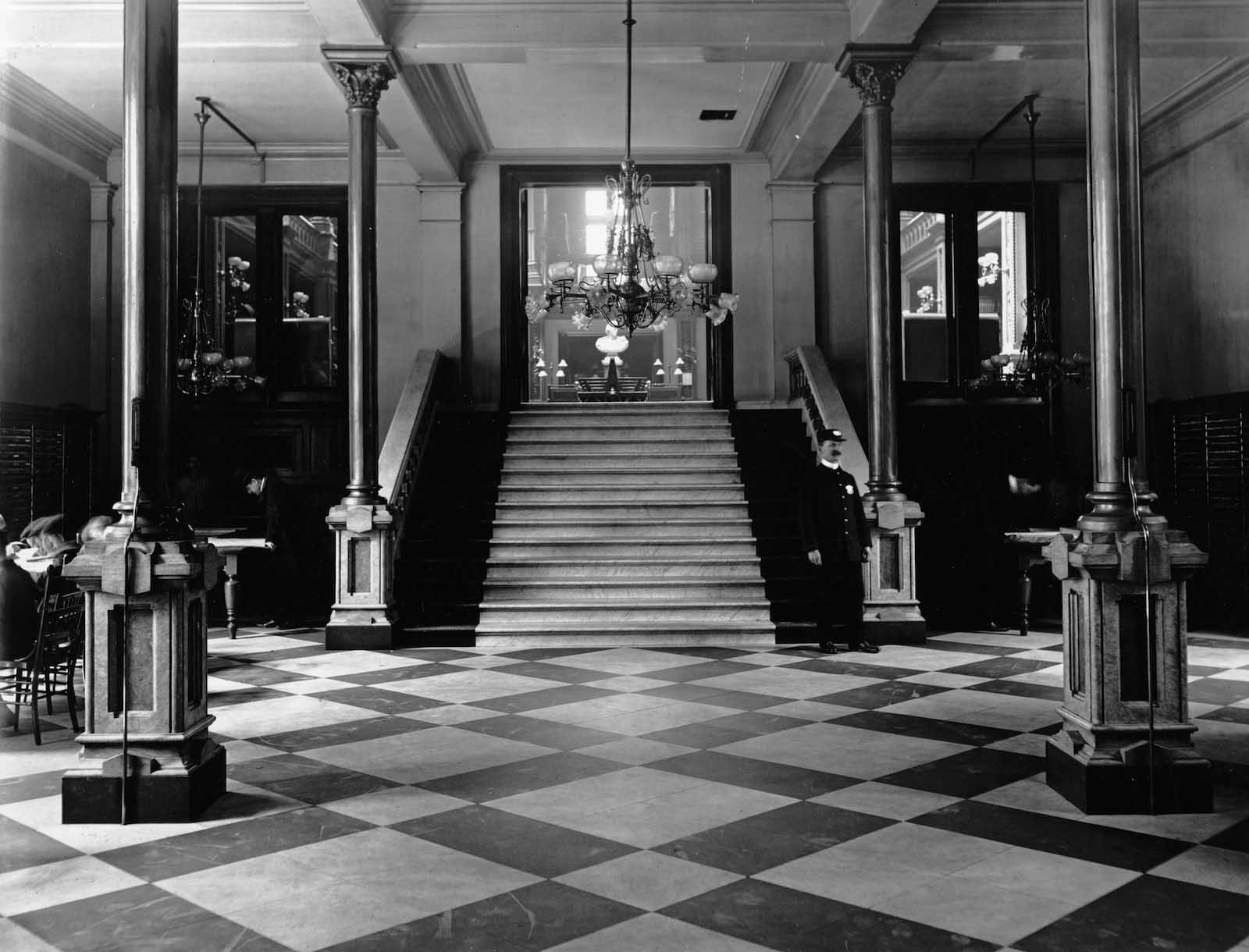
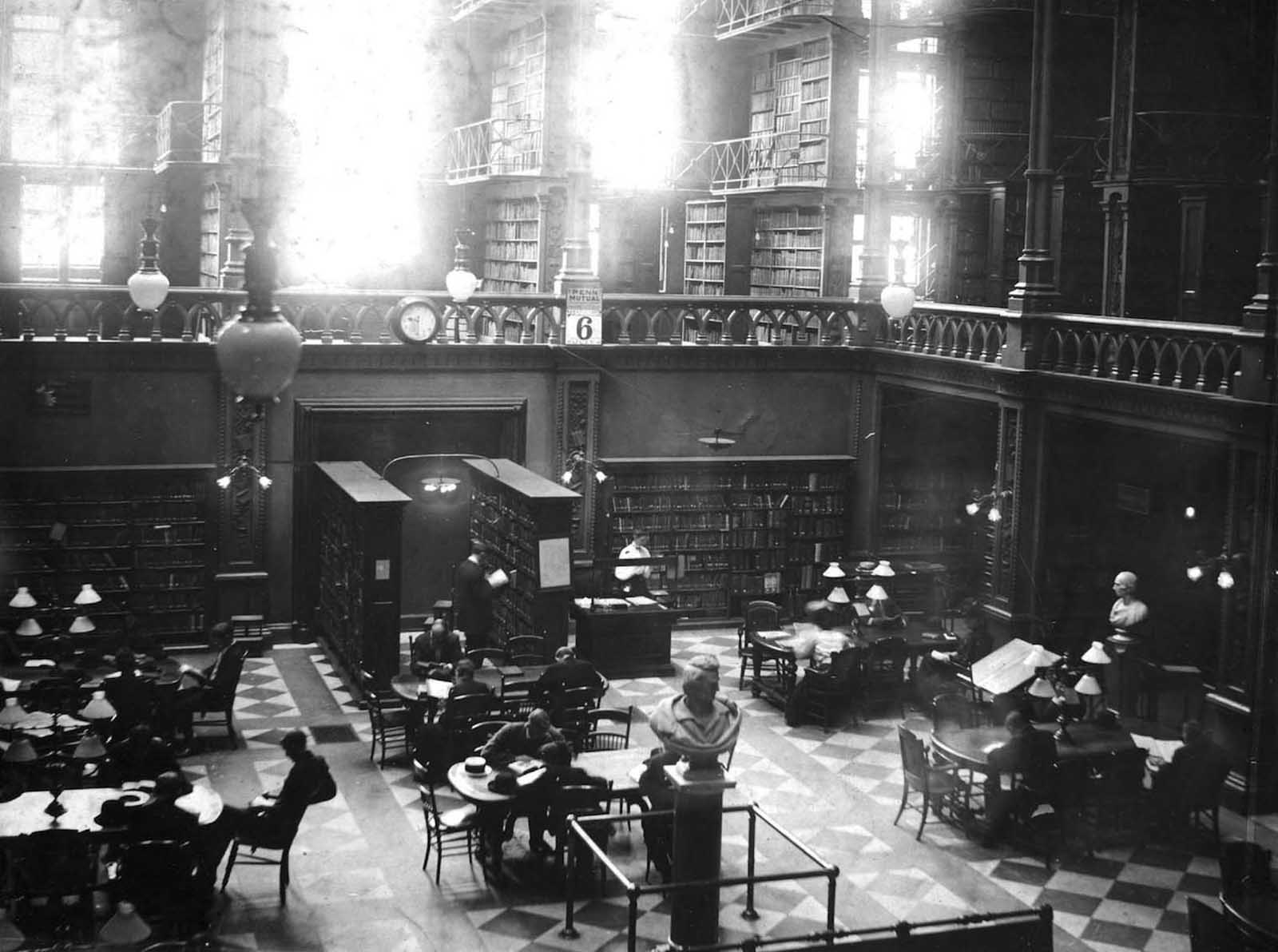
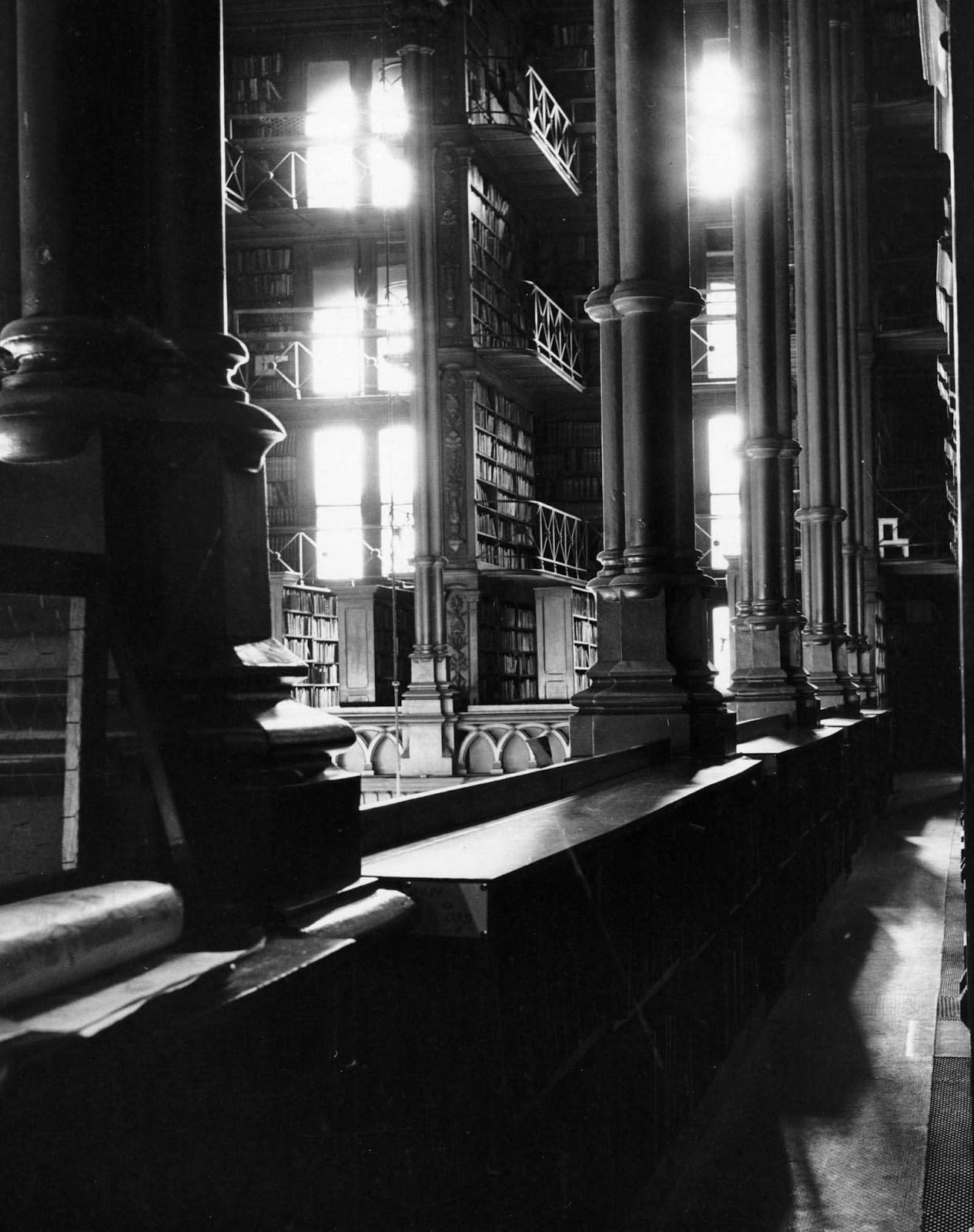
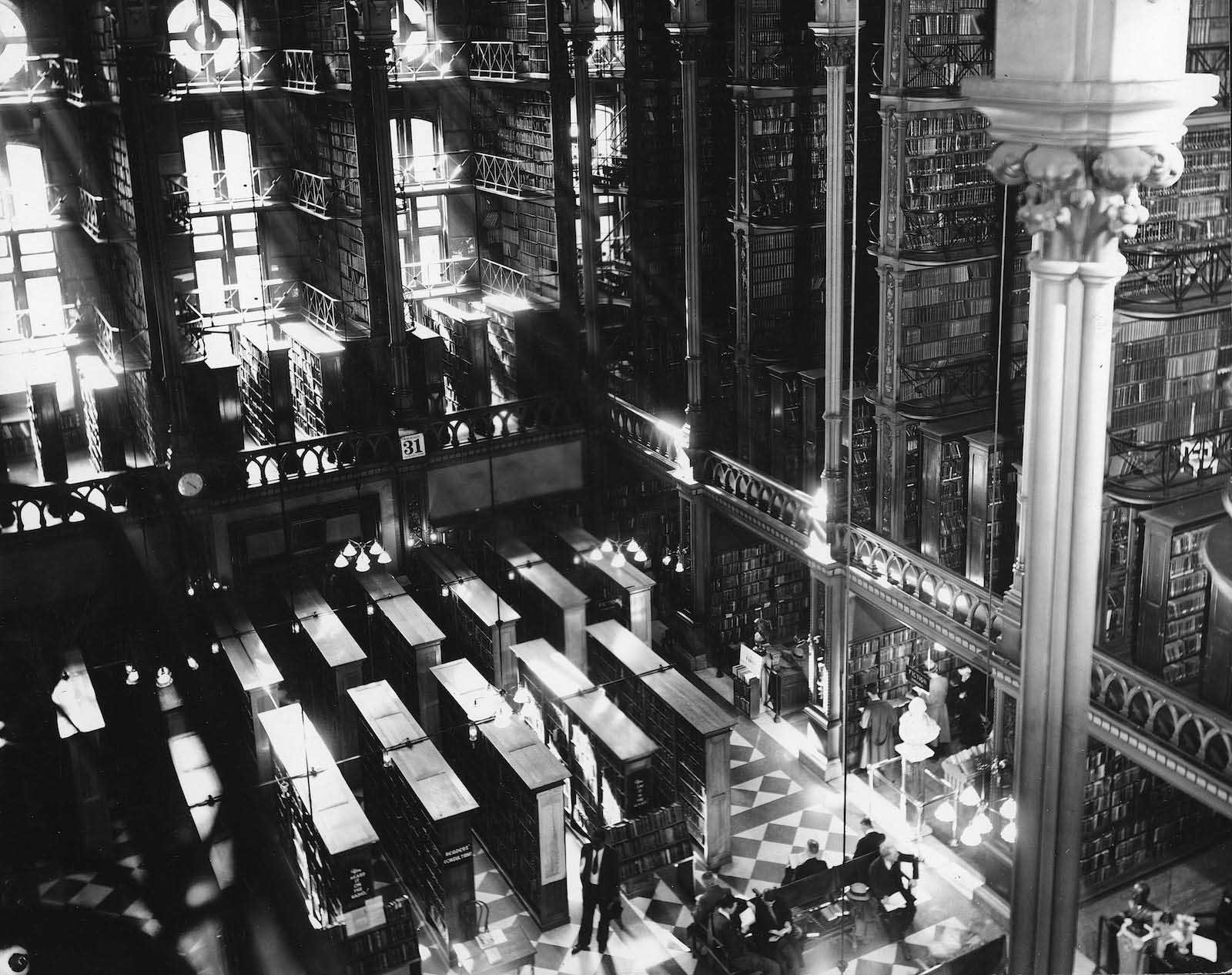
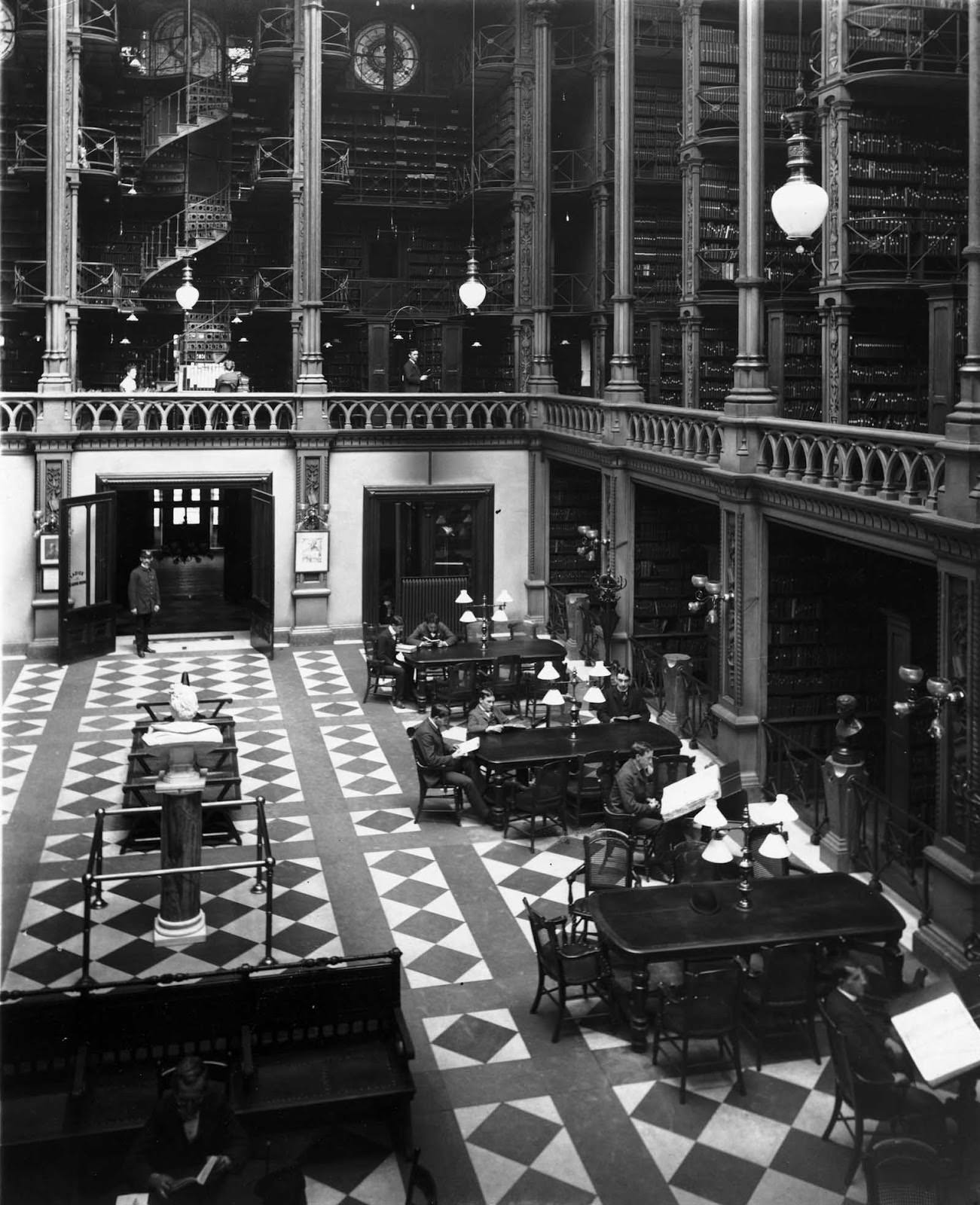
The Main Hall was the centerpiece of McLaughlin’s design. Five tiers of cast-iron shelving climbed the walls, each level accessible by walkways that wrapped around the open central atrium. A skylight ceiling flooded the space with natural light, and shafts of sunlight cut through the tall windows to illuminate the checkerboard marble floors below. The foyer was equally striking, welcoming visitors into a space that felt more like a cathedral than a city library.
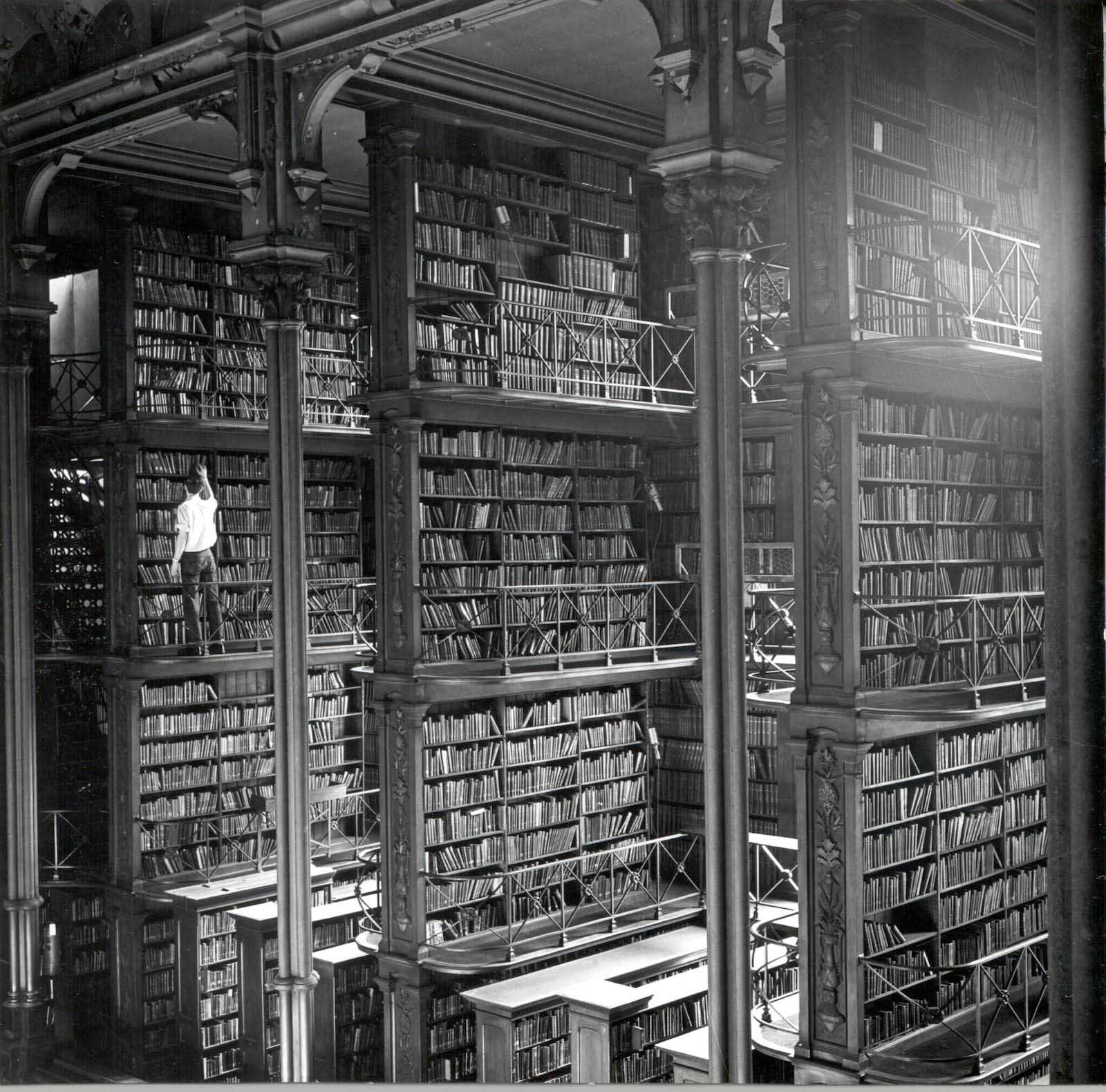
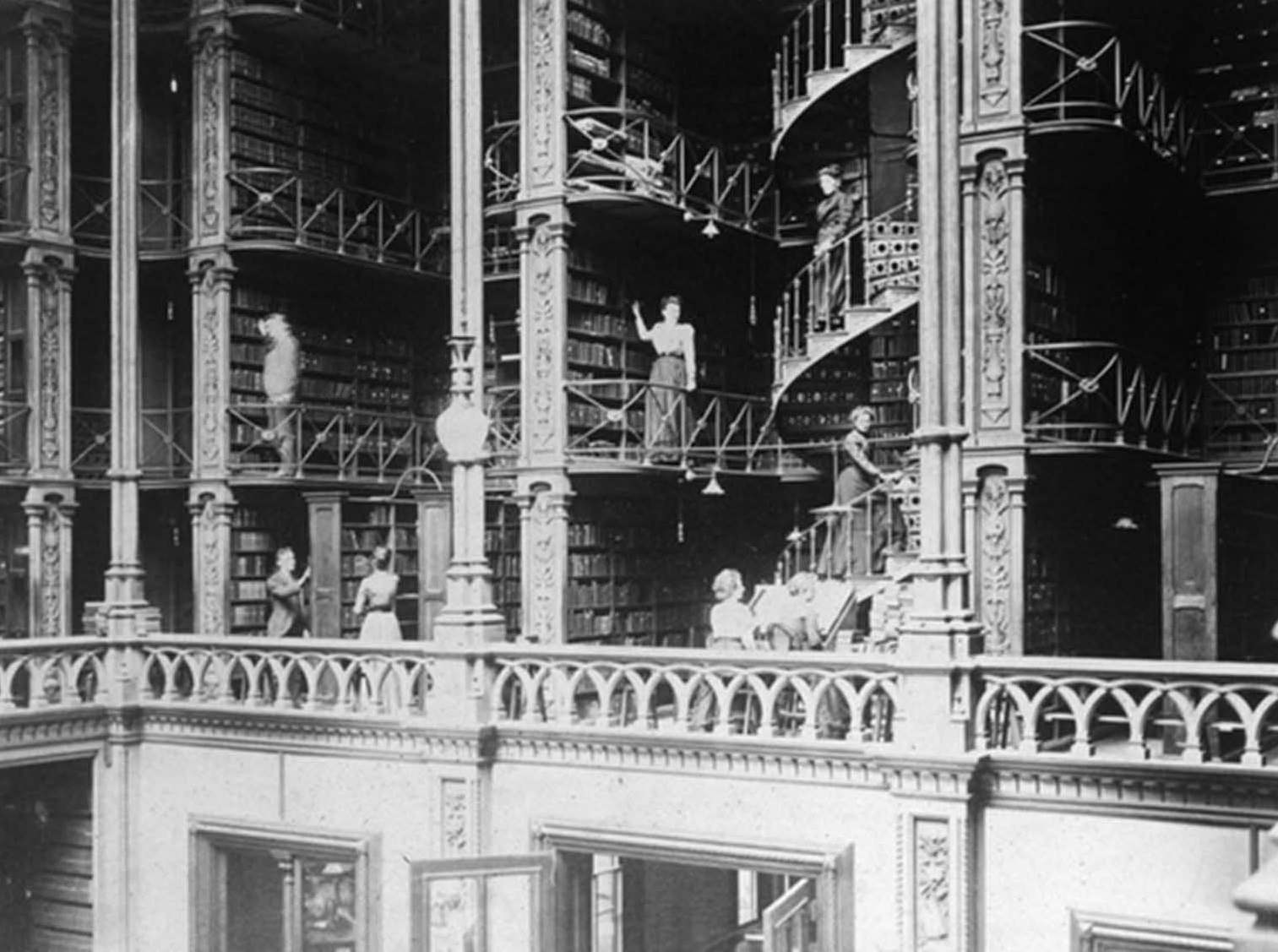
Each cast-iron alcove along the Main Hall held rows of books, organized and packed tightly into the shelving that framed every wall. The structure of the building was itself a feat of Victorian-era design — the iron framework served both a functional and decorative purpose, giving the library its signature layered appearance when viewed from the ground floor looking up.
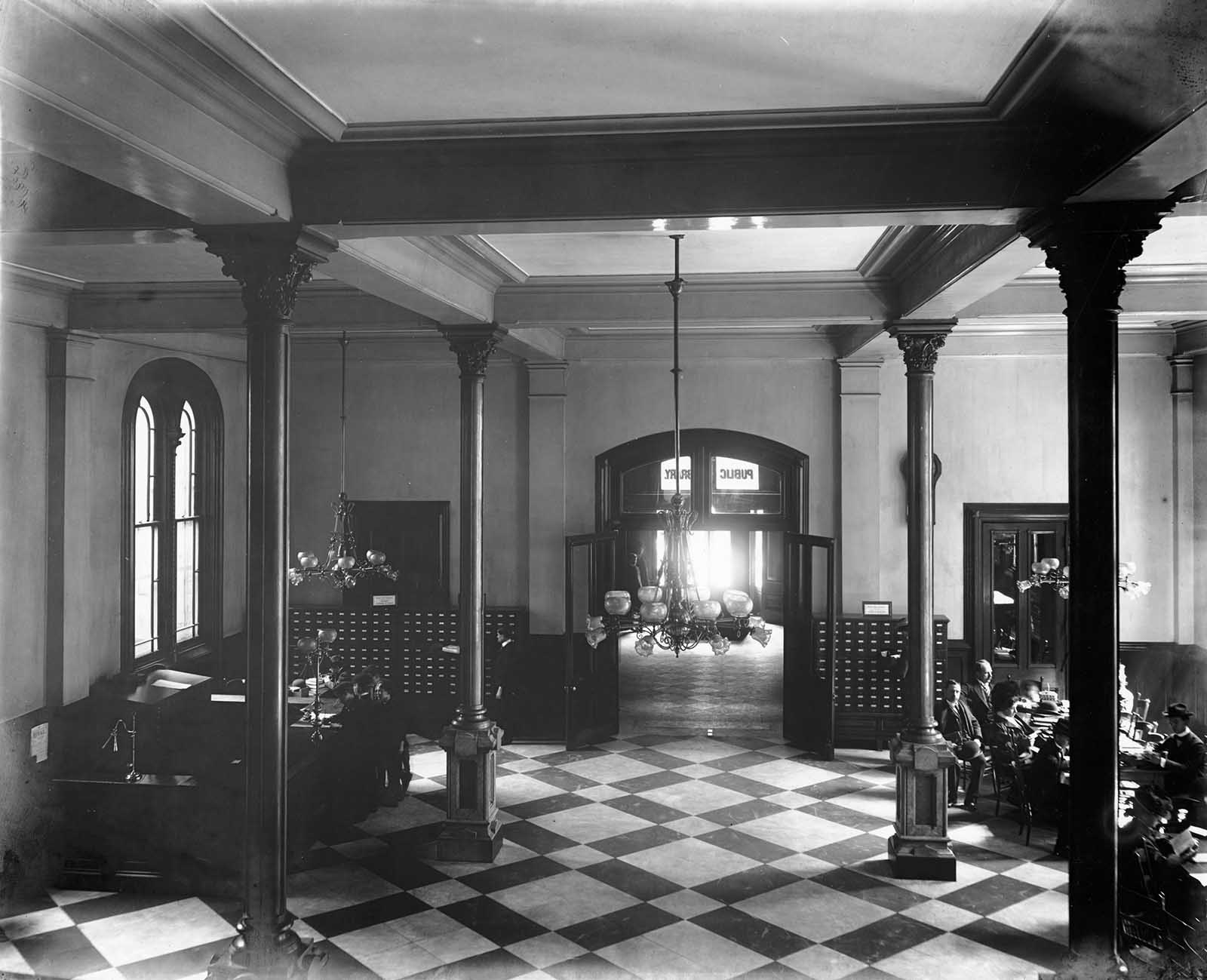
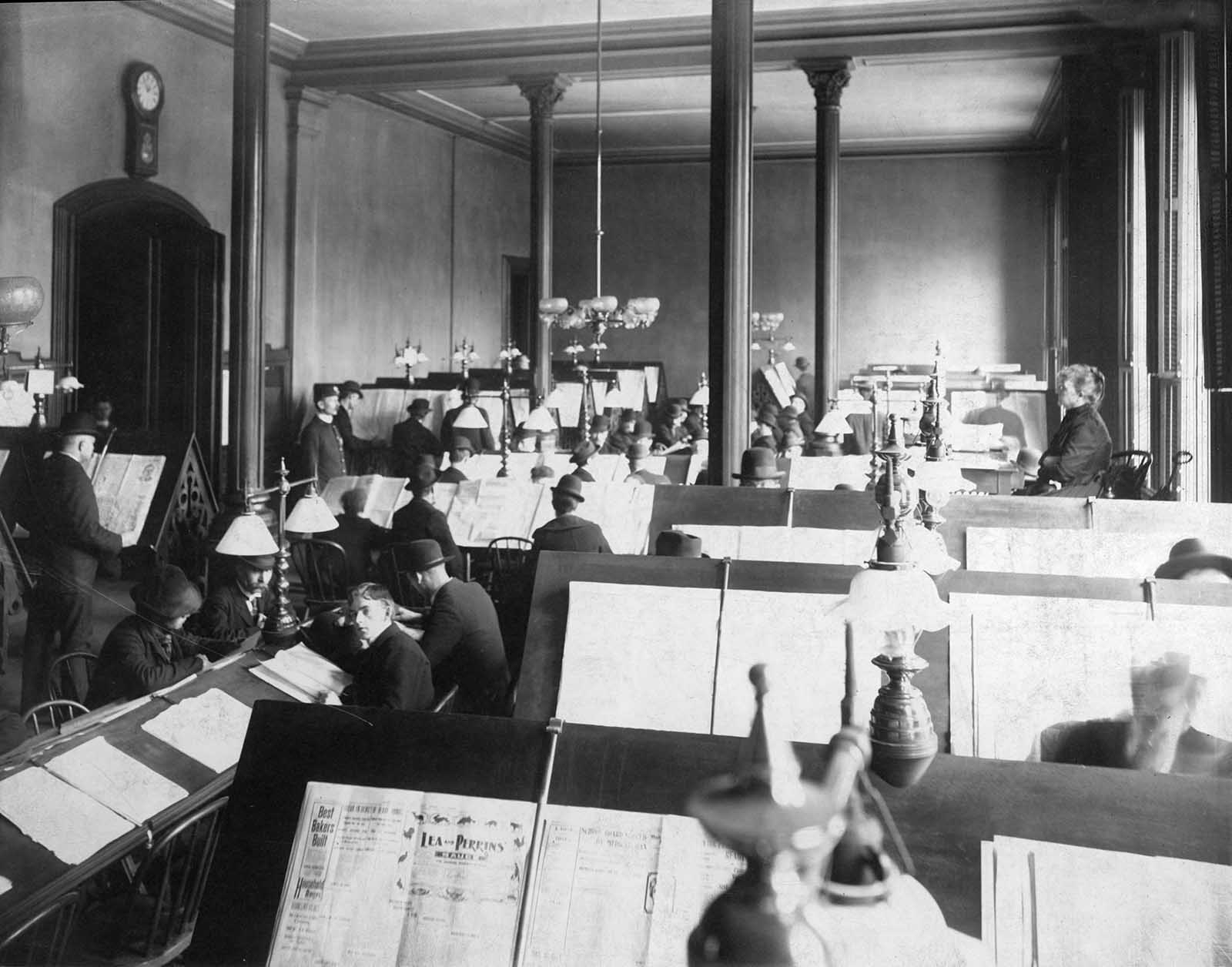
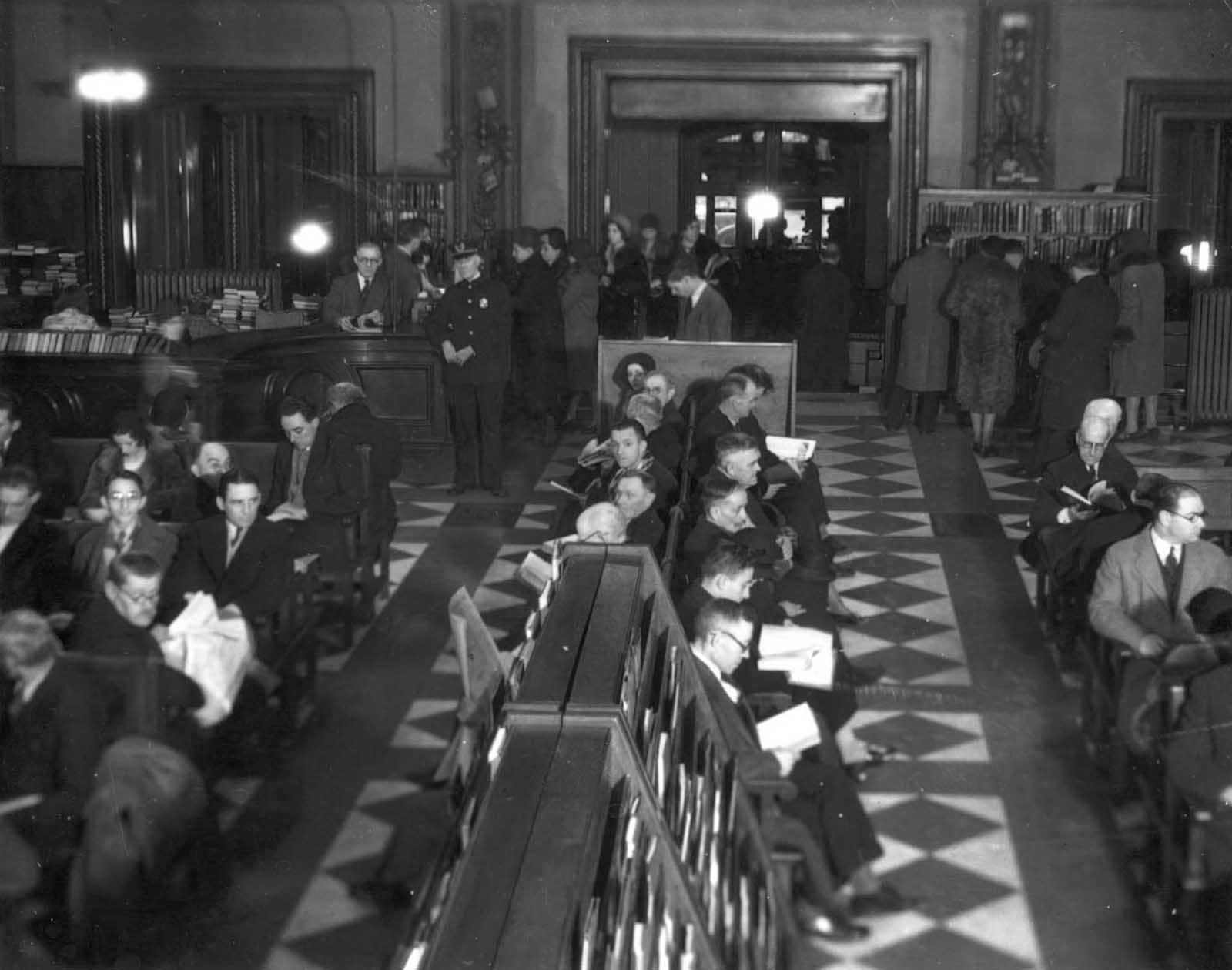
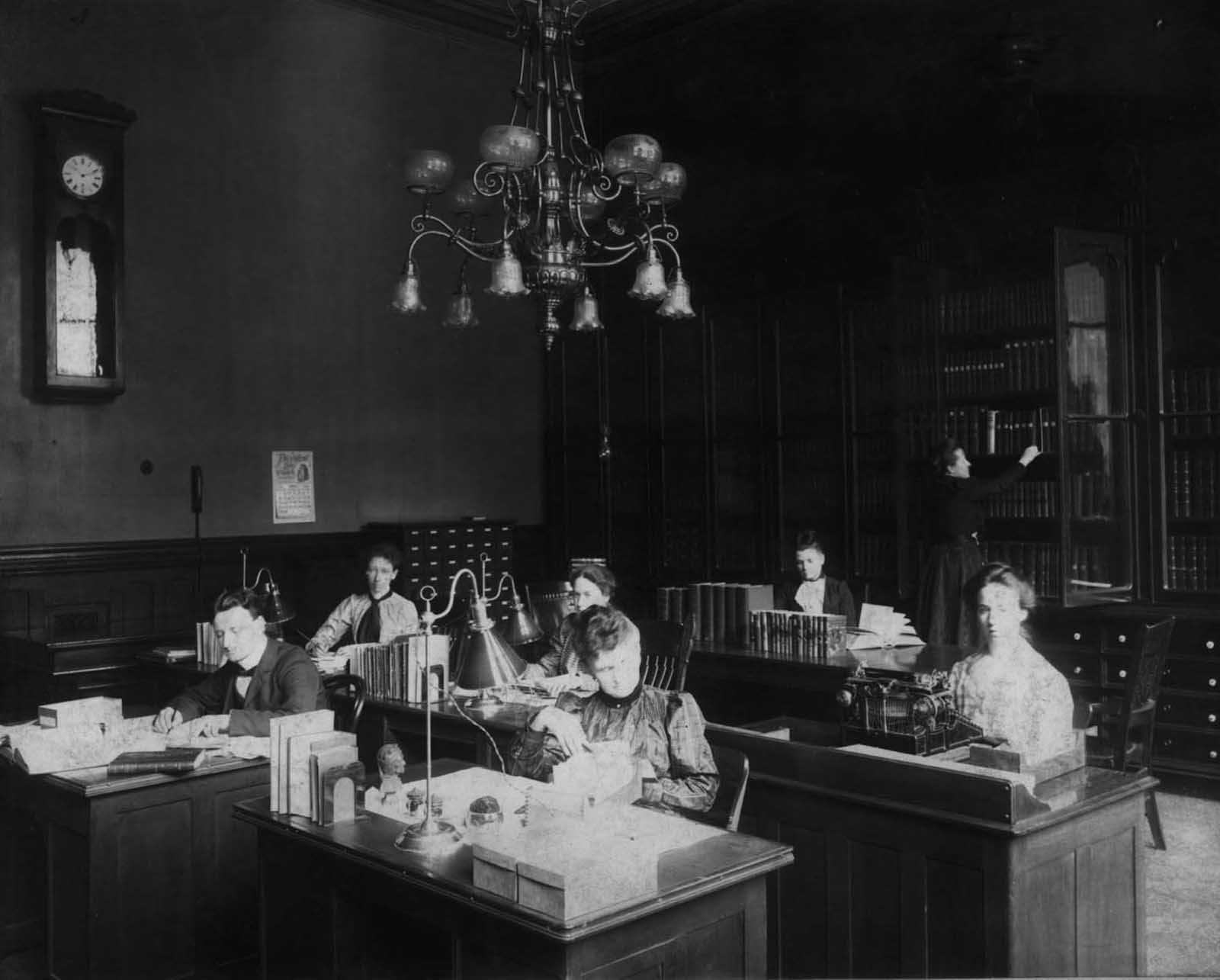
From the very beginning, the library was a busy place. Readers came from across the city to use its reading rooms, browse its stacks, and take advantage of its growing collection. The Newspaper Room, photographed around 1899, was one of the most well-used spaces in the building — a long, orderly room where patrons could read the day’s papers under the library’s ample lighting.
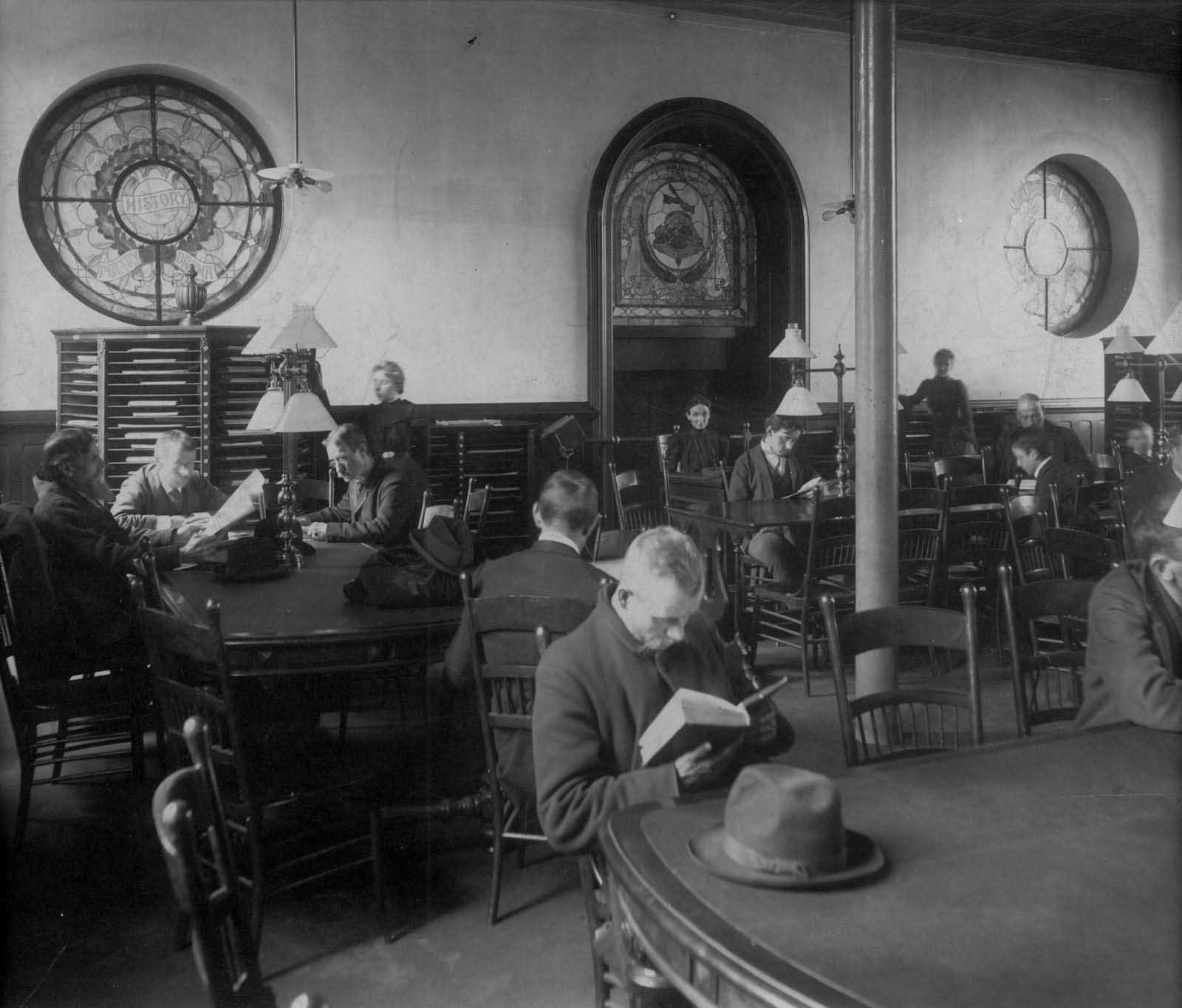
The Main Hall drew visitors into its open atrium, where the full scale of the five-tiered shelving system became immediately clear. Looking across the hall from any level, you could see readers at tables below, librarians moving between the stacks, and the skylight ceiling casting a soft, even glow over everything. The space was designed to be functional, but it was impossible to be inside it without noticing its beauty.
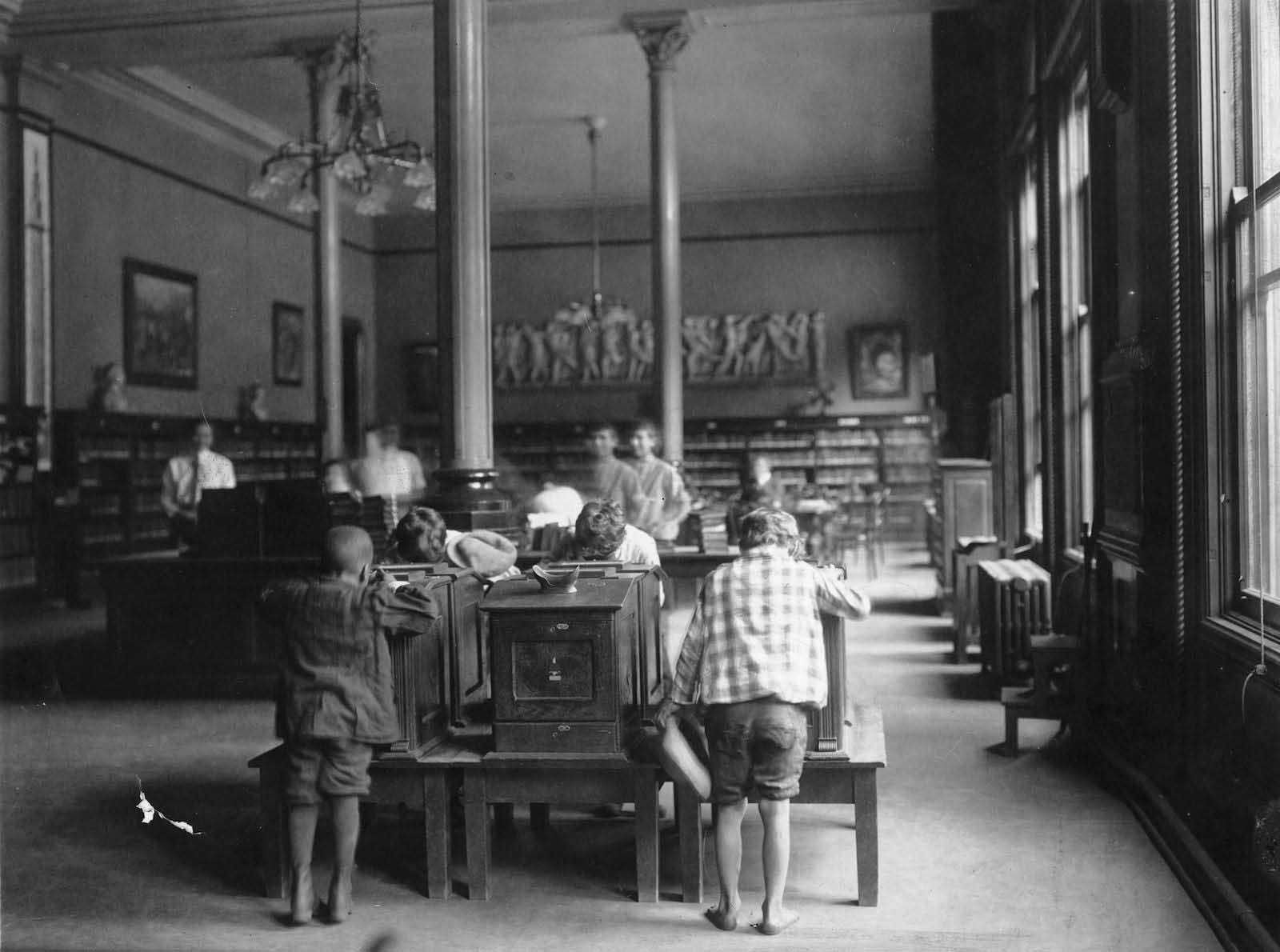
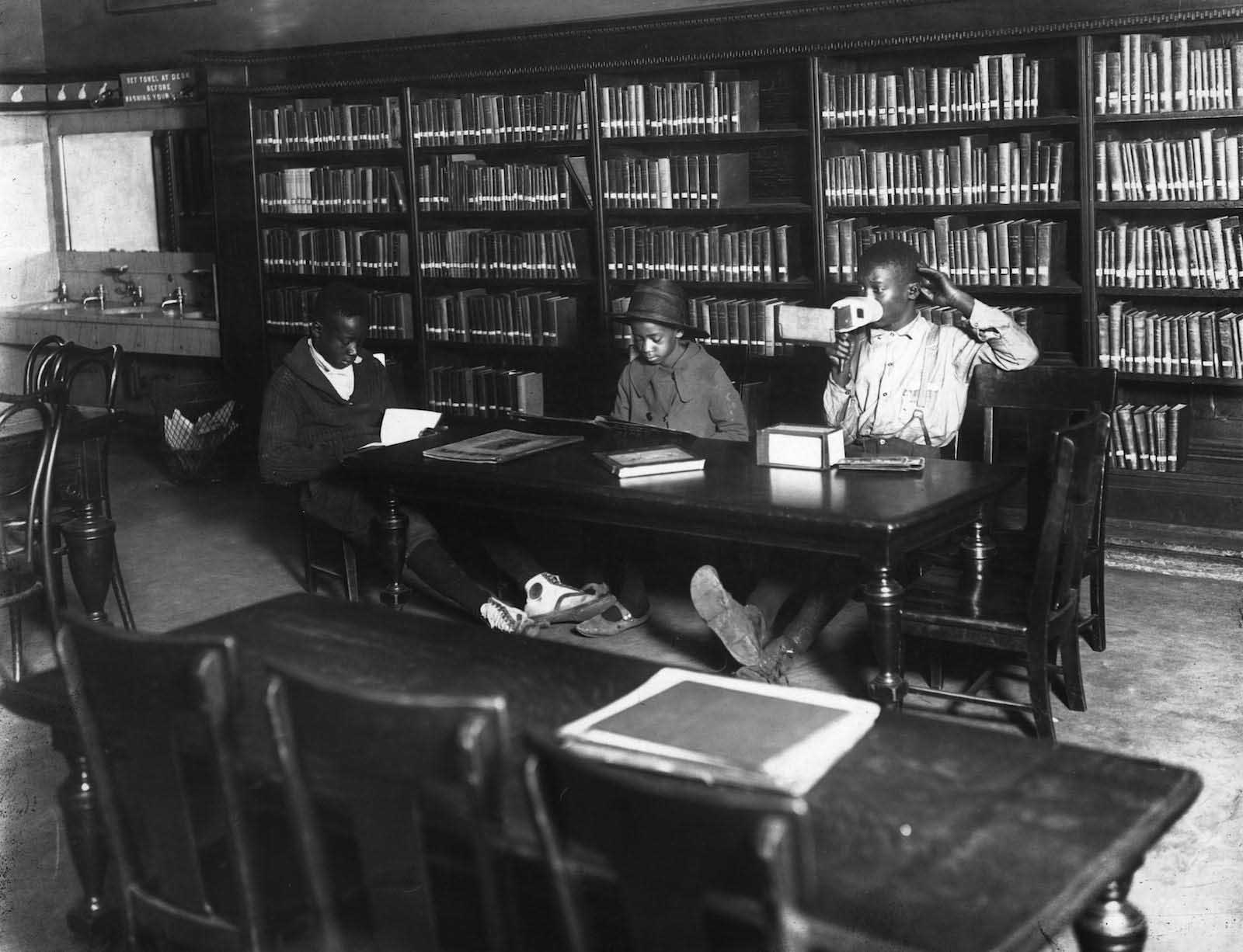
Children were a regular presence in the library. The building served all of Cincinnati’s residents, and photographs from the era show young readers sitting at tables, surrounded by the towering iron bookshelves. Looking down from the upper tiers, the reading area below appears remarkably organized — rows of tables filled with patrons, all set against the backdrop of the marble floor and the open atrium above them.
As decades passed, the library’s ability to serve its growing community began to strain against the building’s physical limits. The collection expanded well beyond what the shelves could comfortably hold. Books were stacked beyond easy reach, and the layout that had once felt spacious became crowded and difficult to navigate. The building itself was also deteriorating. The ventilation system was failing, water leaks had developed, paint was peeling from the walls, and cracks had appeared in the structure. The cost of repairing these safety issues was deemed too high to justify.
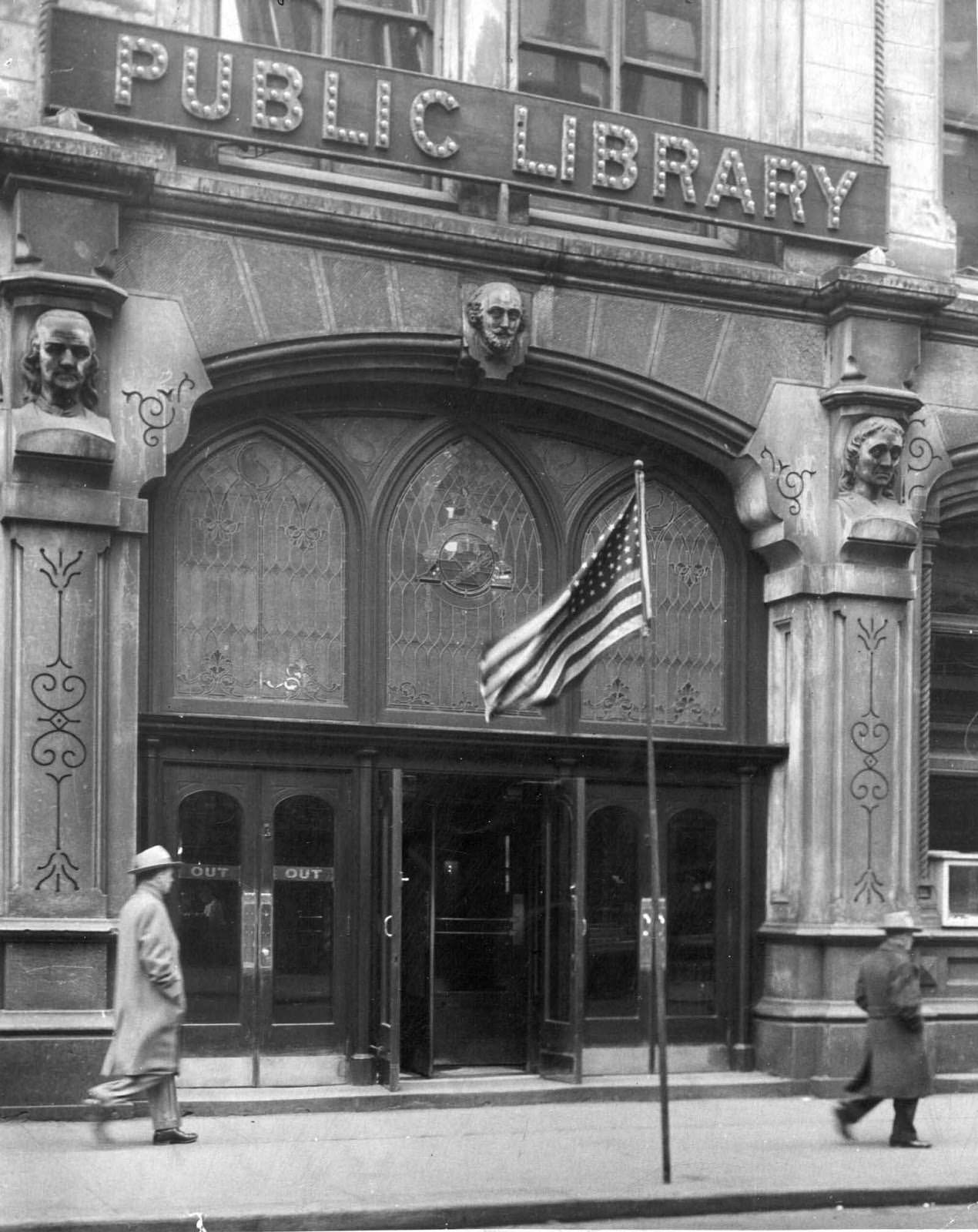
Three decorative heads had long guarded the library’s main entrance, carved into the stone above the doors. They became some of the most recognized features of the building’s exterior. When the decision was made to close and demolish the old library, these three heads were the only original architectural elements preserved. They were relocated to the garden of the new library building that opened in January 1955 at 800 Vine Street.
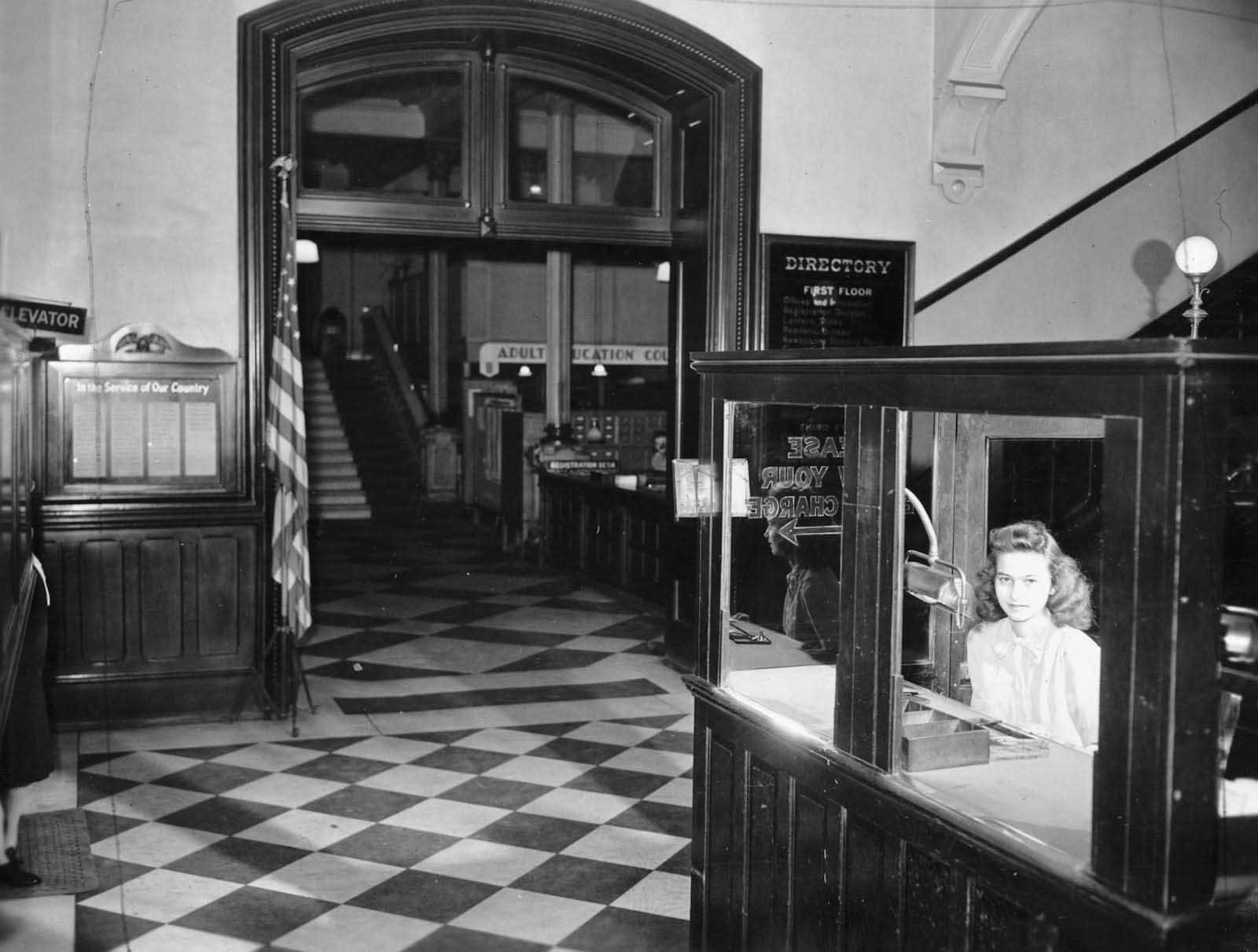
The new library at 800 Vine Street was contemporary in style — a sharp contrast to the ornate Victorian design of the old building. Once the collection and staff had been moved to the new location, the old building at 629 Vine Street was sold to the Leyman Corporation. By June 1955, the structure was torn down. The lot was converted into a parking garage, which stands on the site today.
The photographs taken inside the Main Hall in its final years show a space that, despite the building’s problems, still looked remarkable. The five tiers of cast-iron alcoves housing over 200,000 books remained intact. Readers still filled the tables on the ground floor. The skylight still cast its light across the marble below. Nothing in these images suggests the building was months away from being sold and demolished.
These historical photographs are some of the only records of what the interior of the old Cincinnati Public Library actually looked like in daily use. They show ordinary people — adults, children, students — sitting inside one of the most architecturally remarkable public buildings their city ever produced. The images below offer a direct look at the library as it existed before it was gone for good.





It is a terrible analogy for the way humanity is going…turning a beacon of knowledge into a parking garage…
The old one had fallen into neglect and was a safety hazard, so they built a new one
This is a great analogy for how humanity is doing. The things people liked were becoming increasingly old, delapidated, expensive, too small, and unsafe. Despite the sticks-in-the-mud, eventually a new building was constructed to meet the needs of those who work in and use the library. In the present day, a bunch of whiny idiots on the internet are ranting about how great it used to be and how we shouldn’t have made the change because they think the old building was beautiful. Even though it was a pain to work there, the building failed to fulfill its stated purpose (the collection had outgrown the space), and it was overly expensive to maintain. The rose tint of nostalgia often prevents us from seeing when it’s time for something new. Occasionally, though, we overcome that intransigence and move forward. Internet users only focus on nostalgia and moan endlessly about a past that was never what they remember it to be. The human race.
Buildings don’t last forever. Eventually, they may have to be replaced. It does not mean that all the books inside were destroyed as well.
Cool looking place, like a library from a film or something.
Libraries were being marked up for automated shelving and retrieval systems, and my college town’s library bought one maybe 40 years ago. It was made by a company that went out of business. They had to hire blacksmiths to make replacement parts before trashing it.
This shit we do in America makes me sick. Tiger’s Stadium was torn down, and that was the worst. This history has become another nondescript patch of grass in Detroit, which is so sad to see.