Scotland emerged from World War II deeply scarred. Around 34,000 Scots lost their lives during the conflict, and roughly 6,000 of those were civilians — many killed in Luftwaffe bombing raids on Clydeside. The attacks left communities shattered and whole areas of industrial Scotland in ruins. Yet the country that these rare vintage color photographs capture is one that kept moving. Streets were swept, ships were built, and daily life pressed on against a backdrop of uncertainty.
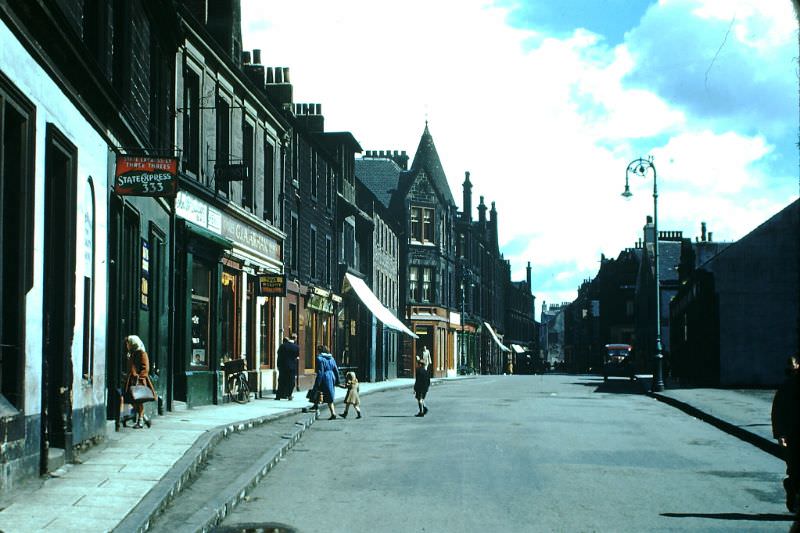
Small Scottish towns like Bo’ness — short for Borrowstounness — sat at the heart of Scotland’s industrial world. Located on the southern shore of the Firth of Forth, Bo’ness had long been tied to coal mining, pottery, and trade. Its streets reflect a working-class Scotland that the war had both exhausted and quietly knit together. Men and women from different social classes had shared shelters, rationing queues, and grief. That shared experience left a mark on how communities carried themselves in the years that followed.
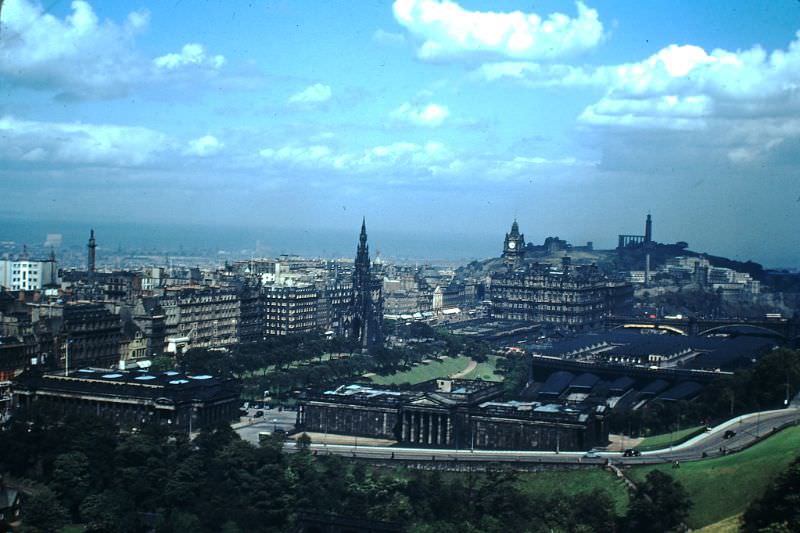
Edinburgh, Scotland’s capital, offers some of the most striking images in this collection. The city’s skyline — dominated by its ancient castle and grand Victorian monuments — stood largely untouched by wartime bombing compared to industrial centers further west. Photographers captured it from sweeping vantage points that show just how dramatic the city’s layout truly is.
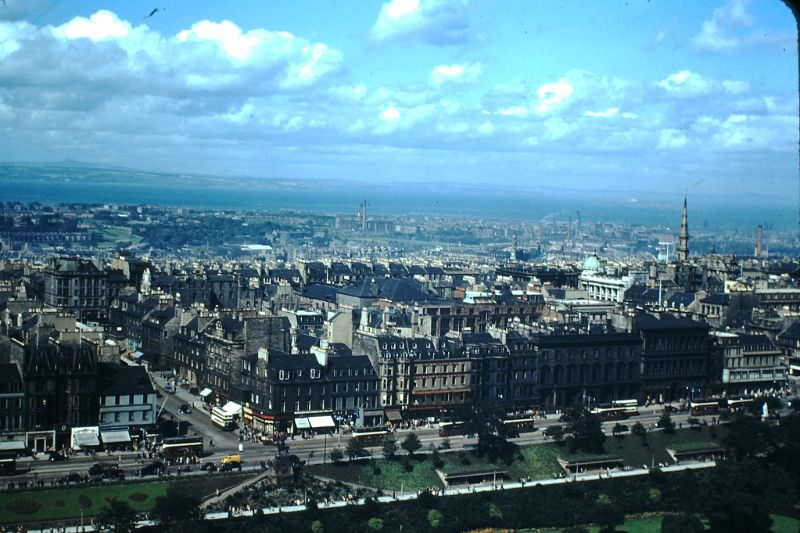
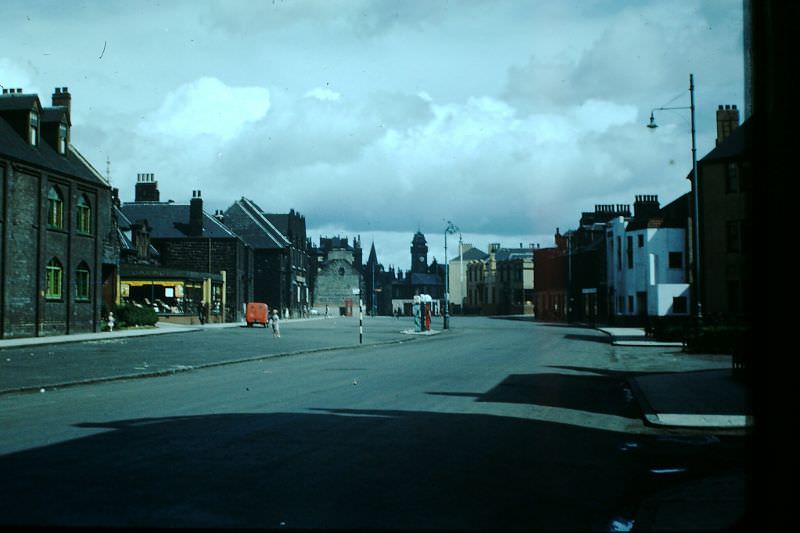
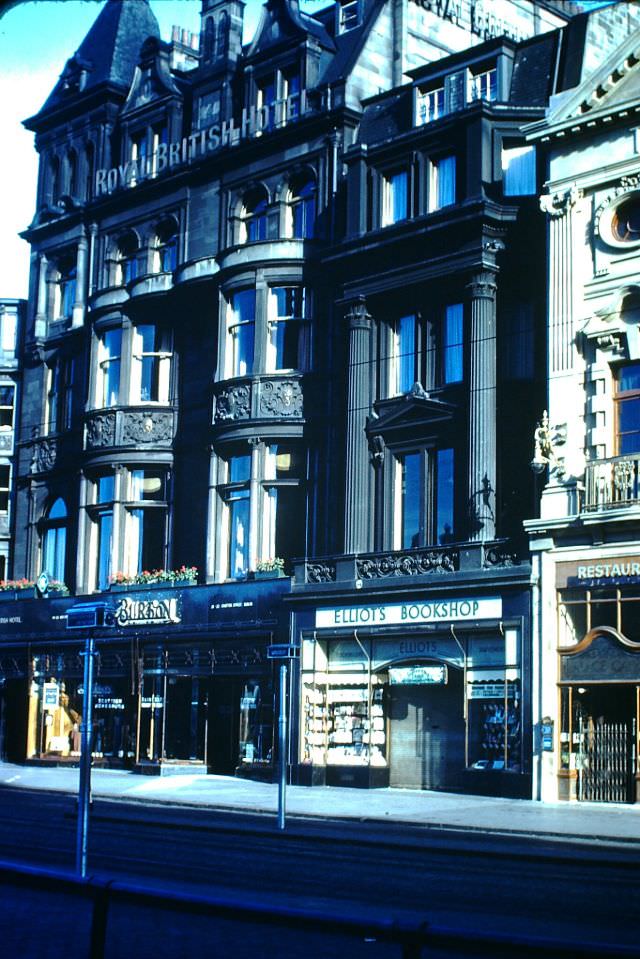
Queensferry Road stretches northwest from the city center toward the Firth of Forth, lined with solid stone buildings that had witnessed centuries of Scottish history. These streets connected Edinburgh’s prosperous suburbs to its bustling core, a route well-traveled by residents going about the slow work of postwar recovery.
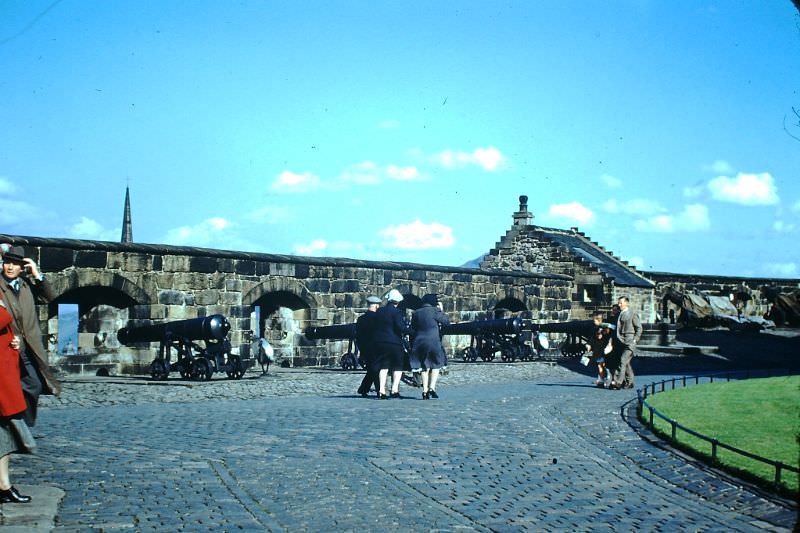
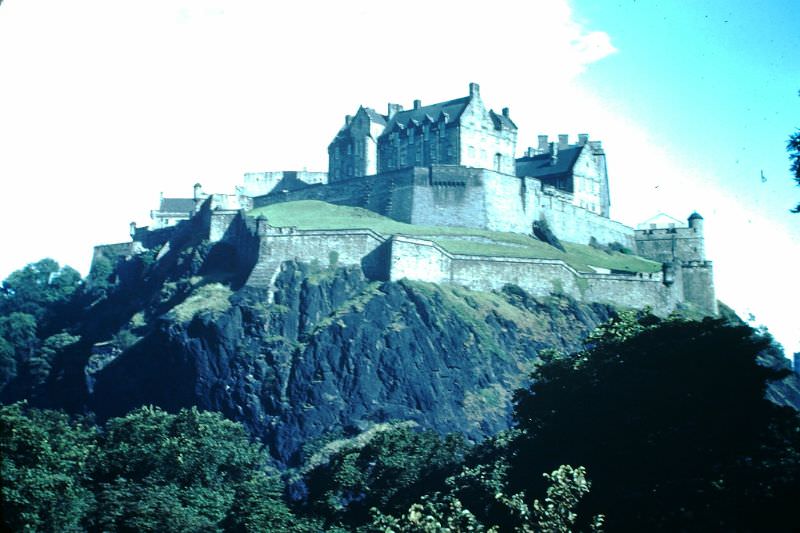
Edinburgh Castle crowns the volcanic rock at the city’s center and had served a military function for centuries before WWII ever began. Its defenses — cannons, battlements, and thick stone walls — were photographed in vivid color, giving viewers today a rare look at what visitors to the site saw in the late 1940s and early 1950s.
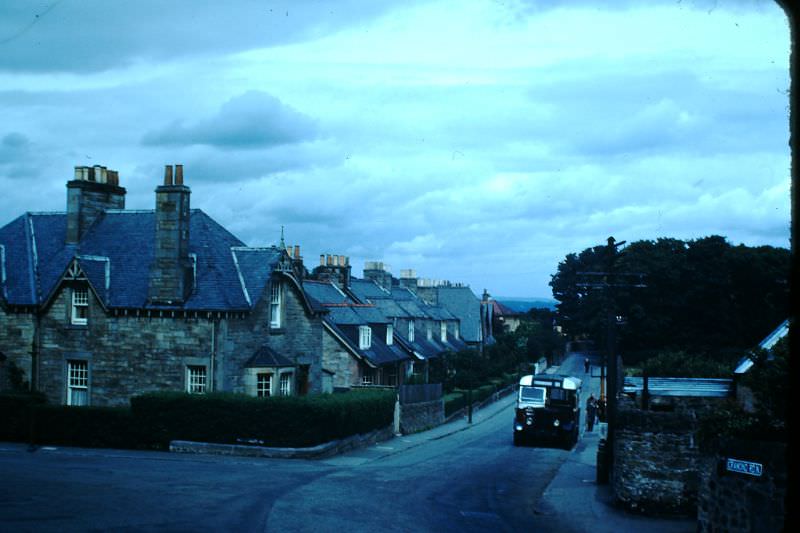
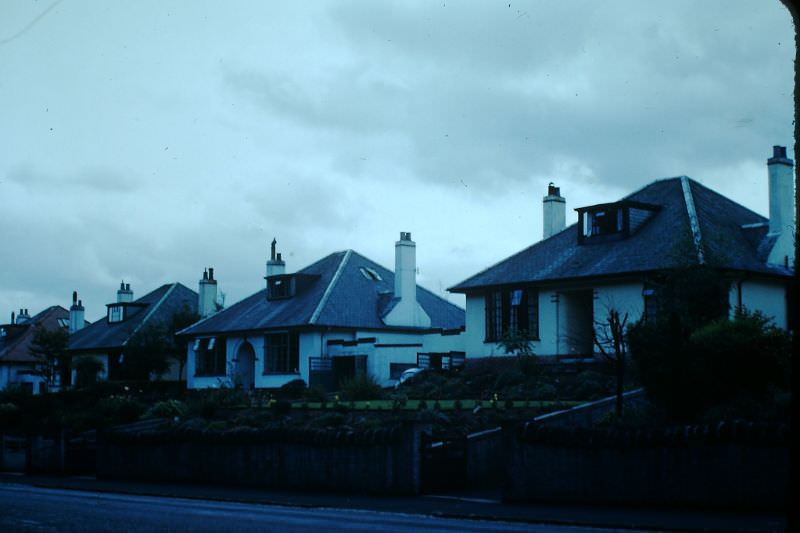
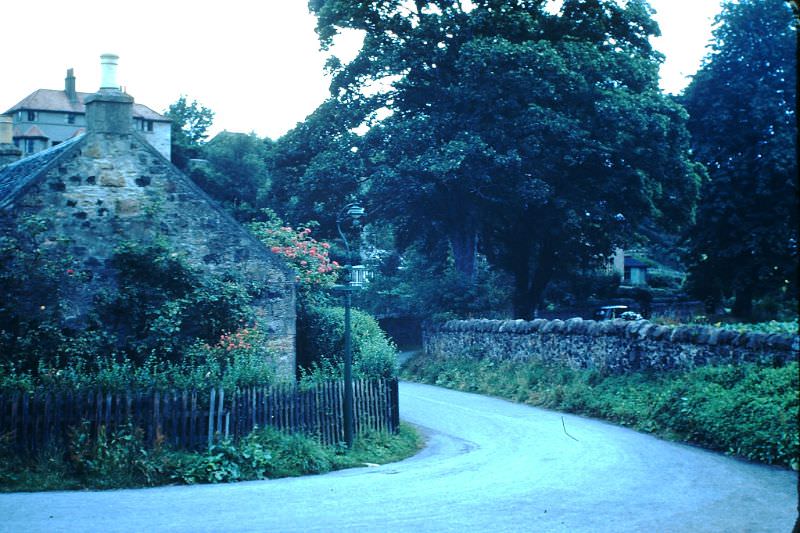
Cramond, a village on the western edge of Edinburgh where the River Almond meets the Forth, appears in several photographs. Its whitewashed cottages and quiet harbor gave it a peaceful, almost timeless quality that stood in sharp contrast to Scotland’s heavy industrial zones. The village dates back to Roman times, and by the postwar period it had become a quiet retreat within the city’s reach.
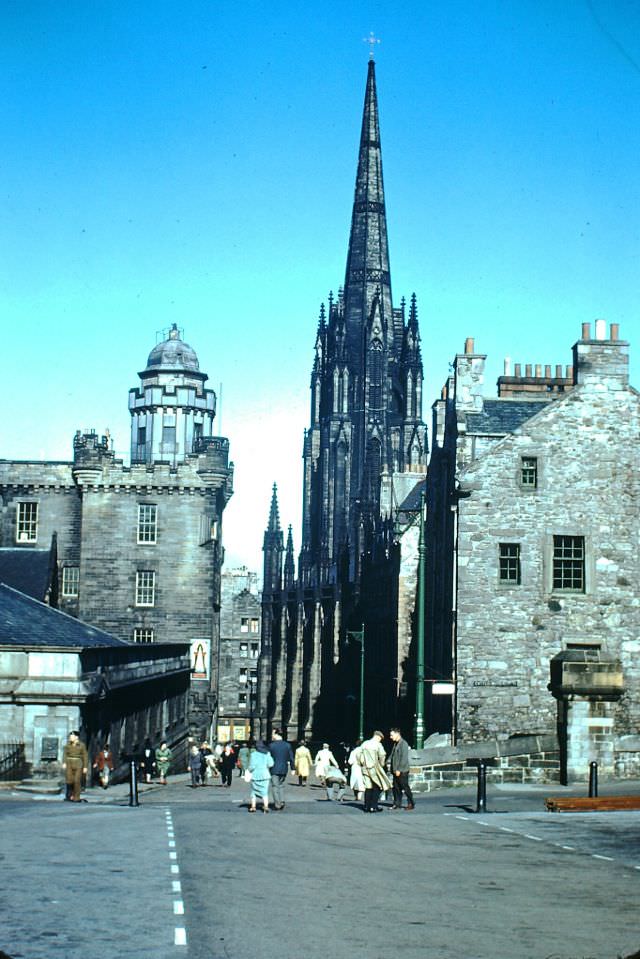
The Royal Mile — Edinburgh’s historic spine running from the castle down to Holyrood Palace — shows up in photographs of the High Street filled with the texture of old stone and narrow closes. This stretch of the city had changed little in outward appearance over generations, even as the Scotland around it was shifting economically and socially.
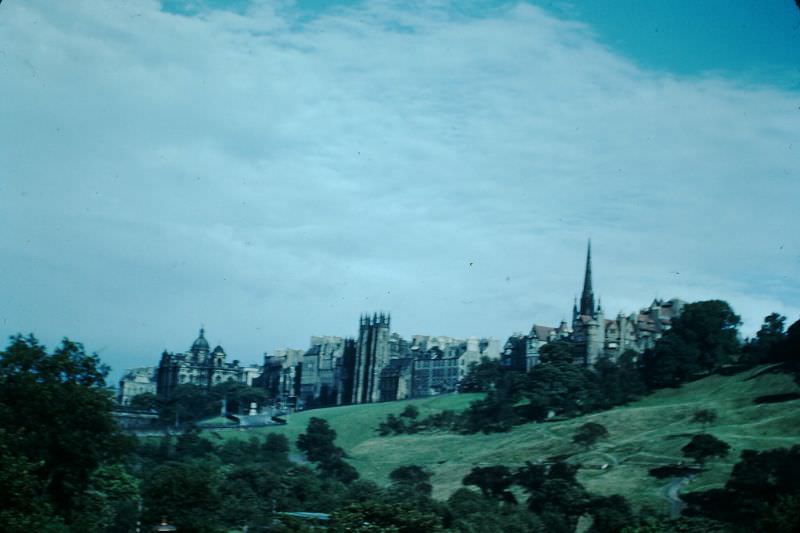
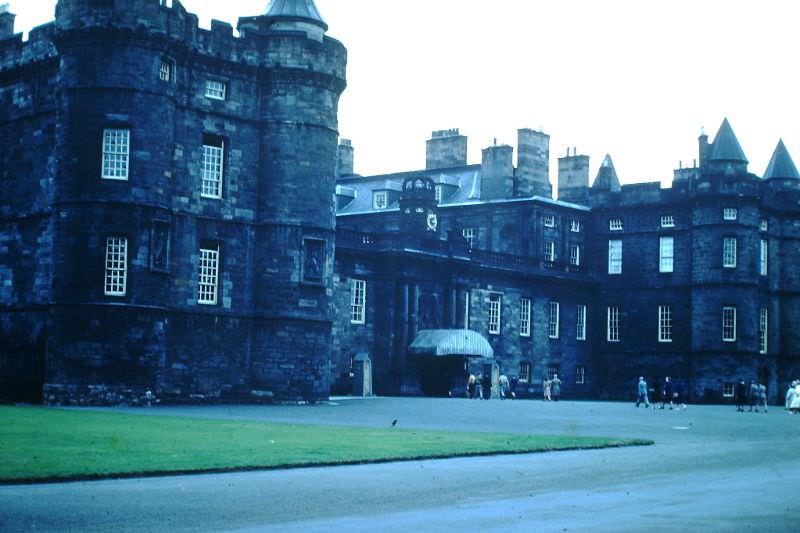
Holyrood Palace, the official Scottish residence of the British monarch, anchors the lower end of the Royal Mile. The palace has hosted Scottish royalty since the 16th century, and postwar photographs show it sitting serenely against the dramatic backdrop of Arthur’s Seat — the ancient volcano that towers over the eastern edge of Edinburgh.
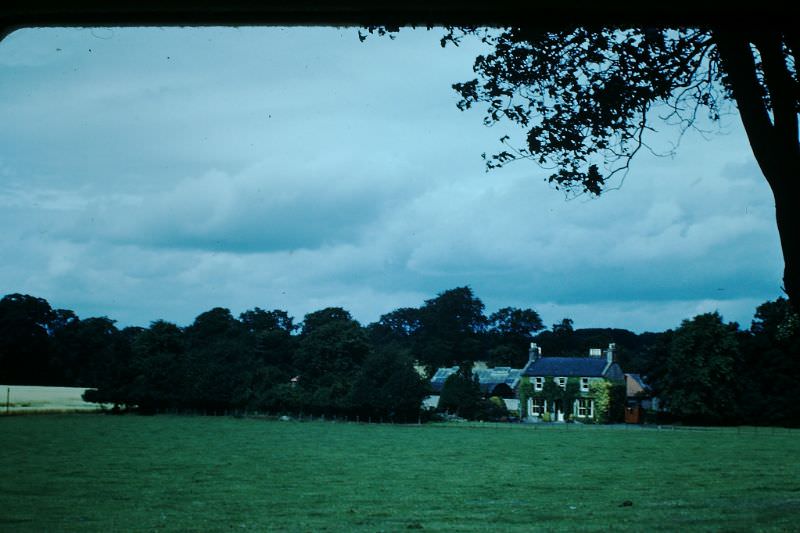
Near Cramond stands the Jock Howieson farmhouse, tied to a famous legend involving King James V of Scotland. According to the story, the king was rescued from robbers by a local ploughman named Jock Howieson, who was later rewarded with the farm. Whether legend or fact, the farmhouse was still standing and photographed in full color in the postwar years.
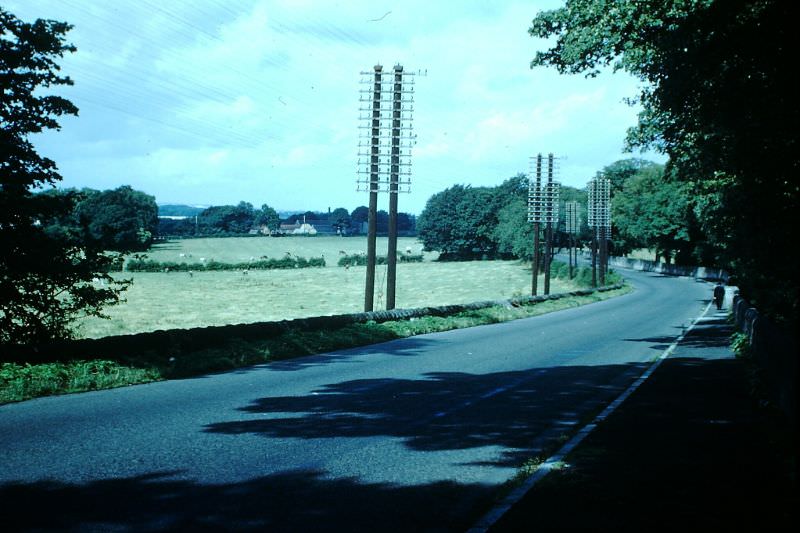
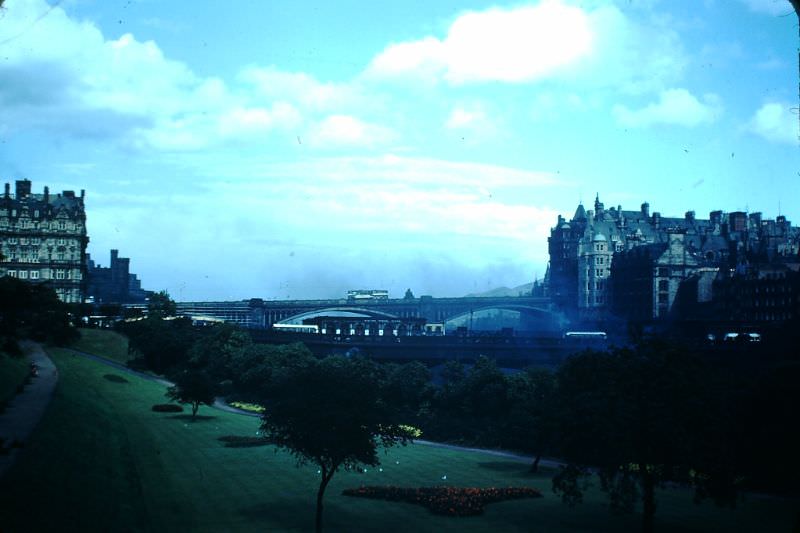
Princes Street and its surrounding parks form the commercial and recreational heart of central Edinburgh. The gardens that run below the castle, carved out of what was once Nor’ Loch, offered green space in the middle of a busy city. Photographs show the park and street alive with the ordinary rhythms of postwar urban life.
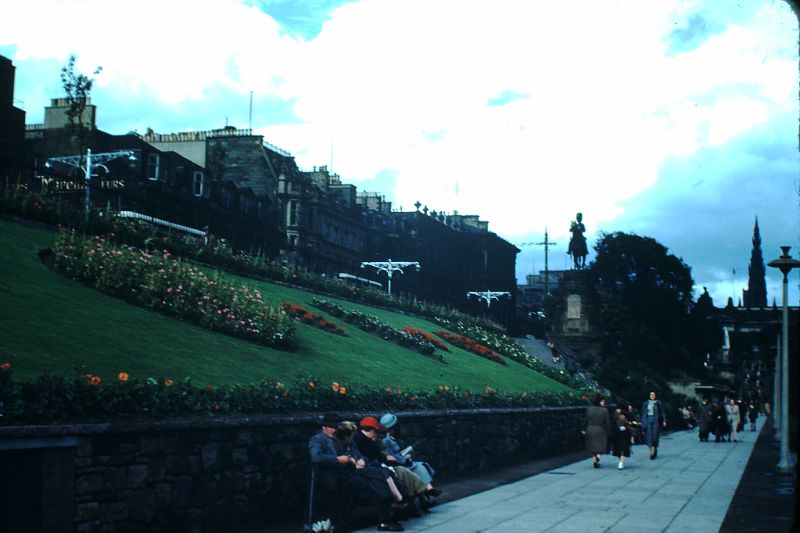
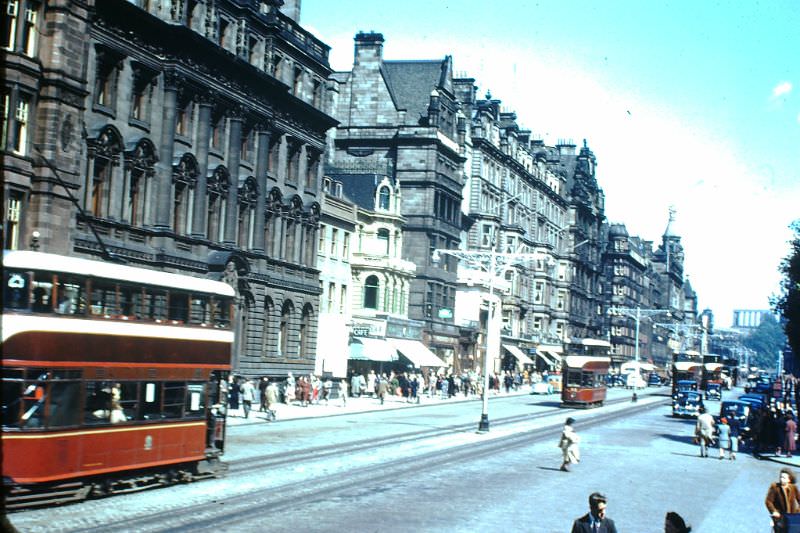
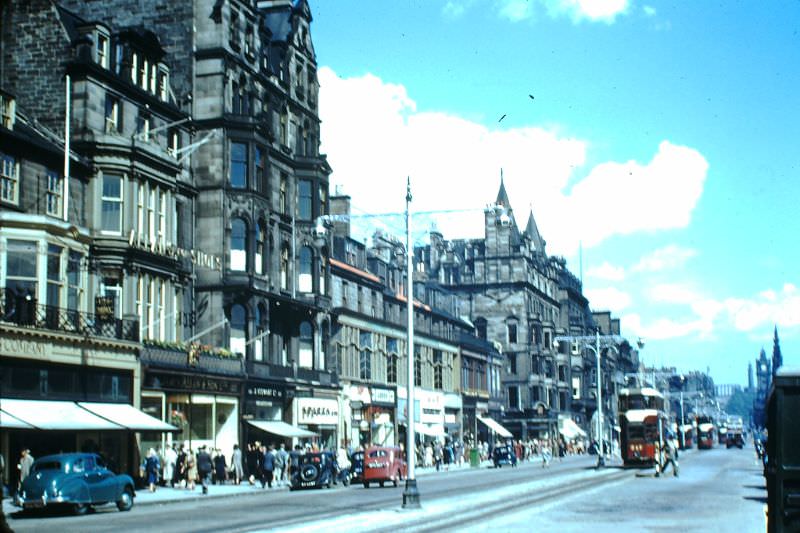
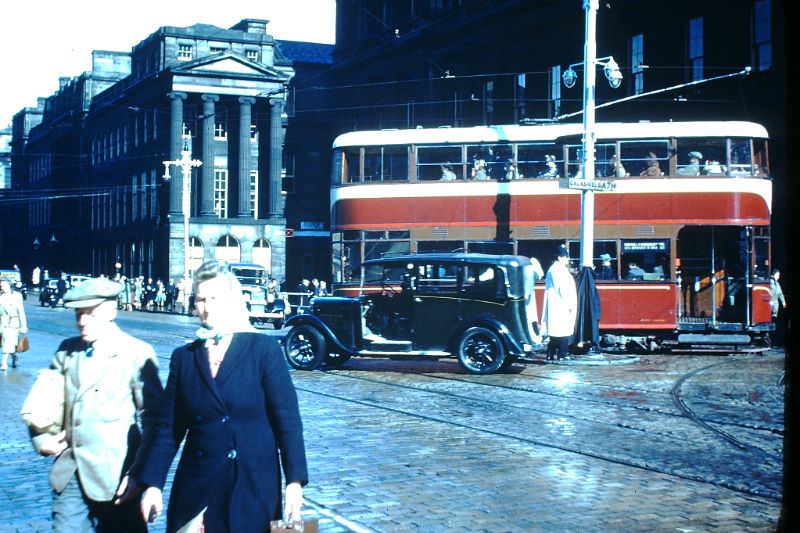
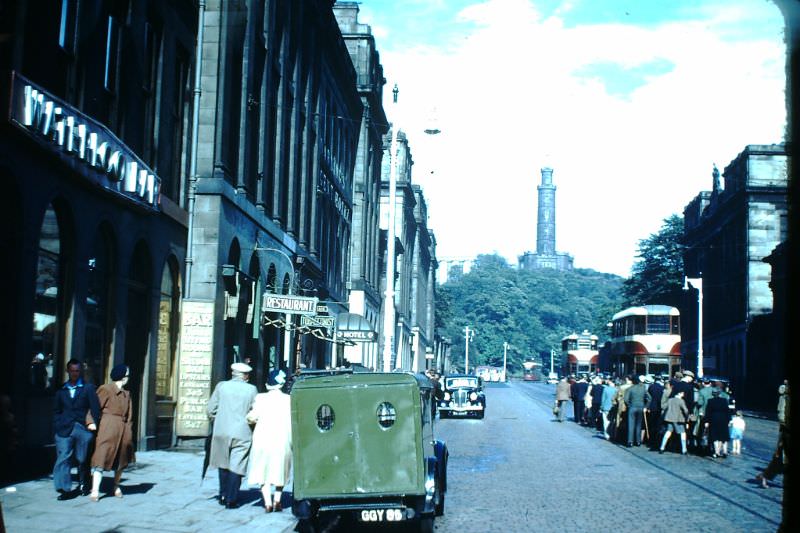
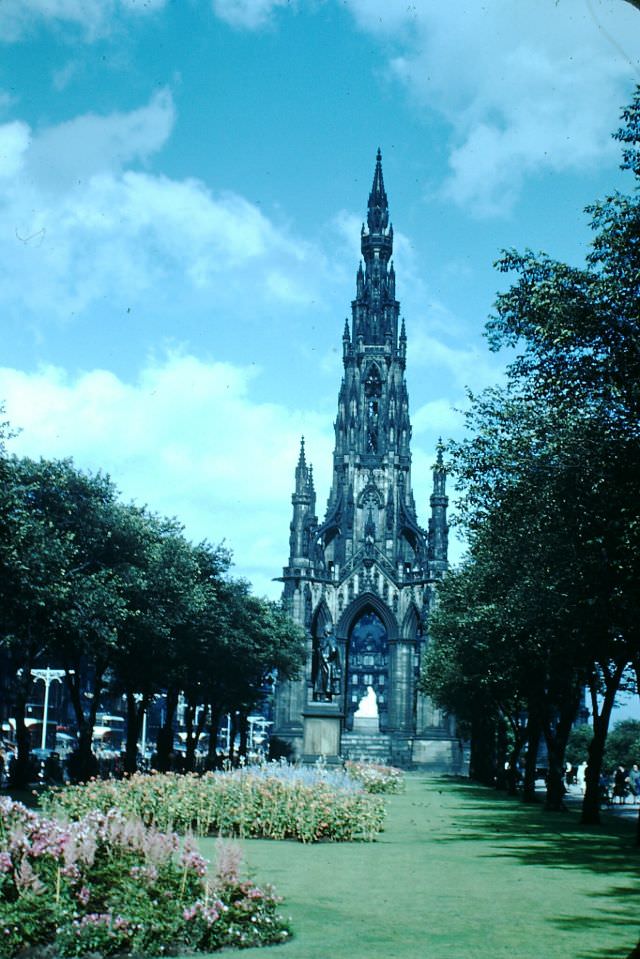
The Sir Walter Scott Monument on Princes Street is one of Edinburgh’s most recognizable landmarks — a towering Gothic spire completed in 1844 in honor of Scotland’s most celebrated novelist. Visitors could climb its narrow internal staircase for views across the city, and the monument appears in multiple photographs taken from different angles, each one showing its ornate stonework in fine detail.
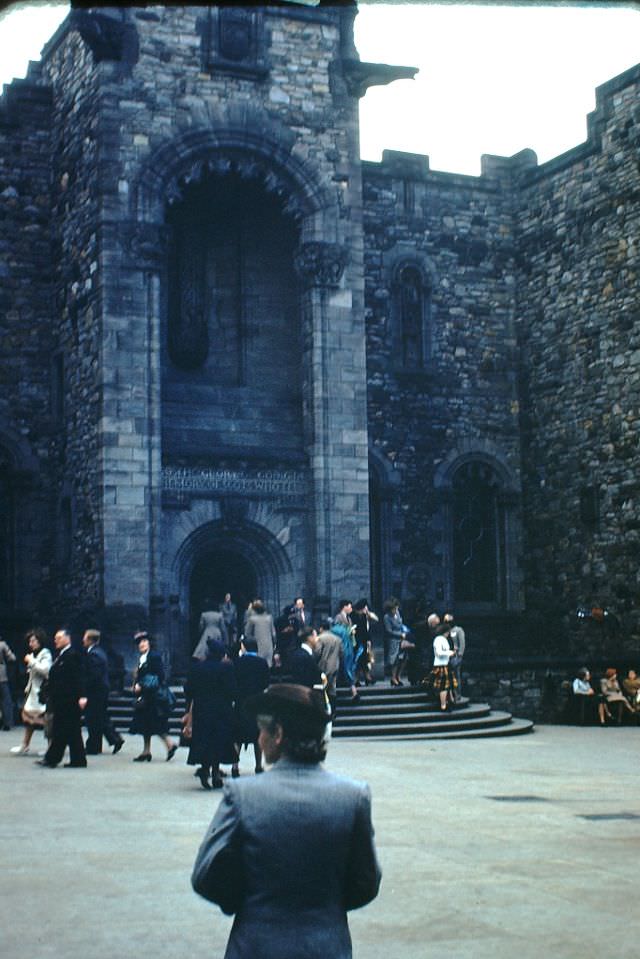
Edinburgh Castle itself appears in multiple photographs, showing its great walls and towers as they looked in the years immediately after the war. The castle had served as a military base throughout WWII, and within its walls stood the Scottish National War Memorial — built after World War I to honor Scotland’s fallen soldiers. By the time these photographs were taken, it already carried the weight of two world wars.
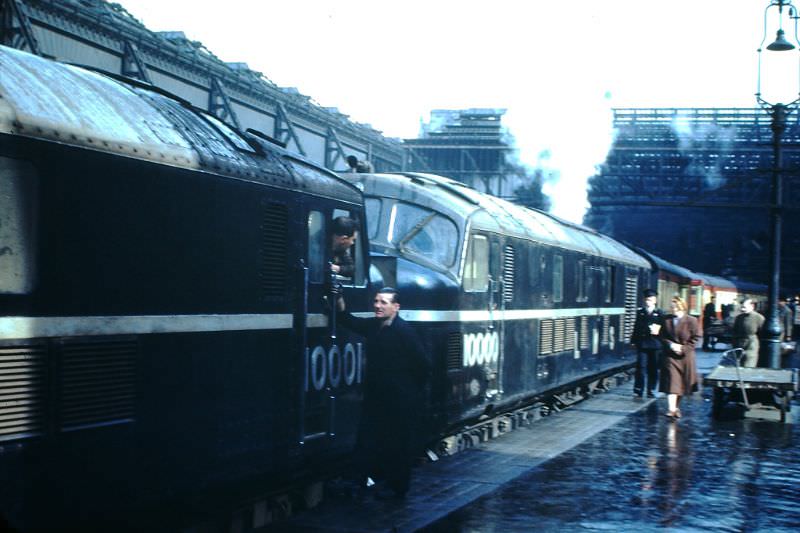
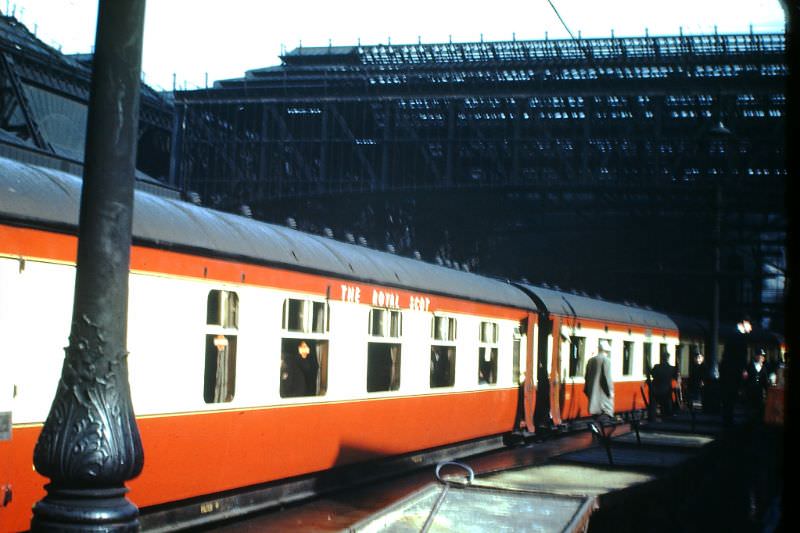
Glasgow, Scotland’s largest city and its industrial powerhouse, appears through photographs of the Royal Scot — one of the most famous express train services in Britain, running between London and Glasgow. The railway was central to Scotland’s postwar economy, and images of its diesel engines show the mechanical muscle behind a country that still depended on heavy industry to keep itself going.
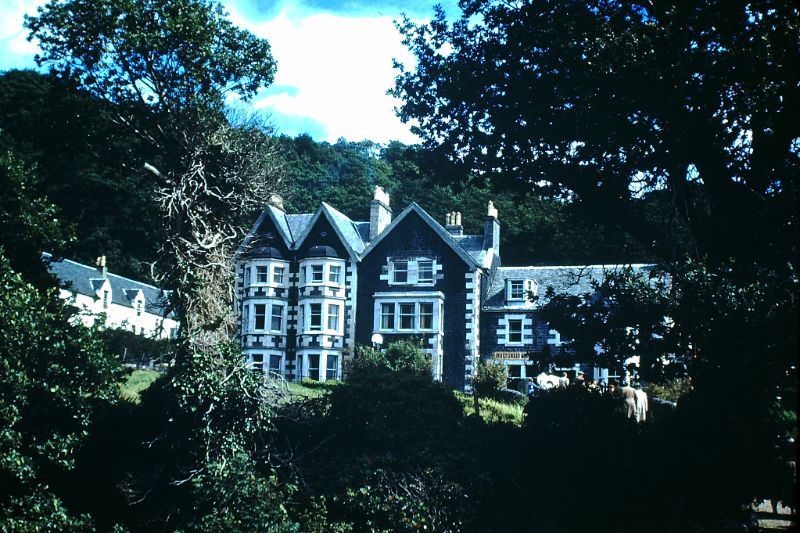
Away from the cities, Scotland’s lochs provided a very different kind of postwar scene. Loch Lomond — the largest freshwater loch in Britain — drew visitors to its banks and waters. The Hotel Inversnaid, perched on the eastern shore, offered travelers a base from which to explore a landscape that felt completely removed from the bombed-out industrial towns further south.
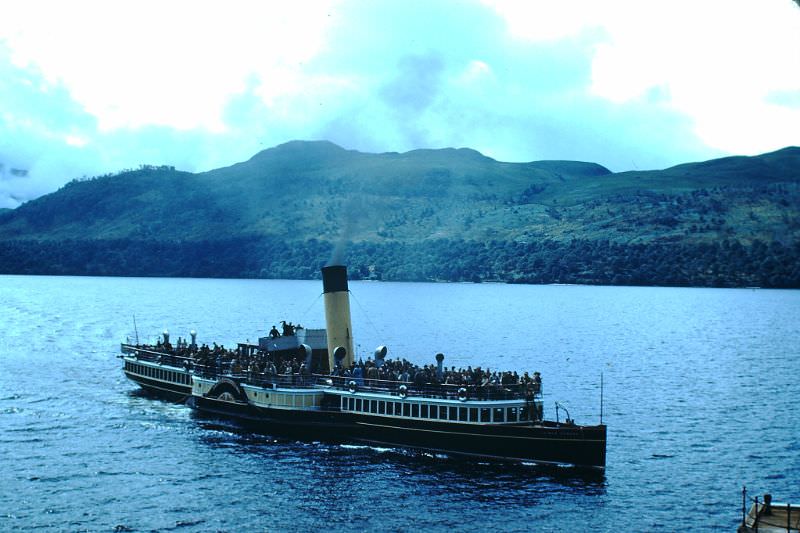
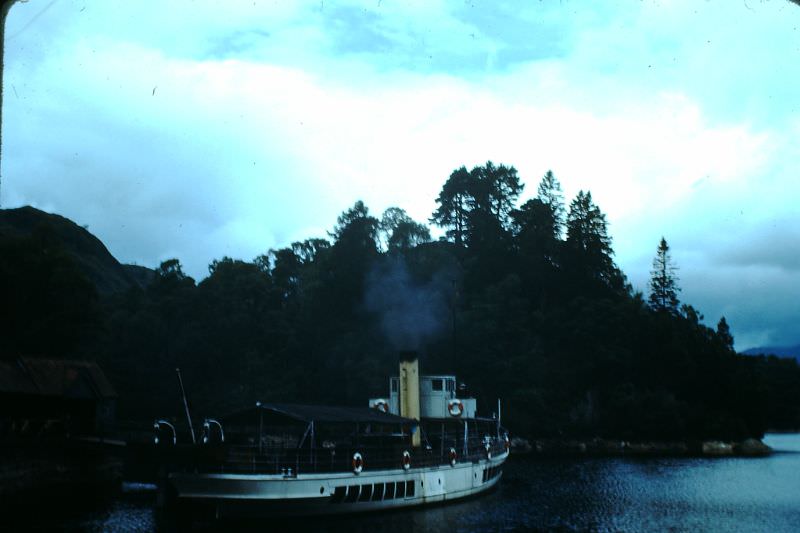
Steamers crossing Loch Lomond and Loch Katrine were a familiar sight in postwar Scotland. The SS Prince Edward sailed Loch Lomond, while the steamer SS Sir Walter Scott — named after the same novelist honored on Princes Street — had been operating on Loch Katrine since 1900. These vessels connected remote communities and carried tourists into one of Scotland’s most dramatic landscapes.
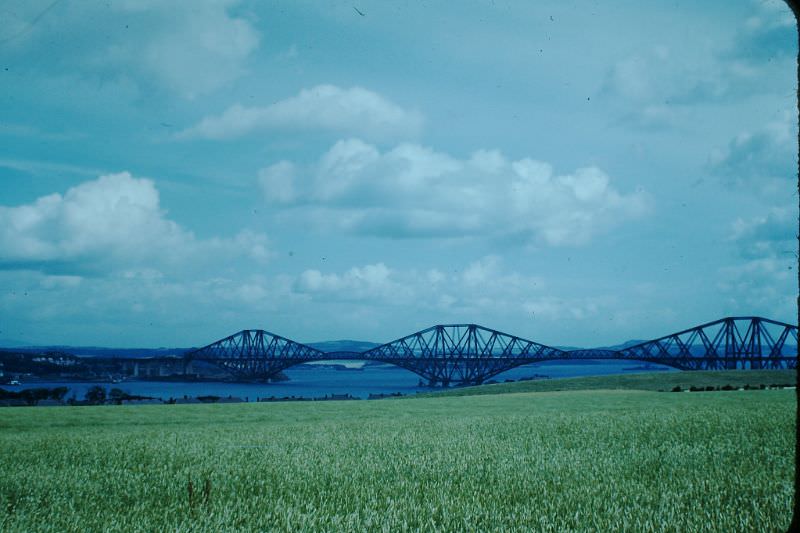
The Forth Bridge, completed in 1890, was already one of the great engineering achievements of the Victorian era by the time these photographs were taken. Spanning the Firth of Forth between Edinburgh and Fife, it carried rail traffic that was essential to Scotland’s postwar economy. Coal, steel, and passengers all crossed it daily. At the end of WWII, Scotland’s heavy industries — coal mining, shipbuilding, and steel production — still dominated the economy, supported in part by institutions like the Scottish Milk Marketing Board, which worked to boost agricultural output alongside industrial production. The foundations beneath that economy, however, were already beginning to crack.