When the First World War broke out in 1914, armies on both sides faced an immediate and serious problem: how to communicate across a battlefield that stretched for hundreds of miles. The field telegraph existed, but the equipment was heavy, difficult to move, and constantly breaking down. Commanders needed a faster, more reliable backup. The solution they turned to was one of the oldest in military history — messenger pigeons.
Homing pigeons had been used in warfare long before the 20th century, but the scale of their use in WWI was unprecedented. A pigeon carries a message in a small metal or leather capsule attached to its leg. Once released, the bird flies directly back to its home loft — sometimes traveling at speeds up to 60 miles per hour (nearly 100 km/h). That combination of speed and reliability made pigeons far more dependable than a wire that could be cut by artillery fire or a radio that could simply stop working.
One major vulnerability was enemy fire. A single bird carrying a single message could be shot down. The military’s answer was simple: send the same message with multiple birds at the same time. If one was lost, another would get through. This redundancy made the pigeon system remarkably effective even under heavy bombardment.
The birds proved their worth early. During the intense German offensive along the River Marne in 1914, pigeons released from forward lofts delivered critical situation reports to Allied command centers. Those messages allowed troops to regroup in time to avoid a catastrophic breakthrough. Without the birds, the chain of communication would have broken entirely.
Perhaps the most famous single act of pigeon service came near the very end of the war. In October 1918, an American battalion was cut off and surrounded by German forces. With no other way to call for help, the unit released several birds carrying notes describing their exact position and desperate situation. One of those birds, a pigeon named Cher Ami, flew the message to headquarters in under thirty minutes. The surrounded unit was rescued.
For that act, the French military awarded Cher Ami the Croix de Guerre — one of France’s highest military honors. The bird had also been shot during the flight, losing a leg and suffering a chest wound, yet still completed the delivery. It remains one of the most documented examples of an animal receiving a formal military decoration.
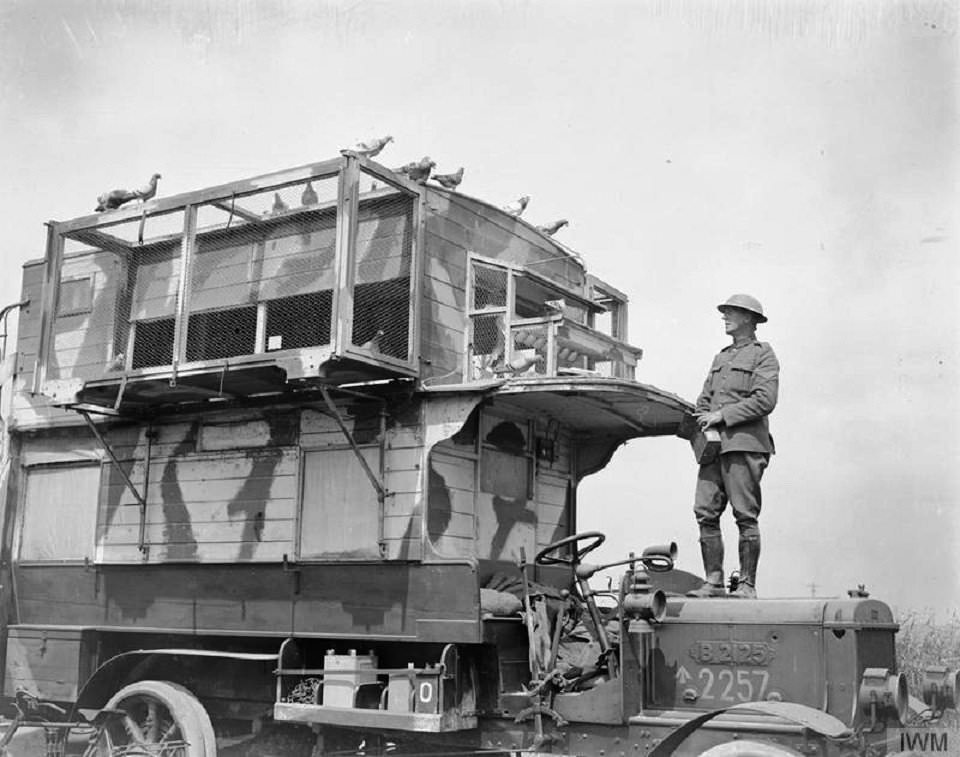
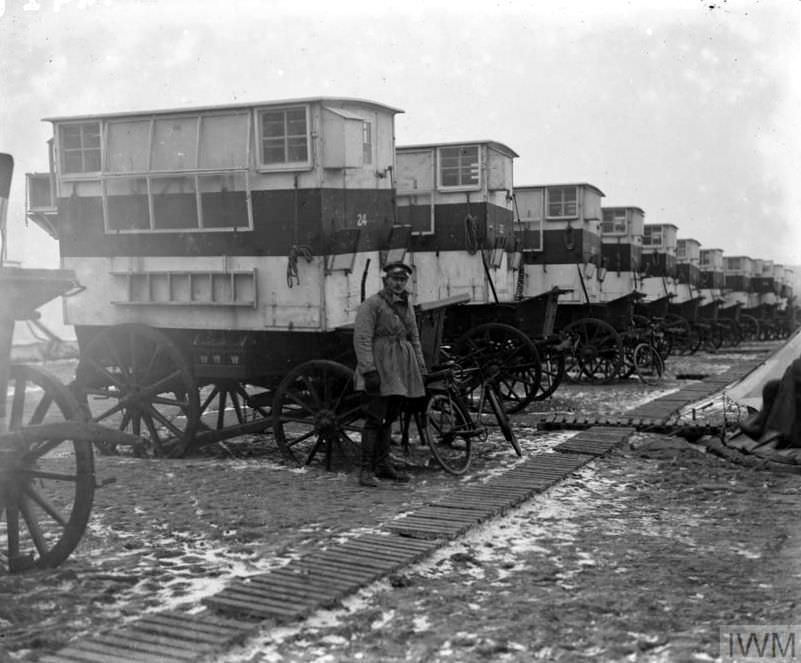
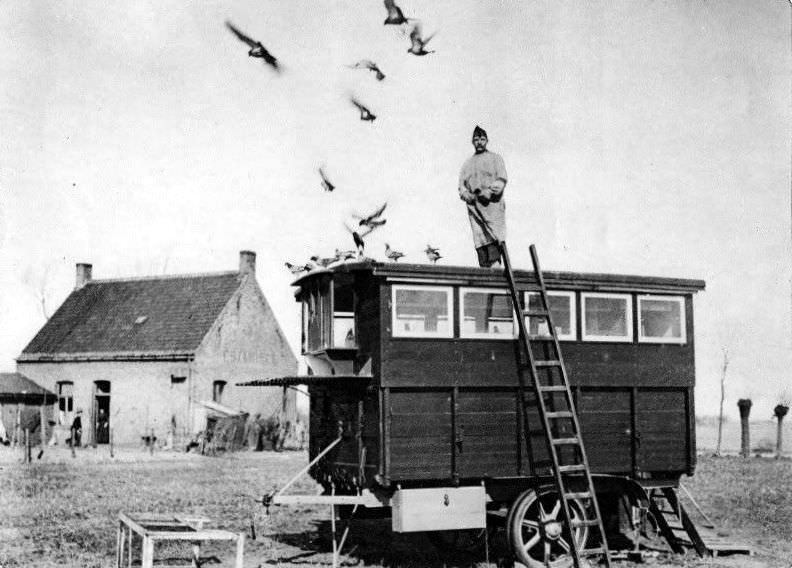
To keep pigeons functional at the front, armies needed mobile lofts — structures the birds recognized as home and would reliably return to, even as the front lines shifted. Early in the war, these were horse-drawn trailers. But as the war expanded and the need grew, the British military turned to a vehicle already well known on the streets of London: the B-type double-decker bus.
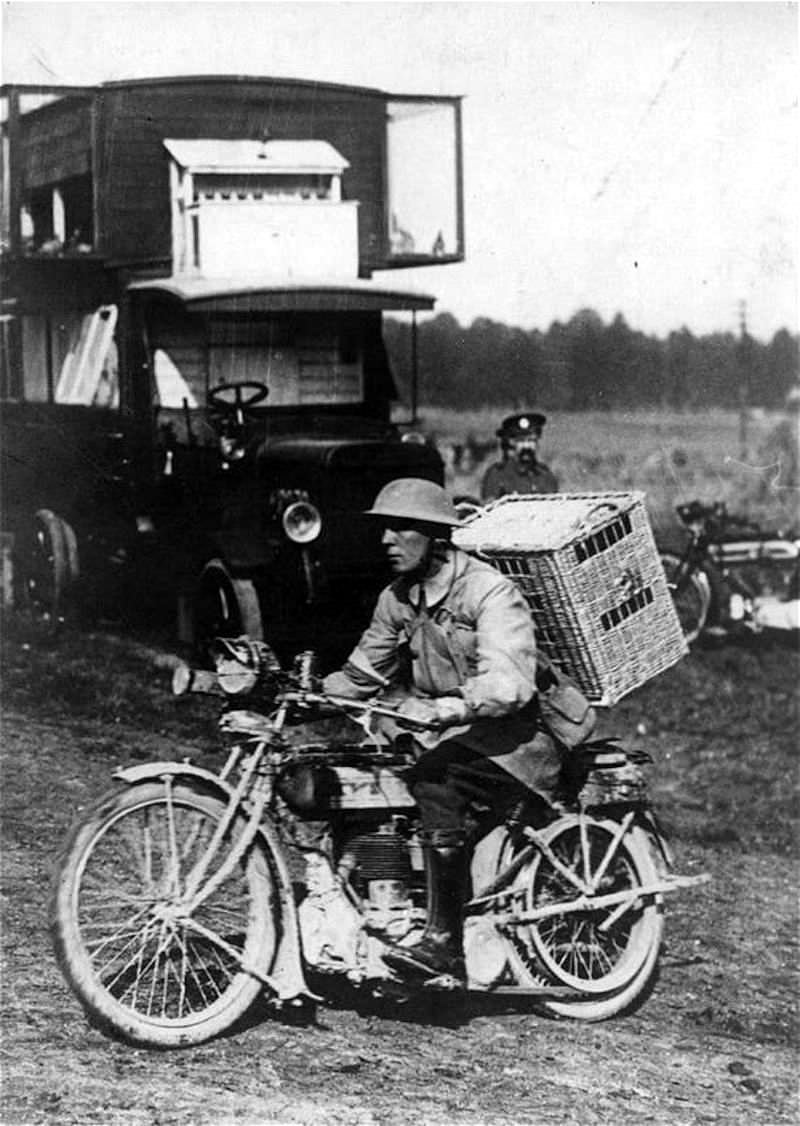
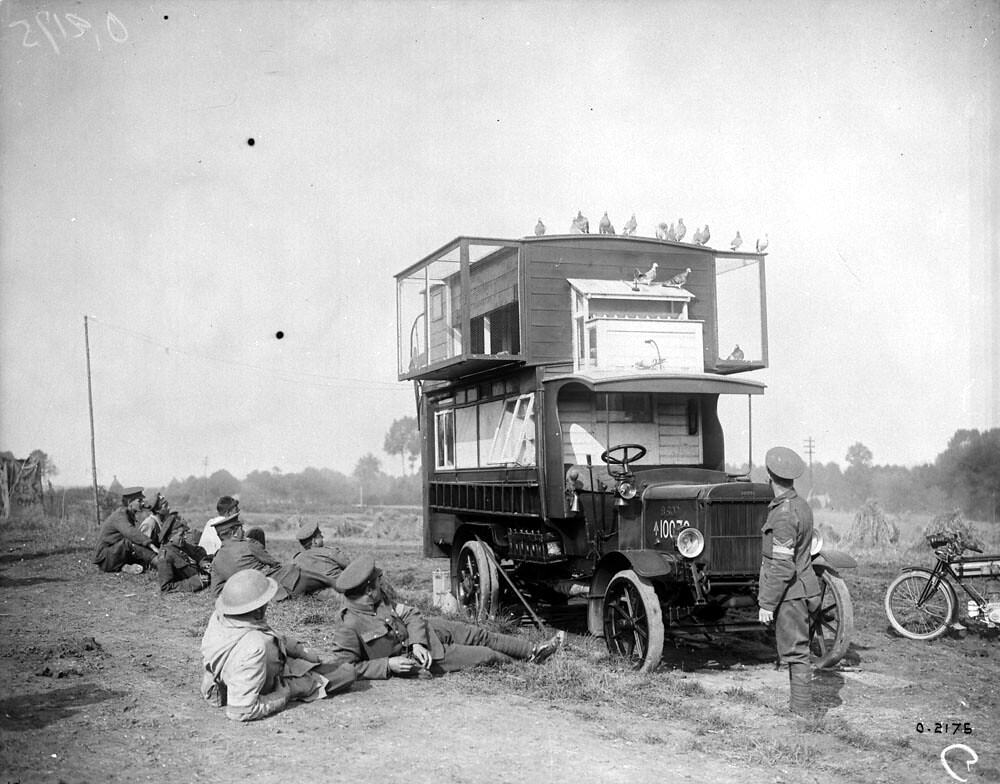
The B-type bus had been the standard London omnibus since 1910. When war began, hundreds were requisitioned by the military, most of them initially used to transport troops. Converting them into mobile pigeon lofts required significant modifications to the entire vehicle.
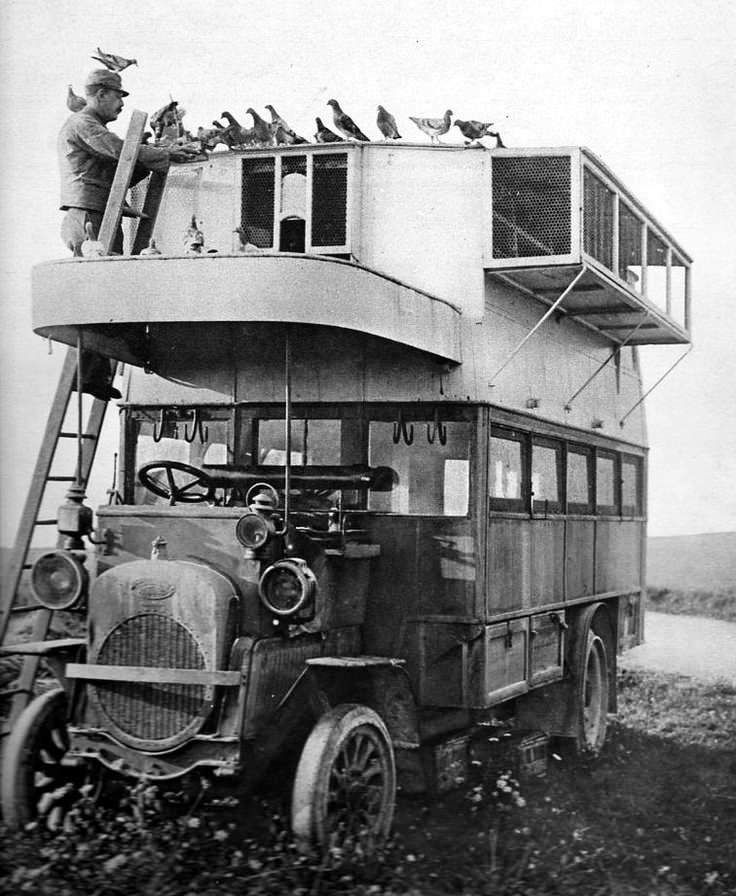
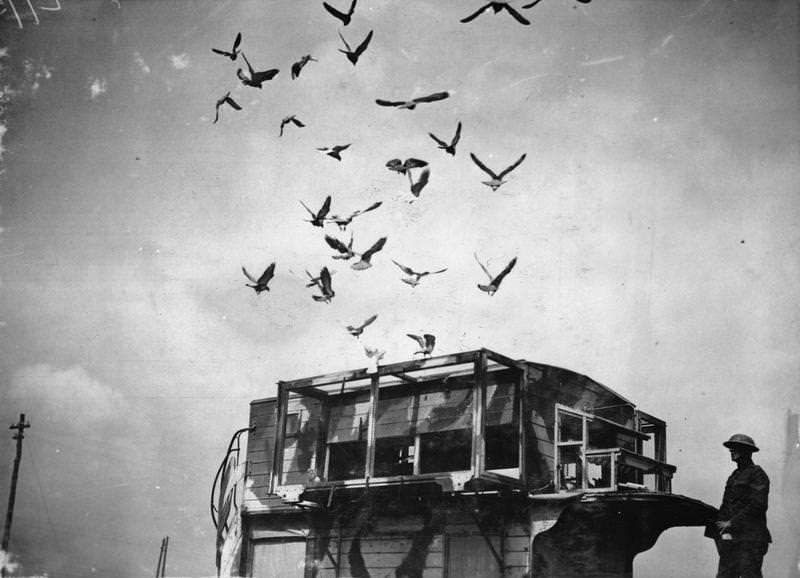
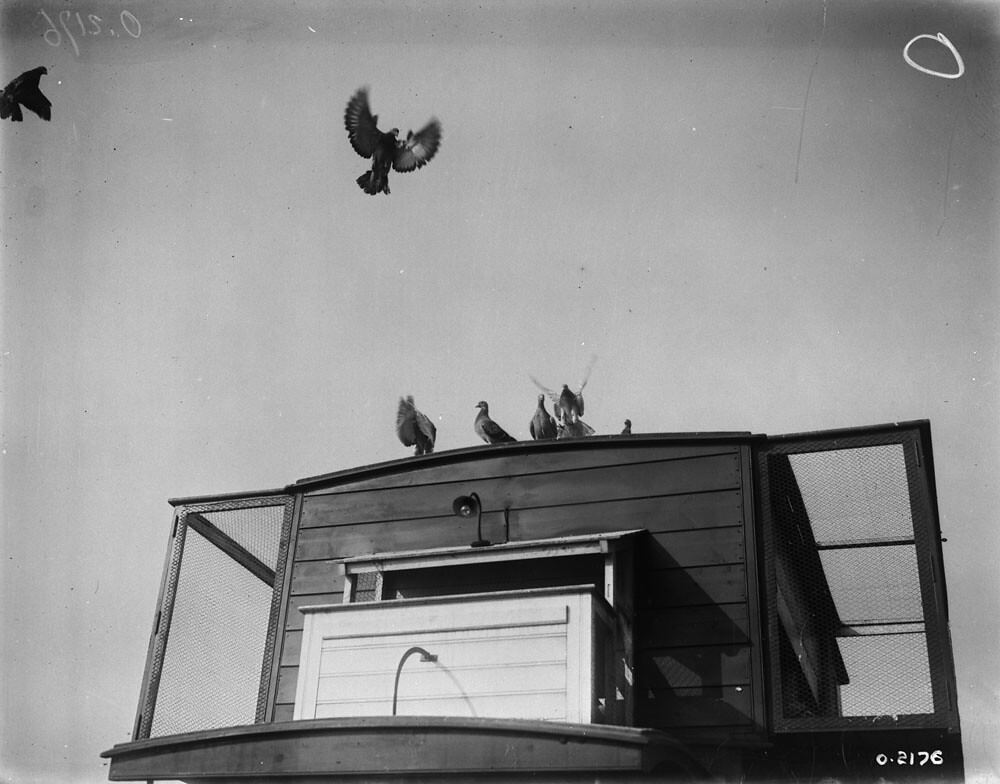
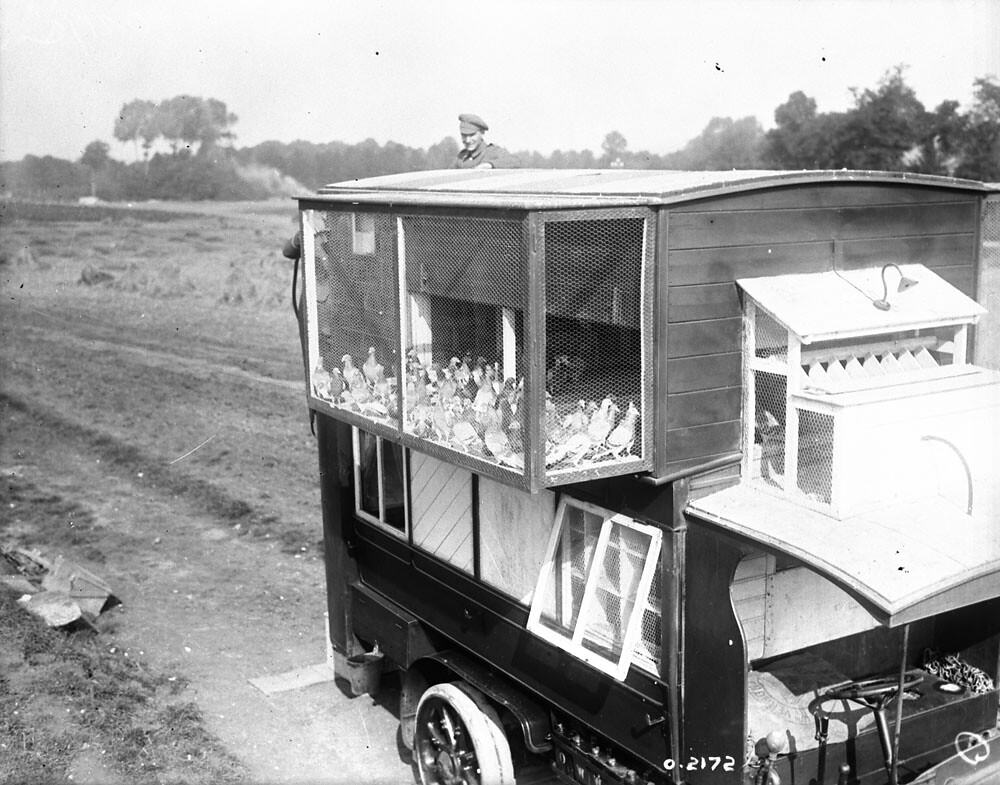
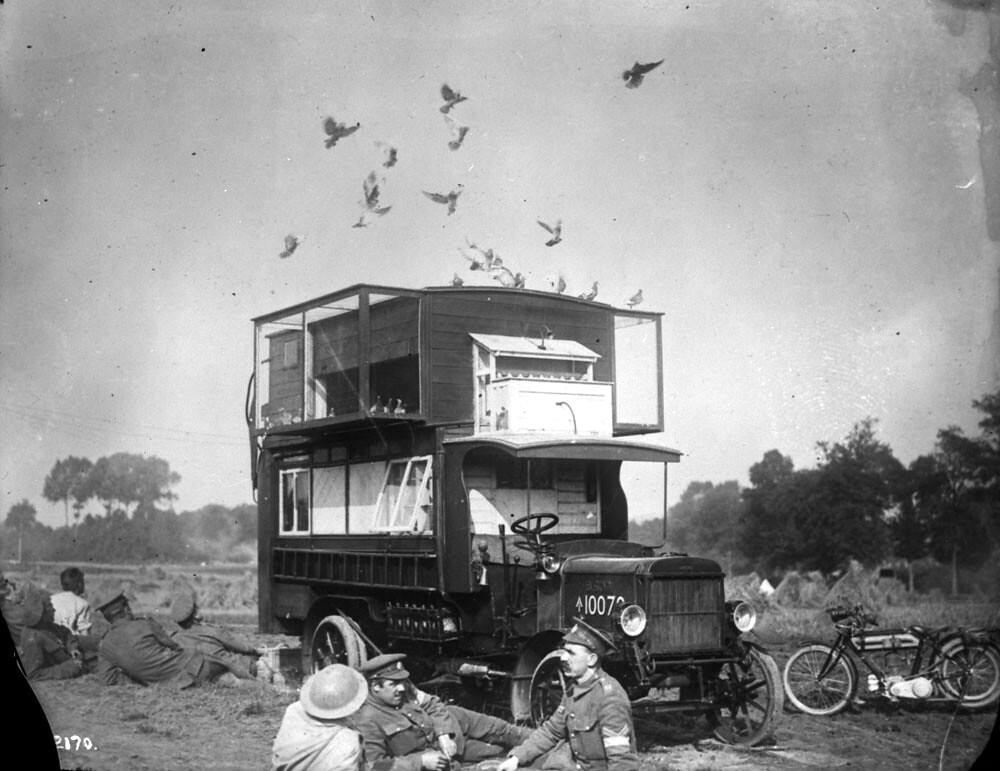
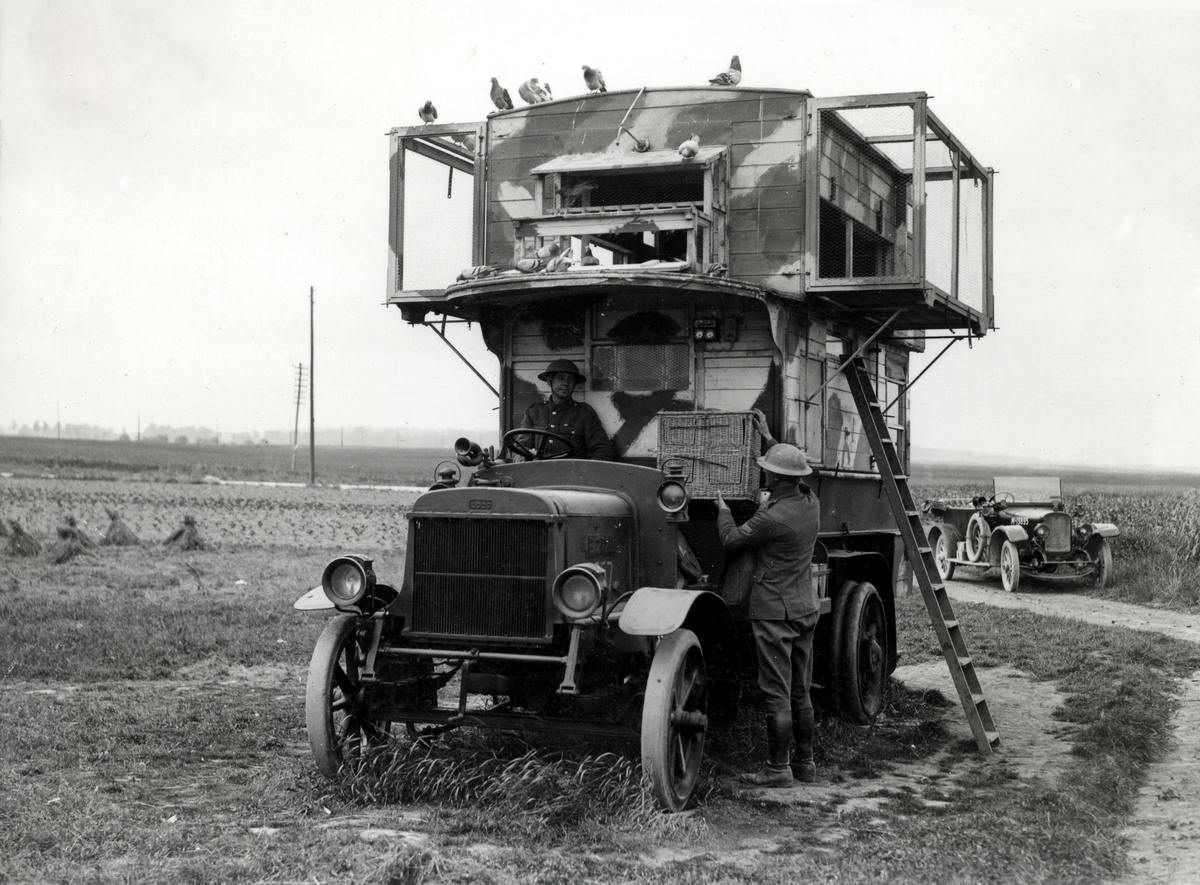
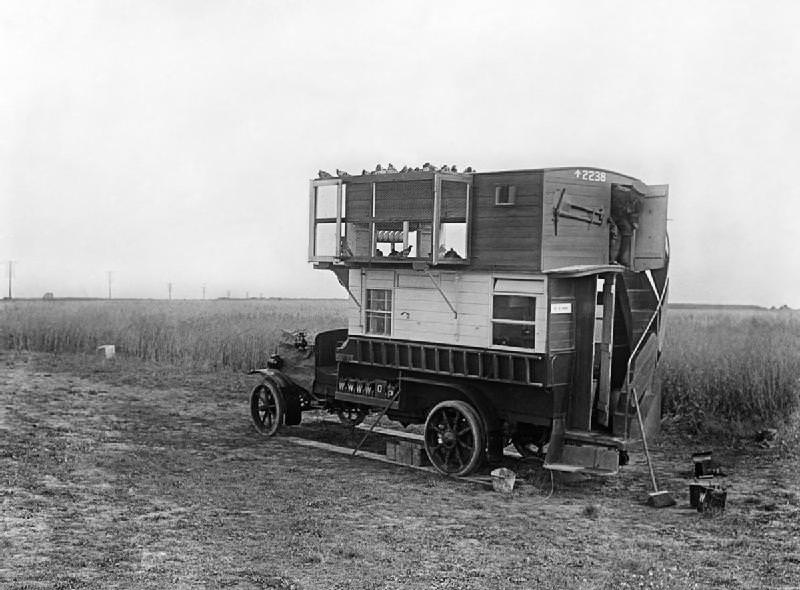
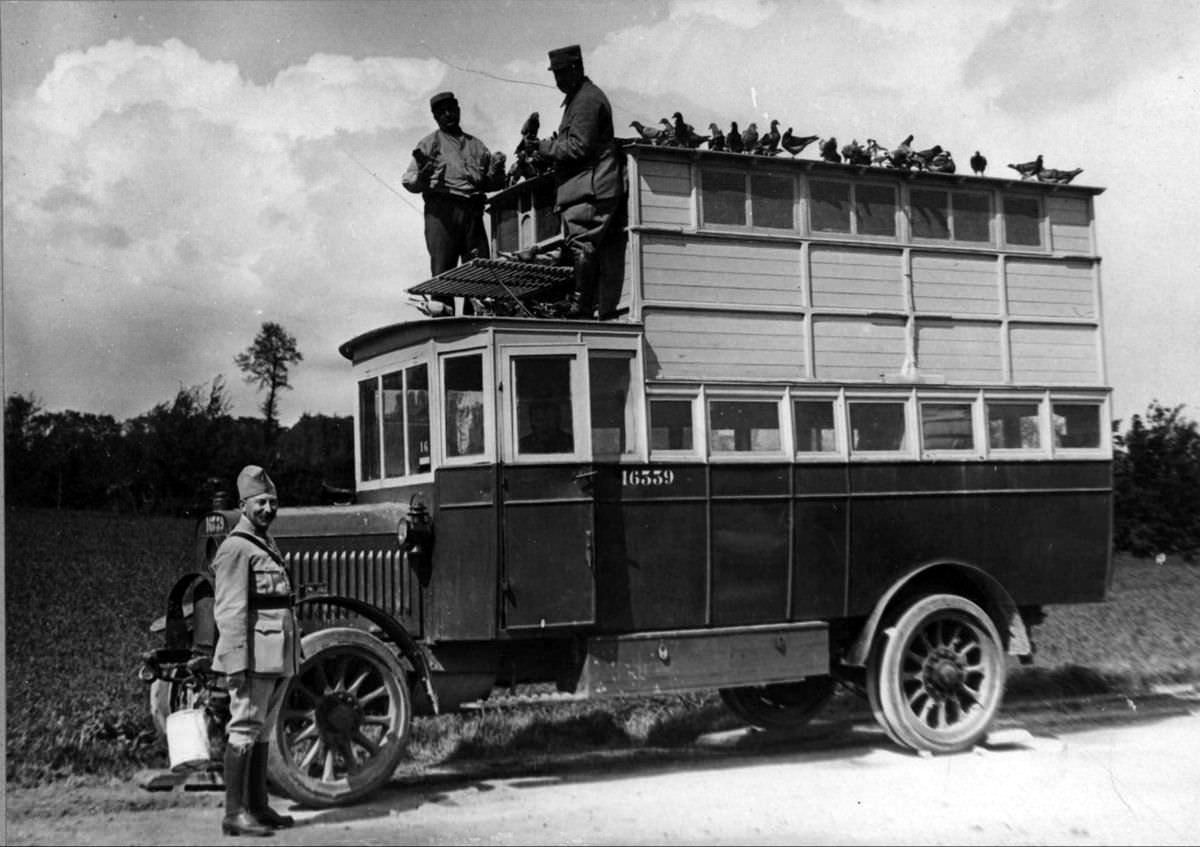
All passenger seating was stripped from both the lower and upper decks. The front windows were boarded shut to reduce drafts and protect the birds from wind and noise during travel. On the upper deck, the open railing that had lined the sides was replaced with framed windows. These windows were designed to be cut open and covered with nets, allowing handlers to release birds quickly and in large numbers when needed.
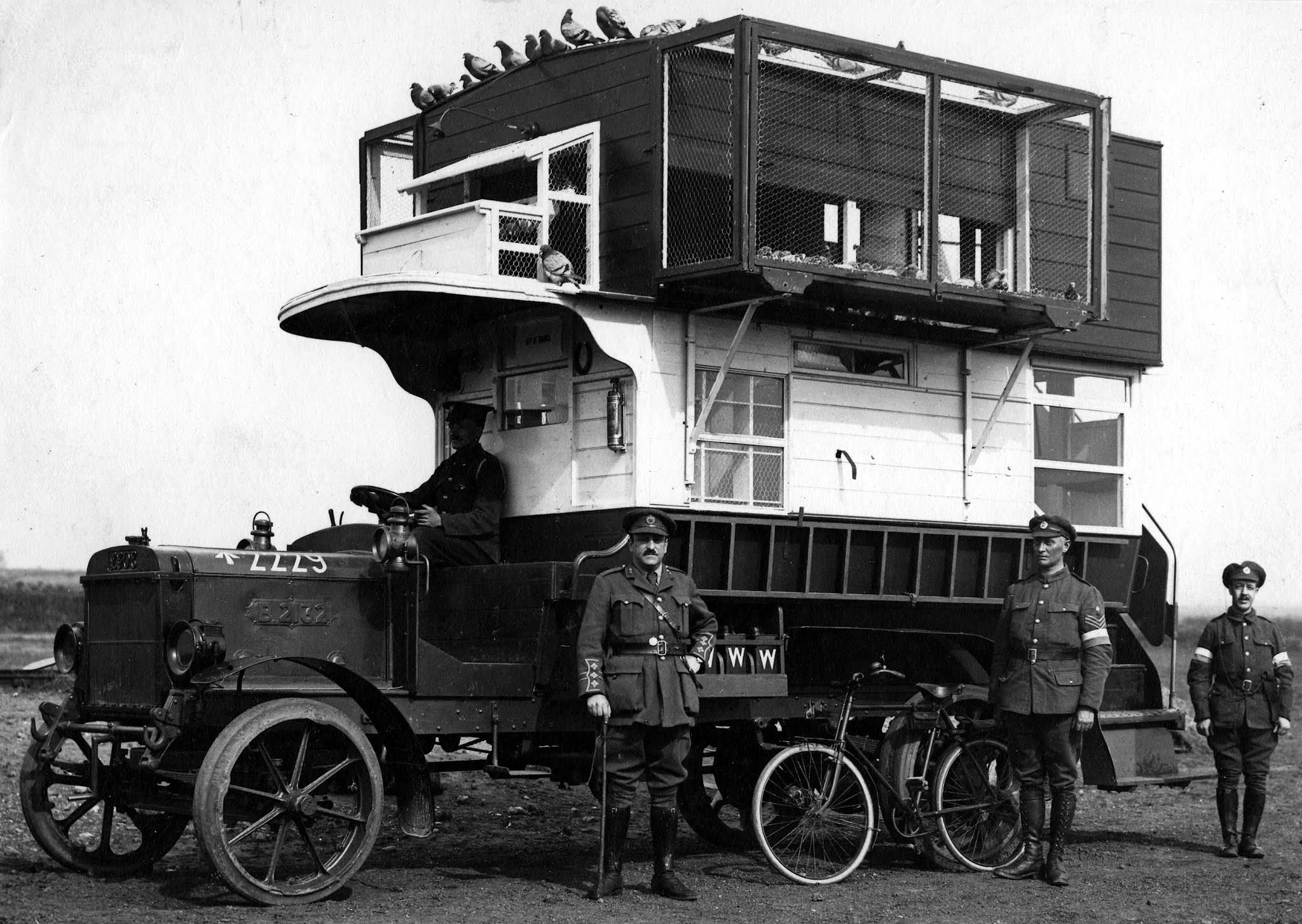
Inside the converted buses, cages lined the walls and filled the interior on both levels. Each bird had a designated compartment. The loft became the bird’s home — the place it was trained to return to no matter where it was released from along the front.
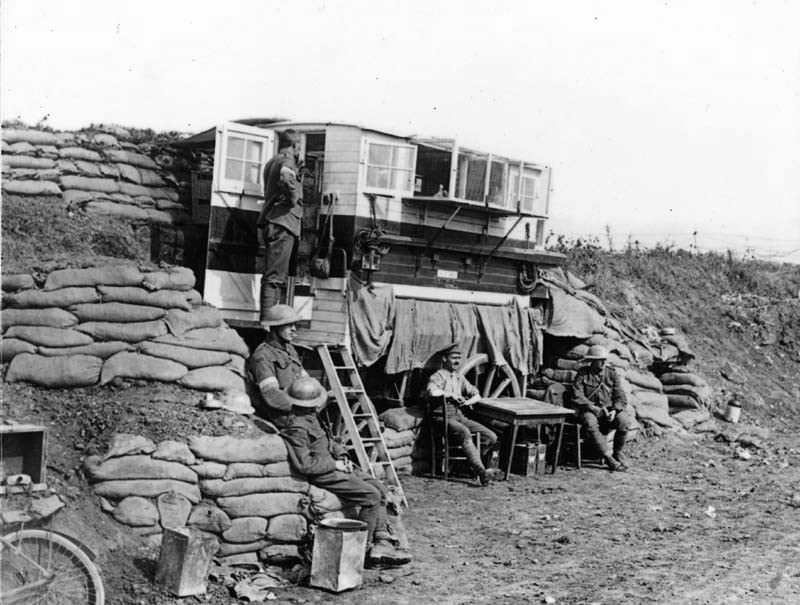
A single converted B-type bus could house dozens of pigeons, with trained handlers responsible for their care and deployment. When a unit needed to send a message, a bird from that unit’s assigned loft was released. It flew directly back to the bus, where operators retrieved the message and relayed it up the chain of command.
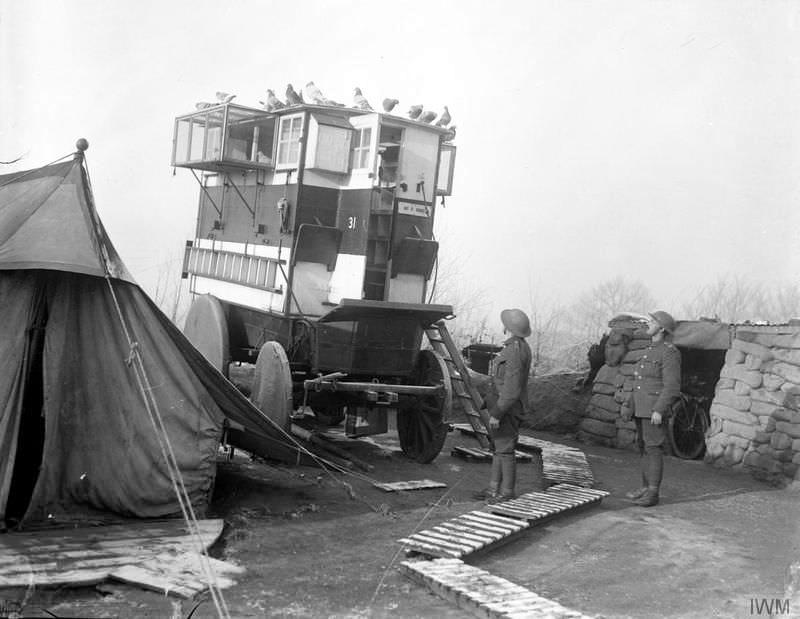
These loft vehicles were stationed as close to the front as safely possible, and they moved as the lines moved. The sight of a red London double-decker parked near the trenches of the Western Front became a recognized part of the Allied communication network — a familiar city vehicle doing an entirely unfamiliar job.
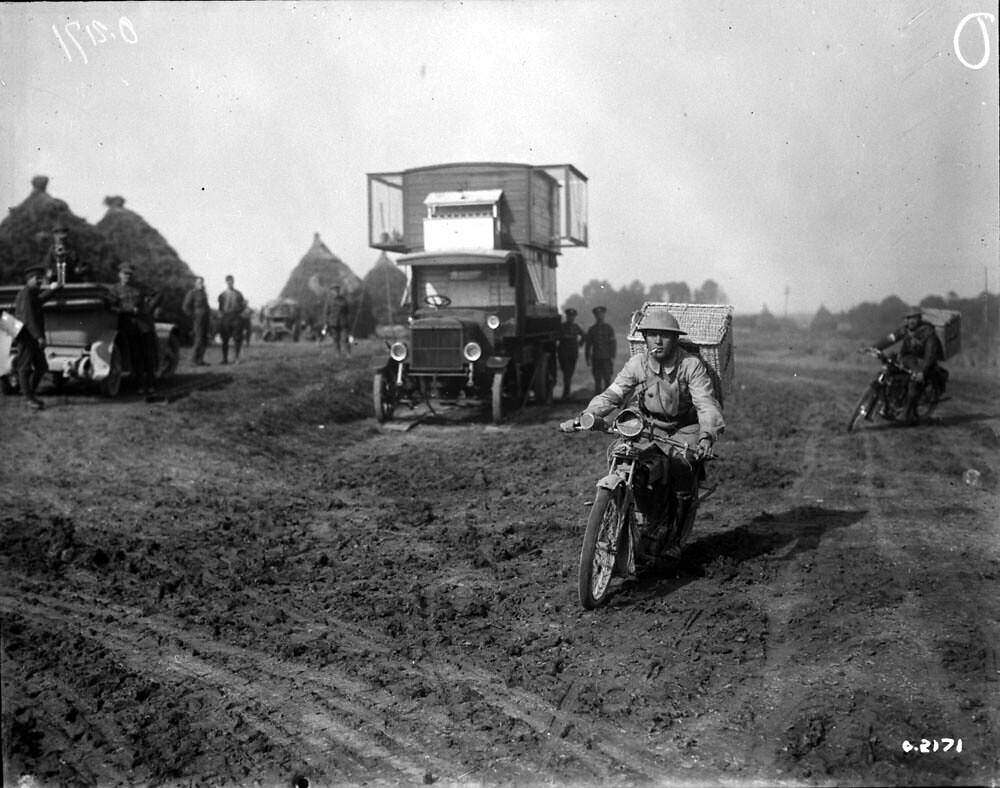
The photos below document these converted buses as they appeared during the war — stripped of their city markings, modified along every surface, and parked in the mud of the Western Front rather than on the paved streets of London.