
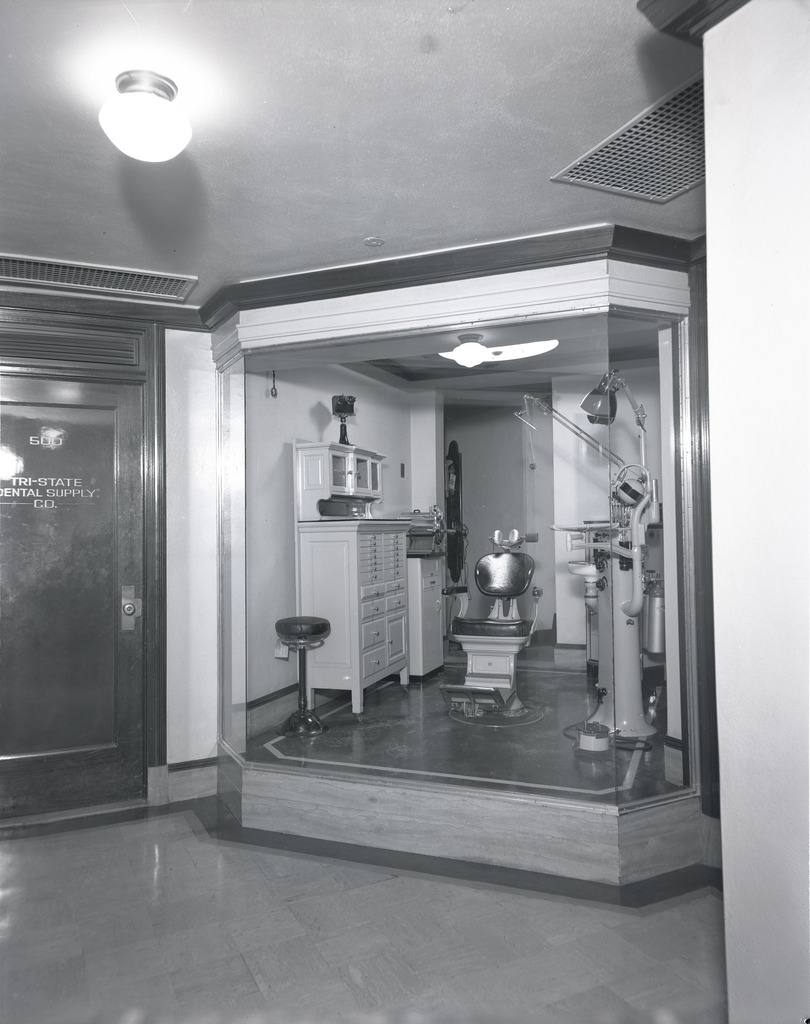
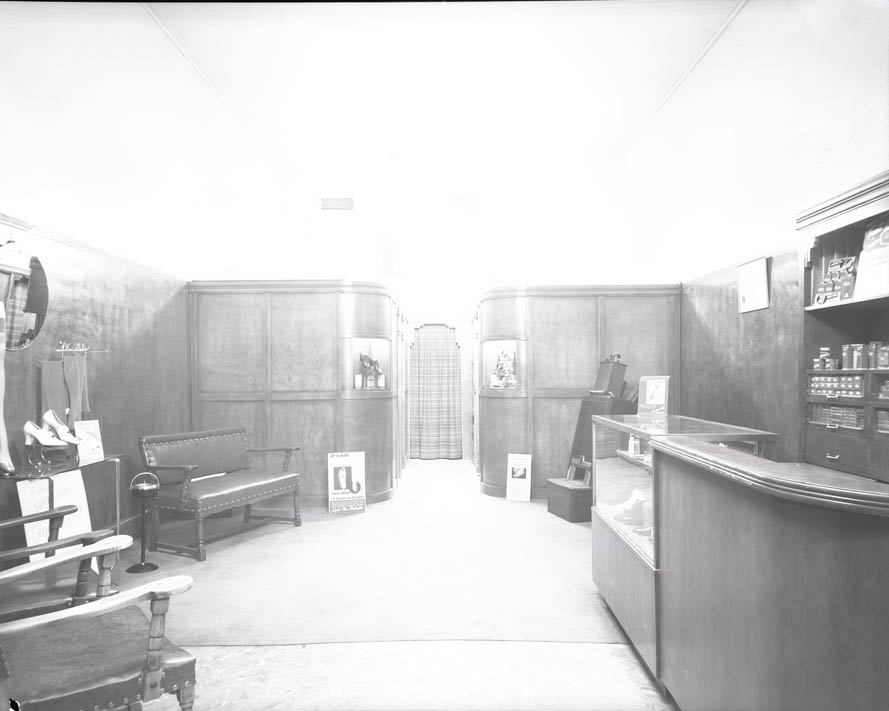
In 1940, Phoenix, Arizona had a population of just over 65,000 people. The city was in the middle of a period of steady growth, and the photographs taken that year capture a place on the edge of transformation. The streets were busy with delivery trucks, local businesses, and everyday workers. From freight yards and dairy farms to auto courts and school hallways, these images show what daily life in Phoenix actually looked like before the postwar boom changed everything.
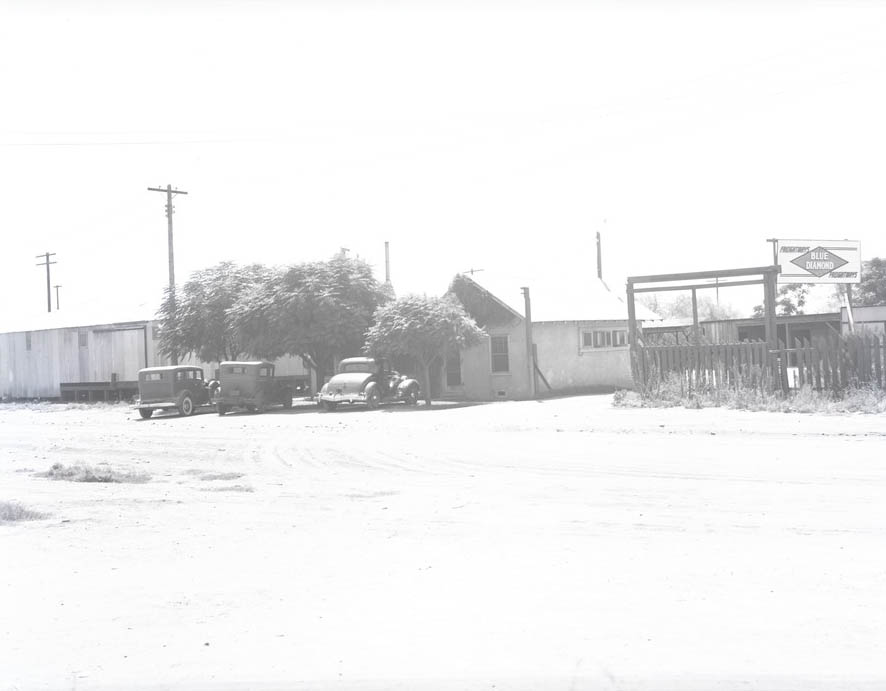
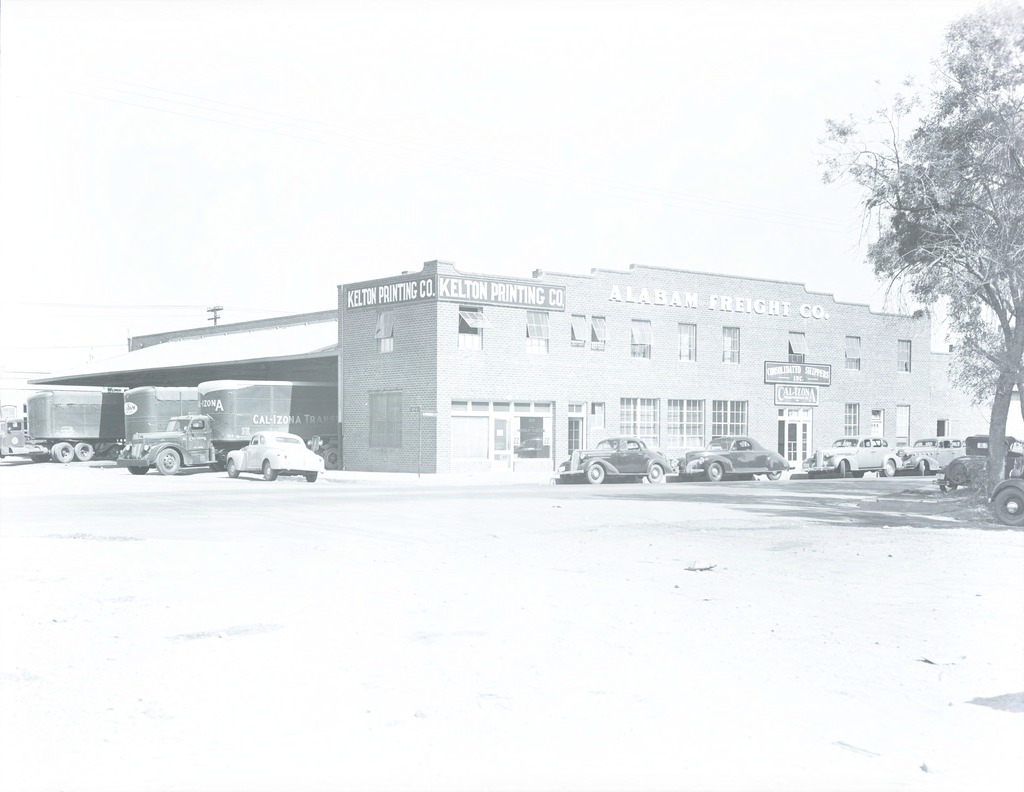
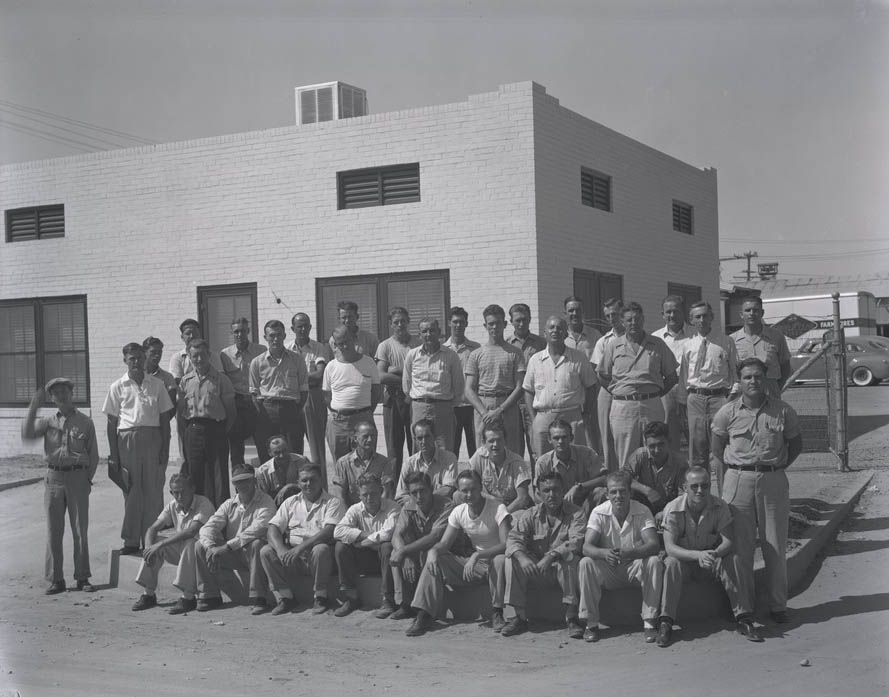
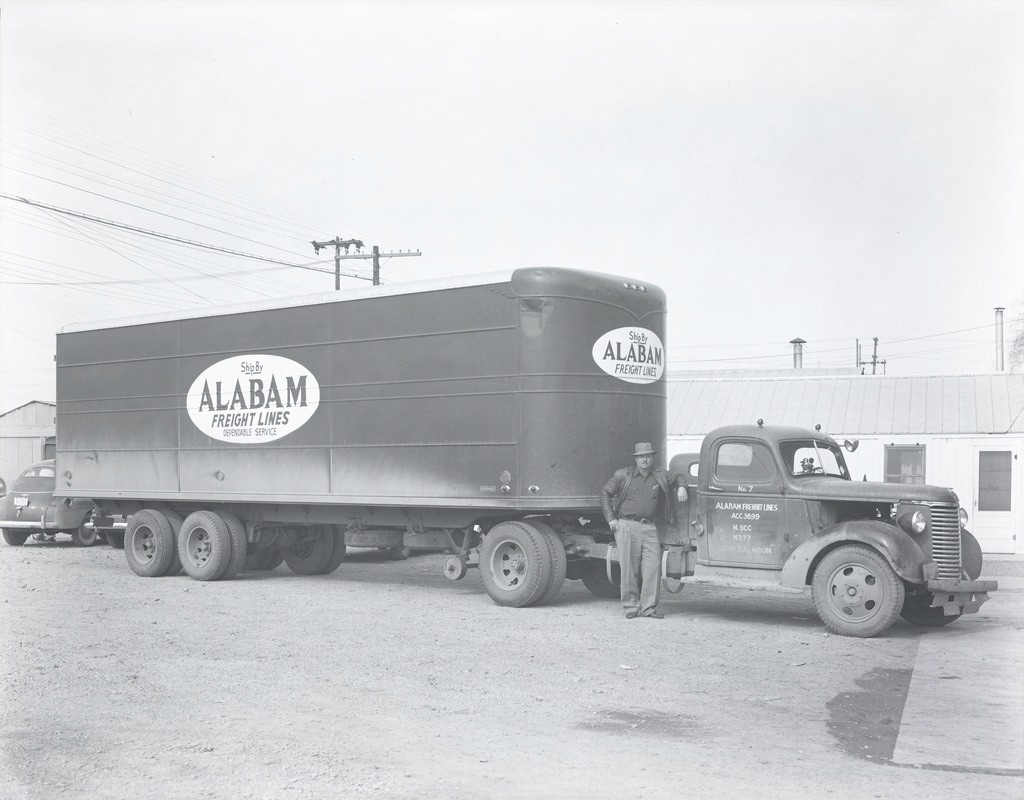
Freight and delivery companies were a vital part of Phoenix’s commercial backbone. Trucks moved goods across the city and beyond, serving everything from grocery chains to industrial suppliers. The Blue Diamond Freightways lot reflects just how active the local transportation industry was even before the major postwar industrial surge.
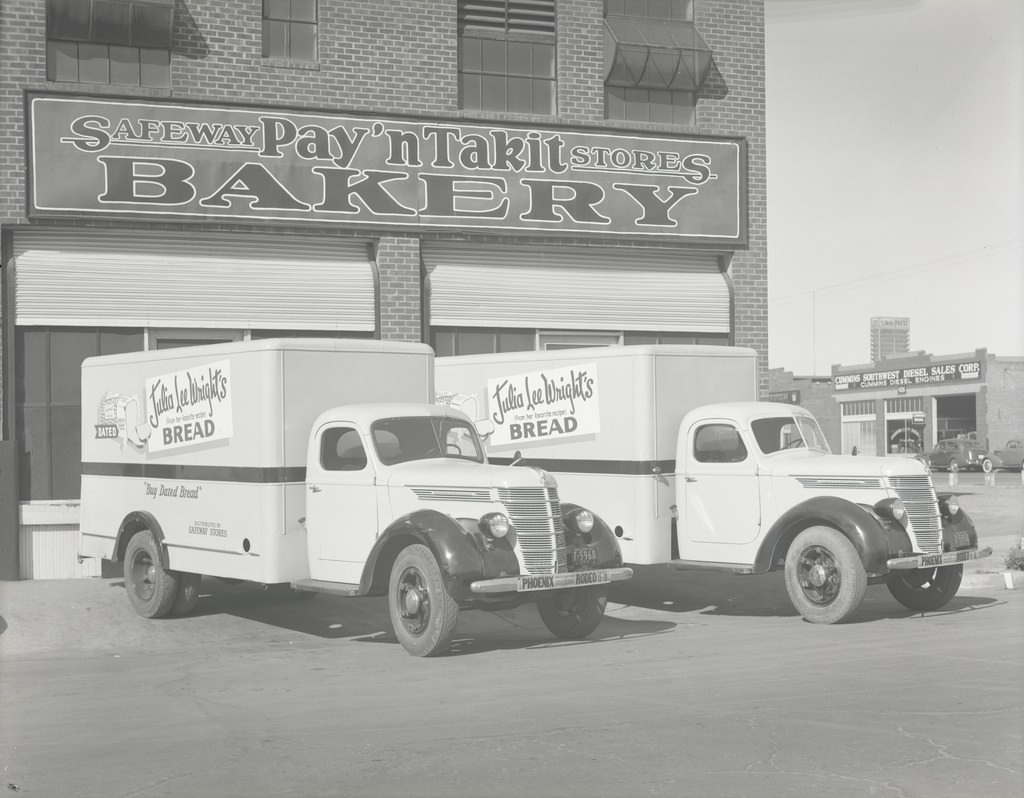
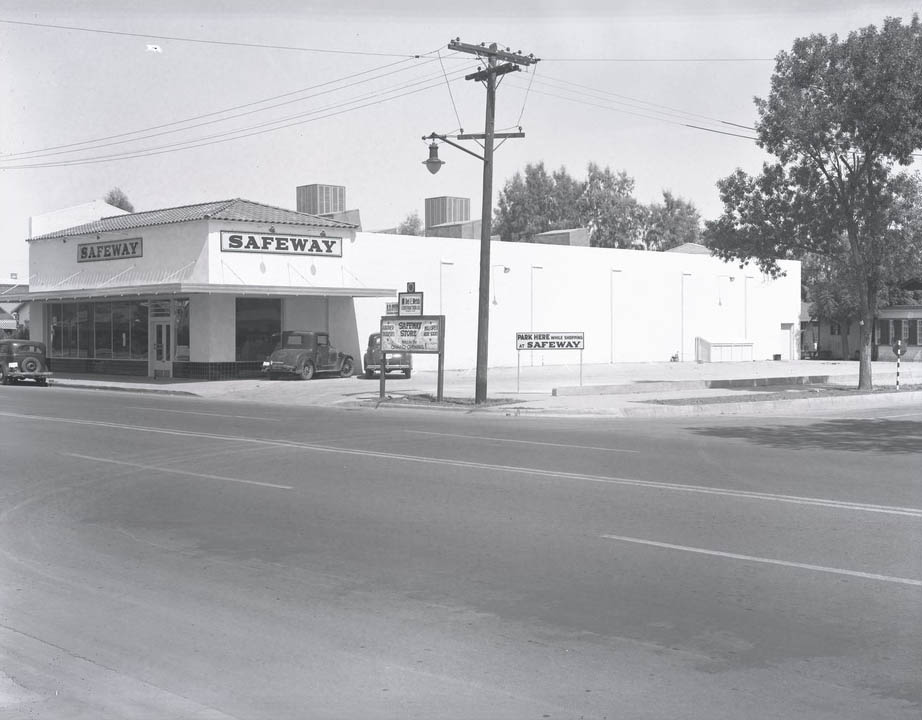
Across the street from the Safeway bakery loading dock stood Cummin’s Southwest Diesel Sales, a reminder of how closely commerce clustered in Phoenix’s business districts. Fresh bread was distributed daily from loading docks like this one, feeding the city’s growing population.
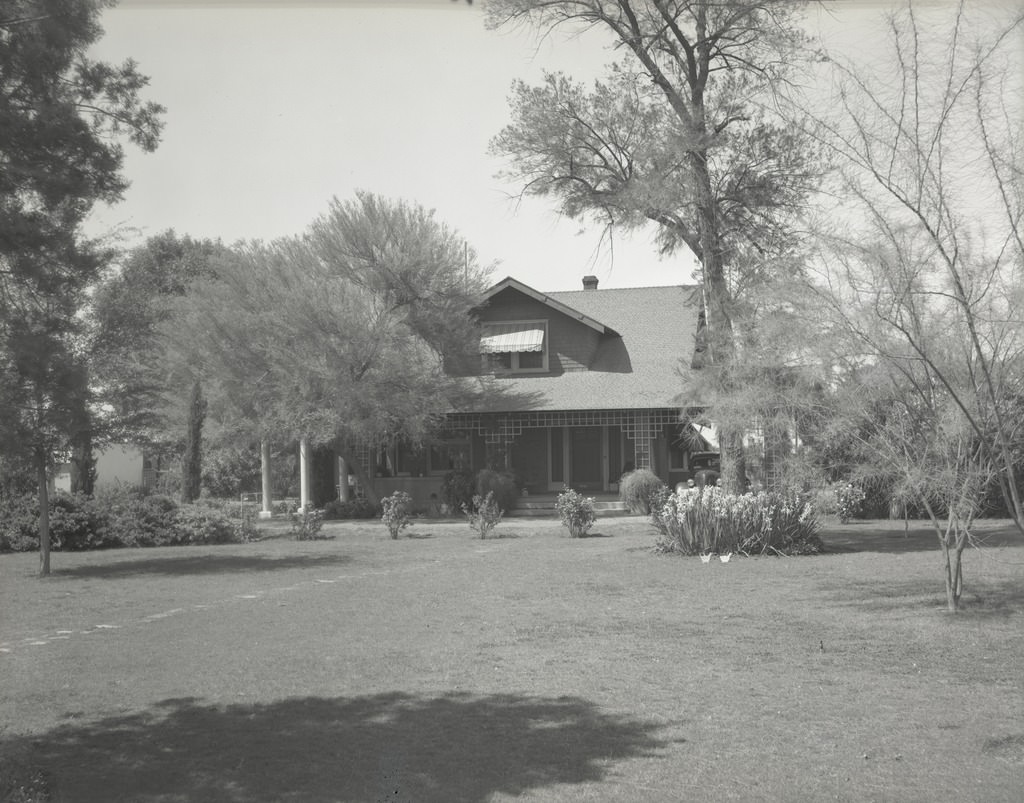
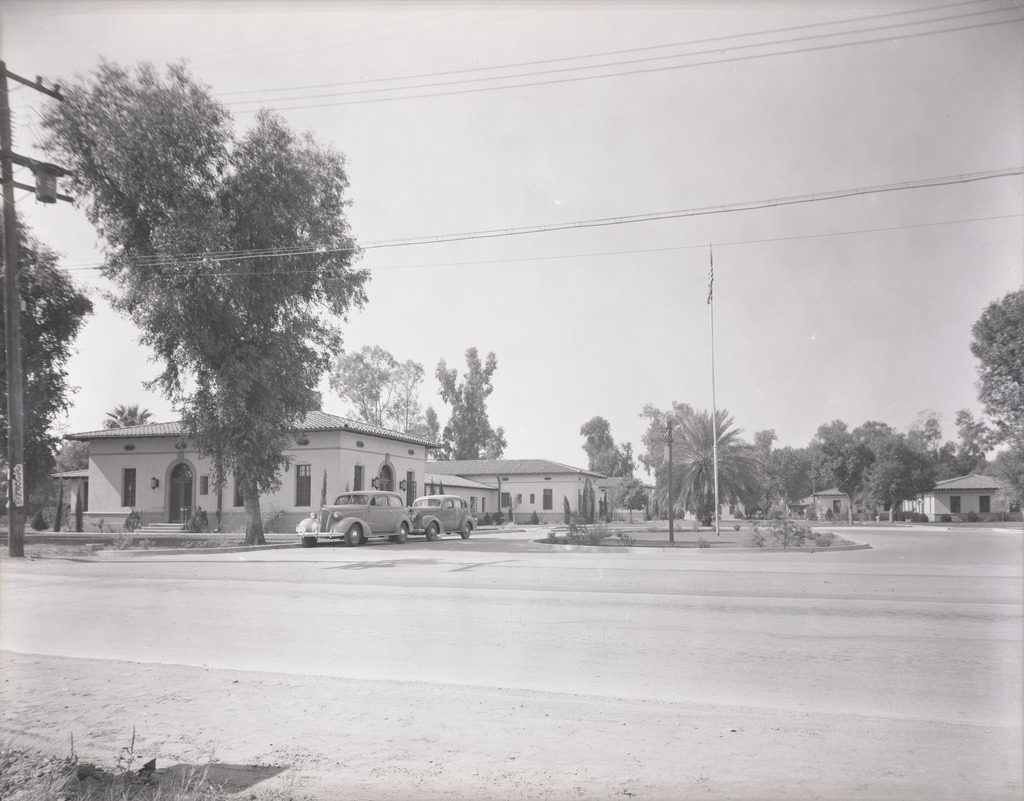
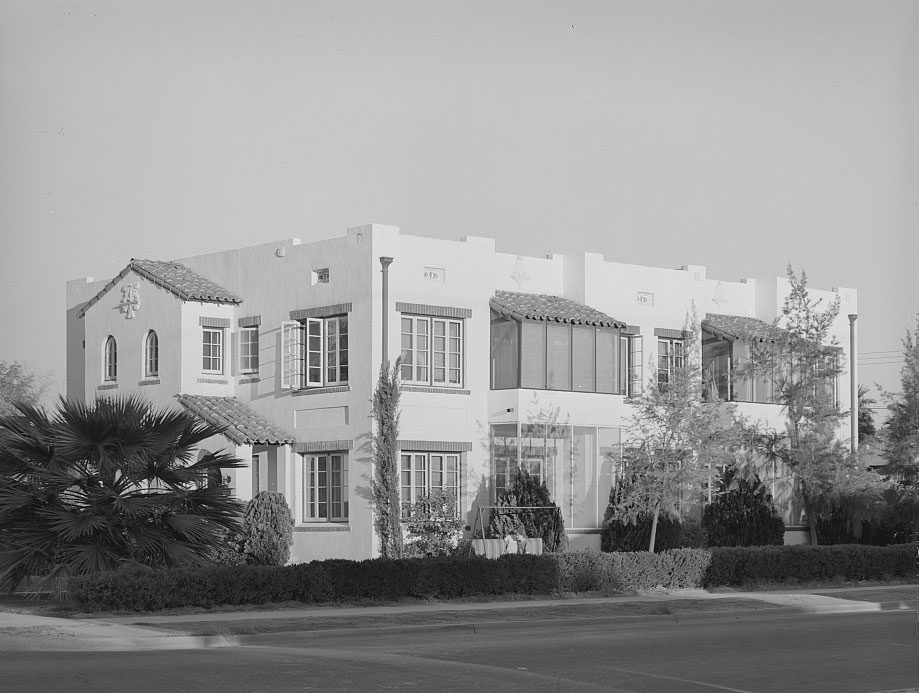
Residential Phoenix in 1940 ranged from modest homes to more established properties. The neighborhoods were still developing, and many streets were lined with single-family houses that reflected the modest prosperity of the era.
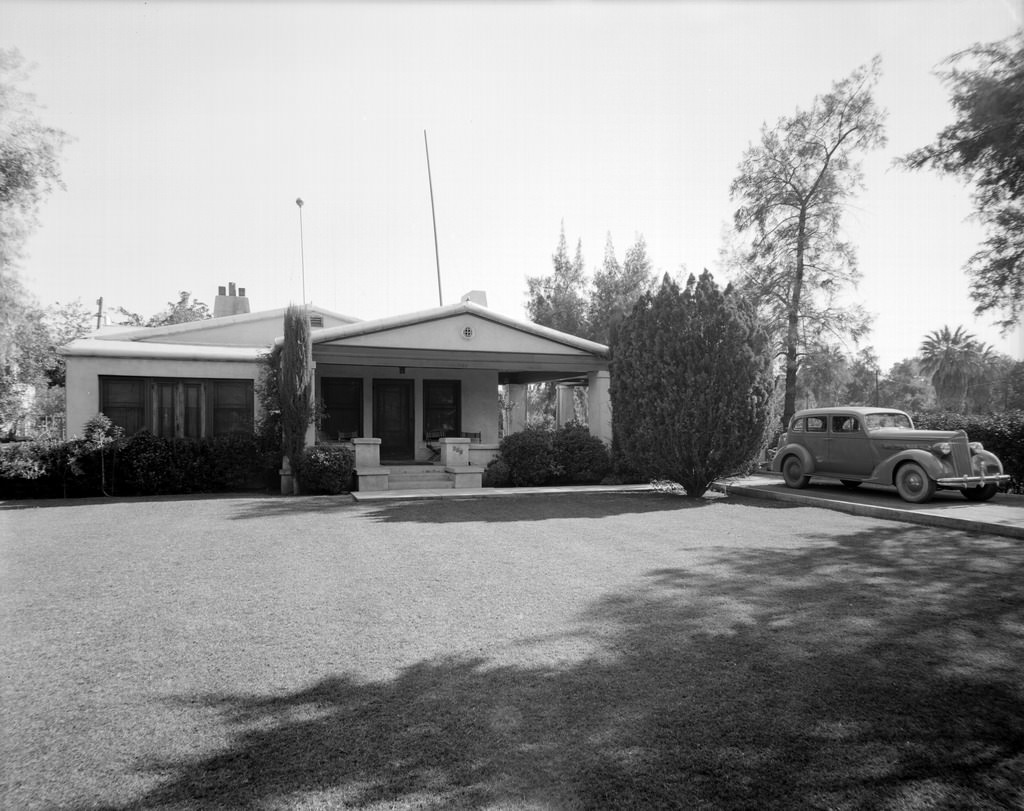
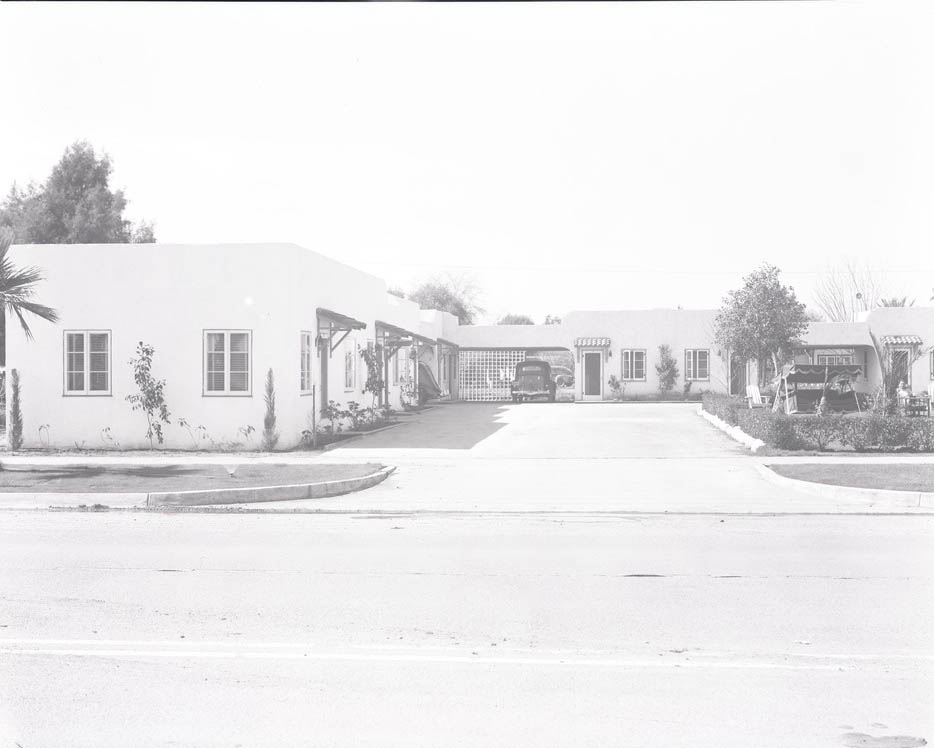
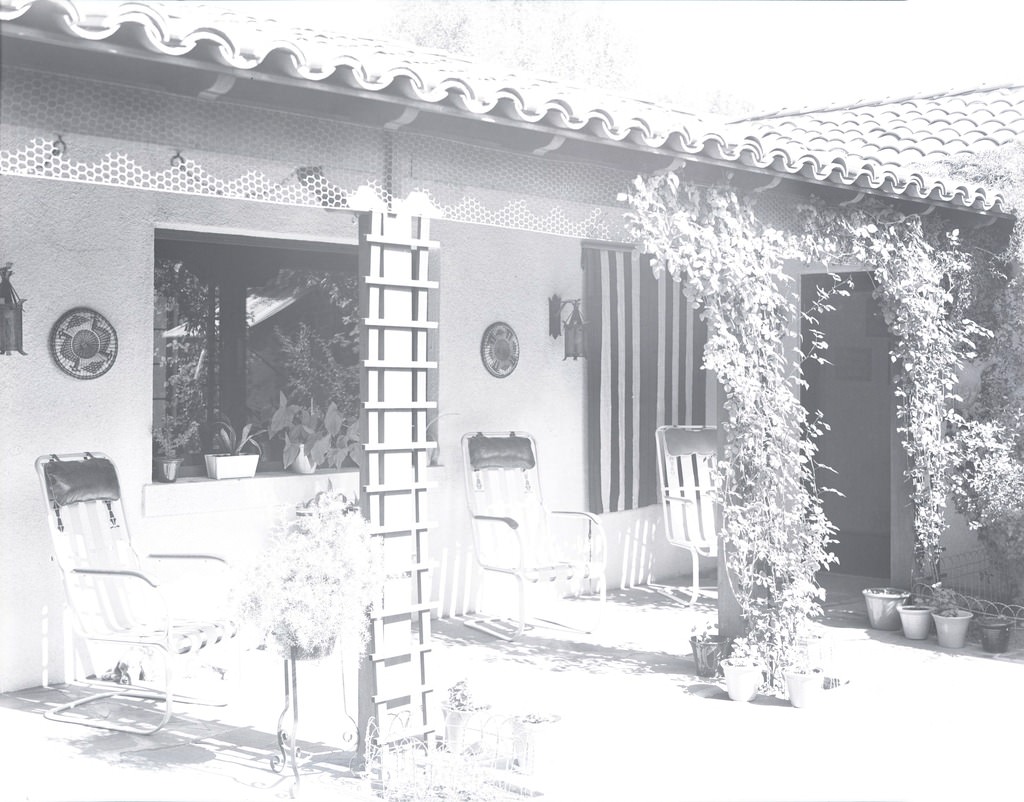
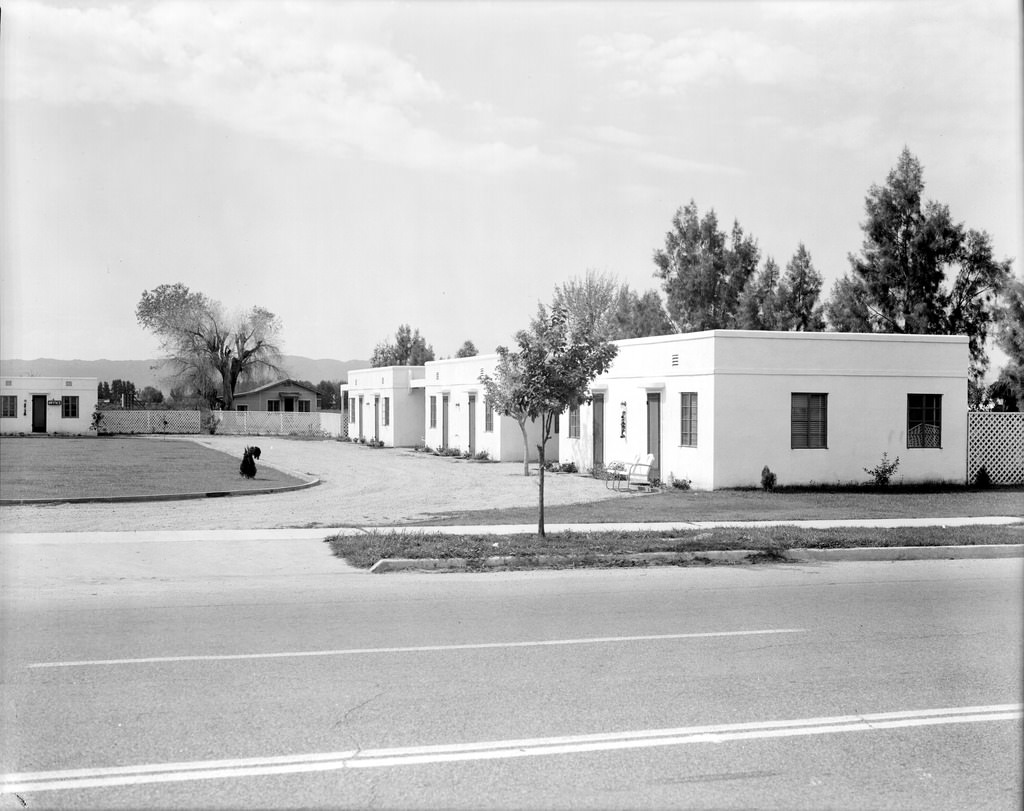
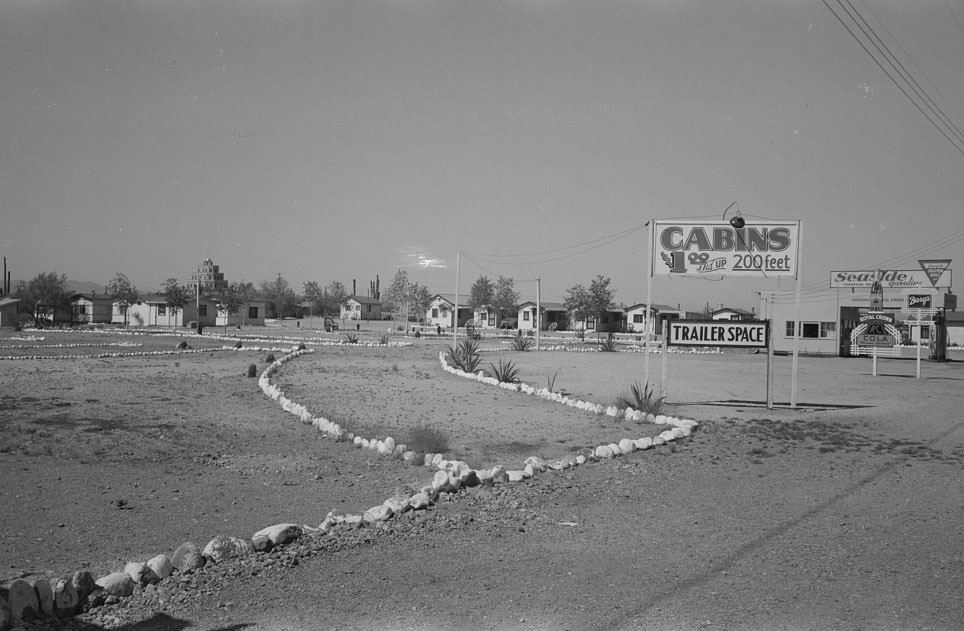
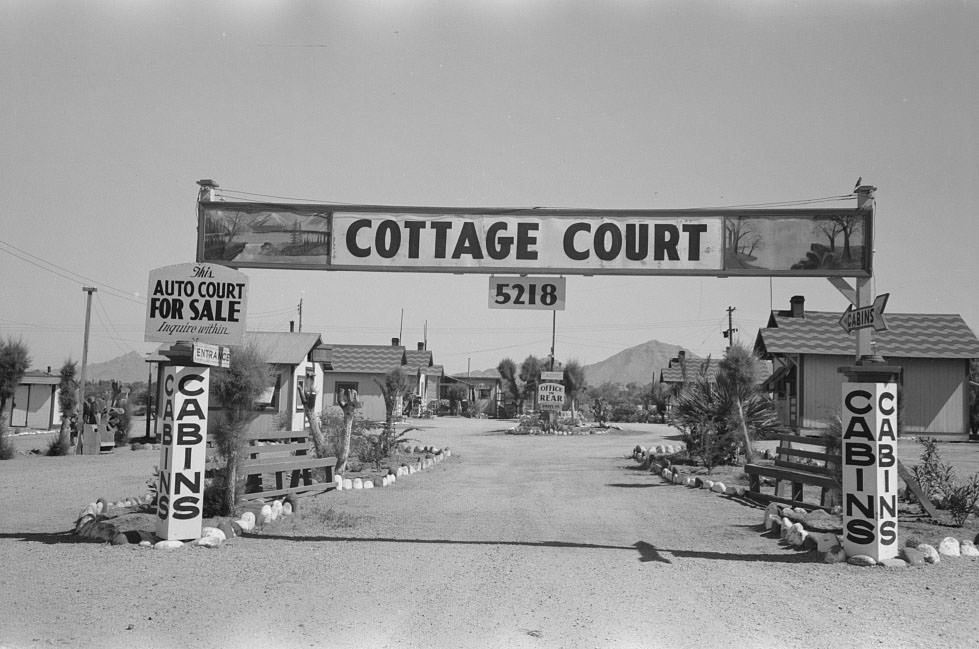
Auto courts — the precursors to modern motels — were a defining feature of Phoenix in 1940. The city sat along major travel routes, and winter visitors from colder states were already making Phoenix a seasonal destination. These roadside lodging options ranged from simple cabins to well-kept motor courts with landscaped grounds.
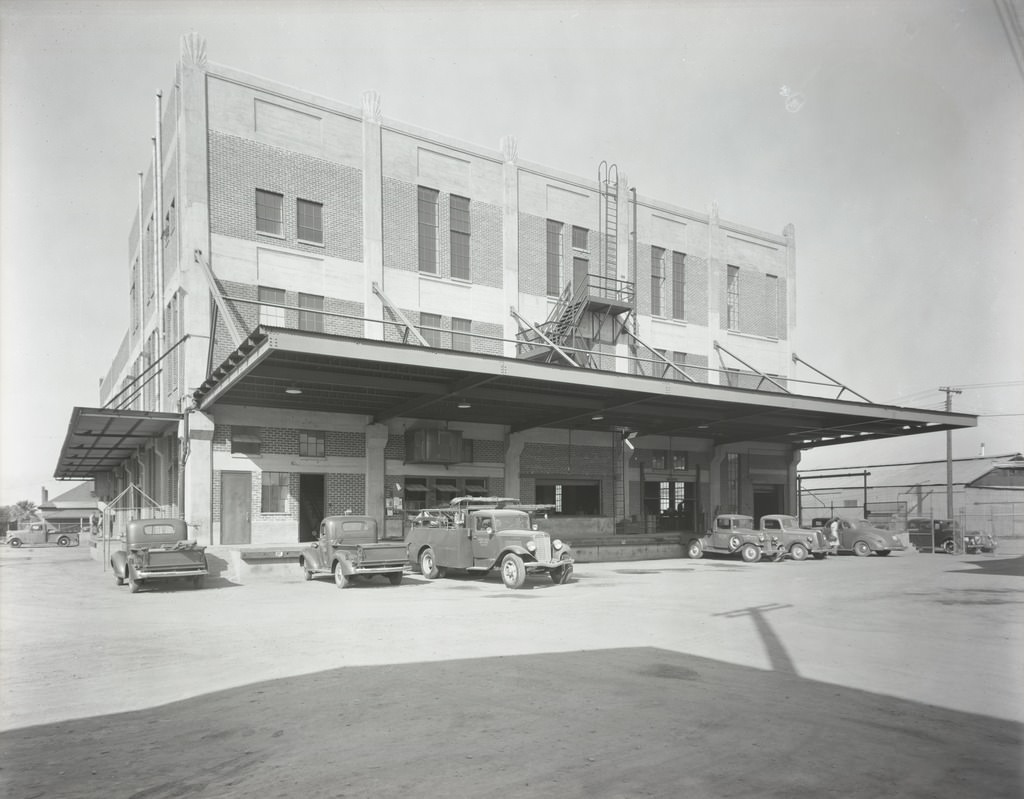
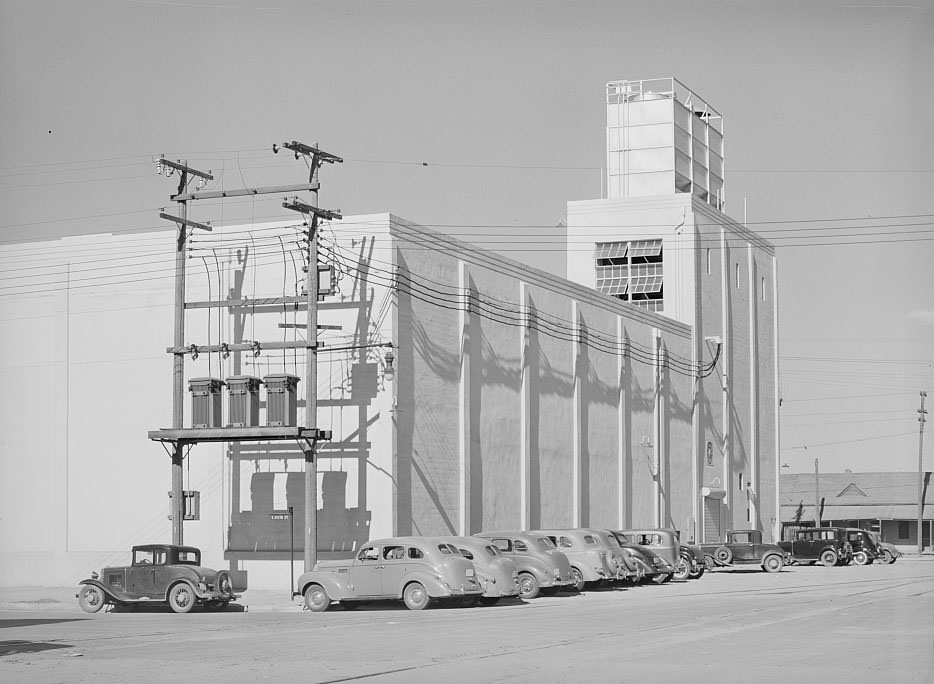
Central Arizona Light & Power Co. was one of Phoenix’s major utilities in 1940. Its warehouse at 501 S. Third Ave., built in 1928, served the growing electrical needs of the region. The company was later reorganized into what became the Arizona Public Service Company, which still operates in the state today.
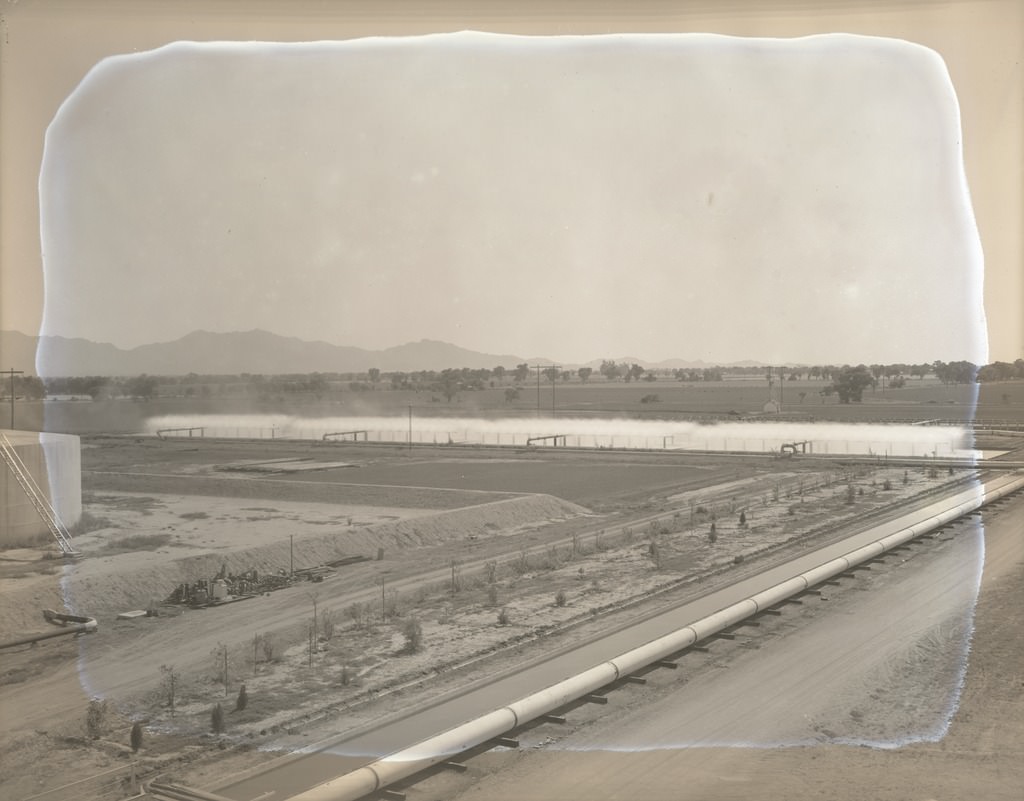
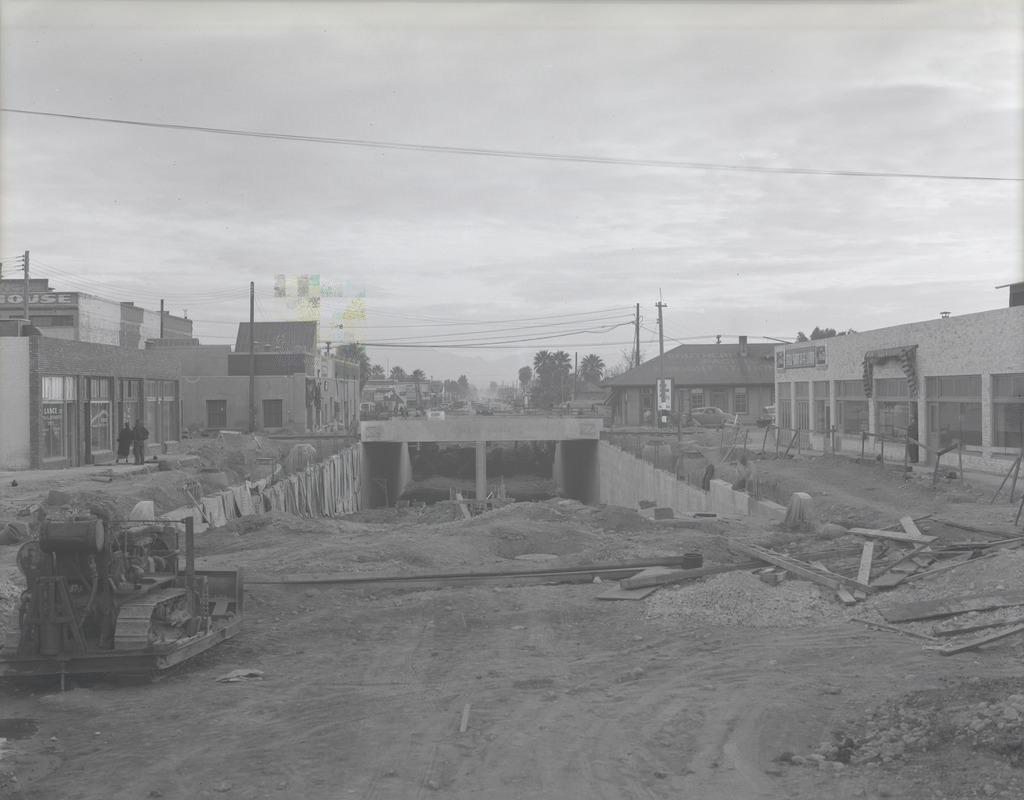
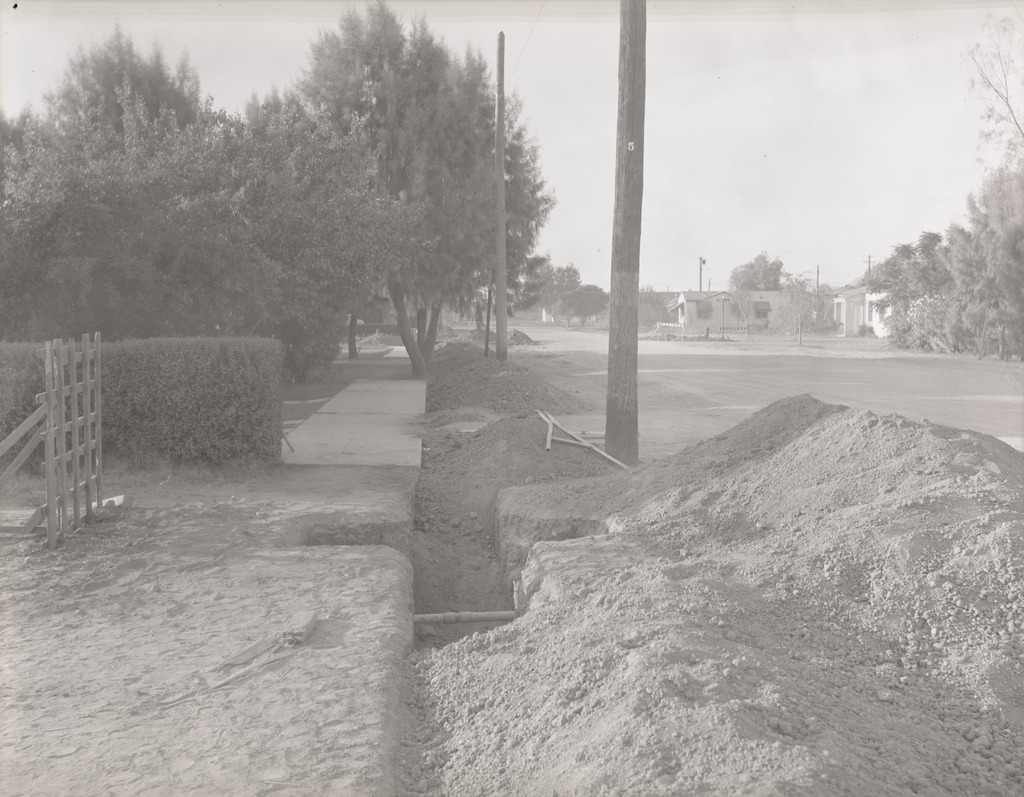
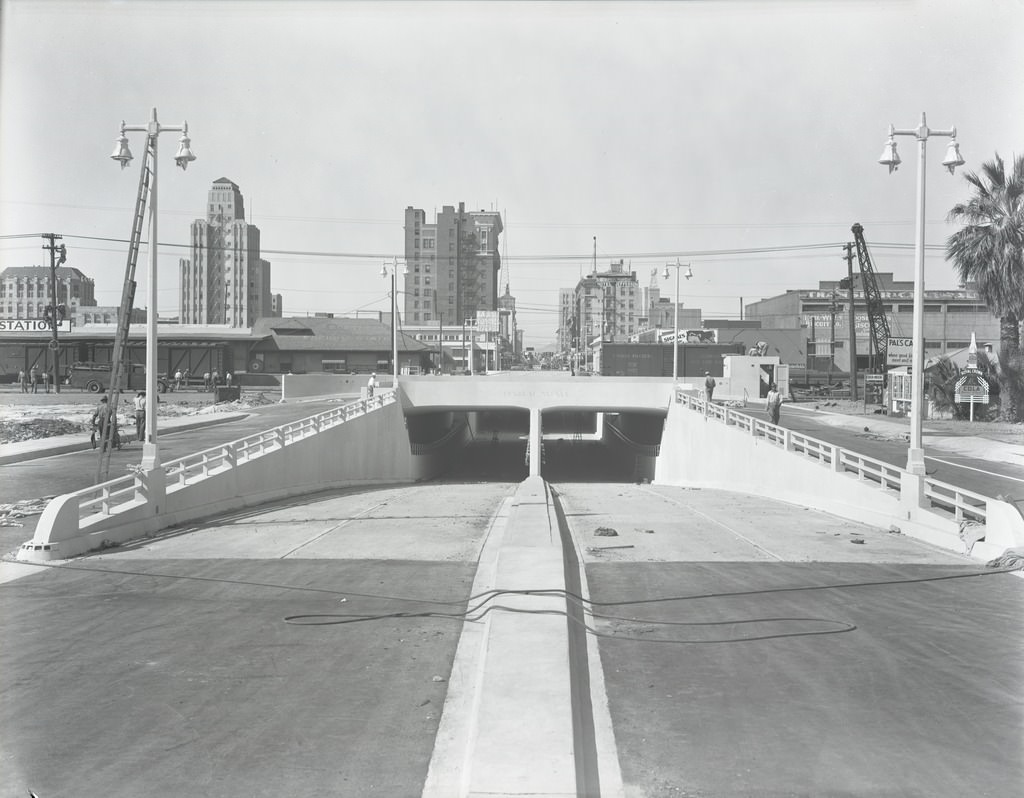
Infrastructure investment was visible all over Phoenix in 1940. Construction crews were busy expanding the city’s capacity to handle more people, more vehicles, and more commerce. The Central Avenue underpass project was one example of how Phoenix was actively building for its future.
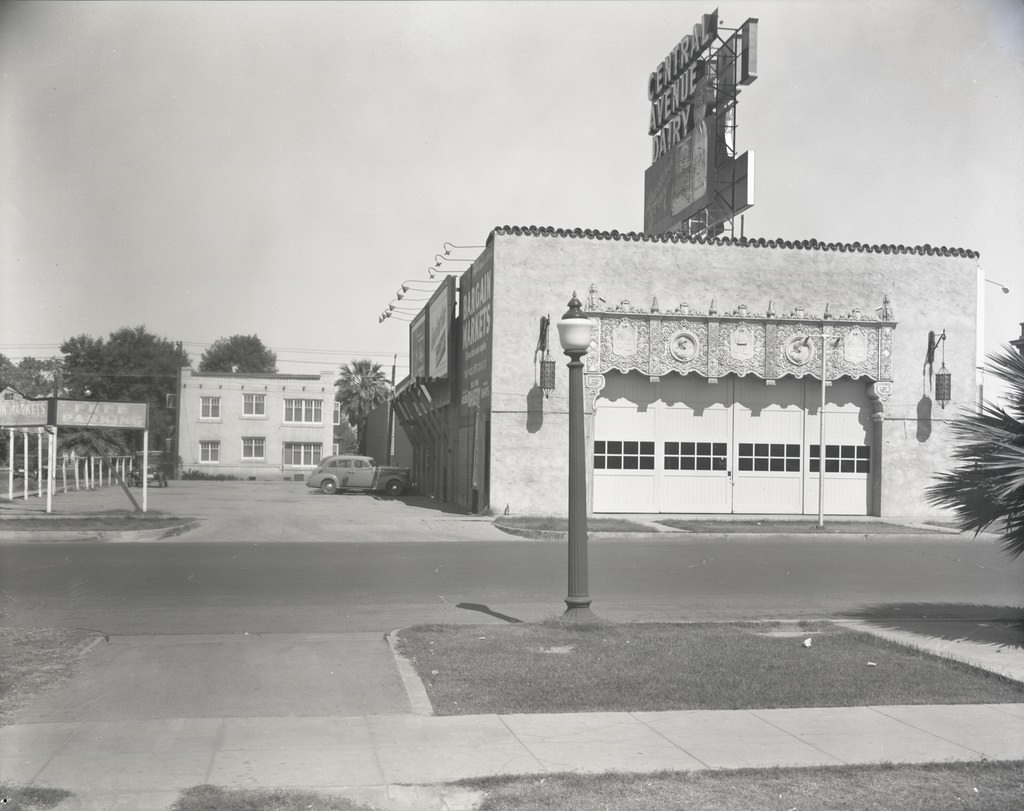
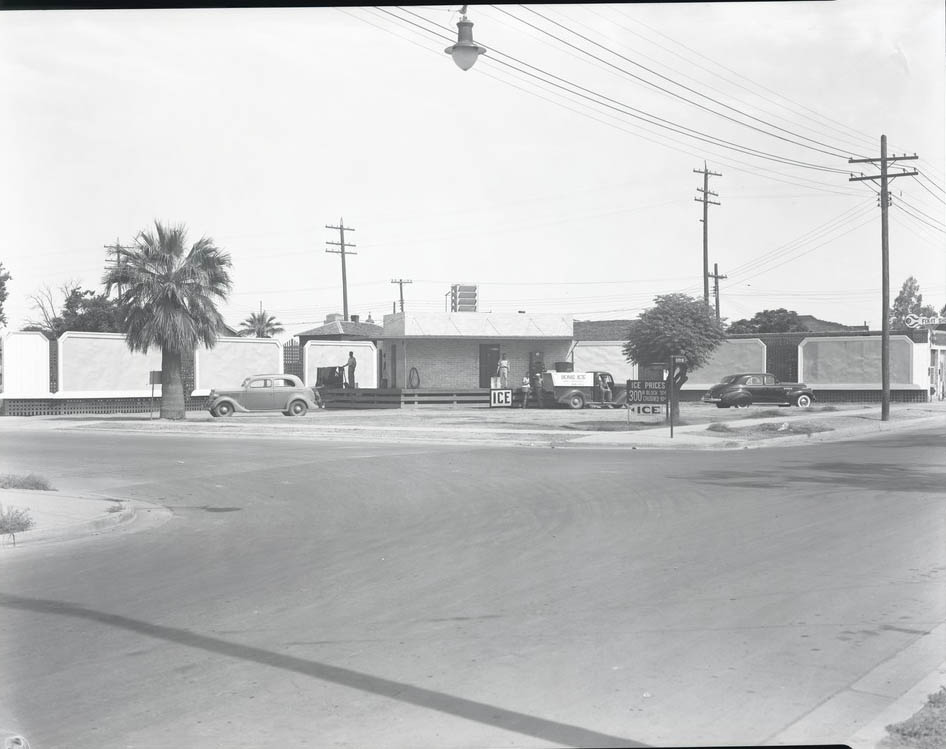
Ice delivery was still a common business in 1940, before mechanical refrigeration became widespread in American homes. The City Ice Delivery Company operated out of 21 N. 4th Street, sending trucks across Phoenix neighborhoods to keep food cold.
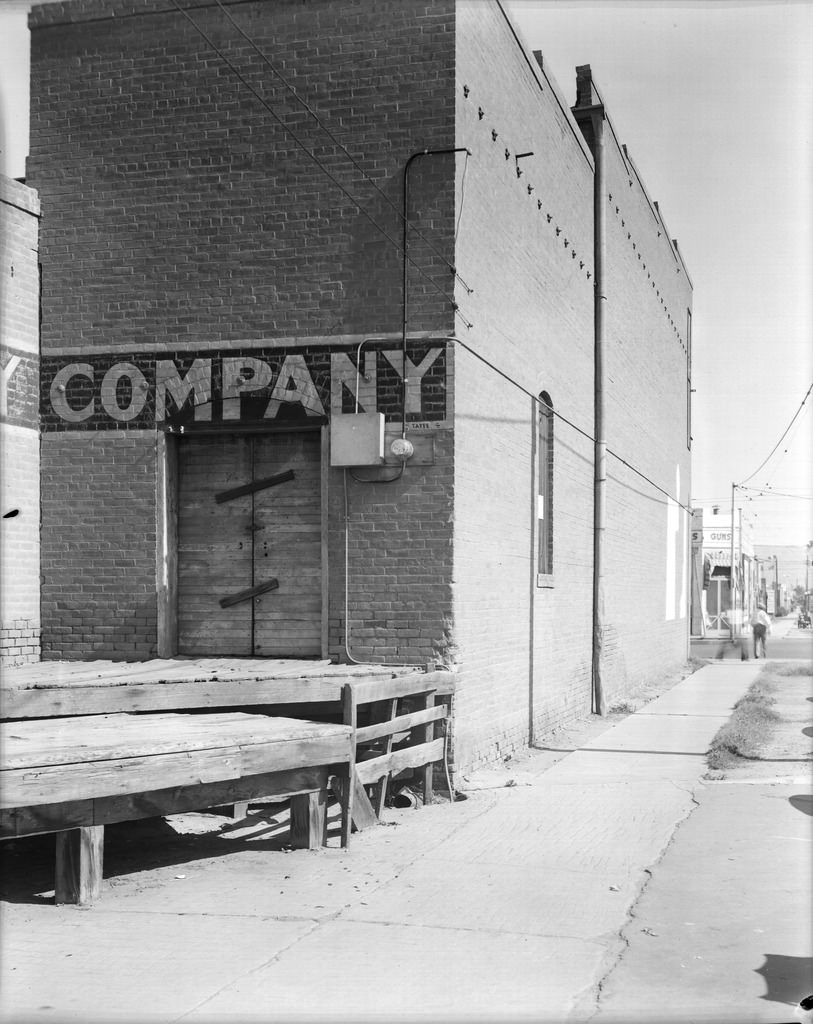
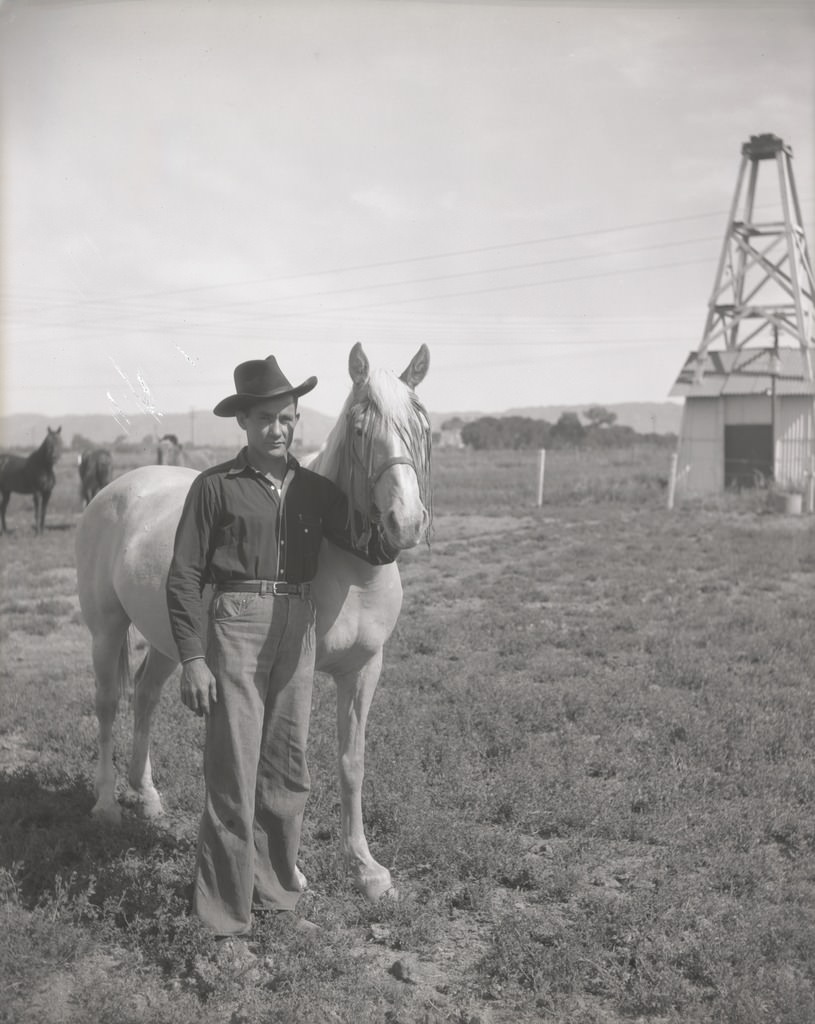
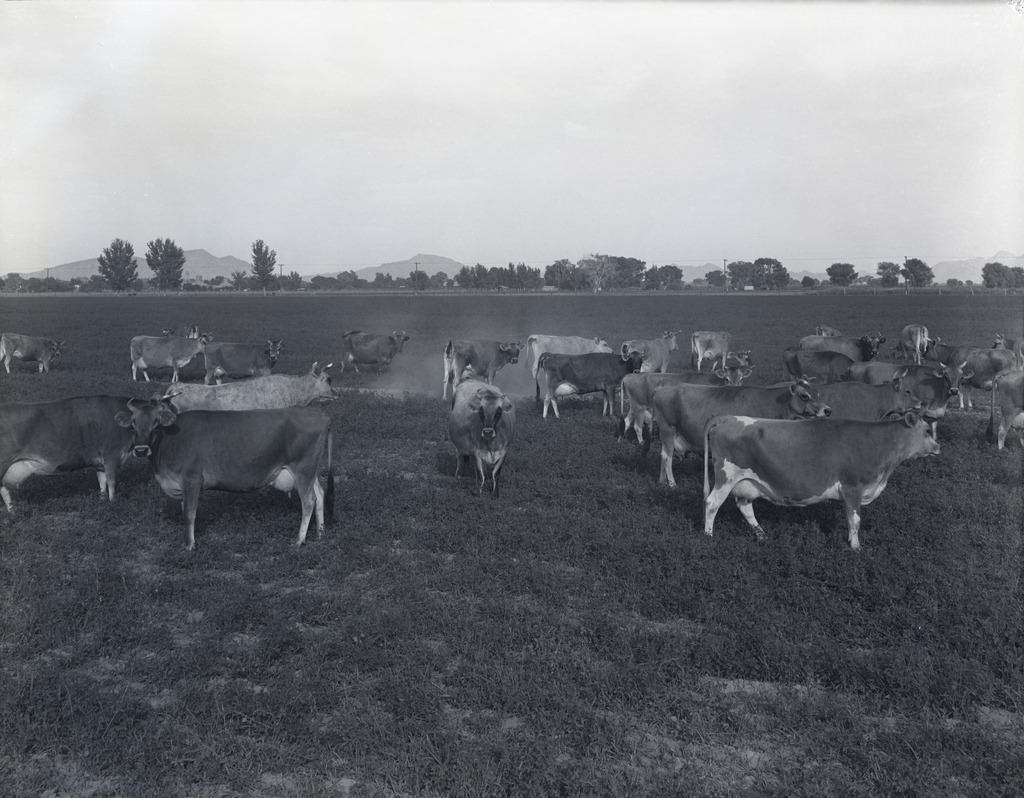
Agriculture remained an important part of the Phoenix economy in 1940. Dairy cattle were kept on the outskirts of the city, supplying milk to local residents and businesses alike.
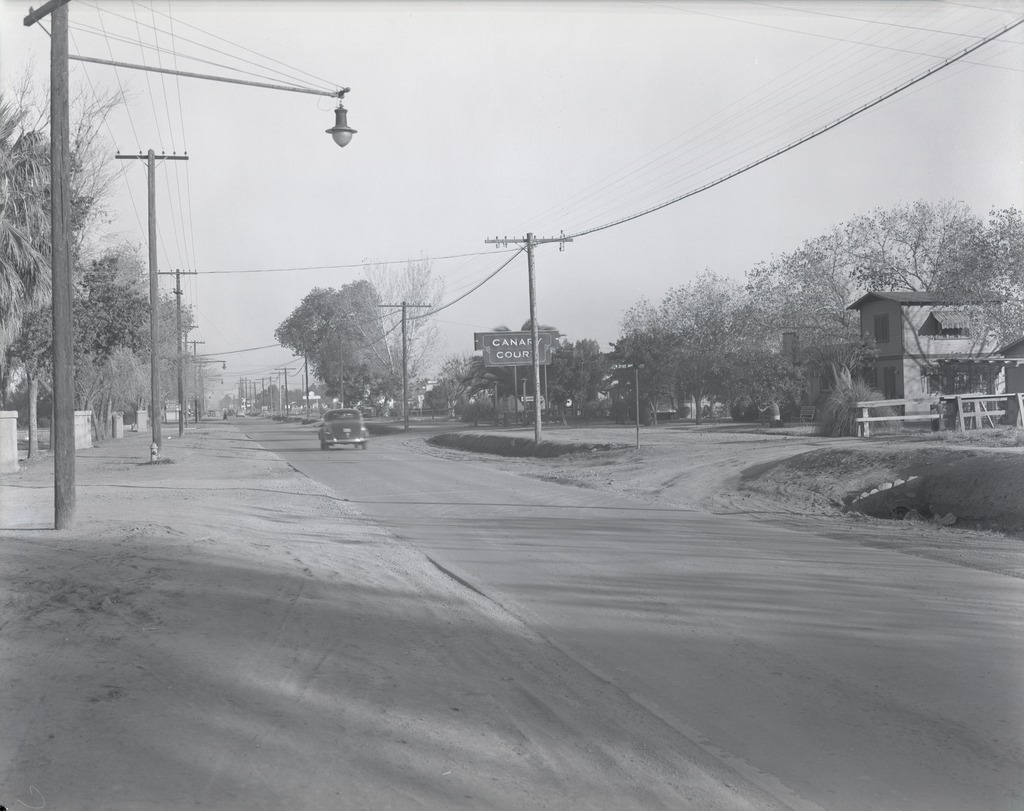
West Van Buren Street was a busy corridor in 1940, lined with auto courts and small businesses. The Canary Court at 2041 W. Van Buren and the McCoy Motor Court at 1930 W. Van Buren were both visible along this stretch, catering to travelers passing through the city.
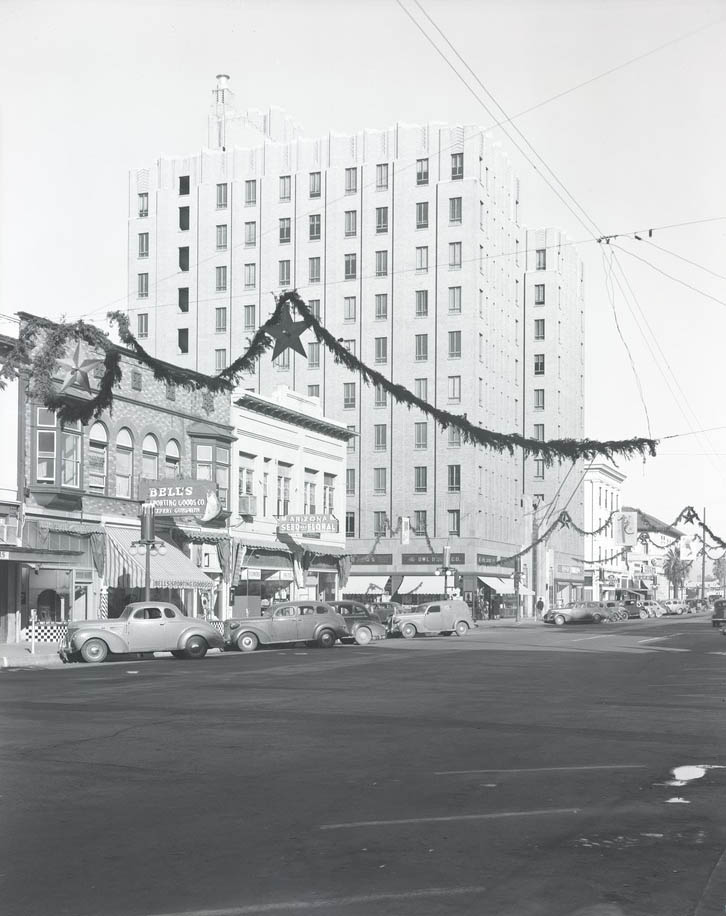
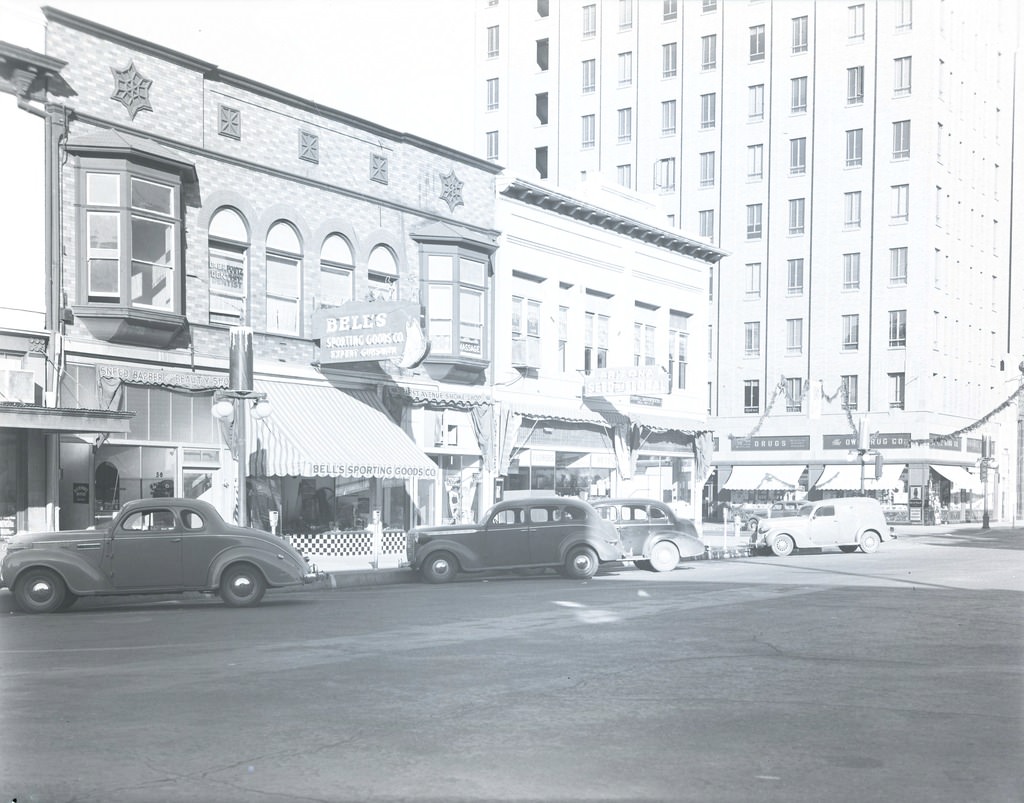
First Avenue in downtown Phoenix was alive with retail activity. Bell’s Sporting Goods at 40 N. 1st and the New Arizona Seed & Floral Co. at 46 N. 1st sat side by side, and Christmas decorations hung along the street, dating this photo to the holiday season.
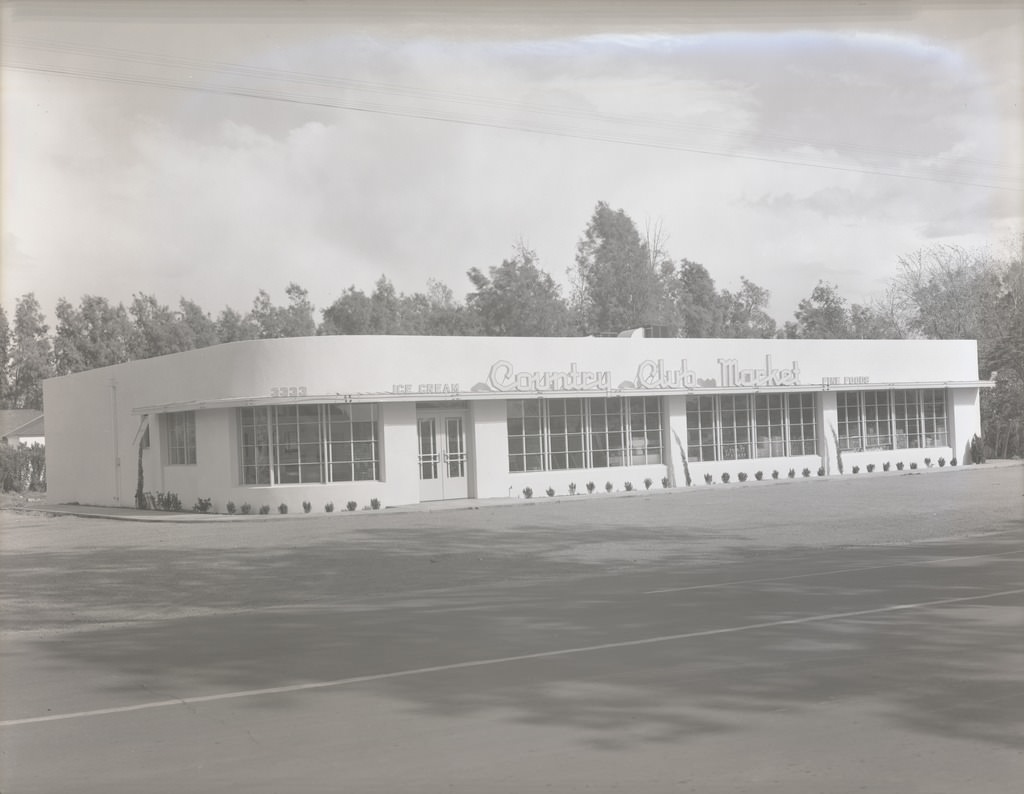
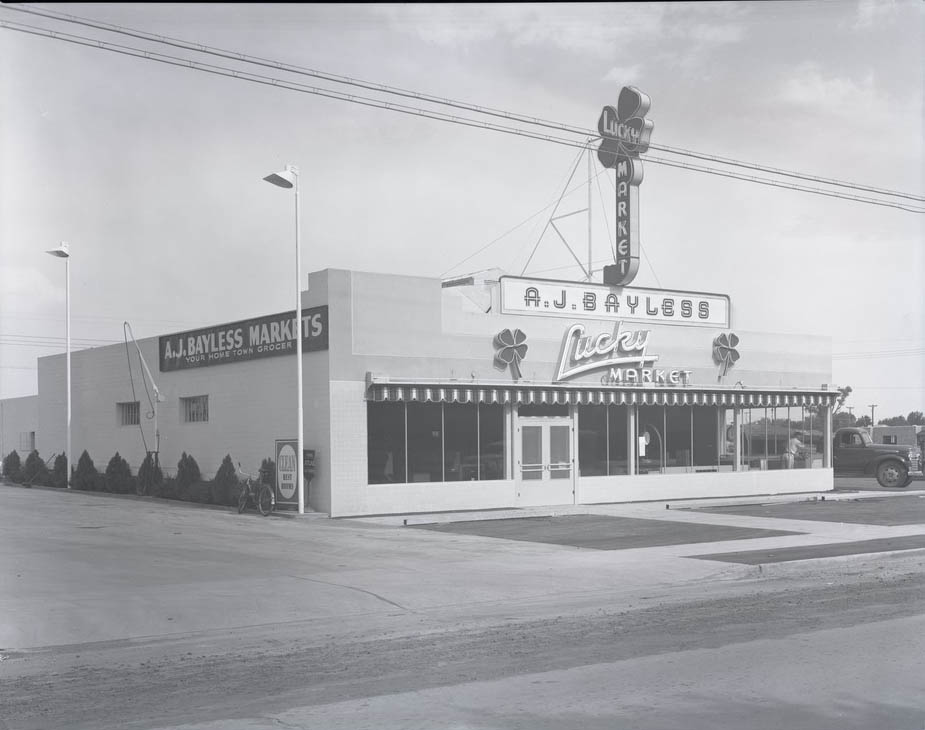
Grocery chains were expanding their presence in Phoenix during this period. The first A. J. Bayless store stood at 825 N. Seventh Street, part of a local chain that would grow alongside the city in the decades ahead.
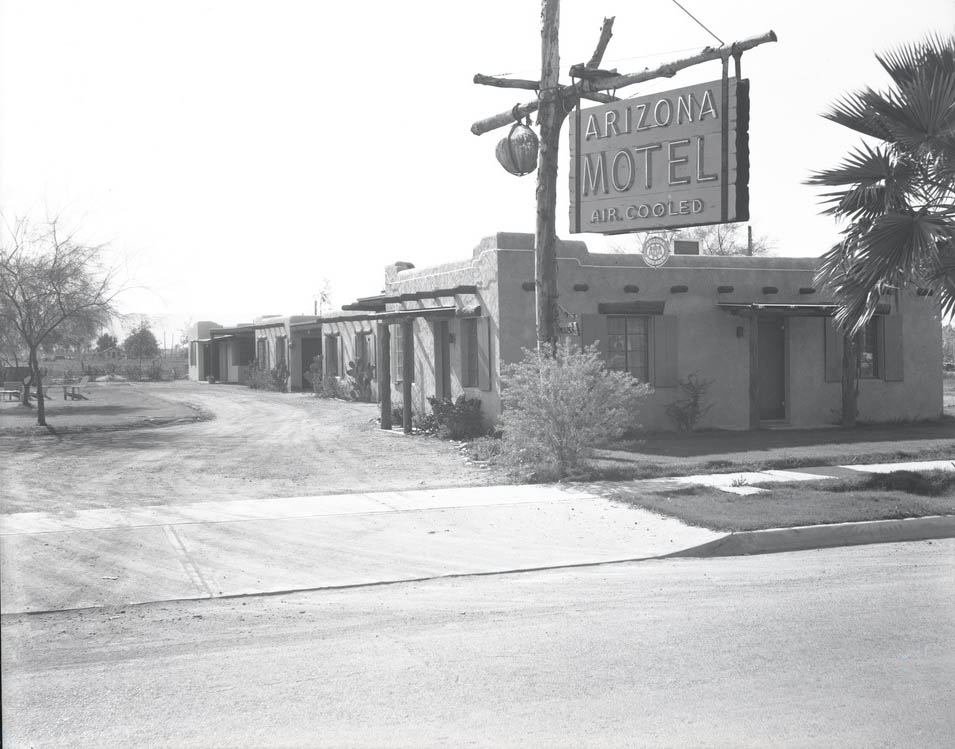
Motels along Van Buren Street served the steady stream of tourists and travelers who came to Phoenix, especially during the winter months. The Arizona Motel at 2625 E. Van Buren was one of many such establishments dotting this major east-west route.
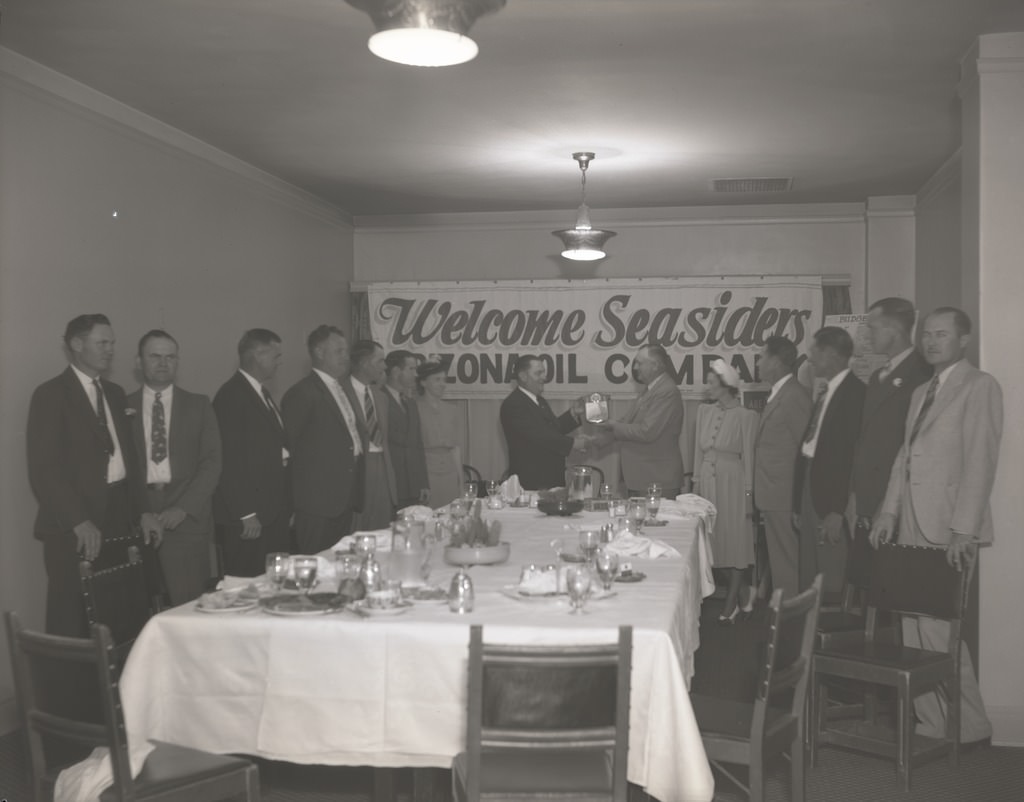
Corporate gatherings were a regular part of Phoenix business life. This Arizona Oil Company event featured a banner reading “Welcome Seasiders Arizona Oil Company” and appeared to be an awards luncheon or dinner, showing that the city had a well-developed corporate culture even in 1940.
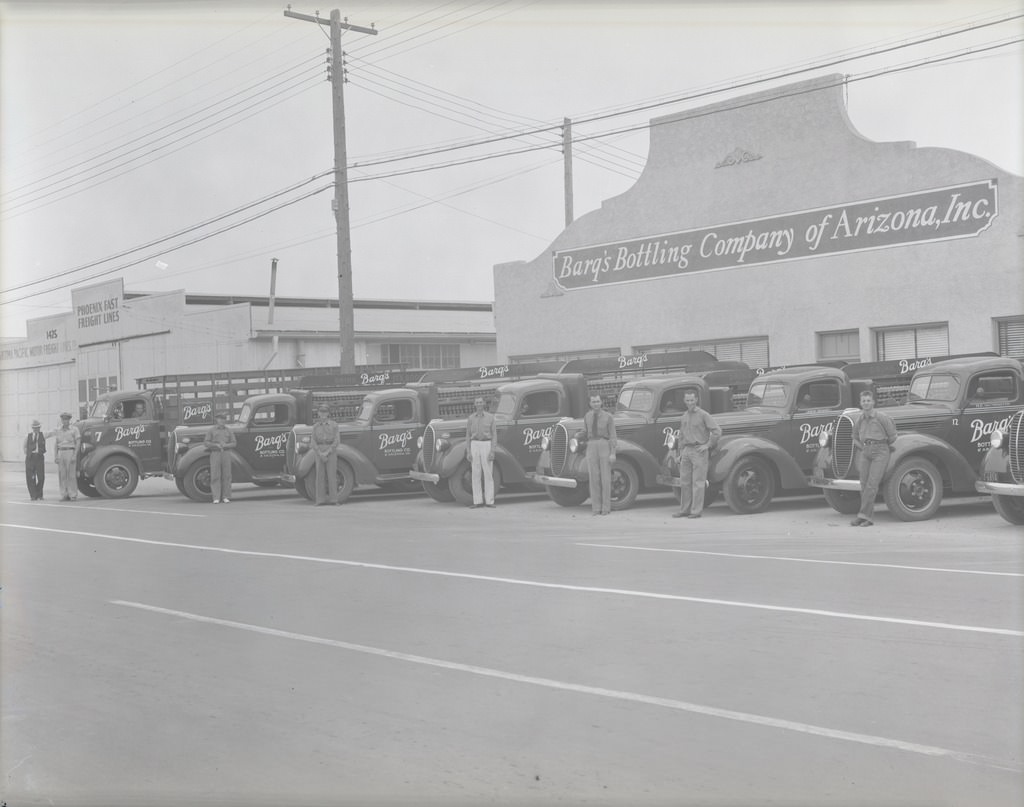
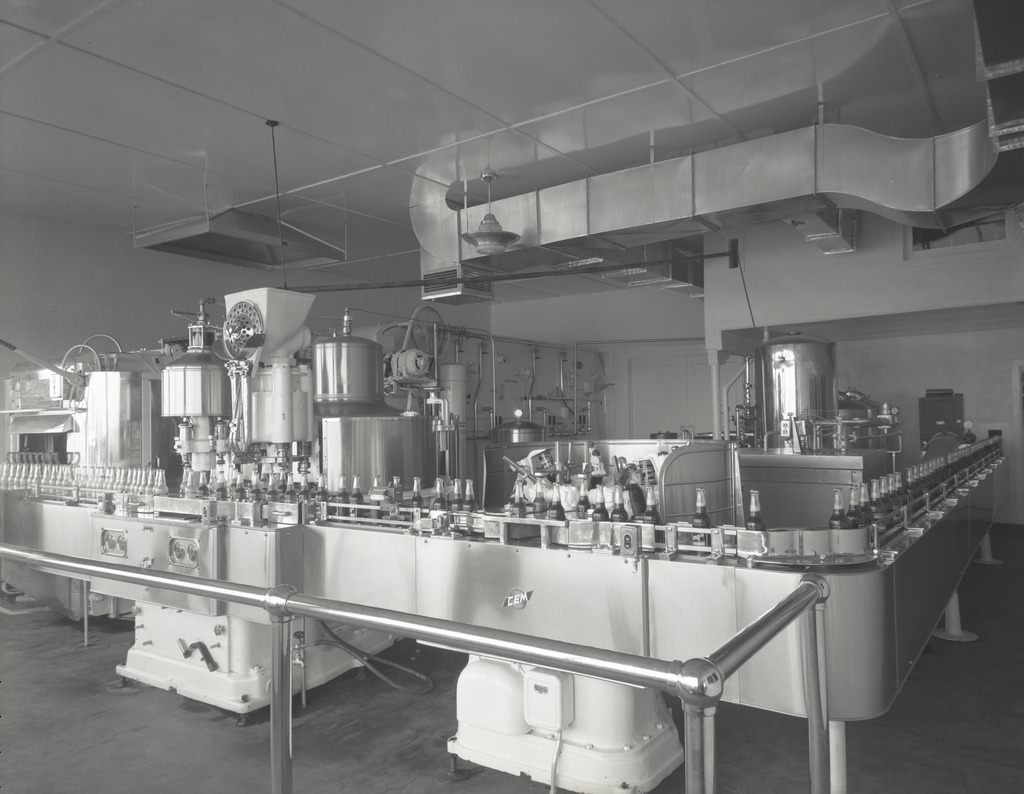
Barq’s Root Beer had a local bottling operation in Phoenix. Workers ran glass bottles through the bottling machinery to keep up with demand from restaurants, soda fountains, and retailers across the region.
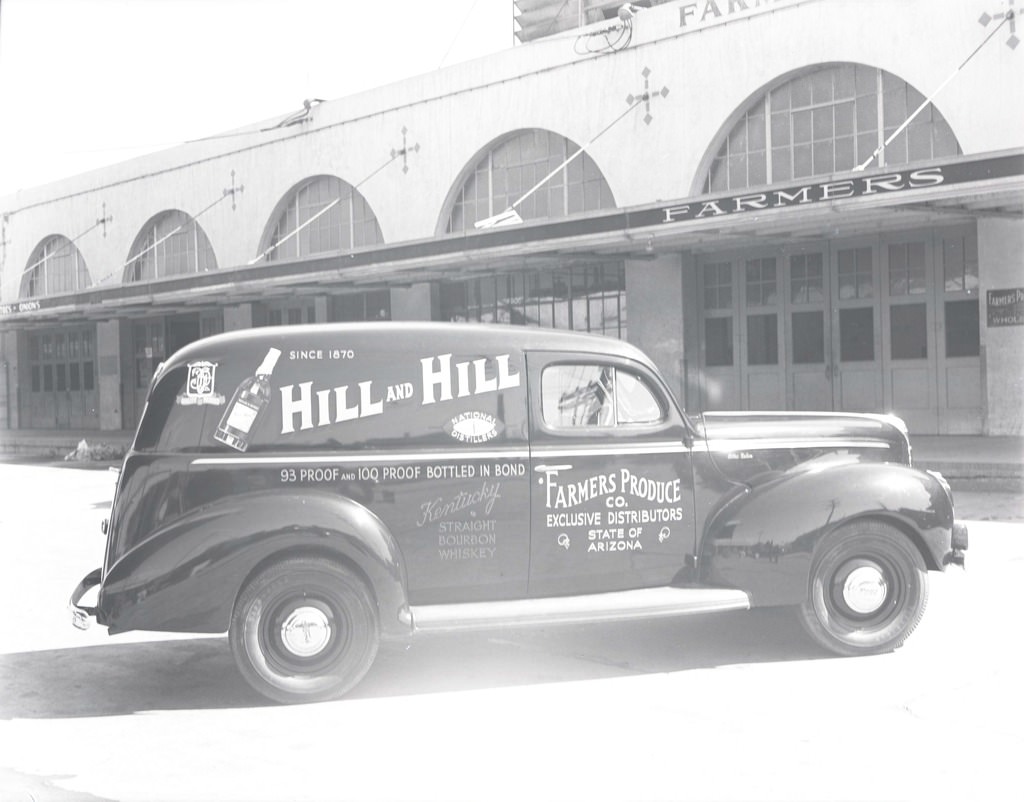
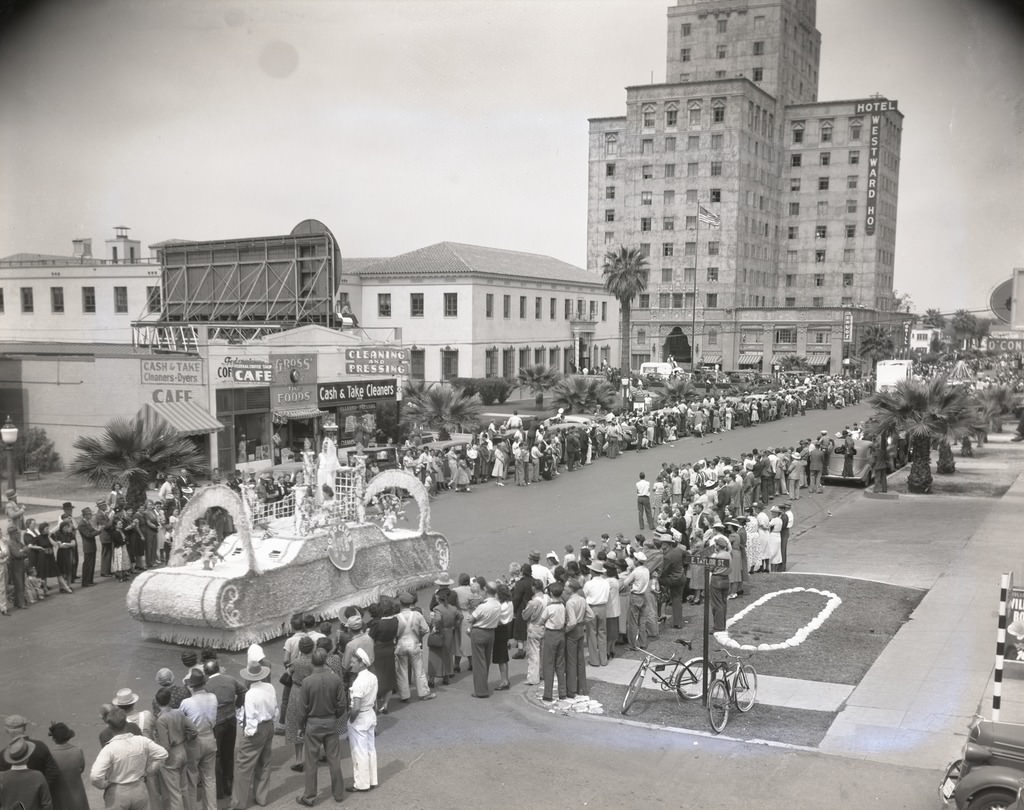
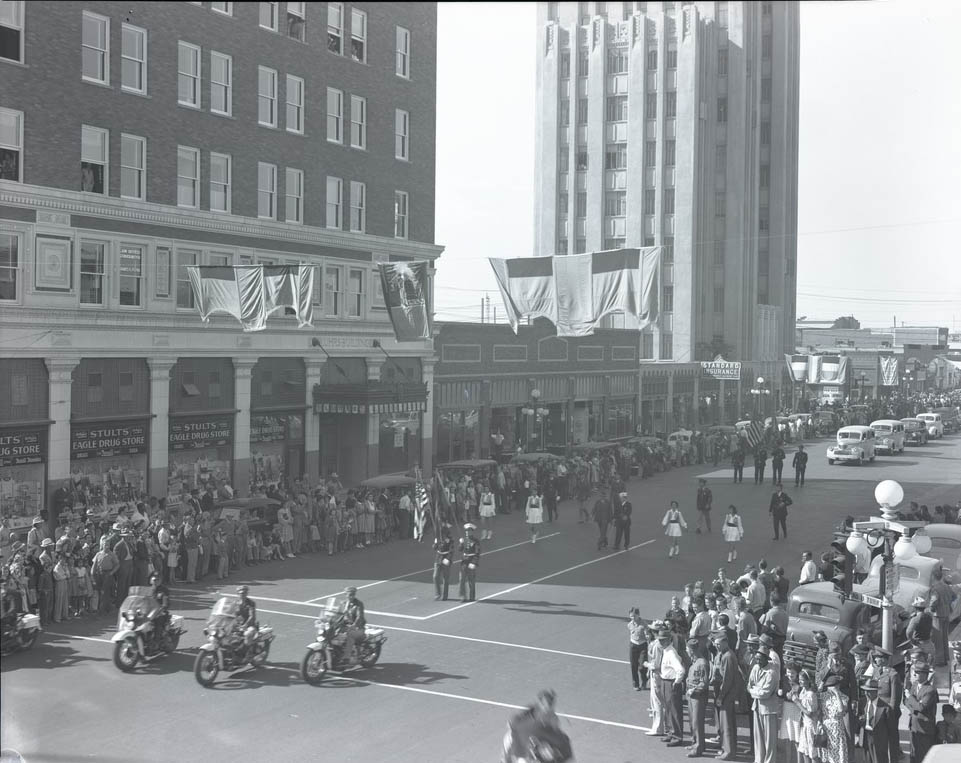
Public events brought Phoenix residents out into the streets. This Fiesta Parade moved south on Central Avenue near Filmore Street, drawing crowds along the sidewalks to watch the procession pass.
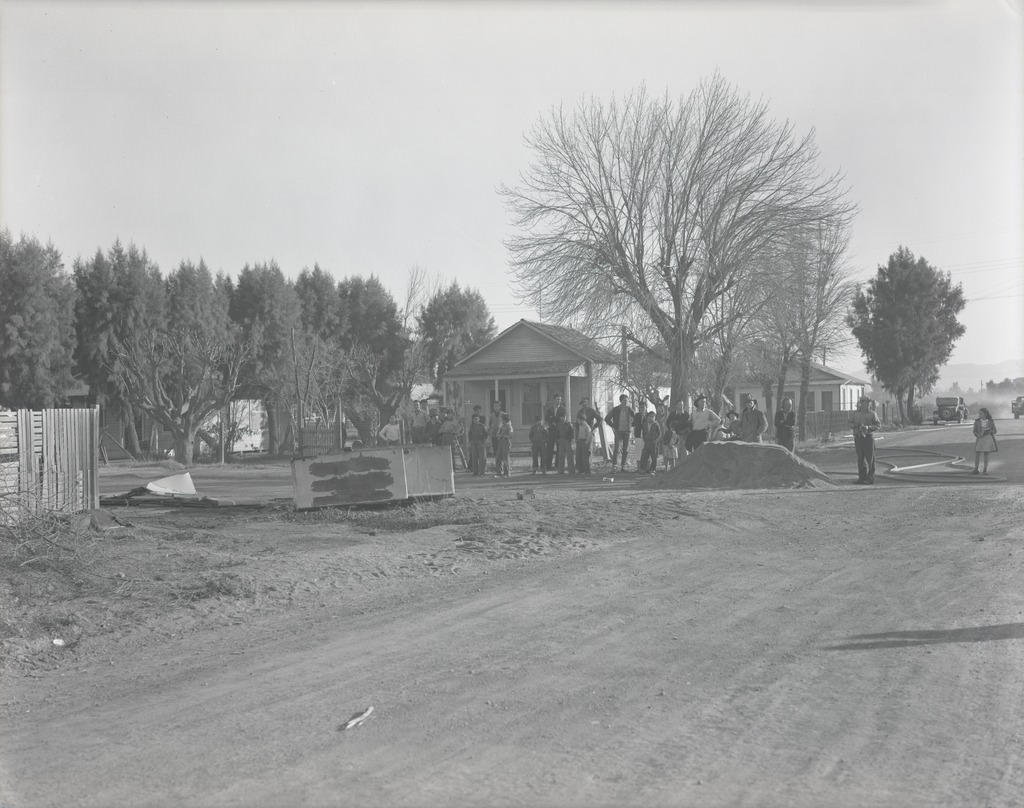
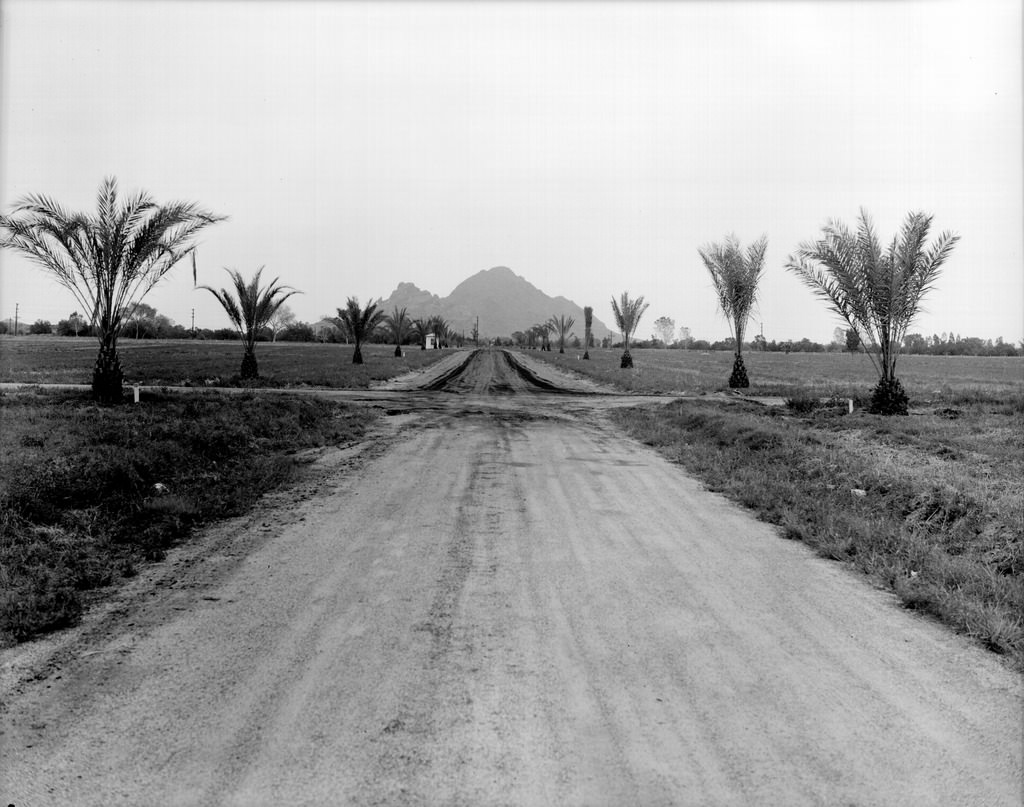
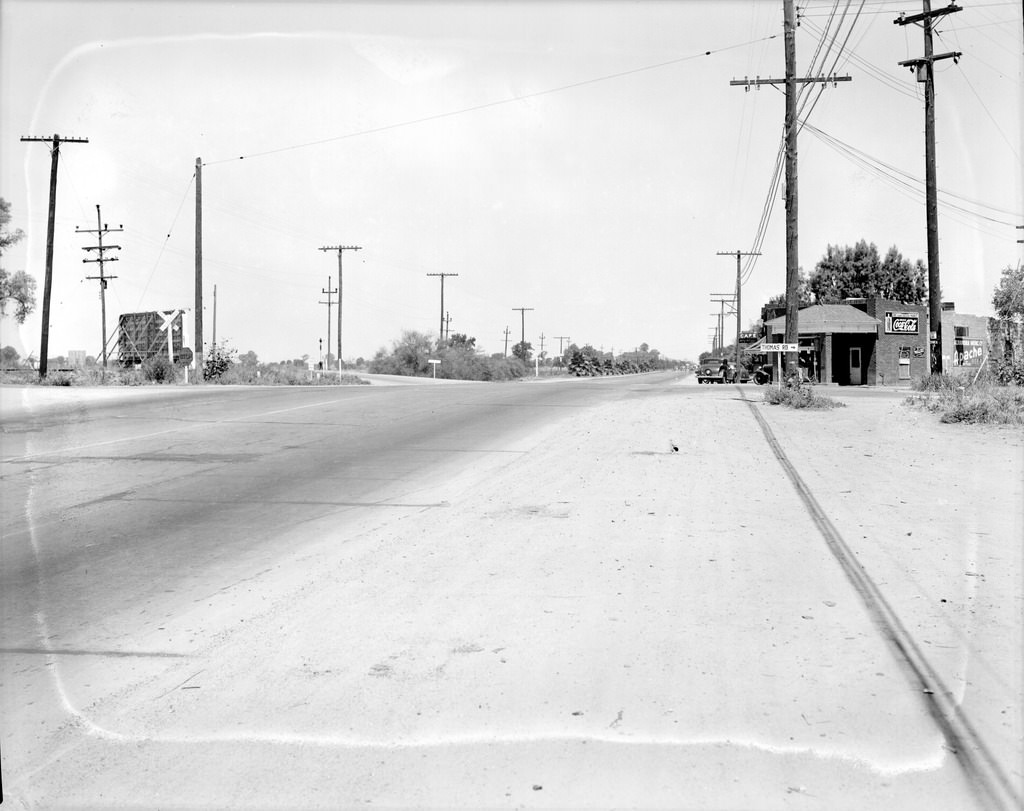
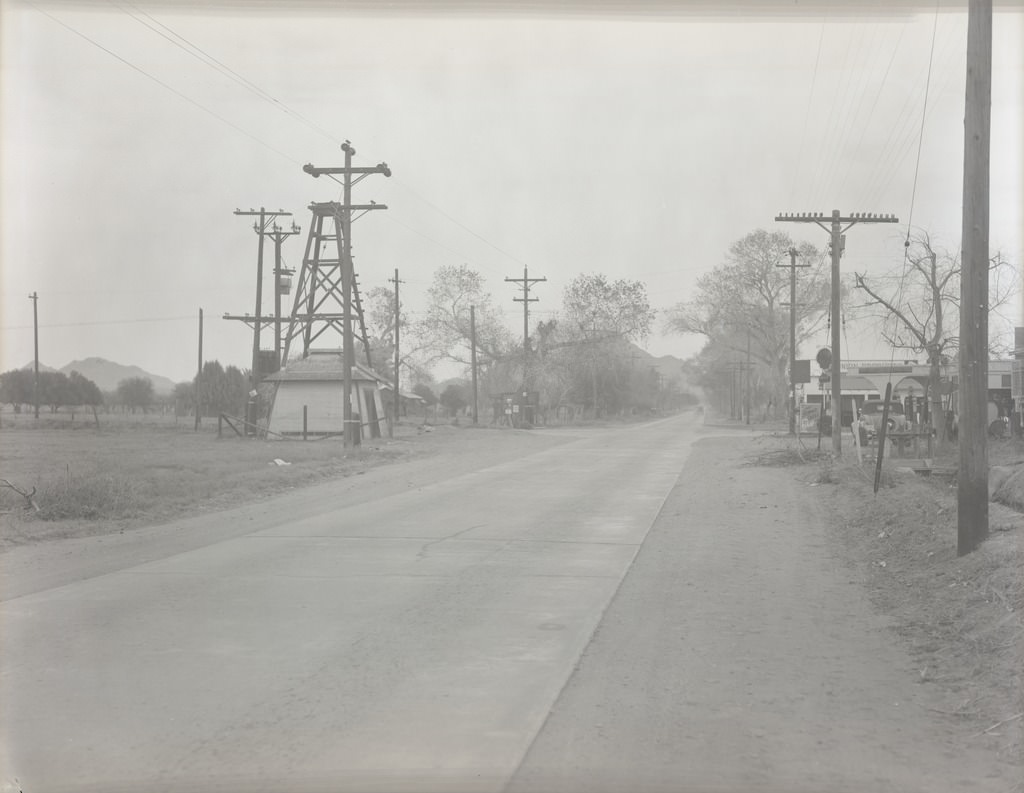
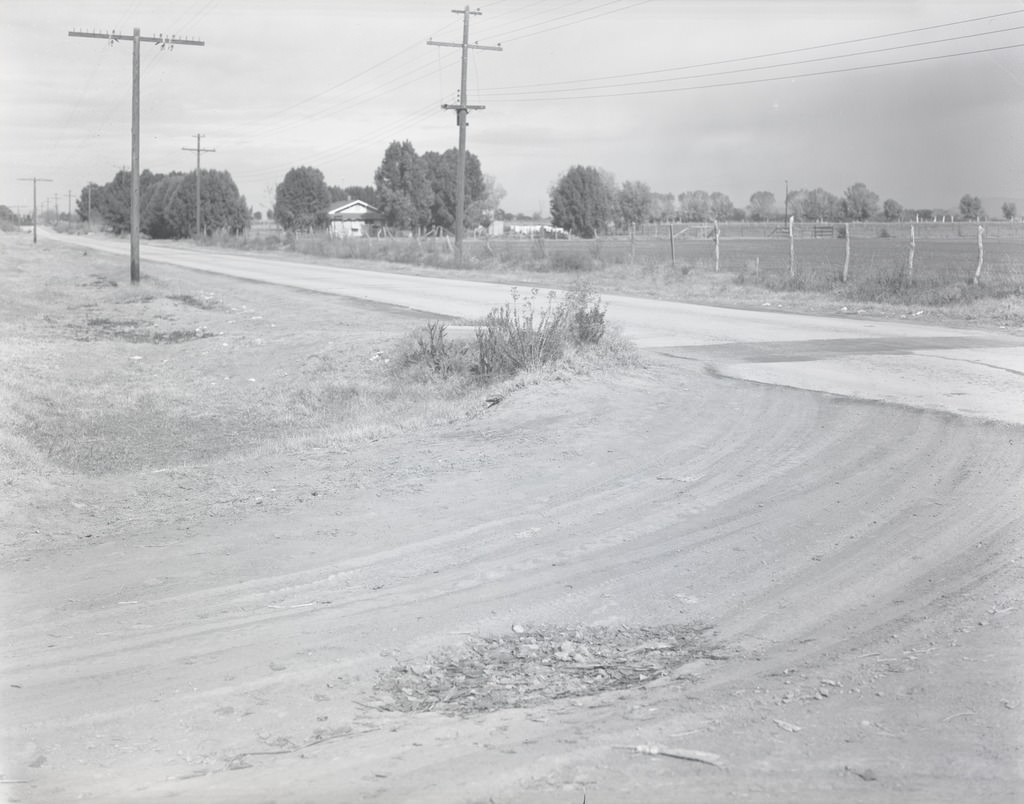
Phoenix’s road network extended outward from the city center, intersecting with irrigation canals and agricultural roads. Grand Avenue at the corner of Lateral 4 near Thomas Road was one of those transitional zones where urban and rural Phoenix met.
Healthcare facilities serving Native American communities were part of Phoenix’s institutional landscape. The Indian Sanatorium stood on the northwest corner of Indian School Road and 16th Street, serving patients from surrounding tribal communities.
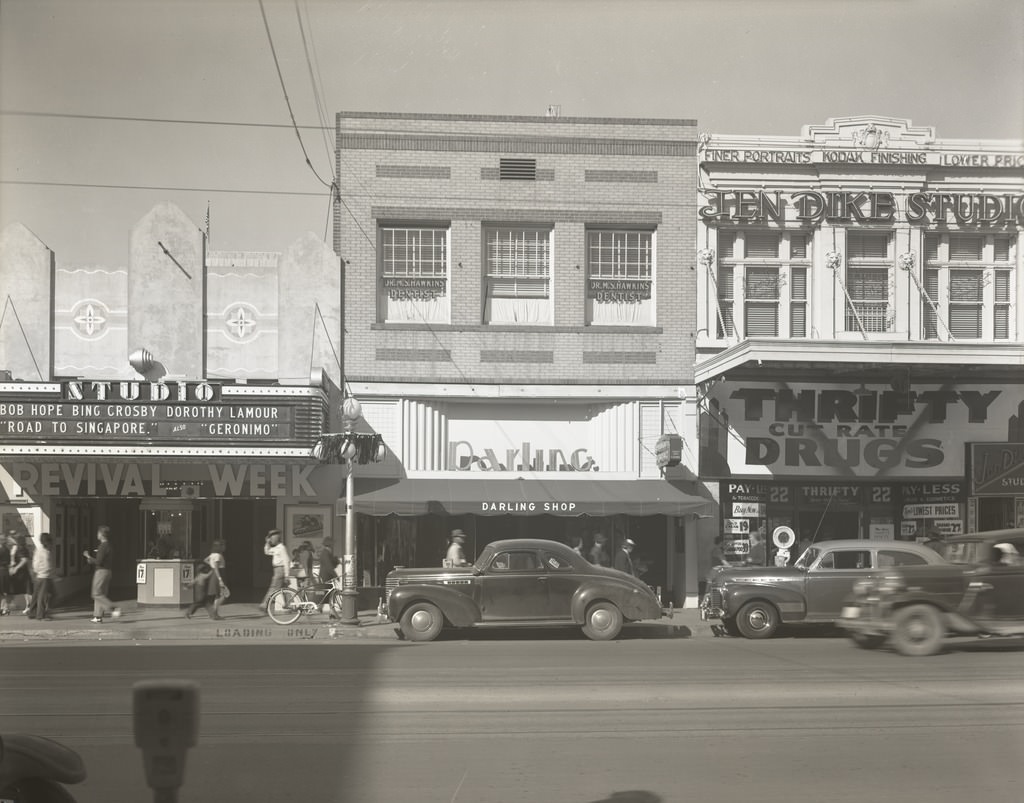
The intersection of Washington Street and Central Avenue was one of the busiest corners in downtown Phoenix. The Darling Shop, Thrifty Drug Store, and the Studio theater at 14-16 E. Washington were all visible here. The Studio was showing “Road to Singapore” and “Geronimo” together, placing this photograph on November 2 or 3, 1940.
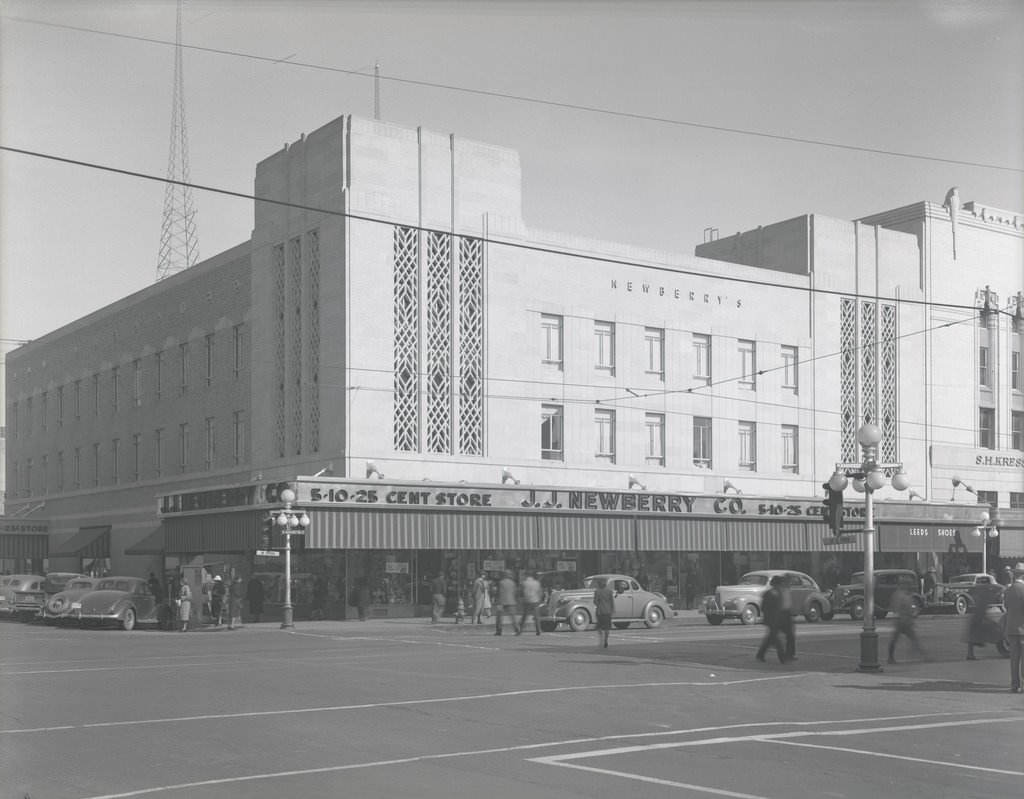
Five-and-dime stores like J. J. Newberry’s were a staple of American retail in 1940, selling everyday goods at affordable prices. The Phoenix location on Washington Street drew shoppers from across the city.
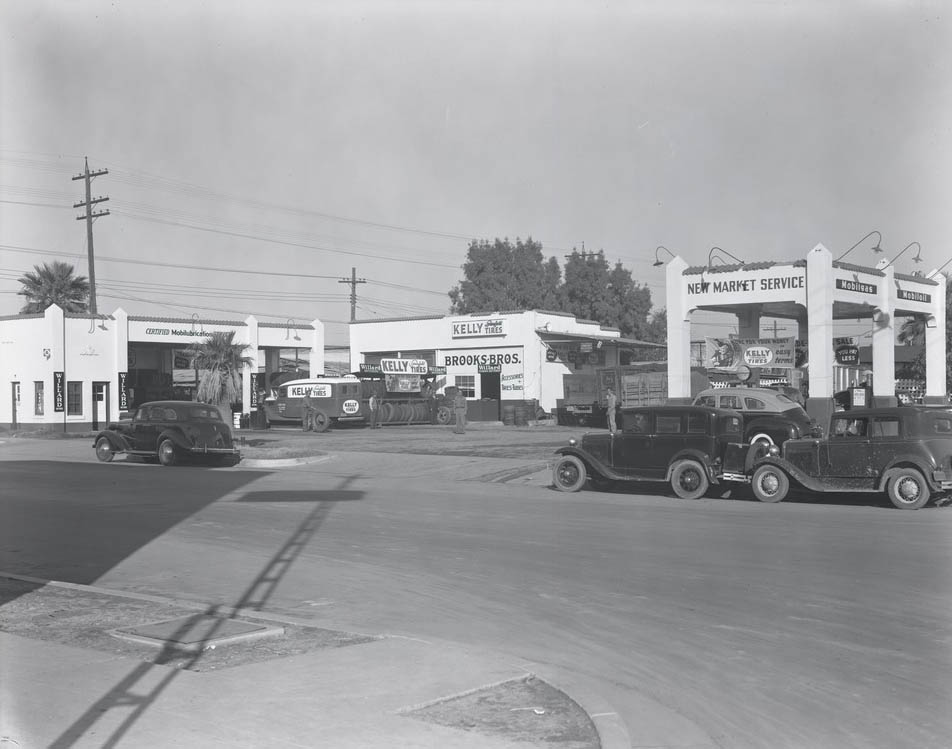
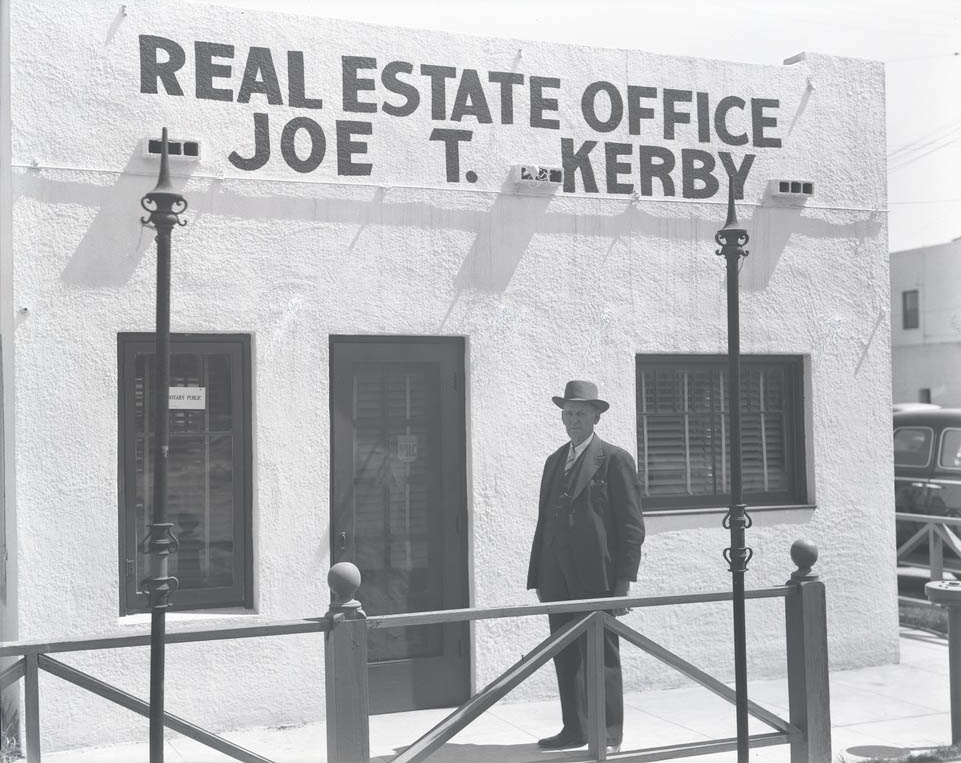
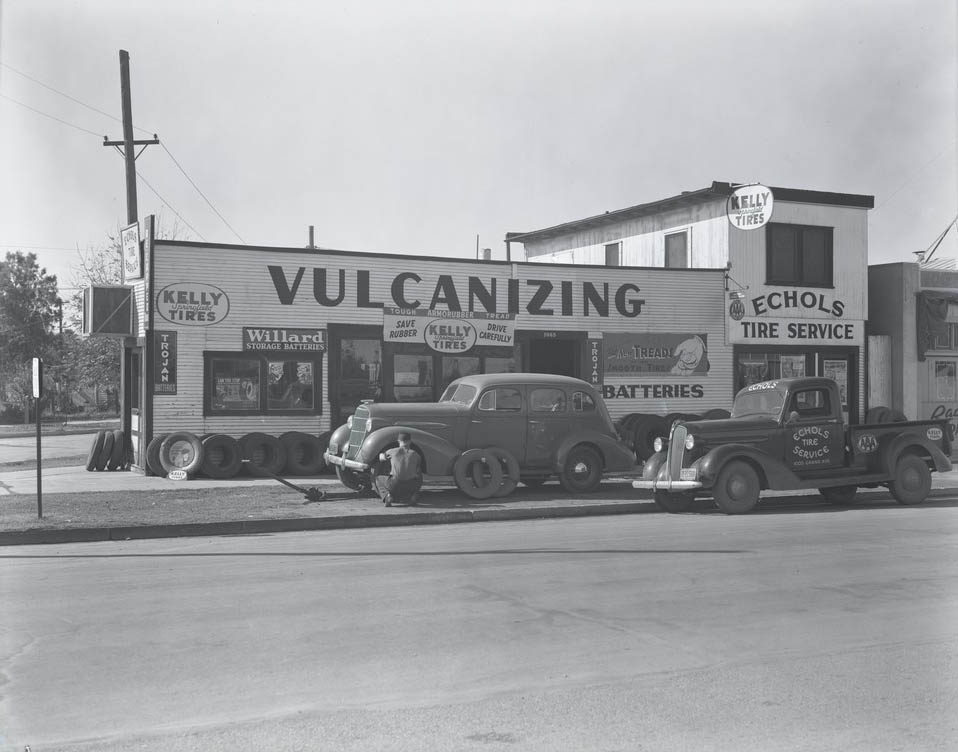
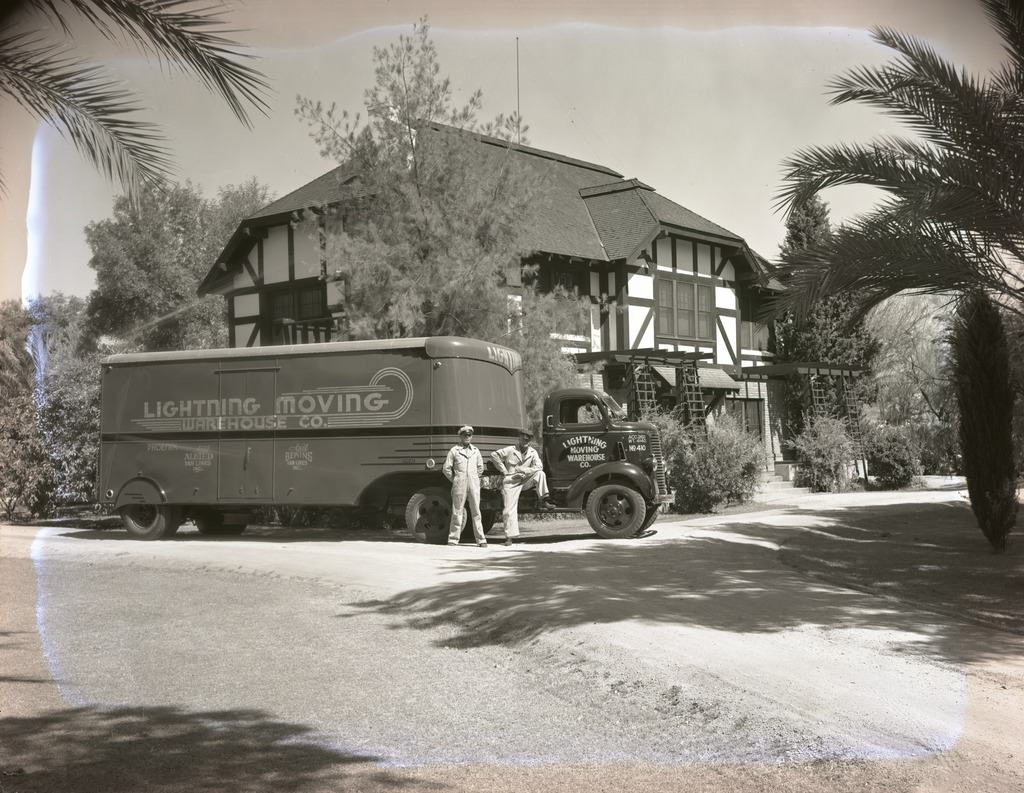
Moving companies stayed busy as families settled into new neighborhoods across Phoenix. The Lightning Moving Company was photographed loading furniture into a residence, a common scene in a city that was steadily attracting new residents.
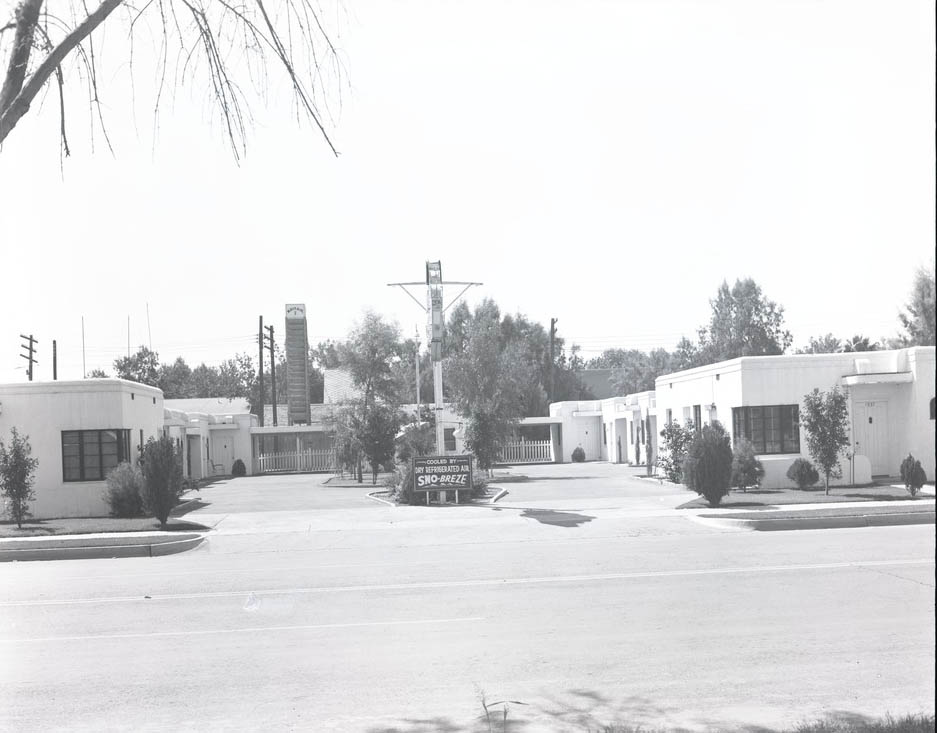
The Mayfair Auto Court at 1537 W. Van Buren was another example of the tourist lodging that lined this corridor. These courts offered travelers a place to park their cars right outside their doors, a practical arrangement for the automobile age.
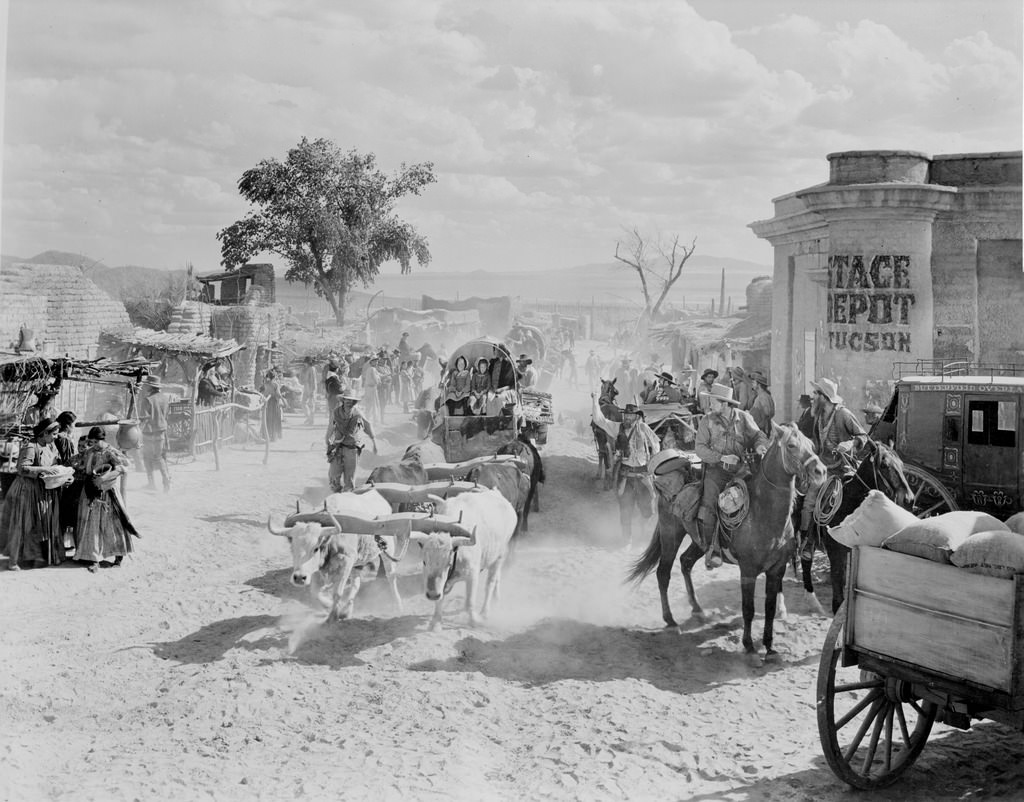
Hollywood was already using Arizona’s desert landscape as a backdrop for Westerns. Old Tucson served as a movie set in 1940, with its constructed frontier buildings standing in for the 19th-century American Southwest on film.
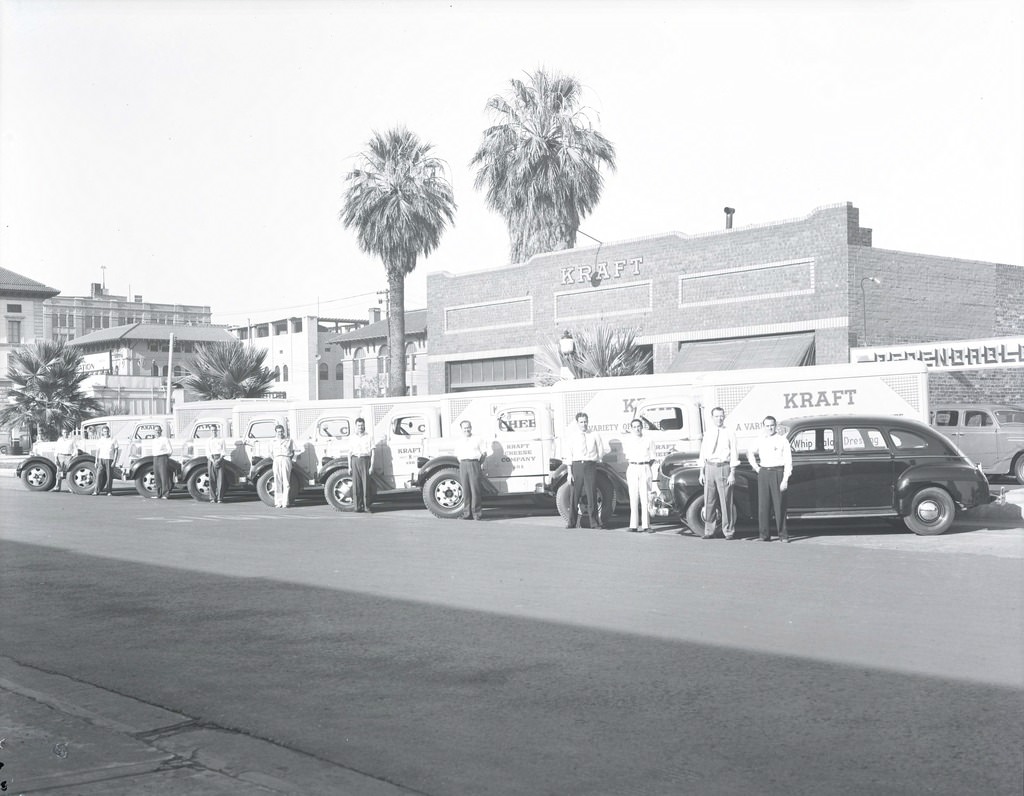
Distribution operations for national brands were well established in Phoenix by 1940. Kraft Cheese Products Company maintained a local distribution building with a fleet of delivery trucks and drivers ready to supply grocers and restaurants across the area.
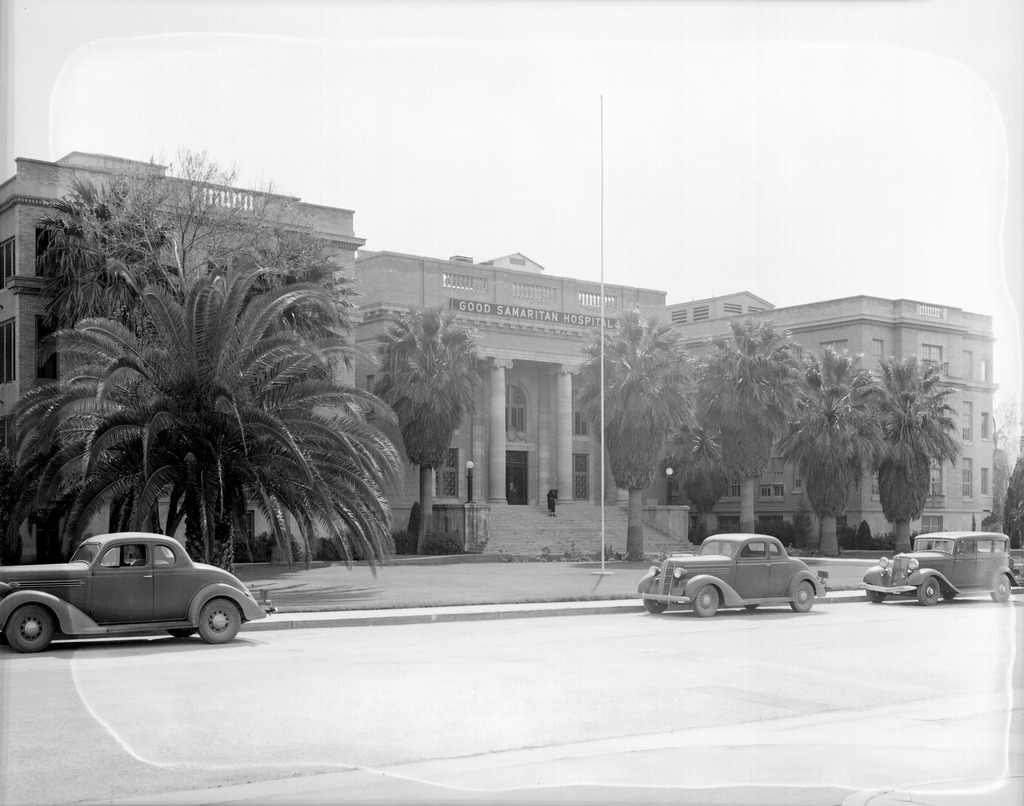
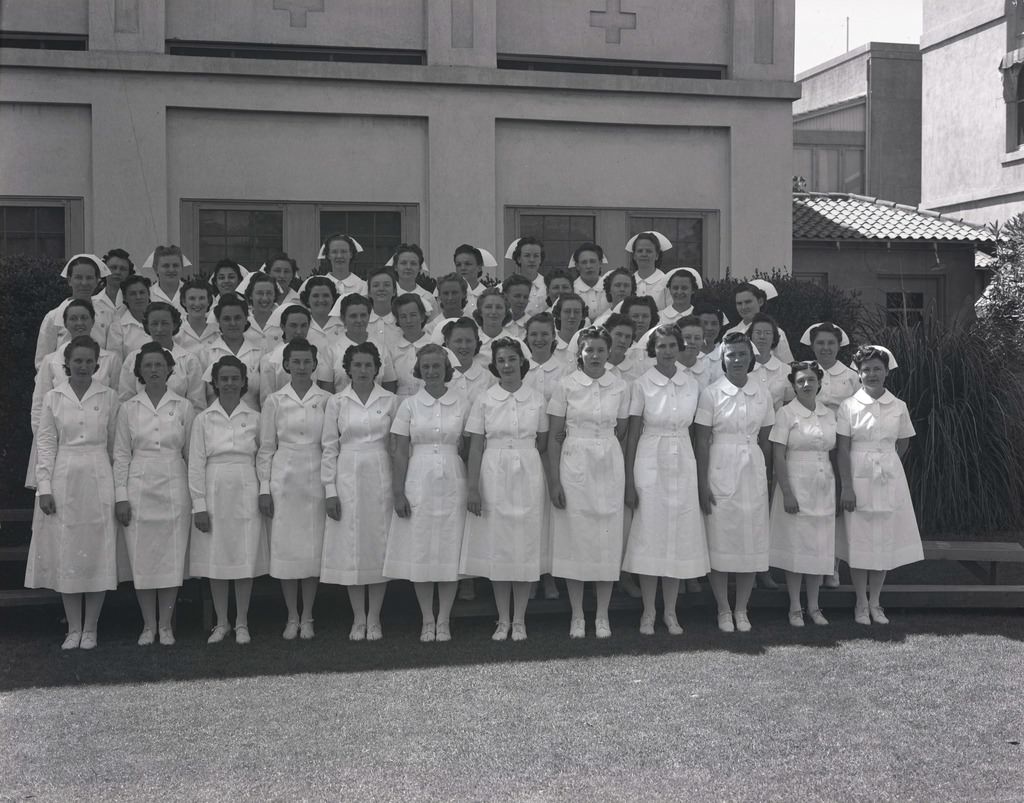
St. Joseph’s Hospital was one of Phoenix’s primary medical institutions in 1940. Nurses posed out front of the building, representing the medical staff that served the city’s growing population.
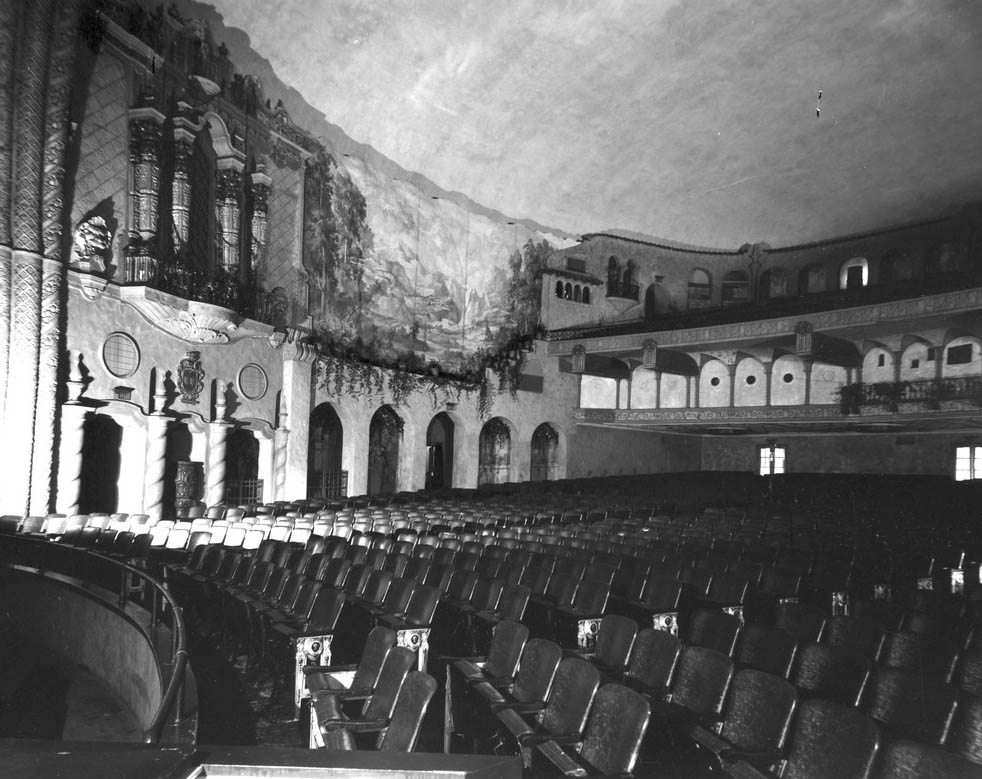
The Orpheum Theatre was a centerpiece of Phoenix entertainment life. Its interior seated a large audience and hosted films and live performances that drew residents from across the city.
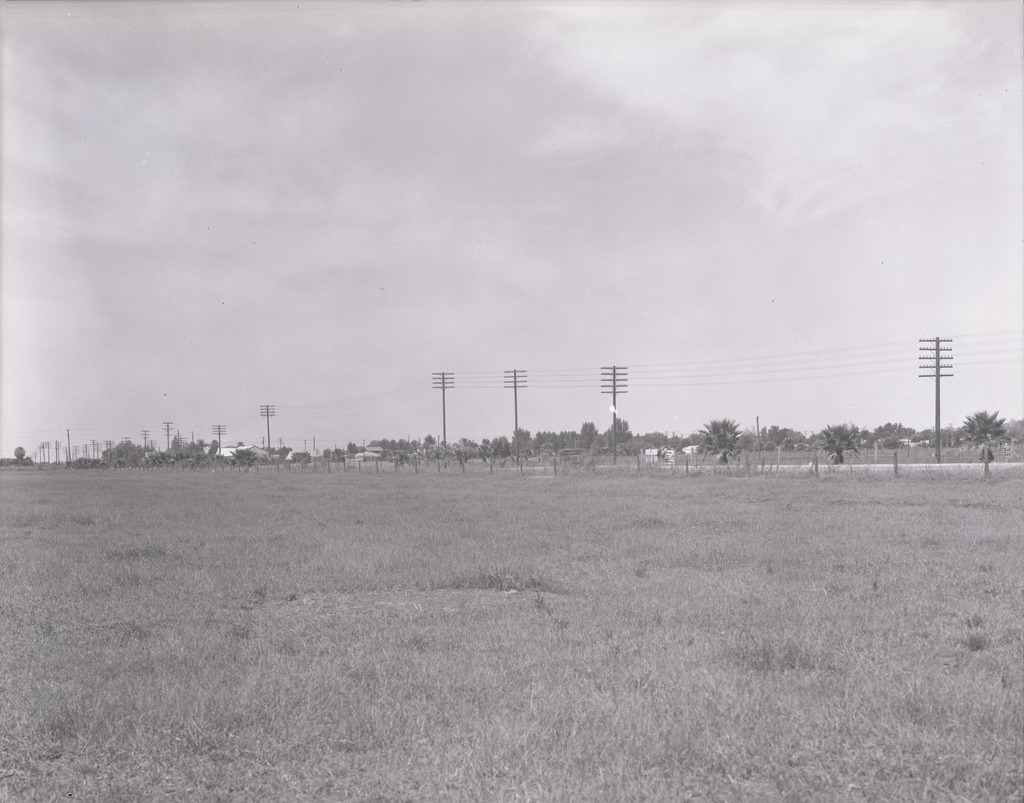
Arizona State Teachers College, later to become Arizona State University, sat in the nearby community of Tempe. A panoramic view looking toward its campus captured the open character of the landscape surrounding it in 1940, far different from the dense suburban development that would come later.
Parades drew large crowds to Central Avenue in 1940. In one photograph, the procession moves south past Stults’ Eagle Drug Store at 102-106 S. Central, with the Luhrs Tower rising in the background — one of downtown Phoenix’s most recognizable landmarks.
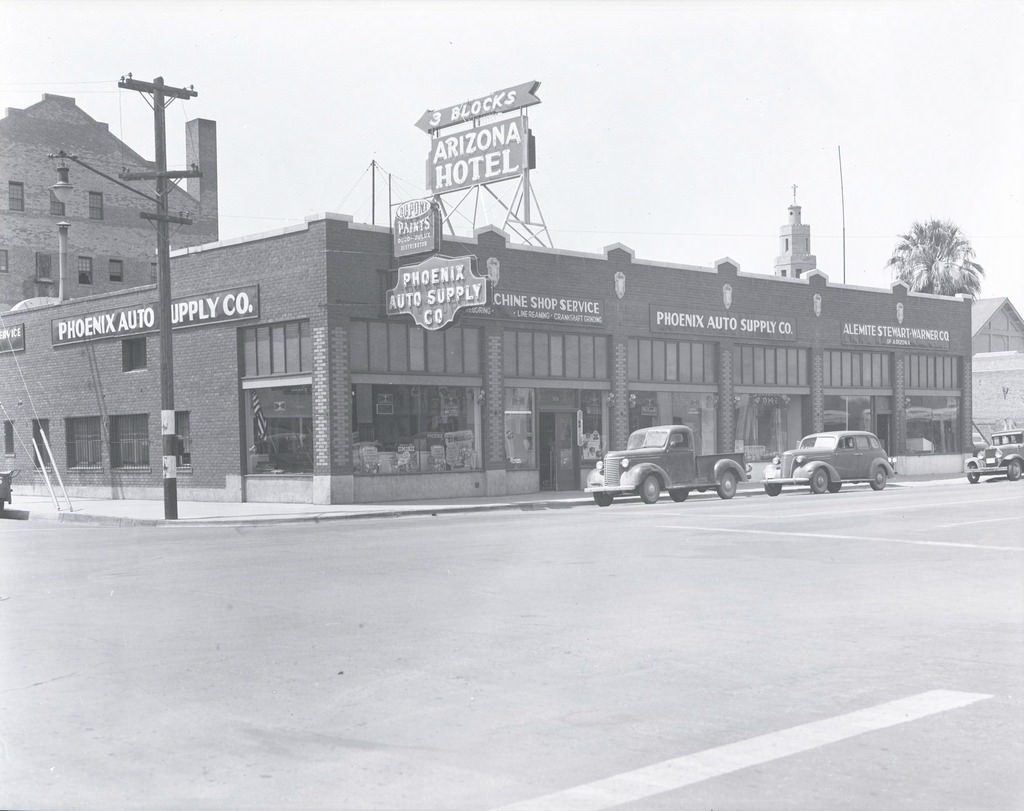
Water management was central to life in the desert Southwest. The Phoenix Canal moved irrigation water through the valley, sustaining both farms and the growing urban population that depended on reliable water delivery.
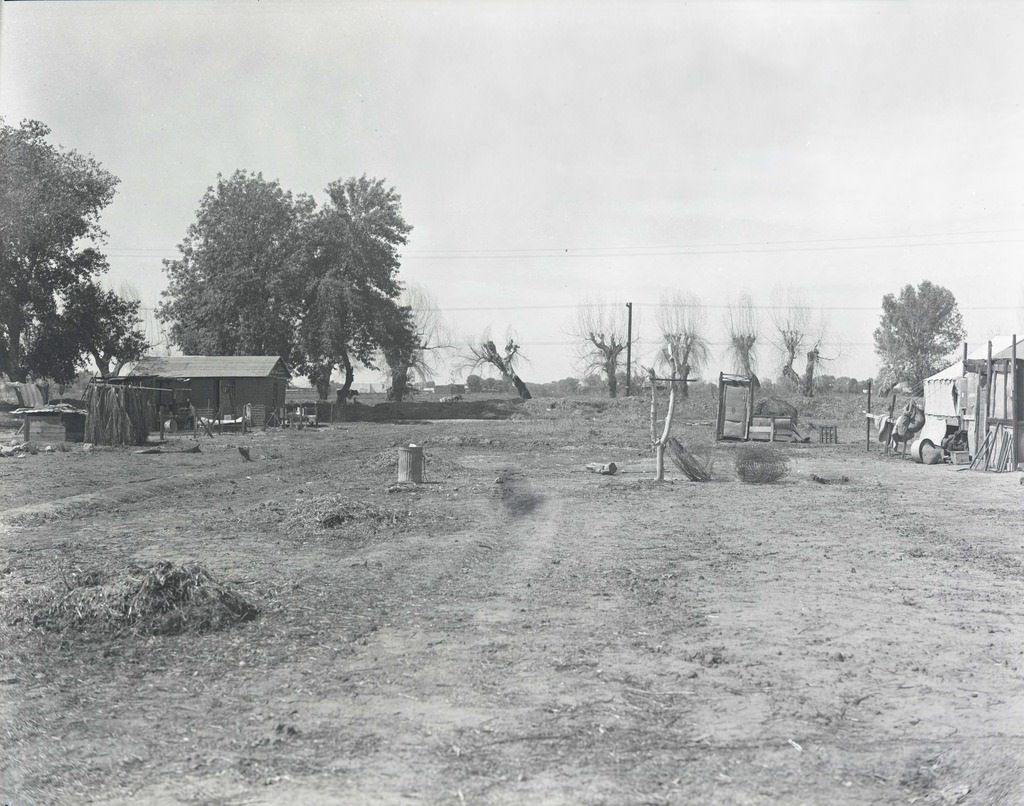
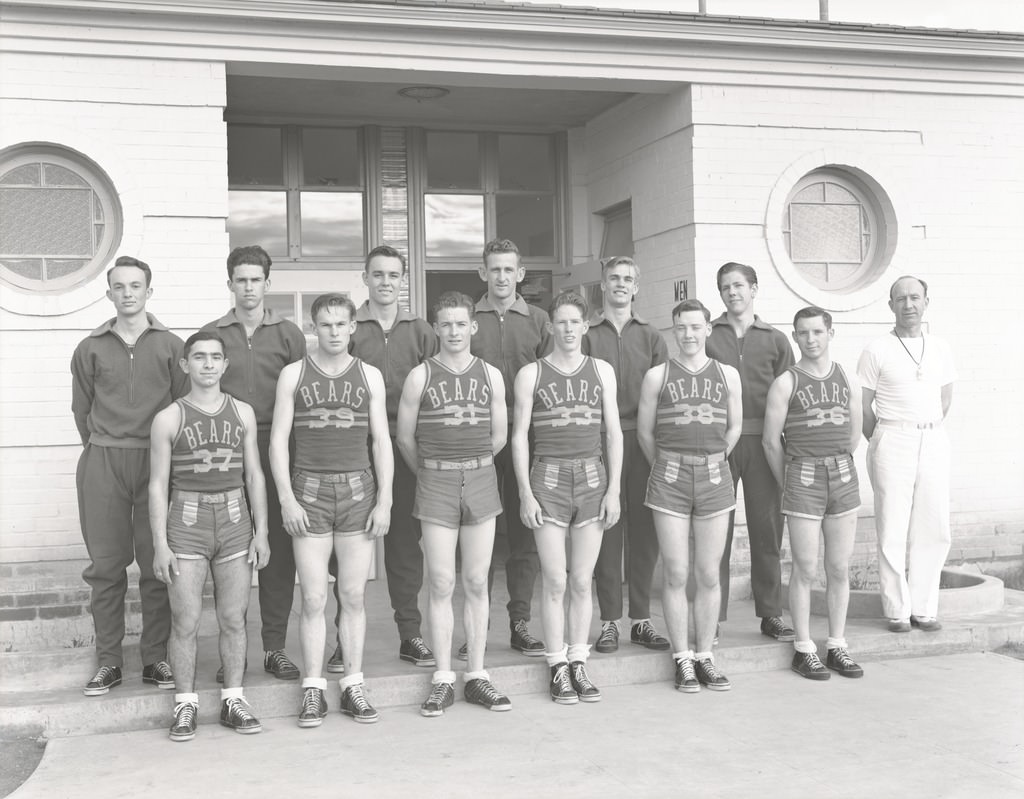
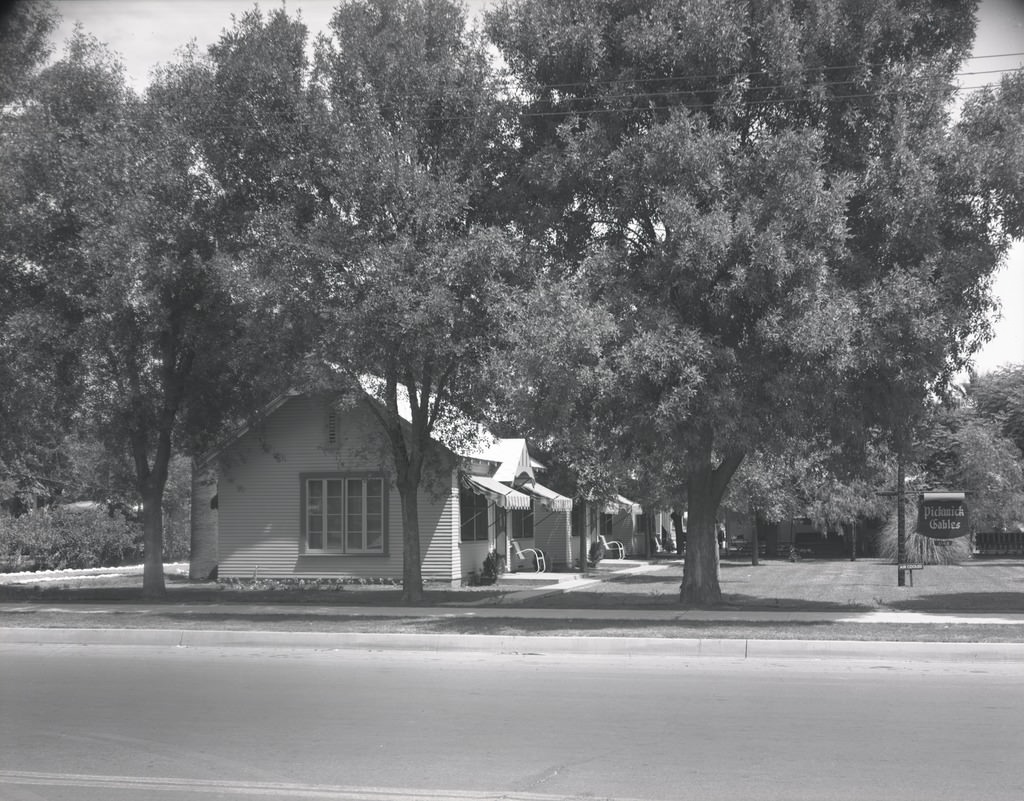
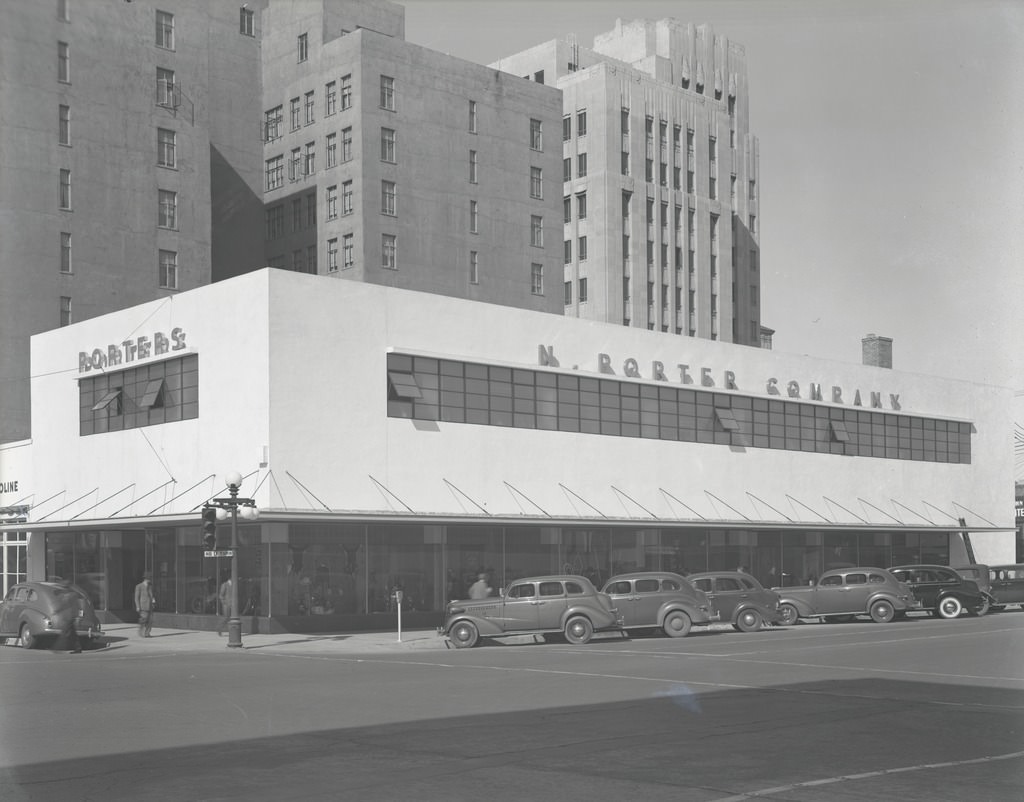
Porter’s Store stood at the corner of First Street and Adams in downtown Phoenix, serving shoppers who came in from surrounding neighborhoods and farms. Retail along these downtown blocks was the commercial heart of the city.
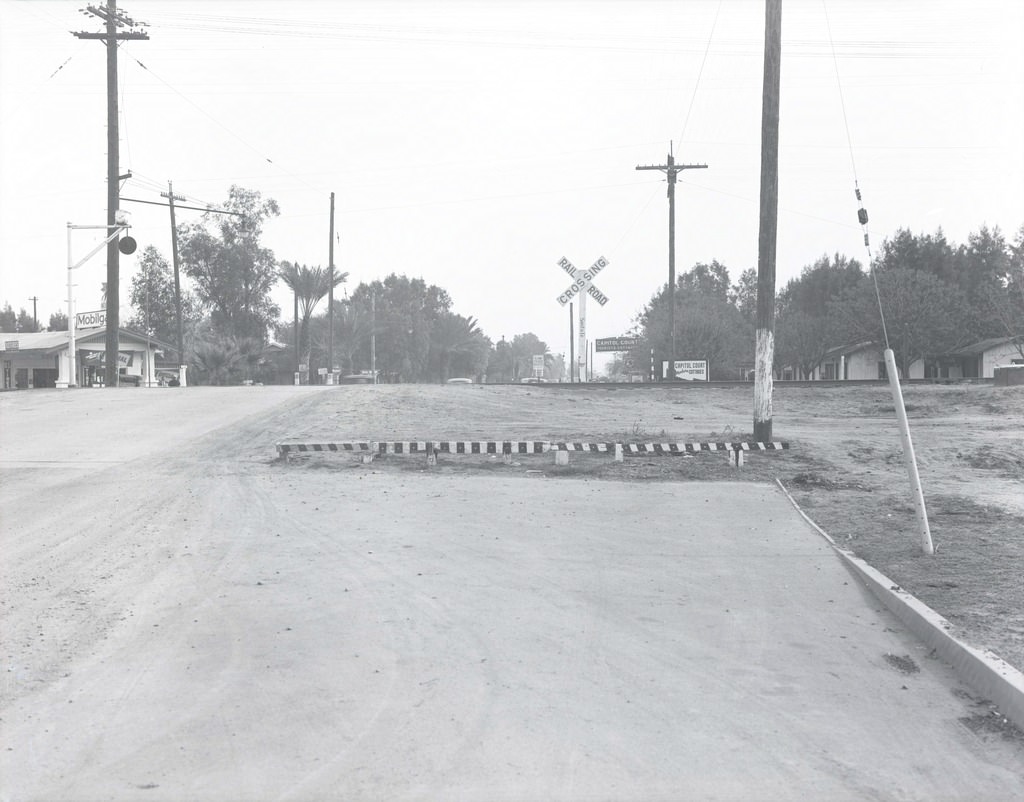
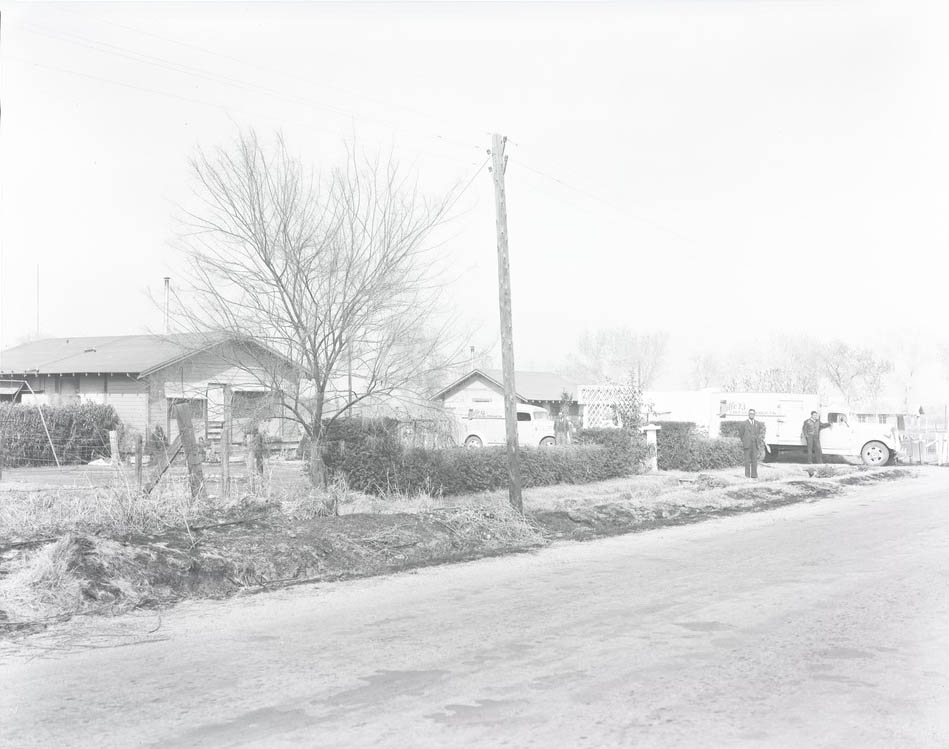
Ranch properties still occupied sections of Phoenix’s outer neighborhoods. One such ranch sat at Chicago Avenue and Indian School Road, a reminder that the city’s edges remained agricultural well into the 1940s.
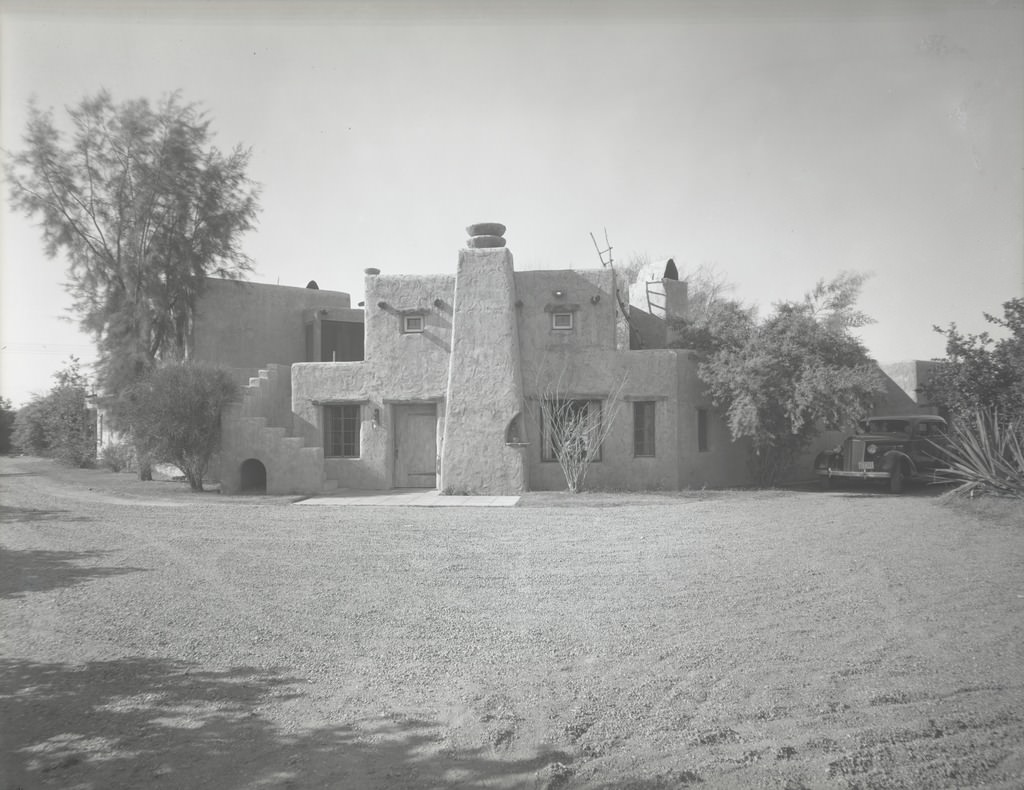
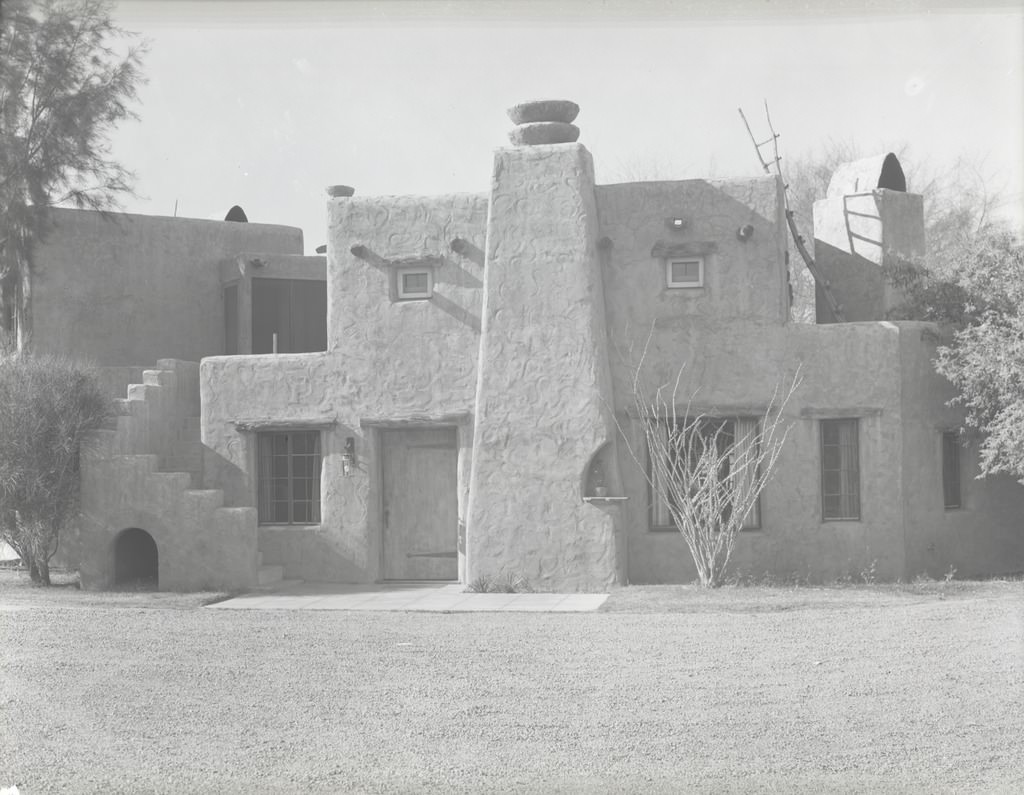
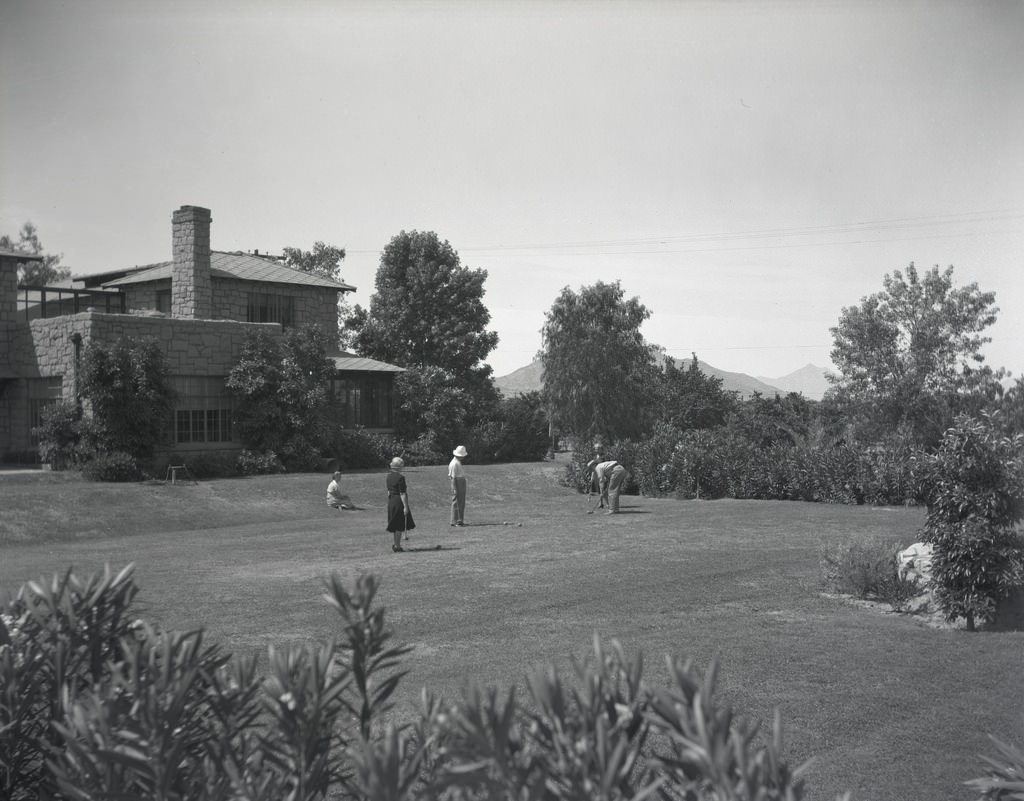
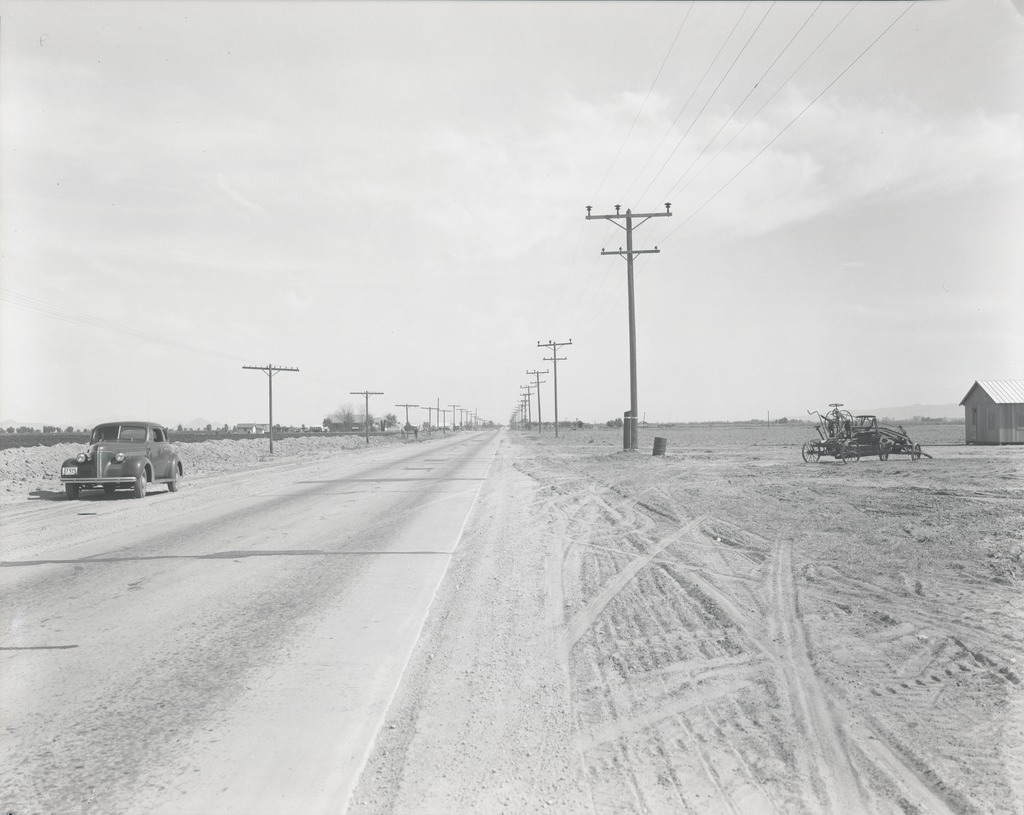
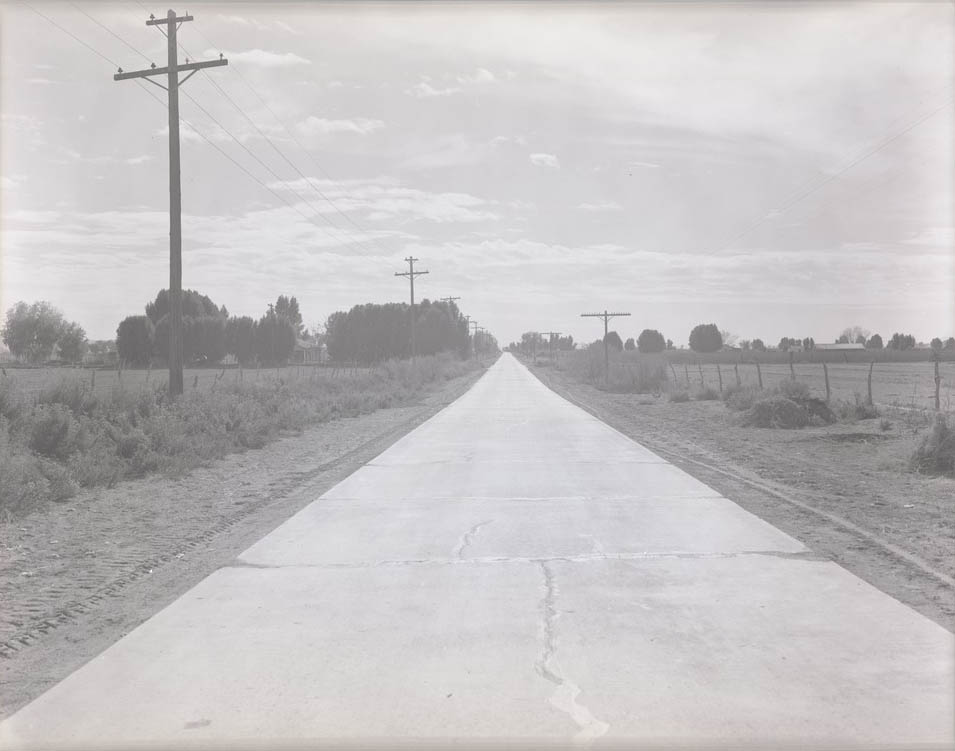
The Central Avenue underpass was a significant piece of public infrastructure, connecting different parts of the city and easing traffic flow. Photos from both its construction phase and finished state show how actively Phoenix was investing in its road network.
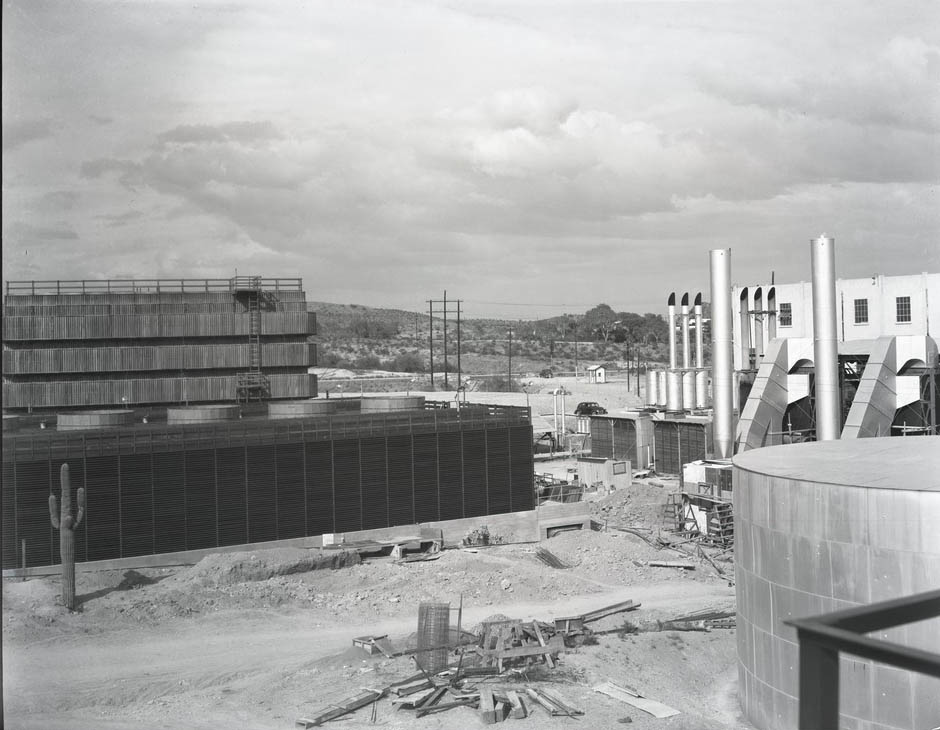
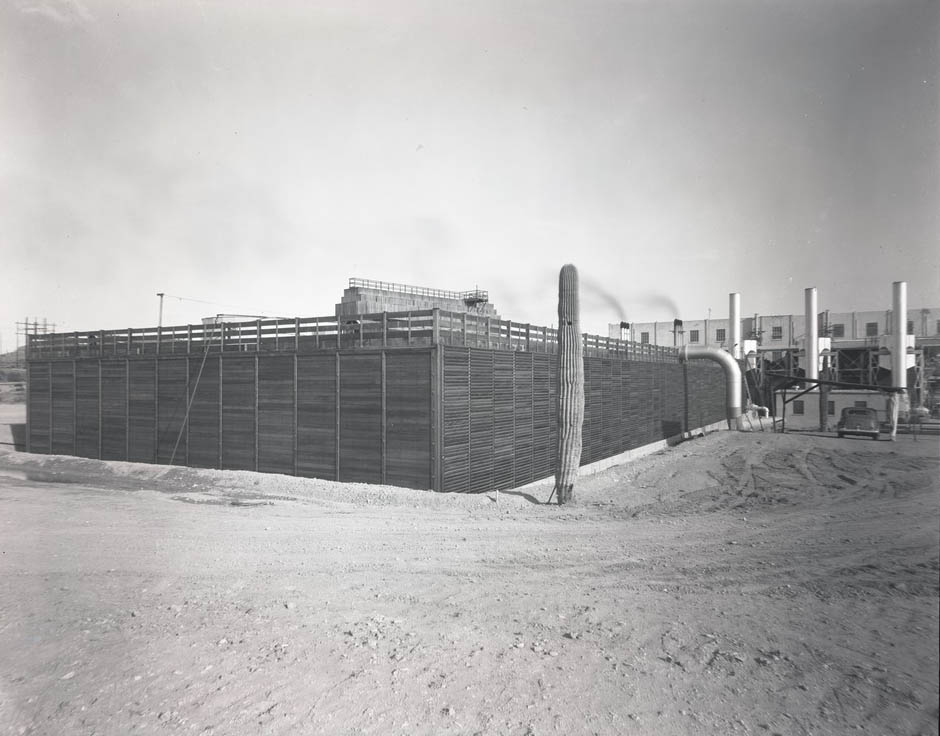
The Salt River Project was responsible for generating and distributing power across the valley. Its diesel plant facility was a key part of Phoenix’s electrical infrastructure, supporting both residential and commercial power needs.
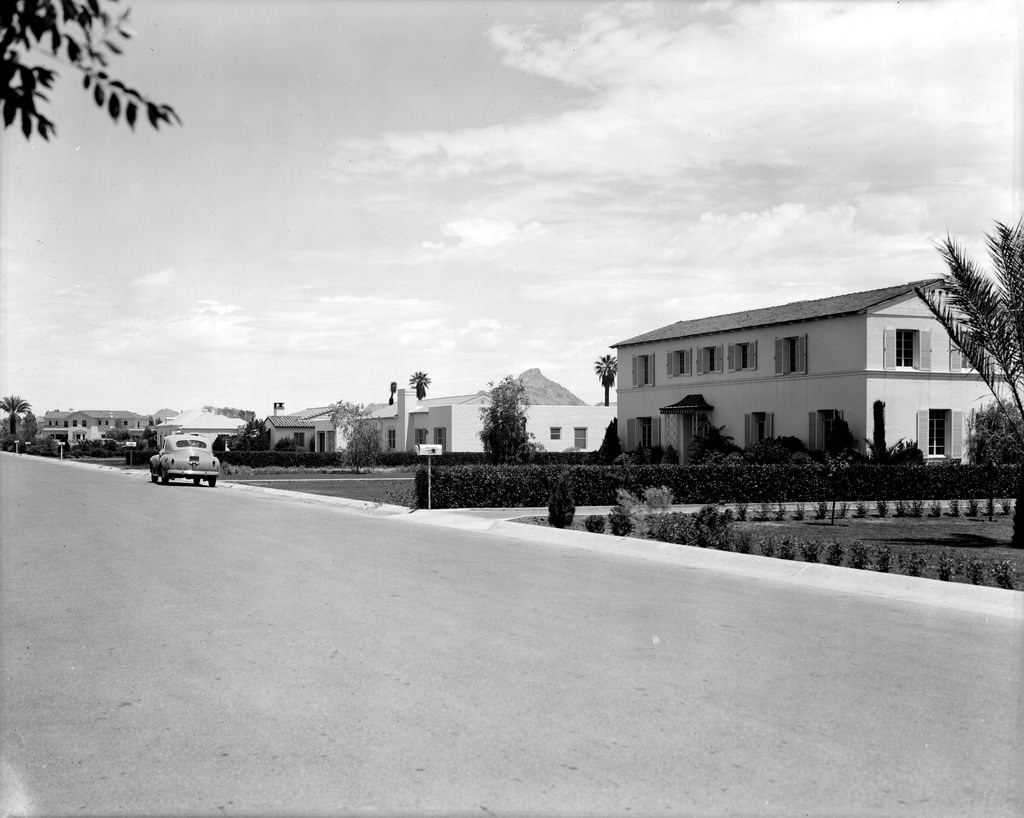
Residential addresses tell small stories about Phoenix families in 1940. William T. and Pauline K. Studer lived at 3007 W. Manor Drive in 1941, but this photograph captures their later residence at 2925 W. Manor Drive — a modest home typical of the era.
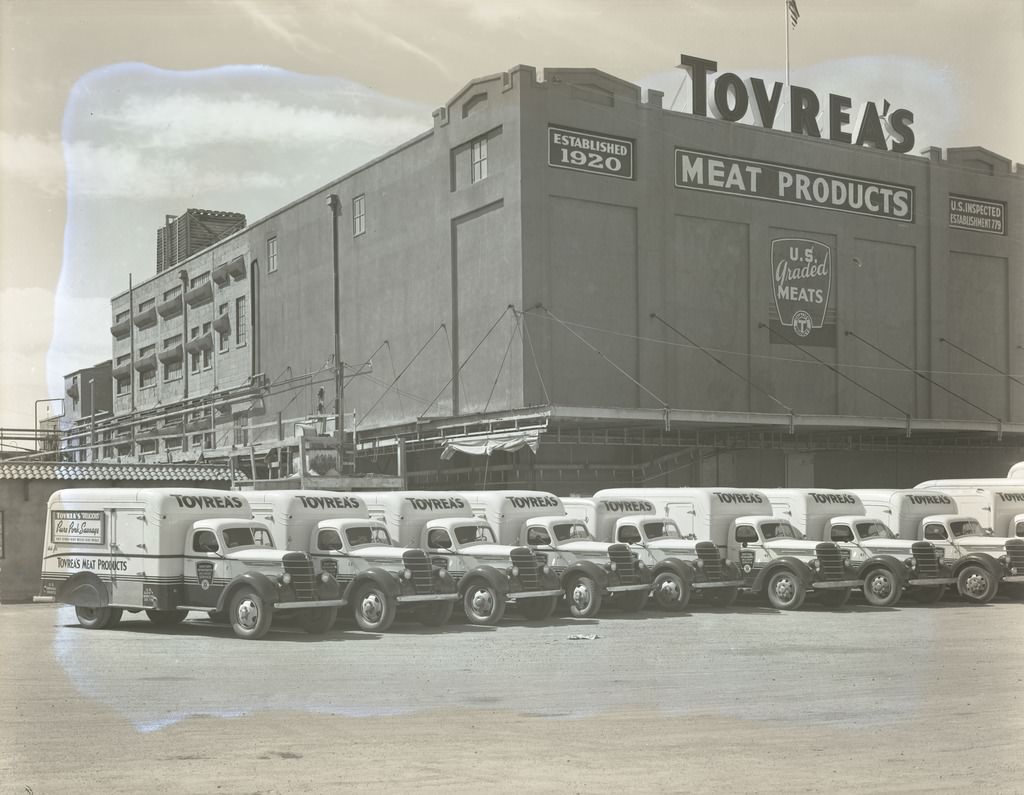
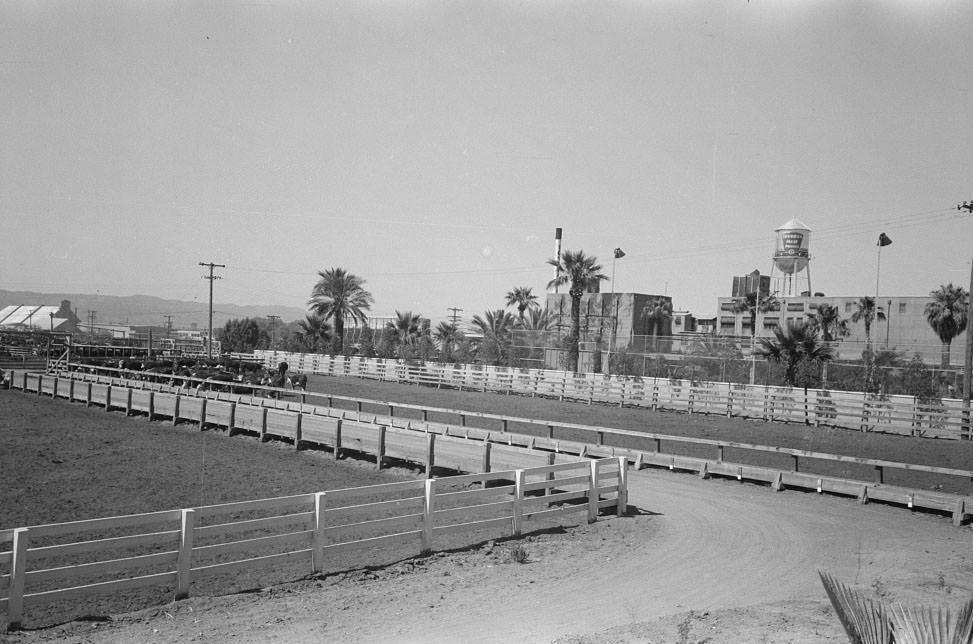
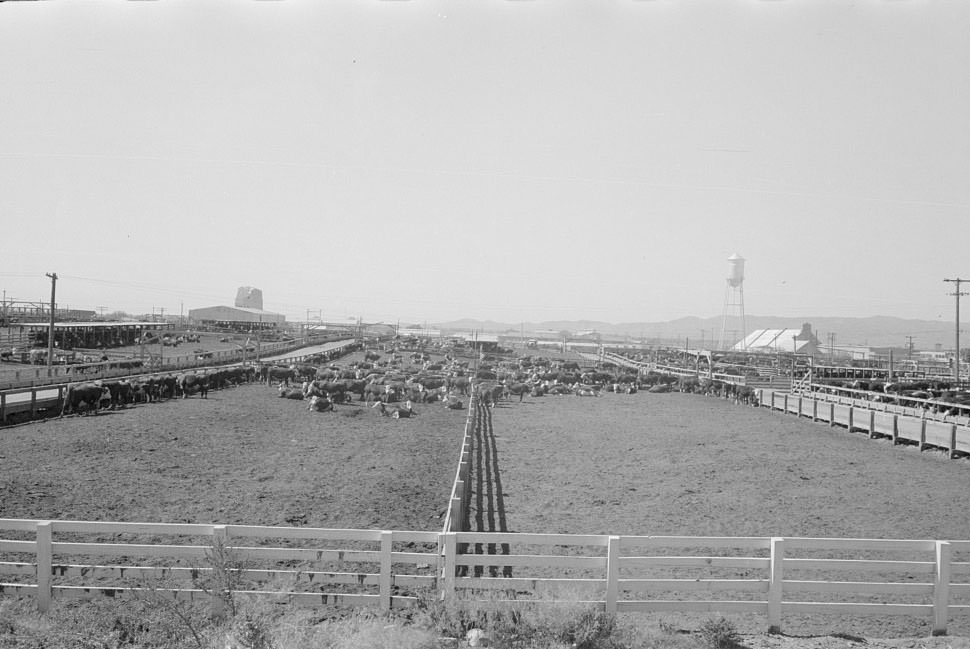
Meatpacking was a significant industry in the Phoenix area. The Tovrea Meat Company packing plant was one of the larger operations, and its exterior shows the scale of industrial food production that supplied the region.
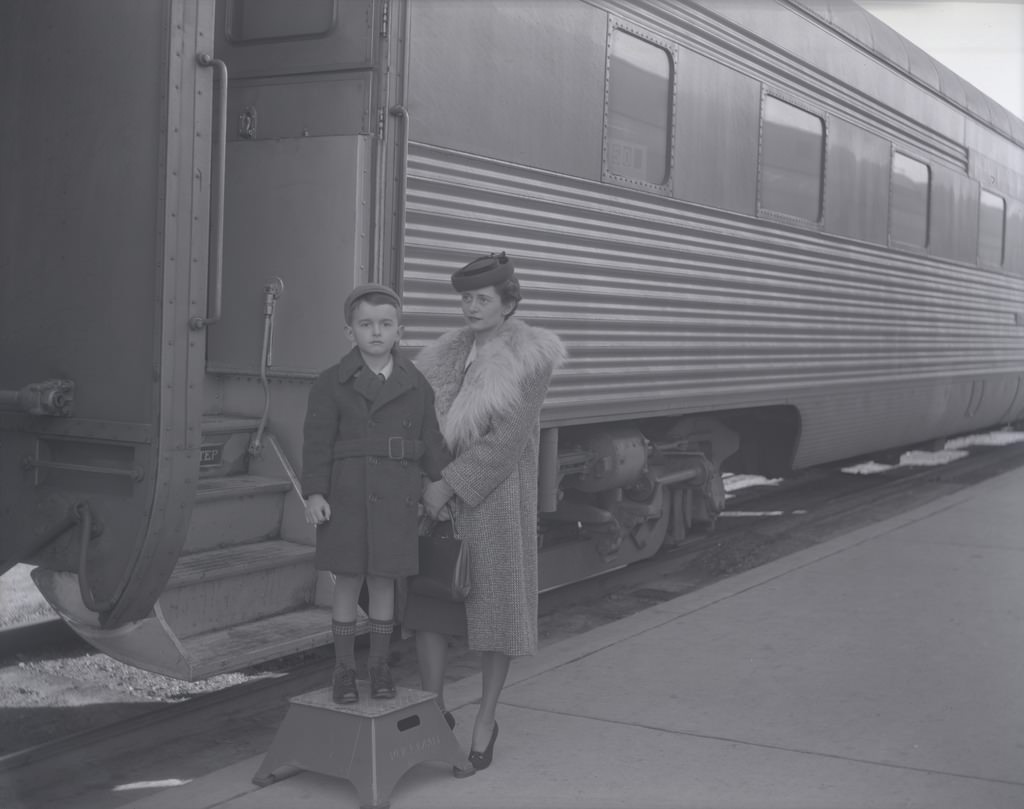
Rail travel still connected Phoenix to the rest of the country in 1940. The Santa Fe Railway provided passenger service, and scenes like a woman and young boy standing beside one of its trains capture the everyday experience of travel in the pre-aviation era.
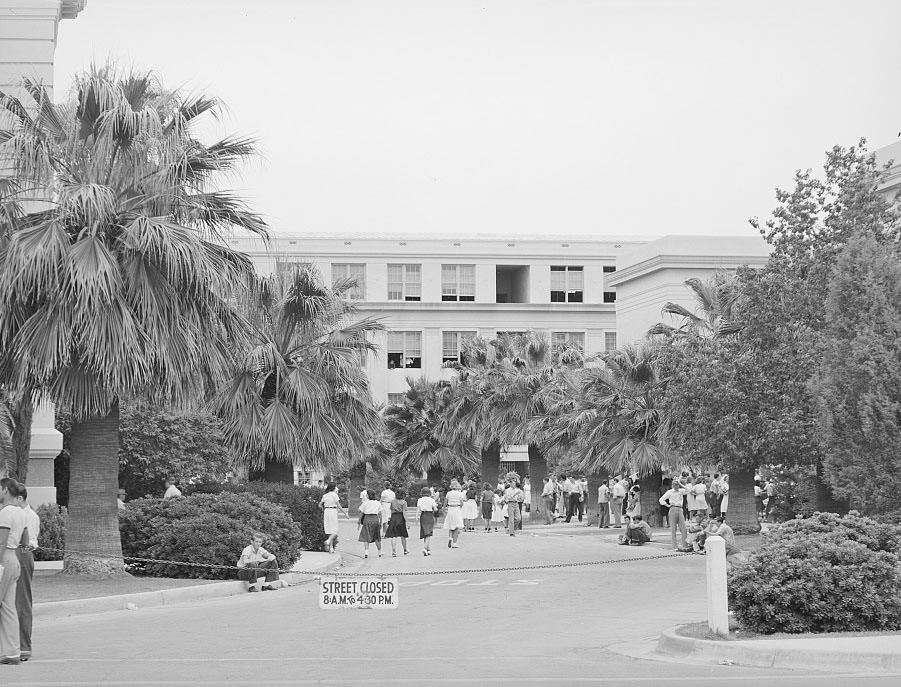
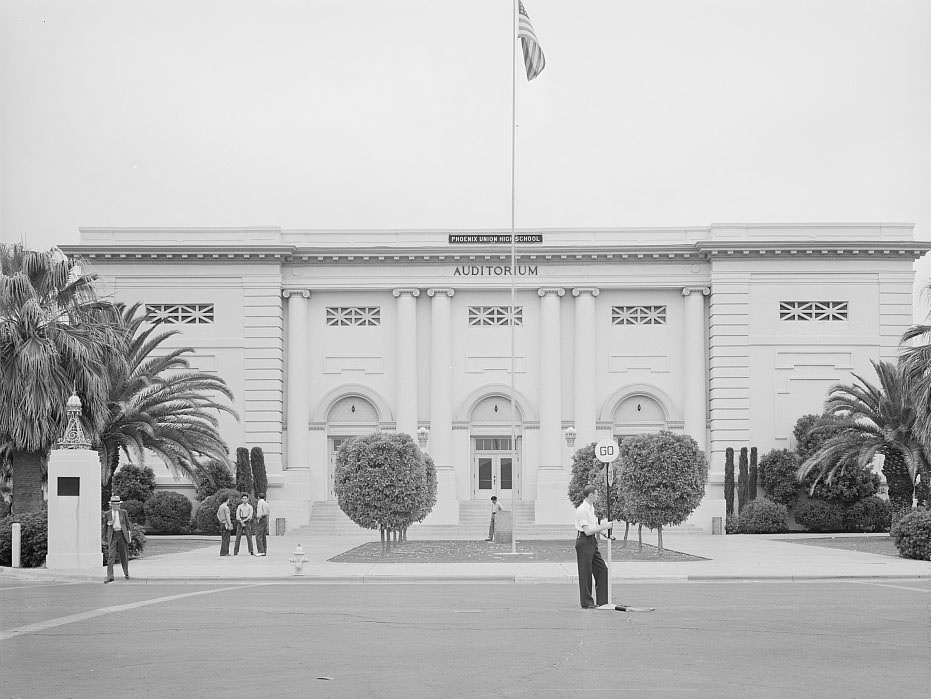
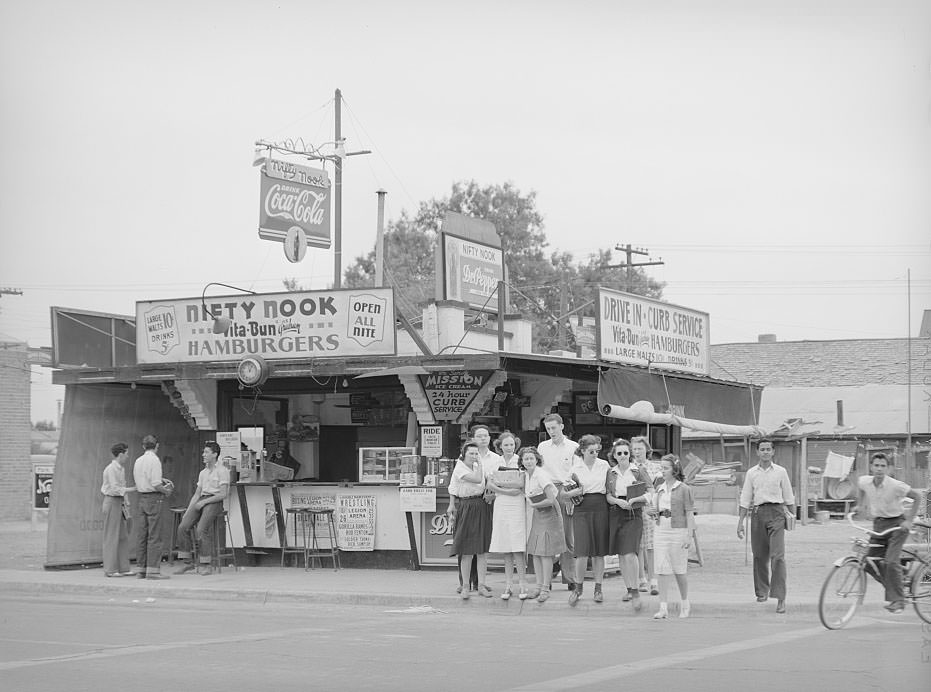
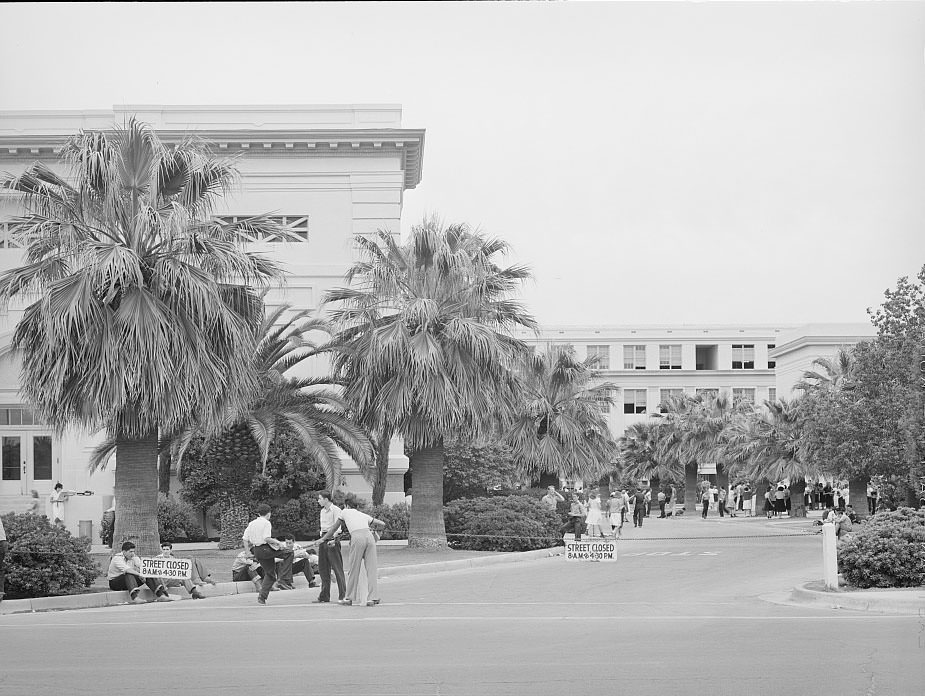
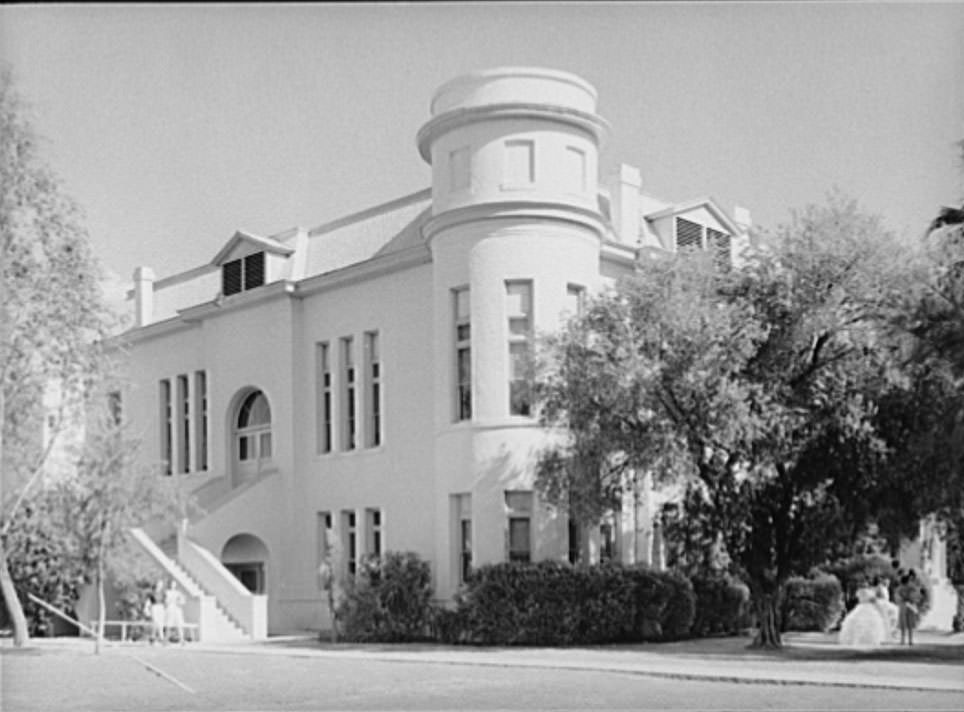
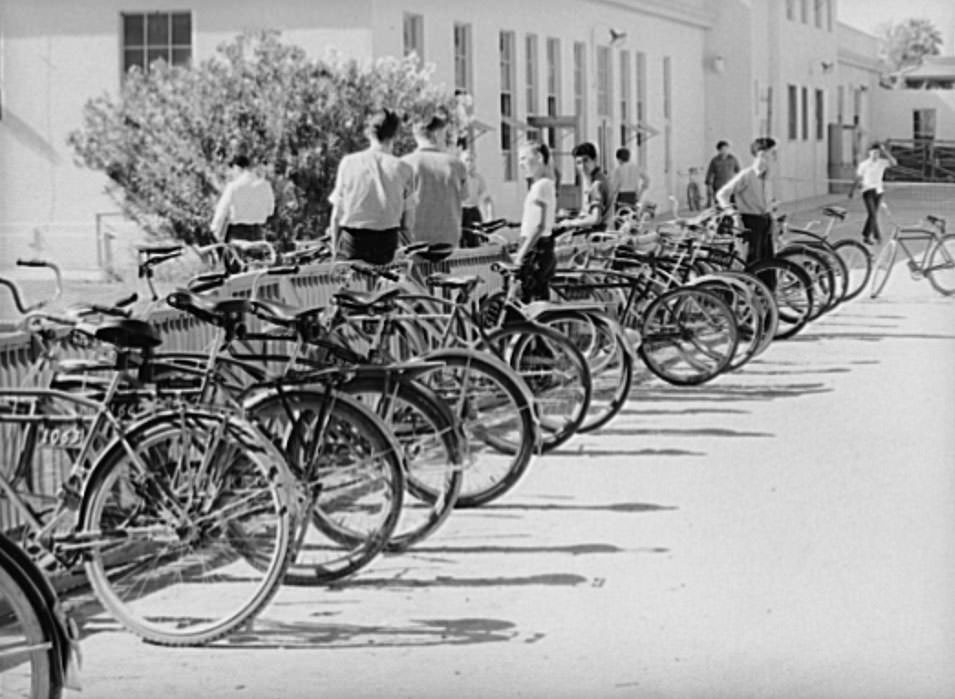
Phoenix Union High School was a central institution in the city’s educational life. Students gathered outside its buildings, crossed its surrounding streets, and filled its classrooms and auditorium daily. These photographs capture school life at a time when Phoenix was still compact enough that students often arrived by bicycle.
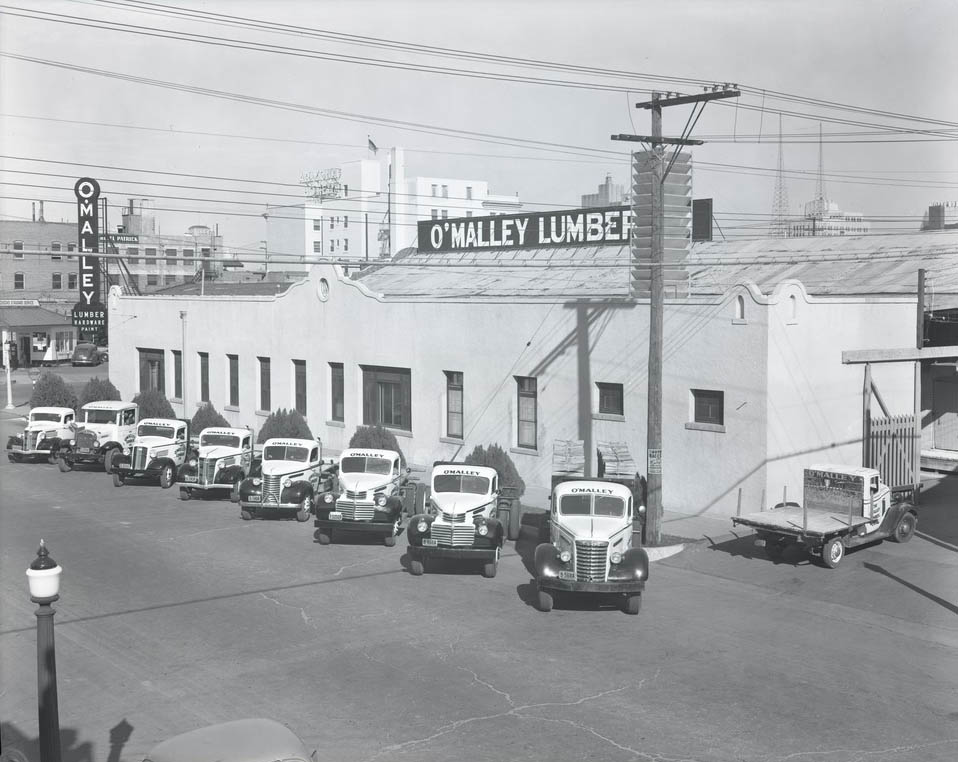
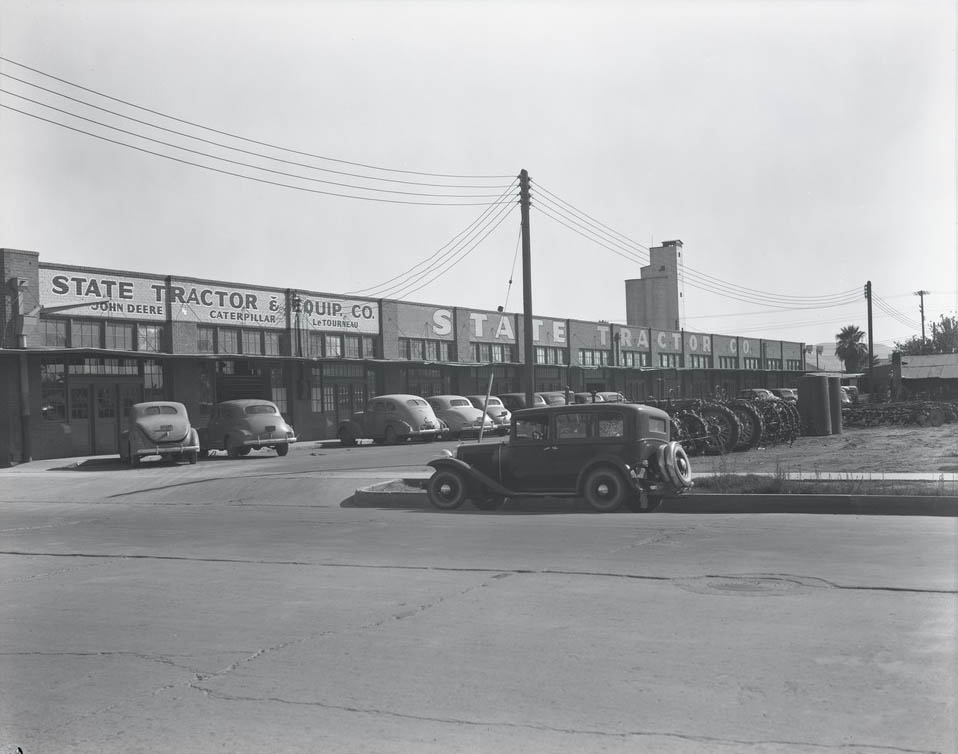
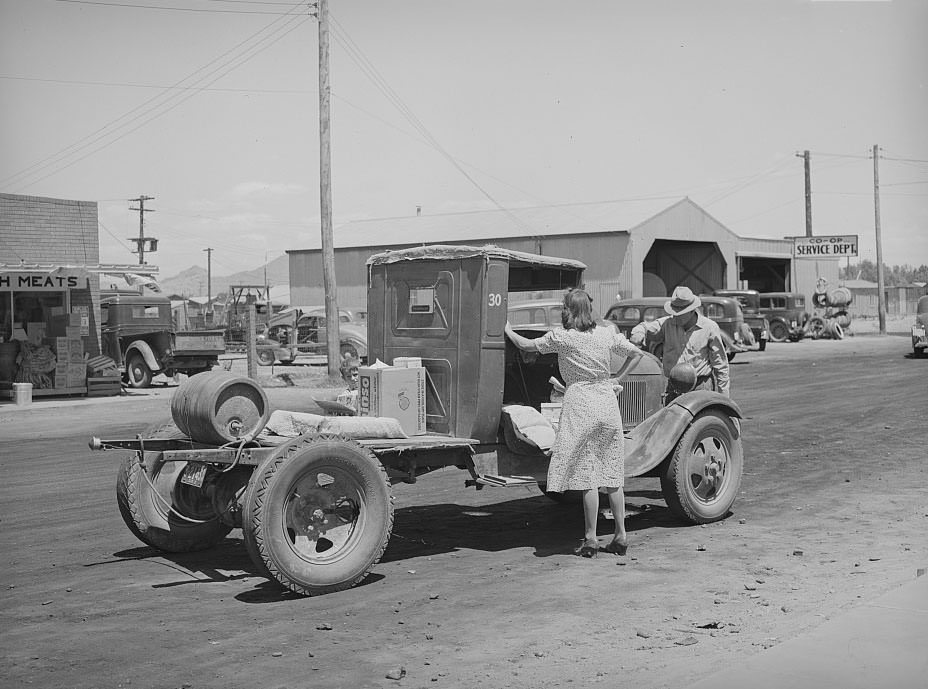
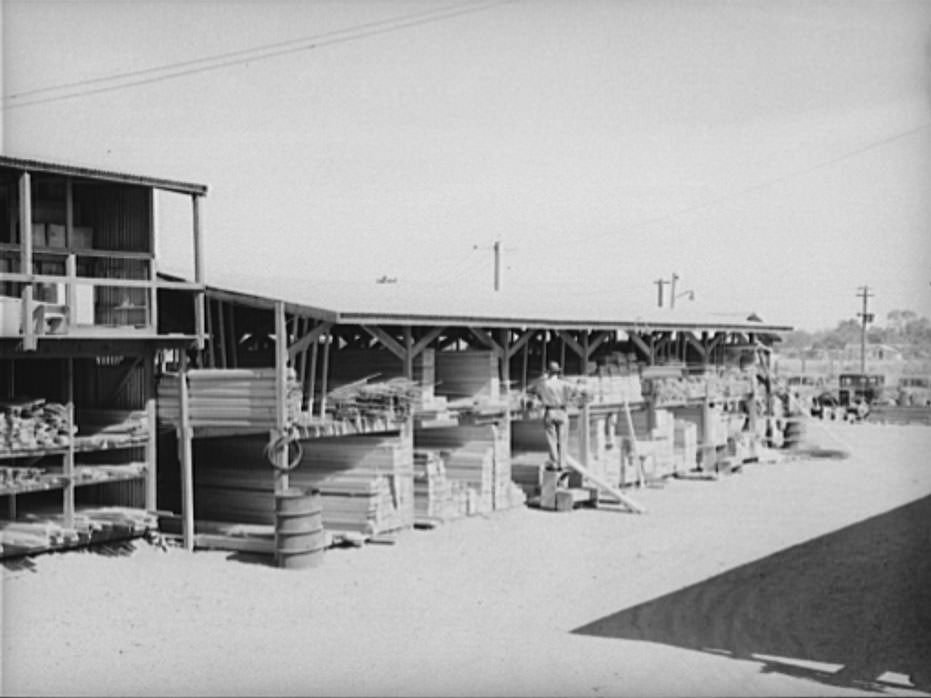
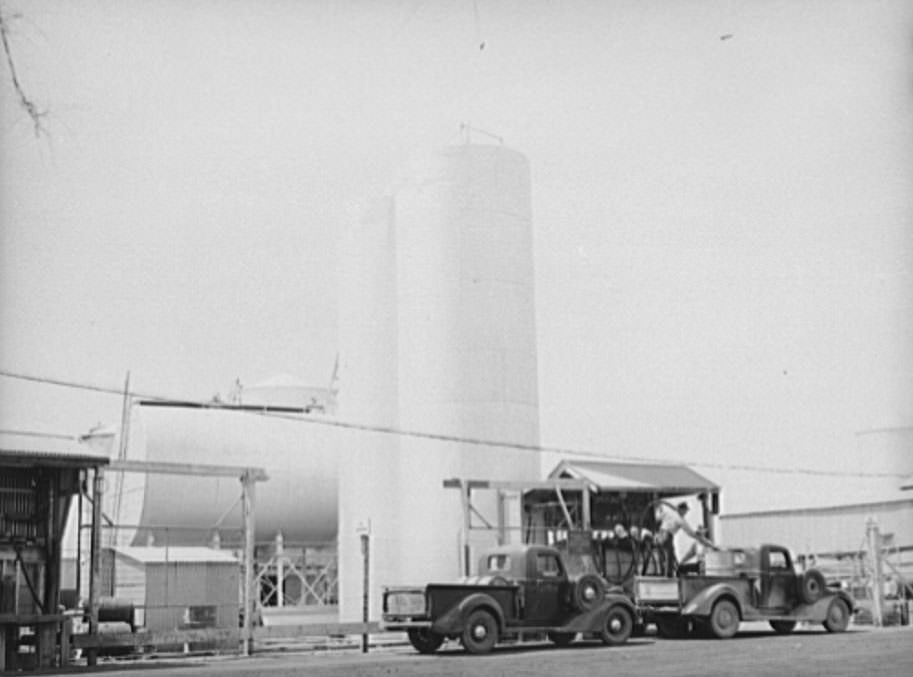
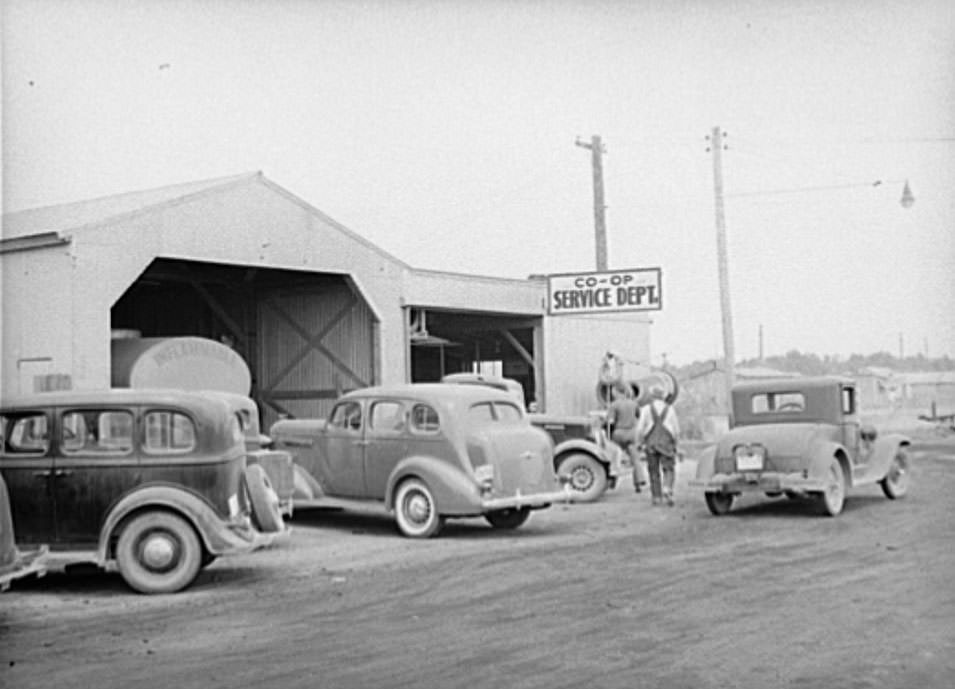
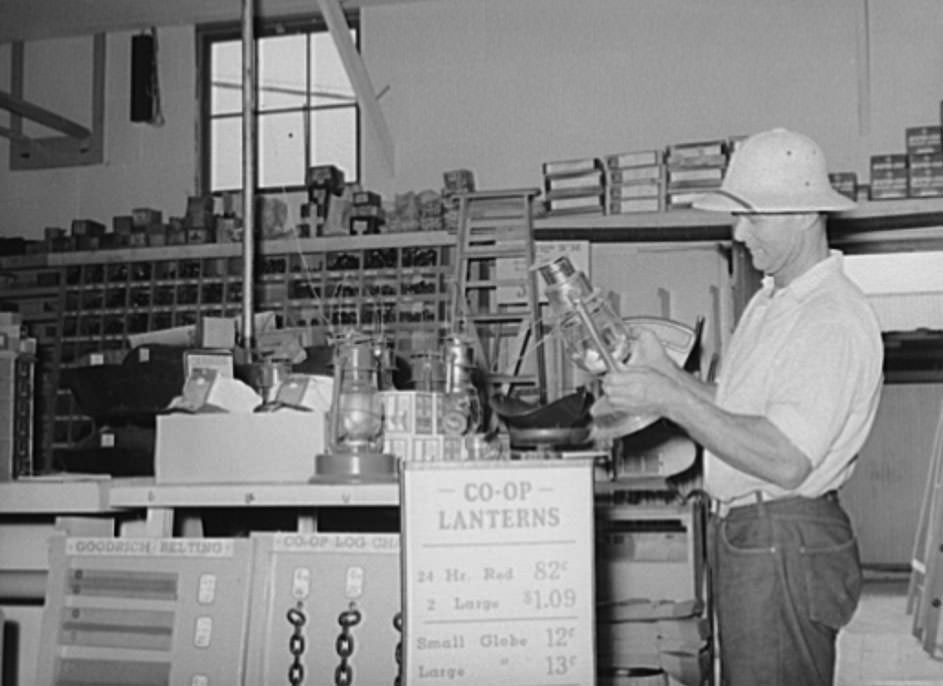
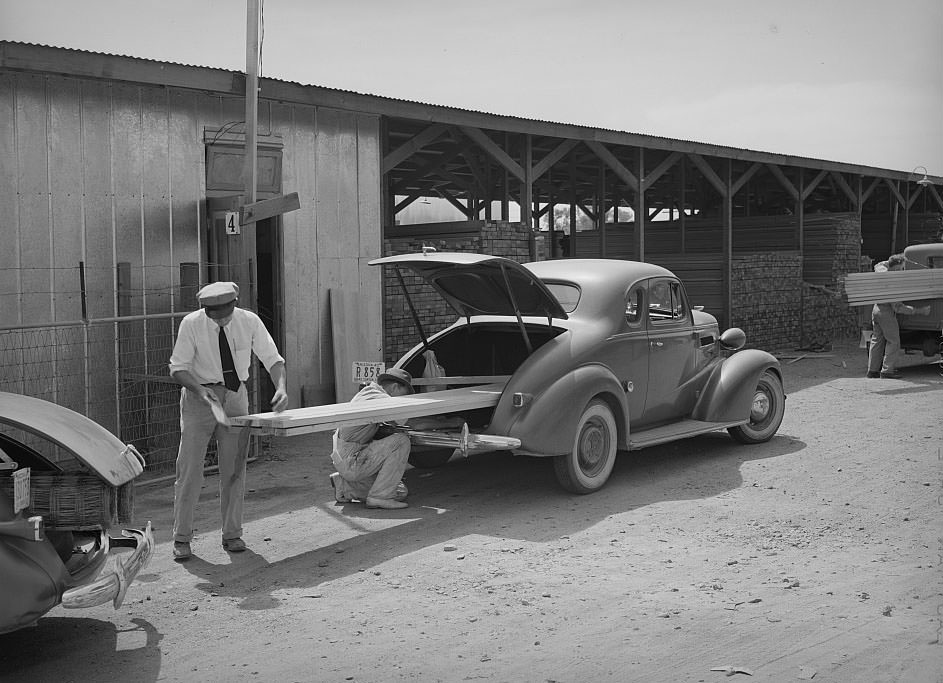
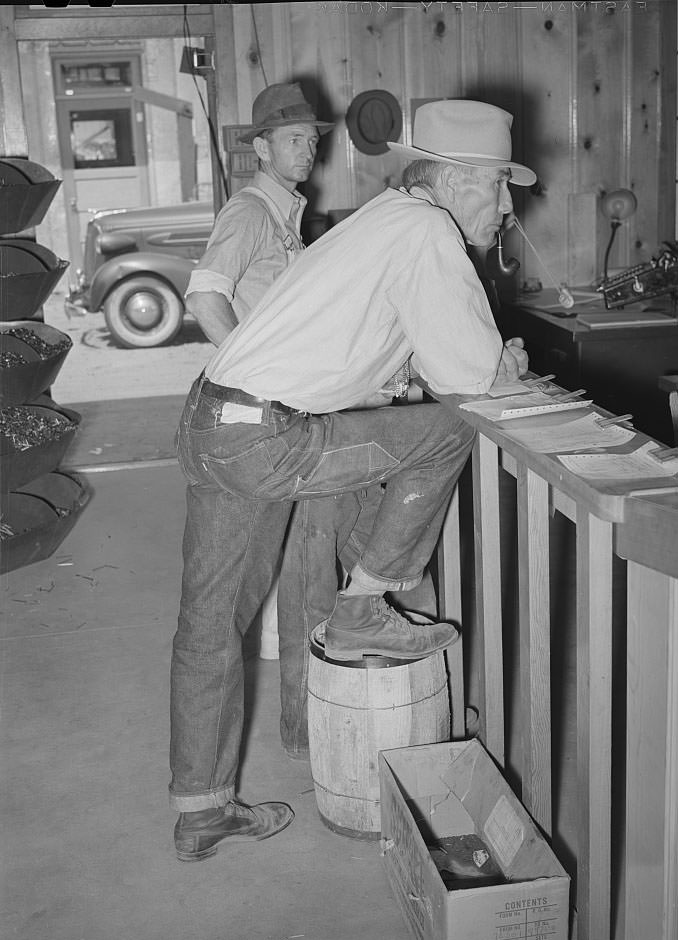
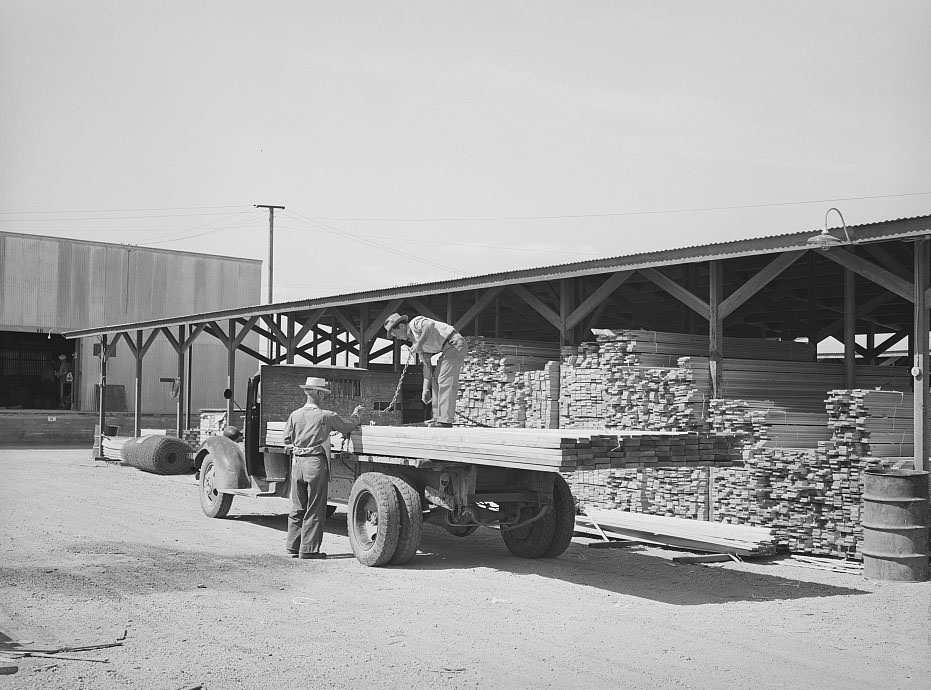
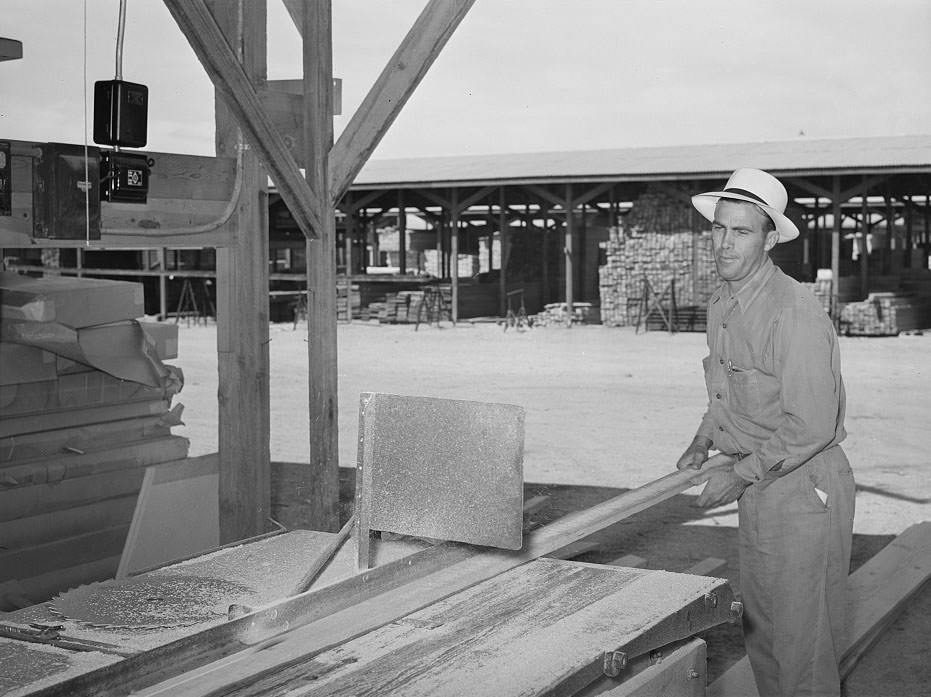
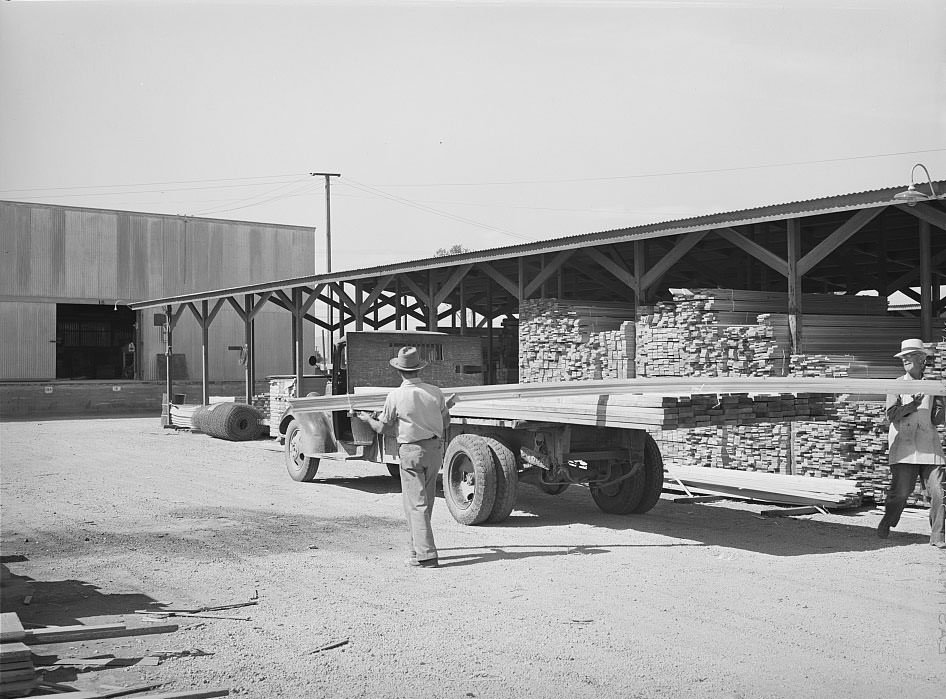
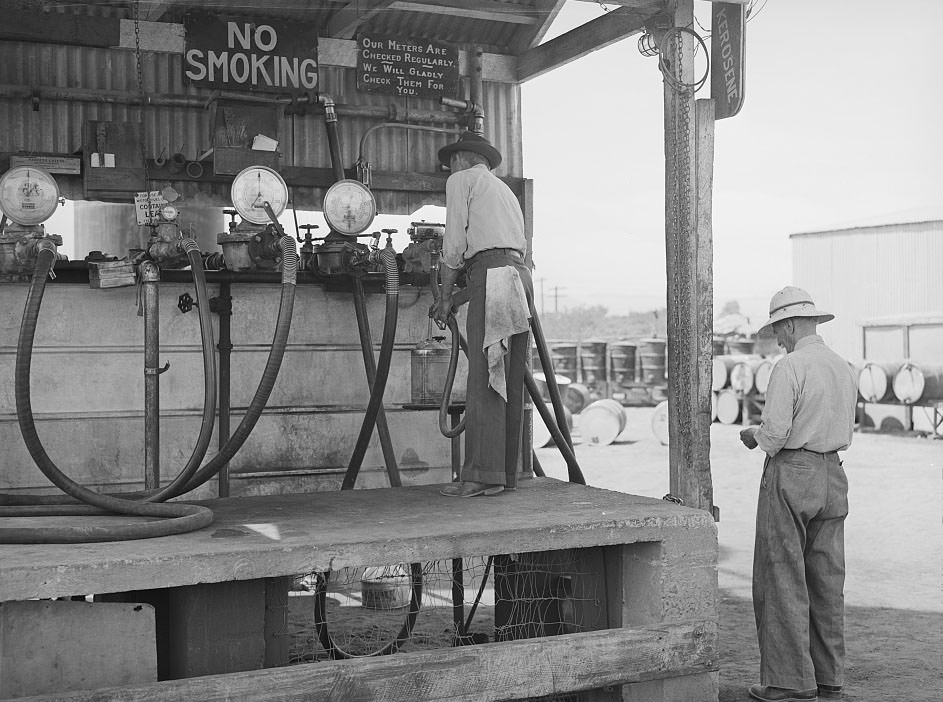
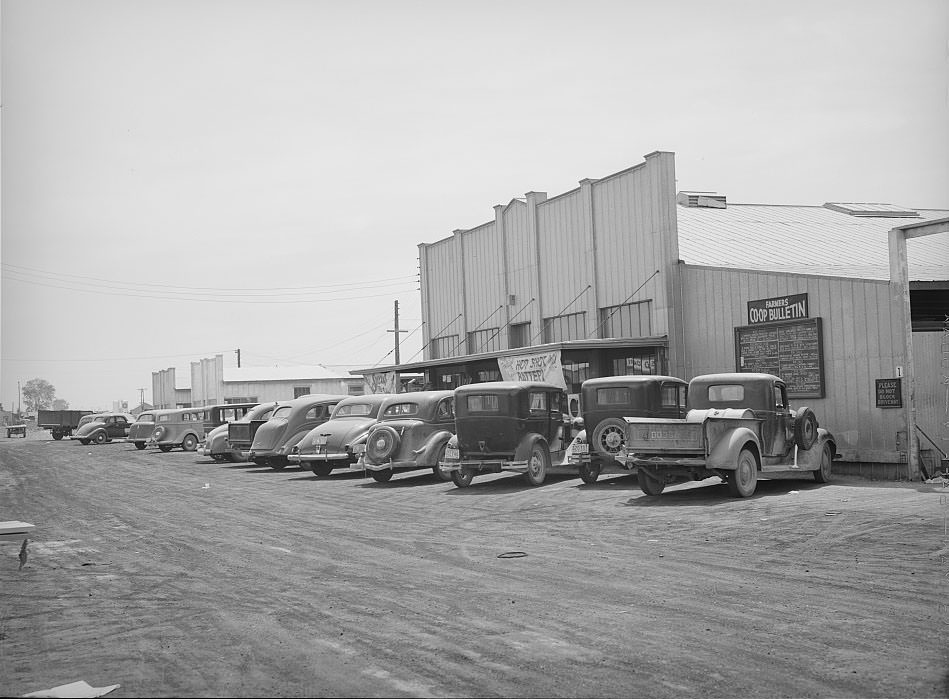
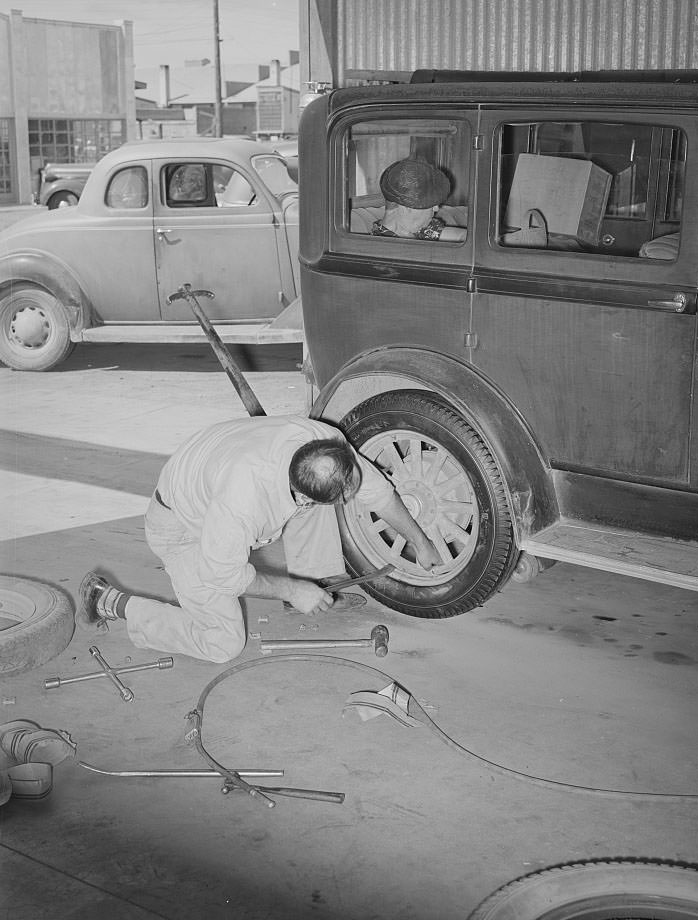
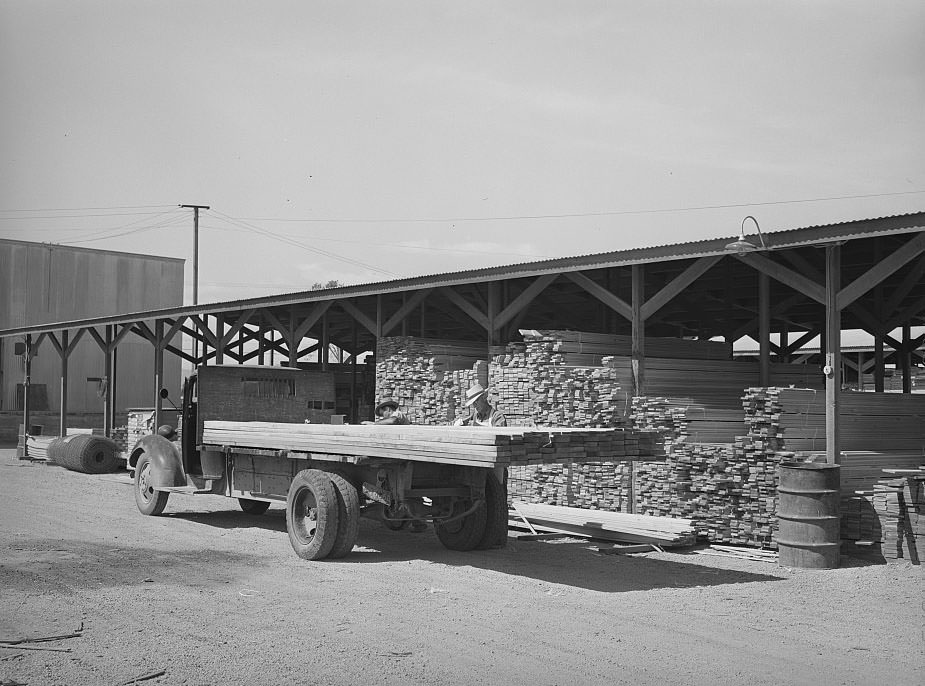
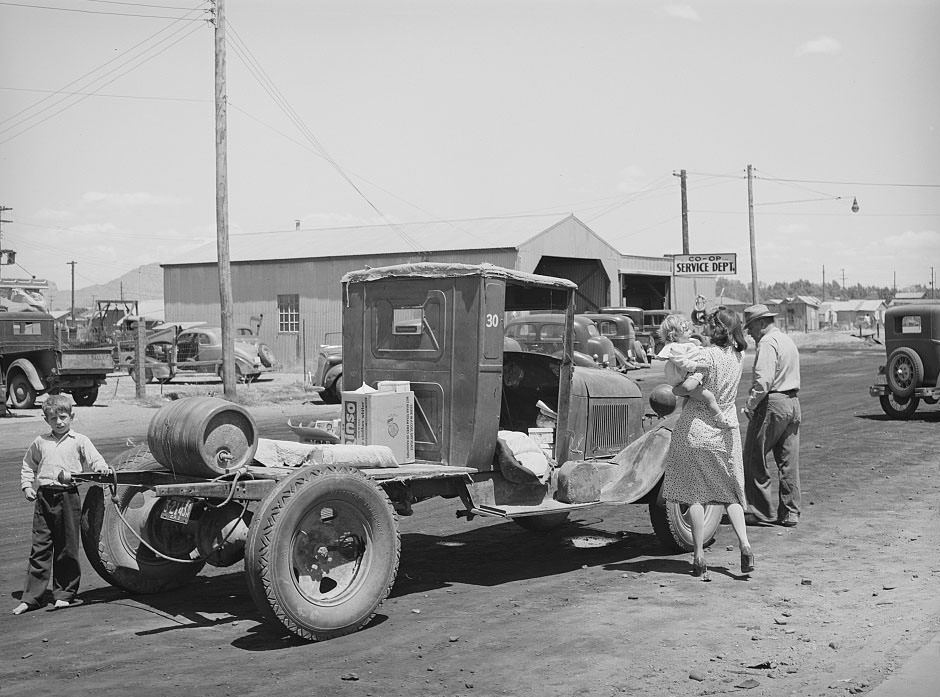
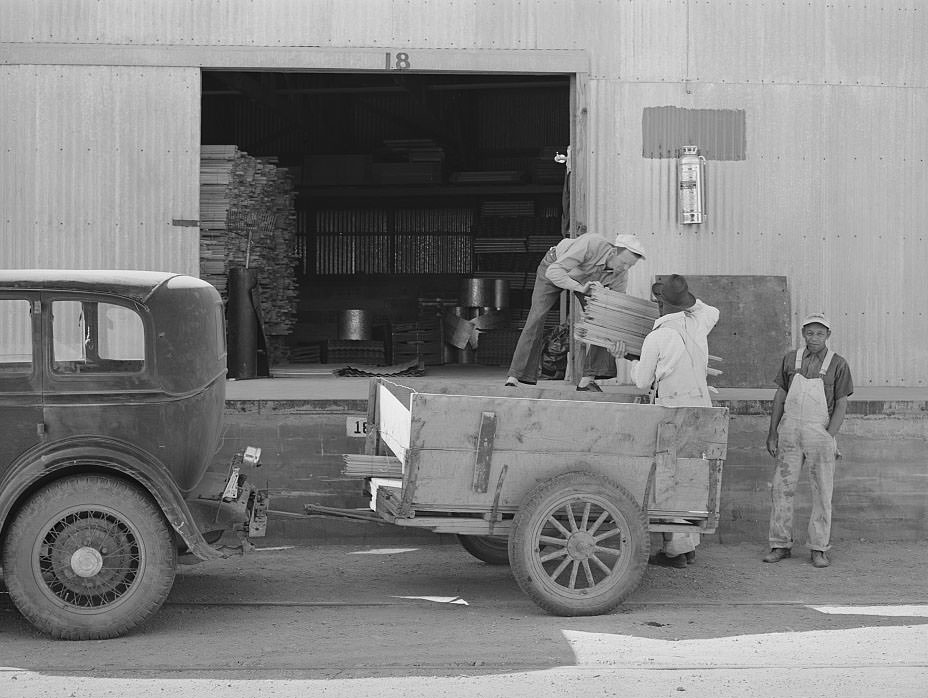
The United Producers and Consumers Cooperative was a major force in Phoenix’s agricultural and commercial economy. It operated a warehouse for citrus growers, a lumber yard, a gasoline supply depot, and an auto service department — serving farmers and rural residents from a central location in the city.
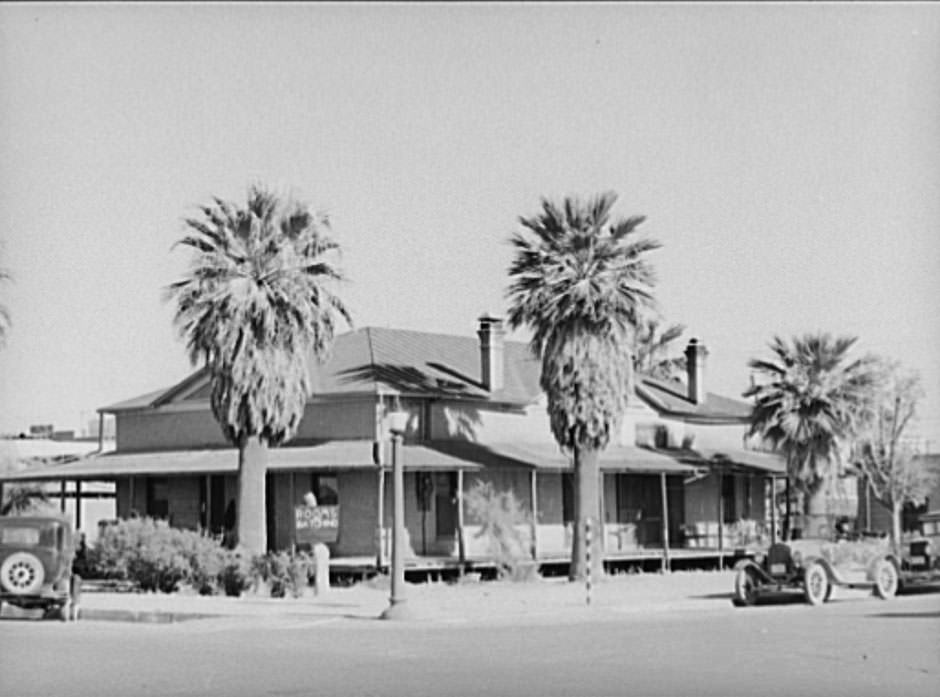
Older residential structures still stood among newer construction in Phoenix. Some of the earliest houses in the city dated back to the late 19th century, and by 1940 they existed alongside homes built just years before.
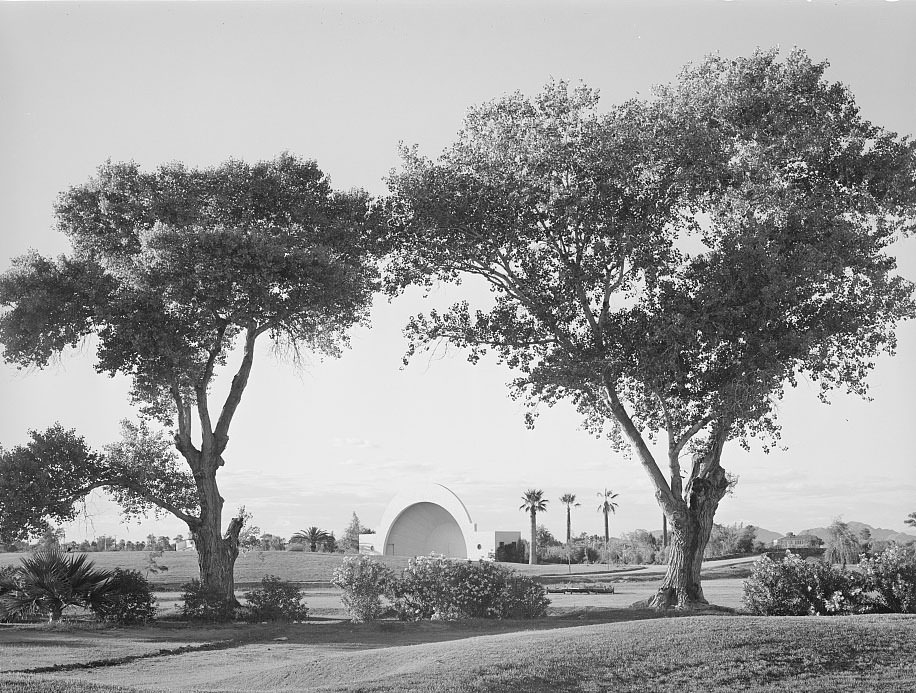
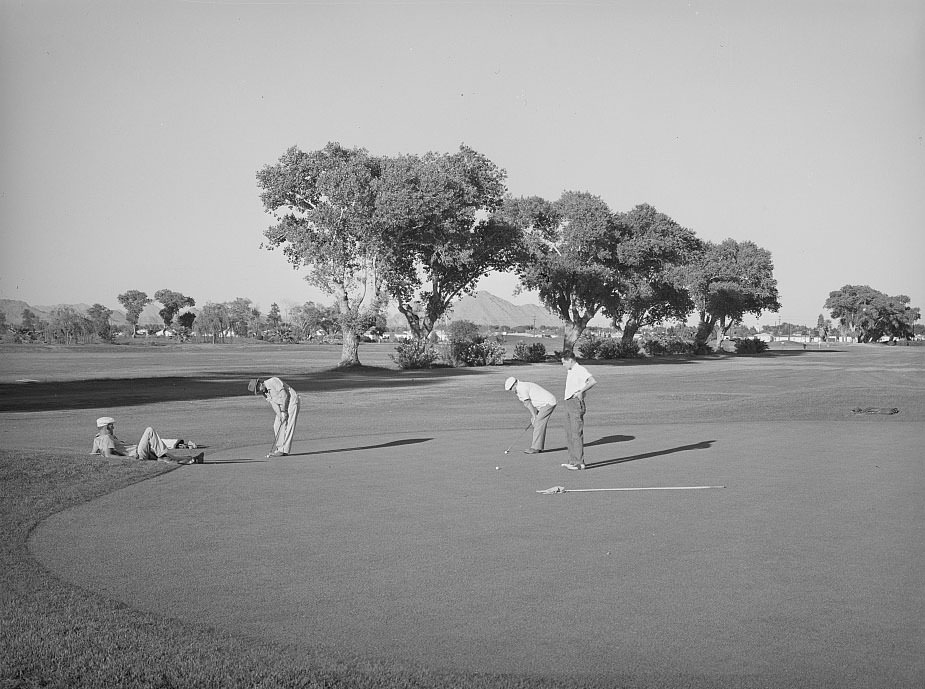
Phoenix offered residents public green spaces, including a municipal golf course. The band shell near the golf course hosted outdoor performances, giving residents a place to gather for entertainment in the mild winter months.
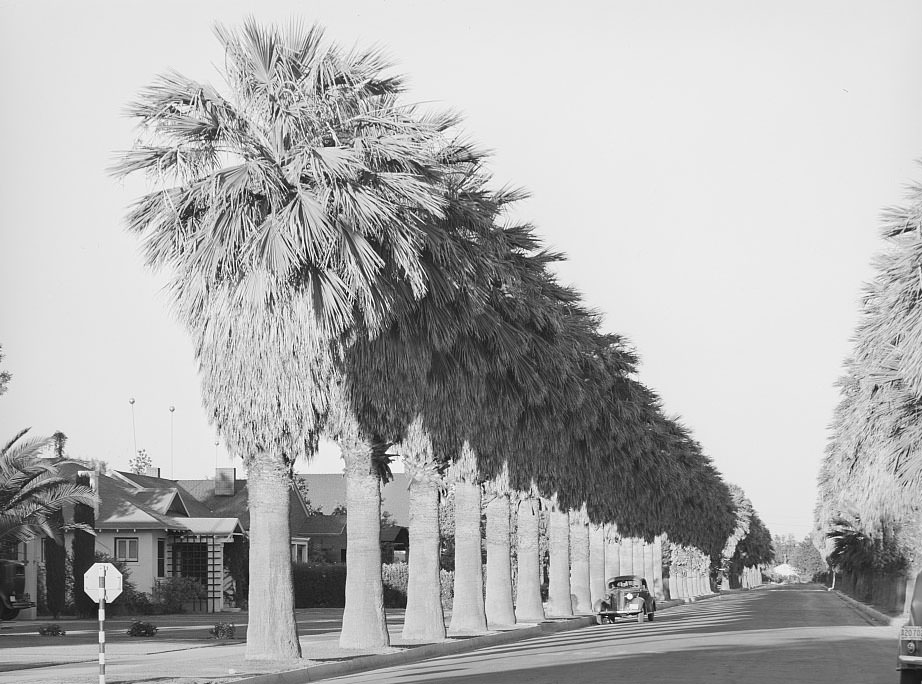
Palm trees lined many of Phoenix’s residential streets, giving the city a distinctive appearance that set it apart from other American cities of similar size. These tree-lined avenues were a point of civic pride and a signal to visitors that they had arrived somewhere different.
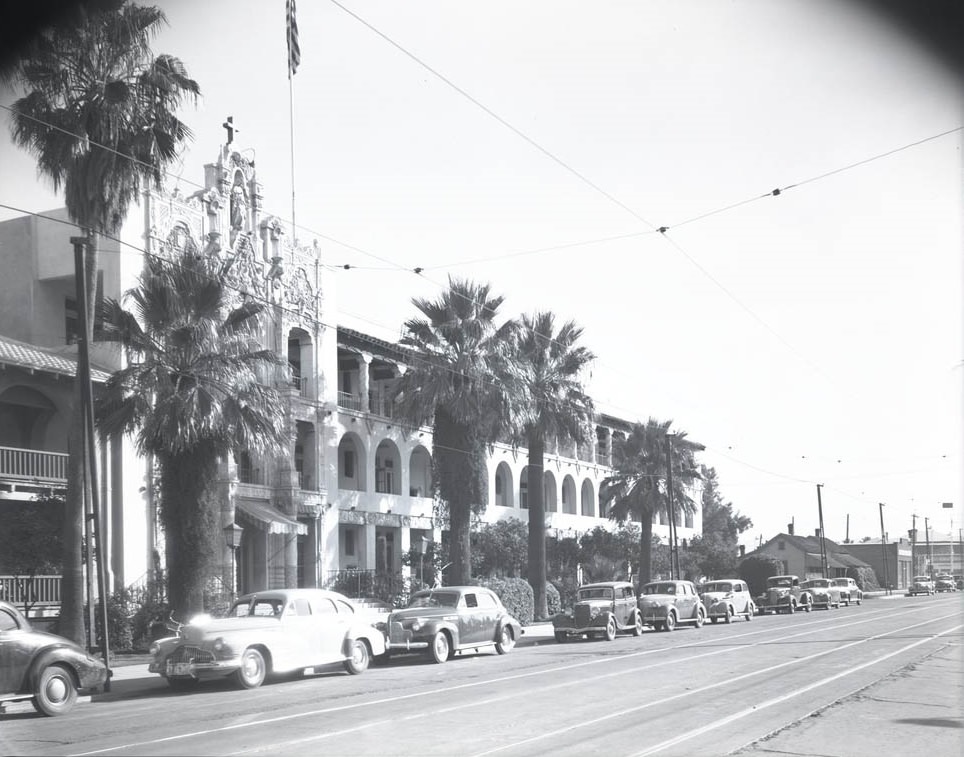
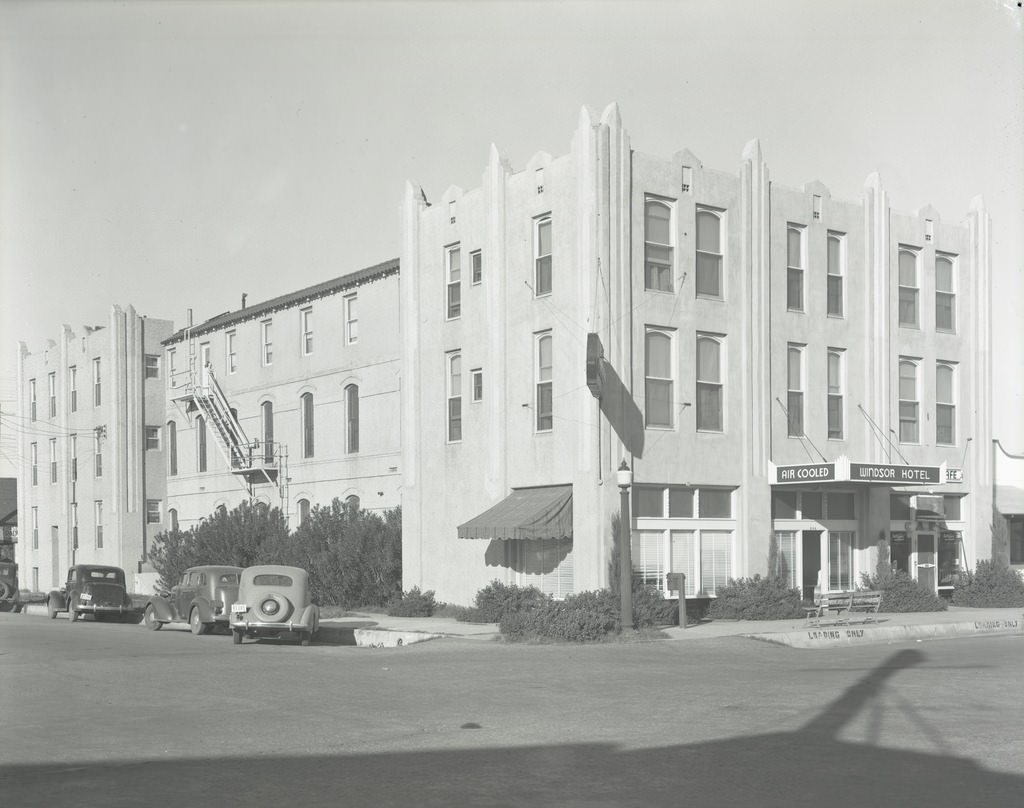
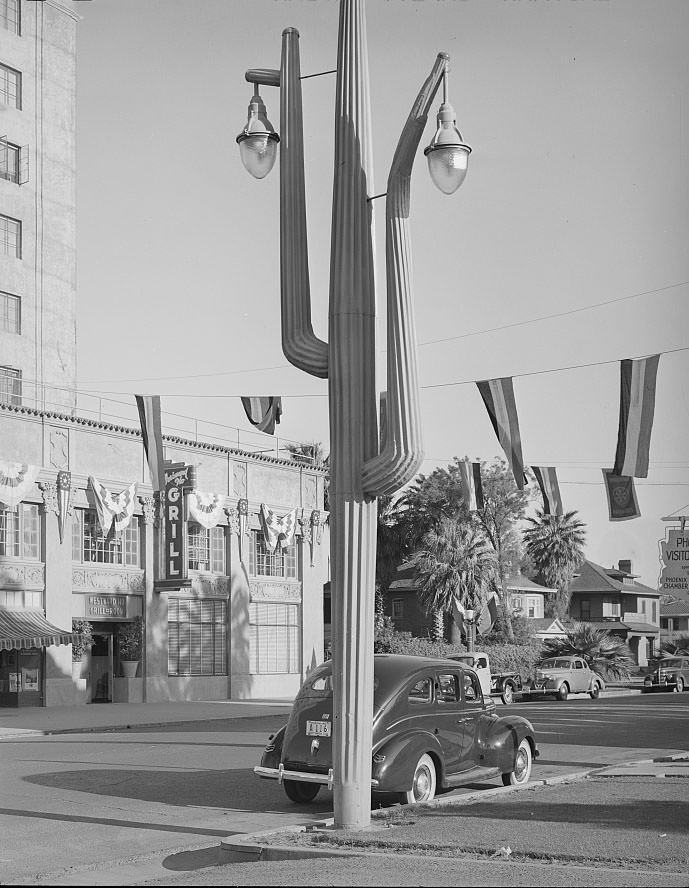
Phoenix hotels in 1940 showed a local design flair. Cactus-shaped light standards in front of one hotel captured the Southwest aesthetic that the city embraced to appeal to tourists and new residents alike.
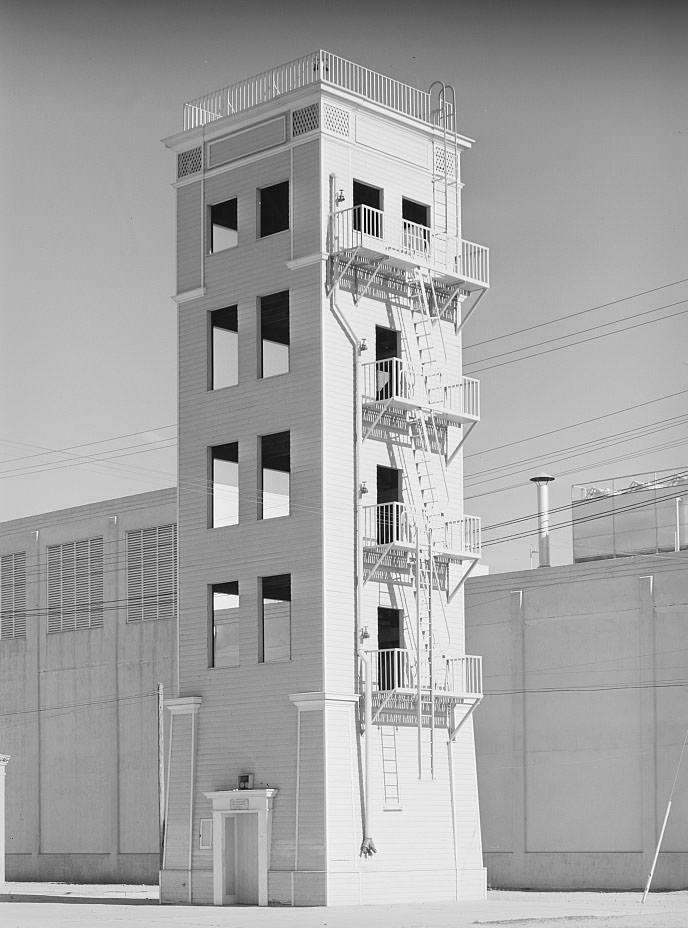
Fire training was an ongoing activity for Phoenix’s public safety workforce. A dedicated practice tower allowed firemen to run drills, preparing them for the residential and commercial fires they would face across the expanding city.
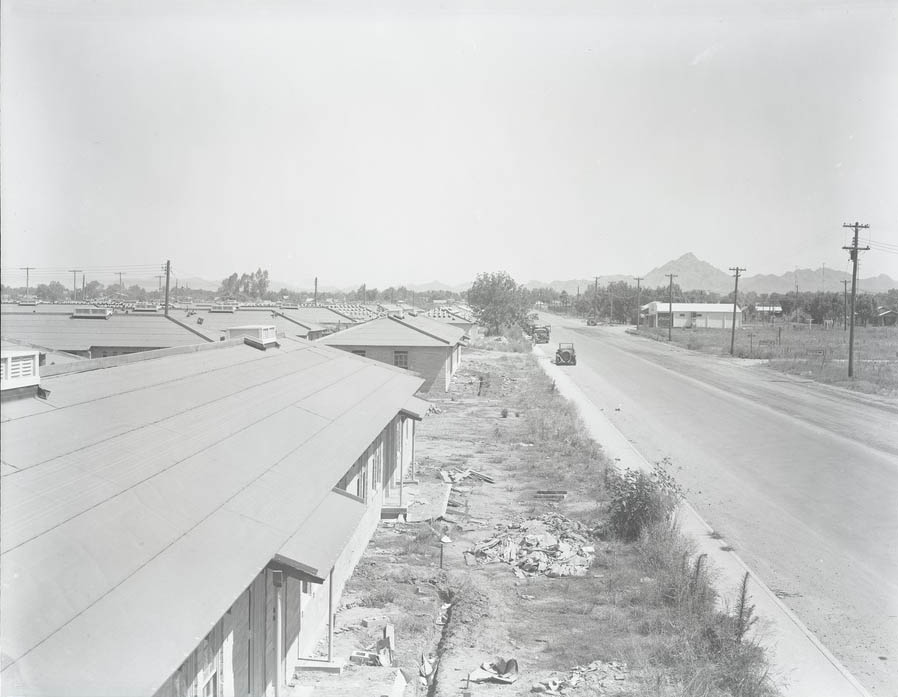
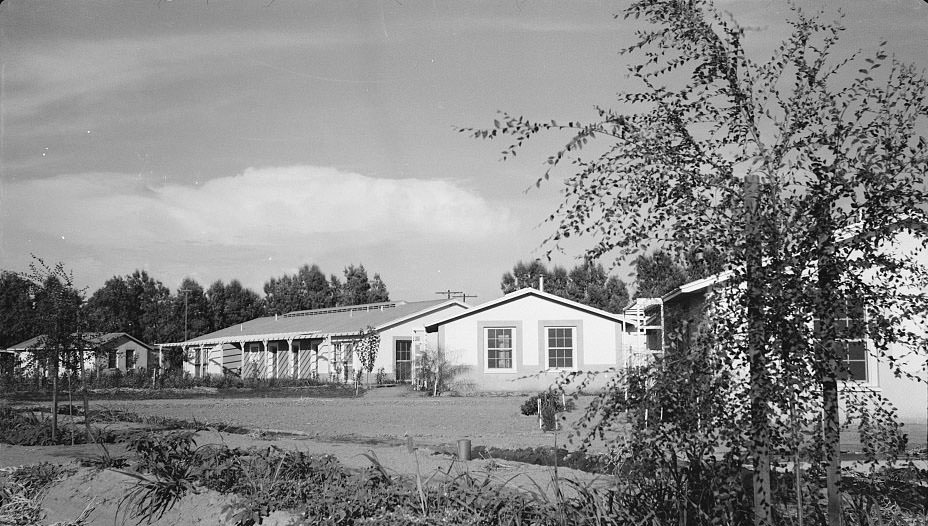
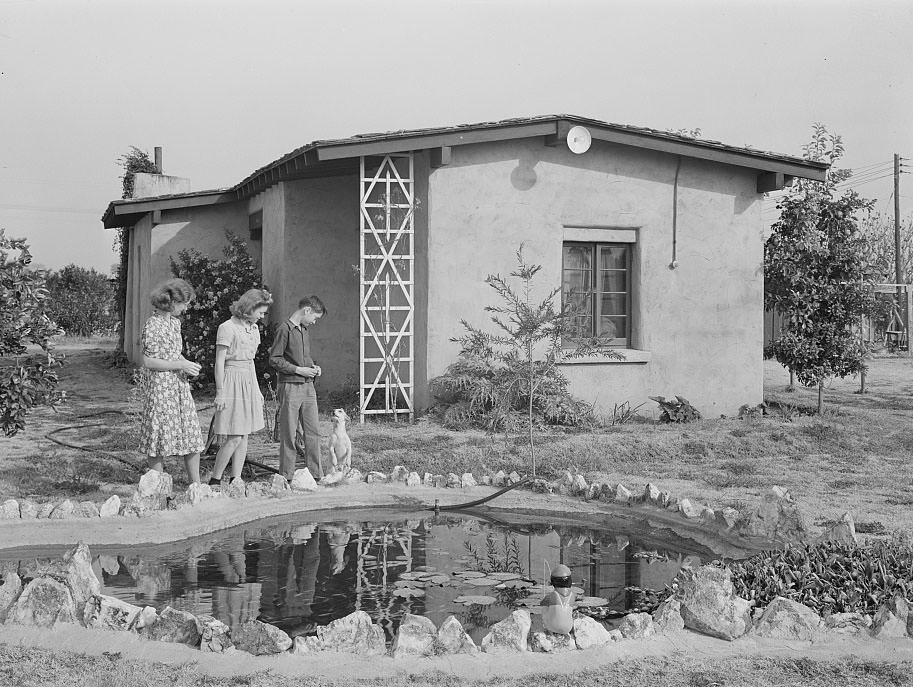
Camelback Farms was a Farm Security Administration project in Phoenix that provided housing for farm families. The homes built there reflected the federal government’s effort to improve living conditions for agricultural workers during the difficult years around the Depression and war.
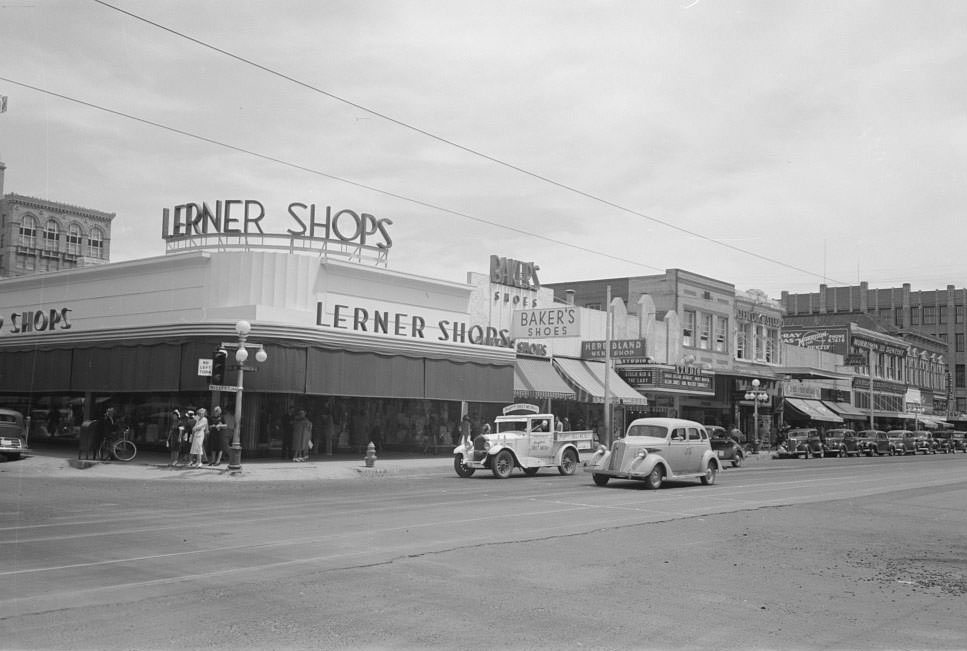
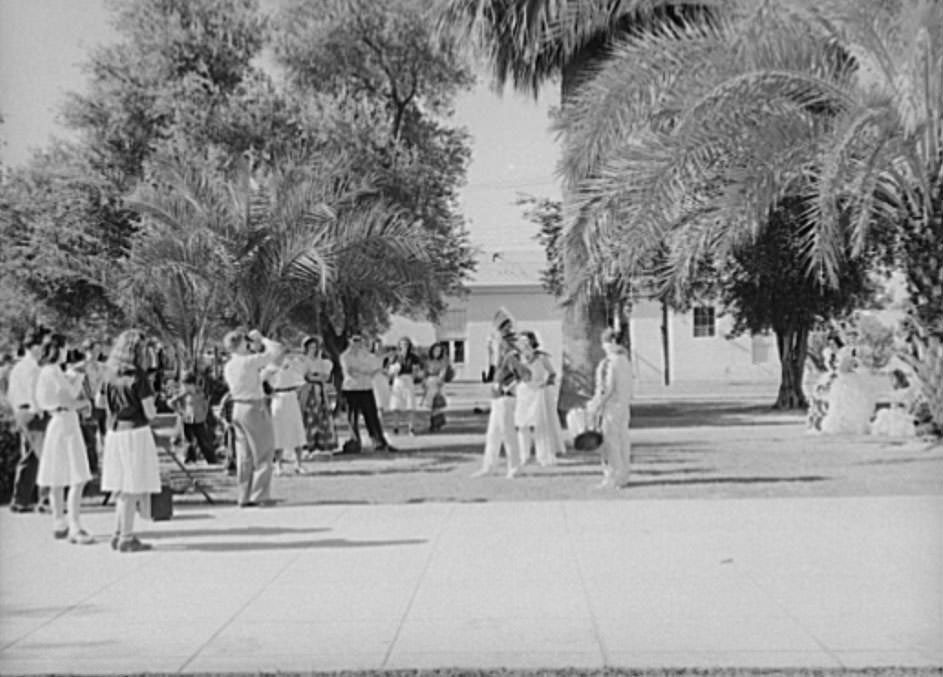
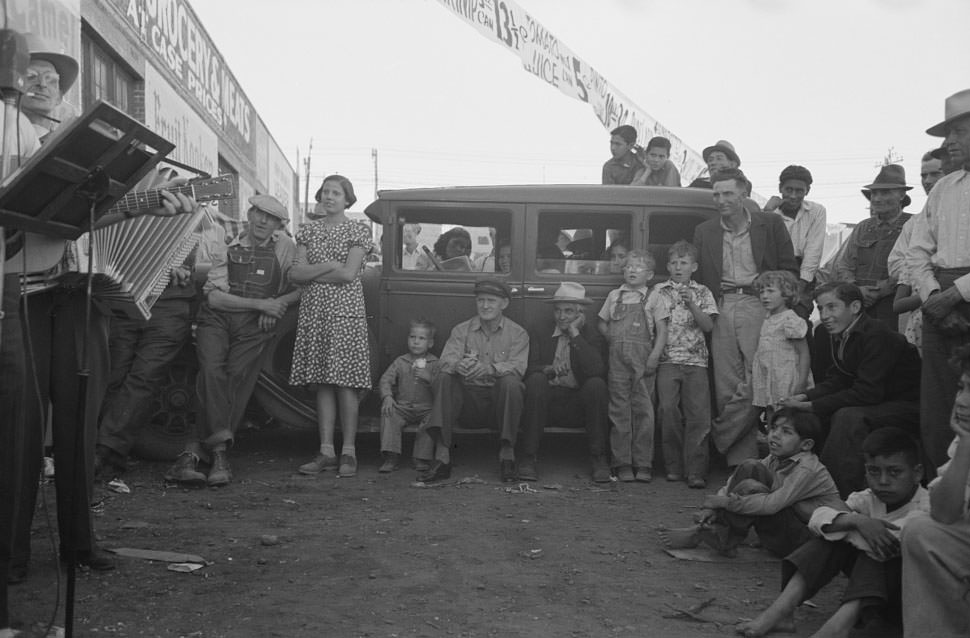
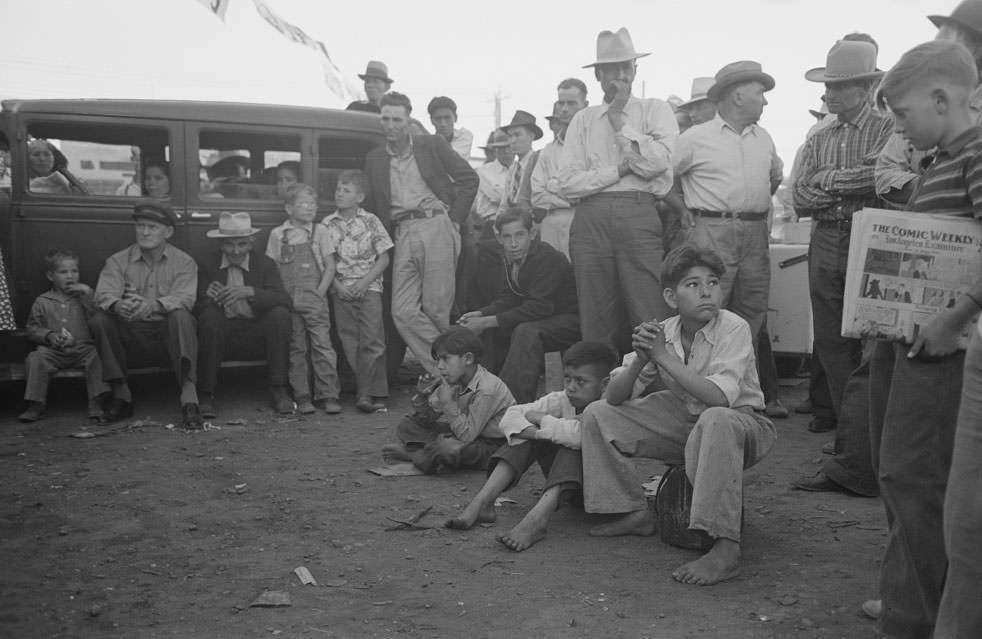
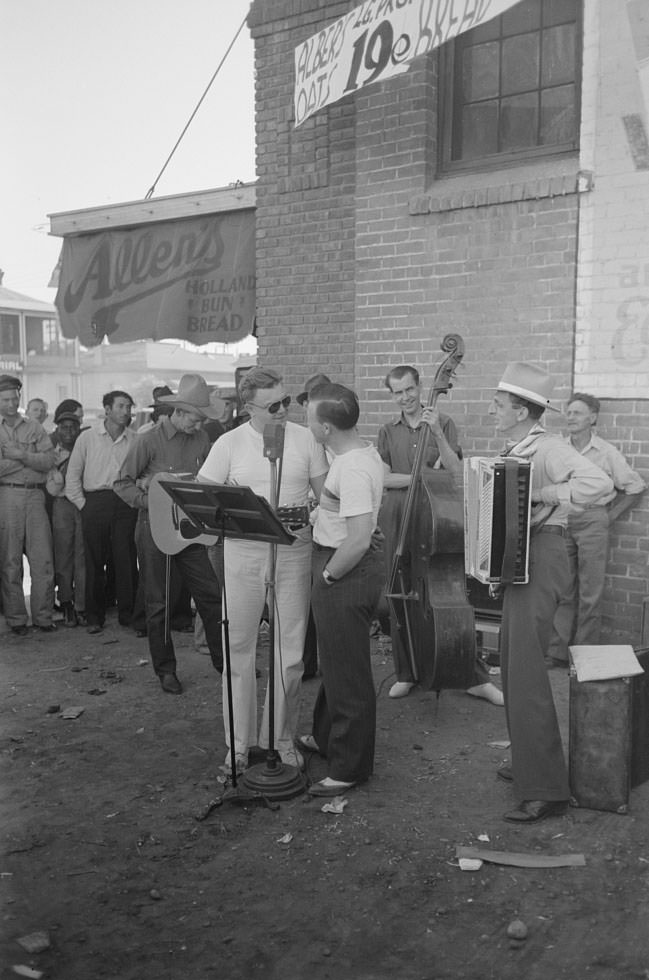
Grocery stores in Phoenix found creative ways to draw in shoppers. On Saturday afternoons, one store on a main street hired an orchestra to play outside, attracting crowds that would otherwise pass by.
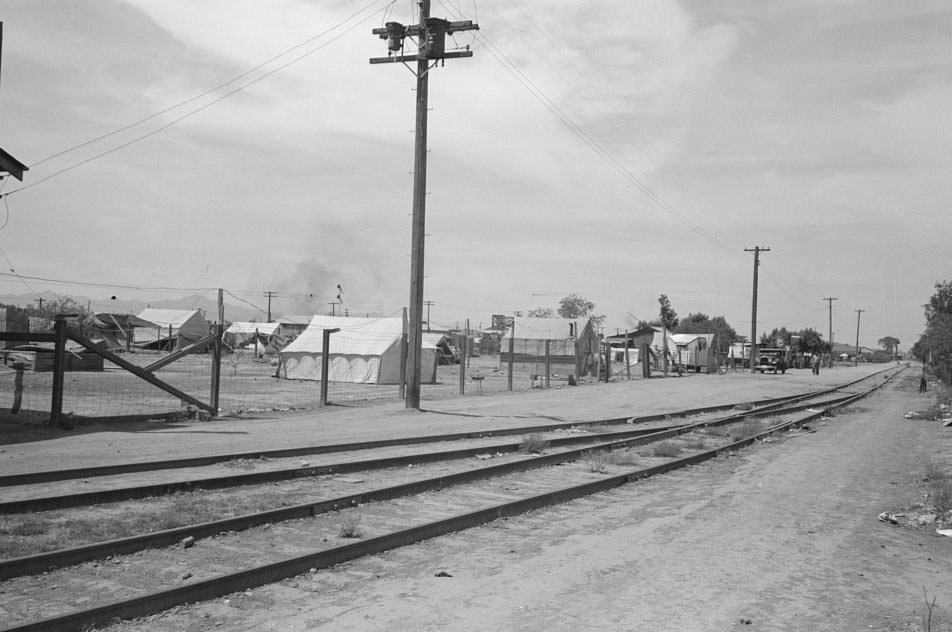
Not everyone in 1940 Phoenix lived in houses or motor courts. Near the railroad tracks, families lived in tents — a stark contrast to the city’s commercial prosperity and a sign that economic hardship had not disappeared from this growing Sunbelt city.
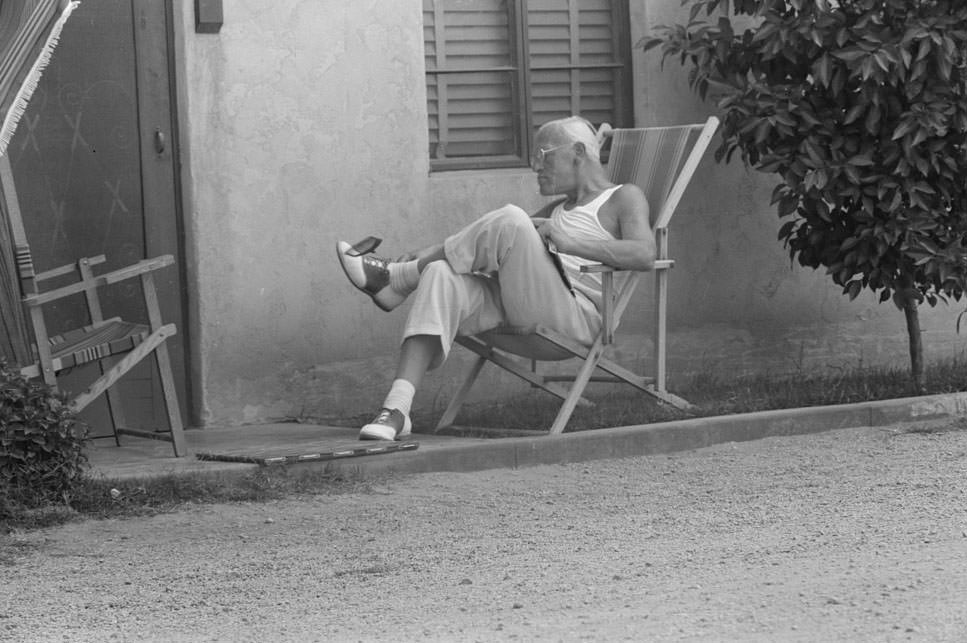
The tourist industry was already a meaningful part of Phoenix’s economy in 1940. Trailer spaces and tourist cabins for rent filled the tourist section of the city, catering to snowbirds and travelers who came to escape colder winters farther north.
Meatpacking at scale required large facilities with adjacent livestock pens. Phoenix’s packing plant complex held substantial numbers of cattle, supplying beef not just to local markets but to wider distribution networks across the region.
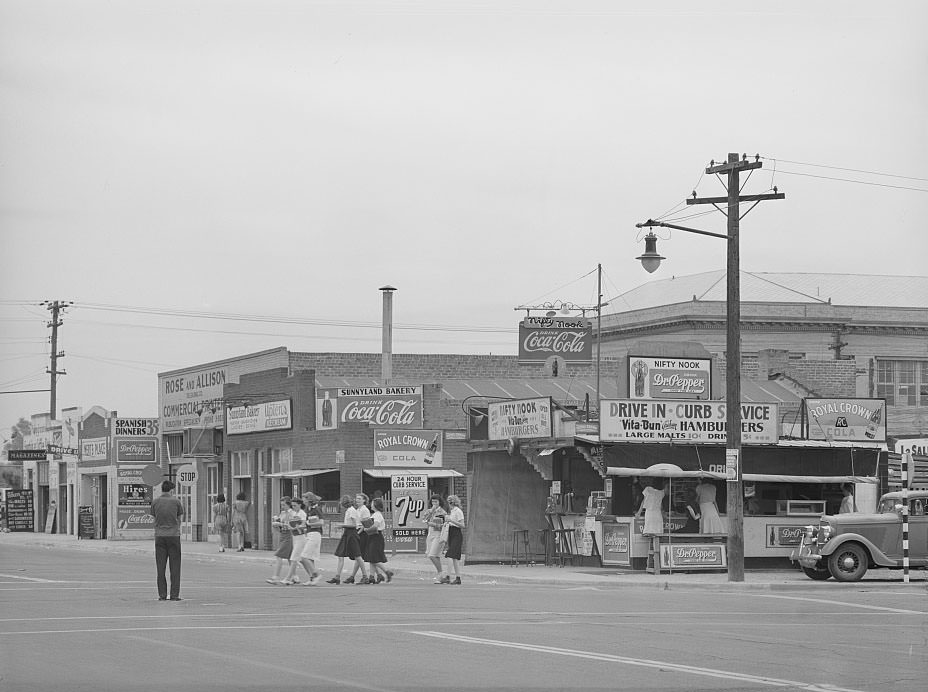
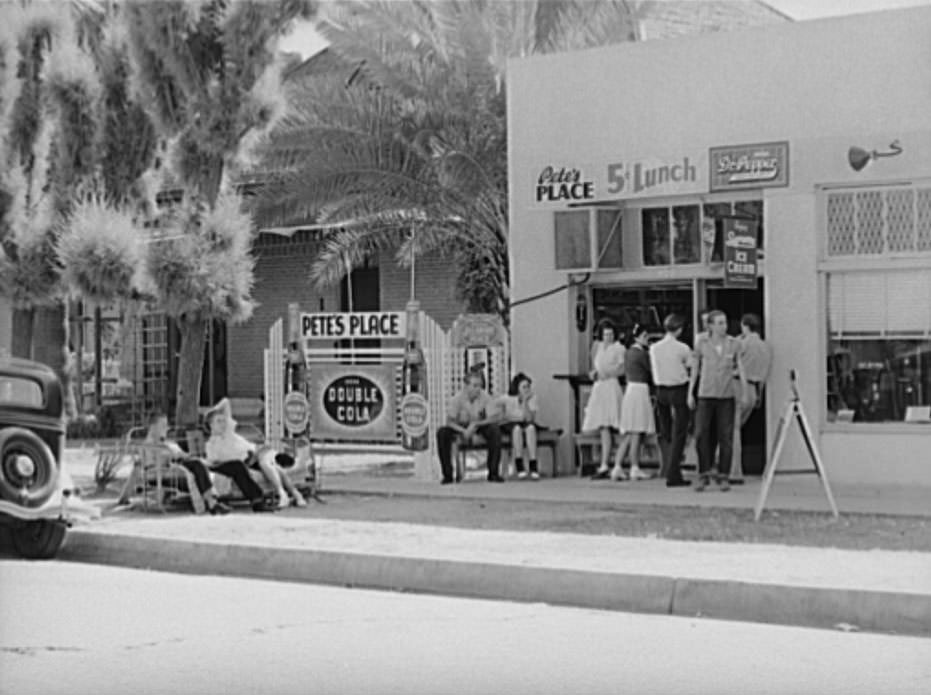
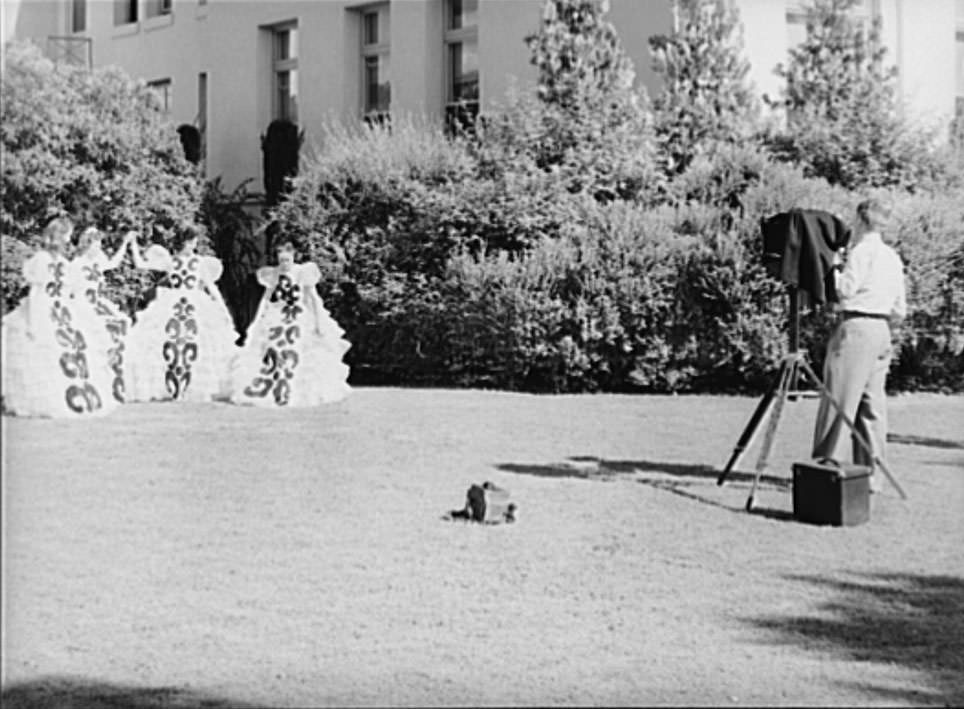
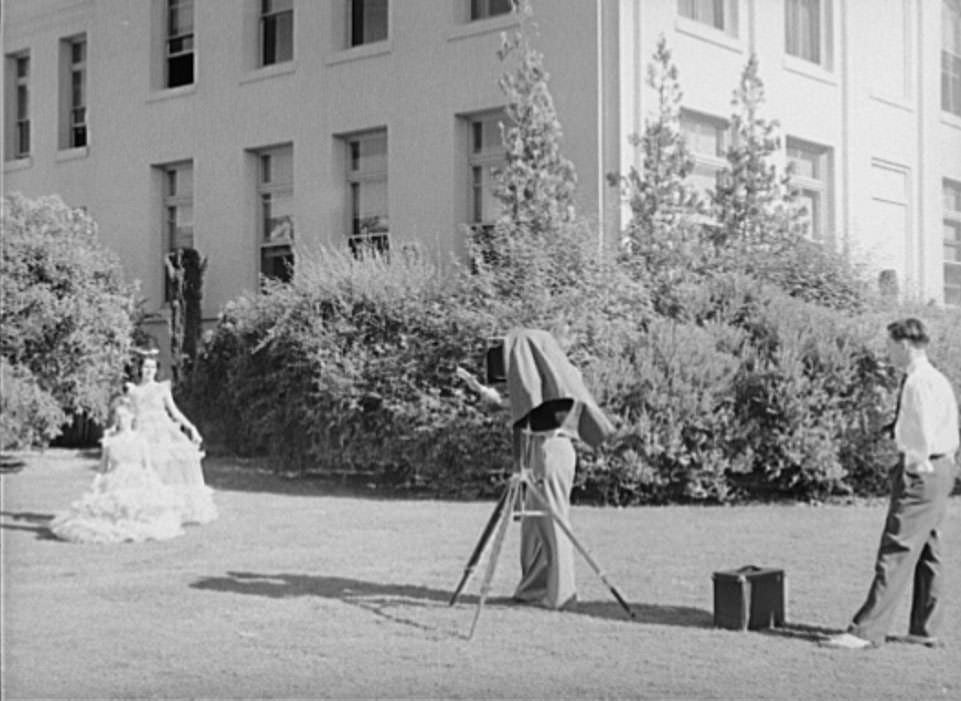
School life at Phoenix Union High School included more than academics. Students gathered at noon hour on campus grounds, crossed busy streets on their way to and from class, and participated in theatrical productions — including graduation plays, where young women were photographed in costume by a staff photographer.





Phoenix went from a pretty big city to the 5th largest city in the nation in such a short amount of time. Phoenix’s rise is due to many factors, like tech companies moving into the city, but still, it’s kind of surreal