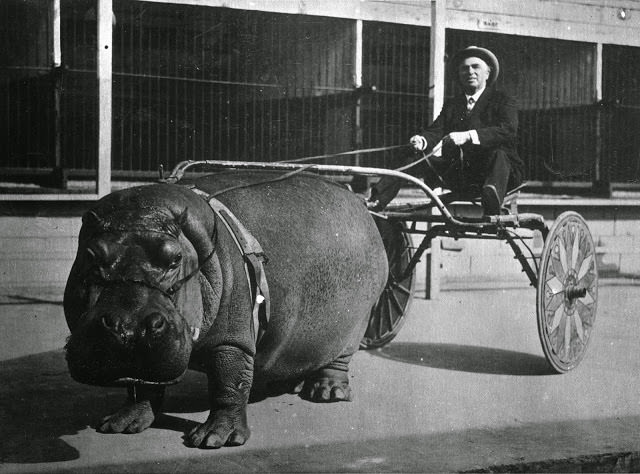
Zebras belong to the Equidae family, the same group as horses and donkeys. They have thick bodies, slender legs, a tufted tail, and a long head and neck with a short mane. Despite looking so much like horses, zebras are a fundamentally different animal to work with. Unlike horses, which spend their days quietly grazing open plains, zebras have evolved to constantly watch for — and fight off — savannah predators like lions, cheetahs, and crocodiles. That survival instinct is deeply wired in. It makes them aggressive, unpredictable, and nearly impossible to tame on any large scale.
When European colonizers arrived in Africa during the 19th and early 20th centuries, they saw zebras as a potential substitute for horses. One major reason was disease resistance. Zebras were immune to illnesses carried by tsetse flies, which killed horses brought from Europe. That made them an attractive option for transportation. Still, Africans had never domesticated zebras over thousands of years — and for good reason. The animals simply don’t cooperate the way horses do. They are smaller than horses and lack the physical strength to carry a rider for long distances.
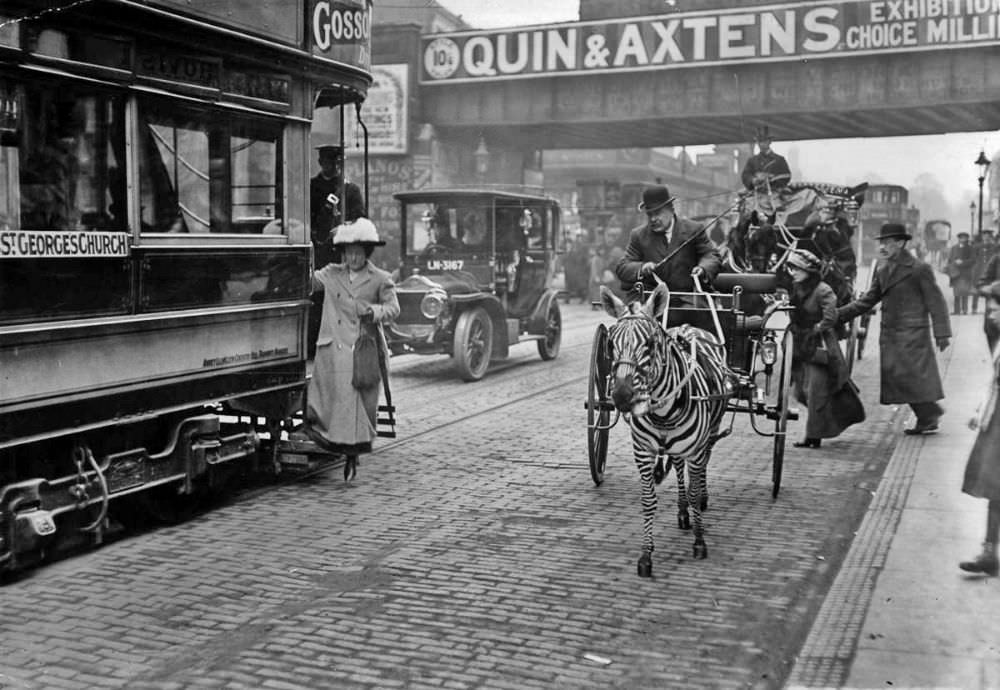
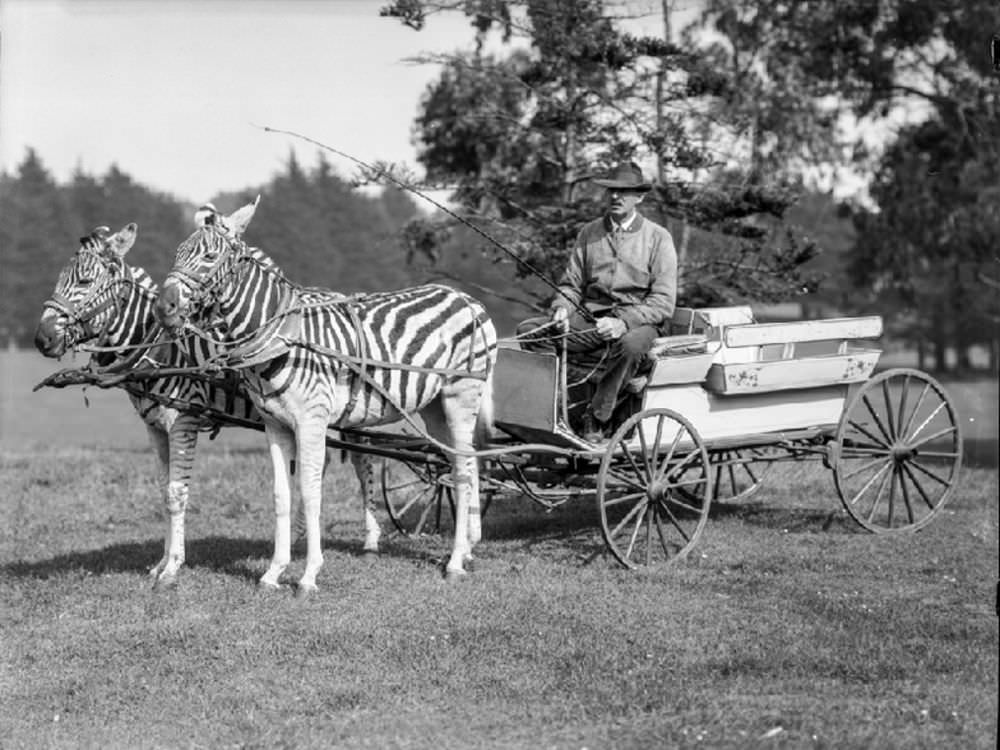
That said, individual zebras were occasionally tamed enough to pull carts or carry riders. One of the most well-known examples came from Lord Walter Rothschild, a member of the famous Rothschild banking family and the founder of his own private zoo. Rothschild trained a team of zebras to pull a carriage and famously drove them past Buckingham Palace to show the public — and perhaps skeptics — that zebras could be made to perform like horses.
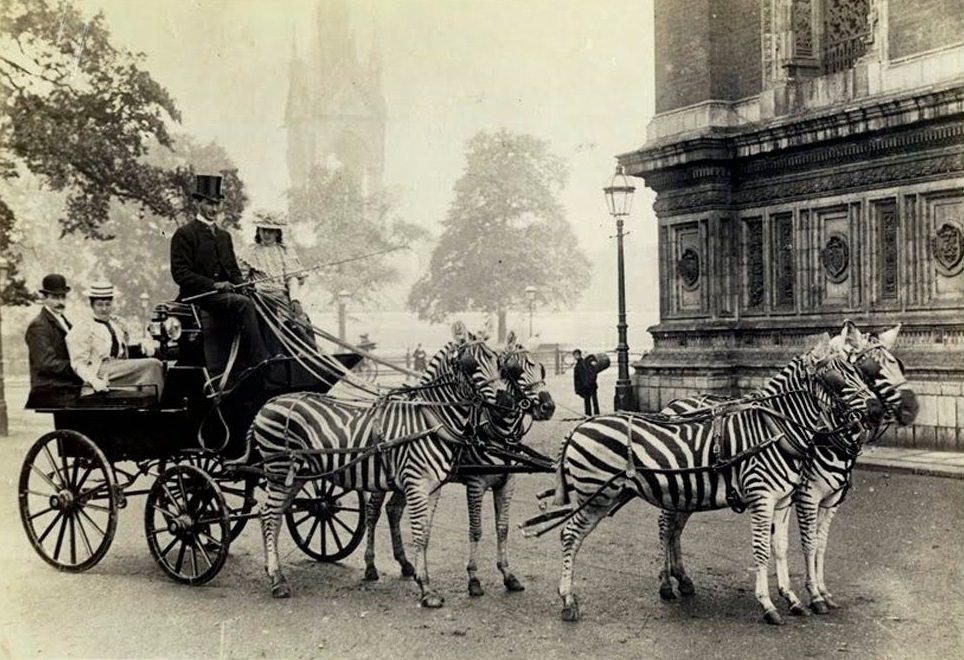
Around the same time in London, a man named Mr. Hardy was working with zebras in a different capacity. Based in a mews off Cromwell Road in Kensington in 1898, Hardy was a noted horse rider and trainer — one of only three men to have ridden the “French Rocking Horse,” a training device used by the French Cavalry that simulated every violent movement of an untamed horse. His experience with difficult animals gave him a rare edge in handling zebras.
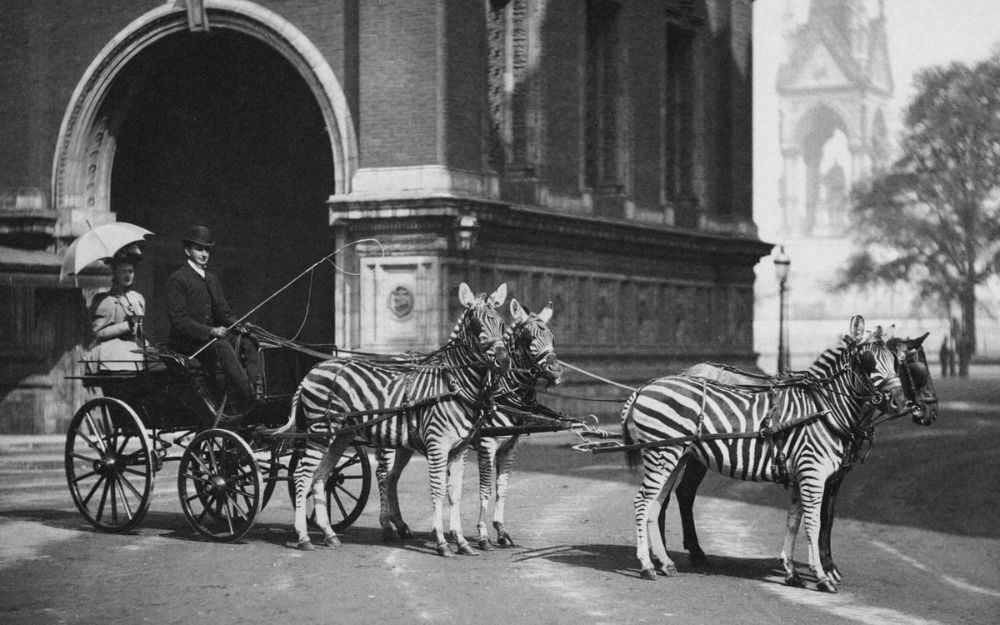
Rothschild’s zebra ventures spanned several years. Photos from as early as 1895 show him with his team of carriage-pulling zebras, long before his famous Buckingham Palace drive became widely talked about.
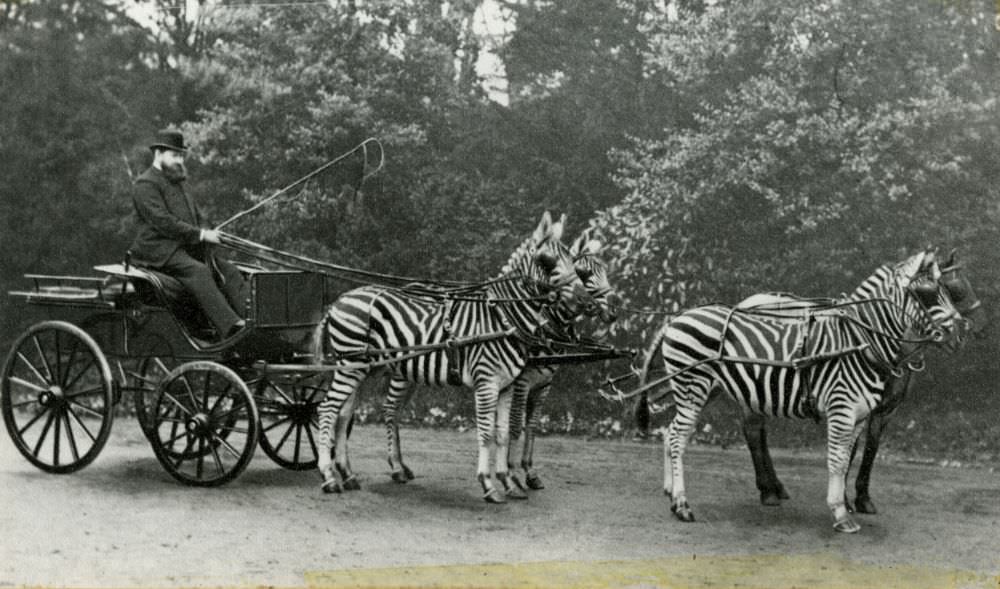
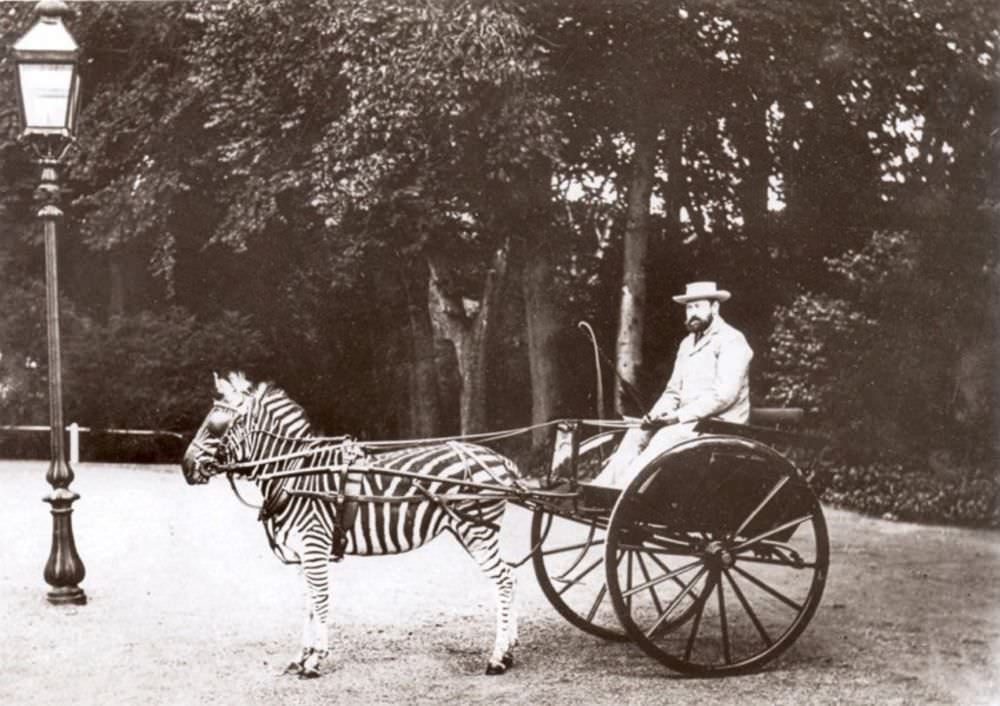
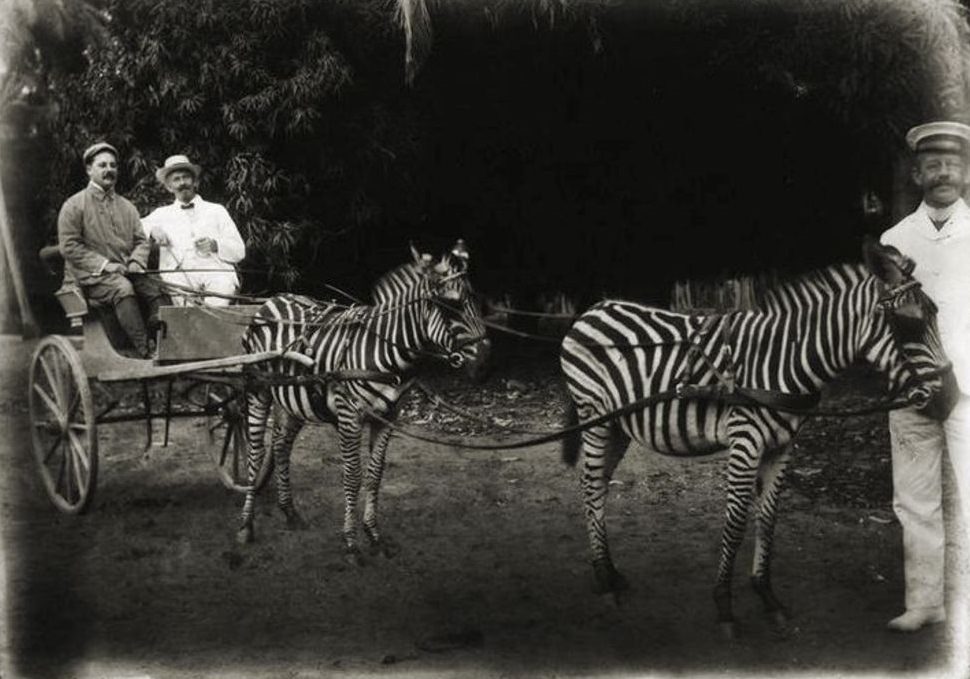
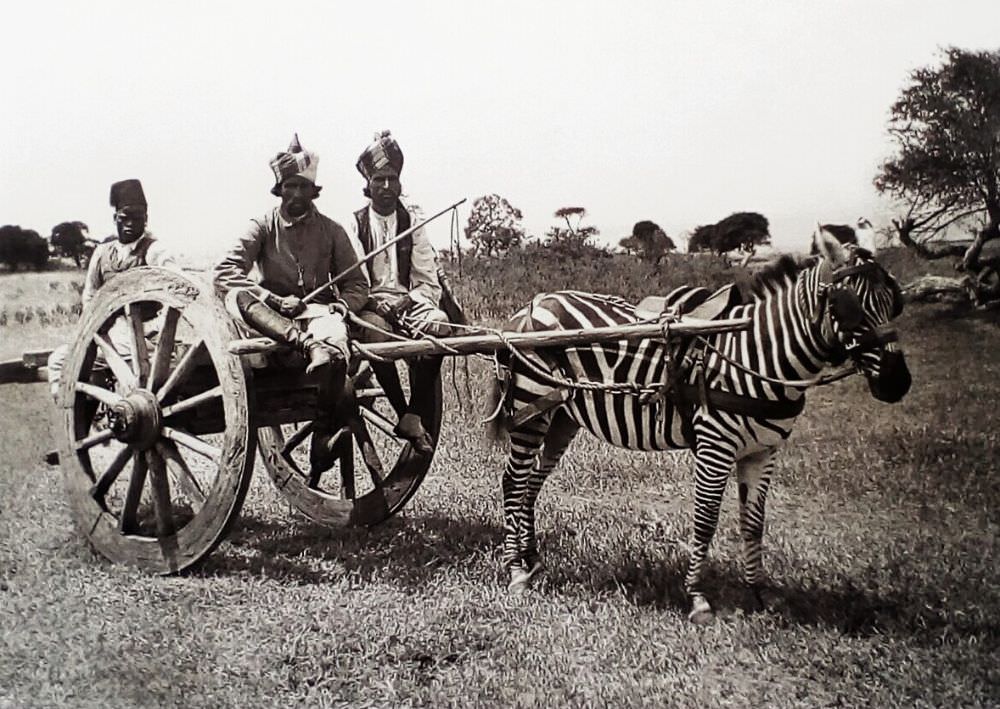
Zebra-drawn carts appeared across several countries during the 1890s. These were not large-scale working arrangements — they were more like curiosities, demonstrations of what a patient trainer could achieve with a single animal.
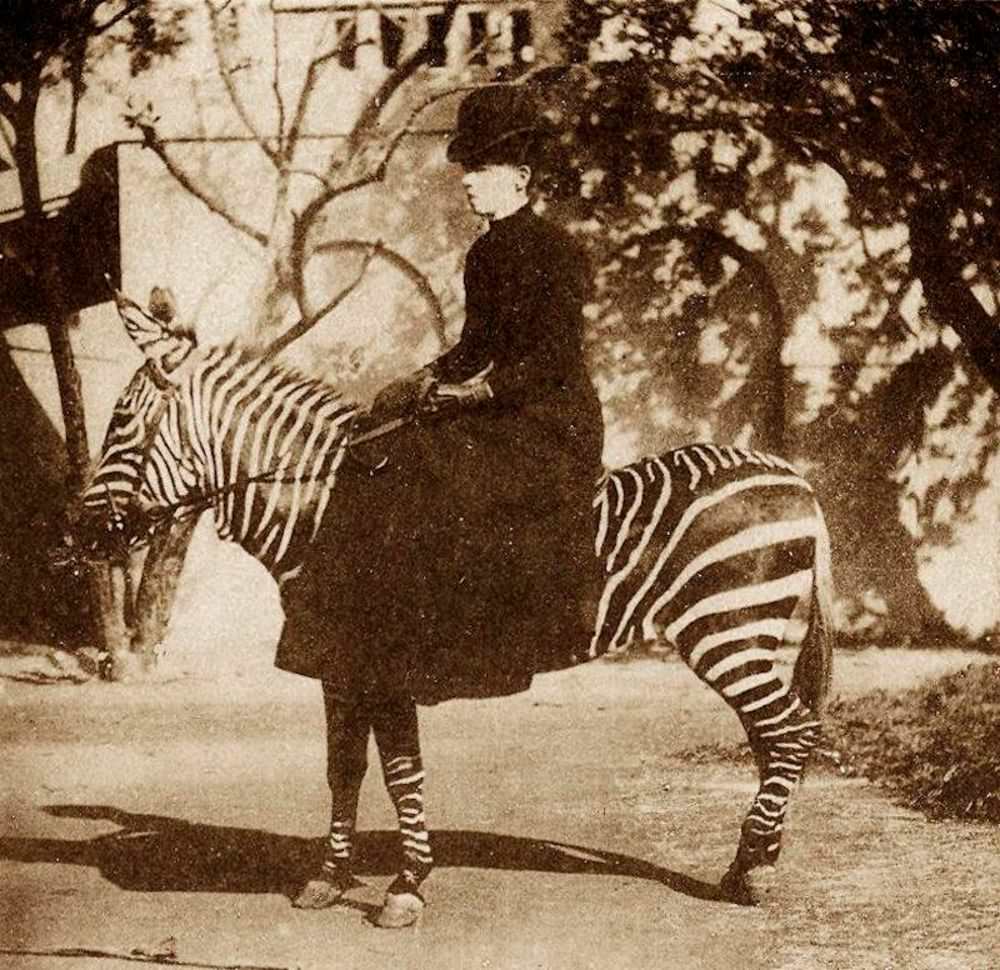
Riding a zebra, rather than harnessing one to a cart, was an even rarer feat. Mrs. Alice Hayes managed exactly that in Calcutta, where her husband broke a zebra sufficiently within a single hour — saddling and bridling the animal — so that she could ride it. Hayes was clearly no ordinary rider. She sat in the saddle with the composed confidence of a seasoned equestrian.
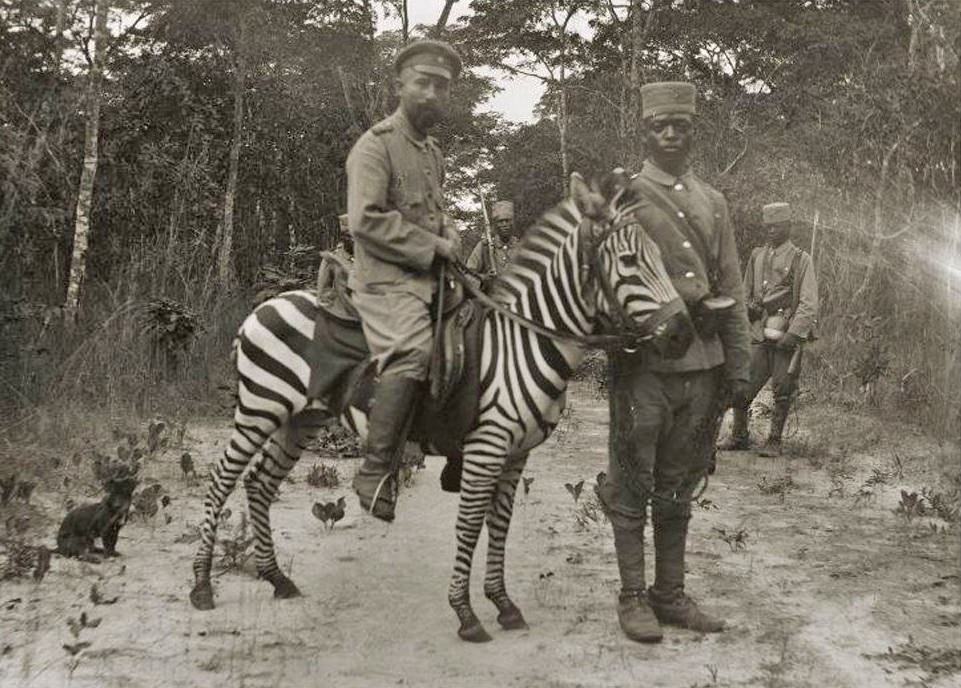
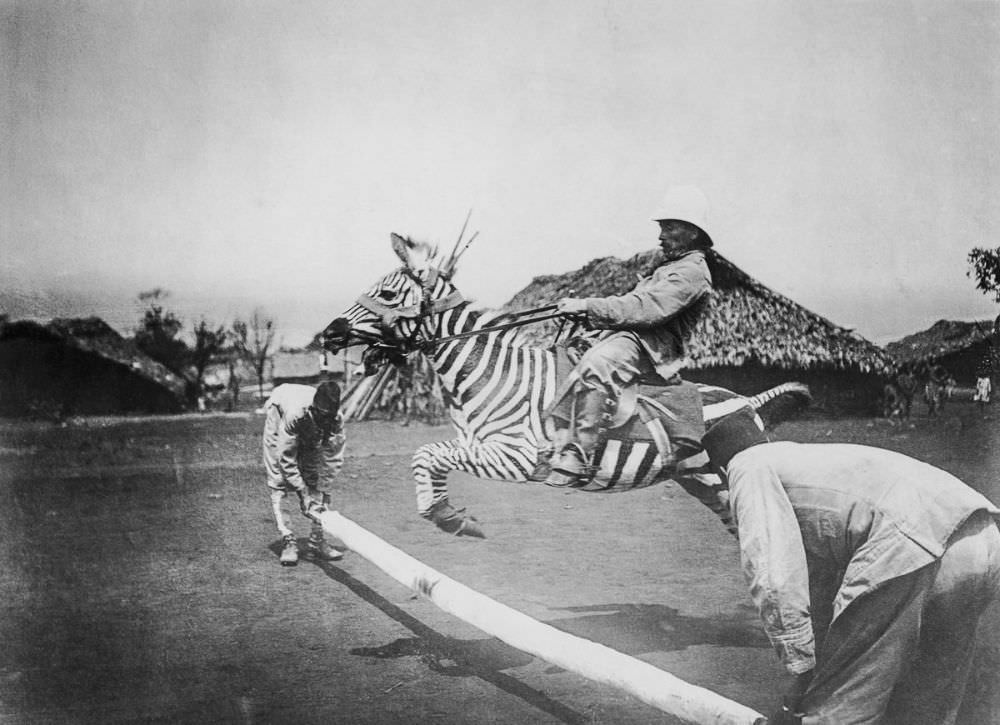
German colonial forces in East Africa also experimented with zebras during this era. Soldiers and officers in German-controlled territories occasionally rode them, as seen in photographs from Zanzibar and German East Africa.
Zebras also made appearances on the streets of London well into the 20th century. In 1913, a zebra was photographed pulling a carriage through Brixton. The zebra and carriage were believed to belong to music hall artist Mr. Gustav-Grais, who used them to promote his shows — a moving advertisement that must have stopped pedestrians in their tracks.
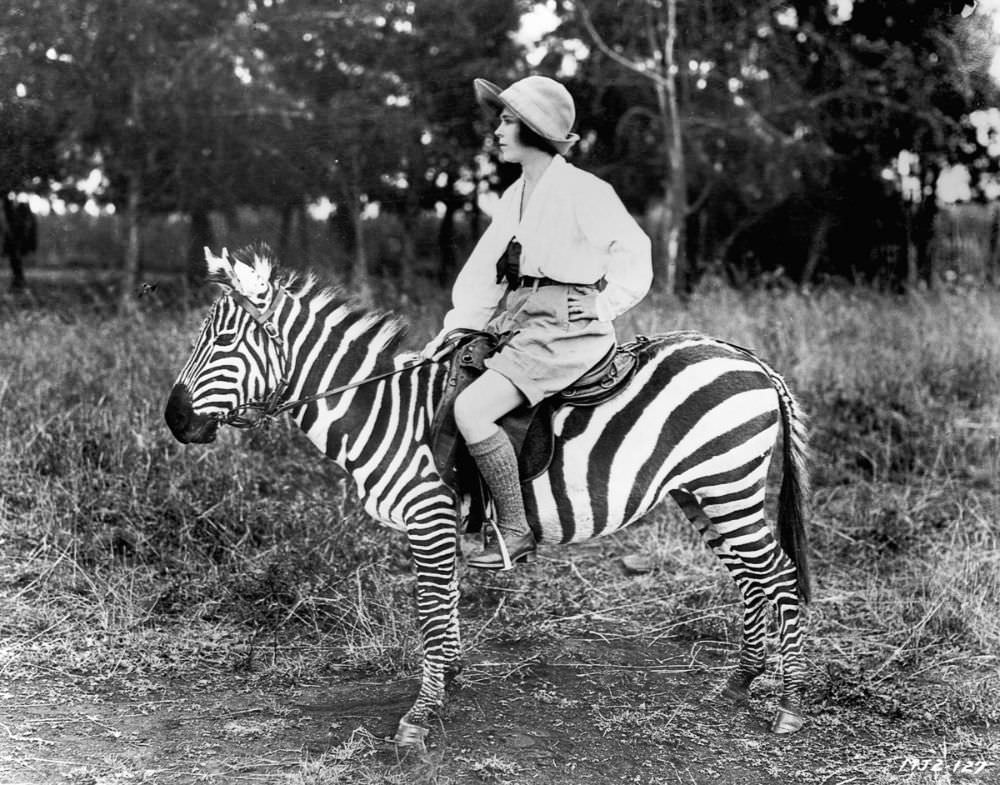
By the 1920s, zebra riding had spread to new settings. Mrs. Martin Johnson rode a domesticated zebra named Bromar in 1923, and in San Francisco’s Golden Gate Park, a man was photographed driving a zebra team pulling a cart — an unusual sight even for that era.
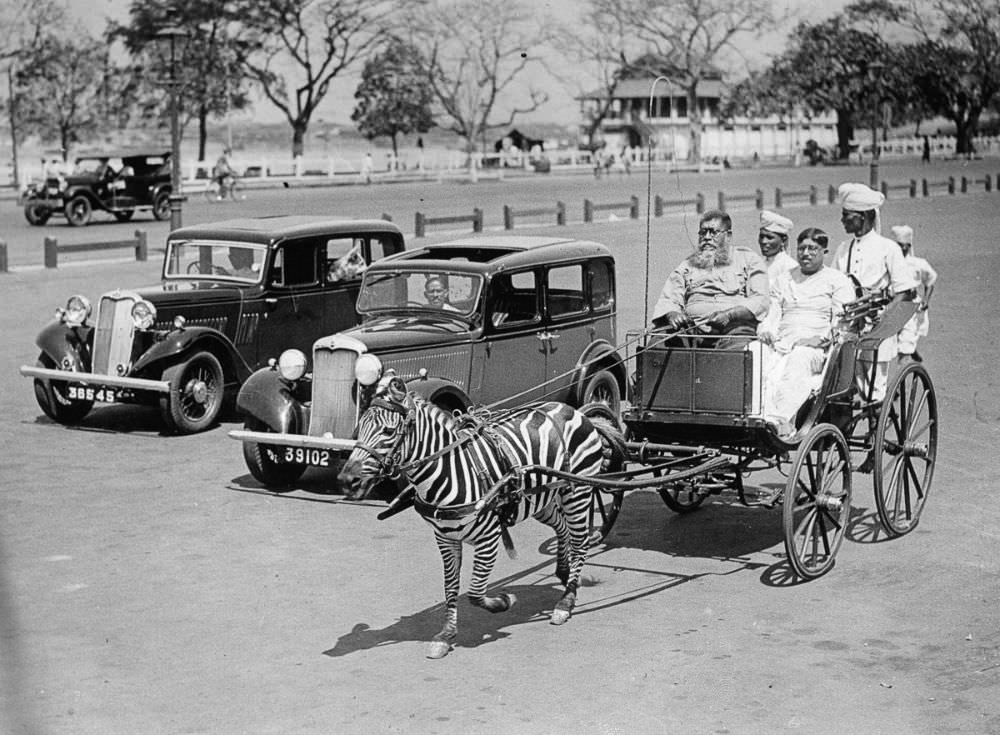
Zebra carts turned up as far away as India during this period. A photograph from Calcutta around 1930 shows a zebra pulling a carriage through city streets, evidence that these animals were used in urban settings well beyond Africa and Europe.
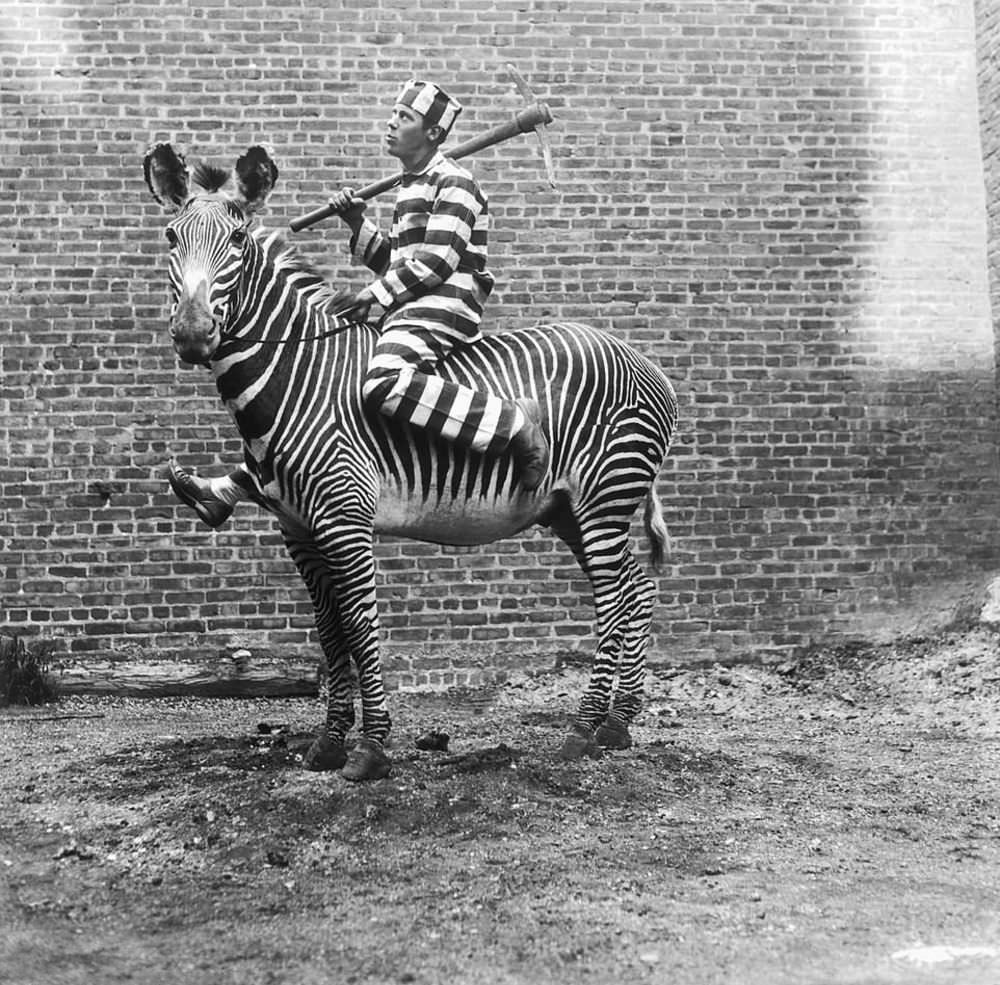
Not every zebra in a photograph was alive. In 1933, a staged publicity photo showed a man pretending to escape from prison on the back of a mounted zebra — a taxidermied specimen prepared by Dr. James L. Clark of New York for the University of Nebraska. The absurdity of the image was clearly the point.
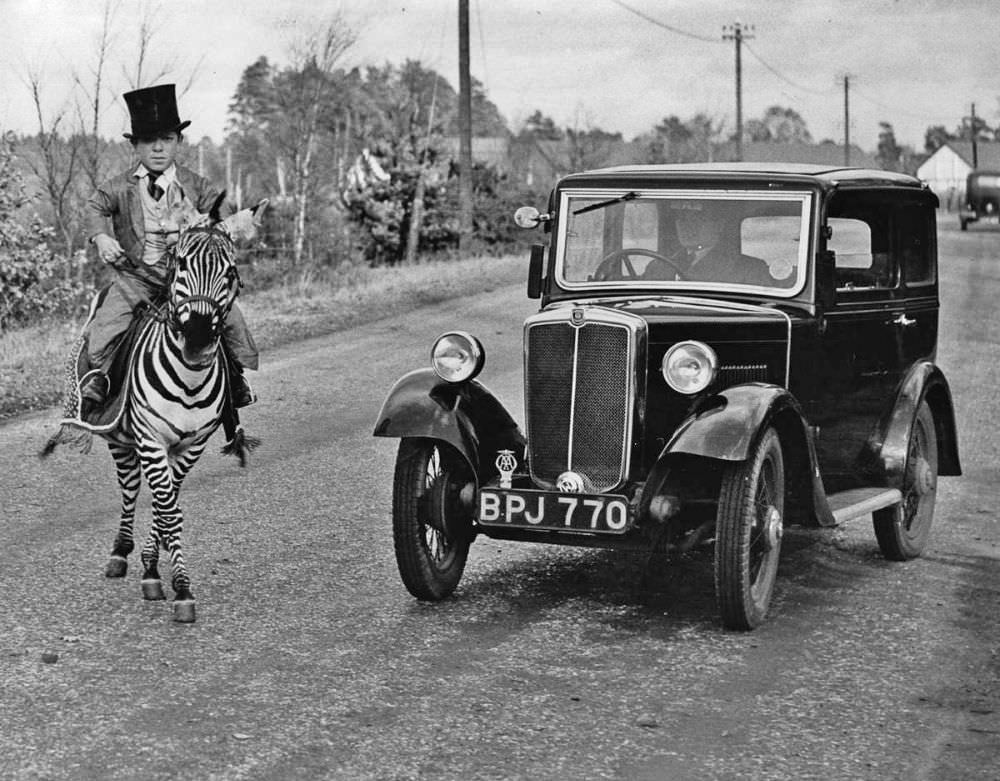
In 1935, a zebra named Jimmy gained brief fame in Berkshire, England, billed as the “only rideable zebra in the world.” An 18-year-old dwarf named Laffin Leslie was photographed guiding Jimmy across a road — a pairing that drew considerable public attention at the time.
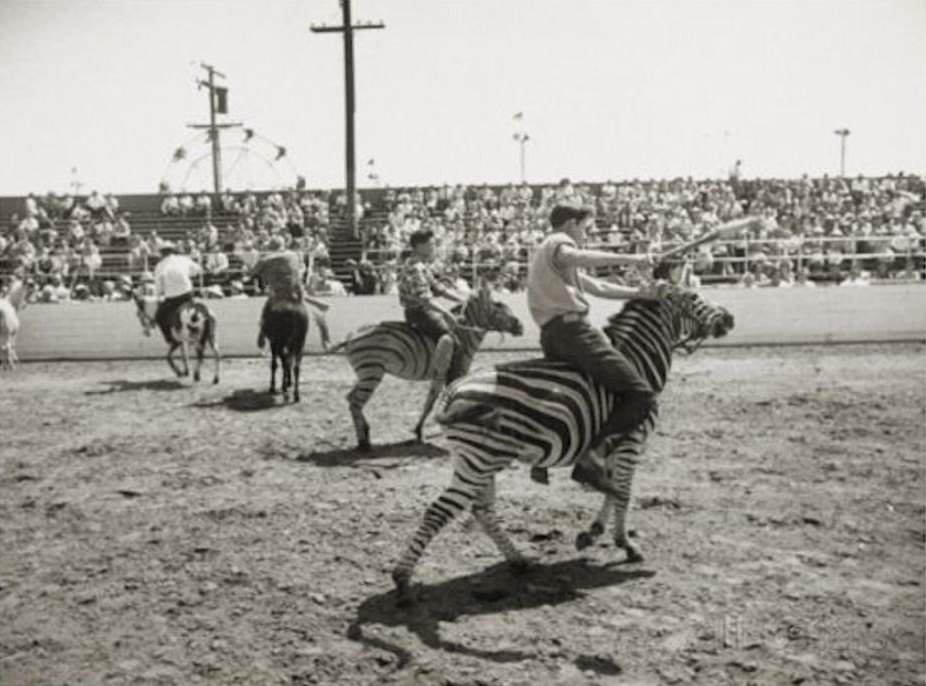
What these photographs share is evidence of a persistent human drive to put zebras to work, despite the animal’s deep resistance to it. Whether harnessed to carriages on London streets or ridden briefly in colonial Africa, zebras were never truly domesticated — but a handful of determined trainers and riders came as close as anyone ever has.