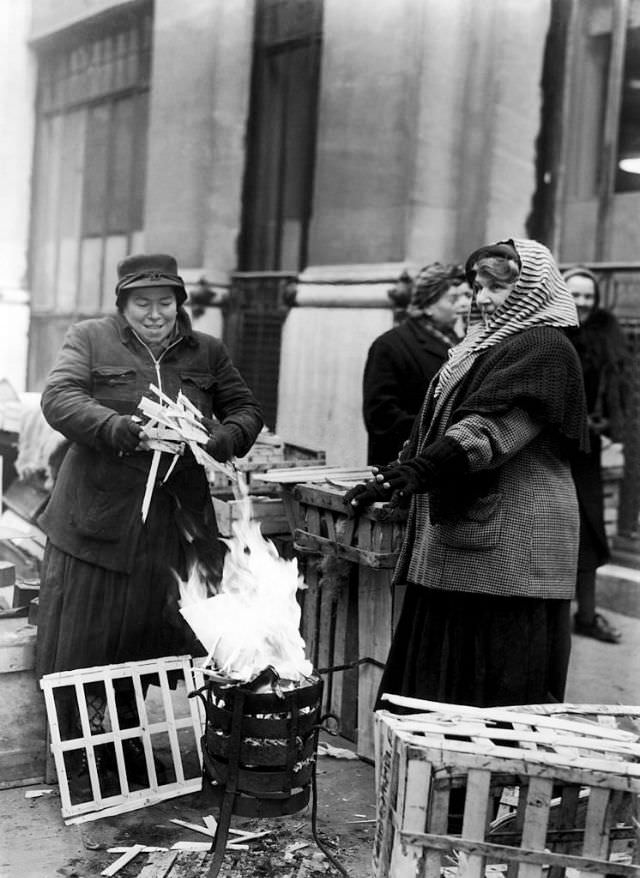
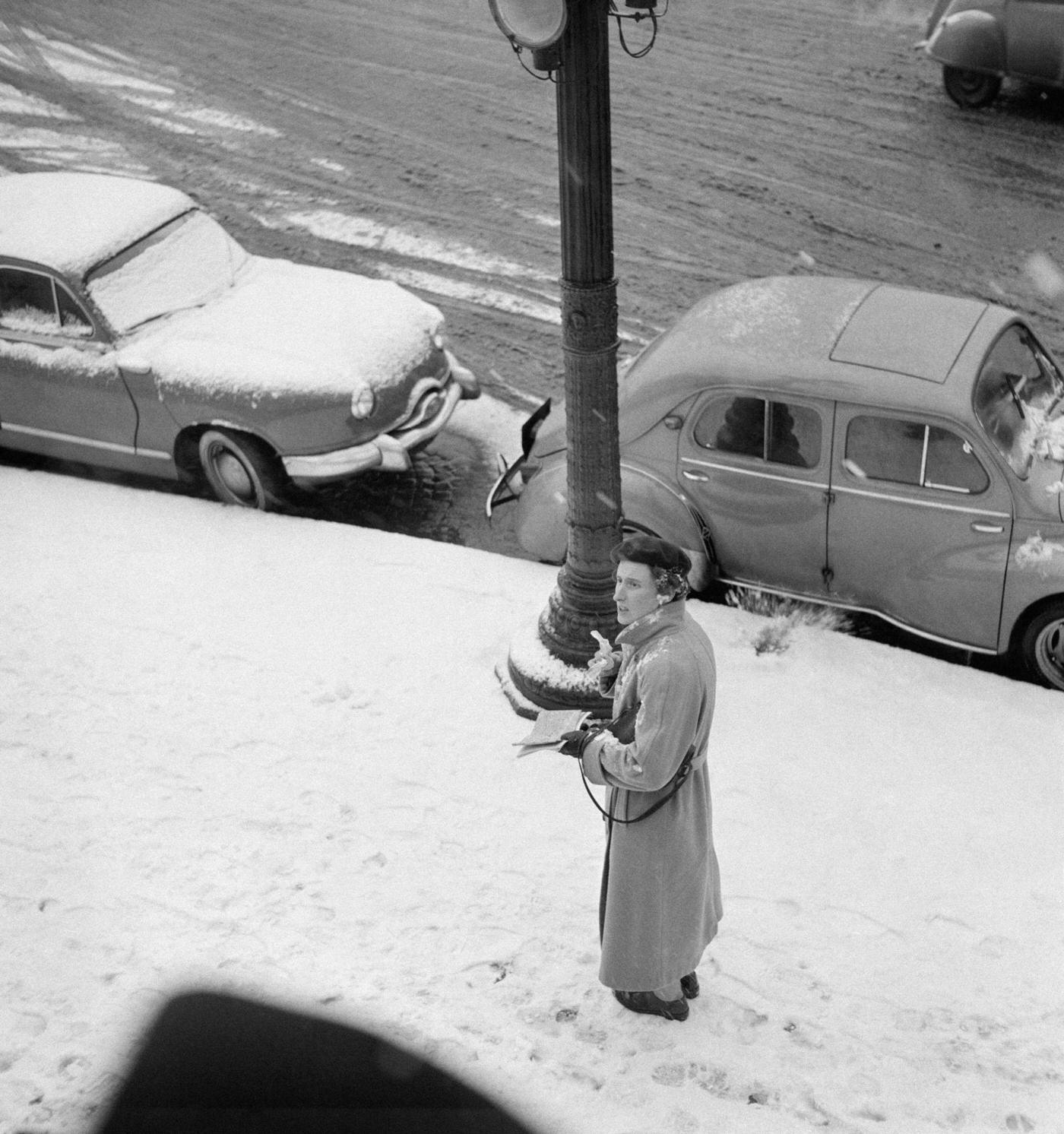
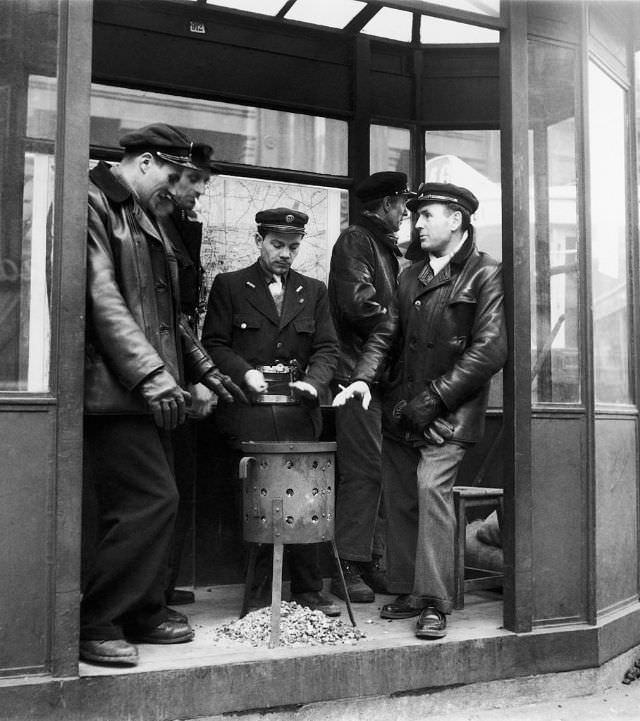
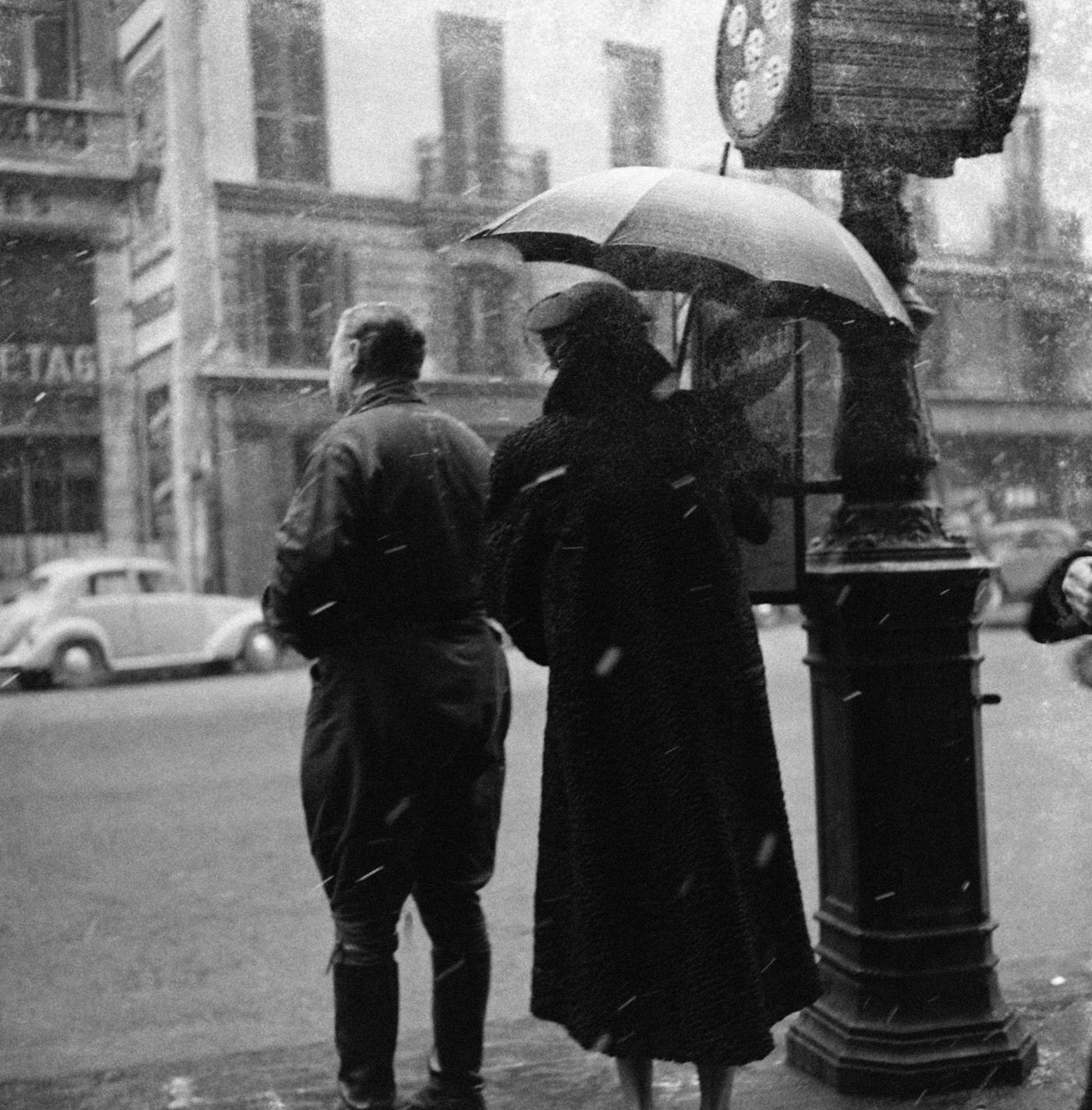
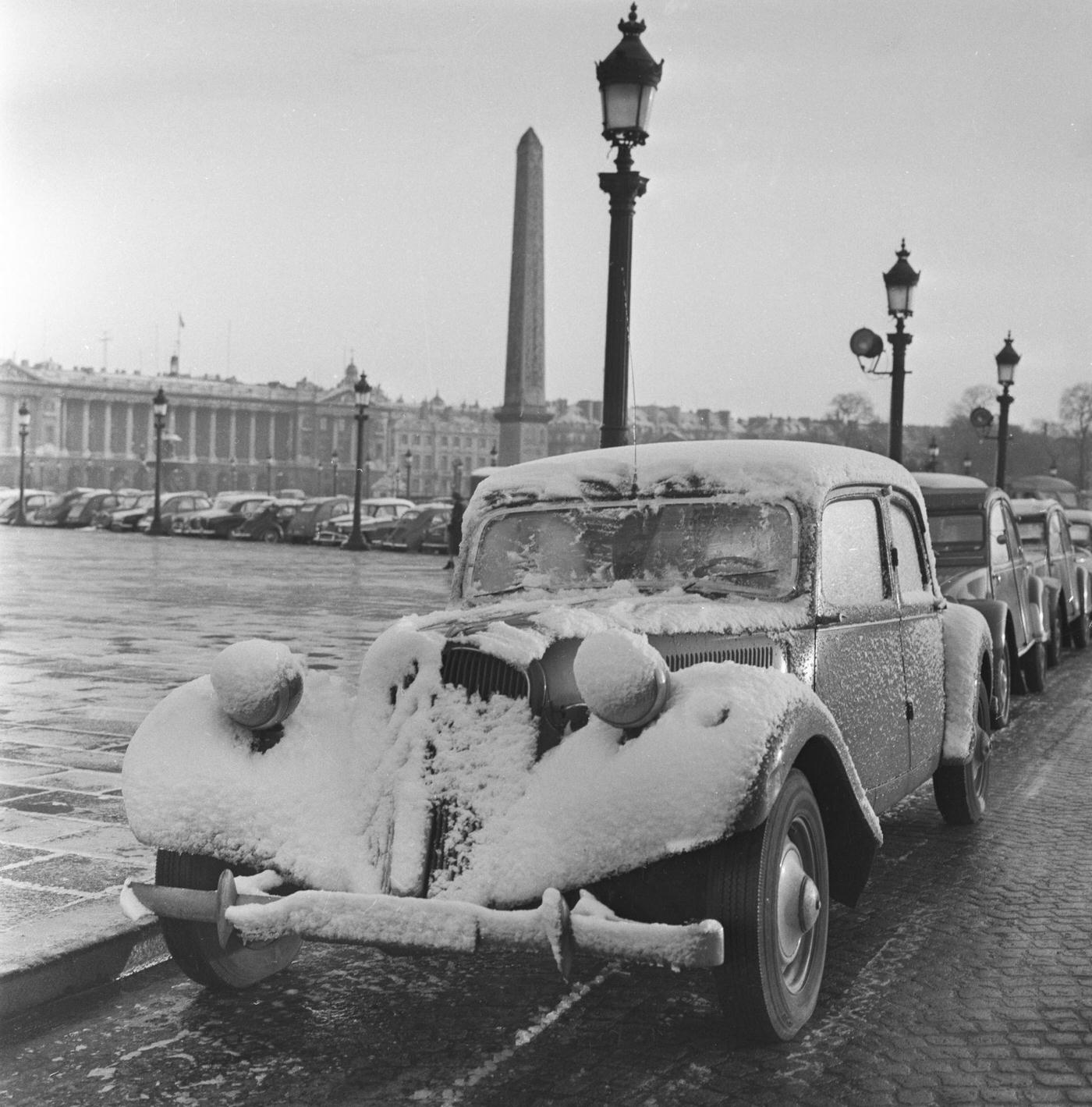
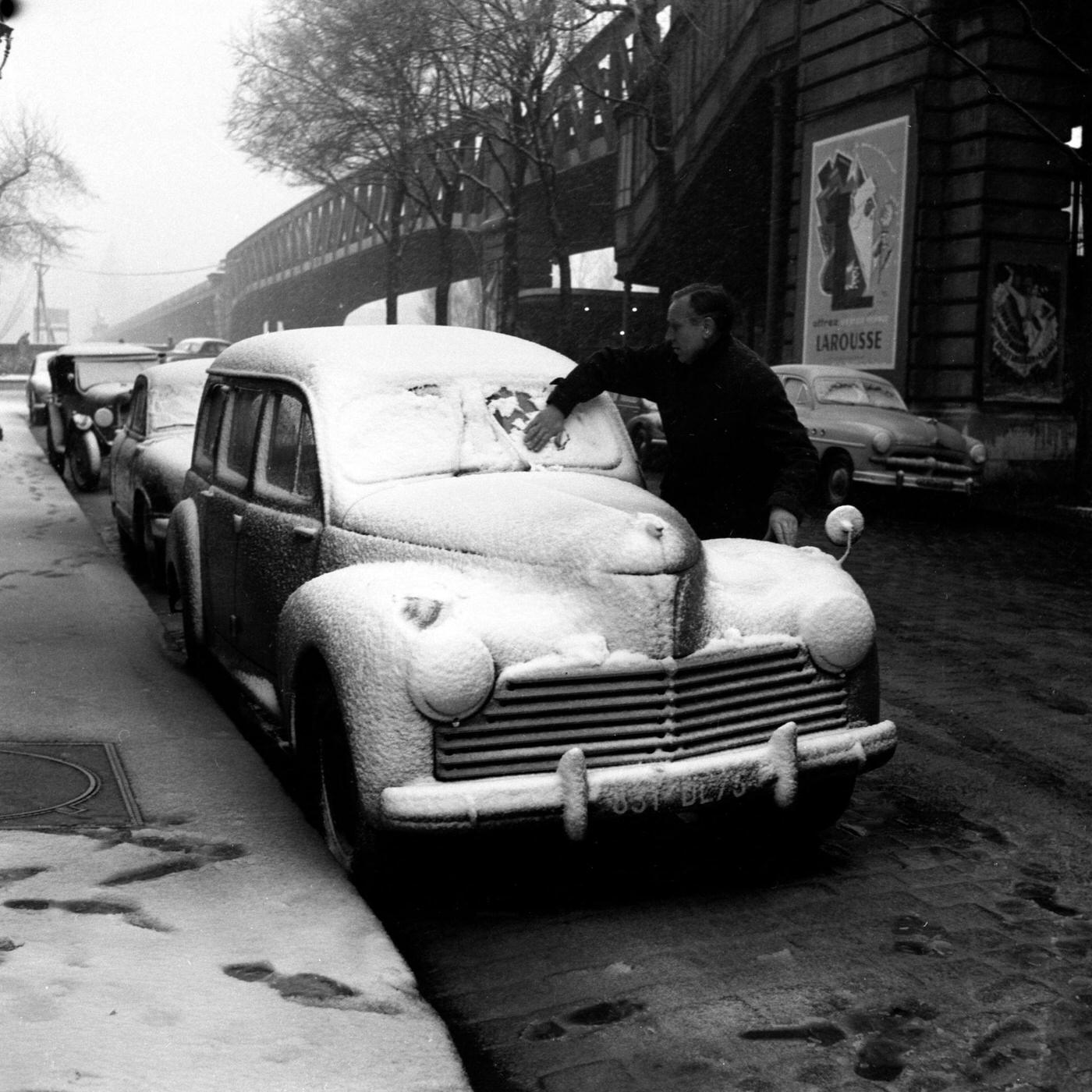
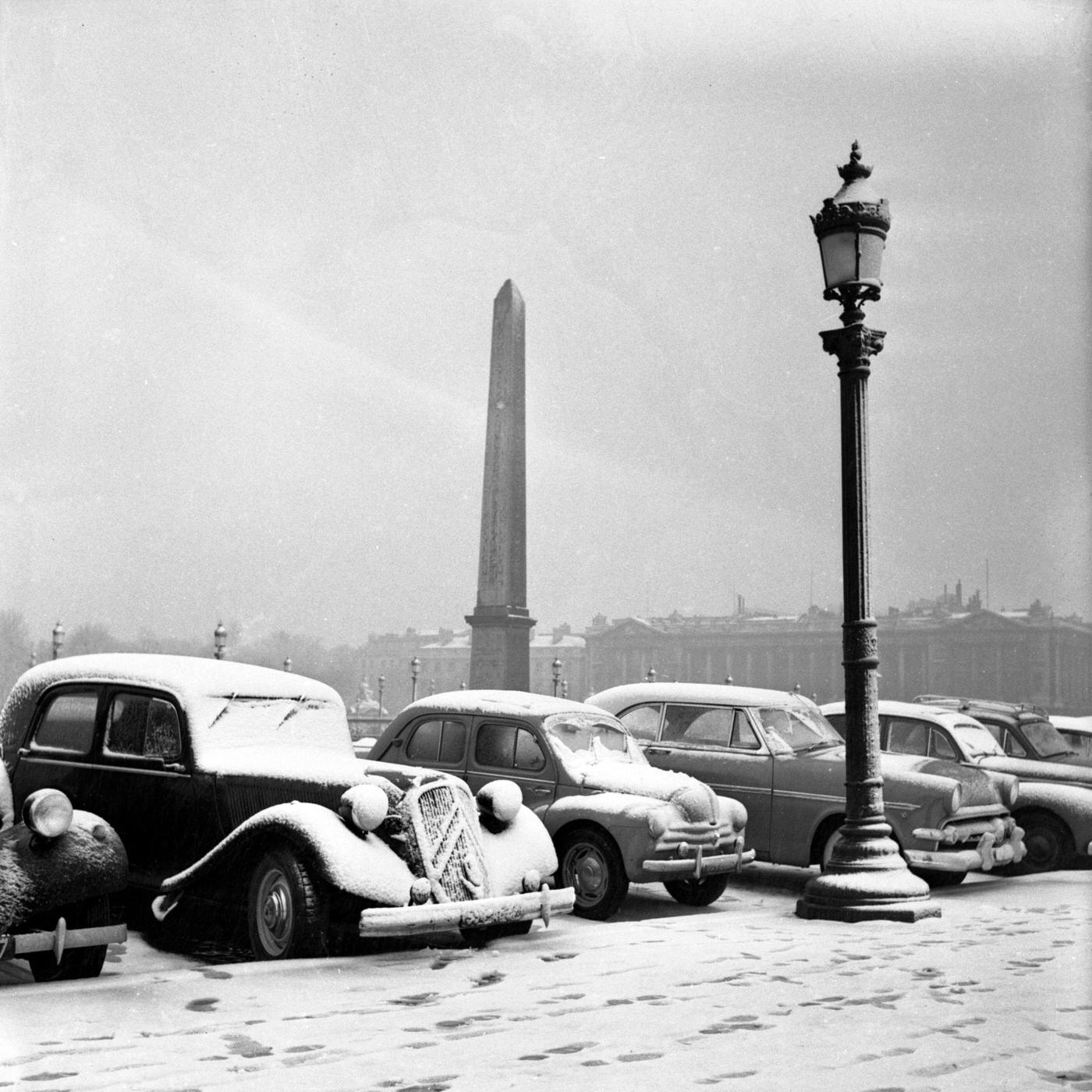
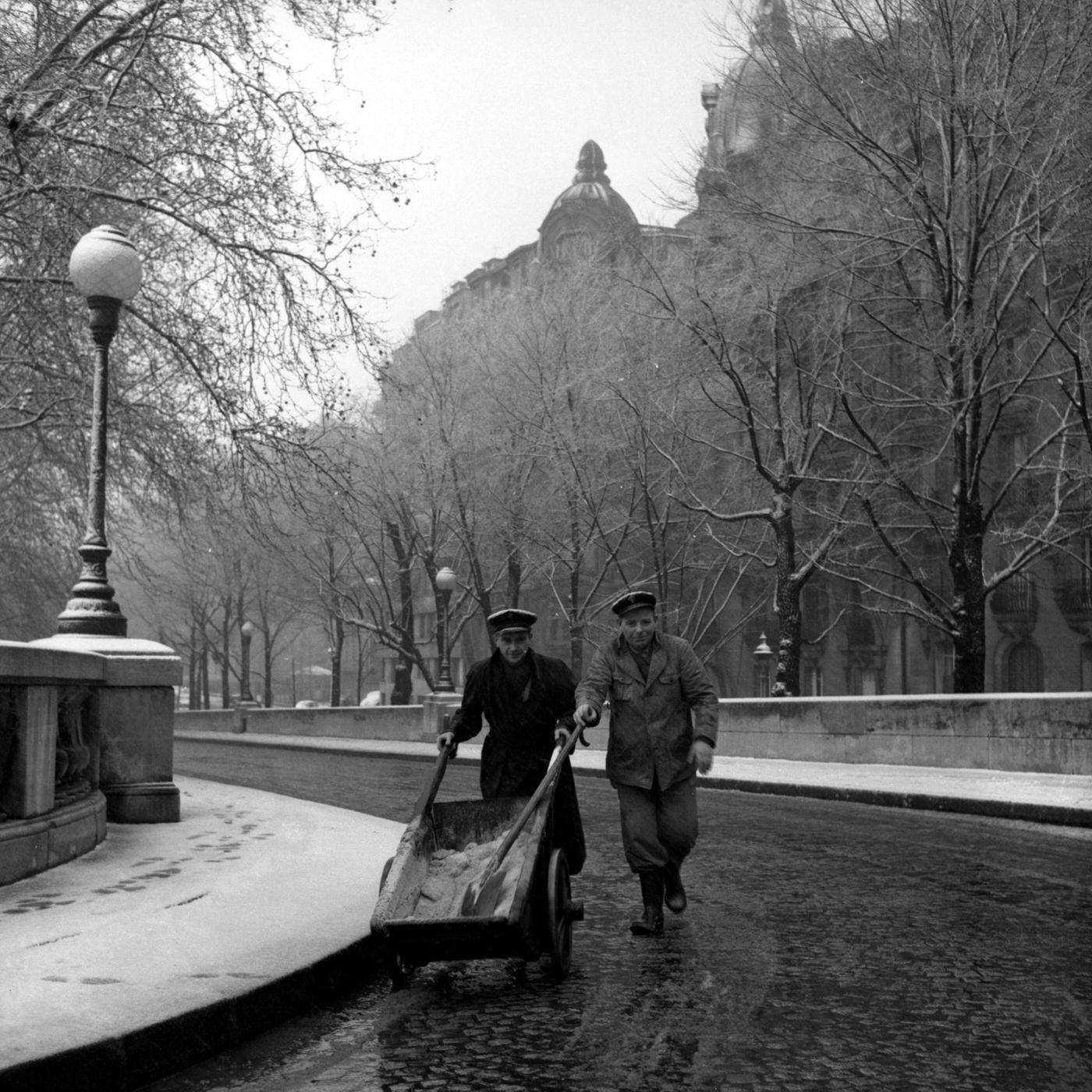
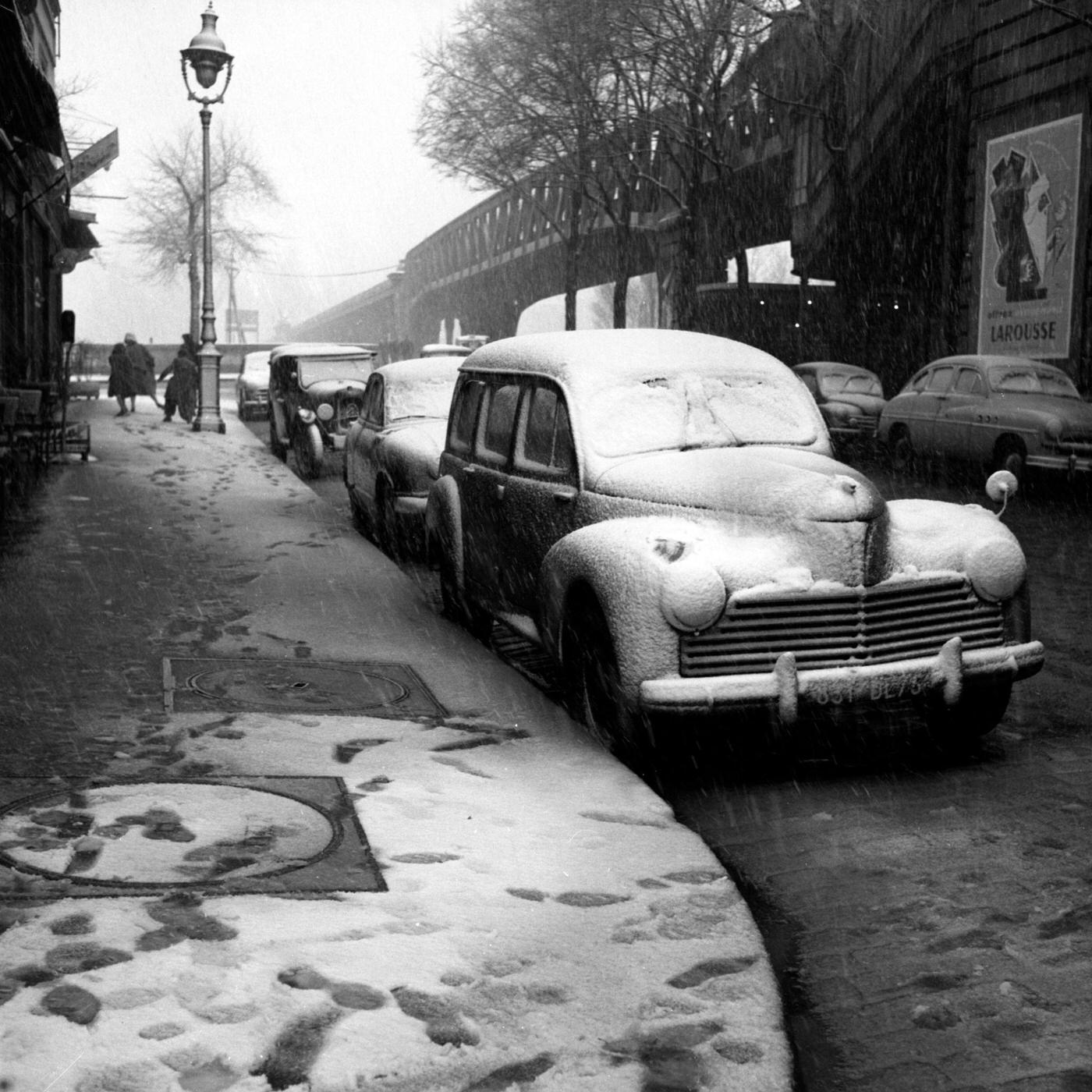
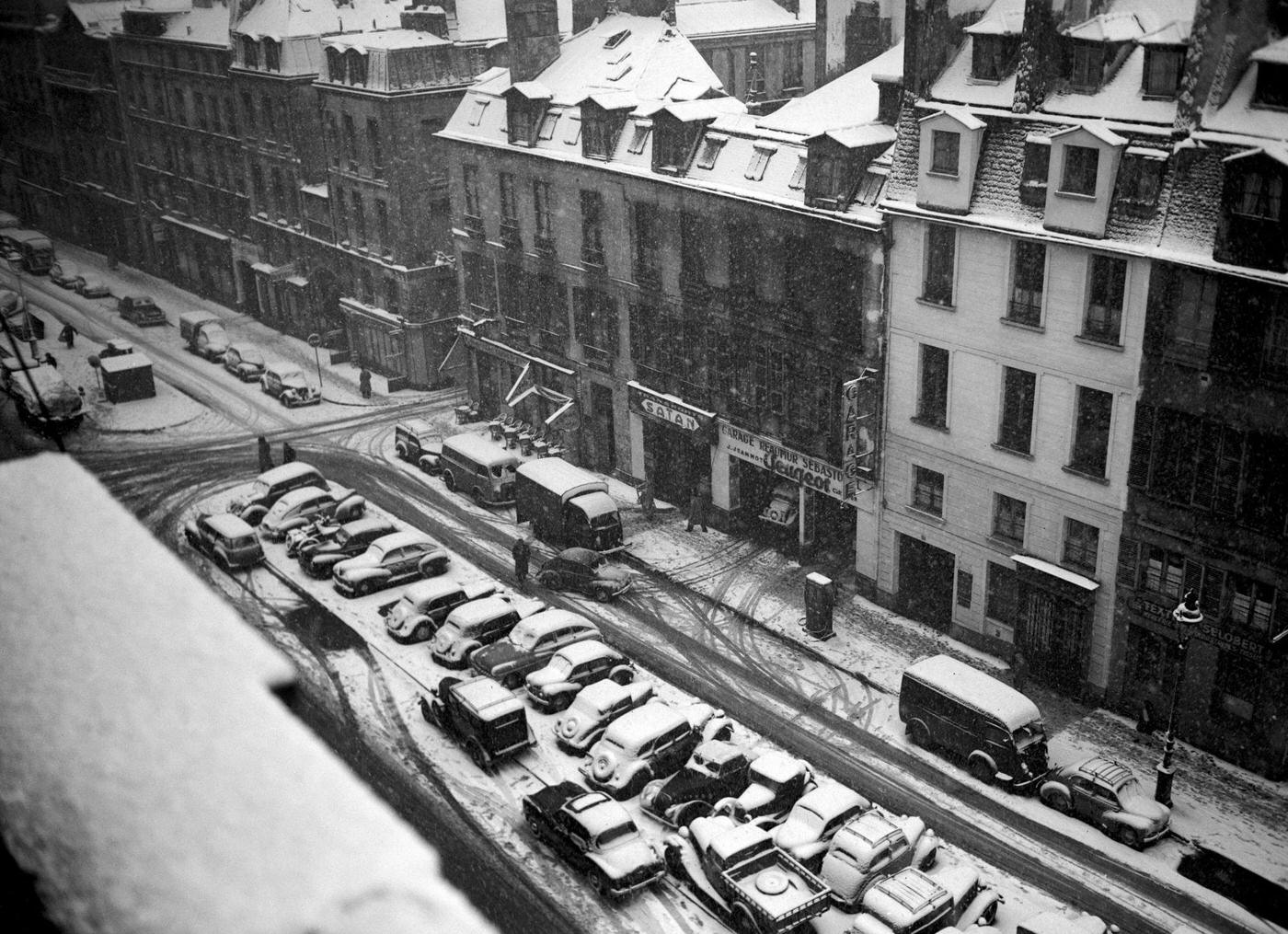
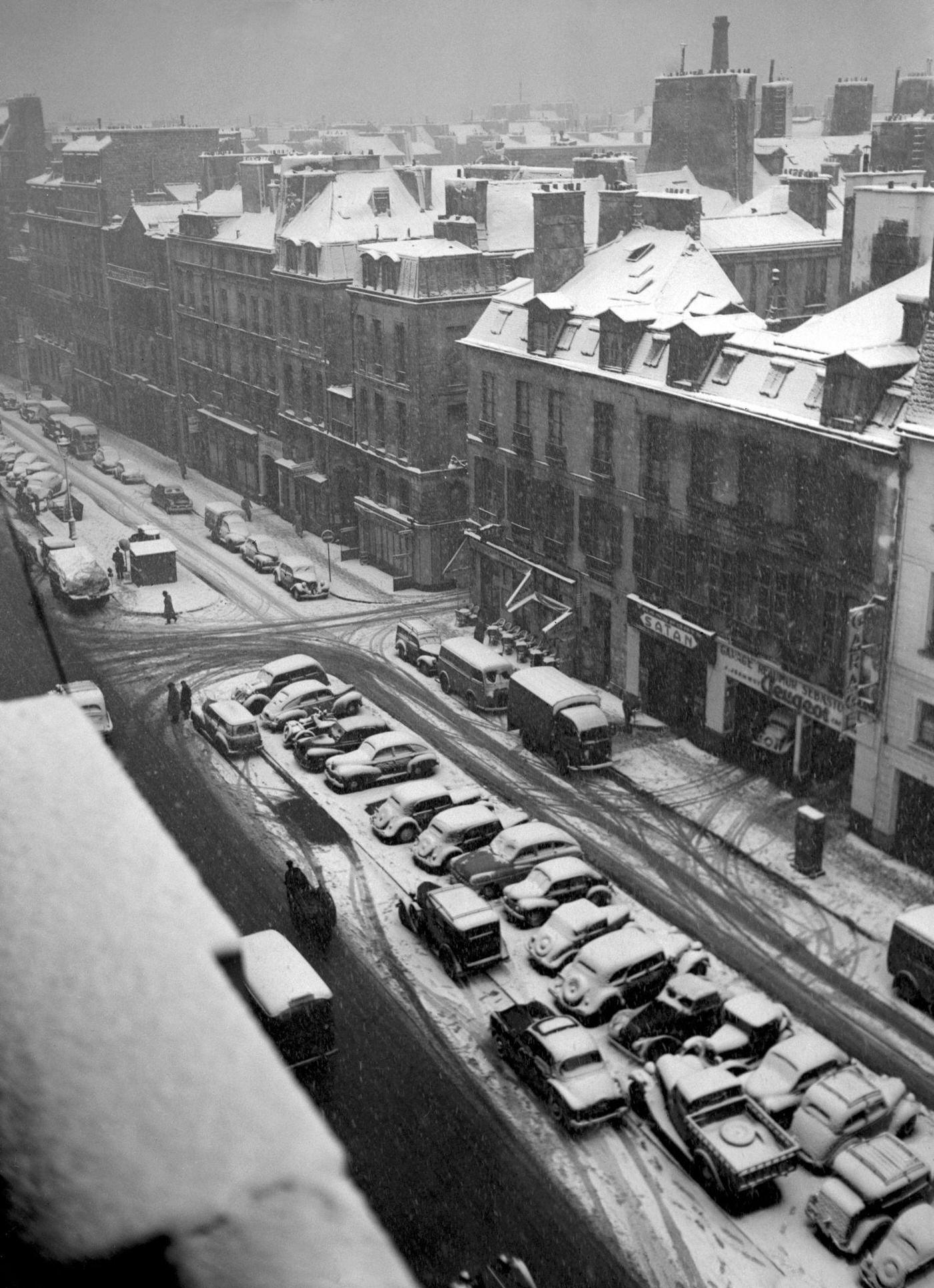
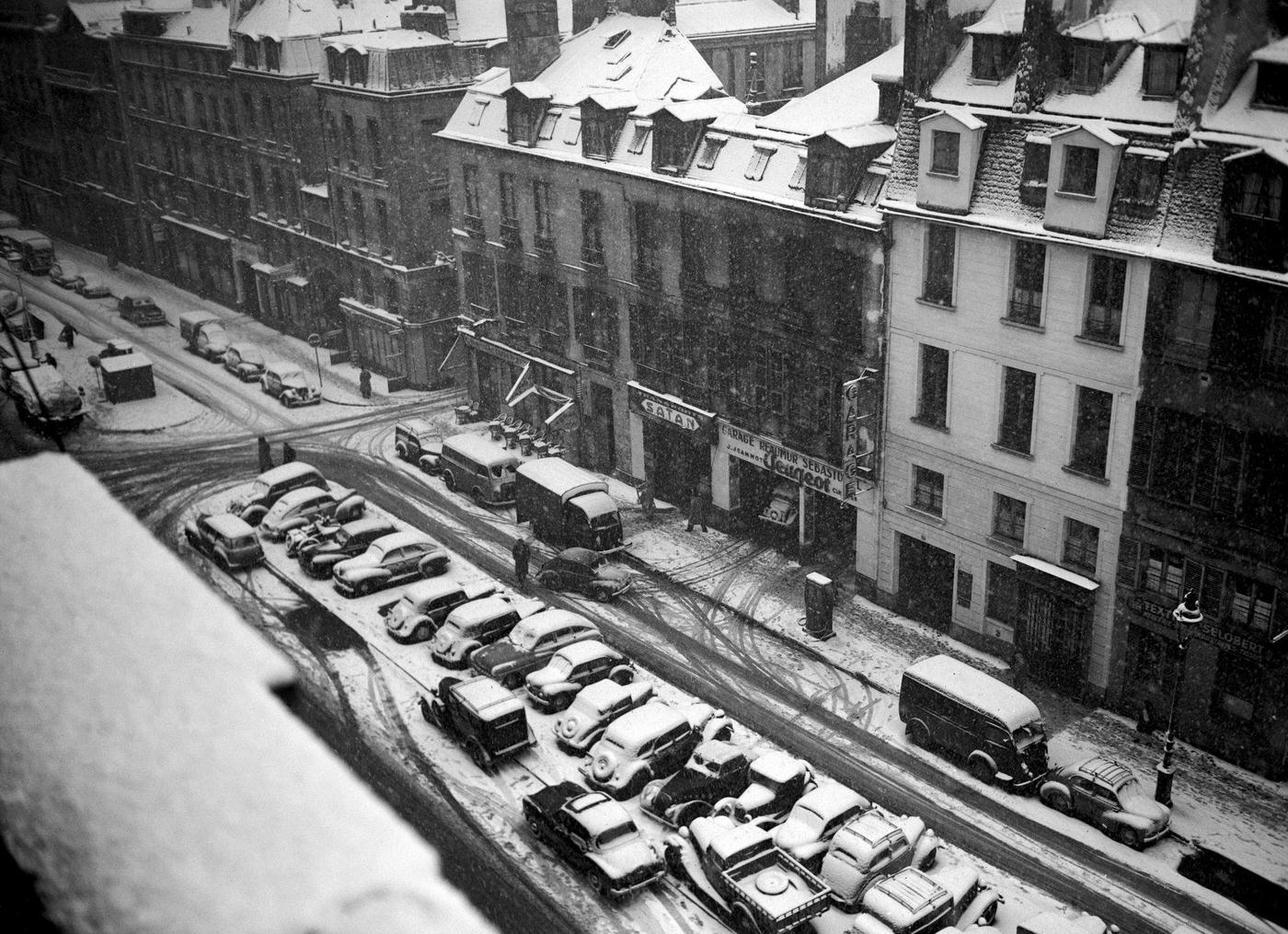
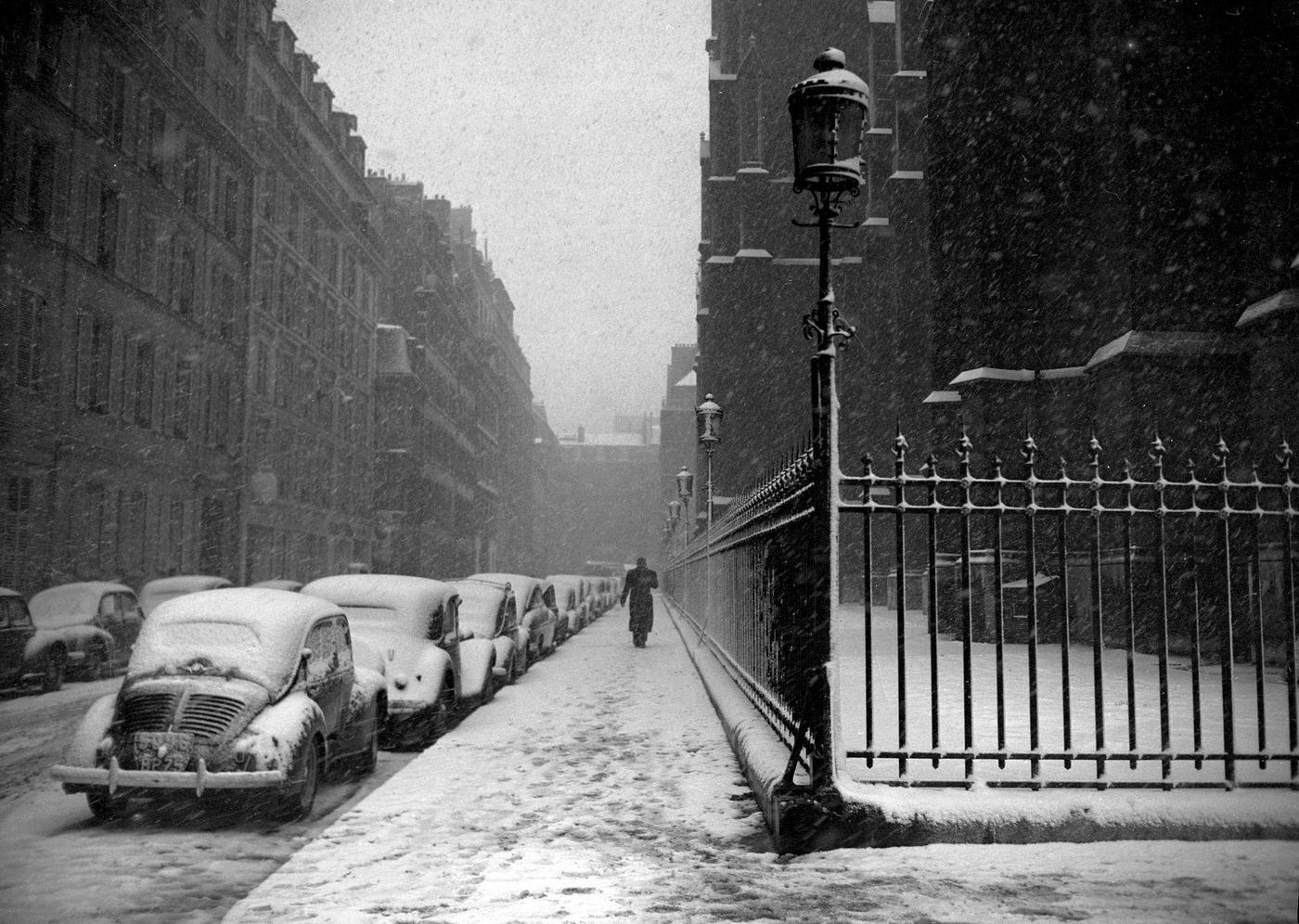
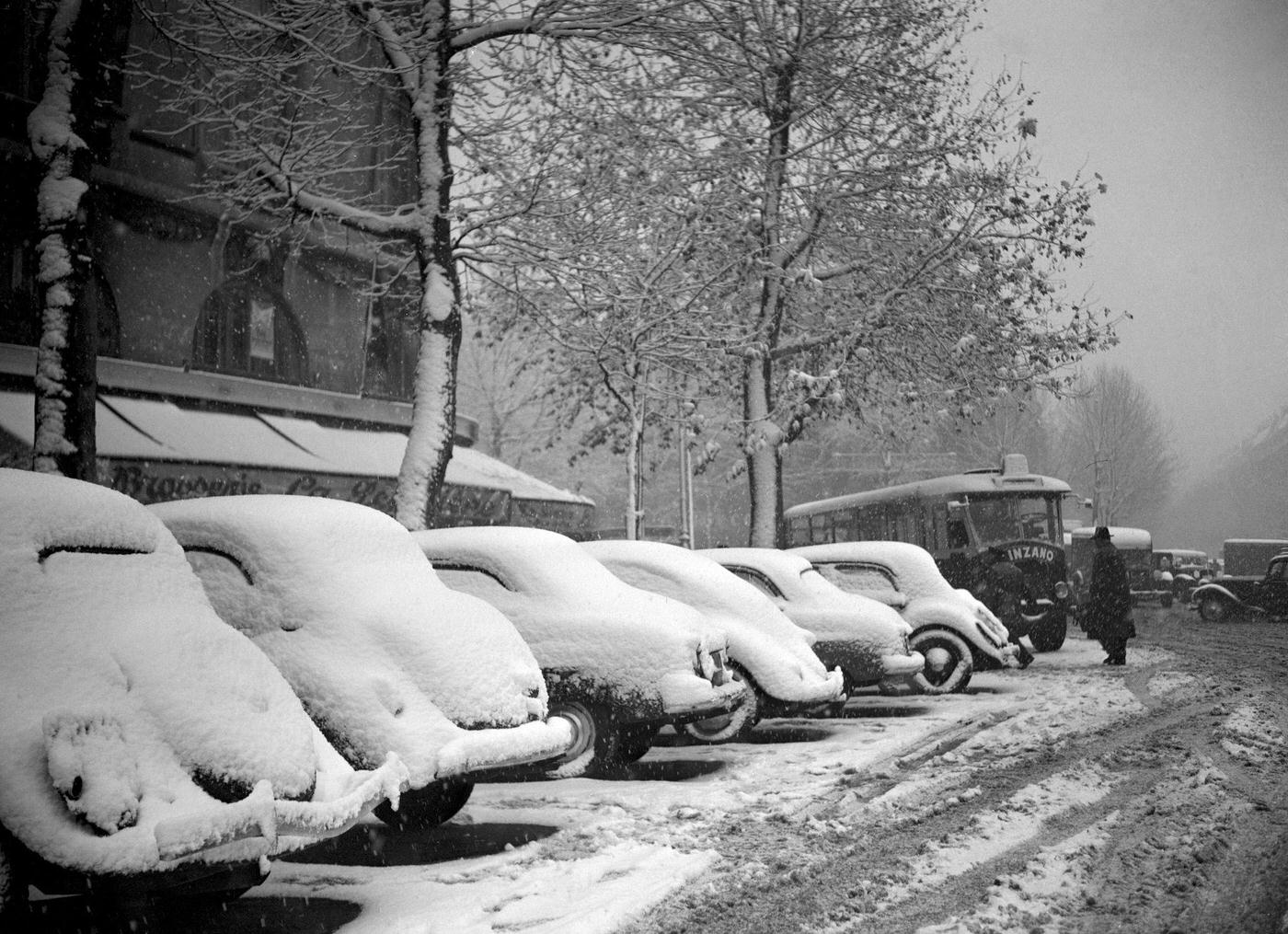
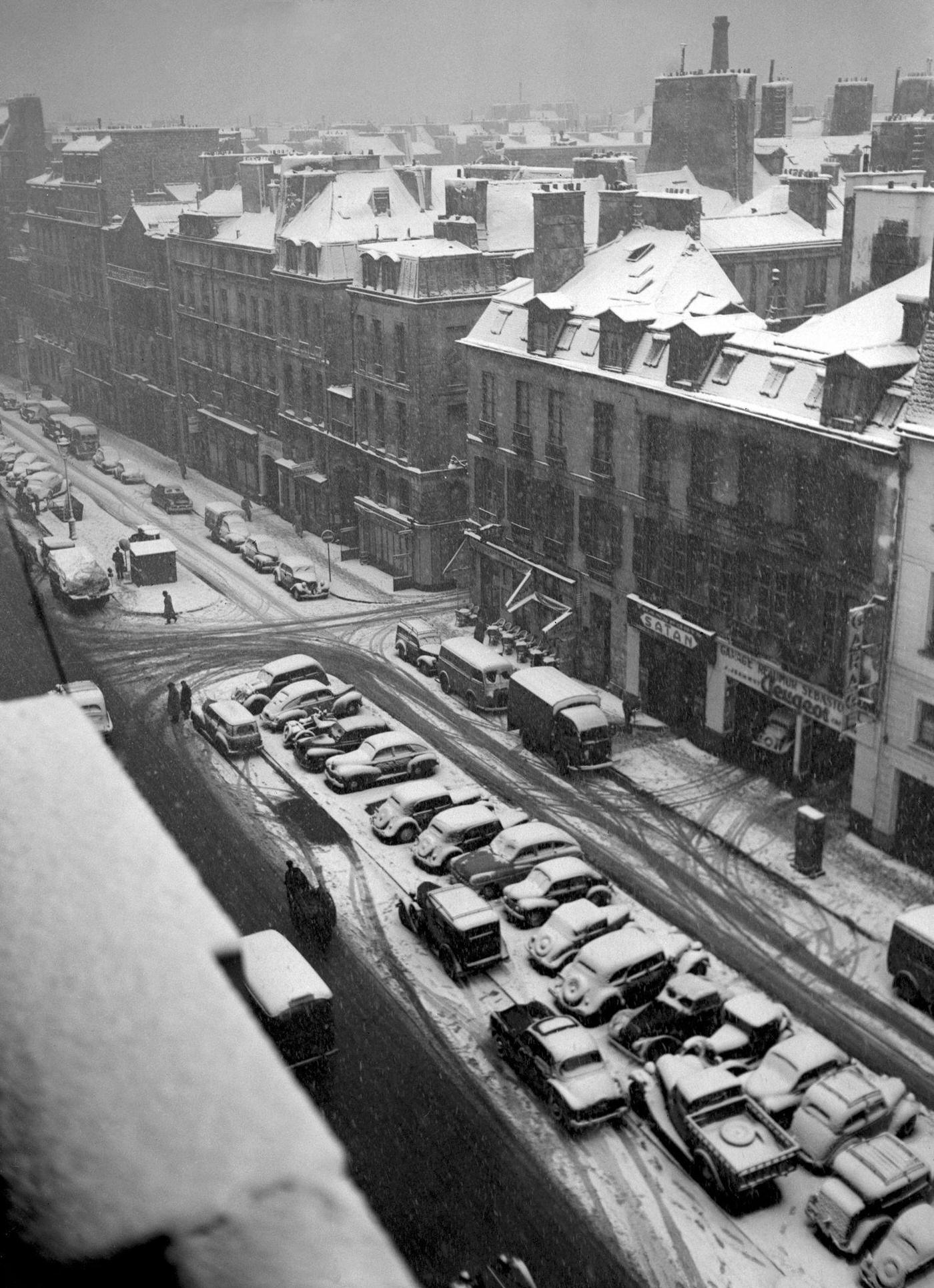
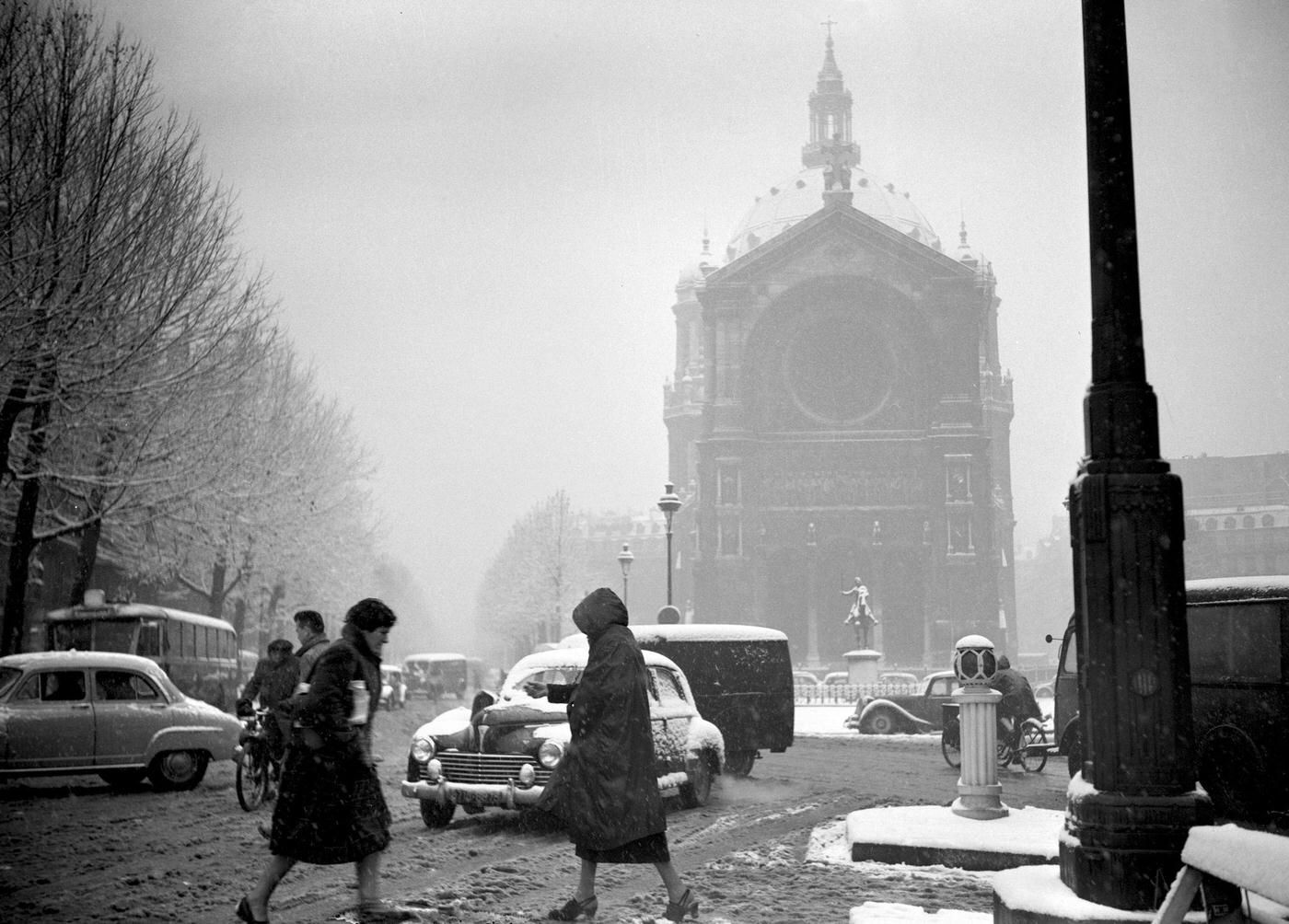
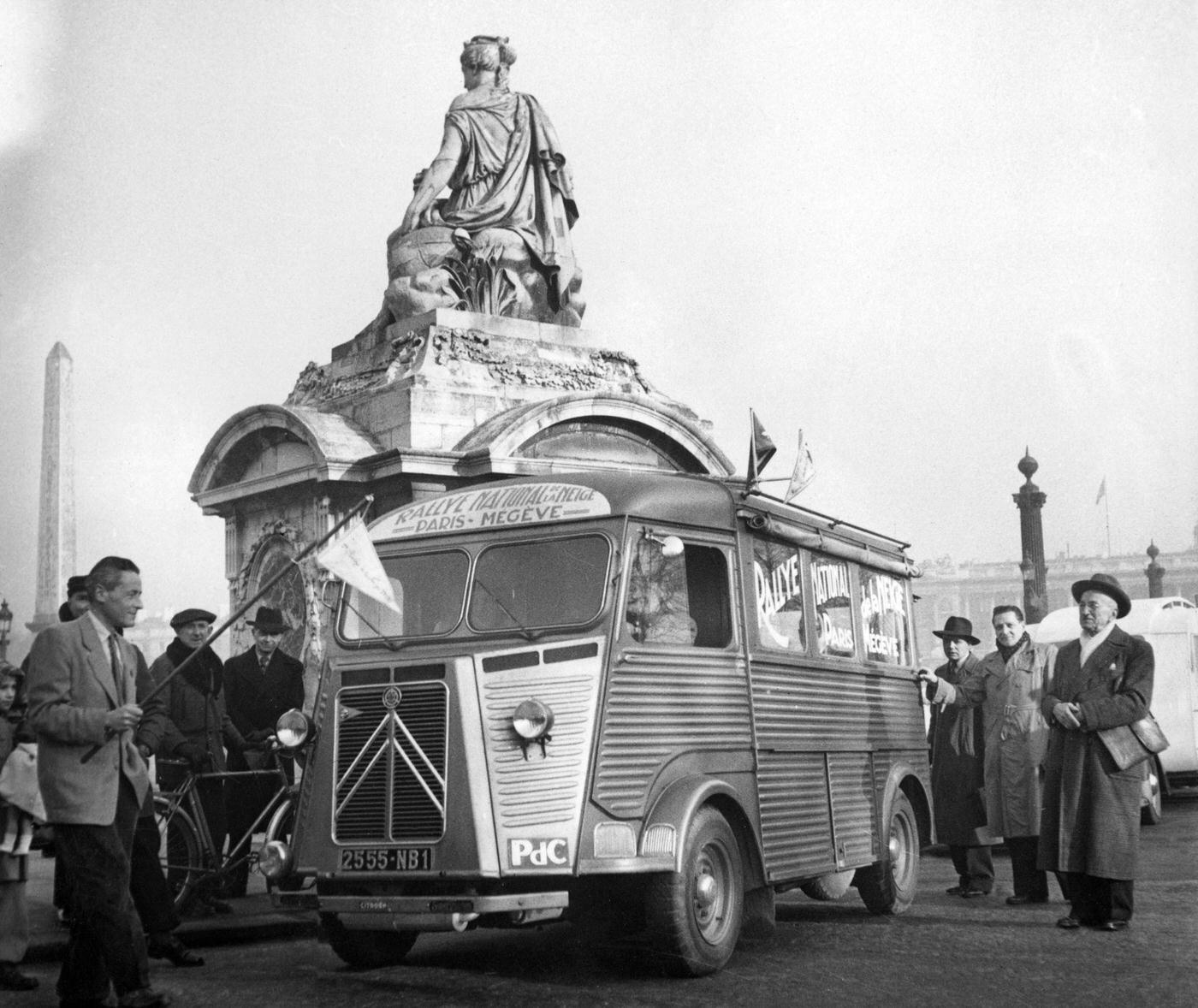
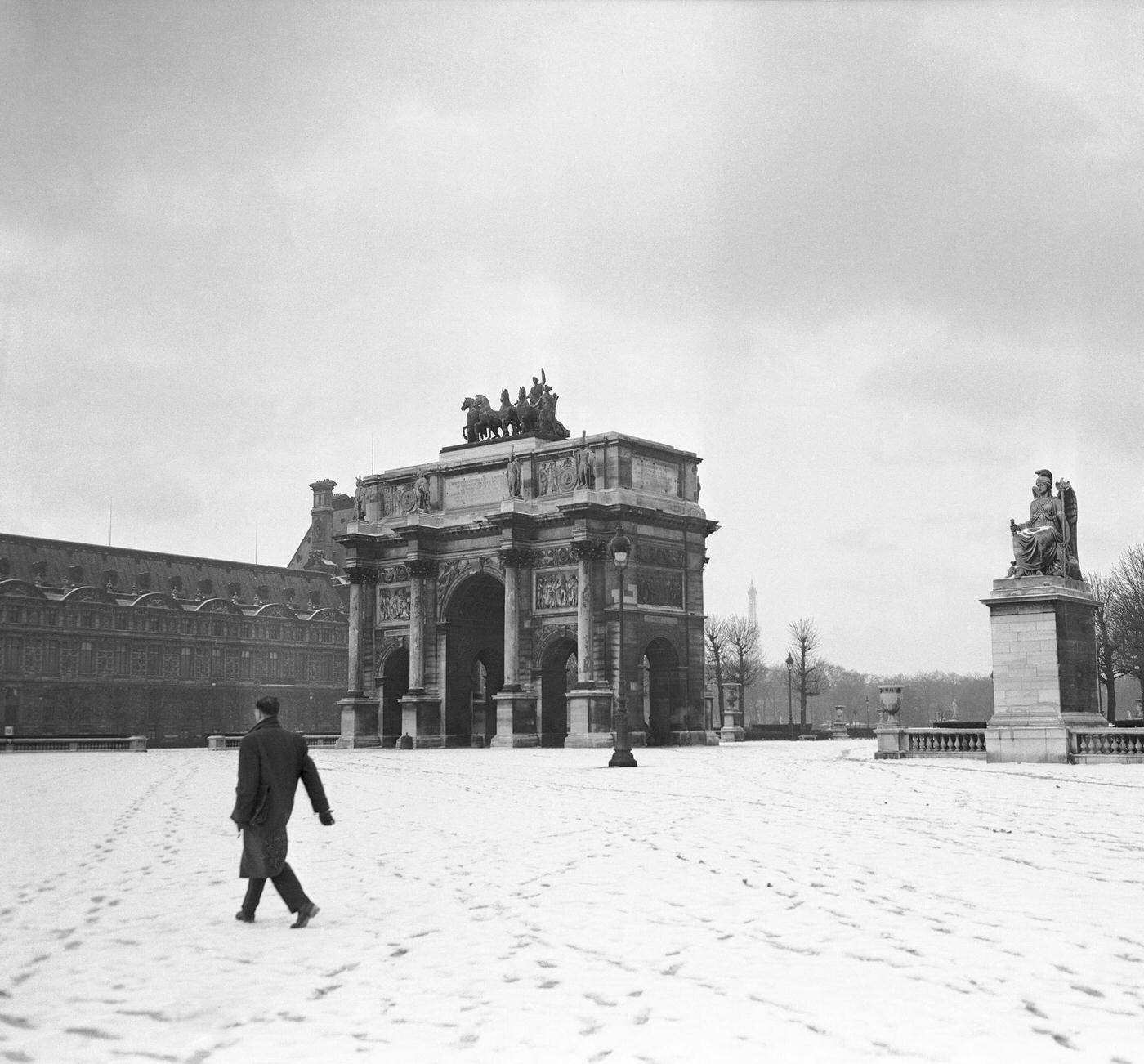
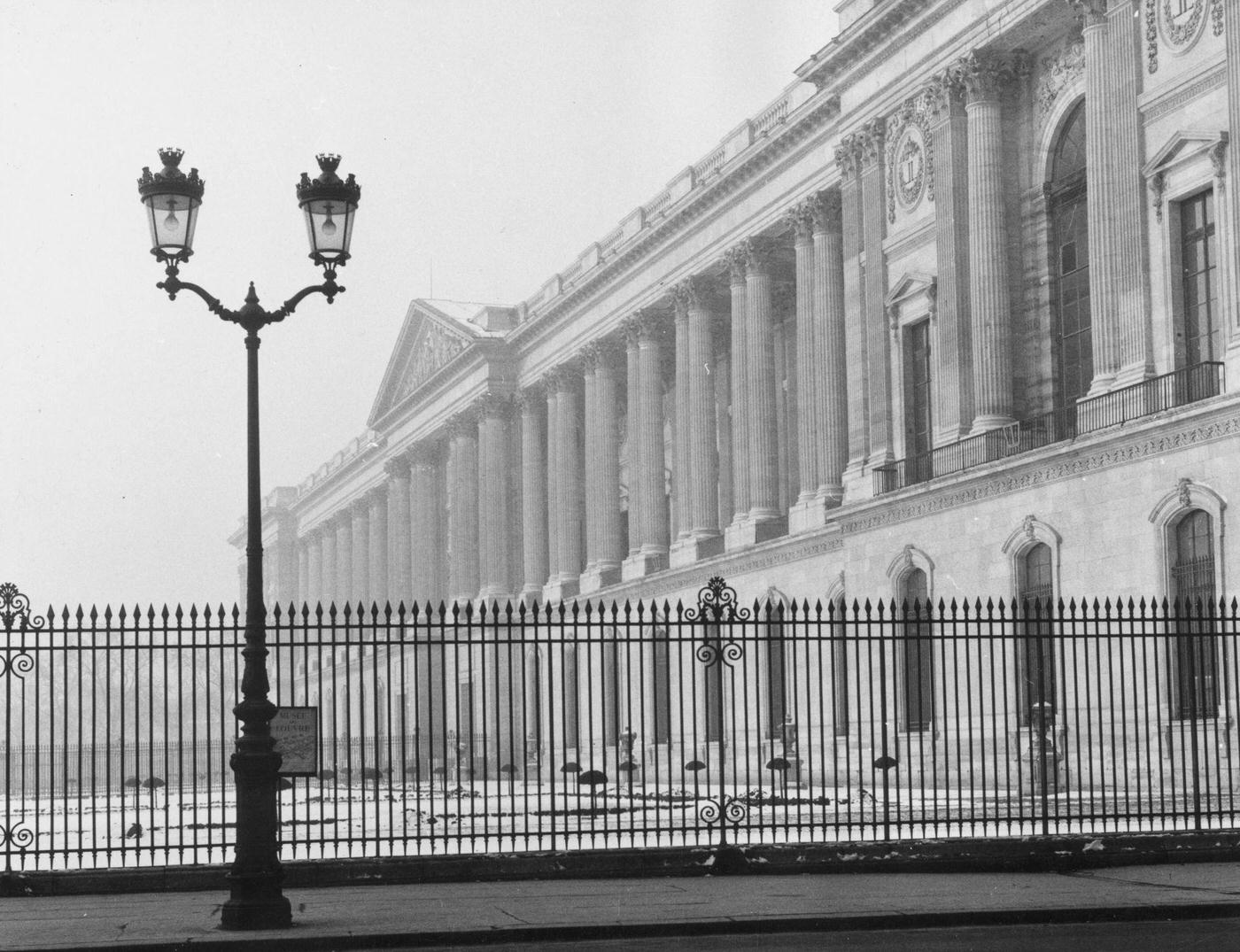
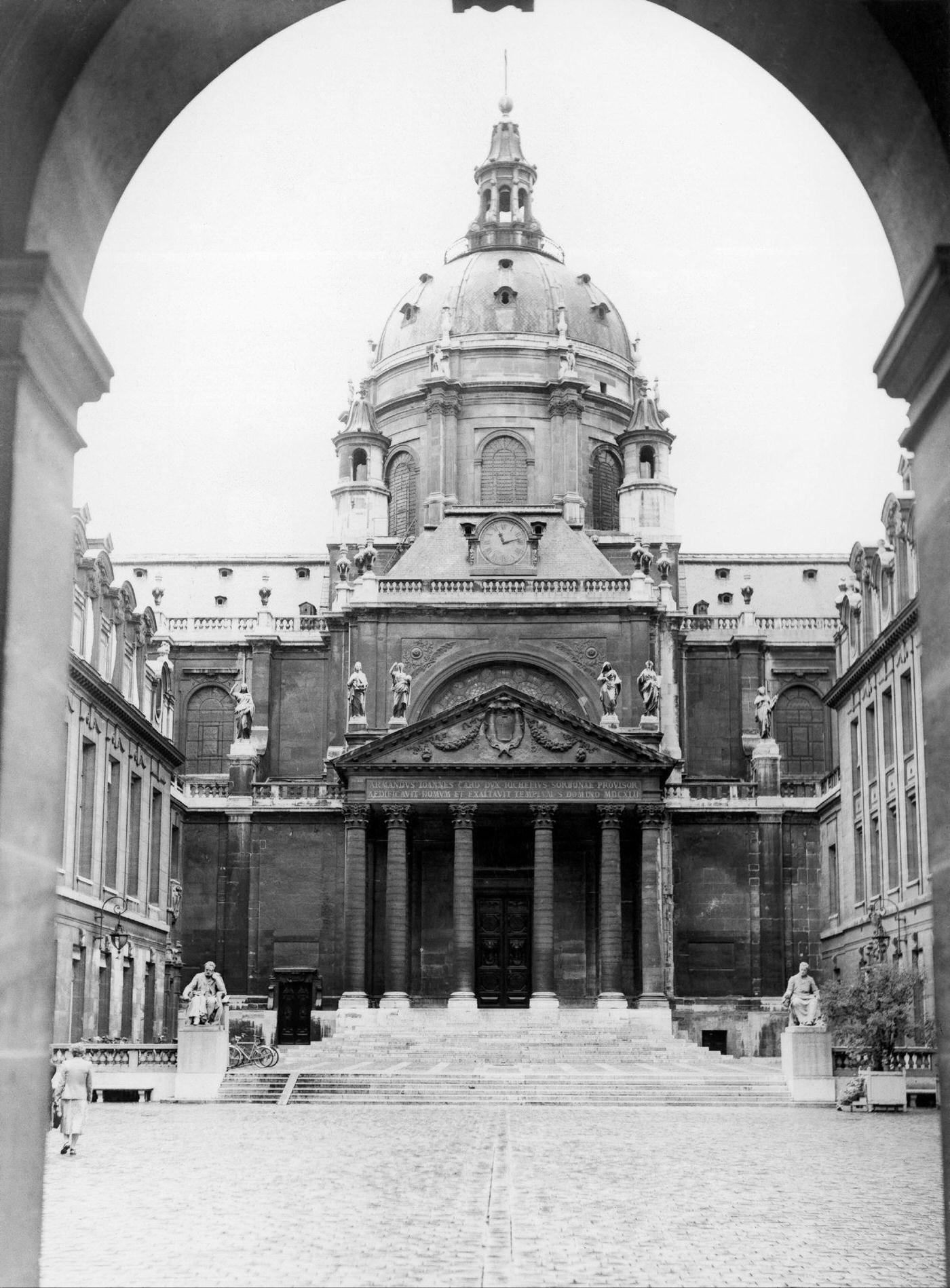
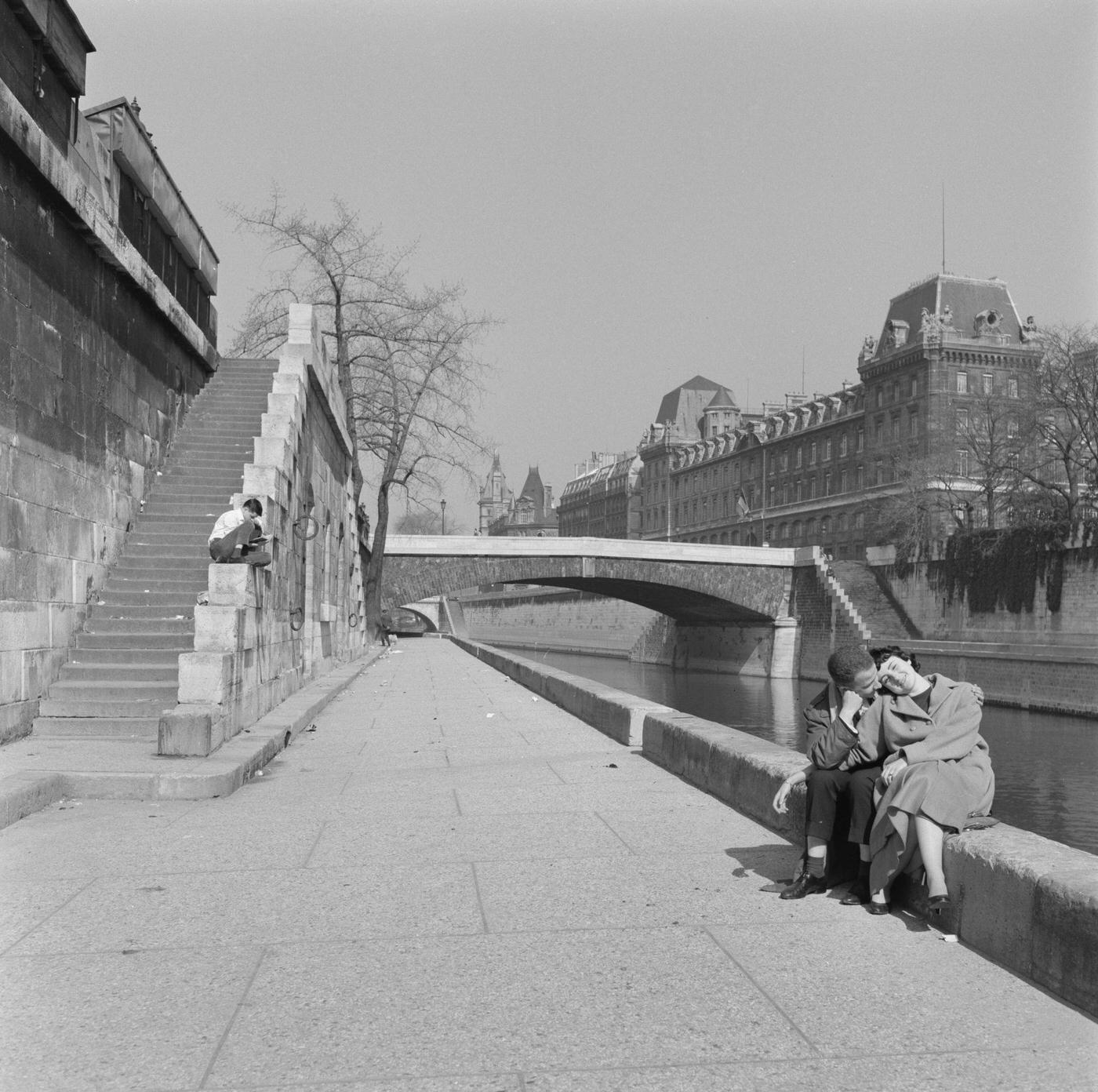
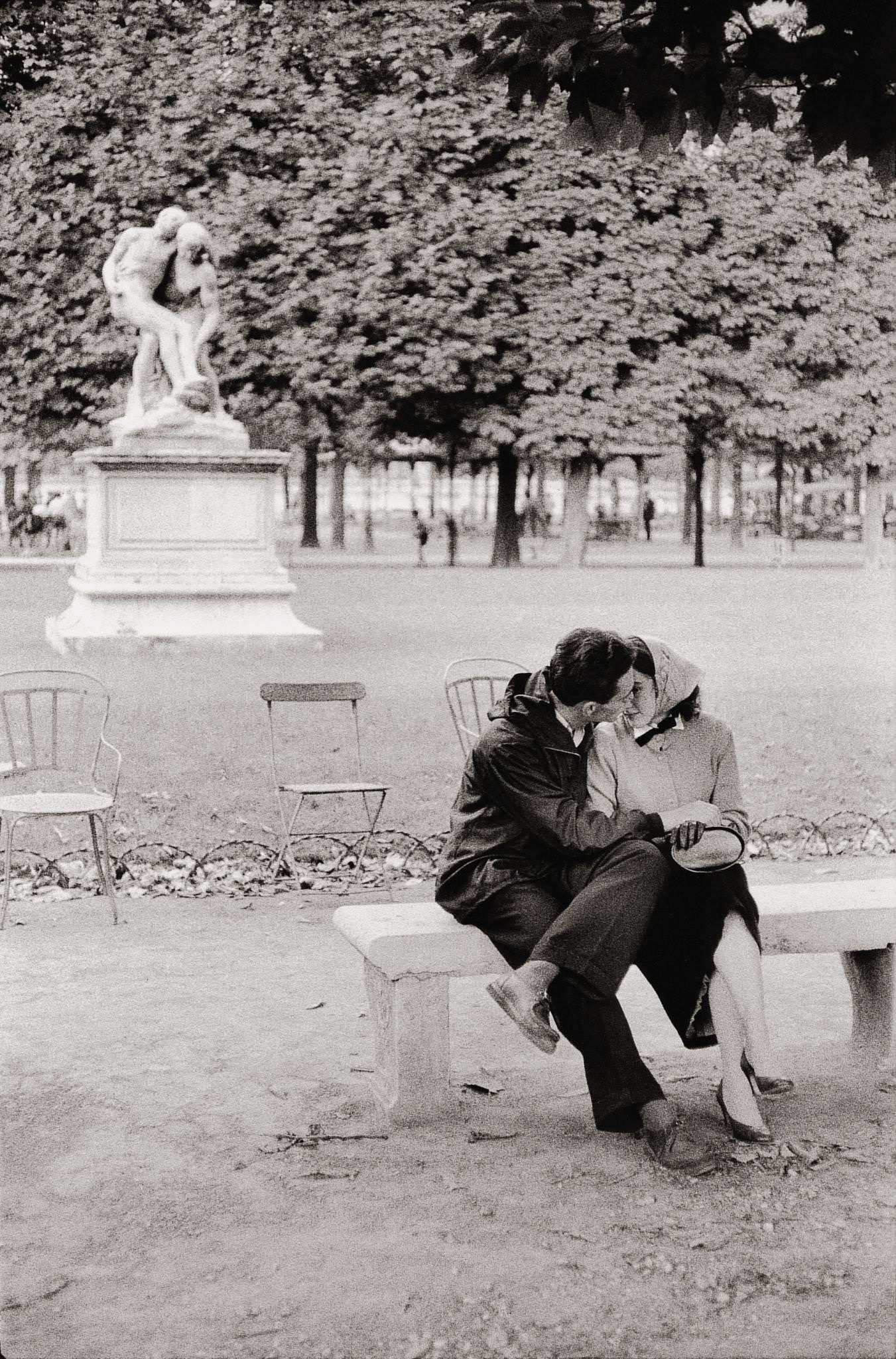
Paris in the 1950s was a city still finding its footing after World War II. Buildings had been damaged, resources were stretched thin, and life was harder than the postcard version of the city might suggest. But winter arrived each year regardless, and Parisians adapted to it with a mix of practicality, resilience, and stubborn charm. These decades left behind a rich visual record of what the cold months truly looked like — not just for artists and intellectuals, but for everyday people navigating icy streets and bitter mornings.
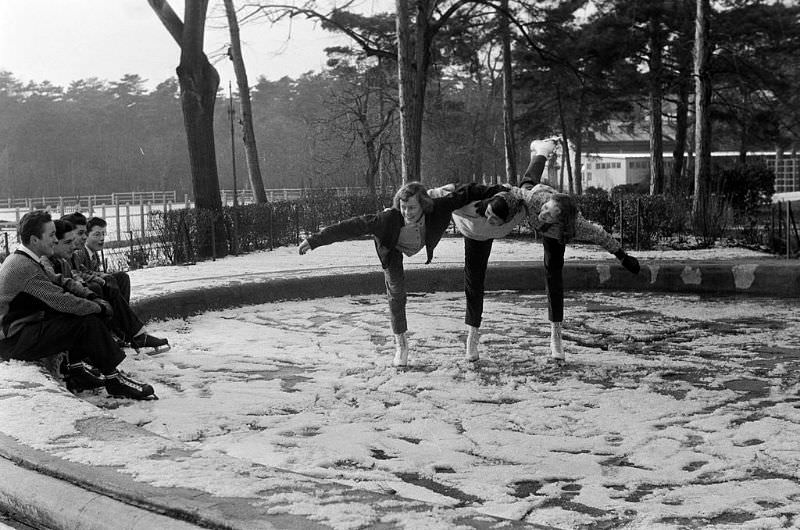
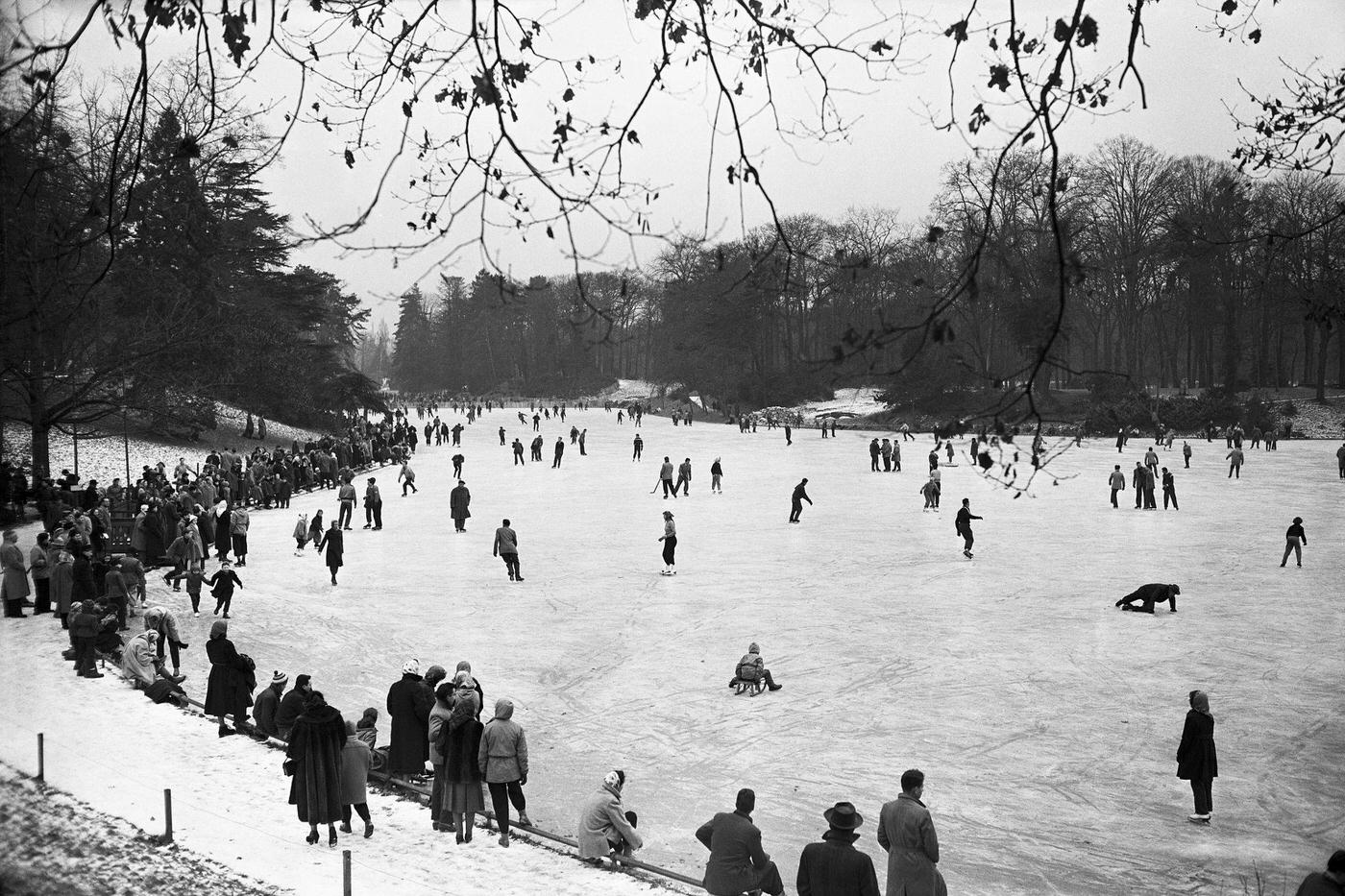
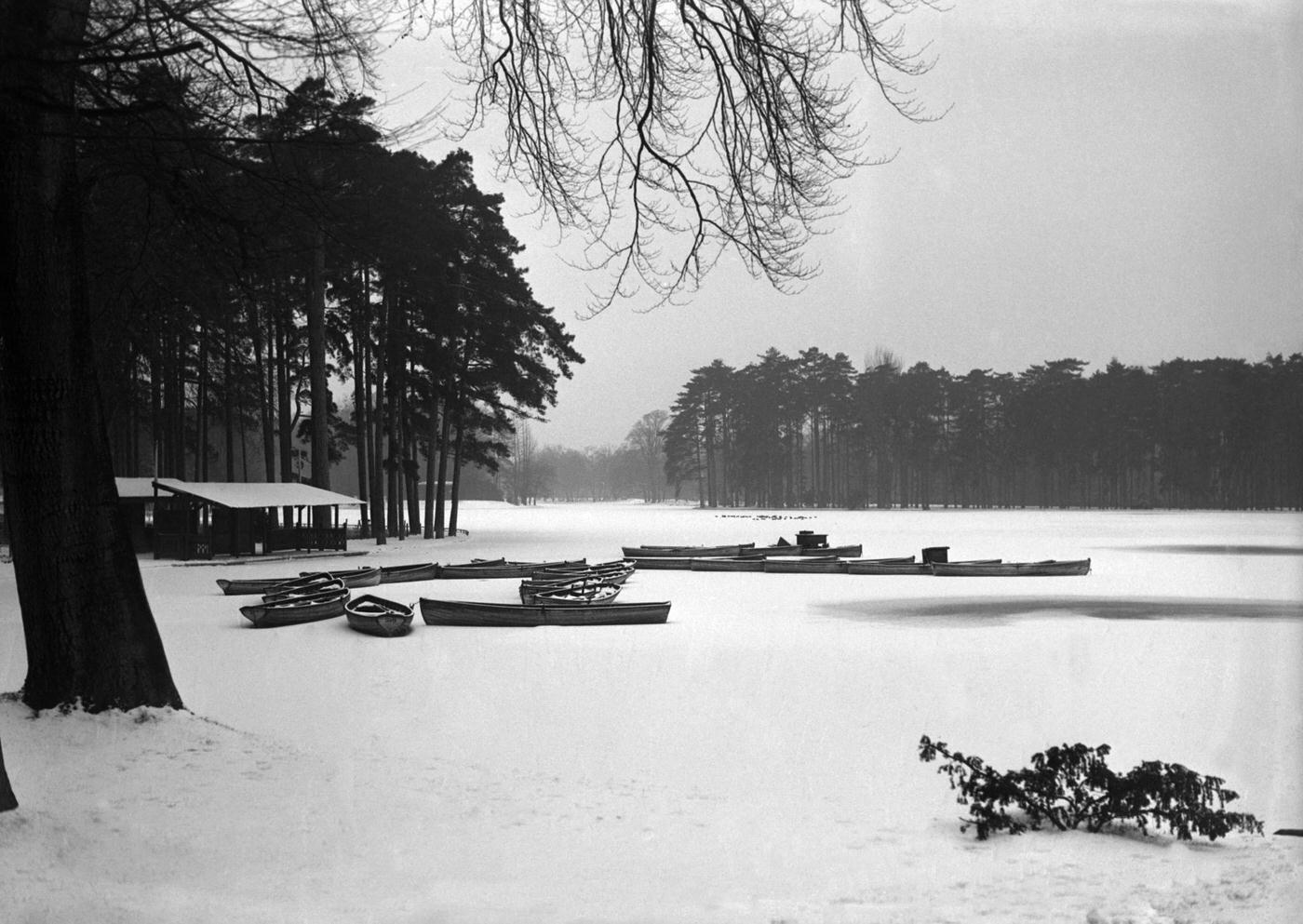
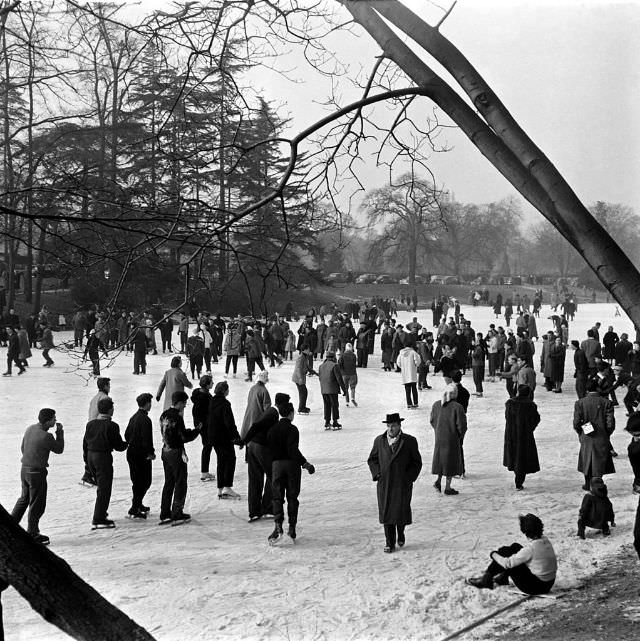
The Bois de Boulogne, a sprawling park on the western edge of the city, was a popular escape even in the depths of winter. Families and individuals bundled in heavy wool coats walked its paths, and when temperatures dropped far enough, the park’s lakes froze solid. That brought skaters out in large numbers. The lake at Bois de Boulogne became a gathering point — somewhere between a rink and a spectacle — where Parisians of all ages tested the ice.
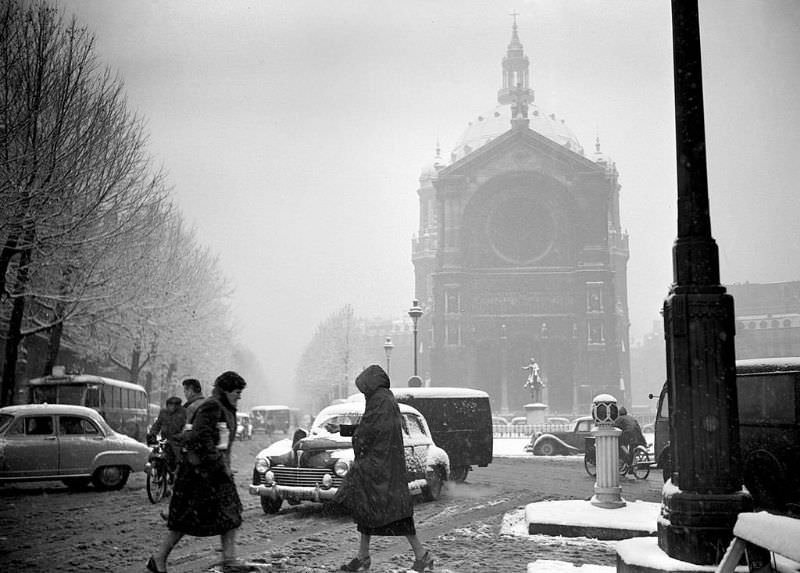
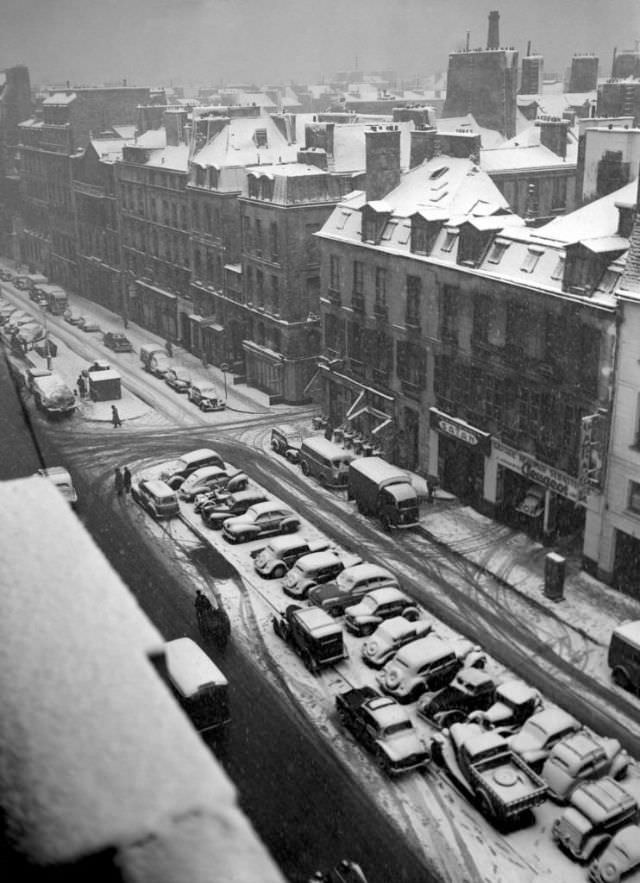
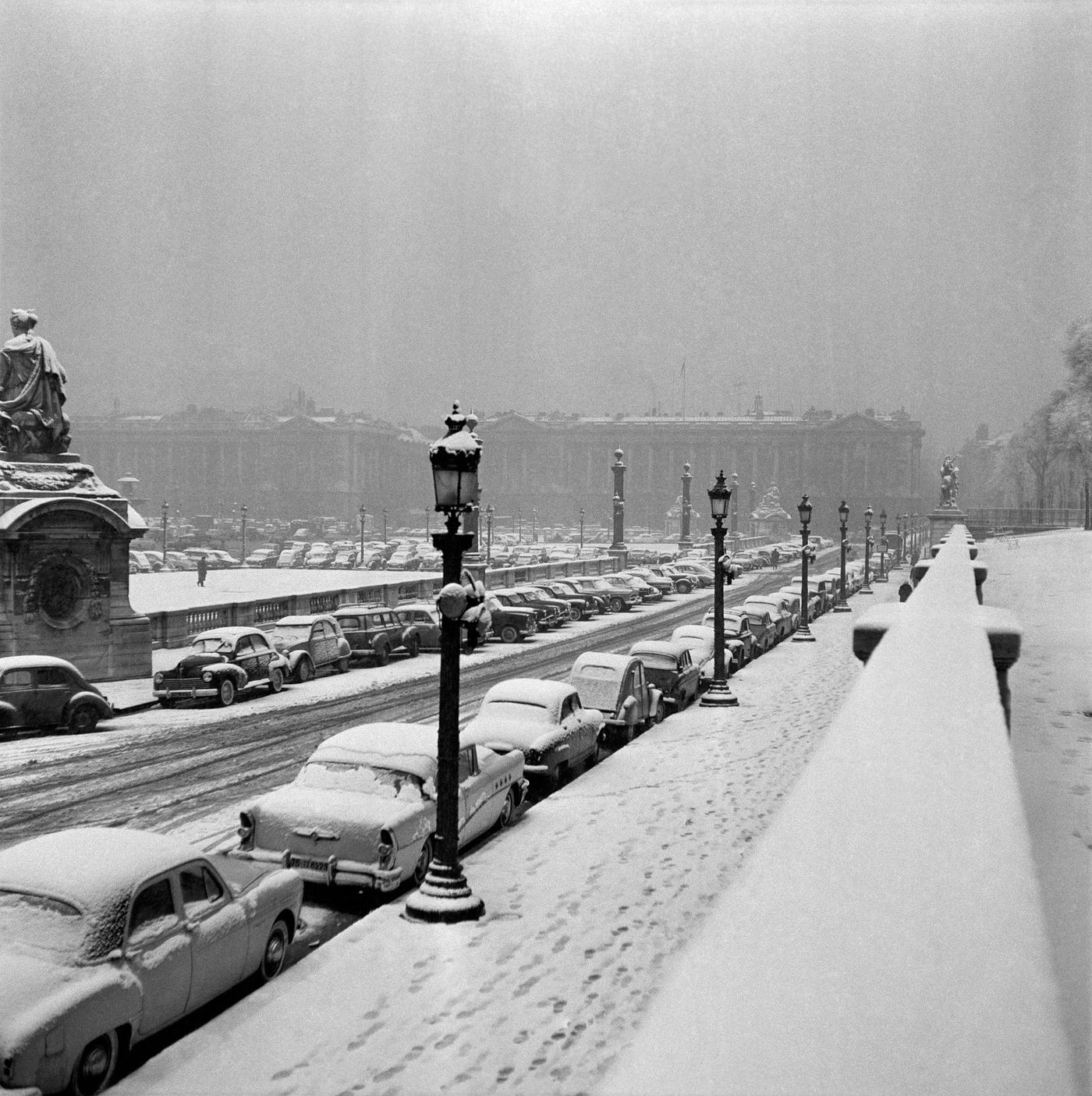
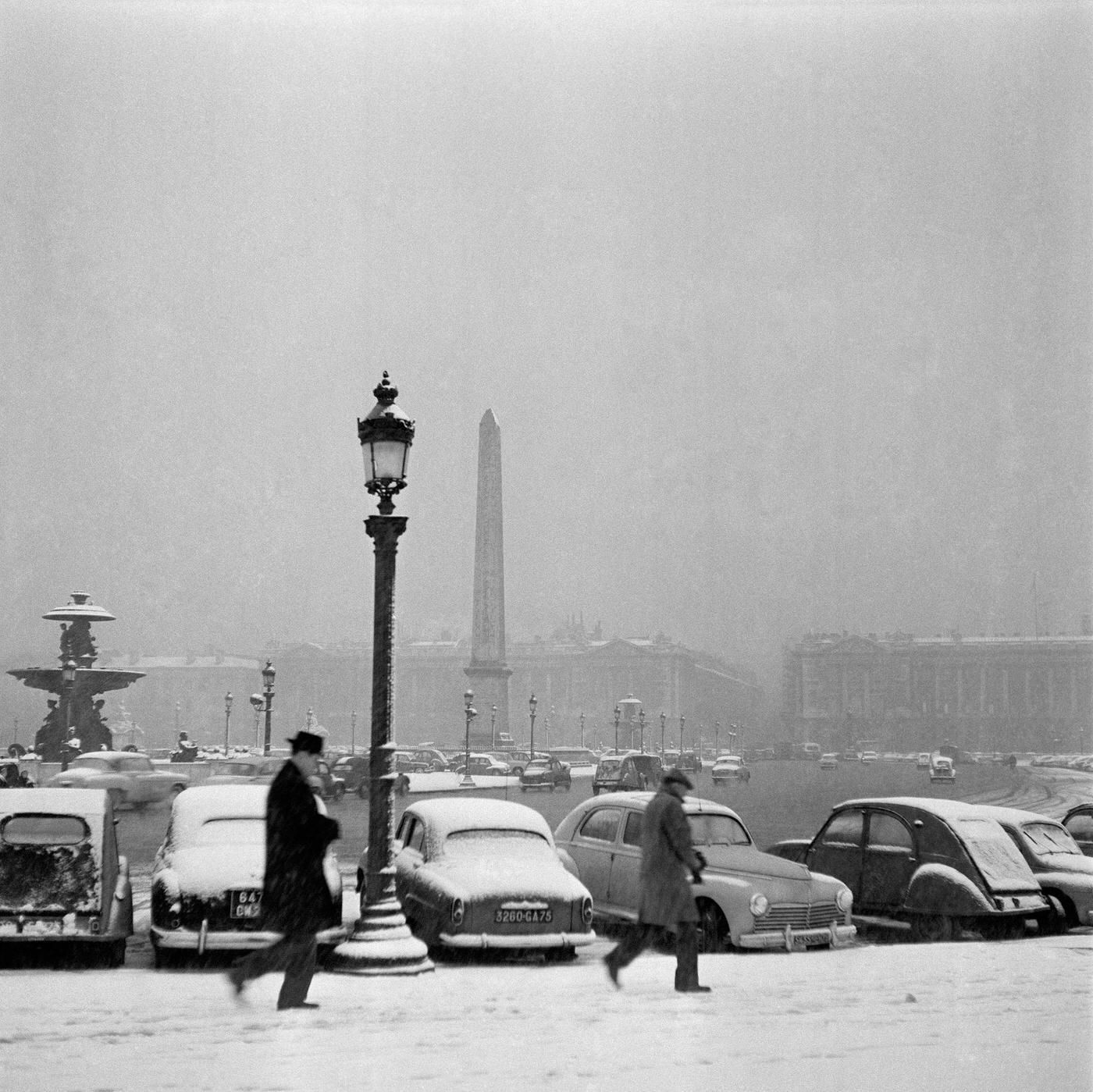
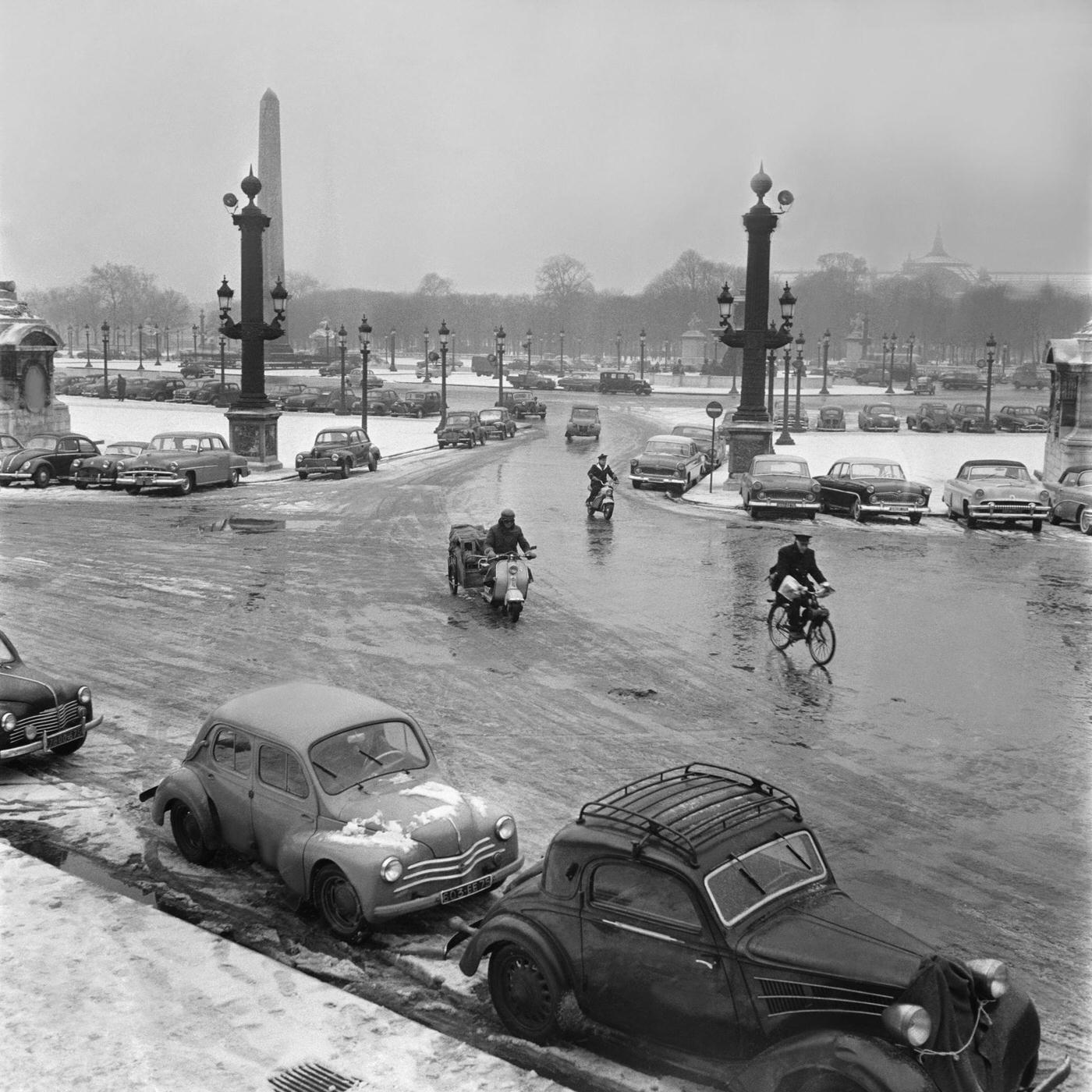
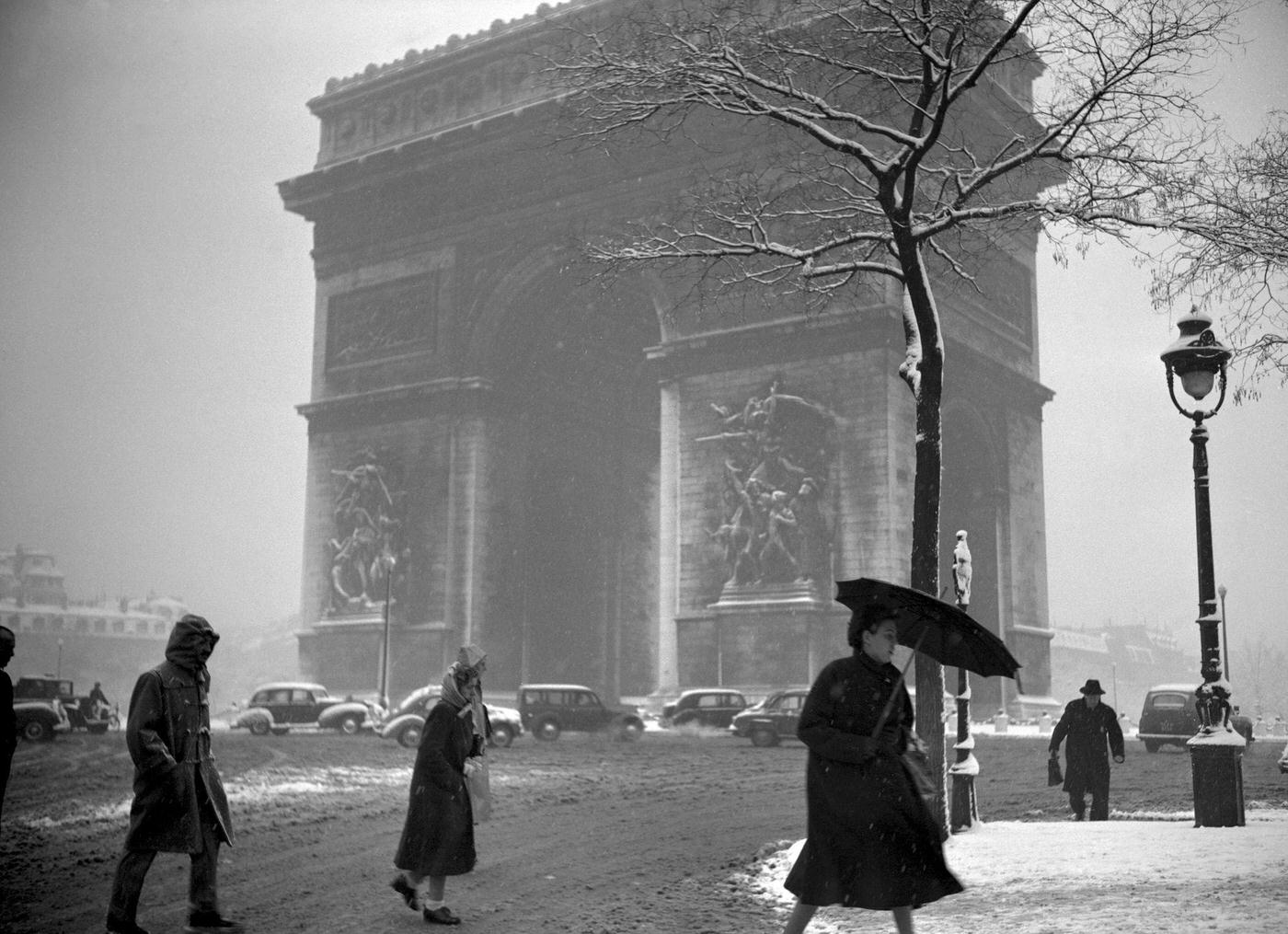
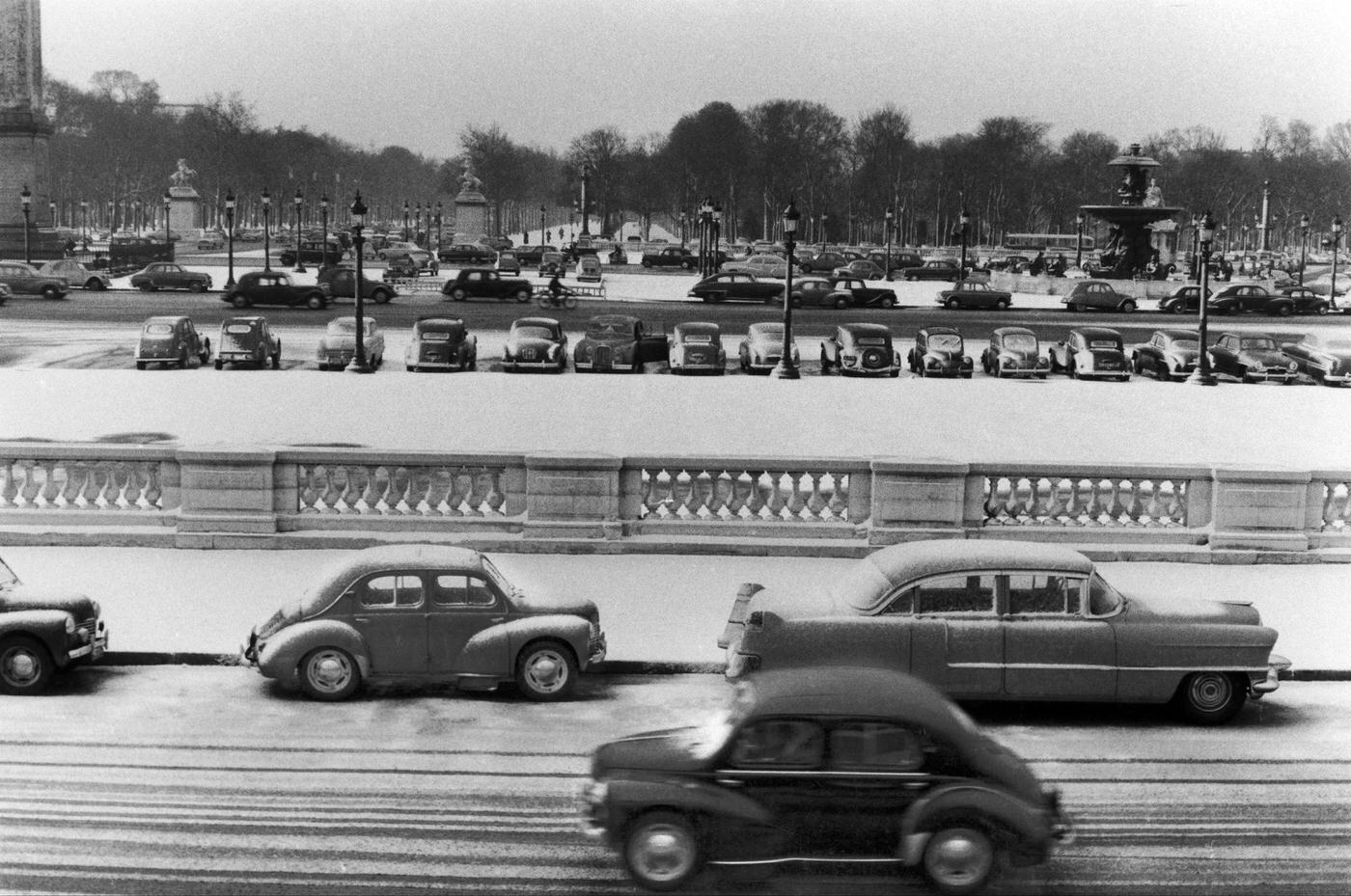
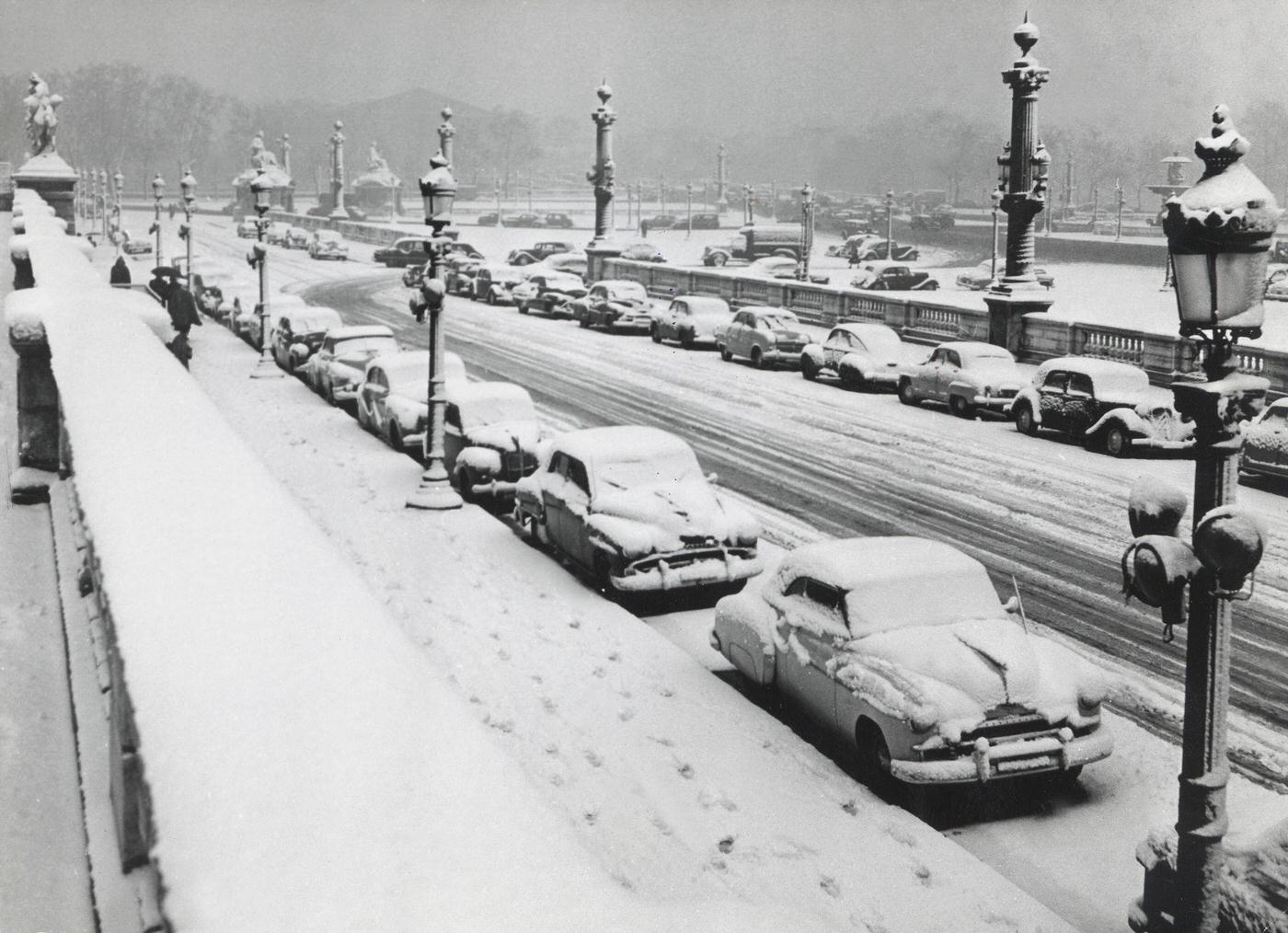
The winters of the 1950s were not mild. Snow fell heavily and repeatedly across the decade, and the city was regularly blanketed in white — though it rarely stayed that way for long. Foot traffic, vehicle exhaust, and the city’s constant movement turned fresh snow into gray slush within hours. Streets near major landmarks like the Arc de Triomphe and Place de la Concorde became rivers of muddy ice, and pedestrians picked their way carefully along the edges.
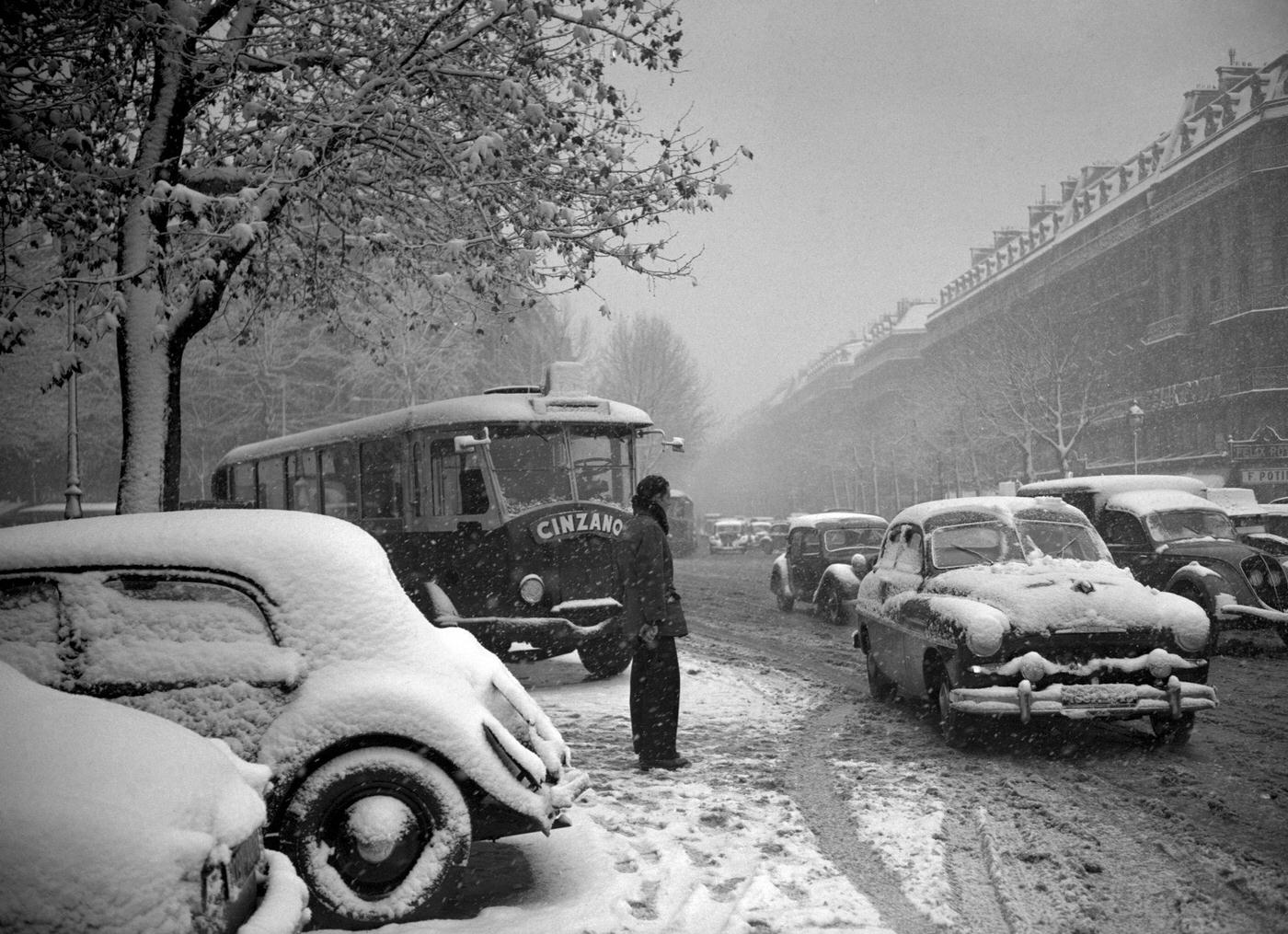
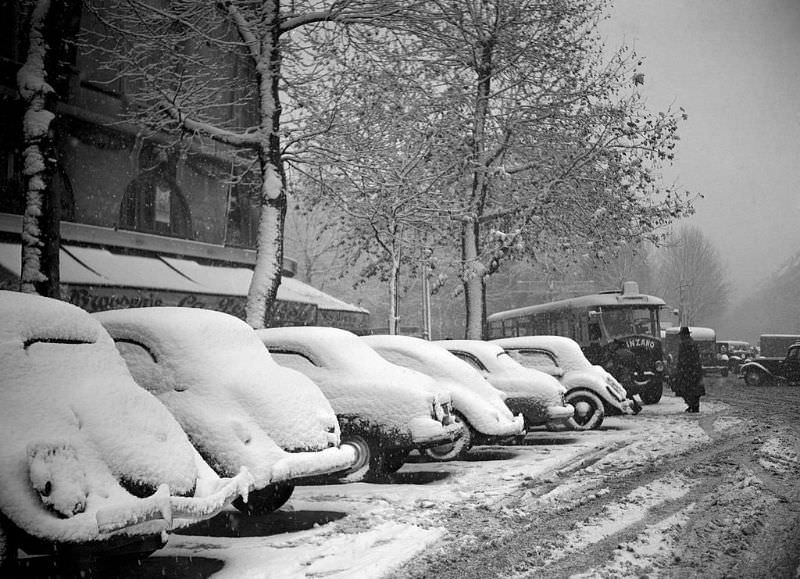
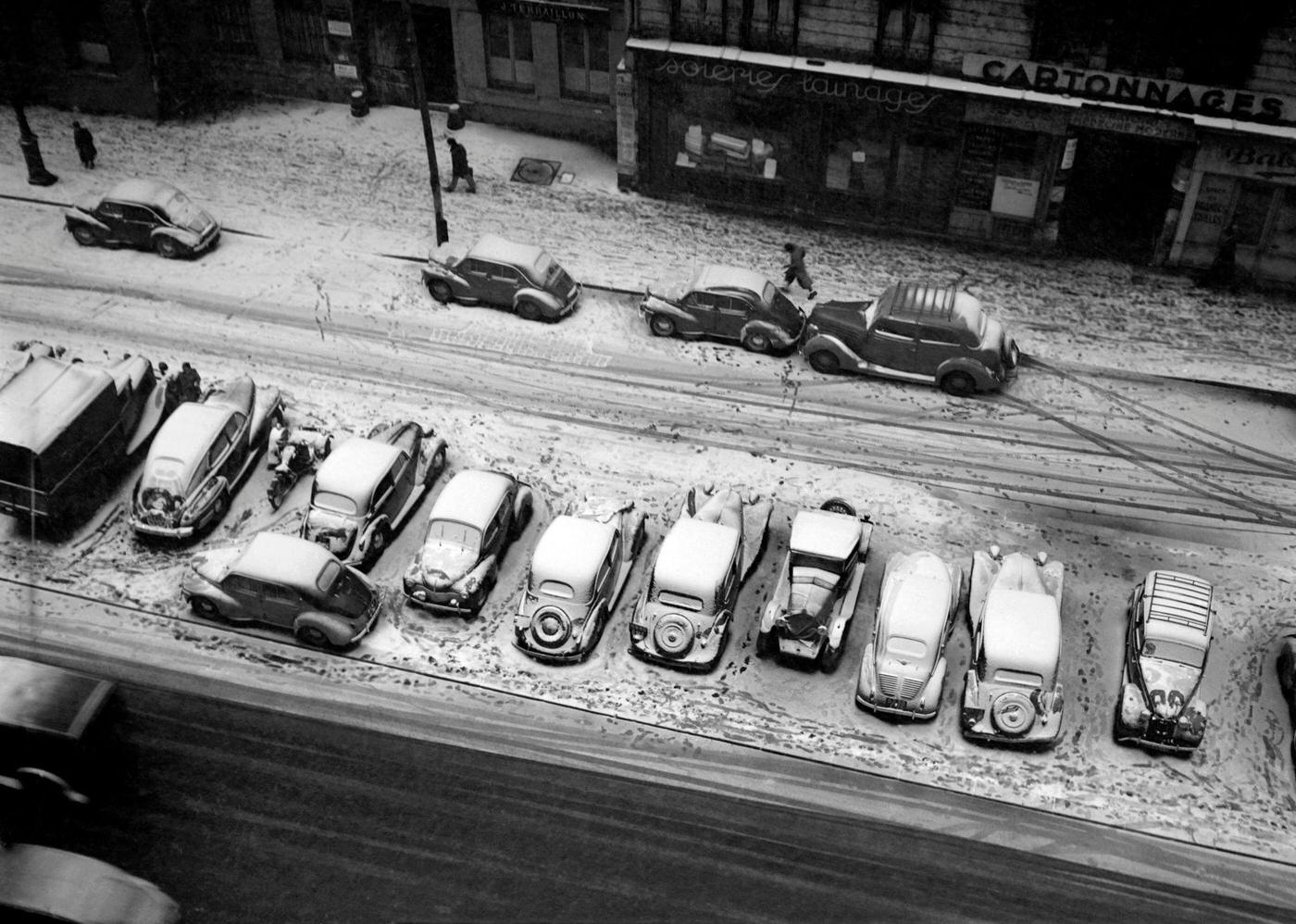
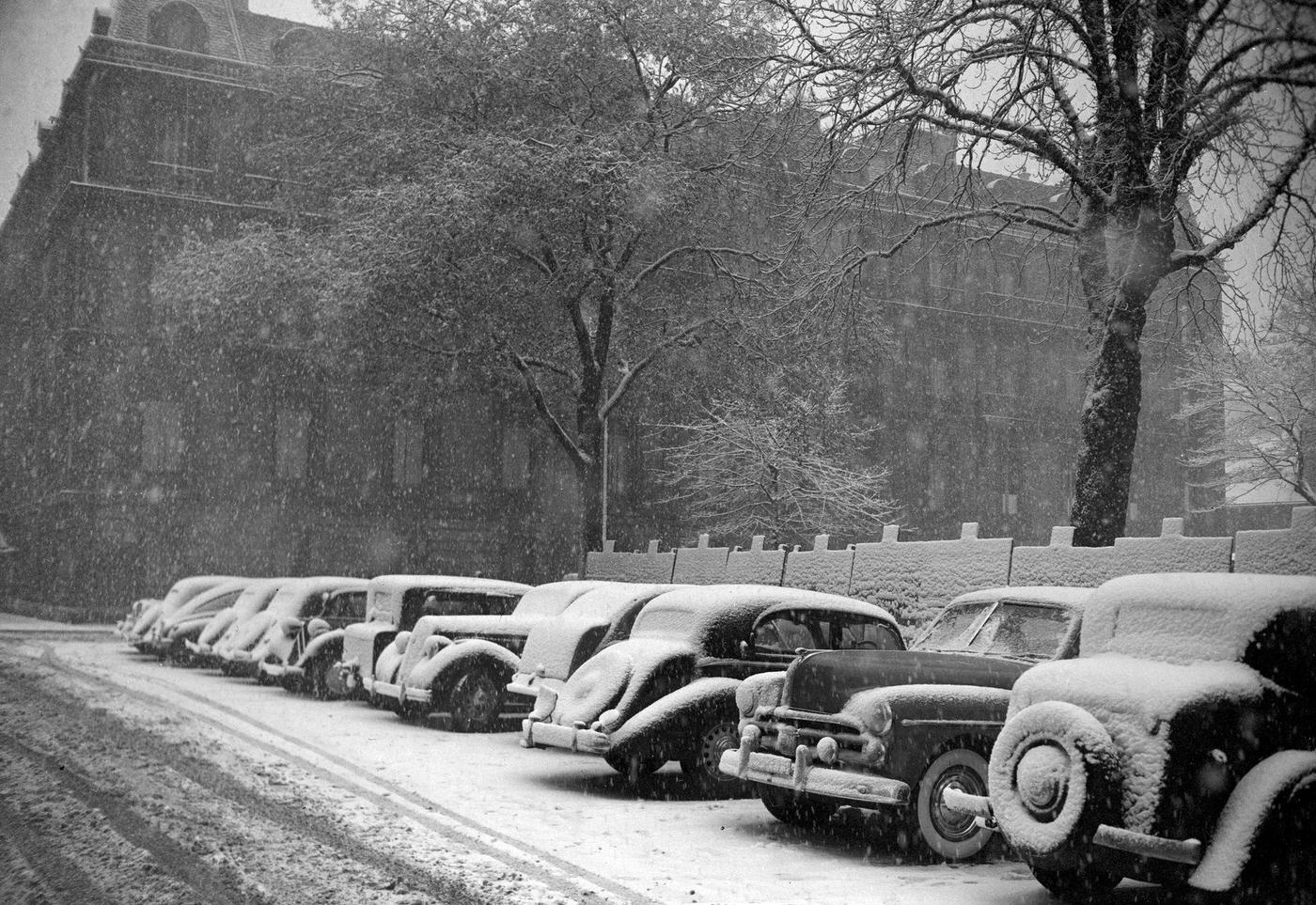
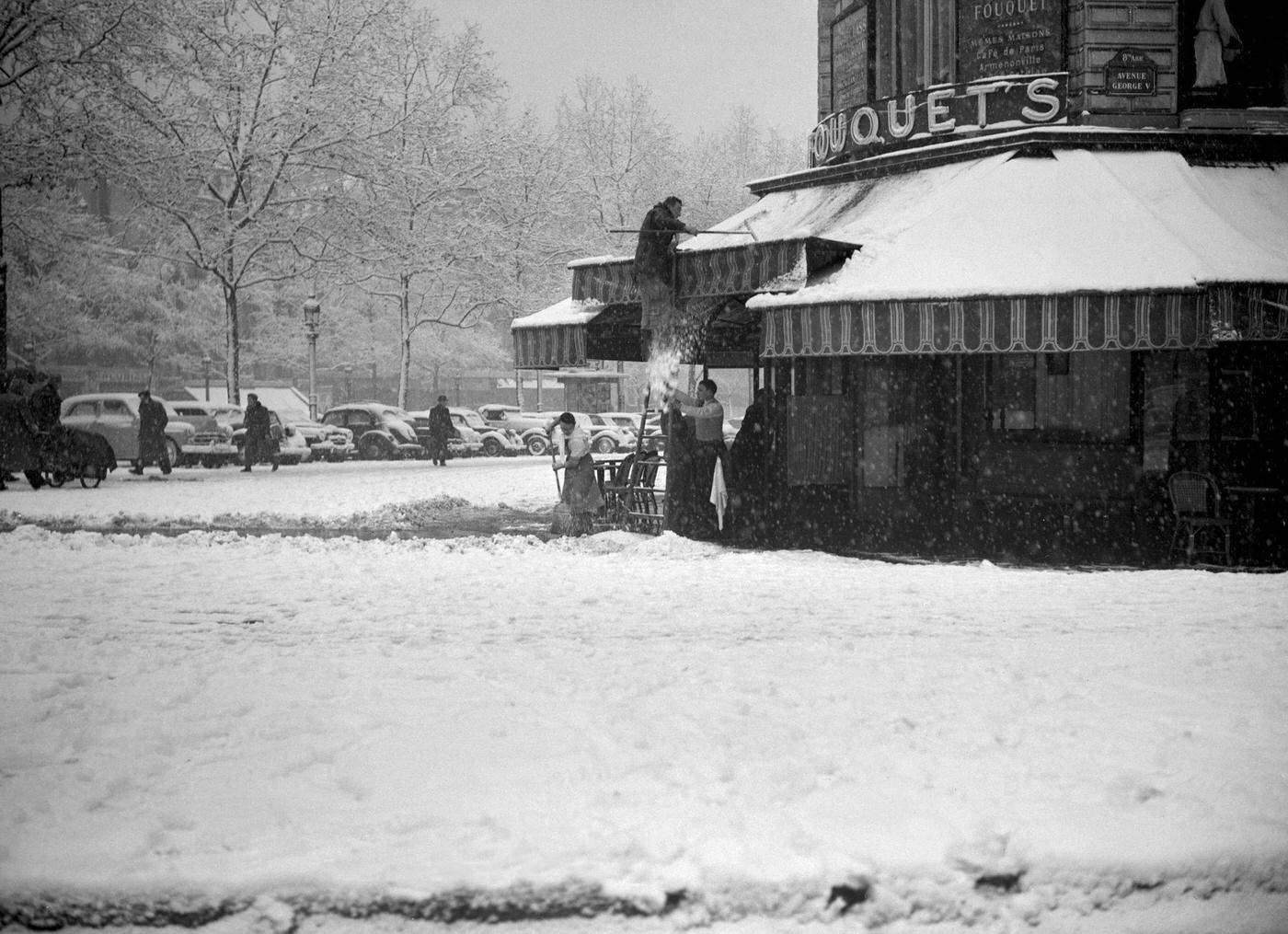
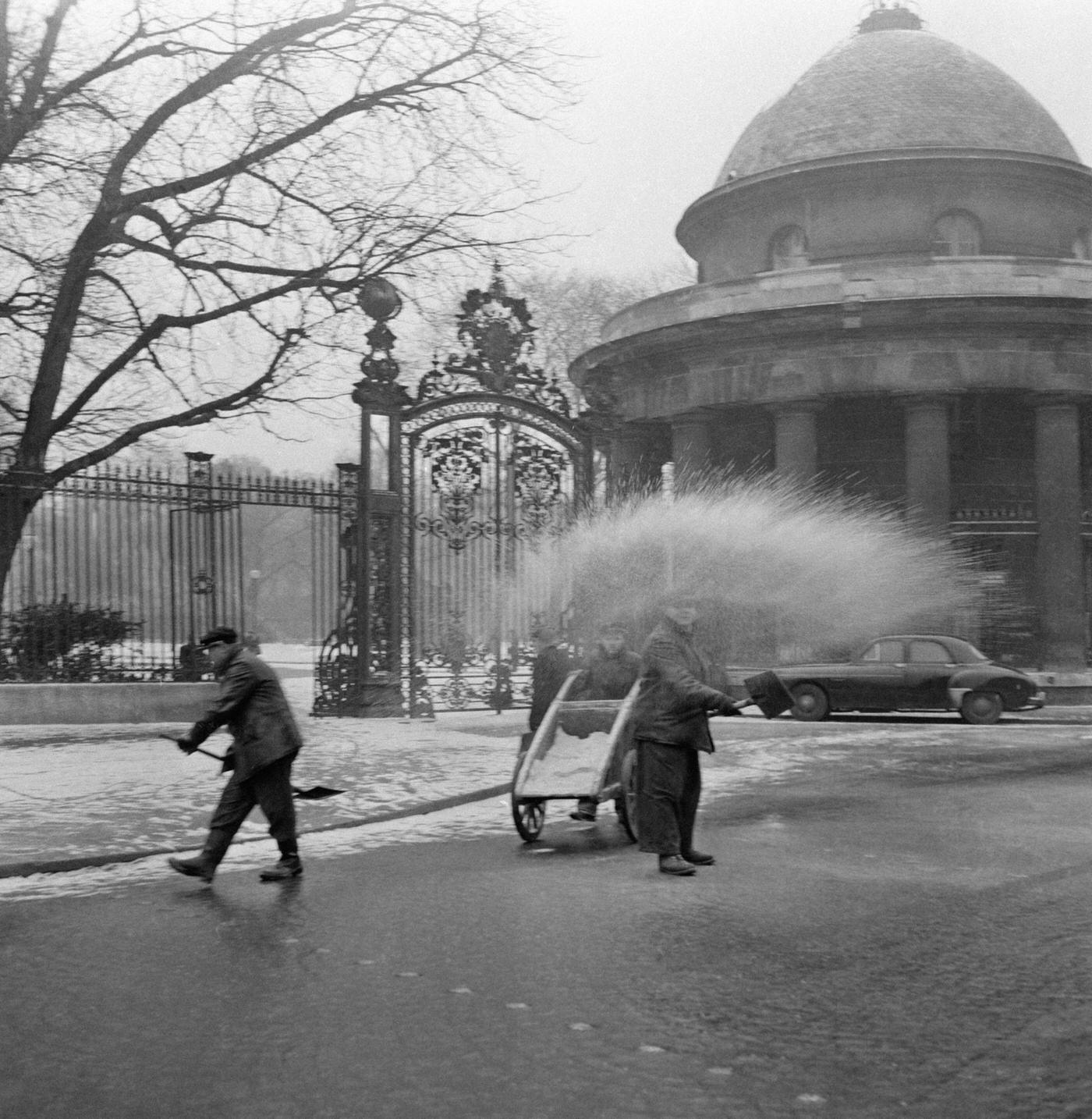
The winter of 1952 was particularly brutal. Snow fell in such volume that city workers were called out in force to clear major roads and spread salt across key intersections. The effort was enormous. Cars sat buried under thick white blankets on side streets, and public transport struggled to keep pace. Workers at Fouquet’s, the famous café on the Champs-Élysées, were photographed brushing snow from the awning just to keep the entrance passable.
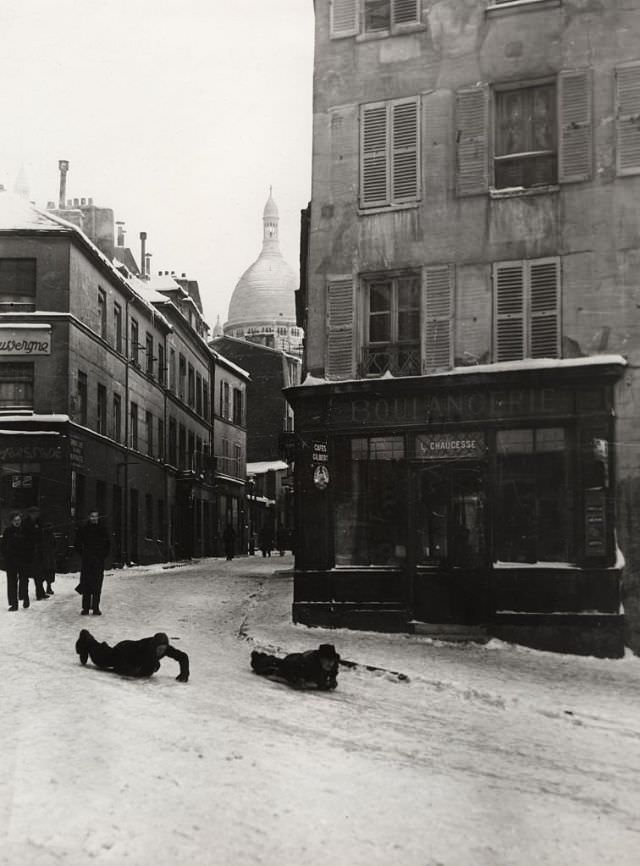
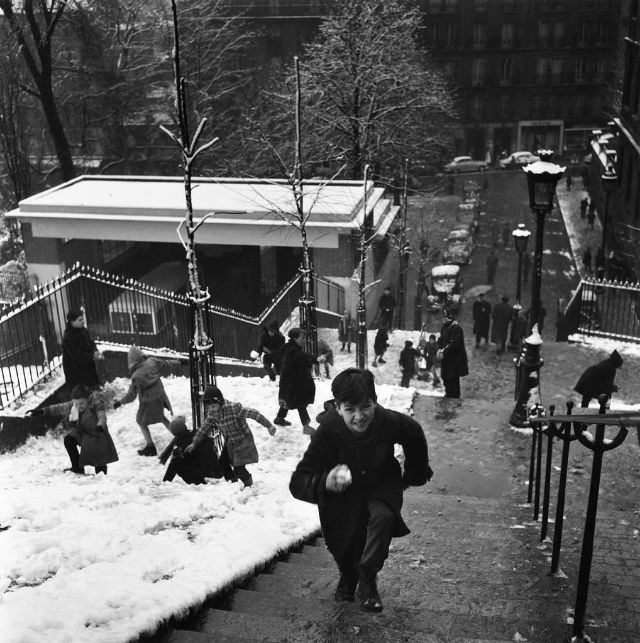
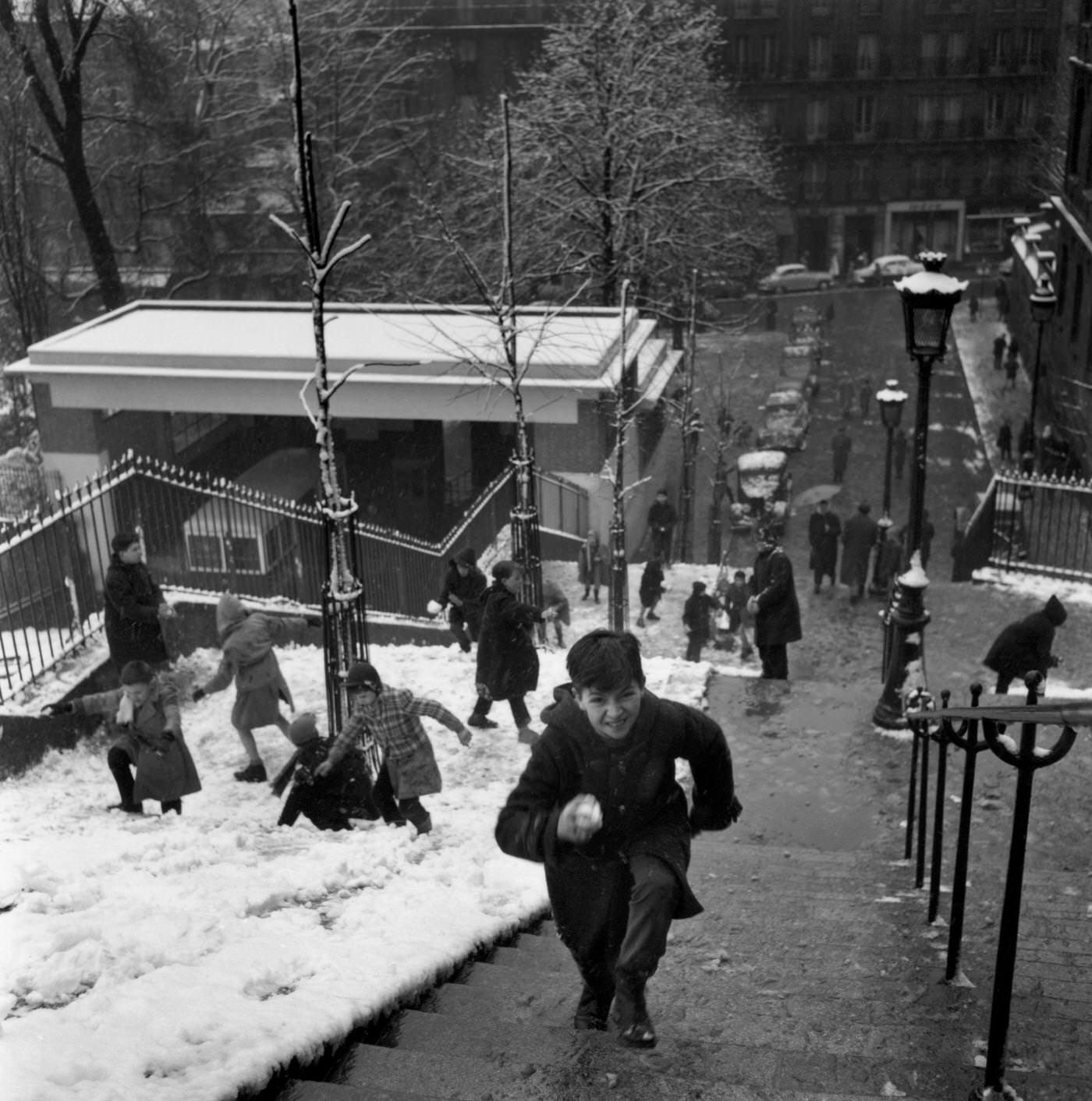
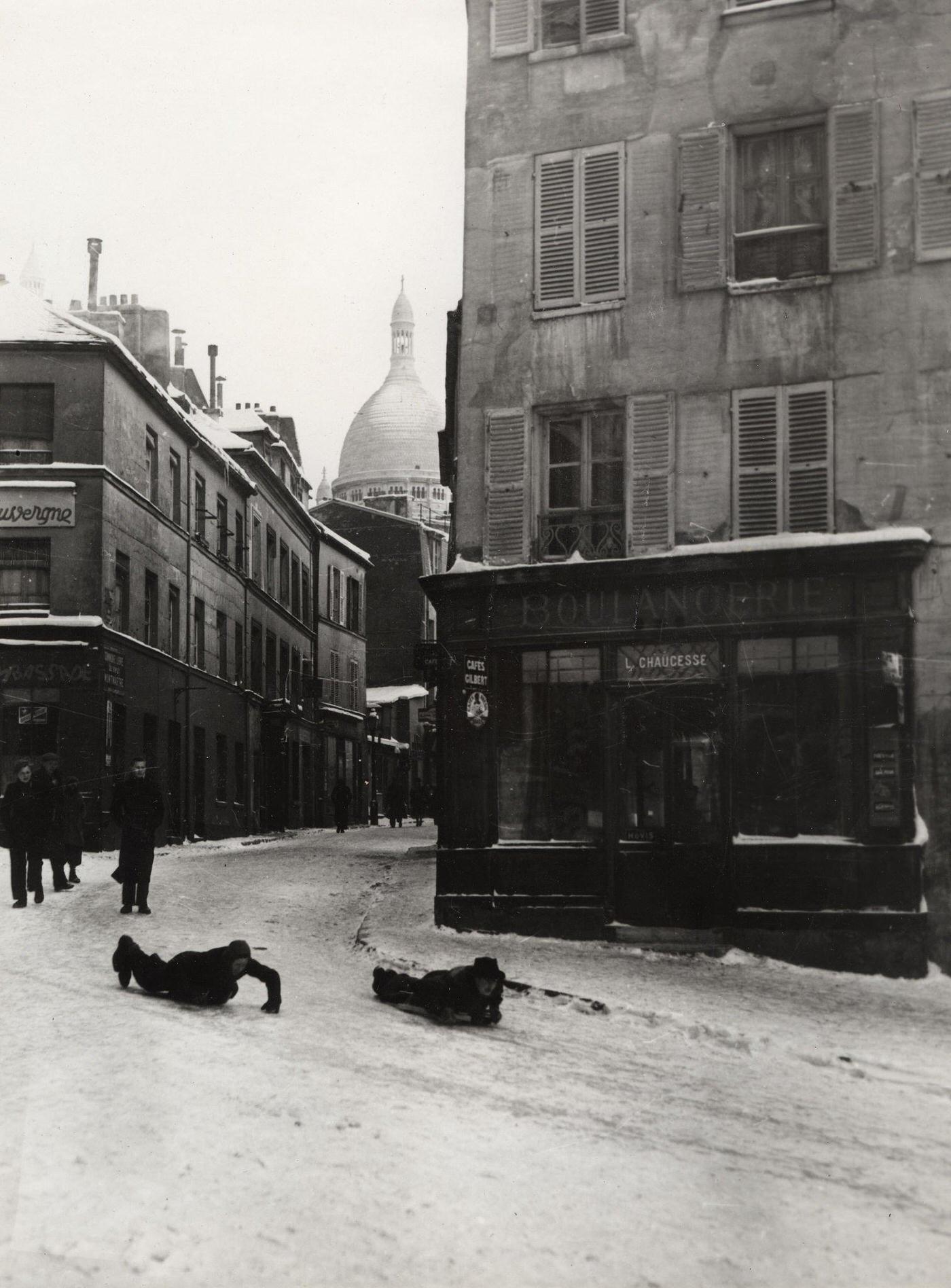
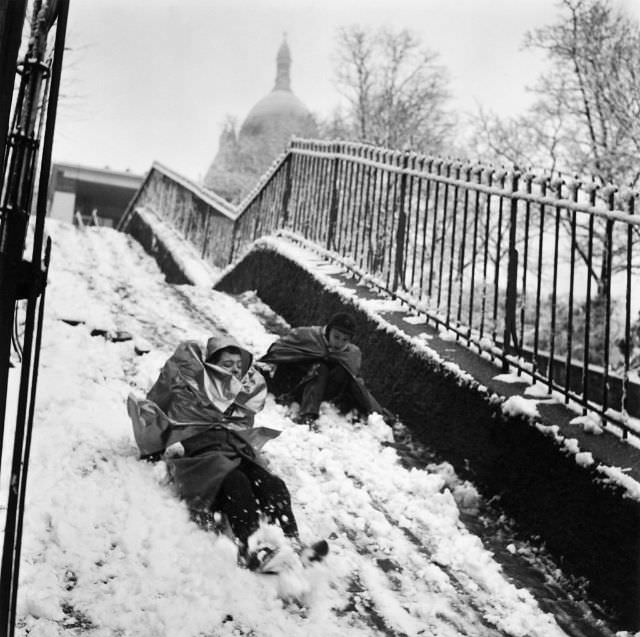
Montmartre, built on a hill above the city, turned into a playground when snow arrived. Children and adults alike took to the slopes with sleds and whatever else would slide. The steep cobblestone streets, normally difficult to climb on a dry day, became natural runs in winter. Photographer Robert Doisneau captured boys sliding down Montmartre’s streets in 1958 — wide grins, no helmets, and no shortage of speed.
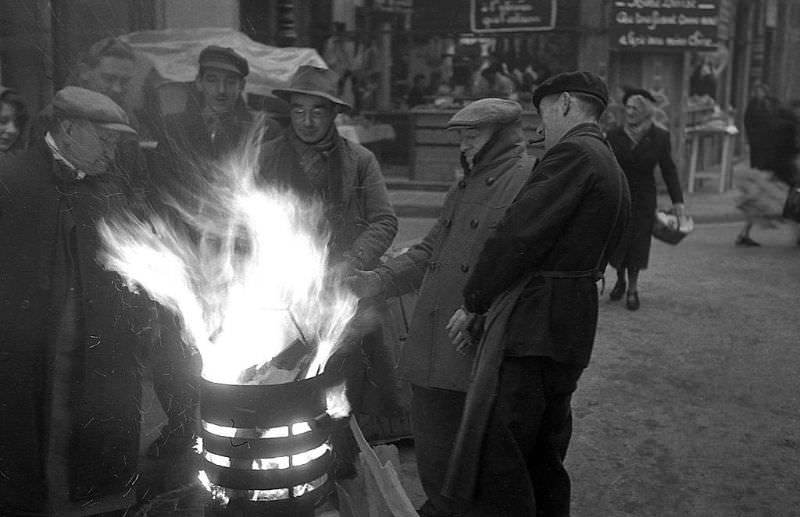
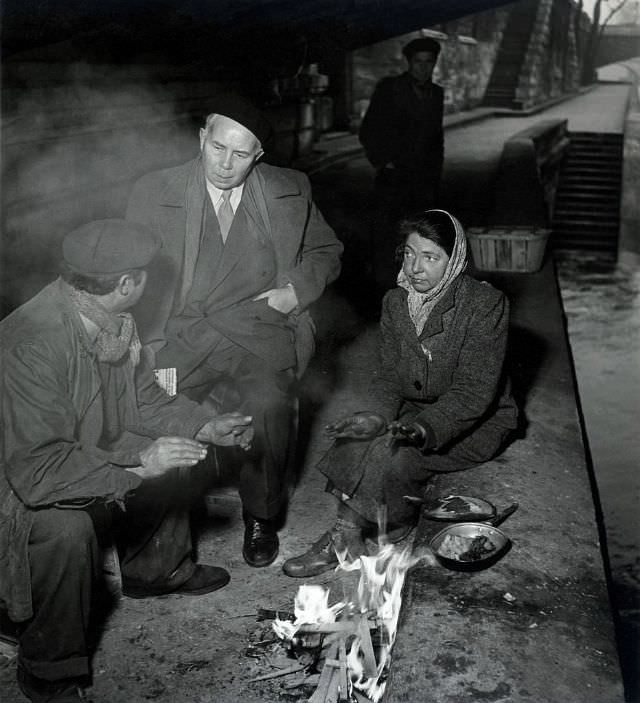
Not all of winter Paris was fun and festivity. The cold exposed deep social divides. Homeless men and women sheltered under bridges along the Seine, relying on whatever could be found to stay warm. The same river that inspired painters and lovers provided grim shelter to those with nowhere else to go. These photographs sit alongside the cheerful snow-fight scenes in the historical record — a reminder that the same winters struck very differently depending on who you were.
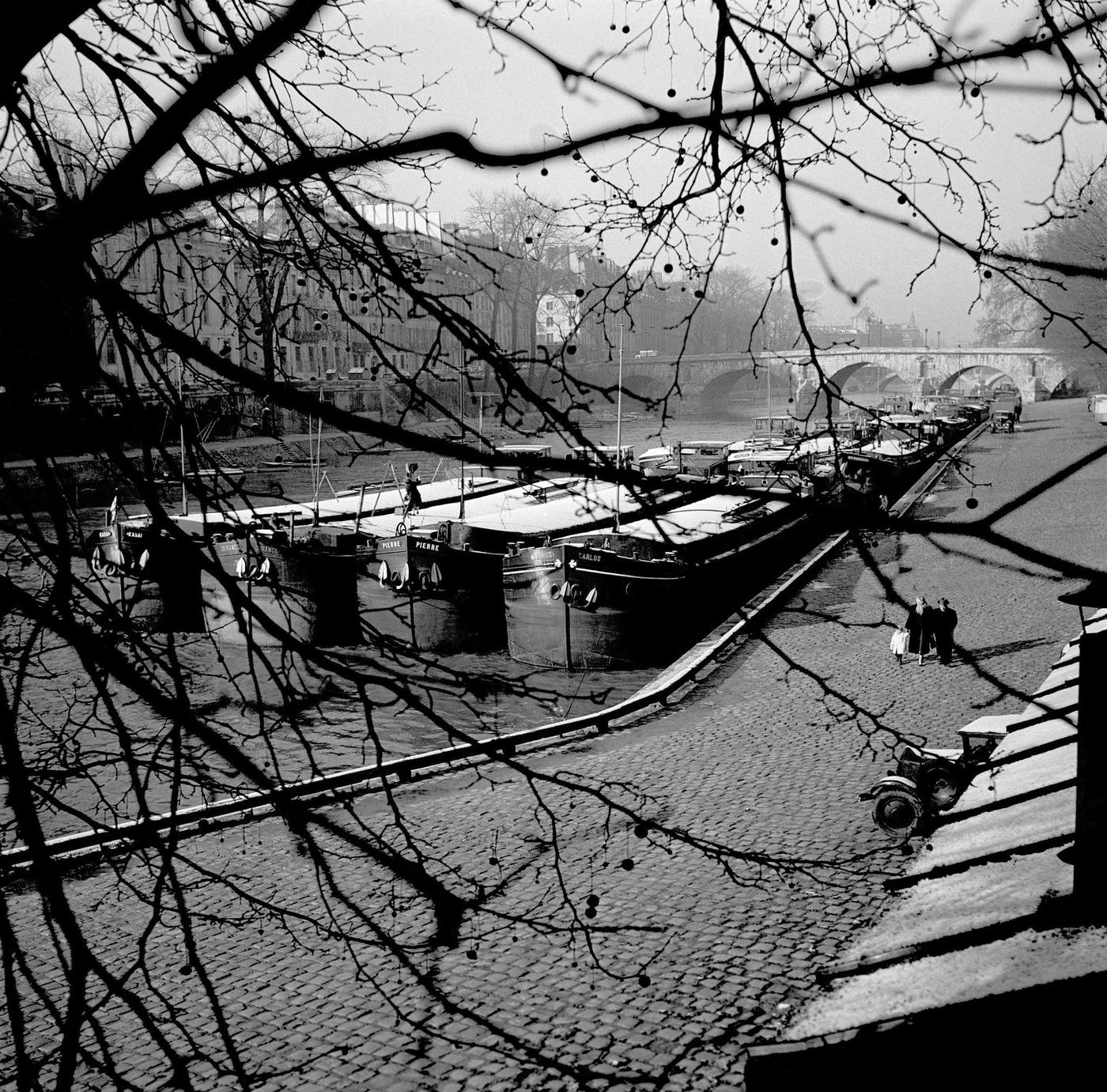
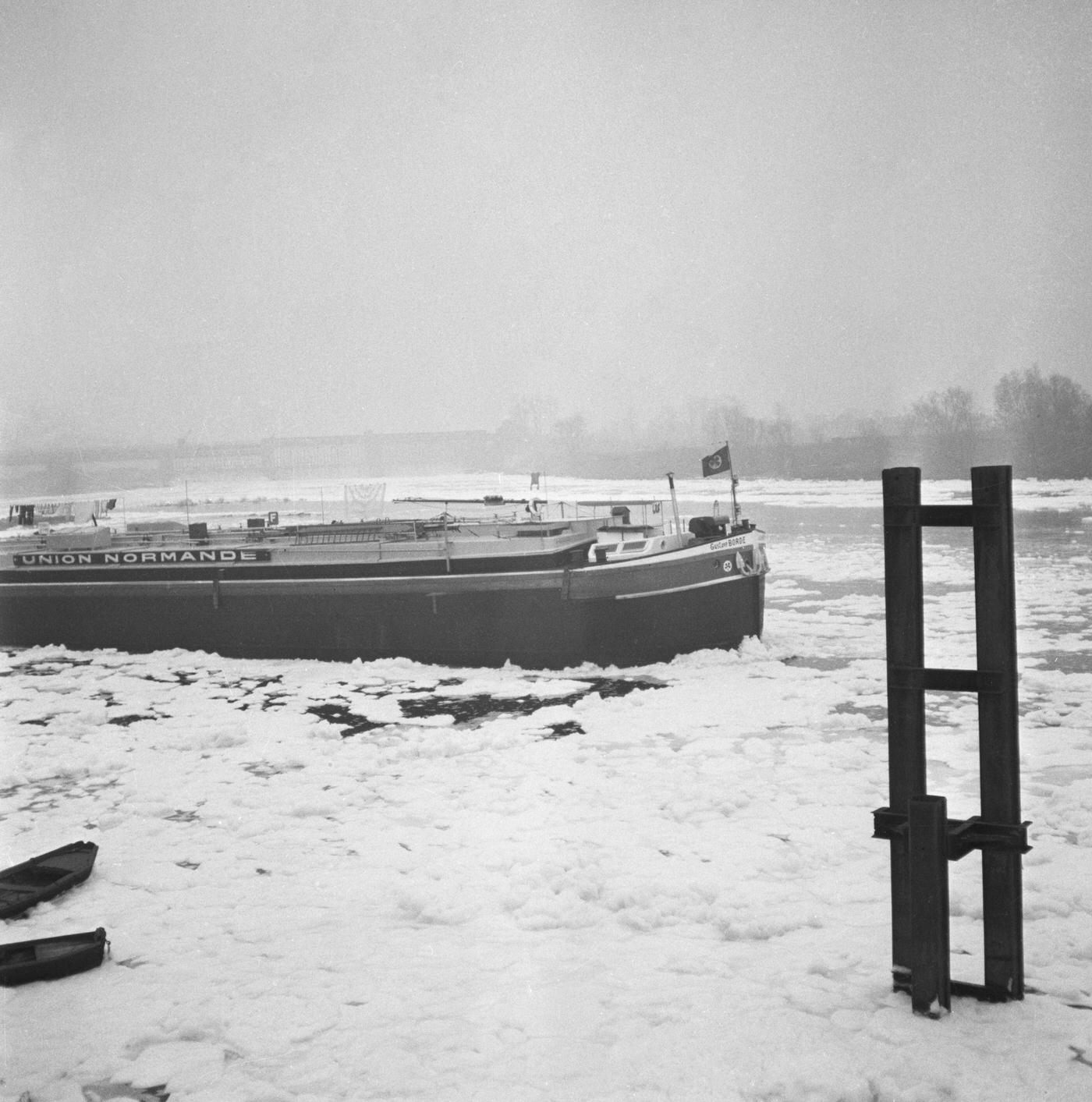
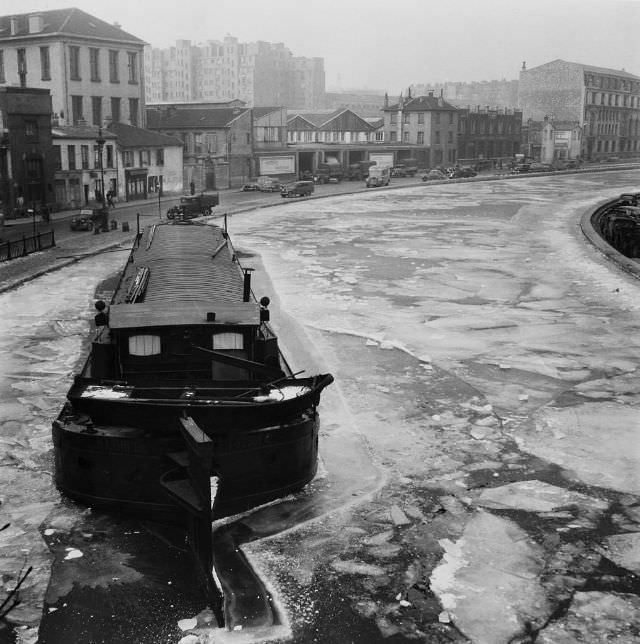
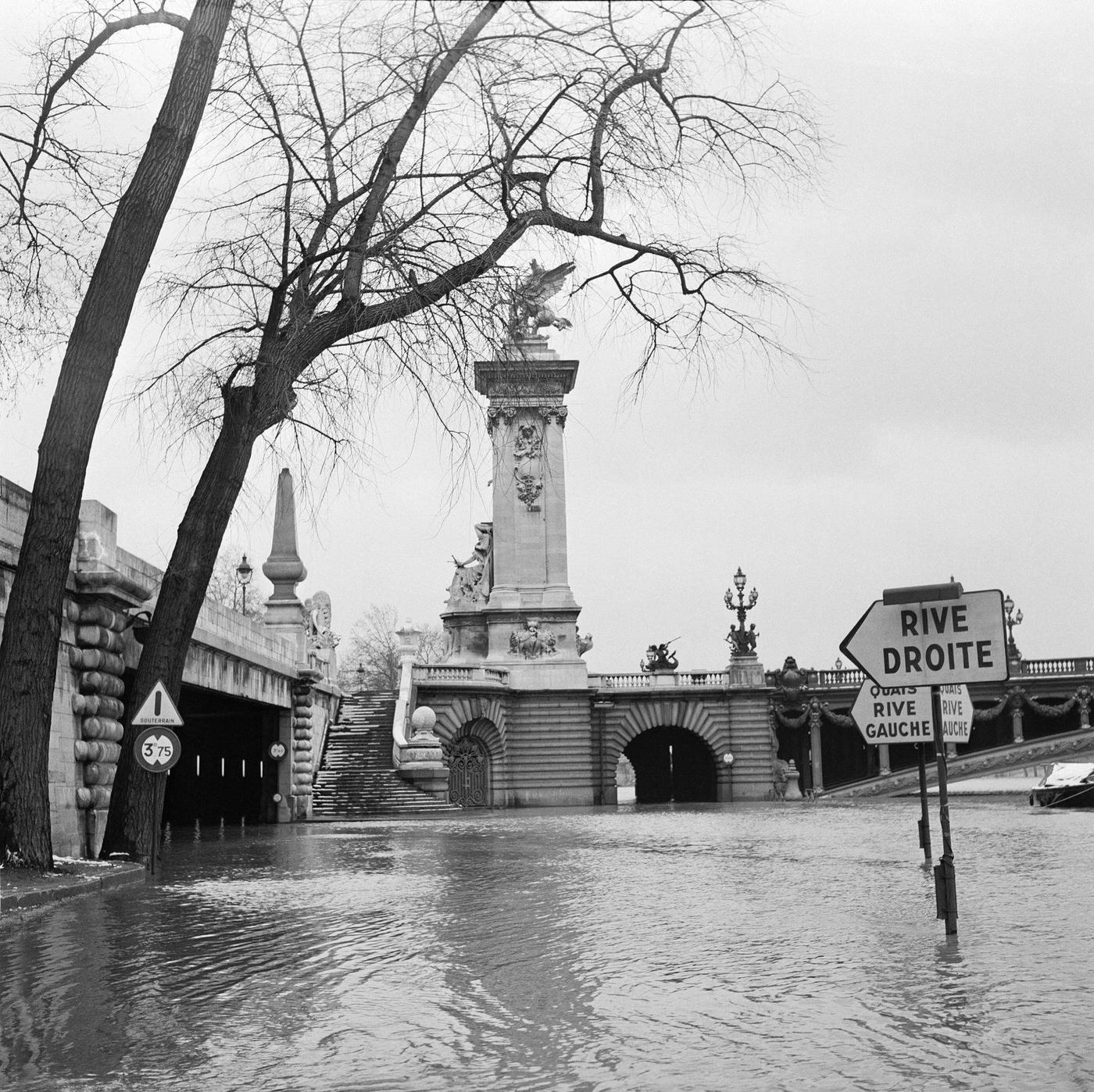
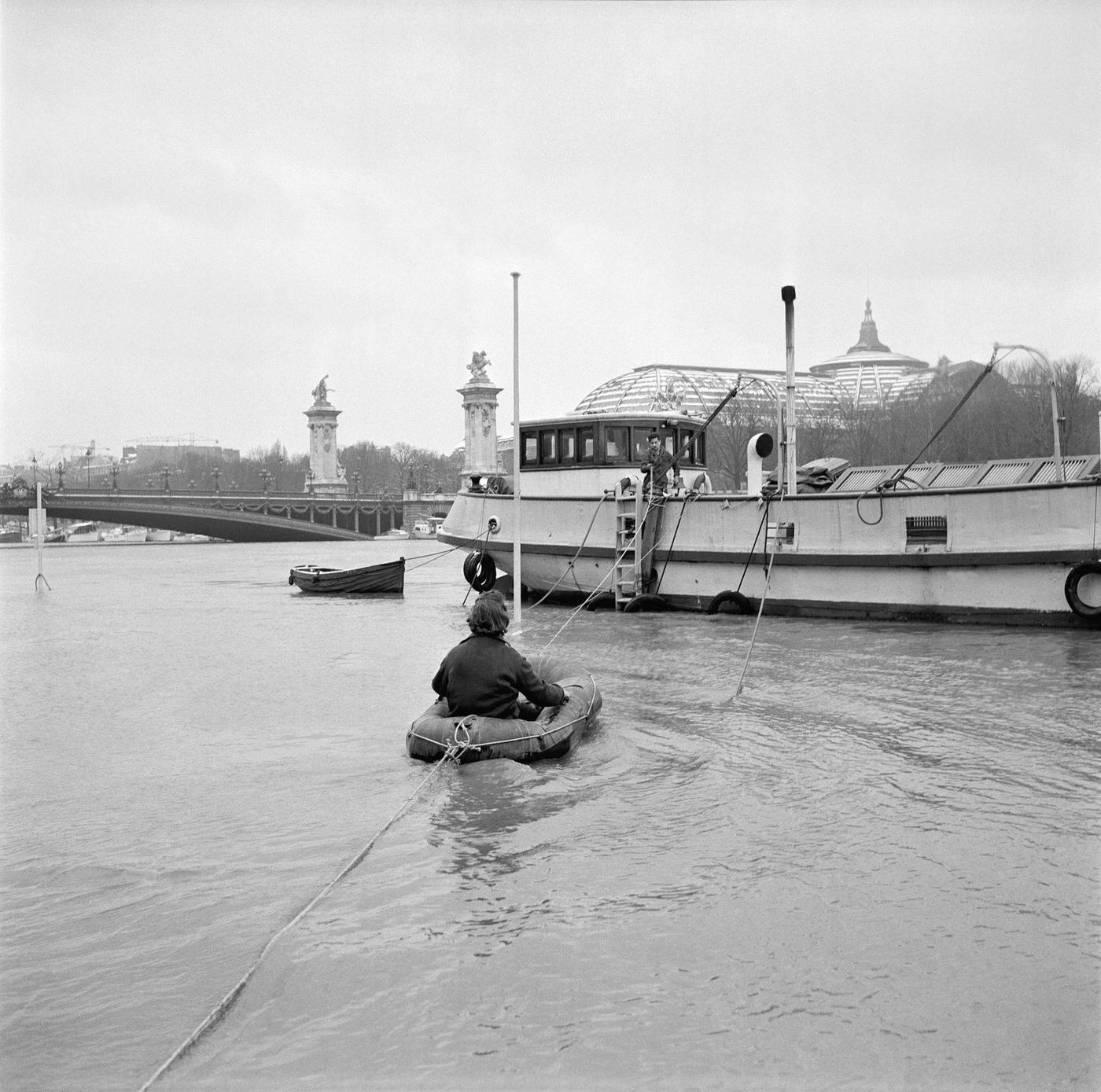
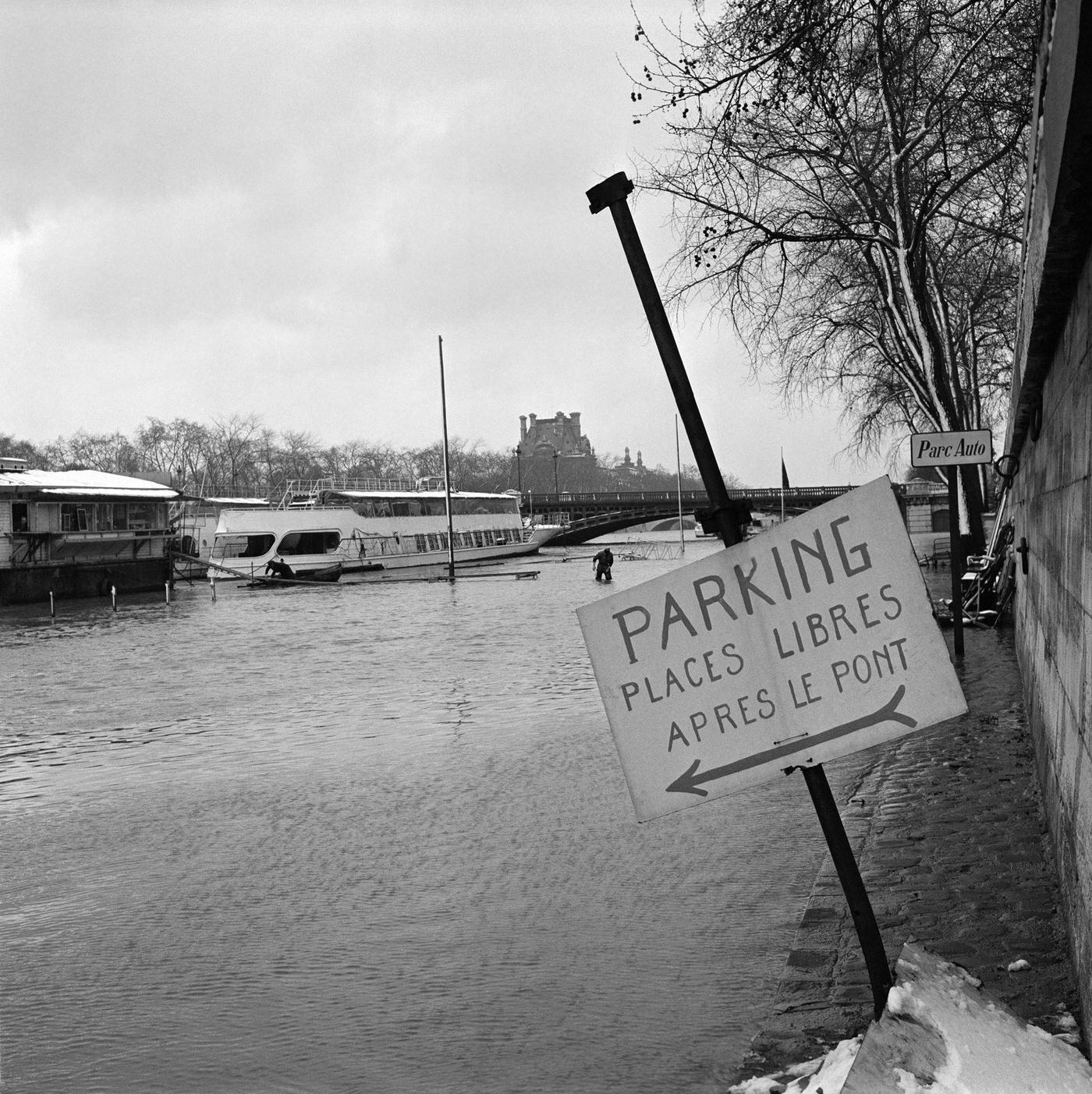
The Seine itself was a recurring winter story. In cold enough years, ice formed along its banks and even spread across the surface. The river flooded after heavy snowfall in February 1958, pushing water up onto the quays and disrupting river traffic. Snow-covered boats sat moored along the banks, and the waterline crept dangerously high. Robert Doisneau photographed the Seine and its canals during the 1954 winter, documenting a frozen, quiet version of a waterway usually full of motion.
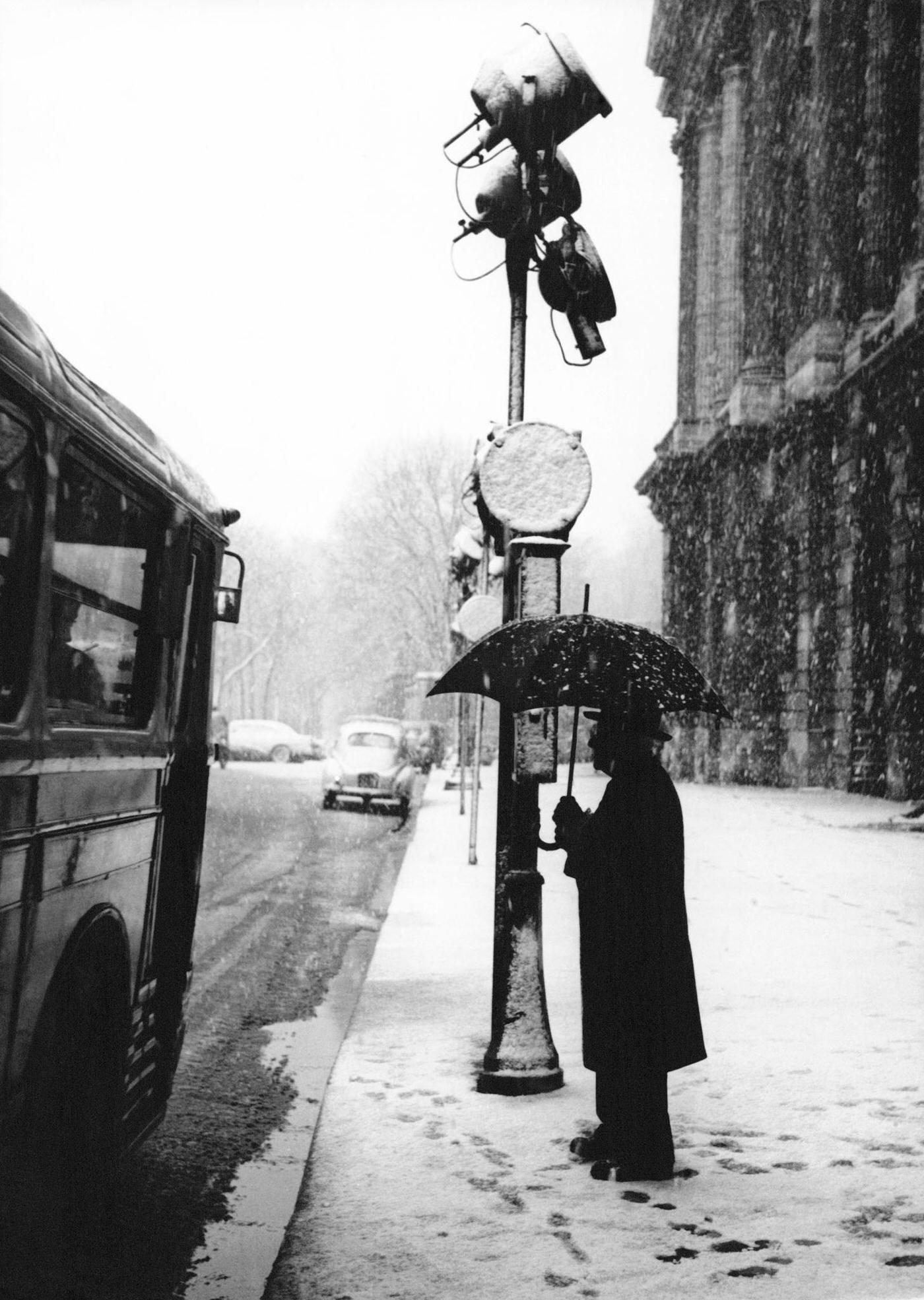
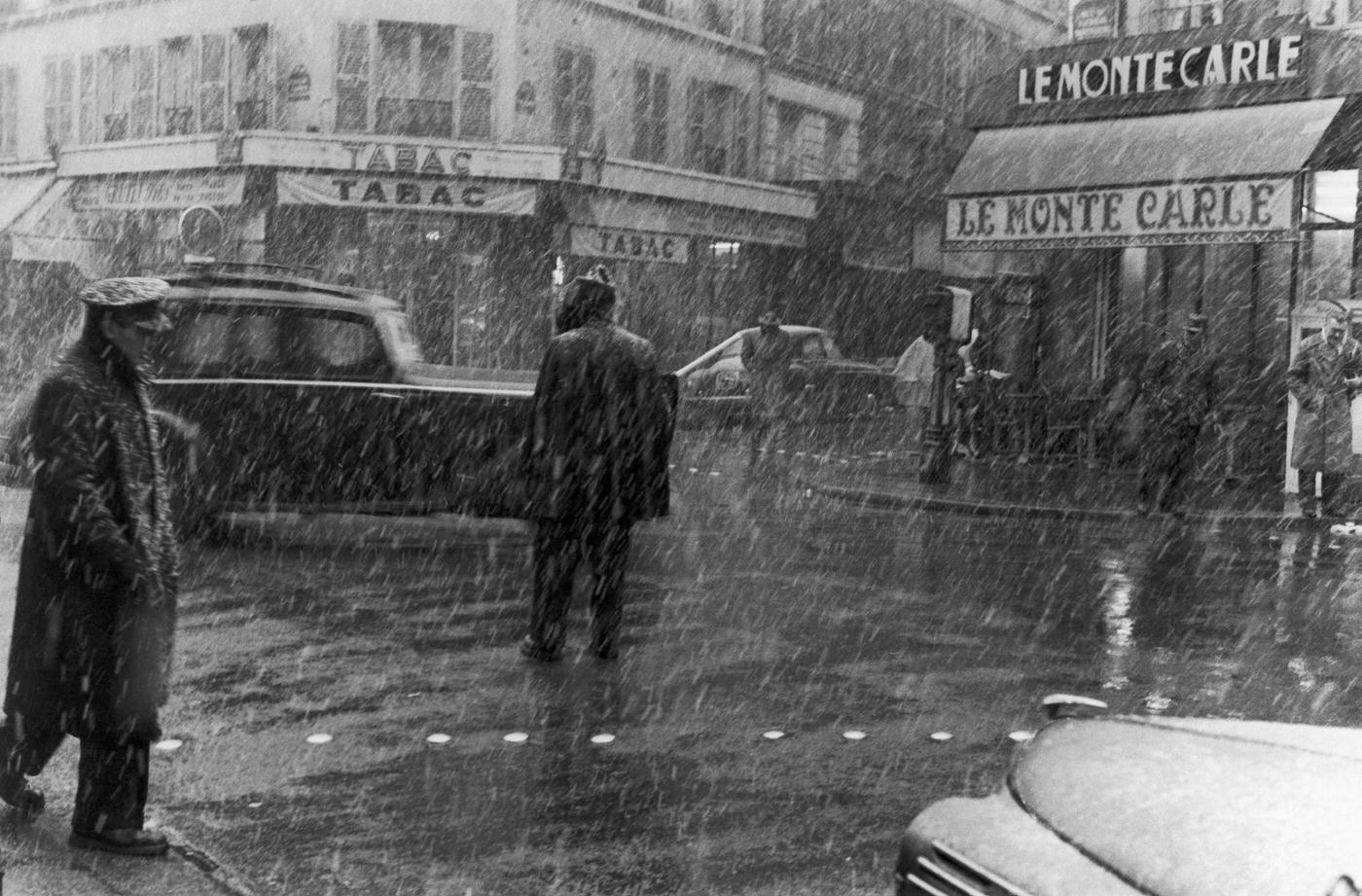
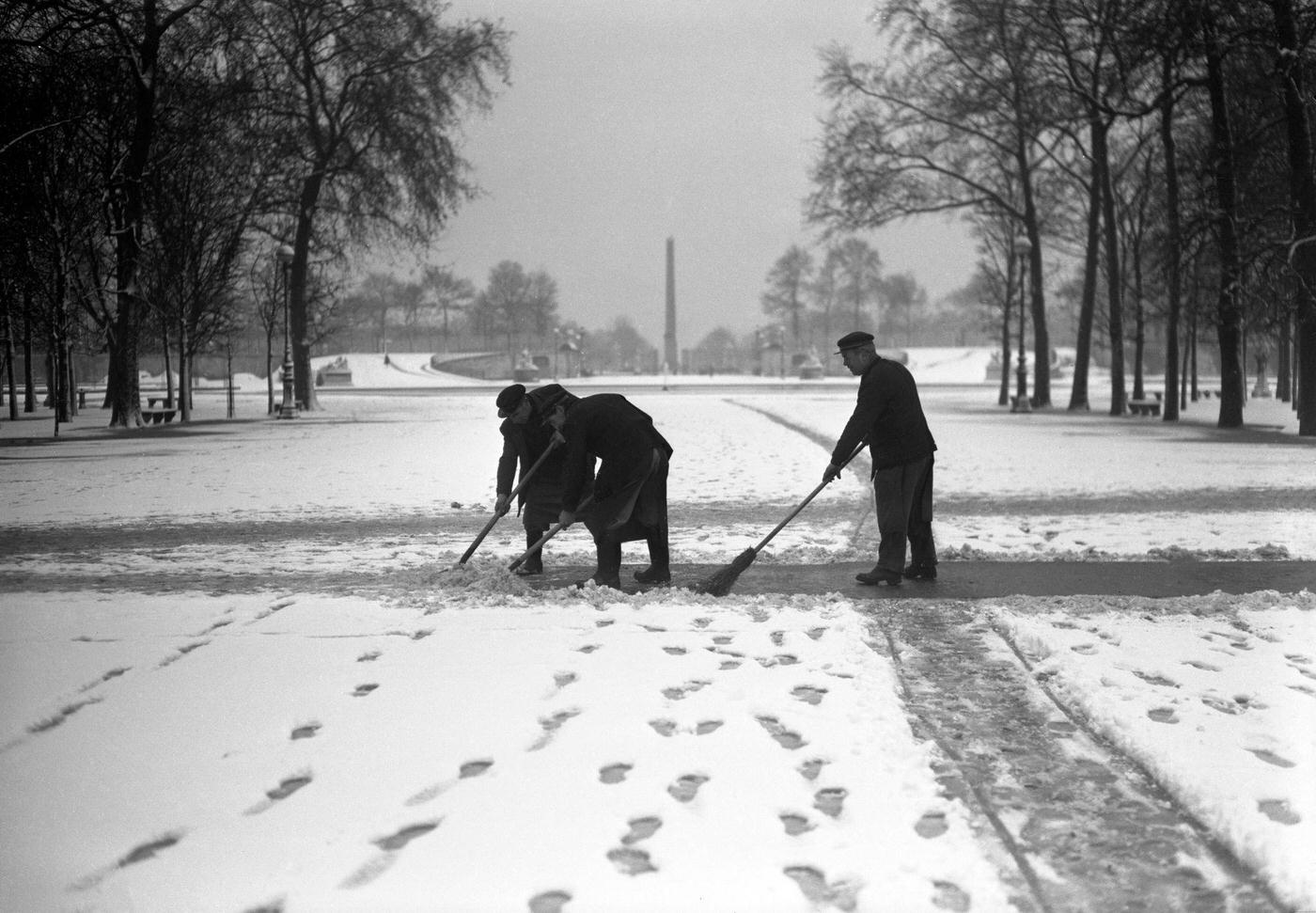
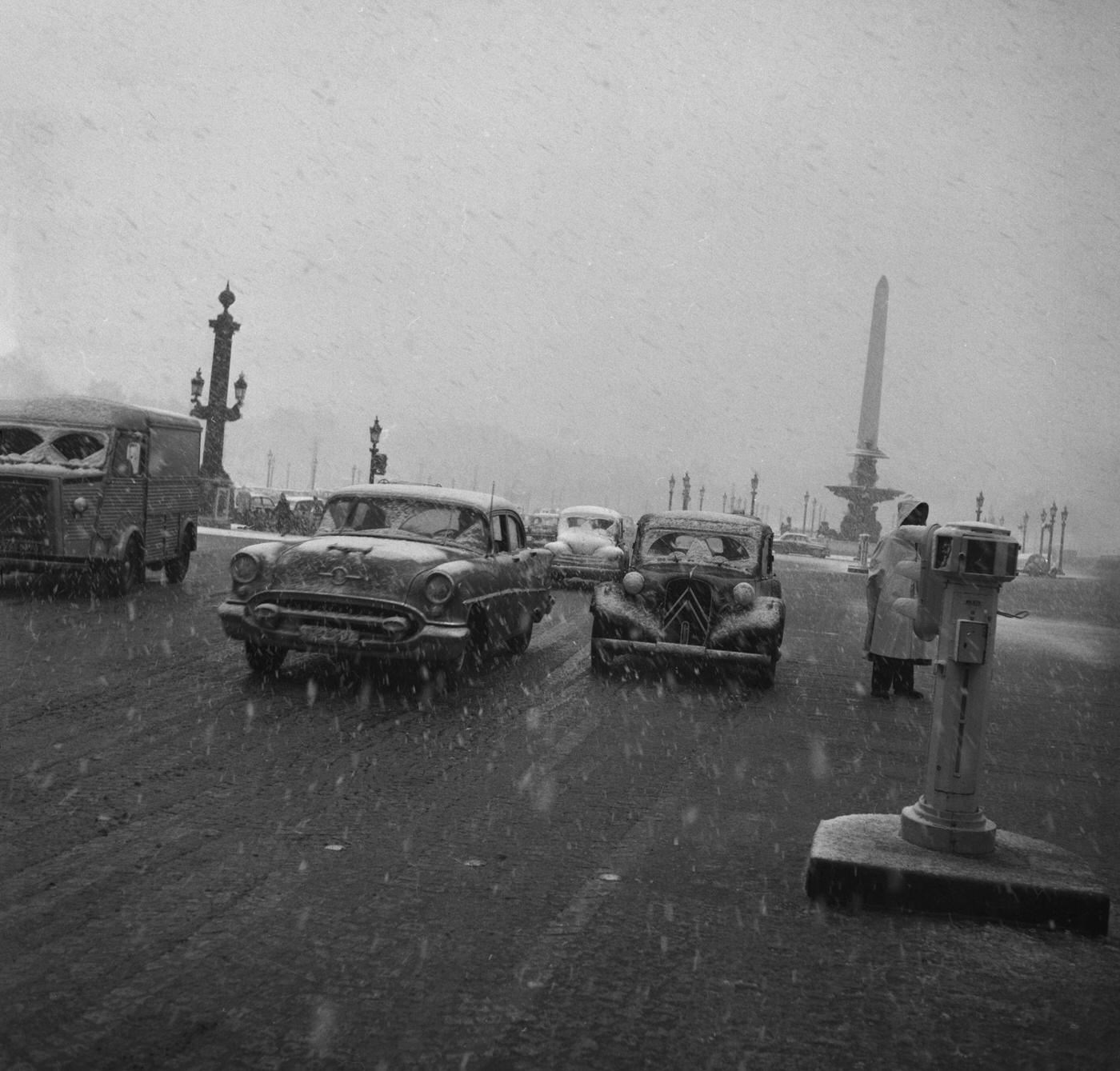
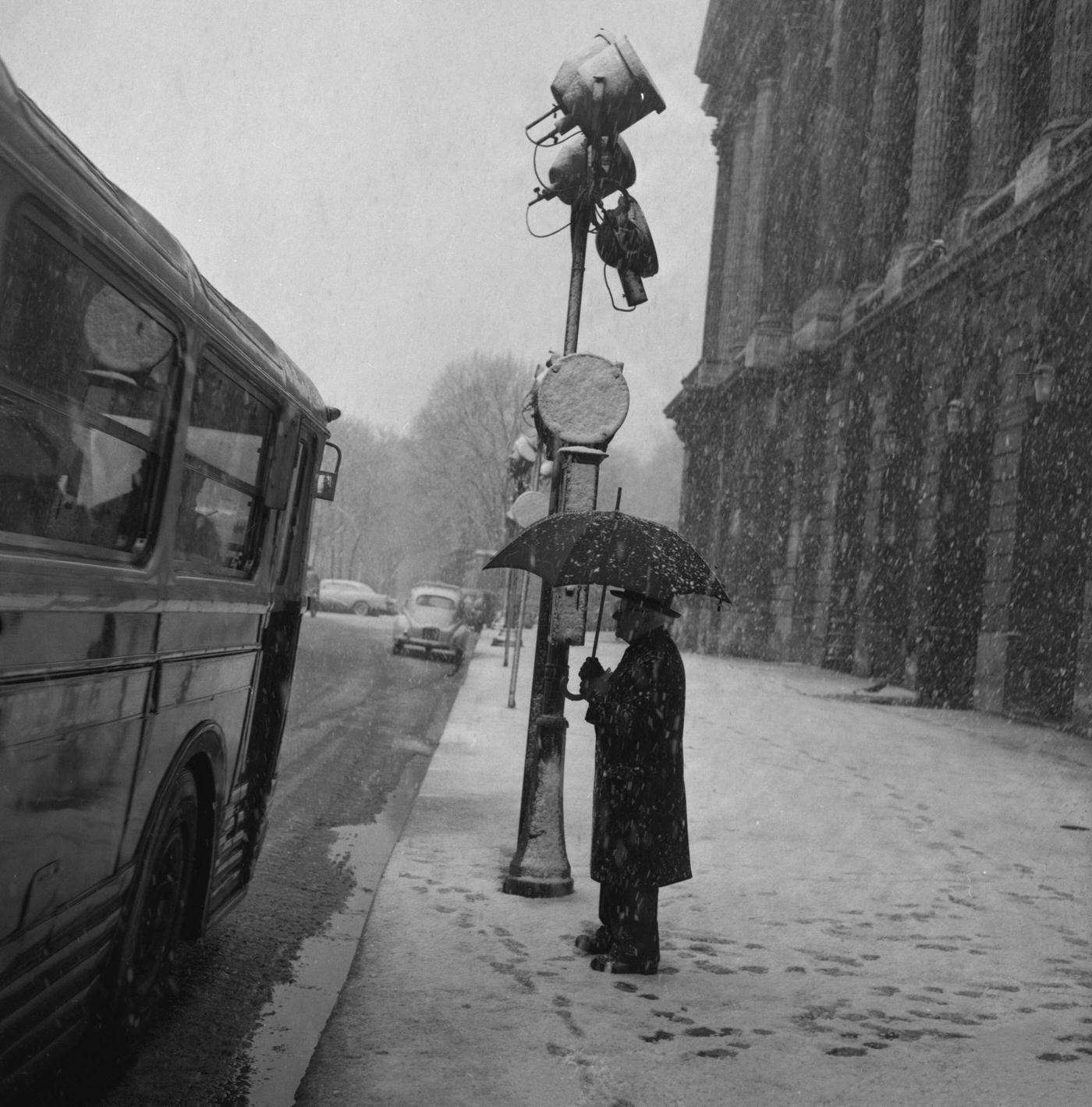
City workers were a constant presence during heavy snowfalls. Traffic officers stood at busy intersections wrapped in hooded cloaks, directing vehicles through near-zero visibility. Men with shovels and salt carts worked through the night to keep key squares like Place de la Concorde passable. Commuters queued at bus stops in silence, snow piling on their shoulders while they waited. These scenes — unglamorous and cold — were the daily reality of winter in the city.
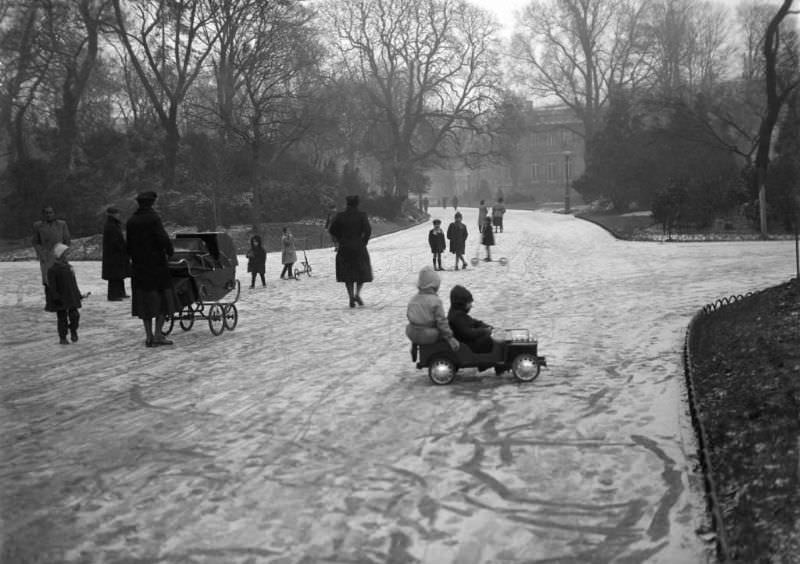
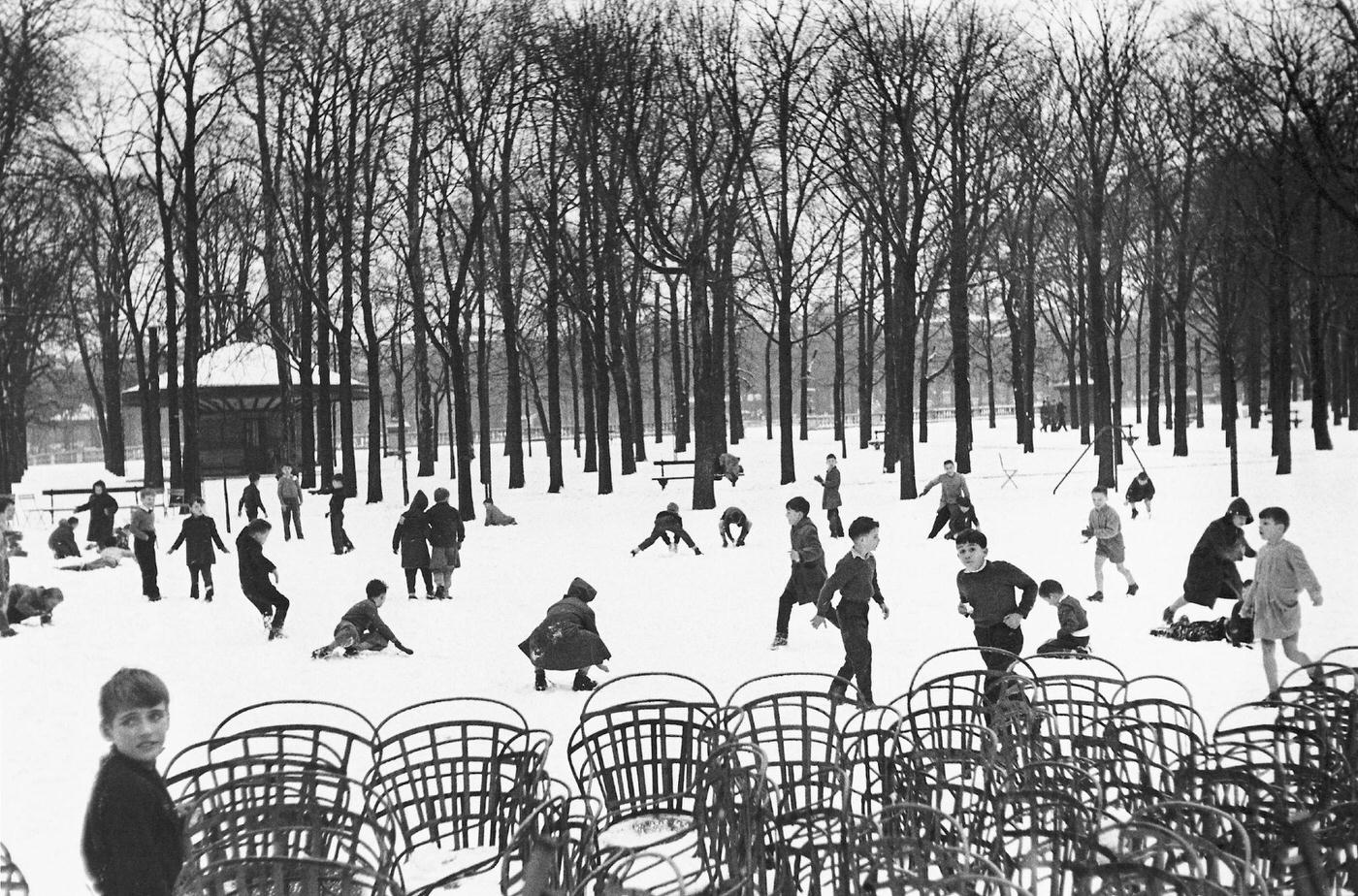
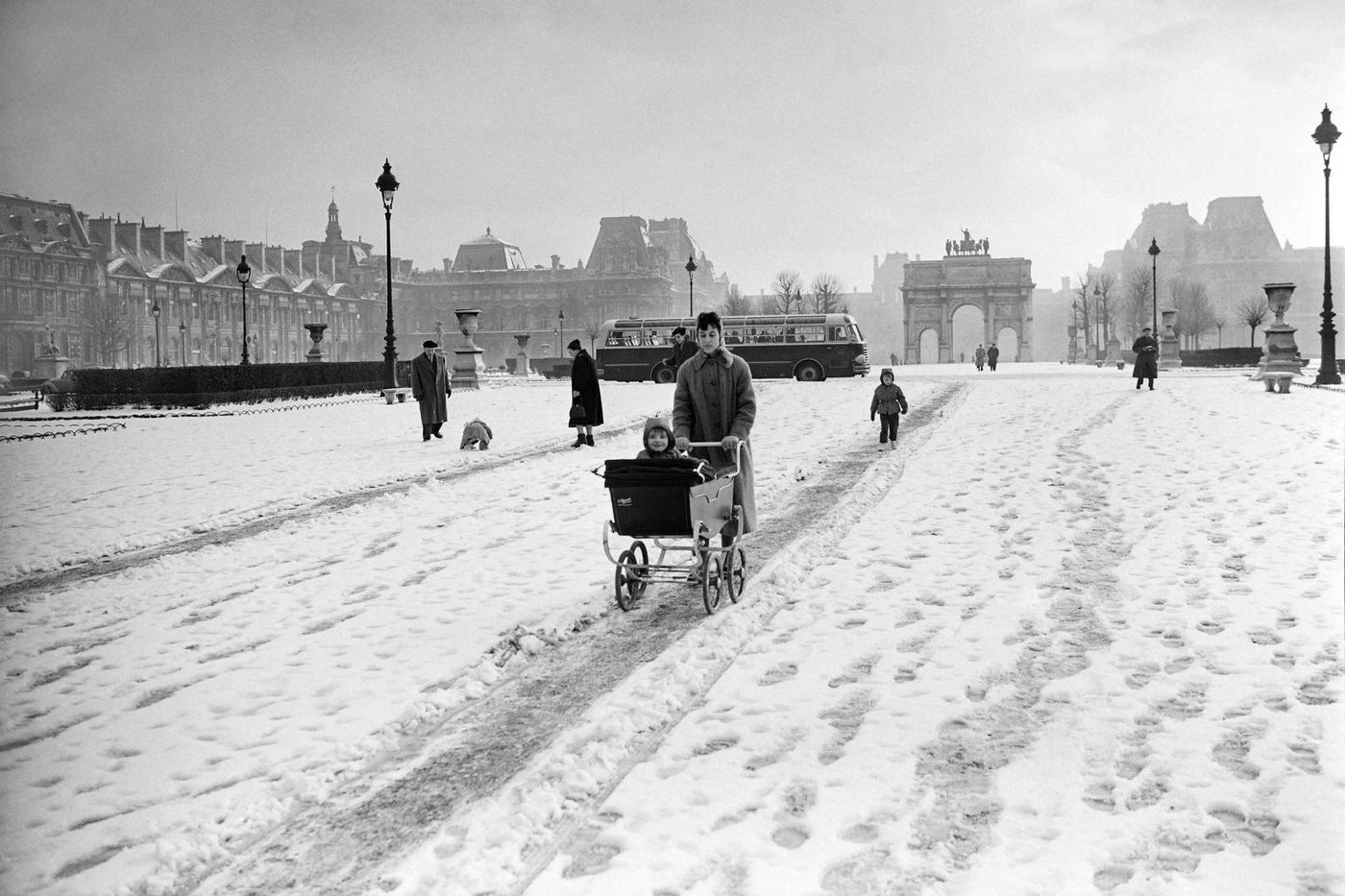
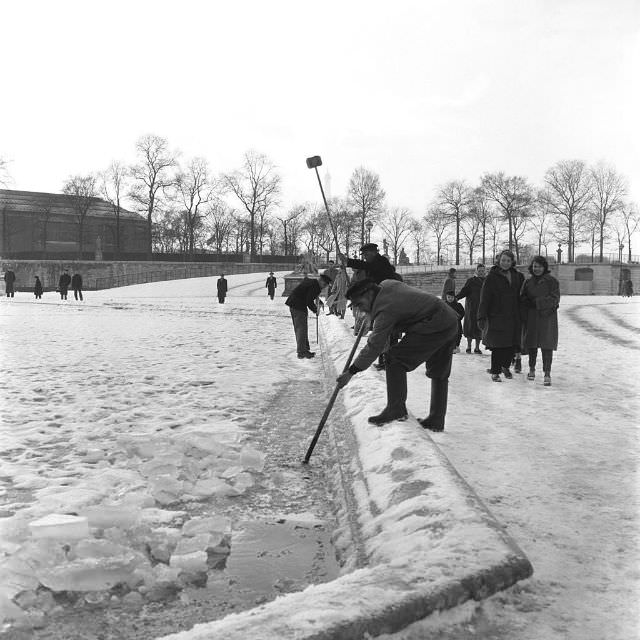
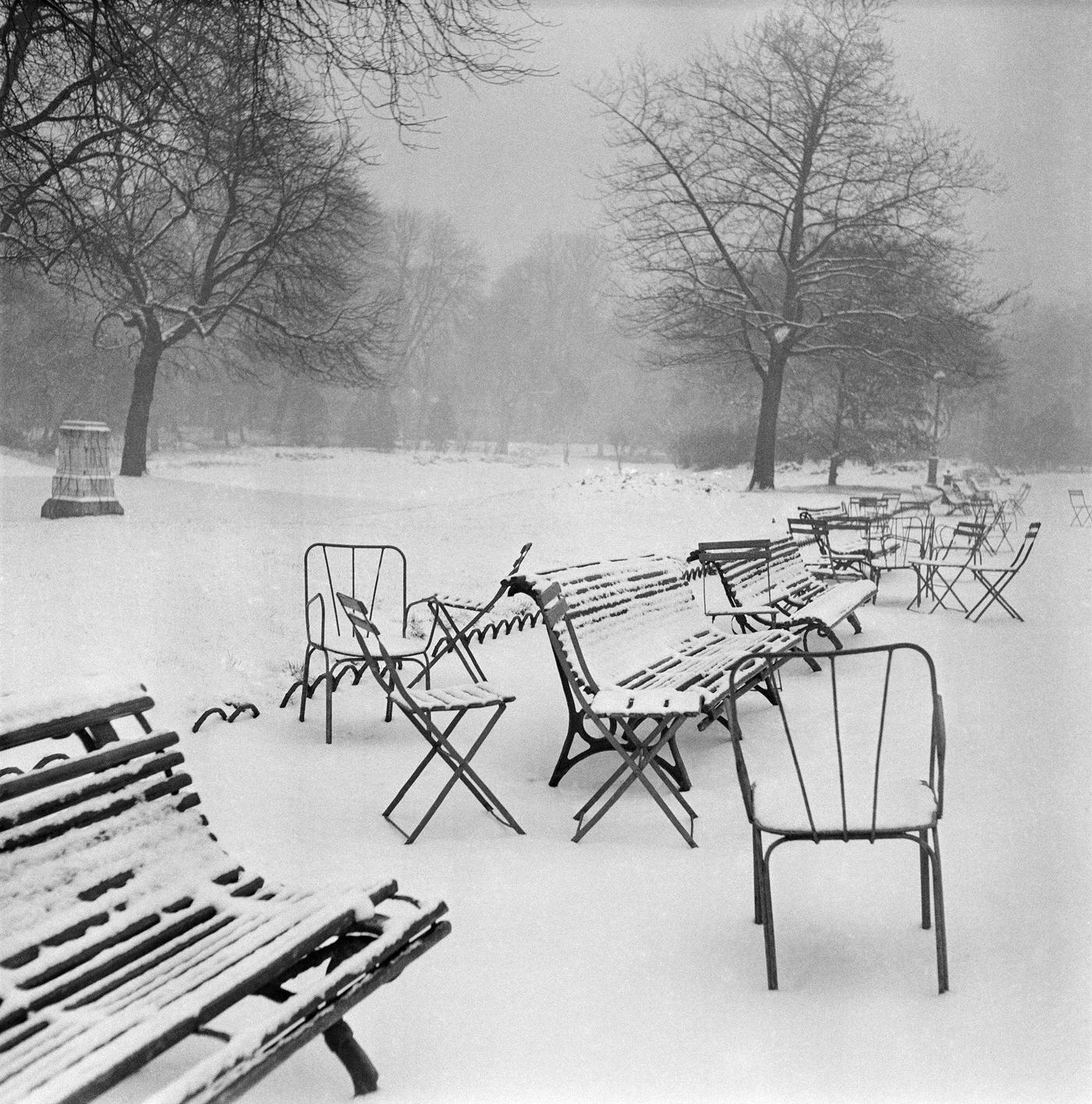
The Tuileries Garden, one of the city’s most formal green spaces, took on a different character in winter. Mothers pushed prams along snow-dusted paths, and couples walked arm in arm through the cold. In January 1956, when temperatures dropped sharply, fish in the garden’s ornamental ponds were put at risk. Parisians broke through the ice on the pond’s surface to save them — an act that drew a crowd and ended up on film.
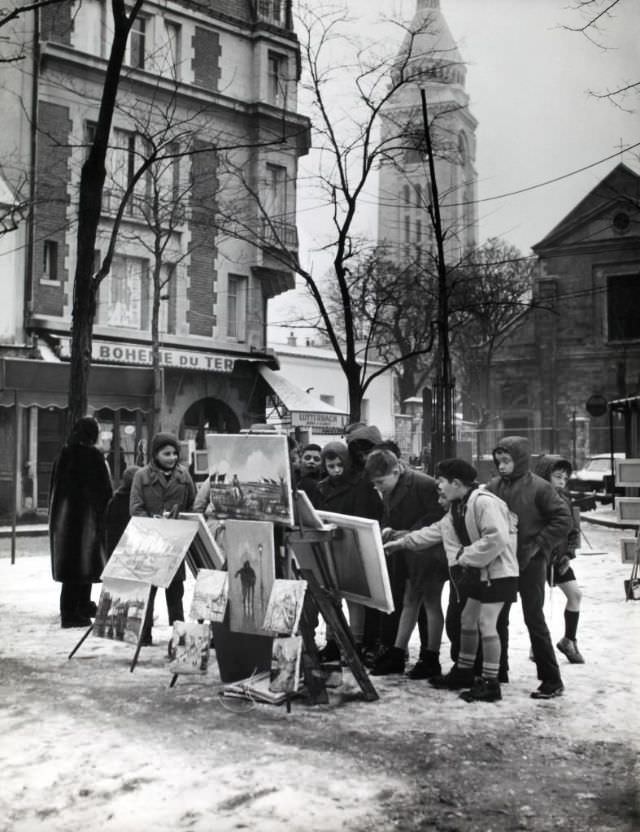
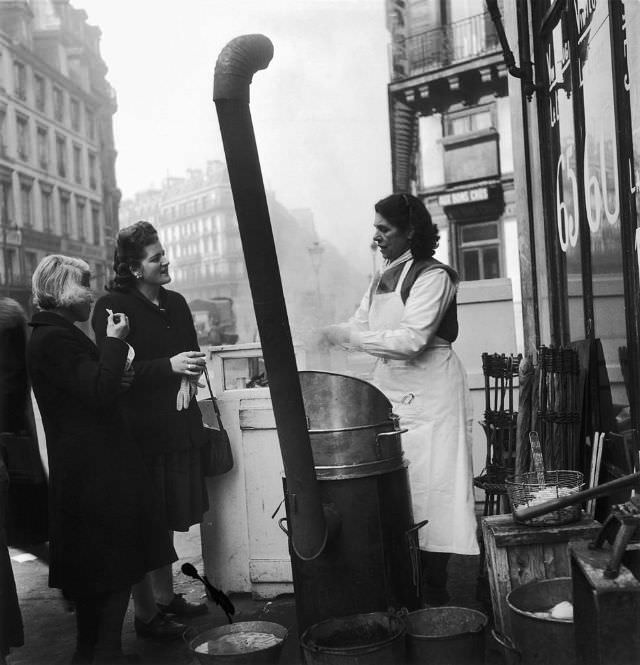
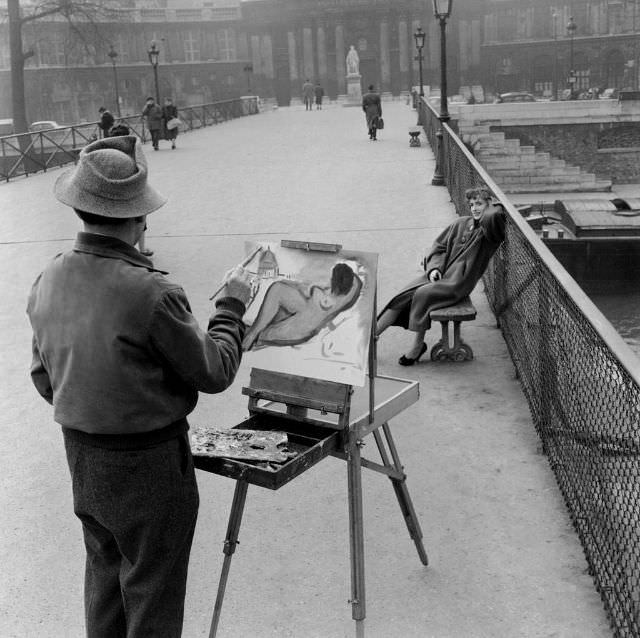
Street vendors stayed out through the cold, selling roasted chestnuts, newspapers, and small goods from carts along the major boulevards. Robert Doisneau captured one such vendor in the 1950s — coat pulled tight, breath likely visible in the air. Painters set up along the Pont des Arts despite the cold, unwilling to let winter shut down their work. Paris’s artistic culture didn’t hibernate. It simply dressed for the weather.
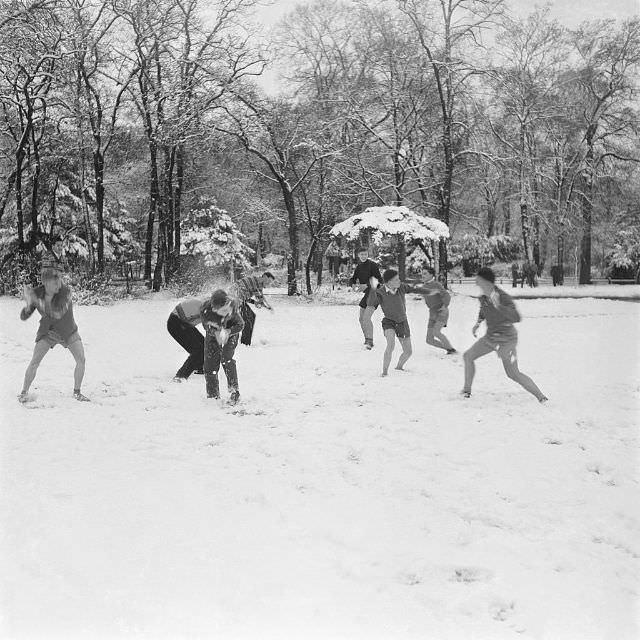
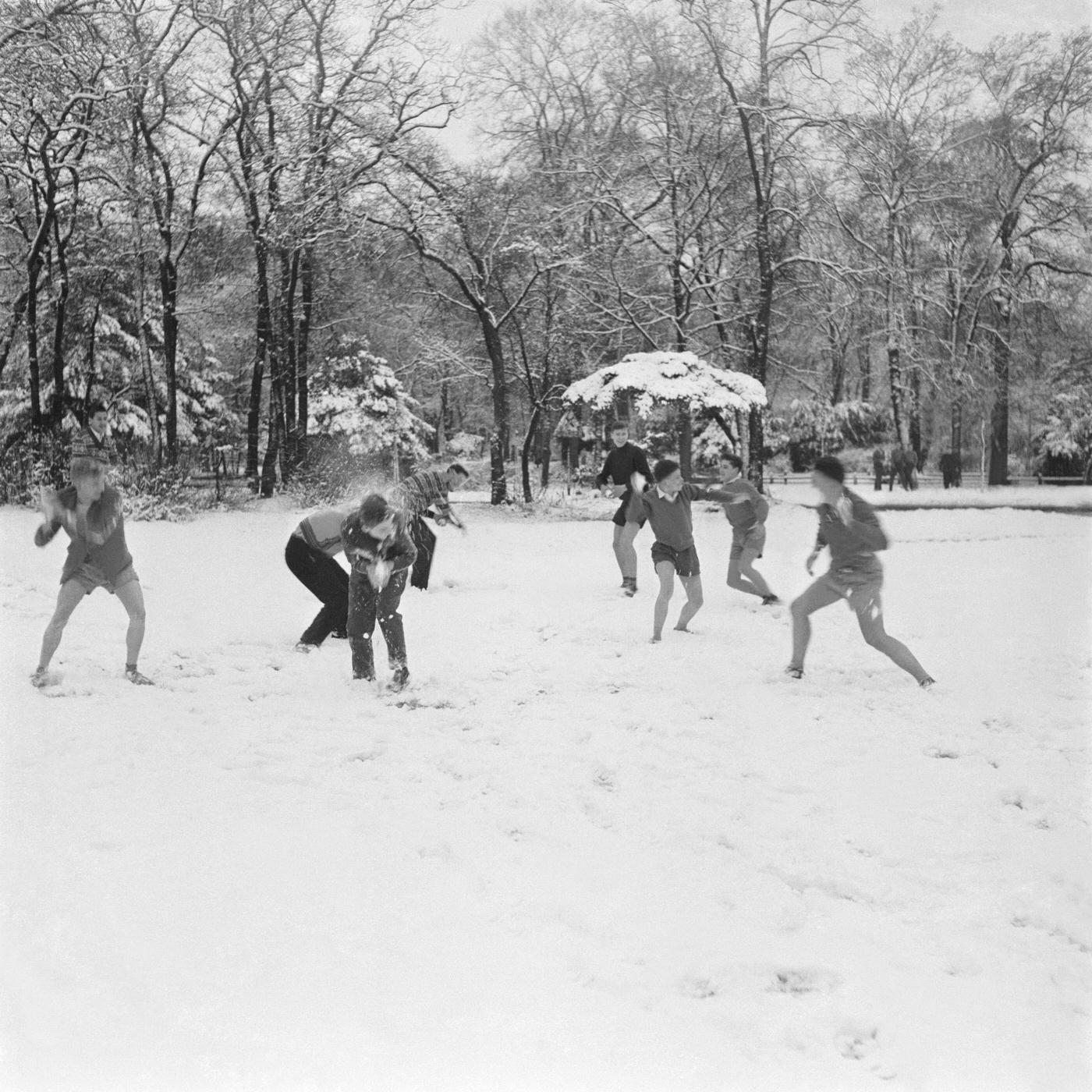
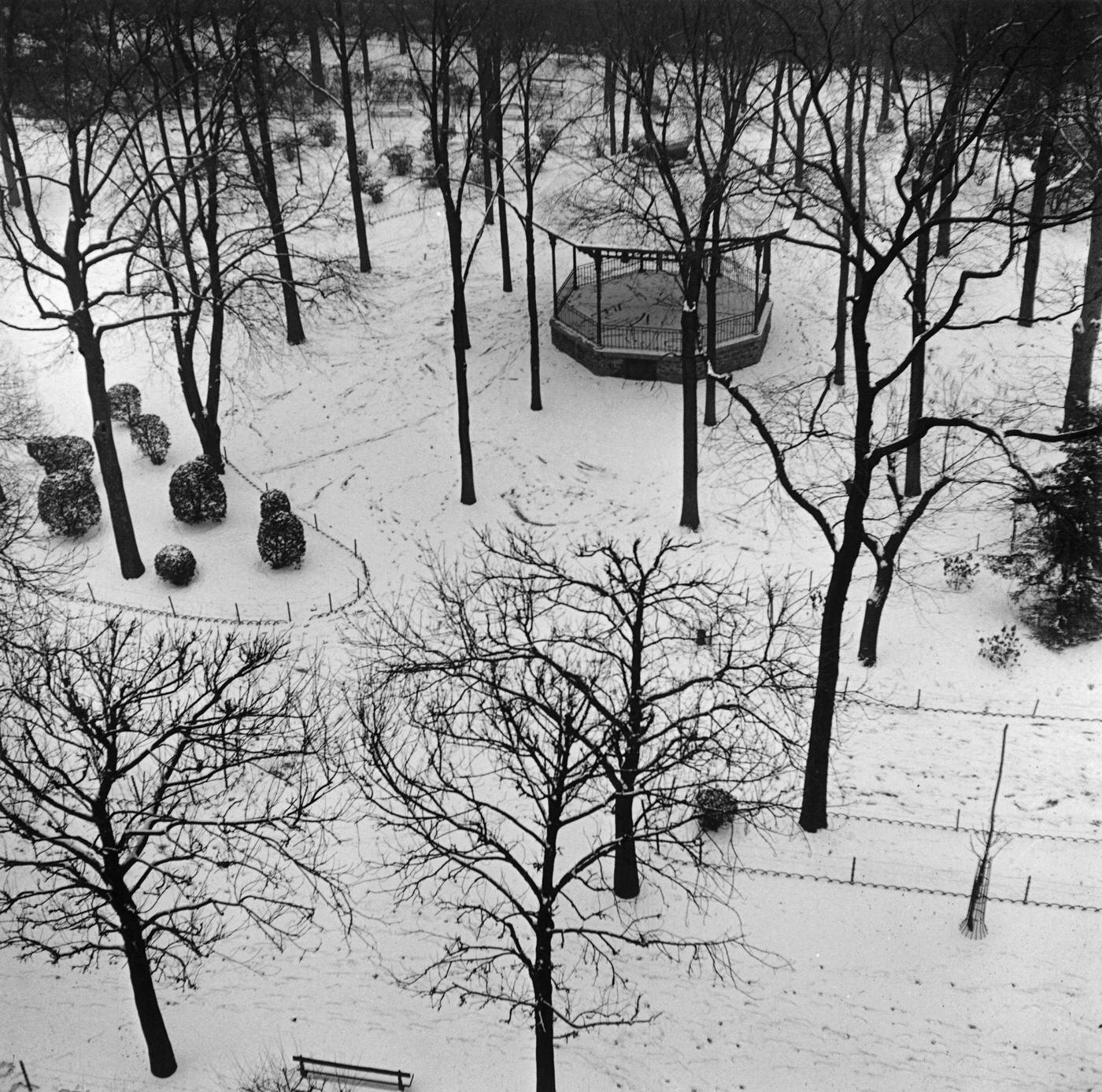
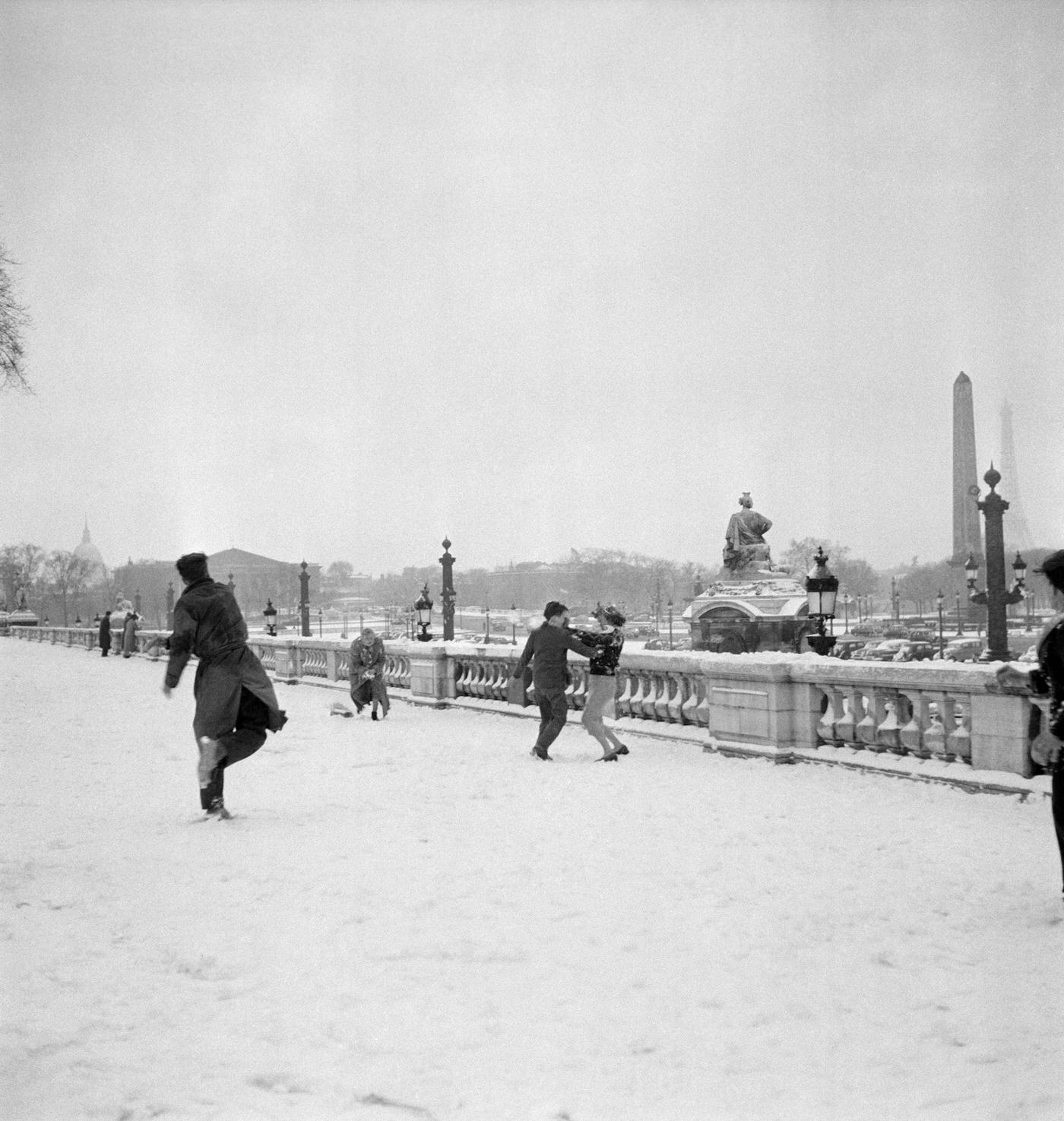
Major squares transformed entirely when snow fell. Place de la Concorde, normally a roaring intersection of Parisian traffic, became an open white expanse. Young people launched into snowball fights across its wide paving stones. The Opera district went quiet and pale under heavy falls. Parc Monceau, usually a stately garden for the well-heeled residents of the 8th arrondissement, turned into a frosted landscape by late December 1956. These were not rare events — they were the expected rhythm of Parisian winters through the decade.
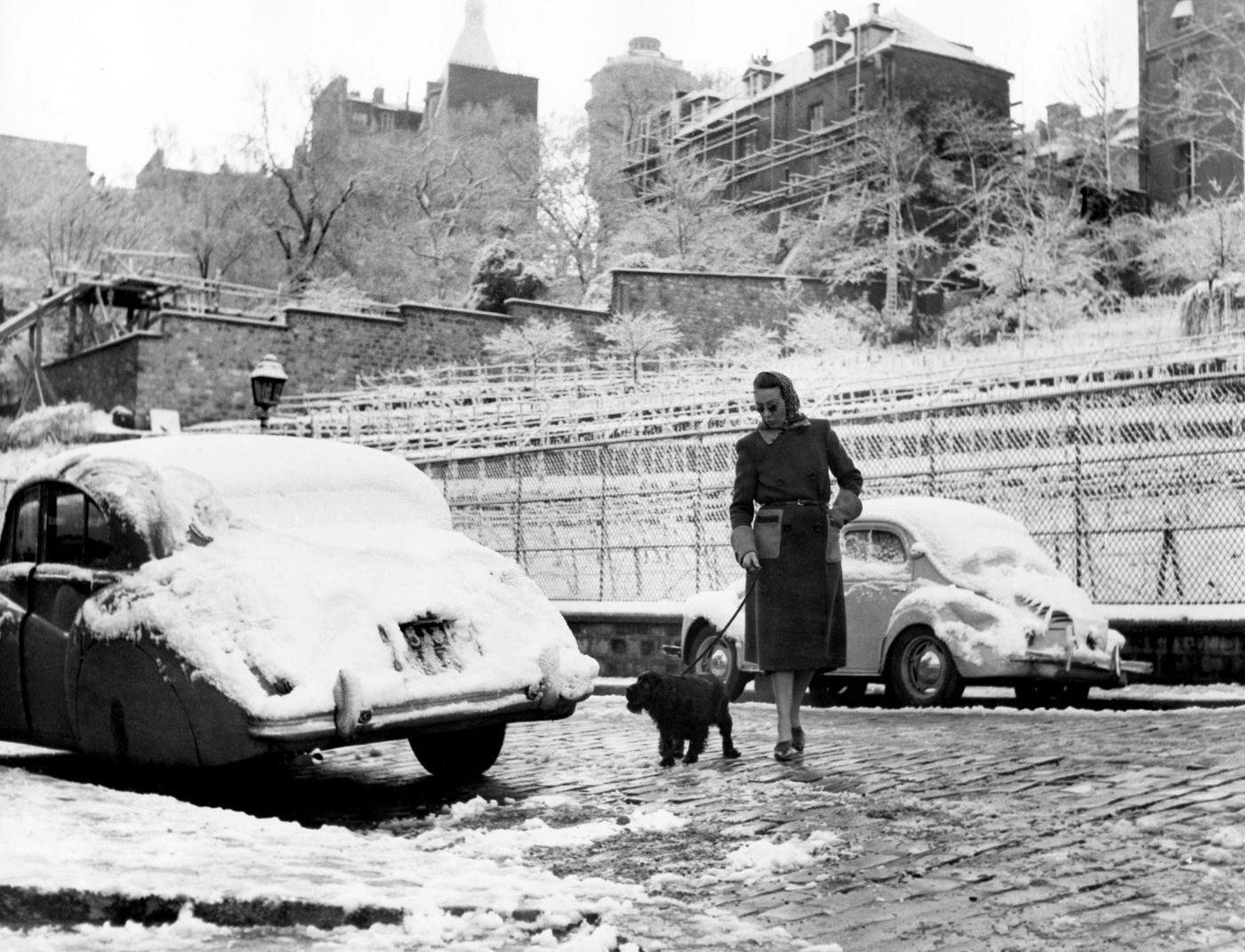
Montmartre’s famous hilltop, crowned by the Sacré-Cœur basilica, was at its most dramatic on cold winter mornings. Frost clung to the cobblestones, and the view across the city was sharp and clear. A woman walking her dog through the neighborhood’s narrow streets after a fresh snowfall, the basilica rising above the rooftops — scenes like these were common enough to be photographed repeatedly across the decade, by professionals and amateurs alike.
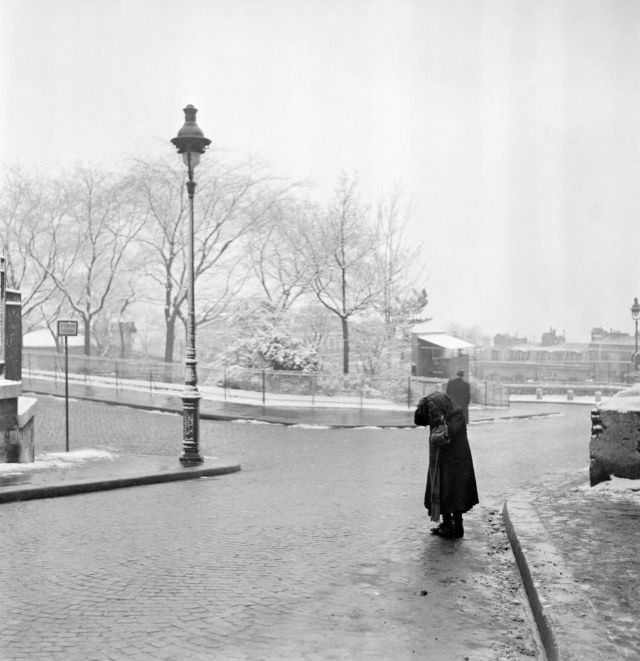
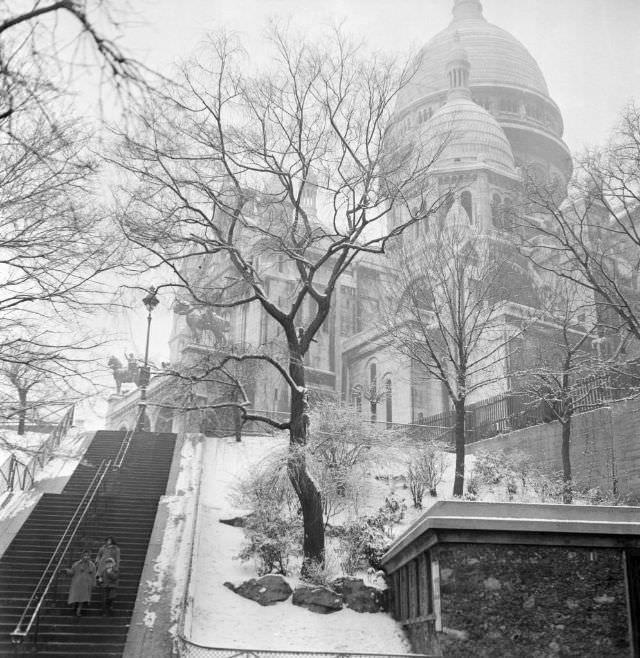
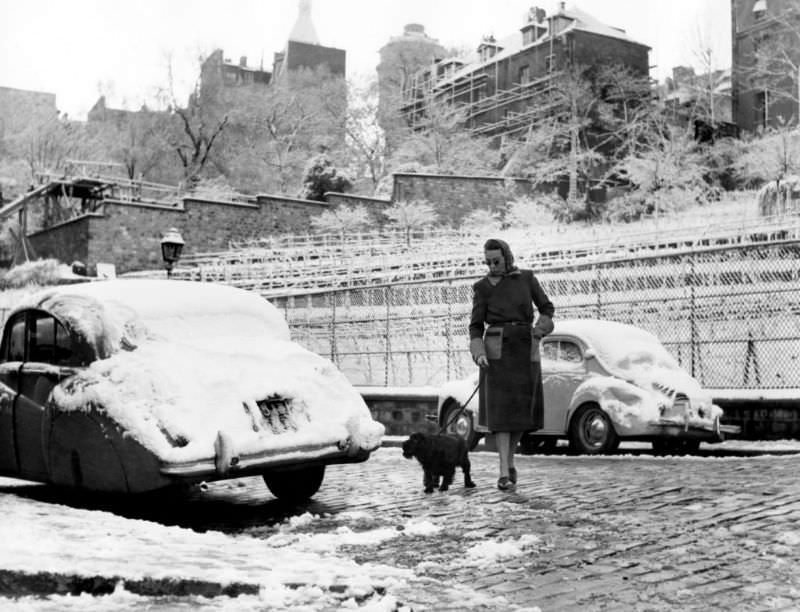
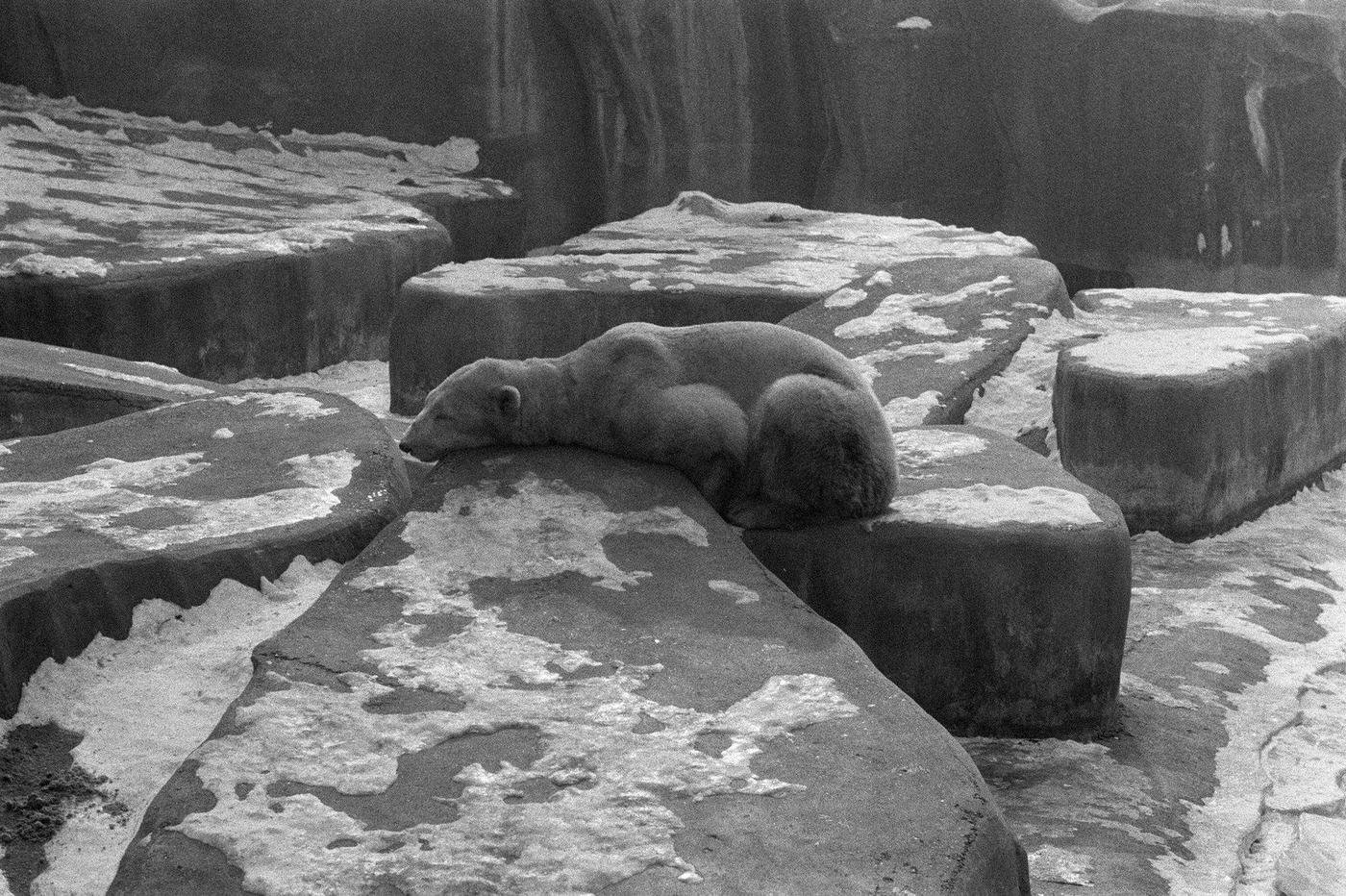
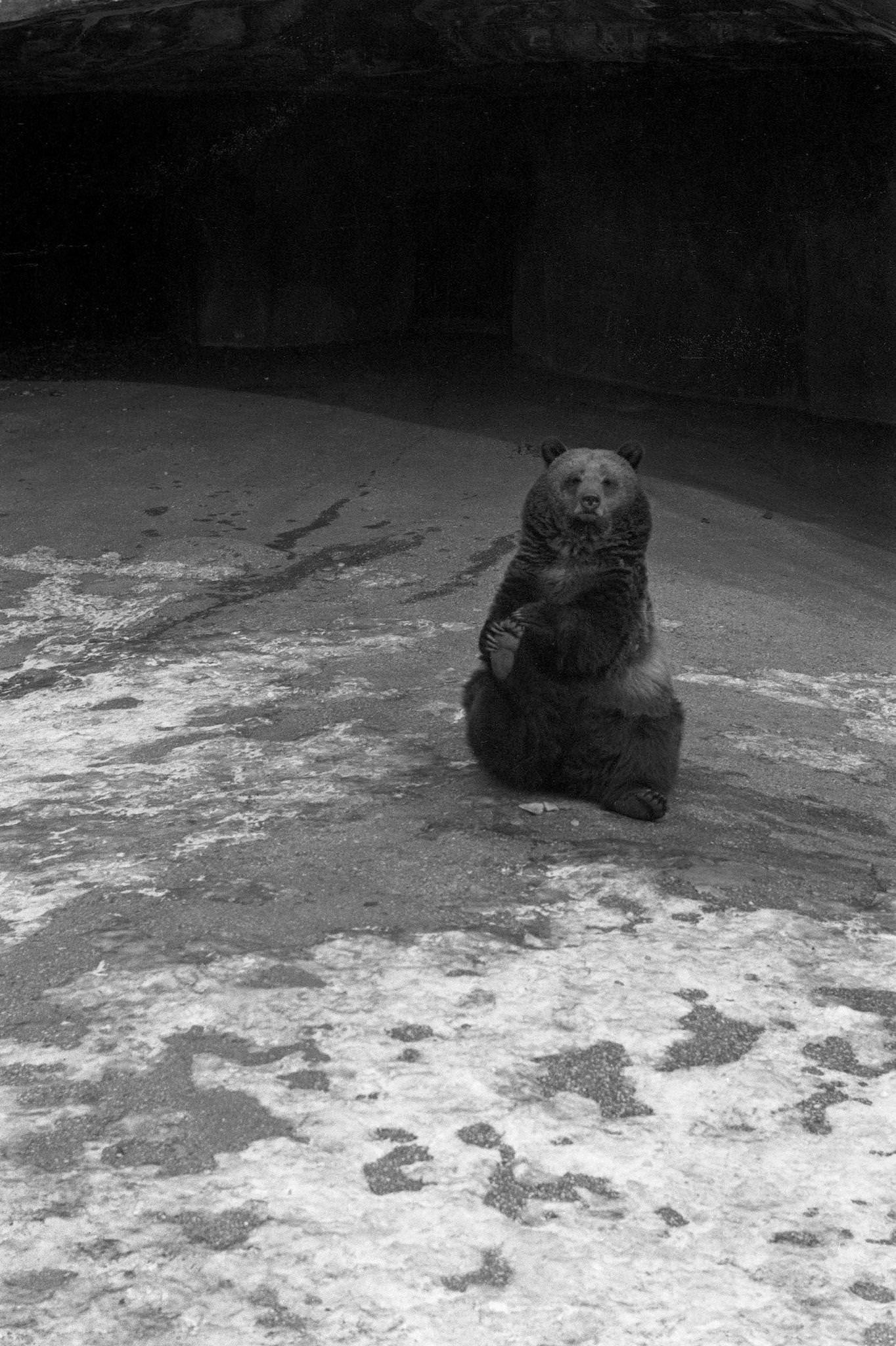
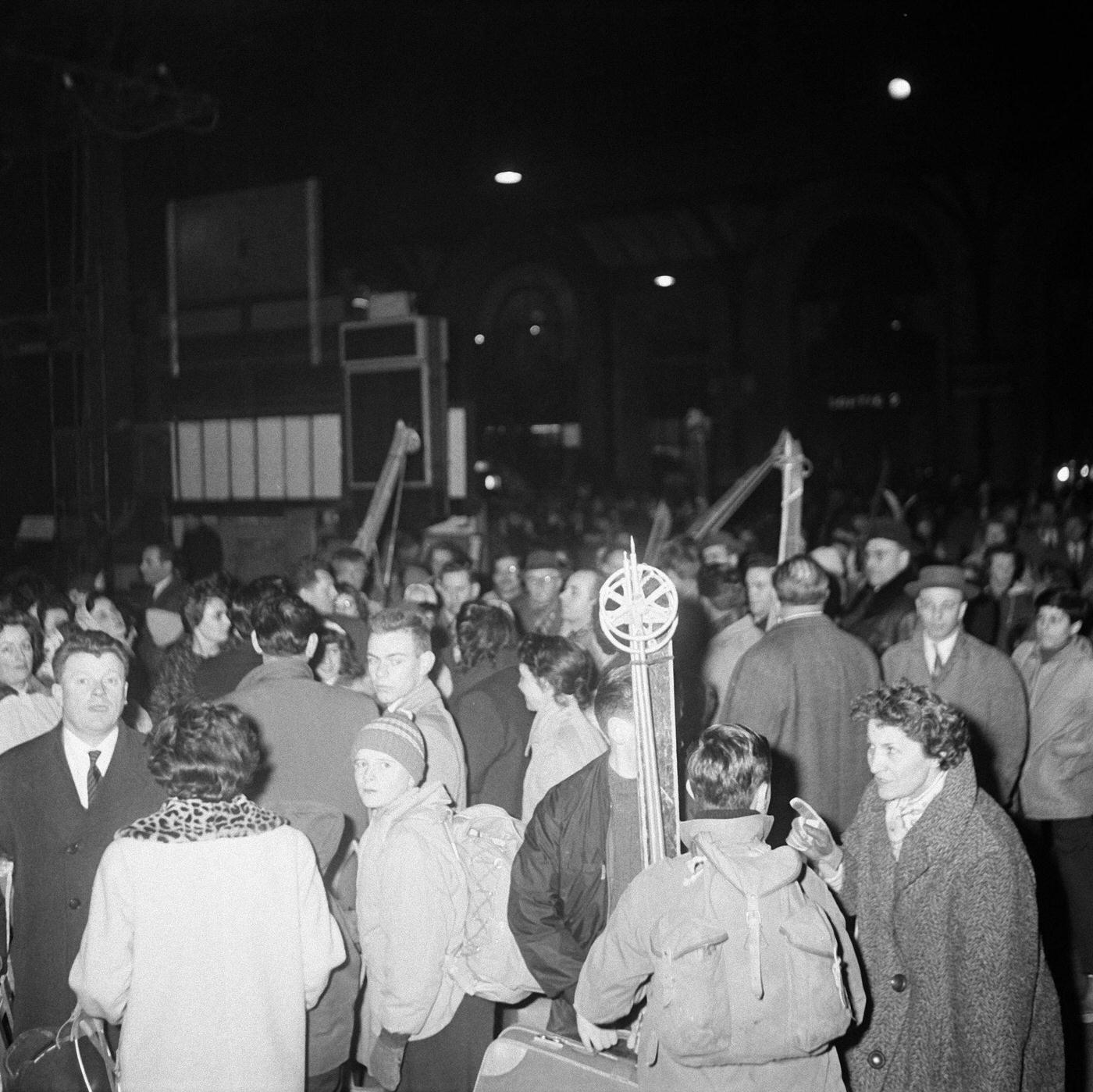
The Vincennes Zoo, on the eastern side of the city, kept its doors open through winter. Bears moved through snow-covered enclosures in 1955, an unusual sight that photographers took full advantage of. The zoo drew visitors even in the cold months, offering families something different from the park walks and café hours that dominated winter leisure. At Gare de Lyon, the Christmas exodus was a spectacle of its own — packed platforms and mountains of luggage as Parisians fled the city for the holidays in December 1959.
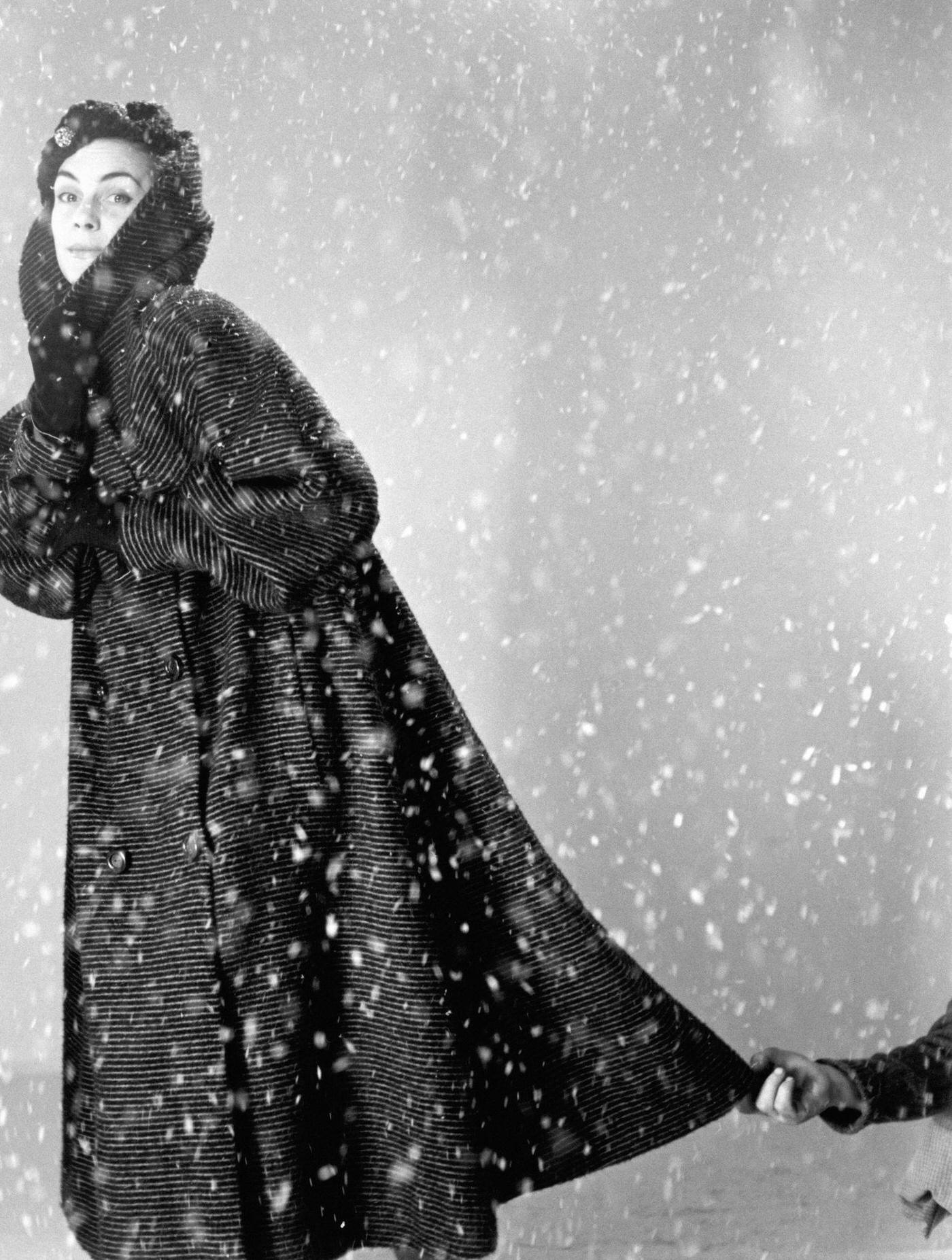
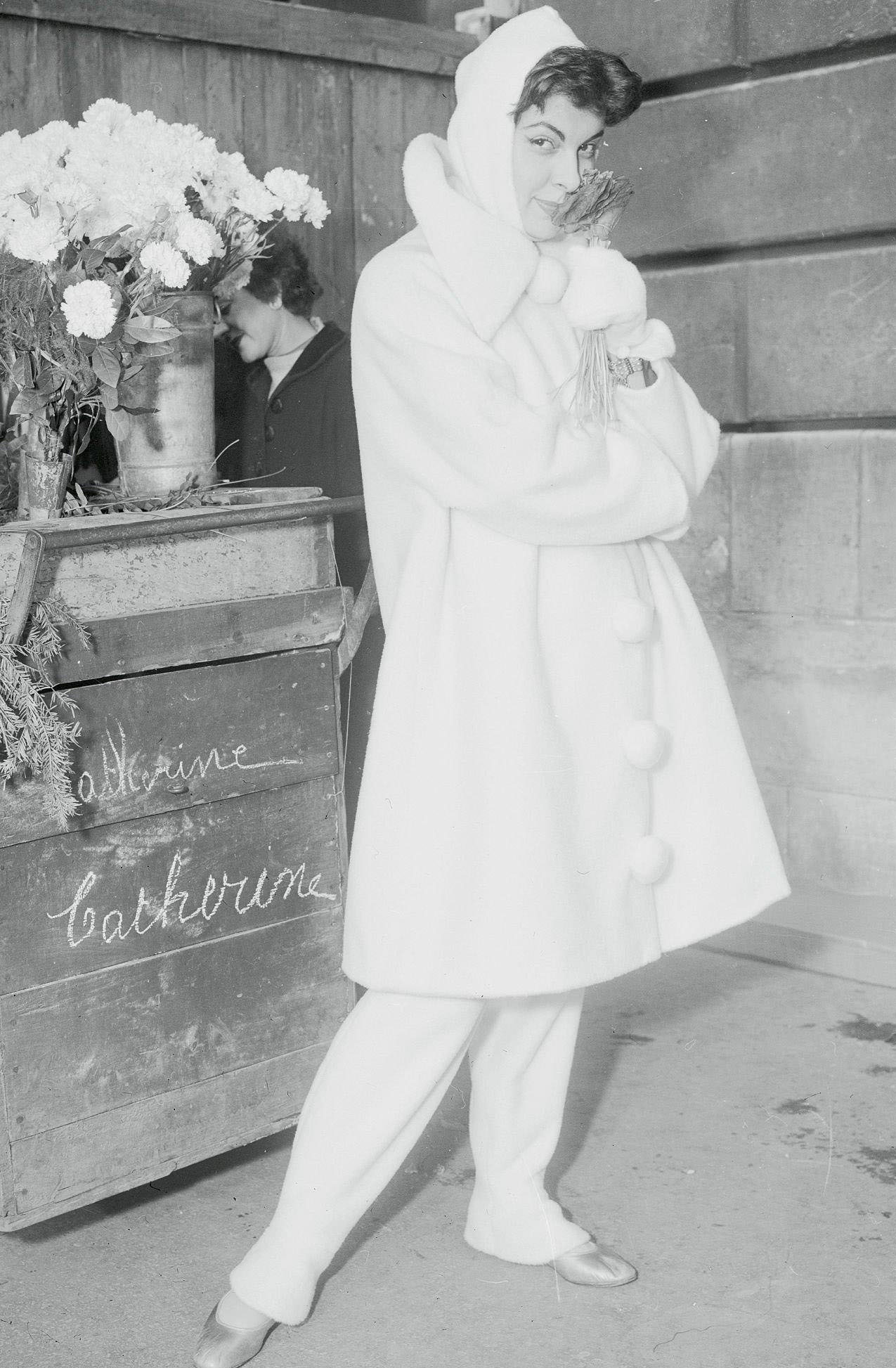
Winter also showed up in the city’s fashion and culture. A ski-suited model posed under artificial snow in a Paris studio in 1951, reflecting how winter aesthetics were being folded into the fashion world even indoors. American actress Jean Seberg was photographed in Paris in January 1960, part of the steady stream of international figures drawn to the city even in its coldest months. Paris remained a center of gravity — for artists, writers, filmmakers, and anyone chasing something worth finding.
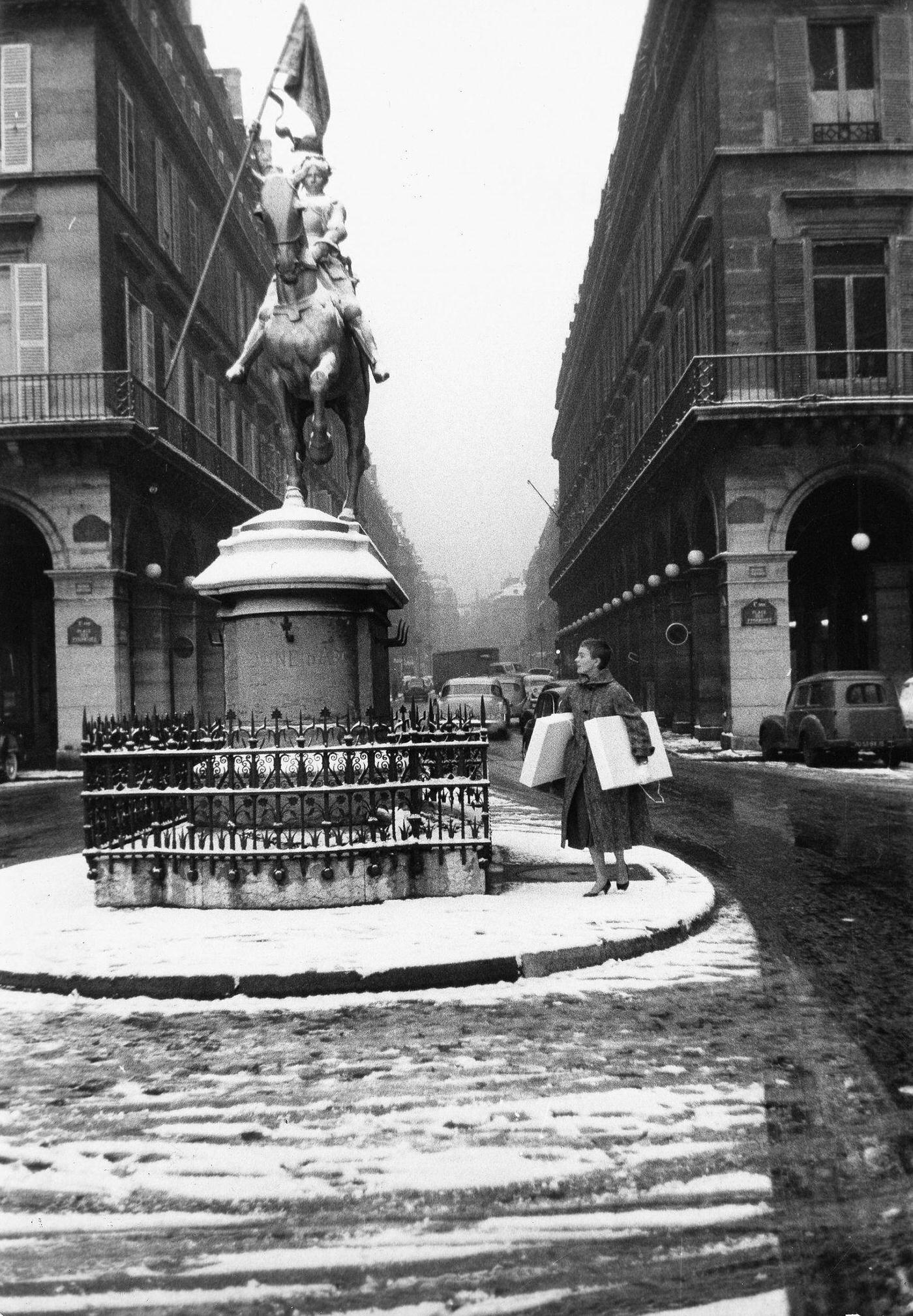
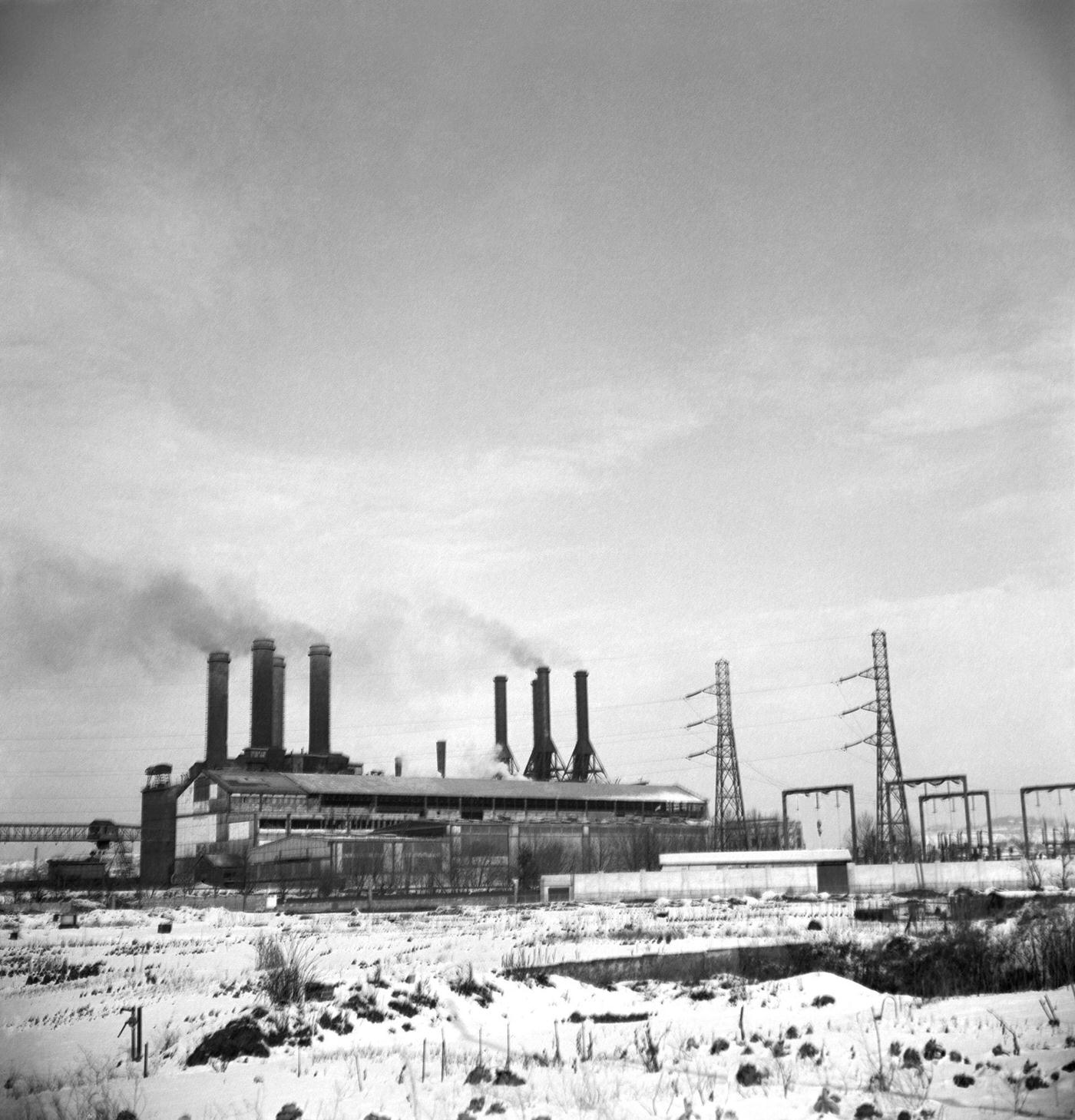
Everyday Parisians pushed through winter without much fuss. An elderly woman picking her way along an icy sidewalk in January 1956. A man standing alone at a snow-covered bus stop, waiting. A factory on the outskirts of the city sending smoke into a gray sky, workers inside keeping the postwar economy turning. These images sit alongside the scenic ones — and together, they give a fuller, more honest picture of what winter in 1950s Paris actually felt like.