
Long before theme parks became a staple of American life, Coney Island was the place to be. Located at the southern tip of Brooklyn, New York, this stretch of shoreline drew massive crowds from every corner of the city — and far beyond. By the early 1900s, it had become the largest amusement destination in the country, packed with rides, spectacles, hotels, and beaches that welcomed people from all walks of life.
The story of Coney Island as a resort destination begins in 1868, when Brighton Beach was established as its first formal retreat. Hotels followed quickly, and the area grew into a destination for both wealthy vacationers and working-class New Yorkers looking for an escape. The real turning point came with the expansion of the railroad network in the early 20th century. Suddenly, getting to Coney Island was cheap and fast. That accessibility transformed it from a resort for the well-off into a playground for everyone.
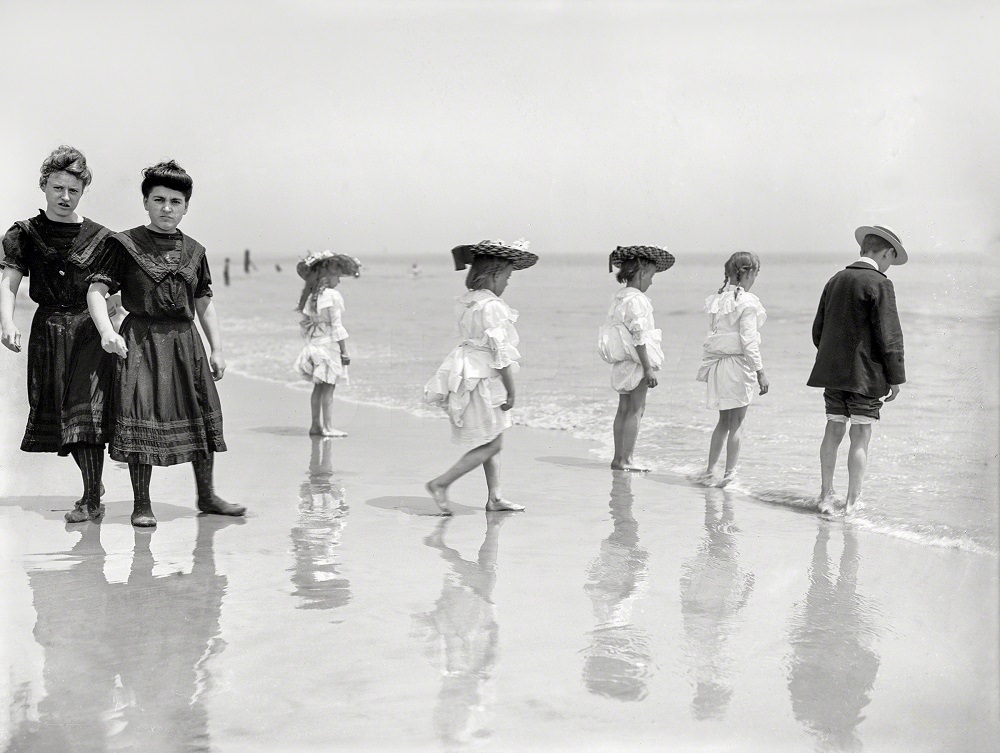
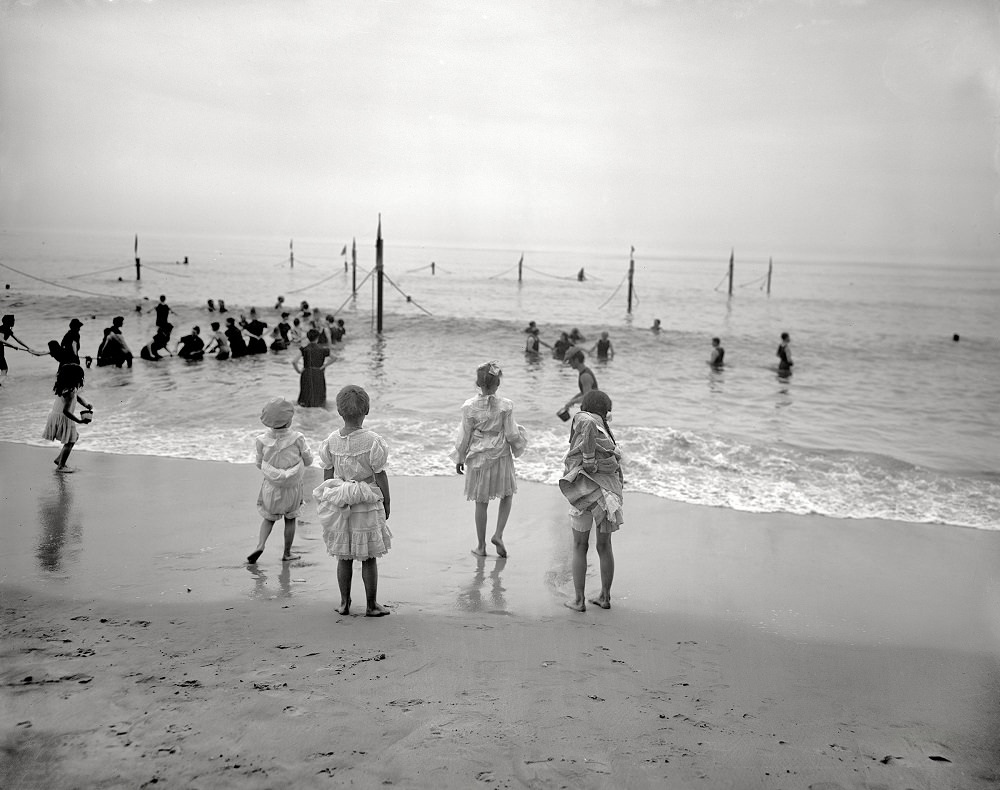
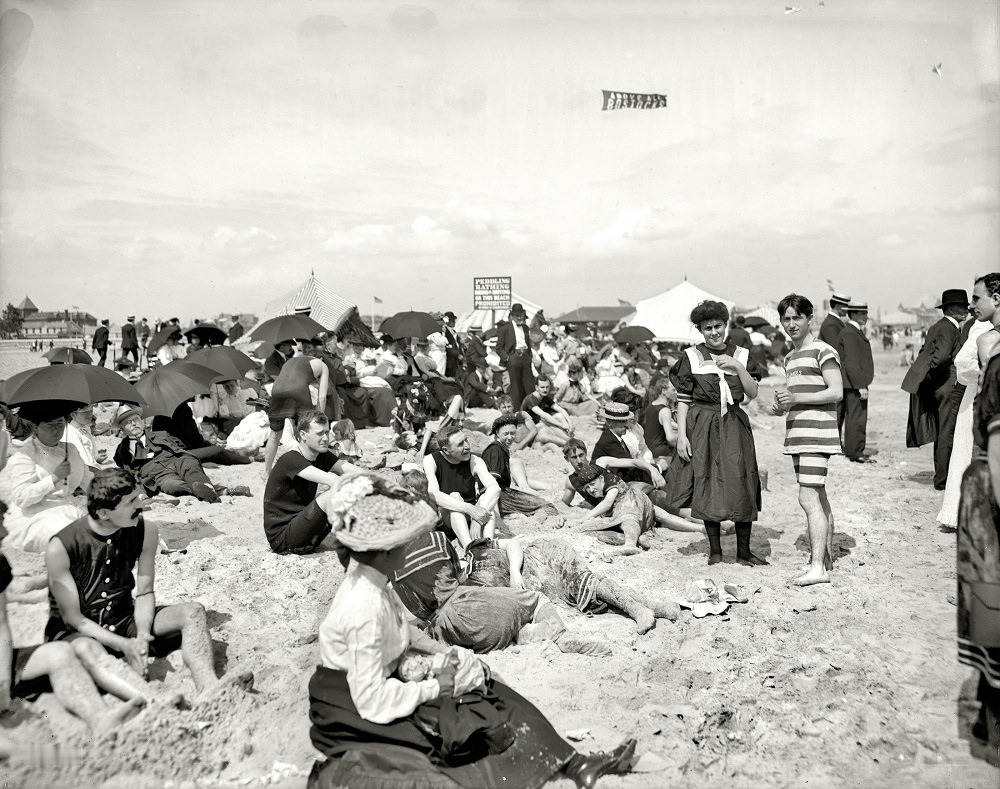
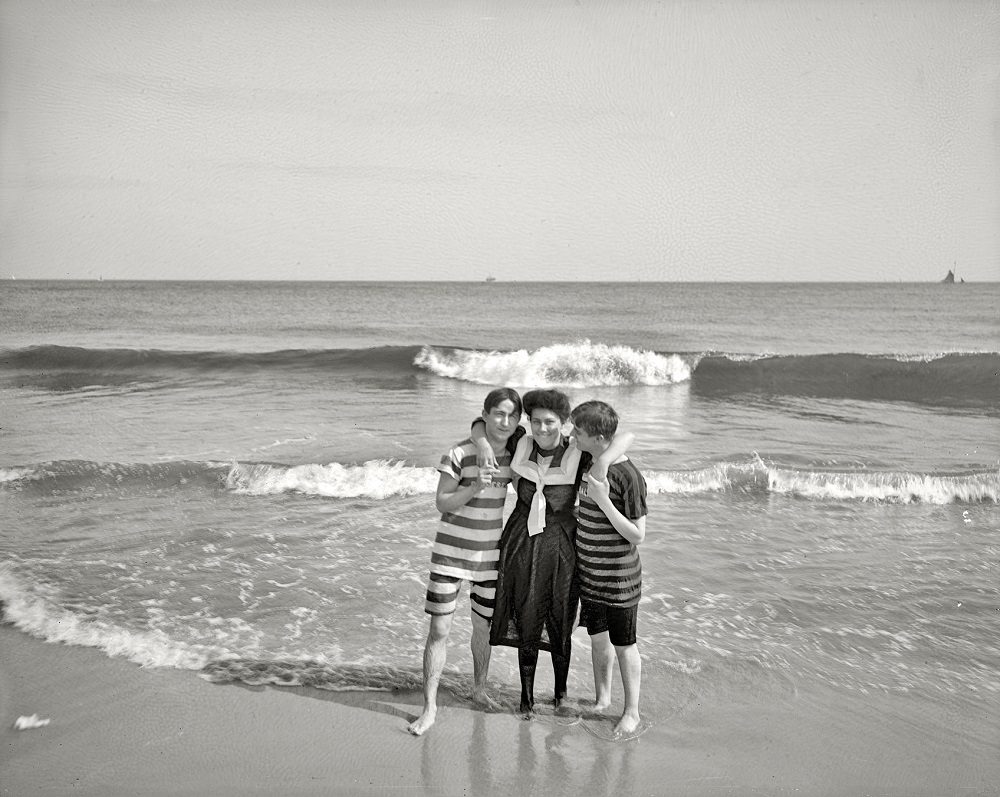
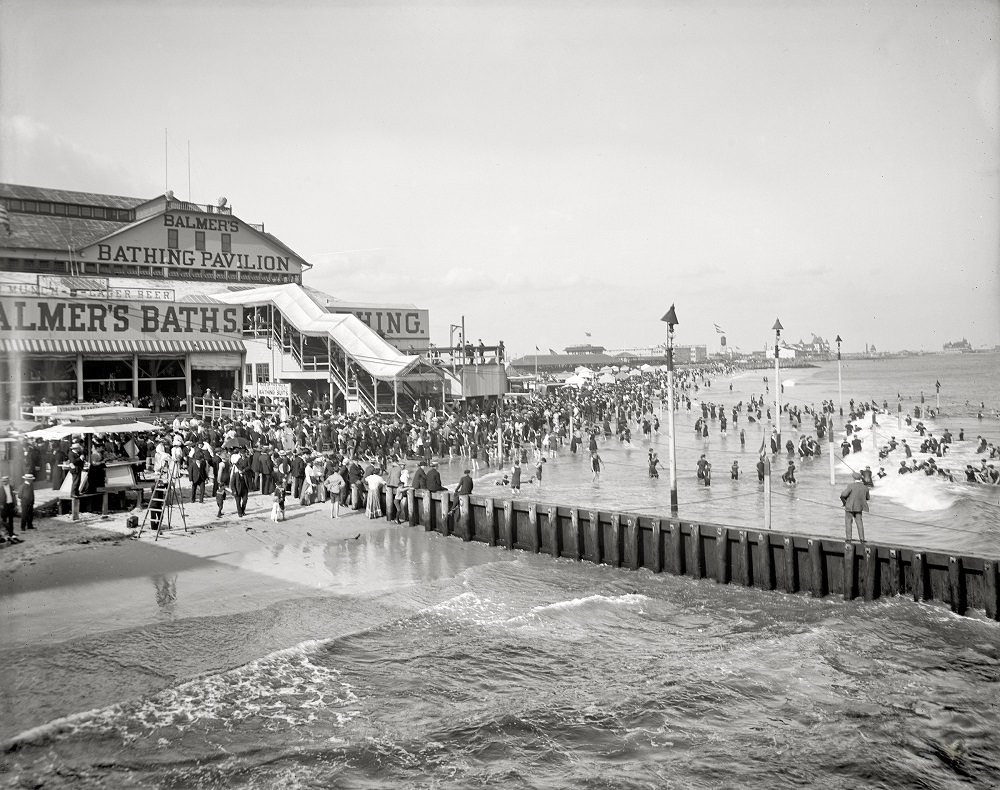
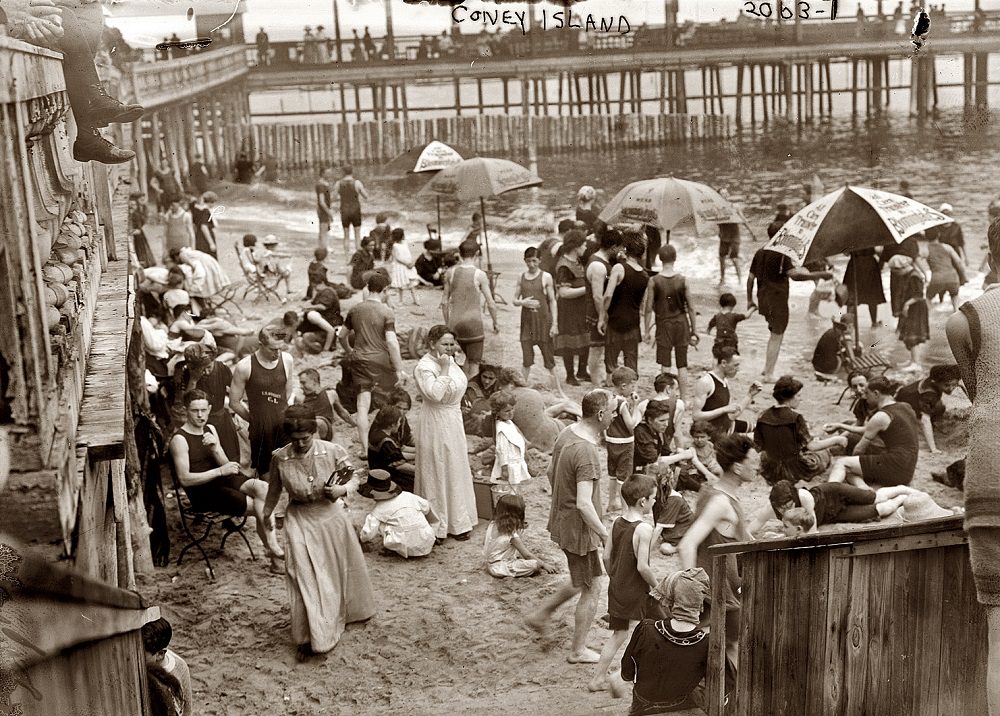
The beaches were a central draw. On hot summer days, the shore was packed shoulder to shoulder with bathers and picnickers. Families spread out on the sand while swimmers waded into the Atlantic. The beach scene at Coney Island around 1905 reflected a city that was young, crowded, and hungry for leisure.
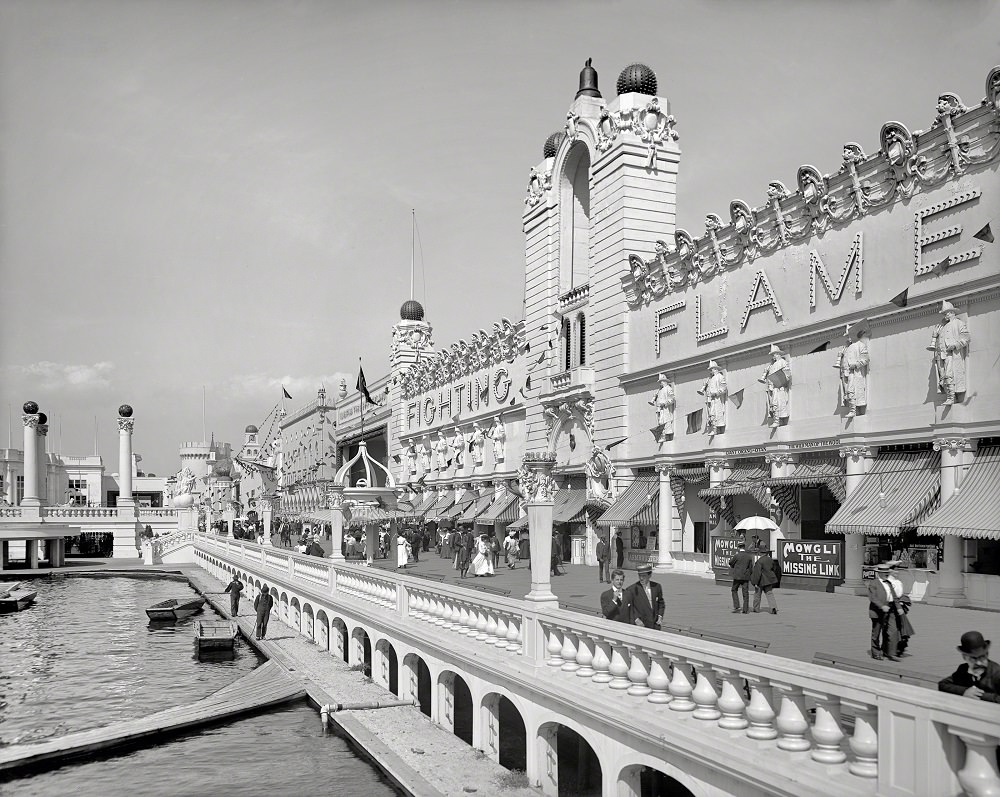
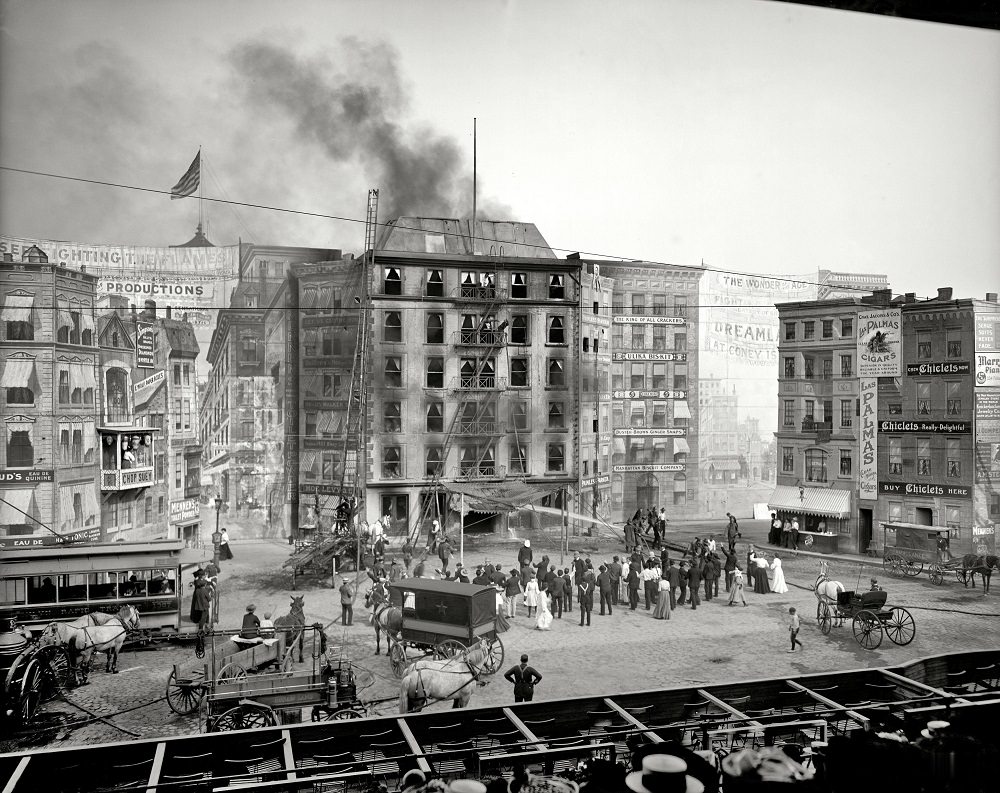
One of the most striking attractions at Dreamland Park was “Fighting the Flames,” a live staged performance in which actors reenacted a building fire — complete with firefighters, victims, and a burning structure. Audiences watched from grandstands as the dramatic scene played out in front of them. It was the kind of spectacle that blurred the line between entertainment and reality.
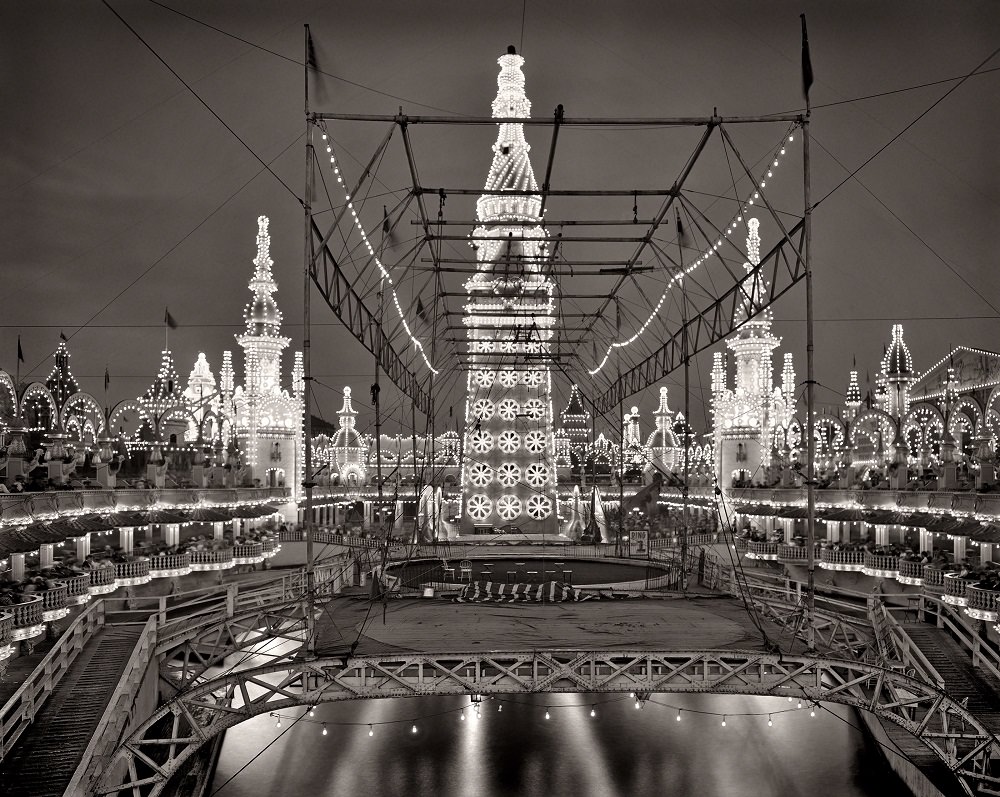
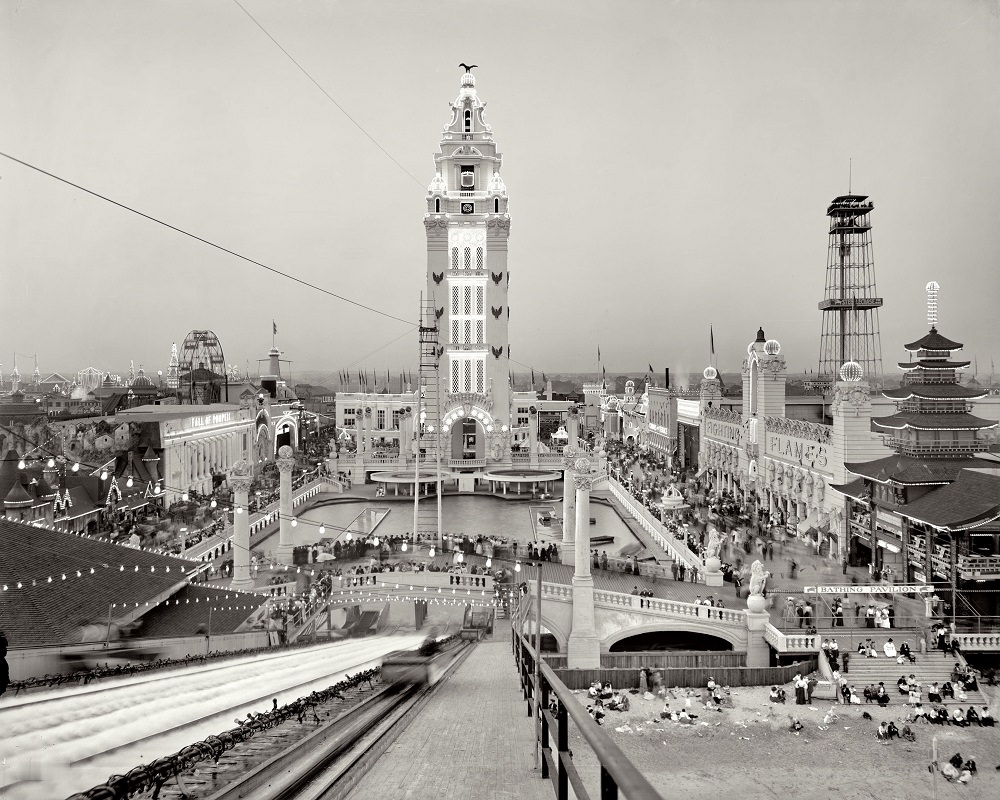
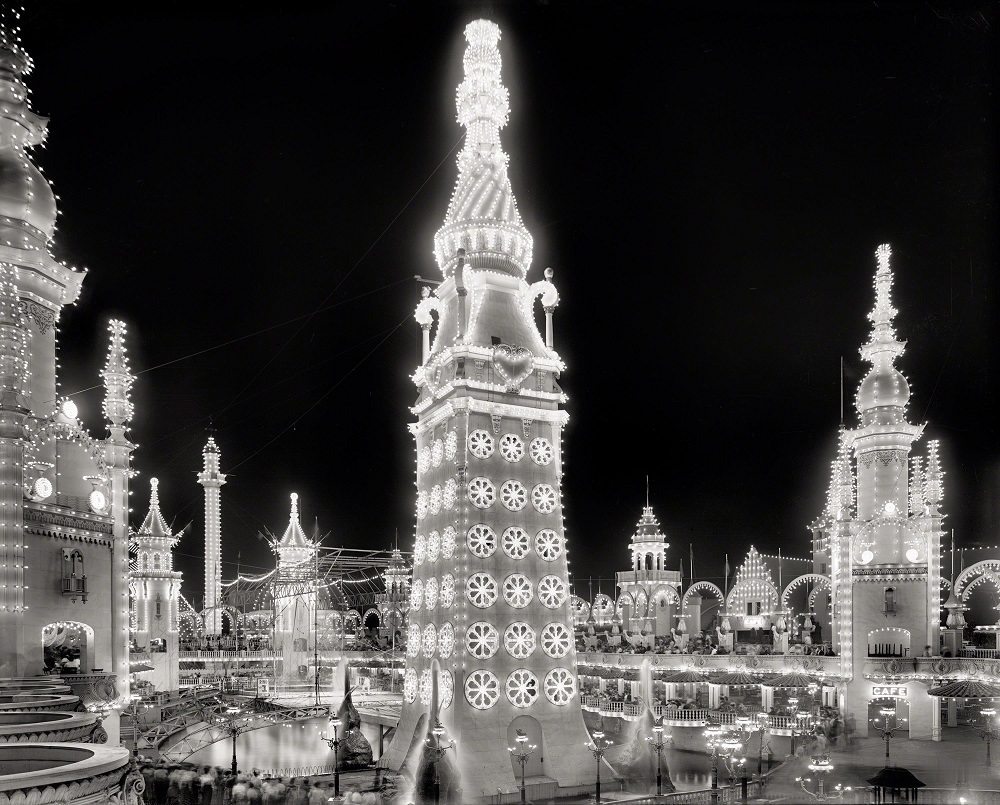
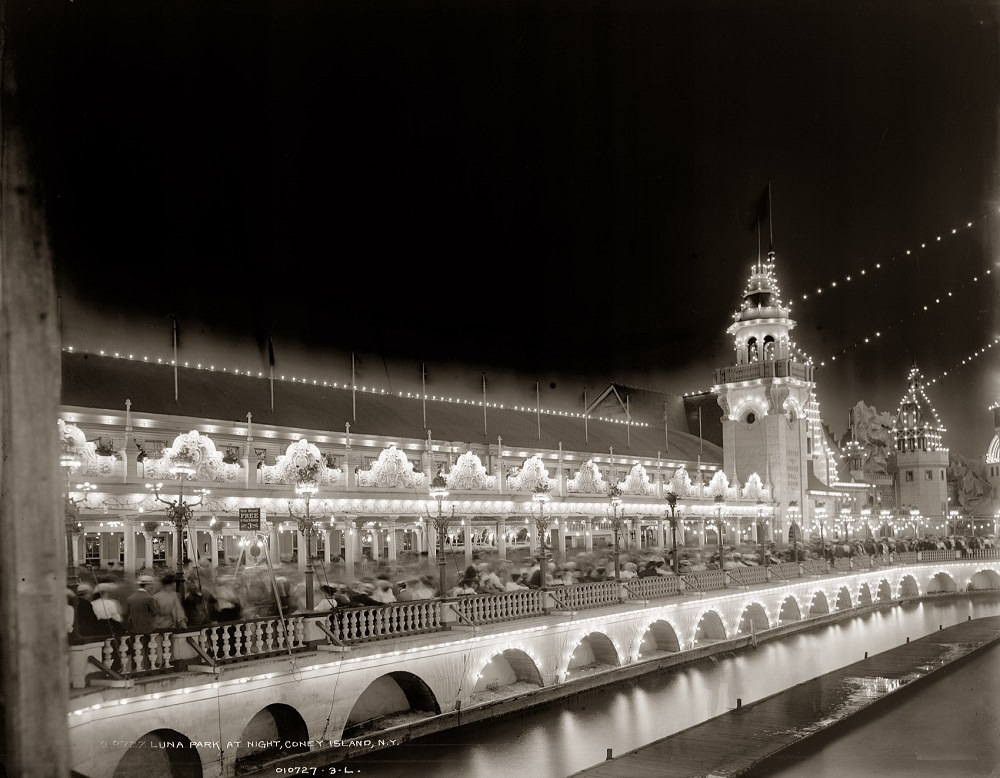
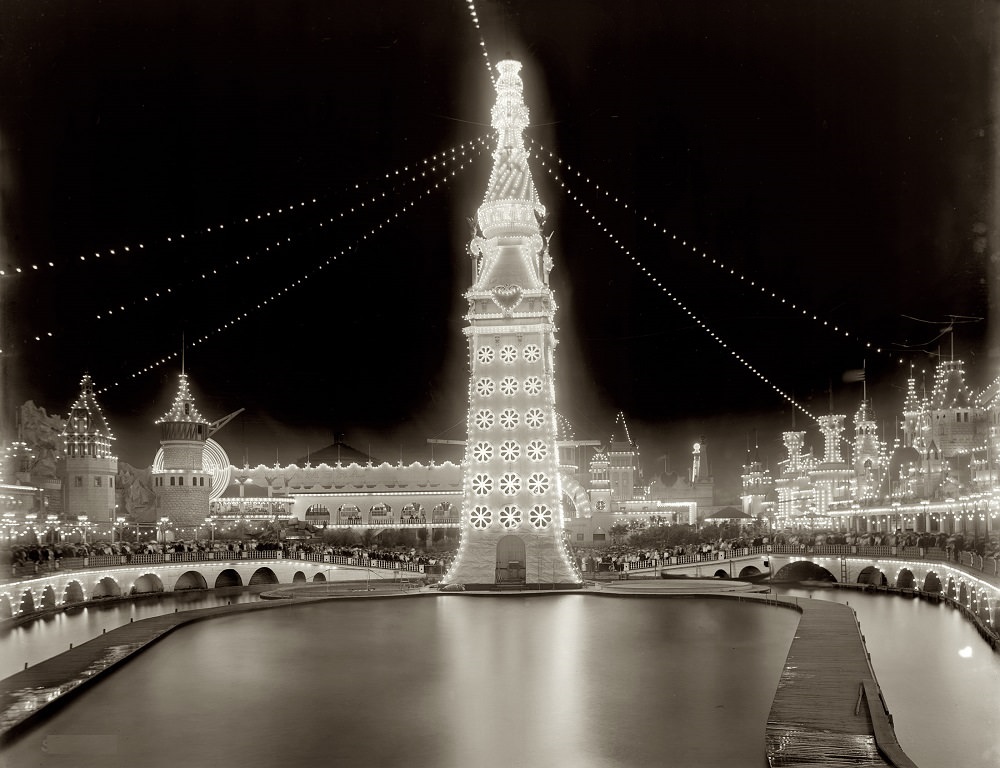
Luna Park, which opened in 1903, was one of Coney Island’s crown jewels. At night, it was transformed by over a million electric lights — a genuine novelty at a time when most Americans still lived without electricity in their homes. The towers, arches, and domes of Luna Park glowed against the night sky, making it visible from miles away.
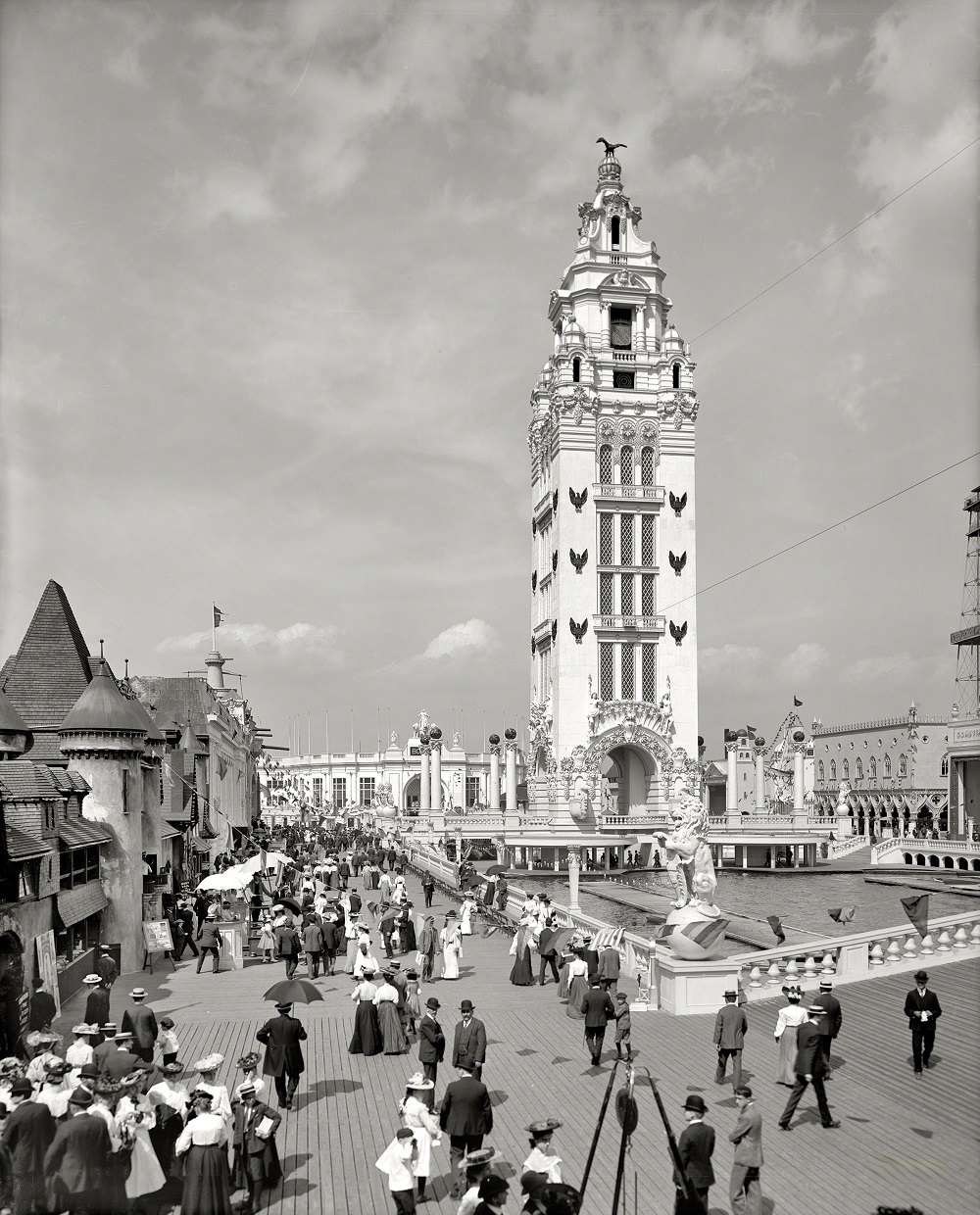
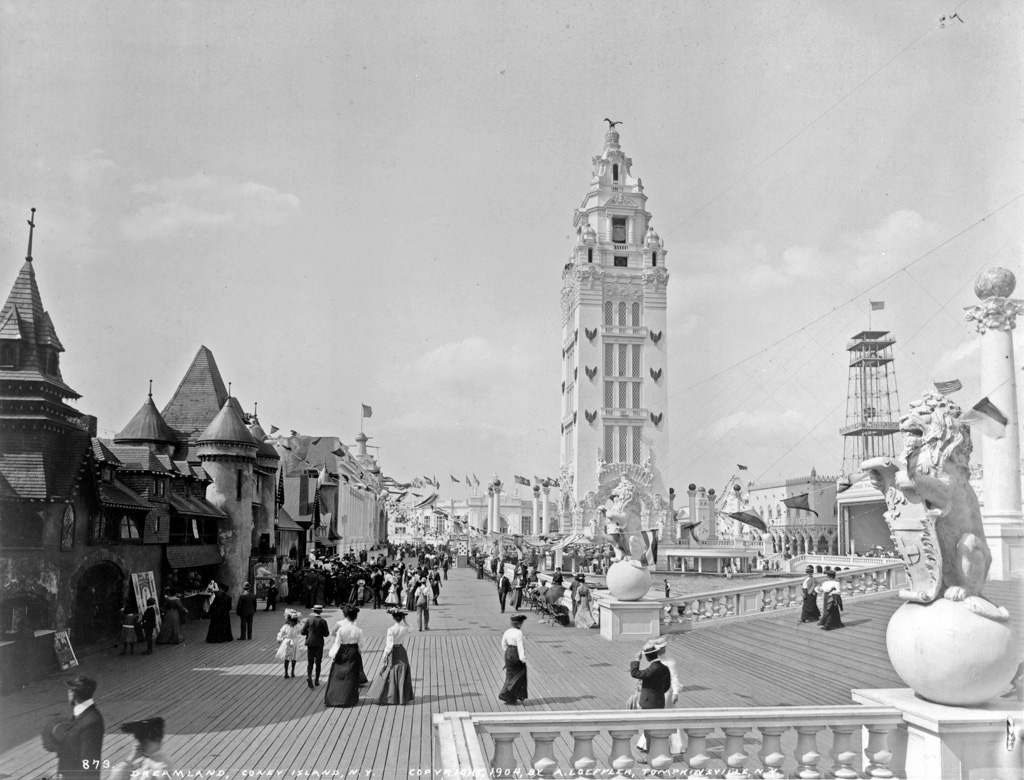
Dreamland, which opened in 1904, was Luna Park’s chief rival. It was built to be grander and more refined, targeting a slightly more upscale audience. Its architecture featured white towers and elaborate facades that gave it an almost otherworldly appearance. Inside, visitors found a wide range of attractions, from exotic animal shows to theatrical performances.
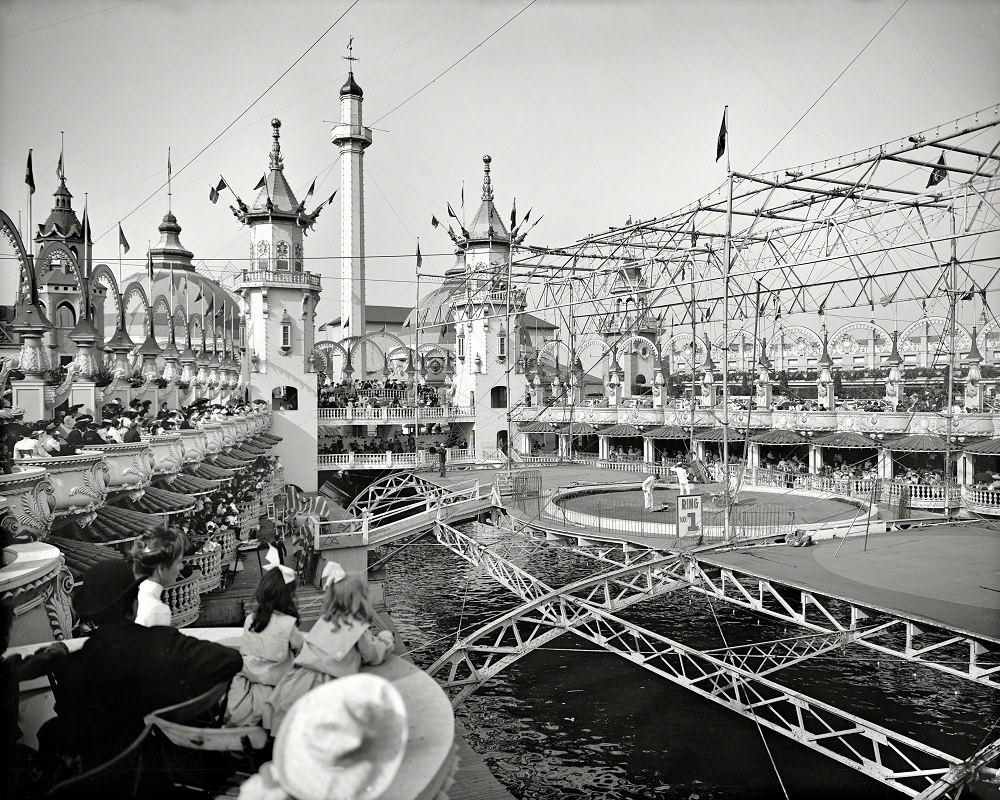
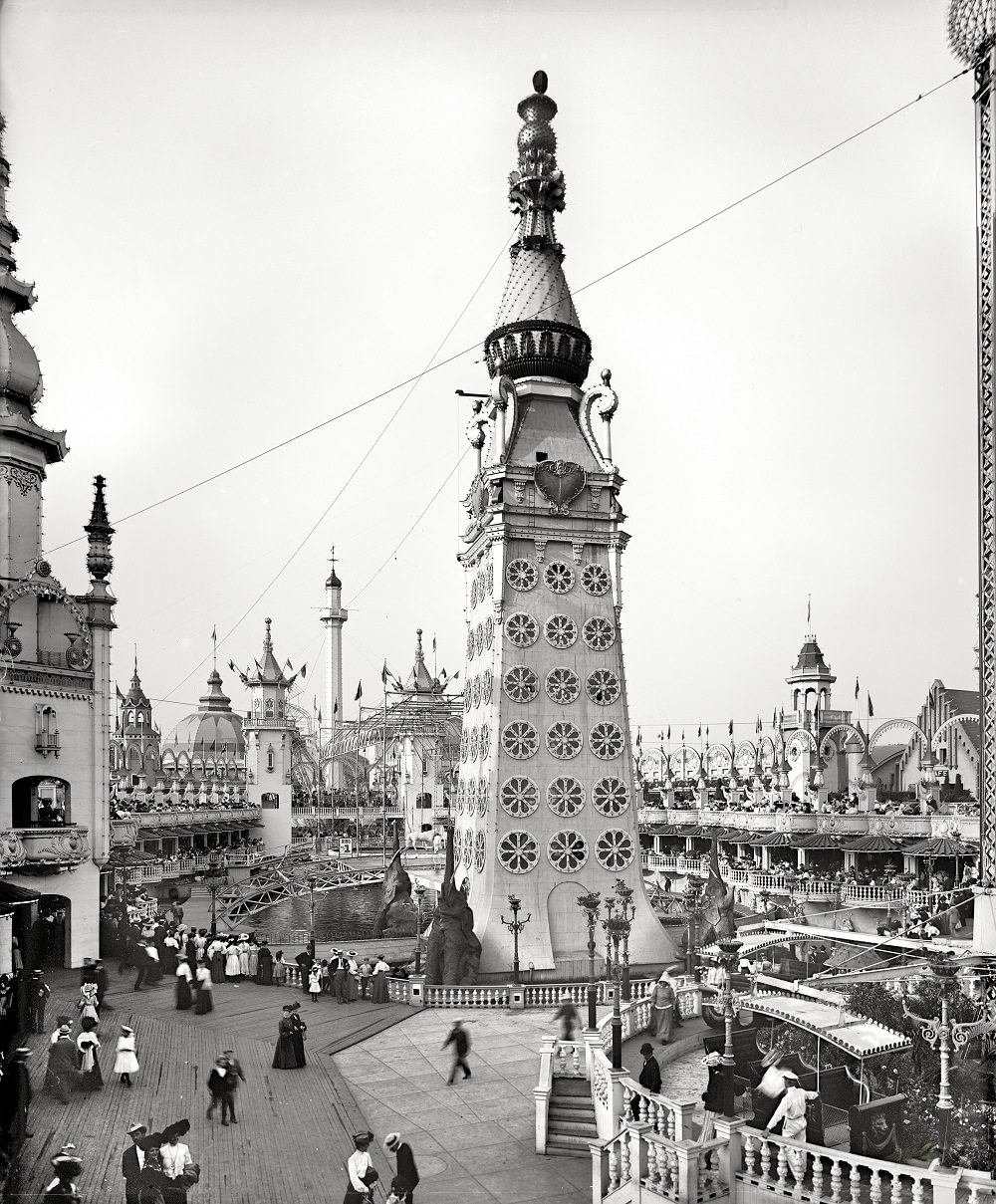
Luna Park during the daytime was just as lively as at night. The park was dense with activity — rides, vendors, performers, and crowds moving in every direction. The aesthetic of Luna Park drew on exotic architectural styles, mixing minarets, domes, and ornamental towers into something entirely its own.
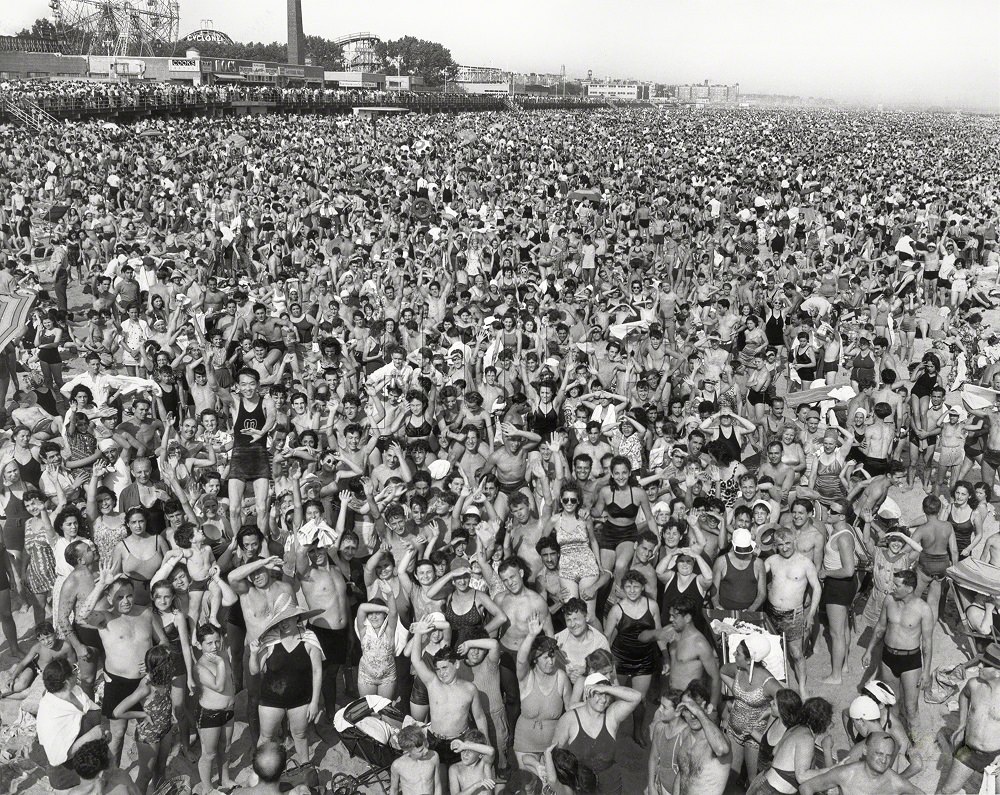
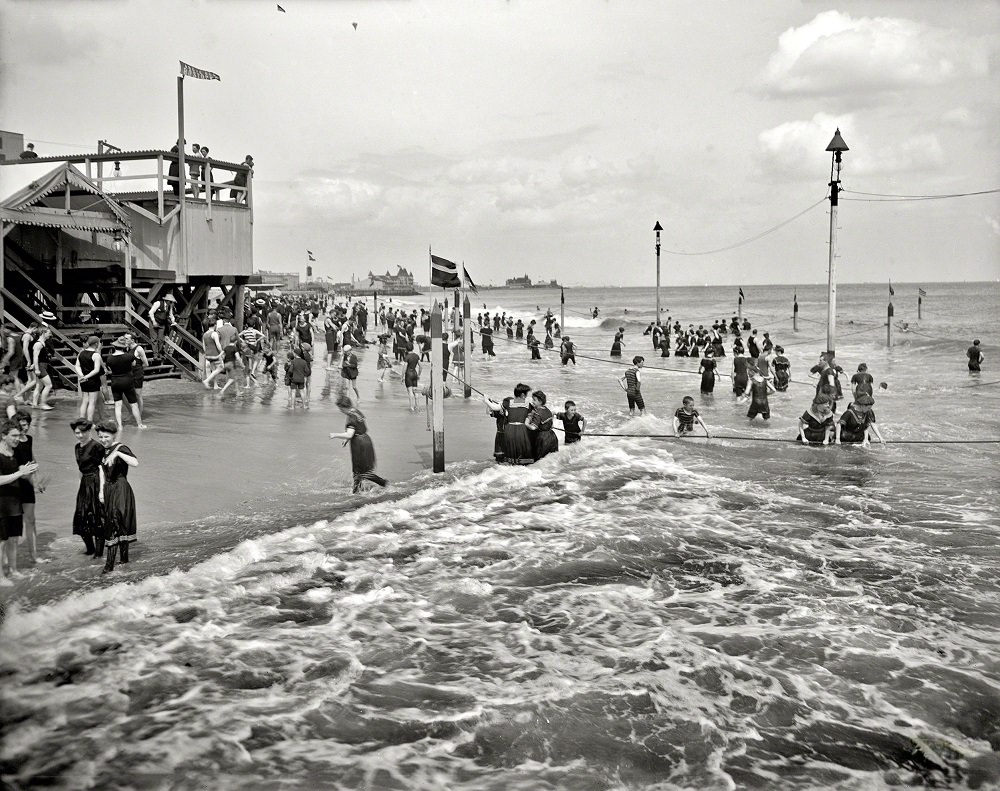
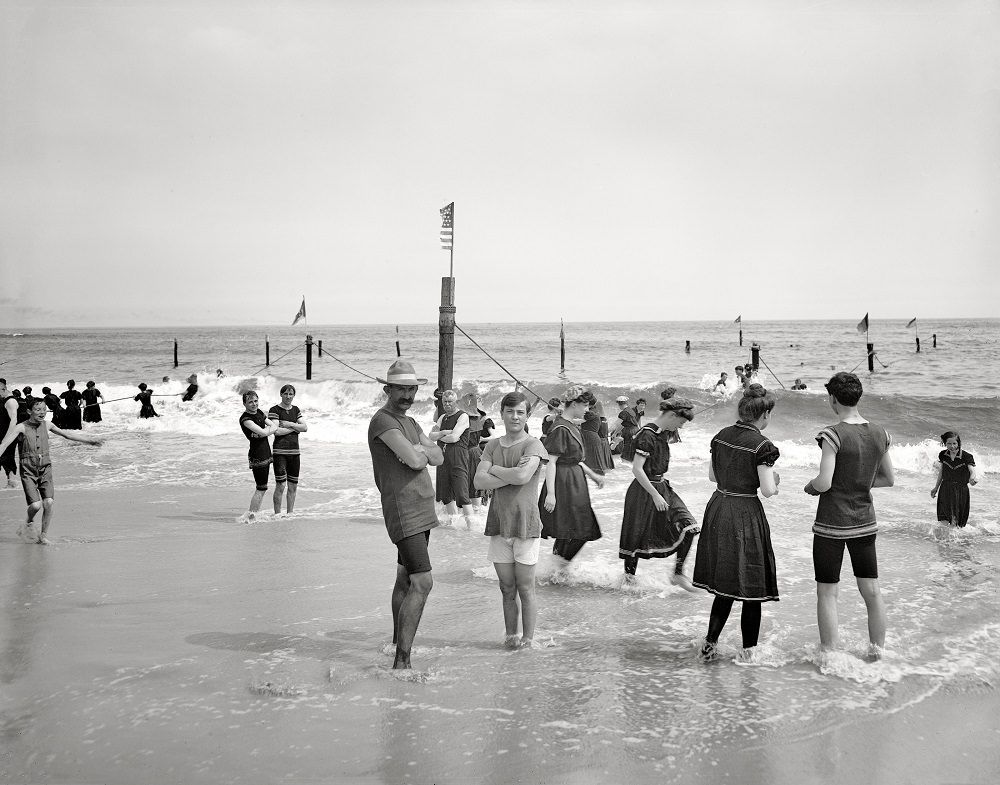
The beach itself remained one of the most democratic spaces in New York. Rich and poor mingled on the same stretch of sand. Bathing suits of the era were full-body affairs by modern standards, but the beach was still a place where social formalities loosened considerably.
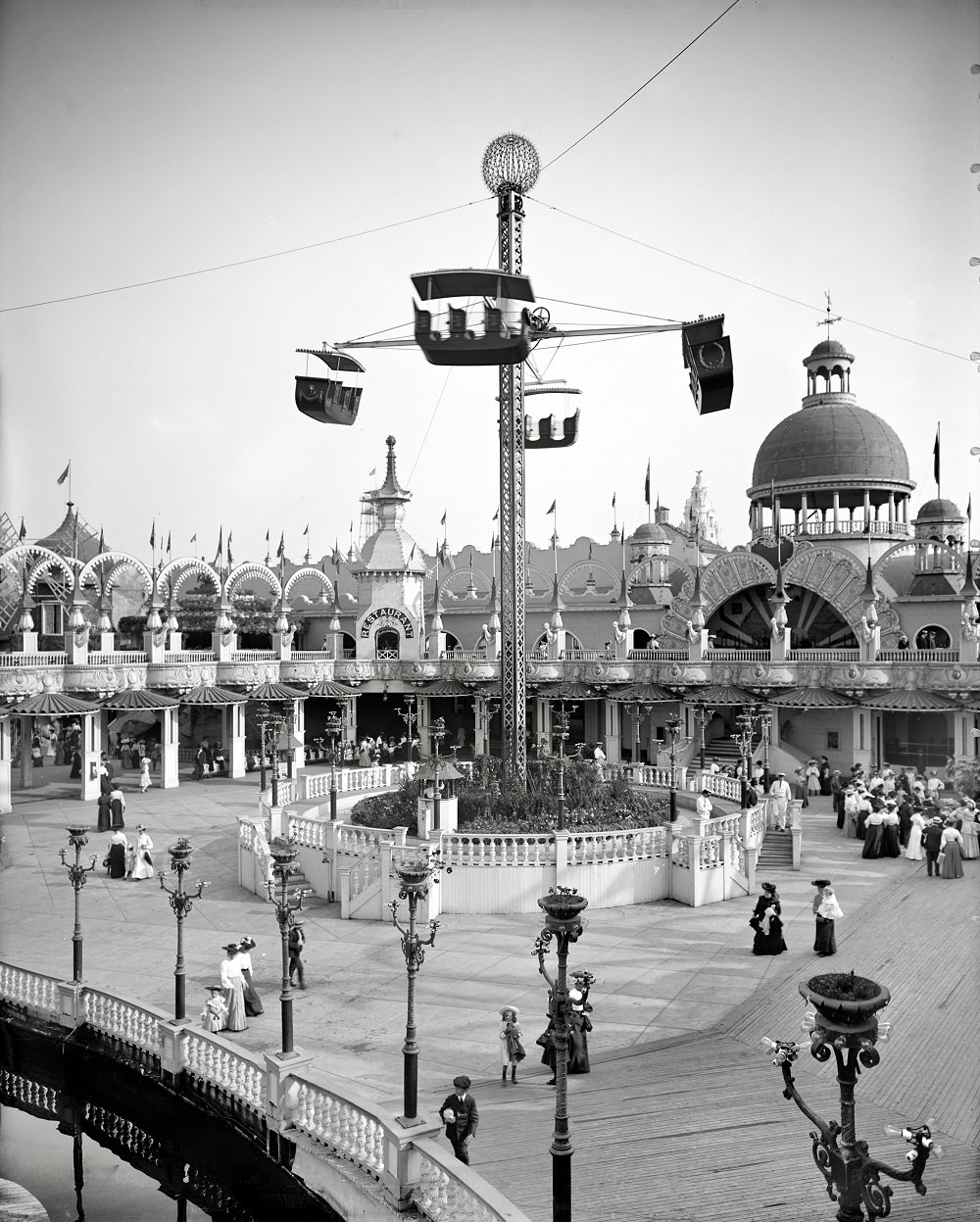
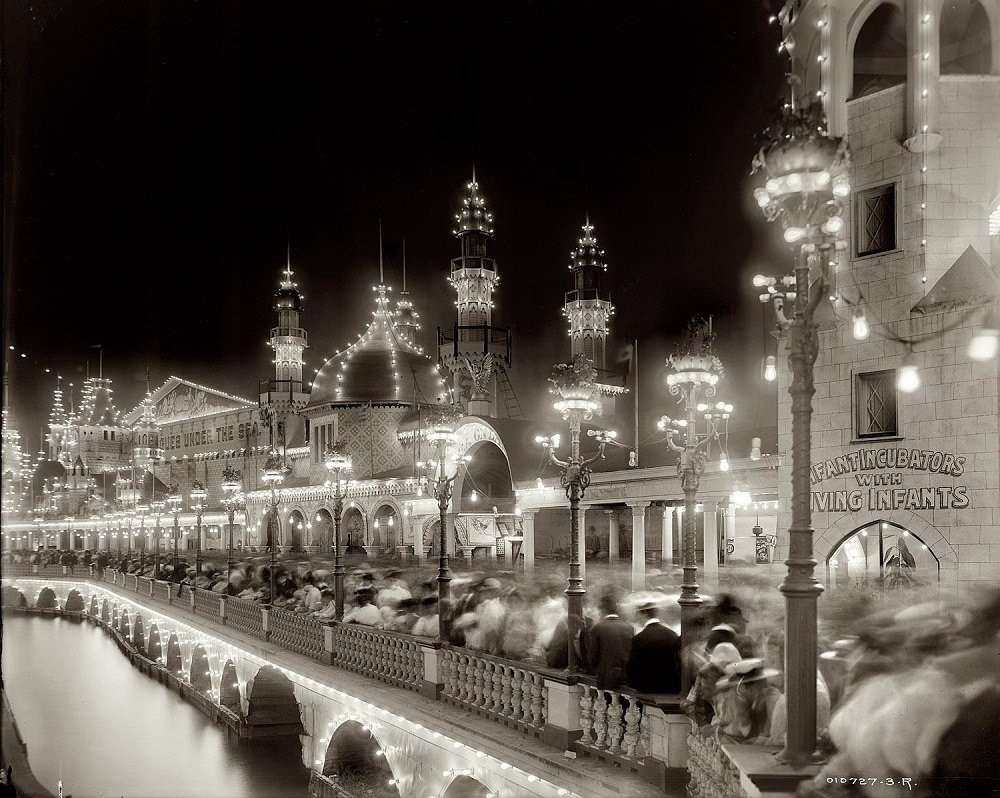
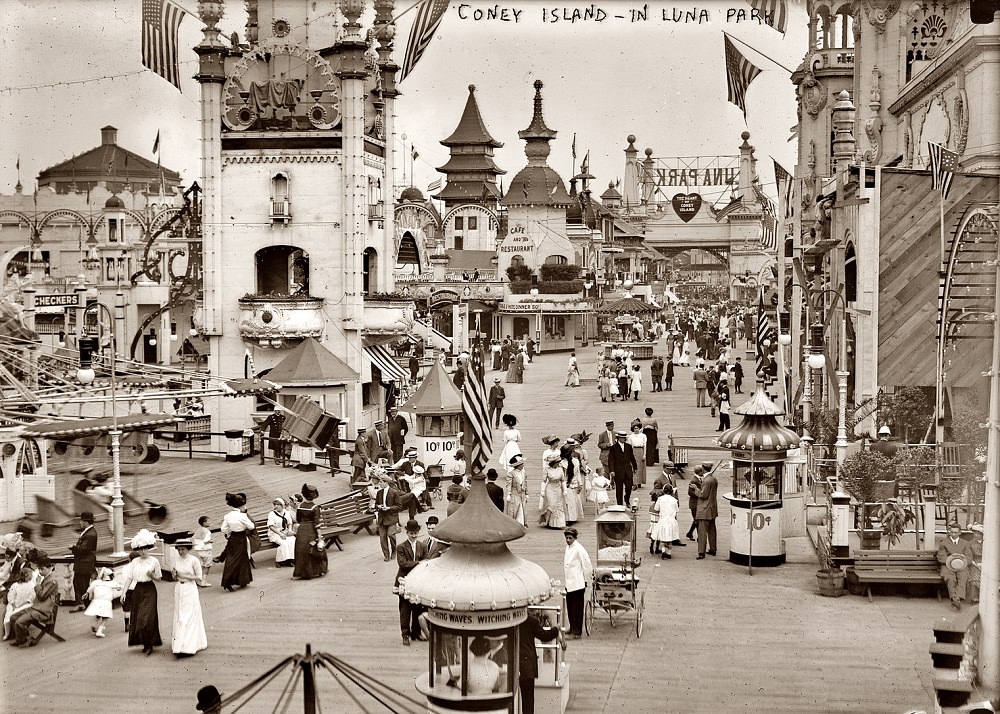
Luna Park’s promenade was one of its signature features — a wide walkway lined with elaborate decorations and surrounded by the park’s iconic towers. Strolling the promenade was itself a form of entertainment, a chance to see and be seen amid one of the most visually dramatic public spaces in the country.
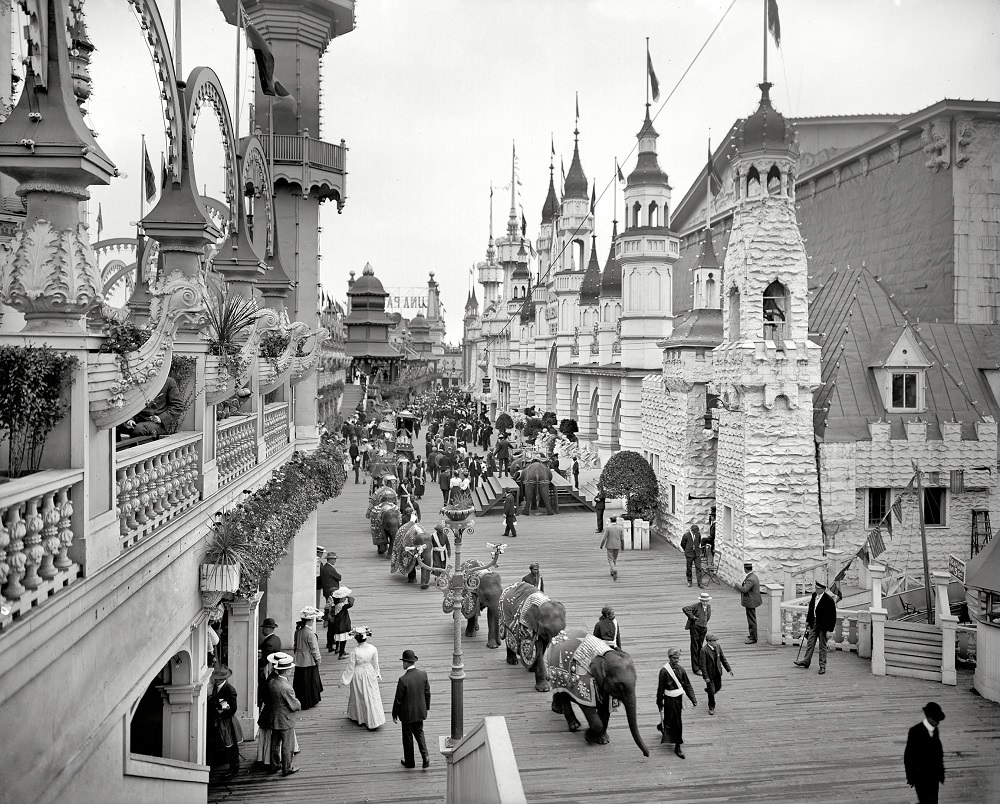
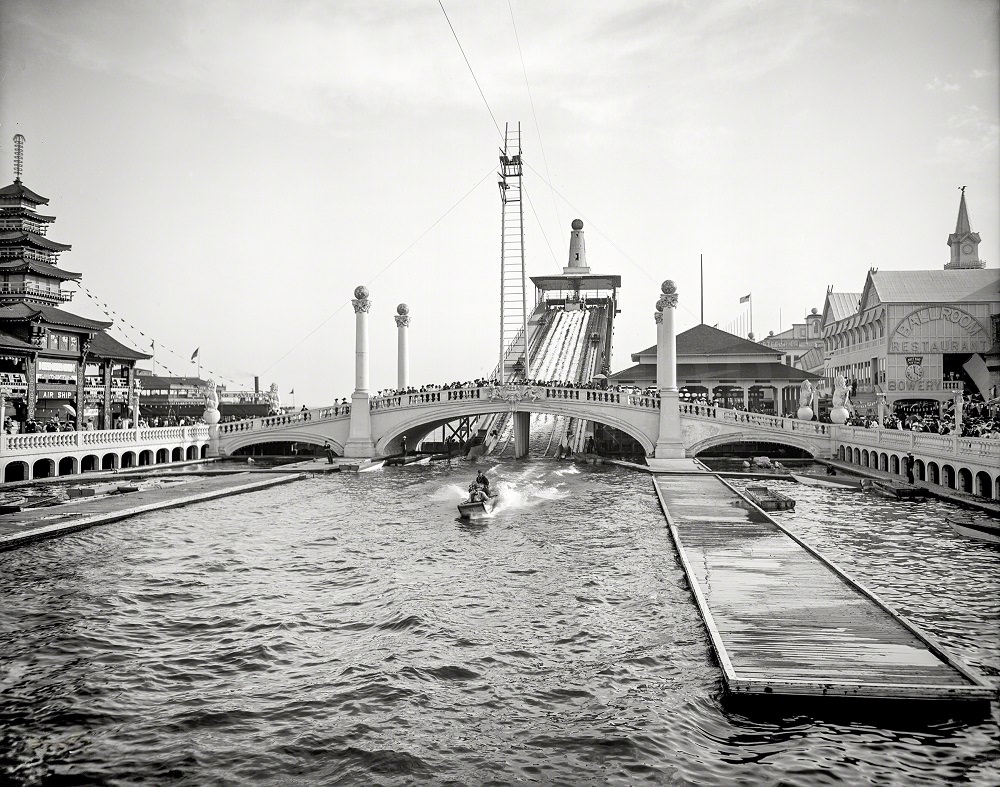
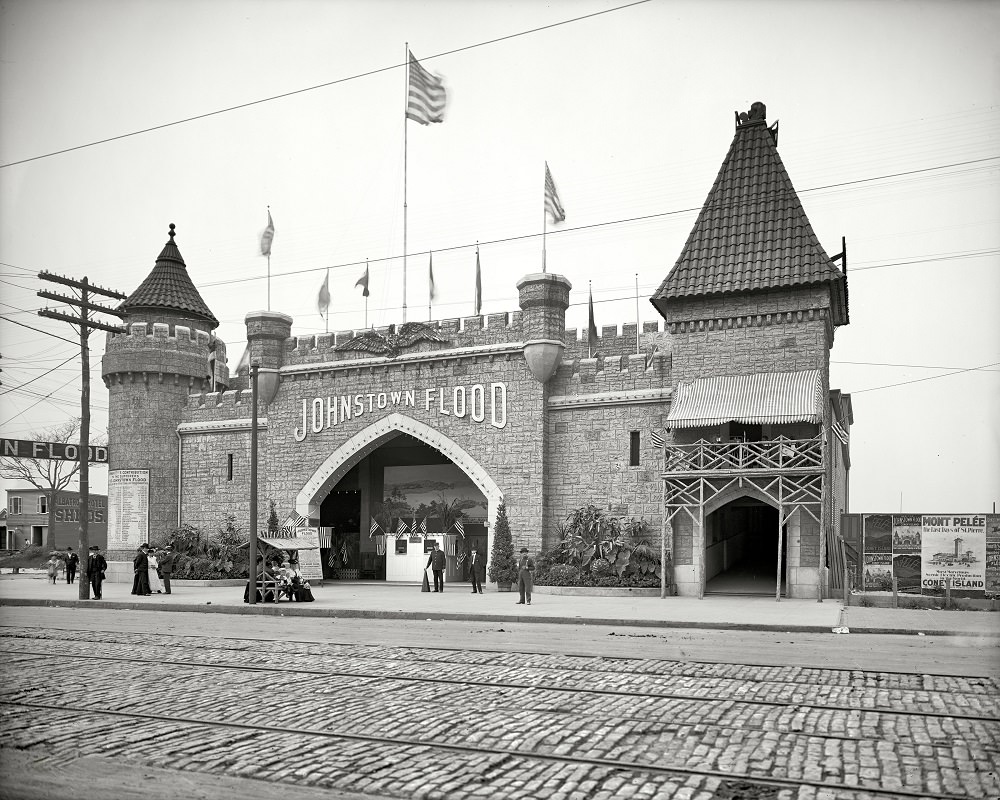
Coney Island’s attractions weren’t shy about using real-world disasters as entertainment material. The “Johnstown Flood” ride recreated the catastrophic 1889 Pennsylvania flood that killed over 2,200 people. Visitors rode boats through a simulated version of the disaster. Attractions like this were wildly popular and reflected the era’s appetite for dramatic, immersive spectacle.
The beach crowds at Coney Island in the early 1900s were enormous. On peak summer days, the number of visitors could reach into the hundreds of thousands. Photographs from the period show a shoreline so densely packed with people that the sand itself is barely visible.
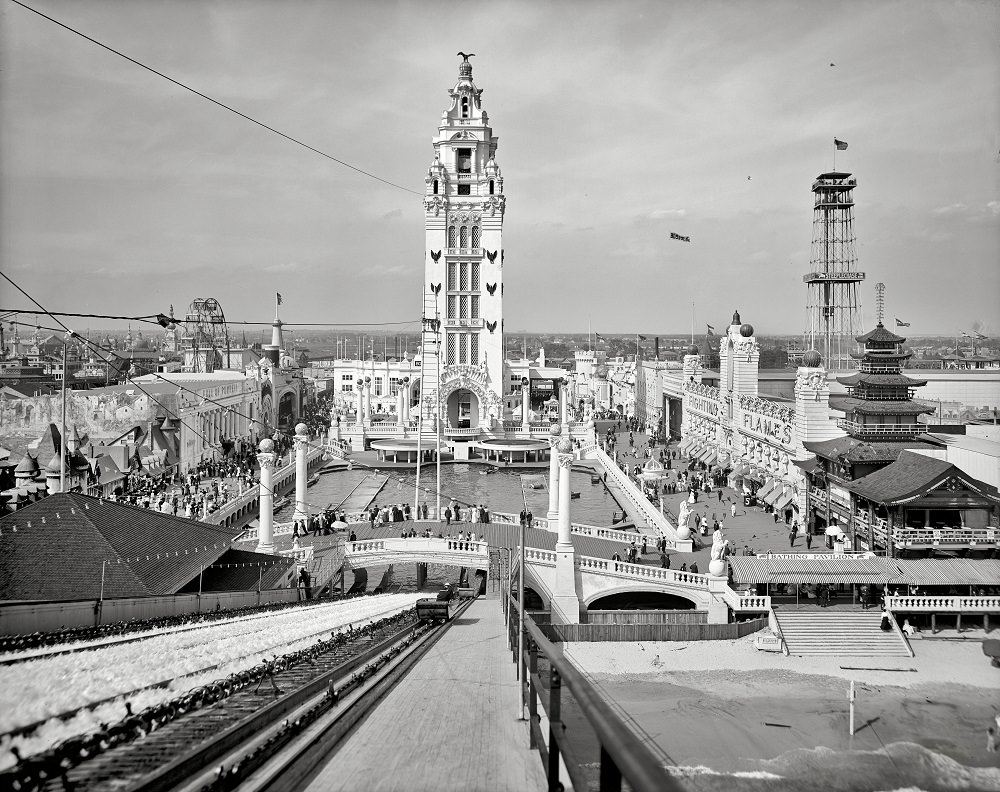
Dreamland Park’s layout was grand and carefully planned. Wide pathways and imposing structures gave it a more formal feel than its neighbors. The park invested heavily in its visual identity, using light and architecture to create an experience that felt unlike anything else available at the time.
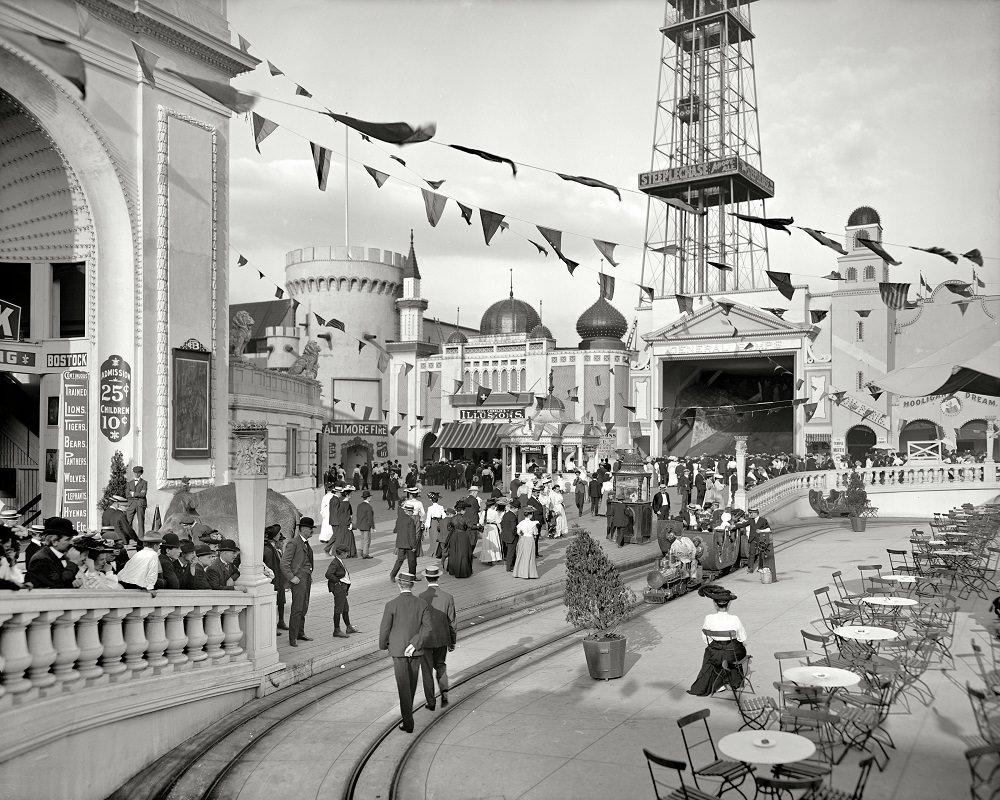
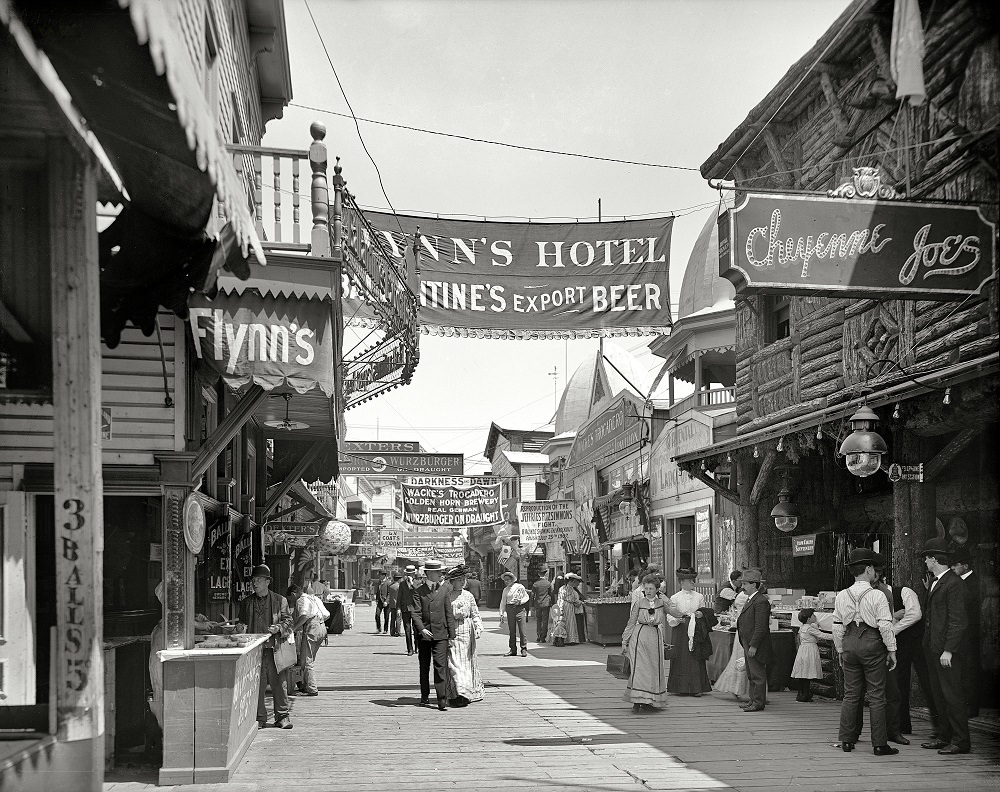
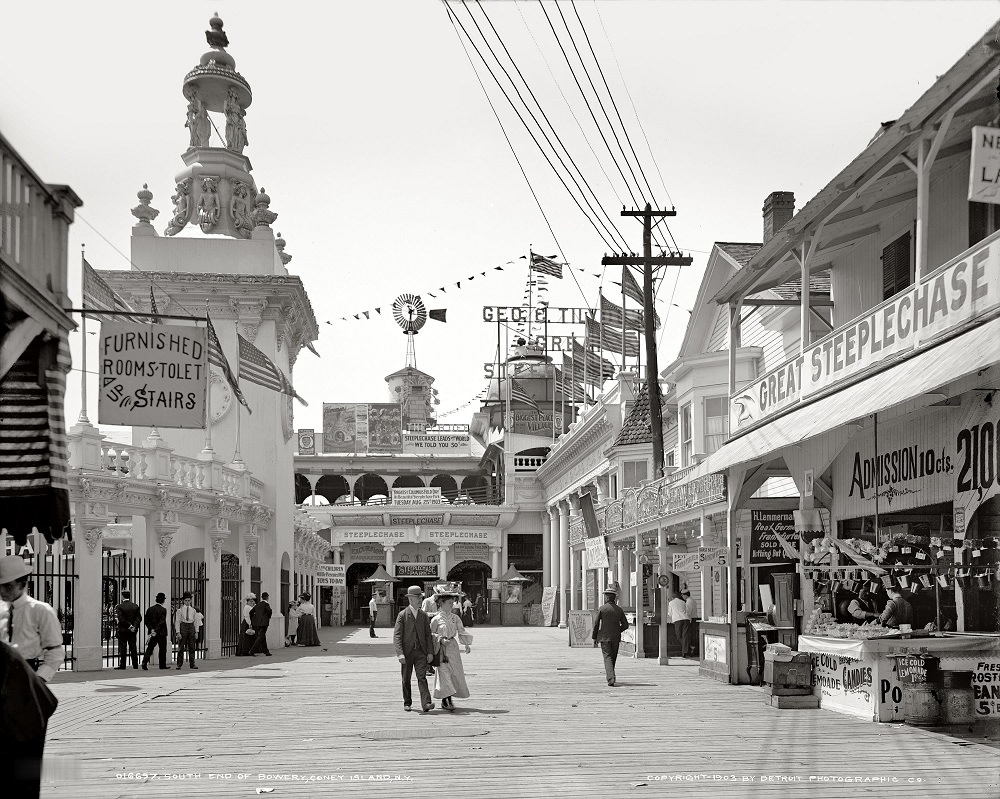
The Bowery was the main commercial strip running through Coney Island. It was lined with food stands, game booths, dance halls, and other vendors competing loudly for the attention of passing crowds. By 1903, the Bowery was one of the most commercially dense streets in the entire country during summer months.
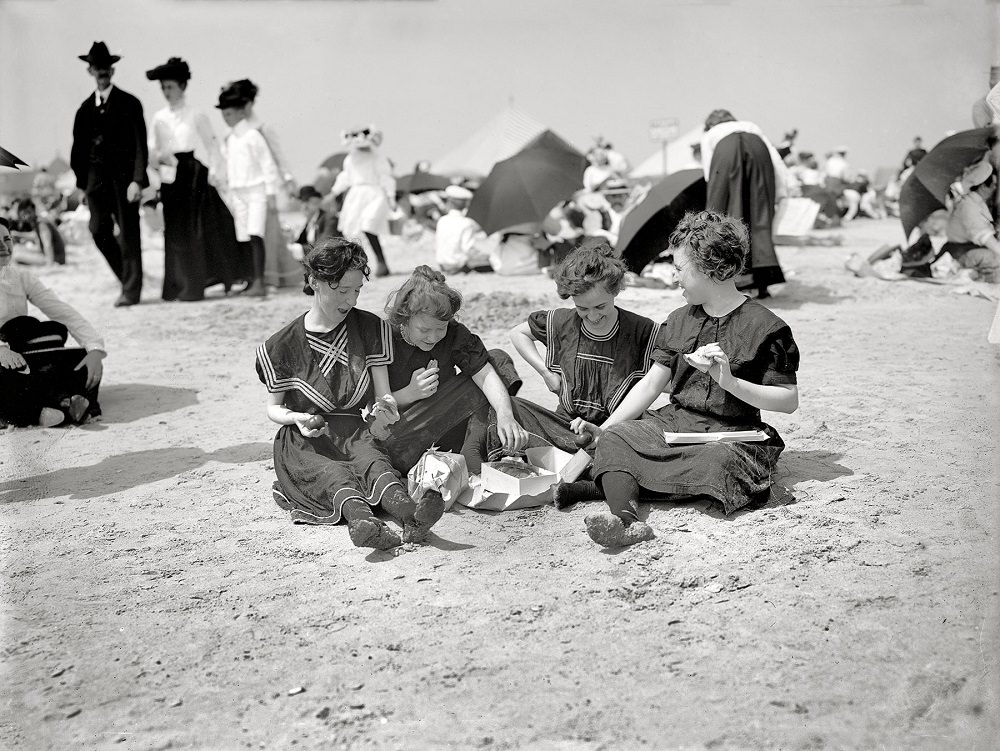
Away from the rides and amusements, families used the beach for straightforward picnicking and rest. Bringing food from home and spreading out on the sand was a common practice for working-class New Yorkers who couldn’t afford to spend much at the food stands. The beach was free, and that mattered.
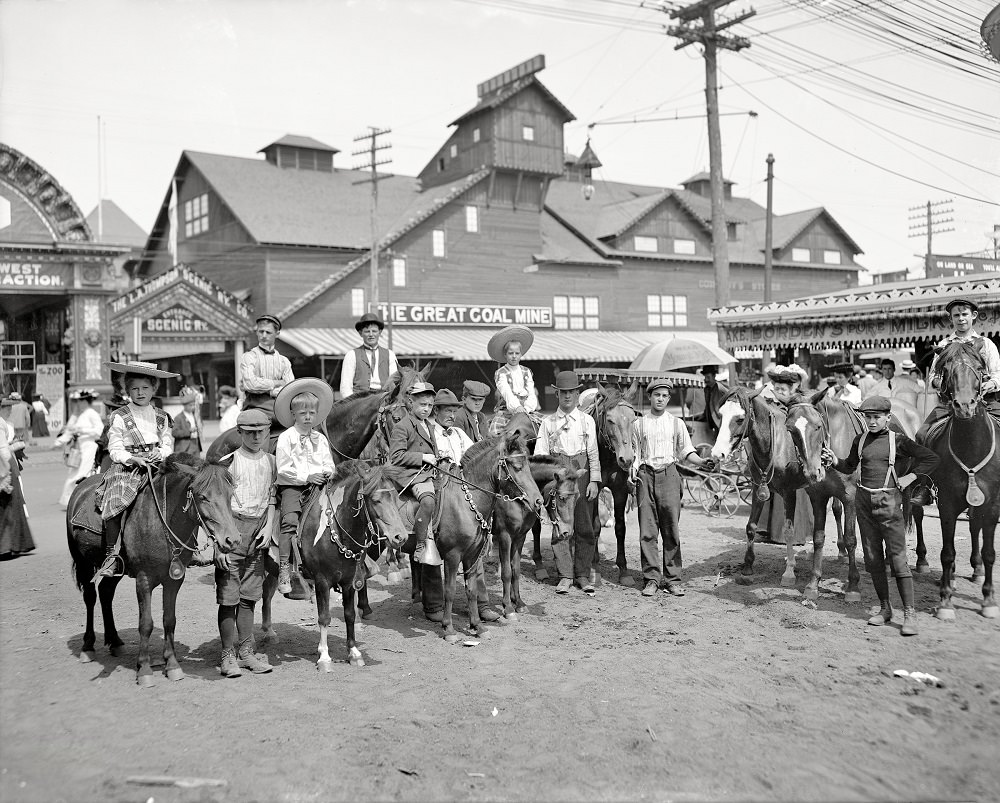
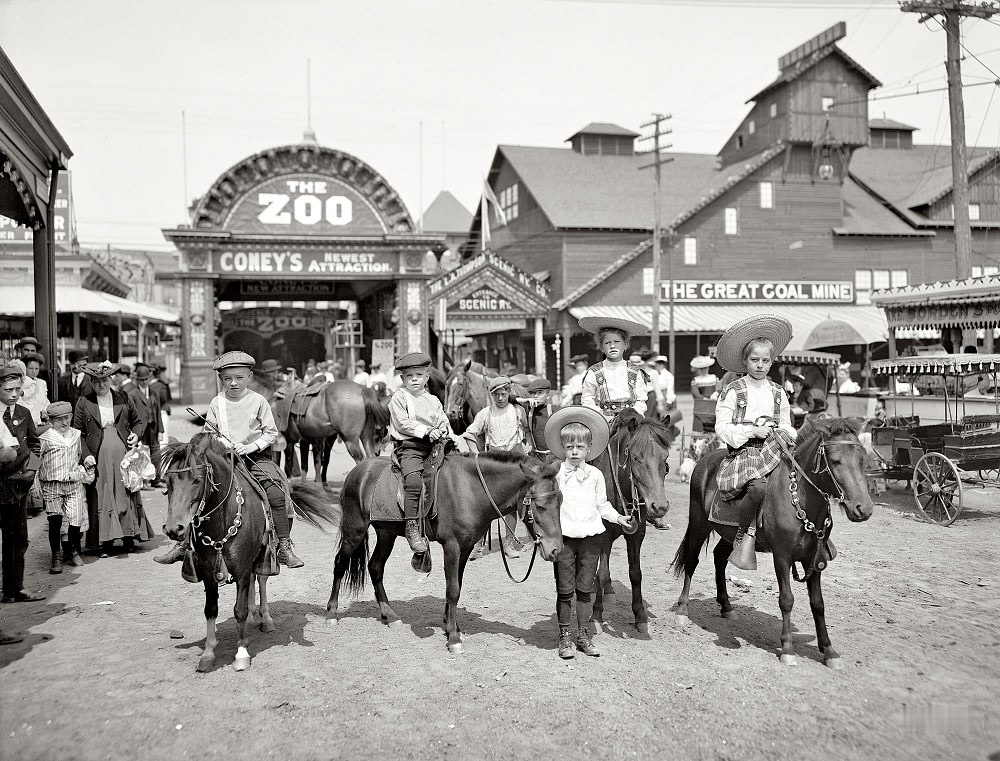
For younger visitors, pony rides were a popular attraction. Small horses were walked in circles along designated paths, giving children a taste of riding in the middle of one of America’s busiest entertainment destinations. It was a simple offering, but one that drew consistent crowds.
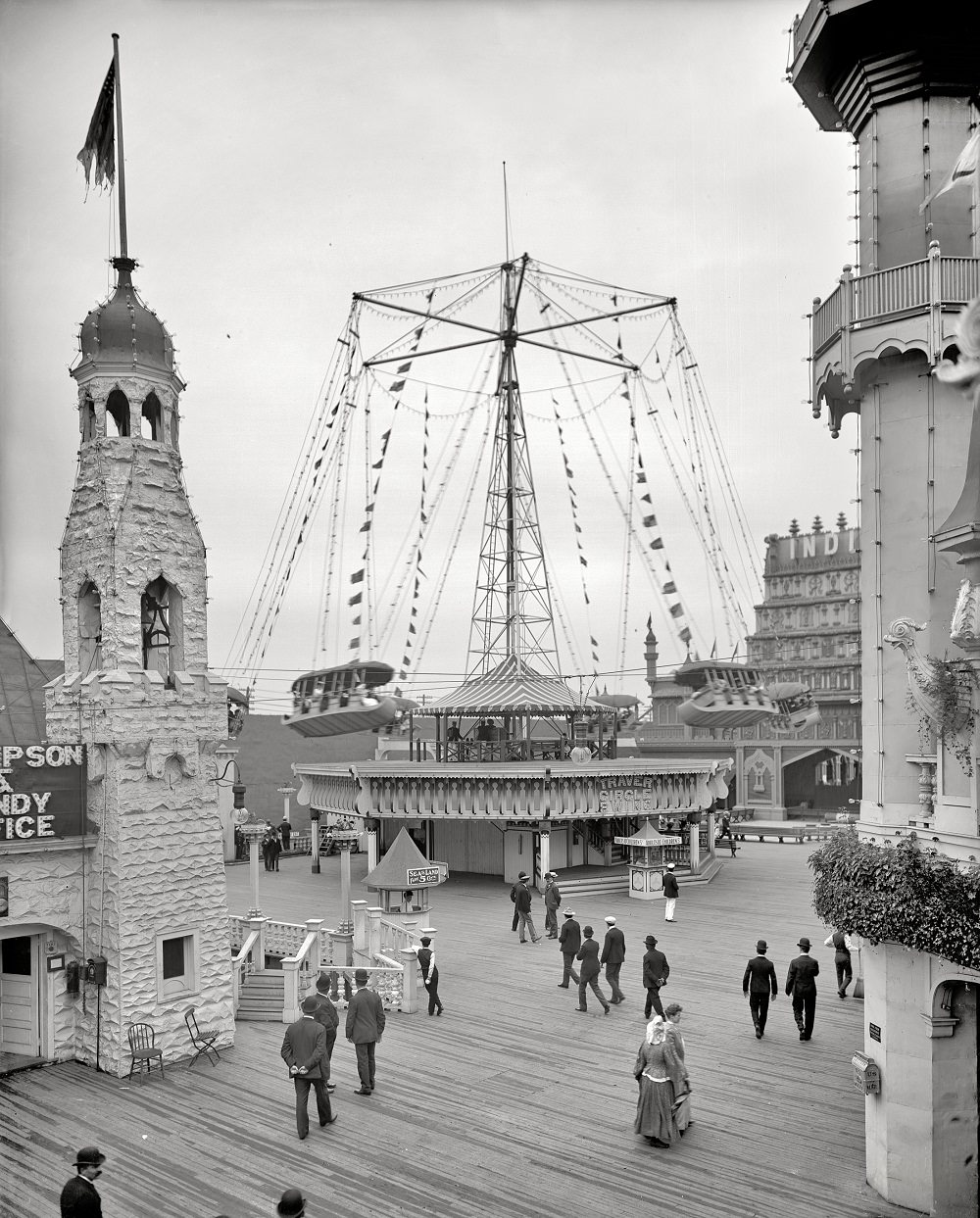
Luna Park offered a variety of mechanical rides beyond its famous roller coasters. The circle swing — a ride that spun riders outward on chains as it rotated — was one of the park’s popular mechanical attractions. Rides like this were cutting-edge technology for the era and drew visitors who had never experienced anything like them before.
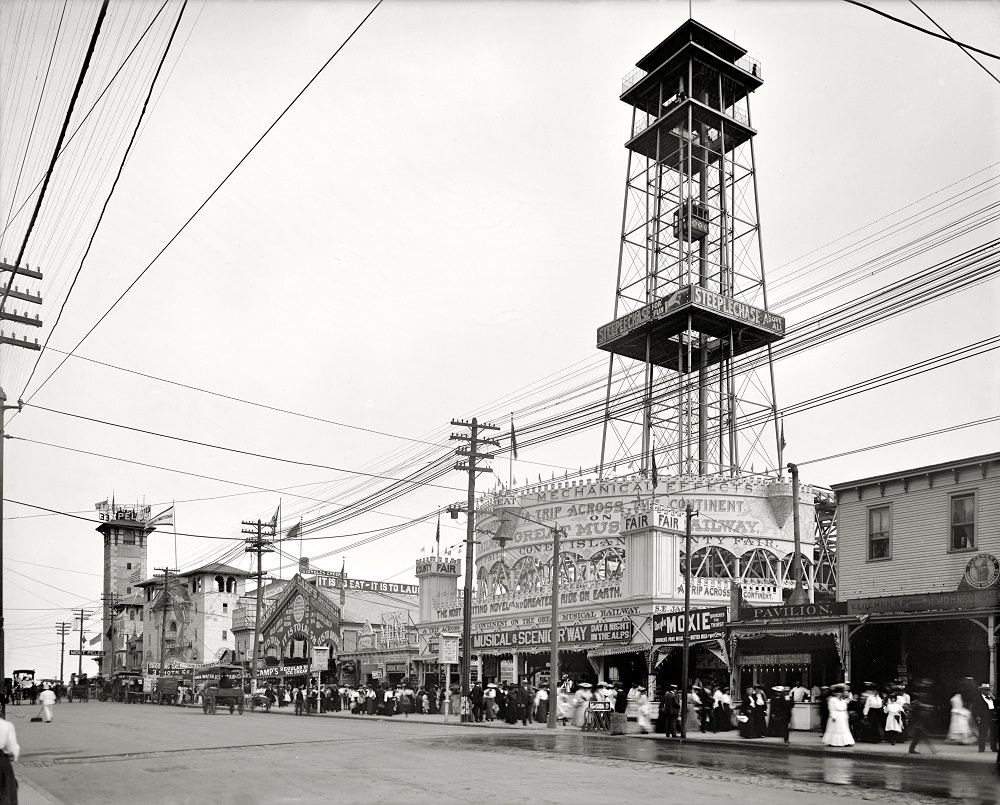
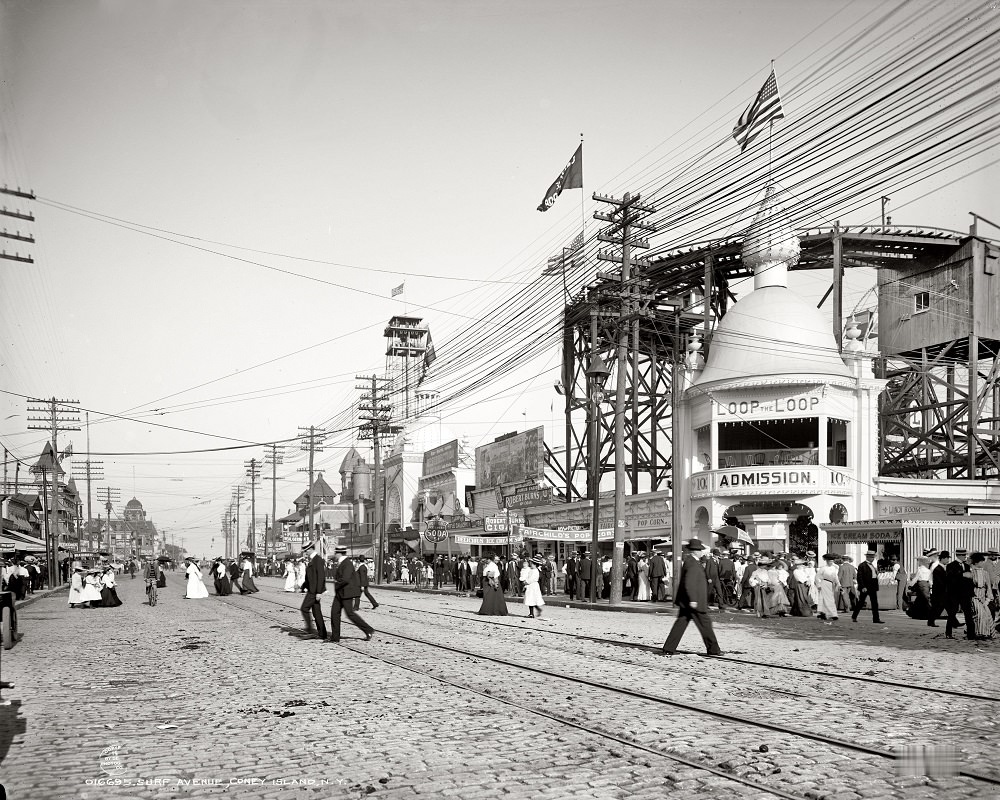
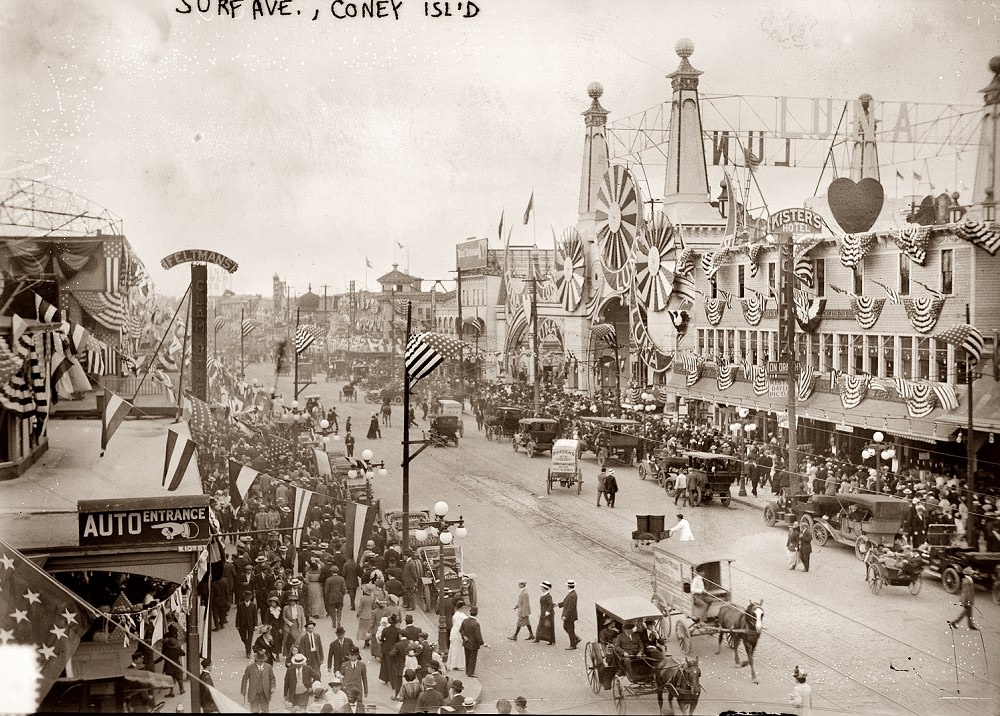
Surf Avenue was the main road running parallel to the beach and connecting Coney Island’s major parks and commercial areas. By 1904, it was lined with hotels, restaurants, and storefronts catering to the millions of visitors who poured in each summer. The street was a commercial artery that helped define Coney Island’s identity as a full entertainment district rather than just a collection of rides.
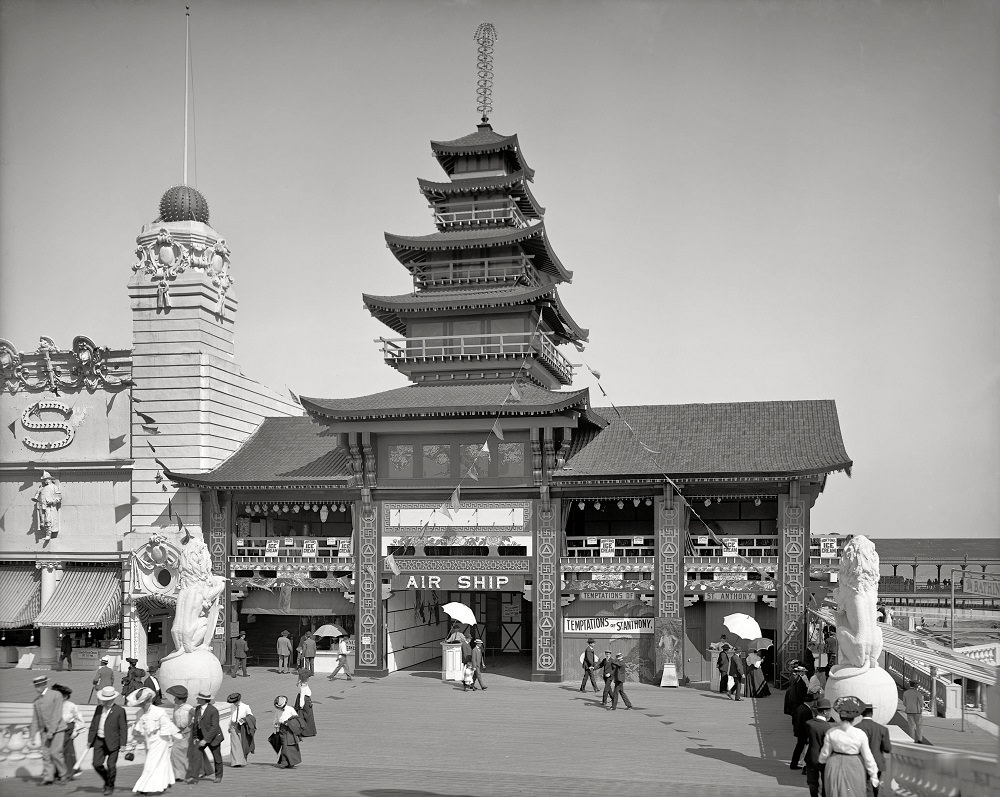
Dreamland Park housed an Air Ship Building, which featured simulated airship and balloon ride experiences. Aviation was still in its infancy in 1904 — the Wright Brothers had made their first flight just the year before — and anything related to flight captured the public imagination. Dreamland capitalized on that fascination.
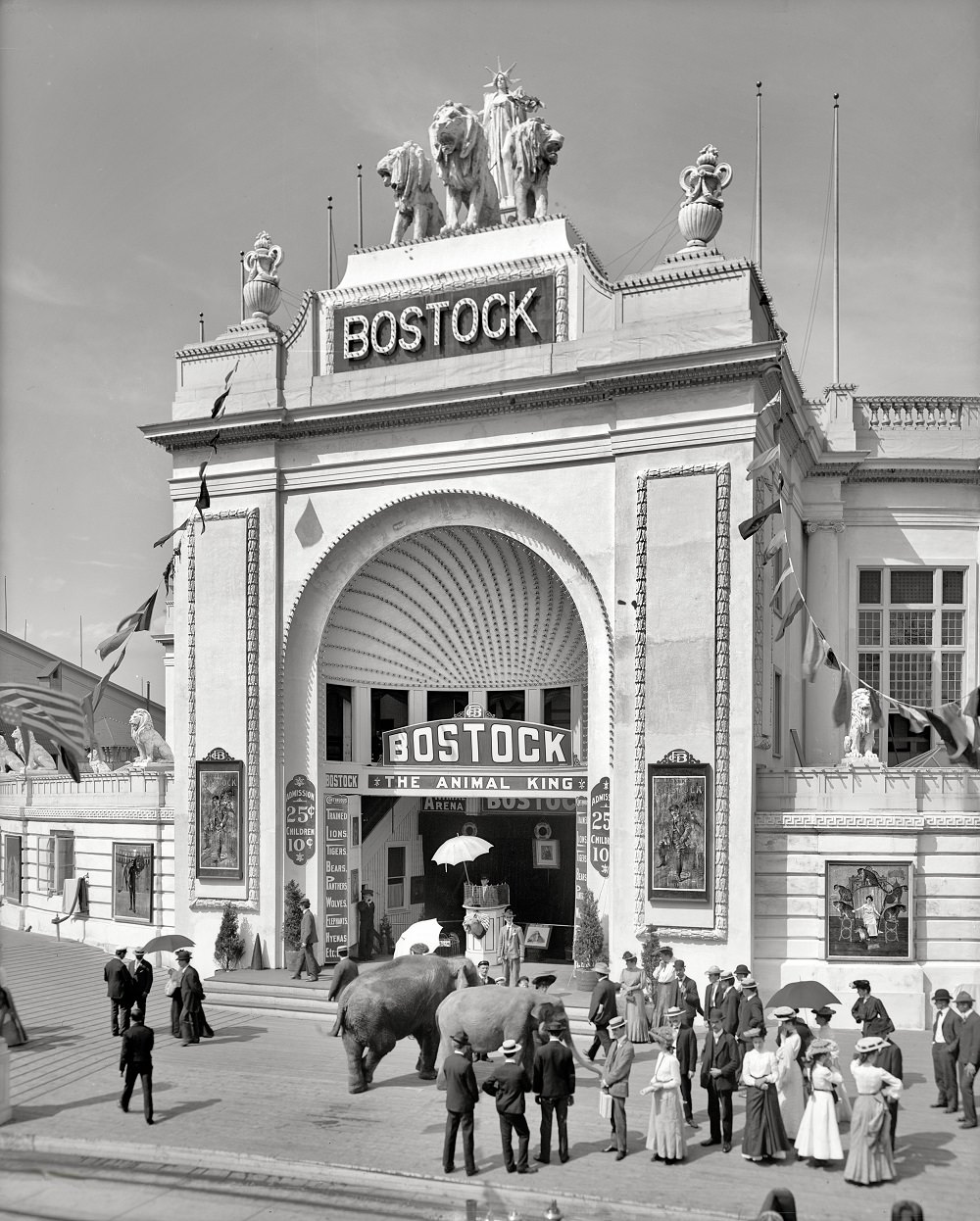
Frank Bostock’s animal shows at Dreamland were among the most talked-about attractions of the era. Bostock was a prominent animal trainer who displayed lions, tigers, and other exotic animals and staged performances with them. His Dreamland exhibit drew enormous crowds and was frequently covered by the New York press.
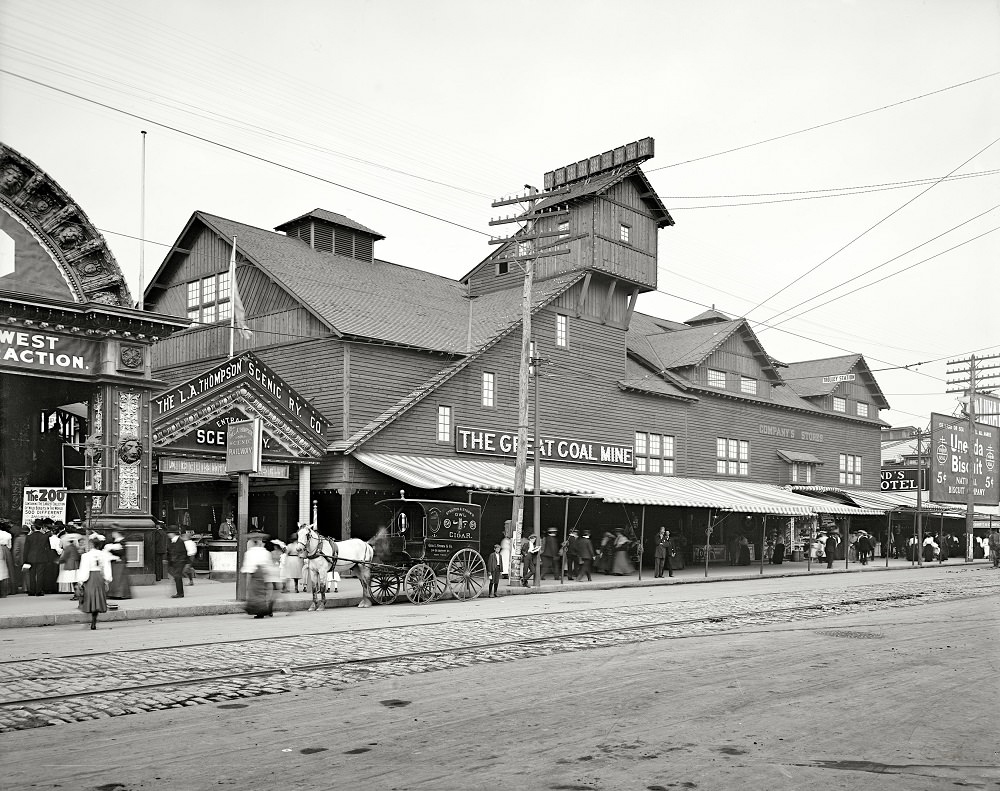
Coney Island was also home to some of its earliest immersive dark rides, including attractions like “The Great Coal Mine,” which simulated the experience of descending into an underground mine. These ride-through experiences, dating back to around 1901, were early predecessors of the dark rides that would later become standard at amusement parks across the country.
The main tower of Luna Park served as the park’s most recognizable landmark. Rising above the surrounding structures and covered in electric lights at night, it was the visual centerpiece of the entire park. The tower’s design drew on a mix of architectural traditions to create something that felt exotic, festive, and distinctly Coney Island.
Dreamland’s exterior architecture was designed to project grandeur. Unlike the more chaotic visual language of the Bowery, Dreamland aimed for something that felt monumental. Its white towers and broad facades were meant to evoke world’s fair architecture — clean, impressive, and aspirational.
Surf bathing was one of the most popular activities at Coney Island. The Atlantic Ocean provided a natural draw, and on hot summer weekends the water was filled with bathers. Lifeguards were stationed along the beach, and designated bathing areas were marked off to manage the dense crowds.
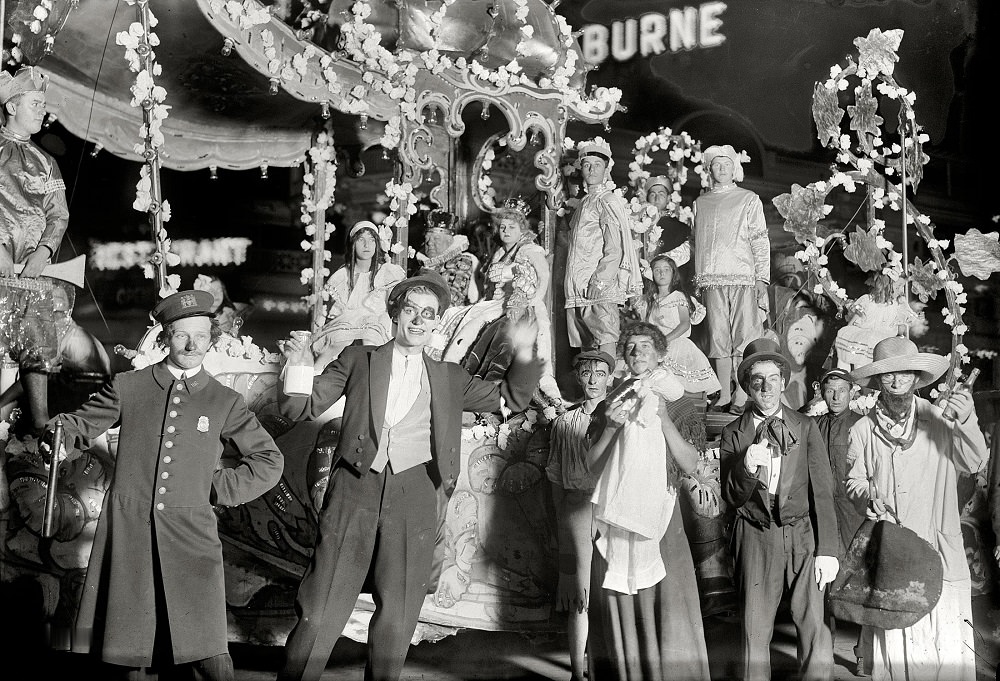
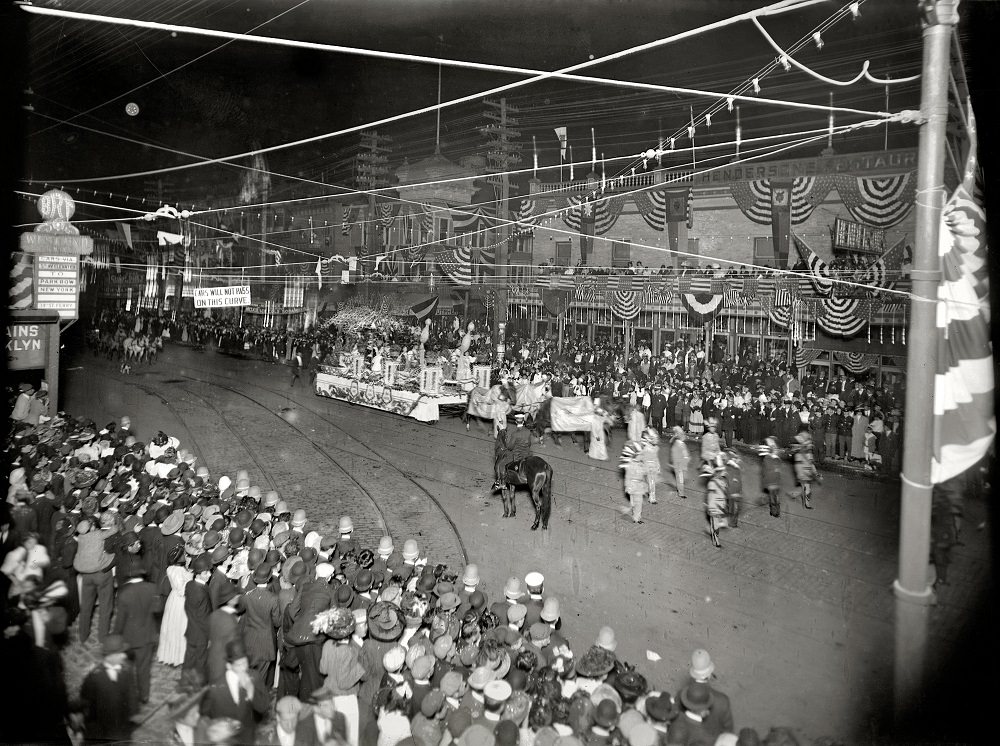
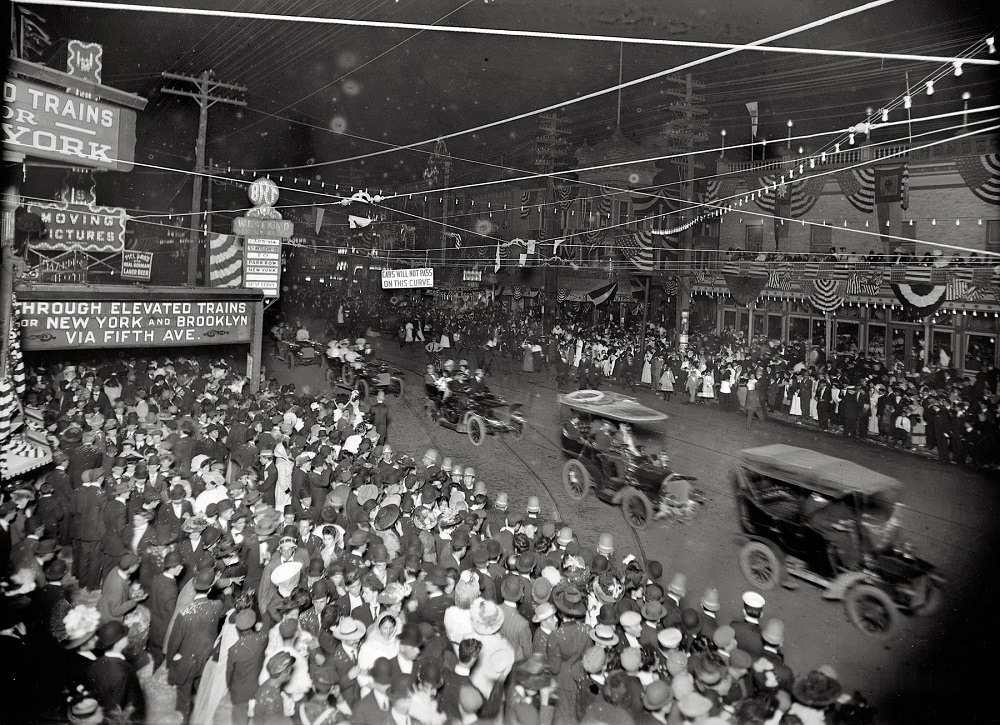
Coney Island hosted its own Mardi Gras celebrations, which became a major annual event in the 1900s and 1910s. The parades featured elaborate floats, costumed marchers, and brass bands. The 1913 Mardi Gras parade was one of the largest, drawing thousands of spectators to Surf Avenue and the surrounding streets.
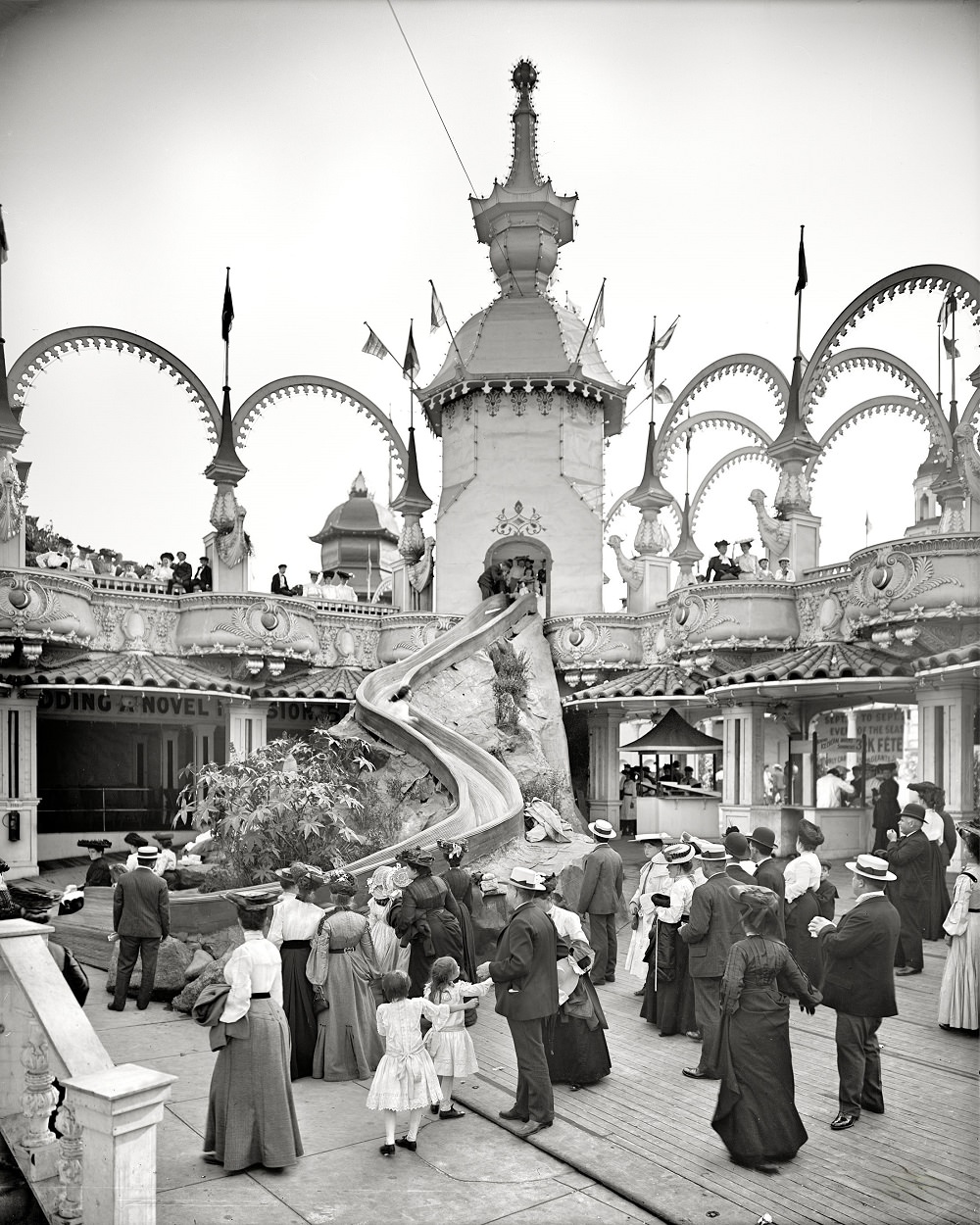
Luna Park’s Helter Skelter was a spiral slide tower — riders climbed to the top and descended on a mat down a winding slide on the outside of the structure. It was a simple but highly popular ride that attracted long lines throughout the day. Attractions like this required no electricity and no mechanical operation, making them reliable crowd-pleasers.
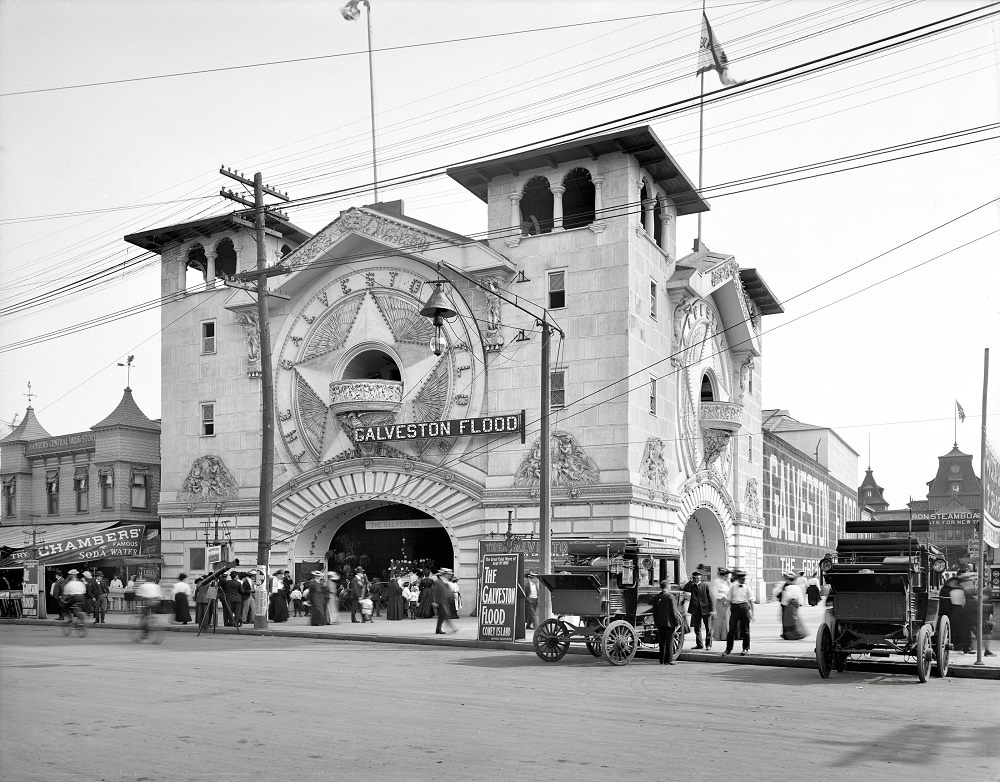
The Galveston Flood attraction at Coney Island recreated the 1900 hurricane and flood that devastated Galveston, Texas and killed an estimated 6,000 to 12,000 people — the deadliest natural disaster in American history. Like the Johnstown Flood before it, the attraction staged the disaster as a live visual experience for paying audiences. Disaster-themed attractions were a consistent part of Coney Island’s entertainment formula in the early 1900s.
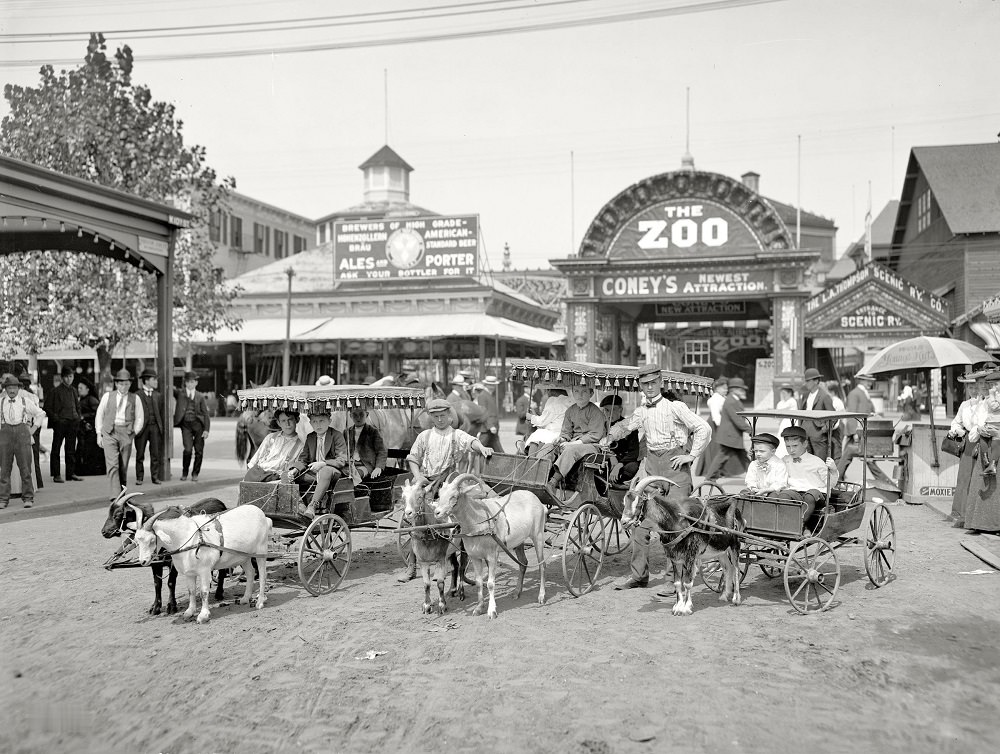
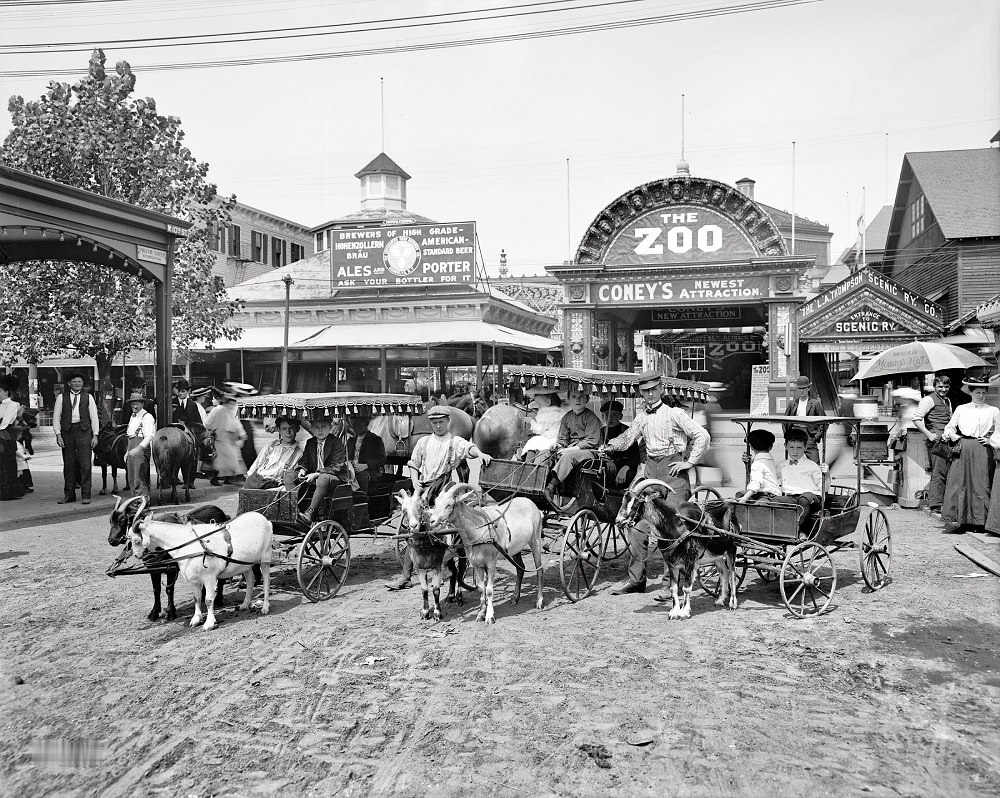
Goat carriages were a fixture of Coney Island’s lighter attractions. Small carts pulled by trained goats were available for rides, especially popular with children. These carriages appeared frequently in photographs from the 1903–1905 period and represented the more pastoral side of Coney Island’s entertainment mix.
The “Whirl of the Whirl” at Luna Park was one of the park’s spinning mechanical rides, part of a growing collection of centrifugal and rotation-based attractions that became popular in the early 1900s. These rides used newly available electrical motors to create sensations that no previous generation had experienced.
By 1904, Coney Island’s beach had become a social institution. Photographs from this period show visitors in full period dress — women in long skirts and hats, men in suits — sitting and standing along the shoreline. The beach was a place for socializing as much as swimming, and many visitors came simply to be part of the crowd.
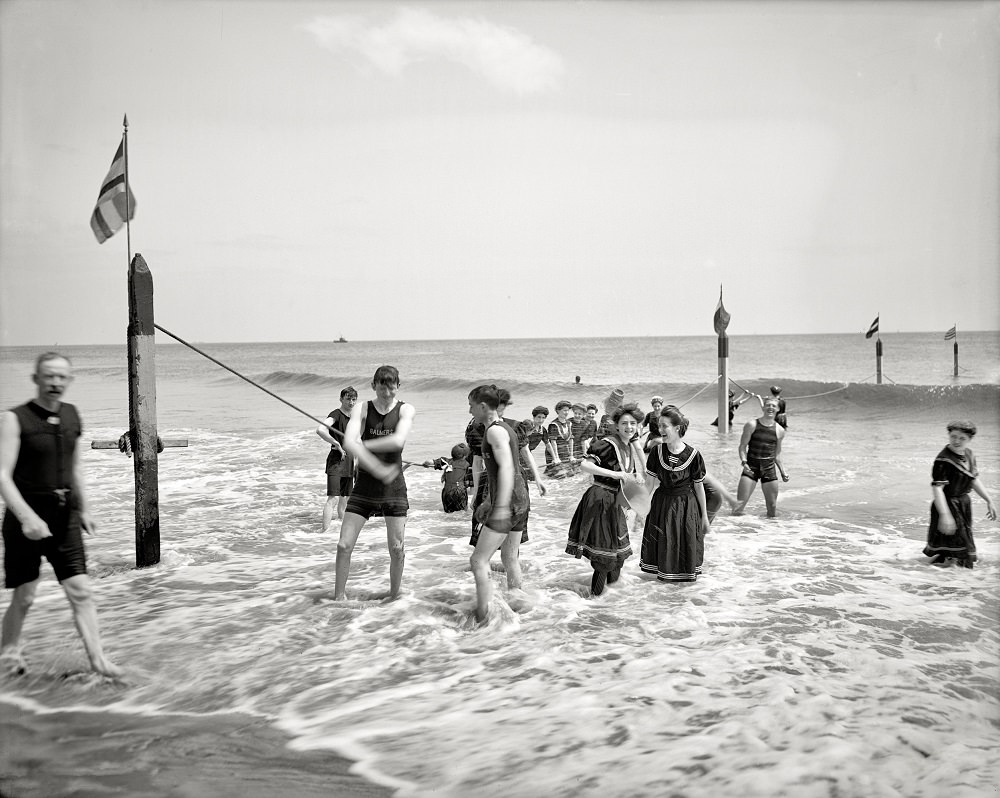
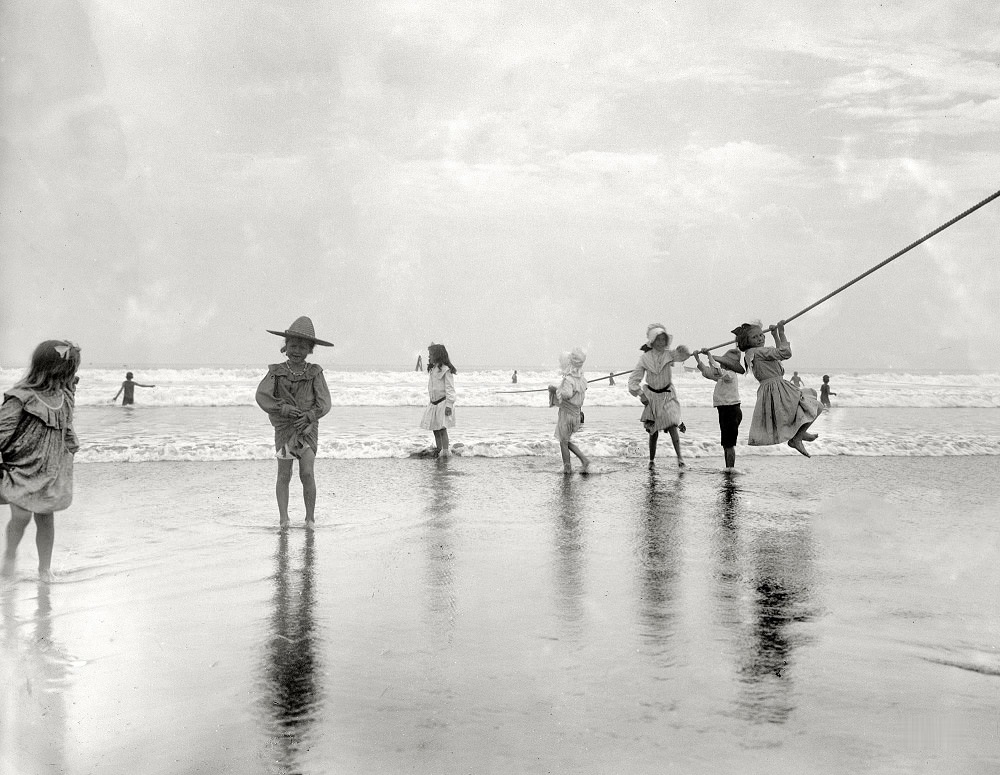
Surf bathing drew visitors of all ages. The ocean was one of the few entertainment options at Coney Island that cost nothing to use, and it remained central to the area’s appeal throughout the early 20th century. On peak days, the water was as densely packed as the sand.
Coney Island’s Mardi Gras festival ran annually and became known as New York’s version of the New Orleans celebration. The 1908 edition featured parades, costumes, and street performances that turned Surf Avenue into a continuous spectacle. The event helped extend Coney Island’s appeal beyond its rides and beaches.
Coney Island attracted a physically diverse crowd, and photographers of the era often captured informal group portraits along the beach and boardwalk. These images provide a candid record of ordinary New Yorkers at leisure — a demographic largely absent from the formal portrait photography of the period.
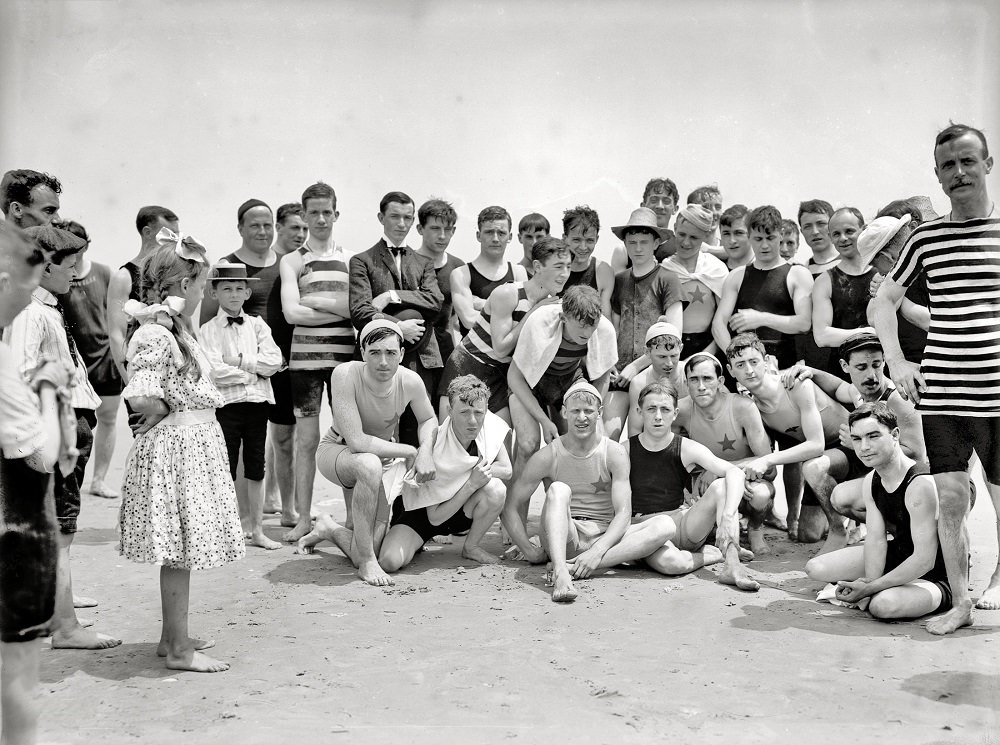
The social atmosphere at Coney Island was notably relaxed compared to the formal standards of everyday city life. Men and women mixed freely in public spaces, and the beach environment allowed for a loosening of the strict social codes that governed behavior elsewhere. Candid photographs from the period capture this more informal side of early 20th-century social life.
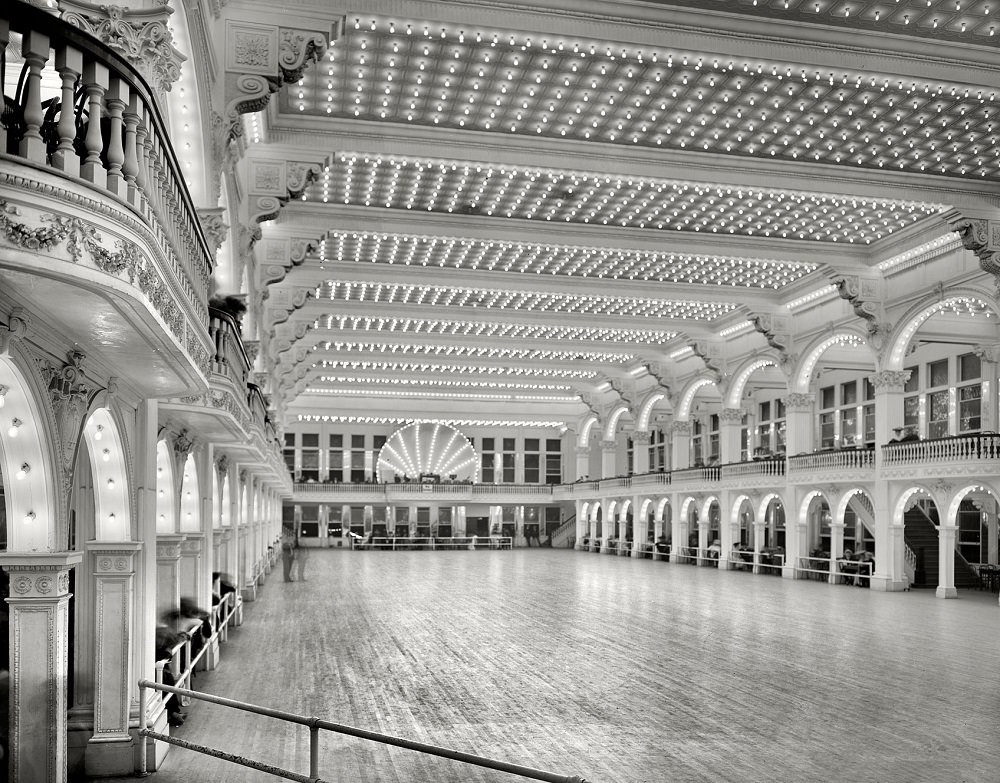
Dreamland’s ballroom was a major attraction in its own right. Large-scale social dancing was enormously popular in early 20th-century America, and Dreamland’s ballroom provided the space, the music, and the atmosphere for it. The ballroom drew couples and groups who came to Coney Island specifically to dance, adding another dimension to the park beyond its rides and shows.
The surf at Coney Island was active enough to make ocean bathing a genuine physical experience. Bathers in the period photographs are often shown in the water up to their chests, riding the incoming waves. The beach patrol and lifeguards managed the crowds and responded to swimmers in distress.
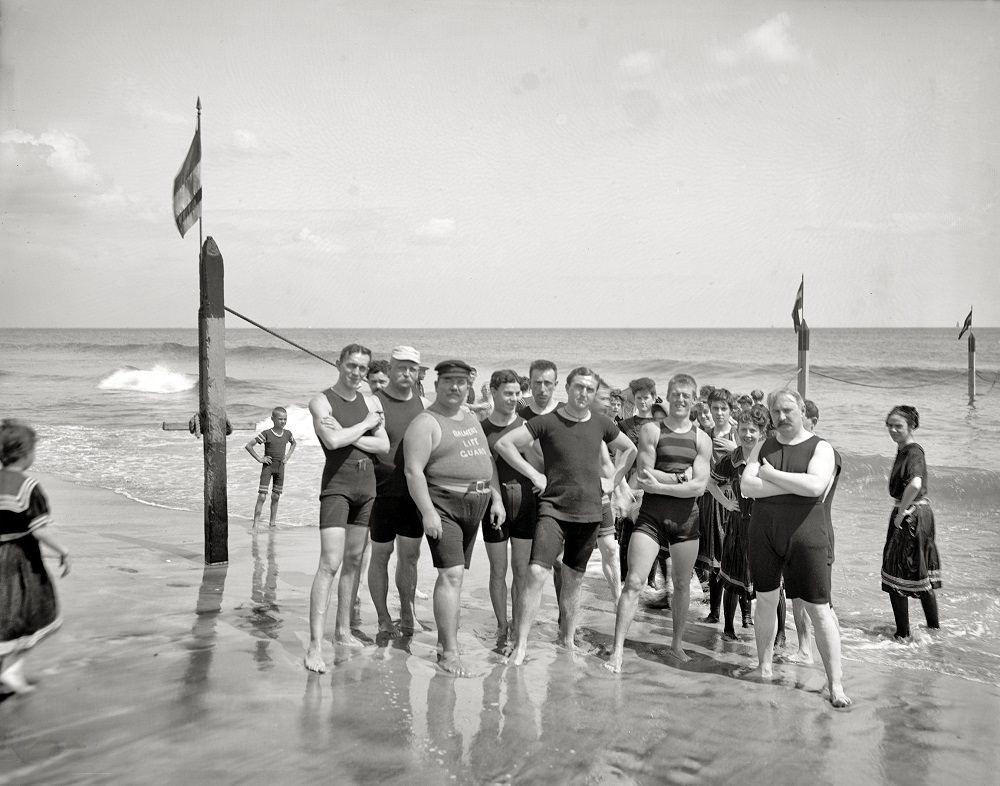
Lifeguard teams at Coney Island were organized and highly visible. Captain Riley led one of the beach’s guard units and was photographed with his team around 1905. Given the volume of bathers — sometimes exceeding 100,000 people on a single day — the lifeguard corps was an essential part of beach operations.
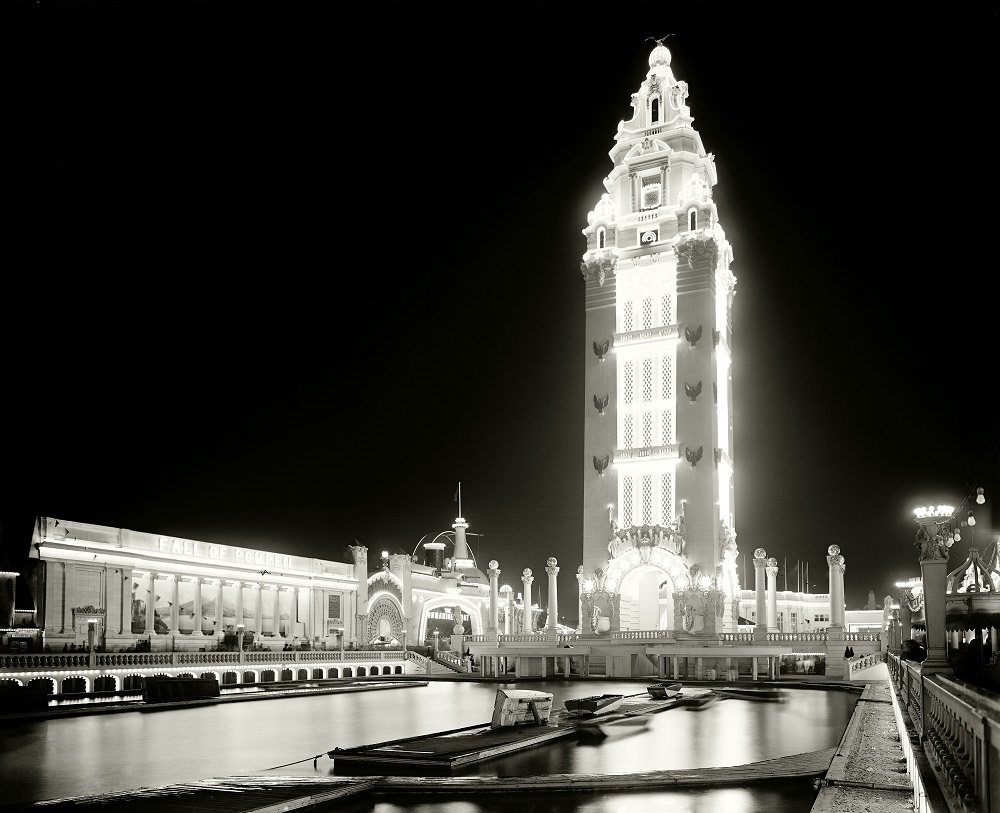
At night, Dreamland Park rivaled Luna Park in spectacle. Its electric lighting outlined every building and tower, creating a glowing cityscape visible from the water. The nighttime atmosphere at both parks drew visitors who had already spent their day at the beach, extending the entertainment well into the evening hours.
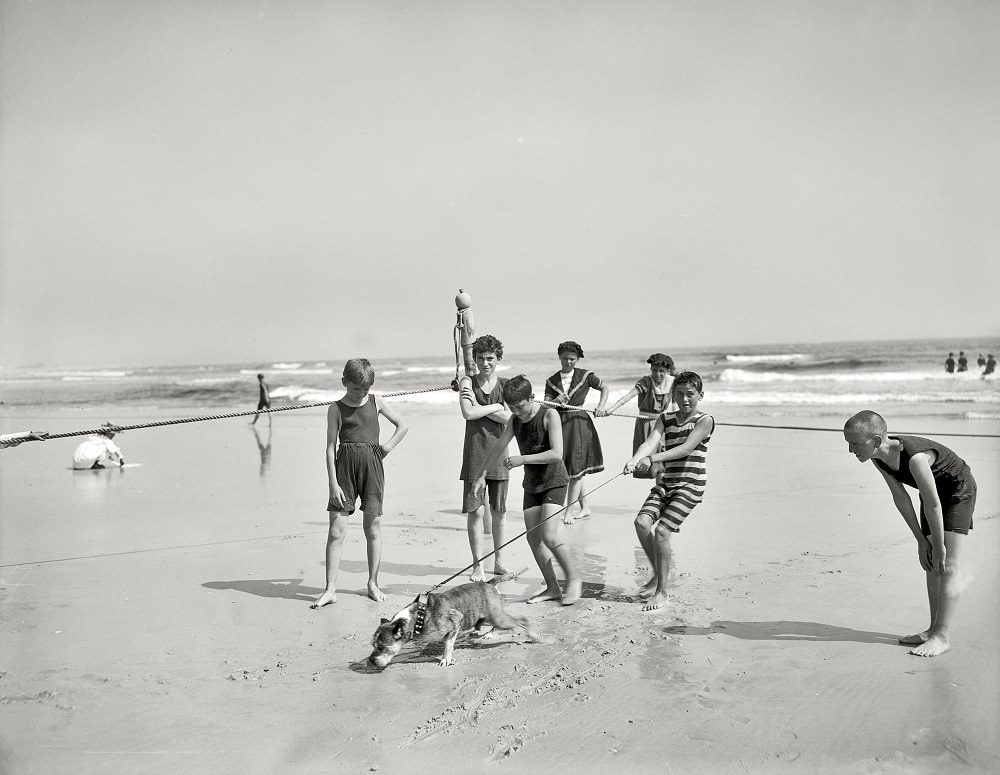
Animals were a recurring presence on Coney Island’s beach, brought along by their owners as part of a day’s outing. Photographs from 1905 document this informal menagerie of dogs and other pets amid the bathers and picnickers. Dogs on Coney Island’s beach were common enough to appear regularly in press photography of the period.
The beach at Coney Island was not without its hazards. Strong surf and rip currents posed real dangers, and incidents of swimmers being pulled under or washed ashore were common. The lifeguard service existed specifically to address these dangers, and the volume of rescues performed each season was significant.
Goat carriages appeared at Coney Island throughout the first decade of the 1900s. Multiple photographs from 1904 document these small animal-drawn vehicles in operation along the beach and park areas. They were an inexpensive attraction that complemented the larger mechanical rides and shows.
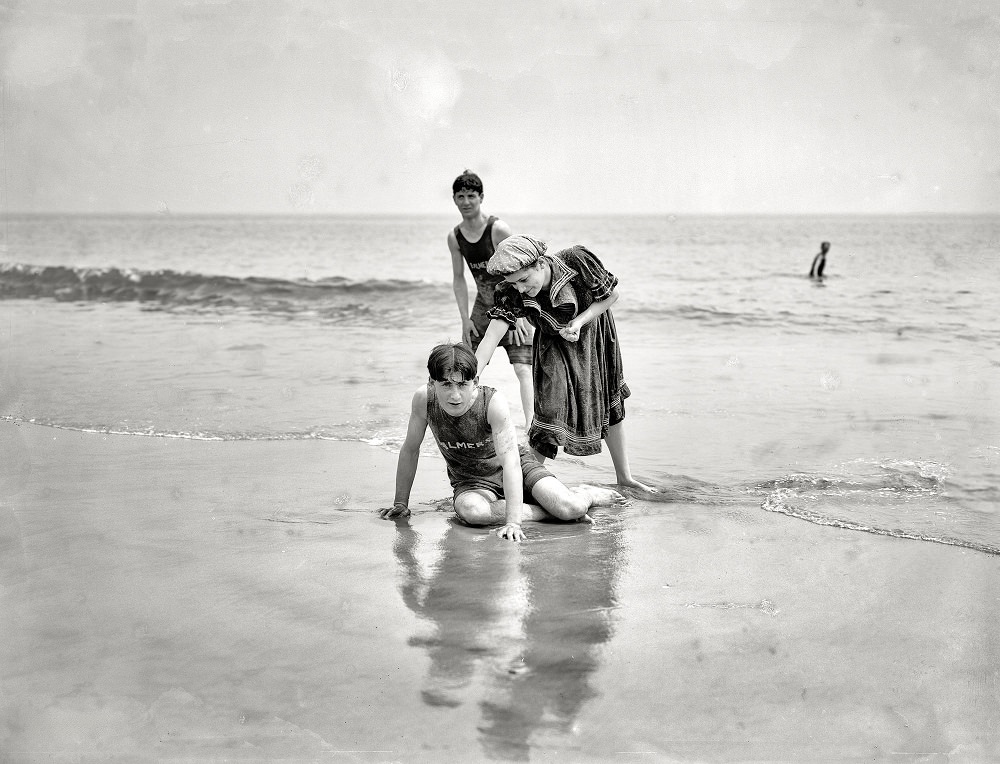
Dedicated bathing establishments like Balmer’s Bathing Beach offered rented bathing suits, changing rooms, and organized access to the water. These facilities made ocean bathing accessible to visitors who had traveled to Coney Island without preparation. By 1908, several such establishments operated along the shore.
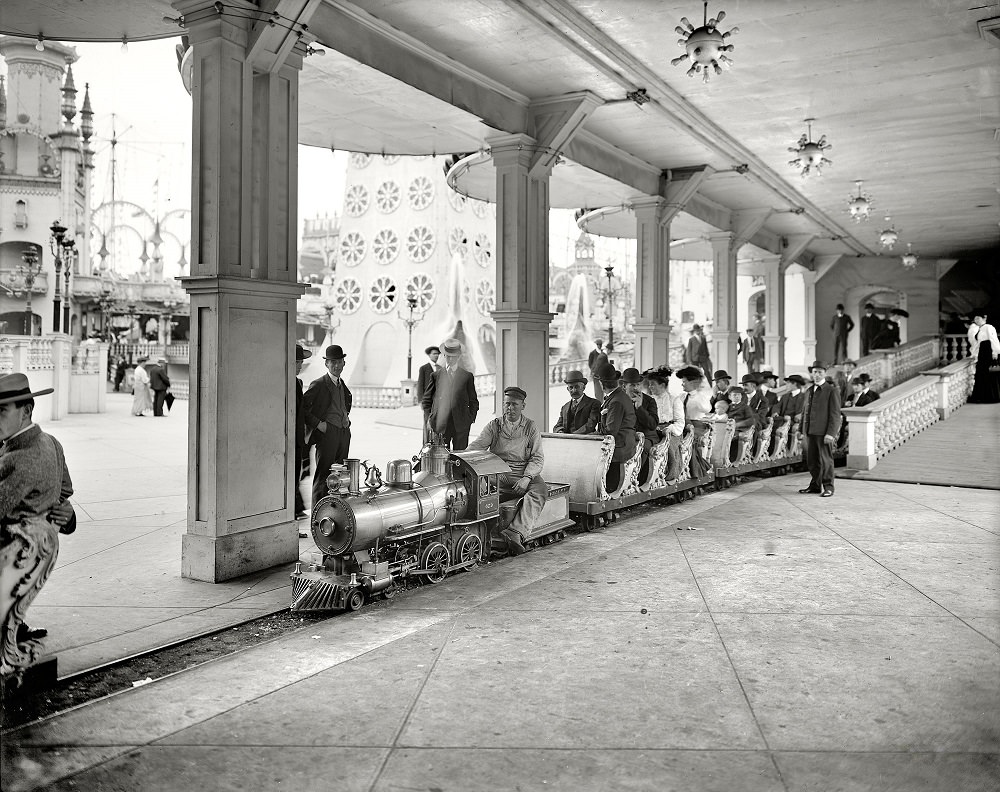
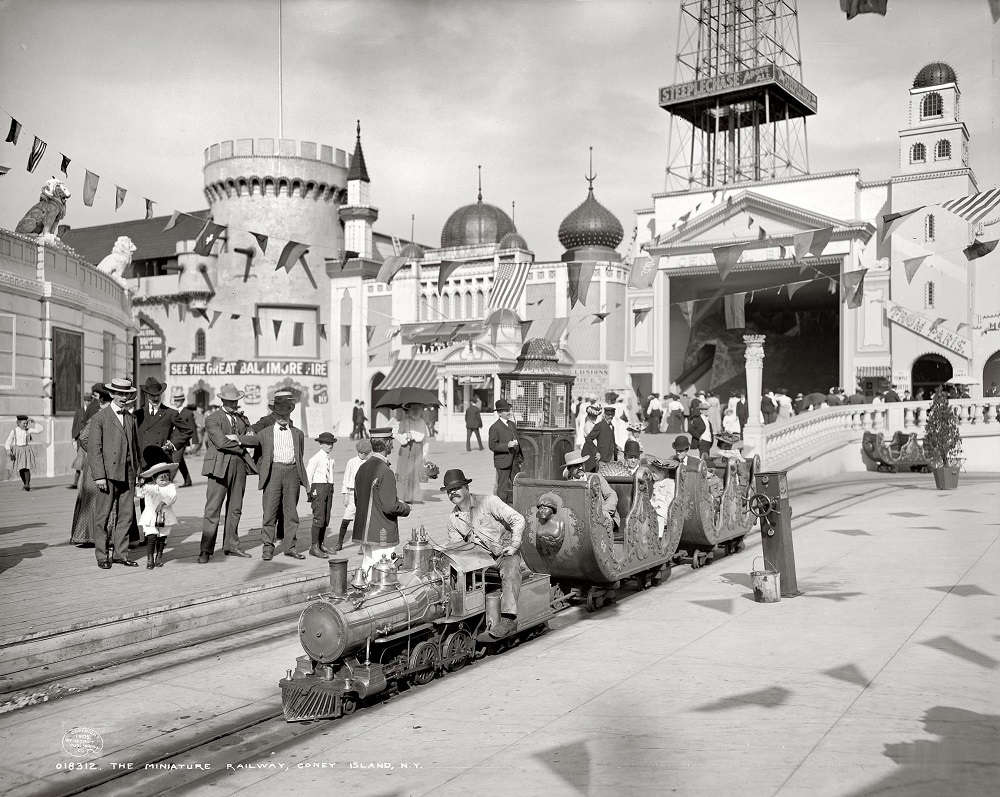
A miniature railway ran through the grounds of Coney Island, giving visitors a way to travel between attractions while also functioning as a ride in its own right. Small-scale locomotives pulling open passenger cars were a popular feature at large amusement parks of the era, and Coney Island’s version was well-documented in photographs from around 1905.
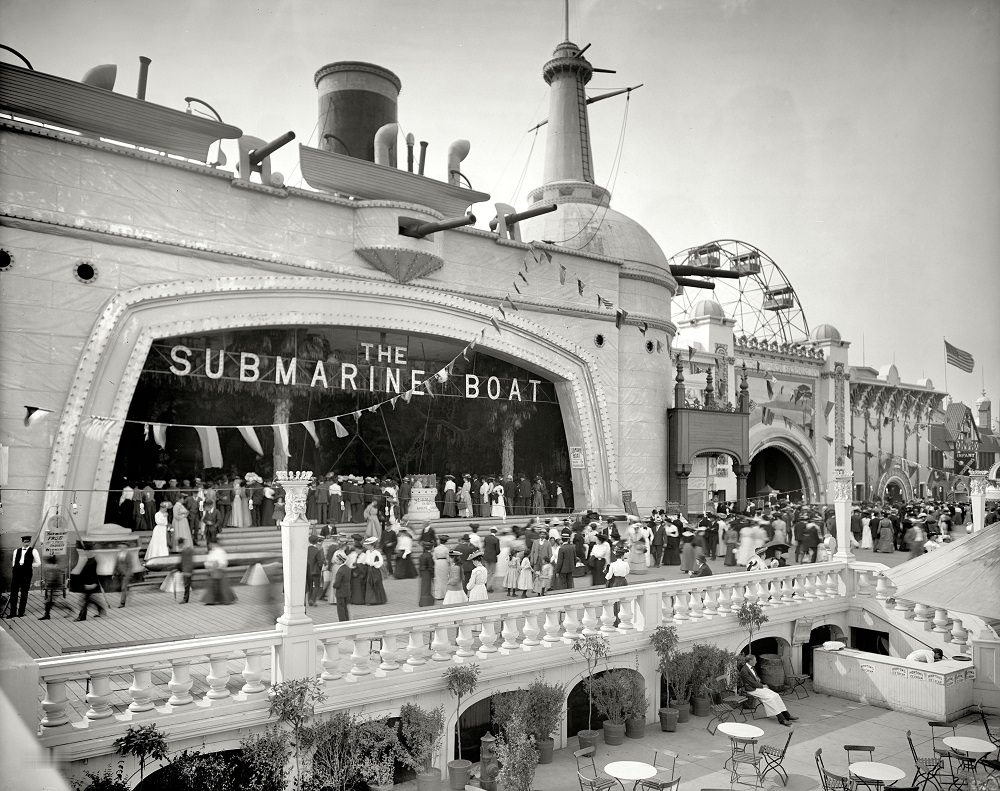
The Submarine Boat attraction at Coney Island offered visitors a simulated underwater voyage. Passengers boarded a vessel that was designed to look like a submarine and were taken through a theatrical experience meant to recreate the sensation of traveling beneath the ocean’s surface. Given that actual submarine technology was still primitive in 1904, the attraction fed a genuine public curiosity about the undersea world.
The “Fighting the Flames” show at Dreamland required a full cast of performers including professional firefighters and actors. Photographs from around 1905 show firefighters in period gear posing in connection with the production. The show was staged multiple times daily and was one of Dreamland’s highest-capacity attractions.
Surf Avenue in 1903 was already a fully developed commercial corridor. The street was lined with electric signs, vendor carts, and storefronts that competed aggressively for the attention of passersby. The avenue ran the length of the entertainment district and was the primary artery connecting Steeplechase Park, Luna Park, and Dreamland.
The miniature railway at Coney Island operated along a defined track loop and was a consistent draw for visitors of all ages. Its small scale and gentle motion made it particularly popular with families, providing a brief respite from the louder, more intense attractions nearby.
Pony rides remained a reliable attraction at Coney Island throughout the early 1900s. Small ponies were led in circuits by handlers, giving children a brief riding experience. The 1904 photographs of Coney Island’s ponies show well-maintained animals operating as part of the park’s broader family-oriented offerings.
Dreamland at twilight was a transitional spectacle — the daylight fading while the electric lights began to take over, illuminating the park’s towers and facades in a soft glow. This hour was a popular time for photographs, and images from around 1905 capture the park in this in-between state with striking clarity.
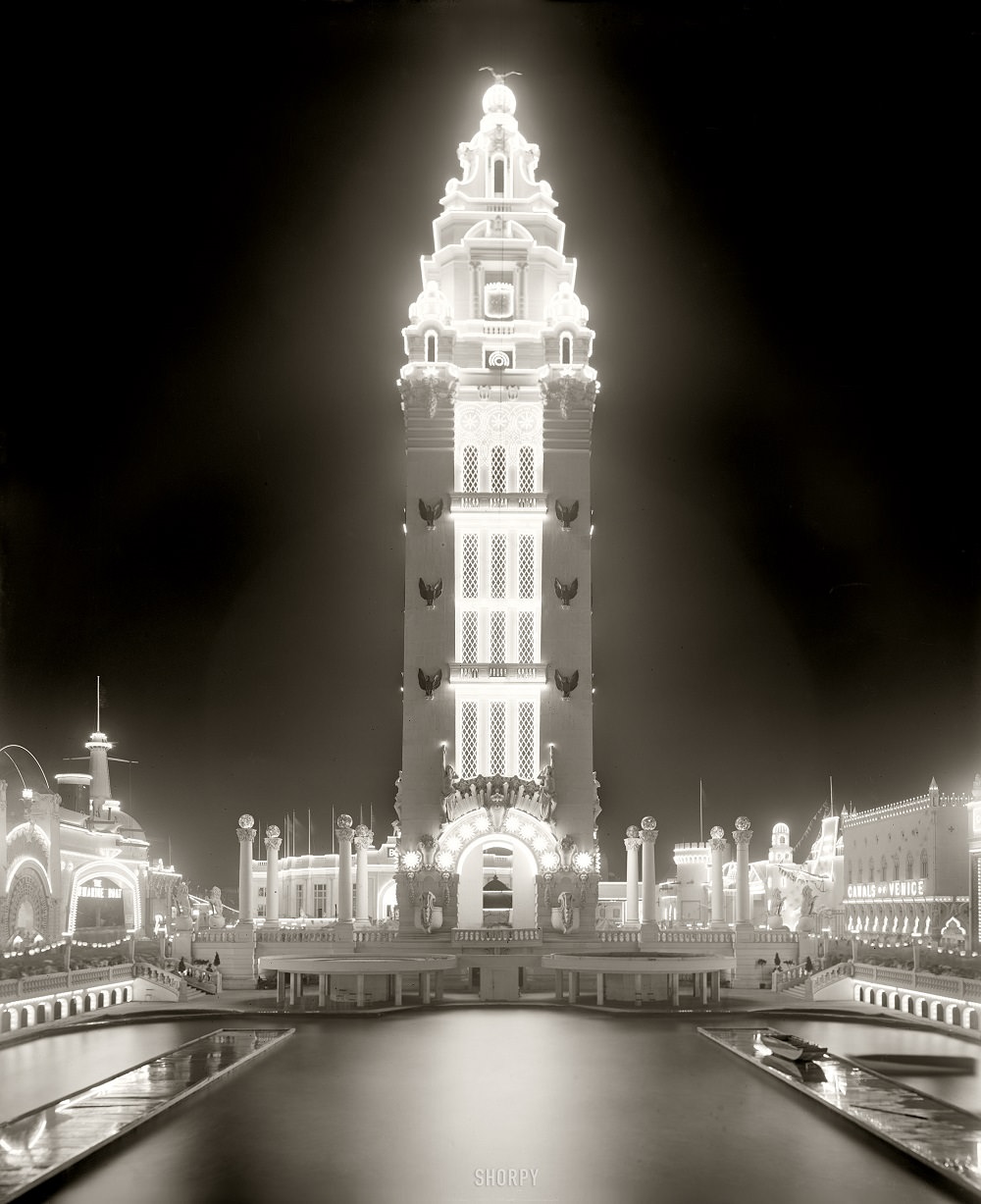
By full dark, Dreamland was transformed. Its 1 million electric bulbs lit up every tower, arch, and roofline, making the park visible from ships offshore. The 1905 nighttime photographs of Dreamland show a level of illumination that was genuinely unprecedented in public entertainment at the time.
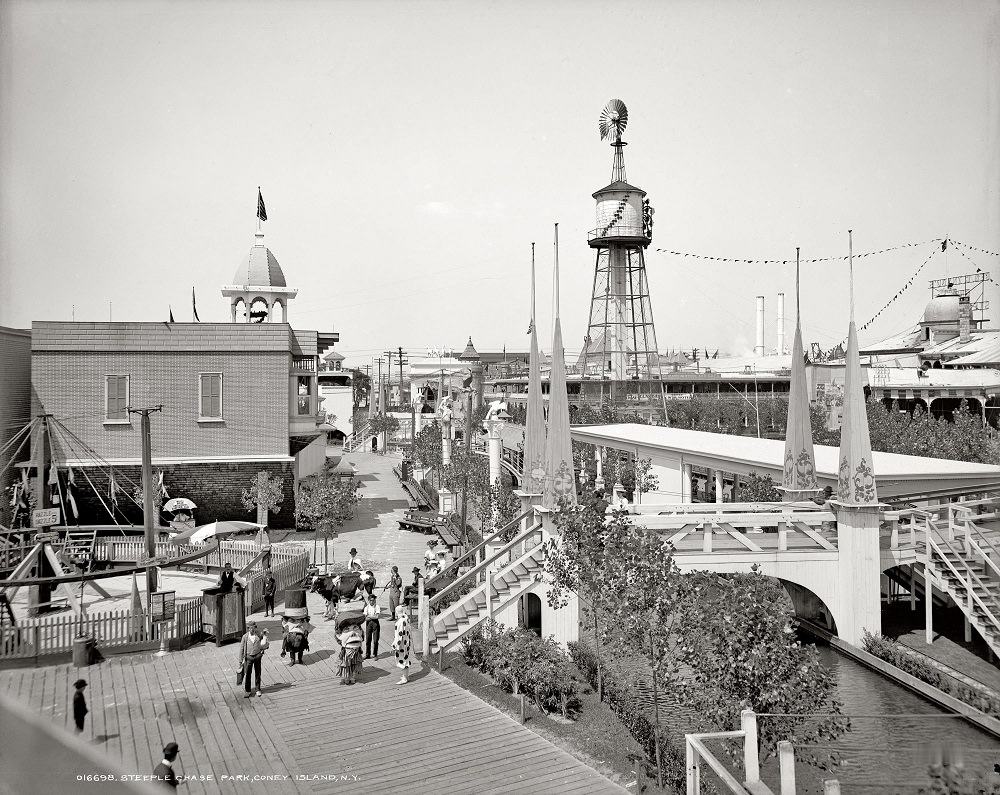
Steeplechase Park was the oldest of Coney Island’s three major amusement parks, opening in 1897. Its signature ride was a mechanical horse race — riders mounted fixed horse figures that traveled along a steel track, racing side by side around the park’s exterior. By 1903, it had already established itself as one of New York’s most popular amusements.
The south end of the Bowery in August 1903 was dense with activity. Street-level vendors, food stands, and game booths lined both sides of the walkway, while crowds moved through in a continuous stream. The Bowery functioned as the commercial spine of Coney Island’s midway, connecting the major parks and keeping visitors moving between attractions.
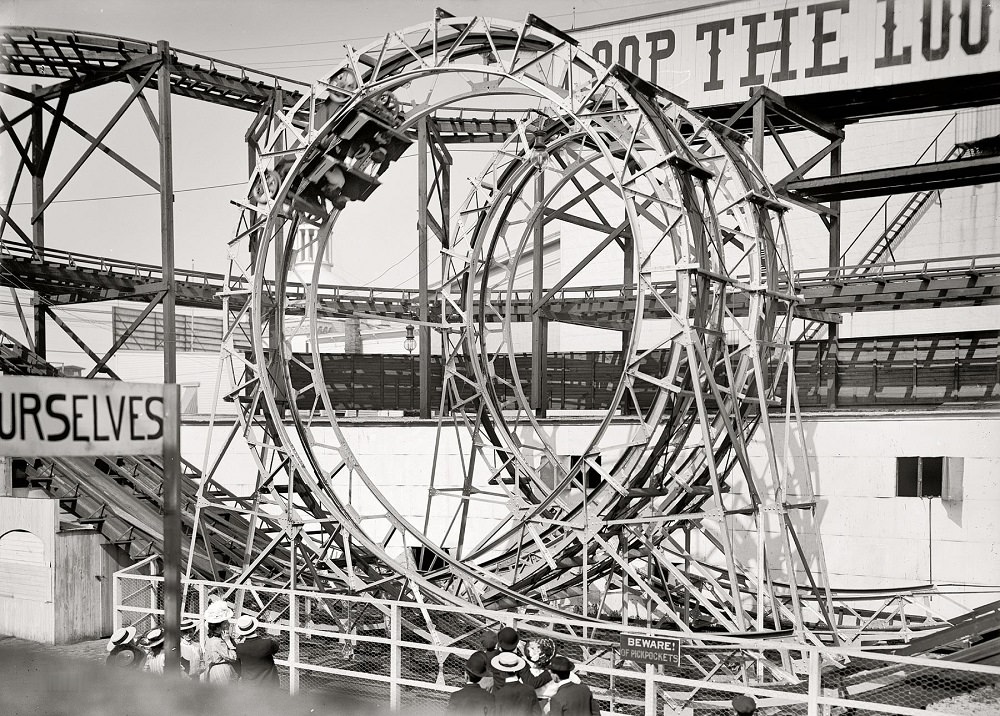
The Loop the Loop was one of Coney Island’s early roller coasters, featuring a full vertical loop — a mechanical achievement that was considered daring and spectacular in 1903. The ride used a small car sent down a steep drop and through a complete 360-degree loop, and it became one of the most talked-about attractions in the country during its operation.
Luna Park at night was a defining image of early 20th-century American entertainment. The park’s towers and minarets, outlined in electric lights, created a skyline that was fantastical and unmistakable. For many visitors, the nighttime view of Luna Park was the memory they carried home from Coney Island.
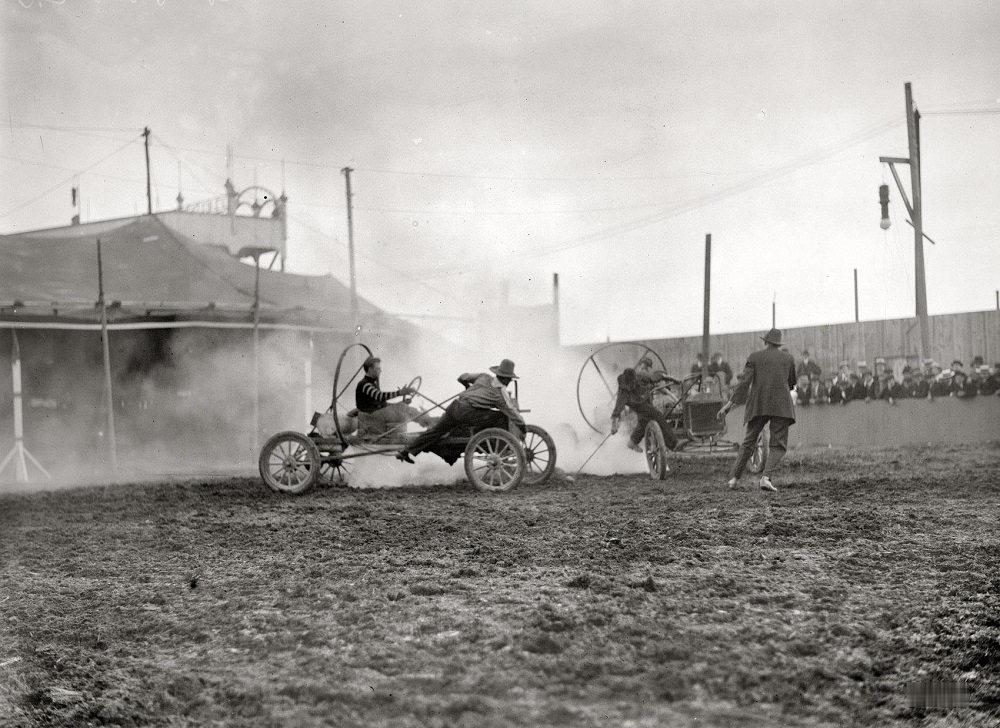
Coney Island also hosted more unconventional events. In May 1913, auto polo — a version of the equestrian sport played with automobiles instead of horses — was staged on the island. Drivers steered early-model cars while players used long mallets to hit a large ball, often resulting in crashes and rollovers that were as entertaining as any planned maneuver.
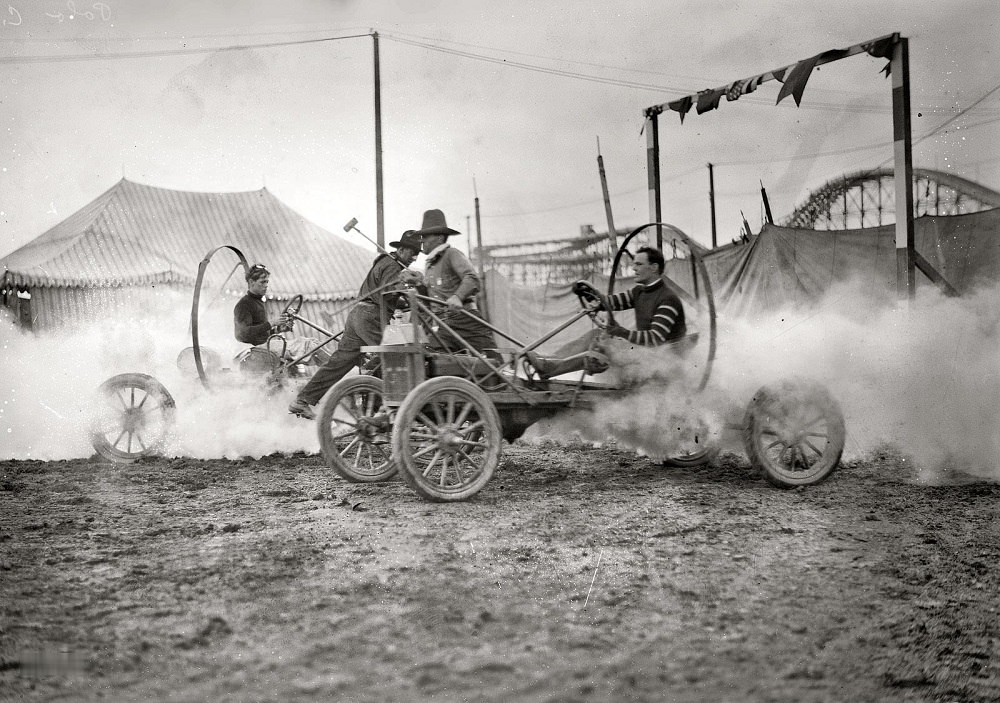
The 1913 auto polo events at Coney Island drew comparisons to both horse racing and demolition-style motorsport. The combination of speed, collisions, and athletic skill made it a crowd favorite. Images from the event show vehicles in various states of action and disarray, reflecting the chaotic nature of the sport.
Luna Park’s electric lighting in 1905 represented one of the most concentrated uses of electric light in any public space in the world at that time. The park’s designers used light not just for visibility but as a primary design element, shaping the experience of the space after dark in ways that no gaslight or candle illumination could approach.
The 1908 Mardi Gras celebration at Coney Island was one of the largest held there. Thousands lined the streets as floats and marching groups passed through the entertainment district. The event had grown steadily since its introduction and was covered extensively by the New York press.
Luna Park’s nighttime spectacle was a recurring subject for early press photographers and postcard makers. The images circulated widely and helped establish Coney Island’s reputation as a place of wonder and modernity. For many Americans who had never visited, these photographs were their primary impression of what Coney Island looked like.
During the day, Luna Park’s architecture was equally striking. The park’s structures drew on Indian, Moorish, and Ottoman design traditions, creating a visual environment that was deliberately foreign and fantastical. The effect was intentional — Luna Park was meant to feel like a different world entirely.
The beach at Coney Island between 1910 and 1915 remained as popular as ever, even as the city continued to grow and change around it. The photographs from this period show the same density of visitors that characterized the peak years of 1903–1905, indicating that the area’s appeal had not diminished in the years following the opening of its major parks.
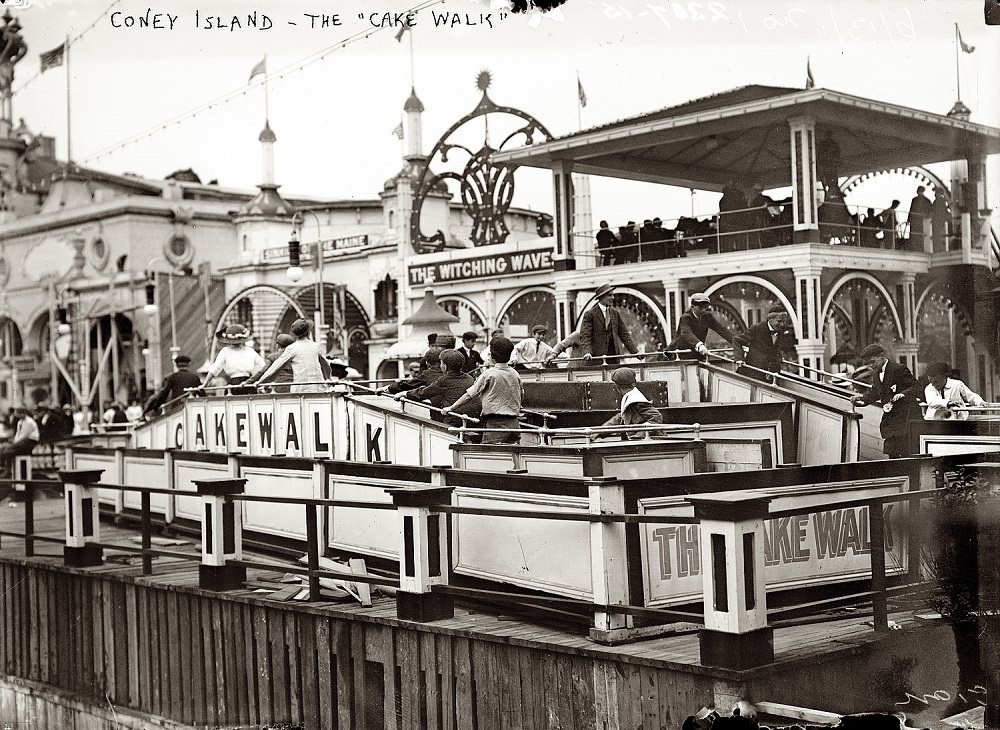
The Cake Walk was a popular dance-based attraction at Luna Park. Named after the 19th-century dance, it was staged as both a competition and a performance, with participants walking and dancing along a elevated platform while audiences watched. On June 13, 1911, one such event was photographed at the park, documenting the style and energy of the attraction.
By 1913, Luna Park’s promenade continued to draw strolling visitors who came as much to socialize as to ride the attractions. The park’s layout encouraged leisurely walking, and the promenade served as the social center of the grounds — a place where people gathered, talked, and watched the crowds move past.
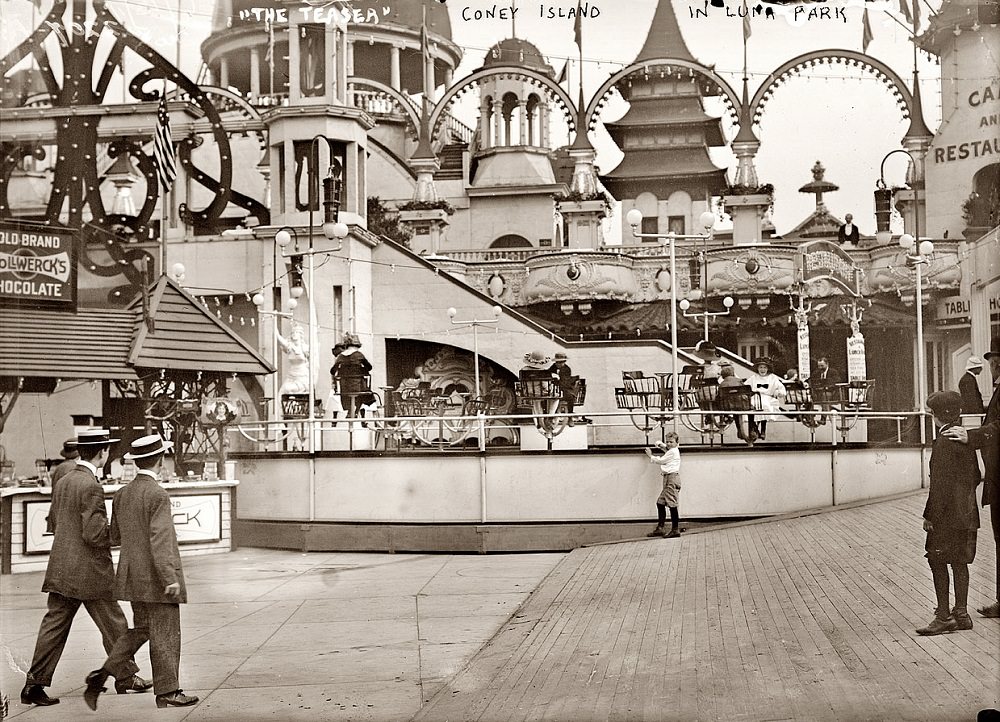
The Teaser was a ride at Luna Park that operated in 1911. Like many of the park’s mechanical attractions, it was designed to produce disorientation and surprise in its riders through unexpected movements. The ride was part of a broader category of “fun house” style attractions that relied on physical sensation rather than speed.
By 1913, Surf Avenue had grown into a fully mature commercial street. Feltman’s Clam Bake, visible on the left in photographs from that year, was one of the avenue’s most established restaurants. Charles Feltman’s establishment at Coney Island had operated since 1871 and is credited with being the birthplace of the hot dog as a commercial food item sold in a bun.
Dreamland’s boardwalk area in 1904 was one of the most photographed public spaces in New York. The wide promenade in front of the park’s main entrance gave visitors room to gather and take in the architectural spectacle before them. It was designed to impress from the moment visitors arrived.
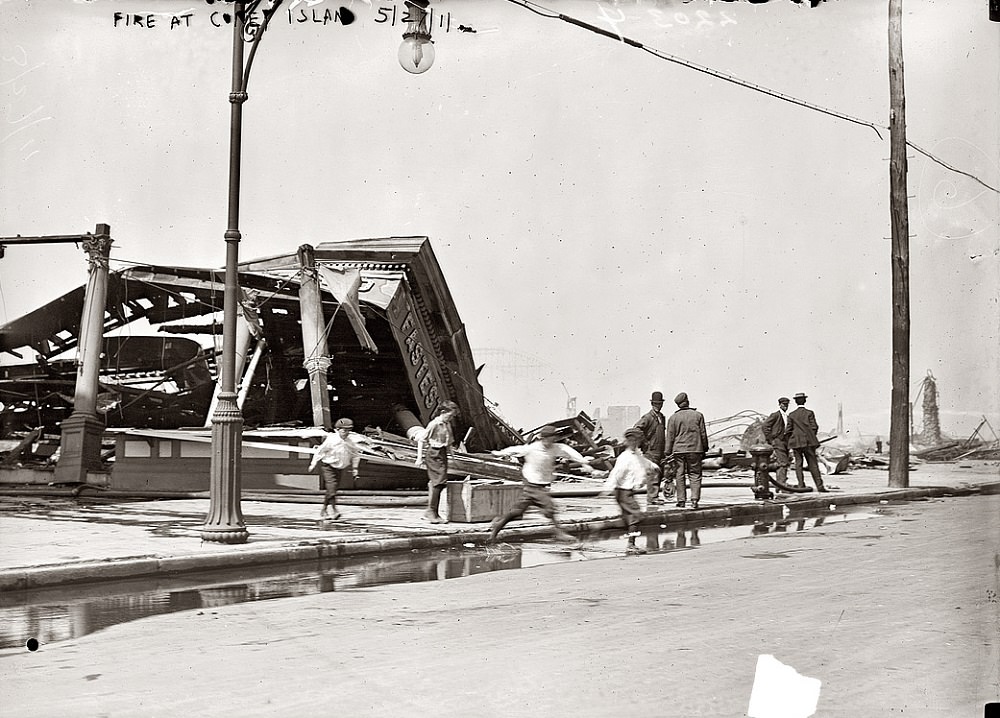
On May 27, 1911, a fire broke out in Dreamland Park and destroyed it entirely. The blaze started in the Hell Gate ride and spread rapidly through the park’s wooden structures. Bostock’s animal exhibit was in the path of the fire, and many of the animals escaped or had to be shot as the flames advanced. The fire killed one person directly and caused the deaths of numerous animals. The park was never rebuilt. The 1911 photograph of the aftermath shows the scale of the destruction — little remained of the structures that had defined Dreamland since 1904.
On the hottest summer days, Coney Island’s beach became nearly impassable. The 1910 photograph labeled “Hot day at Coney Island” captures a shoreline so densely populated that it resembles a city street more than a beach. These peak-day crowds were a consistent feature of Coney Island’s summers throughout the first two decades of the 20th century.
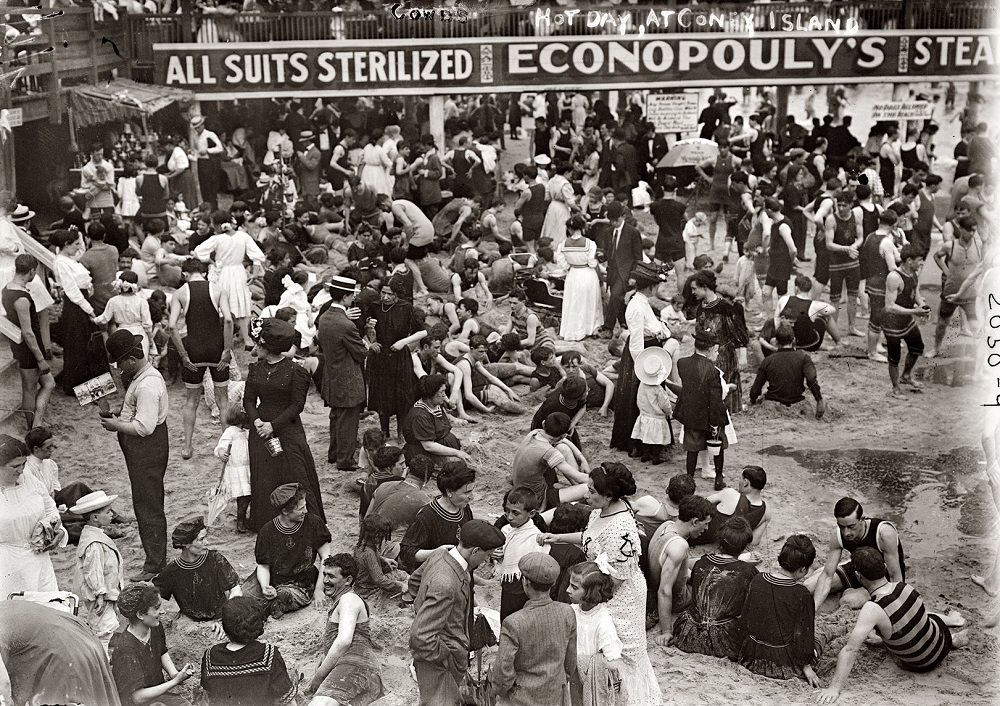





Coney island was a hot place on a hot July day, and all the men wore suits and hats, and all the women wore full gowns. Wow!
What was the exact location of the Dream Park? Was there a massive moat built?
The New York City Aquarium now occupies the site of Dreamland.
Wow, that makes so much sense!
The original Luna Park and Dreamland were absolutely magnificent! There is no doubt that their existence marked the golden age of Coney Island. It’s too bad they both burned like California during a drought.
Wow. Looks better than today
Dreamland and the original Luna Park were absolutely magnificent! Their existence most definitely marked the golden age of Coney Island. Too bad they both burned like California during a drought.
Wow. Looks better than today