
The 1970s in Britain are often remembered through the lens of glam rock, color television, and a country slowly modernizing. But for thousands of families living in the crumbling terraces of Newcastle upon Tyne’s West End, that version of the decade simply did not exist. Their daily reality was damp walls, broken floors, rats, and streets that smelled of raw sewage. Photographer Nick Hedges spent years documenting exactly that reality — and his images remain some of the most powerful records of urban poverty Britain has ever produced.
Between 1968 and 1972, Hedges traveled across Britain on behalf of Shelter, the national housing charity. His assignment was straightforward: photograph the conditions that millions of working-class families were actually living in. He went to Glasgow, Leeds, Birmingham, and Newcastle, moving through neighborhoods that the rest of the country preferred not to think about. What he found was not just poverty — it was a grinding, daily struggle against conditions that were dangerous, unsanitary, and deeply dehumanizing.
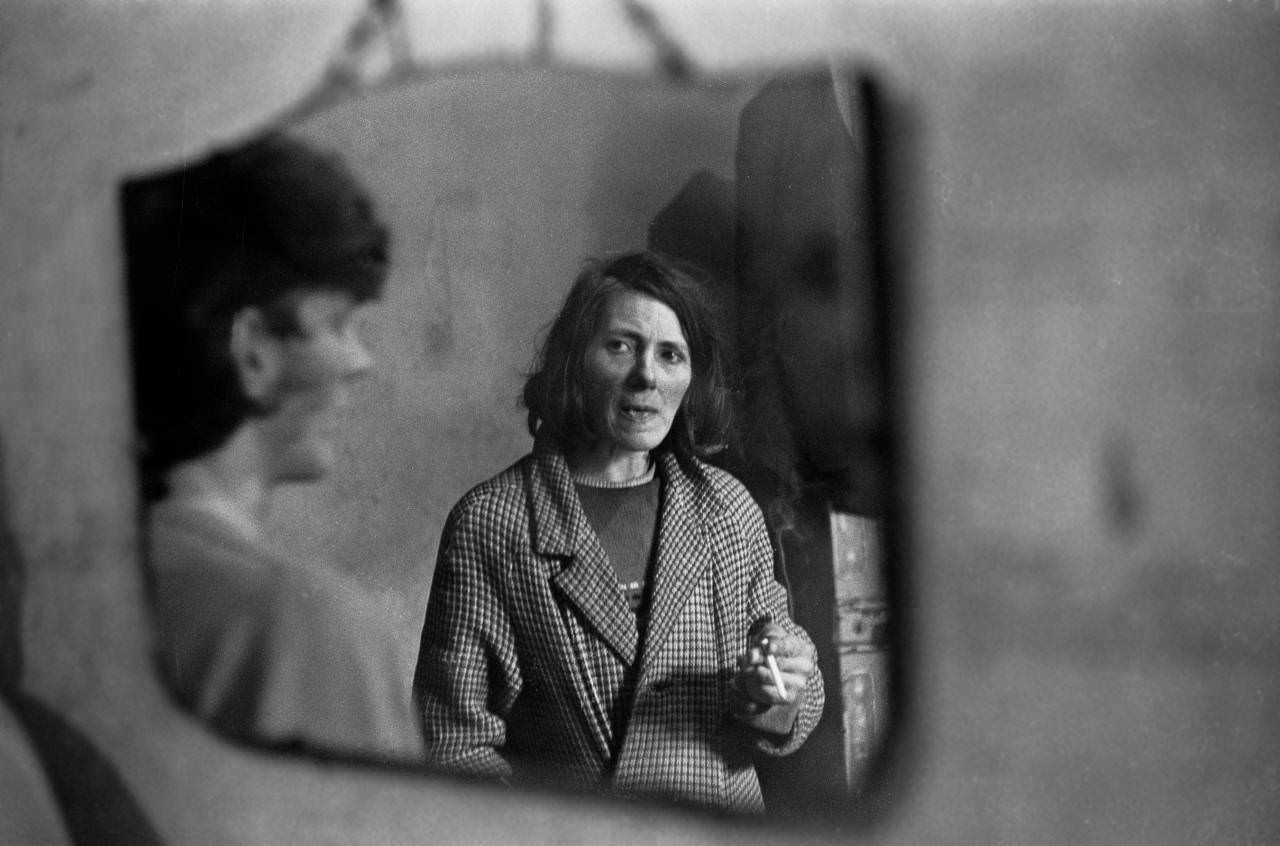
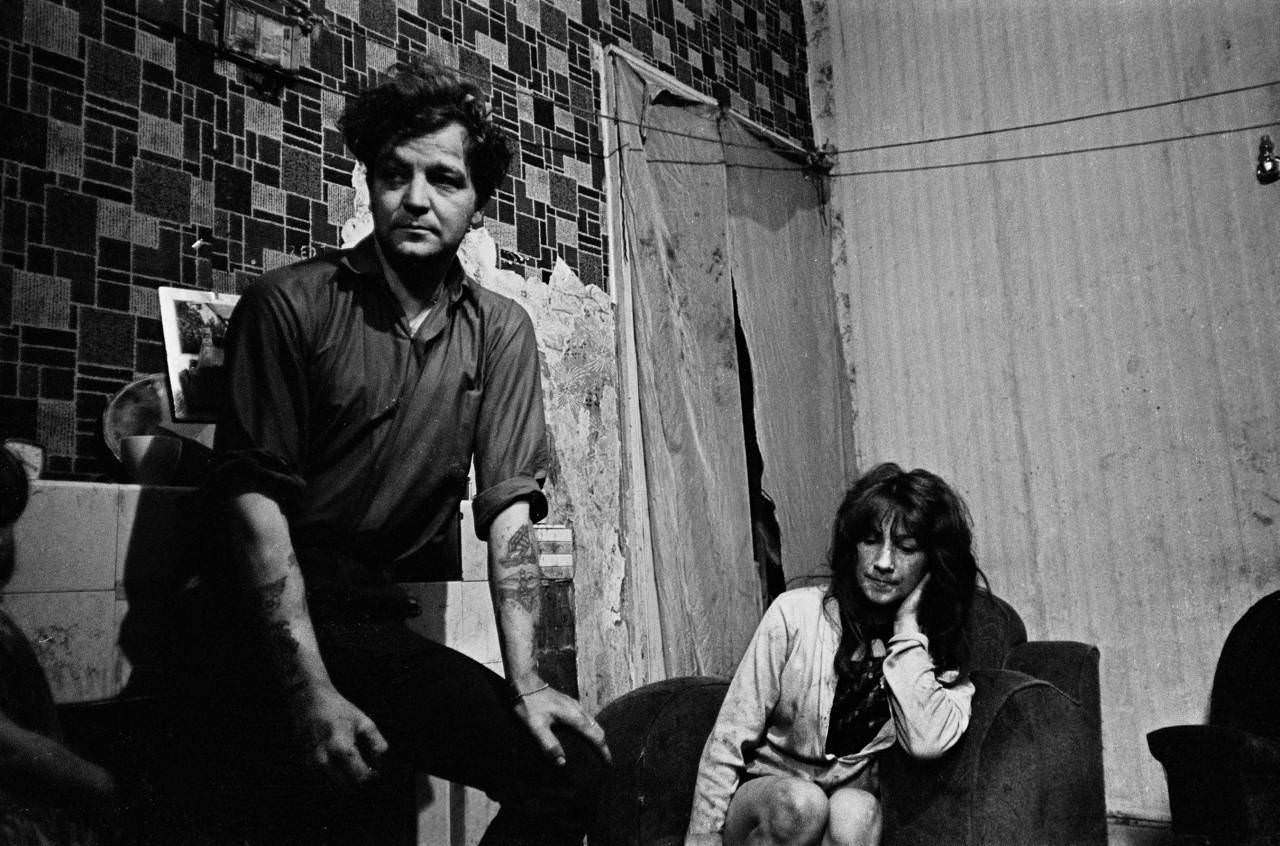
In Newcastle’s West End, Hedges documented families packed into crumbling terraced houses with no central heating, no insulation, and in many cases no functioning plumbing. Mothers cooked over open fires. Children slept on wet floors. Some families kept the lights on through the night not because they were afraid of the dark, but because the light kept the rats away. These were not edge cases — they were the norm for entire streets and neighborhoods.
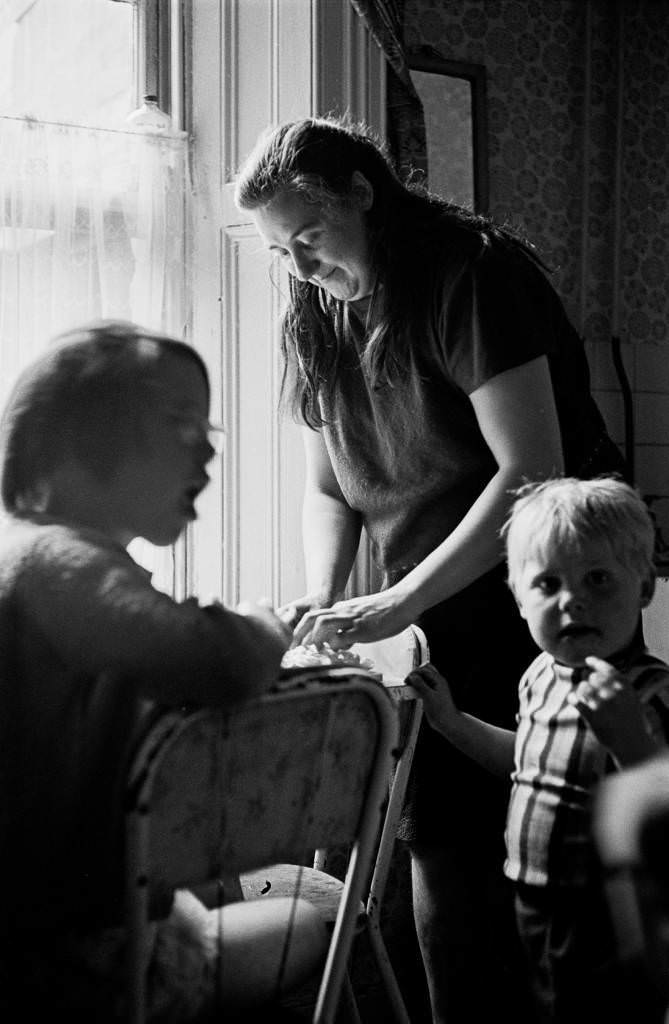
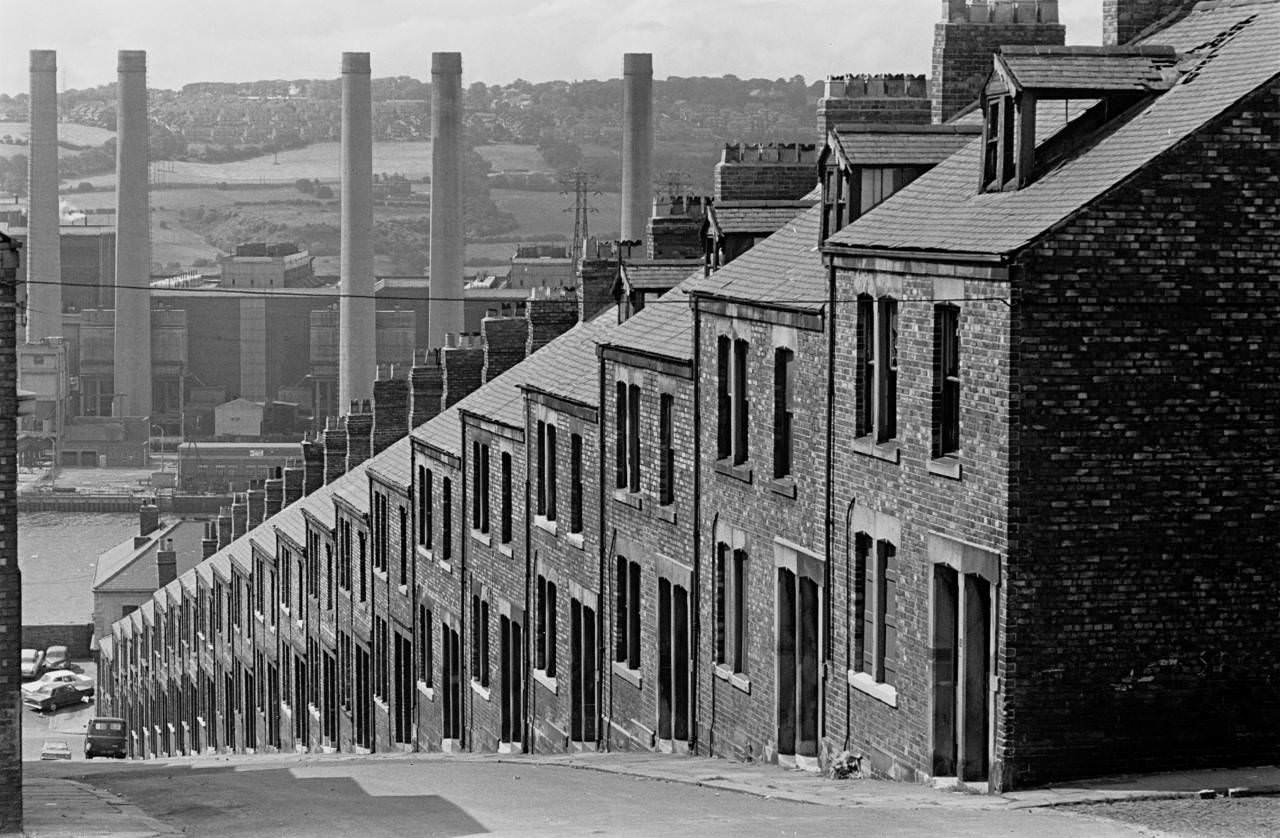
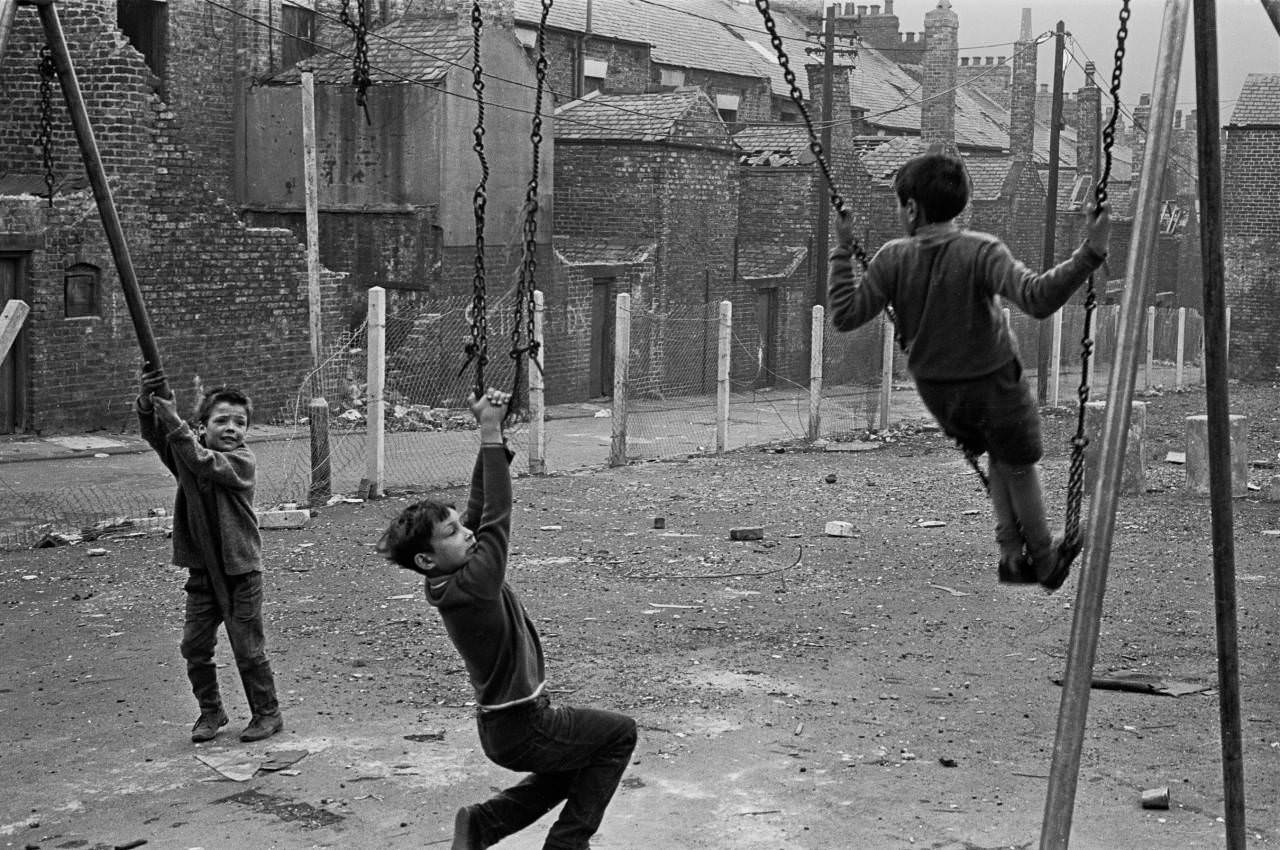
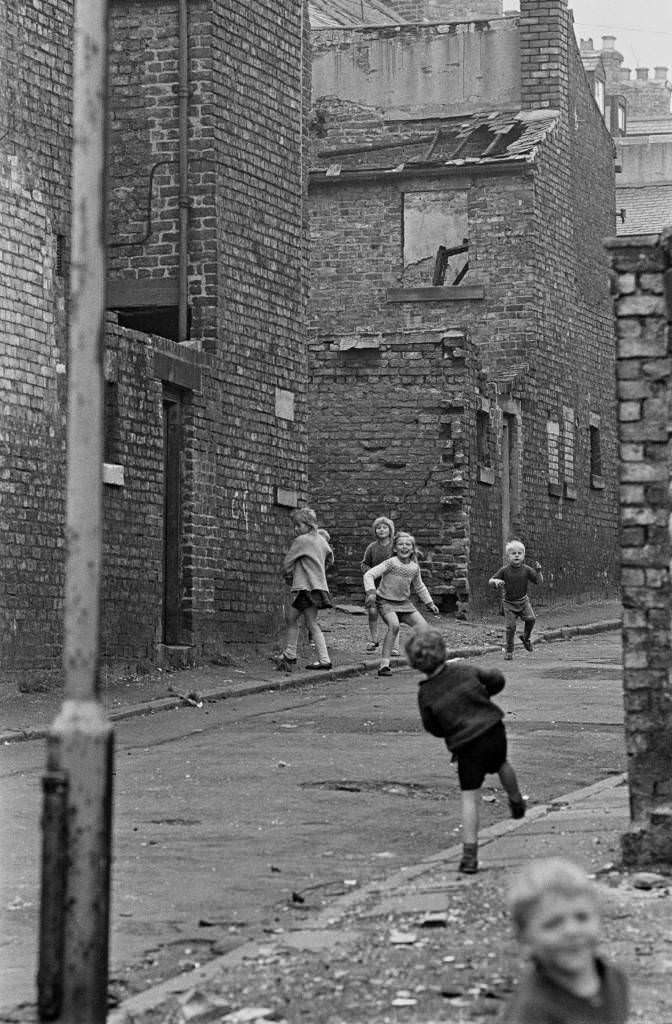
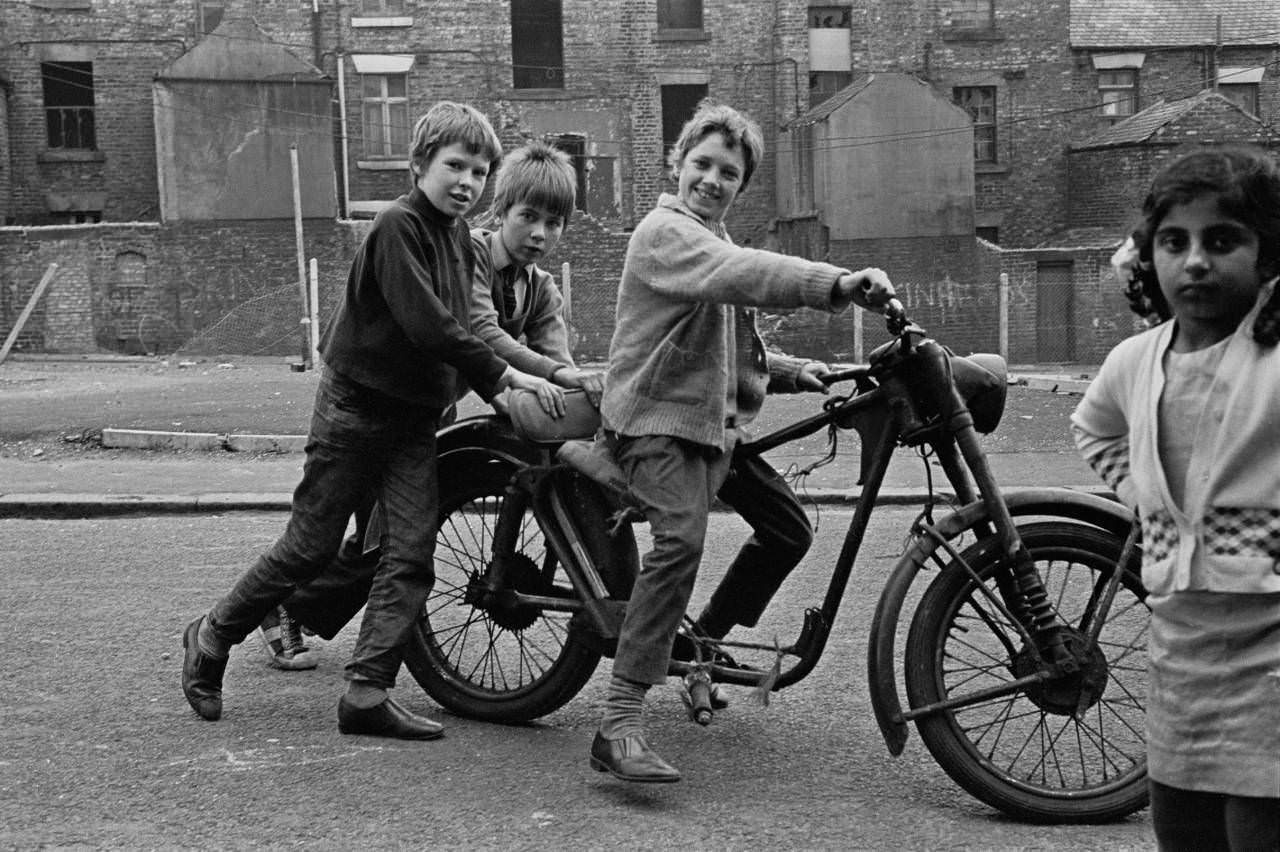
The streets themselves told the same story as the interiors. Rows of terraced housing stood in various states of collapse. Some blocks had already been partially cleared, leaving rubble and exposed foundations where homes had stood. The remaining houses sagged against each other, their brickwork blackened, their window frames rotting. Sewage water ran along gutters in the street. Children played in whatever open space existed — which often meant derelict lots filled with broken glass, metal scraps, and the debris of demolished buildings.
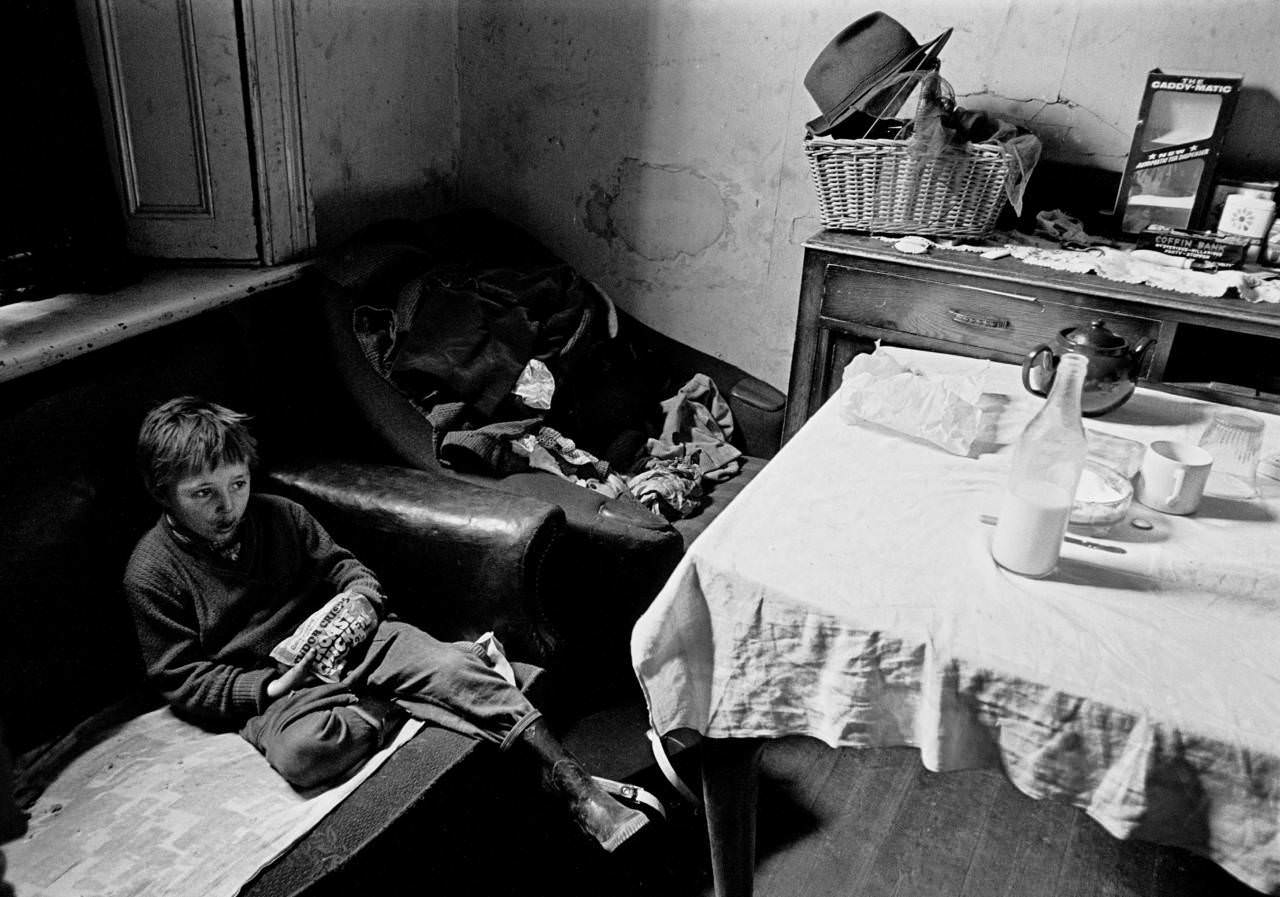
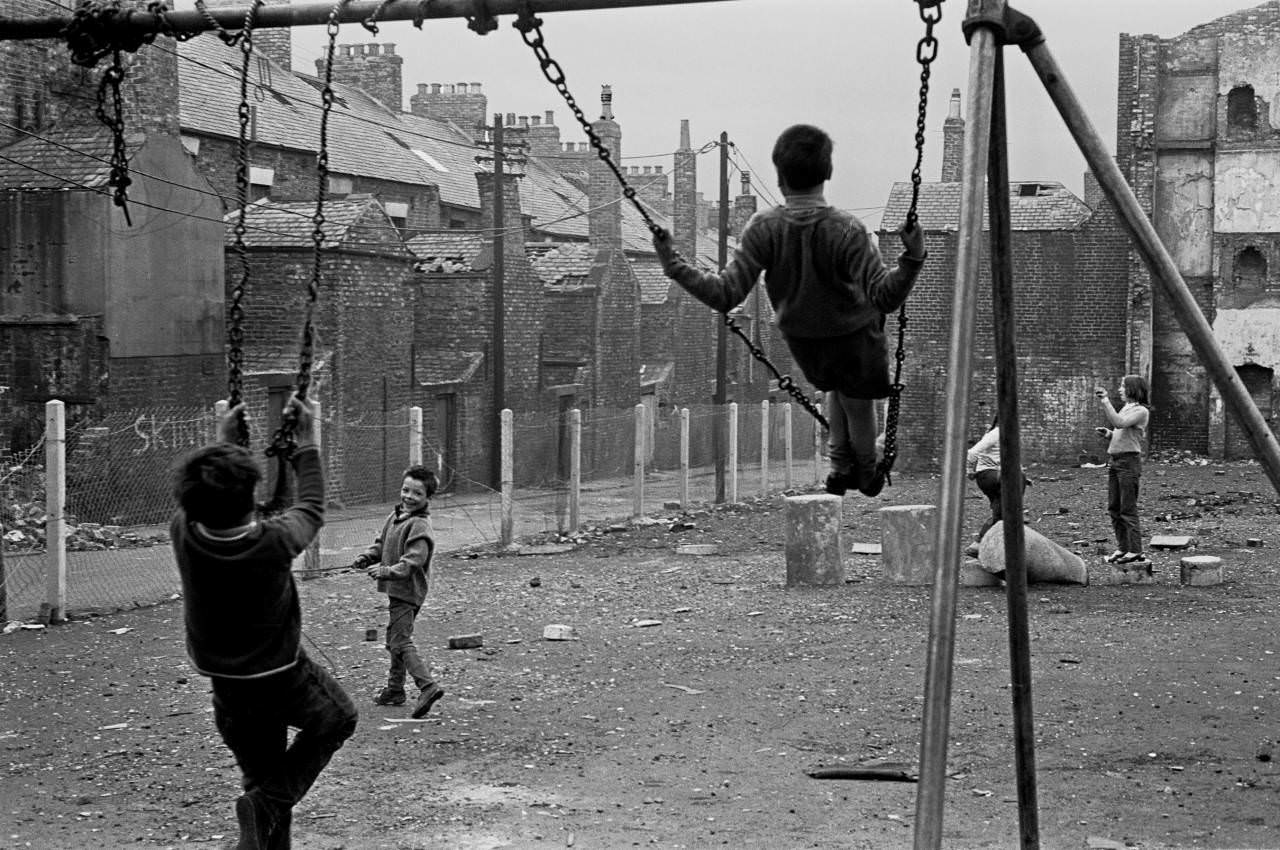
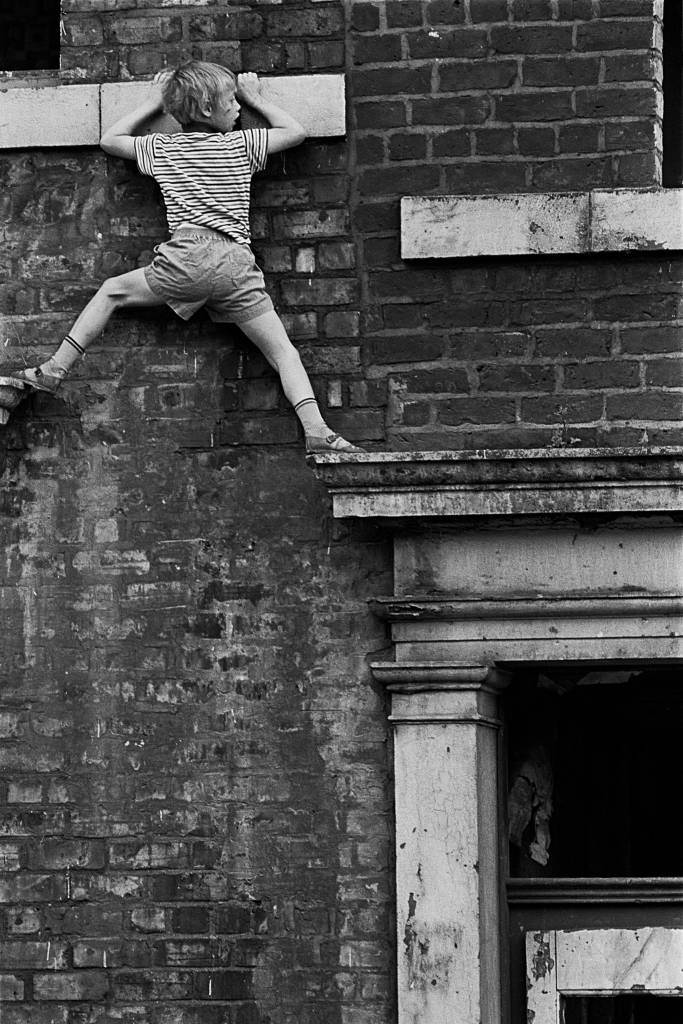
Children were everywhere in Hedges’ frames. They played on rubble heaps and in broken playgrounds, often without adult supervision, because their parents were inside managing households that demanded constant labor just to keep functional. Fetching coal, keeping fires going, managing damp, stretching money across a week’s worth of meals — these tasks consumed the adults entirely. The children, left to find their own entertainment, played in spaces that were anything but safe.
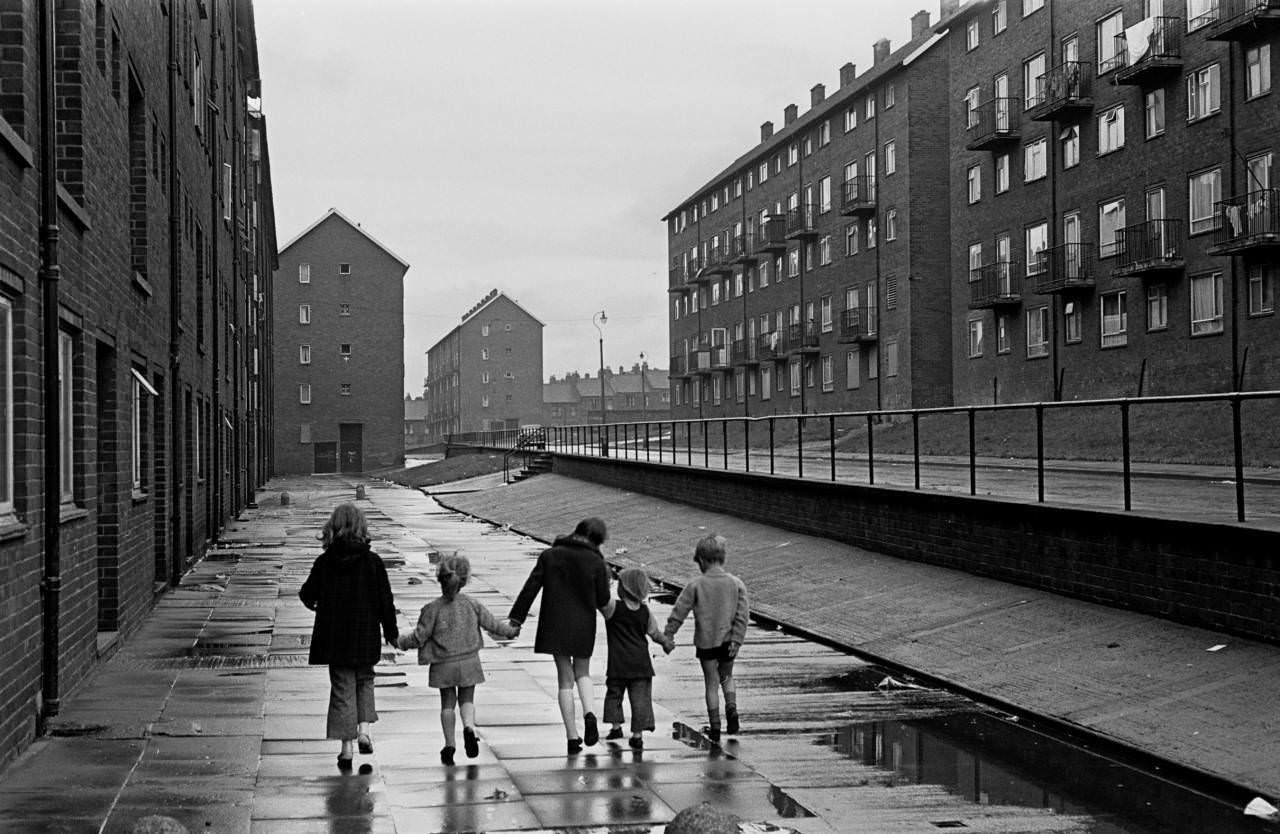
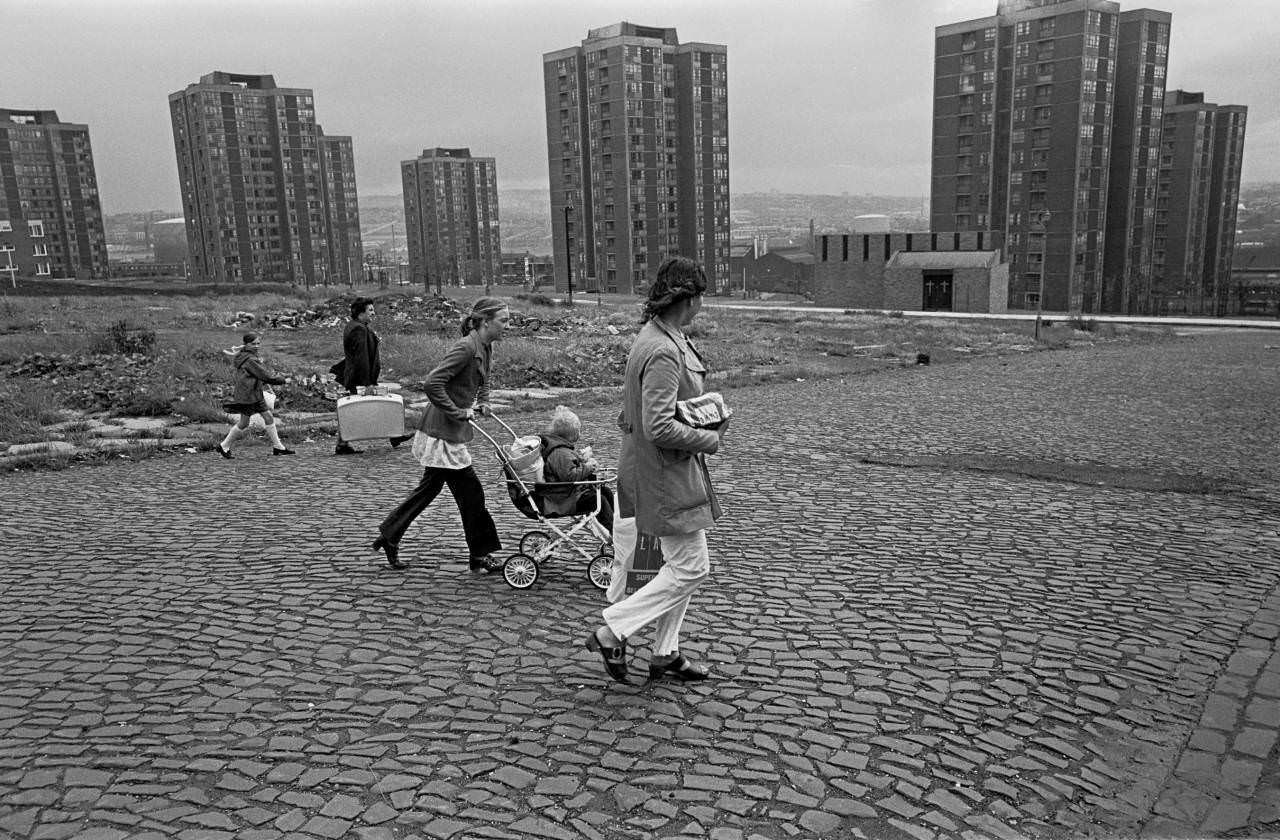
Slum clearance programs were underway in Newcastle during this period, but the process was slow and often made things worse before it made them better. Families were sometimes left in partially demolished streets for months, surrounded by cleared sites and unsafe structures, while waiting to be rehoused. The council estates that replaced the slums brought their own difficulties, but the transition period left many households stranded in a kind of urban no-man’s-land.
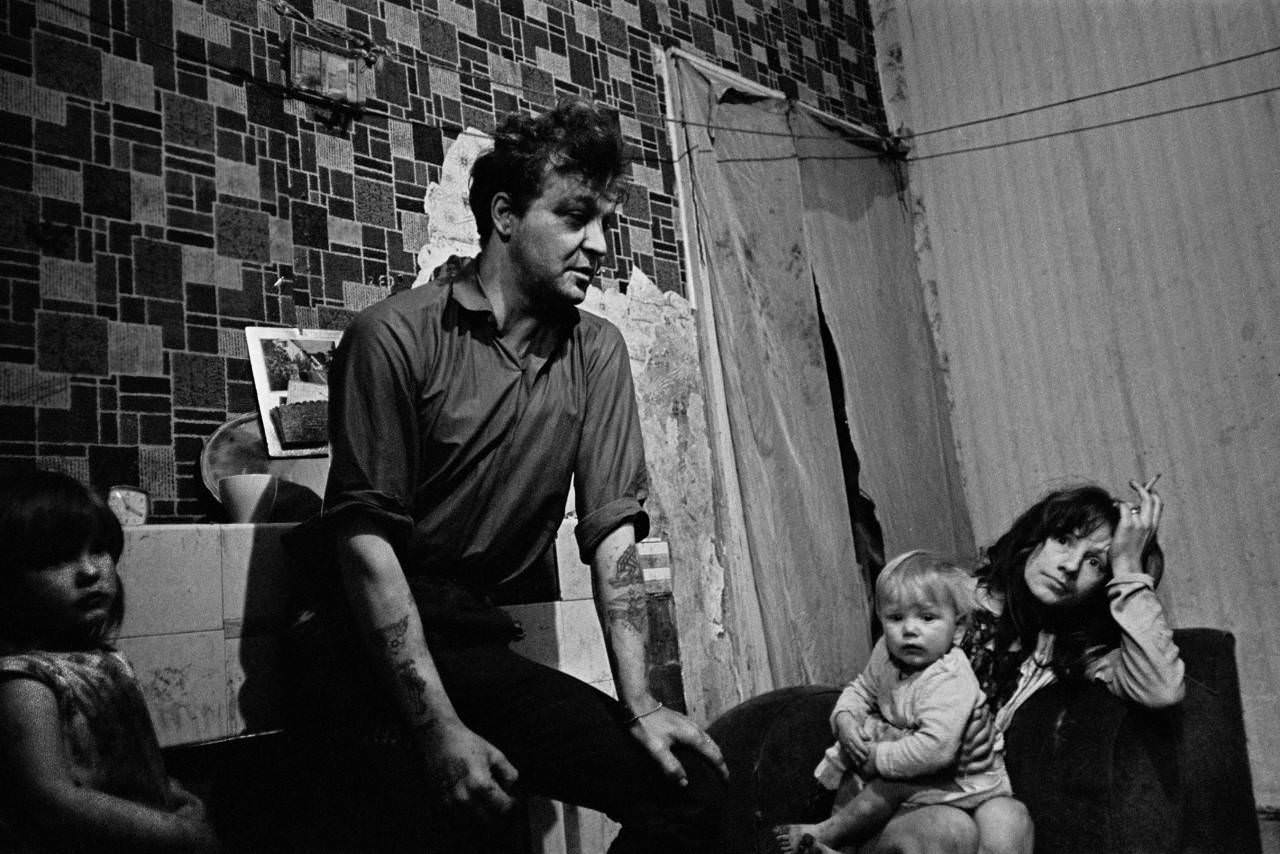
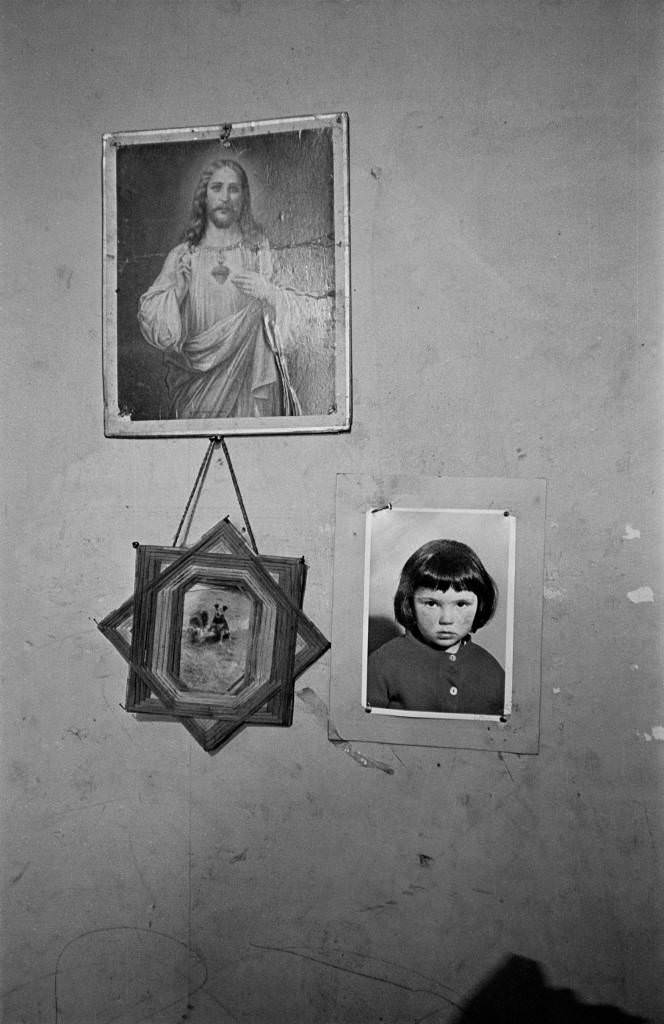
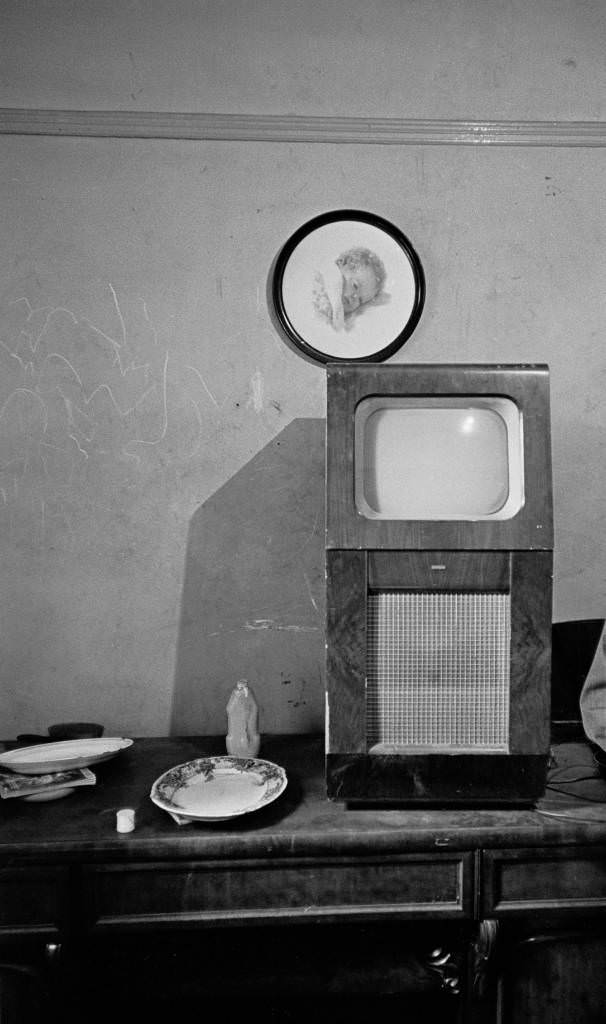
Inside these homes, the interiors were sparse. Living rooms held only the essentials — a chair, a small table, a fireplace that doubled as the main heat source and cooking point. Walls were bare or peeling. Windows let in drafts that no amount of layering could fully block in winter. The families Hedges photographed did not choose this — they were renters trapped in a private housing market that gave landlords little reason to maintain properties, and a public housing system that could not yet absorb the demand.
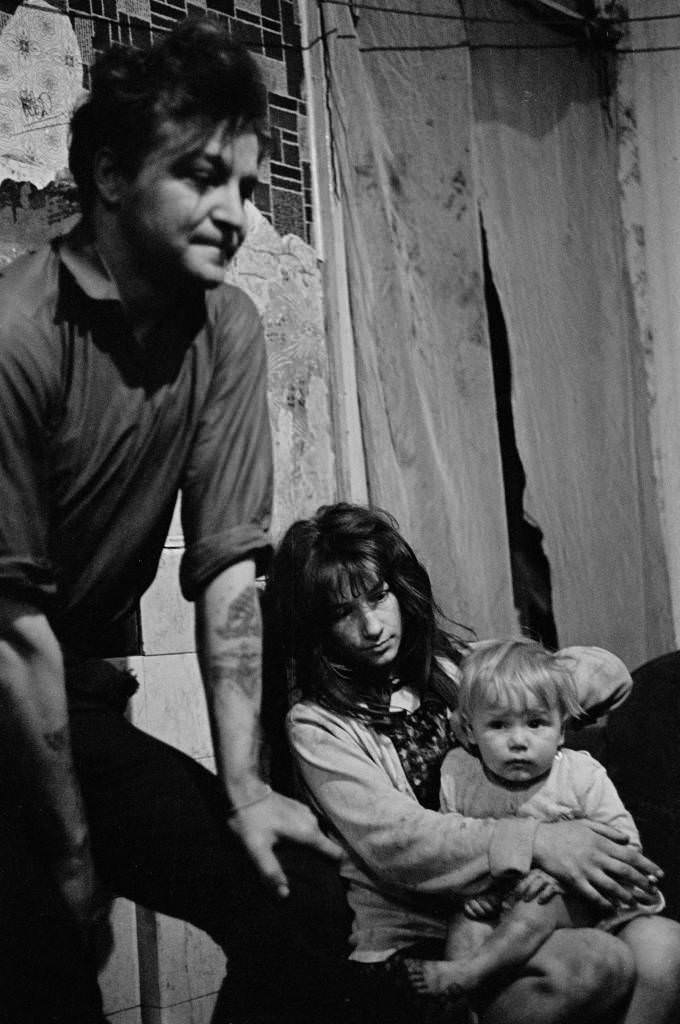
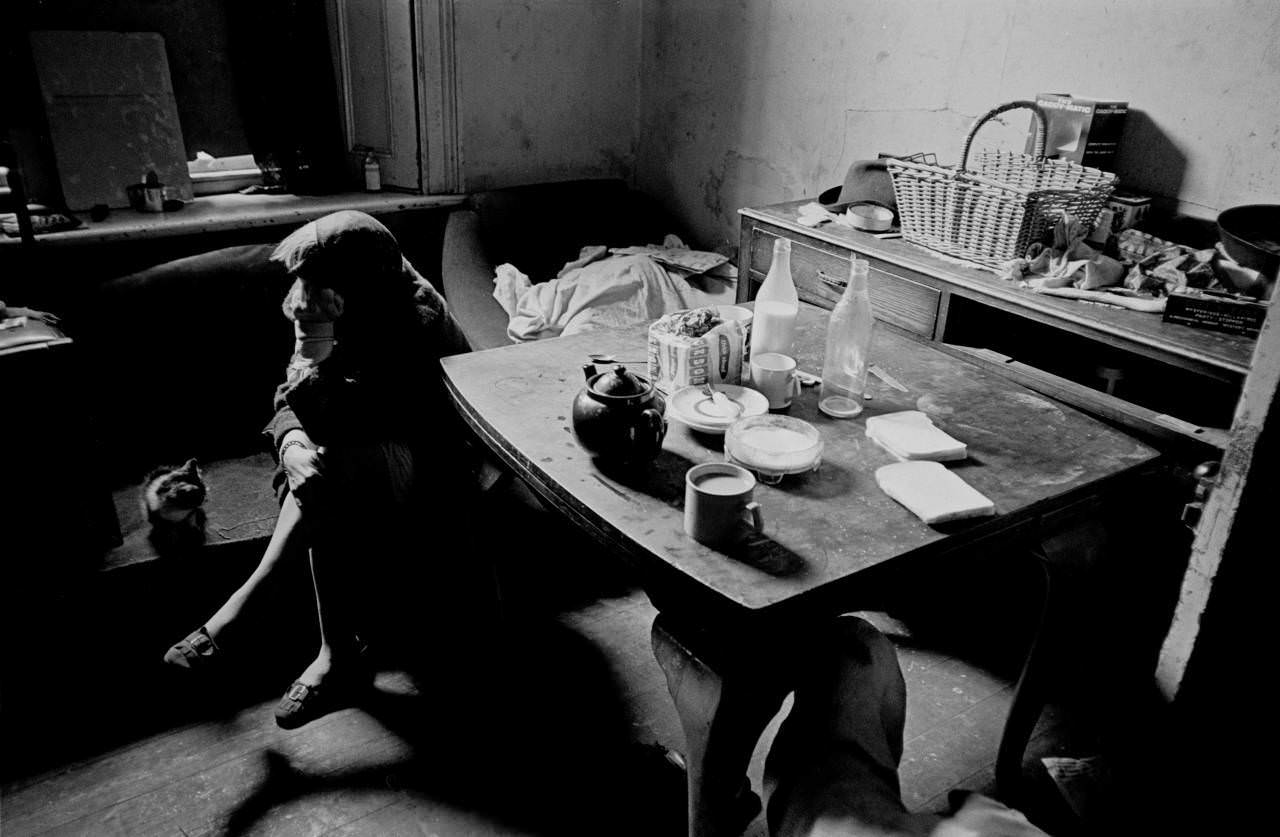
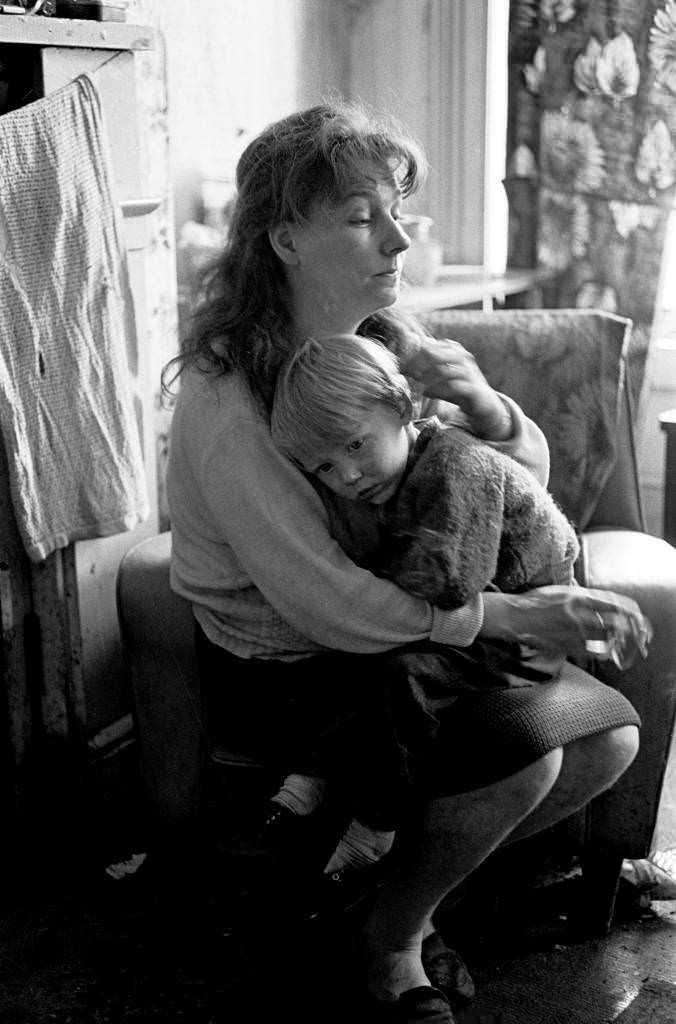
The women in these photographs carry a particular weight. Hedges photographed mothers in their kitchens, in their living rooms, and on their doorsteps — women managing impossible domestic situations with whatever they had. A Newcastle housewife photographed in her kitchen in 1972 stands in a space that is barely functional by any modern standard, yet she is clearly keeping it together. These women were the structural backbone of households that had almost nothing to work with.
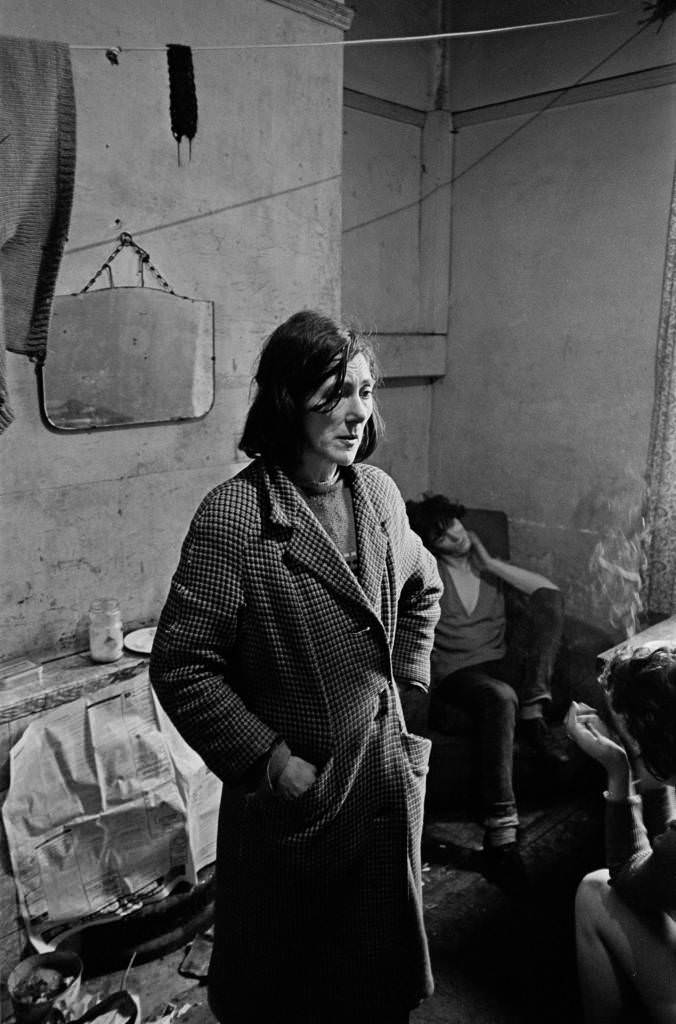
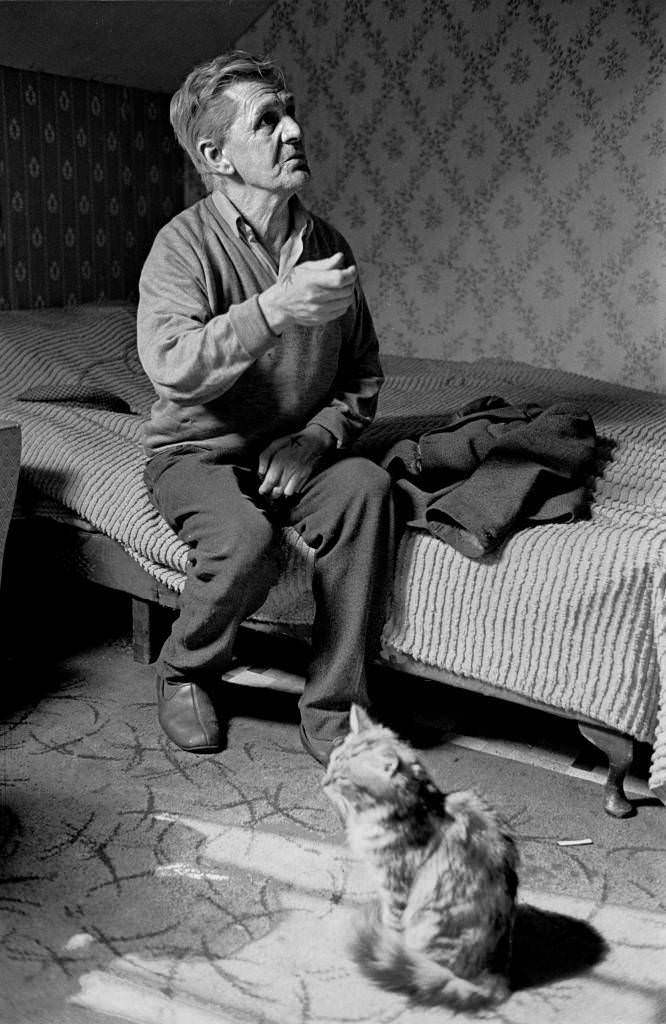
Not every resident was a young family. Hedges also documented older residents — including a retired seaman living in a Newcastle multi-let in 1971, sharing a subdivided house with other tenants. Multi-lets were common in the area: larger houses broken up into separate tenancies, frequently overcrowded, with shared facilities that rarely worked properly. For elderly residents with no family support nearby, these arrangements were often the only affordable option.
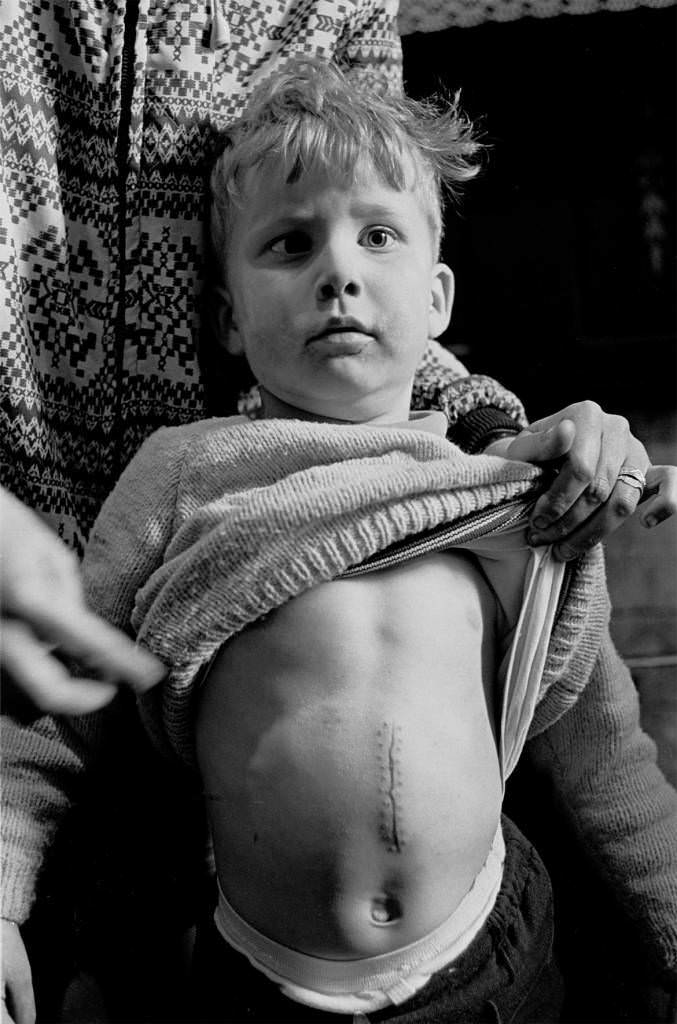
The dangers that came with this environment were not abstract. One of Hedges’ most harrowing images shows a young boy who had fallen on a rusty nail during play — the nail punctured his liver. This was the direct consequence of children playing in derelict, unsecured buildings with no one removing the hazards. Broken floors, exposed nails, collapsed ceilings, and unstable walls were part of the everyday landscape for children in Newcastle’s West End.
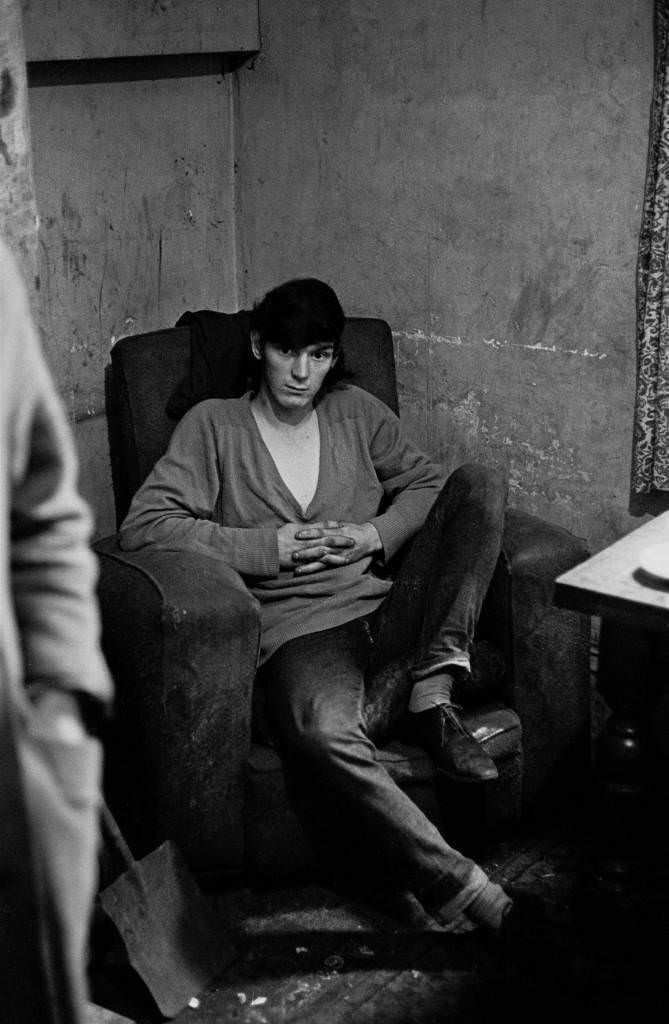
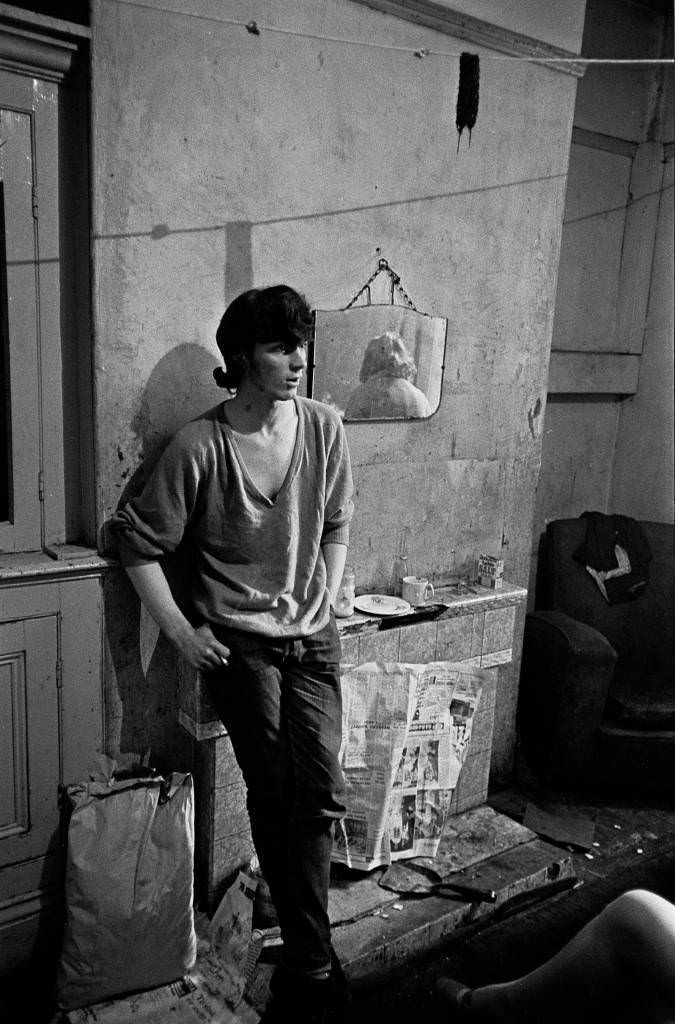
Unemployment added another layer of pressure. Hedges photographed unemployed young men in Newcastle’s West End in 1971, at a time when the industrial base of the northeast was beginning its long decline. The shipyards and heavy industries that had employed generations of Tyneside men were contracting. For young men growing up in the slums, the prospect of steady work was shrinking just as the housing conditions around them were reaching a breaking point.
Hedges eventually donated 1,000 prints from his Shelter work to the National Media Museum in 1983. The collection stands as a comprehensive visual record of what housing deprivation looked like in Britain during one of the most documented decades of the twentieth century. While the culture industries were busy recording the decade’s music, fashion, and politics, Hedges was recording something the mainstream largely ignored.
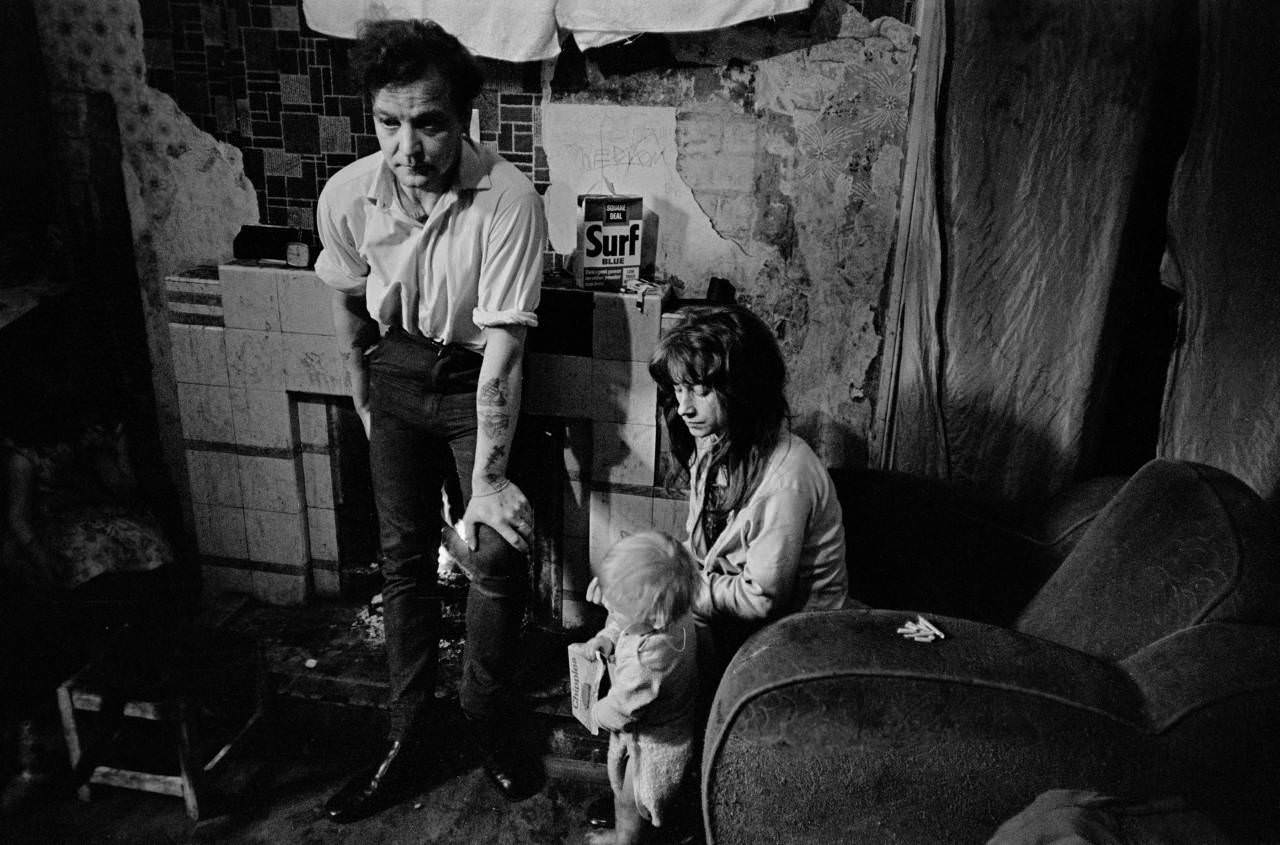
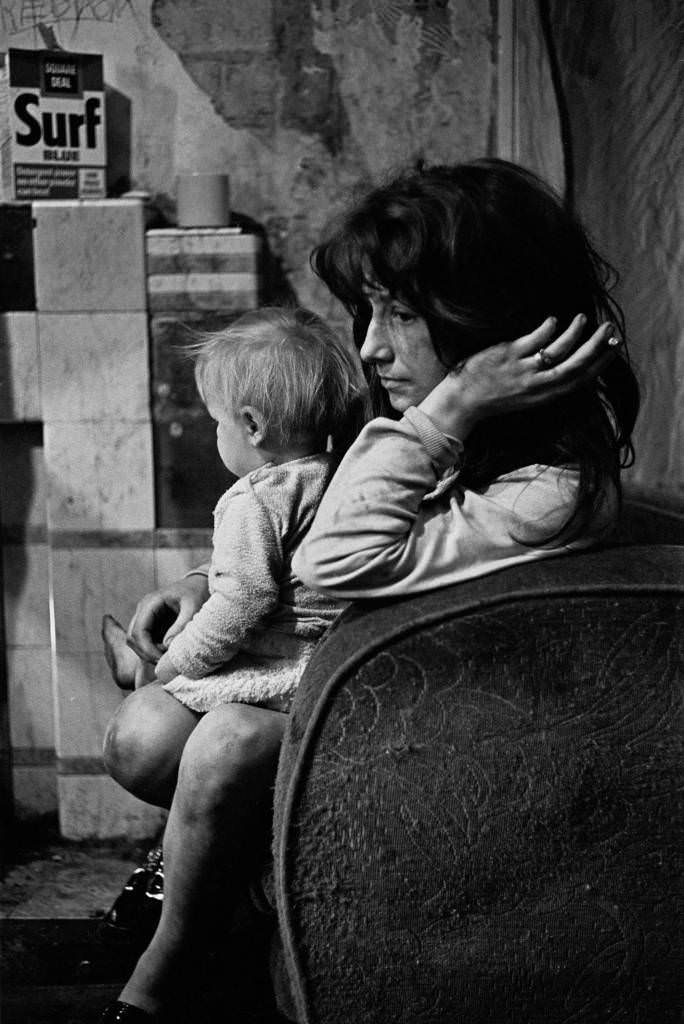
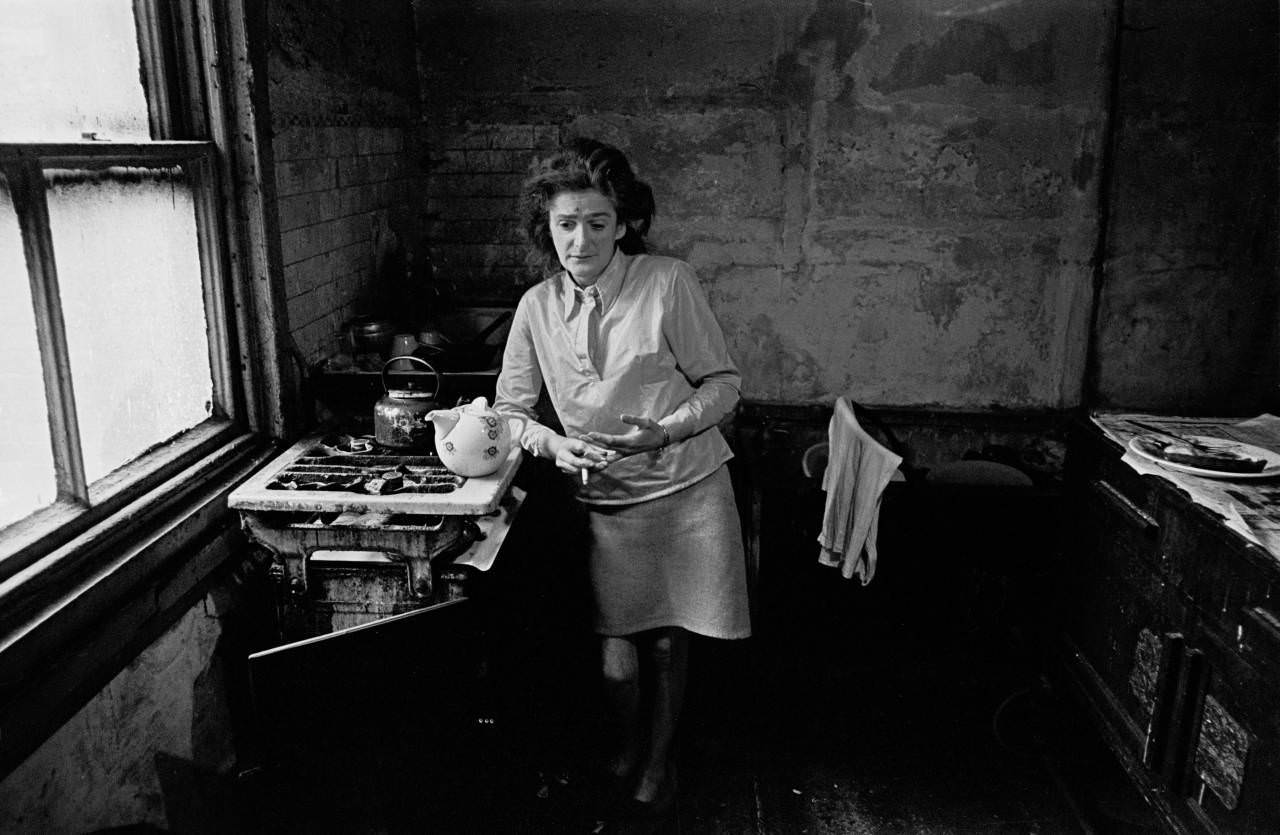
The families in these photographs were not statistics or case studies. They were Newcastle residents — people with names, routines, and neighbors — living in conditions that no amount of national economic growth was reaching. Hedges’ camera did not editorialize. It recorded. A mother and child. A housewife in her kitchen. Children walking home from school across a council estate. The plainness of the images is exactly what makes them so difficult to look away from.
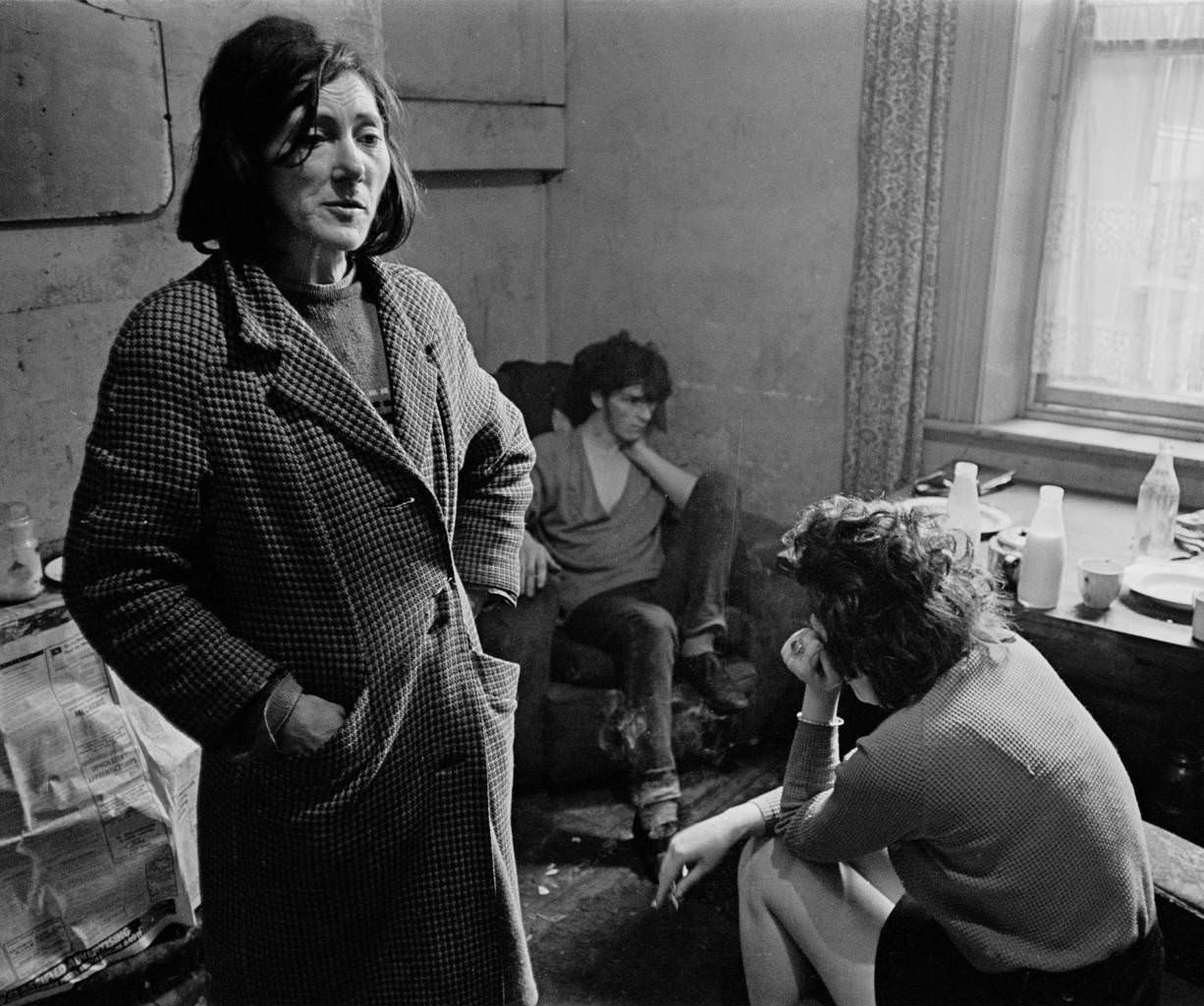





These photos have been posted on the Elswick Facebook group, and people in some of these photos have been recognized, and the stories with some of these photos are absolute bullshit – confirmed by people who were there at the time, and all the back stories have come out. This is quite a funny thread.