
America’s relationship with swimming pools stretches back further than most people realize. The Cabot Street Bath in Boston opened in 1868 as the first public swimming pool in the United States. At the time, most homes in the surrounding neighborhood had no bathtubs at all. A pool wasn’t a luxury — it was a necessity.
By the early 20th century, two key advances changed everything. Chlorination and filtration systems meant pools could be cleaned continuously with fresh, treated water. Before those systems existed, the only way to clean a pool was to drain it completely and start over. Maintenance went from a major chore to a manageable routine, and public confidence in pool safety grew.
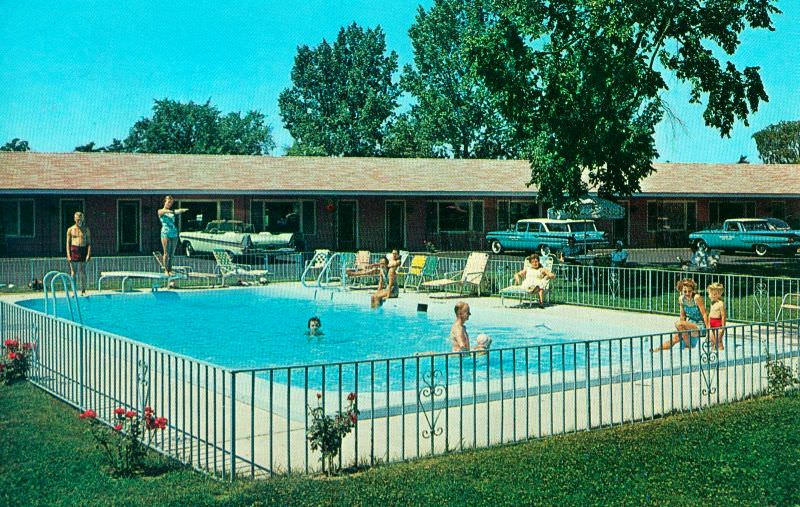
Then came gunite. This spray-applied concrete material allowed builders to construct pools faster, at lower cost, and in shapes that older methods couldn’t achieve. A pool no longer had to be a plain rectangle. Kidney shapes, freeform designs, and built-in steps became standard features. The pool industry expanded rapidly on the back of this single material innovation.
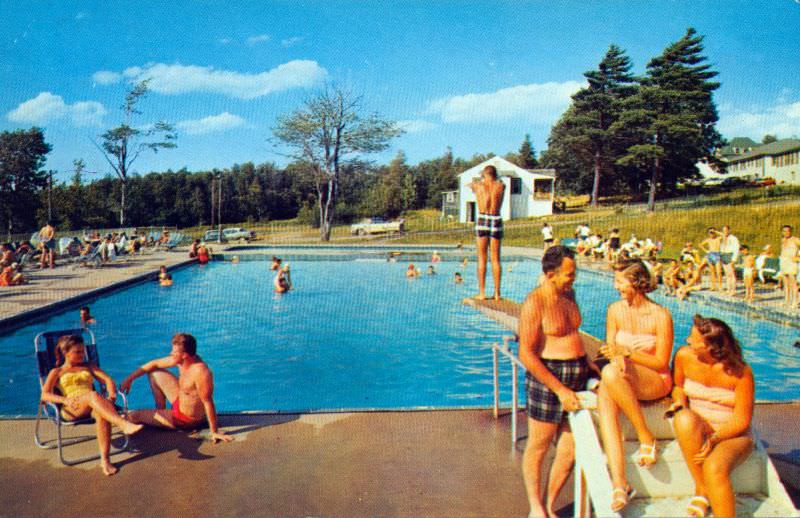
After World War II, the boom accelerated even further. The postwar middle class had more disposable income and a strong appetite for leisure. Above-ground pool kits hit the market in 1947, giving families an affordable way to have a pool in the backyard without major construction. Within just a few years, single-unit pools could be purchased and fully installed in a single day.
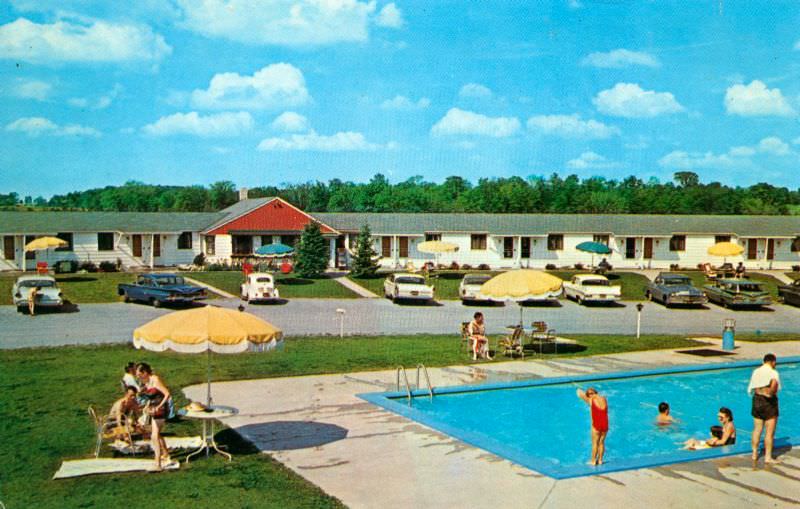
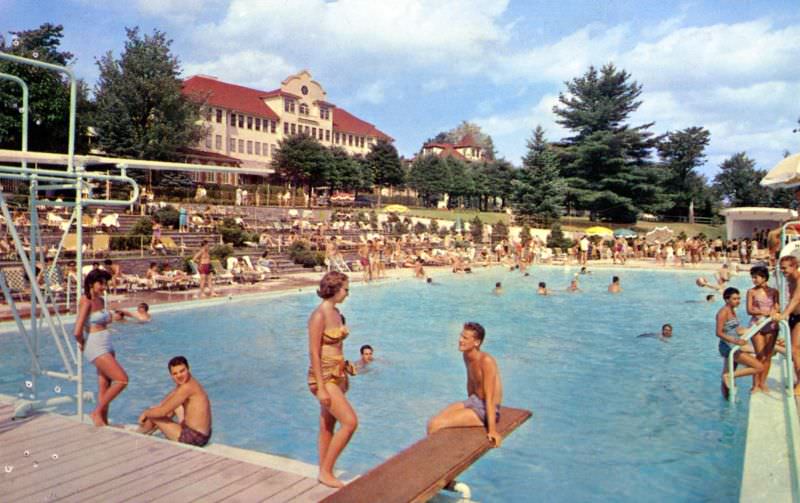
New York State became a showcase for this poolside culture. From the Catskills resort belt to the Adirondacks, hotels and motels competed fiercely for guests — and a sparkling swimming pool was one of the most effective selling points a property could offer. The Catskills in particular, home to a dense cluster of Jewish resorts known as the Borscht Belt, built some of the most elaborate pool facilities in the country.

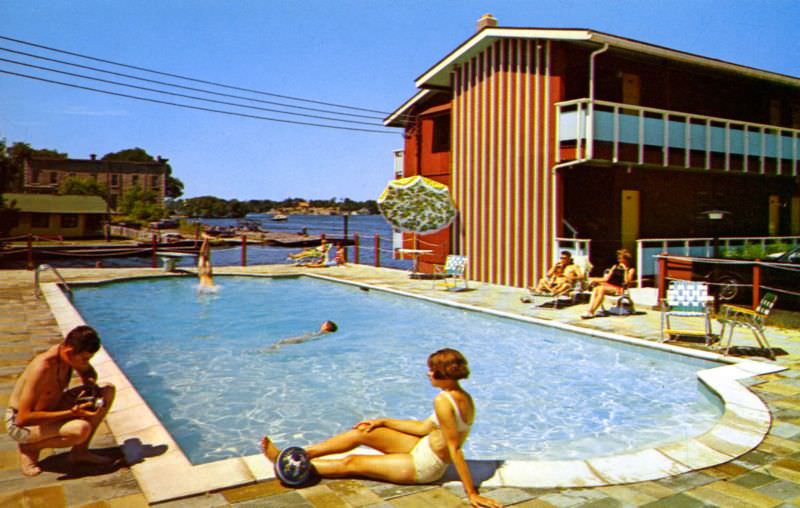
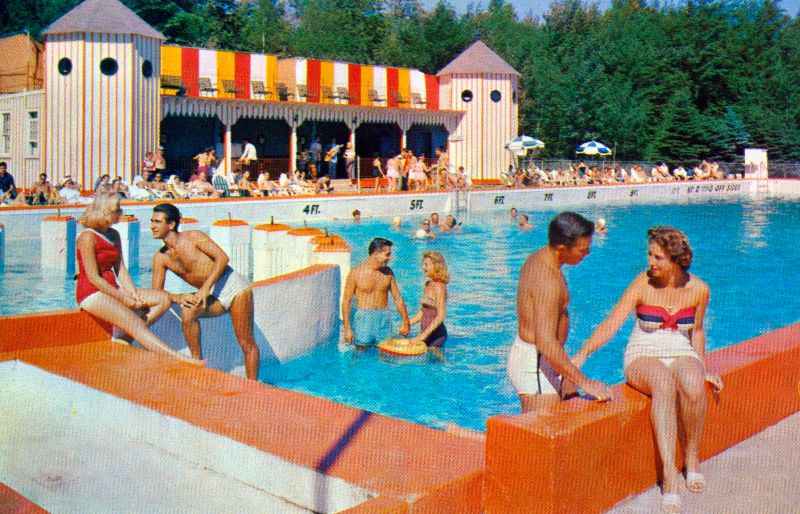
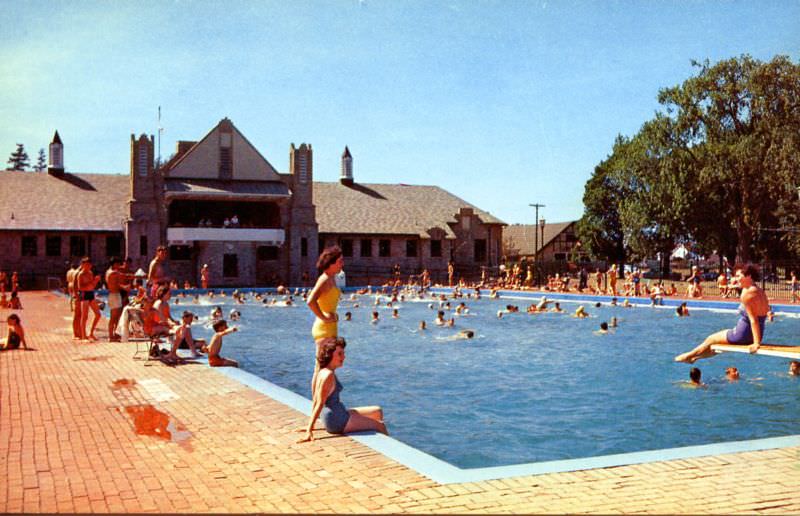
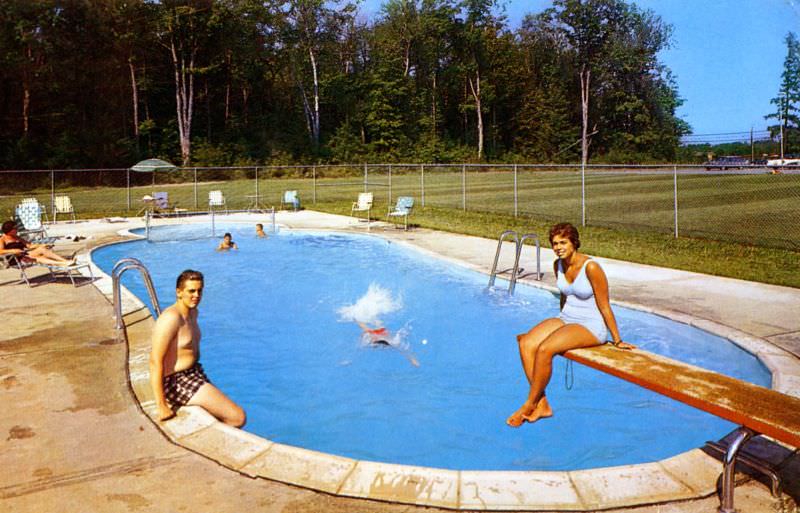
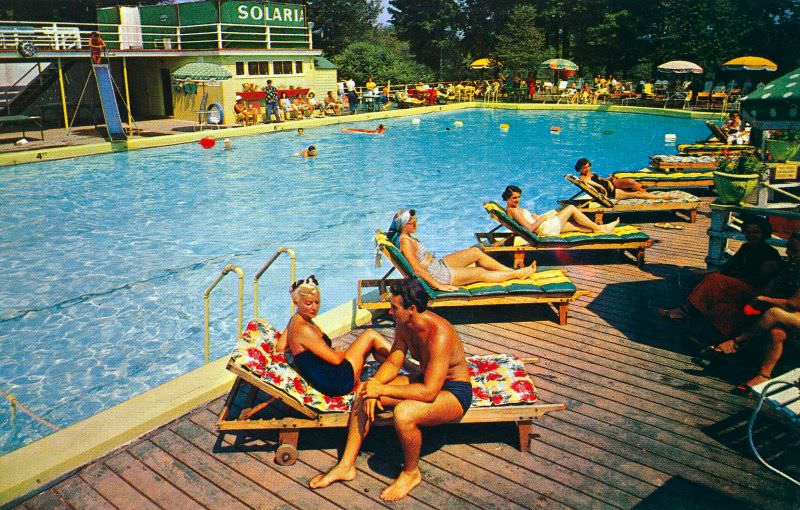
Photographer William Bird documented this world in vivid detail during the 1950s and 1960s. His photos capture a range of pool settings across New York State — from grand resort complexes to roadside motor lodges, from municipal public pools to private country clubs. Together, they form a remarkable visual record of how Americans spent their leisure time in the postwar decades.
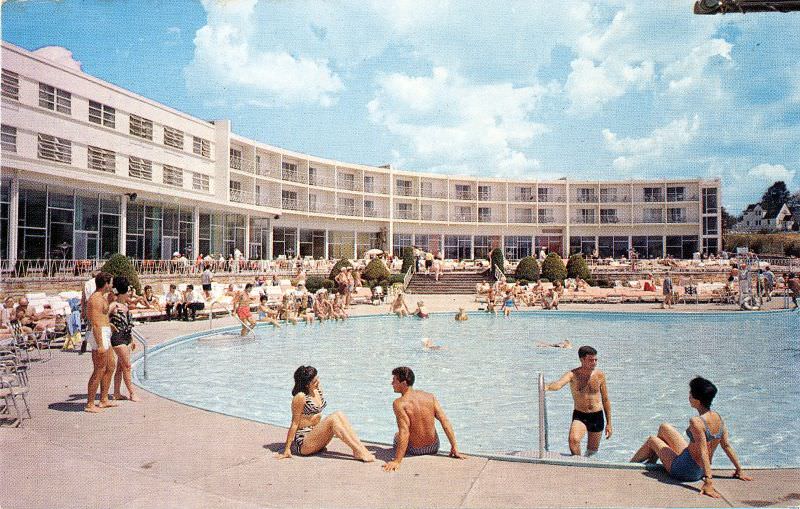
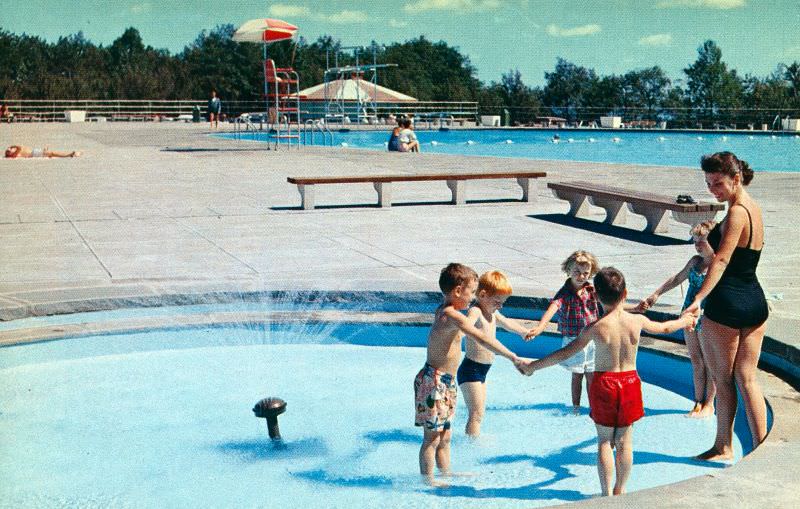
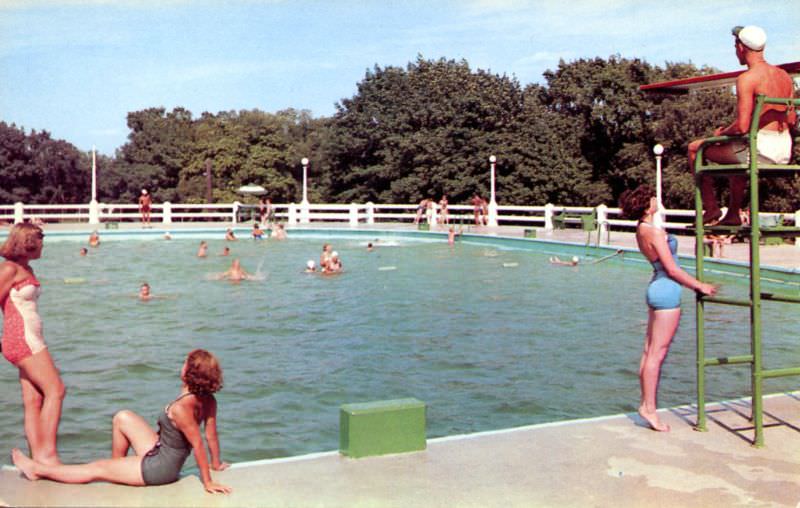
Public parks also invested heavily in pool infrastructure during this era. John Boyd Thacher State Park in the Helderberg Mountains, located about 15 miles southwest of Albany, featured both a children’s wading pool and a large main swimming pool. Facilities like these gave city and suburban residents access to safe, supervised swimming without needing to travel far.
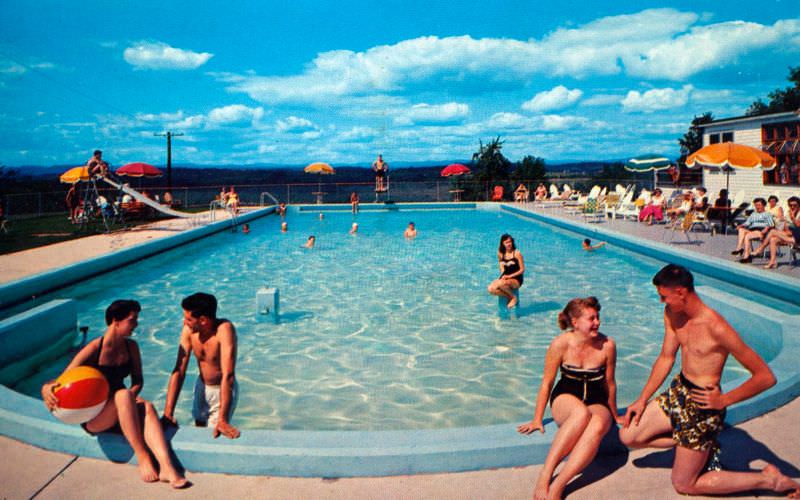
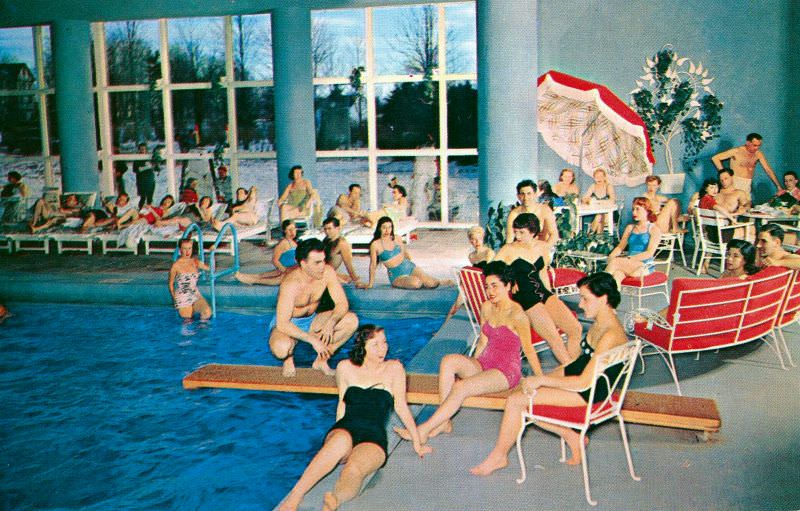
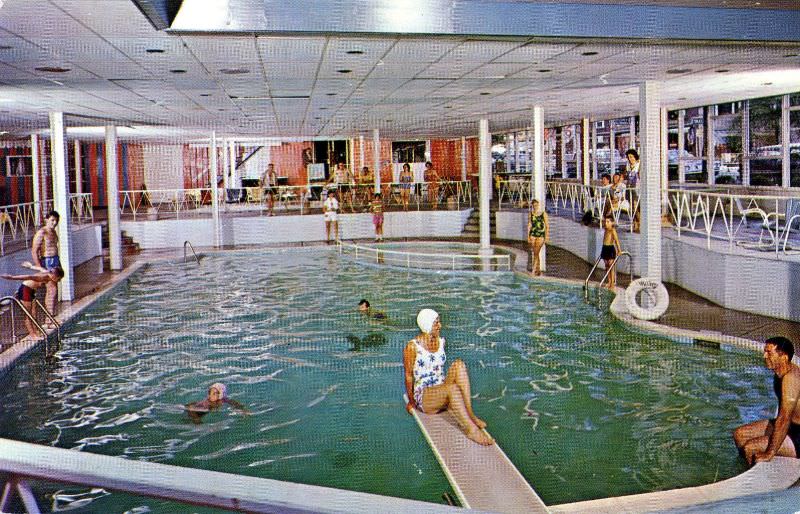
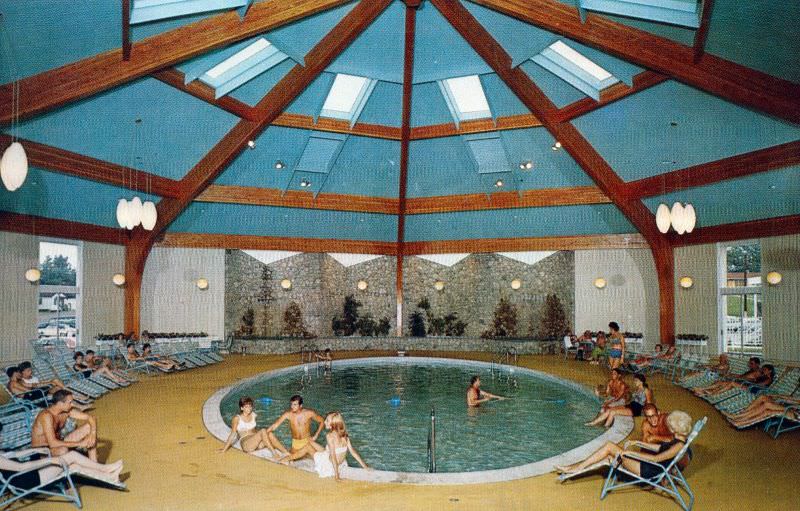
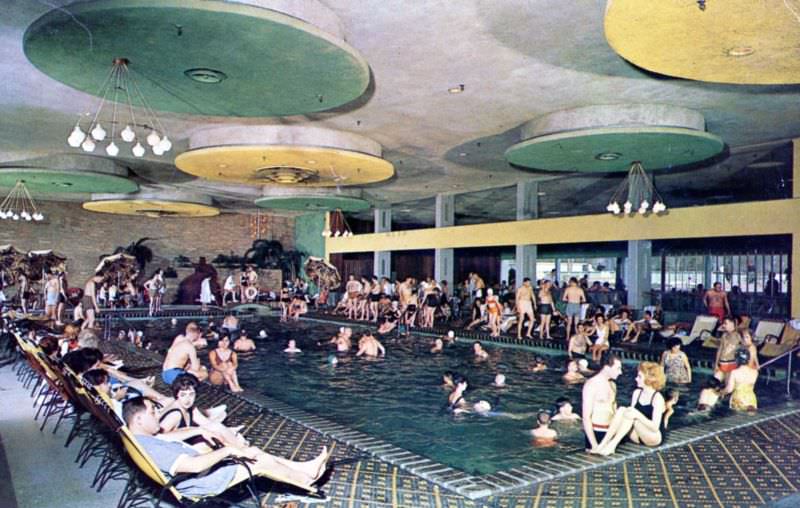
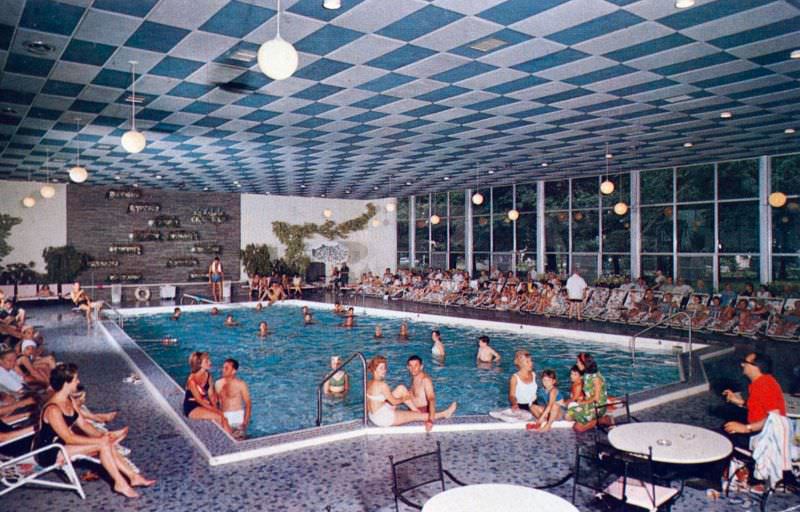
Indoor pools were another mark of ambition for the bigger resort properties. The Concord Hotel at Kiamesha Lake and the Nevele Country Club in Ellenville both built enclosed pool facilities that let guests swim year-round regardless of weather. These weren’t afterthoughts — they were centerpieces of the resort experience, complete with tropical-themed décor and elaborate tiling.
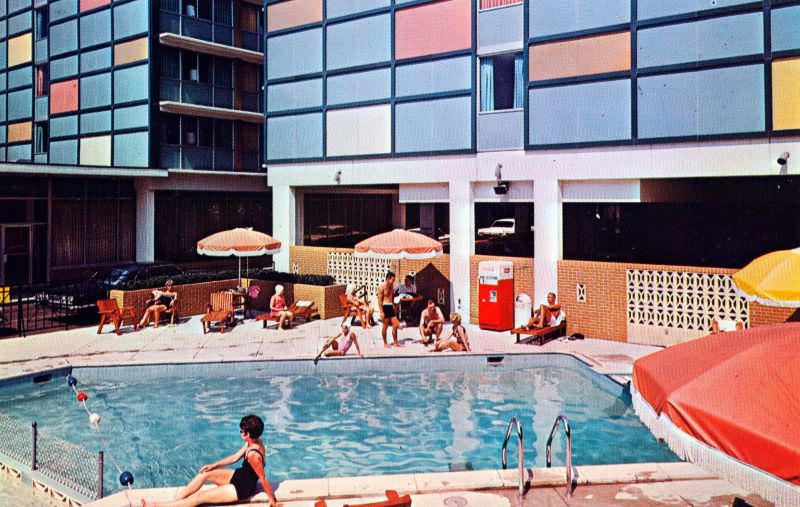
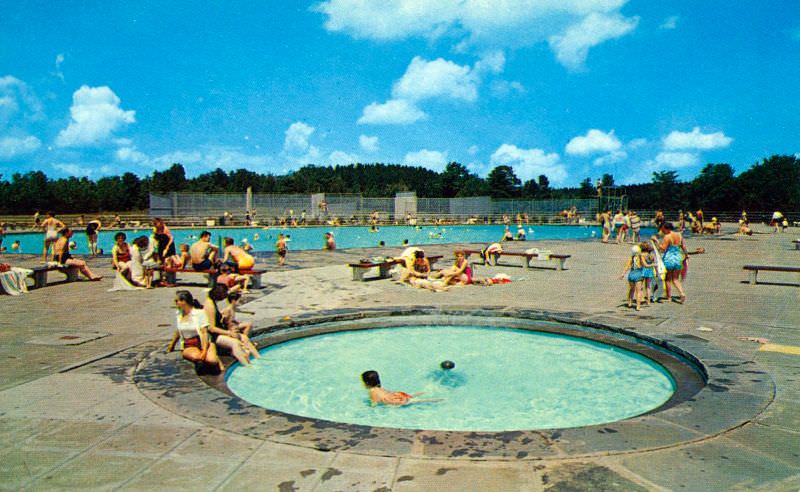
Grossinger’s in the Catskills was one of the most famous resorts in the country during this period. Its Olympic-sized pool drew both everyday vacationers and celebrity guests. The resort had its own post office, airport, and ice rink — the pool was simply one attraction among many at a property that operated almost like a small town.
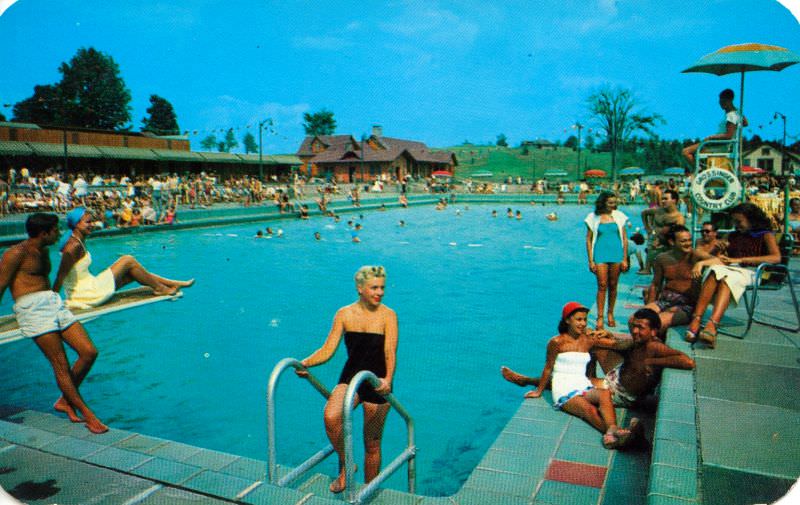
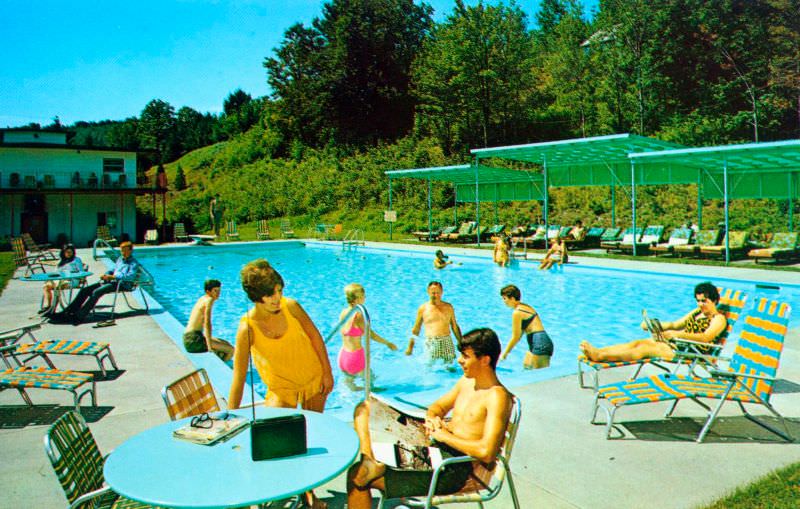
South Fallsburg, a small Sullivan County town, appeared repeatedly in Bird’s work. Multiple hotels in the same town — the Brickman, the Nemerson, the Pines, the Raleigh, and the Windsor — each had their own distinct pool setup. The competition among these properties drove constant upgrades and expansions throughout the 1950s and into the 1960s.
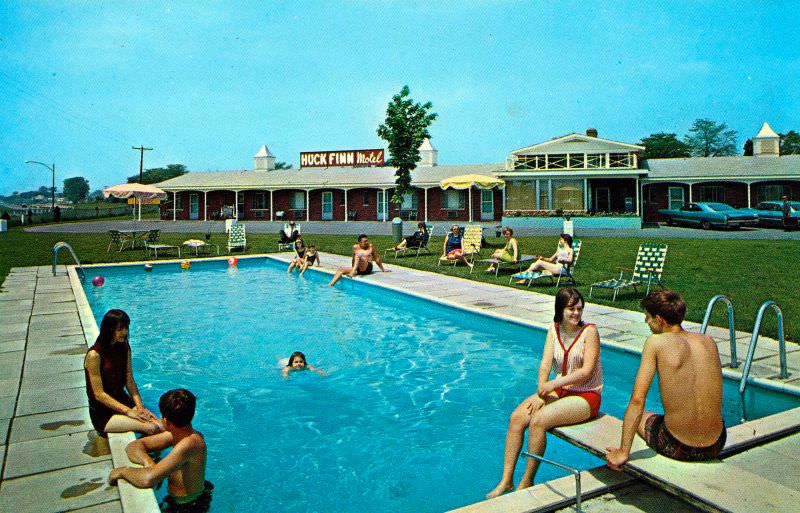
Motels along New York’s major highways also understood the draw of a pool. Properties like the Huck Finn Motel in Horseheads, the L&M Motel in Schenectady, and the Man-Del-A Motel at Lake George all featured pools prominently in their promotional materials. For families on road trips, a motel with a pool was an easy choice over one without.
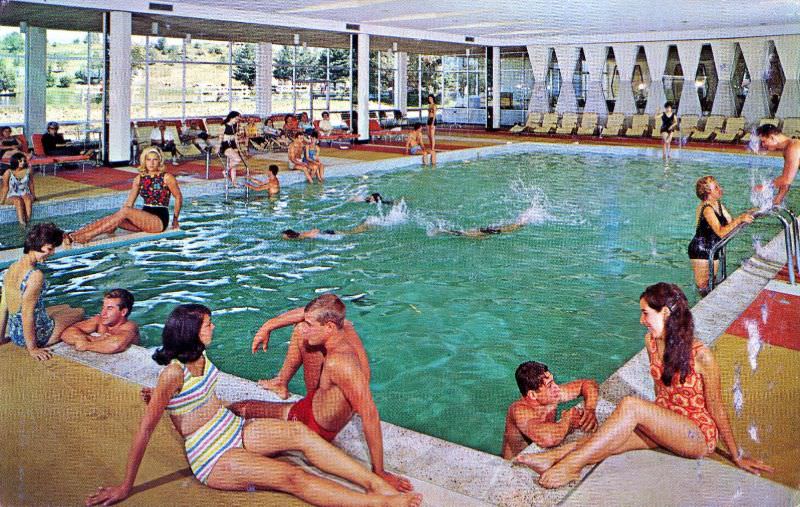
Monticello, in the heart of Sullivan County’s resort corridor, shows up in multiple images. Kutsher’s Country Club, the Laurels Hotel and Country Club, and the Lido Motel all operated within the same general area and catered to similar clientele — primarily New York City families seeking a summer escape within a few hours’ drive of the city.
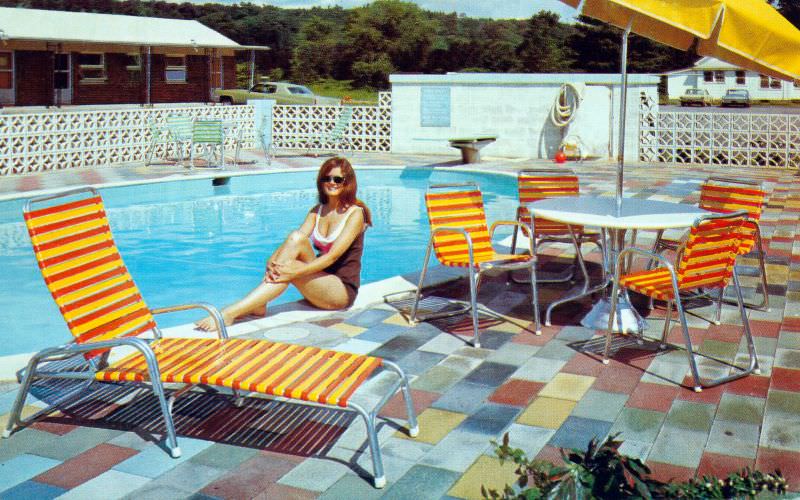
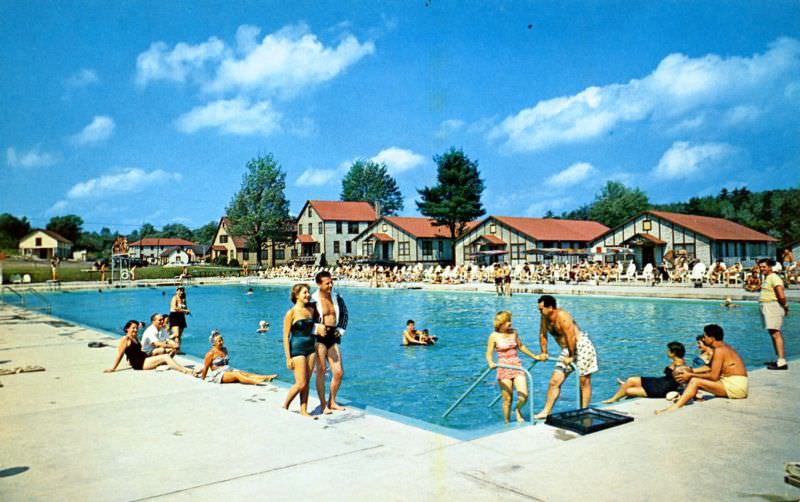
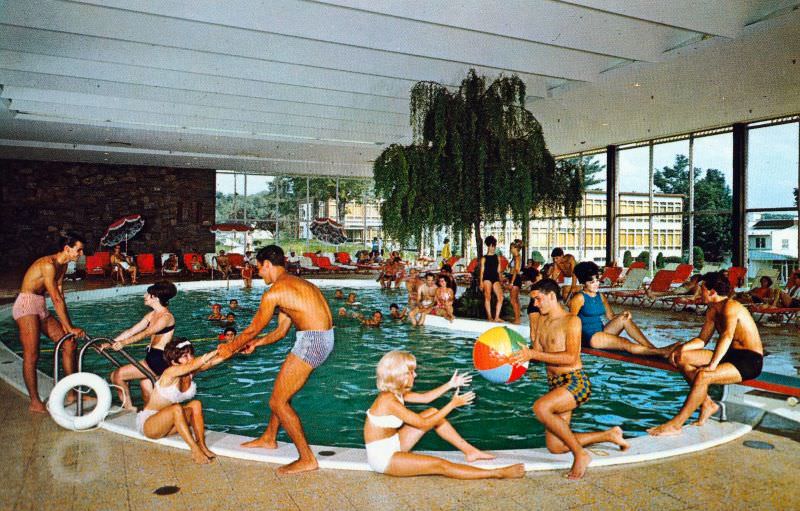
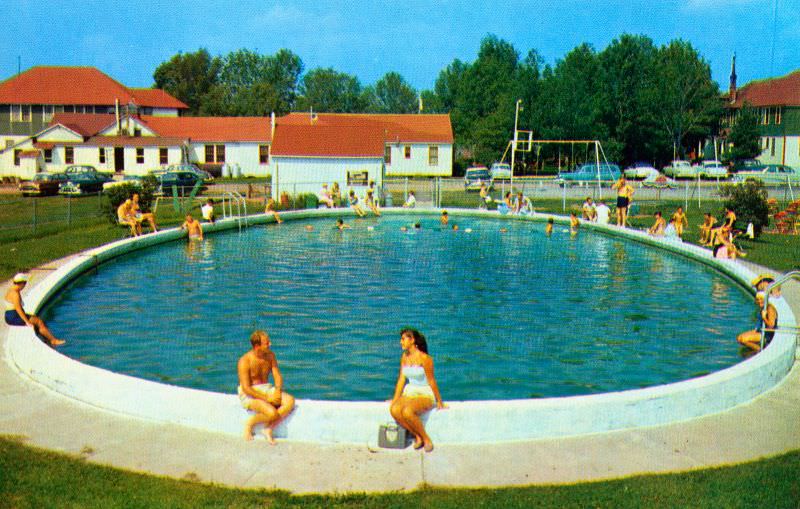
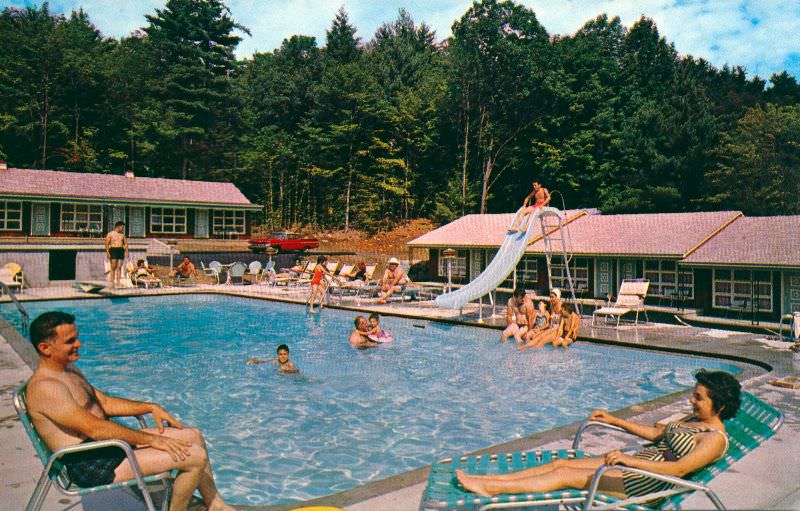
Bird’s photos also reach into the North Country. The Alexandria Bay area along the St. Lawrence River, the Lake Placid region in the Adirondacks, and Ogdensburg near the Canadian border all appear in the collection. These weren’t Catskill-style mega-resorts — they were smaller, quieter properties where the pool served as a simple, reliable draw for summer guests.
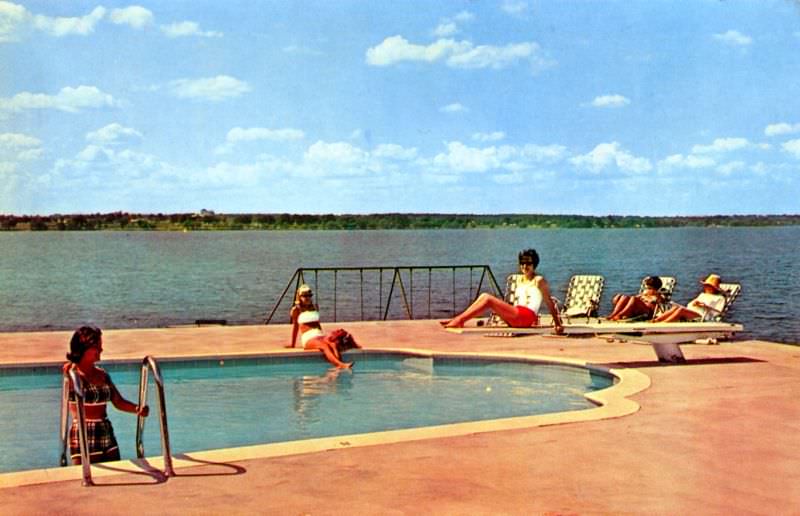
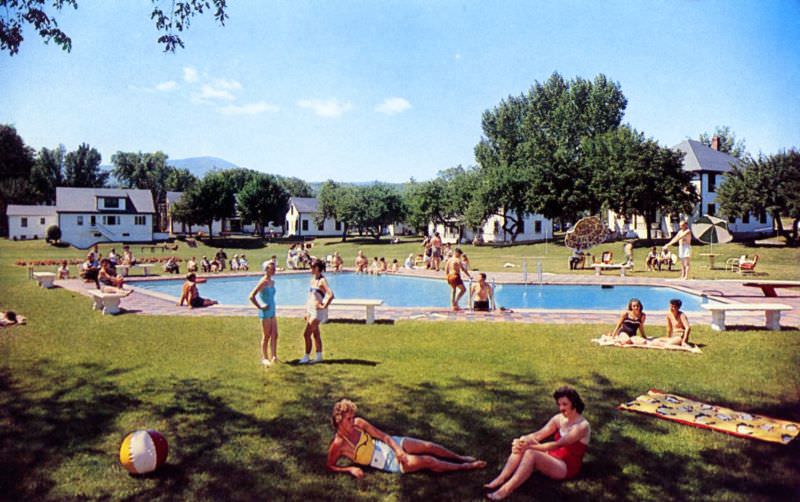
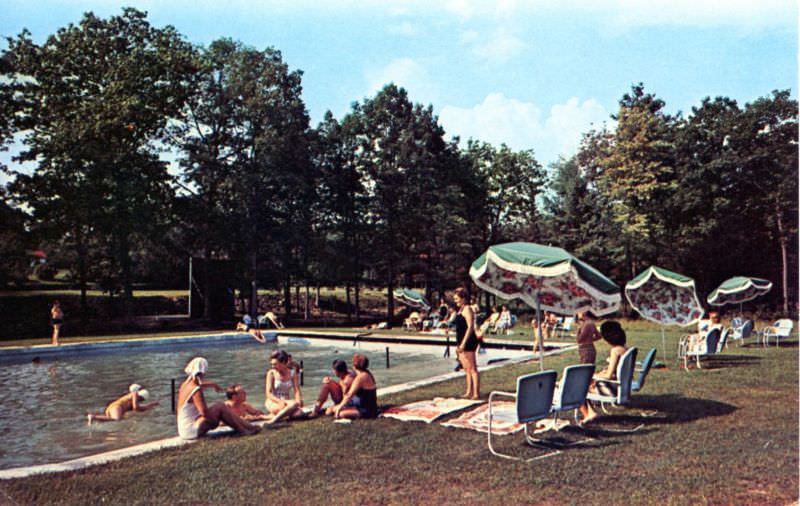
The Catskill resort scene that Bird photographed was at or near its peak during these decades. Properties like the Pines Resort Hotel and the Tamarack Lodge in Greenfield Park drew large summer crowds and invested in first-class amenities. The pool deck was a social hub — a place where guests gathered, relaxed, and spent the bulk of their waking hours during a summer stay.
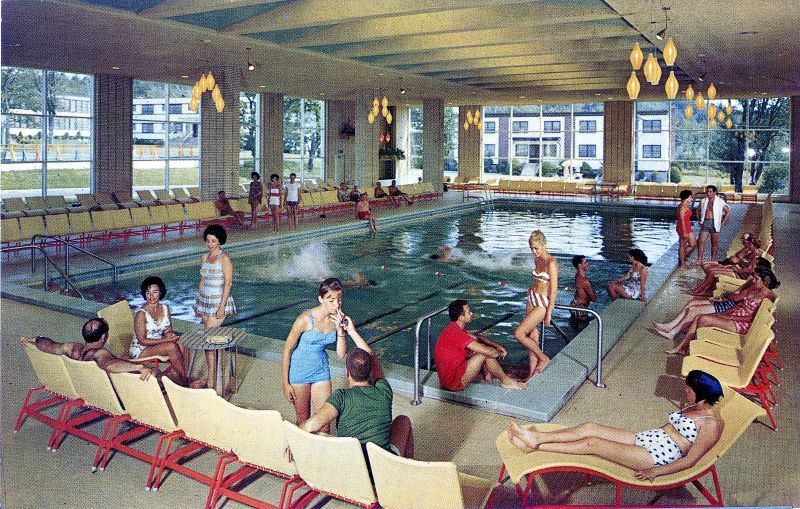
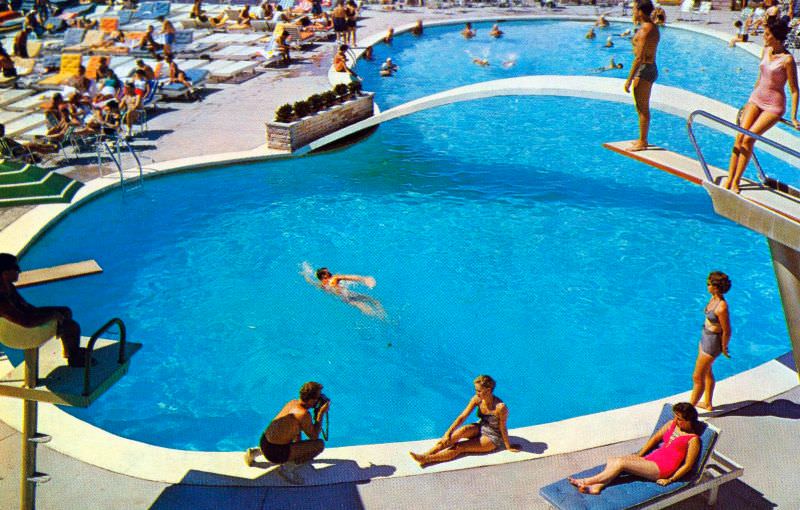
Municipal pools served a different but equally important role. The pool at Prospect Park in Troy, New York, gave residents of a working-class city access to a place to cool off during hot summers. These public facilities were often crowded, loud, and full of life — a very different atmosphere from the groomed resort pools, but just as much a part of New York’s swimming pool story.





Most of them are not from the New York City