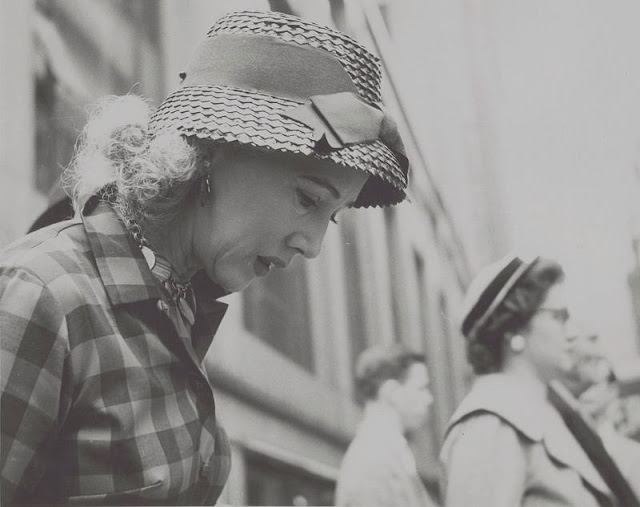
Anthony Angel spent much of the 1950s walking the streets of New York City with a camera, and what he brought back was something rare. Not polished portraits or staged compositions, but the city as it actually was — messy, alive, and full of people going about their day. His photographs stretch from January 1950 to late 1959, covering nearly every corner of the five boroughs.
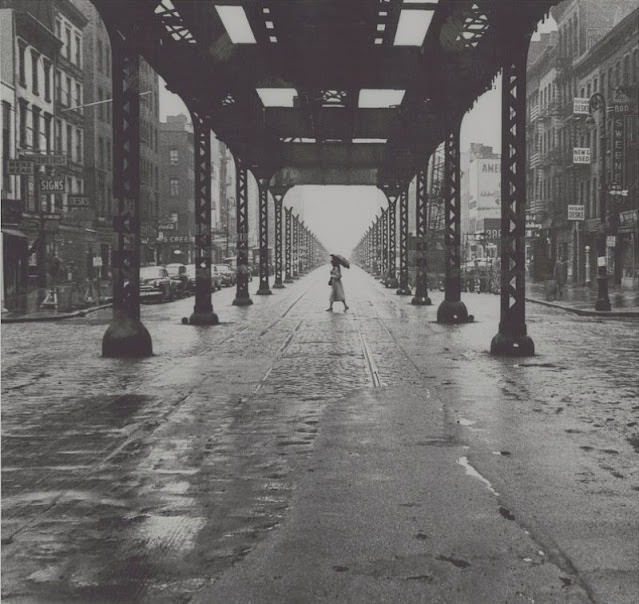
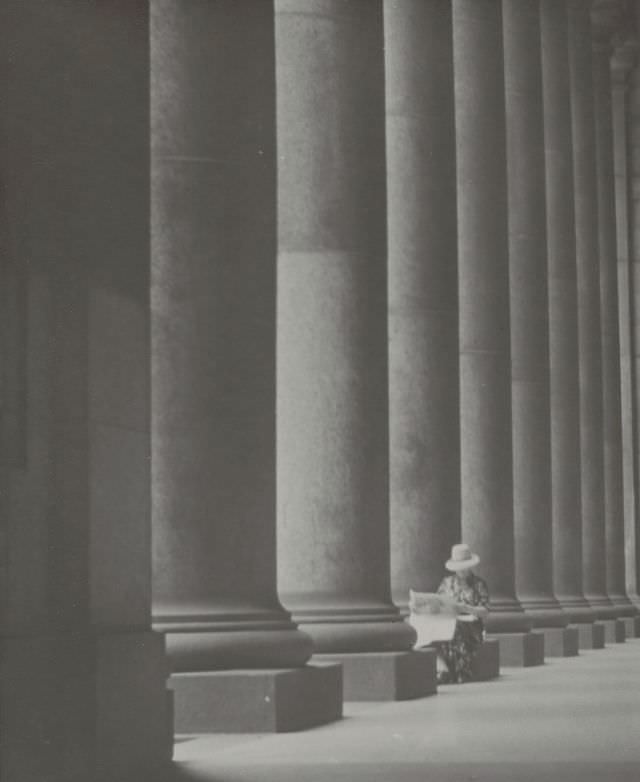
Angel had a sharp eye for the unguarded moment. A woman reads a newspaper beside stone columns. Another shelters under an umbrella crossing a wet street. These weren’t celebrities or public figures — they were ordinary New Yorkers who happened to step into his frame.
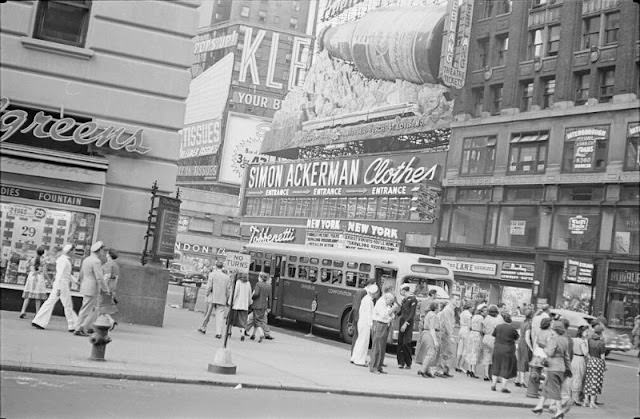
Times Square in 1952 was a different world from what it is today. The signs were bigger, the crowds thicker, and the energy rawer. Angel captured it all at street level, putting the viewer right in the middle of the noise and light.
He also turned his lens upward. Looking up at a building from the street in January 1953, he found geometry and scale that most people walked past without a second glance.
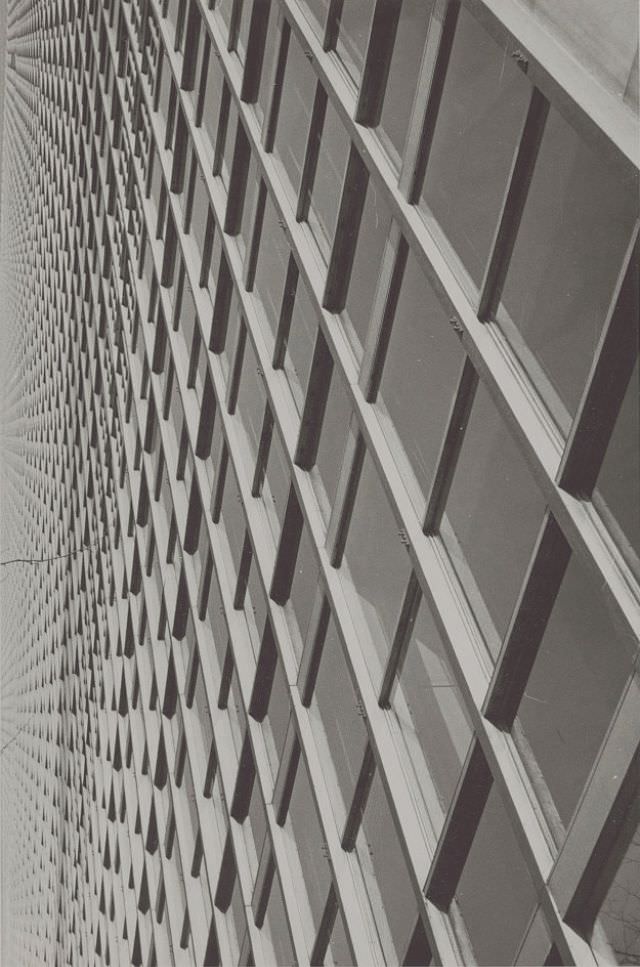
Grand Central Terminal was one of Angel’s favorite subjects. In 1953, he caught the famous shafts of light cutting through the main concourse — a spectacle that commuters rushed past every single morning.
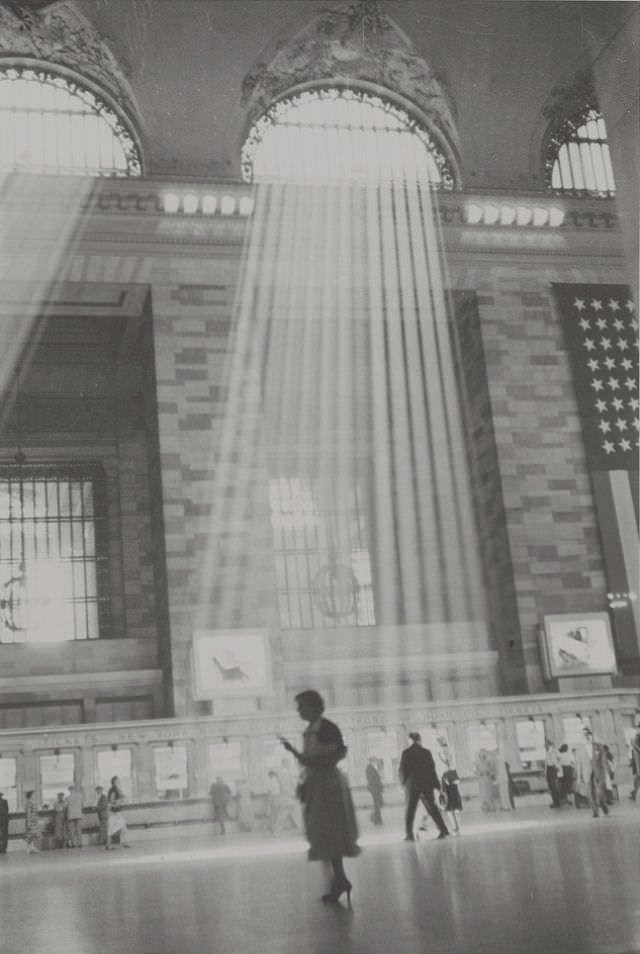
That same year, he photographed the marble lions at the front steps of the New York Public Library on 5th Avenue. These stone guardians had stood there since 1911, and Angel framed them in a way that gave them a quiet authority.
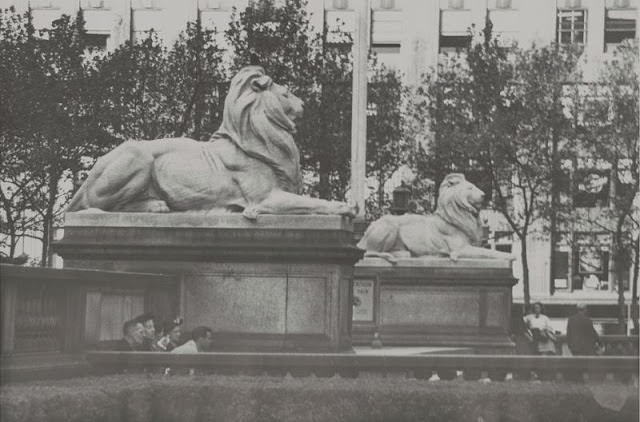
Newsstands were a fixture of 1950s New York. Angel photographed a woman reading inside one in November 1953 — a small, private moment tucked inside one of the city’s most public spaces.
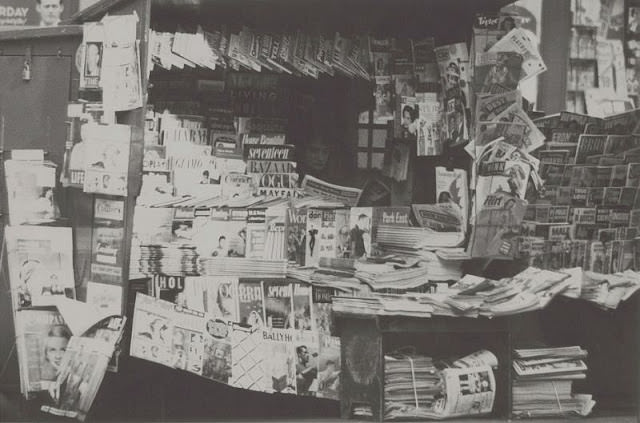
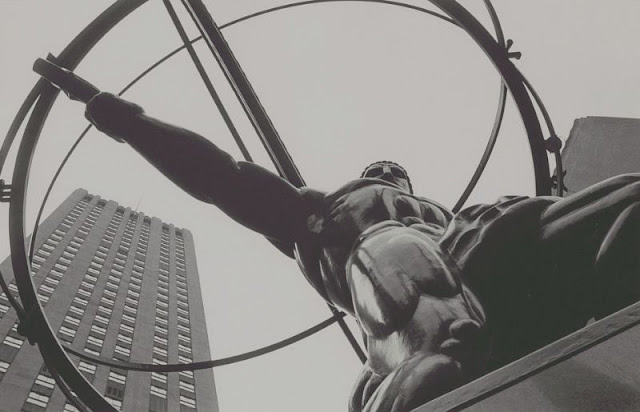
Rockefeller Center gave Angel the chance to photograph the bronze Atlas sculpture in July 1954. Standing over 45 feet tall and weighing 7 tons, Atlas holds up the celestial sphere on his shoulders — a landmark Angel shot from below to emphasize its sheer size.
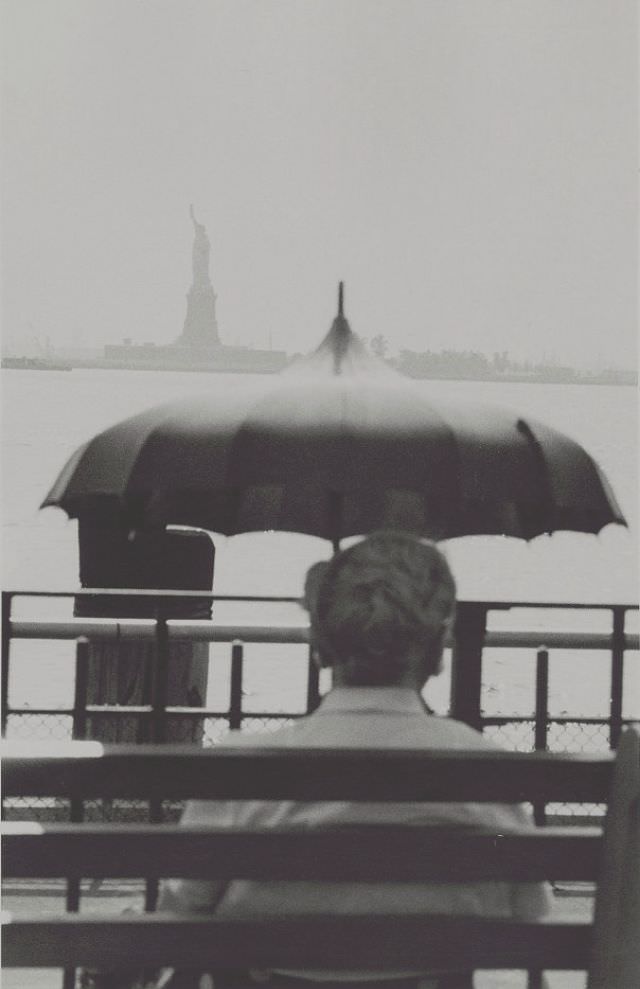
The Statue of Liberty was one of New York’s most photographed subjects, but Angel found a different angle — a man standing at the water’s edge, looking toward Liberty Island in August 1954.
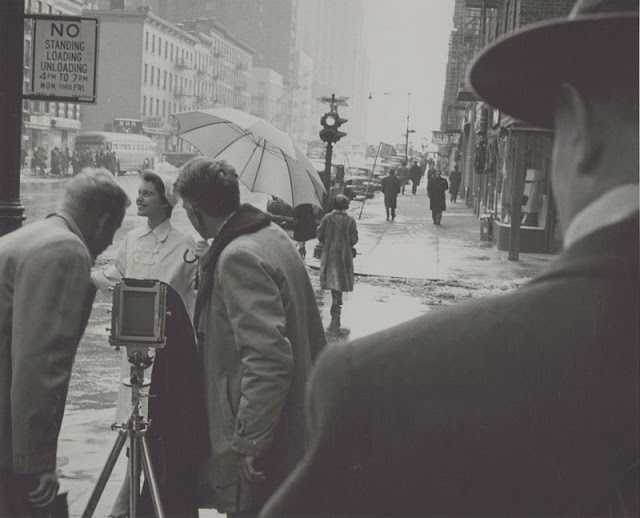
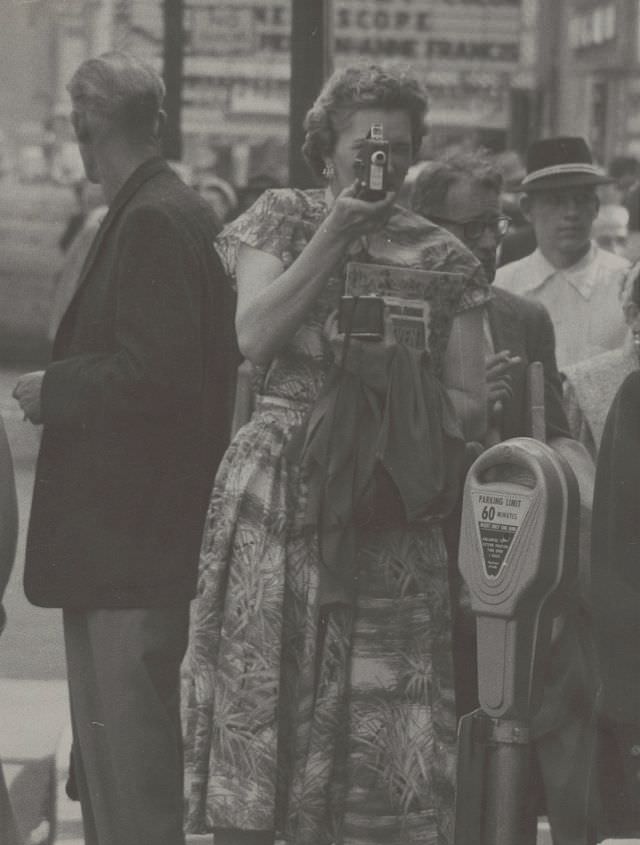
Rain didn’t stop Angel from working. In 1954, he photographed a woman being photographed by someone else on a wet street corner — a photograph of a photograph being taken, layered and self-aware.
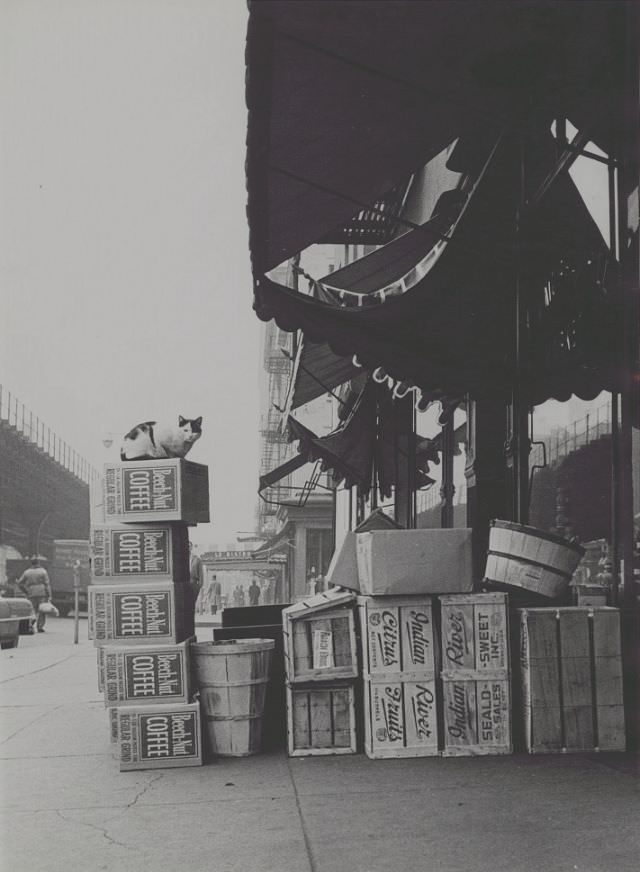
Cats appear throughout Angel’s New York work. In 1955, he found one perched on top of a stack of boxes — completely unbothered by the city roaring around it.
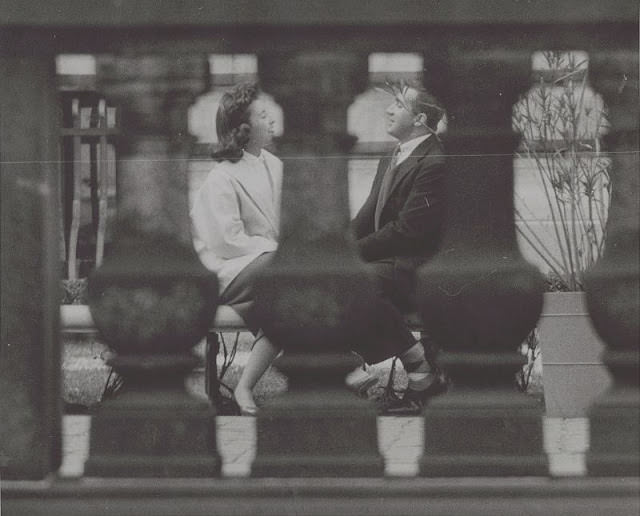
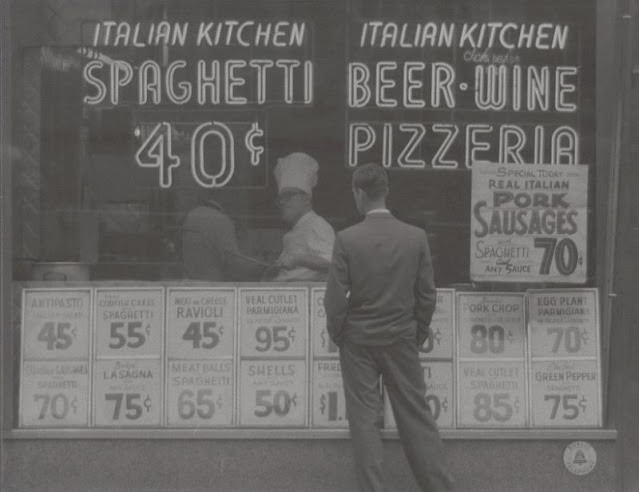
By September 1956, Angel was documenting the quieter rhythms of city life. A couple sits together on a bench, and nearby, the storefront of an Italian Kitchen restaurant holds its place on the block.
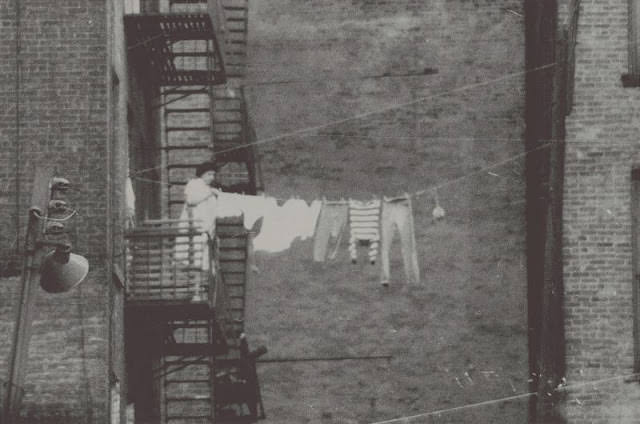
In November of that year, he photographed a woman hanging laundry on a line — a domestic scene played out in full view of the street, the way it was done in tenement neighborhoods across the city.
Home movie cameras were becoming more common by 1956. Angel caught a woman walking along a sidewalk, camera in hand, turning the act of filming into its own subject worth filming.
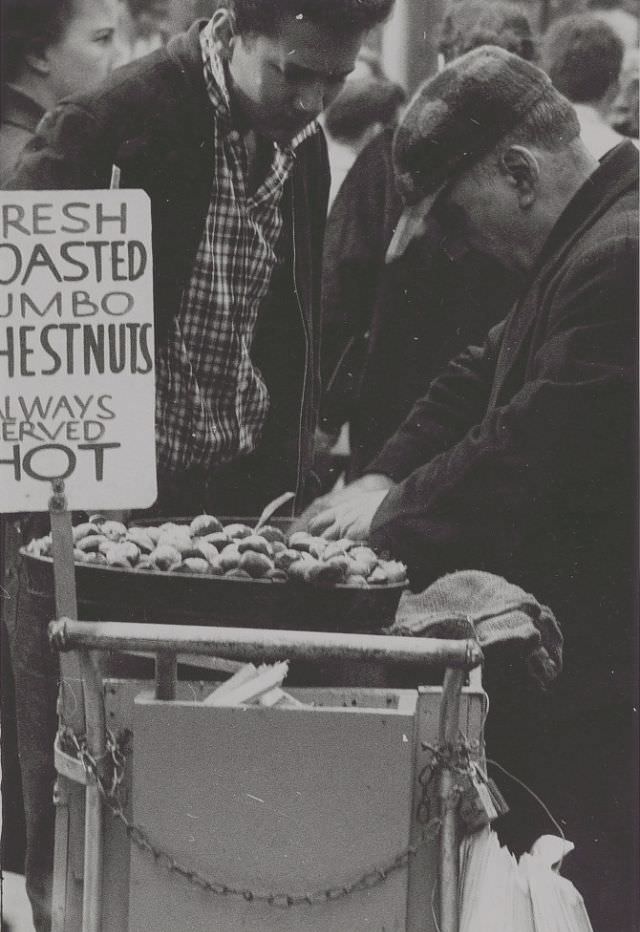
Street food was central to New York life. In November 1957, Angel photographed a vendor reaching into a roasting drum to grab chestnuts — a seasonal ritual that drew crowds to sidewalk carts every fall.
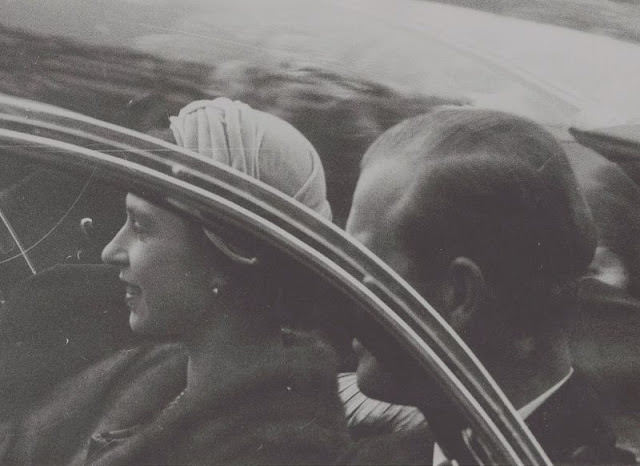
October 1957 brought a remarkable visit to New York — Queen Elizabeth II and Prince Philip made a stop in the city, and Angel was there to document it.
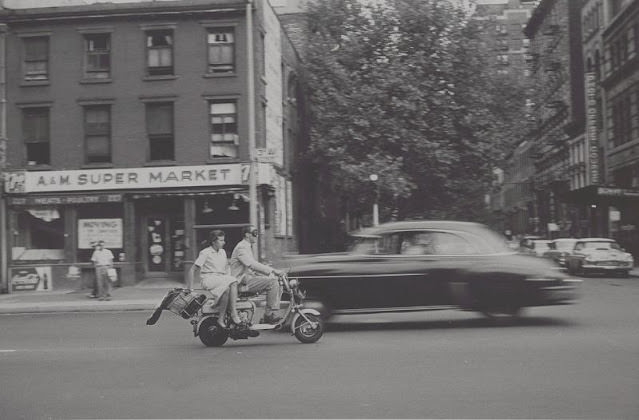
That same month, Angel found another street-level scene worth keeping: a man and woman riding a motorized scooter past a supermarket on a September day in 1957.
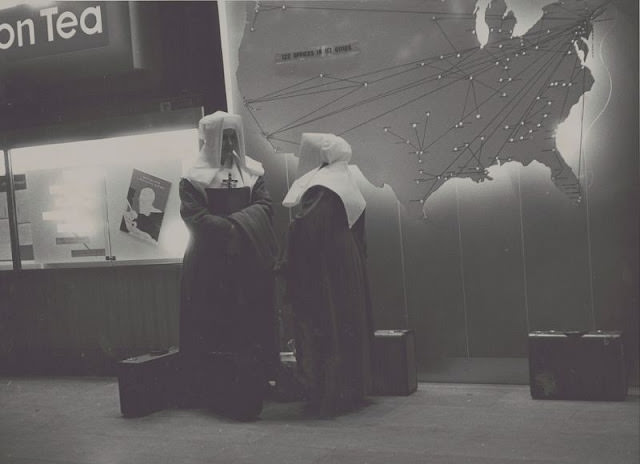
In November 1957, two nuns stood beside a large illuminated map of the United States, suitcases on the ground beside them — travelers mid-journey, pausing to plan their next move.
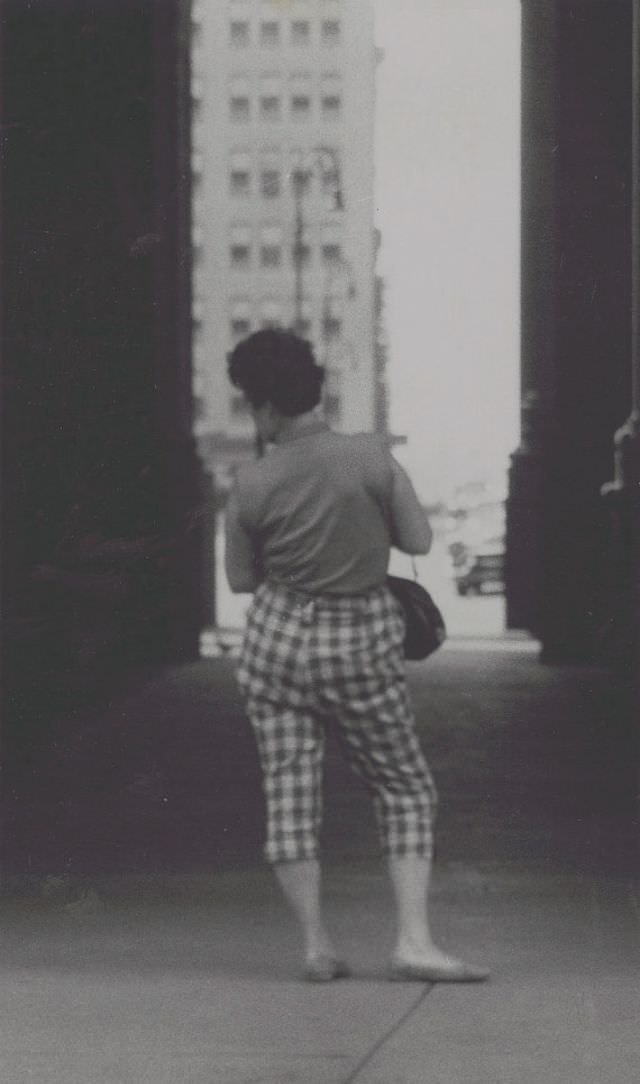
Angel photographed from behind just as readily as from the front. In June 1957, a full-length portrait of a woman standing in an alleyway shows his comfort with anonymity as a compositional choice.
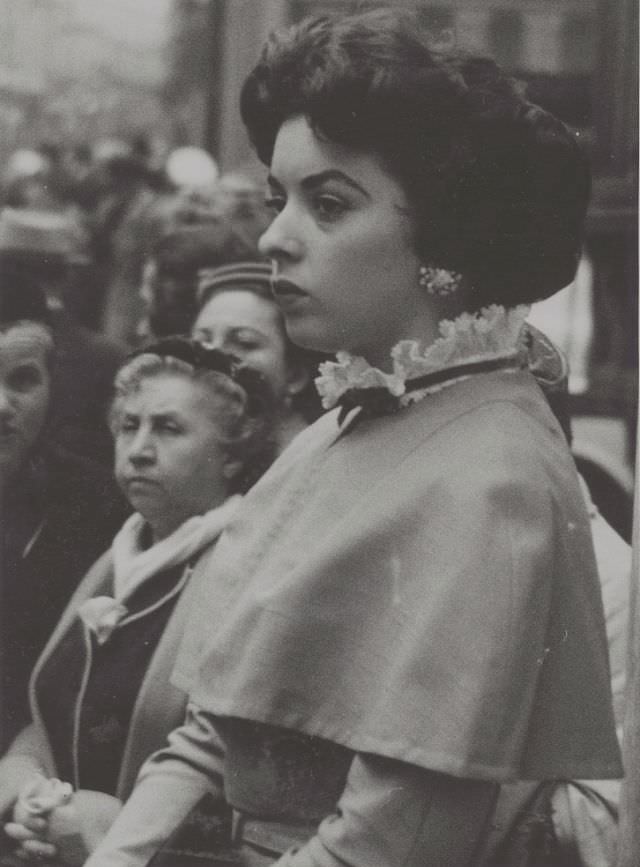
A close portrait from 1957 shows a woman with a shoulder covering and lace collar — formal dress that speaks to a different standard of appearance in everyday public life.
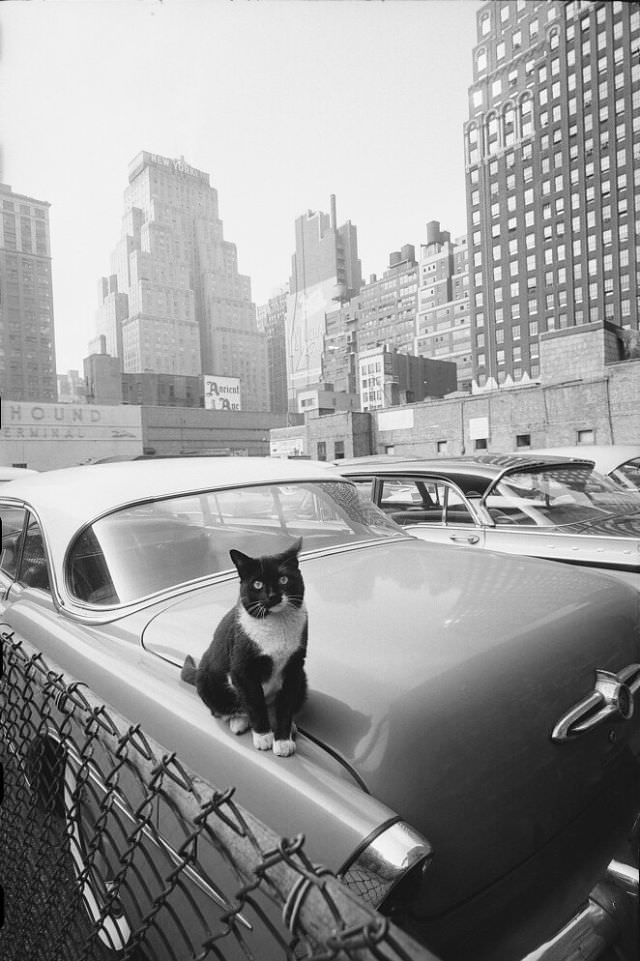
By 1958, Angel’s cats-in-the-city series had grown. In October, he found one sitting on top of a parked car, with the Manhattan skyline visible in the distance behind it.
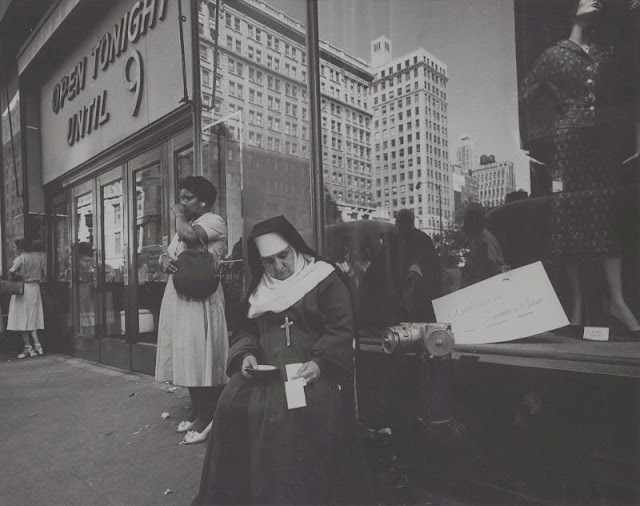
August 1958 brought another quietly striking image — a nun sitting in front of a store window, the glass behind her reflecting the street.
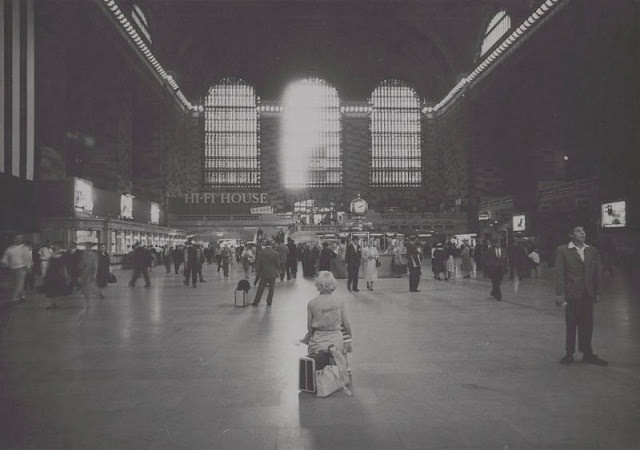
Grand Central Terminal appears again in September 1958, this time with a woman seated on top of her luggage in the main hall — waiting, watching, surrounded by the constant motion of the terminal.
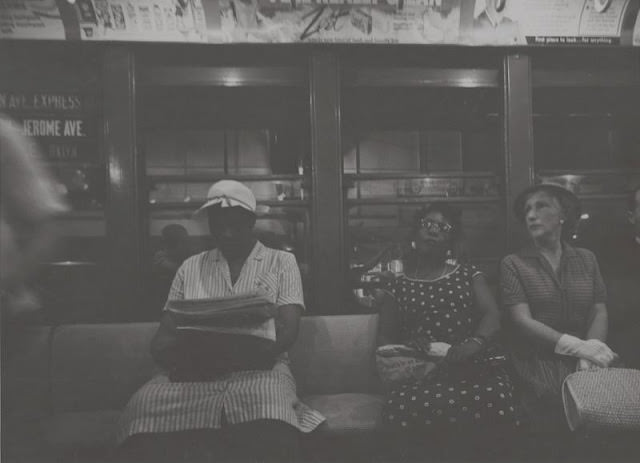
The New York City subway was both transportation and theater. Angel photographed women riding together in 1958, their expressions and posture telling small stories within the larger story of daily commuting.
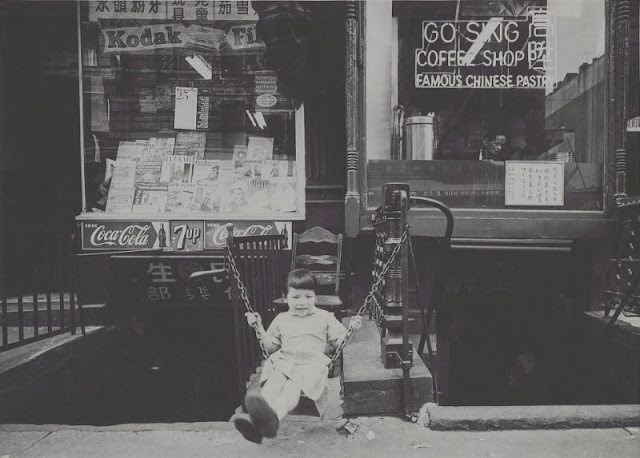
Outside the Go Sing Coffee Shop in September 1958, a young girl swings from something just off-frame — a burst of motion against the stillness of the storefront behind her.
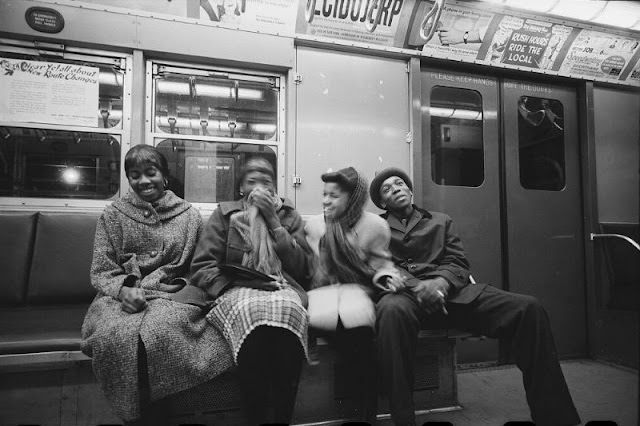
On the subway in February 1959, Angel captured a group of young African American riders sharing a laugh — an image of genuine joy and connection inside the city’s underground transit system.
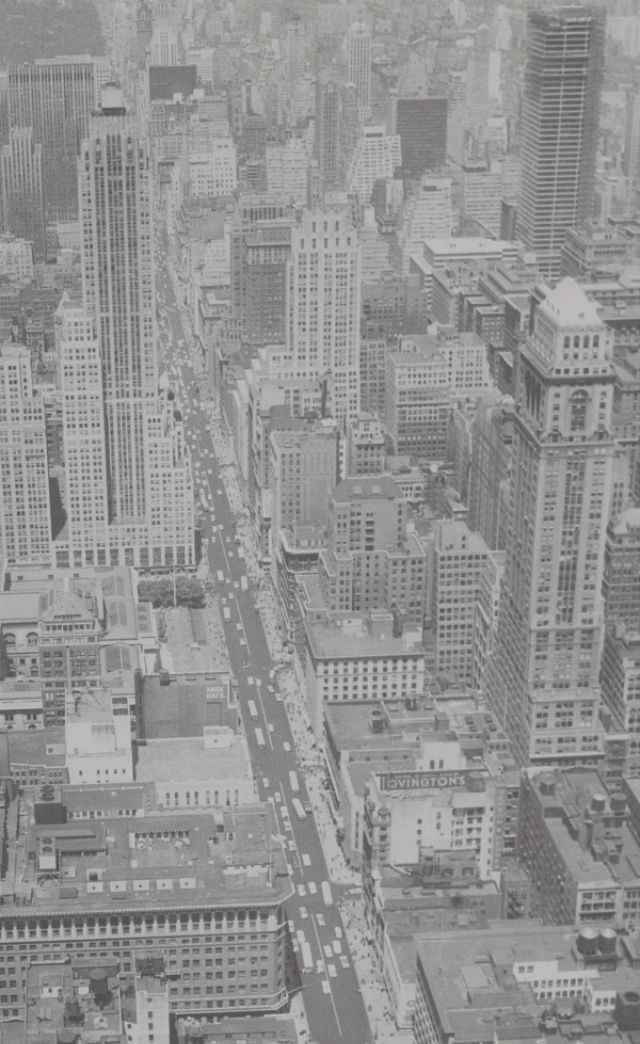
From high above, 5th Avenue in Midtown Manhattan in 1959 shows the ordered grid of the city — traffic flowing in lines, buildings packed tight, the scale of the place made visible from the air.
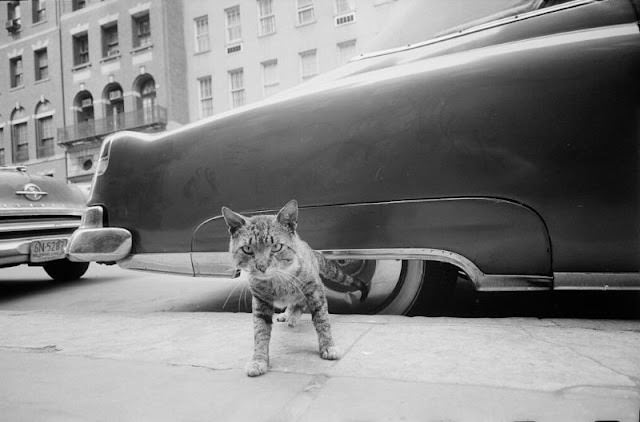
Back on the sidewalk in May 1959, another cat sits on the pavement — the third to appear in Angel’s decade-long collection, each one adding to his running, informal study of animals in the urban landscape.
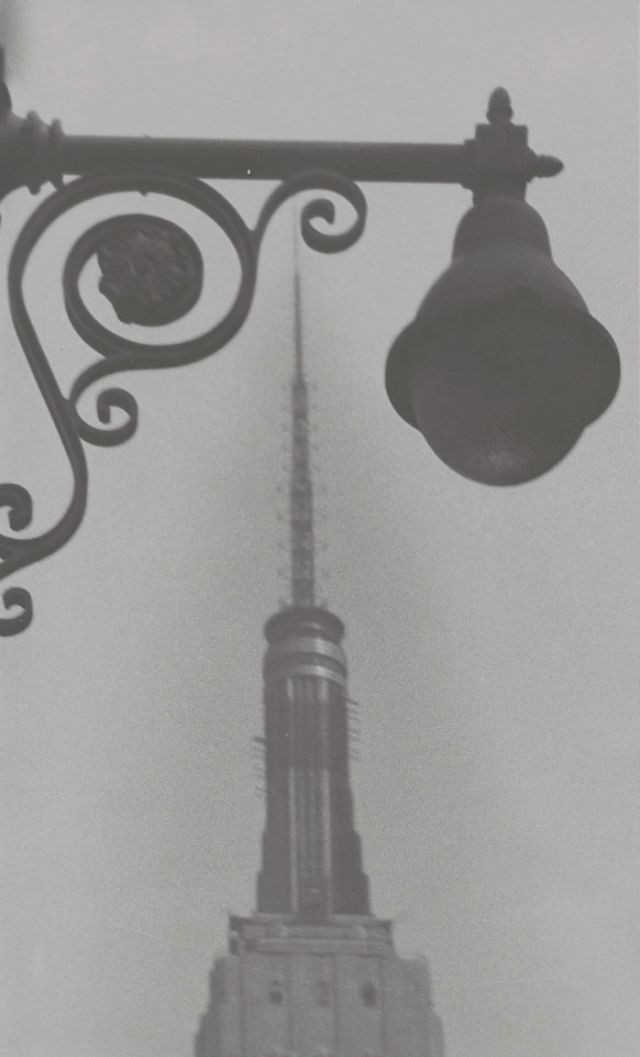
July 1959 gave Angel the shot of the Empire State Building framed through an ornate street lamp — the building’s upper floors appearing through the lamp’s decorative ironwork, near and far at once.
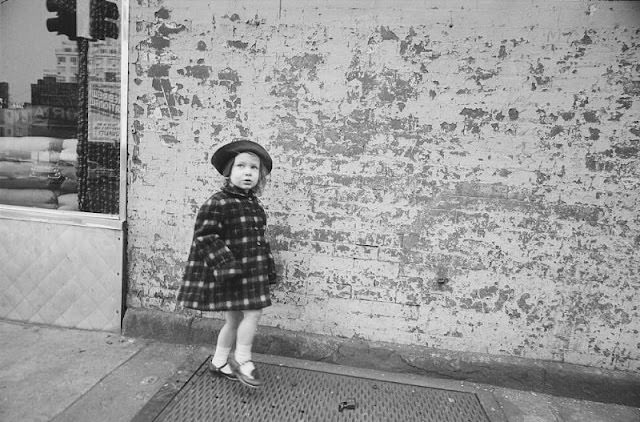
In March 1959, a little girl walks across cellar hatch doors in the sidewalk, glancing back at Angel with a wary look. It’s one of his most direct images — a child catching the photographer in the act.
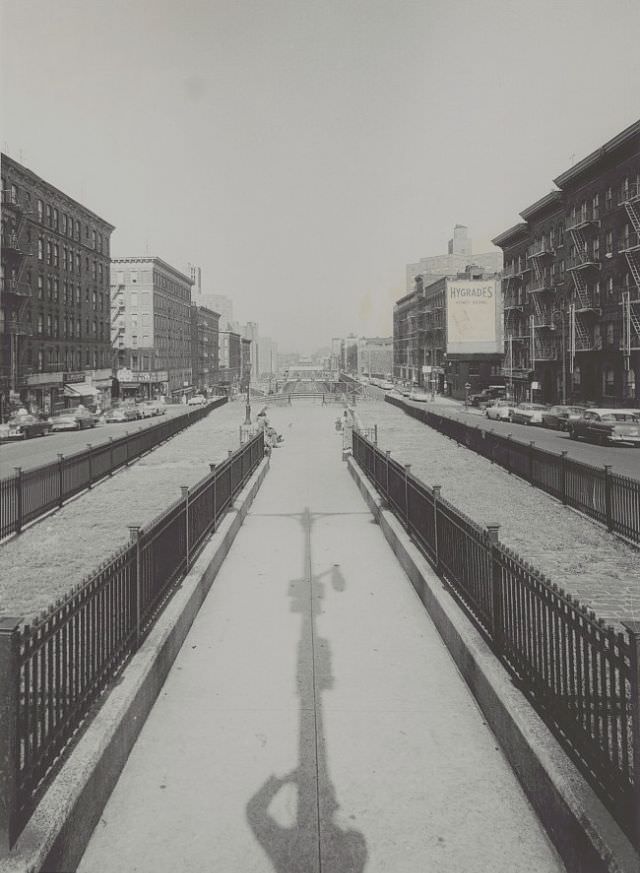
October 1959 brought Angel to Park Avenue between 96th and 97th Street, where he photographed the gated traffic median — benches, seated figures, and the elevated train tracks visible in the background.
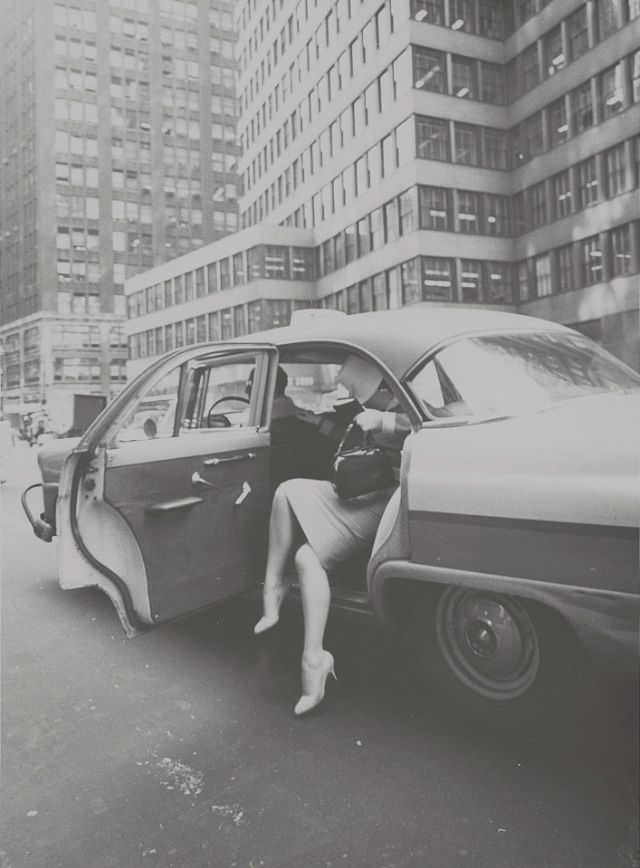
A woman steps out of a yellow cab in June 1959. The image is simple, but it holds the complete visual shorthand of mid-century New York: the yellow taxi, the concrete curb, the anonymous figure mid-exit.
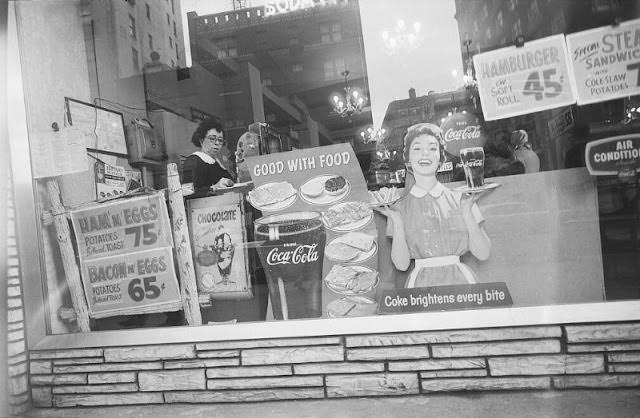
Through a diner window in February 1959, Angel photographed a woman at a cash register — the glass reflecting buildings across the street, layering the interior and exterior into a single frame.
One of his final images from the decade is a close profile portrait — a woman’s head and shoulders, her face turned slightly down. No name, no context. Just a face from 1959 New York, preserved in stillness.