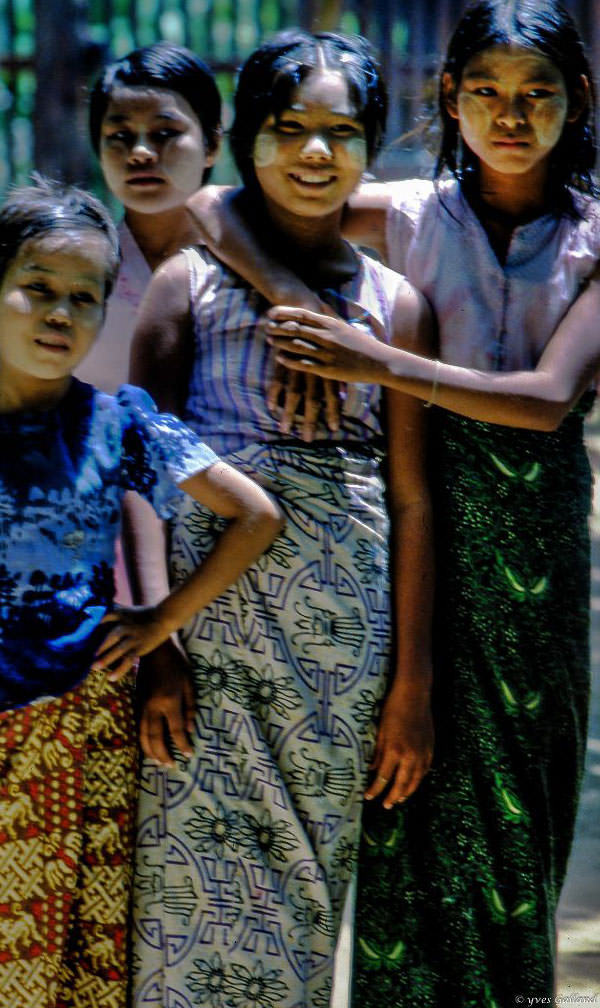
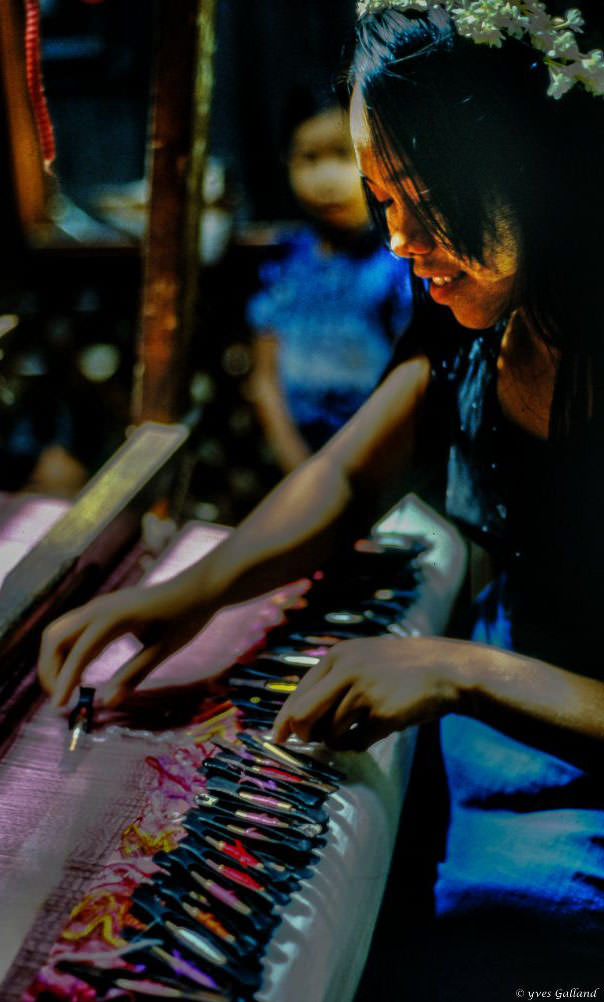
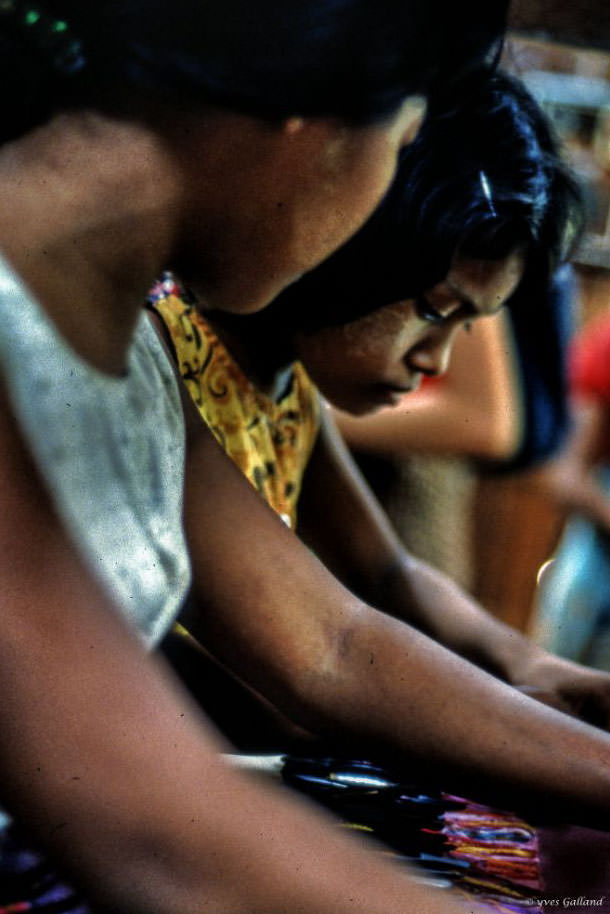
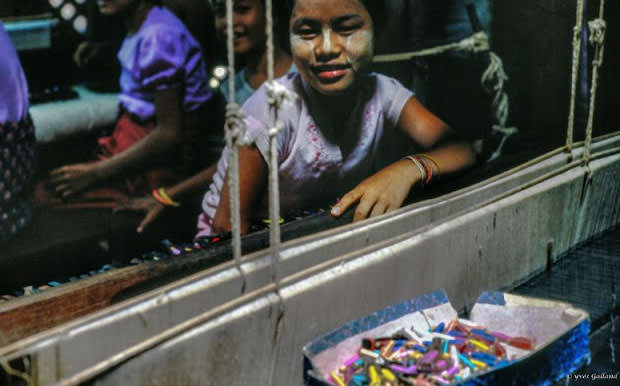
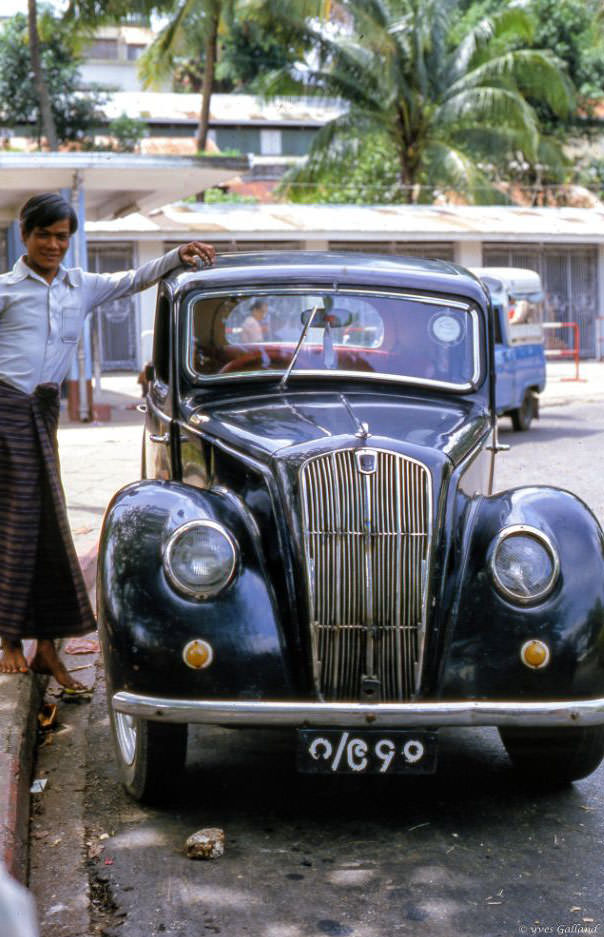
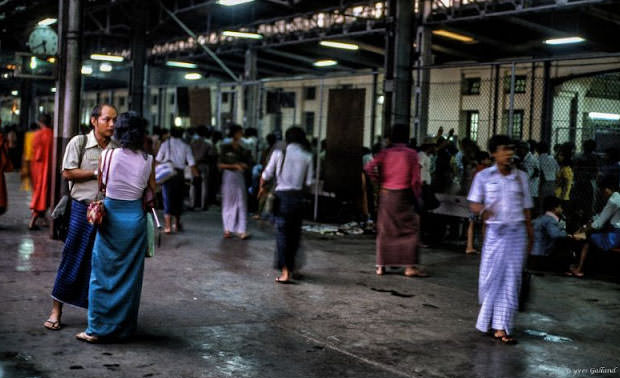
Myanmar in the 1980s was a country sealed off from the world. Known internationally as Burma, it was ruled by the Burma Socialist Programme Party (BSPP) under General Ne Win, a military strongman who had seized power in a 1962 coup and had not loosened his grip since. The BSPP pushed what it called the ‘Burmese Way to Socialism’ — a blend of Marxist economics and Buddhist philosophy that, in practice, left the country isolated, impoverished, and tightly controlled. These photographs offer a rare window into that world: its streets, its people, its rituals, and ultimately its breaking point.
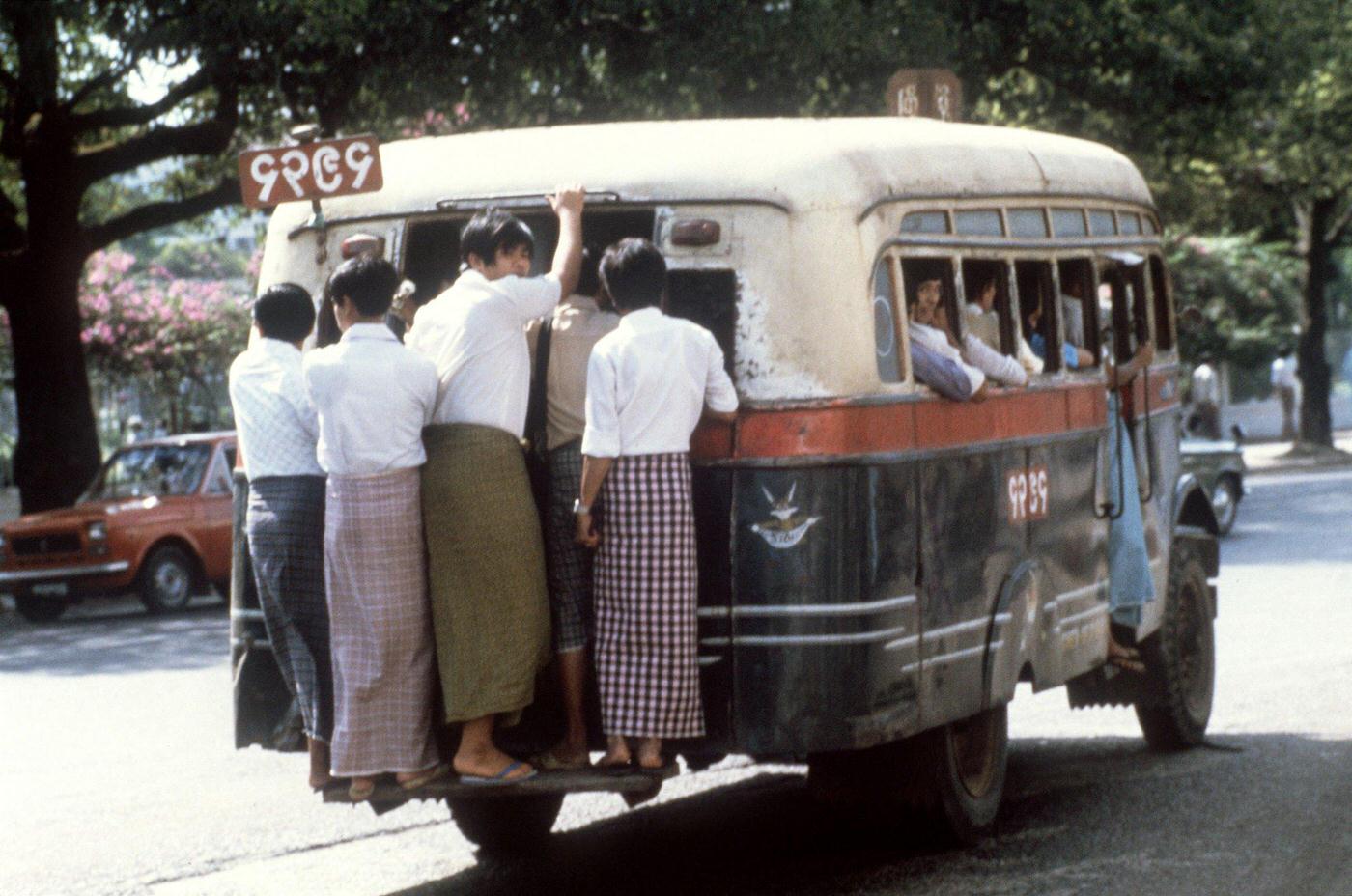
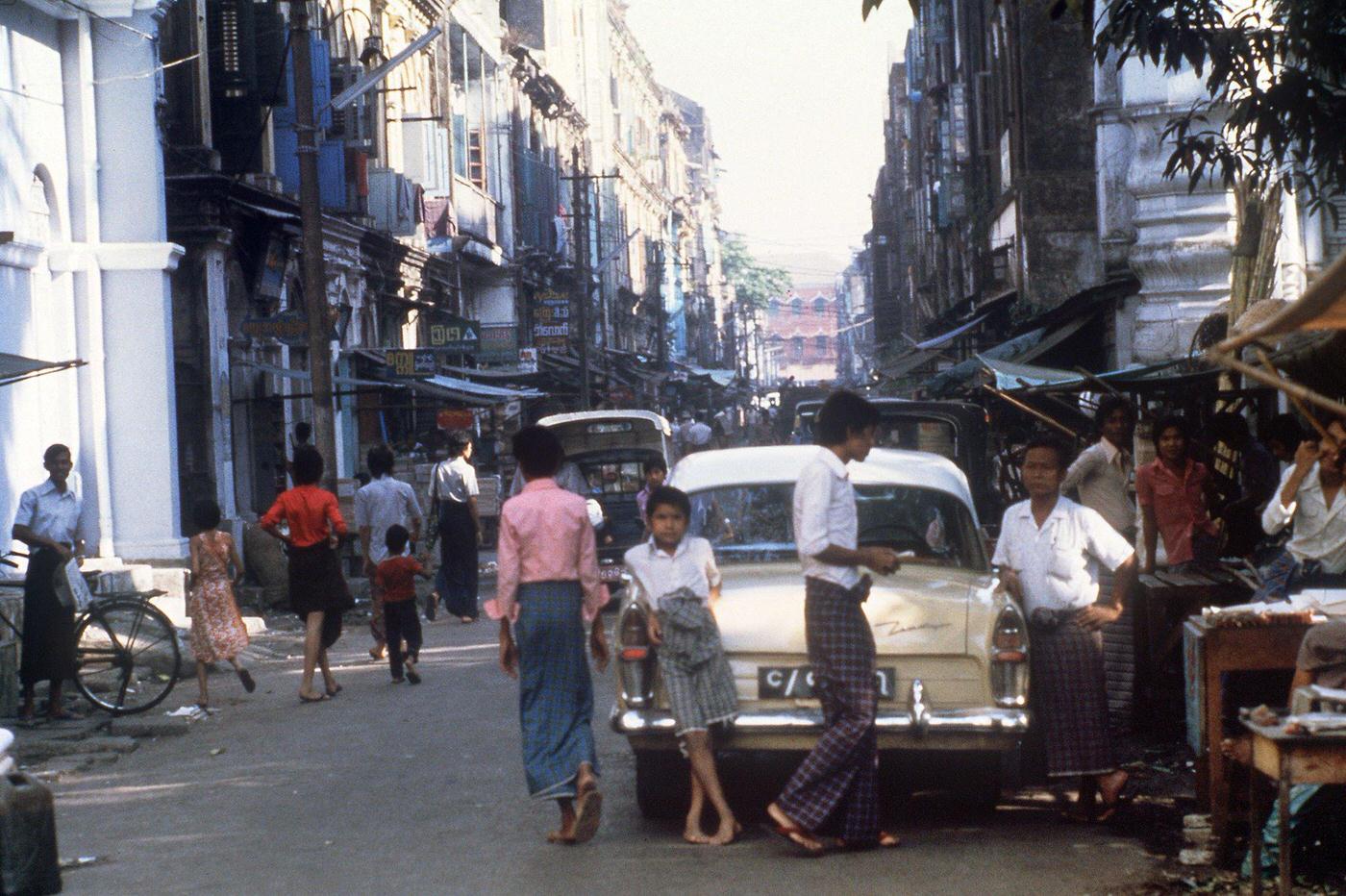
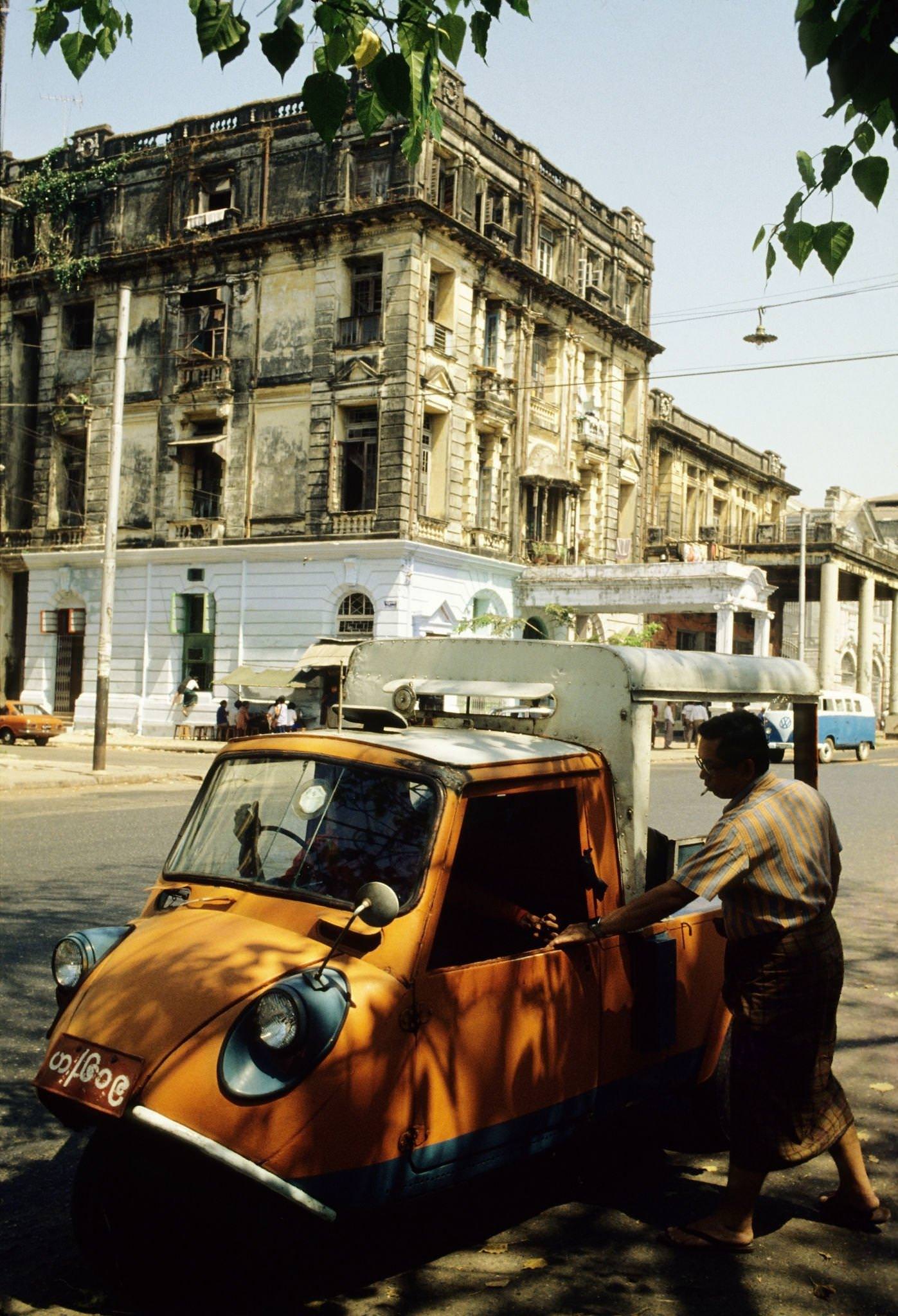
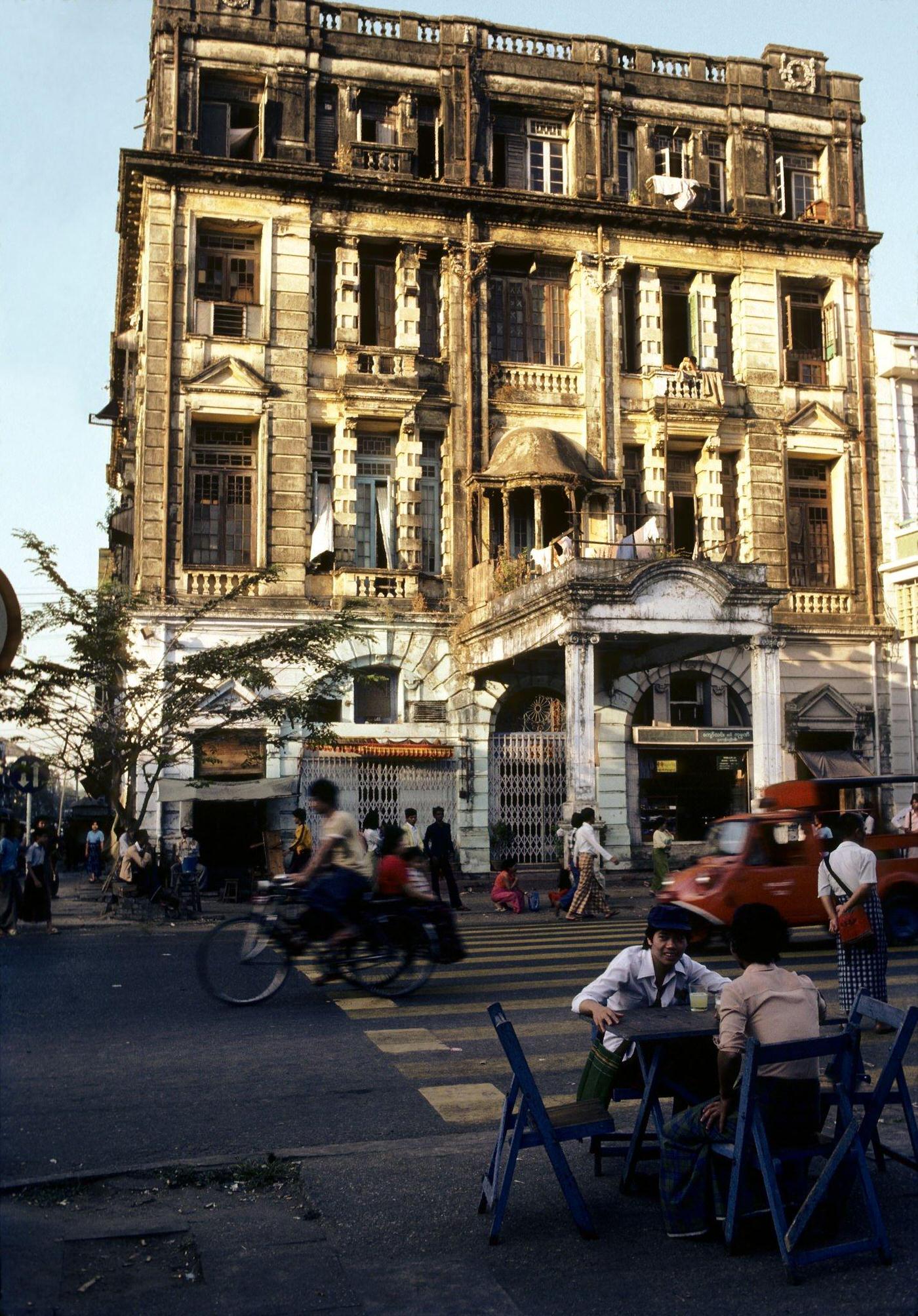
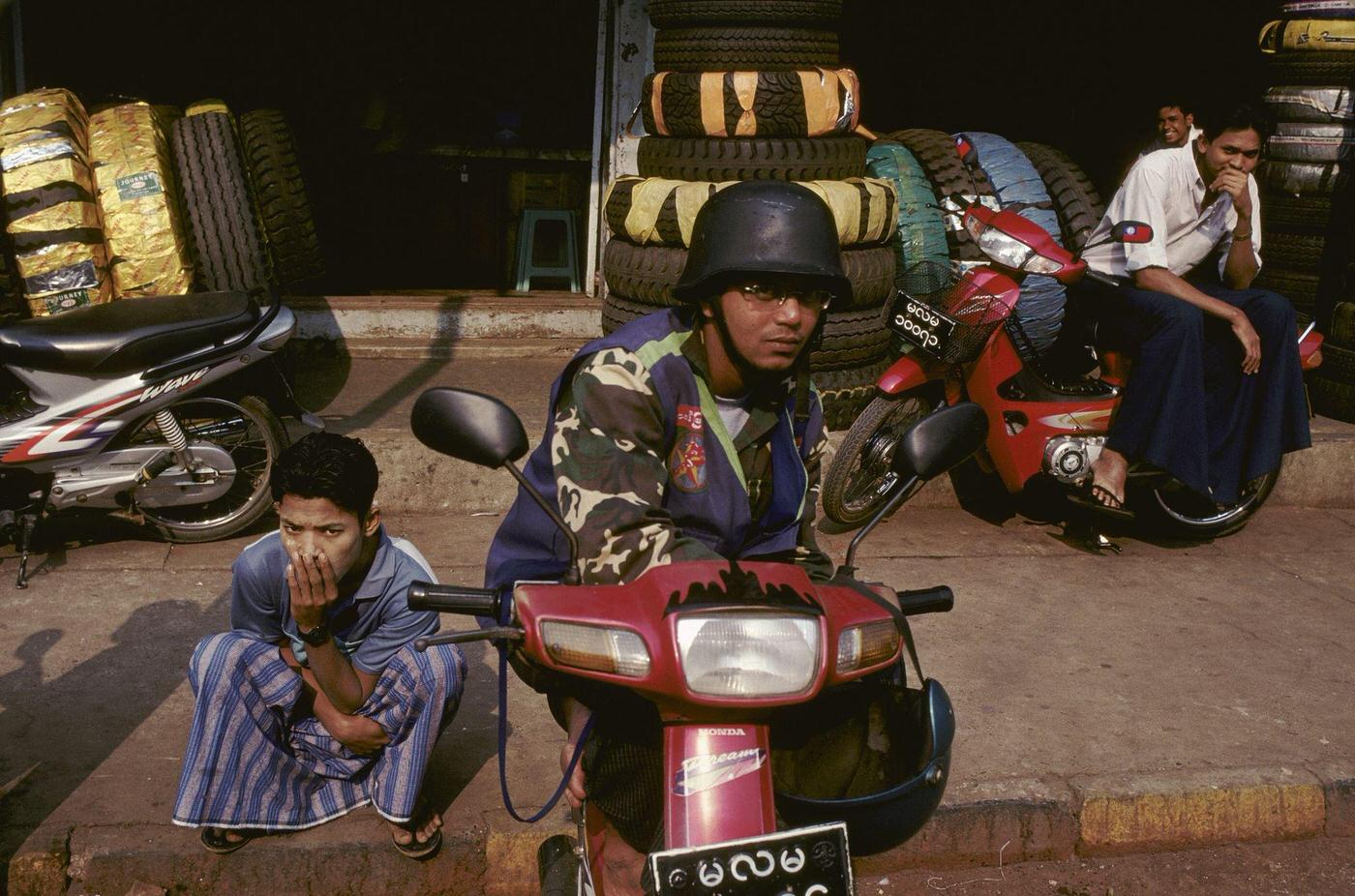
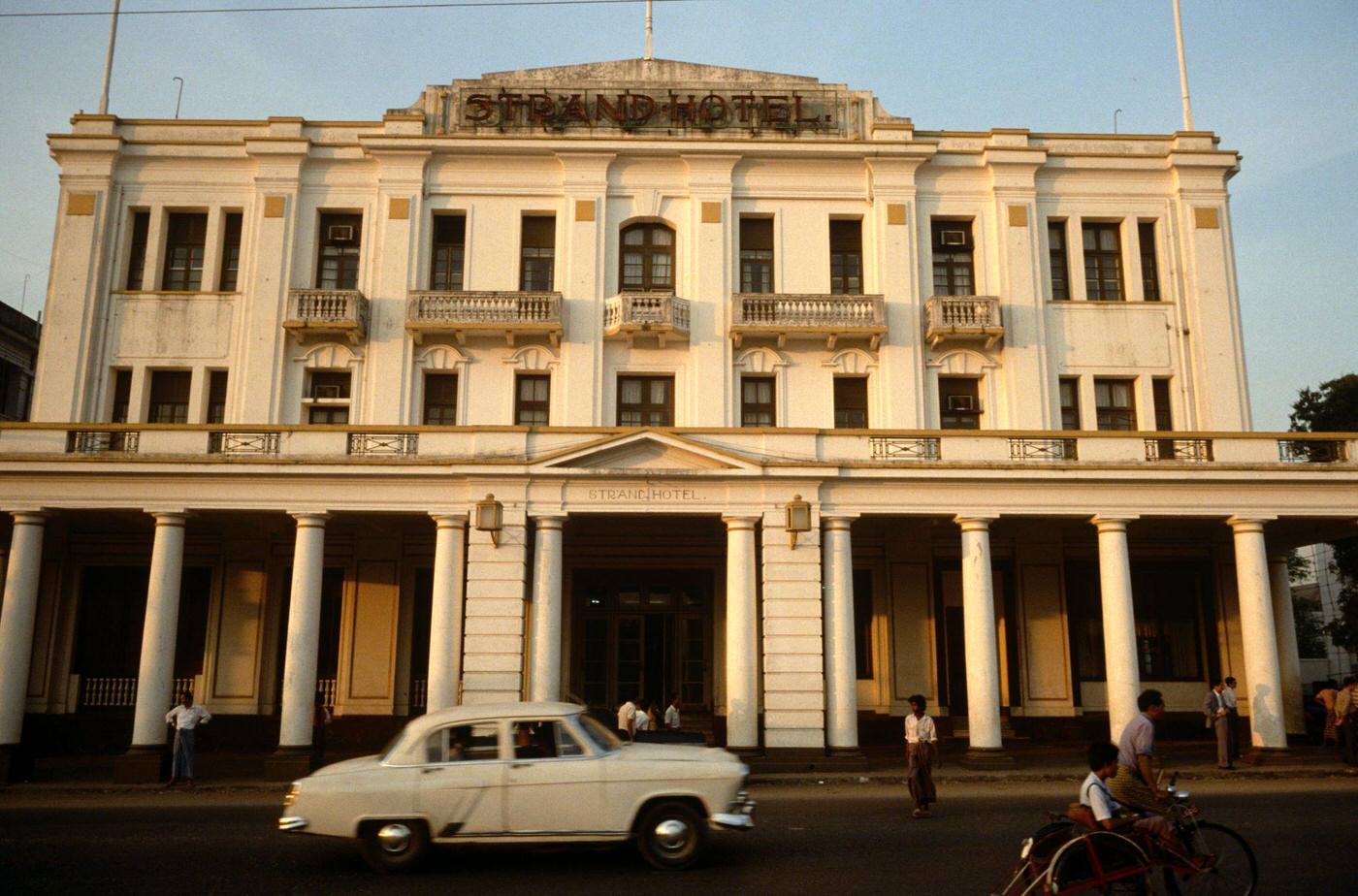
Rangoon — now called Yangon — was the country’s capital and largest city. Its streets in the early 1980s carried the look of a city frozen in an earlier era. Colonial-era buildings lined the roads, and the pace of commerce was slow and informal. The BSPP controlled all major sectors of the economy, which meant private business was heavily restricted and state-run enterprises dominated. The result was chronic inefficiency. Myanmar had once been called the ‘Rice Bowl of Asia,’ one of the wealthiest nations in Southeast Asia. By the 1980s, it ranked among the poorest.
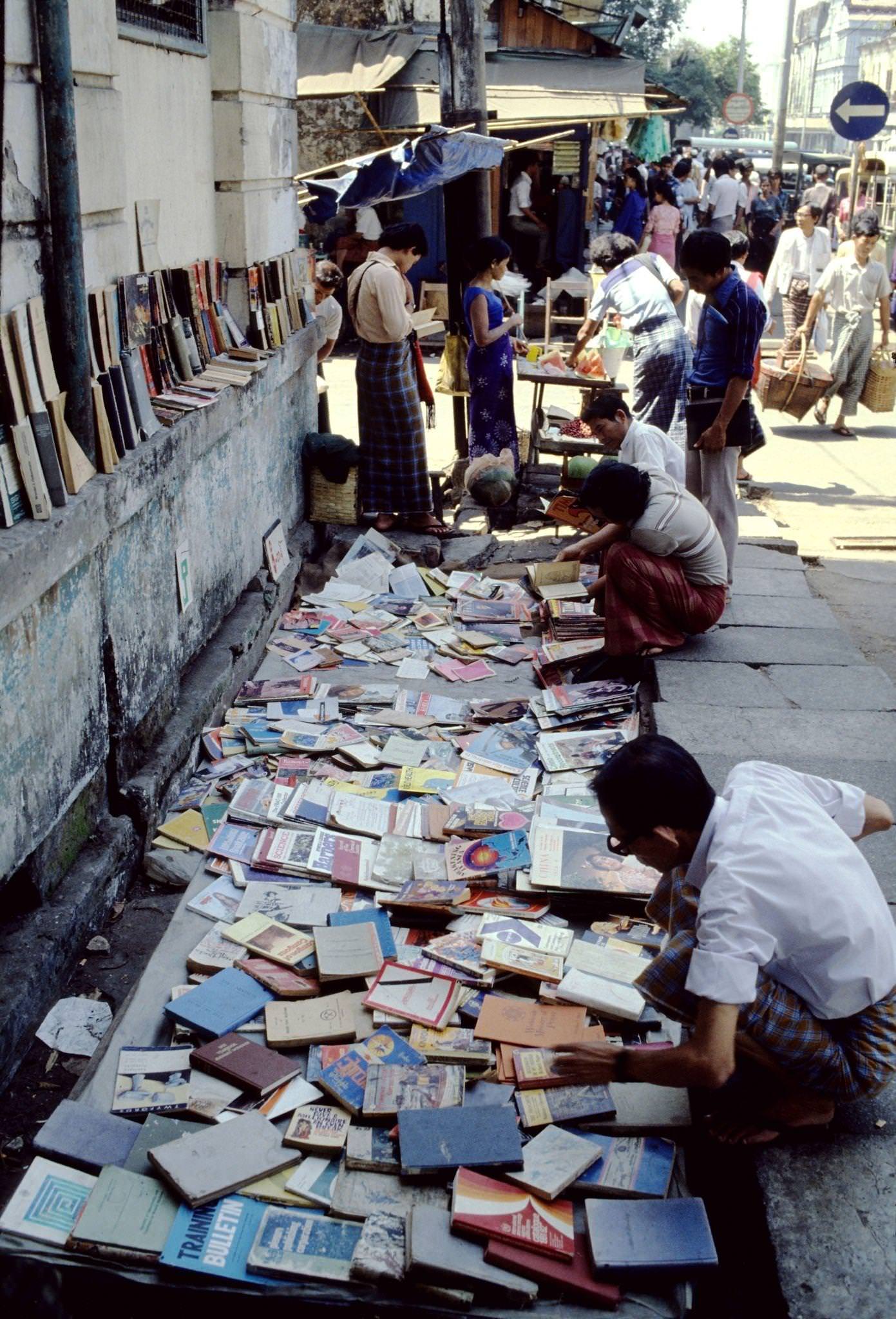
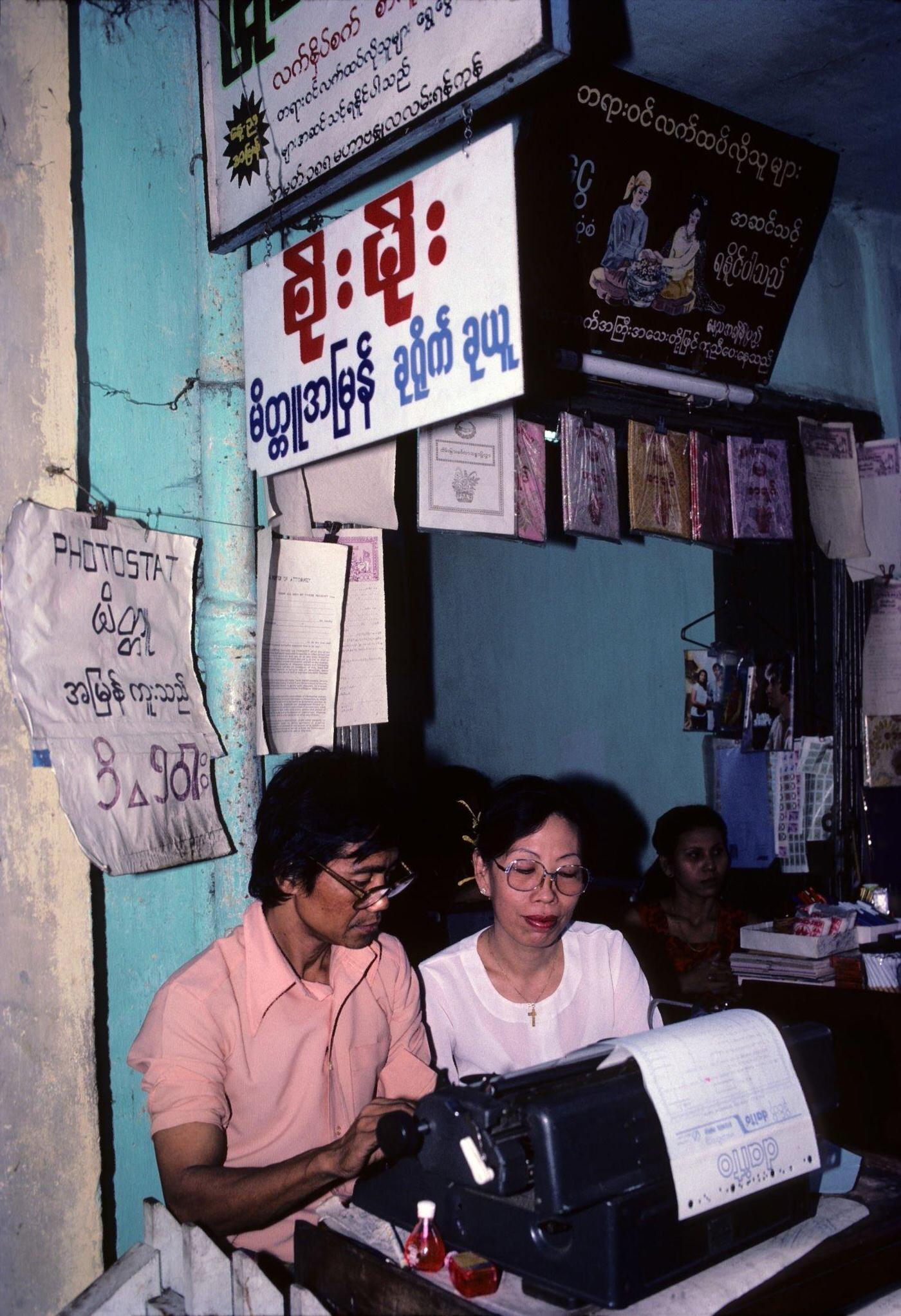
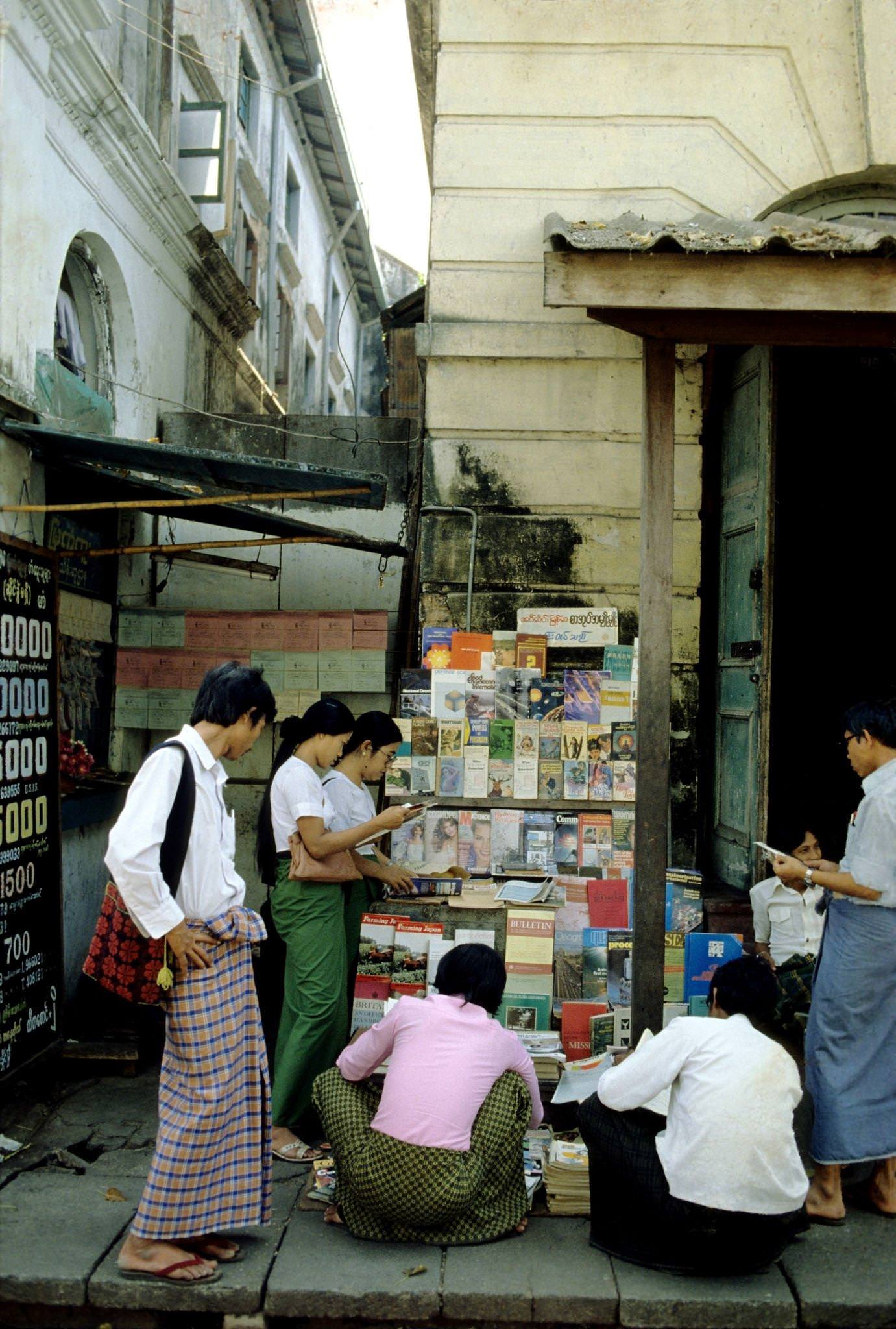
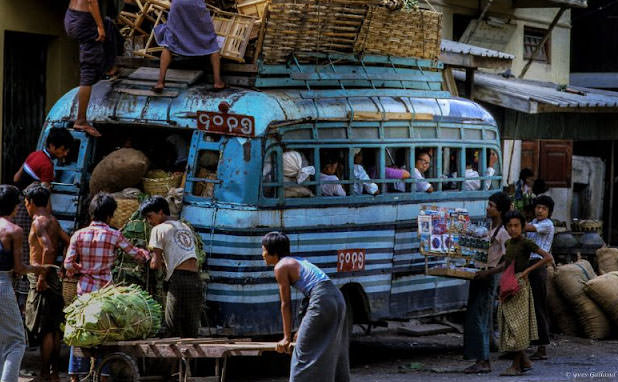
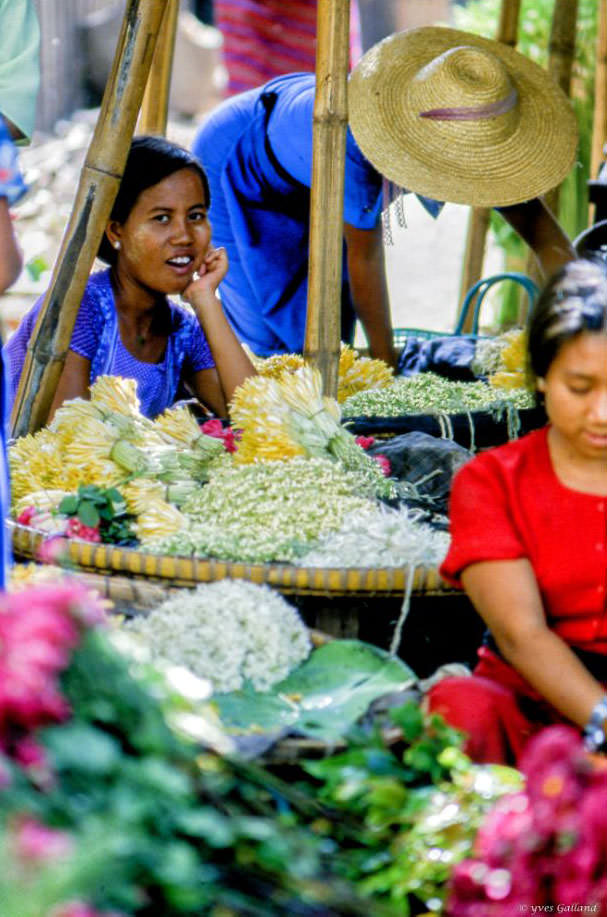
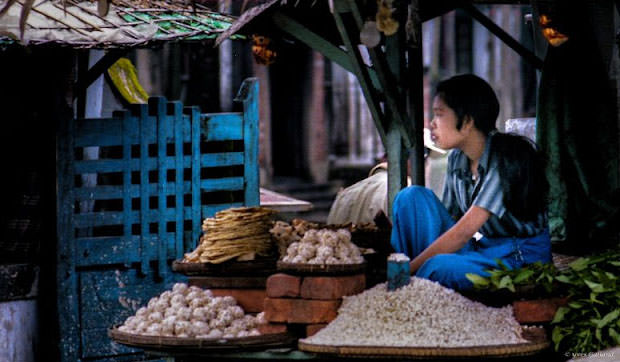
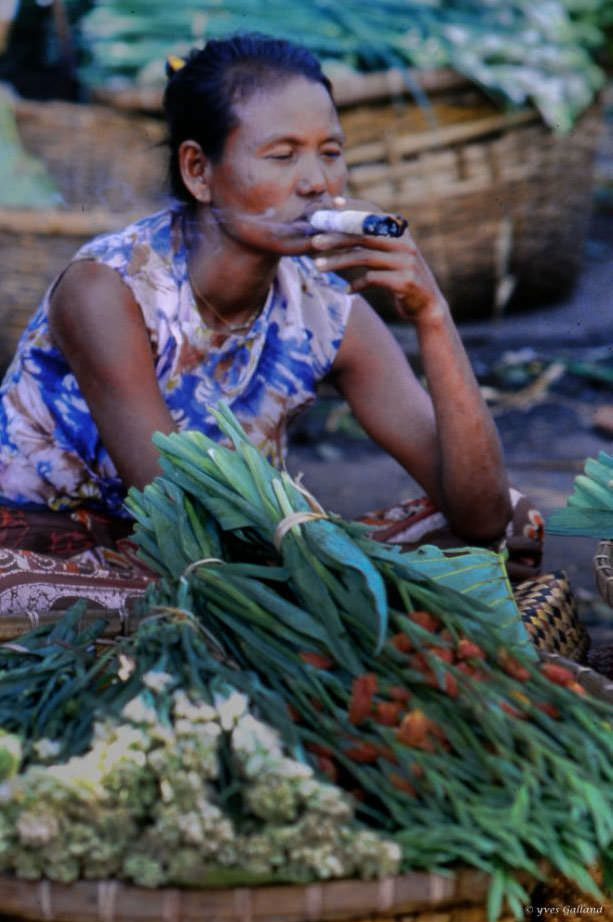
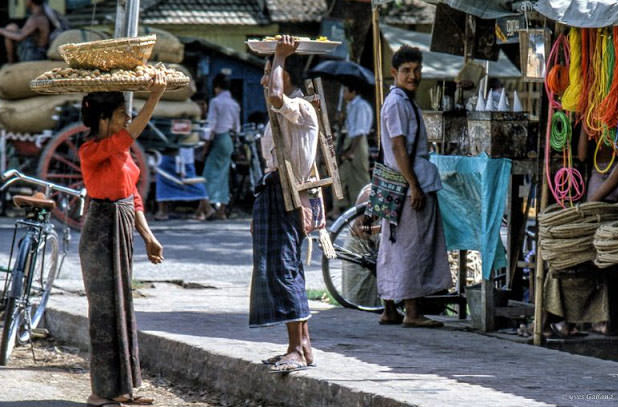
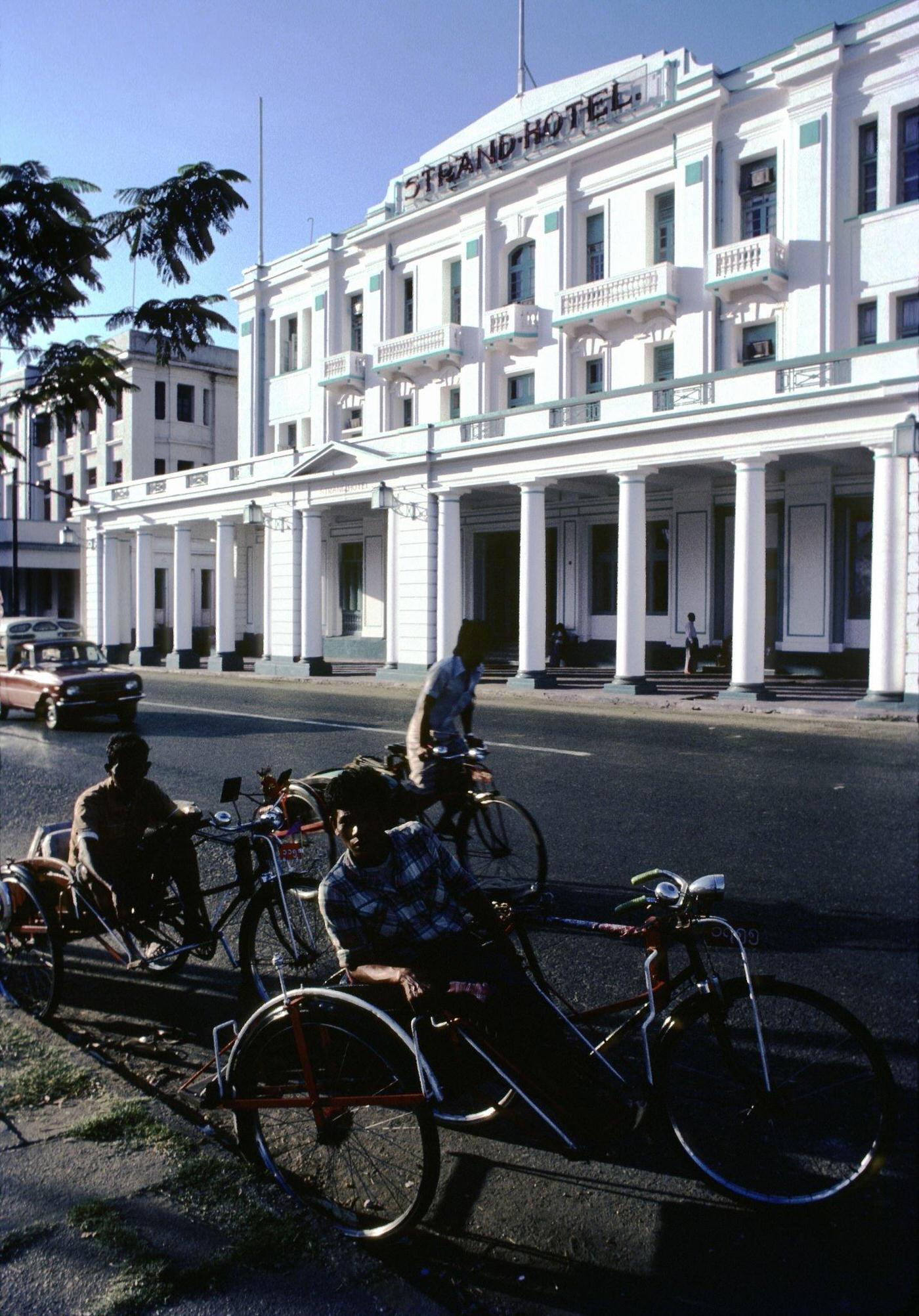
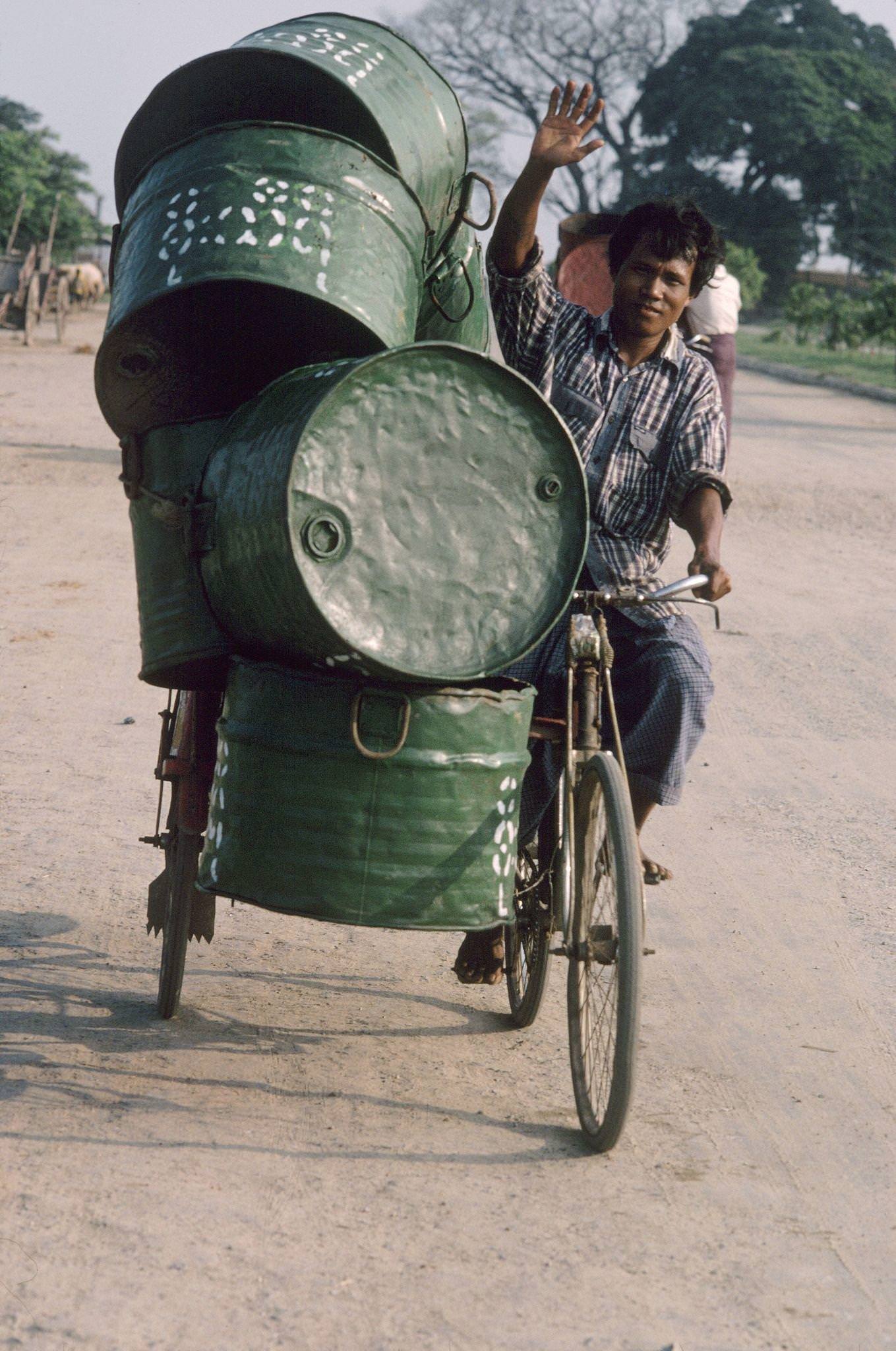
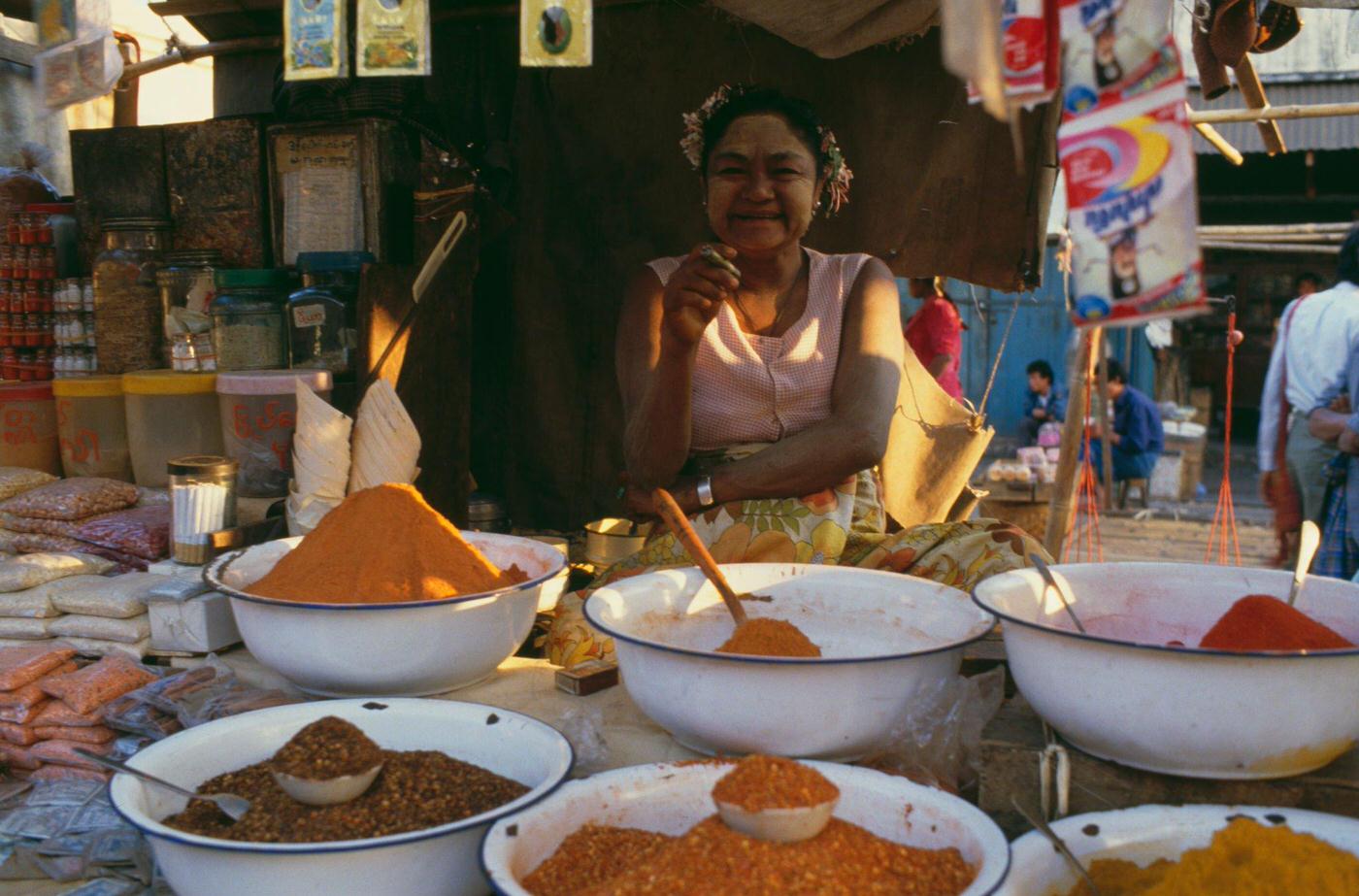
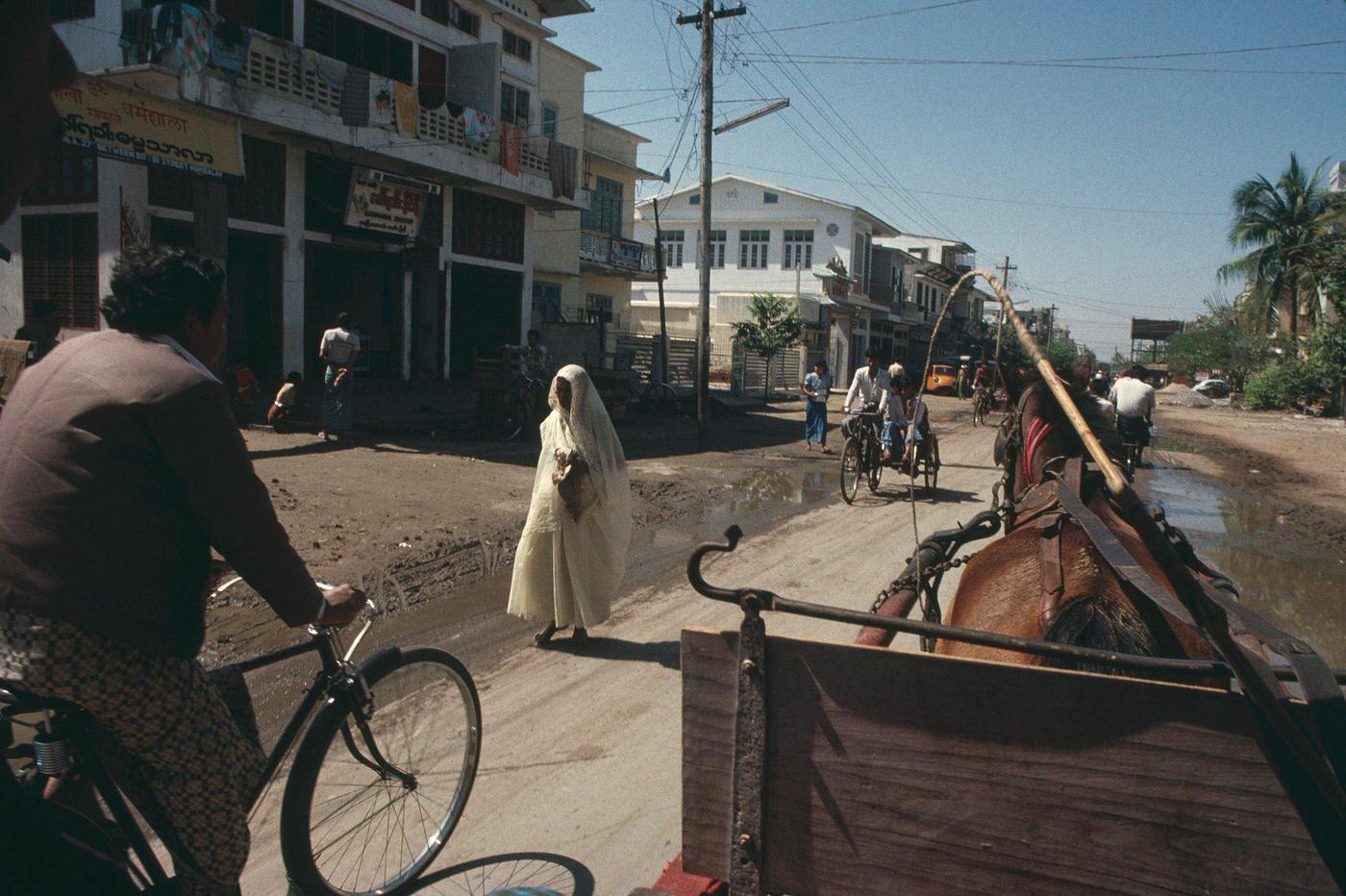
Street-level commerce told the story of daily survival. Vendors sold secondhand books and magazines from curbside stalls. Notaries typed official documents on manual typewriters for clients who had no other options. Three-wheeled bicycle taxis and auto-rickshaws moved people through the city. These were not signs of a thriving economy — they were adaptations to scarcity. Inflation was rampant, and formal employment opportunities were limited.
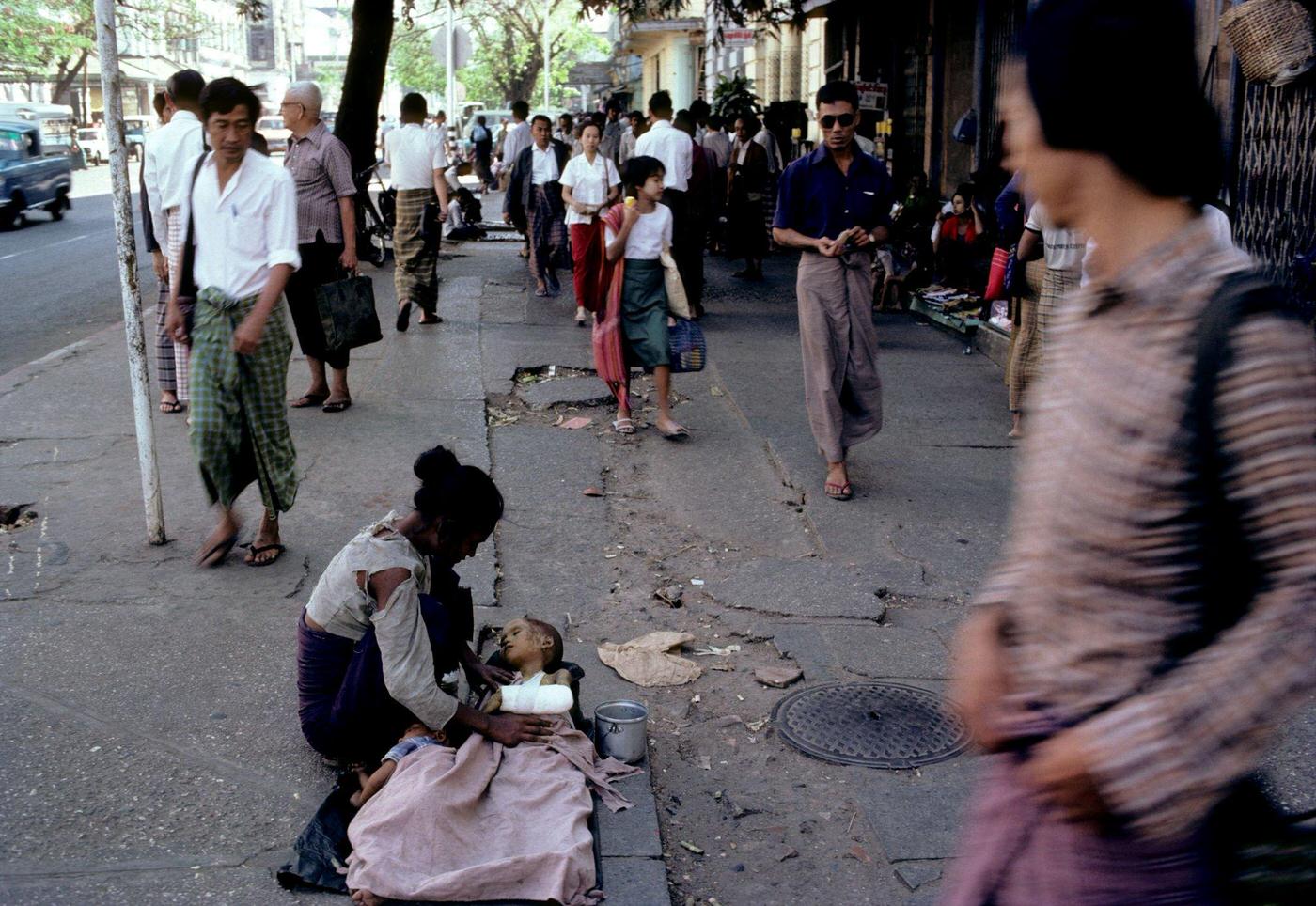
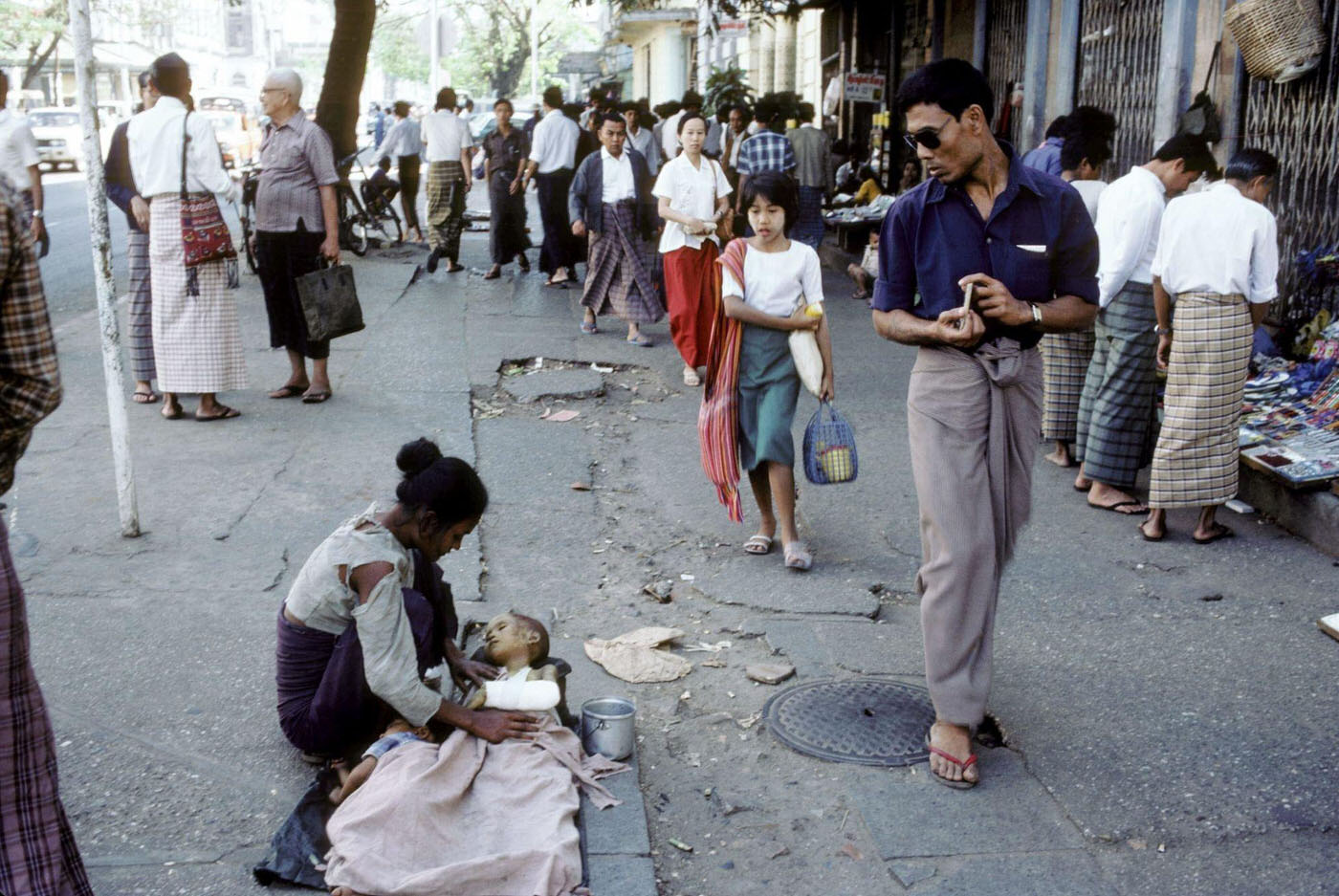
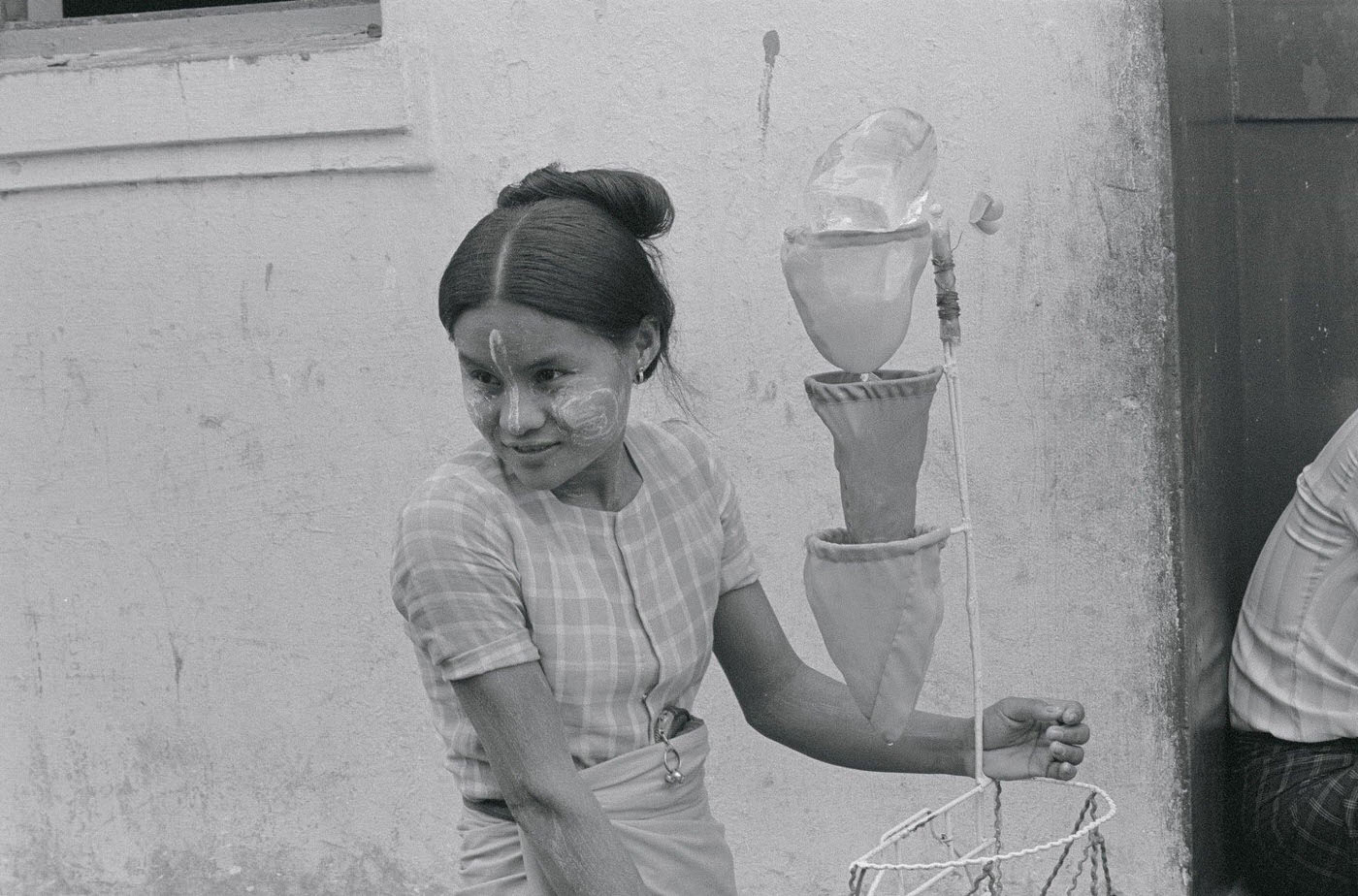
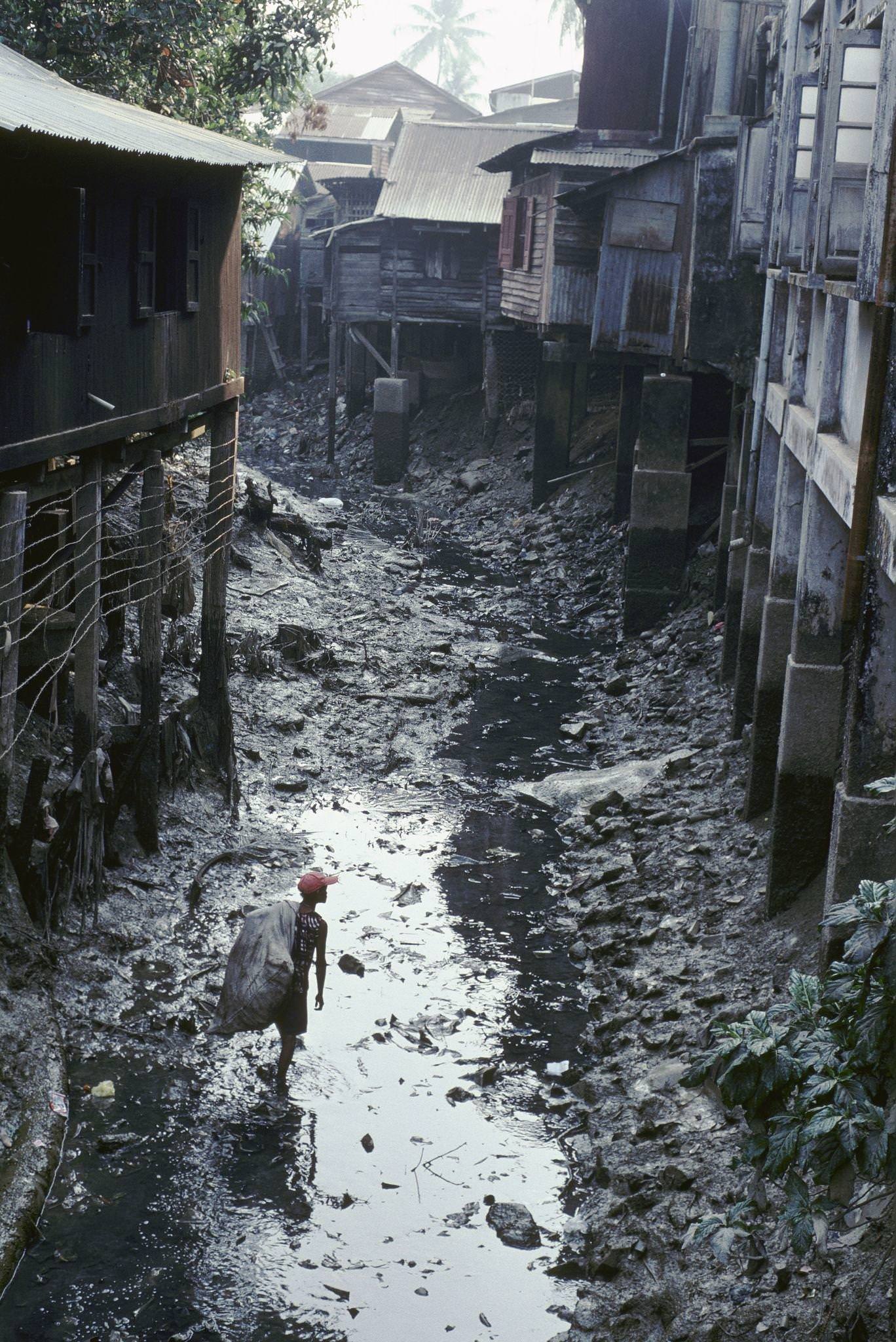
The poverty was not abstract. Mothers with malnourished children begged on Rangoon’s streets. Young children scavenged through canals for rubbish. A young woman sold cups of water on the street as a paid service — water being enough of a commodity to sustain a small trade. These scenes were not isolated. They reflected the consequences of two decades of failed socialist economic management that had stripped the state of its ability to provide basic services.
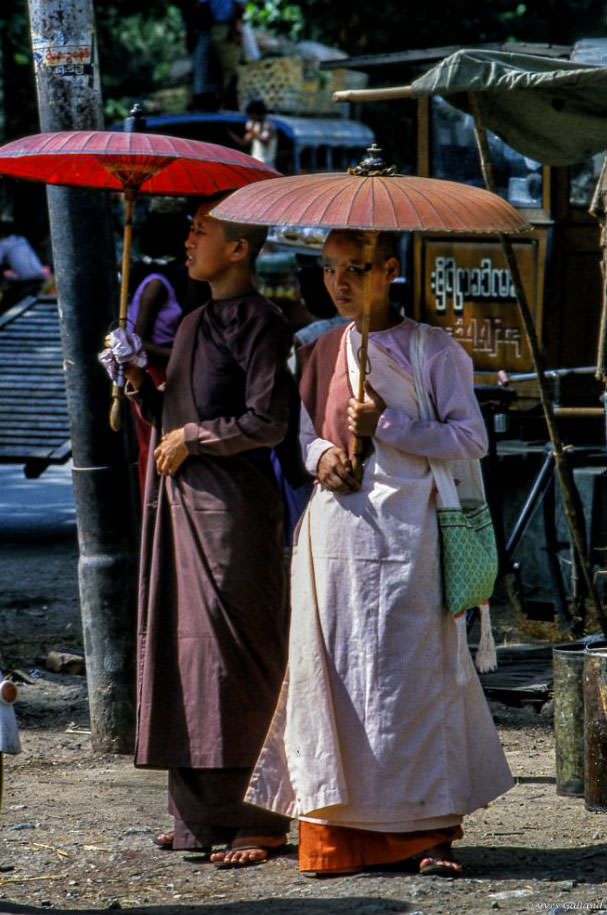
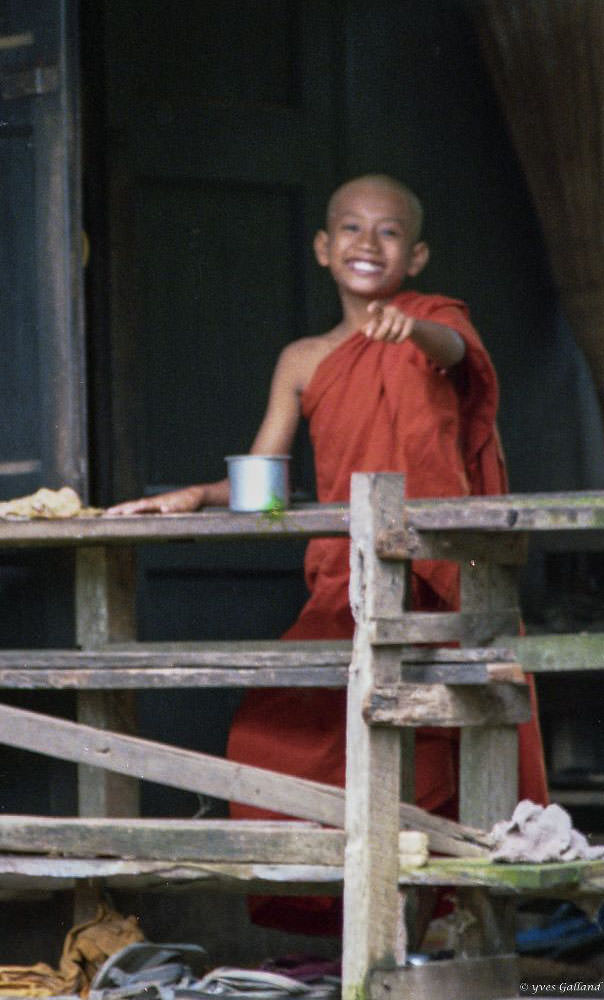
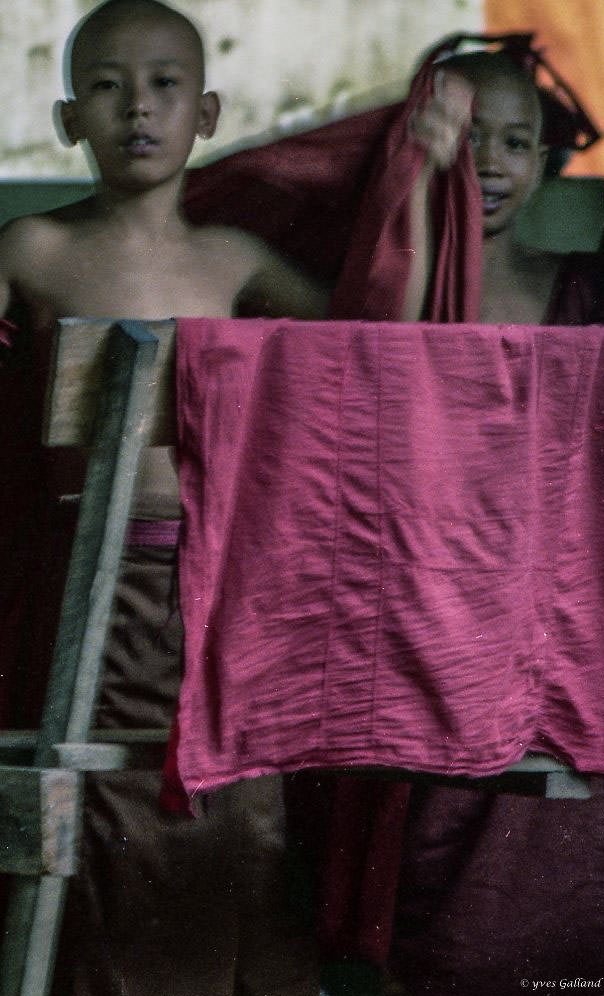
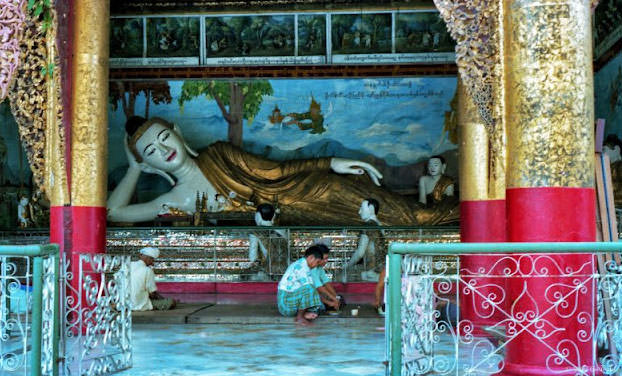
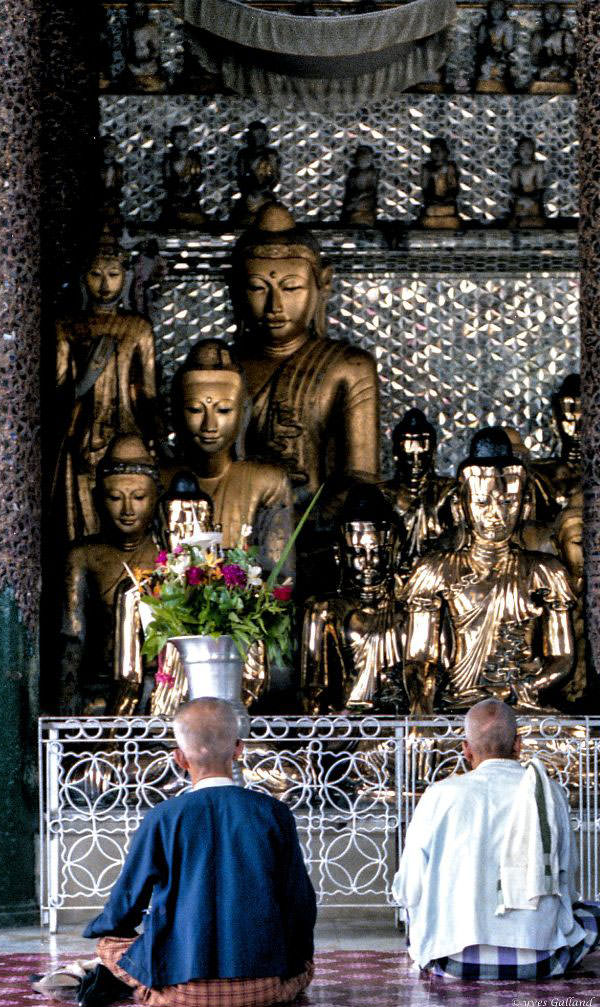
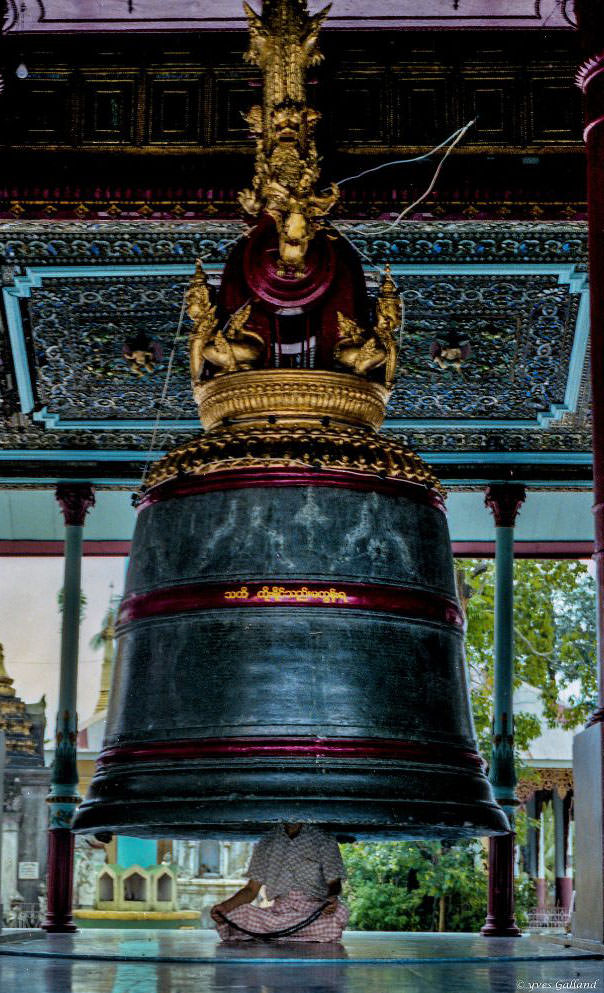
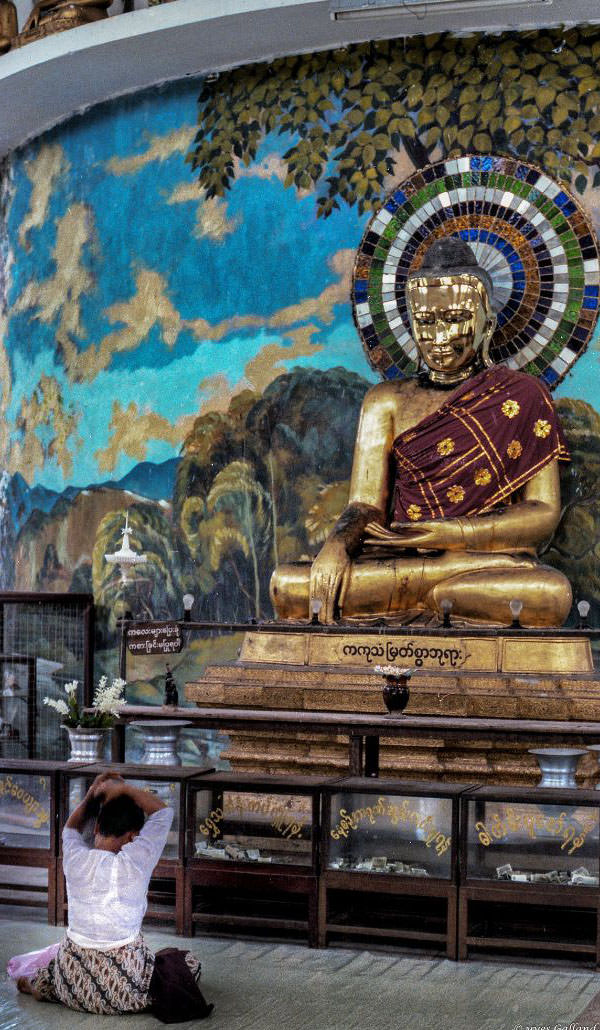
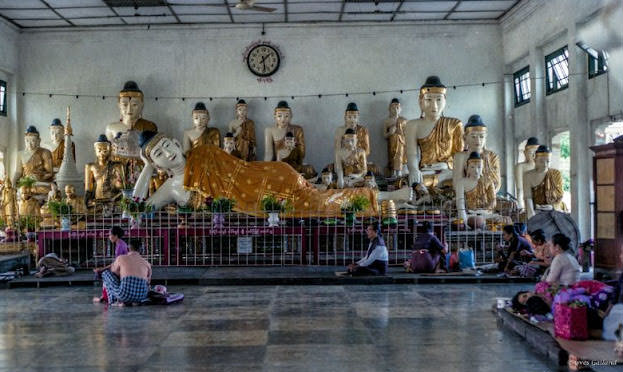
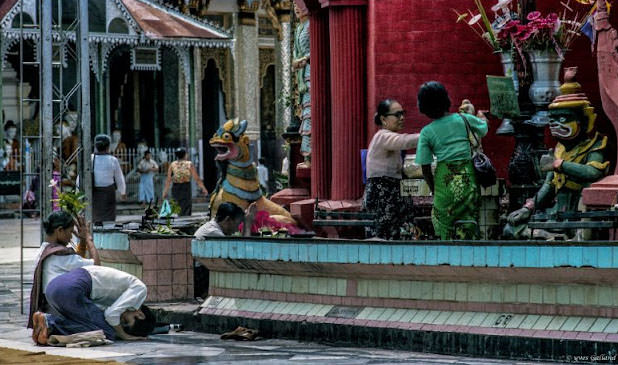
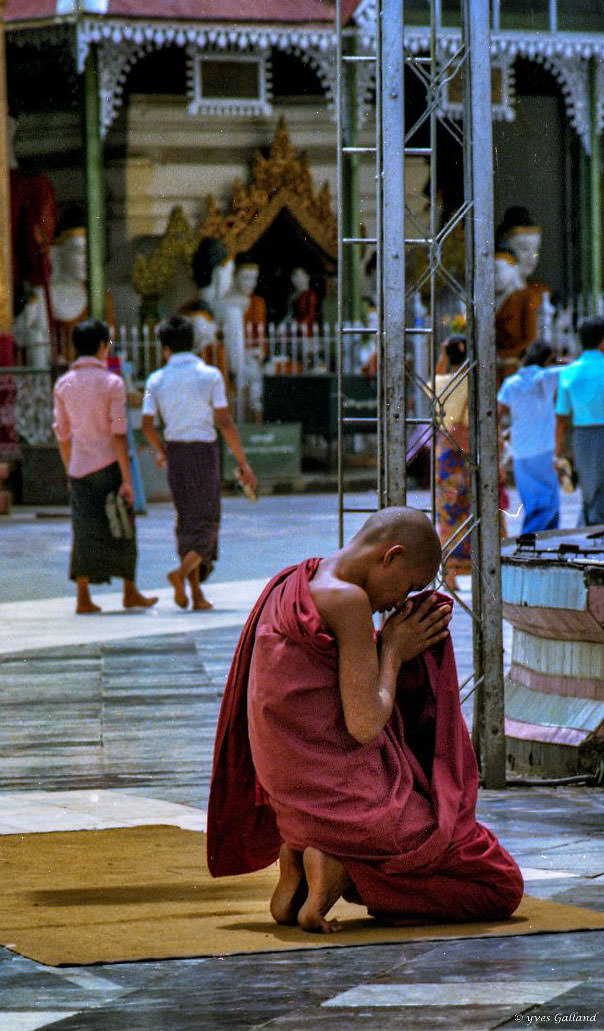
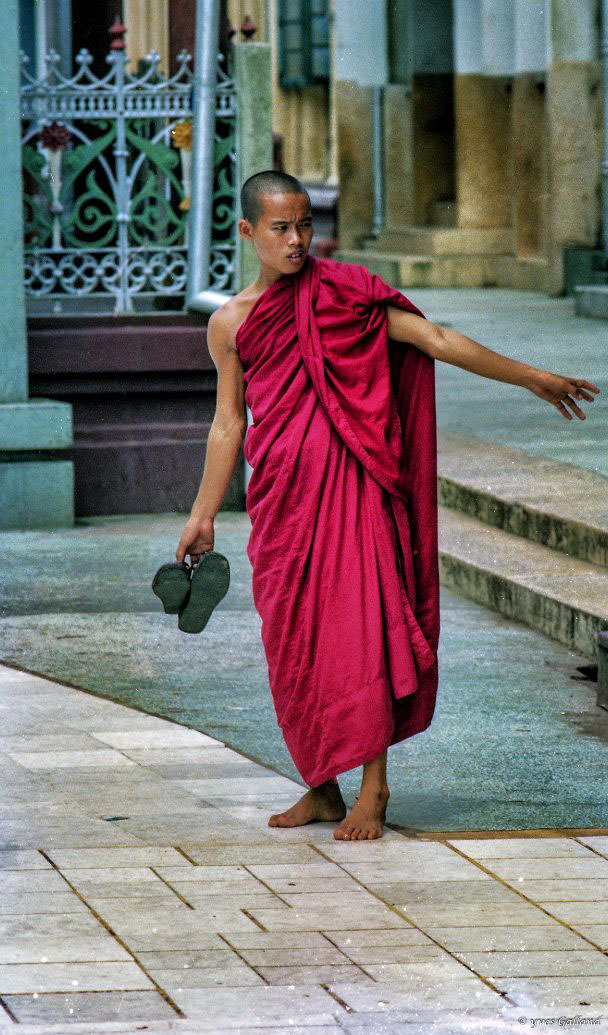
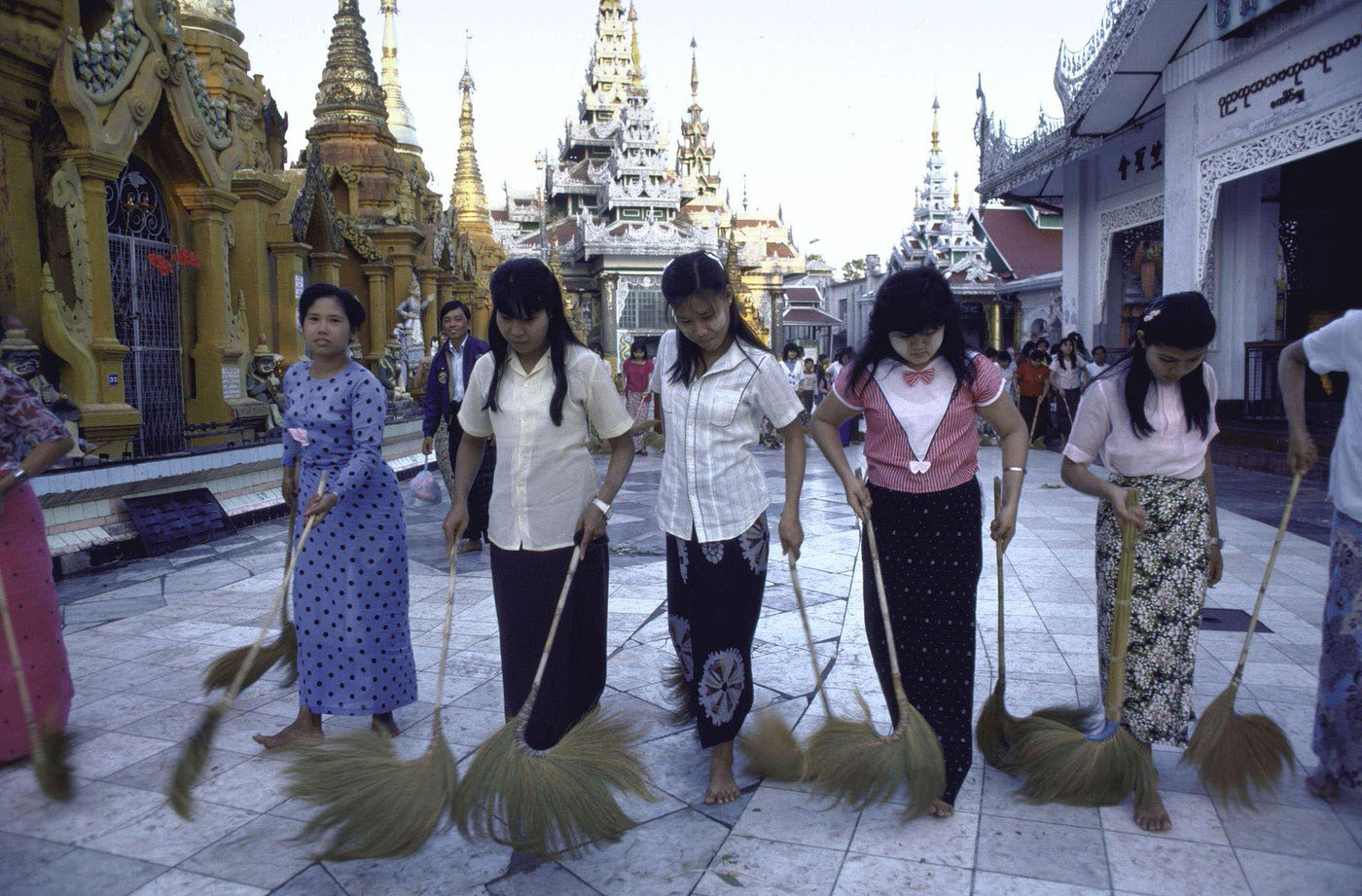
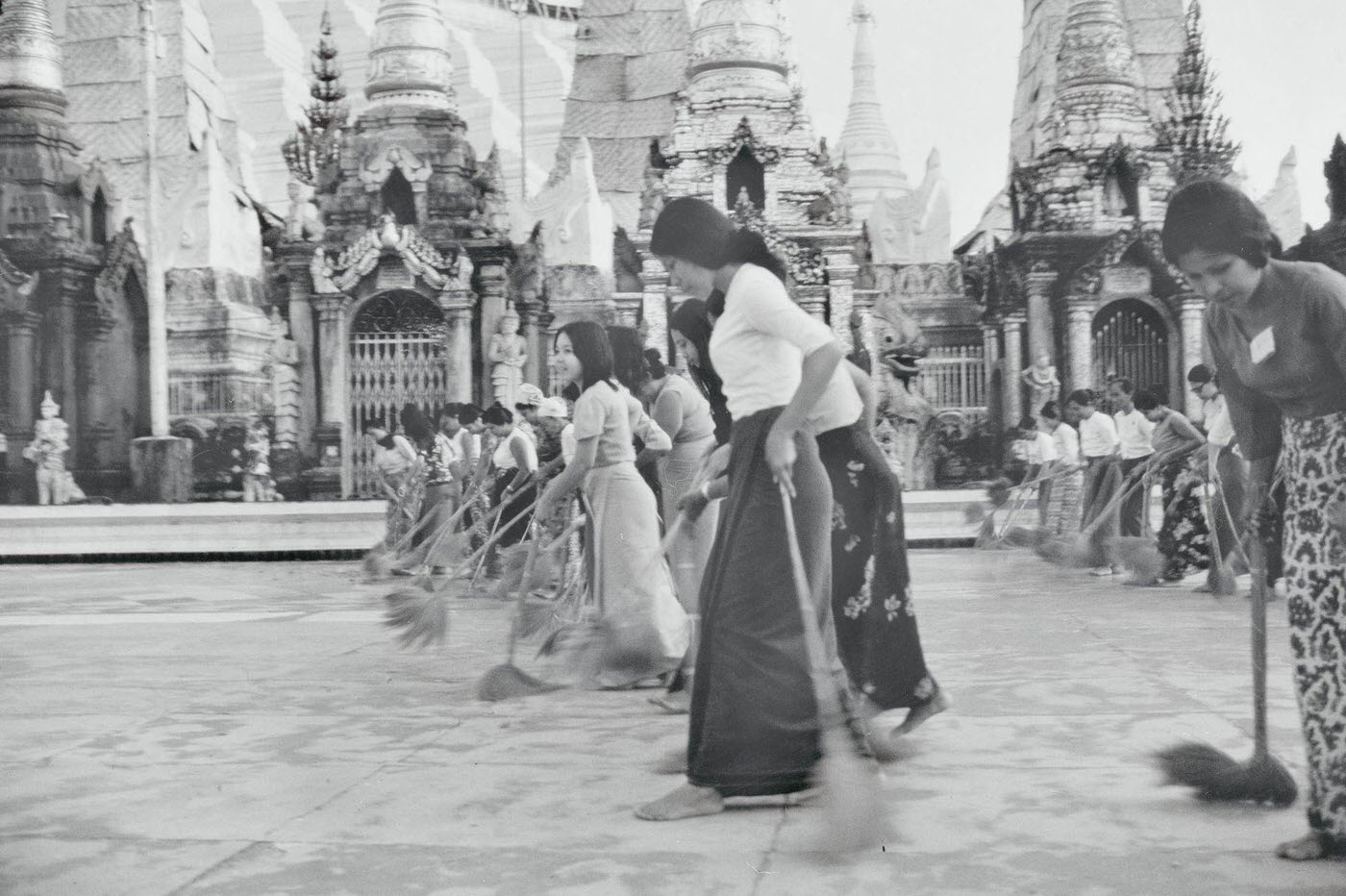
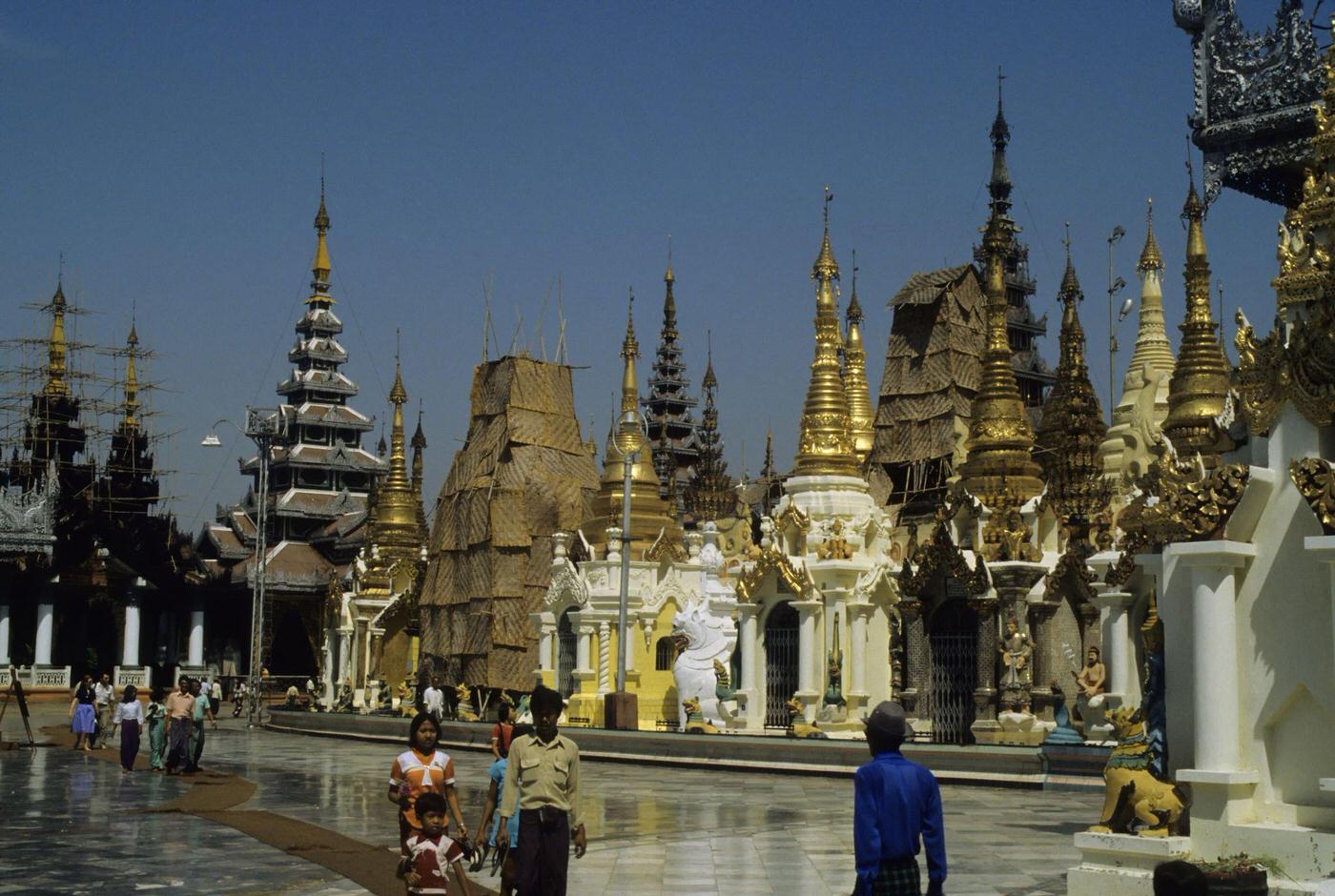
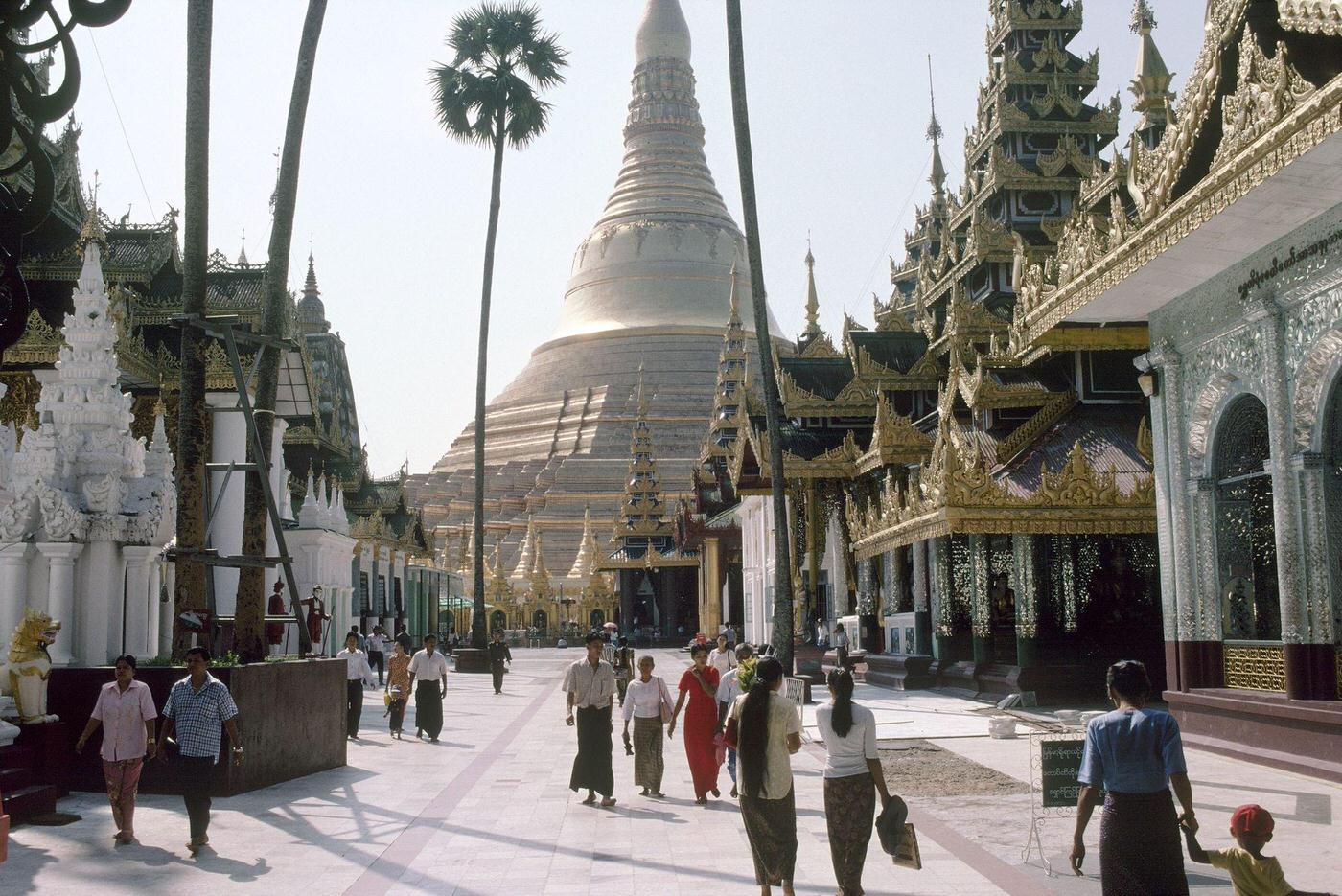
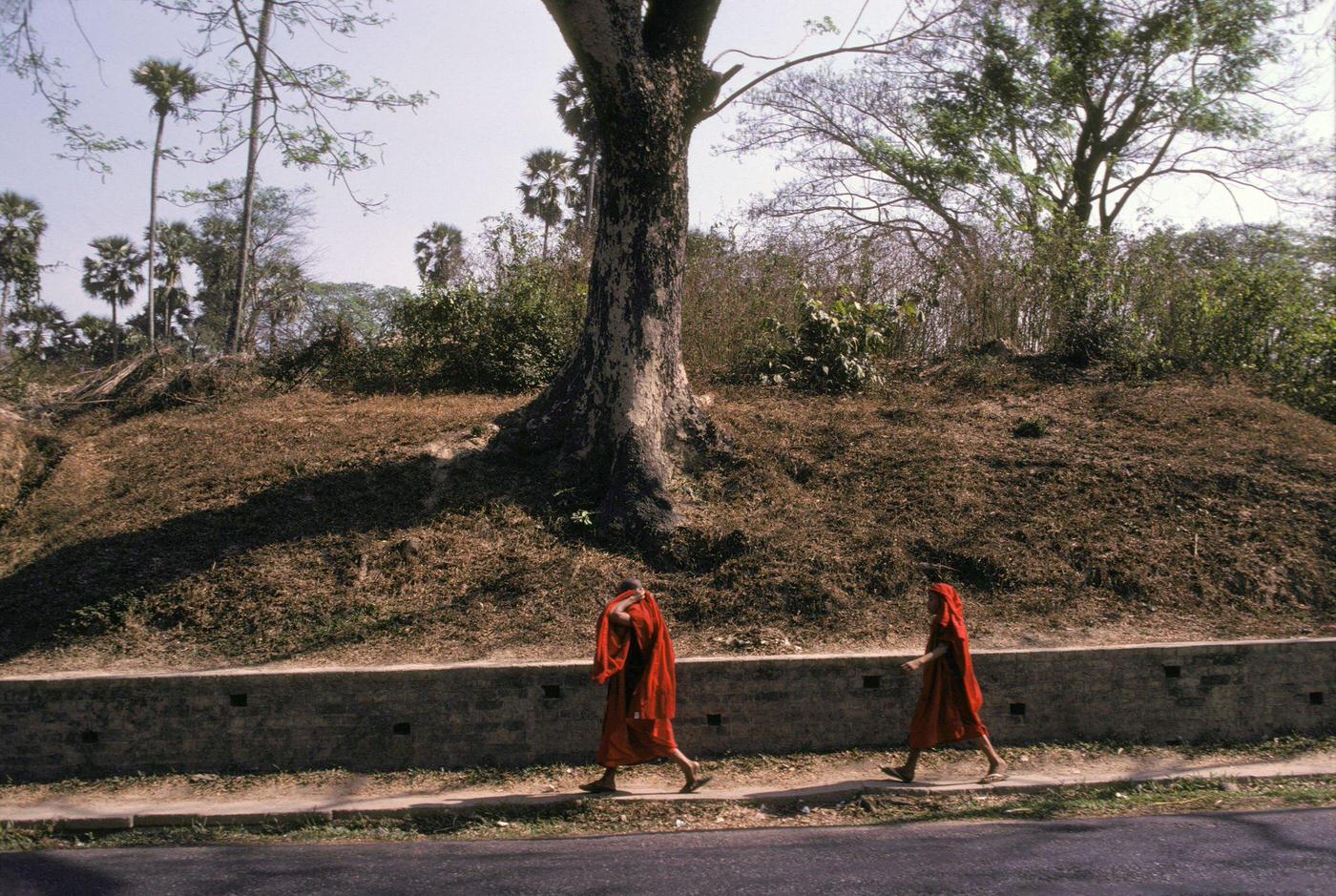
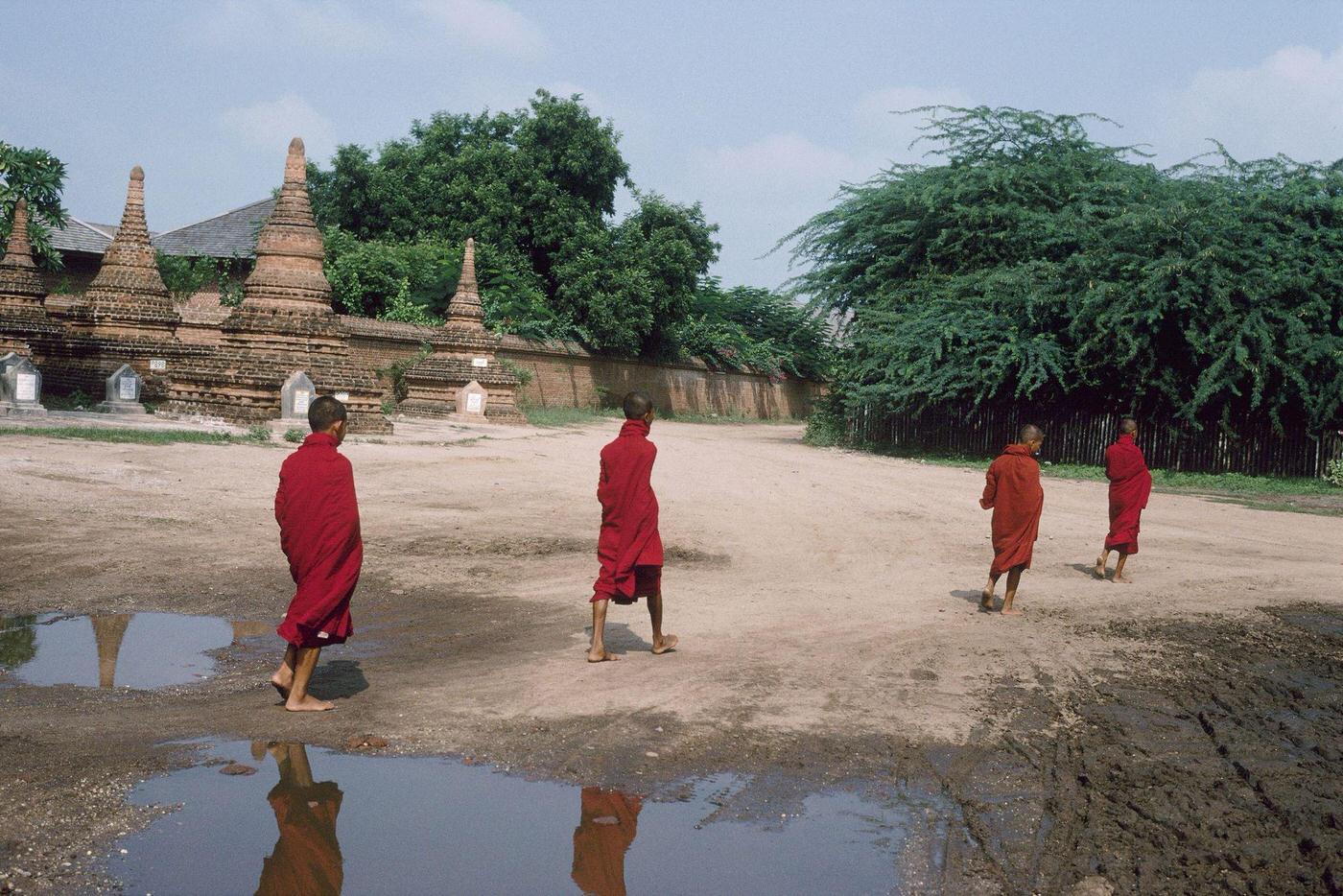
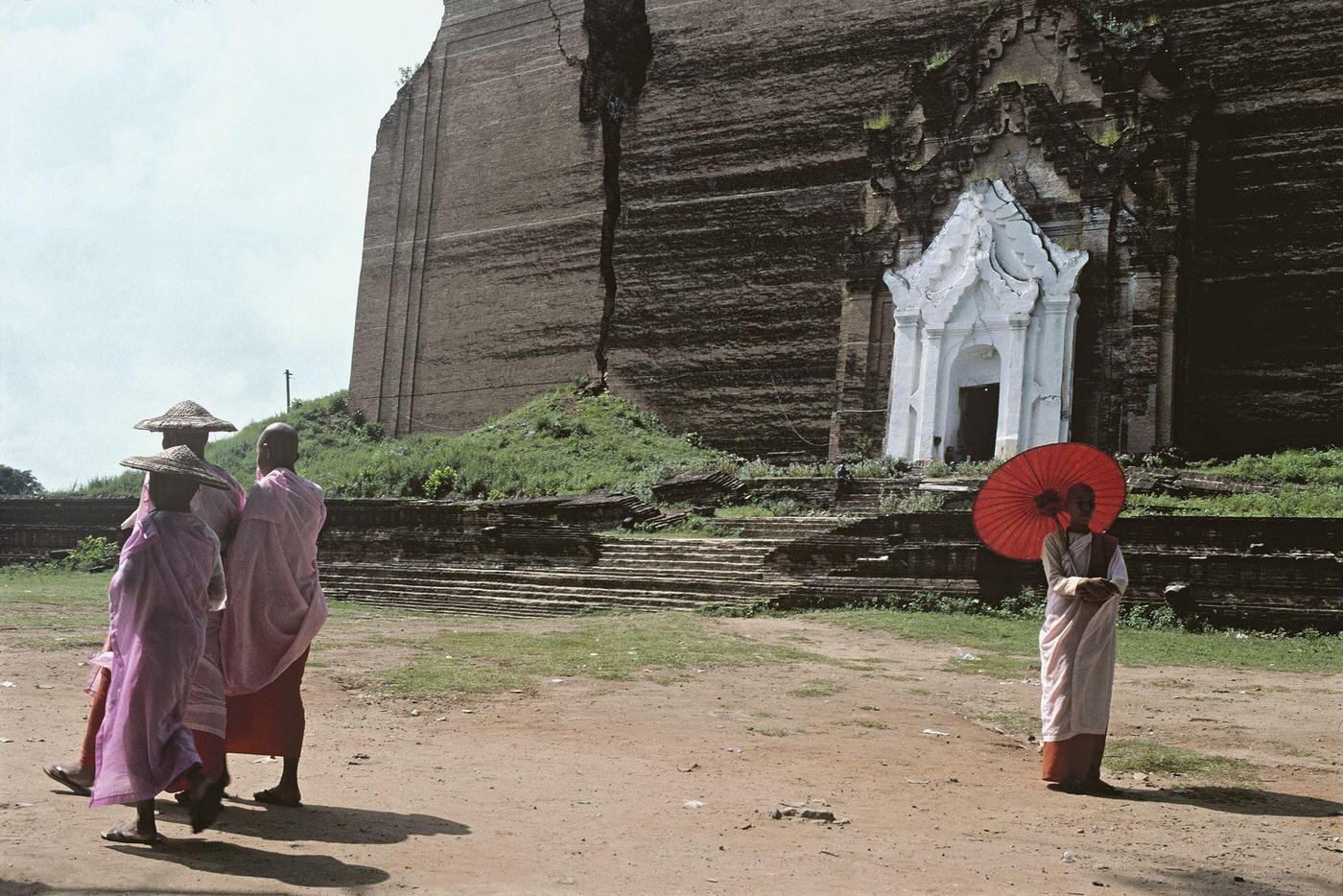
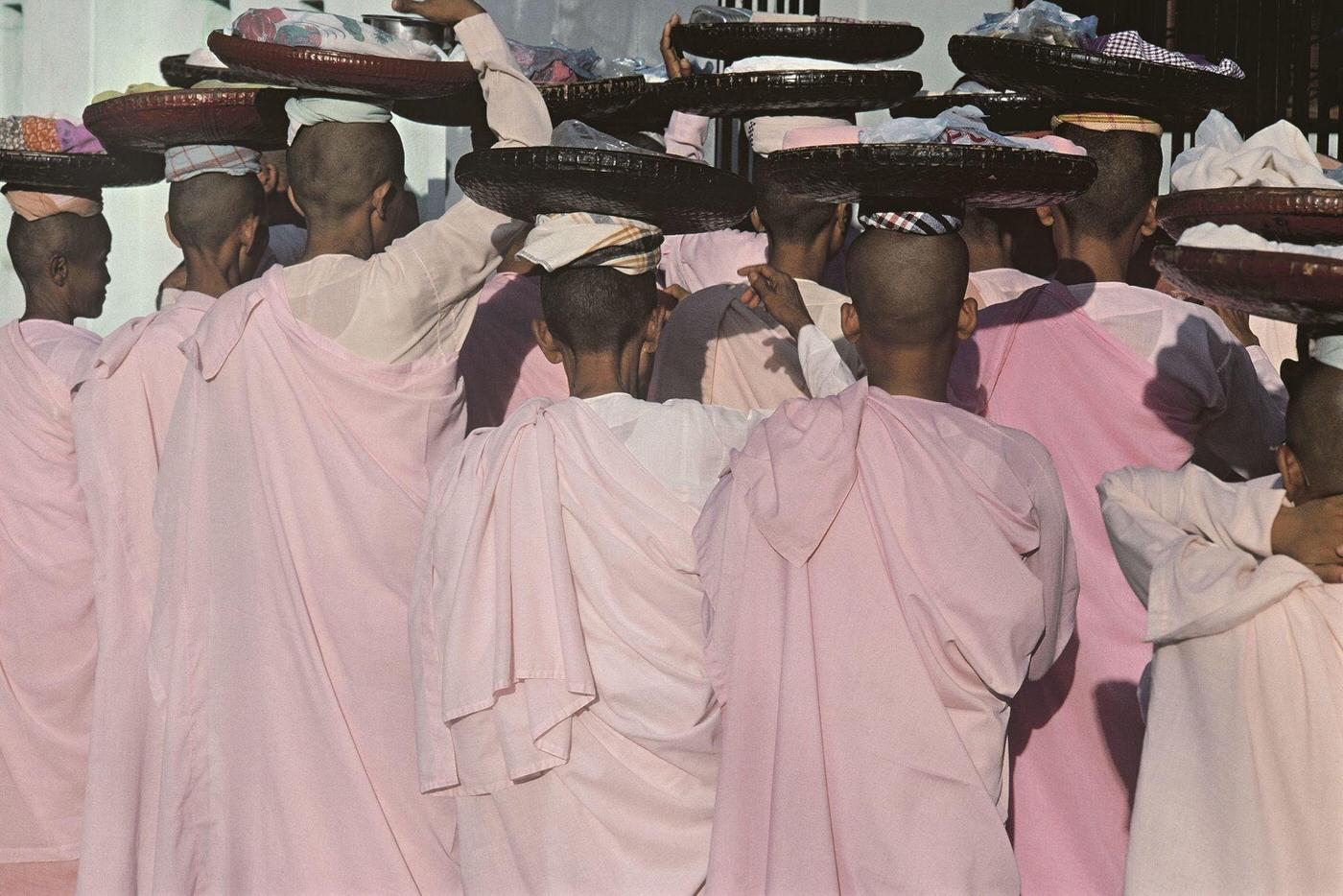
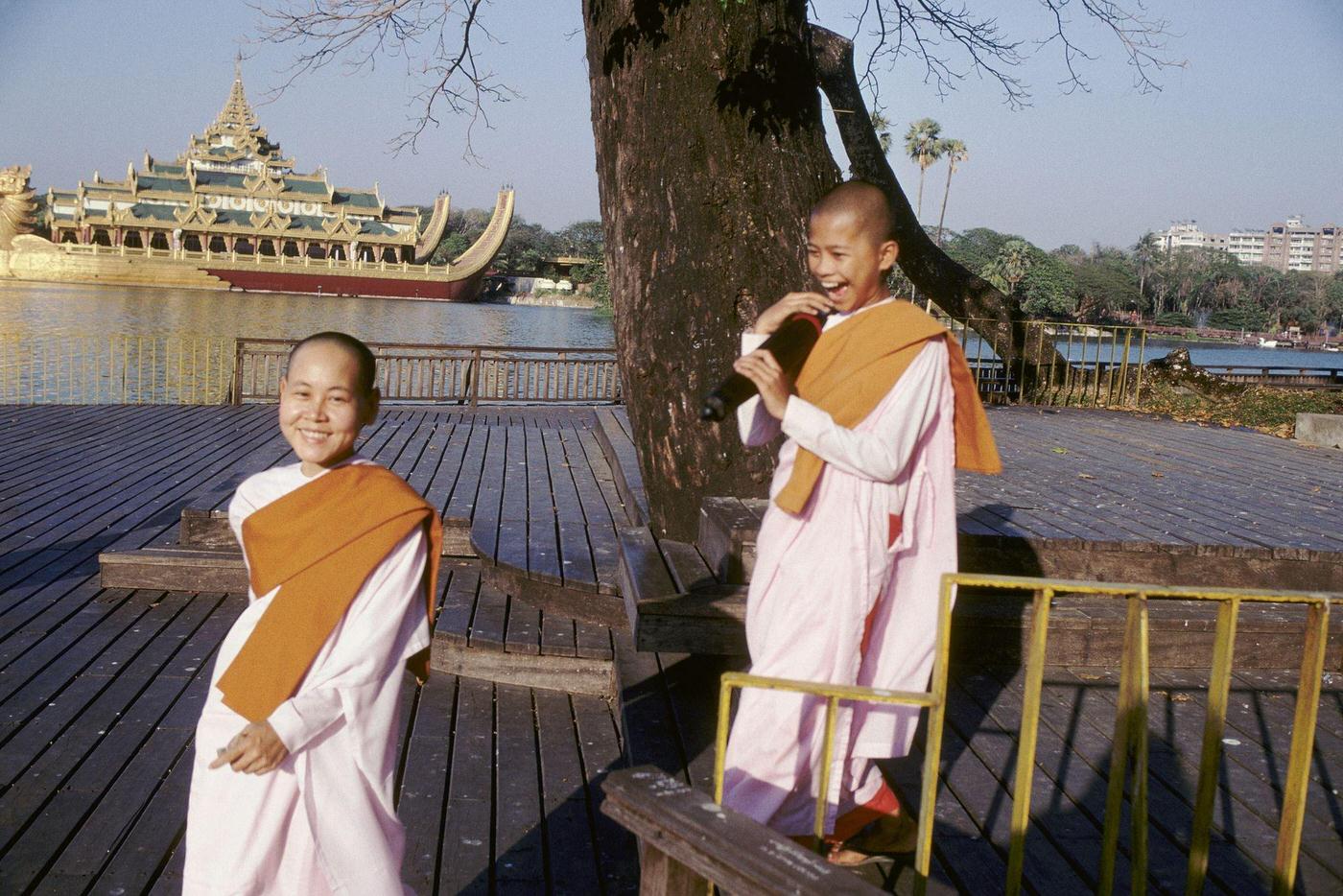
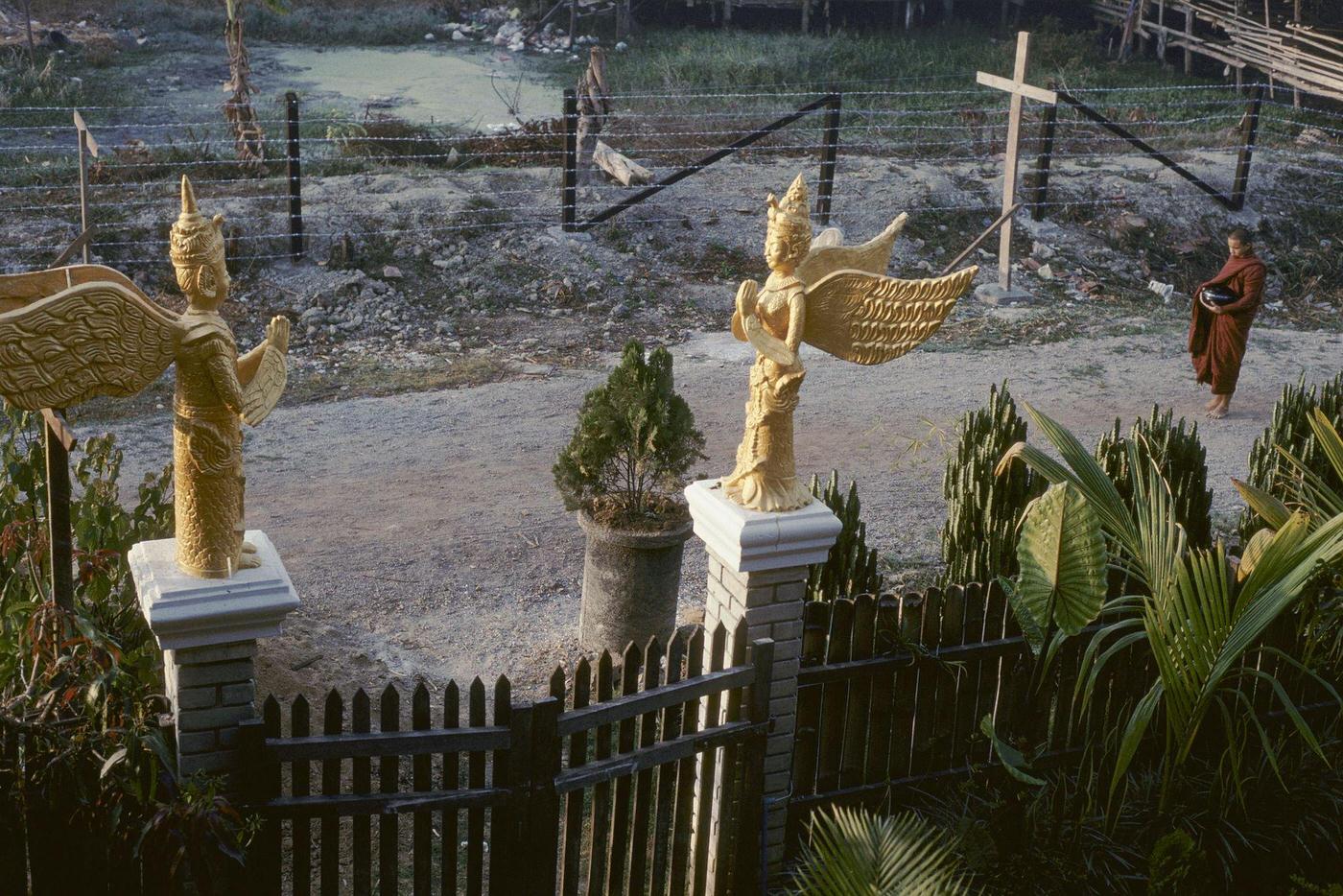
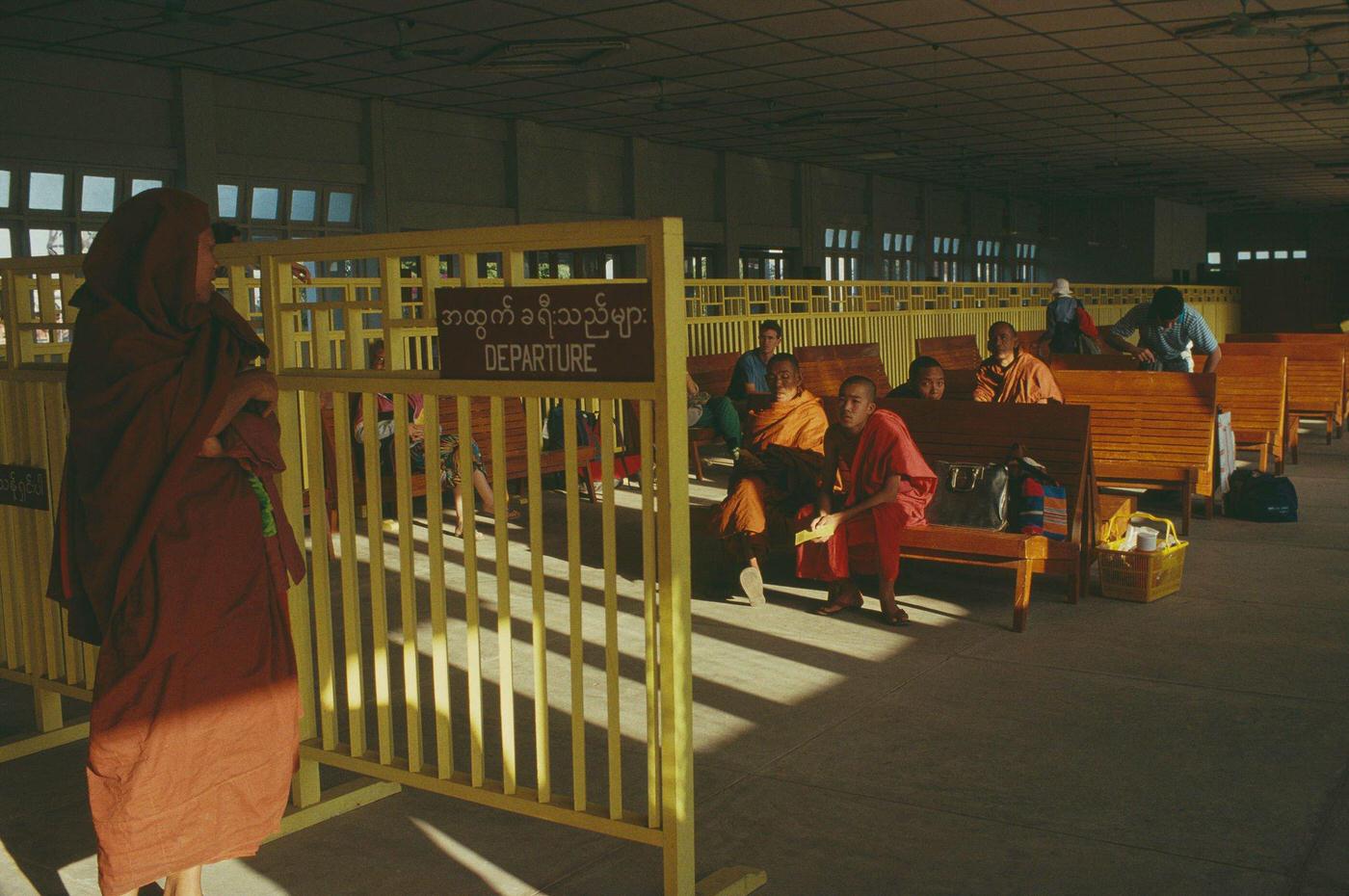
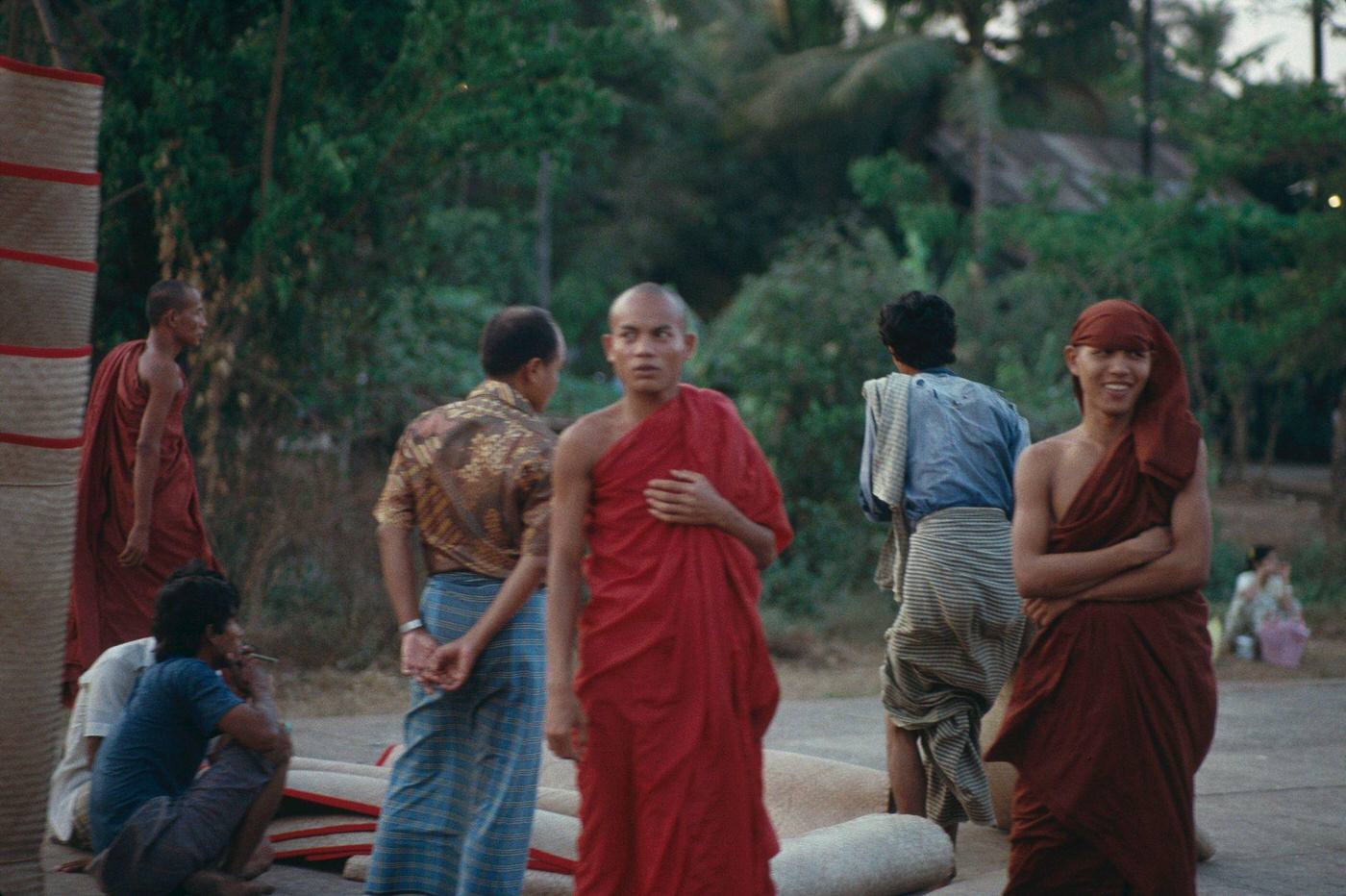
Buddhism was woven into every layer of Burmese life. The Shwedagon Pagoda in Rangoon — one of the most sacred Buddhist sites in the world — drew monks, nuns, and ordinary worshippers daily. Women swept the marble-covered temple grounds with large feather dusters, barefooted as a sign of respect. Monks in saffron robes walked the temple paths or passed through airport departure lounges carrying the same calm they brought to the streets. The Sangha, Myanmar’s Buddhist monkhood, was not simply a religious institution — it was a social force with deep roots in every community.
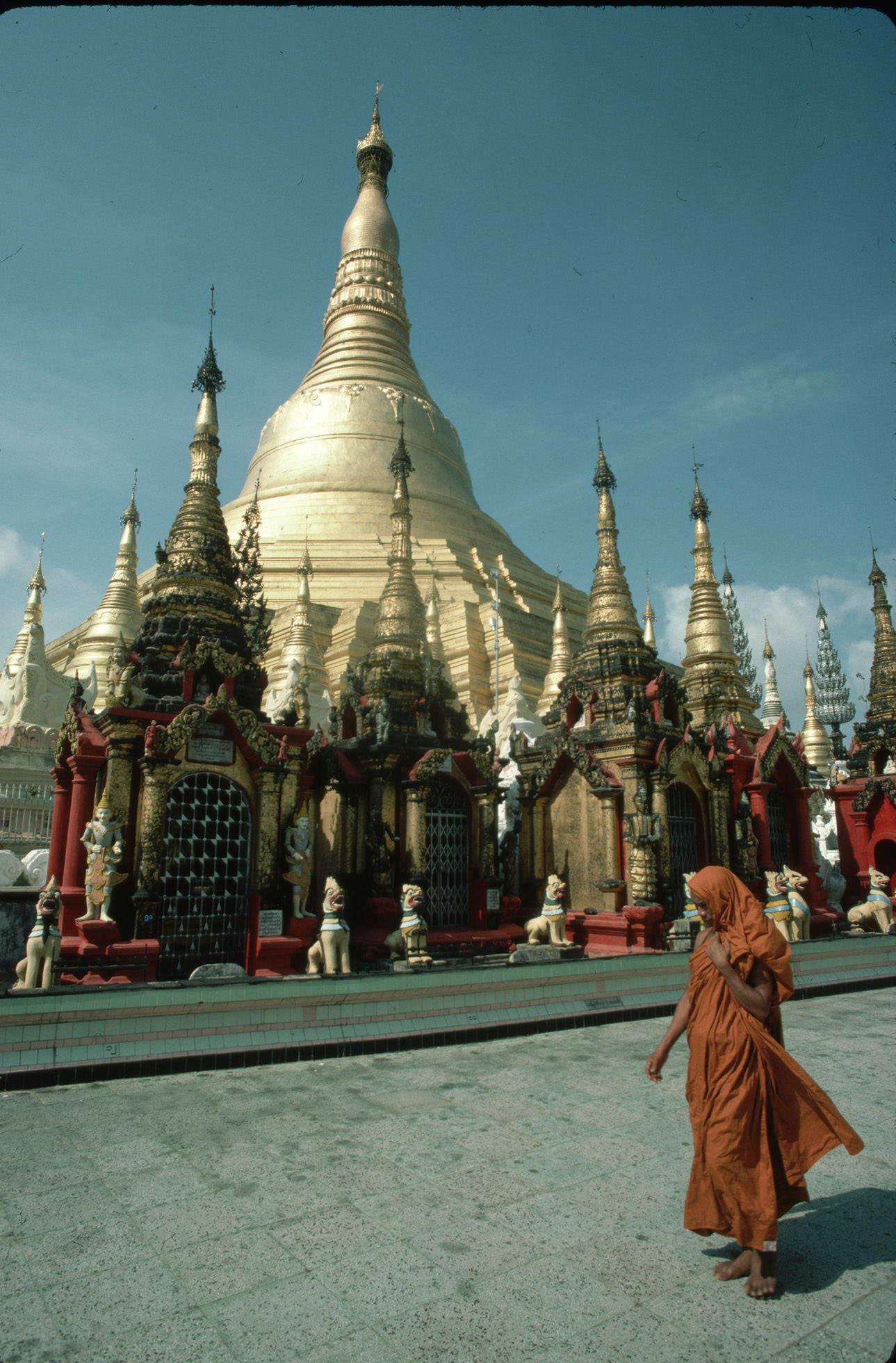
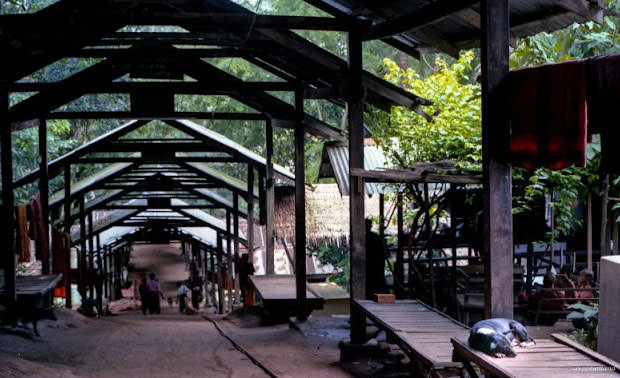
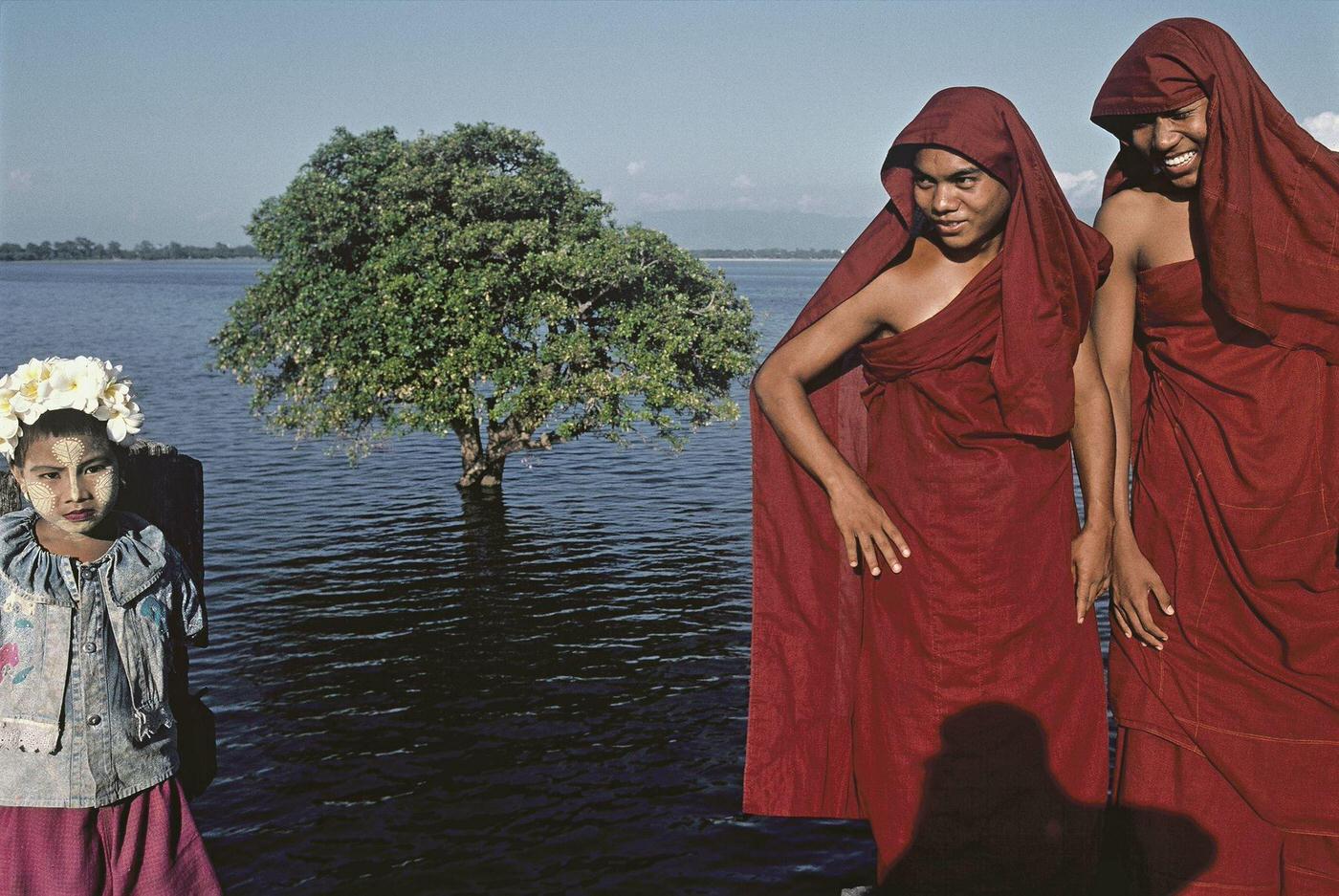
Monks appeared throughout the country, from the ancient temple plains of Bagan to the wooden bridges near Mandalay. Buddhist nuns were equally present — at temple ceremonies, along rural roads, and near the still waters of Inle Lake. Their visibility in everyday spaces was a constant reminder that religious life in Myanmar did not separate from civic life; the two were inseparable.
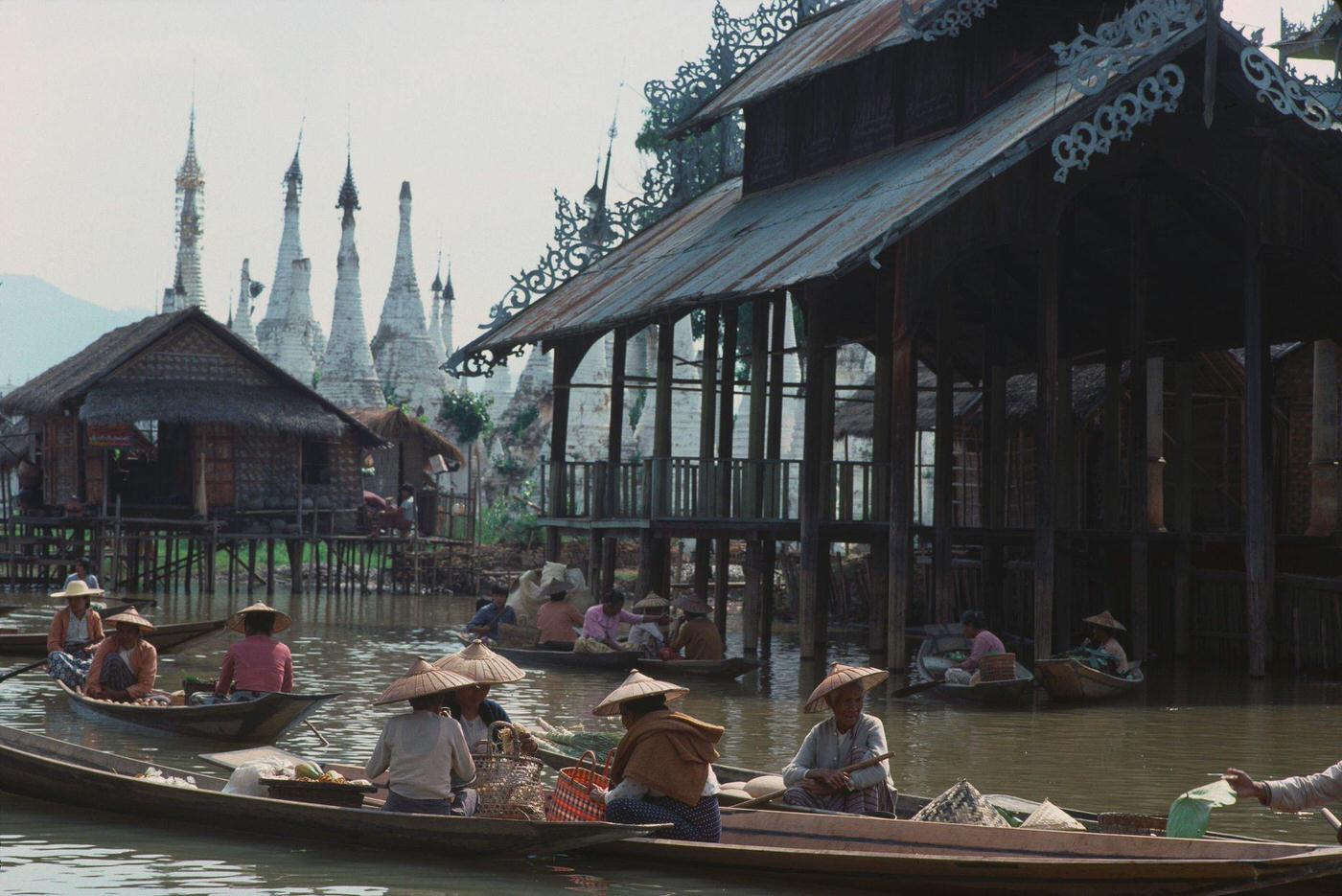
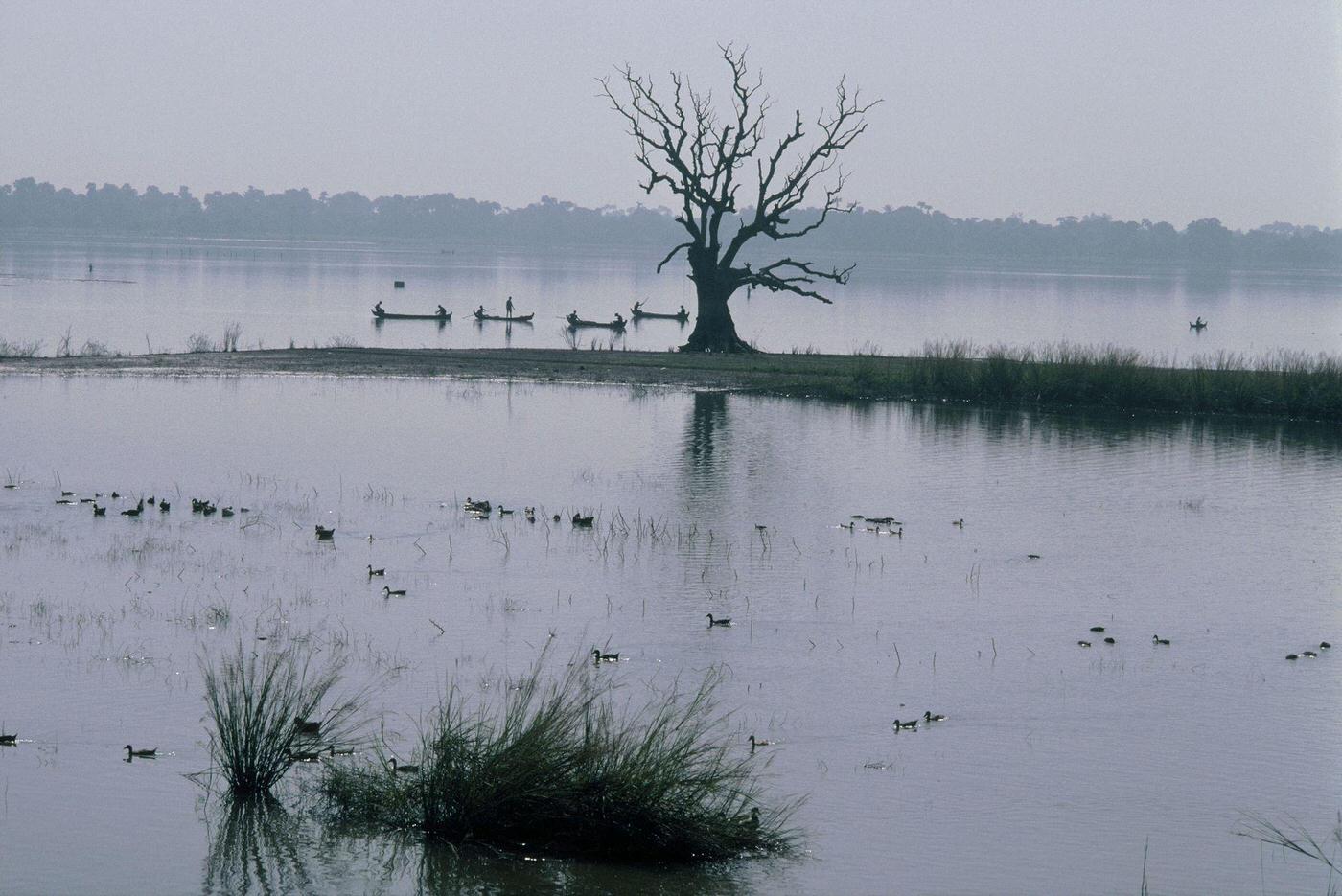
Outside Rangoon, life moved at a different rhythm. On Inle Lake in the Taunggyi District, fishermen balanced on the backs of their boats and rowed using a single leg — a technique unique to the region. Women paddled wooden canoe-like vessels loaded with goods to floating markets, trading directly from boat to boat. The lake’s surface served as both marketplace and highway.
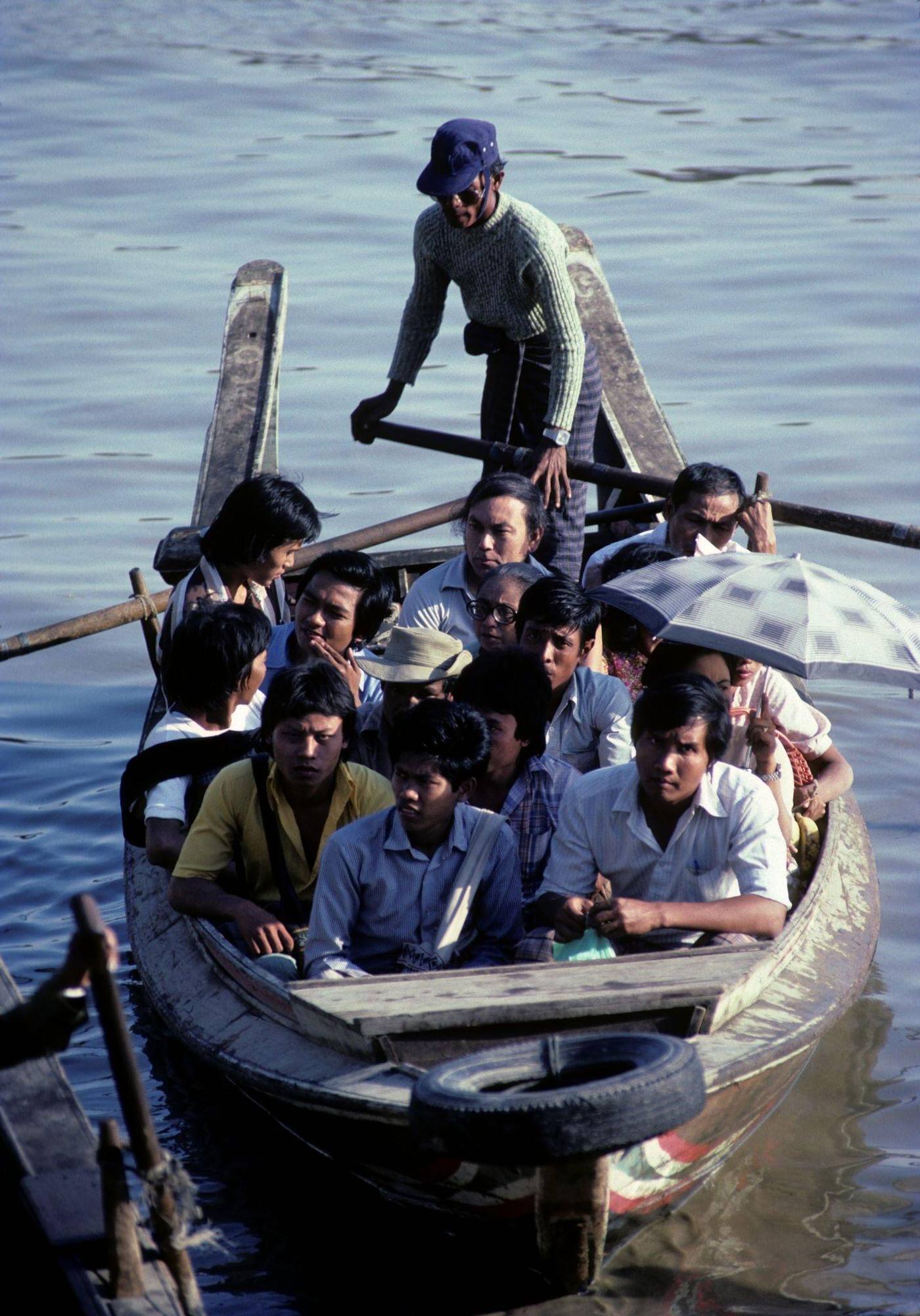
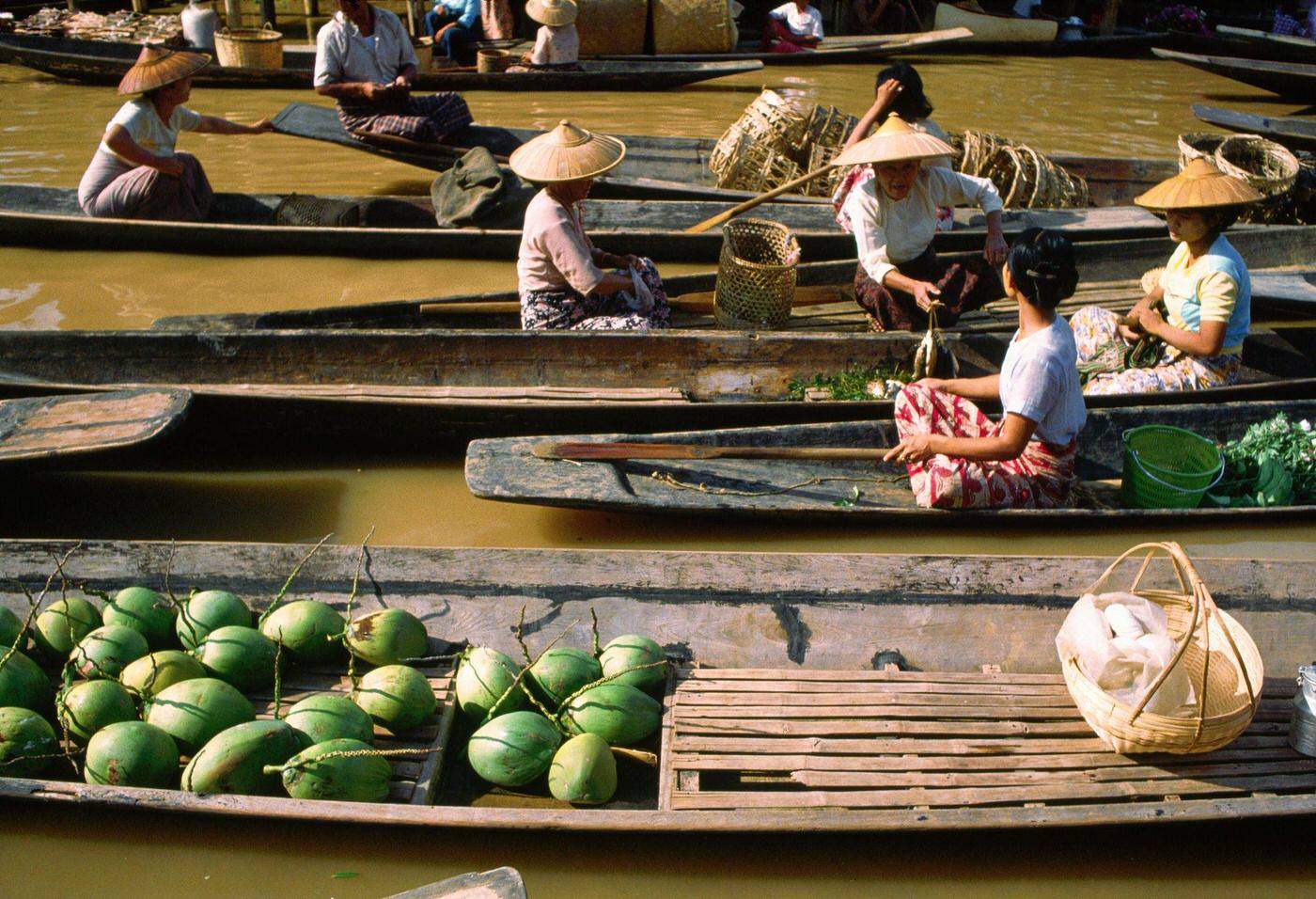
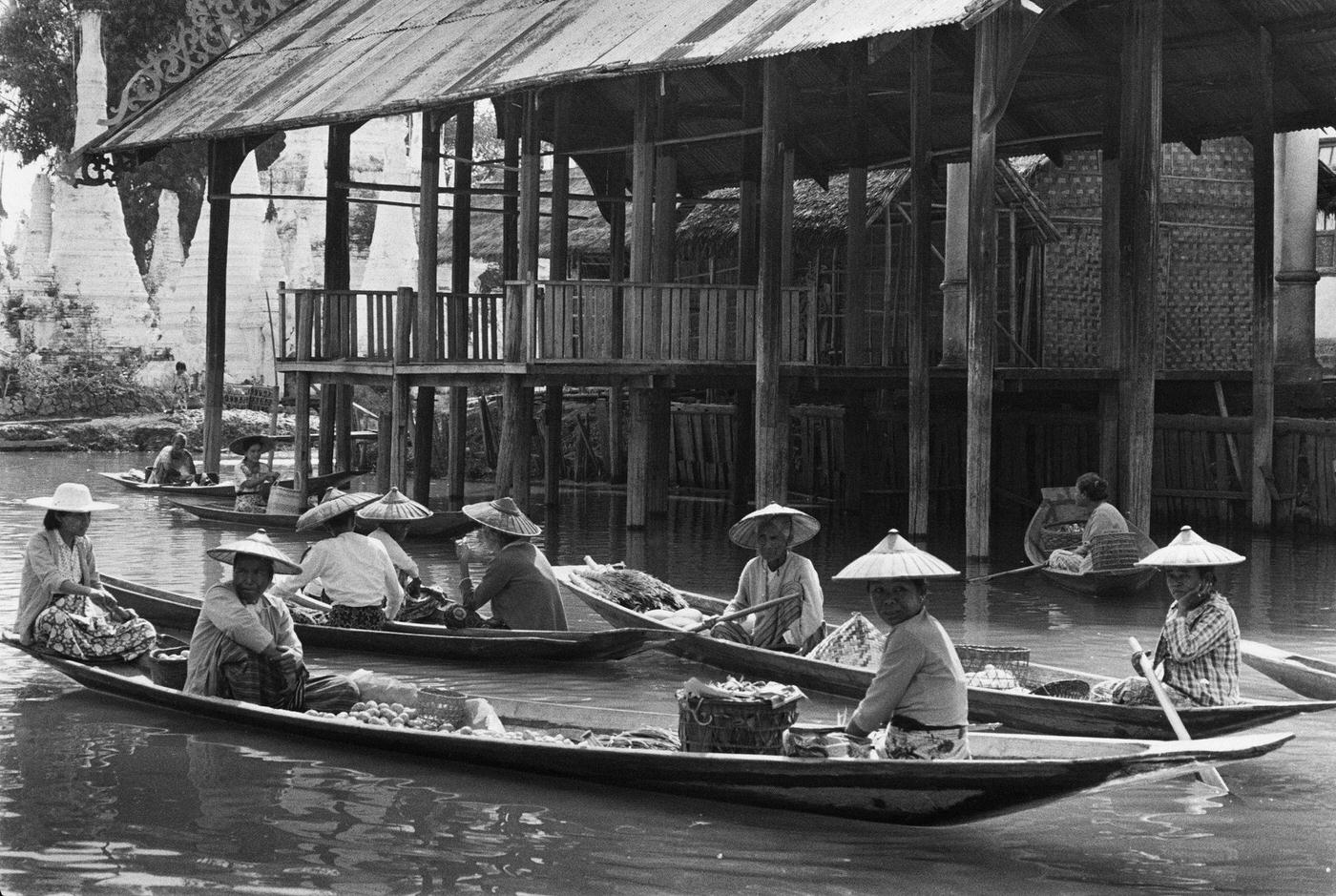
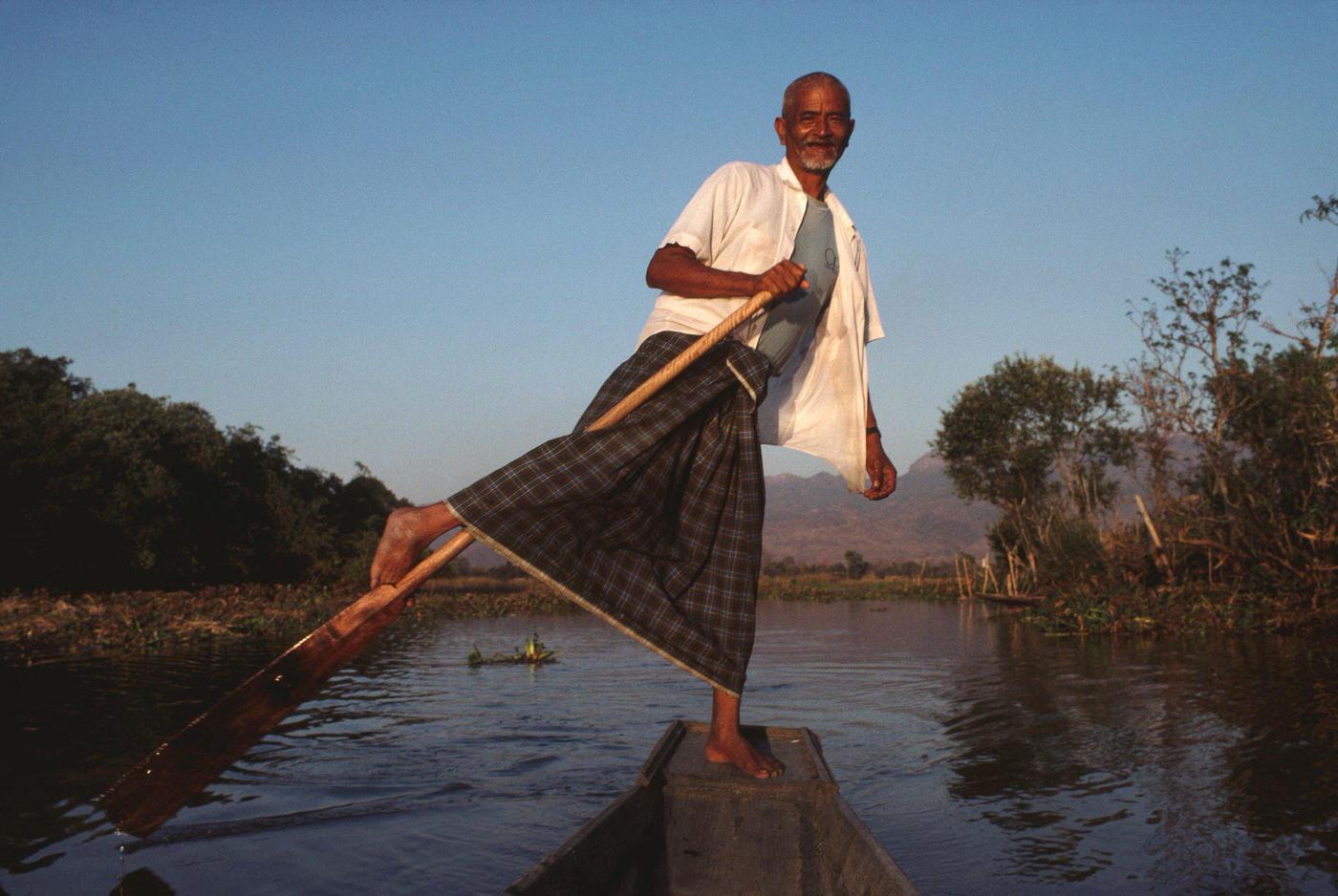
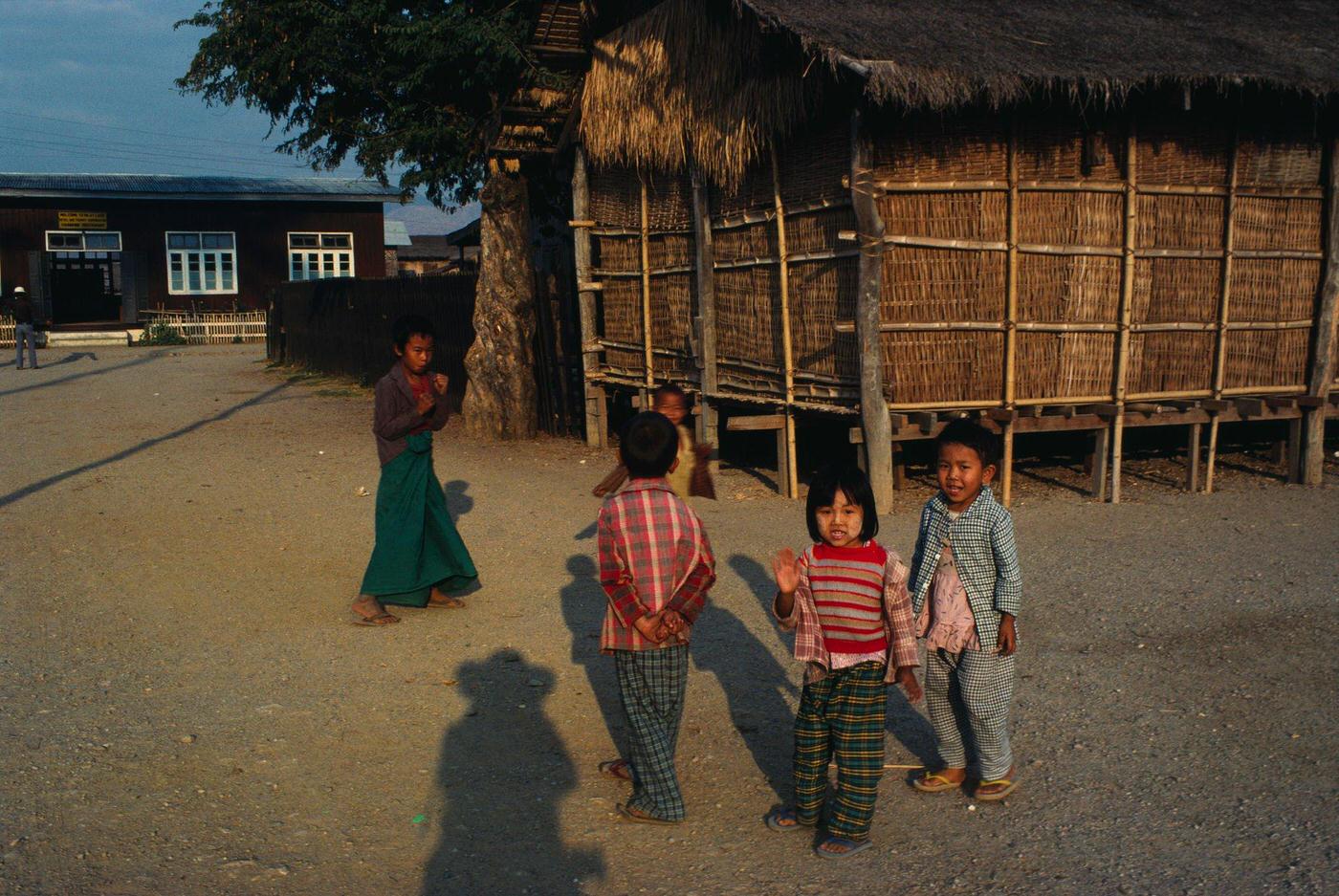
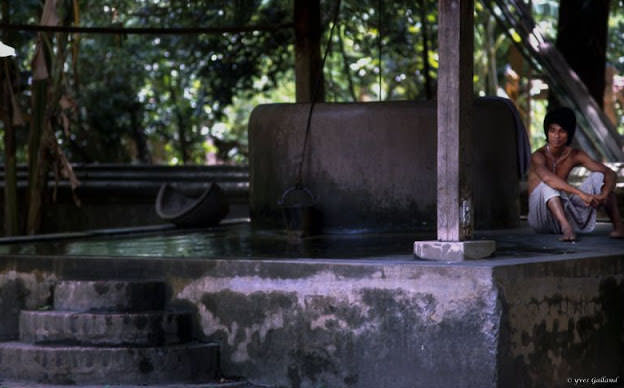
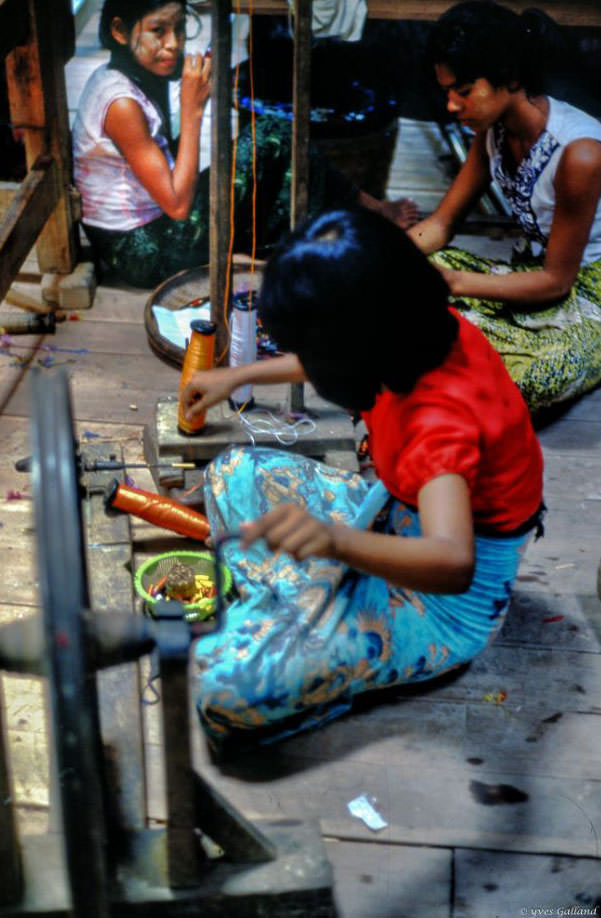
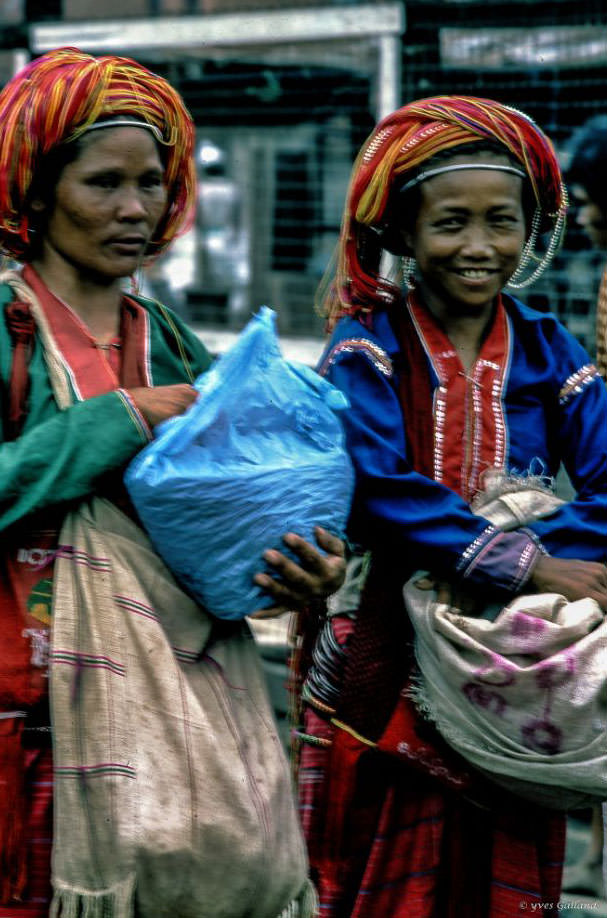
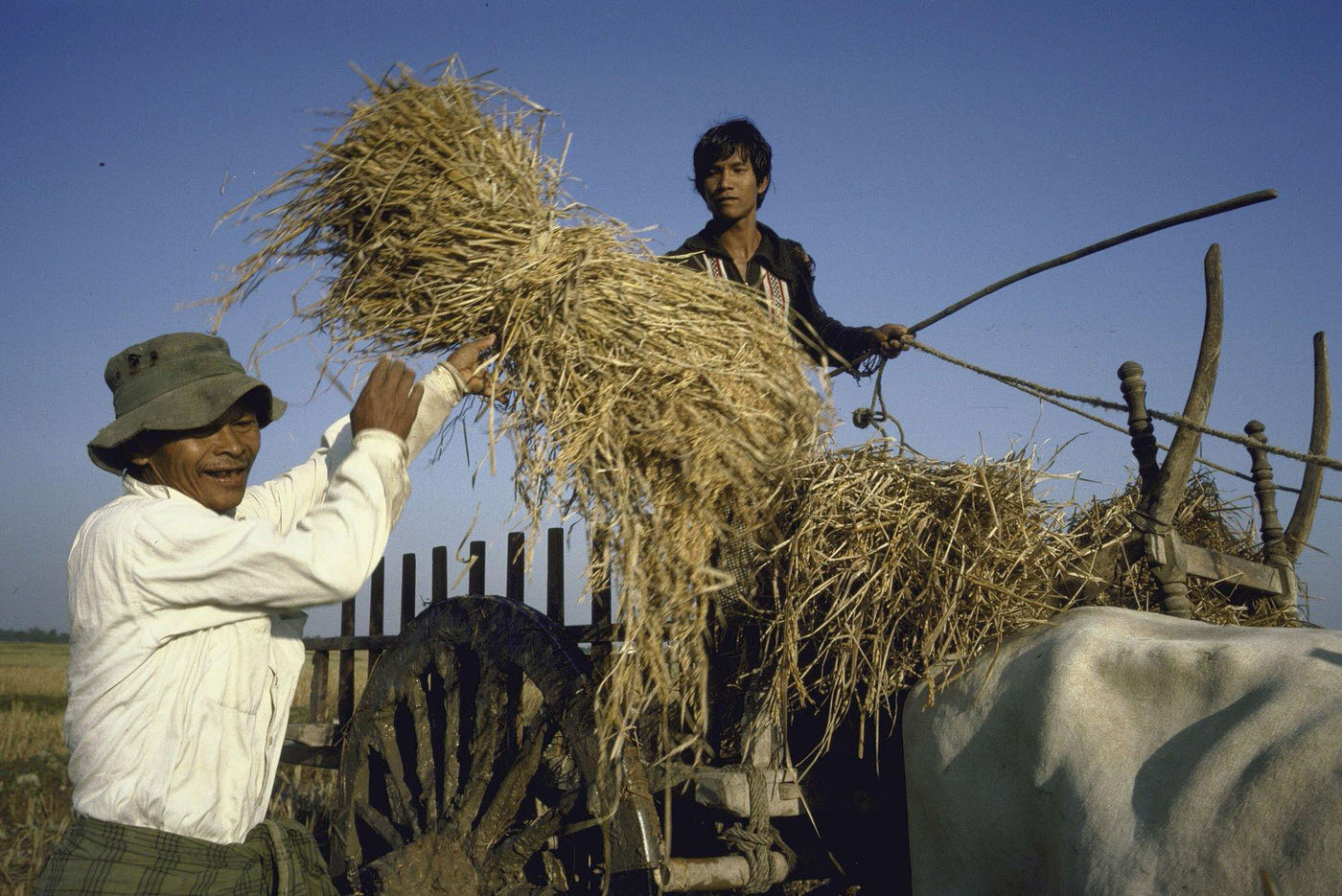
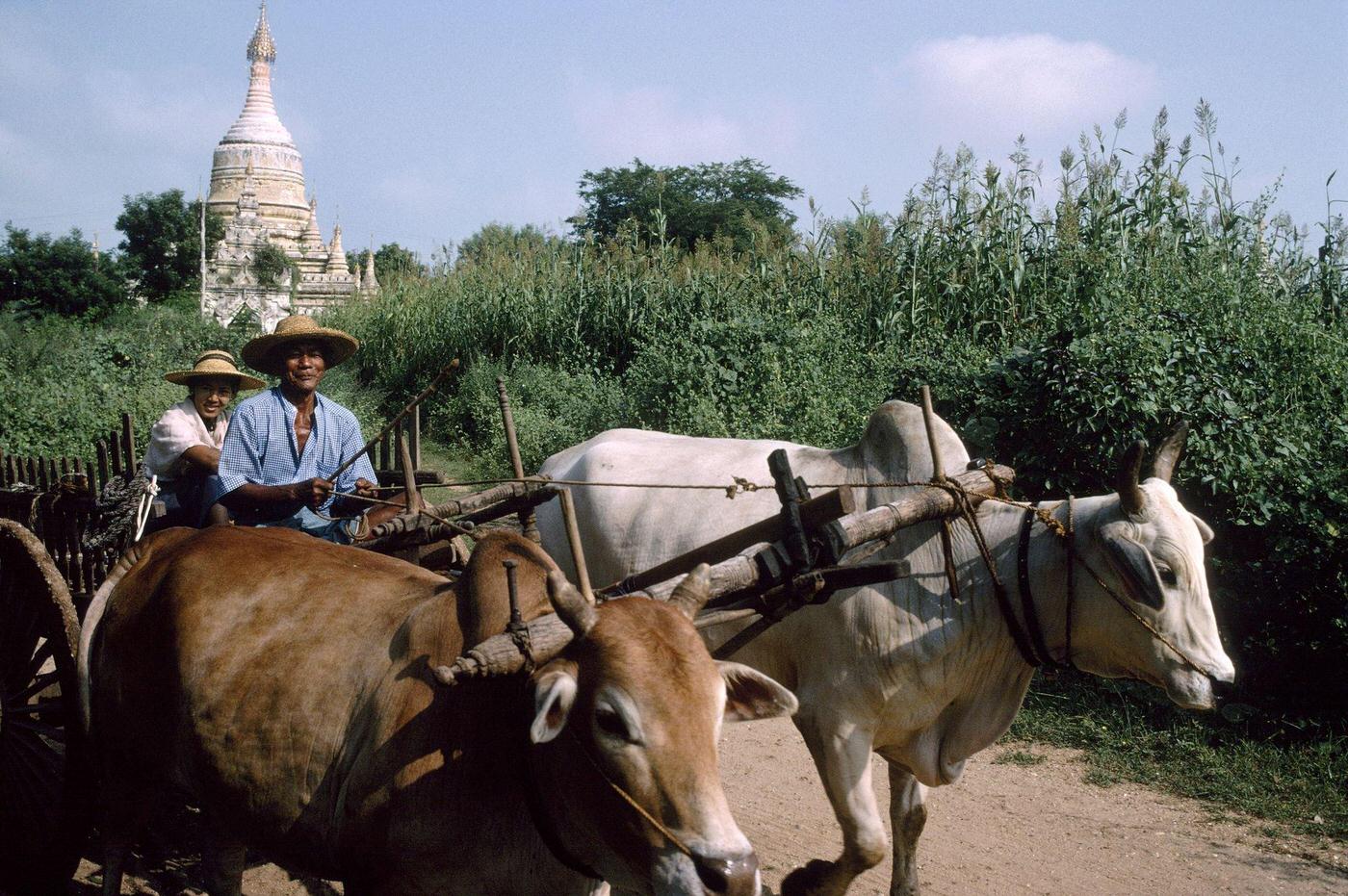
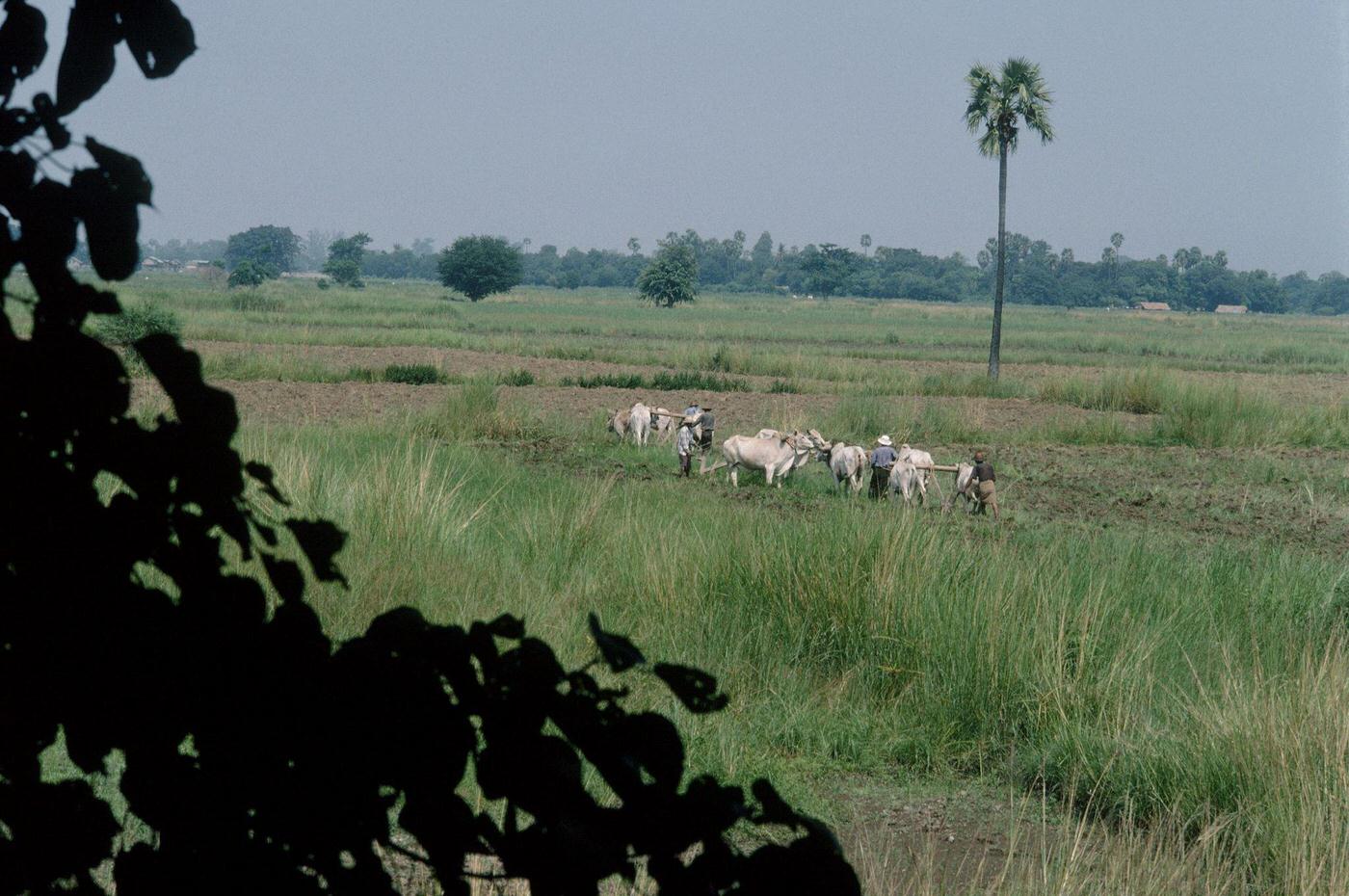
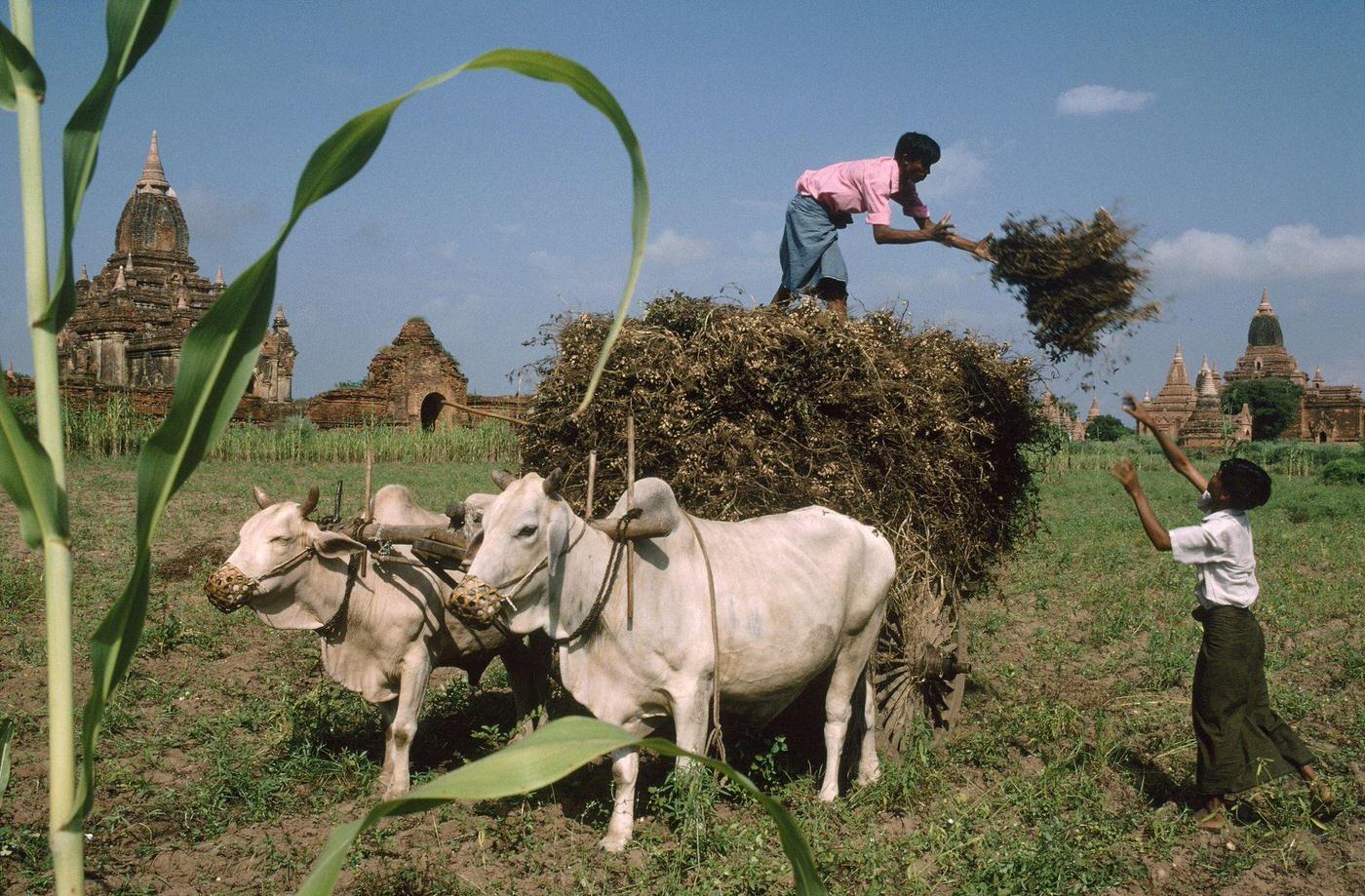
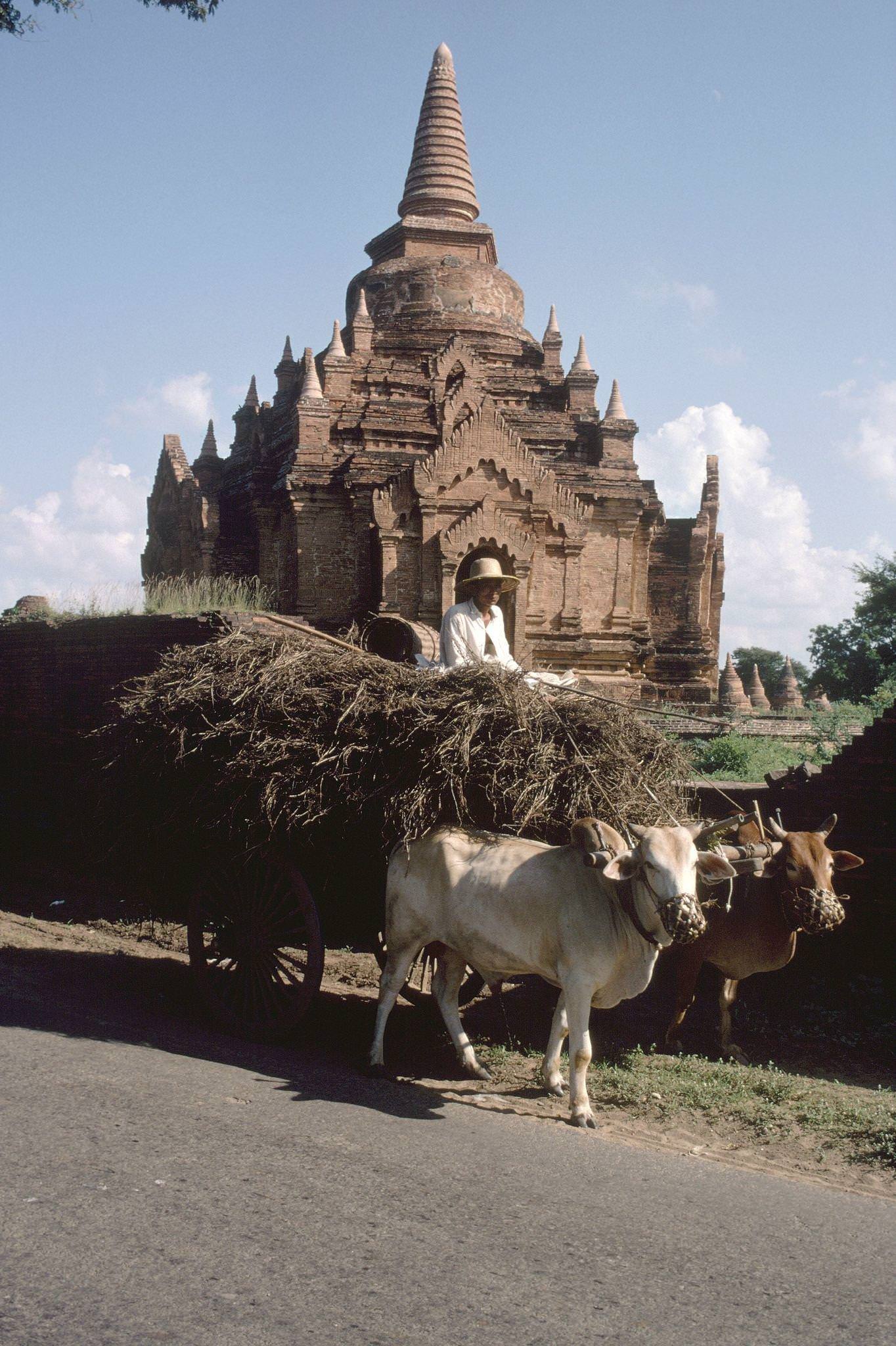
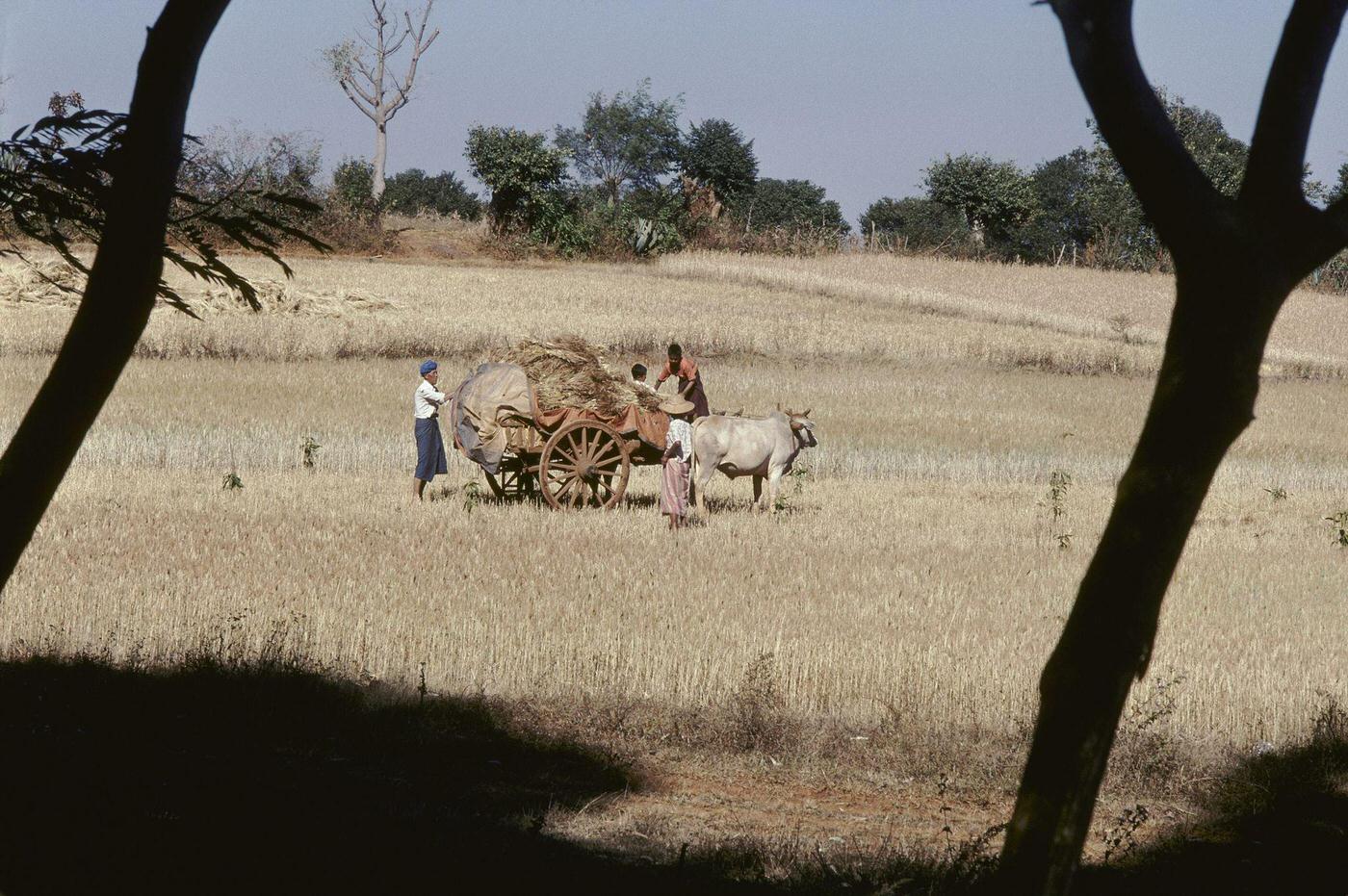
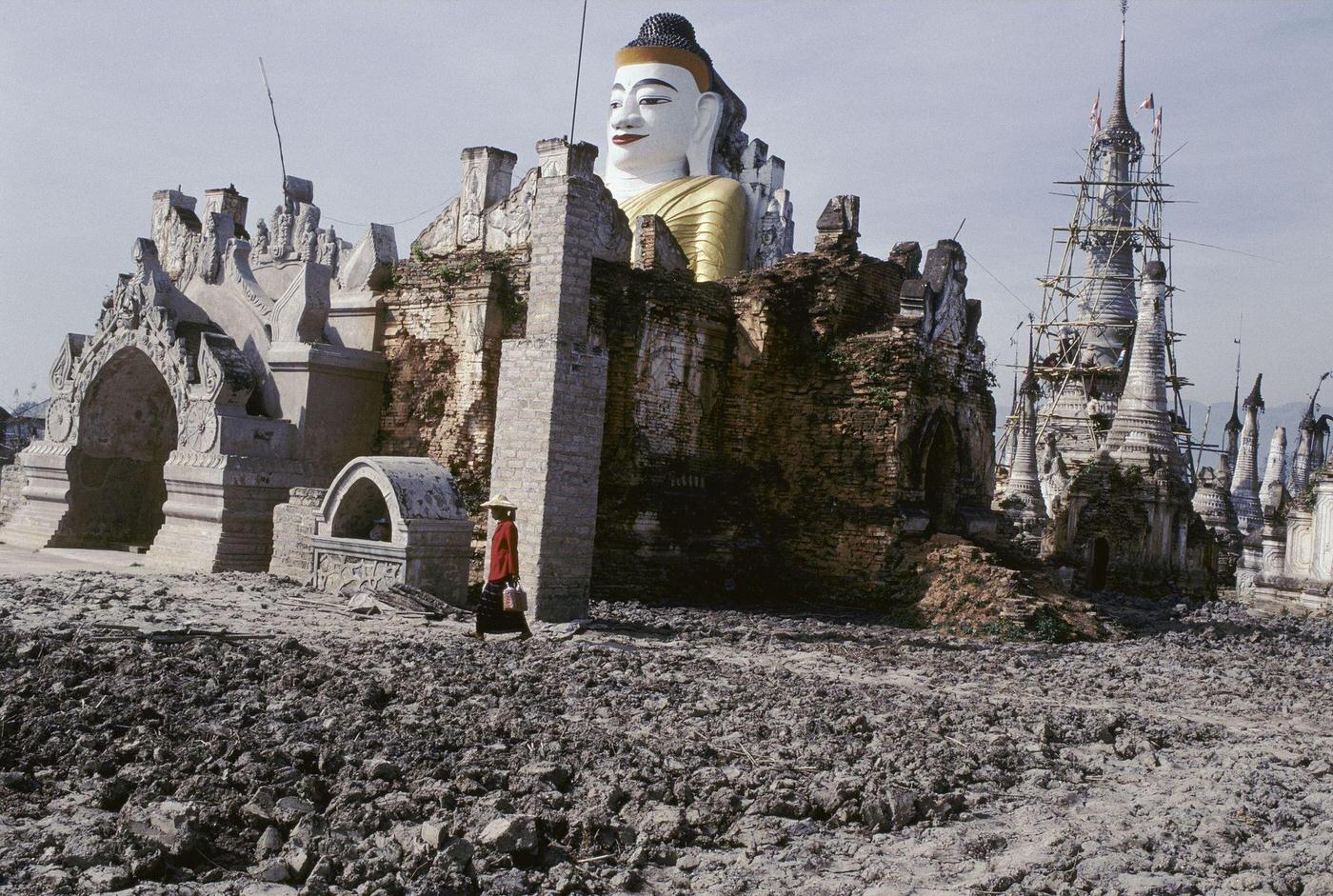
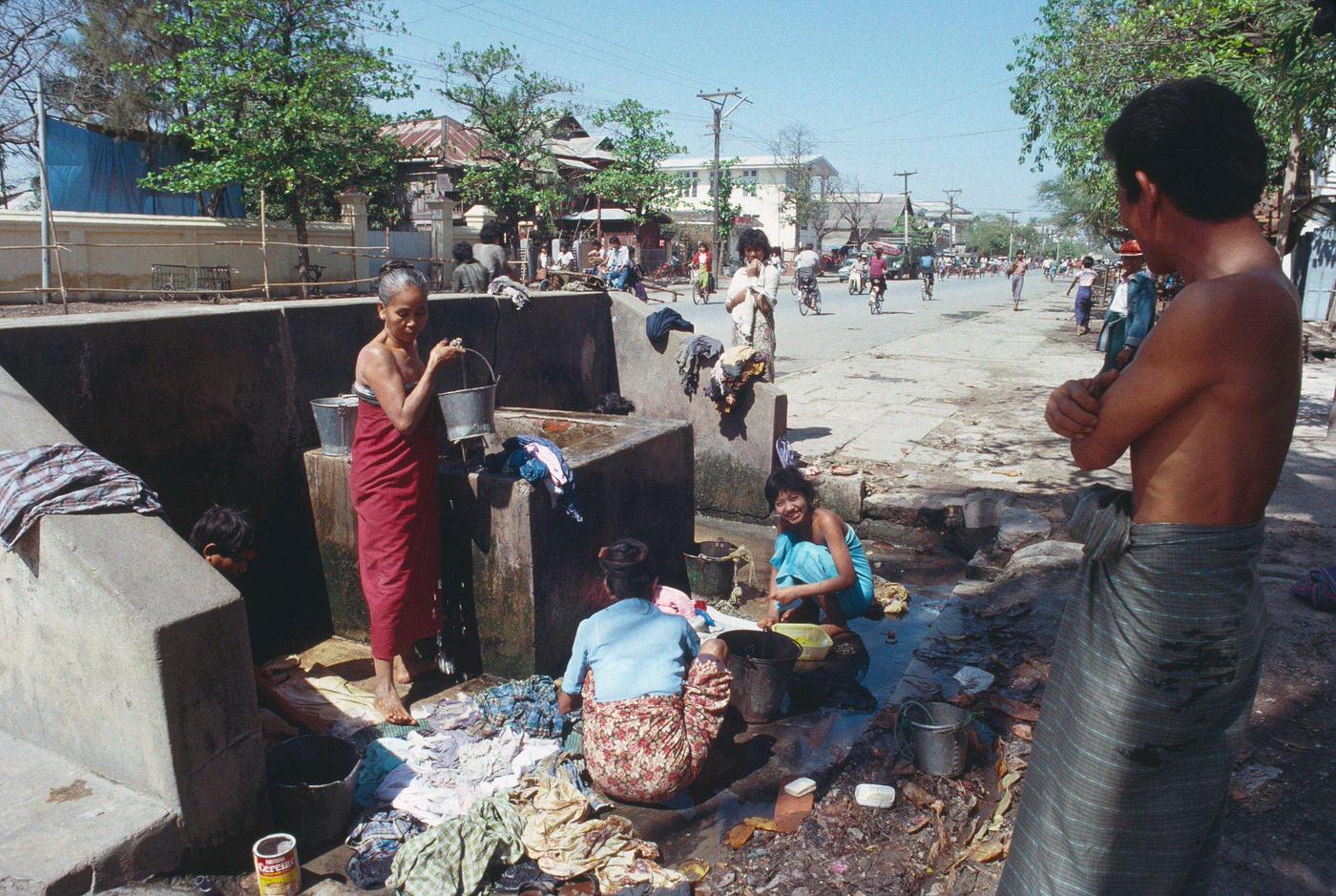
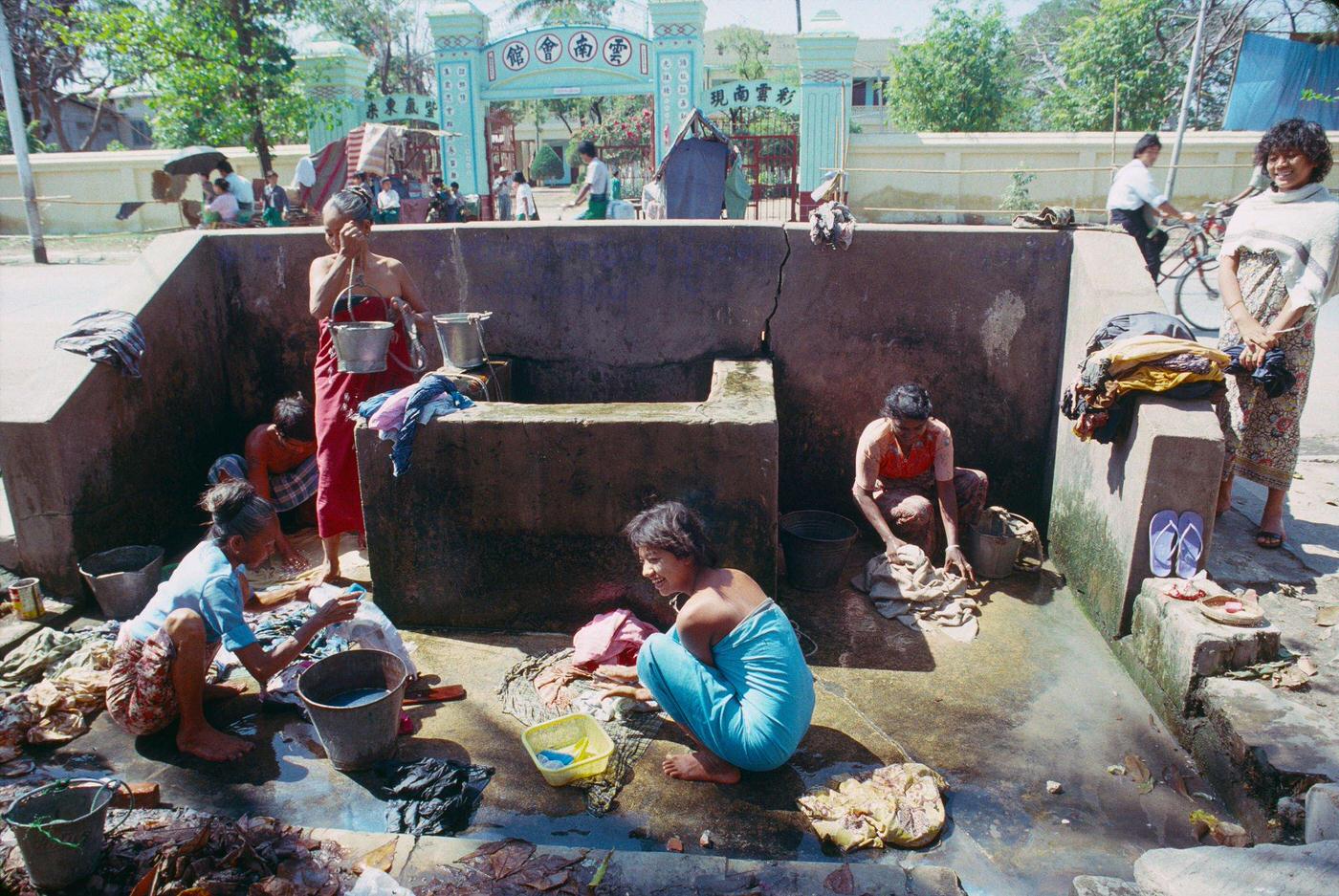
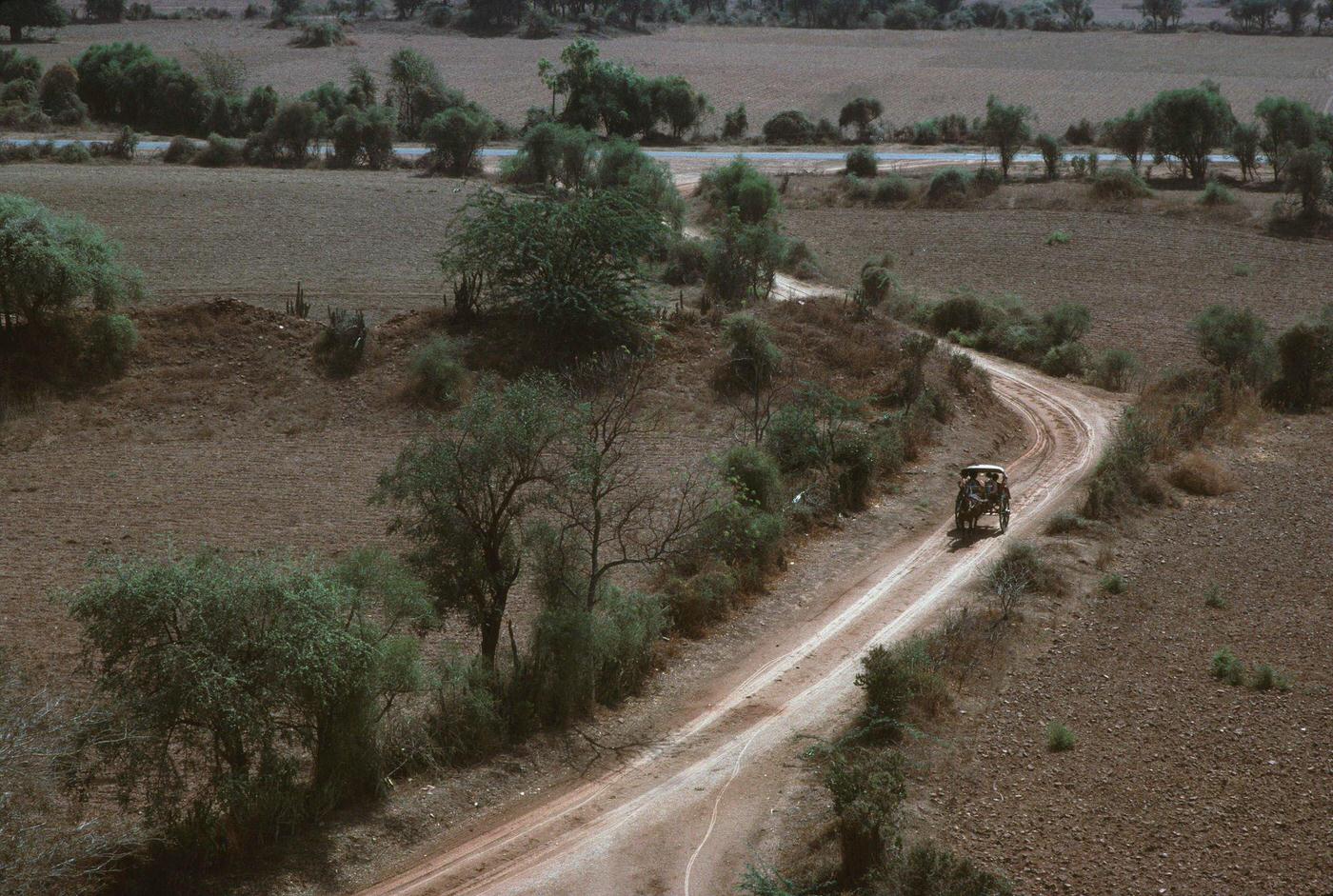
In Mandalay, Myanmar’s second-largest city, daily life played out in markets, public washing areas, and along dusty streets. Farmers hauled carts loaded with wheat near Pindaya. Others worked the rice fields, the same land that had once made the country one of the world’s top rice exporters. Near Bagan’s ancient temple ruins, villagers harvested crops in the shadow of thousand-year-old pagodas — an image that captured the strange layering of Myanmar’s history.
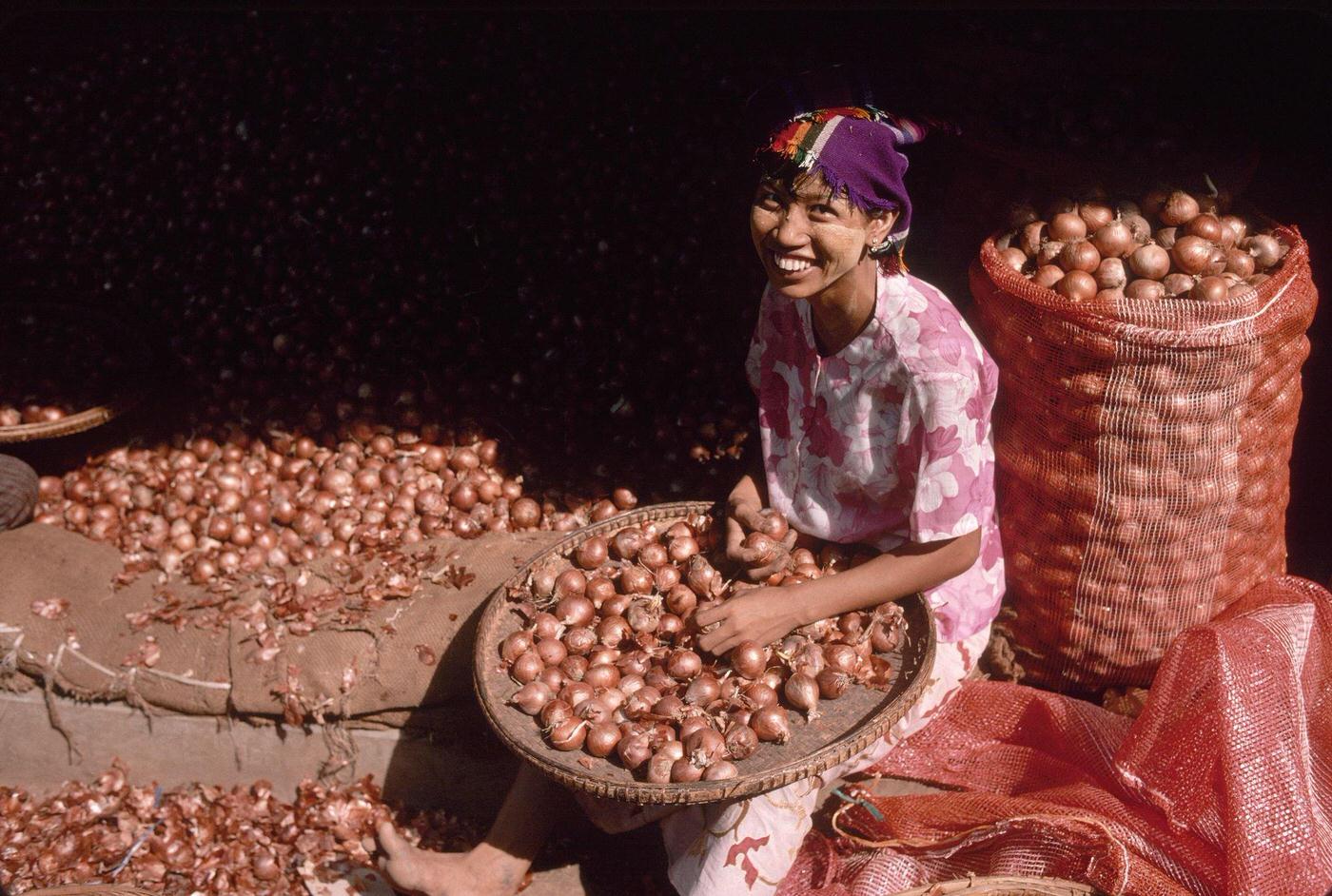
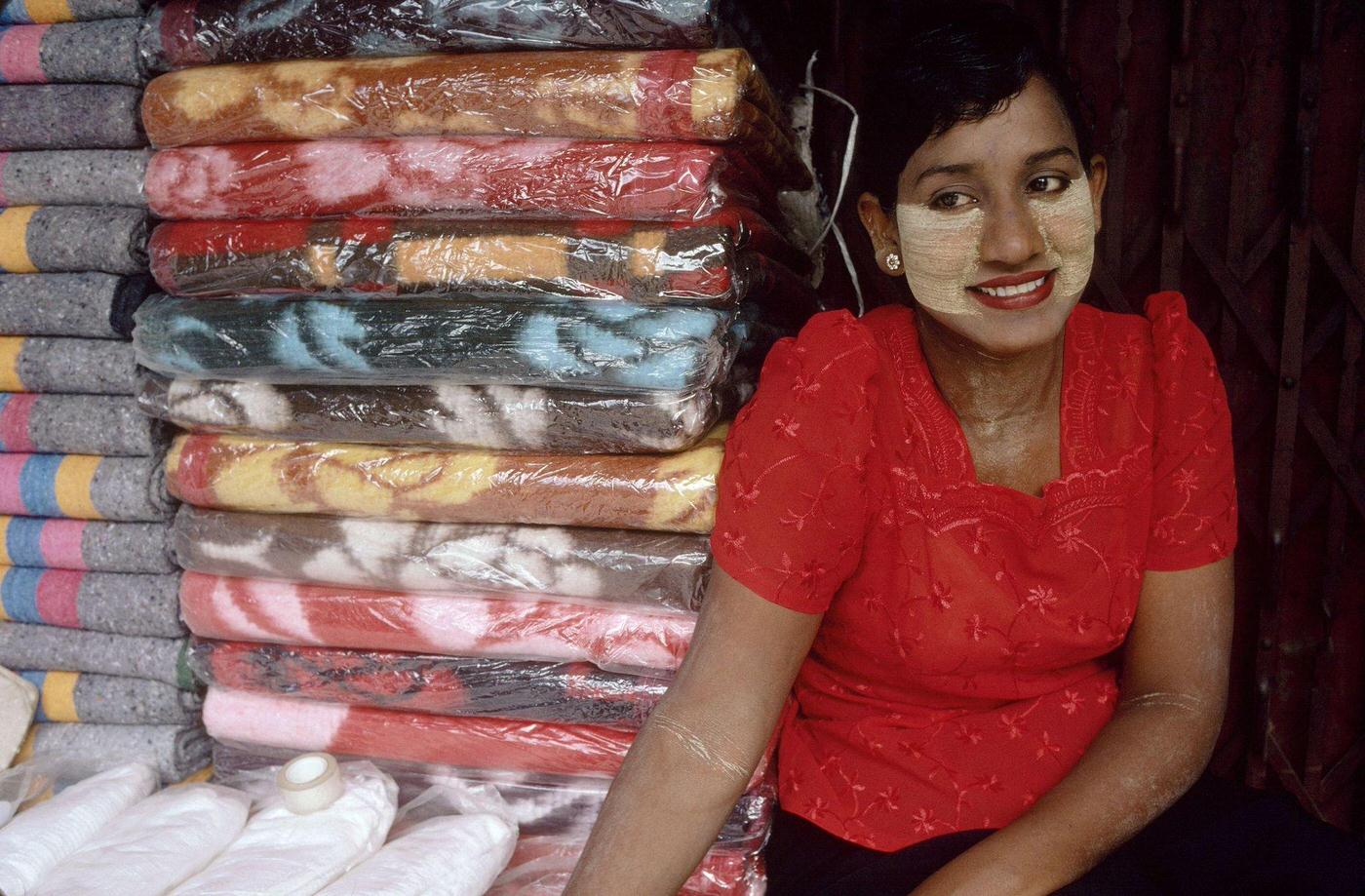
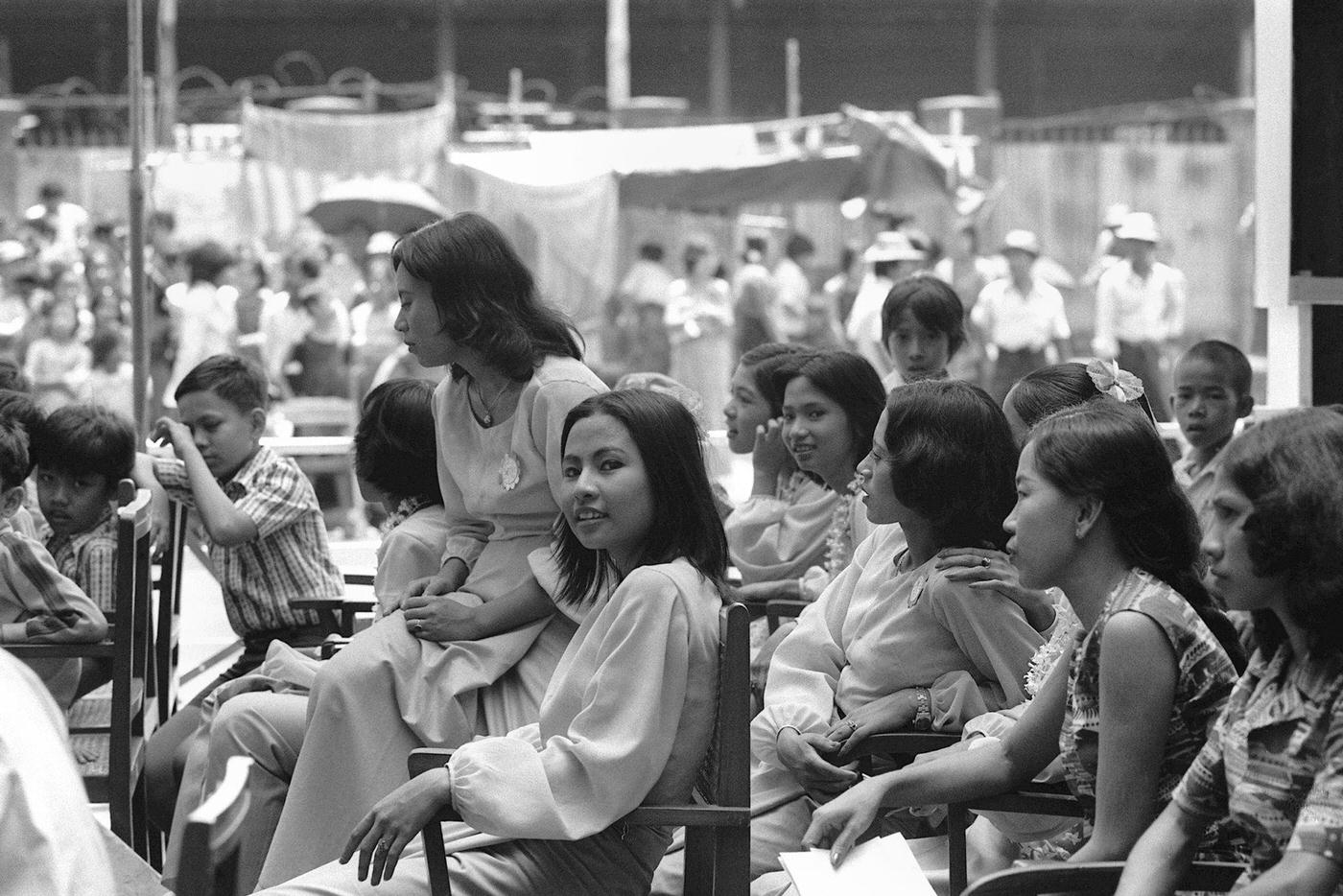
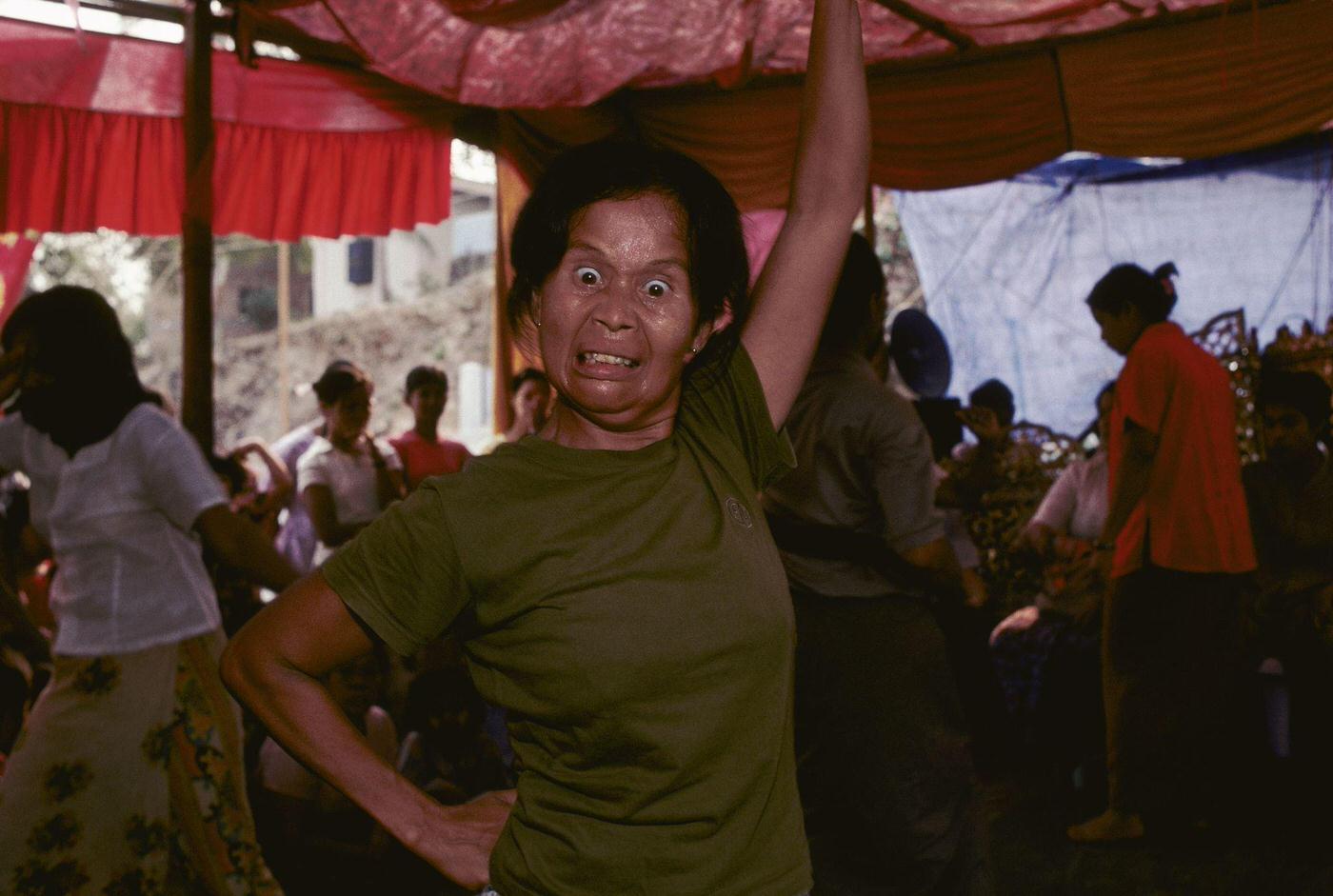
Cultural and religious festivals broke up the hardship. During the Burmese New Year in 1980, young dancers in Rangoon prepared in full costume, their performances part of a tradition stretching back centuries. In Moulmein, religious ceremonies drew participants into frenzied, trance-like dancing. These events were not state-organized spectacles — they were community-driven, rooted in local identity that the BSPP’s ideological programs had never fully displaced.
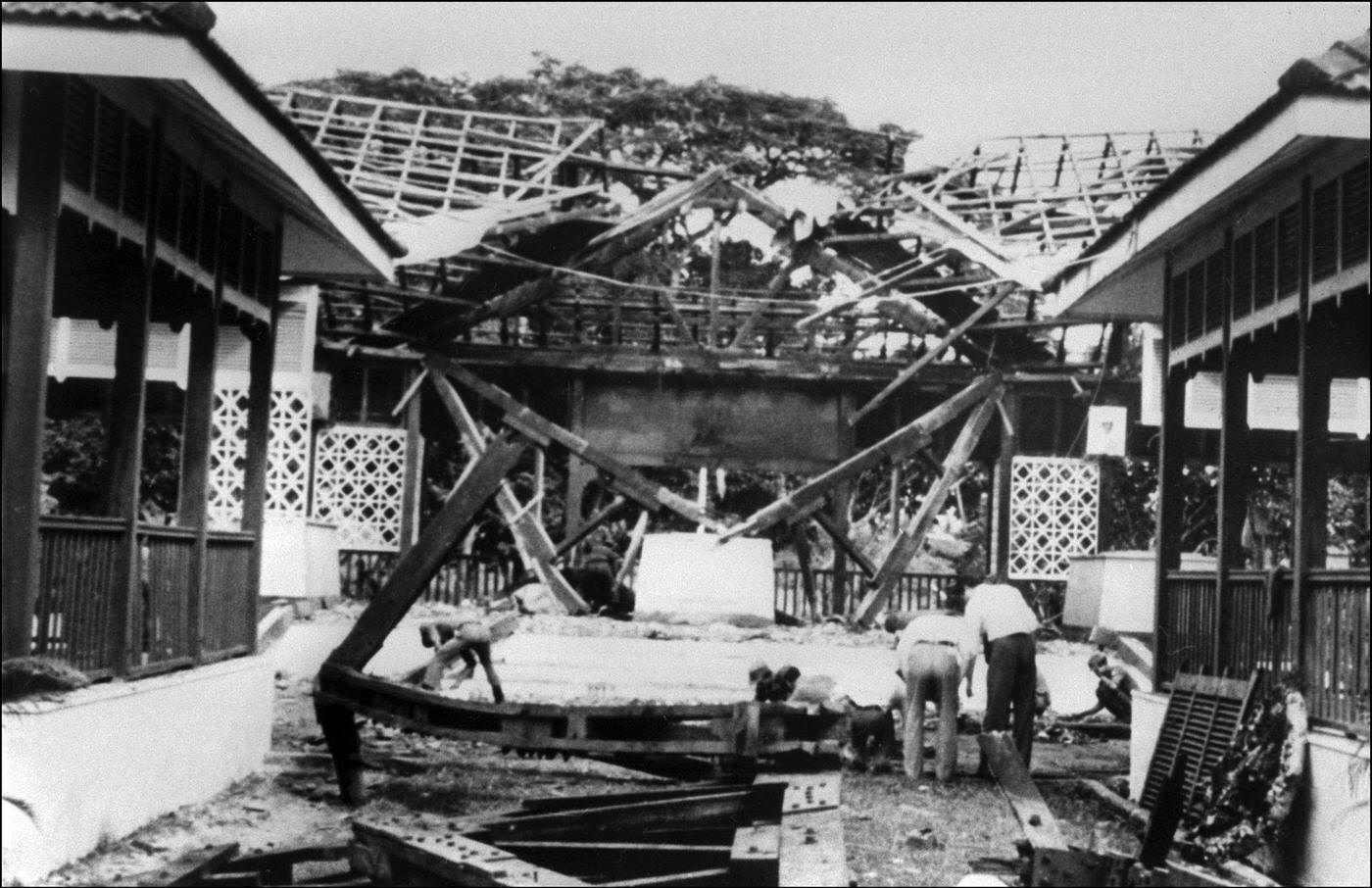
October 1983 brought an international crisis to Rangoon. A bombing at the Martyrs’ Mausoleum killed four South Korean ministers and several other officials who had been accompanying South Korean President Chun Doo-hwan on a state visit. North Korean agents were responsible. The attack intensified Myanmar’s already fragile international position and drew global attention to Rangoon in a way the BSPP government had never wanted.
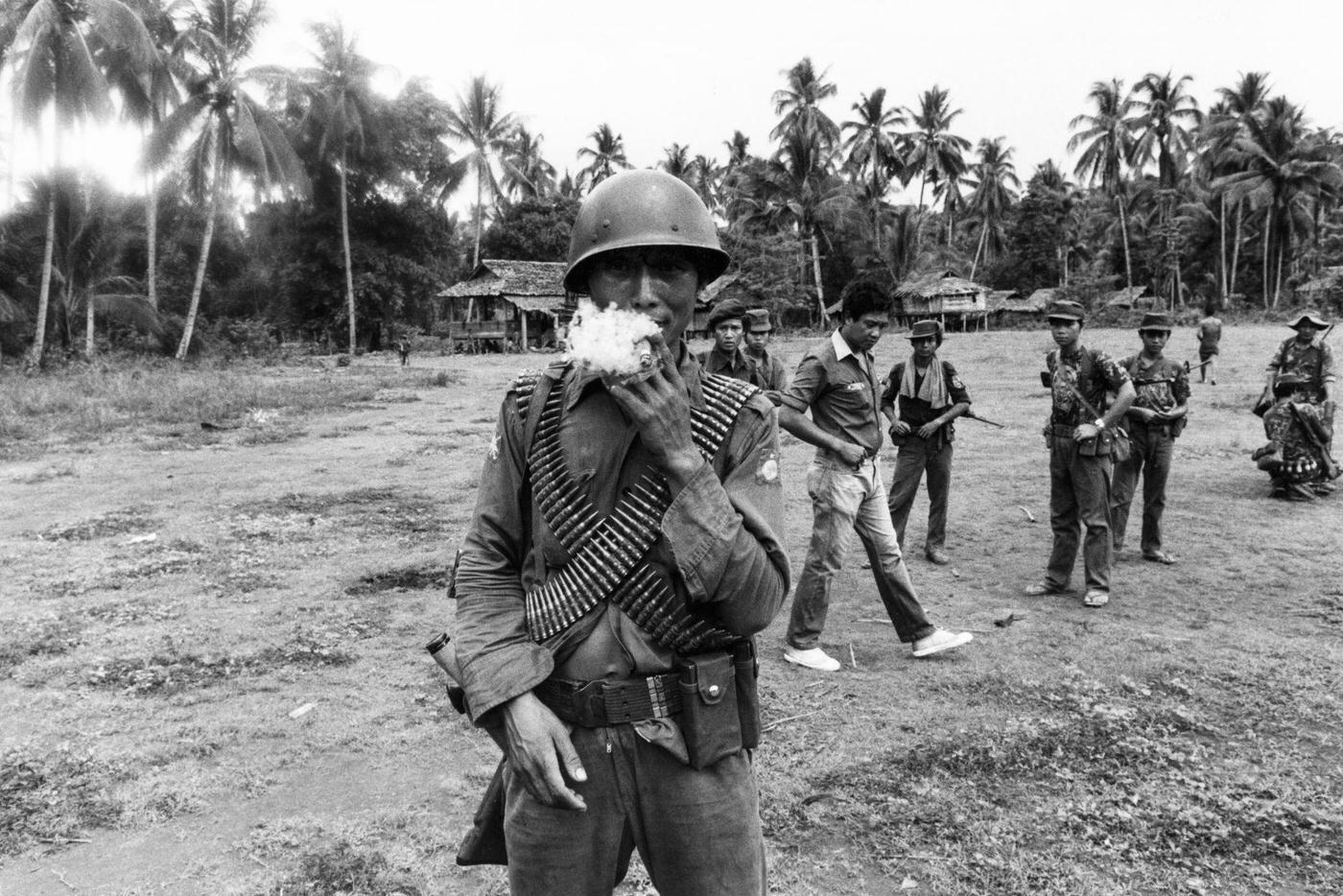
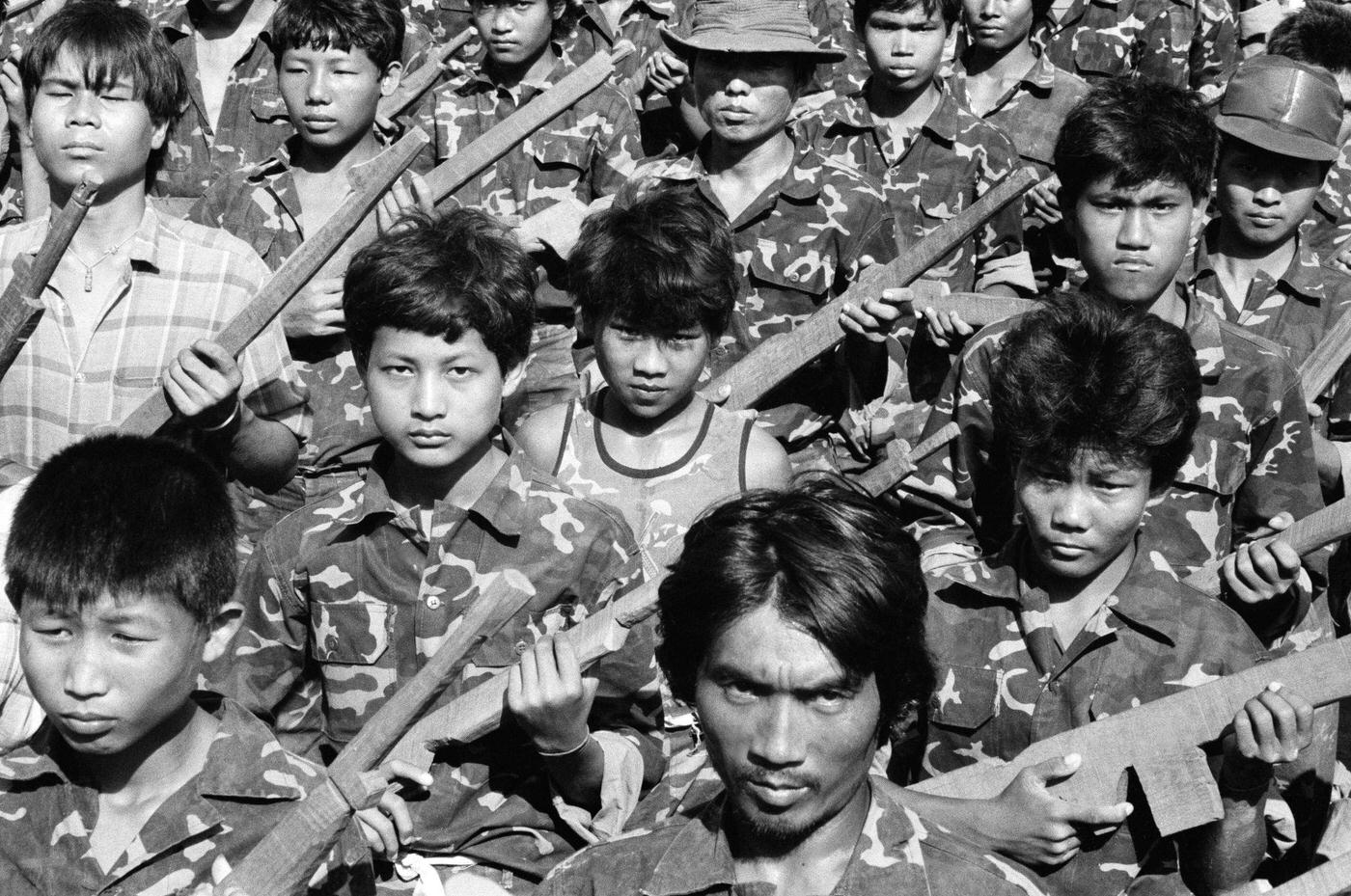
Armed ethnic resistance groups had been fighting the Burmese military since independence. The Karen National Liberation Army (KNLA) was one of the longest-running insurgencies in the world by the 1980s, operating from jungle bases along the Thai-Burma border. As the decade wore on, some Burmese students — radicalized by the government’s crackdowns on protests — fled to Karen-controlled territory, where they received military training.
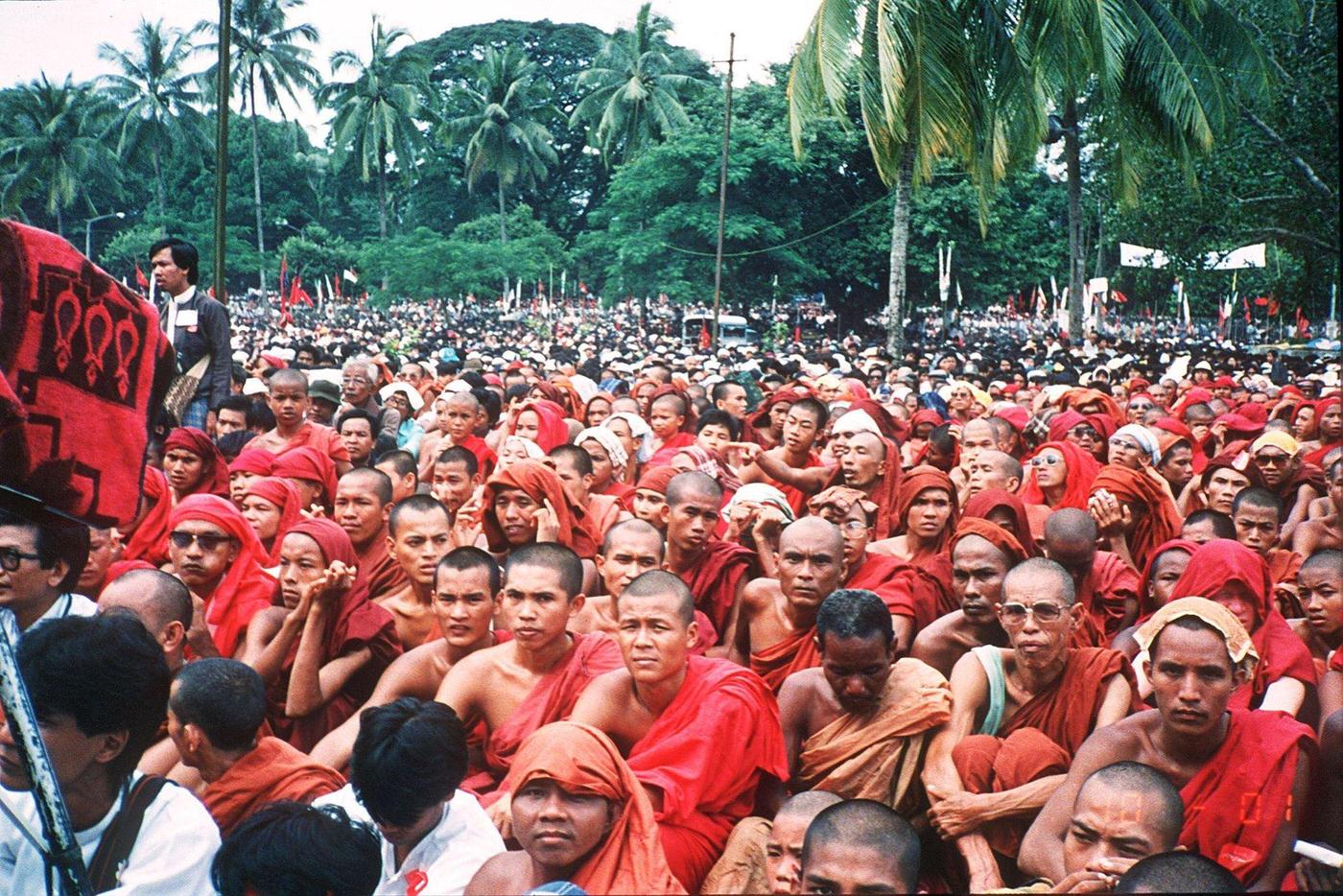
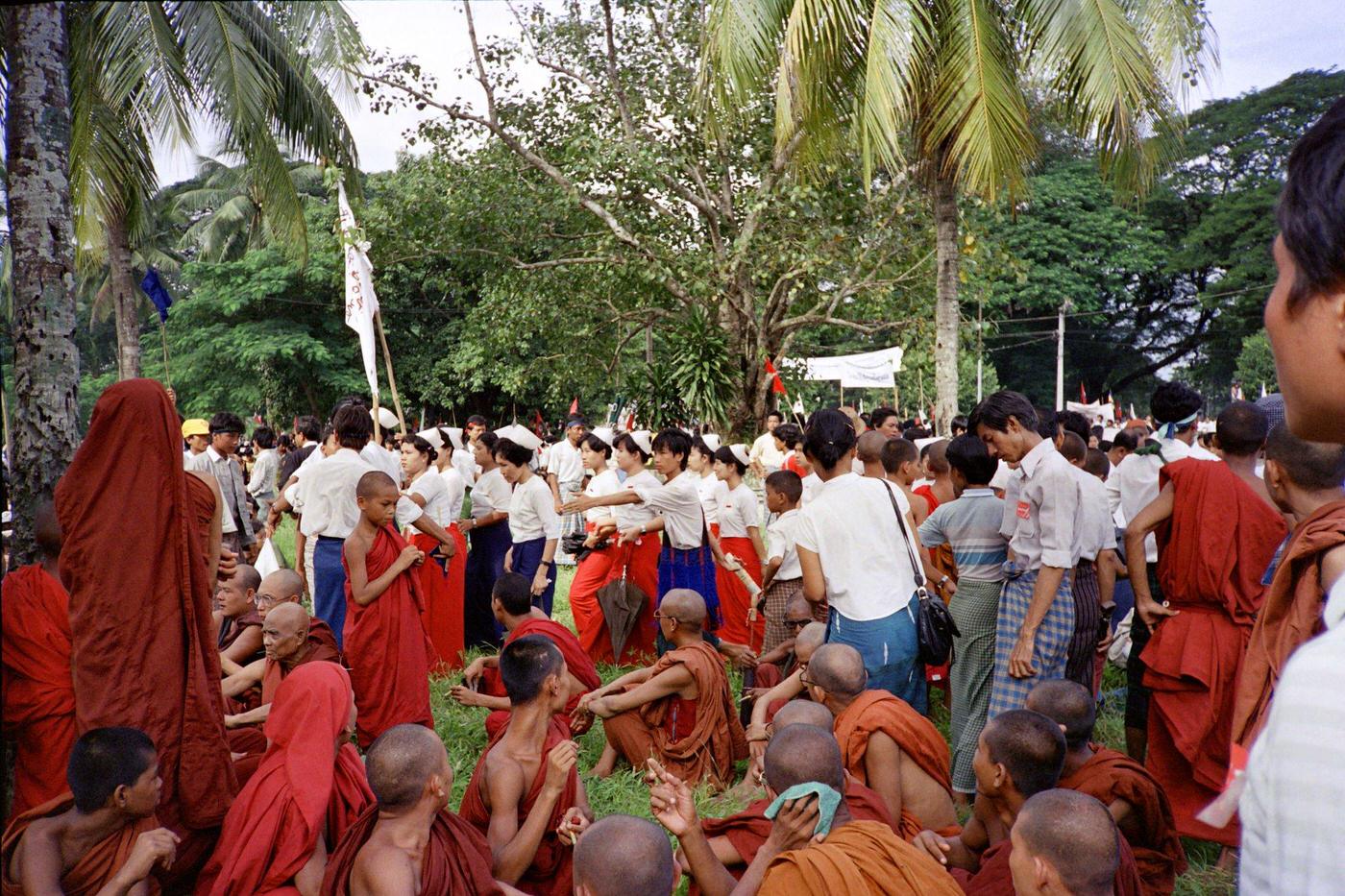
By 1988, the pressure inside Myanmar had become impossible to contain. On August 8, 1988 — the date that gives the uprising its name — students, monks, and ordinary civilians took to the streets across the country in a coordinated wave of protests demanding democracy and an end to military rule. It was the largest demonstration against BSPP rule since the party had taken power. The protests had been building for months, fueled by economic collapse, government violence against earlier demonstrations, and deep public anger at Ne Win’s regime.
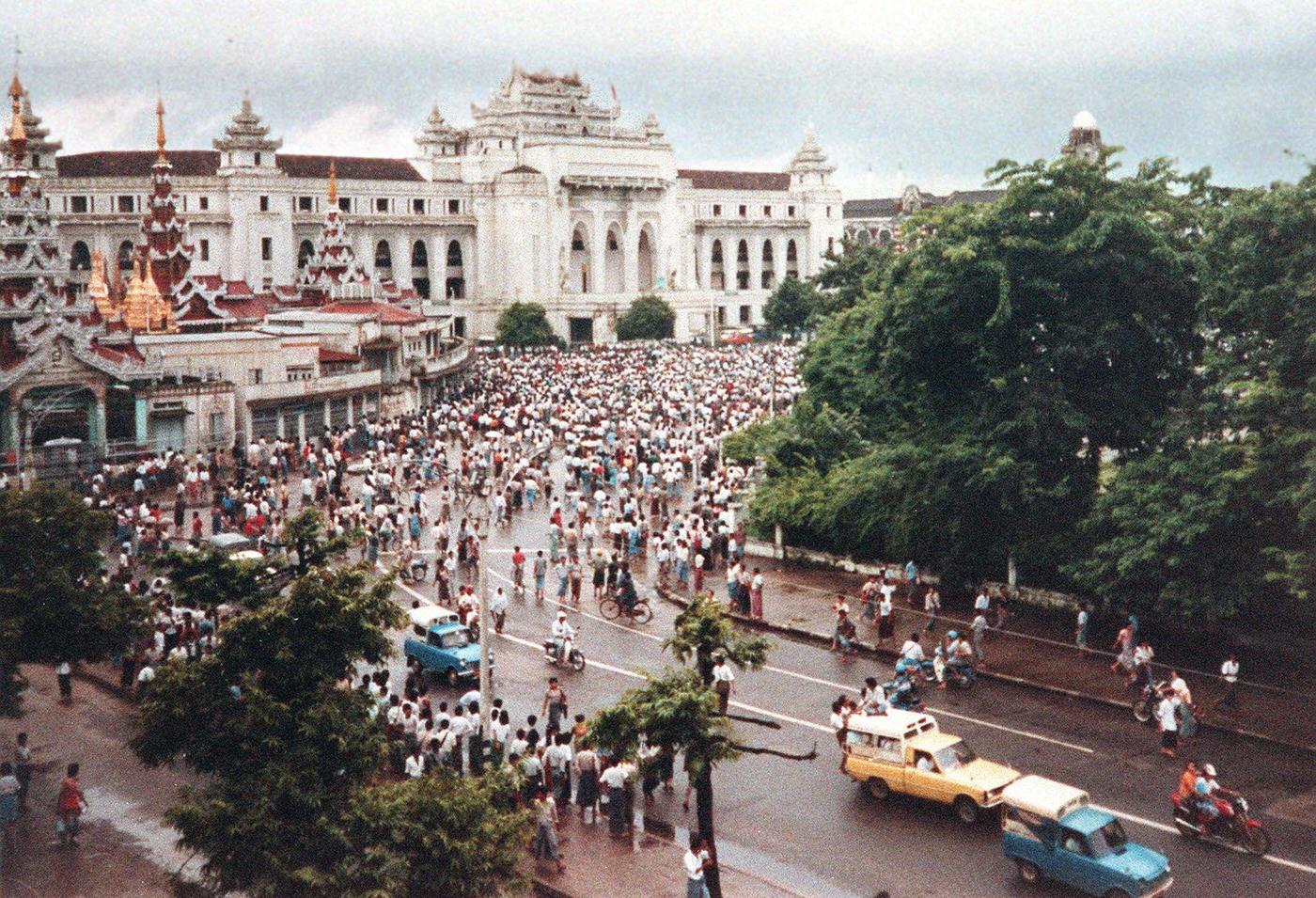
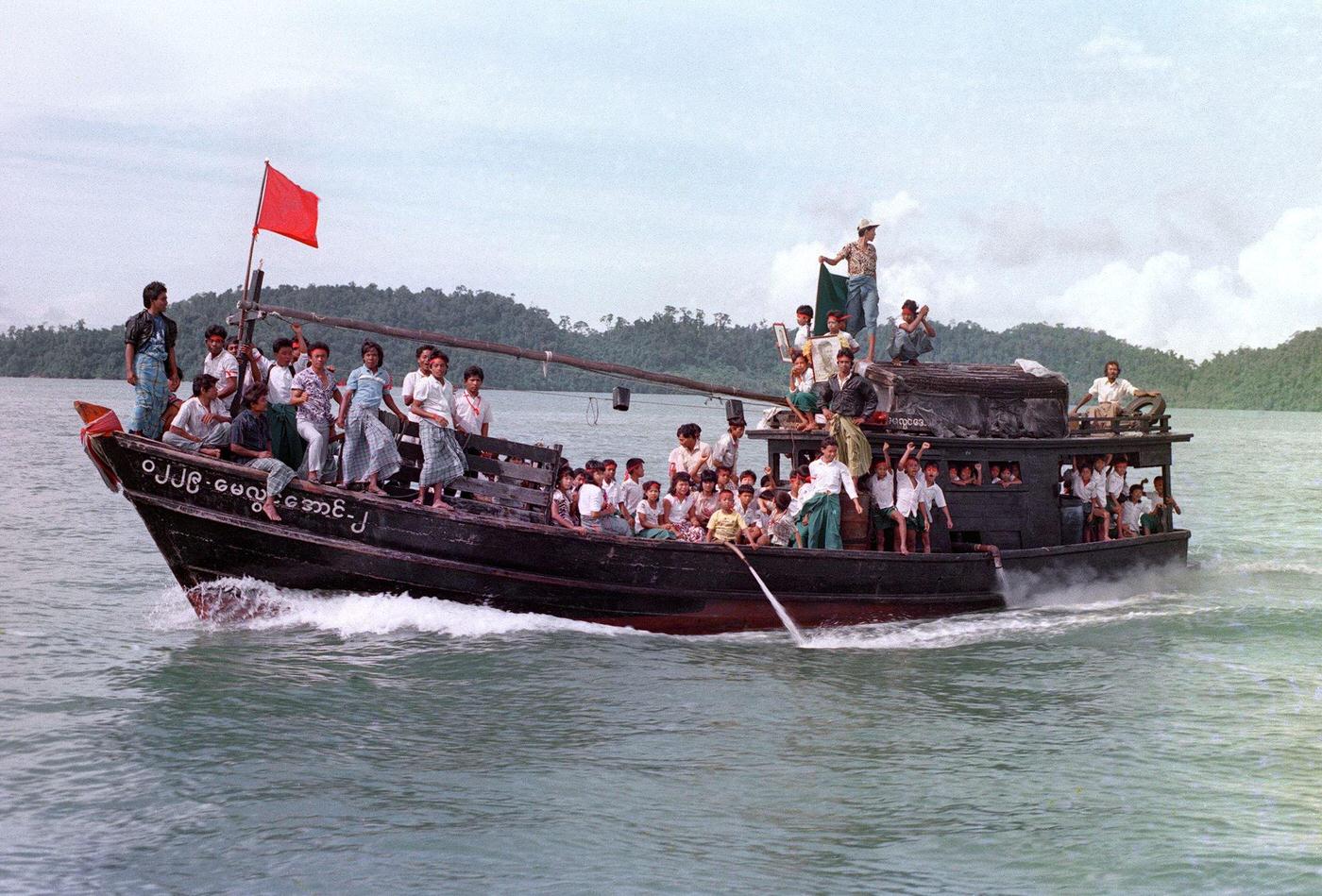
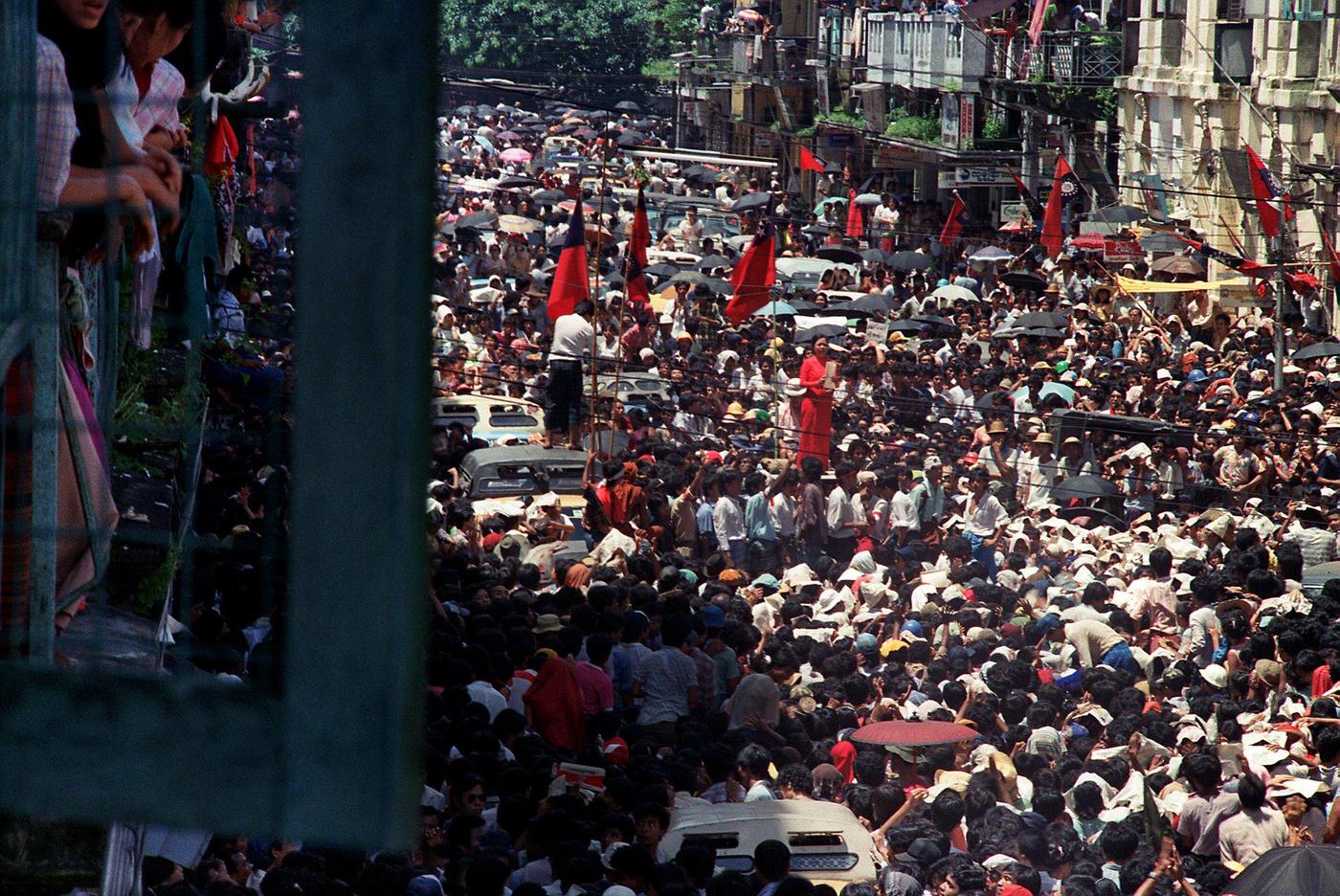
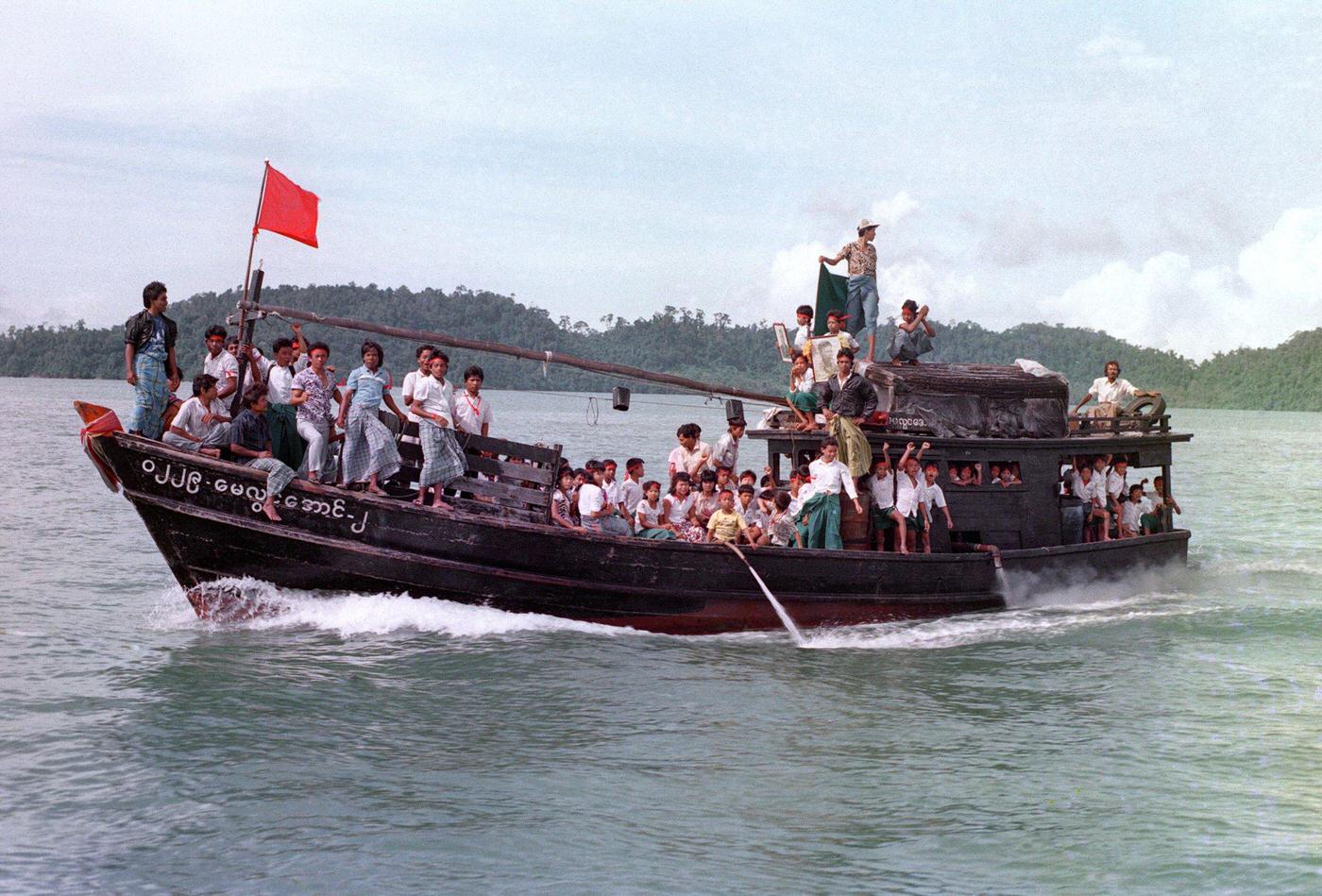
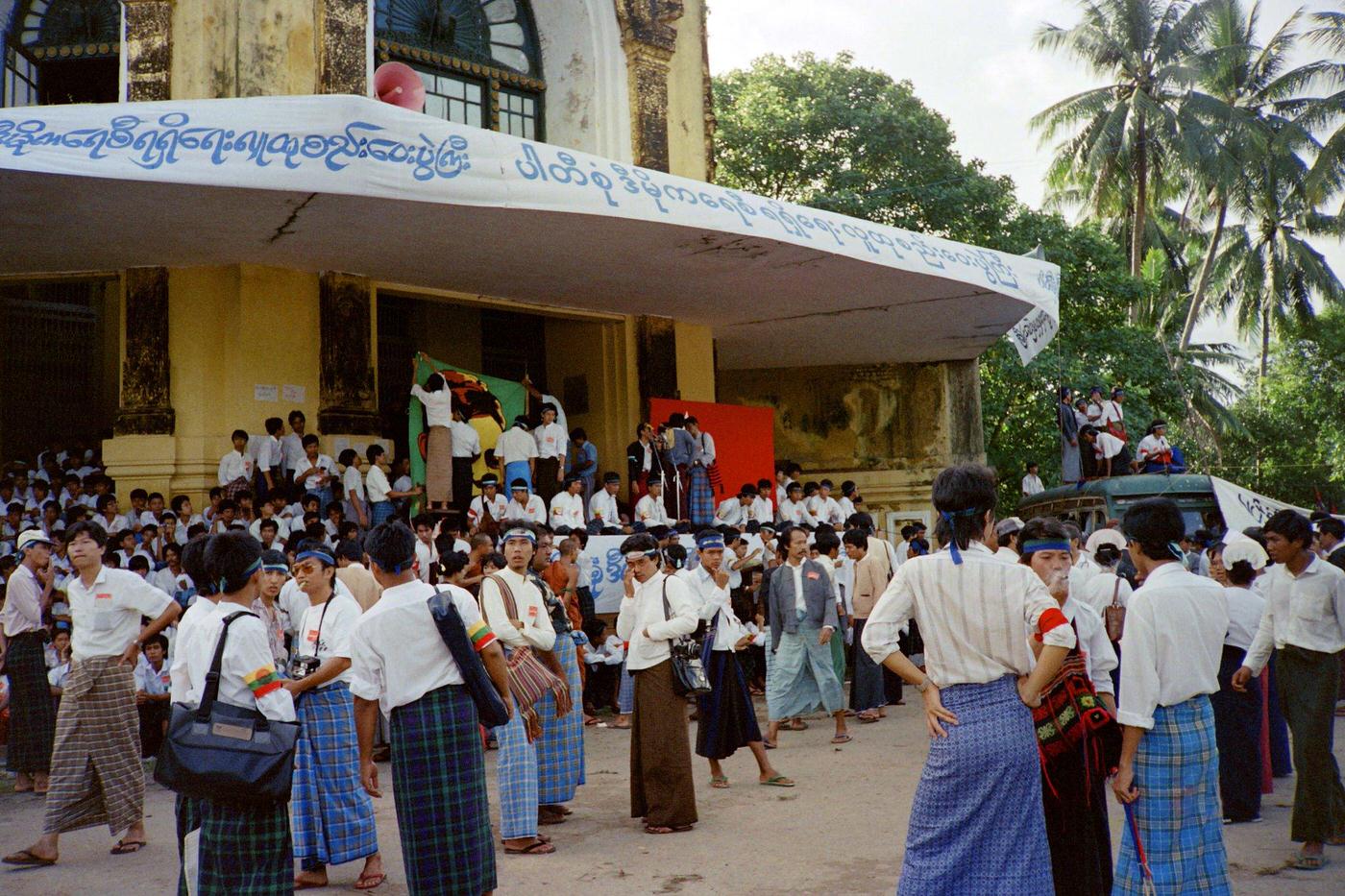
Aung San Suu Kyi — daughter of independence hero General Aung San — emerged as a central figure during the uprising, speaking to enormous crowds and helping to organize the democratic opposition. Buddhist monks marched alongside students and civilians. The government’s response was violent. Security forces opened fire on demonstrators, killing an estimated several thousand people in the crackdown. Ne Win stepped down from the BSPP leadership, but the military did not relinquish control — it reasserted it through a new junta that seized power in September 1988.
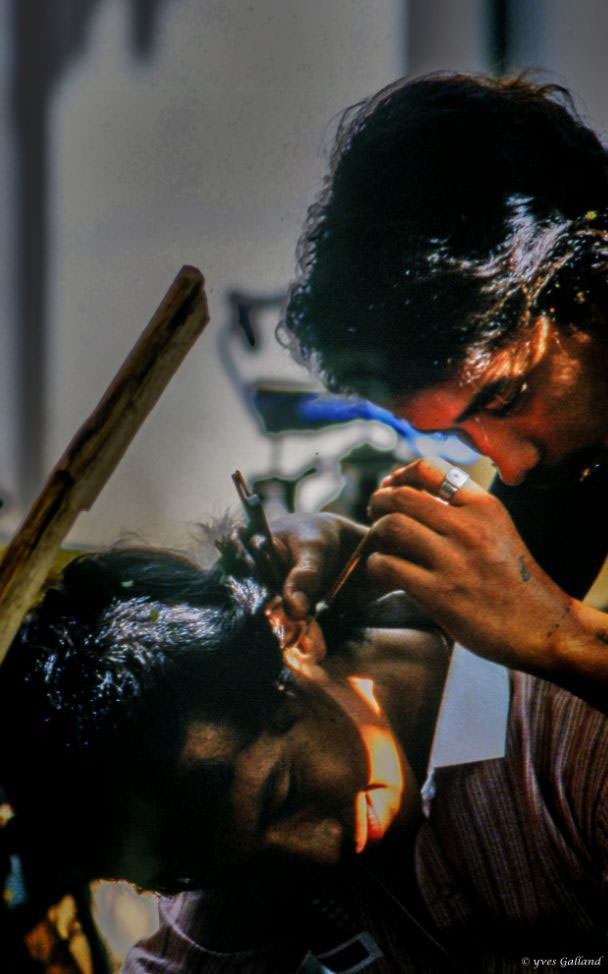
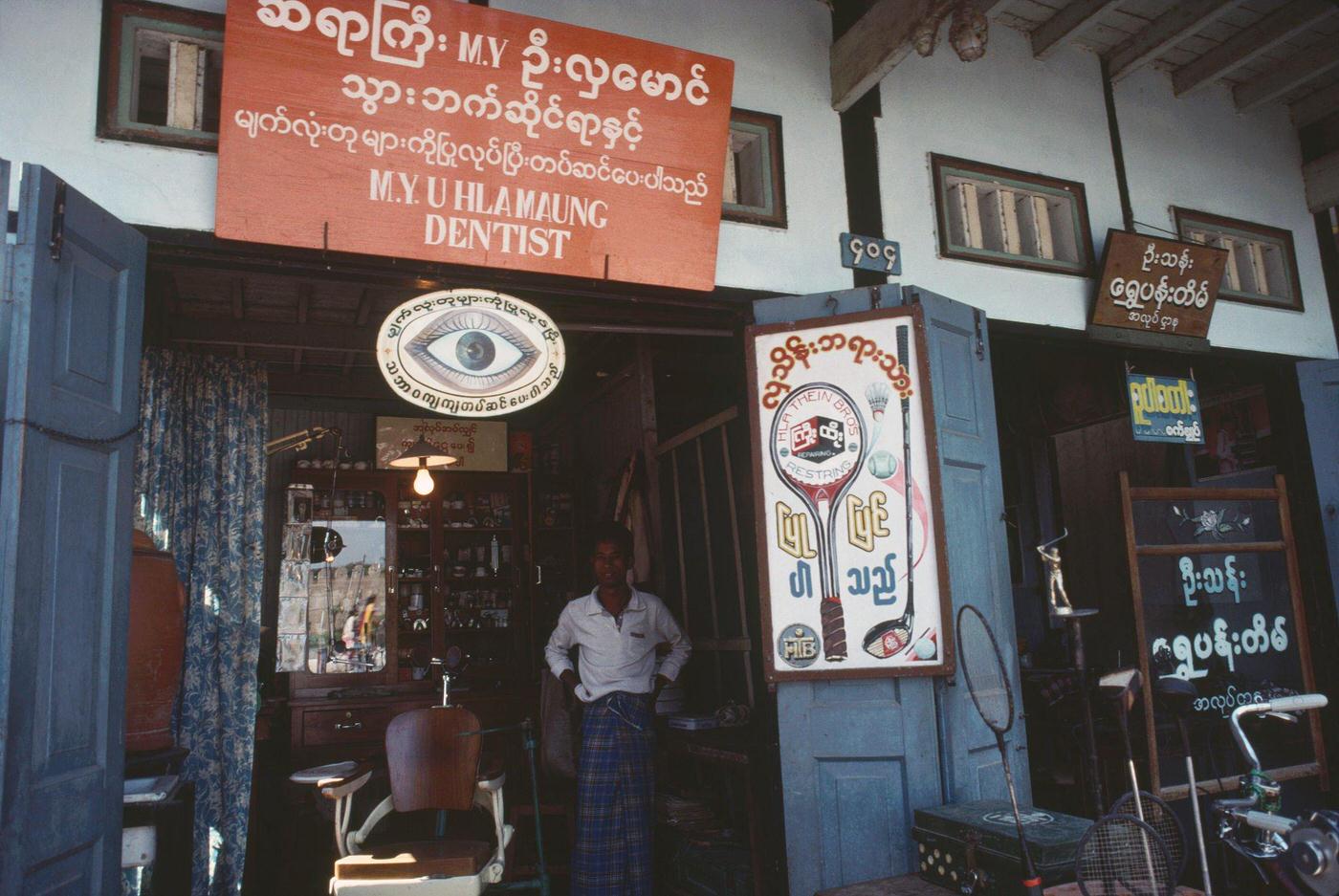
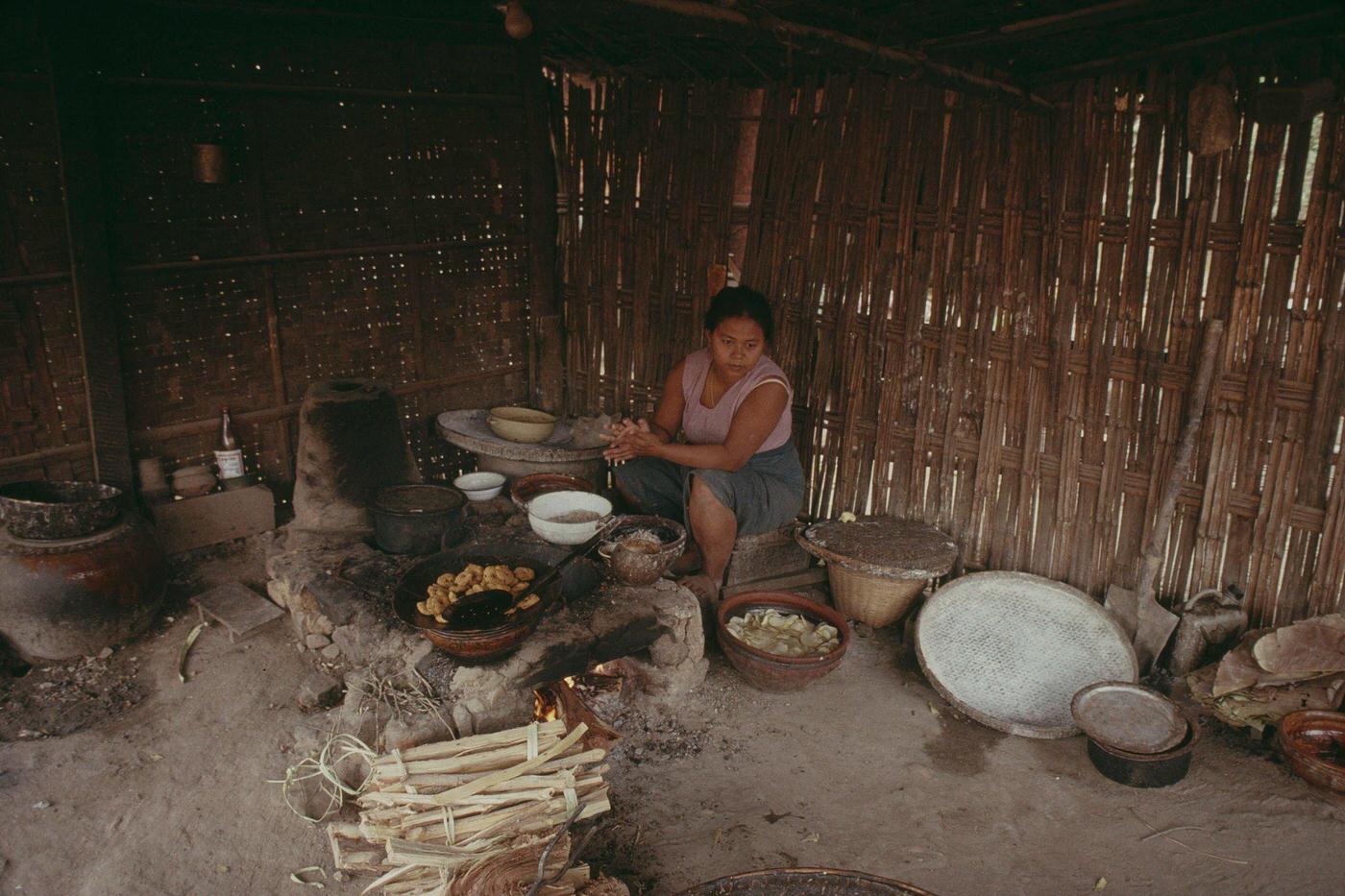
Even as protests consumed the capital, daily life continued in other parts of the country. In Mandalay, residents used public washing areas shared with neighbors. A dentist’s practice in a modest shopfront served local patients. A woman cooked over an open fire at home in Bagan. These moments existed alongside the upheaval — ordinary life persisting under extraordinary pressure.
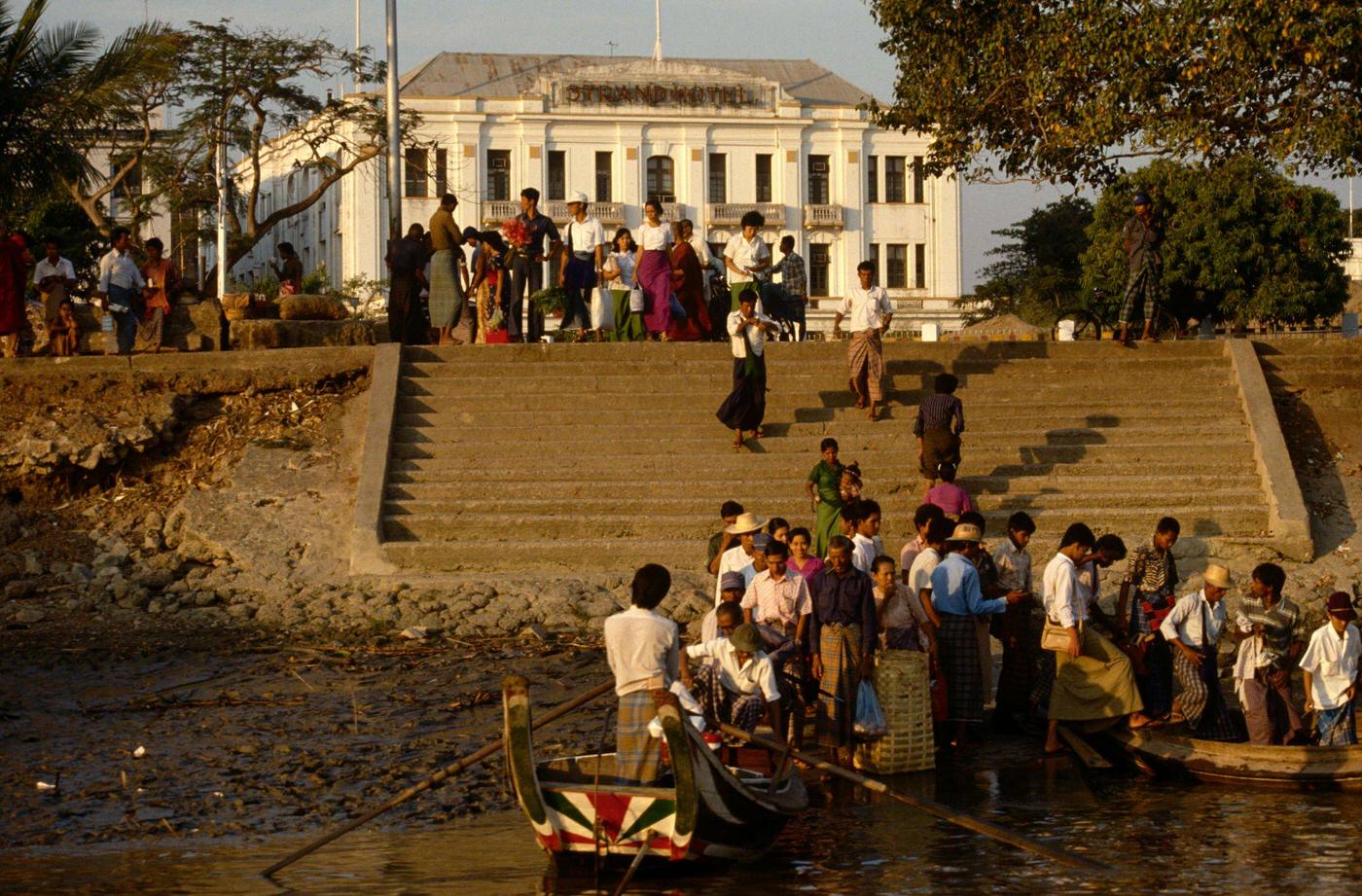
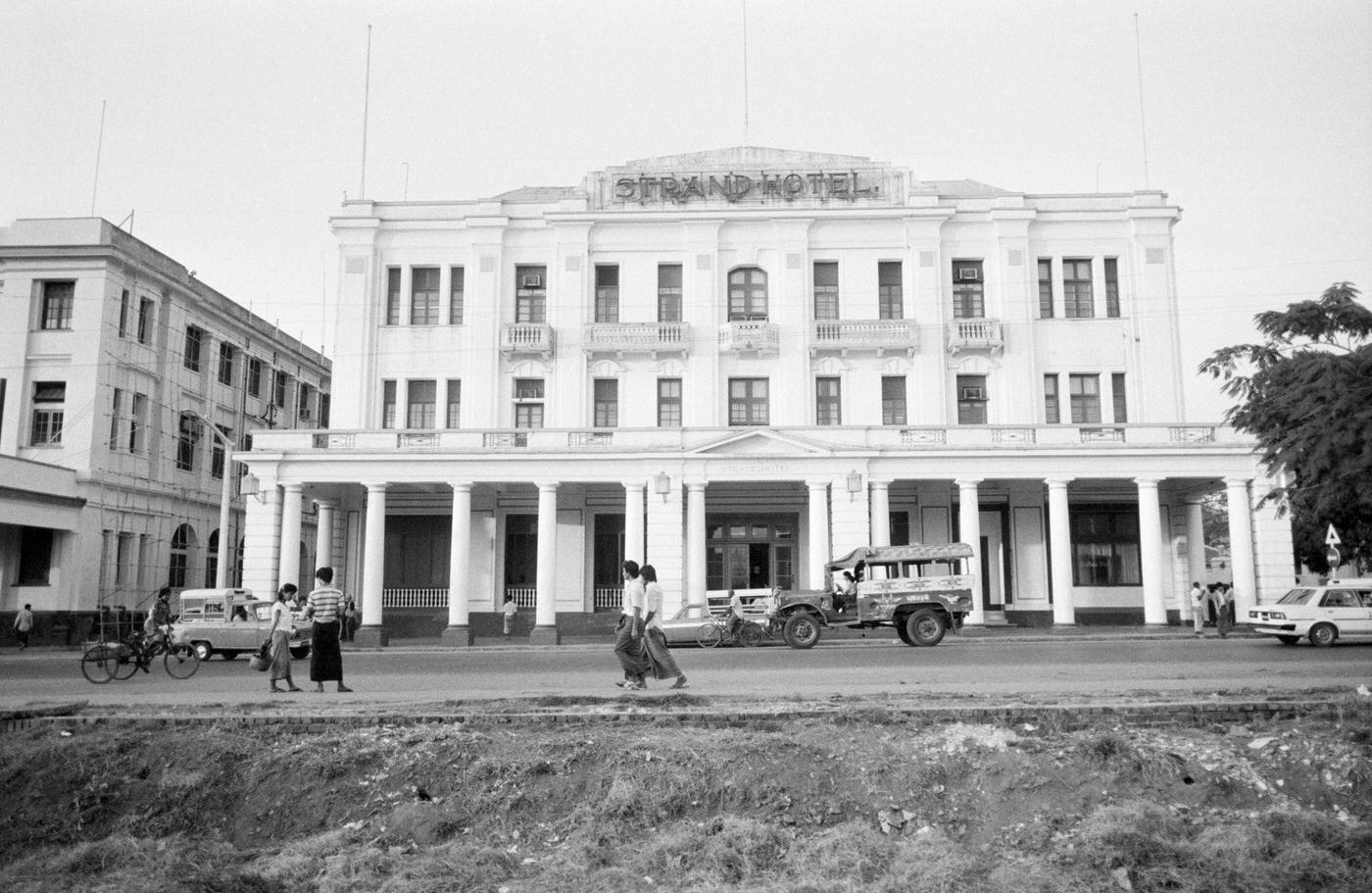
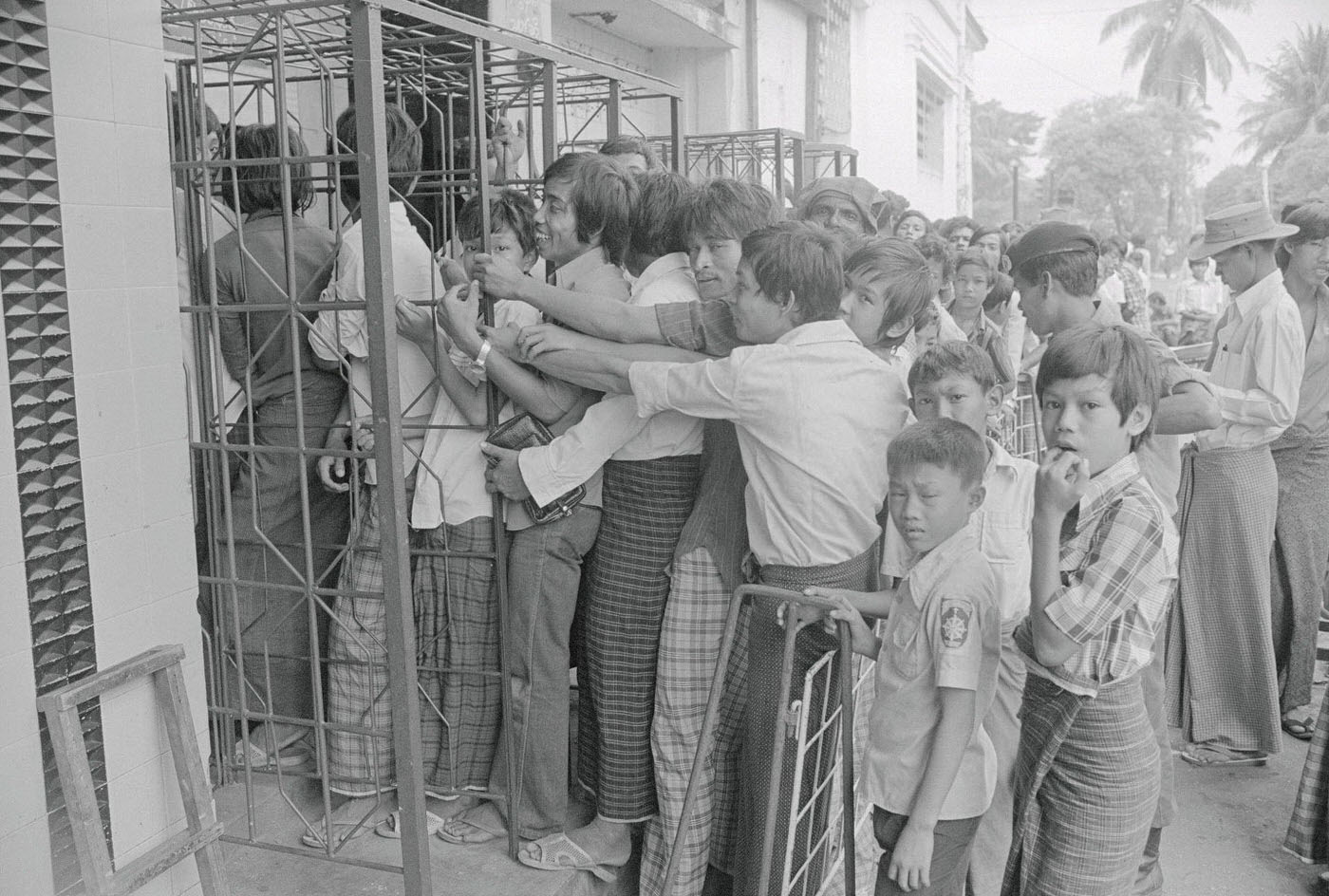
The Strand Hotel in Rangoon stood as one of the few visible remnants of the colonial era’s grander ambitions. Built in 1901, its Victorian facade faced the river and had hosted dignitaries and travelers for decades. By 1988, it was a faded but still recognizable landmark in a city that bore the weight of its own isolation. Long queues formed outside Rangoon cinemas for the rare foreign film — entertainment was so scarce that moviegoers waited hours for the chance to see something from beyond Myanmar’s sealed borders.
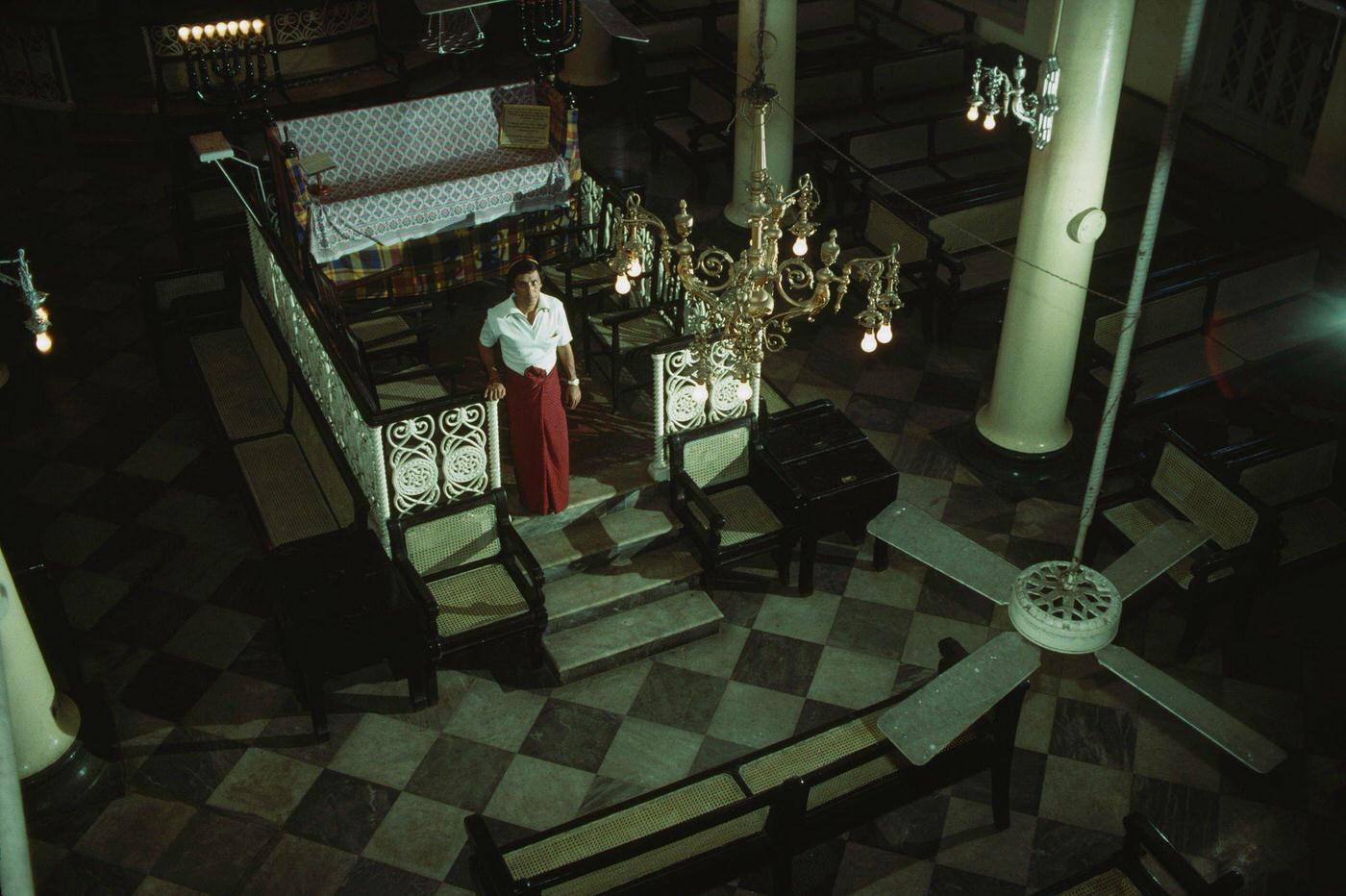
Religious minorities maintained their own quiet presence. Moses Samuels served as caretaker of the Musmeah Yeshua Synagogue in Rangoon — one of the last remaining Jewish landmarks in a city that had once held a sizable Jewish community. His role in 1988 was as much about preservation as prayer, keeping alive a space that had outlasted the community it was built to serve.
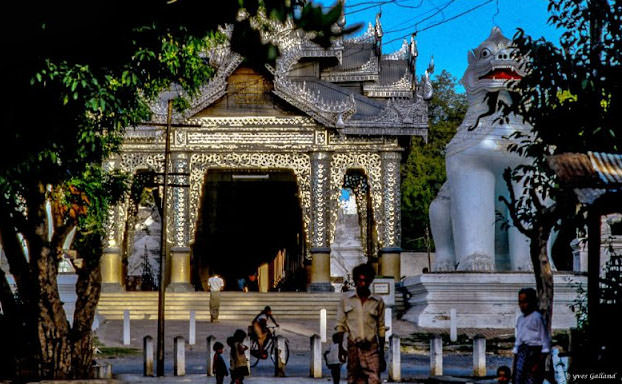
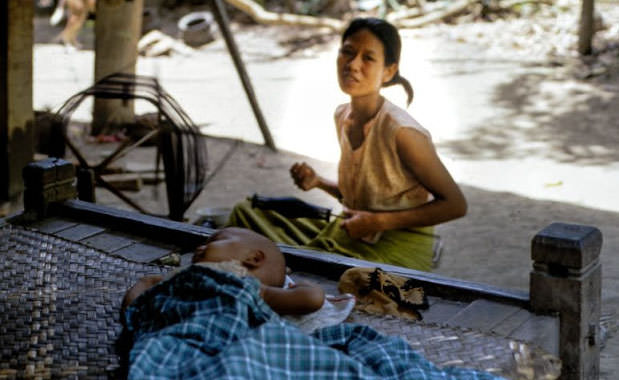
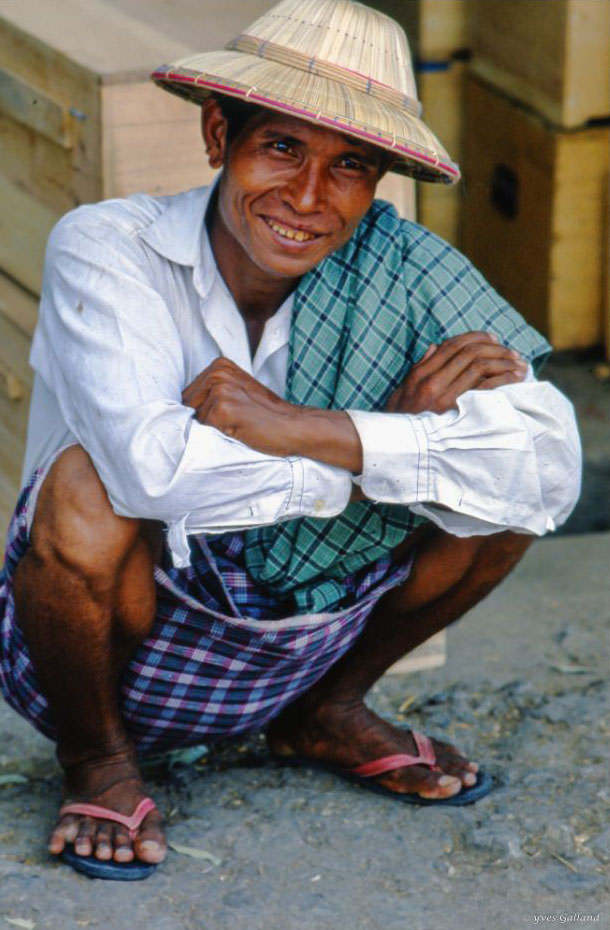
The following photographs from Mandalay and Yangon in 1982 document the texture of urban and rural life across Myanmar’s two largest cities during one of the decade’s quieter years — before the upheaval of 1988 made the outside world pay attention.