From the dusty outback roads of western Queensland to the beaches of Bundaberg, the motorcycle was carving out its place in everyday life long before most people owned a car. Affordable, practical, and fast, the motorbike offered Queenslanders something the horse and buggy never could — speed on demand. This collection of photographs captures riders, racers, and everyday people across the state between 1915 and 1955.
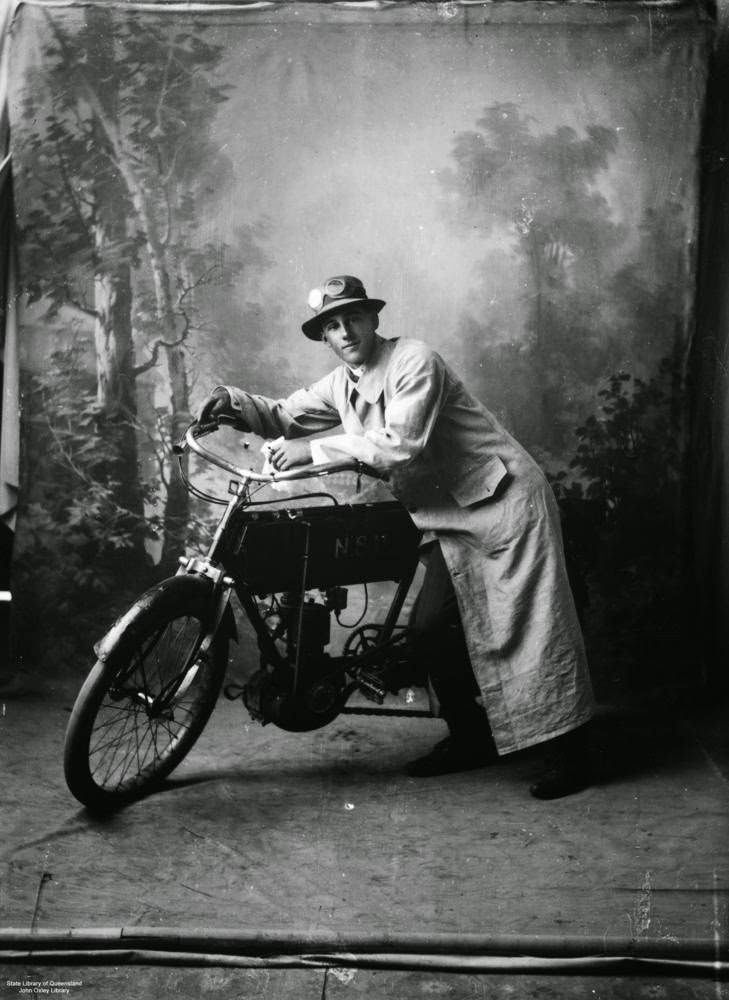
In the early 1900s, motorcycles were not yet a common sight, and those who owned one were often photographed as a mark of status or novelty. Riding gear was improvised — long dustcoats to keep off the grime, goggles to shield the eyes, and leather gloves for grip. Studio portraits of riders were popular, with subjects posing proudly beside their machines against painted backdrops.
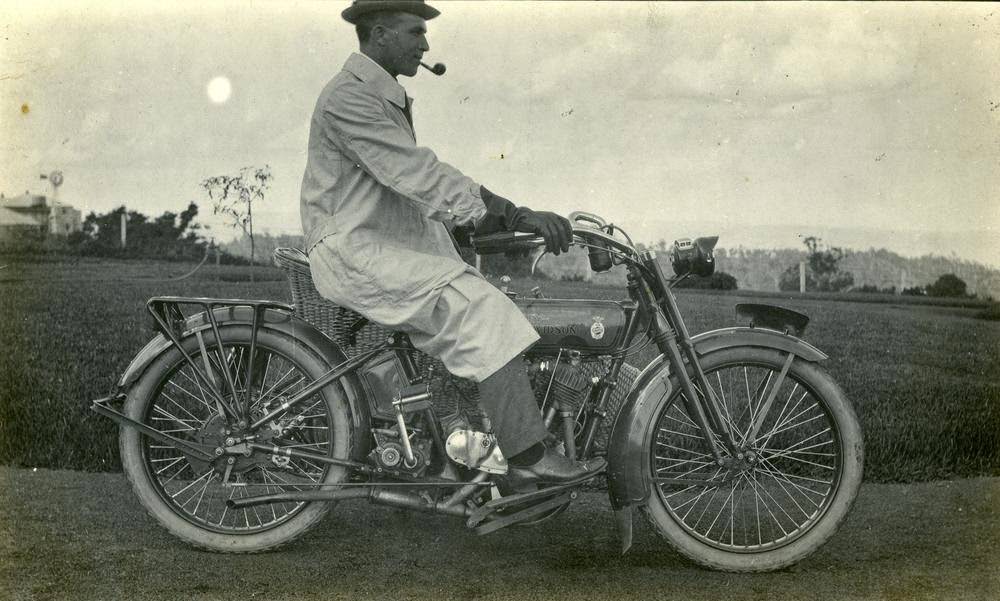
Formal riding attire was taken seriously by many Queensland motorcyclists. A solicitor from the Toowoomba district, photographed in 1930, wore driving gloves and a dust jacket aboard his Harley Davidson — dressed more for a country law office than a racetrack, but clearly proud of his machine.
By the mid-1910s, motorcycles were already finding military use. Dispatch riders carried messages between units in the field, and the role demanded both mechanical knowledge and steady nerves. One photograph from 1915 captures what is believed to be one such rider, his machine ready for hard use.
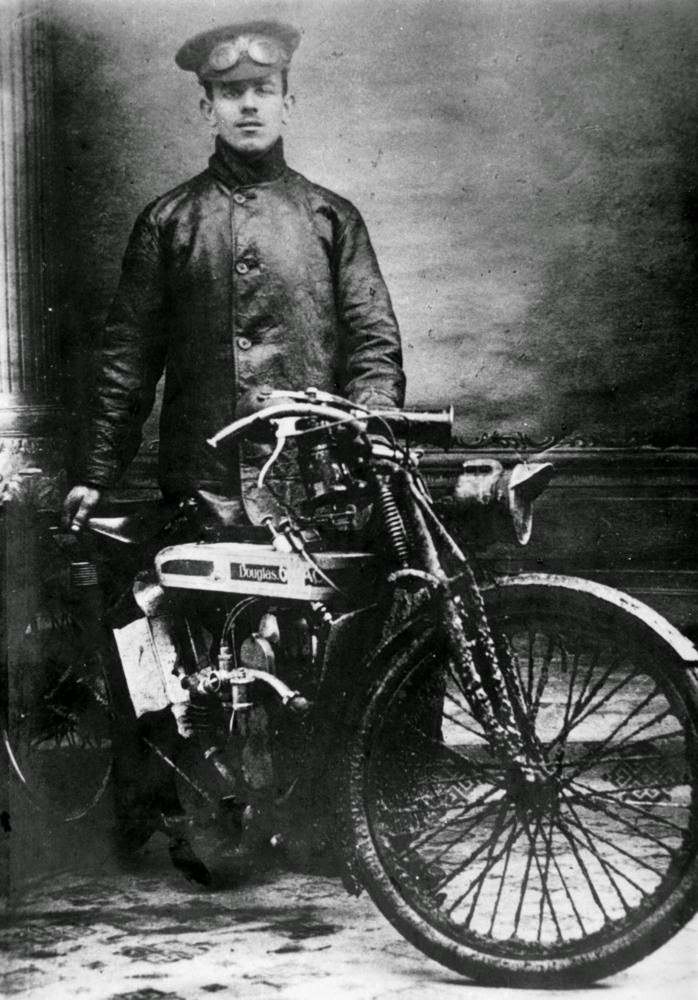
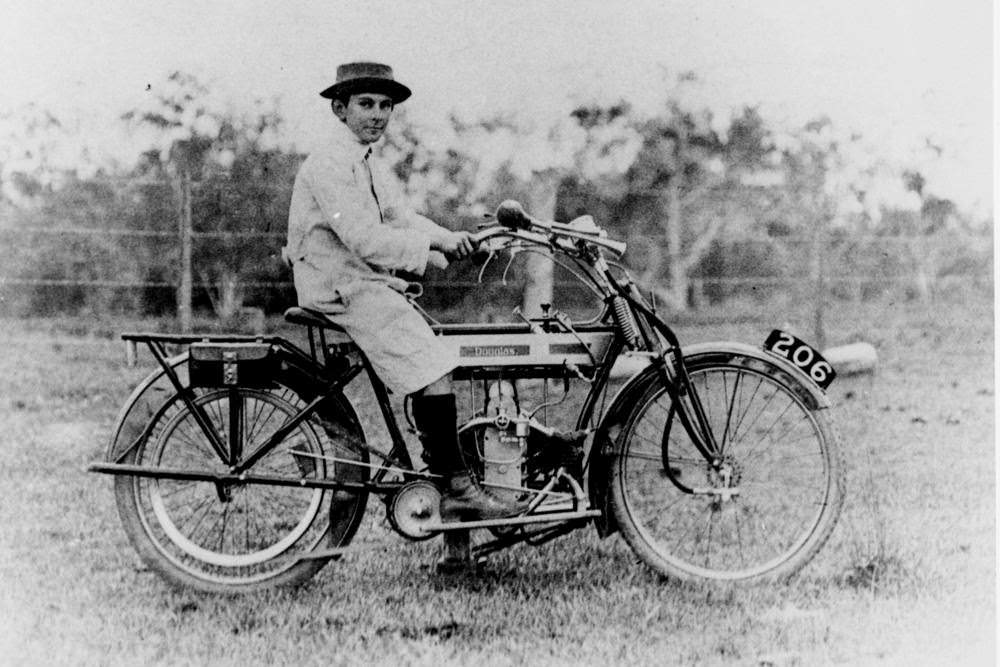
Young people were drawn to motorcycles from the very beginning. A boy in a long coat and an upturned hat brim sat astride an early Douglas motorcycle in 1915 — a machine that had barely been on the market a decade. Douglas bikes were a British import, lightweight and simple, and popular among early riders across Australia.
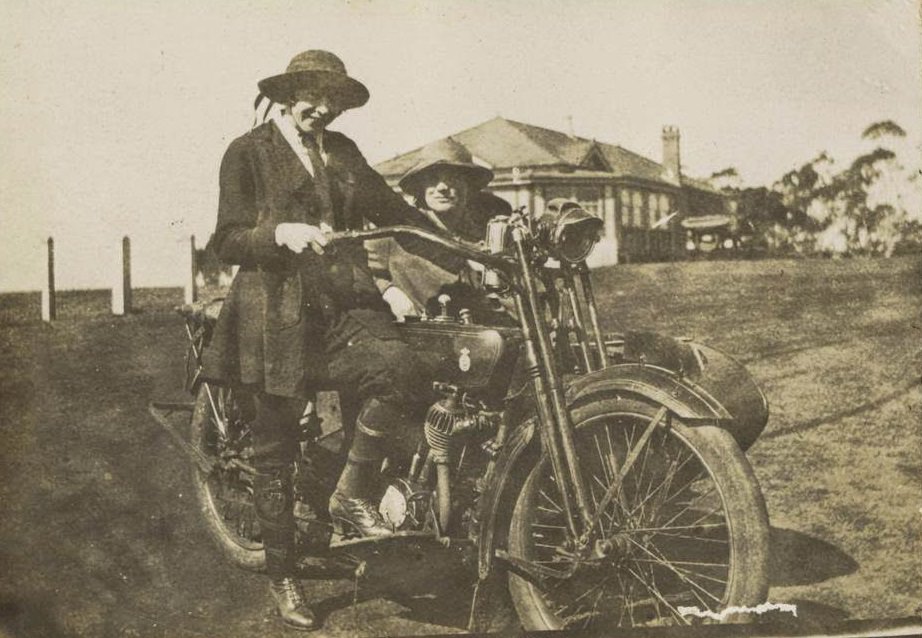
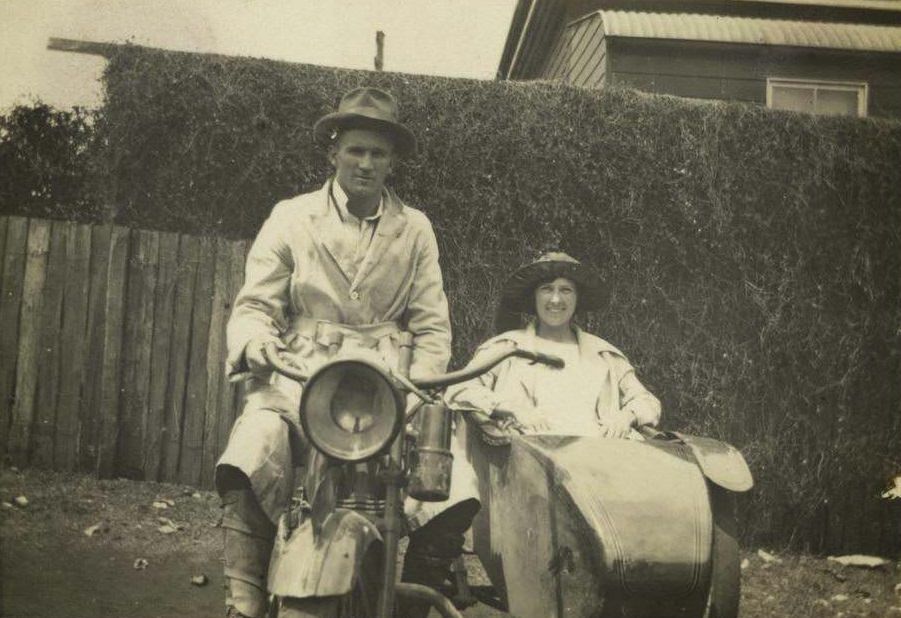
The sidecar was a practical addition to the motorcycle, turning a solo machine into a vehicle for two. By the 1920s, sidecar rigs were common across Queensland, used for family transport, cargo, and leisure. Two women posed with one such rig in 1922, and a separate photograph from the same year shows a rider and passenger making use of the same setup.
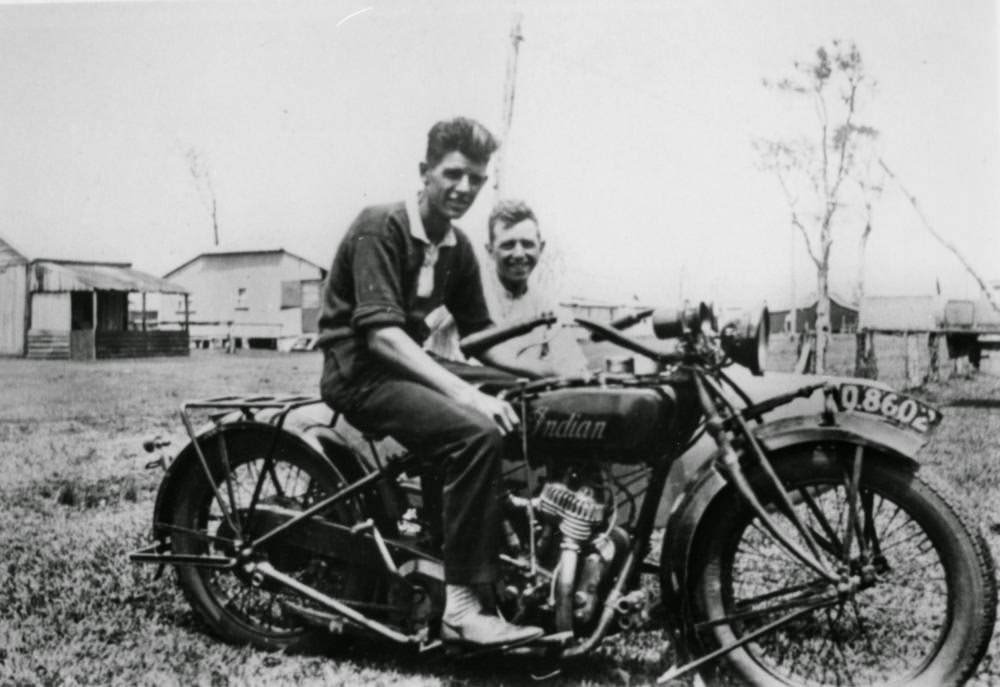
At Cribb Island in 1926, cousins Eric and Henry Beck were photographed together on their Indian motorcycle — one of the most recognisable American brands of the era. Indian bikes were known for their reliability and distinctive red paint, and they found a strong following among Australian riders during the 1920s.
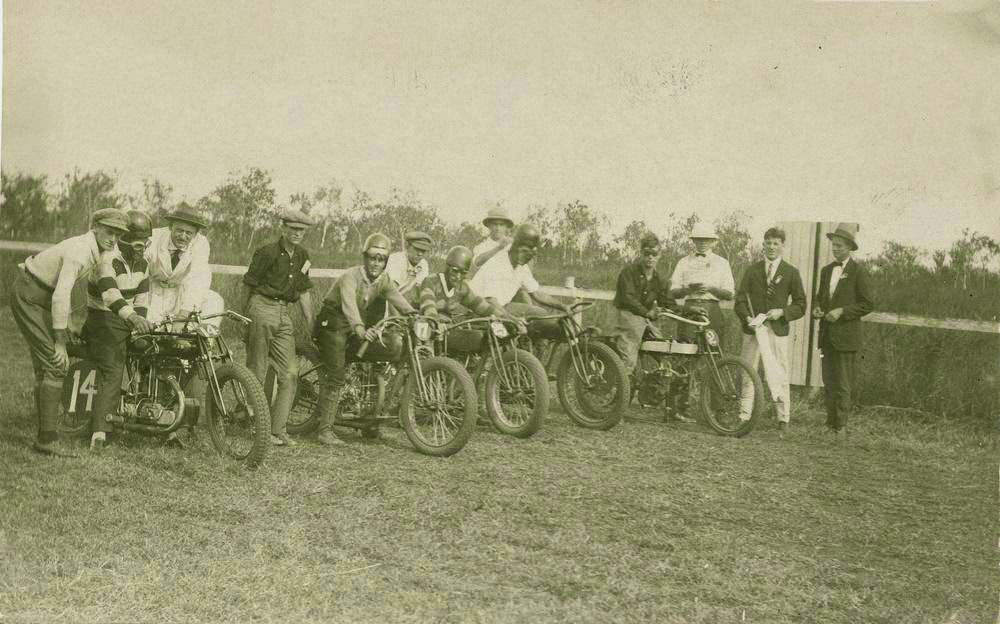
The 1930s were a busy decade for motorcycle sport in Queensland. Speedway racing drew large crowds, and clubs formed across the state. The first meeting of the Cairns Motor Cycle Club took place at Woree Speedway in 1930, with riders competing on a dirt track that demanded precision and nerve.
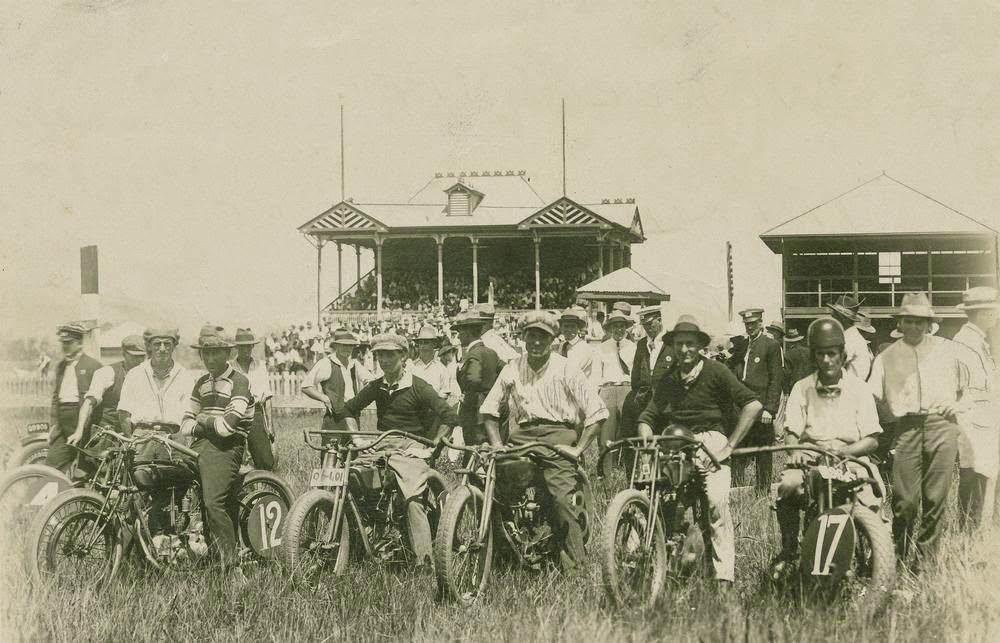
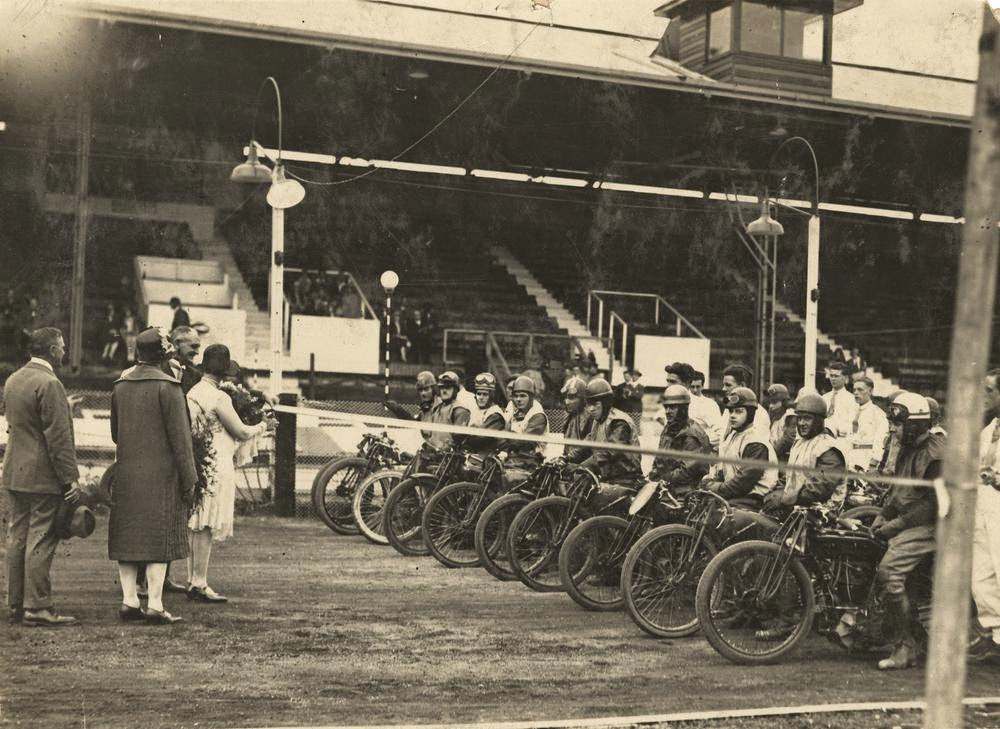
Brisbane hosted its own speedway events in 1930, including a race at Davies Park where competitors Cec O’Mara and Ben Unwin lined up on their machines. Officials marked race starts by cutting a ribbon — a simple ceremony that added a sense of occasion to the event.
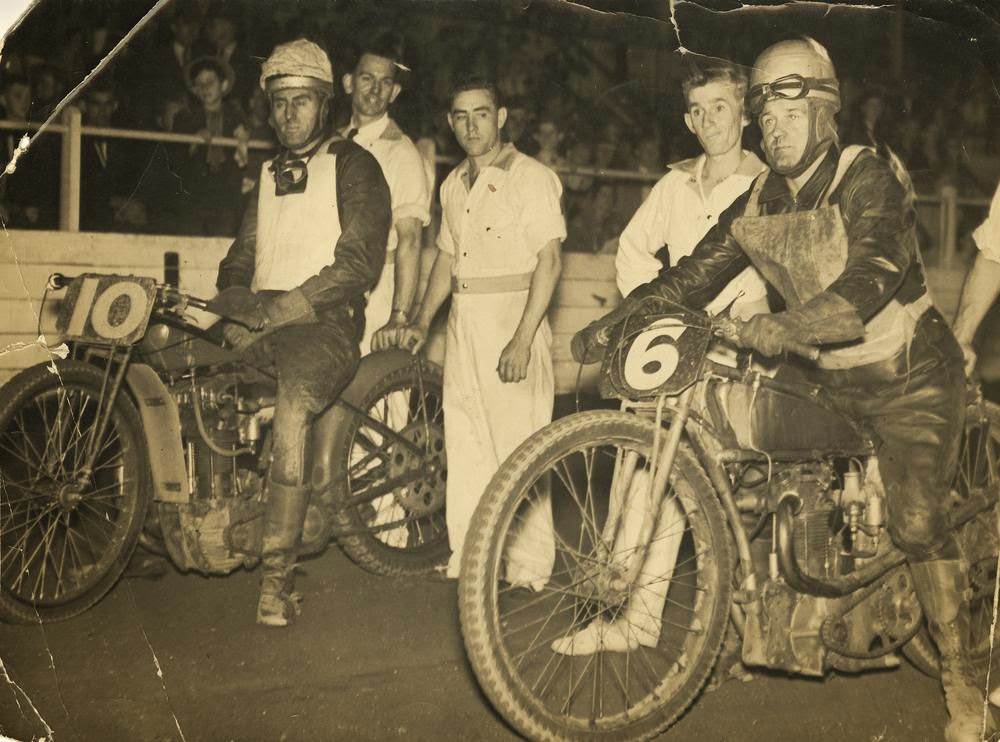
Mareeba, in Far North Queensland, also ran speedway events in 1930. Racing at regional tracks brought the sport to rural communities that rarely saw large public events, and local riders competed with the same intensity found in the city circuits.
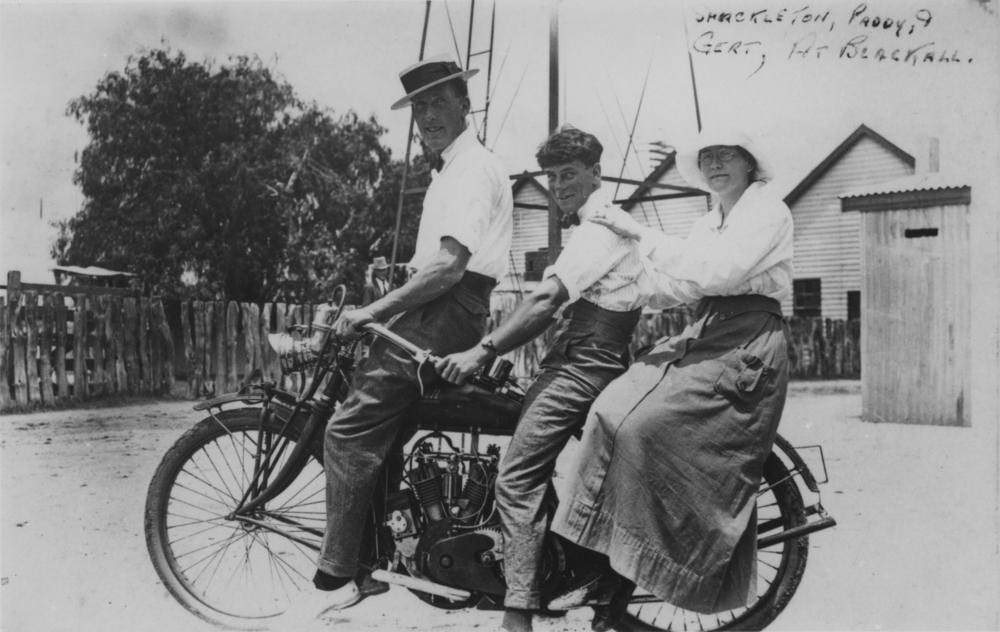
In Blackall, a small western Queensland town, three residents managed to squeeze onto a single motorcycle for a photograph in 1930. It was the kind of image that spoke to the machine’s social appeal — a motorcycle was not just transport, it was an event in itself.
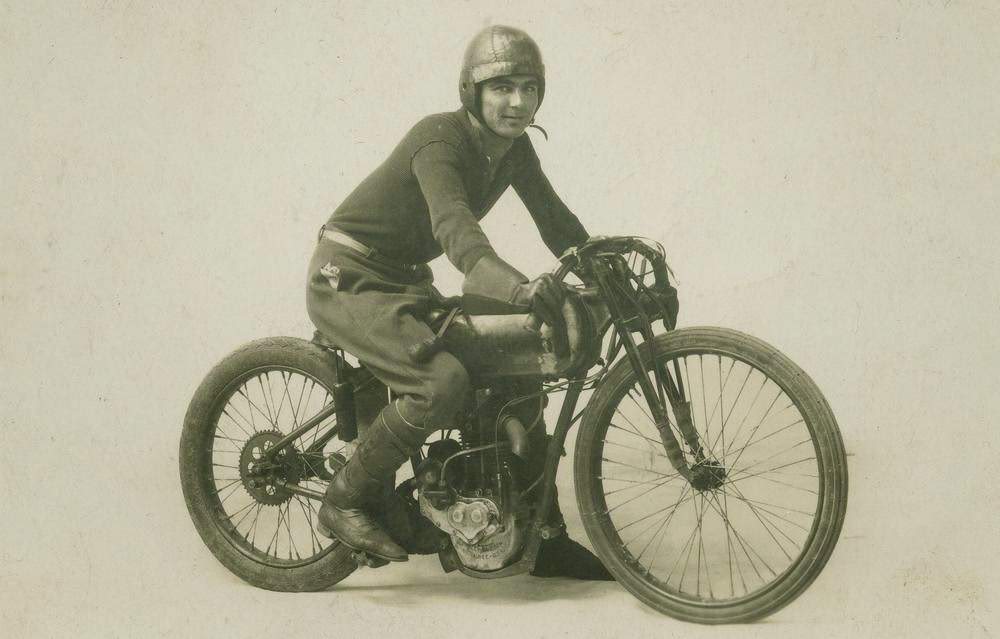
Don McPherson was photographed in Townsville in 1930 astride a 350cc Harley Davidson Peashooter — a lightweight racing model produced by Harley Davidson specifically for speedway competition. The Peashooter earned a strong reputation on tracks across Australia during this period.
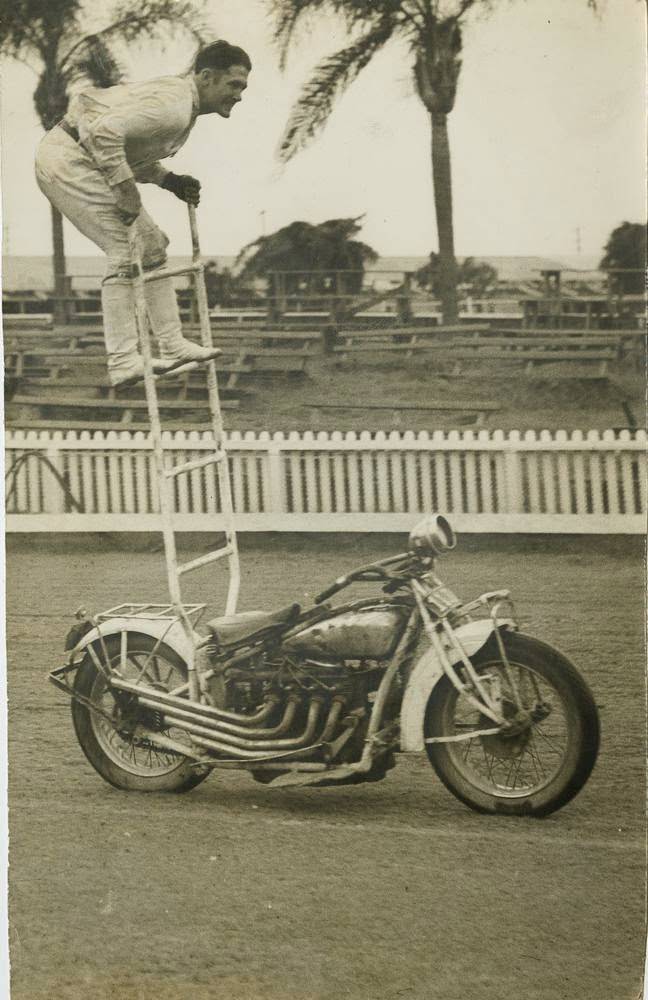
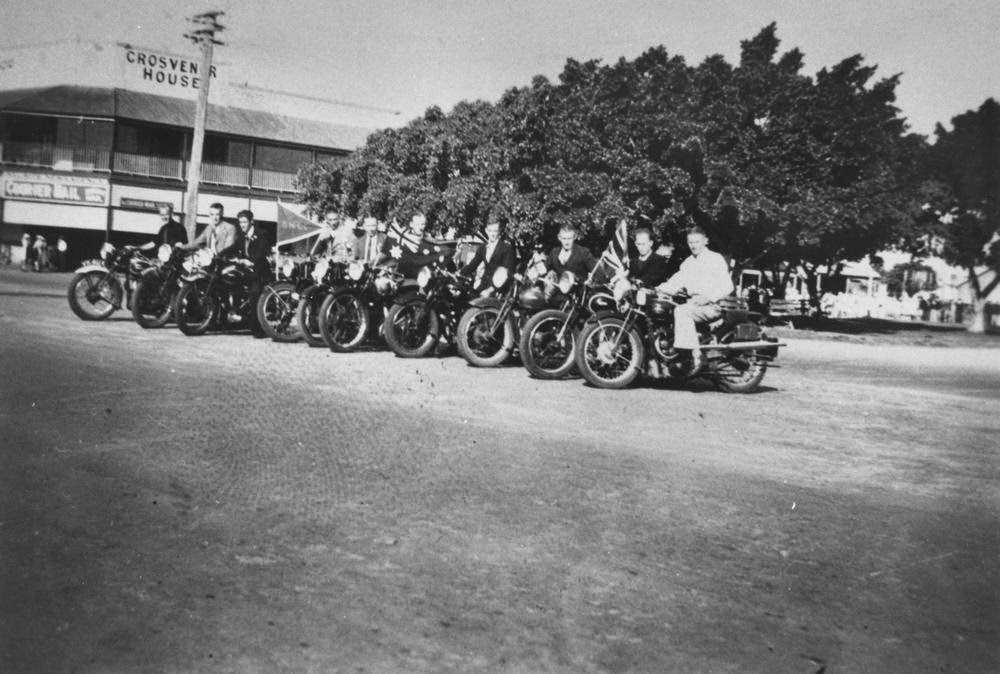
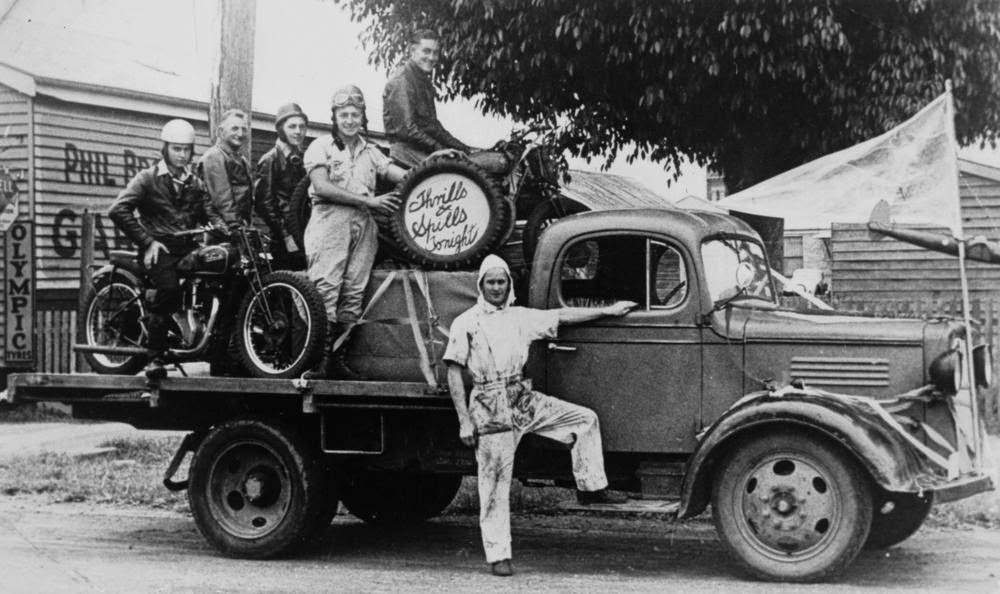
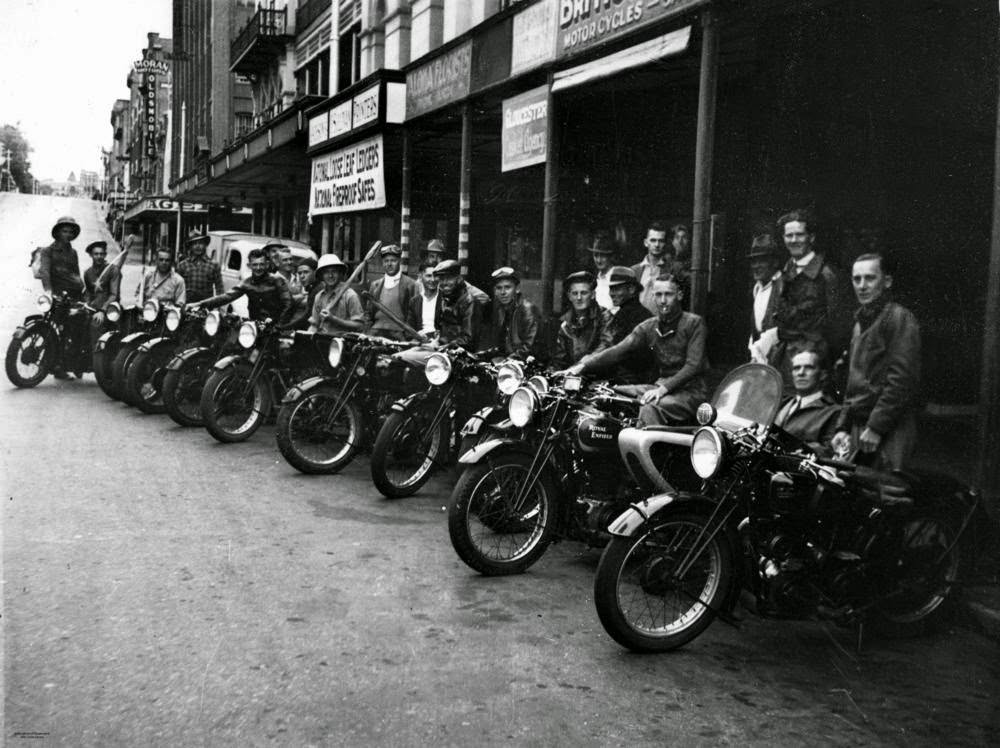
In 1937, Bundaberg emerged as a hub of motorcycle activity. Bourbong Street, the town’s main thoroughfare, was lined with motorcyclists for a local gathering. That same year, a stunt team called Thrills and Spills performed in Bundaberg, drawing crowds to watch daring feats of balance and speed.
Brisbane had its own unusual motorcycle group — the Brisbane Motorcycle Fishing Club, photographed on Adelaide Street in 1938. The club combined two of Queensland’s favourite pastimes, using their bikes to reach remote fishing spots that cars couldn’t easily access.
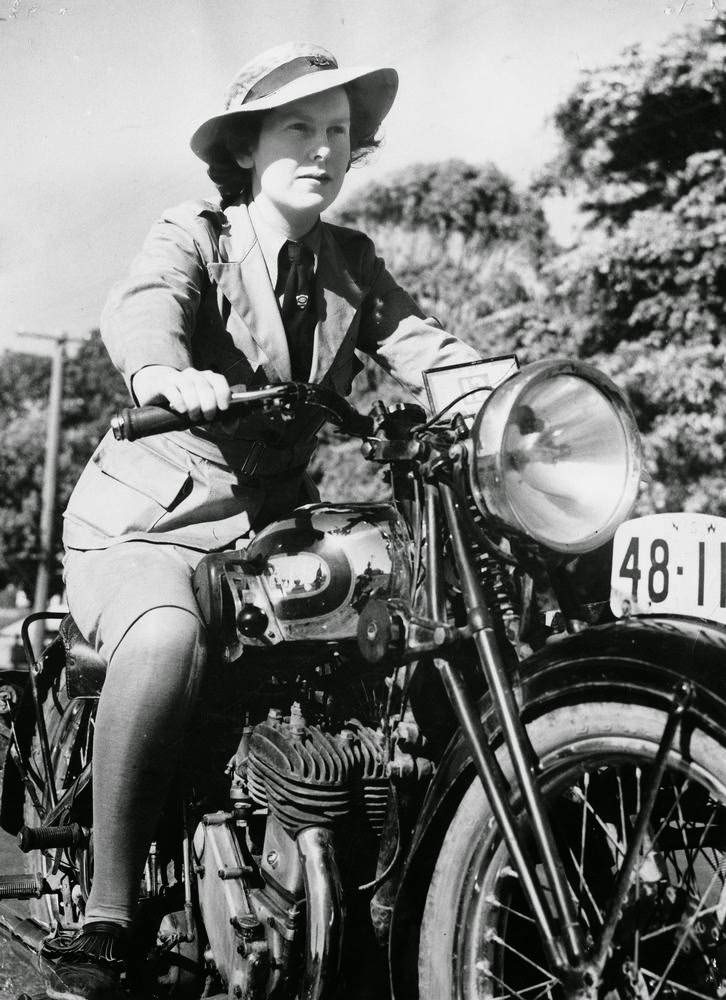
Women were increasingly visible in Queensland’s motorcycle scene through the 1930s. In 1939, Joan Grimes of the Australian Women’s Emergency Legion trained as a motorcycle dispatch rider, learning the skills needed to carry messages in the event of wartime need. Her training reflected the growing role women played in civil defence as World War Two approached.
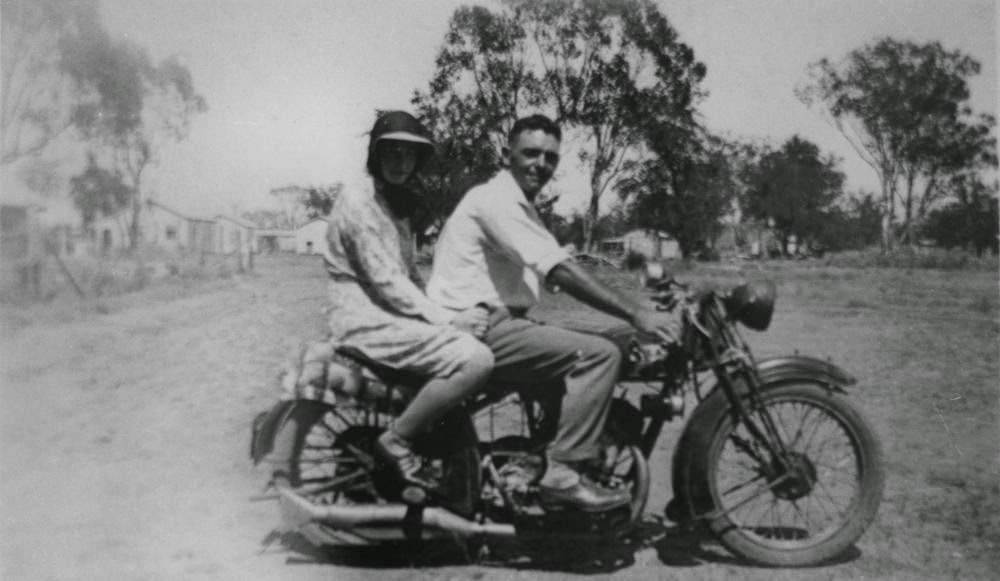
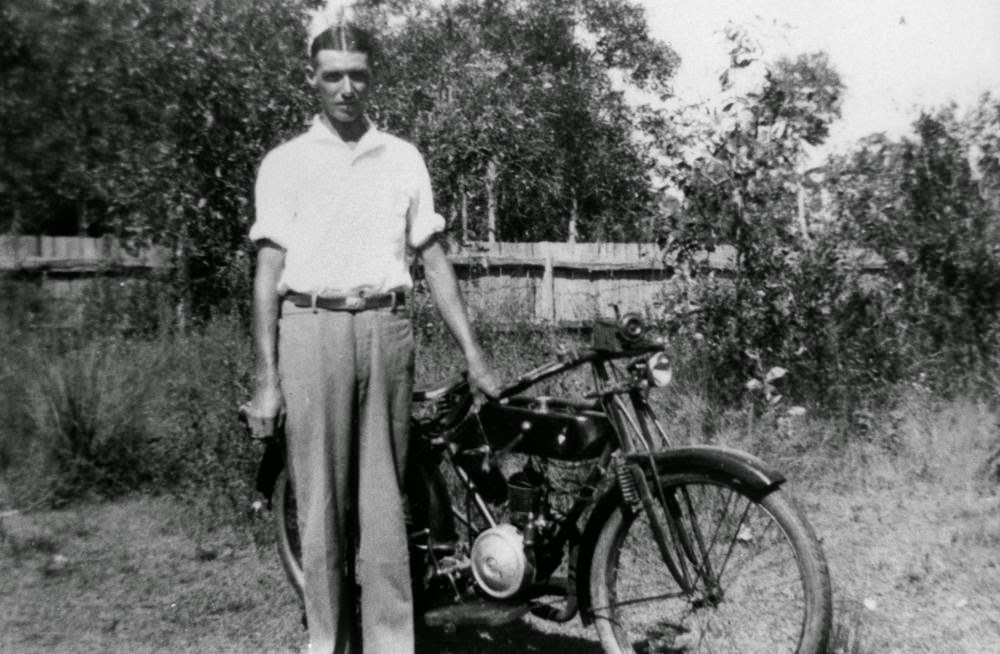
Barbara Davies and Billy Gall were photographed together on a motorcycle in 1938, and Herb Beecher posed with his Waratah motorbike around 1940. The Waratah was an Australian-built motorcycle — a rare example of domestic manufacturing in a market dominated by British and American imports.
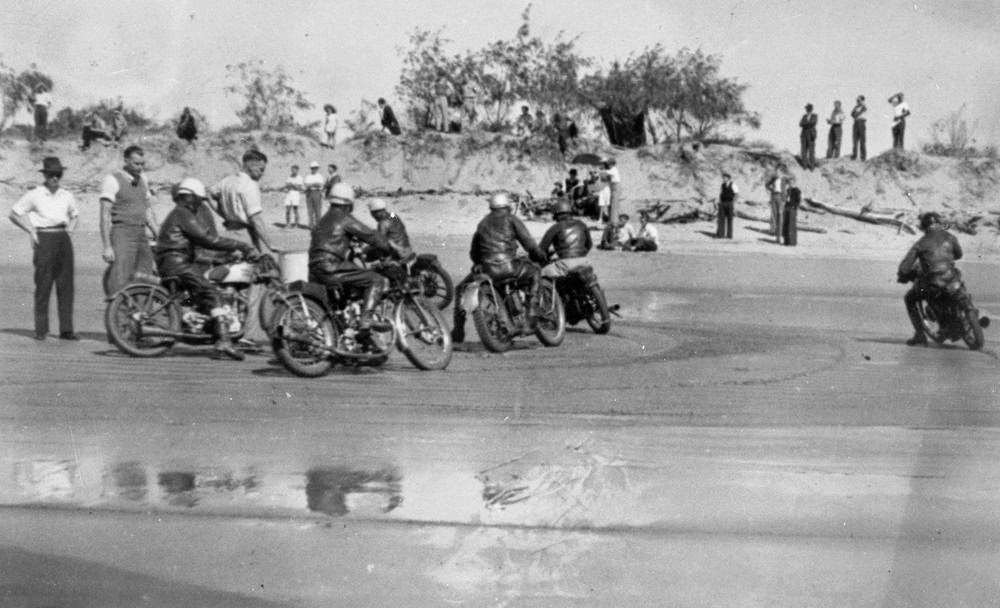
In 1947, Bundaberg hosted a motorcycle race directly on the beach — a dramatic setting that replaced the dirt oval with open sand and salt air. Beach racing was a crowd-pleaser, with spectators able to watch the full length of the course from the shoreline.
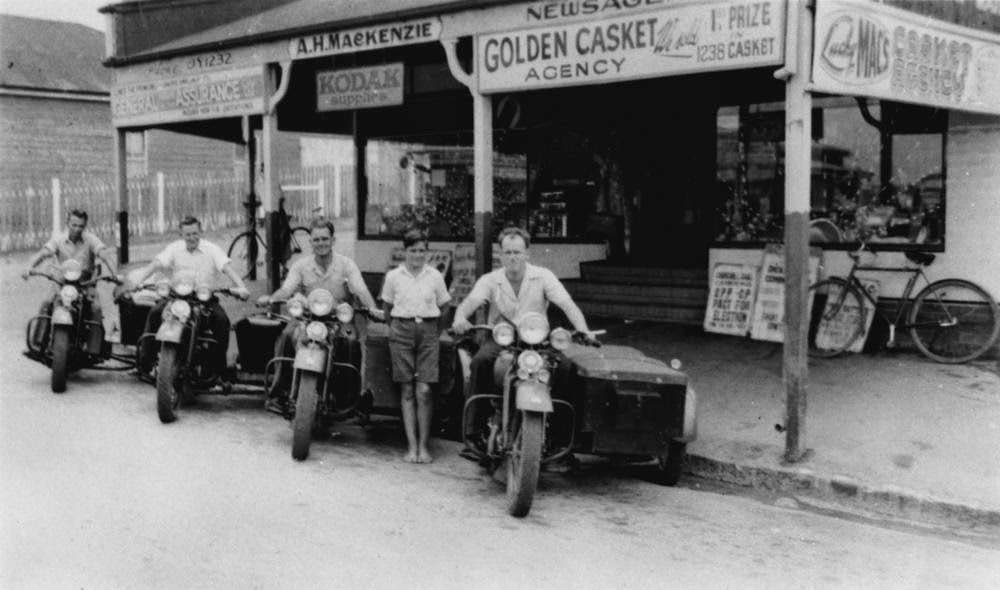
By the early 1950s, Harley Davidson motorcycles with sidecars were a familiar sight on Brisbane streets. A photograph taken outside Mackenzie’s Newsagency in Bulimba in 1953 shows a row of these machines parked neatly at the kerb — heavy, reliable, and built for distance.
Track racing continued to grow in the 1950s. At Brisbane’s speedway circuit around 1955, a racer received a push start from trackside — a common method for getting bikes with no electric starter moving at race pace. Riders like these competed on purpose-built machines stripped of everything not needed for speed.

One of the more unusual photographs in this collection, taken in 1955, shows a young man perched at the top of a small ladder attached to his motorcycle — a stunt or novelty act that drew on the same showmanship as the Thrills and Spills team from nearly two decades earlier.