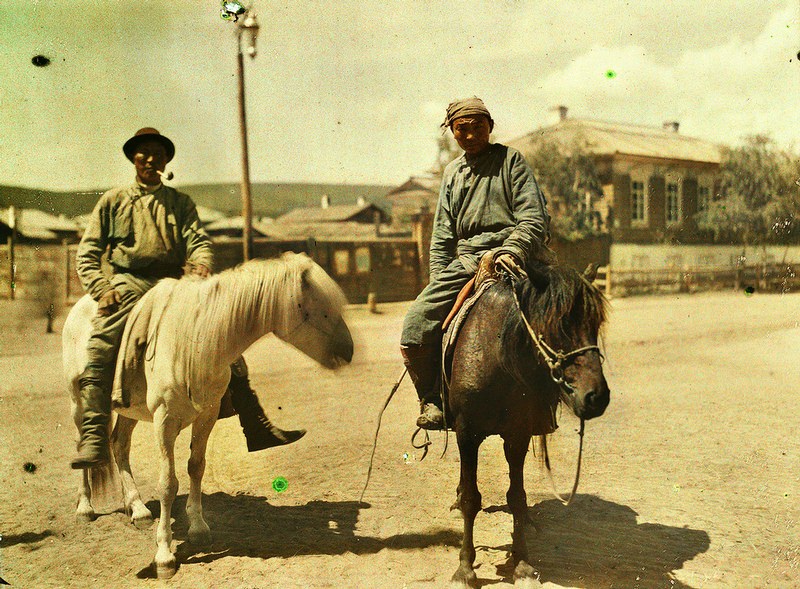
In 1911, Mongolia declared independence from China’s Qing Dynasty. Almost immediately, it fell under the protectorate of the Russian Empire. Russia recognized Mongolia’s autonomy but also acknowledged China’s suzerainty over the region — leaving Mongolia in a complicated political middle ground, with its own leaders but shaped by two powerful neighbors.
Into this shifting world came Stefan Passe, a photographer working under the project of Albert Kahn, a wealthy French banker who believed photography could build understanding between cultures. In 1913, Passe traveled from Kyakhta to Urga — today’s Ulaanbaatar — documenting landscapes, people, and daily life in vivid color at a time when almost all photography was black and white.
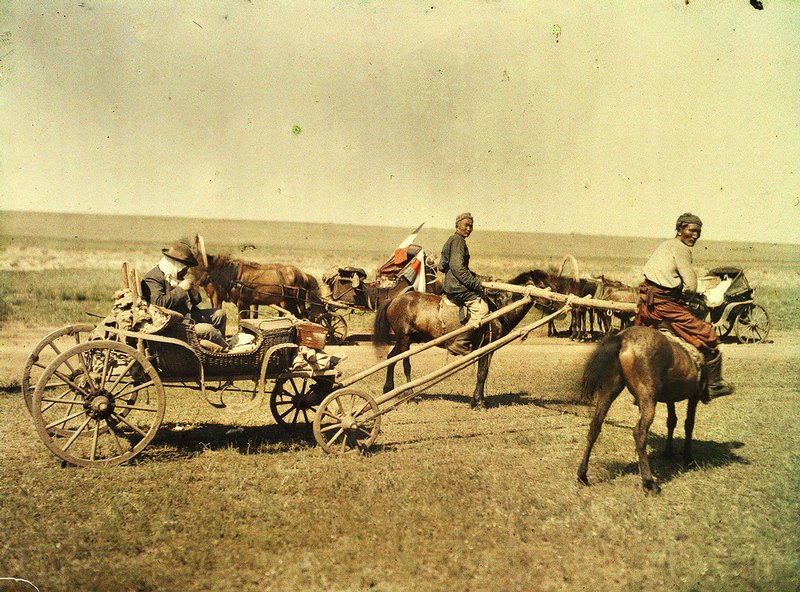
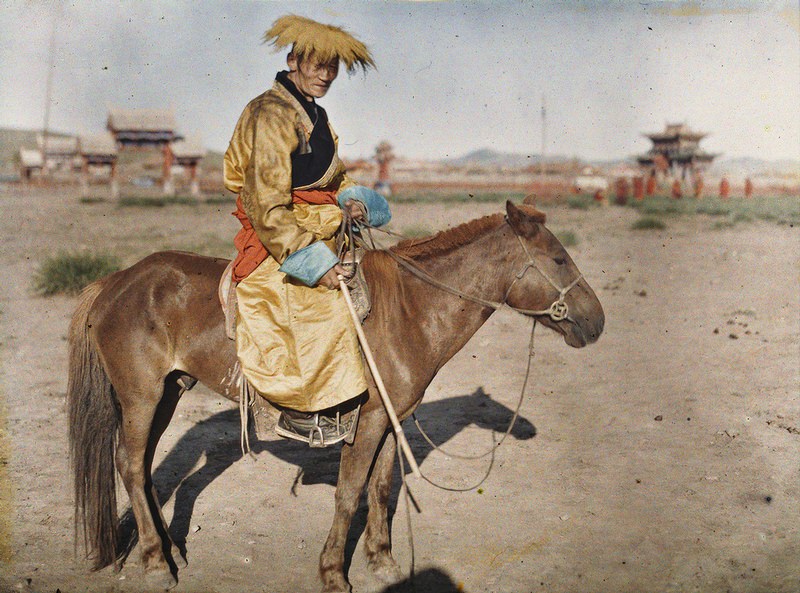
Passe’s carriage, marked with Russian and French flags, made its way across open steppe toward the Mongolian capital. Along the route, he photographed the hunters and horsemen who inhabited the land.
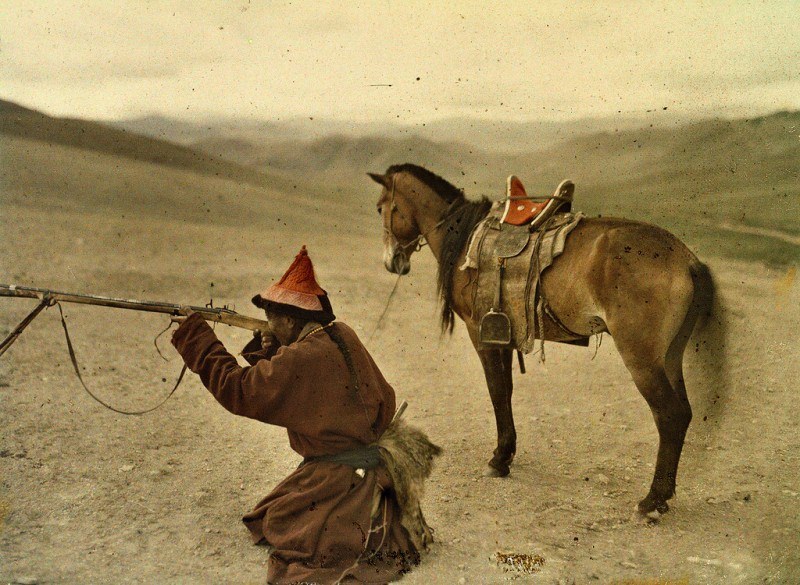
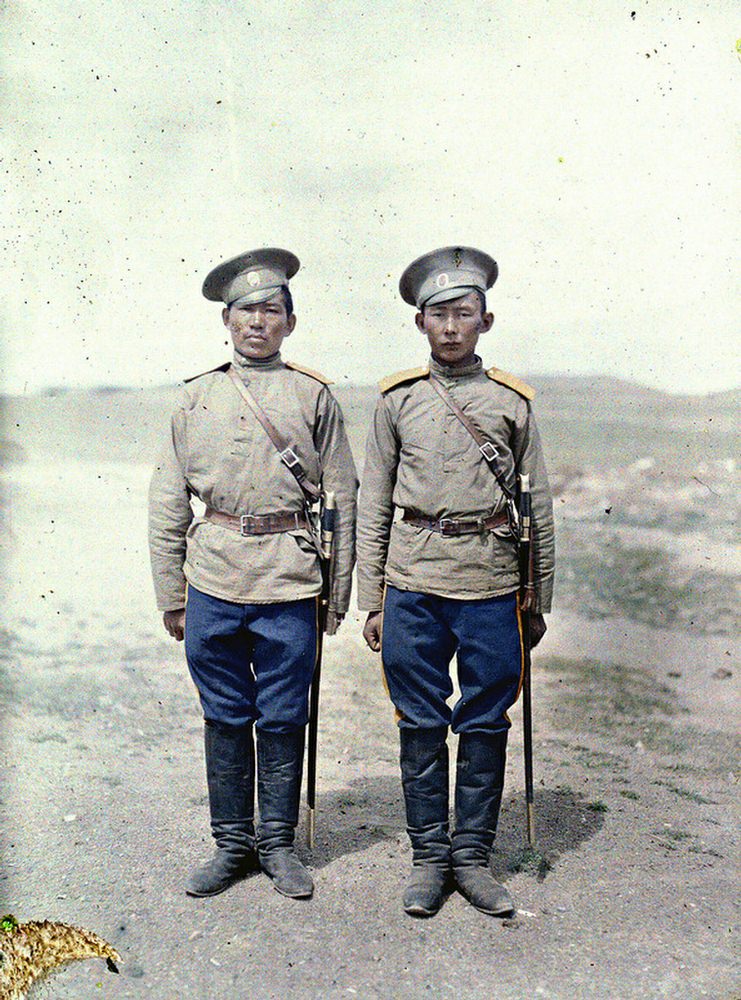
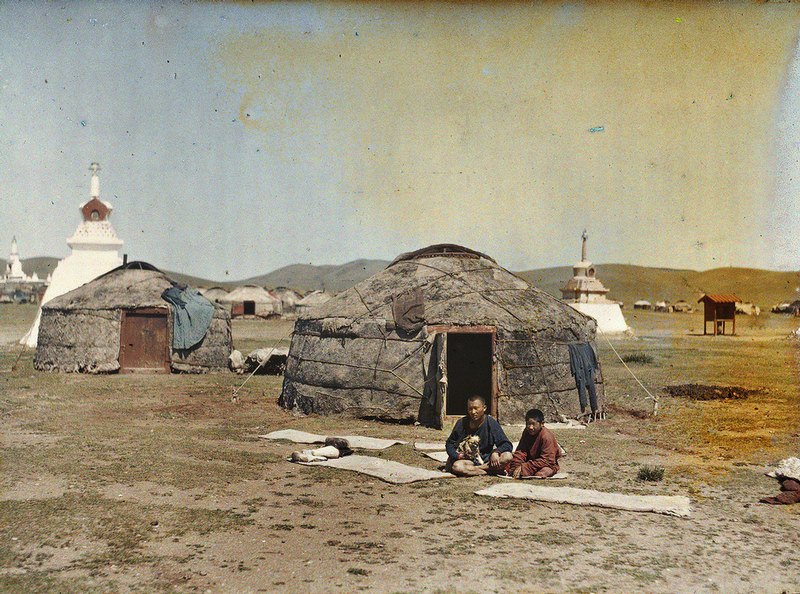
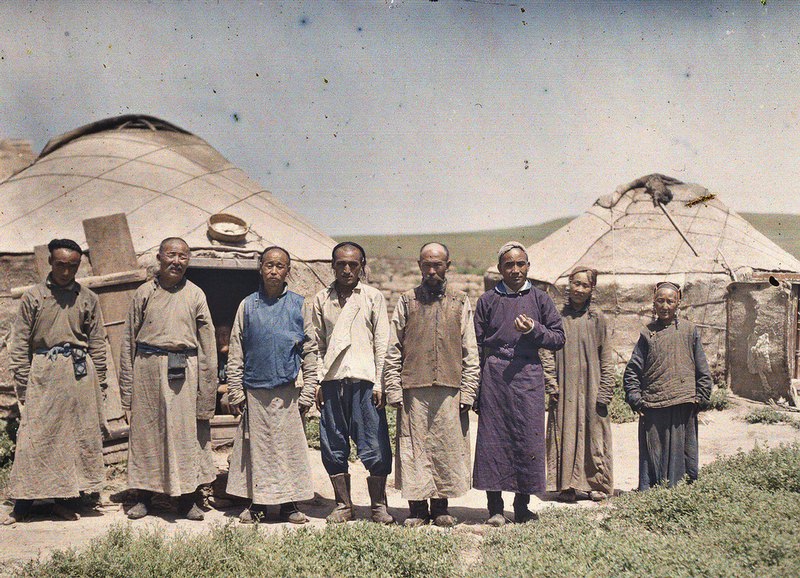
Mongolia in 1913 was largely nomadic. People lived in gers — round felt-and-wood dwellings built to survive the harsh climate. Horses, camels, and yaks provided transportation, milk, and meat. The Russian protectorate maintained a visible but minor military presence in Urga, symbolizing its political hold on the region.
Urga itself was a layered city — part nomadic settlement, part administrative center, and deeply shaped by Tibetan Buddhism. Passe photographed its streets, temples, and monastic structures in detail.
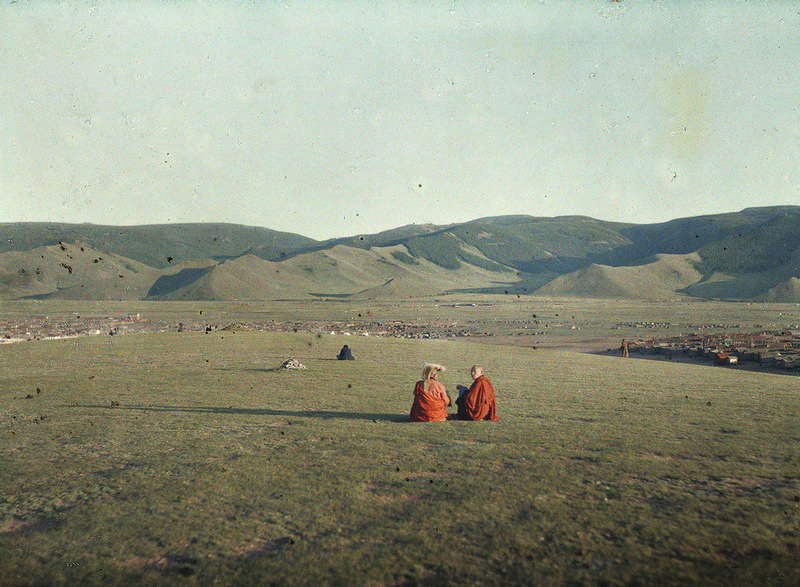
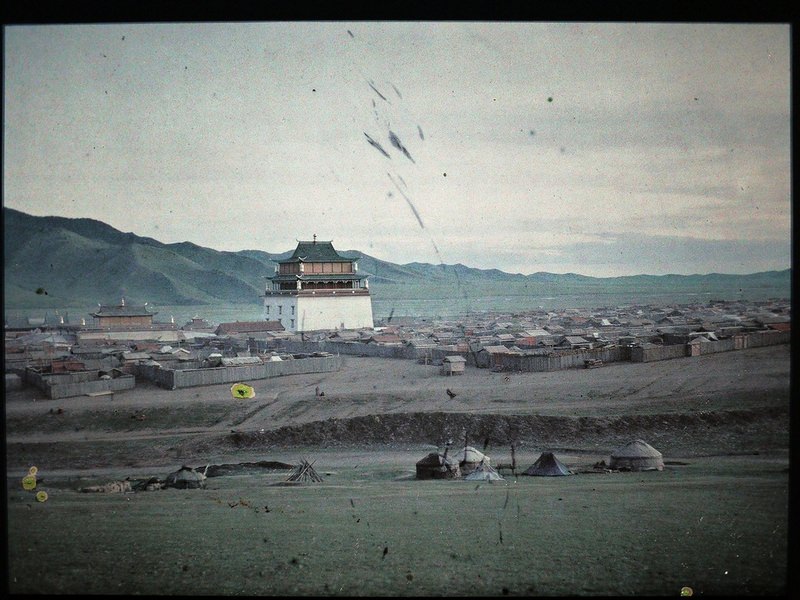
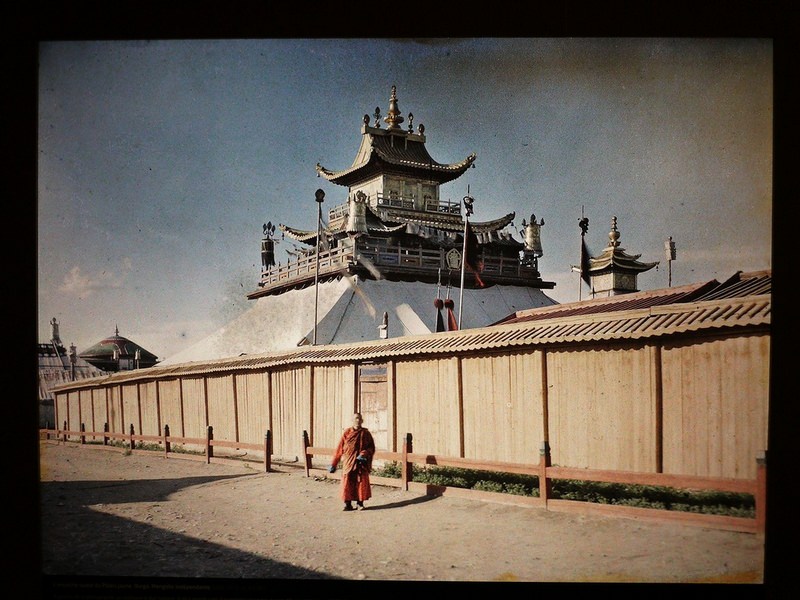
Buddhist institutions held enormous authority in Mongolia. Lamas were central figures in both religious and civic life, and the monastic complex at Gandan was one of the most significant sites in the capital.
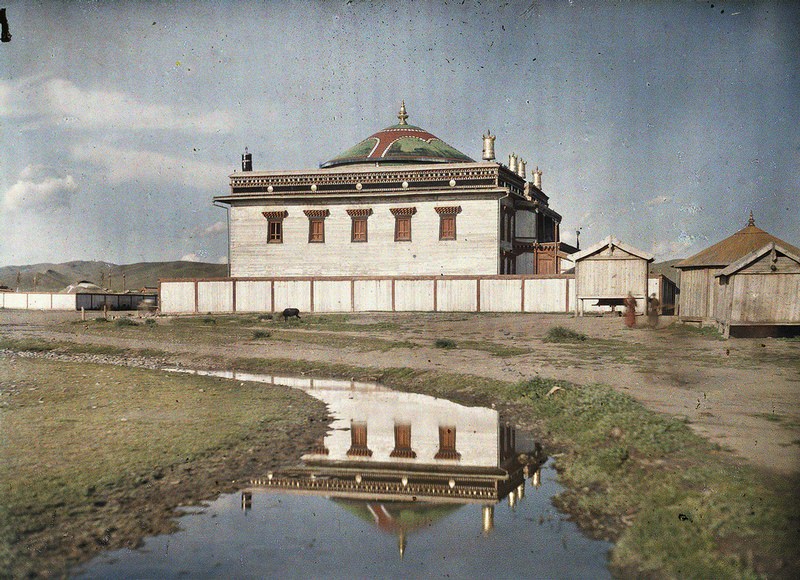
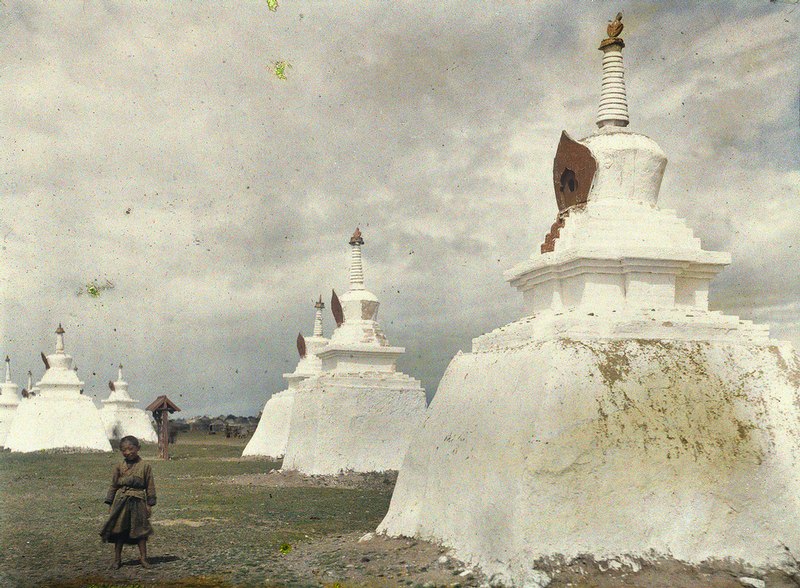
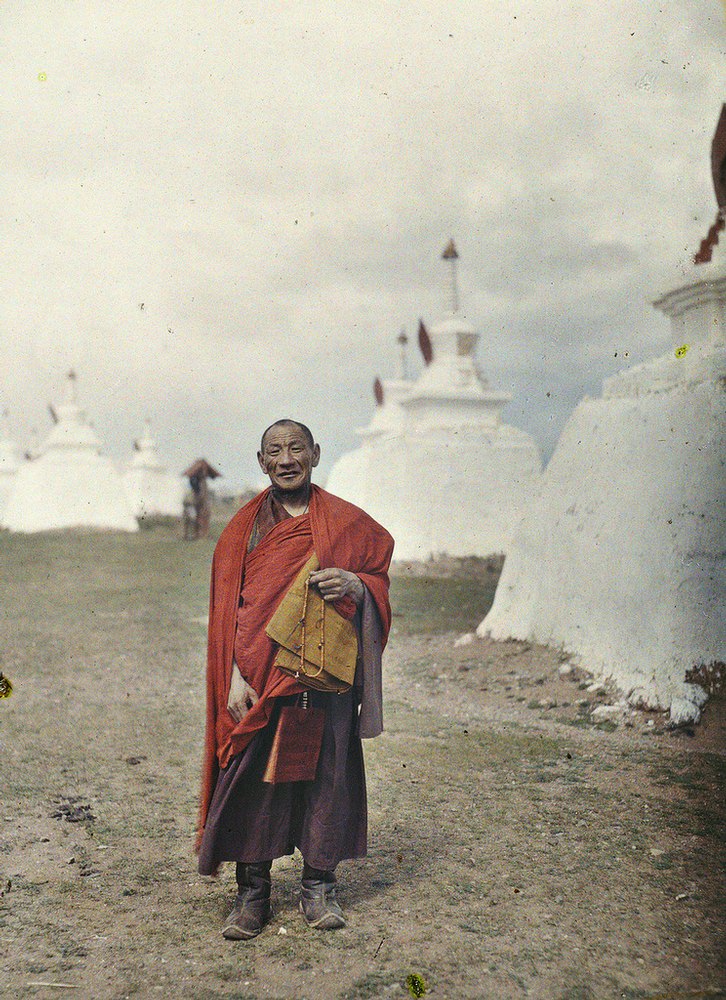
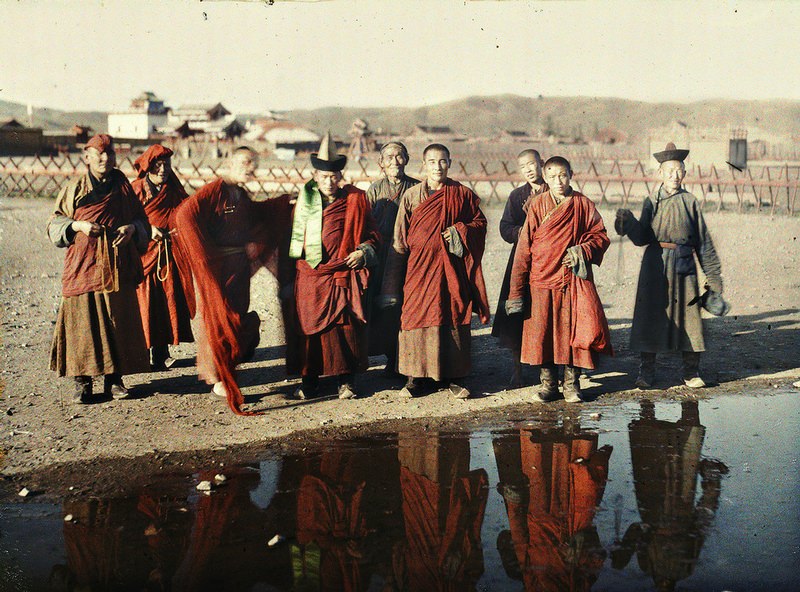
The Yellow Palace was a key seat of power in Urga. Passe photographed its triumphal gates and notable figures in its vicinity, including Badamdorj, a prominent Mongolian political figure of the era.
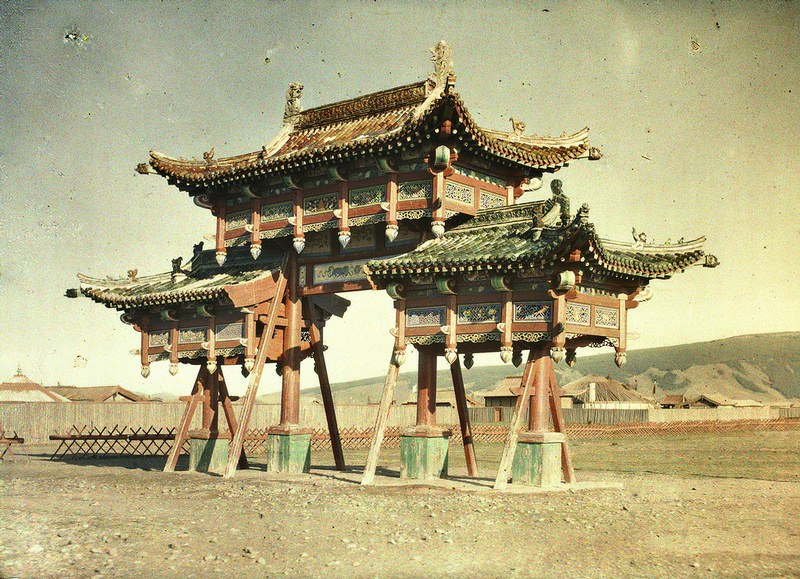
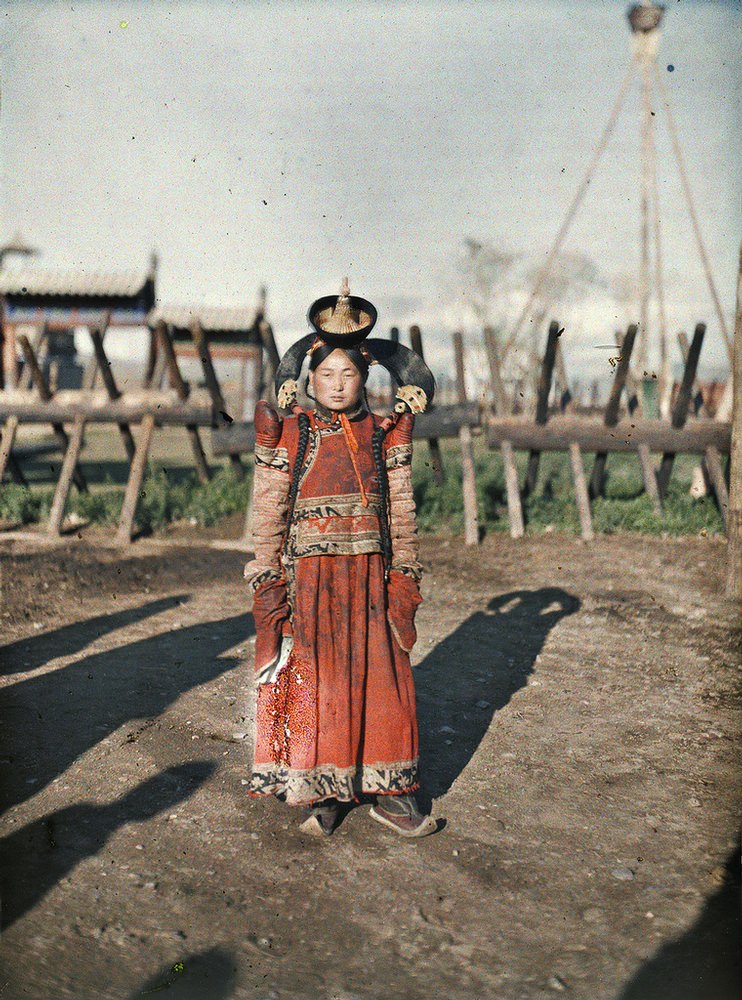
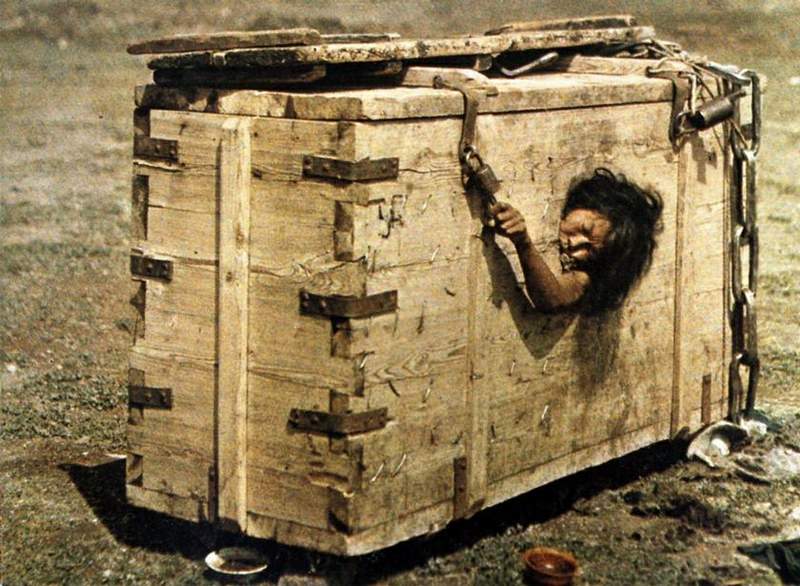
Passe also turned his lens on ordinary people — a married woman in Urga in traditional dress, and the portable wooden boxes used across the nomadic landscape, one of which was photographed and later published by National Geographic as evidence of a harsh punishment: a woman sentenced to death by starvation.
Outside the capital, the steppe opened into clusters of gers and nomadic settlements stretching toward the horizon. Passe captured these communities across both Outer and Inner Mongolia.
At the edges of the Russian-Mongolian border, Buryat riders represented the diverse peoples caught within these shifting imperial boundaries.