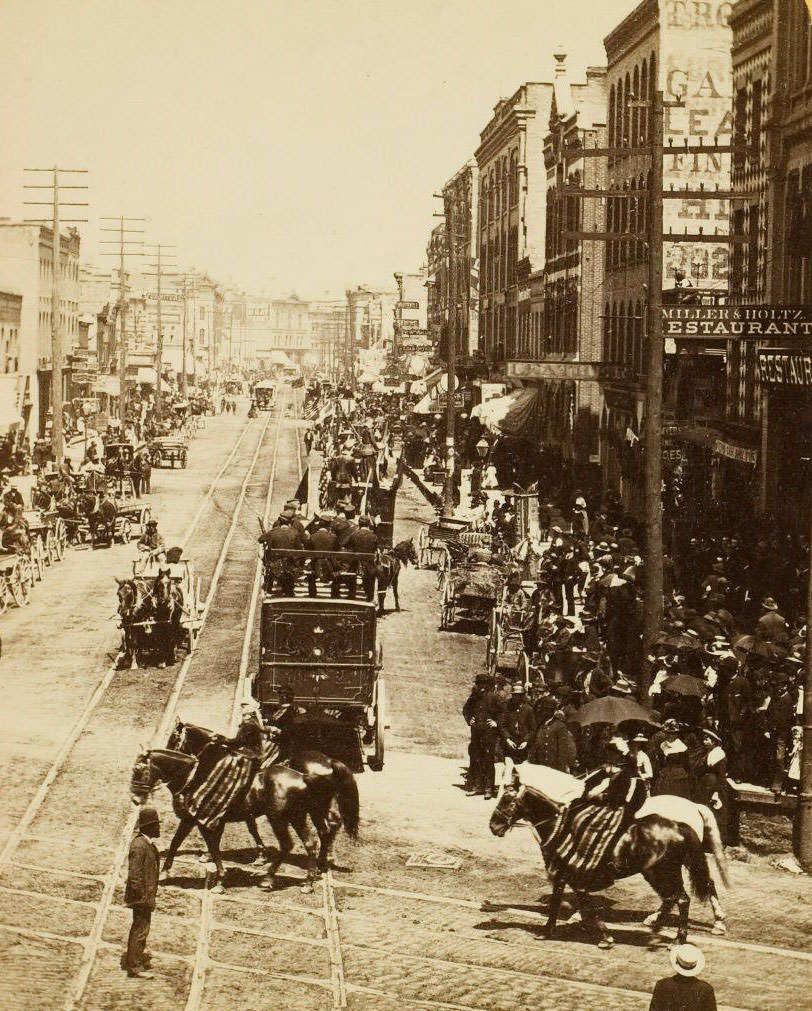
Milwaukee in the 1880s was a city caught between two worlds. On one side stood the wealthy factory owners and merchants building grand hotels, breweries, and commercial blocks. On the other were the thousands of workers who kept those industries running under brutal conditions. The lowest-paid workers put in ten-hour days, six days a week, and took home just $1.25 for their trouble. That tension shaped everything about the city during this decade — its politics, its streets, and its people.
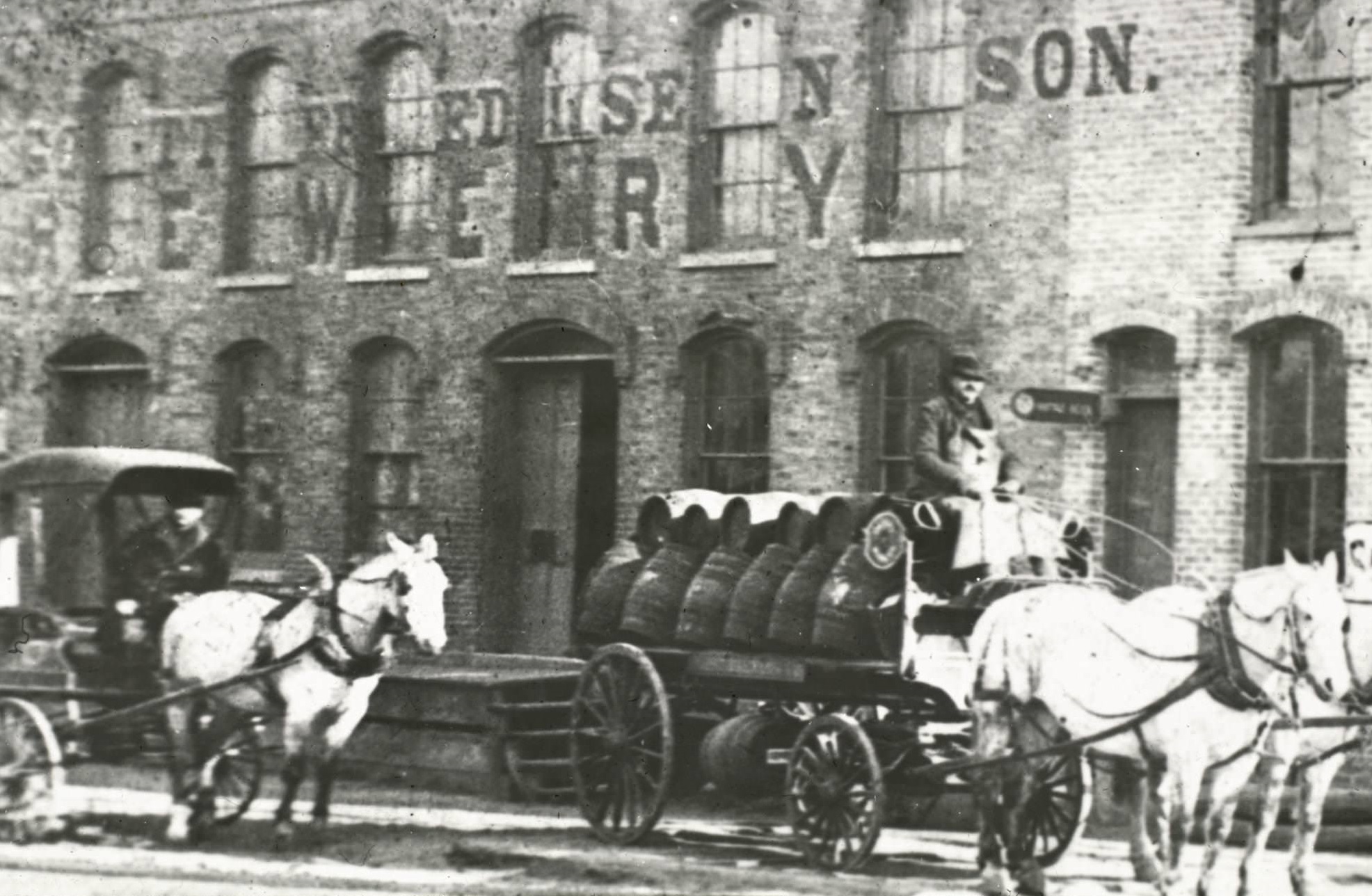
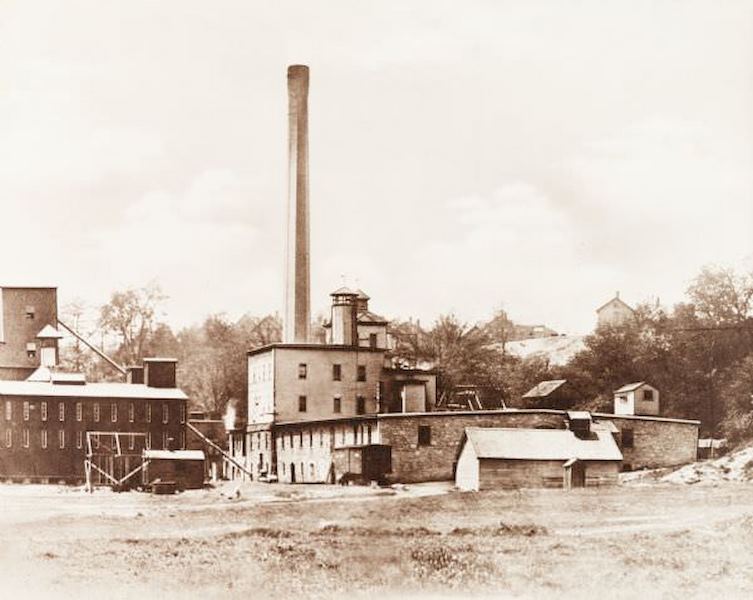
Milwaukee’s brewing industry was already a defining feature of the city well before the 1880s. Breweries like Gottfredsen and Son had been operating for decades, with family-run operations that served the city’s large German immigrant population. Jacob G. Gottfredsen, born in Denmark in 1821, had started his brewery back in 1858. By 1877, he brought his son into the business, and by 1890 they leased their buildings to the E. Griesbach Brewing Company, with Frederick J. Gottfredsen serving as president.
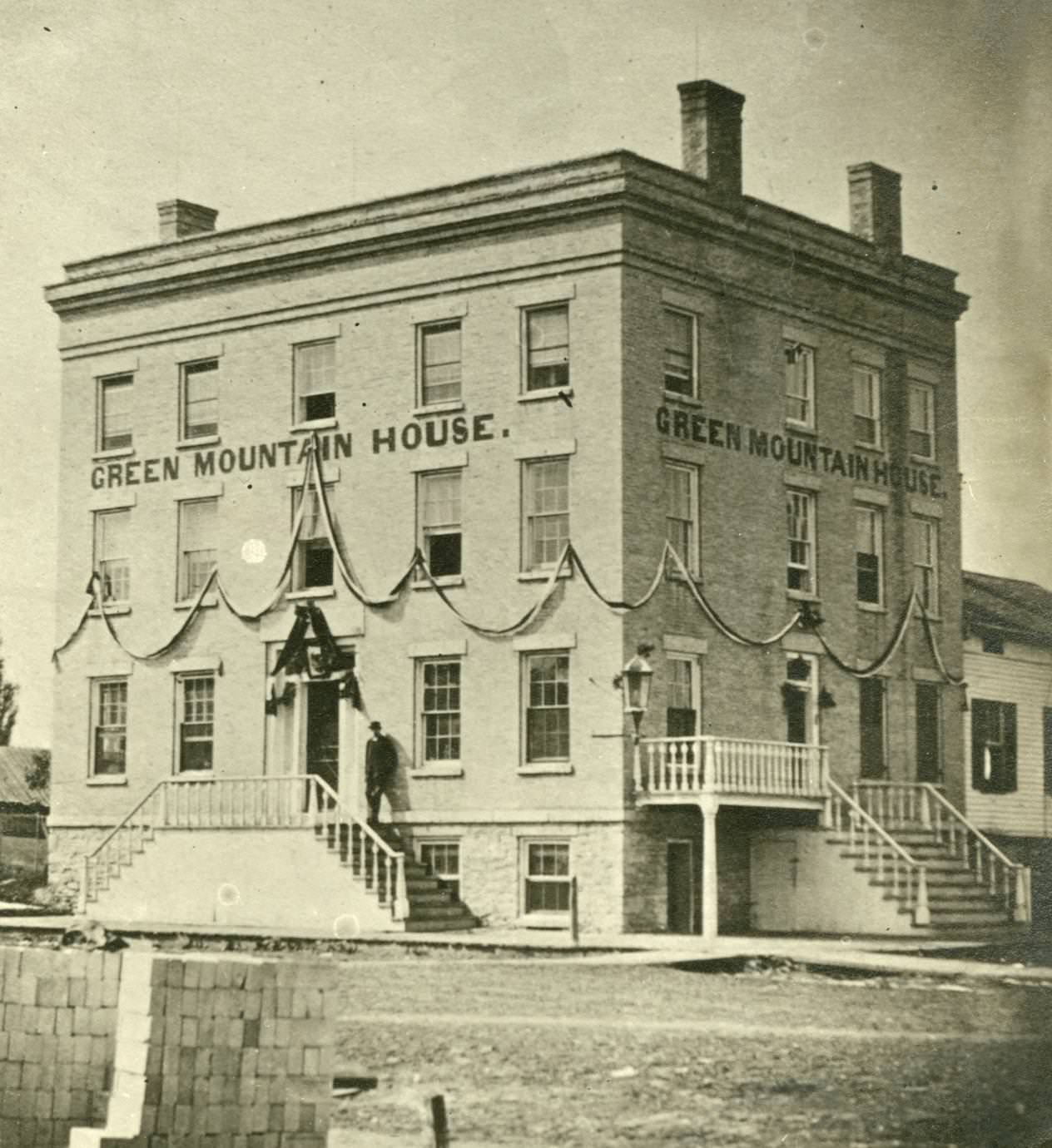
The Green Mountain House stood as one of the recognizable landmarks of early 1880s Milwaukee. Buildings like this served both locals and travelers passing through the growing city.
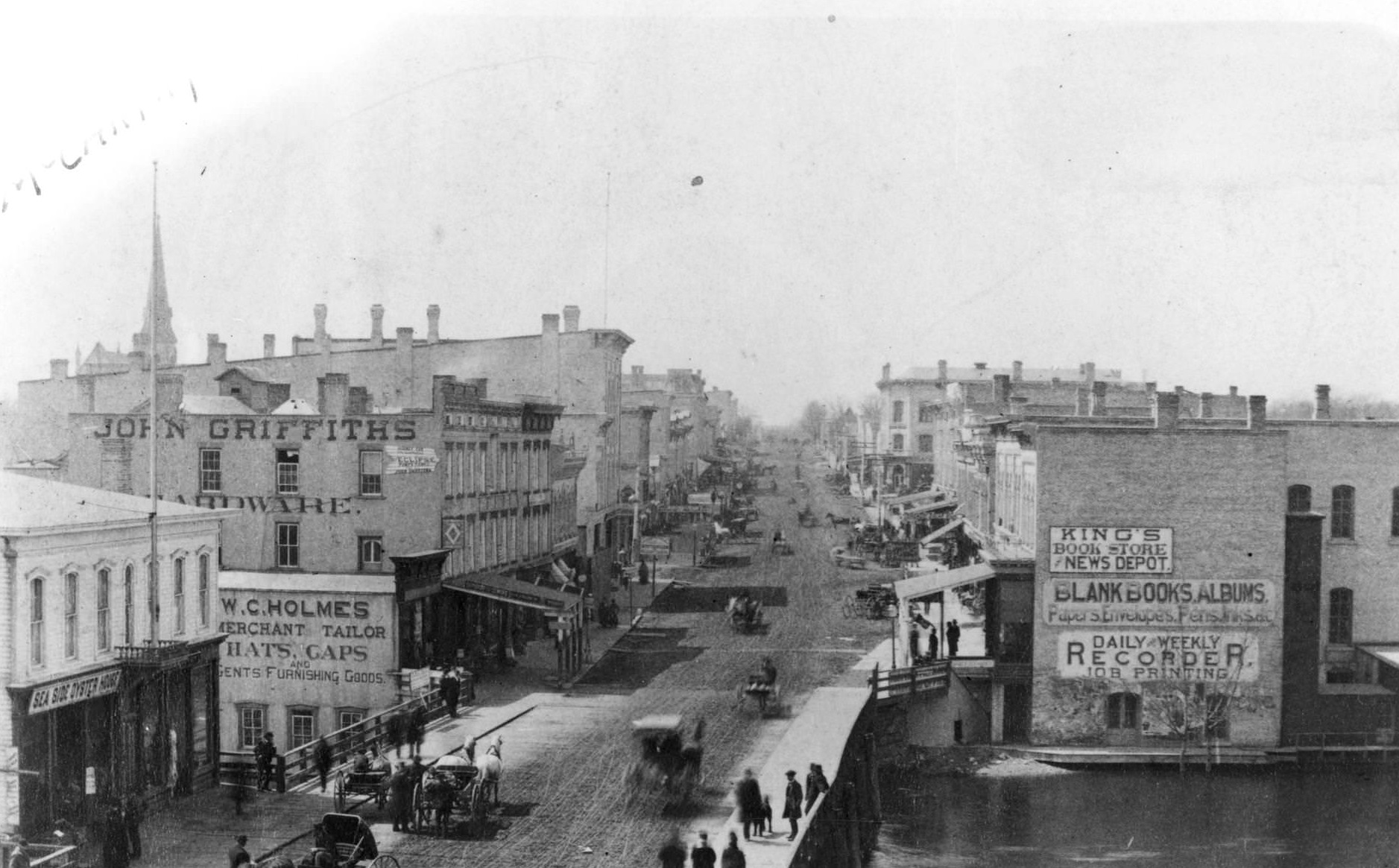
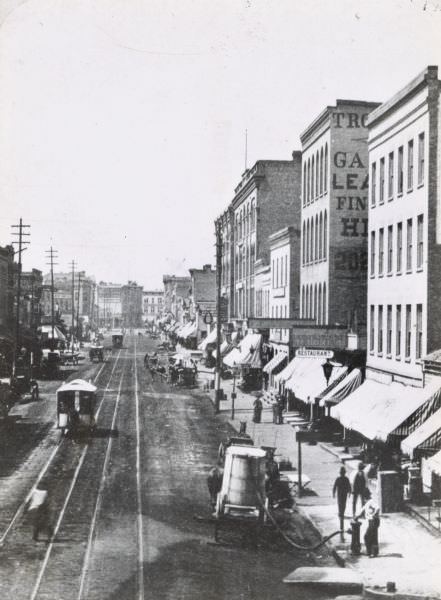
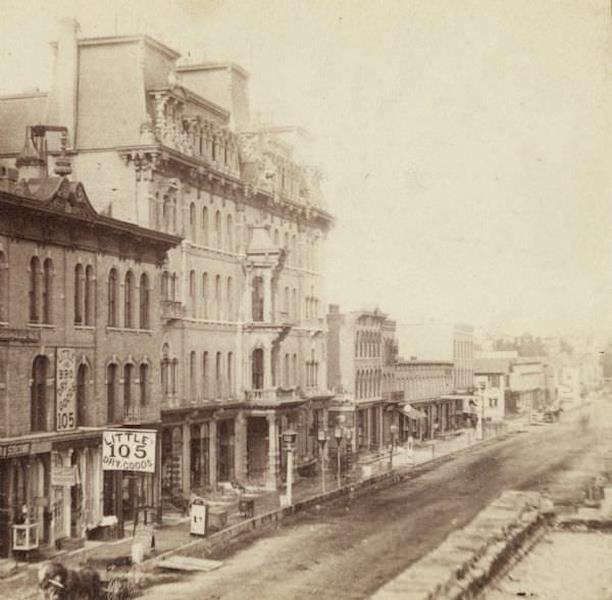
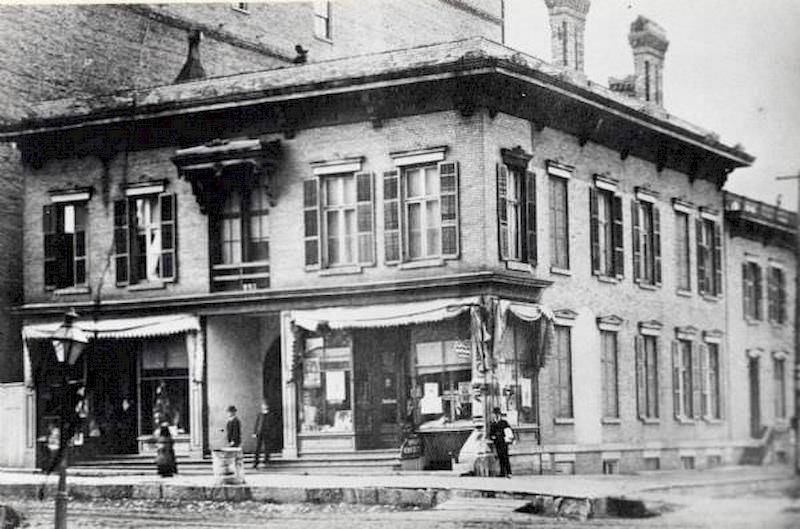
Downtown Milwaukee’s streets in 1882 were still unpaved, packed with horses and buggies, and lined with small businesses competing for attention. West Milwaukee Street, photographed from the Milwaukee Street bridge, showed the Sea Side Oyster House, a merchant tailor, John Griffiths’ Hardware, and advertisements for King’s Book Store and the Daily Recorder all crammed into a single view. It was a busy commercial corridor that reflected the city’s growing appetite for trade and commerce.
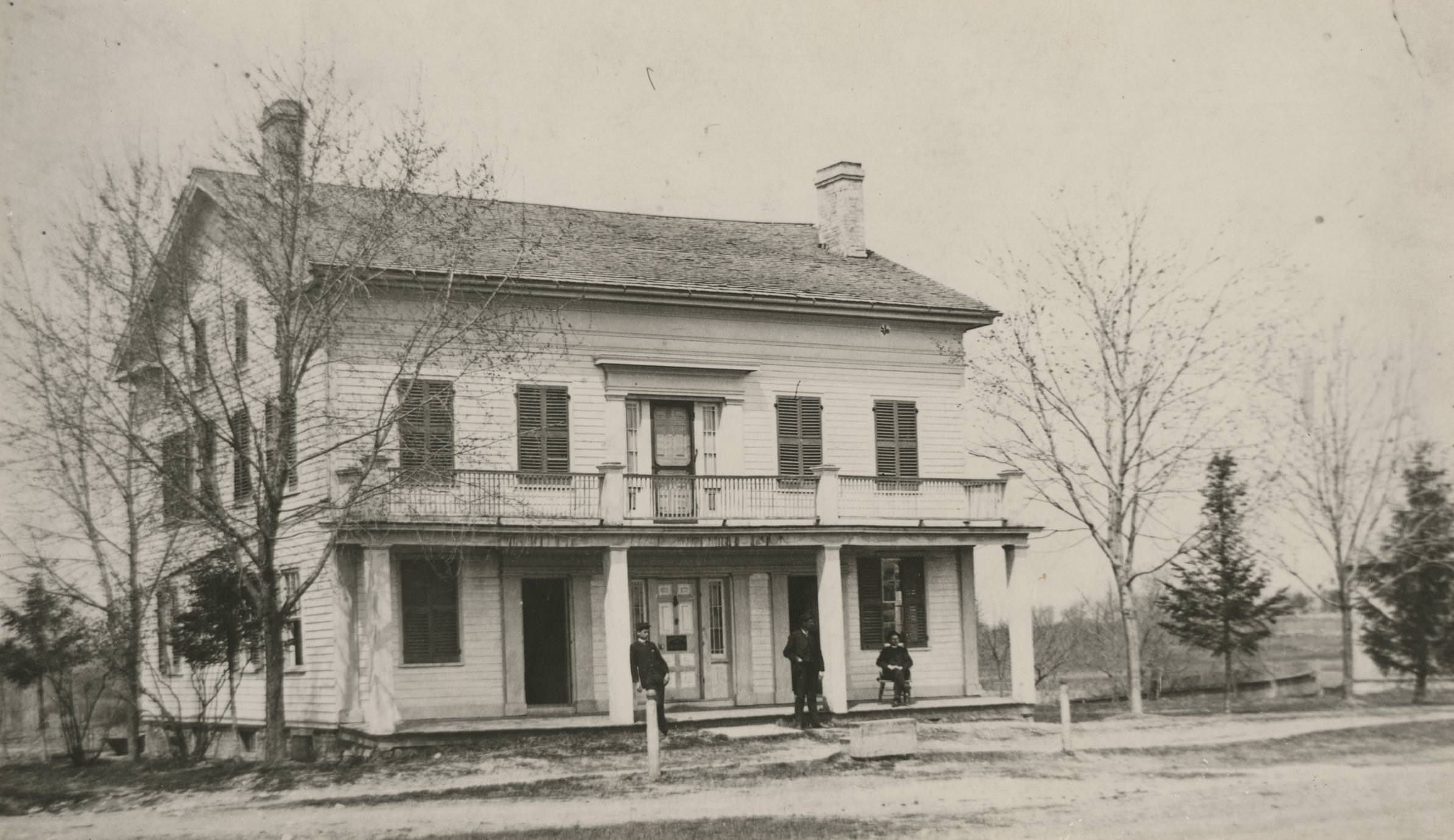
Outside the city, communities like Delafield had their own storied buildings. The Hawks Inn, a two-story Greek Revival structure with shuttered windows and four-sided columns supporting a second-floor porch, originally stood on Genesee Street before being relocated to Wells Street. Three men visible on its porch in this 1884 photograph give a sense of the quiet pace of life in smaller Wisconsin towns during the same period that Milwaukee was surging with industrial energy.
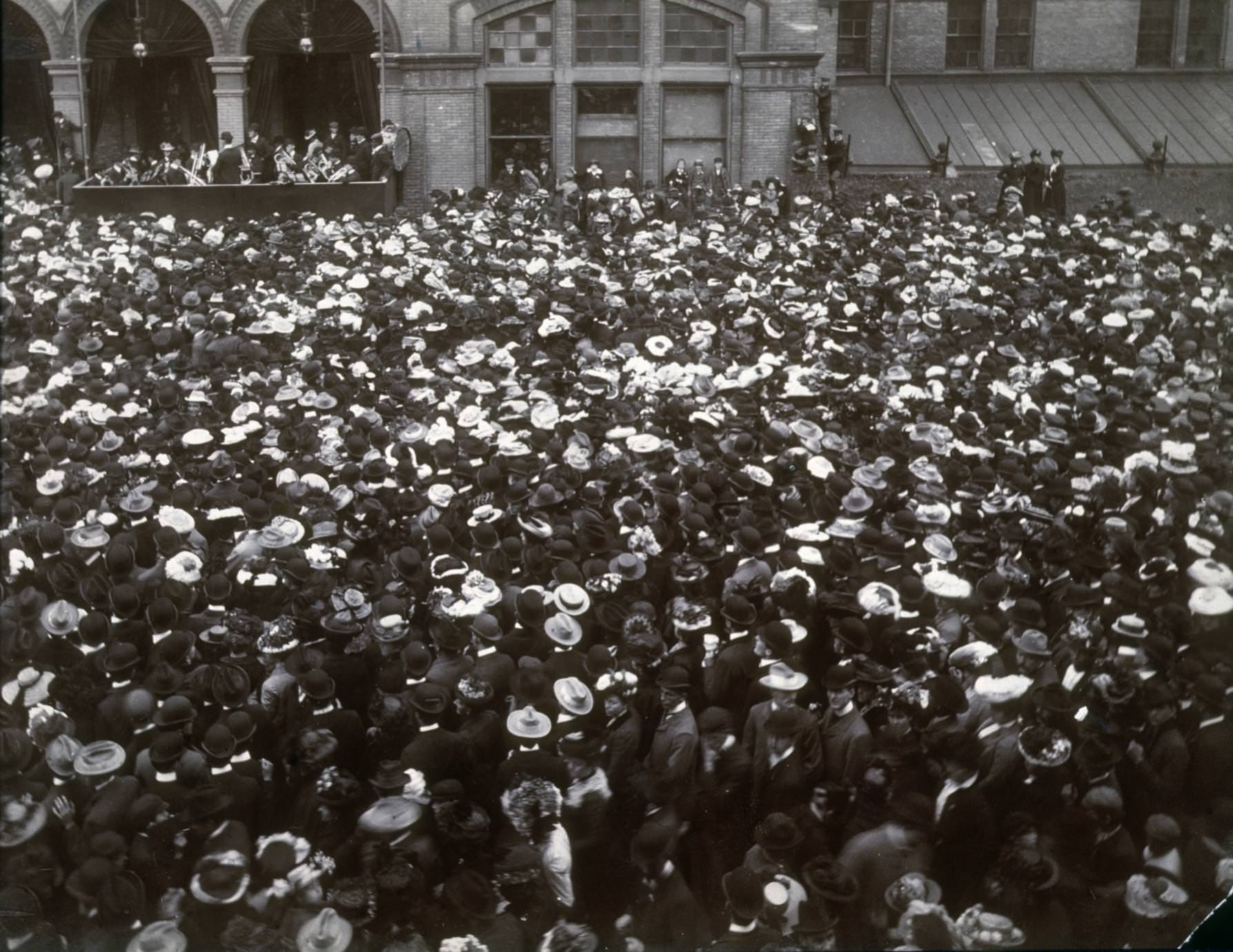
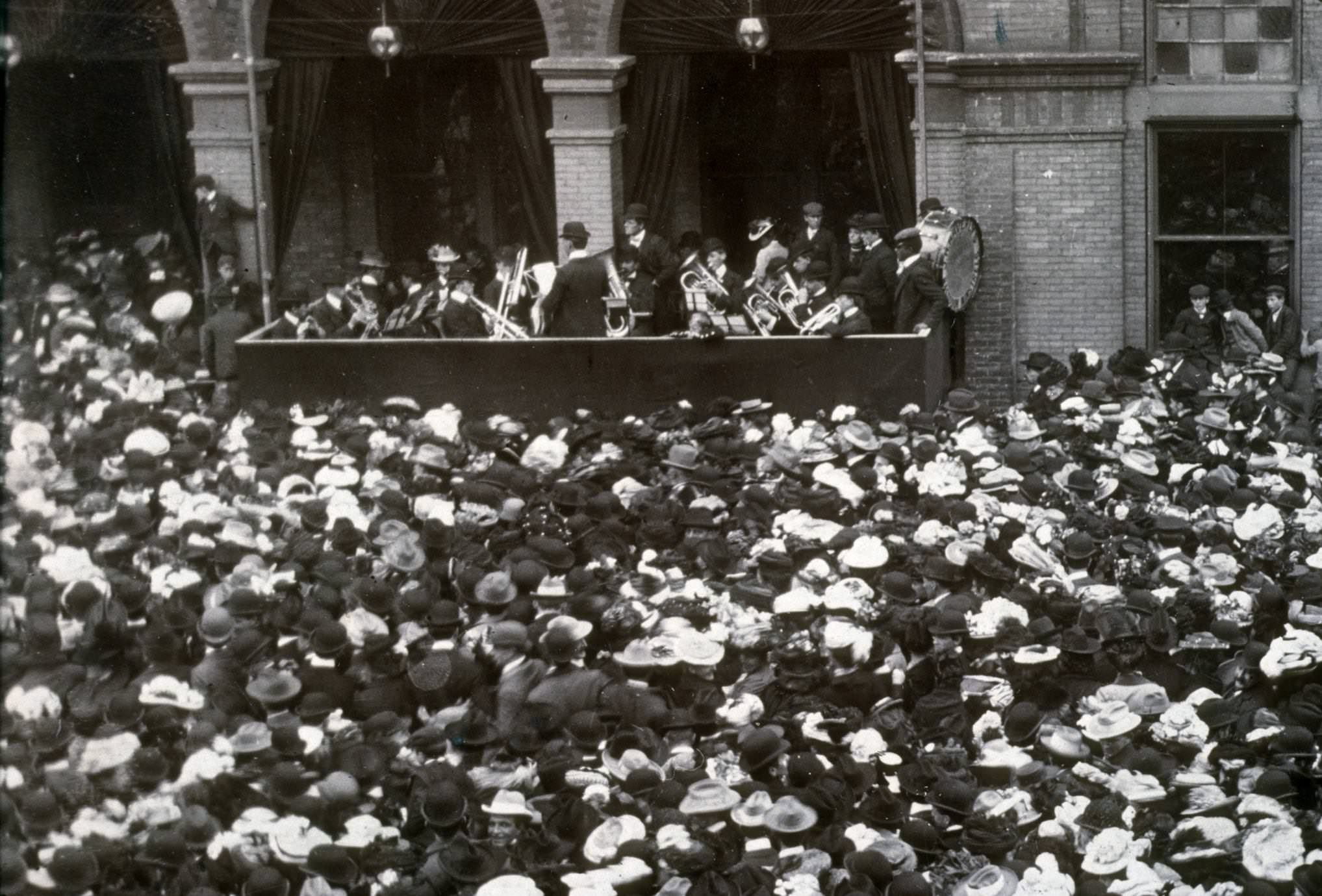
While workers debated wages and hours behind closed doors, Milwaukee’s cultural life played out in full public view. The Sängerfest — a German singing competition — drew enormous crowds to the city’s streets. These events were a product of Milwaukee’s large German immigrant population, which had built a rich musical and social culture in their adopted city.
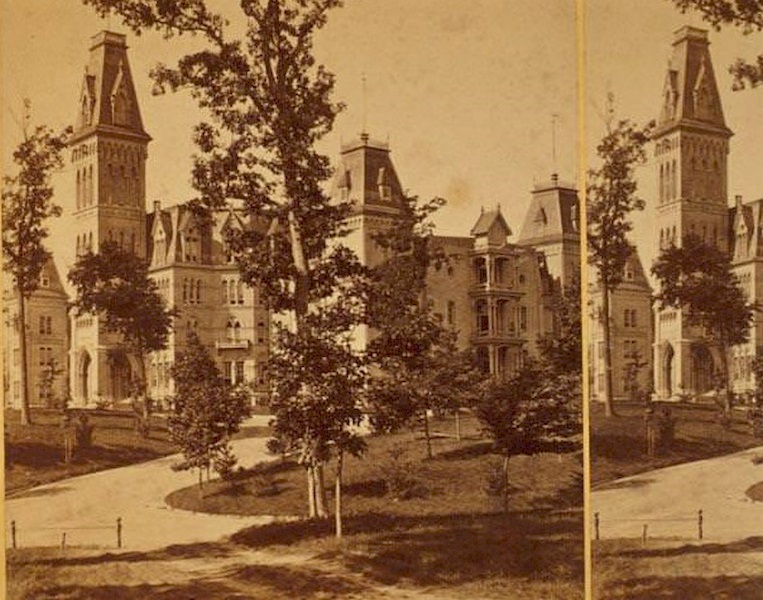
Milwaukee also had a significant connection to the Civil War. The National Soldiers’ Home, established to care for disabled Union veterans, was a major institution in the city. Veterans gathered there regularly, and reunions drew soldiers from across the region. The Iron Brigade — one of the most celebrated Union infantry units, composed heavily of Wisconsin men — held reunions in Milwaukee throughout the 1880s, keeping the memory of the war alive in the city’s public life.
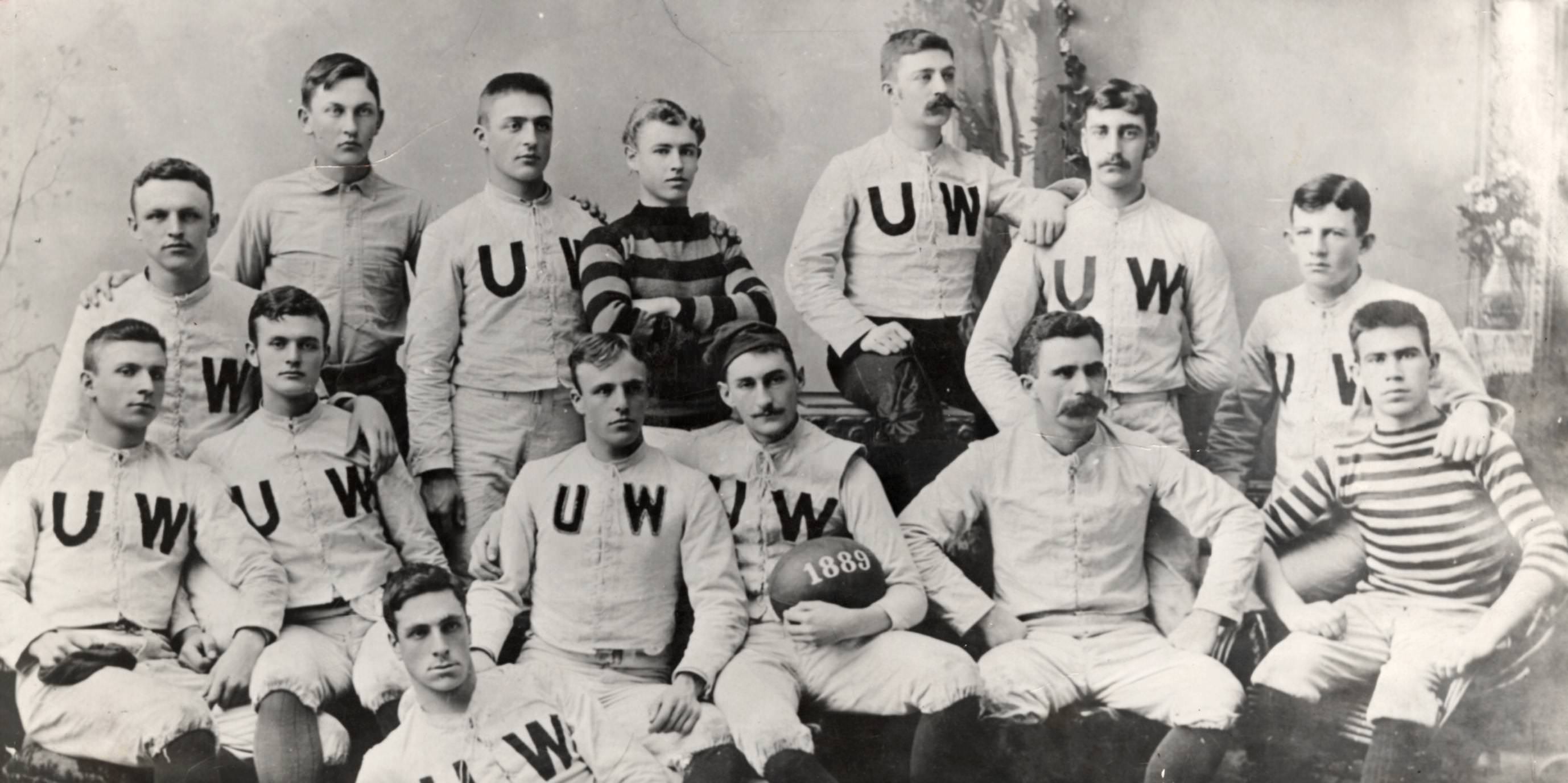
By the end of the decade, organized sports were beginning to take hold at Wisconsin’s universities. The University of Wisconsin football team of 1889 included players like Capt. Mayers, Brumder, and Blackburn — names that give a personal face to an era when college athletics were still in their earliest form. The team photo captures something unpolished and genuine about the sport before it became the institution it is today.
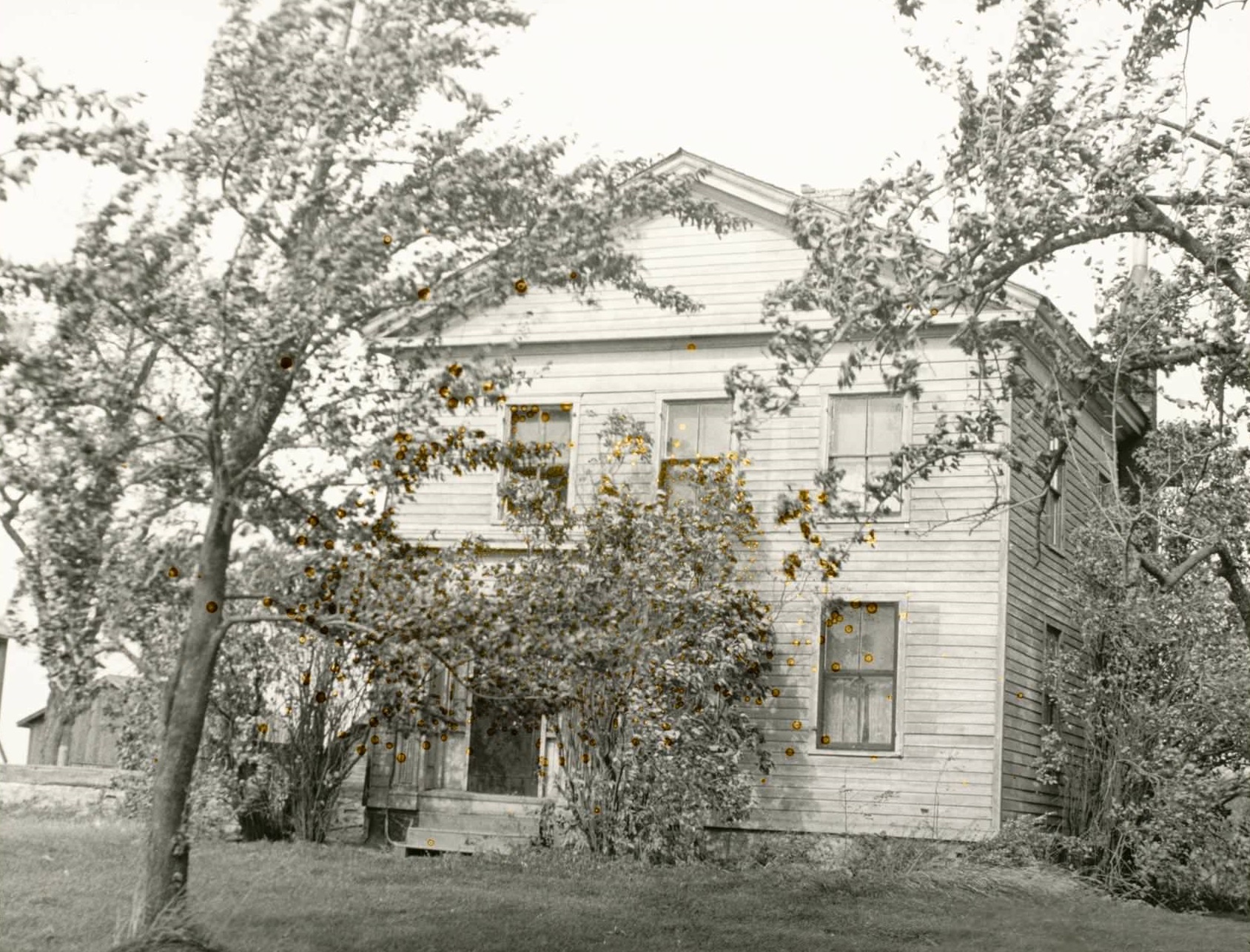
Early postal history in the region stretched back even further. The first post office in Somers Township operated out of the George Willis Tavern, known as Pike. This office also served Southport until 1840. It sat at the intersection of Green Bay Road and 60th Street, and a mail carrier known as ‘Uncle Billy Smith’ rode the Green Bay Trail on horseback to deliver mail between Southport and Milwaukee.
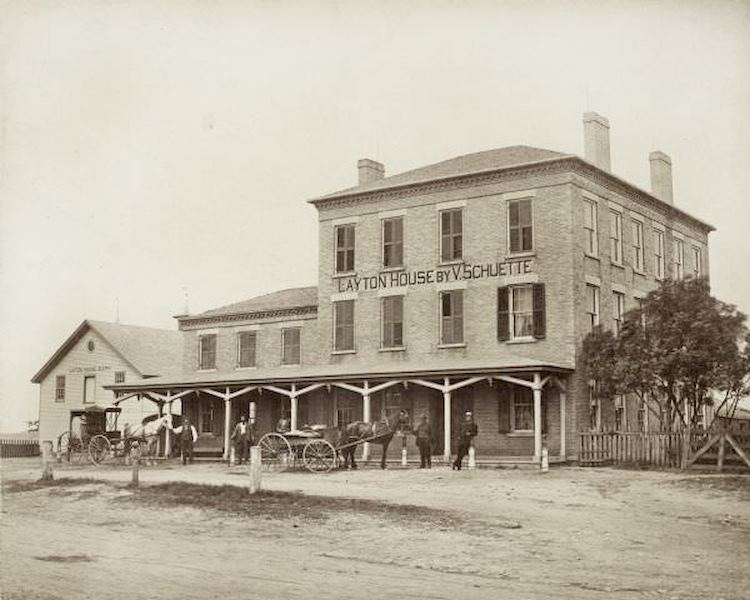
Forest Home Avenue’s hotel was one of Milwaukee’s older structures, designed in the Federal style by architect John Francis Rague and built in 1849 for John Layton and his son Frederick. It sat on what had originally been a plank road running between Milwaukee and Muskego. Victor Schuette operated it from roughly 1875 to 1885. By the time this photograph was taken in 1880, five men with horses and carriages stood outside the building, marking a scene of everyday commerce on the outskirts of the city.
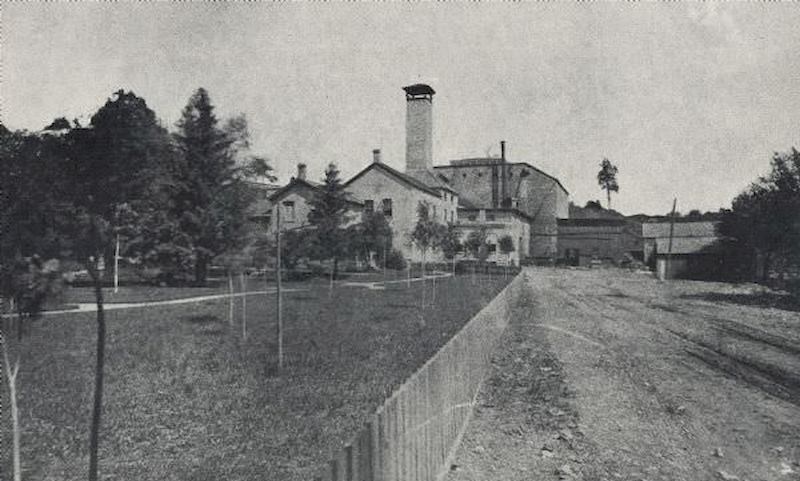
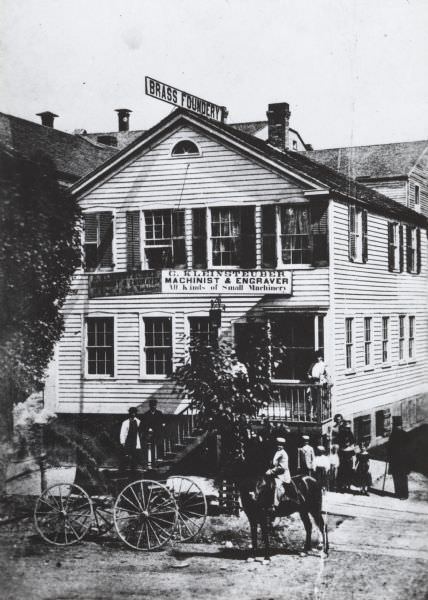
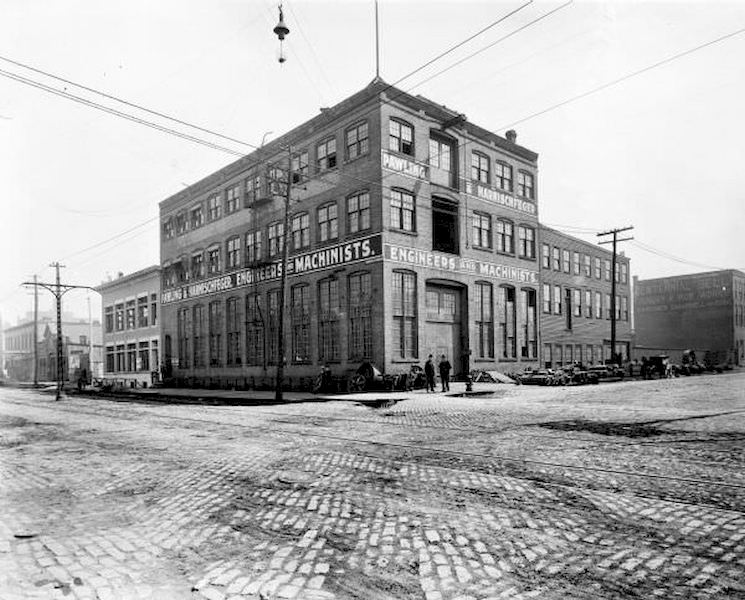
The Gettelman Brewery had its roots in 1856, when George Schweickhart arrived in Milwaukee and purchased three acres along what was then the Watertown Plank Road. He put up the first structure on the site, establishing what would grow into one of the city’s well-known brewing operations. Just down the road, other industries were equally busy. The Kleinsteuber Machine Shop represented the city’s manufacturing backbone — the kind of workshop that produced the tools and parts keeping Milwaukee’s larger industries running.
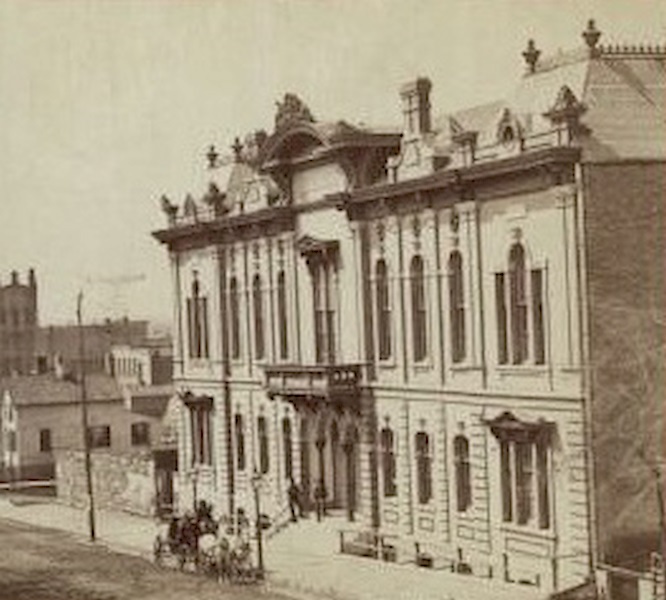
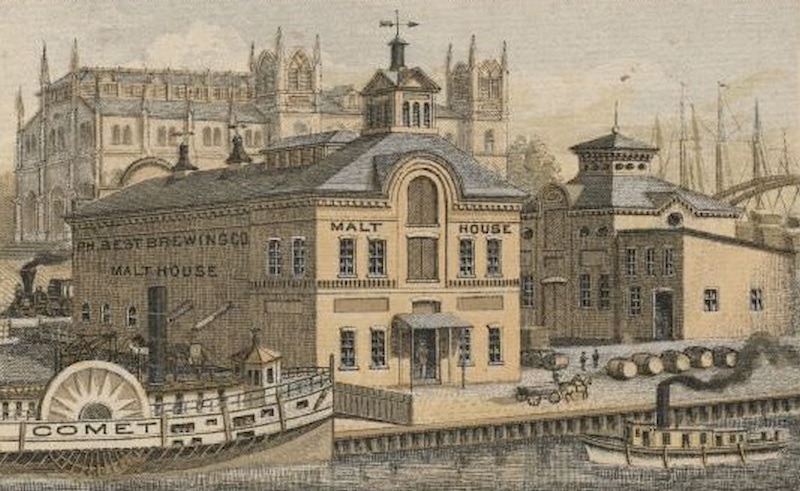
Milwaukee’s music hall was a center of cultural life in the city. Horse and carriage teams parked at its entrance in 1880 suggest regular patronage from residents across different neighborhoods. Nearby, the P.H. Best Brewing Company — which would later become Pabst Brewing Company — was already one of the city’s dominant industrial enterprises.
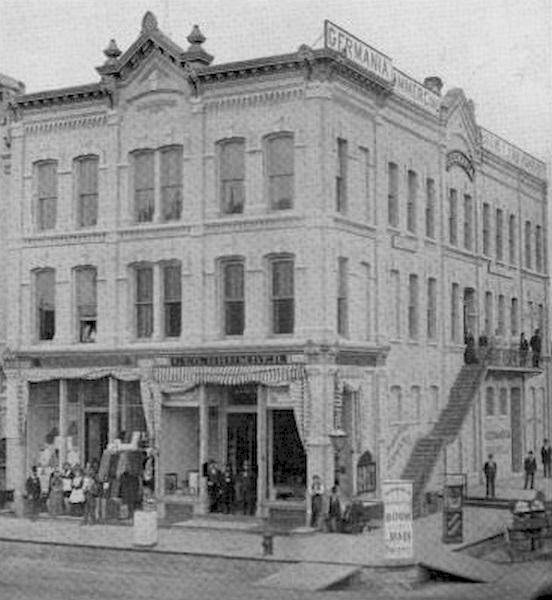
The Brumder Building was more than just a commercial property — it was a family home and a publishing hub. George Brumder and his family lived on the second floor. A sign along the top of the building read ‘Germania Commercial, Book, and Job Printing.’ Brumder himself is pictured at right in the ground-level doorway, while his wife Henriette stands at the top of the side stairway. Two signboards sit on the wooden sidewalk near the corner, and a small carriage rests at the lower right. It is a rare photograph that captures a business and its owners in the same frame.
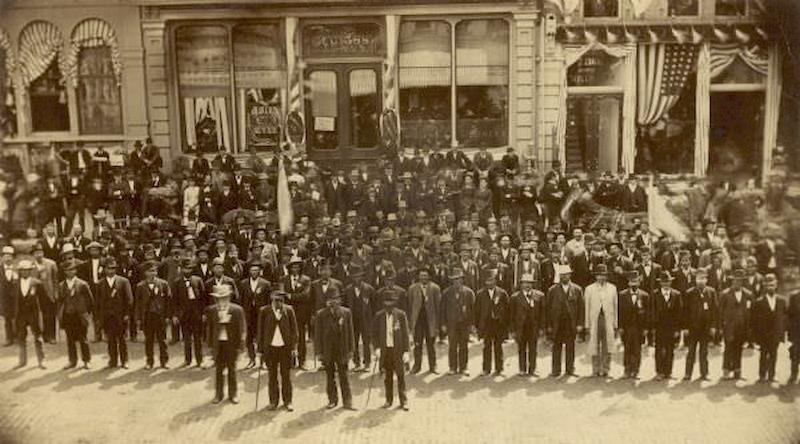
Civil War veterans remained a visible and honored presence in Milwaukee throughout the 1880s. An elevated portrait of the First Wisconsin Cavalry shows rows of veterans standing in the street, with horses and wagons behind them and a crowd of onlookers on the storefronts’ sidewalks, the buildings decorated in bunting and flags. These gatherings were common in the decade following the war, as veterans organized politically and socially across the country.
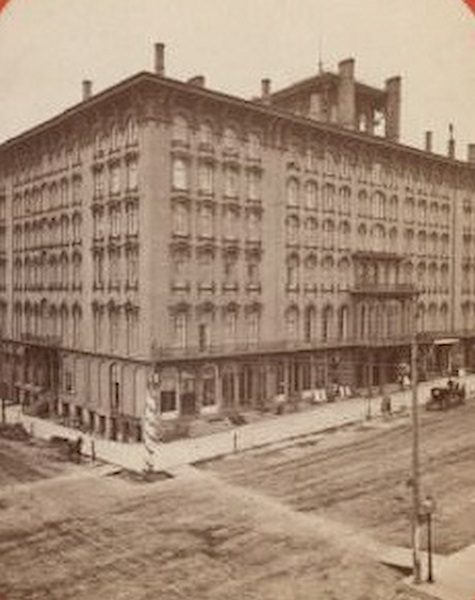
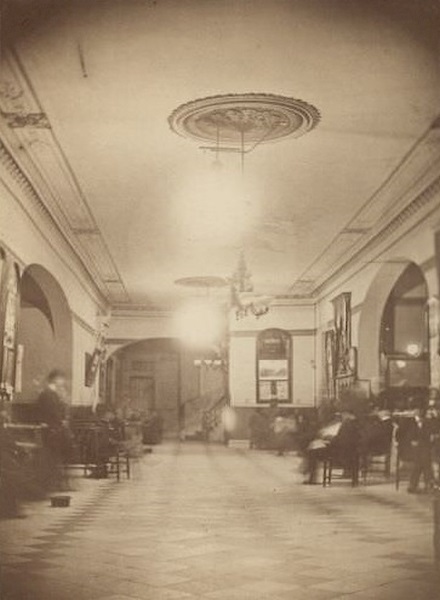
The Newhall House rotunda was one of Milwaukee’s most photographed interior spaces in the early 1880s. Its grand design reflected the ambitions of the city’s hotel industry, which catered to the business travelers and merchants arriving in growing numbers. That same year, the Red Star Yeast and Products Company was photographed — a sign of Milwaukee’s diversifying industrial base beyond brewing and meatpacking.
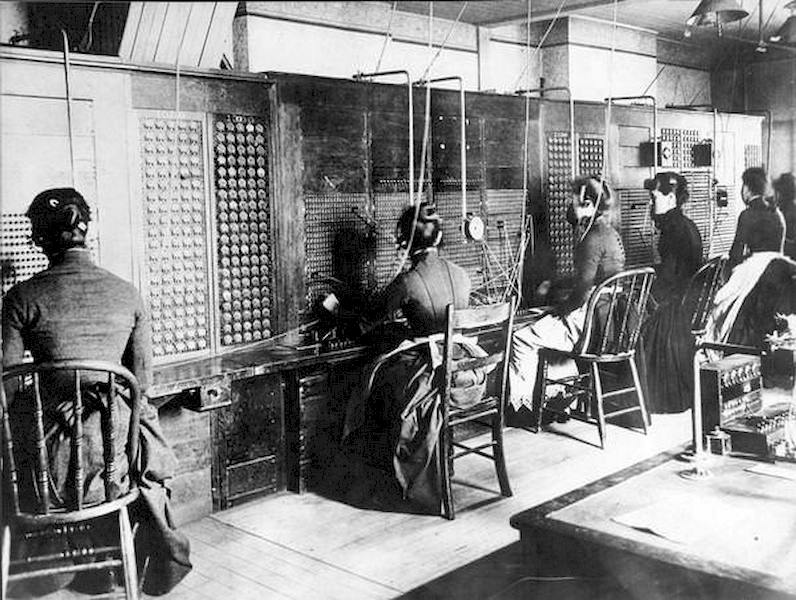
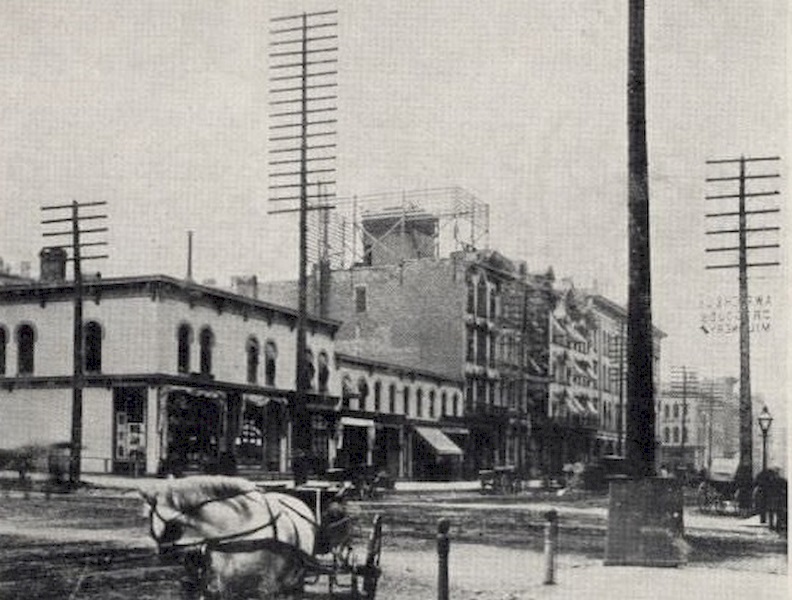
Technology was also arriving in Milwaukee. By 1883, the city’s sole telephone exchange was staffed entirely by women switchboard operators — a common arrangement at the time, as telephone companies across the country found women well-suited to the patience and precision the job required. The Telephone Building on Broadway Street stood as a physical marker of the city’s connection to the new communications network spreading across the country.
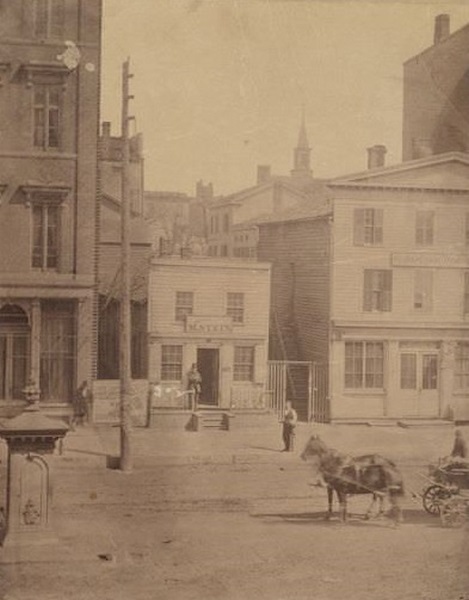
The Matthias Stein Residence, photographed in 1884, was identified as the oldest house in Milwaukee at the time. Stein had built it in January 1838 — decades before most of the surrounding buildings existed. By 1884, the two-story home stood flanked by much taller buildings on either side, separated by fenced alleyways. It was a rare surviving piece of Milwaukee’s earliest built history.
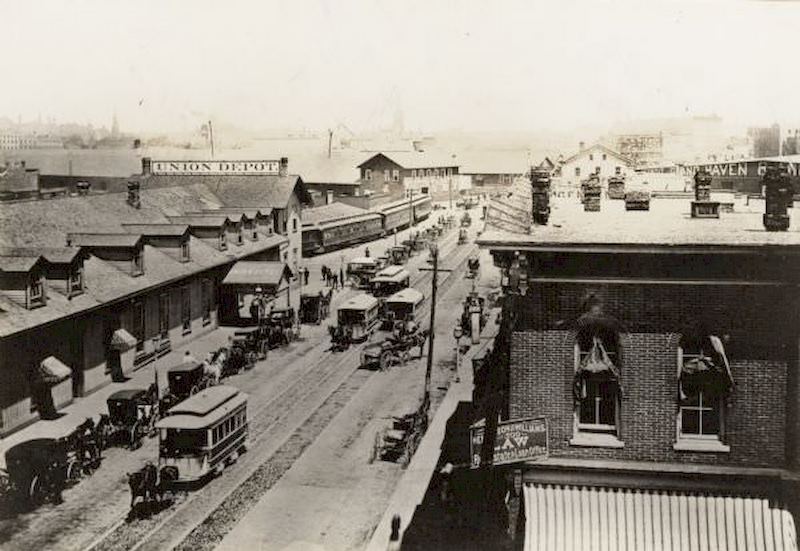
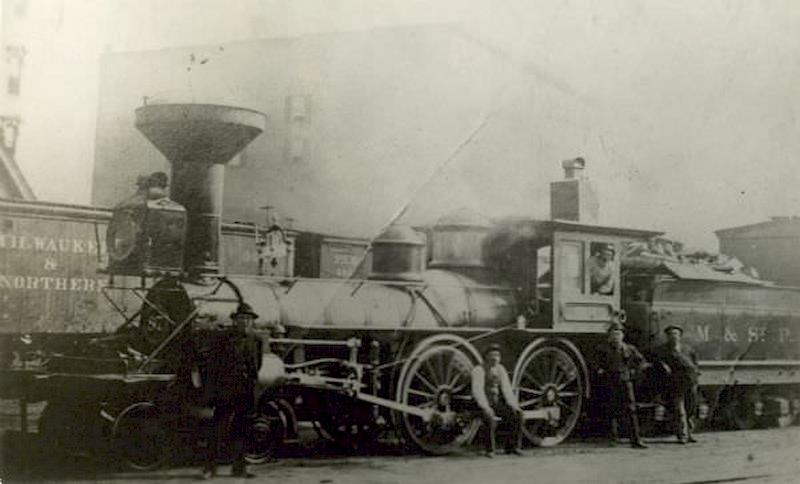
Rail travel was central to Milwaukee’s identity in the 1880s. The Union Depot served three major lines: the Chicago, Milwaukee and St. Paul Railway, the Wisconsin Central, and the Milwaukee Northern Railways. A photograph of Chicago, Milwaukee and St. Paul Railway engine #87 — built by the Schenectady Locomotive Works and captured near Cherry Street — shows workers posing proudly beside the machine that kept the regional economy moving.
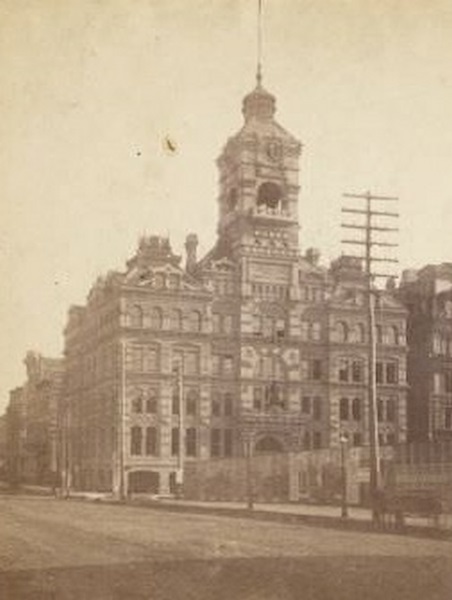
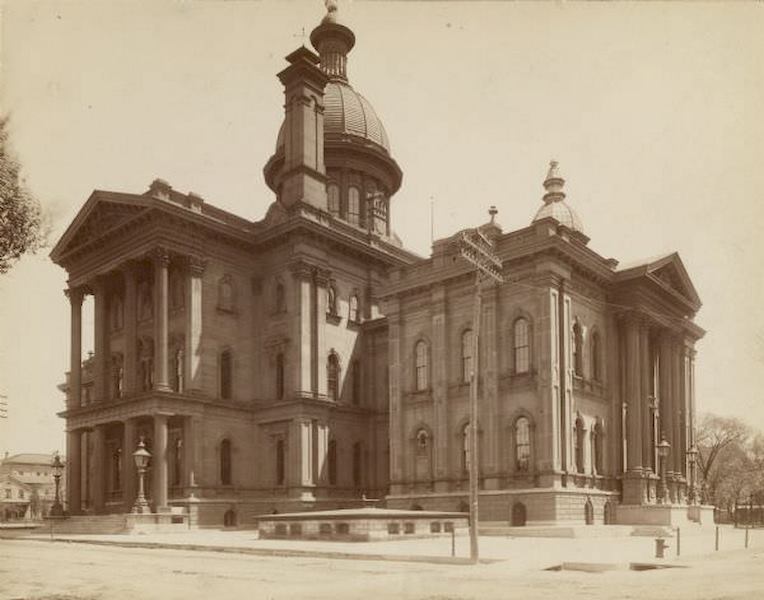
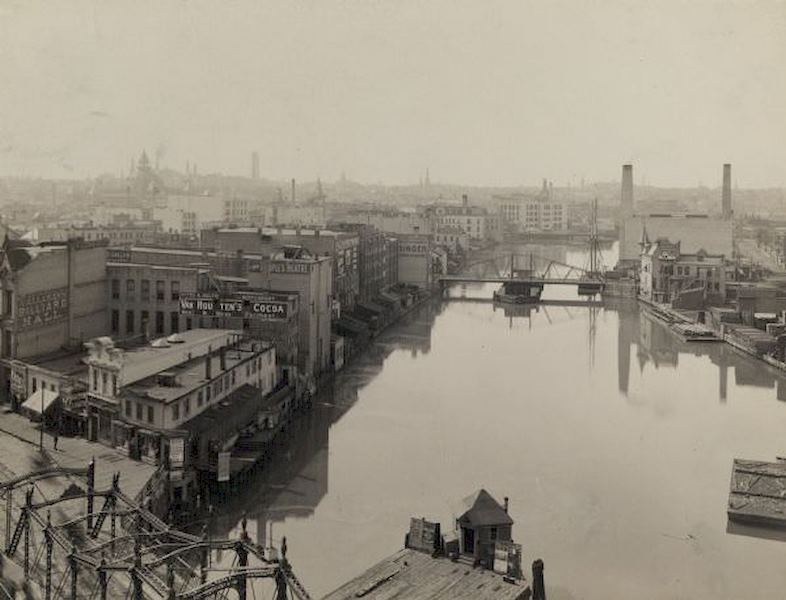
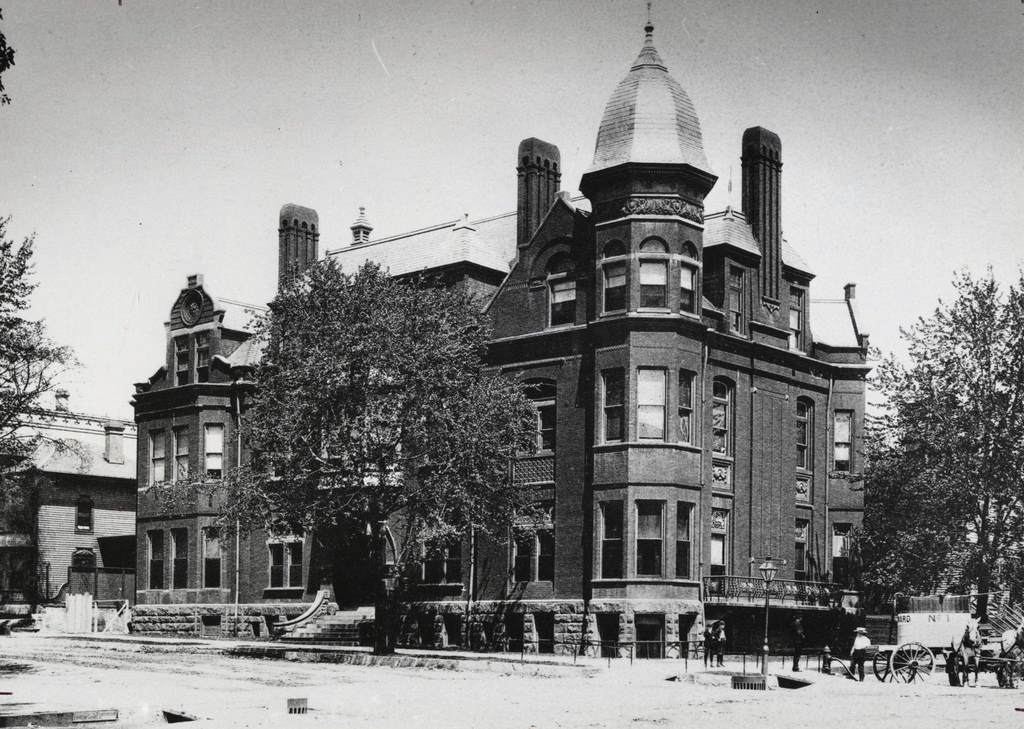
Milwaukee’s commercial and civic institutions were also expanding in 1885. The Chamber of Commerce occupied a prominent building at Broad and Michigan Streets, flanked by a telephone pole and a large fence out front. The Milwaukee County Court House served as the center of local government. Along the river, signs for Callahan’s Billiard Hall, Van Houtten’s Cocoa, Singer sewing machines, and a local theatre covered the building facades visible from the Wisconsin Avenue Bridge.
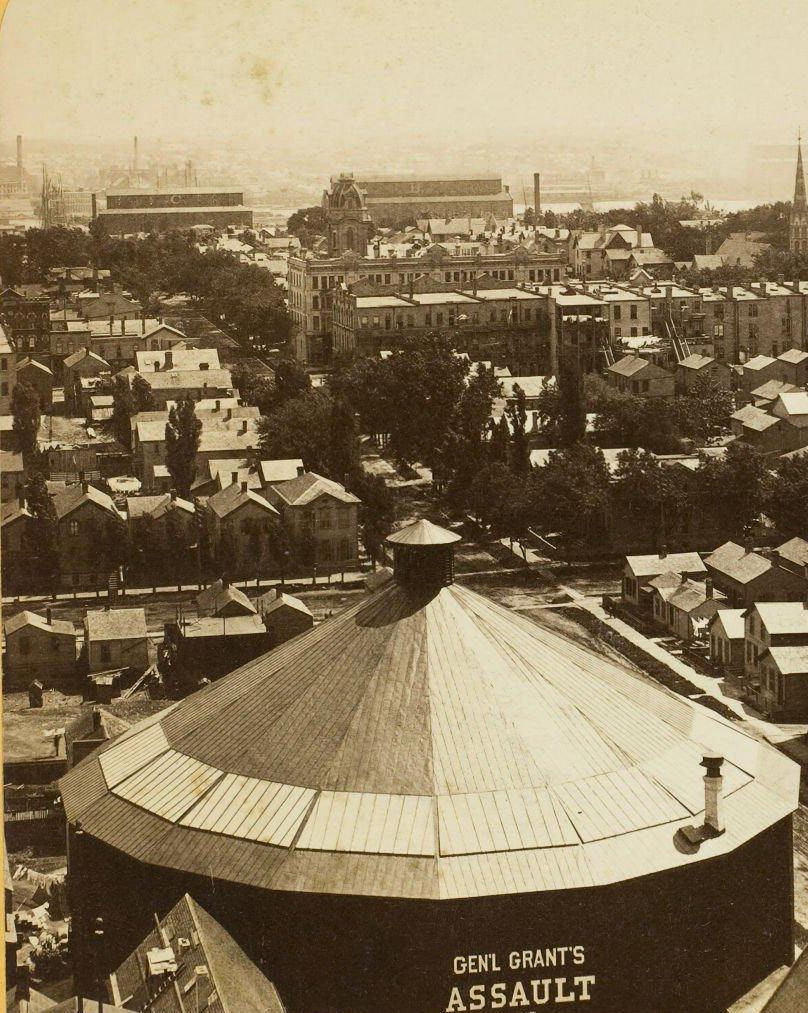
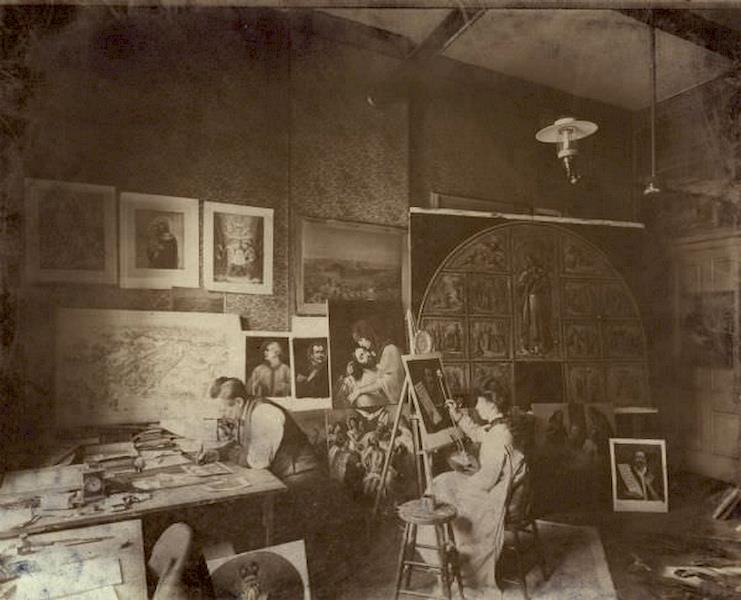
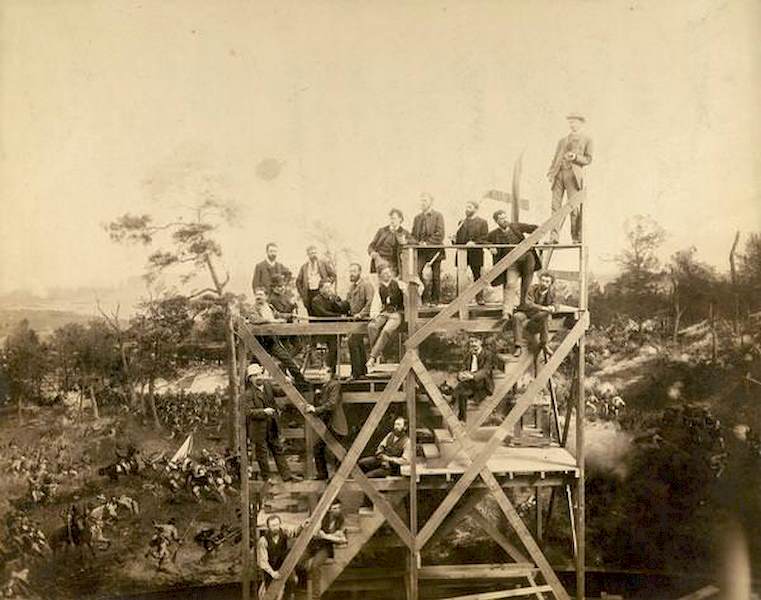
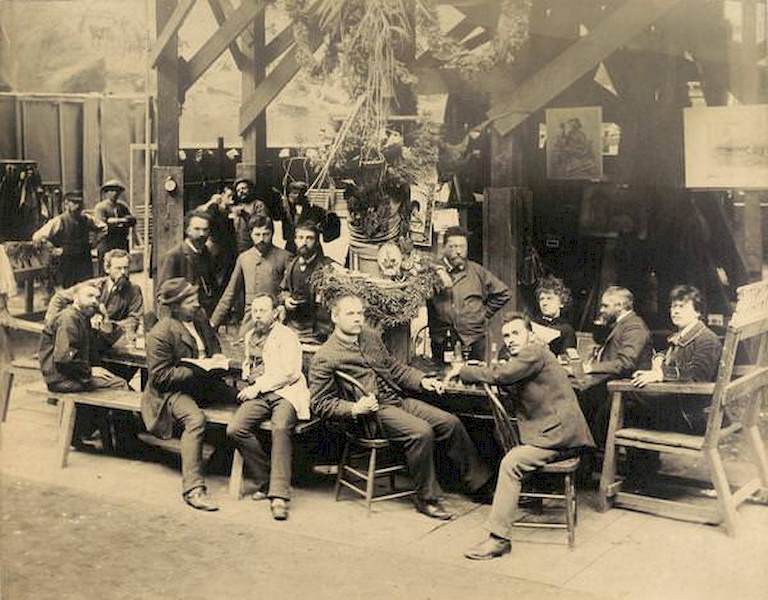
Milwaukee was also home to a remarkable group of German panorama painters who worked for the American Panorama Company. In 1885 and 1886, they completed major large-scale cyclorama paintings in their Milwaukee studio. One of their most significant works was The Atlanta Cyclorama — a painting depicting a Civil War battle scene. A group portrait from 1886 shows the artists on scaffolding inside the studio, with the cyclorama as a backdrop. The painters included figures specialists, landscape artists, and a supervisor, all named and documented in the photograph’s record.
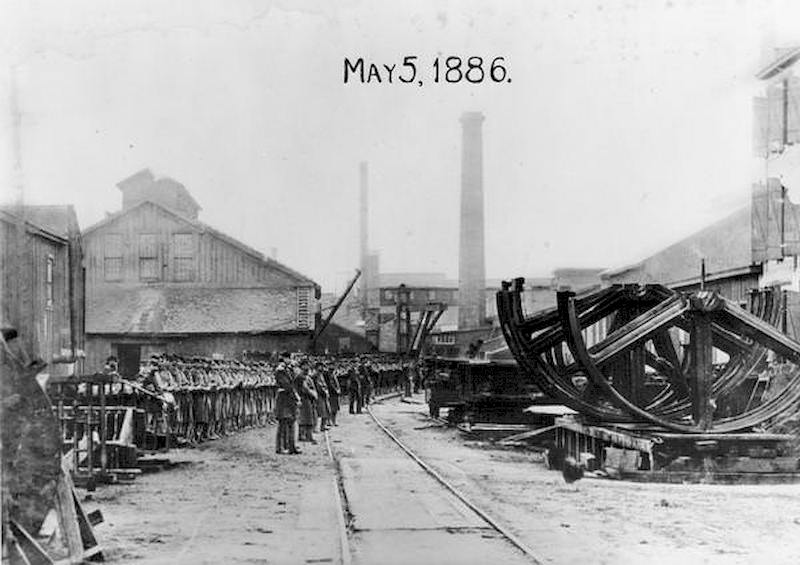
The spring of 1886 brought the most dramatic events in Milwaukee’s 19th-century labor history. The Knights of Labor had organized half the city’s blue-collar workforce by that point. When employers refused to move to an eight-hour workday at existing wages, workers walked out. In early May, strikes and lockouts brought the city to a standstill. On May 4, one thousand strikers marched on the Milwaukee Iron Company to force a shutdown. Governor Jeremiah Rusk called out the state militia to protect the mill. The militia opened fire on the striking workers, killing several of them. The killings drew condemnation across the city and accelerated the formation of the People’s Party of Wisconsin, which went on to win several seats in the 1886 elections, including a congressional seat.
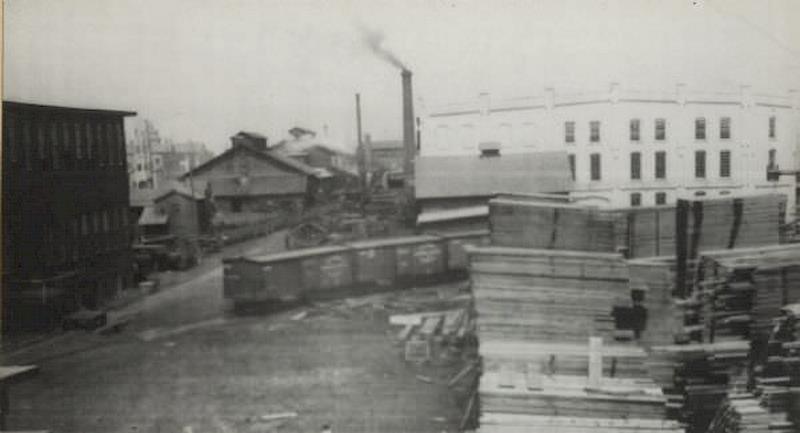
While workers and militiamen faced each other at the factory gates, a different kind of Milwaukee was taking shape a few blocks away. The Schlitz Palm Garden opened on July 3, 1886, on the east side of N. 3rd Street, south of W. Wisconsin Avenue. It quickly became one of the most popular and lavishly decorated entertainment spaces in the city, catering to a public that wanted comfort and spectacle after long days of labor.
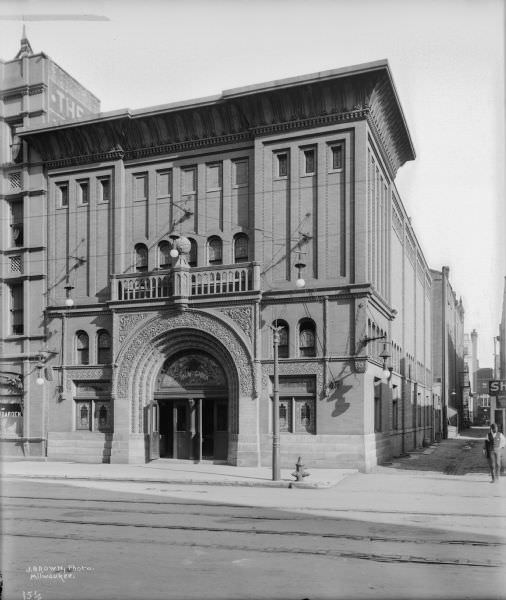
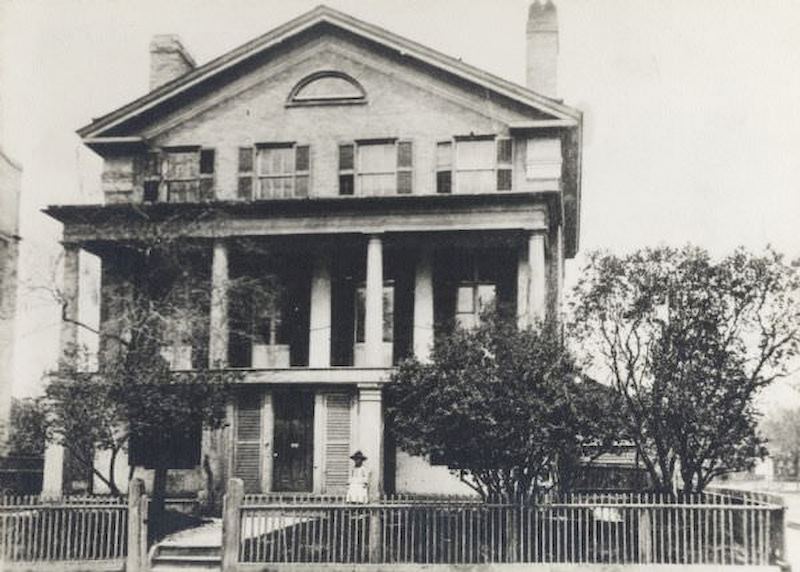
By 1887, Milwaukee’s railroads operated out of polished offices. The Chicago, Milwaukee, and St. Paul Railway Company maintained its general offices in the Mitchell Building. The building was one of the finest commercial structures in the city, a symbol of the railroad industry’s enormous wealth and reach. That same year, older residential landmarks were being documented before they disappeared. The Lemuel Hull House, built in 1840 by mason William Singer, featured a columned porch across its first two levels and four windows lining the upper facade. The Byron Kilbourn House at the northwest corner of Grand Avenue and 4th Street had been built in 1854 at a cost of $18,000, had storefronts added in 1868, and was razed in 1886.
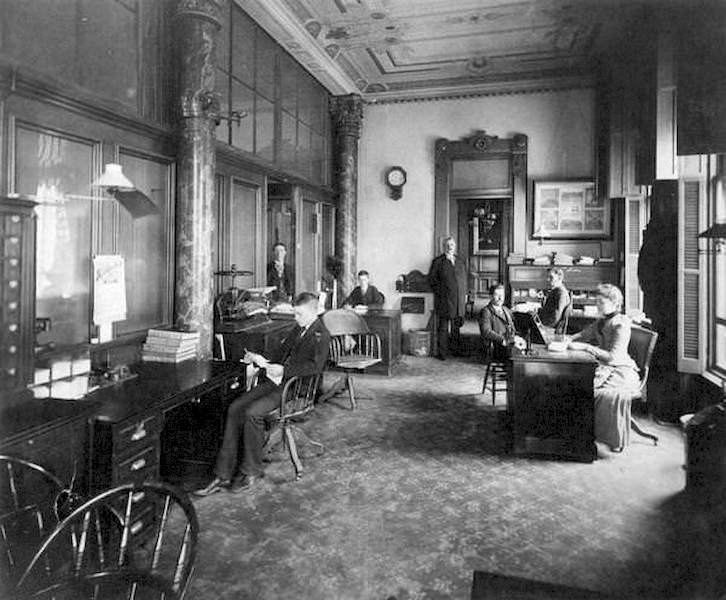
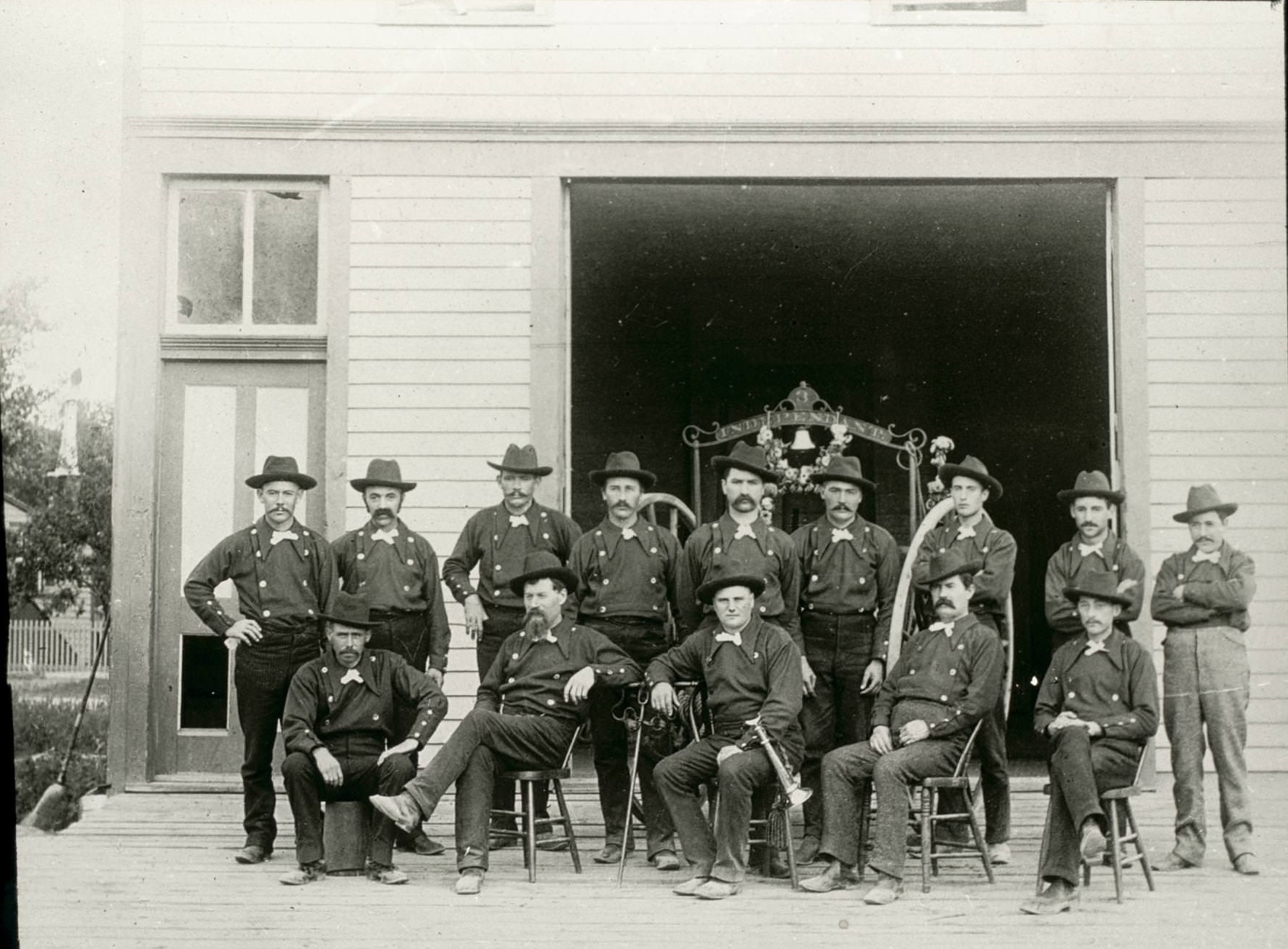
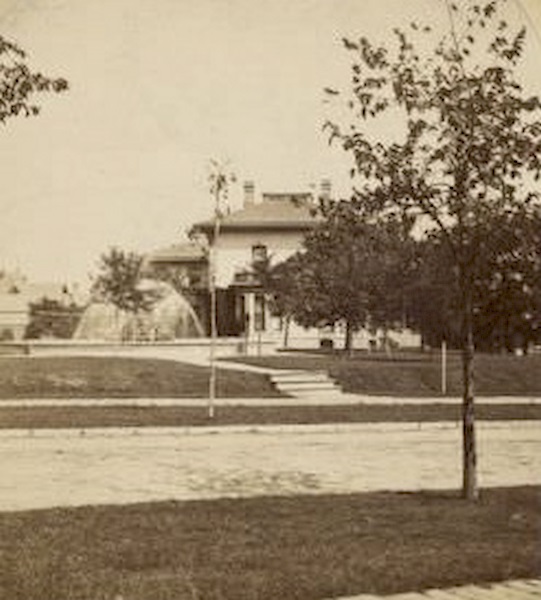
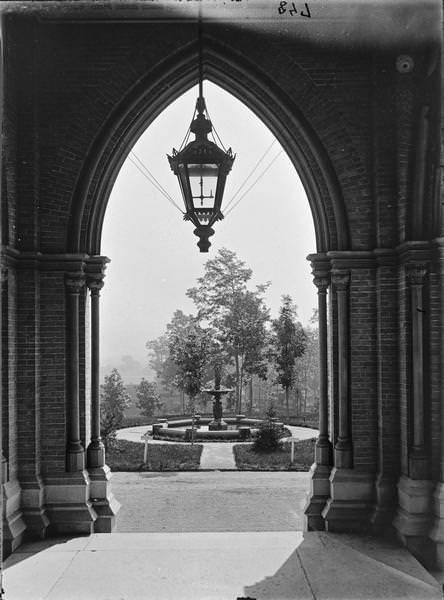
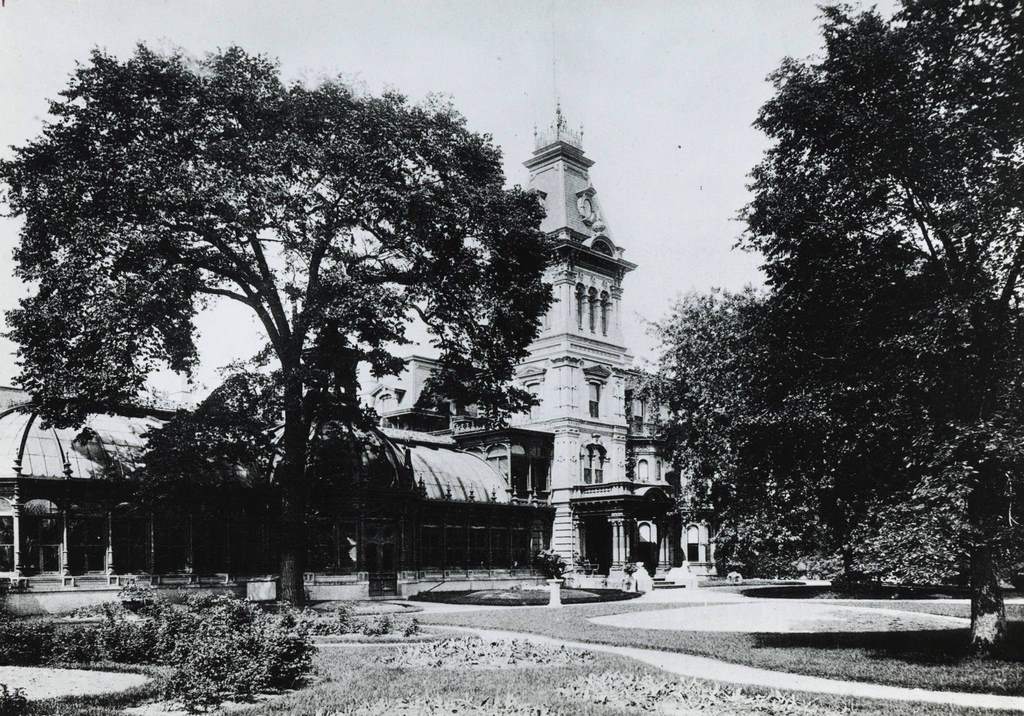
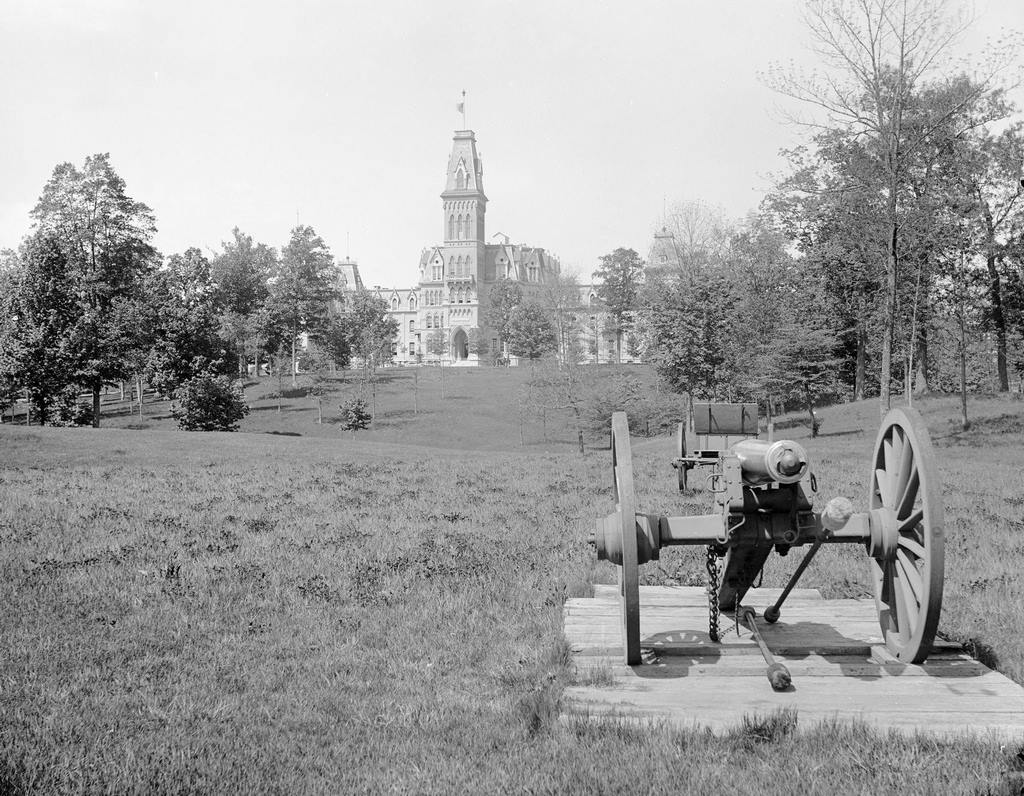
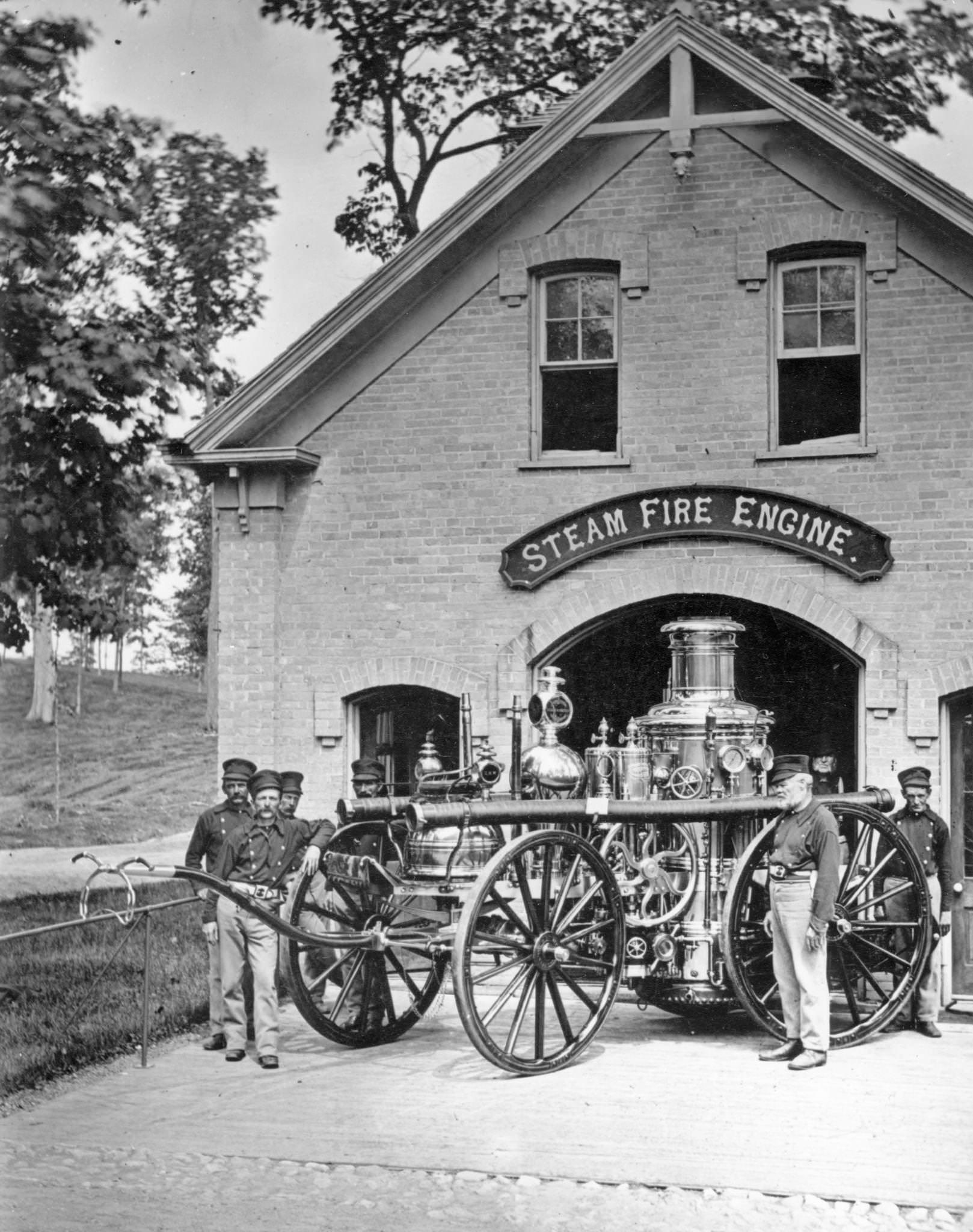
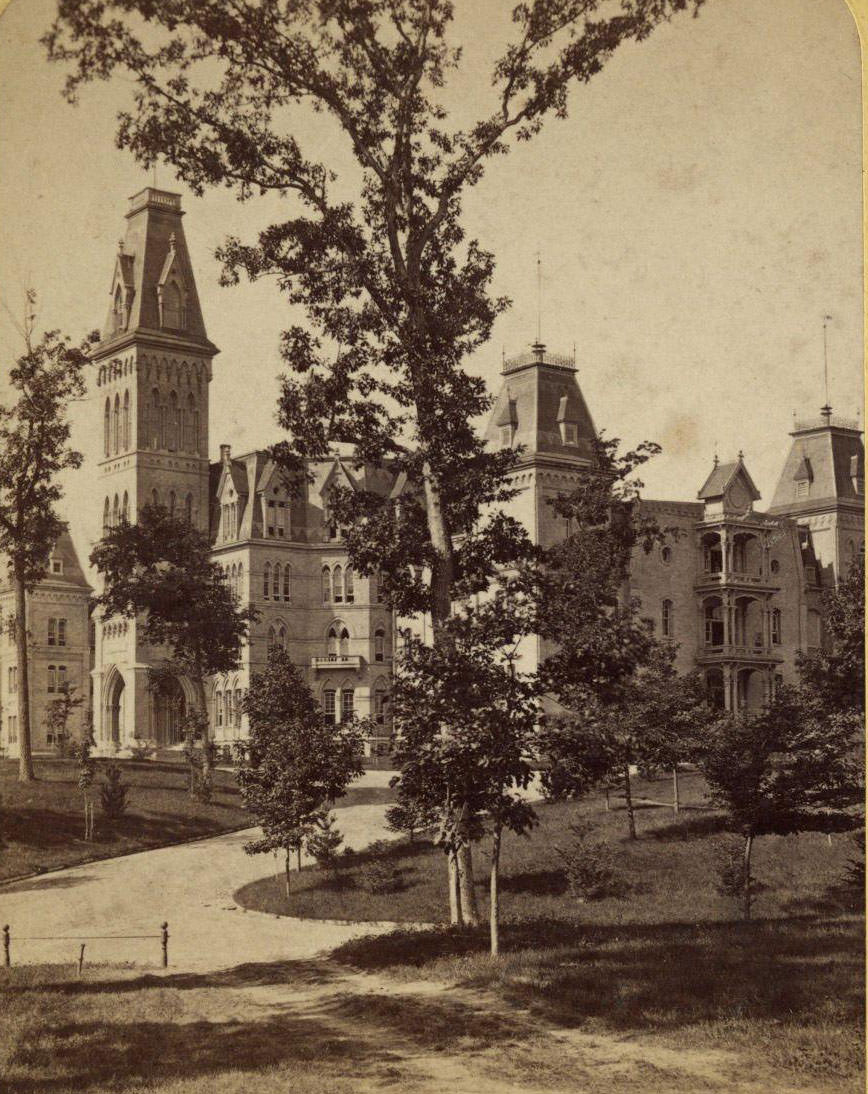
The National Soldiers’ Home remained a central institution in Milwaukee throughout 1887. Veterans of multiple wars lived and gathered there, and the grounds included a fountain and tree-lined entrance framed by a decorative arch with a hanging lamp. A fire station on the property was staffed by firefighters who posed with their steam fire engine for a photograph taken on May 19, 1887.
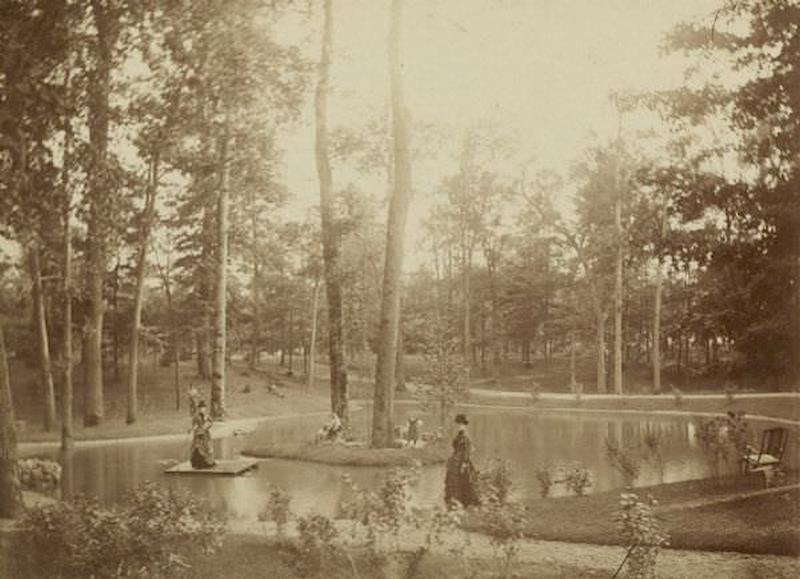
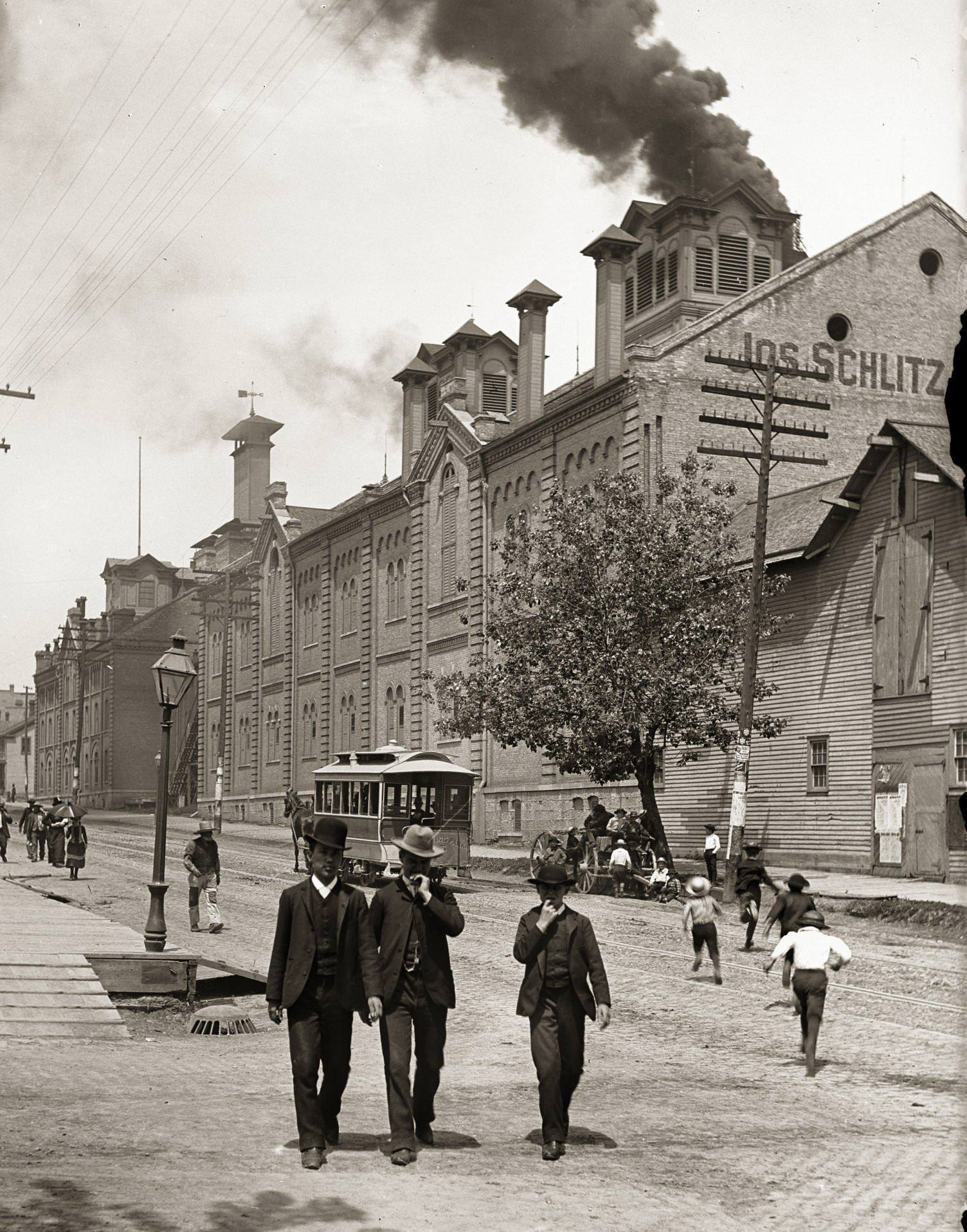
The country estates of Milwaukee’s wealthy provided a sharp contrast to the factory floors and crowded tenements of the working class. The pond at Bracken Brae, the country home of John Johnston, captured in 1888, reflected a life of leisure entirely removed from the labor conflicts playing out elsewhere in the city. That same year, the exterior of the Schlitz Brewing Company was photographed, with two men and a boy in suits and hats standing in the foreground — the face of a prosperous industry.
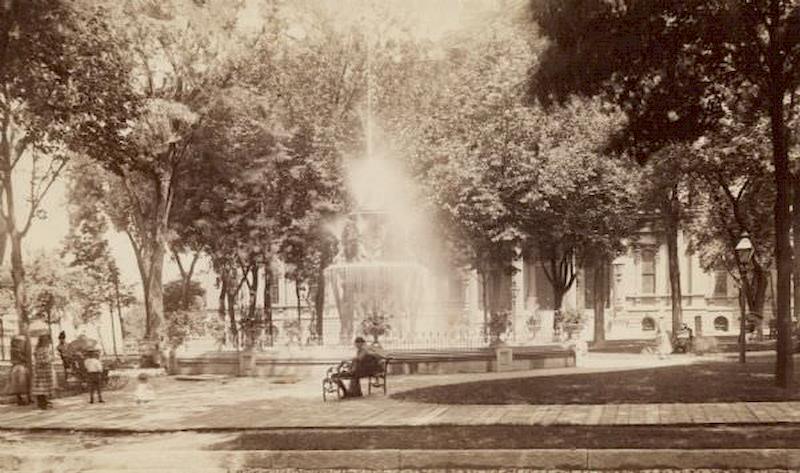
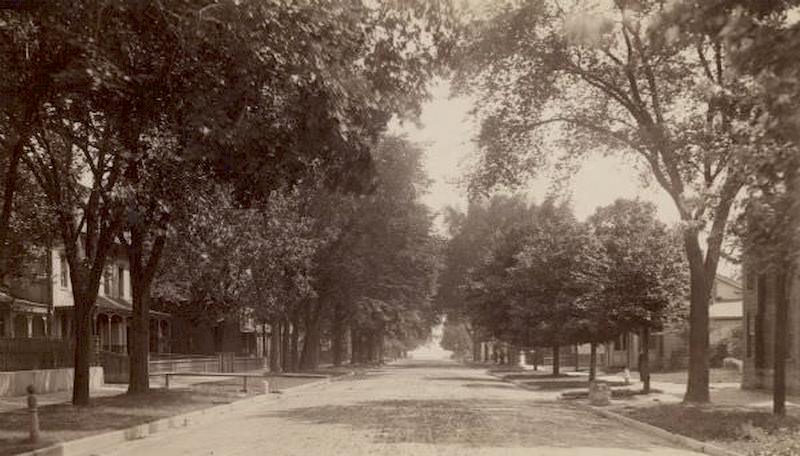
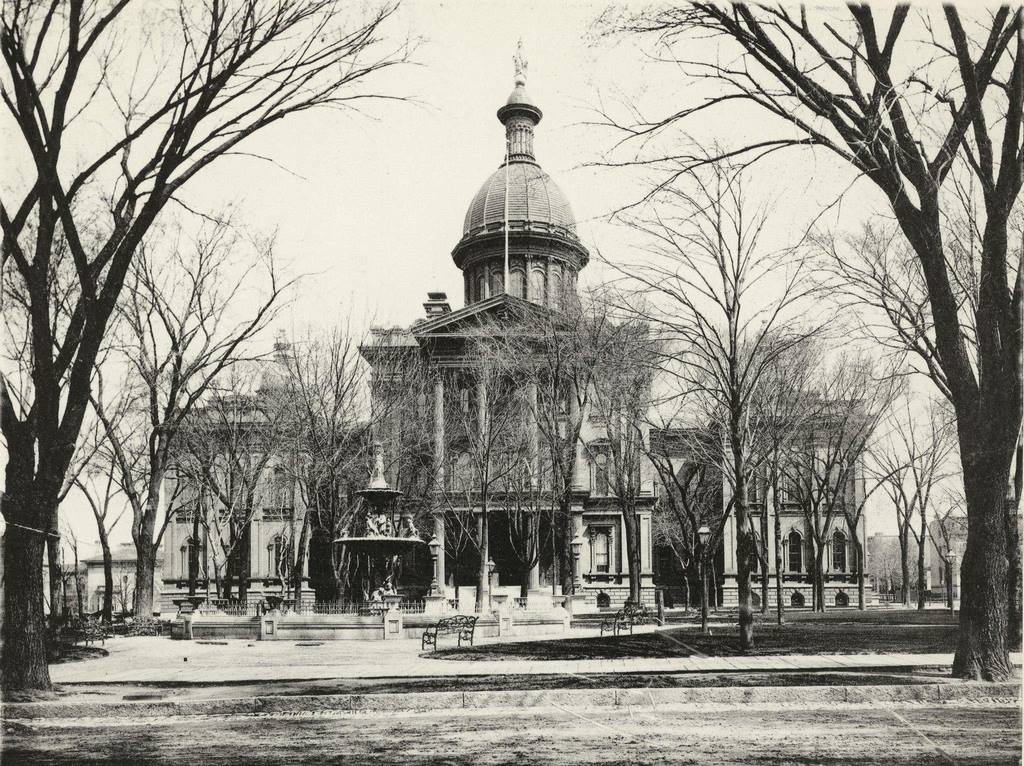
By 1889, Milwaukee’s public spaces had taken on a more settled appearance. Court House Square featured a central fountain with trees along the border, a man sitting on a bench, and children nearby — the courthouse visible in the background. Mason Street, looking toward Lake Michigan, showed a tree-lined dirt road with houses on either side, a man in a hat standing with a little girl on the sidewalk. The city was still a place of unpaved roads and wooden sidewalks, even as its institutions grew in size and permanence.
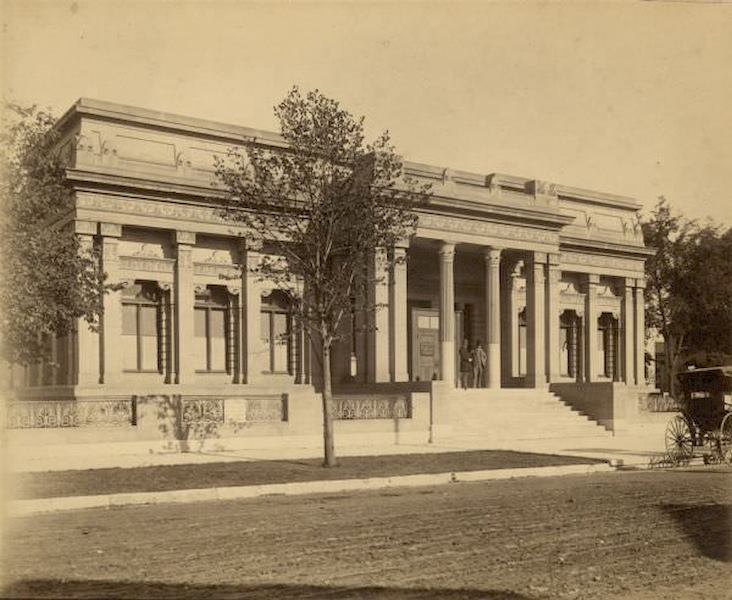
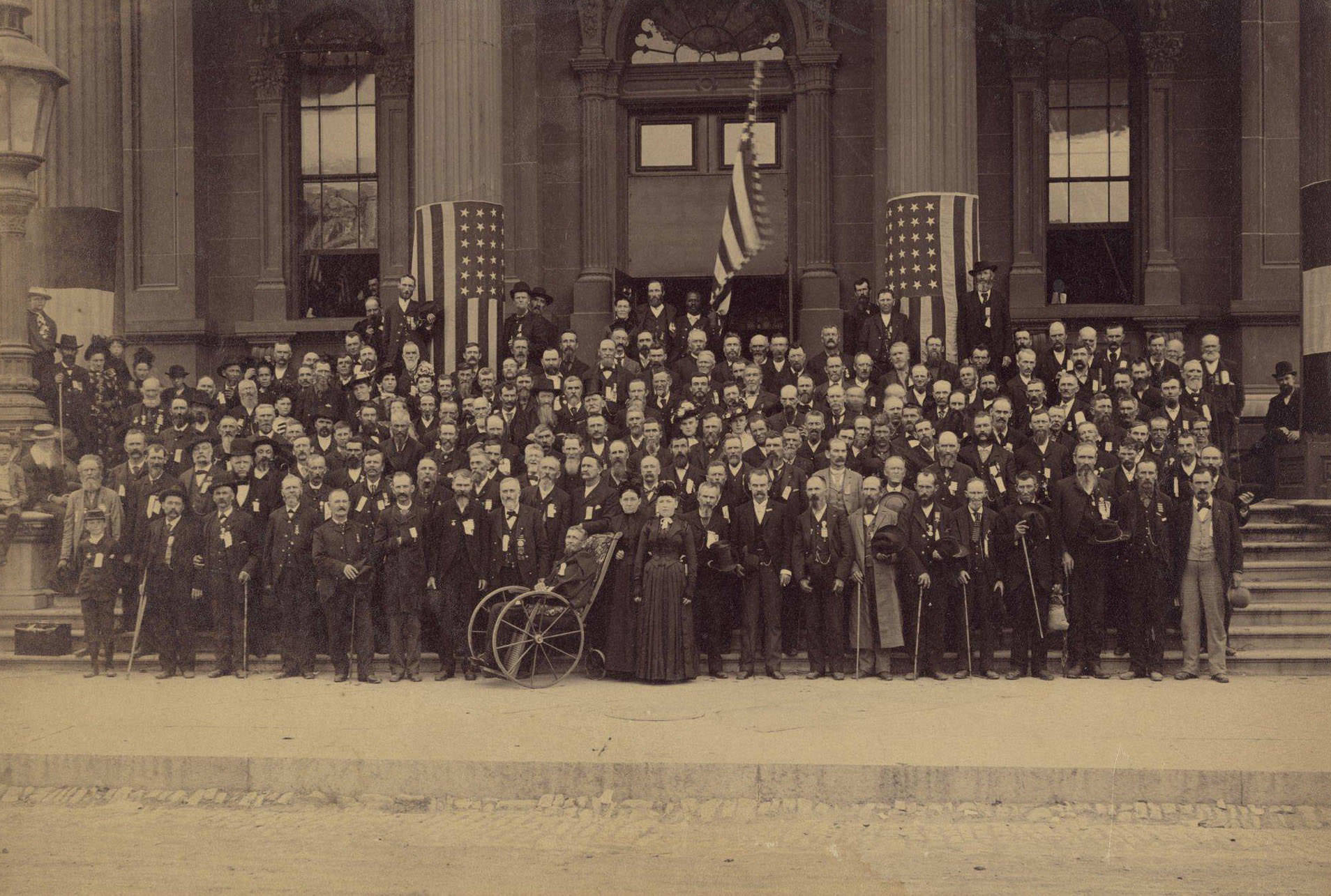
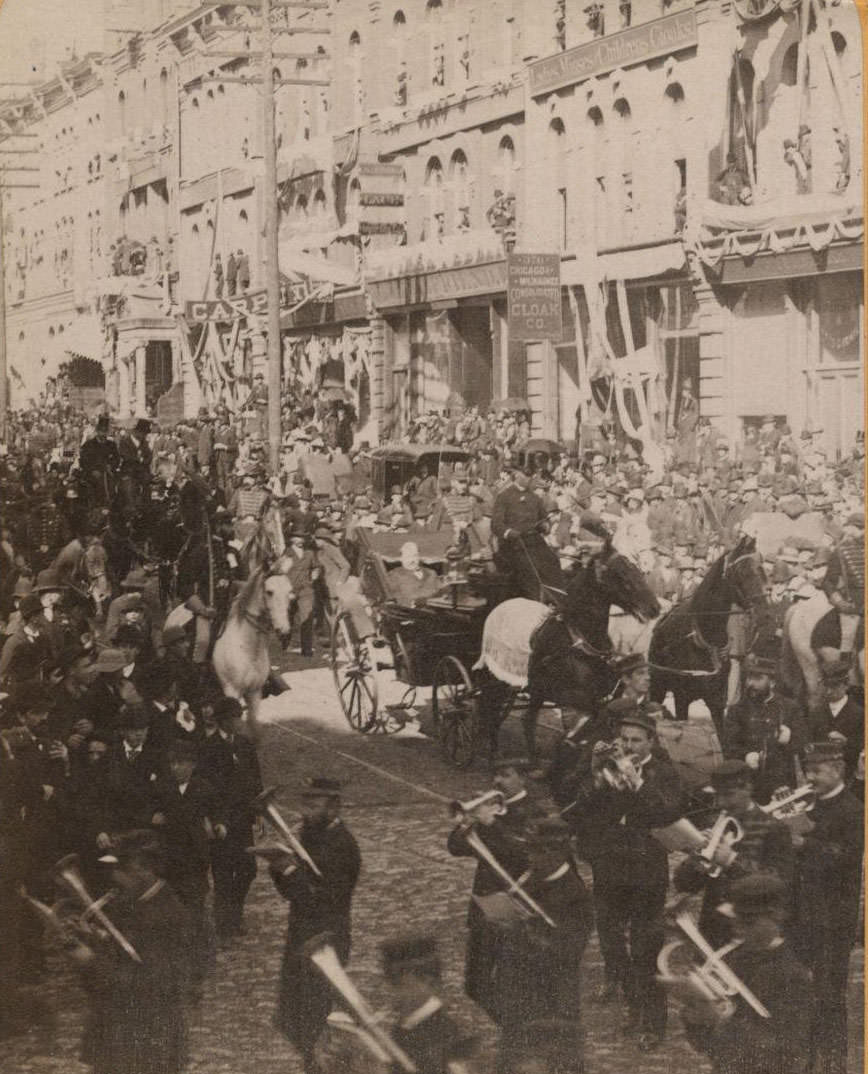
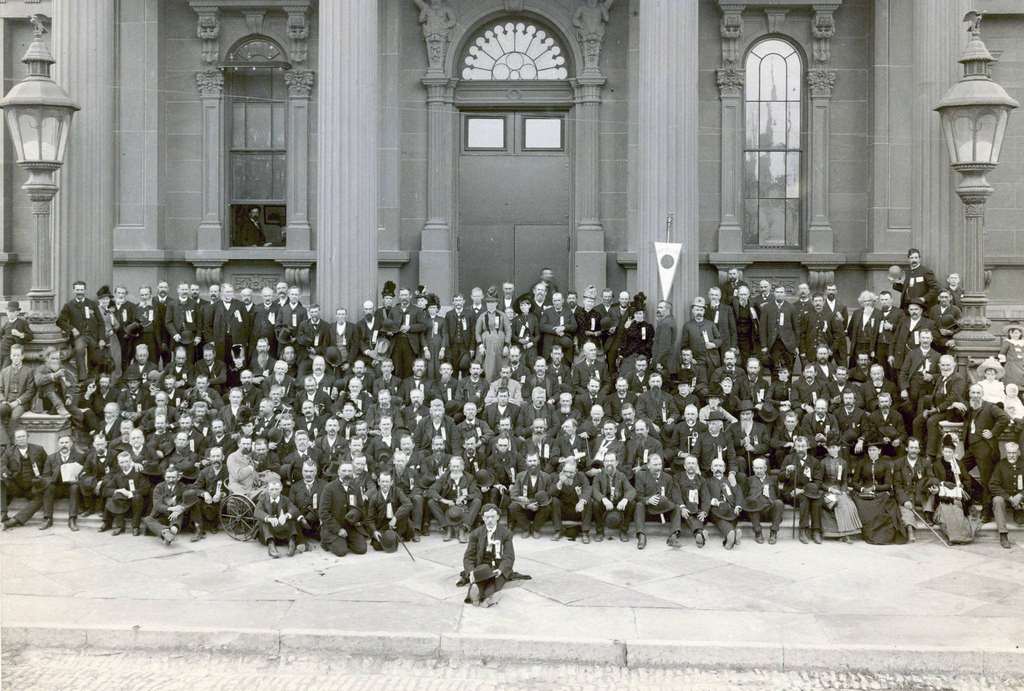
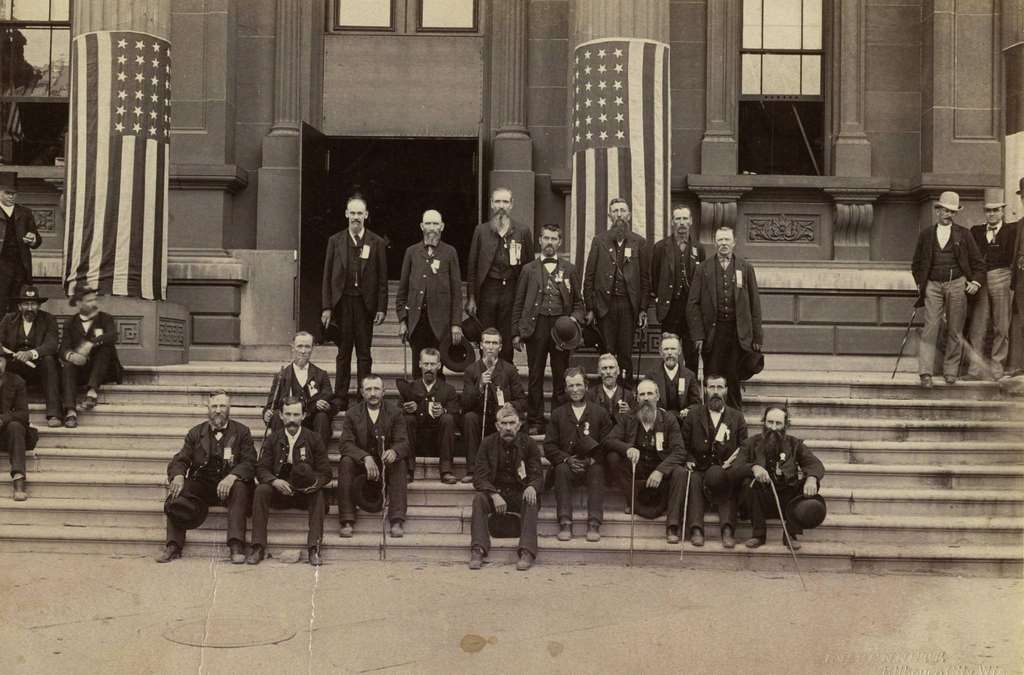
Milwaukee’s military tradition remained strong at the close of the decade. The 29th Wisconsin Infantry Volunteers gathered for a formal portrait in August 1889 on the front steps of the Milwaukee Armory building, two American flags wrapped around the columns and a third held by a soldier. Many veterans carried canes, and one was seated in a wheelchair. Earlier in 1887, President Grover Cleveland’s Goodwill Tour brought him to Milwaukee, drawing a parade through the city’s streets. Veterans of Company I, 29th Wisconsin Volunteer Infantry also gathered that year for a Grand Army of the Republic reunion — one of many events that kept Civil War memory alive in Milwaukee throughout the 1880s.
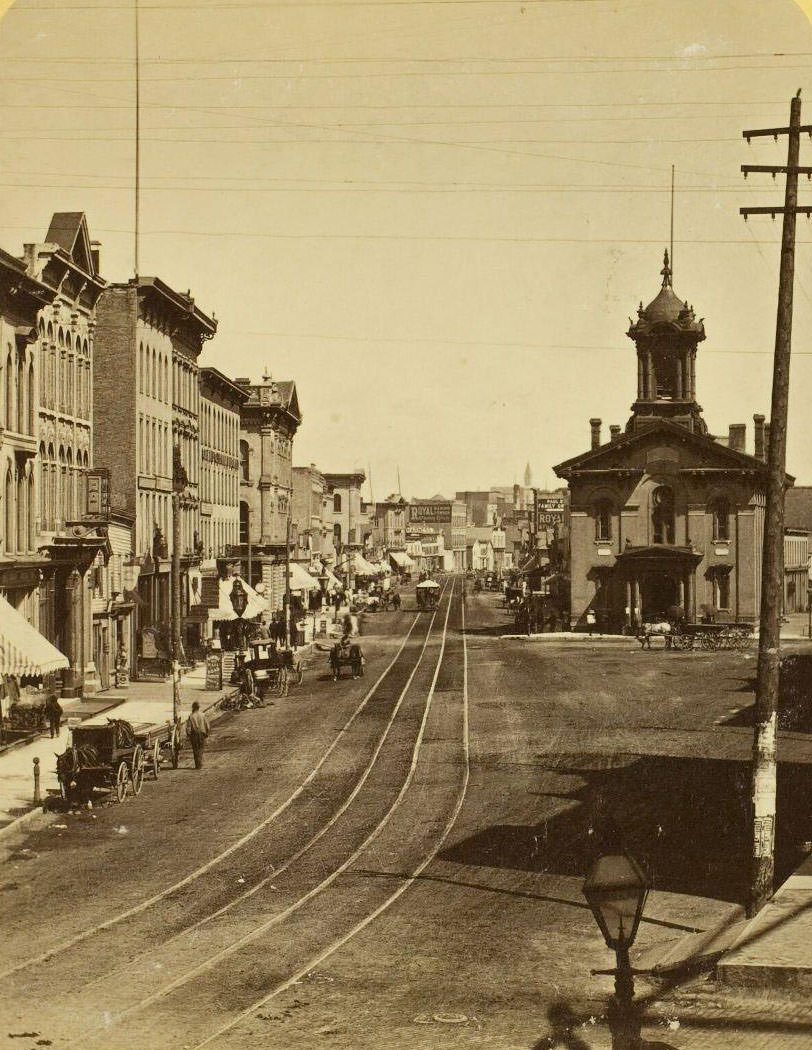
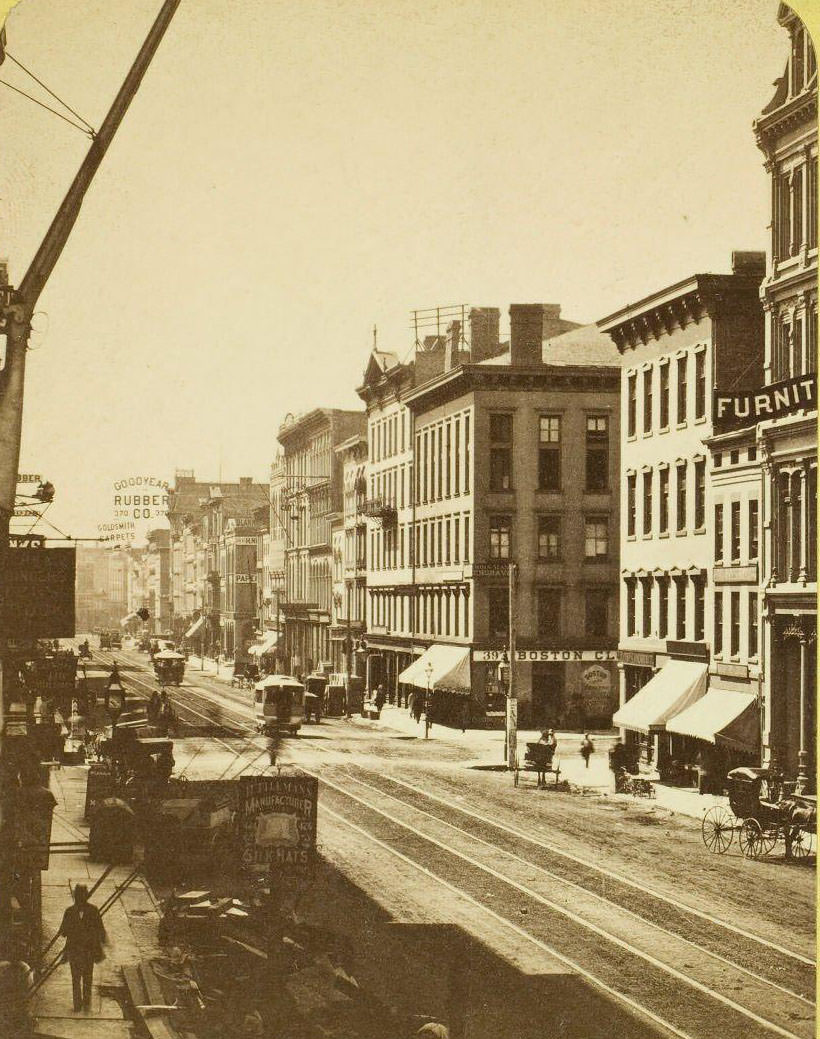
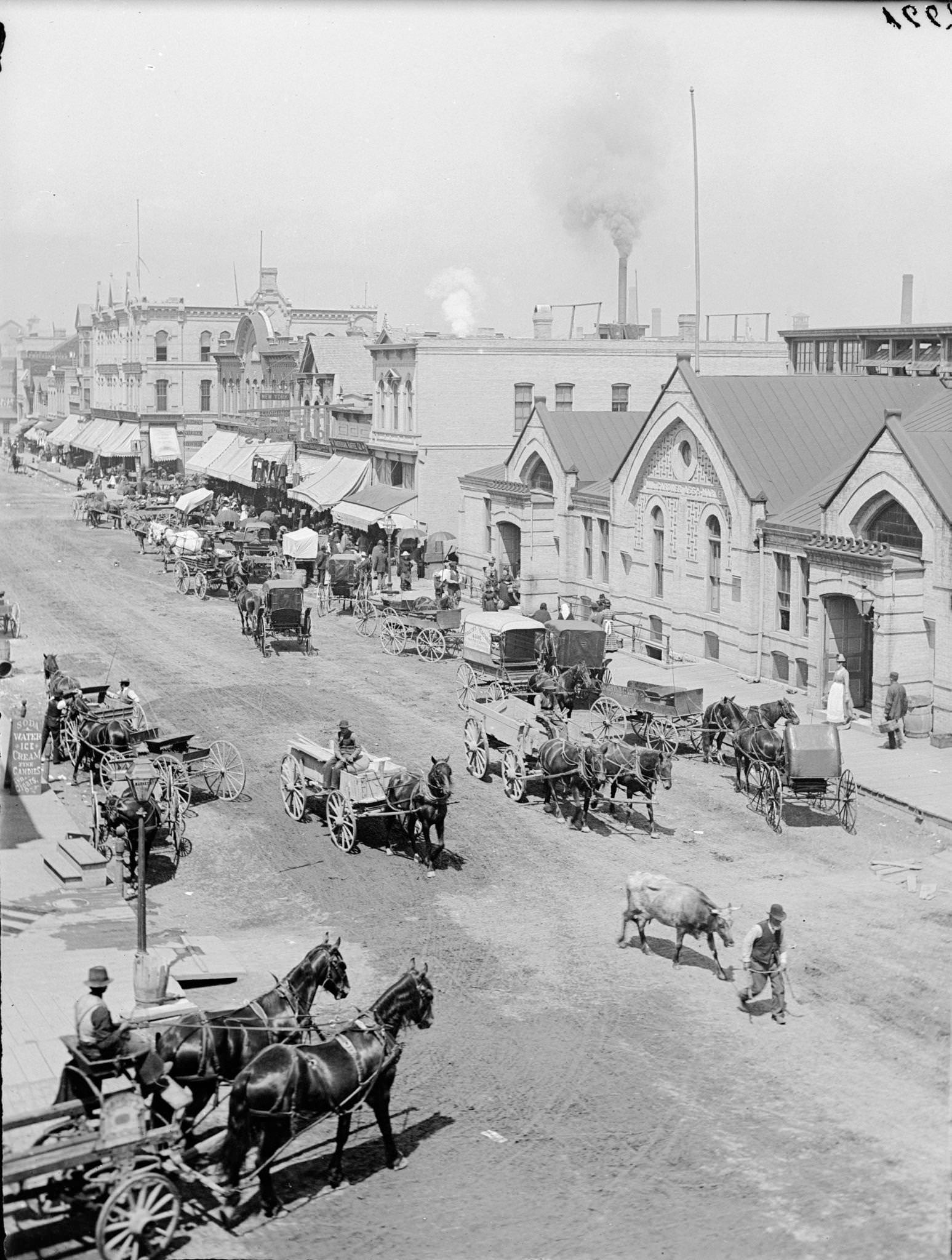
Milwaukee’s street life in 1885 was dense with commerce and movement. The old courthouse stood with its park out front. A farmer’s market drew horse-drawn vehicles and at least one man leading a bull through the crowd. The German Market, visible in the distance down one of the city’s main streets, pulled two horse-drawn vehicles toward it as pedestrians walked the wooden sidewalks. East Water Street, photographed from an elevated vantage at Wisconsin Avenue, showed the full bustle of the city — people, horse-drawn streetcars, and vehicles moving in all directions.
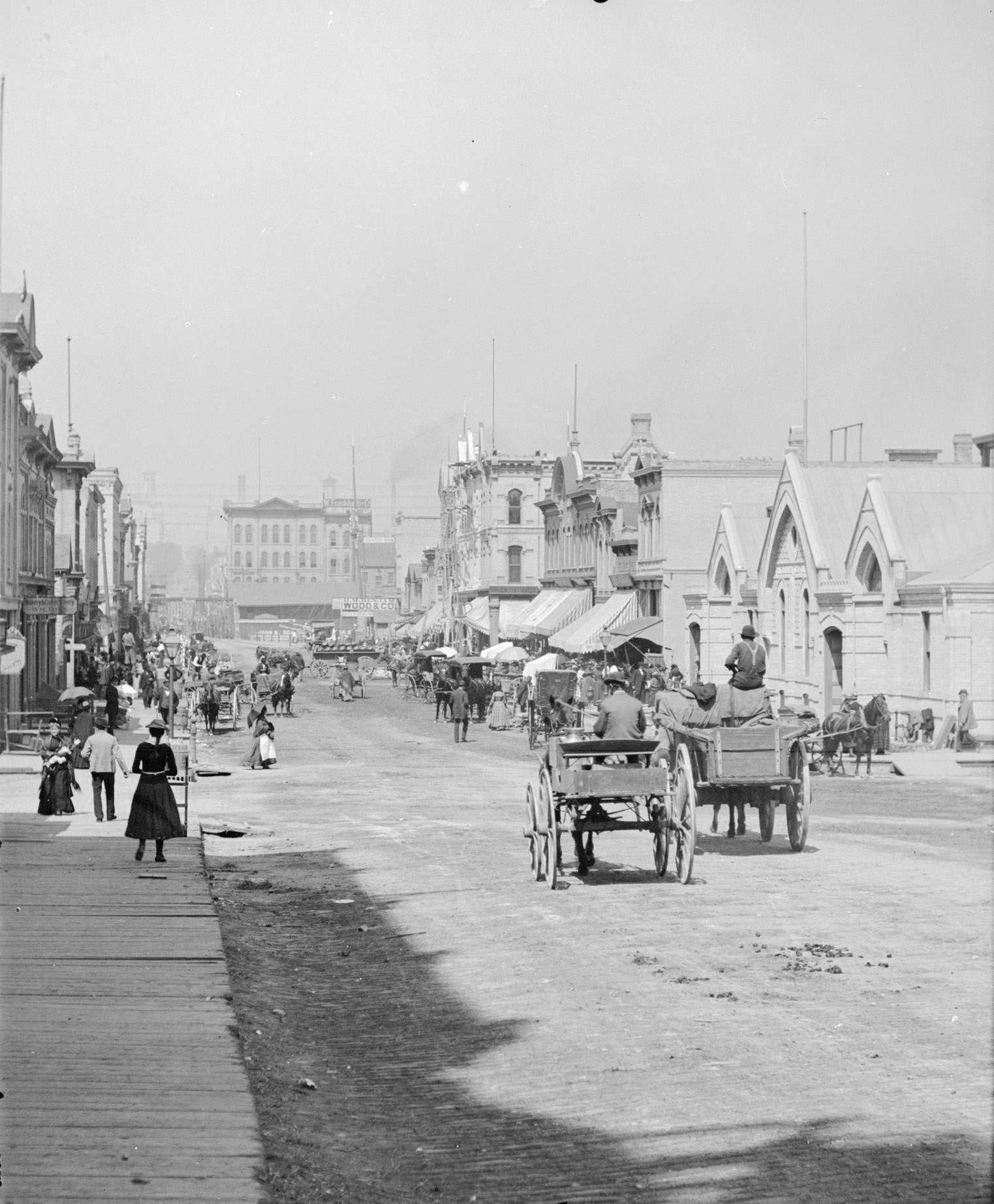
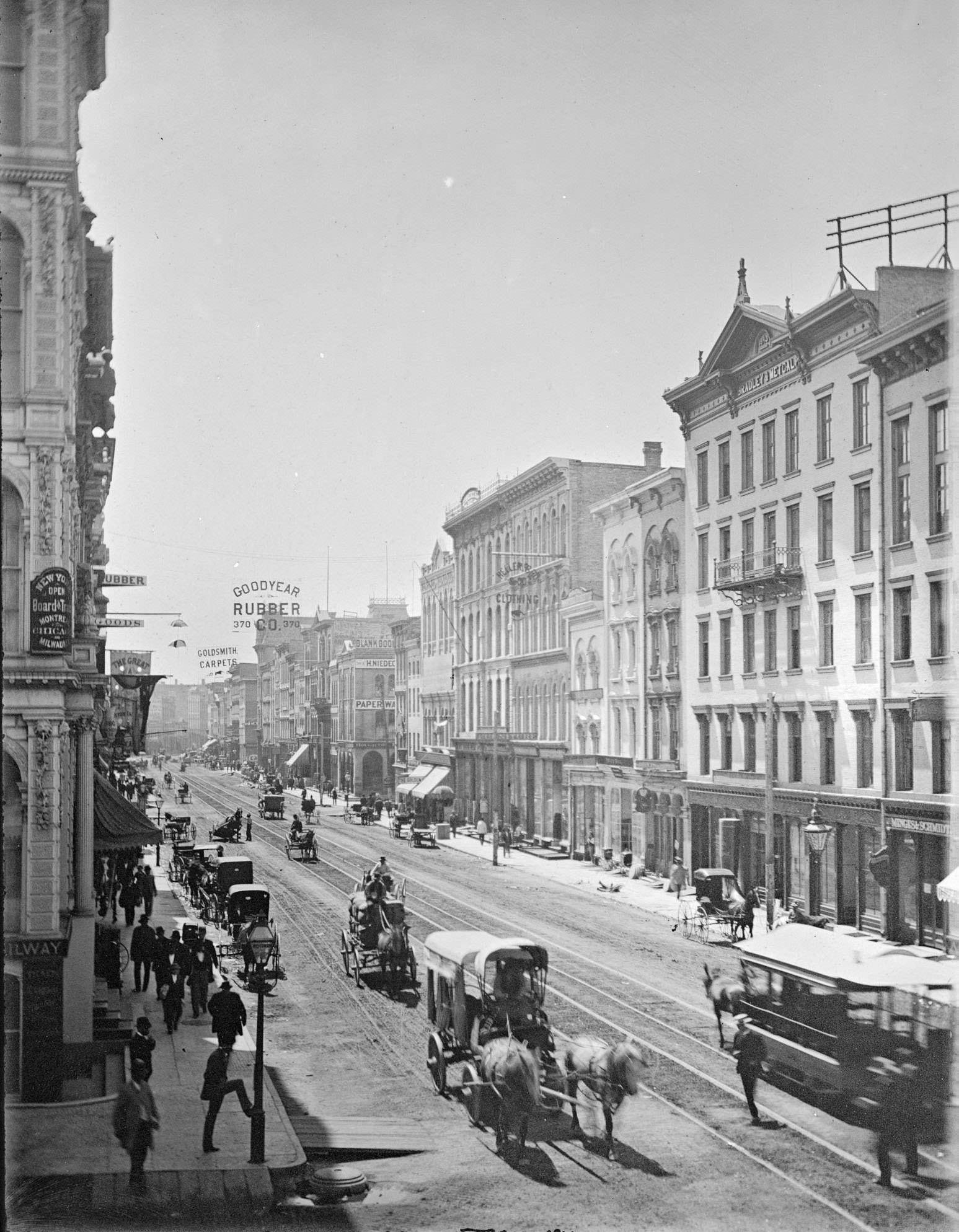
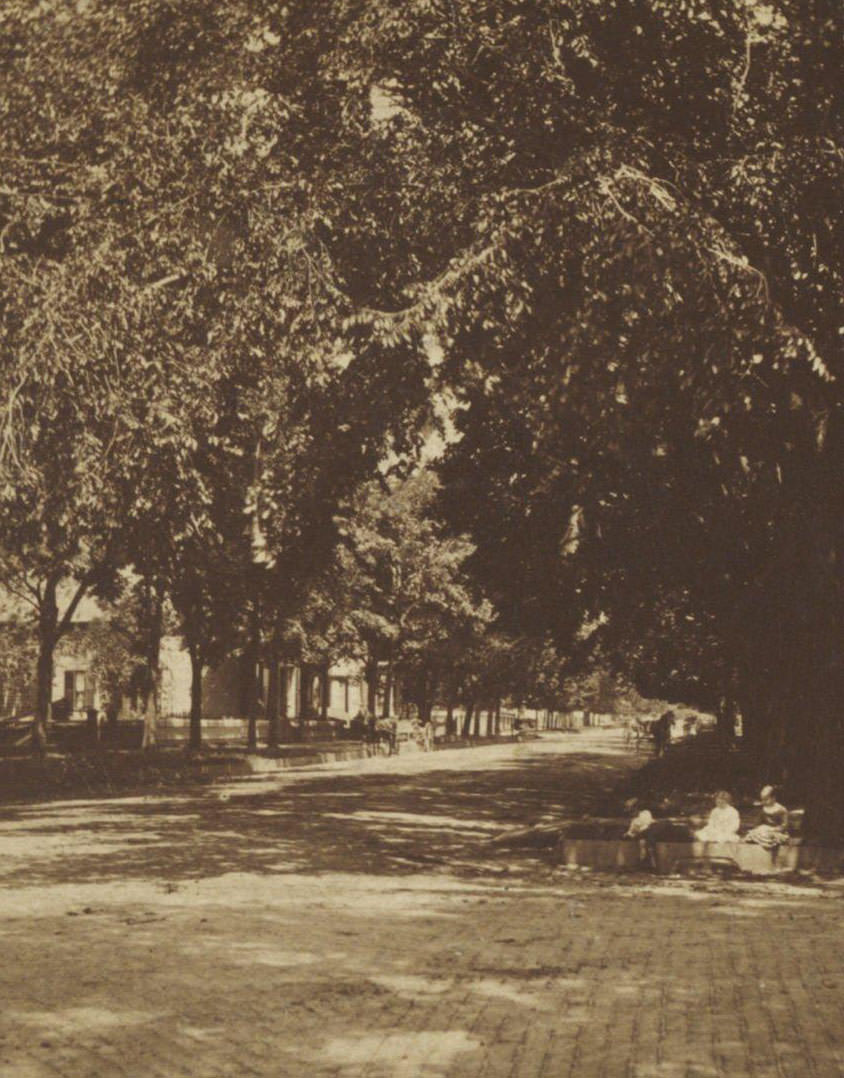
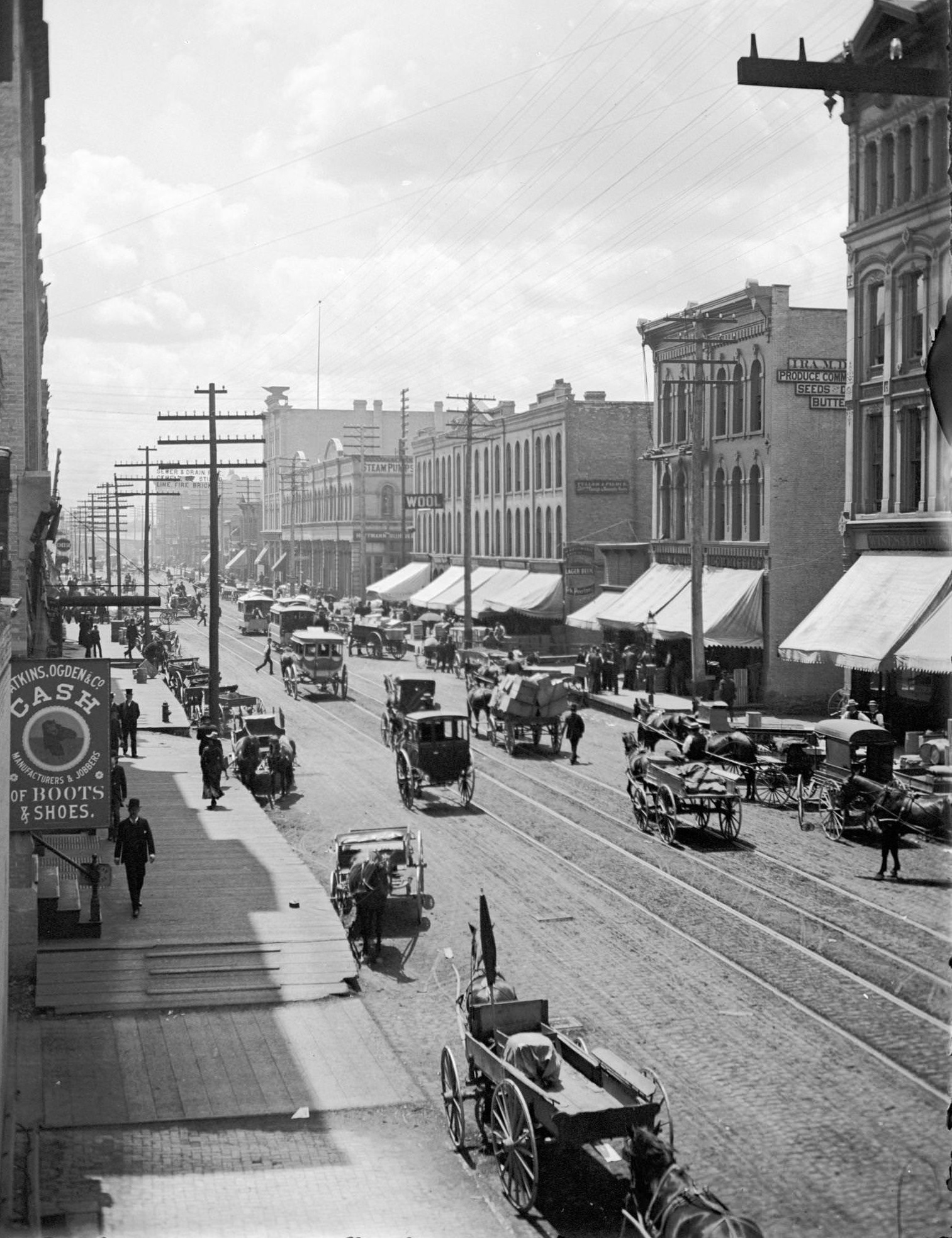
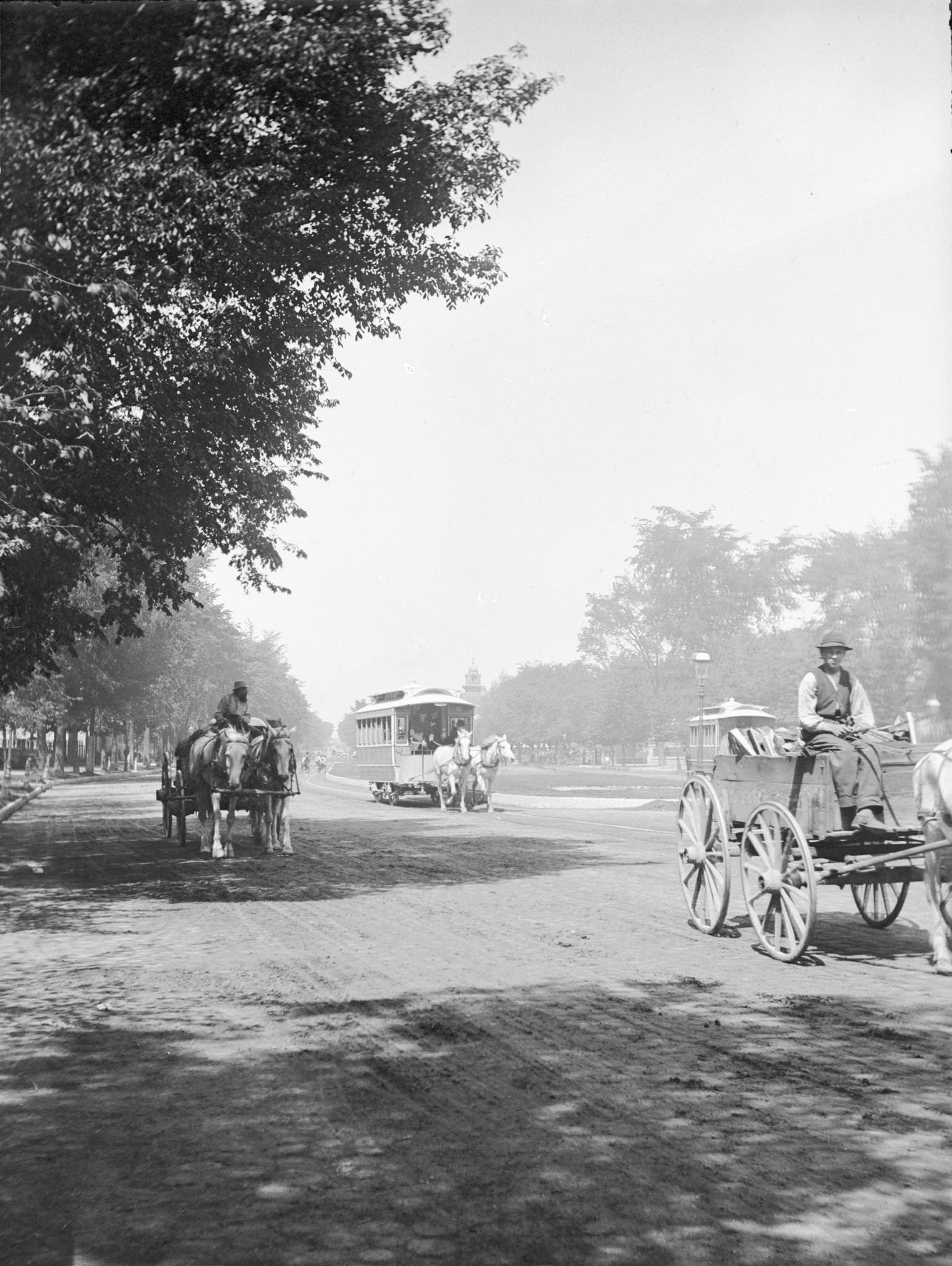
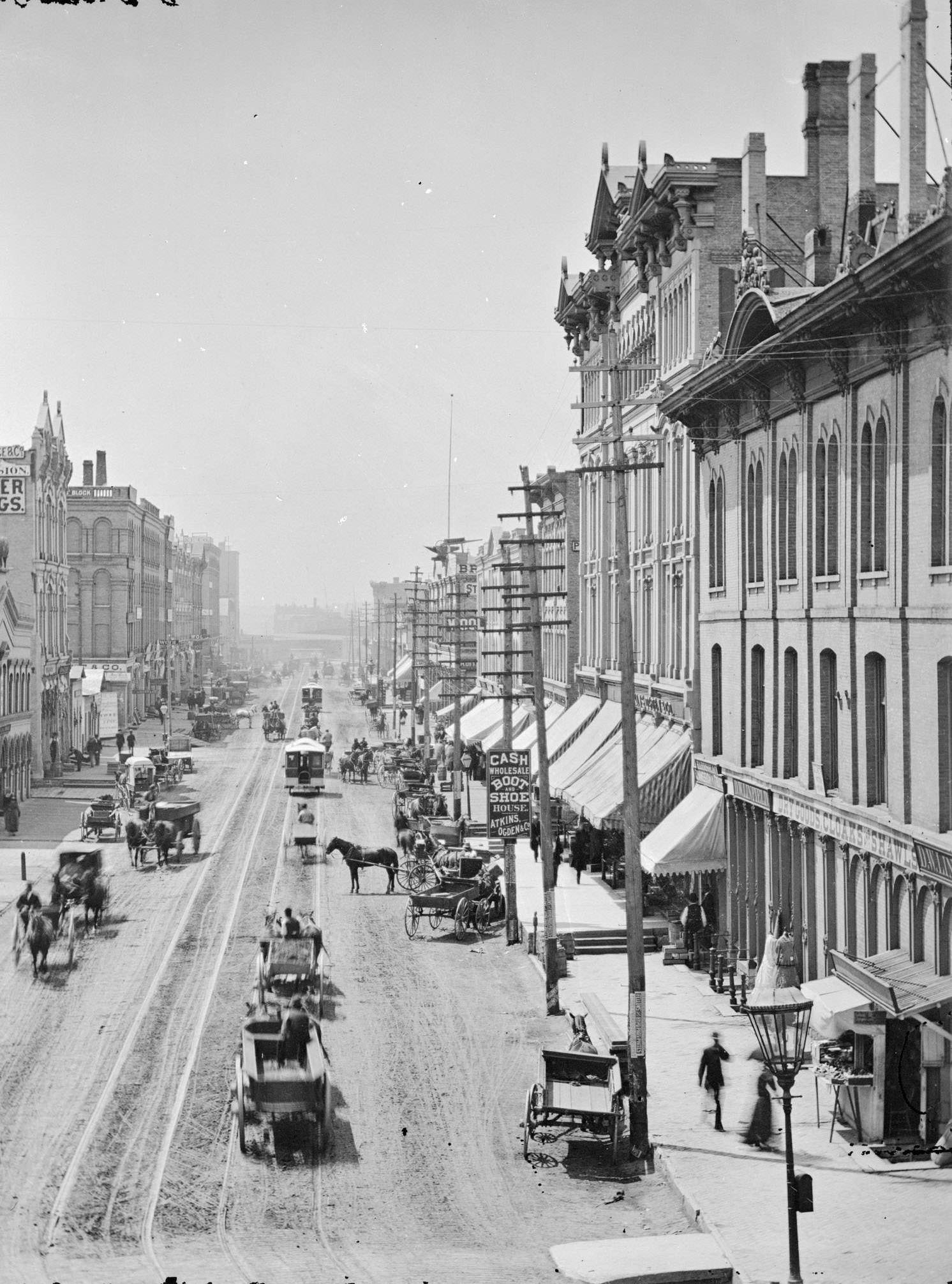
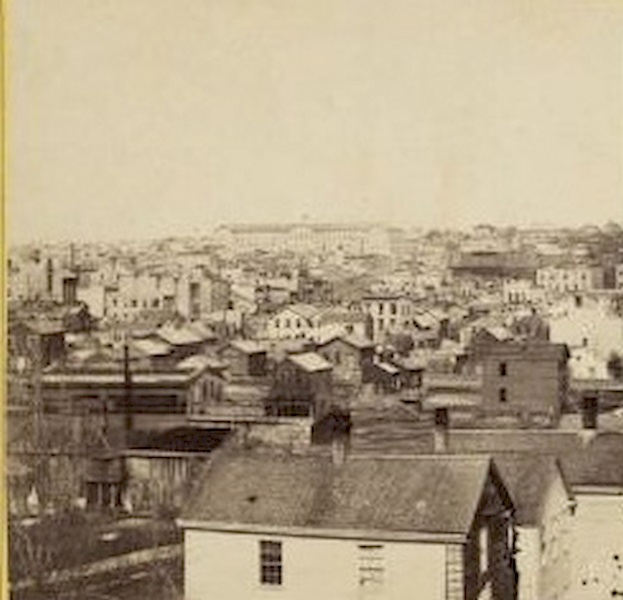
The final years of the decade saw Milwaukee’s streets photographed from multiple angles. East Water Street, viewed from the Kirby House looking both up and down, showed the rhythm of a city that had grown dramatically since the Civil War. An albumen stereo print from 1889, part of the series ‘Milwaukee and Vicinity,’ preserves another frozen moment from the city’s landscape. And the view from the dome of the Exposition Building looking south captured the scale of what Milwaukee had become — a dense, smoky, active city full of people navigating the competing pressures of industry, politics, and daily life.