Black and white photos tend to make the past feel serious and still. Color changes everything. These 34 photographs from mid-century Canada show a country that was busy, bright, and full of life. From sandy beaches to factory floors, from frozen prairies to city streets at night, each image captures a real moment in Canadian history.
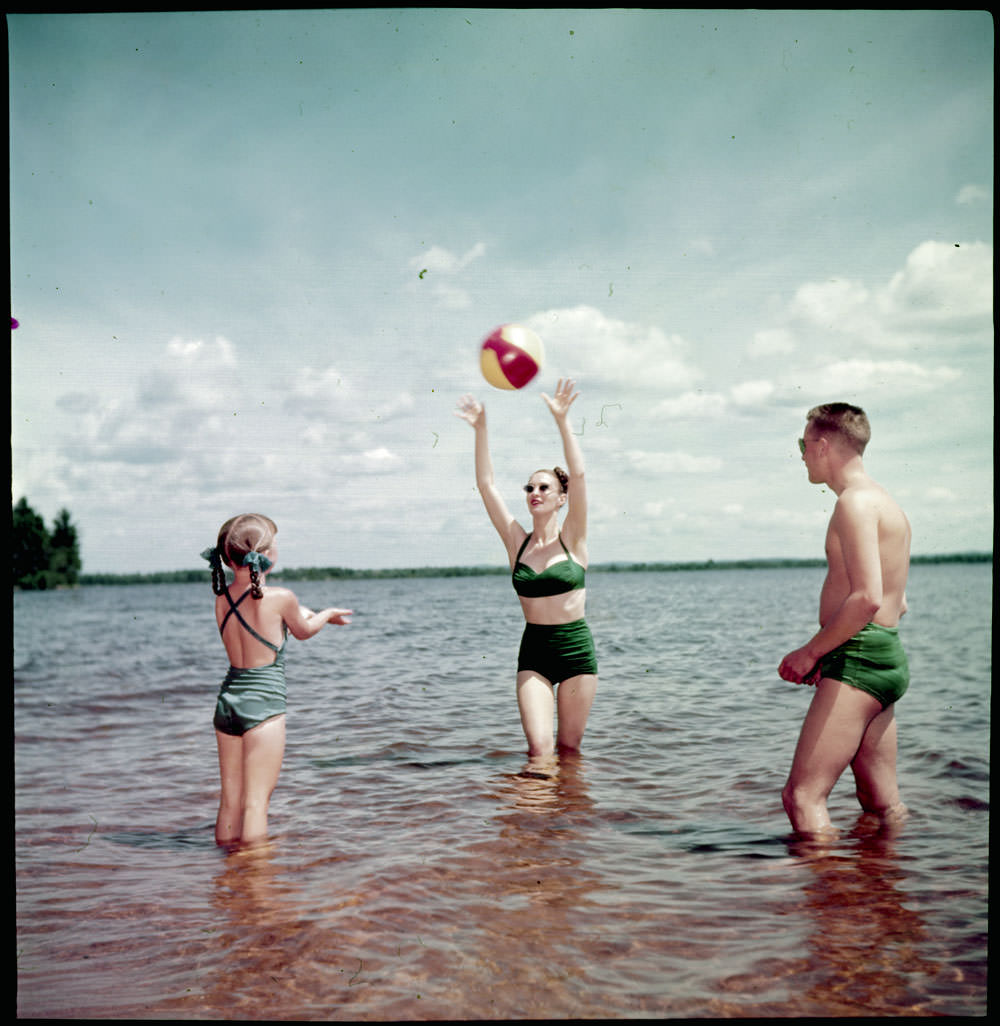
Summers brought Canadians outdoors in full force. Families packed beaches, hiked national parks, and paddled across lakes. Resorts along the Laurentians and shores of Lake Couchiching drew crowds looking to unwind. At Fundy National Park in New Brunswick, visitors shared drinks at outdoor tables and rested on hills above quiet ponds.
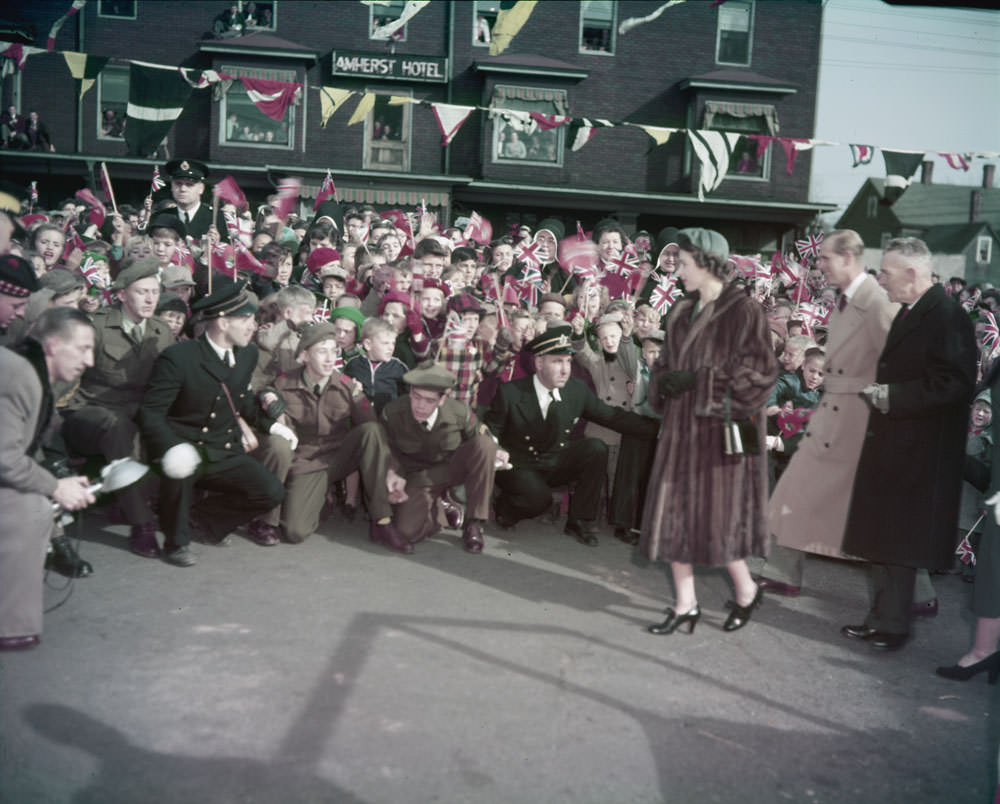
Public life in this era carried a sense of occasion. In 1951, Queen Elizabeth II and Prince Philip stood before large crowds during a royal visit, drawing thousands of spectators.
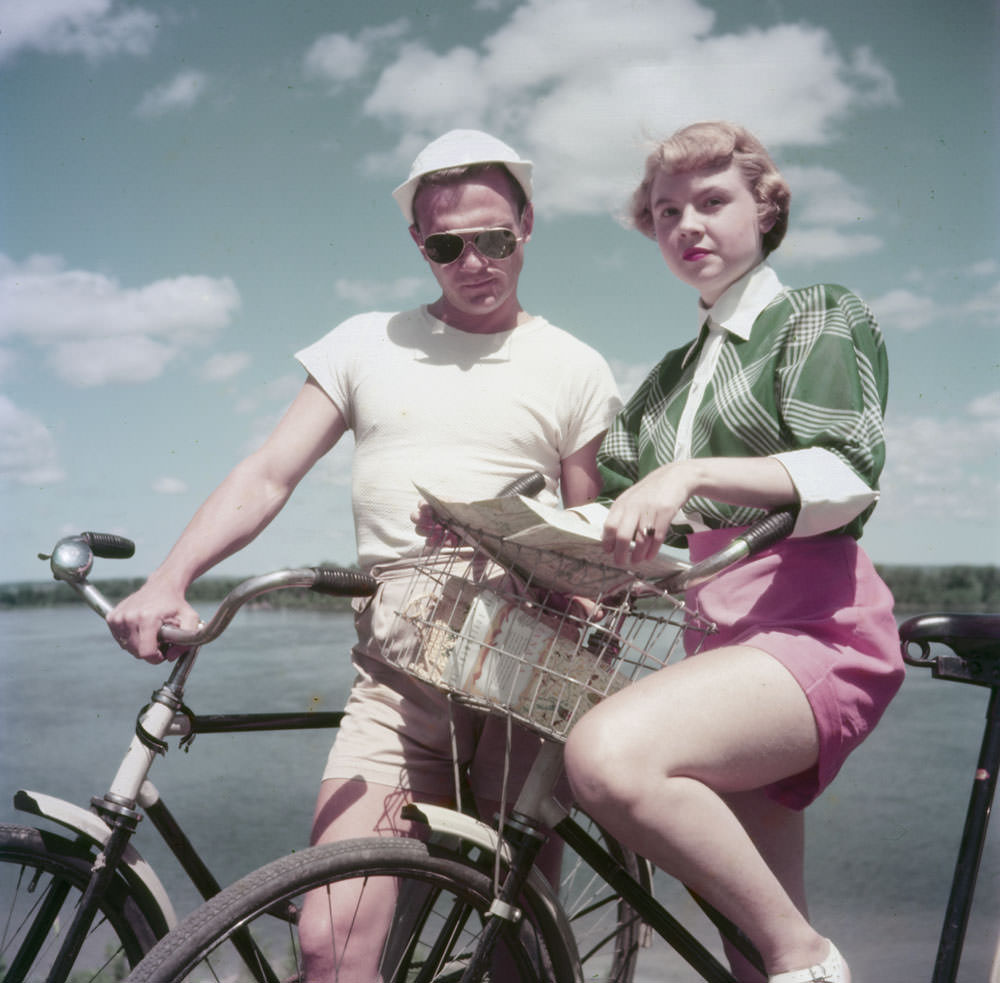
Cycling was a popular way to explore Canada’s natural scenery. In June 1952, a couple stopped along the Ottawa River in Rockcliffe Park, Ontario, to check a road map before continuing their ride.
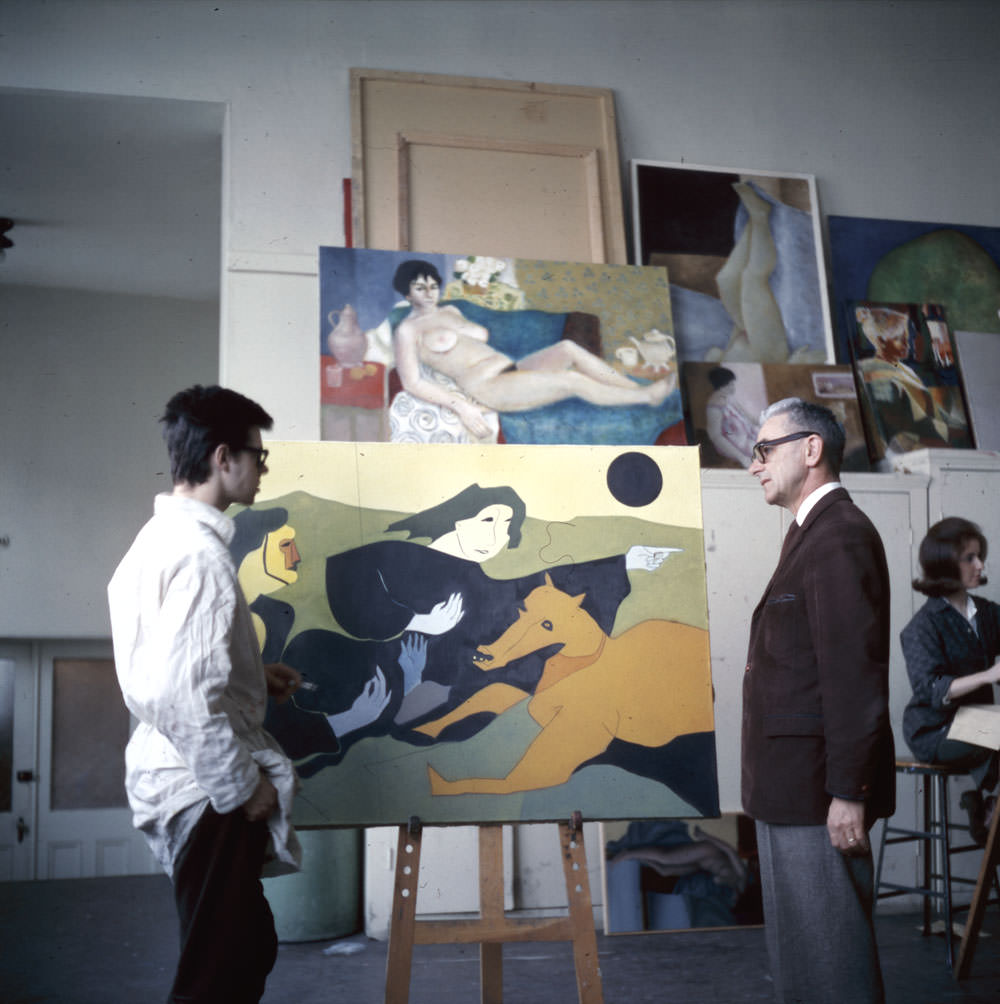
Canadian arts education thrived during this period. Celebrated painter Jean Paul Lemieux taught at the École des Beaux Arts in Quebec, shaping a generation of artists.
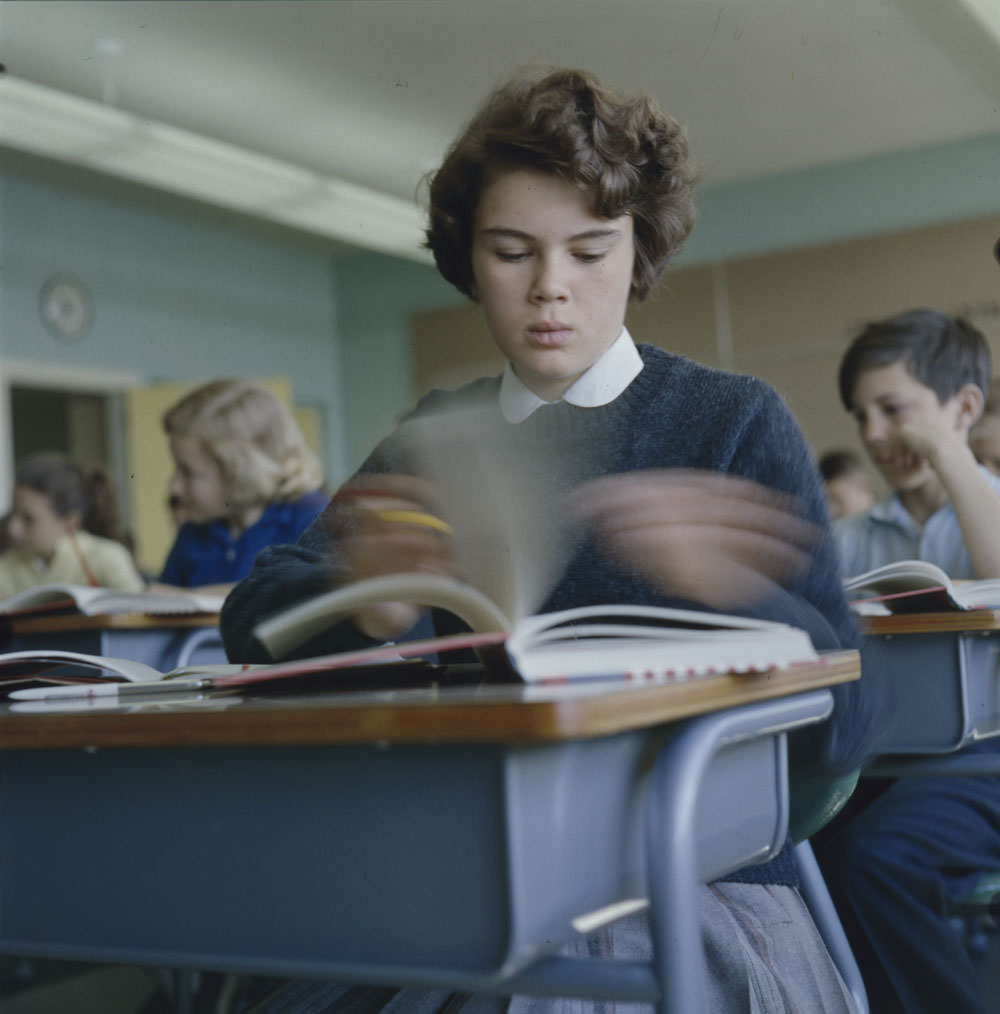
Schools across the country were filled with children working their way through the postwar era’s expanding curriculum. At Putnam School, a girl flipped through her textbook at her desk, a scene repeated in classrooms from coast to coast.
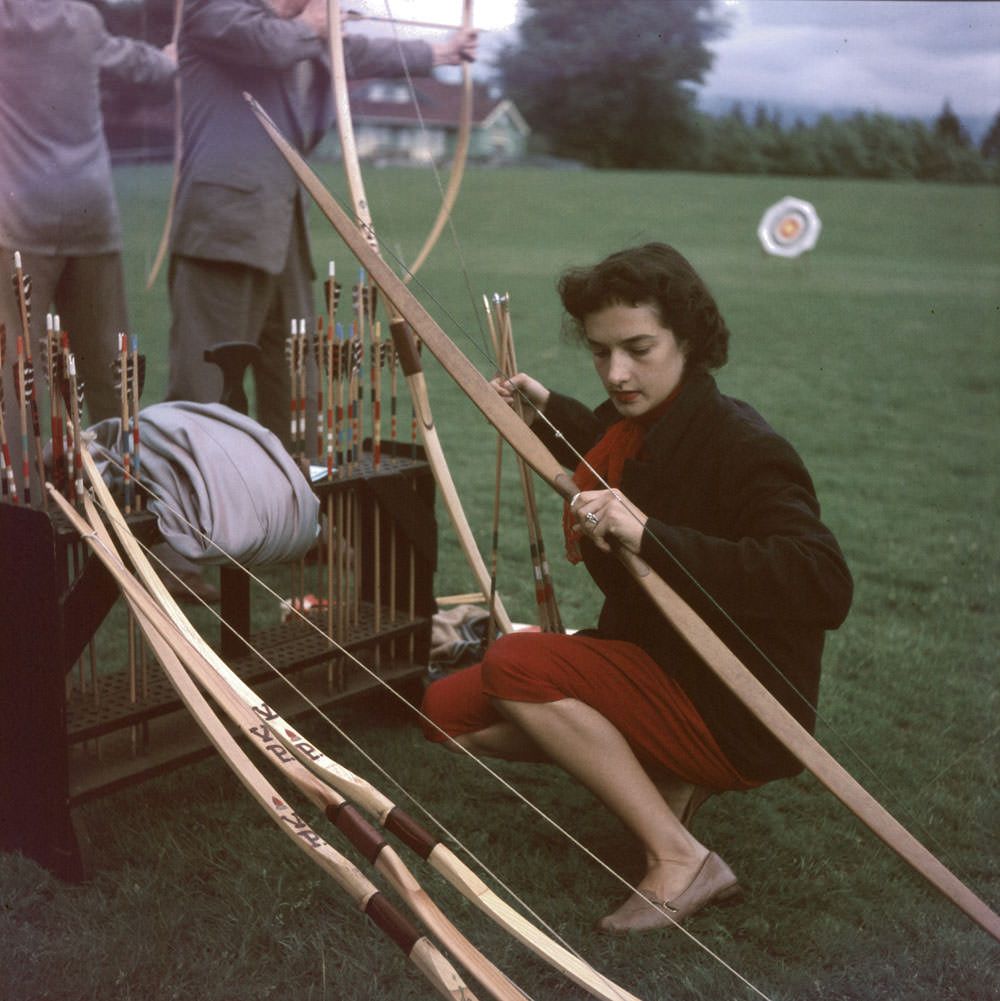
Recreational activities ranged widely. Archery drew participants to Stanley Park in Vancouver, where in 1954 a woman took aim with her bow on the park grounds.
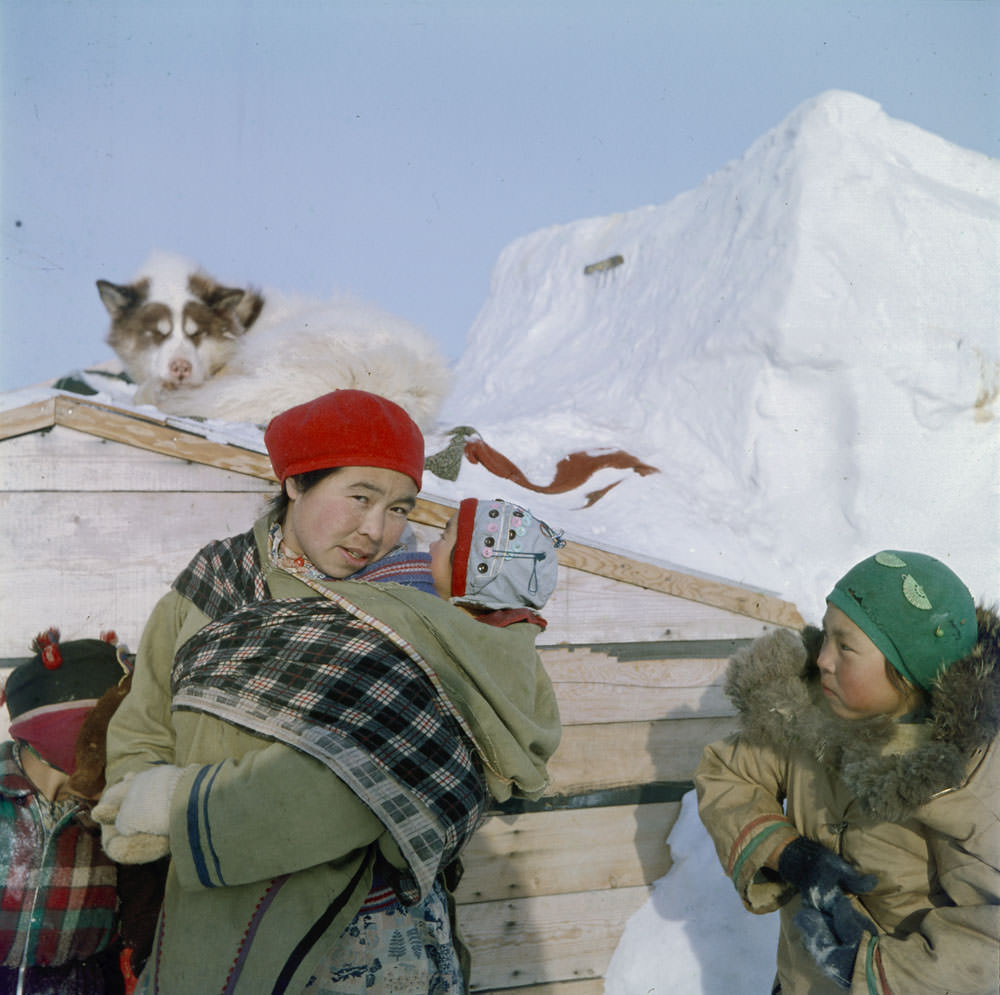
Canada’s climate demanded toughness. In May 1956, a woman and three children bundled into winter clothes — a reminder that spring came slowly to many parts of the country.
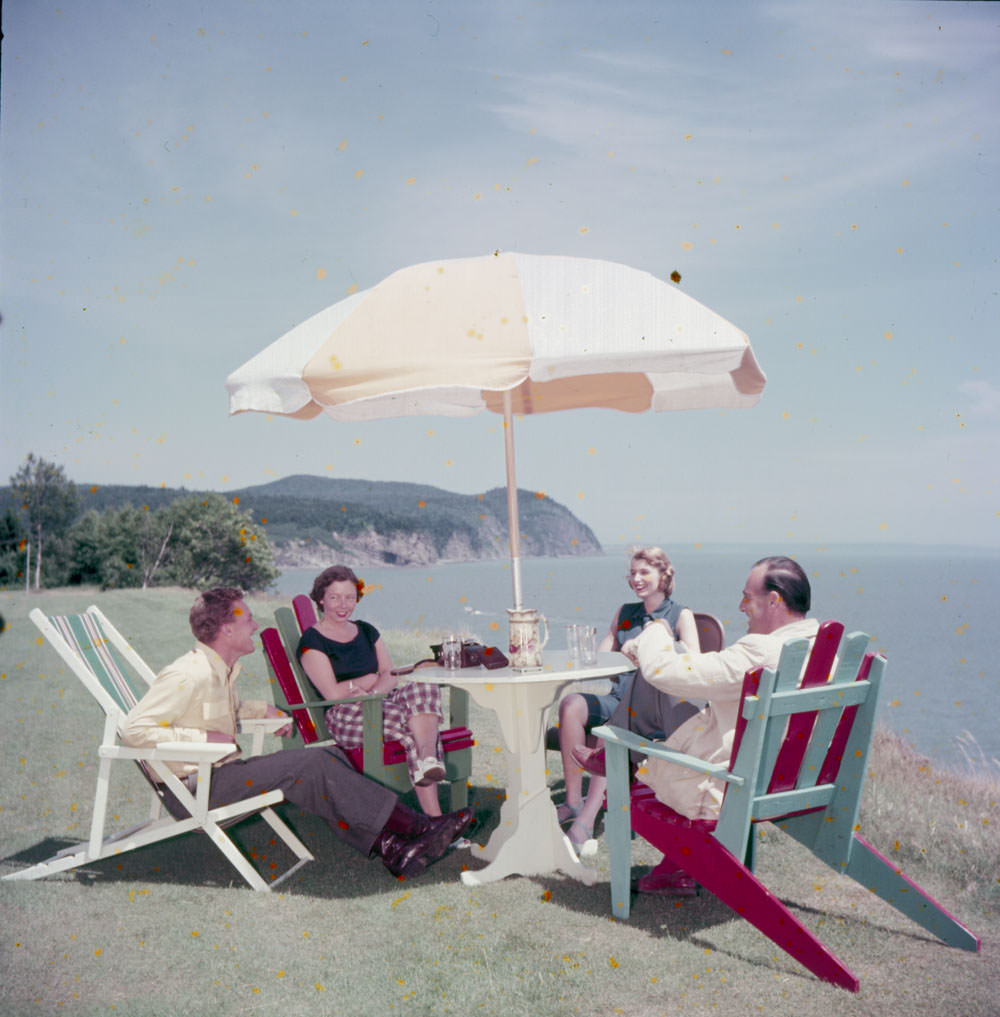
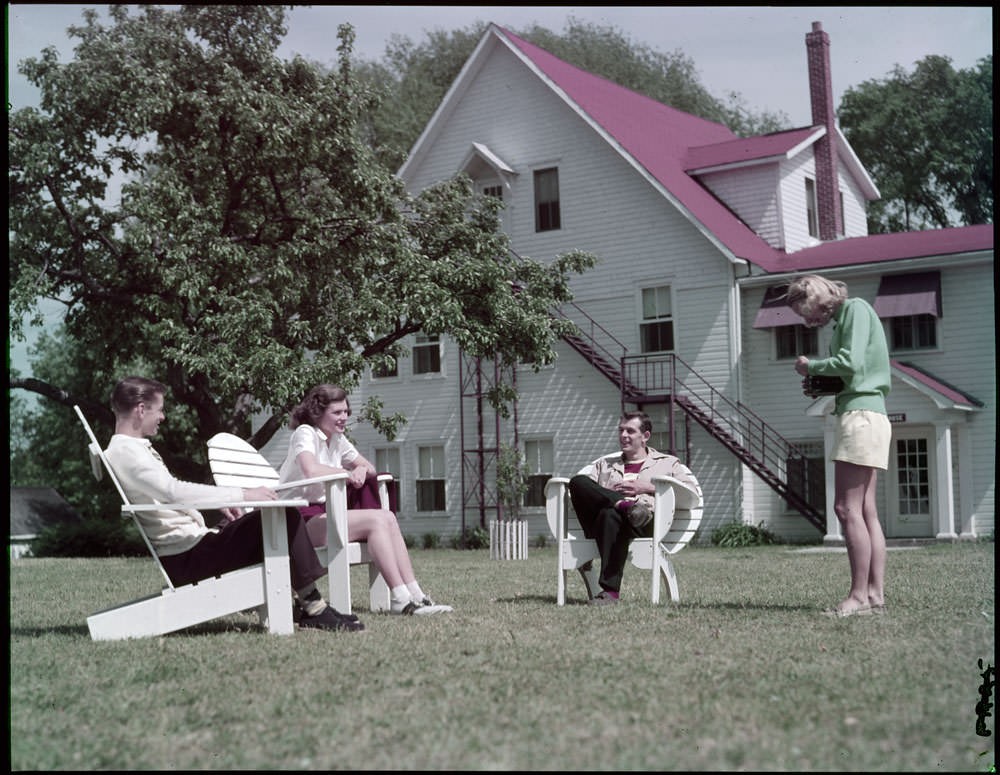
Summer resorts were a fixture of mid-century leisure. Guests lounged on the lawns at Fern Cottage on Lake Couchiching in Orillia, Ontario, enjoying the easy pace of cottage country.
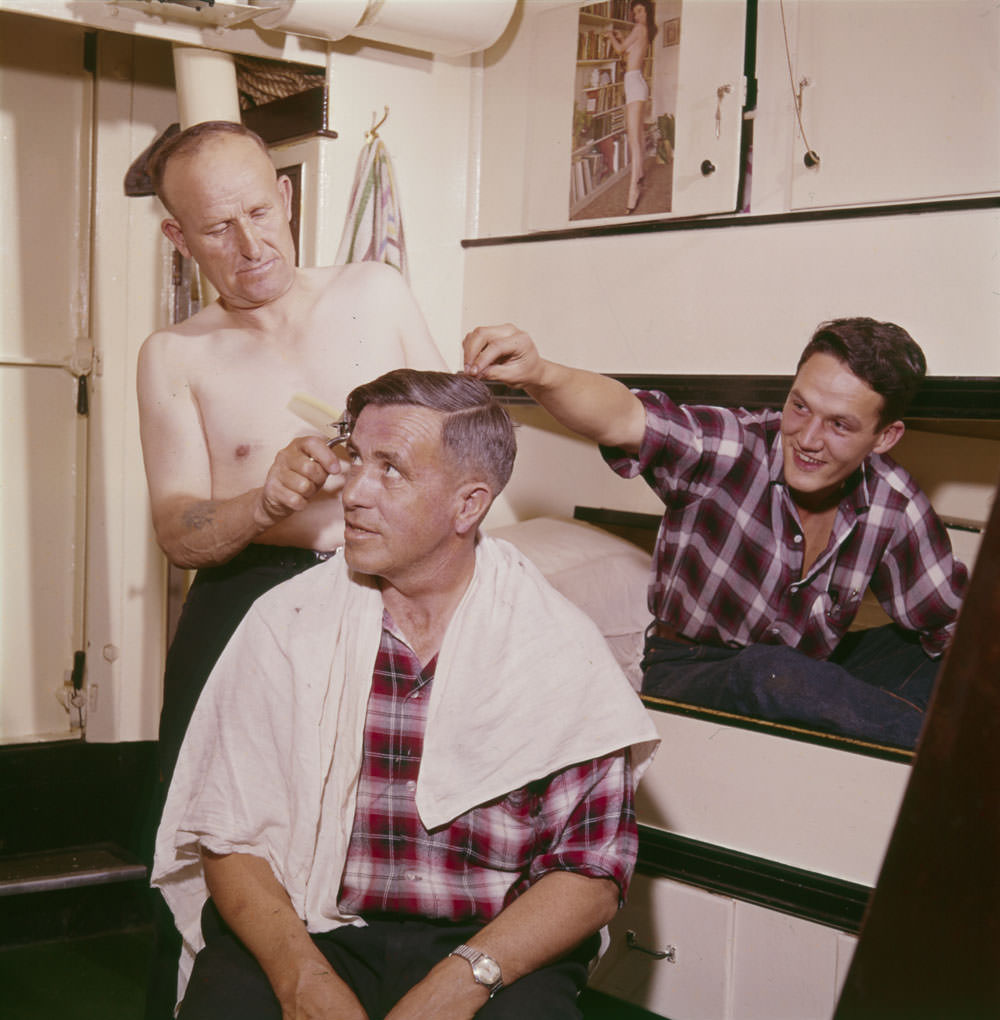
Life aboard working vessels had its lighter moments too. On the MV Christmas Seal off the coast of Newfoundland and Labrador, Captain Peter Troake cut mate Ches Pelley’s hair on deck while Gerald Drover kept the mood light.
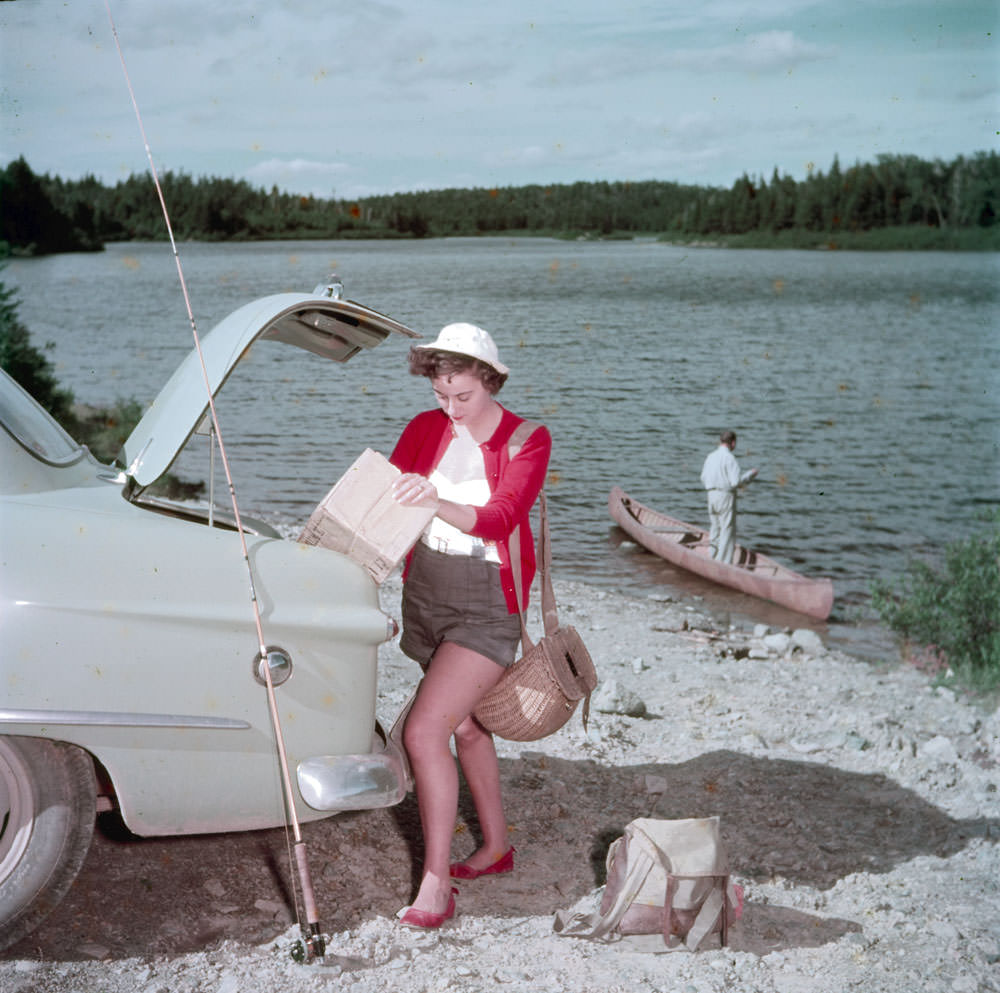
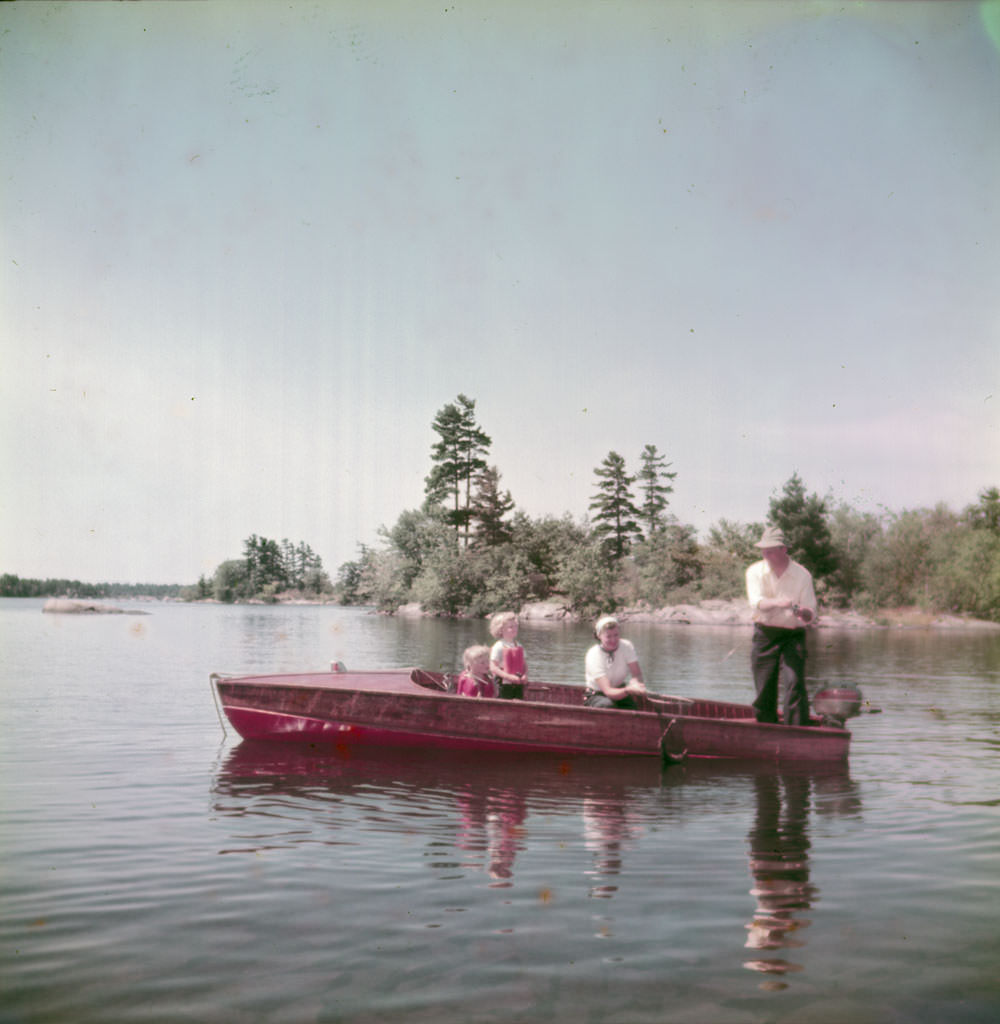
Fishing was both a livelihood and a pastime. In Saint John, New Brunswick, Shirley Emerson laid out her fishing gear beside her father R.B. Emerson before heading out. Families also fished together — a father, mother, and two daughters fly-fished from a boat on Story Lake, Ontario, in 1951.
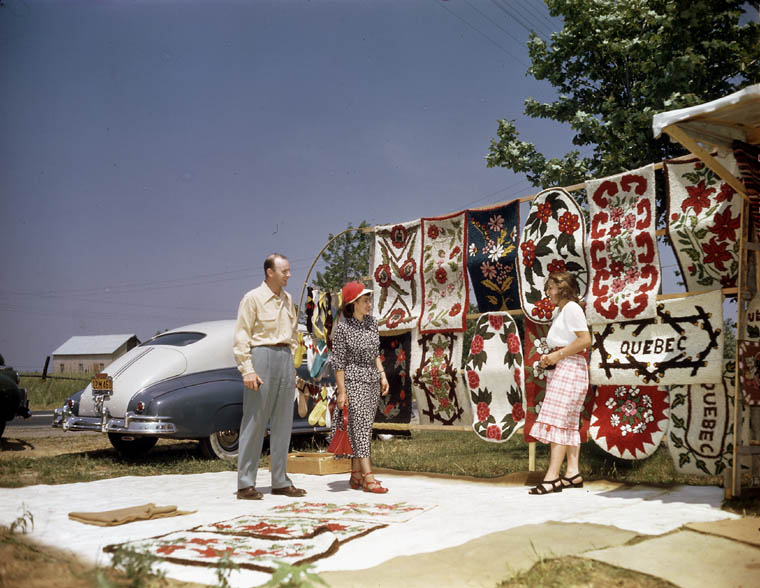
Traditional crafts remained an important part of Quebec’s cultural identity. Visitors browsed hooked rugs — an art form with deep roots in the province’s rural communities.
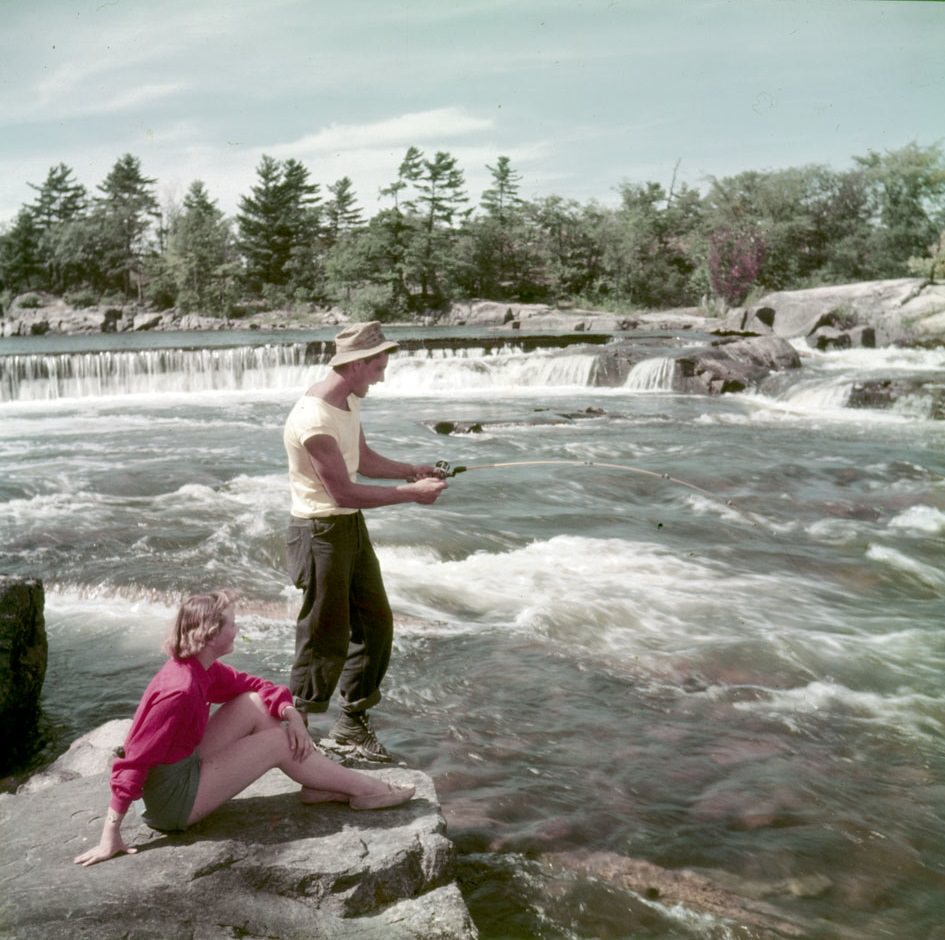
Ontario’s waterways, like Burleigh Falls, gave anglers some of Canada’s best fishing spots. A couple cast their lines from the rocky shoreline, a common weekend scene throughout the province.
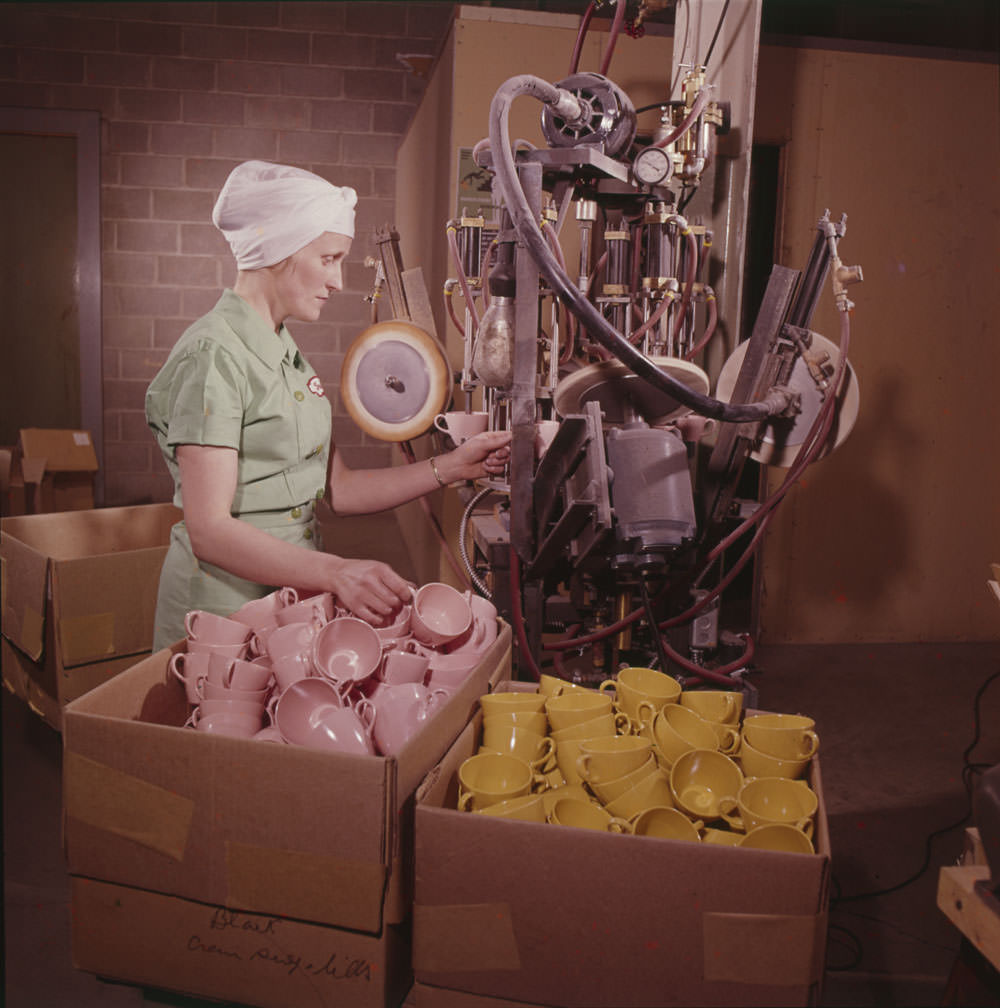
Industry was expanding fast. At Maple Leaf Plastics in Toronto, a woman operated machinery to produce cups — part of the postwar manufacturing boom that put thousands of Canadians to work.
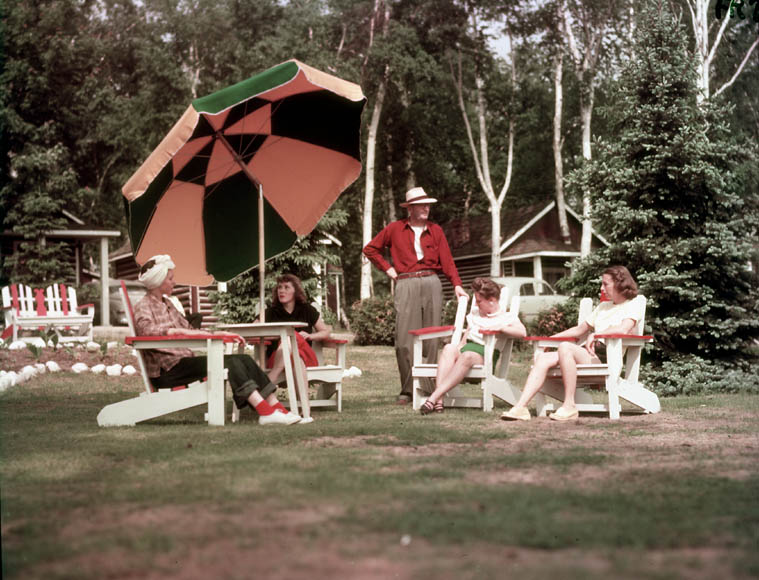
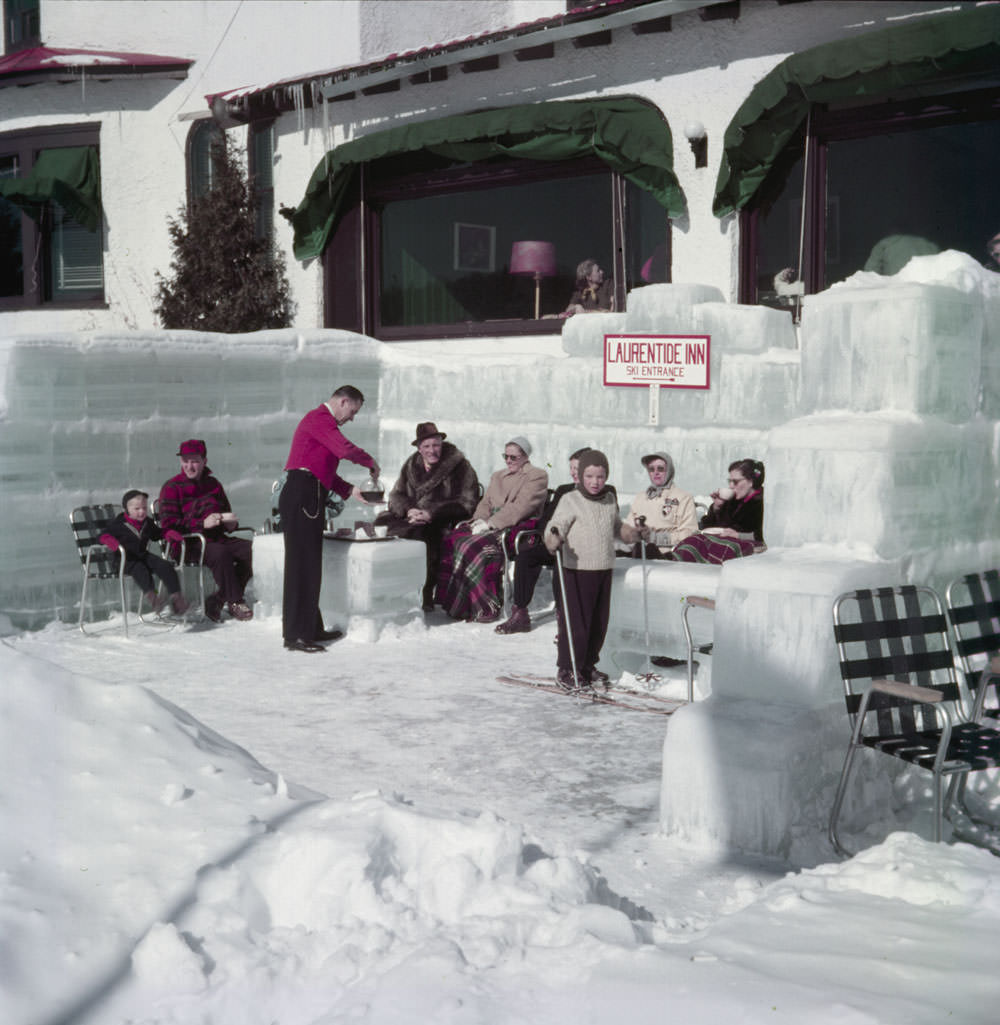
Winter tourism was thriving in Quebec. In 1953, guests at the Laurentide Inn in Sainte-Agathe-des-Monts were served coffee outdoors, wrapped against the cold in the heart of the Laurentians.
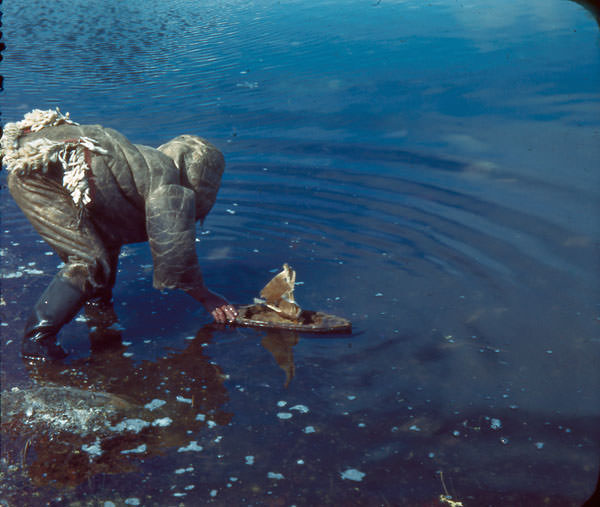
In Canada’s North, Inuit children carried on traditions while also finding time for play. One boy launched a small toy boat fitted with caribou skin sails into the water.
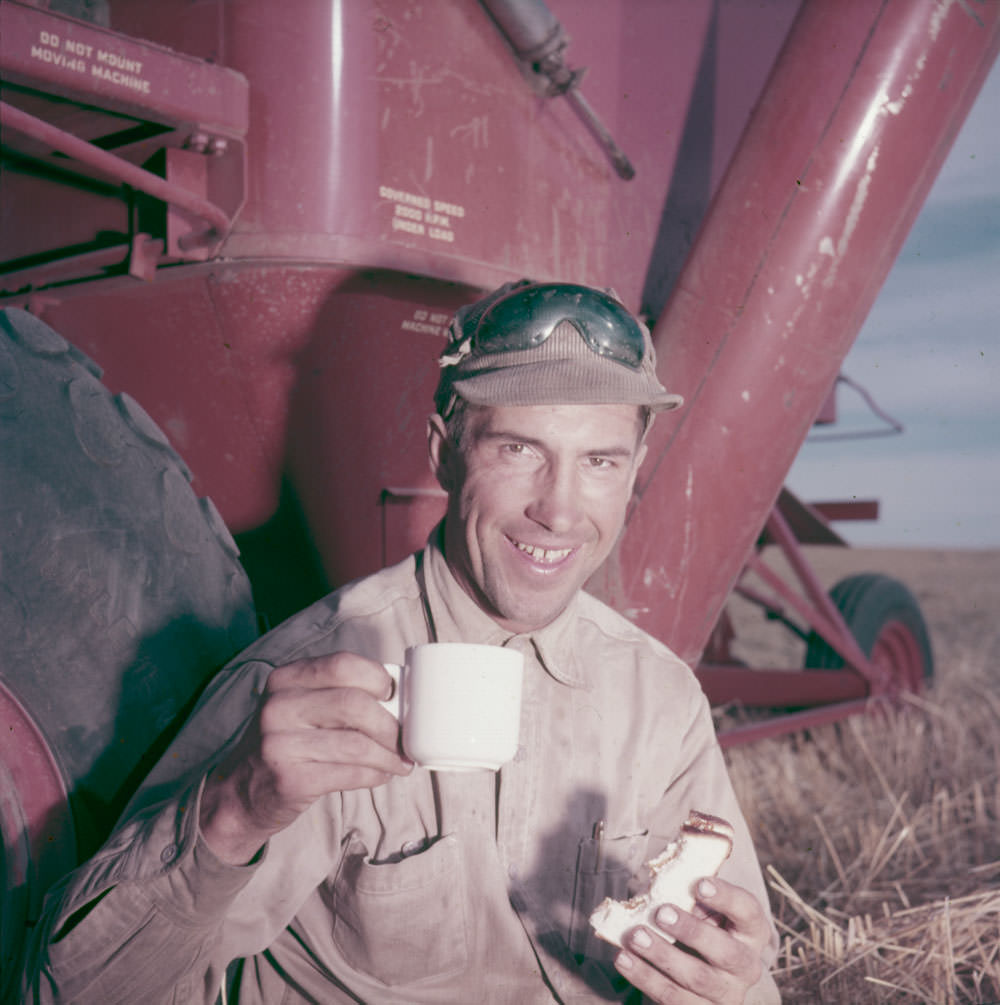
Saskatchewan’s prairies ran on hard labor. In 1953, Howard Robbins grabbed a quick coffee and sandwich in the field during harvest at the Matador Cooperative Farm — a brief pause in a long working day.
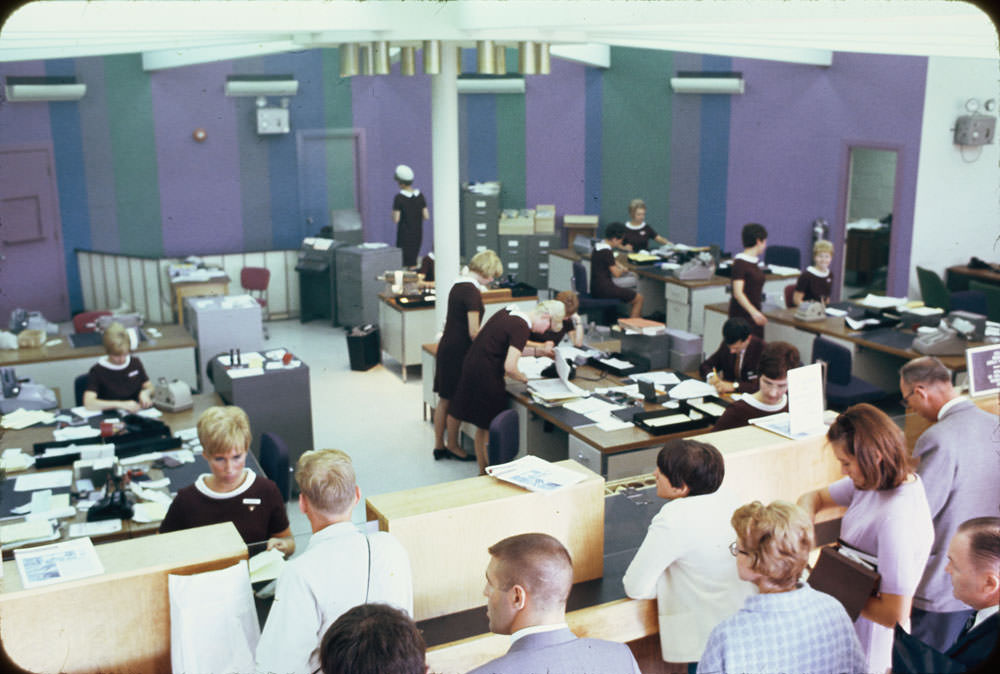
By 1967, Canada’s financial institutions reflected the sleek optimism of the age. The interior of the Canadian Imperial Bank of Commerce in Montreal showcased modern design that matched the country’s centennial ambitions.
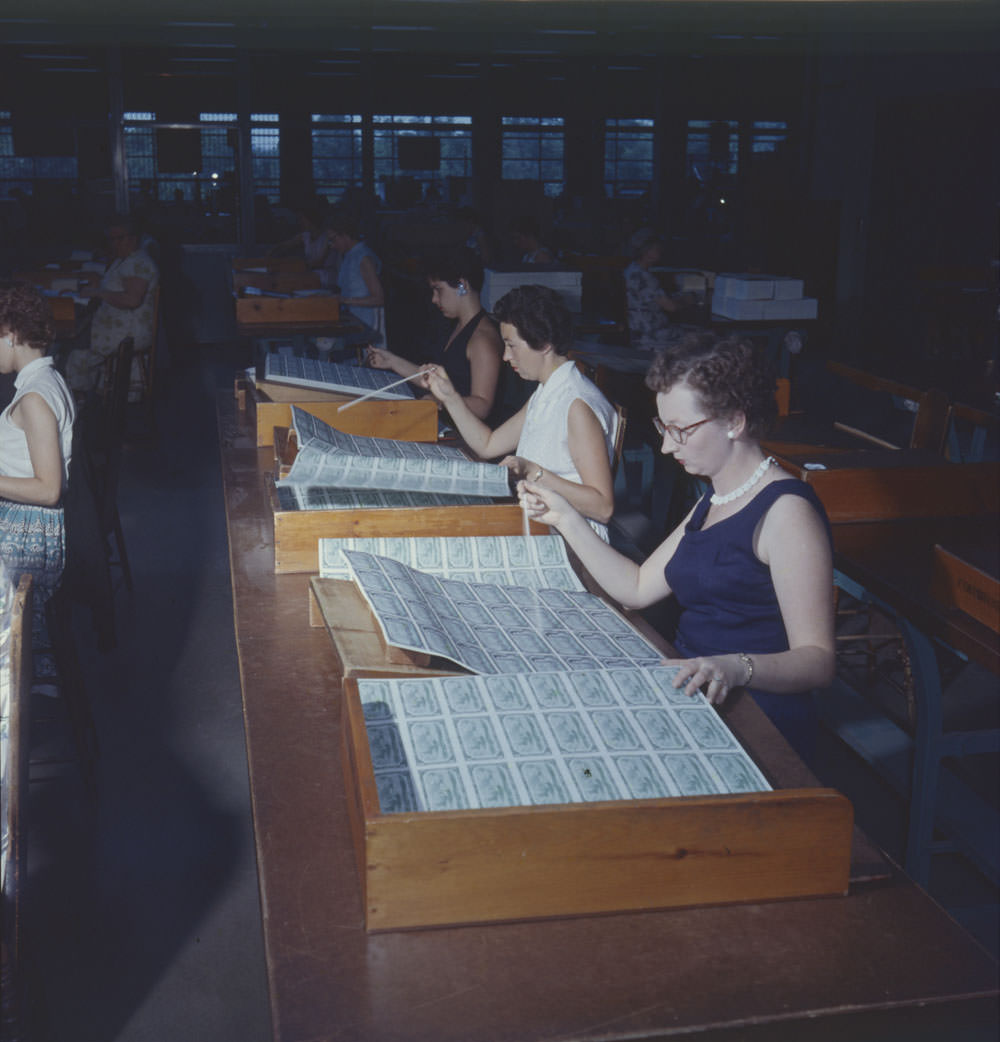
Security and precision were central to the nation’s economy. At the Canadian Bank Note Company in Ottawa in 1957, workers carefully inspected paper currency before it entered circulation.
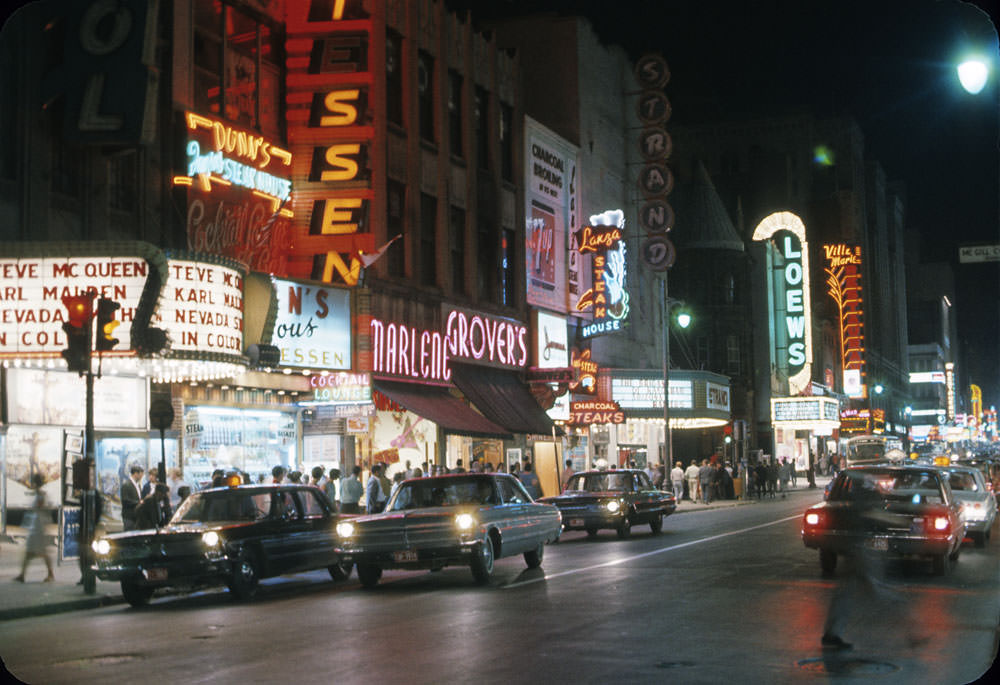
Montreal’s streets came alive after dark. Neon signs and storefronts lit the night, making the city one of Canada’s most energetic urban centers during this era.
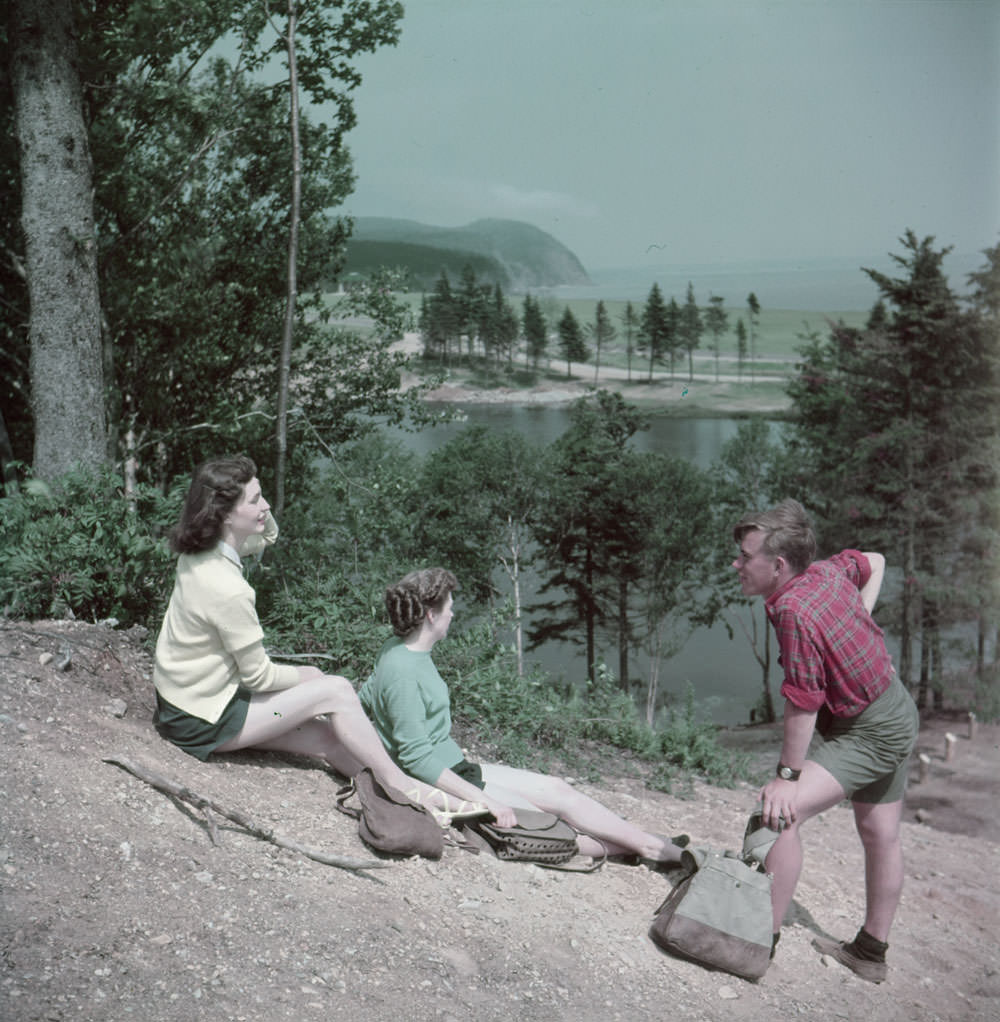
Hikers found solitude and spectacular views across Fundy National Park. In 1950, a man and two women rested on a hill above MacLaren Pond after a stretch of trail, the Bay of Fundy region spreading out around them.
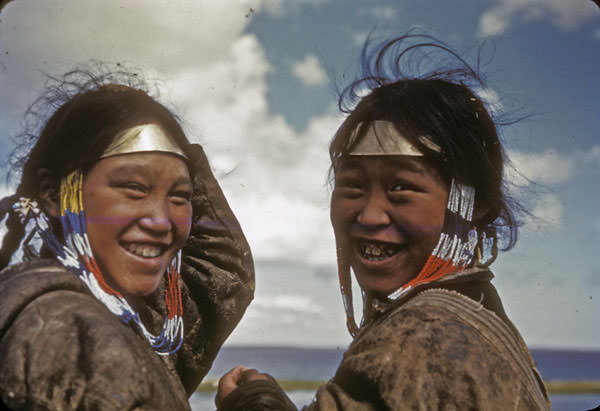
Across Canada’s Arctic communities, Inuit people maintained their ways of life while photographers documented daily realities that most Canadians never saw.
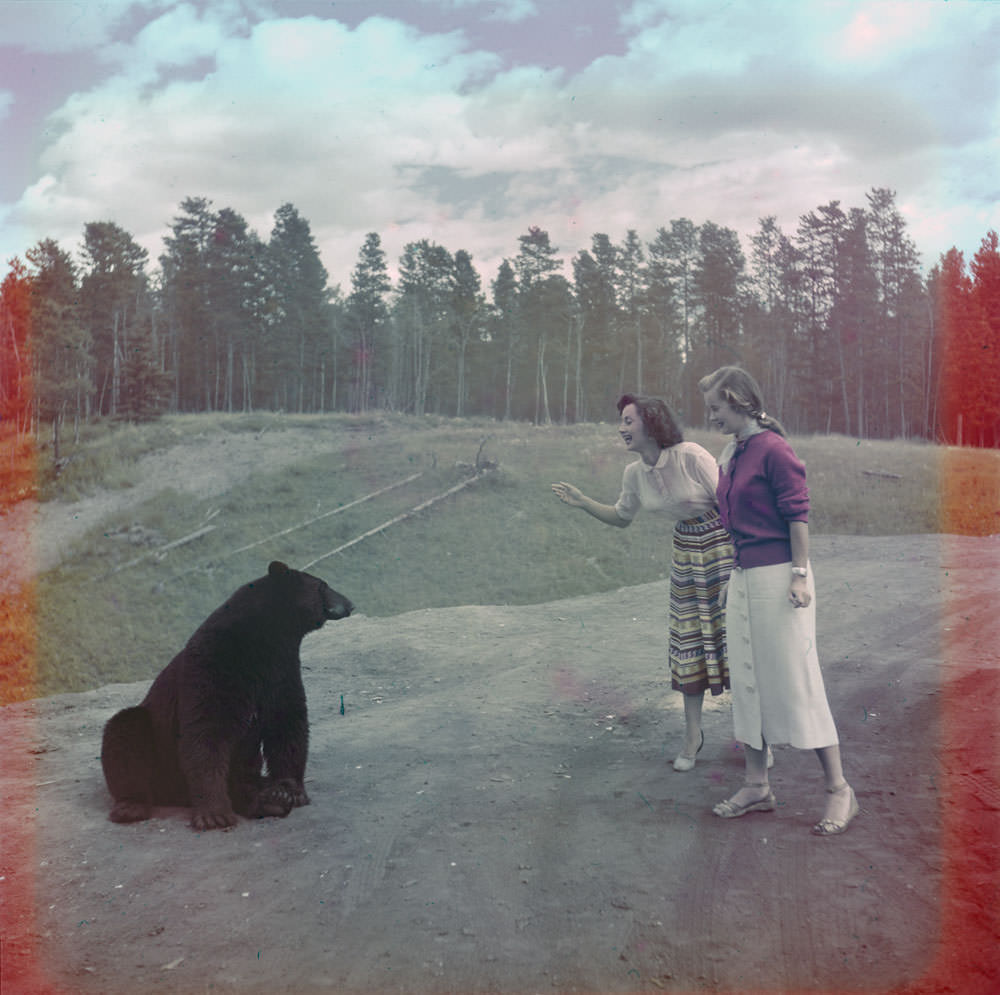
Wildlife encounters were a draw at Banff National Park. In 1951, two women fed a black bear at Nuisance Grounds in Banff, Alberta — a practice that was common at the time before park regulations tightened.
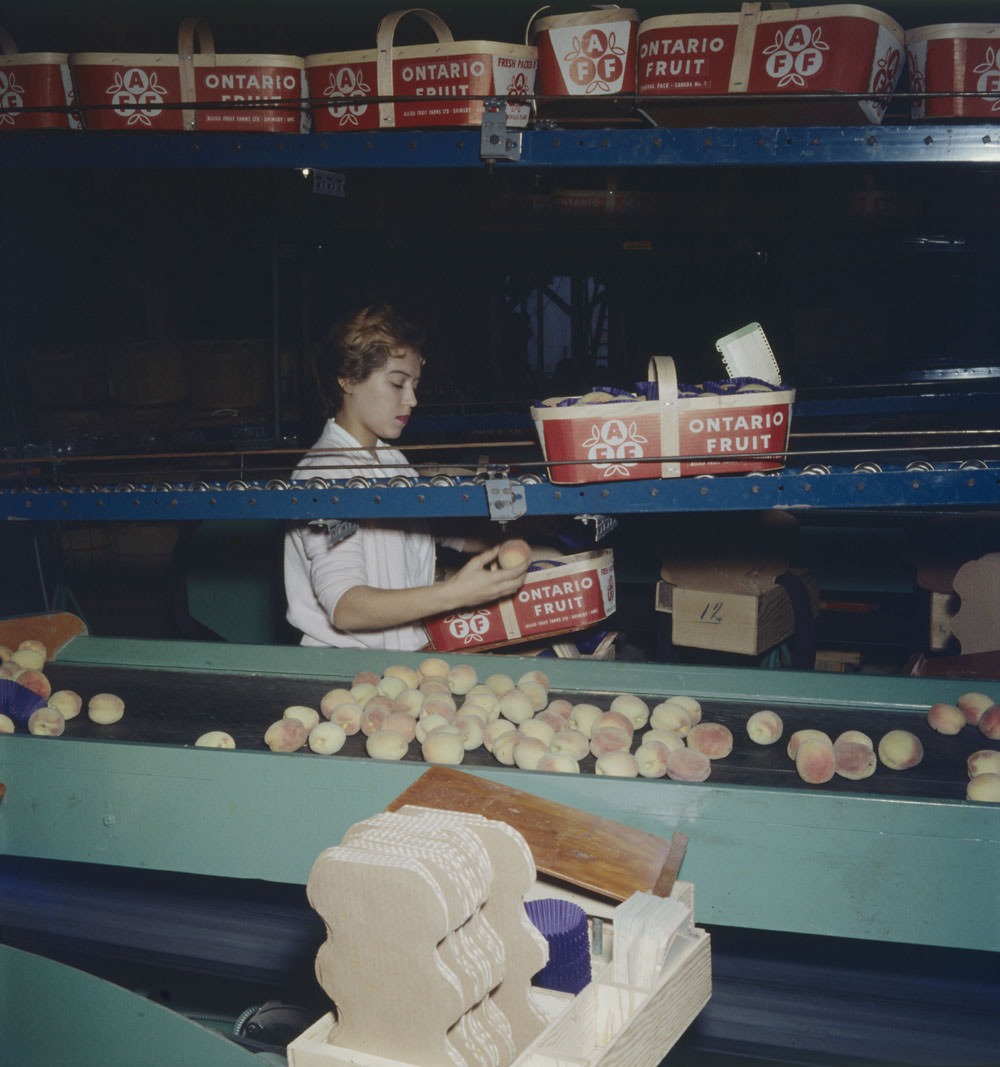
Agricultural processing kept towns like Grimsby, Ontario, busy during harvest season. In 1957, peaches moved along a conveyor belt while a young woman sorted and packed them into baskets behind the line.
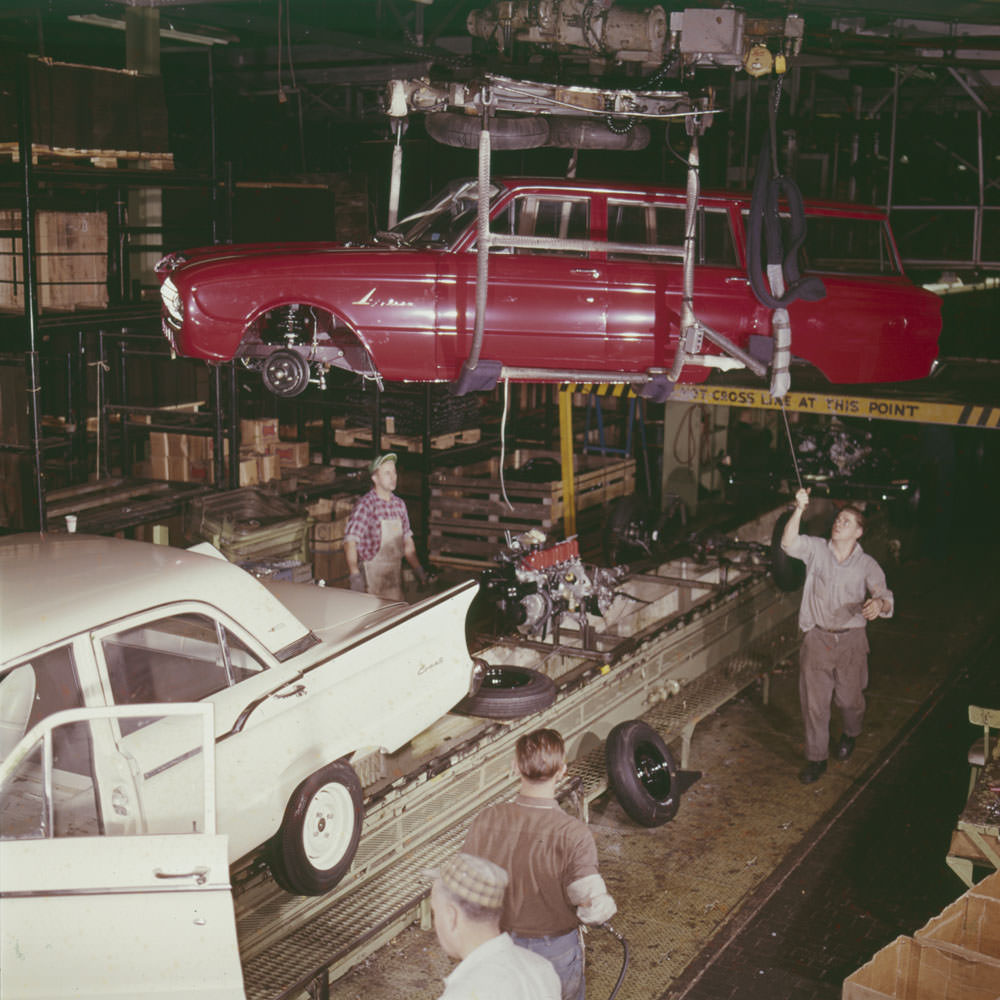
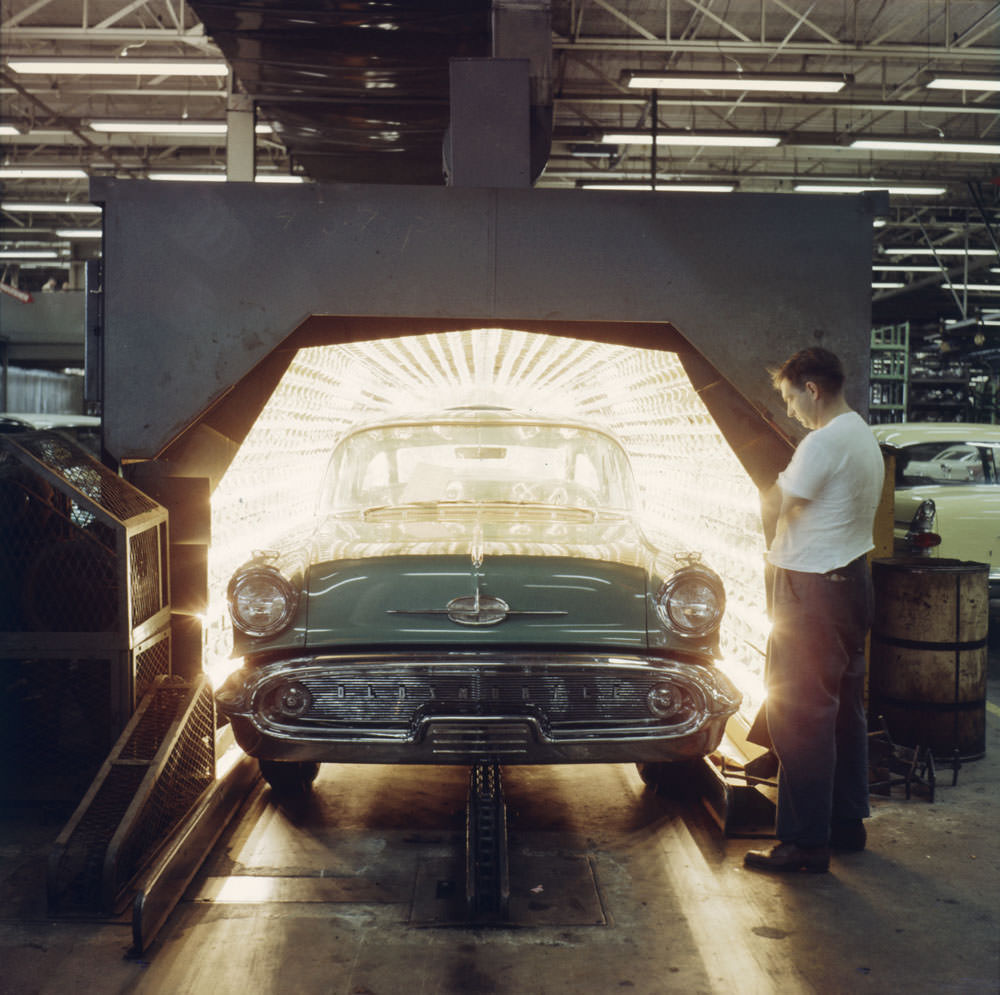
Canada’s auto industry was a powerhouse. The Ford Motor Company of Canada lowered car bodies onto production line tracks in 1961, and at General Motors in Oshawa, freshly painted automobiles rolled out of drying ovens in 1959.
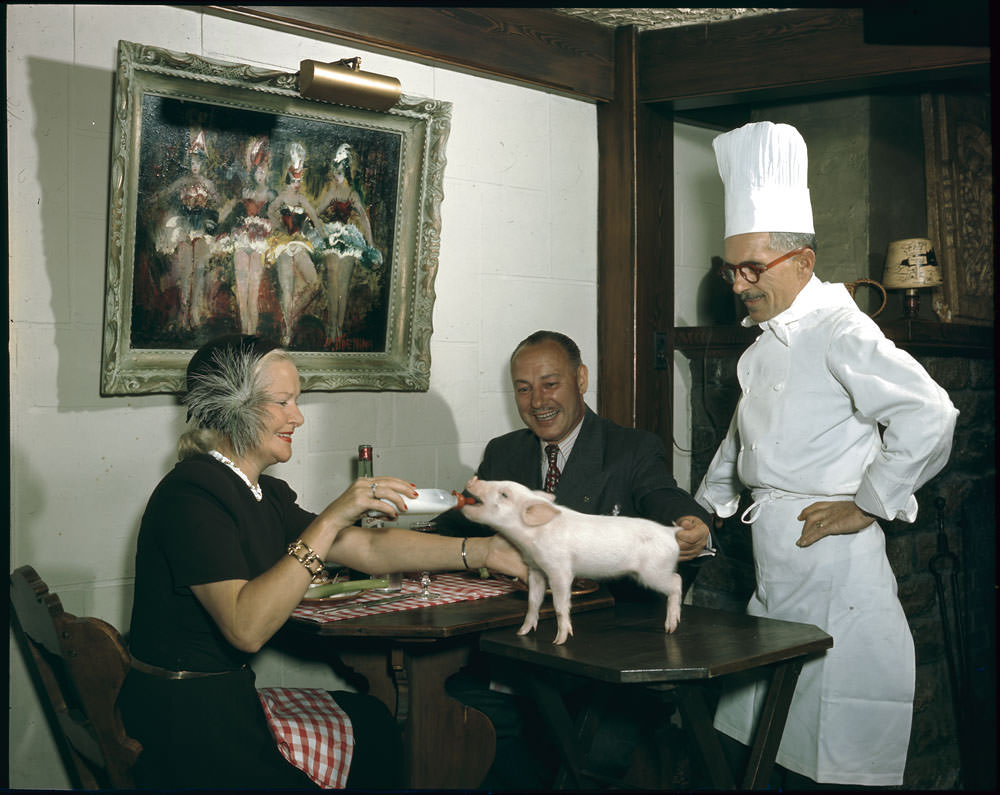
Montreal’s restaurant scene had its quirks. At Au Lutin, Colonel and Mrs. G.E. Leprohon — regulars at the establishment — fed the restaurant’s pig with a baby bottle, a novelty the venue was known for.
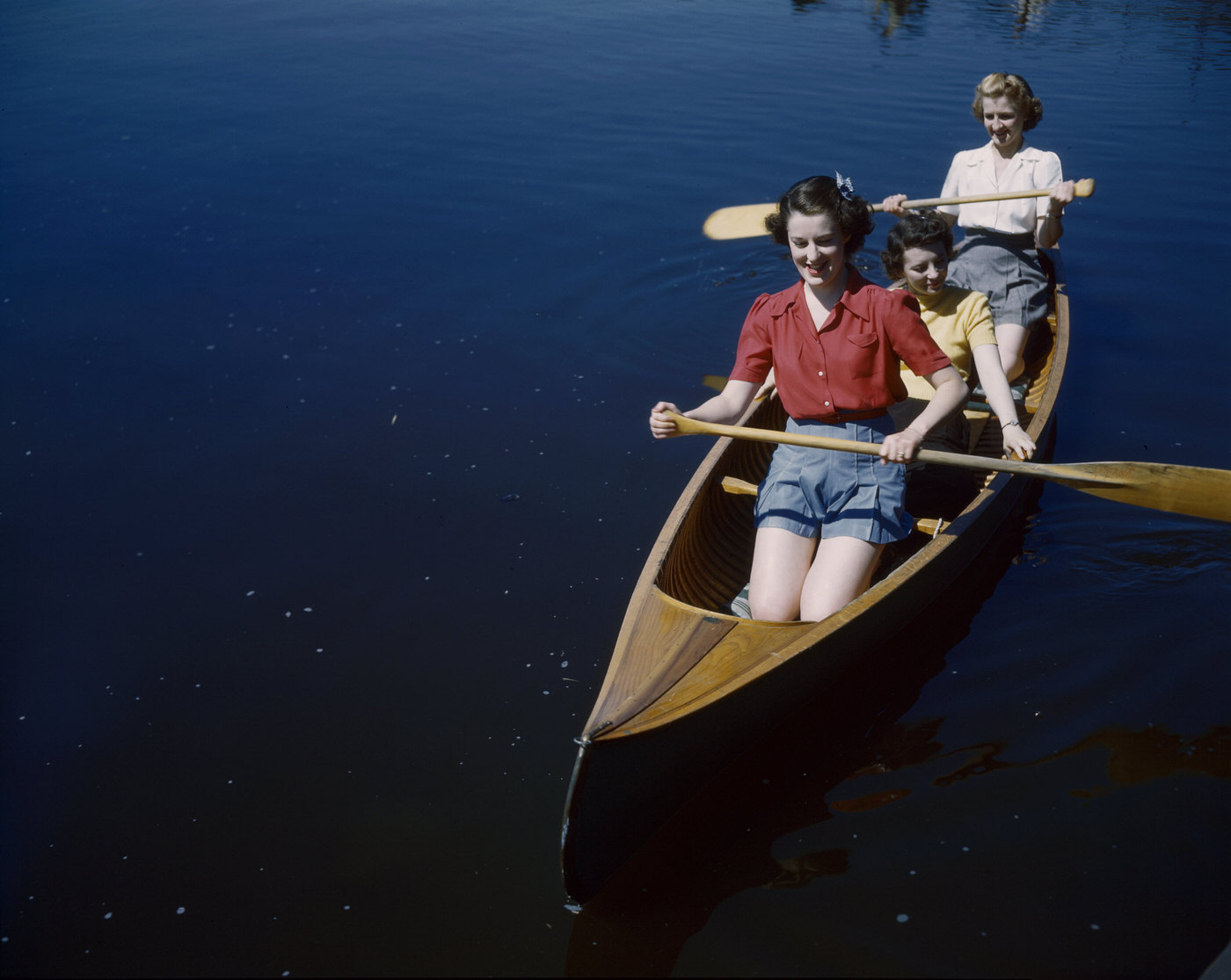
Women served actively in the Canadian Army during this period. Three servicewomen paddled a canoe together, combining military life with the outdoor skills that defined so much of the Canadian experience.
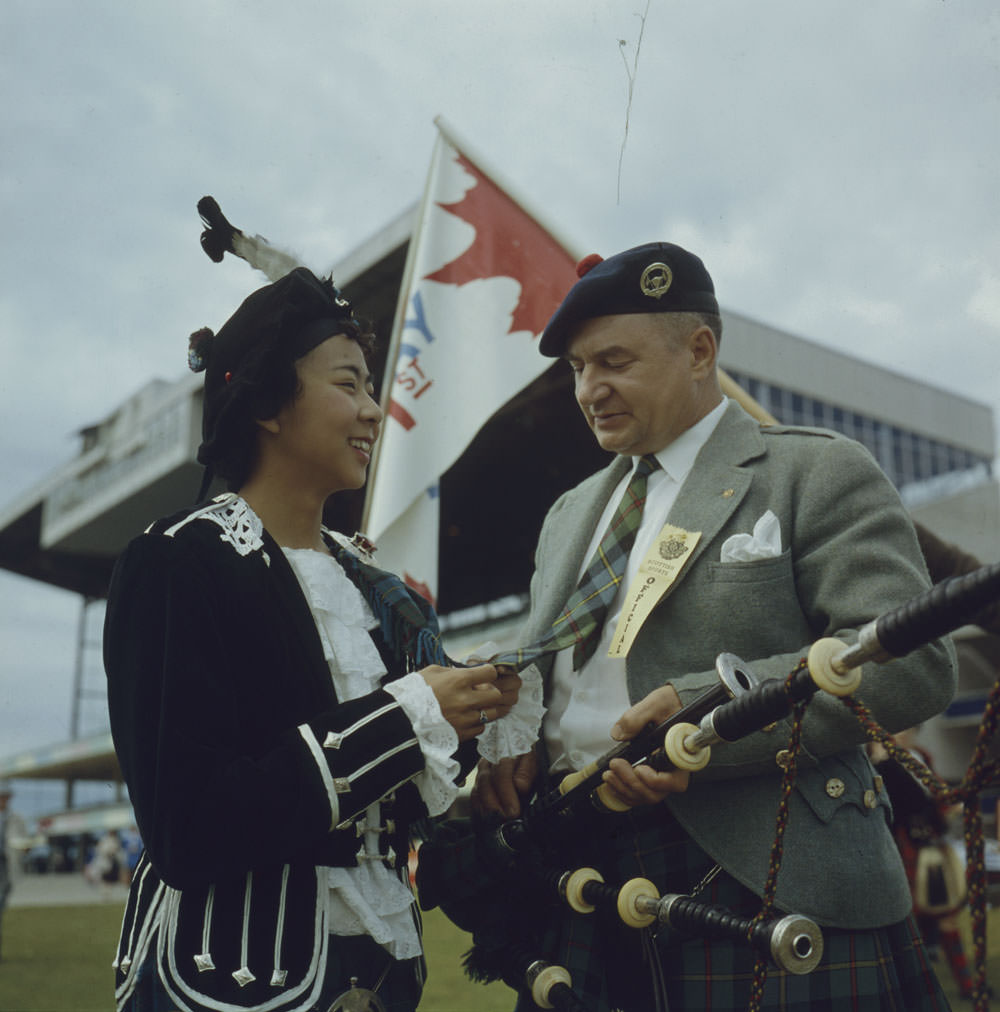
Cultural festivals celebrated Canada’s many heritages. At Kildonan Park in Winnipeg, Betty Chan admired Pipe Major Bill MacLeod’s tie, woven from the MacLeod tartan, at a Scottish heritage festival.
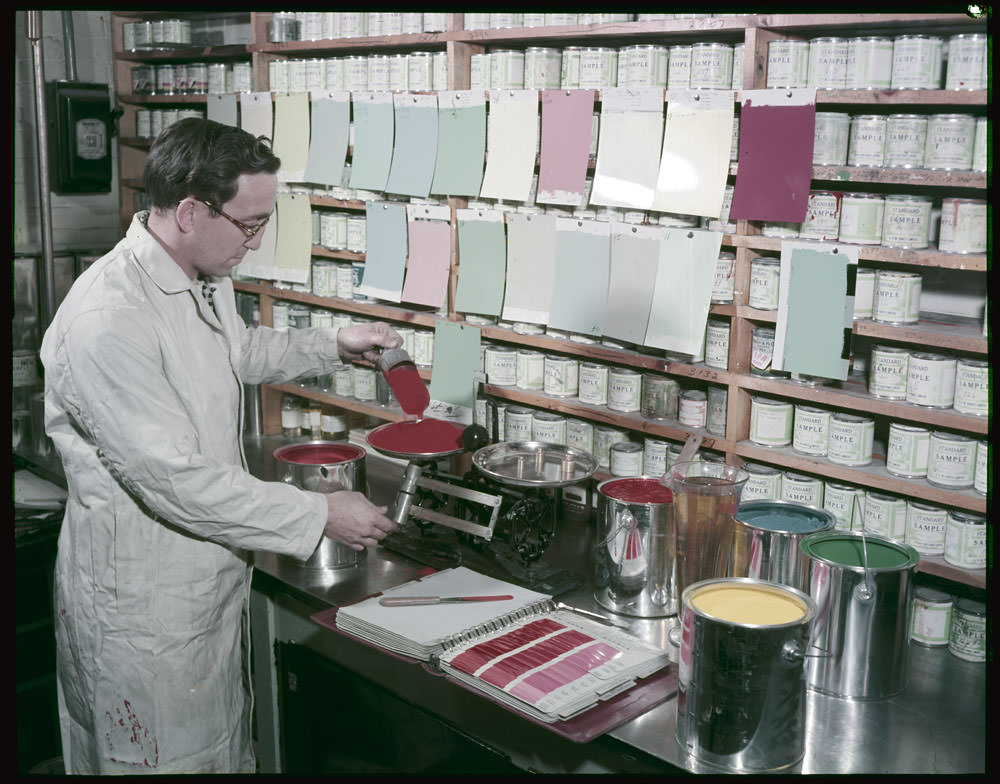
In 1955, paint technician Jean Bedard worked in the Control Laboratory at Ottawa Paint Works in Ontario, carefully tinting colors — a technical job that required both skill and a sharp eye.
In Ivujivik, Quebec, in 1951, a young Inuit boy named Saviarjuk Usuarjuk stood in front of a rack of fish drying in the open air — a traditional food preservation method central to life in the North.
![Inuit boy [Saviarjuk Usuarjuk] in front of rack of drying fish, Ivujivik, Quebec, 1951](https://www.bygonely.com/wp-content/uploads/2024/04/Mid-Century_Canada_color_photos_33.jpg)
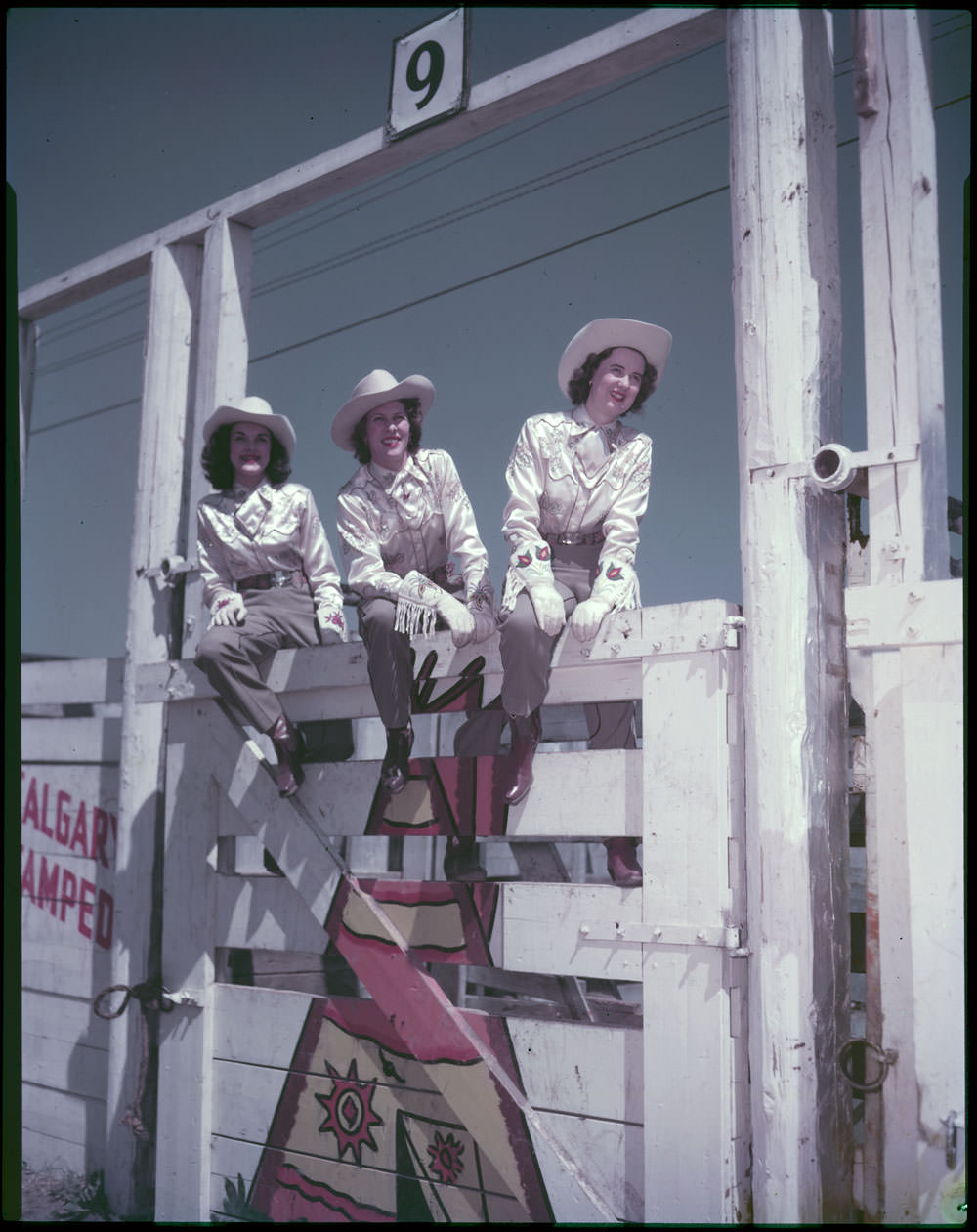
The Calgary Stampede drew spectators from across the country. Stampede Queen Mrs. Merle K. Stier, flanked by two attendants, watched riding and roping events from the stands — one of the most iconic gatherings in Canadian life.