Hey There! Before You Go. 😧
Get the best vintage content straight into your inbox!

Don't worry, we don't spam

A Day in the Life of the L.A.’s Notorious Mobster Mickey Cohen in 1949

In 1949, Mickey Cohen was the most feared man in Los Angeles. Born in Brooklyn in 1913, he moved to California with his family as a young child. He found his way into crime as a teenager, first through boxing and then through the Depression-era underworld. He worked for powerful crime figures in Cleveland, New York, and Chicago before landing in Los Angeles, where he became an enforcer for Bugsy Siegel.
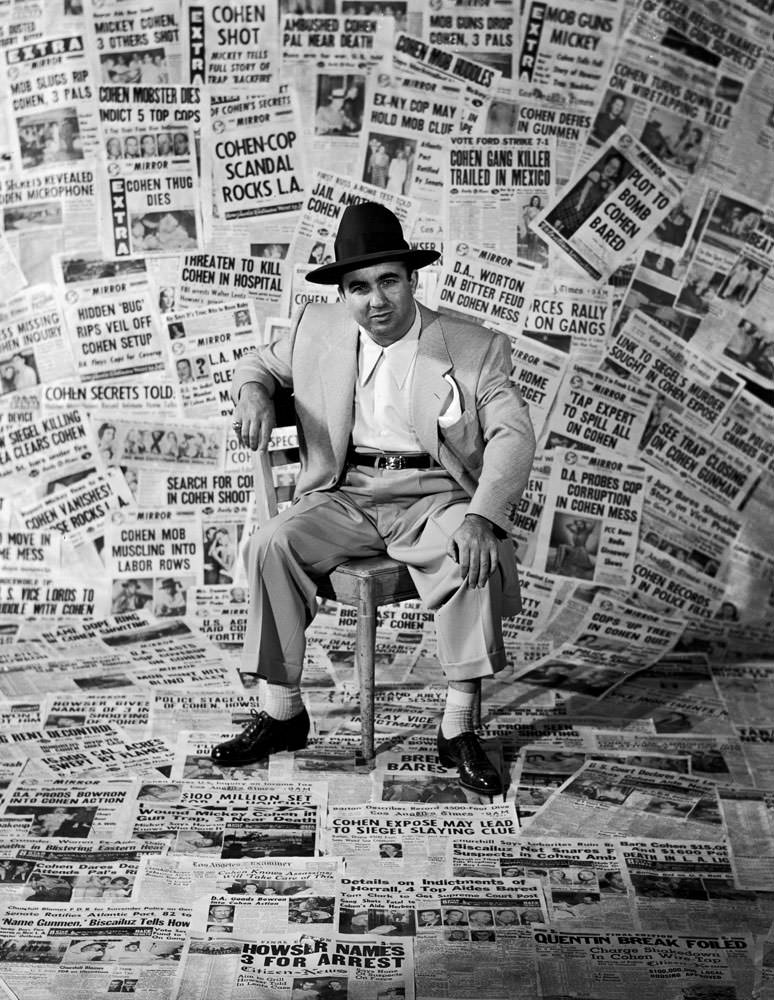
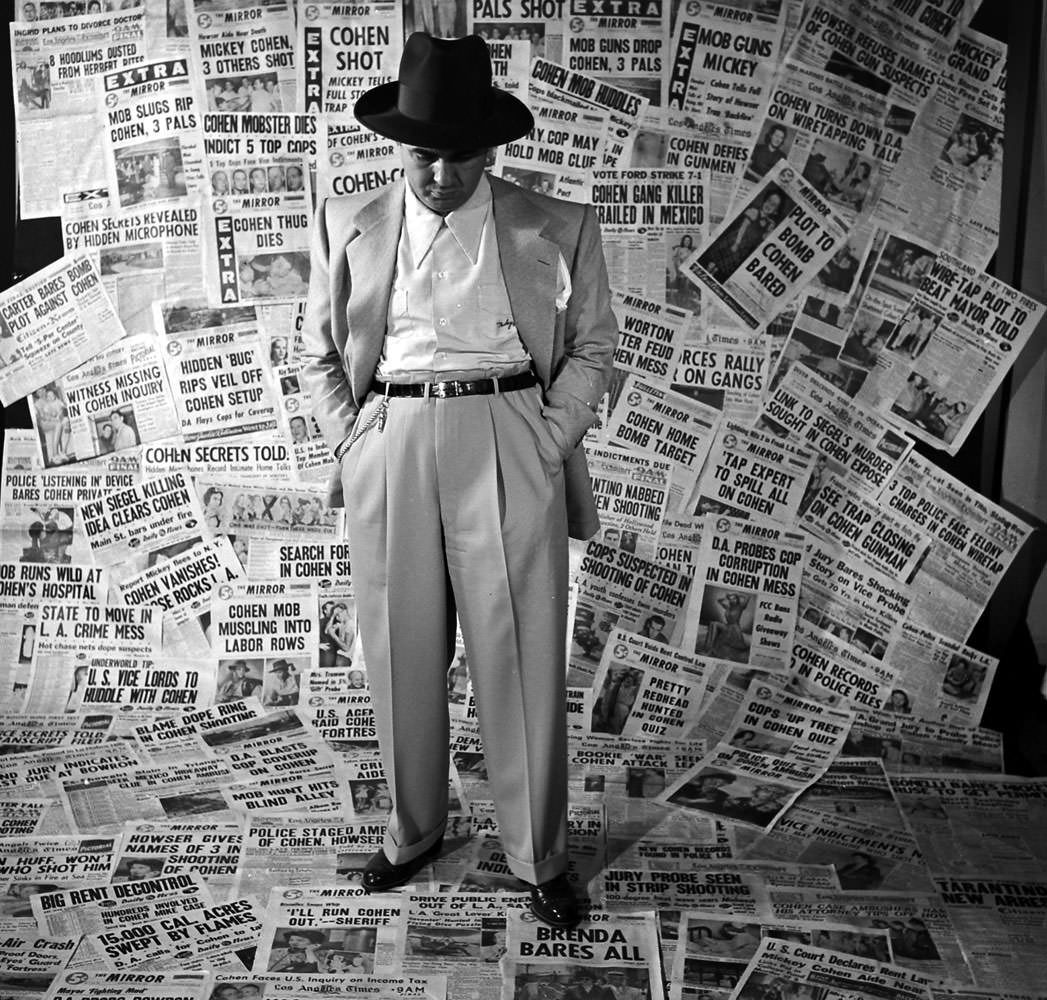
Gangster Mickey Cohen sits amid the front pages of newspapers that helped make him the city's' most infamous citizen, Los Angeles, 1949.
Gangster Mickey Cohen sits amid the front pages of newspapers that helped make him the city’s’ most infamous citizen, Los Angeles, 1949.

When Siegel was murdered in 1947, Cohen stepped into the vacuum and became the West Coast’s top mob boss. He ran gambling operations, extortion rackets, and held deep connections in Hollywood, where he used blackmail and union control to turn a profit. His ties to Meyer Lansky and Frank Costello gave him the backing of the most powerful crime families in the country.
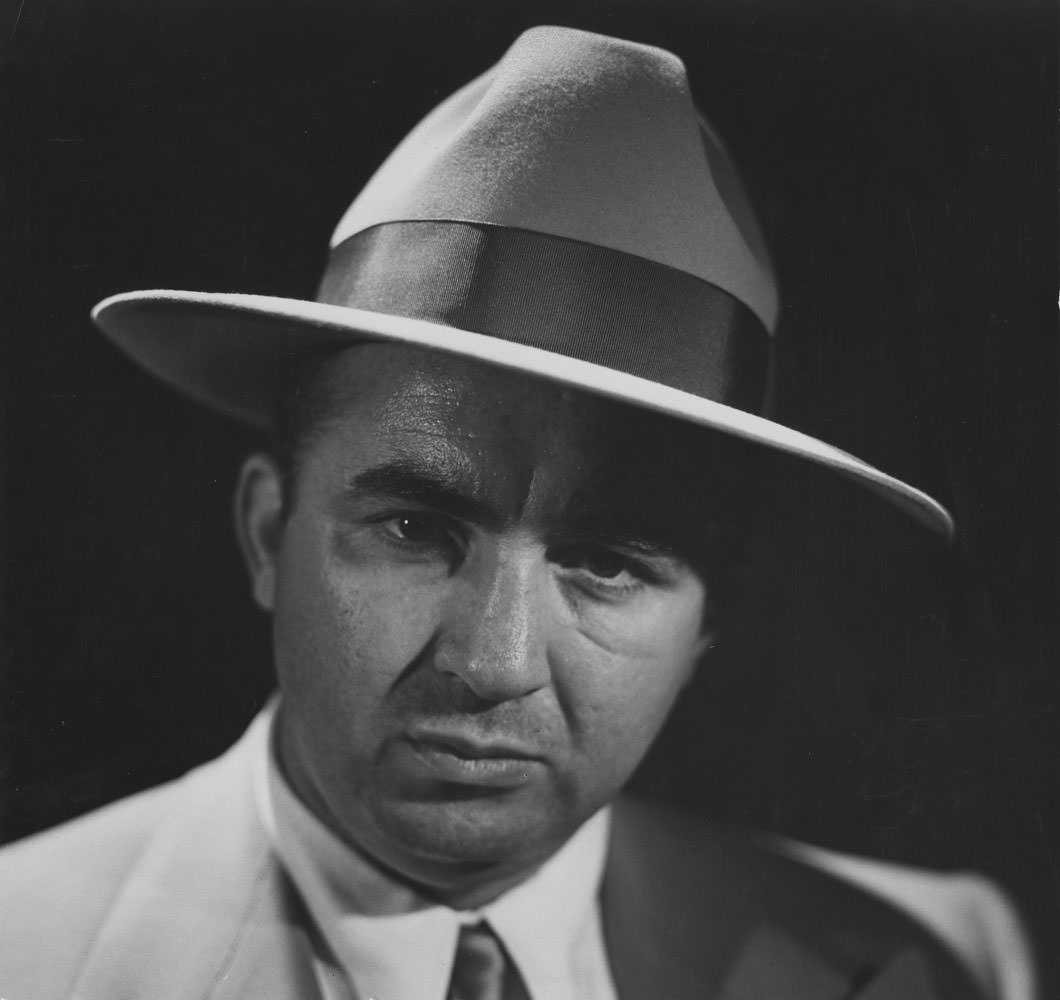
Mickey Cohen, 1949.
Mickey Cohen, 1949.

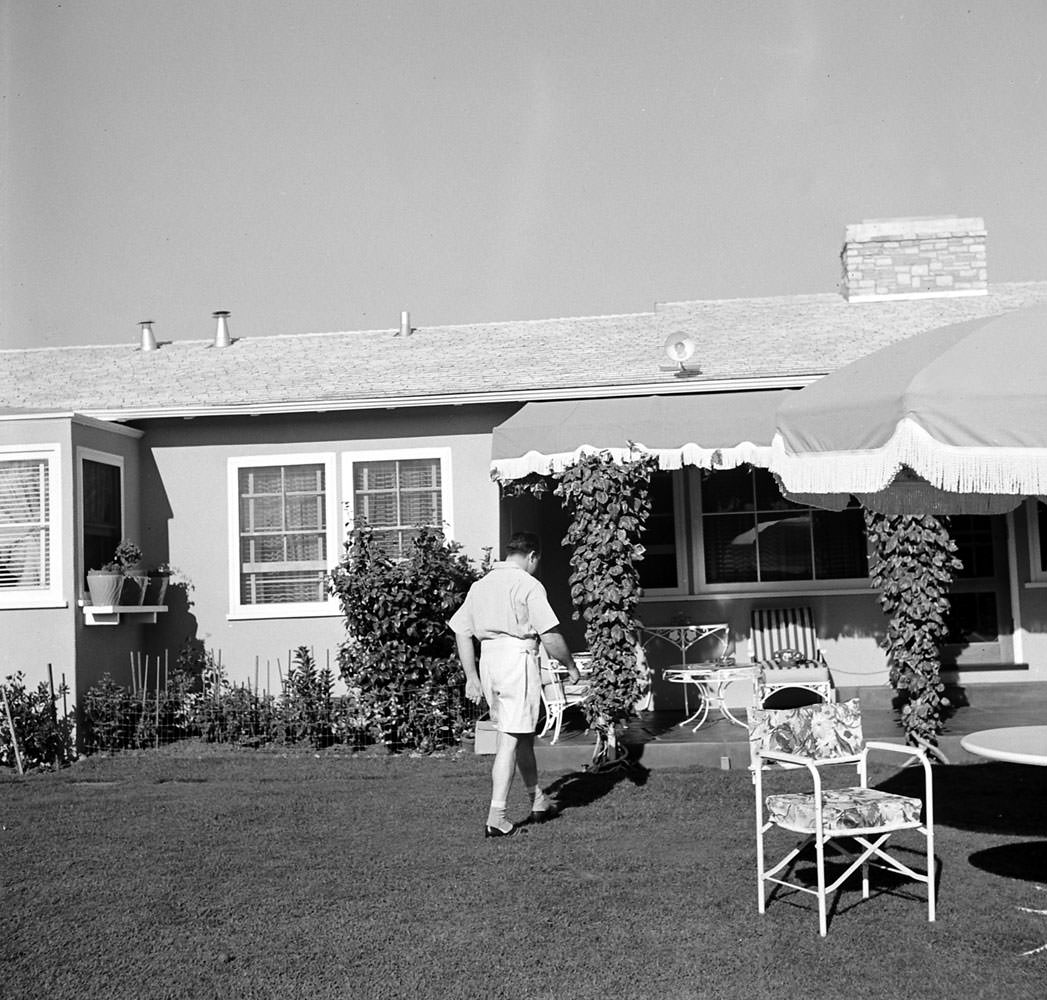
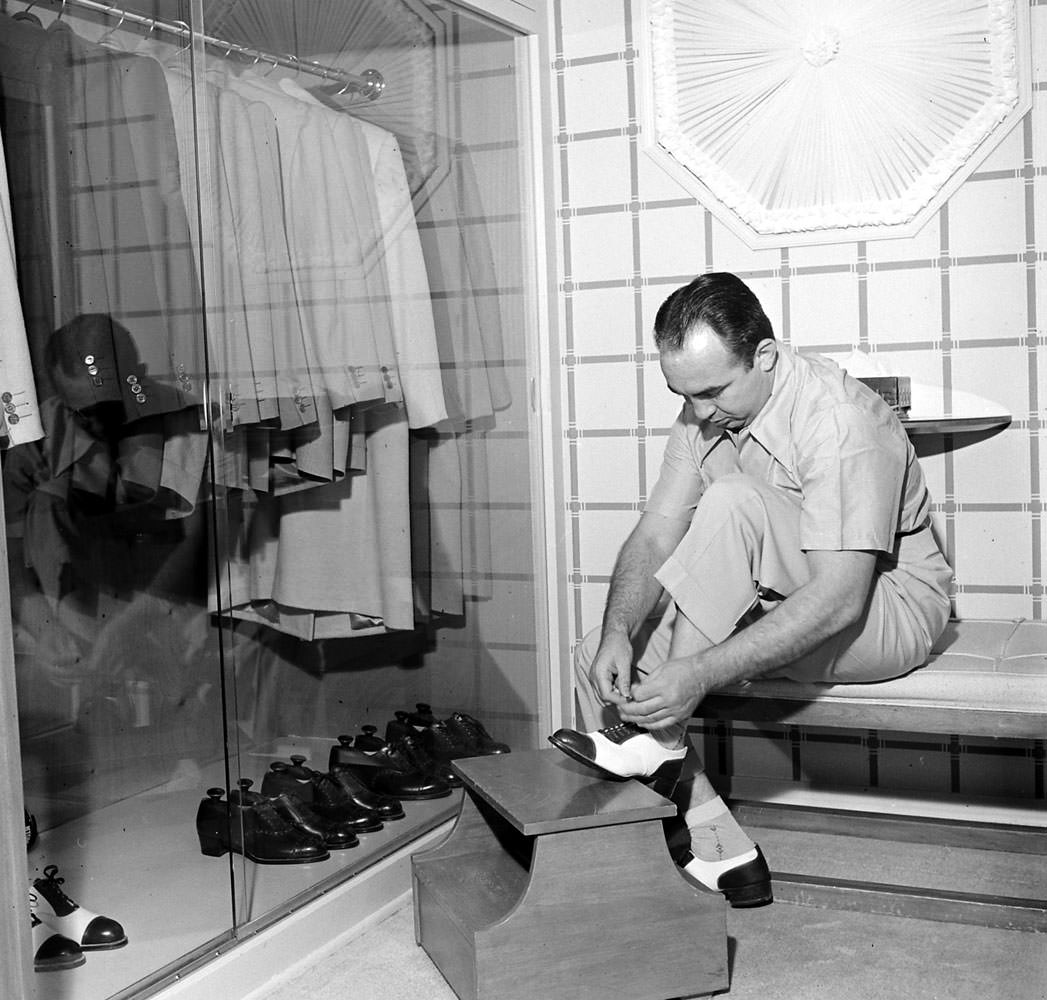
That same year, LIFE magazine photographer Ed Clark was given access to Cohen’s home. What Clark captured was a performance — a deliberate effort by Cohen and his wife, LaVonne, to appear as an ordinary, respectable couple living a comfortable suburban life.
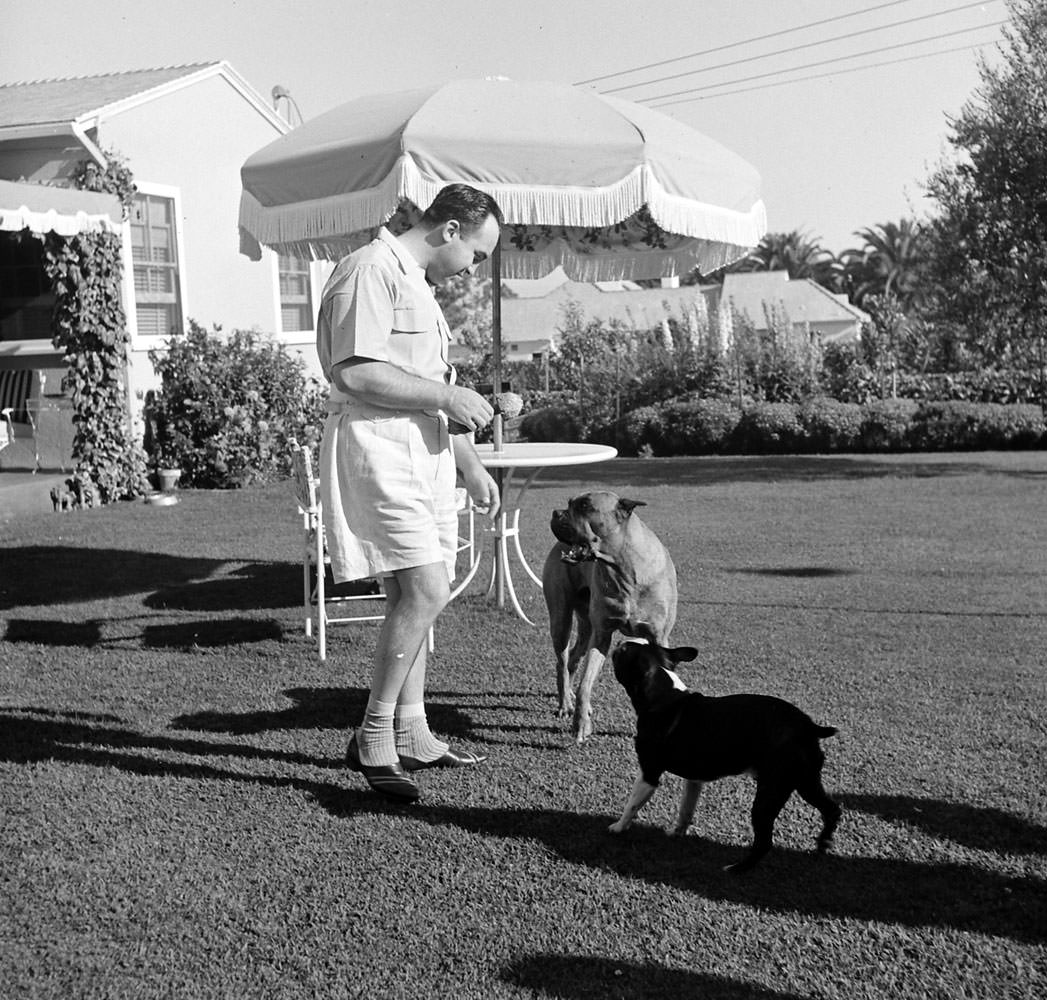
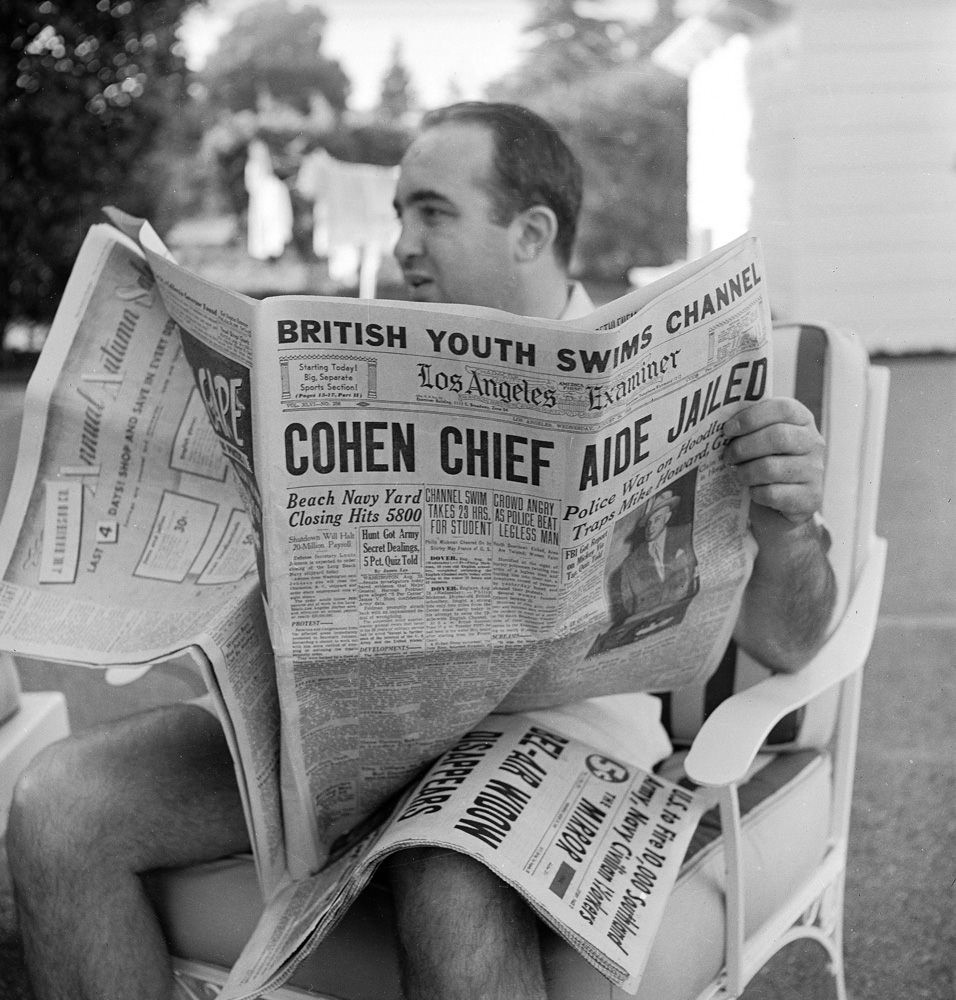
Mickey Cohen at home in Los Angeles, 1949.
Mickey Cohen relaxing at home in Los Angeles, 1949.

Cohen was always impeccably dressed. He drove expensive cars and lived in a well-appointed home — all of it funded by his criminal operations. The domestic scenes Clark photographed were carefully constructed to project normalcy. But Cohen’s interactions with law enforcement told a different story.
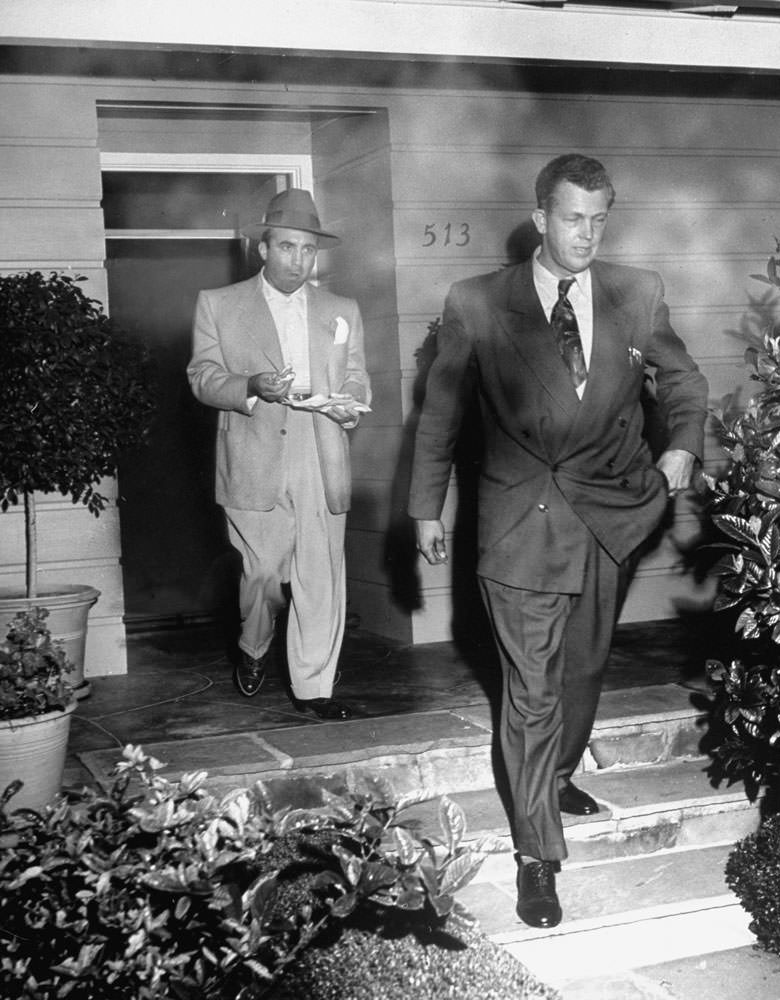
Angry and hungry, Mickey eats sandwich as he leaves home with cop who arrested him for cursing other officers. Mickey called arrest persecution.

Clark also photographed Cohen at home with LaVonne. The two posed like any other married couple — sharing meals, sitting together, going about their day. It was exactly the image Cohen wanted the public to see.
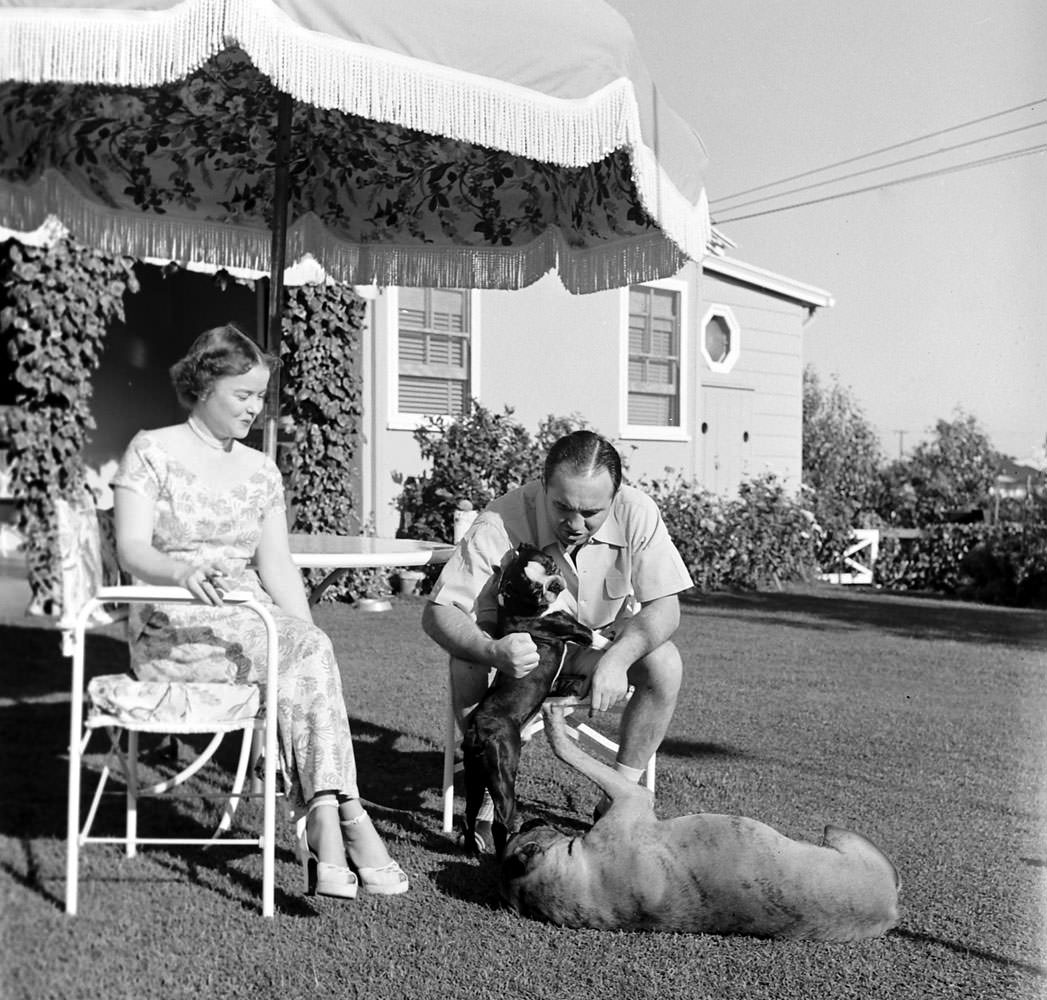
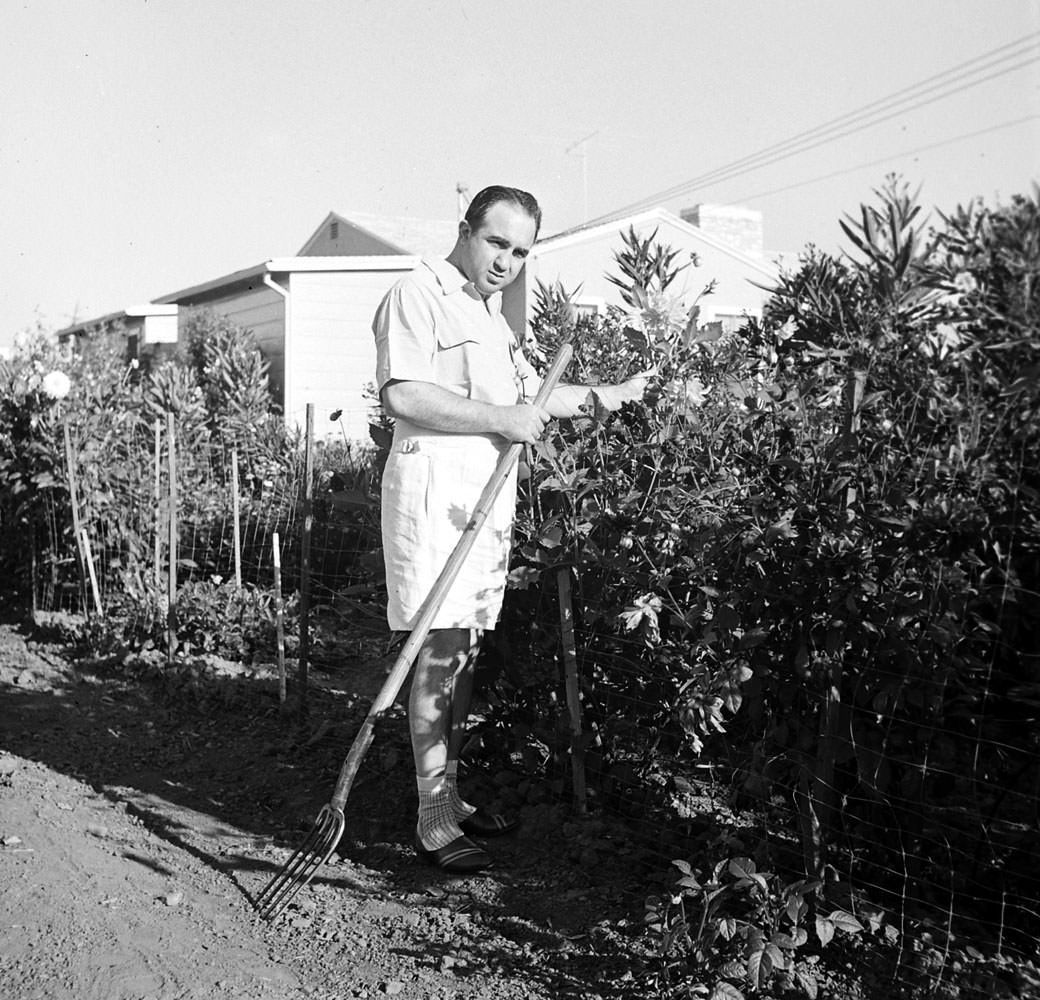
Mickey Cohen with his wife, LaVonne, at home in Los Angeles, 1949.
Mickey Cohen at home in Los Angeles, 1949.
Mickey Cohen's wife, LaVonne, at home in Los Angeles, 1949.
Mickey Cohen’s wife, LaVonne, at home in Los Angeles, 1949.

Away from the cameras, Cohen’s world was built on violence and fear. Still, on the day Clark visited, Cohen smelled flowers in his garden and played with his dogs — small, deliberate gestures that fed the narrative of an ordinary man living an ordinary life.
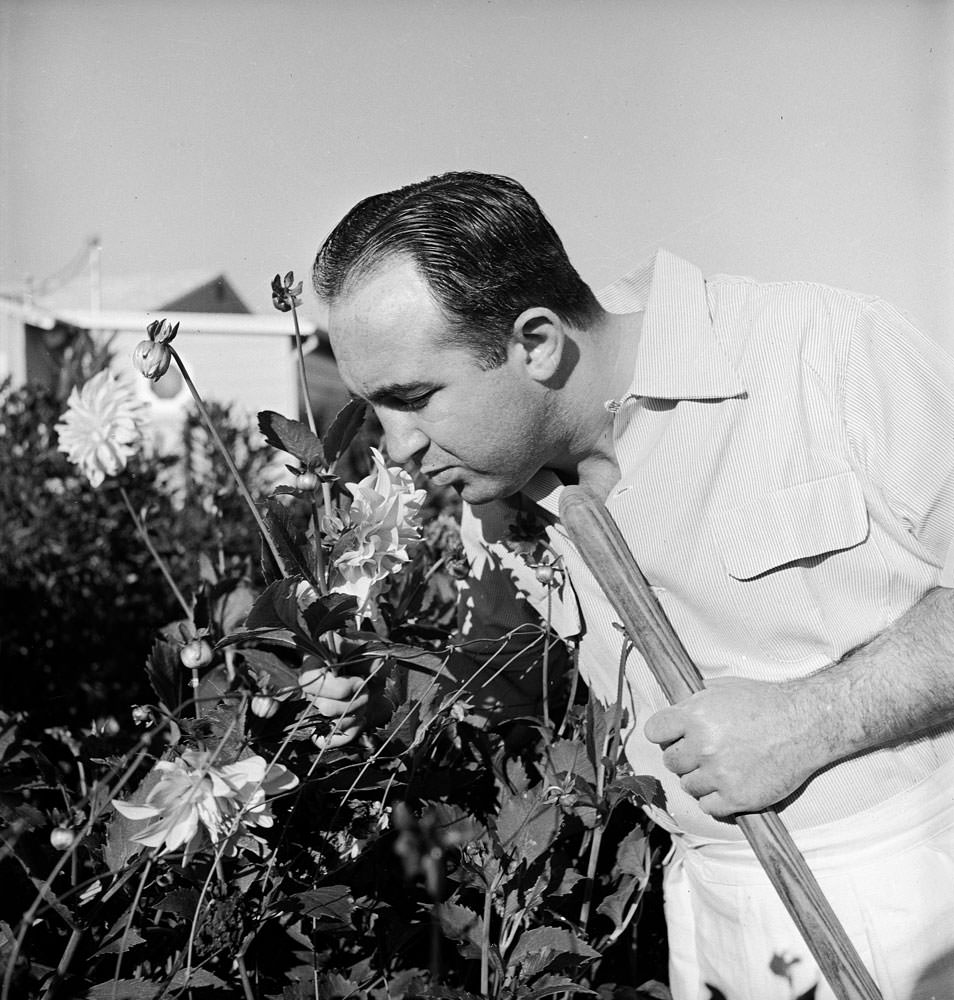
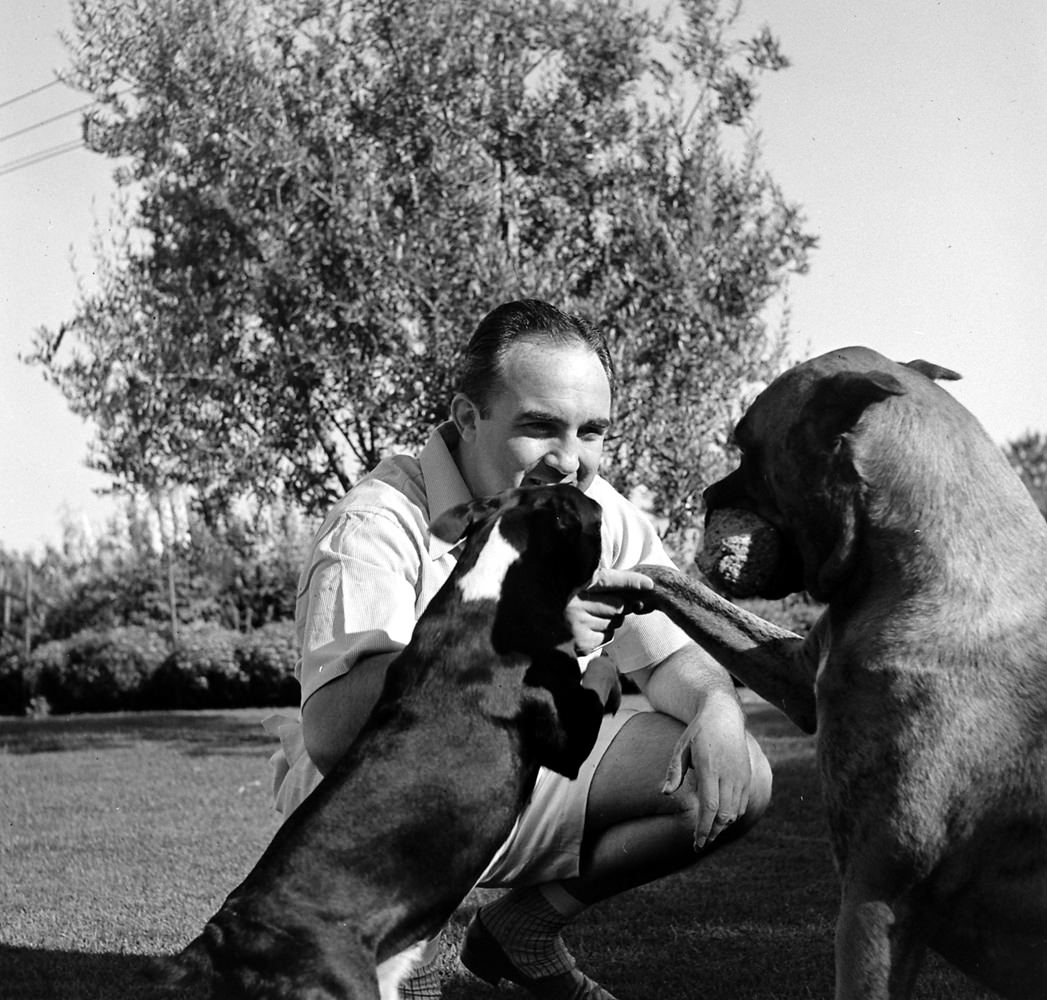
Mickey Cohen smells flowers at home in Los Angeles, 1949.
Mickey Cohen plays with dogs at home in Los Angeles, 1949.
Mickey Cohen at home in Los Angeles, 1949.

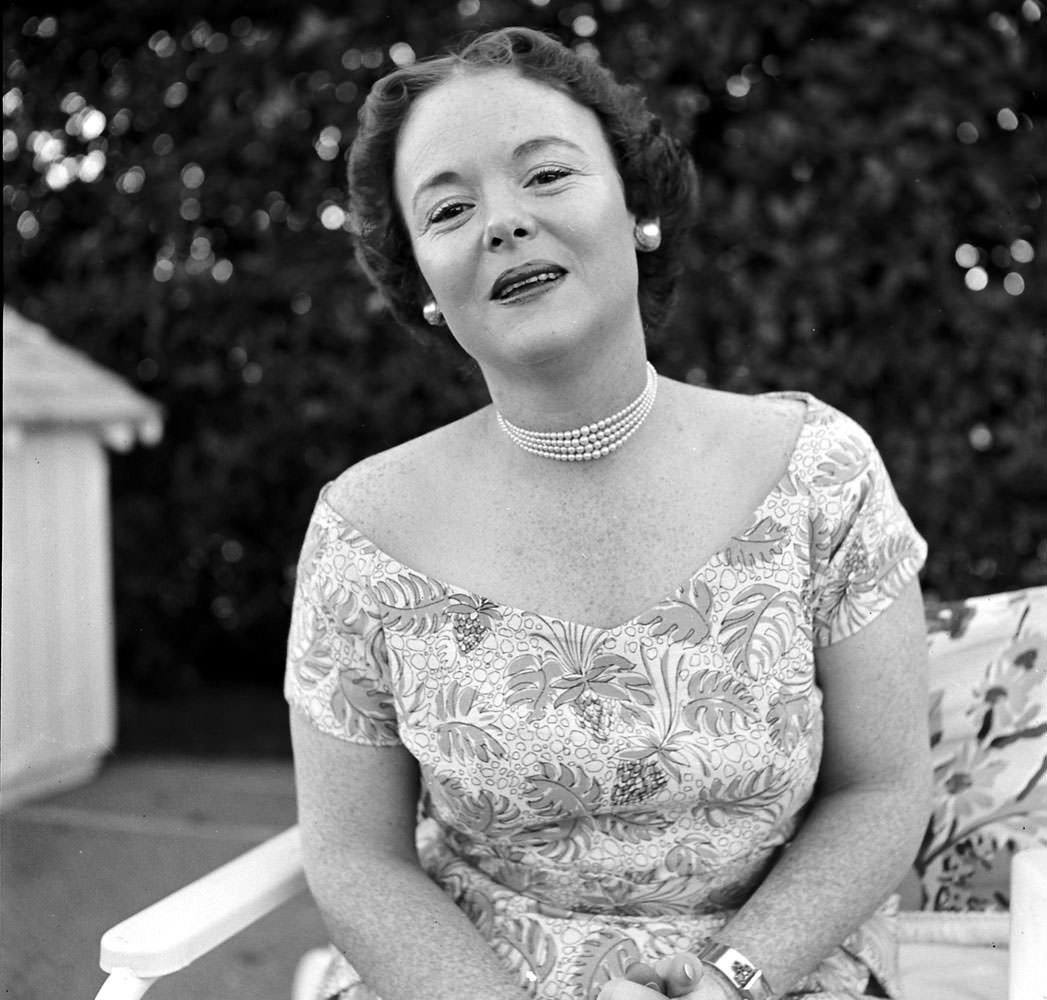
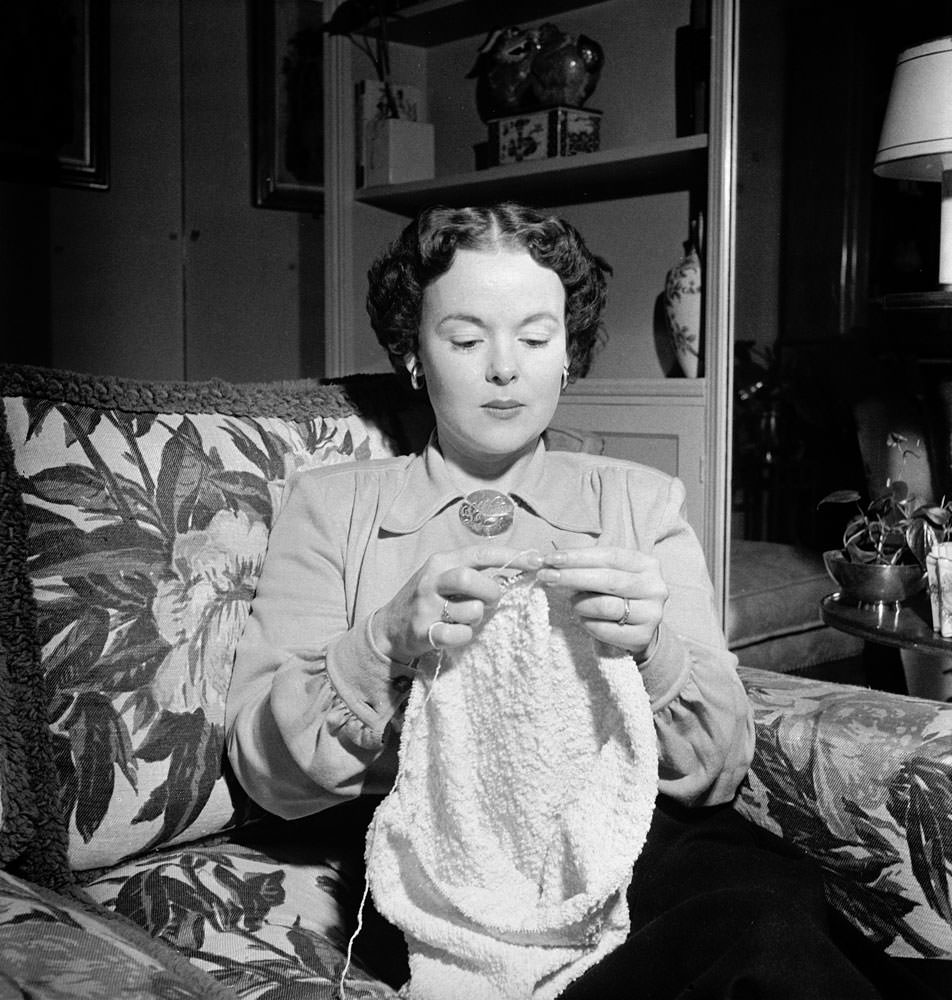
LaVonne appeared throughout the photo series on her own as well, reinforcing the image of a stable home life. The couple understood the value of public perception, and these photographs were a direct tool for shaping it.
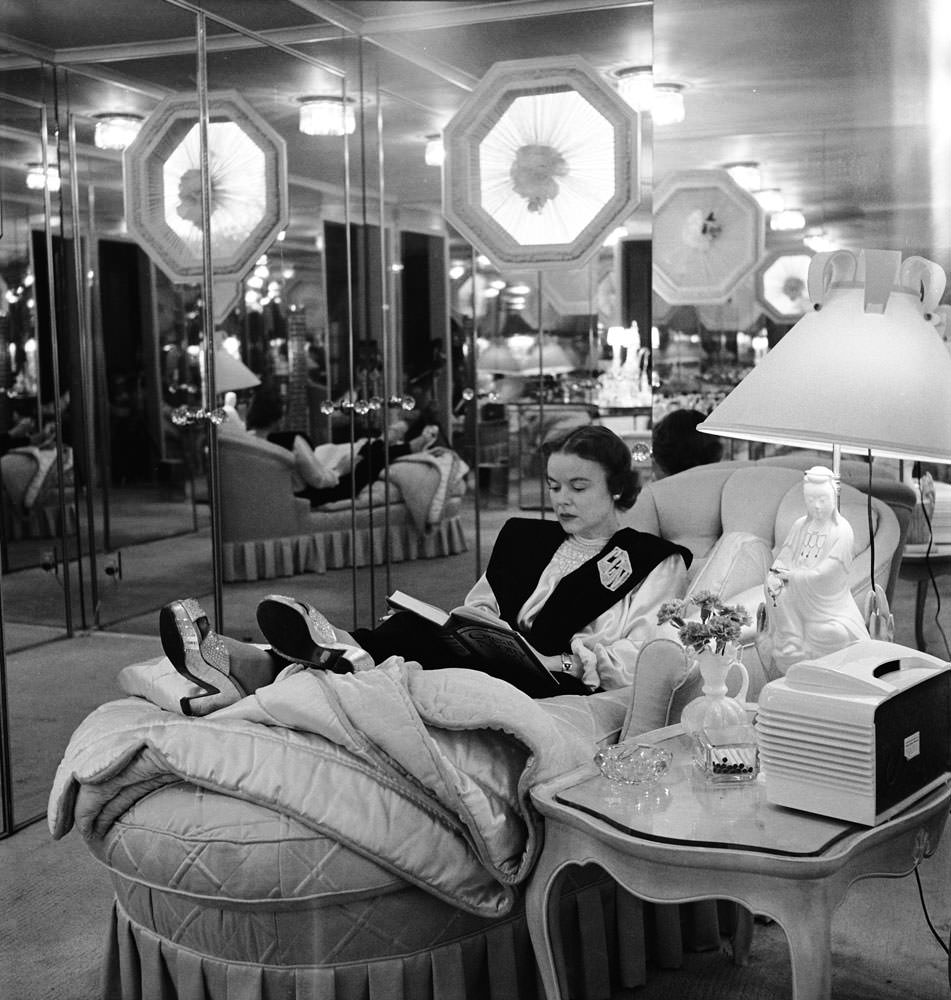
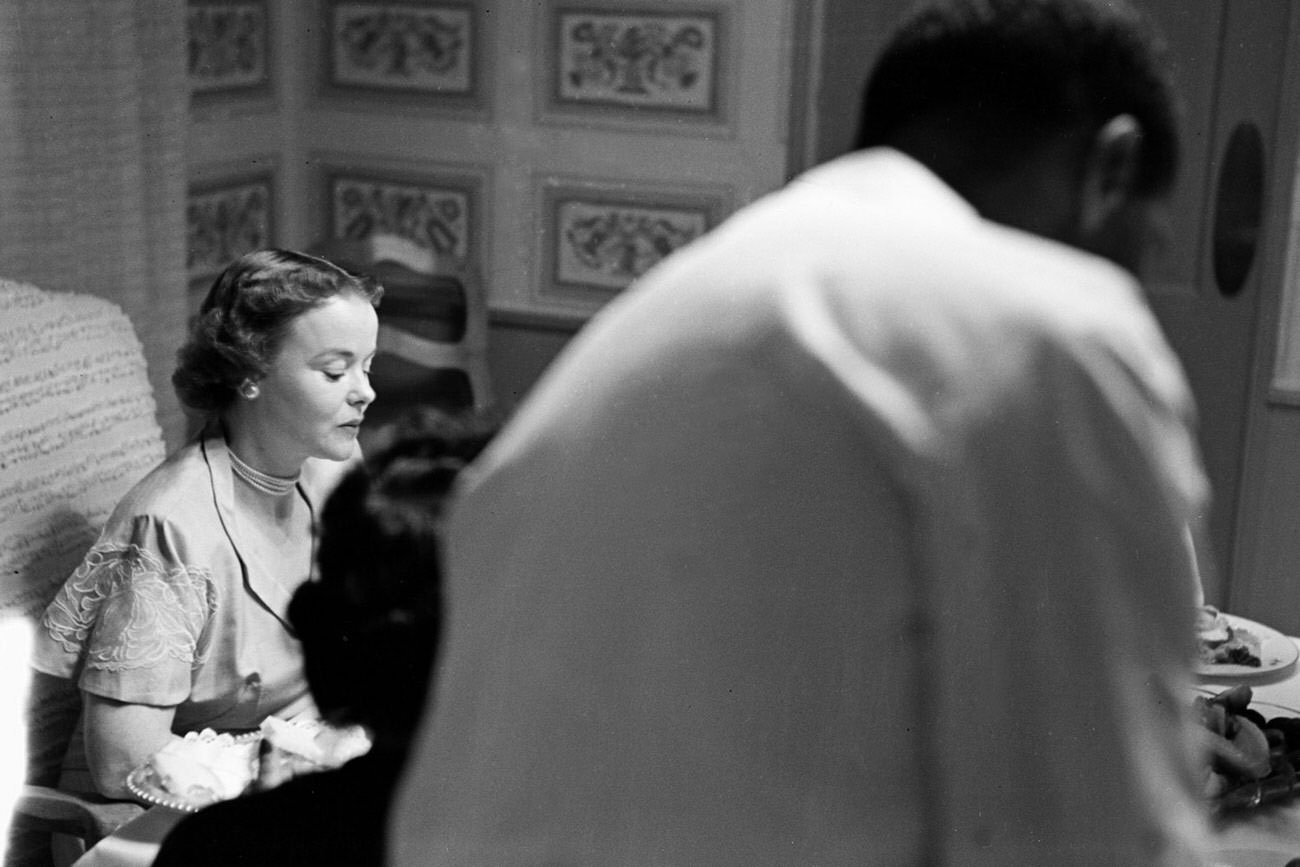
Mickey Cohen's wife, LaVonne, at home in Los Angeles, 1949.
Mickey Cohen’s wife, LaVonne, at home in Los Angeles, 1949.
Mickey Cohen's wife, LaVonne, 1949.
Mickey Cohen’s wife, LaVonne, 1949.
Mickey Cohen's wife, LaVonne, at home in Los Angeles, 1949.
Mickey Cohen’s wife, LaVonne, at home in Los Angeles, 1949.

Among the more revealing photos, Cohen poses with a book given to him by the Hebrew Committee of National Liberation — a nod to a public, political identity he also cultivated. Nearby, his inner circle was never far away.
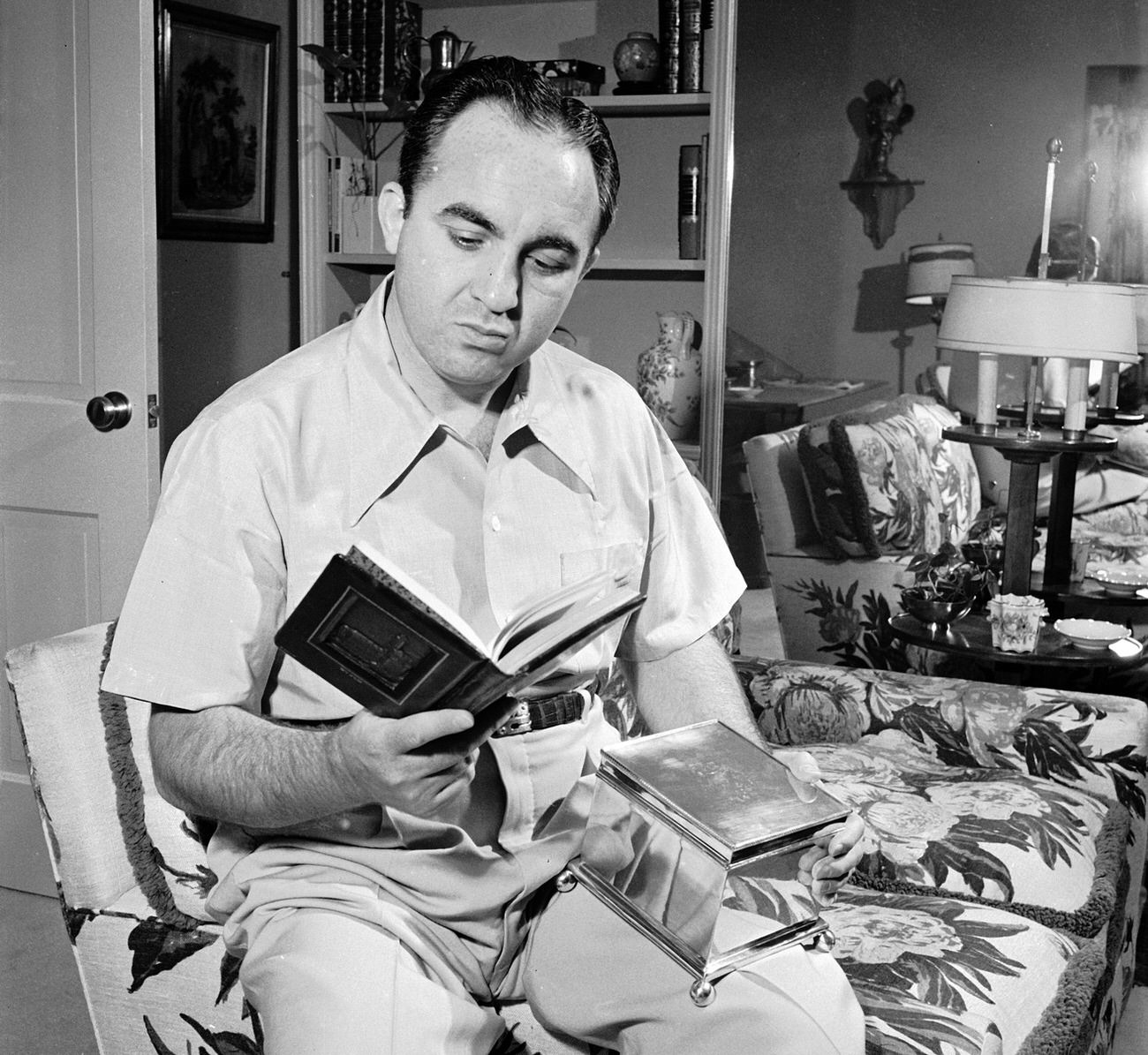
Mickey Cohen at home with a book given to him by the Hebrew Committee of National Liberation, Los Angeles, 1949.

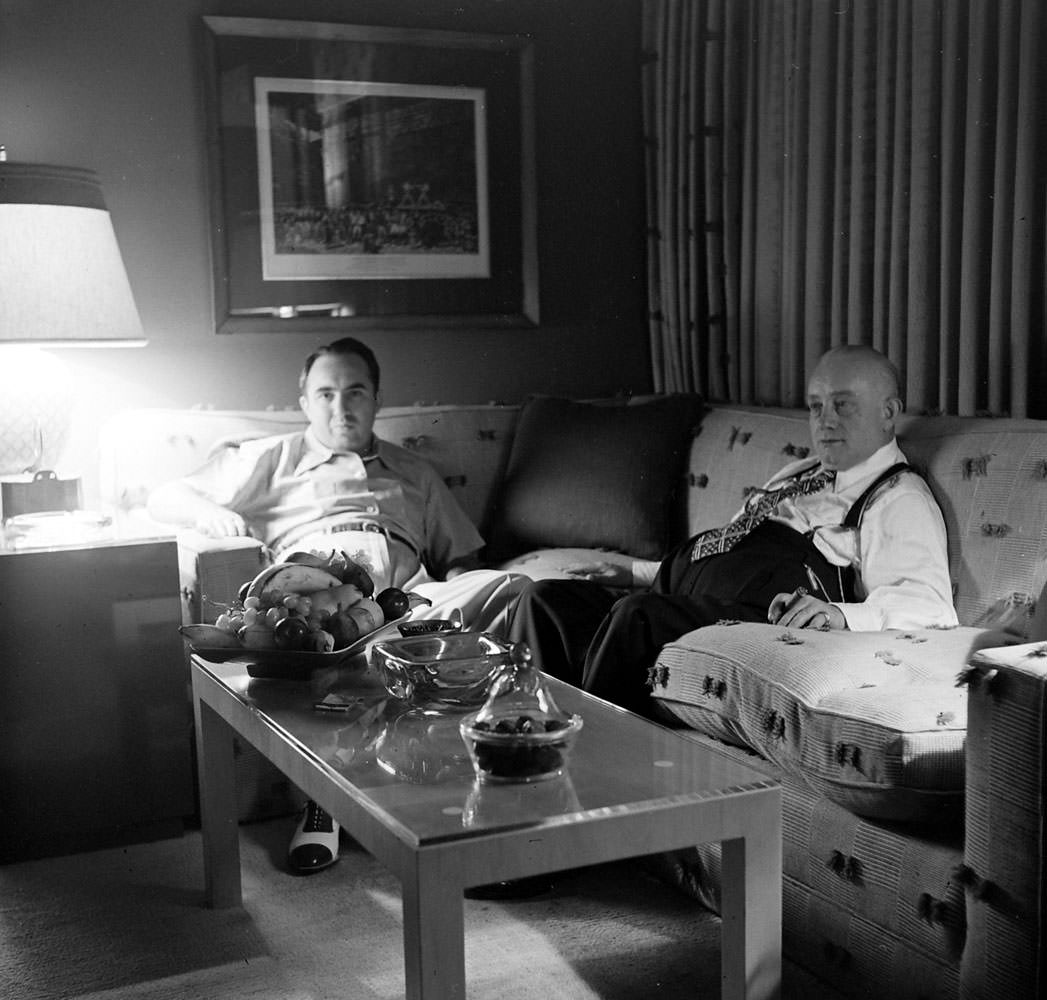
Clark also photographed Cohen alongside his business manager Mike Howard and enforcer Johnny Stompanato — a man who would later be stabbed and killed in 1958 by Lana Turner’s 14-year-old daughter, Cheryl Crane.
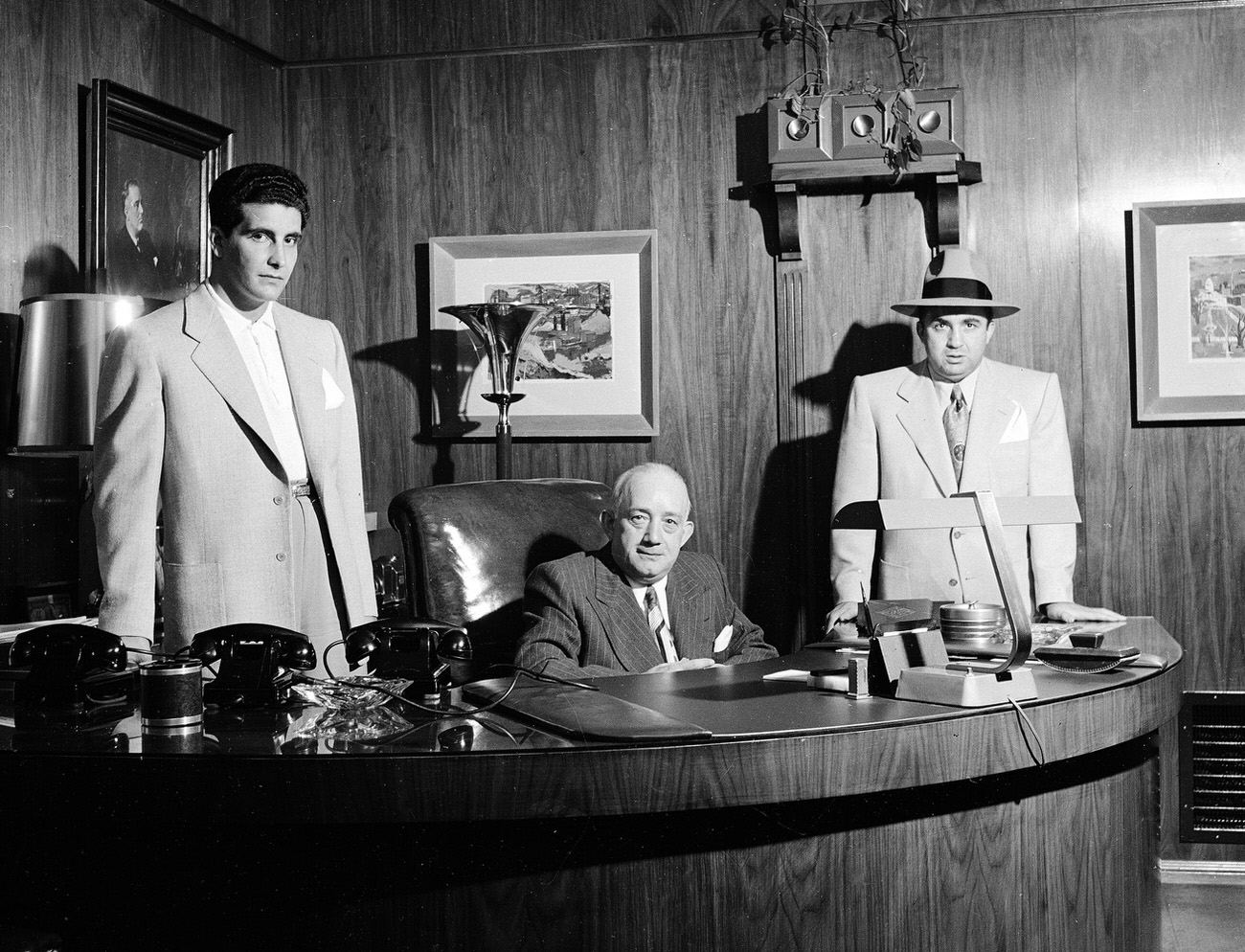
Mickey Cohen's enforcer, "Johnny Stomp" Stompanato (famously stabbed and killed by Lana Turner's 14-year-old daughter, Cheryl Crane, in 1958), business manager Mike Howard and Cohen pose in Cohen's office in Los Angeles, 1949.
Mickey Cohen’s enforcer, “Johnny Stomp” Stompanato (famously stabbed and killed by Lana Turner’s 14-year-old daughter, Cheryl Crane, in 1958), business manager Mike Howard and Cohen pose in Cohen’s office in Los Angeles, 1949.
Mickey Cohen at home in Los Angeles with his business manager, Mike Howard, 1949.
Mickey Cohen at home in Los Angeles, 1949.

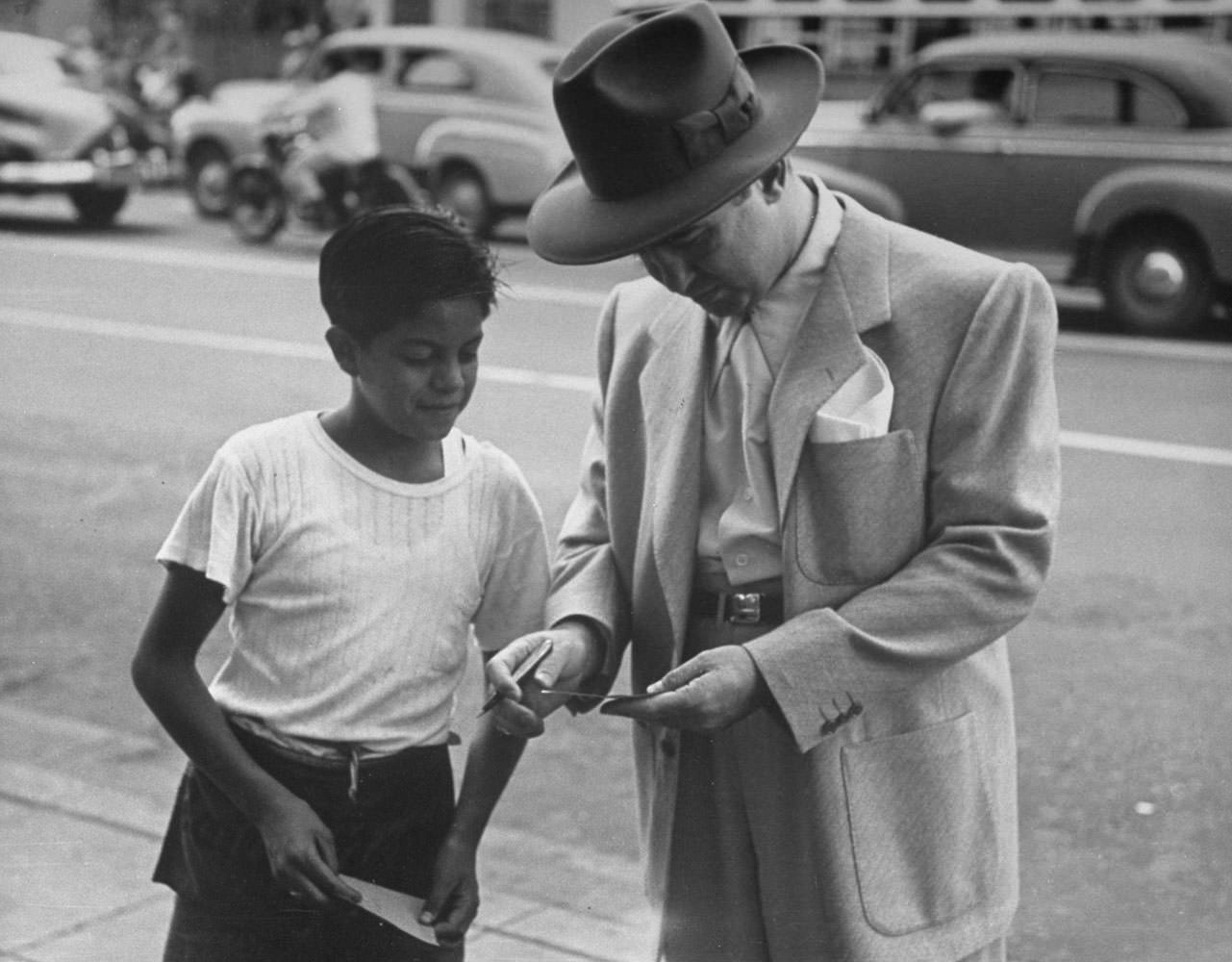
Despite the polished domestic portraits, Cohen’s public persona was also that of a local celebrity. He signed autographs for fans on the street, something a genuine gangster had little reason to do — unless the goal was to be liked.
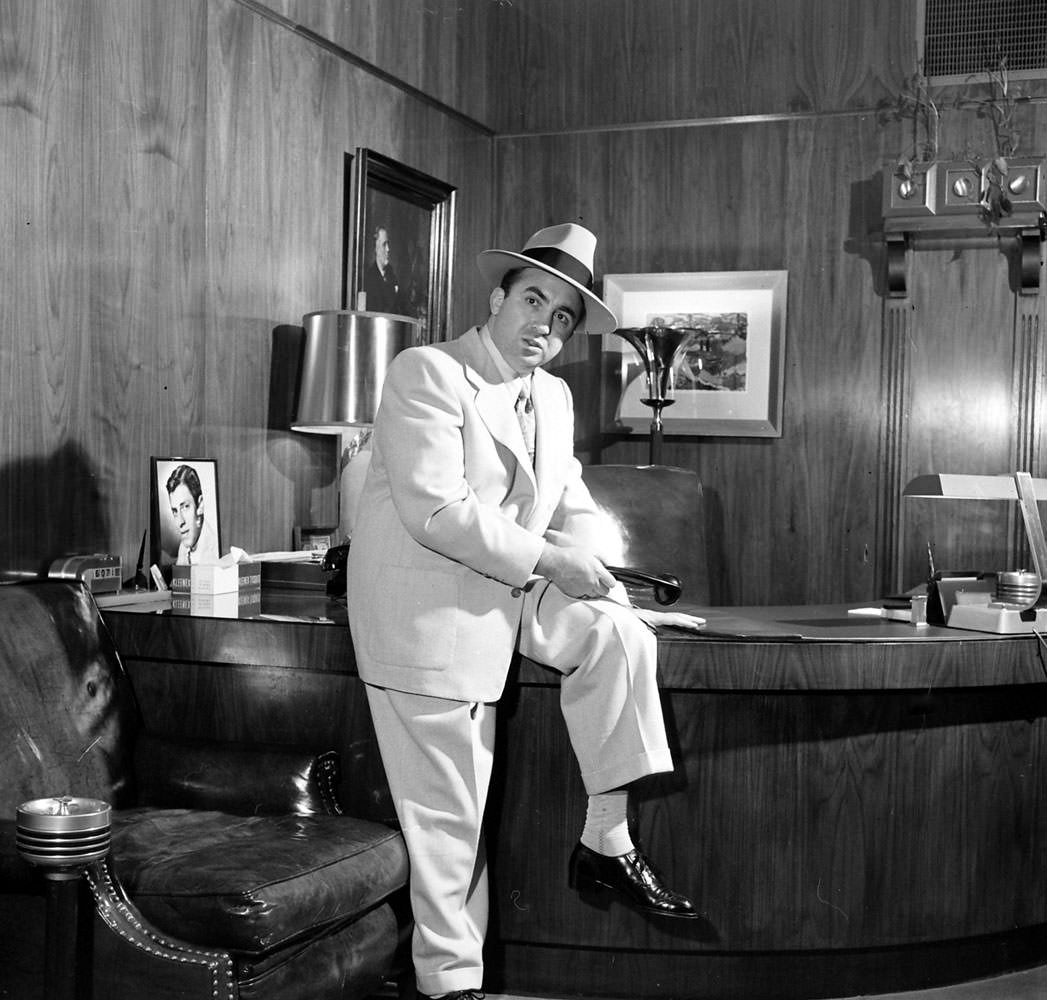
Mickey Cohen, 1949.
Mickey Cohen, 1949.
Mickey Cohen signs an autograph for a young fan, Los Angeles, 1949.

But law enforcement was never convinced by the act. Police hauled Cohen in regularly, and Cohen pushed back at every turn, calling each arrest persecution. Ed Clark’s 1949 photo series captured both sides of that tension — a man projecting one life while living another entirely.
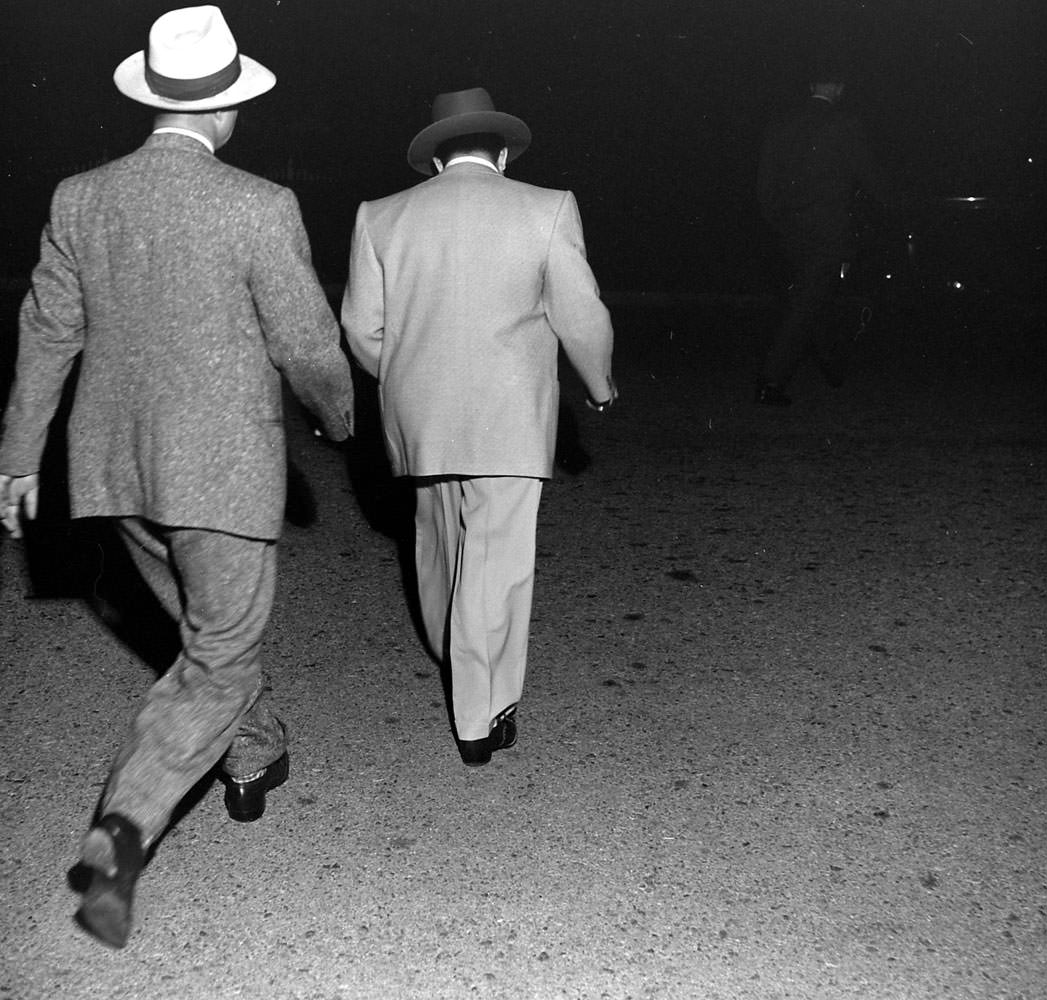
Mickey Cohen hauled in by the cops, Los Angeles, 1949.
Mickey Cohen, 1949.
Mickey Cohen, 1949.
Enjoyed this post? Get new ones in your inbox.

Leave a Comment

Your email address will not be published. Required fields are marked *

Share this Post 🥺

Please take a moment to share this content. Your support is greatly appreciated! 🙌🙏

Share this Post 🥺

Please take a moment to share this content. Your support is greatly appreciated! 🙌🙏
Scroll to Top
 
Hey Friend, Before You Go.. Please like & follow for more interesting content